WO2016187817A1 - 移动终端的控制方法、装置及系统 - Google Patents
移动终端的控制方法、装置及系统 Download PDFInfo
- Publication number
- WO2016187817A1 WO2016187817A1 PCT/CN2015/079841 CN2015079841W WO2016187817A1 WO 2016187817 A1 WO2016187817 A1 WO 2016187817A1 CN 2015079841 W CN2015079841 W CN 2015079841W WO 2016187817 A1 WO2016187817 A1 WO 2016187817A1
- Authority
- WO
- WIPO (PCT)
- Prior art keywords
- mobile terminal
- command
- manner
- indoor
- antenna node
- Prior art date
- Legal status (The legal status is an assumption and is not a legal conclusion. Google has not performed a legal analysis and makes no representation as to the accuracy of the status listed.)
- Ceased
Links
Images




Classifications
-
- G—PHYSICS
- G01—MEASURING; TESTING
- G01S—RADIO DIRECTION-FINDING; RADIO NAVIGATION; DETERMINING DISTANCE OR VELOCITY BY USE OF RADIO WAVES; LOCATING OR PRESENCE-DETECTING BY USE OF THE REFLECTION OR RERADIATION OF RADIO WAVES; ANALOGOUS ARRANGEMENTS USING OTHER WAVES
- G01S5/00—Position-fixing by co-ordinating two or more direction or position line determinations; Position-fixing by co-ordinating two or more distance determinations
- G01S5/02—Position-fixing by co-ordinating two or more direction or position line determinations; Position-fixing by co-ordinating two or more distance determinations using radio waves
- G01S5/0205—Details
-
- G—PHYSICS
- G01—MEASURING; TESTING
- G01S—RADIO DIRECTION-FINDING; RADIO NAVIGATION; DETERMINING DISTANCE OR VELOCITY BY USE OF RADIO WAVES; LOCATING OR PRESENCE-DETECTING BY USE OF THE REFLECTION OR RERADIATION OF RADIO WAVES; ANALOGOUS ARRANGEMENTS USING OTHER WAVES
- G01S5/00—Position-fixing by co-ordinating two or more direction or position line determinations; Position-fixing by co-ordinating two or more distance determinations
- G01S5/01—Determining conditions which influence positioning, e.g. radio environment, state of motion or energy consumption
- G01S5/014—Identifying transitions between environments
- G01S5/015—Identifying transitions between environments between indoor and outdoor environments
-
- G—PHYSICS
- G01—MEASURING; TESTING
- G01S—RADIO DIRECTION-FINDING; RADIO NAVIGATION; DETERMINING DISTANCE OR VELOCITY BY USE OF RADIO WAVES; LOCATING OR PRESENCE-DETECTING BY USE OF THE REFLECTION OR RERADIATION OF RADIO WAVES; ANALOGOUS ARRANGEMENTS USING OTHER WAVES
- G01S5/00—Position-fixing by co-ordinating two or more direction or position line determinations; Position-fixing by co-ordinating two or more distance determinations
- G01S5/02—Position-fixing by co-ordinating two or more direction or position line determinations; Position-fixing by co-ordinating two or more distance determinations using radio waves
- G01S5/0257—Hybrid positioning
- G01S5/0268—Hybrid positioning by deriving positions from different combinations of signals or of estimated positions in a single positioning system
-
- G—PHYSICS
- G01—MEASURING; TESTING
- G01S—RADIO DIRECTION-FINDING; RADIO NAVIGATION; DETERMINING DISTANCE OR VELOCITY BY USE OF RADIO WAVES; LOCATING OR PRESENCE-DETECTING BY USE OF THE REFLECTION OR RERADIATION OF RADIO WAVES; ANALOGOUS ARRANGEMENTS USING OTHER WAVES
- G01S5/00—Position-fixing by co-ordinating two or more direction or position line determinations; Position-fixing by co-ordinating two or more distance determinations
- G01S5/02—Position-fixing by co-ordinating two or more direction or position line determinations; Position-fixing by co-ordinating two or more distance determinations using radio waves
- G01S5/10—Position of receiver fixed by co-ordinating a plurality of position lines defined by path-difference measurements, e.g. omega or decca systems
-
- H—ELECTRICITY
- H04—ELECTRIC COMMUNICATION TECHNIQUE
- H04W—WIRELESS COMMUNICATION NETWORKS
- H04W64/00—Locating users or terminals or network equipment for network management purposes, e.g. mobility management
-
- G—PHYSICS
- G01—MEASURING; TESTING
- G01S—RADIO DIRECTION-FINDING; RADIO NAVIGATION; DETERMINING DISTANCE OR VELOCITY BY USE OF RADIO WAVES; LOCATING OR PRESENCE-DETECTING BY USE OF THE REFLECTION OR RERADIATION OF RADIO WAVES; ANALOGOUS ARRANGEMENTS USING OTHER WAVES
- G01S3/00—Direction-finders for determining the direction from which infrasonic, sonic, ultrasonic or electromagnetic waves, or particle emission, not having a directional significance, are being received
- G01S3/02—Direction-finders for determining the direction from which infrasonic, sonic, ultrasonic or electromagnetic waves, or particle emission, not having a directional significance, are being received using radio waves
Definitions
- the embodiments of the present invention relate to a positioning technology, and in particular, to a method, an apparatus, and a system for controlling a mobile terminal.
- GNSS Global Navigation Satellite System
- Wi-Fi Wireless Fidelity
- Bluetooth Wireless Fidelity
- the choice of existing positioning methods is usually determined according to the signal received by the mobile terminal.
- the signal here can be either a GNSS satellite signal, a cellular base station signal, a Wi-Fi signal, or the like.
- the dependent signals are susceptible to NLOS (Non-line-of-Sight) transmission, environmental factors, etc., often introducing large errors, resulting in erroneous judgments.
- the location of the mobile terminal is selected, and an inappropriate positioning method is selected.
- GNSS GNSS as an example, GNSS satellite signals are highly vulnerable to stagnation by tall buildings and trees. Therefore, in urban canyon areas (such as streets with high-rise buildings on both sides), there are also fewer GNSS visible satellites and lower signal strength. At this time, it is easy to misjudge the mobile terminal to enter the indoor environment, and the wrong switch to the indoor positioning mode or load the indoor navigation map.
- the embodiment of the invention provides a control method, device and system for a mobile terminal, which can improve the control accuracy of the mobile terminal.
- a method for controlling a mobile terminal includes:
- the mobile terminal is controlled in a manner matching the change information of the positional relationship according to the change information of the positional relationship.
- the obtaining, according to the N direction finding signals, N location relationship information between the mobile terminal and the multiple antenna node at the N times include:
- the ground is an x-y plane
- the projection of the multi-antenna node in the x-y plane is an origin
- the z-axis is perpendicular to the x-y plane pointing upward
- the y-axis is parallel to the indoor diplomatic interface
- the x-axis is perpendicular to the y-axis pointing to the outdoor direction;
- a line k1 is an angle between the straight line k1 and the positive direction of the x-axis, and the line k1 is a line connecting the projection of the mobile terminal to the ground and the origin;
- ⁇ is an angle between the straight line k2 and the negative direction of the z-axis
- a straight line k2 is a line connecting the mobile terminal and the multi-antenna node.
- the changing information according to the location relationship is controlled in a manner that matches the change information of the location relationship.
- Mobile terminals including:
- the first mode matches the movement trend of the mobile terminal from the outdoor to the indoor movement
- the second The manner matches the trend of movement of the mobile terminal from indoor to outdoor.
- the changing information according to the location relationship is controlled in a manner that matches the change information of the location relationship.
- Mobile terminals including:
- the first mode matches the movement trend of the mobile terminal from the outdoor to the indoor movement
- the second The manner matches the trend of movement of the mobile terminal from indoor to outdoor.
- the controlling the mobile terminal in the first manner includes: controlling the mobile terminal to use a positioning manner that matches an indoor, or controlling the mobile terminal to load an indoor navigation map;
- the controlling the mobile terminal in the second manner includes: controlling the mobile terminal to use a positioning manner that matches an outdoor, or controlling the mobile terminal to load an outdoor navigation map.
- a fifth possible implementation manner before the receiving the multi-antenna node sends the N direction-finding signals respectively at the N times, include:
- the mobile terminal When the mobile terminal receives the number of visible satellites less than or equal to a first threshold, the mobile terminal establishes a wireless connection with the multiple antenna nodes; or
- the mobile terminal When the mobile terminal detects that the Wi-Fi or Bluetooth signal strength is greater than or equal to a second threshold, the mobile terminal establishes a wireless connection with the multiple antenna node; or
- the mobile terminal When the mobile terminal detects that the Wi-Fi or Bluetooth signal strength is less than or equal to a third threshold, the mobile terminal establishes a wireless connection with the multiple antenna node; or
- the mobile terminal When the mobile terminal detects that the number of Wi-Fi access points or the number of Bluetooth nodes is greater than or equal to a fourth threshold, the mobile terminal establishes a wireless connection with the multiple antenna nodes; or
- the mobile terminal When the mobile terminal detects that the number of Wi-Fi access points or the number of Bluetooth nodes is less than or equal to a fifth threshold, the mobile terminal establishes a wireless connection with the multiple antenna nodes.
- the positioning manner that matches the indoor location includes:
- Wi-Fi positioning Wi-Fi positioning, Bluetooth positioning, magnetic field positioning or light positioning.
- the positioning manner that matches the outdoor includes: global navigation satellite system GNSS positioning, cellular network positioning, or Wi-Fi positioning.
- a method for controlling a mobile terminal includes:
- the mobile terminal transmits N direction finding signals to the multiple antenna nodes located in the critical area of indoors and outdoors at N times;
- the mobile terminal executes the control command.
- control command includes:
- control command is the first command
- the mobile terminal is configured to execute the control command, including:
- the mobile terminal uses a positioning method that matches the indoor; or
- the mobile terminal loads an indoor navigation map.
- control command is the second command
- the mobile terminal is configured to execute the control command, including:
- the mobile terminal uses a positioning method that matches the outdoor; or
- the mobile terminal loads an outdoor navigation map.
- a method for controlling a multi-antenna node includes:
- the multi-antenna node receives N direction-finding signals respectively transmitted by the mobile terminal at N times, and the multi-antenna node is located in an indoor and outdoor critical region;
- the multi-antenna node determines, according to at least M pieces of positional relationship information of the N pieces of positional relationship information, change information of a positional relationship between the multi-antenna node and the mobile terminal, 2 ⁇ M ⁇ N;
- the multi-antenna node transmits a control command matching the change information of the positional relationship to the mobile terminal according to the change information of the positional relationship.
- the acquiring N position relationships between the multiple antenna nodes and the mobile terminal at N times according to the N direction finding signals Information including:
- the ground is an x-y plane
- the projection of the multi-antenna node in the x-y plane is an origin
- the z-axis is perpendicular to the x-y plane pointing upward
- the y-axis is parallel to the indoor diplomatic interface
- the x-axis is perpendicular to the y-axis pointing to the outdoor direction;
- a line k1 is an angle between the straight line k1 and the positive direction of the x-axis, and the line k1 is a line connecting the projection of the mobile terminal to the ground and the origin;
- ⁇ is an angle between the straight line k2 and the negative direction of the z-axis
- a straight line k2 is a line connecting the multi-antenna node and the mobile terminal.
- the multiple antenna node sends a change to the location relationship to the mobile terminal according to the change information of the location relationship Control commands that match the information, including:
- the multi-antenna node sends a first command to the mobile terminal, if And the multi-antenna node sends a second command to the mobile terminal;
- the multi-antenna node sends a first command to the mobile terminal, if And the multi-antenna node sends a second command to the mobile terminal;
- the multi-antenna node when or If And ⁇ 1 > ⁇ 2 >...> ⁇ M >0, the multi-antenna node sends a first command to the mobile terminal, if And 0 ⁇ ⁇ 1 ⁇ ⁇ 2 ⁇ ... ⁇ ⁇ M , the multi-antenna node sends a second command to the mobile terminal; or
- the multi-antenna node when If And 0 ⁇ 1 ⁇ 2 ⁇ ... ⁇ M , the multi-antenna node sends a first command to the mobile terminal, if And ⁇ 1 > ⁇ 2 >...> ⁇ M >0, the multi-antenna node sends a second command to the mobile terminal;
- the first command is used to instruct the mobile terminal to control the mobile terminal by using the first mode
- One manner is matched with a trend of movement of the mobile terminal from indoor to indoor
- the second command is used to instruct the mobile terminal to control the mobile terminal in a second manner
- the second manner is related to the mobile terminal The trend of movement from indoor to outdoor matches.
- the multiple antenna node sends a change to the location relationship to the mobile terminal according to the change information of the location relationship Control commands that match the information, including:
- the multi-antenna node when If And ⁇ 1 > ⁇ 2 >...> ⁇ M , the multi-antenna node sends a first command to the mobile terminal, if And ⁇ 1 ⁇ 2 ⁇ ... ⁇ M , the multi-antenna node transmitting a second command to the mobile terminal; or
- the multi-antenna node when If And ⁇ 1 ⁇ 2 ⁇ ... ⁇ M , the multi-antenna node sends a first command to the mobile terminal, if And ⁇ 1 > ⁇ 2 >...> ⁇ M , the multi-antenna node transmitting a second command to the mobile terminal; or
- the multi-antenna node when If And ⁇ 1 > ⁇ 2 >...> ⁇ M , the multi-antenna node sends a second command to the mobile terminal, if And ⁇ 1 ⁇ 2 ⁇ ... ⁇ M , the multi-antenna node transmitting the first command to the mobile terminal; or
- the multi-antenna node when If And ⁇ 1 ⁇ 2 ⁇ ... ⁇ M , the multi-antenna node sends a second command to the mobile terminal, if And ⁇ 1 > ⁇ 2 >...> ⁇ M , the multi-antenna node sends a first command to the mobile terminal;
- the first command is used to instruct the mobile terminal to control the mobile terminal by using the first mode
- One manner is matched with a trend of movement of the mobile terminal from indoor to indoor
- the second command is used to instruct the mobile terminal to control the mobile terminal in a second manner
- the second manner is related to the mobile terminal The trend of movement from indoor to outdoor matches.
- the first command is used to indicate that the mobile terminal uses a positioning manner that matches an indoor, or The first command is used to instruct the mobile terminal to load an indoor navigation map;
- the second command is used to indicate that the mobile terminal uses a positioning manner that matches the outdoor, or the second command is used to instruct the mobile terminal to load an outdoor navigation map.
- a fifth possible implementation before the multiple antenna node receives the N direction-finding signals respectively sent by the mobile terminal at the N times, Also includes:
- a wireless connection is established between the multi-antenna node and the mobile terminal.
- the multiple antenna node includes: a multi-antenna Wi-Fi node or a multi-antenna Bluetooth node.
- a fourth aspect is a control device for a mobile terminal, wherein the control device is included in the mobile terminal, and the control device includes:
- a receiving unit configured to receive N direction finding signals respectively sent by the multiple antenna nodes at N times; the multiple antenna nodes are located in indoor and outdoor critical areas;
- An information acquiring unit configured to acquire, according to the N direction finding signals, N pieces of positional relationship information between the mobile terminal and the multiple antenna nodes at the N times, the N times and the N positional relationship information one-to-one correspondence;
- a determining unit configured to determine, according to the at least M position relationship information of the N pieces of positional relationship information, change information of a positional relationship between the mobile terminal and the multiple antenna node, 2 ⁇ M ⁇ N;
- control unit configured to control the mobile terminal in a manner that matches the change information of the location relationship according to the change information of the location relationship.
- the information acquiring unit is specifically configured to:
- the ground is an x-y plane
- the projection of the multi-antenna node in the x-y plane is an origin
- the z-axis is perpendicular to the x-y plane pointing upward
- the y-axis is parallel to the indoor diplomatic interface
- the x-axis is perpendicular to the y-axis pointing to the outdoor direction;
- a line k1 is an angle between the straight line k1 and the positive direction of the x-axis, and the line k1 is a line connecting the projection of the mobile terminal to the ground and the origin;
- ⁇ is an angle between the straight line k2 and the negative direction of the z-axis
- a straight line k2 is a line connecting the mobile terminal and the multi-antenna node.
- control unit is specifically configured to:
- the first mode matches the movement trend of the mobile terminal from the outdoor to the indoor movement
- the second The manner matches the trend of movement of the mobile terminal from indoor to outdoor.
- control unit is specifically configured to:
- the first mode matches the movement trend of the mobile terminal from the outdoor to the indoor movement
- the second The manner matches the trend of movement of the mobile terminal from indoor to outdoor.
- control unit controls the mobile terminal in the first manner
- the control unit is specifically configured to: control the mobile terminal to use a positioning manner that matches the indoor, or control the mobile terminal to load an indoor navigation map;
- control unit controls the mobile terminal in the second manner
- the control unit is specifically configured to: control the mobile terminal to use a positioning manner that matches the outdoor, or control the mobile terminal to load an outdoor navigation map.
- the fifth possible implementation manner further includes:
- the receiving unit Before the receiving unit receives the N direction finding signals respectively sent by the multiple antenna nodes at the N times, when the mobile terminal receives the number of visible satellites less than or equal to the first threshold, establishing with the multiple antenna nodes Wireless connection; or,
- the receiving unit Before the receiving unit receives the N direction finding signals respectively sent by the multiple antenna nodes at the N times, when the mobile terminal detects that the Wi-Fi signal strength is greater than or equal to the second threshold, establishing, with the multiple antenna nodes Wireless connection; or,
- the receiving unit Before the receiving unit receives the N direction finding signals respectively sent by the multiple antenna nodes at the N times, when the mobile terminal detects that the Wi-Fi signal strength is less than or equal to the third threshold, establishing, with the multiple antenna nodes Wireless connection; or
- the receiving unit Before the receiving unit receives the N direction finding signals respectively sent by the multiple antenna nodes at the N times, when the mobile terminal detects that the number of Wi-Fi access points or the number of Bluetooth nodes is greater than or equal to the fourth threshold Establishing a wireless connection with the multi-antenna node; or
- the receiving unit Before the receiving unit receives the N direction finding signals respectively sent by the multiple antenna nodes at the N times, when the mobile terminal detects that the number of Wi-Fi access points or the number of Bluetooth nodes is less than or equal to the fifth threshold Establishing a wireless connection with the multi-antenna node.
- the positioning manner that matches the indoor location includes:
- Wi-Fi positioning Wi-Fi positioning, Bluetooth positioning, magnetic field positioning or light positioning.
- the positioning manner that matches the outdoor includes:
- GNSS positioning Global navigation satellite system GNSS positioning, cellular network positioning or Wi-Fi positioning.
- a fifth aspect is a control device for a mobile terminal, the control device being included in the mobile terminal, the control device comprising:
- a sending unit configured to send N direction finding signals to the multiple antenna nodes located in the indoor and outdoor critical areas at N times;
- a receiving unit configured to receive a control command returned by the multiple antenna node according to the N direction finding signals
- An execution unit configured to execute the control command.
- control command includes:
- the executing unit when the control command is the first command, is specifically configured to: use and indoor Match the positioning method, or, load the indoor navigation map;
- the executing unit is specifically configured to: use a positioning manner that matches the outdoor, or load an outdoor navigation map.
- a sixth aspect is a control device for a multi-antenna node, the control device being included in the multi-antenna node, the control device comprising:
- a receiving unit configured to receive N direction-finding signals respectively sent by the mobile terminal at N times, where the multiple antenna nodes are located in indoor and outdoor critical areas;
- An information acquiring unit configured to acquire N pieces of positional relationship information between the multi-antenna fixed node and the mobile terminal at the N time points according to the N direction finding signals, where the N time and location One-to-one correspondence of N positional relationship information;
- a determining unit configured to determine, according to the at least M position relationship information of the N pieces of positional relationship information, change information of a positional relationship between the multi-antenna fixed node and the mobile terminal, 2 ⁇ M ⁇ N;
- a control unit configured to send, to the mobile terminal, a control command that matches the change information of the location relationship according to the change information of the location relationship.
- the information acquiring unit is specifically configured to:
- the ground is an x-y plane
- the projection of the multi-antenna node in the x-y plane is an origin
- the z-axis is perpendicular to the x-y plane pointing upward
- the y-axis is parallel to the indoor diplomatic interface
- the x-axis is perpendicular to the y-axis pointing to the outdoor direction;
- a line k1 is an angle between the straight line k1 and the positive direction of the x-axis, and the line k1 is a line connecting the projection of the mobile terminal to the ground and the origin;
- ⁇ is an angle between the straight line k2 and the negative direction of the z-axis
- a straight line k2 is a line connecting the multi-antenna fixed node and the mobile terminal.
- control unit is specifically configured to:
- the first command is used to instruct the mobile terminal to control the mobile terminal by using the first mode
- One manner is matched with a trend of movement of the mobile terminal from indoor to indoor
- the second command is used to instruct the mobile terminal to control the mobile terminal in a second manner
- the second manner is related to the mobile terminal The trend of movement from indoor to outdoor matches.
- control unit is specifically configured to:
- the multi-antenna node when If And ⁇ 1 > ⁇ 2 >...> ⁇ M , the multi-antenna node sends a first command to the mobile terminal, if And ⁇ 1 ⁇ 2 ⁇ ... ⁇ M , the multi-antenna node transmitting a second command to the mobile terminal; or
- the multi-antenna node when If And ⁇ 1 ⁇ 2 ⁇ ... ⁇ M , the multi-antenna node sends a first command to the mobile terminal, if And ⁇ 1 > ⁇ 2 >...> ⁇ M , the multi-antenna node transmitting a second command to the mobile terminal; or
- the multi-antenna node when If And ⁇ 1 > ⁇ 2 >...> ⁇ M , the multi-antenna node sends a second command to the mobile terminal, if And ⁇ 1 ⁇ 2 ⁇ ... ⁇ M , the multi-antenna node transmitting the first command to the mobile terminal; or
- the multi-antenna node when If And ⁇ 1 ⁇ 2 ⁇ ... ⁇ M , the multi-antenna node sends a second command to the mobile terminal, if And ⁇ 1 > ⁇ 2 >...> ⁇ M , the multi-antenna node sends a first command to the mobile terminal;
- the first command is used to instruct the mobile terminal to control the mobile terminal by using the first mode
- One manner is matched with a trend of movement of the mobile terminal from indoor to indoor
- the second command is used to instruct the mobile terminal to control the mobile terminal in a second manner
- the second manner is related to the mobile terminal The trend of movement from indoor to outdoor matches.
- the first command is used to indicate that the mobile terminal uses a positioning manner that matches an indoor, or The mobile terminal loads the indoor navigation map;
- the second command is used to indicate that the mobile terminal uses a positioning manner that matches the outdoor, or the mobile terminal loads an outdoor navigation map.
- the method further includes:
- a connecting unit configured to establish a wireless connection with the mobile terminal before the receiving unit receives the N direction finding signals respectively sent by the mobile terminal at the N times.
- the multiple antenna node includes: multi-antenna WIFI or multi-antenna Bluetooth.
- a mobile terminal includes:
- the processor, the memory, and the communication interface communicate with each other through a bus;
- the processor reads the program code and data stored in the memory and performs the following operations:
- the mobile terminal is controlled in a manner matching the change information of the positional relationship according to the change information of the positional relationship.
- the acquiring N pieces of positional relationship information between the mobile terminal and the multi-antenna node at the N times according to the N direction finding signals include:
- the ground is an x-y plane
- the projection of the multi-antenna node in the x-y plane is an origin
- the z-axis is perpendicular to the x-y plane pointing upward
- the y-axis is parallel to the indoor diplomatic interface
- the x-axis is perpendicular to the y-axis pointing to the outdoor direction;
- a line k1 is an angle between the straight line k1 and the positive direction of the x-axis, and the line k1 is a line connecting the projection of the mobile terminal to the ground and the origin;
- ⁇ is an angle between the straight line k2 and the negative direction of the z-axis
- a straight line k2 is a line connecting the mobile terminal and the multi-antenna node.
- the changing information according to the location relationship is controlled in a manner that matches the change information of the location relationship.
- Mobile terminals including:
- the first mode matches the movement trend of the mobile terminal from the outdoor to the indoor movement
- the second The manner matches the trend of movement of the mobile terminal from indoor to outdoor.
- the changing information according to the location relationship is controlled in a manner that matches the change information of the location relationship.
- Mobile terminals including:
- the first mode matches the movement trend of the mobile terminal from the outdoor to the indoor movement
- the second The manner matches the trend of movement of the mobile terminal from indoor to outdoor.
- the controlling the mobile terminal in the first manner includes: controlling the mobile terminal to use a positioning manner that matches an indoor, or controlling the mobile terminal to load an indoor navigation map;
- the controlling the mobile terminal in the second manner includes: controlling the mobile terminal to use a positioning manner that matches an outdoor, or controlling the mobile terminal to load an outdoor navigation map.
- the processor before receiving the N direction-finding signals respectively sent by the multiple antenna nodes at the N times Also executed:
- the mobile terminal When the mobile terminal detects that the number of Wi-Fi access points or the number of Bluetooth nodes is less than or equal to a fifth threshold, establishing a wireless connection with the multi-antenna node.
- the positioning manner that matches the indoor location includes:
- Wi-Fi positioning Wi-Fi positioning, Bluetooth positioning, magnetic field positioning or light positioning.
- the positioning manner that matches the outdoor includes:
- GNSS positioning Global navigation satellite system GNSS positioning, cellular network positioning or Wi-Fi positioning.
- a mobile terminal includes:
- the processor, the memory, and the communication interface communicate with each other through a bus;
- the processor reads the program code and data stored in the memory and performs the following operations:
- control command includes:
- control command is the first command
- processor executing the control command includes:
- control command is the second command
- processor executes the control command, including
- a ninth aspect a multi-antenna node, the multi-antenna node is located in an indoor and outdoor critical area, and the multi-antenna node comprises:
- the processor, the memory, and the communication interface communicate with each other through a bus;
- the processor reads the program code and data stored in the memory and performs the following operations:
- the acquiring the N pieces of position relationship information of the multiple antenna node and the mobile terminal at the N time points according to the N direction finding signals includes:
- the ground is an x-y plane
- the projection of the multi-antenna node in the x-y plane is an origin
- the z-axis is perpendicular to the x-y plane pointing upward
- the y-axis is parallel to the indoor diplomatic interface
- the x-axis is perpendicular to the y-axis pointing to the outdoor direction;
- a line k1 is an angle between the straight line k1 and the positive direction of the x-axis, and the line k1 is a line connecting the projection of the mobile terminal to the ground and the origin;
- ⁇ is an angle between the straight line k2 and the negative direction of the z-axis
- a straight line k2 is a line connecting the multi-antenna node and the mobile terminal.
- the changing information according to the location relationship is sent in a manner that matches the change information of the location relationship
- the commands of the mobile terminal include:
- the first command is used to instruct the mobile terminal to control the mobile terminal by using the first mode
- One manner is matched with a trend of movement of the mobile terminal from indoor to indoor
- the second command is used to instruct the mobile terminal to control the mobile terminal in a second manner
- the second manner is related to the mobile terminal The trend of movement from indoor to outdoor matches.
- the changing information according to the location relationship is sent in a manner that matches the change information of the location relationship
- the commands of the mobile terminal include:
- the first command is used to instruct the mobile terminal to control the mobile terminal by using the first mode
- One manner is matched with a trend of movement of the mobile terminal from indoor to indoor
- the second command is used to instruct the mobile terminal to control the mobile terminal in a second manner
- the second manner is related to the mobile terminal The trend of movement from indoor to outdoor matches.
- the first command is used to indicate that the mobile terminal uses a positioning manner that matches an indoor; or The first command is used to instruct the mobile terminal to load an indoor navigation map;
- the second command is used to indicate that the mobile terminal uses a positioning manner that matches the outdoor; or the second command is used to instruct the mobile terminal to load an outdoor navigation map.
- the processor before receiving the N direction-finding signals respectively sent by the mobile terminal at the N times Also executed:
- the multiple antenna node includes: a multi-antenna WIFI node or a multi-antenna Bluetooth node.
- a control system includes:
- control device for any mobile terminal and the control device for multiple antenna nodes provided by the above fourth aspect
- the control device of the multiple antenna node is configured to separately send N direction finding signals to the mobile terminal at N times.
- the eleventh aspect a control system, comprising: any one of the mobile terminal and the multiple antenna node provided by the foregoing seventh aspect;
- the multiple antenna node includes: a transceiver
- the transceiver is configured to separately send N direction finding signals to the mobile terminal at N times.
- a control system includes: the control device of any one of the mobile terminals provided in the above fifth aspect, and the control device of any one of the multiple antenna nodes provided in the sixth aspect.
- a thirteenth aspect a control system, comprising: any one of the mobile terminals provided in the foregoing eighth aspect, and any one of the multiple antenna nodes provided in the foregoing ninth aspect.
- the change information of the positional relationship between the mobile terminal and the multiple antenna nodes in a period of time may be acquired, and then controlled according to the change information of the positional relationship in a manner matching with the change information.
- the mobile terminal can accurately indicate the moving tendency of the mobile terminal from indoor to outdoor movement or the moving tendency of the mobile terminal from the outdoor to the indoor due to the change of the positional relationship, so that the mobile terminal can be controlled based on the accurate moving trend.
- FIG. 1 is a flowchart of a method for controlling a mobile terminal according to an embodiment of the present invention
- FIG. 2 is a schematic diagram of an indoor and outdoor critical section according to an embodiment of the present invention.
- FIG. 3 is a schematic diagram of an application scenario according to an embodiment of the present invention. ;
- FIG. 4 is a schematic diagram of a signal transmitted and received between a mobile terminal and a multi-antenna node according to an embodiment of the present invention
- FIG. 5 is a schematic diagram of determining an azimuth and elevation coordinate system according to an embodiment of the present invention.
- FIG. 6 is a flowchart of another method for controlling a mobile terminal according to an embodiment of the present invention.
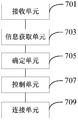
- FIG. 7 is a schematic diagram of a control apparatus of a mobile terminal according to an embodiment of the present invention.
- FIG. 8 is a schematic diagram of another control apparatus of a mobile terminal according to an embodiment of the present invention.
- FIG. 9 is a schematic diagram of a multi-antenna node control apparatus according to an embodiment of the present invention.
- FIG. 10 is a schematic structural diagram of a mobile terminal according to an embodiment of the present invention.
- FIG. 11 is a schematic diagram of a multi-antenna node according to an embodiment of the present invention.
- FIG. 12 is a schematic diagram of a control system according to an embodiment of the present invention.
- FIG. 1 is a flowchart of a method for controlling a mobile terminal according to an embodiment of the present invention. As shown in FIG. 1 , the method includes:
- Step 101 Receive N direction finding signals respectively sent by the multiple antenna nodes at N times, where the multiple antenna nodes are located in indoor and outdoor critical areas.
- the indoor and outdoor interface is usually defined by walls, doors or windows. Walls, doors or windows are indoors, walls, doors or windows are outside, and walls, doors or windows can be called indoor diplomatic interfaces.
- the interface is separated from the indoor diplomatic interface by a second preset distance, and the space between the first plane and the second plane belongs to the indoor and outdoor critical area; wherein the first preset distance or the second preset distance may be preset according to requirements, for example It may be 5 meters, 8 meters or 10 meters, etc., and the first preset distance and the second preset distance may be equal or may not be equal.
- FIG. 3 is a schematic diagram of an application scenario according to an embodiment of the present invention.
- the indoor and foreign interface is the gate of the shopping mall.
- the space outside the gate and the gate and at a certain distance from the gate can be called the indoor and outdoor critical area.
- the size of the indoor and outdoor critical area can be set according to the actual situation.
- the pillars outside the door, the gates, and the cabinets inside the doors are all located inside the indoor and outdoor critical areas.
- the multi-antenna node in the embodiment of the present invention is located in the indoor and outdoor critical area, and the multi-antenna node can be disposed on any building located in the indoor and outdoor critical area.
- the multi-antenna node can be located on the column outside the door and the gate. Above or on the cabinet inside the door.
- FIG. 4 is a schematic diagram of a signal transmitted and received between a mobile terminal and a multi-antenna node according to an embodiment of the present invention.
- the multiple antenna nodes respectively transmit N direction finding signals at N times t 1 , t 2 , ... t N , and the N times may be, for example, N times of a fixed time interval, or may be changes. N times of the time interval; the mobile terminal may receive the N direction finding signals respectively transmitted by the multiple antenna nodes at N times in the order in which the direction finding signals are transmitted.
- the multi-antenna node has multiple antennas for transmitting and receiving signals, and may be, for example, a multi-antenna Wi-Fi node or a multi-antenna Bluetooth node.
- the multi-antenna node can be in a signal transceiving state. When the mobile terminal enters the coverage of its signal, the mobile terminal can receive the direction finding signal sent by the multi-antenna node.
- Step 102 Acquire, according to the N direction finding signals, N pieces of positional relationship information between the mobile terminal and the multiple antenna nodes, where the N times and the N positions are The relationship information is one-to-one correspondence.
- the positional relationship information between the mobile terminal and the multi-antenna node for example, the azimuth angle And elevation angle ⁇ .
- the mobile terminal can pass, for example, 2D MUSIC (2dimensional Multiple Signal Classification) algorithm, 2D FBSS (2D forward/backward spatial smoothing-Music, 2D front/backward space).
- the algorithm can be implemented by software embedded in the mobile terminal by software, and can also be implemented by a chip having the calculation function.
- the mobile terminal acquires N azimuths between the mobile terminal and the multi-antenna node at N times according to the N direction finding signals sent by the multiple antenna nodes. And N elevation angles ⁇ , that is, acquired at N times And ⁇ , the N pieces of positional relationship information between the mobile terminal and the multi-antenna node at N times are obtained, and the N times and the N pieces of positional relationship information are in one-to-one correspondence, N ⁇ 2.
- FIG. 5 is a schematic diagram of determining an azimuth and elevation coordinate system according to an embodiment of the present invention, as shown in FIG. 5, determining The coordinate system of ⁇ and ⁇ can be set as follows: the ground is the xy plane, the projection of the multi-antenna node in the xy plane is the origin, the z-axis is perpendicular to the xy plane, the y-axis is parallel to the indoor diplomatic interface, and the x-axis is vertical.
- the angle between the line k1 and the positive direction of the x-axis, the line k1 is the line connecting the projection of the mobile terminal to the ground and the origin, the distance from the mobile terminal to the ground is h; ⁇ is the line k2 and the z-axis negative
- the angle between the directions, the line k2 is the connection between the mobile terminal and the multi-antenna node.
- x, y, z are only for convenience of labeling, and their names can be replaced by other letters, as long as they do not change. And the physical space position of ⁇ is sufficient.
- Step 103 Determine, according to at least M location relationship information of the N location relationship information, change information of a positional relationship between the mobile terminal and the multiple antenna node, where 2 ⁇ M ⁇ N.
- the mobile terminal If the mobile terminal is in motion, for example, moving from indoors to outdoors, or from outside to indoors, since the N times correspond to the N positional relationship information one by one, the mobile terminal acquired at the N time and the multi-antenna node The positional relationship between the two changes.
- the mobile terminal may acquire change information of the positional relationship between the mobile terminal and the multi-antenna node according to the location relationship information between the mobile terminal and the multi-antenna node acquired at the N times.
- the change information of the positional relationship indicates information on the change in the azimuth and elevation angles of the mobile terminal with respect to the multi-antenna node, and is used to indicate the motion tendency of the mobile terminal, that is, whether the mobile terminal moves from the outside to the inside or from the indoor to the outside.
- the change information of the positional relationship between the mobile terminal and the multi-antenna node can be determined according to the N positional relationship information, and the M positions in the N positional relationship information can also be selected.
- the relationship information is used to determine the change information of the positional relationship between the mobile terminal and the multi-antenna node, and the M positional relationship information may be consecutively selected from the N, or may be selected in the interval order, wherein 2 ⁇ M ⁇ N.
- Step 104 The mobile terminal is controlled according to the change information of the location relationship in a manner that matches the change information of the location relationship.
- the change information of the positional relationship is When it is indicated that the moving tendency of the mobile terminal is to move from the outdoor to the indoor, then the mobile terminal is controlled in a first manner corresponding to the trend of the motion; if the azimuth angle between the mobile terminal and the multi-antenna node is gradually reduced, That is, the change information of the positional relationship is When it is indicated that the movement tendency of the mobile terminal is to move from indoor to outdoor, the mobile terminal is controlled in a second manner corresponding to the trend of the movement, wherein For the azimuth of the i-th moment, 1 ⁇ i ⁇ M.
- the mobile terminal is controlled in a first manner corresponding to the trend of the mobile, if the azimuth angle between the mobile terminal and the multi-antenna node is gradually increased, that is, the positional relationship Change information for The mobile terminal is controlled to move from indoor to outdoor, and then the mobile terminal is controlled in a second manner corresponding to the trend of the mobile, wherein For the azimuth of the i-th moment, 1 ⁇ i ⁇ M.
- the elevation angle is gradually decreased, that is, the change information of the positional relationship is And ⁇ 1 > ⁇ 2 >...> ⁇ M >0, indicating that the movement tendency of the mobile terminal is to move from the outdoor to the indoor, then controlling the mobile terminal in a first manner corresponding to the trend of the movement, if the mobile terminal The azimuth angle with the multi-antenna node is constant, and the elevation angle is gradually increased, that is, the change information of the positional relationship is And 0 ⁇ 1 ⁇ 2 ⁇ ... ⁇ M , indicating that the movement tendency of the mobile terminal is to move from indoor to outdoor, then controlling the mobile terminal in a second manner corresponding to the trend of the movement, wherein For the azimuth of the i-th moment, ⁇ i is the elevation angle of the ith time, 1 ⁇ i ⁇ M.
- the mobile terminal is controlled in a first manner corresponding to the trend of the movement, if the mobile terminal and the mobile terminal The azimuth angle between the multiple antenna nodes is constant, and the elevation angle is gradually decreased, that is, the change information of the positional relationship is And ⁇ 1 > ⁇ 2 >...> ⁇ M > 0, indicating that the movement tendency of the mobile terminal is to move from indoor to outdoor, and then controlling the mobile terminal in a second manner corresponding to the trend of the movement, wherein For the azimuth of the i-th moment, ⁇ i is the elevation angle of the ith time, 1 ⁇ i ⁇ M.
- control mode that matches the change information of the location relationship may be controlled according to the change information of the location relationship based on any one of the following four conditions: Operation.
- the second condition when If the azimuth angle between the mobile terminal and the multi-antenna node is gradually increased, the elevation angle is gradually increased, that is, the change information of the positional relationship is And ⁇ 1 ⁇ ⁇ 2 ⁇ ... ⁇ ⁇ M , indicating that the movement tendency of the mobile terminal is to move from the outdoor to the indoor, then controlling the mobile terminal in a first manner corresponding to the trend of the movement; if the mobile terminal and the multi-antenna The azimuth angle between the nodes gradually decreases, and the elevation angle gradually decreases, that is, the change information of the positional relationship is And ⁇ 1 > ⁇ 2 >...> ⁇ M , indicating that the motion tendency of the mobile terminal is to move from indoor to outdoor, and then the mobile terminal is controlled in a second manner corresponding to such a trend of motion.
- the third condition when If the azimuth angle between the mobile terminal and the multi-antenna node is gradually increased, the elevation angle is gradually decreased, that is, the change information of the positional relationship is And ⁇ 1 > ⁇ 2 >...> ⁇ M , indicating that the movement tendency of the mobile terminal is to move from indoor to outdoor, then controlling the mobile terminal in a second manner corresponding to the trend of the movement; if the mobile terminal and the multi-antenna The azimuth angle between the nodes gradually decreases, and the elevation angle gradually increases, that is, the change information of the positional relationship is And ⁇ 1 ⁇ ⁇ 2 ⁇ ... ⁇ ⁇ M , indicating that the movement tendency of the mobile terminal is to move from the outside to the room, and then the mobile terminal is controlled in a first manner corresponding to the trend of the movement.
- the fourth condition when If the azimuth angle between the mobile terminal and the multi-antenna node is gradually increased, the elevation angle is gradually increased, that is, the change information of the positional relationship is And ⁇ 1 ⁇ 2 ⁇ ... ⁇ M , indicating that the movement tendency of the mobile terminal is to move from indoor to outdoor, then controlling the mobile terminal in a second manner corresponding to the trend of the movement; if the mobile terminal and the multi-antenna The azimuth angle between the nodes gradually decreases, and the elevation angle gradually decreases, that is, the change information of the positional relationship is And ⁇ 1 > ⁇ 2 >...> ⁇ M , indicating that the moving tendency of the mobile terminal is to move from the outdoor to the indoor, then the mobile terminal is controlled in a first manner corresponding to such a trend of motion.
- ⁇ i is the elevation angle of the ith time, 1 ⁇ i ⁇ M.
- N pieces of positional relationship information between the mobile terminal and the multi-antenna node when N times are acquired may be selected. For example, setting a preset duration, setting the number of acquired position relationships, and setting specific position relationship information.
- a preset duration that is, starting from acquiring the first location relationship information between the mobile terminal and the multi-antenna node, and determining the mobile terminal according to the location relationship information acquired within the preset duration when the preset duration is obtained
- the change information of the positional relationship with the multi-antenna node thereby performing a control action on the mobile terminal.
- the preset duration may be 1 second, 2 seconds, or 5 seconds, etc., and the preset duration may be set according to, for example, an environment in which the mobile terminal is located or a multi-antenna node parameter.
- N positions can be selected by averaging the preset durations, or N times can be randomly selected to obtain N positional relationship information.
- a time window may be fixed, and the action of the mobile terminal is controlled according to the acquired location relationship information in each time window.
- the number of acquiring the location relationship is preset, that is, starting from acquiring the first location relationship information between the mobile terminal and the multi-antenna node, and when the number of the first preset location relationship is reached, for example, N, performing control on the mobile terminal action.
- N the number of the first preset location relationship
- the first positional relationship information starts, and when the second preset positional relationship number is reached, for example, M, the control action on the mobile terminal is performed.
- the specific location relationship information is set, that is, when the acquired location relationship information between the mobile terminal and the multi-antenna node indicates that the mobile terminal crosses the boundary between the indoor and outdoor critical regions, for example, the azimuth changes from 0-90° to 90. -180°, indicating that the mobile terminal has entered the room from outside, and performs a control action on the mobile terminal.
- the mobile terminal controls the mobile terminal in the first manner may include: controlling the mobile terminal to use a positioning manner that matches the indoor, or controlling the mobile terminal to load the indoor navigation map.
- the mobile terminal when the change information of the positional relationship between the mobile terminal and the multi-antenna node indicates that the moving tendency of the mobile terminal is moving from the outdoor to the indoor, corresponding to the trend of the movement, the mobile terminal is controlled to adopt the indoor positioning mode or load the indoor navigation map. To match the positioning method in the room.
- Positioning methods that match the interior, such as Wi-Fi positioning, Bluetooth positioning, magnetic field positioning, or light positioning.
- the mobile terminal controlling the mobile terminal in the second manner may include, for example, controlling the mobile terminal to use a positioning manner that matches the outdoor, or controlling the mobile terminal to load the outdoor navigation map.
- the mobile terminal when the change information of the positional relationship between the mobile terminal and the multi-antenna node indicates that the movement tendency of the mobile terminal is from indoor to outdoor, corresponding to the trend of the movement, the mobile terminal is controlled to adopt an outdoor positioning mode or load an outdoor navigation map. To match the positioning method of the outdoor.
- the positioning methods that match the outdoor include: GNSS positioning, cellular network positioning, or Wi-Fi positioning.
- the Wi-Fi positioning may be: multiple Wi-Fi hotspots transmit signals to the surroundings, the mobile terminal detects the signal strength of each hotspot, and sends the detected signal strength information to the server, and the server queries according to the information.
- Each hot spot is recorded in the coordinates of the database, and the operation is performed to realize the positioning of the mobile terminal.
- the Bluetooth positioning may be, for example, that the Bluetooth transmits a signal to the surroundings, and the mobile terminal with the Bluetooth module determines the location of the mobile terminal by receiving the signals of the Bluetooth and identifying its ID.
- Magnetic field positioning refers to: constructing a magnetic field map, using the fluctuation of the surrounding magnetic field to determine the position of the mobile terminal indoors.
- the light raying may include infrared light or visible light positioning.
- white light LED positioning is to realize the positioning of the mobile terminal by using a high-speed light and dark blinking signal that is invisible to the naked eye.
- GNSS positioning refers to all positioning using satellite navigation systems.
- Cellular network positioning refers to positioning of a mobile terminal by using a base station signal.
- the following example shows how to control the mobile terminal.
- the mobile terminal is located outdoors, and the outdoor positioning unit (taking GPS in the GNSS as an example) is positioning the mobile terminal.
- the mobile terminal acquires the position between the mobile terminal and the multi-antenna node.
- the azimuth change between the mobile terminal and the multi-antenna node is When using an indoor positioning unit in a mobile terminal, such as Wi-Fi or Bluetooth.
- the mobile terminal can preset the priority used by each indoor positioning unit, so that when the indoor positioning unit is used, the indoor positioning unit with the highest priority is preferred; and when the indoor positioning unit is used, the plurality of indoor positioning units are simultaneously opened, and each The signal strength of the indoor positioning unit determines which positioning unit is used for indoor positioning.
- the indoor positioning unit can be turned off, or the outdoor positioning unit can be kept open. If the outdoor positioning unit is turned off, the positioning result of the indoor positioning unit is directly determined; if the outdoor positioning unit is kept open, the positioning results of the indoor and outdoor positioning units can be compared, if the distance between the two is close, the weighted superposition The results of the two are output. If the distance between the two is far, the system that starts the new one shall prevail. It is possible to set how to control the state of the outdoor positioning unit in the mobile terminal, that is, to remain on or off.
- the indoor positioning unit After using the indoor positioning unit, the indoor positioning unit is in a signal transmitting and receiving state, and can be moved The mobile terminal performs indoor positioning.
- the indoor navigation map can also be loaded, so that the indoor and outdoor navigation maps are seamlessly connected.
- the mobile terminal is located indoors, and the indoor positioning unit is positioning the mobile terminal.
- the mobile terminal acquires change information of the positional relationship between the mobile terminal and the multiple antenna node, and the change information indicates
- an outdoor positioning unit such as a GPS or a cellular network in the mobile terminal is used.
- the mobile terminal can preset the priority used by each outdoor positioning unit, so that when the outdoor positioning unit is used, the outdoor positioning unit with the highest priority is preferred; when the outdoor positioning unit is used, the plurality of outdoor positioning units are simultaneously opened, by The signal strength of each outdoor positioning unit determines which positioning unit is used for outdoor positioning.
- the control of the indoor positioning unit can be the same as the control of the outdoor positioning unit, for example, when the indoor positioning unit is used.
- the outdoor positioning unit After the outdoor positioning unit is used, the outdoor positioning unit is in a signal transmitting and receiving state, and can perform outdoor positioning on the mobile terminal.
- the outdoor navigation map can also be loaded, so that the indoor and outdoor navigation maps are seamlessly connected.
- the embodiment of the present invention further includes: establishing, by the mobile terminal, a wireless connection with the multiple antenna node according to the change of the positioning signal.
- the mobile terminal when the mobile terminal receives the number of visible satellites less than or equal to the first threshold, or when the mobile terminal detects that the Wi-Fi or Bluetooth signal strength is greater than or equal to the second threshold, or When the mobile terminal detects that the number of Wi-Fi access points or the number of Bluetooth nodes is greater than or equal to a fourth threshold, it indicates that the indoor positioning signal of the mobile terminal is weak, and the mobile terminal may be moving to the outdoor direction.
- the mobile terminal establishes a wireless connection with the multi-antenna node.
- the mobile terminal when the mobile terminal detects that the Wi-Fi or Bluetooth signal strength is less than or equal to a third threshold, or when the mobile terminal detects the number of Wi-Fi access points or Bluetooth nodes When the number is less than or equal to the fifth threshold, it indicates that the indoor positioning signal of the mobile terminal is weak, and the mobile terminal may be moving to the outdoor direction. At this time, the mobile terminal establishes a wireless connection with the multiple antenna node.
- the Wi-Fi signal and the Bluetooth signal have different signal types, the intensity levels are different.
- Wi-Fi positioning or Bluetooth positioning is used respectively, the strength of the second threshold is different, and the second threshold is determined according to the positioning. The way gives different values.
- the mobile terminal before receiving the N direction finding signals respectively sent by the multiple antenna nodes at the N times, the mobile terminal only turns on the positioning unit being used, and does not turn on other positioning units.
- the other positioning units in the mobile terminal are only turned on when the mobile terminal detects that the positioning signal of the current positioning unit changes, that is, initially determines that the mobile terminal may be in motion, or is approaching indoors, or is approaching outdoors.
- the mobile terminal when the mobile terminal is located outdoors, only the GPS positioning unit is turned on, and other positioning units in the mobile terminal are turned off. Only when the mobile terminal detects that the GPS positioning signal is degraded, other positioning units, such as Wi-Fi, are turned on.
- the signal type of the multi-antenna node may be different from the signal type of the positioning unit that the mobile terminal is using, it is impossible to establish a connection between the mobile terminal and the multi-antenna node.
- the connection signal with the multi-antenna node can be established through a positioning signal consistent with the multi-antenna node to obtain a relatively accurate mobile terminal. Location information.
- the method for controlling a mobile terminal receives a plurality of direction finding signals transmitted by multiple antenna nodes, and according to multiple direction finding signals, can obtain a positional relationship between the mobile terminal and the multiple antenna nodes in a period of time. Changing the information, and then controlling the mobile terminal in a manner matching the change information according to the change information of the positional relationship; the change information of the positional relationship can accurately indicate the moving tendency of the mobile terminal from indoor to outdoor movement or the mobile terminal from the outdoor to the indoor The movement trend of the movement, so that the mobile terminal can be controlled based on the accurate movement trend, and the mobile terminal is improved Control accuracy in opening indoor or outdoor positioning methods, as well as accuracy in loading indoor or outdoor map controls.
- FIG. 6 is a flowchart of another method for controlling a mobile terminal according to an embodiment of the present invention. As shown in Figure 6,
- Step 601 The mobile terminal sends N direction finding signals to the multiple antenna nodes located in the indoor and outdoor critical areas at N times; the multiple antenna nodes receive N direction finding signals respectively sent by the mobile terminal at N times.
- the multi-antenna node is located in the indoor and outdoor critical area and is in the state of signal transmission and reception.
- the multi-antenna node includes: a multi-antenna Wi-Fi node or a multi-antenna Bluetooth node.
- the mobile terminal When the mobile terminal detects the signal of the multi-antenna node, it starts to send the direction finding signal to the multi-antenna node, and the multi-antenna node starts to receive the direction finding signal sent by the mobile terminal.
- Step 602 The multi-antenna node acquires, according to the N direction-finding signals, N pieces of positional relationship information between the multi-antenna node and the mobile terminal at the N time, the N times and the N
- the positional relationship information is one-to-one correspondence.
- the multi-antenna node receives the direction finding signal, for example, by using a 2D MUSIC algorithm, a 2D FBSS algorithm, an FBSS-DOAM algorithm, or an ESPRIT algorithm.
- the direction finding signal for example, by using a 2D MUSIC algorithm, a 2D FBSS algorithm, an FBSS-DOAM algorithm, or an ESPRIT algorithm.
- elevation angle ⁇ , azimuth between the mobile terminal and the multi-antenna node The information of the elevation angle ⁇ is the positional relationship information between the mobile terminal and the multi-antenna node.
- N direction-finding signals respectively sent by the mobile terminal at N times; and acquiring, according to the N direction-finding signals, the multi-antenna node and the mobile terminal N azimuths And N elevation angles ⁇ , that is, positional relationship information between the multi-antenna node and the mobile terminal; the multi-antenna section determines a positional relationship between the multi-antenna node and the mobile terminal according to the N positional relationship information Change information.
- the coordinate system of ⁇ and ⁇ can be set, for example, in the manner shown in FIG. 5, and details are not described herein again.
- Step 603 The multiple antenna node performs at least M according to the N position relationship information. And determining change information of the positional relationship between the multi-antenna node and the mobile terminal, 2 ⁇ M ⁇ N.
- the multi-antenna node can acquire change information of the positional relationship between the multi-antenna node and the mobile terminal according to the positional relationship information between the multi-antenna node and the mobile terminal acquired at the N times.
- the change information of the positional relationship indicates information on changes in the azimuth and elevation angles of the multi-antenna node with respect to the mobile terminal, and is used to indicate the tendency of the mobile terminal to move, that is, whether the mobile terminal moves from the outside to the inside or from the indoor to the outside.
- the change information of the positional relationship between the multi-antenna node and the mobile terminal can be determined according to the N positional relationship information, and the M positions in the N positional relationship information can also be selected.
- the relationship information is used to determine the change information of the positional relationship between the multi-antenna node and the mobile terminal, and the M positional relationship information may be consecutively selected from the N, or may be selected in the interval order, where M ⁇ N .
- Step 604 The multi-antenna node sends, according to the change information of the location relationship, a control command that matches the change information of the location relationship to the mobile terminal, where the mobile terminal receives the multi-antenna node according to the Control commands returned by N direction finding signals.
- the change information of the positional relationship between the multi-antenna node and the mobile terminal it can be determined whether the mobile terminal moves from indoor to outdoor or from the outdoor to the indoor, and the multi-antenna node transmits the mobile trend, that is, the positional relationship, to the mobile terminal. Control commands that match the change information.
- the change information of the positional relationship is It is indicated that the mobile terminal moves from the outdoor to the indoor, so that the multiple antenna nodes correspond to the motion trend, and the first command is sent to the mobile terminal, and the mobile terminal receives the first command accordingly; if the multiple antenna node and the mobile terminal The azimuth angle is gradually increased, that is, the change information of the positional relationship is It is indicated that the mobile terminal moves from indoor to outdoor, and the multiple antenna nodes send a second command to the mobile terminal corresponding to the motion trend, and the mobile terminal receives the second command, where For the azimuth of the i-th moment, 1 ⁇ i ⁇ M, M ⁇ N.
- the change information of the positional relationship is It indicates that the motion trend of the mobile terminal moves from the outdoor to the indoor, so that the multiple antenna nodes correspond to the motion trend, and send the first command to the mobile terminal, and the mobile terminal receives the first command accordingly; if the multiple antenna node and the mobile terminal The azimuth angle is gradually increased, that is, the change information of the positional relationship is It is indicated that the mobile terminal moves from indoor to outdoor, and the multiple antenna nodes send a second command to the mobile terminal corresponding to the motion trend, and the mobile terminal receives the second command, where For the azimuth of the i-th moment, 1 ⁇ i ⁇ M, M ⁇ N.
- the multi-antenna node when or If the azimuth angle between the multi-antenna node and the mobile terminal does not change, the elevation angle gradually decreases, that is, the change information of the positional relationship is And ⁇ 1 > ⁇ 2 >...> ⁇ M >0, indicating that the motion tendency of the mobile terminal is moving from the outdoor to the indoor, and the multi-antenna node sends the first command to the mobile terminal corresponding to the motion trend, and the mobile terminal receives the corresponding command.
- ⁇ i is the elevation angle of the ith time, 1 ⁇ i ⁇ M, M ⁇ N.
- the multi-antenna node when When the azimuth angle between the multi-antenna node and the mobile terminal is unchanged, the elevation angle is gradually increased, that is, the change information of the positional relationship is And 0 ⁇ 1 ⁇ 2 ⁇ ... ⁇ M , indicating that the motion trend of the mobile terminal moves from the outdoor to the indoor, and the multi-antenna node sends the first command to the mobile terminal corresponding to the motion trend, and the mobile terminal receives the first correspondingly.
- the multi-antenna node transmits a second command to the mobile terminal corresponding to the motion trend, and the mobile terminal receives the second correspondingly Command, where
- ⁇ i is the elevation angle of the ith time, 1 ⁇ i ⁇ M, M ⁇ N.
- control mode that matches the change information of the location relationship may be selected according to the change information of the location relationship based on any one of the following four conditions: Command to control the operation of the mobile terminal.
- the multi-antenna node transmits a second command to the mobile terminal corresponding to the motion trend, and the mobile terminal receives the second correspondingly. command.
- Second condition when When the azimuth angle between the multi-antenna node and the mobile terminal is gradually increased, the elevation angle is gradually increased, that is, the change information of the positional relationship is And ⁇ 1 ⁇ ⁇ 2 ⁇ ... ⁇ ⁇ M , indicating that the moving tendency of the mobile terminal is to move from the outdoor to the indoor, then the multi-antenna node sends a first command to the mobile terminal corresponding to the motion trend, and the mobile terminal receives the first correspondingly Command; if the azimuth angle between the mobile terminal and the multi-antenna node is gradually reduced, the elevation angle is gradually decreased, that is, the change information of the positional relationship is And ⁇ 1 > ⁇ 2 >...> ⁇ M , indicating that the moving tendency of the mobile terminal is moving from indoor to outdoor, then the multi-antenna node sends a second command to the mobile terminal corresponding to the motion trend, and the mobile terminal receives the second correspondingly. command.
- the multi-antenna node sends a first command to the mobile terminal corresponding to the motion trend, and the mobile terminal receives the first correspondingly command.
- the multi-antenna node transmits a second command to the mobile terminal corresponding to the motion trend, and the mobile terminal receives the second correspondingly.
- the multi-antenna node sends a first command to the mobile terminal corresponding to the motion trend, and the mobile terminal receives the first correspondingly command.
- ⁇ i is the elevation angle of the ith time, 1 ⁇ i ⁇ M.
- N pieces of positional relationship information between the multi-antenna node and the mobile terminal at the time of N are acquired, but the action of transmitting the first/second command may select different time points. For example, setting a preset duration, setting the number of acquired position relationships, and setting specific position relationship information. For details, refer to the description of the preset duration, the number of acquired location relationships, and the specific location relationship information in step 104, and details are not described herein.
- Step 605 The mobile terminal executes the control command.
- the mobile terminal After receiving the control command sent by the multi-antenna node, the mobile terminal executes the corresponding control command.
- the mobile terminal uses a positioning method that matches the indoors, or loads an indoor navigation map.
- the mobile terminal uses a positioning method that matches the outdoor, or loads an outdoor navigation map.
- the embodiment of the present invention further includes: between the multiple antenna node and the mobile terminal Establish a wireless connection.
- the mobile terminal sends multiple direction-finding signals to multiple antenna nodes, and after receiving multiple direction-finding signals, the multi-antenna node can acquire a segment according to multiple direction-finding signals.
- the change information of the positional relationship between the multi-antenna node and the mobile terminal in the time and then according to the change information of the positional relationship, the mobile terminal receives the control command issued by the multi-antenna node and the change information, and executes the control command;
- the change information can accurately indicate the movement trend of the mobile terminal from indoor to outdoor movement or the movement trend of the mobile terminal from the outdoor to the indoor movement, so that the mobile terminal can be controlled based on the accurate movement trend, and the mobile terminal is opened indoors or outdoors. Control accuracy in terms of positioning methods, as well as accuracy in loading indoor or outdoor map controls.
- the embodiment of the invention further provides a control device for the mobile terminal that implements the steps and methods in the foregoing method embodiments.
- a mobile terminal or a multi-antenna node is used as an execution subject.
- one or more chips in the mobile terminal or one or more chips in the multiple antenna nodes may also be used as the execution subject.
- multiple multiple antenna nodes may be set in the indoor and outdoor critical regions; when the terminal is in the vicinity of the indoor and outdoor critical regions, the terminal may communicate with multiple multiple antenna nodes; through the mobile terminal and each multiple antenna node
- the positional relationship (such as azimuth or elevation) can locate the specific location of the mobile terminal; the specific position of the mobile terminal at multiple moments can more accurately determine the movement trend of the mobile terminal, thereby more accurately controlling the movement. terminal.
- a technical solution in which a mobile terminal communicates with multiple antenna nodes is described.
- multiple mobile terminals may cooperate to complete the solution in this embodiment.
- the cooperation between the mobile phone and the wearable device such as smart bracelet and smart glasses
- the smart bracelet after receiving the plurality of direction finding signals sent by the multi-antenna node, the smart bracelet sends the direction finding signal to the mobile phone for processing; the mobile phone according to the direction finding The signal obtains the positional relationship information between the wristband and the multi-antenna node; since the wristband and the mobile phone are on the same user, the positional relationship between the wristband and the multi-antenna node and The positional relationship between the mobile phone and the multi-antenna node is the same; in turn, the mobile phone or the wristband can be controlled accordingly.
- the terminal may also be controlled according to the location information before the terminal and the location where the terminal is currently located. For example, if the terminal uses outdoor mode positioning, the terminal and the multi-antenna node cooperate to calculate that the terminal is currently indoors, such as: 90° ⁇ azimuth. It means that the terminal has moved from the outdoor to the indoor, and the terminal can be controlled to be positioned indoors.
- the indoor navigation map loaded before the terminal is calculated by the terminal and the multi-antenna node to calculate that the terminal is currently outside, such as: 0° ⁇ azimuth Or 270° ⁇ azimuth It means that the terminal has moved from indoor to outdoor, and the terminal can be controlled to load the outdoor navigation map.
- FIG. 7 is a schematic diagram of a control apparatus of a mobile terminal according to an embodiment of the present invention.
- the control device of the mobile terminal is included in the mobile terminal.
- the control device includes a receiving unit 701, an information acquiring unit 703, a determining unit 705, and a control unit 707.
- the receiving unit 701 is configured to receive N direction finding signals respectively sent by the multiple antenna nodes at the N times.
- the multi-antenna node is located in an indoor and outdoor critical area.
- the information acquiring unit 703 is configured to acquire, according to the N direction finding signals, N pieces of positional relationship information between the mobile terminal and the multiple antenna nodes, where the N time points are The N positional relationship information is one-to-one correspondence; N ⁇ 2.
- the determining unit 705 is configured to determine, according to the at least M position relationship information of the N pieces of position relationship information, change information of a positional relationship between the mobile terminal and the multiple antenna node, where 2 ⁇ M ⁇ N.
- the control unit 707 is configured to control the mobile terminal in a manner that matches the change information of the location relationship according to the change information of the location relationship.
- the information obtaining unit 703 is specifically configured to:
- the ground is an xy plane
- the projection of the multi-antenna node in the xy plane is an origin
- the z-axis is perpendicular to the xy plane
- the y-axis is parallel to the indoor diplomatic interface
- the x-axis is perpendicular to the y-axis to the outdoor direction
- the angle between the line k1 and the positive direction of the x-axis, the line k1 is the line connecting the projection of the mobile terminal to the ground and the origin
- ⁇ is the angle between the line k2 and the negative direction of the z-axis
- the line k2 is A connection between the mobile terminal and the multi-antenna node.
- control unit 707 is specifically configured to:
- the first mode matches the movement trend of the mobile terminal from the outdoor to the indoor movement
- the second The manner matches the trend of movement of the mobile terminal from indoor to outdoor.
- control unit 707 is specifically configured to:
- ⁇ i is the elevation angle of the ith time, 1 ⁇ i ⁇ M.
- control unit 707 controls the mobile terminal in the first manner
- control unit 707 is specifically configured to:
- the mobile terminal is controlled to use a positioning manner that matches the indoor, or the mobile terminal is controlled to load the indoor navigation map.
- control unit 707 controls the mobile terminal in the second manner
- control unit 707 is specifically configured to:
- the mobile terminal is controlled to use a positioning manner that matches the outdoor, or the mobile terminal is controlled to load an outdoor navigation map.
- the positioning manner matched with the indoor may include: Wi-Fi positioning, Bluetooth positioning, magnetic field positioning or light positioning.
- the positioning manner matched with the outdoor includes: GNSS positioning, cellular network positioning, or Wi-Fi positioning.
- control device of the embodiment of the present invention may further include a connecting unit 709, configured to:
- the receiving unit 701 Before the receiving unit 701 receives the N direction finding signals respectively sent by the multiple antenna nodes at the N times, when the mobile terminal receives the number of visible satellites less than or equal to the first threshold, establishing wireless with the multiple antenna nodes. Connect; or,
- the receiving unit 701 Before the receiving unit 701 receives the N direction finding signals respectively sent by the multiple antenna nodes at the N times, when the mobile terminal detects that the Wi-Fi signal strength is greater than or equal to the second threshold, establishing wireless with the multiple antenna nodes. Connect; or,
- the receiving unit 701 Before the receiving unit 701 receives the N direction finding signals respectively sent by the multiple antenna nodes at the N times, when the mobile terminal detects that the Wi-Fi signal strength is less than or equal to the third threshold, establishing wireless with the multiple antenna nodes. Connected; or
- the receiving unit 701 Before the receiving unit 701 receives the N direction finding signals respectively sent by the multiple antenna nodes at the N times, when the mobile terminal detects that the number of Wi-Fi access points or the number of Bluetooth nodes is greater than or equal to the fourth threshold, Establishing a wireless connection with the multi-antenna node; or
- the receiving unit 701 Before the receiving unit 701 receives the N direction finding signals respectively sent by the multiple antenna nodes at the N times, when the mobile terminal detects that the number of Wi-Fi access points or the number of Bluetooth nodes is less than or equal to the fifth threshold, Establishing a wireless connection with the multi-antenna node.
- the control device of the mobile terminal provided by the embodiment of the present invention is used to implement the method shown in the embodiment shown in FIG. 1 to FIG. 5, the working principle, the workflow of the control device of the mobile terminal, and the control device generated by the mobile terminal
- the control device generated by the mobile terminal For technical effects, refer to the embodiments shown in FIG. 1 to FIG. 5, and details are not described herein again.
- FIG. 8 is a schematic diagram of another control apparatus of a mobile terminal according to an embodiment of the present invention.
- the control device of the mobile terminal is included in the mobile terminal, and the control device shown in FIG. 8 includes a transmitting unit 801, a receiving unit 803, and an executing unit 805.
- the transmitting unit 801 is configured to send N direction finding signals to the multiple antenna nodes located in the indoor and outdoor critical regions at N times, where N ⁇ 2.
- the receiving unit 803 is configured to receive a control command that is returned by the multiple antenna node according to the N direction finding signals.
- the executing unit 805 is configured to execute the control command.
- control command includes: a first command that matches a trend of movement of the mobile terminal from the outdoor to the indoor, or a second command that matches a trend of movement of the mobile terminal from indoor to outdoor.
- the executing unit 805 is specifically configured to: use a positioning manner that matches the indoor, or load an indoor navigation map.
- the executing unit 805 is specifically configured to: use a positioning manner that matches the outdoor, or load an outdoor navigation map.
- the mobile terminal in the embodiment of the present invention transmits the direction finding signal, and performs a corresponding action according to the received control command, thereby improving the control precision of the mobile terminal.
- the control device of the mobile terminal provided by the embodiment of the present invention is used to implement the method shown in the embodiment shown in FIG. 6, the working principle, the workflow of the control device of the mobile terminal, and the technical effects generated by the control device of the mobile terminal.
- the control device of the mobile terminal is used to implement the method shown in the embodiment shown in FIG. 6, the working principle, the workflow of the control device of the mobile terminal, and the technical effects generated by the control device of the mobile terminal.
- FIG. 9 is a schematic diagram of a multi-antenna node control apparatus according to an embodiment of the present invention.
- the control device of the multi-antenna node is included in a multi-antenna node, and the control device shown in FIG. 9 includes a receiving unit 901, an information acquiring unit 903, a determining unit 905, and a control unit 907.
- the receiving unit 901 is configured to receive N direction finding signals respectively sent by the mobile terminal at N times, where the multiple antenna nodes are located in an indoor and outdoor critical area.
- the multiple antenna nodes include: multi-antenna WIFI or multi-antenna Bluetooth.
- the information acquiring unit 903 is configured to acquire, according to the N direction finding signals, N pieces of positional relationship information between the multiple antenna fixed node and the mobile terminal at the N times, the N times and The N positional relationship information is in one-to-one correspondence, and N ⁇ 2.
- the determining unit 905 is configured to determine, according to the at least M position relationship information of the N pieces of position relationship information, change information of a positional relationship between the multi-antenna fixed node and the mobile terminal, where 2 ⁇ M ⁇ N.
- the control unit 907 is configured to send, to the mobile terminal, a control command that matches the change information of the location relationship according to the change information of the location relationship.
- the information acquiring unit 903 is specifically configured to: acquire, according to the N direction finding signals, N azimuths between the multiple antenna fixed node and the mobile terminal at the N times And N elevation angles ⁇ .
- the ground is an xy plane
- the projection of the multi-antenna node in the xy plane is an origin
- the z-axis is perpendicular to the xy plane
- the y-axis is parallel to the indoor diplomatic interface
- the x-axis is perpendicular to the y-axis to the outdoor direction
- the angle between the line k1 and the positive direction of the x-axis, the line k1 is the line connecting the projection of the mobile terminal to the ground and the origin
- ⁇ is the angle between the line k2 and the negative direction of the z-axis
- the line k2 is A connection between the multi-antenna fixed node and the mobile terminal is described.
- control unit 907 is specifically configured to:
- the first command is used to instruct the mobile terminal to control the mobile terminal by using the first mode
- One manner is matched with a trend of movement of the mobile terminal from indoor to indoor
- the second command is used to instruct the mobile terminal to control the mobile terminal in a second manner
- the second manner is related to the mobile terminal The trend of movement from indoor to outdoor matches.
- control unit 907 is specifically configured to:
- the multi-antenna node when If And ⁇ 1 > ⁇ 2 >...> ⁇ M , the multi-antenna node sends a first command to the mobile terminal, if And ⁇ 1 ⁇ 2 ⁇ ... ⁇ M , the multi-antenna node transmitting a second command to the mobile terminal; or
- the multi-antenna node when If And ⁇ 1 ⁇ 2 ⁇ ... ⁇ M , the multi-antenna node sends a first command to the mobile terminal, if And ⁇ 1 > ⁇ 2 >...> ⁇ M , the multi-antenna node transmitting a second command to the mobile terminal; or
- the multi-antenna node when If And ⁇ 1 > ⁇ 2 >...> ⁇ M , the multi-antenna node sends a second command to the mobile terminal, if And ⁇ 1 ⁇ 2 ⁇ ... ⁇ M , the multi-antenna node transmitting the first command to the mobile terminal; or
- the multi-antenna node when If And ⁇ 1 ⁇ 2 ⁇ ... ⁇ M , the multi-antenna node sends a second command to the mobile terminal, if And ⁇ 1 > ⁇ 2 >...> ⁇ M , the multi-antenna node sends a first command to the mobile terminal;
- the first command is used to instruct the mobile terminal to control the mobile terminal by using the first mode
- One manner is matched with a trend of movement of the mobile terminal from indoor to indoor
- the second command is used to instruct the mobile terminal to control the mobile terminal in a second manner
- the second manner is related to the mobile terminal The trend of movement from indoor to outdoor matches.
- the first command is used to indicate that the mobile terminal uses a positioning manner that matches the indoor, or the mobile terminal loads the indoor navigation map.
- the second command is used to indicate that the mobile terminal uses a positioning manner that matches the outdoor, or the mobile terminal loads an outdoor navigation map.
- control device of the embodiment of the present invention further includes a connection unit 909, configured to establish a wireless with the mobile terminal before receiving, by the receiving unit 901, the N direction-finding signals respectively sent by the mobile terminal at N times. connection.
- connection unit 909 configured to establish a wireless with the mobile terminal before receiving, by the receiving unit 901, the N direction-finding signals respectively sent by the mobile terminal at N times. connection.
- the control device of the multi-antenna node provided by the embodiment of the present invention is used to implement the method shown in the embodiment shown in FIG. 6, the working principle, the workflow of the control device of the multi-antenna node, and the control device generated by the multi-antenna node
- the embodiment shown in FIG. 6 for details.
- any control device provided in the embodiment shown in FIG. 7 - FIG. 9 may be a chip, which is located in a mobile terminal or a multi-antenna node, and is used to implement the solution provided by the embodiment of the present invention. .
- FIG. 10 is a schematic structural diagram of a mobile terminal according to an embodiment of the present invention.
- the terminal device provided by the embodiment of the present invention may be used to implement the method in the foregoing embodiment shown in FIG. 1-5.
- FIG. 1-5 For the convenience of description, only the part related to the embodiment of the present invention is shown, and the specific technical details are not disclosed. Referring to the embodiment of the invention shown in Figures 1-5.
- the mobile terminal can be a mobile phone, a tablet computer, a notebook computer, a UMPC (Ultra-mobile Personal Computer), a netbook, a PDA (Personal Digital Assistant), and the like.
- FIG. 10 is a block diagram showing a part of the structure of a mobile phone 1000 related to an embodiment of the present invention.
- the mobile phone 1000 includes components such as a memory 1020, an input unit 1030, a display unit 1040, a sensor 1050, a camera 1060, a processor 1070, and a power source 1080.
- a memory 1020 such as a random access memory (RAM) 1020, a read-only memory (ROM), a read-only memory (WPAN), a read-only memory (WPAN), a read-only memory (WPAN), a processor 1070, and a power source 1080.
- a memory 1020 such as a memory 1020, an input unit 1030, a display unit 1040, a sensor 1050, a camera 1060, a processor 1070, and a power source 1080.
- the structure of the handset shown in FIG. 10 does not constitute a limitation to the handset, and may include more or less components than those illustrated, or some components may be combined, or different component arrangements.
- the memory 1020 can be used to store software programs and modules, and the processor 1070 executes various functional applications and data processing of the mobile phone 1000 by running software programs and modules stored in the memory 1020.
- the memory 1020 may mainly include a storage program area and a storage data area, wherein the storage program area may store an operating system, an application required for at least one function (such as a sound playing function, an image playing function, etc.), and the like; the storage data area may be stored according to Data created by the use of the mobile phone 1000 (such as audio data, image data, phone book, etc.).
- memory 1020 can include high speed random access memory, and can also include non-volatile memory, such as at least one magnetic disk storage device, flash memory device, or other volatile solid state storage device.
- the input unit 1030 can be configured to receive input numeric or character information and to generate key signal inputs related to user settings and function control of the handset 1000.
- the input unit 1030 can include a touch screen 1031 as well as other input devices 1032.
- the touch screen 1031 also referred to as a touch panel, can collect touch operations on or near the user (such as the user's operation on the touch screen 1031 or near the touch screen 1031 using any suitable object or accessory such as a finger, a stylus, etc.), and The corresponding connecting device is driven according to a preset program.
- the touch screen 1031 may include two parts of a touch detection device and a touch controller.
- the touch detection device detects the touch orientation of the user, and detects a signal brought by the touch operation, and transmits the signal to the touch controller; the touch controller receives the touch information from the touch detection device, converts the touch information into contact coordinates, and sends the touch information.
- the processor 1070 is provided and can receive commands from the processor 1070 and execute them.
- the touch screen 1031 can be implemented in various types such as resistive, capacitive, infrared, and surface acoustic waves.
- the input unit 1030 may also include other input devices 1032.
- other input devices 1032 may include, but are not limited to, one or more of a physical keyboard, function keys (such as volume control buttons, power switch buttons, etc.), trackballs, mice, joysticks, and the like.
- the display unit 1040 can be used to display information input by the user or information provided to the user and various menus of the mobile phone 1000.
- the display unit 1040 may include a display panel 1041.
- the display panel 1041 may be configured in the form of an LCD (Liquid Crystal Display), an OLED (Organic Light-Emitting Diode), or the like.
- the touch screen 1031 may cover the display panel 1041, and when the touch screen 1031 detects a touch operation thereon or nearby, the touch screen 1031 transmits to the processor 1070 to determine the type of the touch event, and then the processor 1070 displays the panel according to the type of the touch event. A corresponding visual output is provided on the 1041.
- a fingerprint collection device such as an optical fiber, may be mounted above or below the touch screen 1031.
- the touch screen 1031 and the display panel 1041 are implemented as two separate components to implement the input and input functions of the mobile phone 1000, in some embodiments, the touch screen 1031 may be integrated with the display panel 1041 to implement the mobile phone 1000. Input and output functions.
- the handset 1000 can also include at least one type of sensor 1050, such as a light sensor, motion sensor, density sensor, fingerprint sensor, and other sensors.
- the light sensor can include an ambient light sensor and a proximity sensor.
- the ambient light sensor can adjust the brightness of the display panel 1041 according to the brightness of the ambient light;
- the proximity sensor can detect whether an object approaches or contacts the mobile phone, and can close the display panel and/or the backlight when the mobile phone 1000 moves to the ear.
- the accelerometer sensor can detect the magnitude of acceleration in all directions (usually three axes). When it is stationary, it can detect the magnitude and direction of gravity.
- the density sensor detects the density of the material that the phone is in contact with.
- the fingerprint sensor is used to collect the fingerprint input by the user.
- Other sensors such as a gyroscope, a barometer, a hygrometer, a thermometer, an infrared sensor, and the like that can be configured in the mobile phone 1000 will not be described herein. It should be noted that when there are other fingerprint collection devices in the mobile phone, there may be no fingerprint sensor.
- the camera 1060 is a built-in camera of the mobile phone, and can be a front camera or a rear camera.
- the processor 1070 is a control center for the handset 1000 that connects various portions of the entire handset using various interfaces and lines, by running or executing software programs and/or modules stored in the memory 1020, and recalling data stored in the memory 1020, Perform various functions and processing data of the mobile phone 1000 to perform overall monitoring of the mobile phone.
- the processor 1070 may include one or more processing units; preferably, the processor 1070 may integrate an application processor and a modem processor, where the application processor mainly processes an operating system, a user interface, an application, and the like.
- the modem processor primarily handles wireless communications. It will be appreciated that the above described modem processor may also not be integrated into the processor 1070.
- the mobile phone 1000 also includes a power source 1080 (such as a battery) for powering various components.
- a power source 1080 (such as a battery) for powering various components.
- the power source can be logically coupled to the processor 1070 through a power management system to manage functions such as charging, discharging, and power management through the power management system.
- the mobile phone 1000 may further include an RF (radio frequency) circuit, an audio circuit, a WiFi (wireless fidelity) module, a Bluetooth module, and the like, and details are not described herein.
- RF radio frequency
- the processor 1070 is configured to read the program code and data stored in the memory 1020, and perform the following operations:
- the mobile terminal is controlled in a manner matching the change information of the positional relationship according to the change information of the positional relationship.
- the acquiring N pieces of positional relationship information between the mobile terminal and the multiple antenna nodes at the N times according to the N direction finding signals including:
- the ground is an x-y plane
- the projection of the multi-antenna node in the x-y plane is an origin
- the z-axis is perpendicular to the x-y plane pointing upward
- the y-axis is parallel to the indoor diplomatic interface
- the x-axis is perpendicular to the y-axis pointing to the outdoor direction;
- a line k1 is an angle between the straight line k1 and the positive direction of the x-axis, and the line k1 is a line connecting the projection of the mobile terminal to the ground and the origin;
- ⁇ is an angle between the straight line k2 and the negative direction of the z-axis
- a straight line k2 is a line connecting the mobile terminal and the multi-antenna node.
- controlling the mobile terminal in a manner that matches the change information of the location relationship according to the change information of the location relationship may specifically include:
- I the azimuth angle of the i-th time
- ⁇ i is the elevation angle of the i-th time
- the first mode matches the movement trend of the mobile terminal from the outdoor to the indoor movement
- the second mode matches a trend of movement of the mobile terminal from indoor to outdoor.
- controlling the mobile terminal in a manner that matches the change information of the location relationship according to the change information of the location relationship may specifically include:
- the first mode matches the movement trend of the mobile terminal from the outdoor to the indoor movement
- the second The manner matches the trend of movement of the mobile terminal from indoor to outdoor.
- controlling the mobile terminal in the first manner includes: controlling the mobile terminal to use a positioning manner that matches an indoor, or controlling the mobile terminal to load an indoor navigation map.
- controlling the mobile terminal in the second manner includes: controlling the mobile terminal to use a positioning manner that matches an outdoor, or controlling the mobile terminal to load an outdoor navigation map.
- the processor before receiving the N direction finding signals respectively sent by the multiple antenna nodes at the N times, the processor further performs:
- the mobile terminal When the mobile terminal detects that the number of Wi-Fi access points or the number of Bluetooth nodes is less than or equal to a fifth threshold, establishing a wireless connection with the multi-antenna node.
- the positioning manner matched with the indoor includes: Wi-Fi positioning, Bluetooth positioning, magnetic field positioning or light positioning.
- the positioning manner matched with the outdoor includes: GNSS positioning, cellular network positioning, or Wi-Fi positioning.
- the mobile terminal provided by the embodiment of the present invention is used to implement the method shown in the embodiment shown in FIG. 1 to FIG. 5, the working principle, the workflow, and the technical effects generated by the mobile terminal.
- FIG. 1 to FIG. 5 The embodiment shown in FIG. 5 is not described here.
- the embodiment of the present invention provides another mobile terminal, which has substantially the same structure as the mobile terminal shown in FIG. 10; the mobile terminal may include:
- the processor, the memory, and the communication interface communicate with each other through a bus;
- the processor reads the program code and data stored in the memory and performs the following operations:
- control command includes:
- control command is the first command
- the processor executing the control command includes: using a positioning manner that matches an indoor, or loading an indoor navigation map.
- control command is the second command
- the processor executing the control command includes: using a positioning manner that matches the outdoor, or loading an outdoor navigation map.
- the mobile terminal provided by the embodiment of the present invention is used to implement the method shown in the embodiment shown in FIG. 6, the working principle, the workflow, and the technical effects generated by the mobile terminal. For details, refer to the embodiment shown in FIG. I will not repeat them here.
- FIG. 11 is a schematic diagram of a multi-antenna node according to an embodiment of the present invention.
- the multi-antenna node is located in the indoor and outdoor critical area, and includes a processor 1101, a memory 1102, a communication interface 1103, and a bus 1104.
- Memory 1102 can include storage media and memory units.
- the storage medium may be read-only, such as read only memory (ROM), or readable/writable, such as a hard disk or flash memory.
- the memory unit can be a random access memory (RAM).
- the memory unit can be physically integrated with or integrated with the processor 1101 within the processor 1101 or constructed in one or more separate units.
- the processor 1101 is the control center of the multi-antenna node 1100 and provides sequencing and processing facilities to execute instructions, perform interrupt operations, provide timing functions, and many other functions.
- the processor 1101 includes one or more central processing units (CPUs).
- the multiple antenna nodes 1100 include more than one processor.
- the processor 1101 may be a single core (single CPU) processor or a multi-core (multi-CPU) processor, or may be a DSP (Digital Signal Processor).
- DSP Digital Signal Processor
- the processor 1101 can execute program code stored in the data storage device 1102. Alternatively, program code stored in a storage medium of data storage device 1102 can be copied to a memory unit for execution by the processor.
- the processor core may perform at least one (e.g., in LINUZTM, UNIX TM, WINDOWS TM, ANDROID TM, IOS operating system sold under the trademark TM, etc. in the kernel), known by the kernel for controlling execution of other programs or processes, control Communication with peripheral devices and control of the use of computing device resources to control the operation of the terminal device 1100.
- the multi-antenna node 1100 also includes a communication interface 1103 for communicating with another device or system, either directly or through an external network.
- the above-described elements of the multi-antenna node 1100 can be coupled to each other by any one or any combination of the bus 1104, such as a data bus, an address bus, a control bus, an expansion bus, and a local bus.
- the bus 1104 such as a data bus, an address bus, a control bus, an expansion bus, and a local bus.
- the multi-antenna node 1100 also includes an output device and an input device (not shown).
- the output device is coupled to the processor 1101 and is capable of displaying information in one or more ways.
- One example of an output device is a visual display device, such as a liquid crystal display (LCD), a light emitting diode (LED) display, a cathode ray tube (CRT), or a projector.
- the input device is also coupled to the processor 1101 and is capable of receiving input from a user of the multi-antenna node 1100 in one or more ways. Examples of input devices include mice, keyboards, touch screen devices, sensing devices, and the like.
- Multi-antenna node 1100 can be a general purpose computing device or an application specific computing device.
- the multi-antenna node 1100 may be a desktop computer, a notebook computer, a network server, a personal digital assistant (PDA), a mobile phone, a tablet computer, a wireless terminal device, a telecommunication device, an embedded system, or have multiple antennas. Any other device of similar construction as shown in FIG. However, the invention is not limited only to any particular type of terminal device.
- a multi-antenna node 1100 of the embodiment of the present invention the processor 1101 reads the program code and data stored in the memory 1102, and performs the following operations:
- N pieces of positional relationship information between the multiple antenna nodes and the mobile terminal where the N time points and the N position relationship information are One correspondence
- the acquiring N pieces of positional relationship information of the multiple antenna node and the mobile terminal at the time of N including:
- the ground is an x-y plane
- the projection of the multi-antenna node in the x-y plane is an origin
- the z-axis is perpendicular to the x-y plane pointing upward
- the y-axis is parallel to the indoor diplomatic interface
- the x-axis is perpendicular to the y-axis pointing to the outdoor direction;
- a line k1 is an angle between the straight line k1 and the positive direction of the x-axis, and the line k1 is a line connecting the projection of the mobile terminal to the ground and the origin;
- ⁇ is an angle between the straight line k2 and the negative direction of the z-axis
- a straight line k2 is a line connecting the multi-antenna node and the mobile terminal.
- the command to control the mobile terminal is performed in a manner that matches the change information of the location relationship according to the change information of the location relationship, including:
- the first command is used to instruct the mobile terminal to control the mobile terminal by using the first mode
- One manner is matched with a trend of movement of the mobile terminal from indoor to indoor
- the second command is used to instruct the mobile terminal to control the mobile terminal in a second manner
- the second manner is related to the mobile terminal The trend of movement from indoor to outdoor matches.
- the command to control the mobile terminal is performed in a manner that matches the change information of the location relationship according to the change information of the location relationship, and may further include:
- the first command is used to instruct the mobile terminal to control the mobile terminal by using the first mode
- One manner is matched with a trend of movement of the mobile terminal from indoor to indoor
- the second command is used to instruct the mobile terminal to control the mobile terminal in a second manner
- the second manner is related to the mobile terminal The trend of movement from indoor to outdoor matches.
- the first command is used to indicate that the mobile terminal uses a positioning manner that matches the indoor; or the first command is used to instruct the mobile terminal to load an indoor navigation map.
- the second command is used to indicate that the mobile terminal uses a positioning manner that matches the outdoor; or the second command is used to instruct the mobile terminal to load an outdoor navigation map.
- the processor before receiving the N direction finding signals respectively sent by the mobile terminal at the N times, the processor further performs:
- the multiple antenna node includes: a multi-antenna WIFI node or a multi-antenna Bluetooth node.
- the multi-antenna node provided by the embodiment of the present invention is used to implement the method shown in the embodiment shown in FIG. 6 , the working principle, the workflow, and the technical effects generated by the multi-antenna node, as shown in FIG. 6 .
- the embodiment is not described here.
- Embodiments of the present invention provide a control system, including: a control device for a mobile terminal as shown in FIG. 7, and a control device for a multi-antenna node.
- the control device of the multiple antenna node is configured to separately send N direction finding signals to the mobile terminal at N times.
- Another embodiment of the present invention can also provide another control system, including: the control device of the mobile terminal shown in FIG. 8 and the control device of the multiple antenna node shown in FIG.
- the embodiment of the present invention may further provide a control system.
- the control system includes: a mobile terminal and a multi-antenna node.
- the control system includes: a mobile terminal and a multi-antenna node.
- Computer readable media includes both computer storage media and communication media including any medium that facilitates transfer of a computer program from one location to another.
- a storage medium may be any available media that can be accessed by a computer.
- computer readable media may comprise RAM, ROM, EEPROM, CD-ROM or other optical disk storage, disk storage media or other magnetic storage device, or can be used for carrying or storing in the form of an instruction or data structure.
- Any connection may suitably be a computer readable medium.
- the software is transmitted from a website, server, or other remote source using coaxial cable, fiber optic cable, twisted pair, digital subscriber line (DSL), or wireless technologies such as infrared, radio, and microwave
- the coaxial cable , fiber optic cable, twisted pair, DSL, or wireless technologies such as infrared, wireless, and microwave are included in the fixing of the associated media.
- Disks and discs include compact discs (CDs), laser discs, compact discs, digital versatile discs (DVDs), floppy disks, and blue disks.
- Optical discs in which discs are usually magnetically replicated, while discs use lasers to optically replicate data. Combinations of the above should also be included within the scope of the computer readable media.
Landscapes
- Engineering & Computer Science (AREA)
- Radar, Positioning & Navigation (AREA)
- Remote Sensing (AREA)
- Physics & Mathematics (AREA)
- General Physics & Mathematics (AREA)
- Computer Networks & Wireless Communication (AREA)
- Signal Processing (AREA)
- Health & Medical Sciences (AREA)
- Toxicology (AREA)
- Mobile Radio Communication Systems (AREA)
- Position Fixing By Use Of Radio Waves (AREA)
Abstract
本发明实施例公开了一种移动终端的控制方法、装置及系统。该方法包括:接收多天线节点在N个时刻分别发送的N个测向信号,所述多天线节点位于室内外临界区域;根据所述N个测向信号,获取在所述N个时刻时移动终端与所述多天线节点之间的N个位置关系信息,所述N个时刻与所述N个位置关系信息一一对应;根据所述N个位置关系信息中的至少M个位置关系信息,确定所述移动终端与所述多天线节点之间的位置关系的变化信息,2≤M≤N;根据所述位置关系的变化信息,以与所述位置关系的变化信息相匹配的方式控制所述移动终端。从而能够提高移动终端的控制准确性。
Description
本发明实施例涉及定位技术,尤其涉及一种移动终端的控制方法、装置及系统。
不同环境下的定位通常需要使用不同的定位技术。如,GNSS(Global Navigation Satellite System,全球导航卫星系统)定位技术通常用于支持室外环境下的定位;Wi-Fi、蓝牙定位技术等通常用于支持室内环境下的定位。
现有定位方式的选择通常根据移动终端接收到的信号情况决定。这里的信号既可以是GNSS卫星信号,也可以是蜂窝基站信号、Wi-Fi信号等。然而,由于现有导航定位方式选择时,依赖的信号易受NLOS(Non-line-of-Sight,非视距)传输、环境因素等的影响,常常会引入较大的误差,以致错误的判断移动终端的位置,而选择不合适的定位方式。以GNSS为例,GNSS卫星信号极易受高楼、树木等的遮挡,因此在城市峡谷区域(如两侧是高楼的街道)也会出现GNSS可视卫星数量较少、信号强度较低的情况,此时极易误判移动终端进入了室内环境,而错误的切换为室内定位方式或加载室内导航地图。
发明内容
本发明实施例提供了一种移动终端的控制方法、装置及系统,能够提高移动终端的控制准确性。
第一方面,一种移动终端的控制方法,包括:
接收多天线节点在N个时刻分别发送的N个测向信号,所述多天线节点位于室内外临界区域;
根据所述N个测向信号,获取在所述N个时刻时移动终端与所述多
天线节点之间的N个位置关系信息,所述N个时刻与所述N个位置关系信息一一对应;
根据所述N个位置关系信息中的至少M个位置关系信息,确定所述移动终端与所述多天线节点之间的位置关系的变化信息,2≤M≤N;
根据所述位置关系的变化信息,以与所述位置关系的变化信息相匹配的方式控制所述移动终端。
在第一方面的第一种可能的实现方式中,所述根据所述N个测向信号,获取在所述N个时刻时移动终端与所述多天线节点之间的N个位置关系信息,包括:
根据所述N个测向信号,获取在所述N个时刻时所述移动终端与所述多天线节点之间的N个方位角 和N个仰角θ;
其中,地面为x-y平面,所述多天线节点在x-y平面的投影为原点,z轴垂直于x-y平面指向上方,y轴平行于室内外交界面,x轴垂直于y轴指向室外方向;

θ为直线k2与z轴负方向的夹角,直线k2为所述移动终端与所述多天线节点之间的连线。
结合第一方面的第一种可能的实现方式,在第二种可能的实现方式中,所述根据所述位置关系的变化信息,以与所述位置关系的变化信息相匹配的方式控制所述移动终端,包括:
当 时,若
时,若 则以第一方式控制所述移动终端,若
 则以第二方式控制所述移动终端;或者
当 时,若
时,若 则以所述第一方式控制所述移动终端,若
 则以所述第二方式控制所述移动终端;或者
当 或
或 时,若
时,若 且θ1>θ2>…
>θM>0,则以所述第一方式控制所述移动终端,若
且θ1>θ2>…
>θM>0,则以所述第一方式控制所述移动终端,若 且0<θ1<θ2<…<θM,则以所述第二方式控制所述移动终端;或者
当 时,若
时,若 且0<θ1<θ2<…<θM,则以所述第一方式控制所述移动终端,若
 且θ1>θ2>…>θM>0,则以所述第二方式控制所述移动终端;
其中, 为第i个时刻的方位角,θi为第i个时刻的仰角,1≤i≤M,所述第一方式与所述移动终端从室外向室内运动的运动趋势相匹配,所述第二方式与所述移动终端从室内向室外运动的运动趋势相匹配。
结合第一方面的第一种可能的实现方式,在第三种可能的实现方式中,所述根据所述位置关系的变化信息,以与所述位置关系的变化信息相匹配的方式控制所述移动终端,包括:
当 时,若且θ1>θ2>…>θM,则以第一方式控制所述移动终端,若
 且θ1<θ2<…<θM,则以第二方式控制所述移动终端;或者
当 时,若
时,若 且θ1<θ2<…<θM,则以第一方式控制所述移动终端,若
 且θ1>θ2>…>θM,则以第二方式控制所述移动终端;或者
当 时,若
时,若 且θ1>θ2>…>θM,则以第二方式控制所述移动终端,若
 且θ1<θ2<…<θM,则以第一方式控制所述移动终端;或者
当 时,若
时,若 且θ1<θ2<…<θM,则以第二方式控制所述移动终端,若
 且θ1>θ2>…>θM,则以第一方式控制所述移动终端;
其中, 为第i个时刻的方位角,θi为第i个时刻的仰角,1≤i≤M,所述第一方式与所述移动终端从室外向室内运动的运动趋势相匹配,所述第二方式与所述移动终端从室内向室外运动的运动趋势相匹配。
结合第一方面的第二种或第三种可能的实现方式,在第四种可能的实
现方式中,
所述以所述第一方式控制所述移动终端,包括:控制所述移动终端使用与室内匹配的定位方式,或,控制所述移动终端加载室内导航地图;
所述以所述第二方式控制所述移动终端,包括:控制所述移动终端使用与室外匹配的定位方式,或,控制所述移动终端加载室外导航地图。
结合第一方面或上述第一方面的任一种可能的实现方式,在第五种可能的实现方式中,在所述接收多天线节点在N个时刻分别发送的N个测向信号之前,还包括:
当所述移动终端接收到可视卫星的数目小于或等于第一阈值时,所述移动终端与所述多天线节点建立无线连接;或者,
当所述移动终端检测到Wi-Fi或蓝牙信号强度大于或等于第二阈值时,所述移动终端与所述多天线节点建立无线连接;或者,
当所述移动终端检测到Wi-Fi或蓝牙信号强度小于或等于第三阈值时,所述移动终端与所述多天线节点建立无线连接;或者
当所述移动终端检测到Wi-Fi接入点的数量或蓝牙节点的数量大于或等于第四阈值时,所述移动终端与所述多天线节点建立无线连接;或者
当所述移动终端检测到Wi-Fi接入点的数量或蓝牙节点的数量小于或等于第五阈值时,所述移动终端与所述多天线节点建立无线连接。
结合第一方面的第四种可能的实现方式,在第六种可能的实现方式中,所述与室内匹配的定位方式包括:
Wi-Fi定位、蓝牙定位、磁场定位或光线定位。
结合第一方面的第四种可能的实现方式,在第七种可能的实现方式中,所述与室外匹配的定位方式包括:全球导航卫星系统GNSS定位、蜂窝网络定位或Wi-Fi定位。
第二方面,一种移动终端的控制方法,包括:
移动终端在N个时刻分别向位于室内外临界区域的多天线节点发送N个测向信号;
所述移动终端接收所述多天线节点根据所述N个测向信号返回的控制命令;
所述移动终端执行所述控制命令。
在第二方面的第一种可能的实现方式中,所述控制命令包括:
与所述移动终端从室外向室内运动的运动趋势相匹配的第一命令;或
与所述移动终端从室内向室外运动的运动趋势相匹配的第二命令。
结合第二方面的第一种可能的实现方式,在第二种可能的实现方式中,所述控制命令为所述第一命令,所述移动终端执行所述控制命令,包括:
所述移动终端使用与室内匹配的定位方式;或
所述移动终端加载室内导航地图。
结合第二方面的第一种可能的实现方式,在第三种可能的实现方式中,所述控制命令为所述第二命令,所述移动终端执行所述控制命令,包括:
所述移动终端使用与室外匹配的定位方式;或
所述移动终端加载室外导航地图。
第三方面,一种多天线节点的控制方法,包括:
多天线节点接收移动终端在N个时刻分别发送的N个测向信号,所述多天线节点位于室内外临界区域;
所述多天线节点根据所述N个测向信号,获取在所述N个时刻时所述多天线节点与所述移动终端之间的N个位置关系信息,所述N个时刻与所述N个位置关系信息一一对应;
所述多天线节点根据所述N个位置关系信息中的至少M个位置关系信息,确定所述多天线节点与所述移动终端之间的位置关系的变化信息,2≤M≤N;
所述多天线节点根据所述位置关系的变化信息,向所述移动终端发送与所述位置关系的变化信息相匹配的控制命令。
在第三方面的第一种可能的实现方式中,所述根据所述N个测向信号,获取在N个时刻时所述多天线节点与所述移动终端的N个位置关系
信息,包括:
根据所述N个测向信号,获取在所述N个时刻时所述多天线节点与所述移动终端之间的N个方位角 和N个仰角θ;
其中,地面为x-y平面,所述多天线节点在x-y平面的投影为原点,z轴垂直于x-y平面指向上方,y轴平行于室内外交界面,x轴垂直于y轴指向室外方向;

θ为直线k2与z轴负方向的夹角,直线k2为所述所述多天线节点与所述移动终端之间的连线。
结合第三方面的第一种可能的实现方式,在第二种可能的实现方式中,所述多天线节点根据所述位置关系的变化信息,向所述移动终端发送与所述位置关系的变化信息相匹配的控制命令,包括:
当 时,若
时,若 则所述多天线节点向所述移动终端发送第一命令,若
 则所述多天线节点向所述移动终端发送第二命令;或者
当 时,若
时,若 则所述多天线节点向所述移动终端发送第一命令,若
 则所述多天线节点向所述移动终端发送第二命令;或者
当 或
或 时,若
时,若 且θ1>θ2>…>θM>0,则所述多天线节点向所述移动终端发送第一命令,若
 且0<θ1<θ2<…<θM,则所述多天线节点向所述移动终端发送第二命令;或者
当 时,若
时,若 且0<θ1<θ2<…<θM,则所述多天线节点向所述移动终端发送第一命令,若
 且θ1>θ2>…>θM>0,则所述多天线节点向所述移动终端发送第二命令;
其中, 为第i个时刻的方位角,θi为第i个时刻的仰角,1≤i≤M,
所述第一命令用于指示所述移动终端使用第一方式控制所述移动终端,所述第一方式与所述移动终端从室外向室内运动的运动趋势相匹配;所述第二命令用于指示所述移动终端使用第二方式控制所述移动终端,所述第二方式与所述移动终端从室内向室外运动的运动趋势相匹配。
为第i个时刻的方位角,θi为第i个时刻的仰角,1≤i≤M,
所述第一命令用于指示所述移动终端使用第一方式控制所述移动终端,所述第一方式与所述移动终端从室外向室内运动的运动趋势相匹配;所述第二命令用于指示所述移动终端使用第二方式控制所述移动终端,所述第二方式与所述移动终端从室内向室外运动的运动趋势相匹配。
结合第三方面的第一种可能的实现方式,在第三种可能的实现方式中,所述多天线节点根据所述位置关系的变化信息,向所述移动终端发送与所述位置关系的变化信息相匹配的控制命令,包括:
当 时,若
时,若 且θ1>θ2>…>θM,则所述多天线节点向所述移动终端发送第一命令,若
 且θ1<θ2<…<θM,则所述多天线节点向所述移动终端发送第二命令;或者
当 时,若
时,若 且θ1<θ2<…<θM,则所述多天线节点向所述移动终端发送第一命令,若
 且θ1>θ2>…>θM,则所述多天线节点向所述移动终端发送第二命令;或者
当 时,若
时,若 且θ1>θ2>…>θM,则所述多天线节点向所述移动终端发送第二命令,若
 且θ1<θ2<…<θM,则所述多天线节点向所述移动终端发送第一命令;或者
当 时,若
时,若 且θ1<θ2<…<θM,则所述多天线节点向所述移动终端发送第二命令,若
 且θ1>θ2>…>θM,则所述多天线节点向所述移动终端发送第一命令;
其中, 为第i个时刻的方位角,θi为第i个时刻的仰角,1≤i≤M,所述第一命令用于指示所述移动终端使用第一方式控制所述移动终端,所述第一方式与所述移动终端从室外向室内运动的运动趋势相匹配;所述第二命令用于指示所述移动终端使用第二方式控制所述移动终端,所述第二方式与所述移动终端从室内向室外运动的运动趋势相匹配。
结合第三方面的第二或第三种可能的实现方式,在第四种可能的实现方式中,所述第一命令用于指示所述移动终端使用与室内匹配的定位方式,或,所述第一命令用于指示所述移动终端加载室内导航地图;
所述第二命令用于指示所述移动终端使用与室外匹配的定位方式,或,所述第二命令用于指示所述移动终端加载室外导航地图。
结合第三方面以及第三方面的任一种可能的实现方式,在第五种可能的实现方式中,在所述多天线节点接收移动终端在N个时刻分别发送的N个测向信号之前,还包括:
所述多天线节点与所述移动终端之间建立无线连接。
结合第三方面以及第三方面的任一种可能的实现方式,在第六种可能的实现方式中,所述多天线节点包括:多天线Wi-Fi节点或多天线蓝牙节点。
第四方面,一种移动终端的控制装置,其特征在于,所述控制装置包含于所述移动终端中,所述控制装置包括:
接收单元,用于接收多天线节点在N个时刻分别发送的N个测向信号;所述多天线节点位于室内外临界区域;
信息获取单元,用于根据所述N个测向信号,获取在所述N个时刻时所述移动终端与所述多天线节点之间的N个位置关系信息,所述N个时刻与所述N个位置关系信息一一对应;
确定单元,用于根据所述N个位置关系信息中的至少M个位置关系信息,确定所述移动终端与所述多天线节点之间的位置关系的变化信息,2≤M≤N;
控制单元,用于根据所述位置关系的变化信息,以与所述位置关系的变化信息相匹配的方式控制所述移动终端。
在第四方面的第一种可能的实现方式中,所述信息获取单元具体用于:
根据所述N个测向信号,获取在所述N个时刻时所述移动终端与所述多天线节点之间的N个方位角 和N个仰角θ;
其中,地面为x-y平面,所述多天线节点在x-y平面的投影为原点,z轴垂直于x-y平面指向上方,y轴平行于室内外交界面,x轴垂直于y轴指向室外方向;

θ为直线k2与z轴负方向的夹角,直线k2为所述移动终端与所述多天线节点之间的连线。
结合第四方面的第一种可能的实现方式,在第二种可能的实现方式中,所述控制单元具体用于:
当 时,若
时,若 则以第一方式控制所述移动终端,若
 则以第二方式控制所述移动终端;或者
当 时,若
时,若 则以所述第一方式控制所述移动终端,若
 则以所述第二方式控制所述移动终端;或者
当 或
或 时,若
时,若 且θ1>θ2>…>θM>0,则以所述第一方式控制所述移动终端,若
 且0<θ1<θ2<…<θM,则以所述第二方式控制所述移动终端;或者
当 时,若
时,若 且0<θ1<θ2<…<θM,则以所述第一方式控制所述移动终端,若
 且θ1>θ2>…>θM>0,则以所述第二方式控制所述移动终端;
其中, 为第i个时刻的方位角,θi为第i个时刻的仰角,1≤i≤M,所述第一方式与所述移动终端从室外向室内运动的运动趋势相匹配,所述第二方式与所述移动终端从室内向室外运动的运动趋势相匹配。
结合第四方面的第一种可能的实现方式,在第三种可能的实现方式中,所述控制单元具体用于:
当 时,若
时,若 且θ1>θ2>…>θM,则以第一方式控制所述移动终端,若
 且θ1<θ2<…<θM,则以第二方式控制所述移动终端;或者
当 时,若
时,若 且θ1<θ2<…<θM,则以第一方式控制所述移动终端,若
 且θ1>θ2>…>θM,则以
第二方式控制所述移动终端;或者
且θ1>θ2>…>θM,则以
第二方式控制所述移动终端;或者
当 时,若
时,若 且θ1>θ2>…>θM,则以第二方式控制所述移动终端,若
 且θ1<θ2<…<θM,则以第一方式控制所述移动终端;或者
当 时,若
时,若 且θ1<θ2<…<θM,则以第二方式控制所述移动终端,若
 且θ1>θ2>…>θM,则以第一方式控制所述移动终端;
其中, 为第i个时刻的方位角,θi为第i个时刻的仰角,1≤i≤M,所述第一方式与所述移动终端从室外向室内运动的运动趋势相匹配,所述第二方式与所述移动终端从室内向室外运动的运动趋势相匹配。
结合第四方面的第二种或第三种可能的实现方式,在第四种可能的实现方式中,
所述控制单元在以所述第一方式控制所述移动终端时,具体用于:控制所述移动终端使用与室内匹配的定位方式,或,控制所述移动终端加载室内导航地图;
所述控制单元在以所述第二方式控制所述移动终端时,具体用于:控制所述移动终端使用与室外匹配的定位方式,或,控制所述移动终端加载室外导航地图。
结合第四方面或上述第四方面的任一种可能的实现方式,在第五种可能的实现方式中,还包括:
连接单元,用于:
在所述接收单元接收多天线节点在N个时刻分别发送的N个测向信号之前,当所述移动终端接收到可视卫星的数目小于或等于第一阈值时,与所述多天线节点建立无线连接;或者,
在所述接收单元接收多天线节点在N个时刻分别发送的N个测向信号之前,当所述移动终端检测到Wi-Fi信号强度大于或等于第二阈值时,与所述多天线节点建立无线连接;或者,
在所述接收单元接收多天线节点在N个时刻分别发送的N个测向信号之前,当所述移动终端检测到Wi-Fi信号强度小于或等于第三阈值时,与所述多天线节点建立无线连接;或者
在所述接收单元接收多天线节点在N个时刻分别发送的N个测向信号之前,当所述移动终端检测到Wi-Fi接入点的数量或蓝牙节点的数量大于或等于第四阈值时,与所述多天线节点建立无线连接;或者
在所述接收单元接收多天线节点在N个时刻分别发送的N个测向信号之前,当所述移动终端检测到Wi-Fi接入点的数量或蓝牙节点的数量小于或等于第五阈值时,与所述多天线节点建立无线连接。
结合第四方面的第四种可能的实现方式,在第六种可能的实现方式中,所述与室内匹配的定位方式包括:
Wi-Fi定位、蓝牙定位、磁场定位或光线定位。
结合第四方面的第四种可能的实现方式,在第七种可能的实现方式中,所述与室外匹配的定位方式包括:
全球导航卫星系统GNSS定位、蜂窝网络定位或Wi-Fi定位。
第五方面,一种移动终端的控制装置,所述控制装置包含于所述移动终端中,所述控制装置包括:
发送单元,用于在N个时刻分别向位于室内外临界区域的多天线节点发送N个测向信号;
接收单元,用于接收所述多天线节点根据所述N个测向信号返回的控制命令;
执行单元,用于执行所述控制命令。
在第五方面的第一种可能的实现方式中,所述控制命令包括:
与所述移动终端从室外向室内运动的运动趋势相匹配的第一命令;或
与所述移动终端从室内向室外运动的运动趋势相匹配的第二命令。
结合第五方面的第一种可能的实现方式,在第二种可能的实现方式中,当所述控制命令为所述第一命令时,所述执行单元具体用于:使用与室内
匹配的定位方式,或,加载室内导航地图;
当所述控制命令为所述第二命令时,所述执行单元具体用于:使用与室外匹配的定位方式,或,加载室外导航地图。
第六方面,一种多天线节点的控制装置,所述控制装置包含于所述多天线节点中,所述控制装置包括:
接收单元,用于接收所述移动终端在N个时刻分别发送的N个测向信号,所述多天线节点位于室内外临界区域;
信息获取单元,用于根据所述N个测向信号,获取在所述N个时刻时所述多天线固定节点与所述移动终端之间的N个位置关系信息,所述N个时刻与所述N个位置关系信息一一对应;
确定单元,用于根据所述N个位置关系信息中的至少M个位置关系信息,确定所述多天线固定节点与所述移动终端之间的位置关系的变化信息,2≤M≤N;
控制单元,用于根据所述位置关系的变化信息,向所述移动终端发送与所述位置关系的变化信息相匹配的控制命令。
在第六方面的第一种可能的实现方式中,所述信息获取单元具体用于:
根据所述N个测向信号,获取在所述N个时刻时所述多天线固定节点与所述移动终端之间的N个方位角 和N个仰角θ;
其中,地面为x-y平面,所述多天线节点在x-y平面的投影为原点,z轴垂直于x-y平面指向上方,y轴平行于室内外交界面,x轴垂直于y轴指向室外方向;

θ为直线k2与z轴负方向的夹角,直线k2为所述所述多天线固定节点与所述移动终端之间的连线。
结合第六方面的第一种可能的实现方式,在第二种可能的实现方式中,所述控制单元具体用于:
当 时,若
时,若 则向所述移动终端发出第一命令,若
 则向所述移动终端发出第二命令;或者
当 时,若
时,若 则向所述移动终端发出第一命令,若
 则向所述移动终端发出第二命令;或者
当 或
或 时,若
时,若 且θ1>θ2>…>θM>0,则向所述移动终端发出第一命令,若
 且0<θ1<θ2<…<θM,则所述移动终端发出第二命令;或者
当 时,若
时,若 且0<θ1<θ2<…<θM,则向所述移动终端发出第一命令,若
 且θ1>θ2>…>θM>0,则向所述移动终端发出第二命令;
其中, 为第i个时刻的方位角,θi为第i个时刻的仰角,1≤i≤M,所述第一命令用于指示所述移动终端使用第一方式控制所述移动终端,所述第一方式与所述移动终端从室外向室内运动的运动趋势相匹配;所述第二命令用于指示所述移动终端使用第二方式控制所述移动终端,所述第二方式与所述移动终端从室内向室外运动的运动趋势相匹配。
结合第六方面的第一种可能的实现方式,在第三种可能的实现方式中,所述控制单元具体用于:
当 时,若
时,若 且θ1>θ2>…>θM,则所述多天线节点向所述移动终端发送第一命令,若
 且θ1<θ2<…<θM,则所述多天线节点向所述移动终端发送第二命令;或者
当 时,若
时,若 且θ1<θ2<…<θM,则所述多天线节点向所述移动终端发送第一命令,若
 且θ1>θ2>…>θM,则所述多天线节点向所述移动终端发送第二命令;或者
当 时,若
时,若 且θ1>θ2>…>θM,则所述多天线节点向所述移动终端发送第二命令,若
 且θ1<θ2<…<θM,则所述多天线节点向所述移动终端发送第一命令;或者
当 时,若
时,若 且θ1<θ2<…<θM,则所
述多天线节点向所述移动终端发送第二命令,若
且θ1<θ2<…<θM,则所
述多天线节点向所述移动终端发送第二命令,若 且θ1>θ2>…>θM,则所述多天线节点向所述移动终端发送第一命令;
其中, 为第i个时刻的方位角,θi为第i个时刻的仰角,1≤i≤M,所述第一命令用于指示所述移动终端使用第一方式控制所述移动终端,所述第一方式与所述移动终端从室外向室内运动的运动趋势相匹配;所述第二命令用于指示所述移动终端使用第二方式控制所述移动终端,所述第二方式与所述移动终端从室内向室外运动的运动趋势相匹配。
结合第六方面的第二或第三种可能的实现方式,在第四种可能的实现方式中,所述第一命令用于指示:所述移动终端使用与室内匹配的定位方式,或,所述移动终端加载室内导航地图;
所述第二命令用于指示:所述移动终端使用与室外匹配的定位方式,或,所述移动终端加载室外导航地图。
结合第六方面的第二或第三种可能的实现方式,在第五种可能的实现方式中,还包括:
连接单元,用于在所述接收单元接收所述移动终端在N个时刻分别发送的N个测向信号之前,与所述移动终端建立无线连接。
结合第六方面以及第六方面的任一种可能的实现方式,在第七种可能的实现方式中,所述多天线节点包括:多天线WIFI或多天线蓝牙。
第七方面,一种移动终端,包括:
处理器;
存储器;
通信接口;
所述处理器、所述存储器和所述通信接口通过总线相互通信;
所述处理器读取所述存储器中存储的程序代码和数据,执行以下操作:
接收多天线节点在N个时刻分别发送的N个测向信号,所述多天线节点位于室内外临界区域;
根据所述N个测向信号,获取在所述N个时刻时移动终端与所述多
天线节点之间的N个位置关系信息,所述N个时刻与所述N个位置关系信息一一对应;
根据所述N个位置关系信息中的至少M个位置关系信息,确定所述移动终端与所述多天线节点之间的位置关系的变化信息,2≤M≤N;
根据所述位置关系的变化信息,以与所述位置关系的变化信息相匹配的方式控制所述移动终端。
在第七方面的第一种可能的实现方式中,所述根据所述N个测向信号,获取在所述N个时刻时移动终端与所述多天线节点之间的N个位置关系信息,包括:
根据所述N个测向信号,获取在所述N个时刻时所述移动终端与所述多天线节点之间的N个方位角 和N个仰角θ;
其中,地面为x-y平面,所述多天线节点在x-y平面的投影为原点,z轴垂直于x-y平面指向上方,y轴平行于室内外交界面,x轴垂直于y轴指向室外方向;

θ为直线k2与z轴负方向的夹角,直线k2为所述移动终端与所述多天线节点之间的连线。
结合第七方面的第一种可能的实现方式,在第二种可能的实现方式中,所述根据所述位置关系的变化信息,以与所述位置关系的变化信息相匹配的方式控制所述移动终端,包括:
当 时,若
时,若 则以第一方式控制所述移动终端,若
 则以第二方式控制所述移动终端;或者
当 时,若
时,若 则以所述第一方式控制所述移动终端,若
 则以所述第二方式控制所述移动终端;或者
当 或
或 时,若
时,若 且θ1>θ2>…
>θM>0则以所述第一方式控制所述移动终端,若
且θ1>θ2>…
>θM>0则以所述第一方式控制所述移动终端,若 且0<θ1<θ2<…<θM,则以所述第二方式控制所述移动终端;或者
当 时,若
时,若 且0<θ1<θ2<…<θM,则以所述第一方式控制所述移动终端,若
 且θ1>θ2>…>θM>0,则以所述第二方式控制所述移动终端;
其中, 为第i个时刻的方位角,θi为第i个时刻的仰角,1≤i≤M,所述第一方式与所述移动终端从室外向室内运动的运动趋势相匹配,所述第二方式与所述移动终端从室内向室外运动的运动趋势相匹配。
结合第七方面的第一种可能的实现方式,在第三种可能的实现方式中,所述根据所述位置关系的变化信息,以与所述位置关系的变化信息相匹配的方式控制所述移动终端,包括:
当 时,若
时,若 且θ1>θ2>…>θM,则以第一方式控制所述移动终端,若
 且θ1<θ2<…<θM,则以第二方式控制所述移动终端;或者
当 时,若
时,若 且θ1<θ2<…<θM,则以第一方式控制所述移动终端,若
 且θ1>θ2>…>θM,则以第二方式控制所述移动终端;或者
当 时,若
时,若 且θ1>θ2>…>θM,则以第二方式控制所述移动终端,若
 且θ1<θ2<…<θM,则以第一方式控制所述移动终端;或者
当 时,若
时,若 且θ1<θ2<…<θM,则以第二方式控制所述移动终端,若
 且θ1>θ2>…>θM,则以第一方式控制所述移动终端;
其中, 为第i个时刻的方位角,θi为第i个时刻的仰角,1≤i≤M,所述第一方式与所述移动终端从室外向室内运动的运动趋势相匹配,所述第二方式与所述移动终端从室内向室外运动的运动趋势相匹配。
结合第七方面的第二种或第三种可能的实现方式,在第四种可能的实
现方式中,
所述以所述第一方式控制所述移动终端,包括:控制所述移动终端使用与室内匹配的定位方式,或,控制所述移动终端加载室内导航地图;
所述以所述第二方式控制所述移动终端,包括:控制所述移动终端使用与室外匹配的定位方式,或,控制所述移动终端加载室外导航地图。
结合第七方面或上述第一方面的任一种可能的实现方式,在第五种可能的实现方式中,所述处理器在接收多天线节点在N个时刻分别发送的N个测向信号之前,还执行:
当所述移动终端接收到可视卫星的数目小于或等于第一阈值时,与所述多天线节点建立无线连接;或者,
当所述移动终端检测到Wi-Fi信号强度大于或等于第二阈值时,与所述多天线节点建立无线连接;或者,
当所述移动终端检测到Wi-Fi信号强度小于或等于第三阈值时,与所述多天线节点建立无线连接;或者
当所述移动终端检测到Wi-Fi接入点的数量或蓝牙节点的数量大于或等于第四阈值时,与所述多天线节点建立无线连接;或者
当所述移动终端检测到Wi-Fi接入点的数量或蓝牙节点的数量小于或等于第五阈值时,与所述多天线节点建立无线连接。
结合第七方面的第四种可能的实现方式,在第六种可能的实现方式中,所述与室内匹配的定位方式包括:
Wi-Fi定位、蓝牙定位、磁场定位或光线定位。
结合第七方面的第四种可能的实现方式,在第七种可能的实现方式中,所述与室外匹配的定位方式包括:
全球导航卫星系统GNSS定位、蜂窝网络定位或Wi-Fi定位。
第八方面,一种移动终端,包括:
处理器;
存储器;
通信接口;
所述处理器、所述存储器和所述通信接口通过总线相互通信;
所述处理器读取所述存储器中存储的程序代码和数据,执行以下操作:
在N个时刻分别向位于室内外临界区域的多天线节点发送N个测向信号;
接收所述多天线节点根据所述N个测向信号返回的控制命令;
执行所述控制命令。
在第八方面的第一种可能的实现方式中,所述控制命令包括:
与所述移动终端从室外向室内运动的运动趋势相匹配的第一命令;或
与所述移动终端从室内向室外运动的运动趋势相匹配的第二命令。
结合第八方面的第一种可能的实现方式,在第二种可能的实现方式中,所述控制命令为所述第一命令,所述处理器执行所述控制命令,包括:
使用与室内匹配的定位方式;或
加载室内导航地图。
结合第八方面的第一种可能的实现方式,在第三种可能的实现方式中,所述控制命令为所述第二命令,所述处理器执行所述控制命令,包括
使用与室外匹配的定位方式;或
加载室外导航地图。
第九方面,一种多天线节点,所述多天线节点位于室内外临界区域,所述多天线节点包括:
处理器;
存储器;
通信接口;
所述处理器、所述存储器和所述通信接口通过总线相互通信;
所述处理器读取所述存储器中存储的程序代码和数据,执行以下操作:
接收移动终端在N个时刻分别发送的N个测向信号;
根据所述N个测向信号,获取在所述N个时刻时所述多天线节点与
所述移动终端之间的N个位置关系信息,所述N个时刻与所述N个位置关系信息一一对应;
根据所述N个位置关系信息中的至少M个位置关系信息,确定所述多天线节点与所述移动终端之间的位置关系的变化信息,2≤M≤N;
根据所述位置关系的变化信息,向所述移动终端发送与所述位置关系的变化信息相匹配的控制命令。
在第九方面的第一种可能的实现方式中,所述根据所述N个测向信号,获取在N个时刻时所述多天线节点与所述移动终端的N个位置关系信息,包括:
根据所述N个测向信号,获取在所述N个时刻时所述多天线节点与所述移动终端之间的N个方位角 和N个仰角θ;
其中,地面为x-y平面,所述多天线节点在x-y平面的投影为原点,z轴垂直于x-y平面指向上方,y轴平行于室内外交界面,x轴垂直于y轴指向室外方向;

θ为直线k2与z轴负方向的夹角,直线k2为所述所述多天线节点与所述移动终端之间的连线。
结合第九方面的第一种可能的实现方式,在第二种可能的实现方式中,所述根据所述位置关系的变化信息,以与所述位置关系的变化信息相匹配的方式发出控制所述移动终端的命令,包括:
当 时,若
时,若 则向所述移动终端发送第一命令,若
 则向所述移动终端发送第二命令;或者
当 时,若
时,若 则向所述移动终端发送第一命令,若
 则向所述移动终端发送第二命令;或者
当 或
或 时,若
时,若 且θ1>θ2>…>θM>0,则向所述移动终端发送第一命令,若
 且0<θ1<θ2
<…<θM,则向所述移动终端发送第二命令;或者
且0<θ1<θ2
<…<θM,则向所述移动终端发送第二命令;或者
当 时,若
时,若 且0<θ1<θ2<…<θM,则向所述移动终端发送第一命令,若
 且θ1>θ2>…>θM>0,则向所述移动终端发送第二命令;
其中, 为第i个时刻的方位角,θi为第i个时刻的仰角,1≤i≤M,所述第一命令用于指示所述移动终端使用第一方式控制所述移动终端,所述第一方式与所述移动终端从室外向室内运动的运动趋势相匹配;所述第二命令用于指示所述移动终端使用第二方式控制所述移动终端,所述第二方式与所述移动终端从室内向室外运动的运动趋势相匹配。
结合第九方面的第一种可能的实现方式,在第三种可能的实现方式中,所述根据所述位置关系的变化信息,以与所述位置关系的变化信息相匹配的方式发出控制所述移动终端的命令,包括:
当 时,若
时,若 且θ1>θ2>…>θM,则向所述移动终端发送第一命令,若
 且θ1<θ2<…<θM,则向所述移动终端发送第二命令;或者
当 时,若
时,若 且θ1<θ2<…<θM,则向所述移动终端发送第一命令,若
 且θ1>θ2>…>θM,则向所述移动终端发送第二命令;或者
当 时,若
时,若 且θ1>θ2>…>θM,则向所述移动终端发送第二命令,若
 且θ1<θ2<…<θM,则向所述移动终端发送第一命令;或者
当 时,若
时,若 且θ1<θ2<…<θM,则向所述移动终端发送第二命令,若
 且θ1>θ2>…>θM,则向所述移动终端发送第一命令;
其中, 为第i个时刻的方位角,θi为第i个时刻的仰角,1≤i≤M,所述第一命令用于指示所述移动终端使用第一方式控制所述移动终端,所述第一方式与所述移动终端从室外向室内运动的运动趋势相匹配;所述第
二命令用于指示所述移动终端使用第二方式控制所述移动终端,所述第二方式与所述移动终端从室内向室外运动的运动趋势相匹配。
为第i个时刻的方位角,θi为第i个时刻的仰角,1≤i≤M,所述第一命令用于指示所述移动终端使用第一方式控制所述移动终端,所述第一方式与所述移动终端从室外向室内运动的运动趋势相匹配;所述第
二命令用于指示所述移动终端使用第二方式控制所述移动终端,所述第二方式与所述移动终端从室内向室外运动的运动趋势相匹配。
结合第九方面的第二或第三种可能的实现方式,在第四种可能的实现方式中,所述第一命令用于指示所述移动终端使用与室内匹配的定位方式;或,所述第一命令用于指示所述移动终端加载室内导航地图;
所述第二命令用于指示所述移动终端使用与室外匹配的定位方式;或,所述第二命令用于指示所述移动终端加载室外导航地图。
结合第九方面以及第九方面的任一种可能的实现方式,在第五种可能的实现方式中,所述处理器在接收所述移动终端在N个时刻分别发送的N个测向信号之前,还执行:
与所述移动终端之间建立无线连接。
结合第九方面以及第九方面的任一种可能的实现方式,在第六种可能的实现方式中,所述多天线节点包括:多天线WIFI节点或多天线蓝牙节点。
第十方面,一种控制系统,包括:
上述第四方面提供的任意一种移动终端的控制装置和多天线节点的控制装置;
所述多天线节点的控制装置,用于在N个时刻分别向所述移动终端发送N个测向信号。
第十一方面,一种控制系统,包括,上述第七方面提供的任意一种移动终端和多天线节点;
所述多天线节点包括:收发器;
所述收发器,用于在N个时刻分别向所述移动终端发送N个测向信号。
第十二方面,一种控制系统,包括:上述第五方面提供的任意一种移动终端的控制装置和上述第六方面提供的任意一种多天线节点的控制装置。
第十三方面,一种控制系统,包括:上述第八方面提供的任意一种移动终端和上述第九方面提供的任意一种多天线节点。
本发明实施例,根据多个测向信号,可以获取在一段时间内移动终端和多天线节点之间的位置关系的变化信息,然后根据位置关系的变化信息,以与该变化信息匹配的方式控制移动终端;由于位置关系的变化信息可以准确的表示移动终端从室内向室外运动的运动趋势或者移动终端从室外向室内运动的运动趋势,从而可以基于准确的运动趋势来控制移动终端。
图1为本发明实施例的一种移动终端的控制方法的流程图;
图2为为本发明实施例的一种室内外临界区的示意图;
图3为本发明实施例的一种应用场景示意图。;
图4为本发明实施例的移动终端与多天线节点之间收发信号的示意图;
图5为本发明实施例的确定方位角和仰角坐标系的示意图;
图6为本发明实施例的另一种移动终端的控制方法的流程图;
图7为本发明实施例的一种移动终端的控制装置的示意图;
图8为本发明实施例的另一种移动终端的控制装置的示意图;
图9为本发明实施例的一种多天线节点的控制装置的示意图;
图10为本发明实施例的一种移动终端的结构示意图;
图11为本发明实施例的一种多天线节点的示意图;
图12为本发明实施例的一种控制系统的示意图。
下面将结合本发明实施例中的附图,对本发明实施例中的技术方案进行清楚、完整地描述,显然,所描述的实施例仅仅是本发明一部分实施例,而不是全部的实施例。基于本发明中的实施例,本领域普通技术人员在没有做出创造性劳动前提下所获得的所有其他实施例,都属于本发明保护的范围。
当本发明实施例提及“第一”、“第二”等序数词时,除非根据上下文其确实表达顺序之意,应当理解为仅仅起区分的作用。
图1为本发明实施例的一种移动终端的控制方法的流程图,如图1所示,该方法包括:
步骤101、接收多天线节点在N个时刻分别发送的N个测向信号,所述多天线节点位于室内外临界区域。
室内室外的界面,通常是以墙壁、门或窗等界定的。墙壁、门或窗以内为室内,墙壁、门或窗以外为室外,而墙壁、门或窗等可以称为是室内外交界面。室内外临界区域是在室内外交界面附近且包含室内外交界面在内的一个空间区域。图2为本发明实施例的一种室内外临界区的示意图,如图2所示:第一平面平行于室内外交界面且与室内外交界面相距第一预设距离,第二平面平行于室内外交界面且与室内外交界面相距第二预设距离,第一平面与第二平面之间的空间均属于室内外临界区域;其中第一预设距离或第二预设距离可以根据需要预先设置,例如可以为5米、8米或10米等,第一预设距离与第二预设距离可以相等,也可以不等。
图3为本发明实施例的一种应用场景示意图。如图3所示,室内外交界面为商场的大门,在大门外和大门内、距离大门一定距离的空间范围可以称为室内外临界区域,其中室内外临界区域的大小可以根据实际情况设定。例如门外的立柱、大门、门内的柜子均位于室内外临界区域之内。本发明实施例的多天线节点位于室内外临界区域,多天线节点可以设置于位于室内外临界区域内的任何建筑物上,如图3所示,多天线节点可以位于门外的立柱上、大门上方或者门内的柜子上。
图4为本发明实施例的移动终端与多天线节点之间收发信号的示意图。如图4所示,多天线节点在N个时刻t1、t2、……tN分别发送N个测向信号,该N个时刻例如可以是固定时间间隔的N个时刻,也可以是变化时间间隔的N个时刻;移动终端可以按照测向信号发送的顺序,接收多天线节点在N个时刻分别发送的N测向信号。
需要说明的是,多天线节点具有多个用于收发信号的天线,例如可以为多天线Wi-Fi节点或多天线蓝牙节点。多天线节点可以处于信号收发状态,当移动终端进入其信号的覆盖范围时,移动终端就可以接收多天线节点发出的测向信号。
步骤102,根据所述N个测向信号,获取在所述N个时刻时所述移动终端与所述多天线节点之间的N个位置关系信息,所述N个时刻与所述N个位置关系信息一一对应。
具体来说,移动终端与多天线节点之间的位置关系信息,例如为方位角 和仰角θ。移动终端接收到多天线节点发出的测向信号后,例如可以通过2D MUSIC(2dimensional Multiple Signal Classification,多信号分类)算法、2D FBSS(2D forward/backward spatial smoothing-Music,2维前/后向空间平滑多信号分类)算法、2D FBSS-DOAM(2D FBSS based direction of arrival matrix,基于前/后向空间平滑的波达方向矩阵)算法或ESPRIT(2D Estimation of signal parameters by rotational invariance techniques,旋转不变技术估计信号参数)算法等来计算移动终端与多天线节点之间的方位角
 和仰角θ,移动终端与多天线节点之间的方位角
 和仰角θ的信息即为移动终端与多天线节点之间的位置关系信息。该算法可以由移动终端内植入代码通过软件来实现,还可以通过一个具有该计算功能的芯片来实现。
移动终端会根据多天线节点发送的N个测向信号,获取在N个时刻时,移动终端与多天线节点之间的N个方位角 和N个仰角θ,也就是说,在N个时刻获取到
 和θ时,就获取到了在N个时刻所述移动终端与所述多天线节点之间的N个位置关系信息,且,所述N个时刻与所述N个位置关系信息一一对应,N≥2。
图5为本发明实施例的确定方位角和仰角坐标系的示意图,如图5所示,确定 和θ的坐标系可以按照如下方式设定:地面为x-y平面,所述多天线节点在x-y平面的投影为原点,z轴垂直于x-y平面指向上方,y轴平行于室内外交界面,x轴垂直于y轴指向室外方向;
 为直线k1与x轴正
方向的夹角,直线k1为所述移动终端到地面的投影与所述原点之间的连线,移动终端到地面的距离为h;θ为直线k2与z轴负方向的夹角,直线k2为所述移动终端与所述多天线节点之间的连线。其中,x、y、z仅仅为了标注方便,其名称可以用其他字母来代替,只要不改变
为直线k1与x轴正
方向的夹角,直线k1为所述移动终端到地面的投影与所述原点之间的连线,移动终端到地面的距离为h;θ为直线k2与z轴负方向的夹角,直线k2为所述移动终端与所述多天线节点之间的连线。其中,x、y、z仅仅为了标注方便,其名称可以用其他字母来代替,只要不改变 和θ的物理空间位置即可。
步骤103,根据所述N个位置关系信息中的至少M个位置关系信息,确定所述移动终端与所述多天线节点之间的位置关系的变化信息,2≤M≤N。
如果移动终端在运动中,如,从室内向室外移动,或从室外向室内移动,由于N个时刻与N个位置关系信息一一对应,那么在N个时刻获取的移动终端与多天线节点之间的位置关系是变化的。移动终端可以根据N个时刻获取的移动终端与多天线节点之间的位置关系信息获取移动终端与多天线节点之间的位置关系的变化信息。位置关系的变化信息表示移动终端相对于多天线节点的方位角和仰角的变化的信息,用于表示移动终端的运动趋势,即,移动终端从室外向室内运动,还是从室内向室外运动。
例如,当获取的N个时刻的N个位置关系信息为 以及θ1、θ2、…、θN时,可以根据N个位置关系信息来确定移动终端与多天线节点之间的位置关系的变化信息,还可以选择N个位置关系信息中的M个位置关系信息来确定移动终端与多天线节点之间的位置关系的变化信息,M个位置关系信息可以是N个中连续选取的几个,也可以是间隔顺序选取的几个,其中,2≤M≤N。
步骤104、所述根据所述位置关系的变化信息,以与所述位置关系的变化信息相匹配的方式控制所述移动终端。
下面将结合附图5说明,移动终端如何根据位置关系的变化信息,选择与位置关系的变化信息相匹配的控制方式控制自身的操作。
例如,当 时,如果移动终端与多天线节点之间的方位角逐渐增加,即位置关系的变化信息为
 时,则表明移动终
端的运动趋势为从室外向室内运动,那么以对应于这种运动趋势的第一方式控制所述移动终端;如果移动终端与多天线节点之间的方位角逐渐减小,即位置关系的变化信息为
时,则表明移动终
端的运动趋势为从室外向室内运动,那么以对应于这种运动趋势的第一方式控制所述移动终端;如果移动终端与多天线节点之间的方位角逐渐减小,即位置关系的变化信息为 时,则表明移动终端的运动趋势为从室内向室外运动,那么以对应于这种运动趋势的第二方式控制所述移动终端,其中,
 为第i个时刻的方位角,1≤i≤M。
当 时,如果移动终端与多天线节点之间的方位角逐渐减小,即位置关系的变化信息为
 则表明移动终端的运动趋势为从室外向室内运动,那么以对应于这种运动趋势的第一方式控制所述移动终端,如果移动终端与多天线节点之间的方位角逐渐增加,即位置关系的变化信息为
 则表明移动终端的运动趋势为从室内向室外运动,那么以对应于这种运动趋势的第二方式控制所述移动终端,其中,
 为第i个时刻的方位角,1≤i≤M。
当 或
或 时,如果移动终端与多天线节点之间的方位角不变,仰角逐渐减小,即位置关系的变化信息为
 且θ1>θ2>…>θM>0,,则表明移动终端的运动趋势为从室外向室内运动,那么以对应于这种运动趋势的第一方式控制所述移动终端,如果移动终端与多天线节点之间的方位角不变,仰角逐渐增加,即位置关系的变化信息为
 且0<θ1<θ2<…<θM,则表明移动终端的运动趋势为从室内向室外运动,那么以对应于这种运动趋势的第二方式控制所述移动终端,其中,
 为第i个时刻的方位角,θi为第i个时刻的仰角,1≤i≤M。
当 时,如果移动终端与多天线节点之间的方位角不变,仰角逐渐增加,即位置关系的变化信息为
 且0<θ1<θ2<…<θM,则表明移动终端的运动趋势为从室外向室内运动,那么以对应于这种运动趋势的第一方式控制所述移动终端,如果移动终端与多天线节点之间的方位角不变,仰角逐渐减小,即位置关系的变化信息为
 且θ1>θ2>…>θM>0,则表明移动终端的运动趋势为从室内向室外运动,那么以对应于这种运动趋势的第二方式控制所述移动终端,其中,
 为第i个时刻的方位角,θi为第i个时刻的仰角,1≤i≤M。
可选的,为了更加准确的判断移动终端的运动趋势,还可以基于以下四种条件中的任意一种,来根据位置关系的变化信息,选择与位置关系的变化信息相匹配的控制方式控制自身的操作。
第一种条件:当 时,如果移动终端与多天线节点之间的方位角逐渐增加,仰角逐渐减小,即位置关系的变化信息为
 且θ1>θ2>…>θM,则表明移动终端的运动趋势为从室外向室内运动,那么以对应于这种运动趋势的第一方式控制所述移动终端;如果移动终端与多天线节点之间的方位角逐渐减小,仰角逐渐增加,即位置关系的变化信息为
 且θ1<θ2<…<θM,则表明移动终端的运动趋势为从室内向室外运动,那么以对应于这种运动趋势的第二方式控制所述移动终端。
第二种条件:当 时,如果移动终端与多天线节点之间的方位角逐渐增加,仰角逐渐增加,即位置关系的变化信息为
 且θ1<θ2<…<θM,则表明移动终端的运动趋势为从室外向室内运动,那么以对应于这种运动趋势的第一方式控制所述移动终端;如果移动终端与多天线节点之间的方位角逐渐减小,仰角逐渐减小,即位置关系的变化信息为
 且θ1>θ2>…>θM,则表明移动终端的运动趋势为从室内向室外运动,那么以对应于这种运动趋势的第二方式控制所述移动终端。
第三种条件:当 时,如果移动终端与多天线节点之间的方位角逐渐增加,仰角逐渐减小,即位置关系的变化信息为
 且θ1>θ2>…>θM,则表明移动终端的运动趋势为从室内向室外运动,那么以对应于这种运动趋势的第二方式控制所述移动终端;如果移动终端与多天线节点之间的方位角逐渐减小,仰角逐渐增加,即位置关系的变化信息为
 且θ1<θ2<…<θM,则表明移动终端的运动趋势为从室外向室内运动,那么以对应于这种运动趋势的第一方式控制所述
移动终端。
且θ1<θ2<…<θM,则表明移动终端的运动趋势为从室外向室内运动,那么以对应于这种运动趋势的第一方式控制所述
移动终端。
第四种条件:当 时,如果移动终端与多天线节点之间的方位角逐渐增加,仰角逐渐增加,即位置关系的变化信息为
 且θ1<θ2<…<θM,则表明移动终端的运动趋势为从室内向室外运动,那么以对应于这种运动趋势的第二方式控制所述移动终端;如果移动终端与多天线节点之间的方位角逐渐减小,仰角逐渐减小,即位置关系的变化信息为
 且θ1>θ2>…>θM,则表明移动终端的运动趋势为从室外向室内运动,那么以对应于这种运动趋势的第一方式控制所述移动终端。
其中,上述四个条件中, 为第i个时刻的方位角,θi为第i个时刻的仰角,1≤i≤M。
需要说明的是,本发明实施例中获取N个时刻时移动终端与多天线节点之间的N个位置关系信息,但是启用控制移动终端的动作,可以选取不同时间点。例如,设定预设时长、设定获取位置关系的数量、设定具体位置关系信息。
具体如下:
例如,设定预设时长,即从获取移动终端与多天线节点之间的第一个位置关系信息开始,到预设时长时,根据在该预设时长内获取的位置关系信息,确定移动终端与多天线节点之间的位置关系的变化信息,进而执行对移动终端的控制动作。该预设时长,可以为1秒、2秒或5秒等,预设时长例如可以根据移动终端所处环境或多天线节点参数来设置。可以以将预设时长平均分配选取N个时刻,也可随机选取N个时刻,获取N个位置关系信息。在具体实现中,可以固定时间窗,在每个时间窗内,根据获取到的位置关系信息来控制移动终端的动作。
例如,预设获取位置关系的数量,即从获取移动终端与多天线节点之间的第一个位置关系信息开始,到达第一预设位置关系数量,例如N个时,执行对移动终端的控制动作。还可以从获取移动终端与多天线节点之
间的第一个位置关系信息开始,到达第二预设位置关系数量,例如M个时,执行对移动终端的控制动作。
例如,设定具体位置关系信息,即,当获取的移动终端与多天线节点之间的位置关系信息表明移动终端跨域了室内外临界区域的界限,例如方位角从0-90°变化至90-180°,则表明移动终端已经从室外进入室内,则执行对移动终端的控制动作。
本发明实施例中,移动终端以第一方式控制移动终端,例如可以包括:控制所述移动终端使用与室内匹配的定位方式,或,控制所述移动终端加载室内导航地图。
例如,当移动终端和多天线节点的位置关系的变化信息,表明移动终端的运动趋势为从室外向室内运动时,则对应于这种运动趋势,控制移动终端采用室内定位方式或加载室内导航地图,从而与室内的定位方式相匹配。
与室内匹配的定位方式例如:Wi-Fi定位、蓝牙定位、磁场定位或光线定位等。
需要说明的是,本发明实施例中,移动终端以第二方式控制移动终端,例如可以包括:控制所述移动终端使用与室外匹配的定位方式,或,控制所述移动终端加载室外导航地图。
例如,当移动终端和多天线节点的位置关系的变化信息,表明移动终端的运动趋势为从室内向室外运动时,则对应于这种运动趋势,控制移动终端采用室外定位方式或加载室外导航地图,从而与室外的定位方式相匹配。
与室外匹配的定位方式包括:GNSS定位、蜂窝网络定位或Wi-Fi定位。
其中,Wi-Fi定位例如可以是:多个Wi-Fi热点向周围发射信号,移动终端检测每个热点的信号强弱,把检测到的信号强弱信息发送给服务器,服务器根据这些信息,查询每个热点在数据库里记录的坐标,进行运算,从而实现移动终端的定位。
蓝牙定位例如可以是:蓝牙向周围发射信号,带有蓝牙模块的移动终端通过接收这些蓝牙的信号,识别其ID确定移动终端所在的位置。
磁场定位是指:构建磁场地图,利用周围磁场的波动情况来确定移动终端在室内的位置。
光线定位可以包括红外光或可见光定位,例如,白光LED定位,是利用LED灯光发出的肉眼看不见的高速明暗闪烁信号来实现移动终端的定位。
GNSS定位,泛指所有的利用卫星导航系统实现的定位。
蜂窝网络定位,是指利用基站信号对移动终端进行的定位。
上述各种定位方式均属于现有技术,在此不再详述。
下面举例说明如何对移动终端进行控制。
例如,移动终端位于室外,室外定位单元(以GNSS中的GPS为例)GPS正在对移动终端进行定位,当通过本发明实施例的方法,移动终端获取了移动终端与多天线节点之间的位置关系的变化信息,该变化信息表明移动终端正在从室外向室内运动时,例如: 移动终端与多天线节点之间的方位角变化为
 时,使用移动终端中的室内定位单元,如Wi-Fi或蓝牙。移动终端可以预设各室内定位单元使用的优先级,以在使用室内定位单元时,优选优先级最高的室内定位单元;还可以使用室内定位单元时,同时将多个室内定位单元打开,由各室内定位单元的信号强度决定使用哪一个定位单元实现室内定位。在使用室内定位单元时,可以关闭室外的定位单元,也可以保持室外定位单元的开启状态。如果关闭室外定位单元,则直接以室内定位单元的定位结果为准;如果保持室外定位单元的开启状态,则可以通过比较室内、室外定位单元二者的定位结果,若二者距离近,加权叠加二者的结果作为输出,若二者距离远,直接以新开始的系统为准。可以在移动终端中设置如何控制室外定位单元的状态,即保持开启、还是关闭。
使用室内定位单元后,该室内定位单元处于信号收发状态,能够对移
动终端进行室内定位。
另外,当变化信息表明移动终端正在从室外向室内运动时,还可以加载室内导航地图,使得室内外导航地图无缝连接。
还例如,移动终端位于室内,室内定位单元正在对移动终端进行定位,当通过本发明实施例的方法,移动终端获取了移动终端与多天线节点之间的位置关系的变化信息,该变化信息表明移动终端正在从室内向室外运动时,使用移动终端中室外定位单元,如GPS或蜂窝网络。移动终端可以预设各室外定位单元使用的优先级,以在使用室外定位单元时,优选优先级最高的室外定位单元;还可以在使用室外定位单元时,同时将多个室外定位单元打开,由各室外定位单元的信号强度决定使用哪一个定位单元实现室外定位。在使用室外定位单元时,对室内定位单元的控制,例如可以与在使用室内定位单元时,对室外定位单元的控制相同。
使用室外定位单元后,该室外定位单元处于信号收发状态,能够对移动终端进行室外定位。
另外,当变化信息表明移动终端正在从室内向室外运动时,还可以加载室外导航地图,使得室内外导航地图无缝连接。
可选择的,本发明实施例在所述获取所述移动终端与多天线节点之间的位置关系的变化信息之前,还包括根据定位信号的变化,移动终端与多天线节点建立无线连接。
例如,当所述移动终端接收到可视卫星的数目小于或等于第一阈值时,或者,当所述移动终端检测到Wi-Fi或蓝牙信号强度大于或等于第二阈值时,或者,当所述移动终端检测到Wi-Fi接入点的数量或蓝牙节点的数量大于或等于第四阈值时,表明移动终端的室内定位信号变弱,移动终端可能正在向室外方向运动,此时,所述移动终端与所述多天线节点建立无线连接。
例如,当所述移动终端检测到Wi-Fi或蓝牙信号强度小于或等于第三阈值时,或者,当所述移动终端检测到Wi-Fi接入点的数量或蓝牙节点的
数量小于或等于第五阈值时,表明移动终端的室内定位信号变弱,移动终端可能正在向室外方向运动,此时,所述移动终端与所述多天线节点建立无线连接。
需要说明的是,由于Wi-Fi信号与蓝牙信号的信号类型不同,强度级别也不同,当分别采用Wi-Fi定位或蓝牙定位时,上述第二阈值的强度大小不同,该第二阈值根据定位方式赋予不同的数值。
可选择的,本发明实施例中,在接收多天线节点在N个时刻分别发送的N个测向信号之前,移动终端仅开启正在使用的定位单元,而不开启其他的定位单元。仅当移动终端检测到当前定位单元的定位信号发生变化时,即初步判断移动终端可能正在运动中,或正靠近室内、或正靠近室外时,才开启移动终端中的其他定位单元。
例如,当移动终端位于室外时,仅开启GPS定位单元,关闭移动终端中的其他定位单元。仅当,移动终端检测到GPS定位信号产生降低时,才开启其他定位单元,如Wi-Fi。
采用这样的方案,避免了一直同时开启多个定位单元,定位单元不停的寻找信号而产生的功耗浪费。
由于多天线节点的信号类型可能与移动终端正在使用的定位单元的信号类型不同,而无法在移动终端和多天线节点之间建立连接。当移动终端检测到正在使用的定位单元的信号产生变化时,开启其他定位单元后,就可以通过某一与多天线节点相一致的定位信号与多天线节点建立连接,以获得相对精确的移动终端的位置信息。
本发明实施例提供的移动终端的控制方法,接收多天线节点发送的多个测向信号,并根据多个测向信号,可以获取在一段时间内移动终端和多天线节点之间的位置关系的变化信息,然后根据位置关系的变化信息,以与该变化信息匹配的方式控制移动终端;由于位置关系的变化信息可以准确的表示移动终端从室内向室外运动的运动趋势或者移动终端从室外向室内运动的运动趋势,从而可以基于准确的运动趋势来控制移动终端,提高了移动终端
在开启室内或室外的定位方式方面的控制准确性,以及加载室内或室外地图控制方面的准确性。
图6为本发明实施例的另一种移动终端的控制方法的流程图。如图6所示,
步骤601、移动终端向在N个时刻分别向位于室内外临界区域的多天线节点发送N个测向信号;多天线节点接收移动终端在N个时刻分别发送的N个测向信号。
多天线节点位于室内外临界区域,处于信号收发状态。
其中,所述多天线节点包括:多天线Wi-Fi节点或多天线蓝牙节点。
当移动终端检测到多天线节点的信号时,则开始向多天线节点发送测向信号,同时多天线节点开始接收移动终端发出的测向信号。
步骤602、多天线节点根据所述N个测向信号,获取在N个时刻时所述多天线节点与所述移动终端之间的N个位置关系信息,所述N个时刻与所述N个位置关系信息一一对应。
具体来说,当移动终端在某一时刻发送了一个测向信号,多天线节点接收到该测向信号时,例如可以通过:2D MUSIC算法、2D FBSS算法、FBSS-DOAM算法或ESPRIT算法等来计算多天线节点与移动终端之间的方位角 和仰角θ,移动终端与多天线节点之间的方位角
 和仰角θ的信息即为移动终端与多天线节点之间的位置关系信息。
多天线节点接收所述移动终端在N个时刻分别发送的N个测向信号;并根据所述N个测向信号,获取在所述N个时刻时所述多天线节点与所述移动终端之间的N个方位角 和N个仰角θ,即多天线节点与移动终端之间的位置关系信息;所述多天线节根据所述N个位置关系信息,确定所述多天线节点与所述移动终端之间的位置关系的变化信息。
需要说明的是,确定 和θ的坐标系例如可以参照图5所示的方式进行设定,在此不再赘述。
步骤603、所述多天线节点根据所述N个位置关系信息中的至少M
个,确定所述多天线节点与所述移动终端之间的位置关系的变化信息,2≤M≤N。
如果移动终端在运动中,那么在N个时刻获取的多天线节点与移动终端之间的位置关系是变化的。多天线节点可以根据N个时刻获取的多天线节点与移动终端之间的位置关系信息获取多天线节点与移动终端之间的位置关系的变化信息。位置关系的变化信息表示多天线节点相对于移动终端的方位角和仰角的变化的信息,用于表示移动终端的运动趋势,即,移动终端从室外向室内运动,还是从室内向室外运动。
例如,当获取的N个时刻的N个位置关系信息为 以及θ1、θ2、…、θN时,可以根据N个位置关系信息来确定多天线节点与移动终端之间的位置关系的变化信息,还可以选择N个位置关系信息中的M个位置关系信息来确定多天线节点与移动终端之间的位置关系的变化信息,M个位置关系信息可以是N个中连续选取的几个,也可以是间隔顺序选取的几个,其中,M≤N。
步骤604、所述多天线节点根据所述位置关系的变化信息,向所述移动终端发送与所述位置关系的变化信息相匹配的控制命令;所述移动终端接收所述多天线节点根据所述N个测向信号返回的控制命令。
根据多天线节点与移动终端之间的位置关系的变化信息,能够确定移动终端是从室内向室外运动,还是从室外向室内运动,多天线节点向移动终端发送与该运动趋势,即位置关系的变化信息相匹配的控制命令。
下面将结合附图5具体说明多天线节点如何向移动终端发送与位置关系的变化信息相匹配的控制命令。
当 时,如果多天线节点与移动终端之间的方位角逐渐增加,即位置关系的变化信息为
 则表明移动终端的运动趋势为从室外向室内运动,那么多天线节点对应于这种运动趋势,向移动终端发送第一命令,移动终端相应接收第一命令;如果多天线节点与移动终端之间的方位角逐渐增加,即位置关系的变化信息为
 则表明移动终端的运动趋势为从室内向室外运动,那么多天线节点对应于这种运动趋势向移动终端发送第二命令,移动终端相应接收第二命令,其中,
 为第i个时刻的方位角,1≤i≤M,M≤N。
当 时,如果多天线节点与移动终端之间的方位角逐渐减小,即位置关系的变化信息为
 则表明移动终端的运动趋势从室外向室内运动,那么多天线节点对应于这种运动趋势,向移动终端发送第一命令,移动终端相应接收第一命令;如果多天线节点与移动终端之间的方位角逐渐增加,即位置关系的变化信息为
 则表明移动终端的运动趋势为从室内向室外运动,那么多天线节点对应于这种运动趋势向移动终端发送第二命令,移动终端相应接收第二命令,其中,
 为第i个时刻的方位角,1≤i≤M,M≤N。
当 或
或 时,如果多天线节点与移动终端之间的方位角不变,仰角逐渐减小,即位置关系的变化信息为
 且θ1>θ2>…>θM>0,则表明移动终端的运动趋势为从室外向室内运动,多天线节点对应于这种运动趋势向移动终端发送第一命令,移动终端相应接收第一命令;如果多天线节点与移动终端之间的方位角不变,仰角逐渐增加,即位置关系的变化信息为
 且0<θ1<θ2<…<θM,则表明移动终端的运动趋势为从室内向室外运动,多天线节点向对应于这种运动趋势移动终端发送第二命令,移动终端相应接收第二命令,其中,
 为第i个时刻的方位角,θi为第i个时刻的仰角,1≤i≤M,M≤N。
当 时,如果多天线节点与移动终端之间的方位角不变,仰角逐渐增加,即位置关系的变化信息为
 且0<θ1<θ2<…<θM,则表明移动终端的运动趋势从室外向室内运动,多天线节点对应于这种运动趋势向移动终端发送第一命令,移动终端相应接收第一命令;如果多天线节点与移动终端之间的方位角不变,仰角逐渐减小,即位置关系的变化信息为
 且θ1>θ2>…>θM>0,则表明移动终端的运动趋势从室内向室外运动,多天线节点对应于这种运动趋势向移动终端发
送第二命令,移动终端相应接收第二命令,其中,
且θ1>θ2>…>θM>0,则表明移动终端的运动趋势从室内向室外运动,多天线节点对应于这种运动趋势向移动终端发
送第二命令,移动终端相应接收第二命令,其中, 为第i个时刻的方位角,θi为第i个时刻的仰角,1≤i≤M,M≤N。
可选的,为了更加准确的判断移动终端的运动趋势,还可以基于以下四种条件中的任意一种,来根据位置关系的变化信息,选择与位置关系的变化信息相匹配的控制方式发出控制命令,来控制移动终端的操作。
第一条件,当 时,如果多天线节点与移动终端之间的方位角逐渐增加,仰角逐渐减小,即位置关系的变化信息为
 且θ1>θ2>…>θM,则表明移动终端的运动趋势为从室外向室内运动,那么多天线节点对应于这种运动趋势向移动终端发送第一命令,移动终端相应接收第一命令;如果多天线节点与移动终端之间的方位角逐渐减小,仰角逐渐增加,即位置关系的变化信息为
 且θ1<θ2<…<θM,则表明移动终端的运动趋势为从室内向室外运动,那么多天线节点对应于这种运动趋势向移动终端发送第二命令,移动终端相应接收第二命令。
第二条件,当 时,如果多天线节点与移动终端之间的方位角逐渐增加,仰角逐渐增加,即位置关系的变化信息为
 且θ1<θ2<…<θM,则表明移动终端的运动趋势为从室外向室内运动,那么多天线节点对应于这种运动趋势向移动终端发送第一命令,移动终端相应接收第一命令;如果移动终端与多天线节点之间的方位角逐渐减小,仰角逐渐减小,即位置关系的变化信息为
 且θ1>θ2>…>θM,则表明移动终端的运动趋势为从室内向室外运动,那么多天线节点对应于这种运动趋势向移动终端发送第二命令,移动终端相应接收第二命令。
第三条件,当 时,如果多天线节点与移动终端之间的方位角逐渐增加,仰角逐渐减小,即位置关系的变化信息为
 且θ1>θ2>…>θM,则表明移动终端的运动趋势为从室内向室外运动,那么多天线节点对应于这种运动趋势向移动终端发送第二命令,移动终端相应接收第二命令;如果多天线节点与移动终端之间的方位角逐渐减
小,仰角逐渐增加,即位置关系的变化信息为
且θ1>θ2>…>θM,则表明移动终端的运动趋势为从室内向室外运动,那么多天线节点对应于这种运动趋势向移动终端发送第二命令,移动终端相应接收第二命令;如果多天线节点与移动终端之间的方位角逐渐减
小,仰角逐渐增加,即位置关系的变化信息为 且θ1<θ2<…<θM,则表明移动终端的运动趋势为从室外向室内运动,那么多天线节点对应于这种运动趋势向移动终端发送第一命令,移动终端相应接收第一命令。
第四条件,当 时,如果多天线节点与移动终端之间的方位角逐渐增加,仰角逐渐增加,即位置关系的变化信息为
 且θ1<θ2<…<θM,则表明移动终端的运动趋势为从室内向室外运动,那么多天线节点对应于这种运动趋势向移动终端发送第二命令,移动终端相应接收第二命令;如果多天线节点与移动终端之间的方位角逐渐减小,仰角逐渐减小,即位置关系的变化信息为
 且θ1>θ2>…>θM,则表明移动终端的运动趋势为从室外向室内运动,那么多天线节点对应于这种运动趋势向移动终端发送第一命令,移动终端相应接收第一命令。
其中, 为第i个时刻的方位角,θi为第i个时刻的仰角,1≤i≤M。
需要说明的是,本发明实施例中获取N个时刻时多天线节点与移动终端之间的N个位置关系信息,但是发送第一/第二命令的动作,可以选取不同时间点。例如,设定预设时长、设定获取位置关系的数量、设定具体位置关系信息。具体参见步骤104中,对预设时长、获取位置关系的数量、具体位置关系信息的说明,在此不再赘述。
步骤605、所述移动终端执行所述控制命令。
移动终端接收多天线节点发送的控制命令后,执行相应的控制命令。
当控制命令为第一命令时,所述移动终端使用与室内匹配的定位方式,或加载室内导航地图。
当控制命令为第二命令时,所述移动终端使用与室外匹配的定位方式,或加载室外导航地图。
可选择的,本发明实施例在获取所述多天线节点与所述移动终端之间的位置关系的变化信息之前,还包括所述多天线节点与所述移动终端之间
建立无线连接。
本发明实施例提供的另一种移动终端的控制方法,移动终端向多天线节点发送多个测向信号,多天线节点接收多个测向信号后,根据多个测向信号,可以获取在一段时间内多天线节点与移动终端之间的位置关系的变化信息,然后根据位置关系的变化信息,移动终端接收多天线节点发出的与该变化信息匹配控制命令,并执行该控制命令;由于位置关系的变化信息可以准确的表示移动终端从室内向室外运动的运动趋势或者移动终端从室外向室内运动的运动趋势,从而可以基于准确的运动趋势来控制移动终端,提高了移动终端在开启室内或室外的定位方式方面的控制准确性,以及加载室内或室外地图控制方面的准确性。
本发明实施例进一步给出实现上述方法实施例中各步骤及方法的移动终端的控制装置。
需要说明的是,上述各方法实施例中,以移动终端或者多天线节点作为执行主体进行说明。在具体实现方式中,也可以由移动终端中的一个或多个芯片或者多天线节点中的一个或多个芯片作为执行主体。
上述各方法实施例中,描述了一个多天线节点与移动终端进行通信的技术方案。在具体实现方式中,可以在室内外临界区域中设置多个多天线节点;终端在处于室内外临界区域附近时,可以与多个多天线节点进行通信;通过移动终端与每个多天线节点之间的位置关系(例如方位角或仰角),可以定位出移动终端的具体位置;通过移动终端在多个时刻的具体位置,可以更加准确的判断出移动终端的运动趋势,进而更加准确的控制移动终端。
上述各方法实施例中,描述了一个移动终端与多天线节点进行通信的技术方案。在具体实现方式中,可以多个移动终端进行配合来完成本实施例中的方案。例如:手机和穿戴式设备(例如智能手环、智能眼镜)的配合;智能手环接收多天线节点发送的多个测向信号后,将测向信号发送给手机进行处理;手机根据该测向信号得到手环与多天线节点之间的位置关系信息;由于手环和手机在同一个用户身上,所以手环与多天线节点之间的位置关系和
手机与多天线节点之间的位置关系相同;进而可以对手机或手环进行相应的控制。
在另一种实现方式中,还可以根据终端之前的位置信息和终端当前所处的位置来控制终端。例如:终端之前使用室外方式定位,通过终端与多天线节点配合计算出终端当前处于室内,如:90°≤方位角 则说明终端已经从室外移动到了室内,可以控制终端使用室内方式定位。又例如:终端之前加载的室内导航地图,通过终端与多天线节点配合计算出终端当前处于室外,如:0°≤方位角
 或270°≤方位角
 则说明终端已经从室内移动到了室外,可以控制终端加载室外导航地图。
图7为本发明实施例的一种移动终端的控制装置的示意图。该移动终端的控制装置包含于移动终端中,如图7所示,控制装置包括:接收单元701、信息获取单元703、确定单元705和控制单元707。
其中,接收单元701,用于接收多天线节点在N个时刻分别发送的N个测向信号。所述多天线节点位于室内外临界区域。
信息获取单元703,用于根据所述N个测向信号,获取在所述N个时刻时所述移动终端与所述多天线节点之间的N个位置关系信息,所述N个时刻与所述N个位置关系信息一一对应;N≥2。
确定单元705,用于根据所述N个位置关系信息中的至少M个位置关系信息,确定所述移动终端与所述多天线节点之间的位置关系的变化信息,2≤M≤N。
控制单元707,用于根据所述位置关系的变化信息,以与所述位置关系的变化信息相匹配的方式控制所述移动终端。
进一步的,信息获取单元703具体用于:
根据所述N个测向信号,获取在所述N个时刻时所述移动终端与所述多天线节点之间的N个方位角 和N个仰角θ。其中,地面为x-y平面,所述多天线节点在x-y平面的投影为原点,z轴垂直于x-y平面指向上方,y轴平行于室内外交界面,x轴垂直于y轴指向室外方向;
 为直线k1与x
轴正方向的夹角,直线k1为所述移动终端到地面的投影与所述原点之间的连线;θ为直线k2与z轴负方向的夹角,直线k2为所述移动终端与所述多天线节点之间的连线。
为直线k1与x
轴正方向的夹角,直线k1为所述移动终端到地面的投影与所述原点之间的连线;θ为直线k2与z轴负方向的夹角,直线k2为所述移动终端与所述多天线节点之间的连线。
进一步的,所述控制单元707具体用于:
当 时,若
时,若 则以第一方式控制所述移动终端,若
 则以第二方式控制所述移动终端;或者
当 时,若
时,若 则以所述第一方式控制所述移动终端,若
 则以所述第二方式控制所述移动终端;或者
当 或
或 时,若
时,若 且θ1>θ2>…>θM>0,则以所述第一方式控制所述移动终端,若
 且0<θ1<θ2<…<θM,则以所述第二方式控制所述移动终端;或者
当 时,若
时,若 且0<θ1<θ2<…<θM,则以所述第一方式控制所述移动终端,若
 且θ1>θ2>…>θM>0,则以所述第二方式控制所述移动终端;
其中, 为第i个时刻的方位角,θi为第i个时刻的仰角,1≤i≤M,所述第一方式与所述移动终端从室外向室内运动的运动趋势相匹配,所述第二方式与所述移动终端从室内向室外运动的运动趋势相匹配。
可选的,所述控制单元707具体可以用于:
当 时,若
时,若 且θ1>θ2>…>θM,则以第一方式控制所述移动终端,若
 且θ1<θ2<…<θM,则以第二方式控制所述移动终端;或者
当 时,若
时,若 且θ1<θ2<…<θM,则以第一方式控制所述移动终端,若
 且θ1>θ2>…>θM,则以第二方式控制所述移动终端;或者
当 时,若
时,若 且θ1>θ2>…>θM,则以第二方式控制所述移动终端,若
 且θ1<θ2<…<θM,则以
第一方式控制所述移动终端;或者
且θ1<θ2<…<θM,则以
第一方式控制所述移动终端;或者
当 时,若
时,若 且θ1<θ2<…<θM,则以第二方式控制所述移动终端,若
 且θ1>θ2>…>θM,则以第一方式控制所述移动终端;
其中, 为第i个时刻的方位角,θi为第i个时刻的仰角,1≤i≤M。
进一步的,所述控制单元707在以所述第一方式控制所述移动终端时,具体用于:
控制所述移动终端使用与室内匹配的定位方式,或,控制所述移动终端加载室内导航地图。
进一步的,所述控制单元707在以所述第二方式控制所述移动终端时,具体用于:
控制所述移动终端使用与室外匹配的定位方式,或,控制所述移动终端加载室外导航地图。
进一步的,所述与室内匹配的定位方式可以包括:Wi-Fi定位、蓝牙定位、磁场定位或光线定位。
进一步的,所述与室外匹配的定位方式包括:GNSS定位、蜂窝网络定位或Wi-Fi定位。
可选的,本发明实施例的控制装置,还可以包括连接单元709,用于:
在接收单元701接收多天线节点在N个时刻分别发送的N个测向信号之前,当所述移动终端接收到可视卫星的数目小于或等于第一阈值时,与所述多天线节点建立无线连接;或者,
在接收单元701接收多天线节点在N个时刻分别发送的N个测向信号之前,当所述移动终端检测到Wi-Fi信号强度大于或等于第二阈值时,与所述多天线节点建立无线连接;或者,
在接收单元701接收多天线节点在N个时刻分别发送的N个测向信号之前,当所述移动终端检测到Wi-Fi信号强度小于或等于第三阈值时,与所述多天线节点建立无线连接;或者
在接收单元701接收多天线节点在N个时刻分别发送的N个测向信号之前,当所述移动终端检测到Wi-Fi接入点的数量或蓝牙节点的数量大于或等于第四阈值时,与所述多天线节点建立无线连接;或者
在接收单元701接收多天线节点在N个时刻分别发送的N个测向信号之前,当所述移动终端检测到Wi-Fi接入点的数量或蓝牙节点的数量小于或等于第五阈值时,与所述多天线节点建立无线连接。
本发明实施例提供的移动终端的控制装置,用于实现图1-图5所示实施例所示的方法,该移动终端的控制装置的工作原理、工作流程和该移动终端的控制装置产生的技术效果,具体参见图1-图5所示实施例,在此不再赘述。
图8为本发明实施例的另一种移动终端的控制装置的示意图。该移动终端的控制装置包含于移动终端中,如图8所示的控制装置包括发送单元801、接收单元803、执行单元805。
发送单元801,用于在N个时刻分别向位于室内外临界区域的多天线节点发送N个测向信号,N≥2。
接收单元803,用于接收所述多天线节点根据所述N个测向信号返回的控制命令。
执行单元805,用于执行所述控制命令。
进一步的,控制命令包括:与所述移动终端从室外向室内运动的运动趋势相匹配的第一命令,或,与所述移动终端从室内向室外运动的运动趋势相匹配的第二命令。
进一步的,所述控制命令为所述第一命令时,所述执行单元805具体用于:使用与室内匹配的定位方式,或,加载室内导航地图。
进一步的,所示控制命令为第二命令时,执行单元805具体用于:使用与室外匹配的定位方式,或,加载室外导航地图。
本发明实施例的移动终端发送测向信号,根据接收的控制命令执行相应动作,从而能够提高移动终端的控制精度。
本发明实施例提供的移动终端的控制装置,用于实现图6所示实施例所示的方法,该移动终端的控制装置的工作原理、工作流程和该移动终端的控制装置产生的技术效果,具体参见图6所示实施例,在此不再赘述。
图9为本发明实施例的一种多天线节点的控制装置的示意图。该多天线节点的控制装置包含于多天线节点中,如图9所示的控制装置包括:接收单元901、信息获取单元903、确定单元905和控制单元907。
接收单元901,用于接收所述移动终端在N个时刻分别发送的N个测向信号,所述多天线节点位于室内外临界区域。
需要说明的是,所述多天线节点包括:多天线WIFI或多天线蓝牙。
信息获取单元903,用于根据所述N个测向信号,获取在所述N个时刻时所述多天线固定节点与所述移动终端之间的N个位置关系信息,所述N个时刻与所述N个位置关系信息一一对应,N≥2。
确定单元905,用于根据所述N个位置关系信息中的至少M个位置关系信息,确定所述多天线固定节点与所述移动终端之间的位置关系的变化信息,2≤M≤N。
控制单元907,用于根据所述位置关系的变化信息,向所述移动终端发送与所述位置关系的变化信息相匹配的控制命令。
进一步的,信息获取单元903具体用于:根据所述N个测向信号,获取在所述N个时刻时所述多天线固定节点与所述移动终端之间的N个方位角 和N个仰角θ。
其中,地面为x-y平面,所述多天线节点在x-y平面的投影为原点,z轴垂直于x-y平面指向上方,y轴平行于室内外交界面,x轴垂直于y轴指向室外方向; 为直线k1与x轴正方向的夹角,直线k1为所述移动终端到地面的投影与所述原点之间的连线;θ为直线k2与z轴负方向的夹角,直线k2为所述所述多天线固定节点与所述移动终端之间的连线。
进一步的,控制单元907具体用于:
当 时,若
时,若 则向所述移动终端发出第
一命令,若
则向所述移动终端发出第
一命令,若 则向所述移动终端发出第二命令;或者
当 时,若
时,若 则向所述移动终端发出第一命令,若
 则向所述移动终端发出第二命令;或者
当 或
或 时,若
时,若 且θ1>θ2>…>θM>0,则向所述移动终端发出第一命令,若
 且0<θ1<θ2<…<θM,则所述移动终端发出第二命令;或者
当 时,若
时,若 且0<θ1<θ2<…<θM,则向所述移动终端发出第一命令,若
 且θ1>θ2>…>θM>0,则向所述移动终端发出第二命令;
其中, 为第i个时刻的方位角,θi为第i个时刻的仰角,1≤i≤M,所述第一命令用于指示所述移动终端使用第一方式控制所述移动终端,所述第一方式与所述移动终端从室外向室内运动的运动趋势相匹配;所述第二命令用于指示所述移动终端使用第二方式控制所述移动终端,所述第二方式与所述移动终端从室内向室外运动的运动趋势相匹配。
可选的,控制单元907具体还可以用于:
当 时,若
时,若 且θ1>θ2>…>θM,则所述多天线节点向所述移动终端发送第一命令,若
 且θ1<θ2<…<θM,则所述多天线节点向所述移动终端发送第二命令;或者
当 时,若
时,若 且θ1<θ2<…<θM,则所述多天线节点向所述移动终端发送第一命令,若
 且θ1>θ2>…>θM,则所述多天线节点向所述移动终端发送第二命令;或者
当 时,若
时,若 且θ1>θ2>…>θM,则所述多天线节点向所述移动终端发送第二命令,若
 且θ1<θ2<…<θM,则所述多天线节点向所述移动终端发送第一命令;或者
当 时,若
时,若 且θ1<θ2<…<θM,则所述多天线节点向所述移动终端发送第二命令,若
 且θ1>θ2>…>θM,则所述多天线节点向所述移动终端发送第一命令;
其中, 为第i个时刻的方位角,θi为第i个时刻的仰角,1≤i≤M,所述第一命令用于指示所述移动终端使用第一方式控制所述移动终端,所述第一方式与所述移动终端从室外向室内运动的运动趋势相匹配;所述第二命令用于指示所述移动终端使用第二方式控制所述移动终端,所述第二方式与所述移动终端从室内向室外运动的运动趋势相匹配。
进一步的,所述第一命令,用于指示:所述移动终端使用与室内匹配的定位方式,或,所述移动终端加载室内导航地图。
进一步的,所述第二命令,用于指示:所述移动终端使用与室外匹配的定位方式,或,所述移动终端加载室外导航地图。
可选择的,本发明实施例的控制装置,还包括连接单元909,用于在接收单元901接收所述移动终端在N个时刻分别发送的N个测向信号之前,与所述移动终端建立无线连接。
本发明实施例提供的多天线节点的控制装置,用于实现图6所示实施例所示的方法,该多天线节点的控制装置的工作原理、工作流程和该多天线节点的控制装置产生的技术效果,具体参见图6所示实施例,在此不再赘述。
需要说明的是,图7-图9所示实施例中提供的任意一种控制装置,可以为一种芯片,该芯片位于移动终端或多天线节点中,用于实现本发明实施例提供的方案。
图10为本发明实施例的提供一种移动终端的结构示意图。本发明实施例提供的终端设备可以用于实施上述图1-5所示实施例中的方法,为了便于说明,仅示出了与本发明实施例相关的部分,具体技术细节未揭示的,请参照图1-5所示的本发明实施例。
该移动终端可以为手机、平板电脑、笔记本电脑、UMPC(Ultra-mobile Personal Computer,超级移动个人计算机)、上网本、PDA(Personal Digital Assistant,个人数字助理)等,本发明实施例以移动终端为手机为例进行说明,图10示出的是与本发明实施例相关的手机1000的部分结构的框图。
如图10所示,手机1000包括存储器1020、输入单元1030、显示单元1040、传感器1050、摄像头1060、处理器1070、以及电源1080等部件。本领域技术人员可以理解,图10中示出的手机结构并不构成对手机的限定,可以包括比图示更多或更少的部件,或者组合某些部件,或者不同的部件布置。
下面结合图10对手机1000的各个构成部件进行具体的介绍:
存储器1020可用于存储软件程序以及模块,处理器1070通过运行存储在存储器1020的软件程序以及模块,从而执行手机1000的各种功能应用以及数据处理。存储器1020可主要包括存储程序区和存储数据区,其中,存储程序区可存储操作系统、至少一个功能所需的应用程序(比如声音播放功能、图像播放功能等)等;存储数据区可存储根据手机1000的使用所创建的数据(比如音频数据、图像数据、电话本等)等。此外,存储器1020可以包括高速随机存取存储器,还可以包括非易失性存储器,例如至少一个磁盘存储器件、闪存器件、或其他易失性固态存储器件。
输入单元1030可用于接收输入的数字或字符信息,以及产生与手机1000的用户设置以及功能控制有关的键信号输入。具体地,输入单元1030可包括触摸屏1031以及其他输入设备1032。触摸屏1031,也称为触控面板,可收集用户在其上或附近的触摸操作(比如用户使用手指、触笔等任何适合的物体或附件在触摸屏1031上或在触摸屏1031附近的操作),并根据预先设定的程式驱动相应的连接装置。可选的,触摸屏1031可包括触摸检测装置和触摸控制器两个部分。其中,触摸检测装置检测用户的触摸方位,并检测触摸操作带来的信号,将信号传送给触摸控制器;触摸控制器从触摸检测装置上接收触摸信息,并将它转换成触点坐标,再送给处理器1070,并能接收处理器1070发来的命令并加以执行。此外,可以采用电阻式、电容式、红外线以及表面声波等多种类型实现触摸屏1031。除了触摸屏1031,输入单元1030还可以包括其他输入设备1032。具体地,其他输入设备1032可以包括但不限于物理键盘、功能键(比如音量控制按键、电源开关按键等)、轨迹球、鼠标、操作杆等中的一种或多种。
显示单元1040可用于显示由用户输入的信息或提供给用户的信息以及手机1000的各种菜单。显示单元1040可包括显示面板1041,可选的,可以采用LCD(Liquid Crystal Display,液晶显示器)、OLED(Organic Light-Emitting Diode,有机发光二极管)等形式来配置显示面板1041。进一步的,触摸屏1031可覆盖显示面板1041,当触摸屏1031检测到在其上或附近的触摸操作后,传送给处理器1070以确定触摸事件的类型,随后处理器1070根据触摸事件的类型在显示面板1041上提供相应的视觉输出。触摸屏1031上方或下方还可以安装指纹采集装置,如光纤,当手指按在触摸屏1031之上时,手指上的纹路会生成一张指纹图像,用于指纹采集和识别。虽然在图10中,触摸屏1031与显示面板1041是作为两个独立的部件来实现手机1000的输入和输入功能,但是在某些实施例中,可以将触摸屏1031与显示面板1041集成而实现手机1000的输入和输出功能。
手机1000还可包括至少一种传感器1050,比如光传感器、运动传感器、密度传感器、指纹传感器以及其他传感器。具体地,光传感器可包括环境光传感器及接近传感器。其中,环境光传感器可根据环境光线的明暗来调节显示面板1041的亮度;接近传感器可以检测是否有物体靠近或接触手机,可在手机1000移动到耳边时,关闭显示面板和/或背光。作为运动传感器的一种,加速计传感器可检测各个方向上(一般为三轴)加速度的大小,静止时可检测出重力的大小及方向,可用于识别手机姿态的应用(比如横竖屏切换、相关游戏、磁力计姿态校准)、振动识别相关功能(比如计步器、敲击)等。密度传感器可以检测到手机所接触的物质的密度。指纹传感器用于采集用户输入的指纹。至于手机1000还可配置的陀螺仪、气压计、湿度计、温度计、红外线传感器等其他传感器,在此不再赘述。需要说明的是,当手机中有其它指纹采集装置时,可以没有指纹传感器。
摄像头1060为手机的内置摄像头,可以为前置摄像头,也可以为后置摄像头。
处理器1070是手机1000的控制中心,利用各种接口和线路连接整个手机的各个部分,通过运行或执行存储在存储器1020内的软件程序和/或模块,以及调用存储在存储器1020内的数据,执行手机1000的各种功能和处理数据,从而对手机进行整体监控。可选的,处理器1070可包括一个或多个处理单元;优选的,处理器1070可集成应用处理器和调制解调处理器,其中,应用处理器主要处理操作系统、用户界面和应用程序等,调制解调处理器主要处理无线通信。可以理解的是,上述调制解调处理器也可以不集成到处理器1070中。
手机1000还包括给各个部件供电的电源1080(比如电池),优选的,电源可以通过电源管理系统与处理器1070逻辑相连,从而通过电源管理系统实现管理充电、放电、以及功耗管理等功能。
尽管未示出,手机1000还可以包括RF(radio frequency,射频)电路、音频电路、WiFi(wireless fidelity,无线保真)模块、蓝牙模块等,在此不再赘述。
在本发明实施例中,处理器1070用于读取存储器1020中存储的程序代码和数据,执行以下操作:
接收多天线节点在N个时刻分别发送的N个测向信号,所述多天线节点位于室内外临界区域;
根据所述N个测向信号,获取在所述N个时刻时移动终端与所述多天线节点之间的N个位置关系信息,所述N个时刻与所述N个位置关系信息一一对应;
根据所述N个位置关系信息中的至少M个位置关系信息,确定所述移动终端与所述多天线节点之间的位置关系的变化信息,2≤M≤N;
根据所述位置关系的变化信息,以与所述位置关系的变化信息相匹配的方式控制所述移动终端。
进一步的,所述根据所述N个测向信号,获取在所述N个时刻时移动终端与所述多天线节点之间的N个位置关系信息,包括:
根据所述N个测向信号,获取在所述N个时刻时所述移动终端与所述多天线节点之间的N个方位角 和N个仰角θ;
其中,地面为x-y平面,所述多天线节点在x-y平面的投影为原点,z轴垂直于x-y平面指向上方,y轴平行于室内外交界面,x轴垂直于y轴指向室外方向;

θ为直线k2与z轴负方向的夹角,直线k2为所述移动终端与所述多天线节点之间的连线。
进一步的,所述根据所述位置关系的变化信息,以与所述位置关系的变化信息相匹配的方式控制所述移动终端,具体可以包括:
当 时,若
时,若 则以第一方式控制所述移动终端,若
 则以第二方式控制所述移动终端;或者
当 时,若
时,若 则以所述第一方式控制所述移动终端,若
 则以所述第二方式控制所述移动终端;或者
当 或
或 时,若
时,若 且θ1>θ2>…>θM>0则以所述第一方式控制所述移动终端,若
 且0<θ1<θ2<…<θM,则以所述第二方式控制所述移动终端;或者
当 时,若
时,若 且0<θ1<θ2<…<θM,则以所述第一方式控制所述移动终端,若
 且θ1>θ2>…>θM>0,则以所述第二方式控制所述移动终端;
其中, 为第i个时刻的方位角,θi为第i个时刻的仰角,1≤i≤M,M≤N,所述第一方式与所述移动终端从室外向室内运动的运动趋势相匹配,所述第二方式与所述移动终端从室内向室外运动的运动趋势相匹配。
可选的,所述根据所述位置关系的变化信息,以与所述位置关系的变化信息相匹配的方式控制所述移动终端,具体可以包括:
当 时,若
时,若 且θ1>θ2>…>θM,则以第一方式控制所述移动终端,若
 且θ1<θ2<…<θM,则以第
二方式控制所述移动终端;或者
且θ1<θ2<…<θM,则以第
二方式控制所述移动终端;或者
当 时,若
时,若 且θ1<θ2<…<θM,则以第一方式控制所述移动终端,若
 且θ1>θ2>…>θM,则以第二方式控制所述移动终端;或者
当 时,若
时,若 且θ1>θ2>…>θM,则以第二方式控制所述移动终端,若
 且θ1<θ2<…<θM,则以第一方式控制所述移动终端;或者
当 时,若
时,若 且θ1<θ2<…<θM,则以第二方式控制所述移动终端,若
 且θ1>θ2>…>θM,则以第一方式控制所述移动终端;
其中, 为第i个时刻的方位角,θi为第i个时刻的仰角,1≤i≤M,所述第一方式与所述移动终端从室外向室内运动的运动趋势相匹配,所述第二方式与所述移动终端从室内向室外运动的运动趋势相匹配。
进一步的,所述以所述第一方式控制所述移动终端,包括:控制所述移动终端使用与室内匹配的定位方式,或,控制所述移动终端加载室内导航地图。
进一步的,所述以所述第二方式控制所述移动终端,包括:控制所述移动终端使用与室外匹配的定位方式,或,控制所述移动终端加载室外导航地图。
进一步的,所述处理器在接收多天线节点在N个时刻分别发送的N个测向信号之前,还执行:
当所述移动终端接收到可视卫星的数目小于或等于第一阈值时,与所述多天线节点建立无线连接;或者,
当所述移动终端检测到Wi-Fi信号强度大于或等于第二阈值时,与所述多天线节点建立无线连接;或者,
当所述移动终端检测到Wi-Fi信号强度小于或等于第三阈值时,与所述多天线节点建立无线连接;或者
当所述移动终端检测到Wi-Fi接入点的数量或蓝牙节点的数量大于或等于第四阈值时,与所述多天线节点建立无线连接;或者
当所述移动终端检测到Wi-Fi接入点的数量或蓝牙节点的数量小于或等于第五阈值时,与所述多天线节点建立无线连接。
进一步的,所述与室内匹配的定位方式包括:Wi-Fi定位、蓝牙定位、磁场定位或光线定位。
进一步的,所述与室外匹配的定位方式包括:GNSS定位、蜂窝网络定位或Wi-Fi定位。
本发明实施例提供的移动终端,用于实现图1-图5所示实施例所示的方法,该移动终端的工作原理、工作流程和该移动终端产生的技术效果,具体参见图1-图5所示实施例,在此不再赘述。
本发明实施例提供另一种移动终端,具有与图10所示的移动终端基本相同的结构;该移动终端可以包括:
处理器;
存储器;
通信接口;
所述处理器、所述存储器和所述通信接口通过总线相互通信;
所述处理器读取所述存储器中存储的程序代码和数据,执行以下操作:
在N个时刻分别向位于室内外临界区域的多天线节点发送N个测向信号,N≥2;
接收所述多天线节点根据所述N个测向信号返回的控制命令;
执行所述控制命令。
进一步的,所述控制命令包括:
与所述移动终端从室外向室内运动的运动趋势相匹配的第一命令;或
与所述移动终端从室内向室外运动的运动趋势相匹配的第二命令。
进一步的,所述控制命令为所述第一命令,所述处理器执行所述控制命令,包括:使用与室内匹配的定位方式,或,加载室内导航地图。
进一步的,所述控制命令为所述第二命令,所述处理器执行所述控制命令,包括:使用与室外匹配的定位方式,或,加载室外导航地图。
本发明实施例提供的移动终端,用于实现图6所示实施例所示的方法,该移动终端的工作原理、工作流程和该移动终端产生的技术效果,具体参见图6所示实施例,在此不再赘述。
图11为本发明实施例的提供一种多天线节点的示意图。多天线节点位于室内外临界区域,包括处理器1101、存储器1102、通信接口1103、总线1104。
存储器1102可包括存储介质和存储器单元。存储介质可以是只读的,如只读存储器(ROM),或是可读/可写的,如硬盘或闪存。存储器单元可以是随机存取存储器(RAM)。存储器单元可以物理上与处理器1101集成或集成在处理器1101内或在一个或多个独立单元中构造。
处理器1101是多天线节点1100的控制中心并提供排序和处理设施以执行指令、执行中断操作、提供定时功能和许多其它功能。可选地,处理器1101包括一个或多个中央处理器(CPU),可选地,多天线节点1100包括一个以上的处理器。处理器1101可以是单核(单CPU)处理器或多核(多CPU)处理器,也可以是DSP(Digital Signal Processor,数字信号处理器)。本文所使用的术语“处理器”指一个或多个用于处理计算机程序指令等数据的设备、电路和/或处理内核。
处理器1101可以执行存储在数据存储装置1102中的程序代码。可选地,在数据存储装置1102的存储介质中存储的程序代码可以被复制到存储器单元中以便处理器执行。处理器可执行至少一个内核(例如,以LINUZTM、UNIXTM、WINDOWSTM、ANDROIDTM、IOSTM等商标出售的操作系统中的内核),众所周知该内核用来通过控制其它程序或过程的执行、控制与外围设备的通信以及控制计算设备资源的使用来控制终端设备1100的操作。
多天线节点1100还包括通信接口1103,用于直接或通过外部网络与另一设备或系统进行通信。
多天线节点1100的上述元件可通过数据总线、地址总线、控制总线、扩展总线和本地总线等总线1104中的任一或任意组合互相耦合。
可选地,多天线节点1100还包括输出设备和输入设备(未图示)。输出设备与处理器1101耦合,并且能够以一种或多种方式显示信息。输出设备的一个示例是视觉显示设备,例如,液晶显示屏(LCD)、发光二极管(LED)显示器、阴极射线管(CRT)或投影仪。输入设备也与处理器1101耦合,并能够以一种或多种方式接收多天线节点1100的用户的输入。输入设备的示例包括鼠标、键盘、触摸屏设备、传感设备等等。
多天线节点1100可以是通用计算设备或应用特定计算设备。作为实用示例,上述多天线节点1100可为据有多个天线的台式计算机、笔记本电脑、网络服务器、个人数字助理(PDA)、移动电话、平板电脑、无线终端设备、电信设备、嵌入系统或具有如图11所示类似结构的任何其它设备。然而,本发明并不仅仅受限于任何特定类型的终端设备。
本发明实施例的一种多天线节点1100,其处理器1101读取所述存储器1102中存储的程序代码和数据,执行以下操作:
接收移动终端在N个时刻分别发送的N个测向信号;
根据所述N个测向信号,获取在所述N个时刻时所述多天线节点与所述移动终端之间的N个位置关系信息,所述N个时刻与所述N个位置关系信息一一对应;
根据所述N个位置关系信息中的至少M个位置关系信息,确定所述多天线节点与所述移动终端之间的位置关系的变化信息,2≤M≤N;
根据所述位置关系的变化信息,向所述移动终端发送与所述位置关系的变化信息相匹配的控制命令。
进一步的,所述获取在N个时刻时所述多天线节点与所述移动终端的N个位置关系信息,包括:
获取在所述N个时刻时所述多天线节点与所述移动终端之间的N个方位角 和N个仰角θ;
其中,地面为x-y平面,所述多天线节点在x-y平面的投影为原点,z轴垂直于x-y平面指向上方,y轴平行于室内外交界面,x轴垂直于y轴指向室外方向;

θ为直线k2与z轴负方向的夹角,直线k2为所述所述多天线节点与所述移动终端之间的连线。
进一步的,所述根据所述位置关系的变化信息,以与所述位置关系的变化信息相匹配的方式发出控制所述移动终端的命令,包括:
当 时,若
时,若 则向所述移动终端发送第一命令,若
 则向所述移动终端发送第二命令;或者
当 时,若
时,若 则向所述移动终端发送第一命令,若
 则向所述移动终端发送第二命令;或者
当 或
或 时,若
时,若 且θ1>θ2>…>θM>0,则向所述移动终端发送第一命令,若
 且0<θ1<θ2<…<θM,则向所述移动终端发送第二命令;或者
当 时,若
时,若 且0<θ1<θ2<…<θM,则向所述移动终端发送第一命令,若
 且θ1>θ2>…>θM>0,则向所述移动终端发送第二命令;
其中, 为第i个时刻的方位角,θi为第i个时刻的仰角,1≤i≤M,所述第一命令用于指示所述移动终端使用第一方式控制所述移动终端,所述第一方式与所述移动终端从室外向室内运动的运动趋势相匹配;所述第二命令用于指示所述移动终端使用第二方式控制所述移动终端,所述第二方式与所述移动终端从室内向室外运动的运动趋势相匹配。
可选的,所述根据所述位置关系的变化信息,以与所述位置关系的变化信息相匹配的方式发出控制所述移动终端的命令,还可以包括:
当 时,若
时,若 且θ1>θ2>…>θM,则向所
述移动终端发送第一命令,若
且θ1>θ2>…>θM,则向所
述移动终端发送第一命令,若 且θ1<θ2<…<θM,则向所述移动终端发送第二命令;或者
当 时,若
时,若 且θ1<θ2<…<θM,则向所述移动终端发送第一命令,若
 且θ1>θ2>…>θM,则向所述移动终端发送第二命令;或者
当 时,若
时,若 且θ1>θ2>…>θM,则向所述移动终端发送第二命令,若
 且θ1<θ2<…<θM,则向所述移动终端发送第一命令;或者
当 时,若
时,若 且θ1<θ2<…<θM,则向所述移动终端发送第二命令,若
 且θ1>θ2>…>θM,则向所述移动终端发送第一命令;
其中, 为第i个时刻的方位角,θi为第i个时刻的仰角,1≤i≤M,所述第一命令用于指示所述移动终端使用第一方式控制所述移动终端,所述第一方式与所述移动终端从室外向室内运动的运动趋势相匹配;所述第二命令用于指示所述移动终端使用第二方式控制所述移动终端,所述第二方式与所述移动终端从室内向室外运动的运动趋势相匹配。
进一步的,所述第一命令用于指示所述移动终端使用与室内匹配的定位方式;或,所述第一命令用于指示所述移动终端加载室内导航地图。
所述第二命令用于指示所述移动终端使用与室外匹配的定位方式;或,所述第二命令用于指示所述移动终端加载室外导航地图。
进一步的,所述处理器在接收所述移动终端在N个时刻分别发送的N个测向信号之前,还执行:
与所述移动终端之间建立无线连接。
进一步的,所述多天线节点包括:多天线WIFI节点或多天线蓝牙节点。
本发明实施例提供的多天线节点,用于实现图6所示实施例所示的方法,该多天线节点的工作原理、工作流程和该多天线节点产生的技术效果,具体参见图6所示实施例,在此不再赘述。
本发明实施例提供一种控制系统,包括:如图7所示的移动终端的控制装置,以及多天线节点的控制装置。所述多天线节点的控制装置,用于在N个时刻分别向所述移动终端发送N个测向信号。
本发明实施例还可以提供另一种控制系统,包括:图8所示的移动终端的控制装置和如图9所示的多天线节点的控制装置。
本发明实施例还可以提供一种控制系统,如图12所示,该控制系统包括:移动终端和多天线节点。具体移动终端和多天线节点的结构、工作原理和工作流程参见前述各实施例中的描述,在此不再赘述。
通过以上的实施方式的描述,所属领域的技术人员可以清楚地了解到本发明可以用硬件实现,或固件实现,或它们的组合方式来实现。当使用软件实现时,可以将上述功能存储在计算机可读介质中或作为计算机可读介质上的一个或多个指令或代码进行传输。计算机可读介质包括计算机存储介质和通信介质,其中通信介质包括便于从一个地方向另一个地方传送计算机程序的任何介质。存储介质可以是计算机能够存取的任何可用介质。以此为例但不限于:计算机可读介质可以包括RAM、ROM、EEPROM、CD-ROM或其他光盘存储、磁盘存储介质或者其他磁存储设备、或者能够用于携带或存储具有指令或数据结构形式的期望的程序代码并能够由计算机存取的任何其他介质。此外。任何连接可以适当的成为计算机可读介质。例如,如果软件是使用同轴电缆、光纤光缆、双绞线、数字用户线(DSL)或者诸如红外线、无线电和微波之类的无线技术从网站、服务器或者其他远程源传输的,那么同轴电缆、光纤光缆、双绞线、DSL或者诸如红外线、无线和微波之类的无线技术包括在所属介质的定影中。如本发明所使用的,盘(Disk)和碟(disc)包括压缩光碟(CD)、激光碟、光碟、数字通用光碟(DVD)、软盘和蓝
光光碟,其中盘通常磁性的复制数据,而碟则用激光来光学的复制数据。上面的组合也应当包括在计算机可读介质的保护范围之内。
总之,以上所述仅为本发明技术方案的较佳实施例而已,并非用于限定本发明的保护范围。凡在本发明的精神和原则之内,所作的任何修改、等同替换、改进等,均应包含在本发明的保护范围之内。
Claims (60)
- 一种移动终端的控制方法,其特征在于,包括:接收多天线节点在N个时刻分别发送的N个测向信号,所述多天线节点位于室内外临界区域;根据所述N个测向信号,获取在所述N个时刻时移动终端与所述多天线节点之间的N个位置关系信息,所述N个时刻与所述N个位置关系信息一一对应;根据所述N个位置关系信息中的至少M个位置关系信息,确定所述移动终端与所述多天线节点之间的位置关系的变化信息,2≤M≤N;根据所述位置关系的变化信息,以与所述位置关系的变化信息相匹配的方式控制所述移动终端。
- 根据权利要求1所述的方法,其特征在于,所述根据所述N个测向信号,获取在所述N个时刻时移动终端与所述多天线节点之间的N个位置关系信息,包括:根据所述N个测向信号,获取在所述N个时刻时所述移动终端与所述多天线节点之间的N个方位角和N个仰角θ;
 其中,地面为x-y平面,所述多天线节点在x-y平面的投影为原点,z轴垂直于x-y平面指向上方,y轴平行于室内外交界面,x轴垂直于y轴指向室外方向;为直线k1与x轴正方向的夹角,直线k1为所述移动终端到地面的投影与所述原点之间的连线;
 θ为直线k2与z轴负方向的夹角,直线k2为所述移动终端与所述多天线节点之间的连线。
 - 根据权利要求2所述的方法,其特征在于,所述根据所述位置关系的变化信息,以与所述位置关系的变化信息相匹配的方式控制所述移动终端,包括:当时,若
 则以第一方式控制所述移动 终端,若
 则以第二方式控制所述移动终端;或者
 当时,若
当时,若 则以所述第一方式控制所述移动终端,若
 则以所述第二方式控制所述移动终端;或者
 当或
当或 时,若
时,若 且θ1>θ2>…>θM>0,则以所述第一方式控制所述移动终端,若
 且0<θ1<θ2<…<θM,则以所述第二方式控制所述移动终端;或者
 当时,若
当时,若 且0<θ1<θ2<…<θM,则以所述第一方式控制所述移动终端,若
 且θ1>θ2>…>θM>0,则以所述第二方式控制所述移动终端;
 其中,为第i个时刻的方位角,θi为第i个时刻的仰角,1≤i≤M,所述第一方式与所述移动终端从室外向室内运动的运动趋势相匹配,所述第二方式与所述移动终端从室内向室外运动的运动趋势相匹配。
- 根据权利要求2所述的方法,其特征在于,所述根据所述位置关系的变化信息,以与所述位置关系的变化信息相匹配的方式控制所述移动终端,包括:当时,若
 且θ1>θ2>…>θM,则以第一方式控制所述移动终端,若
 且θ1<θ2<…<θM,则以第二方式控制所述移动终端;或者
 当时,若
当时,若 且θ1<θ2<…<θM,则以第一方式控制所述移动终端,若
 且θ1>θ2>…>θM,则以第二方式控制所述移动终端;或者
 当时,若
当时,若 且θ1>θ2>…>θM,则以第二方式控制所述移动终端,若
 且θ1<θ2<…<θM,则以第一方式控制所述移动终端;或者
 当时,若
当时,若 且θ1<θ2<…<θM,则以第二方式控制所述移动终端,若
 且θ1>θ2>…>θM,则以第一方式控制所述移动终端;
 其中,为第i个时刻的方位角,θi为第i个时刻的仰角,1≤i≤M,所述第一方式与所述移动终端从室外向室内运动的运动趋势相匹配,所述第二方式与所述移动终端从室内向室外运动的运动趋势相匹配。
- 根据权利要求3或4所述的方法,其特征在于:所述以所述第一方式控制所述移动终端,包括:控制所述移动终端使用与室内匹配的定位方式,或,控制所述移动终端加载室内导航地图;所述以所述第二方式控制所述移动终端,包括:控制所述移动终端使用与室外匹配的定位方式,或,控制所述移动终端加载室外导航地图。
- 根据权利要求1-5中任意一项所述的方法,其特征在于,在所述接收多天线节点在N个时刻分别发送的N个测向信号之前,还包括:当所述移动终端接收到可视卫星的数目小于或等于第一阈值时,所述移动终端与所述多天线节点建立无线连接;或者,当所述移动终端检测到Wi-Fi或蓝牙信号强度大于或等于第二阈值时,所述移动终端与所述多天线节点建立无线连接;或者,当所述移动终端检测到Wi-Fi或蓝牙信号强度小于或等于第三阈值时,所述移动终端与所述多天线节点建立无线连接;或者当所述移动终端检测到Wi-Fi接入点的数量或蓝牙节点的数量大于或等于第四阈值时,所述移动终端与所述多天线节点建立无线连接;或者当所述移动终端检测到Wi-Fi接入点的数量或蓝牙节点的数量小于或等于第五阈值时,所述移动终端与所述多天线节点建立无线连接。
- 根据权利要求5所述的方法,其特征在于,所述与室内匹配的定位方式包括:Wi-Fi定位、蓝牙定位、磁场定位或光线定位。
- 根据权利要求5所述的方法,其特征在于,所述与室外匹配的定位方式包括:全球导航卫星系统GNSS定位、蜂窝网络定位或Wi-Fi定位。
- 一种移动终端的控制方法,其特征在于,包括:移动终端在N个时刻分别向位于室内外临界区域的多天线节点发送N 个测向信号,N≥2;所述移动终端接收所述多天线节点根据所述N个测向信号返回的控制命令;所述移动终端执行所述控制命令。
- 根据权利要求9所述的方法,其特征在于,所述控制命令包括:与所述移动终端从室外向室内运动的运动趋势相匹配的第一命令;或与所述移动终端从室内向室外运动的运动趋势相匹配的第二命令。
- 根据权利要求10所述的方法,其特征在于,所述控制命令为所述第一命令,所述移动终端执行所述控制命令,包括:所述移动终端使用与室内匹配的定位方式;或所述移动终端加载室内导航地图。
- 根据权利要求10所述的方法,其特征在于,所述控制命令为所述第二命令,所述移动终端执行所述控制命令,包括:所述移动终端使用与室外匹配的定位方式;或所述移动终端加载室外导航地图。
- 一种多天线节点的控制方法,其特征在于,包括:多天线节点接收移动终端在N个时刻分别发送的N个测向信号,所述多天线节点位于室内外临界区域;所述多天线节点根据所述N个测向信号,获取在所述N个时刻时所述多天线节点与所述移动终端之间的N个位置关系信息,所述N个时刻与所述N个位置关系信息一一对应;所述多天线节点根据所述N个位置关系信息中的至少M个位置关系信息,确定所述多天线节点与所述移动终端之间的位置关系的变化信息,2≤M≤N;所述多天线节点根据所述位置关系的变化信息,向所述移动终端发送与所述位置关系的变化信息相匹配的控制命令。
- 根据权利要求13所述的方法,其特征在于,所述多天线节点根据 所述N个测向信号,获取在N个时刻时所述多天线节点与所述移动终端的N个位置关系信息,包括:所述多天线节点根据所述N个测向信号,获取在所述N个时刻时所述多天线节点与所述移动终端之间的N个方位角和N个仰角θ;
 其中,地面为x-y平面,所述多天线节点在x-y平面的投影为原点,z轴垂直于x-y平面指向上方,y轴平行于室内外交界面,x轴垂直于y轴指向室外方向;为直线k1与x轴正方向的夹角,直线k1为所述移动终端到地面的投影与所述原点之间的连线;
 θ为直线k2与z轴负方向的夹角,直线k2为所述所述多天线节点与所述移动终端之间的连线。
 - 根据权利要求14所述的方法,其特征在于,所述多天线节点根据所述位置关系的变化信息,向所述移动终端发送与所述位置关系的变化信息相匹配的控制命令,包括:当时,若
 则所述多天线节点向所述移动终端发送第一命令,若
 则所述多天线节点向所述移动终端发送第二命令;或者
 当时,若
当时,若 则所述多天线节点向所述移动终端发送第一命令,若
 则所述多天线节点向所述移动终端发送第二命令;或者
 当或
当或 时,若
时,若 且θ1>θ2>…>θM>0,则所述多天线节点向所述移动终端发送第一命令,若
 且0<θ1<θ2<…<θM,则所述多天线节点向所述移动终端发送第二命令;或者
 当时,若
当时,若 且0<θ1<θ2<…<θM,则所述多天线节点向所述移动终端发送第一命令,若
 且θ1>θ2>…>θM>0,则所述多天线节点向所述移动终端发送第二命令;
 其中,为第i个时刻的方位角,θi为第i个时刻的仰角,1≤i≤M,所述第一命令用于指示所述移动终端使用第一方式控制所述移动终端,所述第一方式与所述移动终端从室外向室内运动的运动趋势相匹配;所述第二命令用于指示所述移动终端使用第二方式控制所述移动终端,所述第二方式与所述移动终端从室内向室外运动的运动趋势相匹配。
- 根据权利要求14所述的方法,其特征在于,所述多天线节点根据所述位置关系的变化信息,向所述移动终端发送与所述位置关系的变化信息相匹配的控制命令,包括:当时,若
 且θ1>θ2>…>θM,则所述多天线节点向所述移动终端发送第一命令,若
 且θ1<θ2<…<θM,则所述多天线节点向所述移动终端发送第二命令;或者
 当时,若
当时,若 且θ1<θ2<…<θM,则所述多天线节点向所述移动终端发送第一命令,若
 且θ1>θ2>…>θM,则所述多天线节点向所述移动终端发送第二命令;或者
 当时,若
当时,若 且θ1>θ2>…>θM,则所述多天线节点向所述移动终端发送第二命令,若
 且θ1<θ2<…<θM,则所述多天线节点向所述移动终端发送第一命令;或者
 当时,若
当时,若 且θ1<θ2<…<θM,则所述多天线节点向所述移动终端发送第二命令,若
 且θ1>θ2>…>θM,则所述多天线节点向所述移动终端发送第一命令;
 其中,为第i个时刻的方位角,θi为第i个时刻的仰角,1≤i≤M,所述第一命令用于指示所述移动终端使用第一方式控制所述移动终端,所述第一方式与所述移动终端从室外向室内运动的运动趋势相匹配;所述第二命令用于指示所述移动终端使用第二方式控制所述移动终端,所述第二方式与所述移动终端从室内向室外运动的运动趋势相匹配。
- 根据权利要求15或16所述的方法,其特征在于,所述第一命令用于指示所述移动终端使用与室内匹配的定位方式,或, 所述第一命令用于指示所述移动终端加载室内导航地图;所述第二命令用于指示所述移动终端使用与室外匹配的定位方式,或,所述第二命令用于指示所述移动终端加载室外导航地图。
- 根据权利要求13-17中任意一项所述的方法,其特征在于,在所述多天线节点接收移动终端在N个时刻分别发送的N个测向信号之前,还包括:所述多天线节点与所述移动终端之间建立无线连接。
- 根据权利要求13-17中任意一项所述的方法,其特征在于,所述多天线节点包括:多天线Wi-Fi节点或多天线蓝牙节点。
- 一种移动终端的控制装置,其特征在于,所述控制装置包含于所述移动终端中,所述控制装置包括:接收单元,用于接收多天线节点在N个时刻分别发送的N个测向信号;所述多天线节点位于室内外临界区域;信息获取单元,用于根据所述N个测向信号,获取在所述N个时刻时所述移动终端与所述多天线节点之间的N个位置关系信息,所述N个时刻与所述N个位置关系信息一一对应;确定单元,用于根据所述N个位置关系信息中的至少M个位置关系信息,确定所述移动终端与所述多天线节点之间的位置关系的变化信息,2≤M≤N;控制单元,用于根据所述位置关系的变化信息,以与所述位置关系的变化信息相匹配的方式控制所述移动终端。
- 根据权利要求20所述的装置,其特征在于,所述信息获取单元具体用于:根据所述N个测向信号,获取在所述N个时刻时所述移动终端与所述多天线节点之间的N个方位角和N个仰角θ;
 其中,地面为x-y平面,所述多天线节点在x-y平面的投影为原点,z轴垂直于x-y平面指向上方,y轴平行于室内外交界面,x轴垂直于y轴指向室 外方向;为直线k1与x轴正方向的夹角,直线k1为所述移动终端到地面的投影与所述原点之间的连线;
 θ为直线k2与z轴负方向的夹角,直线k2为所述移动终端与所述多天线节点之间的连线。
 - 根据权利要求21所述的装置,其特征在于,所述控制单元具体用于:当时,若
 则以第一方式控制所述移动终端,若
 则以第二方式控制所述移动终端;或者
 当时,若
当时,若 则以所述第一方式控制所述移动终端,若
 则以所述第二方式控制所述移动终端;或者
 当或
当或 时,若
时,若 且θ1>θ2>…>θM>0,则以所述第一方式控制所述移动终端,若
 且0<θ1<θ2<…<θM,则以所述第二方式控制所述移动终端;或者
 当时,若
当时,若 且0<θ1<θ2<…<θM,则以所述第一方式控制所述移动终端,若
 且θ1>θ2>…>θM>0,则以所述第二方式控制所述移动终端;
 其中,为第i个时刻的方位角,θi为第i个时刻的仰角,1≤i≤M,所述第一方式与所述移动终端从室外向室内运动的运动趋势相匹配,所述第二方式与所述移动终端从室内向室外运动的运动趋势相匹配。
- 根据权利要求21所述的装置,其特征在于,所述控制单元具体用于:当时,若
 且θ1>θ2>…>θM,则以第一方式控制所述移动终端,若
 且θ1<θ2<…<θM,则以第二方式控制所述移动终端;或者
 当时,若
当时,若 且θ1<θ2<…<θM,则以第一方式控制所述移动终端,若
 且θ1>θ2>…>θM,则以第二方 式控制所述移动终端;或者
 当时,若
当时,若 且θ1>θ2>…>θM,则以第二方式控制所述移动终端,若
 且θ1<θ2<…<θM,则以第一方式控制所述移动终端;或者
 当时,若
当时,若 且θ1<θ2<…<θM,则以第二方式控制所述移动终端,若
 且θ1>θ2>…>θM,则以第一方式控制所述移动终端;
 其中,为第i个时刻的方位角,θi为第i个时刻的仰角,1≤i≤M,所述第一方式与所述移动终端从室外向室内运动的运动趋势相匹配,所述第二方式与所述移动终端从室内向室外运动的运动趋势相匹配。
- 根据权利要求22或23所述的装置,其特征在于:所述控制单元在以所述第一方式控制所述移动终端时,具体用于:控制所述移动终端使用与室内匹配的定位方式,或,控制所述移动终端加载室内导航地图;所述控制单元在以所述第二方式控制所述移动终端时,具体用于:控制所述移动终端使用与室外匹配的定位方式,或,控制所述移动终端加载室外导航地图。
- 根据权利要求20-24中任意一项所述的装置,其特征在于,还包括:连接单元,用于:在所述接收单元接收多天线节点在N个时刻分别发送的N个测向信号之前,当所述移动终端接收到可视卫星的数目小于或等于第一阈值时,与所述多天线节点建立无线连接;或者,在所述接收单元接收多天线节点在N个时刻分别发送的N个测向信号之前,当所述移动终端检测到Wi-Fi信号强度大于或等于第二阈值时,与所述多天线节点建立无线连接;或者,在所述接收单元接收多天线节点在N个时刻分别发送的N个测向信号之前,当所述移动终端检测到Wi-Fi信号强度小于或等于第三阈值时,与所 述多天线节点建立无线连接;或者在所述接收单元接收多天线节点在N个时刻分别发送的N个测向信号之前,当所述移动终端检测到Wi-Fi接入点的数量或蓝牙节点的数量大于或等于第四阈值时,与所述多天线节点建立无线连接;或者在所述接收单元接收多天线节点在N个时刻分别发送的N个测向信号之前,当所述移动终端检测到Wi-Fi接入点的数量或蓝牙节点的数量小于或等于第五阈值时,与所述多天线节点建立无线连接。
- 根据权利要求24所述的装置,其特征在于,所述与室内匹配的定位方式包括:Wi-Fi定位、蓝牙定位、磁场定位或光线定位。
- 根据权利要求24所述的装置,其特征在于,所述与室外匹配的定位方式包括:全球导航卫星系统GNSS定位、蜂窝网络定位或Wi-Fi定位。
- 一种移动终端的控制装置,其特征在于,所述控制装置包含于所述移动终端中,所述控制装置包括:发送单元,用于在N个时刻分别向位于室内外临界区域的多天线节点发送N个测向信号,N≥2;接收单元,用于接收所述多天线节点根据所述N个测向信号返回的控制命令;执行单元,用于执行所述控制命令。
- 根据权利要求28所述的装置,其特征在于,所述控制命令包括:与所述移动终端从室外向室内运动的运动趋势相匹配的第一命令;或与所述移动终端从室内向室外运动的运动趋势相匹配的第二命令。
- 根据权利要求29所述的装置,其特征在于,当所述控制命令为所述第一命令时,所述执行单元具体用于:使用与室内匹配的定位方式,或,加载室内导航地图;当所述控制命令为所述第二命令时,所述执行单元具体用于:使用与室 外匹配的定位方式,或,加载室外导航地图。
- 一种多天线节点的控制装置,其特征在于,所述控制装置包含于所述多天线节点中,所述控制装置包括:接收单元,用于接收所述移动终端在N个时刻分别发送的N个测向信号,所述多天线节点位于室内外临界区域;信息获取单元,用于根据所述N个测向信号,获取在所述N个时刻时所述多天线固定节点与所述移动终端之间的N个位置关系信息,所述N个时刻与所述N个位置关系信息一一对应;确定单元,用于根据所述N个位置关系信息中的至少M个位置关系信息,确定所述多天线固定节点与所述移动终端之间的位置关系的变化信息,2≤M≤N;控制单元,用于根据所述位置关系的变化信息,向所述移动终端发送与所述位置关系的变化信息相匹配的控制命令。
- 根据权利要求31所述的装置,其特征在于,所述信息获取单元具体用于:根据所述N个测向信号,获取在所述N个时刻时所述多天线固定节点与所述移动终端之间的N个方位角和N个仰角θ;
 其中,地面为x-y平面,所述多天线节点在x-y平面的投影为原点,z轴垂直于x-y平面指向上方,y轴平行于室内外交界面,x轴垂直于y轴指向室外方向;为直线k1与x轴正方向的夹角,直线k1为所述移动终端到地面的投影与所述原点之间的连线;
 θ为直线k2与z轴负方向的夹角,直线k2为所述所述多天线固定节点与所述移动终端之间的连线。
 - 根据权利要求32所述的装置,其特征在于,所述控制单元具体用于:当时,若
 则向所述移动终端发出第一 命令,若
 则向所述移动终端发出第二命令;或者
 当时,若
当时,若 则向所述移动终端发出第一命令,若
 则向所述移动终端发出第二命令;或者
 当或
当或 时,若
时,若 且θ1>θ2>…>θM>0,则向所述移动终端发出第一命令,若
 且0<θ1<θ2<…<θM,则所述移动终端发出第二命令;或者
 当时,若
当时,若 且0<θ1<θ2<…<θM,则向所述移动终端发出第一命令,若
 且θ1>θ2>…>θM>0,则向所述移动终端发出第二命令;
 其中,为第i个时刻的方位角,θi为第i个时刻的仰角,1≤i≤M,所述第一命令用于指示所述移动终端使用第一方式控制所述移动终端,所述第一方式与所述移动终端从室外向室内运动的运动趋势相匹配;所述第二命令用于指示所述移动终端使用第二方式控制所述移动终端,所述第二方式与所述移动终端从室内向室外运动的运动趋势相匹配。
- 根据权利要求32所述的装置,其特征在于,所述控制单元具体用于:当时,若
 且θ1>θ2>…>θM,则所述多天线节点向所述移动终端发送第一命令,若
 且θ1<θ2<…<θM,则所述多天线节点向所述移动终端发送第二命令;或者
 当时,若
当时,若 且θ1<θ2<…<θM,则所述多天线节点向所述移动终端发送第一命令,若
 且θ1>θ2>…>θM,则所述多天线节点向所述移动终端发送第二命令;或者
 当时,若
当时,若 且θ1>θ2>…>θM,则所述多天线节点向所述移动终端发送第二命令,若
 且θ1<θ2<…<θM,则所述多天线节点向所述移动终端发送第一命令;或者
 当时,若
当时,若 且θ1<θ2<…<θM,则所述多天线节点向所述移动终端发送第二命令,若
 且θ1>θ2>… >θM,则所述多天线节点向所述移动终端发送第一命令;
 其中,为第i个时刻的方位角,θi为第i个时刻的仰角,1≤i≤M,所述第一命令用于指示所述移动终端使用第一方式控制所述移动终端,所述第一方式与所述移动终端从室外向室内运动的运动趋势相匹配;所述第二命令用于指示所述移动终端使用第二方式控制所述移动终端,所述第二方式与所述移动终端从室内向室外运动的运动趋势相匹配。
- 根据权利要求33或34所述的装置,其特征在于:所述第一命令用于指示:所述移动终端使用与室内匹配的定位方式,或,所述移动终端加载室内导航地图;所述第二命令用于指示:所述移动终端使用与室外匹配的定位方式,或,所述移动终端加载室外导航地图。
- 根据权利要求31-35中任意一项所述的装置,其特征在于,还包括:连接单元,用于在所述接收单元接收所述移动终端在N个时刻分别发送的N个测向信号之前,与所述移动终端建立无线连接。
- 根据权利要求31-36中任意一项所述的装置,其特征在于,所述多天线节点包括:多天线WIFI、或多天线蓝牙。
- 一种移动终端,其特征在于,包括:处理器;存储器;通信接口;所述处理器、所述存储器和所述通信接口通过总线相互通信;所述处理器读取所述存储器中存储的程序代码和数据,执行以下操作:接收多天线节点在N个时刻分别发送的N个测向信号,所述多天线节点位于室内外临界区域;根据所述N个测向信号,获取在所述N个时刻时移动终端与所述多天线节点之间的N个位置关系信息,所述N个时刻与所述N个位置关系信息一一对应;根据所述N个位置关系信息中的至少M个位置关系信息,确定所述移动终端与所述多天线节点之间的位置关系的变化信息,2≤M≤N;根据所述位置关系的变化信息,以与所述位置关系的变化信息相匹配的方式控制所述移动终端。
- 根据权利要求38所述的移动终端,其特征在于,所述根据所述N个测向信号,获取在所述N个时刻时移动终端与所述多天线节点之间的N个位置关系信息,包括:根据所述N个测向信号,获取在所述N个时刻时所述移动终端与所述多天线节点之间的N个方位角和N个仰角θ;
 其中,地面为x-y平面,所述多天线节点在x-y平面的投影为原点,z轴垂直于x-y平面指向上方,y轴平行于室内外交界面,x轴垂直于y轴指向室外方向;为直线k1与x轴正方向的夹角,直线k1为所述移动终端到地面的投影与所述原点之间的连线;
 θ为直线k2与z轴负方向的夹角,直线k2为所述移动终端与所述多天线节点之间的连线。
 - 根据权利要求39所述的移动终端,其特征在于,所述根据所述位置关系的变化信息,以与所述位置关系的变化信息相匹配的方式控制所述移动终端,包括:当时,若
 则以第一方式控制所述移动终端,若
 则以第二方式控制所述移动终端;或者
 当时,若
当时,若 则以所述第一方式控制所述移动终端,若
 则以所述第二方式控制所述移动终端;或者
 当或
当或 时,若
时,若 且θ1>θ2>…>θM>0则以所述第一方式控制所述移动终端,若
 且0<θ1<θ2<…<θM,则以所述第二方式控制所述移动终端;或者
 当时,若
当时,若 且0<θ1<θ2<…<θM,则以所述 第一方式控制所述移动终端,若
 且θ1>θ2>…>θM>0,则以所述第二方式控制所述移动终端;
 其中,为第i个时刻的方位角,θi为第i个时刻的仰角,1≤i≤M,所述第一方式与所述移动终端从室外向室内运动的运动趋势相匹配,所述第二方式与所述移动终端从室内向室外运动的运动趋势相匹配。
- 根据权利要求39所述的移动终端,其特征在于,所述根据所述位置关系的变化信息,以与所述位置关系的变化信息相匹配的方式控制所述移动终端,包括:当时,若
 且θ1>θ2>…>θM,则以第一方式控制所述移动终端,若
 且θ1<θ2<…<θM,则以第二方式控制所述移动终端;或者
 当时,若
当时,若 且θ1<θ2<…<θM,则以第一方式控制所述移动终端,若
 且θ1>θ2>…>θM,则以第二方式控制所述移动终端;或者
 当时,若
当时,若 且θ1>θ2>…>θM,则以第二方式控制所述移动终端,若
 且θ1<θ2<…<θM,则以第一方式控制所述移动终端;或者
 当时,若
当时,若 且θ1<θ2<…<θM,则以第二方式控制所述移动终端,若
 且θ1>θ2>…>θM,则以第一方式控制所述移动终端;
 其中,为第i个时刻的方位角,θi为第i个时刻的仰角,1≤i≤M,所述第一方式与所述移动终端从室外向室内运动的运动趋势相匹配,所述第二方式与所述移动终端从室内向室外运动的运动趋势相匹配。
- 根据权利要求40或41所述的移动终端,其特征在于:所述以所述第一方式控制所述移动终端,包括:控制所述移动终端使用与室内匹配的定位方式,或,控制所述移动终端加载室内导航地图;所述以所述第二方式控制所述移动终端,包括:控制所述移动终端使用 与室外匹配的定位方式,或,控制所述移动终端加载室外导航地图。
- 根据权利要求38-42中任意一项所述的移动终端,其特征在于,所述处理器在接收多天线节点在N个时刻分别发送的N个测向信号之前,还执行:当所述移动终端接收到可视卫星的数目小于或等于第一阈值时,与所述多天线节点建立无线连接;或者,当所述移动终端检测到Wi-Fi信号强度大于或等于第二阈值时,与所述多天线节点建立无线连接;或者,当所述移动终端检测到Wi-Fi信号强度小于或等于第三阈值时,与所述多天线节点建立无线连接;或者当所述移动终端检测到Wi-Fi接入点的数量或蓝牙节点的数量大于或等于第四阈值时,与所述多天线节点建立无线连接;或者当所述移动终端检测到Wi-Fi接入点的数量或蓝牙节点的数量小于或等于第五阈值时,与所述多天线节点建立无线连接。
- 根据权利要求42所述的移动终端,其特征在于,所述与室内匹配的定位方式包括:Wi-Fi定位、蓝牙定位、磁场定位或光线定位。
- 根据权利要求42所述的移动终端,其特征在于,所述与室外匹配的定位方式包括:全球导航卫星系统GNSS定位、蜂窝网络定位或Wi-Fi定位。
- 一种移动终端,其特征在于,包括:处理器;存储器;通信接口;所述处理器、所述存储器和所述通信接口通过总线相互通信;所述处理器读取所述存储器中存储的程序代码和数据,执行以下操作:在N个时刻分别向位于室内外临界区域的多天线节点发送N个测向信 号,N≥2;接收所述多天线节点根据所述N个测向信号返回的控制命令;执行所述控制命令。
- 根据权利要求46所述的移动终端,其特征在于,所述控制命令包括:与所述移动终端从室外向室内运动的运动趋势相匹配的第一命令;或与所述移动终端从室内向室外运动的运动趋势相匹配的第二命令。
- 根据权利要求47所述的移动终端,其特征在于,所述控制命令为所述第一命令,所述处理器执行所述控制命令,包括:使用与室内匹配的定位方式;或加载室内导航地图。
- 根据权利要求47所述的移动终端,其特征在于,所述控制命令为所述第二命令,所述处理器执行所述控制命令,包括使用与室外匹配的定位方式;或加载室外导航地图。
- 一种多天线节点,其特征在于,所述多天线节点位于室内外临界区域,所述多天线节点包括:处理器;存储器;通信接口;所述处理器、所述存储器和所述通信接口通过总线相互通信;所述处理器读取所述存储器中存储的程序代码和数据,执行以下操作:接收移动终端在N个时刻分别发送的N个测向信号;根据所述N个测向信号,获取在所述N个时刻时所述多天线节点与所述移动终端之间的N个位置关系信息,所述N个时刻与所述N个位置关系信息一一对应;根据所述N个位置关系信息中的至少M个位置关系信息,确定所述多 天线节点与所述移动终端之间的位置关系的变化信息,2≤M≤N;根据所述位置关系的变化信息,向所述移动终端发送与所述位置关系的变化信息相匹配的控制命令。
- 根据权利要求50所述的多天线节点,其特征在于,所述获取在N个时刻时所述多天线节点与所述移动终端的N个位置关系信息,包括:获取在所述N个时刻时所述多天线节点与所述移动终端之间的N个方位角和N个仰角θ;
 其中,地面为x-y平面,所述多天线节点在x-y平面的投影为原点,z轴垂直于x-y平面指向上方,y轴平行于室内外交界面,x轴垂直于y轴指向室外方向;为直线k1与x轴正方向的夹角,直线k1为所述移动终端到地面的投影与所述原点之间的连线;
 θ为直线k2与z轴负方向的夹角,直线k2为所述所述多天线节点与所述移动终端之间的连线。
 - 根据权利要求51所述的多天线节点,其特征在于,所述根据所述位置关系的变化信息,以与所述位置关系的变化信息相匹配的方式发出控制所述移动终端的命令,包括:当时,若
 则向所述移动终端发送第一命令,若
 则向所述移动终端发送第二命令;或者
 当时,若
当时,若 则向所述移动终端发送第一命令,若
 则向所述移动终端发送第二命令;或者
 当或
当或 时,若
时,若 且θ1>θ2>…>θM>0,则向所述移动终端发送第一命令,若
 且0<θ1<θ2<…<θM,则向所述移动终端发送第二命令;或者
 当时,若
当时,若 且0<θ1<θ2<…<θM,则向所述移动终端发送第一命令,若
 且θ1>θ2>…>θM>0,则向所述移动终端发送第二命令;
 其中,为第i个时刻的方位角,θi为第i个时刻的仰角,1≤i≤M,所述第一命令用于指示所述移动终端使用第一方式控制所述移动终端,所述第一方式与所述移动终端从室外向室内运动的运动趋势相匹配;所述第二命令用于指示所述移动终端使用第二方式控制所述移动终端,所述第二方式与所述移动终端从室内向室外运动的运动趋势相匹配。
- 根据权利要求51所述的多天线节点,其特征在于,所述根据所述位置关系的变化信息,以与所述位置关系的变化信息相匹配的方式发出控制所述移动终端的命令,包括:当时,若
 且θ1>θ2>…>θM,则向所述移动终端发送第一命令,若
 且θ1<θ2<…<θM,则向所述移动终端发送第二命令;或者
 当时,若
当时,若 且θ1<θ2<…<θM,则向所述移动终端发送第一命令,若
 且θ1>θ2>…>θM,则向所述移动终端发送第二命令;或者
 当时,若
当时,若 且θ1>θ2>…>θM,则向所述移动终端发送第二命令,若
 且θ1<θ2<…<θM,则向所述移动终端发送第一命令;或者
 当时,若
当时,若 且θ1<θ2<…<θM,则向所述移动终端发送第二命令,若
 且θ1>θ2>…>θM,则向所述移动终端发送第一命令;
 其中,为第i个时刻的方位角,θi为第i个时刻的仰角,1≤i≤M,所述第一命令用于指示所述移动终端使用第一方式控制所述移动终端,所述第一方式与所述移动终端从室外向室内运动的运动趋势相匹配;所述第二命令用于指示所述移动终端使用第二方式控制所述移动终端,所述第二方式与所述移动终端从室内向室外运动的运动趋势相匹配。
- 根据权利要求52或53所述的多天线节点,其特征在于:所述第一命令用于指示所述移动终端使用与室内匹配的定位方式;或, 所述第一命令用于指示所述移动终端加载室内导航地图;所述第二命令用于指示所述移动终端使用与室外匹配的定位方式;或,所述第二命令用于指示所述移动终端加载室外导航地图。
- 根据权利要求50-54中任意一项所述的多天线节点,其特征在于:所述处理器在接收所述移动终端在N个时刻分别发送的N个测向信号之前,还执行:与所述移动终端之间建立无线连接。
- 根据权利要求50-55中任意一项所述的多天线节点,其特征在于,所述多天线节点包括:多天线WIFI节点或多天线蓝牙节点。
- 一种控制系统,包括:如权利要求20-27任意一项所述的移动终端的控制装置和多天线节点的控制装置;所述多天线节点的控制装置,用于在N个时刻分别向所述移动终端发送N个测向信号。
- 一种控制系统,包括,如权利要求38-45任意一项所述的移动终端和多天线节点;所述多天线节点包括:收发器;所述收发器,用于在N个时刻分别向所述移动终端发送N个测向信号。
- 一种控制系统,其特征在于,包括:如权利要求28-30任意一项所述的移动终端的控制装置和如权利要求31-37任意一项所述的多天线节点的控制装置。
- 一种控制系统,其特征在于,包括:如权利要求46-49任意一项所述的移动终端和如权利要求50-56任意一项所述的多天线节点。
Priority Applications (4)
| Application Number | Priority Date | Filing Date | Title |
|---|---|---|---|
| PCT/CN2015/079841 WO2016187817A1 (zh) | 2015-05-26 | 2015-05-26 | 移动终端的控制方法、装置及系统 |
| CN201580029177.7A CN106465327B (zh) | 2015-05-26 | 2015-05-26 | 移动终端的控制方法、装置及系统 |
| US15/577,120 US10718871B2 (en) | 2015-05-26 | 2015-05-26 | Mobile terminal control method, apparatus, and system |
| EP15892898.6A EP3291617B1 (en) | 2015-05-26 | 2015-05-26 | Mobile terminal control method, device and system |
Applications Claiming Priority (1)
| Application Number | Priority Date | Filing Date | Title |
|---|---|---|---|
| PCT/CN2015/079841 WO2016187817A1 (zh) | 2015-05-26 | 2015-05-26 | 移动终端的控制方法、装置及系统 |
Publications (1)
| Publication Number | Publication Date |
|---|---|
| WO2016187817A1 true WO2016187817A1 (zh) | 2016-12-01 |
Family
ID=57393637
Family Applications (1)
| Application Number | Title | Priority Date | Filing Date |
|---|---|---|---|
| PCT/CN2015/079841 Ceased WO2016187817A1 (zh) | 2015-05-26 | 2015-05-26 | 移动终端的控制方法、装置及系统 |
Country Status (4)
| Country | Link |
|---|---|
| US (1) | US10718871B2 (zh) |
| EP (1) | EP3291617B1 (zh) |
| CN (1) | CN106465327B (zh) |
| WO (1) | WO2016187817A1 (zh) |
Cited By (1)
| Publication number | Priority date | Publication date | Assignee | Title |
|---|---|---|---|---|
| EP4276488A3 (en) * | 2017-06-14 | 2024-01-31 | Fraunhofer-Gesellschaft zur Förderung der angewandten Forschung e.V. | Apparatus, system and method for improving position estimation |
Families Citing this family (6)
| Publication number | Priority date | Publication date | Assignee | Title |
|---|---|---|---|---|
| US10477344B1 (en) | 2016-05-17 | 2019-11-12 | CSC Holdings, LLC | Relative device localization |
| CN110274594B (zh) * | 2018-03-14 | 2021-04-23 | 京东方科技集团股份有限公司 | 一种室内定位设备及方法 |
| DE102019203202A1 (de) * | 2019-03-08 | 2020-09-10 | Zf Friedrichshafen Ag | Lokalisierungssystem für ein fahrerloses Fahrzeug |
| KR102921460B1 (ko) * | 2020-12-17 | 2026-02-02 | 삼성전자주식회사 | Uwb 통신을 지원하는 전자 장치 및 그 동작 방법 |
| CN113207087B (zh) * | 2021-04-27 | 2022-09-23 | 上海闻泰信息技术有限公司 | 无线通信设备连接方法、系统、无线通信设备和存储介质 |
| KR20230068116A (ko) * | 2021-11-10 | 2023-05-17 | 현대자동차주식회사 | 전자 장치 및 그 제어 방법. |
Citations (5)
| Publication number | Priority date | Publication date | Assignee | Title |
|---|---|---|---|---|
| CN102333351A (zh) * | 2011-06-27 | 2012-01-25 | 北京邮电大学 | 定位技术切换的方法及移动设备 |
| CN102645666A (zh) * | 2012-05-11 | 2012-08-22 | 常熟南师大发展研究院有限公司 | Uwb与gps室内外定位切换方法 |
| CN103513227A (zh) * | 2012-06-29 | 2014-01-15 | 美国博通公司 | 使用射频(rf)发射器的室内/室外区分 |
| US20140031092A1 (en) * | 2012-02-14 | 2014-01-30 | Rapidblue Solutions Oy | Method Of Reducing Power Consumption Within A Portable Communication Device |
| CN104023388A (zh) * | 2014-05-09 | 2014-09-03 | 卢彬 | 一种室内定位方法 |
Family Cites Families (12)
| Publication number | Priority date | Publication date | Assignee | Title |
|---|---|---|---|---|
| CN1832627A (zh) * | 2006-04-24 | 2006-09-13 | 北京邮电大学 | 提高移动终端运动状态下的蜂窝网络定位精度的方法 |
| KR100933562B1 (ko) * | 2007-12-10 | 2009-12-23 | (주)하이디어 솔루션즈 | 객체 위치정보 태그 장치 및 객체 위치정보 관리 시스템 |
| WO2013008124A1 (en) * | 2011-07-11 | 2013-01-17 | Nokia Corporation | Data routing for positioning |
| US10419890B2 (en) * | 2012-06-15 | 2019-09-17 | Qualcomm Incorporated | Client access to mobile location services |
| US20140162693A1 (en) * | 2012-06-15 | 2014-06-12 | Qualcomm Incorporated | Methods and systems for providing location based services in a venue |
| US9482739B2 (en) | 2012-06-29 | 2016-11-01 | Broadcom Corporation | Indoor/outdoor transition determination |
| US10168161B2 (en) | 2012-10-22 | 2019-01-01 | Qualcomm Incorporated | Changing a position determination scheme used by a user equipment during a transition between indoor and outdoor spaces relative to an enclosed environment |
| US20140192658A1 (en) | 2013-01-04 | 2014-07-10 | Qualcomm Incorporated | Dynamic selection of positioning system and display map |
| US9233329B2 (en) | 2013-03-05 | 2016-01-12 | Vanair Manufacturing, Inc. | Gas-liquid separation method and separator therefor |
| US9976860B2 (en) | 2013-04-16 | 2018-05-22 | Apple Inc. | Seamless transition from outdoor to indoor mapping |
| US9377522B2 (en) * | 2013-08-22 | 2016-06-28 | Qualcomm Incorporated | Utilizing a reference signal for indoor positioning |
| US9591608B2 (en) * | 2014-01-31 | 2017-03-07 | Qualcomm Incorporated | Methods and systems for discovery of home node B gateway support of positioning |
-
2015
- 2015-05-26 CN CN201580029177.7A patent/CN106465327B/zh active Active
- 2015-05-26 EP EP15892898.6A patent/EP3291617B1/en active Active
- 2015-05-26 WO PCT/CN2015/079841 patent/WO2016187817A1/zh not_active Ceased
- 2015-05-26 US US15/577,120 patent/US10718871B2/en active Active
Patent Citations (5)
| Publication number | Priority date | Publication date | Assignee | Title |
|---|---|---|---|---|
| CN102333351A (zh) * | 2011-06-27 | 2012-01-25 | 北京邮电大学 | 定位技术切换的方法及移动设备 |
| US20140031092A1 (en) * | 2012-02-14 | 2014-01-30 | Rapidblue Solutions Oy | Method Of Reducing Power Consumption Within A Portable Communication Device |
| CN102645666A (zh) * | 2012-05-11 | 2012-08-22 | 常熟南师大发展研究院有限公司 | Uwb与gps室内外定位切换方法 |
| CN103513227A (zh) * | 2012-06-29 | 2014-01-15 | 美国博通公司 | 使用射频(rf)发射器的室内/室外区分 |
| CN104023388A (zh) * | 2014-05-09 | 2014-09-03 | 卢彬 | 一种室内定位方法 |
Non-Patent Citations (1)
| Title |
|---|
| See also references of EP3291617A4 * |
Cited By (2)
| Publication number | Priority date | Publication date | Assignee | Title |
|---|---|---|---|---|
| EP4276488A3 (en) * | 2017-06-14 | 2024-01-31 | Fraunhofer-Gesellschaft zur Förderung der angewandten Forschung e.V. | Apparatus, system and method for improving position estimation |
| US12381641B2 (en) | 2017-06-14 | 2025-08-05 | Fraunhofer-Gesellschaft Zur Foerderung Der Angewandten Forschung E.V. | Apparatus, system and method for improving position estimation and/or communication performance in a wireless communication network |
Also Published As
| Publication number | Publication date |
|---|---|
| US20180180744A1 (en) | 2018-06-28 |
| CN106465327B (zh) | 2019-12-17 |
| EP3291617B1 (en) | 2019-08-14 |
| CN106465327A (zh) | 2017-02-22 |
| EP3291617A1 (en) | 2018-03-07 |
| EP3291617A4 (en) | 2018-06-06 |
| US10718871B2 (en) | 2020-07-21 |
Similar Documents
| Publication | Publication Date | Title |
|---|---|---|
| WO2016187817A1 (zh) | 移动终端的控制方法、装置及系统 | |
| EP3664513B1 (en) | Positioning method and apparatus | |
| CN106713598B (zh) | 基于指示方向的指令传输方法及装置、智能设备 | |
| CN108337368B (zh) | 一种定位数据的更新方法及移动终端 | |
| EP3379284B1 (en) | Positioning method, electronic device, and storage medium | |
| WO2014114204A1 (zh) | 移动终端的gps定位方法及移动终端 | |
| CN105737804B (zh) | 识别电子装置位置的方法、电子装置、和服务器操作方法 | |
| CN104457767A (zh) | 实现位置服务的方法和装置 | |
| CN104238900B (zh) | 一种页面定位方法及装置 | |
| WO2019196837A1 (zh) | 一种终端检测方法及终端 | |
| CN107592615A (zh) | 定位方法和装置 | |
| EP3105912B1 (en) | Application-based service providing method and system | |
| CN104316946B (zh) | 基站、gnss联合定位方法和装置 | |
| US10292107B2 (en) | Electronic device and method for providing route information | |
| CN108604161A (zh) | 一种锁定列表对象的方法、装置及终端设备 | |
| CN114466304B (zh) | 智能家居设备的控制方法、移动终端及智能家居平台 | |
| WO2018098717A1 (zh) | 一种调整定位周期的方法及装置 | |
| US20160330587A1 (en) | Information obtaining method, server, terminal, and system | |
| CN111650637B (zh) | 地震层位解释方法及装置 | |
| CN109451295A (zh) | 一种获取虚拟信息的方法和系统 | |
| CN113127069B (zh) | 基于双系统的位置服务管理方法、装置和终端设备 | |
| WO2017084100A1 (zh) | 终端操作方法和终端 | |
| CN116166657B (zh) | 地震数据获取方法、装置、计算机设备、存储介质及产品 | |
| CN109427099A (zh) | 一种基于表面的增强信息显示方法和系统 |
Legal Events
| Date | Code | Title | Description |
|---|---|---|---|
| 121 | Ep: the epo has been informed by wipo that ep was designated in this application |
Ref document number: 15892898 Country of ref document: EP Kind code of ref document: A1 |
|
| WWE | Wipo information: entry into national phase |
Ref document number: 15577120 Country of ref document: US |
|
| NENP | Non-entry into the national phase |
Ref country code: DE |
|
| WWE | Wipo information: entry into national phase |
Ref document number: 2015892898 Country of ref document: EP |