WO2016199858A1 - α-ヒドロムコン酸の製造方法 - Google Patents
α-ヒドロムコン酸の製造方法 Download PDFInfo
- Publication number
- WO2016199858A1 WO2016199858A1 PCT/JP2016/067231 JP2016067231W WO2016199858A1 WO 2016199858 A1 WO2016199858 A1 WO 2016199858A1 JP 2016067231 W JP2016067231 W JP 2016067231W WO 2016199858 A1 WO2016199858 A1 WO 2016199858A1
- Authority
- WO
- WIPO (PCT)
- Prior art keywords
- microorganism
- genus
- acid
- microorganisms
- hydromuconic acid
- Prior art date
- Legal status (The legal status is an assumption and is not a legal conclusion. Google has not performed a legal analysis and makes no representation as to the accuracy of the status listed.)
- Ceased
Links
Classifications
-
- C—CHEMISTRY; METALLURGY
- C12—BIOCHEMISTRY; BEER; SPIRITS; WINE; VINEGAR; MICROBIOLOGY; ENZYMOLOGY; MUTATION OR GENETIC ENGINEERING
- C12P—FERMENTATION OR ENZYME-USING PROCESSES TO SYNTHESISE A DESIRED CHEMICAL COMPOUND OR COMPOSITION OR TO SEPARATE OPTICAL ISOMERS FROM A RACEMIC MIXTURE
- C12P7/00—Preparation of oxygen-containing organic compounds
- C12P7/40—Preparation of oxygen-containing organic compounds containing a carboxyl group including Peroxycarboxylic acids
- C12P7/44—Polycarboxylic acids
-
- C—CHEMISTRY; METALLURGY
- C12—BIOCHEMISTRY; BEER; SPIRITS; WINE; VINEGAR; MICROBIOLOGY; ENZYMOLOGY; MUTATION OR GENETIC ENGINEERING
- C12N—MICROORGANISMS OR ENZYMES; COMPOSITIONS THEREOF; PROPAGATING, PRESERVING, OR MAINTAINING MICROORGANISMS; MUTATION OR GENETIC ENGINEERING; CULTURE MEDIA
- C12N1/00—Microorganisms; Compositions thereof; Processes of propagating, maintaining or preserving microorganisms or compositions thereof; Processes of preparing or isolating a composition containing a microorganism; Culture media therefor
- C12N1/20—Bacteria; Culture media therefor
-
- C—CHEMISTRY; METALLURGY
- C12—BIOCHEMISTRY; BEER; SPIRITS; WINE; VINEGAR; MICROBIOLOGY; ENZYMOLOGY; MUTATION OR GENETIC ENGINEERING
- C12N—MICROORGANISMS OR ENZYMES; COMPOSITIONS THEREOF; PROPAGATING, PRESERVING, OR MAINTAINING MICROORGANISMS; MUTATION OR GENETIC ENGINEERING; CULTURE MEDIA
- C12N1/00—Microorganisms; Compositions thereof; Processes of propagating, maintaining or preserving microorganisms or compositions thereof; Processes of preparing or isolating a composition containing a microorganism; Culture media therefor
- C12N1/20—Bacteria; Culture media therefor
- C12N1/205—Bacterial isolates
Definitions
- the present invention relates to a method for producing ⁇ -hydromuconic acid using microorganisms.
- ⁇ -hydromuconic acid (IUPAC name: (E) -hex-2-enedioic acid) is a dicarboxylic acid having 6 carbon atoms and a molecular weight of 144.13.
- ⁇ -hydromuconic acid can be used as a polyester by polymerizing with a polyhydric alcohol and as a raw material for polyamide by polymerizing with a polyvalent amine. Further, by adding ammonia to the terminal of ⁇ -hydromuconic acid to make a lactam, it can be used alone as a raw material for polyamide.
- a report relating to a method for producing ⁇ -hydromuconic acid using microorganisms includes adipic acid production in the course of a method for producing adipic acid by a non-naturally occurring microorganism using succinyl-CoA and acetyl-CoA as starting materials.
- 3-hydroxyadipic acid (3-hydroxyadipate) can be dehydrated by enzymatic reaction (dehydration reaction with 3-hydroxyadipate dehydratase) to produce ⁇ -hydromuconic acid (hex-2-enedioate) (Patent Document 1, FIG. 3).
- Non-patent Document 1 As Desulfovirga adipica decomposes and grows adipic acid, 0.86 mg / L ⁇ -hydromuconic acid is produced in 17 days (Non-patent Document 1).
- Patent Document 1 in a microorganism artificially improved so that adipic acid can be produced, 3-hydroxyadipic acid (3-hydroxyadipate) is dehydrated by an enzymatic reaction as an intermediate of adipic acid to be produced, and ⁇ - While there is a description that hydromuconic acid (hex-2-enedioate) can be produced, on the other hand, direct evidence of dehydration by 3-hydroxyadipate dehydratase from 3-hydroxyadipic acid to ⁇ -hydromuconic acid There is also a statement that no ⁇ -hydromuconic acid can actually be produced using the metabolic pathway of microorganisms.
- Non-Patent Document 1 reports that ⁇ -hydromuconic acid is produced by microorganisms existing in nature, its productivity is remarkably low, and it can be said that this is a method for producing ⁇ -hydromuconic acid. It is not a thing.
- an object of the present invention is to provide a method for producing ⁇ -hydromuconic acid using a metabolic pathway of microorganisms.
- the present invention provides the following (1) to (13).
- a method for producing ⁇ -hydromuconic acid comprising a step of culturing at least one microorganism having production ability.
- the microorganism is at least one selected from the group consisting of a microorganism of the genus Cupriavidus, a microorganism of the genus Acinetobacter, a microorganism of the genus Delftia, a microorganism of the genus Shimwellia, a microorganism of the genus Escherichia and a microorganism of the genus Pseudomonas.
- the Escherichia microorganism is Escherichia fergusonii or Escherichia coli.
- the microorganism belonging to the genus Psuedomonas is Pseudomonas fluorescens, Pseudomonas putida, Pseudomonas azotoformans or Pseudomonas chlororaphis subsp.
- the method described in 1. (13) The microorganism is cultured in a medium containing at least one inducer selected from the group consisting of ferulic acid, p-coumaric acid, benzoic acid, cis, cis-muconic acid, protocatechuic acid, and catechol.
- ⁇ -hydromuconic acid can be obtained by utilizing the metabolic pathway of microorganisms.
- the method for producing ⁇ -hydromuconic acid of the present invention is characterized by including a step of culturing a microorganism capable of producing ⁇ -hydromuconic acid. More specifically, the present invention is characterized in that ⁇ -hydromuconic acid is produced by culturing a microorganism capable of producing ⁇ -hydromuconic acid by utilizing the metabolic pathway of the microorganism.
- the microorganism having the ability to produce ⁇ -hydromuconic acid used in the method of the present invention is selected from the following microorganisms. -Cupriavidus genus microorganisms-Acinetobacter genus microorganisms-Delftia genus microorganisms-Shimwellia genus microorganisms-Escherichia genus microorganisms-Psudomonas genus microorganisms-Alcaligenes genus microorganisms-Bacillus genus microorganisms-Hafnia genus microorganisms.
- microorganisms belonging to the genus Cupriavidus having the ability to produce ⁇ -hydromuconic acid include Cupriavidus metallidurans, Cupriavidus numazuensis, Cupriavidus oxalaticus.
- Capriavidus genus decomposes hydrocarbons derived from petroleum products such as benzene, toluene, xylene, etc. No.
- Capriavidus microorganisms are generally used for substance production It is presumed that it has a complicated metabolic pathway different from that of microorganisms (for example, Corynebacterium microorganisms) and produces ⁇ -hydromuconic acid based on the metabolic pathway.
- Acinetobacter microorganisms having the ability to produce ⁇ -hydromuconic acid include Acinetobacter baylyi. Although the mechanism by which Acinetobacter microorganisms can produce ⁇ -hydromuconic acid using metabolic pathways is not clear, Acinetobacter genus decomposes mineral oils such as benzene, fuel oil, and lubricating oil and can be used for environmental purification.
- microorganisms belonging to the genus Acinetobacter are also commonly used for substance production (for example, microorganisms belonging to the genus Corynebacterium) It is presumed that it has different complicated metabolic pathways and produces ⁇ -hydromuconic acid based on the metabolic pathways.
- Delftia microorganisms having the ability to produce ⁇ -hydromuconic acid include Delftia acidovorans.
- the mechanism by which Delftia microorganisms can produce ⁇ -hydromuconic acid using metabolic pathways is not clear, but Delftia must be used for environmental purification by decomposing mineral oils such as benzene, fuel oil, and lubricating oil. (See Japanese Patent Application Laid-Open No.
- metal resistance may be known (Journal of Water Resource and Protection, 2012, 4, 4, 207-216), as in the Capriavidus genus and Acinetobacter genus, Delftia It is presumed that genus microorganisms also have complex metabolic pathways different from microorganisms commonly used for substance production (for example, Corynebacterium microorganisms) and produce ⁇ -hydromuconic acid based on the metabolic pathways Is done.
- Shimwellia brattae As a specific example of the microorganism belonging to the genus Shimwellia having the ability to produce ⁇ -hydromuconic acid, Shimwellia brattae can be mentioned. Although the mechanism by which the microorganisms belonging to the genus Shimwellia can produce ⁇ -hydromuconic acid using metabolic pathways is not clear, the genus Shimwellia may also live in places with high radioactive radon concentrations (Radiation Protection and Environment, 2014). , 37, 21, 21-24), as well as Capriavidus, Acinetobacter, and Delftia, Shimwellia microorganisms are different from microorganisms commonly used for material production (eg, Corynebacterium microorganisms). It has a special metabolic pathway, and it is presumed that ⁇ -hydromuconic acid is produced based on the metabolic pathway.
- Escherichia microorganisms capable of producing ⁇ -hydromuconic acid include Escherichia fergusonii, Escherichia coli.
- the mechanism by which Escherichia microorganisms can produce ⁇ -hydromuconic acid using metabolic pathways is not clear, but Escherichia is known to have hydrocarbon resolution and heavy metal resistance (Bioresource Technology, 2011, 102, 19, 9291-9295), Capriavidus genus, Acinetobacter genus, Delftia genus, and Shimwellia genus, Escherichia genus microorganisms are also commonly used for substance production (for example, Corynebacterium genus microorganisms). It is estimated that ⁇ -hydromuconic acid is produced based on the metabolic pathway that is different from the above.
- microorganisms belonging to the genus Psuedomonas having the ability to produce ⁇ -hydromuconic acid include Pseudomonas putida.
- the genus Psuedomonas is an aromatic hydrocarbon solvent, petroleum hydrocarbon solvent, ester solvent, alcohol solvent.
- JP 2010-130950 A the microorganisms of the genus Psuedomonas are generally used for substance production as well as the genus Capriavidus, Acinetobacter, Delftia, Shimwellia, and Escherichia. It is presumed that it has a complicated metabolic pathway that is different from a commonly used microorganism (for example, Corynebacterium microorganism) and produces ⁇ -hydromuconic acid based on the metabolic pathway.
- a commonly used microorganism for example, Corynebacterium microorganism
- Alcaligenes microorganisms capable of producing ⁇ -hydromuconic acid include Alcaligenes faecalis.
- the mechanism by which Alcaligenes microorganisms can produce ⁇ -hydromuconic acid using metabolic pathways is not clear, but Alcaligenes may be used for purification of wastewater containing phenolic compounds (Japanese Patent Application Laid-Open No. 2016-41392). It is presumed that ⁇ -hydromuconic acid is produced based on a metabolic pathway different from that of microorganisms generally used for substance production.
- Bacillus microorganisms capable of producing ⁇ -hydromuconic acid include Bacillus badius, Bacillus magnesium, and Bacillus roseus. Although the mechanism by which Bacillus microorganisms can produce ⁇ -hydromuconic acid using metabolic pathways is not clear, Bacillus is sometimes used in wastewater treatment systems that biologically treat wastewater with activated sludge. Open 2006-305455), it has a complicated metabolic pathway different from microorganisms generally used for substance production, and it is presumed that ⁇ -hydromuconic acid is produced based on the metabolic pathway.
- Hafnia microorganisms having the ability to produce ⁇ -hydromuconic acid include Hafnia alvei.
- the mechanism by which Hafnia microorganisms can produce ⁇ -hydromuconic acid using metabolic pathways is not clear, but Hafnia is resistant to chromic acid in wastewater and is known to degrade. Yes (see J. bio-sci. 17: 71-76, 2009), which has a complicated metabolic pathway different from microorganisms generally used for substance production, and based on this metabolic pathway, ⁇ -hydromuconic acid It is estimated to generate.
- microorganisms are all known as microorganisms existing in nature, and can be isolated from the natural environment such as soil. It can also be purchased from a microorganism dispensing organization such as ATCC.
- the microorganism may be one obtained by recombination of a gene according to a known method, or one obtained by mutating by an artificial mutation means.
- Confirmation that the microorganism has the ability to produce ⁇ -hydromuconic acid can be achieved by using an appropriate analytical method such as high performance liquid chromatography (HPLC), high performance liquid chromatography mass spectrometer (LC / MS), Using ⁇ -hydromuconic acid contained in the culture supernatant using a high performance liquid chromatography tandem mass spectrometer (LC-MS / MS), gas chromatography (GC), gas chromatograph mass spectrometer (GC / MS), etc. This can be confirmed by detection.
- HPLC high performance liquid chromatography
- LC / MS high performance liquid chromatography mass spectrometer
- GC gas chromatography
- GC chromatograph mass spectrometer GC / MS
- a microorganism capable of producing 1.0 mg / L or more ⁇ -hydromuconic acid in a culture supernatant obtained by culturing for 20 to 48 hours is used as a microorganism capable of producing ⁇ -hydromuconic acid. It is preferable to do.
- each microorganism described above is cultured under conditions where ⁇ -hydromuconic acid is produced.
- the microorganism is cultured in a medium suitable for the microorganism to be used, for example, a medium containing a carbon source that can be metabolized by a normal microorganism, preferably a liquid medium.
- a medium suitable for the microorganism to be used for example, a medium containing a carbon source that can be metabolized by a normal microorganism, preferably a liquid medium.
- “metabolism” in the present invention means that a certain chemical substance taken from outside the cell or produced from another chemical substance in the cell is converted into another chemical substance by an enzymatic reaction. Point to.
- the medium preferably contains a carbon source that can be assimilated by the microorganisms to be cultured.
- a medium moderately containing a nitrogen source that can be metabolized (preferably assimilated), an inorganic salt, and if necessary, organic micronutrients such as amino acids and vitamins is used. Any of a natural medium and a synthetic medium can be used as long as the nutrient source is contained.
- saccharides can be preferably used.
- the microorganism can be preferably used as long as the microorganism can be used for growth as a single carbon source.
- Specific examples include monosaccharides such as glucose, sucrose, fructose, galactose, mannose, xylose, and arabinose, disaccharides combined with these monosaccharides, polysaccharides, starch saccharified solution containing these saccharides, molasses, and cellulose Biomass saccharified liquid, as well as acetic acid, succinic acid, lactic acid, fumaric acid, citric acid, propionic acid, malic acid, malonic acid, adipic acid, 2-oxoglutaric acid, pyruvic acid and other organic acids, methanol, ethanol, propanol, etc.
- Examples thereof include monohydric alcohols, polyhydric alcohols such as glycerin, ethylene glycol, and propanediol, hydrocarbons, fatty acids, and fats and oils.
- the carbon sources listed above may be used alone or in combination. Specifically, among these carbon sources, the microorganism efficiently metabolizes one or more selected from the group consisting of sugars, succinic acid, 2-oxoglutaric acid, and glycerol to efficiently produce ⁇ -hydromuconic acid. Can be manufactured.
- the concentration of the saccharide in the medium is not particularly limited and can be appropriately set according to the type of microorganism to be cultured, the type of saccharide, etc., but is usually about 5 g / L to 300 g / L.
- Examples of the assimilable nitrogen source used for culturing the microorganism include, for example, ammonia gas, aqueous ammonia, ammonium salts, urea, nitrates, and other organic nitrogen sources used as ancillary substances such as oil cakes and soybean hydrolysate. Casein degradation products, other amino acids, vitamins, corn steep liquor, yeast or yeast extract, meat extract, peptides such as peptone, various fermented cells and hydrolysates thereof are used.
- the concentration of the nitrogen source in the medium is not particularly limited and can be appropriately set according to the type of microorganism to be cultured, the type of nitrogen source, etc., but is usually about 0.1 g / L to 50 g / L. .
- inorganic salts used for culturing the microorganism for example, phosphates, magnesium salts, calcium salts, iron salts, manganese salts and the like can be appropriately added and used.
- the culture conditions of the microorganisms for producing ⁇ -hydromuconic acid include the medium of the component composition, culture temperature, stirring speed, pH, aeration volume, inoculation amount, etc., depending on the type of production bacteria used and external conditions, etc. Accordingly, it can be set by appropriately adjusting or selecting. When there is foaming in liquid culture, an antifoaming agent such as mineral oil, silicone oil and surfactant can be appropriately added to the medium.
- an antifoaming agent such as mineral oil, silicone oil and surfactant can be appropriately added to the medium.
- ⁇ -hydromuconic acid can be produced by culturing using the microorganism in the medium and the culture conditions described above, but the microorganism is activated in a state where a metabolic pathway necessary for producing ⁇ -hydromuconic acid is activated. Can be used to produce ⁇ -hydromuconic acid more efficiently.
- the method for activating the metabolic pathway is not particularly limited.
- ⁇ -hydromuconic acid is produced by culturing the microorganism in a medium containing a substance that activates the metabolic pathway (hereinafter also referred to as an inducer).
- a method for inducing expression of an enzyme gene (s) in a metabolic pathway a method for altering a coding region of the enzyme gene (s) and / or a functional region around the enzyme gene (s) by genetic modification technology, Enzyme gene (s) in metabolic pathway to produce ⁇ -hydromuconic acid by inducer, including methods of increasing copy number and disrupting enzyme gene function in biosynthetic pathway of by-products
- a method for inducing the expression of is preferred.
- the inducer is not particularly limited as long as it is a substance that activates the metabolic pathway necessary for the production of ⁇ -hydromuconic acid.
- 3-oxoadipyl-CoA is generally used as an intermediate to form a compound having a lower carbon number.
- Metabolized aromatic compounds or aliphatic compounds having 6 or more carbon atoms, preferably 6 to 30 carbon atoms can be used.
- a dicarboxylic acid having 6 or more carbon atoms, preferably 6 or more and 30 or less carbon atoms can be used.
- Examples of such compounds can be known using databases such as KEGG (Kyoto Encyclopedia of Genes and Genomes), specifically, adipic acid, benzoic acid, cis, cis-muconic acid, terephthalic acid. , Protocatechuic acid, catechol, vanillin, coumaric acid, ferulic acid and the like, and preferred examples include adipic acid, ferulic acid, and p-coumaric acid.
- the above inducer may be used alone or in combination of two or more according to the microorganism used for the production of ⁇ -hydromuconic acid.
- the inducer may be contained in a medium used for culture (pre-culture) for growing the microorganism as a pre-stage of ⁇ -hydromuconic acid production, or in a medium used for ⁇ -hydromuconic acid production. It may be.
- the concentration of the inducer is not particularly limited, and the type of microorganism or induction Although it is appropriately set according to the kind of the substance, it is usually 1 mg / L to 10 g / L, preferably 5 mg / L to 1 g / L.
- the produced ⁇ -hydromuconic acid can be recovered.
- Recovery for example, isolation of the produced ⁇ -hydromuconic acid can be performed according to a general method in which the culture is stopped when the accumulated amount has increased moderately, and the fermentation product is collected from the culture. it can. Specifically, for example, after separating cells by centrifugation, filtration, etc., ⁇ -hydromuconic acid is isolated from the culture by column chromatography, ion exchange chromatography, activated carbon treatment, crystallization, membrane separation, etc. can do.
- the culture is removed by concentration operation using a reverse osmosis membrane or an evaporator to increase the concentration of ⁇ -hydromuconic acid, followed by cooling crystallization or adiabatic crystallization.
- the method include, but are not limited to, a method of obtaining ⁇ -hydromuconic acid ester by distillation and then recovering ⁇ -hydromuconic acid ester by distillation and then hydrolyzing to obtain ⁇ -hydromuconic acid.
- Example 1 Microbial culture of ⁇ -hydromuconic acid production test using succinic acid Production of ⁇ -hydromuconic acid of the microorganisms shown in Table 1 (both microorganisms were purchased from a microbial distribution agency and the supplier is listed in the name of the strain) I investigated Noh. Each platinum microbe is inoculated into 5 mL of a medium consisting of tryptone 10 g / L, yeast extract 5 g / L, sodium chloride 5 g / L, adipic acid 0.5 g / L, pH 7, and 30 ° C. until fully suspended. And cultured with shaking (preculture).
- the concentration of ⁇ -hydromuconic acid accumulated in the culture supernatant was as shown in Table 1, and it was confirmed that all the microorganisms were capable of producing ⁇ -hydromuconic acid.
- Example 2 Production Example of ⁇ -Hydrmuconic Acid
- Cupriavidus metallidrans NBRC101272 which was confirmed to be a microorganism having the ability to produce ⁇ -hydromuconic acid in Example 1, was inoculated into 5 mL of LB medium in a platinum loop and sufficiently suspended. The culture was performed at 30 ° C. until shaken (pre-culture). 2 mL of the culture solution was added to 100 mL of a medium consisting of tryptone 10 g / L, yeast extract 5 g / L, sodium chloride 5 g / L, adipic acid 0.5 g / L, pH 7, and shaken at 30 ° C. until fully suspended. Cultured (preculture).
- Example 2 After washing the precultured solution with 200 mL of 0.9% sodium chloride three times in the same manner as in Example 1, the cells were suspended in 10 mL of 0.9% sodium chloride. 10 mL of the suspension was added to 100 mL of the main culture medium using succinic acid as a carbon source in the same manner as in Example 1, and cultured with shaking at 30 ° C. for 20 hours (main culture). The supernatant obtained by centrifuging cells from the main culture was analyzed by LC-MS / MS as in Example 1. As a result, the concentration of ⁇ -hydromuconic acid accumulated in the culture supernatant was 13 mg / L. It was.
- the supernatant of the main culture was concentrated under reduced pressure to obtain 11 mL of a concentrated solution having an ⁇ -hydromuconic acid concentration of 120 mg / L.
- This concentrated solution was injected into HPLC connected with a preparative device, and a fraction having an elution time corresponding to the preparation of ⁇ -hydromuconic acid was collected. This operation was repeated 10 times to obtain an ⁇ -hydromuconic acid aqueous solution from which impurities in the culture solution were removed.
- the preparative HPLC used for collecting ⁇ -hydromuconic acid was performed under the following conditions.
- Comparative Example 1 Microorganisms not capable of producing ⁇ -hydromuconic acid
- the cells were cultured under the same conditions as in Example 1, As a result of quantitative analysis, ⁇ -hydromuconic acid was not detected in the culture supernatant.
- Comparative Example 2 Culture without Addition of Carbon Source
- the microorganisms shown in Table 1 were cultured under the same conditions as in Example 1 except that a medium having a composition not containing succinic acid was used, and quantitative analysis of ⁇ -hydromuconic acid was performed. As a result, ⁇ -hydromuconic acid was not detected in the culture supernatant. From this, it was confirmed that the ⁇ -hydromuconic acid determined in Example 1 was produced as a result of metabolism of succinic acid.
- Example 3 ⁇ -Hydrmuconic Acid Production Test Using Various Microorganisms Pre-culture as an inducer for the microorganisms shown in Table 3 (both purchased from a microbial distribution agency; the purchaser is listed in the stock name). Pre-culture and cells under the same conditions as in Example 1 except that ferulic acid, p-coumaric acid, benzoic acid, cis, cis-muconic acid, protocatechuic acid and catechol were added to each medium to 2.5 mM. Washing was performed. 0.5 mL of the suspension after washing was added to 5 mL of a medium having the composition shown below, and cultured with shaking at 30 ° C. for 48 hours.
- Table 3 shows the results of quantitative analysis of ⁇ -hydromuconic acid accumulated in the culture supernatant. From these results, it was confirmed that any microorganism has the ability to produce ⁇ -hydromuconic acid.
- Example 4 ⁇ -Hydrmuconic acid production test without addition of inducer Pre-culture under the same conditions as in Example 3 except that the inducer used in Example 3 was not added to the microorganisms shown in Table 4. Bacterial cell washing was performed. 0.5 mL of the suspension after washing was added to 5 mL of a medium having the composition shown below, and cultured with shaking at 30 ° C. for 48 hours.
- Table 4 shows the results of quantitative analysis of ⁇ -hydromuconic acid in the culture supernatant. From these results, it was confirmed that the microorganisms shown in Table 4 were capable of producing ⁇ -hydromuconic acid even when pre-cultured without adding an inducer.
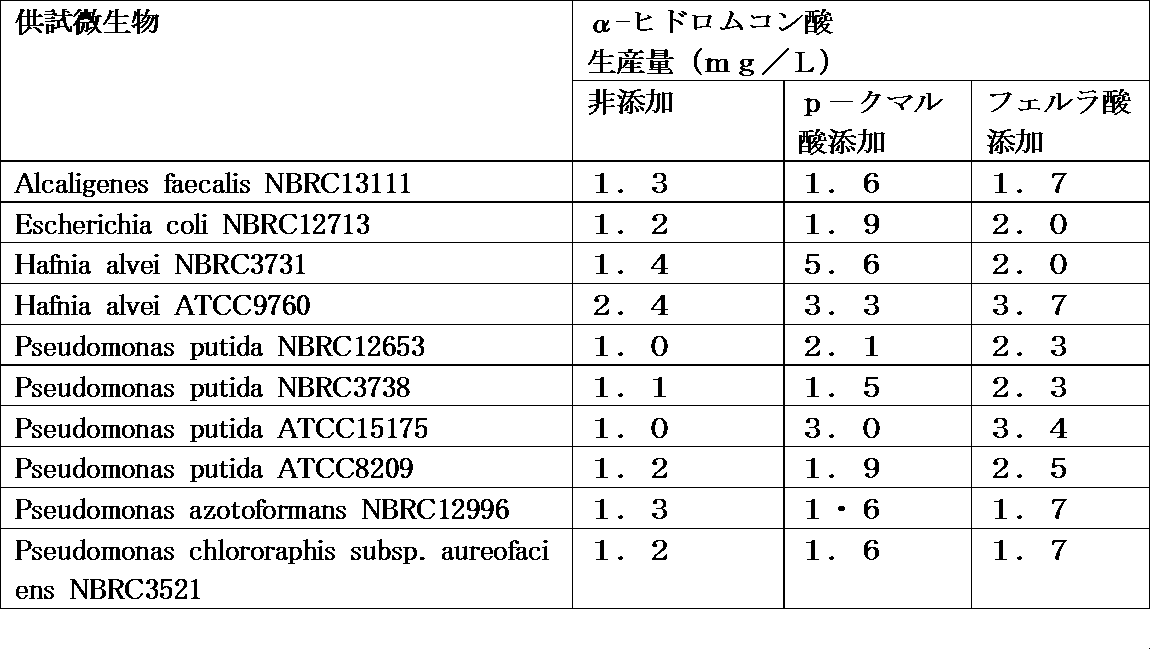
- Example 5 ⁇ -hydromuconic acid production test using p-coumaric acid or ferulic acid as an inducer
- Pre-culture and cell washing were performed under the same conditions as in Example 4 except that p-coumaric acid or ferulic acid was added to a concentration of 0.5 mM.
- 0.5 mL of the suspension after washing was added to 5 mL of a medium having the composition shown below, and cultured with shaking at 30 ° C. for 48 hours.
- Table 5 shows the results of quantitative analysis of ⁇ -hydromuconic acid in the culture supernatant.
- ⁇ -hydromuconic acid can be produced using microorganisms.
- the obtained ⁇ -hydromuconic acid can be used as a raw material for various polymers.
Landscapes
- Chemical & Material Sciences (AREA)
- Organic Chemistry (AREA)
- Engineering & Computer Science (AREA)
- Life Sciences & Earth Sciences (AREA)
- Health & Medical Sciences (AREA)
- Zoology (AREA)
- Wood Science & Technology (AREA)
- Genetics & Genomics (AREA)
- Bioinformatics & Cheminformatics (AREA)
- Biotechnology (AREA)
- General Health & Medical Sciences (AREA)
- Biochemistry (AREA)
- General Engineering & Computer Science (AREA)
- Microbiology (AREA)
- Chemical Kinetics & Catalysis (AREA)
- General Chemical & Material Sciences (AREA)
- Medicinal Chemistry (AREA)
- Tropical Medicine & Parasitology (AREA)
- Virology (AREA)
- Biomedical Technology (AREA)
- Preparation Of Compounds By Using Micro-Organisms (AREA)
- Micro-Organisms Or Cultivation Processes Thereof (AREA)
Abstract
Description
(1)Escherichia属微生物、Pseudomonas属微生物、Hafnia属微生物、Bacillus属微生物、Cupriavidus属微生物、Acinetobacter属微生物、Alcaligenes属微生物、Delftia属微生物、Shimwellia属微生物からなる群から選択されるα-ヒドロムコン酸の生産能を有する少なくとも1種の微生物を培養する工程を含む、α-ヒドロムコン酸の製造方法。
(2)前記微生物が、Cupriavidus属微生物、Acinetobacter属微生物、Delftia属微生物、Shimwellia属微生物、Escherichia属微生物およびPseudomonas属微生物からなる群から選択される少なくとも1種である(1)記載の方法。
(3)前記Escherichia属微生物が、Escherichia fergusoniiまたはEscherichia coliである、(1)又は(2)記載の方法。
(4)前記Psuedomonas属微生物が、Pseudomonas fluorescens、Pseudomonas putida、Pseudomonas azotoformansまたはPseudomonas chlororaphis subsp. aureofaciensである、(1)又は(2)記載の方法。
(5)前記Hafnia属微生物が、Hafnia alveiである、(1)記載の方法。
(6)前記Bacillus属微生物が、Bacillus badiusである、(1)記載の方法。
(7)前記Cupriavidus属微生物が、Cupriavidus metallidurans、Cupriavidus numazuensisまたはCupriavidus oxalaticusである、(1)又は(2)記載の製造方法。
(8)前記Acinetobacter属微生物が、Acinetobacter baylyiまたはAcinetobacter radioresistensである、(1)又は(2)記載の方法。
(9)前記Alcaligenes属微生物が、Alcaligenes faecalisである、(1)記載の方法。
(10)前記Delftia属微生物が、Delftia acidovoransである、(1)記載の方法。
(11)前記Shimwellia属微生物が、Shimwellia blattaeである、(1)又は(2)記載の方法。
(12)前記微生物を培養する培地が、糖類、コハク酸、2-オキソグルタル酸およびグリセロールからなる群から選択される少なくとも1種の炭素源を含む、(1)~(11)のいずれか1項に記載の方法。
(13)前記微生物を、フェルラ酸、p-クマル酸、安息香酸、cis,cis-ムコン酸、プロトカテク酸およびカテコールからなる群から選択される少なくとも1種の誘導物質を含む培地で培養する、(1)~(12)のいずれか1項に記載の方法。
・Cupriavidus属微生物
・Acinetobacter属微生物
・Delftia属微生物
・Shimwellia属微生物
・Escherichia属微生物
・Psudomonas属微生物
・Alcaligenes属微生物
・Bacillus属微生物
・Hafnia属微生物。
後述の実施例の分析に用いたα-ヒドロムコン酸は化学合成により準備した。まず、コハク酸モノメチルエステル13.2g(0.1mol)(和光純薬株式会社製)に超脱水テトラヒドロフラン1.5L(和光純薬株式会社製)を加え、攪拌しながらカルボニルジイミダゾール16.2g(0.1mol)(和光純薬株式会社製)を添加し、窒素雰囲気下、1時間室温で攪拌した。この懸濁液にマロン酸モノメチルエステルカリウム塩15.6g(0.1mol)および塩化マグネシウム9.5g(0.1mol)を添加し、窒素雰囲気下1時間室温で攪拌した後、40℃で12時間攪拌した。反応終了後、1mol/L塩酸を0.05L加え、酢酸エチルにより抽出し、シリカゲルカラムクロマトグラフィー(ヘキサン:酢酸エチル=1:5)で分離精製することで、純粋な3-オキソヘキサンジカルボン酸ジメチルエステル13.1gを得た。収率70%。
1H-NMR(400MHz、CD3OD):δ2.48(m、4H)、δ5.84(d、1H)、δ6.96(m、1H)。
微生物培養
表1に示した微生物(いずれの微生物も微生物分与機関より購入。購入先は株名に記載。)のα-ヒドロムコン酸の生産能を調べた。トリプトン10g/L、酵母エキス5g/L、塩化ナトリウム5g/L、アジピン酸0.5g/L、pH7からなる培地5mLに、それぞれの微生物を一白金耳植菌し、十分懸濁するまで30℃で振とう培養した(前培養)。その培養液に10mLの0.9%塩化ナトリウムを加え、菌体を遠心分離したのち上清を完全に取り除くことで菌体を洗浄する操作を3回行ったのち、菌体を1mLの0.9%塩化ナトリウムに懸濁した。懸濁液0.5mLを、コハク酸を炭素源とする以下に示した組成の培地5mLに添加し、30℃で20時間振とう培養した(本培養)。本培養液より菌体を遠心分離した上清を、LC-MS/MSにて分析した。
コハク酸20g/L
硫酸アンモニウム2g/L
リン酸カリウム100mM
硫酸マグネシウム0.05g/L
硫酸鉄0.125mg/L
硫酸マンガン5.4mg/L
塩化カルシウム0.66mg/L
酵母エキス0.25g/L
pH6.5。
LC-MS/MSによるα-ヒドロムコン酸の定量分析は以下の条件で行った。
・HPLC:1290Infinity(Agilent Technologies社製)
カラム:Synergi hydro-RP(Phenomenex社製)、長さ100mm、内径3mm、粒径2.5μm
移動相:0.1%ギ酸水溶液/メタノール=70/30
流速:0.3mL/分
カラム温度:40℃
LC検出器:DAD(210nm)
・MS/MS:Triple-Quad LC/MS(Agilent Technologies社製)
イオン化法:ESI ネガティブモード。

実施例1でα-ヒドロムコン酸の生産能を有する微生物であることが確認できたCupriavidus metallidurans NBRC101272を、LB培地5mLに一白金耳植菌し、十分懸濁するまで30℃で振とう培養した(前々培養)。前々培養液2mLをトリプトン10g/L、酵母エキス5g/L、塩化ナトリウム5g/L、アジピン酸0.5g/L、pH7からなる培地100mLに添加し、十分懸濁するまで30℃で振とう培養した(前培養)。前培養液を200mLの0.9%塩化ナトリウムで実施例1と同様に3回洗浄したのち、菌体を10mLの0.9%塩化ナトリウムに懸濁した。懸濁液10mLを実施例1と同様のコハク酸を炭素源とする本培養の培地100mLに添加し、30℃で20時間振とう培養した(本培養)。本培養液より菌体を遠心分離した上清を、実施例1と同様にLC-MS/MSにて分析した結果、培養上清中に蓄積したα-ヒドロムコン酸の濃度は13mg/Lであった。
カラム:Synergi hydro-RP(Phenomenex社製)、長さ250mm、内径10mm、粒径4μm
移動相:5mM ギ酸水溶液/アセトニトリル=98/2
流速:4mL/分
注入量:1mL
カラム温度:45℃
検出器:UV-VIS(210nm)
分取装置:FC204(Gilson社製)。
表2に示した微生物のα-ヒドロムコン酸の生産能を確認するべく、実施例1と同様の条件で培養し、α-ヒドロムコン酸の定量分析をした結果、培養上清中にα-ヒドロムコン酸は検出されなかった。

表1に示した微生物を、コハク酸を含まない組成の培地を用いた他は実施例1と同様の条件で培養し、α-ヒドロムコン酸の定量分析をした結果、培養上清中にα-ヒドロムコン酸は検出されなかった。このことより実施例1において定量したα-ヒドロムコン酸が、コハク酸が代謝された結果生成したものであることを確認した。
表3に示した微生物(いずれも微生物分与機関より購入。購入先は株名に記載。)を対象に、誘導物質として、前培養培地にフェルラ酸、p-クマル酸、安息香酸、cis,cis-ムコン酸、プロトカテク酸およびカテコールをそれぞれ2.5mMとなるように添加した以外は実施例1と同様の条件で前培養および菌体洗浄を行った。洗浄後の懸濁液0.5mLを以下に示した組成の培地5mLに添加し、30℃で48時間振とう培養した。
グルコース10g/L
グリセロール10g/L
硫酸アンモニウム1g/L
リン酸カリウム50mM
硫酸マグネシウム0.025g/L
硫酸鉄0.0625mg/L
硫酸マンガン2.7mg/L
塩化カルシウム0.33mg/L
塩化ナトリウム1.25g/L
Bactoトリプトン2.5g/L
酵母エキス1.25g/L
pH6.5。
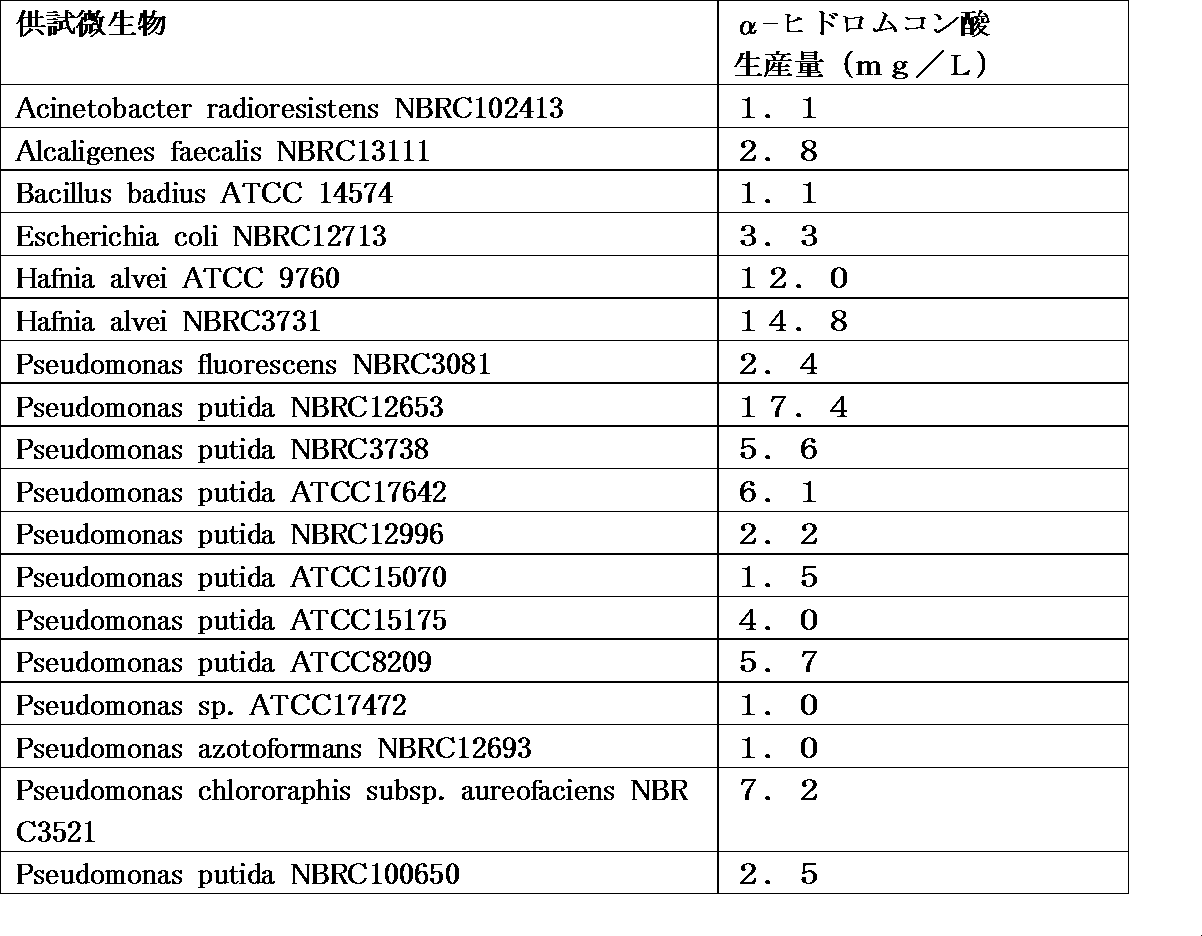
表4に示した微生物を対象に、実施例3で用いた誘導物質を添加しなかった以外は実施例3と同様の条件で前培養および菌体洗浄を行った。洗浄後の懸濁液0.5mLを以下に示した組成の培地5mLに添加し、30℃で48時間振とう培養した。
グルコース10g/L
硫酸アンモニウム1g/L
リン酸カリウム50mM
硫酸マグネシウム0.025g/L
硫酸鉄0.0625mg/L
硫酸マンガン2.7mg/L
塩化カルシウム0.33mg/L
塩化ナトリウム1.25g/L
Bactoトリプトン2.5g/L
酵母エキス1.25g/L
pH6.5。
これらの結果から、表4に示した微生物は誘導物質を添加せずに前培養を行った場合でもα-ヒドロムコン酸の生産能を有することを確認することができた。
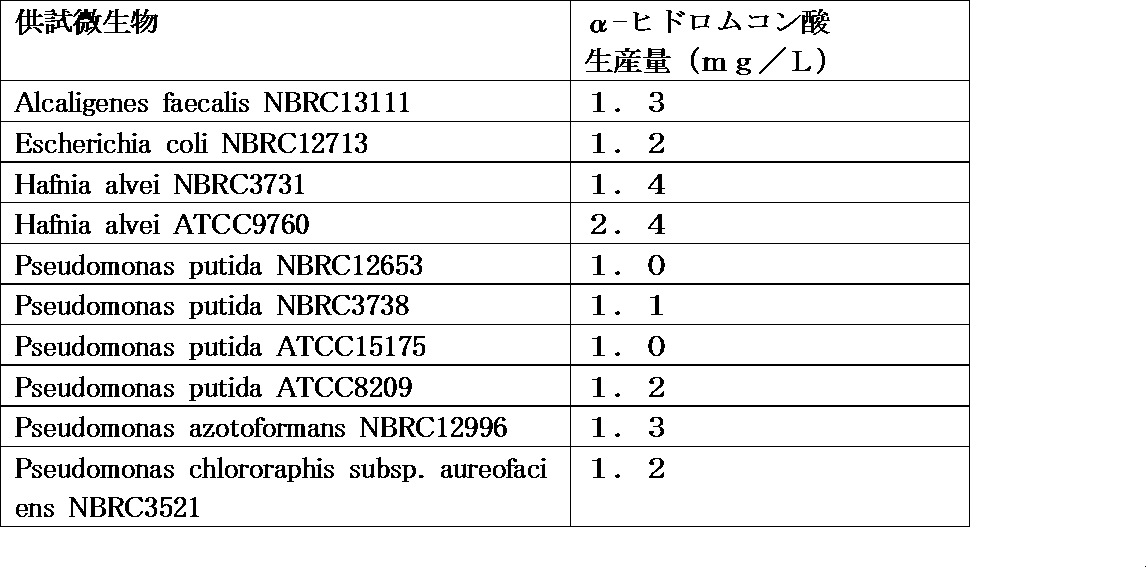
表5に示した微生物を対象に、実施例3で誘導物質として前培養培地に添加した物質の中から、p-クマル酸あるいはフェルラ酸をそれぞれ0.5mMとなるように添加した以外は実施例4と同様の条件で前培養および菌体洗浄を行った。洗浄後の懸濁液0.5mLを以下に示した組成の培地5mLに添加し、30℃で48時間振とう培養した。培養上清中のα-ヒドロムコン酸の定量分析をした結果をそれぞれ表5に示す。これらの結果から、p-クマル酸あるいはフェルラ酸のみを誘導物質として前培養培地に添加した場合でも、添加しなかった場合と比べて、α-ヒドロムコン酸の生産量が向上することがわかった。
Claims (13)
- Escherichia属微生物、Pseudomonas属微生物、Hafnia属微生物、Bacillus属微生物、Cupriavidus属微生物、Acinetobacter属微生物、Alcaligenes属微生物、Delftia属微生物、Shimwellia属微生物からなる群から選択されるα-ヒドロムコン酸の生産能を有する少なくとも1種の微生物を培養する工程を含む、α-ヒドロムコン酸の製造方法。
- 前記微生物が、Cupriavidus属微生物、Acinetobacter属微生物、Delftia属微生物、Shimwellia属微生物、Escherichia属微生物およびPseudomonas属微生物からなる群から選択される少なくとも1種である請求項1記載の方法。
- 前記Escherichia属微生物が、Escherichia fergusoniiまたはEscherichia coliである、請求項1又は2記載の方法。
- 前記Psuedomonas属微生物が、Pseudomonas fluorescens、Pseudomonas putida、Pseudomonas azotoformansまたはPseudomonas chlororaphis subsp. aureofaciensである、請求項1又は2記載の方法。
- 前記Hafnia属微生物が、Hafnia alveiである、請求項1記載の方法。
- 前記Bacillus属微生物が、Bacillus badiusである、請求項1記載の方法。
- 前記Cupriavidus属微生物が、Cupriavidus metallidurans、Cupriavidus numazuensisまたはCupriavidus oxalaticusである、請求項1又は2記載の製造方法。
- 前記Acinetobacter属微生物が、Acinetobacter baylyiまたはAcinetobacter radioresistensである、請求項1又は2記載の方法。
- 前記Alcaligenes属微生物が、Alcaligenes faecalisである、請求項1記載の方法。
- 前記Delftia属微生物が、Delftia acidovoransである、請求項1記載の方法。
- 前記Shimwellia属微生物が、Shimwellia blattaeである、請求項1又は2記載の方法。
- 前記微生物を培養する培地が、糖類、コハク酸、2-オキソグルタル酸およびグリセロールからなる群から選択される少なくとも1種の炭素源を含む、請求項1~11のいずれか1項に記載の方法。
- 前記微生物を、フェルラ酸、p-クマル酸、安息香酸、cis,cis-ムコン酸、プロトカテク酸およびカテコールからなる群から選択される少なくとも1種の誘導物質を含む培地で培養する、請求項1~12のいずれかに記載の方法。
Priority Applications (7)
| Application Number | Priority Date | Filing Date | Title |
|---|---|---|---|
| BR112017026276-2A BR112017026276B1 (pt) | 2015-06-10 | 2016-06-09 | MÉTODO DE PRODUÇÃO DE ÁCIDO a-HIDROMUCÔNICO |
| MYPI2017704677A MY186338A (en) | 2015-06-10 | 2016-06-09 | Method for producing ?-hydromuconic acid |
| CN201680032790.9A CN107614692B (zh) | 2015-06-10 | 2016-06-09 | α-氢化己二烯二酸的制造方法 |
| JP2016540052A JP6907537B2 (ja) | 2015-06-10 | 2016-06-09 | α−ヒドロムコン酸の製造方法 |
| EP16807564.6A EP3309259B1 (en) | 2015-06-10 | 2016-06-09 | Method for producing alpha-hydromuconic acid |
| CA2988566A CA2988566A1 (en) | 2015-06-10 | 2016-06-09 | Method for producing .alpha.-hydromuconic acid |
| US15/580,585 US11124811B2 (en) | 2015-06-10 | 2016-06-09 | Method for producing α-hydromuconic acid |
Applications Claiming Priority (2)
| Application Number | Priority Date | Filing Date | Title |
|---|---|---|---|
| JP2015117345 | 2015-06-10 | ||
| JP2015-117345 | 2015-06-10 |
Publications (1)
| Publication Number | Publication Date |
|---|---|
| WO2016199858A1 true WO2016199858A1 (ja) | 2016-12-15 |
Family
ID=57503368
Family Applications (1)
| Application Number | Title | Priority Date | Filing Date |
|---|---|---|---|
| PCT/JP2016/067231 Ceased WO2016199858A1 (ja) | 2015-06-10 | 2016-06-09 | α-ヒドロムコン酸の製造方法 |
Country Status (7)
| Country | Link |
|---|---|
| US (1) | US11124811B2 (ja) |
| EP (1) | EP3309259B1 (ja) |
| JP (1) | JP6907537B2 (ja) |
| CN (1) | CN107614692B (ja) |
| CA (1) | CA2988566A1 (ja) |
| MY (1) | MY186338A (ja) |
| WO (1) | WO2016199858A1 (ja) |
Cited By (7)
| Publication number | Priority date | Publication date | Assignee | Title |
|---|---|---|---|---|
| WO2017154955A1 (ja) * | 2016-03-09 | 2017-09-14 | 東レ株式会社 | グルコース組成物、微生物発酵原料および化学品の製造方法 |
| WO2017209103A1 (ja) * | 2016-05-31 | 2017-12-07 | 東レ株式会社 | α-ヒドロムコン酸の製造方法 |
| WO2017209102A1 (ja) * | 2016-05-31 | 2017-12-07 | 東レ株式会社 | 3-ヒドロキシアジピン酸の製造方法 |
| WO2019107516A1 (ja) | 2017-11-30 | 2019-06-06 | 東レ株式会社 | 3-ヒドロキシアジピン酸、α-ヒドロムコン酸および/またはアジピン酸を生産するための遺伝子改変微生物および当該化学品の製造方法 |
| WO2020230719A1 (ja) | 2019-05-10 | 2020-11-19 | 東レ株式会社 | 3-ヒドロキシアジピン酸、α-ヒドロムコン酸および/またはアジピン酸を生産するための遺伝子改変微生物および当該化学品の製造方法 |
| WO2020230718A1 (ja) | 2019-05-10 | 2020-11-19 | 東レ株式会社 | 3-ヒドロキシアジピン酸、α-ヒドロムコン酸および/またはアジピン酸を生産するための遺伝子改変微生物および当該化学品の製造方法 |
| WO2021153586A1 (ja) * | 2020-01-28 | 2021-08-05 | 東レ株式会社 | trans,trans-ムコン酸又はそのアルキルエステルの製造方法 |
Citations (5)
| Publication number | Priority date | Publication date | Assignee | Title |
|---|---|---|---|---|
| JP2011512868A (ja) * | 2008-03-11 | 2011-04-28 | ディーエスエム アイピー アセッツ ビー.ブイ. | アジピン酸(エステルまたはチオエステル)の合成 |
| JP2011515111A (ja) * | 2008-03-27 | 2011-05-19 | ジェノマティカ, インコーポレイテッド | アジピン酸および他の化合物を生成するための微生物 |
| WO2014043182A2 (en) * | 2012-09-14 | 2014-03-20 | Bioamber Inc. | Alternative pathways to adipates and adipic acid by combined fermentation and catalytic methods |
| WO2014055649A1 (en) * | 2012-10-02 | 2014-04-10 | Braskem S/A Ap 09 | Modified microorganisms and methods of using same for producing butadiene and succinate |
| WO2016068108A1 (ja) * | 2014-10-30 | 2016-05-06 | 東レ株式会社 | ε-カプロラクタムの製造方法 |
Family Cites Families (3)
| Publication number | Priority date | Publication date | Assignee | Title |
|---|---|---|---|---|
| EP3564345A1 (en) * | 2008-12-23 | 2019-11-06 | REG Life Sciences, LLC | Methods and compositions related to thioesterase enzymes |
| WO2012149571A2 (en) * | 2011-04-29 | 2012-11-01 | Utilx Corporation | In-situ data acquisition systems and methods |
| WO2013130487A2 (en) * | 2012-02-29 | 2013-09-06 | Duke University | Novel oxidoreductases for enantioselective reactions |
-
2016
- 2016-06-09 CN CN201680032790.9A patent/CN107614692B/zh active Active
- 2016-06-09 MY MYPI2017704677A patent/MY186338A/en unknown
- 2016-06-09 US US15/580,585 patent/US11124811B2/en active Active
- 2016-06-09 CA CA2988566A patent/CA2988566A1/en not_active Abandoned
- 2016-06-09 WO PCT/JP2016/067231 patent/WO2016199858A1/ja not_active Ceased
- 2016-06-09 JP JP2016540052A patent/JP6907537B2/ja active Active
- 2016-06-09 EP EP16807564.6A patent/EP3309259B1/en active Active
Patent Citations (5)
| Publication number | Priority date | Publication date | Assignee | Title |
|---|---|---|---|---|
| JP2011512868A (ja) * | 2008-03-11 | 2011-04-28 | ディーエスエム アイピー アセッツ ビー.ブイ. | アジピン酸(エステルまたはチオエステル)の合成 |
| JP2011515111A (ja) * | 2008-03-27 | 2011-05-19 | ジェノマティカ, インコーポレイテッド | アジピン酸および他の化合物を生成するための微生物 |
| WO2014043182A2 (en) * | 2012-09-14 | 2014-03-20 | Bioamber Inc. | Alternative pathways to adipates and adipic acid by combined fermentation and catalytic methods |
| WO2014055649A1 (en) * | 2012-10-02 | 2014-04-10 | Braskem S/A Ap 09 | Modified microorganisms and methods of using same for producing butadiene and succinate |
| WO2016068108A1 (ja) * | 2014-10-30 | 2016-05-06 | 東レ株式会社 | ε-カプロラクタムの製造方法 |
Non-Patent Citations (2)
| Title |
|---|
| HARWOOD, C. S. ET AL.: "THE beta- KETOADIPATE PATHWAY AND THE BIOLOGY OF SELF- IDENTITY", ANNU. REV. MICROBIOL., vol. 50, no. 1, 1996, pages 553 - 590, XP055125634 * |
| HYLAND, P.: "Development of a Platform Strain for Production of Adipic Acid Yields Insights into the Localized Redox Metabolism of S. cerevisiae", MASTER OF APPLIED SCIENCE , GRADUATE DEPARTMENT OF CHEMICAL ENGINEERING AND APPLIED CHEMISTRY, UNIVERSITY OF TORONTO, 2013, pages 6, XP055333608, Retrieved from the Internet <URL:https://tspace.library.utoronto.ca/bitstream/18007/70012/5/Hyland_Patrick_B_201311_MASc_thesis.pdf> [retrieved on 20160817] * |
Cited By (11)
| Publication number | Priority date | Publication date | Assignee | Title |
|---|---|---|---|---|
| WO2017154955A1 (ja) * | 2016-03-09 | 2017-09-14 | 東レ株式会社 | グルコース組成物、微生物発酵原料および化学品の製造方法 |
| US11053516B2 (en) | 2016-03-09 | 2021-07-06 | Toray Industries, Inc. | Glucose composition, microbial fermentation raw material, and method of producing chemical product |
| WO2017209103A1 (ja) * | 2016-05-31 | 2017-12-07 | 東レ株式会社 | α-ヒドロムコン酸の製造方法 |
| WO2017209102A1 (ja) * | 2016-05-31 | 2017-12-07 | 東レ株式会社 | 3-ヒドロキシアジピン酸の製造方法 |
| US11078503B2 (en) | 2016-05-31 | 2021-08-03 | Toray Industries, Inc. | Method for producing 3-hydroxyadipic acid |
| WO2019107516A1 (ja) | 2017-11-30 | 2019-06-06 | 東レ株式会社 | 3-ヒドロキシアジピン酸、α-ヒドロムコン酸および/またはアジピン酸を生産するための遺伝子改変微生物および当該化学品の製造方法 |
| WO2020230719A1 (ja) | 2019-05-10 | 2020-11-19 | 東レ株式会社 | 3-ヒドロキシアジピン酸、α-ヒドロムコン酸および/またはアジピン酸を生産するための遺伝子改変微生物および当該化学品の製造方法 |
| JPWO2020230719A1 (ja) * | 2019-05-10 | 2020-11-19 | ||
| WO2020230718A1 (ja) | 2019-05-10 | 2020-11-19 | 東レ株式会社 | 3-ヒドロキシアジピン酸、α-ヒドロムコン酸および/またはアジピン酸を生産するための遺伝子改変微生物および当該化学品の製造方法 |
| JP7646119B2 (ja) | 2019-05-10 | 2025-03-17 | 東レ株式会社 | 3-ヒドロキシアジピン酸、α-ヒドロムコン酸および/またはアジピン酸を生産するための遺伝子改変微生物および当該化学品の製造方法 |
| WO2021153586A1 (ja) * | 2020-01-28 | 2021-08-05 | 東レ株式会社 | trans,trans-ムコン酸又はそのアルキルエステルの製造方法 |
Also Published As
| Publication number | Publication date |
|---|---|
| EP3309259A1 (en) | 2018-04-18 |
| US11124811B2 (en) | 2021-09-21 |
| CA2988566A1 (en) | 2016-12-15 |
| CN107614692B (zh) | 2022-04-19 |
| EP3309259B1 (en) | 2020-03-25 |
| JPWO2016199858A1 (ja) | 2018-03-29 |
| EP3309259A4 (en) | 2018-12-26 |
| BR112017026276A2 (ja) | 2018-09-11 |
| US20180223318A1 (en) | 2018-08-09 |
| MY186338A (en) | 2021-07-13 |
| JP6907537B2 (ja) | 2021-07-21 |
| CN107614692A (zh) | 2018-01-19 |
Similar Documents
| Publication | Publication Date | Title |
|---|---|---|
| JP6907538B2 (ja) | 3−ヒドロキシアジピン酸の製造方法 | |
| JP6907537B2 (ja) | α−ヒドロムコン酸の製造方法 | |
| de Paula et al. | Polyhydroxyalkanoate production from crude glycerol by newly isolated Pandoraea sp. | |
| US11753662B2 (en) | Method for producing 3-Oxoadipic acid | |
| Bhattacharyya et al. | Utilization of vinasse for production of poly-3-(hydroxybutyrate-co-hydroxyvalerate) by Haloferax mediterranei | |
| US11078503B2 (en) | Method for producing 3-hydroxyadipic acid | |
| EP2492348A1 (en) | Process for producing D-lactic acid from glycerol employing Pseudomonas auricularis, Pseudomonas azotoformans, Pseudomonas chlororaphis, Pseudomonas taetrolens, or Pseuomonas sp. | |
| US11248207B2 (en) | Method for producing alpha-hydromuconic acid | |
| BR112017026281B1 (pt) | Método para produção de ácido 3-hidroxiadípico | |
| BR112017026276B1 (pt) | MÉTODO DE PRODUÇÃO DE ÁCIDO a-HIDROMUCÔNICO |
Legal Events
| Date | Code | Title | Description |
|---|---|---|---|
| ENP | Entry into the national phase |
Ref document number: 2016540052 Country of ref document: JP Kind code of ref document: A |
|
| 121 | Ep: the epo has been informed by wipo that ep was designated in this application |
Ref document number: 16807564 Country of ref document: EP Kind code of ref document: A1 |
|
| ENP | Entry into the national phase |
Ref document number: 2988566 Country of ref document: CA |
|
| WWE | Wipo information: entry into national phase |
Ref document number: 15580585 Country of ref document: US |
|
| NENP | Non-entry into the national phase |
Ref country code: DE |
|
| WWE | Wipo information: entry into national phase |
Ref document number: 2016807564 Country of ref document: EP |
|
| REG | Reference to national code |
Ref country code: BR Ref legal event code: B01A Ref document number: 112017026276 Country of ref document: BR |
|
| ENP | Entry into the national phase |
Ref document number: 112017026276 Country of ref document: BR Kind code of ref document: A2 Effective date: 20171206 |