WO2016208292A1 - Procédé de production d'une composition pigmentaire de quinacridone - Google Patents
Procédé de production d'une composition pigmentaire de quinacridone Download PDFInfo
- Publication number
- WO2016208292A1 WO2016208292A1 PCT/JP2016/064142 JP2016064142W WO2016208292A1 WO 2016208292 A1 WO2016208292 A1 WO 2016208292A1 JP 2016064142 W JP2016064142 W JP 2016064142W WO 2016208292 A1 WO2016208292 A1 WO 2016208292A1
- Authority
- WO
- WIPO (PCT)
- Prior art keywords
- quinacridone
- pigment
- pigment composition
- parts
- solid solution
- Prior art date
- Legal status (The legal status is an assumption and is not a legal conclusion. Google has not performed a legal analysis and makes no representation as to the accuracy of the status listed.)
- Ceased
Links
Images



Classifications
-
- C—CHEMISTRY; METALLURGY
- C09—DYES; PAINTS; POLISHES; NATURAL RESINS; ADHESIVES; COMPOSITIONS NOT OTHERWISE PROVIDED FOR; APPLICATIONS OF MATERIALS NOT OTHERWISE PROVIDED FOR
- C09B—ORGANIC DYES OR CLOSELY-RELATED COMPOUNDS FOR PRODUCING DYES, e.g. PIGMENTS; MORDANTS; LAKES
- C09B48/00—Quinacridones
-
- C—CHEMISTRY; METALLURGY
- C09—DYES; PAINTS; POLISHES; NATURAL RESINS; ADHESIVES; COMPOSITIONS NOT OTHERWISE PROVIDED FOR; APPLICATIONS OF MATERIALS NOT OTHERWISE PROVIDED FOR
- C09B—ORGANIC DYES OR CLOSELY-RELATED COMPOUNDS FOR PRODUCING DYES, e.g. PIGMENTS; MORDANTS; LAKES
- C09B67/00—Influencing the physical, e.g. the dyeing or printing properties of dyestuffs without chemical reactions, e.g. by treating with solvents grinding or grinding assistants, coating of pigments or dyes; Process features in the making of dyestuff preparations; Dyestuff preparations of a special physical nature, e.g. tablets, films
- C09B67/006—Preparation of organic pigments
- C09B67/0066—Aqueous dispersions of pigments containing only dispersing agents
-
- C—CHEMISTRY; METALLURGY
- C09—DYES; PAINTS; POLISHES; NATURAL RESINS; ADHESIVES; COMPOSITIONS NOT OTHERWISE PROVIDED FOR; APPLICATIONS OF MATERIALS NOT OTHERWISE PROVIDED FOR
- C09D—COATING COMPOSITIONS, e.g. PAINTS, VARNISHES OR LACQUERS; FILLING PASTES; CHEMICAL PAINT OR INK REMOVERS; INKS; CORRECTING FLUIDS; WOODSTAINS; PASTES OR SOLIDS FOR COLOURING OR PRINTING; USE OF MATERIALS THEREFOR
- C09D11/00—Inks
- C09D11/02—Printing inks
- C09D11/03—Printing inks characterised by features other than the chemical nature of the binder
- C09D11/033—Printing inks characterised by features other than the chemical nature of the binder characterised by the solvent
-
- C—CHEMISTRY; METALLURGY
- C09—DYES; PAINTS; POLISHES; NATURAL RESINS; ADHESIVES; COMPOSITIONS NOT OTHERWISE PROVIDED FOR; APPLICATIONS OF MATERIALS NOT OTHERWISE PROVIDED FOR
- C09D—COATING COMPOSITIONS, e.g. PAINTS, VARNISHES OR LACQUERS; FILLING PASTES; CHEMICAL PAINT OR INK REMOVERS; INKS; CORRECTING FLUIDS; WOODSTAINS; PASTES OR SOLIDS FOR COLOURING OR PRINTING; USE OF MATERIALS THEREFOR
- C09D11/00—Inks
- C09D11/02—Printing inks
- C09D11/03—Printing inks characterised by features other than the chemical nature of the binder
- C09D11/037—Printing inks characterised by features other than the chemical nature of the binder characterised by the pigment
Definitions
- the present invention relates to a method for producing a quinacridone pigment composition for environmentally friendly ink.
- the required properties of pigments as colorants are required to have high coloring power, high saturation, and high dispersion stability.
- a pigment having a fine pigment particle diameter and a narrow particle size distribution width is desirable for high coloring power and high saturation, and dispersion stability is imparted to the pigment by a pigment surface treatment agent and a derivative treatment.
- quinacridone solid solution pigment having a characteristic X-ray diffraction peak composed of unsubstituted quinacridone and 4,11-dichloroquinacridone has been proposed, it does not satisfy the required characteristics in terms of saturation and coloring power (patent) Reference 3).
- the problem to be solved by the present invention is a method for producing a quinacridone pigment composition capable of obtaining high saturation, high coloring power, and further high dispersion stability, and a quinacridone pigment composition obtained by the production method. It is another object of the present invention to provide a water-based or alcohol-based ink that is environmentally friendly, characterized in that it contains.
- the present inventors have divided the addition time of the quinacridone derivative into a quinacridone solid solution crystal control process step and a post-crystal control process step, thereby providing a color with high coloring power and high saturation. It has been found that high dispersion stability can be achieved together with characteristics, and the present invention has been completed.
- the present invention provides a method for producing a quinacridone pigment composition
- a quinacridone pigment composition comprising a quinacridone solid solution and a quinacridone derivative.
- Step A 0.1 to 10 parts of quinacridone pigment derivative and 500 to 1500 parts of an organic solvent and / or water pigment slurry are added to 80 to 150 ° C. with respect to 100 parts of the crude quinacridone solid solution obtained by the cyclization reaction. Heat-treating with,
- Step B After Step A, after separating the organic solvent out of the system, 0.5 to 15 parts of quinacridone derivative is further added to 100 parts of quinacridone solid solution, isolated and dried to obtain a quinacridone pigment composition.
- a process for producing a quinacridone pigment composition comprising the steps of:
- the crude quinacridone solid solution is C.I. I. Pigment red 122 and C.I. I.
- the crude quinacridone solid solution is C.I. I. 100 parts of Pigment Red 122 I.
- a method for producing a quinacridone pigment composition comprising 1 to 100 parts of Pigment Red 19.
- a method for producing a quinacridone pigment composition wherein the quinacridone derivative is quinacridone sulfonate.
- n 1 to 3
- m 1 to 3.
- the present invention relates to a water-based or alcohol-based ink characterized by containing a quinacridone pigment composition obtained by the method for producing a quinacridone pigment composition.
- the quinacridone pigment composition obtained by the method for producing a quinacridone pigment composition of the present invention as a colorant, it is possible to obtain an environmentally friendly ink that can achieve both high chroma, high coloring power, and high dispersion stability. Has a technical effect.
- the quinacridone solid solution obtained by the method for producing a quinacridone pigment composition of the present invention is C.I. I. Pigment violet 19, C.I. I. Pigment Red 122 is included as a main component, and a mixed phase is formed.
- C.I. I. It may be a solid solution composed of CI Pigment Red 202 or another quinacridone compound having a quinacridone structure.
- the quinacridone solid solution obtained by the production method of the present invention has a peak at a Bragg angle by intrinsic X-ray diffraction that does not exist in a single crystal of each quinacridone structure. Therefore, whether it is a solid solution or a mixture of single crystals can be easily determined by powder X-ray diffraction.
- the quinacridone solid solution used in the present invention can be produced by a conventionally known method. Specifically, there are the following methods. (1) A method in which terephthalic acid, which is a raw material before cyclization, is dehydrated and cyclized in polyphosphoric acid and poured into water, and then the precipitate is filtered and washed with water. (2) A method in which quinacridone (A) and quinacridone (B) having a different structure are dissolved in polyphosphoric acid or concentrated sulfuric acid and poured into water, and then the precipitate is filtered and washed with water.
- the ratio to Pigment Violet 19 is C.I. I. 100 parts of Pigment Red 122 I. Pigment Red 19 is 1 to 100 parts.
- the content is preferably 15 to 50 parts, and more preferably 20 to 40 parts in order to satisfy the required characteristics of coloring power and saturation in the ink.
- an organic solvent and / or water can be used as the solvent used in the production of the solid solution in the production method of the quinacridone pigment composition of the present invention.
- the quinacridone pigment composition obtained by the method for producing a quinacridone pigment composition of the present invention is composed of the above quinacridone solid solution and a quinacridone derivative.
- the method for producing the quinacridone pigment composition of the present invention comprises: (Step A) 0.1-100 parts of quinacridone pigment derivative and 500-1500 parts of pigment slurry of organic solvent and / or water at 80-150 ° C. with respect to 100 parts of the crude quinacridone solid solution obtained by the cyclization reaction Heat treatment process.
- the addition amount of the quinacridone derivative is preferably 1 to 6 parts, more preferably 3 to 5 parts.
- Step B After Step A, after separating the organic solvent out of the system, 0.5 to 15 parts of a quinacridone pigment derivative is further added to 100 parts of the crude quinacridone solid solution, isolated and dried to obtain a quinacridone pigment composition.
- a process for obtaining a product The treatment amount of the quinacridone pigment derivative is preferably 1 to 10 parts, more preferably 3 to 6 parts.
- the greatest feature of the present invention is that in the solvent treatment for controlling the crystal growth and particle size of the quinacridone solid solution, the solvent treatment step (step A) and the solvent separation are performed in order to achieve both dispersibility, storage stability, colorability, and saturation.
- the quinacridone derivative is divided and added to each process to be processed.
- Step A is a step of reducing the particle size, and high colorability and high saturation are achieved.
- the next step B is a step of suppressing aggregation of pigments by controlling the particle size to be small, and in addition to the effects obtained in step A, it is possible to achieve both good dispersibility and storage stability.
- the quinacridone derivative when the quinacrid derivative is added only to the step A, the crystal growth of the quinacridone solid solution pigment is suppressed, and a fine, high coloring power and high chromatographic pigment crystal is obtained.
- surface free energy increases due to miniaturization, pigment aggregation is promoted in ink evaluation and the like, and not only high coloring power and high chroma effect due to miniaturization cannot be obtained, but also dispersibility and storage stability are significantly reduced.
- Step A which aims to reduce the particle size
- Step B which aims to suppress aggregation of pigment crystals.
- an organic solvent and / or water can be used, and preferably water and a butanol system control the particle size.
- the amount of the solvent is more preferably 500 to 2000 parts with respect to 100 parts of the quinacridone solid solution, and 500 to 1500 parts in view of economy.
- the quinacridone derivative that can be used in (Step A) is a compound represented by the following general formula (1), and is dichloroquinacridone sulfonic acid aluminum salt.
- the quinacridone derivative that can be used in (Step B) is a compound represented by the following general formula (1), and is dichloroquinacridone sulfonic acid aluminum salt.
- Step A 0.1 to 10 parts of quinacridone derivative is treated with respect to 100 parts of quinacridone solid solution.
- the amount is preferably 1 to 6 parts, more preferably 3 to 5 parts.
- Quinacridone sulfonate is a quinacridone derivative having a structure represented by the following general formula.
- n 1 to 3
- m 1 to 3.
- the reaction temperature in (Step A) is not particularly limited. Further, the processing time is not particularly limited, but it is necessary to perform processing until a desired particle size and particle size distribution are obtained.
- an inorganic base such as sodium hydroxide or potassium hydroxide can be used in combination as necessary.
- the quinacridone solid solution is not a dry product because it is uniformly treated in the solvent as described above, and the wet cake obtained after washing with water or solvent in the subsequent step after the solid solution synthesis. It is preferable to process.
- the quinacridone derivative that can be used may have the same structure as or different from the quinacridone derivative used in (Step A).
- the processing amount of a quinacridone derivative can be set arbitrarily, a processing amount equivalent to or larger than (Step A) is preferable because it has a higher effect of increasing coloring power.
- 0.5 to 15 parts per 100 parts of the quinacridone solid solution is a preferable range in terms of hue.
- the amount is preferably 1 to 10 parts, more preferably 3 to 6 parts.
- the quinacridone derivative may be added from the start of the separation, or may be added during the separation.
- the temperature of solvent distillation in (Step B) depends on the solvent used, but of course, it must be distilled from the system, so it is performed at a temperature equal to or higher than the boiling point of the solvent.
- the end point of the solvent distillation is finished when the distillation has ceased.
- a quinacridone pigment composition can be obtained through conventionally known filtration, drying, and pulverization steps.
- the quinacridone pigment composition obtained by the production method of the present invention is suitable for environmentally friendly inks and can be used as a colorant.
- the environmentally friendly ink is a low VOC (Volatile Organic Compounds volatile organic compound) and is a general term for an ink that does not contain toluene, MEK (methyl ethyl ketone) or the like.
- the quinacridone pigment composition obtained by the production method of the present invention is contained in the environment-friendly ink in an amount of 5 to 20%, and it is possible to obtain an ink having a very high coloring power.
- the ink can be produced by uniformly dispersing in a vehicle using a conventionally known disperser.
- the quinacridone pigment composition obtained by the production method of the present invention is used in various applications such as publicly known applications, printing inks, paints, plastic colorants, toner colorants, color filter colorants, and the like as color materials. It can be used.
- step A To 60 g of this solid solution crude pigment, 600 g of 33% isobutanol aqueous solution and 1.8 g of dichloroquinacridone sulfonic acid aluminum salt were added (step A), and heat treatment was performed at 114 ° C. for 5 hours to obtain a pigment composition. After distilling off isobutanol, 1.2 g of dichloroquinacridone sulfonic acid aluminum salt was added to 61.8 g of the obtained pigment composition (Step B), and the mixture was dispersed at 60 ° C. for 30 minutes with stirring, and the solid content was changed to Nutsche. Filtered with a filter, washed with 3 L of water, dried at 98 ° C. for 12 hours and pulverized (Example 1) to obtain a pigment composition.
- step A To 60 g of this solid solution crude pigment, 600 g of 33% isobutanol aqueous solution and 1.8 g of dichloroquinacridone sulfonic acid aluminum salt were added (step A), and heat treatment was performed at 114 ° C. for 5 hours to obtain a pigment composition. After distilling off isobutanol, 3.1 g of dichloroquinacridone sulfonic acid aluminum salt was added to 61.8 g of the obtained pigment composition (Step B), and the mixture was dispersed at 60 ° C. for 30 minutes with stirring. The mixture was filtered with a Nutsche filter, washed with 3 L of water, dried at 98 ° C. for 12 hours and pulverized (Example 2) to obtain a pigment composition.
- step A To 60 g of this solid solution crude pigment, 600 g of 33% isobutanol aqueous solution and 1.8 g of dichloroquinacridone sulfonic acid aluminum salt were added (step A), and heat treatment was performed at 114 ° C. for 5 hours to obtain a pigment composition. After isobutanol was distilled off, the solid content was filtered with a Nutsche filter, washed with 3 L of water, dried at 98 ° C. for 12 hours and pulverized to obtain a pigment composition (Comparative Example 1). (No process B)
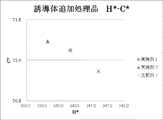
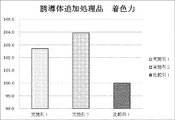
- Example 1 The pigment compositions obtained in Example 1, Example 2, and Comparative Example 1 were evaluated. [Evaluation Method 1: Non-Toluene Polyamide / Nitrocellulose Gravure Test]
- Table 1 shows the composition of gravure ink.
- the PA varnish in Table 1 is obtained by dissolving 100 parts of polyamide resin in 118 parts of isopropyl alcohol.
- NC varnish is obtained by dissolving 30 parts of nitrocellulose resin in 100 parts of ethyl acetate.
- the mixed solvent is obtained by mixing 89 parts of ethyl acetate with 100 parts of IPA.
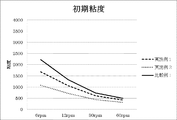
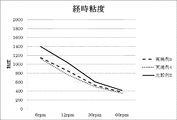
- the viscosity of the ink that has been allowed to stand for 7 days in a 50 ° C. constant temperature dryer is defined as the time-dependent ink viscosity.
- Examples 1 and 2 in which dichloroquinacridone sulfonic acid aluminum salt was additionally treated had a viscosity inversely proportional to the amount of treatment. It can be confirmed that it has been reduced.
- a dispersion stabilizing effect was also obtained.
- Step A To 60 g of this solid solution crude pigment, 600 g of 65% NMP (n-methyl-2-pyrrolidone) aqueous solution and 1.8 g of dichloroquinacridone sulfonic acid aluminum salt are added (Step A), and the pigment is heated at 100 ° C. for 4 hours. A composition was obtained. The NMP aqueous solution and the solid content are filtered with a Nutsche filter, and 61.8 g of the pigment composition obtained after washing with 3 L of water is reslurried in 600 g of water. 1.2 g of dichloroquinacridone sulfonic acid aluminum salt was added thereto (Step B), and the mixture was dispersed at 60 ° C. with stirring for 30 minutes. The solid content was filtered with a Nutsche filter, washed with 3 L of water, and 98 ° C. for 12 hours. The pigment composition was obtained by drying and pulverizing (Example 3).
- NMP n-methyl-2-pyrrolidon
- Example 4 Lasa Industrial Co., Ltd. 85% phosphoric acid 230.0g was weighed into a 2L separable flask, Rasa Industrial Co., Ltd. anhydrous phosphoric acid 330.0g was added and stirred, and 84.2% polyphosphoric acid was produced.
- I. 40.0 g of DATA (2,5-dianilinoterephthalic acid), which is a raw material of Pigment Violet 19 was gradually added.
- a condensation reaction was performed at 125 ° C. for 3 hours.
- the reaction solution was poured into 3 L of 30 ° C. water in a 5 L stainless steel cup. This was filtered and washed with water to obtain a solid solution crude pigment.
- Step A To 60 g of this solid solution crude pigment, 600 g of 65% NMP (n-methyl-2-pyrrolidone) aqueous solution and 1.8 g of dichloroquinacridone sulfonic acid aluminum salt are added (Step A), and the pigment is heated at 100 ° C. for 4 hours. A composition was obtained. The NMP aqueous solution and the solid content are filtered with a Nutsche filter, and 61.8 g of the pigment composition obtained after washing with 3 L of water is reslurried in 600 g of water. 1.8 g of dichloroquinacridone sulfonic acid aluminum salt was added thereto (Step B), and after dispersion treatment at 60 ° C. for 30 minutes with stirring, the solid content was filtered with a Nutsche filter, washed with 3 L of water, and 98 ° C. for 12 hours. The pigment composition was obtained by drying and pulverizing (Example 4).
- NMP n-methyl-2-pyrrolidone
- Step A To 60 g of this solid solution crude pigment, 600 g of 65% NMP (n-methyl-2-pyrrolidone) aqueous solution and 1.8 g of dichloroquinacridone sulfonic acid aluminum salt are added (Step A), and the pigment is heated at 100 ° C. for 4 hours. A composition was obtained. The NMP aqueous solution and the solid content are filtered with a Nutsche filter, and 61.8 g of the pigment composition obtained after washing with 3 L of water is reslurried in 600 g of water. This was dispersed and washed with stirring at 60 ° C. for 30 minutes, and then the solid content was filtered with a Nutsche filter, washed with 3 L of water, dried at 98 ° C. for 12 hours and pulverized (Comparative Example 2). Obtained.
- NMP n-methyl-2-pyrrolidone
- 61.8 g of the pigment composition obtained after washing with 3 L of water is reslurried in 600
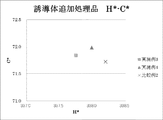
- Example 3 The pigment compositions obtained in Example 3, Example 4, and Comparative Example 2 were evaluated.
- Evaluation Method 1 Non-Toluene Polyamide / Nitrocellulose Gravure Test
- Table 6 shows the composition of gravure ink.
- the PA varnish in Table 6 is obtained by dissolving 100 parts of polyamide resin in 118 parts of isopropyl alcohol.
- NC varnish is obtained by dissolving 30 parts of nitrocellulose resin in 100 parts of ethyl acetate.
- the mixed solvent is obtained by mixing 89 parts of ethyl acetate with 100 parts of IPA.
- Viscosity Riki type viscometer RB-85L manufactured by Toki Sangyo Co., Ltd., rotor No. 12 was measured. The initial viscosity is 100 ml polybin separated from 1/8 inch glass beads in a constant temperature bath at 20 ° C. for 1 hour, and then the viscosity is measured. The viscosity with time is measured after 100 ml polybin after initial viscosity measurement is allowed to stand for 7 days in a constant temperature dryer at 50 ° C. As the hue and saturation, values measured using a datacolor 650 manufactured by datacolor were used.
- the viscosity of the ink that has been allowed to stand for 7 days in a 50 ° C. constant temperature dryer is defined as the time-dependent ink viscosity.
- Examples 3 and 4 in which the dichloroquinacridone sulfonic acid aluminum salt was additionally treated had a viscosity inversely proportional to the treatment amount. It can be confirmed that it has been reduced. In addition to the rheology modification effect of dichloroquinacridone sulfonic acid aluminum salt, it was confirmed that a dispersion stabilizing effect was also obtained.
Landscapes
- Chemical & Material Sciences (AREA)
- Organic Chemistry (AREA)
- Chemical Kinetics & Catalysis (AREA)
- General Chemical & Material Sciences (AREA)
- Life Sciences & Earth Sciences (AREA)
- Engineering & Computer Science (AREA)
- Materials Engineering (AREA)
- Wood Science & Technology (AREA)
- Dispersion Chemistry (AREA)
- Inks, Pencil-Leads, Or Crayons (AREA)
- Nitrogen Condensed Heterocyclic Rings (AREA)
Abstract
Priority Applications (4)
| Application Number | Priority Date | Filing Date | Title |
|---|---|---|---|
| JP2016553037A JP6090544B1 (ja) | 2015-06-24 | 2016-05-12 | キナクリドン顔料組成物の製造法 |
| CN201680014697.5A CN107429077B (zh) | 2015-06-24 | 2016-05-12 | 喹吖啶酮颜料组合物的制造方法 |
| EP16814063.0A EP3323858B1 (fr) | 2015-06-24 | 2016-05-12 | Procédé de production d'une composition pigmentaire de quinacridone |
| US15/554,898 US10040942B2 (en) | 2015-06-24 | 2016-05-12 | Process for producing quinacridone pigment composition |
Applications Claiming Priority (2)
| Application Number | Priority Date | Filing Date | Title |
|---|---|---|---|
| JP2015-126577 | 2015-06-24 | ||
| JP2015126577 | 2015-06-24 |
Publications (1)
| Publication Number | Publication Date |
|---|---|
| WO2016208292A1 true WO2016208292A1 (fr) | 2016-12-29 |
Family
ID=57585021
Family Applications (1)
| Application Number | Title | Priority Date | Filing Date |
|---|---|---|---|
| PCT/JP2016/064142 Ceased WO2016208292A1 (fr) | 2015-06-24 | 2016-05-12 | Procédé de production d'une composition pigmentaire de quinacridone |
Country Status (5)
| Country | Link |
|---|---|
| US (1) | US10040942B2 (fr) |
| EP (1) | EP3323858B1 (fr) |
| JP (1) | JP6090544B1 (fr) |
| CN (1) | CN107429077B (fr) |
| WO (1) | WO2016208292A1 (fr) |
Cited By (4)
| Publication number | Priority date | Publication date | Assignee | Title |
|---|---|---|---|---|
| WO2019202939A1 (fr) * | 2018-04-17 | 2019-10-24 | Dic株式会社 | Solution solide de quinacridone et composition d'encre la contenant |
| WO2020012782A1 (fr) * | 2018-07-12 | 2020-01-16 | Dic株式会社 | Composition de pigment de quinacridone et composition d'encre contenant celle-ci |
| JPWO2019187058A1 (ja) * | 2018-03-30 | 2021-03-18 | 大日精化工業株式会社 | キナクリドン固溶体顔料の製造方法、顔料分散液及びインクジェット用インキ |
| JP7112578B1 (ja) | 2021-10-05 | 2022-08-03 | 大日精化工業株式会社 | キナクリドン固溶体顔料の製造方法 |
Families Citing this family (1)
| Publication number | Priority date | Publication date | Assignee | Title |
|---|---|---|---|---|
| JP7188661B1 (ja) * | 2021-12-14 | 2022-12-13 | Dic株式会社 | 顔料組成物、着色剤、及びインクジェットインク |
Citations (3)
| Publication number | Priority date | Publication date | Assignee | Title |
|---|---|---|---|---|
| JP2008156524A (ja) * | 2006-12-25 | 2008-07-10 | Kao Corp | インクジェット記録用水系インク |
| JP2013053174A (ja) * | 2011-08-31 | 2013-03-21 | Fujifilm Corp | インク組成物、インクセット、及び画像形成方法 |
| JP2014031443A (ja) * | 2012-08-03 | 2014-02-20 | Dic Corp | キナクリドン固溶体の製造方法及びキナクリドン固溶体顔料の製造方法 |
Family Cites Families (5)
| Publication number | Priority date | Publication date | Assignee | Title |
|---|---|---|---|---|
| US4895949A (en) | 1988-06-20 | 1990-01-23 | Ciba-Geigy Corporation | Process for preparation of quinacridone solid solutions |
| EP0485337B1 (fr) * | 1990-11-08 | 1995-04-19 | Ciba-Geigy Ag | Dérivés de pigments contenant le groupe pyrazole |
| US5286863A (en) | 1991-08-22 | 1994-02-15 | Ciba-Geigy Corporation | Oxidation process for preparing quinacridone pigments |
| JP2002146224A (ja) | 2000-08-29 | 2002-05-22 | Dainippon Ink & Chem Inc | キナクリドン固溶体顔料およびその製造方法 |
| US8449096B2 (en) * | 2010-12-06 | 2013-05-28 | Xerox Corporation | Five member ring stabilizers for quinacridone-type pigments in solid ink |
-
2016
- 2016-05-12 EP EP16814063.0A patent/EP3323858B1/fr active Active
- 2016-05-12 CN CN201680014697.5A patent/CN107429077B/zh active Active
- 2016-05-12 WO PCT/JP2016/064142 patent/WO2016208292A1/fr not_active Ceased
- 2016-05-12 JP JP2016553037A patent/JP6090544B1/ja active Active
- 2016-05-12 US US15/554,898 patent/US10040942B2/en active Active
Patent Citations (3)
| Publication number | Priority date | Publication date | Assignee | Title |
|---|---|---|---|---|
| JP2008156524A (ja) * | 2006-12-25 | 2008-07-10 | Kao Corp | インクジェット記録用水系インク |
| JP2013053174A (ja) * | 2011-08-31 | 2013-03-21 | Fujifilm Corp | インク組成物、インクセット、及び画像形成方法 |
| JP2014031443A (ja) * | 2012-08-03 | 2014-02-20 | Dic Corp | キナクリドン固溶体の製造方法及びキナクリドン固溶体顔料の製造方法 |
Non-Patent Citations (1)
| Title |
|---|
| See also references of EP3323858A4 * |
Cited By (10)
| Publication number | Priority date | Publication date | Assignee | Title |
|---|---|---|---|---|
| JPWO2019187058A1 (ja) * | 2018-03-30 | 2021-03-18 | 大日精化工業株式会社 | キナクリドン固溶体顔料の製造方法、顔料分散液及びインクジェット用インキ |
| JP7066828B2 (ja) | 2018-03-30 | 2022-05-13 | 大日精化工業株式会社 | キナクリドン固溶体顔料の製造方法、顔料分散液及びインクジェット用インキ |
| WO2019202939A1 (fr) * | 2018-04-17 | 2019-10-24 | Dic株式会社 | Solution solide de quinacridone et composition d'encre la contenant |
| JPWO2019202939A1 (ja) * | 2018-04-17 | 2020-05-28 | Dic株式会社 | キナクリドン固溶体及びこれを含有するインキ組成物 |
| US20210040327A1 (en) * | 2018-04-17 | 2021-02-11 | Dic Corporation | Solid solution of quinacridone and ink composition containing same |
| US12104063B2 (en) * | 2018-04-17 | 2024-10-01 | Dic Corporation | Solid solution of quinacridone and ink composition containing same |
| WO2020012782A1 (fr) * | 2018-07-12 | 2020-01-16 | Dic株式会社 | Composition de pigment de quinacridone et composition d'encre contenant celle-ci |
| JP6705578B1 (ja) * | 2018-07-12 | 2020-06-03 | Dic株式会社 | キナクリドン顔料組成物及びこれを有するインキ組成物 |
| JP7112578B1 (ja) | 2021-10-05 | 2022-08-03 | 大日精化工業株式会社 | キナクリドン固溶体顔料の製造方法 |
| JP2023055068A (ja) * | 2021-10-05 | 2023-04-17 | 大日精化工業株式会社 | キナクリドン固溶体顔料の製造方法 |
Also Published As
| Publication number | Publication date |
|---|---|
| EP3323858A1 (fr) | 2018-05-23 |
| US20180037741A1 (en) | 2018-02-08 |
| EP3323858A4 (fr) | 2019-01-16 |
| JPWO2016208292A1 (ja) | 2017-06-29 |
| CN107429077B (zh) | 2019-12-06 |
| EP3323858B1 (fr) | 2022-08-17 |
| CN107429077A (zh) | 2017-12-01 |
| JP6090544B1 (ja) | 2017-03-08 |
| US10040942B2 (en) | 2018-08-07 |
Similar Documents
| Publication | Publication Date | Title |
|---|---|---|
| JP6090544B1 (ja) | キナクリドン顔料組成物の製造法 | |
| JP5678519B2 (ja) | 微細黄色顔料組成物及び該微細黄色顔料組成物を含む顔料分散体、並びに前記微細黄色顔料組成物の製造方法 | |
| CN101490177B (zh) | 高色度c.i.颜料红254及其制造方法 | |
| KR100257627B1 (ko) | 안료 조성물의 제조방법, 안료 조성물 및 이의 용도 | |
| JP2002512292A (ja) | β変態にある銅フタロシアニンの製造方法 | |
| JP5593719B2 (ja) | ジオキサジンバイオレット誘導体の製造方法 | |
| JP6769577B2 (ja) | キナクリドン固溶体及びこれを含有するインキ組成物 | |
| JP2008074986A (ja) | 顔料組成物及び顔料分散体 | |
| JPH1060337A (ja) | オフセット印刷用の印刷インキ | |
| JP2023174824A (ja) | キナクリドン顔料及びその製造方法 | |
| JP5892383B2 (ja) | キナクリドン固溶体の製造方法及びキナクリドン固溶体顔料の製造方法 | |
| JPH04246469A (ja) | 顔料組成物 | |
| JP5534325B2 (ja) | 銅フタロシアニン顔料組成物の製造方法及び印刷インキの製造方法 | |
| JP2016176014A (ja) | アゾメチン金属錯体の固溶体 | |
| JP2003096374A (ja) | グラビアインキの製造方法 | |
| WO2019003693A1 (fr) | Composition de pigment et encre d'impression | |
| JP4696937B2 (ja) | ジクロロキナクリドン顔料の製造方法 | |
| JP4556091B2 (ja) | 顔料の分散用ベース組成物および分散方法 | |
| JP2002121428A (ja) | 平版印刷インキ用ドライヤー | |
| JPH0645761B2 (ja) | 易分散性顔料の製造方法 | |
| CN121249174A (zh) | 一种贮藏稳定型水性油墨用低粘度喹吖啶酮颜料的制备方法及其应用 | |
| JPS63363A (ja) | 顔料分散剤 | |
| JPS6395270A (ja) | 粒状着色剤の製造方法 | |
| JP2012041434A (ja) | オフセット印刷用インキ組成物の製造方法及び該製造方法から得られるオフセット印刷用インキ組成物 | |
| JP2004298864A (ja) | 分散助剤及び顔料組成物 |
Legal Events
| Date | Code | Title | Description |
|---|---|---|---|
| ENP | Entry into the national phase |
Ref document number: 2016553037 Country of ref document: JP Kind code of ref document: A |
|
| 121 | Ep: the epo has been informed by wipo that ep was designated in this application |
Ref document number: 16814063 Country of ref document: EP Kind code of ref document: A1 |
|
| WWE | Wipo information: entry into national phase |
Ref document number: 15554898 Country of ref document: US |
|
| REEP | Request for entry into the european phase |
Ref document number: 2016814063 Country of ref document: EP |
|
| NENP | Non-entry into the national phase |
Ref country code: DE |