WO2017051846A1 - ユーザ端末、無線基地局及び無線通信方法 - Google Patents
ユーザ端末、無線基地局及び無線通信方法 Download PDFInfo
- Publication number
- WO2017051846A1 WO2017051846A1 PCT/JP2016/077956 JP2016077956W WO2017051846A1 WO 2017051846 A1 WO2017051846 A1 WO 2017051846A1 JP 2016077956 W JP2016077956 W JP 2016077956W WO 2017051846 A1 WO2017051846 A1 WO 2017051846A1
- Authority
- WO
- WIPO (PCT)
- Prior art keywords
- harq
- csi
- uci
- ack
- transmitted
- Prior art date
- Legal status (The legal status is an assumption and is not a legal conclusion. Google has not performed a legal analysis and makes no representation as to the accuracy of the status listed.)
- Ceased
Links
Images









Classifications
-
- H—ELECTRICITY
- H04—ELECTRIC COMMUNICATION TECHNIQUE
- H04L—TRANSMISSION OF DIGITAL INFORMATION, e.g. TELEGRAPHIC COMMUNICATION
- H04L1/00—Arrangements for detecting or preventing errors in the information received
- H04L1/12—Arrangements for detecting or preventing errors in the information received by using return channel
- H04L1/16—Arrangements for detecting or preventing errors in the information received by using return channel in which the return channel carries supervisory signals, e.g. repetition request signals
- H04L1/18—Automatic repetition systems, e.g. Van Duuren systems
- H04L1/1812—Hybrid protocols; Hybrid automatic repeat request [HARQ]
- H04L1/1816—Hybrid protocols; Hybrid automatic repeat request [HARQ] with retransmission of the same, encoded, message
-
- H—ELECTRICITY
- H04—ELECTRIC COMMUNICATION TECHNIQUE
- H04L—TRANSMISSION OF DIGITAL INFORMATION, e.g. TELEGRAPHIC COMMUNICATION
- H04L1/00—Arrangements for detecting or preventing errors in the information received
- H04L1/12—Arrangements for detecting or preventing errors in the information received by using return channel
- H04L1/16—Arrangements for detecting or preventing errors in the information received by using return channel in which the return channel carries supervisory signals, e.g. repetition request signals
- H04L1/1607—Details of the supervisory signal
- H04L1/1671—Details of the supervisory signal the supervisory signal being transmitted together with control information
-
- H—ELECTRICITY
- H04—ELECTRIC COMMUNICATION TECHNIQUE
- H04L—TRANSMISSION OF DIGITAL INFORMATION, e.g. TELEGRAPHIC COMMUNICATION
- H04L1/00—Arrangements for detecting or preventing errors in the information received
- H04L1/0001—Systems modifying transmission characteristics according to link quality, e.g. power backoff
- H04L1/0023—Systems modifying transmission characteristics according to link quality, e.g. power backoff characterised by the signalling
- H04L1/0026—Transmission of channel quality indication
-
- H—ELECTRICITY
- H04—ELECTRIC COMMUNICATION TECHNIQUE
- H04L—TRANSMISSION OF DIGITAL INFORMATION, e.g. TELEGRAPHIC COMMUNICATION
- H04L1/00—Arrangements for detecting or preventing errors in the information received
- H04L1/0001—Systems modifying transmission characteristics according to link quality, e.g. power backoff
- H04L1/0023—Systems modifying transmission characteristics according to link quality, e.g. power backoff characterised by the signalling
- H04L1/0028—Formatting
- H04L1/0031—Multiple signaling transmission
-
- H—ELECTRICITY
- H04—ELECTRIC COMMUNICATION TECHNIQUE
- H04L—TRANSMISSION OF DIGITAL INFORMATION, e.g. TELEGRAPHIC COMMUNICATION
- H04L1/00—Arrangements for detecting or preventing errors in the information received
- H04L1/12—Arrangements for detecting or preventing errors in the information received by using return channel
- H04L1/16—Arrangements for detecting or preventing errors in the information received by using return channel in which the return channel carries supervisory signals, e.g. repetition request signals
- H04L1/18—Automatic repetition systems, e.g. Van Duuren systems
- H04L1/1829—Arrangements specially adapted for the receiver end
- H04L1/1854—Scheduling and prioritising arrangements
-
- H—ELECTRICITY
- H04—ELECTRIC COMMUNICATION TECHNIQUE
- H04L—TRANSMISSION OF DIGITAL INFORMATION, e.g. TELEGRAPHIC COMMUNICATION
- H04L1/00—Arrangements for detecting or preventing errors in the information received
- H04L1/12—Arrangements for detecting or preventing errors in the information received by using return channel
- H04L1/16—Arrangements for detecting or preventing errors in the information received by using return channel in which the return channel carries supervisory signals, e.g. repetition request signals
- H04L1/18—Automatic repetition systems, e.g. Van Duuren systems
- H04L1/1829—Arrangements specially adapted for the receiver end
- H04L1/1861—Physical mapping arrangements
-
- H—ELECTRICITY
- H04—ELECTRIC COMMUNICATION TECHNIQUE
- H04L—TRANSMISSION OF DIGITAL INFORMATION, e.g. TELEGRAPHIC COMMUNICATION
- H04L5/00—Arrangements affording multiple use of the transmission path
- H04L5/003—Arrangements for allocating sub-channels of the transmission path
- H04L5/0053—Allocation of signalling, i.e. of overhead other than pilot signals
- H04L5/0057—Physical resource allocation for CQI
-
- H—ELECTRICITY
- H04—ELECTRIC COMMUNICATION TECHNIQUE
- H04W—WIRELESS COMMUNICATION NETWORKS
- H04W24/00—Supervisory, monitoring or testing arrangements
- H04W24/10—Scheduling measurement reports ; Arrangements for measurement reports
-
- H—ELECTRICITY
- H04—ELECTRIC COMMUNICATION TECHNIQUE
- H04W—WIRELESS COMMUNICATION NETWORKS
- H04W28/00—Network traffic management; Network resource management
- H04W28/02—Traffic management, e.g. flow control or congestion control
- H04W28/06—Optimizing the usage of the radio link, e.g. header compression, information sizing, discarding information
-
- H—ELECTRICITY
- H04—ELECTRIC COMMUNICATION TECHNIQUE
- H04W—WIRELESS COMMUNICATION NETWORKS
- H04W72/00—Local resource management
- H04W72/04—Wireless resource allocation
-
- H—ELECTRICITY
- H04—ELECTRIC COMMUNICATION TECHNIQUE
- H04W—WIRELESS COMMUNICATION NETWORKS
- H04W72/00—Local resource management
- H04W72/20—Control channels or signalling for resource management
- H04W72/21—Control channels or signalling for resource management in the uplink direction of a wireless link, i.e. towards the network
Definitions
- the present invention relates to a user terminal, a radio base station, and a radio communication method in a next-generation mobile communication system.
- LTE Long Term Evolution
- LTE-A also referred to as LTE Advanced, LTE Rel. 10, 11 or 12
- LTE Long Term Evolution
- Successor systems for example, FRA (Future Radio Access), 5G (5th generation mobile communication system), LTE Rel.13, etc.
- FRA Full Radio Access
- 5G 5th generation mobile communication system
- LTE-A employs carrier aggregation (CA) that performs communication using a plurality of carriers simultaneously with a predetermined bandwidth (maximum 20 MHz) as a basic unit.
- CA carrier aggregation
- a carrier that is a basic unit in carrier aggregation is referred to as a component carrier (CC), for example, LTE Rel. This corresponds to 8 system bands.
- PCell Primary Cell
- SCell Secondary Cell
- the UE can connect to PCell first and add SCell as needed.
- the PCell is a cell similar to a single cell (stand-alone cell) that supports RLM (Radio Link Monitoring), SPS (Semi-Persistent Scheduling), and the like.
- the SCell is a cell set for the UE in addition to the PCell.
- the SCell is a cell that can be communicated (scheduled) for the first time after being activated because it is in an inactive state immediately after being set for the UE.
- the license band for example, 800 MHz, 2 GHz, 1.7 GHz band and the like are used.
- the unlicensed band for example, the same 2.4 GHz, 5 GHz band as Wi-Fi (registered trademark) is used.
- LTE Rel. 13 considers carrier aggregation (LAA: License-Assisted Access) between licensed and unlicensed bands, but will also consider dual connectivity (DC) and unlicensed band stand-alone in the future. May be eligible.
- LAA License-Assisted Access
- DC dual connectivity
- E-UTRA Evolved Universal Terrestrial Radio Access
- E-UTRAN Evolved Universal Terrestrial Radio Access Network
- CA in 10-12 the number of CCs that can be set per UE is limited to a maximum of five.
- CA 13 or later in order to realize more flexible and high-speed wireless communication, for example, it is possible to set per CC in the CA in order to enable a large number of CCs to be bundled in a continuous ultra-wideband unlicensed band.
- CA enhancement to enhance the number of CCs is being studied. Extending the maximum number of CCs dramatically improves the achievable peak rate.
- CA extension it is considered to relax the limitation on the number of CCs that can be set per UE and to set 6 or more CCs (more than 5 CCs).
- carrier aggregation in which the number of CCs that can be set is 6 or more is, for example, extended CA (eCA: enhanced CA), Rel. 13 May be called CA.
- the number of CCs that can be set in the UE is expanded to 6 or more (for example, 32), it is difficult to apply the transmission method of the existing system (for example, LTE Rel. 10-12) as it is. It is considered to be.
- the existing system supports periodic CSI reporting (P-CSI reporting: Periodic CSI reporting) in which the UE transmits channel state information (CSI: Channel State Information) in subframes of a predetermined period.
- P-CSI reporting Periodic CSI reporting
- CSI Channel State Information
- CCC of 1 CC is only transmitted in one subframe.
- the periodic CSI reporting method of the existing system is not suitable when a large number of CC channel state information reports are desired, such as when the number of CCs is expanded to 6 or more.
- the present invention has been made in view of such a point, and even when the number of component carriers that can be set in a user terminal is extended from an existing system, a user terminal that can appropriately perform periodic CSI reporting,
- An object is to provide a radio base station and a radio communication method.
- a user terminal uses at least one of the UCIs using a transmission unit that transmits uplink control information (UCI) and a specific PUCCH format (PF: Physical Uplink Control Channel Format).
- UCI uplink control information
- PF Physical Uplink Control Channel Format
- P-CSI Periodic Channel State Information
- HARQ-ACKs Hybrid Automatic
- the present invention it is possible to appropriately perform periodic CSI reporting even when the number of component carriers that can be set in the user terminal is expanded from the existing system.
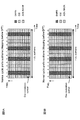
- 2A and 2B are diagrams illustrating an example of information included in the UCI when a plurality of P-CSIs are transmitted by the PF 3 and the new PF. It is a figure which shows an example of the modulation
- 4A and 4B are diagrams illustrating an example of modulation and resource mapping of PF3 or new PF set for a plurality of P-CSIs in Embodiment 1.2.
- 5A and 5B are diagrams illustrating another example of modulation and resource mapping of PF3 or new PF set for a plurality of P-CSIs in the embodiment 1.2.
- FIG. 7A and 7B are explanatory diagrams of resources used for transmitting a plurality of P-CSI and a plurality of HARQ-ACKs in Embodiment 1.3.
- 8A and 8B are diagrams illustrating an example of resources used for transmitting a plurality of P-CSI and a plurality of HARQ-ACKs in Embodiment 1.3.
- 9A and 9B are explanatory diagrams of resources used for transmission of a plurality of P-CSI and a plurality of HARQ-ACKs in Embodiment 1.4.
- 10A and 10B are explanatory diagrams of resources used for transmitting a plurality of P-CSI and a plurality of HARQ-ACKs in the embodiment 1.5.
- 11A and 11B are explanatory diagrams of resources used for transmitting a plurality of P-CSI and a plurality of HARQ-ACKs in Embodiment 1.6.
- 12A and 12B are explanatory diagrams of resources used for a plurality of P-CSI transmissions in Embodiment 2.1.
- 29 is an explanatory diagram of resources used for transmission of a plurality of P-CSIs and a plurality of HARQ-ACKs in Embodiment 2.3-1.
- FIGS. 15A and 15B are explanatory diagrams of resources used for transmitting a plurality of P-CSI and a plurality of HARQ-ACKs in the embodiment 2.3-2.
- FIGS. 15A and 15B are explanatory diagrams of resources used for transmitting a plurality of P-CSI and a plurality of HARQ-ACKs in Embodiment 2.3-3. It is a figure which shows an example of schematic structure of the radio
- FIG. 1 is an explanatory diagram of carrier aggregation.
- LTE Rel LTE Rel.
- CA up to 12 a maximum of five component carriers (CC) having a predetermined bandwidth (for example, LTE Rel. 8 bandwidth) as a basic unit (CC # 1-CC # 5) are bundled. That is, LTE Rel.
- CC # 1-CC # 5 a basic unit
- LTE Rel the number of CCs that can be set per UE is limited to a maximum of five.
- LTE Rel. In 13 CAs it is considered that six or more CCs are bundled to further expand the bandwidth. That is, LTE Rel. In 13 CAs, it is considered to expand the number of CCs (cells) that can be set per UE to 6 or more (CA enhancement). For example, as shown in FIG. 1, when 32 CCs (CC # 1-CC # 32) are bundled, a maximum band of 640 MHz can be secured.
- CA for example, LAA
- LAA LAA
- uplink control information (UCI: Uplink Control Information) is fed back from the UE to a device on the network side (for example, a radio base station (eNB: eNode B)).
- a radio base station eNB: eNode B
- the UE may transmit UCI on an uplink shared channel (PUSCH: Physical Uplink Shared Channel) at a timing when uplink data transmission is scheduled.
- PUSCH Physical Uplink Shared Channel
- the UCI in the existing system includes a channel quality indicator (CQI), a precoding matrix indicator (PMI), a precoding type indicator (PTI), a rank indicator (RI).
- CQI channel quality indicator
- PMI precoding matrix indicator
- PTI precoding type indicator
- RI rank indicator
- CSI Channel State Information
- CSI Channel State Information
- PDSCH downlink shared channel
- periodic CSI reporting in which a user terminal transmits channel state information (CSI) in a subframe of a predetermined period is supported.
- the CSI transmitted in the periodic CSI report may be referred to as periodic CSI, P-CSI, or the like, and hereinafter referred to as P-CSI.
- the delivery confirmation information may be referred to as HARQ-ACK (Hybrid Automatic Repeat reQuest-Acknowledgement), ACK / NACK (A / N), retransmission control information, or the like.
- the UE receives (configures) P-CSI transmission subframe information from the eNB through higher layer signaling (for example, RRC signaling).
- the transmission subframe information is information indicating a subframe for transmitting P-CSI (hereinafter also referred to as a report subframe), and the period (interval) of the report subframe and the radio of the report subframe. At least an offset value with respect to the head of the frame.
- the UE transmits P-CSI in a transmission subframe having a predetermined period indicated by the transmission subframe information.
- UCI on PUSCH occurs when UCI transmission and PUSCH transmission overlap in 1 TTI (Transmission Time Interval) (for example, 1 subframe).
- TTI Transmission Time Interval
- UCI may be mapped to a PUCCH resource and PUCCH-PUSCH simultaneous transmission may be performed, or UCI may be mapped to a radio resource in the PUSCH region and only PUSCH may be transmitted.
- PUCCH formats (PF: PUCCH Format) 2 / 2a / 2b and 3 are supported as P-CSI transmission formats using an uplink control channel. These existing PFs are only capable of transmitting 1 CC (cell) of P-CSI.
- the UE when transmitting P-CSI of a plurality of CCs (cells) using an existing PF, transmits P-CSIs of the plurality of CCs in different subframes (time division multiplexing (TDM: Time Division Multiplexing)).
- TDM Time Division Multiplexing
- the P-CSI of multiple CCs may simply be referred to as multiple P-CSIs.
- the UE transmits P-CSI of 1 CC determined according to a predetermined priority rule, and P-CSI of the remaining CCs CSI transmission is stopped (dropped).
- P-CSI transmissions of a plurality of cells collide, P-CSI other than the cell with the smallest index (ServCellIndex) for specifying a serving cell is dropped.
- UCI including 1-CC P-CSI and 1- or 2-bit HARQ-ACK is supported by PF2a / 2b.
- HARQ-ACK is used for modulation of a demodulation reference signal (DMRS: DeModulation Reference Signal). Specifically, it is used as a seed for DMRS scrambling.
- DMRS Demodulation Reference Signal
- P-CSI is multiplexed on symbols other than DMRS.
- UCI including 1-CC P-CSI and multi-bit HARQ-ACK is supported by PF3.
- the bit string composed of HARQ-ACK and P-CSI is jointly encoded and multiplexed on symbols other than DMRS.
- PF3 is used when an ACK / NACK resource indicator (ARI) is available, and when ARI is not available, PF2a / 2b is used instead (fallback).
- ARI ACK / NACK resource indicator
- the P-CSI reporting period of each CC is longer than that of the existing system. For example, if P-CSI for 32 CCs is to be transmitted using an existing PF, the P-CSI reporting period for each CC is 32 ms at the shortest.
- the CC (PCell or PUCCH SCell) that transmits the PUCCH is a TDD (Time Division Duplexing) carrier
- uplink subframes that can transmit the PUCCH are limited. For example, when using an up / down link setting (TDD UL / DL configuration) with a DL / UL ratio of 5: 1, an additional 5 times the cycle is required.
- TDD Time Division Duplexing
- the existing periodic CSI reporting method using the existing PF has a large number of CCs as in the case where the number of CCs that can be set per UE is expanded to 6 or more (for example, 32). If P-CSI reporting is desired, it is assumed that it does not fit.
- HARQ-ACK acknowledgment information
- LTE Rel. 13 a new PUCCH format (new PUCCH format) that can transmit delivery confirmation information of more CCs than the existing PUCCH format (for example, PF1a / 1b, 3 etc.) (that is, the number of bits that can be transmitted is larger). Is being considered.
- the new PUCCH format is assumed to have a larger capacity than the existing PUCCH formats 2 / 2a / 2b and 3 capable of transmitting 1-CC P-CSI.
- the new PUCCH format includes new PF, extended PF, Rel. 13 May be called PF, PF4, etc.
- PF3 can transmit a maximum of 10 bits by FDD (Frequency Division Duplexing) and a maximum of 21 bits by TDD, whereas the new PF can transmit 64-256 bits (for example, 128 bits can be transmitted) ) It may be configured with radio resources.
- FIG. 2 is a diagram illustrating an example of information included in the UCI when a plurality of P-CSIs are transmitted using the PF 3 and the new PF.
- UCI including HARQ-ACK and P-CSI is shown
- FIG. 2B UCI including only P-CSI is shown.
- a HARQ-ACK bit string and one P-CSI bit string are included as in the existing configuration (FIG. 2A), and unlike the existing configuration, a plurality (for example, two) of P-CSI bit strings are included. (FIG. 2B) is conceivable.
- a HARQ-ACK bit string and a plurality (for example, two) of P-CSI bit strings are included (FIG. 2A), or a plurality of (for example, three) P-CSI bit strings are included ( FIG. 2B) is conceivable.
- the present inventors examined that UE and eNB appropriately transmit and receive the plurality of CSIs in a periodic subframe (report subframe) in which UCI including a plurality of CSIs is transmitted. Then, the inventors assign radio resources to which the UE allocates UCI including a plurality of CSIs based on a predetermined condition (for example, whether simultaneous transmission of the uplink control channel and the uplink shared channel is set). Inspired to control (judgment). In addition, the present inventors have conceived of controlling radio resources to which UCI is allocated based on whether or not delivery confirmation information is further included in UCI as a predetermined condition.
- a predetermined condition for example, whether simultaneous transmission of the uplink control channel and the uplink shared channel is set.
- the UE and eNB appropriately determine PUCCH and / or PUSCH resources for transmitting a plurality of CSI, UCI encoding, P-CSI to be dropped, and the like. can do.
- P-CSI of multiple CCs and HARQ-ACK of multiple CCs can be multiplexed on the same PUCCH and fed back appropriately.
- CG Cell Group
- PUCCH transmission is performed in units of cell groups (CG: Cell Group) composed of one or more CCs.
- the CG may be called, for example, a PUCCH CG or a PUCCH group.
- this invention is applicable also to CA which does not use PUCCH CG.
- wireless communication method In the radio communication method according to an aspect of the present invention, whether or not simultaneous transmission of the uplink control channel and the uplink shared channel is set (permitted) in the UE and transmission is scheduled simultaneously with a plurality of P-CSIs (with the same TTI) Based on the number of HARQ-ACKs to be transmitted, a specific PF is used to transmit at least some of the plurality of P-CSIs and HARQ-ACKs.
- the UE for example, sets a parameter (simultaneousPUCCH-PUSCH) indicating whether PUCCH-PUSCH simultaneous transmission is set for a cell in which PUCCH is set (for example, PCell, PSCell, etc.) from the eNB through RRC signaling. You may be notified.
- the UE can determine whether or not simultaneous transmission of PUCCH-PUSCH in a predetermined PUCCH CG is possible based on the parameter.
- the first embodiment relates to a CSI feedback method when PUCCH-PUSCH simultaneous transmission is not set (permitted) in PUCCH CG.
- Embodiment 1.1 relates to a CSI feedback method when UCI includes a plurality of P-CSIs and does not include HARQ-ACK, and PF3 or a new PF is set for a plurality of P-CSIs.
- a plurality of P-CSIs are transmitted by PF3 or new PF.
- the radio resource of PF3 or new PF to which a plurality of P-CSIs are allocated is set by higher layer signaling (for example, RRC signaling).
- FIG. 3 is a diagram illustrating an example of modulation and resource mapping of PF3 or new PF set for a plurality of P-CSIs in the embodiment 1.1.
- FIG. 3 shows PF allocation in one subframe.
- the UE determines a PF to be used for a plurality of P-CSI transmissions.
- the PF used for a plurality of P-CSI transmissions in the subframe may be determined by the UE according to the number of P-CSI, the number of bits, or the like, or configured in advance from the eNB to the UE by higher layer signaling. May be.
- P-CSI to be included in UCI is determined according to a predetermined rule.
- the predetermined rule is LTE Rel. It may be the above-mentioned priority rule defined in 10-12. In FIG. 3, P-CSI # 1 and # 2 have a higher priority than P-CSI # 3 and other P-CSI, and are therefore configured to be included in UCI. P-CSI # 3 and other P-CSI are dropped.
- the predetermined rule is not limited to this.
- the UE applies encoding and modulation to a plurality of P-CSI bit strings constituting the UCI to obtain modulation symbols (for example, SC-FDMA (Single-Carrier Frequency Multiple Access) symbols).
- modulation symbols for example, SC-FDMA (Single-Carrier Frequency Multiple Access) symbols.
- SC-FDMA Single-Carrier Frequency Multiple Access
- QPSK Quadrature Phase-Shift Keying
- the present invention is not limited to this.
- multi-level modulation of 16 QAM (Quadrature Amplitude Modulation) or more may be used.
- PF3 When PF3 is set as a plurality of P-CSI PFs, as shown in FIG. 3, the UE assigns UCI to symbols # 0, # 2, # 3, # 4, and # 6 in each slot, DMRS is assigned to # 1 and # 5.
- PF3 the same bit sequence is copied to five or four symbols (in the case of a shortened format) excluding DMRS symbols, and multiplied by an orthogonal code (OCC: Orthogonal Cover Code).
- OCC Orthogonal Cover Code
- each slot includes one or two DMRS symbols.
- two DMRS symbols When two DMRS symbols are included, they may be mapped to the same DMRS symbol position as PF3, and when one DMRS symbol is included, the central symbol ((2) / 2b / 2 or PUSCH) in the center of each slot ( It may be mapped to symbol # 3).
- the number of DMRS symbols and mapping positions of the new PF are not limited to these.
- the orthogonal code length (spreading factor) is 1 (that is, CDM is not performed).
- different bit sequences can be mapped to symbols (data symbols) other than DMRS symbols, and the payload (maximum number of bits that can be transmitted) per PUCCH can be increased.
- an orthogonal code length (spreading factor) other than 1 may be supported.
- frequency-time order (Freq.-to-Time order) or time-frequency order (Time-to-Freq. Order) is used as the mapping of resource elements (RE). May be.
- modulation symbols are embedded in the frequency direction in the order of subcarriers # 0, # 1,..., # 11 for symbol # 0 of the first slot. Mapping in the frequency direction for the second symbol (symbol # 1) and further mapping for the next symbol.
- modulation symbols are assigned to symbols # 0, # 2, # 3,..., # 6 of the first slot and the second slot for a predetermined subcarrier (for example, subcarrier # 0).
- a predetermined subcarrier for example, subcarrier # 0.
- data is embedded in the time direction, and when this is completed, mapping in the time direction for the next subcarrier (for example, subcarrier # 1) is performed. Mapping for the next subcarrier will be carried out.
- the PRB for transmitting the PUCCH is changed between slots (inter-slot frequency hopping is performed), but in the new PF, frequency hopping is not applied or higher layer signaling (for example, RRC signaling) It may be set by
- a plurality of P-CSIs can be multiplexed on one PUCCH and reported appropriately. Also, joint coding for multiple P-CSIs (considering them as one information bit string and applying the coding) eliminates the need for CRC (Cyclic Redundancy Check) addition and parity bits for each P-CSI. Can be reduced.
- CRC Cyclic Redundancy Check
- Embodiment 1.2 relates to a CSI feedback method when UCI includes a plurality of P-CSI and 1 or 2-bit HARQ-ACK, and PF3 or a new PF is set for the plurality of P-CSIs.
- FIG. 4 is a diagram illustrating an example of modulation and resource mapping of PF3 or new PF set for a plurality of P-CSIs in the embodiment 1.2.
- PF allocation in one subframe is shown as in FIG.
- BPSK Binary Phase-Shift Keying
- QPSK Quadrature Phase-Shift Keying
- FIG. 4A shows an example in which a plurality of P-CSI bit strings and HARQ-ACK bits are encoded separately.
- a plurality of P-CSIs are mapped to PF3 or new PF data symbols, while HARQ-ACK is used for scrambling as predetermined DMRS modulation bits. That is, the UE may scramble the DMRS in a specific PF (PF3 or new PF) based on 1- or 2-bit acknowledgment information (HARQ-ACK).
- HARQ-ACK 2-bit acknowledgment information
- the eNB can determine the HARQ-ACK bit based on the detection result of DMRS.
- the predetermined DMRS is the second DMRS symbol (symbol # 5) of each slot, but is not limited thereto, and may be the first DMRS symbol (symbol # 1) of each slot.
- DMRS symbols at different positions in each slot may be used.
- the new PF is composed of 1 DMRS symbol / slot (symbol per slot)
- the DMRS symbols in both slots may be scrambled by HARQ-ACK.
- FIG. 4B shows a case where a plurality of P-CSI bit strings and HARQ-ACK bits are encoded together (joint encoding). As shown in FIG. 4B, it is preferable that a plurality of P-CSI bit strings are jointly encoded after the HARQ-ACK bit and included in the PF. In this case, the first 1 or 2 bits of UCI are reserved for HARQ-ACK. A plurality of P-CSI and HARQ-ACK are mapped to data symbols.
- FIG. 5 is a diagram showing another example of modulation and resource mapping of PF3 or new PF set for a plurality of P-CSIs in the embodiment 1.2.
- FIG. 5 shows an uplink radio resource of 1 PRB (Physical Resource Block) pair (14 symbols ⁇ 12 subcarriers) when a normal cyclic prefix is given to each symbol.
- FIG. 5 shows a mapping image of radio resources before applying DFT (Discrete Fourier Transform), and symbols to be actually transmitted are arranged interleaved in the frequency direction. One modulation symbol is arranged for each RE.
- DFT Discrete Fourier Transform
- FIG. 5 shows a case where the PF is composed of 2DMRS symbols / slots, and a plurality of P-CSI bit strings and HARQ-ACK bits are encoded separately, similar to the example of FIG. The mapping method is different.
- the UE first maps CSI (for example, CQI) to the data symbol.
- the mapping of CSI may be in frequency-time order or in time-frequency order. Thereafter, the UE maps 1 or 2 bits of HARQ-ACK. At this time, if CSI has already been mapped to the resource to which HARQ-ACK is mapped, the CSI is punctured to map HARQ-ACK.
- the 1- or 2-bit HARQ-ACK is mapped in a form of overriding a resource close to DMRS (for example, temporally adjacent) among resources mapped with CSI.
- HARQ-ACK may be arranged in a resource adjacent to the first DMRS symbol of each slot (FIG. 5A), or may be arranged in a resource adjacent to the second DMRS symbol of each slot (FIG. 5B).
- the resource to which the HARQ-ACK is mapped is not limited to the position in FIG.
- FIG. 6 is a diagram showing still another example of modulation and resource mapping of a new PF set for a plurality of P-CSIs in the embodiment 1.2.
- FIG. 6 shows a mapping image of radio resources before applying DFT, as in FIG. 5, and shows a case where a plurality of new PFs for P-CSI are composed of 1 DMRS symbol / slot.
- the HARQ-ACK of the new PF may be punctured near the DMRS symbol in both slots.
- HARQ-ACK with a small number of bits and P-CSI with a large number of bits can be appropriately multiplexed on the same PUCCH.
- HARQ-ACK bits can be detected with higher accuracy than P-CSI by performing DMRS correlation detection for all candidate HARQ-ACK bit patterns.
- FIG. 4B different UCIs are handled as one bit codeword string, so that the processing of the transmission encoder and the reception decoder can be simplified.
- Embodiments 1.1 and 1.2 may be similarly used.
- Embodiment 1.3 includes CSI in a case where the UCI includes a plurality of P-CSIs and a plurality of HARQ-ACKs, PF3 is configured for a plurality of P-CSIs, and PF3 is configured for a plurality of HARQ-ACKs. It relates to the feedback method.
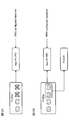
- FIG. 7 is an explanatory diagram of resources used for a plurality of P-CSI and a plurality of HARQ-ACK transmissions in the embodiment 1.3.
- 4 CC P-CSI and 4 CC HARQ-ACK are shown as examples of UCI to be transmitted. Note that the number of CCs for which UCI is reported is not limited to this.
- the plurality of HARQ-ACKs may be 2 bits or 3 bits or more.
- Embodiment 1.3 when only a plurality of P-CSIs are transmitted, they are transmitted using PF3 with radio resources set by RRC signaling. In addition, when only a plurality of HARQ-ACKs are transmitted, they are transmitted using PF3 with radio resources specified by physical layer signaling (ARI included in downlink control information (DCI)).
- DCI downlink control information
- resources used when transmitting only a plurality of P-CSIs are also referred to as a plurality of P-CSI resources, P-CSI resources, and the like.
- resources used when transmitting only a plurality of HARQ-ACKs are also referred to as a plurality of HARQ-ACK resources, HARQ-ACK resources, and the like.
- the resource for HARQ-ACK specified by the ARI is used using PF3.
- UCI may be transmitted (embodiment 1.3-1), or UCI may be transmitted using PF3 with P-CSI resources set by RRC signaling (embodiment 1.3- 2). In any case, at most one P-CSI and a plurality of HARQ-ACKs are transmitted in PF3.
- the P-CSI bit string may be jointly encoded following the HARQ-ACK bit string and included in the PF data symbol. Also, at most one P-CSI may be determined based on a predetermined rule. For example, LTE Rel. Similar to the priority rule defined in 10-12, the P-CSI with the highest priority may be selected. Other P-CSIs that are not included in the PUCCH (P-CSI with relatively low priority) are dropped.
- the UE applies a scramble sequence associated with information included in the UCI transmitted in the PF3 (whether the transmitted UCI includes HARQ-ACK) to the DMRS of the PF3 in the resource set by RRC. It is preferable to do. That is, different scrambling is applied to the DMRS depending on whether the UCI includes a plurality of P-CSIs and a plurality of HARQ-ACKs or only a plurality of P-CSIs.
- the PF 3 is originally a resource for transmitting only a plurality of P-CSIs, but the eNB can determine whether the UCI includes a HARQ-ACK bit based on the detection result of the DMRS.
- FIG. 8 is a diagram illustrating an example of resources used for transmission of a plurality of P-CSI and a plurality of HARQ-ACKs in the embodiment 1.3.
- FIG. 8 schematically shows resources to which each PUCCH format can be allocated in a predetermined subframe.
- FIG. 8A shows an example (embodiment 1.3-1) in which resources specified by ARI are used for transmission of a plurality of P-CSIs and a plurality of HARQ-ACKs.
- FIG. 8B shows an example (embodiment 1.3-2) in which resources set by RRC are used for transmission of a plurality of P-CSIs and a plurality of HARQ-ACKs. Note that the arrangement and mapping method of PF resources are not limited to the configuration shown in FIG.
- Embodiment 1.3 information indicating whether or not the UCI to be transmitted includes HARQ-ACK can be matched between the base station and the terminal.
- the base station since the resource specified by the ARI is used when HARQ-ACK is included, the base station transmits the HARQ to the received PUCCH according to which PUCCH resource received the UCI. It can be determined whether or not ACK is included.
- the PUCCH resource does not change regardless of whether HARQ-ACK is included, but since the DMRS scramble sequence changes, the base station determines how the DMRS is scrambled. Accordingly, it can be determined whether or not HARQ-ACK is included in the received PUCCH.
- the UCI includes a plurality of P-CSIs and a plurality of HARQ-ACKs
- PF3 is configured for a plurality of P-CSIs
- a new PF is configured for a plurality of HARQ-ACKs.
- the present invention relates to a CSI feedback method.
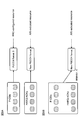
- FIG. 9 is an explanatory diagram of resources used for transmitting a plurality of P-CSI and a plurality of HARQ-ACKs in the embodiment 1.4.
- the radio resources set by RRC signaling are transmitted using PF3.
- the radio resources specified by physical layer signaling ARI included in DCI.
- the UCI includes a plurality of P-CSIs and a plurality of HARQ-ACKs, as shown in FIG. 9B, a new PF is used in the resource for HARQ-ACK specified by the ARI.
- a plurality of P-CSI and a plurality of HARQ-ACKs are transmitted.
- Embodiment 1.4 information indicating whether or not the transmitted UCI includes HARQ-ACK can be matched between the base station and the terminal.
- the resource specified by RRC is used when HARQ-ACK is not included, and when it is included, the resource specified by ARI is used. Therefore, the base station uses which PUCCH resource to transmit UCI. It can be determined whether or not HARQ-ACK is included in the received PUCCH depending on whether or not it is received.
- Embodiment 1.5 is a case where UCI includes a plurality of P-CSIs and a plurality of HARQ-ACKs, a new PF is configured for a plurality of P-CSIs, and a PF3 is configured for a plurality of HARQ-ACKs.
- the present invention relates to a CSI feedback method.
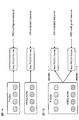
- FIG. 10 is an explanatory diagram of resources used for transmitting a plurality of P-CSI and a plurality of HARQ-ACKs in the embodiment 1.5.
- the radio resources set by RRC signaling are transmitted using the new PF.
- the radio resources specified by physical layer signaling ARI included in DCI.
- the UCI when the UCI includes a plurality of P-CSIs and a plurality of HARQ-ACKs, as in the embodiment 1.3-1, the HARQ specified by the ARI is used.
- -UCI may be transmitted using PF3 with resources for ACK (embodiment 1.5-1). In this case, PF3 transmits at most one P-CSI and a plurality of HARQ-ACKs.
- a plurality of P-CSI and a plurality of HARQ-ACKs may be transmitted using a new PF using P-CSI resources set by RRC signaling (Embodiment 1. 5-2).
- the UE associates the CRC or DMRS of the new PF in the resource set by RRC with the information included in the UCI transmitted in the new PF (whether the transmitted UCI includes HARQ-ACK). It is preferable to apply the scrambled. That is, different scrambling is applied to the CRC or DMRS depending on whether the UCI includes a plurality of P-CSIs and a plurality of HARQ-ACKs or only a plurality of P-CSIs.
- the new PF is a resource that is originally assumed to transmit only a plurality of P-CSIs. However, based on the CRC decoding result or the DMRS detection result, the eNB determines that the UCI received by the new PF is HARQ- It can be determined whether or not an ACK bit is included.
- Embodiment 1.5 information indicating whether or not the transmitted UCI includes HARQ-ACK can be matched between the base station and the terminal.
- the base station since the resource specified by the ARI is used when HARQ-ACK is included, the base station determines the HARQ to the received PUCCH according to which PUCCH resource received the UCI. It can be determined whether or not ACK is included.
- the PUCCH resource does not change regardless of whether HARQ-ACK is included or not, but since the DMRS or CRC scramble sequence changes, the base station determines how the DMRS or CRC is. It is possible to determine whether or not HARQ-ACK is included in the received PUCCH depending on whether it is scrambled.
- Embodiment 1.6 is a case where UCI includes a plurality of P-CSIs and a plurality of HARQ-ACKs, a new PF is set for a plurality of P-CSIs, and a new PF is set for a plurality of HARQ-ACKs To the CSI feedback method.
- FIG. 11 is an explanatory diagram of resources used for transmission of a plurality of P-CSI and a plurality of HARQ-ACKs in the embodiment 1.6.
- Embodiment 1.6 when only a plurality of P-CSIs are transmitted, transmission is performed using a new PF with radio resources set by RRC signaling.
- RRC signaling when only a plurality of HARQ-ACKs are transmitted, they are transmitted using a new PF with radio resources specified by physical layer signaling (ARI included in DCI).
- Embodiment 1.6 when the UCI includes a plurality of P-CSIs and a plurality of HARQ-ACKs, the new PF is used in the resource for HARQ-ACK specified by the ARI.
- the UCI may be transmitted (embodiment 1.6-1).
- the new PF transmits a plurality of P-CSIs and a plurality of HARQ-ACKs.
- the P-CSI bit string is preferably configured to be included in the PF data symbol following the HARQ-ACK bit string.
- Embodiment 1.6 as in Embodiment 1.5-2, P-CSI resources set by RRC signaling are used, and a plurality of P-CSI and a plurality of HARQ-ACKs are used using a new PF. May be transmitted (embodiment 1.6-2).
- the scramble sequence used in the new PF is the same as in Embodiment 1.5-2.
- Embodiment 1.6 information indicating whether or not the transmitted UCI includes HARQ-ACK can be matched between the base station and the terminal.
- the base station since the resource specified by the ARI is used when HARQ-ACK is included, the base station determines the HARQ to the received PUCCH according to which PUCCH resource received the UCI. It can be determined whether or not ACK is included.
- the PUCCH resource does not change regardless of whether HARQ-ACK is included or not, but since the DMRS or CRC scramble sequence changes, the base station determines how the DMRS or CRC is. It is possible to determine whether or not HARQ-ACK is included in the received PUCCH depending on whether it is scrambled.
- the user terminal separately encodes HARQ-ACK and P-CSI, maps P-CSI to PUCCH resources, and then overrides HARQ-ACK. It is good also as what maps in the form to make it.
- the radio base station appropriately decodes P-CSI by assuming that the PUCCH includes HARQ-ACK regardless of whether or not the user terminal is transmitting HARQ-ACK. Can do. Therefore, for example, even when the resource specified by RRC and the resource specified by ARI are the same, the radio base station can correctly decode P-CSI.
- the radio base station similarly performs the decoding process for HARQ-ACK, and checks whether the CRC has succeeded (whether the CRC is OK or NG), thereby determining whether the PUCCH includes HARQ-ACK. Can be determined.
- the second embodiment relates to a CSI feedback method in the case where PUCCH-PUSCH simultaneous transmission is set (permitted) in PUCCH CG and PUSCH transmission is performed in a P-CSI report subframe.
- PUCCH-PUSCH simultaneous transmission is set (permitted) in PUCCH CG and PUSCH transmission is performed in a P-CSI report subframe.
- PUSCH transmission is not performed in a P-CSI report subframe, the first embodiment can be applied.
- Embodiment 2.1 relates to a CSI feedback method when UCI includes a plurality of P-CSIs and does not include HARQ-ACK, and PF3 or a new PF is set for a plurality of P-CSIs.
- FIG. 12 is an explanatory diagram of resources used for a plurality of P-CSI transmissions in the embodiment 2.1.
- a radio resource to which a plurality of P-CSI PFs 3 can be allocated is set by RRC signaling.
- RRC signaling it is assumed that 2 CCs of 4 CC P-CSI can be transmitted by PF3 or new PF, but the number of CCs of P-CSI that can be transmitted by PF3 or new PF is not limited to this.
- the UE determines a PF to be used for the plurality of P-CSI transmissions.
- the P-CSI to be included in UCI is determined in consideration of the maximum payload size of PF3 or new PF.
- Embodiment 2.1 for example, one or more P-CSIs having higher priority among a plurality of P-CSIs are transmitted by PF3 or new PF, and other P-CSIs (ie, more (P-CSI with low priority) may be dropped (embodiment 2.1-1).
- FIG. 12A is a diagram illustrating an example of the embodiment 2.1-1. In this example, among 4 CC P-CSI, 2 CC P-CSI is transmitted by PF3 or new PF, and the remaining 2 CC P-CSI not included in PUCCH is dropped.
- Embodiment 2.1 for example, one or more P-CSIs having higher priority among a plurality of P-CSIs are transmitted by PF3 or new PF, and the other P-CSIs are transmitted by PUSCH.
- FIG. 12B is a diagram illustrating an example of the embodiment 2.1-2. In this example, among 4 CC P-CSI, 2 CC P-CSI is transmitted by PF3 or new PF, and the remaining 2 CC P-CSI not included in PUCCH is transmitted by PUSCH.
- the UE can transmit, for example, high-priority P-CSI on the PUCCH that can ensure high quality.
- P-CSI that is not high in priority can also be transmitted (Piggyback) using PUSCH, so that the possibility of dropping P-CSI is reduced, and the base station The frequency of obtaining information reports can be increased.
- Embodiment 2.2 relates to a CSI feedback method in the case where the UCI includes a plurality of P-CSI and 1 or 2-bit HARQ-ACK, and PF3 or a new PF is set for the plurality of P-CSIs.
- the radio resource to which the PF 3 or the new PF can be allocated is set by RRC signaling.
- Embodiment 2.2 for example, 1- or 2-bit HARQ-ACK is transmitted by PUCCH (PF1a / 1b), and a plurality of P-CSIs (for example, all P-CSIs transmitted at the same timing) are transmitted by PUSCH. It may be transmitted (embodiment 2.2-1).
- Embodiment 2.2 as in Embodiment 1.2, a plurality of P-CSI and 1 or 2-bit HARQ-ACK are transmitted by PF3 or new PF using resources set by RRC signaling.
- HARQ-ACK may be used for scrambling as a predetermined DMRS modulation bit.
- a plurality of P-CSI bit strings may be included in a PF data symbol following the HARQ-ACK bit.
- a plurality of P-CSI and 1- or 2-bit HARQ-ACK may be transmitted using different resources, respectively (Embodiment 2.2-3).
- these three UCIs are transmitted using two PUCCH resources and one PUSCH resource. May be.
- a resource for example, a combination of a PUCCH resource and a PUSCH resource
- used for UCI transmission may be determined based on a combination of UCIs to be transmitted. For example, it may be determined based on the number of P-CSI (CC number, bit number) and the number of HARQ-ACK (CC number, bit number).
- each UCI can be transmitted with an individual code or resource, it is possible to perform control so that different required qualities can be achieved.
- Embodiment 2.3 is a CSI in the case where UCI includes a plurality of P-CSIs and a plurality of HARQ-ACKs, PF3 is configured for a plurality of P-CSIs, and PF3 is configured for a plurality of HARQ-ACKs. It relates to the feedback method. The method for setting / specifying the resource of each PF is the same as in Embodiment 1.3.
- Embodiment 2.3 for example, a plurality of HARQ-ACKs are transmitted using PUCCH (PF3) with HARQ-ACK resources, and a plurality of P-CSIs (for example, all P-CSIs transmitted at the same timing) are transmitted. ) May be transmitted on the PUSCH (embodiment 2.3-1.).
- FIG. 13 is an explanatory diagram of resources used for a plurality of P-CSI and a plurality of HARQ-ACK transmissions in Embodiment 2.3-1.
- FIG. 13 shows an example in which HARQ-ACK for 4 CCs is transmitted using PF3 using resources specified by ARI, and P-CSI for 4 CCs is transmitted using PUSCH.
- FIG. 14 is an explanatory diagram of resources used for a plurality of P-CSI and a plurality of HARQ-ACK transmissions in the embodiment 2.3-2.
- Embodiment 2.3-2 one or more P-CSIs having higher priority among a plurality of P-CSIs may be transmitted by PF3, and other P-CSIs may be dropped.
- FIG. 14A is a diagram illustrating an example of the embodiment 2.3-2. In this example, among 4 CC P-CSI, 1 CC P-CSI is transmitted by PF3, and the remaining 3 CC P-CSI not included in PUCCH is dropped.
- FIG. 14B is a diagram illustrating another example of the embodiment 2.3-2.
- P-CSI for 1 CC is transmitted by PF3
- P-CSI for the remaining 3 CC not included in PUCCH is transmitted by PUSCH.
- Embodiment 2.3 at most one P-CSI and a plurality of HARQ-ACKs may be transmitted using resources for P-CSI set by RRC signaling (Embodiment 2.3-3). ).
- FIG. 15 is an explanatory diagram of resources used for transmission of a plurality of P-CSIs and a plurality of HARQ-ACKs in Embodiment 2.3-3.
- Embodiment 2.3-3 one or more P-CSIs having higher priority among a plurality of P-CSIs may be transmitted by PF3, and other P-CSIs may be dropped.
- FIG. 15A is a diagram illustrating an example of the embodiment 2.3-3. In this example, among 4 CC P-CSI, 1 CC P-CSI is transmitted by PF3, and the remaining 3 CC P-CSI not included in PUCCH is dropped.
- Embodiment 2.3-3 one or more P-CSIs having higher priority among a plurality of P-CSIs are transmitted by PF3, and other P-CSIs are transmitted by PUSCH ( piggyback).
- FIG. 15B is a diagram illustrating another example of the embodiment 2.3-3. In this example, among 4 CC P-CSI, P-CSI for 1 CC is transmitted by PF3, and P-CSI for the remaining 3 CC not included in PUCCH is transmitted by PUSCH.
- the UE transmits information (transmitted) included in the UCI transmitted by the PF3 to the DMRS of the PF3 in the resource set by the RRC. It is preferable to apply the scramble associated with whether or not UCI includes HARQ-ACK. That is, different scrambling is applied to the DMRS depending on whether the UCI includes a plurality of P-CSIs and a plurality of HARQ-ACKs or only a plurality of P-CSIs.
- Embodiment 2.3 similarly to Embodiment 2.2-3, a plurality of P-CSI and a plurality of HARQ-ACKs may be transmitted using different resources, respectively (Embodiment 2.3-). 4).
- Embodiment 2.3 information indicating whether or not the transmitted UCI includes HARQ-ACK can be matched between the base station and the terminal.
- the resource specified by the ARI is used, so that the base station determines the HARQ to the received PUCCH depending on which PUCCH resource is used to receive the UCI. It can be determined whether or not ACK is included.
- the PUCCH resource does not change regardless of whether HARQ-ACK is included or not.
- the base station determines how the DMRS is scrambled. Accordingly, it can be determined whether or not HARQ-ACK is included in the received PUCCH.
- UCI includes a plurality of P-CSIs and a plurality of HARQ-ACKs
- PF3 is configured for a plurality of P-CSIs
- a new PF is configured for a plurality of HARQ-ACKs.
- the present invention relates to a CSI feedback method. The method for setting / specifying the resource of each PF is the same as in Embodiment 1.4.
- Embodiment 2.4 for example, a plurality of HARQ-ACKs are transmitted using PUCCH (new PF) with HARQ-ACK resources, and a plurality of P-CSIs (for example, all P-Cs transmitted at the same timing) are transmitted.
- CSI may be transmitted on the PUSCH (Embodiment 2.4-1).
- a plurality of P-CSI and a plurality of HARQ-ACKs are transmitted using the new PF on the HARQ-ACK resource specified by the ARI. (Embodiment 2.4-2).
- one or more P-CSIs having higher priority among a plurality of P-CSIs may be transmitted by the new PF and other P-CSIs may be dropped . Also, in the embodiment 2.4-2, one or more P-CSIs having higher priority among a plurality of P-CSIs are transmitted by the new PF, and other P-CSIs are transmitted by the PUSCH. (Piggyback).
- Embodiment 2.4 as in Embodiment 2.2-3, a plurality of P-CSI and a plurality of HARQ-ACKs may be transmitted using different resources, respectively (Embodiment 2.4-). 3).
- Embodiment 2.4 it is possible to match information on whether or not the transmitted UCI includes HARQ-ACK between the base station and the terminal.
- the resource specified by RRC is used for transmission of UCI when HARQ-ACK is not included, and the resource specified by ARI is used when included.
- the base station can determine whether or not HARQ-ACK is included in the received PUCCH according to which PUCCH resource has received UCI.
- Embodiment 2.5 is a case where UCI includes a plurality of P-CSIs and a plurality of HARQ-ACKs, a new PF is configured for a plurality of P-CSIs, and a PF3 is configured for a plurality of HARQ-ACKs.
- the present invention relates to a CSI feedback method. The method for setting / specifying the resource of each PF is the same as in Embodiment 1.5.
- Embodiment 2.5 for example, a plurality of HARQ-ACKs are transmitted using PUCCH (PF3) with HARQ-ACK resources, and a plurality of P-CSIs (for example, all P-CSIs transmitted at the same timing) are transmitted. ) May be transmitted on the PUSCH (Embodiment 2.5-1).
- PUCCH PUCCH
- P-CSIs for example, all P-CSIs transmitted at the same timing
- Embodiment 2.5 as in Embodiment 1.5-1, HARQ-ACK resources specified by ARI are used, and at most one P-CSI and a plurality of HARQ-ACKs are transmitted using PF3. It may be transmitted (embodiment 2.5-2).
- Embodiment 2.5 as in Embodiment 1.5-2, P-CSI resources set by RRC signaling are used, and a plurality of P-CSI and a plurality of HARQ-ACKs are used using a new PF. May be transmitted (embodiment 2.5-3).
- the scramble sequence used in the new PF is the same as in Embodiment 1.5-2.
- Embodiment 2.5-2 and Embodiment 2.5-3 one or more P-CSIs with higher priority among a plurality of P-CSIs are transmitted by PF3 or new PF.
- the P-CSI may be dropped.
- one or more P-CSIs having higher priority among a plurality of P-CSIs are transmitted by PF3 or new PF.
- Other P-CSIs may be transmitted (piggyback) on the PUSCH.
- Embodiment 2.5 similarly to Embodiment 2.2-3, a plurality of P-CSI and a plurality of HARQ-ACKs may be transmitted using different resources, respectively (Embodiment 2.5- 4).
- Embodiment 2.5 information indicating whether or not the transmitted UCI includes HARQ-ACK can be matched between the base station and the terminal.
- the HARQ-ACK when the HARQ-ACK is included, the resource specified by the ARI is used, so that the base station determines the HARQ to the received PUCCH depending on which PUCCH resource received the UCI. It can be determined whether or not ACK is included.
- the PUCCH resource does not change regardless of whether HARQ-ACK is included or not, but the DMRS or CRC scramble sequence changes, so that the base station It is possible to determine whether or not HARQ-ACK is included in the received PUCCH depending on whether it is scrambled.
- Embodiment 2.6 is a case where UCI includes a plurality of P-CSI and a plurality of HARQ-ACKs, a new PF is set for a plurality of P-CSIs, and a new PF is set for a plurality of HARQ-ACKs To the CSI feedback method.
- the method for setting / specifying the resource of each PF is the same as in Embodiment 1.6.
- a plurality of HARQ-ACKs are transmitted using PUCCH (new PF) with HARQ-ACK resources, and a plurality of P-CSIs (for example, all P-Cs transmitted at the same timing) are transmitted.
- CSI may be transmitted by PUSCH (Embodiment 2.6-1).
- a plurality of P-CSI and a plurality of HARQ-ACKs are transmitted using the new PF with the HARQ-ACK resource specified by the ARI. (Embodiment 2.6-2).
- Embodiment 2.6 as in Embodiment 1.5-2, P-CSI resources set by RRC signaling are used, and a plurality of P-CSI and a plurality of HARQ-ACKs are used using the new PF. May be transmitted (Embodiment 2.6-3).
- the scramble sequence used in the new PF is the same as in Embodiment 1.5-2.
- one or more P-CSIs having higher priority among a plurality of P-CSIs are transmitted by the new PF, and other P-CSIs are transmitted. -CSI may be dropped.
- one or more P-CSIs having higher priority among a plurality of P-CSIs are transmitted by the new PF, and others. P-CSI may be transmitted (piggyback) on the PUSCH.
- a plurality of P-CSI and a plurality of HARQ-ACKs may be transmitted using different resources, respectively (embodiment 2.6- 4).
- Embodiment 2.6 it is possible to make the information about whether or not the transmitted UCI includes HARQ-ACK match between the base station and the terminal.
- the base station since the resource specified by the ARI is used when HARQ-ACK is included, the base station determines the HARQ to the received PUCCH according to which PUCCH resource received the UCI. It can be determined whether or not ACK is included.
- the PUCCH resource does not change regardless of whether HARQ-ACK is included or not, but since the DMRS or CRC scramble sequence changes, the base station determines how the DMRS or CRC is changed. It is possible to determine whether or not HARQ-ACK is included in the received PUCCH depending on whether it is scrambled.
- the user terminal separately encodes HARQ-ACK and P-CSI, maps P-CSI onto PUCCH resources, and then performs HARQ-ACK. It is good also as what maps on the resource in the same PUCCH in the form which overrides.
- the radio base station appropriately decodes P-CSI by assuming that the PUCCH includes HARQ-ACK regardless of whether or not the user terminal is transmitting HARQ-ACK. Can do. Therefore, for example, even when the resource specified by RRC and the resource specified by ARI are the same, the radio base station can correctly decode P-CSI.
- the radio base station similarly performs the decoding process for HARQ-ACK, and can determine whether the HARQ-ACK is included in the PUCCH by checking whether the CRC is OK or NG.
- the eNB notifies the UE of information that can be used in each embodiment by higher layer signaling (for example, RRC signaling), downlink control information (for example, DCI (Downlink Control Information)), or a combination thereof. Also good. Further, the information may be stored in advance by the UE.
- higher layer signaling for example, RRC signaling
- downlink control information for example, DCI (Downlink Control Information)
- DCI Downlink Control Information
- Information that can be used in each embodiment includes, for example, information on the configuration of a new PF (encoding scheme, number of DMRS symbols, data symbol mapping method, radio resource, etc.), information on CSI resources overridden by HARQ-ACK ( Embodiment 1.2) or at least one piece of information for switching the method described in each embodiment may be used.
- the UE may determine the configuration of the new PF and the control of each embodiment based on the information.
- the UE may notify the eNB of terminal capability information (UE capability) indicating that a plurality of P-CSIs can be transmitted in 1 TTI (1 subframe).
- eNB is good also as a structure which notifies said information with respect to UE which has notified the said terminal capability information.
- the eNB provides the above to the user terminal that has notified both terminal capability information capable of setting CA of more than five CCs and terminal capability information indicating that a plurality of P-CSIs can be transmitted in 1 TTI. The information may be notified.
- the uplink signal is transmitted using the SC-FDMA symbol.
- the present invention is not limited to this.
- the present invention can be applied even when the uplink signal is transmitted in another symbol format such as an OFDMA (Orthogonal Frequency Division Multiple Access) symbol.
- OFDMA Orthogonal Frequency Division Multiple Access
- wireless communication methods according to the above embodiments may be applied independently or in combination.
- Wireless communication system Hereinafter, the configuration of a wireless communication system according to an embodiment of the present invention will be described. In this wireless communication system, communication is performed using any one or combination of the wireless communication methods according to the above embodiments of the present invention.
- FIG. 16 is a diagram illustrating an example of a schematic configuration of a wireless communication system according to an embodiment of the present invention.
- carrier aggregation (CA) and / or dual connectivity (DC) in which a plurality of basic frequency blocks (component carriers) each having a system bandwidth (for example, 20 MHz) of the LTE system as one unit are applied. can do.
- DC dual connectivity
- the wireless communication system 1 includes LTE (Long Term Evolution), LTE-A (LTE-Advanced), LTE-B (LTE-Beyond), SUPER 3G, IMT-Advanced 4G (4th generation mobile communication system), 5G. (5th generation mobile communication system), FRA (Future Radio Access), New-RAT (Radio Access Technology), etc., or a system that realizes these.
- LTE Long Term Evolution
- LTE-A Long Term Evolution-Advanced
- LTE-B LTE-Beyond
- SUPER 3G IMT-Advanced 4G (4th generation mobile communication system)
- 5G. 5th generation mobile communication system
- FRA Full Radio Access
- New-RAT Radio Access Technology
- a radio communication system 1 shown in FIG. 16 includes a radio base station 11 that forms a macro cell C1 having a relatively wide coverage, and a radio base station 12 (12a) that is arranged in the macro cell C1 and forms a small cell C2 that is narrower than the macro cell C1. -12c). Moreover, the user terminal 20 is arrange
- the user terminal 20 can be connected to both the radio base station 11 and the radio base station 12. It is assumed that the user terminal 20 uses the macro cell C1 and the small cell C2 simultaneously by CA or DC. Moreover, the user terminal 20 may apply CA or DC using a plurality of cells (CC) (for example, 5 or less CCs, 6 or more CCs).
- CC cells
- Communication between the user terminal 20 and the radio base station 11 can be performed using a carrier having a relatively low frequency band (for example, 2 GHz) and a narrow bandwidth (referred to as an existing carrier or a legacy carrier).
- a carrier having a relatively high frequency band for example, 3.5 GHz, 5 GHz, etc.
- the same carrier may be used.
- the configuration of the frequency band used by each radio base station is not limited to this.
- a wired connection for example, an optical fiber compliant with CPRI (Common Public Radio Interface), an X2 interface, etc.
- a wireless connection It can be set as the structure to do.
- the radio base station 11 and each radio base station 12 are connected to the higher station apparatus 30 and connected to the core network 40 via the higher station apparatus 30.
- the upper station device 30 includes, for example, an access gateway device, a radio network controller (RNC), a mobility management entity (MME), and the like, but is not limited thereto.
- RNC radio network controller
- MME mobility management entity
- Each radio base station 12 may be connected to the higher station apparatus 30 via the radio base station 11.
- the radio base station 11 is a radio base station having a relatively wide coverage, and may be called a macro base station, an aggregation node, an eNB (eNodeB), a transmission / reception point, or the like.
- the radio base station 12 is a radio base station having local coverage, and includes a small base station, a micro base station, a pico base station, a femto base station, a HeNB (Home eNodeB), an RRH (Remote Radio Head), and transmission / reception. It may be called a point.
- the radio base stations 11 and 12 are not distinguished, they are collectively referred to as a radio base station 10.
- Each user terminal 20 is a terminal compatible with various communication methods such as LTE and LTE-A, and may include not only a mobile communication terminal but also a fixed communication terminal.
- orthogonal frequency division multiple access (OFDMA) is applied to the downlink, and single carrier-frequency division multiple access (SC-FDMA) is used for the uplink.
- Carrier Frequency Division Multiple Access is applied.
- OFDMA is a multi-carrier transmission scheme that performs communication by dividing a frequency band into a plurality of narrow frequency bands (subcarriers) and mapping data to each subcarrier.
- SC-FDMA is a single-carrier transmission scheme that reduces interference between terminals by dividing the system bandwidth into bands consisting of one or continuous resource blocks for each terminal and using a plurality of terminals with mutually different bands. is there.
- the uplink and downlink radio access methods are not limited to these combinations.
- downlink channels include a downlink shared channel (PDSCH) shared by each user terminal 20, a broadcast channel (PBCH: Physical Broadcast Channel), a downlink L1 / L2 control channel, and the like. Used.
- the PDSCH may be referred to as a downlink data channel.
- User data, higher layer control information, SIB (System Information Block), etc. are transmitted by PDSCH.
- SIB System Information Block
- MIB Master Information Block
- Downlink L1 / L2 control channels include PDCCH (Physical Downlink Control Channel), EPDCCH (Enhanced Physical Downlink Control Channel), PCFICH (Physical Control Format Indicator Channel), PHICH (Physical Hybrid-ARQ Indicator Channel), and the like.
- Downlink control information (DCI: Downlink Control Information) including scheduling information of PDSCH and PUSCH is transmitted by PDCCH.
- the number of OFDM symbols used for PDCCH is transmitted by PCFICH.
- the PHICH transmits HARQ (Hybrid Automatic Repeat reQuest) acknowledgment information (for example, retransmission control information, HARQ-ACK, ACK / NACK, etc.) to the PUSCH.
- HARQ Hybrid Automatic Repeat reQuest
- EPDCCH is frequency-division multiplexed with PDSCH (downlink shared data channel), and is used for transmission of DCI and the like in the same manner as PDCCH.
- an uplink shared channel (PUSCH: Physical Uplink Shared Channel) shared by each user terminal 20, an uplink L1 / L2 control channel (PUCCH: Physical Uplink Control Channel), a random access channel (PRACH: Physical Random Access Channel) is used.
- PUSCH may be referred to as an uplink data channel.
- User data and higher layer control information are transmitted by PUSCH.
- downlink radio quality information CQI: Channel Quality Indicator
- uplink control information UCI: Uplink Control Information
- ACK / NACK acknowledgment information
- a random access preamble for establishing connection with a cell is transmitted by the PRACH.
- a cell-specific reference signal CRS
- CSI-RS channel state information reference signal
- DMRS demodulation reference signal
- PRS Positioning Reference Signal
- a measurement reference signal SRS: Sounding Reference Signal
- a demodulation reference signal DMRS
- the DMRS may be referred to as a user terminal specific reference signal (UE-specific Reference Signal). Further, the transmitted reference signal is not limited to these.
- FIG. 17 is a diagram illustrating an example of the overall configuration of a radio base station according to an embodiment of the present invention.
- the radio base station 10 includes a plurality of transmission / reception antennas 101, an amplifier unit 102, a transmission / reception unit 103, a baseband signal processing unit 104, a call processing unit 105, and a transmission path interface 106.
- the transmission / reception antenna 101, the amplifier unit 102, and the transmission / reception unit 103 may each be configured to include one or more.
- User data transmitted from the radio base station 10 to the user terminal 20 via the downlink is input from the higher station apparatus 30 to the baseband signal processing unit 104 via the transmission path interface 106.
- PDCP Packet Data Convergence Protocol
- RLC Radio Link Control
- MAC Medium Access
- Retransmission control for example, HARQ transmission processing
- scheduling transmission format selection, channel coding, Inverse Fast Fourier Transform (IFFT) processing, precoding processing, and other transmission processing
- IFFT Inverse Fast Fourier Transform
- precoding processing precoding processing, and other transmission processing
- the downlink control signal is also subjected to transmission processing such as channel coding and inverse fast Fourier transform, and is transferred to the transmission / reception unit 103.
- the transmission / reception unit 103 converts the baseband signal output by precoding for each antenna from the baseband signal processing unit 104 to a radio frequency band and transmits the converted signal.
- the radio frequency signal frequency-converted by the transmission / reception unit 103 is amplified by the amplifier unit 102 and transmitted from the transmission / reception antenna 101.
- the transmission / reception unit 103 can be configured by a transmitter / receiver, a transmission / reception circuit, or a transmission / reception device which is described based on common recognition in the technical field according to the present invention.
- the transmission / reception part 103 may be comprised as an integral transmission / reception part, and may be comprised from a transmission part and a receiving part.
- the radio frequency signal received by the transmission / reception antenna 101 is amplified by the amplifier unit 102.
- the transmission / reception unit 103 receives the uplink signal amplified by the amplifier unit 102.
- the transmission / reception unit 103 converts the frequency of the received signal into a baseband signal and outputs it to the baseband signal processing unit 104.
- the baseband signal processing unit 104 performs Fast Fourier Transform (FFT) processing, Inverse Discrete Fourier Transform (IDFT) processing, and error correction on user data included in the input upstream signal. Decoding, MAC retransmission control reception processing, RLC layer and PDCP layer reception processing are performed and transferred to the upper station apparatus 30 via the transmission path interface 106.
- the call processing unit 105 performs call processing such as communication channel setting and release, state management of the radio base station 10, and radio resource management.
- the transmission path interface 106 transmits and receives signals to and from the higher station apparatus 30 via a predetermined interface.
- the transmission path interface 106 transmits / receives signals (backhaul signaling) to / from other radio base stations 10 via an interface between base stations (for example, an optical fiber compliant with CPRI (Common Public Radio Interface), X2 interface). May be.
- CPRI Common Public Radio Interface
- X2 interface May be.
- the transmission / reception unit 103 transmits a reference signal (for example, CRS, CSI-RS, etc.) for measuring the channel state to the user terminal 20.
- the transmission / reception unit 103 transmits DCI related to data transmission and / or reception to the user terminal 20.
- the transmission / reception unit 103 may transmit instruction information (also referred to as DL grant, DL assignment, etc.) for receiving a downlink shared channel (PDSCH) for a predetermined CC.
- PDSCH downlink shared channel
- the transmission / reception unit 103 may transmit instruction information (also referred to as UL grant) for transmission of the uplink shared channel (PUSCH) for a predetermined CC.
- the transmission / reception unit 103 transmits downlink data (PDSCH) at a predetermined timing after transmission of the DL grant.
- the transmission / reception unit 103 receives P-CSI of a plurality of CCs from the user terminal 20 at a timing determined by the control unit 301 described later. Further, the transmission / reception unit 103 receives HARQ-ACK for downlink data transmitted on the downlink shared channel (PDSCH) at a timing determined by the control unit 301. Further, the transmission / reception unit 103 receives uplink data on the uplink shared channel (PUSCH) at a timing determined by the control unit 301.
- PDSCH downlink shared channel
- PUSCH uplink shared channel
- FIG. 18 is a diagram illustrating an example of a functional configuration of a radio base station according to an embodiment of the present invention.
- FIG. 18 mainly shows functional blocks of characteristic portions in the present embodiment, and the wireless base station 10 also has other functional blocks necessary for wireless communication.
- the baseband signal processing unit 104 includes at least a control unit (scheduler) 301, a transmission signal generation unit 302, a mapping unit 303, a reception signal processing unit 304, and a measurement unit 305. ing.
- the control unit (scheduler) 301 controls the entire radio base station 10.
- the control part 301 can be comprised from the controller, the control circuit, or control apparatus demonstrated based on the common recognition in the technical field which concerns on this invention.
- the control unit 301 controls signal generation by the transmission signal generation unit 302 and signal allocation by the mapping unit 303, for example.
- the control unit 301 also controls signal reception processing by the reception signal processing unit 304 and signal measurement by the measurement unit 305.
- the control unit 301 controls scheduling (for example, resource allocation) of system information, a downlink data signal transmitted on the PDSCH, and a downlink control signal transmitted on the PDCCH and / or EPDCCH. It also controls scheduling of synchronization signals (PSS (Primary Synchronization Signal) / SSS (Secondary Synchronization Signal)) and downlink reference signals such as CRS, CSI-RS, and DMRS.
- PSS Primary Synchronization Signal
- SSS Secondary Synchronization Signal
- the control unit 301 also transmits an uplink data signal transmitted on the PUSCH, an uplink control signal transmitted on the PUCCH and / or PUSCH (for example, acknowledgment information (HARQ-ACK)), a random access preamble transmitted on the PRACH, Controls scheduling of uplink reference signals and the like.
- an uplink data signal transmitted on the PUSCH for example, acknowledgment information (HARQ-ACK)
- HARQ-ACK acknowledgment information
- HARQ-ACK random access preamble transmitted on the PRACH
- Controls scheduling of uplink reference signals and the like Controls scheduling of uplink reference signals and the like.
- control unit 301 When the control unit 301 acquires the UCI received from the user terminal 20 from the reception signal processing unit 304, the control unit 301 performs data retransmission control and scheduling control on the user terminal 20 based on the UCI. For example, when acquiring the HARQ-ACK from the reception signal processing unit 304, the control unit 301 determines whether or not retransmission to the user terminal 20 is necessary, and controls to perform retransmission processing if necessary.
- control unit 301 determines whether or not simultaneous transmission of an uplink control channel and an uplink shared channel is permitted to a predetermined user terminal 20 and HARQ scheduled to be transmitted simultaneously (with the same TTI) as a plurality of P-CSIs.
- -Control to receive at least a part of a plurality of P-CSI and HARQ-ACK using a specific PF based on the number of ACKs (which may be the number of bits, the number of CCs, etc.) .
- the control unit 301 performs the first implementation described above in a subframe in which a P-CSI report is received.
- PUCCH resources for receiving a plurality of P-CSI and / or one or more bits of HARQ-ACK from a predetermined user terminal 20, decoding applied to a specific PF, and PUCCH Control (determine) the included P-CSI may be PF3, new PF, or the like.
- the control unit 301 When simultaneous transmission of the uplink control channel and the uplink shared channel is permitted, the control unit 301 performs the radio communication method described in the second embodiment in the subframe receiving the P-CSI report. And controlling PUCCH resources for receiving a plurality of P-CSI and / or HARQ-ACK of 1 bit or more from a predetermined user terminal 20, decoding applied to a specific PF, and P-CSI included in the PUCCH ( to decide.
- the transmission signal generation unit 302 generates a downlink signal (downlink control signal, downlink data signal, downlink reference signal, etc.) based on an instruction from the control unit 301, and outputs it to the mapping unit 303.
- the transmission signal generation unit 302 can be configured by a signal generator, a signal generation circuit, or a signal generation device described based on common recognition in the technical field according to the present invention.
- the transmission signal generation unit 302 generates, for example, a DL assignment that notifies downlink signal allocation information and a UL grant that notifies uplink signal allocation information based on an instruction from the control unit 301.
- the downlink data signal is subjected to coding processing and modulation processing according to a coding rate, a modulation scheme, and the like determined based on channel state information (CSI: Channel State Information) from each user terminal 20.
- CSI Channel State Information
- the mapping unit 303 maps the downlink signal generated by the transmission signal generation unit 302 to a predetermined radio resource based on an instruction from the control unit 301, and outputs it to the transmission / reception unit 103.
- the mapping unit 303 can be configured by a mapper, a mapping circuit, or a mapping device described based on common recognition in the technical field according to the present invention.
- the reception signal processing unit 304 performs reception processing (for example, demapping, demodulation, decoding, etc.) on the reception signal input from the transmission / reception unit 103.
- the received signal is, for example, an uplink signal (uplink control signal, uplink data signal, uplink reference signal, etc.) transmitted from the user terminal 20.
- the reception signal processing unit 304 can be configured by a signal processor, a signal processing circuit, or a signal processing device described based on common recognition in the technical field according to the present invention.
- the reception signal processing unit 304 outputs the information decoded by the reception processing to the control unit 301. For example, when receiving PUCCH including HARQ-ACK, HARQ-ACK is output to control section 301.
- the reception signal processing unit 304 outputs the reception signal and the signal after reception processing to the measurement unit 305.
- the measurement unit 305 performs measurement on the received signal.
- the measurement part 305 can be comprised from the measuring device, measurement circuit, or measurement apparatus demonstrated based on common recognition in the technical field which concerns on this invention.
- the measurement unit 305 may measure, for example, received power (for example, RSRP (Reference Signal Received Power)), reception quality (for example, RSRQ (Reference Signal Received Quality)), channel state, and the like of the received signal.
- the measurement result may be output to the control unit 301.
- FIG. 19 is a diagram illustrating an example of the overall configuration of a user terminal according to an embodiment of the present invention.
- the user terminal 20 includes a plurality of transmission / reception antennas 201, an amplifier unit 202, a transmission / reception unit 203, a baseband signal processing unit 204, and an application unit 205.
- the transmission / reception antenna 201, the amplifier unit 202, and the transmission / reception unit 203 may each be configured to include one or more.
- the radio frequency signal received by the transmission / reception antenna 201 is amplified by the amplifier unit 202.
- the transmission / reception unit 203 receives the downlink signal amplified by the amplifier unit 202.
- the transmission / reception unit 203 converts the frequency of the received signal into a baseband signal and outputs it to the baseband signal processing unit 204.
- the transmission / reception unit 203 can be configured by a transmitter / receiver, a transmission / reception circuit, or a transmission / reception device described based on common recognition in the technical field according to the present invention.
- the transmission / reception unit 203 may be configured as an integral transmission / reception unit, or may be configured from a transmission unit and a reception unit.
- the baseband signal processing unit 204 performs FFT processing, error correction decoding, retransmission control reception processing, and the like on the input baseband signal.
- the downlink user data is transferred to the application unit 205.
- the application unit 205 performs processing related to layers higher than the physical layer and the MAC layer.
- broadcast information in the downlink data is also transferred to the application unit 205.
- uplink user data is input from the application unit 205 to the baseband signal processing unit 204.
- the baseband signal processing unit 204 performs transmission / reception by performing retransmission control transmission processing (for example, HARQ transmission processing), channel coding, precoding, discrete Fourier transform (DFT) processing, IFFT processing, and the like. Is transferred to the unit 203.
- the transmission / reception unit 203 converts the baseband signal output from the baseband signal processing unit 204 into a radio frequency band and transmits it.
- the radio frequency signal frequency-converted by the transmission / reception unit 203 is amplified by the amplifier unit 202 and transmitted from the transmission / reception antenna 201.
- the transmission / reception unit 203 receives a reference signal (for example, CRS, CSI-RS, etc.) for measuring the channel state from the radio base station 10.
- the transmission / reception unit 203 receives DCI related to data transmission and / or reception from the radio base station 10.
- the transmission / reception unit 203 may receive a DL grant for a predetermined CC.
- the transmission / reception unit 203 may receive a UL grant for a predetermined CC.
- the transmission / reception unit 203 receives downlink data (PDSCH) at a timing determined based on the DL grant.
- PDSCH downlink data
- the transmission / reception unit 203 transmits P-CSI of a plurality of CCs to the radio base station 10 at the timing determined by the control unit 401. Further, the transmission / reception unit 203 transmits HARQ-ACK for the downlink data transmitted on the downlink shared channel (PDSCH) at the timing determined by the control unit 401. Further, the transmission / reception unit 203 transmits uplink data on the uplink shared channel (PUSCH) at a timing determined by the control unit 401 based on the UL grant.
- PDSCH downlink shared channel
- PUSCH uplink shared channel
- FIG. 20 is a diagram illustrating an example of a functional configuration of a user terminal according to an embodiment of the present invention. Note that FIG. 20 mainly shows functional blocks of characteristic portions in the present embodiment, and the user terminal 20 also has other functional blocks necessary for wireless communication. As illustrated in FIG. 20, the baseband signal processing unit 204 included in the user terminal 20 includes a control unit 401, a transmission signal generation unit (generation unit) 402, a mapping unit 403, a reception signal processing unit 404, and a measurement unit. 405.
- the control unit 401 controls the entire user terminal 20.
- the control unit 401 can be composed of a controller, a control circuit, or a control device described based on common recognition in the technical field according to the present invention.
- the control unit 401 controls, for example, signal generation by the transmission signal generation unit 402 and signal allocation by the mapping unit 403.
- the control unit 401 controls signal reception processing by the reception signal processing unit 404 and signal measurement by the measurement unit 405.
- the control unit 401 obtains, from the received signal processing unit 404, a downlink control signal (a signal transmitted by PDCCH / EPDCCH) and a downlink data signal (a signal transmitted by PDSCH) transmitted from the radio base station 10.
- the control unit 401 generates an uplink control signal (eg, acknowledgment information (HARQ-ACK)) or an uplink data signal based on a downlink control signal, a result of determining whether or not retransmission control is required for the downlink data signal, and the like.
- HARQ-ACK acknowledgment information
- control unit 401 generates a periodic CSI report (P-CSI report) based on the channel state of each CC output from the measurement unit 405 and feeds it back to the radio base station 10. Control. Further, the control unit 401 determines whether simultaneous transmission of the uplink control channel and the uplink shared channel is permitted, and the number of HARQ-ACKs scheduled to be transmitted simultaneously (with the same TTI) (for example, Based on the number of bits, the number of CCs, etc.), a specific PF is used to control to transmit at least a part of a plurality of P-CSI and HARQ-ACK.
- P-CSI report periodic CSI report
- the control unit 401 determines whether or not simultaneous transmission of the uplink control channel and the uplink shared channel is permitted, and the number of HARQ-ACKs (for example, the number of bits) scheduled to be transmitted simultaneously (with the same TTI). , The number of CCs, etc.) may be used to control to transmit at least a part of a plurality of P-CSI and HARQ-ACK using a specific PF.
- the control unit 401 uses the radio communication method described in the first embodiment in the subframe in which P-CSI is reported.
- PUCCH resources for transmitting a plurality of P-CSI and / or one or more bits of HARQ-ACK, encoding applied to a specific PF, and dropping P-CSI are controlled.
- the specific PF that transmits a plurality of P-CSIs may be PF3, new PF, or the like.
- the control unit 401 uses the radio communication method described in the second embodiment in a subframe in which P-CSI reporting is performed.
- PUCCH and / or PUSCH resources for transmitting a plurality of P-CSI and / or HARQ-ACK of 1 bit or more, coding applied to a specific PF, and P-CSI to be dropped are controlled.
- the control unit 401 uses a plurality of P-CSI first PFs for which resources are set by RRC signaling. And a plurality of HARQ-ACK second PFs whose resources are indicated by the ARI included in the DCI (for example, DL grant) that schedules the PDSCH corresponding to these HARQ-ACKs. You may control to use as PF of.
- the transmission signal generation unit (generation unit) 402 generates an uplink signal (uplink control signal, uplink data signal, uplink reference signal, etc.) based on an instruction from the control unit 401, and outputs the uplink signal to the mapping unit 403.
- the transmission signal generation unit 402 can be configured by a signal generator, a signal generation circuit, or a signal generation device described based on common recognition in the technical field according to the present invention.
- the transmission signal generation unit 402 generates an uplink control signal related to delivery confirmation information (HARQ-ACK) and channel state information (CSI) based on an instruction from the control unit 401, for example.
- the transmission signal generation unit 402 generates an uplink data signal based on an instruction from the control unit 401.
- the transmission signal generation unit 402 is instructed by the control unit 401 to generate an uplink data signal when the UL grant is included in the downlink control signal notified from the radio base station 10.
- the mapping unit 403 maps the uplink signal generated by the transmission signal generation unit 402 to a radio resource based on an instruction from the control unit 401, and outputs the radio signal to the transmission / reception unit 203.
- the mapping unit 403 can be configured by a mapper, a mapping circuit, or a mapping device described based on common recognition in the technical field according to the present invention.
- the reception signal processing unit 404 performs reception processing (for example, demapping, demodulation, decoding, etc.) on the reception signal input from the transmission / reception unit 203.
- the received signal is, for example, a downlink signal (downlink control signal, downlink data signal, downlink reference signal, etc.) transmitted from the radio base station 10.
- the reception signal processing unit 404 can be configured by a signal processor, a signal processing circuit, or a signal processing device described based on common recognition in the technical field according to the present invention. Further, the reception signal processing unit 404 can constitute a reception unit according to the present invention.
- the reception signal processing unit 404 outputs the information decoded by the reception processing to the control unit 401.
- the reception signal processing unit 404 outputs broadcast information, system information, RRC signaling, DCI, and the like to the control unit 401, for example.
- the reception signal processing unit 404 outputs the reception signal and the signal after reception processing to the measurement unit 405.
- the measurement unit 405 performs measurement on the received signal.
- the measurement part 405 can be comprised from the measuring device, measurement circuit, or measurement apparatus demonstrated based on common recognition in the technical field which concerns on this invention.
- the measurement unit 405 may measure, for example, the received power (for example, RSRP), reception quality (for example, RSRQ), channel state, and the like of the received signal.
- the measurement unit 405 may measure the channel state of each configured CC using a predetermined reference signal (for example, CRS, CSI-RS, etc.).
- the measurement result may be output to the control unit 401.
- each functional block is realized by one physically coupled device, or may be realized by two or more physically separated devices connected by wire or wirelessly and by a plurality of these devices. Good.
- the radio base station 10 and the user terminal 20 are realized using hardware such as ASIC (Application Specific Integrated Circuit), PLD (Programmable Logic Device), and FPGA (Field Programmable Gate Array). May be.
- the radio base station 10 and the user terminal 20 are each a computer device including a processor (CPU: Central Processing Unit), a communication interface for network connection, a memory, and a computer-readable storage medium holding a program. It may be realized. That is, the radio base station, user terminal, and the like according to an embodiment of the present invention may function as a computer that performs processing of the radio communication method according to the present invention.
- Computer-readable recording media include, for example, flexible disks, magneto-optical disks, ROM (Read Only Memory), EPROM (Erasable Programmable ROM), CD-ROM (Compact Disc-ROM), RAM (Random Access Memory), A storage medium such as a hard disk.
- the program may be transmitted from a network via a telecommunication line.
- the radio base station 10 and the user terminal 20 may include an input device such as an input key and an output device such as a display.
- the functional configurations of the radio base station 10 and the user terminal 20 may be realized by the hardware described above, may be realized by a software module executed by a processor, or may be realized by a combination of both.
- the processor controls the entire user terminal by operating an operating system. Further, the processor reads programs, software modules and data from the storage medium into the memory, and executes various processes according to these.
- the program may be a program that causes a computer to execute the operations described in the above embodiments.
- the control unit 401 of the user terminal 20 may be realized by a control program stored in a memory and operated by a processor, and may be realized similarly for other functional blocks.
- software, instructions, etc. may be transmitted / received via a transmission medium.
- software may use websites, servers, or other devices using wired technology such as coaxial cable, fiber optic cable, twisted pair and digital subscriber line (DSL) and / or wireless technology such as infrared, wireless and microwave.
- wired technology such as coaxial cable, fiber optic cable, twisted pair and digital subscriber line (DSL) and / or wireless technology such as infrared, wireless and microwave.
- DSL digital subscriber line
- wireless technology such as infrared, wireless and microwave.
- the channel and / or symbol may be a signal (signaling).
- the signal may be a message.
- the component carrier (CC) may also be called a frequency carrier, a carrier frequency, a cell, or the like.
- information, parameters, and the like described in this specification may be represented by absolute values, may be represented by relative values from a predetermined value, or may be represented by other corresponding information.
- the radio resource may be indicated by an index.
- notification of predetermined information is not limited to explicitly performed, but is performed implicitly (for example, by not performing notification of the predetermined information). May be.
- notification of information is not limited to the aspect / embodiment described in this specification, and may be performed by other methods.
- notification of information includes physical layer signaling (for example, DCI (Downlink Control Information), UCI (Uplink Control Information)), upper layer signaling (for example, RRC (Radio Resource Control) signaling, MAC (Medium Access Control) signaling), It may be implemented by broadcast information (MIB (Master Information Block), SIB (System Information Block)), other signals, or a combination thereof.
- the RRC signaling may be referred to as an RRC message, and may be, for example, an RRC connection setup (RRCConnectionSetup) message, an RRC connection reconfiguration (RRCConnectionReconfiguration) message, or the like.
- Each aspect / embodiment described herein includes LTE (Long Term Evolution), LTE-A (LTE-Advanced), LTE-B (LTE-Beyond), SUPER 3G, IMT-Advanced, 4G (4th generation mobile). communication system), 5G (5th generation mobile communication system), FRA (Future Radio Access), New-RAT (Radio Access Technology), CDMA2000, UMB (Ultra Mobile Broadband), IEEE 802.11 (Wi-Fi (registered trademark)) ), IEEE 802.16 (WiMAX (registered trademark)), IEEE 802.20, UWB (Ultra-WideBand), Bluetooth (registered trademark), systems using other appropriate systems and / or extended based on these It may be applied to the next generation system.
- LTE Long Term Evolution
- LTE-A Long Term Evolution-Advanced
- LTE-B LTE-Beyond
- SUPER 3G IMT-Advanced
- communication system 5G (5th generation mobile communication system
Landscapes
- Engineering & Computer Science (AREA)
- Signal Processing (AREA)
- Computer Networks & Wireless Communication (AREA)
- Quality & Reliability (AREA)
- Mobile Radio Communication Systems (AREA)
Abstract
ユーザ端末に設定可能なコンポーネントキャリア数が既存システムより拡張される場合であっても、周期的CSI報告を適切に行うこと。本発明の一態様に係るユーザ端末は、上り制御情報(UCI:Uplink Control Information)を送信する送信部と、特定のPUCCHフォーマット(PF:Physical Uplink Control Channel Format)を用いて、前記UCIの少なくとも一部を送信するように制御する制御部と、を有し、前記制御部は、前記UCIが複数の周期的チャネル状態情報(P-CSI:Periodic Channel State Information)及び複数のHARQ-ACK(Hybrid Automatic Repeat reQuest-Acknowledgement)を含む場合に、下り制御情報によって指定されるリソースで、PF3より容量の大きなPFを用いて前記UCIを送信するように制御することを特徴とする。
Description
本発明は、次世代移動通信システムにおけるユーザ端末、無線基地局及び無線通信方法に関する。
UMTS(Universal Mobile Telecommunications System)ネットワークにおいて、さらなる高速データレート、低遅延などを目的としてロングタームエボリューション(LTE:Long Term Evolution)が仕様化された(非特許文献1)。また、LTE(LTE Rel.8又は9ともいう)からの更なる広帯域化及び高速化を目的として、LTE-A(LTEアドバンスト、LTE Rel.10、11又は12ともいう)が仕様化され、LTEの後継システム(例えば、FRA(Future Radio Access)、5G(5th generation mobile communication system)、LTE Rel.13などともいう)も検討されている。
LTE-Aでは、所定の帯域幅(最大20MHz)を基本単位として、複数のキャリアを同時に用いて通信を行うキャリアアグリゲーション(CA:Carrier Aggregation)が採用されている。キャリアアグリゲーションにおいて基本単位となるキャリアは、コンポーネントキャリア(CC:Component Carrier)と呼ばれ、例えば、LTE Rel.8のシステム帯域に相当する。
CAが行われる際には、ユーザ端末(UE:User Equipment)に対して、接続性を担保する信頼性の高いセルであるプライマリセル(PCell:Primary Cell)及び付随的なセルであるセカンダリセル(SCell:Secondary Cell)が設定される。
UEは、最初にPCellに接続し、必要に応じてSCellを追加することができる。PCellは、RLM(Radio Link Monitoring)及びSPS(Semi-Persistent Scheduling)などをサポートする単独のセル(スタンドアローンセル)と同様のセルである。SCellは、PCellに追加してUEに対して設定されるセルである。
SCellの追加及び削除は、RRC(Radio Resource Control)シグナリングによって行われる。SCellは、UEに対して設定された直後は、非アクティブ(deactive)状態であるため、アクティブ化することで初めて通信(スケジューリング)可能となるセルである。
また、LTE Rel.8-12では、事業者に免許された周波数帯(ライセンスバンド)において排他的な運用がなされることを想定して仕様化が行われた。ライセンスバンドとしては、例えば、800MHz、2GHz、1.7GHz帯などが使用される。一方、LTE Rel.13以降では、免許不要の周波数帯(アンライセンスバンド)における運用もターゲットとして検討されている。アンライセンスバンドとしては、例えば、Wi-Fi(登録商標)と同じ2.4GHz、5GHz帯などが使用される。
LTE Rel.13では、ライセンスバンドとアンライセンスバンドの間でのキャリアアグリゲーション(LAA:License-Assisted Access)を検討対象としているが、将来的にデュアルコネクティビティ(DC:Dual Connectivity)やアンライセンスバンドのスタンドアローンも検討対象となる可能性がある。
LTE Rel.10-12におけるCAでは、UEあたりに設定可能なCC数が最大5個に制限されている。一方、LTE Rel.13以降のCAでは、より柔軟かつ高速な無線通信を実現するために、例えば、連続する超広帯域のアンライセンスバンドで多数のCCを束ねることを可能とするために、CAにおいてUEあたりに設定可能なCC数を拡張するCA拡張(CA Enhancement)が検討されている。CCの最大数を拡張することにより、達成可能なピークレートが飛躍的に向上する。
例えば、CA拡張では、UEあたりに設定可能なCC数の制限を緩和し、6個以上のCC(5個を超えるCC)を設定することが検討されている。ここで、設定可能なCC数が6個以上であるキャリアアグリゲーションは、例えば、拡張CA(eCA:enhanced CA)、Rel.13 CAなどと呼ばれてもよい。
しかしながら、UEに設定可能なCC数が6個以上(例えば、32個)に拡張される場合には、既存システム(例えば、LTE Rel.10-12)の送信方法をそのまま適用することが困難になると考えられる。
例えば、既存システムでは、UEがチャネル状態情報(CSI:Channel State Information)を所定周期のサブフレームで送信する周期的CSI報告(P-CSI reporting:Periodic CSI reporting)がサポートされているが、既存システムの周期的CSI報告では、1サブフレームで1CCのCSIが送信されるに過ぎない。このため、既存システムの周期的CSI報告の手法は、CC数が6個以上に拡張される場合のように、多数のCCのチャネル状態情報の報告が望まれる場合には適合しないことが想定される。
本発明はかかる点に鑑みてなされたものであり、ユーザ端末に設定可能なコンポーネントキャリア数が既存システムより拡張される場合であっても、周期的CSI報告を適切に行うことができるユーザ端末、無線基地局及び無線通信方法を提供することを目的の1つとする。
本発明の一態様に係るユーザ端末は、上り制御情報(UCI:Uplink Control Information)を送信する送信部と、特定のPUCCHフォーマット(PF:Physical Uplink Control Channel Format)を用いて、前記UCIの少なくとも一部を送信するように制御する制御部と、を有し、前記制御部は、前記UCIが複数の周期的チャネル状態情報(P-CSI:Periodic Channel State Information)及び複数のHARQ-ACK(Hybrid Automatic Repeat reQuest-Acknowledgement)を含む場合に、下り制御情報によって指定されるリソースで、PF3より容量の大きなPFを用いて前記UCIを送信するように制御することを特徴とする。
本発明によれば、ユーザ端末に設定可能なコンポーネントキャリア数が既存システムより拡張される場合であっても、周期的CSI報告を適切に行うことができる。
図1は、キャリアアグリゲーションの説明図である。図1に示すように、LTE Rel.12までのCAでは、所定の帯域幅(例えば、LTE Rel.8の帯域幅)を基本単位とするコンポーネントキャリア(CC)が最大5個(CC#1-CC#5)束ねられる。すなわち、LTE Rel.12までのCAでは、UEあたりに設定可能なCC数は、最大5個に制限される。
一方、LTE Rel.13のCAでは、6個以上のCCを束ねて、更なる帯域拡張を図ることが検討されている。すなわち、LTE Rel.13のCAでは、UEあたりに設定可能なCC(セル)数を6個以上に拡張すること(CA enhancement)が検討されている。例えば、図1に示すように、32個のCC(CC#1-CC#32)を束ねる場合、最大640MHzの帯域を確保可能となる。
このように、UEあたりに設定可能なCC数を拡張することにより、より柔軟かつ高速な無線通信を実現することが期待されている。また、このようなCC数の拡張は、ライセンスバンドとアンライセンスバンドとの間のCA(例えば、LAA)による広帯域化に効果的である。例えば、ライセンスバンドの5個のCC(=100MHz)とアンライセンスバンドの15個のCC(=300MHz)とを束ねる場合、400MHzの帯域を確保可能となる。
ところで、既存システム(LTE Rel.8-12)では、UEからネットワーク側の装置(例えば、無線基地局(eNB:eNode B))に対して、上り制御情報(UCI:Uplink Control Information)をフィードバックする。UEは、上りデータ送信がスケジューリングされるタイミングでは、UCIを上り共有チャネル(PUSCH:Physical Uplink Shared Channel)で送信してもよい。無線基地局は、受信したUCIに基づいて、UEに対するデータの再送制御や、スケジューリングの制御を実施する。
既存システムにおけるUCIには、チャネル品質指示子(CQI:Channel Quality Indicator)、プリコーディング行列指示子(PMI:Precoding Matrix Indicator)、プリコーディングタイプ指示子(PTI:Precoding Type Indicator)、ランク指示子(RI:Rank Indicator)の少なくとも一つを含むチャネル状態情報(CSI:Channel State Information)や、下り信号(例えば、下り共有チャネル(PDSCH:Physical Downlink Shared Channel))に対する送達確認情報などが含まれる。
例えば、既存システムでは、ユーザ端末がチャネル状態情報(CSI)を所定周期のサブフレームで送信する周期的CSI報告がサポートされる。周期的CSI報告で送信されるCSIは、周期的CSI、P-CSIなどと呼ばれてもよく、以下では、P-CSIと呼ぶ。また、送達確認情報は、HARQ-ACK(Hybrid Automatic Repeat reQuest-Acknowledgement)、ACK/NACK(A/N)、再送制御情報などと呼ばれてもよい。
具体的には、UEは、eNBから、上位レイヤシグナリング(例えば、RRCシグナリング)により、P-CSIの送信サブフレーム情報を受信する(configureされる)。ここで、送信サブフレーム情報とは、P-CSIを送信するサブフレーム(以下、報告サブフレームともいう)を示す情報であり、当該報告サブフレームの周期(間隔)と、当該報告サブフレームの無線フレームの先頭に対するオフセット値と、を少なくとも含む。UEは、送信サブフレーム情報が示す所定周期の送信サブフレームにおいて、P-CSIを送信する。
UCIをフィードバックする方法としては、上り制御チャネル(PUCCH:Physical Uplink Control Channel)を用いたフィードバック(UCI on PUCCH)と、上り共有チャネル(PUSCH:Physical Uplink Shared Channel)を用いたフィードバック(UCI on PUSCH)と、が規定されている。例えば、UEは、上りユーザデータが存在する場合、PUSCHを用いてP-CSIを送信する。一方、UEは、上りユーザデータが存在しない場合、PUCCHを用いてP-CSIを送信する。
なお、UCI on PUSCHは、1TTI(Transmission Time Interval)(例えば、1サブフレーム)でUCI送信及びPUSCH送信が重複した場合に発生する。この場合、UCIをPUCCHリソースにマッピングしてPUCCH-PUSCH同時送信が行われてもよいし、UCIをPUSCH領域の無線リソースにマッピングしてPUSCHのみの送信が行われてもよい。
既存システムでは、上り制御チャネルを用いたP-CSIの送信フォーマットとして、PUCCHフォーマット(PF:PUCCH Format)2/2a/2b及び3がサポートされている。これらの既存のPFは、1CC(セル)のP-CSIの送信が可能であるにすぎない。
このため、既存のPFを用いて複数のCC(セル)のP-CSIを送信する場合、UEは、複数のCCのP-CSIをそれぞれ異なるサブフレームで送信する(時分割多重(TDM:Time Division Multiplexing)する)。複数のCCのP-CSIは、単に複数のP-CSIと呼ばれてもよい。
例えば、同じサブフレームで複数のCC(セル)のP-CSIの送信が発生する場合、UEは、所定の優先度ルールに従って決定された1CCのP-CSIを送信し、残りのCCのP-CSIの送信を中止する(ドロップする)。Rel.12で規定される優先度ルールでは、複数のセルのP-CSI送信が衝突する場合、サービングセルを特定するためのインデックス(ServCellIndex)が最小のセル以外のP-CSIをドロップする。
また、1CCのP-CSIと1又は2ビットのHARQ-ACKとを含むUCIは、PF2a/2bによってサポートされる。この場合、HARQ-ACKは、復調用参照信号(DMRS:DeModulation Reference Signal)の変調に用いられる。具体的には、DMRSのスクランブルの種として用いられる。P-CSIは、DMRS以外のシンボルに多重される。
また、1CCのP-CSIと複数ビットのHARQ-ACKとを含むUCIは、PF3によってサポートされる。この場合、HARQ-ACK及びP-CSIから成るビット列は、ジョイント符号化され、DMRS以外のシンボルに多重される。PF3は、ACK/NACKリソース指示子(ARI:ACK/NACK Resource Indicator)が利用可能な場合に用いられ、ARIが利用可能でない場合は、PF2a/2bが代わりに用いられる(フォールバック)。
既存PFを用いて6CC以上のP-CSIをそれぞれ異なるサブフレームで送信する場合、各CCのP-CSIの報告周期が既存システムと比較して長くなることが想定される。例えば、既存PFを用いて32CC分のP-CSIを送信しようとすると、各CCのP-CSIの報告周期は、最短でも32msとなってしまう。
また、PUCCHを送信するCC(PCell又はPUCCH SCell)がTDD(Time Division Duplexing)キャリアの場合、PUCCHを送信可能な上りリンクサブフレームは限られる。例えばDL/UL比率が5:1の上下リンク設定(TDD UL/DL configuration)を用いる場合、さらに5倍の周期が必要となってしまう。通常、無線基地局側では、適時にユーザ端末からのP-CSIを獲得することが望ましいため、各CCのP-CSIの報告周期が長くなることは望ましくない。
また、既存PFを用いて6CC以上のP-CSIを送信する場合、同じサブフレームにおける複数のCCのP-CSIの衝突も増加することも想定される。この場合、送信が中止される(ドロップされる)情報量が増加することが想定される。
このように、既存PFを用いた既存の周期的CSI報告の手法は、UEあたりに設定可能なCC数が6個以上(例えば、32個)に拡張される場合のように、多数のCCのP-CSIの報告が望まれる場合には、適合しないことが想定される。
ここで、UEあたりに設定可能なCC数が6個以上(例えば、32個)に拡張される場合、6個以上のCCの下り信号に対する送達確認情報(HARQ-ACK)を送信可能とする必要がある。このため、LTE Rel.13では、既存のPUCCHフォーマット(例えば、PF1a/1b、3など)よりも多数のCCの送達確認情報を送信可能な(つまり、送信可能なビット数がより大きい)新PUCCHフォーマット(new PUCCH Format)が検討されている。
当該新PUCCHフォーマットは、1CCのP-CSIを送信可能な既存のPUCCHフォーマット2/2a/2b及び3よりも容量が大きいことが想定される。なお、当該新PUCCHフォーマットは、新PF、拡張PF、Rel.13 PF、PF4などと呼ばれてもよい。例えば、PF3がFDD(Frequency Division Duplexing)で最大10ビット、TDDで最大21ビットを送信可能であるのに対し、新PFは、64-256ビットを送信可能な(例えば、128ビットを送信可能な)無線リソースで構成されてもよい。
上述のような問題を解消するため、既存PFや新PFを用いて、複数のP-CSIを含むUCIを1サブフレームで送信することが検討されている。図2は、PF3及び新PFで複数のP-CSIを送信する場合にUCIに含める情報の一例を示す図である。図2Aでは、HARQ-ACK及びP-CSIを含むUCIが示され、図2Bでは、P-CSIのみを含むUCIが示されている。
例えばPF3の場合、既存の構成と同様にHARQ-ACKのビット列と1つのP-CSIのビット列を含むことや(図2A)、既存の構成と異なり複数(例えば2つ)のP-CSIのビット列を含むこと(図2B)が考えられる。また、新PFの場合、HARQ-ACKのビット列と複数(例えば2つ)のP-CSIのビット列を含むことや(図2A)、複数(例えば3つ)のP-CSIのビット列を含むこと(図2B)が考えられる。
しかしながら、現状、複数のP-CSIを含むUCIに用いるPFや無線リソース、符号化方法などの決定方法は、具体的に検討されていない。このため、UEとeNBとの間で上りチャネルの利用方法に齟齬が生じる場合がある。
そこで、本発明者らは、複数のCSIを含むUCIを送信する周期的なサブフレーム(報告サブフレーム)において、UE及びeNBが適切に当該複数のCSIの送受信を行うことを検討した。そして、本発明者らは、UEが、所定の条件(例えば、上り制御チャネル及び上り共有チャネルの同時送信が設定されているか否か)に基づいて、複数のCSIを含むUCIを割り当てる無線リソースを制御(判断)することを着想した。また、本発明者らは、所定の条件として、さらにUCIに送達確認情報が含まれるか否かに基づいて、UCIを割り当てる無線リソースを制御することを着想した。
より具体的には、本発明の一態様によれば、複数のCSIを送信するPUCCH及び/又はPUSCHリソースや、UCIに関する符号化や、ドロッピングするP-CSIなどを、UE及びeNBが適切に決定することができる。これにより、例えば、複数CCのP-CSI及び複数CCのHARQ-ACKを同一PUCCHに多重し、適切にフィードバックすることができる。
以下、本発明に係る実施形態について説明する。各実施形態ではユーザ端末が最大32CCを用いるCAを設定される場合の例について説明するが、本発明の適用はこれに限られるものではない。例えば、5個以下のCCを用いるCAを設定される場合であっても、各実施形態で説明する方法を適用することができる。
また、以下の実施形態では、1つ以上のCCで構成されるセルグループ(CG:Cell Group)単位でPUCCHの送信が行われる場合について説明する。当該CGは、例えば、PUCCH CG又はPUCCHグループと呼ばれてもよい。なお、本発明は、PUCCH CGを用いないCAにも適用可能である。
(無線通信方法)
本発明の一態様における無線通信方法では、UEにおいて、上り制御チャネル及び上り共有チャネルの同時送信が設定(許可)されているか否か及び複数のP-CSIと同時に(同じTTIで)送信が予定されるHARQ-ACKの数に基づいて、特定のPFを用いて、複数のP-CSI及びHARQ-ACKの少なくとも一部を送信する。
本発明の一態様における無線通信方法では、UEにおいて、上り制御チャネル及び上り共有チャネルの同時送信が設定(許可)されているか否か及び複数のP-CSIと同時に(同じTTIで)送信が予定されるHARQ-ACKの数に基づいて、特定のPFを用いて、複数のP-CSI及びHARQ-ACKの少なくとも一部を送信する。
以下では、UEにおいて、上り制御チャネル及び上り共有チャネルの同時送信が許可されているか否かを判断した後の、UCIをマッピングするリソースや、UCIに関する符号化や、P-CSIのドロッピングルールなどについて詳細に説明する(第1、第2の実施形態)。
なお、UEは、例えば、PUCCHが設定されたセル(例えば、PCell、PSCellなど)に関して、PUCCH-PUSCH同時送信が設定されるか否かを示すパラメータ(simultaneousPUCCH-PUSCH)を、RRCシグナリングによりeNBから通知されてもよい。UEは、当該パラメータに基づいて、所定のPUCCH CGにおけるPUCCH-PUSCH同時送信の可否を判断することができる。
<第1の実施形態:PUCCH-PUSCH同時送信が設定されていない場合>
第1の実施形態は、PUCCH CGにおいて、PUCCH-PUSCH同時送信が設定(許可)されていない場合のCSIフィードバック方法に関する。
第1の実施形態は、PUCCH CGにおいて、PUCCH-PUSCH同時送信が設定(許可)されていない場合のCSIフィードバック方法に関する。
[実施形態1.1]
実施形態1.1は、UCIが複数のP-CSIを含みHARQ-ACKを含まず、複数のP-CSI用にPF3又は新PFが設定される場合のCSIフィードバック方法に関する。
実施形態1.1は、UCIが複数のP-CSIを含みHARQ-ACKを含まず、複数のP-CSI用にPF3又は新PFが設定される場合のCSIフィードバック方法に関する。
実施形態1.1では、複数のP-CSIをPF3又は新PFで送信する。複数のP-CSIを割り当てるPF3又は新PFの無線リソースは、上位レイヤシグナリング(例えば、RRCシグナリング)によって設定される。図3は、実施形態1.1における複数のP-CSI用に設定されるPF3又は新PFの変調及びリソースマッピングの一例を示す図である。図3では、1サブフレームにおけるPFの割り当てが示されている。
まず、UEは、所定のサブフレームで複数のP-CSIを送信することを認識すると、複数のP-CSI送信に用いるPFを決定する。当該サブフレームにおいて複数のP-CSI送信に用いるPFは、P-CSIの個数やビット数等に応じてUEが判断してもよいし、予め上位レイヤシグナリングによりeNBからUEに設定(configure)されてもよい。
決定したPFの最大ペイロードサイズより複数のP-CSIの合計サイズ(ビット数)が小さい場合、又は決定したPFの最大ペイロードサイズに対して複数のP-CSIを符号化した後の合計サイズ(ビット数)が所定の値よりも小さい場合、全てのP-CSIをUCIに含める(つまり、決定したPFで送信する)。一方、決定したPFの最大ペイロードサイズより複数のP-CSIの合計サイズが大きい場合、又は決定したPFの最大ペイロードサイズに対して複数のP-CSIを符号化した後の合計サイズ(ビット数)が所定の値よりも大きい場合、所定の規則に従ってUCIに含めるP-CSIを決定する。
例えば、当該所定の規則は、LTE Rel.10-12で定められる上述の優先度ルールであってもよい。図3においては、P-CSI #1及び#2は、P-CSI #3及びその他のP-CSIより優先度が高いため、UCIに含めるように構成される。P-CSI #3及びその他のP-CSIは、ドロップされる。なお、所定の規則はこれに限られない。
次に、UEは、UCIを構成する複数のP-CSIのビット列に対して、符号化や変調を適用し、変調シンボル(例えば、SC-FDMA(Single-Carrier Frequency Division Multiple Access)シンボル)を得る。図3では、QPSK(Quadrature Phase-Shift Keying)変調が用いられているが、これに限られず、例えば新PFの場合16QAM(Quadrature Amplitude Modulation)以上の多値変調などが用いられてもよい。
複数のP-CSI用のPFとしてPF3が設定される場合、図3に示すように、UEは、各スロットのシンボル#0、#2、#3、#4及び#6にUCIを割り当て、シンボル#1及び#5にDMRSを割り当てる。PF3では、同一のビット系列を、DMRSシンボルを除いた5つ又は4つのシンボル(短縮フォーマットの場合)にコピーし、直交符号(OCC:Orthogonal Cover Code)を乗算する。UE毎に異なるOCCを乗算することで、各UEのPUCCHを直交多重(CDM:Code Division Multiplexing)することができる。
新PFでは、各スロットには1又は2のDMRSシンボルが含まれることが検討されている。2つのDMRSシンボルを含む場合は、PF3と同じDMRSシンボル位置にマッピングされてもよいし、1つのDMRSシンボルを含む場合は、PF2/2a/2bあるいはPUSCHと同じように各スロットの中央のシンボル(シンボル#3)にマッピングされてもよい。なお、新PFのDMRSのシンボル数やマッピング位置はこれらに限られない。
また、新PFでは、直交符号長(拡散率)を1とする(つまり、CDMしない)ことがサポートされてもよい。この場合、異なるビット系列をDMRSシンボル以外の各シンボル(データシンボル)にマッピングすることが可能となり、PUCCHあたりのペイロード(送信可能最大ビット数)を増やすことができる。なお、新PFでは、1以外の直交符号長(拡散率)がサポートされてもよい。
また、新PFでは、リソースエレメント(RE:Resource Element)のマッピングとして、例えば、周波数-時間順(Freq.-to-Time order)や時間-周波数順(Time-to-Freq. order)が用いられてもよい。
周波数-時間順のマッピングでは、変調シンボルを、最初のスロットのシンボル#0について、例えばサブキャリア#0、#1、…、#11の順で、周波数方向にデータを埋めていき、埋まると次のシンボル(シンボル#1)についての周波数方向のマッピング、さらに次のシンボルについてのマッピング、と実施していく。
一方、時間-周波数順のマッピングでは、変調シンボルを、所定のサブキャリア(例えば、サブキャリア#0)について最初のスロットのシンボル#0、#2、#3、…、#6及び2番目のスロットのシンボルの#0、#2、#3、…、#6の順で、時間方向にデータを埋めていき、埋まると次のサブキャリア(例えばサブキャリア#1)についての時間方向のマッピング、さらに次のサブキャリアについてのマッピング、と実施していく。
さらに、図3ではスロット間でPUCCHを送信するPRBを変更している(スロット間周波数ホッピングを行っている)が、新PFでは、周波数ホッピングを適用しない、又は上位レイヤシグナリング(例えば、RRCシグナリング)により設定可能であるとしてもよい。
以上、実施形態1.1によれば、複数のP-CSIを1つのPUCCHに多重し、適切に報告することができる。また、複数のP-CSIについてジョイント符号化(1つの情報ビット列とみなし、符号化を適用すること)により、P-CSIごとにCRC(Cyclic Redundancy Check)付加やパリティビットが必要ではなくなるため、オーバーヘッドを低減することができる。
[実施形態1.2]
実施形態1.2は、UCIが複数のP-CSI及び1又は2ビットのHARQ-ACKを含み、複数のP-CSI用にPF3又は新PFが設定される場合のCSIフィードバック方法に関する。
実施形態1.2は、UCIが複数のP-CSI及び1又は2ビットのHARQ-ACKを含み、複数のP-CSI用にPF3又は新PFが設定される場合のCSIフィードバック方法に関する。
実施形態1.2では、複数のP-CSI及び1又は2ビットのHARQ-ACKを、RRCシグナリングによって設定されるリソースを用いてPF3又は新PFで送信する。図4は、実施形態1.2における複数のP-CSI用に設定されるPF3又は新PFの変調及びリソースマッピングの一例を示す図である。図4では、図3と同様に1サブフレームにおけるPFの割り当てが示されている。本例では、HARQ-ACKにはBPSK(Binary Phase-Shift Keying)変調又はQPSK変調が適用されるものとしているが、これに限られない。
図4Aは、複数のP-CSIのビット列とHARQ-ACKビットとを別々に符号化する例を示す。図4Aの場合、複数のP-CSIはPF3又は新PFのデータシンボルにマッピングされる一方、HARQ-ACKは所定のDMRSの変調ビットとして、スクランブルに用いられる。つまり、UEは、1又は2ビットの送達確認情報(HARQ-ACK)に基づいて、特定のPF(PF3又は新PF)におけるDMRSをスクランブルしてもよい。この場合、eNBは、DMRSの検出結果に基づいて、HARQ-ACKビットを判断することができる。
図4Aでは、当該所定のDMRSは、各スロットの2番目のDMRSシンボル(シンボル#5)であるが、これに限られず、各スロットの1番目のDMRSシンボル(シンボル#1)としてもよいし、例えば各スロットで異なる位置のDMRSシンボルとしてもよい。また、新PFが1DMRSシンボル/スロット(symbol per slot)で構成される場合、HARQ-ACKにより両方のスロットのDMRSシンボルがスクランブルされてもよい。
図4Bは、複数のP-CSIのビット列とHARQ-ACKビットとを一緒に符号化(ジョイント符号化)する場合を示す。図4Bに示すように、複数のP-CSIのビット列は、HARQ-ACKビットの後に付けてジョイント符号化され、PFに含まれるように構成されることが好ましい。この場合、UCIの最初の1又は2ビットが、HARQ-ACKのために予約される構成となる。複数のP-CSI及びHARQ-ACKは、データシンボルにマッピングされる。
図5は、実施形態1.2における複数のP-CSI用に設定されるPF3又は新PFの変調及びリソースマッピングの別の一例を示す図である。図5では、各シンボルに通常のサイクリックプレフィックス(normal cyclic prefix)を付与する場合の1PRB(Physical Resource Block)ペア(14シンボル×12サブキャリア)の上り無線リソースが示されている。なお、図5はDFT(Discrete Fourier Transform)適用前の無線リソースのマッピングイメージを示しており、実際に送信されるシンボルは周波数方向にインタリーブされて配置される。各REには、1つの変調シンボルが配置される。
図5は、PFが2DMRSシンボル/スロットで構成される場合を示し、複数のP-CSIのビット列とHARQ-ACKビットとが別々に符号化される点は図4の例と同様であるが、マッピングの方法が異なる。
図5では、UEは、データシンボルに対して、まずCSI(例えば、CQI)をマッピングする。CSIのマッピングは周波数-時間順であってもよいし、時間-周波数順であってもよい。その後、UEは、1又は2ビットのHARQ-ACKをマッピングする。このとき、HARQ-ACKをマッピングするリソースに既にCSIがマッピングされている場合、当該CSIをパンクチャしてHARQ-ACKをマッピングする。
具体的には、1又は2ビットのHARQ-ACKを、CSIがマッピングされたリソースのうち、DMRSに近い(例えば、時間的に隣接する)リソースにオーバーライドする形でマッピングする。HARQ-ACKは、各スロットの1番目のDMRSシンボルに隣接するリソースに配置されてもよいし(図5A)、各スロットの2番目のDMRSシンボルに隣接するリソースに配置されてもよい(図5B)。なお、HARQ-ACKがマッピングされるリソースは、図5の位置に限られない。
図6は、実施形態1.2における複数のP-CSI用に設定される新PFの変調及びリソースマッピングのさらに別の一例を示す図である。図6は、図5と同様に、DFT適用前の無線リソースのマッピングイメージを示し、複数のP-CSI用の新PFが1DMRSシンボル/スロットで構成される場合を示す。このように、新PFのHARQ-ACKは、両方のスロットのDMRSシンボルの近くにパンクチャされてもよい。
以上、実施形態1.2によれば、ビット数の少ないHARQ-ACKとビット数の多いP-CSIを同一のPUCCHに適切に多重することができる。図4Aのように多重する場合、候補となるすべてのHARQ-ACKビットパターンに対するDMRSの相関検出を行うことで、P-CSIに比べて高い精度でHARQ-ACKビットを検出することができる。図4Bのように多重する場合、異なるUCIが1つのビット符号語列として扱われることから、送信符号器、受信復号器の処理を簡易化することができる。
また、図5や図6のように多重する場合、P-CSIとHARQ-ACKのリソース量(すなわち両者の符号化率)を適切に制御することで、両者の所要品質を適切に確保することができ、なおかつ異なるスロットにHARQ-ACKビットがマッピングされるようにすることで、スロット間周波数ホッピングが行われる場合に周波数ダイバーシチ効果が得られるようにすることができる。また、HARQ-ACKはP-CSIにオーバーライドされるため、UEが当該PUCCHにHARQ-ACKを含めているか否かに関らず、基地局はP-CSIを復号することができる。
なお、図6では、DMRSの位置や個数がPUSCHと同じであるため、UCI on PUSCHの場合(すなわちPUSCH送信がスケジュールされたサブフレームでHARQ-ACK送信があり、当該HARQ-ACKがPUSCHで送信される場合)のリソースマッピングルールを流用することができるため、端末回路の規模を削減することができる。図5のように各スロットに複数のDMRSが存在する場合には、同一スロット内では複数のDMRSがあっても1つのDMRSの隣接シンボルにHARQ-ACKビットがマッピングされるようにすることで、前記UCI on PUSCHの場合のHARQ-ACKリソースマッピングルールをそのまま適用することができる。
なお、以下で説明する各実施形態でも、実施形態1.1及び1.2で示した符号化、変調及び/又はマッピング方法が同様に用いられてもよい。
[実施形態1.3]
実施形態1.3は、UCIが複数のP-CSI及び複数のHARQ-ACKを含み、複数のP-CSI用にPF3が設定され、複数のHARQ-ACK用にPF3が設定される場合のCSIフィードバック方法に関する。
実施形態1.3は、UCIが複数のP-CSI及び複数のHARQ-ACKを含み、複数のP-CSI用にPF3が設定され、複数のHARQ-ACK用にPF3が設定される場合のCSIフィードバック方法に関する。
図7は、実施形態1.3における複数のP-CSI及び複数のHARQ-ACK送信に用いるリソースの説明図である。図7では、送信すべきUCIの一例として、4CC分のP-CSIや4CC分のHARQ-ACKが示されている。なお、UCIを報告する対象となるCC数は、これに限られない。例えば、複数のHARQ-ACKは、2ビットであってもよいし、3ビット以上であってもよい。
図7Aに示すように、実施形態1.3では、複数のP-CSIのみを送信する場合、RRCシグナリングによって設定される無線リソースで、PF3を用いて送信する。また、複数のHARQ-ACKのみを送信する場合、物理レイヤシグナリング(下り制御情報(DCI:Downlink Control Information)に含まれるARI)によって指定される無線リソースで、PF3を用いて送信する。
以下では、複数のP-CSIのみを送信する場合に用いられるリソースを、複数のP-CSI用のリソース、P-CSI用のリソースなどとも呼ぶ。また、複数のHARQ-ACKのみを送信する場合に用いられるリソースを、複数のHARQ-ACK用のリソース、HARQ-ACK用のリソースなどとも呼ぶ。
図7Bに示すように、実施形態1.3では、UCIが複数のP-CSI及び複数のHARQ-ACKを含む場合には、ARIによって指定されるHARQ-ACK用のリソースで、PF3を用いてUCIを送信してもよいし(実施形態1.3-1)、RRCシグナリングによって設定されるP-CSI用のリソースで、PF3を用いてUCIを送信してもよい(実施形態1.3-2)。いずれの場合でも、PF3では、高々1つのP-CSIと複数のHARQ-ACKとが送信される。
P-CSIのビット列は、HARQ-ACKのビット列の後に続いてジョイント符号化され、PFのデータシンボルに含まれてもよい。また、高々1つのP-CSIは、所定の規則に基づいて決定されてもよく、例えば、LTE Rel.10-12で定められる優先度ルールと同様に、最も高い優先度のP-CSIが選択されてもよい。PUCCHに含まれない他のP-CSI(比較的低い優先度のP-CSI)は、ドロップされる。
UEは、RRCで設定されるリソースにおけるPF3のDMRSに対して、当該PF3で送信されるUCIが含む情報(送信されるUCIがHARQ-ACKを含むか否か)に関連付けられたスクランブル系列を適用することが好ましい。つまり、当該DMRSには、当該UCIが複数のP-CSI及び複数のHARQ-ACKを含むか、複数のP-CSIのみを含むかによって、異なるスクランブリングが適用される。当該PF3は、もともと複数のP-CSIのみを送信するためのリソースであるが、eNBは、DMRSの検出結果に基づいて、UCIがHARQ-ACKビットを含むか否かを判断することができる。
図8は、実施形態1.3における複数のP-CSI及び複数のHARQ-ACK送信に用いるリソースの一例を示す図である。図8では、所定のサブフレームにおいて各PUCCHフォーマットが割り当てられ得るリソースが模式的に示されている。図8Aでは、複数のP-CSI及び複数のHARQ-ACKの送信に、ARIで指定されるリソースが用いられる例(実施形態1.3-1)が示されている。また、図8Bでは、複数のP-CSI及び複数のHARQ-ACKの送信に、RRCで設定されるリソースが用いられる例(実施形態1.3-2)が示されている。なお、PFのリソースの配置やマッピング方法は、図8の構成に限られない。
以上、実施形態1.3によれば、送信するUCIがHARQ-ACKを含むか否かという情報を基地局と端末間で一致させることができる。実施形態1.3-1の場合、HARQ-ACKを含む場合にARIで指定されるリソースが用いられるため、基地局は、どのPUCCHリソースでUCIが受信されたかに応じて、受信したPUCCHにHARQ-ACKが含まれるか否かを判別することができる。実施形態1.3-2の場合、HARQ-ACKを含むかどうかに関らずPUCCHのリソースは変わらないが、DMRSのスクランブル系列が変わるため、基地局は、DMRSがどのようにスクランブルされているかに応じて、受信したPUCCHにHARQ-ACKが含まれるか否かを判別することができる。
[実施形態1.4]
実施形態1.4は、UCIが複数のP-CSI及び複数のHARQ-ACKを含み、複数のP-CSI用にPF3が設定され、複数のHARQ-ACK用に新PFが設定される場合のCSIフィードバック方法に関する。
実施形態1.4は、UCIが複数のP-CSI及び複数のHARQ-ACKを含み、複数のP-CSI用にPF3が設定され、複数のHARQ-ACK用に新PFが設定される場合のCSIフィードバック方法に関する。
図9は、実施形態1.4における複数のP-CSI及び複数のHARQ-ACK送信に用いるリソースの説明図である。図9Aに示すように、実施形態1.4では、複数のP-CSIのみを送信する場合、RRCシグナリングによって設定される無線リソースで、PF3を用いて送信する。また、複数のHARQ-ACKのみを送信する場合、物理レイヤシグナリング(DCIに含まれるARI)によって指定される無線リソースで、新PFを用いて送信する。
実施形態1.4では、UCIが複数のP-CSI及び複数のHARQ-ACKを含む場合には、図9Bに示すように、ARIによって指定されるHARQ-ACK用のリソースで、新PFを用いて複数のP-CSI及び複数のHARQ-ACKを送信する。
以上、実施形態1.4によれば、送信するUCIがHARQ-ACKを含むか否かという情報を基地局と端末間で一致させることができる。UCIの送信には、HARQ-ACKを含まない場合にはRRCで指定されるリソースが用いられ、含む場合にはARIで指定されるリソースが用いられるため、基地局は、どのPUCCHリソースでUCIが受信されたかに応じて、受信したPUCCHにHARQ-ACKが含まれるか否かを判別することができる。
[実施形態1.5]
実施形態1.5は、UCIが複数のP-CSI及び複数のHARQ-ACKを含み、複数のP-CSI用に新PFが設定され、複数のHARQ-ACK用にPF3が設定される場合のCSIフィードバック方法に関する。
実施形態1.5は、UCIが複数のP-CSI及び複数のHARQ-ACKを含み、複数のP-CSI用に新PFが設定され、複数のHARQ-ACK用にPF3が設定される場合のCSIフィードバック方法に関する。
図10は、実施形態1.5における複数のP-CSI及び複数のHARQ-ACK送信に用いるリソースの説明図である。図10Aに示すように、実施形態1.5では、複数のP-CSIのみを送信する場合、RRCシグナリングによって設定される無線リソースで、新PFを用いて送信する。また、複数のHARQ-ACKのみを送信する場合、物理レイヤシグナリング(DCIに含まれるARI)によって指定される無線リソースで、PF3を用いて送信する。
図10Bに示すように、実施形態1.5では、UCIが複数のP-CSI及び複数のHARQ-ACKを含む場合には、実施形態1.3-1と同様に、ARIによって指定されるHARQ-ACK用のリソースで、PF3を用いてUCIを送信してもよい(実施形態1.5-1)。この場合、PF3では、高々1つのP-CSIと複数のHARQ-ACKとが送信される。
また、実施形態1.5では、RRCシグナリングによって設定されるP-CSI用のリソースで、新PFを用いて複数のP-CSI及び複数のHARQ-ACKを送信してもよい(実施形態1.5-2)。
なお、UEは、RRCで設定されるリソースにおける新PFのCRC又はDMRSに対して、当該新PFで送信されるUCIが含む情報(送信されるUCIがHARQ-ACKを含むか否か)に関連付けられたスクランブルを適用することが好ましい。つまり、当該CRC又はDMRSには、UCIが複数のP-CSI及び複数のHARQ-ACKを含むか、複数のP-CSIのみを含むかによって、異なるスクランブリングが適用される。当該新PFは、もともと複数のP-CSIのみを送信することを想定したリソースであるが、eNBは、CRCの復号結果又はDMRSの検出結果に基づいて、当該新PFで受信したUCIがHARQ-ACKビットを含むか否かを判断することができる。
以上、実施形態1.5によれば、送信するUCIがHARQ-ACKを含むか否かという情報を基地局と端末間で一致させることができる。実施形態1.5-1の場合、HARQ-ACKを含む場合にARIで指定されるリソースが用いられるため、基地局は、どのPUCCHリソースでUCIが受信されたかに応じて、受信したPUCCHにHARQ-ACKが含まれるか否かを判別することができる。実施形態1.5-2の場合、HARQ-ACKを含むかどうかに関らずPUCCHのリソースは変わらないが、DMRS又はCRCのスクランブル系列が変わるため、基地局は、DMRS又はCRCがどのようにスクランブルされているかに応じて、受信したPUCCHにHARQ-ACKが含まれるか否かを判別することができる。
[実施形態1.6]
実施形態1.6は、UCIが複数のP-CSI及び複数のHARQ-ACKを含み、複数のP-CSI用に新PFが設定され、複数のHARQ-ACK用に新PFが設定される場合のCSIフィードバック方法に関する。
実施形態1.6は、UCIが複数のP-CSI及び複数のHARQ-ACKを含み、複数のP-CSI用に新PFが設定され、複数のHARQ-ACK用に新PFが設定される場合のCSIフィードバック方法に関する。
図11は、実施形態1.6における複数のP-CSI及び複数のHARQ-ACK送信に用いるリソースの説明図である。図11Aに示すように、実施形態1.6では、複数のP-CSIのみを送信する場合、RRCシグナリングによって設定される無線リソースで、新PFを用いて送信する。また、複数のHARQ-ACKのみを送信する場合、物理レイヤシグナリング(DCIに含まれるARI)によって指定される無線リソースで、新PFを用いて送信する。
図11Bに示すように、実施形態1.6では、UCIが複数のP-CSI及び複数のHARQ-ACKを含む場合には、ARIによって指定されるHARQ-ACK用のリソースで、新PFを用いてUCIを送信してもよい(実施形態1.6-1)。この場合、新PFでは、複数のP-CSIと複数のHARQ-ACKとを送信する。なお、P-CSIのビット列は、HARQ-ACKのビット列の後に続いてPFのデータシンボルに含まれるように構成されることが好ましい。
また、実施形態1.6では、実施形態1.5-2と同様に、RRCシグナリングによって設定されるP-CSI用のリソースで、新PFを用いて複数のP-CSI及び複数のHARQ-ACKを送信してもよい(実施形態1.6-2)。新PFで用いるスクランブル系列についても、実施形態1.5-2と同様である。
以上、実施形態1.6によれば、送信するUCIがHARQ-ACKを含むか否かという情報を基地局と端末間で一致させることができる。実施形態1.6-1の場合、HARQ-ACKを含む場合にARIで指定されるリソースが用いられるため、基地局は、どのPUCCHリソースでUCIが受信されたかに応じて、受信したPUCCHにHARQ-ACKが含まれるか否かを判別することができる。実施形態1.6-2の場合、HARQ-ACKを含むかどうかに関らずPUCCHのリソースは変わらないが、DMRSまたはCRCのスクランブル系列が変わるため、基地局は、DMRSまたはCRCがどのようにスクランブルされているかに応じて、受信したPUCCHにHARQ-ACKが含まれるか否かを判別することができる。
なお、実施形態1.3-1.6において、ユーザ端末は、HARQ-ACKとP-CSIに対して別々に符号化を行い、P-CSIをPUCCHリソースにマッピングしたのち、HARQ-ACKをオーバーライドさせる形でマッピングするものとしてもよい。この場合無線基地局は、ユーザ端末がHARQ-ACKを送信しているか否かに関らず、当該PUCCHにHARQ-ACKが含まれるものと想定することで、P-CSIを適切に復号することができる。したがって、例えばRRCで指定されるリソースとARIで指定されるリソースが同じ場合であっても、無線基地局はP-CSIを正しく復号することが可能となる。無線基地局は、HARQ-ACKについても同様に復号処理を行い、CRCに成功したか否か(CRCがOKかNGか)を見ることで、当該PUCCHにHARQ-ACKが含まれていたか否かを判別することができる。
<第2の実施形態:PUCCH-PUSCH同時送信が設定されている場合>
第2の実施形態は、PUCCH CGにおいて、PUCCH-PUSCH同時送信が設定(許可)されており、かつP-CSIの報告サブフレームでPUSCH送信を行う場合のCSIフィードバック方法に関する。P-CSIの報告サブフレームでPUSCH送信を行わない場合には、第1の実施形態を適用することができる。
第2の実施形態は、PUCCH CGにおいて、PUCCH-PUSCH同時送信が設定(許可)されており、かつP-CSIの報告サブフレームでPUSCH送信を行う場合のCSIフィードバック方法に関する。P-CSIの報告サブフレームでPUSCH送信を行わない場合には、第1の実施形態を適用することができる。
[実施形態2.1]
実施形態2.1は、UCIが複数のP-CSIを含みHARQ-ACKを含まず、複数のP-CSI用にPF3又は新PFが設定される場合のCSIフィードバック方法に関する。
実施形態2.1は、UCIが複数のP-CSIを含みHARQ-ACKを含まず、複数のP-CSI用にPF3又は新PFが設定される場合のCSIフィードバック方法に関する。
図12は、実施形態2.1における複数のP-CSI送信に用いるリソースの説明図である。実施形態2.1では、複数のP-CSI用のPF3が割り当てられ得る無線リソースは、RRCシグナリングによって設定される。図12では、4CCのP-CSIのうち、2CC分がPF3又は新PFで送信可能であるものとするが、PF3又は新PFで送信可能なP-CSIのCC数はこれに限られない。
UEは、所定のサブフレームで複数のP-CSIを送信することを認識すると、複数のP-CSI送信に用いるPFを決定する。ここで、実施形態1.1と同様に、PF3又は新PFの最大ペイロードサイズを考慮して、UCIに含めるP-CSIを決定する。
実施形態2.1では、例えば、複数のP-CSIのうち、より高い優先度の1つ又は2つ以上のP-CSIをPF3又は新PFで送信し、他のP-CSI(つまり、より低い優先度のP-CSI)をドロップしてもよい(実施形態2.1-1)。図12Aは、実施形態2.1-1の一例を示す図である。本例では、4CCのP-CSIのうち、2CC分のP-CSIがPF3又は新PFで送信され、PUCCHに含まれない残りの2CC分のP-CSIは、ドロップされる。
また、実施形態2.1では、例えば、複数のP-CSIのうち、より高い優先度の1つ又は2つ以上のP-CSIをPF3又は新PFで送信し、他のP-CSIをPUSCHで送信(piggyback)してもよい(実施形態2.1-2)。図12Bは、実施形態2.1-2の一例を示す図である。本例では、4CCのP-CSIのうち、2CC分のP-CSIがPF3又は新PFで送信され、PUCCHに含まれない残りの2CC分のP-CSIは、PUSCHで送信される。
以上、実施形態2.1によれば、UEは、高い品質を確保可能なPUCCHで、例えば優先度の高いP-CSIを送信することができる。また、実施形態2.1-2の場合、優先度が高くないP-CSIについてもPUSCHで送信(Piggyback)できるため、P-CSIがドロップされる可能性を低減し、基地局が端末のチャネル情報報告を得る頻度を増やすことができる。
[実施形態2.2]
実施形態2.2は、UCIが複数のP-CSI及び1又は2ビットのHARQ-ACKを含み、複数のP-CSI用にPF3又は新PFが設定される場合のCSIフィードバック方法に関する。この場合、PF3又は新PFが割り当てられ得る無線リソースは、RRCシグナリングによって設定される。
実施形態2.2は、UCIが複数のP-CSI及び1又は2ビットのHARQ-ACKを含み、複数のP-CSI用にPF3又は新PFが設定される場合のCSIフィードバック方法に関する。この場合、PF3又は新PFが割り当てられ得る無線リソースは、RRCシグナリングによって設定される。
実施形態2.2では、例えば、1又は2ビットのHARQ-ACKをPUCCH(PF1a/1b)で送信し、複数のP-CSI(例えば、同じタイミングで送信する全てのP-CSI)をPUSCHで送信してもよい(実施形態2.2-1)。
また、実施形態2.2では、実施形態1.2と同様に、複数のP-CSI及び1又は2ビットのHARQ-ACKを、RRCシグナリングによって設定されるリソースを用いてPF3又は新PFで送信してもよい(実施形態2.2-2)。この場合、HARQ-ACKは所定のDMRSの変調ビットとして、スクランブルに用いられてもよい。もしくは、複数のP-CSIのビット列は、HARQ-ACKビットの後に続いてPFのデータシンボルに含まれるように構成されてもよい。
また、実施形態2.2では、複数のP-CSI及び1又は2ビットのHARQ-ACKを、それぞれ別々のリソースで送信してもよい(実施形態2.2-3)。例えば、3つのUCI(2つのP-CSIと1又は2ビットのHARQ-ACK)を送信するサブフレームにおいて、これら3つのUCIを、2つのPUCCHリソースと、1つのPUSCHリソースと、を用いて送信してもよい。UCIの送信に利用するリソース(例えば、PUCCHリソースとPUSCHリソースとの組み合わせ)は、送信すべきUCIの組み合わせに基づいて決定されてもよい。例えば、P-CSIの数(CC数、ビット数)とHARQ-ACKの数(CC数、ビット数)とに基づいて決定されてもよい。
以上、実施形態2.2によれば、UCIそれぞれを個別の符号またはリソースで送信できるため、それぞれ異なる所要品質を達成できるよう制御することができる。
[実施形態2.3]
実施形態2.3は、UCIが複数のP-CSI及び複数のHARQ-ACKを含み、複数のP-CSI用にPF3が設定され、複数のHARQ-ACK用にPF3が設定される場合のCSIフィードバック方法に関する。各PFのリソースの設定/指定方法は、実施形態1.3と同じである。
実施形態2.3は、UCIが複数のP-CSI及び複数のHARQ-ACKを含み、複数のP-CSI用にPF3が設定され、複数のHARQ-ACK用にPF3が設定される場合のCSIフィードバック方法に関する。各PFのリソースの設定/指定方法は、実施形態1.3と同じである。
実施形態2.3では、例えば、複数のHARQ-ACKをHARQ-ACK用のリソースでPUCCH(PF3)を用いて送信し、複数のP-CSI(例えば、同じタイミングで送信する全てのP-CSI)をPUSCHで送信してもよい(実施形態2.3-1)。図13は、実施形態2.3-1における複数のP-CSI及び複数のHARQ-ACK送信に用いるリソースの説明図である。図13では、4CC分のHARQ-ACKが、ARIで指定されるリソースでPF3を用いて送信され、4CC分のP-CSIが、PUSCHで送信される例が示されている。
また、実施形態2.3では、高々1つのP-CSIと複数のHARQ-ACKとを、ARIで指定されるHARQ-ACK用のリソースで送信してもよい(実施形態2.3-2)。図14は、実施形態2.3-2における複数のP-CSI及び複数のHARQ-ACK送信に用いるリソースの説明図である。
実施形態2.3-2では、複数のP-CSIのうち、より高い優先度の1つ又は2つ以上のP-CSIをPF3で送信し、他のP-CSIをドロップしてもよい。図14Aは、実施形態2.3-2の一例を示す図である。本例では、4CCのP-CSIのうち、1CC分のP-CSIがPF3で送信され、PUCCHに含まれない残りの3CC分のP-CSIは、ドロップされる。
また、実施形態2.3-2では、複数のP-CSIのうち、より高い優先度の1つ又は2つ以上のP-CSIをPF3で送信し、他のP-CSIをPUSCHで送信(piggyback)してもよい。図14Bは、実施形態2.3-2の別の一例を示す図である。本例では、4CCのP-CSIのうち、1CC分のP-CSIがPF3で送信され、PUCCHに含まれない残りの3CC分のP-CSIは、PUSCHで送信される。
また、実施形態2.3では、高々1つのP-CSIと複数のHARQ-ACKとを、RRCシグナリングで設定されるP-CSI用のリソースで送信してもよい(実施形態2.3-3)。図15は、実施形態2.3-3における複数のP-CSI及び複数のHARQ-ACK送信に用いるリソースの説明図である。
実施形態2.3-3では、複数のP-CSIのうち、より高い優先度の1つ又は2つ以上のP-CSIをPF3で送信し、他のP-CSIをドロップしてもよい。図15Aは、実施形態2.3-3の一例を示す図である。本例では、4CCのP-CSIのうち、1CC分のP-CSIがPF3で送信され、PUCCHに含まれない残りの3CC分のP-CSIは、ドロップされる。
また、実施形態2.3-3では、複数のP-CSIのうち、より高い優先度の1つ又は2つ以上のP-CSIをPF3で送信し、他のP-CSIをPUSCHで送信(piggyback)してもよい。図15Bは、実施形態2.3-3の別の一例を示す図である。本例では、4CCのP-CSIのうち、1CC分のP-CSIがPF3で送信され、PUCCHに含まれない残りの3CC分のP-CSIは、PUSCHで送信される。
実施形態2.3-3では、実施形態1.3-2と同様に、UEは、RRCで設定されるリソースにおけるPF3のDMRSに対して、当該PF3で送信されるUCIが含む情報(送信されるUCIがHARQ-ACKを含むか否か)に関連付けられたスクランブルを適用することが好ましい。つまり、当該DMRSには、UCIが複数のP-CSI及び複数のHARQ-ACKを含むか、複数のP-CSIのみを含むかによって、異なるスクランブリングが適用される。
また、実施形態2.3では、実施形態2.2-3と同様に、複数のP-CSI及び複数のHARQ-ACKを、それぞれ別々のリソースで送信してもよい(実施形態2.3-4)。
以上、実施形態2.3によれば、送信するUCIがHARQ-ACKを含むか否かという情報を基地局と端末間で一致させることができる。実施形態2.3-2の場合、HARQ-ACKを含む場合にARIで指定されるリソースが用いられるため、基地局は、どのPUCCHリソースでUCIが受信されたかに応じて、受信したPUCCHにHARQ-ACKが含まれるか否かを判別することができる。実施形態2.3-3の場合、HARQ-ACKを含むかどうかに関らずPUCCHのリソースは変わらないが、DMRSのスクランブル系列が変わるため、基地局は、DMRSがどのようにスクランブルされているかに応じて、受信したPUCCHにHARQ-ACKが含まれるか否かを判別することができる。
[実施形態2.4]
実施形態2.4は、UCIが複数のP-CSI及び複数のHARQ-ACKを含み、複数のP-CSI用にPF3が設定され、複数のHARQ-ACK用に新PFが設定される場合のCSIフィードバック方法に関する。各PFのリソースの設定/指定方法は、実施形態1.4と同じである。
実施形態2.4は、UCIが複数のP-CSI及び複数のHARQ-ACKを含み、複数のP-CSI用にPF3が設定され、複数のHARQ-ACK用に新PFが設定される場合のCSIフィードバック方法に関する。各PFのリソースの設定/指定方法は、実施形態1.4と同じである。
実施形態2.4では、例えば、複数のHARQ-ACKをHARQ-ACK用のリソースでPUCCH(新PF)を用いて送信し、複数のP-CSI(例えば、同じタイミングで送信する全てのP-CSI)をPUSCHで送信してもよい(実施形態2.4-1)。
また、実施形態2.4では、実施形態1.4と同様に、ARIによって指定されるHARQ-ACK用のリソースで、新PFを用いて複数のP-CSI及び複数のHARQ-ACKを送信してもよい(実施形態2.4-2)。
実施形態2.4-2では、複数のP-CSIのうち、より高い優先度の1つ又は2つ以上のP-CSIを新PFで送信し、他のP-CSIをドロップしてもよい。また、実施形態2.4-2では、複数のP-CSIのうち、より高い優先度の1つ又は2つ以上のP-CSIを新PFで送信し、他のP-CSIをPUSCHで送信(piggyback)してもよい。
また、実施形態2.4では、実施形態2.2-3と同様に、複数のP-CSI及び複数のHARQ-ACKを、それぞれ別々のリソースで送信してもよい(実施形態2.4-3)。
以上、実施形態2.4によれば、送信するUCIがHARQ-ACKを含むか否かという情報を基地局と端末間で一致させることができる。実施形態2.4-2の場合、UCIの送信には、HARQ-ACKを含まない場合にはRRCで指定されるリソースが用いられ、含む場合にはARIで指定されるリソースが用いられるため、基地局は、どのPUCCHリソースでUCIが受信されたかに応じて、受信したPUCCHにHARQ-ACKが含まれるか否かを判別することができる。
[実施形態2.5]
実施形態2.5は、UCIが複数のP-CSI及び複数のHARQ-ACKを含み、複数のP-CSI用に新PFが設定され、複数のHARQ-ACK用にPF3が設定される場合のCSIフィードバック方法に関する。各PFのリソースの設定/指定方法は、実施形態1.5と同じである。
実施形態2.5は、UCIが複数のP-CSI及び複数のHARQ-ACKを含み、複数のP-CSI用に新PFが設定され、複数のHARQ-ACK用にPF3が設定される場合のCSIフィードバック方法に関する。各PFのリソースの設定/指定方法は、実施形態1.5と同じである。
実施形態2.5では、例えば、複数のHARQ-ACKをHARQ-ACK用のリソースでPUCCH(PF3)を用いて送信し、複数のP-CSI(例えば、同じタイミングで送信する全てのP-CSI)をPUSCHで送信してもよい(実施形態2.5-1)。
また、実施形態2.5では、実施形態1.5-1と同様に、ARIによって指定されるHARQ-ACK用のリソースで、PF3を用いて高々1つのP-CSIと複数のHARQ-ACKを送信してもよい(実施形態2.5-2)。
また、実施形態2.5では、実施形態1.5-2と同様に、RRCシグナリングによって設定されるP-CSI用のリソースで、新PFを用いて複数のP-CSI及び複数のHARQ-ACKを送信してもよい(実施形態2.5-3)。新PFで用いるスクランブル系列についても、実施形態1.5-2と同様である。
実施形態2.5-2や実施形態2.5-3では、複数のP-CSIのうち、より高い優先度の1つ又は2つ以上のP-CSIをPF3又は新PFで送信し、他のP-CSIをドロップしてもよい。また、実施形態2.5-2や実施形態2.5-3では、複数のP-CSIのうち、より高い優先度の1つ又は2つ以上のP-CSIをPF3又は新PFで送信し、他のP-CSIをPUSCHで送信(piggyback)してもよい。
また、実施形態2.5では、実施形態2.2-3と同様に、複数のP-CSI及び複数のHARQ-ACKを、それぞれ別々のリソースで送信してもよい(実施形態2.5-4)。
以上、実施形態2.5によれば、送信するUCIがHARQ-ACKを含むか否かという情報を基地局と端末間で一致させることができる。実施形態2.5-2の場合、HARQ-ACKを含む場合にARIで指定されるリソースが用いられるため、基地局は、どのPUCCHリソースでUCIが受信されたかに応じて、受信したPUCCHにHARQ-ACKが含まれるか否かを判別することができる。実施形態2.5-3の場合、HARQ-ACKを含むかどうかに関らずPUCCHのリソースは変わらないが、DMRS又はCRCのスクランブル系列が変わるため、基地局は、DMRS又はCRCがどのようにスクランブルされているかに応じて、受信したPUCCHにHARQ-ACKが含まれるか否かを判別することができる。
[実施形態2.6]
実施形態2.6は、UCIが複数のP-CSI及び複数のHARQ-ACKを含み、複数のP-CSI用に新PFが設定され、複数のHARQ-ACK用に新PFが設定される場合のCSIフィードバック方法に関する。各PFのリソースの設定/指定方法は、実施形態1.6と同じである。
実施形態2.6は、UCIが複数のP-CSI及び複数のHARQ-ACKを含み、複数のP-CSI用に新PFが設定され、複数のHARQ-ACK用に新PFが設定される場合のCSIフィードバック方法に関する。各PFのリソースの設定/指定方法は、実施形態1.6と同じである。
実施形態2.6では、例えば、複数のHARQ-ACKをHARQ-ACK用のリソースでPUCCH(新PF)を用いて送信し、複数のP-CSI(例えば、同じタイミングで送信する全てのP-CSI)をPUSCHで送信してもよい(実施形態2.6-1)。
また、実施形態2.6では、実施形態1.4と同様に、ARIによって指定されるHARQ-ACK用のリソースで、新PFを用いて複数のP-CSI及び複数のHARQ-ACKを送信してもよい(実施形態2.6-2)。
また、実施形態2.6では、実施形態1.5-2と同様に、RRCシグナリングによって設定されるP-CSI用のリソースで、新PFを用いて複数のP-CSI及び複数のHARQ-ACKを送信してもよい(実施形態2.6-3)。新PFで用いるスクランブル系列についても、実施形態1.5-2と同様である。
実施形態2.6-2や実施形態2.6-3では、複数のP-CSIのうち、より高い優先度の1つ又は2つ以上のP-CSIを新PFで送信し、他のP-CSIをドロップしてもよい。また、実施形態2.6-2や実施形態2.6-3では、複数のP-CSIのうち、より高い優先度の1つ又は2つ以上のP-CSIを新PFで送信し、他のP-CSIをPUSCHで送信(piggyback)してもよい。
また、実施形態2.6では、実施形態2.2-3と同様に、複数のP-CSI及び複数のHARQ-ACKを、それぞれ別々のリソースで送信してもよい(実施形態2.6-4)。
以上、実施形態2.6によれば、送信するUCIがHARQ-ACKを含むか否かという情報を基地局と端末間で一致させることができる。実施形態2.6-2の場合、HARQ-ACKを含む場合にARIで指定されるリソースが用いられるため、基地局は、どのPUCCHリソースでUCIが受信されたかに応じて、受信したPUCCHにHARQ-ACKが含まれるか否かを判別することができる。実施形態2.6-3の場合、HARQ-ACKを含むかどうかに関らずPUCCHのリソースは変わらないが、DMRSまたはCRCのスクランブル系列が変わるため、基地局は、DMRSまたはCRCがどのようにスクランブルされているかに応じて、受信したPUCCHにHARQ-ACKが含まれるか否かを判別することができる。
なお、実施形態2.3-2.6において、ユーザ端末は、HARQ-ACKとP-CSIに対して別々に符号化を行い、P-CSIをPUCCHのリソース上にマッピングしたのち、HARQ-ACKをオーバーライドさせる形で同一PUCCH内のリソース上にマッピングするものとしてもよい。この場合無線基地局は、ユーザ端末がHARQ-ACKを送信しているか否かに関らず、当該PUCCHにHARQ-ACKが含まれるものと想定することで、P-CSIを適切に復号することができる。したがって、例えばRRCで指定されるリソースとARIで指定されるリソースが同じ場合であっても、無線基地局はP-CSIを正しく復号することが可能となる。無線基地局は、HARQ-ACKについても同様に復号処理を行い、CRCがOKかNGかを見ることで、当該PUCCHにHARQ-ACKが含まれていたか否かを判別することができる。
なお、eNBは、UEに対して、各実施形態で利用できる情報を上位レイヤシグナリング(例えば、RRCシグナリング)、下り制御情報(例えば、DCI(Downlink Control Information))など又はこれらの組み合わせで通知してもよい。また、当該情報は、UEが予め記憶していてもよい。
各実施形態で利用できる情報は、例えば、新PFの構成(符号化方式、DMRSシンボル数、データシンボルのマッピング方法、無線リソースなど)に関する情報や、HARQ-ACKにオーバーライドされるCSIリソースに関する情報(実施形態1.2)や、各実施形態で説明した方法を切り替えるための情報の少なくとも1つであってもよい。UEは、当該情報に基づいて、新PFの構成や、各実施形態の制御を判断してもよい。
また、UEは、複数のP-CSIを1TTI(1サブフレーム)で送信できることを示す端末能力情報(UE capability)をeNBに通知してもよい。そして、eNBは、当該端末能力情報を通知してきたUEに対して、上記の情報を通知する構成としてもよい。例えば、eNBは、5個より多いCCのCAを設定可能な端末能力情報と、複数のP-CSIを1TTIで送信できることを示す端末能力情報と、を両方通知してきたユーザ端末に対して、上記の情報を通知してもよい。
また、上述の各実施形態では、上り信号がSC-FDMAシンボルで送信されるものとしたが、これに限られない。例えば、上り信号がOFDMA(Orthogonal Frequency Division Multiple Access)シンボルなど、他のシンボル形式で送信される場合であっても、本発明を適用することができる。
なお、上記各実施形態に係る無線通信方法は、それぞれ単独で適用されてもよいし、組み合わせて適用されてもよい。
(無線通信システム)
以下、本発明の一実施形態に係る無線通信システムの構成について説明する。この無線通信システムでは、本発明の上記各実施形態に係る無線通信方法のいずれか又は組み合わせを用いて通信が行われる。
以下、本発明の一実施形態に係る無線通信システムの構成について説明する。この無線通信システムでは、本発明の上記各実施形態に係る無線通信方法のいずれか又は組み合わせを用いて通信が行われる。
図16は、本発明の一実施形態に係る無線通信システムの概略構成の一例を示す図である。無線通信システム1では、LTEシステムのシステム帯域幅(例えば、20MHz)を1単位とする複数の基本周波数ブロック(コンポーネントキャリア)を一体としたキャリアアグリゲーション(CA)及び/又はデュアルコネクティビティ(DC)を適用することができる。
なお、無線通信システム1は、LTE(Long Term Evolution)、LTE-A(LTE-Advanced)、LTE-B(LTE-Beyond)、SUPER 3G、IMT-Advanced、4G(4th generation mobile communication system)、5G(5th generation mobile communication system)、FRA(Future Radio Access)、New-RAT(Radio Access Technology)などと呼ばれてもよいし、これらを実現するシステムと呼ばれてもよい。
図16に示す無線通信システム1は、比較的カバレッジの広いマクロセルC1を形成する無線基地局11と、マクロセルC1内に配置され、マクロセルC1よりも狭いスモールセルC2を形成する無線基地局12(12a-12c)と、を備えている。また、マクロセルC1及び各スモールセルC2には、ユーザ端末20が配置されている。
ユーザ端末20は、無線基地局11及び無線基地局12の双方に接続することができる。ユーザ端末20は、マクロセルC1及びスモールセルC2を、CA又はDCにより同時に使用することが想定される。また、ユーザ端末20は、複数のセル(CC)(例えば、5個以下のCC、6個以上のCC)を用いてCA又はDCを適用してもよい。
ユーザ端末20と無線基地局11との間は、相対的に低い周波数帯域(例えば、2GHz)で帯域幅が狭いキャリア(既存キャリア、Legacy carrierなどと呼ばれる)を用いて通信を行うことができる。一方、ユーザ端末20と無線基地局12との間は、相対的に高い周波数帯域(例えば、3.5GHz、5GHzなど)で帯域幅が広いキャリアが用いられてもよいし、無線基地局11との間と同じキャリアが用いられてもよい。なお、各無線基地局が利用する周波数帯域の構成はこれに限られない。
無線基地局11と無線基地局12との間(又は、2つの無線基地局12間)は、有線接続(例えば、CPRI(Common Public Radio Interface)に準拠した光ファイバ、X2インターフェースなど)又は無線接続する構成とすることができる。
無線基地局11及び各無線基地局12は、それぞれ上位局装置30に接続され、上位局装置30を介してコアネットワーク40に接続される。なお、上位局装置30には、例えば、アクセスゲートウェイ装置、無線ネットワークコントローラ(RNC)、モビリティマネジメントエンティティ(MME)などが含まれるが、これに限定されるものではない。また、各無線基地局12は、無線基地局11を介して上位局装置30に接続されてもよい。
なお、無線基地局11は、相対的に広いカバレッジを有する無線基地局であり、マクロ基地局、集約ノード、eNB(eNodeB)、送受信ポイント、などと呼ばれてもよい。また、無線基地局12は、局所的なカバレッジを有する無線基地局であり、スモール基地局、マイクロ基地局、ピコ基地局、フェムト基地局、HeNB(Home eNodeB)、RRH(Remote Radio Head)、送受信ポイントなどと呼ばれてもよい。以下、無線基地局11及び12を区別しない場合は、無線基地局10と総称する。
各ユーザ端末20は、LTE、LTE-Aなどの各種通信方式に対応した端末であり、移動通信端末だけでなく固定通信端末を含んでもよい。
無線通信システム1においては、無線アクセス方式として、下りリンクに直交周波数分割多元接続(OFDMA:Orthogonal Frequency Division Multiple Access)が適用され、上りリンクにシングルキャリア-周波数分割多元接続(SC-FDMA:Single-Carrier Frequency Division Multiple Access)が適用される。OFDMAは、周波数帯域を複数の狭い周波数帯域(サブキャリア)に分割し、各サブキャリアにデータをマッピングして通信を行うマルチキャリア伝送方式である。SC-FDMAは、システム帯域幅を端末毎に1つ又は連続したリソースブロックからなる帯域に分割し、複数の端末が互いに異なる帯域を用いることで、端末間の干渉を低減するシングルキャリア伝送方式である。なお、上り及び下りの無線アクセス方式は、これらの組み合わせに限られない。
無線通信システム1では、下りリンクのチャネルとして、各ユーザ端末20で共有される下り共有チャネル(PDSCH:Physical Downlink Shared Channel)、報知チャネル(PBCH:Physical Broadcast Channel)、下りL1/L2制御チャネルなどが用いられる。PDSCHは、下りデータチャネルと呼ばれてもよい。PDSCHにより、ユーザデータや上位レイヤ制御情報、SIB(System Information Block)などが伝送される。また、PBCHにより、MIB(Master Information Block)が伝送される。
下りL1/L2制御チャネルは、PDCCH(Physical Downlink Control Channel)、EPDCCH(Enhanced Physical Downlink Control Channel)、PCFICH(Physical Control Format Indicator Channel)、PHICH(Physical Hybrid-ARQ Indicator Channel)などを含む。PDCCHにより、PDSCH及びPUSCHのスケジューリング情報を含む下り制御情報(DCI:Downlink Control Information)などが伝送される。PCFICHにより、PDCCHに用いるOFDMシンボル数が伝送される。PHICHにより、PUSCHに対するHARQ(Hybrid Automatic Repeat reQuest)の送達確認情報(例えば、再送制御情報、HARQ-ACK、ACK/NACKなどともいう)が伝送される。EPDCCHは、PDSCH(下り共有データチャネル)と周波数分割多重され、PDCCHと同様にDCIなどの伝送に用いられる。
無線通信システム1では、上りリンクのチャネルとして、各ユーザ端末20で共有される上り共有チャネル(PUSCH:Physical Uplink Shared Channel)、上りL1/L2制御チャネル(PUCCH:Physical Uplink Control Channel)、ランダムアクセスチャネル(PRACH:Physical Random Access Channel)などが用いられる。PUSCHは、上りデータチャネルと呼ばれてもよい。PUSCHにより、ユーザデータや上位レイヤ制御情報が伝送される。また、PUCCHにより、下りリンクの無線品質情報(CQI:Channel Quality Indicator)、送達確認情報(ACK/NACK)などの上り制御情報(UCI:Uplink Control Information)などが伝送される。PRACHにより、セルとの接続確立のためのランダムアクセスプリアンブルが伝送される。
無線通信システム1では、下り参照信号として、セル固有参照信号(CRS:Cell-specific Reference Signal)、チャネル状態情報参照信号(CSI-RS:Channel State Information-Reference Signal)、復調用参照信号(DMRS:DeModulation Reference Signal)、位置決定参照信号(PRS:Positioning Reference Signal)などが伝送される。また、無線通信システム1では、上り参照信号として、測定用参照信号(SRS:Sounding Reference Signal)、復調用参照信号(DMRS)などが伝送される。なお、DMRSはユーザ端末固有参照信号(UE-specific Reference Signal)と呼ばれてもよい。また、伝送される参照信号は、これらに限られない。
(無線基地局)
図17は、本発明の一実施形態に係る無線基地局の全体構成の一例を示す図である。無線基地局10は、複数の送受信アンテナ101と、アンプ部102と、送受信部103と、ベースバンド信号処理部104と、呼処理部105と、伝送路インターフェース106と、を備えている。なお、送受信アンテナ101、アンプ部102、送受信部103は、それぞれ1つ以上を含むように構成されればよい。
図17は、本発明の一実施形態に係る無線基地局の全体構成の一例を示す図である。無線基地局10は、複数の送受信アンテナ101と、アンプ部102と、送受信部103と、ベースバンド信号処理部104と、呼処理部105と、伝送路インターフェース106と、を備えている。なお、送受信アンテナ101、アンプ部102、送受信部103は、それぞれ1つ以上を含むように構成されればよい。
下りリンクにより無線基地局10からユーザ端末20に送信されるユーザデータは、上位局装置30から伝送路インターフェース106を介してベースバンド信号処理部104に入力される。
ベースバンド信号処理部104では、ユーザデータに関して、PDCP(Packet Data Convergence Protocol)レイヤの処理、ユーザデータの分割・結合、RLC(Radio Link Control)再送制御などのRLCレイヤの送信処理、MAC(Medium Access Control)再送制御(例えば、HARQの送信処理)、スケジューリング、伝送フォーマット選択、チャネル符号化、逆高速フーリエ変換(IFFT:Inverse Fast Fourier Transform)処理、プリコーディング処理などの送信処理が行われて送受信部103に転送される。また、下り制御信号に関しても、チャネル符号化や逆高速フーリエ変換などの送信処理が行われて、送受信部103に転送される。
送受信部103は、ベースバンド信号処理部104からアンテナ毎にプリコーディングして出力されたベースバンド信号を無線周波数帯に変換して送信する。送受信部103で周波数変換された無線周波数信号は、アンプ部102により増幅され、送受信アンテナ101から送信される。送受信部103は、本発明に係る技術分野での共通認識に基づいて説明されるトランスミッター/レシーバー、送受信回路又は送受信装置から構成することができる。なお、送受信部103は、一体の送受信部として構成されてもよいし、送信部及び受信部から構成されてもよい。
一方、上り信号については、送受信アンテナ101で受信された無線周波数信号がアンプ部102で増幅される。送受信部103はアンプ部102で増幅された上り信号を受信する。送受信部103は、受信信号をベースバンド信号に周波数変換して、ベースバンド信号処理部104に出力する。
ベースバンド信号処理部104では、入力された上り信号に含まれるユーザデータに対して、高速フーリエ変換(FFT:Fast Fourier Transform)処理、逆離散フーリエ変換(IDFT:Inverse Discrete Fourier Transform)処理、誤り訂正復号、MAC再送制御の受信処理、RLCレイヤ及びPDCPレイヤの受信処理がなされ、伝送路インターフェース106を介して上位局装置30に転送される。呼処理部105は、通信チャネルの設定や解放などの呼処理や、無線基地局10の状態管理や、無線リソースの管理を行う。
伝送路インターフェース106は、所定のインターフェースを介して、上位局装置30と信号を送受信する。また、伝送路インターフェース106は、基地局間インターフェース(例えば、CPRI(Common Public Radio Interface)に準拠した光ファイバ、X2インターフェース)を介して他の無線基地局10と信号を送受信(バックホールシグナリング)してもよい。
なお、送受信部103は、ユーザ端末20に対して、チャネル状態を測定するための参照信号(例えば、CRS、CSI-RSなど)を送信する。送受信部103は、ユーザ端末20に対して、データの送信及び/又は受信に関するDCIを送信する。例えば、送受信部103は、所定のCCに対する下り共有チャネル(PDSCH)の受信の指示情報(DLグラント、DLアサインメントなどともいう)を送信してもよい。また、送受信部103は、所定のCCに対する上り共有チャネル(PUSCH)の送信の指示情報(ULグラントともいう)を送信してもよい。また、送受信部103は、DLグラントの送信後所定のタイミングで、下りデータ(PDSCH)を送信する。
また、送受信部103は、後述の制御部301が判断するタイミングで、ユーザ端末20から、複数のCCのP-CSIを受信する。また、送受信部103は、制御部301が判断するタイミングで、下り共有チャネル(PDSCH)で送信された下りデータに対するHARQ-ACKを受信する。また、送受信部103は、制御部301が判断するタイミングで、上り共有チャネル(PUSCH)で上りデータを受信する。
図18は、本発明の一実施形態に係る無線基地局の機能構成の一例を示す図である。なお、図18では、本実施形態における特徴部分の機能ブロックを主に示しており、無線基地局10は、無線通信に必要な他の機能ブロックも有しているものとする。図18に示すように、ベースバンド信号処理部104は、制御部(スケジューラ)301と、送信信号生成部302と、マッピング部303と、受信信号処理部304と、測定部305と、を少なくとも備えている。
制御部(スケジューラ)301は、無線基地局10全体の制御を実施する。制御部301は、本発明に係る技術分野での共通認識に基づいて説明されるコントローラ、制御回路又は制御装置から構成することができる。
制御部301は、例えば、送信信号生成部302による信号の生成や、マッピング部303による信号の割り当てを制御する。また、制御部301は、受信信号処理部304による信号の受信処理や、測定部305による信号の測定を制御する。
制御部301は、システム情報、PDSCHで送信される下りデータ信号、PDCCH及び/又はEPDCCHで伝送される下り制御信号のスケジューリング(例えば、リソース割り当て)を制御する。また、同期信号(PSS(Primary Synchronization Signal)/SSS(Secondary Synchronization Signal))や、CRS、CSI-RS、DMRSなどの下り参照信号のスケジューリングの制御を行う。
また、制御部301は、PUSCHで送信される上りデータ信号、PUCCH及び/又はPUSCHで送信される上り制御信号(例えば、送達確認情報(HARQ-ACK))、PRACHで送信されるランダムアクセスプリアンブルや、上り参照信号などのスケジューリングを制御する。
制御部301は、ユーザ端末20から受信したUCIを受信信号処理部304から取得すると、当該UCIに基づいて、当該ユーザ端末20に対するデータの再送制御や、スケジューリングの制御を実施する。例えば、制御部301は、HARQ-ACKを受信信号処理部304から取得すると、ユーザ端末20に対する再送が必要か否かを判断し、必要な場合には再送処理を行うように制御する。
また、制御部301は、所定のユーザ端末20に、上り制御チャネル及び上り共有チャネルの同時送信が許可されているか否か及び複数のP-CSIと同時に(同じTTIで)送信が予定されるHARQ-ACKの数(例えば、ビット数、CC数などであってもよい)に基づいて、特定のPFを用いて、複数のP-CSI及びHARQ-ACKの少なくとも一部を受信するように制御する。
例えば、制御部301は、所定のユーザ端末20に上り制御チャネル及び上り共有チャネルの同時送信が許可されていない場合には、P-CSIの報告を受信するサブフレームにおいて、上述の第1の実施形態で示した無線通信方法を用いて、複数のP-CSI及び/又は1ビット以上のHARQ-ACKを所定のユーザ端末20から受信するPUCCHリソースや、特定のPFに適用する復号や、PUCCHに含まれるP-CSIを制御(判断)する。例えば、複数のP-CSIを受信する特定のPFは、PF3、新PFなどであってもよい。
制御部301は、上り制御チャネル及び上り共有チャネルの同時送信が許可されている場合には、P-CSIの報告を受信するサブフレームにおいて、上述の第2の実施形態で示した無線通信方法を用いて、複数のP-CSI及び/又は1ビット以上のHARQ-ACKを所定のユーザ端末20から受信するPUCCHリソースや、特定のPFに適用する復号や、PUCCHに含まれるP-CSIを制御(判断)する。
送信信号生成部302は、制御部301からの指示に基づいて、下り信号(下り制御信号、下りデータ信号、下り参照信号など)を生成して、マッピング部303に出力する。送信信号生成部302は、本発明に係る技術分野での共通認識に基づいて説明される信号生成器、信号生成回路又は信号生成装置から構成することができる。
送信信号生成部302は、例えば、制御部301からの指示に基づいて、下り信号の割り当て情報を通知するDLアサインメント及び上り信号の割り当て情報を通知するULグラントを生成する。また、下りデータ信号には、各ユーザ端末20からのチャネル状態情報(CSI:Channel State Information)などに基づいて決定された符号化率、変調方式などに従って符号化処理、変調処理が行われる。
マッピング部303は、制御部301からの指示に基づいて、送信信号生成部302で生成された下り信号を、所定の無線リソースにマッピングして、送受信部103に出力する。マッピング部303は、本発明に係る技術分野での共通認識に基づいて説明されるマッパー、マッピング回路又はマッピング装置から構成することができる。
受信信号処理部304は、送受信部103から入力された受信信号に対して、受信処理(例えば、デマッピング、復調、復号など)を行う。ここで、受信信号は、例えば、ユーザ端末20から送信される上り信号(上り制御信号、上りデータ信号、上り参照信号など)である。受信信号処理部304は、本発明に係る技術分野での共通認識に基づいて説明される信号処理器、信号処理回路又は信号処理装置から構成することができる。
受信信号処理部304は、受信処理により復号された情報を制御部301に出力する。例えば、HARQ-ACKを含むPUCCHを受信した場合、HARQ-ACKを制御部301に出力する。また、受信信号処理部304は、受信信号や、受信処理後の信号を、測定部305に出力する。
測定部305は、受信した信号に関する測定を実施する。測定部305は、本発明に係る技術分野での共通認識に基づいて説明される測定器、測定回路又は測定装置から構成することができる。
測定部305は、例えば、受信した信号の受信電力(例えば、RSRP(Reference Signal Received Power))、受信品質(例えば、RSRQ(Reference Signal Received Quality))やチャネル状態などについて測定してもよい。測定結果は、制御部301に出力されてもよい。
(ユーザ端末)
図19は、本発明の一実施形態に係るユーザ端末の全体構成の一例を示す図である。ユーザ端末20は、複数の送受信アンテナ201と、アンプ部202と、送受信部203と、ベースバンド信号処理部204と、アプリケーション部205と、を備えている。なお、送受信アンテナ201、アンプ部202、送受信部203は、それぞれ1つ以上を含むように構成されればよい。
図19は、本発明の一実施形態に係るユーザ端末の全体構成の一例を示す図である。ユーザ端末20は、複数の送受信アンテナ201と、アンプ部202と、送受信部203と、ベースバンド信号処理部204と、アプリケーション部205と、を備えている。なお、送受信アンテナ201、アンプ部202、送受信部203は、それぞれ1つ以上を含むように構成されればよい。
送受信アンテナ201で受信された無線周波数信号は、アンプ部202で増幅される。送受信部203は、アンプ部202で増幅された下り信号を受信する。送受信部203は、受信信号をベースバンド信号に周波数変換して、ベースバンド信号処理部204に出力する。送受信部203は、本発明に係る技術分野での共通認識に基づいて説明されるトランスミッター/レシーバー、送受信回路又は送受信装置から構成することができる。なお、送受信部203は、一体の送受信部として構成されてもよいし、送信部及び受信部から構成されてもよい。
ベースバンド信号処理部204は、入力されたベースバンド信号に対して、FFT処理や、誤り訂正復号、再送制御の受信処理などを行う。下りリンクのユーザデータは、アプリケーション部205に転送される。アプリケーション部205は、物理レイヤやMACレイヤより上位のレイヤに関する処理などを行う。また、下りリンクのデータのうち、報知情報もアプリケーション部205に転送される。
一方、上りリンクのユーザデータについては、アプリケーション部205からベースバンド信号処理部204に入力される。ベースバンド信号処理部204では、再送制御の送信処理(例えば、HARQの送信処理)や、チャネル符号化、プリコーディング、離散フーリエ変換(DFT:Discrete Fourier Transform)処理、IFFT処理などが行われて送受信部203に転送される。送受信部203は、ベースバンド信号処理部204から出力されたベースバンド信号を無線周波数帯に変換して送信する。送受信部203で周波数変換された無線周波数信号は、アンプ部202により増幅され、送受信アンテナ201から送信される。
なお、送受信部203は、無線基地局10から、チャネル状態を測定するための参照信号(例えば、CRS、CSI-RSなど)を受信する。送受信部203は、無線基地局10から、データの送信及び/又は受信に関するDCIを受信する。例えば、送受信部203は、所定のCCに対するDLグラントを受信してもよい。また、送受信部203は、所定のCCに対するULグラントを受信してもよい。また、送受信部203は、DLグラントに基づいて判断されるタイミングで、下りデータ(PDSCH)を受信する。
また、送受信部203は、制御部401が判断するタイミングで、無線基地局10に対して、複数のCCのP-CSIを送信する。また、送受信部203は、制御部401が判断するタイミングで、下り共有チャネル(PDSCH)で送信された下りデータに対するHARQ-ACKを送信する。また、送受信部203は、ULグラントに基づいて制御部401が判断するタイミングで、上り共有チャネル(PUSCH)で上りデータを送信する。
図20は、本発明の一実施形態に係るユーザ端末の機能構成の一例を示す図である。なお、図20においては、本実施形態における特徴部分の機能ブロックを主に示しており、ユーザ端末20は、無線通信に必要な他の機能ブロックも有しているものとする。図20に示すように、ユーザ端末20が有するベースバンド信号処理部204は、制御部401と、送信信号生成部(生成部)402と、マッピング部403と、受信信号処理部404と、測定部405と、を少なくとも備えている。
制御部401は、ユーザ端末20全体の制御を実施する。制御部401は、本発明に係る技術分野での共通認識に基づいて説明されるコントローラ、制御回路又は制御装置から構成することができる。
制御部401は、例えば、送信信号生成部402による信号の生成や、マッピング部403による信号の割り当てを制御する。また、制御部401は、受信信号処理部404による信号の受信処理や、測定部405による信号の測定を制御する。
制御部401は、無線基地局10から送信された下り制御信号(PDCCH/EPDCCHで送信された信号)及び下りデータ信号(PDSCHで送信された信号)を、受信信号処理部404から取得する。制御部401は、下り制御信号や、下りデータ信号に対する再送制御の要否を判定した結果などに基づいて、上り制御信号(例えば、送達確認情報(HARQ-ACK)など)や上りデータ信号の生成を制御する。
具体的には、制御部401は、測定部405から出力された各CCのチャネル状態に基づいて、周期的なCSI報告(P-CSI報告)を生成して無線基地局10にフィードバックするように制御する。また、制御部401は、上り制御チャネル及び上り共有チャネルの同時送信が許可されているか否か及び複数のP-CSIと同時に(同じTTIで)送信が予定されるHARQ-ACKの数(例えば、ビット数、CC数などであってもよい)に基づいて、特定のPFを用いて、複数のP-CSI及びHARQ-ACKの少なくとも一部を送信するように制御する。
制御部401は、上り制御チャネル及び上り共有チャネルの同時送信が許可されているか否か及び複数のP-CSIと同時に(同じTTIで)送信が予定されるHARQ-ACKの数(例えば、ビット数、CC数などであってもよい)に基づいて、特定のPFを用いて、複数のP-CSI及びHARQ-ACKの少なくとも一部を送信するように制御する。
制御部401は、上り制御チャネル及び上り共有チャネルの同時送信が許可されていない場合には、P-CSIの報告を行うサブフレームにおいて、上述の第1の実施形態で示した無線通信方法を用いて、複数のP-CSI及び/又は1ビット以上のHARQ-ACKを送信するPUCCHリソースや、特定のPFに適用する符号化や、ドロッピングするP-CSIなどを制御する。例えば、複数のP-CSIを送信する特定のPFは、PF3、新PFなどであってもよい。
制御部401は、上り制御チャネル及び上り共有チャネルの同時送信が許可されている場合には、P-CSIの報告を行うサブフレームにおいて、上述の第2の実施形態で示した無線通信方法を用いて、複数のP-CSI及び/又は1ビット以上のHARQ-ACKを送信するPUCCH及び/又はPUSCHリソースや、特定のPFに適用する符号化や、ドロッピングするP-CSIなどを制御する。
例えば、制御部401は、P-CSIの報告を行うサブフレームにおいて、複数のHARQ-ACKを送信する必要がある場合、RRCシグナリングでリソースが設定される複数のP-CSI用の第1のPFと、これらのHARQ-ACKに対応するPDSCHをスケジューリングするDCI(例えば、DLグラント)に含まれるARIでリソースが指示される複数のHARQ-ACK用の第2のPFと、のいずれかを上記特定のPFとして用いるように制御してもよい。
送信信号生成部(生成部)402は、制御部401からの指示に基づいて、上り信号(上り制御信号、上りデータ信号、上り参照信号など)を生成して、マッピング部403に出力する。送信信号生成部402は、本発明に係る技術分野での共通認識に基づいて説明される信号生成器、信号生成回路又は信号生成装置から構成することができる。
送信信号生成部402は、例えば、制御部401からの指示に基づいて、送達確認情報(HARQ-ACK)やチャネル状態情報(CSI)に関する上り制御信号を生成する。また、送信信号生成部402は、制御部401からの指示に基づいて上りデータ信号を生成する。例えば、送信信号生成部402は、無線基地局10から通知される下り制御信号にULグラントが含まれている場合に、制御部401から上りデータ信号の生成を指示される。
マッピング部403は、制御部401からの指示に基づいて、送信信号生成部402で生成された上り信号を無線リソースにマッピングして、送受信部203へ出力する。マッピング部403は、本発明に係る技術分野での共通認識に基づいて説明されるマッパー、マッピング回路又はマッピング装置から構成することができる。
受信信号処理部404は、送受信部203から入力された受信信号に対して、受信処理(例えば、デマッピング、復調、復号など)を行う。ここで、受信信号は、例えば、無線基地局10から送信される下り信号(下り制御信号、下りデータ信号、下り参照信号など)である。受信信号処理部404は、本発明に係る技術分野での共通認識に基づいて説明される信号処理器、信号処理回路又は信号処理装置から構成することができる。また、受信信号処理部404は、本発明に係る受信部を構成することができる。
受信信号処理部404は、受信処理により復号された情報を制御部401に出力する。受信信号処理部404は、例えば、報知情報、システム情報、RRCシグナリング、DCIなどを、制御部401に出力する。また、受信信号処理部404は、受信信号や、受信処理後の信号を、測定部405に出力する。
測定部405は、受信した信号に関する測定を実施する。測定部405は、本発明に係る技術分野での共通認識に基づいて説明される測定器、測定回路又は測定装置から構成することができる。
測定部405は、例えば、受信した信号の受信電力(例えば、RSRP)、受信品質(例えば、RSRQ)やチャネル状態などについて測定してもよい。例えば、測定部405は、所定の参照信号(例えば、CRS、CSI-RSなど)を用いて、設定された各CCのチャネル状態を測定してもよい。測定結果は、制御部401に出力されてもよい。
なお、上記実施形態の説明に用いたブロック図は、機能単位のブロックを示している。これらの機能ブロック(構成部)は、ハードウェア及びソフトウェアの任意の組み合わせによって実現される。また、各機能ブロックの実現手段は特に限定されない。すなわち、各機能ブロックは、物理的に結合した1つの装置により実現されてもよいし、物理的に分離した2つ以上の装置を有線又は無線で接続し、これら複数の装置により実現されてもよい。
例えば、無線基地局10やユーザ端末20の各機能の一部又は全ては、ASIC(Application Specific Integrated Circuit)、PLD(Programmable Logic Device)、FPGA(Field Programmable Gate Array)などのハードウェアを用いて実現されても良い。また、無線基地局10やユーザ端末20は、プロセッサ(CPU:Central Processing Unit)と、ネットワーク接続用の通信インターフェースと、メモリと、プログラムを保持したコンピュータ読み取り可能な記憶媒体と、を含むコンピュータ装置によって実現されてもよい。つまり、本発明の一実施形態に係る無線基地局、ユーザ端末などは、本発明に係る無線通信方法の処理を行うコンピュータとして機能してもよい。
ここで、プロセッサやメモリなどは情報を通信するためのバスで接続される。また、コンピュータ読み取り可能な記録媒体は、例えば、フレキシブルディスク、光磁気ディスク、ROM(Read Only Memory)、EPROM(Erasable Programmable ROM)、CD-ROM(Compact Disc-ROM)、RAM(Random Access Memory)、ハードディスクなどの記憶媒体である。また、プログラムは、電気通信回線を介してネットワークから送信されても良い。また、無線基地局10やユーザ端末20は、入力キーなどの入力装置や、ディスプレイなどの出力装置を含んでいてもよい。
無線基地局10及びユーザ端末20の機能構成は、上述のハードウェアによって実現されてもよいし、プロセッサによって実行されるソフトウェアモジュールによって実現されてもよいし、両者の組み合わせによって実現されてもよい。プロセッサは、オペレーティングシステムを動作させてユーザ端末の全体を制御する。また、プロセッサは、記憶媒体からプログラム、ソフトウェアモジュールやデータをメモリに読み出し、これらに従って各種の処理を実行する。
ここで、当該プログラムは、上記の各実施形態で説明した各動作を、コンピュータに実行させるプログラムであれば良い。例えば、ユーザ端末20の制御部401は、メモリに格納され、プロセッサで動作する制御プログラムによって実現されてもよく、他の機能ブロックについても同様に実現されてもよい。
また、ソフトウェア、命令などは、伝送媒体を介して送受信されてもよい。例えば、ソフトウェアが、同軸ケーブル、光ファイバケーブル、ツイストペア及びデジタル加入者回線(DSL)などの有線技術及び/又は赤外線、無線及びマイクロ波などの無線技術を使用してウェブサイト、サーバ、又は他のリモートソースから送信される場合、これらの有線技術及び/又は無線技術は、伝送媒体の定義内に含まれる。
なお、本明細書で説明した用語及び/又は本明細書の理解に必要な用語については、同一の又は類似する意味を有する用語と置き換えてもよい。例えば、チャネル及び/又はシンボルは信号(シグナリング)であってもよい。また、信号はメッセージであってもよい。また、コンポーネントキャリア(CC)は、周波数キャリア、キャリア周波数、セルなどと呼ばれてもよい。
また、本明細書で説明した情報、パラメータなどは、絶対値で表されてもよいし、所定の値からの相対値で表されてもよいし、対応する別の情報で表されてもよい。例えば、無線リソースはインデックスで指示されるものであってもよい。
本明細書で説明した情報、信号などは、様々な異なる技術のいずれかを使用して表されてもよい。例えば、上記の説明全体に渡って言及され得るデータ、命令、コマンド、情報、信号、ビット、シンボル、チップなどは、電圧、電流、電磁波、磁界若しくは磁性粒子、光場若しくは光子、又はこれらの任意の組み合わせによって表されてもよい。
本明細書で説明した各態様/実施形態は単独で用いてもよいし、組み合わせて用いてもよいし、実行に伴って切り替えて用いてもよい。また、所定の情報の通知(例えば、「Xであること」の通知)は、明示的に行うものに限られず、暗黙的に(例えば、当該所定の情報の通知を行わないことによって)行われてもよい。
情報の通知は、本明細書で説明した態様/実施形態に限られず、他の方法で行われてもよい。例えば、情報の通知は、物理レイヤシグナリング(例えば、DCI(Downlink Control Information)、UCI(Uplink Control Information))、上位レイヤシグナリング(例えば、RRC(Radio Resource Control)シグナリング、MAC(Medium Access Control)シグナリング、報知情報(MIB(Master Information Block)、SIB(System Information Block)))、その他の信号又はこれらの組み合わせによって実施されてもよい。また、RRCシグナリングは、RRCメッセージと呼ばれてもよく、例えば、RRC接続セットアップ(RRCConnectionSetup)メッセージ、RRC接続再構成(RRCConnectionReconfiguration)メッセージなどであってもよい。
本明細書で説明した各態様/実施形態は、LTE(Long Term Evolution)、LTE-A(LTE-Advanced)、LTE-B(LTE-Beyond)、SUPER 3G、IMT-Advanced、4G(4th generation mobile communication system)、5G(5th generation mobile communication system)、FRA(Future Radio Access)、New-RAT(Radio Access Technology)、CDMA2000、UMB(Ultra Mobile Broadband)、IEEE 802.11(Wi-Fi(登録商標))、IEEE 802.16(WiMAX(登録商標))、IEEE 802.20、UWB(Ultra-WideBand)、Bluetooth(登録商標)、その他の適切なシステムを利用するシステム及び/又はこれらに基づいて拡張された次世代システムに適用されてもよい。
本明細書で説明した各態様/実施形態の処理手順、シーケンス、フローチャートなどは、矛盾の無い限り、順序を入れ替えてもよい。例えば、本明細書で説明した方法については、例示的な順序で様々なステップの要素を提示しており、提示した特定の順序に限定されない。
以上、本発明について詳細に説明したが、当業者にとっては、本発明が本明細書中に説明した実施形態に限定されるものではないということは明らかである。本発明は、特許請求の範囲の記載により定まる本発明の趣旨及び範囲を逸脱することなく修正及び変更態様として実施することができる。したがって、本明細書の記載は、例示説明を目的とするものであり、本発明に対して何ら制限的な意味を有するものではない。
本出願は、2015年9月24日出願の特願2015-186885に基づく。この内容は、全てここに含めておく。
Claims (7)
- 上り制御情報(UCI:Uplink Control Information)を送信する送信部と、
特定のPUCCHフォーマット(PF:Physical Uplink Control Channel Format)を用いて、前記UCIの少なくとも一部を送信するように制御する制御部と、を有し、
前記制御部は、前記UCIが複数の周期的チャネル状態情報(P-CSI:Periodic Channel State Information)及び複数のHARQ-ACK(Hybrid Automatic Repeat reQuest-Acknowledgement)を含む場合に、下り制御情報によって指定されるリソースで、PF3より容量の大きなPFを用いて前記UCIを送信するように制御することを特徴とするユーザ端末。 - 前記制御部は、前記UCIが複数のP-CSI及び1又は2ビットのHARQ-ACKを含み、かつ複数のP-CSI用に前記容量の大きなPFのリソースがRRC(Radio Resource Control)シグナリングによって設定される場合に、当該リソースで、前記容量の大きなPFを用いて前記UCIを送信するように制御することを特徴とする請求項1に記載のユーザ端末。
- 前記制御部は、前記UCIが複数のP-CSIを含みHARQ-ACKを含まず、かつ複数のP-CSI用に前記容量の大きなPFのリソースがRRC(Radio Resource Control)シグナリングによって設定される場合に、当該リソースで、前記容量の大きなPFを用いて前記UCIを送信するように制御することを特徴とする請求項1に記載のユーザ端末。
- 前記制御部は、前記UCIがP-CSIを含む場合に、複数のP-CSIから所定の優先度ルールに基づいて選択した1つ以上のP-CSIを含む前記UCIを、前記容量の大きなPFを用いて送信するように制御することを特徴とする請求項1から請求項3のいずれかに記載のユーザ端末。
- 前記制御部は、前記UCIが複数のP-CSI、及び1又は2ビット又は複数のHARQ-ACKを含み、かつPUCCH及びPUSCH(Physical Uplink Shared Channel)の同時送信が設定されている場合に、当該HARQ-ACKをPUCCHで送信し、当該複数のP-CSIをPUSCHで送信するように制御することを特徴とする請求項1に記載のユーザ端末。
- 上り制御情報(UCI:Uplink Control Information)を受信する受信部と、
下り制御情報を送信する送信部と、
特定のPUCCHフォーマット(PF:Physical Uplink Control Channel Format)を用いて、前記UCIの少なくとも一部を受信するように制御する制御部と、を有し、
前記制御部は、前記UCIが複数の周期的チャネル状態情報(P-CSI:Periodic Channel State Information)及び複数のHARQ-ACK(Hybrid Automatic Repeat reQuest-Acknowledgement)を含む場合に、前記下り制御情報によって指定されるリソースで、PF3より容量の大きなPFを用いて前記UCIを受信するように制御することを特徴とする無線基地局。 - 上り制御情報(UCI:Uplink Control Information)を送信する送信工程と、
特定のPUCCHフォーマット(PF:Physical Uplink Control Channel Format)を用いて、前記UCIの少なくとも一部を送信するように制御する制御工程と、を有し、
前記制御工程においては、前記UCIが複数の周期的チャネル状態情報(P-CSI:Periodic Channel State Information)及び複数のHARQ-ACK(Hybrid Automatic Repeat reQuest-Acknowledgement)を含む場合に、下り制御情報によって指定されるリソースで、PF3より容量の大きなPFを用いて前記UCIを送信するように制御することを特徴とする無線通信方法。
Priority Applications (4)
| Application Number | Priority Date | Filing Date | Title |
|---|---|---|---|
| EP16848634.8A EP3352499B1 (en) | 2015-09-24 | 2016-09-23 | Transmission and reception of uplink control information |
| MYPI2018701067A MY193240A (en) | 2015-09-24 | 2016-09-23 | Transmission and reception of uplink control information |
| CN201680055438.7A CN108141791B (zh) | 2015-09-24 | 2016-09-23 | 用户终端、无线基站及无线通信方法 |
| US15/934,038 US10644841B2 (en) | 2015-09-24 | 2018-03-23 | User terminal, radio base station and radio communication method |
Applications Claiming Priority (2)
| Application Number | Priority Date | Filing Date | Title |
|---|---|---|---|
| JP2015-186885 | 2015-09-24 | ||
| JP2015186885A JP6125590B2 (ja) | 2015-09-24 | 2015-09-24 | ユーザ端末、無線基地局及び無線通信方法 |
Related Child Applications (1)
| Application Number | Title | Priority Date | Filing Date |
|---|---|---|---|
| US15/934,038 Continuation US10644841B2 (en) | 2015-09-24 | 2018-03-23 | User terminal, radio base station and radio communication method |
Publications (1)
| Publication Number | Publication Date |
|---|---|
| WO2017051846A1 true WO2017051846A1 (ja) | 2017-03-30 |
Family
ID=58386150
Family Applications (1)
| Application Number | Title | Priority Date | Filing Date |
|---|---|---|---|
| PCT/JP2016/077956 Ceased WO2017051846A1 (ja) | 2015-09-24 | 2016-09-23 | ユーザ端末、無線基地局及び無線通信方法 |
Country Status (6)
| Country | Link |
|---|---|
| US (1) | US10644841B2 (ja) |
| EP (1) | EP3352499B1 (ja) |
| JP (1) | JP6125590B2 (ja) |
| CN (1) | CN108141791B (ja) |
| MY (1) | MY193240A (ja) |
| WO (1) | WO2017051846A1 (ja) |
Cited By (4)
| Publication number | Priority date | Publication date | Assignee | Title |
|---|---|---|---|---|
| CN108111199A (zh) * | 2017-05-05 | 2018-06-01 | 中兴通讯股份有限公司 | 信道状态信息的反馈、接收方法及装置、设备、存储介质 |
| CN111587604A (zh) * | 2018-01-11 | 2020-08-25 | 株式会社Ntt都科摩 | 用户终端以及无线通信方法 |
| CN111656837A (zh) * | 2017-12-01 | 2020-09-11 | 株式会社Ntt都科摩 | 用户终端以及无线通信方法 |
| US11101960B2 (en) * | 2015-08-14 | 2021-08-24 | Huawei Technologies Co., Ltd. | Method for transmitting uplink control information and apparatus |
Families Citing this family (29)
| Publication number | Priority date | Publication date | Assignee | Title |
|---|---|---|---|---|
| EP3425836B1 (en) * | 2016-03-03 | 2023-05-03 | LG Electronics Inc. | Method and apparatus for transreceiving wireless signal in wireless communication system |
| EP3560126A1 (en) * | 2016-12-22 | 2019-10-30 | Telefonaktiebolaget LM Ericsson (PUBL) | Simultaneous transmission of pusch and pucch |
| CN109152078B (zh) * | 2017-06-16 | 2022-01-04 | 大唐移动通信设备有限公司 | 上行控制信道的发送方法、接收方法、装置、终端及基站 |
| CN110166173B (zh) | 2017-09-30 | 2020-08-21 | 华为技术有限公司 | 数据传输方法、网络设备、通信系统以及计算机可读存储介质 |
| CN111615803B (zh) | 2017-11-15 | 2023-07-04 | 交互数字专利控股公司 | 免许可上行链路传输 |
| US10771225B2 (en) | 2017-11-17 | 2020-09-08 | Qualcomm Incorporated | Techniques and apparatuses for using mini-slots for hybrid automatic repeat request (HARQ) transmissions |
| CN108259154B (zh) * | 2018-01-12 | 2022-05-24 | 中兴通讯股份有限公司 | 信息传输、接收方法及装置、存储介质、电子装置 |
| US10952186B2 (en) * | 2018-01-12 | 2021-03-16 | Apple Inc. | Reserved resource elements for hybrid automatic repeat request bits |
| EP3823337B1 (en) * | 2018-07-13 | 2024-02-21 | NTT DoCoMo, Inc. | User equipment and base station |
| CN118574236A (zh) | 2018-07-25 | 2024-08-30 | 松下电器(美国)知识产权公司 | 基站、通信方法及集成电路 |
| WO2020026292A1 (ja) * | 2018-07-30 | 2020-02-06 | 株式会社Nttドコモ | 基地局 |
| CN112567792B (zh) * | 2018-08-10 | 2024-02-23 | 株式会社Ntt都科摩 | 用户终端以及无线通信方法 |
| WO2020065046A1 (en) * | 2018-09-28 | 2020-04-02 | Telefonaktiebolaget Lm Ericsson (Publ) | Uplink control information for unlicensed operation |
| WO2020087530A1 (en) * | 2018-11-02 | 2020-05-07 | Mediatek Singapore Pte. Ltd. | Physical layer procedures for v2x communication |
| US20210400668A1 (en) * | 2018-11-08 | 2021-12-23 | Ntt Docomo, Inc. | User terminal and radio communication method |
| EP3890393A1 (en) * | 2018-11-28 | 2021-10-06 | Ntt Docomo, Inc. | User terminal and wireless communication method |
| WO2020166024A1 (ja) * | 2019-02-14 | 2020-08-20 | 株式会社Nttドコモ | ユーザ端末及び無線通信方法 |
| EP3926850A4 (en) * | 2019-02-15 | 2022-09-21 | NTT DoCoMo, Inc. | USER TERMINAL AND WIRELESS COMMUNICATION METHOD |
| EP3941111B1 (en) * | 2019-03-15 | 2026-04-15 | Ntt Docomo, Inc. | User terminal and wireless communication method |
| CN114041316B (zh) * | 2019-05-09 | 2023-08-15 | 株式会社Ntt都科摩 | 用户终端以及无线通信方法 |
| CN110535572B (zh) | 2019-05-15 | 2023-07-04 | 中兴通讯股份有限公司 | 上行信息反馈资源确定方法和装置 |
| WO2021012997A1 (zh) * | 2019-07-25 | 2021-01-28 | 大唐移动通信设备有限公司 | 一种信息传输方法、装置及通信设备 |
| WO2021029069A1 (ja) * | 2019-08-15 | 2021-02-18 | 株式会社Nttドコモ | 端末及び無線通信方法 |
| JP7569367B2 (ja) | 2020-02-13 | 2024-10-17 | パナソニック インテレクチュアル プロパティ コーポレーション オブ アメリカ | 端末、基地局、通信方法及び集積回路 |
| US11889502B2 (en) * | 2020-02-24 | 2024-01-30 | Qualcomm Incorporated | Two-stage feedback procedures |
| WO2021229760A1 (ja) * | 2020-05-14 | 2021-11-18 | 株式会社Nttドコモ | 端末、無線通信方法及び基地局 |
| US12368555B2 (en) * | 2020-10-16 | 2025-07-22 | Qualcomm Incorporated | Physical uplink control channel with adaptive demodulation reference signal density |
| US20240388481A1 (en) * | 2021-08-30 | 2024-11-21 | Qualcomm Incorporated | Encoding and decoding acknowledgement sequences |
| US20250338274A1 (en) * | 2024-04-26 | 2025-10-30 | Qualcomm Incorporated | Demodulation reference signal-based two-part hybrid automatic repeat request feedback |
Family Cites Families (3)
| Publication number | Priority date | Publication date | Assignee | Title |
|---|---|---|---|---|
| CN103581891B (zh) * | 2012-08-06 | 2019-01-25 | 中兴通讯股份有限公司 | 信息的处理方法及装置 |
| CN104885534B (zh) * | 2013-01-03 | 2018-09-14 | Lg电子株式会社 | 在无线通信系统中发送上行信号的方法和设备 |
| CN106301720B (zh) * | 2015-05-14 | 2020-08-21 | 北京三星通信技术研究有限公司 | 传输上行控制信息的方法和设备 |
-
2015
- 2015-09-24 JP JP2015186885A patent/JP6125590B2/ja active Active
-
2016
- 2016-09-23 EP EP16848634.8A patent/EP3352499B1/en active Active
- 2016-09-23 WO PCT/JP2016/077956 patent/WO2017051846A1/ja not_active Ceased
- 2016-09-23 CN CN201680055438.7A patent/CN108141791B/zh active Active
- 2016-09-23 MY MYPI2018701067A patent/MY193240A/en unknown
-
2018
- 2018-03-23 US US15/934,038 patent/US10644841B2/en active Active
Non-Patent Citations (8)
| Title |
|---|
| FUJITSU: "Remaining issues for power control priority rules in dual connectivity", 3GPP TSG- RAN WG1 MEETING #78BIS R1-143836, 27 September 2014 (2014-09-27), pages 1 - 3, XP050869518, Retrieved from the Internet <URL:http://www.3gpp.org/ftp/tsg_ran/WG1_RL1/TSGR1_78b/Docs/Rl-143836.zip> [retrieved on 20161130] * |
| LG ELECTRONICS: "Periodic CSI feedback enhancement for Rel-13 CA", 3GPP TSG-RAN WG1 MEETING #82 R1-154248, 14 August 2015 (2015-08-14), pages 1 - 3, XP050993719, Retrieved from the Internet <URL:http://www.3gpp.org/ftp/tsg_ran/WG1_RL1/TSGR1_82/Docs/R1-154248.zip> [retrieved on 20161130] * |
| LG ELECTRONICS: "Periodic CSI related enhancement for Rel-13 CA", 3GPP TSG-RAN WG1 MEETING #82BIS R1-155377, 25 September 2015 (2015-09-25), pages 1 - 5, XP051002284, Retrieved from the Internet <URL:http://www.3gpp.org/ftp/tsg_ran/WG1_RL1/TSGR1_82b/Docs/R1-155377.zip> [retrieved on 20161130] * |
| NTT DOCOMO, INC.: "CSI feedback for CA with up to 32 CCs", 3GPP TSG-RAN WG1 MEETING #82 R1-154430, 15 August 2015 (2015-08-15), pages 1 - 4, XP050994303, Retrieved from the Internet <URL:http://www.3gpp.org/ftp/tsg_ran/WG1_RL1/TSGR1_82/Docs/R1-154430.zip> [retrieved on 20161130] * |
| NTT DOCOMO, INC.: "HARQ-ACK feedback for CA with up to 32 CCs", 3GPP TSG-RAN WG1 MEETING #82 R1-154429, 15 August 2015 (2015-08-15), pages 1 - 5, XP050994301, Retrieved from the Internet <URL:http://www.3gpp.org/ftp/tsg_ran/WG1_RL1/TSGR1_82/Docs/R1-154429.zip> [retrieved on 20161130] * |
| NTT DOCOMO, INC.: "P-CSI feedback enhancements for CA with up to 32 CCs", 3GPP TSG-RAN WG1 MEETING #82BIS R1-155692, 26 September 2015 (2015-09-26), pages 1 - 8, XP051002522, Retrieved from the Internet <URL:http://www.3gpp.org/ftp/tsg_ran/WG1_RL1/TSGR1_82b/Docs/R1-155692.zip> [retrieved on 20161130] * |
| SAMSUNG: "Coding and RE mapping for multiple UCI for eCA", 3GPP TSG-RAN WG1 MEETING #82 R1-154113, 15 August 2015 (2015-08-15), pages 1 - 3, XP050994273, Retrieved from the Internet <URL:http://www.3gpp.org/ftp/tsg_ran/WG1_RL1/TSGR1_82/Docs/R1-154113.zip> [retrieved on 20161130] * |
| See also references of EP3352499A4 * |
Cited By (8)
| Publication number | Priority date | Publication date | Assignee | Title |
|---|---|---|---|---|
| US11101960B2 (en) * | 2015-08-14 | 2021-08-24 | Huawei Technologies Co., Ltd. | Method for transmitting uplink control information and apparatus |
| CN108111199A (zh) * | 2017-05-05 | 2018-06-01 | 中兴通讯股份有限公司 | 信道状态信息的反馈、接收方法及装置、设备、存储介质 |
| WO2018202216A1 (zh) * | 2017-05-05 | 2018-11-08 | 中兴通讯股份有限公司 | 信道状态信息的反馈、接收方法及装置、设备、存储介质 |
| US11063648B2 (en) | 2017-05-05 | 2021-07-13 | Zte Corporation | Methods and apparatus for feeding back and receiving channel state information, and device and storage medium |
| CN116015378A (zh) * | 2017-05-05 | 2023-04-25 | 中兴通讯股份有限公司 | 信道状态信息的反馈、接收方法及装置、设备、存储介质 |
| US11641231B2 (en) | 2017-05-05 | 2023-05-02 | Zte Corporation | Methods and apparatus for feeding back and receiving channel state information, and device and storage medium |
| CN111656837A (zh) * | 2017-12-01 | 2020-09-11 | 株式会社Ntt都科摩 | 用户终端以及无线通信方法 |
| CN111587604A (zh) * | 2018-01-11 | 2020-08-25 | 株式会社Ntt都科摩 | 用户终端以及无线通信方法 |
Also Published As
| Publication number | Publication date |
|---|---|
| EP3352499A1 (en) | 2018-07-25 |
| US10644841B2 (en) | 2020-05-05 |
| CN108141791B (zh) | 2021-10-08 |
| CN108141791A (zh) | 2018-06-08 |
| EP3352499B1 (en) | 2020-05-20 |
| JP2017063274A (ja) | 2017-03-30 |
| US20180212718A1 (en) | 2018-07-26 |
| JP6125590B2 (ja) | 2017-05-10 |
| EP3352499A4 (en) | 2018-07-25 |
| MY193240A (en) | 2022-09-27 |
Similar Documents
| Publication | Publication Date | Title |
|---|---|---|
| JP6125590B2 (ja) | ユーザ端末、無線基地局及び無線通信方法 | |
| JP6081531B2 (ja) | ユーザ端末、無線基地局及び無線通信方法 | |
| JP6637513B2 (ja) | ユーザ端末及び無線通信方法 | |
| JP6125596B1 (ja) | ユーザ端末、無線基地局及び無線通信方法 | |
| JP6105672B2 (ja) | ユーザ端末及び無線通信方法 | |
| US20180139732A1 (en) | User terminal, radio base station, and radio communication method | |
| WO2017051716A1 (ja) | ユーザ端末、無線基地局及び無線通信方法 | |
| WO2017022425A1 (ja) | ユーザ端末、無線基地局及び無線通信方法 | |
| JP7324146B2 (ja) | 端末、無線通信方法、基地局及びシステム | |
| WO2017033780A1 (ja) | ユーザ端末、無線基地局及び無線通信方法 | |
| JP6894841B2 (ja) | 端末、無線基地局及び無線通信方法 | |
| WO2017038674A1 (ja) | ユーザ端末、無線基地局及び無線通信方法 | |
| WO2017038531A1 (ja) | ユーザ端末、無線基地局及び無線通信方法 | |
| US20200100240A1 (en) | User terminal and radio communication method | |
| WO2017078032A1 (ja) | ユーザ端末、無線基地局及び無線通信方法 | |
| EP3664552B1 (en) | Terminal, radio communication method, base station and system | |
| WO2019059195A1 (ja) | ユーザ端末及び無線通信方法 |
Legal Events
| Date | Code | Title | Description |
|---|---|---|---|
| 121 | Ep: the epo has been informed by wipo that ep was designated in this application |
Ref document number: 16848634 Country of ref document: EP Kind code of ref document: A1 |
|
| NENP | Non-entry into the national phase |
Ref country code: DE |
|
| WWE | Wipo information: entry into national phase |
Ref document number: 2016848634 Country of ref document: EP |