WO2017081843A1 - 通信装置 - Google Patents
通信装置 Download PDFInfo
- Publication number
- WO2017081843A1 WO2017081843A1 PCT/JP2016/004633 JP2016004633W WO2017081843A1 WO 2017081843 A1 WO2017081843 A1 WO 2017081843A1 JP 2016004633 W JP2016004633 W JP 2016004633W WO 2017081843 A1 WO2017081843 A1 WO 2017081843A1
- Authority
- WO
- WIPO (PCT)
- Prior art keywords
- rate
- stream
- streaming
- terminal
- low
- Prior art date
- Legal status (The legal status is an assumption and is not a legal conclusion. Google has not performed a legal analysis and makes no representation as to the accuracy of the status listed.)
- Ceased
Links
Images











Classifications
-
- H—ELECTRICITY
- H04—ELECTRIC COMMUNICATION TECHNIQUE
- H04N—PICTORIAL COMMUNICATION, e.g. TELEVISION
- H04N21/00—Selective content distribution, e.g. interactive television or video on demand [VOD]
- H04N21/20—Servers specifically adapted for the distribution of content, e.g. VOD servers; Operations thereof
- H04N21/21—Server components or server architectures
- H04N21/222—Secondary servers, e.g. proxy server, cable television Head-end
-
- H—ELECTRICITY
- H04—ELECTRIC COMMUNICATION TECHNIQUE
- H04L—TRANSMISSION OF DIGITAL INFORMATION, e.g. TELEGRAPHIC COMMUNICATION
- H04L65/00—Network arrangements, protocols or services for supporting real-time applications in data packet communication
- H04L65/60—Network streaming of media packets
- H04L65/61—Network streaming of media packets for supporting one-way streaming services, e.g. Internet radio
- H04L65/613—Network streaming of media packets for supporting one-way streaming services, e.g. Internet radio for the control of the source by the destination
-
- H—ELECTRICITY
- H04—ELECTRIC COMMUNICATION TECHNIQUE
- H04N—PICTORIAL COMMUNICATION, e.g. TELEVISION
- H04N21/00—Selective content distribution, e.g. interactive television or video on demand [VOD]
- H04N21/20—Servers specifically adapted for the distribution of content, e.g. VOD servers; Operations thereof
- H04N21/23—Processing of content or additional data; Elementary server operations; Server middleware
- H04N21/234—Processing of video elementary streams, e.g. splicing of video streams or manipulating encoded video stream scene graphs
- H04N21/2343—Processing of video elementary streams, e.g. splicing of video streams or manipulating encoded video stream scene graphs involving reformatting operations of video signals for distribution or compliance with end-user requests or end-user device requirements
- H04N21/23439—Processing of video elementary streams, e.g. splicing of video streams or manipulating encoded video stream scene graphs involving reformatting operations of video signals for distribution or compliance with end-user requests or end-user device requirements for generating different versions
-
- H—ELECTRICITY
- H04—ELECTRIC COMMUNICATION TECHNIQUE
- H04N—PICTORIAL COMMUNICATION, e.g. TELEVISION
- H04N21/00—Selective content distribution, e.g. interactive television or video on demand [VOD]
- H04N21/20—Servers specifically adapted for the distribution of content, e.g. VOD servers; Operations thereof
- H04N21/23—Processing of content or additional data; Elementary server operations; Server middleware
- H04N21/236—Assembling of a multiplex stream, e.g. transport stream, by combining a video stream with other content or additional data, e.g. inserting a URL [Uniform Resource Locator] into a video stream, multiplexing software data into a video stream; Remultiplexing of multiplex streams; Insertion of stuffing bits into the multiplex stream, e.g. to obtain a constant bit-rate; Assembling of a packetised elementary stream
- H04N21/2365—Multiplexing of several video streams
-
- H—ELECTRICITY
- H04—ELECTRIC COMMUNICATION TECHNIQUE
- H04N—PICTORIAL COMMUNICATION, e.g. TELEVISION
- H04N21/00—Selective content distribution, e.g. interactive television or video on demand [VOD]
- H04N21/20—Servers specifically adapted for the distribution of content, e.g. VOD servers; Operations thereof
- H04N21/23—Processing of content or additional data; Elementary server operations; Server middleware
- H04N21/238—Interfacing the downstream path of the transmission network, e.g. adapting the transmission rate of a video stream to network bandwidth; Processing of multiplex streams
- H04N21/2381—Adapting the multiplex stream to a specific network, e.g. an Internet Protocol [IP] network
-
- H—ELECTRICITY
- H04—ELECTRIC COMMUNICATION TECHNIQUE
- H04N—PICTORIAL COMMUNICATION, e.g. TELEVISION
- H04N21/00—Selective content distribution, e.g. interactive television or video on demand [VOD]
- H04N21/20—Servers specifically adapted for the distribution of content, e.g. VOD servers; Operations thereof
- H04N21/25—Management operations performed by the server for facilitating the content distribution or administrating data related to end-users or client devices, e.g. end-user or client device authentication, learning user preferences for recommending movies
- H04N21/266—Channel or content management, e.g. generation and management of keys and entitlement messages in a conditional access system, merging a VOD unicast channel into a multicast channel
- H04N21/2662—Controlling the complexity of the video stream, e.g. by scaling the resolution or bitrate of the video stream based on the client capabilities
-
- H—ELECTRICITY
- H04—ELECTRIC COMMUNICATION TECHNIQUE
- H04N—PICTORIAL COMMUNICATION, e.g. TELEVISION
- H04N21/00—Selective content distribution, e.g. interactive television or video on demand [VOD]
- H04N21/40—Client devices specifically adapted for the reception of or interaction with content, e.g. set-top-box [STB]; Operations thereof
- H04N21/41—Structure of client; Structure of client peripherals
- H04N21/414—Specialised client platforms, e.g. receiver in car or embedded in a mobile appliance
- H04N21/41407—Specialised client platforms, e.g. receiver in car or embedded in a mobile appliance embedded in a portable device, e.g. video client on a mobile phone, PDA, laptop
-
- H—ELECTRICITY
- H04—ELECTRIC COMMUNICATION TECHNIQUE
- H04N—PICTORIAL COMMUNICATION, e.g. TELEVISION
- H04N21/00—Selective content distribution, e.g. interactive television or video on demand [VOD]
- H04N21/40—Client devices specifically adapted for the reception of or interaction with content, e.g. set-top-box [STB]; Operations thereof
- H04N21/41—Structure of client; Structure of client peripherals
- H04N21/414—Specialised client platforms, e.g. receiver in car or embedded in a mobile appliance
- H04N21/41422—Specialised client platforms, e.g. receiver in car or embedded in a mobile appliance located in transportation means, e.g. personal vehicle
-
- H—ELECTRICITY
- H04—ELECTRIC COMMUNICATION TECHNIQUE
- H04N—PICTORIAL COMMUNICATION, e.g. TELEVISION
- H04N21/00—Selective content distribution, e.g. interactive television or video on demand [VOD]
- H04N21/40—Client devices specifically adapted for the reception of or interaction with content, e.g. set-top-box [STB]; Operations thereof
- H04N21/41—Structure of client; Structure of client peripherals
- H04N21/426—Internal components of the client ; Characteristics thereof
- H04N21/42607—Internal components of the client ; Characteristics thereof for processing the incoming bitstream
- H04N21/4263—Internal components of the client ; Characteristics thereof for processing the incoming bitstream involving specific tuning arrangements, e.g. two tuners
-
- H—ELECTRICITY
- H04—ELECTRIC COMMUNICATION TECHNIQUE
- H04N—PICTORIAL COMMUNICATION, e.g. TELEVISION
- H04N21/00—Selective content distribution, e.g. interactive television or video on demand [VOD]
- H04N21/40—Client devices specifically adapted for the reception of or interaction with content, e.g. set-top-box [STB]; Operations thereof
- H04N21/43—Processing of content or additional data, e.g. demultiplexing additional data from a digital video stream; Elementary client operations, e.g. monitoring of home network or synchronising decoder's clock; Client middleware
- H04N21/436—Interfacing a local distribution network, e.g. communicating with another STB or one or more peripheral devices inside the home
- H04N21/4363—Adapting the video stream to a specific local network, e.g. a Bluetooth® network
- H04N21/43637—Adapting the video stream to a specific local network, e.g. a Bluetooth® network involving a wireless protocol, e.g. Bluetooth®, RF or wireless LAN [IEEE 802.11]
-
- H—ELECTRICITY
- H04—ELECTRIC COMMUNICATION TECHNIQUE
- H04N—PICTORIAL COMMUNICATION, e.g. TELEVISION
- H04N21/00—Selective content distribution, e.g. interactive television or video on demand [VOD]
- H04N21/40—Client devices specifically adapted for the reception of or interaction with content, e.g. set-top-box [STB]; Operations thereof
- H04N21/43—Processing of content or additional data, e.g. demultiplexing additional data from a digital video stream; Elementary client operations, e.g. monitoring of home network or synchronising decoder's clock; Client middleware
- H04N21/438—Interfacing the downstream path of the transmission network originating from a server, e.g. retrieving encoded video stream packets from an IP network
- H04N21/4383—Accessing a communication channel
-
- H—ELECTRICITY
- H04—ELECTRIC COMMUNICATION TECHNIQUE
- H04N—PICTORIAL COMMUNICATION, e.g. TELEVISION
- H04N21/00—Selective content distribution, e.g. interactive television or video on demand [VOD]
- H04N21/60—Network structure or processes for video distribution between server and client or between remote clients; Control signalling between clients, server and network components; Transmission of management data between server and client, e.g. sending from server to client commands for recording incoming content stream; Communication details between server and client
- H04N21/61—Network physical structure; Signal processing
- H04N21/6106—Network physical structure; Signal processing specially adapted to the downstream path of the transmission network
- H04N21/6112—Network physical structure; Signal processing specially adapted to the downstream path of the transmission network involving terrestrial transmission, e.g. DVB-T
-
- H—ELECTRICITY
- H04—ELECTRIC COMMUNICATION TECHNIQUE
- H04N—PICTORIAL COMMUNICATION, e.g. TELEVISION
- H04N21/00—Selective content distribution, e.g. interactive television or video on demand [VOD]
- H04N21/60—Network structure or processes for video distribution between server and client or between remote clients; Control signalling between clients, server and network components; Transmission of management data between server and client, e.g. sending from server to client commands for recording incoming content stream; Communication details between server and client
- H04N21/63—Control signaling related to video distribution between client, server and network components; Network processes for video distribution between server and clients or between remote clients, e.g. transmitting basic layer and enhancement layers over different transmission paths, setting up a peer-to-peer communication via Internet between remote STB's; Communication protocols; Addressing
- H04N21/637—Control signals issued by the client directed to the server or network components
- H04N21/6373—Control signals issued by the client directed to the server or network components for rate control, e.g. request to the server to modify its transmission rate
-
- H—ELECTRICITY
- H04—ELECTRIC COMMUNICATION TECHNIQUE
- H04N—PICTORIAL COMMUNICATION, e.g. TELEVISION
- H04N21/00—Selective content distribution, e.g. interactive television or video on demand [VOD]
- H04N21/60—Network structure or processes for video distribution between server and client or between remote clients; Control signalling between clients, server and network components; Transmission of management data between server and client, e.g. sending from server to client commands for recording incoming content stream; Communication details between server and client
- H04N21/63—Control signaling related to video distribution between client, server and network components; Network processes for video distribution between server and clients or between remote clients, e.g. transmitting basic layer and enhancement layers over different transmission paths, setting up a peer-to-peer communication via Internet between remote STB's; Communication protocols; Addressing
- H04N21/64—Addressing
- H04N21/6405—Multicasting
-
- H—ELECTRICITY
- H04—ELECTRIC COMMUNICATION TECHNIQUE
- H04N—PICTORIAL COMMUNICATION, e.g. TELEVISION
- H04N21/00—Selective content distribution, e.g. interactive television or video on demand [VOD]
- H04N21/60—Network structure or processes for video distribution between server and client or between remote clients; Control signalling between clients, server and network components; Transmission of management data between server and client, e.g. sending from server to client commands for recording incoming content stream; Communication details between server and client
- H04N21/63—Control signaling related to video distribution between client, server and network components; Network processes for video distribution between server and clients or between remote clients, e.g. transmitting basic layer and enhancement layers over different transmission paths, setting up a peer-to-peer communication via Internet between remote STB's; Communication protocols; Addressing
- H04N21/64—Addressing
- H04N21/6408—Unicasting
Definitions
- This technology relates to a communication device applied to broadcasting and mobile wireless communication.
- a broadcast receiving server is equipped with a digital terrestrial broadcast tuner and can redistribute terrestrial digital broadcasts via a wireless local area network (LAN).
- LAN wireless local area network
- functions such as channel responsiveness required for television viewing and the ability to view on many terminals are limited due to transmission delay due to wireless communication and bandwidth limitation of wireless communication.
- a wireless LAN network is constructed in the home, the car, etc., and the digital broadcast received by the broadcast receiving server is redistributed by the wireless LAN, so that a plurality of terminals can broadcast television.
- a system that allows users to watch videos simultaneously. For example, a plurality of people at the same time in the car can enjoy a favorite program of television broadcasting using their own terminals (smartphone, tablet, etc.).
- a television tuner is provided in a radio base station for a mobile station, and the received digital broadcast content and information of the electronic program guide are broadcast or multicast, and the mobile station receives the content and information of the electronic program guide and digitally receives them. It has been proposed to view broadcasts (see Patent Document 1). Furthermore, regarding the reception of digital broadcasts on a mobile unit, it has been proposed to be able to receive digital broadcasts for fixed use and digital broadcasts for mobile units, and receive one digital broadcast according to the situation (Patent Document). 2).
- JP 2013-038513 A Japanese Patent No. 3772830
- an object of the present technology is to provide a communication device that can solve these problems.
- the present technology encodes an input stream and switches a rate of output data to at least two stages, and a multi-channel encoder, A wireless communication device for transmitting the output of the encoder to the terminal through a wireless communication network;
- the communication apparatus server
- the communication apparatus is configured to transmit the high rate stream to the terminal for which the channel is selected by switching the output of the encoder from the low rate stream to the high rate stream.
- hierarchical transmission is performed in ISDB-T (Integrated Services Digital Broadcasting-Terrestrial) broadcasting in Japan, where there is one-segment broadcasting as a low-rate layer and full-segment broadcasting as a high-rate layer.
- a stream sent by one-segment broadcasting is a low-rate stream, and a stream sent by full-segment broadcasting is a high-rate stream.
- the present technology also includes a wireless communication device that receives a stream transmitted from a server through a wireless communication network; A decoder for decoding the received stream; A display for displaying the decoded stream; A communication device (terminal) comprising: a controller that transmits channel selection information to the server and switches a parameter of the decoder so as to decode a low-rate stream or a high-rate stream transmitted from the server.
- the present technology also includes a first streaming unit that encodes an input stream into a low-rate stream including user interface information; A second streaming unit that encodes the input stream into a high rate stream; A wireless communication device for transmitting outputs of the first streaming unit and the second streaming unit to a terminal through a wireless communication network; When channel selection is performed at the terminal using the user interface information in a state where the low-rate stream is being transmitted, the high-rate stream of the second streaming unit of the selected channel is transmitted to the terminal. And a control unit that controls the communication device (server).
- the present technology provides a wireless communication apparatus that receives one of a low rate stream and a high rate stream transmitted from a server through a wireless communication network, A decoder for decoding the received low rate stream and high rate stream; A display for displaying the decoded stream; The channel selection screen is displayed on the display unit according to the user interface information included in the low-rate stream, the information on the channel selection made using the channel selection screen is transmitted to the server, and the high-rate stream transmitted from the server is decoded. And a control unit that controls the communication device (terminal).
- the selected channel when the user selects a viewing channel on the terminal, the selected channel can be viewed immediately. Furthermore, in the case of a channel that has not been viewed, it is possible to reduce the streaming rate and eliminate the waste of wireless communication bandwidth. The same processing is performed when there is no terminal being viewed.
- the effect described here is not necessarily limited, and may be any effect described in the present technology. Further, the contents of the present technology are not construed as being limited by the exemplified effects in the following description.
- Streaming server (broadcast station, mobile base station, wireless LAN base station, etc.) 1 that receives digital broadcasts, for example, terrestrial digital broadcasts, and redistributes broadcast programs through a wireless communication network, and a plurality of m wireless communication apparatuses, for example Terminal 2 1 , 2 2 , --2m (which is simply referred to as terminal 2 if it is not necessary to distinguish these terminals) and a wireless communication network (denoted as WLAN in the figure) 3 Composed.
- Streaming server broadcast station, mobile base station, wireless LAN base station, etc.
- receives digital broadcasts for example, terrestrial digital broadcasts, and redistributes broadcast programs through a wireless communication network
- a plurality of m wireless communication apparatuses for example Terminal 2 1 , 2 2 , --2m (which is simply referred to as terminal 2 if it is not necessary to distinguish these terminals) and a wireless communication network (denoted as WLAN in the figure) 3 Composed.
- the antenna unit 4 and the tuner unit 5 are connected to the streaming server 1.
- FIG. 1 as a configuration example of the antenna unit 4 and the tuner unit 5, a configuration including a single antenna and a single tuner, a configuration including a single antenna and a multi-tuner, a configuration including a diversity antenna and a single tuner, a diversity antenna and a multi A configuration comprising a tuner is shown. Any of these configurations can be used.
- Each tuner of the tuner unit 5 receives a television broadcast signal, selects a channel, and performs digital demodulation processing.
- the following standards for digital broadcasting can be applied.
- N pieces of streaming unit 11 outputs the streaming server 1 of the tuners of the tuner unit 5 1, 11 2, 11 3 , --- 11 n ( streaming simply when it is not necessary to distinguish these streaming unit 11 To be called).
- the streaming unit 11 is supplied with the A / V decoder 12 to which the output of the tuner unit 5 is supplied, the A / V encoder 13 to which the output of the A / V decoder 12 is supplied, and the output of the A / V encoder 13.
- An AL-FEC encoder 14 is provided.
- the A / V decoder 12 performs A / V decoding processing of stream data.
- the A / V decoder 12 decodes data to which the following standard is applied. H.264 / H.265 / HEVC / MPEG-4 AVC / MPEG-2 /
- the A / V encoder 13 performs, for example, a process of reducing the data rate of digital television broadcasting to a rate that can be transmitted through a wireless communication network, and generates compressed stream data.
- the A / V encoder 13 can generate data according to the following standard. H.264 / H.265 / HEVC / MPEG-4 AVC / MPEG-2 /
- the AL-FEC encoder 14 performs encoding processing of AL-FEC (Application Layer-Forward Error Correction) of stream data.
- AL-FEC Application Layer-Forward Error Correction
- the output of the streaming unit 11 is supplied to a UDP (User Datagram Protocol) / IP (Internet Protocol) 15.
- UDP User Datagram Protocol
- IP Internet Protocol
- the UDP / IP 15 performs standard protocol processing for the transport layer (UDP) and the network layer (IP).
- Output data of the UDP / IP 15 is supplied to the wireless LAN interface 16.
- the wireless LAN interface 16 is a wireless communication transmitting / receiving unit.
- a wireless LAN interface 16 is coupled to the wireless communication network 3 to perform bidirectional wireless communication.
- a wireless LAN of the following standard can be used as the wireless communication network 3. IEEE.802.11a / 11b / 11g / 11n / 11ac / 11ad
- a control unit 17 is provided for controlling each unit of the streaming server 1 (tuner unit 5, streaming unit 11, UDP / IP unit 15, wireless LAN interface 16, etc.).
- the control unit 17 includes a CPU (Central Processing Unit), a RAM (Random Access Memory), a ROM (Read Only Memory), and the like, and the processing of the streaming server 1 described later is performed under the control of the CPU.
- CPU Central Processing Unit
- RAM Random Access Memory
- ROM Read Only Memory
- the above-described streaming server 1 multicasts or broadcasts multiplexed broadcast data for a plurality of channels, for example, 5 channels.
- the terminal 2 receives an information packet of broadcast data.
- the terminal 2 processes a packet related to the channel selected from the received data and views a program of a desired channel.
- the terminal 2 has a wireless LAN interface 21 and performs bidirectional wireless communication with the streaming server 1 via the wireless communication network 3.
- a UDP / IP 22 is connected to the wireless LAN interface 21, and an AL-FEC decoder 23 is connected to the UDP / IP 22. Further, an A / V decoder 24 is connected to the AL-FEC decoder 23.
- the wireless LAN interface 16 corresponds to the wireless LAN interface 16, UDP / IP 15, AL-FEC encoder 14, and A / V encoder 13 of the components of the streaming unit 11 of the streaming server 1, the wireless LAN interface 21, UDP / IP 22, AL-FEC decoder 23 And an A / V decoder 24 is provided. Further, a display / user input unit 25 is provided for playing back decoded video and audio and performing input such as user channel selection.
- a control unit 26 is provided for controlling each unit of the terminal 2 (wireless LAN interface 21, UDP / IP 22, AL-FEC decoder 23, A / V decoder 24, etc.).
- the control unit 26 includes a CPU, a RAM, a ROM, and the like, and the processing of the terminal 2 to be described later is performed under the control of the CPU.
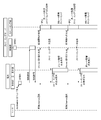
- FIG. 2 the flow of processing of the existing system is shown in FIG. 2, and the flow of processing of the first embodiment is shown in FIG.
- the control unit of the terminal when the user makes an application startup request, the control unit of the terminal performs initialization.
- the control unit of the streaming server performs initialization and receives a connection request from a terminal, it issues a connection permission.
- the user selects a viewing channel and transmits a channel switching request to the control unit of the streaming server.
- the streaming server outputs a request to start processing to the streaming unit, and the streaming unit performs high-rate hierarchy streaming start processing. Thereafter, the streaming data is transmitted to the terminal.
- the terminal makes a display request to the streaming unit, and a high-rate hierarchical screen is displayed on the display unit. Thereafter, when the user selects a viewing channel, the same operation as described above is repeated.
- a high-rate image streaming start process (indicated by P0) is performed in the streaming server from when the user performs a channel selection operation until the image of the channel is displayed. Needed. That is, since there are processes necessary for buffering for broadcast reception start, transcode start, and streaming, a waiting time is required until video display is started after the user selects a viewing channel.
- the present technology can solve such a problem.
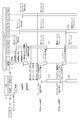
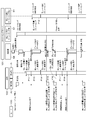
- FIG. 3 showing the processing flow of the first embodiment, the respective sequences of the user 10, the control unit 26 of the terminal 2, the display unit 25, the streaming unit 11 and the control unit 17 of the streaming server 1 are shown. Yes.
- three streaming units 11 1 , 11 2 , 11 3 are provided.
- the control unit 26 of the terminal 2 When the user 10 makes an application launch request, the control unit 26 of the terminal 2 performs initialization. When initialization is performed, the control unit 17 of the streaming server 1 issues a process start request to each streaming unit. Each streaming unit performs a low bit rate streaming start process.
- the control unit 17 of the streaming server 1 that has received the connection request from the terminal 2 transmits a connection permission to the terminal 2.
- the connection request includes terminal information for identifying the terminal and user information (supported A / V codec, screen resolution, etc.).
- the streaming units 11 1 , 11 2 , and 11 3 of the streaming server 1 perform a low bit rate streaming start process, and transmit the result to the terminal 2.
- selecting a channel that is responsible of the streaming unit 11 1 the display request for the channel on the display unit 26 is performed. Since low bit rate streaming has already started, video display can be started immediately after the request. In parallel, the viewing stream is notified to the control unit 17 of the streaming server 1.
- the streaming unit 11 1 is instructed to update the encoding parameter. Performing the streaming unit 11 1 is processed in optimum bit rate streaming (indicated by P1) In response to this instruction. Therefore, a full screen display of a bit rate stream suitable for the terminal is performed on the display unit 25 of the terminal 2 (indicated by P2).
- the display request for the channel on the display unit 26 is performed.
- the viewing stream is notified to the control unit 17 of the streaming server 1.
- Streaming server 1 updates the encoding parameters is instructed to the streaming unit 11 2.
- Performing the streaming unit 11 2 is the processing of the optimum bit rate streaming (indicated by P3) In response to this instruction. Therefore, a full screen display of a bit rate stream suitable for the terminal is performed on the display unit 25 of the terminal 2 (indicated by P4).
- the encoding parameter update is instructed to the streaming unit 11 2 , the encoding parameter of the streaming unit 11 1 is changed to one that performs low bit rate streaming processing.
- the first embodiment includes a plurality of streaming units 11, and all channels are always streamed by multicast simultaneously. Therefore, when the user's viewing channel selection operation is notified, there is no need for tuner tuning, transcoding, and FEC processing, and as a result, the video display of the selected channel immediately after the user selects the viewing channel. Can start.
- the low bit rate image of the new channel can be displayed, so that the image is interrupted. Can be prevented.
- the bandwidth can be used efficiently and high-quality viewing according to the reception conditions can be performed.
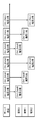
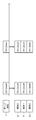
- FIG. 4 is a time-series diagram transmitted from the server side to the terminal.
- Ch_Data is transmitted from the server in packet units.
- FIG. 4 When using the existing system unicast, as shown in FIG. 4, when viewing a television broadcast, a separate packet is required for each viewer terminal. Therefore, when a plurality of terminals 0, 1 and 2 view the same channel Ch1, it is necessary to transmit the same channel data for three units. Thus, the transmission efficiency is reduced in the existing system.
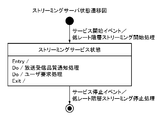
- FIG. 6 is a state transition diagram of the streaming server 1.
- UML Unified Modeling Language
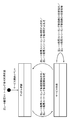
- the black circle indicates the start of the state diagram and the double black circle indicates the end of the state diagram.
- the name section is “streaming service state”.
- Action labels reserved in UML include Entry, Exit, Do, and Include. Entry: Indicates the action to be performed at the state exit Exit: Indicates the action to be performed at the state exit Do: Indicates the action to be performed at the state Include: Indicates to call the state machine that refines the state
- the action label indicates an event that activates the action described to the right of /. Since these events are transitions inside the state, they are semantically the same as transitions to their own state except for the entry and exit of the state.
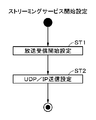
- FIG. 7 shows an action for setting the streaming service start. That is, step ST1 (broadcast reception start setting) and step ST2 (UDP / IP transmission setting) are performed.
- step ST2 a multicast address is set as a transmission destination, and multicast transmission is performed to the terminal.
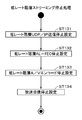
- FIG. 8 shows an action for setting the streaming service stop. That is, step ST3 (UDP / IP transmission stop setting) and step ST4 (streaming part stop setting) are performed.
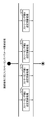
- FIG. 9 shows the action of the streaming parameter update process according to the connected terminal. That is, (setting update processing of streaming unit 0 (streaming unit 11 in FIG. 1 1)) Step ST5 0, (setting update processing of streaming unit 1 (streaming unit 11 in FIG. 1 2)) Step ST5 1, Step ST5 2 ( Step ST5 N (setting update processing of the streaming unit N) is performed in the streaming unit 2 (streaming unit 11 3 in FIG. 1).
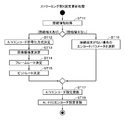
- FIG. 10 is a flowchart showing the action of the setting update process of the streaming unit.
- a diamond mark in the flowchart represents a branching process.
- Step ST11 Connection information is acquired. User information, terminal information, and viewing stream information are stored in the connection information. When there is a connected terminal, the following processing is performed.
- Step ST12 Determination of A / V encoding encoding method
- Step ST13 Determination of image resolution
- Step ST14 Determination of frame rate
- Step ST15 Determination of bit rate
- Step ST16 Select encoding parameter when there is no connected terminal In other words, encoding is performed at the lowest level even when there is no connected terminal. Bandwidth saving and delay when selecting viewing channel can be eliminated.
- Step ST17 Update A / V encoder settings
- Step ST18 Update AL-FEC encoder settings
- FIG. 11 is a flowchart showing the user request processing action of the streaming server 1.
- Step ST21 A user request is acquired. When the user request is a connection request, the following processing is performed.
- Step ST25 User information is acquired.
- Step ST26 Terminal information is acquired.
- Step ST27 The connection information is deleted.
- Step ST28 A connection end notification is made and an end process is performed.
- Step ST29 User information is acquired.
- Step ST30 Terminal information is acquired.
- Step ST31 Viewing stream information is acquired.
- Step ST28 The viewing stream information is updated and the end process is performed.
- connection information is shown in Table 1. Information on each terminal obtained at the time of the connection request and the high-rate hierarchy viewing notification is stored.
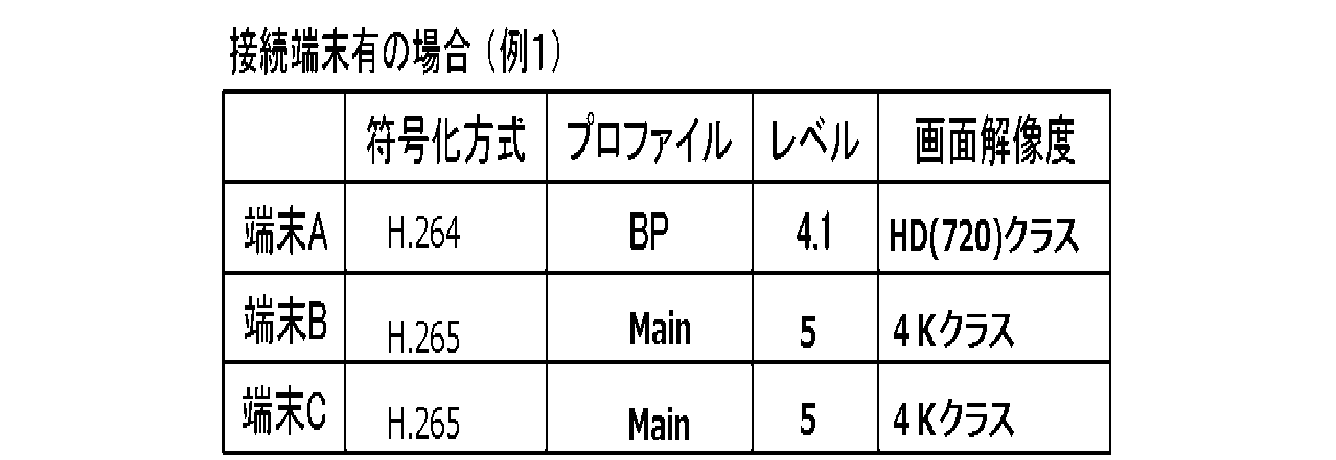
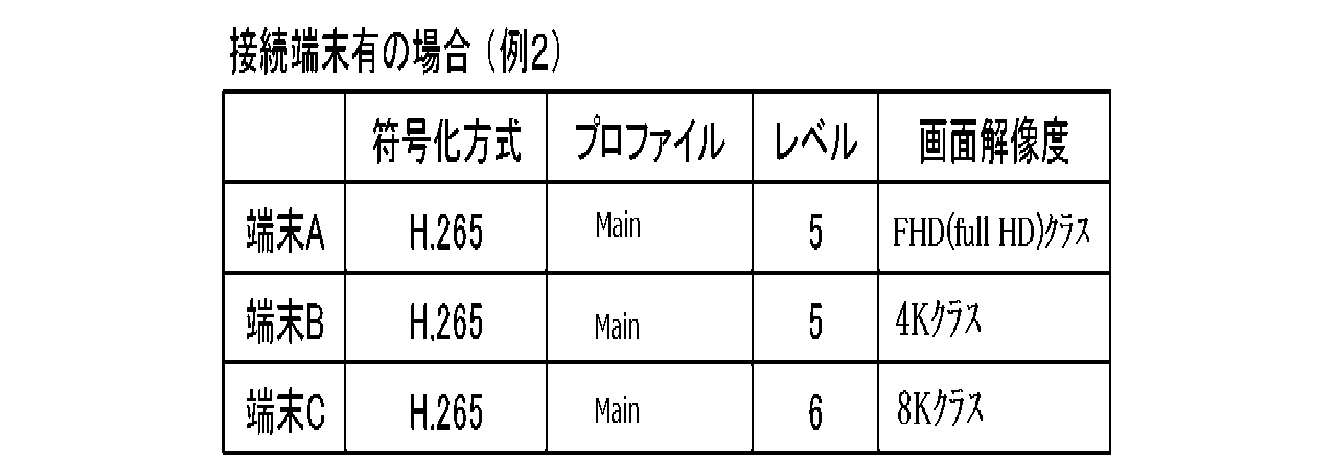
- the encoding parameter selection for high-rate hierarchical streaming will be explained. Even when there is no connected terminal, encoding and streaming are performed at a relatively low level that is determined in advance, while minimizing the use of streaming bandwidth. When a viewing is selected from the terminal, it is possible to reproduce a desired channel without delay.
- Table 2 shows an example of encoding parameters when there is no connection terminal.
- Table 3 shows an example of encoding parameters when there are three connected terminals.
- Table 5 shows other examples of encoding parameters when there are three connected terminals.
- the example of selecting the encoding parameter with the most supported terminals and the example of selecting the lowest level encoding parameter are shown as the criteria for selecting the encoding parameter.
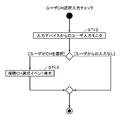
- FIG. 12 is a view state transition diagram of the terminal 2.
- the state (block) shown in FIG. 12 has two states: the name section is “waiting for viewing channel selection” and the name section is “high-rate hierarchical full screen display state”.
- the action of requesting high-rate layer reception is activated by an event for selecting a viewing channel, and the state transitions from “listening channel selection waiting state” to “high-rate layer full screen display state”.
- the high-rate hierarchy decoding stop action is activated by the high-rate hierarchy viewing end event, and transitions from the “high-rate hierarchy full screen display state” to the “viewing channel selection waiting state”.
- the internal transition section of the “high rate hierarchy full screen display state” is as follows. Entry / high rate hierarchy full screen display status Do / user viewing end input check
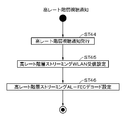
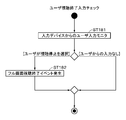
- the viewing channel selection screen display setting is executed in step ST41.
- Step ST42 Monitor user input from the input device. If there is no user input, the process ends.
- Step ST43 When the user selects a viewing channel, a viewing channel selection event occurs.
- Step ST44 Issuing high-rate hierarchical viewing notification
- Step ST45 High-rate hierarchical streaming wireless LAN reception setting
- Step ST46 High-rate hierarchical streaming AL-FEC decoding setting
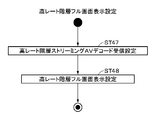
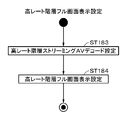
- the high rate hierarchy full screen display setting is as shown in FIG. Step ST47: High-rate hierarchical streaming A / V decoding reception setting Step ST48: High-rate hierarchical full screen display setting
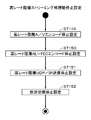
- Step ST51 Monitor user input from the input device. If there is no input from the user, the process ends.
- Step ST52 When the user selects to stop viewing, a high-rate hierarchy viewing end event occurs.
- Step ST53 High-rate hierarchical streaming A / V decoding stop setting
- Step ST54 High-rate hierarchical streaming AL-FEC stop setting
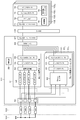
- Second Embodiment> "System configuration" A system according to the second embodiment will be described with reference to FIG.
- a system is configured by 102 m (when these terminals are not particularly distinguished, they are simply referred to as the terminals 102) and the wireless communication network 103.
- An antenna unit 104 and a tuner unit 105 are connected to the streaming server 101.
- a configuration in which n tuners are connected in parallel to the antenna unit 104 is used. It is possible to simultaneously receive television broadcasts of n channels. A diversity reception method may be used.
- Each tuner of the tuner unit 105 receives a television broadcast signal, selects a channel, and performs digital demodulation processing.
- the following standards for digital broadcasting can be applied.
- the same content is transmitted at a plurality of rates (low rate layer and high rate layer) in a broadcast channel of television broadcasting.
- low-rate hierarchical broadcasting is one-segment broadcasting
- high-rate hierarchical broadcasting is full-segment broadcasting.
- Television broadcasting is the one to which the following standards for digital broadcasting are applied.
- the output of each tuner of the tuner unit 105 is supplied to the hierarchical data separation unit 50.
- the hierarchical data separation unit 50 separates the low rate hierarchical data and the high rate hierarchical data.
- the separated low rate layer data is supplied to the A / V decoder unit 52 of the low rate layer streaming unit 51.
- the A / V decoder unit 52 includes n A / V decoders to which low rate hierarchical data is supplied.
- the A / V decoder unit 52 performs A / V decoding processing of stream data.
- the A / V decoder unit 52 can decode data to which the following standard is applied. H.264 / H.265 / HEVC / MPEG-4 AVC / MPEG-2
- the output of the A / V decoder unit 52 is supplied to the video combiner 53, and one composite stream (multi-screen moving image) is created.
- the output data of the video combiner 53 is supplied to the A / V encoder 54.
- the A / V encoder 54 performs a process of reducing the data rate of digital television broadcasting to a rate that can be transmitted over a wireless communication network, and generates compressed stream data.
- the output of the A / V encoder 54 is supplied to the AL-FEC encoder 55.
- the A / V encoder 54 can generate data to which the following standard is applied. H.264 / H.265 / HEVC / MPEG-4 AVC / MPEG-2
- the AL-FEC encoder 55 performs AL-FEC encoding processing of stream data.
- the output of the streaming unit 51 is supplied to the UDP / IP 66.
- the UDP / IP 66 performs standard protocol processing for the transport layer (UDP) and the network layer (IP).
- Output data of the UDP / IP 66 is supplied to the wireless LAN interface 67.
- the wireless LAN interface 67 is a wireless communication transmitting / receiving unit.
- a wireless LAN interface 67 is coupled to the wireless communication network 103 to perform bidirectional wireless communication.
- the following standard wireless LAN can be used. IEEE.802.11a / 11b / 11g / 11n / 11ac / 11ad
- the n high rate hierarchical data separated by the hierarchical data separation unit 50 are supplied from the high rate hierarchical streaming unit 61 1 to the high rate hierarchical streaming unit 61 n , respectively.
- the high-rate hierarchical streaming units 61 1 to 61 n (these high-rate hierarchical streaming units are simply referred to as the high-rate hierarchical streaming unit 61 when it is not necessary to distinguish between them) have the same configuration.
- the high-rate hierarchical streaming unit 61 includes a channel selector 62, an A / V decoder 63, an A / V encoder 64, and an AL-FEC encoder 65.
- the channel selector 62 selects stream data requested by the user and outputs it to the A / V decoder 63.
- the A / V decoder 63 performs A / V decoding processing of stream data.
- the A / V decoder 63 can decode data to which the following standard is applied.
- the A / V encoder 64 can generate data to which the following standard is applied.
- the AL-FEC encoder 65 performs AL-FEC encoding processing of stream data.
- Outputs of the n high-rate hierarchical streaming units 61 are supplied to the UDP / IP 66, and output data of the UDP / IP 66 is supplied to the wireless LAN interface 67.
- a wireless LAN interface 67 is coupled to the wireless communication network 103 to perform bidirectional wireless communication.
- a wireless LAN of the following standard can be used as the wireless communication network 103. IEEE.802.11a / 11b / 11g / 11n / 11ac / 11ad
- a control unit 68 for controlling each unit of the streaming server 101 (a tuner unit 105, a low rate layer streaming unit 51, a high rate layer streaming unit 61, a UDP / IP unit 66, a wireless LAN interface 67, etc.) is provided.
- the control unit 68 includes a CPU, a RAM, a ROM, and the like, and the processing of the streaming server 101 described later is performed under the control of the CPU.
- the streaming server 101 described above streams broadcast data.
- the low rate layer transmits by multicast or broadcast, and the high rate layer transmits by unicast.
- the terminal 102 processes a packet related to the channel selected from the received data and views a program of a desired channel.
- the terminal 102 has the same configuration as the terminal 2 in the first embodiment described above. That is, it has a wireless LAN interface 71 and performs bidirectional wireless communication via the wireless communication network 103.
- a UDP / IP 72 is connected to the wireless LAN interface 71, and an AL-FEC decoder 73 is connected to the UDP / IP 72.
- an A / V decoder 74 is connected to the AL-FEC decoder 73.
- a display / user input unit 75 is provided for playing back the decoded video and audio and performing input such as user channel selection.
- a control unit 76 for controlling each unit of the terminal 102 (wireless LAN interface 71, UDP / IP 72, AL-FEC decoder 73, A / V decoder 74, etc.) is provided.
- the control unit 76 includes a CPU, a RAM, a ROM, and the like, and the processing of the terminal 102 described later is performed under the control of the CPU.
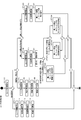
- FIG. 20 shows the flow of processing of the second embodiment.
- the control unit 76 of the terminal 102 performs initialization.
- the control unit 68 of the streaming server 101 issues a process start request to the low-rate hierarchical streaming unit 51.
- the low-rate hierarchical streaming unit 51 performs a low bit-rate streaming start process. Then, low-rate hierarchical streaming is performed.
- the control unit 68 of the streaming server 101 that has received the connection request from the terminal 102 transmits a connection permission to the terminal 102.
- the connection request includes terminal information for identifying the terminal and user information (supported A / V codec, screen resolution, etc.).
- the low-rate hierarchical multi-screen display is a user interface screen that divides one screen into n divided screens and simultaneously displays programs of n channels on each screen. The user 100 selects a channel he / she wants to view while viewing the low-rate hierarchical multi-screen display.
- the control unit 68 of the streaming server 101 performs the high-rate hierarchical data transmission process, and the high-rate hierarchical streaming unit 61 corresponding to the instructed channel performs the streaming start process P12. I do. Thereafter, the high rate hierarchical streaming data is transmitted to the terminal.
- the high-rate hierarchy full screen display P14 is performed by the high-rate hierarchy streaming data.
- the high rate layer full screen display cannot be performed during the streaming start process P12. However, when the channel is selected in the multi-screen display, the terminal 102 immediately performs the low rate layer full screen display P13, and then the high rate layer full display. The screen display is switched to P14. Therefore, it is possible to prevent a delay in which no image is displayed.
- the streaming server 101 sends a high rate layer transmission / reception quality notification.
- the control unit 76 of the terminal 102 performs a determination process P15 using both the high-rate hierarchical broadcast reception quality and the wireless LAN communication quality. That is, it is determined whether high-rate hierarchical streaming can be continuously performed. If it is determined that the high-rate hierarchy streaming can be continuously performed, the high-rate hierarchy full screen display is continued. The determination process is performed, for example, at predetermined time intervals in the high-rate hierarchical full screen display state.
- the display is switched to the low rate layer full screen display P17.
- the display is switched to the low-rate hierarchical multi-screen display P18. Furthermore, when the user selects a viewing channel, the same operation as described above is repeated.
- a multi-screen of a low-rate hierarchical stream is streamed by multicast and the data is shared.
- the low-rate layer stream received on the multi-screen of the low-rate layer stream is complemented with a full screen during the streaming start processing time that occurs. Since a stream in which the low-rate hierarchical data of all the channels is always multi-streamed is multicast, the video display of the selected channel can be started immediately after the user selects the viewing channel.
- the start of transcoding, and buffering for streaming it takes time until the video display is started after the user selects a viewing channel. On the other hand, immediately after the user selects the viewing channel, video display of the selected channel can be started.
- the second embodiment can increase the transmission efficiency during wireless LAN streaming, as in the first embodiment.
- data for each viewer is required as shown in FIG. Therefore, when a plurality of terminals 0, 1 and 2 view the same channel Ch1, it is necessary to transmit the same channel data for three units. Each terminal receives its own data. Thus, the transmission efficiency is reduced in the existing system.
- FIG. 21 is a time-series diagram transmitted from the server side to the terminal. Ch_Data is transmitted from the server in packet units.
- FIG. 21 is a time-series diagram transmitted from the server side to the terminal. Ch_Data is transmitted from the server in packet units.
- a separate packet for each viewer terminal is required. Therefore, when a plurality of terminals 0, 1 and 2 view the same channel Ch1, it is necessary to transmit the same channel data for three units. Thus, the transmission efficiency is reduced in the existing system.
- the streaming server 101 since the three terminals 102 1 , 102 2 , and 102 3 share the low-rate hierarchical multi-screen data by using multicast transmission, as shown in FIG. Therefore, the streaming server 101 only needs to perform the transmission efficiency. Furthermore, since the streaming server 101 knows the number of connected terminals and the address of the terminal, the stream rate is lowered when no terminal is connected. Further, when a viewing channel is selected in the terminal, the high-rate layer stream of the channel is unicast transmitted to the terminal, so that the user can view the high-rate layer broadcast.
- the second embodiment can cope with reception quality deterioration due to in-car broadcast reception and wireless communication fluctuation.
- switching control between the main broadcast (high rate layer stream) and the sub broadcast (low rate layer stream) is performed according to the broadcast reception quality.
- the wireless LAN wireless communication quality is not taken into consideration, the main / sub broadcast cannot be appropriately selected.
- the terminal side determines the reception quality of the main broadcast and the sub broadcast, thereby determining the reception of the broadcast and the wireless LAN wireless communication, and appropriately selects the high rate layer stream and the low rate layer stream. Selectable. Therefore, always good viewing can be realized.
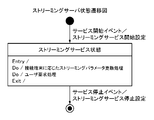
- FIG. 23 is a state transition diagram of the streaming server 101.
- the name section is “streaming service state”.
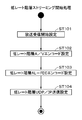
- Streaming service state starts with “service start event / low rate tier streaming start process” and ends with “service stop event / streaming service stop process”.
- the internal transition section is:
- Step ST101 Broadcast reception start setting
- Step ST102 Low rate layer A / V encoder setting
- Step ST103 Low rate layer AL-FEC encoding setting
- Step ST104 Low rate layer UDP / IP transmission setting
- FIG. 25 shows an action of the high-rate hierarchical broadcast reception quality notification process, and the following processes are performed in order.
- Step ST105 High-rate hierarchical broadcast reception quality acquisition
- Step ST106 High-rate hierarchical broadcast reception quality notification
- FIG. 26 is a flowchart showing the user request processing action of the streaming server 101.
- Step ST110 A user request is acquired. When the user request is a connection request, the following processing is performed in order.
- Step ST115 User information is acquired.
- Step ST116 Terminal information is acquired.
- Step ST117 Connection information is deleted.
- Step ST118 A connection end notification is made and the end process is performed.
- Step ST119 User information is acquired.
- Step ST120 Terminal information is acquired.
- Step ST121 Selected channel information is acquired.
- Step ST122 A high-rate hierarchical streaming unit viewing channel switching instruction is issued.
- Step ST123 An instruction to start viewing the high-rate hierarchical streaming unit is issued.
- Step ST124 A high-rate hierarchical streaming unit service failure notification is made.
- Step ST125 User information is acquired.
- Step ST126 Terminal information is acquired.
- Step ST127 A high-rate hierarchical streaming unit stop instruction is issued, and the process ends.
- FIG. 27 shows an action for setting a low-rate hierarchical streaming service stop.
- Step ST131 Low rate layer UDP / IP transmission stop setting
- Step ST132 Low rate layer AL-FEC stop setting
- Step ST133 Low rate layer A / V encoding stop setting
- Step ST134 Broadcast reception stop setting
- FIG. 28 is a state transition diagram of the high-rate hierarchical streaming unit.
- a state transition occurs in response to an instruction issued from “user request processing”.
- a transition is made between the idle state and the service state.
- the transition from the idle state to the service state is performed by the following processing.
- High-rate hierarchical streaming section viewing start instruction / High-rate hierarchical streaming section viewing start processing
- High-rate hierarchical streaming section viewing stop instruction High-rate hierarchical streaming section viewing stop processing
- High-rate hierarchical streaming unit viewing CH switching instruction High-rate hierarchical streaming unit viewing CH switching processing
- FIG. 29 shows the high-rate hierarchical streaming unit viewing start process. This process is performed by sequentially performing the following processes.
- Step ST141 Broadcast reception start setting
- Step ST142 High-rate layer A / V encoding setting
- Step ST143 High-rate layer AL-FEC encoding setting
- Step ST144 High-rate layer UDP / IP transmission setting
- step ST144 high-rate layer streaming is performed.
- Unicast transmission is performed for each terminal (send to an address for each terminal).
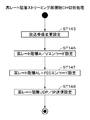
- FIG. 30 shows the high-rate hierarchical streaming unit viewing channel switching process. This process is performed by sequentially performing the following processes.
- Step ST145 Broadcast reception change setting
- Step ST146 High rate layer A / V encoding setting
- Step ST147 High rate layer AL-FEC encoding setting
- Step ST148 High rate layer UDP / IP transmission setting
- step ST148 streaming of the high rate layer is performed.
- Unicast transmission is performed for each terminal (send to an address for each terminal).
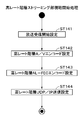
- FIG. 31 shows the high-rate hierarchical streaming unit viewing stop setting process. This process is performed by sequentially performing the following processes.
- Step ST149 High rate layer A / V encoding stop setting
- Step ST150 High rate layer AL-FEC encoding stop setting
- Step ST151 High rate layer UDP / IP transmission stop setting
- Step ST152 Broadcast reception stop setting
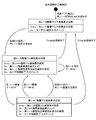
- FIG. 32 is a view state transition diagram of the terminal 102.
- the name section is “low-rate tier multi-screen display state”
- the name section is “low-rate tier full screen display state”
- the name section is “high-rate tier full”.
- FIG. 33A is a low-rate hierarchical multi-screen display.
- one screen is divided into nine (3 ⁇ 3) screens, and programs of different channels (1 to 9) are displayed on each of the divided screens. Since a stream in which the low-rate hierarchical data of all channels is always multi-streamed is multicast, the user can view the low-rate hierarchical multi-screen display at any time. Further, a desired divided screen can be selected for multi-screen display. A viewing channel is selected by selecting a desired divided screen by a user input such as a cursor operation (remote control commander operation) or a touch panel operation.
- a cursor operation remote control commander operation
- touch panel operation a touch panel operation
- FIG. 33B is a low-rate hierarchical full screen display.
- the low-rate hierarchical full screen display of channel 1 is made.
- full screen display of the selected channel can be started.
- the high-rate layer full screen display shown in FIG. 33C is performed. In addition to channel selection by the user, switching between low-rate hierarchical streaming and high-rate hierarchical streaming is automatically performed according to reception quality.
- Low-rate hierarchical multi-screen display state This state is entered according to the viewing application activation / low rate hierarchical WLAN reception setting. In the “low-rate hierarchical multi-screen display state”, the following processing is performed. Entry / low rate hierarchy multi-screen display status Do / user channel selection input check
- the transition from the “low rate layer multi-screen display state” to the “low rate layer full screen display state” is performed by the following process. Viewing channel selection / high rate layer reception request
- Low-rate hierarchy full screen display state In the “low rate layer full screen display state”, the following processing is performed. Entry / Low-rate layer full screen display setting Do / High-rate layer reception quality check Do / Reception of high-rate layer broadcast reception quality notification Do / User viewing end input check
- the transition from the “high rate layer full screen display state” to the “low rate layer full screen display state” is performed by the high rate layer data NG or the next processing. Viewing channel selection / high rate layer reception request
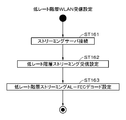
- FIG. 34 shows the low-rate hierarchical wireless LAN reception setting process. This process is performed by sequentially performing the following processes.
- Step ST161 Streaming server connection
- Step ST162 Low-rate hierarchical streaming reception setting
- Step ST163 Low-rate hierarchical streaming AL-FEC decoding setting
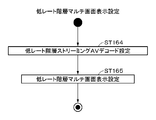
- FIG. 35 shows the low-rate hierarchical multi-screen display setting process. This process is performed by sequentially performing the following processes.
- Step ST164 Low-rate hierarchical streaming AV decoding setting
- Step ST165 Low-rate hierarchical multi-screen display setting
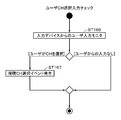
- FIG. 36 shows a user channel selection input check process. This process is performed by sequentially performing the following processes.
- Step ST166 User input monitor from input device
- Step ST167 When the user input is channel selection, a viewing CH selection event occurs. If there is no input from the user, the process ends.
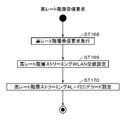
- FIG. 37 shows high-rate hierarchical reception request processing. This process is performed by sequentially performing the following processes.
- Step ST168 Issuance of high rate layer reception request
- Step ST169 High rate layer streaming wireless LAN reception setting
- Step ST170 High rate layer streaming AL-FEC decoding setting
- FIG. 38 shows the low-rate hierarchical full screen display setting process. This process is performed by sequentially performing the following processes.
- Step ST171 Low-rate hierarchical streaming AV decoding setting
- Step ST172 Low-rate hierarchical full screen display setting
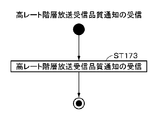
- FIG. 39 shows a reception process of the high-rate hierarchical broadcast reception quality notification. This process is performed by performing the following process. Step ST173: Reception of high-rate hierarchical broadcast reception quality notification
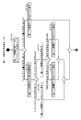
- FIG. 40 shows the high rate layer reception quality check process. This process is performed by sequentially performing the following processes.
- Step ST174 Monitor the buffering state of the high rate layer received data
- Step ST175 When the buffer data amount reaches the reference, the high rate layer wireless LAN reception quality is acquired.
- Step ST176 The packet error rate exceeds the reference, a high rate hierarchical data NG event occurs, and the process ends.
- Step ST177 When the packet error rate is within the standard, high-rate hierarchical broadcast reception quality acquisition is acquired.
- Step ST178 The broadcast reception quality exceeds the standard (if the quality is worse than the standard), a high rate hierarchical data NG event occurs and the process ends.
- MPEG2-TS packet error rate or SNR signal to noise ratio
- Step ST179 If the broadcast reception quality is within the standard, a high-rate hierarchical data OK event occurs and the process ends.
- Step ST180 If the buffer data amount does not reach the standard, the process is terminated.
- the data of the high rate layer can be used in consideration of both the reception quality (for example, packet error rate) of the wireless LAN and the broadcast reception quality.
- the reception quality for example, packet error rate
- a high-rate hierarchical data OK event occurs.
- this data cannot be used, a high-rate hierarchical data NG event occurs.
- FIG. 41 shows a user viewing end input check process. This process is performed by sequentially performing the following processes.
- Step ST181 User Input Monitor from Input Device
- Step ST182 When the user input is a viewing stop, a full screen viewing end event occurs. If there is no input from the user, the process ends.
- FIG. 42 shows the high-rate hierarchical full screen display setting process. This process is performed by sequentially performing the following processes.
- Step ST183 High-rate hierarchical streaming A / V decoding setting
- Step ST184 High-rate hierarchical full screen display setting
- the channel selection is performed by presenting the low-rate hierarchical multi-screen display to the user and selecting the divided screen corresponding to the desired channel by the user. Has been made.
- user interface additional information may be displayed in addition to the program image as shown in FIG. 33A.
- additional information can be displayed using a part of the divided screen, or additional information can be displayed near the divided screen.
- the user interface additional information can be the following.
- Related information display Program information (summary, cast), program end time information Navigation information (congestion information, route information, arrival time) Town information (Nearby shops, spots, parking lots) Weather (weather, temperature, humidity) Drive recorder video display
- Recommend function Send recommended programs to other passengers Introduce programs that can be viewed before arriving at the destination Introduce programs that can be viewed while moving (local programs) Introducing programs currently being viewed in the car Viewing support: A function that records the program on the recorder when the program cannot be viewed due to arrival at the destination, etc. Number of programs displayed on multiple screens A function that allows you to select the size and position freely.
- the support function of channel selection where the parent's terminal has the right to select a child's terminal select the program you want to watch, viewing restrictions
- Image quality control other than viewing quality Premium members, number of viewers, majority method, auction
- this technique can also take the following structures.
- a multi-channel encoder adapted to encode the input stream and switch the output data rate between at least two stages;
- a wireless communication device that transmits the output of the encoder to a terminal through a wireless communication network;
- the communication apparatus is configured to transmit the high-rate stream to the terminal for which the channel has been selected by switching the output of the encoder from a low-rate stream to a high-rate stream.
- the communication apparatus according to (1) wherein the input stream is digital broadcast data.
- transmission of the high-rate stream is performed by multicast or unicast.
- a wireless communication device that receives a stream transmitted from a server through a wireless communication network; A decoder for decoding the received stream; A display for displaying the decoded stream; A communication device comprising: a controller that transmits channel selection information to the server and switches parameters of the decoder so as to decode a low-rate stream or a high-rate stream transmitted from the server.
- a first streaming unit that encodes the input stream into a low rate stream including user interface information
- a second streaming unit that encodes the input stream into a high rate stream
- a wireless communication device that transmits outputs of the first streaming unit and the second streaming unit to a terminal through a wireless communication network;
- the high-rate stream of the second streaming unit of the selected channel is transmitted to the terminal.
- a control unit that controls to transmit the data.
- the communication device which is a multi-screen display that displays images of a plurality of channels that can be selected by the user interface information on a divided screen.
- the communication device which is a multi-screen display that displays images of a plurality of channels that can be selected by the user interface information on a divided screen.
- the communication device which is additional information is displayed with respect to the multi-screen display.
- the communication apparatus wherein the first streaming unit always performs an encoding process.
- a wireless communication device that receives one of a low-rate stream and a high-rate stream transmitted from a server through a wireless communication network; A decoder for decoding the received low rate stream and high rate stream; A display for displaying the decoded stream; A channel selection screen is displayed on the display unit according to user interface information included in the low-rate stream, information on channel selection made using the channel selection screen is transmitted to the server, and the high-level information transmitted from the server is transmitted. And a control unit that controls to decode the rate stream. (13) The communication device according to (12), wherein the control unit controls to display a full screen of the low-rate stream in a transition period from the channel selection screen to displaying the screen of the high-rate stream.
- the reception quality of the high-rate stream is determined based on the reception quality information of the input stream and the quality of wireless communication, and the stream to be decoded is selected.
Landscapes
- Engineering & Computer Science (AREA)
- Multimedia (AREA)
- Signal Processing (AREA)
- Computer Networks & Wireless Communication (AREA)
- General Engineering & Computer Science (AREA)
- Databases & Information Systems (AREA)
- Two-Way Televisions, Distribution Of Moving Picture Or The Like (AREA)
Abstract
Description
第1に、視聴チャンネルの選択時にストリーミング開始処理(選局、トランスコード、FEC(Forward Error Correction)処理等)が必要なため、チャンネルの選択から、画像、音声が端末で出力されるまでに時間を要するため、番組視聴までの待ち時間が発生する。
第2に、無線LANによるストリーミング時の伝送効率が低下する。ユニキャストを用いたテレビジョン視聴時には、視聴者各人用のデータが必要であり、複数人が同じチャンネルを視聴すると人数分、同じチャンネルのデータを送信しなければならず、伝送効率が低下する。上述した特許文献1及び特許文献2には、かかる問題を解決することについては記載されていない。
エンコーダの出力を無線通信網を通じて端末に対して送信する無線通信装置と、
端末においてチャンネル選択がなされると、エンコーダの出力を低レートストリームから高レートストリームに切り替えてチャンネル選択がなされた端末に対して高レートストリームを伝送するようにした通信装置(サーバ)である。
例えば、日本のISDB-T(Integrated Services Digital Broadcasting-Terrestrial)放送では階層伝送が行われており、低レート階層としてワンセグ放送があり、高レート階層としてフルセグ放送がある。ワンセグ放送で送られているストリームが低レートストリームであり、フルセグ放送で送られているストリームが高レートストリームである。
また、本技術は、サーバから無線通信網を通じて送信されるストリームを受信する無線通信装置と、
受信されたストリームをデコードするデコーダと、
デコードされたストリームを表示する表示部と、
チャンネル選択の情報をサーバに送信し、サーバから伝送される低レートストリームもしくは高レートストリームをデコードするように、デコーダのパラメータを切り替える制御部と
を備える通信装置(端末)である。
また、本技術は、入力ストリームをユーザインターフェース情報を含む低レートストリームにエンコードする第1のストリーミング部と、
入力ストリームを高レートストリームにエンコードする第2のストリーミング部と、
第1のストリーミング部及び第2のストリーミング部の出力を無線通信網を通じて端末に対して送信する無線通信装置と、
低レートストリームを伝送している状態で、ユーザインターフェース情報を利用して端末においてチャンネル選択がなされると、選択されたチャンネルの第2のストリーミング部の高レートストリームを端末に対して伝送するように制御する制御部と
を備える通信装置(サーバ)である。
また、本技術は、サーバから無線通信網を通じて送信される低レートストリーム及び高レートストリームの一方を受信する無線通信装置と、
受信された低レートストリーム及び高レートストリームをデコードするデコーダと、
デコードされたストリームを表示する表示部と、
低レートストリームに含まれるユーザインターフェース情報によって表示部にチャンネル選択画面を表示し、チャンネル選択画面を使用してなされたチャンネル選択の情報をサーバに送信し、サーバから伝送された高レートストリームをデコードするように制御する制御部と
を備える通信装置(端末)である。
なお、本技術の説明は、次の順序にしたがってなされる。
<1.第1の実施の形態>
<2.第2の実施の形態>
<3.変形例>
「システム構成」
図1を参照して第1の実施の形態のシステムについて説明する。デジタル放送例えば地上デジタル放送を受信して無線通信網を通じて放送番組を再配信するストリーミングサーバ(放送局、携帯基地局、無線LAN基地局等)1と、複数の例えばm個の無線通信の通信装置である端末21,22,---2m(これらの端末を特に区別する必要がない場合は単に端末2と称する)と、無線通信網(図ではWLANと表記する)3とによってシステムが構成される。
DVB-T/DVB-T2/DVB-H/DVB-C/DVB-C2/ISDB-T/DVB-S/DVB-S2/ATSC-MH/ATSC-3.0
DTMB
H.264/H.265/HEVC/MPEG-4 AVC/MPEG-2/
H.264/H.265/HEVC/MPEG-4 AVC/MPEG-2/
AL-FECエンコーダ14は、ストリームデータのAL-FEC(Application Layer-Forward Error Correction)の符号化処理を行う。
IEEE.802.11a/11b/11g/11n/11ac/11ad
本技術の理解の容易のために、既存のシステムの処理の流れを図2に示し、第1の実施の形態の処理の流れを図3に示す。既存の処理では、ユーザがアプリケーション立ち上げ要求を行うと、端末の制御部が初期化を行う。ストリーミングサーバの制御部が初期化を行っており、端末からの接続要求を受け付けると、接続許可を発行する。
第1の実施の形態の処理の流れを示す図3においては、ユーザ10、端末2の制御部26、表示部25、ストリーミングサーバ1のストリーミング部11及び制御部17のそれぞれのシーケンスが示されている。一例として、3個のストリーミング部111、112、113が備えられている。
次に、無線LANストリーミング時の伝送効率に関して説明する。図4は、サーバ側から端末に送信する時系列の図である。サーバからCh_Dataがパケット単位で送信される。既存システムのユニキャストを使用する場合、図4に示すように、テレビジョン放送の視聴時には、視聴者各人用の端末に対しての個別のパケットが必要とされる。したがって、複数の端末0、端末1、端末2が同一のチャンネルCh1を視聴すると、3台分、同一チャンネルデータを送信する必要がある。このように既存システムでは伝送効率が低下する。
本技術では、マルチキャスト伝送を用いることにより、図5に示すように、同一チャンネルの視聴要求に対して、送信パケットを3台の端末21、22、23が共用するので、一度のパケット送信をストリーミングサーバ1が行えばよく、伝送効率を上げることができる。さらに、ストリーミングサーバ101では、接続している端末の台数、端末のアドレスが分かるので、端末が何ら接続されていない状態では、ストリームのレートを下げるようになされる。
第1の実施の形態におけるストリーミングサーバ1の処理について説明する。図6は、ストリーミングサーバ1の状態遷移図である。以下の説明においても同様であるが、説明用の言語としてUML (Unified Modeling Language)(統一モデリング言語)を使用する。UMLでは、黒丸が状態図の開始を示し、二重の黒丸が状態図の終了を示す。図6の状態(ブロック)は、名前の区画が「ストリーミングサービス状態」である。
UMLで予約されているアクションラベルには、Entry、Exit、Do、Includeがある。
Entry:状態の入口で実行されるアクションを示す
Exit:状態の出口で実行されるアクションを示す
Do:状態で実行されるアクションを示す
Include:状態を詳細化している状態機械を呼び出すことを示す
Do/接続端末に応じたストリーミングパラメータ更新処理
Do/ユーザ要求処理
Exit/
ストリーミングサーバ1の動作について説明する。図7は、ストリーミングサービス開始設定のアクションを示す。すなわち、ステップST1(放送受信開始設定)及びステップST2(UDP/IP送信設定)がなされる。ステップST2では、送信先としてマルチキャストアドレスを設定し、端末に対してマルチキャスト伝送を行う。
接続端末がある場合に、以下の処理がなされる。
ステップST12:A/Vエンコード符号化方式の決定
ステップST13:画像解像度の決定
ステップST14:フレームレートの決定
ステップST15:ビットレートの決定
ステップST16:接続端末がない場合のエンコードパラメータを選択
すなわち、接続端末がない場合でも、最低レベルでエンコードを行う。帯域節約と視聴チャンネル選択時の遅延をなくすことができる。
ステップST18:AL-FECエンコーダの設定を更新
ステップST22:ユーザ情報が取得される。
ステップST23:端末情報が取得される。
ステップST24:接続情報が追加されて終了処理がなされる。すなわち、ユーザ情報、端末情報、接続ストリーム情報が接続情報内に格納される。
ステップST25:ユーザ情報が取得される。
ステップST26:端末情報が取得される。
ステップST27:接続情報が削除される。
ステップST28:接続終了通知がなされて終了処理がなされる。
ステップST29:ユーザ情報が取得される。
ステップST30:端末情報が取得される。
ステップST31:視聴ストリーム情報が取得される。
ステップST28:視聴ストリーム情報が更新されて終了処理がなされる。




第1の実施の形態における端末2の処理について説明する。図12は、端末2の視聴状態遷移図である。図12の状態(ブロック)は、名前の区画が「視聴チャンネル選択待ち状態」の状態と、名前の区画が「高レート階層フル画面表示状態」の二つの状態が存在する。
Do/ユーザチャンネル選択入力チェック
Entry/高レート階層フル画面表示状態
Do/ユーザ視聴終了入力チェック
ステップST42:入力デバイスからのユーザ入力をモニタする。ユーザ入力がない場合には、処理が終了する。
ステップST43:ユーザが視聴チャンネルを選択すると、視聴チャンネル選択イベントが発生する。
ステップST44:高レート階層視聴通知発行
ステップST45:高レート階層ストリーミング無線LAN受信設定
ステップST46:高レート階層ストリーミングAL-FECデコード設定
ステップST47:高レート階層ストリーミングA/Vデコード受信設定
ステップST48:高レート階層フル画面表示設定
ステップST51:入力デバイスからのユーザ入力をモニタする。ユーザからの入力がない場合には、処理が終了する。
ステップST52:ユーザが視聴停止を選択すると、高レート階層視聴終了イベントが発生する。
ステップST53:高レート階層ストリーミングA/Vデコード停止設定
ステップST54:高レート階層ストリーミングAL-FEC停止設定
「システム構成」
図19を参照して第2の実施の形態のシステムについて説明する。デジタル放送例えば地上デジタル放送を受信するストリーミングサーバ(携帯基地局、無線LAN基地局等)101と、複数の例えば4個の無線通信の通信装置である端末1021,1022,1023---102m(これらの端末を特に区別する必要がない場合は単に端末102と称する)と、無線通信網103とによってシステムが構成される。
DVB-T/DVB-T2/DVB-H/DVB-C/DVB-C2/ISDB-T/DVB-S/DVB-S2/ATSC-MH/ATSC-3.0
DTMB
H.264/H.265/HEVC/MPEG-4 AVC/MPEG-2
H.264/H.265/HEVC/MPEG-4 AVC/MPEG-2
AL-FECエンコーダ55は、ストリームデータのAL-FECの符号化処理を行う。
IEEE.802.11a/11b/11g/11n/11ac/11ad
H.264/H.265/HEVC/MPEG-4 AVC/MPEG-2
A/Vエンコーダ64は、次の規格が適用されたデータを生成できる。
H.264/H.265/HEVC/MPEG-4 AVC/MPEG-2
AL-FECエンコーダ65は、ストリームデータのAL-FECの符号化処理を行う。
IEEE.802.11a/11b/11g/11n/11ac/11ad
図20は、第2の実施の形態の処理の流れを示す。図20においては、ユーザ100、端末102の制御部76、表示部(表示部/ユーザ入力)75、ストリーミングサーバ101の制御部68、低レート階層ストリーミング部51及び高レート階層ストリーミング部61のそれぞれのシーケンスが示されている。
図21は、サーバ側から端末に送信する時系列の図である。サーバからCh_Dataがパケット単位で送信される。既存システムのユニキャストを使用する場合、図21に示すように、テレビジョン放送の視聴時には、視聴者各人用の端末に対しての個別のパケットが必要とされる。したがって、複数の端末0、端末1、端末2が同一のチャンネルCh1を視聴すると、3台分、同一チャンネルデータを送信する必要がある。このように既存システムでは伝送効率が低下する。
第2の実施の形態におけるストリーミングサーバ101の処理について説明する。図23は、ストリーミングサーバ101の状態遷移図である。図23の状態(ブロック)は、名前の区画が「ストリーミングサービス状態」である。
Do/放送受信品質通知処理
Do/ユーザ要求処理
Exit/
ステップST101:放送受信開始設定
ステップST102:低レート階層A/Vエンコーダ設定
ステップST103:低レート階層AL-FECエンコード設定
ステップST104:低レート階層UDP/IP送信設定)がなされる。すなわち、低レート階層ストリーミングは、送信先としてマルチキャストアドレスを設定し、端末に対してマルチキャスト伝送を行うものである。
ステップST105:高レート階層放送受信品質取得
ステップST106:高レート階層放送受信品質通知
ステップST111:ユーザ情報が取得される。
ステップST112:端末情報が取得される。
ステップST113:接続情報が追加されて終了処理がなされる。
ステップST114:接続許可通知がなされて終了処理がなされる。
ステップST115:ユーザ情報が取得される。
ステップST116:端末情報が取得される。
ステップST117:接続情報が削除される。
ステップST118:接続終了通知がなされて終了処理がなされる。
ステップST119:ユーザ情報が取得される。
ステップST120:端末情報が取得される。
ステップST121:選択チャンネル情報が取得される。
ステップST122:高レート階層ストリーミング部視聴チャンネル切替指示がなされる。
ステップST123:高レート階層ストリーミング部視聴開始指示がなされる。
ステップST124:高レート階層ストリーミング部サービス不可通知がなされる。
ステップST125:ユーザ情報が取得される。
ステップST126:端末情報が取得される。
ステップST127:高レート階層ストリーミング部停止指示がなされて処理が終了する。
ステップST131:低レート階層UDP/IP送信停止設定
ステップST132:低レート階層AL-FEC停止設定
ステップST133:低レート階層A/Vエンコード停止設定
ステップST134:放送受信停止設定
図28は、高レート階層ストリーミング部状態遷移図である。「ユーザ要求処理」から発行される指示に応じて状態遷移が発生する。アイドル状態及びサービス状態の間で遷移がなされる。アイドル状態からサービス状態への遷移は、次の処理でなされる。
高レート階層ストリーミング部視聴開始指示/高レート階層ストリーミング部視聴開始処理
高レート階層ストリーミング部視聴停止指示/高レート階層ストリーミング部視聴停止処理
高レート階層ストリーミング部視聴CH切替指示/高レート階層ストリーミング部視聴CH切替処理
ステップST141:放送受信開始設定
ステップST142:高レート階層A/Vエンコード設定
ステップST143:高レート階層AL-FECエンコード設定
ステップST144:高レート階層UDP/IP送信設定
ステップST144において、高レート階層のストリーミングは、端末個別にユニキャスト伝送する(端末個別のアドレスに送る)ように設定される。
ステップST145:放送受信変更設定
ステップST146:高レート階層A/Vエンコード設定
ステップST147:高レート階層AL-FECエンコード設定
ステップST148:高レート階層UDP/IP送信設定
ステップST148において、高レート階層のストリーミングは、端末個別にユニキャスト伝送する(端末個別のアドレスに送る)ように設定される。
ステップST149:高レート階層A/Vエンコード停止設定
ステップST150:高レート階層AL-FECエンコード停止設定
ステップST151:高レート階層UDP/IP送信停止設定
ステップST152:放送受信停止設定
第2の実施の形態における端末102の処理について説明する。図32は、端末102の視聴状態遷移図である。図32に示すように、端末102では、名前の区画が「低レート階層マルチ画面表示状態」と、名前の区画が「低レート階層フル画面表示状態」と、名前の区間が「高レート階層フル画面表示状態」の3つの状態が存在する。
視聴アプリ起動/低レート階層WLAN受信設定によってこの状態に入る。「低レート階層マルチ画面表示状態」では次の処理がなされる。
Entry/低レート階層マルチ画面表示状態
Do/ユーザCH選択入力チェック
視聴CH選択/高レート階層受信要求
「低レート階層フル画面表示状態」では次の処理がなされる。
Entry/低レート階層フル画面表示設定
Do/高レート階層受信品質チェック
Do/高レート階層放送受信品質通知の受信
Do/ユーザ視聴終了入力チェック
視聴CH選択/高レート階層受信要求
Entry/高レート階層フル画面表示設定
Do/高レート階層受信品質チェック
Do/高レート階層放送受信品質通知の受信
Do/ユーザ視聴終了入力チェック
ステップST161:ストリーミングサーバ接続
ステップST162:低レート階層ストリーミング受信設定
ステップST163:低レート階層ストリーミングAL-FECデコード設定
ステップST164:低レート階層ストリーミングAVデコード設定
ステップST165:低レート階層マルチ画面表示設定
ステップST166:入力デバイスからのユーザ入力モニタ
ステップST167:ユーザ入力がチャンネル選択の場合には、視聴CH選択イベントが発生する。
ユーザからの入力なしの場合には、処理が終了する。
ステップST168:高レート階層受信要求発行
ステップST169:高レート階層ストリーミング無線LAN受信設定
ステップST170:高レート階層ストリーミングAL-FECデコード設定
ステップST171:低レート階層ストリーミングAVデコード設定
ステップST172:低レート階層フル画面表示設定
ステップST173:高レート階層放送受信品質通知の受信
ステップST174:高レート階層受信データのバッファリング状態をモニタ
ステップST175:バッファデータ量が基準に達した場合には高レート階層無線LAN受信品質取得がなされる。
ステップST176:パケットエラー率が基準を超えており、高レート階層データNGイベントが発生して処理が終了する。
ステップST178:放送受信品質が基準を超えており(基準より品質が悪いと)、高レート階層データNGイベントが発生して処理が終了する。
例えば、基準としてはMPEG2-TSのパケットエラーレートやSNR(signal to noise ratio)を用いることができる。
ステップST179:放送受信品質が基準以内の場合、高レート階層データOKイベントが発生して処理が終了する。
ステップST180:バッファデータ量が基準に達しない場合には処理か終了する。
ステップST181:入力デバイスからのユーザ入力モニタ
ステップST182:ユーザ入力が視聴停止の場合、フル画面視聴終了イベントが発生する。ユーザからの入力がない場合には処理が終了する。
ステップST183:高レート階層ストリーミングA/Vデコード設定
ステップST184:高レート階層フル画面表示設定
上述した第2の実施の形態においては、図33Aに示すように、低レート階層マルチ画面表示をユーザに提示してユーザが所望のチャンネルに対応する分割画面を選択することによってチャンネル選択を行うようになされている。低レート階層マルチ画面表示では、図33Aに示すような番組の画像以外にユーザインターフェース付加情報を表示するようにしてもよい。表示方法としては、分割画面の一部を利用して付加情報を表示したり、分割画面の近傍に付加情報を表示したりできる。
関連情報表示:番組情報(概要、キャスト)、番組終了時間情報
ナビ情報(渋滞情報、経路情報、到着時間)
タウン情報(近隣のお店、スポット、駐車場)
天候(天気、気温、湿度)
ドライブレコーダの映像表示
レコメンド機能:他の同乗者にお勧め番組を送る
目的地に到着するまでに、視聴可能番組を紹介する
移動途中で視聴可能となる番組を紹介(ローカル番組)
車内で現在視聴されている番組を紹介
視聴サポート:視聴番組が、目的地到着等の理由で視聴を継続することができなくなった時にその番組をレコーダに録画する機能
マルチ画面時に、表示した番組数、大きさ、位置を自由に選択できる機能
親の所持している端末が子供の端末の選局権を持つ、選局のサポート機能(見たい番組を選択してあげる、視聴制限)
視聴品質以外での画質制御(プレミアム会員、視聴人数、多数決方式、オークション)
端末の仕様
(1)
入力ストリームをエンコードすると共に、出力データのレートを少なくとも2段階に切り替えるようになされた複数チャンネルのエンコーダと、
前記エンコーダの出力を無線通信網を通じて端末に対して送信する無線通信装置と、
前記端末においてチャンネル選択がなされると、前記エンコーダの出力を低レートストリームから高レートストリームに切り替えてチャンネル選択がなされた前記端末に対して高レートストリームを伝送するようにした通信装置。
(2)
前記入力ストリームがデジタル放送のデータである(1)に記載の通信装置。
(3)
前記高レートストリームの伝送をマルチキャストもしくはユニキャストで行う(1)に記載の通信装置。
(4)
前記高レートストリームの伝送期間以外では、前記低レートストリームの伝送を行う(1)ないし(3)の何れかに記載の通信装置。
(5)
サーバから無線通信網を通じて送信されるストリームを受信する無線通信装置と、
受信されたストリームをデコードするデコーダと、
デコードされたストリームを表示する表示部と、
チャンネル選択の情報を前記サーバに送信し、前記サーバから伝送される低レートストリームもしくは高レートストリームをデコードするように、前記デコーダのパラメータを切り替える制御部と
を備える通信装置。
(6)
入力ストリームをユーザインターフェース情報を含む低レートストリームにエンコードする第1のストリーミング部と、
入力ストリームを高レートストリームにエンコードする第2のストリーミング部と、
前記第1のストリーミング部及び前記第2のストリーミング部の出力を無線通信網を通じて端末に対して送信する無線通信装置と、
前記低レートストリームを伝送している状態で、前記ユーザインターフェース情報を利用して前記端末においてチャンネル選択がなされると、選択されたチャンネルの前記第2のストリーミング部の高レートストリームを前記端末に対して伝送するように制御する制御部と
を備える通信装置。
(7)
前記入力ストリームがデジタル放送のデータである(6)に記載の通信装置。
(8)
前記低レートストリームの伝送をマルチキャストで行い、かつ、前記高レートストリームの伝送をユニキャストで行う(6)又は(7)に記載の通信装置。
(9)
前記ユーザインターフェース情報が選択可能な複数のチャンネルの画像を分割画面に表示するマルチ画面表示である(6)又は(7)に記載の通信装置。
(10)
前記マルチ画面表示に対して付加情報を表示する(9)に記載の通信装置。
(11)
前記第1のストリーミング部がエンコード処理を常に行う(6)に記載の通信装置。
(12)
サーバから無線通信網を通じて送信される低レートストリーム及び高レートストリームの一方を受信する無線通信装置と、
受信された前記低レートストリーム及び高レートストリームをデコードするデコーダと、
デコードされたストリームを表示する表示部と、
前記低レートストリームに含まれるユーザインターフェース情報によって前記表示部にチャンネル選択画面を表示し、前記チャンネル選択画面を使用してなされたチャンネル選択の情報を前記サーバに送信し、前記サーバから伝送された高レートストリームをデコードするように制御する制御部と
を備える通信装置。
(13)
前記チャンネル選択画面から前記高レートストリームによる画面を表示するまでの遷移期間において、前記低レートストリームによるフル画面を表示するように、前記制御部が制御する(12)に記載の通信装置。
(14)
前記高レートストリームによる画面を表示している状態において、前記入力ストリームの受信品質の情報と、無線通信の品質とに基づいて、前記高レートストリームの受信品質を判定し、デコードするストリームを選択する(12)に記載の通信装置。
(15)
前記入力ストリームがデジタル放送のデータである(12)に記載の通信装置。
以上、本技術の実施の形態について具体的に説明したが、上述の各実施の形態に限定されるものではなく、本技術の技術的思想に基づく各種の変形が可能である。例えはストリームのレートは、2種類に限らず、3種類以上設定可能としてもよい。また、デジタル放送以外の画像データを配信する場合に対して本技術を適用してもよい。
2,21~2m・・・端末
3,103・・・無線通信網
4,104・・・アンテナ部
5,105・・・チューナ部
10,110・・・ユーザ
11,111 ~11n ・・・ストリーミング部
12,24・・・A/Vデコーダ
13・・・A/Vエンコーダ
14,23・・・AL-FECエンコーダ
15,22・・・UDP/IP15
16,21・・・無線LANインターフェース
17,26・・・制御部
Claims (15)
- 入力ストリームをエンコードすると共に、出力データのレートを少なくとも2段階に切り替えるようになされた複数チャンネルのエンコーダと、
前記エンコーダの出力を無線通信網を通じて端末に対して送信する無線通信装置と、
前記端末においてチャンネル選択がなされると、前記エンコーダの出力を低レートストリームから高レートストリームに切り替えてチャンネル選択がなされた前記端末に対して高レートストリームを伝送するようにした通信装置。 - 前記入力ストリームがデジタル放送のデータである請求項1に記載の通信装置。
- 前記高レートストリームの伝送をマルチキャストもしくはユニキャストで行う請求項1に記載の通信装置。
- 前記高レートストリームの伝送期間以外では、前記低レートストリームの伝送を行う請求項1に記載の通信装置。
- サーバから無線通信網を通じて送信されるストリームを受信する無線通信装置と、
受信されたストリームをデコードするデコーダと、
デコードされたストリームを表示する表示部と、
チャンネル選択の情報を前記サーバに送信し、前記サーバから伝送される低レートストリームもしくは高レートストリームをデコードするように、前記デコーダのパラメータを切り替える制御部と
を備える通信装置。 - 入力ストリームをユーザインターフェース情報を含む低レートストリームにエンコードする第1のストリーミング部と、
入力ストリームを高レートストリームにエンコードする第2のストリーミング部と、
前記第1のストリーミング部及び前記第2のストリーミング部の出力を無線通信網を通じて端末に対して送信する無線通信装置と、
前記低レートストリームを伝送している状態で、前記ユーザインターフェース情報を利用して前記端末においてチャンネル選択がなされると、選択されたチャンネルの前記第2のストリーミング部の高レートストリームを前記端末に対して伝送するように制御する制御部と
を備える通信装置。 - 前記入力ストリームがデジタル放送のデータである請求項6に記載の通信装置。
- 前記低レートストリームの伝送をマルチキャストで行い、かつ、前記高レートストリームの伝送をユニキャストで行う請求項6に記載の通信装置。
- 前記ユーザインターフェース情報が選択可能な複数のチャンネルの画像を分割画面に表示するマルチ画面表示である請求項6に記載の通信装置。
- 前記マルチ画面表示に対して付加情報を表示する請求項9に記載の通信装置。
- 前記第1のストリーミング部がエンコード処理を常に行う請求項6に記載の通信装置。
- サーバから無線通信網を通じて送信される低レートストリーム及び高レートストリームの一方を受信する無線通信装置と、
受信された前記低レートストリーム及び高レートストリームをデコードするデコーダと、
デコードされたストリームを表示する表示部と、
前記低レートストリームに含まれるユーザインターフェース情報によって前記表示部にチャンネル選択画面を表示し、前記チャンネル選択画面を使用してなされたチャンネル選択の情報を前記サーバに送信し、前記サーバから伝送された高レートストリームをデコードするように制御する制御部と
を備える通信装置。 - 前記チャンネル選択画面から前記高レートストリームによる画面を表示するまでの遷移期間において、前記低レートストリームによるフル画面を表示するように、前記制御部が制御する請求項12に記載の通信装置。
- 前記高レートストリームによる画面を表示している状態において、前記入力ストリームの受信品質の情報と、無線通信の品質とに基づいて、前記高レートストリームの受信品質を判定し、デコードするストリームを選択する請求項12に記載の通信装置。
- 前記入力ストリームがデジタル放送のデータである請求項12に記載の通信装置。
Priority Applications (5)
| Application Number | Priority Date | Filing Date | Title |
|---|---|---|---|
| EP16863810.4A EP3376770B1 (en) | 2015-11-11 | 2016-10-19 | Communication device and system for encoding and streaming digital broadcast channels in a wireless lan |
| CN201680064681.5A CN108353197A (zh) | 2015-11-11 | 2016-10-19 | 通信设备 |
| US15/769,957 US10820031B2 (en) | 2015-11-11 | 2016-10-19 | Communication apparatus for switching between a low-rate stream and a high-rate stream |
| JP2017549974A JP6876922B2 (ja) | 2015-11-11 | 2016-10-19 | 通信装置 |
| ZA2018/02368A ZA201802368B (en) | 2015-11-11 | 2018-04-11 | Communication device |
Applications Claiming Priority (2)
| Application Number | Priority Date | Filing Date | Title |
|---|---|---|---|
| JP2015221559 | 2015-11-11 | ||
| JP2015-221559 | 2015-11-11 |
Publications (1)
| Publication Number | Publication Date |
|---|---|
| WO2017081843A1 true WO2017081843A1 (ja) | 2017-05-18 |
Family
ID=58694913
Family Applications (1)
| Application Number | Title | Priority Date | Filing Date |
|---|---|---|---|
| PCT/JP2016/004633 Ceased WO2017081843A1 (ja) | 2015-11-11 | 2016-10-19 | 通信装置 |
Country Status (6)
| Country | Link |
|---|---|
| US (1) | US10820031B2 (ja) |
| EP (1) | EP3376770B1 (ja) |
| JP (1) | JP6876922B2 (ja) |
| CN (1) | CN108353197A (ja) |
| WO (1) | WO2017081843A1 (ja) |
| ZA (1) | ZA201802368B (ja) |
Families Citing this family (1)
| Publication number | Priority date | Publication date | Assignee | Title |
|---|---|---|---|---|
| CN110505500A (zh) * | 2019-08-06 | 2019-11-26 | 咪咕视讯科技有限公司 | 一种缓存数据发送处理方法及装置 |
Citations (3)
| Publication number | Priority date | Publication date | Assignee | Title |
|---|---|---|---|---|
| JP2005110267A (ja) * | 2003-09-30 | 2005-04-21 | Sharp Corp | ワイヤレスで映像を伝送するための方法 |
| JP2006253882A (ja) * | 2005-03-09 | 2006-09-21 | Matsushita Electric Ind Co Ltd | ワイヤレスav機器 |
| JP2006332854A (ja) * | 2005-05-24 | 2006-12-07 | Funai Electric Co Ltd | サーバ装置 |
Family Cites Families (15)
| Publication number | Priority date | Publication date | Assignee | Title |
|---|---|---|---|---|
| JP3772830B2 (ja) | 2002-09-27 | 2006-05-10 | 株式会社デンソー | 移動体用デジタル放送受信装置及びプログラム |
| US8428048B2 (en) * | 2006-02-21 | 2013-04-23 | Qualcomm Incorporated | Multi-program viewing in a wireless apparatus |
| KR100793736B1 (ko) * | 2006-02-23 | 2008-01-10 | 삼성전자주식회사 | 다채널의 영상을 동시에 출력하는 디지털 방송 수신 장치 |
| CN101123717B (zh) * | 2007-09-25 | 2012-07-04 | 中兴通讯股份有限公司 | 一种实现频道快速切换的装置和方法 |
| CN102113323A (zh) * | 2008-07-28 | 2011-06-29 | 汤姆森特许公司 | 使用辅助频道视频流的快速频道改变的方法和装置 |
| US8374254B2 (en) * | 2008-12-15 | 2013-02-12 | Sony Mobile Communications Ab | Multimedia stream combining |
| US8869203B2 (en) * | 2009-10-08 | 2014-10-21 | Marshall Communications | Multimedia content fusion |
| US8826349B2 (en) * | 2011-02-01 | 2014-09-02 | Verizon Patent And Licensing Inc. | Multicast adaptive stream switching for delivery of over the top video content |
| EP2485472A1 (en) * | 2011-02-04 | 2012-08-08 | Thomson Licensing | Fast channel change companion stream solution with bandwidth optimization |
| JP2013038513A (ja) | 2011-08-04 | 2013-02-21 | Kyocera Corp | 無線基地局および移動局 |
| US9736528B2 (en) * | 2011-09-12 | 2017-08-15 | Verizon Patent And Licensing Inc. | Content delivery for viewing devices within a customer premises |
| WO2014067566A1 (en) * | 2012-10-30 | 2014-05-08 | Telefonaktiebolaget L M Ericsson (Publ) | Method and device for streaming video |
| US20140189751A1 (en) * | 2012-12-27 | 2014-07-03 | Thomson Licensing | Broadband assisted channel change |
| JP2015012305A (ja) * | 2013-06-26 | 2015-01-19 | ソニー株式会社 | コンテンツ供給装置、コンテンツ供給方法、プログラム、端末装置、およびコンテンツ供給システム |
| US9444856B2 (en) * | 2013-09-25 | 2016-09-13 | Ericsson Ab | System and method for managing adjacent channels in an adaptive streaming environment |
-
2016
- 2016-10-19 EP EP16863810.4A patent/EP3376770B1/en active Active
- 2016-10-19 CN CN201680064681.5A patent/CN108353197A/zh active Pending
- 2016-10-19 US US15/769,957 patent/US10820031B2/en active Active
- 2016-10-19 JP JP2017549974A patent/JP6876922B2/ja active Active
- 2016-10-19 WO PCT/JP2016/004633 patent/WO2017081843A1/ja not_active Ceased
-
2018
- 2018-04-11 ZA ZA2018/02368A patent/ZA201802368B/en unknown
Patent Citations (3)
| Publication number | Priority date | Publication date | Assignee | Title |
|---|---|---|---|---|
| JP2005110267A (ja) * | 2003-09-30 | 2005-04-21 | Sharp Corp | ワイヤレスで映像を伝送するための方法 |
| JP2006253882A (ja) * | 2005-03-09 | 2006-09-21 | Matsushita Electric Ind Co Ltd | ワイヤレスav機器 |
| JP2006332854A (ja) * | 2005-05-24 | 2006-12-07 | Funai Electric Co Ltd | サーバ装置 |
Also Published As
| Publication number | Publication date |
|---|---|
| JPWO2017081843A1 (ja) | 2018-08-23 |
| JP6876922B2 (ja) | 2021-05-26 |
| ZA201802368B (en) | 2019-07-31 |
| US10820031B2 (en) | 2020-10-27 |
| US20180316956A1 (en) | 2018-11-01 |
| EP3376770A4 (en) | 2018-11-14 |
| EP3376770A1 (en) | 2018-09-19 |
| EP3376770B1 (en) | 2022-02-16 |
| CN108353197A (zh) | 2018-07-31 |
Similar Documents
| Publication | Publication Date | Title |
|---|---|---|
| JP6092122B2 (ja) | 放送通信融合型サービスのための送信方法及び装置 | |
| EP1879382B1 (en) | Multi-screen display apparatus and method for digital broadcast receiver | |
| JP4786883B2 (ja) | デジタル・ビデオストリームの高速起動 | |
| US8448212B2 (en) | Combined receiver for DVB-H and DVB-T transmission | |
| CN100591123C (zh) | 提供媒体节目的装置及方法 | |
| US20110109808A1 (en) | Method and apparatus for fast channel change using a secondary channel video stream | |
| EP2290855A1 (en) | Multi-program viewing in a wireless apparatus | |
| KR100363159B1 (ko) | 다수채널을동시에수신하는디지털수신기와디스플레이제어방법 | |
| US20140223502A1 (en) | Method of Operating an IP Client | |
| JP5666298B2 (ja) | 番組の利用可能性をモニターするための方法と装置 | |
| US20080098428A1 (en) | Network Managed Channel Change In Digital Networks | |
| WO2010014211A1 (en) | Method and apparatus fast channel change using a scalable videdo coding (svc) stream | |
| JP2003333452A (ja) | ディジタル放送受信装置 | |
| US20050163225A1 (en) | Apparatus for decoding video and method thereof | |
| JP6876922B2 (ja) | 通信装置 | |
| EP2027726B1 (en) | Methods of receiving and sending digital television services | |
| US20060285015A1 (en) | Multichannel video reception apparatus and method for digital broadcasting | |
| US10521250B2 (en) | Method and system for communicating between a host device and user device through an intermediate device using a composite video signal | |
| JP2007006406A (ja) | ディジタル放送受信装置 | |
| KR20070099692A (ko) | 다중 튜너들 및 네트워크화된 모니터들을 이용한 보다 빠른튜닝 | |
| KR100785202B1 (ko) | 디지털 방송 수신 방법 및 시스템 | |
| JP4707385B2 (ja) | ディジタル放送受信装置 | |
| JP2007013949A (ja) | デジタル放送システム及びこのデジタル放送システムにおけるチャネル切換方法 | |
| US20080082996A1 (en) | Method and apparatus for channel change of digital broadcasting receiver | |
| KR101140877B1 (ko) | 예비 채널 전환 기능이 구비된 디지털 방송 장치 및 그 제어 방법 |
Legal Events
| Date | Code | Title | Description |
|---|---|---|---|
| 121 | Ep: the epo has been informed by wipo that ep was designated in this application |
Ref document number: 16863810 Country of ref document: EP Kind code of ref document: A1 |
|
| ENP | Entry into the national phase |
Ref document number: 2017549974 Country of ref document: JP Kind code of ref document: A |
|
| WWE | Wipo information: entry into national phase |
Ref document number: 15769957 Country of ref document: US |
|
| NENP | Non-entry into the national phase |
Ref country code: DE |
|
| WWE | Wipo information: entry into national phase |
Ref document number: 2016863810 Country of ref document: EP |