WO2017086080A1 - 吸水処理材及びその製造方法 - Google Patents
吸水処理材及びその製造方法 Download PDFInfo
- Publication number
- WO2017086080A1 WO2017086080A1 PCT/JP2016/080994 JP2016080994W WO2017086080A1 WO 2017086080 A1 WO2017086080 A1 WO 2017086080A1 JP 2016080994 W JP2016080994 W JP 2016080994W WO 2017086080 A1 WO2017086080 A1 WO 2017086080A1
- Authority
- WO
- WIPO (PCT)
- Prior art keywords
- covering portion
- water
- covered
- water absorption
- core
- Prior art date
- Legal status (The legal status is an assumption and is not a legal conclusion. Google has not performed a legal analysis and makes no representation as to the accuracy of the status listed.)
- Ceased
Links
Images

Classifications
-
- B—PERFORMING OPERATIONS; TRANSPORTING
- B01—PHYSICAL OR CHEMICAL PROCESSES OR APPARATUS IN GENERAL
- B01J—CHEMICAL OR PHYSICAL PROCESSES, e.g. CATALYSIS OR COLLOID CHEMISTRY; THEIR RELEVANT APPARATUS
- B01J20/00—Solid sorbent compositions or filter aid compositions; Sorbents for chromatography; Processes for preparing, regenerating or reactivating thereof
- B01J20/28—Solid sorbent compositions or filter aid compositions; Sorbents for chromatography; Processes for preparing, regenerating or reactivating thereof characterised by their form or physical properties
- B01J20/28014—Solid sorbent compositions or filter aid compositions; Sorbents for chromatography; Processes for preparing, regenerating or reactivating thereof characterised by their form or physical properties characterised by their form
- B01J20/28042—Shaped bodies; Monolithic structures
-
- A—HUMAN NECESSITIES
- A01—AGRICULTURE; FORESTRY; ANIMAL HUSBANDRY; HUNTING; TRAPPING; FISHING
- A01K—ANIMAL HUSBANDRY; AVICULTURE; APICULTURE; PISCICULTURE; FISHING; REARING OR BREEDING ANIMALS, NOT OTHERWISE PROVIDED FOR; NEW BREEDS OF ANIMALS
- A01K1/00—Housing animals; Equipment therefor
- A01K1/015—Floor coverings, e.g. bedding-down sheets ; Stable floors
-
- A—HUMAN NECESSITIES
- A01—AGRICULTURE; FORESTRY; ANIMAL HUSBANDRY; HUNTING; TRAPPING; FISHING
- A01K—ANIMAL HUSBANDRY; AVICULTURE; APICULTURE; PISCICULTURE; FISHING; REARING OR BREEDING ANIMALS, NOT OTHERWISE PROVIDED FOR; NEW BREEDS OF ANIMALS
- A01K23/00—Manure or urine pouches
-
- B—PERFORMING OPERATIONS; TRANSPORTING
- B01—PHYSICAL OR CHEMICAL PROCESSES OR APPARATUS IN GENERAL
- B01J—CHEMICAL OR PHYSICAL PROCESSES, e.g. CATALYSIS OR COLLOID CHEMISTRY; THEIR RELEVANT APPARATUS
- B01J20/00—Solid sorbent compositions or filter aid compositions; Sorbents for chromatography; Processes for preparing, regenerating or reactivating thereof
- B01J20/28—Solid sorbent compositions or filter aid compositions; Sorbents for chromatography; Processes for preparing, regenerating or reactivating thereof characterised by their form or physical properties
- B01J20/28014—Solid sorbent compositions or filter aid compositions; Sorbents for chromatography; Processes for preparing, regenerating or reactivating thereof characterised by their form or physical properties characterised by their form
- B01J20/28016—Particle form
- B01J20/28019—Spherical, ellipsoidal or cylindrical
-
- B—PERFORMING OPERATIONS; TRANSPORTING
- B01—PHYSICAL OR CHEMICAL PROCESSES OR APPARATUS IN GENERAL
- B01J—CHEMICAL OR PHYSICAL PROCESSES, e.g. CATALYSIS OR COLLOID CHEMISTRY; THEIR RELEVANT APPARATUS
- B01J20/00—Solid sorbent compositions or filter aid compositions; Sorbents for chromatography; Processes for preparing, regenerating or reactivating thereof
- B01J20/30—Processes for preparing, regenerating, or reactivating
- B01J20/32—Impregnating or coating ; Solid sorbent compositions obtained from processes involving impregnating or coating
- B01J20/3202—Impregnating or coating ; Solid sorbent compositions obtained from processes involving impregnating or coating characterised by the carrier, support or substrate used for impregnation or coating
- B01J20/3206—Organic carriers, supports or substrates
-
- B—PERFORMING OPERATIONS; TRANSPORTING
- B01—PHYSICAL OR CHEMICAL PROCESSES OR APPARATUS IN GENERAL
- B01J—CHEMICAL OR PHYSICAL PROCESSES, e.g. CATALYSIS OR COLLOID CHEMISTRY; THEIR RELEVANT APPARATUS
- B01J20/00—Solid sorbent compositions or filter aid compositions; Sorbents for chromatography; Processes for preparing, regenerating or reactivating thereof
- B01J20/30—Processes for preparing, regenerating, or reactivating
- B01J20/32—Impregnating or coating ; Solid sorbent compositions obtained from processes involving impregnating or coating
- B01J20/3231—Impregnating or coating ; Solid sorbent compositions obtained from processes involving impregnating or coating characterised by the coating or impregnating layer
- B01J20/3242—Layers with a functional group, e.g. an affinity material, a ligand, a reactant or a complexing group
- B01J20/3268—Macromolecular compounds
- B01J20/327—Polymers obtained by reactions involving only carbon to carbon unsaturated bonds
-
- B—PERFORMING OPERATIONS; TRANSPORTING
- B01—PHYSICAL OR CHEMICAL PROCESSES OR APPARATUS IN GENERAL
- B01J—CHEMICAL OR PHYSICAL PROCESSES, e.g. CATALYSIS OR COLLOID CHEMISTRY; THEIR RELEVANT APPARATUS
- B01J20/00—Solid sorbent compositions or filter aid compositions; Sorbents for chromatography; Processes for preparing, regenerating or reactivating thereof
- B01J20/30—Processes for preparing, regenerating, or reactivating
- B01J20/32—Impregnating or coating ; Solid sorbent compositions obtained from processes involving impregnating or coating
- B01J20/3231—Impregnating or coating ; Solid sorbent compositions obtained from processes involving impregnating or coating characterised by the coating or impregnating layer
- B01J20/3242—Layers with a functional group, e.g. an affinity material, a ligand, a reactant or a complexing group
- B01J20/3268—Macromolecular compounds
- B01J20/3272—Polymers obtained by reactions otherwise than involving only carbon to carbon unsaturated bonds
- B01J20/3274—Proteins, nucleic acids, polysaccharides, antibodies or antigens
-
- B—PERFORMING OPERATIONS; TRANSPORTING
- B01—PHYSICAL OR CHEMICAL PROCESSES OR APPARATUS IN GENERAL
- B01J—CHEMICAL OR PHYSICAL PROCESSES, e.g. CATALYSIS OR COLLOID CHEMISTRY; THEIR RELEVANT APPARATUS
- B01J20/00—Solid sorbent compositions or filter aid compositions; Sorbents for chromatography; Processes for preparing, regenerating or reactivating thereof
- B01J20/30—Processes for preparing, regenerating, or reactivating
- B01J20/32—Impregnating or coating ; Solid sorbent compositions obtained from processes involving impregnating or coating
- B01J20/3291—Characterised by the shape of the carrier, the coating or the obtained coated product
-
- B—PERFORMING OPERATIONS; TRANSPORTING
- B01—PHYSICAL OR CHEMICAL PROCESSES OR APPARATUS IN GENERAL
- B01J—CHEMICAL OR PHYSICAL PROCESSES, e.g. CATALYSIS OR COLLOID CHEMISTRY; THEIR RELEVANT APPARATUS
- B01J20/00—Solid sorbent compositions or filter aid compositions; Sorbents for chromatography; Processes for preparing, regenerating or reactivating thereof
- B01J20/30—Processes for preparing, regenerating, or reactivating
- B01J20/32—Impregnating or coating ; Solid sorbent compositions obtained from processes involving impregnating or coating
- B01J20/3291—Characterised by the shape of the carrier, the coating or the obtained coated product
- B01J20/3293—Coatings on a core, the core being particle or fiber shaped, e.g. encapsulated particles, coated fibers
-
- C—CHEMISTRY; METALLURGY
- C02—TREATMENT OF WATER, WASTE WATER, SEWAGE, OR SLUDGE
- C02F—TREATMENT OF WATER, WASTE WATER, SEWAGE, OR SLUDGE
- C02F1/00—Treatment of water, waste water, or sewage
- C02F1/28—Treatment of water, waste water, or sewage by sorption
- C02F1/288—Treatment of water, waste water, or sewage by sorption using composite sorbents, e.g. coated, impregnated, multi-layered
-
- B—PERFORMING OPERATIONS; TRANSPORTING
- B01—PHYSICAL OR CHEMICAL PROCESSES OR APPARATUS IN GENERAL
- B01J—CHEMICAL OR PHYSICAL PROCESSES, e.g. CATALYSIS OR COLLOID CHEMISTRY; THEIR RELEVANT APPARATUS
- B01J2220/00—Aspects relating to sorbent materials
- B01J2220/40—Aspects relating to the composition of sorbent or filter aid materials
- B01J2220/48—Sorbents characterised by the starting material used for their preparation
- B01J2220/4812—Sorbents characterised by the starting material used for their preparation the starting material being of organic character
- B01J2220/4825—Polysaccharides or cellulose materials, e.g. starch, chitin, sawdust, wood, straw, cotton
- B01J2220/4831—Polysaccharides or cellulose materials, e.g. starch, chitin, sawdust, wood, straw, cotton having been subjected to further processing, e.g. paper, cellulose pulp
-
- B—PERFORMING OPERATIONS; TRANSPORTING
- B01—PHYSICAL OR CHEMICAL PROCESSES OR APPARATUS IN GENERAL
- B01J—CHEMICAL OR PHYSICAL PROCESSES, e.g. CATALYSIS OR COLLOID CHEMISTRY; THEIR RELEVANT APPARATUS
- B01J2220/00—Aspects relating to sorbent materials
- B01J2220/40—Aspects relating to the composition of sorbent or filter aid materials
- B01J2220/48—Sorbents characterised by the starting material used for their preparation
- B01J2220/4812—Sorbents characterised by the starting material used for their preparation the starting material being of organic character
- B01J2220/485—Plants or land vegetals, e.g. cereals, wheat, corn, rice, sphagnum, peat moss
-
- B—PERFORMING OPERATIONS; TRANSPORTING
- B01—PHYSICAL OR CHEMICAL PROCESSES OR APPARATUS IN GENERAL
- B01J—CHEMICAL OR PHYSICAL PROCESSES, e.g. CATALYSIS OR COLLOID CHEMISTRY; THEIR RELEVANT APPARATUS
- B01J2220/00—Aspects relating to sorbent materials
- B01J2220/40—Aspects relating to the composition of sorbent or filter aid materials
- B01J2220/48—Sorbents characterised by the starting material used for their preparation
- B01J2220/4875—Sorbents characterised by the starting material used for their preparation the starting material being a waste, residue or of undefined composition
-
- B—PERFORMING OPERATIONS; TRANSPORTING
- B01—PHYSICAL OR CHEMICAL PROCESSES OR APPARATUS IN GENERAL
- B01J—CHEMICAL OR PHYSICAL PROCESSES, e.g. CATALYSIS OR COLLOID CHEMISTRY; THEIR RELEVANT APPARATUS
- B01J2220/00—Aspects relating to sorbent materials
- B01J2220/40—Aspects relating to the composition of sorbent or filter aid materials
- B01J2220/48—Sorbents characterised by the starting material used for their preparation
- B01J2220/4875—Sorbents characterised by the starting material used for their preparation the starting material being a waste, residue or of undefined composition
- B01J2220/4893—Residues derived from used synthetic products, e.g. rubber from used tyres
-
- B—PERFORMING OPERATIONS; TRANSPORTING
- B01—PHYSICAL OR CHEMICAL PROCESSES OR APPARATUS IN GENERAL
- B01J—CHEMICAL OR PHYSICAL PROCESSES, e.g. CATALYSIS OR COLLOID CHEMISTRY; THEIR RELEVANT APPARATUS
- B01J2220/00—Aspects relating to sorbent materials
- B01J2220/50—Aspects relating to the use of sorbent or filter aid materials
Definitions
- the present invention relates to a water-absorbing treatment material that absorbs liquid and a method for producing the same.
- Examples of conventional water-absorbing treatment materials include those described in Patent Document 1.
- a core portion formed in a granular shape and a covering portion that covers the core portion are provided.
- coated part has the function to adhere
- the covering portion contributes to the formation of a mass of the water absorption treatment material after use.
- the covering portion since the covering portion is provided so as to cover the core portion, it prevents the liquid from quickly reaching the core portion. This has been a factor of reducing water absorption in the conventional water-absorbing treatment material.
- This invention is made
- the water-absorbing treatment material according to the present invention includes a substantially cylindrical core portion having side surfaces and first and second bottom surfaces, and a covering portion that covers the core portion, and the side surface of the core portion is 80% or more. The region is covered with the covering portion, and 80% or more of the first bottom surface of the core portion is exposed without being covered with the covering portion.
- the manufacturing method of the water-absorbing treatment material includes a core portion forming step for forming a substantially cylindrical core portion having side surfaces and first and second bottom surfaces, and a covering portion for forming the covering portion so as to cover the core portion.
- the covering portion forming step the region of 80% or more of the side surface of the core portion is covered with the covering portion, and 80% or more of the first bottom surface of the core portion. The covering portion is formed so that the region is exposed without being covered by the covering portion.
- the covering portion is formed so that most of the side surface of the core portion is covered by the covering portion, while most of the bottom surface is exposed without being covered by the covering portion. For this reason, in the water-absorbing treatment material after manufacture, the liquid can quickly reach the core through the exposed portion.
- a water-absorbing treatment material capable of suppressing a decrease in water absorption due to the presence of the covering portion and a method for manufacturing the same are realized.
- FIG. 2 is a cross-sectional view taken along line II-II in FIG. It is a perspective view which shows the core part in the water absorption processing material of FIG. It is sectional drawing for demonstrating a coating
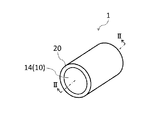
- FIG. 1 is a perspective view showing an embodiment of a water absorption treatment material according to the present invention.
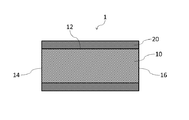
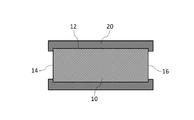
- FIG. 2 is a cross-sectional view taken along the line II-II in FIG.
- the water absorption treatment material 1 is a water absorption treatment material that absorbs liquid, and includes a core portion 10 and a covering portion 20.
- the water-absorbing treatment material 1 is, for example, an excrement treatment material that absorbs human or animal excrement.
- FIG. 3 is a perspective view showing the core 10.
- the core portion 10 has a substantially cylindrical shape, and has a side surface 12, a bottom surface 14 (first bottom surface), and a bottom surface 16 (second bottom surface).
- the core part 10 has water absorption, and has a function of absorbing and retaining a liquid such as urine.
- the core part 10 contains a water absorbing material (first water absorbing material).
- first water absorbing material for example, papers, tea husks, plastics, or okara can be used.
- the first water-absorbing material is preferably the main material of the core part 10.
- the main material of the core part 10 means a material having the largest weight ratio in the core part 10 among the materials constituting the core part 10.
- Paper is a material mainly composed of pulp.
- Examples of papers include, in addition to ordinary paper, PVC wallpaper classifieds (paper obtained by classifying PVC wallpaper), fluff pulp, papermaking sludge, pulp sludge, and the like.
- PVC wallpaper classifieds paper obtained by classifying PVC wallpaper
- fluff pulp papermaking sludge
- pulp sludge pulp sludge
- plastics for example, a paper diaper classification product (plastic obtained by classifying paper diapers) may be used.
- the okara is preferably dry okara.
- a covering portion 20 is provided so as to cover the core portion 10.
- the covering portion 20 has a function of bonding the water-absorbing treatment materials 1 that have absorbed the liquid during use. Thereby, the lump which consists of a plurality of water-absorbing treatment materials 1 is formed after use.
- the covering portion 20 covers only a part of the core portion 10. Specifically, 80% or more of the side surface 12 of the core portion 10 is covered with the covering portion 20. That is, the area of the portion of the side surface 12 covered by the covering portion 20 is 80% or more of the entire area of the side surface 12. It is preferable that 90% or more of the side surface 12 is covered with the covering portion 20, and it is more preferable that the entire side surface 12 is covered with the covering portion 20. 1 and 2 show a case where the entire side surface 12 is covered with the covering portion 20.
- the covering portion 20 is preferably provided continuously on the side surface 12. That is, even when the covering portion 20 covers the side surface 12 while leaving a part of the side surface 12 (an area of 20% or less), the covering portion 20 provided on the side surface 12 is not divided into a plurality of locations. Preferably it is a stretch.
- the bottom surface 14 of the core part 10 is exposed without being covered by the covering part 20. That is, the area of the bottom surface 14 exposed without being covered by the covering portion 20 is 80% or more of the total area of the bottom surface 14. It is preferable that 90% or more of the bottom surface 14 is exposed without being covered by the covering portion 20, and it is more preferable that the entire bottom surface 14 is exposed without being covered by the covering portion 20. 1 and 2 show a case where the entire bottom surface 14 is exposed without being covered by the covering portion 20.
- the bottom surface 16 of the core portion 10 is exposed without being covered by the covering portion 20. That is, the area of the bottom surface 16 exposed without being covered by the covering portion 20 is 80% or more of the total area of the bottom surface 16. It is preferable that 90% or more of the bottom surface 16 is exposed without being covered by the covering portion 20, and it is more preferable that the entire bottom surface 16 is exposed without being covered by the covering portion 20.
- FIG. 2 shows a case where the entire bottom surface 16 is exposed without being covered by the covering portion 20.
- corrugation and a crack may exist in the side surface 12, when considering the area ratio of the part covered with the coating
- the area ratio on the cylindrical surface when the side surface 12 is projected onto the cylindrical surface having the same central axis as the core portion 10 may be considered.
- the covering portion 20 contains a water absorbing material (second water absorbing material) and an adhesive material.
- the second water-absorbing material for example, papers, tea husks, plastics, or okara can be used.
- the second water-absorbing material may be the same as or different from the first water-absorbing material.
- the second water-absorbing material is preferably the main material of the covering portion 20.
- coated part 20 is the same as the definition of the main material of the core part 10 mentioned above.
- the adhesive material for example, a water-absorbing polymer, starch, CMC (carboxymethylcellulose), PVA (polyvinyl alcohol), or dextrin can be used.
- This manufacturing method includes a core portion forming step and a covering portion forming step.
- the core portion forming step is a step of forming the core portion 10.
- the core portion 10 is formed by extrusion granulation. Specifically, the material constituting the core 10 (core material) is pulverized to a predetermined size by a pulverizer, and then charged into a mixer at a predetermined ratio and mixed. And after adding water as needed, core part material is extrusion granulated with a granulator. Thereby, the substantially cylindrical core part 10 is obtained.
- the covering portion forming step is a step of forming the covering portion 20 so as to cover the core portion 10.
- 80% or more of the side surface 12 is covered with the covering portion 20, and 80% or more of the bottom surfaces 14 and 16 are exposed without being covered with the covering portion 20.
- 90% or more of the bottom surfaces 14 and 16 are exposed without being covered with the covering portion 20, and it is more preferable that the entire bottom surfaces 14 and 16 are exposed without being covered with the covering portion 20.
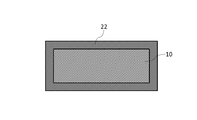
- a covering material 22 that is a material constituting the covering portion 20 is attached around the core portion 10 (attachment step).
- the coating material 22 may be attached to the entire periphery of the core 10 or may be attached to only a part thereof.
- FIG. 4 shows a case where the coating material 22 is attached to the entire periphery of the core portion 10.
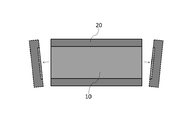
- a coating apparatus can be used to attach the coating material 22. After the attaching step, as shown in FIG. 5, both end portions of the core portion 10 are cut out (cutting step). Thereby, the coating
- the granules satisfying a predetermined standard are extracted by sieving the thus obtained granules (sizing step). And the extracted granule is dried with a dryer (drying process). By this drying, the moisture content of the core 10 is adjusted as appropriate. Thus, the water absorption treatment material 1 is obtained.
- Exposing most of the bottom surface 14 in this manner is advantageous in increasing the contact area of the core 10 with the liquid and thereby improving the water absorption (particularly the water absorption speed) of the water-absorbing treatment material 1. From such a viewpoint, it is preferable that 90% or more of the bottom surface 14 is exposed without being covered by the covering portion 20, and more preferable that the entire bottom surface 14 is exposed without being covered by the covering portion 20.
- the configuration in which the covering portion 20 is provided on the most part of the side surface 12 is advantageous in sufficiently adhering the water-absorbing treatment materials 1 that have absorbed the liquid during use.
- most of the side surface 12 that is more conspicuous than the bottom surfaces 14 and 16 is covered with the covering portion 20, so that there is an advantage that the aesthetic appearance of the water-absorbing treatment material 1 is not easily impaired.
- 90% or more of the side surface 12 is preferably covered with the covering portion 20, and more preferably, the entire side surface 12 is covered with the covering portion 20.
- the covering portion 20 is continuously provided on the side surface 12, it is advantageous in preventing the covering portion 20 on the side surface 12 from being peeled as compared with the case where the covering portion 20 is provided intermittently.
- the bottom surface 16 of the core portion 10 is also exposed without being covered by the covering portion 20.
- the liquid can reach the core portion 10 through the exposed portions of the bottom surfaces 14 and 16, the water absorption of the water-absorbing treatment material 1 can be further improved.
- the bottom surface 16 is exposed without covering 90% or more of the region with the covering part 20, and the whole is covered with the covering part 20. More preferably, it is exposed.
- the water-absorbing treatment material 1 has sufficient water disintegration properties (the property that bonded fibers and particles are quickly separated and dispersed in water by contact with water) to be disposed in the flush toilet. Is required.
- the fact that the core portion is covered with the covering portion has a problem that it causes not only a decrease in water absorption but also a decrease in water disintegration property. This is because the covering portion prevents water in the flush toilet from reaching the core portion. In the present embodiment, since most of the bottom surfaces 14 and 16 are exposed as described above, this problem can be solved.
- the adhesive material contained in the covering portion is a water-absorbing polymer
- the problem of degradation of water disintegration in the conventional water-absorbing treatment material becomes significant. This is because the water-absorbing polymer has a property of swelling at the time of liquid absorption, and when the water-absorbing polymer swells in the covering portion, the water in the flush toilet is further prevented from reaching the core portion. Therefore, in this case, the water-absorbing treatment material 1 that can prevent a decrease in water disintegration is particularly useful.
- the core part 10 is formed by extrusion granulation in the core part forming step. Thereby, the substantially cylindrical core part 10 can be obtained easily.
- the covering portion forming step includes a cutting step in which the end portion of the core portion 10 is cut after the covering material 22 is attached.
- coated part 20 of the structure mentioned above can be obtained easily.
- the cutting step in this way, the covering portion 20 that partially covers the core portion 10 can be finally obtained even when the covering material 22 is attached to the entire periphery of the core portion 10. it can.
- the coating material 22 is attached to the entire periphery of the core portion 10. For this reason, there is an advantage that the coating material 22 can be attached to the core 10 without using a special device or method.
- the present invention is not limited to the above embodiment, and various modifications are possible.
- the covering portion 20 when the covering portion 20 is provided on a part of the bottom surface 14, it is preferable that the boundary between the side surface 12 and the bottom surface 14 is covered with the covering portion 20 as shown in FIG. 6. That is, it is preferable that the covering portion 20 provided on the side surface 12 and the covering portion 20 provided on the bottom surface 14 are continuous at the boundary. Thereby, the coating
- the covering portion 20 is provided on a part of the bottom surface 16, the boundary between the side surface 12 and the bottom surface 16 is preferably covered by the covering portion 20.
- the case where there are exposed portions on both bottom surfaces 14 and 16 of the core portion 10 is illustrated.
- the exposed portion may exist only on either the bottom surface 14 or the bottom surface 16 of the core portion 10. In that case, in the cutting process, it is sufficient to cut only one end of the core part 10.
- the covering part 20 may be formed by attaching the covering material 22 in a concentrated manner to the side surface 12 in the attaching step.
- the coating material 22 can be intensively attached to the side surface 12 by spraying the coating material 22 onto the core 10 from directly above in a state where the core 10 is placed on a belt conveyor that flows horizontally. .
- the core portion 10 is rotated around its central axis, thereby making it easy to attach the coating material 22 to the entire side surface 12.
Landscapes
- Chemical & Material Sciences (AREA)
- Organic Chemistry (AREA)
- Analytical Chemistry (AREA)
- Chemical Kinetics & Catalysis (AREA)
- Life Sciences & Earth Sciences (AREA)
- Environmental Sciences (AREA)
- Animal Husbandry (AREA)
- Biodiversity & Conservation Biology (AREA)
- Health & Medical Sciences (AREA)
- Zoology (AREA)
- Molecular Biology (AREA)
- General Health & Medical Sciences (AREA)
- Biochemistry (AREA)
- Hydrology & Water Resources (AREA)
- Engineering & Computer Science (AREA)
- Environmental & Geological Engineering (AREA)
- Water Supply & Treatment (AREA)
- Solid-Sorbent Or Filter-Aiding Compositions (AREA)
- Housing For Livestock And Birds (AREA)
Abstract
被覆部の存在による吸水性の低下を抑制することが可能な吸水処理材及びその製造方法を提供する。吸水処理材1は、芯部10、及び被覆部20を備えている。芯部10は、略円柱状をしており、側面12、並びに底面14(第1の底面)及び底面16(第2の底面)を有している。芯部10を覆うように、被覆部20が設けられている。芯部10の側面12は、80%以上の領域が被覆部20によって覆われている。芯部10の底面14は、80%以上の領域が、被覆部20によって覆われることなく露出している。
Description
本発明は、液体を吸収する吸水処理材及びその製造方法に関する。
従来の吸水処理材としては、例えば特許文献1に記載されたものがある。この吸水処理材においては、粒状に成形された芯部と、芯部を覆う被覆部とが設けられている。被覆部は、使用時に液体を吸収した吸水処理材どうしを接着させる機能を有する。それにより、使用後においては、複数の吸水処理材からなる固まりが形成される。
このように被覆部は、使用後における吸水処理材の固まり形成に寄与する。しかしながら、その反面、被覆部は、芯部を覆うように設けられているため、液体が速やかに芯部に達するのを阻害する。このことは、従来の吸水処理材において吸水性を低下させる要因となっていた。
本発明は、上記課題に鑑みてなされたものであり、被覆部の存在による吸水性の低下を抑制することが可能な吸水処理材及びその製造方法を提供することを目的とする。
本発明による吸水処理材は、側面並びに第1及び第2の底面を有する略円柱状の芯部と、上記芯部を覆う被覆部と、を備え、上記芯部の上記側面は、80%以上の領域が上記被覆部によって覆われており、上記芯部の上記第1の底面は、80%以上の領域が、上記被覆部によって覆われることなく露出していることを特徴とする。
この吸水処理材においては、芯部の側面の大部分(80%以上の領域)が被覆部によって覆われる一方、底面の大部分は被覆部によって覆われることなく露出している。このため、当該露出部分を通じて、液体が速やかに芯部に達することができる。
また、吸水処理材の製造方法は、側面並びに第1及び第2の底面を有する略円柱状の芯部を形成する芯部形成工程と、上記芯部を覆うように被覆部を形成する被覆部形成工程と、を含み、上記被覆部形成工程においては、上記芯部の上記側面の80%以上の領域が上記被覆部によって覆われるとともに、上記芯部の上記第1の底面の80%以上の領域が上記被覆部によって覆われることなく露出するように、上記被覆部を形成することを特徴とする。
この製造方法においては、芯部の側面の大部分が被覆部によって覆われる一方、底面の大部分は被覆部によって覆われることなく露出するように、被覆部が形成される。このため、製造後の吸水処理材においては、当該露出部分を通じて、液体が速やかに芯部に達することができる。
本発明によれば、被覆部の存在による吸水性の低下を抑制することが可能な吸水処理材及びその製造方法が実現される。
以下、図面を参照しつつ、本発明の実施形態について詳細に説明する。なお、図面の説明においては、同一要素には同一符号を付し、重複する説明を省略する。
図1は、本発明による吸水処理材の一実施形態を示す斜視図である。また、図2は、図1のII-II線に沿った断面図である。吸水処理材1は、液体を吸収する吸水処理材であって、芯部10、及び被覆部20を備えている。吸水処理材1は、例えば、人又は動物の排泄物を吸収する排泄物処理材である。
図3は、芯部10を示す斜視図である。芯部10は、略円柱状をしており、側面12、並びに底面14(第1の底面)及び底面16(第2の底面)を有している。芯部10は、吸水性を有しており、尿等の液体を吸水及び保水する機能を有する。芯部10は、吸水性材料(第1の吸水性材料)を含有している。第1の吸水性材料としては、例えば、紙類、茶殻、プラスチック類又はオカラを用いることができる。第1の吸水性材料は、芯部10の主材料であることが好ましい。ここで、芯部10の主材料とは、芯部10を構成する材料のうち、当該芯部10に占める重量割合が最大のものをいう。
紙類は、パルプを主体とする材料をいう。紙類としては、例えば、通常の紙の他にも、塩ビ壁紙分級物(塩ビ壁紙を分級することにより得られる紙)、フラッフパルプ、製紙スラッジ、パルプスラッジ等が挙げられる。プラスチック類としては、例えば、紙おむつ分級物(紙おむつを分級することにより得られるプラスチック)を用いてもよい。オカラは、乾燥オカラであることが好ましい。
図1及び図2に戻って、芯部10を覆うように、被覆部20が設けられている。この被覆部20は、使用時に液体を吸収した吸水処理材1どうしを接着させる機能を有する。それにより、使用後においては、複数の吸水処理材1からなる固まりが形成される。
被覆部20は、芯部10の一部分のみを覆っている。詳細には、芯部10の側面12は、80%以上の領域が被覆部20によって覆われている。すなわち、側面12のうち被覆部20によって覆われた部分の面積は、側面12全体の面積の80%以上である。側面12は、90%以上の領域が被覆部20によって覆われていることが好ましく、全体が被覆部20によって覆われていることがより好ましい。図1及び図2は、側面12の全体が被覆部20によって覆われている場合を示している。なお、被覆部20は、側面12上において連続的に設けられていることが好ましい。つまり、被覆部20が側面12の一部(20%以下の領域)を残して側面12を覆う場合であっても、側面12上に設けられた被覆部20は、複数箇所に分かれることなく、一続きであることが好ましい。
他方、芯部10の底面14は、80%以上の領域が、被覆部20によって覆われることなく露出している。すなわち、底面14のうち被覆部20によって覆われることなく露出している部分の面積は、底面14全体の面積の80%以上である。底面14は、90%以上の領域が被覆部20によって覆われることなく露出していることが好ましく、全体が被覆部20によって覆われることなく露出していることがより好ましい。図1及び図2は、底面14の全体が被覆部20によって覆われることなく露出している場合を示している。
同様に、芯部10の底面16も、80%以上の領域が、被覆部20によって覆われることなく露出している。すなわち、底面16のうち被覆部20によって覆われることなく露出している部分の面積は、底面16全体の面積の80%以上である。底面16は、90%以上の領域が被覆部20によって覆われることなく露出していることが好ましく、全体が被覆部20によって覆われることなく露出していることがより好ましい。図2は、底面16の全体が被覆部20によって覆われることなく露出している場合を示している。
なお、側面12には凹凸や亀裂が存在することがあるが、被覆部20によって覆われた部分の面積割合を考えるときは、そのような凹凸等を無視するものとする。具体的には、芯部10と同一の中心軸を有する円筒面に側面12を射影したときの当該円筒面上における面積割合を考えればよい。各底面14,16についても同様である。すなわち、上記中心軸に垂直な平面に各底面14,16を射影したときの当該平面上における面積割合を考えればよい。
被覆部20は、吸水性材料(第2の吸水性材料)及び接着性材料を含有している。第2の吸水性材料としても、例えば、紙類、茶殻、プラスチック類又はオカラを用いることができる。第2の吸水性材料は、第1の吸水性材料と同じものであってもよいし、異なるものであってもよい。第2の吸水性材料は、被覆部20の主材料であることが好ましい。被覆部20の主材料の定義は、上述した芯部10の主材料の定義と同様である。接着性材料としては、例えば、吸水性ポリマー、澱粉、CMC(カルボキシメチルセルロース)、PVA(ポリビニルアルコール)又はデキストリンを用いることができる。
続いて、本発明による吸水処理材の製造方法の一実施形態として、吸水処理材1の製造方法の一例を説明する。この製造方法は、芯部形成工程、及び被覆部形成工程を含んでいる。
芯部形成工程は、芯部10を形成する工程である。この工程においては、押出造粒により芯部10を形成する。詳細には、芯部10を構成する材料(芯部材料)を粉砕機で所定の大きさに粉砕した後、所定の割合でミキサーに投入して混ぜ合わせる。そして、必要に応じて加水した後、芯部材料を造粒機によって押出造粒する。これにより、略円柱状の芯部10が得られる。
被覆部形成工程は、芯部10を覆うように被覆部20を形成する工程である。この工程においては、側面12の80%以上の領域が被覆部20によって覆われるとともに、各底面14,16の80%以上の領域が被覆部20によって覆われることなく露出するように、被覆部20を形成する。このとき、側面12の90%以上の領域が被覆部20によって覆われることが好ましく、側面12の全体が被覆部20によって覆われることがより好ましい。また、各底面14,16の90%以上の領域が被覆部20によって覆われることなく露出することが好ましく、各底面14,16の全体が被覆部20によって覆われることなく露出することがより好ましい。なお、この工程においては、側面12上において連続的な被覆部20を形成することが好ましい。
かかる被覆部形成工程においては、図4に示すように、芯部10の周囲に、被覆部20を構成する材料である被覆材料22を付着させる(付着工程)。このとき、被覆材料22は、芯部10の周囲の全体に付着させてもよいし、一部分にのみ付着させてもよい。図4は、被覆材料22を芯部10の周囲全体に付着させる場合を示している。被覆材料22の付着には、例えばコーティング装置を用いることができる。付着工程の後、図5に示すように、芯部10の両端部を切除する(切除工程)。これにより、被覆部20が得られる。
その後、このようにして得られた粒状体を篩にかけることにより、所定の規格を満たす粒状体のみを抽出する(分粒工程)。そして、抽出された粒状体を乾燥機で乾燥させる(乾燥工程)。この乾燥により、芯部10の含水率が適宜調整される。以上により、吸水処理材1が得られる。
本実施形態の効果を説明する。本実施形態においては、芯部10の側面12の大部分(80%以上の領域)が被覆部20によって覆われる一方、底面14の大部分は被覆部20によって覆われることなく露出するように、被覆部20が形成される。このため、吸水処理材1においては、当該露出部分を通じて、液体が速やかに芯部10に達することができる。したがって、被覆部20の存在による吸水性の低下を抑制することが可能な吸水処理材1及びその製造方法が実現されている。
このように底面14の大部分を露出させることは、芯部10の液体に対する接触面積を大きくし、それにより吸水処理材1の吸水性(特に吸水速度)を向上させる上で有利である。かかる観点から、底面14は、90%以上の領域が被覆部20によって覆われることなく露出していることが好ましく、全体が被覆部20によって覆われることなく露出していることがより好ましい。
また、側面12の大部分に被覆部20が設けられた構成は、使用時に液体を吸収した吸水処理材1どうしを充分に接着させる上で有利である。しかも、かかる構成の場合、底面14,16に比して目につきやすい側面12の大部分が被覆部20によって覆われるため、吸水処理材1の美観が損なわれにくいという利点もある。これらの観点から、側面12は、90%以上の領域が被覆部20によって覆われていることが好ましく、全体が被覆部20によって覆われていることがより好ましい。特に被覆部20が側面12上において連続的に設けられている場合、断続的に設けられている場合に比して、側面12上の被覆部20が剥離するのを防ぐ上で有利である。
本実施形態においては、芯部10の底面16も、80%以上の領域が、被覆部20によって覆われることなく露出している。これにより、両底面14,16の露出部分を通じて液体が芯部10に達することができるため、吸水処理材1の吸水性を一層向上させることができる。このように吸水処理材1の吸水性を向上させる観点から、底面16は、90%以上の領域が被覆部20によって覆われることなく露出していることが好ましく、全体が被覆部20によって覆われることなく露出していることがより好ましい。
ところで、使用済みの吸水処理材1は処分する必要があるところ、水洗トイレに流して処分することができれば、ユーザにとっての利便性が高まる。このように水洗トイレに流して処分するには、吸水処理材1が充分な水解性(水と接触することにより、結合した繊維や粒子が速やかに分離し、水中に分散する性質)を有することが求められる。
この点、従来の吸水処理材において、芯部が被覆部によって覆われていることは、吸水性の低下のみならず水解性の低下をも招くという問題があった。被覆部によって、水洗トイレの水が芯部に達することが妨げられるからである。本実施形態においては、上述のとおり底面14,16の大部分が露出しているため、かかる問題を解消することができる。
被覆部に含有される接着性材料が吸水性ポリマーである場合、従来の吸水処理材における水解性の低下という問題が顕著となる。吸水性ポリマーは液体吸収時に膨潤する性質を有するところ、被覆部において吸水性ポリマーが膨潤すると、水洗トイレの水が芯部に達することが一層妨げられるからである。それゆえ、この場合、水解性の低下を防ぐことができる吸水処理材1が特に有用となる。
吸水処理材1の製造方法に関し、芯部形成工程においては、押出造粒により芯部10を形成している。これにより、略円柱状の芯部10を容易に得ることができる。
被覆部形成工程は、被覆材料22を付着させた後に芯部10の端部を切除する切除工程を含んでいる。これにより、上述した構造の被覆部20を容易に得ることができる。また、このように切除工程を設けることにより、芯部10の周囲全体に被覆材料22を付着させた場合であっても、芯部10を部分的に覆う被覆部20を最終的に得ることができる。実際、本実施形態においては、芯部10の周囲全体に被覆材料22を付着させている。このため、特殊な装置や方法を用いることなく、芯部10に対する被覆材料22の付着を行うことができるという利点がある。
本発明は、上記実施形態に限定されるものではなく、様々な変形が可能である。上記実施形態において、底面14の一部に被覆部20が設けられる場合、図6に示すように、側面12と底面14との境界が被覆部20によって覆われることが好ましい。すなわち、上記境界において側面12上に設けられた被覆部20と底面14上に設けられた被覆部20とが連続していることが好ましい。これにより、被覆部20が剥離しにくくすることができる。同様に、底面16の一部に被覆部20が設けられる場合についても、側面12と底面16との境界が被覆部20によって覆われることが好ましい。
上記実施形態においては、芯部10の両底面14,16に露出部分が存在する場合を例示した。しかし、露出部分は、芯部10の底面14又は底面16の何れか一方にのみ存在していてもよい。その場合、切除工程においては、芯部10の一端部のみを切除すれば足りる。
上記実施形態においては、付着工程の後に切除工程を実行することにより、被覆部20を形成する場合を例示した。しかし、切除工程を設けることは、必須でない。付着工程おいて側面12に対して集中的に被覆材料22を付着させることにより、被覆部20を形成してもよい。例えば、水平に流れるベルトコンベア上に芯部10を載せた状態で、真上から芯部10に被覆材料22を吹き付けることにより、側面12に対して集中的に被覆材料22を付着させることができる。このとき、ベルトコンベアを揺動させることにより、芯部10をその中心軸周りに回転させ、それにより側面12の全体に被覆材料22を付着させやすくなる。
1 吸水処理材
10 芯部
12 側面
14 底面(第1の底面)
16 底面(第2の底面)
20 被覆部
22 被覆材料
10 芯部
12 側面
14 底面(第1の底面)
16 底面(第2の底面)
20 被覆部
22 被覆材料
Claims (25)
- 側面並びに第1及び第2の底面を有する略円柱状の芯部と、
前記芯部を覆う被覆部と、を備え、
前記芯部の前記側面は、80%以上の領域が前記被覆部によって覆われており、
前記芯部の前記第1の底面は、80%以上の領域が、前記被覆部によって覆われることなく露出していることを特徴とする吸水処理材。 - 請求項1に記載の吸水処理材において、
前記芯部の前記側面は、90%以上の領域が前記被覆部によって覆われている吸水処理材。 - 請求項2に記載の吸水処理材において、
前記芯部の前記側面は、全体が前記被覆部によって覆われている吸水処理材。 - 請求項1乃至3の何れかに記載の吸水処理材において、
前記被覆部は、前記側面上において連続的に設けられている吸水処理材。 - 請求項1乃至4の何れかに記載の吸水処理材において、
前記芯部の前記第1の底面は、90%以上の領域が、前記被覆部によって覆われることなく露出している吸水処理材。 - 請求項5に記載の吸水処理材において、
前記芯部の前記第1の底面は、全体が、前記被覆部によって覆われることなく露出している吸水処理材。 - 請求項1乃至5の何れかに記載の吸水処理材において、
前記側面と前記第1の底面との境界は、前記被覆部によって覆われている吸水処理材。 - 請求項1乃至7の何れかに記載の吸水処理材において、
前記芯部の前記第2の底面は、80%以上の領域が、前記被覆部によって覆われることなく露出している吸水処理材。 - 請求項8に記載の吸水処理材において、
前記芯部の前記第2の底面は、90%以上の領域が、前記被覆部によって覆われることなく露出している吸水処理材。 - 請求項9に記載の吸水処理材において、
前記芯部の前記第2の底面は、全体が、前記被覆部によって覆われることなく露出している吸水処理材。 - 請求項1乃至9の何れかに記載の吸水処理材において、
前記側面と前記第2の底面との境界は、前記被覆部によって覆われている吸水処理材。 - 側面並びに第1及び第2の底面を有する略円柱状の芯部を形成する芯部形成工程と、
前記芯部を覆うように被覆部を形成する被覆部形成工程と、を含み、
前記被覆部形成工程においては、前記芯部の前記側面の80%以上の領域が前記被覆部によって覆われるとともに、前記芯部の前記第1の底面の80%以上の領域が前記被覆部によって覆われることなく露出するように、前記被覆部を形成することを特徴とする吸水処理材の製造方法。 - 請求項12に記載の吸水処理材の製造方法において、
前記被覆部形成工程においては、前記芯部の前記側面の90%以上の領域が前記被覆部によって覆われるように、前記被覆部を形成する吸水処理材の製造方法。 - 請求項13に記載の吸水処理材の製造方法において、
前記被覆部形成工程においては、前記芯部の前記側面の全体が前記被覆部によって覆われるように、前記被覆部を形成する吸水処理材の製造方法。 - 請求項12乃至14の何れかに記載の吸水処理材の製造方法において、
前記被覆部形成工程においては、前記側面上において連続的な前記被覆部を形成する吸水処理材の製造方法。 - 請求項12乃至15の何れかに記載の吸水処理材の製造方法において、
前記被覆部形成工程においては、前記芯部の前記第1の底面の90%以上の領域が前記被覆部によって覆われることなく露出するように、前記被覆部を形成する吸水処理材の製造方法。 - 請求項16に記載の吸水処理材の製造方法において、
前記被覆部形成工程においては、前記芯部の前記第1の底面の全体が前記被覆部によって覆われることなく露出するように、前記被覆部を形成する吸水処理材の製造方法。 - 請求項12乃至16の何れかに記載の吸水処理材の製造方法において、
前記被覆部形成工程においては、前記側面と前記第1の底面との境界が前記被覆部によって覆われるように、前記被覆部を形成する吸水処理材の製造方法。 - 請求項12乃至18の何れかに記載の吸水処理材の製造方法において、
前記被覆部形成工程においては、前記芯部の前記第2の底面の80%以上の領域が前記被覆部によって覆われることなく露出するように、前記被覆部を形成する吸水処理材の製造方法。 - 請求項19に記載の吸水処理材の製造方法において、
前記被覆部形成工程においては、前記芯部の前記第2の底面の90%以上の領域が前記被覆部によって覆われることなく露出するように、前記被覆部を形成する吸水処理材の製造方法。 - 請求項20に記載の吸水処理材の製造方法において、
前記被覆部形成工程においては、前記芯部の前記第2の底面の全体が前記被覆部によって覆われることなく露出するように、前記被覆部を形成する吸水処理材の製造方法。 - 請求項12乃至20の何れかに記載の吸水処理材の製造方法において、
前記被覆部形成工程においては、前記側面と前記第2の底面との境界が前記被覆部によって覆われるように、前記被覆部を形成する吸水処理材の製造方法。 - 請求項12乃至22の何れかに記載の吸水処理材の製造方法において、
前記芯部形成工程においては、押出造粒により前記芯部を形成する吸水処理材の製造方法。 - 請求項12乃至23の何れかに記載の吸水処理材の製造方法において、
前記被覆部形成工程は、
前記芯部に被覆材料を付着させる付着工程と、
前記付着工程よりも後に、前記芯部の端部を切除する切除工程と、を含む吸水処理材の製造方法。 - 請求項24に記載の吸水処理材の製造方法において、
前記付着工程においては、前記芯部の周囲全体に前記被覆材料を付着させる吸水処理材の製造方法。
Priority Applications (3)
| Application Number | Priority Date | Filing Date | Title |
|---|---|---|---|
| CN201680051523.6A CN107920493B (zh) | 2015-11-19 | 2016-10-19 | 吸水处理材料及其制造方法 |
| EP16866082.7A EP3326455A4 (en) | 2015-11-19 | 2016-10-19 | WATER ABSORBENT TREATMENT MATERIAL AND METHOD OF MANUFACTURING THEREOF |
| US15/896,858 US11278868B2 (en) | 2015-11-19 | 2018-02-14 | Water absorption treatment material and method for manufacturing the same |
Applications Claiming Priority (2)
| Application Number | Priority Date | Filing Date | Title |
|---|---|---|---|
| JP2015-226260 | 2015-11-19 | ||
| JP2015226260A JP5903520B1 (ja) | 2015-11-19 | 2015-11-19 | 吸水処理材及びその製造方法 |
Related Child Applications (1)
| Application Number | Title | Priority Date | Filing Date |
|---|---|---|---|
| US15/896,858 Continuation US11278868B2 (en) | 2015-11-19 | 2018-02-14 | Water absorption treatment material and method for manufacturing the same |
Publications (1)
| Publication Number | Publication Date |
|---|---|
| WO2017086080A1 true WO2017086080A1 (ja) | 2017-05-26 |
Family
ID=55747765
Family Applications (1)
| Application Number | Title | Priority Date | Filing Date |
|---|---|---|---|
| PCT/JP2016/080994 Ceased WO2017086080A1 (ja) | 2015-11-19 | 2016-10-19 | 吸水処理材及びその製造方法 |
Country Status (5)
| Country | Link |
|---|---|
| US (1) | US11278868B2 (ja) |
| EP (1) | EP3326455A4 (ja) |
| JP (1) | JP5903520B1 (ja) |
| CN (1) | CN107920493B (ja) |
| WO (1) | WO2017086080A1 (ja) |
Families Citing this family (3)
| Publication number | Priority date | Publication date | Assignee | Title |
|---|---|---|---|---|
| JP7146265B2 (ja) * | 2019-01-23 | 2022-10-04 | 株式会社大貴 | 吸水処理材及びその製造方法 |
| JP2021061791A (ja) * | 2019-10-16 | 2021-04-22 | 株式会社大貴 | 吸水処理材の製造方法及び製造装置 |
| JP2023139339A (ja) * | 2022-03-22 | 2023-10-04 | 株式会社大貴 | 吸水処理材及びその製造方法 |
Citations (3)
| Publication number | Priority date | Publication date | Assignee | Title |
|---|---|---|---|---|
| JP2015042147A (ja) * | 2013-08-26 | 2015-03-05 | 株式会社大貴 | 吸水処理材 |
| JP2015097996A (ja) | 2013-11-19 | 2015-05-28 | 株式会社大貴 | 吸水処理材 |
| JP2015142519A (ja) * | 2014-01-31 | 2015-08-06 | 株式会社大貴 | 吸水処理材及びその製造方法 |
Family Cites Families (3)
| Publication number | Priority date | Publication date | Assignee | Title |
|---|---|---|---|---|
| JPS5449989A (en) * | 1977-09-28 | 1979-04-19 | Okabe Metal Ind | Deodorant |
| US11602120B2 (en) * | 2012-09-11 | 2023-03-14 | Pioneer Pet Products, Llc | Lightweight coated extruded granular absorbent |
| JP5965275B2 (ja) * | 2012-10-09 | 2016-08-03 | 株式会社大貴 | 吸水処理材 |
-
2015
- 2015-11-19 JP JP2015226260A patent/JP5903520B1/ja active Active
-
2016
- 2016-10-19 CN CN201680051523.6A patent/CN107920493B/zh active Active
- 2016-10-19 WO PCT/JP2016/080994 patent/WO2017086080A1/ja not_active Ceased
- 2016-10-19 EP EP16866082.7A patent/EP3326455A4/en not_active Withdrawn
-
2018
- 2018-02-14 US US15/896,858 patent/US11278868B2/en active Active
Patent Citations (3)
| Publication number | Priority date | Publication date | Assignee | Title |
|---|---|---|---|---|
| JP2015042147A (ja) * | 2013-08-26 | 2015-03-05 | 株式会社大貴 | 吸水処理材 |
| JP2015097996A (ja) | 2013-11-19 | 2015-05-28 | 株式会社大貴 | 吸水処理材 |
| JP2015142519A (ja) * | 2014-01-31 | 2015-08-06 | 株式会社大貴 | 吸水処理材及びその製造方法 |
Non-Patent Citations (1)
| Title |
|---|
| See also references of EP3326455A4 |
Also Published As
| Publication number | Publication date |
|---|---|
| US11278868B2 (en) | 2022-03-22 |
| EP3326455A4 (en) | 2019-03-20 |
| US20180169618A1 (en) | 2018-06-21 |
| CN107920493A (zh) | 2018-04-17 |
| JP2017093314A (ja) | 2017-06-01 |
| EP3326455A1 (en) | 2018-05-30 |
| JP5903520B1 (ja) | 2016-04-13 |
| CN107920493B (zh) | 2020-12-22 |
Similar Documents
| Publication | Publication Date | Title |
|---|---|---|
| AU2013385542B2 (en) | Water-absorbent treatment material and production method for same | |
| JP5903520B1 (ja) | 吸水処理材及びその製造方法 | |
| JP6422728B2 (ja) | 吸水処理材及びその製造方法 | |
| JP6445364B2 (ja) | 吸水処理材及びその製造方法 | |
| JP6510877B2 (ja) | 吸水処理材及びその製造方法 | |
| WO2017022416A1 (ja) | 排泄物処理材及びその製造方法 | |
| JP6300995B1 (ja) | 吸水処理材及びその製造方法 | |
| CN107107117A (zh) | 分离装置以及吸水处理材的制造方法 | |
| JP5875731B1 (ja) | 吸水処理材の製造方法 | |
| JP6173634B1 (ja) | 排泄物処理材及びその製造方法 | |
| JP6300994B1 (ja) | 吸水処理材及びその製造方法 | |
| JP2016214119A (ja) | 吸水処理材及びその製造方法 | |
| WO2017134726A1 (ja) | 吸水処理材及びその製造方法 | |
| JP6352278B2 (ja) | 吸水処理材及びその製造方法 | |
| WO2017169315A1 (ja) | 吸水処理材の製造方法及び製造装置 | |
| JP6554359B2 (ja) | 吸水処理材及びその製造方法 | |
| JP7146265B2 (ja) | 吸水処理材及びその製造方法 | |
| JP2020174555A (ja) | 吸水処理材及びその製造方法 | |
| HK1248067B (zh) | 吸水处理材料及其制造方法 | |
| HK1248067A1 (en) | Water absorption treatment material and production method therefor | |
| JP2015042147A (ja) | 吸水処理材 | |
| JP6385881B2 (ja) | 吸水処理材の製造方法及び製造装置 | |
| JP2020174554A (ja) | 吸水処理材及びその製造方法 |
Legal Events
| Date | Code | Title | Description |
|---|---|---|---|
| 121 | Ep: the epo has been informed by wipo that ep was designated in this application |
Ref document number: 16866082 Country of ref document: EP Kind code of ref document: A1 |
|
| NENP | Non-entry into the national phase |
Ref country code: DE |