WO2017095921A1 - Compositions for cyp450 phenotyping using saliva samples - Google Patents
Compositions for cyp450 phenotyping using saliva samples Download PDFInfo
- Publication number
- WO2017095921A1 WO2017095921A1 PCT/US2016/064210 US2016064210W WO2017095921A1 WO 2017095921 A1 WO2017095921 A1 WO 2017095921A1 US 2016064210 W US2016064210 W US 2016064210W WO 2017095921 A1 WO2017095921 A1 WO 2017095921A1
- Authority
- WO
- WIPO (PCT)
- Prior art keywords
- composition
- substrate
- unconverted
- sub
- eplerenone
- Prior art date
- Legal status (The legal status is an assumption and is not a legal conclusion. Google has not performed a legal analysis and makes no representation as to the accuracy of the status listed.)
- Ceased
Links
Classifications
-
- C—CHEMISTRY; METALLURGY
- C12—BIOCHEMISTRY; BEER; SPIRITS; WINE; VINEGAR; MICROBIOLOGY; ENZYMOLOGY; MUTATION OR GENETIC ENGINEERING
- C12Q—MEASURING OR TESTING PROCESSES INVOLVING ENZYMES, NUCLEIC ACIDS OR MICROORGANISMS; COMPOSITIONS OR TEST PAPERS THEREFOR; PROCESSES OF PREPARING SUCH COMPOSITIONS; CONDITION-RESPONSIVE CONTROL IN MICROBIOLOGICAL OR ENZYMOLOGICAL PROCESSES
- C12Q1/00—Measuring or testing processes involving enzymes, nucleic acids or microorganisms; Compositions therefor; Processes of preparing such compositions
- C12Q1/26—Measuring or testing processes involving enzymes, nucleic acids or microorganisms; Compositions therefor; Processes of preparing such compositions involving oxidoreductase
-
- A—HUMAN NECESSITIES
- A61—MEDICAL OR VETERINARY SCIENCE; HYGIENE
- A61K—PREPARATIONS FOR MEDICAL, DENTAL OR TOILETRY PURPOSES
- A61K31/00—Medicinal preparations containing organic active ingredients
- A61K31/185—Acids; Anhydrides, halides or salts thereof, e.g. sulfur acids, imidic, hydrazonic or hydroximic acids
- A61K31/19—Carboxylic acids, e.g. valproic acid
- A61K31/192—Carboxylic acids, e.g. valproic acid having aromatic groups, e.g. sulindac, 2-aryl-propionic acids, ethacrynic acid
-
- A—HUMAN NECESSITIES
- A61—MEDICAL OR VETERINARY SCIENCE; HYGIENE
- A61K—PREPARATIONS FOR MEDICAL, DENTAL OR TOILETRY PURPOSES
- A61K31/00—Medicinal preparations containing organic active ingredients
- A61K31/33—Heterocyclic compounds
- A61K31/395—Heterocyclic compounds having nitrogen as a ring hetero atom, e.g. guanethidine or rifamycins
- A61K31/40—Heterocyclic compounds having nitrogen as a ring hetero atom, e.g. guanethidine or rifamycins having five-membered rings with one nitrogen as the only ring hetero atom, e.g. sulpiride, succinimide, tolmetin, buflomedil
-
- A—HUMAN NECESSITIES
- A61—MEDICAL OR VETERINARY SCIENCE; HYGIENE
- A61K—PREPARATIONS FOR MEDICAL, DENTAL OR TOILETRY PURPOSES
- A61K31/00—Medicinal preparations containing organic active ingredients
- A61K31/33—Heterocyclic compounds
- A61K31/395—Heterocyclic compounds having nitrogen as a ring hetero atom, e.g. guanethidine or rifamycins
- A61K31/435—Heterocyclic compounds having nitrogen as a ring hetero atom, e.g. guanethidine or rifamycins having six-membered rings with one nitrogen as the only ring hetero atom
- A61K31/44—Non condensed pyridines; Hydrogenated derivatives thereof
- A61K31/4427—Non condensed pyridines; Hydrogenated derivatives thereof containing further heterocyclic ring systems
- A61K31/4439—Non condensed pyridines; Hydrogenated derivatives thereof containing further heterocyclic ring systems containing a five-membered ring with nitrogen as a ring hetero atom, e.g. omeprazole
-
- A—HUMAN NECESSITIES
- A61—MEDICAL OR VETERINARY SCIENCE; HYGIENE
- A61K—PREPARATIONS FOR MEDICAL, DENTAL OR TOILETRY PURPOSES
- A61K31/00—Medicinal preparations containing organic active ingredients
- A61K31/33—Heterocyclic compounds
- A61K31/395—Heterocyclic compounds having nitrogen as a ring hetero atom, e.g. guanethidine or rifamycins
- A61K31/435—Heterocyclic compounds having nitrogen as a ring hetero atom, e.g. guanethidine or rifamycins having six-membered rings with one nitrogen as the only ring hetero atom
- A61K31/47—Quinolines; Isoquinolines
- A61K31/485—Morphinan derivatives, e.g. morphine, codeine
-
- A—HUMAN NECESSITIES
- A61—MEDICAL OR VETERINARY SCIENCE; HYGIENE
- A61K—PREPARATIONS FOR MEDICAL, DENTAL OR TOILETRY PURPOSES
- A61K31/00—Medicinal preparations containing organic active ingredients
- A61K31/33—Heterocyclic compounds
- A61K31/395—Heterocyclic compounds having nitrogen as a ring hetero atom, e.g. guanethidine or rifamycins
- A61K31/495—Heterocyclic compounds having nitrogen as a ring hetero atom, e.g. guanethidine or rifamycins having six-membered rings with two or more nitrogen atoms as the only ring heteroatoms, e.g. piperazine or tetrazines
- A61K31/505—Pyrimidines; Hydrogenated pyrimidines, e.g. trimethoprim
- A61K31/519—Pyrimidines; Hydrogenated pyrimidines, e.g. trimethoprim ortho- or peri-condensed with heterocyclic rings
- A61K31/52—Purines, e.g. adenine
- A61K31/522—Purines, e.g. adenine having oxo groups directly attached to the heterocyclic ring, e.g. hypoxanthine, guanine, acyclovir
-
- A—HUMAN NECESSITIES
- A61—MEDICAL OR VETERINARY SCIENCE; HYGIENE
- A61K—PREPARATIONS FOR MEDICAL, DENTAL OR TOILETRY PURPOSES
- A61K31/00—Medicinal preparations containing organic active ingredients
- A61K31/33—Heterocyclic compounds
- A61K31/395—Heterocyclic compounds having nitrogen as a ring hetero atom, e.g. guanethidine or rifamycins
- A61K31/55—Heterocyclic compounds having nitrogen as a ring hetero atom, e.g. guanethidine or rifamycins having seven-membered rings, e.g. azelastine, pentylenetetrazole
- A61K31/551—Heterocyclic compounds having nitrogen as a ring hetero atom, e.g. guanethidine or rifamycins having seven-membered rings, e.g. azelastine, pentylenetetrazole having two nitrogen atoms, e.g. dilazep
- A61K31/5513—1,4-Benzodiazepines, e.g. diazepam or clozapine
-
- A—HUMAN NECESSITIES
- A61—MEDICAL OR VETERINARY SCIENCE; HYGIENE
- A61K—PREPARATIONS FOR MEDICAL, DENTAL OR TOILETRY PURPOSES
- A61K31/00—Medicinal preparations containing organic active ingredients
- A61K31/56—Compounds containing cyclopenta[a]hydrophenanthrene ring systems; Derivatives thereof, e.g. steroids
- A61K31/58—Compounds containing cyclopenta[a]hydrophenanthrene ring systems; Derivatives thereof, e.g. steroids containing heterocyclic rings, e.g. danazol, stanozolol, pancuronium or digitogenin
- A61K31/585—Compounds containing cyclopenta[a]hydrophenanthrene ring systems; Derivatives thereof, e.g. steroids containing heterocyclic rings, e.g. danazol, stanozolol, pancuronium or digitogenin containing lactone rings, e.g. oxandrolone, bufalin
-
- A—HUMAN NECESSITIES
- A61—MEDICAL OR VETERINARY SCIENCE; HYGIENE
- A61K—PREPARATIONS FOR MEDICAL, DENTAL OR TOILETRY PURPOSES
- A61K45/00—Medicinal preparations containing active ingredients not provided for in groups A61K31/00 - A61K41/00
- A61K45/06—Mixtures of active ingredients without chemical characterisation, e.g. antiphlogistics and cardiaca
-
- G—PHYSICS
- G01—MEASURING; TESTING
- G01N—INVESTIGATING OR ANALYSING MATERIALS BY DETERMINING THEIR CHEMICAL OR PHYSICAL PROPERTIES
- G01N33/00—Investigating or analysing materials by specific methods not covered by groups G01N1/00 - G01N31/00
- G01N33/48—Biological material, e.g. blood, urine; Haemocytometers
- G01N33/50—Chemical analysis of biological material, e.g. blood, urine; Testing involving biospecific ligand binding methods; Immunological testing
- G01N33/74—Chemical analysis of biological material, e.g. blood, urine; Testing involving biospecific ligand binding methods; Immunological testing involving hormones or other non-cytokine intercellular protein regulatory factors such as growth factors, including receptors to hormones and growth factors
- G01N33/743—Steroid hormones
-
- A—HUMAN NECESSITIES
- A61—MEDICAL OR VETERINARY SCIENCE; HYGIENE
- A61K—PREPARATIONS FOR MEDICAL, DENTAL OR TOILETRY PURPOSES
- A61K9/00—Medicinal preparations characterised by special physical form
- A61K9/0002—Galenical forms characterised by the drug release technique; Application systems commanded by energy
- A61K9/0007—Effervescent
-
- A—HUMAN NECESSITIES
- A61—MEDICAL OR VETERINARY SCIENCE; HYGIENE
- A61K—PREPARATIONS FOR MEDICAL, DENTAL OR TOILETRY PURPOSES
- A61K9/00—Medicinal preparations characterised by special physical form
- A61K9/0012—Galenical forms characterised by the site of application
- A61K9/0053—Mouth and digestive tract, i.e. intraoral and peroral administration
- A61K9/0056—Mouth soluble or dispersible forms; Suckable, eatable, chewable coherent forms; Forms rapidly disintegrating in the mouth; Lozenges; Lollipops; Bite capsules; Baked products; Baits or other oral forms for animals
-
- A—HUMAN NECESSITIES
- A61—MEDICAL OR VETERINARY SCIENCE; HYGIENE
- A61K—PREPARATIONS FOR MEDICAL, DENTAL OR TOILETRY PURPOSES
- A61K9/00—Medicinal preparations characterised by special physical form
- A61K9/20—Pills, tablets, discs, rods
- A61K9/2004—Excipients; Inactive ingredients
- A61K9/2022—Organic macromolecular compounds
- A61K9/205—Polysaccharides, e.g. alginate, gums; Cyclodextrin
- A61K9/2054—Cellulose; Cellulose derivatives, e.g. hydroxypropyl methylcellulose
-
- G—PHYSICS
- G01—MEASURING; TESTING
- G01N—INVESTIGATING OR ANALYSING MATERIALS BY DETERMINING THEIR CHEMICAL OR PHYSICAL PROPERTIES
- G01N2333/00—Assays involving biological materials from specific organisms or of a specific nature
- G01N2333/90—Enzymes; Proenzymes
- G01N2333/902—Oxidoreductases (1.)
- G01N2333/90241—Oxidoreductases (1.) acting on single donors with incorporation of molecular oxygen, i.e. oxygenases (1.13)
Definitions
- the field of the invention relates to medical diagnostics. More particularly, the field of the invention relates to pharmacogenetic medical diagnostics. More particularly, the field of the invention relates to a compositions which may be utilized in methods for multiple simultaneous metabolic enzyme phenotyping using a saliva sample.
- Cytochrome P450 (CYP450) enzymes are responsible for much of the variability in drug response and toxicity susceptibility.
- the fields of pharmacogenetics and later pharmacogenomics began with observations that individuals from different racial/ethnic groups experienced different rates of response and toxicity to certain drugs.
- scientists found significant differences in metabolic clearance of these 'highly variable' drugs on an individual and population level. They also found disproportionate frequencies of individuals with very low metabolic clearance amongst different racial/ethnic groups. Further investigations revealed genetic variants resulted in altered CYP450 enzyme activity and therefore differences in metabolic clearance of the drugs. After many years of investigation, CYP450 enzyme activity has remained the dominant determinant of metabolic clearance for many drugs.
- the CYP450 enzyme family is the most studied enzyme family in the field of pharmacogenetics.
- a drug When a drug is primarily metabolized via a specific CYP450 enzyme (i.e. responsible for 80% or more of drug clearance) it is known as a 'probe drug' .
- alterations in CYP450 enzyme activity results in significant differences in drug clearance. Differences in metabolic enzyme activity are quantified by measuring the metabolic ratio i.e. the concentration or area ratio of a known enzyme substrate divided by the primary metabolite.
- the metabolic ratio of the probe substrate is also called the metabolic phenotype although metabolic phenotype is often expressed as a categorical value such as poor metabolizer.
- genetic assays which predict metabolic phenotype based on the presence or absence of genetic variants which result in altered metabolic clearance.
- the genetic predicted metabolic phenotypes are categorical and labeled relative to an average individual being labeled a rapid metabolizer.
- Other designations vary by CYP450 enzyme and particular study but common designations include: extensive metabolizer (EM) (i.e. the average wild type individual), poor metabolizer (PM) (i.e. individuals who have very poor metabolic clearance relative to the average wild type), intermediate metabolizer (IM) (i.e. individuals who have metabolic clearance between the average wild type and a poor metabolizer phenotype), rapid metabolizer (RM) (i.e. individuals who have higher metabolic clearance relative to the average wild type individual), and ultra-rapid metabolizers (UM) (i.e. individuals who have metabolic clearance significantly higher than rapid metabolizers).
- EM extensive metabolizer
- PM poor metabolizer
- IM intermediate metabolizer
- RM rapid metabolizer
- UM ultra-rapid metabolizers
- compositions, methods, and kit for the direct testing of metabolic phenotype for the major CYP450 enzymes using a melange of extremely safe phenotyping probes with a non-invasive saliva based testing assay This composition, methods, and kit allows for direct measurement of metabolic phenotype which can be converted into a traditional categorical phenotype or can be reported as a continuous variable metabolic phenotype.
- P450 (CYP450) enzyme phenotyping The methods and compositions typically utilize a composition comprising one or more substrates for different CYP450 enzymes which may be administered orally to a patient. Subsequently, a metabolite of the one or more substrates may be detected in the patient' s saliva as well as any non-metabolized substrate to calculate a metabolic ratio for any given CYP450 enzyme in order to generate a phenytopic CYP450 enzyme profile for the patient.
- the phenytopic CYP450 enzyme profile for the patient may be utilized in order to dose a drug for a patient and/or to assess hepatic function in the patient, for example, in a patient experiencing or at risk for developing hepatic failure.
- Figure 1 Histogram of CYP1A2 Metabolic Phenotype in Healthy Adults.
- Figure 2 Histogram of CYP2C19 Metabolic Phenotype in Healthy Adults.
- Figure 3 Histogram of CYP2D6 Metabolic Phenotype in Healthy Adults.
- a substrate and a metabolite should be interpreted to mean “one or more substrates” and “one or more metabolites,” respectively.
- the terms “include” and “including” have the same meaning as the terms “comprise” and “comprising” in that these latter terms are “open” transitional terms that do not limit claims only to the recited elements succeeding these transitional terms.
- the term “consisting of,” while encompassed by the term “comprising,” should be interpreted as a “closed” transitional term that limits claims only to the recited elements succeeding this transitional term.
- the term “consisting essentially of,” while encompassed by the term “comprising,” should be interpreted as a “partially closed” transitional term which permits additional elements succeeding this transitional term, but only if those additional elements do not materially affect the basic and novel characteristics of the claim.
- a patient in need thereof may include a patient in need of phenotyping for cytochrome P450 (CYP450) enzymes.
- CYP450 cytochrome P450
- the term “patient” may be used interchangeably with the terms “subject” and “individual.”
- a “patient” is intended to include human and non-human animals (e.g. , non-human primates, dogs, cats, horses, and the like).
- a patient in need thereof may include a patient in need of drug dosing.
- the disclosed methods may include methods for determining an appropropriate dose for a drug for a patient based on the patient's phenotype for one or more cytochrome P450 (CYP450) enzymes, which phenotype may be determined as disclosed herein.
- CYP450 cytochrome P450
- a patient in need thereof may include a patient experiencing or at risk for developing hepatic failure.
- the disclosed methods may include methods of assessing liver function in a patient experiencing or at risk for developing hepatic failure based on the patient' s phenotype for one or more cytochrome P450 (CYP450) enzymes, which phenotype may be determined as disclosed herein.
- CYP450 cytochrome P450
- a patient in need thereof may include a patient enrolled in a drug study.
- the disclosed methods may include methods of assessing liver function in a patient prior to participation in a drug study based on the patient's phenotype for one or more cytochrome P450 (CYP450) enzymes, which phenotype may be determined as disclosed herein.
- CYP450 cytochrome P450
- compositions disclosed herein typically include one or more substrates for one or more one or more isoforms of the cytochrome P450 (CYP450) enzymes.
- the disclosed compositions may include a melange of substrates.
- the term "melange” means a mixture, and the terms “melange” and “mixture” may be used interchangeably herein.
- a melange may include a mixture of substrates for one or more enzymes.
- a melange may include a mixture of substrates for one or more isoforms of the cytochrome P450 (CYP450) enzymes.
- the substrates of the mixture may be individually formulated into multiple formulations which may be administered substantially concurrently and/or the substrates of the mixture may be formulated together into a single formulation.
- a “substrate” refers to a chemical compound that is recognized by an enzyme and for which the enzyme catalyzes conversion of the substrate into a different chemical compound which may be referred to as a "metabolite.”
- the liver contains enzymes that convert various drug substances (i.e. substrates) to metabolites, which are eliminated from the body in urine or excrement. This enzyme conversion process often determines the duration of action or intensity of drugs, which is why some drugs may be taken several times each day to treat diseases and produce desirable pharmacological effects.
- Liver enzymes may include isoforms of cytochrome P450 (CYP450), N- acetyl transferases, UDP-glucuronosyltransferases, oxidases sulfotransferases and other enzymes.
- CYP450 cytochrome P450
- N- acetyl transferases N- acetyl transferases
- UDP-glucuronosyltransferases oxidases sulfotransferases
- oxidases sulfotransferases oxidases sulfotransferases
- Each of these enzyme systems may be comprised of numerous isoforms, each of which is capable of metabolizing different substrates.
- the CYP450 system in the human liver includes at least ten individual isoforms.
- the CYP450 isoforms are often critical in determining the rate of elimination of drugs, and metabolism by CYP isoforms often represents the rate-limiting step in elimination of pharmaceutical
- Prediction of metabolic phenotype based exclusively on genetic analysis, genetic markers, and/or genetic deficiencies may produce an imprecise result due to failure to include environmental factors, concomitant disease, levels of CYP450 isoform expression, translation and activity, and other factors.
- Metabolic activity may be based on genetic markers including genetic deficiencies in a CYP450 isoform. As such, metabolic activity may be assessed by performing a genetic analysis.
- the methods disclosed herein may include determining a patient' s methabolic phenotype and/or characterizing the patient's metabolic activity.
- a patient' s metabolic activity may be referred to herein as a "metabolic phenotype.”
- a patient may be characterized as a poor metabolizer (PM), and intermediate metabolizer (IM), an extensive metabolizer (EM), or an ultra-rapid metabolizer (UM).
- PM poor metabolizer
- IM intermediate metabolizer
- EM extensive metabolizer
- UM ultra-rapid metabolizer
- metabolic phenotypes may be generated by administering a substrate for an enzyme to the patient. Subsequently, a sample may be taken from the patient and analyzed for the presence of a metabolite and any unconverted substrate to calculate a metabolic ratio, which can be used to characterize the patient's metabolic activity.
- cytochrome P450 cytochrome P450
- the methods and compositions may include or utilize one or more substrates for one or more different CYP450 enzymes (e.g., one or more substates for one or more of CYP1A2, CYP2C9, CYP2C19, CYP2E1, CYP2D6, CYP3A4, and CYP3A5) which may be administered orally to a patient.
- the substrates of the disclosed compositions may be administered orally to a patient.
- a saliva sample from the patient may be tested for a metabolite of one or more substrates of the composition that are metabolized by one or more CYP450 isoforms to generate the metabolite.
- the saliva sample from the patient also may be tested for any non- metabolized substrate.
- a ratio of the concentration of metabolite/non- metabolized substrate in saliva from the patient may be calculated to generate a metabolic phenotype for the patient for one or more CYP450 isoforms.
- the disclosed methods include administering, typically orally, to a subject in need thereof a composition comprising one or more of: (i) a substrate for CYP1A2 (SUBCYPIA2), wherein CYP1A2 catalyzes conversion of SUBCYPIA2 to a metabolite (MET CY PIA2); ( ⁇ ) a substrate for CYP2C19 (SUB C YP2CI9), wherein CYP2C19 catalyzes conversion of SUBCYP2CI9 to a metabolite (METCYP2CI9); (hi) a substrate for CYP2D6 (SUBCYP2D6), wherein CYP2D6 catalyzes conversion of SUBCYP2D6 to a metabolite (METCYP2D6); and (iv) a substrate for CYP3A4 (SUBCYP3A4), wherein CYP3A4 catalyzes conversion of
- the composition administered to the patient may comprise one or more tablet formulations of one or more substrates selected from SUBCYPIA2, SUBCYP2CI9, SUBCYP2D6, and SUB C Y3A4-
- the composition includes multiple tablets, for example, one tablet each of SUBCYPIA2, SUBCYP2CI9, SUBCYP2D6, and SUBCY3A4-
- the composition administered to the patient may comprise a single tablet formulation, the single table formulation including each of substrates including SUB C YPIA2 > SUB C YP2CI9, SUB C YP2D6, and SUBCY3A4-
- Suitable tablet formulations may include immediate release tablet formulations, for example an immediate tablet release formulation for each of SUBCYPIA2, SUB C YP2ci9 > SUB C YP2D6 > and SUB C Y3A4-
- the tablet formulations may include a non-substrate coating (
- the composition administered in the disclosed methods is a buffered composition.
- the composition administered in the disclosed methods may include a basic buffering agent, which may include but is not limited to sodium bicarbonate and/or calcium carbonate.
- the composition administered in the disclosed methods has a basic pH when the composition is dissolved in water.
- the composition administered in the disclosed methods may have a pH greater than about 7.5, 8.0, 8.5, or 9.0 when dissolved in water.
- the metabolites and/or the unconverted substrates may be detected in saliva using any suitable procedure.
- Suitable procedures may include but are not limited to procedures selected from the group consisting of Ultra High Pressure Liquid Chromatography (UHPLC), Mass Spectroscopy (MS), High Pressure Liquid Chromatography (HPLC), Ultraviolet Spectroscopy (UV), Gas Chromatography (GC), Electron Capture Detection (ECD), Flame Ionization Detection (FID), Raman Infrared (RI) Spectroscopy, Matrix- Assisted Laser Desorption/Ionization (MALDI), and combinations thereof.
- UHPLC Ultra High Pressure Liquid Chromatography
- MS Mass Spectroscopy
- HPLC High Pressure Liquid Chromatography
- UV Ultraviolet Spectroscopy
- GC Gas Chromatography
- ECD Electron Capture Detection
- FID Flame Ionization Detection
- RI Raman Infrared
- MALDI Matr
- the metabolites and/or the unconverted substrates may be detected in saliva using reagent composition that include one or more reagents for detecting the metabolites and/or the unconverted substrates via reacting the saliva with the reagent compositions.
- the composition administered to the patient typically includes a substrate for one or more isoforms of CYP.
- a substrate of the composition is a substrate for more than one isoform of CYP (e.g., a substrate for CYP1A2 may additionally be a substrate for another isoform of CYP such as any of CYP2C9, CYP2C19, CYP2E1, CYP2D6, CYP3A4, and CYP3A5).
- a substrate of the composition is a substrate for one isoform of CYP and is not a substrate for another or any other isoform of CYP (e.g., a substrate for CYP3A4 may not be a substrate for another or any other of CYP1A2, CYP2C9, CYP2C19, CYP2E1, CYP2D6, and CYP3A5).
- the substrates of the compositions that are administered in the disclosed methods may include "drugs" as known in the art.
- the substrates (i.e. , drugs) of the compositions that are administered in the disclosed methods and the metabolites of the subtrates have suitable pharmaceutical characteristics such as oral bioavailability (e.g., greater than about 20%, 30%, 40% 50%, 60%, 70%, 80%, 90% or lower), and low or no plasma protein binding (e.g., less than about 90%, 80%, 70%, 60%, 50%, 40%, 30%, or 20%, or lower).
- the substrates and the metabolites of the substrates have a suitable half-life which, in some embodiments, may be a half-life of greater than about 0.5, 1.0, or 2.0 hours and less than about 8.0, 7.0, 6.0, 5.0, or 4.0 hours (e.g., a half life of 2.0 - 4.0).
- Suitable substrates for the compositions administered in the disclosed methods may include one or more drugs listed in the following Table of Exemplary Drugs:
- Prieriaeetia (analgesic) 179.216
- Atorvasiaiin (Lipitor) 14% 98% 7-14 558.6
- Bosentaa (Tradeer 50% ⁇ . ⁇ ., 5 551.6 2C9
- Cilostazoi (Pletel) 87-100% 95-98% 11-13 369 5 2C19
- Cisapride (Piopviisiii) 35-65% 9S% 6-12 465.9
- Doxorubicin (Adriamycia.) 5% 74-76% 20-4S 579-99
- Halofatmme 60-70% days 500.423
- Imatinib (Gieevec) 9S% 95% is 5S9.7
- Lovastatm (Mevacor; 5% >95% 2-5 404.5 3A, 2C8
- Solifenacin (Vesicare) 90% 98% 45-68 352.5
- Tacrolimus iPrograi 3 7-35% 99% 8.7-37.9 822.03
- Testosterone Vanes 98% varies 2% i Tiagabine (GabifrU) 90% 7-9 412 3 A, 1A2. 2D6, 2C1
- Verapamil iCalan 13-65% 36-94% 4-12 491.1 2C18 Vinblastine (Vel aije; 98-99.7% 24.8 909.06
- the composition administered to the patient may include a substrate for CYP isoform 1A2 (SUBCYPIA2)-
- the substrate for CYP1A2 (SUBCYPIA2) is also a substrate for additional enzymes such as additional CYP isoforms such as isoform 2A6 or other enzymes such as N-acetyl transferases (NATs) and/or xanthine oxidases (XOs).
- the substrate for CYP isoform 1A2 is also a substrate for each of CYP1A2, CYP2A6, NAT, and XO.
- Suitable substrates for CYP1A2 may include but are not limited to caffeine (e.g. , where the metabolite (METCYPIA2) is paraxanthine) and theophylline.
- the composition administered to the patient may include a substrate for CYP isoform 2C19 (SUBCYP2CI9)-
- the substrate for CYP2C19 also is a substrate for additional enzymes such as additional CYP isoforms such as isoform 3A4 (SUBCYP3A4)-
- Suitable substrates for CYP2C19 may include but are not limited to omeprazole (e.g., where the metabolite (METCYP2CI9) is 50H-omeprazole), esomeprazole, mephenytoin, clopidogrel, and phenytoin.
- the composition administered to the patient includes omeprazole and a basic buffering agent, which may include but is not limited to sodium bicarbonate and/or calcium carbonate.
- the composition administered to the patient may include a substrate for CYP isoform 2D6 (SUBCYP2D6)- Suitable substrates for CYP2D6 may include but are not limited to dextromethorphan (e.g., where the metabolite (METCYP2D6) is dextrorphan), desipramine, and metoprolol.
- a substrate for CYP isoform 2D6 e.g., where the metabolite (METCYP2D6) is dextrorphan
- desipramine e.g., desipramine
- metoprolol e.g., metoprolol
- the composition administered to the patient may include a substrate for CYP isoform 3A4 (SUB CYP 3A 4 ), for example, wherein a metabolite (MET CYP 3A 4 ) is subsequently detected in saliva of the patient and any unmetabolized SUB CYP 3A 4 - Suitable substrates for CYP3A4 may include but are not limited to eplerenone (e.g.
- metabolite is 6 -hydroxyeplerenone and/or 21- hydroxyeplerenone
- midazolam simvastatin, alfentanil, dextrormethorphan, omeprazole, erythromycin, Cortisol, midazolam, quindine, and triazolam.
- the composition administered to a patient may include a mixture of substrates comprising one or more of SUBC YPIA 2, SUBC YP 2C I9 , SUBC YP 2D6, and SUBC Y 3A 4 -
- the composition administered to the patient further includes a substrate for an enzyme selected from one or more of CYP2C9, CYP2E1 , and CYP3A5 (i.e. , SUB CYP2A9 , SUB CYP2EI , and SUBC Y 3A5, respectively).
- the composition administered to the patient include may include a substrate for CYP isoform 2C9 (SUB CYP 2C 9 ), for example, wherein a metabolite (MET CYP 2C 9 ) is subsequently detected in saliva of the patient and any unmetabolized SUB CYP 2C 9 - Suitable substrates for CYP2C9 may include but are not limited to warfarin, tolbutamide, diclofenac, flurbiprofen, celecoxib, lornoxicam, ibuprofen, naproxen, ketoprofen, piroxicam, meloxicam, suprofen, phenytoin, fluvastatin, glipizide, glibenclamide, glimepiride, glyburide, irbesartan, losartan, S-warfarin, sildenafil, terbinafine, amitriptyline, fluoxetine, nateglinide, ros
- the composition administered to the patient include may include a substrate for CYP isoform 2E1 (SUB CYP 2 EI ), for example, wherein a metabolite (MET CYP 2 EI ) is subsequently detected in saliva of the patient and any unmetabolized SUB CYP 2 EI - Suitable substrates for CYP2E1 may include but are not limited to chlorzoxazone, desipramine, and metoprolol.
- the composition administered to the patient include may include a substrate for CYP isoform 3A5 (SUB CYP 3A 5 ), for example, wherein a metabolite (MET CYP 3A 5 ) is subsequently detected in saliva of the patient and any unmetabolized SUBCYP3A5- Suitable substrates for CYP3A5 may include but are not limited to alprazolam (a-hydroxylation), Cortisol, alfentanil, midazolam, tacrolimus, and triazolam, and vincristine.
- a substrate for CYP isoform 3A5 SUVB CYP 3A 5
- MET CYP 3A 5 metabolite
- any unmetabolized SUBCYP3A5- Suitable substrates for CYP3A5 may include but are not limited to alprazolam (a-hydroxylation), Cortisol, alfentanil, midazolam, tacrolimus, and triazolam, and vincristine.
- the composition administered to the patient may include a substrate for additional enzymes which are not CYP isoforms.
- a mixture of substrates administered to the patient may include a substrate for an enzyme selected from a group consisting of an N-acetyl transferase (NAT), a methyl transferase, a UDP glucuronosyl transferase (UGT), a sulfo transferases, and an oxidative enzyme, or a combination thereof.
- NAT N-acetyl transferase
- UDT UDP glucuronosyl transferase
- sulfo transferases oxidative enzyme
- a mixture of substrates administered to the patient may include a substrate for an isoform of UDP glucuronosyl transferase (UGT), which may include, but is not limited to a substrate for one or more of UGT1A1, UGT1A4, UGT1A6, UGT1A9, and UGT2B7.
- UGT UDP glucuronosyl transferase
- the composition administered to the patient may include as a substrate ketoprofen.
- the method further may include detecting one or more metabolites selected from beta-estradio-3-glucuronide, trifluoperazine-N-glucuronide, 5-hydroxytryptophol-O-glucuronide, propofol-O- glucuronide, zidovudine-5 '-glucuronide, and combinations thereof.
- the disclosed methods may include determining a metabolic ratio based on one or more metabolites detected in saliva versus one or more unconverted substrates detected in saliva (e.g., METCYP/SUBCYP detected in saliva after having administered SUBCYP and having waiting for a period of time such as 0.5, 1.0, 1.5, 2.0, 2.5, 3.0, 3.5, 4.0, 4.5, 5.0, 5.5, 6.0, 7.0, 8.0, 9.0, 10.0, 11.0, 12.0, 24.0 hours or more).
- a metabolic ratio based on one or more metabolites detected in saliva versus one or more unconverted substrates detected in saliva (e.g., METCYP/SUBCYP detected in saliva after having administered SUBCYP and having waiting for a period of time such as 0.5, 1.0, 1.5, 2.0, 2.5, 3.0, 3.5, 4.0, 4.5, 5.0, 5.5, 6.0, 7.0, 8.0, 9.0, 10.0, 11.0, 12.0, 24.0 hours or more).
- the disclosed methods may include determining a metabolic ratio for one or more of: (i) METCYPIA2 and unconverted SUBCYPIA2 (e.g., caffeine versus paraxanthine); (ii) METCYP2CI9 and unconverted SUB C YP2CI9 (e-g-, omeprazole versus 50H-omeprazole); (iii) MET C YP2D6 and unconverted SUBCYP2D6 (e.g., dextromethorphan versus dextrorphan); (iv) METCYP3A4 and unconverted SUBCYP3A4 (e.g., ⁇ -hydroxyeplerenone and/or 21 -hydroxy eplerenone versus eplerenone); (v) METCYP2C9 and unconverted SUBCYP2C9 ; (vi) METCYP2EI and unconverted SUBCYP2EI ; and (vii) METCYP3
- compositions typically comprise one or more substrates for one or more CYP isoforms (e.g., one or more substates for one or more of CYP1A2, CYP2C9, CYP2C19, CYP2E1 , CYP2D6, CYP3A4, and CYP3A5).
- CYP isoforms e.g., one or more substates for one or more of CYP1A2, CYP2C9, CYP2C19, CYP2E1 , CYP2D6, CYP3A4, and CYP3A5
- the compositions may comprise one or more of: (i) a substrate for CYP1A2 (SUBCYPIA2), wherein CYP1A2 catalyzes conversion of SUB 1A2 to a metabolite ( ⁇ 2);( ⁇ ) a substrate for CYP2C19 (SUB C YP2CI9), wherein CYP2C19 catalyzes conversion of SUB 2C i9 to a metabolite (METCYP2CI9); (hi) a substrate for CYP2D6 (SUBCYP2D6), wherein CYP2D6 catalyzes conversion of SUBCYP2D6 to a metabolite (METCYP2D6); and (iv) a substrate for CYP3A4 (SUBCYP3A4), wherein CYP3A4 catalyzes conversion of SUBCYP3A4 to a metabolite (METCYP 3 A4)- Substrates for the disclosed
- compositions may comprise one or more tablet formulations of one or more substrates selected from SUBCYPIA2, SUBCYP2CI9, SUBCYP2D6, and SUBCY 3 A4-
- the composition includes multiple tablets, for example, one tablet each of SUBCYPIA2, SUBCYP2CI9, SUBCYP2D6, and SUBCY3A4-
- the composition administered to the patient may comprise a single tablet formulation, the single table formulation including each of substrates including one or more of SUBCYPIA2, SUBCYP2CI9, SUBCYP2D6, and SUBCY3A4-
- Suitable tablet formulations may include immediate release tablet formulations, for example an immediate table release formulation for one or more of SUBCYPIA2, SUBCYP2CI9, SUBCYP2D6, and SUB C Y 3 A4-
- the tablet formulations may include a non-substrate coating (e.g., an enteric coating).
- compositions typically include a substrate for one or more isoforms of CYP.
- a substrate of the composition is a substrate for more than one isoform of CYP (e.g., a substrate for CYP1A2 may additionally be a substrate for another isoform of CYP such as any of CYP2C9, CYP2C19, CYP2E1 , CYP2D6, CYP3A4, and CYP3A5).
- a substrate of the composition is a substrate for one isoform of CYP and is not a substrate for another or any other isoform of CYP (e.g., a substrate for CYP3A4 may not be a substrate for another or any other of CYP1A2, CYP2C9, CYP2C19, CYP2E1, CYP2D6, and CYP3A5).
- compositions may comprise one or more of
- SUBCYPIA2 may also be a substrate for other CYP isoforms or substrates for other enzymes.
- SUBCYPIA2 also may be a substrate for an enzyme selected from the group consisting of CYP2A6, NAT2, XO, and combinations thereof.
- SUBCYP2CI9 may also be a substrate for other CYP isoforms or substrates for other enzymes.
- SUBCYP2CI9 may also be a substrate for CYP3A4.
- Suitable substrates for the disclosed composition may include, but are not limited to, one or more of: (i) SUBCYPIA2 selected from caffeine and theophylline; (ii) SUBCYP2C I9 selected from omeprazole, esomeprazole, mephenytoin, clopidogrel, and phenytoin; (iii) SUBCYP2D6 selected from dextromethorphan, desipramine, and metoprolol; and (iv) SUBCYP3A4 selected from eplerenone, midazolam, simvastatin, alfentanil, dextrormethorphan, omeprazole, erythromycin, Cortisol, midazolam, quindine, and triazolam.
- suitable substrates for the disclosed compositions may include one or more of caffeine, omeprazole, dextromethorphan, and eplerenone, and optionally a basic buffering agent, which may include but is not limited to sodium bicarbonate and/or calcium carbonate.
- the disclosed mixtures may include a substrate for one or more of CYP2C9, CYP2E1 , and CYP3A5.
- the disclosed compositions further may comprise a substrate for a non-CYP450 enzyme selected from an N-acetyl transferase (NAT), a methyl transferase, a UDP glucuronosyl transferase (UGT), a sulfo transferases, and an oxidative enzyme, or a combination thereof.
- the compositions further comprises a substrate for an isoform of UDP glucuronosyl transferase (UGT) selected from the group consisting of UGT1A1, UGT1A4, UGT1A6, UGT1A9, and UGT2B7.
- the disclosed compositions further may comprise ketoprofen.
- the substrates utilized in the methods disclosed herein may be formulated as a pharmaceutical composition in solid dosage form, although any pharmaceutically acceptable dosage form can be utilized.
- Exemplary solid dosage forms include, but are not limited to, tablets, capsules, sachets, lozenges, powders, pills, or granules, and the solid dosage form can be, for example, an immediate release form.
- the substrates may be formulated in the same dosage form (e.g., all tablet form). In other embodiments, the substrates may be formulated in different dosage forms (e.g., some in tablet form others in powder form).
- the disclosed composition may include a buffer.
- the composition may include a basic buffering agent, which may include but is not limited to sodium bicarbonate and/or calcium carbonate.
- the disclosed composition may have s a basic pH when the composition is dissolved in water.
- the composition may have a pH greater than about 7.5, 8.0, 8.5, or 9.0 when dissolved in water.
- the substrates utilized in the methods disclosed herein may be formulated as a pharmaceutical composition that includes a carrier.
- the carrier may be selected from the group consisting of proteins, carbohydrates, sugar, talc, magnesium stearate, cellulose, calcium carbonate, and starch-gelatin paste.
- the substrates utilized in the methods disclosed herein may be formulated as a pharmaceutical composition that includes one or more binding agents, filling agents, lubricating agents, suspending agents, sweeteners, flavoring agents, preservatives, buffers, wetting agents, disintegrants, and effervescent agents.
- Filling agents may include lactose monohydrate, lactose anhydrous, and various starches;
- binding agents are various celluloses and cross-linked polyvinylpyrrolidone, microcrystalline cellulose, such as Avicel® PH101 and Avicel® PH102, microcrystalline cellulose, and silicified microcrystalline cellulose (ProSolv SMCCTM).
- Suitable lubricants may include colloidal silicon dioxide, such as Aerosil®200, talc, stearic acid, magnesium stearate, calcium stearate, and silica gel.
- colloidal silicon dioxide such as Aerosil®200, talc, stearic acid, magnesium stearate, calcium stearate, and silica gel.
- sweeteners may include any natural or artificial sweetener, such as sucrose, xylitol, sodium saccharin, cyclamate, aspartame, and acsulfame.
- sweeteners may include any natural or artificial sweetener, such as sucrose, xylitol, sodium saccharin, cyclamate, aspartame, and acsulfame.
- flavoring agents are Magnasweet® (trademark of MAFCO), bubble gum flavor, and fruit flavors, and the like.
- preservatives may include potassium sorbate, methylparaben, propylparaben, benzoic acid and its salts, other esters of parahydroxybenzoic acid such as butylparaben, alcohols such as ethyl or benzyl alcohol, phenolic compounds such as phenol, or quaternary compounds such as benzalkonium chloride.
- the substrates utilized in the methods disclosed herein may be formulated as a pharmaceutical composition for delivery via any suitable route.
- the pharmaceutical composition may be administered via oral routes, sublingual routes, or buccal routes.
- Examples of pharmaceutical compositions for administration include capsules, syrups, concentrates, powders and granules.
- Suitable capsules may include hard gelatin capsules or softgels (aka soft gelatin capsules).
- the substrates utilized in the methods disclosed herein may be administered in conventional dosage forms prepared by combining the active ingredient with standard pharmaceutical carriers or diluents according to conventional procedures well known in the art. These procedures may involve mixing, granulating and compressing or dissolving the ingredients as appropriate to the desired preparation.
- kits may be utilized for testing metabolic activity in a patient and/or determining a phenotype of a patient.
- the kits may be utilized for testing metabolic activity of one or more CYP450 isoforms and/or determining a phenotype of a patient in regarding to the activity of one or more CYP450 isoforms.
- the disclosed kits may include as a component any of the compositions and/or substrates disclosed herein.
- kits include one or more additional components selected from the group consisting of: (i) containers (e.g., salivettes) for collecting and transporting saliva samples; (ii) components and/or reagents for performing a UPLC-MS/MS assay; and/or (iii) components for generating a report of the results of the UPLC-MS/MS assay.
- containers e.g., salivettes
- Example 1 CYP450 Phenotyping Using a Probe Melange and a Saliva
- a saliva sample into a centrifuge tube (typically 500 mcL of liquid not including bubbles is required). Label this saliva sample "0". Place your initials on the tube, and place the tube in the freezer. Note: Do not try to express saliva (i.e., do not try to make more), just release what is already in your mouth.
- OTC® (omeprazole 20 mg), and 1 caffeine tablet (caffeine 200 mg). Record the time in your lab notebook.
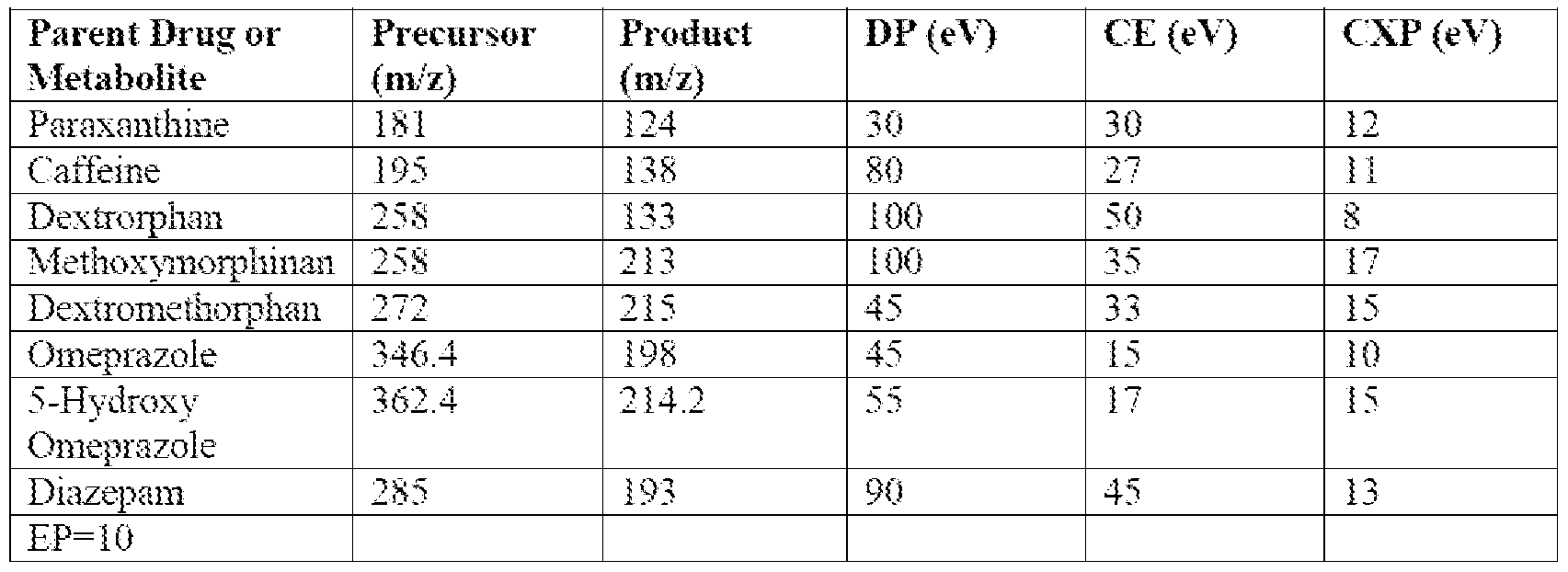
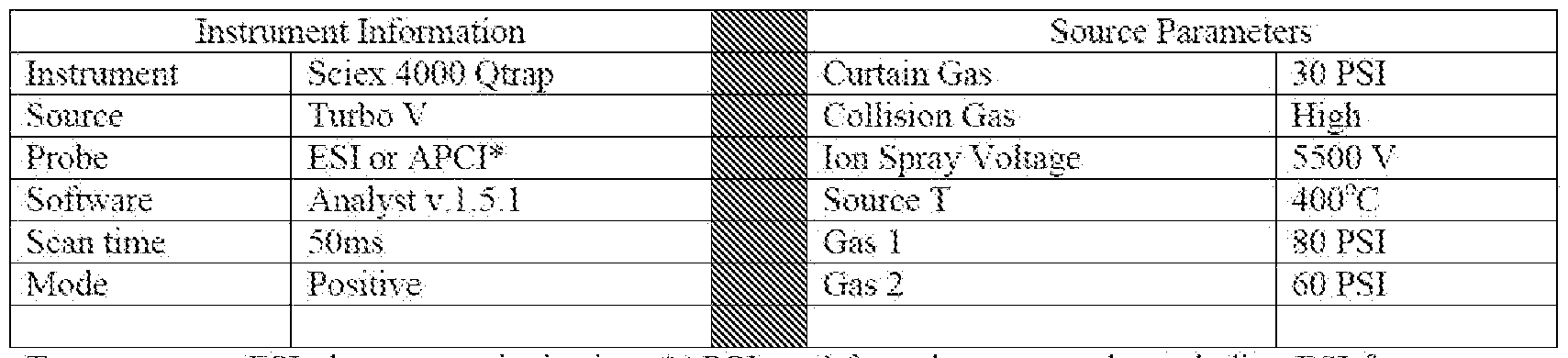
- MS/MS instrument parameters for Method 1 are described in Table 2. Optimal voltage settings for each substrate and metabolite were determined via syringe pump direct infusion of each standard in 50% methanol/water solution. The optimized mass spectrometer parameters for Method 1 are listed in Table 3.
- MS/MS instrument parameters for Method 2 are described in Table 5.
- the optimized mass spectrometer parameters for Method 2 are listed in Table 6.
- Standard curves were created using multiple injections at each data point for external standards from 0.06 to 1000 ng/ml.
- Product quantification was performed using AB Sciex Multiquant software version 2.0.2.
- Phenotyping results were generated for caffeine as a probe of CYP1A2, omeprazole as a probe for CYP2C19, and dextromethorphan as a probe for CYP2D6 in healthy adults.
- L Caffeine probe of CYP1A2 phenotype Caffeine is commonly used as a probe in phenotyping studies and does not interact with the other probes used in our melange. Studies differ in their reports of CYP1A2 phenotype as determined by caffeine. Different researchers describe the histogram as unimodal, bimodal, or trimodal. (See Zhou et al. , Drug Metab. Rev. 41(2):89-295). In our cohort of primarily Caucasian subjects we observe a primarily unimodal distribution with outliers forming a small extreme mode. Our extreme mode corresponds to poor metabolizers and represents 7.8% of our subjects. This is in agreement with another study of Australian Caucasians which reported 5% poor metabolizers. (See Ilett et al, Clin. Pharmacol. Ther. 54(3):317-322).
- Omeprazole has been used as a phenotyping probe for CYP2C19 in several studies in urine and plasma but never saliva. Omeprazole is commonly used as a probe in phenotyping studies and does not interact with the other probes used in our melange. Our saliva phenotyping results show a complex multimodal histogram consistent with other studies in other matrices. Frequencies of individuals within the different modes of the salivary CYP2C19 metabolic phenotype histogram corresponds very well with known frequencies of phenotypes reported based on known genetic polymorphisms.
- Dextromethorphan is commonly used as a probe in phenotyping studies and does not interact with the other probes used in our melange.
- the literature reported percentages of CYP2D6 metabolic phenotypes from a validation study based on genetic and phenotypic analysis were: Ultra-rapid (-1-2%), Extensive (-77-92%), Intermediate (-2-11%), and Poor (-5-10%). (See Gaedigk et al, Clin Pharma Ther 83(2): 234-242; Crews et al, Clin Pharma Ther 95(4): 376-382; and Fang et al. Pharmacogenomics J 14(6): 564-572). Literature reported percentages show close agreement with our findings: Ultra-rapid (2.3%), Extensive (83.9%), Intermediate (9.2%), and Poor (4.6%).
- Salivary caffeine/paraxanthine metabolic ratio is an accepted measure of caffeine metabolic phenotype. Phenotypic examination using a substrate probe is necessary because genetics only explain approximately 42% of CYP1A2 catalytic activity and the common polymorphisms effect enzyme induction rather than enzyme activity (Klein, Winter et al. 2010).
- Omeprazole is an accepted probe of CYP2C19 activity in urine and plasma.
- omeprazole as a probe in saliva has not been previously reported. This is likely due to the low salivary concentrations of omeprazole and its metabolite 5- hydroxy omeprazole. However, we were able to develop a very sensitive assay which could simultaneously measure caffeine, dextromethorphan, omeprazole and their major metabolites in saliva.
- UHPLC parameters are described in Table 7.
- the MS/MS instrument parameters are described in Table 8.
- the optimized mass spectrometer parameters are listed in Table 9.
- the UHPLC parameters for Method 2 are described in Table 4.
- the MS/MS instrument parameters for Method 2 are described in Table 5.
- the optimized mass spectrometer parameters for Method 2 are listed in Table 6.
- Product quantification was performed using AB Sciex Multiquant software version 2.0.2.
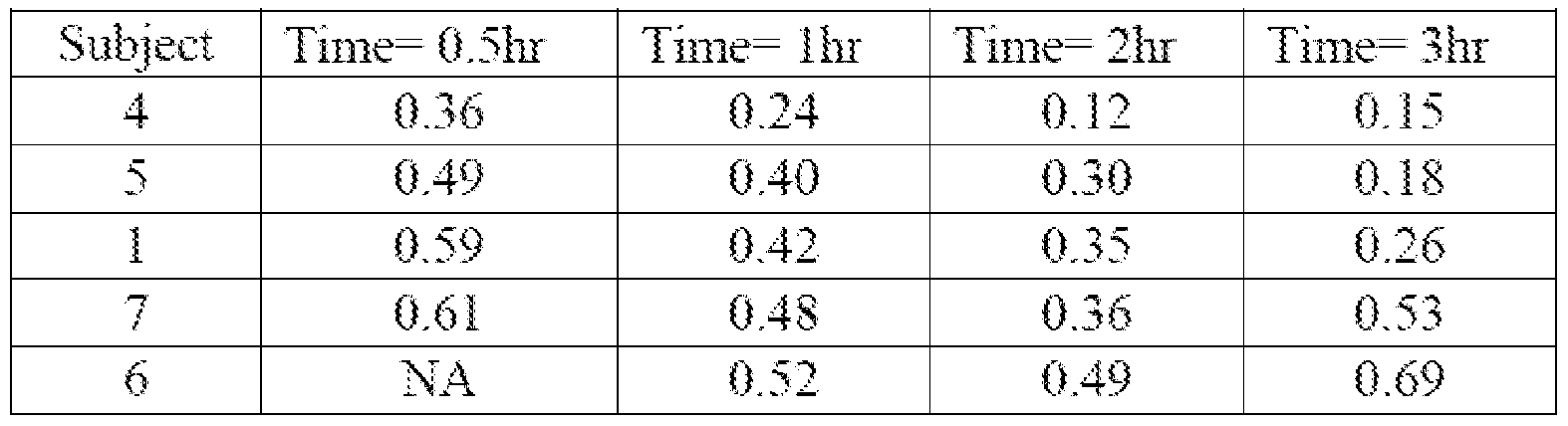
- Table 10 shows the salivary logio molar metabolic ratios for eplerenone and its metabolite 6Beta-Hydroxy Eplerenone, which is formed via CYP3A4.
- the metabolic ratios are fairly stable over different time points.
- the 3 hour time point may be the best choice because the distribution phase will be over after 2 hours because eplerenone exhibits a T max of approximately 1.5 hours.
- Five healthy volunteers aged 22-44 years old were given 50mg of commercially available generic eplerenone. As expected, the range of values is not very wide.
- Constitutive CYP3A4 variability is estimated at about 5-fold; however, illness, inhibition, and induction-related interactions can enhance variability [1,2] with estimates ranging 40-50-fold in different populations [3].
- a source of variability in omeprazole metabolic ratio measurements in saliva may be due to contamination of the mouth and saliva when the tablet is ingested.
- contamination may occur due to residual powder from the tablet formulation contaminating the mouth and saliva.
- formulations will be prepared with a film coating to impede powder contamination of the oral cavity while not disturbing rapid dissolution.
Landscapes
- Health & Medical Sciences (AREA)
- Life Sciences & Earth Sciences (AREA)
- Chemical & Material Sciences (AREA)
- General Health & Medical Sciences (AREA)
- Medicinal Chemistry (AREA)
- Engineering & Computer Science (AREA)
- Epidemiology (AREA)
- Animal Behavior & Ethology (AREA)
- Public Health (AREA)
- Veterinary Medicine (AREA)
- Pharmacology & Pharmacy (AREA)
- Molecular Biology (AREA)
- Immunology (AREA)
- Biomedical Technology (AREA)
- Urology & Nephrology (AREA)
- Hematology (AREA)
- Organic Chemistry (AREA)
- Analytical Chemistry (AREA)
- Physics & Mathematics (AREA)
- Biotechnology (AREA)
- Biochemistry (AREA)
- Microbiology (AREA)
- Proteomics, Peptides & Aminoacids (AREA)
- Zoology (AREA)
- Wood Science & Technology (AREA)
- General Physics & Mathematics (AREA)
- Pathology (AREA)
- Endocrinology (AREA)
- Food Science & Technology (AREA)
- Cell Biology (AREA)
- Biophysics (AREA)
- Bioinformatics & Cheminformatics (AREA)
- General Engineering & Computer Science (AREA)
- Genetics & Genomics (AREA)
- Emergency Medicine (AREA)
- Acyclic And Carbocyclic Compounds In Medicinal Compositions (AREA)
- Pharmaceuticals Containing Other Organic And Inorganic Compounds (AREA)
- Measuring Or Testing Involving Enzymes Or Micro-Organisms (AREA)
- Medicinal Preparation (AREA)
- Other Investigation Or Analysis Of Materials By Electrical Means (AREA)
Abstract
Description






Claims
Priority Applications (9)
| Application Number | Priority Date | Filing Date | Title |
|---|---|---|---|
| JP2018547867A JP7086360B2 (en) | 2015-11-30 | 2016-11-30 | Composition for CYP450 phenotypic analysis using saliva samples |
| CA3006645A CA3006645C (en) | 2015-11-30 | 2016-11-30 | Compositions for cyp450 phenotyping using saliva samples |
| US15/779,788 US10927398B2 (en) | 2015-11-30 | 2016-11-30 | Compositions for CYP450 phenotyping using saliva samples |
| AU2016365229A AU2016365229B2 (en) | 2015-11-30 | 2016-11-30 | Compositions for CYP450 phenotyping using saliva samples |
| EP16871419.4A EP3384040A4 (en) | 2015-11-30 | 2016-11-30 | COMPOSITIONS FOR CYP450 PHENOTYPING USING SALIVE SAMPLES |
| US17/153,333 US20210139945A1 (en) | 2015-11-30 | 2021-01-20 | Compositions for cyp450 phenotyping using saliva samples |
| JP2022086475A JP7529720B2 (en) | 2015-11-30 | 2022-05-27 | Compositions for CYP450 phenotyping using saliva samples - Patents.com |
| AU2023202583A AU2023202583A1 (en) | 2015-11-30 | 2023-04-28 | Compositions for CYP450 phenotyping using saliva samples |
| US18/783,217 US20250230481A1 (en) | 2015-11-30 | 2024-07-24 | Compositions for CYP450 Phenotyping Using Saliva Samples |
Applications Claiming Priority (2)
| Application Number | Priority Date | Filing Date | Title |
|---|---|---|---|
| US201562386389P | 2015-11-30 | 2015-11-30 | |
| US62/386,389 | 2015-11-30 |
Related Child Applications (2)
| Application Number | Title | Priority Date | Filing Date |
|---|---|---|---|
| US15/779,788 A-371-Of-International US10927398B2 (en) | 2015-11-30 | 2016-11-30 | Compositions for CYP450 phenotyping using saliva samples |
| US17/153,333 Division US20210139945A1 (en) | 2015-11-30 | 2021-01-20 | Compositions for cyp450 phenotyping using saliva samples |
Publications (1)
| Publication Number | Publication Date |
|---|---|
| WO2017095921A1 true WO2017095921A1 (en) | 2017-06-08 |
Family
ID=58797645
Family Applications (1)
| Application Number | Title | Priority Date | Filing Date |
|---|---|---|---|
| PCT/US2016/064210 Ceased WO2017095921A1 (en) | 2015-11-30 | 2016-11-30 | Compositions for cyp450 phenotyping using saliva samples |
Country Status (6)
| Country | Link |
|---|---|
| US (3) | US10927398B2 (en) |
| EP (1) | EP3384040A4 (en) |
| JP (2) | JP7086360B2 (en) |
| AU (2) | AU2016365229B2 (en) |
| CA (2) | CA3006645C (en) |
| WO (1) | WO2017095921A1 (en) |
Cited By (5)
| Publication number | Priority date | Publication date | Assignee | Title |
|---|---|---|---|---|
| CN107843668A (en) * | 2017-12-05 | 2018-03-27 | 上海信谊万象药业股份有限公司 | The assay method of drug content in a kind of omeprazole solid preparation |
| WO2019032589A1 (en) | 2017-08-07 | 2019-02-14 | Concordia University, Inc. | Eplerenone for phenotyping of cyp3a5 enzyme activity in saliva samples |
| CN109781827A (en) * | 2017-11-13 | 2019-05-21 | 中国科学院大连化学物理研究所 | A kind of positive ion mobility spectrometry detection method of propofol in exhaled breath |
| KR20200078925A (en) * | 2018-12-24 | 2020-07-02 | 경북대학교 산학협력단 | Composition for Evaluating Activity of Metabolizing Enzyme and Transporter, and Method for Evaluating Using the Same |
| US10927398B2 (en) | 2015-11-30 | 2021-02-23 | Concordia University Inc. | Compositions for CYP450 phenotyping using saliva samples |
Families Citing this family (2)
| Publication number | Priority date | Publication date | Assignee | Title |
|---|---|---|---|---|
| CN110988180A (en) * | 2019-12-19 | 2020-04-10 | 山东达因海洋生物制药股份有限公司 | Method for analyzing related substances of esomeprazole magnesium based on hybrid mass spectrometry |
| GB2628348A (en) * | 2023-03-20 | 2024-09-25 | Ontrack Therapeutics Ltd | Amelioration of drug-drug interactions |
Citations (2)
| Publication number | Priority date | Publication date | Assignee | Title |
|---|---|---|---|---|
| US20050233470A1 (en) | 2002-04-19 | 2005-10-20 | Bill Clark | Methods and compound mixtures for determining protein activity using nmr spectroscopy |
| WO2006112513A1 (en) * | 2005-04-16 | 2006-10-26 | Otsuka Pharmaceutical Co., Ltd. | Method and composition to evaluate cytochrome p450 2d6 isoenzyme activity using a breath test |
Family Cites Families (3)
| Publication number | Priority date | Publication date | Assignee | Title |
|---|---|---|---|---|
| EP0921396A3 (en) * | 1997-12-08 | 2000-05-24 | Pfizer Products Inc. | Methods of rapid screening of cytochrome cyp2d6 status |
| CA3006645C (en) * | 2015-11-30 | 2025-09-09 | CU Ventures, Inc. | Compositions for cyp450 phenotyping using saliva samples |
| US11747352B2 (en) * | 2017-08-07 | 2023-09-05 | Concordia University, Inc. | Eplerenone for phenotyping of CYP3A5 enzyme activity in saliva samples |
-
2016
- 2016-11-30 CA CA3006645A patent/CA3006645C/en active Active
- 2016-11-30 JP JP2018547867A patent/JP7086360B2/en active Active
- 2016-11-30 US US15/779,788 patent/US10927398B2/en active Active
- 2016-11-30 WO PCT/US2016/064210 patent/WO2017095921A1/en not_active Ceased
- 2016-11-30 AU AU2016365229A patent/AU2016365229B2/en active Active
- 2016-11-30 CA CA3199343A patent/CA3199343C/en active Active
- 2016-11-30 EP EP16871419.4A patent/EP3384040A4/en active Pending
-
2021
- 2021-01-20 US US17/153,333 patent/US20210139945A1/en not_active Abandoned
-
2022
- 2022-05-27 JP JP2022086475A patent/JP7529720B2/en active Active
-
2023
- 2023-04-28 AU AU2023202583A patent/AU2023202583A1/en active Pending
-
2024
- 2024-07-24 US US18/783,217 patent/US20250230481A1/en active Pending
Patent Citations (2)
| Publication number | Priority date | Publication date | Assignee | Title |
|---|---|---|---|---|
| US20050233470A1 (en) | 2002-04-19 | 2005-10-20 | Bill Clark | Methods and compound mixtures for determining protein activity using nmr spectroscopy |
| WO2006112513A1 (en) * | 2005-04-16 | 2006-10-26 | Otsuka Pharmaceutical Co., Ltd. | Method and composition to evaluate cytochrome p450 2d6 isoenzyme activity using a breath test |
Non-Patent Citations (11)
| Title |
|---|
| 14TH INTERNATIONAL CONFERENCE ON MINIATURIZED SYSTEMS FOR CHEMISTRY AND LIFE SCIENCES, GRONINGEN, THE NETHERLANDS, 3 October 2010 (2010-10-03), pages 157 - 159 |
| CHYUNG S. COOK ET AL.: "Pharmacokinetics and metabolism of [14C]eplerenone after oral administration to humans.", DRUG METABOLISM AND DISPOSITION, vol. 31, no. 11, 2003, pages 1448 - 1455, XP 055388890 * |
| CLIN PHARMACOL THER., vol. 68, no. 4, October 2000 (2000-10-01), pages 375 - 83 |
| CLINICAL PHARMACOLOGY AND THERAPEUTICS, vol. 73, no. 2 |
| EUR J DRUG METAB PHARMACOKINET., vol. 41, no. 2, April 2016 (2016-04-01), pages 125 - 38 |
| JAN JURICA ET AL.: "Determination of Cytochrome P450 Metabolic Activity Using Selective Markers.", TOPICS ON DRUG METABOLISM., 22 February 2012 (2012-02-22), pages 191 - 220, XP055545897 * |
| JEAN-MATTHIEU PROT ET AL.: "Performance of biotransformation of human primary hepatocytes exposed to a pharmacological cocktail inside a liver microchip.", 14TH INTERNATIONAL CONFERENCE ON MINIATURIZED SYSTEMS FOR CHEMISTRY AND LIFE SCIENCES, 3 October 2010 (2010-10-03), Groningen, The Netherlands, pages 157 - 159, XP 055388896 * |
| JURICA ET AL.: "summarized the possibilities of in vivo and in vitro CYP metabolic activity assessments of CYP1A2, CYP2C9, CYP2C19, CYP2D6 and CYP3A4 enzymes", TOPICS ON DRUG METABOLISM., 22 February 2012 (2012-02-22), pages 191 - 220 |
| MARK J. BAILEY ET AL.: "Acyl glucuronide reactivity in perspective: biological consequences.", CHEMICO-BIOLOGICAL INTERACTIONS., vol. 145, 2003, pages 117 - 137, XP 055388893 * |
| PHARMACOGENETICS, vol. 10, no. 3, April 2000 (2000-04-01), pages 187 - 216 |
| See also references of EP3384040A4 |
Cited By (8)
| Publication number | Priority date | Publication date | Assignee | Title |
|---|---|---|---|---|
| US10927398B2 (en) | 2015-11-30 | 2021-02-23 | Concordia University Inc. | Compositions for CYP450 phenotyping using saliva samples |
| WO2019032589A1 (en) | 2017-08-07 | 2019-02-14 | Concordia University, Inc. | Eplerenone for phenotyping of cyp3a5 enzyme activity in saliva samples |
| US11747352B2 (en) | 2017-08-07 | 2023-09-05 | Concordia University, Inc. | Eplerenone for phenotyping of CYP3A5 enzyme activity in saliva samples |
| AU2018313782B2 (en) * | 2017-08-07 | 2024-02-08 | CU Ventures, Inc. | Eplerenone for phenotyping of CYP3A5 enzyme activity in saliva samples |
| CN109781827A (en) * | 2017-11-13 | 2019-05-21 | 中国科学院大连化学物理研究所 | A kind of positive ion mobility spectrometry detection method of propofol in exhaled breath |
| CN107843668A (en) * | 2017-12-05 | 2018-03-27 | 上海信谊万象药业股份有限公司 | The assay method of drug content in a kind of omeprazole solid preparation |
| KR20200078925A (en) * | 2018-12-24 | 2020-07-02 | 경북대학교 산학협력단 | Composition for Evaluating Activity of Metabolizing Enzyme and Transporter, and Method for Evaluating Using the Same |
| KR102206208B1 (en) * | 2018-12-24 | 2021-01-22 | 경북대학교 산학협력단 | Composition for Evaluating Activity of Metabolizing Enzyme and Transporter, and Method for Evaluating Using the Same |
Also Published As
| Publication number | Publication date |
|---|---|
| CA3006645A1 (en) | 2017-06-08 |
| US10927398B2 (en) | 2021-02-23 |
| JP7529720B2 (en) | 2024-08-06 |
| AU2016365229A1 (en) | 2018-06-21 |
| JP7086360B2 (en) | 2022-06-20 |
| AU2023202583A1 (en) | 2023-05-18 |
| EP3384040A4 (en) | 2019-07-31 |
| JP2019506179A (en) | 2019-03-07 |
| US20210139945A1 (en) | 2021-05-13 |
| CA3006645C (en) | 2025-09-09 |
| US20190264252A1 (en) | 2019-08-29 |
| AU2016365229B2 (en) | 2023-02-23 |
| CA3199343C (en) | 2025-11-18 |
| CA3199343A1 (en) | 2017-06-08 |
| JP2022130377A (en) | 2022-09-06 |
| US20250230481A1 (en) | 2025-07-17 |
| EP3384040A1 (en) | 2018-10-10 |
Similar Documents
| Publication | Publication Date | Title |
|---|---|---|
| US20250230481A1 (en) | Compositions for CYP450 Phenotyping Using Saliva Samples | |
| Blume et al. | Pharmacokinetic drug interaction profiles of proton pump inhibitors | |
| Wandel et al. | CYP3A activity in African American and European American men: population differences and functional effect of the CYP3A4* 1B 5′‐promoter region polymorphism | |
| US20150157575A1 (en) | Pharmaceutical Formulations Comprising Vilazodone | |
| CN104483407B (en) | Micro-Imatinib assay method and the application in zero clinical trial phase in blood sample | |
| Smit et al. | Effects of acetaminophen, naproxen, and acetylsalicylic acid on tapentadol pharmacokinetics: Results of two randomized, open‐label, crossover, drug‐drug interaction studies | |
| Desta et al. | Rapid identification of the hepatic cytochrome P450 2C19 activity using a novel and noninvasive [13C] pantoprazole breath test | |
| Kim et al. | Effects of CYP2D6 and CYP3A5 genetic polymorphisms on steady-state pharmacokinetics and hemodynamic effects of tamsulosin in humans | |
| Johnson et al. | Evaluation of the drug interaction potential of aplaviroc, a novel human immunodeficiency virus entry inhibitor, using a modified Cooperstown 5+ 1 cocktail | |
| US11747352B2 (en) | Eplerenone for phenotyping of CYP3A5 enzyme activity in saliva samples | |
| KR20240091327A (en) | Treatment method for sickle cell disease using voxelotor | |
| Chu et al. | Pharmacokinetics of oral rosiglitazone in Taiwanese and post hoc comparisons with Caucasian, Japanese, Korean, and mainland Chinese subjects | |
| Gerhardt et al. | Eplerenone for phenotyping of CYP3A5 enzyme activity in saliva samples | |
| Codreanu et al. | Food-effect study on the pharmacokinetics of indapamide prolonged-release tablets. | |
| Tye et al. | Pre-absorption physicochemical compatibility assessment of 8-drug metabolic cocktail | |
| Feng et al. | Effects of food and gender on pharmacokinetics of ticagrelor and its main active metabolite AR-C124910XX in healthy Chinese subjects | |
| Lei et al. | Effect of rilpivirine on the pharmacokinetics of methadone in HIV-Infected Chinese patients | |
| JP2024524631A (en) | Treatment of inflammatory diseases | |
| Seong et al. | Steady-state pharmacokinetic properties of tamsulosin in healthy male volunteers | |
| WO2020144646A1 (en) | Apalutamide dispersed in applesauce for treating prostate cancer | |
| Waade | Effect of Co-medication on the Serum Concentrations of Aripiprazole and the Main Metabolite Dehydroaripiprazole |
Legal Events
| Date | Code | Title | Description |
|---|---|---|---|
| 121 | Ep: the epo has been informed by wipo that ep was designated in this application |
Ref document number: 16871419 Country of ref document: EP Kind code of ref document: A1 |
|
| ENP | Entry into the national phase |
Ref document number: 3006645 Country of ref document: CA |
|
| WWE | Wipo information: entry into national phase |
Ref document number: 2018547867 Country of ref document: JP |
|
| NENP | Non-entry into the national phase |
Ref country code: DE |
|
| ENP | Entry into the national phase |
Ref document number: 2016365229 Country of ref document: AU Date of ref document: 20161130 Kind code of ref document: A |
|
| WWE | Wipo information: entry into national phase |
Ref document number: 2016871419 Country of ref document: EP |
|
| ENP | Entry into the national phase |
Ref document number: 2016871419 Country of ref document: EP Effective date: 20180702 |