WO2017101758A1 - 一种即时通讯的装置及方法 - Google Patents
一种即时通讯的装置及方法 Download PDFInfo
- Publication number
- WO2017101758A1 WO2017101758A1 PCT/CN2016/109727 CN2016109727W WO2017101758A1 WO 2017101758 A1 WO2017101758 A1 WO 2017101758A1 CN 2016109727 W CN2016109727 W CN 2016109727W WO 2017101758 A1 WO2017101758 A1 WO 2017101758A1
- Authority
- WO
- WIPO (PCT)
- Prior art keywords
- voice
- action
- instant messaging
- recording
- instruction
- Prior art date
- Legal status (The legal status is an assumption and is not a legal conclusion. Google has not performed a legal analysis and makes no representation as to the accuracy of the status listed.)
- Ceased
Links
Images


Classifications
-
- H—ELECTRICITY
- H04—ELECTRIC COMMUNICATION TECHNIQUE
- H04M—TELEPHONIC COMMUNICATION
- H04M1/00—Substation equipment, e.g. for use by subscribers
- H04M1/72—Mobile telephones; Cordless telephones, i.e. devices for establishing wireless links to base stations without route selection
- H04M1/724—User interfaces specially adapted for cordless or mobile telephones
- H04M1/72466—User interfaces specially adapted for cordless or mobile telephones with selection means, e.g. keys, having functions defined by the mode or the status of the device
-
- G—PHYSICS
- G06—COMPUTING OR CALCULATING; COUNTING
- G06F—ELECTRIC DIGITAL DATA PROCESSING
- G06F3/00—Input arrangements for transferring data to be processed into a form capable of being handled by the computer; Output arrangements for transferring data from processing unit to output unit, e.g. interface arrangements
- G06F3/16—Sound input; Sound output
- G06F3/165—Management of the audio stream, e.g. setting of volume, audio stream path
-
- G—PHYSICS
- G06—COMPUTING OR CALCULATING; COUNTING
- G06F—ELECTRIC DIGITAL DATA PROCESSING
- G06F3/00—Input arrangements for transferring data to be processed into a form capable of being handled by the computer; Output arrangements for transferring data from processing unit to output unit, e.g. interface arrangements
- G06F3/01—Input arrangements or combined input and output arrangements for interaction between user and computer
- G06F3/048—Interaction techniques based on graphical user interfaces [GUI]
- G06F3/0481—Interaction techniques based on graphical user interfaces [GUI] based on specific properties of the displayed interaction object or a metaphor-based environment, e.g. interaction with desktop elements like windows or icons, or assisted by a cursor's changing behaviour or appearance
-
- G—PHYSICS
- G06—COMPUTING OR CALCULATING; COUNTING
- G06F—ELECTRIC DIGITAL DATA PROCESSING
- G06F3/00—Input arrangements for transferring data to be processed into a form capable of being handled by the computer; Output arrangements for transferring data from processing unit to output unit, e.g. interface arrangements
- G06F3/01—Input arrangements or combined input and output arrangements for interaction between user and computer
- G06F3/048—Interaction techniques based on graphical user interfaces [GUI]
- G06F3/0487—Interaction techniques based on graphical user interfaces [GUI] using specific features provided by the input device, e.g. functions controlled by the rotation of a mouse with dual sensing arrangements, or of the nature of the input device, e.g. tap gestures based on pressure sensed by a digitiser
- G06F3/0488—Interaction techniques based on graphical user interfaces [GUI] using specific features provided by the input device, e.g. functions controlled by the rotation of a mouse with dual sensing arrangements, or of the nature of the input device, e.g. tap gestures based on pressure sensed by a digitiser using a touch-screen or digitiser, e.g. input of commands through traced gestures
-
- G—PHYSICS
- G06—COMPUTING OR CALCULATING; COUNTING
- G06F—ELECTRIC DIGITAL DATA PROCESSING
- G06F3/00—Input arrangements for transferring data to be processed into a form capable of being handled by the computer; Output arrangements for transferring data from processing unit to output unit, e.g. interface arrangements
- G06F3/01—Input arrangements or combined input and output arrangements for interaction between user and computer
- G06F3/048—Interaction techniques based on graphical user interfaces [GUI]
- G06F3/0487—Interaction techniques based on graphical user interfaces [GUI] using specific features provided by the input device, e.g. functions controlled by the rotation of a mouse with dual sensing arrangements, or of the nature of the input device, e.g. tap gestures based on pressure sensed by a digitiser
- G06F3/0488—Interaction techniques based on graphical user interfaces [GUI] using specific features provided by the input device, e.g. functions controlled by the rotation of a mouse with dual sensing arrangements, or of the nature of the input device, e.g. tap gestures based on pressure sensed by a digitiser using a touch-screen or digitiser, e.g. input of commands through traced gestures
- G06F3/04883—Interaction techniques based on graphical user interfaces [GUI] using specific features provided by the input device, e.g. functions controlled by the rotation of a mouse with dual sensing arrangements, or of the nature of the input device, e.g. tap gestures based on pressure sensed by a digitiser using a touch-screen or digitiser, e.g. input of commands through traced gestures for inputting data by handwriting, e.g. gesture or text
-
- H—ELECTRICITY
- H04—ELECTRIC COMMUNICATION TECHNIQUE
- H04L—TRANSMISSION OF DIGITAL INFORMATION, e.g. TELEGRAPHIC COMMUNICATION
- H04L51/00—User-to-user messaging in packet-switching networks, transmitted according to store-and-forward or real-time protocols, e.g. e-mail
- H04L51/04—Real-time or near real-time messaging, e.g. instant messaging [IM]
-
- H—ELECTRICITY
- H04—ELECTRIC COMMUNICATION TECHNIQUE
- H04L—TRANSMISSION OF DIGITAL INFORMATION, e.g. TELEGRAPHIC COMMUNICATION
- H04L51/00—User-to-user messaging in packet-switching networks, transmitted according to store-and-forward or real-time protocols, e.g. e-mail
- H04L51/07—User-to-user messaging in packet-switching networks, transmitted according to store-and-forward or real-time protocols, e.g. e-mail characterised by the inclusion of specific contents
- H04L51/10—Multimedia information
-
- H—ELECTRICITY
- H04—ELECTRIC COMMUNICATION TECHNIQUE
- H04L—TRANSMISSION OF DIGITAL INFORMATION, e.g. TELEGRAPHIC COMMUNICATION
- H04L51/00—User-to-user messaging in packet-switching networks, transmitted according to store-and-forward or real-time protocols, e.g. e-mail
- H04L51/21—Monitoring or handling of messages
- H04L51/222—Monitoring or handling of messages using geographical location information, e.g. messages transmitted or received in proximity of a certain spot or area
-
- H—ELECTRICITY
- H04—ELECTRIC COMMUNICATION TECHNIQUE
- H04L—TRANSMISSION OF DIGITAL INFORMATION, e.g. TELEGRAPHIC COMMUNICATION
- H04L51/00—User-to-user messaging in packet-switching networks, transmitted according to store-and-forward or real-time protocols, e.g. e-mail
- H04L51/58—Message adaptation for wireless communication
-
- H—ELECTRICITY
- H04—ELECTRIC COMMUNICATION TECHNIQUE
- H04M—TELEPHONIC COMMUNICATION
- H04M1/00—Substation equipment, e.g. for use by subscribers
- H04M1/72—Mobile telephones; Cordless telephones, i.e. devices for establishing wireless links to base stations without route selection
- H04M1/724—User interfaces specially adapted for cordless or mobile telephones
- H04M1/72403—User interfaces specially adapted for cordless or mobile telephones with means for local support of applications that increase the functionality
- H04M1/7243—User interfaces specially adapted for cordless or mobile telephones with means for local support of applications that increase the functionality with interactive means for internal management of messages
- H04M1/72433—User interfaces specially adapted for cordless or mobile telephones with means for local support of applications that increase the functionality with interactive means for internal management of messages for voice messaging, e.g. dictaphones
-
- G—PHYSICS
- G06—COMPUTING OR CALCULATING; COUNTING
- G06F—ELECTRIC DIGITAL DATA PROCESSING
- G06F2203/00—Indexing scheme relating to G06F3/00 - G06F3/048
- G06F2203/048—Indexing scheme relating to G06F3/048
- G06F2203/04808—Several contacts: gestures triggering a specific function, e.g. scrolling, zooming, right-click, when the user establishes several contacts with the surface simultaneously; e.g. using several fingers or a combination of fingers and pen
-
- H—ELECTRICITY
- H04—ELECTRIC COMMUNICATION TECHNIQUE
- H04M—TELEPHONIC COMMUNICATION
- H04M2250/00—Details of telephonic subscriber devices
- H04M2250/22—Details of telephonic subscriber devices including a touch pad, a touch sensor or a touch detector
Definitions
- the present invention relates to the field of communications technologies, and in particular, to an apparatus and method for instant messaging.
- the voice information is used to replace the text information function.
- the language information function uses the mode of imitating the walkie-talkie, and uses the key recording and loose key transmission to make the user experience the fun of instant communication, which not only enables the user to reduce the text input, but also The user can conveniently use instant messaging in the case of driving, for example, thereby improving the convenience of instant messaging and thereby improving the user experience.
- the voice information transmission of the instant messaging device and method needs to be operated by clicking a virtual button at a specific location, and the user needs to watch the screen to click the correct location, which causes the user's use trouble to a certain extent, and increases the number of low-head operations. Taking driving as an example, the risk of operating while driving is improved.
- an instant messaging device comprising:
- a touch screen for displaying an instant messaging interface and capable of receiving touch actions from a user
- a touch detector for detecting the touch action of a user on the touchable screen; the touch action includes a voice recording action and a voice sending action;
- the action interpreter is configured to issue a control instruction corresponding to the touch action in response to the touch action; wherein, when the touch action is the voice recording action, the corresponding control command is a voice recording instruction; When the touch action is the voice sending action, the corresponding control command is a voice sending instruction;
- a voice recorder for initiating recording in response to the voice recording instruction, and stopping recording in response to the voice transmission instruction and transmitting the currently recorded voice to a recipient in the instant messaging interface.
- the voice recording action is formed by the user continuously pressing the touchable screen at any position of the instant messaging interface for a predetermined time
- the voice transmitting action is that the user continues to press at the current location and then releases the touchable screen after the voice recording instruction is issued.
- the voice recording action is that the user continuously presses the touchable screen at any position of the instant messaging interface for a predetermined time, and then repeatedly clicks the touchable screen to form, wherein the connection Strike refers to consecutively hitting the same position or approximately the same position twice or more;
- the voice sending action is that the user presses at any position of the instant messaging interface after the voice recording instruction is issued and then releases the touchable screen formation;
- the number of combos is within six times;
- the interval between two consecutive strikes is 1 second, or the interval is no more than 1 second, preferably no more than 0.5 seconds.
- the instant messaging device further includes:
- a prompting device configured to send a prompt signal to the user in response to a recording prompt instruction
- the action interpreter is further configured to issue the recording prompt instruction in response to the voice recording action
- the recording prompt instruction and the voice recording instruction are simultaneously issued by the action interpreter.
- the prompter includes:
- a graphic prompting unit configured to present a predetermined prompt graphic in the instant messaging interface in response to the recording prompting instruction;
- the prompting graphic is a virtual button centered on the current location;
- the virtual button is a circular virtual button, a square virtual button or a rectangular virtual button;
- a vibration prompting unit for causing the touchable screen to vibrate in response to the recording prompting instruction
- an audio prompting unit configured to emit a prompt tone in response to the recording prompt instruction.
- the touch action further includes canceling the sending action, and the corresponding control instruction is a cancel sending instruction
- the voice recorder stops recording and does not perform the voice transmission operation in response to the revocation transmission instruction.
- the undo sending action is a sliding operation from the current position to another position performed by the user on the touchable screen after the voice recording instruction is issued;
- the undo sending action is a sliding operation from any direction to the other position from the current position.
- the instant messaging device further includes:
- a graphic prompting unit configured to present a virtual button centered on the current location in the instant messaging interface in response to the recording prompting instruction
- the undo sending action is a sliding operation that slides from the current position in any direction to outside the virtual button
- the virtual button is a circular virtual button, a square virtual button or a rectangular virtual button.
- the voice recording action is formed by the user continuously pressing the touchable screen at any position of the instant messaging interface for a predetermined time
- the voice sending action is that the user continues to press at the current position after issuing the voice recording instruction and then releases the touchable screen formation;
- the undo transmission action and the voice recording action are actions that are continuously performed without releasing the touchable screen.
- the instant messaging device further includes:
- a speech determiner for determining a signal to noise ratio of the recorded speech
- a window generator configured to generate, in the instant messaging interface, a confirmation window in response to the voice sending action when the signal to noise ratio is lower than a preset threshold, for receiving a user manually inputting whether to agree to issue the location A confirmation command for the recorded voice;
- the voice recorder is further configured to send the currently recorded voice to the instant messaging interface in response to a confirmation command issued by the user in response to the user input indicating that the signal to noise ratio is lower than the preset threshold. receiver.
- the instant messaging device further includes:
- a listening stater for recording the number of times the user listens to a particular voice received
- a synchronizer for synchronizing the number of listening times into an instant messaging interface of a sender of the specific voice.
- the present invention also provides an instant messaging method for a device with a touch screen, wherein the touch screen is used to display an instant messaging interface and is capable of receiving touch actions from a user, the instant messaging method is as follows Do this:
- a touch detecting step of detecting a touch action of the user on the touchable screen includes: a voice recording action and a voice sending action;
- the action interpreting step in response to the touch action, issuing a control instruction corresponding to the touch action; wherein, when the touch action is the voice recording action, the corresponding control command is a voice recording instruction; When the touch action is the voice sending action, the corresponding control command is a voice sending command;
- the voice recording step starts recording in response to the voice recording instruction, and stops recording in response to the voice transmission instruction and transmits the currently recorded voice to a recipient in the instant messaging interface.
- the voice recording action is formed by the user continuously pressing the touchable screen at any position of the instant messaging interface for a predetermined time
- the voice transmitting action is that the user continues to press at the current position after the voice recording instruction is issued and then releases the touchable screen.
- the voice recording action is that the user continuously presses the touchable screen at any position of the instant messaging interface for a predetermined time, and then repeatedly clicks the touchable screen to form, wherein the connection Strike refers to consecutively hitting the same position or approximately the same position twice or more;
- the voice sending action is that the user presses at any position of the instant messaging interface after the voice recording instruction is issued and then releases the touchable screen formation;
- the number of combos is within six times;
- the interval between two consecutive strikes is 1 second, or the interval is no more than 1 second, preferably no more than 0.5 seconds.
- the instant messaging method further includes:
- the action interpreting step is further configured to issue the recording prompt instruction in response to the voice recording action;
- the recording prompt instruction and the voice recording instruction are simultaneously issued by the action interpretation step.
- the prompting step includes:
- the prompting graphic is a virtual button centered on the current location;
- the virtual button is a circular virtual button, a square virtual button or a rectangular virtual button;
- the audio prompting step emits a prompt tone in response to the recording prompt instruction.
- the touch action further includes canceling the sending action, and the corresponding control instruction is a cancel sending instruction
- the voice recording step stops recording in response to the undo send instruction and does not perform the voice transmission operation.
- the undo sending action is a sliding operation from the current position to another position performed by the user on the touchable screen after the voice recording instruction is issued;
- the undo sending action is a sliding operation from any direction to the other position from the current position.
- the instant messaging method further includes:
- the undo sending action is a sliding operation that slides from the current position in any direction to outside the virtual button
- the virtual button is a circular virtual button, a square virtual button or a rectangular virtual button.
- the voice recording action is formed by the user continuously pressing the touchable screen at any position of the instant messaging interface for a predetermined time
- the voice sending action is that the user continues to press at the current position after issuing the voice recording instruction and then releases the touchable screen formation;
- the undo transmission action and the voice recording action are actions that are continuously performed without releasing the touchable screen.
- the instant messaging method further includes:
- a voice determination step of determining a signal to noise ratio of the recorded voice
- the voice recording step is further configured to send the currently recorded voice to the instant messaging interface in response to a confirmation command issued by the user in response to the user input indicating that the signal to noise ratio is lower than the preset threshold. receiver.
- the instant messaging method further includes:
- the listening status step records the number of times the user listens to the specific voice received.
- the instant messaging device of the present invention enables the user to continuously press the voice recording at any position of the instant messaging interface through the touch detector, the motion interpreter and the voice recorder, and allows the user to continue pressing at the current position and then release the touchable
- the screen realizes voice transmission, realizes the blind operation of voice communication, so that the number of times the user operates the instant messaging device to zero tends to zero, greatly improving the convenience of operation, taking driving as an example, thereby effectively reducing the risk of driving. Sex.
- the instant messaging method of the present invention enables the user to continuously press the voice recording at any position of the instant messaging interface by the touch detection step, the action interpretation step and the voice recording step, and causes the user to continue pressing at the current position and then release the touchable
- the screen realizes voice transmission, realizes the blind operation of voice communication, so that the number of times the user operates the instant messaging device to zero tends to zero, greatly improving the convenience of operation, taking driving as an example, thereby effectively reducing the risk of driving. Sex.
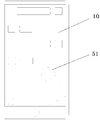
- FIG. 1 is a schematic assembly view of an instant messaging device installed in a mobile phone according to an embodiment of the present invention
- FIG. 2 is a logic control diagram of an instant messaging device in accordance with one embodiment of the present invention.
- FIG. 3 is a flow chart showing the operation of an instant messaging method in accordance with another embodiment of the present invention.
- the instant messaging device 100 can generally include:
- Touchable screen 10 (see FIG. 1) is used to display an instant messaging interface and is capable of receiving touch actions from a user;
- the touch detector 20 is configured to detect the touch action of the user on the touchable screen 10; the touch action includes: a voice recording action and a voice sending action, where, in this embodiment,
- the voice recording action is formed by the user continuously pressing the touchable screen 10 at any position of the instant messaging interface for a predetermined time;
- the voice transmitting action is formed by the user continuing to press at the current position after the voice recording instruction is issued and then releasing the touchable screen 10;
- the action interpreter 30 is configured to issue a control instruction corresponding to the touch action in response to the touch action; wherein, when the touch action is the voice recording action, the corresponding control command is a voice recording instruction; When the touch action is the voice sending action, the corresponding control command is a voice sending instruction;
- the voice recorder 40 is configured to initiate recording in response to the voice recording instruction, and to stop recording in response to the voice transmission instruction and to transmit the currently recorded voice to a recipient in the instant messaging interface.
- Table 1 is a correspondence table of the touch detector 20, the action interpreter 30, and the voice recorder 40.
- the mobile phone in the mobile terminal is taken as an example.
- the user can touch any position of the screen 10 by a user's finger or using a touch tool such as a touch pen to reach a predetermined time T, for example, T is greater than or equal to 1 second.
- the touch detector 20 detects that the user's touch action is a voice recording action, the corresponding action interpreter 30 gives a corresponding voice recording command, and the voice recorder 40 starts recording; the user's finger or the touch tool, such as a touch pen, continuously presses the phone to touch Screen 10 and then releasing the touchable screen 10, the touch detector 20 detects that the user's touch action is a voice sending action, the corresponding action interpreter 30 gives a corresponding voice sending command, and the voice recorder 40 stops recording and will present The recorded voice is sent to the recipient.
- the instant messaging device 100 of the present invention enables the user to continuously press the voice recording at any position of the instant messaging interface through the touch detector 20, the motion interpreter 30, and the voice recorder 40, and causes the user to continue pressing at the current position and then Release the touchable screen 10 to realize voice transmission, so that the user realizes the blind operation of the voice communication without needing to watch the screen to find the recording button, thereby enabling the user to
- the number of times the instant messaging device 100 is operated low tends to zero, which greatly improves the convenience of operation, and takes driving as an example, thereby effectively reducing the risk of driving.
- the voice recording action is that the user continuously presses the touchable screen 10 at any position of the instant messaging interface for a predetermined time, and then repeatedly clicks the A touch screen is formed, wherein the combo refers to consecutively hitting the same position or approximately the same position twice or more.
- the number of combos is within six times.
- the interval between two combos is 1 second, or the interval is no more than 1 second, preferably no more than 0.5 seconds.
- other combo times and corresponding time intervals may also be selected as long as the purpose of continuous pressing can be achieved.
- the voice transmitting action is formed by the user pressing at any position of the instant messaging interface and subsequently releasing the touchable screen 10 after issuing the voice recording command.
- the blind operation of the voice communication is realized not only by the above operation, but also the number of times the user lowers the operation of the instant communication device 100 tends to zero, thereby greatly improving the convenience of operation, taking the driving as an example, thereby effectively reducing the number of operations.
- the risk of driving, and the hands-free operation are realized, which further improves the convenience and convenience of the instant messaging device.
- the instant messaging device 100 may further include: a prompting device 50, wherein the prompting device 50 is configured to send a prompt signal to the user in response to a recording prompt instruction;
- the action interpreter 30 is further configured to issue the recording prompt instruction in response to the voice recording action.
- the recording prompt instruction and the voice recording instruction are simultaneously issued by the action interpreter 30.
- the prompter 50 includes a graphic prompting unit, a vibration prompting unit, and/or an audio prompting unit.
- the prompter 50 may be a single graphic prompting unit, a vibration prompting unit or an audio prompting unit, or may be a graphic prompting unit and a vibration prompting unit, or may be a graphic prompting unit and an audio prompting unit, or may be a vibration prompt.
- the unit and the audio prompting unit may also be a graphic prompting unit, a vibrating prompting unit and an audio prompting unit.
- the graphic prompting unit is configured to present a predetermined prompt graphic in the instant messaging interface in response to the recording prompting instruction.
- the prompt graphic is a virtual button 51 centered on the current position.
- the virtual button 51 is a circular virtual button, a square virtual button or a rectangular virtual button. More specifically, the circular virtual button may be a circular icon having a radius of 5 mm or more, and the rectangular virtual button may be a rectangular icon having the same ratio as the mobile phone.
- Field As is known to those skilled in the art, the shape of the virtual button 51 is not limited to the above shape, and it may be any shape as long as it satisfies practical beauty.
- the vibration prompting unit is configured to cause the touchable screen 10 to vibrate in response to the recording prompting instruction.
- the audio prompting unit is configured to emit a prompt tone in response to the recording prompting instruction.
- the prompt sound of the audio prompting unit may be various types of prompt sounds, and may be a self-contained prompt sound, or a personalized personalized prompt sound, or a prompt sound downloaded by the user.
- Table 2 is a further correspondence table of the touch detector 20, the action interpreter 30, and the voice recorder 40.
- the touch action further includes a revocation sending action
- the corresponding control instruction is a revocation sending instruction; wherein the voice recorder 40 stops recording and does not execute in response to the revoking sending instruction.
- the voice transmission operation In this embodiment, the convenience of the use of the instant messaging device 100 is increased by increasing the undo transmission action.
- the undo sending action is a sliding operation from the current position to another position performed by the user on the touchable screen 10 after the voice recording instruction is issued; optionally, the undo sending action A sliding operation from any direction to the other position from the current position.
- the instant messaging device 100 further includes: a graphic prompting unit, wherein the graphic prompting unit is configured to present the current location in the instant messaging interface in response to the recording prompting instruction Centered on the virtual button 51.
- the virtual button 51 is a circular virtual button, a square virtual button or a rectangular virtual button.
- the undo sending action is a sliding operation that slides from the current position in an arbitrary direction to outside the virtual button 51, for example, when the virtual button 51 is a circular virtual button, the undo sending action is from the current position. Sliding in any direction beyond the circular virtual button.
- the undo send command is activated when the finger sliding distance is greater than 1 cm.
- the voice recording action is formed by the user continuously pressing the touchable screen 10 at any position of the instant messaging interface for a predetermined time; the voice sending The action is formed by the user continuing to press at the current position after the voice recording instruction is issued and then releasing the touchable screen 10; the undo send action and the voice recording action are not releasing the touchable screen 10 The action that is executed continuously.
- the voice recording action is that the user continuously presses the touchable screen 10 at any position of the instant messaging interface for a predetermined time, and then repeatedly clicks the touchable screen Forming, wherein the combo refers to continuously hitting the same position or approximately the same position twice or more;
- the voice sending action is that the user presses at any position of the instant messaging interface after the voice recording instruction is issued And subsequently releasing the touchable screen 10;
- the undo send action is a press from the current location to another location pressed and executed by the user at any position of the instant messaging interface after the voice recording instruction is issued Slide operation.
- the instant messaging device 100 further includes: a voice determiner 60 and a window generator 70, wherein the voice determiner 60 is configured to determine a signal to noise ratio of the recorded voice; the window generator The method 70 is configured to generate, in the instant messaging interface, a confirmation window in response to the voice sending action when the signal to noise ratio is lower than a preset threshold, to receive whether the user manually inputs the indication to agree to issue the recorded voice. a confirmation command; wherein the voice recorder 40 is further configured to send the currently recorded voice to the said voice in response to a confirmation input issued by the user in response to a user input indicating that the signal to noise ratio is lower than the predetermined threshold The recipient in the instant messaging interface.
- the mobile phone in the mobile terminal is taken as an example.
- the instant messaging device 100 automatically determines the recorded voice.
- Signal-to-noise ratio when the signal-to-noise ratio is lower than the preset threshold, the instant messaging device 100 pops up a confirmation window asking whether the user sends a recording, and manually confirms whether or not the user agrees to send a confirmation of the recording, thereby increasing the user's secondary confirmation. , reducing the probability of misoperation.
- the instant messaging device 100 further includes: a listening stater and a synchronizer, wherein the listening state device is configured to record the number of times the user listens to the received specific voice; the synchronization The device is configured to synchronize the number of listening times to an instant messaging interface of a sender of the specific voice.
- the listening state can display the number of times the recipient listens, and the number of listening times through the synchronizer is synchronized to the sender, which further increases the convenience of use of the instant messaging device 100.
- the instant messaging interface is a display area occupying the entire touchable screen 10 .
- the instant messaging interface occupies a partial display area of the display area of the entire touchable screen 10.
- FIG. 3 is a flow chart showing the operation of an instant messaging method in accordance with another embodiment of the present invention.
- the present invention also provides an instant messaging method for a device with a touch screen 10 (see FIG. 1), wherein the touch screen 10 (see FIG. 1) is used to display an instant message.
- the interface is capable of receiving a touch action from a user, and the instant messaging method operates as follows:
- the S101 touch detection step detects the touch action of the user on the touchable screen 10 (see FIG. 1); the touch action includes: a voice recording action and a voice sending action, wherein, in this embodiment,
- a voice recording action formed by the user continuously pressing the touchable screen 10 (see FIG. 1) at any position of the instant messaging interface for a predetermined time;
- a voice transmitting action formed by the user continuing to press at the current position after issuing the voice recording instruction and then releasing the touchable screen 10 (see FIG. 1);
- the S102 operation interpreting step in response to the touch action, issuing a control instruction corresponding to the touch action; wherein, when the touch action is the voice recording action, the corresponding control command is a voice recording instruction; When the touch action is the voice sending action, the corresponding control command is a voice sending command;
- S103 a voice recording step of initiating recording in response to the voice recording instruction, and stopping recording in response to the voice transmission instruction and transmitting the currently recorded voice to a recipient in the instant messaging interface.
- the instant messaging method of the present invention enables the user to continuously press the voice recording at any position of the instant messaging interface by the touch detection step, the action interpretation step and the voice recording step, and causes the user to continue pressing at the current position and then release the touchable
- the screen 10 (see FIG. 1) realizes voice transmission, realizes the blind operation of the voice communication, so that the number of times the user lowers the operation of the instant communication device 100 (see FIG. 2) tends to zero, which greatly improves the convenience of operation. Taking driving as an example, the risk of driving is effectively reduced.
- the voice recording action is that the user continuously presses the touchable screen 10 at any position of the instant messaging interface for a predetermined time, and then repeatedly clicks the A touch screen is formed, wherein the combo refers to consecutively hitting the same position or approximately the same position twice or more.
- the number of combos is within six times.
- the interval between two combos is 1 second, or the interval is no more than 1 second, preferably no more than 0.5 seconds.
- other combo times and corresponding time intervals may also be selected as long as the purpose of continuous pressing can be achieved.
- the voice sending action is that the user is in the instant messaging community after issuing the voice recording instruction Pressing at any position of the face and subsequently releasing the touch screen 10 is formed.
- the blind operation of the voice communication is realized not only by the above operation, but also the number of times the user lowers the operation of the instant communication device 100 tends to zero, thereby greatly improving the convenience of operation, taking the driving as an example, thereby effectively reducing the number of operations.
- the risk of driving, and the hands-free operation are realized, which further improves the convenience of the instant messaging method and the convenience of operation.
- the instant messaging method further includes: a prompting step, the prompting step is to send a prompt signal to the user in response to a recording prompt instruction; wherein the action explaining step is further configured to issue the response in response to the voice recording action Recording a prompt instruction; optionally, the recording prompt instruction and the voice recording instruction are simultaneously issued by the motion interpretation step.
- the prompting step includes: a graphic prompting step, a vibration prompting step, and/or an audio prompting step,
- the graphic prompting step presents a predetermined prompt graphic in the instant messaging interface in response to the recording prompting instruction
- the prompt graphic is a virtual button 51 centered on the current location (see FIG. 2);
- the virtual button 51 is a circular virtual button, a square virtual button or a rectangular virtual button;
- the vibrating prompting step causes the touchable screen 10 (see FIG. 1) to vibrate in response to the recording cueing instruction; and/or,
- the audio prompting step emits a tone in response to the recording prompt command.
- the touch action further includes canceling the sending action, and the corresponding control instruction is a cancel sending instruction; wherein the voice recording step stops recording and does not perform the voice sending operation in response to the undo sending instruction.
- the convenience of using the instant messaging method is increased by adding the undo sending action.
- the undo sending action is a sliding operation from the current position to another position performed by the user on the touchable screen 10 (see FIG. 1) after the voice recording instruction is issued;
- the undo sending action is a sliding operation from any direction to the other position from the current position.
- the instant messaging method further includes:
- a graphical prompting step of presenting in the instant messaging interface in response to the recording prompting instruction The current position is a center virtual button 51 (see FIG. 2);
- the undo transmission action is a sliding operation that slides from the current position in any direction to the virtual button 51 (see FIG. 2);
- the virtual button 51 is a circular virtual button, a square virtual button or a rectangular virtual button;
- the voice recording action is formed by the user continuously pressing the touchable screen 10 at any position of the instant messaging interface for a predetermined time; the voice sending action is to issue the voice The user continues to press at the current position after the recording instruction and then releases the touchable screen 10; the undo transmission action and the voice recording action are actions that are continuously performed without releasing the touchable screen 10.
- the convenience of using the instant messaging method is increased by adding the undo sending action.
- the voice recording action is that the user continuously presses the touchable screen 10 at any position of the instant messaging interface for a predetermined time, and then repeatedly clicks the touchable screen Forming, wherein the combo refers to continuously hitting the same position or approximately the same position twice or more;
- the voice sending action is that the user presses at any position of the instant messaging interface after the voice recording instruction is issued And subsequently releasing the touchable screen 10;
- the undo send action is a press from the current location to another location pressed and executed by the user at any position of the instant messaging interface after the voice recording instruction is issued Slide operation.
- the convenience of using the instant messaging method is increased by adding the undo sending action.
- the instant messaging method further includes: a voice determining step and a window generating step,
- the voice determining step determines a signal to noise ratio of the recorded voice; the window generating step generates a confirmation window in the instant messaging interface in response to the voice sending action when the signal to noise ratio is lower than a preset threshold, and receives the user A manually entered indication of whether or not to agree to issue a confirmation of the recorded voice;
- the voice recording step is further configured to send the currently recorded voice to the instant messaging interface in response to a confirmation command issued by the user in response to the user input indicating that the signal to noise ratio is lower than the preset threshold. receiver.
- the user's secondary confirmation is increased, and the probability of erroneous operation is reduced.
- the instant messaging method further includes: a listening state step and a synchronization step,
- the listening status step records the number of times the user listens to the received specific voice
- the synchronization step synchronizes the number of listens to the instant messaging interface of the sender of the particular voice.
- the listening state step can display the number of times the recipient listens, and listens through the synchronizer.
- the number of times is synchronized to the sender, further increasing the ease of use of the instant messaging method.
Landscapes
- Engineering & Computer Science (AREA)
- Theoretical Computer Science (AREA)
- General Engineering & Computer Science (AREA)
- Human Computer Interaction (AREA)
- Computer Networks & Wireless Communication (AREA)
- Signal Processing (AREA)
- General Physics & Mathematics (AREA)
- Physics & Mathematics (AREA)
- Multimedia (AREA)
- Business, Economics & Management (AREA)
- General Business, Economics & Management (AREA)
- General Health & Medical Sciences (AREA)
- Audiology, Speech & Language Pathology (AREA)
- Health & Medical Sciences (AREA)
- User Interface Of Digital Computer (AREA)
- Telephone Function (AREA)
- Information Transfer Between Computers (AREA)
Abstract
Description


Claims (22)
- 一种即时通讯装置,其特征在于,包括:可触摸屏幕,用于显示一即时通讯界面并能够接收来自用户的触摸动作;触摸检测器,用于检测用户在所述可触摸屏幕上的所述触摸动作;所述触摸动作包括语音录制动作和语音发送动作;动作解释器,用于响应于所述触摸动作而发出与所述触摸动作对应的控制指令;其中,当所述触摸动作为所述语音录制动作时,对应的控制指令为一语音录制指令;当所述触摸动作为所述语音发送动作时,对应的控制指令为语音发送指令;语音录制器,用于响应于所述语音录制指令而启动录音,并响应于所述语音发送指令停止录音且将当前所录制的语音发送至所述即时通讯界面中的接收方。
- 根据权利要求1所述的即时通讯装置,其特征在于,所述语音录制动作是用户在所述即时通讯界面的任一位置处持续按压所述可触摸屏幕达到预定时间形成;所述语音发送动作是在发出所述语音录制指令之后用户在当前位置继续按压且随后释放所述可触摸屏幕形成。
- 根据权利要求1所述的即时通讯装置,其特征在于,所述语音录制动作是用户在所述即时通讯界面的任一位置处持续按压所述可触摸屏幕达到预定时间,且随后多次连击所述可触摸屏幕形成,其中,所述连击是指连续击中同一位置或近似同一位置两次以上;所述语音发送动作是在发出所述语音录制指令之后用户在所述即时通讯界面的任一位置处按压且随后释放所述可触摸屏幕形成;可选地,连击次数为六次以内;可选地,两次连击的时间间隔为1秒,或者间隔为不大于1秒,优选为不大于0.5秒。
- 根据权利要求1所述的即时通讯装置,其特征在于,还包括:提示器,用于响应于一录制提示指令而向用户发出提示信号;其中,所述动作解释器还配置成响应于所述语音录制动作发出所述录制提示指令;可选地,所述录制提示指令与所述语音录制指令由所述动作解释器同时发 出。
- 根据权利要求4所述的即时通讯装置,其特征在于,所述提示器包括:图形提示单元,用于响应于所述录制提示指令而在所述即时通讯界面中呈现预定的提示图形;可选地,所述提示图形为以所述当前位置为中心的虚拟按钮;可选地,所述虚拟按钮为圆形虚拟按钮、正方形虚拟按钮或长方形虚拟按钮;振动提示单元,用于响应于所述录制提示指令而使得所述可触摸屏幕振动;和/或,音频提示单元,用于响应于所述录制提示指令而发出一提示音。
- 根据权利要求1所述的即时通讯装置,其特征在于,所述触摸动作还包括撤销发送动作,对应的控制指令为撤销发送指令;其中,所述语音录制器响应于所述撤销发送指令而停止录音并且不执行所述语音发送操作。
- 根据权利要求6所述的即时通讯装置,其特征在于,所述撤销发送动作为在发出所述语音录制指令之后用户在所述可触摸屏幕上执行的从所述当前位置至其他位置的滑动操作;可选地,所述撤销发送动作为从所述当前位置沿任意方向至其他位置的滑动操作。
- 根据权利要求7所述的即时通讯装置,其特征在于,还包括:图形提示单元,用于响应于所述录制提示指令而在所述即时通讯界面中呈现以所述当前位置为中心的虚拟按钮;所述撤销发送动作为从所述当前位置沿任意方向滑到所述虚拟按钮之外的滑动操作;可选地,所述虚拟按钮为圆形虚拟按钮、正方形虚拟按钮或长方形虚拟按钮。
- 根据权利要求7或8所述的即时通讯装置,其特征在于,所述语音录制动作是用户在所述即时通讯界面的任一位置处持续按压所述可触摸屏幕达到预定时间形成;所述语音发送动作是在发出所述语音录制指令之后用户在当前位置继续按压且随后释放所述可触摸屏幕形成;所述撤销发送动作与所述语音录制动作是在不释放所述可触摸屏幕的情况下连续执行的动作。
- 根据权利要求1-9中任一项所述的即时通讯装置,其特征在于,还包括:语音判断器,用于确定所录制的语音的信噪比;和窗口生成器,用于在所述信噪比低于一预设阈值时响应于所述语音发送动作在所述即时通讯界面中生成一确认窗口,用于接收用户手动输入的表示是否同意发出所录制的语音的确认指令;其中,所述语音录制器还配置成在所述信噪比低于所述预设阈值时响应于用户输入的表示同意发出的确认指令将当前所录制的语音发送至所述即时通讯界面中的接收方。
- 根据权利要求1-10中任一项所述的即时通讯装置,其特征在于,还包括:收听状态器,用于记录用户对接收到的特定语音的收听次数;和,同步器,用于将所述收听次数同步至所述特定语音的发送方的即时通讯界面中。
- 一种即时通讯方法,应用于带有可触摸屏幕的装置,其中,可触摸屏幕用于显示一即时通讯界面并能够接收来自用户的触摸动作,其特征在于,所述即时通讯方法按照如下步骤进行操作:触摸检测步骤,检测用户在所述可触摸屏幕上的所述触摸动作;所述触摸动作包括:语音录制动作和语音发送动作;动作解释步骤,响应于所述触摸动作而发出与所述触摸动作对应的控制指令;其中,当所述触摸动作为所述语音录制动作时,对应的控制指令为一语音录制指令;当所述触摸动作为所述语音发送动作时,对应的控制指令为语音发送指令;语音录制步骤,响应于所述语音录制指令而启动录音,并响应于所述语音发送指令停止录音且将当前所录制的语音发送至所述即时通讯界面中的接收方。
- 根据权利要求12所述的即时通讯方法,其特征在于,所述语音录制动作是用户在所述即时通讯界面的任一位置处持续按压所述可触摸屏幕达到预定时间形成;语音发送动作是在发出所述语音录制指令之后用户在当前位置继续按压且随后释放所述可触摸屏幕形成。
- 根据权利要求12所述的即时通讯方法,其特征在于,所述语音录制动 作是用户在所述即时通讯界面的任一位置处持续按压所述可触摸屏幕达到预定时间,且随后多次连击所述可触摸屏幕形成,其中,所述连击是指连续击中同一位置或近似同一位置两次以上;所述语音发送动作是在发出所述语音录制指令之后用户在所述即时通讯界面的任一位置处按压且随后释放所述可触摸屏幕形成;可选地,连击次数为六次以内;可选地,两次连击的时间间隔为1秒,或者间隔为不大于1秒,优选为不大于0.5秒。
- 根据权利要求12所述的即时通讯方法,其特征在于,还包括:提示步骤,响应于一录制提示指令而向用户发出提示信号;其中,所述动作解释步骤还配置成响应于所述语音录制动作发出所述录制提示指令;可选地,所述录制提示指令与所述语音录制指令由所述动作解释步骤同时发出。
- 根据权利要求15所述的即时通讯方法,其特征在于,所述提示步骤包括:图形提示步骤,响应于所述录制提示指令而在所述即时通讯界面中呈现预定的提示图形;可选地,所述提示图形为以所述当前位置为中心的虚拟按钮;可选地,所述虚拟按钮为圆形虚拟按钮、正方形虚拟按钮或长方形虚拟按钮;振动提示步骤,响应于所述录制提示指令而使得所述可触摸屏幕振动;和/或,音频提示步骤,响应于所述录制提示指令而发出一提示音。
- 根据权利要求12所述的即时通讯方法,其特征在于,所述触摸动作还包括撤销发送动作,对应的控制指令为撤销发送指令;其中,所述语音录制步骤响应于所述撤销发送指令而停止录音并且不执行所述语音发送操作。
- 根据权利要求17所述的即时通讯方法,其特征在于,所述撤销发送动作为在发出所述语音录制指令之后用户在所述可触摸屏幕上执行的从所述当前位置至其他位置的滑动操作;可选地,所述撤销发送动作为从所述当前位置沿任意方向至其他位置的滑动操作。
- 根据权利要求18所述的即时通讯方法,其特征在于,还包括:图形提示步骤,响应于所述录制提示指令而在所述即时通讯界面中呈现以所述当前位置为中心的虚拟按钮;所述撤销发送动作为从所述当前位置沿任意方向滑到所述虚拟按钮之外的滑动操作;可选地,所述虚拟按钮为圆形虚拟按钮、正方形虚拟按钮或长方形虚拟按钮。
- 根据权利要求18或19所述的即时通讯方法,其特征在于,所述语音录制动作是用户在所述即时通讯界面的任一位置处持续按压所述可触摸屏幕达到预定时间形成;所述语音发送动作是在发出所述语音录制指令之后用户在当前位置继续按压且随后释放所述可触摸屏幕形成;所述撤销发送动作与所述语音录制动作是在不释放所述可触摸屏幕的情况下连续执行的动作。
- 根据权利要求12-20中任一项所述的即时通讯方法,其特征在于,还包括:语音判断步骤,确定所录制的语音的信噪比;和窗口生成步骤,在所述信噪比低于一预设阈值时响应于所述语音发送动作在所述即时通讯界面中生成一确认窗口,接收用户手动输入的表示是否同意发出所录制的语音的确认指令;其中,所述语音录制步骤还配置成在所述信噪比低于所述预设阈值时响应于用户输入的表示同意发出的确认指令将当前所录制的语音发送至所述即时通讯界面中的接收方。
- 根据权利要求12-21中任一项所述的即时通讯方法,其特征在于,还包括:收听状态步骤,记录用户对接收到的特定语音的收听次数;和,同步步骤,将所述收听次数同步至所述特定语音的发送方的即时通讯界面中。
Priority Applications (4)
| Application Number | Priority Date | Filing Date | Title |
|---|---|---|---|
| EP16874815.0A EP3393090B1 (en) | 2015-12-15 | 2016-12-13 | Instant messaging apparatus and method |
| ES16874815T ES2807926T3 (es) | 2015-12-15 | 2016-12-13 | Dispositivo y procedimiento de mensajería instantánea |
| US16/062,755 US20200042280A1 (en) | 2015-12-15 | 2016-12-13 | Instant messaging apparatus and method |
| JP2018531199A JP6609376B2 (ja) | 2015-12-15 | 2016-12-13 | 即時通信装置及び方法 |
Applications Claiming Priority (2)
| Application Number | Priority Date | Filing Date | Title |
|---|---|---|---|
| CN201510940310.6 | 2015-12-15 | ||
| CN201510940310.6A CN105429860A (zh) | 2015-12-15 | 2015-12-15 | 一种即时通讯的装置及方法 |
Publications (1)
| Publication Number | Publication Date |
|---|---|
| WO2017101758A1 true WO2017101758A1 (zh) | 2017-06-22 |
Family
ID=55507806
Family Applications (1)
| Application Number | Title | Priority Date | Filing Date |
|---|---|---|---|
| PCT/CN2016/109727 Ceased WO2017101758A1 (zh) | 2015-12-15 | 2016-12-13 | 一种即时通讯的装置及方法 |
Country Status (6)
| Country | Link |
|---|---|
| US (1) | US20200042280A1 (zh) |
| EP (1) | EP3393090B1 (zh) |
| JP (1) | JP6609376B2 (zh) |
| CN (1) | CN105429860A (zh) |
| ES (1) | ES2807926T3 (zh) |
| WO (1) | WO2017101758A1 (zh) |
Families Citing this family (9)
| Publication number | Priority date | Publication date | Assignee | Title |
|---|---|---|---|---|
| CN105429860A (zh) * | 2015-12-15 | 2016-03-23 | 浙江吉利控股集团有限公司 | 一种即时通讯的装置及方法 |
| CN107305459A (zh) * | 2016-04-25 | 2017-10-31 | 阿里巴巴集团控股有限公司 | 语音和多媒体消息的发送方法及装置 |
| CN106060244A (zh) * | 2016-05-16 | 2016-10-26 | 珠海市魅族科技有限公司 | 一种即时通讯的语音传输方法和装置 |
| CN106131297A (zh) * | 2016-06-08 | 2016-11-16 | 太原工业学院 | 盲人手机操作系统 |
| CN111610858B (zh) * | 2016-10-26 | 2023-09-19 | 创新先进技术有限公司 | 基于虚拟现实的交互方法及装置 |
| CN106708384A (zh) * | 2016-12-01 | 2017-05-24 | 努比亚技术有限公司 | 一种信息发送装置和方法 |
| CN107743089A (zh) * | 2017-10-25 | 2018-02-27 | 上海织语网络科技有限公司 | 一种语音即时通讯方法及系统 |
| CN110231817A (zh) * | 2018-04-13 | 2019-09-13 | 蔚来汽车有限公司 | 车辆驾驶提示方法、装置、控制系统和计算机存储介质 |
| CN108712319A (zh) * | 2018-04-20 | 2018-10-26 | 广州沐思信息科技有限公司 | 一种基于即时通讯的语音发送方法、装置及终端 |
Citations (5)
| Publication number | Priority date | Publication date | Assignee | Title |
|---|---|---|---|---|
| CN103561168A (zh) * | 2013-10-25 | 2014-02-05 | 广州网易计算机系统有限公司 | 一种发送语音信息的方法和设备 |
| CN103986841A (zh) * | 2014-05-30 | 2014-08-13 | 深圳天珑无线科技有限公司 | 一种移动终端操作方法及移动终端 |
| WO2014207701A1 (en) * | 2013-06-28 | 2014-12-31 | Giacco Simone | Method for processing an audio message |
| CN105117147A (zh) * | 2015-07-24 | 2015-12-02 | 上海修源网络科技有限公司 | 一种基于手势操控车载操作系统的方法、装置及车载设备 |
| CN105429860A (zh) * | 2015-12-15 | 2016-03-23 | 浙江吉利控股集团有限公司 | 一种即时通讯的装置及方法 |
Family Cites Families (11)
| Publication number | Priority date | Publication date | Assignee | Title |
|---|---|---|---|---|
| US6275569B1 (en) * | 1997-10-02 | 2001-08-14 | Lucent Technologies, Inc. | Circular memory addressing option for audio messages |
| US9300790B2 (en) * | 2005-06-24 | 2016-03-29 | Securus Technologies, Inc. | Multi-party conversation analyzer and logger |
| US8331540B2 (en) * | 2007-01-09 | 2012-12-11 | Cisco Technology, Inc. | Voicemail system with quality assurance |
| CN102761658A (zh) * | 2011-10-26 | 2012-10-31 | 北京推博信息技术有限公司 | 通过移动终端进行语音对讲的方法和装置 |
| US9063629B2 (en) * | 2011-10-31 | 2015-06-23 | Nokia Technologies Oy | Responding to a received message in a locked user interaction mode |
| US20130253950A1 (en) * | 2012-03-21 | 2013-09-26 | Hill-Rom Services, Inc. | Method and apparatus for collecting patient identification |
| US9130892B2 (en) * | 2012-06-25 | 2015-09-08 | Verizon Patent And Licensing Inc. | Multimedia collaboration in live chat |
| CN104144102B (zh) * | 2013-05-13 | 2017-07-14 | 腾讯科技(深圳)有限公司 | 激活即时通讯应用软件语音对讲功能的方法和移动终端 |
| CN103543878A (zh) * | 2013-09-30 | 2014-01-29 | 上海闻泰电子科技有限公司 | 利用电子设备触摸屏调节音量的系统及方法 |
| US10845982B2 (en) * | 2014-04-28 | 2020-11-24 | Facebook, Inc. | Providing intelligent transcriptions of sound messages in a messaging application |
| WO2015178715A1 (en) * | 2014-05-23 | 2015-11-26 | Samsung Electronics Co., Ltd. | System and method of providing voice-message call service |
-
2015
- 2015-12-15 CN CN201510940310.6A patent/CN105429860A/zh active Pending
-
2016
- 2016-12-13 WO PCT/CN2016/109727 patent/WO2017101758A1/zh not_active Ceased
- 2016-12-13 ES ES16874815T patent/ES2807926T3/es active Active
- 2016-12-13 JP JP2018531199A patent/JP6609376B2/ja active Active
- 2016-12-13 US US16/062,755 patent/US20200042280A1/en not_active Abandoned
- 2016-12-13 EP EP16874815.0A patent/EP3393090B1/en active Active
Patent Citations (5)
| Publication number | Priority date | Publication date | Assignee | Title |
|---|---|---|---|---|
| WO2014207701A1 (en) * | 2013-06-28 | 2014-12-31 | Giacco Simone | Method for processing an audio message |
| CN103561168A (zh) * | 2013-10-25 | 2014-02-05 | 广州网易计算机系统有限公司 | 一种发送语音信息的方法和设备 |
| CN103986841A (zh) * | 2014-05-30 | 2014-08-13 | 深圳天珑无线科技有限公司 | 一种移动终端操作方法及移动终端 |
| CN105117147A (zh) * | 2015-07-24 | 2015-12-02 | 上海修源网络科技有限公司 | 一种基于手势操控车载操作系统的方法、装置及车载设备 |
| CN105429860A (zh) * | 2015-12-15 | 2016-03-23 | 浙江吉利控股集团有限公司 | 一种即时通讯的装置及方法 |
Non-Patent Citations (1)
| Title |
|---|
| See also references of EP3393090A4 * |
Also Published As
| Publication number | Publication date |
|---|---|
| CN105429860A (zh) | 2016-03-23 |
| EP3393090A4 (en) | 2018-12-12 |
| US20200042280A1 (en) | 2020-02-06 |
| EP3393090A1 (en) | 2018-10-24 |
| JP6609376B2 (ja) | 2019-11-20 |
| EP3393090B1 (en) | 2020-05-06 |
| JP2019507404A (ja) | 2019-03-14 |
| ES2807926T3 (es) | 2021-02-24 |
Similar Documents
| Publication | Publication Date | Title |
|---|---|---|
| WO2017101758A1 (zh) | 一种即时通讯的装置及方法 | |
| JP6575658B2 (ja) | インタラクティブ・ホワイトボード機器の音声制御 | |
| US8677238B2 (en) | Navigation of electronic device menu without requiring visual contact | |
| EP3367379B1 (en) | Method, device and system for voice communication | |
| EP2911149B1 (en) | Determination of an operational directive based at least in part on a spatial audio property | |
| KR102102647B1 (ko) | 무선 리시버 및 그 제어 방법 | |
| US9727204B2 (en) | Rearranging chat messages | |
| CN108446022B (zh) | 用户装置及其控制方法 | |
| TW201044265A (en) | Touch anywhere to speak | |
| EP2811484A2 (en) | Data processing method and electronic device thereof | |
| CN103888573B (zh) | 针对盲人的移动终端设置方法和装置 | |
| WO2013127367A1 (zh) | 一种即时通信的语音识别方法和终端 | |
| CN105094801A (zh) | 应用功能激活方法及装置 | |
| CN114930795A (zh) | 用于减少音频反馈的方法和系统 | |
| WO2016184295A1 (zh) | 即时通讯方法、用户设备及系统 | |
| US9444927B2 (en) | Methods for voice management, and related devices | |
| CN108307659A (zh) | 翻译装置的控制方法、翻译装置以及程序 | |
| WO2016119165A1 (zh) | 历史聊天记录展示的方法和装置 | |
| JP2021144065A (ja) | 情報処理装置および情報処理方法 | |
| JP2016189121A (ja) | 情報処理装置、情報処理方法およびプログラム | |
| CN104978165A (zh) | 一种语音信息的处理方法、系统及电子设备 | |
| WO2020063451A1 (zh) | 通话留言方法、终端和具有存储功能的装置 | |
| KR20170001423A (ko) | 전자 장치 및 전자 장치에서 메시지를 제공하는 방법 | |
| KR20150009055A (ko) | 그룹 통신 방법 및 장치 | |
| JP6927331B2 (ja) | 情報処理装置、情報処理方法、およびプログラム |
Legal Events
| Date | Code | Title | Description |
|---|---|---|---|
| 121 | Ep: the epo has been informed by wipo that ep was designated in this application |
Ref document number: 16874815 Country of ref document: EP Kind code of ref document: A1 |
|
| WWE | Wipo information: entry into national phase |
Ref document number: 2018531199 Country of ref document: JP |
|
| NENP | Non-entry into the national phase |
Ref country code: DE |
|
| WWE | Wipo information: entry into national phase |
Ref document number: 2016874815 Country of ref document: EP |
|
| ENP | Entry into the national phase |
Ref document number: 2016874815 Country of ref document: EP Effective date: 20180716 |