WO2017107716A1 - 一种数据帧实现方法和装置 - Google Patents
一种数据帧实现方法和装置 Download PDFInfo
- Publication number
- WO2017107716A1 WO2017107716A1 PCT/CN2016/106457 CN2016106457W WO2017107716A1 WO 2017107716 A1 WO2017107716 A1 WO 2017107716A1 CN 2016106457 W CN2016106457 W CN 2016106457W WO 2017107716 A1 WO2017107716 A1 WO 2017107716A1
- Authority
- WO
- WIPO (PCT)
- Prior art keywords
- subframe
- data frame
- subframes
- length
- subcarrier spacing
- Prior art date
- Legal status (The legal status is an assumption and is not a legal conclusion. Google has not performed a legal analysis and makes no representation as to the accuracy of the status listed.)
- Ceased
Links
Images




Classifications
-
- H—ELECTRICITY
- H04—ELECTRIC COMMUNICATION TECHNIQUE
- H04L—TRANSMISSION OF DIGITAL INFORMATION, e.g. TELEGRAPHIC COMMUNICATION
- H04L27/00—Modulated-carrier systems
- H04L27/26—Systems using multi-frequency codes
- H04L27/2601—Multicarrier modulation systems
- H04L27/2602—Signal structure
- H04L27/26025—Numerology, i.e. varying one or more of symbol duration, subcarrier spacing, Fourier transform size, sampling rate or down-clocking
-
- H—ELECTRICITY
- H04—ELECTRIC COMMUNICATION TECHNIQUE
- H04L—TRANSMISSION OF DIGITAL INFORMATION, e.g. TELEGRAPHIC COMMUNICATION
- H04L5/00—Arrangements affording multiple use of the transmission path
- H04L5/0001—Arrangements for dividing the transmission path
- H04L5/0003—Two-dimensional division
- H04L5/0005—Time-frequency
- H04L5/0007—Time-frequency the frequencies being orthogonal, e.g. OFDM(A) or DMT
-
- H—ELECTRICITY
- H04—ELECTRIC COMMUNICATION TECHNIQUE
- H04L—TRANSMISSION OF DIGITAL INFORMATION, e.g. TELEGRAPHIC COMMUNICATION
- H04L1/00—Arrangements for detecting or preventing errors in the information received
- H04L1/0001—Systems modifying transmission characteristics according to link quality, e.g. power backoff
- H04L1/0023—Systems modifying transmission characteristics according to link quality, e.g. power backoff characterised by the signalling
- H04L1/0028—Formatting
- H04L1/003—Adaptive formatting arrangements particular to signalling, e.g. variable amount of bits
-
- H—ELECTRICITY
- H04—ELECTRIC COMMUNICATION TECHNIQUE
- H04L—TRANSMISSION OF DIGITAL INFORMATION, e.g. TELEGRAPHIC COMMUNICATION
- H04L27/00—Modulated-carrier systems
- H04L27/26—Systems using multi-frequency codes
-
- H—ELECTRICITY
- H04—ELECTRIC COMMUNICATION TECHNIQUE
- H04L—TRANSMISSION OF DIGITAL INFORMATION, e.g. TELEGRAPHIC COMMUNICATION
- H04L5/00—Arrangements affording multiple use of the transmission path
- H04L5/003—Arrangements for allocating sub-channels of the transmission path
- H04L5/0044—Allocation of payload; Allocation of data channels, e.g. PDSCH or PUSCH
Definitions
- the present invention relates to the field of communications, and in particular, to a data frame implementation method and apparatus.
- 5G mobile communication is being studied in the industry.
- 5G mobile communication needs to better meet the future of mobile Internet and IoT services.
- development of. Therefore, the industry has put forward a variety of business needs for 5G mobile communications, including key performance requirements such as high capacity, short latency, large connectivity, high reliability, and high speed.
- key performance requirements such as high capacity, short latency, large connectivity, high reliability, and high speed.
- the diversity of services on the system's numerical parameters is not uniform, or even mutually exclusive. For example, high-speed mobile users need a wider subcarrier spacing to resist higher Doppler spread, and in order to serve long-distance users, it is necessary to design a narrower subcarrier spacing to ensure effective coherent bandwidth (Coherent Bandwidth). ).
- the embodiment of the invention provides a data frame implementation method and device, which can meet the diversified service requirements of 5G mobile communication, so as to improve the service level of 5G mobile communication.
- an embodiment of the present invention provides a data frame implementation method, including:
- the data frame includes at least two subframes, each of the subframes has a fixed length, and the at least two subframes may be mapped to at least two frequency bands with different subcarrier spacings, And the number of symbols included in each of the subframes corresponds to a subcarrier spacing of the mapped frequency band.
- the data frame since the data frame may be mapped to at least two frequency bands with different subcarrier spacings, and the number of symbols included in each of the subframes corresponds to a subcarrier spacing of the mapped frequency band,
- the data frame can meet the diversified business needs of 5G mobile communication to improve the service level of 5G mobile communication.
- the foregoing at least two subframes may include a first subframe of a first length
- the first subframe When the first subframe is mapped to a frequency band of a first subcarrier interval, the first subframe includes at least one symbol;
- the first subframe When the first subframe is mapped to a frequency band of the second subcarrier interval, the first subframe includes at least two symbols, and the second subcarrier interval is greater than the first subcarrier spacing.
- the at least two subframes may include a second subframe of a second length, where the second The length is equal to N times the first length, and the N is a positive integer greater than 1;
- the second subframe When the second subframe is mapped to a frequency band of the first subcarrier interval, the second subframe includes at least N symbols;
- the second subframe When the second subframe is mapped to a frequency band of the second subcarrier interval, the second subframe includes at least 2N symbols.
- the first subframe and the second subframe can be flexibly assembled to be mapped to different frequencies.
- each of the subframes includes The number of symbols can be proportional to the subcarrier spacing of the mapped frequency band.
- the number of symbols included in each of the subframes is proportional to the subcarrier spacing of the mapped frequency band, so that each subframe is configured to be more flexible in data frames to better meet the diversity of 5G mobile communications. Business needs.
- the at least two subframes may include a third length a third subframe, wherein the third length is equal to M ⁇ N times the first length, the M And N is a positive integer greater than 1; or
- the at least two subframes may include a fourth subframe of a fourth length, where the fourth length is equal to K ⁇ M ⁇ N times the first length, and the K, M, and N are both greater than 1 Integer.
- the lengths of the third subframe and the fourth subframe are multiples of the length of the first subframe or the second subframe, so that the data frame is more flexible and can be applied to different services. demand.
- the data frame configured for wireless signal transmission may include:
- a data frame for wireless signal transmission and mapping on a target frequency band wherein the data frame includes at least one of the following:
- the first subframe, the second subframe, the third subframe, and the fourth subframe are The first subframe, the second subframe, the third subframe, and the fourth subframe;
- the subcarrier spacing of the target frequency band includes any one of the following:
- the first subcarrier spacing, the second subcarrier spacing, the third subcarrier spacing, the fourth subcarrier spacing, and the fifth subcarrier spacing wherein the third subcarrier spacing is greater than the second subcarrier
- the fourth subcarrier spacing is greater than the third subcarrier spacing
- the fifth subcarrier spacing is smaller than the first subcarrier spacing
- the data frame can be mapped to the frequency band of different sub-carrier spacing, and the data frame can be flexibly assembled to more fully meet the diversified service requirements of the 5G mobile communication.
- the subframes included in the data frame may be combined in a first combination manner, or the data frame includes Subframes can be combined in a second combination;
- the first combination mode is different from the second combination mode.
- the subframes in the data frame can be combined in different combinations to adapt to different scenarios and different services.
- the combination manner of the subframes included in the foregoing data frame may be dynamically specified by the control signal or may be specified by the high layer signaling ;
- the combination of the subframes included in the data frame is previously negotiated with the receiver.
- the subframes in the data frame can be flexibly combined to better meet the diversity of the 5G mobile communication. Business needs.
- the subframes in the data frame can be combined with the receiver in advance, so that no additional control signals or higher layer signaling need to be transmitted during transmission to save network transmission resources.
- the data frame is further configured to transmit at least one of the following:
- Broadcast signaling, common control information, and synchronization signals Broadcast signaling, common control information, and synchronization signals.
- the method may further include:
- the data frame is sent to a receiver.
- an embodiment of the present invention provides a data frame implementation method, including:
- each of the subframes has a fixed length, and the at least two subframes may be mapped to at least two frequency bands with different subcarrier spacings, and each The number of symbols included in the subframe corresponds to the subcarrier spacing of the mapped frequency band.
- the at least two subframes include a first subframe of a first length
- the first subframe When the first subframe is mapped to a frequency band of a first subcarrier interval, the first subframe includes at least one symbol;
- the first subframe When the first subframe is mapped to a frequency band of the second subcarrier interval, the first subframe includes at least two symbols, and the second subcarrier interval is greater than the first subcarrier spacing.
- the at least two subframes include a second subframe of a second length, where the second length Equal to N times the first length, the N being a positive integer greater than one;
- the second subframe When the second subframe is mapped to a frequency band of the first subcarrier interval, the second subframe includes at least N symbols;
- the second subframe is when the second subframe is mapped to a frequency band of the second subcarrier interval Includes at least 2N symbols.
- each of the subframes includes The number of symbols is proportional to the subcarrier spacing of the frequency band to which it is mapped.
- the at least two subframes include a third length a third subframe, wherein the third length is equal to M ⁇ N times the first length, and the M and N are positive integers greater than 1; or
- the at least two subframes include a fourth subframe of a fourth length, wherein the fourth length is equal to K ⁇ M ⁇ N times the first length, and the K, M, and N are positive integers greater than 1. .
- the receiving, by the receiving, the data frame sent by the sending apparatus includes:
- the first subframe, the second subframe, the third subframe, and the fourth subframe are The first subframe, the second subframe, the third subframe, and the fourth subframe;
- the subcarrier spacing of the target frequency band includes any one of the following:
- the first subcarrier spacing, the second subcarrier spacing, the third subcarrier spacing, the fourth subcarrier spacing, and the fifth subcarrier spacing wherein the third subcarrier spacing is greater than the second subcarrier
- the fourth subcarrier spacing is greater than the third subcarrier spacing
- the fifth subcarrier spacing is smaller than the first subcarrier spacing
- the data frame includes a subframe that is combined in a first combination manner, or the data frame includes Subframes are combined in a second combination;
- the first combination mode is different from the second combination mode.
- the combination manner of the subframes included in the data frame is dynamically specified by a control signal or specified by a high layer signaling;
- the combination of the subframes included in the data frame is previously negotiated with the transmitter.
- the data frame is further configured to transmit at least one of the following:
- Broadcast signaling, common control information, and synchronization signals Broadcast signaling, common control information, and synchronization signals.
- an embodiment of the present invention provides a data frame implementation apparatus, where the apparatus is configured to implement the functions of the method provided by the foregoing first aspect, implemented by hardware/software, and the hardware/software includes a unit corresponding to the foregoing function.
- an embodiment of the present invention provides a data frame implementation apparatus, where the apparatus is configured to implement the functions of the method provided by the foregoing second aspect, implemented by hardware/software, and the hardware/software includes a unit corresponding to the foregoing function.
- FIG. 1 is a schematic flowchart of a method for implementing a data frame according to an embodiment of the present invention
- FIG. 2 to FIG. 4 are schematic diagrams showing the structure of a first subframe according to an embodiment of the present invention.
- FIG. 5 is a schematic diagram of the effect of the first subframe in different frequency bands according to an embodiment of the present invention.
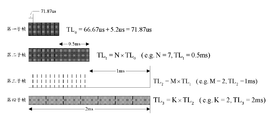
- FIG. 6 is a schematic structural diagram of multiple subframes according to an embodiment of the present invention.
- FIG. 7 is a schematic diagram of applicable scenarios and services of multiple subframes according to an embodiment of the present invention.
- FIG. 8 is a schematic diagram of assembling data frames according to an embodiment of the present invention.
- FIG. 9 is a schematic flowchart diagram of another method for implementing a data frame according to an embodiment of the present disclosure.
- FIG. 10 is a schematic structural diagram of an apparatus for implementing a data frame according to an embodiment of the present invention.
- FIG. 11 is a schematic structural diagram of another apparatus for implementing a data frame according to an embodiment of the present disclosure.
- FIG. 12 is a schematic structural diagram of another apparatus for implementing a data frame according to an embodiment of the present disclosure.
- FIG. 13 is a schematic structural diagram of another apparatus for implementing a data frame according to an embodiment of the present invention.
- a data frame for wireless signal transmission is configured, the data frame includes at least two subframes, and each of the subframes has a fixed length, and the at least two subframes may be mapped to different subcarrier spacings. At least two frequency bands, and each of the sub-frames includes a number of symbols corresponding to a sub-carrier spacing of the mapped frequency band.
- the data frame may include subframes of different lengths, so that the data frame may transmit different services, and, in addition, the data frame may be mapped to at least two frequency bands with different subcarrier spacings, such that The data frame can be applied to different application scenarios, and can meet the diversified business requirements of 5G mobile communication, so as to improve the service level of 5G mobile communication.
- FIG. 1 is a schematic flowchart of a method for implementing a data frame according to an embodiment of the present invention, and FIG. 1 includes the following steps:
- the transmitter configures a data frame for wireless signal transmission, where the data frame includes at least two subframes, each of the subframes has a fixed length, and the at least two subframes may be mapped to at least two different subcarrier spacings. And the number of symbols included in each of the sub-frames corresponds to a sub-carrier spacing of the mapped frequency band.
- the foregoing data frame includes at least two subframes. It can be understood that the foregoing data frame may include two or more subframes.
- the subframes included in the data frame may be subframes of different lengths or subframes of the same length.
- each of the foregoing sub-frames may be understood to be that the length of each sub-frame is immutable, but the foregoing data frame may include multiple sub-frames of different lengths, or may include multiple sub-frames of the same length. Or it may include that the lengths of the partial subframes are the same, and the lengths of the partial subframes are different.
- the at least two subframes may be mapped to at least two frequency bands with different subcarrier spacings. It is understood that the at least two subframes have the capability of being mapped to at least two frequency bands with different subcarrier spacings, or it can be understood that the at least two subframes are allowed to be mapped to at least two frequency bands with different subcarrier spacings. In this way, the data frame can be mapped to at least two frequency bands with different sub-carrier spacings. For example, the data frames can be mapped to different frequency bands of sub-carrier spacing according to different application scenarios. In addition, the above mapping may be understood to mean that the at least two subframes may be transmitted on at least two frequency bands with different subcarrier spacings.
- the number of symbols included in each of the foregoing subframes corresponds to the subcarrier spacing of the mapped frequency band. It can be understood that the number of symbols included in each subframe may vary with the subcarrier spacing of the mapped frequency band. For example, as shown in FIG. 2, when the first subframe in the foregoing data frame is mapped to a frequency band with a subcarrier spacing of 15 kHz, the first subframe includes only one symbol, that is, the number of symbols in the first subframe is 1, and In this case, the first subframe includes a Cyclic Prefix (CP), where the length of the first subframe is 71.87us, or is understood as the Transmission Time Interval (TTI) of the first subframe.
- CP Cyclic Prefix
- TTI Transmission Time Interval
- the length of the symbol (Symbol) is 66.67us
- the length of the CP is 5.20us.
- the first subframe of the data frame when the first subframe of the data frame is mapped to a frequency band with a subcarrier spacing of 30 kHz, the first subframe includes two symbols, that is, the number of symbols of the first subframe is 2, and the first subframe It includes two CPs, and the length of the first subframe is 71.87us, the length of each symbol (Symbol) is 33.33us, and each CP is 2.60us.
- FIG. 3 when the first subframe of the data frame is mapped to a frequency band with a subcarrier spacing of 30 kHz, the first subframe includes two symbols, that is, the number of symbols of the first subframe is 2, and the first subframe It includes two CPs, and the length of the first subframe is 71.87us, the length of each symbol (Symbol) is 33.33us, and each CP is 2.60us.
- the first subframe of the data frame when the first subframe of the data frame is mapped to a frequency band with a subcarrier spacing of 60 kHz, the first subframe includes four symbols, that is, the number of symbols of the first subframe is 4, and the first subframe Four CPs are included, and the length of the first subframe is 71.87us, the length of each symbol is 16.67us, and each CP is 1.30us.
- the at least two subframes may include a first subframe of a first length
- the first subframe When the first subframe is mapped to a frequency band of a first subcarrier interval, the first subframe includes at least one symbol;
- the first subframe When the first subframe is mapped to a frequency band of the second subcarrier interval, the first subframe includes at least two symbols, and the second subcarrier interval is greater than the first subcarrier spacing.
- the first length may be other lengths, for example, two TL0 lengths, etc., which is not limited in this embodiment.
- the first length is 71.87us as an example, so that it can be clearly seen from FIG. 2 to FIG. 4 that the number of symbols included when the first subframe is mapped to different frequency bands is included. They are all different.
- the first subframe can also be defined as an ultra-short subframe.
- the symbols in the first subframe and the length of the CP can be flexibly changed, the longer the symbol and the CP length, the larger the multipath delay can be supported, and the larger the subcarrier spacing, the more the Doppler can be tolerated. The greater the expansion. Therefore, the ultra-short subframe data structure shown in FIG. 2 can meet the low delay requirement in a wide coverage scenario, and the ultra-short subframe data structure shown in FIG. 4 can satisfy the delay requirement in a high-speed moving scenario.
- FIG. 5 numerical parameters of the first subframe at different bandwidths are given, where option 1 represents the scenario shown in FIG. 2, that is, the first subframe.
- the mapping is performed on a frequency band with a subcarrier spacing of 15 kHz, and option 2 represents the scenario shown in FIG. 3, that is, the first subframe is mapped on a frequency band with a subcarrier spacing of 30 kHz, and the option 3 represents the scenario shown in FIG.
- the subframe mapping is in the frequency band of the subcarrier spacing of 60 kHz, ⁇ f is the subcarrier spacing, T u is the length of the symbol, and the FFT is the Fast Fourier Transformation (FFT Size).
- the frame with a fixed length has the characteristics that the number of symbols is different, but the CP overhead is consistent, thereby saving network transmission resources.
- the at least two subframes may include a second subframe of a second length, where the second length is equal to N times the first length, and the N is a positive integer greater than 1.
- the second subframe When the second subframe is mapped to a frequency band of the first subcarrier interval, the second subframe includes at least N symbols;
- the second subframe When the second subframe is mapped to a frequency band of the second subcarrier interval, the second subframe includes at least 2N symbols.
- the data frame configuration may include the foregoing second subframe, where the length of the second subframe is N times longer than the length of the first subframe, so that a high capacity and a high moving speed can be transmitted.
- the second subframe when the second subframe is mapped to a frequency band with a subcarrier spacing of 15 kHz, the second subframe includes N symbols, and when the second subframe is mapped to a frequency band with a subcarrier spacing of 30 kHz, the second subframe includes 2N symbols, when the second subframe is mapped to a frequency band with a subcarrier spacing of 60 kHz, the second subframe includes 4N symbols.
- the at least two subframes may include a third subframe of a third length, where the third length is equal to M ⁇ N times the first length, and the M and N are positive integers greater than 1. ;or
- the at least two subframes may include a fourth subframe of a fourth length, wherein the fourth length is equal to K ⁇ M ⁇ N times the first length, and the K, M, and N are positive integers greater than 1. .
- the first length of 71.87us is taken as an example.
- the number of symbols included in each of the subframes is proportional to the subcarrier spacing of the mapped frequency band. That is, the larger the subcarrier spacing, the greater the number of symbols included in the subframe; the smaller the subcarrier spacing, the smaller the number of symbols included in the subframe.
- each subframe Since the length of each subframe is fixed, the larger the subcarrier spacing is, the narrower the symbol width is, the larger the supported moving speed is. When the subcarrier spacing is smaller, the wider the symbol width, the farther the serviceable user distance is. The greater the coverage. At the same time, the longer the subframe, the higher the resource utilization efficiency. Therefore, different application scenarios and service requirements can be adapted by using the foregoing first subframe, the second subframe, the third subframe, and the fourth subframe corresponding to different subcarrier spacings.
- the first subframe can be applied to a low-latency service type
- the second subframe configured subcarrier spacing can be applied to a high-capacity and high-speed service
- the third subframe is suitable for a large packet transmission
- the fourth subframe is applicable to the fourth subframe.
- Configuring a smaller subcarrier spacing (such as 3.75 kHz or 7.5 kHz) can be applied to small packet services that are not sensitive to delay in large connection scenarios.
- the first subframe may be used for transmission on a frequency band of ultra-short TTI (Ultra-short TTI) or on a frequency band with subcarrier spacing of 15, 30, and 60 kHz.
- the first subframe can be used to transmit low latency services or to transmit critical MTCs.
- the second subframe may be in the Normal Transmission band, or When transmitting on a frequency band with subcarrier spacings of 15, 30, and 60 kHz, the second subframe can be used to transmit high capacity or high mobility services.
- the third subframe may be used for transmission on a long TTI (Long TTI) frequency band, or the third subframe may be used for transmission of high capacity when transmitting on a subcarrier spacing of 15, 30, and 60 kHz. Business.
- the fourth subframe may be used for transmission on a frequency band of Ultra-Narrowband, or when transmitting on a frequency band with subcarrier spacing of 3.75 and 7.5 kHz, the fourth subframe may be used for transmitting a small packet (Small packet). And the business of Massive connection.
- step 101 may include:
- the transmitter configures a data frame for wireless signal transmission and mapping on a target frequency band, wherein the data frame includes at least one of the following:
- the first subframe, the second subframe, the third subframe, and the fourth subframe are The first subframe, the second subframe, the third subframe, and the fourth subframe;
- the subcarrier spacing of the target frequency band includes any one of the following:
- the first subcarrier spacing, the second subcarrier spacing, the third subcarrier spacing, the fourth subcarrier spacing, and the fifth subcarrier spacing wherein the third subcarrier spacing is greater than the second subcarrier
- the fourth subcarrier spacing is greater than the third subcarrier spacing
- the fifth subcarrier spacing is smaller than the first subcarrier spacing
- the configuration data frame can be assembled using multiple subframes in the first subframe, the second subframe, the third subframe, and the fourth subframe to apply the current service and scenario.
- the description of the foregoing target frequency band shows that the assembled data frames can be transmitted in different frequency bands of sub-carrier spacing, and can be assembled according to application scenarios and service requirements.
- a large system bandwidth can be divided into several frequency bands, or as a plurality of subbands, each of which is configured with a different subcarrier spacing, for example, a subcarrier of frequency band 1.
- the interval is 60 kHz
- the subcarrier spacing of Band 2 is 30 kHz
- the subcarrier spacing of Band 3 is 15 kHz
- the subcarrier spacing of Band 4 is 15 kHz
- the subcarrier spacing of Band 5 is 3.75 kHz.
- the same subframe type may be configured on different frequency bands according to different application scenarios, and configured to have different data structures in different frequency bands, for example, a first subframe, a second subframe, Third child
- Both the frame and the fourth subframe may be configured on any of the frequency bands 1 to 5.
- different subframe types can be configured on the same frequency band according to different service requirements.
- a data frame including a second subframe and a third subframe may be configured on the frequency band 1, and a data frame including the first subframe, the second subframe, and the third subframe may be configured on the frequency band 2, in the frequency band 3
- a data frame including a first subframe and a second subframe may be configured, and a data frame including the first subframe, the second subframe, and the third subframe may be configured on the frequency band 4, and the fourth frame may be included in the frequency band 5
- the data frame of the subframe may be flexibly adjusted according to service requirements, that is, the location of each subframe may be configured according to service requirements when assembling the data frame.
- data frames can be flexibly assembled according to scenarios and service requirements.
- the subframes included in the data frame may be combined in a first combination manner, or the subframes included in the data frame may be combined in a second combination manner.
- the first combination mode is different from the second combination mode.
- the first combination may be applied to any combination on the target frequency band.
- the first combination may be a pre-specified combination, or the first combination may be pre-acquired according to the current application scenario.
- the combination manner determined by the first combination rule may be a combination manner determined according to the first combination rule according to the currently transmitted service, and the like. For example, for the frequency band 1 shown in FIG. 8, the first combination manner may be combined using the second subframe and the third subframe on the frequency band 1 as shown in FIG. 8; or for the frequency band 1 shown in FIG.
- the first combination may also be a combination of using the first subframe and the second subframe, and the like.
- the second combination method described above may be any combination that is applicable to the target frequency band except the first combination mode described above.
- the second combination may be another combination specified in advance, or the second combination may be a combination determined according to a pre-acquired second combination rule according to a scenario of the current application, or a second combination.
- the mode may be a combination manner determined according to the second combination rule according to the currently transmitted service, and the like.
- the first combination manner may also be that the first subframe and the third subframe are combined or the first subframe, the second subframe, and the third subframe are combined, and the like. .
- the combination manner of the subframes included in the data frame may be dynamically specified by a control signal or may be specified by higher layer signaling.
- the above-mentioned dynamic designation by the control signal can be understood as a combination of subframes included in the data frame, and the receiver can be dynamically notified by the control signal, so that the transmitter can flexibly configure the subframe combination mode in the data frame.
- the combination of the above-mentioned high-level signaling can be understood as a combination of subframes included in the data frame can be notified to the receiver through high-level signaling, so that the transmitter can flexibly configure the subframe combination mode in the data frame. Therefore, the subframes in the data frame can be flexibly combined to better meet the diversified service requirements of the 5G mobile communication.
- the combination of the subframes included in the data frame may be negotiated with the receiver in advance.
- the transmitter can pre-negotiate the combination of the subframes in the data frame before receiving the data frame. In this way, it is not necessary to use the control signal or the high-level signaling to notify the receiver of the combination of the subframes in the data frame during the transmission process, so that no additional control signals or higher layer signaling need to be transmitted during transmission to save network transmission resources.
- the foregoing data frame may also be used to transmit at least one of the following:
- the broadcast signaling, the common control information, and the synchronization signal may be used to notify the combination manner of the subframes in the data frame.
- the configuration manner of the data frame is obtained through the information.
- the transmitter can flexibly configure the combination of the subframes in the data frame, because no matter which combination mode is configured, the combination can only be notified to the receiver, and the receiver can identify each subframe in the combined manner.
- band 3 shown in FIG. 8 includes an information frame that can be used to transmit at least one of broadcast signaling, for transmitting common control information, and for transmitting a synchronization signal.
- the foregoing method may further include the following steps:
- the transmitter sends the data frame to a receiver.
- the receiver receives the data frame sent by the transmitter.
- the data frame may include at least two subframes, and each of the subframes has a fixed length, and the data frame may be mapped to at least two frequency bands with different subcarrier spacings, and each of the subframes
- the number of symbols included corresponds to the subcarrier spacing of the mapped frequency band, so that the data frame received by the receiver can meet the diversified service requirements of the 5G mobile communication, so as to improve the receiver 5G shift.
- step 103 may include:
- the receiver receives the data frame transmitted by the transmitter on the target frequency band.
- the description of the structure and the combination of the data frame in the data frame received by the receiver may refer to the description of sending the data frame to the sender in this embodiment, and is not repeatedly described herein.
- the data frame received by the receiver is more suitable for the current scene of the receiver and the currently used service, so as to better Meet the needs of 5G business.
- the receiver may acquire the data by receiving a control signal or a high layer signaling sent by the transmitter.
- the combination of subframes within a frame, so that each subframe of the flexible combination can be identified.
- the receiver may identify each subframe according to a pre-negotiated combination when receiving the data frame.
- Broadcast signaling, common control information, and synchronization signals Broadcast signaling, common control information, and synchronization signals.
- the receiver can acquire the combination manner of the subframes in the data frame by using at least one of the broadcast signaling, the common control information, and the synchronization signal transmitted by the foregoing data frame.
- first subframe, the second subframe, the third subframe, and the fourth subframe may respectively represent different types of subframes, and are not limited to represent a single subframe.
- the present embodiment in order to meet the diversified and divergent service requirements of the 5G system, a method for flexibly assembling the data frame structure is proposed, and the fixed-length subframe can meet the low delay requirement in different scenarios, and the length of each subframe is There is a natural multiple relationship, which makes it easy to assemble into frames.
- the present embodiment has a fixed correspondence between the TTI length and the subcarrier spacing, and the number of symbols in each subframe can be flexibly changed according to the subcarrier spacing of the configured frequency band, and the subframe configuration manner in each frame can also be flexibly assembled. Therefore, it can meet a variety of different special business needs at the same time.
- the transmitter may be any transmitter having a function of configuring a data frame, for example: a base station, an access point device, a gateway device, a server or a terminal, etc.
- the terminal may include: a handheld device, an in-vehicle device, a wearable device, a computing device, or other processing device connected to the wireless modem, and various forms of user equipment (User Equipment, UE), mobile station (MS), terminal, terminal equipment, and the like.
- the above receiver may be a device that receives a data frame, such as a terminal.
- a data frame for wireless signal transmission is configured, where the data frame includes at least two subframes, each of the subframes has a fixed length, and the at least two subframes may be mapped to at least two subcarrier spacings. On both frequency bands, and the number of symbols included in each of the sub-frames corresponds to the sub-carrier spacing of the mapped frequency band.
- the data frame can be mapped to at least two frequency bands with different subcarrier spacings, and the number of symbols included in each of the subframes corresponds to the subcarrier spacing of the mapped frequency band, so that the data frame can satisfy the 5G mobile communication. Diversified business needs to improve the business level of 5G mobile communications.
- the device embodiment of the present invention is used to perform the method for implementing the first embodiment of the method of the present invention.
- the device embodiment of the present invention is used to perform the method for implementing the first embodiment of the method of the present invention.
- the device embodiment of the present invention is used to perform the method for implementing the first embodiment of the method of the present invention.
- Only parts related to the embodiment of the present invention are shown, and the specific technical details are not disclosed. Please refer to the first embodiment of the present invention.
- FIG. 10 is a schematic structural diagram of a device for implementing a data frame according to an embodiment of the present invention. As shown in FIG. 10,
- the configuration unit 101 is configured to configure a data frame for wireless signal transmission, where the data frame includes at least two subframes, each of the subframes has a fixed length, and the at least two subframes may be mapped to different subcarrier spacings. At least two frequency bands, and each of the sub-frames includes a number of symbols corresponding to a sub-carrier spacing of the mapped frequency band.
- the at least two subframes may include a first subframe of a first length
- the first subframe When the first subframe is mapped to a frequency band of a first subcarrier interval, the first subframe includes at least one symbol;
- the first subframe When the first subframe is mapped to a frequency band of the second subcarrier interval, the first subframe includes at least two symbols, and the second subcarrier interval is greater than the first subcarrier spacing.
- the at least two subframes may include a second subframe of a second length, where the second length is equal to N times the first length, and the N is a positive integer greater than 1.
- the second subframe When the second subframe is mapped to a frequency band of the first subcarrier interval, the second subframe includes at least N symbols;
- the second subframe When the second subframe is mapped to a frequency band of the second subcarrier interval, the second subframe includes at least 2N symbols.
- the first subframe and the second subframe can be flexibly assembled to be mapped to different frequencies.
- the number of symbols included in each of the subframes may be proportional to the subcarrier spacing of the mapped frequency band.
- the number of symbols included in each of the subframes is proportional to the subcarrier spacing of the mapped frequency band, so that each subframe is configured to be more flexible in data frames to better meet the diversity of 5G mobile communications. Business needs.
- the at least two subframes may include a third subframe of a third length, where the third length is equal to M ⁇ N times the first length, and the M and N are greater than 1 Integer; or
- the at least two subframes may include a fourth subframe of a fourth length, where the fourth length is equal to K ⁇ M ⁇ N times the first length, and the K, M, and N are both greater than 1 Integer.
- the lengths of the third subframe and the fourth subframe are multiples of the length of the first subframe or the second subframe, so that the data frame is more flexible and can be applied to different services. demand.
- the configuration unit 101 may be configured to configure a data frame for wireless signal transmission and mapped on a target frequency band, where the data frame includes at least one of the following:
- the first subframe, the second subframe, the third subframe, and the fourth subframe are The first subframe, the second subframe, the third subframe, and the fourth subframe;
- the subcarrier spacing of the target frequency band includes any one of the following:
- the first subcarrier spacing, the second subcarrier spacing, the third subcarrier spacing, and the fourth subcarrier a wave interval and a fifth subcarrier spacing, wherein the third subcarrier spacing is greater than the second subcarrier spacing, the fourth subcarrier spacing is greater than the third subcarrier spacing, and the fifth subcarrier spacing Less than the first subcarrier spacing.
- the data frame can be mapped to the frequency band of different sub-carrier spacing, and the data frame can be flexibly assembled to more fully meet the diversified service requirements of the 5G mobile communication.
- the subframes included in the data frame may be combined in a first combination manner, or the subframes included in the data frame may be combined in a second combination manner;
- the first combination mode is different from the second combination mode.
- the subframes in the data frame can be combined in different combinations to adapt to different scenarios and different services.
- the combination manner of the subframes included in the foregoing data frame may be dynamically specified by the control signal or may be specified by the high layer signaling; or
- the combination of the subframes included in the data frame may be negotiated with the receiver in advance.
- the subframes in the data frame can be flexibly combined to better meet the diversity of the 5G mobile communication. Business needs.
- the subframes in the data frame can be combined with the receiver in advance, so that no additional control signals or higher layer signaling need to be transmitted during transmission to save network transmission resources.
- the foregoing data frame may also be used to transmit at least one of the following:
- Broadcast signaling, common control information, and synchronization signals Broadcast signaling, common control information, and synchronization signals.
- the combination of the subframes in the data frame described above may be told to the receiver by using at least one of broadcast signaling, common control information, and synchronization signals.
- the foregoing apparatus may further include:
- the sending unit 102 is configured to send the data frame to a receiver.
- the foregoing apparatus may be any transmitter having a function of configuring a data frame, and the transmitter may be the transmitter described in the embodiment shown in FIG. 1, and the transmitter described in the embodiment shown in FIG. Any of the embodiments can be implemented by the apparatus in this embodiment.
- a data frame for wireless signal transmission is configured, and the data frame includes at least two a subframe, each of the subframes has a fixed length, and the at least two subframes may be mapped to at least two frequency bands with different subcarrier spacings, and each of the subframes includes a number of symbols and a mapped frequency band.
- the subcarrier spacing corresponds.
- the data frame can be mapped to at least two frequency bands with different subcarrier spacings, and the number of symbols included in each of the subframes corresponds to the subcarrier spacing of the mapped frequency band, so that the data frame can satisfy the 5G mobile communication. Diversified business needs to improve the business level of 5G mobile communications.
- FIG. 11 is a schematic structural diagram of another apparatus for implementing a data frame according to an embodiment of the present invention. As shown in FIG. 11, the method includes: a receiving unit 111, where:
- the receiving unit 111 is configured to receive a data frame sent by the transmitter, where the data frame includes at least two subframes, each of the subframes has a fixed length, and the at least two subframes may be mapped to at least two different subcarrier spacings. And the number of symbols included in each of the sub-frames corresponds to a sub-carrier spacing of the mapped frequency band.
- the at least two subframes may include a first subframe of a first length
- the first subframe When the first subframe is mapped to a frequency band of a first subcarrier interval, the first subframe includes at least one symbol;
- the first subframe When the first subframe is mapped to a frequency band of the second subcarrier interval, the first subframe includes at least two symbols, and the second subcarrier interval is greater than the first subcarrier spacing.
- the at least two subframes may include a second subframe of a second length, where the second length is equal to N times the first length, and the N is a positive integer greater than 1.
- the second subframe When the second subframe is mapped to a frequency band of the first subcarrier interval, the second subframe includes at least N symbols;
- the second subframe When the second subframe is mapped to a frequency band of the second subcarrier interval, the second subframe includes at least 2N symbols.
- the number of symbols included in each of the subframes may be proportional to the subcarrier spacing of the mapped frequency band.
- the at least two subframes may include a third subframe of a third length, wherein the third length is equal to M ⁇ N times the first length, and the M and N are greater than 1 Integer; or
- the at least two subframes may include a fourth subframe of a fourth length, where the fourth length is equal to K ⁇ M ⁇ N times the first length, and the K, M, and N are both greater than 1 Integer.
- the receiving unit 111 may be configured to receive a data frame sent by the transmitter on the target frequency band, where the data frame includes at least one of the following:
- the first subframe, the second subframe, the third subframe, and the fourth subframe are The first subframe, the second subframe, the third subframe, and the fourth subframe;
- the subcarrier spacing of the target frequency band includes any one of the following:
- the first subcarrier spacing, the second subcarrier spacing, the third subcarrier spacing, the fourth subcarrier spacing, and the fifth subcarrier spacing wherein the third subcarrier spacing is greater than the second subcarrier
- the fourth subcarrier spacing is greater than the third subcarrier spacing
- the fifth subcarrier spacing is smaller than the first subcarrier spacing
- the subframes included in the data frame may be combined in a first combination manner, or the subframes included in the data frame may be combined in a second combination manner;
- the first combination mode is different from the second combination mode.
- the combination manner of the subframes included in the data frame may be dynamically specified by the control signal or may be specified by the high layer signaling; or
- the combination of the subframes included in the data frame may be negotiated with the transmitter in advance.
- the foregoing data frame may also be used to transmit at least one of the following:
- Broadcast signaling, common control information, and synchronization signals Broadcast signaling, common control information, and synchronization signals.
- the above apparatus may be applied to the receiver described in the embodiment shown in FIG. 1, and any embodiment of the receiver described in the embodiment shown in FIG. 1 may be implemented by the apparatus in this embodiment. .
- the data frame that the transmitter uses for wireless signal transmission is received, where the data frame includes at least two subframes, each of the subframes has a fixed length, and the at least two subframes may be mapped to different subcarrier spacings. At least two frequency bands, and the number of symbols included in each of the subframes corresponds to a subcarrier spacing of the mapped frequency band.
- the data frame can be mapped to at least two frequency bands with different subcarrier spacings, and the number of symbols included in each of the subframes corresponds to the subcarrier spacing of the mapped frequency band, so that the data frame can satisfy the 5G mobile communication. Diversified business needs to improve 5G mobile communications Business level.
- FIG. 12 is a schematic structural diagram of another apparatus for implementing a data frame according to an embodiment of the present invention.
- the method includes: a processor 121, a network interface 122, a memory 123, and a communication bus 124.
- the communication bus 124 is configured to implement connection communication between the processor 121, the network interface 122, and the memory 123.
- the processor 121 executes a program stored in the memory 123 for implementing the following method:
- the data frame includes at least two subframes, each of the subframes has a fixed length, and the at least two subframes may be mapped to at least two frequency bands with different subcarrier spacings, And the number of symbols included in each of the subframes corresponds to a subcarrier spacing of the mapped frequency band.
- the at least two subframes may include a first subframe of a first length
- the first subframe When the first subframe is mapped to a frequency band of a first subcarrier interval, the first subframe includes at least one symbol;
- the first subframe When the first subframe is mapped to a frequency band of the second subcarrier interval, the first subframe includes at least two symbols, and the second subcarrier interval is greater than the first subcarrier spacing.
- the at least two subframes may include a second subframe of a second length, where the second length is equal to N times the first length, and the N is a positive integer greater than 1.
- the second subframe When the second subframe is mapped to a frequency band of the first subcarrier interval, the second subframe includes at least N symbols;
- the second subframe When the second subframe is mapped to a frequency band of the second subcarrier interval, the second subframe includes at least 2N symbols.
- the number of symbols included in each of the subframes may be proportional to the subcarrier spacing of the mapped frequency band.
- the at least two subframes may include a third subframe of a third length, where the third length is equal to M ⁇ N times the first length, and the M and N are greater than 1 Integer; or
- the at least two subframes may include a fourth subframe of a fourth length, where the fourth length is equal to K ⁇ M ⁇ N times the first length, and the K, M, and N are both greater than 1 Integer.
- the program configured by the processor 101 for configuring a data frame for wireless signal transmission may include:
- a data frame for wireless signal transmission and mapping on a target frequency band wherein the data frame includes at least one of the following:
- the first subframe, the second subframe, the third subframe, and the fourth subframe are The first subframe, the second subframe, the third subframe, and the fourth subframe;
- the subcarrier spacing of the target frequency band includes any one of the following:
- the first subcarrier spacing, the second subcarrier spacing, the third subcarrier spacing, the fourth subcarrier spacing, and the fifth subcarrier spacing wherein the third subcarrier spacing is greater than the second subcarrier
- the fourth subcarrier spacing is greater than the third subcarrier spacing
- the fifth subcarrier spacing is smaller than the first subcarrier spacing
- the subframes included in the data frame may be combined in a first combination manner, or the subframes included in the data frame may be combined in a second combination manner;
- the first combination mode is different from the second combination mode.
- the combination manner of the subframes included in the foregoing data frame may be dynamically specified by the control signal or may be specified by the high layer signaling; or
- the combination of the subframes included in the data frame may be negotiated with the receiver in advance.
- the foregoing data frame may also be used to transmit at least one of the following:
- Broadcast signaling, common control information, and synchronization signals Broadcast signaling, common control information, and synchronization signals.
- the program executed by the processor 121 may further include:
- the data frame is sent to a receiver.
- the foregoing apparatus may be any transmitter having a function of configuring a data frame, and the transmitter may be the transmitter described in the embodiment shown in FIG. 1, and the transmitter described in the embodiment shown in FIG. Any of the embodiments can be implemented by the apparatus in this embodiment.
- a data frame for wireless signal transmission is configured, where the data frame includes at least two subframes, each of the subframes has a fixed length, and the at least two subframes may be mapped to at least two subcarrier spacings. On both frequency bands, and the number of symbols included in each of the sub-frames corresponds to the sub-carrier spacing of the mapped frequency band.
- the data frame may be mapped to at least two frequency bands with different subcarrier spacings, and the number of symbols included in each of the subframes corresponds to a subcarrier spacing of the mapped frequency band, such that the data
- the frame can meet the diversified business needs of 5G mobile communication to improve the service level of 5G mobile communication.
- FIG. 13 is a schematic structural diagram of another apparatus for implementing a data frame according to an embodiment of the present invention.
- the method includes: a processor 131, a network interface 132, a memory 133, and a communication bus 134.
- the communication bus 134 is configured to implement connection communication between the processor 131, the network interface 132, and the memory 133, and the processor 131 executes a program stored in the memory 133 for implementing the following method:
- each of the subframes has a fixed length, and the at least two subframes may be mapped to at least two frequency bands with different subcarrier spacings, and each The number of symbols included in the subframe corresponds to the subcarrier spacing of the mapped frequency band.
- the at least two subframes may include a first subframe of a first length
- the first subframe When the first subframe is mapped to a frequency band of a first subcarrier interval, the first subframe includes at least one symbol;
- the first subframe When the first subframe is mapped to a frequency band of the second subcarrier interval, the first subframe includes at least two symbols, and the second subcarrier interval is greater than the first subcarrier spacing.
- the at least two subframes may include a second subframe of a second length, where the second length is equal to N times the first length, and the N is a positive integer greater than 1.
- the second subframe When the second subframe is mapped to a frequency band of the first subcarrier interval, the second subframe includes at least N symbols;
- the second subframe When the second subframe is mapped to a frequency band of the second subcarrier interval, the second subframe includes at least 2N symbols.
- the number of symbols included in each of the subframes may be proportional to the subcarrier spacing of the mapped frequency band.
- the at least two subframes may include a third subframe of a third length, where the third length is equal to M ⁇ N times the first length, and the M and N are positive integers greater than 1. ;or
- the at least two subframes may include a fourth subframe of a fourth length, wherein the fourth length, etc.
- the K, M and N are both positive integers greater than one at K x M x N times the first length.
- the program executed by the processor 131 to receive the data frame sent by the transmitter may include:
- the first subframe, the second subframe, the third subframe, and the fourth subframe are The first subframe, the second subframe, the third subframe, and the fourth subframe;
- the subcarrier spacing of the target frequency band includes any one of the following:
- the first subcarrier spacing, the second subcarrier spacing, the third subcarrier spacing, the fourth subcarrier spacing, and the fifth subcarrier spacing wherein the third subcarrier spacing is greater than the second subcarrier
- the fourth subcarrier spacing is greater than the third subcarrier spacing
- the fifth subcarrier spacing is smaller than the first subcarrier spacing
- the subframes included in the data frame may be combined in a first combination manner, or the subframes included in the data frame may be combined in a second combination manner;
- the first combination mode is different from the second combination mode.
- the combination manner of the subframes included in the foregoing data frame may be dynamically specified by the control signal or may be specified by the high layer signaling; or
- the combination of the subframes included in the data frame may be negotiated with the transmitter in advance.
- the foregoing data frame may also be used to transmit at least one of the following:
- Broadcast signaling, common control information, and synchronization signals Broadcast signaling, common control information, and synchronization signals.
- the above apparatus may be applied to the receiver described in the embodiment shown in FIG. 1, and any embodiment of the receiver described in the embodiment shown in FIG. 1 may be implemented by the apparatus in this embodiment. .
- the data frame that the transmitter uses for wireless signal transmission is received, where the data frame includes at least two subframes, each of the subframes has a fixed length, and the at least two subframes may be mapped to different subcarrier spacings. At least two frequency bands, and the number of symbols included in each of the subframes corresponds to a subcarrier spacing of the mapped frequency band.
- the data frame can be mapped to at least two frequency bands with different subcarrier spacings, and the number of symbols included in each of the subframes corresponds to the subcarrier spacing of the mapped frequency band, so that the data frame can satisfy the 5G mobile communication. Diversified business needs to improve 5G mobile communications Business level.
- the storage medium may be a magnetic disk, an optical disk, a read-only memory (ROM), or a random access memory (RAM).
Landscapes
- Engineering & Computer Science (AREA)
- Signal Processing (AREA)
- Computer Networks & Wireless Communication (AREA)
- Physics & Mathematics (AREA)
- Mathematical Physics (AREA)
- Quality & Reliability (AREA)
- Mobile Radio Communication Systems (AREA)
Abstract
Description
Claims (38)
- 一种数据帧实现方法,其特征在于,包括:配置用于无线信号传输的数据帧,所述数据帧包括至少两个子帧,每个所述子帧的长度固定,所述至少两个子帧可映射到子载波间隔不同的至少两个频带上,且每个所述子帧包括的符号数量与映射到的频带的子载波间隔对应。
- 如权利要求1所述的方法,其特征在于,所述至少两个子帧包括第一长度的第一子帧;当所述第一子帧被映射到第一子载波间隔的频带上时,所述第一子帧包括至少一个符号;当所述第一子帧被映射到第二子载波间隔的频带上时,所述第一子帧包括至少两个符号,所述第二子载波间隔的大于所述第一子载波间隔。
- 如权利要求2所述的方法,其特征在于,所述至少两个子帧包括第二长度的第二子帧,其中,所述第二长度等于N倍所述第一长度,所述N为大于1的正整数;当所述第二子帧被映射到所述第一子载波间隔的频带上时,所述第二子帧包括至少N个符号;当所述第二子帧被映射到所述第二子载波间隔的频带上时,所述第二子帧包括至少2N个符号。
- 如权利要求1-3中任一项所述的方法,其特征在于,每个所述子帧包括的符号数量与映射到的频带的子载波间隔成正比。
- 如权利要求2或3所述的方法,其特征在于,所述至少两个子帧包括第三长度的第三子帧,其中,所述第三长度等于M×N倍所述第一长度,所述M和N为大于1的正整数;或者所述至少两个子帧包括第四长度的第四子帧,其中,所述第四长度等于 K×M×N倍所述第一长度,所述K、M和N均为大于1的正整数。
- 如权利要求5所述的方法,其特征在于,所述配置用于无线信号传输的数据帧,包括:配置用于无线信号传输且映射在目标频带上的数据帧,其中,所述数据帧包括如下至少一项:所述第一子帧、所述第二子帧、所述第三子帧和所述第四子帧;所述目标频带的子载波间隔包括如下任意一项:所述第一子载波间隔、所述第二子载波间隔、第三子载波间隔、第四子载波间隔和第五子载波间隔,其中,所述第三子载波间隔大于所述第二子载波间隔,所述第四子载波间隔大于所述第三子载波间隔,所述第五子载波间隔小于所述第一子载波间隔。
- 如权利要求6所述的方法,其特征在于,所述数据帧包括的子帧按第一种组合方式组合,或者所述数据帧包括的子帧按第二种组合方式组合;其中,所述第一种组合方式和第二种组合方式不同。
- 如根据权利要求7所述的方法,其特征在于,所述数据帧包括的子帧的组合方式由控制信号动态指定或者由高层信令指定;或者所述数据帧包括的子帧的组合方式预先与接收机协商。
- 如权利要求8所述的方法,其特征在于,所述数据帧还用于传输如下至少一项:广播信令、公共控制信息和同步信号。
- 如权利要求1-3中任一项所述的方法,其特征在于,所述方法还包括:向接收机发送所述数据帧。
- 一种数据帧实现方法,其特征在于,包括:接收发送机发送的数据帧,所述数据帧包括至少两个子帧,每个所述子帧的长度固定,所述至少两个子帧可映射到子载波间隔不同的至少两个频带上,且每个所述子帧包括的符号数量与映射到的频带的子载波间隔对应。
- 如权利要求11所述的方法,其特征在于,所述至少两个子帧包括第一长度的第一子帧;当所述第一子帧被映射到第一子载波间隔的频带上时,所述第一子帧包括至少一个符号;当所述第一子帧被映射到第二子载波间隔的频带上时,所述第一子帧包括至少两个符号,所述第二子载波间隔的大于所述第一子载波间隔。
- 如权利要求12所述的方法,其特征在于,所述至少两个子帧包括第二长度的第二子帧,其中,所述第二长度等于N倍所述第一长度,所述N为大于1的正整数;当所述第二子帧被映射到所述第一子载波间隔的频带上时,所述第二子帧包括至少N个符号;当所述第二子帧被映射到所述第二子载波间隔的频带上时,所述第二子帧包括至少2N个符号。
- 如权利要求11-13中任一项所述的方法,其特征在于,每个所述子帧包括的符号数量与映射到的频带的子载波间隔成正比。
- 如权利要求12或13所述的方法,其特征在于,所述至少两个子帧包括第三长度的第三子帧,其中,所述第三长度等于M×N倍所述第一长度,所述M和N为大于1的正整数;或者所述至少两个子帧包括第四长度的第四子帧,其中,所述第四长度等于K×M×N倍所述第一长度,所述K、M和N均为大于1的正整数。
- 如权利要求15所述的方法,其特征在于,所述接收发送机发送的数据帧,包括:接收发送机在目标频带上发送的数据帧,其中,所述数据帧包括如下至少一项:所述第一子帧、所述第二子帧、所述第三子帧和所述第四子帧;所述目标频带的子载波间隔包括如下任意一项:所述第一子载波间隔、所述第二子载波间隔、第三子载波间隔、第四子载波间隔和第五子载波间隔,其中,所述第三子载波间隔大于所述第二子载波间隔,所述第四子载波间隔大于所述第三子载波间隔,所述第五子载波间隔小于所述第一子载波间隔。
- 如权利要求16所述的方法,其特征在于,所述数据帧包括的子帧按第一种组合方式组合,或者所述数据帧包括的子帧按第二种组合方式组合;其中,所述第一种组合方式和第二种组合方式不同。
- 如根据权利要求17所述的方法,其特征在于,所述数据帧包括的子帧的组合方式由控制信号动态指定或者由高层信令指定;或者所述数据帧包括的子帧的组合方式预先与所述发送机协商。
- 如权利要求18所述的方法,其特征在于,所述数据帧还用于传输如下至少一项:广播信令、公共控制信息和同步信号。
- 一种数据帧实现装置,其特征在于,包括:配置单元,用于配置用于无线信号传输的数据帧,所述数据帧包括至少两个子帧,每个所述子帧的长度固定,所述至少两个子帧可映射到子载波间隔不同的至少两个频带上,且每个所述子帧包括的符号数量与映射到的频带的子载 波间隔对应。
- 如权利要求20所述的装置,其特征在于,所述至少两个子帧包括第一长度的第一子帧;当所述第一子帧被映射到第一子载波间隔的频带上时,所述第一子帧包括至少一个符号;当所述第一子帧被映射到第二子载波间隔的频带上时,所述第一子帧包括至少两个符号,所述第二子载波间隔的大于所述第一子载波间隔。
- 如权利要求21所述的装置,其特征在于,所述至少两个子帧包括第二长度的第二子帧,其中,所述第二长度等于N倍所述第一长度,所述N为大于1的正整数;当所述第二子帧被映射到所述第一子载波间隔的频带上时,所述第二子帧包括至少N个符号;当所述第二子帧被映射到所述第二子载波间隔的频带上时,所述第二子帧包括至少2N个符号。
- 如权利要求20-22中任一项所述的装置,其特征在于,每个所述子帧包括的符号数量与映射到的频带的子载波间隔成正比。
- 如权利要求21或22所述的装置,其特征在于,所述至少两个子帧包括第三长度的第三子帧,其中,所述第三长度等于M×N倍所述第一长度,所述M和N为大于1的正整数;或者所述至少两个子帧包括第四长度的第四子帧,其中,所述第四长度等于K×M×N倍所述第一长度,所述K、M和N均为大于1的正整数。
- 如权利要求24所述的装置,其特征在于,所述配置单元用于配置用于无线信号传输且映射在目标频带上的数据帧,其中,所述数据帧包括如下至 少一项:所述第一子帧、所述第二子帧、所述第三子帧和所述第四子帧;所述目标频带的子载波间隔包括如下任意一项:所述第一子载波间隔、所述第二子载波间隔、第三子载波间隔、第四子载波间隔和第五子载波间隔,其中,所述第三子载波间隔大于所述第二子载波间隔,所述第四子载波间隔大于所述第三子载波间隔,所述第五子载波间隔小于所述第一子载波间隔。
- 如权利要求25所述的装置,其特征在于,所述数据帧包括的子帧按第一种组合方式组合,或者所述数据帧包括的子帧按第二种组合方式组合;其中,所述第一种组合方式和第二种组合方式不同。
- 如根据权利要求26所述的装置,其特征在于,所述数据帧包括的子帧的组合方式由控制信号动态指定或者由高层信令指定;或者所述数据帧包括的子帧的组合方式预先与接收机协商。
- 如权利要求27所述的装置,其特征在于,所述数据帧还用于传输如下至少一项:广播信令、公共控制信息和同步信号。
- 如权利要求20-22中任一项所述的装置,其特征在于,所述装置还包括:发送单元,用于向接收机发送所述数据帧。
- 一种数据帧实现装置,其特征在于,包括:接收单元,用于接收发送机发送的数据帧,所述数据帧包括至少两个子帧,每个所述子帧的长度固定,所述至少两个子帧可映射到子载波间隔不同的至少两个频带上,且每个所述子帧包括的符号数量与映射到的频带的子载波间隔对 应。
- 如权利要求30所述的装置,其特征在于,所述至少两个子帧包括第一长度的第一子帧;当所述第一子帧被映射到第一子载波间隔的频带上时,所述第一子帧包括至少一个符号;当所述第一子帧被映射到第二子载波间隔的频带上时,所述第一子帧包括至少两个符号,所述第二子载波间隔的大于所述第一子载波间隔。
- 如权利要求31所述的装置,其特征在于,所述至少两个子帧包括第二长度的第二子帧,其中,所述第二长度等于N倍所述第一长度,所述N为大于1的正整数;当所述第二子帧被映射到所述第一子载波间隔的频带上时,所述第二子帧包括至少N个符号;当所述第二子帧被映射到所述第二子载波间隔的频带上时,所述第二子帧包括至少2N个符号。
- 如权利要求30-32中任一项所述的装置,其特征在于,每个所述子帧包括的符号数量与映射到的频带的子载波间隔成正比。
- 如权利要求31或32所述的装置,其特征在于,所述至少两个子帧包括第三长度的第三子帧,其中,所述第三长度等于M×N倍所述第一长度,所述M和N为大于1的正整数;或者所述至少两个子帧包括第四长度的第四子帧,其中,所述第四长度等于K×M×N倍所述第一长度,所述K、M和N均为大于1的正整数。
- 如权利要求34所述的方法,其特征在于,所述接收单元用于接收发送机在目标频带上发送的数据帧,其中,所述数据帧包括如下至少一项:所述第一子帧、所述第二子帧、所述第三子帧和所述第四子帧;所述目标频带的子载波间隔包括如下任意一项:所述第一子载波间隔、所述第二子载波间隔、第三子载波间隔、第四子载波间隔和第五子载波间隔,其中,所述第三子载波间隔大于所述第二子载波间隔,所述第四子载波间隔大于所述第三子载波间隔,所述第五子载波间隔小于所述第一子载波间隔。
- 如权利要求35所述的装置,其特征在于,所述数据帧包括的子帧按第一种组合方式组合,或者所述数据帧包括的子帧按第二种组合方式组合;其中,所述第一种组合方式和第二种组合方式不同。
- 如根据权利要求36所述的装置,其特征在于,所述数据帧包括的子帧的组合方式由控制信号动态指定或者由高层信令指定;或者所述数据帧包括的子帧的组合方式预先与所述发送机协商。
- 如权利要求37所述的装置,其特征在于,所述数据帧还用于传输如下至少一项:广播信令、公共控制信息和同步信号。
Priority Applications (2)
| Application Number | Priority Date | Filing Date | Title |
|---|---|---|---|
| EP16877527.8A EP3382971B1 (en) | 2015-12-22 | 2016-11-18 | Method and apparatus for implementing data frame |
| US15/995,057 US10700828B2 (en) | 2015-12-22 | 2018-05-31 | Data frame implementation method and apparatus |
Applications Claiming Priority (2)
| Application Number | Priority Date | Filing Date | Title |
|---|---|---|---|
| CN201510970365.1A CN106911438B (zh) | 2015-12-22 | 2015-12-22 | 一种数据帧实现方法和装置 |
| CN201510970365.1 | 2015-12-22 |
Related Child Applications (1)
| Application Number | Title | Priority Date | Filing Date |
|---|---|---|---|
| US15/995,057 Continuation US10700828B2 (en) | 2015-12-22 | 2018-05-31 | Data frame implementation method and apparatus |
Publications (1)
| Publication Number | Publication Date |
|---|---|
| WO2017107716A1 true WO2017107716A1 (zh) | 2017-06-29 |
Family
ID=59088971
Family Applications (1)
| Application Number | Title | Priority Date | Filing Date |
|---|---|---|---|
| PCT/CN2016/106457 Ceased WO2017107716A1 (zh) | 2015-12-22 | 2016-11-18 | 一种数据帧实现方法和装置 |
Country Status (4)
| Country | Link |
|---|---|
| US (1) | US10700828B2 (zh) |
| EP (1) | EP3382971B1 (zh) |
| CN (1) | CN106911438B (zh) |
| WO (1) | WO2017107716A1 (zh) |
Families Citing this family (7)
| Publication number | Priority date | Publication date | Assignee | Title |
|---|---|---|---|---|
| JP2019054308A (ja) | 2016-01-26 | 2019-04-04 | シャープ株式会社 | 基地局装置、端末装置および通信方法 |
| CN109417725B (zh) * | 2016-07-05 | 2022-05-10 | 夏普株式会社 | 基站装置、终端装置以及通信方法 |
| US11509515B2 (en) * | 2016-12-16 | 2022-11-22 | Qualcomm Incorporated | Synchronization signal transmission and detection |
| US10368353B2 (en) * | 2017-01-27 | 2019-07-30 | Qualcomm Incorporated | Adaptive subcarrier spacing configuration |
| CN109601023B (zh) * | 2017-08-07 | 2020-08-04 | Oppo广东移动通信有限公司 | 数据传输的方法和终端设备 |
| KR20230007303A (ko) * | 2020-04-24 | 2023-01-12 | 지티이 코포레이션 | 무선 통신에서의 신호 구성을 위한 방법, 장치 및 시스템 |
| CN115913863B (zh) * | 2022-12-02 | 2024-11-15 | 深圳市汇川技术股份有限公司 | Ofdm波形参数集的获取方法、装置、终端以及介质 |
Citations (2)
| Publication number | Priority date | Publication date | Assignee | Title |
|---|---|---|---|---|
| CN101577690A (zh) * | 2008-05-07 | 2009-11-11 | 三星电子株式会社 | Ofdm数据传输方法及系统 |
| EP2597802A1 (en) * | 2011-06-24 | 2013-05-29 | Panasonic Corporation | Transmission device, transmission method, receiving device and receiving method |
Family Cites Families (10)
| Publication number | Priority date | Publication date | Assignee | Title |
|---|---|---|---|---|
| KR20050053907A (ko) * | 2003-12-03 | 2005-06-10 | 삼성전자주식회사 | 직교 주파수 분할 다중 접속 방식을 사용하는 이동 통신시스템에서 서브 캐리어 할당 방법 |
| US20070155387A1 (en) * | 2005-12-30 | 2007-07-05 | Qinghua Li | Techniques for scheduling and adaptation to combat fast fading |
| CN101166053B (zh) * | 2006-10-18 | 2011-08-10 | 中兴通讯股份有限公司 | 多发射天线系统的导频信号发送方法 |
| CN103825671B (zh) * | 2012-11-19 | 2017-03-01 | 电信科学技术研究院 | 时分双工系统中的上行数据传输及接收方法和设备 |
| US10862634B2 (en) * | 2014-03-07 | 2020-12-08 | Huawei Technologies Co., Ltd. | Systems and methods for OFDM with flexible sub-carrier spacing and symbol duration |
| WO2016004634A1 (en) * | 2014-07-11 | 2016-01-14 | Mediatek Singapore Pte. Ltd. | Method for enb, ue uplink transmission and reception |
| JP6776337B2 (ja) * | 2015-08-25 | 2020-10-28 | ノキア ソリューションズ アンド ネットワークス オサケユキチュア | 無線フレーム構成 |
| US10849170B2 (en) * | 2015-10-08 | 2020-11-24 | Apple Inc. | Signaling methods for flexible radio resource management |
| US10742465B2 (en) * | 2015-10-29 | 2020-08-11 | Sharp Kabushiki Kaisha | Systems and methods for multi-physical structure system |
| US10547417B2 (en) * | 2016-09-27 | 2020-01-28 | Samsung Electronics Co., Ltd. | Method and apparatus for transmitting and receiving signal in communication system using scalable frame structure |
-
2015
- 2015-12-22 CN CN201510970365.1A patent/CN106911438B/zh active Active
-
2016
- 2016-11-18 WO PCT/CN2016/106457 patent/WO2017107716A1/zh not_active Ceased
- 2016-11-18 EP EP16877527.8A patent/EP3382971B1/en active Active
-
2018
- 2018-05-31 US US15/995,057 patent/US10700828B2/en active Active
Patent Citations (2)
| Publication number | Priority date | Publication date | Assignee | Title |
|---|---|---|---|---|
| CN101577690A (zh) * | 2008-05-07 | 2009-11-11 | 三星电子株式会社 | Ofdm数据传输方法及系统 |
| EP2597802A1 (en) * | 2011-06-24 | 2013-05-29 | Panasonic Corporation | Transmission device, transmission method, receiving device and receiving method |
Non-Patent Citations (1)
| Title |
|---|
| See also references of EP3382971A4 * |
Also Published As
| Publication number | Publication date |
|---|---|
| CN106911438A (zh) | 2017-06-30 |
| EP3382971A1 (en) | 2018-10-03 |
| CN106911438B (zh) | 2020-02-14 |
| EP3382971A4 (en) | 2019-01-09 |
| US10700828B2 (en) | 2020-06-30 |
| EP3382971B1 (en) | 2021-07-28 |
| US20180278388A1 (en) | 2018-09-27 |
Similar Documents
| Publication | Publication Date | Title |
|---|---|---|
| WO2017107716A1 (zh) | 一种数据帧实现方法和装置 | |
| CN114158090B (zh) | 数据发送方法、数据接收处理方法及相关设备 | |
| CN106789761A (zh) | 无线局域网数据传输方法和装置 | |
| JP2021182772A (ja) | 情報送信方法、情報受信方法、装置及びシステム | |
| WO2023273816A1 (zh) | 一种基于窄带物联网的通信方法及装置 | |
| WO2021057458A1 (zh) | 一种基于卫星通信的信号传输方法及设备 | |
| CN109309545A (zh) | 一种指示时隙格式的方法、设备及系统 | |
| WO2023051182A1 (zh) | 一种通信方法及装置 | |
| WO2023025110A1 (zh) | 一种信号传输方法和装置 | |
| WO2021057453A1 (zh) | 通信方法、装置以及设备 | |
| CN118509283A (zh) | 信号传输方法、装置、信号发送设备及信号接收设备 | |
| WO2017190289A1 (zh) | 数据处理方法及装置 | |
| WO2019120090A1 (zh) | 参考信号传输方法和通信装置 | |
| CN110311875A (zh) | 一种数据传输方法及装置 | |
| WO2025108279A1 (zh) | 符号处理方法、通信装置及通信系统 | |
| WO2018228177A1 (zh) | 一种调度请求的传输方法及相关设备 | |
| CN108737052A (zh) | 一种导频发送、接收方法及装置 | |
| CN118509284A (zh) | 信号传输方法、装置、信号发送设备及信号接收设备 | |
| CN104753658A (zh) | 一种同时同频全双工系统中的数据传输方法和装置 | |
| US20250294568A1 (en) | Method and apparatus for transmitting and receiving downlink channel and signal integrated with sensing | |
| WO2020063364A1 (zh) | 一种数据传输方法及装置 | |
| CN114915530B (zh) | 数据发送处理方法、接收处理方法、装置及设备 | |
| WO2026032108A1 (zh) | 感知方法和装置 | |
| WO2023098431A1 (zh) | 一种信标发送、接收方法及装置 | |
| WO2026026633A1 (zh) | 通信方法和通信装置 |
Legal Events
| Date | Code | Title | Description |
|---|---|---|---|
| 121 | Ep: the epo has been informed by wipo that ep was designated in this application |
Ref document number: 16877527 Country of ref document: EP Kind code of ref document: A1 |
|
| WWE | Wipo information: entry into national phase |
Ref document number: 2016877527 Country of ref document: EP |
|
| NENP | Non-entry into the national phase |
Ref country code: DE |
|
| ENP | Entry into the national phase |
Ref document number: 2016877527 Country of ref document: EP Effective date: 20180419 |
|
| ENP | Entry into the national phase |
Ref document number: 2016877527 Country of ref document: EP Effective date: 20180419 |