WO2017114213A1 - 一种分布式存储系统升级方法和装置 - Google Patents
一种分布式存储系统升级方法和装置 Download PDFInfo
- Publication number
- WO2017114213A1 WO2017114213A1 PCT/CN2016/110722 CN2016110722W WO2017114213A1 WO 2017114213 A1 WO2017114213 A1 WO 2017114213A1 CN 2016110722 W CN2016110722 W CN 2016110722W WO 2017114213 A1 WO2017114213 A1 WO 2017114213A1
- Authority
- WO
- WIPO (PCT)
- Prior art keywords
- upgrade
- data server
- state
- feedback information
- data
- Prior art date
- Legal status (The legal status is an assumption and is not a legal conclusion. Google has not performed a legal analysis and makes no representation as to the accuracy of the status listed.)
- Ceased
Links
Images






Classifications
-
- G—PHYSICS
- G06—COMPUTING OR CALCULATING; COUNTING
- G06F—ELECTRIC DIGITAL DATA PROCESSING
- G06F3/00—Input arrangements for transferring data to be processed into a form capable of being handled by the computer; Output arrangements for transferring data from processing unit to output unit, e.g. interface arrangements
- G06F3/06—Digital input from, or digital output to, record carriers, e.g. RAID, emulated record carriers or networked record carriers
- G06F3/0601—Interfaces specially adapted for storage systems
- G06F3/0602—Interfaces specially adapted for storage systems specifically adapted to achieve a particular effect
- G06F3/0604—Improving or facilitating administration, e.g. storage management
- G06F3/0607—Improving or facilitating administration, e.g. storage management by facilitating the process of upgrading existing storage systems, e.g. for improving compatibility between host and storage device
-
- H—ELECTRICITY
- H04—ELECTRIC COMMUNICATION TECHNIQUE
- H04L—TRANSMISSION OF DIGITAL INFORMATION, e.g. TELEGRAPHIC COMMUNICATION
- H04L67/00—Network arrangements or protocols for supporting network services or applications
- H04L67/01—Protocols
- H04L67/10—Protocols in which an application is distributed across nodes in the network
- H04L67/1097—Protocols in which an application is distributed across nodes in the network for distributed storage of data in networks, e.g. transport arrangements for network file system [NFS], storage area networks [SAN] or network attached storage [NAS]
-
- H—ELECTRICITY
- H04—ELECTRIC COMMUNICATION TECHNIQUE
- H04L—TRANSMISSION OF DIGITAL INFORMATION, e.g. TELEGRAPHIC COMMUNICATION
- H04L41/00—Arrangements for maintenance, administration or management of data switching networks, e.g. of packet switching networks
- H04L41/08—Configuration management of networks or network elements
- H04L41/0803—Configuration setting
- H04L41/0813—Configuration setting characterised by the conditions triggering a change of settings
- H04L41/082—Configuration setting characterised by the conditions triggering a change of settings the condition being updates or upgrades of network functionality
-
- G—PHYSICS
- G06—COMPUTING OR CALCULATING; COUNTING
- G06F—ELECTRIC DIGITAL DATA PROCESSING
- G06F3/00—Input arrangements for transferring data to be processed into a form capable of being handled by the computer; Output arrangements for transferring data from processing unit to output unit, e.g. interface arrangements
- G06F3/06—Digital input from, or digital output to, record carriers, e.g. RAID, emulated record carriers or networked record carriers
- G06F3/0601—Interfaces specially adapted for storage systems
- G06F3/0628—Interfaces specially adapted for storage systems making use of a particular technique
- G06F3/0655—Vertical data movement, i.e. input-output transfer; data movement between one or more hosts and one or more storage devices
- G06F3/0659—Command handling arrangements, e.g. command buffers, queues, command scheduling
-
- G—PHYSICS
- G06—COMPUTING OR CALCULATING; COUNTING
- G06F—ELECTRIC DIGITAL DATA PROCESSING
- G06F3/00—Input arrangements for transferring data to be processed into a form capable of being handled by the computer; Output arrangements for transferring data from processing unit to output unit, e.g. interface arrangements
- G06F3/06—Digital input from, or digital output to, record carriers, e.g. RAID, emulated record carriers or networked record carriers
- G06F3/0601—Interfaces specially adapted for storage systems
- G06F3/0668—Interfaces specially adapted for storage systems adopting a particular infrastructure
- G06F3/067—Distributed or networked storage systems, e.g. storage area networks [SAN], network attached storage [NAS]
-
- H—ELECTRICITY
- H04—ELECTRIC COMMUNICATION TECHNIQUE
- H04L—TRANSMISSION OF DIGITAL INFORMATION, e.g. TELEGRAPHIC COMMUNICATION
- H04L43/00—Arrangements for monitoring or testing data switching networks
- H04L43/16—Threshold monitoring
Definitions
- the present application relates to the field of distributed computer technologies, and in particular, to a distributed storage system upgrade method and a distributed storage system upgrade device.
- Distributed storage systems consist of distributed data servers that provide high reliability of data and high availability of access. High reliability is achieved through data redundancy and multiple backup or erasure codes; high availability is achieved through fast exception handling and failover. To upgrade a distributed storage system, you need to restart each data server of the system to complete the version update.
- the upper layer service is shut down, and the entire distributed storage system is stopped. All the data servers of the distributed storage system are restarted and upgraded, and after all the data servers are upgraded, the upper layer service is restored.
- the upper-layer service is not stopped, each data server is restarted in a round-robin manner, and the client sends a write request to multiple (the plurality of data servers that need to be backed up by default) to write to the data server to be written. Data, if the request fails, the client retries to the above data server to ensure that the client's access continues.
- the retry strategy Will greatly affect the response time of the server.
- each data server is restarted in a round robin manner, and the client sends a write request to multiple (the plurality of data servers that need to be backed up by default) to write to the data server to be written. Data if the request fails, the client ignores these data servers for Retry to ensure that client access continues.
- the client temporarily ignores the data server that failed the request, and the distributed storage system continues the round-up upgrade of these data servers. If the data server in the distributed storage system is restarted too fast, and if the client only writes successfully to one data server, and only one data server writes successfully, if the disk or machine of the data server is damaged when it happens to rotate, due to The data to be written by the client is not written to other data servers, which will result in the loss of user data. Even if the rotation restart time is extended, the large cluster of the distributed storage system will have unexpected disk and machine anomalies when it is rotated for a long time, or it will generate a case where only one data server is successfully written to the client data, so that the user The data is at great risk of loss. Therefore, although this solution solves the delay problem, the reliability of the data is insufficient.
- embodiments of the present application have been made in order to provide a distributed storage system upgrade method and a corresponding distributed storage system upgrade apparatus that overcome the above problems or at least partially solve the above problems.
- the present application discloses a method for upgrading a distributed storage system, which should
- For the client including:
- the first feedback information is sent to each data server that successfully writes
- the second feedback information is sent to each data server that successfully writes
- the first feedback information or the second feedback information is used by the data server to determine itself.
- the state includes an upgradeable state and a non-upgradeable state; the state of the data server is used by the upgrade control server to notify the data server to perform an upgrade operation in a round robin manner.
- the application also discloses a method for upgrading a distributed storage system, which is applied to a data server, and includes:
- the first feedback information or the second feedback information sent by the client is successfully written after the client sends a write request to the multiple data servers for the same data to be written. The number of comparisons with the specified number is obtained;
- the state includes an upgradeable state and a non-upgrade state; the state is for the upgrade control server to rotate The way to choose to notify the data server to perform the upgrade operation.
- the application also discloses a method for upgrading a distributed storage system, which is applied to an upgrade control server, and includes:
- each data server has a state; and the state of the data server is determined according to the first feedback information or the second feedback information; After the feedback information or the second feedback information is sent to the plurality of data servers by the client for the same data to be written, the comparison result of the number of successful writes and the specified number is obtained;
- the application also discloses a distributed storage system upgrade device, which is applied to a client, and includes:
- a request sending module configured to send a write request to the plurality of data servers for the same data to be written
- a determining module configured to receive a response returned by each data server, and determine, according to the response, whether the number of successful writes is greater than a specified number
- a first feedback module configured to write to each write if the number of successful writes is greater than a specified number
- the successful data server sends the first feedback information
- a second feedback module configured to: if the number of successful writes is not greater than the specified number, send second feedback information to each successfully written data server; wherein the first feedback information or the second feedback information
- the data server determines its own state; the state includes an upgradeable state and a non-upgradeable state; and the state of the data server is used by the upgrade control server to notify the data server to perform an upgrade operation in a round robin manner.
- the application also discloses a distributed storage system upgrading device, which is applied to a data server, and includes:
- a feedback information receiving module configured to receive first feedback information or second feedback information sent by the client; the first feedback information or the second feedback information is sent to the multiple data servers according to the client to write the same data to be written After the request, the comparison between the number of successful writes and the specified number is obtained;
- a state determining module configured to determine a state of the data server itself according to the first feedback information or the second feedback information if the user is not upgraded; the state includes an upgradeable state and a non-upgradeable state; The upgrade control server selects to notify the data server to perform an upgrade operation in a round robin manner.
- the application also discloses a distributed storage system upgrading device, which is applied to an upgrade control server, and includes:
- a state obtaining module configured to acquire a state of each data server; the state includes an upgradeable state and a non-upgradeable state, each data server has a state; and the state of the data server is based on the first feedback information or the second feedback The information is determined; the first feedback information or the second feedback information is obtained after the client sends a write request to the plurality of data servers for the same to-be-written data, and the number of successful writes is compared with the specified number;
- an upgrade notification module configured to notify at least one data server in an upgradeable state to perform an upgrade operation in a round robin manner; and the data server performs an upgrade operation according to the notification.
- each client after the upgrade process is started in the distributed storage system, for the client accessing the distributed storage system, each client sends the data to be written to the same data to the same data to be written to the data server.
- Write request then analyze how many data servers successfully write the data to be written, determine whether the number of successful writes is greater than a specified number, and send the first feedback to each data server that successfully writes according to the judgment result.
- Information or second feedback information For the data server, according to the received first feedback information or the second feedback information, it is determined whether the user is in an upgradeable state or in a non-upgradeable state.
- the upgrade control server the data server can be selectively notified to perform the upgrade operation in a round robin manner according to the state of the data server.
- the upgrade control server controls each data server to perform the upgrade in a round robin manner
- the state of the data server is controlled by the client, and the data to be written by any client is guaranteed to be written at least.
- the number of data servers is used for backup. Therefore, when the upper layer service is not stopped, the distributed storage system can ensure the response time of the client is low, the reliability of the data is improved, and the user data loss is greatly reduced. risk.
- FIG. 1 is a flow chart of steps of an embodiment of a method for upgrading a distributed storage system on the client side of the present application
- FIG. 2 is a flow chart showing the steps of an embodiment of a method for upgrading a distributed storage system on the data server side of the present application
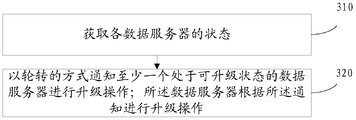
- FIG. 3 is a flow chart showing the steps of an embodiment of a method for upgrading a distributed storage system on the upgrade control server side of the present application;
- FIG. 4 is a flow chart of steps of an embodiment of a distributed storage system upgrade system according to the present application.
- FIG. 5 is a structural block diagram of an embodiment of a distributed storage system upgrading apparatus on the client side of the present application
- FIG. 6 is a structural block diagram of an embodiment of a distributed storage system upgrading apparatus on the client side of the present application
- FIG. 7 is a structural block diagram of an embodiment of a distributed storage system upgrading apparatus on a data server side of the present application
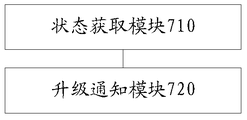
- FIG. 8 is a structural block diagram of an embodiment of a distributed storage system upgrading apparatus on an upgrade control server side of the present application
- FIG. 8A is an architectural example of a distributed storage system according to an embodiment of the present application.
- One of the core concepts of the embodiments of the present application is that creative changes are made to the data server and the upgrade control server of the distributed storage system, and new execution logic is also provided for the client accessing the data server.
- the upgrade storage system starts the upgrade process, for the client accessing the distributed storage system, for the client accessing the distributed storage system, each client sends the same data to be written to multiple data servers simultaneously.
- a write request for the data to be written and then analyzing how many data servers are successfully written to the data to be written, determining whether the number of successful writes is greater than a specified number, and successfully writing the data according to the determination result.
- the server sends the first feedback information or the second feedback information.
- the data server For the data server, according to the received first feedback information or the second feedback information, it is determined whether the user is in an upgradeable state or in a non-upgradeable state. For the upgrade control server, the data server can be selectively notified to perform the upgrade operation in a round robin manner according to the state of the data server.
- the upgrade control server upgrades the data server that controls the upgradeable state in a round robin manner, the state of the data server is controlled by the client, and the data to be written by any client is guaranteed to be written to at least a specified number.
- the data server is used for backup.
- the distributed storage system can ensure the response time of the client is low, the reliability of the data is improved, and the risk of user data loss is greatly reduced. And can not tolerate unexpected machine anomalies during the upgrade process to ensure that the service is not affected.
- the embodiment of the present application is applied to the client side.
- FIG. 1 a flow chart of steps of an embodiment of a method for upgrading a distributed storage system of the present application is shown, which may specifically include the following steps:
- Step 110 Send a write request to the plurality of data servers for the same data to be written.
- the client A for a client A, during the upgrade process of the distributed storage system, when the client writes the data to be written A1 to the data server, the client A sends the data to the multiple data servers. A write request for the data A to be written.
- the number R of the plurality of data servers may be preset.
- the specific number of R is not limited by the embodiment of the present application.
- the data to be written it can send a write request to the R data server, and then proceeds to step 120.
- the client A may first send R write requests to the dispatch server of the distributed storage system, and then the dispatch server controls which R data servers are allocated to the R write requests.
- R data servers for data to be written
- the respective R data servers may be the same or different.
- steps 101-102 are further included:
- Step 101 Receive a second upgrade notification sent by the data server when accessing a data server.
- Step 102 Enter an upgrade preparation state according to the second upgrade notification.
- the upgrade control server of the distributed storage system first notifies each data server to enter an upgrade preparation state. Then, each data server can send a second upgrade notification to the client accessing the data server, so that the client enters the upgrade preparation state.
- the data server After accessing a data server in the upgrade preparation state, the data server returns a second upgrade notification to the client. After receiving the second upgrade preparation notification, the client enters the upgrade preparation state according to the second upgrade preparation notification.
- the application can transmit an upgrade script to the browser through the webpage opened by the browser, and the browser can receive the script after receiving the script. Execute the script to put the client into the upgrade preparation state. If the client accesses the data server through the Alipay APP, the application may add the upgrade processing logic to the APP in advance. After receiving the second upgrade notification, the APP enables the upgrade processing logic to enable the client to enter the upgrade preparation state. . Certain embodiments of the present application are not limited thereto.
- the steps performed by the client side such as steps 110, 120, 130, and 140 of the embodiment of the present application, may be entered.
- Step 120 Receive a response returned by each data server, and determine, according to the response, whether the number of successful writes is greater than a specified number; if the number of successful writes is greater than a specified number, proceed to step 130; if the write succeeds If the number is not greater than the specified number, the process proceeds to step 140.
- each data server under normal circumstances, after receiving the write request sent by the client for the same data to be written, each data server returns a response to the client accordingly. Of course, if a data server is being upgraded or crashed, it will not return a response to the client.
- the client may periodically check the received response. For example, periodically check whether the response of the data server or some of the data servers is received. If the response of one or several data servers is not received within the specified time period, it indicates that the data A1 to be written is not successfully written into the one or several data servers.
- a response is received from one or several data servers within a specified time period, you can analyze whether the response is a write success response or a write failure response; if it is a write success response, the write success response The backup of the corresponding data server to write data A1 is successful, that is, the write succeeds; if it is a write failure response, it indicates that the backup of the data response server corresponding to the write failure response fails, that is, the write fails.
- the client A periodically checks whether the M is greater than N.
- the period is, for example, 1 ms (microseconds). Of course, the period can be set as needed, and the present application does not limit it.
- the present application can count the number of successful write data A1 to the data server based on the above judgment.
- a specified number of successful writes may be preset, and the specified number is the lowest number of successful writes, and may also be understood as the number of data servers in which a client's data to be written is successfully backed up.
- the specified number is N, and the N ⁇ R, N, and R are positive integers.
- the values of N and R can be set according to actual requirements, which is not limited in this application.
- the R data servers can be distributed in different racks to further improve the disaster recovery backup effect.
- the R data servers are completely distributed across different racks.
- Step 130 Send first feedback information to each data server that successfully writes.
- the client's write request can be successfully received and the data to be written is backed up, it means that the M data servers are available. Then the client can send a first feedback message to the M data servers.
- the first feedback message may be an OK message that tells the data server to set its own state to an upgradable state.
- the actual data server sets its own state to an upgradeable state according to the first feedback message. This application is described in detail in Embodiment 2.
- Step 140 Send second feedback information to each data server that successfully writes.
- the first feedback information or the second feedback information is used by the data server to determine its own state; the state includes an upgradeable state and a non-upgradeable state; and the state of the data server is notified by the upgrade control server in a round robin manner
- the data server performs an upgrade operation.
- the client can send a second feedback message to the M data servers.
- the second feedback message may be a HOLD heartbeat message, which tells the data server that it can set its own state to a non-upgradeable state.
- the actual data server sets its own state according to the second feedback message to a non-upgrade state. This application is described in detail in Embodiment 2.
- the client resends the write request to the new data server until the guarantee M is at least equal to N.
- the data server For each un-upgraded data service in the distributed storage system, after receiving the first feedback information or the second feedback information, it may determine that it is in an upgradeable state according to the first feedback information or the second feedback information. Still in a non-upgradeable state. Among them, the upgradeable status is OK, and the non-upgrade status is HOLD. For example, if a data server receives a second feedback message, the data server can set its own state to a non-upgradeable state. If a data server receives the first feedback, it can set its own state to an upgradeable state.
- the upgraded data server may exist in the above R data servers. Then, for the upgraded data server, any of the above feedback information received will not be further processed, and its status remains in the upgraded state.
- each data server may be notified by the upgrade control server in a round robin manner to perform the upgrade operation.
- the upgrade control server notifies the data server to perform the upgrade operation in a round robin manner, the present application is described in the third embodiment.
- step 140 includes sub-steps 141-144:
- Sub-step 141 if the number of successful writes is equal to the specified number, the second feedback information is sent to each data server that successfully writes.
- Sub-step 142 if the write succeeds less than the specified number, send a write request to the at least one data server except the plurality of data servers for the data to be written.
- Sub-step 143 Receive a response returned by the at least one data server, and determine whether the number of successful current writes is equal to a specified number according to the number of successfully written. If the current number of successful writes is equal to the specified number, then enter sub-step 144; if the current number of successful writes is less than the specified number, then proceeds to sub-step 142;
- Sub-step 144 if the number of successful current writes is equal to the specified number, the second feedback information is sent to each data server that successfully writes.
- the client A treats the data A1 to be written to the R data servers for the first time, if the number of successful responses M ⁇ N is monitored, the writes are sent to at least the NM data servers again. request.
- the second feedback information is then sent to each data server that has successfully written.
- the backup data of the client to be backed up can be successfully backed up in multiple databases without affecting the normal use of the upload service.
- step 150 is further included:
- Step 150 When new data to be written occurs, the data server includes a plurality of data servers including the previously successfully written data server, and proceeds to step 120.
- U10...U10 These 10 data servers sent write requests. Only U1 and U2 write successfully. Then, a write request is sent to U11 and U12 for the second time. U11 writes successfully. Then, for the client to write data A2. , you can select 10 data servers U1, U2, U11, U4, U5...U10, send write requests to these 10 data servers, of course, you can also choose to include U1, U2, U11 and another data server. Data servers.
- the OK message can be sent to each data server that has successfully written, and the data server can determine whether to modify the state according to the OK message. It is upgradeable.
- the client can write the data to be written to the same R data server as the last time in the case of M ⁇ N, to actively update the state of the data server, and the time when the data server is in the non-upgrade state can be reduced. .
- the first feedback information and the second feedback information include a client identifier.
- the first identifier information and the second feedback information include the client identifier “client A”.
- the first feedback information or the second feedback information for the data server to determine its own state includes:
- the second feedback information is used by the data server to write the client identifier in the second feedback information to the non-upgrade list after the second feedback information is received, and mark the state of the client as a non-upgrade state;
- a non-upgrade list is set on the data server side.
- client A after the data server receives the second feedback information of client A, it sets its own state to a non-upgradeable state, and writes the client A to the non-upgradable list.
- the first feedback information is used by the data server to delete the client identifier in the first feedback information from the non-upgradable list after receiving the first feedback information, and mark the status of the client identifier after determining that the non-upgradable list is empty. Upgradeable status.
- new data to be written appears to include multiple data servers of the previously successfully written data server. For the object. Then, for the data server that receives the second feedback message sent by the client A, the subsequent message is also received by the client A. Then, when the data server continues to receive the message of the client A as the first feedback message, the record of the client A can be deleted from the non-upgradable list.
- the data server receives the first feedback message of a certain client, and the non-upgradable list may not record the corresponding client identifier, and the deletion process is not performed.
- the data server determines that the non-upgradeable list is empty, it sets its own state to an upgradeable state.
- the client may also receive an exit notification sent by the data server to exit the upgrade preparation state, and exit the upgrade preparation state according to the exit notification.
- the client then sends a write request to the data server in accordance with the normal request dispatch logic.
- a method for upgrading a distributed storage system of the present application is introduced from a client side, so that each client sends the data to be written to the plurality of data servers simultaneously for the same data to be written.
- Write a request and then analyze how many data servers are successfully written, determine whether the number of successful writes is greater than a specified number, and send first feedback information or second feedback to each successfully written data server according to the determination result.
- the first feedback information is used by the data server to delete the client identifier in the first feedback information from the non-upgradable list after receiving the first feedback information, and mark the status of the client after determining that the non-upgradable list is empty. It is upgradeable. .
- the upgrade control server controls each data server to perform the upgrade in a round robin manner
- the state of the data server is controlled by the client, and the data to be written by any client is guaranteed to be written to a specified number at least.
- the data server is used for backup. Therefore, when the upper layer service is not stopped, the distributed storage system can ensure the response time of the client is low, the reliability of the data is improved, and the risk of user data loss is greatly reduced.
- the embodiment of the present application is applied to the data server side of the distributed storage server.
- FIG. 2 a flow chart of steps of an embodiment of a method for upgrading a distributed storage system according to the present application is shown, which may specifically include the following steps:
- Step 210 Receive first feedback information or second feedback information sent by the client.
- the first feedback information or the second feedback information is sent after the client sends a write request to the multiple data servers according to the same to-be-written data. The comparison between the number of successful entries and the specified number is obtained.
- the client sends a write request to the R data servers for the data A1 to be written
- the data is sent to the M data.
- the server sends a first feedback message; when M is equal to N, a second feedback message is sent to the M data servers.
- M ⁇ N sending a write request to the at least one data server except the plurality of data servers for the data to be written A1, and then receiving the response returned by the at least one data server, and combining the successfully written
- Embodiment 1 for the specific process of returning the first feedback information and the second feedback information by the client, and details are not described herein.
- each data server of the distributed storage system may receive the first feedback information returned by each client, such as an OK message. It is also possible to receive a second feedback message returned by each client, such as a HOLD message.
- the method further includes:
- Step 201 Receive a first upgrade notification sent by the upgrade control server.
- Step 202 Enter an upgrade preparation state according to the first upgrade notification, and send a second upgrade notification to the client after receiving the access request of the client, so that the client enters an upgrade preparation state.
- the upgrade control server of the distributed storage system first sends a first upgrade notification to each data server, and the corresponding data server receives the first upgrade notification, and then enters the upgrade preparation state according to the first upgrade notification.
- the data server accessing the upgrade preparation state returns a second upgrade notification to the client.
- the client is based on the first
- the second upgrade notification enters the upgrade preparation state.
- the steps executed by the data server side such as steps 210 and 220 of the embodiment of the present application, may be entered.
- Step 220 Determine, according to the first feedback information or the second feedback information, the state of the data server itself, if the user is not upgraded; the state includes an upgradeable state and a non-upgradeable state.
- the state is used by the upgrade control server to notify the data server to perform an upgrade operation in a round robin manner.
- each data server is not upgraded. As some data servers continue to complete the upgrade process, these data servers will be in an upgraded state. For example, the successfully upgraded data server sets its own state to DONE. At this time, the successfully upgraded data server also receives the first. A feedback information or a second feedback information, but it does not process the first feedback information or the second feedback information again, and its state remains in an upgraded state.
- Only the data server in the unupgraded state determines the state of the data server itself according to the first feedback information or the second feedback information.
- the upgrade status is still not upgradeable.
- the upgradeable status is OK
- the non-upgrade status is HOLD.
- a data server receives a second feedback message
- the data server can set its own state to a non-upgradeable state. If a data server receives the first feedback, it can set its own state to an upgradeable state.
- the first feedback information and the second feedback information include a client identifier.
- step 220 includes sub-steps 221-222:
- Sub-step 221 when receiving the second feedback information, writing the client identifier in the second feedback information to the non-upgradable list, and marking the status of the user as a non-upgradeable state;
- a non-upgradable list is preset in each data service, and is used to record information such as a client identifier that sends a HOLD message.
- the HODL message includes a HOLD command and a client identifier.
- the M data servers receive the HOLD message, the client A is recorded in the non-upgradable list.
- the current time can also be recorded.
- the non-upgrade list can record only one client identifier of the corresponding client, and can also record the client identifiers of multiple corresponding clients.
- the non-upgrade list can record only one client identifier of the corresponding client, and can also record the client identifiers of multiple corresponding clients.
- only one client identifier may be recorded, and then the time of each time is recorded in the time field.
- the status of the data server itself is also changed to the HOLD state, indicating that the data service is not upgradeable.
- sub-step B21 is further included:
- Sub-step B21 determining, for the client identifier in the non-upgrade list, whether the second feedback message of the corresponding client is not received within a specified number of time periods, if the corresponding client is not received within the specified number of time periods
- the second feedback message of the terminal deletes the client identifier from the non-upgradable list.
- the embodiment of the present application may set a time period T1 in advance. For the client corresponding to the client identifier in the non-upgradable list, if the data server specifies that the HOLD message sent by the client is not received again, the data server may not be upgraded in the list. The client ID record is deleted.
- This step prevents the data server from being in a non-upgradeable state after it is in a non-upgradeable state.
- Sub-step 222 receiving the first feedback information, deleting the client identifier in the first feedback information from the non-upgradable list, and marking the state of the self-upgradable state after determining that the non-upgradable list is empty.
- the foregoing data server U1 receives the OK message sent by the client A again, and deletes the record of the client A from the first table.
- the data server deletes all the records in Table 1, when Table 1 is empty, it sets its own state to an upgradeable state.
- sub-step 222 includes sub-steps B11-B14:
- Sub-step B11 determining whether the non-upgradable list has a client identifier in the first feedback information; if the non-upgradable list has a client identifier in the first feedback information, proceeding to sub-step B12.
- Sub-step B12 the client identifier is deleted from the non-upgrade list.
- a data server may be allocated to different clients for use, it may receive first feedback information of different clients, and then, for the received first feedback information of a certain client, determine whether the non-upgradable list has a client identifier of the first feedback information, where the non-upgradable list has a client identifier of the first feedback information, and the client is The end identifier is deleted from the non-upgradable list; if the non-upgradable list does not have the client identifier of the first feedback information, the subsequent operation may not be performed.
- the client identifier may be matched with the client identifier of the first table, and the client A is found. Then clear the record of client A. If the Ok message sent by the client C is received and it is found that there is no record in the table 1, no operation is performed.
- Sub-step B13 it is judged whether the non-upgradable list is empty; if the non-upgradable list is empty, then the sub-step B14 is entered. If the non-upgradeable list is not empty, then keep its own state as non-upgradeable.
- Sub-step B14 the status of the tag itself is an upgradeable state.
- non-upgradeable list is not empty, then it maintains its own non-upgradeable state.
- the OK message sent by the client A is received first, the record of the client A is cleared, and if the table 1 is still not empty, the HOLD state is continued. If the OK message of the client B is received again, the record of the client B in the table 1 is deleted in the sub-step 221, and when the judgment table 1 is empty, the data server U1 modifies its HODL state to the OK state. Indicates that data server U1 can be upgraded.
- the upgrade control server may select to notify the data server to perform an upgrade operation in a round robin manner according to the state of each data server.
- the process of upgrading the control server to specifically control each data service upgrade may refer to the description in the third embodiment.
- the data server may also upgrade the exit notification of the exit upgrade preparation state sent by the control server, and exit the upgrade preparation state according to the exit notification, and send an exit notification to the client according to the exit notification, so that the client The terminal exits the upgrade preparation state.
- the data server then processes the client's write request in accordance with normal processing logic.
- a method for upgrading a distributed storage system of the present application is introduced from a data server side, and for a data server, according to a first feedback sent by a received client
- the information or the second feedback information determines whether it is in an upgradeable state or in a non-upgradeable state.
- the first feedback information or the second feedback information is obtained according to a comparison result between the number of successful writes and a specified number after the client sends a write request to the plurality of data servers for the same data to be written;
- the upgradeable state and the non-upgradeable state are included; the state is selected by the upgrade control server to notify the data server to perform an upgrade operation in a round robin manner.
- the client controls the state of the data server, and ensures that the data to be written by any client is written to at least a specified number of data servers for backup, and when the upgrade control server controls each data server to perform the upgrade in a round robin manner,
- the distributed storage system can ensure the response time to the client is low, the reliability of the data is improved, and the risk of user data loss is greatly reduced.
- FIG. 3 a flow chart of steps of an embodiment of a method for upgrading a distributed storage system of the present application is shown, which may specifically include the following steps:
- Step 310 Obtain a state of each data server; the state includes an upgradeable state and a non-upgradeable state, and each data server has a state; and the state of the data server is determined according to the first feedback information or the second feedback information; The first feedback information or the second feedback information is obtained after the client sends a write request to the plurality of data servers for the same data to be written, and the number of successful writes is compared with the specified number.
- each data server in the distributed storage system can determine the status according to the first feedback message and/or the second feedback message fed back by the client, and the status includes the upgradeable state and the non-upgradeable state. status.
- each data server can only have one state at a time. For example, if a data server is in an upgradeable state, it cannot have other states. Other situations are similar and will not be described here.
- the upgrade control server of the embodiment of the present application can obtain the status of each data service.
- the specific manner of obtaining the state of the data service of the upgrade control server may be various, and is not limited by the embodiment of the present application.
- Step 320 Notify at least one data server in an upgradeable state to perform an upgrade operation in a round robin manner; and the data server performs an upgrade operation according to the notification.
- the upgrade control server may control the data server in the upgradeable state to perform an upgrade operation by using a rotation manner.
- the batch of data servers is notified to perform the upgrade operation. After the batch of data servers receives the upgrade notification, they can restart the upgrade.
- step 320 includes sub-steps 321-322:
- the upgrade control server can select K data servers from each time, and notify them to perform an upgrade operation, for example, selecting three.
- K is an integer greater than zero.
- K can be set according to actual needs, and this application does not limit it.
- Sub-step 322 monitoring whether the at least one data server in the upgradeable state performs the upgrade operation; if the at least one data server in the upgradeable state all performs the upgrade operation, proceed to sub-step 321;
- the upgrade control server notifies the foregoing data servers U1, U2, and U3 to perform an upgrade operation, the data servers U1, U2, and U3 restart the upgrade. After the data server is successfully upgraded, you can modify its own status to an upgraded state, such as DONE.
- the upgrade control server can monitor whether the status of these data servers is DONE. If it is not DONE, the upgrade is successful.
- the upgrade control server monitors whether the data server upgrade succeeds or fails.
- the upgrade failure can be determined by, for example, a machine restart failure, and the system version is unchanged after the restart.
- upgrade operations include successful upgrade and upgrade failure. All upgrade operations include: all data servers are successfully upgraded; if some data servers are successfully upgraded, the remaining data servers fail to be upgraded.
- the upgrade control server monitors that the data server that notified the upgrade all performs the upgrade operation, the next batch of upgraded data servers can be rotated and selected from the data server in the upgradeable state.
- the method further includes:
- the upgrade control server adds the data server to the upgrade blacklist and suspends the upgrade of the data server. Have these data servers wait for offline or manual repair.
- the multiple data servers in the embodiment of the present application may be distributed on at least two racks.
- each data server of the distributed storage system is distributed in multiple racks, and one rack is a data server. Subcluster.
- step 320 includes sub-step C11:
- Sub-step C11 each time selecting the rack with the largest data server in the upgradeable state, notifying the data server in the rack to perform an upgrade operation; each data server in the rack checks its own state according to the notification. If it is in an upgradeable state, restart the upgrade. If it is in a non-upgradeable state or upgraded state, it refuses to restart the upgrade.
- each rack may have a data server in an upgradeable state, or a data server in a non-upgradable state, or an upgrade may exist.
- the completed data server since the data server is placed in the form of a rack, one rack is placed A batch of data servers has been set up. For a large number of clients, it is possible to access different data servers in different racks, so that each rack may have a data server in an upgradeable state, or a data server in a non-upgradable state, or an upgrade may exist. The completed data server.
- the embodiment of the present application sends an upgrade notification in a rack unit, for example, the IP segment of a rack is 200.200.200.***, and the upgrade control server of the embodiment of the present application needs Generate a notification for 200.200.200.***, broadcast to the rack, the data server of the rack can receive the notification.
- the rack with the most data servers in the OK state is selected, and the upgrade notification is sent to the rack.
- K data servers can be selected from each time, and the upgrade operation is notified, for example, three are selected.
- sub-step C12 is further included:
- Sub-step C12 monitoring whether the data servers in the rack all perform the upgrade operation; if the data servers in the rack all perform the upgrade operation, proceed to sub-step C11.
- the next rack can be selected, and the upgrade notification is sent to the data server of the next rack. This cycle until all data servers have been upgraded.
- the upgrade control server monitors the data server except the upgrade failed, after all the data servers are upgraded, the data server can be notified to exit the upgrade preparation state, return to the normal processing logic, and each data server notifies the access.
- the client of the data server exits the upgrade preparation state, and the client returns to the normal processing logic, and steps 310 and 320 are not executed.
- a method for upgrading a distributed storage system of the present application is introduced from an upgrade control server side, and the upgrade control server controls the data server in an upgradeable state in a round robin manner, because the client controls The status of the data server, and ensure that the data to be written by any client is written to at least the specified number of data servers for backup, so that the response time of the distributed storage system to the client can be guaranteed without stopping the upper layer service.
- the upgrade control server controls the data server in an upgradeable state in a round robin manner, because the client controls The status of the data server, and ensure that the data to be written by any client is written to at least the specified number of data servers for backup, so that the response time of the distributed storage system to the client can be guaranteed without stopping the upper layer service.
- Lower it also improves the reliability of the data, greatly reducing the risk of user data loss; and can tolerate unexpected machine anomalies during the upgrade process to ensure that the service is not affected.
- the upgrade time is fast, avoiding a large amount of data migration.
- FIG. 4 a flow chart of steps of an embodiment of a method for upgrading a distributed storage system of the present application is shown, which may specifically include the following steps:
- Step 410 The client sends a write request to the plurality of data servers for the same data to be written.
- Step 412 The client receives the response returned by each data server, and determines whether the number of successful writes is greater than a specified number according to the response; if the number of successful writes is greater than the specified number, proceed to step 414; If the number of successful writes is not greater than the specified number, then step 416 is entered.
- Step 414 The first feedback information is sent by the client to each data server that successfully writes.
- Step 416 The second feedback information is sent by the client to each data server that is successfully written.
- the first feedback information and the second feedback information include a client identifier.
- Step 417 when new data to be written occurs, for the plurality of data servers including the data server that has been successfully written before, enter a step of sending a write request to the plurality of data servers for the same data to be written.
- Step 418 Receive, by the data server, the first feedback information or the second reverse sent by the client. Feed information
- Step 420 The data server determines, according to the first feedback information or the second feedback information, the state of the data server itself, where the data server is not upgraded; the state includes an upgradeable state and a non-upgrade state;
- the step 420 includes sub-steps D11-D16:
- Sub-step D11 when the second feedback information is received, the client identifier in the second feedback information is written into the non-upgradable list, and the status of the token is marked as a non-upgrade state;
- Sub-step D12 determining, for the client identifier in the non-upgradable list, whether the second feedback message of the corresponding client is not received within a specified number of time periods; if the corresponding client is not received within the specified number of time periods The second feedback message of the terminal proceeds to sub-step D13. If the second feedback message of the corresponding client is not received within a specified number of time periods, the non-upgrade state is maintained.
- Sub-step D13 the client identifier is deleted from the non-upgradable list. Go to substep D15.
- Sub-step D14 determining whether the non-upgradable list has a client identifier in the first feedback information; if the non-upgradable list has a client identifier in the first feedback information, proceeding to sub-step D13. If the non-upgradable list does not have the client identifier in the first feedback information, proceed to sub-step D15
- Sub-step D15 it is judged whether the non-upgradable list is empty; if the non-upgradable list is empty, then the sub-step D16 is entered.
- Sub-step D16 the status of the tag itself is an upgradeable state.
- Step 422 The status of each data server is obtained by the upgrade control server.
- Step 424 The upgrade control server notifies at least one data server in an upgradeable state to perform an upgrade operation in a round robin manner;
- Step 426 the data server performs an upgrade operation according to the notification.
- the principle of the client side of the embodiment of the present invention can be referred to the description of the first embodiment and the principle of the data server.
- the principle of the step of upgrading the control server can be referred to the third embodiment. description. I will not go into details here.
- a method for upgrading a distributed storage system of the present application is introduced from three aspects of a client, a data server, and an upgrade control server.
- each client is requested to write to the same data to be written, and simultaneously sends the write request to multiple data servers, and then analyzes how many data servers are successfully written. It is determined whether the number of successful writes is greater than a specified number, and the first feedback information or the second feedback information is sent to each data server that has successfully written according to the determination result.
- the data server according to the received first feedback information or the second feedback information, it is determined whether the user is in an upgradeable state or in a non-upgradeable state.
- the upgrade control server you can rotate the data server in the upgradeable state to perform the upgrade operation.
- the upgrade control server upgrades the data server that controls the upgradeable state in a round robin manner, the state of the data server is controlled by the client, and the data to be written by any client is guaranteed to be written to at least a specified number.
- the data server is used for backup, so that the distributed storage system can ensure the response time to the client is low, the reliability of the data is improved, and the risk of user data loss is greatly reduced without stopping the upper layer service; Unexpected machine anomalies during the upgrade process can be tolerated and the service is not affected.
- FIG. 5 a structural block diagram of an embodiment of a distributed storage system upgrading apparatus of the present application is shown, which may specifically include the following modules:
- the request sending module 510 is configured to send a write request to the plurality of data servers for the same data to be written.
- the method before step 510, the method further includes:
- the second upgrade notification receiving module is configured to receive a second upgrade notification sent by the data server when accessing a data server.
- the second upgrade preparation module is configured to enter an upgrade preparation state according to the second upgrade notification.
- the determining module 520 is configured to receive a response returned by each data server, and determine, according to the response, whether the number of successful writes is greater than a specified number.
- the first feedback module 530 is configured to: if the number of successful writes is greater than the specified number, send the first feedback information to each data server that successfully writes.
- the second feedback module 540 is configured to: if the number of successful writes is not greater than the specified number, send second feedback information to each successfully written data server; wherein the first feedback information or the second feedback information is used by The data server determines its own state; the state includes an upgradeable state and a non-upgradeable state; and the state of the data server is used by the upgrade control server to notify the data server to perform an upgrade operation in a round robin manner.
- the second feedback module 540 includes:
- the second feedback information sending submodule is configured to send the second feedback information to each data server that successfully writes if the number of successful writes is equal to the specified number.
- a write request sending submodule configured to send, to the at least one data server other than the plurality of data servers, a write request for the to-be-written data if the write succeeds less than a specified number.
- a judging sub-module configured to receive a response returned by the at least one data server, and determine whether the number of successful writes is equal to a specified number in combination with the number of successfully written; if the number of current writes is equal to the specified number The number enters the second feedback information sending sub-module.
- the method further includes:
- the new data to be sent sub-module is used to enter the request sending module when a new data to be written appears to be included in the data server including the data server that has been successfully written.
- the first feedback information and the second feedback information include a client identifier
- the first feedback information or the second feedback information for the data server to determine its status includes:
- the second feedback information is sent by the data server after receiving the second feedback information
- the client identifier in the second feedback information is written into the non-upgradable list and the state of the token itself is not upgradeable;
- the first feedback information is used by the data server to delete the client identifier in the first feedback information from the non-upgradable list after receiving the first feedback information, and mark the status of the client identifier after determining that the non-upgradable list is empty. Upgradeable status.
- FIG. 6 a structural block diagram of an embodiment of a distributed storage system upgrading apparatus of the present application is shown, which may specifically include the following modules:
- the feedback information receiving module 610 is configured to receive first feedback information or second feedback information sent by the client, where the first feedback information or the second feedback information is sent to the multiple data servers according to the same data to be written by the client. After the request is entered, the number of successful writes is obtained from the comparison of the specified number.
- the method before the feedback information receiving module 610, the method further includes:
- the first upgrade notification receiving module is configured to receive the first upgrade notification sent by the upgrade control server.
- the first upgrade preparation module is configured to enter an upgrade preparation state according to the first upgrade notification, and send a second upgrade notification to the client after receiving the access request of the client, so that the client enters an upgrade preparation state.
- the status determining module 620 is configured to determine, according to the first feedback information or the second feedback information, the status of the data server itself, if the user is not upgraded; the status includes an upgradeable state and a non-upgradeable state; The status is for the upgrade control server to select to notify the data server to perform the upgrade operation in a round robin manner.
- the state determining module 620 includes:
- the upgradeable state determining submodule is configured to: when receiving the first feedback information, delete the client identifier in the first feedback information from the non-upgradable list, and determine that the non-upgradable list is empty Remember that its status is upgradeable.
- the upgradeable state determining submodule comprises:
- a client identifier determining sub-module configured to determine whether the non-upgradable list has a client identifier in the first feedback information; if the non-upgradable list has a client identifier in the first feedback information, enter The first delete submodule.
- the first deletion submodule is configured to delete the client identifier from the non-upgradable list.
- the non-upgrade list judging sub-module is configured to determine whether the non-upgradable list is empty; if the non-upgradable list is empty, enter the upgradeable status flag sub-module.
- An upgradeable status tag submodule that marks the status of itself as an upgradable state.
- the non-upgrade state determining sub-module is configured to, when receiving the second feedback information, write the client identifier in the second feedback information to the non-upgradable list, and mark the state of the self-upgradable state as a non-upgradeable state.
- the method further includes:
- the time judging sub-module is configured to determine, for the client identifier in the non-upgradable list, whether the second feedback message of the corresponding client is not received within a specified number of time periods, if not received within a specified number of time periods Go to the second deletion sub-module of the corresponding client, and enter the second deletion sub-module;
- the second deletion submodule is configured to delete the client identifier from the non-upgradable list.
- FIG. 7 a structural block diagram of an embodiment of a distributed storage system upgrading apparatus of the present application is shown, which may specifically include the following modules:
- a state obtaining module 710 configured to acquire a state of each data server; the state includes an upgradeable state and a non-upgradeable state, each data server has a state; and the state of the data server is according to the first feedback information or the second The feedback information is determined; the first feedback information Or the second feedback information is obtained after the client sends a write request to the plurality of data servers for the same data to be written, and the number of successful writes is compared with the specified number.
- the method before the state obtaining module 710, the method further includes:
- the upgrade notification sending module is configured to send a first upgrade notification to each data server, so that each data server enters an upgrade preparation state, and each data server sends a second upgrade notification to the client after receiving the access request of the client, In order to make the client enter an upgrade preparation state.
- the upgrade notification module 720 is configured to notify at least one data server in an upgradeable state to perform an upgrade operation in a round robin manner; and the data server performs an upgrade operation according to the notification.
- the upgrade notification module includes:
- a first selection submodule configured to notify the at least one data server in an upgradeable state to perform an upgrade operation each time at least one data server in an upgradeable state is selected;
- a first monitoring submodule configured to monitor whether the at least one data server in an upgradeable state performs all the upgrade operations; if the at least one data server in the upgradeable state performs all the upgrade operations, enter the first selection Submodule.
- the method further includes:
- the data server is added to the upgrade blacklist, and the upgrade of the data server is suspended.
- each data server is distributed on at least two racks; and the upgrade notification module 720 includes:
- An upgrade notification sub-module configured to notify the data server in the rack to perform an upgrade operation each time the rack of the data server in the upgradeable state is selected at most; each data server in the rack checks the self according to the notification If the status is in an upgradeable state, the upgrade is restarted. If the status is not upgradeable or upgraded, the upgrade is refused.
- the method further includes:
- the monitoring submodule is configured to monitor whether the data servers in the rack all perform the upgrade operation; if the data servers in the rack all perform the upgrade operation, enter the upgrade notification submodule.
- FIG. 8 and FIG. 8A are structural diagrams of an embodiment of a distributed storage system upgrade system of the present application, which may specifically include the following modules: a plurality of clients 810, a plurality of data servers 820, and an upgrade control server 830. .
- FIG. 8A is a schematic structural diagram of a distributed storage system according to an embodiment of the present invention.
- each client may send a write request to R in the distributed storage system, and the upgrade control server controls the upgrade process of all data servers.
- FIG. 8 shows the connection relationship between the client 810, the data server 820, and the upgrade control server 830.
- the client 810 includes:
- the request sending module 811 is configured to send a write request to the plurality of data servers for the same data to be written;
- the determining module 812 is configured to receive a response returned by each data server, and determine, according to the response, whether the number of successful writes is greater than a specified number;
- the first feedback module 813 is configured to: if the number of successful writes is greater than the specified number, send the first feedback information to each data server that successfully writes;
- the second feedback module 814 is configured to: if the number of successful writes is not greater than the specified number, send second feedback information to each successfully written data server;
- the data server 820 includes:
- the data storage module 821 is configured to receive a write request from the client and return a response to the client.
- the feedback information receiving module 822 is configured to receive first feedback information or second feedback information sent by the client.
- the state determining module 823 is configured to determine the state of the data server itself according to the first feedback information or the second feedback information if the user is not upgraded.
- the upgrade module 824 is configured to perform an upgrade operation according to the notification of the upgrade control server.
- the upgrade control server 830 includes:
- a state obtaining module 831 configured to acquire a state of each data server
- the upgrade notification module 832 is configured to notify at least one data server in an upgradeable state to perform an upgrade operation in a round robin manner.
- module of the client of the embodiment of the present application refer to the description of the fifth embodiment.
- module of the data server refer to the description of the sixth embodiment.
- module of the upgrade controller refer to the description of the seventh embodiment. The principle is basically similar and will not be described here.
- a method for upgrading a distributed storage system of the present application is introduced from three aspects of a client, a data server, and an upgrade control server.
- each client is requested to write to the same data to be written, and simultaneously sends the write request to multiple data servers, and then analyzes how many data servers are successfully written. It is determined whether the number of successful writes is greater than a specified number, and the first feedback information or the second feedback information is sent to each data server that has successfully written according to the determination result.
- the data server according to the received first feedback information or the second feedback information, it is determined whether the user is in an upgradeable state or in a non-upgradeable state.
- the upgrade control server you can rotate the data server in the upgradeable state to perform the upgrade operation.
- the upgrade control server upgrades the data server that controls the upgradeable state in a round robin manner, the state of the data server is controlled by the client, and the data to be written by any client is guaranteed to be written to at least a specified number.
- the data server is used for backup, so that the distributed storage system can ensure the response time to the client is low, the reliability of the data is improved, and the risk of user data loss is greatly reduced without stopping the upper layer service; Unexpected machine anomalies during the upgrade process can be tolerated and the service is not affected.
- the description is relatively simple, and the relevant parts can be referred to the description of the method embodiment.
- embodiments of the embodiments of the present application can be provided as a method, apparatus, or computer program product. Therefore, the embodiments of the present application may take the form of an entirely hardware embodiment, an entirely software embodiment, or an embodiment combining software and hardware. Moreover, embodiments of the present application can take the form of a computer program product embodied on one or more computer-usable storage media (including but not limited to disk storage, CD-ROM, optical storage, etc.) including computer usable program code.
- computer-usable storage media including but not limited to disk storage, CD-ROM, optical storage, etc.
- the computer device includes one or more processors (CPUs), input/output interfaces, network interfaces, and memory.
- the memory may include non-persistent memory, random access memory (RAM), and/or non-volatile memory, such as read only memory (ROM) or flash memory (FLASH RAM), in a computer readable medium.
- RAM random access memory
- ROM read only memory
- FLASH RAM flash memory
- Memory is an example of a computer readable medium.
- Computer readable media includes both permanent and non-persistent, removable and non-removable media.
- Information storage can be implemented by any method or technology. The information can be computer readable instructions, data structures, modules of programs, or other data.
- Examples of computer storage media include, but are not limited to, phase change memory (PRAM), static random access memory (SRAM), dynamic random access memory (DRAM), other types of random access memory (RAM), read only memory. (ROM), electrically erasable programmable read only memory (EEPROM), flash memory or other memory technology, compact disk read only memory (CD-ROM), digital versatile disk (DVD) or other optical storage, Magnetic tape cartridges, magnetic tape storage or other magnetic storage devices or any other non-transportable media can be used to store information that can be accessed by a computing device.
- computer readable media does not include non-persistent computer readable media (TRANSITORY MEDIA), such as modulated data signals and carrier waves.
- the embodiments of the present application refer to a method, a terminal device (system), and a method according to an embodiment of the present application.
- a flowchart and/or block diagram of a computer program product is described. It will be understood that each flow and/or block of the flowchart illustrations and/or FIG.
- These computer program instructions can be provided to a processor of a general purpose computer, special purpose computer, embedded processor or other programmable data processing terminal device to produce a machine such that instructions are executed by a processor of a computer or other programmable data processing terminal device
- Means are provided for implementing the functions specified in one or more of the flow or in one or more blocks of the flow chart.
- the computer program instructions can also be stored in a computer readable memory that can direct a computer or other programmable data processing terminal device to operate in a particular manner, such that the instructions stored in the computer readable memory produce an article of manufacture comprising the instruction device.
- the instruction device implements the functions specified in one or more blocks of the flowchart or in a flow or block of the flowchart.
Landscapes
- Engineering & Computer Science (AREA)
- Theoretical Computer Science (AREA)
- Computer Networks & Wireless Communication (AREA)
- Signal Processing (AREA)
- Human Computer Interaction (AREA)
- Physics & Mathematics (AREA)
- General Engineering & Computer Science (AREA)
- General Physics & Mathematics (AREA)
- Information Retrieval, Db Structures And Fs Structures Therefor (AREA)
- Stored Programmes (AREA)
- Debugging And Monitoring (AREA)
- Hardware Redundancy (AREA)
Abstract
Description
| 客户端标识 | 时间 |
| 客户端A | 2015.10.01,10:00:00:00 |
| 客户端B | 2015.10.01,12:01:00:00 |
Claims (32)
- 一种分布式存储系统升级方法,应用于客户端,其特征在于,包括:对同一份待写数据,向多个数据服务器发送写入请求;接收各数据服务器返回的响应,并根据所述响应判断写入成功的个数是否大于指定个数;如果写入成功的个数大于指定个数,则向各写入成功的数据服务器发送第一反馈信息;如果写入成功的个数不大于指定个数,则向各写入成功的数据服务器发送第二反馈信息;其中,所述第一反馈信息或第二反馈信息供所述数据服务器确定自身的状态;所述状态包括可升级状态和不可升级状态;所述数据服务器的状态供升级控制服务器以轮转的方式通知所述数据服务器进行升级操作。
- 根据权利要求1所述的方法,其特征在于,所述如果写入成功的个数不大于指定个数,则向各写入成功的数据服务器发送第二反馈信息,供所述数据服务器根据第二反馈信息确定自身的状态为不可升级状态的步骤,包括:如果所述写入成功的个数等于指定个数,则向各写入成功的数据服务器发送第二反馈信息;如果所述写入成功的小于指定个数,则针对所述待写数据向所述多个数据服务器之外的至少一个数据服务器发送写入请求;接收所述至少一个数据服务器返回的响应,并结合已写入成功的个数判断当前写入成功的个数是否等于指定个数;如果当前写入成功的个数等于指定个数,则向各写入成功的数据服务器发送第二反馈信息。
- 根据权利要求1或2所述的方法,其特征在于,在向各写入成功 的数据服务器发送第二反馈信息的步骤之后,还包括:当出现新的待写数据,以包括之前写入成功的数据服务器的多个数据服务器为对象,进入对同一份待写数据,向多个数据服务器发送写入请求的步骤。
- 根据权利要求3所述的方法,其特征在于,所述第一反馈信息和第二反馈信息包括客户端标识,则所述第一反馈信息或第二反馈信息供所述数据服务器确定自身的状态包括:所述第二反馈信息供所述数据服务器在接收到第二反馈信息后,将第二反馈信息中的客户端标识写入不可升级列表并标记自身的状态为不可升级状态;所述第一反馈信息供所述数据服务器在接收到第一反馈信息后,从不可升级列表中删除第一反馈信息中的客户端标识,并在确定不可升级列表为空后标记自身的状态为可升级状态。
- 根据权利要求1所述的方法,其特征在于,在对同一份待写数据,向多个数据服务器发送写入请求的步骤之前,还包括:在访问一数据服务器时,接收由数据服务器发送的第二升级通知;根据所述第二升级通知进入升级准备状态。
- 一种分布式存储系统升级方法,应用于数据服务器,其特征在于,包括:接收客户端发送的第一反馈信息或者第二反馈信息;所述第一反馈信息或第二反馈信息根据客户端对同一份待写数据向多个数据服务器发送写入请求后,写入成功的个数与指定个数的比较结果获得;在自身处于未升级的情况下,根据所述第一反馈信息或者第二反馈信息,确定数据服务器自身的状态;所述状态包括可升级状态和不可升级状态;所述状态供升级控制服务器以轮转的方式选择通知所述数据服务器进行升级操作。
- 根据权利要求5所述的方法,其特征在于,所述第一反馈信息和第二反馈信息包括客户端标识,则所述在自身处于未升级的情况下,根据所述第一反馈信息或者第二反馈信息,确定数据服务器自身的状态的步骤,包括:当接收到第二反馈信息,则将所述第二反馈信息中的客户端标识写入不可升级列表,并标记自身的状态为不可升级状态;当接收到第一反馈信息,从不可升级列表中删除第一反馈信息中的客户端标识,并在确定不可升级列表为空后标记自身的状态为可升级状态。
- 根据权利要求7所述的方法,其特征在于,所述从不可升级列表中删除第一反馈信息中的客户端标识,并在确定不可升级列表为空后标记自身的状态为可升级状态的步骤,包括:判断所述不可升级列表是否有所述第一反馈信息中的客户端标识;如果所述不可升级列表有所述第一反馈信息中的客户端标识,则将所述客户端标识从不可升级列表中删除;判断不可升级列表是否为空;如果所述不可升级列表为空时,则标记自身的状态为可升级状态。
- 根据权利要求7所述的方法,其特征在于,在当接收到第二反馈信息,则将所述第二反馈信息中的客户端标识写入不可升级列表,并标记自身的状态为不可升级状态的步骤之后,还包括:对于不可升级列表中的客户端标识,判断是否在指定个数的时间周期内未接收到相应客户端的第二反馈消息,如果未在指定个数的时间周期内未接收到相应客户端的第二反馈消息,则将所述客户端标识从不可升级列表中删除。
- 根据权利要求6所述的方法,其特征在于,所述接收客户端发送的第一反馈信息或者第二反馈信息的步骤之前,还包括:接收由升级控制服务器发送的第一升级通知;根据所述第一升级通知进入升级准备状态,并在接收到客户端的访问请求后发送第二升级通知至所述客户端,以使所述客户端进入升级准备状态。
- 一种分布式存储系统升级方法,应用于升级控制服务器,其特征在于,包括:获取各数据服务器的状态;所述状态包括可升级状态和不可升级状态,每个数据服务器有一个状态;所述数据服务器的状态根据所述第一反馈信息或者第二反馈信息确定;所述第一反馈信息或第二反馈信息根据客户端对同一份待写数据向多个数据服务器发送写入请求后,写入成功的个数与指定个数的比较结果获得;以轮转的方式通知至少一个处于可升级状态的数据服务器进行升级操作;所述数据服务器根据所述通知进行升级操作。
- 根据权利要求11所述的方法,其特征在于,所述以轮转的方式通知至少一个处于可升级状态的数据服务器进行升级操作的步骤,包括:每次选择至少一个处于可升级状态的数据服务器,通知所述至少一个处于可升级状态的数据服务器执行升级操作;监控所述至少一个处于可升级状态的数据服务器是否全部执行完升级操作;如果所述至少一个处于可升级状态的数据服务器全部执行完升级操作,则进入下一次选择至少一个处于可升级状态的数据服务器,通知所述至少一个处于可升级状态的数据服务器执行升级操作的步骤。
- 根据权利要求12所述的方法,其特征在于,还包括:如果监控到任一数据服务器的升级操作的结果为升级失败,则将所述数据服务器加入升级黑名单,暂停对该数据服务器的升级。
- 根据权利要求11-13其中之一所述的方法,其特征在于,各数据服务器分布于至少两个机架上;则所述以轮转的方式通知至少一个处于可升级状态的数据服务器进行升级操作的步骤,包括:每次选择处于可升级状态的数据服务器最多的机架,通知所述机架中的数据服务器进行升级操作;所述机架中的各数据服务器根据所述通知检查自身的状态,如果处于可升级状态,则重启升级,如果处于不可升级状态或者升级完毕状态,则拒绝重启升级。
- 根据权利要求14所述的方法,其特征在于,在每次选择处于可升级状态的数据服务器最多的机架,通知所述机架中的数据服务器进行升级操作的步骤之后,还包括:监控所述机架中的数据服务器是否全部执行完升级操作;如果所述机架中的数据服务器全部执行完升级操作,则进入下一次选择处于可升级状态的数据服务器最多的机架,通知所述机架中的数据服务器进行升级操作的步骤。
- 根据权利要求11所述的方法,其特征在于,在获取各数据服务器的状态之前,还包括:向各数据服务器发送第一升级通知,使各数据服务器进入升级准备状态,并使各数据服务器在接收到客户端的访问请求后发送第二升级通知至所述客户端,以使所述客户端进入升级准备状态。
- 一种分布式存储系统升级装置,应用于客户端,其特征在于,包括:请求发送模块,用于对同一份待写数据,向多个数据服务器发送写入请求;判断模块,用于接收各数据服务器返回的响应,并根据所述响应判断写入成功的个数是否大于指定个数;第一反馈模块,用于如果写入成功的个数大于指定个数,则向各写入成功的数据服务器发送第一反馈信息;第二反馈模块,用于如果写入成功的个数不大于指定个数,则向各写入成功的数据服务器发送第二反馈信息;其中,所述第一反馈信息或第二反馈信息供所述数据服务器确定自身的状态;所述状态包括可升级状态和不可升级状态;所述数据服务器的状态供升级控制服务器以轮转的方式通知所述数据服务器进行升级操作。
- 根据权利要求17所述的装置,其特征在于,所述第二反馈模块,包括:第二反馈信息发送子模块,用于如果所述写入成功的个数等于指定个数,则向各写入成功的数据服务器发送第二反馈信息;写入请求发送子模块,用于如果所述写入成功的小于指定个数,则针对所述待写数据向所述多个数据服务器之外的至少一个数据服务器发送写入请求;判断子模块,用于接收所述至少一个数据服务器返回的响应,并结合已写入成功的个数判断当前写入成功的个数是否等于指定个数;如果当前写入成功的个数等于指定个数,则进入第二反馈信息发送子模块。
- 根据权利要求17或18所述的装置,其特征在于,在第二反馈模块之后,还包括:新待写数据发送模块,用于当出现新的待写数据,以包括之前写入成功的数据服务器的多个数据服务器为对象,进入请求发送模块。
- 根据权利要求19所述的装置,其特征在于,所述第一反馈信息和第二反馈信息包括客户端标识,则所述第一反馈信息或第二反馈信息供所述数据服务器确定自身的状态包括:所述第二反馈信息供所述数据服务器在接收到第二反馈信息后,将第二反馈信息中的客户端标识写入不可升级列表并标记自身的状态为不可升级状态;所述第一反馈信息供所述数据服务器在接收到第一反馈信息后,从不 可升级列表中删除第一反馈信息中的客户端标识,并在确定不可升级列表为空后标记自身的状态为可升级状态。
- 根据权利要求17所述的装置,其特征在于,在对同一份待写数据,向多个数据服务器发送写入请求的步骤之前,还包括:第二升级通知接收模块,用于在访问一数据服务器时,接收由数据服务器发送的第二升级通知;第二升级准备模块,用于根据所述第二升级通知进入升级准备状态。
- 一种分布式存储系统升级装置,应用于数据服务器,其特征在于,包括:反馈信息接收模块,用于接收客户端发送的第一反馈信息或者第二反馈信息;所述第一反馈信息或第二反馈信息根据客户端对同一份待写数据向多个数据服务器发送写入请求后,写入成功的个数与指定个数的比较结果获得;状态确定模块,用于在自身处于未升级的情况下,根据所述第一反馈信息或者第二反馈信息,确定数据服务器自身的状态;所述状态包括可升级状态和不可升级状态;所述状态供升级控制服务器以轮转的方式选择通知所述数据服务器进行升级操作。
- 根据权利要求22所述的装置,其特征在于,所述状态确定模块,包括:不可升级状态确定子模块,用于当接收到第二反馈信息,则将所述第二反馈信息中的客户端标识写入不可升级列表,并标记自身的状态为不可升级状态;可升级状态确定子模块,用于当接收到第一反馈信息,从不可升级列表中删除第一反馈信息中的客户端标识,并在确定不可升级列表为空后标记自身的状态为可升级状态。
- 根据权利要求23所述的装置,其特征在于,所述可升级状态确定 子模块,包括:客户端标识判断子模块,用于判断所述不可升级列表是否有所述第一反馈信息中的客户端标识;如果所述不可升级列表有所述第一反馈信息中的客户端标识,则进入删除子模块;第一删除子模块,用于将所述客户端标识从不可升级列表中删除;不可升级列表判断子模块,用于判断不可升级列表是否为空;如果所述不可升级列表为空时,则进入可升级状态标记子模块;可升级状态标记子模块,用于标记自身的状态为可升级状态。
- 根据权利要求23所述的装置,其特征在于,在不可升级状态确定子模块之后,还包括:时间判断子模块,用于对于不可升级列表中的客户端标识,判断是否在指定个数的时间周期内未接收到相应客户端的第二反馈消息,如果未在指定个数的时间周期内未接收到相应客户端的第二反馈消息,则进入第二删除子模块;第二删除子模块,用于将所述客户端标识从不可升级列表中删除。
- 根据权利要求22所述的装置,其特征在于,在反馈信息接收模块之前,还包括:第一升级通知接收模块,用于接收由升级控制服务器发送的第一升级通知;第一升级准备模块,用于根据所述第一升级通知进入升级准备状态,并在接收到客户端的访问请求后发送第二升级通知至所述客户端,以使所述客户端进入升级准备状态。
- 一种分布式存储系统升级装置,应用于升级控制服务器,其特征在于,包括:状态获取模块,用于获取各数据服务器的状态;所述状态包括可升级 状态和不可升级状态,每个数据服务器有一个状态;所述数据服务器的状态根据所述第一反馈信息或者第二反馈信息确定;所述第一反馈信息或第二反馈信息根据客户端对同一份待写数据向多个数据服务器发送写入请求后,写入成功的个数与指定个数的比较结果获得;升级通知模块,用于以轮转的方式通知至少一个处于可升级状态的数据服务器进行升级操作;所述数据服务器根据所述通知进行升级操作。
- 根据权利要求27所述的装置,其特征在于,所述升级通知模块包括:第一选择子模块,用于每次选择至少一个处于可升级状态的数据服务器,通知所述至少一个处于可升级状态的数据服务器执行升级操作;第一监控子模块,用于监控所述至少一个处于可升级状态的数据服务器是否全部执行完升级操作;如果所述至少一个处于可升级状态的数据服务器全部执行完升级操作,则进入第一选择子模块。
- 根据权利要求28所述的装置,其特征在于,还包括:暂停子模块,适于如果监控到任一数据服务器的升级操作的结果为升级失败,则将所述数据服务器加入升级黑名单,暂停对该数据服务器的升级。
- 根据权利要求27-29其中之一所述的装置,其特征在于,各数据服务器分布于至少两个机架上;则所述升级通知模块,包括:升级通知子模块,用于每次选择处于可升级状态的数据服务器最多的机架,通知所述机架中的数据服务器进行升级操作;所述机架中的各数据服务器根据所述通知检查自身的状态,如果处于可升级状态,则重启升级,如果处于不可升级状态或者升级完毕状态,则拒绝重启升级。
- 根据权利要求30所述的装置,其特征在于,在升级通知子模块之后,还包括:第二监控子模块,用于监控所述机架中的数据服务器是否全部执行完升级操作;如果所述机架中的数据服务器全部执行完升级操作,则进入升级通知子模块。
- 根据权利要求27所述的装置,其特征在于,在状态获取模块之前,还包括:升级通知发送模块,用于向各数据服务器发送第一升级通知,使各数据服务器进入升级准备状态,并使各数据服务器在接收到客户端的访问请求后发送第二升级通知至所述客户端,以使所述客户端进入升级准备状态。
Priority Applications (3)
| Application Number | Priority Date | Filing Date | Title |
|---|---|---|---|
| EP16881002.6A EP3399692B1 (en) | 2015-12-31 | 2016-12-19 | Method and apparatus for upgrading distributed storage system |
| US15/781,617 US10884623B2 (en) | 2015-12-31 | 2016-12-19 | Method and apparatus for upgrading a distributed storage system |
| JP2018529541A JP6763580B2 (ja) | 2015-12-31 | 2016-12-19 | 分散記憶システムをアップグレードするための方法および装置 |
Applications Claiming Priority (2)
| Application Number | Priority Date | Filing Date | Title |
|---|---|---|---|
| CN201511034171.7 | 2015-12-31 | ||
| CN201511034171.7A CN106936622B (zh) | 2015-12-31 | 2015-12-31 | 一种分布式存储系统升级方法和装置 |
Publications (1)
| Publication Number | Publication Date |
|---|---|
| WO2017114213A1 true WO2017114213A1 (zh) | 2017-07-06 |
Family
ID=59225662
Family Applications (1)
| Application Number | Title | Priority Date | Filing Date |
|---|---|---|---|
| PCT/CN2016/110722 Ceased WO2017114213A1 (zh) | 2015-12-31 | 2016-12-19 | 一种分布式存储系统升级方法和装置 |
Country Status (5)
| Country | Link |
|---|---|
| US (1) | US10884623B2 (zh) |
| EP (1) | EP3399692B1 (zh) |
| JP (1) | JP6763580B2 (zh) |
| CN (1) | CN106936622B (zh) |
| WO (1) | WO2017114213A1 (zh) |
Cited By (2)
| Publication number | Priority date | Publication date | Assignee | Title |
|---|---|---|---|---|
| CN111277626A (zh) * | 2020-01-07 | 2020-06-12 | 平安科技(深圳)有限公司 | 服务器升级方法、装置、电子设备及介质 |
| CN114014116A (zh) * | 2021-10-19 | 2022-02-08 | 日立楼宇技术(广州)有限公司 | 一种电梯主控程序分段升级方法、系统、装置及存储介质 |
Families Citing this family (14)
| Publication number | Priority date | Publication date | Assignee | Title |
|---|---|---|---|---|
| CN109525410B (zh) | 2017-09-20 | 2021-05-18 | 华为技术有限公司 | 分布式存储系统升级管理的方法、装置及分布式存储系统 |
| CN108037950B (zh) * | 2017-12-27 | 2021-08-24 | 福建中金在线信息科技有限公司 | 一种信息删除方法、装置、电子设备及可读存储介质 |
| CN108259578B (zh) * | 2017-12-29 | 2021-07-16 | 北京元心科技有限公司 | 集群节点的升级方法及装置 |
| CN108885110B (zh) * | 2018-07-10 | 2022-04-08 | 达闼机器人有限公司 | 一种定位方法、定位装置、定位系统及可读存储介质 |
| CN114270343B (zh) * | 2019-10-23 | 2025-10-31 | 北京欧珀通信有限公司 | 数据请求方法、装置、系统、服务器及存储介质 |
| CN111061357B (zh) * | 2019-12-13 | 2021-09-03 | 北京奇艺世纪科技有限公司 | 节能方法、装置、电子设备及存储介质 |
| CN113050963B (zh) * | 2019-12-27 | 2024-08-20 | 北京搜狗科技发展有限公司 | 一种数据处理方法、装置和电子设备 |
| CN111277633B (zh) * | 2020-01-13 | 2022-02-01 | 北京奇艺世纪科技有限公司 | 一种请求处理方法、服务器、电子设备及存储介质 |
| CN113391759B (zh) * | 2020-03-13 | 2024-04-09 | 华为云计算技术有限公司 | 一种通信方法和设备 |
| CN112084065B (zh) * | 2020-08-24 | 2024-02-20 | 贵州易鲸捷信息技术有限公司 | 一种基于EsgynDB数据库的滚动重启的方法 |
| CN113945246B (zh) * | 2021-12-21 | 2022-03-11 | 深圳市聚能优电科技有限公司 | 储能的温湿度采集方法、系统、设备及存储介质 |
| CN114866585B (zh) * | 2022-04-24 | 2024-09-10 | 深圳市元征科技股份有限公司 | 远程升级方法、装置、系统及设备端接头 |
| CN114785831B (zh) * | 2022-04-25 | 2023-06-13 | 北京兴竹同智信息技术股份有限公司 | 用于绿通车辆检测的检测算法升级方法及绿通检测系统 |
| CN115202323B (zh) * | 2022-06-23 | 2025-01-21 | 重庆长安汽车股份有限公司 | 车辆的服务请求管理方法、装置、车辆及介质 |
Citations (4)
| Publication number | Priority date | Publication date | Assignee | Title |
|---|---|---|---|---|
| CN101901275A (zh) * | 2010-08-23 | 2010-12-01 | 华中科技大学 | 一种分布式存储系统及其方法 |
| US8103903B2 (en) * | 2010-02-22 | 2012-01-24 | International Business Machines Corporation | Read-modify-write protocol for maintaining parity coherency in a write-back distributed redundancy data storage system |
| CN102694860A (zh) * | 2012-05-25 | 2012-09-26 | 北京邦诺存储科技有限公司 | 一种云存储的数据处理方法、设备及系统 |
| CN103095742A (zh) * | 2011-10-28 | 2013-05-08 | 中国移动通信集团公司 | 用于p2p系统的节点加入方法及相应的p2p系统 |
Family Cites Families (20)
| Publication number | Priority date | Publication date | Assignee | Title |
|---|---|---|---|---|
| WO2001084338A2 (en) * | 2000-05-02 | 2001-11-08 | Sun Microsystems, Inc. | Cluster configuration repository |
| US7103650B1 (en) | 2000-09-26 | 2006-09-05 | Microsoft Corporation | Client computer configuration based on server computer update |
| US20030120593A1 (en) | 2001-08-15 | 2003-06-26 | Visa U.S.A. | Method and system for delivering multiple services electronically to customers via a centralized portal architecture |
| US7165250B2 (en) | 2002-01-15 | 2007-01-16 | International Business Machines Corporation | System and method for priority based application server updates |
| US7149508B2 (en) | 2003-02-05 | 2006-12-12 | Samsung Electronics Co., Ltd. | System and method for delta-based over-the-air software upgrades for a wireless mobile station |
| US7386114B1 (en) | 2004-01-08 | 2008-06-10 | Shortel, Inc. | Distributed session-based data |
| US8171466B2 (en) | 2006-05-16 | 2012-05-01 | Oracle International Corporation | Hitless application upgrade for SIP server architecture |
| US20080005733A1 (en) | 2006-06-29 | 2008-01-03 | Balaji Ramachandran | Method and apparatus for updating firmware and software |
| CN101132573A (zh) * | 2006-08-23 | 2008-02-27 | 中兴通讯股份有限公司 | 一种终端批量升级的实现方法 |
| US8195824B2 (en) | 2009-10-28 | 2012-06-05 | Samsung Electronics Co., Ltd | User service profile-based plug-in update method and apparatus for internet protocol television service |
| US8108734B2 (en) * | 2009-11-02 | 2012-01-31 | International Business Machines Corporation | Intelligent rolling upgrade for data storage systems |
| KR20110068098A (ko) | 2009-12-15 | 2011-06-22 | 삼성전자주식회사 | 가입자 댁내 장치의 소프트웨어 업그레이드 방법 및 장치 |
| CN102118258A (zh) * | 2009-12-31 | 2011-07-06 | 中兴通讯股份有限公司 | 吉比特无源光网络终端升级中异常情况的保护方法及系统 |
| US8447894B2 (en) * | 2011-01-05 | 2013-05-21 | Alibaba Group Holding Limited | Upgrading an elastic computing cloud system |
| SG11201401480QA (en) | 2011-12-01 | 2014-07-30 | Tencent Tech Shenzhen Co Ltd | Method and system for upgrading software |
| KR101624626B1 (ko) | 2011-12-09 | 2016-05-26 | 구글 테크놀로지 홀딩스 엘엘씨 | 실패 이벤트에 응답하여 펌웨어 업데이트 요청을 트리거하기 위한 장비 및 방법들 |
| US20140007092A1 (en) | 2012-06-30 | 2014-01-02 | Microsoft Corporation | Automatic transfer of workload configuration |
| US9379954B2 (en) | 2013-03-15 | 2016-06-28 | Chef Software Inc. | Configuration management for a resource with prerequisites |
| US8621062B1 (en) | 2013-03-15 | 2013-12-31 | Opscode, Inc. | Push signaling to run jobs on available servers |
| US20180241617A1 (en) * | 2017-02-22 | 2018-08-23 | Microsoft Technology Licensing, Llc | System upgrade management in distributed computing systems |
-
2015
- 2015-12-31 CN CN201511034171.7A patent/CN106936622B/zh active Active
-
2016
- 2016-12-19 EP EP16881002.6A patent/EP3399692B1/en active Active
- 2016-12-19 US US15/781,617 patent/US10884623B2/en active Active
- 2016-12-19 WO PCT/CN2016/110722 patent/WO2017114213A1/zh not_active Ceased
- 2016-12-19 JP JP2018529541A patent/JP6763580B2/ja active Active
Patent Citations (4)
| Publication number | Priority date | Publication date | Assignee | Title |
|---|---|---|---|---|
| US8103903B2 (en) * | 2010-02-22 | 2012-01-24 | International Business Machines Corporation | Read-modify-write protocol for maintaining parity coherency in a write-back distributed redundancy data storage system |
| CN101901275A (zh) * | 2010-08-23 | 2010-12-01 | 华中科技大学 | 一种分布式存储系统及其方法 |
| CN103095742A (zh) * | 2011-10-28 | 2013-05-08 | 中国移动通信集团公司 | 用于p2p系统的节点加入方法及相应的p2p系统 |
| CN102694860A (zh) * | 2012-05-25 | 2012-09-26 | 北京邦诺存储科技有限公司 | 一种云存储的数据处理方法、设备及系统 |
Cited By (3)
| Publication number | Priority date | Publication date | Assignee | Title |
|---|---|---|---|---|
| CN111277626A (zh) * | 2020-01-07 | 2020-06-12 | 平安科技(深圳)有限公司 | 服务器升级方法、装置、电子设备及介质 |
| CN111277626B (zh) * | 2020-01-07 | 2023-08-22 | 平安科技(深圳)有限公司 | 服务器升级方法、装置、电子设备及介质 |
| CN114014116A (zh) * | 2021-10-19 | 2022-02-08 | 日立楼宇技术(广州)有限公司 | 一种电梯主控程序分段升级方法、系统、装置及存储介质 |
Also Published As
| Publication number | Publication date |
|---|---|
| CN106936622A (zh) | 2017-07-07 |
| US20200264777A1 (en) | 2020-08-20 |
| JP6763580B2 (ja) | 2020-09-30 |
| US10884623B2 (en) | 2021-01-05 |
| EP3399692B1 (en) | 2021-11-24 |
| EP3399692A1 (en) | 2018-11-07 |
| EP3399692A4 (en) | 2019-06-05 |
| CN106936622B (zh) | 2020-01-31 |
| JP2019502202A (ja) | 2019-01-24 |
Similar Documents
| Publication | Publication Date | Title |
|---|---|---|
| WO2017114213A1 (zh) | 一种分布式存储系统升级方法和装置 | |
| US9659078B2 (en) | System and method for supporting failover during synchronization between clusters in a distributed data grid | |
| CN106878363B (zh) | 一种信息处理方法、装置及系统 | |
| CN108804119A (zh) | 配置更新方法、装置、系统、配置中心、应用节点及介质 | |
| CN109842651A (zh) | 一种业务不间断的负载均衡方法和系统 | |
| CN106034137A (zh) | 用于分布式系统的智能调度方法及分布式服务系统 | |
| US9483493B2 (en) | Method and system for accessing a distributed file system | |
| CN111726388A (zh) | 一种跨集群高可用的实现方法、装置、系统及设备 | |
| CN103368789B (zh) | 集群监视器、用于监视集群的方法及计算机可读记录介质 | |
| CN113821168A (zh) | 一种共享存储迁移系统、方法及电子设备和存储介质 | |
| EP3167372A1 (en) | Methods for faciltating high availability storage services and devices thereof | |
| CN114998020B (zh) | 交易的处理方法及装置、处理器和电子设备 | |
| US11842063B2 (en) | Data placement and recovery in the event of partition failures | |
| WO2026040817A1 (zh) | 一种支持多租户的多集群应用故障迁移方法及系统 | |
| CN105205160A (zh) | 一种数据写入方法及装置 | |
| US20160011929A1 (en) | Methods for facilitating high availability storage services in virtualized cloud environments and devices thereof | |
| TWI735521B (zh) | 一種分布式儲存系統升級方法和裝置 | |
| CN118659974A (zh) | 数据采集器扩缩容方法、装置、计算机设备、可读存储介质、计算机程序产品 | |
| US10855521B2 (en) | Efficient replacement of clients running large scale applications | |
| CN115994045A (zh) | 一种基于共享存储数据库集群的事务托管方法及装置 | |
| CN115664945A (zh) | 一种并行清算方法与设备 | |
| CN114564153A (zh) | 一种卷映射解除方法、装置、设备和存储介质 | |
| TW201828087A (zh) | 分布式儲存系統的服務節點切換方法及裝置 | |
| US12591387B1 (en) | Placements of data path service partitions | |
| CN114499778B (zh) | 维护云平台双活的装置、方法、系统和存储介质 |
Legal Events
| Date | Code | Title | Description |
|---|---|---|---|
| 121 | Ep: the epo has been informed by wipo that ep was designated in this application |
Ref document number: 16881002 Country of ref document: EP Kind code of ref document: A1 |
|
| ENP | Entry into the national phase |
Ref document number: 2018529541 Country of ref document: JP Kind code of ref document: A |
|
| NENP | Non-entry into the national phase |
Ref country code: DE |
|
| WWE | Wipo information: entry into national phase |
Ref document number: 2016881002 Country of ref document: EP |
|
| ENP | Entry into the national phase |
Ref document number: 2016881002 Country of ref document: EP Effective date: 20180731 |