WO2017130622A1 - 固体電解質材料および全固体リチウムイオン二次電池 - Google Patents
固体電解質材料および全固体リチウムイオン二次電池 Download PDFInfo
- Publication number
- WO2017130622A1 WO2017130622A1 PCT/JP2016/088767 JP2016088767W WO2017130622A1 WO 2017130622 A1 WO2017130622 A1 WO 2017130622A1 JP 2016088767 W JP2016088767 W JP 2016088767W WO 2017130622 A1 WO2017130622 A1 WO 2017130622A1
- Authority
- WO
- WIPO (PCT)
- Prior art keywords
- solid electrolyte
- electrolyte material
- crystal
- lithium
- material according
- Prior art date
- Legal status (The legal status is an assumption and is not a legal conclusion. Google has not performed a legal analysis and makes no representation as to the accuracy of the status listed.)
- Ceased
Links
Images

Classifications
-
- H—ELECTRICITY
- H01—ELECTRIC ELEMENTS
- H01M—PROCESSES OR MEANS, e.g. BATTERIES, FOR THE DIRECT CONVERSION OF CHEMICAL ENERGY INTO ELECTRICAL ENERGY
- H01M10/00—Secondary cells; Manufacture thereof
- H01M10/05—Accumulators with non-aqueous electrolyte
- H01M10/056—Accumulators with non-aqueous electrolyte characterised by the materials used as electrolytes, e.g. mixed inorganic/organic electrolytes
- H01M10/0561—Accumulators with non-aqueous electrolyte characterised by the materials used as electrolytes, e.g. mixed inorganic/organic electrolytes the electrolyte being constituted of inorganic materials only
- H01M10/0562—Solid materials
-
- C—CHEMISTRY; METALLURGY
- C01—INORGANIC CHEMISTRY
- C01G—COMPOUNDS CONTAINING METALS NOT COVERED BY SUBCLASSES C01D OR C01F
- C01G33/00—Compounds of niobium
-
- C—CHEMISTRY; METALLURGY
- C01—INORGANIC CHEMISTRY
- C01G—COMPOUNDS CONTAINING METALS NOT COVERED BY SUBCLASSES C01D OR C01F
- C01G33/00—Compounds of niobium
- C01G33/006—Compounds containing niobium, with or without oxygen or hydrogen, and containing two or more other elements
-
- C—CHEMISTRY; METALLURGY
- C01—INORGANIC CHEMISTRY
- C01G—COMPOUNDS CONTAINING METALS NOT COVERED BY SUBCLASSES C01D OR C01F
- C01G35/00—Compounds of tantalum
-
- C—CHEMISTRY; METALLURGY
- C01—INORGANIC CHEMISTRY
- C01G—COMPOUNDS CONTAINING METALS NOT COVERED BY SUBCLASSES C01D OR C01F
- C01G35/00—Compounds of tantalum
- C01G35/006—Compounds containing tantalum, with or without oxygen or hydrogen, and containing two or more other elements
-
- C—CHEMISTRY; METALLURGY
- C30—CRYSTAL GROWTH
- C30B—SINGLE-CRYSTAL GROWTH; UNIDIRECTIONAL SOLIDIFICATION OF EUTECTIC MATERIAL OR UNIDIRECTIONAL DEMIXING OF EUTECTOID MATERIAL; REFINING BY ZONE-MELTING OF MATERIAL; PRODUCTION OF A HOMOGENEOUS POLYCRYSTALLINE MATERIAL WITH DEFINED STRUCTURE; SINGLE CRYSTALS OR HOMOGENEOUS POLYCRYSTALLINE MATERIAL WITH DEFINED STRUCTURE; AFTER-TREATMENT OF SINGLE CRYSTALS OR A HOMOGENEOUS POLYCRYSTALLINE MATERIAL WITH DEFINED STRUCTURE; APPARATUS THEREFOR
- C30B13/00—Single-crystal growth by zone-melting; Refining by zone-melting
-
- C—CHEMISTRY; METALLURGY
- C30—CRYSTAL GROWTH
- C30B—SINGLE-CRYSTAL GROWTH; UNIDIRECTIONAL SOLIDIFICATION OF EUTECTIC MATERIAL OR UNIDIRECTIONAL DEMIXING OF EUTECTOID MATERIAL; REFINING BY ZONE-MELTING OF MATERIAL; PRODUCTION OF A HOMOGENEOUS POLYCRYSTALLINE MATERIAL WITH DEFINED STRUCTURE; SINGLE CRYSTALS OR HOMOGENEOUS POLYCRYSTALLINE MATERIAL WITH DEFINED STRUCTURE; AFTER-TREATMENT OF SINGLE CRYSTALS OR A HOMOGENEOUS POLYCRYSTALLINE MATERIAL WITH DEFINED STRUCTURE; APPARATUS THEREFOR
- C30B13/00—Single-crystal growth by zone-melting; Refining by zone-melting
- C30B13/28—Controlling or regulating
-
- C—CHEMISTRY; METALLURGY
- C30—CRYSTAL GROWTH
- C30B—SINGLE-CRYSTAL GROWTH; UNIDIRECTIONAL SOLIDIFICATION OF EUTECTIC MATERIAL OR UNIDIRECTIONAL DEMIXING OF EUTECTOID MATERIAL; REFINING BY ZONE-MELTING OF MATERIAL; PRODUCTION OF A HOMOGENEOUS POLYCRYSTALLINE MATERIAL WITH DEFINED STRUCTURE; SINGLE CRYSTALS OR HOMOGENEOUS POLYCRYSTALLINE MATERIAL WITH DEFINED STRUCTURE; AFTER-TREATMENT OF SINGLE CRYSTALS OR A HOMOGENEOUS POLYCRYSTALLINE MATERIAL WITH DEFINED STRUCTURE; APPARATUS THEREFOR
- C30B15/00—Single-crystal growth by pulling from a melt, e.g. Czochralski method
-
- C—CHEMISTRY; METALLURGY
- C30—CRYSTAL GROWTH
- C30B—SINGLE-CRYSTAL GROWTH; UNIDIRECTIONAL SOLIDIFICATION OF EUTECTIC MATERIAL OR UNIDIRECTIONAL DEMIXING OF EUTECTOID MATERIAL; REFINING BY ZONE-MELTING OF MATERIAL; PRODUCTION OF A HOMOGENEOUS POLYCRYSTALLINE MATERIAL WITH DEFINED STRUCTURE; SINGLE CRYSTALS OR HOMOGENEOUS POLYCRYSTALLINE MATERIAL WITH DEFINED STRUCTURE; AFTER-TREATMENT OF SINGLE CRYSTALS OR A HOMOGENEOUS POLYCRYSTALLINE MATERIAL WITH DEFINED STRUCTURE; APPARATUS THEREFOR
- C30B15/00—Single-crystal growth by pulling from a melt, e.g. Czochralski method
- C30B15/20—Controlling or regulating
- C30B15/203—Controlling or regulating the relationship of pull rate (v) to axial thermal gradient (G)
-
- C—CHEMISTRY; METALLURGY
- C30—CRYSTAL GROWTH
- C30B—SINGLE-CRYSTAL GROWTH; UNIDIRECTIONAL SOLIDIFICATION OF EUTECTIC MATERIAL OR UNIDIRECTIONAL DEMIXING OF EUTECTOID MATERIAL; REFINING BY ZONE-MELTING OF MATERIAL; PRODUCTION OF A HOMOGENEOUS POLYCRYSTALLINE MATERIAL WITH DEFINED STRUCTURE; SINGLE CRYSTALS OR HOMOGENEOUS POLYCRYSTALLINE MATERIAL WITH DEFINED STRUCTURE; AFTER-TREATMENT OF SINGLE CRYSTALS OR A HOMOGENEOUS POLYCRYSTALLINE MATERIAL WITH DEFINED STRUCTURE; APPARATUS THEREFOR
- C30B29/00—Single crystals or homogeneous polycrystalline material with defined structure characterised by the material or by their shape
- C30B29/10—Inorganic compounds or compositions
- C30B29/16—Oxides
- C30B29/22—Complex oxides
- C30B29/30—Niobates; Vanadates; Tantalates
-
- H—ELECTRICITY
- H01—ELECTRIC ELEMENTS
- H01B—CABLES; CONDUCTORS; INSULATORS; SELECTION OF MATERIALS FOR THEIR CONDUCTIVE, INSULATING OR DIELECTRIC PROPERTIES
- H01B1/00—Conductors or conductive bodies characterised by the conductive materials; Selection of materials as conductors
- H01B1/06—Conductors or conductive bodies characterised by the conductive materials; Selection of materials as conductors mainly consisting of other non-metallic substances
- H01B1/08—Conductors or conductive bodies characterised by the conductive materials; Selection of materials as conductors mainly consisting of other non-metallic substances oxides
-
- H—ELECTRICITY
- H01—ELECTRIC ELEMENTS
- H01M—PROCESSES OR MEANS, e.g. BATTERIES, FOR THE DIRECT CONVERSION OF CHEMICAL ENERGY INTO ELECTRICAL ENERGY
- H01M10/00—Secondary cells; Manufacture thereof
- H01M10/05—Accumulators with non-aqueous electrolyte
- H01M10/052—Li-accumulators
-
- H—ELECTRICITY
- H01—ELECTRIC ELEMENTS
- H01M—PROCESSES OR MEANS, e.g. BATTERIES, FOR THE DIRECT CONVERSION OF CHEMICAL ENERGY INTO ELECTRICAL ENERGY
- H01M10/00—Secondary cells; Manufacture thereof
- H01M10/05—Accumulators with non-aqueous electrolyte
- H01M10/052—Li-accumulators
- H01M10/0525—Rocking-chair batteries, i.e. batteries with lithium insertion or intercalation in both electrodes; Lithium-ion batteries
-
- C—CHEMISTRY; METALLURGY
- C01—INORGANIC CHEMISTRY
- C01P—INDEXING SCHEME RELATING TO STRUCTURAL AND PHYSICAL ASPECTS OF SOLID INORGANIC COMPOUNDS
- C01P2002/00—Crystal-structural characteristics
- C01P2002/30—Three-dimensional structures
-
- C—CHEMISTRY; METALLURGY
- C01—INORGANIC CHEMISTRY
- C01P—INDEXING SCHEME RELATING TO STRUCTURAL AND PHYSICAL ASPECTS OF SOLID INORGANIC COMPOUNDS
- C01P2002/00—Crystal-structural characteristics
- C01P2002/70—Crystal-structural characteristics defined by measured X-ray, neutron or electron diffraction data
- C01P2002/72—Crystal-structural characteristics defined by measured X-ray, neutron or electron diffraction data by d-values or two theta-values, e.g. as X-ray diagram
-
- C—CHEMISTRY; METALLURGY
- C01—INORGANIC CHEMISTRY
- C01P—INDEXING SCHEME RELATING TO STRUCTURAL AND PHYSICAL ASPECTS OF SOLID INORGANIC COMPOUNDS
- C01P2002/00—Crystal-structural characteristics
- C01P2002/70—Crystal-structural characteristics defined by measured X-ray, neutron or electron diffraction data
- C01P2002/74—Crystal-structural characteristics defined by measured X-ray, neutron or electron diffraction data by peak-intensities or a ratio thereof only
-
- C—CHEMISTRY; METALLURGY
- C01—INORGANIC CHEMISTRY
- C01P—INDEXING SCHEME RELATING TO STRUCTURAL AND PHYSICAL ASPECTS OF SOLID INORGANIC COMPOUNDS
- C01P2002/00—Crystal-structural characteristics
- C01P2002/70—Crystal-structural characteristics defined by measured X-ray, neutron or electron diffraction data
- C01P2002/77—Crystal-structural characteristics defined by measured X-ray, neutron or electron diffraction data by unit-cell parameters, atom positions or structure diagrams
-
- C—CHEMISTRY; METALLURGY
- C01—INORGANIC CHEMISTRY
- C01P—INDEXING SCHEME RELATING TO STRUCTURAL AND PHYSICAL ASPECTS OF SOLID INORGANIC COMPOUNDS
- C01P2004/00—Particle morphology
- C01P2004/01—Particle morphology depicted by an image
- C01P2004/02—Particle morphology depicted by an image obtained by optical microscopy
-
- C—CHEMISTRY; METALLURGY
- C01—INORGANIC CHEMISTRY
- C01P—INDEXING SCHEME RELATING TO STRUCTURAL AND PHYSICAL ASPECTS OF SOLID INORGANIC COMPOUNDS
- C01P2004/00—Particle morphology
- C01P2004/30—Particle morphology extending in three dimensions
- C01P2004/38—Particle morphology extending in three dimensions cube-like
-
- C—CHEMISTRY; METALLURGY
- C01—INORGANIC CHEMISTRY
- C01P—INDEXING SCHEME RELATING TO STRUCTURAL AND PHYSICAL ASPECTS OF SOLID INORGANIC COMPOUNDS
- C01P2006/00—Physical properties of inorganic compounds
- C01P2006/40—Electric properties
-
- H—ELECTRICITY
- H01—ELECTRIC ELEMENTS
- H01M—PROCESSES OR MEANS, e.g. BATTERIES, FOR THE DIRECT CONVERSION OF CHEMICAL ENERGY INTO ELECTRICAL ENERGY
- H01M2300/00—Electrolytes
- H01M2300/0017—Non-aqueous electrolytes
- H01M2300/0065—Solid electrolytes
- H01M2300/0068—Solid electrolytes inorganic
- H01M2300/0071—Oxides
-
- Y—GENERAL TAGGING OF NEW TECHNOLOGICAL DEVELOPMENTS; GENERAL TAGGING OF CROSS-SECTIONAL TECHNOLOGIES SPANNING OVER SEVERAL SECTIONS OF THE IPC; TECHNICAL SUBJECTS COVERED BY FORMER USPC CROSS-REFERENCE ART COLLECTIONS [XRACs] AND DIGESTS
- Y02—TECHNOLOGIES OR APPLICATIONS FOR MITIGATION OR ADAPTATION AGAINST CLIMATE CHANGE
- Y02E—REDUCTION OF GREENHOUSE GAS [GHG] EMISSIONS, RELATED TO ENERGY GENERATION, TRANSMISSION OR DISTRIBUTION
- Y02E60/00—Enabling technologies; Technologies with a potential or indirect contribution to GHG emissions mitigation
- Y02E60/10—Energy storage using batteries
Definitions
- the present invention relates to a solid electrolyte material having a high density and high ionic conductivity, and an all-solid lithium ion secondary battery using the solid electrolyte material.
- a lithium ion secondary battery has a higher energy density than a secondary battery such as a nickel cadmium battery or a nickel metal hydride battery, and can be operated at a high potential. For this reason, it is widely used for small information devices such as mobile phones and notebook computers.
- lithium ion secondary batteries can be easily reduced in size and weight, there is an increasing demand for secondary batteries for hybrid cars and electric cars. Since high safety is required for applications such as automobiles, research and development of all-solid-state lithium ion secondary batteries that do not use flammable electrolytes are being conducted. High ion conductivity is required for a solid electrolyte used in an all-solid lithium ion secondary battery.
- the solid electrolyte is composed of a solid material that is a high-density molded body.
- solid materials that are high-density molded bodies can prevent short-circuiting between the positive and negative electrodes during charge and discharge processes, and can be made into thin pieces, enabling future miniaturization of all-solid-state lithium ion secondary batteries.
- sex it is known that materials having these cubic garnet-related structures are difficult to sinter and it is difficult to produce a high-density molded body.
- the present invention has been made in view of such circumstances, and provides a high-density lithium solid electrolyte material, a method for producing the same, and an all-solid-state lithium ion secondary battery using the lithium solid electrolyte material as a solid electrolyte.
- the purpose is to do.
- the present inventors have devised a crystal production method to obtain a high-density Li 7-xy La 3 Zr 2-xy Ta x Nb y O 12 crystal free of grain boundaries. Thought. However, when the raw material is heated at a high temperature at which the garnet-related structure including the lithium-containing garnet crystal melts, lithium volatilizes and becomes lithium deficient and decomposes into lanthanum zirconium oxide. That is, when a raw material having the same composition as the target lithium-containing garnet single crystal is grown at a general growth rate of about 4 mm / h, the growth of the growth part at a high temperature takes a long time, so that the lithium volatilizes.
- a lanthanum zirconium oxide single crystal was obtained instead of the containing garnet single crystal. Further, when a system containing a volatile component is grown by the melting method, the vaporized gas is stagnated at the melted portion, and the growth is not stable.
- polycrystalline Li (7-xy) z La 3 Zr 2-xy Ta x Nb y O 12 (0 ⁇ x ⁇ 0.8, 0.2 ⁇ y ⁇ 1, 0.2 ⁇ x + y ⁇ 1, 1 ⁇ z ⁇ 2) is formed into a rod shape, and then this polycrystal is melted and rapidly cooled by FZ method using infrared condensing heating, so that high density Li 7 -x-y La 3 Zr 2- x-y Ta x Nb y O 12 (0 ⁇ x ⁇ 0.8,0.2 ⁇ y ⁇ 1,0.2 ⁇ x + y ⁇ 1) high density rod crystals of It was found that it can be produced.
- this high-density rod has high strength, unintended breakage or the like hardly occurs, and can be easily cut with a diamond cutter or the like. It was also found that by cutting this high-density rod, a thin piece of Li 7-xy La 3 Zr 2-xy Ta x Nb y O 12 crystal having a thickness of about 0.1 mm can be produced.
- the chemical composition is Li (7-xy) z La 3 Zr 2-xy Ta x Nb y O 12 (0 ⁇ x ⁇ 0.8, 0.2 ⁇ y ⁇ 1, 0.2 ⁇ x + y ⁇ 1, 1 ⁇ z ⁇ 2) to form a melted portion where a single crystal is grown by melting at least a part of the raw material, and the melted portion is moved at a moving speed of 8 mm / h or more.
- the all solid lithium ion secondary battery of the present invention has a positive electrode, a negative electrode, and a solid electrolyte, and the solid electrolyte is composed of the solid electrolyte material of the present invention.
- the solid electrolyte material of the present invention has a new garnet-related structure in which lithium ions occupy a position different from the conventional garnet-related structure, and has high density and ionic conductivity.
- the solid electrolyte material of the present invention as a solid electrolyte, a high performance all solid lithium ion secondary battery can be obtained.
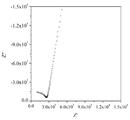
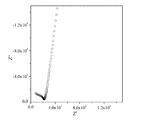
- La Li 6.5 obtained in Example 1 3 Zr 1.5 Ta 0.25 Nb 0.25 Nyquist plot of O 12 single crystal.
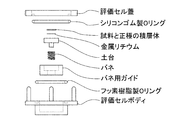
- FIG. 4 is a schematic diagram of an all solid lithium ion secondary battery produced in Example 3.
- the solid electrolyte material the method for producing the solid electrolyte material, and the all solid lithium ion secondary battery of the present invention will be described in detail based on the embodiments and examples.
- duplication description is abbreviate
- the lithium-containing garnet crystal that is a solid electrolyte material according to an embodiment of the present invention has a chemical composition of Li 7-xy La 3 Zr 2-xy Ta x Nb y O 12 (0 ⁇ x ⁇ 0.8).
- 0.2 ⁇ y ⁇ 1, 0.2 ⁇ x + y ⁇ 1) belongs to a cubic system, and has a garnet-related structure.
- the garnet-related structure is a garnet structure represented by a general formula C 3 A 2 B 3 O 12 represented by a general formula C 3 A 2 B 3 O 12 represented by YAG and the like, in which the crystal system is cubic and the symmetry of the crystal structure belongs to the space group Ia-3d.
- the B site taking tetrahedral coordination with O is non-occupied and voids are formed, and instead, the crystal structure is such that Li occupies voids in the crystal structure.
- the crystal Li 7-y La 3 Zr 2 -y Nb y O 12 (y ⁇ 0) not containing Ta has an A site of La
- a C site of Zr and Nb has a crystal structure in which Li occupies voids
- a crystal Li containing a Ta Li 7-xy La 3 Zr 2-xy Ta x Nb y O 12 (xy ⁇ 0) has an A site with La
- the C site has a crystal structure in which Zr, Ta, and Nb occupy the voids, and Li occupies the voids.
- the position of Li in the void differs from the garnet-related structure reported so far. That is, in the garnet-related structure that has been reported in the past, there are two types of lithium ions, and the occupied sites of lithium ions are one type of 24d site and one type of 96h site when shown in the Wyckoff position. On the other hand, in the garnet related structure which the lithium containing garnet crystal of this embodiment has, there are two types of 96h sites. Therefore, the lithium-containing garnet crystal of the present embodiment has a new crystal structure different from the conventional garnet-related structure.
- the Wyckoff position is a notation that represents a set of equivalent positions of the crystal structure, and is composed of the number of equivalent points in the crystal structure called multiplicity and the Wyckoff symbols assigned in alphabetical order from the position with the highest symmetry. ing.
- the crystal structure of the lithium-containing garnet crystal of this embodiment can be represented by space group Ia-3d.
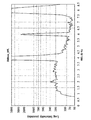
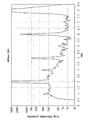
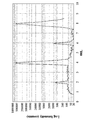
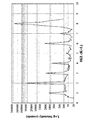
- space group Ia-3d When the single crystal X-ray diffraction measurement of the lithium-containing garnet crystal of this embodiment is actually performed, the forbidden reflection position of the space group Ia-3d as shown in FIG. 3, FIG. 4, FIG. 10, and FIG. In addition, a very weak diffraction spot is observed.
- Forbidden reflection is Bragg reflection that satisfies the Bragg condition in which the reflection intensity is 0 because the crystal structure factor is 0 in the diffraction phenomenon of X-rays and particle rays.
- the forbidden reflection can be determined by the symmetry of the crystal structure, that is, the space group.
- the crystal structure factor gives the amplitude and phase of the diffracted wave from the crystal, and is determined by the kind and position of atoms in the crystal structure.
- the lithium ion site is different from the conventional garnet-related structure, and the distance between the lithium ions is short.
- the lithium-containing garnet crystal the shorter the distance between lithium ions, the shorter the diffusion distance, and as a result, the lithium ion conductivity is improved. Therefore, the lithium-containing garnet crystal of the present embodiment is advantageous as a lithium ion solid electrolyte material.
- the lithium-containing garnet crystal of the present embodiment has a relative density of 99% or more.
- the relative density is calculated by measuring the outer shape of the manufactured flakes, calculating the apparent volume, and dividing the apparent density calculated from the measured mass by the true density obtained from the single crystal X-ray structural analysis result.
- the lithium-containing garnet crystal of the present embodiment is preferably as the relative density is high, and the relative density is particularly preferably 100%. In the lithium-containing garnet crystal of the present embodiment, it is not necessary that all crystal domains are oriented in the same direction. Further, the lithium-containing garnet crystal of the present embodiment has high ionic conductivity. Specifically, the lithium ion conductivity is 1.0 ⁇ 10 ⁇ 3 S / cm or more.
- the lattice constant a of the lithium-containing garnet crystal of the present embodiment is preferably 1.28 nm ⁇ a ⁇ 1.30 nm.
- a lithium-containing garnet crystal having a high ratio of crystal domains aligned in the same direction diffraction spots are observed as clear points in X-ray diffraction measurement using a single crystal.
- Samples of cubic Li 7-xy La 3 Zr 2-xy Ta x Nb y O 12 crystal produced by experiment and in which the orientation of crystal domains are not aligned are complicated in diffraction spot in X-ray diffraction measurement Or diffraction from various domains overlap to form a diffraction spot close to a ring shape.
- a crystal is produced by moving a melting portion of a raw material at 110 mm / h. As described above, since the cooling rate of the melted portion is too high, it is not always possible to grow the crystal domains in a uniform direction in the sample.
- the Nyquist plot by AC impedance measurement shows two resistance components: a resistance component due to the grain boundary and a resistance component of the material itself (non-patent document). Reference 1).
- the Nyquist plot of the lithium-containing garnet crystal of the present embodiment does not show a resistance component due to crystal grain boundaries, but shows only the resistance component of the material itself, as shown in FIGS.
- diffraction spots may appear in a ring shape in the diffraction pattern in X-ray diffraction measurement, neutron diffraction measurement, or electron diffraction measurement using a single crystal.
- the present inventors belong to a cubic system and have Li 7-xy La 3 having a garnet-related structure. It was found that a single crystal of Zr 2 -xy Ta x Nb y O 12 (0 ⁇ x ⁇ 0.8, 0.2 ⁇ y ⁇ 1, 0.2 ⁇ x + y ⁇ 1) was obtained.
- the sample rod is usually rotated at a speed of 20 rpm or less and lowered at a descending speed of about 2 mm / h.
- the molten portion of the raw material is lowered at a moving speed of 8 mm / h or more while rotating the rod-shaped raw material at high speed, and the molten portion is cooled at high speed.
- the resulting dense Li 7-x-y La 3 Zr 2-x-y Ta x Nb y O 12 (0 ⁇ x ⁇ 0.8,0.2 ⁇ y ⁇ 1,0.2 ⁇ x + y ⁇ 1
- the crystal rod can be cut to any thickness with a diamond cutter or the like.
- the high density Li 7-xy La 3 Zr 2 -xy Ta x Nb y O 12 (0 ⁇ x ⁇ 0.8, 0.2 ⁇ y ⁇ 1, 0.2 ⁇
- the crystal of x + y ⁇ 1) has a chemical composition of Li 7-xy La 3 Zr 2 ⁇ xy Ta x Nb y O 12 (0 ⁇ x ⁇ 0.8) in consideration of the volatilization of lithium at a high temperature. , 0.2 ⁇ y ⁇ 1, 0.2 ⁇ x + y ⁇ 1) by melting a mixed raw material in which the amount of lithium is increased from the stoichiometric ratio of each metal.
- the solid electrolyte material of the present invention has a chemical composition of Li (7-xy) z La 3 Zr 2-xy Ta x Nb y O 12 (0 ⁇ x ⁇ 0.8, 0.2 ⁇ y ⁇ 1). 0.2 ⁇ x + y ⁇ 1, 1 ⁇ z ⁇ 2) to form a melted portion that melts at least a part of the raw material to grow a single crystal, and moves the melted portion at a moving speed of 8 mm / h or more.
- it can be manufactured by rotating the molten part at a high speed around a central axis parallel to the moving direction.
- the manufacturing method can move the melted portion for growing a single crystal at a speed of 8 mm / h or more and can rotate the melted portion at a high speed around the central axis parallel to the moving direction, it is possible to use Czochral in addition to the FZ method. Even if a ski (Czochralski: CZ) method, a Bridgman method, a pedestal method, or the like is used, the high density Li 7-xy La 3 Zr 2-xy Ta x Nb y O 12 (0 ⁇ x ⁇ 0.8, 0.2 ⁇ y ⁇ 1, 0.2 ⁇ x + y ⁇ 1) can be grown.
- Li 7-xy La 3 Zr 2 -xy Ta x Nb y O 12 (0 ⁇ x ⁇ 0.8, 0.2 ⁇ y ⁇ 1, 0. 2 ⁇ x + y ⁇ 1), that is, the original Li 7-xy La 3 Zr 2-xy Ta x Nb y O 12 (0 ⁇ x ⁇ 0.8, 0.2 ⁇ y ⁇ 1, 0 A single crystal of 2 ⁇ x + y ⁇ 1) can be produced.
- Li 7-xy La 3 Zr 2-xy Ta x Nb y O 12 (0 ⁇ x ⁇ 0.8, 0.2 ⁇ y ⁇ 1, 0.2 ⁇ x + y ⁇ 100% relative density
- the crystal 1) is particularly excellent in lithium ion conductivity. As high-speed rotation, rotation at a rotation speed of 30 rpm or more is preferable.
- the solid electrolyte material of the present embodiment is manufactured by the FZ method, a rod-shaped raw material is melted while rotating at a high speed on a plane perpendicular to the longitudinal direction, and a crystal is obtained by moving the melting portion of the raw material in the longitudinal direction. Cultivate By increasing the moving speed of the melting part to 8 mm / h or more, decomposition of the raw material accompanying the volatilization of lithium can be suppressed.
- the moving speed of the melted part is preferably 8 mm / h or more and 19 mm / h or less.
- bubbles are generated in the molten part as lithium is volatilized, the bubbles can be removed by increasing the rotation speed of the rod-shaped raw material to 30 rpm or more.
- the rotation speed of the raw material is preferably 30 rpm or more and 60 rpm or less.
- the melting of the raw material and the movement of the molten part are preferably performed in a dry air atmosphere.
- Li 7-xy La 3 Zr 2 -xy Ta x Nb y O 12 (0 ⁇ x ⁇ 0.8, 0.2 ⁇ y ⁇ 1, 0.2) having a relative density of 99% or more.
- ⁇ x + y ⁇ 1) crystals can be produced.
- Li 7-xy La 3 Zr 2 -xy Ta x Nb y O 12 (0 ⁇ x ⁇ 0.8, 0) having a relative density of 99% or more, belonging to a cubic system, and having a garnet-related structure .. 2 ⁇ y ⁇ 1, 0.2 ⁇ x + y ⁇ 1) as an example, the method for producing the solid electrolyte material of the present embodiment will be described.
- a rod-shaped raw material is produced as follows. First, considering that lithium is volatilized at a high temperature, a lithium compound, a lanthanum compound, a zirconium compound, a tantalum compound, and a niobium compound are converted into Li: La: Zr: Ta: Nb (7-xy) z: 3 : 2-xy: x: y (0 ⁇ x ⁇ 0.8, 0.2 ⁇ y ⁇ 1, 0.2 ⁇ x + y ⁇ 1, 1 ⁇ z ⁇ 2) (a so-called molar ratio) Weigh so that
- the lithium compound is not particularly limited as long as it contains lithium, and examples thereof include oxides such as Li 2 O and carbonates such as Li 2 CO 3 .
- the lanthanum compound is not particularly limited as long as it contains lanthanum, and examples thereof include oxides such as La 2 O 3 and hydroxides such as La (OH) 3 .
- the zirconium compound is not particularly limited as long as it contains zirconium, and examples thereof include oxides such as ZrO 2 and chlorides such as ZrCl 4 .
- the tantalum compound is not particularly limited as long as it contains tantalum, and examples thereof include oxides such as Ta 2 O 5 and chlorides such as TaCl 5 .
- the niobium compound is not particularly limited as long as it contains niobium, and examples thereof include oxides such as Nb 2 O 5 and chlorides such as NbCl 5 .
- Li: La: Zr: Ta: Nb is (7-xy) z: 3: 2 using a compound composed of two or more kinds selected from lithium, lanthanum, zirconium, tantalum, and niobium.
- -Xy: x: y0 ⁇ x ⁇ 0.8, 0.2 ⁇ y ⁇ 1, 0.2 ⁇ x + y ⁇ 1, 1 ⁇ z ⁇ 2) may be weighed.
- Examples of such two or more compounds include lithium zirconium oxide such as Li 2 ZrO 3 , lithium tantalum oxide such as LiTaO 3 , lithium niobium oxide such as LiNbO 3, and lanthanum such as La 2 Zr 2 O 7.
- zirconium oxide, lanthanum tantalum oxides such LaTaO 4 include lanthanum, niobium oxides, such as Lanbo 4.
- each weighed compound is mixed.
- the mixing method is not particularly limited as long as these compounds can be uniformly mixed, and may be mixed by a wet method or a dry method using a mixer such as a mixer. Then, after filling the obtained mixture into a crucible with a lid, a powder as a raw material is obtained by calcining at 600 ° C. to 900 ° C., preferably 850 ° C. In addition, it is more preferable to repeat pulverizing, mixing, and firing the raw material once temporarily fired.
- the obtained raw material powder is pulverized to reduce the particle size.
- the pulverization method is not particularly limited as long as the powder can be refined.
- the pulverization method may be wet or dry using a pulverizer such as a planetary ball mill, pot mill, or bead mill.
- a pulverizer such as a planetary ball mill, pot mill, or bead mill.
- the obtained ground material in a rubber tube, it hydrostatically presses and shape
- the obtained rod-shaped molded body is fired at about 700 ° C. to 1300 ° C., preferably at 800 ° C. to 1150 ° C. for about 4 hours, to obtain a rod-shaped raw material.
- the chemical composition of the raw material is Li (7-xy) z La 3 Zr 2-xy Ta x Nb y O 12 (0 ⁇ x ⁇ 0.8, 0.2 ⁇ y ⁇ 1, 0 .2 ⁇ x + y ⁇ 1, 1 ⁇ z ⁇ 2). In this way, a rod-shaped raw material can be manufactured.
- the rod-shaped raw material is melted in an infrared condensing heating furnace while rotating at a rotation speed of 30 rpm or more, and then rapidly cooled at a moving speed of 8 mm / h or more and 19 mm / h or less, whereby the relative density is 99% or more.
- Li 7-xy La 3 Zr 2-xy Ta x Nb y O 12 (0 ⁇ x ⁇ 0.8, 0.2 ⁇ y ⁇ 1, belonging to a cubic system and having a garnet-related structure 0.2 ⁇ x + y ⁇ 1) is produced.
- Li 7-xy La 3 Zr 2-xy Ta x Nb y O 12 having a length of 2 cm or more (0 ⁇ x ⁇ 0.8, 0.2 ⁇ y ⁇ 1, 0.2 ⁇ A crystal of x + y ⁇ 1) is obtained. For this reason, flakes having the same quality can be easily produced by cutting.
- high density Li 7-xy La 3 Zr 2-xy Ta x Nb y O 12 (0 ⁇ x ⁇ 0.8, 0.2 ⁇ y ⁇ 1, 0.2 ⁇ x + y by the CZ method. ⁇ 1)
- the following procedure is used. First, the raw material is put in a crucible and heated to melt. Next, the seed crystal is put on the raw material melt and pulled up while rotating.
- the crystal Since the crystal is excellent in lithium ion conductivity, it can also be used as a solid electrolyte of an all-solid lithium ion secondary battery, a lithium air battery, or a lithium sulfur battery. That is, the all-solid-state lithium ion secondary battery according to the embodiment of the present invention has a positive electrode, a negative electrode, and a solid electrolyte, and the solid electrolyte is made of the solid electrolyte material of the present embodiment.
- the solid electrolyte material of the present embodiment When used for a lithium air battery, the solid electrolyte material of the present embodiment also serves as a separator that prevents direct contact between lithium metal used for the negative electrode and air on the positive electrode side. Therefore, in order to prevent air from leaking from the air battery, it can be said that a high density solid electrolyte material is useful for the solid electrolyte. Further, in the lithium-sulfur battery, since sulfur used for the positive electrode is easily dissolved in the electrolytic solution at the time of discharge, a solid electrolyte material having high ionic conductivity is required as in the case of the all-solid lithium ion secondary battery. EXAMPLES Hereinafter, although an Example demonstrates this invention further more concretely, this invention is not limited at all by these Examples.
- Example 1 Production and evaluation of Li 6.5 La 3 Zr 1.5 Ta 0.25 Nb 0.25 O 12 crystal by FZ method (1) Mixing of raw materials First, lithium carbonate Li 2 CO 3 (manufactured by Rare Metallic) , Purity 99.99%) 8.1867 g, lanthanum oxide La 2 O 3 (rare metallic, purity 99.99%) 11.8982 g, zirconium oxide ZrO 2 (rare metallic, purity 99.99%) 4 .5007 g, tantalum oxide Ta 2 O 5 (rare metallic, purity 99.99%) 2.0179 g, niobium oxide Nb 2 O 5 (rare metallic, purity 99.99%) 0.4054 g in an agate mortar And uniformly mixed by a wet method using ethanol.
- the lanthanum oxide used was pre-baked at 900 ° C. in advance.
- the metal molar ratio Li: La: Zr: Ta: Nb of this mixture is less than the stoichiometric ratio of the target product, Li 6.5 La 3 Zr 1.5 Ta 0.25 Nb 0.25 O 12. 40 mol% excess. That is, the quantity ratio of the mixture of raw materials corresponds to the chemical composition of Li 9.1 La 3 Zr 1.5 Ta 0.25 Nb 0.25 O 12 .
- a rod-shaped raw material was produced by the following procedure using the powder that passed through the sieve in the above step. First, 20.122 g of this powder was filled in a rubber mold and deaerated. Next, this mold was put in water in a sealed state and maintained at 40 MPa for 5 minutes. And after reducing the pressure of water, the molded object was taken out from the type
- sample 1 a high-density Li 6.5 La 3 Zr 1.5 Ta 0.25 Nb 0.25 O 12 crystal
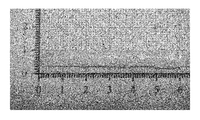
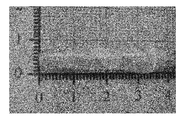
- the chemical composition of Sample 1 was analyzed by X-ray crystal structure analysis. The appearance of Sample 1 is shown in FIG. As shown in FIG. 1, a high-density Li 6.5 La 3 Zr 1.5 Ta 0.25 Nb 0.25 O 12 crystal having a length of 6 cm was produced.
- K L, 0 ⁇ K, L ⁇ 8.5
- FIG. 3 Li 7-xy La 3 Zr 2 -xy Ta x Nb y O 12 (xy ⁇ 0) reported so far has a space group indicating the symmetry of the crystal structure expressed as HM in Ia-3d. is there. In this space group Ia-3d, based on annihilation measurements, diffraction lines are observed only when L is a multiple of 4 at 00L and only when K and L are even numbers at 0KL.
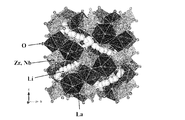
- FIG. 5 schematically shows the crystal structure of Sample 1.
- Various cubic garnet-related structures reported so far have two types of lithium ion seats (24d seats and 96h seats) in the crystal structure. It had one type of lithium ion seat (two 96h seats). That is, in Sample 1, lithium was present in only one type of ion seat having 96 hours. Specifically, Li (x, y, z) was (0.601, 0.189, 0.072) and (0.771, 0.113, 0.025). Since the R factor indicating the reliability of the crystal structure analysis was 2.10%, the crystal structure analysis result is appropriate.
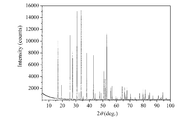
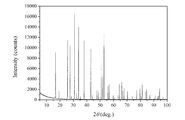
- the result of pulverizing Sample 1 and performing powder X-ray diffraction measurement is shown in FIG.
- the powder X-ray diffraction pattern of Sample 1 is the cubic garnet-related structure Li 7-xy La 3 Zr 2-xy Ta x Nb y O 12 (0.2 ⁇ x + y) reported so far. It was the same as the pattern of ⁇ 1).
- the lattice constant “a” of sample 1 is 1.290507 nm ⁇ a ⁇ 1.297070 nm.
- Example 2 Production and evaluation of Li 6.55 La 3 Zr 1.55 Nb 0.45 O 12 crystal by FZ method (1) Mixing of raw materials Lithium carbonate Li 2 CO 3 9. A mixture of raw materials was obtained from 7122 g, lanthanum oxide La 2 O 3 16.4710 g, zirconium oxide ZrO 2 6.2293 g, and niobium oxide Nb 2 O 5 3.7234 g. In addition, the molar ratio Li: La: Zr: Nb of the metal in this mixture is 40 mol% of lithium in excess of the stoichiometric ratio of the target product Li 6.55 La 3 Zr 1.55 Nb 0.45 O 12. It is.
- the quantity ratio of the mixture of raw materials corresponds to a chemical composition of Li 9.17 La 3 Zr 1.55 Nb 0.45 O 12 .
- an alumina crucible with a lid was charged with 30.138 g of this mixture. Thereafter, in the same manner as in Example 1, provisional firing, pulverization, and classification were performed.
- Example 2 high-density Li 6.55 La 3 Zr 1.55 Nb 0.45 O 12 crystals (hereinafter sometimes referred to as “sample 2”) were grown.
- the chemical composition of Sample 2 was analyzed by X-ray crystal structure analysis. The appearance of Sample 2 is shown in FIG. As shown in FIG. 8, a high-density Li 6.55 La 3 Zr 1.55 Nb 0.45 O 12 crystal having a length of 6 cm could be produced.
- FIG. 12 schematically shows the crystal structure of Sample 2.
- Various cubic garnet-related structures reported so far have two types of lithium ion seats (24d seats and 96h seats) in the crystal structure. It had one type of lithium ion seat (two 96h seats). That is, in Sample 2, lithium was present in only one type of ion seat of 96h.
- Li (x, y, z) is (0.726, 0.130, 0.017) and (0.602, 0.194, 0.072). Since the R factor indicating the reliability of the crystal structure analysis was 3.05%, the crystal structure analysis result is appropriate.
- the lattice constant of Sample 2 is 1.2942 nm ⁇ a ⁇ 1.2949 nm.
- Example 3 Production of an all-solid-state lithium ion secondary battery 0.0105 mol of lithium acetate dihydrate (manufactured by Sigma Aldrich) and 0.01 mol of cobalt acetate tetrahydrate (manufactured by Wako Pure Chemical Industries, Ltd.) Dissolved in 100 g (manufactured by Kojun Pharmaceutical). Next, 10 mol of polyvinylpyrrolidone K-30 (manufactured by Wako Pure Chemical Industries, Ltd.) was added and dissolved to prepare a 0.1 mol / kg lithium cobalt oxide precursor solution.
- Sample 1 and Sample 2 were cut to produce thin pieces having a diameter of about 0.8 cm and a thickness of about 0.10 cm.
- High - density Li 7-xy La 3 Zr 2-xy Ta x Nb y O 12 of the present invention (0 ⁇ x ⁇ 0.8, 0.2 ⁇ y ⁇ 1, 0.2 ⁇ x + y ⁇ 1)
- the solid electrolyte material containing a crystal can be used for a solid electrolyte material or a separator of an all solid lithium ion secondary battery, a lithium air battery, or a lithium sulfur battery.
Landscapes
- Chemical & Material Sciences (AREA)
- Organic Chemistry (AREA)
- Engineering & Computer Science (AREA)
- Inorganic Chemistry (AREA)
- Materials Engineering (AREA)
- Manufacturing & Machinery (AREA)
- Chemical Kinetics & Catalysis (AREA)
- Electrochemistry (AREA)
- General Chemical & Material Sciences (AREA)
- Crystallography & Structural Chemistry (AREA)
- Metallurgy (AREA)
- General Physics & Mathematics (AREA)
- Condensed Matter Physics & Semiconductors (AREA)
- Physics & Mathematics (AREA)
- Secondary Cells (AREA)
- Conductive Materials (AREA)
- Inorganic Compounds Of Heavy Metals (AREA)
- Crystals, And After-Treatments Of Crystals (AREA)
Abstract
密度とイオン伝導率が高い固体電解質材料と、この固体電解質材料を用いた全固体リチウムイオン二次電池を提供する。固体電解質材料は、化学組成がLi7-x―yLa3Zr2-x―yTaxNbyO12(0≦x≦0.8、0.2≦y≦1、0.2≦x+y≦1)で表され、相対密度が99%以上で、立方晶系に属し、ガーネット関連型構造を有する。この固体電解質材料は、リチウムイオン伝導率が1.0×10⁻³S/cm以上である。また、この固体電解質材料は、格子定数aが1.28nm≦a≦1.30nmであり、リチウムイオンが結晶構造内の2つ以上の96h席のみを占有する。全固体リチウムイオン二次電池は、正極と、負極と、固体電解質とを有し、固体電解質がこの固体電解質材料から構成されている。
Description
本発明は、密度とイオン伝導率が高い固体電解質材料と、この固体電解質材料を用いた全固体リチウムイオン二次電池に関する。
リチウムイオン二次電池は、ニッカド電池やニッケル水素電池などの二次電池と比較してエネルギー密度が高く、高電位で作動させることができる。このため、携帯電話やノートパソコンなどの小型情報機器に広く用いられている。また、リチウムイオン二次電池は、小型軽量化が図りやすいため、ハイブリット自動車や電気自動車用の二次電池としての需要が高まっている。自動車用等の用途では高い安全性が要求されるため、可燃性の電解液を使用しない全固体リチウムイオン二次電池の研究開発が行われている。全固体リチウムイオン二次電池に用いられる固体電解質には、高いイオン伝導率が要求される。
立方晶ガーネット関連型構造を有する材料は高いイオン伝導率を有することが報告されている(特許文献1)。そして、この構造を有する材料の研究開発が進められている。特に、化学組成Li7-xLa3Zr2-xNbxO12の材料はx=0.25付近で、化学組成Li7-xLa3Zr2-xTaxO12の材料はx=0.5付近で高いリチウムイオン伝導率を有していることが報告されている。
高いリチウムイオン伝導率の実現には、粒界抵抗や界面抵抗を極力低減させる必要がある。このため、固体電解質は、高密度な成型体である固体材料から構成されることが望ましい。また、高密度な成型体である固体材料は、充放電過程で正負極間での短絡が防止でき、薄片化が可能であるため、全固体リチウムイオン二次電池の将来的な小型化に可能性を与える。しかしながら、これらの立方晶ガーネット関連型構造を有する材料は難焼結性であり、高密度な成型体の作製が困難であることが知られている。
J.Awaka, N.Kijima, H.Hayakawa, J.Akimoto, Journal of Solid State Chemistry, 182, P2046-2052 (2009)
本発明は、このような事情に鑑みてなされたものであり、高密度のリチウム固体電解質材料およびその製造方法と、このリチウム固体電解質材料を固体電解質として用いた全固体リチウムイオン二次電池を提供することを目的とする。
本発明者らは、結晶体の製造方法を工夫することで、粒界が存在しない高密度のLi7―x―yLa3Zr2―x―yTaxNbyO12結晶が得られると考えた。しかし、リチウム含有ガーネット結晶体を含むガーネット関連型構造が溶融する高温で原料を加熱すると、リチウムが揮発してリチウム欠損となり、ランタンジルコニウム酸化物に分解してしまう。つまり、目的とするリチウム含有ガーネット単結晶と同じ組成の原料を、一般的な育成速度の4mm/h程度で育成すると、育成部分が高温で溶融している時間が長いためリチウムが揮発し、リチウム含有ガーネット単結晶ではなくランタンジルコニウム酸化物単結晶が得られた。また、揮発する成分を含む系を溶融法で育成させると、揮発した気体が溶融部分で停滞して育成が安定しない。
これらの問題があるため、ガーネット関連型構造を有する単結晶のFZ法やCZ法による育成はこれまで行われていなかった。そして、溶融するまで温度を上昇させたときのガーネット関連型構造の相は報告されていなかった。本発明者らは、原料の混合試料を高温で溶融し冷却するLi7―x―yLa3Zr2―x―yTaxNbyO12結晶の製造方法について鋭意検討した。
その結果、適切なリチウム量と育成速度を組み合わせることで、リチウムの揮発によるランタンジルコニウム酸化物の生成を抑制できることがわかった。さらに、原料の混合試料を高速で回転させて、揮発気体を溶融部に停滞させることなく、溶融部から早期に放出することで、単結晶育成が安定化できることを見出した。そして、高密度のガーネット関連型構造のLi7―x―yLa3Zr2―x―yTaxNbyO12結晶が育成できること、このLi7―x―yLa3Zr2―x―yTaxNbyO12結晶が機械的に薄片化できることを確認して、本発明を完成させた。
本発明の固体電解質材料は、化学組成がLi7-x―yLa3Zr2-x―yTaxNbyO12(0≦x≦0.8、0.2≦y≦1、0.2≦x+y≦1)で表され、相対密度が99%以上で、立方晶系に属し、ガーネット関連型構造を有する。x=0であっても、すなわちTaが含まれていなくてもよい。
また、本発明者らは、多結晶Li(7-x-y)zLa3Zr2-x-yTaxNbyO12(0≦x≦0.8、0.2≦y≦1、0.2≦x+y≦1、1<z≦2)を棒形状に成形した後、赤外集光加熱を用いたFZ法によって、この多結晶を溶融・急冷することで、高密度のLi7-x―yLa3Zr2-x―yTaxNbyO12(0≦x≦0.8、0.2≦y≦1、0.2≦x+y≦1)の結晶の高密度ロッドが作製できることを見出した。この高密度ロッドは高強度であるため、意図しない折損等が起こりにくく、ダイヤモンドカッターなどで容易に切断することができる。この高密度ロッドの切断によって、厚さ0.1mm程度のLi7-x―yLa3Zr2-x―yTaxNbyO12結晶の薄片が作製できることも合わせて見出した。
本発明の固体電解質材料の製造方法は、化学組成がLi(7-x-y)zLa3Zr2-x-yTaxNbyO12(0≦x≦0.8、0.2≦y≦1、0.2≦x+y≦1、1<z≦2)で表される原料の少なくとも一部を溶融して単結晶育成させる溶融部を形成し、移動速度8mm/h以上で溶融部を移動して単結晶育成させ、化学組成がLi7-x―yLa3Zr2-x―yTaxNbyO12(0≦x≦0.8、0.2≦y≦1、0.2≦x+y≦1)で表され、相対密度が99%以上で、立方晶系に属し、ガーネット関連型構造を有する固体電解質材料を製造する。
本発明の全固体リチウムイオン二次電池は、正極と、負極と、固体電解質とを有し、固体電解質が本発明の固体電解質材料から構成されている。
本発明の固体電解質材料は、リチウムイオンの占有位置が従来のガーネット関連型構造と異なる新規なガーネット関連型構造を有するものであり、高い密度とイオン伝導率を有する。本発明の固体電解質材料を固体電解質として用いることにより、高性能の全固体リチウムイオン二次電池が得られる。
以下、本発明の固体電解質材料、固体電解質材料の製造方法、および全固体リチウムイオン二次電池について、実施形態と実施例に基づいて詳細に説明する。なお、重複説明は適宜省略する。
本発明の実施形態に係る固体電解質材料であるリチウム含有ガーネット結晶体は、化学組成がLi7-x―yLa3Zr2-x―yTaxNbyO12(0≦x≦0.8、0.2≦y≦1、0.2≦x+y≦1)で表され、立方晶系に属し、ガーネット関連型構造を有する。ガーネット関連型構造とは、結晶系が立方晶で、結晶構造の対称性が空間群Ia-3dに属し、YAGなどに代表される一般式C3A2B3O12で表されるガーネット構造のうち、Oと四面体配位をとるBサイトが非占有で空隙になっており、その代わりに結晶構造中の空隙をLiが占有している結晶構造である。
本実施形態のリチウム含有ガーネット結晶体のうち、Taを含まない結晶体Li7―yLa3Zr2―yNbyO12(y≠0)は、AサイトをLaが、CサイトをZrおよびNbが、空隙をLiがそれぞれ占有する結晶構造を備えている。本実施形態のリチウム含有ガーネット結晶体のうち、Taを含む結晶体Li7-x―yLa3Zr2-x―yTaxNbyO12(xy≠0)は、AサイトをLaが、CサイトをZr、Ta、およびNbが、空隙をLiがそれぞれ占有する結晶構造を備えている。
本実施形態のリチウム含有ガーネット結晶体では、これまでに報告されているガーネット関連型構造と空隙のLiの位置が異なる。すなわち、従来報告されているガーネット関連型構造では、2種類のリチウムイオンがあり、リチウムイオンの占有サイトは、ワイコフ位置で示すと、1種類の24dサイトと1種類の96hサイトである。これに対して、本実施形態のリチウム含有ガーネット結晶体が有するガーネット関連型構造では、2種類の96hサイトである。したがって、本実施形態のリチウム含有ガーネット結晶体は、従来のガーネット関連型構造とは異なる新規な結晶構造を有する。
なお、ワイコフ位置は、結晶構造の等価位置の集合を表す表記法で、多重度といわれる結晶構造内における等価点の数と、対称性が最も高い位置からアルファベット順に割り振られるワイコフ記号とから構成されている。本実施形態のリチウム含有ガーネット結晶体が有する結晶構造は、空間群Ia-3dで表すことができる。実際に本実施形態のリチウム含有ガーネット結晶体の単結晶X線回折測定を行うと、後述する図3、図4、図10、および図11に示すように、空間群Ia-3dの禁制反射位置に、非常に弱い回折スポットが観測される。
図3および図10では002反射と006反射が、図4および図11では011反射、033反射、055反射、および077反射が禁制反射に該当する。これらの結果は、本実施形態のリチウム含有ガーネット結晶体が有する結晶構造が、より対称性の低い空間群であることを示唆している。しかし、この単結晶X線回折測定で検出できる強度が非常に小さいため、結晶構造解析に反映させることは困難である。
禁制反射とは、X線および粒子線の回折現象において、結晶構造因子が0であるために反射強度が0となるようなブラッグ条件を満たすブラッグ反射である。禁制反射は、結晶構造の対称性、すなわち空間群により決定できる。結晶構造因子とは、結晶からの回折波の振幅と位相を与えるもので、結晶構造中の原子の種類と位置により決定される。
本実施形態のリチウム含有ガーネット結晶体では、前述のように、リチウムイオンサイトが従来のガーネット関連型構造と異なり、リチウムイオン間の距離が短くなっている。リチウム含有ガーネット結晶体は、リチウムイオン間の距離が近いほど拡散距離も短くなり、結果としてリチウムイオン伝導率が向上する。したがって、本実施形態のリチウム含有ガーネット結晶体は、リチウムイオン固体電解質材料として有利である。
本実施形態のリチウム含有ガーネット結晶体は、相対密度が99%以上である。相対密度は、作製した薄片の外形を測定し、見かけの体積を算出して、測定質量から計算した見かけの密度を、単結晶X線構造解析結果から得られる真密度で割ることによって算出する。本実施形態のリチウム含有ガーネット結晶体は、相対密度が高いほど好ましく、相対密度が100%であることが特に好ましい。なお、本実施形態のリチウム含有ガーネット結晶体は、結晶ドメインが全て同一方向を向いている必要がない。また、本実施形態のリチウム含有ガーネット結晶体はイオン伝導率が高い。具体的には、リチウムイオン伝導率が1.0×10⁻³S/cm以上である。また、本実施形態のリチウム含有ガーネット結晶体の格子定数aは、1.28nm≦a≦1.30nmであることが好ましい。
結晶ドメインが同一方向に揃っている割合が高いリチウム含有ガーネット結晶体は、単結晶を用いたX線回折測定において、回折スポットが明瞭な点として観測される。実験で作製され、結晶ドメインの向きが揃っていない立方晶Li7―x―yLa3Zr2―x―yTaxNbyO12結晶の試料は、X線回折測定において、回折スポットが繁雑になったり、様々なドメインからの回折が重なり合って、リング状に近い回折スポットになったりする。一般にFZ法では、原料の溶融部を110mm/hで移動させて結晶を作製する。このように溶融部の冷却速度が速すぎるため、必ずしも試料内で結晶ドメインの向きが均一になるように育成できない。
多結晶体は相対密度を上げることが困難である。このため、交流インピーダンス測定では、多結晶体中の多くの空隙が測定結果に反映される。例えば、報告されているLi7La3Zr2O12の多結晶体では、交流インピーダンス測定によるナイキストプロットが、結晶粒界による抵抗成分と材料自体の抵抗成分の2つの抵抗成分を示す(非特許文献1参照)。これに対して、本実施形態のリチウム含有ガーネット結晶体のナイキストプロットは、後述する図6および図13に示すように、結晶粒界による抵抗成分を示さず、材料自体の抵抗成分のみを示す。また、本実施形態のリチウム含有ガーネット結晶体は、単結晶を用いたX線回折測定、中性子回折測定、または電子回折測定において、回折パターンに回折スポットがリング状で現れることがある。
本発明者らは、目的の固体電解質材料の組成比よりリチウムを過剰に含む混合原料を高温で溶融し冷却すると、立方晶系に属し、ガーネット関連型構造を有するLi7―x―yLa3Zr2―x―yTaxNbyO12(0≦x≦0.8、0.2≦y≦1、0.2≦x+y≦1)の単結晶が得られることを見出した。立方晶系に属し、ガーネット関連型構造を有する単結晶をFZ法で育成する場合は、通常、試料棒を20rpm以下で回転させ、下降速度2mm/h程度で下降させる。しかし、この条件ではLi7―x―yLa3Zr2―x―yTaxNbyO12(0≦x≦0.8、0.2≦y≦1、0.2≦x+y≦1)に空隙が入り、高密度の結晶が作製できない。
空隙がない結晶を作製するために、棒形状の原料を高速回転させながら、移動速度8mm/h以上で原料の溶融部を下降させて、この溶融部を高速で冷却する。得られた高密度のLi7―x―yLa3Zr2―x―yTaxNbyO12(0≦x≦0.8、0.2≦y≦1、0.2≦x+y≦1)の結晶のロッドは、ダイヤモンドカッターなどで任意の厚さに切断できる。また、本実施形態の高密度のLi7―x―yLa3Zr2―x―yTaxNbyO12(0≦x≦0.8、0.2≦y≦1、0.2≦x+y≦1)の結晶は、高温でリチウムが揮発することを考慮して、化学組成Li7―x―yLa3Zr2―x―yTaxNbyO12(0≦x≦0.8、0.2≦y≦1、0.2≦x+y≦1)の各金属の化学量論比よりもリチウムを増量した混合原料を溶融することによって製造する。
本発明の固体電解質材料は、化学組成がLi(7-x-y)zLa3Zr2-x-yTaxNbyO12(0≦x≦0.8、0.2≦y≦1、0.2≦x+y≦1、1<z≦2)で表される原料の少なくとも一部を溶融して単結晶成長させる溶融部を形成し、移動速度8mm/h以上で溶融部を移動させながら、移動方向と平行な中心軸を中心として、溶融部を高速回転させることによって製造できる。
このように、単結晶成長させる溶融部が速度8mm/h以上で移動でき、移動方向と平行な中心軸を中心として、溶融部を高速回転できる製造方法であれば、FZ法の外、チョクラルスキー(Czochralski:CZ)法、ブリッジマン法、ペデスタル法などを用いても本実施形態の高密度のLi7―x―yLa3Zr2―x―yTaxNbyO12(0≦x≦0.8、0.2≦y≦1、0.2≦x+y≦1)の結晶が育成できる。製造したいLi7―x―yLa3Zr2―x―yTaxNbyO12(0≦x≦0.8、0.2≦y≦1、0.2≦x+y≦1)の結晶の大きさや形状等に応じて、これらの中から適切な製法を選択すればよい。
FZ法によって、相対密度が100%であるLi7―x―yLa3Zr2―x―yTaxNbyO12(0≦x≦0.8、0.2≦y≦1、0.2≦x+y≦1)の結晶、すなわち本来のLi7―x―yLa3Zr2―x―yTaxNbyO12(0≦x≦0.8、0.2≦y≦1、0.2≦x+y≦1)の単結晶が製造できる。相対密度が100%であるLi7―x―yLa3Zr2―x―yTaxNbyO12(0≦x≦0.8、0.2≦y≦1、0.2≦x+y≦1)の結晶は、リチウムイオン伝導性が特に優れている。高速回転としては、回転速度30rpm以上の回転が好ましい。
FZ法によって本実施形態の固体電解質材料を製造する場合には、棒形状の原料を長手方向と垂直な面で高速回転させながら溶融し、この原料の溶融部を長手方向に移動することによって結晶を育成する。溶融部の移動速度を8mm/h以上と速くすることによって、リチウムの揮発に伴う原料の分解を抑えられる。この溶融部の移動速度は8mm/h以上19mm/h以下であることが好ましい。また、溶融部ではリチウムが揮発しようとして気泡が発生するが、棒形状の原料の回転速度を30rpm以上と速くすることによって、気泡を取り除くことができる。原料の回転速度は30rpm以上60rpm以下であることが好ましい。原料の溶融および溶融部の移動は乾燥空気雰囲気で行うことが好ましい。
こうして、相対密度が99%以上であるLi7―x―yLa3Zr2―x―yTaxNbyO12(0≦x≦0.8、0.2≦y≦1、0.2≦x+y≦1)の結晶が製造できる。相対密度が99%以上で、立方晶系に属し、ガーネット関連型構造を有するLi7―x―yLa3Zr2―x―yTaxNbyO12(0≦x≦0.8、0.2≦y≦1、0.2≦x+y≦1)の結晶の育成を例に、本実施形態の固体電解質材料の製造方法を説明する。
まず、棒形状の原料を以下のようにして作製する。はじめに、高温でリチウムが揮発することを考慮して、リチウム化合物、ランタン化合物、ジルコニウム化合物、タンタル化合物、およびニオブ化合物をLi:La:Zr:Ta:Nbが(7-x―y)z:3:2-x―y:x:y(0≦x≦0.8、0.2≦y≦1、0.2≦x+y≦1、1<z≦2)の物質量比(いわゆるモル比)となるように秤量する。
リチウム化合物としては、リチウムを含有するものであれば特に制限されず、Li2Oなどの酸化物、Li2CO3などの炭酸塩等が挙げられる。ランタン化合物としては、ランタンを含有するものであれば特に制限されず、La2O3などの酸化物、La(OH)3などの水酸化物等が挙げられる。ジルコニウム化合物としては、ジルコニウムを含有するものであれば特に制限されず、ZrO2などの酸化物、ZrCl4などの塩化物等が挙げられる。タンタル化合物としては、タンタルを含有するものであれば特に制限されず、Ta2O5などの酸化物、TaCl5などの塩化物等が挙げられる。ニオブ化合物としては、ニオブを含有するものであれば特に制限されず、Nb2O5などの酸化物、NbCl5などの塩化物等が挙げられる。
また、リチウム、ランタン、ジルコニウム、タンタル、およびニオブの中から選択される二種類以上からなる化合物を用いて、Li:La:Zr:Ta:Nbが(7-x―y)z:3:2-x―y:x:y0≦x≦0.8、0.2≦y≦1、0.2≦x+y≦1、1<z≦2)のモル比となるように秤量してもよい。このような二種類以上からなる化合物としては、Li2ZrO3などのリチウムジルコニウム酸化物、LiTaO3などのリチウムタンタル酸化物、LiNbO3などのリチウムニオブ酸化物、La2Zr2O7などのランタンジルコニウム酸化物、LaTaO4などのランタンタンタル酸化物、LaNbO4などのランタンニオブ酸化物等が挙げられる。
つぎに、秤量した各化合物を混合する。混合方法は、これらの各化合物を均一に混合できる限り特に限定されず、例えばミキサー等の混合機を用いて湿式または乾式で混合すればよい。そして、得られた混合物をふた付きルツボに充填した後、600℃~900℃、好ましくは850℃で仮焼成することで原料となる粉末が得られる。なお、一度仮焼成した原料を、再度、粉砕、混合し、焼成することを繰り返すとさらに好ましい。
つぎに、成型しやすくするために、得られた原料粉末を粉砕して粒子サイズを細かくする。粉砕方法は、粉末を微細化できる限り特に限定されず、例えば、遊星型ボールミル、ポットミル、ビーズミル等の粉砕装置を用いて湿式または乾式で粉砕すればよい。そして、得られた粉砕物をラバーチューブに充填した後、静水圧プレスを行って棒状に成型する。つぎに、得られた棒状の成型体を700℃~1300℃程度、好ましくは800℃~1150℃で4時間程度焼成して棒形状の原料が得られる。この時点では、原料の化学組成はLi(7-x-y)zLa3Zr2-x-yTaxNbyO12(0≦x≦0.8、0.2≦y≦1、0.2≦x+y≦1、1<z≦2)である。こうして、棒形状の原料が製造できる。
そして、この棒形状の原料を回転速度30rpm以上で回転させながら赤外線集光加熱炉で溶融させた後に、移動速度8mm/h以上19mm/h以下で急冷することによって、相対密度が99%以上で、立方晶系に属し、ガーネット関連型構造を有するLi7―x―yLa3Zr2―x―yTaxNbyO12(0≦x≦0.8、0.2≦y≦1、0.2≦x+y≦1)が製造される。この製法により、長さ2cm以上のLi7―x―yLa3Zr2―x―yTaxNbyO12(0≦x≦0.8、0.2≦y≦1、0.2≦x+y≦1)の結晶が得られる。このため、同一品質を有する薄片が切断によって容易に作製できる。
また、CZ法によって高密度のLi7―x―yLa3Zr2―x―yTaxNbyO12(0≦x≦0.8、0.2≦y≦1、0.2≦x+y≦1)結晶を製造する場合は、以下の手順で行う。まず、原料をルツボに入れて加熱し溶融する。つぎに、種結晶を原料の融液につけて回転しながら引き上げる。溶融部の移動速度、すなわち種結晶の引き上げ速度を8mm/h以上と速くすることによって、リチウムの揮発が抑えられ、高密度のLi7―x―yLa3Zr2―x―yTaxNbyO12(0≦x≦0.8、0.2≦y≦1、0.2≦x+y≦1)結晶が得られると考えられる。
また、本実施形態の高密度Li7―x―yLa3Zr2―x―yTaxNbyO12(0≦x≦0.8、0.2≦y≦1、0.2≦x+y≦1)結晶は、リチウムイオン伝導性に優れているため、全固体リチウムイオン二次電池、リチウム空気電池、リチウム硫黄電池の固体電解質としても使用できる。すなわち、本発明の実施形態に係る全固体リチウムイオン二次電池は、正極と、負極と、固体電解質とを有し、固体電解質が本実施形態の固体電解質材料から構成されている。
リチウム空気電池に本実施形態の固体電解質材料を用いる場合、本実施形態の固体電解質材料は、負極に用いるリチウム金属と正極側の空気が直接接触するのを防ぐセパレータとしての役割も担う。したがって、空気電池から空気が漏れないようにするためにも、固体電解質には高密度の固体電解質材料が有用であると言える。また、リチウム硫黄電池では、正極に用いられる硫黄が放電時に電解液中に溶解しやすいため、全固体リチウムイオン二次電池と同様に高イオン伝導率を有する固体電解質材料が求められる。以下、実施例によって本発明をさらに具体的に説明するが、本発明はこれらの実施例によって何ら限定されるものではない。
実施例1:FZ法によるLi6.5La3Zr1.5Ta0.25Nb0.25O12結晶の製造と評価
(1)原料の混合
まず、炭酸リチウムLi2CO3(レアメタリック製、純度99.99%)8.1867gと、酸化ランタンLa2O3(レアメタリック製、純度99.99%)11.8982gと、酸化ジルコニウムZrO2(レアメタリック製、純度99.99%)4.5007gと、酸化タンタルTa2O5(レアメタリック製、純度99.99%)2.0179g、酸化ニオブNb2O5(レアメタリック製、純度99.99%)0.4054gをメノウ製乳鉢に入れて、エタノールを使用した湿式法によって均一に混合した。
(1)原料の混合
まず、炭酸リチウムLi2CO3(レアメタリック製、純度99.99%)8.1867gと、酸化ランタンLa2O3(レアメタリック製、純度99.99%)11.8982gと、酸化ジルコニウムZrO2(レアメタリック製、純度99.99%)4.5007gと、酸化タンタルTa2O5(レアメタリック製、純度99.99%)2.0179g、酸化ニオブNb2O5(レアメタリック製、純度99.99%)0.4054gをメノウ製乳鉢に入れて、エタノールを使用した湿式法によって均一に混合した。
なお、酸化ランタンは、あらかじめ900℃で仮焼成したものを使用した。この混合物の金属のモル比Li:La:Zr:Ta:Nbは、目的物であるLi6.5La3Zr1.5Ta0.25Nb0.25O12の化学量論比よりリチウムが40mol%過剰である。すなわち、原料の混合物の分量比は、化学組成がLi9.1La3Zr1.5Ta0.25Nb0.25O12に相当する。
つぎに、ふた付きのアルミナるつぼ(ニッカトー製、C3型)にこの混合物30.030gを充填した。そして、これをボックス型電気炉(ヤマト科学製、FP100型)に入れて、850℃で6時間仮焼成して粉末を得た。そして、得られた粉末を粉砕した。すなわち、粉末36gと、直径5mmのジルコニアボール50gと、イオン交換水14mLを容量45mLのジルコニア製粉砕容器に充填し、遊星型ボールミル(ドイツ・フリッチュ製、型式P-6)を用いて、公転回転数200rpmで合計300分回転させて粉砕した。粉砕後の粉末を100℃で24時間乾燥させ、250μm目開きのふるいを用いて分級した。
(2)棒形状の原料の作製
上記工程でふるいを通過した粉末を用いて、以下の手順で棒形状の原料を作製した。まず、ゴム製の型にこの粉末20.122gを充填して脱気した。つぎに、この型を密閉した状態で水中に入れて、40MPaで5分間維持した。そして、水の圧力を下げた後、成形体を型から取り出した。成形体は、直径1.0cm、高さ7.3cmの円柱形状をしていた。つぎに、箱型電気炉(デンケン製、型番KDF009)を用いて、この円柱状の成形体を1150℃で焼成した。取り出した成形体は、直径0.92cm、高さ6.7cmの円柱形状をしていた。
上記工程でふるいを通過した粉末を用いて、以下の手順で棒形状の原料を作製した。まず、ゴム製の型にこの粉末20.122gを充填して脱気した。つぎに、この型を密閉した状態で水中に入れて、40MPaで5分間維持した。そして、水の圧力を下げた後、成形体を型から取り出した。成形体は、直径1.0cm、高さ7.3cmの円柱形状をしていた。つぎに、箱型電気炉(デンケン製、型番KDF009)を用いて、この円柱状の成形体を1150℃で焼成した。取り出した成形体は、直径0.92cm、高さ6.7cmの円柱形状をしていた。
(3)Li6.5La3Zr1.5Ta0.25Nb0.25O12の結晶の育成
まず、1kWのハロゲンランプを装備した四楕円型赤外線集光加熱炉(FZ炉)(Crystal System社製、FZ-T-10000H型)に、上記工程で得られた棒形状の原料を設置して、乾燥空気雰囲気にした。つぎに、長手方向と垂直な面で棒形状の原料を30rpmで回転させながら、出力27.9%で加熱した。しばらくすると、多結晶試料の一部が溶融して溶融部を形成した。
まず、1kWのハロゲンランプを装備した四楕円型赤外線集光加熱炉(FZ炉)(Crystal System社製、FZ-T-10000H型)に、上記工程で得られた棒形状の原料を設置して、乾燥空気雰囲気にした。つぎに、長手方向と垂直な面で棒形状の原料を30rpmで回転させながら、出力27.9%で加熱した。しばらくすると、多結晶試料の一部が溶融して溶融部を形成した。
そして、棒形状の原料の設置台を14mm/hの移動速度で下降させて高密度のLi6.5La3Zr1.5Ta0.25Nb0.25O12の結晶(以下「試料1」ということがある)を育成した。なお、試料1の化学組成は、X線結晶構造解析によって分析した。試料1の外観を図1に示す。図1に示すように、長さ6cmの高密度のLi6.5La3Zr1.5Ta0.25Nb0.25O12の結晶が作製できた。
(4)Li6.5La3Zr1.5Ta0.25Nb0.25O12の結晶の評価
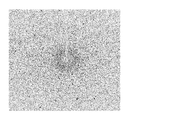
二次元IP検出器および検出器にシンチレーションカウンターを有する単結晶X線回折装置(リガク社製、R-AXIS RAPID-II、AFC-7S)を用いて、試料1の構造を調べた。試料1のX線回折パターンを図2に示す。図2に示すように、明瞭な回折点が測定できた。また、試料1の回折強度データを収集し、結晶構造解析プログラムJana2006によって結晶構造を調べたところ、試料1は立方晶に属することがわかった。試料1をダイヤモンドカッターで切断して厚さ約0.1mmの薄片を2枚作製し、上述の方法でこれらの相対密度を算出した。その結果、これらの相対密度はそれぞれ99.8%、100%であった。
二次元IP検出器および検出器にシンチレーションカウンターを有する単結晶X線回折装置(リガク社製、R-AXIS RAPID-II、AFC-7S)を用いて、試料1の構造を調べた。試料1のX線回折パターンを図2に示す。図2に示すように、明瞭な回折点が測定できた。また、試料1の回折強度データを収集し、結晶構造解析プログラムJana2006によって結晶構造を調べたところ、試料1は立方晶に属することがわかった。試料1をダイヤモンドカッターで切断して厚さ約0.1mmの薄片を2枚作製し、上述の方法でこれらの相対密度を算出した。その結果、これらの相対密度はそれぞれ99.8%、100%であった。
単結晶X線回折装置を用いて測定した試料1の00L(0<L<8.5)のラインスキャンを図3に、0KL(K=L、0<K,L<8.5)のラインスキャンを図4にそれぞれ示す。これまで報告されているLi7―x―yLa3Zr2―x―yTaxNbyO12(xy≠0)は、結晶構造の対称性を示す空間群がHM表記でIa-3dである。この空間群Ia-3dは、消滅測に基づいて、00LではLが4の倍数のときにのみ、0KLではKとLが偶数のときにのみ回折線が観測される。
しかし、図3では00Lが002、006とL=2+4n(nは整数)で表わされ、図4では0KLが011、033、055、077とK=LかつKおよびLが奇数で表わされる禁制反射指数に回折線が観測された。これらの回折線は本来観測されない。したがって、試料1の空間群はIa-3dよりも低対称であることが示唆される。しかし、回折強度が極めて弱いため、試料1の結晶構造解析に反映させることができなかった。このため、結晶構造解析はIa-3dとして行った。
図5は試料1の結晶構造を模式的に示している。これまで報告されている様々な立方晶ガーネット関連型構造は、結晶構造内に2種類のリチウムイオン席(24d席、96h席)を有しているが、試料1は、結晶構造内に2つの1種類のリチウムイオン席(2つの96h席)を有していた。すなわち、試料1は、リチウムが96h席の1種類のみのイオン席に存在していた。具体的な座標を示すと、Li(x,y,z)は(0.601,0.189,0.072)と(0.771,0.113,0.025)であった。この結晶構造解析の信頼度を示すR因子は2.10%であったため、結晶構造解析結果は妥当である。
また、96h席のみを占有するこのリチウムイオンの配列は、これまで報告されている立方晶ガーネット関連型構造と比べて、リチウムイオン同士の距離が近い。このため、試料1のリチウムイオン伝導率は他の立方晶ガーネット関連型構造化合物よりも高いと考えられる。試料1を切断して、直径約0.7cm、厚さ約0.09cmの薄片を作製した。この薄片の表側と裏側に、直径が0.20cmの正円で、厚さが40nmの金をスパッタリングして電極を形成した。この試料を窒素雰囲気中25℃で交流インピーダンス法(測定装置:Solarton、1260)によりリチウムイオン伝導率を測定したところ、図6のようなナイキストプロットが得られ、1.1×10⁻³S/cmであった。
試料1の単結晶X線回折測定で観測された反射を用いて、最小二乗法により格子定数aを求めたところ、a=1.29670nm±0.00003nmであった。この格子定数から、試料1はガーネット関連型構造を有するリチウム複合酸化物であることがわかった。試料1を粉砕して粉末X線回折測定を行った結果を図7に示す。試料1の粉末X線回折パターンは、これまでに報告されている立方晶ガーネット関連型構造のLi7-x―yLa3Zr2-x―yTaxNbyO12(0.2≦x+y≦1)のパターンと同様であった。粉末X線構造解析の結果から算出される格子定数aは、a=1.295076nm±0.000005nmであった。単結晶X線回折測定と粉末X線構造解析の結果を併せると、試料1の格子定数aは、1.29507nm≦a≦1.29670nmである。
実施例2:FZ法によるLi6.55La3Zr1.55Nb0.45O12結晶の製造と評価
(1)原料の混合
実施例1と同様にして、炭酸リチウムLi2CO39.7122gと、酸化ランタンLa2O316.4710gと、酸化ジルコニウムZrO26.2293gと、酸化ニオブNb2O53.7234gから原料の混合物を得た。なお、この混合物の金属のモル比Li:La:Zr:Nbは、目的物であるLi6.55La3Zr1.55Nb0.45O12の化学量論比よりもリチウムが40mol%過剰である。すなわち、原料の混合物の分量比は、化学組成がLi9.17La3Zr1.55Nb0.45O12に相当する。つぎに、ふた付きのアルミナるつぼにこの混合物30.138gを充填した。その後は、実施例1と同様にして、仮焼成、粉砕、分級を行った。
(1)原料の混合
実施例1と同様にして、炭酸リチウムLi2CO39.7122gと、酸化ランタンLa2O316.4710gと、酸化ジルコニウムZrO26.2293gと、酸化ニオブNb2O53.7234gから原料の混合物を得た。なお、この混合物の金属のモル比Li:La:Zr:Nbは、目的物であるLi6.55La3Zr1.55Nb0.45O12の化学量論比よりもリチウムが40mol%過剰である。すなわち、原料の混合物の分量比は、化学組成がLi9.17La3Zr1.55Nb0.45O12に相当する。つぎに、ふた付きのアルミナるつぼにこの混合物30.138gを充填した。その後は、実施例1と同様にして、仮焼成、粉砕、分級を行った。
(2)棒形状の原料の作製
実施例1と同様にして、以下の手順で棒形状の原料を作製した。すなわち、ゴム製の型にふるいを通過した粉末20.287gを充填し、成形し、直径1.0cm、高さ9.8cmの円柱形状の成形体を得た。その後、この成形体を焼成して、直径0.96cm、高さ9.2cmの円柱形状の成形体を得た。
実施例1と同様にして、以下の手順で棒形状の原料を作製した。すなわち、ゴム製の型にふるいを通過した粉末20.287gを充填し、成形し、直径1.0cm、高さ9.8cmの円柱形状の成形体を得た。その後、この成形体を焼成して、直径0.96cm、高さ9.2cmの円柱形状の成形体を得た。
(3)Li6.55La3Zr1.55Nb0.45O12の結晶の育成
回転速度を40rpm、出力を30.3%、および設置台の下降速度を19mm/hとした点を除いて、実施例1と同様にして高密度のLi6.55La3Zr1.55Nb0.45O12の結晶(以下「試料2」ということがある)を育成した。なお、試料2の化学組成は、X線結晶構造解析によって分析した。試料2の外観を図8に示す。図8に示すように、長さ6cmの高密度のLi6.55La3Zr1.55Nb0.45O12の結晶が作製できた。
回転速度を40rpm、出力を30.3%、および設置台の下降速度を19mm/hとした点を除いて、実施例1と同様にして高密度のLi6.55La3Zr1.55Nb0.45O12の結晶(以下「試料2」ということがある)を育成した。なお、試料2の化学組成は、X線結晶構造解析によって分析した。試料2の外観を図8に示す。図8に示すように、長さ6cmの高密度のLi6.55La3Zr1.55Nb0.45O12の結晶が作製できた。
(4)Li6.55La3Zr1.55Nb0.45O12の結晶の評価
実施例1と同様にして、単結晶X線回折装置を用いて試料2の構造を調べた。試料2のX線回折パターンを図9に示す。図9に示すように、明瞭な回折点が測定できた。また、実施例1と同様にして、結晶構造解析プログラムによって結晶構造を調べたところ、試料2が立方晶に属することがわかった。ダイヤモンドカッターで試料2を切断して厚さ0.1mmの薄片を4枚作製し、これらの相対密度を算出した。その結果、これらの相対密度は、それぞれ99.2%、99.7%、99.9%、100%であった。
実施例1と同様にして、単結晶X線回折装置を用いて試料2の構造を調べた。試料2のX線回折パターンを図9に示す。図9に示すように、明瞭な回折点が測定できた。また、実施例1と同様にして、結晶構造解析プログラムによって結晶構造を調べたところ、試料2が立方晶に属することがわかった。ダイヤモンドカッターで試料2を切断して厚さ0.1mmの薄片を4枚作製し、これらの相対密度を算出した。その結果、これらの相対密度は、それぞれ99.2%、99.7%、99.9%、100%であった。
単結晶X線回折装置を用いて測定した試料2の00L(0<L<8.5)のラインスキャンを図10に、0KL(K=L、0<K,L<8.5)のラインスキャンを図11にそれぞれ示す。これまで報告されているLi7-yLa3Zr2-yNbyO12(y≠0)は、結晶構造の対称性を示す空間群がHM表記でIa-3dである。ここの空間群Ia-3dは、消滅測に基づいて、00LではLが4の倍数のときにのみ、0KLではKとLが偶数のときにのみ回折が観測される。
しかし、図10では00Lが002、006とL=2+4n(nは整数)で表わされ、図11では0KLが011、033、055、077とK=LでKおよびLが奇数で表わされる禁制反射指数に回折線が観測された。これらの回折線は本来観測されない。したがって、試料2の空間群はIa-3dよりも低対称であることが示唆される。しかし、回折強度が極めて弱いため結晶構造解析に反映させることができなかった。このため、結晶構造解析はIa-3dとして行った。
図12は試料2の結晶構造を模式的に示している。これまで報告されている様々な立方晶ガーネット関連型構造は、結晶構造内に2種類のリチウムイオン席(24d席、96h席)を有しているが、試料2は、結晶構造内に2つの1種類のリチウムイオン席(2つの96h席)を有していた。すなわち、試料2は、リチウムが96h席の1種類のみのイオン席に存在していた。具体的な座標を示すと、Li(x,y,z)は(0.726,0.130,0.017)と(0.602,0.194,0.072)である。この結晶構造解析の信頼度を示すR因子は3.05%であったため、結晶構造解析結果は妥当である。
また、96h席のみを占有するこのリチウムイオンの配列は、これまで報告されている立方晶ガーネット関連型構造と比べて、リチウムイオン同士の距離が近い。このため、試料2のリチウムイオン伝導率は他の立方晶ガーネット関連型構造化合物よりも高いと考えられる。試料2を切断して、直径約0.8cm、厚さ約0.10cmの薄片を作製した。その後、実施例1と同様にして、図13に示すナイキストプロットを得た。リチウムイオン伝導率は1.4×10⁻³S/cmであった。
試料2の単結晶X線回折測定で観測された反射を用いて、最小二乗法により格子定数aを求めたところ、a=1.2942nm±0.0009nmであった。この格子定数から、試料2はガーネット関連型構造を有するリチウム複合酸化物であることがわかった。試料2を粉砕して粉末X線回折測定を行った結果を図14に示す。試料2の粉末X線回折パターンは、これまで報告されている立方晶ガーネット関連型構造のLi7-xLa3Zr2-xNbxO12(0.2≦x≦1)のパターンと同様であった。粉末X線構造解析の結果から算出される格子定数aは、a=1.29481nm±0.00005nmであった。単結晶X線回折測定と粉末X線構造解析の結果を併せると、試料2の格子定数は、1.2942nm≦a≦1.2949nmである。
実施例3:全固体リチウムイオン二次電池の作製
酢酸リチウム2水和物(シグマアルドリッチ製)0.0105molと酢酸コバルト4水和物(和光純薬工業製)0.01molを、エチレングリコール(和光純薬工業製)100gに溶解した。つぎに、ポリビニルピロリドンK-30(和光純薬工業製)10gを加えて溶解させることで0.1mol/kgのコバルト酸リチウム前駆体溶液を調製した。酢酸リチウム量を酢酸コバルト量より5mol%多くしたのは、焼成時のリチウム蒸発分を加味したためである。つぎに、試料1と試料2をそれぞれ切断して、直径約0.8cm、厚さ約0.10cmの薄片を作製した。
酢酸リチウム2水和物(シグマアルドリッチ製)0.0105molと酢酸コバルト4水和物(和光純薬工業製)0.01molを、エチレングリコール(和光純薬工業製)100gに溶解した。つぎに、ポリビニルピロリドンK-30(和光純薬工業製)10gを加えて溶解させることで0.1mol/kgのコバルト酸リチウム前駆体溶液を調製した。酢酸リチウム量を酢酸コバルト量より5mol%多くしたのは、焼成時のリチウム蒸発分を加味したためである。つぎに、試料1と試料2をそれぞれ切断して、直径約0.8cm、厚さ約0.10cmの薄片を作製した。
これらの薄片に上記のコバルト酸リチウム前駆体溶液を10μL滴下して、400℃で20分間仮焼成した。そして、850℃で10分間焼成して、それぞれの試料表面に正極であるコバルト酸リチウム層を形成し、試料と正極であるコバルト酸リチウム層の積層体を得た。つぎに、図15に示すように、グローブボックス中で、市販の電池評価用HSセル(宝泉株式会社製)に、試料と正極の積層体と、直径4mmに打ち抜いた金属リチウムを入れ、全固体リチウムイオン二次電池を作製した。この全固体リチウムイオン二次電池は、試料1を使用したときの開回路電圧が3.0Vで、試料2を使用したときの開回路電圧が2.8Vを示し、電池として機能していることが確認された。
本発明の高密度Li7-x―yLa3Zr2-x―yTaxNbyO12(0≦x≦0.8、0.2≦y≦1、0.2≦x+y≦1)結晶を含む固体電解質材料は、全固体リチウムイオン二次電池、リチウム空気電池、リチウム硫黄電池の固体電解質材料やセパレータなどに利用できる。
Claims (13)
- 化学組成がLi7-x―yLa3Zr2-x―yTaxNbyO12(0≦x≦0.8、0.2≦y≦1、0.2≦x+y≦1)で表され、相対密度が99%以上で、立方晶系に属し、ガーネット関連型構造を有する固体電解質材料。
- x=0である請求項1に記載の固体電解質材料。
- リチウムイオン伝導率が1.0×10⁻³S/cm以上である請求項1または2に記載の固体電解質材料。
- 格子定数aが1.28nm≦a≦1.30nmである請求項1から3のいずれか1項に記載の固体電解質材料。
- リチウムイオンが結晶構造内の2つ以上の96h席のみを占有する請求項1から4のいずれか1項に記載の固体電解質材料。
- 単結晶X線回折測定で、面指数00L(L=2+4n、nは整数)および/または面指数0KL(K=L、KとLは奇数)の空間群Ia-3dの禁制反射指数に回折強度を与える請求項1から4のいずれか1項に記載の固体電解質材料。
- 相対密度が100%である請求項1から6のいずれか1項に記載の固体電解質材料。
- 化学組成がLi(7-x-y)zLa3Zr2-x-yTaxNbyO12(0≦x≦0.8、0.2≦y≦1、0.2≦x+y≦1、1<z≦2)で表される原料の少なくとも一部を溶融して単結晶育成させる溶融部を形成し、移動速度8mm/h以上で前記溶融部を移動して単結晶育成させ、化学組成がLi7-x―yLa3Zr2-x―yTaxNbyO12(0≦x≦0.8、0.2≦y≦1、0.2≦x+y≦1)で表され、相対密度が99%以上で、立方晶系に属し、ガーネット関連型構造を有する固体電解質材料を製造する固体電解質材料の製造方法。
- x=0である請求項8に記載の固体電解質材料の製造方法。
- 前記移動速度が8mm/h以上19mm/h以下である請求項8または9に記載の固体電解質材料の製造方法。
- 前記溶融部の移動方向と平行な中心軸を中心として、前記溶融部を回転速度30rpm以上で回転させる請求項8から10のいずれか1項に記載の固体電解質材料の製造方法。
- 前記回転速度が30rpm以上60rpm以下である請求項11に記載の固体電解質材料の製造方法。
- 正極と、負極と、固体電解質とを有する全固体リチウムイオン二次電池であって、
前記固体電解質が請求項1から7のいずれか1項に記載の固体電解質材料から構成されている全固体リチウムイオン二次電池。
Priority Applications (5)
| Application Number | Priority Date | Filing Date | Title |
|---|---|---|---|
| EP16888206.6A EP3410529B1 (en) | 2016-01-29 | 2016-12-26 | Solid electrolyte material and all solid lithium ion secondary battery |
| US15/776,229 US10566655B2 (en) | 2016-01-29 | 2016-12-26 | Solid electrolyte material and all solid lithium ion secondary battery |
| KR1020187012806A KR101935218B1 (ko) | 2016-01-29 | 2016-12-26 | 고체 전해질 재료 및 전고체 리튬 이온 이차 전지 |
| CN201680066895.6A CN108352566B (zh) | 2016-01-29 | 2016-12-26 | 固体电解质材料及全固体锂离子二次电池 |
| JP2017557023A JP6278433B2 (ja) | 2016-01-29 | 2016-12-26 | リチウム含有ガーネット結晶体および全固体リチウムイオン二次電池 |
Applications Claiming Priority (4)
| Application Number | Priority Date | Filing Date | Title |
|---|---|---|---|
| JP2016-016060 | 2016-01-29 | ||
| JP2016-016061 | 2016-01-29 | ||
| JP2016016061 | 2016-01-29 | ||
| JP2016016060 | 2016-01-29 |
Publications (1)
| Publication Number | Publication Date |
|---|---|
| WO2017130622A1 true WO2017130622A1 (ja) | 2017-08-03 |
Family
ID=59398144
Family Applications (1)
| Application Number | Title | Priority Date | Filing Date |
|---|---|---|---|
| PCT/JP2016/088767 Ceased WO2017130622A1 (ja) | 2016-01-29 | 2016-12-26 | 固体電解質材料および全固体リチウムイオン二次電池 |
Country Status (7)
| Country | Link |
|---|---|
| US (1) | US10566655B2 (ja) |
| EP (1) | EP3410529B1 (ja) |
| JP (1) | JP6278433B2 (ja) |
| KR (1) | KR101935218B1 (ja) |
| CN (1) | CN108352566B (ja) |
| TW (1) | TWI624100B (ja) |
| WO (1) | WO2017130622A1 (ja) |
Cited By (13)
| Publication number | Priority date | Publication date | Assignee | Title |
|---|---|---|---|---|
| EP3459920A1 (en) * | 2017-09-21 | 2019-03-27 | Toyota Jidosha Kabushiki Kaisha | Garnet-type ion-conducting oxide and method for producing oxide electrolyte sintered body |
| US10797344B2 (en) | 2017-02-02 | 2020-10-06 | Toyota Jidosha Kabushiki Kaisha | Method for producing garnet type oxide solid electrolyte |
| US10840545B2 (en) | 2017-09-05 | 2020-11-17 | Toyota Jidosha Kabushiki Kaisha | Slurry, method for producing solid electrolyte layer, and method for producing all-solid-state battery |
| US10847794B2 (en) | 2016-05-27 | 2020-11-24 | Toyota Jidosha Kabushiki Kaisha | Oxide electrolyte sintered body and method for producing the same |
| WO2021053923A1 (ja) | 2019-09-19 | 2021-03-25 | 国立研究開発法人産業技術総合研究所 | ガリウム置換型固体電解質材料および全固体リチウムイオン二次電池 |
| JP2021077464A (ja) * | 2019-11-05 | 2021-05-20 | セイコーエプソン株式会社 | 固体電解質被覆正極活物質粉末および固体電解質被覆正極活物質粉末の製造方法 |
| US11088393B2 (en) | 2017-12-28 | 2021-08-10 | Toyota Jidosha Kabushiki Kaisha | Battery |
| JP2021174766A (ja) * | 2020-04-29 | 2021-11-01 | ショット アクチエンゲゼルシャフトSchott AG | 固体リチウムイオン伝導体 |
| US11251462B2 (en) | 2017-12-28 | 2022-02-15 | Toyota Jidosha Kabushiki Kaisha | Battery separator, lithium battery and methods for producing them |
| US11251461B2 (en) | 2017-12-28 | 2022-02-15 | Toyota Jidosha Kabushiki Kaisha | Method for producing electrode, electrode, and electrode-electrolyte layer assembly |
| US20220069345A1 (en) * | 2020-08-28 | 2022-03-03 | Seiko Epson Corporation | Solid Electrolyte, Method For Producing Solid Electrolyte, And Composite |
| WO2022074959A1 (ja) | 2020-10-09 | 2022-04-14 | 国立研究開発法人産業技術総合研究所 | 新規結晶構造を備える複合酸化物と、この複合酸化物を固体電解質とする全固体リチウムイオン二次電池 |
| WO2022107687A1 (ja) | 2020-11-17 | 2022-05-27 | 国立研究開発法人産業技術総合研究所 | リチウム複合酸化物単結晶、リチウム複合酸化物多結晶、リチウム複合酸化物材料、固体電解質材料、全固体リチウムイオン二次電池、および固体電解質材料の製造方法 |
Families Citing this family (6)
| Publication number | Priority date | Publication date | Assignee | Title |
|---|---|---|---|---|
| CN109369182A (zh) * | 2018-11-29 | 2019-02-22 | 江苏海基新能源股份有限公司 | 一种立方相石榴石固态电解质材料的制备方法 |
| US11837695B2 (en) | 2019-08-05 | 2023-12-05 | Samsung Electronics Co., Ltd. | Oxide, method of preparing the same, solid electrolyte including the oxide, and electrochemical device including the oxide |
| CN111224150B (zh) * | 2019-11-29 | 2022-02-22 | 横店集团东磁股份有限公司 | 一种固态氧化物电解质、其制备方法和在锂离子电池用的应用 |
| CN111046058B (zh) * | 2019-12-04 | 2023-08-18 | 姚宏宇 | 基于晶体结构离散化表达的遍历搜索方法 |
| CN112467198B (zh) * | 2020-11-26 | 2022-06-14 | 同济大学 | 一种锂离子电池用氧化物固态电解质及其制备方法 |
| KR102562150B1 (ko) | 2023-03-02 | 2023-07-31 | 한밭대학교 산학협력단 | 소결 첨가제를 포함하는 리튬 이차전지용 가넷계 전고체 전해질 및 이의 제조방법 |
Citations (3)
| Publication number | Priority date | Publication date | Assignee | Title |
|---|---|---|---|---|
| JP2010272344A (ja) * | 2009-05-21 | 2010-12-02 | Toyota Central R&D Labs Inc | 全固体型リチウムイオン二次電池 |
| JP2011144081A (ja) * | 2010-01-15 | 2011-07-28 | National Institute Of Advanced Industrial Science & Technology | 単結晶育成装置および単結晶育成方法 |
| JP2011195372A (ja) * | 2010-03-19 | 2011-10-06 | National Institute Of Advanced Industrial Science & Technology | リチウムイオン伝導性酸化物の単結晶及びその製造方法、並びにそれを部材として使用した電気化学デバイス |
Family Cites Families (9)
| Publication number | Priority date | Publication date | Assignee | Title |
|---|---|---|---|---|
| US3446603A (en) | 1965-07-12 | 1969-05-27 | Bell Telephone Labor Inc | Growth of lithium niobate crystals |
| JP3642063B2 (ja) * | 2002-08-22 | 2005-04-27 | 株式会社村田製作所 | テルビウム・アルミニウム系常磁性ガーネット単結晶の製造方法 |
| WO2010090301A1 (en) | 2009-02-04 | 2010-08-12 | Kabushiki Kaisha Toyota Chuo Kenkyusho | Garnet-type lithium ion-conducting oxide and all-solid-state lithium ion secondary battery containing the same |
| JP5649033B2 (ja) | 2010-03-19 | 2015-01-07 | 独立行政法人産業技術総合研究所 | リチウムイオン伝導性酸化物及びその製造方法、並びにそれを部材として使用した電気化学デバイス |
| DE102011079401A1 (de) | 2011-07-19 | 2013-01-24 | Robert Bosch Gmbh | Lithiumionen leitende, granatartige Verbindungen |
| CN104221214B (zh) * | 2012-04-26 | 2016-12-07 | 日本碍子株式会社 | 锂空气二次电池 |
| US10388975B2 (en) * | 2013-01-31 | 2019-08-20 | Board Of Trustees Of Michigan State University | Template-based methods of making and using ceramic solids |
| KR102206961B1 (ko) | 2014-05-12 | 2021-01-25 | 재단법인 포항산업과학연구원 | 고체 전해질, 이의 제조 방법, 및 이를 포함하는 리튬 이차 전지 |
| JP6690127B2 (ja) | 2014-09-30 | 2020-04-28 | セイコーエプソン株式会社 | 耐リチウム還元層形成用組成物および耐リチウム還元層の成膜方法 |
-
2016
- 2016-12-26 EP EP16888206.6A patent/EP3410529B1/en active Active
- 2016-12-26 US US15/776,229 patent/US10566655B2/en active Active
- 2016-12-26 JP JP2017557023A patent/JP6278433B2/ja active Active
- 2016-12-26 WO PCT/JP2016/088767 patent/WO2017130622A1/ja not_active Ceased
- 2016-12-26 CN CN201680066895.6A patent/CN108352566B/zh active Active
- 2016-12-26 KR KR1020187012806A patent/KR101935218B1/ko active Active
-
2017
- 2017-01-25 TW TW106102993A patent/TWI624100B/zh active
Patent Citations (3)
| Publication number | Priority date | Publication date | Assignee | Title |
|---|---|---|---|---|
| JP2010272344A (ja) * | 2009-05-21 | 2010-12-02 | Toyota Central R&D Labs Inc | 全固体型リチウムイオン二次電池 |
| JP2011144081A (ja) * | 2010-01-15 | 2011-07-28 | National Institute Of Advanced Industrial Science & Technology | 単結晶育成装置および単結晶育成方法 |
| JP2011195372A (ja) * | 2010-03-19 | 2011-10-06 | National Institute Of Advanced Industrial Science & Technology | リチウムイオン伝導性酸化物の単結晶及びその製造方法、並びにそれを部材として使用した電気化学デバイス |
Non-Patent Citations (1)
| Title |
|---|
| See also references of EP3410529A4 * |
Cited By (23)
| Publication number | Priority date | Publication date | Assignee | Title |
|---|---|---|---|---|
| US10847794B2 (en) | 2016-05-27 | 2020-11-24 | Toyota Jidosha Kabushiki Kaisha | Oxide electrolyte sintered body and method for producing the same |
| US10797344B2 (en) | 2017-02-02 | 2020-10-06 | Toyota Jidosha Kabushiki Kaisha | Method for producing garnet type oxide solid electrolyte |
| US10840545B2 (en) | 2017-09-05 | 2020-11-17 | Toyota Jidosha Kabushiki Kaisha | Slurry, method for producing solid electrolyte layer, and method for producing all-solid-state battery |
| JP2019055898A (ja) * | 2017-09-21 | 2019-04-11 | トヨタ自動車株式会社 | ガーネット型イオン伝導性酸化物、及び、酸化物電解質焼結体の製造方法 |
| EP3459920A1 (en) * | 2017-09-21 | 2019-03-27 | Toyota Jidosha Kabushiki Kaisha | Garnet-type ion-conducting oxide and method for producing oxide electrolyte sintered body |
| US11264640B2 (en) | 2017-09-21 | 2022-03-01 | Toyota Jidosha Kabushiki Kaisha | Garnet-type ion-conducting oxide and method for producing oxide electrolyte sintered body |
| US11251462B2 (en) | 2017-12-28 | 2022-02-15 | Toyota Jidosha Kabushiki Kaisha | Battery separator, lithium battery and methods for producing them |
| US11088393B2 (en) | 2017-12-28 | 2021-08-10 | Toyota Jidosha Kabushiki Kaisha | Battery |
| US11251461B2 (en) | 2017-12-28 | 2022-02-15 | Toyota Jidosha Kabushiki Kaisha | Method for producing electrode, electrode, and electrode-electrolyte layer assembly |
| WO2021053923A1 (ja) | 2019-09-19 | 2021-03-25 | 国立研究開発法人産業技術総合研究所 | ガリウム置換型固体電解質材料および全固体リチウムイオン二次電池 |
| KR20220044537A (ko) | 2019-09-19 | 2022-04-08 | 내셔날 인스티튜트 오브 어드밴스드 인더스트리얼 사이언스 앤드 테크놀로지 | 갈륨 치환형 고체 전해질 재료 및 전고체 리튬이온 이차전지 |
| US12206068B2 (en) | 2019-09-19 | 2025-01-21 | National Institute Of Advanced Industrial Science And Technology | Gallium-substituted solid electrolyte material, and all-solid-state lithium ion secondary battery |
| JP7415452B2 (ja) | 2019-11-05 | 2024-01-17 | セイコーエプソン株式会社 | 固体電解質被覆正極活物質粉末および固体電解質被覆正極活物質粉末の製造方法 |
| JP2021077464A (ja) * | 2019-11-05 | 2021-05-20 | セイコーエプソン株式会社 | 固体電解質被覆正極活物質粉末および固体電解質被覆正極活物質粉末の製造方法 |
| JP7260577B2 (ja) | 2020-04-29 | 2023-04-18 | ショット アクチエンゲゼルシャフト | 固体リチウムイオン伝導体 |
| JP2023085485A (ja) * | 2020-04-29 | 2023-06-20 | ショット アクチエンゲゼルシャフト | 固体リチウムイオン伝導体 |
| JP2021174766A (ja) * | 2020-04-29 | 2021-11-01 | ショット アクチエンゲゼルシャフトSchott AG | 固体リチウムイオン伝導体 |
| JP7608508B2 (ja) | 2020-04-29 | 2025-01-06 | ショット アクチエンゲゼルシャフト | 固体リチウムイオン伝導体 |
| US20220069345A1 (en) * | 2020-08-28 | 2022-03-03 | Seiko Epson Corporation | Solid Electrolyte, Method For Producing Solid Electrolyte, And Composite |
| US11735766B2 (en) * | 2020-08-28 | 2023-08-22 | Seiko Epson Corporation | Solid electrolyte, method for producing solid electrolyte, and composite |
| WO2022074959A1 (ja) | 2020-10-09 | 2022-04-14 | 国立研究開発法人産業技術総合研究所 | 新規結晶構造を備える複合酸化物と、この複合酸化物を固体電解質とする全固体リチウムイオン二次電池 |
| WO2022107687A1 (ja) | 2020-11-17 | 2022-05-27 | 国立研究開発法人産業技術総合研究所 | リチウム複合酸化物単結晶、リチウム複合酸化物多結晶、リチウム複合酸化物材料、固体電解質材料、全固体リチウムイオン二次電池、および固体電解質材料の製造方法 |
| US12467158B2 (en) | 2020-11-17 | 2025-11-11 | National Institute Of Advanced Industrial Science And Technology | Lithium composite oxide single crystal, lithium composite oxide polycrystal, lithium composite oxide material, solid electrolyte material, all- solid-state lithium-ion secondary battery, and method for producing solid electrolyte material |
Also Published As
| Publication number | Publication date |
|---|---|
| KR20180054879A (ko) | 2018-05-24 |
| JPWO2017130622A1 (ja) | 2018-04-05 |
| EP3410529B1 (en) | 2020-12-23 |
| JP6278433B2 (ja) | 2018-02-14 |
| CN108352566B (zh) | 2019-06-18 |
| TWI624100B (zh) | 2018-05-11 |
| CN108352566A (zh) | 2018-07-31 |
| US10566655B2 (en) | 2020-02-18 |
| EP3410529A1 (en) | 2018-12-05 |
| KR101935218B1 (ko) | 2019-01-03 |
| US20190341651A1 (en) | 2019-11-07 |
| TW201727984A (zh) | 2017-08-01 |
| EP3410529A4 (en) | 2019-10-16 |
Similar Documents
| Publication | Publication Date | Title |
|---|---|---|
| JP6278433B2 (ja) | リチウム含有ガーネット結晶体および全固体リチウムイオン二次電池 | |
| JP6667182B2 (ja) | 低対称ガーネット関連型構造固体電解質およびリチウムイオン二次電池 | |
| JP6120346B2 (ja) | リチウム含有ガーネット結晶体および全固体リチウムイオン二次電池 | |
| KR101969657B1 (ko) | 리튬 함유 가닛 결정체, 그의 제조 방법 및 전고체 리튬 이온 이차 전지 | |
| JP7361299B2 (ja) | ガリウム置換型固体電解質材料および全固体リチウムイオン二次電池 | |
| JP6296263B2 (ja) | リチウムイオン伝導性結晶体および全固体リチウムイオン二次電池 | |
| JP7442878B2 (ja) | 新規結晶構造を備える複合酸化物と、この複合酸化物を固体電解質とする全固体リチウムイオン二次電池 |
Legal Events
| Date | Code | Title | Description |
|---|---|---|---|
| 121 | Ep: the epo has been informed by wipo that ep was designated in this application |
Ref document number: 16888206 Country of ref document: EP Kind code of ref document: A1 |
|
| ENP | Entry into the national phase |
Ref document number: 2017557023 Country of ref document: JP Kind code of ref document: A |
|
| ENP | Entry into the national phase |
Ref document number: 20187012806 Country of ref document: KR Kind code of ref document: A |
|
| NENP | Non-entry into the national phase |
Ref country code: DE |