WO2017130709A1 - 固形製剤、固形製剤の製造方法及び水素発生方法 - Google Patents
固形製剤、固形製剤の製造方法及び水素発生方法 Download PDFInfo
- Publication number
- WO2017130709A1 WO2017130709A1 PCT/JP2017/000749 JP2017000749W WO2017130709A1 WO 2017130709 A1 WO2017130709 A1 WO 2017130709A1 JP 2017000749 W JP2017000749 W JP 2017000749W WO 2017130709 A1 WO2017130709 A1 WO 2017130709A1
- Authority
- WO
- WIPO (PCT)
- Prior art keywords
- hydrogen
- water
- solid preparation
- value
- containing liquid
- Prior art date
- Legal status (The legal status is an assumption and is not a legal conclusion. Google has not performed a legal analysis and makes no representation as to the accuracy of the status listed.)
- Ceased
Links
Images

Classifications
-
- A—HUMAN NECESSITIES
- A61—MEDICAL OR VETERINARY SCIENCE; HYGIENE
- A61K—PREPARATIONS FOR MEDICAL, DENTAL OR TOILETRY PURPOSES
- A61K33/00—Medicinal preparations containing inorganic active ingredients
-
- A—HUMAN NECESSITIES
- A61—MEDICAL OR VETERINARY SCIENCE; HYGIENE
- A61K—PREPARATIONS FOR MEDICAL, DENTAL OR TOILETRY PURPOSES
- A61K47/00—Medicinal preparations characterised by the non-active ingredients used, e.g. carriers or inert additives; Targeting or modifying agents chemically bound to the active ingredient
- A61K47/02—Inorganic compounds
-
- A—HUMAN NECESSITIES
- A61—MEDICAL OR VETERINARY SCIENCE; HYGIENE
- A61K—PREPARATIONS FOR MEDICAL, DENTAL OR TOILETRY PURPOSES
- A61K9/00—Medicinal preparations characterised by special physical form
- A61K9/0002—Galenical forms characterised by the drug release technique; Application systems commanded by energy
- A61K9/0007—Effervescent
-
- A—HUMAN NECESSITIES
- A61—MEDICAL OR VETERINARY SCIENCE; HYGIENE
- A61K—PREPARATIONS FOR MEDICAL, DENTAL OR TOILETRY PURPOSES
- A61K9/00—Medicinal preparations characterised by special physical form
- A61K9/14—Particulate form, e.g. powders, Processes for size reducing of pure drugs or the resulting products, Pure drug nanoparticles
-
- A—HUMAN NECESSITIES
- A61—MEDICAL OR VETERINARY SCIENCE; HYGIENE
- A61K—PREPARATIONS FOR MEDICAL, DENTAL OR TOILETRY PURPOSES
- A61K9/00—Medicinal preparations characterised by special physical form
- A61K9/14—Particulate form, e.g. powders, Processes for size reducing of pure drugs or the resulting products, Pure drug nanoparticles
- A61K9/16—Agglomerates; Granulates; Microbeadlets ; Microspheres; Pellets; Solid products obtained by spray drying, spray freeze drying, spray congealing,(multiple) emulsion solvent evaporation or extraction
- A61K9/1605—Excipients; Inactive ingredients
- A61K9/1611—Inorganic compounds
-
- A—HUMAN NECESSITIES
- A61—MEDICAL OR VETERINARY SCIENCE; HYGIENE
- A61K—PREPARATIONS FOR MEDICAL, DENTAL OR TOILETRY PURPOSES
- A61K9/00—Medicinal preparations characterised by special physical form
- A61K9/14—Particulate form, e.g. powders, Processes for size reducing of pure drugs or the resulting products, Pure drug nanoparticles
- A61K9/16—Agglomerates; Granulates; Microbeadlets ; Microspheres; Pellets; Solid products obtained by spray drying, spray freeze drying, spray congealing,(multiple) emulsion solvent evaporation or extraction
- A61K9/1605—Excipients; Inactive ingredients
- A61K9/1617—Organic compounds, e.g. phospholipids, fats
-
- A—HUMAN NECESSITIES
- A61—MEDICAL OR VETERINARY SCIENCE; HYGIENE
- A61K—PREPARATIONS FOR MEDICAL, DENTAL OR TOILETRY PURPOSES
- A61K9/00—Medicinal preparations characterised by special physical form
- A61K9/14—Particulate form, e.g. powders, Processes for size reducing of pure drugs or the resulting products, Pure drug nanoparticles
- A61K9/16—Agglomerates; Granulates; Microbeadlets ; Microspheres; Pellets; Solid products obtained by spray drying, spray freeze drying, spray congealing,(multiple) emulsion solvent evaporation or extraction
- A61K9/1682—Processes
-
- A—HUMAN NECESSITIES
- A61—MEDICAL OR VETERINARY SCIENCE; HYGIENE
- A61K—PREPARATIONS FOR MEDICAL, DENTAL OR TOILETRY PURPOSES
- A61K9/00—Medicinal preparations characterised by special physical form
- A61K9/20—Pills, tablets, discs, rods
- A61K9/2004—Excipients; Inactive ingredients
- A61K9/2009—Inorganic compounds
-
- A—HUMAN NECESSITIES
- A61—MEDICAL OR VETERINARY SCIENCE; HYGIENE
- A61K—PREPARATIONS FOR MEDICAL, DENTAL OR TOILETRY PURPOSES
- A61K9/00—Medicinal preparations characterised by special physical form
- A61K9/20—Pills, tablets, discs, rods
- A61K9/2004—Excipients; Inactive ingredients
- A61K9/2013—Organic compounds, e.g. phospholipids, fats
-
- A—HUMAN NECESSITIES
- A61—MEDICAL OR VETERINARY SCIENCE; HYGIENE
- A61K—PREPARATIONS FOR MEDICAL, DENTAL OR TOILETRY PURPOSES
- A61K9/00—Medicinal preparations characterised by special physical form
- A61K9/20—Pills, tablets, discs, rods
- A61K9/28—Dragees; Coated pills or tablets, e.g. with film or compression coating
-
- A—HUMAN NECESSITIES
- A61—MEDICAL OR VETERINARY SCIENCE; HYGIENE
- A61K—PREPARATIONS FOR MEDICAL, DENTAL OR TOILETRY PURPOSES
- A61K9/00—Medicinal preparations characterised by special physical form
- A61K9/48—Preparations in capsules, e.g. of gelatin, of chocolate
-
- A—HUMAN NECESSITIES
- A61—MEDICAL OR VETERINARY SCIENCE; HYGIENE
- A61K—PREPARATIONS FOR MEDICAL, DENTAL OR TOILETRY PURPOSES
- A61K9/00—Medicinal preparations characterised by special physical form
- A61K9/48—Preparations in capsules, e.g. of gelatin, of chocolate
- A61K9/4841—Filling excipients; Inactive ingredients
- A61K9/485—Inorganic compounds
-
- A—HUMAN NECESSITIES
- A61—MEDICAL OR VETERINARY SCIENCE; HYGIENE
- A61K—PREPARATIONS FOR MEDICAL, DENTAL OR TOILETRY PURPOSES
- A61K9/00—Medicinal preparations characterised by special physical form
- A61K9/48—Preparations in capsules, e.g. of gelatin, of chocolate
- A61K9/4841—Filling excipients; Inactive ingredients
- A61K9/4858—Organic compounds
-
- A—HUMAN NECESSITIES
- A61—MEDICAL OR VETERINARY SCIENCE; HYGIENE
- A61P—SPECIFIC THERAPEUTIC ACTIVITY OF CHEMICAL COMPOUNDS OR MEDICINAL PREPARATIONS
- A61P39/00—General protective or antinoxious agents
- A61P39/06—Free radical scavengers or antioxidants
-
- A—HUMAN NECESSITIES
- A61—MEDICAL OR VETERINARY SCIENCE; HYGIENE
- A61P—SPECIFIC THERAPEUTIC ACTIVITY OF CHEMICAL COMPOUNDS OR MEDICINAL PREPARATIONS
- A61P43/00—Drugs for specific purposes, not provided for in groups A61P1/00-A61P41/00
-
- C—CHEMISTRY; METALLURGY
- C01—INORGANIC CHEMISTRY
- C01B—NON-METALLIC ELEMENTS; COMPOUNDS THEREOF; METALLOIDS OR COMPOUNDS THEREOF NOT COVERED BY SUBCLASS C01C
- C01B3/00—Hydrogen; Gaseous mixtures containing hydrogen; Separation of hydrogen from mixtures containing it; Purification of hydrogen; Reversible storage of hydrogen
- C01B3/02—Production of hydrogen; Production of gaseous mixtures containing hydrogen
- C01B3/06—Production of hydrogen; Production of gaseous mixtures containing hydrogen by reaction of inorganic compounds containing electro-positively bound hydrogen with inorganic reducing agents
-
- C—CHEMISTRY; METALLURGY
- C01—INORGANIC CHEMISTRY
- C01P—INDEXING SCHEME RELATING TO STRUCTURAL AND PHYSICAL ASPECTS OF SOLID INORGANIC COMPOUNDS
- C01P2004/00—Particle morphology
- C01P2004/60—Particles characterised by their size
- C01P2004/64—Nanometer sized, i.e. from 1-100 nanometer
-
- Y—GENERAL TAGGING OF NEW TECHNOLOGICAL DEVELOPMENTS; GENERAL TAGGING OF CROSS-SECTIONAL TECHNOLOGIES SPANNING OVER SEVERAL SECTIONS OF THE IPC; TECHNICAL SUBJECTS COVERED BY FORMER USPC CROSS-REFERENCE ART COLLECTIONS [XRACs] AND DIGESTS
- Y02—TECHNOLOGIES OR APPLICATIONS FOR MITIGATION OR ADAPTATION AGAINST CLIMATE CHANGE
- Y02E—REDUCTION OF GREENHOUSE GAS [GHG] EMISSIONS, RELATED TO ENERGY GENERATION, TRANSMISSION OR DISTRIBUTION
- Y02E60/00—Enabling technologies; Technologies with a potential or indirect contribution to GHG emissions mitigation
- Y02E60/30—Hydrogen technology
- Y02E60/36—Hydrogen production from non-carbon containing sources, e.g. by water electrolysis
Definitions
- the present invention relates to a solid preparation that generates hydrogen, a method for producing the same, and a method for generating hydrogen.
- active oxygen derived from oxygen produced in the body and taken in from the lungs. While active oxygen is necessary for life support, it is known to oxidize and damage cells constituting the living body.
- active oxygen especially the most oxidative hydroxyl radical of active oxygen, causes various diseases such as cancer, stroke, myocardial infarction, diabetes and other lifestyle diseases, skin aging and skin disorders such as dermatitis. It is considered. Therefore, it is desirable that excessive active oxygen that has not been used for a reaction beneficial to the living body, particularly a hydroxyl radical, should not be present in the body as much as possible.
- the hydroxyl radical generated in the body disappears by reacting with several substances.
- Hydrogen is known as an example of a substance that extinguishes hydroxyl radicals. Hydrogen is produced by reaction with hydroxyl radicals, and does not produce substances that are harmful to the body. Then, the production
- the present invention greatly contributes to eliminating at least one of the above technical problems and facilitating the intake of a sufficient amount of hydrogen into the body to eliminate the hydroxyl radical in the body.
- the present invention can particularly contribute to making the hydrogen uptake into the body easier and more efficient while solving the above-mentioned problem that hydrogen gas goes out of the body from the stomach.
- the present inventor has repeatedly analyzed and studied silicon fine particles having certain characteristics. As a result, very interestingly, the silicon fine particles hardly generate hydrogen even when brought into contact with a water-containing liquid having a pH value in a certain numerical range (for example, water or an aqueous solution). It has been found that hydrogen can be remarkably generated when contacted with a water-containing liquid having a pH value in the range. Moreover, the knowledge that the generation amount of the hydrogen increases greatly as the pH value increases was obtained. In addition, these facts can be applied, for example, to prevent hydrogen generation in the stomach, while in the digestive tract (typically in the small intestine and / or after passing through the stomach and after the secretion of pancreatic juice). In addition, the present inventors have found that hydrogen can be generated in the large intestine).
- the hydrogen generation mechanism by the reaction between silicon fine particles and water molecules is expressed by the following equation (1).
- the reaction represented by the formula (1) hardly proceeds by contact with a water-containing liquid having a low pH value (typically, a pH value of less than 7). It has been found that it proceeds when it comes into contact with 7 or more (preferably a pH value exceeding 7 and more preferably a basic (hereinafter referred to as alkaline) water-containing liquid whose pH value exceeds 7.4). .
- alkaline a basic
- One solid preparation of the present invention is a solid preparation having silicon fine particles as a main component and having a hydrogen generating ability.
- a more specific example of the solid preparation is mainly composed of silicon fine particles having a crystallite diameter of 1 nm or more and 100 nm or less, and a hydrogen generation ability of 3 ml / g or more when contacted with a water-containing liquid having a pH value of 7 or more.
- hydrogen is produced when silicon fine particles come into contact with the water-containing liquid.
- a large amount of hydrogen is generated when silicon fine particles come into contact with a water-containing liquid having a pH value of 7 or more. Therefore, taking advantage of this feature, for example, in the gastrointestinal tract where the pH value has become a region of 7 or more due to secretion of pancreatic juice after ingestion and passage through the stomach, hydrogen production is promoted. Become. When the pH value exceeds 7 (in the narrower sense, the alkali range), the generation of hydrogen is further promoted. As a result, a large amount of hydrogen can be selectively generated in a specific pH value range.
- the expression “crystallite” is used instead of the expression “crystal grain (or crystal particle)”.
- the expression “crystal grain (or crystal grain)” is adopted.
- one hydrogen generation method of the present invention mainly comprises silicon fine particles having a crystallite diameter of 1 nm or more and 100 nm or less as a main component and a hydrogen content of 3 ml / g or more when contacted with a water-containing liquid having a pH value of 7 or more.
- a first contact step in which a solid preparation having a generating ability is brought into contact with a first water-containing liquid having a pH of less than 7, and the second water having a pH value of 7 or more after the first contact step.
- a second contact step for contacting the containing liquid for contacting the containing liquid.
- This hydrogen generation method includes a step of contacting a first water-containing liquid having a pH value of less than 7 that is a pH value range in which no or very little hydrogen is generated, and a pH value range in which hydrogen generation is promoted. And a step of contacting with a second water-containing liquid having a value of 7 or more. Therefore, so-called selective hydrogen generation can be realized in a certain range of pH values. Taking advantage of this feature, for example, after being taken orally and passing through the stomach, the solid preparation comes into contact with the second water-containing liquid in the digestive tract where the pancreatic juice is secreted and the pH value becomes 7 or more. This facilitates the production of hydrogen. If the pH value of the second water-containing liquid exceeds 7 (in the narrower sense, the alkali range), the generation of hydrogen is further promoted.
- the method for producing one solid preparation of the present invention includes a step of refining silicon particles having a crystal particle diameter of more than 1 ⁇ m by a bead mill method to obtain silicon fine particles having a crystallite diameter of 1 nm to 100 nm.
- this manufacturing method is a manufacturing method of the solid formulation which has the hydrogen generating ability of 3 ml / g or more when the above-mentioned silicon fine particle contacts the water containing liquid whose pH value is 7 or more.
- the “silicon fine particles” in the present application are mainly composed of silicon nanoparticles having an average crystallite diameter of the nano level, specifically, a crystallite diameter of 1 nm to 100 nm.
- the “silicon fine particles” in the present application are mainly composed of silicon nanoparticles having an average crystallite diameter of the nano level, specifically, a crystallite diameter of 1 nm to 50 nm.
- the silicon fine particles are not only those in which each silicon nanoparticle is dispersed, but also a plurality of silicon nanoparticles are naturally collected and have a size close to ⁇ m (approximately 0.1 ⁇ m or more and 1 ⁇ m or less). In a state in which the aggregates are constituted.
- the “water-containing liquid” in the present application is water or an aqueous solution, and includes animal (including human) gastrointestinal tract liquid.
- the “gastrointestinal fluid” includes gastric juice, pancreatic juice, and small intestinal fluid after the pancreatic juice is secreted, and large intestine fluid.
- the “pH adjusting agent” in the present application is not particularly limited as long as it is an agent that can adjust the pH value to an alkali range exceeding 7.4 (hereinafter referred to as “alkaline agent”).
- the alkaline agent may include potassium carbonate, sodium carbonate, sodium bicarbonate, potassium carbonate, sodium hydroxide, potassium hydroxide and the like when the solid preparation is used as an industrial chemical.
- the alkaline agent recognized as a food additive can be used.
- the most preferred alkaline agent is sodium bicarbonate. This is because sodium hydrogen carbonate is widely used as a food additive, and has both the pH value adjusting function required by the present invention, and a plurality of advantages of being excellent in safety and versatility.
- the “silicon fine particles” in the present application includes, for example, a form in which they are in a solid preparation that can be taken orally, for example, before being used.
- the silicon fine particles can form an aggregate having a diameter of ⁇ m level (for example, 1 ⁇ m) by aggregation in a natural state.
- ⁇ m level for example, 1 ⁇ m
- by adding a binder, compressing, etc., artificially aggregating silicon fine particles it is possible to form a solid solid that is large enough to be pinched by a human finger. What was made into the formulation may be called a "bulk formulation."
- a typical example of the “bulk preparation” is a tablet or a capsule.
- the “solid preparation” of the present application includes such a bulk preparation, and further includes preparations of granules and powders that do not form a bulk but show a powder.
- the step of bringing the first water-containing liquid into contact with the first water-containing liquid having a pH value of less than 7 which is a pH value range in which no or very little hydrogen is generated, and hydrogen generation are promoted.
- FIG. 6 is a photograph ((a) perspective view, (b) side view) of the solid preparation of the first embodiment of the present invention.
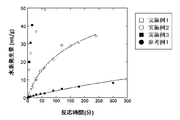
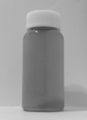
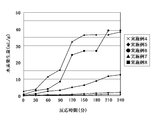
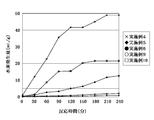
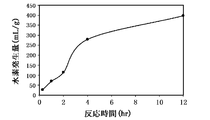
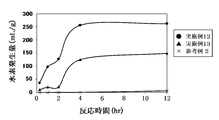
- 6 is a graph showing the amount of hydrogen generated in Examples 1 to 3 and Reference Example 1. It is a photograph in a state where the solid dosage form of the first embodiment of the present invention is immersed in pure water for 60 seconds to collapse the dosage form. 6 is a graph showing the amount of hydrogen generated in Examples 4 to 8. It is a graph which shows the hydrogen generation amount of Example 9,10. 10 is a graph showing the amount of hydrogen generated in Example 11. It is a graph which shows the hydrogen generation amount of Examples 12 and 13 and Reference Example 2.
- the solid preparation of the present embodiment is a solid preparation having silicon fine particles as a main component and hydrogen generation ability.
- commercially available high purity silicon particle powder manufactured by High Purity Chemical Co., Ltd., particle size distribution ⁇ 5 ⁇ m (typically, silicon particles having a crystal grain size of more than 1 ⁇ m, purity 99) .9%, i-type silicon>) is refined by a bead mill method, and silicon fine particles (hereinafter, also referred to as “silicon nanoparticles” for convenience) are used.
- IPA isopropyl alcohol
- a bead mill device manufactured by Imex Co., Ltd .: RMB type badge-type ready mill
- zirconia having a diameter of 0.5 ⁇ m.
- the beads (capacity 300 ml) are added and pulverized (one-step pulverization) at 2500 rpm for 4 hours to make fine.
- the silicon nanoparticles containing beads are separated from the silicon nanoparticles by suction filtration using a stainless steel material filter (mesh 0.35 mm) attached to a bead separation container (manufactured by Imex Corporation).
- the IPA solution containing the silicon nanoparticles separated from the beads is heated to 40 ° C. using a vacuum evaporator, thereby evaporating IPA to obtain silicon nanoparticles.
- the silicon nanoparticles obtained by the above method are mainly composed of silicon fine particles having a crystallite diameter of 1 nm to 100 nm. More specifically, as a result of measuring silicon nanoparticles with an X-ray diffractometer (Rigaku Electric Smart Lab), the following values were obtained as an example. In the volume distribution, the mode diameter was 6.6 nm, the median diameter was 14.0 nm, and the average crystallite diameter was 20.3 nm.
- silicon nanoparticles When the silicon nanoparticles were observed using an SEM (scanning electron microscope), some of the silicon nanoparticles were aggregated to form slightly larger, irregular aggregates of about 0.5 ⁇ m or less. In addition, when individual silicon nanoparticles were observed using a TEM (transmission electron microscope), most of them had a crystallite diameter of about 2 nm to 20 nm.
- FIG. 1 is a perspective view of a tablet as an example
- FIG. 1B is a side view of the tablet as an example.
- a tablet is an example of a bulk preparation that is a solid preparation.
- a tablet is obtained by performing the same treatment as in the second embodiment except that the amount of citric acid is 200 mg.
- This tablet is a cylindrical tablet similar to the tablet shown in FIG. 1, and has a diameter of 8 mm and a height of 10 mm.
- the silicon nanoparticles described in the first embodiment are immersed in a hydrofluoric acid aqueous solution having a concentration of 5% by mass for 10 minutes. Then, the silicon nanoparticles are trapped on the membrane filter by performing filtration in the air using a membrane filter made of fluororesin having a 100 nm mesh. The membrane filter is held on a fluororesin beaker while the silicon nanoparticles are trapped on the filter. And ethanol is dripped at the filter hold
- the present inventors measured the silicon oxide film thickness on the surface of the silicon nanoparticle treated with hydrofluoric acid by the above method by X-ray photoelectron spectroscopy (XPS method).
- the silicon nanoparticles not treated with hydrofluoric acid had a silicon dioxide film with a film thickness of about 1.6 nm.
- the oxide film was removed with high accuracy and became 0.1 nm or less. Therefore, the silicon nanoparticles treated with hydrofluoric acid had almost no oxide film.
- silicon nanoparticles from which the oxide film has been removed by the above-described treatment are used instead of the silicon nanoparticles of the first embodiment.
- Other conditions were the same as in the second embodiment to obtain tablets.
- This tablet is a columnar tablet similar to the tablet shown in FIG. 1 and has a diameter of 8 mm and a height of 4 mm.
- This tablet is a cylindrical tablet similar to the tablet shown in FIG. 1, and has a diameter of 8 mm and a height of 10 mm.
- ⁇ Sixth Embodiment> The same high-purity silicon particle powder as used in the first embodiment (typically, silicon particles having a crystal grain size of more than 1 ⁇ m) is pulverized in one step by the procedure described in the first embodiment. Subsequently, the beads were obtained by suction filtration using a stainless steel material filter (mesh 0.35 mm) equipped with a bead separation container (manufactured by Imex Co., Ltd.) with ⁇ 0.5 ⁇ m zirconia beads (capacity 300 ml) used for one-step grinding. Is separated from the silicon nanoparticles.
- a stainless steel material filter mesh 0.35 mm
- a bead separation container manufactured by Imex Co., Ltd.
- a bead is separated and a solution containing silicon nanoparticles is added to 0.3 ⁇ m zirconia beads (capacity 300 ml), and pulverized (two-stage pulverization) at 2500 rpm for 4 hours to be refined.
- the silicon nanoparticles containing beads are separated from the silicon nanoparticles using a bead separator equipped with a stainless steel material filter (mesh 0.35 mm).
- the IPA solution containing the silicon nanoparticles separated from the beads is heated to 40 ° C. using a vacuum evaporator similar to the first embodiment, thereby evaporating IPA to obtain silicon nanoparticles.
- the tablet is first brought into contact with gastric juice as a first water-containing liquid having a pH value of less than 7 (more specifically, a pH value of about 3 to 4) in the stomach.
- the tablet passes through the stomach and in the digestive tract at the latter stage of the stomach, specifically in the small intestine and / or large intestine, as a second water-containing liquid having a pH value of 7 or more as the second contact step Contact with.
- the silicon nanoparticle (each tablet as a more specific example) of each of the above-described embodiments for example, an animal (including a human) is orally ingested with the solid preparation, and the pH value is 7 in the first contact step. Less than the first water-containing liquid, and in the subsequent second contact process, the second water-containing liquid having a pH value of 7 or more is contacted, and hydrogen can be generated in the second contact process. Therefore, the solid preparation containing the silicon nanoparticles of each of the embodiments described above can have a significant hydrogen generation ability when it comes into contact with a water-containing liquid having a pH value of 7 or more.
- the tablet of the present embodiment comes into contact with the first water-containing liquid (gastric fluid) in the stomach as the first contact step, and then in the gastrointestinal tract at the later stage of the stomach (more specifically, the small intestine and / or the large intestine).
- the production of hydrogen is promoted by contact with the water-containing liquid.
- the second water-containing liquid exhibits a pH value of 7 or more (in the narrower sense, an alkaline region) due to secretion of pancreatic juice.
- hydrogen can be selectively generated under conditions where hydrogen generation is desired.
- an amount of hydrogen sufficient to extinguish hydroxyl radicals in the body of animals is generated in the intestine with a high absorption rate and is easily taken into the body.
- solid preparations do not generate much hydrogen in the stomach where the pH value is significantly below 7.
- the solid preparation passes through the stomach and disintegrates to become a powder and reaches the small intestine and / or the large intestine.
- the pH value is in the alkaline range of about 7.5 to 8.9, so that the solid preparation generates a lot of hydrogen. This indicates that in the human body (temperature is generally 35 ° C. or higher and 37 ° C. or lower), hydrogen having an antioxidant action can be absorbed with higher accuracy.
- the utilization example as a solid formulation using the silicon nanoparticles described in the first to fifth embodiments is not limited to tablets.
- the same effect as described above can be obtained even when a capsule in which powdered silicon nanoparticles (including those in an aggregated state) are encapsulated instead of a tablet is used. Can be played.
- silicon nanoparticles can generate more hydrogen if they are powdered with a large surface area rather than a lump, but can be easily taken orally by using tablets or capsules.
- the disintegration proceeds and becomes powdery.
- the surface area of the silicon nanoparticles exposed to the gastric fluid and / or stomach contents is reduced, and the water-containing liquid is converted into the water-containing liquid in the small intestine and / or large intestine where the hydrogen generation reaction is to be promoted.
- the exposed surface area can be increased.
- the solid preparation may be a granular preparation.
- Granule preparations are in the form of powder at an early stage after ingestion compared to tablets and capsules.
- gastric juice has a low pH value (less than 7), it hardly generates hydrogen even when it forms powder immediately after reaching the stomach, and generates hydrogen in the presence of water after passing through the stomach.
- the solid preparation may be a powder.
- the powder is easy to handle, for example, when a solid preparation is used as a constituent of food including health food, for example, a food additive.
- silicon fine particles having a crystallite diameter of 1 nm or more and 100 nm or less can be mixed and used as the solid preparation according to the present invention.
- the silicon fine particles are preferably contained in an amount of 1% by mass or more. Although there is no upper limit of the content of silicon fine particles, it is preferably 40% by mass or less in consideration of taste.
- An example of the coating layer that can be applied to the tablet is a known gastric insoluble enteric material that is a coating agent that covers the outermost layer of the tablet.
- the example of the coating layer which can be applied to a capsule is the capsule itself manufactured from the well-known poorly enteric enteric material which encloses silicon fine particles (mainly the aggregate of silicon fine particles).
- an example of a solid preparation suitable as an application example of the silicon nanoparticles of the present embodiment is a tablet that is a lump preparation that is easy to ingest a sufficient amount or a powdery silicon fine particle (agglomerated). Capsules including those in a state).
- a tablet is employ
- a well-known material can be employ
- a preferred example of a more suitable disintegrant is an organic acid, and the most preferred example is citric acid.
- the organic acid can also function as a binder that agglomerates the silicon nanoparticles.
- the temperature condition of the second water-containing liquid for hydrogen generation in each of the above embodiments is not limited. However, if the temperature of the second water-containing liquid is 35 ° C. or higher, the hydrogen generation reaction is promoted.
- the second water-containing liquid is not limited to the liquid in the human body. If the temperature of the second water-containing liquid is 35 ° C. or higher and 50 ° C. or lower, the accuracy is high and hydrogen generation is promoted.
- the upper limit of the temperature of the second water-containing liquid is not originally limited. For example, when using the solid formulation of this embodiment as an industrial chemical, you may exceed 50 degreeC. However, the higher the temperature, the higher the heat resistance required for the equipment (including the container), and the problem that it is necessary to handle with care. Therefore, even when used as an industrial chemical, it is preferably used at 100 ° C. or lower.
- Example 1 First, as for the following Examples 1 to 3, as a preliminary example, the silicon nanoparticles themselves are evaluated without performing the tableting process by the tableting method. Specifically, as Example 1, an experiment was performed at the stage before processing into a solid preparation using silicon nanoparticles pulverized in one stage.
- a glass bottle (with a borosilicate glass thickness of about 1 mm) having a capacity of 100 ml in a powdered state (ie, without mixing or kneading sodium bicarbonate powder) with 10 mg of silicon nanoparticles described in the first embodiment.
- Labone screw tube bottle manufactured by ASONE Put 30 ml of tap water with a pH value of 7.1 into this glass bottle, seal the liquid temperature at 25 ° C., measure the hydrogen concentration in the liquid in the glass bottle, and use this to determine the amount of hydrogen generated. It was.
- a portable dissolved hydrogen meter manufactured by Toa DKK Co., Ltd., model DH-35A was used for measuring the hydrogen concentration.
- Example 2 is the same as Example 1 except that potassium hydroxide is dissolved in ultrapure water to adjust the pH value to 8.0.
- Example 3 is the same as Example 1 except that potassium hydroxide is dissolved in ultrapure water to adjust the pH value to 8.6.
- Reference Example 1 is the same as Example 1 except that ultrapure water is used instead of tap water and the pH value of the solution in the glass bottle is 7.0. Further, Comparative Example 1, which is an example of a water-containing liquid having a pH value of less than 7, was the same as Example 1 except that hydrochloric acid was added to ultrapure water as a pH value adjusting agent to adjust the pH value to 1.5. Evaluation was performed as a condition.
- FIG. 2 shows the results relating to hydrogen generation for Examples 1 to 3, which are preliminary examples, and Reference Example 1.
- the horizontal axis of the graph indicates the time (minutes) in which the silicon nanoparticles are contacted with the water-containing liquid having various pH values by immersing the silicon nanoparticles in the water-containing liquid, and the vertical axis of the graph indicates the amount of hydrogen generated.
- FIG. 2 it was shown that a lot of hydrogen can be generated under the condition where the pH value exceeds 7.
- an interesting result was obtained that the larger the pH value, in other words, the stronger the alkalinity, the greater the amount of hydrogen generated per certain time.
- Example 2 and Example 3 having a pH value of 8 or more showed a significantly larger amount of hydrogen generation than Example 1 having a pH value of less than 8. That is, it was shown that it is preferable to contact a water-containing liquid having a pH value of 8 or more because a large amount of hydrogen can be generated in a short time. In Comparative Example 1 (not shown), only a trace amount of hydrogen of 2 ml / g was generated in 5 hours.
- Examples 1 to 3 Based on the results of the preliminary examples described above (Examples 1 to 3), the present inventor performed each evaluation shown in Example 4 and later on the solid preparations processed using the tableting method.
- Example 4 First, as Example 4, one tablet manufactured by the process described in the first embodiment was placed in a glass bottle with a capacity of 30 ml. Pure water (pH value 7.0) as an example of 30 ml of water-containing liquid was put into this glass bottle, the tablet was immersed therein, and the liquid temperature was maintained at 25 ° C. Under this condition, the glass bottle was sealed, and the hydrogen concentration of the hydrogen water generated in the glass bottle was measured using the apparatus described in Example 1 to determine the amount of hydrogen generation.
- Pure water pH value 7.0
- the shape of the tablet gradually collapsed over time in pure water. Specifically, as shown in FIG. 3, about 60 seconds after the tablet comes into contact with pure water, sodium bicarbonate is dissolved in the liquid, and silicon nanoparticles are diffused almost uniformly in the liquid. However, a part of the container remained on the bottom of the container. As a result, the tablet exhibited a powdery shape (or fine powdery, hereinafter collectively referred to as “powdered”) that does not substantially retain its original shape (hereinafter referred to as “disintegration”).
- the dissolution of the capsule of the capsule containing the powder also means that the dosage form is broken, and the fact that the powder is exposed by the dissolution of the capsule is also included in “disintegration”).
- the pH value of the water-containing liquid in the glass bottle increased to 8.3.
- Example 5 is an example using a tablet manufactured by the process described in the second embodiment.
- the tablet was almost completely disintegrated and became powdery about 5 minutes after contacting with pure water under the temperature condition of 25 ° C.
- the pH value of the water-containing liquid becomes 8 by releasing sodium bicarbonate and citric acid as the tablet disintegrates. .6.
- Example 6 a tablet produced by the procedure described as the third embodiment was used as a tablet. About 5 minutes after the tablet was brought into contact with pure water at a liquid temperature of 25 ° C., the tablet almost completely disintegrated and became powdery. In the process of disintegrating the tablet (that is, until 90 minutes after the tablet comes into contact with pure water), the pH value of the water-containing liquid becomes 8 by releasing sodium bicarbonate and citric acid as the tablet disintegrates. .2 was shown.
- Example 7 a tablet produced by the procedure described as the second embodiment was used as a tablet. Moreover, the water temperature was maintained at 37 degreeC by hold
- Example 8 a tablet produced by the procedure described as the third embodiment was used as a tablet. Moreover, the water temperature was maintained at 37 degreeC by hold
- FIG. 4 shows the results of Examples 4 to 8.
- the horizontal axis in FIG. 4 indicates the time (minutes) during which the tablet is in contact with the water-containing liquid, and the vertical axis in the graph indicates the amount of hydrogen generated.
- Example 4 As shown in FIG. 3, the tablet disintegrated and released sodium bicarbonate. Moreover, as shown in FIG. 4, the amount of hydrogen generation increased with the passage of the contact time between the tablet and the water-containing liquid.
- Example 5 and Example 7 Example 6 and Example 8 were compared, respectively, the amount of hydrogen generation increased under a temperature condition of 37 ° C., which was close to the body temperature. Specifically, it is worthy of special note that in Example 9 and Example 10, it was confirmed that hydrogen of 20 ml / g or more can be generated in 150 minutes (2 and a half hours).
- silicon nanoparticles it can be seen that more hydrogen can be generated by contacting with a water-containing liquid in the form of powder. However, it is difficult to ingest powdered silicon fine particles orally into the digestive tract. Therefore, in this example, solid preparations such as tablets and capsules are used. As shown in FIG. 3, the solid preparation collapses by contacting with a water-containing liquid for a certain period of time and exhibits a powder form.
- the solid preparation of this example became a powder to some extent in the second contact step after being brought into contact with a water-containing liquid having a pH value of less than 7 for which hydrogen generation is not active for a certain period of time to promote disintegration.
- the solid preparation is suitable for use by promoting the generation of hydrogen by bringing it into contact with a water-containing liquid having a pH value of 7 or more, preferably more than 7.4, more preferably 8 or more.
- Example 9 a tablet produced by the procedure described as the fourth embodiment was used as a tablet.
- the water-containing liquid pure water having a pH value of 7.0 was used.
- Example 10 a tablet produced by the procedure described as the fifth embodiment was used as a tablet.
- the water-containing liquid pure water having a pH value of 7.0 was used.
- FIG. 5 shows the results of Examples 9 and 10.
- the results of the above-described Examples 4 to 6 are also displayed.
- the horizontal axis of the graph indicates the time (minutes) in which the tablet is brought into contact with the water-containing liquid
- the vertical axis of the graph indicates the hydrogen concentration in the glass bottle. Specifically, it is worthy of special note that in Example 9 and Example 10, it was confirmed that hydrogen of 20 ml / g or more can be generated in 150 minutes (2 and a half hours).
- Example 11 As Example 11, instead of the silicon nanoparticles of Example 1, surface-treated silicon nanoparticles were used, and hydrogen generation due to reaction with water was observed. Specifically, 2.5 mg of the silicon nanoparticles described in the fourth embodiment were put in the same glass bottle as used in Example 1. The glass bottle was filled with 110 ml of water having a sodium bicarbonate concentration of 0.03% by mass and a pH value of 8.4 to eliminate voids and sealed at a liquid temperature of 37 ° C. The hydrogen concentration was measured and used to determine the amount of hydrogen generated. The hydrogen concentration was measured in the same manner as in Example 1.
- Example 12 silicon nanoparticles obtained by crushing silicon particles in two stages as a solid preparation were used. Specifically, silicon nanoparticles pulverized in two stages according to the procedure described in the sixth embodiment were obtained.
- the obtained silicon nanoparticles were measured with an X-ray diffractometer (Rigaku Electric Smart Lab). As a result, in the volume distribution, the mode diameter was 5.8 nm, the median diameter was 9.6 m, and the average crystallite diameter was 12.2 nm.
- the silicon nanoparticles 2.5 mg pulverized in two steps according to the above procedure were put in a glass bottle with a capacity of 100 ml as in Example 11.
- 110 ml of water having a sodium bicarbonate concentration of 0.03% by mass and a pH value of 8.4 was placed and sealed at a temperature of 37 ° C., and the hydrogen concentration in the liquid in the glass bottle was measured. Using this, the amount of hydrogen generation was determined. The hydrogen concentration was measured in the same manner as in Example 1.
- Example 13 Further, instead of the two-stage pulverized silicon nanoparticles, silicon nanoparticles that were pulverized in one stage, that is, the same silicon nanoparticles as used in Example 1 were used as a solid preparation, under the same conditions as in Example 12. The experiment was conducted.
- Reference Example 2 As Reference Example 2, an experiment was performed under the same conditions as in Example 12 using silicon particles that were not miniaturized, that is, silicon particles having a diameter of 5 ⁇ m, instead of silicon nanoparticles.
- FIG. 7 shows the results of Examples 12 and 13 and Reference Example 2. From the results of Example 1 and Example 12, it was shown that even silicon nanoparticles not subjected to surface treatment generate hydrogen. In addition, the amount of hydrogen generated when the two-stage pulverized silicon nanoparticles were reacted for 12 hours was 262 ml per 1 mg of the silicon nanoparticles, which was larger than 149 ml of the one-stage pulverized silicon nanoparticles. On the other hand, for silicon particles that were not refined and the particle size was not nano-level, the amount of hydrogen generated in a reaction time of 12 hours was only 4.8 ml. From these experiments, it was shown that the smaller the crystallite size of silicon nanoparticles, the more hydrogen is generated. In any of the above-described examples, it is worthy of special mention that hydrogen is continuously generated for at least 12 hours.
- the solid preparation containing fine silicon particles in a water-containing liquid having a pH value of 7 or more is powdery and can generate hydrogen.
- the solid preparation enters the digestive tract including the stomach and intestines of animals by oral administration, and disintegration proceeds through the stomach in a so-called acidic condition having a pH value of less than 7.
- Solid preparations (including their disintegrations) that have been disintegrated are promoted to generate hydrogen after the small intestine where the pancreatic juice is secreted and the pH value exceeds 7 (especially, the alkali range above 7.4).
- the upper limit of the pH value is not particularly limited.
- the pH value range preferable as a bathing agent is 11 or less
- the preferable pH value range as drinking water is 9 or less. Preferably it is less than 11.
- the solid preparation in each of the above-described embodiments or examples suppresses the generation of hydrogen gas in the stomach and generates a lot of hydrogen after passing through the stomach. For this reason, according to each embodiment or each example described above, hydrogen necessary for reducing active oxygen in the body or extinguishing active oxygen is supplied from the small intestine onward while suppressing the generation of hydrogen gas in the stomach. . As a result, the solid preparation in each of the above-described embodiments or examples can greatly contribute to the reduction of active oxygen or the disappearance of active oxygen.
- One aspect of the above-described method for producing a solid preparation includes a step of refining silicon particles having a crystal grain size of more than 1 ⁇ m by a physical pulverization method to obtain silicon fine particles having a crystallite size of 1 nm to 100 nm.
- the solid preparation obtained by the production method contains silicon fine particles as a main component, and has a hydrogen generation ability of 3 ml / g or more when the silicon fine particles come into contact with a water-containing liquid having a pH value of 7 or more.
- a suitable example of the physical pulverization method is a method of pulverizing by a bead mill pulverization method, a planetary ball mill pulverization method, a jet mill pulverization method, or a pulverization method combining two or more of these.
- a particularly preferable example is only a bead mill pulverization method or a pulverization method including at least a bead mill pulverization method.
- a tablet as an example of a solid preparation is employed, but the target of each of the above-described embodiments and examples is not limited to a tablet. Even if other “bulk preparations” (for example, capsules) or solid preparations of granules and powders, which are other examples of solid preparations and do not form lumps, are used. The effect of at least a part of the embodiment and the embodiment can be achieved.
- isopropyl alcohol (IPA) is used for the refinement process of the Si powder in the bead mill apparatus.
- the liquid for dispersing the Si powder in the refinement process is used.
- the type is not limited to isopropyl alcohol (IPA).
- IPA isopropyl alcohol
- the hydrofluoric acid aqueous solution is used in the above-mentioned 4th Embodiment, the liquid which immerses a silicon nanoparticle in 4th Embodiment is not limited to hydrofluoric acid aqueous solution.
- hydrogen peroxide for example, 100 mL of 3.5 wt% hydrogen peroxide contained in a Pyrex (registered trademark) glass container heated to about 75 ° C.
- ethanol and / or hydrogen peroxide water is more safe and secure (for example, having less influence on the human body) from the viewpoint of generating hydrogen by using a material. This is a preferred embodiment.
- the solid preparation of the present invention can also be used, for example, as a feed for animals for breeding, animals for food, animals used for medical purposes, fish for farming, and the like. Furthermore, it can also be used as industrial chemicals or drugs. It can also be used as a human supplement or food additive.
Landscapes
- Health & Medical Sciences (AREA)
- Chemical & Material Sciences (AREA)
- Life Sciences & Earth Sciences (AREA)
- General Health & Medical Sciences (AREA)
- Medicinal Chemistry (AREA)
- Pharmacology & Pharmacy (AREA)
- Animal Behavior & Ethology (AREA)
- Public Health (AREA)
- Veterinary Medicine (AREA)
- Epidemiology (AREA)
- Engineering & Computer Science (AREA)
- Bioinformatics & Cheminformatics (AREA)
- Inorganic Chemistry (AREA)
- Organic Chemistry (AREA)
- Chemical Kinetics & Catalysis (AREA)
- General Chemical & Material Sciences (AREA)
- Nuclear Medicine, Radiotherapy & Molecular Imaging (AREA)
- Molecular Biology (AREA)
- Biophysics (AREA)
- Toxicology (AREA)
- Biochemistry (AREA)
- Combustion & Propulsion (AREA)
- Medicinal Preparation (AREA)
- Pharmaceuticals Containing Other Organic And Inorganic Compounds (AREA)
- Coloring Foods And Improving Nutritive Qualities (AREA)
- Computer Networks & Wireless Communication (AREA)
- General Preparation And Processing Of Foods (AREA)
- Fodder In General (AREA)
- Signal Processing (AREA)
- Physics & Mathematics (AREA)
- General Physics & Mathematics (AREA)
- Computer Hardware Design (AREA)
- Theoretical Computer Science (AREA)
- Human Computer Interaction (AREA)
- General Engineering & Computer Science (AREA)
- Catalysts (AREA)
Abstract
Description
<第1の実施形態>
本実施形態の固形製剤は、シリコン微細粒子を主成分とし、水素発生能を有する、固形製剤である。本実施形態の固形製剤には、シリコン粒子として市販の高純度シリコン粒子粉末(高純度化学社製,粒度分布<φ5μm(ただし、代表的には、結晶粒径が1μm超のシリコン粒子,純度99.9%,i型シリコン>)をビーズミル法によって微細化した、シリコンナノ粒子を主たる粒子とするシリコン微細粒子(以下、便宜的に、「シリコンナノ粒子」ともいう)を用いる。
第1の実施形態において用いたシリコンナノ粒子5mg及び炭酸水素ナトリウム粉末495mgに対して、さらにクエン酸(和光純薬株式会社製、純度99.5%)50mgを加えて混練することによって直径8mm、高さ6mmの円柱型の塊状体を形成することにより、図1に示す錠剤と同様の錠剤を得ることができる。
クエン酸の量を200mgとした以外は、第2の実施形態と同様の処理を行うことによって錠剤を得る。この錠剤は、図1に示す錠剤と同様の円柱型の錠剤であって、その直径は8mmであり、その高さは10mmである。
第1の実施形態において説明したシリコンナノ粒子を、5質量%の濃度のフッ化水素酸水溶液中に10分間浸漬させる。その後、100nmメッシュのフッ素樹脂製のメンブレンフィルターを用いて大気中濾過処理を行うことによって、シリコンナノ粒子をメンブレンフィルター上にトラップする。このメンブレンフィルターを、シリコンナノ粒子をフィルター上にトラップしている状態のまま、フッ素樹脂製ビーカー上に保持する。そしてビーカー上に保持したフィルターにエタノールを滴下することにより、フッ化水素酸成分を除去する。フッ化水素酸成分を除去したメンブレンフルター上のシリコンナノ粒子を、空気中において30分程度乾燥処理する。以上の手順により、フッ化水素酸処理されたシリコンナノ粒子を得る。
第4の実施形態のフッ化水素酸処理されたシリコンナノ粒子に対して、さらに第2の実施形態において説明したクエン酸200mgを加えて混合する。その後、第2の実施形態と同様の処理を行うことによって錠剤を得る。この錠剤は、図1に示す錠剤と同様の円柱型の錠剤であって、その直径は8mmであり、その高さは10mmである。
第1の実施形態で用いたのと同じ高純度シリコン粒子粉末(代表的には、結晶粒径が1μm超のシリコン粒子)を、第1の実施形態で説明した手順で一段階粉砕する。続いて、一段階粉砕に用いるφ0.5μmのジルコニア製ビーズ(容量300ml)をビーズ分離容器(アイメックス株式会社製)に装着したステンレス鋼材フィルター(メッシュ0.35mm)を用いて吸引濾過することによってビーズをシリコンナノ粒子から分離する。ビーズが分離されシリコンナノ粒子を含む溶液に、0.3μmのジルコニア製ビーズ(容量300ml)を加えて4時間、回転数2500rpmで粉砕(二段階粉砕)して微細化する。
<第7の実施形態>
第1~第5の実施形態において説明した錠剤を動物に経口摂取させる。錠剤は、まず第1接触工程として、例えば、胃においてpH値が7未満(より具体的には、pH値が3~4程度)である第1水含有液としての胃液と接触する。また、錠剤は、例えば、胃を通過し、胃の後段の消化管具体的には小腸及び/又は大腸において、第2接触工程としてpH値が7以上の第2水含有液としての消化管内液と接触する。
以下、上述の実施形態をより詳細に説明するために、実施例を挙げて説明するが、上述の実施形態はこれらの例によって限定されるものではない。
まず、以下の実施例1~実施例3については、予備的な実施例として、打錠法による打錠工程を行わずに、シリコンナノ粒子自身を評価する。具体的には、実施例1として、一段階粉砕したシリコンナノ粒子を用いて、固形製剤に加工する前の段階で、実験を行った。
実施例2は、超純水に水酸化カリウムを溶解してpH値を8.0とした以外は実施例1と同じである。
実施例3は、超純水に水酸化カリウムを溶解してpH値を8.6とした以外は実施例1と同じである。
参考例1は、水道水の代わりに超純水を用い、ガラス瓶内液のpH値を7.0とした以外は実施例1と同じである。また、pH値が7未満の水含有液の例である比較例1については、超純水にpH値調整剤として塩酸を添加してpH値を1.5とした以外は実施例1と同条件として評価を行った。
まず、実施例4として、第1の実施態様において説明した処理によって製造した錠剤1個を容量30mlのガラス瓶に入れた。このガラス瓶に30mlの水含有液の例である純水(pH値7.0)を入れて該錠剤を浸漬させ、液温を25℃に維持した。この条件下、ガラス瓶を密閉し、ガラス瓶内において生成した水素水の水素濃度を、実施例1において説明した装置を用いて測定し、水素発生量を求めた。
実施例5は、第2の実施態様において説明した処理によって製造した錠剤を用いた例である。該錠剤は、液温を25℃の温度条件において、純水と接触してから約5分後に、ほぼ全体が崩壊して粉状を呈した。錠剤が崩壊する過程において(すなわち錠剤が純水と接触してから90分後まで)、錠剤の崩壊に伴い炭酸水素ナトリウムとクエン酸とが放出されることにより、水含有液のpH値は8.6を示した。
実施例6は、錠剤として第3の実施態様として説明した手順で作製した錠剤を用いた。該錠剤は、液温を25℃の温度条件において、純水と接触してから約5分後、ほぼ全体が崩壊して粉状を呈した。錠剤が崩壊する過程において(すなわち錠剤が純水と接触してから90分後まで)、錠剤の崩壊に伴い炭酸水素ナトリウムとクエン酸とが放出されることにより、水含有液のpH値は8.2を示した。
実施例7は、錠剤として第2の実施態様として説明した手順で作製した錠剤を用いた。また、ガラス瓶を恒温槽中に保持することより水温を37℃に維持した。水含有液としてはpH値7.0の純水を用いた。該錠剤が純水と接触してから約5分後にほぼ全体が崩壊して粉状を呈した。錠剤の崩壊に伴い炭酸水素ナトリウムとクエン酸とが放出されることにより、水含有液のpH値は8.6を示した。
実施例8は、錠剤として第3の実施態様として説明した手順によって作製した錠剤を用いた。また、ガラス瓶を恒温槽中に保持することより水温を37℃に維持した。水含有液としてはpH値7.0の純水を用いた。該錠剤が純水と接触してから約5分後にほぼ全体が崩壊して粉状を呈した。錠剤の崩壊に伴い炭酸水素ナトリウムとクエン酸とが放出されることにより、水含有液のpH値は8.3を示した。
実施例9においては、錠剤として第4の実施態様として説明した手順によって作製した錠剤を用いた。水含有液としてはpH値が7.0の純水を用いた。該錠剤が純水と接触してから約5分後にほぼ全体が崩壊して粉状を呈し、水含有液のpH値は8.6になった。
実施例10においては、錠剤として第5の実施態様として説明した手順によって作製した錠剤を用いた。水含有液としてはpH値が7.0の純水を用いた。該錠剤が純水と接触してから約5分後にほぼ全体が崩壊して粉状を呈し、水含有液のpH値は8.2になった。
実施例11として、実施例1のシリコンナノ粒子に代えて、表面処理をしたシリコンナノ粒子を用いて、水との反応による水素発生を観測した。具体的には、第4の実施形態において説明したシリコンナノ粒子2.5mgを実施例1で用いたのと同じガラス瓶に入れた。このガラス瓶に炭酸水素ナトリウムの濃度が0.03質量%、pH値8.4の水を110ml入れることによって空隙部分をなくし、液温37℃の温度条件において密閉し、該ガラス瓶内の液中の水素濃度を測定し、これを用いて水素発生量を求めた。水素濃度の測定は、実施例1と同様にした。
実施例12では、固形製剤としてシリコン粒子を2段階破砕して得られたシリコンナノ粒子を用いた。具体的には、第6実施形態で説明した手順に沿って二段階粉砕したシリコンナノ粒子を得た。
また、二段階粉砕のシリコンナノ粒子に代えて、粉砕を一段階としたシリコンナノ粒子、すなわち実施例1で用いたものと同じシリコンナノ粒子を固形製剤として用いて、実施例12と同じ条件で実験を行った。
参考例2としてシリコンナノ粒子に代えて、微細化しないシリコン粒子、すなわち直径が5μmのシリコン粒子を用いて、実施例12と同じ条件で実験を行った。
Claims (14)
- シリコン微細粒子を主成分とし、水素発生能を有する、
固形製剤。 - 主として結晶子径が1nm以上100nm以下のシリコン微細粒子を主成分とし、pH値が7以上の水含有液に接触したときに3ml/g以上の水素発生能を有する、
固形製剤。 - 前記水含有液のpH値を7.4超とするpH値調整剤をさらに含む、
請求項2に記載の固形製剤。 - 前記pH値調整剤が炭酸水素ナトリウムである、
請求項3に記載の固形製剤。 - 有機酸をさらに含む、
請求項1乃至請求項4のいずれか1項に記載の固形製剤。 - 前記シリコン微細粒子を内包するカプセル剤、又は前記シリコン微細粒子が塊状となるよう形成された錠剤である、
請求項1乃至請求項5のいずれか1項に記載の固形製剤。 - 胃内において溶解せず、小腸及び/又は大腸において溶解する被覆層を有する、
請求項1乃至請求項6のいずれか1項に記載の固形製剤。 - 結晶粒径が1μm超のシリコン粒子を物理的粉砕法により微細化し、主として結晶子径が1nm以上100nm以下のシリコン微細粒子とする工程を含み、
前記シリコン微細粒子がpH値7以上の水含有液に接触したときに3ml/g以上の水素発生能を有する、
固形製剤の製造方法。 - 前記物理的粉砕法が、ビーズミル粉砕法、遊星ボールミル粉砕法、ジェットミル粉砕法。又はそれらの組み合わせの粉砕法の中から選択される、
請求項8に記載の固形製剤の製造方法。 - 主として結晶子径が1nm以上100nm以下のシリコン微細粒子を主成分とし、pH値が7以上の水含有液に接触したときに3ml/g以上の水素発生能を有する固形製剤を、pHが7未満の第1水含有液に接触させる第1接触工程と、
前記第1接触工程の後に、前記シリコン微細粒子をpH値が7以上の第2水含有液に接触させる第2接触工程と、を含む、
水素発生方法。 - 35℃以上45℃以下の第2水含有液に接触させる、
請求項10に記載の水素発生方法。 - pH値が8以上の第2水含有液に接触させる、
請求項10又は請求項11に記載の水素発生方法。 - 前記固形製剤が、前記シリコン微細粒子を内包するカプセル剤、及び前記シリコン微細粒子が塊状となるよう形成された錠剤の群から選択される1種である、
請求項10乃至請求項12のいずれか1項に記載の水素発生方法。 - 前記固形製剤を飼育動物に経口摂取させる工程をさらに有し、
前記飼育動物の消化管内において前記固形製剤を崩壊させる、
請求項10乃至請求項13のいずれか1項に記載の水素発生方法。
Priority Applications (14)
| Application Number | Priority Date | Filing Date | Title |
|---|---|---|---|
| JP2017563788A JP6467071B2 (ja) | 2016-01-29 | 2017-01-12 | 固形製剤、固形製剤の製造方法及び水素発生方法 |
| EP17743940.3A EP3409282A4 (en) | 2016-01-29 | 2017-01-12 | SOLID PREPARATION, PROCESS FOR PREPARING THE SOLID PREPARATION AND METHOD FOR PRODUCING HYDROGEN |
| CA3048952A CA3048952A1 (en) | 2016-01-29 | 2017-01-12 | Solid preparation, method for producing solid preparation, and method for generating hydrogen |
| CN201780008361.2A CN108601798A (zh) | 2016-01-29 | 2017-01-12 | 固体制剂、固体制剂的制备方法及析氢方法 |
| CN202211629803.4A CN115919894A (zh) | 2016-01-29 | 2017-01-12 | 固体制剂、固体制剂的制备方法及析氢方法 |
| US16/073,305 US10617712B2 (en) | 2016-01-29 | 2017-01-12 | Solid preparation, method for producing solid reparation, and method for generating hydrogen |
| CN202211634921.4A CN116159073A (zh) | 2016-01-29 | 2017-01-12 | 固体制剂、固体制剂的制备方法及析氢方法 |
| BR112018015391-5A BR112018015391B1 (pt) | 2016-01-29 | 2017-01-12 | Preparação sólida oral, método para produzir uma preparação sólida oral e método para gerar hidrogênio |
| TW111110405A TW202228733A (zh) | 2016-01-29 | 2017-01-23 | 固體製劑、固體製劑的製造方法及析氫方法 |
| TW106102324A TWI728041B (zh) | 2016-01-29 | 2017-01-23 | 固體製劑、固體製劑的製造方法及析氫方法 |
| TW110104778A TWI811631B (zh) | 2016-01-29 | 2017-01-23 | 固體製劑、固體製劑的製造方法及析氫方法 |
| US16/667,477 US11311572B2 (en) | 2016-01-29 | 2019-10-29 | Preparation, method for producing preparation, and method for generating hydrogen |
| US17/679,973 US11752170B2 (en) | 2016-01-29 | 2022-02-24 | Solid preparation, method for producing solid preparation, and method for generating hydrogen |
| US18/355,964 US20230355665A1 (en) | 2016-01-29 | 2023-07-20 | Solid preparation, method for producing solid preparation, and method for generating hydrogen |
Applications Claiming Priority (2)
| Application Number | Priority Date | Filing Date | Title |
|---|---|---|---|
| JP2016-015123 | 2016-01-29 | ||
| JP2016015123 | 2016-01-29 |
Related Child Applications (2)
| Application Number | Title | Priority Date | Filing Date |
|---|---|---|---|
| US16/073,305 A-371-Of-International US10617712B2 (en) | 2016-01-29 | 2017-01-12 | Solid preparation, method for producing solid reparation, and method for generating hydrogen |
| US16/667,477 Continuation US11311572B2 (en) | 2016-01-29 | 2019-10-29 | Preparation, method for producing preparation, and method for generating hydrogen |
Publications (1)
| Publication Number | Publication Date |
|---|---|
| WO2017130709A1 true WO2017130709A1 (ja) | 2017-08-03 |
Family
ID=59398025
Family Applications (1)
| Application Number | Title | Priority Date | Filing Date |
|---|---|---|---|
| PCT/JP2017/000749 Ceased WO2017130709A1 (ja) | 2016-01-29 | 2017-01-12 | 固形製剤、固形製剤の製造方法及び水素発生方法 |
Country Status (8)
| Country | Link |
|---|---|
| US (4) | US10617712B2 (ja) |
| EP (1) | EP3409282A4 (ja) |
| JP (6) | JP6467071B2 (ja) |
| CN (4) | CN116159073A (ja) |
| BR (1) | BR112018015391B1 (ja) |
| CA (1) | CA3048952A1 (ja) |
| TW (3) | TW202228733A (ja) |
| WO (1) | WO2017130709A1 (ja) |
Cited By (22)
| Publication number | Priority date | Publication date | Assignee | Title |
|---|---|---|---|---|
| WO2019211960A1 (ja) | 2018-04-29 | 2019-11-07 | 株式会社Kit | 複合組成物 |
| WO2019235577A1 (ja) | 2018-06-07 | 2019-12-12 | 国立大学法人大阪大学 | 酸化ストレスに起因する疾患の予防又は治療剤 |
| JP2019214556A (ja) * | 2018-06-07 | 2019-12-19 | 国立大学法人大阪大学 | 酸化ストレスに起因する疾患の予防又は治療剤 |
| JP2020007300A (ja) * | 2018-07-02 | 2020-01-16 | 国立大学法人大阪大学 | うつ病又はうつ状態の予防又は治療剤 |
| EP3505491A4 (en) * | 2016-08-23 | 2020-03-11 | Hikaru Kobayashi | CONNECTION, MANUFACTURING METHOD THEREFOR AND HYDROGEN SUPPLY METHOD |
| EP3505151A4 (en) * | 2016-08-23 | 2020-03-11 | Hikaru Kobayashi | HYDROGEN SUPPLY MATERIAL AND MANUFACTURING METHOD THEREFOR, AND HYDROGEN SUPPLY PROCESS |
| US10617712B2 (en) | 2016-01-29 | 2020-04-14 | Kit Co. Ltd. | Solid preparation, method for producing solid reparation, and method for generating hydrogen |
| JP2020079228A (ja) * | 2018-11-13 | 2020-05-28 | 国立大学法人大阪大学 | 二日酔いの予防又は治療剤 |
| JP2020079240A (ja) * | 2018-11-13 | 2020-05-28 | 国立大学法人大阪大学 | パーキンソン病の予防又は治療剤 |
| WO2020152985A1 (ja) | 2019-01-24 | 2020-07-30 | 国立大学法人大阪大学 | 薬剤及びその製造方法 |
| JP2020117481A (ja) * | 2019-01-24 | 2020-08-06 | 国立大学法人大阪大学 | 自閉スペクトラム症の予防又は治療剤 |
| JP2020117482A (ja) * | 2019-01-24 | 2020-08-06 | 国立大学法人大阪大学 | 関節炎の予防又は治療剤 |
| JP2020117486A (ja) * | 2019-01-24 | 2020-08-06 | 国立大学法人大阪大学 | 難聴の予防又は治療剤 |
| JP2020117485A (ja) * | 2019-01-24 | 2020-08-06 | 国立大学法人大阪大学 | 糖尿病の予防又は治療剤 |
| JP2020117480A (ja) * | 2019-01-24 | 2020-08-06 | 国立大学法人大阪大学 | 記憶障害の予防又は治療剤 |
| JP2020117483A (ja) * | 2019-01-24 | 2020-08-06 | 国立大学法人大阪大学 | 内臓不快感の予防又は治療剤 |
| JP2020117484A (ja) * | 2019-01-24 | 2020-08-06 | 国立大学法人大阪大学 | 脊髄損傷後の障害もしくは症状の予防又は治療剤 |
| JP2020200302A (ja) * | 2019-06-06 | 2020-12-17 | 国立大学法人大阪大学 | 虚血性脳血管障害に伴う障害の予防又は治療剤 |
| US11103527B2 (en) | 2017-07-27 | 2021-08-31 | Osaka University | Enteric coated silicon drug and production method therefor |
| WO2021199644A1 (ja) | 2020-04-02 | 2021-10-07 | 株式会社ボスケシリコン | 複合材 |
| WO2021199850A1 (ja) | 2020-04-02 | 2021-10-07 | 株式会社ボスケシリコン | 酸化ストレス抑制剤及び抗酸化剤 |
| WO2022223821A1 (en) | 2021-04-23 | 2022-10-27 | Nacamed As | Silicon particles for hydrogen release |
Families Citing this family (3)
| Publication number | Priority date | Publication date | Assignee | Title |
|---|---|---|---|---|
| JP2017104848A (ja) * | 2015-12-04 | 2017-06-15 | 小林 光 | シリコン微細ナノ粒子及び/又はその凝集体及び生体用水素発生材及びその製造方法並びに水素水とその製造方法及び製造装置 |
| WO2021199792A1 (ja) * | 2020-04-02 | 2021-10-07 | 国立大学法人大阪大学 | 肺炎の予防または治療用製剤 |
| CN116997344A (zh) * | 2021-03-24 | 2023-11-03 | 国立大学法人大阪大学 | 肠内细菌数降低剂 |
Citations (6)
| Publication number | Priority date | Publication date | Assignee | Title |
|---|---|---|---|---|
| WO2005097670A1 (en) * | 2004-04-09 | 2005-10-20 | The University Of British Columbia | Compositions and methods for generating hydrogen from water |
| JP2007521244A (ja) * | 2003-11-10 | 2007-08-02 | ファイン、シーモア、エイチ. | 低用量デスモプレシンを含有する医薬組成物 |
| JP2011506279A (ja) * | 2007-12-08 | 2011-03-03 | バイエル・シェーリング・ファルマ・アクチェンゲゼルシャフト | 経口で分散可能な錠剤 |
| WO2012053472A1 (ja) * | 2010-10-18 | 2012-04-26 | ミズ株式会社 | 生体適用液への水素添加器具 |
| WO2015033815A1 (ja) * | 2013-09-05 | 2015-03-12 | 株式会社Kit | 水素製造装置、水素製造方法、水素製造用シリコン微細粒子、及び水素製造用シリコン微細粒子の製造方法 |
| JP2015531363A (ja) * | 2012-09-26 | 2015-11-02 | マックス−プランク−ゲゼルシャフト・ツア・フェルデルング・デア・ヴィッセンシャフテン・エー・ファオMax−Planck−Gesellschaft zur Foerderung der Wissenschaften e.V. | 水素分子の治療用途 |
Family Cites Families (57)
| Publication number | Priority date | Publication date | Assignee | Title |
|---|---|---|---|---|
| JPH0466189U (ja) | 1990-10-12 | 1992-06-10 | ||
| GB9924334D0 (en) * | 1999-10-15 | 1999-12-15 | Secr Defence | Pharmaceutical products and methods of fabrication therefor |
| JP4051695B2 (ja) * | 2000-05-23 | 2008-02-27 | ニプロ株式会社 | 固形重曹透析用製剤およびその製造方法 |
| US20030033991A1 (en) | 2001-08-07 | 2003-02-20 | Cheng Christopher T. | Portable hydrogen generation using metal emulsions |
| US6638491B2 (en) | 2001-09-21 | 2003-10-28 | Neptec Optical Solutions, Inc. | Method of producing silicon metal particulates of reduced average particle size |
| US20040067247A1 (en) | 2002-09-27 | 2004-04-08 | Xavier De Sloovere | Composition for combating/repelling insects, birds, dirts and parasites |
| JP2004115349A (ja) | 2002-09-30 | 2004-04-15 | Honda Motor Co Ltd | 水素発生方法 |
| EP1452484A1 (en) * | 2003-02-21 | 2004-09-01 | Projectadvies Waalhof B.V. | Hydrogen peroxide solution |
| EA018643B1 (ru) | 2004-02-23 | 2013-09-30 | Цайтэн Чжан | Раствор металлсодержащего хелатного полимера и его применение (варианты) |
| JP2006071330A (ja) | 2004-08-31 | 2006-03-16 | Tokyo Denki Univ | 癌細胞検知・視覚用ナノシリコン蛍光素子とその製造方法 |
| JP2006083078A (ja) | 2004-09-14 | 2006-03-30 | Umebayashi Wataru | 入浴剤組成物 |
| GB0504657D0 (en) * | 2005-03-05 | 2005-04-13 | Psimedica Ltd | Compositions and methods of treatment |
| DE102005034350A1 (de) | 2005-07-22 | 2007-01-25 | Consortium für elektrochemische Industrie GmbH | Lacke enthaltend Partikel |
| GB0515353D0 (en) | 2005-07-27 | 2005-08-31 | Psimedica Ltd | Food |
| WO2007026533A1 (ja) * | 2005-08-30 | 2007-03-08 | Tokyo Denki University | ナノシリコン含有溶解錠剤とその製造方法 |
| TW200722178A (en) | 2005-12-09 | 2007-06-16 | Diamond Polymer Science Co Ltd | Grinding method for the nanonization of hard material and product made thereby |
| JP2008019115A (ja) | 2006-07-11 | 2008-01-31 | Catalysts & Chem Ind Co Ltd | シリコン微粒子の製造方法 |
| JP4837465B2 (ja) * | 2006-07-11 | 2011-12-14 | 日揮触媒化成株式会社 | シリコン微粒子含有液の製造方法およびシリコン微粒子の製造方法 |
| JP2008036530A (ja) | 2006-08-04 | 2008-02-21 | Seiki Shiga | 活性水素溶存水の生成方法および生成装置 |
| CN101121755B (zh) * | 2006-08-08 | 2012-04-11 | 信越化学工业株式会社 | 低取代羟丙基纤维素粉末及其制备方法 |
| US8343547B2 (en) * | 2006-08-08 | 2013-01-01 | Shin-Etsu Chemical Co., Ltd. | Solid dosage form comprising solid dispersion |
| JP2008247839A (ja) | 2007-03-30 | 2008-10-16 | Toyobo Co Ltd | カルコン配糖体を含む抗酸化剤 |
| JP2010045204A (ja) | 2008-08-13 | 2010-02-25 | Hikari Kobayashi | 半導体基板、半導体装置およびその製造方法 |
| GB0817936D0 (en) * | 2008-09-30 | 2008-11-05 | Intrinsiq Materials Global Ltd | Porous materials |
| EP2426086A1 (en) * | 2009-04-28 | 2012-03-07 | SUMCO Corporation | Method for cleaning silicon sludge |
| JP2010265158A (ja) | 2009-05-18 | 2010-11-25 | Mitsubishi Electric Corp | 珪素微粒子の製造方法 |
| JP2011026211A (ja) | 2009-07-21 | 2011-02-10 | Niigata Univ | 水素発生粉末含有マイクロカプセルの製造方法 |
| GB0919830D0 (en) * | 2009-11-12 | 2009-12-30 | Isis Innovation | Preparation of silicon for fast generation of hydrogen through reaction with water |
| EP3020393B1 (en) * | 2009-12-16 | 2020-10-07 | 3M Innovative Properties Company | Formulations and methods for controlling mdi particle size delivery |
| JP2011146460A (ja) | 2010-01-13 | 2011-07-28 | Sumco Corp | シリコンウェーハの表面浄化方法 |
| CN101791427B (zh) * | 2010-01-26 | 2013-09-04 | 南京工业大学 | 具有生物活性碱性激发纳米二氧化硅自固化材料及其制备方法和应用 |
| US20120315684A1 (en) | 2010-01-31 | 2012-12-13 | Saga University | Plasma Oxidation-Reduction Method, Method for Promoting Plant/Animal Growth Using the Same, and Plasma-Generating Device for Use in Method for Promoting Plant/Animal Growth |
| JP2011218340A (ja) | 2010-04-06 | 2011-11-04 | Norihiko Kabayama | 電子水の製造方法 |
| JP5695842B2 (ja) | 2010-06-02 | 2015-04-08 | シャープ株式会社 | リチウム含有複合酸化物の製造方法 |
| JP5514140B2 (ja) | 2011-04-04 | 2014-06-04 | 株式会社日省エンジニアリング | ポット型飲料用水素水の生成器 |
| GB201121288D0 (en) | 2011-12-12 | 2012-01-25 | Univ Muenster Wilhelms | Functionalised silicon nanoparticles |
| EP2630944A1 (en) * | 2012-02-23 | 2013-08-28 | Edmund Herzog | Silicon-based particle composition |
| JP5910226B2 (ja) | 2012-03-26 | 2016-04-27 | 栗田工業株式会社 | 微粒子の洗浄方法 |
| JP2013228319A (ja) | 2012-04-26 | 2013-11-07 | Kurita Water Ind Ltd | 純水の水質評価方法 |
| JP2014019689A (ja) | 2012-07-23 | 2014-02-03 | Kracie Home Products Ltd | 水素発生用粉末 |
| KR101318939B1 (ko) | 2012-09-20 | 2013-11-13 | 한국화학연구원 | 실리콘 나노입자의 제조방법 및 실리콘 나노입자 분산액의 제조방법 |
| WO2014049677A1 (ja) * | 2012-09-25 | 2014-04-03 | 住金物産株式会社 | シリコン合金蛍光体のシリーズとその製造方法、及び同シリコン合金蛍光体のシリーズを用いた発光装置とその透光材 |
| JP2014084233A (ja) | 2012-10-19 | 2014-05-12 | Seiji Endo | 水素発生用乾燥シート |
| JP2014193792A (ja) | 2013-03-29 | 2014-10-09 | Bridgestone Corp | 珪素微粒子の製造方法 |
| JP2014205635A (ja) | 2013-04-12 | 2014-10-30 | クラシエホームプロダクツ株式会社 | 水素発生性組成物及び浴用組成物 |
| JP2014227346A (ja) | 2013-05-18 | 2014-12-08 | クラシエホームプロダクツ株式会社 | 包装方法および水素含有化粧料 |
| JP2015113331A (ja) | 2013-12-16 | 2015-06-22 | 株式会社光未来 | 水素含有組成物および該水素含有組成物を用いた水素の添加方法 |
| JPWO2016010139A1 (ja) | 2014-07-18 | 2017-04-27 | 株式会社ヴェルシーナ | 化粧用塗布剤、化粧用水素充填物の製造方法および化粧用水素充填物 |
| JP6768528B2 (ja) | 2015-02-09 | 2020-10-14 | 株式会社カネカ | 酸化型グルタチオンを含む徐放性肥料 |
| JP2017104848A (ja) | 2015-12-04 | 2017-06-15 | 小林 光 | シリコン微細ナノ粒子及び/又はその凝集体及び生体用水素発生材及びその製造方法並びに水素水とその製造方法及び製造装置 |
| JP2016155118A (ja) | 2015-02-24 | 2016-09-01 | 小林 光 | 水素水、その製造方法及び製造装置 |
| JP2016001613A (ja) * | 2015-07-30 | 2016-01-07 | 小林 光 | リチウムイオン電池の負極材料、リチウムイオン電池、リチウムイオン電池の負極又は負極材料の製造方法 |
| WO2017130709A1 (ja) * | 2016-01-29 | 2017-08-03 | 小林 光 | 固形製剤、固形製剤の製造方法及び水素発生方法 |
| JP6916184B2 (ja) | 2016-08-23 | 2021-08-11 | 株式会社Kit | 配合物の製造方法 |
| CN110191699A (zh) | 2016-08-23 | 2019-08-30 | 小林光 | 氢供给材料与其制造方法、及氢供给方法 |
| EP4495059A3 (en) | 2017-07-27 | 2025-03-26 | Osaka University | Silicon nanoparticles for use in treating kidney diseases |
| US10617782B2 (en) | 2017-08-17 | 2020-04-14 | Bolb Inc. | Flowing fluid disinfection method and disinfector |
-
2017
- 2017-01-12 WO PCT/JP2017/000749 patent/WO2017130709A1/ja not_active Ceased
- 2017-01-12 CN CN202211634921.4A patent/CN116159073A/zh active Pending
- 2017-01-12 CN CN202110564197.1A patent/CN113262204A/zh active Pending
- 2017-01-12 EP EP17743940.3A patent/EP3409282A4/en not_active Withdrawn
- 2017-01-12 US US16/073,305 patent/US10617712B2/en active Active
- 2017-01-12 CA CA3048952A patent/CA3048952A1/en active Pending
- 2017-01-12 JP JP2017563788A patent/JP6467071B2/ja active Active
- 2017-01-12 BR BR112018015391-5A patent/BR112018015391B1/pt active IP Right Grant
- 2017-01-12 CN CN202211629803.4A patent/CN115919894A/zh active Pending
- 2017-01-12 CN CN201780008361.2A patent/CN108601798A/zh active Pending
- 2017-01-23 TW TW111110405A patent/TW202228733A/zh unknown
- 2017-01-23 TW TW110104778A patent/TWI811631B/zh active
- 2017-01-23 TW TW106102324A patent/TWI728041B/zh active
-
2018
- 2018-12-06 JP JP2018229323A patent/JP6508664B1/ja active Active
-
2019
- 2019-02-27 JP JP2019034384A patent/JP6986525B2/ja active Active
- 2019-10-29 US US16/667,477 patent/US11311572B2/en active Active
-
2021
- 2021-04-12 JP JP2021066958A patent/JP7102573B2/ja active Active
- 2021-11-09 JP JP2021182376A patent/JP7222053B2/ja active Active
-
2022
- 2022-02-24 US US17/679,973 patent/US11752170B2/en active Active
- 2022-12-15 JP JP2022199938A patent/JP2023036724A/ja active Pending
-
2023
- 2023-07-20 US US18/355,964 patent/US20230355665A1/en not_active Abandoned
Patent Citations (6)
| Publication number | Priority date | Publication date | Assignee | Title |
|---|---|---|---|---|
| JP2007521244A (ja) * | 2003-11-10 | 2007-08-02 | ファイン、シーモア、エイチ. | 低用量デスモプレシンを含有する医薬組成物 |
| WO2005097670A1 (en) * | 2004-04-09 | 2005-10-20 | The University Of British Columbia | Compositions and methods for generating hydrogen from water |
| JP2011506279A (ja) * | 2007-12-08 | 2011-03-03 | バイエル・シェーリング・ファルマ・アクチェンゲゼルシャフト | 経口で分散可能な錠剤 |
| WO2012053472A1 (ja) * | 2010-10-18 | 2012-04-26 | ミズ株式会社 | 生体適用液への水素添加器具 |
| JP2015531363A (ja) * | 2012-09-26 | 2015-11-02 | マックス−プランク−ゲゼルシャフト・ツア・フェルデルング・デア・ヴィッセンシャフテン・エー・ファオMax−Planck−Gesellschaft zur Foerderung der Wissenschaften e.V. | 水素分子の治療用途 |
| WO2015033815A1 (ja) * | 2013-09-05 | 2015-03-12 | 株式会社Kit | 水素製造装置、水素製造方法、水素製造用シリコン微細粒子、及び水素製造用シリコン微細粒子の製造方法 |
Non-Patent Citations (1)
| Title |
|---|
| SHINSUKE MATSUDA ET AL.: "11a-A27-6 Concentration of hydrogen molecules and splitting water using silicon nanoparticle", THE 62ND JSAP SPRING MEETING KOEN YOKOSHU. DAI 62KAI ŌYŌ BUTSURI GAKKAI SHUNKI GAKUJUTSU KŌENKAI : KAISAI BASHO: TŌKAI DAIGAKU SHŌNAN KYANPASU, 2015, pages 12-031, XP009512372, ISBN: 978-4-86348-483-2 * |
Cited By (48)
| Publication number | Priority date | Publication date | Assignee | Title |
|---|---|---|---|---|
| US10617712B2 (en) | 2016-01-29 | 2020-04-14 | Kit Co. Ltd. | Solid preparation, method for producing solid reparation, and method for generating hydrogen |
| US11311572B2 (en) | 2016-01-29 | 2022-04-26 | Bosquet Silicon Corp. | Preparation, method for producing preparation, and method for generating hydrogen |
| US11752170B2 (en) | 2016-01-29 | 2023-09-12 | Bosquet Silicon Corp. | Solid preparation, method for producing solid preparation, and method for generating hydrogen |
| EP3505151A4 (en) * | 2016-08-23 | 2020-03-11 | Hikaru Kobayashi | HYDROGEN SUPPLY MATERIAL AND MANUFACTURING METHOD THEREFOR, AND HYDROGEN SUPPLY PROCESS |
| US11583483B2 (en) | 2016-08-23 | 2023-02-21 | Bosquet Silicon Corp. | Hydrogen supply material and production therefor, and hydrogen supply method |
| US11707063B2 (en) | 2016-08-23 | 2023-07-25 | Bosquet Silicon Corp. | Compound, production method therefor, and hydrogen supply method |
| EP3505491A4 (en) * | 2016-08-23 | 2020-03-11 | Hikaru Kobayashi | CONNECTION, MANUFACTURING METHOD THEREFOR AND HYDROGEN SUPPLY METHOD |
| US11951125B2 (en) | 2017-07-27 | 2024-04-09 | Osaka University | Drug and production method therefor |
| US11103527B2 (en) | 2017-07-27 | 2021-08-31 | Osaka University | Enteric coated silicon drug and production method therefor |
| US12070519B2 (en) | 2018-04-29 | 2024-08-27 | Kit Co. Ltd | Composite composition |
| JP2023145445A (ja) * | 2018-04-29 | 2023-10-11 | 株式会社Kit | 水素発生用複合組成物 |
| WO2019211960A1 (ja) | 2018-04-29 | 2019-11-07 | 株式会社Kit | 複合組成物 |
| US12533376B2 (en) | 2018-06-07 | 2026-01-27 | Osaka University | Prophylactic or therapeutic agent for disease induced by oxidative stress |
| WO2019235577A1 (ja) | 2018-06-07 | 2019-12-12 | 国立大学法人大阪大学 | 酸化ストレスに起因する疾患の予防又は治療剤 |
| JP2019214556A (ja) * | 2018-06-07 | 2019-12-19 | 国立大学法人大阪大学 | 酸化ストレスに起因する疾患の予防又は治療剤 |
| JP7333941B2 (ja) | 2018-06-07 | 2023-08-28 | 国立大学法人大阪大学 | 酸化ストレスに起因する疾患の予防又は治療剤 |
| CN112351783A (zh) * | 2018-06-07 | 2021-02-09 | 国立大学法人大阪大学 | 氧化应激诱发的疾病的预防或治疗药物 |
| JP2020007300A (ja) * | 2018-07-02 | 2020-01-16 | 国立大学法人大阪大学 | うつ病又はうつ状態の予防又は治療剤 |
| JP7345824B2 (ja) | 2018-07-02 | 2023-09-19 | 国立大学法人大阪大学 | うつ病又はうつ状態の予防又は治療剤 |
| JP2020079240A (ja) * | 2018-11-13 | 2020-05-28 | 国立大学法人大阪大学 | パーキンソン病の予防又は治療剤 |
| JP7461003B2 (ja) | 2018-11-13 | 2024-04-03 | 国立大学法人大阪大学 | パーキンソン病の予防又は治療剤 |
| JP2020079228A (ja) * | 2018-11-13 | 2020-05-28 | 国立大学法人大阪大学 | 二日酔いの予防又は治療剤 |
| US20220088064A1 (en) * | 2019-01-24 | 2022-03-24 | Osaka University | Drug and production method therefor |
| JP7461007B2 (ja) | 2019-01-24 | 2024-04-03 | 国立大学法人大阪大学 | 内臓不快感の予防又は治療剤 |
| WO2020152985A1 (ja) | 2019-01-24 | 2020-07-30 | 国立大学法人大阪大学 | 薬剤及びその製造方法 |
| JP2021121641A (ja) * | 2019-01-24 | 2021-08-26 | 国立大学法人大阪大学 | 薬剤及びその製造方法 |
| US20250032534A1 (en) * | 2019-01-24 | 2025-01-30 | Osaka University | Drug and production method therefor |
| JPWO2020152985A1 (ja) * | 2019-01-24 | 2021-05-20 | 国立大学法人大阪大学 | 薬剤及びその製造方法 |
| JP2020117481A (ja) * | 2019-01-24 | 2020-08-06 | 国立大学法人大阪大学 | 自閉スペクトラム症の予防又は治療剤 |
| JP2020117482A (ja) * | 2019-01-24 | 2020-08-06 | 国立大学法人大阪大学 | 関節炎の予防又は治療剤 |
| JP2020117484A (ja) * | 2019-01-24 | 2020-08-06 | 国立大学法人大阪大学 | 脊髄損傷後の障害もしくは症状の予防又は治療剤 |
| JP2020117483A (ja) * | 2019-01-24 | 2020-08-06 | 国立大学法人大阪大学 | 内臓不快感の予防又は治療剤 |
| JP2020117480A (ja) * | 2019-01-24 | 2020-08-06 | 国立大学法人大阪大学 | 記憶障害の予防又は治療剤 |
| JP2020117485A (ja) * | 2019-01-24 | 2020-08-06 | 国立大学法人大阪大学 | 糖尿病の予防又は治療剤 |
| JP2024040386A (ja) * | 2019-01-24 | 2024-03-25 | 国立大学法人大阪大学 | 薬剤及びその製造方法 |
| JP7461009B2 (ja) | 2019-01-24 | 2024-04-03 | 国立大学法人大阪大学 | 糖尿病の予防又は治療剤 |
| JP7461005B2 (ja) | 2019-01-24 | 2024-04-03 | 国立大学法人大阪大学 | 自閉スペクトラム症の予防又は治療剤 |
| JP7461004B2 (ja) | 2019-01-24 | 2024-04-03 | 国立大学法人大阪大学 | 記憶障害の予防又は治療剤 |
| JP7461008B2 (ja) | 2019-01-24 | 2024-04-03 | 国立大学法人大阪大学 | 脊髄損傷後の障害もしくは症状の予防又は治療剤 |
| JP7461006B2 (ja) | 2019-01-24 | 2024-04-03 | 国立大学法人大阪大学 | 関節炎の予防又は治療剤 |
| JP2020117486A (ja) * | 2019-01-24 | 2020-08-06 | 国立大学法人大阪大学 | 難聴の予防又は治療剤 |
| JP7461011B2 (ja) | 2019-01-24 | 2024-04-03 | 国立大学法人大阪大学 | 難聴の予防又は治療剤 |
| JP7461010B2 (ja) | 2019-06-06 | 2024-04-03 | 国立大学法人大阪大学 | 虚血性脳血管障害に伴う障害の予防又は治療剤 |
| JP2020200302A (ja) * | 2019-06-06 | 2020-12-17 | 国立大学法人大阪大学 | 虚血性脳血管障害に伴う障害の予防又は治療剤 |
| WO2021199850A1 (ja) | 2020-04-02 | 2021-10-07 | 株式会社ボスケシリコン | 酸化ストレス抑制剤及び抗酸化剤 |
| US20230149445A1 (en) * | 2020-04-02 | 2023-05-18 | Bosquet Silicon Corp. | Oxidative stress inhibitor and antioxidant agent |
| WO2021199644A1 (ja) | 2020-04-02 | 2021-10-07 | 株式会社ボスケシリコン | 複合材 |
| WO2022223821A1 (en) | 2021-04-23 | 2022-10-27 | Nacamed As | Silicon particles for hydrogen release |
Also Published As
| Publication number | Publication date |
|---|---|
| JP6467071B2 (ja) | 2019-02-06 |
| JP2023036724A (ja) | 2023-03-14 |
| US20190038664A1 (en) | 2019-02-07 |
| JP2022033755A (ja) | 2022-03-02 |
| BR112018015391A2 (ja) | 2018-12-18 |
| JP7102573B2 (ja) | 2022-07-19 |
| US20200067554A1 (en) | 2020-02-27 |
| EP3409282A4 (en) | 2019-08-28 |
| JP2019142861A (ja) | 2019-08-29 |
| JP7222053B2 (ja) | 2023-02-14 |
| JP2019069959A (ja) | 2019-05-09 |
| BR112018015391B1 (pt) | 2023-09-26 |
| TW202228733A (zh) | 2022-08-01 |
| CN116159073A (zh) | 2023-05-26 |
| CA3048952A1 (en) | 2017-08-03 |
| US11752170B2 (en) | 2023-09-12 |
| CN115919894A (zh) | 2023-04-07 |
| JP6508664B1 (ja) | 2019-05-08 |
| TWI728041B (zh) | 2021-05-21 |
| US20220175826A1 (en) | 2022-06-09 |
| JPWO2017130709A1 (ja) | 2018-11-29 |
| US10617712B2 (en) | 2020-04-14 |
| EP3409282A1 (en) | 2018-12-05 |
| TWI811631B (zh) | 2023-08-11 |
| JP6986525B2 (ja) | 2021-12-22 |
| TW201726147A (zh) | 2017-08-01 |
| TW202126314A (zh) | 2021-07-16 |
| US20230355665A1 (en) | 2023-11-09 |
| JP2021119143A (ja) | 2021-08-12 |
| CN113262204A (zh) | 2021-08-17 |
| CN108601798A (zh) | 2018-09-28 |
| US11311572B2 (en) | 2022-04-26 |
Similar Documents
| Publication | Publication Date | Title |
|---|---|---|
| JP6467071B2 (ja) | 固形製剤、固形製剤の製造方法及び水素発生方法 | |
| JP7493842B2 (ja) | 腎臓の疾患の予防のための薬剤の原体の製造方法 | |
| JP7345824B2 (ja) | うつ病又はうつ状態の予防又は治療剤 | |
| JP7461005B2 (ja) | 自閉スペクトラム症の予防又は治療剤 | |
| JP2024040386A (ja) | 薬剤及びその製造方法 | |
| JP2020079228A (ja) | 二日酔いの予防又は治療剤 |
Legal Events
| Date | Code | Title | Description |
|---|---|---|---|
| 121 | Ep: the epo has been informed by wipo that ep was designated in this application |
Ref document number: 17743940 Country of ref document: EP Kind code of ref document: A1 |
|
| ENP | Entry into the national phase |
Ref document number: 2017563788 Country of ref document: JP Kind code of ref document: A |
|
| WWE | Wipo information: entry into national phase |
Ref document number: 122021025241 Country of ref document: BR |
|
| NENP | Non-entry into the national phase |
Ref country code: DE |
|
| REG | Reference to national code |
Ref country code: BR Ref legal event code: B01A Ref document number: 112018015391 Country of ref document: BR |
|
| WWE | Wipo information: entry into national phase |
Ref document number: 2017743940 Country of ref document: EP |
|
| ENP | Entry into the national phase |
Ref document number: 2017743940 Country of ref document: EP Effective date: 20180829 |
|
| ENP | Entry into the national phase |
Ref document number: 112018015391 Country of ref document: BR Kind code of ref document: A2 Effective date: 20180727 |
|
| ENP | Entry into the national phase |
Ref document number: 3048952 Country of ref document: CA |