WO2017136556A1 - Compositions and methods for treating infections - Google Patents
Compositions and methods for treating infections Download PDFInfo
- Publication number
- WO2017136556A1 WO2017136556A1 PCT/US2017/016224 US2017016224W WO2017136556A1 WO 2017136556 A1 WO2017136556 A1 WO 2017136556A1 US 2017016224 W US2017016224 W US 2017016224W WO 2017136556 A1 WO2017136556 A1 WO 2017136556A1
- Authority
- WO
- WIPO (PCT)
- Prior art keywords
- compound
- alkyl
- substituted
- independently selected
- cycloalkyl
- Prior art date
- Legal status (The legal status is an assumption and is not a legal conclusion. Google has not performed a legal analysis and makes no representation as to the accuracy of the status listed.)
- Ceased
Links
- 0 C1C2C1CCC*2 Chemical compound C1C2C1CCC*2 0.000 description 8
- NVJSDHWZOFXFSJ-UHFFFAOYSA-N CCCc(nc(N)nc1N)c1N(CC1)CCN1c1ccccc1 Chemical compound CCCc(nc(N)nc1N)c1N(CC1)CCN1c1ccccc1 NVJSDHWZOFXFSJ-UHFFFAOYSA-N 0.000 description 1
Classifications
-
- C—CHEMISTRY; METALLURGY
- C07—ORGANIC CHEMISTRY
- C07D—HETEROCYCLIC COMPOUNDS
- C07D403/00—Heterocyclic compounds containing two or more hetero rings, having nitrogen atoms as the only ring hetero atoms, not provided for by group C07D401/00
- C07D403/14—Heterocyclic compounds containing two or more hetero rings, having nitrogen atoms as the only ring hetero atoms, not provided for by group C07D401/00 containing three or more hetero rings
-
- A—HUMAN NECESSITIES
- A61—MEDICAL OR VETERINARY SCIENCE; HYGIENE
- A61K—PREPARATIONS FOR MEDICAL, DENTAL OR TOILETRY PURPOSES
- A61K31/00—Medicinal preparations containing organic active ingredients
- A61K31/33—Heterocyclic compounds
- A61K31/395—Heterocyclic compounds having nitrogen as a ring hetero atom, e.g. guanethidine or rifamycins
- A61K31/495—Heterocyclic compounds having nitrogen as a ring hetero atom, e.g. guanethidine or rifamycins having six-membered rings with two or more nitrogen atoms as the only ring heteroatoms, e.g. piperazine or tetrazines
- A61K31/505—Pyrimidines; Hydrogenated pyrimidines, e.g. trimethoprim
- A61K31/506—Pyrimidines; Hydrogenated pyrimidines, e.g. trimethoprim not condensed and containing further heterocyclic rings
-
- A—HUMAN NECESSITIES
- A61—MEDICAL OR VETERINARY SCIENCE; HYGIENE
- A61P—SPECIFIC THERAPEUTIC ACTIVITY OF CHEMICAL COMPOUNDS OR MEDICINAL PREPARATIONS
- A61P33/00—Antiparasitic agents
- A61P33/02—Antiprotozoals, e.g. for leishmaniasis, trichomoniasis, toxoplasmosis
-
- C—CHEMISTRY; METALLURGY
- C07—ORGANIC CHEMISTRY
- C07D—HETEROCYCLIC COMPOUNDS
- C07D239/00—Heterocyclic compounds containing 1,3-diazine or hydrogenated 1,3-diazine rings
- C07D239/02—Heterocyclic compounds containing 1,3-diazine or hydrogenated 1,3-diazine rings not condensed with other rings
- C07D239/24—Heterocyclic compounds containing 1,3-diazine or hydrogenated 1,3-diazine rings not condensed with other rings having three or more double bonds between ring members or between ring members and non-ring members
- C07D239/28—Heterocyclic compounds containing 1,3-diazine or hydrogenated 1,3-diazine rings not condensed with other rings having three or more double bonds between ring members or between ring members and non-ring members with hetero atoms or with carbon atoms having three bonds to hetero atoms with at the most one bond to halogen, directly attached to ring carbon atoms
- C07D239/46—Two or more oxygen, sulphur or nitrogen atoms
- C07D239/50—Three nitrogen atoms
-
- C—CHEMISTRY; METALLURGY
- C07—ORGANIC CHEMISTRY
- C07D—HETEROCYCLIC COMPOUNDS
- C07D401/00—Heterocyclic compounds containing two or more hetero rings, having nitrogen atoms as the only ring hetero atoms, at least one ring being a six-membered ring with only one nitrogen atom
- C07D401/02—Heterocyclic compounds containing two or more hetero rings, having nitrogen atoms as the only ring hetero atoms, at least one ring being a six-membered ring with only one nitrogen atom containing two hetero rings
- C07D401/04—Heterocyclic compounds containing two or more hetero rings, having nitrogen atoms as the only ring hetero atoms, at least one ring being a six-membered ring with only one nitrogen atom containing two hetero rings directly linked by a ring-member-to-ring-member bond
-
- C—CHEMISTRY; METALLURGY
- C07—ORGANIC CHEMISTRY
- C07D—HETEROCYCLIC COMPOUNDS
- C07D401/00—Heterocyclic compounds containing two or more hetero rings, having nitrogen atoms as the only ring hetero atoms, at least one ring being a six-membered ring with only one nitrogen atom
- C07D401/02—Heterocyclic compounds containing two or more hetero rings, having nitrogen atoms as the only ring hetero atoms, at least one ring being a six-membered ring with only one nitrogen atom containing two hetero rings
- C07D401/12—Heterocyclic compounds containing two or more hetero rings, having nitrogen atoms as the only ring hetero atoms, at least one ring being a six-membered ring with only one nitrogen atom containing two hetero rings linked by a chain containing hetero atoms as chain links
-
- C—CHEMISTRY; METALLURGY
- C07—ORGANIC CHEMISTRY
- C07D—HETEROCYCLIC COMPOUNDS
- C07D401/00—Heterocyclic compounds containing two or more hetero rings, having nitrogen atoms as the only ring hetero atoms, at least one ring being a six-membered ring with only one nitrogen atom
- C07D401/14—Heterocyclic compounds containing two or more hetero rings, having nitrogen atoms as the only ring hetero atoms, at least one ring being a six-membered ring with only one nitrogen atom containing three or more hetero rings
-
- C—CHEMISTRY; METALLURGY
- C07—ORGANIC CHEMISTRY
- C07D—HETEROCYCLIC COMPOUNDS
- C07D403/00—Heterocyclic compounds containing two or more hetero rings, having nitrogen atoms as the only ring hetero atoms, not provided for by group C07D401/00
- C07D403/02—Heterocyclic compounds containing two or more hetero rings, having nitrogen atoms as the only ring hetero atoms, not provided for by group C07D401/00 containing two hetero rings
- C07D403/04—Heterocyclic compounds containing two or more hetero rings, having nitrogen atoms as the only ring hetero atoms, not provided for by group C07D401/00 containing two hetero rings directly linked by a ring-member-to-ring-member bond
-
- C—CHEMISTRY; METALLURGY
- C07—ORGANIC CHEMISTRY
- C07D—HETEROCYCLIC COMPOUNDS
- C07D403/00—Heterocyclic compounds containing two or more hetero rings, having nitrogen atoms as the only ring hetero atoms, not provided for by group C07D401/00
- C07D403/02—Heterocyclic compounds containing two or more hetero rings, having nitrogen atoms as the only ring hetero atoms, not provided for by group C07D401/00 containing two hetero rings
- C07D403/12—Heterocyclic compounds containing two or more hetero rings, having nitrogen atoms as the only ring hetero atoms, not provided for by group C07D401/00 containing two hetero rings linked by a chain containing hetero atoms as chain links
-
- C—CHEMISTRY; METALLURGY
- C07—ORGANIC CHEMISTRY
- C07D—HETEROCYCLIC COMPOUNDS
- C07D405/00—Heterocyclic compounds containing both one or more hetero rings having oxygen atoms as the only ring hetero atoms, and one or more rings having nitrogen as the only ring hetero atom
- C07D405/02—Heterocyclic compounds containing both one or more hetero rings having oxygen atoms as the only ring hetero atoms, and one or more rings having nitrogen as the only ring hetero atom containing two hetero rings
- C07D405/12—Heterocyclic compounds containing both one or more hetero rings having oxygen atoms as the only ring hetero atoms, and one or more rings having nitrogen as the only ring hetero atom containing two hetero rings linked by a chain containing hetero atoms as chain links
-
- C—CHEMISTRY; METALLURGY
- C07—ORGANIC CHEMISTRY
- C07D—HETEROCYCLIC COMPOUNDS
- C07D405/00—Heterocyclic compounds containing both one or more hetero rings having oxygen atoms as the only ring hetero atoms, and one or more rings having nitrogen as the only ring hetero atom
- C07D405/14—Heterocyclic compounds containing both one or more hetero rings having oxygen atoms as the only ring hetero atoms, and one or more rings having nitrogen as the only ring hetero atom containing three or more hetero rings
-
- Y—GENERAL TAGGING OF NEW TECHNOLOGICAL DEVELOPMENTS; GENERAL TAGGING OF CROSS-SECTIONAL TECHNOLOGIES SPANNING OVER SEVERAL SECTIONS OF THE IPC; TECHNICAL SUBJECTS COVERED BY FORMER USPC CROSS-REFERENCE ART COLLECTIONS [XRACs] AND DIGESTS
- Y02—TECHNOLOGIES OR APPLICATIONS FOR MITIGATION OR ADAPTATION AGAINST CLIMATE CHANGE
- Y02A—TECHNOLOGIES FOR ADAPTATION TO CLIMATE CHANGE
- Y02A50/00—TECHNOLOGIES FOR ADAPTATION TO CLIMATE CHANGE in human health protection, e.g. against extreme weather
- Y02A50/30—Against vector-borne diseases, e.g. mosquito-borne, fly-borne, tick-borne or waterborne diseases whose impact is exacerbated by climate change
Definitions
- Toxoplasmosis is a parasitic infection caused by Toxoplasma gondii (T. gondii). Although toxoplasmosis is most often asymptomatic, persons infected with toxoplasmosis can experience severe symptoms, including seizures, poor coordination, lung damage, eye damage, and brain damage: and the infection in immunocompromised patients is often fatal if not treated.
- Other parasitic protozoan infections include leishmaniasis (also known as ieishmaniosis), caused by protozoans of genus Leishmania, including Leishmania major (L. major)
- Leishmania tropica (L. tropica), Leishmania brasiliensis (L. brasiliensis), and Leishmania donovani (L. donovani); Chagas disease, caused by the protozoan Trypanosoma cruzi (T. cruzi); Human African Trypanosomiasis (also known as HAT and African sleeping sickness), caused by the protozoan Trypanosoma brucei (T. brucei); and Malaria, caused by protozoans of genus Plasmodium, including Plasmodium falciparum (P. falciparum).
- DHPS sulfonamide inhibitor e.g., sulfadiazine
- Allergic reactions to sulfonamide drugs are common and therefore some patients are not able to receive the combination therapy.
- Pyrimethamine treatment may cause severe side-effects and toxicity, including nausea, vomiting, leukopenia, bone marrow toxicity, teratogenicity and central nervous system toxicity.
- Mechanism-based toxicity of DHFR inhibition in mammalian, including human, cells can be partially alleviated by administration of leucovorin to selectively replace tetrahydrofolate in mammalian cells.
- Pyrimethamine acts by inhibiting the enzyme dihydrofolate reductase (DHFR).
- DHFR dihydrofolate reductase
- tgDHFR T. gondii DHFR
- hDHFR human DHFR
- pyrimethamine inhibits tgDHFR more potently than hDHFR
- the selectivity ratio for tgDHFR-— less than 10— is relatively low.
- the present invention relates to compounds havin structure of formula (I):
- R ! is H, Ci-6 alkyi, Cs-6 cycloaikyi, C4-8 cycloalkyialkyl, or halogen;
- W is N or CR 18 and Z is N or CR 17 , provided that at least one of W and Z is N;
- R 2 , R ⁇ R 4 , R 5 , R 6 , R 7 , R 8 , R 9 , R " . and R 18 are independently selected from H, Ci-6 alkyi, C3-6 cycloaikyi, liydroxyl or fluorine; provided that at least four of R 2 , R 3 , R 4 , R s , R 6 , R 7 ,
- R 8 , and R 9 are H; if W is N, then none of R 2 , R 3 , R 6 , and R 7 is hydroxyl; and if Z is N, then none of R 4 , R 5 , R 8 , and R 9 is hydroxy!; R i0 is substituted or unsubstituted Ce-io aryl or 5- to 10-membered heteroaryl;
- the invention further relates to pharmaceutical compositions of such compounds, as well as methods of using such compounds to treat infections (e.g., parasitic infections, such as toxoplasmosis).
- infections e.g., parasitic infections, such as toxoplasmosis.
- the present invention relates to compounds having the structure of formula (I):
- R ! is H, Ci-6 alkyl, C3-6 cycloalkyi, C4-8 cycloalkyialkyl, or halogen;
- W is N or CR 18 and Z is N or CR ! , provided that at least one of W and Z is N;
- R 2 , R 3 , R 4 , R 5 , R 6 , R 7 , R 8 , R 9 , R ! , and R 18 are independently selected from H, Ci-6 aikyl, C3-6 cycloalkyi, hydroxyl or fluorine; provided that at least four of R 2 , R 3 , R 4 , R 5 , R 6 , R 7 , R 8 , and R 9 are H; if W is N, then none of R 2 , R 3 , R 6 , and R 7 is hydroxyl; and if Z is N, then none of R 4 , R 5 , R 8 , and R 9 is hydroxyl;
- R 10 is substituted or unsubstituted Ce-io aryl or 5- to 10-membered heteroaryl
- W is N and Z is CR 1 ' .
- R 2 , R 3 , R 6 , and R 7 are independently selected from H, Ci-6 alkyl, C3-6 cycloalkyi, or fluorine; and R 4 , R 5 , R 8 , R 9 , and R 17 are independently selected from H, Ci-6 alkyl, C.3-6 cycloalkyi, hydroxyl or fluorine.
- W is CR 18 and Z is N.
- R 2 , R 3 , R 6 , R 7 , and R 18 are independently selected from H, Ci-6 alkyl, C3-6 cycloalkyi, hydroxyl, or fluorine; and R 4 , R 5 , R 8 , and R 9 are independently selected from H, Ci-6 alkyl, C3-6 cycloalkyl, or fluorine.
- W is N and Z is N.
- R 2 , R 3 , R 4 , R 5 , R 6 , R 7 , R 8 , and R 9 are independently selected from H, Ci-e alkyl, C3-6 cycloalkyl, or fluorine.
- the compound has the structure of formula (la):
- R ! is H, Ci-e alkyl, C3-6 cycloalkyl, or halogen
- R 2 , R 3 , R 4 , R 5 , R 6 , R 7 , R 8 , and R 9 are independently selected from H, Ci-e alkyl, C3-6
- R 2 , R 3 , R 4 , R 3 , R 6 , R 7 , R 8 , and R are H;
- R 10 is substituted or unsubstituted Ce-io aryl or 5- to 10-membered heteroaryl
- substituents on R 10 are selected from alkyl, cycloalkyl, halogen (e.g., fluoro), hydroxy!, alkoxy, cycloaikyloxy, cycloalkylalkyl, cycioalkylalkoxy, phosphoryl, phosphate, phosphonate, phosphinate, amino, amidine, imine, cyano, azido, sulfhydr d, or alkylthio, heterocyciyl, araikyl, or an aromatic or heteroaromatic moiety.
- halogen e.g., fluoro
- hydroxy! alkoxy, cycloaikyloxy, cycloalkylalkyl, cycioalkylalkoxy, phosphoryl, phosphate, phosphonate, phosphinate, amino, amidine, imine, cyano, azido, sulfhydr d, or alkylthio, hetero
- substituents on R 10 are selected from alkyl, cycloalkyl, halogen (e.g., fluoro), hydroxy!, alkoxy, cycloaikyloxy, cycloalkylalkyl, cycioalkylalkoxy, amino, amidine, imme, cyano, azido, sulfhydryl, or alkylthio, heterocyciyl, araikyl, or an aromatic or heteroaromatic moiety.
- R !0 is not substituted with carbonyl.
- R i0 is not substituted with ethenyi, acyi, amide, ester, carboxylie acid, sulfonamide, sulfate, sulfone, sulfonate, sulfoxide, nitro, oxime, hydrazide, or hydrazone.
- R !0 is substituted with at least one substituent selected from alkyi, cycloalkyl, halogen (e.g., fluoro), hydroxy!, alkoxy, cycioalkyloxy, cycloalkylalkyl, cycloalkylalkoxy, phosphoryl, phosphate, phosphonate, phosphinate, amino, amidine, imine, cyano, azido, sulfhydryl, or alkylthio, heterocyclyl, aralkyl, or an aromatic or heteroaromatic moiety.
- substituent selected from alkyi, cycloalkyl, halogen (e.g., fluoro), hydroxy!, alkoxy, cycioalkyloxy, cycloalkylalkyl, cycloalkylalkoxy, phosphoryl, phosphate, phosphonate, phosphinate, amino, amidine, imine, cyano, azido,
- R i0 is substituted with at least one substituent selected from alkyl, cycloalkyl, halogen (e.g., fluoro), hydroxyl, alkoxy, cycioalkyloxy, cycloalkylalkyl, cycloalkylalkoxy, amino, amidine, imine, cyano, azido, sulfhydryl, or alkylthio, heterocyclyl, aralkyl, or an aromatic or heteroaromatic moiety.
- halogen e.g., fluoro
- R i0 is substituted with at least one substituent selected from alkyl, cycloalkyl, halogen (e.g., fluoro), hydroxyl, alkoxy, cycioalkyloxy, cycloalkylalkyl, cycloalkylalkoxy, heterocyclyl, aralkyl, or an aromatic or heteroaromatic moiety.
- R !0 is not substituted with carbonyl.
- R 10 is not substituted with ethenyl, acyl, amide, ester, carboxylie acid, sulfonamide, sulfate, sulfone, sulfonate, sulfoxide, nitro, oxime, hydrazide, or hydrazone.
- R !0 is substituted or unsubstituted Ce- ⁇ aryl or 5- to 10- membered heteroaryl, and is further substituted with R 12 or X-R 12 ;
- each instance of R 12 is independently selected from substituted or unsubstituted phenyl, 5- or 6-membered heteroaryl, or 4 to 7-membered heterocyclyl;
- each instance of X is independently selected from carbonyl, Y, -CH2Y -, or -YCH2-;
- each instance of Y is independently selected from -CH2-, -0-, -S-, or -N(R 13 )-; and each instance of R 13 is independently H or Ci-6 alkyl.
- R 10 is Ce-io aryl or 5- to 10-membered heteroaryl, optionally substituted with one or more substituents independently selected from R u , R i2 , or X-R 12 ; each instance of R n is independently selected from Ci-6 alkyl, Ci-6 alkoxy, C2-6 alkoxyalkyl, C3-6 cycloalkyl, C3-6 cycioalkyloxy, C4-8 cycloalkylalkyl, C4-8 cycloalkylalkoxy, cyano, or halogen;
- each instance of R 12 is independently selected from substituted or unsubstituted phenyl, 5- or 6-membered heteroaryl, or 4 to 7-membered heterocyclyl;
- each instance of X is independently selected from carbonyl, Y, -CI 1 ⁇ -. or -YCH2-;
- each instance of Y is independently selected from -CH2-, -0-, -S-, or -NR 13 -; and each instance of R 13 is independently H or Ci-6 alkyl.
- R 10 is substituted by no more than one R 12 or X-R !2 . In certain embodiments, R 10 is substituted by one R 12 . In certain embodiments, R l0 is substituted by one X-R 12 .
- R 10 is Ce-io aryl or 5- to 10-membered heteroaryl, and is optionally substituted with a substituent selected from alkyl, cycloalkyl, halogen (e.g., fluoro), hydroxy!, alkoxy, cycioaikyloxy, cycloalkylalkyl, cycloalkylalkoxy, phosphoryl, phosphate, phosphonate, phosphinate, amino, amidine, imine, cyano, azido, sulfhydry!, or alkylthio, heterocyclyl, aralkyl, or an aromatic or heteroaromatic moiety.
- a substituent selected from alkyl, cycloalkyl, halogen (e.g., fluoro), hydroxy!, alkoxy, cycioaikyloxy, cycloalkylalkyl, cycloalkylalkoxy, phosphoryl, phosphate, phosphonate
- R 10 is Ce-io aryl or 5- to 10-membered heteroaryl, and is optionally substituted with a substituent selected from alkyl, cycloalkyl, halogen (e.g., fluoro), hydroxyl, alkoxy, cycioaikyloxy, cycloalkylalkyl, cycloalkylalkoxy, amino, amidine, cyano, sulfliydryl, or alkylthio, heterocyclyl, aralkyl, or an aromatic or heteroaromatic moiety.
- halogen e.g., fluoro
- the substituents on R i2 are selected from hydroxy, Ci-6 alkyl,
- the substituents on R !2 are selected from hydroxy, Ci-e alkyl, Ci-6 alkoxy, Ci-e haloalkyl, Ci-e haloalkyloxy, C3-6 cycloalkyl, C3-6 cycioaikyloxy, C4-8 cycioalkylalkyloxy, C4-8
- cycloalkylalkyl 4 to 7-membered heterocyclyl, halo, cyano, oxo, or amino optionally substituted with up to 2 Ci-e alkyl or C3-6 cycloalkyl.
- the substituents on R 12 are selected from Ci-e alkyl, C3-6 cycloalkyl, halo, cyano, or oxo.
- the substituents on R 12 are selected from Ci-6 alkoxy.
- R 10 is phenyl .
- R 10 has at least one substituent at a meta- or ortho-position, preferably at a meta position.
- the phenyl ring bears at least two substituents.
- R 10 is a 5- to 10-membered heteroaryl, such as pyridiny!, pyrimidinyl, pyrazinyl, pyrazolyl, imidazolyl, or thiazolyl.
- R 10 is a 5 - to 10-membered heteroaryl, such as pyridinyl, pyrimidinyl, pyrazinyl, pyridazinyl, pyrazolyl, imidazolvl, or thiazolyl.
- R 10 is pyridinyl, pyrimidinyl, or pyrazinyl.
- R l is phenyl, pyridinyl, pyrimidinyl, pyrazinyl, pyrazolyl, rmidazolyl, or thiazolyl.
- R !2 is pyridinyl, pyrimidinyl, or pyrazinyl.
- R 2 , R 3 , R 4 , II s , R 6 , R 7 , R 8 , and R 9 is Ci-e alkyl, C3-6 cycloalkyl, or halogen;
- R 1 is C4-6 alkyl, C3-6 cycloalkyl, or fluoro;
- R !0 is substituted or unsubstituted 5- to 10-membered heteroaryl or Cio aryl;
- R 10 is phenyl substituted at the meta or ortho position with at least one substiiuent selected from halogen (e.g., fluoro or chloro), hydroxyl, alkoxy, phosphoryl, phosphate, phosphonate, phosphinate, amino, amidine, imine, cyano, azido, suifliydryl, or alkylthio, heterocyclyl, aralkyi, aryl, or heteroaryl;
- R 10 is phenyl substituted with Ci-e alkyl optionally substitute
- Z is CR 17 or W is CR !S ; at least one of R 2 , R 3 , R 4 , R 5 , R 6 , R 7 , R 8 , and R 9 is Ci-e alkyl, C3-6 cycloalkyl, or halogen; R 1 is C4-6 alkyl, C3-6 cycloalkyl, C4-8 cycloalkylalkyl, or fluoro; K " is substituted or unsubstituted 5- to 10-membered heteroaryl or Cio aryl; R i0 is phenyl substituted at the meta or ortho position with at least one substiiuent selected from halogen (e.g., fluoro or chloro), hydroxyl, alkoxy, phosphoryl, phosphate, phosphonate, phosphinate, amino, amidine, imine, cyano, azido, sulfhydryl, or alkylthio, heterocyclyl, aralkyi,
- halogen
- Z is CR 17 or W is CR 18 .
- Z is CR 17 .
- Z and W are N and R i0 is phenyl substituted at the meta or ortho position with at least one substiiuent selected from chloro, alkoxy, phosphoryl, phosphate, phosphonate, phosphinate, amino, amidine, imine, cyano, azido, sulfhydryl, or aikylthio, heterocyclyl, aralkyl, aiyl, or heteroaryi.
- Z and W are N
- R 1 is H and R 10 is phenyl substituted with at least one substituent selected from halogen (e.g., fluoro or chioro), alkyl, trifluoromethyl, cycioalkyl, alkoxy, trifluoromethoxy, or cyano.
- halogen e.g., fluoro or chioro
- alkyl trifluoromethyl
- cycioalkyl alkoxy
- trifluoromethoxy or cyano.
- At least one of R 2 , R 3 , R 4 , R 5 , R 6 , R 7 , R 8 , and R 9 is Ci-e alkyl, C3-6 cycioalkyl, or halogen.
- R 1 is C4-6 alkyl, C3-6 cycioalkyl, or fluoro.
- R ! is C4-6 alkyl, C3-6 cycioalkyl, C4-8 cycloalkyialkyi, or fluoro.
- R' is C3-6 alkyl and R 10 is phenyl optionally substituted with halogen (e.g., fluoro or chioro), hydroxyl, alkoxy, phosphoryl, phosphate, phosphonate, phosphinate, amino, amidine, imine, azido, sulfhydryl, or aikylthio.
- halogen e.g., fluoro or chioro
- R ! is methyl and R 10 is phenyl substituted in the meta or ortho position with halogen (e.g., fluoro or chioro), alkyl, trifluoromethyl, alkoxy,
- halogen e.g., fluoro or chioro
- R ! is ethyl and R 10 is phenyl optionally substituted with halogen (e.g., fluoro or chioro), hydroxyl, alkoxy, trifluoromethoxy, amino, alkyl,
- halogen e.g., fluoro or chioro
- R 1 is propyl and R 10 is unsubstituted phenyl or phenyl optionally substituted with halogen (e.g., fluoro or chioro), hydroxyl, alkoxy,
- halogen e.g., fluoro or chioro
- R 10 is substituted or unsubstituted 5- to 10-membered heteroaryi or C 10 aiyl .
- R !0 is phenyl substituted with R !2 or X-R 12 , preferably X ⁇ R '.
- R i0 is phenyl substituted at the meta or ortho position with at least one substituent selected from halogen (e.g., fluoro or chioro), hydroxyl, alkoxy, phosphor. ! . phosphate, phosphonate, phosphinate, amino, amidine, imine, cyano, azido, sulfhydryl, or aikylthio, heterocyclyl, aralkyl, aryl, or heteroaryi.
- R i0 is phenyl substituted with Ci-6 alkyl optionally substituted with Ci-6 alkyl, C3-6 cycloalkyi, halogen, carbonyl, cyano, or hydroxy!.
- R !0 is phenyl substituted with fluoro.
- R l0 is fluorophenyl, and is not further substituted.
- R 10 is phenyl substituted with fluoro.
- R 1 is H, methyl, ethyl, or chloro and R 2 , R 3 , R 4 , R 5 , R 6 , R', R 8 , and R 9 are H, then R !0 is not unsubstituted phenyl.
- R 1 is methyl and R 2 , R 3 , R 4 , R 5 , R 6 , R 7 , R 8 , and R 9 are H, then R i0 is not 4-chlorophenyl, 4- trifluoromethylphenyl, or 4-cyanophenyi.
- R 10 is not 4-cyanophenyl .
- compounds of the present invention do not include compounds represented by the following structures:
- R ! is H, C1-3 alkyl, C3-5 cycloalkyi, C4-8 cycloalkylalkyl, or halogen.
- R 1 is CVs cycloalkylalkyl.
- R 1 is H, C1-3 alkyl, C3-5 cycloalkyi, or halogen .
- the substituents on each instance of R are selected from Ci-6 alkyl, C3-6 cycloaikyl, halo, cyano, or oxo.
- the substituents on each instance of R 1 ! are limited to methyl, ethyl, cyciopropyl, halo, cyano, or oxo.
- R ! is H
- R 10 is phenyl
- R 10 is substituted with R i2 and R ! 0 is optionally further substituted; and R !2 is selected from substituted or unsubstituted phenyl, 5- or 6-membered heteroaryl, or 4 to 7-membered heterocyciyl.
- R i0 is substituted with R !2
- R 10 is optionally further substituted with one or more substituents
- R 12 is substituted or unsubstituted phenyl, 5- or 6- membered heteroaryl, or 4 to 7-membered heterocyciyl.
- R !2 is phenyl, pyridinyl, pyrimidinyl, pyrazinyi, pyrazolyl, imidazolyl, thiazoiyi, or tetrahydropyranyl.
- R 12 is phenyl, pyridinyl, pyrimidinyl, pyrazinyi, or tetrahydropyranyl.
- R ]2 is phenyl, pyridinyl, pyrimidinyl, pyrazinyi, pyrazolyl, imidazolyl, or thiazoiyi.
- each instance of R 11 is independently selected from Ci-6 alkyl, Ci-e alkoxy, C2-6 alkoxyalkyl, cyano, or halogen .
- the substituents on R 12 are selected from hydroxy, Ci-e alkyl, Ci-e alkoxy, Ci-e haioaikyl, Ci-6 haloalkyloxy, C3-6 cycloaikyl, C3-6 cycloalkyloxy, C4-8 cycioaikylalkyl, 4 to 7-membered heterocyciyl, halo, cyano, oxo, or amino optionally substituted with up to 2 Ci-6 alkyl or C3-6 cycloaikyl.
- the substituents on R ! are selected from hydroxy, Ci-e alkyl, Ci-e alkoxy, Ci-e haioaikyl, Ci-6 haloalkyloxy, C3-6 cycloaikyl, C3-6 cycloalkyloxy, C4-8 cycioaikylalkyl, 4 to 7-membered heterocyciyl, halo, cyano, oxo
- the substituents on R 12 are limited to methoxy, ethoxy, hydroxy, methyl, ethyl, cyciopropyl, cyclobutylamine, dimethylamine, methylamine, trifluoromethyl, halo, cyano, or oxo. In further embodiments, the substituents on R 12 are limited to methyl, ethyl, cyciopropyl, halo, cyano, or oxo.
- R 12 is substituted or unsubstituted phenyl, 5- or 6-membered heteroaryl, or 4- to 7-membered heterocyciyl.
- R i2 is substituted with methyl, ethyl, methoxy, ethoxy or trifluoromethyl.
- R 1 is H.
- R !2 is phenyl, pyrimidin-5-yl, or pyridin-3-yi.
- R i2 is pyrimidin-5-yl or pyridin-3-yl.
- R 12 is 2-methoxy-pyrimidin-5-yl, 3-methoxyphenyl, 2-methoxy-pyridin-3-yl, 2-methyl-pyrimidin- 5-yi, or tetrahydropyran-4-yl.
- R 12 is 2-methoxy-pyrimidin- 5-yl, 3-methoxyphenyi, 2-methoxy-pyridiri-3-yl, or 2-methyl-pyrimidin-5-yl.
- the present invention relates to a compound having one of the following structures:
- R i2 is substituted or unsubstituted phenyl.
- the substituents on R 12 are selected from Ci-e alkyl, Ci-e alkyloxy, C3-6 cycloalkyl, halo, cyano, or oxo.
- the substituents on R ]2 are selected from Ci -6 alkyl, C3-6 cycloalkyl, halo, cyano, or oxo.
- the substituents on R i2 are limited to hydroxyl, methyl, trifiuoromethyl, trifluoromethoxy, ethyl, cyclopropyl, methoxy, ethoxy, halo, cyano, or oxo. In certain preferred embodiments, the substituents on R l2 are limited to methyl, ethyl, cyclopropyl, halo, cyano, or oxo.
- the present invention relates to a compound having the following structure:
- R 1 is Ci-e alkyl, C3-6 cycloalkyl, or C4-8 cycloalkylalkyl; and R !0 is optionally substituted with one or more substituents independently selected from R 1 ] .
- each instance of R u is independently selected from Ci-6 alkyl, Ci-6 alkoxy, C2-6 alkoxyalkyl, cyano, or halo.
- R 1 is C3-6 cycloalkyl, C4-8 cycloalkylalkyl, or C1-3 alky] .
- R 1 is Ci-e alkyl or C3-6 cycloalkyl; and R !0 is optionally substituted with one or more substituents independently selected from R 11 .
- each instance of R n is independently selected from Ci-6 alkyl, Ci-e alkoxy, C2-6 alkoxyalkyl, cyano, or halo.
- R 1 is C.3-6 cycloalkyl or C1-3 alkyl
- the present invention relates to a compound having one of the following structures:
- Z is CR 1 ' and W is N.
- R 1 is Ci-6 alky] or C3-6 cycloalkyl; and R ! " is optionally substituted with one or more substituents independently selected from R n .
- each instance of R 11 is independently selected from Ci-e alkyi, Ci-6 alkoxy, C2-6 alkoxyalkyl, cyano, or halo.
- Z is CR 17 .
- Z is CR 17 ;
- R ! is Ci-e alkyl, C3-6 cycloalkyl, C4-8 cycloalkylalkyl: and R 10 is optionally substituted with one or more substituents independently selected from R i ! .
- each instance of R ! ! is independently selected from Ci-e alkyl, Ci-e alkoxy, C2-6 alkoxyalkyl, cyano, or halo.
- the present invention relates to a compound having one of the following structures:
- R i0 is substituted with R 15 and R ] 6 and is optionally substituted with one or more substituents independently selected from R ! 1 ; and R 13 and R !o are independently selected from halo, such as chioro.
- each instance of R 1 ! is independently selected from Ci-6 alkyl, Ci-6 alkoxy, C2-6 alkoxyalkyl, cyano, or halo.
- the present invention relates to a compound having the following structure:
- R !0 is substituted with R !3 and is optionally substituted with one or more substituents independently selected from R ! 1 ; and R 15 is independently selected from halo (such as chioro) or haloalkyl (such as trifluorornethyi).
- each instance of R 11 is independently selected from Ci-e alkyl, Ci-e alkoxy, C2-6 alkoxyalkyl, cyano, or halo.
- the present invention relates to a compound having the following structure:
- the present invention relates to a pharmaceutical composition
- a pharmaceutical composition comprising a compound as disclosed herein.
- the present invention relates to a method of preventing or inhibiting the growth or proliferation of a microorganism using a compound of formula (I).
- the microorganism is a protozoan.
- the protozoan is of genus Toxoplasma, Leishm nia, Trypanosoma, or Plasmodium.
- the microorganism is T. gondii, T. criizi, T. brucei, or is of genus Leishmania or Plasmodium.
- the microorganism is T. gondii, T. cruzi, P. falciparum, T. brucei, or L. major.
- inhibiting the growth or proliferation of a microorganism comprises applying a compound having the structure of formula (1) to a location.
- the compound may be applied in the form of a spray (e.g., from a spray bottle) or by wiping (e.g., with a pre-soaked wipe, a mop, or a sponge).
- the location is one where the microorganism is known or suspected to be present.
- the location is one that is at risk for the presence of the microorganism.
- the compound of formula (I) is applied
- the compound of formula (I) is applied after suspected contamination by the protozoan.
- the location may be a surface, such as a cooking surface or a surface that has contact with material suspected of containing the microorganism, such as a surface that has had contact with raw meat or animal (such as cat) feces.
- the cooking surface is a cutting board, a counter, or a utensil, such as a knife or fork.
- the location may be the surface or interior of a food, such as a meat or a vegetable.
- the location may be a liquid, such as water, for instance drinking water.
- the location may be soil.
- the location may be a place where a cat has defecated or will defecate, or an area where cat feces or cat litter is likely to spread or to have been spread.
- the location is a litterbox or the area around a litterbox.
- the location is a body surface, such as a hand.
- the compound of formula (I) is used to prevent transmission of the microorganism between people and/or animals.
- the transmission is congenital transmission .
- the compound of formula (I) is administered to a mother, administered to an infant, applied to the skin of the mother, or applied to the skin of the infant.
- the compound of formula (I) is applied to blood, such as blood intended for transfusion. In certain embodiments, the compound of formula (I) is applied to an organ, such as an organ intended for transplant. In certain embodiments, the compound of formula (I) is administered to an organ donor prior to transplant. In certain embodiments, the compound of formula (I) is administered to an animal, such as a cat or a mouse.
- the present invention relates to a method of treating an infection, comprising administering a compound having the structure of formula (I), a pharmaceutically acceptable salt or prodrug thereof, or a pharmaceutical composition comprising such a compound, salt, or prodrug.
- the infection is caused by a protozoan.
- the protozoan is of genus Toxoplasma,
- the microorganism is T. gondii, T. cruzi, T. brucei, or is of genus Leishmania or Plasmodium.
- the infection is caused by T. gondii, T. cruzi, P. falciparum, T. brucei, or L. major.
- the present invention relates to one of the compounds or compositions disclosed herein, a pharmaceutically acceptable salt or prodrug thereof, or a pharmaceutical composition comprising such a compound, salt, or prodrug, for use in the treatment of an infection.
- the infection is caused by a protozoan, such as an Apicomplexan protozoan.
- the protozoan is of genus Toxoplasma, Leishmania, Trypanosoma, ot Plasmodium.
- the microorganism is T. gondii, T. cruzi, T. brucei, or is of genus Leishmani or Plasmodium.
- the infection is caused by T. gondii, T. cruzi, P. falciparum, T. brucei, or L. major.
- the present invention relates to a compound having the structure of formula (I), a pharmaceutically acceptable salt or prodrug thereof, or a pharmaceutical composition comprising such a compound, salt, or prodrug for use in the treatment of an infection.
- the compounds disclosed herein inhibit DHFR, and can prevent or ameliorate infections, including toxoplasmosis.
- the compounds herein preferentially inhibit protozoan DHFR relative to human DHFR. In certain such
- the protozoan is of genus Toxoplasma, Leishmania, Trypanosoma, or
- the microorganism is T. gondii, T. cnizi, T. brucei, or is of genus Leishmania or Plasmodium. In certain preferred embodiments, the
- microorganism is T. gondii, T. cruzi, P. falciparum., T brucei, or L. major.
- the selectivity of the compounds herein for protozoan DHFR (such as T.
- the compounds herein have an ICso for protozoan DHFR (such as T. gondii, T. cruzi, P. falciparum, T. brucei, or L. major) less than 1000 nM or less than 100 nM, preferably less than 10 nM.
- the selectivity of the compounds herein for T. gondii, T. cruzi, P . falciparum, T. brucei, or L. major versus human DHFR is greater than 3-fold, greater than 10-fold, greater than 30-fold, greater than 50- fold, greater than 75-fold, greater than 100-fold, or greater than 300-fold.
- the compounds herein have an ICso for T. gondii, T. cruzi, P. falciparum, T. brucei, or L. major DHFR of less than 1000 nM or less than 100 nM, preferably less than 10 nM.
- compounds of the invention may be prodrugs of the compounds disclosed herein, e.g., wherein a hydroxyl in the parent compound is presented as an ester or a carbonate, or carboxylic acid present in the parent compound is presented as an ester.
- the prodrug is metabolized to the active parent compound in vivo (e.g., the ester is hydrolyzed to the corresponding hydroxy!, or carboxylic acid).
- compounds of the invention may be racemic. In certain embodiments, compounds of the invention may be enriched in one enantiomer. For example, a compound of the invention may have greater than 30% ee, 40% ee, 50% ee, 60% ee, 70% ee, 80% ee, 90% ee, or even 95% or greater ee. In certam embodiments, compounds of the invention may have more than one stereocenter. In certain such embodiments, compounds of the invention may be enriched in one or more diastereorners. For example, a compound of the invention may have greater than 30% de, 40% de, 50% de, 60% de, 70% de, 80% de, 90% de, or even 95% or greater de.
- the present invention relates to methods of treatment with a compound disclosed herein, or a pharmaceutically acceptable salt thereof.
- the therapeutic preparation may be enriched to provide predominantly one enantiomer of a compound.
- An enantiomericaily enriched mixture may comprise, for example, at least 60 mol percent of one enantiomer, or more preferably at least 75, 90, 95, or even 99 mol percent.
- the compound enriched in one enantiomer is substantially free of the other enantiomer, wherein substantially free means that the substance in question makes up less than 10%, or less than 5%, or less than 4%, or less than 3%, or less than 2%, or less than 1 % as compared to the amount of the other enantiomer, e.g. , in the composition or compound mixture.
- substantially free means that the substance in question makes up less than 10%, or less than 5%, or less than 4%, or less than 3%, or less than 2%, or less than 1 % as compared to the amount of the other enantiomer, e.g. , in the composition or compound mixture.
- a composition or compound mixture contains 98 grams of a first enantiomer and 2 grams of a second enantiomer, it would be said to contain 98 mol percent of the first enantiomer and only 2% of the second enantiomer.
- the therapeutic preparation may be enriched to provide predominantly one diastereomer of a compound.
- a diastereomerically enriched mixture may comprise, for example, at least 60 mol percent of one diastereomer, or more preferably at least 75, 90, 95, or even 99 mol percent.
- the present invention relates to methods of treatment with a compound disclosed herein, or a pharmaceutically acceptable salt thereof.
- the therapeutic preparation may be enriched to provide predominantly one enantiomer of such a compound.
- An enantiomericaily enriched mixture may comprise, for example, at least 60 mol percent of one enantiomer, or more preferably at least 75, 90, 95, or even 99 mol percent.
- the compound enriched in one enantiomer is substantially free of the other enantiomer, wherein substantially free mea s that the substance in question makes up less than 10%, or less than 5%, or less than 4%, or less than 3%, or less than 2%, or less than 1% as compared to the amount of the other enantiomer, e.g. , in the composition or compound mixture.
- substantially free mea s that the substance in question makes up less than 10%, or less than 5%, or less than 4%, or less than 3%, or less than 2%, or less than 1% as compared to the amount of the other enantiomer, e.g. , in the composition or compound mixture.
- a composition or compound mixture contains 98 grams of a first enantiomer and 2 grams of a second enantiomer, it would be said to contain 98 mol percent of the first enantiomer and only 2% of the second enantiomer.
- the therapeutic preparation may be enriched to provide predominantly one diastereomer of a compound disclosed herein.
- a diastereomerically enriched mixture may comprise, for example, at least 60 mol percent of one diastereomer, or more preferably at least 75, 90, 95, or even 99 mol percent.
- the present invention provides a pharmaceutical preparation suitable for use in a human patient, comprising any of the compounds shown above (e.g., a compound of the invention), and one or more pharmaceutically acceptable excipients.
- the pharmaceutical preparations may be for use in treating or preventing a condition or disease as described herein.
- the pharmaceutical preparations have a low enough pyrogen activity to be suitable for use in a human patient.
- acyl is art-recognized and refers to a group represented by the general formula hydrocarbylC(O)-, preferably alkylC(O)-.
- acylamino is art-recognized and refers to an amino group substituted with an acyl group and may be represented, for example, by the formula hydrocarbylC(0)NH-.
- acyloxy is art-recognized and refers to a group represented by the general formula hydrocarbylC(0)0-, preferably alkylC(0)0-.
- alkoxy refers to an alkyl group, preferably a lower alkyl group, having an oxygen attached thereto.
- Representative alkoxy groups include methoxy, trifluoromethoxy, ethoxy, propoxy, tert-butoxy and the like.
- alkoxyalkyl refers to an alkyl group substituted with an alkoxy group and may be represented by the general formula alkyi-O-alkyl.
- alkenyl refers to an aliphatic group containing at least one double bond and is intended to include both "unsubstituted alkenyls" and “substituted alkenyls", the latter of which refers to aikenyl moieties having substituents replacing a hydrogen on one or more carbons of the aikenyl group. Such substituents may occur on one or more carbons that are included or not included in one or more double bonds. Moreover, such substituents include all those contemplated for alkyl groups, as discussed below, except where stability is prohibitive. For example, substitution of aikenyl groups by one or more alkyl, carbocyclyl, aryl, heterocyclyl, or heteroaryl groups is contemplated.
- alkyl group or “aikane” is a straight chained or branched non-aromatic hydrocarbon which is completely saturated. Typically, a straight chained or branched alkyl group has from 1 to about 20 carbon atoms, preferably from 1 to about 10 unless otherwise defined. Examples of straight chained and branched alky l groups include methyl, ethyl, n- propyl, iso-propyl, n-butyl, sec-butyl, tert-butyl, pentyl, hexyl, pentyl and octyl.
- a Ci-Ce straight chained or branched alkyl group is also referred to as a "lower alkyl" group.
- alkyl (or “lower alkyl) as used throughout the specification, examples, and claims is intended to include both “un substituted alkyls” and “substituted alkyls”, the latter of which refers to alkyl rnoieiies having substituents replacing a hydrogen on one or more carbons of the hydrocarbon backbone.
- substituents can include, for example, a halogen (e.g., fiuoro), a hydroxyl, a carbonyl (such as a carboxyl, an alkoxy carbonyl, a formyl, or an acyl), a thiocarbonyl (such as a thioester, a thioacetate, or a thioformate), an alkoxy, a phosphoryl, a phosphate, a phosphonate, a phosphinate, an amino, an amido, an amidine, an imine, a cyano, a nitro, an azido, a
- a halogen e.g., fiuoro
- a hydroxyl such as a carbonyl (such as a carboxyl, an alkoxy carbonyl, a formyl, or an acyl), a thiocarbonyl (such as a thioester, a thioacetate, or
- the substituents on substituted alkyls are selected from Ci-6 alkyl, C3-6 cycloalkyl, halogen, carbonyl, cyano, or hydroxyl . In more preferred embodiments, the substituents on substituted alkyls are selected from fiuoro, carbonyl, cyano, or hydroxyl.
- the moieties substituted on the hydrocarbon chain can themselves be substituted, if appropriate.
- the substituents of a substituted alkyl may include substituted and unsubstituted forms of amino, azido, imino, amido, phosphoryl (including phosphonate and phosphinate), sulfonyl (including sulfate, sulfonamide, sulfamoyl and sulfonate), and silyl groups, as well as ethers, alkylthios, carbonyis (including ketones, aldehydes, carboxylates, and esters), -CF3, -CN and the like.
- Cycloalkyl s can be further substituted with alkyls, alkenyls, alkoxys, alkylthios, aminoalkyls, carbonyl -substituted alkyls, -CF3, -CN, and the like.
- Cx-y when used in conjunction with a chemical moiety, such as, acyl, acyloxy, alkyl, alkenyl, alkynyl, or alkoxy is meant to include groups that contain from x to y carbons in the chain.
- C -y alkyl refers to substituted or unsubstituted saturated hydrocarbon groups, including straight-chain alkyl and branched-chain alkyl groups that contain from x to y carbons in the chain, including haloalkyl groups.
- Preferred haloalkyi groups include trifluoromethyl, difluoromethyl, 2,2,2-trifluoroethyl, and pentafluoroethyl .
- Co alkyl indicates a hydrogen where the group is in a terminal position, a bond if internal.
- Cz- alkenyl and “Ci-y alkynyl” refer to substituted or unsubstituted unsaturated aliphatic groups analogous in length and possible substitution to the alkyls described above, but that contain at least one double or triple bond respectively.
- alkylamino refers to an amino group substituted with at least one alkyi group.
- alkylthio refers to a thiol group substituted with an alkyi group and may be represented by the general formula alkylS-.
- alkynyl refers to an aliphatic group containing at least one triple bond and is intended to include both "unsubstituted alkynyls" and “substituted alkynyls", the latter of which refers to alkynyl moieties having substituents replacing a hydrogen on one or more carbons of the alkynyl group. Such substituents may occur on one or more carbons that are included or not included in one or more triple bonds. Moreover, such substituents include all those contemplated for alkyi groups, as discussed above, except where stability is prohibitive. For example, substitution of alkynyl groups by one or more alkyi, carbocyclyl, aryl, heterocyclyl, or heteroaryi groups is contemplated.
- amide refers to a group
- each R A independently represent a hydrogen or hydrocarbyi group, or two R A are taken together with the N atom to which they are attached complete a heterocycle having from 4 to 8 atoms in the ring structure.
- amme and amino are art-recognized and refer to both unsubstituted and substituted amines and salts thereof, e.g., a moiety that can be represented by
- each R A independently represents a hydrogen or a hydrocarbyi group, or two R A are taken together with the N atom to which they are attached complete a heterocycle having from 4 to 8 atoms in the ring structure.
- aminoalkyi refers to an alkyi group substituted with an amino group.
- aralkyl refers to an alkyi group substituted with an aryl group.
- aryl as used herein include substituted or unsubstituted single-ring aromatic groups in which each atom of the ring is carbon.
- the ring is a 6- or 10- membered ring, more preferably a 6-membered ring.
- aryl also includes polycyclic ring systems having two or more cyclic rings in which two or more carbons are common to two adjoining rings wherein at least one of the rings is aromatic, e.g., the other cyclic rings can be cycloalkyls, cycloalkenyls, cycloalkynyls, aryls, heteroaryls, and/or heterocyclyls.
- Aryl groups include benzene, naphthalene, phenanthrene, phenol, aniline, and the like.
- each R A independently represent hydrogen or a hydrocarbyl group, such as an alky! group, or both R A taken together with the intervening atom(s) complete a heterocycle having from 4 to 8 atoms in the ring structure.
- carbocycle refers to a saturated or unsaturated ring in which each atom of the ring is carbon.
- carbocycle includes both aromatic carbocycles and non-aromatic carbocycles.
- Non-aromatic carbocycles include both cycloalkane rings, in which all carbon atoms are saturated, and cycioaikene rings, which contain at least one double bond .
- Carbocycle includes 5-7 membered monocyclic and 8-12 membered bicyclic rings. Each ring of a bicyclic carbocycle may be selected from saturated, unsaturated and aromatic rings.
- Carbocycle includes bicyclic molecules in which one, two or three or more atoms are shared between the two rings.
- the term "fused carbocycle” refers to a bicyclic carbocycle in which each of the rings shares two adjacent atoms with the other ring.
- Each ring of a fused carbocycle may be selected from saturated, unsaturated and aromatic rings.
- an aromatic ring e.g., phenyl
- an aromatic ring e.g., phenyl
- a saturated or unsaturated ring e.g., cyclohexane, cyclopentane, or cyclohexene. Any combination of saturated, unsaturated and aromatic bicyclic rings, as valence permits, is included in the definition of carbocyclic.
- Exemplary '"carbocycles include cyclopentane, cyclohexane, bicyclo
- Exemplary fused carbocycles include decalin, naphthalene, 1 ,2,3,4-tetrahydronaphthaiene, bicyclo[4.2.0]octane, 4,5,6,7-tetrahydro- lH-indene and bicyclo[4.1.0]hept-3-ene.
- Carbocycles may be susbstituted at any one or more positions capable of bearing a hydrogen atom.
- a "cycloalkyl” group is a cyclic hydrocarbon which is completely saturated.
- Cycloalkyl includes monocyclic and bicyclic rings. Typically, a monocyclic cycloalkyl group has from 3 to about 10 carbon atoms, more typically 3 to 8 carbon atoms unless otherwise defined.
- the second ring of a bicvclic cycloalkyl may be selected from saturated, unsaturated and aromatic rings. Cycloalkyl includes bicvclic molecules in which one, two or three or more atoms are shared between the two rings.
- the term “fused cycloalkyl” refers to a bicvclic cycloalkyl in which each of the rings shares two adjacent atoms with the other ring.
- the second ring of a fused bicvclic cycloalkyl may be selected from saturated, unsaturated and aromatic rings.
- a "cycloalkenyl” group is a cyclic hydrocarbon containing one or more double bonds.
- carbocyciyialkyr refers to an alkyl group substituted with a carbocy cle g roup .
- carbonate is art-recognized and refers to a group -OCO/.-R A , wherein R A represents a hydrocarbyl group.
- earsy refers to a group represented by the formula
- ester refers to a group -C(0)OR A wherein R A represents a hydrocarbyl group.
- ether refers to a hydrocarbyl group linked through an oxygen to another hydrocarbyl group. Accordingly, an ether substituent of a hydrocarbyl group may be hydrocarbyl-O-. Ethers may be either symmetrical or unsymmetrical.
- ethers include, but are not limited to, heterocycle-Q-hete recycle and aryl-O- heterocycle.
- Ethers include "alkoxyalkyi" groups, which may be represented by the general formula aikyl-O-alkyl.
- heteroalkyl and “heteroaralkyl”, as used herein, refers to an alkyl group substituted with a hetaryl group.
- heteroaikyl refers to a saturated or unsaturated chain of carbon atoms and at least one heteroatom, wherein no two heteroatoms are adjacent.
- heteroary and “hetaryl” include substituted or unsubstituted aromatic single ring structures, preferably 5- to 7-membered rings, more preferably 5- to 6-membered rings, whose ring structures include at least one heteroatom, preferably one to four heteroatoms, more preferably one or two heteroatoms.
- the terras "heteroar l” and “hetaryl” also include polycyclic ring systems having two or more cyclic rings in which two or more carbons are common to two adjoining rings wherein at least one of the rings is
- heteroaromatic e.g., the other cyclic rings can be cycloalkyls, cycloalkenyis, cycloaikynyls, aryls, heteroaryls, and/or lieterocyciyls.
- Heteroaryl groups include, for example, pyrrole, furan, thiophene, imidazole, oxazole, thiazole, pyrazole, pyridine, pyrazine, pyridazine, and pyrimidine, and the like.
- heteroatom as used herein means an atom of any element other than carbon or hydrogen. Preferred heteroatoms are nitrogen, oxygen, and sulfur.
- heterocyclyl refers to substituted or unsubstituted non-aromatic ring structures, preferably 3- to 10-membered rings, more preferably 3- to 7-membered rings, whose ring structures include at least one heteroatom, preferably one to four heteroatoms, more preferably one or two heteroatoms.
- heterocyclyl and “heterocyclic” also include polycyclic ring systems having two or more cyclic rings in which two or more carbons are common to two adjoining rings wherein at least one of the rings is heterocyclic, e.g., the other cyclic rings can be cycloalkyls, cycloalkenyis, cycloaikynyls, aryls, heteroaryls, and/or heterocycly Is.
- Heterocyclyl groups include, for example, piperidine, piperazine, pyrrolidine, tetrahydropyran, tetrahydrofuran, morpholine, lactones, lactams, and the like.
- heterocyclylalkyl refers to an alky] group substituted with a heterocycle group.
- Hydrocarbyi groups include, but are not limited to aryi, heteroaryl, carbocycie, heterocyclyl, alkyl, alkenyl, alkynyl, and combinations thereof.
- hydroxyalkyl refers to an alkyl group substituted with a hydroxy group.
- lower when used in conjunction with a chemical moiety, such as, acyl, acyloxy, alkyl, alkenyl, alkynyl, or alkoxy is meant to include groups where there are ten or fewer non-hydrogen atoms in the substituent, preferably six or fewer.
- acyl, acyloxy, alkyl, alkenyl, alkynyl, or alkoxy substituents defined herein are respectively lower acyl, lower acyloxy, lower alkyl, lower alkenyl, lower aikynyl, or lower alkoxy, whether they appear alone or in combination with other substituents, such as in the recitations hydroxyalkyl and aralkyi (in which case, for example, the atoms within the aryl group are not counted when counting the carbon atoms in the alkyl substituent).
- polycyclyl refers to two or more rings (e.g., cycloalkyls, cycloalkenyls, cycloalkynyls, aryls, heteroaryls, and/or heterocyclyls) in which two or more atoms are common to two adjoining rings, e.g., the rings are "fused rings".
- Each of the rings of the polycycle can be substituted or unsubstituted.
- each ring of the polycycle contains from 3 to 10 atoms in the ring, preferably from 5 to 7.
- sil refers to a silicon moiety with three hydrocarbyi moieties attached thereto.
- substituted refers to moieties having substituents replacing a hydrogen on one or more carbons of the backbone. It will be understood that “substitution” or “substituted with” includes the implicit proviso that such substitution is in accordance with permitted valence of the substituted atom and the substituent, and that the substitution results in a stable compound, e.g., which does not spontaneously undergo transformation such as by rearrangement, cyclization, elimination, etc. As used herein, the term “substituted” is contemplated to include all permissible substituents of organic compounds.
- the permissible substituents include acyclic and cyclic, branched and unbranched, carbocyclic and heterocyclic, aromatic and non-aromatic substituents of organic compounds.
- the permissible substituents can be one or more and the same or different for appropriate organic compounds.
- the heteroatoms such as nitrogen may have hydrogen substituents and/or any permissible substituents of organic compounds described herein which satisfy the valences of the heteroatoms.
- Substituents can include any substituents described herein, for example, a halogen, a hydroxy!, a carbonyi (such as a carboxyl, an alkoxy carbonyi, a formyl, or an acyl), a thiocarbonyl (such as a thioester, a thioacetate, or a thioformate), an alkoxy, a phosphoryl, a phosphate, a phosphonate, a phosphinate, an amino, an amido, an arnidine, an imine, a cyano, a nitro, an azido, a suifhydryl, an alkyithio, a sulfate, a sulfonate, a sulfamoyi, a sulfonamide, a sulfonyi, a heterocyclyl, an aralkyi, or an aromatic or heteroaromatic moiety.
- the substituents on substituted alkyls are selected from Ci-e alkyl, C3-6 cycloalkyl, halogen, carbonyi, cy ano, or hydroxy! .
- the substituents on substituted alkyls are selected from fluoro, carbonyl, cyano, or hydroxyl. It will be understood by those skilled in the art that substituents can themsel ves be substituted, if appropriate. Unless specifically stated as "unsubstituted,” references to chemical moieties herein are understood to include substituted variants. For example, reference to an "aryl" group or moiety
- sulfate is art-recognized and refers to the group -OSO3H, or a
- each R A independently represents hydrogen or hydrocarbvl, such as alkyi, or both R:' s taken together with the intervening atom(s) complete a heterocycle having from 4 to 8 atoms in die ring structure.
- sulfoxide is art-recognized and refers to the group -S(0)-R A , wherein R A represents a hydrocarbyl .
- sulfonate is art-recognized and refers to the group SO3H, or a
- thioalkyl refers to an alkyi group substituted with a thiol group.
- thioester refers to a group -C(0)SR A or -SC(0)R A wherein R A represents a hydrocarbyl.
- thioetlier is equivalent to an ether, wherein the oxygen is replaced with a sulfur.
- urea is art-recognize be represented by the general fonnula
- each R A independently represents hydrogen or a hydrocarbyl, such as alkyi, or any occurrence of R A taken together with another and the intervening atom(s) complete a heterocycle having from 4 to 8 atoms in the ring structure.
- Protecting group refers to a group of atoms that, when attached to a reactive functional group in a molecule, mask, reduce or prevent the reactivity of the functional group. Typically, a protecting group may be selectively removed as desired during the course of a synthesis. Examples of protecting groups can be found in Greene and Wuts, Protective Groups in Organic Chemistry, 3 rd Ed., 1999, John Wiley & Sons, NY and Harrison et al., Compendium of Synthetic Organic Methods, Vols.
- nitrogen protecting groups include, but are not limited to, formyi, acetyl, trifluoroacetyl, benzyl, benzyloxycarbonyi (“CBZ”), tert-butoxycarbonyl (“Boc”), trimethylsilyl ('"IMS”), 2-trimethylsilyl-ethanesulfonyl (“TES”), trityl and substituted trityl groups, allyloxycarbonyl, 9-fluorenylmethyloxycarbonyl (“FMOC”), nitro- veratryloxycarbonyl (“NVOC”) and the like.
- Representative hydroxy] protecting groups include, but are not limited to, those where the hydroxvl group is either acylated (esterified) or alkylated such as benzy l and trityl ethers, as well as alkyl ethers, tetrahydropyranyi ethers, trialkyisilyi ethers (e.g., IMS or TIPS groups), glycol ethers, such as ethylene glycol and propylene glycol derivatives and allyl ethers.
- a therapeutic that "prevents" a disorder or condition refers to a compound that, in a statistical sample, reduces the occurrence of the disorder or condition in the treated sample relative to an untreated control sample, or delays the onset or reduces the severity of one or more symptoms of the disorder or condition relative to the untreated control sample.
- treating includes prophylactic and/or therapeutic treatments.
- prophylactic or therapeutic treatment is art-recognized and includes administration to the host of one or more of the subject compositions. If it is administered prior to clinical manifestation of the unwanted condition (e.g., disease or other unwanted state of the host animal) then the treatment is prophylactic (i.e., it protects the host against developing the unwanted condition), whereas if it is administered after manifestation of the unwanted condition, the treatment is therapeutic, (i.e., it is intended to diminish, ameliorate, or stabilize the existing unwanted condition or side effects thereof).
- the phrases “conjoint administration” and “administered conjointly” refer to any form of administration of two or more different therapeutic compounds such that the second compound is administered while the previously administered therapeutic compound is still effective in the body (e.g. , the two compounds are simultaneously effective in the patient, which may include synergistic effects of the two compounds).
- the different therapeutic compounds can be administered either in the same formulation or in a separate formulation, either concomitantly or sequentially.
- the different therapeutic compounds can be administered within one hour, 12 hours, 24 hours, 36 hours, 48 hours, 72 hours, or a week of one another.
- an individual who receives such treatment can benefit from a combined effect of different therapeutic compounds.
- prodrug is intended to encompass compounds which, under physiologic conditions, are converted into the therapeutically acti ve agents of the present invention.
- a common method for making a prodrug is to include one or more selected moieties which are hydrolyzed under physiologic conditions to reveal the desired molecule.
- the prodrug is converted by an enzymatic activity of the host animal.
- esters or carbonates e.g., esters or carbonates of alcohols or carboxylic acids
- some or all of the compounds of the invention in a formulation represented above can be replaced with the corresponding suitable prodrug, e.g., wherein a hydroxy! in the parent compound is presented as an ester or a carbonate or carboxylic acid present in the parent compound is presented as an ester.
- Another embodiment of the invention is the use of the compounds described herein for the treatment of infections (e.g., parasitic infections, such as toxoplasmosis).
- infections e.g., parasitic infections, such as toxoplasmosis
- the compounds described herein may be used conjointly with other compounds useful for that purpose, such as sulfadiazene, sulfamethoxazole, clindamycin, spiramycin, atovaquone, CDPK 1 inhibitors, or cytochrome BCi inhibitors.
- Compounds of the present invention may also be used conjointly with leucovorin to improve toierabiiity .
- compositions and methods of the present invention may be utilized to treat an individual in need thereof.
- the individual is a mammal such as a human, or a non-human mammal.
- the composition or the compound is preferably administered as a pharmaceutical composition comprising, for example, a compound of the invention and a pharmaceutically acceptable carrier.
- Pharmaceutically acceptable carriers are well known in the art and include, for example, aqueous solutions such as water or physiologically buffered saline or other solvents or vehicles such as glycols, glycerol, oils such as olive oil, or injectable organic esters.
- aqueous solutions such as water or physiologically buffered saline or other solvents or vehicles
- glycols, glycerol oils such as olive oil, or injectable organic esters.
- injectable organic esters are well known in the art and include, for example, aqueous solutions such as water or physiologically buffered saline or other solvents or vehicles such as glycols, glycerol, oils
- the aqueous solution is pyrogen-free, or substantially pyrogen-free.
- the excipients can be chosen, for example, to effect delayed release of an agent or to selectively target one or more ceils, tissues or organs.
- the pharmaceutical composition can be in dosage unit form such as tablet, capsule (including spri kle capsule and gelatin capsule), granule, lyophile for reconstitution, powder, solution, syrup, suppository, injection or the like.
- the composition can also be present in a transdermal delivery system, e.g., a skin patch.
- the composition can also be present in a solution suitable for topical administration, such as an eye drop.
- a pharmaceutically acceptable carrier can contain physiologically acceptable agents that act, for example, to stabilize, increase solubility or to increase the absorption of a compound such as a compound of the invention.
- physiologically acceptable agents include, for example, carbohydrates, such as glucose, sucrose or dextrans, antioxidants, such as ascorbic acid or glutathione, chelating agents, low molecular weight proteins or other stabilizers or excipients.
- the choice of a pharmaceutically acceptable carrier, including a physiologically acceptable agent depends, for example, on the route of administration of the composition.
- the preparation or pharmaceutical composition can be a selfemulsi tying drug delivery system or a selfmicroemulsifying drug delivery system.
- the pharmaceutical composition also can be a liposome or other polymer matrix, which can have incorporated therein, for example, a compound of the invention.
- Liposomes for example, which comprise phospholipids or oilier lipids, are nontoxic, physiologically acceptable and metabolizable carriers that are relatively simple to make and administer.
- phrases "pharmaceutically acceptable” is employed herein to refer to those compounds, materials, compositions, and/or dosage forms which are, within the scope of sound medical judgment, suitable for use in contact with the tissues of human beings and animals without excessive toxicity, irritation, allergic response, or other problem or complication, commensurate with a reasonable benefit/risk ratio.
- phrases "pharmaceutically acceptable carrier” as used herein means a
- composition or vehicle such as a liquid or solid filler, diluent, excipient, solvent or encapsulating material.
- a liquid or solid filler such as a liquid or solid filler, diluent, excipient, solvent or encapsulating material.
- Each carrier must be “acceptable” in the sense of being compatible with the other ingredients of the formulation and not injurious to the patient.
- materials which can serve as pharmaceutically acceptable carriers include: (1) sugars, such as lactose, glucose and sucrose; (2) starches, such as corn starch and potato starch; (3) cellulose, and its derivatives, such as sodium carboxymethyl cellulose, ethyl cellulose and cellulose acetate; (4) powdered tragacanth; (5) malt; (6) gelatin; (7) talc; (8) excipients, such as cocoa butter and suppository waxes; (9) oils, such as peanut oil, cottonseed oil, safflower oil, sesame oil, olive oil, com oil and soybean oil; (10) glycols, such as propylene glycol; ( 11) polyols, such as glycerin, sorbitol, mannitol and polyethylene glycol; (12) esters, such as ethyl oleate and ethyl laurate; (13) agar; (14) buffering agents, such as magnesium, hydroxide and aluminum hydro
- a pharmaceutical composition can be administered to a subject by any of a number of routes of administration including, for example, orally (for example, drenches as in aqueous or non-aqueous solutions or suspensions, tablets, capsules (including sprinkle capsules and gelatin capsules), boluses, powders, granules, pastes for application to the tongue); absoiption through the oral mucosa (e.g., sublinguailv); anally, rectally or vaginally (for example, as a pessary, cream or foam); parenteral! ⁇ 7 (including intramuscularly, intravenously, subcutaneous! ⁇ ' or intrathecal! ⁇ ' as, for example, a sterile solution or suspension); nasa!!y; intraperitoneally; subcutaneous!
- routes of administration including, for example, orally (for example, drenches as in aqueous or non-aqueous solutions or suspensions, tablets, capsules (including sprinkle capsules and gelatin capsules), bol
- transdermally for example as a patch applied to the skin
- topically for example, as a cream, ointment or spray applied to the skin, or as an eye drop
- the compound may also be formulated for inhalation.
- a compound may be simply dissolved or suspended in sterile water. Details of appropriate routes of administration and compositions suitable for same can be found in, for example, U .S. Pat. Nos. 6, 110,973, 5,763,493, 5,731,000, 5,541,231, 5,427,798, 5,358,970 and 4,172,896, as well as in patents cited therein.
- the formulations may conveniently be presented in unit dosage form and may be prepared by any methods well known in the art of pharmacy.
- the amount of active ingredient which can be combined with a carrier materia! to produce a smg!e dosage form will vary depending upon the host being treated, the particular mode of administration.
- the amount of active ingredient that can be combined with a carrier material to produce a single dosage form will generally be that amount of the compound which produces a therapeutic effect. Generally, out of one hundred percent, this amount will range from about 1 percent to about ninety-nine percent of active ingredient, preferably from about 5 percent to about 70 percent, most preferably from about 10 percent to about 30 percent.
- Methods of preparing these formulations or compositions include the step of bringing into association an active compound, such as a compound of the invention, with the carrier and, optionally, one or more accessory ingredients.
- an active compound such as a compound of the invention
- the formulations are prepared by uniformly and intimately bringing into association a compound of the present invention with liquid carriers, or finely divided solid carriers, or both, and then, if necày, shaping the product.
- Formulations of the invention suitable for oral administration may be in the form of capsules (including sprinkle capsules and gelatin capsules), cachets, pills, tablets, lozenges (usmg a flavored basis, usually sucrose and acacia or tragacanth), lyophile, powders, granules, or as a solution or a suspension in an aqueous or non-aqueous liquid, or as an oil-in- water or water-in-oil liquid emulsion, or as an elixir or syrup, or as pastilles (using an inert base, such as gelatin and glycerin, or sucrose and acacia) and/or as mouth washes and the like, each containing a predetermined amount of a compound of the present in vention as an active ingredient.
- Compositions or compounds may also be administered as a bolus, electuary or paste.
- the active ingredient is mixed with one or more pharmaceutically acceptable carriers, such as sodium citrate or dicalciurn phosphate, and/or any of the following: ( 1) fillers or extenders, such as starches, lactose, sucrose, glucose, mannitol, and/or silicic acid; (2) binders, such as, for example, carboxymethylcellulose, alginates, gelatin, polyvinyl pyrrolidone, sucrose and/or acacia; (3) humectants, such as glycerol; (4) disintegrating agents, such as agar-agar, calcium carbonate, potato or tapioca starch, aiginic acid, certain silicates, and sodium carbonate; (5) solution retarding agents, such as paraffin; (6) absorption accelerators, such as quaternar ' ammonium compounds;
- the pharmaceutical compositions may also comprise buffering agents.
- Solid compositions of a similar type may also be employed as fillers in soft and hard-filled gelatin capsules using such excipients as lactose or milk sugars, as well as high molecular weight polyethylene glycols and the like.
- a tablet may be made by compression or molding, optionally with one or more accessory ingredients.
- Compressed tablets may be prepared using binder (for example, gelatin or hydroxypropylmethyl cellulose), lubricant, inert diluent, preservative, disintegrant (for example, sodium starch glycol ate or cross-linked sodium carboxymethyl cellulose), surface -active or dispersing agent.
- Molded tablets may be made by molding in a suitable machine a mixture of the powdered compound moistened with an inert liquid diluent.
- the tablets, and other solid dosage forms of the pharmaceutical compositions may optionally be scored or prepared with coatings and shells, such as enteric coatings and other coatings well known in the phannaceuticai-fomiuiating art. They may also be formulated so as to provide slow or controlled release of the active ingredient therein using, for example, hydroxypropylmethyl cellulose in varying proportions to provide the desired release profile, oilier polymer matrices, liposomes and/or microspheres.
- compositions may be sterilized by, for example, filtration through a bacteria-retaining filter, or by incorporating sterilizing agents in the form of sterile solid compositions that can be dissolved in sterile water, or some other sterile injectable medium immediately before use.
- These compositions may also optionally contain opacifying agents and may be of a composition that they release the active
- the active ingredient can also be in microencapsulated form, if appropriate, with one or more of the above-described excipients.
- Liquid dosage forms useful for oral administration include pharmaceutically
- the liquid dosage forms may contain inert diluents commonly used in the art, such as, for example, water or other solvents, cyclodextrins and derivatives thereof, solubilizing agents and emulsifiers, such as ethyl alcohol, isopropyi alcohol, ethyl carbonate, ethyl acetate, benzyl alcohol, benzyl benzoate, propylene glycol, 1,3-butylene glycol, oils (in particular, cottonseed, groundnut, com, germ., olive, castor and sesame oils), glycerol, tetrahydrofuryl alcohol, polyethylene glycols and fatty acid esters of sorbitan, and mixtures thereof.
- inert diluents commonly used in the art, such as, for example, water or other solvents, cyclodextrins and derivatives thereof, solubilizing agents and emulsifiers, such as ethyl alcohol, isoprop
- the oral compositions can also include adjuvants such as wetting agents, emulsifying and suspending agents, sweetening, flavoring, coloring, perfuming and preservative agents.
- Suspensions in addition to the active compounds, may contain suspending agents as, for example, ethoxylated isostearyl alcohols, polyoxyethylene sorbitol and sorbitan esters, microcrystalline cellulose, aluminum, metahydroxide, bentonite, agar-agar and tragacanth, and mixtures thereof.
- Formulations of the pharmaceutical compositions for rectal, vaginal, or urethral administration may be presented as a suppository, which may be prepared by mixing one or more active compounds with one or more suitable nonirritating excipients or carriers comprising, for example, cocoa butter, polyethylene glycol, a suppository wax or a salicylate, and which is solid at room temperature, but liquid at body temperature and, therefore, will melt in the rectum or vaginal cavity and release the active compound.
- suitable nonirritating excipients or carriers comprising, for example, cocoa butter, polyethylene glycol, a suppository wax or a salicylate, and which is solid at room temperature, but liquid at body temperature and, therefore, will melt in the rectum or vaginal cavity and release the active compound.
- Formulations of the pharmaceutical compositions for administration to the mouth may be presented as a mouthwash, or an oral spray, or an oral ointment.
- compositions can be formulated for delivery via a catheter, stent, wire, or other intraluminal device. Delivery via such devices may be especially useful for delivery to the bladder, urethra, ureter, rectum, or intestine.
- Formulations which are suitable for vaginal administration also include pessaries, tampons, creams, gels, pastes, foams or spray formulations containing such carriers as are known in the art to be appropriate.
- Dosage forms for the topical or transdermal administration include powders, sprays, ointments, pastes, creams, lotions, gels, solutions, patches and inhalants.
- the active compound may be mixed under sterile conditions with a pharmaceutically acceptable carrier, and with any preservatives, buffers, or propellants that may be required.
- the ointments, pastes, creams and gels may contain, in addition to an active compound, excipients, such as animal and vegetable fats, oils, waxes, paraffins, starch, tragacanth, cellulose derivatives, polyethylene glycols, silicones, bentonites, silicic acid, talc and zinc oxide, or mixtures thereof.
- excipients such as animal and vegetable fats, oils, waxes, paraffins, starch, tragacanth, cellulose derivatives, polyethylene glycols, silicones, bentonites, silicic acid, talc and zinc oxide, or mixtures thereof.
- Powders and spray s can contain, in addition to an active compound, excipients such as lactose, talc, silicic acid, aluminum hydroxide, calcium silicates and polyamide powder, or mixtures of these substances.
- Sprays can additionally contain customary propellants, such as chlorofluorohydrocarbons and volatile unsubstituted hydrocarbons, such as butane and propane.
- Transdermal patches have the added advantage of providing con trolled delivery of a compound of the present invention to the body.
- dosage forms can be made by dissolving or dispersing the active compound in the proper medium.
- Absorption enhancers can also be used to increase the flux of the compound across the skin. The rate of such flux can be controlled by either pro viding a rate controlling membrane or dispersing the compound in a polymer matrix or gel.
- Ophthalmic formulations eye ointments, powders, solutions and the like, are also contemplated as being within the scope of this invention.
- Exemplary ophthalmic formulations are described in U.S. Publication Nos. 2005/0080056, 2005/0059744,
- liquid ophthalmic formulations have properties similar to that of lacrimal fluids, aqueous humor or vitreous humor or are compatible with such fluids.
- a preferred route of administration is local administration (e.g. , topical administration, such as eye drops, or administration via an implant).
- parenteral administration and “administered parenterally” as used herein means modes of administration other than enteral and topical administration, usually by injection, and includes, without limitation, intravenous, intramuscular, intraarterial, intrathecal, intracapsular, intraorbital, intracardiac, intradermal, intraperitoneal, transtracheal, subcutaneous, subcuticular, intraarticular, subcapsular, subarachnoid, intraspinal and intrasternal injection and infusion.
- compositions suitable for parenteral administration comprise one or more active compounds in combination with one or more pharmaceutically acceptable sterile isotonic aqueous or nonaqueous solutions, dispersions, suspensions or emulsions, or sterile powders which may be reconstituted into sterile injectable solutions or dispersions just prior to use, which may contain antioxidants, buffers, bacteriostats, solutes which render the formulation isotonic with the blood of the intended recipient or suspending or thickening agents.
- aqueous and nonaqueous carriers examples include water, ethanol, polyols (such as glycerol, propylene glycol, polyethylene glycol, and the like), and suitable mixtures thereof, vegetable oils, such as olive oil, and injectable organic esters, such as ethyl oleate.
- polyols such as glycerol, propylene glycol, polyethylene glycol, and the like
- vegetable oils such as olive oil
- injectable organic esters such as ethyl oleate.
- Proper fluidity can be maintained, for example, by the use of coating materials, such as lecithin, by the maintenance of the required particle size in the case of dispersions, and by the use of surfactants.
- compositions may also contain adjuvants such as preservatives, wetting agents, emulsifying agents and dispersing agents. Prevention of the action of microorganisms may be ensured by the inclusion of various antibacterial and antifungal agents, for example, paraben, chlorobutanol, phenol sorbic acid, and the like. It may also be desirable to include isotonic agents, such as sugars, sodium chloride, and the like into the compositions. In addition, prolonged absorption of the injectable pharmaceutical form may be brought about by the inclusion of agents that delay absorption such as aluminum monostearate and gelatin.
- a drag in order to prolong the effect of a drag, it is desirable to slow the absorption of the drag from subcutaneous or intramuscular injection. This may be accomplished by the use of a liquid suspension of crystalline or amorphous material having poor water solubility. The rate of absorption of the drag then depends upon its rate of dissolution, which, in turn, may depend upon crystal size and crystalline form. Alternatively, delayed absorption of a parenterally administered drug form is accomplished by dissolving or suspending the drug in an oil vehicle.
- Injectable depot forms are made by forming microencapsulated matrices of the subject compounds in biodegradable polymers such as poiylactide-polyglycolide. Depending on the ratio of drag to polymer, and the nature of the particular poly mer employed, the rate of drag release can be controlled. Examples of other biodegradable polymers include
- Depot injectable formulations are also prepared by entrapping the drag in liposomes or microemuisions that are compatible with body tissue.
- active compounds can be given per se or as a pharmaceutical composition containing, for example, 0.1 to 99.5% (more preferably, 0.5 to 90%) of active ingredient in combination with a pharmaceutically acceptable carrier.
- Methods of introduction may also be provided by rechargeable or biodegradable devices.
- Various slow release polymeric devices have been developed and tested in vivo in recent years for the controlled deliveiy of drugs, including proteinaceous biopharmaceuticals.
- a variety of biocompatible polymers including hydrogeis), including both biodegradable and non-degradable polymers, can be used to form an implant for the sustained release of a compound at a particular target site .
- Actual dosage levels of the active ingredients in the pharmaceutical compositions may ⁇ be varied so as to obtain an amount of the active ingredient that is effective to achieve the desired therapeutic response for a particular patient, composition, and mode of
- the selected dosage level will depend upon a variety of factors including the activity of the particular compound or combination of compounds employed, or the ester, salt or amide thereof, the route of administration, the time of administration, the rate of excretion of the particular compound(s) being employed, the duration of the treatment, other drugs, compounds and/or materials used in combination with the particular compound(s) employed, the age, sex, weight, condition, general health and prior medical history of the patient being treated, and like factors well known in the medical arts.
- a physician or veterinarian having ordinary skill in the art can readily determine and prescribe the therapeutically effective amount of the pharmaceutical composition required.
- the physician or veterinarian could start doses of the pharmaceutical composition or compound at levels lower than that required in order to achieve the desired therapeutic effect and gradually increase the dosage until the desired effect is achieved.
- therapeutically effective amount is meant the concentration of a compound that is sufficient to elicit the desired therapeutic effect. It is generally understood that the effective amount of the compound will vary according to the weight, sex, age, and medical history of the subject. Other factors which influence the effective amount may include, but are not limited to, the severity of the patient's condition, die disorder being treated, the stability of the compound, and, if desired, another type of therapeutic agent being administered with the compound of the invention.
- a larger total dose can be delivered by multiple administrations of the agent.
- Methods to determine efficacy and dosage are known to those skilled in the art (Isselbacher ei al. (1996) Harrison's Principles of Internal Medicine 13 ed., 1814-1882, herein incorporated by reference).
- a suitable daily dose of an active compound used in the compositions and methods of the invention will be that amount of the compound that is the lowest dose effective to produce a therapeutic effect. Such an effective dose will generally depend upon the factors described above.
- the effective daily dose of the active compound may be administered as one, two, three, four, five, six or more sub-doses administered separately at appropriate intervals throughout the day, optionally, in unit dosage forms.
- the active compound may be administered two or three times daily. In preferred embodiments, the active compound will be administered once daily.
- the patient receiving this treatment is any animal in need, including primates, in particular humans; and other mammals such as equities, cattle, swine, sheep, cats, and dogs; poultry; and pets in general.
- compounds of the invention may be used alone or conjointly- administered with another type of therapeutic agent.
- contemplated salts of the in vention include, but are not limited to, alkyl, dialkyl, trialkyl or tetra-alkyl ammonium salts.
- contemplated salts of the invention include, but are not limited to, L-arginine, benenthamine, benzatliine, betaine, calcium hydroxide, choline, deanol, diethanoiamine, diethylarnine, 2- (diethylamino)ethanol, ethanolamine, ethylenediamine, N-methylglucamine, hydrabamine, lH-imidazole, lithium, L-lysine, magnesium, 4-(2-hydroxyetliyl)morpholine, piperazine, potassium, l-(2-hydroxyethyl)pyrrolidine, sodium, triethanolamine, trometliamine, and zinc salts.
- contemplated salts of the invention include, but are not limited to, Na, Ca, K, Mg, Zn or other metal salts.
- contemplated salts of the invention include, but are not limited to, l-hydroxy-2 -naphthoic acid, 2,2-dichloroacetic acid, 2-hydroxyethanesulfonic acid, 2-oxoglutaric acid, 4-acetamidobenzoic acid, 4-aminosalicylic acid, acetic acid, adipic add, L-ascorbic acid, L-aspartic acid, benzenesulfonic acid, benzoic acid, (-i-)-camphoric acid, (+)-camphor-10-sulfonic acid, capric acid (decanoic acid), caproic acid (hexanoic acid), caprylic acid (octanoic acid), carbonic acid, cinnamic acid, citric acid, cyclamic acid, dodecylsulfur
- the pharmaceutically acceptable acid addition salts can also exist as various solvates, such as with water, methanol, ethanol, dimethylformamide, and the like. Mixtures of such solvates can also be prepared.
- the source of such solvate can be from the solvent of crystallization, inherent in the solvent of preparation or crystallization, or adventitious to such solvent.
- wetting agents such as sodium lauryl sulfate and magnesium stearate, as well as coloring agents, release agents, coating agents, sweetening, flavoring and perfuming agents, preservatives and antioxidants can also be present in the compositions.
- antioxidants examples include: (1 ) water-soluble antioxidants, such as ascorbic acid, cysteine hydrochloride, sodium bisulfate, sodium metabisulfite, sodium sulfite and the like; (2) oil-soluble antioxidants, such as ascorbyl palmitate, butyl ated hydroxyanisole (BHA), butylated hydroxytoluene (BHT), lecithin, propyl gallate, alpha-tocopherol, and the like; and (3) metal-chelating agents, such as citric acid, ethylenediamine tetraacetic acid (EDTA), sorbitol, tartaric acid, phosphoric acid, and the like.
- water-soluble antioxidants such as ascorbic acid, cysteine hydrochloride, sodium bisulfate, sodium metabisulfite, sodium sulfite and the like
- oil-soluble antioxidants such as ascorbyl palmitate, butyl ated hydroxyanisole (BHA), butylated hydroxytoluene (
- the invention relates to a method for conducting a pharmaceutical business, by manufacturing a formulation of a compound of the invention, or a kit as described herein, and marketing to healthcare providers the benefits of using the formulation or kit for treating or preventing any of the diseases or conditions as described herein.
- NMR spectra were recorded on a Van an 400 MHz for ⁇ NMR.
- LCMS were taken on a quadrupole Mass Spectrometer on Shimadzu LCMS 2010 (Column: sepax ODS 50x2.0 mm, 5 um) or Agilent 1200 HPLC, 1956 MSD (Column: Shim-pack XR-ODS 30x3 ,0 mm, 2,2 um) operating in ES (+) ionization mode.
- LC/MS method A Run on a Shimadzu LC-20AB with a MS 2,010 detector using a Luna- C18(l) column (2.0*30mm, 3urn) at 40 °C.
- Mobile phase A was 0.037% (v/v) aqueous TFA and mobile phase B was 0.0.18% (v/v) TFA in acetonitrile.
- the flow rate was 0.8 mL/min from 0.01 to 1.51 min, then 1 .2 mL/min from 1.52 to 2.00 min.
- the gradient ran from 90% mobile phase A to 10% mobile phase A over 1.15 min then remained at 10% mobile phase A through 1.65 min then back to 90% mobile phase A at 1.66 min and was maintained at 90% mobile phase A through 2.0 min.
- Hie UV detection was 220 nm and the MS was measured m positive ion mode.
- LC/MS method B Run on an Agilent 1200 with a MS 6120 detector using an Xbridge Shield RP18 column (2.1 * 50mm, 5um) at 40 °C.
- Mobile phase A was 10 mM aqueous NH4HCO3 and mobile phase B was acetonitrile.
- the flow rate was 1.0 mL/min from 0.01 to 2.48 min, then 1.2 mL/min from 2.50 to 3.00 min.
- the gradient ran from 90% mobile phase A to 20% mobile phase A over 2.00 min then remained at 20% mobile phase A through 2.48 min then back to 90% mobile phase A at 2.50 min and maintained at 90% mobile phase A through 3.0 min.
- the UV detection was 220 nm and the MS was measured in positive ion mode.
- LC/MS method C Run on an Agilent 1200 with a MS 6120 detector using an Xbndge Shield RP18 column (2.1* 50mm, 5um) at 40 °C.
- Mobile phase A was 10 mM aqueous NH4HCO3 and mobile phase B was acetonitrile.
- the flow rate was 1.0 mL/min from 0.01 to 2.50 min, then 1.2 mL/min from 2.51 to 3.00 min.
- the gradient ran from 70% mobile phase A to 10% mobile phase A over 1.50 min then remained at 10% mobile phase A through 2.50 min then back to 70% mobile phase A at 2.51 min and maintained at 70% mobile phase A through 3.0 min.
- the UV detection was 220 nm and the MS was measured in positive ion mode.
- LC/MS method D Run on an Agilent 1200 with a MS 6120 detector using a Venusil XBP- Cl 8 column (2.1 *50mm, 5um) at 40 °C.
- Mobile phase A was 0.0375% aqueous TFA and mobile phase B was 0.018% TFA in acetonitrile.
- the flow rate was 0.8 mL/min from 0.01 to 4.5 min.
- the gradient was maintained at 99% mobile phase A from 0.00 min to 0.40 min, then the gradient ran from 99% mobile phase A to 10% mobile phase A over 3.00 min then to 0% mobile phase A over 0.45 min; then back to 99% mobile phase A over 0.01 min and maintained here for 0.55 min
- the UV detection was 220 nm and the MS was measured in positive ion mode.
- Piperazine intermediates 1001 are generally commercially available or can be prepared by various literature methods (i .e., Rong Gao and Daniel J. Canney. A versatile and practical microwave-assisted synthesis of sterically hindered N-arylpiperazines, J. Org. Chem., 2010, 75(21), 7451-53).
- anilines or aminoheteroaryl starting materials 1002 can be reacted with bis(2-chloroethyl)amine with sulfolane at 140 °C to give intermediate 1001.
- Likesh Ravilia et.al. An efficient scale up process for synthesis of N- arylpiperazines Tetrahefron Letters, 2015, 56(30), 4541-44).
- protected piperazines can be reacted with a bromoaryl or bromoheteroaryl compounds 1003 under Buchwald conditions to give desired intermediates 1001.
- 5- Bromopyrimidine-2,4(iH, 3H)-diones 1004 are generally commercially available or can be prepared by bromination of the corresponding 6-substituted pyrim idinedione. Alternatively, compounds of the invention can be prepared by Suzuki
- Synthetic Method A is exemplified below in the synthesis of S- ⁇ - ⁇ l ' ⁇ iphenyl -S- y piperazin ⁇ -yljpyrimidine ⁇ -diamine (Compound 2).
- the bromophenyl derivative 1010 can also be converted to the boronate 1011 as shown below, which can then undergo reaction with a variety of aryl or heteroaryl halides under Suzuki reaction conditions, as exemplified below for reaction with 4-chloro ⁇ 2- methylpyrimidine to give final targets such as 1012,
- 5-(4-(4-phenyl1hiazol-2-yl)piperazin-l-y])pyrimidine-2,4-diamine was prepared by- Suzuki coupling of 5 -(4-(4-bromothiazol-2 -yl)piperazin- 1 -yl)pyrimidine-2,4-diamine (prepared by Synthetic Method A) with phenylboronic acid according to synthetic Method B.
- the compounds listed in Table 7 were prepared analogously.
- compounds of the present invention can be prepared as described below.
- Halogenation of an appropriately substituted malonate, e.g., 1013, such as with sulfuryl chloride provides the 2-chloromalonate 1014, which can undergo reaction with an appropriately substituted piperazine to give the 2-piperazinyl malonate intermediate 1015.
- Reaction with guanidine in a polar protic solvent such as ethanol or methanol gives the 2-amino-4-hydroxypyrimidine 101.6.
- Methyl 3-cyclopropyl-3-oxo-2-(4-phenylpiperazin-l-yl)propanoate ( 00.00 mg, 330.72 ⁇ , 1.00 eq), EtOH (3.00 mL) and carbonic acid;guanidine (40.05 mg, 330.72 ⁇ , 1.00 eq) were combined in a microwave vial.
- the vial was sealed and allowed to react at 120°C with stirring for 5 hours. This was repeated 6 times and the batches were combined and solvent was removed under reduced pressure. Water (25 ml) was added and the mixture was brought to pH 5 via careful addition of acetic acid. The precipitate was isolated via filtration to afford a yellow solid.
- the solid was purified by Prep-HPLC (TFA condition) to give 2- amino-6 ⁇ cyciopropy3-5 ⁇ (4-pheny3piperazin-l-yl)pyrimidin ⁇ 4-ol (300 mg, 963 ⁇ , 48.6% yield) as a yellow solid.
- 6-(Cyclopropy]methyl)-5-(4-phenylpiperazin-l-yl)pyrimidine was prepared in a similar manner as described in synthetic method G, but starting with methyl 3- cyclopropylmethyl-3-oxo-propanoate.
- Other compounds prepared analogously, by method G, are listed in Table 9.
- Certain of the compounds prepared as described above were assayed to determine their ICso for inhibition ofhDHFR, T. gondii DHFR (tgDHFR), T. cruzi DHFR (tcDHFR), T, brucei DHFR (tbDHFR), L major DHFR (ImDHFR), and P. falciparum DHFR (pfDHFR). At least three independent replicates of the assay were conducted for each compound tested. In the assay, DHFR-catalyzed conversion of dihydrofolic acid + NADPH to tetrahydrofolic acid + NADP + was conducted in the presence of various concentrations of the compound being assayed.
- DHFR sequences in protozoans of genus Leishmania, Typanosoma, and Plasmodium are highly conserved relative to T. gondii.
- Compounds described herein thai are selective for tgDHFR are expected to be selective for DHFR derived from tiiose genuses as well.
Landscapes
- Chemical & Material Sciences (AREA)
- Organic Chemistry (AREA)
- Health & Medical Sciences (AREA)
- Veterinary Medicine (AREA)
- General Health & Medical Sciences (AREA)
- Life Sciences & Earth Sciences (AREA)
- Public Health (AREA)
- Medicinal Chemistry (AREA)
- Animal Behavior & Ethology (AREA)
- Pharmacology & Pharmacy (AREA)
- Nuclear Medicine, Radiotherapy & Molecular Imaging (AREA)
- Chemical Kinetics & Catalysis (AREA)
- Tropical Medicine & Parasitology (AREA)
- General Chemical & Material Sciences (AREA)
- Epidemiology (AREA)
- Pharmaceuticals Containing Other Organic And Inorganic Compounds (AREA)
- Plural Heterocyclic Compounds (AREA)
- Pyridine Compounds (AREA)
- Medicines That Contain Protein Lipid Enzymes And Other Medicines (AREA)
Abstract
Description
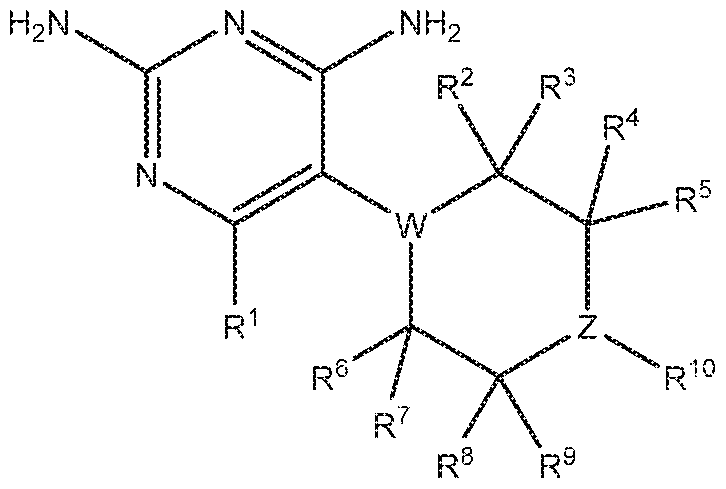


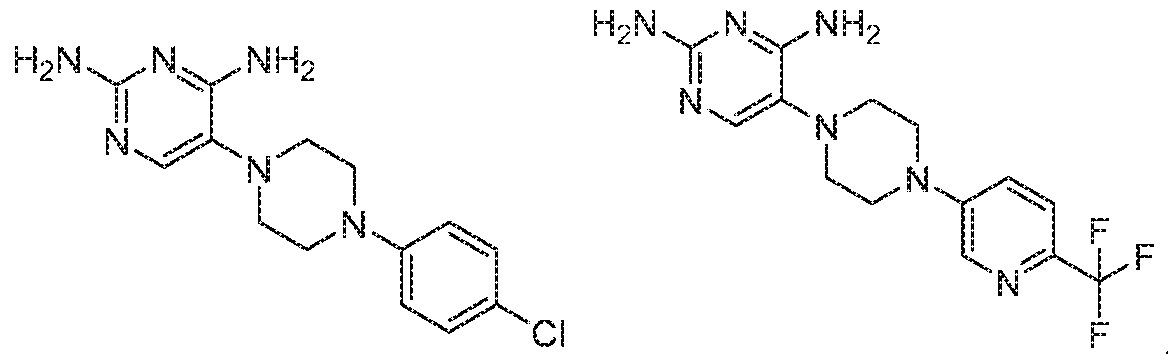


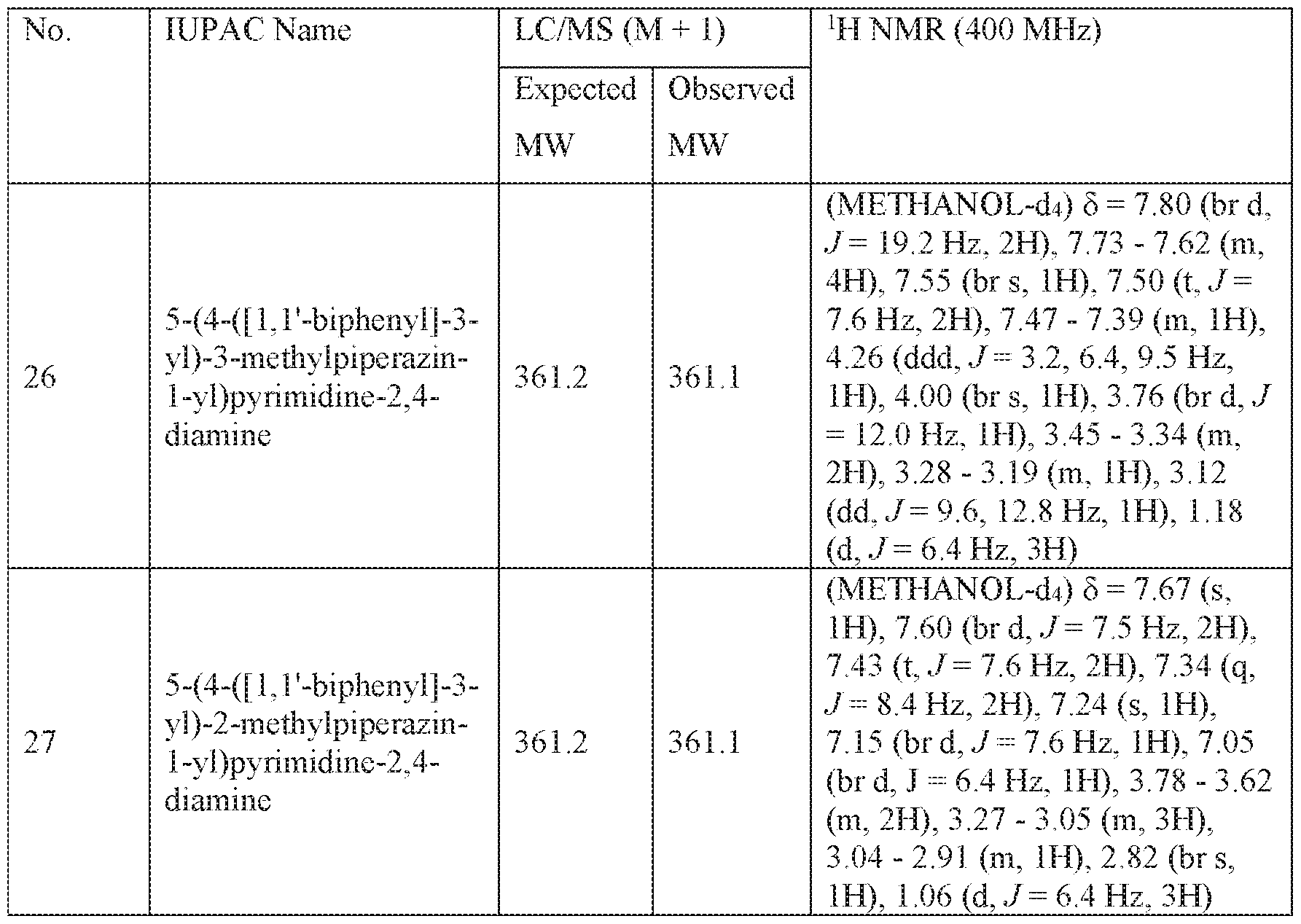


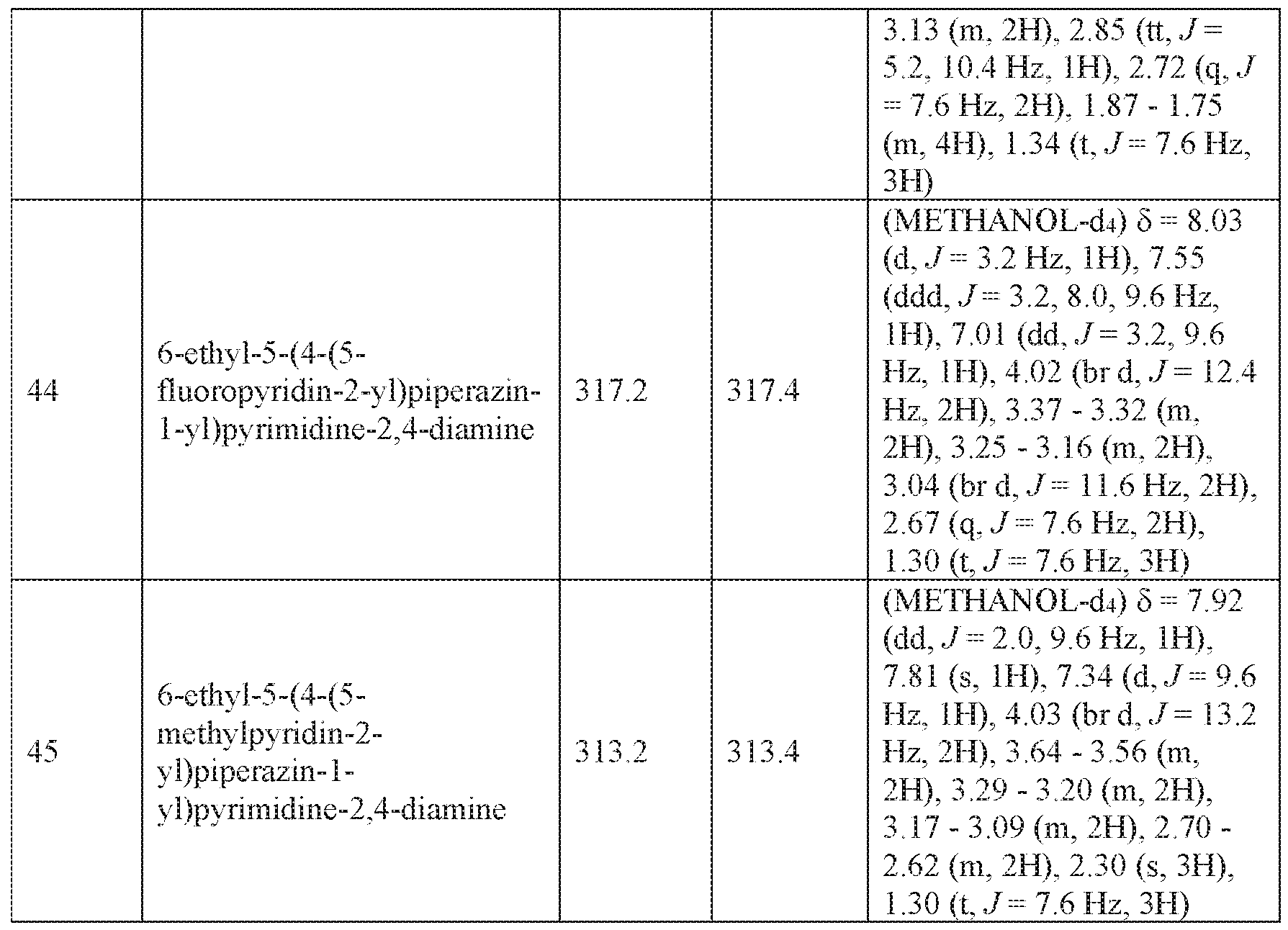
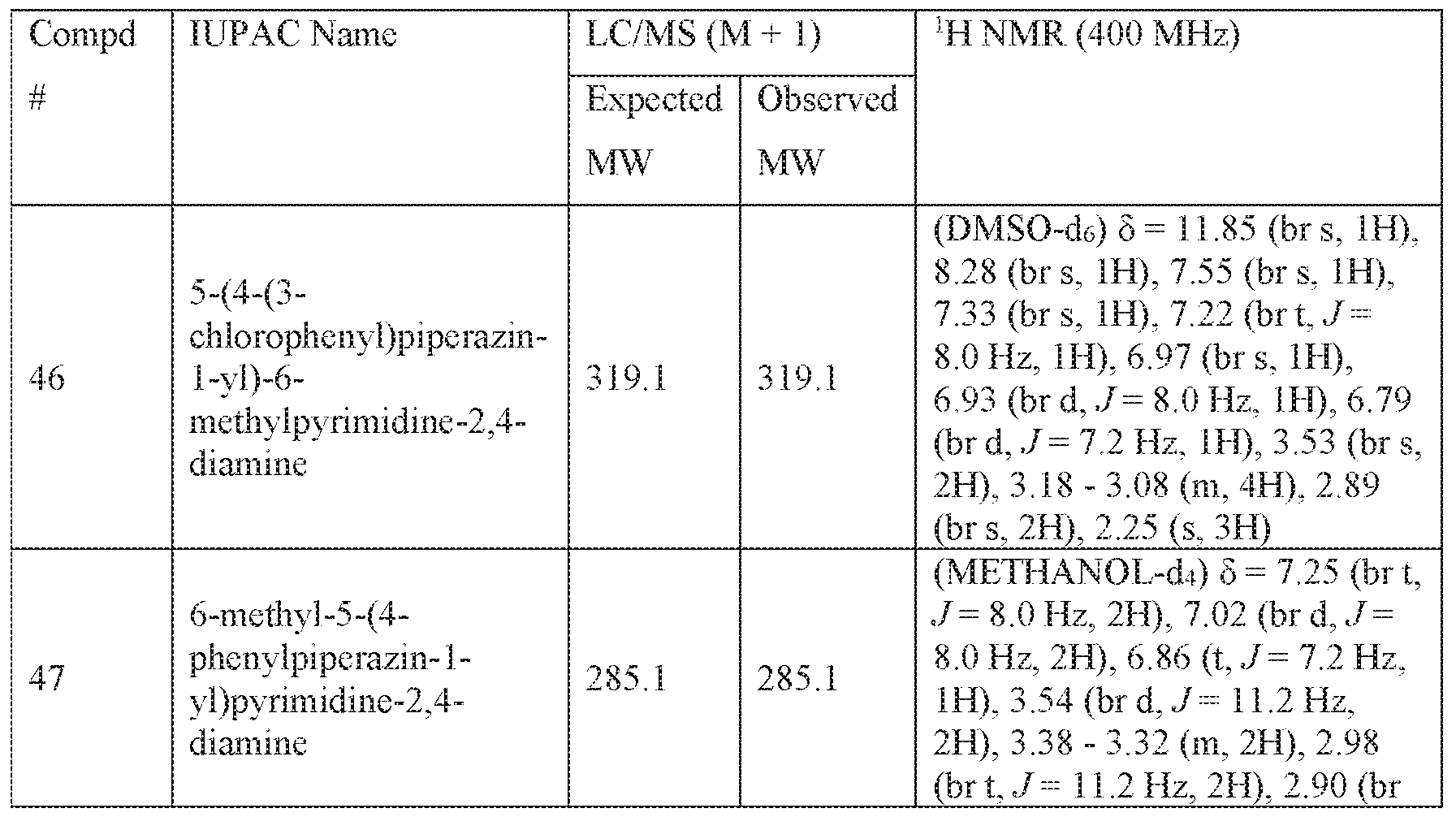


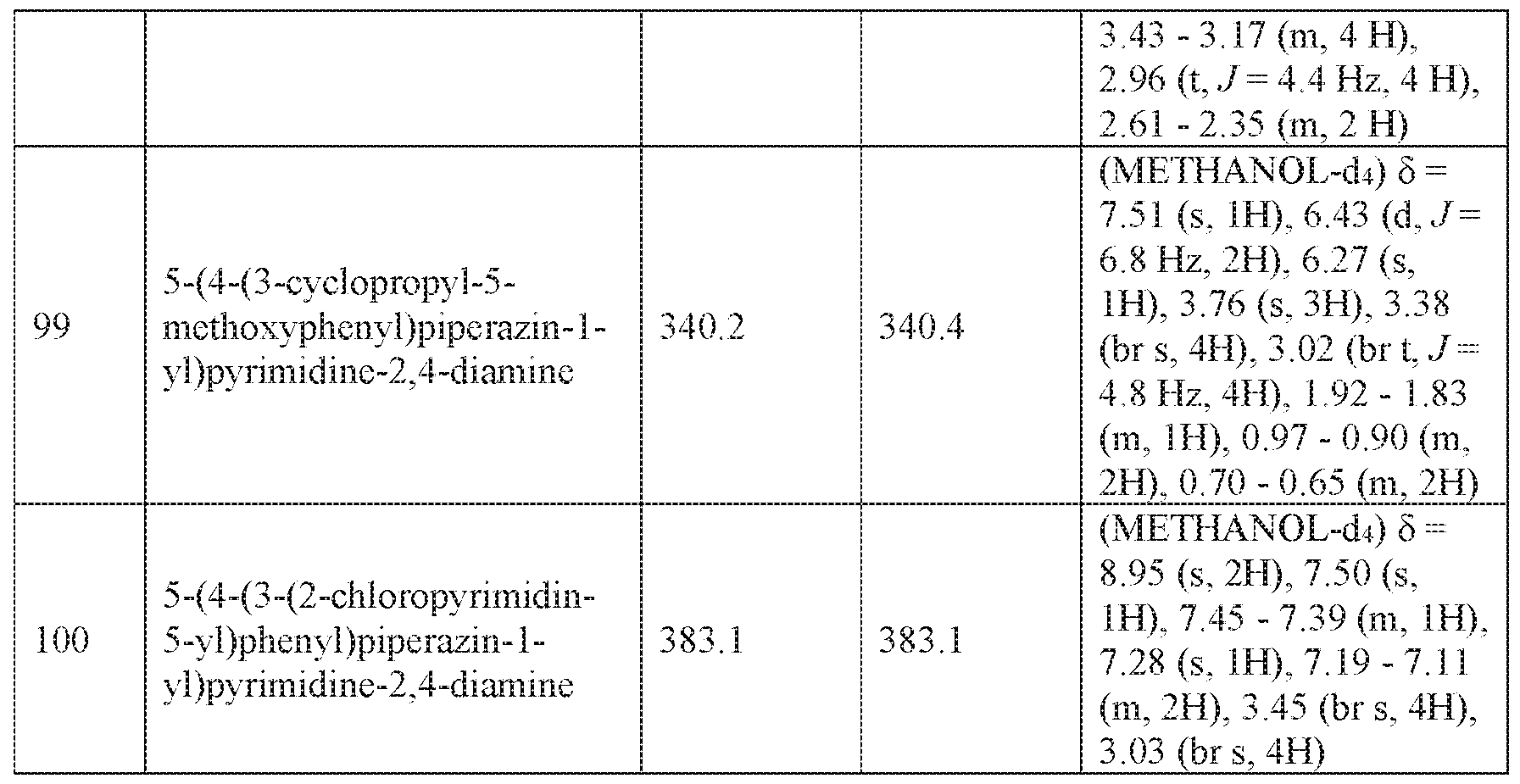


Claims


Priority Applications (17)
| Application Number | Priority Date | Filing Date | Title |
|---|---|---|---|
| EA201891766A EA201891766A1 (en) | 2016-02-05 | 2017-02-02 | COMPOSITIONS AND METHODS FOR TREATING INFECTIONS |
| US16/075,924 US10774073B2 (en) | 2016-02-05 | 2017-02-02 | Compositions and methods for treating infections |
| EP17748159.5A EP3411367A4 (en) | 2016-02-05 | 2017-02-02 | COMPOSITIONS AND METHODS FOR TREATING BACTERIAL INFECTIONS |
| CA3013760A CA3013760A1 (en) | 2016-02-05 | 2017-02-02 | Compositions and methods for treating infections |
| JP2018560444A JP6949055B2 (en) | 2016-02-05 | 2017-02-02 | Compositions and methods for treating infectious diseases |
| KR1020187025469A KR20180119590A (en) | 2016-02-05 | 2017-02-02 | Compositions and methods for the treatment of infections |
| SG11201806620TA SG11201806620TA (en) | 2016-02-05 | 2017-02-02 | Compositions and methods for treating infections |
| CN201780021371.XA CN109071486A (en) | 2016-02-05 | 2017-02-02 | Compositions and methods for treating infections |
| CU2018000083A CU20180083A7 (en) | 2016-02-05 | 2017-02-02 | COMPOSITIONS AND METHODS TO TREAT INFECTIONS |
| AU2017213824A AU2017213824B9 (en) | 2016-02-05 | 2017-02-02 | Compositions and methods for treating infections |
| MX2018009504A MX2018009504A (en) | 2016-02-05 | 2017-02-02 | Compositions and methods for treating infections. |
| BR112018015924A BR112018015924A2 (en) | 2016-02-05 | 2017-02-02 | compositions and methods for treating infections |
| IL260952A IL260952B (en) | 2016-02-05 | 2018-08-02 | Compositions and methods for treating infections |
| PH12018501646A PH12018501646A1 (en) | 2016-02-05 | 2018-08-02 | Compositions and methods for treating infections |
| US17/016,702 US11530198B2 (en) | 2016-02-05 | 2020-09-10 | Compositions and methods for treating infections |
| AU2022200967A AU2022200967A1 (en) | 2016-02-05 | 2022-02-14 | Compositions and methods for treating infections |
| IL291266A IL291266A (en) | 2016-02-05 | 2022-03-10 | Compositions and methods for treating infections |
Applications Claiming Priority (4)
| Application Number | Priority Date | Filing Date | Title |
|---|---|---|---|
| US201662291900P | 2016-02-05 | 2016-02-05 | |
| US62/291,900 | 2016-02-05 | ||
| US201662375712P | 2016-08-16 | 2016-08-16 | |
| US62/375,712 | 2016-08-16 |
Related Child Applications (2)
| Application Number | Title | Priority Date | Filing Date |
|---|---|---|---|
| US16/075,924 A-371-Of-International US10774073B2 (en) | 2016-02-05 | 2017-02-02 | Compositions and methods for treating infections |
| US17/016,702 Continuation US11530198B2 (en) | 2016-02-05 | 2020-09-10 | Compositions and methods for treating infections |
Publications (1)
| Publication Number | Publication Date |
|---|---|
| WO2017136556A1 true WO2017136556A1 (en) | 2017-08-10 |
Family
ID=59500993
Family Applications (1)
| Application Number | Title | Priority Date | Filing Date |
|---|---|---|---|
| PCT/US2017/016224 Ceased WO2017136556A1 (en) | 2016-02-05 | 2017-02-02 | Compositions and methods for treating infections |
Country Status (17)
| Country | Link |
|---|---|
| US (2) | US10774073B2 (en) |
| EP (1) | EP3411367A4 (en) |
| JP (1) | JP6949055B2 (en) |
| KR (1) | KR20180119590A (en) |
| CN (1) | CN109071486A (en) |
| AU (2) | AU2017213824B9 (en) |
| BR (1) | BR112018015924A2 (en) |
| CA (1) | CA3013760A1 (en) |
| CL (1) | CL2018002074A1 (en) |
| CU (1) | CU20180083A7 (en) |
| EA (1) | EA201891766A1 (en) |
| IL (2) | IL260952B (en) |
| MX (1) | MX2018009504A (en) |
| PH (1) | PH12018501646A1 (en) |
| SG (2) | SG10202007239QA (en) |
| TW (1) | TW201731836A (en) |
| WO (1) | WO2017136556A1 (en) |
Cited By (4)
| Publication number | Priority date | Publication date | Assignee | Title |
|---|---|---|---|---|
| WO2019032458A1 (en) * | 2017-08-07 | 2019-02-14 | Vyera Pharmaceuticals, LLC | Dhfr inhibitors, compositions, and methods related thereto |
| WO2019205058A1 (en) * | 2018-04-26 | 2019-10-31 | 广州中科蓝华生物科技有限公司 | Attenuation system and use thereof |
| US10774073B2 (en) | 2016-02-05 | 2020-09-15 | Vyera Pharmaceuticals, LLC | Compositions and methods for treating infections |
| US11760761B2 (en) | 2020-08-17 | 2023-09-19 | Aligos Therapeutics, Inc. | Methods and compositions for targeting PD-L1 |
Citations (2)
| Publication number | Priority date | Publication date | Assignee | Title |
|---|---|---|---|---|
| EP0103464A2 (en) * | 1982-09-09 | 1984-03-21 | Warner-Lambert Company | Diaminopyrimidines and their production |
| WO2000009131A1 (en) * | 1998-08-13 | 2000-02-24 | Warner-Lambert Company | Diaminopyrimidines and combination therapies effective for treatment of p-glycoprotein positive cancers |
Family Cites Families (7)
| Publication number | Priority date | Publication date | Assignee | Title |
|---|---|---|---|---|
| JPS5973573A (en) * | 1982-09-09 | 1984-04-25 | ワ−ナ−−ランバ−ト・コンパニ− | Diaminopyrimidine compound |
| CA1244028A (en) | 1983-04-14 | 1988-11-01 | Hans Maag | Pyrimidine derivatives |
| ZA842595B (en) * | 1983-04-14 | 1985-11-27 | Hoffmann La Roche | Pyrimidine derivatives |
| US20040006042A1 (en) * | 1998-08-13 | 2004-01-08 | Berry David Allen | Diaminopyrimidines and combination therapies effective for treatment of P-glycoprotein positive cancers |
| WO2005014573A1 (en) * | 2003-08-07 | 2005-02-17 | Pharmacia & Upjohn Company Llc | Anthelmintic and insecticide pyrimidine derivatives |
| BR112018015924A2 (en) | 2016-02-05 | 2018-12-26 | Vyera Pharmaceuticals Llc | compositions and methods for treating infections |
| WO2019032458A1 (en) | 2017-08-07 | 2019-02-14 | Vyera Pharmaceuticals, LLC | Dhfr inhibitors, compositions, and methods related thereto |
-
2017
- 2017-02-02 BR BR112018015924A patent/BR112018015924A2/en active Search and Examination
- 2017-02-02 SG SG10202007239QA patent/SG10202007239QA/en unknown
- 2017-02-02 JP JP2018560444A patent/JP6949055B2/en not_active Expired - Fee Related
- 2017-02-02 WO PCT/US2017/016224 patent/WO2017136556A1/en not_active Ceased
- 2017-02-02 MX MX2018009504A patent/MX2018009504A/en unknown
- 2017-02-02 CA CA3013760A patent/CA3013760A1/en active Pending
- 2017-02-02 SG SG11201806620TA patent/SG11201806620TA/en unknown
- 2017-02-02 US US16/075,924 patent/US10774073B2/en not_active Expired - Fee Related
- 2017-02-02 CN CN201780021371.XA patent/CN109071486A/en active Pending
- 2017-02-02 KR KR1020187025469A patent/KR20180119590A/en not_active Ceased
- 2017-02-02 EA EA201891766A patent/EA201891766A1/en unknown
- 2017-02-02 CU CU2018000083A patent/CU20180083A7/en unknown
- 2017-02-02 EP EP17748159.5A patent/EP3411367A4/en not_active Withdrawn
- 2017-02-02 AU AU2017213824A patent/AU2017213824B9/en not_active Ceased
- 2017-02-03 TW TW106103740A patent/TW201731836A/en unknown
-
2018
- 2018-08-02 IL IL260952A patent/IL260952B/en unknown
- 2018-08-02 PH PH12018501646A patent/PH12018501646A1/en unknown
- 2018-08-02 CL CL2018002074A patent/CL2018002074A1/en unknown
-
2020
- 2020-09-10 US US17/016,702 patent/US11530198B2/en active Active
-
2022
- 2022-02-14 AU AU2022200967A patent/AU2022200967A1/en not_active Abandoned
- 2022-03-10 IL IL291266A patent/IL291266A/en unknown
Patent Citations (2)
| Publication number | Priority date | Publication date | Assignee | Title |
|---|---|---|---|---|
| EP0103464A2 (en) * | 1982-09-09 | 1984-03-21 | Warner-Lambert Company | Diaminopyrimidines and their production |
| WO2000009131A1 (en) * | 1998-08-13 | 2000-02-24 | Warner-Lambert Company | Diaminopyrimidines and combination therapies effective for treatment of p-glycoprotein positive cancers |
Non-Patent Citations (11)
| Title |
|---|
| ALLEGRA, C. J. ET AL.: "Potent in vitro and in vivo antitoxoplasma activity of the lipid-soluble antifolate trimetrexate.", JOURNAL OF CLINICAL INVESTIGATION, vol. 79, no. 2, February 1987 (1987-02-01), pages 478 - 482, XP055404574, Retrieved from the Internet <URL:https://www.ncbi.nlm.nih.gov/pmc/articles/PMC424107/ pdf/jcinvest00113-0168.pdf> * |
| COLE, S. P. C.: "Patterns of cross resistance in a multidrug-resistant small- cell lung carcinoma cell line", CANCER CHEMOTHER. PHARMACOL, vol. 26, no. 4, 1 July 1990 (1990-07-01), pages 250 - 256, XP055404312, Retrieved from the Internet <URL:http://dlx.booksc.org/07000000/libgen.scimag07047000-07047999.zip/browse/10.1007/bf02897225.pdf> * |
| DATABASE CAS 20 September 2006 (2006-09-20), ANONYMOUS: "Benzenesulfonamide, 4-[4- (2,4-diamino-6-methyl-5-pyrimidinyl)-1-piperazinyl", XP055576390, retrieved from REGISTRY Database accession no. 907967-86-6 * |
| DATABASE CAS 21 December 2007 (2007-12-21), "2,4-Pyrimidinediamine, 6- ethyl-5-(4-phenyl-1-piperazinyl", XP055576379, retrieved from REGISTRY Database accession no. 959253-99-7 * |
| DATABASE CAS 6 November 2006 (2006-11-06), ANONYMOUS: "Benzaldehyde, 4-[4-(2,4- diamino-6-methyl-5-pyrimidinyl)-1-piperazinyl]-, 2-[2-[(2-hydroayethyl)amino]ethyl] hydrazine", XP055576386, retrieved from REGISTRY Database accession no. 912483-00-2 * |
| DATABASE CAS 6 November 2006 (2006-11-06), ANONYMOUS: "Ethanone, 1-[4-[4-(2,4- diamino-6-methyl-5-pyrimidinyl)-1-piperazinyl]phenyl", XP055576392, retrieved from REGISTRY Database accession no. 912537-53-2 * |
| DATABASE CAS 7 December 2011 (2011-12-07), ANONYMOUS: "1-[4-[4-(2,4- diamino-6-methyl-5-pyrimidinyl)-1-piperazinyl]-2-fluorophenyl", XP055576382, retrieved from REGISTRY Database accession no. 1350098-74-6 * |
| MAAG, H. ET AL.: "5-(N-Arylnortropan-3-yl) and 5-(N-Arylpiperidin-4-yl)-2,4- diaminopyrimidines. Novel Inhibitors of Dihydrofolate Reductase", HELVETICA CHIMICA ACTA, vol. 69, no. issue 4, 18 June 1986 (1986-06-18), pages 887 - 897, XP002486459 * |
| MORAN, R. G. ET AL.: "Relative substrate activities of structurally related pteridine, quinazoline, and pyrimidine analogs for mouse liver folylpolyglutamate synthetase", MOLECULAR PHARMACOLOGY, vol. 36, no. 5, 1 November 1989 (1989-11-01), pages 736 - 743, XP002118455 * |
| PARENTI, M. D. ET AL.: "Three-Dimensional Quantitative Structure? Activity Relationship Analysis of a Set of Plasmodium falciparum Dihydrofolate Reductase Inhibitors Using a Pharmacophore Generation Approach", JOURNAL OF MEDICINAL CHEMISTRY, vol. 47, no. 17, 12 August 2004 (2004-08-12), pages 4258 - 4267, XP055404571 * |
| WELSCH M. E. ET AL.: "Discovery of Potent and Selective Leads against Toxoplasma gondii Dihydrofolate Reductase via Structure-Based Design", ACS MEDICINAL CHEMISTRY LETTERS, vol. 7, no. 12, 17 September 2016 (2016-09-17), pages 1124 - 1129, XP055404578, DOI: doi:10.1021/acsmedchemlett.6b00328 * |
Cited By (8)
| Publication number | Priority date | Publication date | Assignee | Title |
|---|---|---|---|---|
| US10774073B2 (en) | 2016-02-05 | 2020-09-15 | Vyera Pharmaceuticals, LLC | Compositions and methods for treating infections |
| US11530198B2 (en) | 2016-02-05 | 2022-12-20 | Vyera Pharmaceuticals, LLC | Compositions and methods for treating infections |
| WO2019032458A1 (en) * | 2017-08-07 | 2019-02-14 | Vyera Pharmaceuticals, LLC | Dhfr inhibitors, compositions, and methods related thereto |
| WO2019205058A1 (en) * | 2018-04-26 | 2019-10-31 | 广州中科蓝华生物科技有限公司 | Attenuation system and use thereof |
| GB2587951A (en) * | 2018-04-26 | 2021-04-14 | Guangzhou Cas Lamvac Biotech Co Ltd | Attenuation system and use thereof |
| US11524060B2 (en) | 2018-04-26 | 2022-12-13 | Guangzhou Cas Lamvac Biotech Co., Ltd | Attenuation system and use thereof |
| GB2587951B (en) * | 2018-04-26 | 2023-03-08 | Cas Lamvac Guangzhou Biomedical Tech Co Ltd | Attenuation system and use thereof |
| US11760761B2 (en) | 2020-08-17 | 2023-09-19 | Aligos Therapeutics, Inc. | Methods and compositions for targeting PD-L1 |
Also Published As
| Publication number | Publication date |
|---|---|
| US20200407345A1 (en) | 2020-12-31 |
| SG11201806620TA (en) | 2018-09-27 |
| IL291266A (en) | 2022-05-01 |
| AU2017213824B9 (en) | 2021-11-25 |
| MX2018009504A (en) | 2019-05-06 |
| CN109071486A (en) | 2018-12-21 |
| KR20180119590A (en) | 2018-11-02 |
| SG10202007239QA (en) | 2020-09-29 |
| AU2022200967A1 (en) | 2022-03-03 |
| EP3411367A1 (en) | 2018-12-12 |
| CA3013760A1 (en) | 2017-08-10 |
| US11530198B2 (en) | 2022-12-20 |
| BR112018015924A2 (en) | 2018-12-26 |
| AU2017213824B2 (en) | 2021-11-18 |
| JP6949055B2 (en) | 2021-10-13 |
| EP3411367A4 (en) | 2019-07-10 |
| US20190077794A1 (en) | 2019-03-14 |
| CU20180083A7 (en) | 2019-03-04 |
| CL2018002074A1 (en) | 2019-02-01 |
| TW201731836A (en) | 2017-09-16 |
| JP2019504889A (en) | 2019-02-21 |
| IL260952B (en) | 2022-04-01 |
| EA201891766A1 (en) | 2019-02-28 |
| AU2017213824A1 (en) | 2018-09-06 |
| PH12018501646A1 (en) | 2019-05-27 |
| US10774073B2 (en) | 2020-09-15 |
Similar Documents
| Publication | Publication Date | Title |
|---|---|---|
| US11530198B2 (en) | Compositions and methods for treating infections | |
| US12365664B2 (en) | Small molecule inhibitors of SRC tyrosine kinase | |
| US11986475B1 (en) | Compositions and methods for treating cancer | |
| CA3075813A1 (en) | Small molecule inhibition of transcription factor sall4 and uses thereof | |
| CN117460724A (en) | Compositions and methods for treating cancer | |
| US20190144437A1 (en) | Substituted 2, 4-diamino-quinoline derivatives for use in the treatment of proliferative diseases | |
| JP6930060B2 (en) | Novel dihydropyranopyrimidinone derivatives and their uses {Novell dihydropyranopylidinone derivatives, and use thetheof} | |
| WO2019032458A1 (en) | Dhfr inhibitors, compositions, and methods related thereto | |
| US20210115047A1 (en) | Cdpk1 inhibitors, compositions and methods related thereto | |
| HK1260345A1 (en) | Compositions and methods for treating infections | |
| WO2025072722A1 (en) | Methods for treating cancers associated with transforming acidic coiled-coil proteins | |
| EP4164657A1 (en) | Small molecule covalent activators of ucp1 |
Legal Events
| Date | Code | Title | Description |
|---|---|---|---|
| 121 | Ep: the epo has been informed by wipo that ep was designated in this application |
Ref document number: 17748159 Country of ref document: EP Kind code of ref document: A1 |
|
| WWE | Wipo information: entry into national phase |
Ref document number: 260952 Country of ref document: IL |
|
| ENP | Entry into the national phase |
Ref document number: 2018560444 Country of ref document: JP Kind code of ref document: A |
|
| WWE | Wipo information: entry into national phase |
Ref document number: 11201806620T Country of ref document: SG Ref document number: MX/A/2018/009504 Country of ref document: MX Ref document number: 3013760 Country of ref document: CA |
|
| NENP | Non-entry into the national phase |
Ref country code: DE |
|
| REG | Reference to national code |
Ref country code: BR Ref legal event code: B01A Ref document number: 112018015924 Country of ref document: BR |
|
| ENP | Entry into the national phase |
Ref document number: 20187025469 Country of ref document: KR Kind code of ref document: A |
|
| WWE | Wipo information: entry into national phase |
Ref document number: 1020187025469 Country of ref document: KR |
|
| WWE | Wipo information: entry into national phase |
Ref document number: 201891766 Country of ref document: EA |
|
| WWE | Wipo information: entry into national phase |
Ref document number: 2017748159 Country of ref document: EP |
|
| ENP | Entry into the national phase |
Ref document number: 2017213824 Country of ref document: AU Date of ref document: 20170202 Kind code of ref document: A |
|
| ENP | Entry into the national phase |
Ref document number: 2017748159 Country of ref document: EP Effective date: 20180905 |
|
| ENP | Entry into the national phase |
Ref document number: 112018015924 Country of ref document: BR Kind code of ref document: A2 Effective date: 20180803 |
|
| WWW | Wipo information: withdrawn in national office |
Ref document number: 291266 Country of ref document: IL |