WO2017148273A1 - 一种应用程序的分类方法和装置 - Google Patents
一种应用程序的分类方法和装置 Download PDFInfo
- Publication number
- WO2017148273A1 WO2017148273A1 PCT/CN2017/073867 CN2017073867W WO2017148273A1 WO 2017148273 A1 WO2017148273 A1 WO 2017148273A1 CN 2017073867 W CN2017073867 W CN 2017073867W WO 2017148273 A1 WO2017148273 A1 WO 2017148273A1
- Authority
- WO
- WIPO (PCT)
- Prior art keywords
- classified
- classification
- application
- applications
- node graph
- Prior art date
- Legal status (The legal status is an assumption and is not a legal conclusion. Google has not performed a legal analysis and makes no representation as to the accuracy of the status listed.)
- Ceased
Links
Images



Classifications
-
- G—PHYSICS
- G06—COMPUTING OR CALCULATING; COUNTING
- G06F—ELECTRIC DIGITAL DATA PROCESSING
- G06F16/00—Information retrieval; Database structures therefor; File system structures therefor
- G06F16/90—Details of database functions independent of the retrieved data types
- G06F16/906—Clustering; Classification
-
- G—PHYSICS
- G06—COMPUTING OR CALCULATING; COUNTING
- G06F—ELECTRIC DIGITAL DATA PROCESSING
- G06F16/00—Information retrieval; Database structures therefor; File system structures therefor
-
- G—PHYSICS
- G06—COMPUTING OR CALCULATING; COUNTING
- G06F—ELECTRIC DIGITAL DATA PROCESSING
- G06F16/00—Information retrieval; Database structures therefor; File system structures therefor
- G06F16/90—Details of database functions independent of the retrieved data types
- G06F16/901—Indexing; Data structures therefor; Storage structures
- G06F16/9024—Graphs; Linked lists
-
- G—PHYSICS
- G06—COMPUTING OR CALCULATING; COUNTING
- G06F—ELECTRIC DIGITAL DATA PROCESSING
- G06F17/00—Digital computing or data processing equipment or methods, specially adapted for specific functions
- G06F17/10—Complex mathematical operations
- G06F17/15—Correlation function computation including computation of convolution operations
-
- G—PHYSICS
- G06—COMPUTING OR CALCULATING; COUNTING
- G06F—ELECTRIC DIGITAL DATA PROCESSING
- G06F18/00—Pattern recognition
- G06F18/20—Analysing
- G06F18/24—Classification techniques
- G06F18/243—Classification techniques relating to the number of classes
- G06F18/2431—Multiple classes
-
- G—PHYSICS
- G06—COMPUTING OR CALCULATING; COUNTING
- G06N—COMPUTING ARRANGEMENTS BASED ON SPECIFIC COMPUTATIONAL MODELS
- G06N5/00—Computing arrangements using knowledge-based models
- G06N5/01—Dynamic search techniques; Heuristics; Dynamic trees; Branch-and-bound
-
- G—PHYSICS
- G06—COMPUTING OR CALCULATING; COUNTING
- G06N—COMPUTING ARRANGEMENTS BASED ON SPECIFIC COMPUTATIONAL MODELS
- G06N5/00—Computing arrangements using knowledge-based models
- G06N5/02—Knowledge representation; Symbolic representation
- G06N5/022—Knowledge engineering; Knowledge acquisition
- G06N5/025—Extracting rules from data
-
- G—PHYSICS
- G06—COMPUTING OR CALCULATING; COUNTING
- G06F—ELECTRIC DIGITAL DATA PROCESSING
- G06F8/00—Arrangements for software engineering
- G06F8/60—Software deployment
Definitions
- the present application relates to the field of computer processing technologies, and in particular, to a method for classifying an application and a device for classifying an application.
- the present application discloses a method for classifying an application, including:
- the step of calculating the correlation coefficient between the applications to be classified includes:
- the correlation coefficient between the any two applications to be classified is calculated.
- the correlation coefficient between the any two applications to be classified is calculated by using the following formula:
- w(a, b) is the correlation coefficient between the applications a and b to be classified
- n is the number of known classification systems
- Shortest_path(a,b) is the shortest path in the known classification system for the applications a and b to be classified.
- the step of constructing a node graph for the to-be-classified application according to the correlation coefficient includes:
- a node map for the application to be classified is constructed according to the weight of the edge.
- the step of segmenting the node graph to obtain one or more classification maps includes:
- the step of segmenting the new node graph to obtain the one or more classification maps includes:
- a tag is selected according to the number of tags as the owned tag
- the applications to be classified with the same label are divided into the same classification map to obtain one or more classification maps.
- the method further includes:
- the one or more classification maps are subdivided.
- the step of re-splitting the one or more classification maps includes:
- the number of edges between applications in the classification graph is calculated using the following formula:
- B(e) is the median value corresponding to edge e; q is the number of all shortest paths in the classification graph; p is the number of shortest paths passing edge e.
- the present application discloses an apparatus for classifying an application, including
- a correlation coefficient calculation module configured to calculate an association coefficient between the applications to be classified, where the application to be classified is located in one or more known classification systems;
- a node graph construction module configured to construct a node graph for the to-be-classified application according to the correlation coefficient
- the node graph segmentation module is configured to segment the node graph to obtain one or more classification graphs.
- the correlation coefficient calculation module includes:
- a shortest path determining submodule for respectively determining a shortest path of any two to-be-classified applications in the one or more known classification systems
- a correlation coefficient calculation submodule configured to calculate, by using the shortest path, an association coefficient between the any two applications to be classified.
- the correlation coefficient between the any two applications to be classified is calculated by using the following formula:
- w(a, b) is the correlation coefficient between the applications a and b to be classified
- n is the number of known classification systems
- Shortest_path(a,b) is the shortest path in the known classification system for the applications a and b to be classified.
- the node graph construction module includes:
- a node graph construction submodule configured to use the correlation coefficient as a weight of an edge between the applications to be classified, A node map for the application to be classified is constructed according to the weight of the edge.
- the node graph segmentation module includes:
- the weight determination sub-module of the edge is configured to determine whether the weight of the edge in the node graph is greater than a preset threshold
- the first corresponding edge deletes the submodule, and is configured to retain the corresponding edge when the weight of the edge is greater than a preset threshold, and if not, delete the corresponding edge to obtain a new node graph;
- the node graph segmentation sub-module is configured to segment the new node graph to obtain the one or more classification graphs.
- the node graph segmentation submodule includes:
- a configuration unit configured to configure a label for each application to be classified in the new node graph
- a delivery unit configured to deliver a label of each application to be classified to a connected application to be classified
- a selection unit configured to select a label from the label received by each application to be classified as the owned label according to the number of labels
- a determining unit configured to determine, in the new node graph, whether a label owned by the application to be classified changes, or whether the current number of iterations is less than a preset maximum number of iterations
- a returning unit configured to: when the label owned by the application to be classified changes, or when the current number of iterations is less than a preset maximum number of iterations, the returning delivery unit performs to transfer the label of each application to be classified to the connected The steps of the application to be classified;
- a dividing unit configured to divide the to-be-classified application having the same label into the same category when the label owned by the application to be classified does not change, or when the current number of iterations is greater than or equal to a preset maximum number of iterations
- one or more classification maps are obtained.
- the device further includes:
- a classification map merge module for combining the one or more classification maps
- a classification map splitting module for splitting the one or more classification maps.
- the classification map splitting module includes:
- the second corresponding edge deletes the sub-module, and is used to delete the edge corresponding to the maximum media value to obtain a classified sub-picture;
- a connectivity graph determining submodule configured to determine whether the classified submap is two connected graphs
- the step of calculating the sub-module of the returning edge performs a step of calculating the number of edges between the applications in the sub-graph;
- the stop sub-module is configured to stop re-split the classification map when the classification sub-picture is two connected graphs.
- the number of edges between applications in the classification graph is calculated using the following formula:
- B(e) is the median value corresponding to edge e; q is the number of all shortest paths in the classification graph; p is the number of shortest paths passing edge e.
- the embodiments of the present application include the following advantages:
- the embodiment of the present application calculates a correlation coefficient between the applications to be classified, and constructs a node graph according to the correlation coefficient, and then divides the node graph to obtain one or more classification maps, so as to fully learn from the current Knowing the experience of multiple classification systems, integrating, without manual operation, can avoid the risk of high classification result or insufficient consideration of operators due to manual operation, so as to generate a more comprehensive new application.
- Classification system
- the new classification map may be evaluated according to actual needs, and the merge or re-split operation may be performed to ensure the accuracy of the finally obtained classification.
- Embodiment 1 is a flow chart showing the steps of Embodiment 1 of a classification method of an application of the present application;
- FIG. 2 is a schematic diagram of an application classification in an application market in the prior art
- Figure 3A is a schematic illustration of one known classification system A of the present application.
- Figure 3B is a schematic illustration of another known classification system B of the present application.
- Embodiment 4 is a flow chart showing the steps of Embodiment 2 of a classification method of an application of the present application;
- Figure 5 is a schematic diagram of a node diagram of the present application.
- Figure 6 is a schematic diagram of a classification diagram of the present application.
- FIG. 7 is a structural block diagram of an embodiment of a sorting apparatus of an application of the present application.
- FIG. 1 a flow chart of a first embodiment of a method for classifying an application of the application, which may include the following steps:
- Step 101 Calculate an association coefficient between applications to be classified
- the experience can be fully learned and integrated, thereby generating a more comprehensive new application.
- Program classification system to reduce the workload of manual operations.
- the application to be classified may be an application located in one or more known classification systems.
- the correlation coefficient between the applications to be classified may be first calculated.
- the correlation coefficient reflects the correlation between any two applications.
- the larger the correlation coefficient the stronger the relationship between the two applications.
- the step of calculating the correlation coefficient between the applications to be classified may specifically include the following sub-steps:
- Sub-step 1011 respectively determining a shortest path of any two to-be-classified applications in the one or more known classification systems
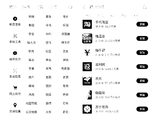
- FIG. 2 it is a schematic diagram of an application classification in an application market in the prior art.
- an application can be classified into a video and audio image, a system tool, a communication social, and the like, and in various categories, Further subdivided into different sub-categories, for example, under the category of online shopping, it can be divided into different sub-categories such as shopping malls, group purchases, shopping guides, and Haitao. Under each sub-category, specific applications can be included. Programs, such as mobile phone Taobao, rebate network, Suning Tesco and so on.
- the node graph is used to represent the classification in the application market, and the nodes in the node graph respectively represent specific categories or applications.
- the shortest path of any two applications to be classified in a classification system may indicate the distance between two nodes.
- the node The shorter the distance between them, the higher the correlation.
- FIG. 3A and FIG. 3B there are schematic diagrams of two different classification systems A and B, wherein e, f, h, l, m, and n respectively represent different categories, and a, b, c, and d are to be treated.
- Classified application As shown in FIG. 3A and FIG. 3B, there are schematic diagrams of two different classification systems A and B, wherein e, f, h, l, m, and n respectively represent different categories, and a, b, c, and d are to be treated.
- Classified application As shown in FIG. 3A and FIG. 3B, there are schematic diagrams of two different classification systems A and B, wherein e, f, h, l, m, and n respectively represent different categories, and a, b, c, and d are to be treated.
- the shortest path Shortest_path(a,b) between them is 2, and in the classification system B, the shortest path between them, Shortest_path(a,b) is also 2; for applications a, c, in classification system A, the shortest path Shortest_path(a, c) between applications a, c is 4, and in classification system B, the shortest path between them is Shortest_path ( a, c) is 2.
- the shortest path between different nodes in each classification system can be obtained by the Dijkstra algorithm (Dijkstra algorithm).
- Sub-step 1012 using the shortest path, calculating the relationship between the any two applications to be classified number.
- the correlation coefficient between the any two applications to be classified may be calculated by using the following formula:
- w(a, b) is the correlation coefficient between the applications a and b to be classified
- n is the number of known classification systems
- Shortest_path(a,b) is the shortest path in the known classification system for the applications a and b to be classified.
- Step 102 Construct a node graph for the to-be-classified application according to the correlation coefficient.
- a node graph for the to-be-classified application may be constructed according to the correlation coefficient.
- each node represents a different application, and the connections between nodes can represent relationships between applications.
- the correlation coefficient between the respective applications obtained according to step 101 may be used as the weight of the edge between the applications to be classified, thereby constructing an application for the to-be-classified according to the weight of the edge.
- Node graph In general, in the node graph constructed above, the greater the weight between nodes, the stronger the correlation they show in multiple classification systems, for example, in multiple classification systems, two applications Always in the same leaf category, the weight between the two applications can get a maximum of 1.
- Step 103 Segment the node graph to obtain one or more classification graphs.
- the step of dividing the node graph to obtain one or more classification maps may specifically include the following sub-steps:
- Sub-step 1031 determining whether the weight of the edge in the node graph is greater than a preset threshold
- Sub-step 1032 if yes, the corresponding edge is retained, and if not, the corresponding edge is deleted to obtain a new node graph
- Sub-step 1033 segmenting the new node graph to obtain the one or more classification maps.
- a weight threshold may be first set, and then the weight of the edge in the node graph is determined to be greater than a preset threshold. If yes, the corresponding edge may be retained, and if not, the corresponding The edges thus get a new node graph. For example, if the preset threshold is 0.5, the edge of the node graph whose weight value is less than 0.5 can be deleted first, a new node graph is obtained, and then the new node graph is further divided to obtain one or more classification graphs.
- the fusion can be carried out without manual operation, which can avoid the risk of subjectiveness of classification results due to manual operation or insufficient consideration of operators, so that a more comprehensive new one can be generated.
- Application classification system by calculating an association coefficient between the applications to be classified, and constructing a node graph according to the correlation coefficient, and then segmenting the node graph to obtain one or more classification maps, Drawing on the experience of several classification systems currently known, the fusion can be carried out without manual operation, which can avoid the risk of subjectiveness of classification results due to manual operation or insufficient consideration of operators, so that a more comprehensive new one can be generated.
- Application classification system by calculating an association coefficient between the applications to be classified, and constructing a node graph according to the correlation coefficient, and then segmenting the node graph to obtain one or more classification maps
- the method may include the following steps:
- Step 401 Determine a shortest path of any two to-be-classified applications in the one or more known classification systems, respectively;
- the shortest path of any two applications to be classified in a classification system may indicate that the distance between the two nodes is close, generally In other words, the shorter the distance between nodes, the higher the correlation. Therefore, for the application to be classified, the shortest path of any two to-be-classified applications in the one or more known classification systems may be determined first.
- FIG. 3A and FIG. 3B there are schematic diagrams of two different classification systems A and B, wherein e, f, h, l, m, and n respectively represent different categories, and a, b, c, and d are to be treated.
- Classified application As shown in FIG. 3A and FIG. 3B, there are schematic diagrams of two different classification systems A and B, wherein e, f, h, l, m, and n respectively represent different categories, and a, b, c, and d are to be treated.
- Classified application As shown in FIG. 3A and FIG. 3B, there are schematic diagrams of two different classification systems A and B, wherein e, f, h, l, m, and n respectively represent different categories, and a, b, c, and d are to be treated.
- the shortest path Shortest_path(a,b) between them is 2, and in the classification system B, the shortest path between them, Shortest_path(a,b) is also 2; for applications a, c, in classification system A, the shortest path Shortest_path(a, c) between applications a, c is 4, and in classification system B, the shortest path between them is Shortest_path ( a, c) is 2.
- the shortest path between different nodes in each classification system can be obtained by the Dijkstra algorithm (Dijkstra algorithm).
- Step 402 Calculate, by using the shortest path, an association coefficient between any two applications to be classified;
- the correlation coefficient between the any two applications to be classified may be calculated according to the shortest path by using the following formula:
- w(a, b) is the correlation coefficient between the applications a and b to be classified
- n is the number of known classification systems
- Shortest_path(a,b) is the shortest path in the known classification system for the applications a and b to be classified.
- Step 403 Construct a node graph for the to-be-classified application according to the correlation coefficient.
- the step of constructing a node graph for the to-be-classified application according to the correlation coefficient may specifically include the following sub-steps:
- the correlation coefficient is used as a weight of an edge between the applications to be classified
- Sub-step 4032 constructing a node graph for the to-be-classified application according to the weight of the edge.
- the correlation coefficient may be used as the weight of the edge of the node graph, that is, any two applications are connected as edges, thereby A node graph is constructed with the correlation coefficient between the applications as the weight value of the corresponding edge.
- the weight between the two applications can get a maximum of 1.
- Step 404 Determine whether the weight of the edge in the node graph is greater than a preset threshold.
- a weight threshold may be first set, and then the weight of the edge in the node graph is determined to be greater than a preset threshold. If yes, the corresponding edge may be retained, and if not, the algorithm may be executed. In step 405, the corresponding edge is deleted, thereby obtaining a new node graph. For example, if the preset threshold is 0.5, the edge of the node graph whose weight value is less than 0.5 can be deleted first, and a new node graph is obtained.
- Step 405 deleting the corresponding edge to obtain a new node graph
- Step 406 Perform segmentation on the new node graph to obtain the one or more classification maps.
- the segmentation of the new node graph may be performed by using a community partitioning algorithm FastUnfolding.
- the step of dividing the new node graph to obtain the one or more classification maps may specifically include the following sub-steps:
- Sub-step 4061 in the new node graph, configuring a label for each application to be classified
- the label may be a user ID.
- the label may be configured in other manners, such as a random configuration, as long as the uniqueness of the label is maintained.
- Sub-step 4062 the label of each application to be classified is delivered to the connected application to be classified;
- Sub-step 4063 selecting, from the labels received by each application to be classified, a label according to the number of labels as the owned label;
- Sub-step 4064 determining whether the label owned by the application to be classified changes in the new node graph, or whether the current maximum number of iterations is less than a preset maximum number of iterations;
- Sub-step 4065 if yes, returning to the step of transmitting the label of each application to be classified to the connected application to be classified;
- Sub-step 4066 if not, divides the applications to be classified having the same label into the same classification map to obtain one or more classification maps.
- the label can be randomly selected. Since the core node is connected with many other peripheral nodes, the probability that the label is randomly obtained is large. In the subsequent iteration process, the number of labels of the core node will increase, and gradually stabilize. .
- the nodes with the same tag belong to the same user group, and the tag of the node can be used as the identification tag of the application.
- FIG. 5 it is a schematic diagram of a node graph of the present application.
- the name of the node is used as the label of the node, that is, the labels of the nodes R, S, T, and U are respectively R, S, T, and U. Its iterative process is as follows:
- the tags owned by the application are all R and no longer change. Therefore, the applications corresponding to nodes R, S, T, and U belong to the same classification, and can be divided into the same classification map. in.
- Step 407 Combine the one or more classification maps; or re-split the one or more classification maps.
- the new classification map may be reprocessed, for example, the one or more classification maps are merged; or, for the one or Multiple classification maps are subdivided.
- multiple classification maps need to be combined, they can be directly synthesized, and a hierarchical structure can be formed, for example, the original two classification maps A and B, and the subcategories of the synthesized large classification C.
- the step of re-splitting the one or more classification maps may include the following sub-steps:
- Sub-step 4071 calculating a mediation of edges between applications in the classification map
- Sub-step 4072 deleting the edge corresponding to the maximum media value to obtain a classification sub-picture
- Sub-step 4073 determining whether the classified sub-picture is two connected pictures
- Sub-step 4074 if no, return to calculate the number of edges between the applications in the classification sub-picture;
- Sub-step 4075 if yes, stops re-spliting the classification map.
- the following formula may be used to calculate the number of edges between applications in the classification graph:
- B(e) is the median value corresponding to edge e; q is the number of all shortest paths in the classification graph; p is the number of shortest paths passing edge e.
- FIG. 6 it is a schematic diagram of a classification diagram of the present application.
- the median values of the edges can be obtained as follows:
- the median value of the side CD is the largest, so the edge CD is deleted. Since the original classification map is split into two connected graphs after the side CD is deleted, that is, the classification subgraph ABC and DEF are resolved. Effect can Stop re-split the classification map.
- the new classification map may be evaluated according to actual needs, and the merge or re-split operation may be performed to ensure the accuracy of the finally obtained classification.
- FIG. 7 a structural block diagram of an embodiment of a classification device of an application of the present application is shown, which may specifically include the following modules:
- the correlation coefficient calculation module 701 is configured to calculate an association coefficient between the applications to be classified, where the application to be classified is located in one or more known classification systems;
- a node graph construction module 702 configured to construct a node graph for the to-be-classified application according to the correlation coefficient
- the node graph segmentation module 703 is configured to segment the node graph to obtain one or more classification graphs.
- the correlation coefficient calculation module 701 may specifically include the following sub-modules:
- a shortest path determining sub-module 7011 configured to respectively determine a shortest path of any two to-be-classified applications in the one or more known classification systems
- the correlation coefficient calculation sub-module 7012 is configured to calculate the correlation coefficient between the any two applications to be classified by using the shortest path.
- the correlation coefficient between the any two applications to be classified may be calculated by using the following formula:
- w(a, b) is the correlation coefficient between the applications a and b to be classified
- n is the number of known classification systems
- Shortest_path(a,b) is the shortest path in the known classification system for the applications a and b to be classified.
- the node graph construction module 702 may specifically include the following submodules:
- the node graph construction sub-module 7021 is configured to use the correlation coefficient as a weight of an edge between the applications to be classified, and construct a node graph for the to-be-classified application according to the weight of the edge.
- the node graph segmentation module 703 may specifically include the following submodules:
- the weight determination sub-module 7031 is configured to determine whether the weight of the edge in the node graph is greater than a preset threshold
- the first corresponding edge deletion sub-module 7032 is configured to reserve a corresponding edge when the weight of the edge is greater than a preset threshold, and if not, delete the corresponding edge to obtain a new node graph;
- the node graph segmentation sub-module 7033 is configured to segment the new node graph to obtain the one or more classification graphs.
- the node graph segmentation sub-module 7033 may specifically include the following units:
- the configuration unit 331 is configured to configure, in the new node graph, a label for each application to be classified;
- a delivery unit 332 configured to deliver a label of each application to be classified to a connected application to be classified
- the selecting unit 333 is configured to select, from the labels received by each application to be classified, a label as the owned label according to the number of labels;
- the determining unit 334 is configured to determine whether the label owned by the application to be classified changes in the new node graph, or whether the current number of iterations is less than a preset maximum number of iterations;
- the returning unit 335 is configured to: when the label owned by the application to be classified changes, or when the current number of iterations is less than a preset maximum number of iterations, the returning delivery unit performs to transmit the label of each to-be-classified application to the connected The steps of the application to be classified;
- the dividing unit 336 is configured to divide the to-be-classified application having the same label into the same one when the label owned by the application to be classified does not change, or when the current number of iterations is greater than or equal to a preset maximum number of iterations In the classification chart, one or more classification maps are obtained.
- the device may further include the following modules:
- a classification map merge module 704 for merging the one or more classification maps
- the classification map splitting module 705 is configured to re-separate the one or more classification maps.
- the classification map splitting module 705 may specifically include the following submodules:
- the inter-media calculation sub-module 7051 is configured to calculate the mediation of the edges between the applications in the classification map
- the second corresponding edge deletion sub-module 7052 is configured to delete the edge corresponding to the maximum media value to obtain a classification sub-picture
- the connectivity graph determining sub-module 7053 is configured to determine whether the classified sub-picture is two connected graphs
- the step of calculating the sub-module of the returning edge performs a step of calculating the number of edges between the applications in the classified sub-picture;
- the stop sub-module 7055 is configured to stop re-split the classification map when the classified sub-picture is two connected graphs.
- B(e) is the median value corresponding to edge e; q is the number of all shortest paths in the classification graph; p is the number of shortest paths passing edge e.
- the description is relatively simple, and the relevant parts can be referred to the description of the method embodiment.
- embodiments of the embodiments of the present application can be provided as a method, apparatus, or computer program product. Therefore, the embodiments of the present application may take the form of an entirely hardware embodiment, an entirely software embodiment, or an embodiment combining software and hardware. Moreover, embodiments of the present application can take the form of a computer program product embodied on one or more computer-usable storage media (including but not limited to disk storage, CD-ROM, optical storage, etc.) including computer usable program code.
- computer-usable storage media including but not limited to disk storage, CD-ROM, optical storage, etc.
- the computer device includes one or more processors (CPUs), input/output interfaces, network interfaces, and memory.
- the memory may include non-persistent memory, random access memory (RAM), and/or non-volatile memory in a computer readable medium, such as read only memory (ROM) or flash memory.
- RAM random access memory
- ROM read only memory
- Memory is an example of a computer readable medium.
- Computer readable media includes both permanent and non-persistent, removable and non-removable media.
- Information storage can be implemented by any method or technology. The information can be computer readable instructions, data structures, modules of programs, or other data.
- Examples of computer storage media include, but are not limited to, phase change memory (PRAM), static random access memory (SRAM), dynamic random access memory (DRAM), other types of random access memory (RAM), read only memory. (ROM), electrically erasable programmable read only memory (EEPROM), flash memory or other memory technology, compact disk read only memory (CD-ROM), digital versatile disk (DVD) or other optical storage, Magnetic tape cartridges, magnetic tape storage or other magnetic storage devices or any other non-transportable media can be used to store information that can be accessed by a computing device.
- computer readable media does not include non-persistent computer readable media, such as modulated data signals and carrier waves.
- Embodiments of the present application are described with reference to flowcharts and/or block diagrams of methods, terminal devices (systems), and computer program products according to embodiments of the present application. It will be understood that each flow and/or block of the flowchart illustrations and/or FIG.
- These computer program instructions can be provided to a processor of a general purpose computer, special purpose computer, embedded processor or other programmable data processing terminal device to produce a machine such that instructions are executed by a processor of a computer or other programmable data processing terminal device
- Means are provided for implementing the functions specified in one or more of the flow or in one or more blocks of the flow chart.
- the computer program instructions can also be stored in a computer readable memory that can direct a computer or other programmable data processing terminal device to operate in a particular manner, such that the instructions stored in the computer readable memory produce an article of manufacture comprising the instruction device.
- the instruction device implements the functions specified in one or more blocks of the flowchart or in a flow or block of the flowchart.
Landscapes
- Engineering & Computer Science (AREA)
- Theoretical Computer Science (AREA)
- Physics & Mathematics (AREA)
- General Physics & Mathematics (AREA)
- Data Mining & Analysis (AREA)
- Databases & Information Systems (AREA)
- General Engineering & Computer Science (AREA)
- Software Systems (AREA)
- Mathematical Physics (AREA)
- Computing Systems (AREA)
- Evolutionary Computation (AREA)
- Artificial Intelligence (AREA)
- Pure & Applied Mathematics (AREA)
- Mathematical Analysis (AREA)
- Mathematical Optimization (AREA)
- Computational Mathematics (AREA)
- Computational Linguistics (AREA)
- Algebra (AREA)
- Bioinformatics & Cheminformatics (AREA)
- Bioinformatics & Computational Biology (AREA)
- Computer Vision & Pattern Recognition (AREA)
- Evolutionary Biology (AREA)
- Life Sciences & Earth Sciences (AREA)
- Information Retrieval, Db Structures And Fs Structures Therefor (AREA)
- Stored Programmes (AREA)
- Complex Calculations (AREA)
Abstract
Description


Claims (18)
- 一种应用程序的分类方法,其特征在于,包括:计算待分类应用程序之间的关联系数,所述待分类应用程序位于一个或多个已知的分类体系中;依据所述关联系数,构建针对所述待分类应用程序的节点图;对所述节点图进行分割,获得一个或多个分类图。
- 根据权利要求1所述的方法,其特征在于,所述计算待分类应用程序之间的关联系数的步骤包括:分别确定任意两个待分类应用程序在所述一个或多个已知的分类体系中的最短路径;采用所述最短路径,计算所述任意两个待分类应用程序之间的关联系数。
- 根据权利要求2所述的方法,其特征在于,采用如下公式,计算所述任意两个待分类应用程序之间的关联系数:
 其中,w(a,b)为待分类应用程序a与b之间的关联系数;n为已知的分类体系的数量;shortest_path(a,b)为待分类应用程序a与b在已知的分类体系中的最短路径。
 - 根据权利要求2或3所述的方法,其特征在于,所述依据所述关联系数,构建针对所述待分类应用程序的节点图的步骤包括:将所述关联系数作为所述待分类应用程序之间边的权重;按照所述边的权重,构建针对所述待分类应用程序的节点图。
- 根据权利要求4所述的方法,其特征在于,所述对所述节点图进行分割,获得一个或多个分类图的步骤包括:判断所述节点图中边的权重是否大于预设阈值;若是,则保留对应的边,若否,则删除对应的边,以获得新的节点图;对所述新的节点图进行分割,获得所述一个或多个分类图。
- 根据权利要求5所述的方法,其特征在于,所述对所述新的节点图进行分割,获得所述一个或多个分类图的步骤包括:在所述新的节点图中,对每个待分类应用程序配置标签;将每个待分类应用程序的标签传递至相连的待分类应用程序;从每个待分类应用程序接收到的标签中,按照标签的数量选取一个标签作为所拥有的标签;判断在所述新的节点图中,待分类应用程序所拥有的标签是否发生变化,或者,当前是否小于预设的最大迭代次数;若是,则返回执行所述将每个待分类应用程序的标签传递至相连的待分类应用程序的步骤;若否,则将拥有相同标签的待分类应用程序划分在同一个分类图中,获得一个或多个分类图。
- 根据权利要求1或2或3或5或6所述的方法,其特征在于,还包括:对所述一个或多个分类图进行合并;或者,对所述一个或多个分类图进行再拆分。
- 根据权利要求7所述的方法,其特征在于,所述对所述一个或多个分类图进行再拆分的步骤包括:计算所述分类图中各应用程序间的边的介数;删除最大介数值所对应的边,得到分类子图;判断所述分类子图是否为两个连通图;若否,则返回计算所述分类子图中各应用程序间的边的介数;若是,则停止对分类图进行再拆分。
- 根据权利要求8所述的方法,其特征在于,采用如下公式,计算所述分类图中各应用程序间的边的介数:
 其中,B(e)为边e对应的介数值;q为所述分类图中所有最短路径的数目;p为经过边e的最短路径的数目。
 - 一种应用程序的分类装置,其特征在于,包括:关联系数计算模块,用于计算待分类应用程序之间的关联系数,所述待分类应用程序位于一个或多个已知的分类体系中;节点图构建模块,用于依据所述关联系数,构建针对所述待分类应用程序的节点图;节点图分割模块,用于对所述节点图进行分割,获得一个或多个分类图。
- 根据权利要求10所述的装置,其特征在于,所述关联系数计算模块包括:最短路径确定子模块,用于分别确定任意两个待分类应用程序在所述一个或多个已知的分类体系中的最短路径;关联系数计算子模块,用于采用所述最短路径,计算所述任意两个待分类应用程序之间的关联系数。
- 根据权利要求11所述的装置,其特征在于,采用如下公式,计算所述任意两个待分类应用程序之间的关联系数:
 其中,w(a,b)为待分类应用程序a与b之间的关联系数;n为已知的分类体系的数量;shortest_path(a,b)为待分类应用程序a与b在已知的分类体系中的最短路径。
 - 根据权利要求11或12所述的装置,其特征在于,所述节点图构建模块包括:节点图构建子模块,用于将所述关联系数作为所述待分类应用程序之间边的权重,按照所述边的权重,构建针对所述待分类应用程序的节点图。
- 根据权利要求13所述的装置,其特征在于,所述节点图分割模块包括:边的权重判断子模块,用于判断所述节点图中边的权重是否大于预设阈值;第一对应边删除子模块,用于在所述边的权重大于预设阈值时,保留对应的边,若否,则删除对应的边,以获得新的节点图;节点图分割子模块,用于对所述新的节点图进行分割,获得所述一个或多个分类图。
- 根据权利要求14所述的装置,其特征在于,所述节点图分割子模块包括:配置单元,用于在所述新的节点图中,对每个待分类应用程序配置标签;传递单元,用于将每个待分类应用程序的标签传递至相连的待分类应用程序;选取单元,用于从每个待分类应用程序接收到的标签中,按照标签的数量选取一个标签作为所拥有的标签;判断单元,用于判断在所述新的节点图中,待分类应用程序所拥有的标签是否发生变化,或者,当前迭代次数是否小于预设的最大迭代次数;返回单元,用于在所述待分类应用程序所拥有的标签发生变化,或者,当前迭代次数小于预设的最大迭代次数时,返回传递单元执行将每个待分类应用程序的标签传递至 相连的待分类应用程序的步骤;划分单元,用于在所述待分类应用程序所拥有的标签未发生变化,或者,当前迭代次数大于或等于预设的最大迭代次数时,将拥有相同标签的待分类应用程序划分在同一个分类图中,获得一个或多个分类图。
- 根据权利要求10或11或12或14或15所述的装置,其特征在于,还包括:分类图合并模块,用于对所述一个或多个分类图进行合并;以及,分类图拆分模块,用于对所述一个或多个分类图进行再拆分。
- 根据权利要求16所述的装置,其特征在于,所述分类图拆分模块包括:边的介数计算子模块,用于计算所述分类图中各应用程序间的边的介数;第二对应边删除子模块,用于删除最大介数值所对应的边,得到分类子图;连通图判断子模块,用于判断所述分类子图是否为两个连通图;返回子模块,用于在所述分类子图不为两个连通图时,返回边的介数计算子模块执行计算所述分类子图中各应用程序间的边的介数的步骤;停止子模块,用于在所述分类子图为两个连通图时,停止对分类图进行再拆分。
- 根据权利要求17所述的装置,其特征在于,采用如下公式,计算所述分类图中各应用程序间的边的介数:
 其中,B(e)为边e对应的介数值;q为所述分类图中所有最短路径的数目;p为经过边e的最短路径的数目。
Priority Applications (3)
| Application Number | Priority Date | Filing Date | Title |
|---|---|---|---|
| EP17759124.5A EP3425523A4 (en) | 2016-02-29 | 2017-02-17 | APPLICATION PROGRAM CLASSIFICATION METHOD AND DEVICE |
| JP2018543709A JP2019508814A (ja) | 2016-02-29 | 2017-02-17 | アプリケーション分類方法及び装置 |
| US16/116,812 US20180365339A1 (en) | 2016-02-29 | 2018-08-29 | Application classification method and apparatus |
Applications Claiming Priority (2)
| Application Number | Priority Date | Filing Date | Title |
|---|---|---|---|
| CN201610113706.8A CN107133248B (zh) | 2016-02-29 | 2016-02-29 | 一种应用程序的分类方法和装置 |
| CN201610113706.8 | 2016-02-29 |
Related Child Applications (1)
| Application Number | Title | Priority Date | Filing Date |
|---|---|---|---|
| US16/116,812 Continuation US20180365339A1 (en) | 2016-02-29 | 2018-08-29 | Application classification method and apparatus |
Publications (1)
| Publication Number | Publication Date |
|---|---|
| WO2017148273A1 true WO2017148273A1 (zh) | 2017-09-08 |
Family
ID=59721804
Family Applications (1)
| Application Number | Title | Priority Date | Filing Date |
|---|---|---|---|
| PCT/CN2017/073867 Ceased WO2017148273A1 (zh) | 2016-02-29 | 2017-02-17 | 一种应用程序的分类方法和装置 |
Country Status (6)
| Country | Link |
|---|---|
| US (1) | US20180365339A1 (zh) |
| EP (1) | EP3425523A4 (zh) |
| JP (1) | JP2019508814A (zh) |
| CN (1) | CN107133248B (zh) |
| TW (1) | TWI760325B (zh) |
| WO (1) | WO2017148273A1 (zh) |
Families Citing this family (7)
| Publication number | Priority date | Publication date | Assignee | Title |
|---|---|---|---|---|
| CN107798125B (zh) * | 2017-11-10 | 2021-03-16 | 携程旅游网络技术(上海)有限公司 | 基于亲密度模型的准入判定方法、系统、设备及存储介质 |
| CN108052983A (zh) * | 2017-12-28 | 2018-05-18 | 广州优视网络科技有限公司 | 应用聚类的方法、装置和设备 |
| CN108647201B (zh) * | 2018-04-04 | 2021-12-31 | 卓望数码技术(深圳)有限公司 | 一种基于移动应用的分类识别方法及系统 |
| CN109460467B (zh) * | 2018-09-28 | 2020-02-14 | 中国科学院电子学研究所苏州研究院 | 一种网络信息分类体系构建方法 |
| CN110222484B (zh) * | 2019-04-28 | 2023-05-23 | 五八有限公司 | 一种用户身份识别方法、装置、电子设备及存储介质 |
| CN111126465B (zh) * | 2019-12-14 | 2023-01-24 | 中国科学院深圳先进技术研究院 | 节点分类方法、装置、终端设备及计算机可读存储介质 |
| CN118277914B (zh) * | 2023-11-07 | 2025-01-24 | 国家计算机网络与信息安全管理中心 | 一种基于动静结合多维度apk特征的移动应用分类方法 |
Citations (4)
| Publication number | Priority date | Publication date | Assignee | Title |
|---|---|---|---|---|
| CN102521275A (zh) * | 2011-11-24 | 2012-06-27 | 宇龙计算机通信科技(深圳)有限公司 | 一种应用程序的分类方法、装置及终端 |
| US20140324873A1 (en) * | 2013-04-19 | 2014-10-30 | Neowiz Games Corporation | Method, device and recording medium for managing application icon |
| CN104504140A (zh) * | 2015-01-04 | 2015-04-08 | 中国联合网络通信集团有限公司 | 终端桌面图标的分类方法和装置 |
| CN104965829A (zh) * | 2014-05-14 | 2015-10-07 | 腾讯科技(深圳)有限公司 | 终端应用分类方法、服务器及系统 |
Family Cites Families (12)
| Publication number | Priority date | Publication date | Assignee | Title |
|---|---|---|---|---|
| CA2579913C (en) * | 2004-09-13 | 2014-05-06 | Research In Motion Limited | Facilitating retrieval of a personal information manager data item |
| JP2007128389A (ja) * | 2005-11-07 | 2007-05-24 | Fujitsu Ltd | 単語クラス作成プログラム、単語クラス作成装置、及び単語クラス作成方法、並びに類似度算出プログラム、類似度算出装置、及び類似度算出方法 |
| US7788254B2 (en) * | 2007-05-04 | 2010-08-31 | Microsoft Corporation | Web page analysis using multiple graphs |
| JP2013029872A (ja) * | 2009-10-19 | 2013-02-07 | Nec Corp | 情報推薦システム、方法、及び、プログラム |
| US8818787B2 (en) * | 2011-01-31 | 2014-08-26 | Yahoo! Inc. | Method and system for predicting performance of software applications on prospective hardware architecture |
| US8818918B2 (en) * | 2011-04-28 | 2014-08-26 | International Business Machines Corporation | Determining the importance of data items and their characteristics using centrality measures |
| EP2710466A1 (en) * | 2011-05-09 | 2014-03-26 | Google, Inc. | Identifying applications of interest based on application metadata |
| US9152694B1 (en) * | 2013-06-17 | 2015-10-06 | Appthority, Inc. | Automated classification of applications for mobile devices |
| US9292884B2 (en) * | 2013-07-10 | 2016-03-22 | Facebook, Inc. | Network-aware product rollout in online social networks |
| US9569536B2 (en) * | 2013-12-17 | 2017-02-14 | Microsoft Technology Licensing, Llc | Identifying similar applications |
| US10229190B2 (en) * | 2013-12-31 | 2019-03-12 | Samsung Electronics Co., Ltd. | Latent semantic indexing in application classification |
| CN104281674B (zh) * | 2014-09-29 | 2017-07-11 | 同济大学 | 一种基于集聚系数的自适应聚类方法及系统 |
-
2016
- 2016-02-29 CN CN201610113706.8A patent/CN107133248B/zh active Active
-
2017
- 2017-02-09 TW TW106104300A patent/TWI760325B/zh active
- 2017-02-17 JP JP2018543709A patent/JP2019508814A/ja active Pending
- 2017-02-17 WO PCT/CN2017/073867 patent/WO2017148273A1/zh not_active Ceased
- 2017-02-17 EP EP17759124.5A patent/EP3425523A4/en not_active Withdrawn
-
2018
- 2018-08-29 US US16/116,812 patent/US20180365339A1/en not_active Abandoned
Patent Citations (4)
| Publication number | Priority date | Publication date | Assignee | Title |
|---|---|---|---|---|
| CN102521275A (zh) * | 2011-11-24 | 2012-06-27 | 宇龙计算机通信科技(深圳)有限公司 | 一种应用程序的分类方法、装置及终端 |
| US20140324873A1 (en) * | 2013-04-19 | 2014-10-30 | Neowiz Games Corporation | Method, device and recording medium for managing application icon |
| CN104965829A (zh) * | 2014-05-14 | 2015-10-07 | 腾讯科技(深圳)有限公司 | 终端应用分类方法、服务器及系统 |
| CN104504140A (zh) * | 2015-01-04 | 2015-04-08 | 中国联合网络通信集团有限公司 | 终端桌面图标的分类方法和装置 |
Non-Patent Citations (1)
| Title |
|---|
| See also references of EP3425523A4 * |
Also Published As
| Publication number | Publication date |
|---|---|
| US20180365339A1 (en) | 2018-12-20 |
| EP3425523A1 (en) | 2019-01-09 |
| CN107133248B (zh) | 2020-04-14 |
| TWI760325B (zh) | 2022-04-11 |
| EP3425523A4 (en) | 2019-01-09 |
| JP2019508814A (ja) | 2019-03-28 |
| CN107133248A (zh) | 2017-09-05 |
| TW201734775A (zh) | 2017-10-01 |
Similar Documents
| Publication | Publication Date | Title |
|---|---|---|
| WO2017148273A1 (zh) | 一种应用程序的分类方法和装置 | |
| CN110019560B (zh) | 一种基于知识图谱的查询方法及装置 | |
| CN105404627B (zh) | 一种用于确定搜索结果的方法与设备 | |
| CN112434811A (zh) | 知识图谱构建方法及装置、计算设备、存储介质 | |
| WO2016101811A1 (zh) | 一种信息排序方法及装置 | |
| CN103593393B (zh) | 基于微博互动关系挖掘社交圈的方法及装置 | |
| CN104077723B (zh) | 一种社交网络推荐系统及方法 | |
| CN111931045B (zh) | 一种基于元学习的异质信息网络冷启动推荐方法及装置 | |
| CN113760521B (zh) | 一种虚拟资源的分配方法和装置 | |
| WO2019076113A1 (zh) | 一种信息处理方法、装置及设备 | |
| US11741101B2 (en) | Estimating execution time for batch queries | |
| CN107092609A (zh) | 一种信息推送方法及装置 | |
| CN111078773A (zh) | 一种数据处理方法及装置 | |
| CN107358535B (zh) | 一种社区发现方法及装置 | |
| CN109255051B (zh) | 一种视频搜索方法、装置、云存储系统及计算机设备 | |
| US8738628B2 (en) | Community profiling for social media | |
| CN114357198A (zh) | 一种针对多个知识图谱的实体融合方法及装置 | |
| CN106503245B (zh) | 一种支撑点集合的选择方法及装置 | |
| WO2018006791A1 (zh) | 一种网管业务数据管理方法和网管业务数据管理装置 | |
| CN107908626A (zh) | 公司相似度的计算方法及装置 | |
| CN112685557B (zh) | 可视化信息资源管理方法及装置 | |
| CN117112893B (zh) | 产销品推荐方法、装置、计算机设备和存储介质 | |
| CN111651456B (zh) | 潜在用户确定方法、业务推送方法及装置 | |
| CN114398434A (zh) | 结构化信息抽取方法、装置、电子设备和存储介质 | |
| WO2022041600A1 (zh) | 一种对象间相似性的确定方法及装置 |
Legal Events
| Date | Code | Title | Description |
|---|---|---|---|
| ENP | Entry into the national phase |
Ref document number: 2018543709 Country of ref document: JP Kind code of ref document: A |
|
| NENP | Non-entry into the national phase |
Ref country code: DE |
|
| WWE | Wipo information: entry into national phase |
Ref document number: 2017759124 Country of ref document: EP |
|
| ENP | Entry into the national phase |
Ref document number: 2017759124 Country of ref document: EP Effective date: 20181001 |
|
| 121 | Ep: the epo has been informed by wipo that ep was designated in this application |
Ref document number: 17759124 Country of ref document: EP Kind code of ref document: A1 |