WO2017155940A1 - Dnp and dnp prodrug treatment of neuromuscular, neurodegenerative, autoimmune, developmental, concussion, dry eye disease, and/or metabolic diseases - Google Patents
Dnp and dnp prodrug treatment of neuromuscular, neurodegenerative, autoimmune, developmental, concussion, dry eye disease, and/or metabolic diseases Download PDFInfo
- Publication number
- WO2017155940A1 WO2017155940A1 PCT/US2017/021080 US2017021080W WO2017155940A1 WO 2017155940 A1 WO2017155940 A1 WO 2017155940A1 US 2017021080 W US2017021080 W US 2017021080W WO 2017155940 A1 WO2017155940 A1 WO 2017155940A1
- Authority
- WO
- WIPO (PCT)
- Prior art keywords
- dnp
- diseases
- day
- syndrome
- prodrug
- Prior art date
- Legal status (The legal status is an assumption and is not a legal conclusion. Google has not performed a legal analysis and makes no representation as to the accuracy of the status listed.)
- Ceased
Links
- 0 C=CC=CC(OC(*C(N1NNCC1)=O)=O)=C Chemical compound C=CC=CC(OC(*C(N1NNCC1)=O)=O)=C 0.000 description 2
- GRZIHXUWTOPZRY-UHFFFAOYSA-N OC1C=CC=C1 Chemical compound OC1C=CC=C1 GRZIHXUWTOPZRY-UHFFFAOYSA-N 0.000 description 1
Classifications
-
- A—HUMAN NECESSITIES
- A61—MEDICAL OR VETERINARY SCIENCE; HYGIENE
- A61K—PREPARATIONS FOR MEDICAL, DENTAL OR TOILETRY PURPOSES
- A61K31/00—Medicinal preparations containing organic active ingredients
- A61K31/33—Heterocyclic compounds
- A61K31/395—Heterocyclic compounds having nitrogen as a ring hetero atom, e.g. guanethidine or rifamycins
- A61K31/535—Heterocyclic compounds having nitrogen as a ring hetero atom, e.g. guanethidine or rifamycins having six-membered rings with at least one nitrogen and one oxygen as the ring hetero atoms, e.g. 1,2-oxazines
- A61K31/5375—1,4-Oxazines, e.g. morpholine
-
- A—HUMAN NECESSITIES
- A61—MEDICAL OR VETERINARY SCIENCE; HYGIENE
- A61K—PREPARATIONS FOR MEDICAL, DENTAL OR TOILETRY PURPOSES
- A61K31/00—Medicinal preparations containing organic active ingredients
- A61K31/045—Hydroxy compounds, e.g. alcohols; Salts thereof, e.g. alcoholates
- A61K31/05—Phenols
- A61K31/06—Phenols the aromatic ring being substituted by nitro groups
-
- A—HUMAN NECESSITIES
- A61—MEDICAL OR VETERINARY SCIENCE; HYGIENE
- A61K—PREPARATIONS FOR MEDICAL, DENTAL OR TOILETRY PURPOSES
- A61K31/00—Medicinal preparations containing organic active ingredients
- A61K31/21—Esters, e.g. nitroglycerine, selenocyanates
- A61K31/215—Esters, e.g. nitroglycerine, selenocyanates of carboxylic acids
- A61K31/22—Esters, e.g. nitroglycerine, selenocyanates of carboxylic acids of acyclic acids, e.g. pravastatin
- A61K31/221—Esters, e.g. nitroglycerine, selenocyanates of carboxylic acids of acyclic acids, e.g. pravastatin with compounds having an amino group, e.g. acetylcholine, acetylcarnitine
-
- A—HUMAN NECESSITIES
- A61—MEDICAL OR VETERINARY SCIENCE; HYGIENE
- A61K—PREPARATIONS FOR MEDICAL, DENTAL OR TOILETRY PURPOSES
- A61K31/00—Medicinal preparations containing organic active ingredients
- A61K31/21—Esters, e.g. nitroglycerine, selenocyanates
- A61K31/215—Esters, e.g. nitroglycerine, selenocyanates of carboxylic acids
- A61K31/22—Esters, e.g. nitroglycerine, selenocyanates of carboxylic acids of acyclic acids, e.g. pravastatin
- A61K31/223—Esters, e.g. nitroglycerine, selenocyanates of carboxylic acids of acyclic acids, e.g. pravastatin of alpha-aminoacids
-
- A—HUMAN NECESSITIES
- A61—MEDICAL OR VETERINARY SCIENCE; HYGIENE
- A61K—PREPARATIONS FOR MEDICAL, DENTAL OR TOILETRY PURPOSES
- A61K31/00—Medicinal preparations containing organic active ingredients
- A61K31/21—Esters, e.g. nitroglycerine, selenocyanates
- A61K31/215—Esters, e.g. nitroglycerine, selenocyanates of carboxylic acids
- A61K31/235—Esters, e.g. nitroglycerine, selenocyanates of carboxylic acids having an aromatic ring attached to a carboxyl group
- A61K31/24—Esters, e.g. nitroglycerine, selenocyanates of carboxylic acids having an aromatic ring attached to a carboxyl group having an amino or nitro group
-
- A—HUMAN NECESSITIES
- A61—MEDICAL OR VETERINARY SCIENCE; HYGIENE
- A61K—PREPARATIONS FOR MEDICAL, DENTAL OR TOILETRY PURPOSES
- A61K31/00—Medicinal preparations containing organic active ingredients
- A61K31/21—Esters, e.g. nitroglycerine, selenocyanates
- A61K31/265—Esters, e.g. nitroglycerine, selenocyanates of carbonic, thiocarbonic, or thiocarboxylic acids, e.g. thioacetic acid, xanthogenic acid, trithiocarbonic acid
-
- A—HUMAN NECESSITIES
- A61—MEDICAL OR VETERINARY SCIENCE; HYGIENE
- A61K—PREPARATIONS FOR MEDICAL, DENTAL OR TOILETRY PURPOSES
- A61K31/00—Medicinal preparations containing organic active ingredients
- A61K31/21—Esters, e.g. nitroglycerine, selenocyanates
- A61K31/27—Esters, e.g. nitroglycerine, selenocyanates of carbamic or thiocarbamic acids, meprobamate, carbachol, neostigmine
-
- A—HUMAN NECESSITIES
- A61—MEDICAL OR VETERINARY SCIENCE; HYGIENE
- A61K—PREPARATIONS FOR MEDICAL, DENTAL OR TOILETRY PURPOSES
- A61K31/00—Medicinal preparations containing organic active ingredients
- A61K31/33—Heterocyclic compounds
- A61K31/395—Heterocyclic compounds having nitrogen as a ring hetero atom, e.g. guanethidine or rifamycins
- A61K31/40—Heterocyclic compounds having nitrogen as a ring hetero atom, e.g. guanethidine or rifamycins having five-membered rings with one nitrogen as the only ring hetero atom, e.g. sulpiride, succinimide, tolmetin, buflomedil
-
- A—HUMAN NECESSITIES
- A61—MEDICAL OR VETERINARY SCIENCE; HYGIENE
- A61K—PREPARATIONS FOR MEDICAL, DENTAL OR TOILETRY PURPOSES
- A61K31/00—Medicinal preparations containing organic active ingredients
- A61K31/33—Heterocyclic compounds
- A61K31/395—Heterocyclic compounds having nitrogen as a ring hetero atom, e.g. guanethidine or rifamycins
- A61K31/435—Heterocyclic compounds having nitrogen as a ring hetero atom, e.g. guanethidine or rifamycins having six-membered rings with one nitrogen as the only ring hetero atom
- A61K31/44—Non condensed pyridines; Hydrogenated derivatives thereof
-
- A—HUMAN NECESSITIES
- A61—MEDICAL OR VETERINARY SCIENCE; HYGIENE
- A61K—PREPARATIONS FOR MEDICAL, DENTAL OR TOILETRY PURPOSES
- A61K31/00—Medicinal preparations containing organic active ingredients
- A61K31/33—Heterocyclic compounds
- A61K31/395—Heterocyclic compounds having nitrogen as a ring hetero atom, e.g. guanethidine or rifamycins
- A61K31/435—Heterocyclic compounds having nitrogen as a ring hetero atom, e.g. guanethidine or rifamycins having six-membered rings with one nitrogen as the only ring hetero atom
- A61K31/44—Non condensed pyridines; Hydrogenated derivatives thereof
- A61K31/4402—Non condensed pyridines; Hydrogenated derivatives thereof only substituted in position 2, e.g. pheniramine, bisacodyl
-
- A—HUMAN NECESSITIES
- A61—MEDICAL OR VETERINARY SCIENCE; HYGIENE
- A61K—PREPARATIONS FOR MEDICAL, DENTAL OR TOILETRY PURPOSES
- A61K31/00—Medicinal preparations containing organic active ingredients
- A61K31/33—Heterocyclic compounds
- A61K31/395—Heterocyclic compounds having nitrogen as a ring hetero atom, e.g. guanethidine or rifamycins
- A61K31/435—Heterocyclic compounds having nitrogen as a ring hetero atom, e.g. guanethidine or rifamycins having six-membered rings with one nitrogen as the only ring hetero atom
- A61K31/44—Non condensed pyridines; Hydrogenated derivatives thereof
- A61K31/4406—Non condensed pyridines; Hydrogenated derivatives thereof only substituted in position 3, e.g. zimeldine
-
- A—HUMAN NECESSITIES
- A61—MEDICAL OR VETERINARY SCIENCE; HYGIENE
- A61K—PREPARATIONS FOR MEDICAL, DENTAL OR TOILETRY PURPOSES
- A61K31/00—Medicinal preparations containing organic active ingredients
- A61K31/33—Heterocyclic compounds
- A61K31/395—Heterocyclic compounds having nitrogen as a ring hetero atom, e.g. guanethidine or rifamycins
- A61K31/435—Heterocyclic compounds having nitrogen as a ring hetero atom, e.g. guanethidine or rifamycins having six-membered rings with one nitrogen as the only ring hetero atom
- A61K31/44—Non condensed pyridines; Hydrogenated derivatives thereof
- A61K31/4409—Non condensed pyridines; Hydrogenated derivatives thereof only substituted in position 4, e.g. isoniazid, iproniazid
-
- A—HUMAN NECESSITIES
- A61—MEDICAL OR VETERINARY SCIENCE; HYGIENE
- A61K—PREPARATIONS FOR MEDICAL, DENTAL OR TOILETRY PURPOSES
- A61K31/00—Medicinal preparations containing organic active ingredients
- A61K31/33—Heterocyclic compounds
- A61K31/395—Heterocyclic compounds having nitrogen as a ring hetero atom, e.g. guanethidine or rifamycins
- A61K31/435—Heterocyclic compounds having nitrogen as a ring hetero atom, e.g. guanethidine or rifamycins having six-membered rings with one nitrogen as the only ring hetero atom
- A61K31/44—Non condensed pyridines; Hydrogenated derivatives thereof
- A61K31/445—Non condensed piperidines, e.g. piperocaine
- A61K31/4453—Non condensed piperidines, e.g. piperocaine only substituted in position 1, e.g. propipocaine, diperodon
-
- A—HUMAN NECESSITIES
- A61—MEDICAL OR VETERINARY SCIENCE; HYGIENE
- A61K—PREPARATIONS FOR MEDICAL, DENTAL OR TOILETRY PURPOSES
- A61K31/00—Medicinal preparations containing organic active ingredients
- A61K31/33—Heterocyclic compounds
- A61K31/395—Heterocyclic compounds having nitrogen as a ring hetero atom, e.g. guanethidine or rifamycins
- A61K31/495—Heterocyclic compounds having nitrogen as a ring hetero atom, e.g. guanethidine or rifamycins having six-membered rings with two or more nitrogen atoms as the only ring heteroatoms, e.g. piperazine or tetrazines
-
- A—HUMAN NECESSITIES
- A61—MEDICAL OR VETERINARY SCIENCE; HYGIENE
- A61K—PREPARATIONS FOR MEDICAL, DENTAL OR TOILETRY PURPOSES
- A61K31/00—Medicinal preparations containing organic active ingredients
- A61K31/66—Phosphorus compounds
- A61K31/661—Phosphorus acids or esters thereof not having P—C bonds, e.g. fosfosal, dichlorvos, malathion or mevinphos
-
- A—HUMAN NECESSITIES
- A61—MEDICAL OR VETERINARY SCIENCE; HYGIENE
- A61K—PREPARATIONS FOR MEDICAL, DENTAL OR TOILETRY PURPOSES
- A61K9/00—Medicinal preparations characterised by special physical form
- A61K9/0012—Galenical forms characterised by the site of application
- A61K9/0053—Mouth and digestive tract, i.e. intraoral and peroral administration
-
- A—HUMAN NECESSITIES
- A61—MEDICAL OR VETERINARY SCIENCE; HYGIENE
- A61P—SPECIFIC THERAPEUTIC ACTIVITY OF CHEMICAL COMPOUNDS OR MEDICINAL PREPARATIONS
- A61P19/00—Drugs for skeletal disorders
- A61P19/02—Drugs for skeletal disorders for joint disorders, e.g. arthritis, arthrosis
-
- A—HUMAN NECESSITIES
- A61—MEDICAL OR VETERINARY SCIENCE; HYGIENE
- A61P—SPECIFIC THERAPEUTIC ACTIVITY OF CHEMICAL COMPOUNDS OR MEDICINAL PREPARATIONS
- A61P21/00—Drugs for disorders of the muscular or neuromuscular system
-
- A—HUMAN NECESSITIES
- A61—MEDICAL OR VETERINARY SCIENCE; HYGIENE
- A61P—SPECIFIC THERAPEUTIC ACTIVITY OF CHEMICAL COMPOUNDS OR MEDICINAL PREPARATIONS
- A61P25/00—Drugs for disorders of the nervous system
-
- A—HUMAN NECESSITIES
- A61—MEDICAL OR VETERINARY SCIENCE; HYGIENE
- A61P—SPECIFIC THERAPEUTIC ACTIVITY OF CHEMICAL COMPOUNDS OR MEDICINAL PREPARATIONS
- A61P25/00—Drugs for disorders of the nervous system
- A61P25/24—Antidepressants
-
- A—HUMAN NECESSITIES
- A61—MEDICAL OR VETERINARY SCIENCE; HYGIENE
- A61P—SPECIFIC THERAPEUTIC ACTIVITY OF CHEMICAL COMPOUNDS OR MEDICINAL PREPARATIONS
- A61P25/00—Drugs for disorders of the nervous system
- A61P25/28—Drugs for disorders of the nervous system for treating neurodegenerative disorders of the central nervous system, e.g. nootropic agents, cognition enhancers, drugs for treating Alzheimer's disease or other forms of dementia
-
- A—HUMAN NECESSITIES
- A61—MEDICAL OR VETERINARY SCIENCE; HYGIENE
- A61P—SPECIFIC THERAPEUTIC ACTIVITY OF CHEMICAL COMPOUNDS OR MEDICINAL PREPARATIONS
- A61P27/00—Drugs for disorders of the senses
- A61P27/02—Ophthalmic agents
-
- A—HUMAN NECESSITIES
- A61—MEDICAL OR VETERINARY SCIENCE; HYGIENE
- A61P—SPECIFIC THERAPEUTIC ACTIVITY OF CHEMICAL COMPOUNDS OR MEDICINAL PREPARATIONS
- A61P27/00—Drugs for disorders of the senses
- A61P27/02—Ophthalmic agents
- A61P27/04—Artificial tears; Irrigation solutions
-
- A—HUMAN NECESSITIES
- A61—MEDICAL OR VETERINARY SCIENCE; HYGIENE
- A61P—SPECIFIC THERAPEUTIC ACTIVITY OF CHEMICAL COMPOUNDS OR MEDICINAL PREPARATIONS
- A61P27/00—Drugs for disorders of the senses
- A61P27/02—Ophthalmic agents
- A61P27/06—Antiglaucoma agents or miotics
-
- A—HUMAN NECESSITIES
- A61—MEDICAL OR VETERINARY SCIENCE; HYGIENE
- A61P—SPECIFIC THERAPEUTIC ACTIVITY OF CHEMICAL COMPOUNDS OR MEDICINAL PREPARATIONS
- A61P27/00—Drugs for disorders of the senses
- A61P27/16—Otologicals
-
- A—HUMAN NECESSITIES
- A61—MEDICAL OR VETERINARY SCIENCE; HYGIENE
- A61P—SPECIFIC THERAPEUTIC ACTIVITY OF CHEMICAL COMPOUNDS OR MEDICINAL PREPARATIONS
- A61P29/00—Non-central analgesic, antipyretic or antiinflammatory agents, e.g. antirheumatic agents; Non-steroidal antiinflammatory drugs [NSAID]
-
- A—HUMAN NECESSITIES
- A61—MEDICAL OR VETERINARY SCIENCE; HYGIENE
- A61P—SPECIFIC THERAPEUTIC ACTIVITY OF CHEMICAL COMPOUNDS OR MEDICINAL PREPARATIONS
- A61P3/00—Drugs for disorders of the metabolism
-
- A—HUMAN NECESSITIES
- A61—MEDICAL OR VETERINARY SCIENCE; HYGIENE
- A61P—SPECIFIC THERAPEUTIC ACTIVITY OF CHEMICAL COMPOUNDS OR MEDICINAL PREPARATIONS
- A61P37/00—Drugs for immunological or allergic disorders
-
- A—HUMAN NECESSITIES
- A61—MEDICAL OR VETERINARY SCIENCE; HYGIENE
- A61P—SPECIFIC THERAPEUTIC ACTIVITY OF CHEMICAL COMPOUNDS OR MEDICINAL PREPARATIONS
- A61P37/00—Drugs for immunological or allergic disorders
- A61P37/02—Immunomodulators
-
- C—CHEMISTRY; METALLURGY
- C07—ORGANIC CHEMISTRY
- C07C—ACYCLIC OR CARBOCYCLIC COMPOUNDS
- C07C205/00—Compounds containing nitro groups bound to a carbon skeleton
- C07C205/27—Compounds containing nitro groups bound to a carbon skeleton the carbon skeleton being further substituted by etherified hydroxy groups
- C07C205/35—Compounds containing nitro groups bound to a carbon skeleton the carbon skeleton being further substituted by etherified hydroxy groups having nitro groups and etherified hydroxy groups bound to carbon atoms of six-membered aromatic rings of the carbon skeleton
- C07C205/36—Compounds containing nitro groups bound to a carbon skeleton the carbon skeleton being further substituted by etherified hydroxy groups having nitro groups and etherified hydroxy groups bound to carbon atoms of six-membered aromatic rings of the carbon skeleton to carbon atoms of the same non-condensed six-membered aromatic ring or to carbon atoms of six-membered aromatic rings being part of the same condensed ring system
- C07C205/37—Compounds containing nitro groups bound to a carbon skeleton the carbon skeleton being further substituted by etherified hydroxy groups having nitro groups and etherified hydroxy groups bound to carbon atoms of six-membered aromatic rings of the carbon skeleton to carbon atoms of the same non-condensed six-membered aromatic ring or to carbon atoms of six-membered aromatic rings being part of the same condensed ring system the oxygen atom of at least one of the etherified hydroxy groups being further bound to an acyclic carbon atom
-
- C—CHEMISTRY; METALLURGY
- C07—ORGANIC CHEMISTRY
- C07C—ACYCLIC OR CARBOCYCLIC COMPOUNDS
- C07C219/00—Compounds containing amino and esterified hydroxy groups bound to the same carbon skeleton
- C07C219/02—Compounds containing amino and esterified hydroxy groups bound to the same carbon skeleton having esterified hydroxy groups and amino groups bound to acyclic carbon atoms of the same carbon skeleton
- C07C219/04—Compounds containing amino and esterified hydroxy groups bound to the same carbon skeleton having esterified hydroxy groups and amino groups bound to acyclic carbon atoms of the same carbon skeleton the carbon skeleton being acyclic and saturated
-
- C—CHEMISTRY; METALLURGY
- C07—ORGANIC CHEMISTRY
- C07C—ACYCLIC OR CARBOCYCLIC COMPOUNDS
- C07C229/00—Compounds containing amino and carboxyl groups bound to the same carbon skeleton
- C07C229/02—Compounds containing amino and carboxyl groups bound to the same carbon skeleton having amino and carboxyl groups bound to acyclic carbon atoms of the same carbon skeleton
- C07C229/04—Compounds containing amino and carboxyl groups bound to the same carbon skeleton having amino and carboxyl groups bound to acyclic carbon atoms of the same carbon skeleton the carbon skeleton being acyclic and saturated
- C07C229/06—Compounds containing amino and carboxyl groups bound to the same carbon skeleton having amino and carboxyl groups bound to acyclic carbon atoms of the same carbon skeleton the carbon skeleton being acyclic and saturated having only one amino and one carboxyl group bound to the carbon skeleton
- C07C229/08—Compounds containing amino and carboxyl groups bound to the same carbon skeleton having amino and carboxyl groups bound to acyclic carbon atoms of the same carbon skeleton the carbon skeleton being acyclic and saturated having only one amino and one carboxyl group bound to the carbon skeleton the nitrogen atom of the amino group being further bound to hydrogen atoms
-
- C—CHEMISTRY; METALLURGY
- C07—ORGANIC CHEMISTRY
- C07C—ACYCLIC OR CARBOCYCLIC COMPOUNDS
- C07C229/00—Compounds containing amino and carboxyl groups bound to the same carbon skeleton
- C07C229/02—Compounds containing amino and carboxyl groups bound to the same carbon skeleton having amino and carboxyl groups bound to acyclic carbon atoms of the same carbon skeleton
- C07C229/04—Compounds containing amino and carboxyl groups bound to the same carbon skeleton having amino and carboxyl groups bound to acyclic carbon atoms of the same carbon skeleton the carbon skeleton being acyclic and saturated
- C07C229/22—Compounds containing amino and carboxyl groups bound to the same carbon skeleton having amino and carboxyl groups bound to acyclic carbon atoms of the same carbon skeleton the carbon skeleton being acyclic and saturated the carbon skeleton being further substituted by oxygen atoms
-
- C—CHEMISTRY; METALLURGY
- C07—ORGANIC CHEMISTRY
- C07C—ACYCLIC OR CARBOCYCLIC COMPOUNDS
- C07C229/00—Compounds containing amino and carboxyl groups bound to the same carbon skeleton
- C07C229/02—Compounds containing amino and carboxyl groups bound to the same carbon skeleton having amino and carboxyl groups bound to acyclic carbon atoms of the same carbon skeleton
- C07C229/04—Compounds containing amino and carboxyl groups bound to the same carbon skeleton having amino and carboxyl groups bound to acyclic carbon atoms of the same carbon skeleton the carbon skeleton being acyclic and saturated
- C07C229/26—Compounds containing amino and carboxyl groups bound to the same carbon skeleton having amino and carboxyl groups bound to acyclic carbon atoms of the same carbon skeleton the carbon skeleton being acyclic and saturated having more than one amino group bound to the carbon skeleton, e.g. lysine
-
- C—CHEMISTRY; METALLURGY
- C07—ORGANIC CHEMISTRY
- C07C—ACYCLIC OR CARBOCYCLIC COMPOUNDS
- C07C271/00—Derivatives of carbamic acids, i.e. compounds containing any of the groups, the nitrogen atom not being part of nitro or nitroso groups
- C07C271/06—Esters of carbamic acids
- C07C271/40—Esters of carbamic acids having oxygen atoms of carbamate groups bound to carbon atoms of six-membered aromatic rings
- C07C271/42—Esters of carbamic acids having oxygen atoms of carbamate groups bound to carbon atoms of six-membered aromatic rings with the nitrogen atoms of the carbamate groups bound to hydrogen atoms or to acyclic carbon atoms
- C07C271/44—Esters of carbamic acids having oxygen atoms of carbamate groups bound to carbon atoms of six-membered aromatic rings with the nitrogen atoms of the carbamate groups bound to hydrogen atoms or to acyclic carbon atoms to hydrogen atoms or to carbon atoms of unsubstituted hydrocarbon radicals
-
- C—CHEMISTRY; METALLURGY
- C07—ORGANIC CHEMISTRY
- C07C—ACYCLIC OR CARBOCYCLIC COMPOUNDS
- C07C271/00—Derivatives of carbamic acids, i.e. compounds containing any of the groups, the nitrogen atom not being part of nitro or nitroso groups
- C07C271/06—Esters of carbamic acids
- C07C271/40—Esters of carbamic acids having oxygen atoms of carbamate groups bound to carbon atoms of six-membered aromatic rings
- C07C271/42—Esters of carbamic acids having oxygen atoms of carbamate groups bound to carbon atoms of six-membered aromatic rings with the nitrogen atoms of the carbamate groups bound to hydrogen atoms or to acyclic carbon atoms
- C07C271/52—Esters of carbamic acids having oxygen atoms of carbamate groups bound to carbon atoms of six-membered aromatic rings with the nitrogen atoms of the carbamate groups bound to hydrogen atoms or to acyclic carbon atoms to carbon atoms of hydrocarbon radicals substituted by nitrogen atoms not being part of nitro or nitroso groups
-
- C—CHEMISTRY; METALLURGY
- C07—ORGANIC CHEMISTRY
- C07C—ACYCLIC OR CARBOCYCLIC COMPOUNDS
- C07C323/00—Thiols, sulfides, hydropolysulfides or polysulfides substituted by halogen, oxygen or nitrogen atoms, or by sulfur atoms not being part of thio groups
- C07C323/50—Thiols, sulfides, hydropolysulfides or polysulfides substituted by halogen, oxygen or nitrogen atoms, or by sulfur atoms not being part of thio groups containing thio groups and carboxyl groups bound to the same carbon skeleton
- C07C323/51—Thiols, sulfides, hydropolysulfides or polysulfides substituted by halogen, oxygen or nitrogen atoms, or by sulfur atoms not being part of thio groups containing thio groups and carboxyl groups bound to the same carbon skeleton having the sulfur atoms of the thio groups bound to acyclic carbon atoms of the carbon skeleton
- C07C323/57—Thiols, sulfides, hydropolysulfides or polysulfides substituted by halogen, oxygen or nitrogen atoms, or by sulfur atoms not being part of thio groups containing thio groups and carboxyl groups bound to the same carbon skeleton having the sulfur atoms of the thio groups bound to acyclic carbon atoms of the carbon skeleton the carbon skeleton being further substituted by nitrogen atoms, not being part of nitro or nitroso groups
- C07C323/58—Thiols, sulfides, hydropolysulfides or polysulfides substituted by halogen, oxygen or nitrogen atoms, or by sulfur atoms not being part of thio groups containing thio groups and carboxyl groups bound to the same carbon skeleton having the sulfur atoms of the thio groups bound to acyclic carbon atoms of the carbon skeleton the carbon skeleton being further substituted by nitrogen atoms, not being part of nitro or nitroso groups with amino groups bound to the carbon skeleton
-
- C—CHEMISTRY; METALLURGY
- C07—ORGANIC CHEMISTRY
- C07F—ACYCLIC, CARBOCYCLIC OR HETEROCYCLIC COMPOUNDS CONTAINING ELEMENTS OTHER THAN CARBON, HYDROGEN, HALOGEN, OXYGEN, NITROGEN, SULFUR, SELENIUM OR TELLURIUM
- C07F9/00—Compounds containing elements of Groups 5 or 15 of the Periodic Table
- C07F9/02—Phosphorus compounds
- C07F9/06—Phosphorus compounds without P—C bonds
- C07F9/08—Esters of oxyacids of phosphorus
- C07F9/09—Esters of phosphoric acids
- C07F9/091—Esters of phosphoric acids with hydroxyalkyl compounds with further substituents on alkyl
-
- C—CHEMISTRY; METALLURGY
- C07—ORGANIC CHEMISTRY
- C07F—ACYCLIC, CARBOCYCLIC OR HETEROCYCLIC COMPOUNDS CONTAINING ELEMENTS OTHER THAN CARBON, HYDROGEN, HALOGEN, OXYGEN, NITROGEN, SULFUR, SELENIUM OR TELLURIUM
- C07F9/00—Compounds containing elements of Groups 5 or 15 of the Periodic Table
- C07F9/02—Phosphorus compounds
- C07F9/06—Phosphorus compounds without P—C bonds
- C07F9/08—Esters of oxyacids of phosphorus
- C07F9/09—Esters of phosphoric acids
- C07F9/12—Esters of phosphoric acids with hydroxyaryl compounds
-
- C—CHEMISTRY; METALLURGY
- C07—ORGANIC CHEMISTRY
- C07D—HETEROCYCLIC COMPOUNDS
- C07D213/00—Heterocyclic compounds containing six-membered rings, not condensed with other rings, with one nitrogen atom as the only ring hetero atom and three or more double bonds between ring members or between ring members and non-ring members
- C07D213/02—Heterocyclic compounds containing six-membered rings, not condensed with other rings, with one nitrogen atom as the only ring hetero atom and three or more double bonds between ring members or between ring members and non-ring members having three double bonds between ring members or between ring members and non-ring members
- C07D213/04—Heterocyclic compounds containing six-membered rings, not condensed with other rings, with one nitrogen atom as the only ring hetero atom and three or more double bonds between ring members or between ring members and non-ring members having three double bonds between ring members or between ring members and non-ring members having no bond between the ring nitrogen atom and a non-ring member or having only hydrogen or carbon atoms directly attached to the ring nitrogen atom
- C07D213/24—Heterocyclic compounds containing six-membered rings, not condensed with other rings, with one nitrogen atom as the only ring hetero atom and three or more double bonds between ring members or between ring members and non-ring members having three double bonds between ring members or between ring members and non-ring members having no bond between the ring nitrogen atom and a non-ring member or having only hydrogen or carbon atoms directly attached to the ring nitrogen atom with substituted hydrocarbon radicals attached to ring carbon atoms
- C07D213/36—Radicals substituted by singly-bound nitrogen atoms
- C07D213/40—Acylated substituent nitrogen atom
-
- C—CHEMISTRY; METALLURGY
- C07—ORGANIC CHEMISTRY
- C07D—HETEROCYCLIC COMPOUNDS
- C07D295/00—Heterocyclic compounds containing polymethylene-imine rings with at least five ring members, 3-azabicyclo [3.2.2] nonane, piperazine, morpholine or thiomorpholine rings, having only hydrogen atoms directly attached to the ring carbon atoms
- C07D295/04—Heterocyclic compounds containing polymethylene-imine rings with at least five ring members, 3-azabicyclo [3.2.2] nonane, piperazine, morpholine or thiomorpholine rings, having only hydrogen atoms directly attached to the ring carbon atoms with substituted hydrocarbon radicals attached to ring nitrogen atoms
- C07D295/08—Heterocyclic compounds containing polymethylene-imine rings with at least five ring members, 3-azabicyclo [3.2.2] nonane, piperazine, morpholine or thiomorpholine rings, having only hydrogen atoms directly attached to the ring carbon atoms with substituted hydrocarbon radicals attached to ring nitrogen atoms substituted by singly bound oxygen or sulfur atoms
- C07D295/084—Heterocyclic compounds containing polymethylene-imine rings with at least five ring members, 3-azabicyclo [3.2.2] nonane, piperazine, morpholine or thiomorpholine rings, having only hydrogen atoms directly attached to the ring carbon atoms with substituted hydrocarbon radicals attached to ring nitrogen atoms substituted by singly bound oxygen or sulfur atoms with the ring nitrogen atoms and the oxygen or sulfur atoms attached to the same carbon chain, which is not interrupted by carbocyclic rings
- C07D295/088—Heterocyclic compounds containing polymethylene-imine rings with at least five ring members, 3-azabicyclo [3.2.2] nonane, piperazine, morpholine or thiomorpholine rings, having only hydrogen atoms directly attached to the ring carbon atoms with substituted hydrocarbon radicals attached to ring nitrogen atoms substituted by singly bound oxygen or sulfur atoms with the ring nitrogen atoms and the oxygen or sulfur atoms attached to the same carbon chain, which is not interrupted by carbocyclic rings to an acyclic saturated chain
-
- C—CHEMISTRY; METALLURGY
- C07—ORGANIC CHEMISTRY
- C07D—HETEROCYCLIC COMPOUNDS
- C07D295/00—Heterocyclic compounds containing polymethylene-imine rings with at least five ring members, 3-azabicyclo [3.2.2] nonane, piperazine, morpholine or thiomorpholine rings, having only hydrogen atoms directly attached to the ring carbon atoms
- C07D295/04—Heterocyclic compounds containing polymethylene-imine rings with at least five ring members, 3-azabicyclo [3.2.2] nonane, piperazine, morpholine or thiomorpholine rings, having only hydrogen atoms directly attached to the ring carbon atoms with substituted hydrocarbon radicals attached to ring nitrogen atoms
- C07D295/12—Heterocyclic compounds containing polymethylene-imine rings with at least five ring members, 3-azabicyclo [3.2.2] nonane, piperazine, morpholine or thiomorpholine rings, having only hydrogen atoms directly attached to the ring carbon atoms with substituted hydrocarbon radicals attached to ring nitrogen atoms substituted by singly or doubly bound nitrogen atoms
- C07D295/125—Heterocyclic compounds containing polymethylene-imine rings with at least five ring members, 3-azabicyclo [3.2.2] nonane, piperazine, morpholine or thiomorpholine rings, having only hydrogen atoms directly attached to the ring carbon atoms with substituted hydrocarbon radicals attached to ring nitrogen atoms substituted by singly or doubly bound nitrogen atoms with the ring nitrogen atoms and the substituent nitrogen atoms attached to the same carbon chain, which is not interrupted by carbocyclic rings
- C07D295/13—Heterocyclic compounds containing polymethylene-imine rings with at least five ring members, 3-azabicyclo [3.2.2] nonane, piperazine, morpholine or thiomorpholine rings, having only hydrogen atoms directly attached to the ring carbon atoms with substituted hydrocarbon radicals attached to ring nitrogen atoms substituted by singly or doubly bound nitrogen atoms with the ring nitrogen atoms and the substituent nitrogen atoms attached to the same carbon chain, which is not interrupted by carbocyclic rings to an acyclic saturated chain
-
- C—CHEMISTRY; METALLURGY
- C07—ORGANIC CHEMISTRY
- C07D—HETEROCYCLIC COMPOUNDS
- C07D295/00—Heterocyclic compounds containing polymethylene-imine rings with at least five ring members, 3-azabicyclo [3.2.2] nonane, piperazine, morpholine or thiomorpholine rings, having only hydrogen atoms directly attached to the ring carbon atoms
- C07D295/04—Heterocyclic compounds containing polymethylene-imine rings with at least five ring members, 3-azabicyclo [3.2.2] nonane, piperazine, morpholine or thiomorpholine rings, having only hydrogen atoms directly attached to the ring carbon atoms with substituted hydrocarbon radicals attached to ring nitrogen atoms
- C07D295/14—Heterocyclic compounds containing polymethylene-imine rings with at least five ring members, 3-azabicyclo [3.2.2] nonane, piperazine, morpholine or thiomorpholine rings, having only hydrogen atoms directly attached to the ring carbon atoms with substituted hydrocarbon radicals attached to ring nitrogen atoms substituted by carbon atoms having three bonds to hetero atoms with at the most one bond to halogen, e.g. ester or nitrile radicals
- C07D295/145—Heterocyclic compounds containing polymethylene-imine rings with at least five ring members, 3-azabicyclo [3.2.2] nonane, piperazine, morpholine or thiomorpholine rings, having only hydrogen atoms directly attached to the ring carbon atoms with substituted hydrocarbon radicals attached to ring nitrogen atoms substituted by carbon atoms having three bonds to hetero atoms with at the most one bond to halogen, e.g. ester or nitrile radicals with the ring nitrogen atoms and the carbon atoms with three bonds to hetero atoms attached to the same carbon chain, which is not interrupted by carbocyclic rings
-
- C—CHEMISTRY; METALLURGY
- C07—ORGANIC CHEMISTRY
- C07D—HETEROCYCLIC COMPOUNDS
- C07D295/00—Heterocyclic compounds containing polymethylene-imine rings with at least five ring members, 3-azabicyclo [3.2.2] nonane, piperazine, morpholine or thiomorpholine rings, having only hydrogen atoms directly attached to the ring carbon atoms
- C07D295/16—Heterocyclic compounds containing polymethylene-imine rings with at least five ring members, 3-azabicyclo [3.2.2] nonane, piperazine, morpholine or thiomorpholine rings, having only hydrogen atoms directly attached to the ring carbon atoms acylated on ring nitrogen atoms
- C07D295/20—Heterocyclic compounds containing polymethylene-imine rings with at least five ring members, 3-azabicyclo [3.2.2] nonane, piperazine, morpholine or thiomorpholine rings, having only hydrogen atoms directly attached to the ring carbon atoms acylated on ring nitrogen atoms by radicals derived from carbonic acid, or sulfur or nitrogen analogues thereof
- C07D295/205—Radicals derived from carbonic acid
Definitions
- the present invention relates to development of disease modifying treatments for reversing, slowing or preventing neuromuscular, spinal muscular atrophy (SMA) syndrome (Type I, II, III and IV), neuromuscular degenerative, neurodegenerative, autoimmune, developmental, traumatic brain injury (TBI), concussion, keratoconjunctivitis sicca (Dry Eye Disease), glaucoma, Sjogren's syndrome, hearing loss related, and/or metabolic diseases, including Wolfram Syndrome, Wolcott-Rallison syndrome, and disorders in children, adults and the elderly population.
- SMA spinal muscular atrophy
- TBI traumatic brain injury
- concussion keratoconjunctivitis sicca
- Sjogren's syndrome Sjogren's syndrome
- hearing loss related and/or metabolic diseases, including Wolfram Syndrome, Wolcott-Rallison syndrome, and disorders in children, adults and the elderly population.
- DNP dinitrophenol
- the invention also relates to synthesis of bipartite dinitrophenol (2,3-DNP, 2,4-DNP, 2,5-DNP, 2,6-DNP, 3,4-DNP, or 3,5-DNP) prodrugs, and use of the prodrugs and/or 2,3 -dinitrophenol, 2,4-dinitrophenol, 2,5-dinitrophenol, 2,6-dinitrophenol, 3,4- dinitrophenol, or 3, 5 -dinitrophenol for treatment of neuromuscular, neuromuscular degenerative, neurodegenerative, autoimmune, developmental, traumatic diseases of the CNS, hearing loss related, including spinal muscular atrophy (SMA) syndrome (SMA1, SMA2, SMA3, and SMA4, also called Type I, II, III and IV), traumatic brain injury (TBI), concussion, keratoconjunctivitis sicca (Dry Eye Disease), glaucoma, Sjogren's syndrome, rheumatoid arthritis, post-LASIK surgery, anti-depressants use, and
- ALS Amyotrophic Lateral Sclerosis
- Lou Gehrig's Disease is a neurodegenerative disorder characterized by loss of neurons in the brain stem, cerebral cortex, and motor neurons of the spinal cord, that leads to progressive weakness and death within 3-5 years upon onset.
- ALS there have been a variety of treatments, and none have been proven effective to curb progression towards death, except riluzole.
- Riluzole extends life to a modest extent (several months) and extends the time before the patient needs ventilation support, but signs of liver toxicities (-10%) must be monitored.
- AD Alzheimer's Disease
- a host drug therapies the drugs have failed to significantly alter lifespan of the patients.
- Parkinson's Disease well known for its impact on Michael J. Fox, Mohamed Ali and others, is a slow killer of dopamine producing neurons called the dopaminergic neurons.
- Current therapies are focused on replacing dopamine and no new advancements have been made in quite a while.
- Duchene Muscular Dystrophies a pediatric neuromuscular disease in young boys (X-Chromosome), is an aggressive disorder such that the children are in leg braces at 8 years of age and in a wheel chair at 10.
- the loss of the dystrophin gene affects both the brain and muscle, the only two tissues in which it is expressed.
- the loss of dystrophin causes osmotic swelling of the mitochondria, bursting, and muscle wasting.
- Other forms of ataxia, and a host of other neurodegenerative/neuromuscular-degenerative diseases have no treatments to profoundly alter the course of disease progression towards early death.
- Multiple sclerosis is an autoimmune disorder of the CNS with no known etiology.
- a first aspect of the present invention provides a composition for treating neurodegenerative diseases, neuromuscular diseases, neuromuscular degenerative diseases, developmental diseases, autoimmune diseases, traumatic diseases of the CNS, metabolic diseases, and/or diseases related to hearing loss due to aging, noise, concussion, traumatic brain injury (TBI), drug induced, and/or genetic hearing loss, including spinal muscular atrophy (SMA) syndrome (SMAl, SMA2, SMA3, and SMA4, also called Type I, II, III and IV), traumatic brain injury (TBI), concussion, keratoconjunctivitis sicca (Dry Eye Disease), glaucoma, Sjogren's syndrome, rheumatoid arthritis, post-LASIK surgery, anti-depressants use, Wolfram Syndrome, and Wolcott-Rallison syndrome, comprising one or more isomers of dinitrophenol (DNP), i.e., 2,3-DNP, 2,4-DNP, 2,5-DNP, 2,6-DNP
- a second aspect of the present invention provides a composition for treating neurodegenerative diseases, neuromuscular diseases, neuromuscular degenerative diseases, developmental diseases, autoimmune diseases, traumatic diseases of the CNS, metabolic diseases, and/or diseases related to hearing loss due to aging, noise, drug induced, and/or genetic hearing loss, including spinal muscular atrophy (SMA) syndrome (SMAl, SMA2, SMA3, and SMA4, also called Type I, II, III and IV), traumatic brain injury (TBI), concussion, keratoconjunctivitis sicca (Dry Eye Disease), glaucoma, Sjogren's syndrome, rheumatoid arthritis, post-LASIK surgery, anti-depressants use, Wolfram Syndrome, and Wolcott-Rallison syndrome, comprising a prodrug, the prodrug being selected from the group consisting of:
- AA esters incorporating a methylene dioxide (a formaldehyde equivalent) spacer Scheme 1, Formulas 1-11 to 1-13; Scheme 2, Formulas 11-11 to 11-13; Scheme 3, Formulas Hill to 111-13; Scheme 4, Formulas IV-11 to IV-13; Scheme 5, Formulas V-ll to V-13; and Scheme 6, Formulas VI-11 to VI-13);
- a third aspect of the present invention provides a composition for treating neurodegenerative diseases, neuromuscular diseases, neuromuscular degenerative diseases, developmental diseases, autoimmune diseases, traumatic diseases of the CNS, metabolic diseases, and/or diseases related to hearing loss due to aging, noise, drug induced, and/or genetic hearing loss, including spinal muscular atrophy (SMA) syndrome (SMA1, SMA2, SMA3, and SMA4, also called Type I, II, III and IV), traumatic brain injury (TBI), concussion, keratoconjunctivitis sicca (Dry Eye Disease), glaucoma, Sjogren's syndrome, rheumatoid arthritis, post-LASIK surgery, anti-depressants use, Wolfram Syndrome, and Wolcott-Rallison syndrome, comprising: a phosphate prodrug altered by introducing a water-soluble prodrug moiety into the molecule through conjugation with the free phenolic functionality.
- SMA spinal muscular atrophy
- TBI traumatic brain injury
- TBI traumatic
- a fourth aspect of the present invention provides a composition for treating neurodegenerative diseases, neuromuscular diseases, neuromuscular degenerative diseases, developmental diseases, autoimmune diseases, traumatic diseases of the CNS, metabolic diseases, and/or diseases related to hearing loss due to aging, noise, drug induced, and/or genetic hearing loss, including spinal muscular atrophy (SMA) syndrome (SMAl, SMA2, SMA3, and SMA4, also called Type I, II, III and IV), traumatic brain injury (TBI), concussion, keratoconjunctivitis sicca (Dry Eye Disease), glaucoma, Sjogren's syndrome, rheumatoid arthritis, post-LASIK surgery, anti-depressants use, Wolfram Syndrome, and Wolcott-Rallison syndrome, comprising: a prodrug, the prodrug being selected from the group consisting of, 2,3- D P, 2,4-D P, 2,5-D P, 2,6-D P, 3,4-D P, or 3,5-D P "
- a fifth aspect of the present invention provides a method for synthesizing the composition of a prodrug for treating neurodegenerative neuromuscular diseases, developmental diseases, autoimmune diseases, traumatic diseases of CNS, metabolic diseases, and/or diseases related to hearing loss due to aging, noise, drug induced, and/or genetic hearing loss, including spinal muscular atrophy (SMA) syndrome (SMAl, SMA2, SMA3, and SMA4, also called Type I, II, III and IV), traumatic brain injury (TBI), concussion, keratoconjunctivitis sicca (Dry Eye Disease), glaucoma, Sjogren's syndrome, rheumatoid arthritis, post-LASIK surgery, antidepressants use, Wolfram Syndrome, and Wolcott-Rallison syndrome.
- SMA spinal muscular atrophy
- SMAl, SMA2, SMA3, and SMA4 also called Type I, II, III and IV
- TBI traumatic brain injury
- concussion concussion
- the method comprises: reacting 2,3-dinitrophenol, 2,4-dinitrophenol, 2,5-dinitrophenol, 2,6- dinitrophenol, 3,4- dinitrophenol, and/or 3,5-dinitrophenol with 5-(tert- butyldimethylsiloxy)isophthaloyl dichloride (2) in the presence of pyridine/ dichloromethane to afford precursor (3); and removing the TBDMS protecting group in acetone/HCl to afford the prodrug (Scheme 7).
- a sixth aspect of the present invention provides a composition for treating neurodegenerative diseases, neuromuscular diseases, neuromuscular degenerative diseases, developmental diseases, autoimmune diseases, traumatic diseases of CNS, metabolic diseases, and/or diseases related to hearing loss due to aging, noise, drug induced, and/or genetic hearing loss, including spinal muscular atrophy (SMA) syndrome (SMA1, SMA2, SMA3, and SMA4, also called Type I, II, III and IV), traumatic brain injury (TBI), concussion, keratoconjunctivitis sicca (Dry Eye Disease), glaucoma, Sjogren's syndrome, rheumatoid arthritis, post-LASIK surgery, anti-depressants use, Wolfram Syndrome, and Wolcott-Rallison syndrome, comprising: bioprecursors of 2,3-DNP, 2,4-DNP, 2,5-DNP, 2,6-DNP, 3,4-DNP, or 3,5-DNP that release 2,3- dinitrophenol, 2,4-dinitrophenol
- a seventh aspect of the present invention provides a composition for treating neurodegenerative diseases, neuromuscular diseases, neuromuscular degenerative diseases, developmental diseases, autoimmune diseases, traumatic diseases of CNS, metabolic diseases, and/or diseases related to hearing loss due to aging, noise, drug induced, and/or genetic hearing loss, including spinal muscular atrophy (SMA) syndrome (SMA1, SMA2, SMA3, and SMA4, also called Type I, II, III and IV), traumatic brain injury (TBI), concussion, keratoconjunctivitis sicca (Dry Eye Disease), glaucoma, Sjogren's syndrome, rheumatoid arthritis, post-LASIK surgery, anti-depressants use, Wolfram Syndrome, and Wolcott-Rallison syndrome, comprising: D P prodrugs and bioprecursors with linkers containing open functional groups delivered as depot nanoparticle formulations that release DNP in a slow, sustained fashion at low doses compared to dose and release of DNP alone.
- SMA spinal muscular at
- An eighth aspect of the present invention provides a method of treatment of neurodegenerative diseases, neuromuscular diseases, neuromuscular degenerative diseases, developmental diseases, autoimmune diseases, traumatic diseases of CNS, metabolic diseases, and/or diseases related to hearing loss due to aging, noise, drug induced, and/or genetic hearing loss, including spinal muscular atrophy (SMA) syndrome (SMA1, SMA2, SMA3, and SMA4, also called Type I, II, III and IV), traumatic brain injury (TBI), concussion, keratoconjunctivitis sicca (Dry Eye Disease), glaucoma, Sjogren's syndrome, rheumatoid arthritis, post-LASIK surgery, anti-depressants use, Wolfram Syndrome, and Wolcott-Rallison syndrome, comprising: administering to a patient in need of treatment a dose of a composition, wherein the composition is selected from the group consisting of 2,3-DNP, 2,4-DNP, 2,5-DNP, 2,6-DNP, 3,4
- 3.5- DNP prodrugs 3.5- DNP prodrugs; Gemini prodrugs, bioprecursor molecules, and combinations thereof, and wherein the dose of active drug is from about 0.01 mg/kg of body weight to about 50 mg/kg of body weight of the patient in need of treatment or from about 0.01 mg/kg of body weight to about 25 mg/kg of body weight of the patient in need of treatment.
- a ninth aspect of the present invention provides a method of treatment of Traumatic Brain Injury (TBI), Ischemic stroke, Huntington's disease (Adult-onset Huntington's, Juvenile Huntington's disease), Epilepsy (Cluster Seizures, Refractory Seizures, Atypical Absence Seizures, Atonic Seizures, Clonic Seizures, myoclonic seizures, tonic seizures, Tonic-Clonic Seizures, Simple Partial Seizures, Complex Partial Seizures, Secondary Generalized Seizures, Febrile Seizures, Nonepileptic Seizures, Gelastic and Dacrystic Seizures, and Absence Seizures), Multiple Sclerosis (MS) (relapse-remitting multiple sclerosis (RRMS), Secondary-progressive MS (SPMS), Primary-progressive MS (PPMS), and Progressive-relapsing MS (PRMS)), Lupus (Systemic Lupus Erythematosus (SLE), disco
- Figure 1 is a chart illustrating the comparative effect of two compounds of the invention at lowering or blocking progression of paralysis as monitored as a Clinical Score (EAE MS model comparing parent (2,4-DNP) to prodrug (11-38) at equivalent exposures of 5 mpk parent to 80 mpk prodrug for efficacy).
- EAE MS model comparing parent (2,4-DNP) to prodrug (11-38) at equivalent exposures of 5 mpk parent to 80 mpk prodrug for efficacy.
- diamond - placebo square - 2,4-DNP 5 mpk; triangle - 11-38 8 mpk; x - 11-38 16 mpk; asterisk - 11-38 80 mpk.
- Figure 2 is a chart illustrating the comparative effect of two compounds of the invention at preventing weight loss seen in the Placebo mice (EAE MS model comparing parent (2,4-DNP) to prodrug (11-38) at equivalent exposures of 5 mpk parent to 80 mpk prodrug for body weight changes).
- EAE MS model comparing parent (2,4-DNP) to prodrug (11-38) at equivalent exposures of 5 mpk parent to 80 mpk prodrug for body weight changes.
- diamond - placebo square - 2,4-DNP 5 mpk; triangle - 11-38 8 mpk; x - 11-38 16 mpk; asterisk - 11-38 80 mpk. All doses significant to preserving body weight.
- Figure 3 is a chart illustrating the comparative results of an in vivo noise exposure experiment, including DNP (2,4-DNP) and a prodrug of DNP (11-38); II-38+Noise thresholds were 5 dB, approximately 20 dB lower (better) than the Noise alone group; DNP (2,4- DNP)+Noise thresholds were 15 dB, about 10 dB lower than Noise alone suggesting that DNP (2,4-DNP) can protect against noise induced hearing loss.
- circle - control (0 dB); triangle (pointing down) - 11-38 (5 dB); triangle (pointing up) - 2,4-DNP (15 dB); circle (solid) - noise (25 dB).
- Figure 4 illustrates the results of single crystal X-ray diffraction of 2,4-dinitrophenyl morpholine-4-carboxylate.
- Figure 5 illustrates a chromatogram of 11-38 eluted at 8.04 min.
- Figure 6 illustrates the equilibrium (solubility) phase of 11-38 in HC1 buffer, pH 1.2.
- Figure 7 illustrates chromatograms of 2,4-DNP and 11-38 prodrug in phosphate buffer, pH 7.4, eluted at 6.854 and 8.023 min, respectively.
- Figure 9 illustrates a chromatogram of 11-38 eluted at 3.08 min in SGF.
- Figure 11 illustrates a chromatogram of 11-38 eluted at 2.187 min in SIF.
- Figure 13 illustrates 11-38 and 2,4-DNP released from 11-38 in rat plasma. Legend: diamond - 2,4-DNP; circle - 11-38.
- Figure 14 illustrates 11-38 and 2,4-DNP released from 11-38 in human plasma. Legend: diamond - 2,4-DNP; circle - 11-38.
- Figure 15 illustrates the calibration standard of 2,4-DNP in acetonitrile.
- Figure 19 illustrates the mean plasma concentrations vs. time of 11-38 and 2,4-DNP released from 11-38 prodrug after administration of an oral dose of 8 mg/kg of 11-38 (eq. to 5 mg/kg of 11-38).
- Figure 20 illustrates the mean plasma concentrations vs. time of 11-38 and 2,4-DNP released from 11-38 prodrug after administration of an oral dose of 40 mg/kg of 11-38 (eq. to 25 mg/kg of 11-38 formulated in methocel).
- Figure 21 illustrates the mean plasma concentrations vs. time of 11-38 and 2,4-DNP released from 11-38 prodrug after administration of an oral dose of 40 mg/kg of 11-38 (eq. to 25 mg/kg of 11-38 formulated in PEG-400).
- an oral dose 40 mg/kg of 11-38 (eq. to 25 mg/kg of 11-38 formulated in PEG-400).
- Figure 22 illustrates the mean plasma concentrations vs. time of 11-38 and 2,4-DNP released from 11-38 prodrug after administration of an oral dose of 80 mg/kg of 11-38 (eq. to 50 mg/kg of 11-38).
- prodrug refers to an inactive or partially active drug that is metabolically changed in the body to an active drug.
- the term “depot nanoparticle formulation” unless defined otherwise refers to a biodeliverable nanoparticle, comprising a broad range of 1) bipartite 2,3- dinitrophenol, 2,4-dinitrophenol, 2,5-dinitrophenol, 2,6-dinitrophenol, 3,4- dinitrophenol, or 3,5- dinitrophenol (2,3-DNP, 2,4-DNP, 2,5-DNP, 2,6-DNP, 3,4-DNP, or 3,5-DNP) prodrugs, 2) Gemini prodrugs and 3) bioprecursor molecules for treating neurodegenerative or metabolic diseases.
- AA esters incorporating a methylene dioxide (a formaldehyde equivalent) spacer Scheme 1, Formulas 1-11 to 1-13; Scheme 2, Formulas 11-11 to 11-13; Scheme 3, Formulas Hill to 111-13; Scheme 4, Formulas IV-11 to IV-13; Scheme 5, Formulas V-11 to V-13; and Scheme 6, Formulas VI-11 to VI-13);
- the invention provides compositions and methods for treating neurodegenerative diseases such as Alzheimer's disease, Parkinson, and Huntington's disease. It is believed that the complete lack of historic success is due to most pharmaceutical industries focusing on a downstream event, such as plaques/tangles, whereas the issue is likely upstream at the mitochondria causing high cellular stress. In studies where a mouse model of Alzheimer's disease was treated with DNP under chronic treatment, short term memory was strikingly improved in the Morris Water Maze, having a profound impact on disease progression. Data from a recent study in a Parkinson model using 6-OHDA to destroy the dopaminergic neurons showed that treatment with DNP, had a positive protective effect with chronic treatment.
- neurodegenerative diseases such as Alzheimer's disease, Parkinson, and Huntington's disease.
- the invention provides compositions and methods for treating Huntington's disease.
- DNP should prevent muscle loss since it reduces mitochondrial osmotic swelling by reducing intra-mitochondrial calcium concentration and inducing BDNF, which is a myokine (muscle protectant) outside of the brain.
- BDNF myokine (muscle protectant) outside of the brain.
- the invention provides compositions and methods for treating cognitive disorders associated with DMD in the CNS. 2,4-D P should for example help the cognitive disorders associated with DMD in the CNS.
- the invention provides compositions and methods for treating Angelman and Rett syndromes. It is believed that oxidative stress is playing a role impairing neurodevelopment, however the fact that DNP prevents overt ROS formation, induces BDNF, reduces seizure duration activity, can have a therapeutic effect in subjects afflicted by these disorders, including children.
- the invention provides compositions and methods for treating obesity.
- the key to effective weight loss or mechanisms to reduce ectopic fat to improve insulin resistance, fatty liver diseases, Type-2 diabetes, cardiovascular disease, etc., without necessarily marked changes in body weight, is to take the body out of balance regarding energy-in to energy- out, and maintain a mechanism that wastes energy.
- new pharmacological therapies focused on enhancing energy expenditure, that address metabolic disease and over-nutritional phenotypes, could potentially have a dramatic effect on the lives of individuals afflicted by these diseases.
- compositions and methods of the invention relate to a pharmacological intervention that abolishes overt ROS production and improves the quality of the mitochondrial population by mitophagy, induces Brain Derived Neurotrophin Factor (BDNF), increases cAMP, and/or remodels cellular expression.
- BDNF Brain Derived Neurotrophin Factor
- a drug of the invention thus becomes "disease modifying.”
- a prodrug of DNP (11-38) was administered to a mouse model of Multiple Sclerosis, called the EAE, 7-days after induction of the MOG 35 .55 myelin peptide.
- the ProDrug of DNP, 11-38 was administered at multiples of exposure to 2,4-D P or DNP.
- compositions described herein may be used to treat hearing loss.
- 2, 4-dinitrophenol (DNP) may be used at a dose range independently selected from: 1 mg/day to 50 mg/day; 1 mg/day to 45 mg/day; 1 mg/day to 40 mg/day; 1 mg/day to 35 mg/day; 1 mg/day to 30 mg/day; 1 mg/day to 25 mg/day; 1 mg/day to 20 mg/day; 1 mg/day to 15 mg/day; 1 mg/day to 10 mg/day; 1 mg/day to 5 mg/day; 1 mg/day to 4 mg/day; 1 mg/day to 3 mg/day; 1 mg/day to 2 mg/day; 2 mg/day to 50 mg/day; 2 mg/day to 45 mg/day; 2 mg/day to 40 mg/day; 2 mg/day to 35 mg/day; 2 mg/day to 30 mg/day; 2 mg/day to 25 mg/day; 2 mg/day to 20 mg/day; 2 mg/day to 15
- DNP 2-dinitrophenol
- 2, 4-dinitrophenol (DNP) may be used at a dose range independently selected from: about 1 mg/day to about 50 mg/day; about 1 mg/day to about 45 mg/day; about 1 mg/day to about 40 mg/day; about 1 mg/day to about 35 mg/day; about 1 mg/day to about 30 mg/day; about
- a prodrug of 2,3-DNP, 2,4-DNP, 2,5-DNP, 2,6-DNP, 3,4-DNP, or 3,5-DNP, as described herein may be used at a dose range to achieve equivalent exposure (AUC) to DNP.
- a prodrug of 2,3-DNP, 2,4-DNP, 2,5-DNP, 2,6-DNP, 3,4-DNP, or 3,5-DNP, as described herein may be used at a dose range independently selected from: 20 mg/day to 800 mg/day; 20 mg/day to 750 mg/day; 20 mg/day to 700 mg/day; 20 mg/day to 600 mg/day; 20 mg/day to 700 mg/day; 20 mg/day to 600 mg/day; 20 mg/day to 500 mg/day; 30 mg/day to 800 mg/day; 30 mg/day to 700 mg/day; 30 mg/day to 600 mg/day; 30 mg/day to 500 mg/day; 30 mg/day to 400 mg/day; 30 mg/day to 360 mg/day; 30 mg/day to 300 mg/day; 30 mg/day to 250 mg/day; 30 mg/day to 200 mg/day; 30 mg/day to 150 mg/day; 30 mg/day to 100 mg/day; 35 mg/day to 360 mg/day;
- a prodrug of 2,3-DNP, 2,4-DNP, 2,5-DNP, 2,6-DNP, 3,4-DNP, or 3,5-DNP, as described herein may be used at a dose range independently selected from: about 20 mg/day to about 800 mg/day; about 20 mg/day to about 750 mg/day; about 20 mg/day to about 700 mg/day; about 20 mg/day to about 600 mg/day; about 20 mg/day to about 700 mg/day; about 20 mg/day to about 600 mg/day; about 20 mg/day to about 500 mg/day; about 30 mg/day to about 800 mg/day; about 30 mg/day to about 700 mg/day; about 30 mg/day to about 600 mg/day; about 30 mg/day to about 500 mg/day; about 30 mg/day to about 400 mg/day; about 30 mg/day to about 360 mg/day; about 30 mg/day to about 300 mg/day; about 30 mg/day to about 250 mg/day; about 30 mg/day to about 200 mg/
- ROSs reactive oxygen species
- Exposure to blast waves and continuous noise not only damaged the inner ear, but caused cell death in the hippocampus, suppressed neurogenesis and impaired memory function. Aging as well can manifest in mitochondrial dysfunction leading to hearing loss. It is emerging that attempts to treat hearing loss by targeting downstream issues is not very effective.
- the compositions and methods of the invention relate to targeting oxidative stress upstream at the mitochondria that may be causative for many disorders.
- DNP modulates the mitochondrial membrane potential having a significant impact at preventing ROS formation in isolated mitochondria and in the treated wildtype mice.
- DNP treatment 3-hours post-ischemia reduced cerebral infarct volume 40% by protecting the penumbra or "threaten tissue" and could provide similar benefits after a blast to protect inner hair cells from eminent cell death.
- DNP comes with the benefits of known risks as it was used 80-years ago for weight loss at high doses (-300 mg) in over 100,000 people, however shown recently in models of neurodegeneration at very low hormetic doses to improve cognition and learning.
- the pharmacology which is pleiotrophic, appears to provide broad neuroprotection by lowering ROS/mTOR and increasing protective factors such as cAMP, CREB, and BDNF, could be useful for treating hearing loss.
- prodrugs which contain a self-cleavable spacer and a water- solubilizing moiety are synthesized, to maintain the prodrug in a soluble form in the GI tract fluids, and which will then gradually revert to the parent drug without precipitation.
- these compounds are 1,3 diketo analogs 1-22 to 1-32; 11-22 to 11-32; 111-22 to III- 32; IV-22 to IV-32; V-22 to V-32; and VI-22 to VI-32 (Schemes 1-6).
- the increased solubility of the prodrug and the high membrane permeability of the well-dispersed parent drug will provide a higher driving force for it to be readily absorbed via the intestinal lumen.
- Conversion of prodrug-to-parent drug involves a chemical cleavage at the self-cleavable spacer through a unique intramolecular cyclization-elimination reaction via imide formation under physiological conditions.
- the conversion time is tunable by modifying the structure of the solubilizing moiety, the bond length of the spacer, the pKa of the amine group, and the pH of the medium.
- the in silico predicted bioavailability may be low, it is likely to be much higher when one takes into account the unique pH-dependent and tunable hydrolysis mechanism.
- the generation of parent drug does not rely on enzyme action, which may be an advantage in dealing with genetic variability associated with enzymatic prodrug hydrolysis in plasma.
- one or more isomers of dinitrophenol i.e., 2,3-D P, 2,4-DNP, 2,5-DNP, 2,6-DNP, 3,4-DNP, or 3,5-DNP, and/or a broad range of 1) bipartite 2,3-dinitrophenol, 2,4-dinitrophenol, 2,5-dinitrophenol, 2,6-dinitrophenol, 3,4- dinitrophenol, or 3, 5 -dinitrophenol (2,3-DNP, 2,4-DNP, 2,5-DNP, 2,6-DNP, 3,4-DNP, or 3,5-DNP) prodrugs, 2) Gemini prodrugs and 3) bioprecursor molecules, are used for treating neurodegenerative or metabolic diseases.
- dinitrophenol i.e., 2,3-D P, 2,4-DNP, 2,5-DNP, 2,6-DNP, 3,4-DNP, or 3,5-DNP
- AA esters incorporating a methylene dioxide (a formaldehyde equivalent) spacer Scheme 1, Formulas 1-11 to 1-13; Scheme 2, Formulas 11-11 to 11-13; Scheme 3, Formulas Hill to 111-13; Scheme 4, Formulas IV-11 to IV-13; Scheme 5, Formulas V-ll to V-13; and Scheme 6, Formulas VI-11 to VI-13);
- a broad range of 2,3-DNP, 2,4-DNP, 2,5-DNP, 2,6-DNP, 3,4- D P, or 3,5-D P prodrugs can be considered.
- the prodrugs are represented by formulas I-l to 1-40; II-l to 11-40; III-l to 111-40; IV-1 to IV-40; V-1 to V-40; and VI- 1 to VI-40 are considered.
- a computational screen utilizing Pharma Algorithms' ADME- Tox calculator is conducted in order to identify virtual 'hits' (i.e. prodrugs with acceptable "predicted" oral bioavailabilities and water solubilities from the 32 prodrugs listed). The virtual screen allows ranking the 10 best prodrug molecules for synthesis and testing.
- Amino acid (AA) esters of 2,3-DNP, 2,4-DNP, 2,5-DNP, 2,6-DNP, 3,4-DNP, or 3,5- DNP Scheme 1, Formulas I-l to 1-10; Scheme 2, Formulas II-l to 11-10; Scheme 3, Formulas
- IV- 33 to IV-39; V-33 to V-39; and VI-33 to VI-39 (Schemes 1-6); benzoate analogs 1-40, 11-40, 111-40, IV-40, V-40, and VI-40 (Schemes 1-6); and combinations thereof, may be considered.
- Examples of ionizable amine-containing prodrugs have increased water-solubility compared to the parent compound.
- AA ester prodrugs have the potential to further increase oral bioavailability due to active absorption by transporters (e.g., small peptide transporter PEPT1).
- transporters e.g., small peptide transporter PEPT1.
- the valine-containing prodrugs valacyclovir and valganciclovir are substrates for the enzyme PEPT1.
- These AA containing prodrugs are hydrolyzed to the parent drug by aminopeptidase enzymes in the brush border membrane of the GI tract.
- Prodrugs which can penetrate into the peripheral circulation by passive permeation and/or by active transport are hydrolyzed by various peptidase enzymes in plasma.
- phosphate prodrugs of 2,3-D P, 2,4-D P, 2,5-D P, 2,6-D P, 3,4- D P, or 3,5-D P of formulas 1-20, 1-21, 11-20, 11-21, 111-20, 111-21, IV-20, IV-21, V-20, V-21, VI-20, and VI-21 are synthesized.
- ADME-Tox computational data the oral bioavailability of these prodrugs can be poor, given the fact that the prediction by ADME-Tox calculator is mainly based on the physicochemical proprieties of the molecule. Since phosphoric acid is a highly polar and extensively ionized pro-moiety, phosphate prodrugs can have significantly decreased membrane permeability compared to the parent drug.
- phosphate prodrugs of 2,3-DNP, 2,4-DNP, 2,5-DNP, 2,6-DNP, 3,4-DNP, or 3,5-DNP shown in formulas 1-20, 1-21, 11-20, 11-21, 111-20, 111-21, IV- 20, IV-21, V-20, V-21, VI-20, and VI-21 (Schemes 1-6), e.g., phosphate esters as oral prodrugs, are: 1) oral absorption is not limited by dissolution-rate, since phosphate prodrugs are highly soluble in GI tract fluids; 2) phosphate esters are chemically stable enough to prevent the precipitation of the parent drug in the GI tract; 3) phosphates are rapidly hydrolyzed by membrane-bound alkaline phosphatases, which are in abundance on the brush border surface of the cells lining the small intestine, i.e., the enterocytes. Thus, the more permeable parent drug will be released, and readily cross the enterocyte membranes and enter
- the prodrugs that are synthesized are modified to ensure water solubility.
- acceptable solubility is tested prior to dosing in animals. If solubility is an issue, the structure of the prodrug is altered by introducing a water-soluble prodrug moiety into the molecule through conjugation with the free phenolic functionality. In other embodiments, a prodrug linker moiety that confers water-solubility properties on the prodrug molecule is utilized.
- a solution to any water solubility issues is utilizing soft alkyl ether prodrugs that incorporate ethyleneoxy groups into promoieties such as alkyloxycarbonylmethyl (AOCOM) and N-alkyl-N-alkyloxycarbonylamino methyl (NANAOCAM) prodrugs.
- AOCOM alkyloxycarbonylmethyl
- NANAOCAM N-alkyl-N-alkyloxycarbonylamino methyl
- 2,3-DNP, 2,4-DNP, 2,5-DNP, 2,6-DNP, 3,4-DNP, or 3,5-DNP "Gemini" prodrugs may be prepared by reacting 2,3-DNP, 2,4-DNP, 2,5-DNP, 2,6-DNP, 3,4- DNP, or 3,5-DNP with triphosgene, in the presence of K 2 C0 3 in dichloromethane to get 2,4- dinitrophenyl carbonochloridate, which on further reaction with bases like morpholine, piperidine, piperazine, N-alkyl piperazine yields the DNP prodrugs as illustrated in Scheme 9.
- 2,3-DNP, 2,4-DNP, 2,5-DNP, 2,6-DNP, 3,4-DNP, or 3,5-DNP "Gemini" prodrugs are prepared by reacting 2,3-DNP, 2,4-DNP, 2,5-DNP, 2,6-DNP, 3,4-DNP, or 3,5-DNP with 5-(tert-butyldimethylsiloxy)isophthaloyl dichloride (2) in the presence of pyridine/ dichloromethane to afford precursor (3); the TBDMS protecting group will then be removed in acetone/HCl to afford prodrug (4), which will afford two equivalents of 2, 4-DNP upon hydrolysis in plasma.
- prodrug linker moiety in (4) is an ester group
- other alternative linkers such as sterically hindered ester linkers, carbonate linkers, carbamate linkers, phosphate linkers, and AOCOM and NANAOCAM based linkers may also be incorporated into the prodrug structure in order to achieve appropriate sustained release kinetics.
- the presence of the free phenolic group in (4) can also be utilized to improve water-solubility, if this is deemed necessary, through conjugation with appropriate hydrophilic moieties (Scheme 10).
- Bioprecursors of 2,3-DNP, 2,4-DNP, 2,5-DNP, 2,6-DNP, 3,4-DNP, or 3,5-DNP that may release 2,3-DNP, 2,4-DNP, 2,5-DNP, 2,6-DNP, 3,4-DNP, or 3,5-DNP after oxidative metabolism by cytochrome P-450 may be utilized.
- Scheme 8 shows the design of two bioprecursors that can release 2- and 4-equivalents of 2,3-DNP, 2,4-DNP, 2,5-DNP, 2,6-DNP,
- DNP prodrugs and bioprecursors with linkers containing open functional groups are utilized, which allow conjugation of each of these entities to nanoparticles, such as dendrimers, in order to modulate the pharmacokinetics of the molecule to enable "trickle" drug delivery.
- Such DNP prodrugs and bioprecursors are delivered as depot nanoparticle formulations that release DNP in a slow, sustained fashion at low doses, compared to dose and release of DNP alone, to avoid possible toxicity issues.
- Nanotechnology presents an opportunity to increase the bioavailability of drug particles.
- a decrease in particle size results in increased surface area, results in faster dissolution.
- the decrease is by a small order of magnitude. In other embodiments, this may be enough to result in increased bioavailability.
- faster dissolution may not be sufficient to overcome exposure to acid and enzymes in the gut. Additionally, as in the case with oral insulin, this exposure may require higher dosing of the drug, resulting in unnecessary and potentially undesirable subject exposure to breakdown products as well as create significant waste.
- a depot nanoparticle formulation is specially formulated to provide slow absorption of the drug from the site of administration, often keeping therapeutic levels of the drug in the patient's system for days or weeks at a time.
- a depot nanoparticle formulation may provide convenience for a patient in need of chronic medication. By delivering drug without exposure to the Gl tract, the potential issue of drug degradation is avoided.
- a depot nanoparticle formulation may provide better compliance due to the infrequent dosing regimen and convenience. Additional characteristics of a depot nanoparticle formulation that will enhance patient compliance are good local tolerance at the injection site and ease of administration. Good local tolerance means minimal irritation and inflammation at the site of injection; ease of administration refers to the size of needle and length of time required to administer a dose of a particular drug formulation.
- the prodrugs and bioprecursors of the invention encounter a wide range of pHs and enzymes when administered orally to patients.
- the prodrug/bioprecursor is stable in the environment of the Gl tract, but releases parent drug in the plasma in a sustained manner after absorption from the GI tract.
- Oral dosing exposes compounds to pH 1 to 2 in the stomach, pH 4.5 at the beginning of the small intestine, pH 6.6 as an average pH for the small intestine, and pHs of 5 to 9 in the colon.
- Stability-indicating methods are performed in aqueous buffer solutions and simulated GI fluids to determine the resilience of the 2,3 -DNP, 2,4-DNP,
- 2.6- DNP, 3,4-DNP, or 3,5-DNP_prodrug/bioprecursor candidates to determine their clinical potential.
- Most promising preclinical prodrug/bioprecursor candidates are absorbed intact from the gastrointestinal tract and are efficiently cleaved enzymatically in plasma to afford the parent drug.
- the presence and identification of the prodrug and the parent drug can also provide important information on the mechanism of action of 2,3-DNP, 2,4-DNP, 2,5-DNP, 2,6-DNP, 3,4-DNP, or 3,5-DNP, the identification of which is of value in the selection of new structural entities for consideration in structure-activity and structural optimization studies.
- prodrug/bioprecursor candidate i.e., the prodrug/bioprecursor that exhibits the greatest stability in the GI tract and affords sustained release of 2,3-DNP, 2,4-DNP, 2,5-DNP, 2,6-DNP, 3,4-DNP, or 3,5-DNP in vitro and in vivo in rat plasma) in the Sprague-Dawley rat.
- a complete PK profile is obtained for the orally administered prodrug in jugular and femoral vein catheterized rats to determine half-life (ti /2 ), maximum plasma concentration (t max ), time to reach maximum plasma concentration (tma x ), volume of distribution (V ss ), area under the plasma concentration versus time curve from time 0 to infinity (AUCo- ⁇ ), and bioavailability (F%), as well as other important PK parameters such as protein binding.
- LC/MS/MS is used as the analytical methodology to determine both the above pharmacokinetic parameters of the prodrug, and the plasma concentration and release kinetics of 2,3-DNP, 2,4-DNP, 2,5-DNP, 2,6-DNP, 3,4-DNP, or 3,5- DNP resulting from enzymatic conversion of the prodrug to 2,3-DNP, 2,4-DNP, 2,5-DNP, 2,6- DNP, 3,4-DNP, or 3,5-DNP in the plasma.
- DNP is orally bioavailable, with good distribution and ⁇ 6-hour half-life in rats
- the prodrug approach allows extending the plasma residence time at lower concentrations of the parent drug (DNP), by appropriate design of the prodrug release characteristics.
- the composition for treatment of neuromuscular, neuromuscular degenerative, neurodegenerative, autoimmune, developmental, traumatic, hearing loss related, and/or metabolic diseases is independently selected from the group consisting of 2,3-DNP, 2,4- DNP, 2,5-DNP, 2,6-DNP, 3,4-DNP, or 3,5-DNP, bipartite 2,3-dinitrophenol, 2,4-dinitrophenol, 2,5-dinitrophenol, 2,6-dinitrophenol, 3,4- dinitrophenol, or 3,5-dinitrophenol (2,3-DNP, 2,4- DNP, 2,5-DNP, 2,6-DNP, 3,4-DNP, or 3,5-DNP) prodrugs; Gemini prodrugs, bioprecursor molecules, and combinations thereof.
- a dose of any of the foregoing embodiments of the compositions, of DNP, DNP prodrugs; Gemini prodrugs, bioprecursor molecules, and combinations thereof, for treatment of neuromuscular, neuromuscular degenerative, neurodegenerative, autoimmune, developmental, traumatic, hearing loss related, and/or metabolic diseases may be from about 0.01 mg/kg to about 50 mg/kg of body weight of the patient in need of treatment; from about 25 mg/kg to about 100 mg/kg of body weight of the patient in need of treatment; or from about 25 mg/kg to about 100 mg/kg of body weight of the patient in need of treatment.
- a dose of any of the foregoing embodiments of the compositions for treatment of neuromuscular, neuromuscular degenerative, neurodegenerative, autoimmune, developmental, traumatic, hearing loss related, and/or metabolic diseases may be from 0.01 mg/kg to 50 mg/kg of body weight of the patient in need of treatment; from 25 mg/kg to 100 mg/kg of body weight of the patient in need of treatment; or from 25 mg/kg to 100 mg/kg of body weight of the patient in need of treatment.
- the present invention relates to a pharmaceutical composition of DNP, or a pharmaceutically acceptable salt, solvate, hydrate and/or prodrug thereof as described herein, comprising a unit dose, wherein the unit dose is in the range of about 0.1 mg to about 3000 mg.
- the present invention relates to a pharmaceutical composition of DNP, or a pharmaceutically acceptable salt, solvate, hydrate and/or prodrug thereof as described herein, comprising a unit dose, wherein the unit dose is in the range of 0.1 mg to 3000 mg.
- a dose of any of the foregoing embodiments of the compositions for treatment of neuromuscular diseases, neuromuscular degenerative diseases, neurodegenerative diseases, autoimmune diseases, developmental diseases, traumatic diseases of CNS, hearing loss related due to aging, noise, drug induced and/or genetic hearing loss, and/or metabolic diseases including spinal muscular atrophy (SMA) syndrome (SMA1, SMA2, SMA3, and SMA4, also called Type I, II, III and IV), traumatic brain injury (TBI), concussion, keratoconjunctivitis sicca (Dry Eye Disease), glaucoma, Sjogren's syndrome, rheumatoid arthritis, post-LASIK surgery, anti-depressants use, Wolfram Syndrome, and Wolcott-Rallison syndrome, may be independently selected from 0.01 mg/kg to 50 mg/kg of body weight; 0.01 mg/kg to 40 mg/kg of body weight; 0.01 mg/kg to 30 mg/kg of body weight; 0.01 mg/kg to
- a dose of any of the foregoing embodiments of the compositions for treatment of neuromuscular diseases, neuromuscular degenerative diseases, neurodegenerative diseases, autoimmune diseases, developmental diseases, traumatic diseases of CNS, hearing loss related due to aging, noise, drug induced and/or genetic hearing loss,, and/or metabolic diseases including spinal muscular atrophy (SMA) syndrome (SMA1, SMA2, SMA3, and SMA4, also called Type I, II, III and IV), traumatic brain injury (TBI), concussion, keratoconjunctivitis sicca (Dry Eye Disease), glaucoma, Sjogren's syndrome, rheumatoid arthritis, post-LASIK surgery, anti-depressants use, Wolfram Syndrome, and Wolcott-Rallison syndrome, may be independently from about 1 mg/day/70kg of body weight to about 300 mg/day/70kg of body weight of the patient in need of treatment; about 1 mg/day/70kg of body weight to about 200 mg/day
- SMA spinal muscular atrophy
- a dose of any of the foregoing embodiments of the compositions for treatment of neuromuscular diseases, neuromuscular degenerative diseases, neurodegenerative diseases, autoimmune diseases, developmental diseases, traumatic diseases of CNS, hearing loss related due to aging, noise, drug induced and/or genetic hearing loss,, and/or metabolic diseases including spinal muscular atrophy (SMA) syndrome (SMA1, SMA2, SMA3, and SMA4, also called Type I, II, III and IV), traumatic brain injury (TBI), concussion, keratoconjunctivitis sicca (Dry Eye Disease), glaucoma, Sjogren's syndrome, rheumatoid arthritis, post-LASIK surgery, anti-depressants use, Wolfram Syndrome, and Wolcott-Rallison syndrome, may be independently from 1 mg/day/70kg of body weight to 300 mg/day/70kg of body weight of the patient in need of treatment; 1 mg/day/70kg of body weight to 200 mg/day/70kg of
- a pharmaceutical composition includes D P, selected from the group consisting of DNP, 2,3-DNP, 2,4-DNP, 2,5-DNP, 2,6-DNP, 3,4-DNP, or 3,5-DNP, bipartite 2,3-dinitrophenol, 2,4-dinitrophenol, 2,5-dinitrophenol, 2,6-dinitrophenol, 3,4- dinitrophenol, or 3,5-dinitrophenol (2,3-DNP, 2,4-DNP, 2,5-DNP, 2,6-DNP, 3,4-DNP, or 3,5- DNP) prodrugs or a pharmaceutically acceptable salt, solvate, or hydrate thereof, comprising a unit dose, independently selected from: wherein the unit dose is in the range of about 0.1 mg to about 3000 mg; wherein the unit dose is in the range of about 0.1 mg to about 1000 mg; wherein the unit dose is in the range of about 0.1 mg to about 500 mg; wherein the unit dose is in the range of about 0.1 mg to about
- a pharmaceutical composition includes DNP, selected from the group consisting of DNP, 2,3-DNP, 2,4-DNP, 2,5-DNP, 2,6-DNP, 3,4-DNP, or 3,5-DNP, bipartite 2,3-dinitrophenol, 2,4-dinitrophenol, 2,5-dinitrophenol, 2,6-dinitrophenol, 3,4- dinitrophenol, or 3,5-dinitrophenol (2,3-DNP, 2,4-DNP, 2,5-DNP, 2,6-DNP, 3,4-DNP, or 3,5- DNP) prodrugs or a pharmaceutically acceptable salt, solvate, or hydrate thereof, comprising a unit dose, independently selected from: wherein the unit dose is from the range of 0.1 mg to 3000 mg; wherein the unit dose is in the range of 0.1 mg to 1000 mg; wherein the unit dose is in the range of 0.1 mg to 500 mg; wherein the unit dose is in the range of 0.1 mg to 1000 mg; wherein the unit dose
- the unit dose is an immediate release formation. In some embodiments of the foregoing embodiments of the composition for treatment of a disease, the unit dose is an extended release formation. In some embodiments of the foregoing embodiments of the composition for treatment of a disease, the unit dose is a sustained release formation. In some embodiments of the foregoing embodiments of the composition for treatment of a disease, the unit dose is a controlled release formation. In some embodiments of the foregoing embodiments of the composition for treatment of a disease, the unit dose is an oral dosage form. In some embodiments, the oral dosage form is a tablet.
- the oral dosage form is a capsule. In some embodiments of the foregoing embodiments of the composition for treatment of a disease, the unit dose is a capsule with no filler. In some embodiments of the foregoing embodiments of the composition for treatment of a disease, the oral dosage form is rapidly dissolving.
- the disease may be independently selected from Traumatic Brain Injury (TBI), Concussion, Ischemic stroke, Huntington's disease (Adult-onset Huntington's, Juvenile Huntington's disease), Epilepsy (Cluster Seizures, Refractory Seizures, Atypical Absence Seizures, Atonic Seizures, Clonic Seizures, myoclonic seizures, tonic seizures, Tonic- Clonic Seizures, Simple Partial Seizures, Complex Partial Seizures, Secondary Generalized Seizures, Febrile Seizures, Nonepileptic Seizures, Gelastic and Dacrystic Seizures, and Absence Seizures), Multiple Sclerosis (MS) (relapse-remitting multiple sclerosis (RRMS), Secondary- progressive MS (SPMS), Primary-progressive MS (PPMS), and Progressive-relapsing MS (PRMS)), Lupus (Systemic Lupus Erythematosus (SLE), disc
- the invention provides for a method of treatment of traumatic brain injury (TBI) using embodiments of the compositions and dosages described herein.
- TBI traumatic brain injury
- the invention relates to a method of treatment of concussion using embodiments of the compositions and dosages described herein.
- the invention relates to a method of treatment of ischemic stroke using embodiments of the compositions and dosages described herein.
- the invention relates to a method of treatment of severe burns using embodiments of the compositions and dosages described herein.
- the invention relates to a method of treatment of Huntington's disease using embodiments of the compositions and dosages described herein. In one embodiment, the invention relates to a method of treatment of adult-onset Huntington's disease using embodiments of the compositions and dosages described herein. In one embodiment, the invention relates to a method of treatment of juvenile Huntington's disease using embodiments of the compositions and dosages described herein.
- the invention relates to a method of treatment of epilepsy using embodiments of the compositions and dosages described herein. In one embodiment, the invention relates to a method of treatment of cluster seizures using embodiments of the compositions and dosages described herein. In one embodiment, the invention relates to a method of treatment of refractory seizures using embodiments of the compositions and dosages described herein. In one embodiment, the invention relates to a method of treatment of atypical absence seizures using embodiments of the compositions and dosages described herein. In one embodiment, the invention relates to a method of treatment of atonic seizures using embodiments of the compositions and dosages described herein.
- the invention relates to a method of treatment of clonic seizures using embodiments of the compositions and dosages described herein. In one embodiment, the invention relates to a method of treatment of myoclonic seizures using embodiments of the compositions and dosages described herein. In one embodiment, the invention relates to a method of treatment of tonic seizures using embodiments of the compositions and dosages described herein. In one embodiment, the invention relates to a method of treatment of tonic-clonic seizures using embodiments of the compositions and dosages described herein. In one embodiment, the invention relates to a method of treatment of simple partial seizures using embodiments of the compositions and dosages described herein.
- the invention relates to a method of treatment of complex partial seizures using embodiments of the compositions and dosages described herein. In one embodiment, the invention relates to a method of treatment of secondary generalized seizures using embodiments of the compositions and dosages described herein. In one embodiment, the invention relates to a method of treatment of febrile seizures using embodiments of the compositions and dosages described herein. In one embodiment, the invention relates to a method of treatment of nonepileptic seizures using embodiments of the compositions and dosages described herein. In one embodiment, the invention relates to a method of treatment of gelastic seizures using embodiments of the compositions and dosages described herein. In one embodiment, the invention relates to a method of treatment of dacrystic seizures using embodiments of the compositions and dosages described herein. In one embodiment, the invention relates to a method of treatment of absence seizures.
- the invention relates to a method of treatment of multiple sclerosis (MS) using embodiments of the compositions and dosages described herein. In one embodiment, the invention relates to a method of treatment of relapse-remitting multiple sclerosis (RRMS) using embodiments of the compositions and dosages described herein. In one embodiment, the invention relates to a method of treatment of secondary-progressive MS (SPMS) using embodiments of the compositions and dosages described herein. In one embodiment, the invention relates to a method of treatment of primary-progressive MS (PPMS) using embodiments of the compositions and dosages described herein. In one embodiment, the invention relates to a method of treatment of progressive-relapsing MS (PRMS).
- MS multiple sclerosis
- RRMS relapse-remitting multiple sclerosis
- SPMS secondary-progressive MS
- PPMS primary-progressive MS
- PRMS progressive-relapsing MS
- the invention relates to a method of treatment of diabetes mellitus using embodiments of the compositions and dosages described herein. In one embodiment, the invention relates to a method of treatment of type-1 diabetes using embodiments of the compositions and dosages described herein. In one embodiment, the invention relates to a method of treatment of type-2 diabetes using embodiments of the compositions and dosages described herein. In one embodiment, the invention relates to a method of treatment of maturity onset diabetes of the young (MODY) using embodiments of the compositions and dosages described herein. In one embodiment, the invention relates to a method of treatment of MODY1 using embodiments of the compositions and dosages described herein.
- the invention relates to a method of treatment of MODY2 using embodiments of the compositions and dosages described herein. In one embodiment, the invention relates to a method of treatment of MODY3 using embodiments of the compositions and dosages described herein. In one embodiment, the invention relates to a method of treatment of MODY4 using embodiments of the compositions and dosages described herein. In one embodiment, the invention relates to a method of treatment of MODY5 using embodiments of the compositions and dosages described herein. In one embodiment, the invention relates to a method of treatment of MODY6 using embodiments of the compositions and dosages described herein. In one embodiment, the invention relates to a method of treatment of MODY7 using embodiments of the compositions and dosages described herein.
- the invention relates to a method of treatment of MODY8 using embodiments of the compositions and dosages described herein. In one embodiment, the invention relates to a method of treatment of MODY9 using embodiments of the compositions and dosages described herein. In one embodiment, the invention relates to a method of treatment of MODYIO using embodiments of the compositions and dosages described herein. In one embodiment, the invention relates to a method of treatment of MODY11 using embodiments of the compositions and dosages described herein.
- the invention relates to a method of treatment of nonalcoholic steatohepatitis (NASH) using embodiments of the compositions and dosages described herein.
- NASH nonalcoholic steatohepatitis
- the invention relates to a method of treatment of muscular dystrophy using embodiments of the compositions and dosages described herein.
- such dosages for an adult independently ranging from: 10 mg/day to 150 mg/day; 20 mg/day to 150 mg/day; 30 mg/day to 150 mg/day; 40 mg/day to 150 mg/day; 50 mg/day to 150 mg/day; 60 mg/day to 150 mg/day; 70 mg/day to 150 mg/day; 80 mg/day to 150 mg/day; 90 mg/day to 150 mg/day; 80 mg/day to 100 mg/day; 90 mg/day to 100 mg/day; 91 mg/day to 100 mg/day 92 mg/day to 100 mg/day; 93 mg/day to 100 mg/day; 94 mg/day to 100 mg/day; or independently dosages of 90 mg/day; 91 mg/day; 92 mg/day; 93 mg/day; 94 mg/day; 95 mg/day; 96 mg/day; 97 mg//day;
- such dosages for an adolescent independently ranging from: 1 mg/day to 45 mg/day; 1 mg/day to 50 mg/day; 5 mg/day to 45 mg/day; 5 mg/day to 50 mg/day; 10 mg/day to 45 mg/day; 15 mg/day to 45 mg/day; 20 mg/day to 45 mg/day; 25 mg/day to 45 mg/day; 30 mg/day to 45 mg/day; 35 mg/day to 45 mg/day; 35 mg/day to 40 mg/day or ; independently dosages of 35 mg/day; 35 mg/day; 37 mg/day; 38 mg/day; 39 mg/day; 40 mg/day; 41 mg/day; 42 mg/day; 43 mg/day; 44 mg/day or 45 mg/day.
- such dosages for an adult independently ranging from: about 10 mg/day to about 150 mg/day; about 20 mg/day to about 150 mg/day; about 30 mg/day to about 150 mg/day; about 40 mg/day to about 150 mg/day; about 50 mg/day to about 150 mg/day; about 60 mg/day to about 150 mg/day; about 70 mg/day to about 150 mg/day; about 80 mg/day to about 150 mg/day; about 90 mg/day to about 150 mg/day; about 80 mg/day to about 100 mg/day; about 90 mg/day to about 100 mg/day; about 91 mg/day to about 100 mg/day; about 92 mg/day to about 100 mg/day; about 93 mg/day to about 100 mg/day; about 94 mg/day to about 100 mg/day; or independently dosages of about 90 mg/day; about 91 mg/day; about 92 mg/day; about 93 mg/day; about 94 mg/day; about 95 mg/day; about 96 mg/day; about 97
- such dosages for an adolescent independently ranging from: about 1 mg/day to about 45 mg/day; about 1 mg/day to about 50 mg/day; about 5 mg/day to about 45 mg/day; about 5 mg/day to about 50 mg/day; about 10 mg/day to about 45 mg/day; about 15 mg/day to about 45 mg/day; about 20 mg/day to about 45 mg/day; about 25 mg/day to about 45 mg/day; about 30 mg/day to about 45 mg/day; about 35 mg/day to about 45 mg/day; about 35 mg/day to about 40 mg/day or; independently dosages of about 35 mg/day; about 35 mg/day; about 37 mg/day; about 38 mg/day; about 39 mg/day; about 40 mg/day; about 41 mg/day; about 42 mg/day; about 43 mg/day; about 44 mg/day or about 45 mg/day.
- the invention relates to a method of treatment of Duchenne muscular dystrophy (DMD) using embodiments of the compositions and dosages described herein.
- DMD Duchenne muscular dystrophy
- the invention relates to a method of treatment of Becker muscular dystrophy using embodiments of the compositions and dosages described herein.
- the invention relates to a method of treatment of myotonic muscular dystrophy using embodiments of the compositions and dosages described herein.
- the invention relates to a method of treatment of congenital muscular dystrophy using embodiments of the compositions and dosages described herein.
- the invention relates to a method of treatment of Emery-Dreifuss muscular dystrophy using embodiments of the compositions and dosages described herein.
- the invention relates to a method of treatment of facioscapulohumeral muscular dystrophy using embodiments of the compositions and dosages described herein. In one embodiment, the invention relates to a method of treatment of limb-girdle muscular dystrophy using embodiments of the compositions and dosages described herein. In one embodiment, the invention relates to a method of treatment of distal muscular dystrophy using embodiments of the compositions and dosages described herein. In one embodiment, the invention relates to a method of treatment of oculopharyngeal muscular dystrophy using embodiments of the compositions and dosages described herein.
- the invention relates to a method of treatment of amyotrophic lateral sclerosis (ALS) using embodiments of the compositions and dosages described herein.
- ALS amyotrophic lateral sclerosis
- the invention relates to a method of treatment of ataxia using embodiments of the compositions and dosages described herein.
- the invention relates to a method of treatment of Friedreich's ataxia using embodiments of the compositions and dosages described herein.
- the invention relates to a method of treatment of spinocerebellar ataxias 1 (SCA1) using embodiments of the compositions and dosages described herein.
- SCA1 spinocerebellar ataxias 1
- the invention relates to a method of treatment of Batten disease.
- the invention relates to a method of treatment of neuronal ceroid lipofuscinoses (NCL) using embodiments of the compositions and dosages described herein.
- NCL neuronal ceroid lipofuscinoses
- the invention relates to a method of treatment of infantile NCL (INCL) using embodiments of the compositions and dosages described herein.
- the invention relates to a method of treatment of late infantile NCL (LINCL) using embodiments of the compositions and dosages described herein.
- the invention relates to a method of treatment of juvenile NCL (JNCL) using embodiments of the compositions and dosages described herein.
- the invention relates to a method of treatment of adult NCL (ANCL) using embodiments of the compositions and dosages described herein.
- the invention relates to a method of treatment of Alzheimer's disease using embodiments of the compositions and dosages described herein.
- dosages independently ranging from: 1 mg/day to 45 mg/day; 5 mg/day to 45 mg/day; 10 mg/day to 45 mg/day; 15 mg/day to 45 mg/day; 20 mg/day to 45 mg/day; 25 mg/day to 45 mg/day; 30 mg/day to 45 mg/day; 35 mg/day to 45 mg/day; 35 mg/day to 40 mg/day or ; independently dosages of 31 mg/day; 32 mg/day; 33 mg/day; 34 mg/day; 35 mg/day; 36 mg/day; 37 mg/day; 38 mg/day; 39 mg/day or 40 mg/day.
- such dosages independently ranging from: about 1 mg/day to about 45 mg/day; about 5 mg/day to about 45 mg/day; about 10 mg/day to about 45 mg/day; about 15 mg/day to about 45 mg/day; about 20 mg/day to about 45 mg/day; about 25 mg/day to about 45 mg/day; about 30 mg/day to about 45 mg/day; about 35 mg/day to about 45 mg/day; about 35 mg/day to about 40 mg/day or; independently dosages of about 31 mg/day; about 32 mg/day; about 33 mg/day; about 34 mg/day; about 35 mg/day; about 36 mg/day; about 37 mg/day; about 38 mg/day; about 39 mg/day or about 40 mg/day.
- the invention relates to a method of treatment of early-onset Alzheimer's disease using embodiments of the compositions and dosages described herein. In one embodiment, the invention relates to a method of treatment of late- onset Alzheimer's disease using embodiments of the compositions and dosages described herein. In one embodiment, the invention relates to a method of treatment of familial Alzheimer's disease (FAD) using embodiments of the compositions and dosages described herein.
- FAD familial Alzheimer's disease
- the invention relates to a method of treatment of optic neuritis (ON) using embodiments of the compositions and dosages described herein. In one embodiment, the invention relates to a method of treatment of an autism spectrum disorder (ASD) using embodiments of the compositions and dosages described herein. In one embodiment, the invention relates to a method of treatment of Rett syndrome using embodiments of the compositions and dosages described herein. In one embodiment, the invention relates to a method of treatment of Angelman's syndrome using embodiments of the compositions and dosages described herein.
- ASD autism spectrum disorder
- the invention relates to a method of treatment of Parkinson's disease using embodiments of the compositions and dosages described herein. In one embodiment, the invention relates to a method of treatment of idiopathic Parkinson's disease using embodiments of the compositions and dosages described herein. In one embodiment, the invention relates to a method of treatment of vascular parkinsonism using embodiments of the compositions and dosages described herein. In one embodiment, the invention relates to a method of treatment of dementia with Lewy bodies using embodiments of the compositions and dosages described herein. In one embodiment, the invention relates to a method of treatment of inherited Parkinson's diseases using embodiments of the compositions and dosages described herein.
- the invention relates to a method of treatment of drug-induced Parkinsonism using embodiments of the compositions and dosages described herein. In one embodiment, the invention relates to a method of treatment of juvenile Parkinson's disease using embodiments of the compositions and dosages described herein. In one embodiment, the invention relates to a method of treatment of atypical parkinsonism using embodiments of the compositions and dosages described herein.
- the invention relates to a method of treatment of Wolfram syndrome using embodiments of the compositions and dosages described herein. In one embodiment, the invention relates to a method of treatment of diabetes issues associated with Wolfram syndrome using embodiments of the compositions and dosages described herein. In one embodiment, the invention relates to a method of treatment of hearing issues associated with Wolfram syndrome using embodiments of the compositions and dosages described herein. In one embodiment, the invention relates to a method of treatment of vision issues associated with Wolfram syndrome using embodiments of the compositions and dosages described herein. In one embodiment, the invention relates to a method of treatment of ataxia associated with Wolfram syndrome using embodiments of the compositions and dosages described herein. In one embodiment, the invention relates to a method of treatment of neurodegeneration associated with Wolfram syndrome using embodiments of the compositions and dosages described herein.
- the invention relates to a method of treatment of spinal muscular atrophy (SMA) type III using embodiments of the compositions and dosages described herein. In one embodiment, the invention relates to a method of treatment of SMA type IV using embodiments of the compositions and dosages described herein.
- SMA spinal muscular atrophy
- the invention relates to a method of treatment of hearing loss using embodiments of the compositions and dosages described herein. In one embodiment, the invention relates to a method of treatment of hearing loss due to noise using embodiments of the compositions and dosages described herein. In one embodiment, the invention relates to a method of treatment of hearing loss due to blast noise using embodiments of the compositions and dosages described herein. In one embodiment, the invention relates to a method of treatment of hearing loss due to high noise using embodiments of the compositions and dosages described herein. In one embodiment, the invention relates to a method of treatment of aging related hearing loss using embodiments of the compositions and dosages described herein.
- the invention relates to a method of treatment of drug induced hearing loss using embodiments of the compositions and dosages described herein. In one embodiment, the invention relates to a method of treatment of genetic hearing loss using embodiments of the compositions and dosages described herein. In one embodiment, the invention relates to a method of treatment of hearing loss due to concussion using embodiments of the compositions and dosages described herein. In one embodiment, the invention relates to a method of treatment of hearing loss due to traumatic brain injury (TBI) using embodiments of the compositions and dosages described herein.
- TBI traumatic brain injury
- the unit dose is delivered intravenously. In some embodiments, the unit dose is delivered by means of an intravenous drip along with saline.
- the unit dose is delivered by means of an intravenous drip along with saline, other medications, vitamins and/or nourishment. In some embodiments, the unit dose is delivered subcutaneously. In some embodiments, the unit dose is delivered topically. In some embodiments, the unit dose is delivered transdermally. In some embodiments, the unit dose is in the form of a patch.
- the dose may be administered as a single daily dose, a twice-daily dose, three times daily, or more frequently.
- the dose may be administered three times weekly, twice weekly, once weekly, or less frequently.
- administration frequency may be between 1 and 5 times a day.
- administration frequency may be between 2 and 4 times a day.
- administration frequency may be at least 3 times a day.
- administration frequency may be twice a day.
- administration frequency may be once a day.
- administration frequency may be less frequent than once a day.
- administration frequency may be once every 2 days or once every 3 days or once every 4 days or once every 5 days or once every 6 days.
- administration frequency may be once a week.
- administration frequency may change with time, starting at a certain rate, such as once or twice a day, and then decreasing to less frequently, such as once every 2 days or once every 3 days, or once a week, after the first day of treatment.
- administration frequency may change with time, starting at a certain rate, such as once or twice a day, and then decreasing to less frequently, such as once every 2 days or once every 3 days, or once a week, after the first two or three days of treatment.
- administration frequency may change with time, starting at a certain rate, such as once or twice a day, and then decreasing to less frequently, such as once every 2 days or once every 3 days, or once a week, after the first week of treatment.
- administration frequency may be on demand, as therapeutic treatment is required or desired.
- the unit dose may also be adjusted based upon the size of the patient.
- the numbers provided herein are based upon a 60 kg patient.
- the same therapy could be provided for a smaller or larger sized patient, by respectively reducing or increasing the dose size.
- a 20 kg child patient would need a much smaller dose than a 60 kg adult patient.
- Formulation approaches are employed such as controlled release technologies (polymers, liposomes, etc.) to achieve once a day PK profile for DNP.
- DNP prodrugs and bioprecursors with linkers containing open functional groups are synthesized, which allows conjugation of each of these entities to nanoparticles, such as dendrimers, in order to modulate the pharmacokinetics of the molecule to enable "trickle" drug delivery.
- Such DNP prodrugs and bioprecursors are delivered as depot nanoparticle formulation that release DNP in a slow, sustained fashion at low doses, compared to dose and release of DNP alone, to avoid possible toxicity issues.
- the in vitro stability, in vivo plasma release kinetics and PK profiles are evaluated.
- LC/MS/MS is used to analyze plasma DNP released from the various prodrug-nanoparticle formulations to determine the PK profile of DNP release in the rat model.
- 2,4-DNP is an uncoupler organic compound biochemically active, inhibiting energy (ATP) production in cells with mitochondria. It has been used for treatment of obesity, but its abuse as a dieting agent has led to fatal severe side-effects.
- the factor that limits the use of increasing doses of DNP is an excessive rise in body temperature due to the heat produced during uncoupling. Accordingly, DNP overdose will cause fatal hyperthermia, with body temperature rising to a fatally high temperature leading to death. It for the later severe adverse effect, that clinical doses were slowly titrated according to patient's tolerance. Therefore, a prodrug design of 2,4-DNP with a better PK will help to deliver 2,4-DNP in lower doses into the body and prevents over dosage.
- the 11-38 prodrug was synthesized as a drug delivery system in which the end goal was to achieve release of its parent drug (2,4-DNP) in the live plasma.
- This study investigates the in vitro chemical and enzymatic stability of 11-38 and pharmacokinetic (PK) profile of 11-38 and its parent compound (i.e., 2,4-DNP-released from 11-38).
- Example 1 In vitro chemical and enzymatic stability study of 11-38
- GI Stability in simulated gastric fluid (USP, 37 °C)
- GI Stability in simulated intestinal fluid (USP, 37 °C)
- Plasma Stability in rat and human plasma (37 °C)
- HPLC analysis was carried out on an Agilent 1200 Infinity Series Quatpump, equipped with a photodiode array detector and a computer integrating apparatus.
- An isocratic method with a mobile phase consisting of water/acetonitrile (70:30) containing 0.05% formic acid in each was used.
- a flow rate of 0.9 mL/min was used and detection was carried out at a UV wavelength of 250 nm.
- Hydrochloric acid, pH 1.2 buffer was prepared.
- 11-38 (2.5 mg) was dissolved in 0.125 mL of DMSO (5%). Reactions were initiated by adding 11-38 dissolved in DMSO slowly and gradually to a total volume of 2.375 mL of HCl buffer, pH 1.2 (Table 1) in a Franz cell diffusion chamber preheated to 37 °C. The solution was mixed for 30 sec every half an hour using magnetic stirrer. Samples of 20 ⁇ L (20 ⁇ g/mL of 11-38) were collected at 0, 1, 2, 4, 6 and 8 h. Each sample was mixed with acetonitrile QS to 1 mL, vortex-mixed for 30 sec and centrifuged at 10,000 rpm at room temp. A volume of 10 ⁇ ⁇ of the supernatant was injected into the FIPLC spectrometer for detection of 2,4-D P and 11-38 in HCl buffer, pH 1.2.
- Table 1 Formulation of 11-38 in HCl buffer, pH 1.2.
- Formulation of 11-38 in phosphate buffer (PB) to formulate 1 mg/mL of 11-38 in PB, 2.6 mg of 11-38 was formulated in 0.13 mL of DMSO (i.e. 5%) and added slowly and gradually to a total volume of 2.47 mL of preheated PB (Table 2) in a Franz cell diffusion chamber preheated to 37 °C. The solution was mixed for 30 sec every half an hour using magnetic stirrer. Samples of 20 (20 ug/mL of 11-38) were collected at 0, 0.5, 1, 2, 4, 6 and 8 h. Each sample was mixed with acetonitrile QS to 1 mL, vortex-mixed for 30 sec and centrifuged at 10,000 rpm at room temp. A volume of 10 ⁇ of the supernatant was injected into the HPLC spectrometer.
- DMSO i.e. 5%
- Table 2 Formulation of 11-38 in PB. Weight of 11-38 Total Volume PBS + DMSO (mL) DMSO (5%) (mL) PB (mL)
- Each sample was mixed with acetonitrile QS to 1 mL, vortex-mixed for 30 sec and centrifuged at 10,000 rpm at room temp. A volume of 10 ⁇ of the supernatant was injected into the HPLC spectrometer.
- Table 3 Formulation of 11-38 in SGF, pH 1.2.
- 11-38 is stable in the SGF, predicting stability of 11-38 in vivo in the gastric fluid under acidic conditions for increasing systemic bioavailability.
- Formulation of 11-38 in rat plasma to prepare 1 mg/mL of 11-38 in rat plasma, 2.4 mg of 11-38 was formulated in DMSO (5%) and added slowly and gradually to a total volume of 2.28 mL of premixed rat plasma (80% + PBS 15%, Table 5) in a Franz cell diffusion chamber preheated to 37 °C. The solution was mixed for 30 sec every half an hour using magnetic stirrer. Samples of 20 ⁇ L ⁇ (20 ⁇ g/mL of ⁇ -38) were collected at 0, 1, 3, 4, 5, 20, 23, and 24 h ( Figures 13 and 14).
- Each sample was mixed with acetonitrile QS to 1 mL, vortex-mixed for 30 sec and centrifuged at 10,000 rpm at room temp. A volume of 10 ⁇ of the supernatant was injected into the HPLC spectrometer.
- Table 5 Formulation of 11-38 in rat plasma.
- Formulation of 11-38 in human plasma to prepare 1 mg/mL of 11-38, 2.3 mg of 11-38 was formulated in DMSO (5%) and added slowly and gradually to a total volume of 2.185 mL of premixed human plasma (80% + PBS 15%, see Table 6) in a Franz cell diffusion chamber preheated to 37 °C. The solution was mixed for a min every half an hour using magnetic stirrer. Samples of 20 ⁇ (20 ⁇ g/mL of 11-38) were collected at 0, 0.5, 1, 2, 4, 6 and 8 h. Each sample was mixed with acetonitrile QS to 1 mL, vortex-mixed for 30 sec and centrifuged at 10,000 rpm at room temp. A volume of 10 ⁇ of the supernatant was injected into the FIPLC spectrometer.
- Table 6 Formulation of 11-38 in human plasma.
- PK pharmacokinetic
- rats were observed for signs of local infection at surgical sites, for hair yellowing, for presence of blood around the nose or eyes, for indications of lessened appetite, and for signs of lessened or absent fecal activity.
- IV or oral dosing was performed and blood samples (0.15 mL) were collected at 0, 5, 15, 30, 45, 60, 120, 240 and 480 min. Plasma samples were prepared and analysis was run using a LC/MS/MS spectrometry.
- 2,4-DNP was dissolved in a phosphate-saline buffer solution, pH 7.4 containing 5% DMSO and 20% PEG-400 and filtered through a 0.2- ⁇ filter.
- rats were gavaged with 5 mg/kg in a total volume of 8 mL/kg from a stock solution containing 0.625/mL of 2,4-DNP.
- a total volume of 0.8 mL/kg was used at a dose of 1 mg/kg from a stock solution containing 1.25 mg/mL.
- a total volume of 0.8 mL/kg was used at a dose of 1.6 mg/kg (eq. to 1 mg/kg of 2,4-DNP).
- stock solutions of 11-38 containing eq. to 1, 5 and 25 mg/mL of 2,4-DNP were prepared and administered to rats at final doses eq. to 1, 5 and 25 mg/kg of 2,4-DNP, respectively.
- An oral dose of 8 mg/kg of 11-38 (eq. to 5 mg/kg) was dissolved in a phosphate-saline buffer solution, pH 7.4 containing 5% DMSO and 20% PEG- 400, while a dose of 40 mg/kg (eq.
- blood samples (0.15 mL) were collected at 0, 5, 15, 30, 45, 60, 120, 240 and 480 min. The withdrawn blood was replaced with heparinized saline (0.15 mL). Blood samples were centrifuged at 10,000 rpm for 10 min at room temperature, and plasma samples were prepared and analysis was run using a sensitive LC/MS/MS spectrometry method (see below).
- Blood samples (0.15 mL) were collected at 0, 5, 15, 30, 45, 60, 120, 240 and 480 min. Plasma samples were prepared and 2,4-DNP, 11-38 and 2,4-DNP-released from 11-38 concentrations were quantitated using the LC/MS/MS spectrometry assay method described below.
- control or treated plasma fortified with 10 ⁇ of 2,4-DNP-d3 (10 ⁇ g/mL) as an internal standard to which 0.3 mL of methanol followed by 0.3 mL of acetonitrile was added.
- the mixture was vortex-mixed for 30 s and centrifuged for 10 min at 10,000 rpm at room temperature. The supernatant was transferred into 5 mL glass tubes and evaporated to dryness at 37 °C under nitrogen gas. The pellet was reconstituted with 50 ⁇ of acetonitrile, vortex-mixed for 30 sec, followed by sonication for 1 min.
- the mass spectrometer was an Agilent quadrupole mass spectrometer operated in the multiple reaction monitoring (MRM) mode. 2,4-DNP-d3 was used as an internal standard.
- 2,4-DNP, 11-38 and 2,4-DNP-d3 were separated using an Alltima CI 8 column, 5 ⁇ , 3.2 X 150 mm (Grace Discovery Sciences, IL, USA) equipped with a guard column: Alltima CI 8, 5 ⁇ , 4.6 x 7.5 mm (Grace Discovery Sciences, IL, USA).
- the mobile phase consists of water with 0.005% formic acid as solvent A and acetonitrile with 0.005% formic acid as solvent B.
- MRM transitions monitored were as follows: 2,4-DNP- m/z 183.0 /123.0, m/z 183.0/153.0, for 2,4-DNP-d3- m/z 186.0/126.0, m/z 186.0/156.0 and for 11-38- m/z 297.2/183.2.
- Two separate standard curves of 2,4-DNP and 11-38 in rat plasma were generated and used to quantify 2,4-DNP and 11-38, respectively.
- AUCi.v.XDoseoral (AUCi.v.XDoseoral) ' where AUC 0 rai AUCi. v , Dose ora i, and Dosei. v . represent the AUCo-inf and corresponding dose for the oral and i.v. injections of 2,4-DNP or 11-38 prodrug, respectively.
- the bioavailability of 2,4- DNP released from 11-38 was obtained from the AUC of 2,4-DNP released from oral and i.v. administration of 11-38 using Equation 1.
- Equation 2 is the modified form of the bioavailability expression which takes into account the time-dependent hydrolysis of 11-38 prodrug after administration to rat.
- the best estimate for the total bioavailability includes the AUC data for released 2,4-DNP in the plasma as well.
- Plasma concentration of 2,4-DNP vs. time after oral dosing and i.v. injection is presented in Figure 18. Following oral dosing, 2,4-DNP absorption was fast as indicated by the plasma concentration at 5 min. The half-life for 2,4-DNP was 90 ⁇ 9.9 min and 136.2 ⁇ 10.9 min for the i.v. and oral routes, respectively Table 7.
- Figure 18 shows the plasma concentration of 2,4-DNP vs. time after a single IV injenction, or an oral dose.
- Figures 19, 20, 21, and 22 show mean plasma concentrations vs. time profiles of 11-38, and 2,4-DNP released from its 11-38 prodrug after oral administration of eq. doses of 5, 25 (methocel), 25 (PEG-400) and 50 mg/kg of 2,4-DNP, respectively.
- Figure 23 compares mean plasma concentrations vs. time of 2,4-DNP oral dose of 5 mg/k to 2,4-DNP released from 11-38 after oral administration of 11-38 at doses of 8, 40 (methocel), 40 (PEG-400) and 80 mg/kg [eq.
- 11-38 prodrug was synthesized as a drug delivery system in which the end goal was to achieve release of the parent drug (2,4-DNP) in the rat plasma.
- 2,4-DNP parent drug
- 11-38 prodrug was stable over a 24 h (both of 11-38 and 2,4-DNP are not presented in the graph after 24 h) time course in simulated gastric fluid and simulated intestinal fluid that had been prepared by the methods of the USP.
- 11-38 was evaluated in vivo to investigate the PK profile and relative bioavailability of 2,4-DNP-released from 11-38 and to determine the time course of plasma levels of 2,4-DNP released from 11-38 after a single oral dose of 11-38 at 8, 40 and 80 mg/kg (eq. to 5, 25 and 50 mg/kg 2,4-DNP, respectively) or an i.v. bolus dose of 1.6 mg/kg (eq. to 1 mg/kg of 2,4-DNP) and compare the data to 2,4-DNP dosed orally at a single dose of 5 mg/kg or injected i.v. at 1 mg/kg in rats.
- 11-38 contains equimolar amounts of 2,4-DNP, it follows that an equal amount of 11-38 must have hydrolyzed in plasma unless the carbamate linkage underwent cleavage to release 2,4-DNP in the intestine and/or liver. Alternatively, 2,4-DNP may have underwent metabolism in plasma after formation from 11-38. Nonetheless, the predictions regarding in vivo stability of the 11-38 prodrug were correct, because significant levels of 2,4-DNP were observed in all of the rats after oral and i.v.
- a one-compartment model describes i.v. dosing of 2,4-DNP and 11-38. Peak plasma level of released 2,4-DNP ( € ims : 2.2 ⁇ 1.1 ⁇ ig/mL) was detected within 5 min indicating rapid cleavage of 11-38.
- a non-compartment model adequately describes the PK of oral 11-38 prodrug and its released 2,4-DNP. It can be shown that at any time point, the 11-38 prodrug is present at a lower concentration than 2,4-DNP, Figures 19, 20, 21, and 22, and Tables 8 and 9.
- Example 3 PK profile of 2,4-DNP- released from DNP-piperidino
- Table 11 PK profile of 2,4-DNP- released from DNP-piperidino after treatment with a single oral dose of DNP-piperidino equivalent to 5 mg/kg of 2,4-DNP formulated in DMSO:PEG-400:PBS (5:20:75)
Landscapes
- Health & Medical Sciences (AREA)
- Chemical & Material Sciences (AREA)
- Organic Chemistry (AREA)
- General Health & Medical Sciences (AREA)
- Life Sciences & Earth Sciences (AREA)
- Animal Behavior & Ethology (AREA)
- Medicinal Chemistry (AREA)
- Pharmacology & Pharmacy (AREA)
- Public Health (AREA)
- Veterinary Medicine (AREA)
- Epidemiology (AREA)
- Bioinformatics & Cheminformatics (AREA)
- Engineering & Computer Science (AREA)
- General Chemical & Material Sciences (AREA)
- Nuclear Medicine, Radiotherapy & Molecular Imaging (AREA)
- Chemical Kinetics & Catalysis (AREA)
- Emergency Medicine (AREA)
- Neurology (AREA)
- Biomedical Technology (AREA)
- Neurosurgery (AREA)
- Ophthalmology & Optometry (AREA)
- Immunology (AREA)
- Orthopedic Medicine & Surgery (AREA)
- Physical Education & Sports Medicine (AREA)
- Molecular Biology (AREA)
- Biochemistry (AREA)
- Psychiatry (AREA)
- Rheumatology (AREA)
- Pain & Pain Management (AREA)
- Hematology (AREA)
- Obesity (AREA)
- Diabetes (AREA)
- Hospice & Palliative Care (AREA)
- Nutrition Science (AREA)
- Physiology (AREA)
- Pharmaceuticals Containing Other Organic And Inorganic Compounds (AREA)
- Acyclic And Carbocyclic Compounds In Medicinal Compositions (AREA)
- Medicines That Contain Protein Lipid Enzymes And Other Medicines (AREA)
- Medicinal Preparation (AREA)
- Organic Low-Molecular-Weight Compounds And Preparation Thereof (AREA)
Abstract
Description


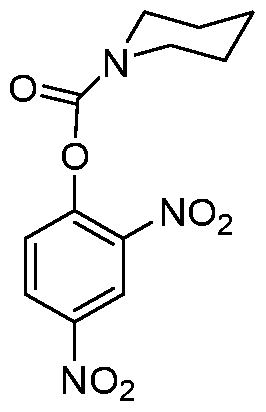


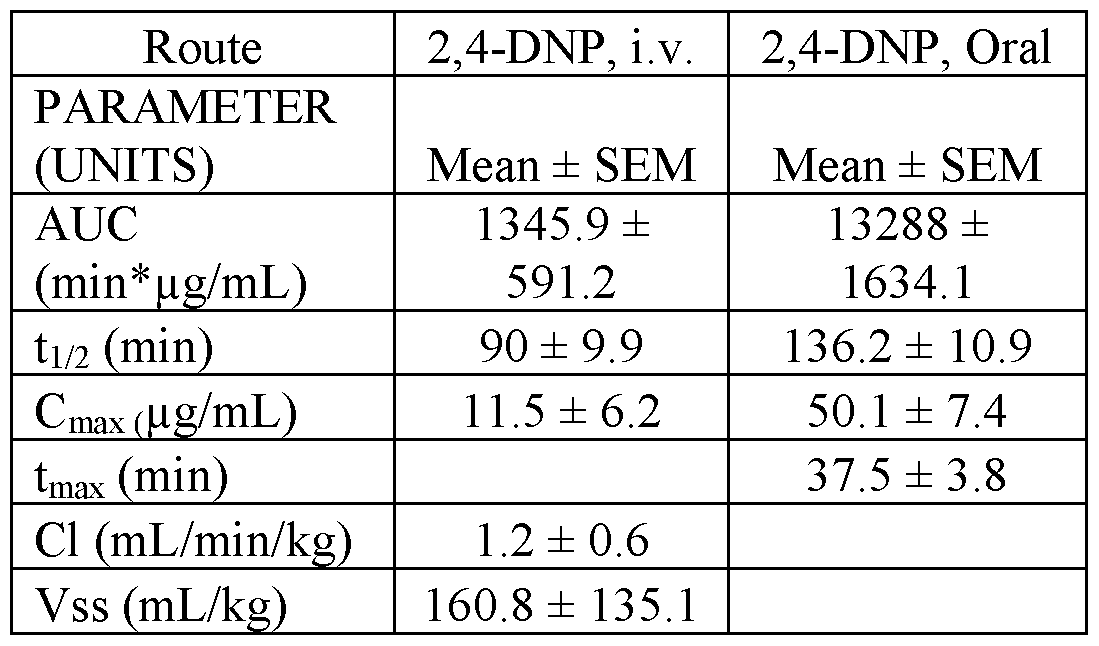


Claims


Priority Applications (12)
| Application Number | Priority Date | Filing Date | Title |
|---|---|---|---|
| AU2017229224A AU2017229224B2 (en) | 2016-03-07 | 2017-03-07 | DNP and DNP prodrug treatment of neuromuscular, neurodegenerative, autoimmune, developmental, concussion, dry eye disease, and/or metabolic diseases |
| MX2018010718A MX2018010718A (en) | 2016-03-07 | 2017-03-07 | DINITROPHENOL (DNP) AND DINITROPHENOL PRO-DRUG (DNP) TREATMENT FOR NEUROMUSCULAR, NEURODEGENERATIVE, AUTOIMMUNE, DEVELOPMENTAL, CONCUSSION, DRY EYE DISEASE AND / OR METABOLIC DISEASES. |
| CA3016465A CA3016465A1 (en) | 2016-03-07 | 2017-03-07 | Dinitrophemol and dinitrophenol prodrug treatment of neuromuscular, neurodegenerative, autoimmune, developmental,traumatic brain injury, concussion, dry eye disease, hearing loss, and/or metabolic diseases______________________ |
| BR112018067966-6A BR112018067966B1 (en) | 2016-03-07 | 2017-03-07 | COMPOSITION COMPRISING PRO-DRUG OF DINITROPHENOL ISOMER (DNP) AND USES THEREOF |
| EP17763866.5A EP3426233A4 (en) | 2016-03-07 | 2017-03-07 | DNP-TREATMENT OF DNP PRODRUGS OF NEUROMUSCULAR, NEURODEGENERATIVE, AUTOIMMUNE DISEASES, DEVELOPMENTAL DISEASES, COMMODITY, DRY-LIKE SYNDROME, AND / OR METABOLIC DISEASES |
| KR1020217037710A KR102475875B1 (en) | 2016-03-07 | 2017-03-07 | Dnp and dnp prodrug treatment of neuromuscular, neurodegenerative, autoimmune, developmental, concussion, dry eye disease, and/or metabolic diseases |
| CN201780028100.7A CN109195589B (en) | 2016-03-07 | 2017-03-07 | DNP and DNP prodrug therapy for neuromuscular, neurodegenerative, autoimmune, developmental, concussion, dry eye disease, and/or metabolic disorders. |
| JP2018548116A JP7021098B2 (en) | 2016-03-07 | 2017-03-07 | DNP and DNP prodrug treatment for neuromuscular, neurodegenerative, autoimmune, developmental, traumatic brain damage, tremor, dry eye disease and / or metabolic disease |
| KR1020187028903A KR102436172B1 (en) | 2016-03-07 | 2017-03-07 | DNP and DNP prodrug treatment of neuromuscular disease, neurodegenerative disease, autoimmune disease, developmental disease, concussion, dry eye, and/or metabolic disease |
| CN202210496274.9A CN115227685A (en) | 2016-03-07 | 2017-03-07 | DNP and DNP prodrug treatment of diseases |
| KR1020227042687A KR20230003267A (en) | 2016-03-07 | 2017-03-07 | Dnp and dnp prodrug treatment of neuromuscular, neurodegenerative, autoimmune, developmental, concussion, dry eye disease, and/or metabolic diseases |
| AU2023200805A AU2023200805A1 (en) | 2016-03-07 | 2023-02-14 | Dnp and dnp prodrug treatment of neuromuscular, neurodegenerative, autoimmune, developmental, traumatic brain injury, concussion, dry eye disease, hearing loss, and/or metabolic diseases |
Applications Claiming Priority (4)
| Application Number | Priority Date | Filing Date | Title |
|---|---|---|---|
| US201662304584P | 2016-03-07 | 2016-03-07 | |
| US62/304,584 | 2016-03-07 | ||
| US201762460318P | 2017-02-17 | 2017-02-17 | |
| US62/460,318 | 2017-02-17 |
Publications (1)
| Publication Number | Publication Date |
|---|---|
| WO2017155940A1 true WO2017155940A1 (en) | 2017-09-14 |
Family
ID=59722537
Family Applications (1)
| Application Number | Title | Priority Date | Filing Date |
|---|---|---|---|
| PCT/US2017/021080 Ceased WO2017155940A1 (en) | 2016-03-07 | 2017-03-07 | Dnp and dnp prodrug treatment of neuromuscular, neurodegenerative, autoimmune, developmental, concussion, dry eye disease, and/or metabolic diseases |
Country Status (10)
| Country | Link |
|---|---|
| US (3) | US10548900B2 (en) |
| EP (1) | EP3426233A4 (en) |
| JP (3) | JP7021098B2 (en) |
| KR (3) | KR20230003267A (en) |
| CN (2) | CN115227685A (en) |
| AU (2) | AU2017229224B2 (en) |
| CA (1) | CA3016465A1 (en) |
| MX (2) | MX2018010718A (en) |
| TW (1) | TWI794161B (en) |
| WO (1) | WO2017155940A1 (en) |
Cited By (1)
| Publication number | Priority date | Publication date | Assignee | Title |
|---|---|---|---|---|
| US11254481B2 (en) * | 2018-09-11 | 2022-02-22 | Selig Sealing Products, Inc. | Enhancements for tabbed seal |
Families Citing this family (11)
| Publication number | Priority date | Publication date | Assignee | Title |
|---|---|---|---|---|
| EP3426233A4 (en) * | 2016-03-07 | 2019-10-16 | Mitochon Pharmaceuticals, Inc. | DNP-TREATMENT OF DNP PRODRUGS OF NEUROMUSCULAR, NEURODEGENERATIVE, AUTOIMMUNE DISEASES, DEVELOPMENTAL DISEASES, COMMODITY, DRY-LIKE SYNDROME, AND / OR METABOLIC DISEASES |
| PT3565806T (en) | 2017-01-06 | 2022-05-19 | Rivus Pharmaceuticals Inc | Novel phenyl derivatives |
| WO2019059344A1 (en) * | 2017-09-22 | 2019-03-28 | 大日本住友製薬株式会社 | Chemically activated water-soluble prodrug |
| DE102018117657A1 (en) | 2018-07-20 | 2020-01-23 | Thyssenkrupp Ag | Method and device for producing ammonia or hydrogen and use of the device |
| WO2020257283A1 (en) * | 2019-06-18 | 2020-12-24 | Mitopower Llc | Nicotinyl riboside compounds and their uses |
| US20220389067A1 (en) * | 2019-11-05 | 2022-12-08 | The Board Of Trustees Of The Leland Stanford Junior University | Methods of Treating Neurodegenerative Diseases Caused by G4C2 Expansion in C9ORF72 |
| CN113045428B (en) * | 2019-12-26 | 2022-04-22 | 中国农业大学 | Compounds and their use in fat reduction |
| WO2023014882A1 (en) * | 2021-08-04 | 2023-02-09 | Mitochon Pharmaceuticals, Inc. | 2,4 dnp and prodrugs thereof for treatment of cancer |
| EP4414485A4 (en) | 2021-10-07 | 2025-11-05 | Sumitomo Metal Mining Co | Infrared absorbent fiber and fiber product |
| US20250161243A1 (en) * | 2022-02-21 | 2025-05-22 | The Scripps Research Institute | Mef2 transcriptional activators to treat neurologic conditions |
| WO2023205625A2 (en) * | 2022-04-18 | 2023-10-26 | Mitochon Pharmaceuticals, Inc. | 2,4 dnp and prodrugs thereof for treatment of pulmonary and autoimmune diseases |
Citations (4)
| Publication number | Priority date | Publication date | Assignee | Title |
|---|---|---|---|---|
| US6664297B1 (en) * | 2000-10-18 | 2003-12-16 | Universidade Federal Do Rio De Janeiro | Methods for inhibition and dissolution of amyloidoses by administration of compositions comprising 2,4-dinitrophenol |
| US20100234295A1 (en) * | 2009-03-16 | 2010-09-16 | Chien-Hung Chen | Treating Alzheimer's Disease And Osteoporosis And Reducing Aging |
| WO2015031756A1 (en) * | 2013-08-30 | 2015-03-05 | Yale University | Novel 2,4-dinitrophenol formulations and methods using same |
| WO2015031598A2 (en) | 2013-08-30 | 2015-03-05 | Yale University | Therapeutic dnp derivatives and methods using same |
Family Cites Families (10)
| Publication number | Priority date | Publication date | Assignee | Title |
|---|---|---|---|---|
| NL122364C (en) * | 1960-05-30 | |||
| US3287211A (en) * | 1965-02-26 | 1966-11-22 | Stauffer Chemical Co | Controlling mites with certain alkyl-(2, 4-dinitrophenyl) carbonates |
| JPS4828654A (en) * | 1971-08-23 | 1973-04-16 | ||
| JP2964107B2 (en) * | 1991-11-11 | 1999-10-18 | 日本電信電話株式会社 | Positive resist material |
| JP2654892B2 (en) * | 1992-07-27 | 1997-09-17 | 日本電信電話株式会社 | Positive resist material |
| US5621129A (en) * | 1995-03-09 | 1997-04-15 | Sumitomo Chemical Co., Ltd. | Optically active tertiary phosphine compound, transition metal complex comprising the same as ligand and process for preparing optically active organic silicon compound using said transition metal complex |
| CN102438620A (en) * | 2009-03-01 | 2012-05-02 | 于明 | Compounds, compositions and use for anticancer therapy |
| US9643933B2 (en) * | 2013-04-23 | 2017-05-09 | The General Hospital Corporation | Compounds useful as antibiotic tolerance inhibitors |
| CZ2014237A3 (en) * | 2014-04-09 | 2015-10-21 | Agra Group A. S. | Plant stimulators, their use and plant stimulation method |
| EP3426233A4 (en) * | 2016-03-07 | 2019-10-16 | Mitochon Pharmaceuticals, Inc. | DNP-TREATMENT OF DNP PRODRUGS OF NEUROMUSCULAR, NEURODEGENERATIVE, AUTOIMMUNE DISEASES, DEVELOPMENTAL DISEASES, COMMODITY, DRY-LIKE SYNDROME, AND / OR METABOLIC DISEASES |
-
2017
- 2017-03-07 EP EP17763866.5A patent/EP3426233A4/en active Pending
- 2017-03-07 KR KR1020227042687A patent/KR20230003267A/en not_active Ceased
- 2017-03-07 AU AU2017229224A patent/AU2017229224B2/en active Active
- 2017-03-07 JP JP2018548116A patent/JP7021098B2/en active Active
- 2017-03-07 MX MX2018010718A patent/MX2018010718A/en unknown
- 2017-03-07 CA CA3016465A patent/CA3016465A1/en active Pending
- 2017-03-07 WO PCT/US2017/021080 patent/WO2017155940A1/en not_active Ceased
- 2017-03-07 KR KR1020187028903A patent/KR102436172B1/en active Active
- 2017-03-07 TW TW106107430A patent/TWI794161B/en active
- 2017-03-07 KR KR1020217037710A patent/KR102475875B1/en active Active
- 2017-03-07 US US15/451,938 patent/US10548900B2/en active Active
- 2017-03-07 CN CN202210496274.9A patent/CN115227685A/en active Pending
- 2017-03-07 CN CN201780028100.7A patent/CN109195589B/en active Active
-
2018
- 2018-09-05 MX MX2022009725A patent/MX2022009725A/en unknown
-
2019
- 2019-11-26 US US16/695,653 patent/US11406642B2/en active Active
-
2021
- 2021-07-19 JP JP2021118811A patent/JP7399139B2/en active Active
-
2022
- 2022-06-14 US US17/840,436 patent/US20230100940A1/en not_active Abandoned
- 2022-12-06 JP JP2022194884A patent/JP2023016939A/en active Pending
-
2023
- 2023-02-14 AU AU2023200805A patent/AU2023200805A1/en not_active Withdrawn
Patent Citations (4)
| Publication number | Priority date | Publication date | Assignee | Title |
|---|---|---|---|---|
| US6664297B1 (en) * | 2000-10-18 | 2003-12-16 | Universidade Federal Do Rio De Janeiro | Methods for inhibition and dissolution of amyloidoses by administration of compositions comprising 2,4-dinitrophenol |
| US20100234295A1 (en) * | 2009-03-16 | 2010-09-16 | Chien-Hung Chen | Treating Alzheimer's Disease And Osteoporosis And Reducing Aging |
| WO2015031756A1 (en) * | 2013-08-30 | 2015-03-05 | Yale University | Novel 2,4-dinitrophenol formulations and methods using same |
| WO2015031598A2 (en) | 2013-08-30 | 2015-03-05 | Yale University | Therapeutic dnp derivatives and methods using same |
Non-Patent Citations (5)
| Title |
|---|
| DHARESHWAR ET AL.: "Prodrugs of Alcohols and Phenols", PRODRUGS CHALLENGES AND REWARDS PART 1, vol. V, 2007, New York, pages 31 - 99, XP009122517, Retrieved from the Internet <URL:https://link.springer.com/chapter/10.1007/978-0-387-49785-3_21> [retrieved on 20170425] * |
| ISAACS ET AL.: "The E1cb route for ester hydrolysis; volumes of activation as an additional criterion of mechanism", JOURNAL OF THE CHEMICAL SOCIETY , PERKIN TRANSACTIONS, vol. 2, 1988, pages 557 - 562, XP009057679 * |
| MCQUAKER ET AL.: "A Prototypical Small-Molecule Modulator Uncouples Mitochondria in Response to Endogenous Hydrogen Peroxide Production", CHEMBIOCHEM, vol. 14, no. 8, 2 May 2013 (2013-05-02), pages 993 - 1000, XP055235983 * |
| PERRY ET AL.: "Reversal of Hypertriglyceridemia, Fatty Liver Disease, and Insulin Resistance by a Liver-Targeted Mitochondrial Uncoupler", CELL METABOLISM, vol. 18, 5 November 2013 (2013-11-05), pages 740 - 748, XP055348225 * |
| See also references of EP3426233A4 |
Cited By (1)
| Publication number | Priority date | Publication date | Assignee | Title |
|---|---|---|---|---|
| US11254481B2 (en) * | 2018-09-11 | 2022-02-22 | Selig Sealing Products, Inc. | Enhancements for tabbed seal |
Also Published As
| Publication number | Publication date |
|---|---|
| US11406642B2 (en) | 2022-08-09 |
| JP2019510017A (en) | 2019-04-11 |
| AU2017229224B2 (en) | 2022-11-17 |
| US20170252347A1 (en) | 2017-09-07 |
| KR102436172B1 (en) | 2022-08-24 |
| US10548900B2 (en) | 2020-02-04 |
| TW201808268A (en) | 2018-03-16 |
| JP7021098B2 (en) | 2022-02-16 |
| KR102475875B1 (en) | 2022-12-07 |
| CN109195589B (en) | 2026-04-10 |
| US20200093831A1 (en) | 2020-03-26 |
| US20230100940A1 (en) | 2023-03-30 |
| BR112018067966A2 (en) | 2019-01-15 |
| CN109195589A (en) | 2019-01-11 |
| EP3426233A4 (en) | 2019-10-16 |
| MX2022009725A (en) | 2022-09-09 |
| KR20180118217A (en) | 2018-10-30 |
| AU2023200805A1 (en) | 2023-03-09 |
| JP2023016939A (en) | 2023-02-02 |
| CN115227685A (en) | 2022-10-25 |
| AU2017229224A1 (en) | 2018-09-27 |
| MX2018010718A (en) | 2019-06-20 |
| KR20210145298A (en) | 2021-12-01 |
| KR20230003267A (en) | 2023-01-05 |
| EP3426233A1 (en) | 2019-01-16 |
| JP2021165319A (en) | 2021-10-14 |
| TWI794161B (en) | 2023-03-01 |
| CA3016465A1 (en) | 2017-09-14 |
| JP7399139B2 (en) | 2023-12-15 |
Similar Documents
| Publication | Publication Date | Title |
|---|---|---|
| US20230100940A1 (en) | DNP and DNP Prodrug Treatment of Neuromuscular, Neurodegenerative, Autoimmune, Developmental, Traumatic Brain Injury, Concussion, Dry Eye Disease, Hearing Loss and/or Metabolic Diseases | |
| EP3445756B1 (en) | Compounds and compositions for treating conditions associated with nlrp activity | |
| US7741357B1 (en) | Heterocyclic and carbonate derivatives of NDGA and their use as new anti-HIV and anti-cancer agents | |
| KR101828934B1 (en) | Methods for treating bipolar disorder | |
| CN104640540A (en) | Enhanced anti-influenza agents coupled with anti-inflammatory activity | |
| CN112566894B (en) | Potent inhibitors of D-amino acid oxidase (DAAO) and uses thereof | |
| AU2018230805A2 (en) | Antimicrobial compounds, compositions, and uses thereof | |
| CN112654626A (en) | Compound and use thereof | |
| KR20190050372A (en) | A pharmaceutical composition comprising aptamer and antioxidant complex | |
| CN101146527A (en) | Methods of controlling the QT interval | |
| HK40082341A (en) | Dnp and dnp prodrug treatment of diseases | |
| BR112018067966B1 (en) | COMPOSITION COMPRISING PRO-DRUG OF DINITROPHENOL ISOMER (DNP) AND USES THEREOF | |
| CN106133024B (en) | The novel hydrotrote based on polymer for hydrophobic drug delivering | |
| WO2023205625A2 (en) | 2,4 dnp and prodrugs thereof for treatment of pulmonary and autoimmune diseases | |
| KR20220165891A (en) | Three-component prodrug, pharmaceutical composition and medical use thereof | |
| US20220313682A1 (en) | Pharmaceutical Compositions of (6aS)-6-methyl-5,6,6a,7-tetrahydro-4H-dibenzo[de,g]quinoline-10,11-diol | |
| ES2986199T3 (en) | Polymeric compositions of monomethyl fumarate in the treatment of relapsing-remitting multiple sclerosis and psoriasis | |
| WO2026073266A1 (en) | High density brush shaped polymer lipids reduce anti-peg antibody binding to enable mrna lipid nanoparticle repeat administration | |
| US20160362402A1 (en) | Novel compounds having anti-allodynic and antihyperalgesic activity |
Legal Events
| Date | Code | Title | Description |
|---|---|---|---|
| ENP | Entry into the national phase |
Ref document number: 3016465 Country of ref document: CA |
|
| WWE | Wipo information: entry into national phase |
Ref document number: 122021007069 Country of ref document: BR Ref document number: MX/A/2018/010718 Country of ref document: MX |
|
| ENP | Entry into the national phase |
Ref document number: 2018548116 Country of ref document: JP Kind code of ref document: A |
|
| NENP | Non-entry into the national phase |
Ref country code: DE |
|
| ENP | Entry into the national phase |
Ref document number: 2017229224 Country of ref document: AU Date of ref document: 20170307 Kind code of ref document: A |
|
| ENP | Entry into the national phase |
Ref document number: 20187028903 Country of ref document: KR Kind code of ref document: A |
|
| WWE | Wipo information: entry into national phase |
Ref document number: 2017763866 Country of ref document: EP |
|
| ENP | Entry into the national phase |
Ref document number: 2017763866 Country of ref document: EP Effective date: 20181008 |
|
| REG | Reference to national code |
Ref country code: BR Ref legal event code: B01A Ref document number: 112018067966 Country of ref document: BR |
|
| 121 | Ep: the epo has been informed by wipo that ep was designated in this application |
Ref document number: 17763866 Country of ref document: EP Kind code of ref document: A1 |
|
| ENP | Entry into the national phase |
Ref document number: 112018067966 Country of ref document: BR Kind code of ref document: A2 Effective date: 20180905 |