WO2017163300A1 - 基礎体温測定システムおよび基礎体温測定装置 - Google Patents
基礎体温測定システムおよび基礎体温測定装置 Download PDFInfo
- Publication number
- WO2017163300A1 WO2017163300A1 PCT/JP2016/058925 JP2016058925W WO2017163300A1 WO 2017163300 A1 WO2017163300 A1 WO 2017163300A1 JP 2016058925 W JP2016058925 W JP 2016058925W WO 2017163300 A1 WO2017163300 A1 WO 2017163300A1
- Authority
- WO
- WIPO (PCT)
- Prior art keywords
- body temperature
- basal body
- sleep state
- information
- storage medium
- Prior art date
- Legal status (The legal status is an assumption and is not a legal conclusion. Google has not performed a legal analysis and makes no representation as to the accuracy of the status listed.)
- Ceased
Links
Images



Classifications
-
- A—HUMAN NECESSITIES
- A61—MEDICAL OR VETERINARY SCIENCE; HYGIENE
- A61B—DIAGNOSIS; SURGERY; IDENTIFICATION
- A61B5/00—Measuring for diagnostic purposes; Identification of persons
- A61B5/01—Measuring temperature of body parts ; Diagnostic temperature sensing, e.g. for malignant or inflamed tissue
-
- A—HUMAN NECESSITIES
- A61—MEDICAL OR VETERINARY SCIENCE; HYGIENE
- A61B—DIAGNOSIS; SURGERY; IDENTIFICATION
- A61B10/00—Instruments for taking body samples for diagnostic purposes; Other methods or instruments for diagnosis, e.g. for vaccination diagnosis, sex determination or ovulation-period determination; Throat striking implements
- A61B10/0012—Ovulation-period determination
-
- A—HUMAN NECESSITIES
- A61—MEDICAL OR VETERINARY SCIENCE; HYGIENE
- A61B—DIAGNOSIS; SURGERY; IDENTIFICATION
- A61B5/00—Measuring for diagnostic purposes; Identification of persons
- A61B5/103—Measuring devices for testing the shape, pattern, colour, size or movement of the body or parts thereof, for diagnostic purposes
- A61B5/11—Measuring movement of the entire body or parts thereof, e.g. head or hand tremor or mobility of a limb
-
- A—HUMAN NECESSITIES
- A61—MEDICAL OR VETERINARY SCIENCE; HYGIENE
- A61B—DIAGNOSIS; SURGERY; IDENTIFICATION
- A61B5/00—Measuring for diagnostic purposes; Identification of persons
- A61B5/103—Measuring devices for testing the shape, pattern, colour, size or movement of the body or parts thereof, for diagnostic purposes
- A61B5/11—Measuring movement of the entire body or parts thereof, e.g. head or hand tremor or mobility of a limb
- A61B5/1116—Determining posture transitions
-
- A—HUMAN NECESSITIES
- A61—MEDICAL OR VETERINARY SCIENCE; HYGIENE
- A61B—DIAGNOSIS; SURGERY; IDENTIFICATION
- A61B5/00—Measuring for diagnostic purposes; Identification of persons
- A61B5/103—Measuring devices for testing the shape, pattern, colour, size or movement of the body or parts thereof, for diagnostic purposes
- A61B5/11—Measuring movement of the entire body or parts thereof, e.g. head or hand tremor or mobility of a limb
- A61B5/1118—Determining activity level
-
- A—HUMAN NECESSITIES
- A61—MEDICAL OR VETERINARY SCIENCE; HYGIENE
- A61B—DIAGNOSIS; SURGERY; IDENTIFICATION
- A61B5/00—Measuring for diagnostic purposes; Identification of persons
- A61B5/43—Detecting, measuring or recording for evaluating the reproductive systems
- A61B5/4306—Detecting, measuring or recording for evaluating the reproductive systems for evaluating the female reproductive systems, e.g. gynaecological evaluations
-
- A—HUMAN NECESSITIES
- A61—MEDICAL OR VETERINARY SCIENCE; HYGIENE
- A61B—DIAGNOSIS; SURGERY; IDENTIFICATION
- A61B5/00—Measuring for diagnostic purposes; Identification of persons
- A61B5/48—Other medical applications
- A61B5/4806—Sleep evaluation
- A61B5/4809—Sleep detection, i.e. determining whether a subject is asleep or not
-
- A—HUMAN NECESSITIES
- A61—MEDICAL OR VETERINARY SCIENCE; HYGIENE
- A61B—DIAGNOSIS; SURGERY; IDENTIFICATION
- A61B5/00—Measuring for diagnostic purposes; Identification of persons
- A61B5/48—Other medical applications
- A61B5/4806—Sleep evaluation
- A61B5/4812—Detecting sleep stages or cycles
-
- A—HUMAN NECESSITIES
- A61—MEDICAL OR VETERINARY SCIENCE; HYGIENE
- A61B—DIAGNOSIS; SURGERY; IDENTIFICATION
- A61B5/00—Measuring for diagnostic purposes; Identification of persons
- A61B5/68—Arrangements of detecting, measuring or recording means, e.g. sensors, in relation to patient
- A61B5/6801—Arrangements of detecting, measuring or recording means, e.g. sensors, in relation to patient specially adapted to be attached to or worn on the body surface
- A61B5/683—Means for maintaining contact with the body
- A61B5/6831—Straps, bands or harnesses
-
- G—PHYSICS
- G01—MEASURING; TESTING
- G01K—MEASURING TEMPERATURE; MEASURING QUANTITY OF HEAT; THERMALLY-SENSITIVE ELEMENTS NOT OTHERWISE PROVIDED FOR
- G01K13/00—Thermometers specially adapted for specific purposes
- G01K13/20—Clinical contact thermometers for use with humans or animals
-
- G—PHYSICS
- G01—MEASURING; TESTING
- G01P—MEASURING LINEAR OR ANGULAR SPEED, ACCELERATION, DECELERATION, OR SHOCK; INDICATING PRESENCE, ABSENCE, OR DIRECTION, OF MOVEMENT
- G01P13/00—Indicating or recording presence, absence, or direction, of movement
-
- A—HUMAN NECESSITIES
- A61—MEDICAL OR VETERINARY SCIENCE; HYGIENE
- A61B—DIAGNOSIS; SURGERY; IDENTIFICATION
- A61B10/00—Instruments for taking body samples for diagnostic purposes; Other methods or instruments for diagnosis, e.g. for vaccination diagnosis, sex determination or ovulation-period determination; Throat striking implements
- A61B10/0012—Ovulation-period determination
- A61B2010/0019—Ovulation-period determination based on measurement of temperature
-
- A—HUMAN NECESSITIES
- A61—MEDICAL OR VETERINARY SCIENCE; HYGIENE
- A61B—DIAGNOSIS; SURGERY; IDENTIFICATION
- A61B5/00—Measuring for diagnostic purposes; Identification of persons
- A61B5/103—Measuring devices for testing the shape, pattern, colour, size or movement of the body or parts thereof, for diagnostic purposes
- A61B5/11—Measuring movement of the entire body or parts thereof, e.g. head or hand tremor or mobility of a limb
- A61B5/1123—Discriminating type of movement, e.g. walking or running
Definitions
- the present invention relates to a basal body temperature measurement system and a basal body temperature measurement device, and more particularly, to an apparatus and system for wearing a user's body during sleep and measuring the basal body temperature.
- ⁇ Human basal body temperature refers to body temperature measured in a resting state that eliminates factors such as changes in body temperature due to activity and consumes the minimum amount of energy necessary for life support.
- basal body temperature is closely related to the ovulation cycle. Therefore, basal body temperature is used for various purposes such as reference for women who want to become pregnant or non-pregnant, analysis of causes of menstrual irregularities and follow-up. Recently, basal body temperature is sometimes used for beauty and health condition adjustment.
- a woman's basal body temperature changes periodically between approximately 0.3 and 0.5 degrees except when there is illness or severe stress.
- the rhythm change in body temperature
- the basal body temperature is usually measured with the body at rest. As a specific measurement method, it is recommended to measure while sleeping in a futon when the inside of the body is resting immediately after waking up enough and before moving the body. .
- the basal body temperature is measured after being forcibly awakened by an alarm clock or receiving a warning from the device. Can not.
- Patent Document 2 a technique has also been proposed in which a body temperature measuring device is attached to a storage pocket inside the underwear, and the body temperature is measured during sleep and recorded in a memory (for example, see Patent Document 2). .
- This Patent Document 2 also describes that after the user's sleep is confirmed by the acceleration sensor, the body temperature measurement is started by the temperature measuring element. According to the technique described in Patent Document 2, basal body temperature can be measured under a resting state during sleep.
- This invention was made in order to solve such a problem, and it aims at enabling it to measure a basal body temperature correctly in a resting state.
- body temperature information measured by a temperature sensor during a sleep period is recorded on a storage medium in association with motion information detected by a motion detection sensor during the sleep period. After that, the motion information recorded in the storage medium is analyzed to detect the user's wake-up timing, and the body temperature information measured immediately before the wake-up timing is specified as the basal body temperature.
- the user's body temperature can be measured in a resting state during sleep and recorded in a storage medium, and the body temperature recorded immediately before waking up can be specified as the basal body temperature. can do. For this reason, the correct basal body temperature measured in the resting state just before getting up can be obtained.
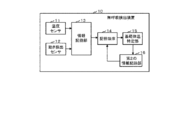
- FIG. 1 is a block diagram illustrating a functional configuration example of a basal body temperature measuring device according to the first embodiment.
- FIG. 2 is a diagram illustrating an external configuration example of the basal body temperature measurement device according to the first embodiment.
- the basal body temperature measuring device 10 is for wearing a user's body during a sleep period and measuring the basal body temperature. As shown in FIG. 2, a temperature sensor 11 is provided on the surface of the housing, and the basal body temperature measuring device 10 is mounted so that the temperature sensor 11 touches the user's body. For example, the body temperature is measured by wearing the basal body temperature measuring device 10 so that the temperature sensor 11 touches the chest or abdomen of the user.
- a belt 21 for fixing the basal body temperature measuring device 10 to the body is provided so that the basal body temperature measuring device 10 does not fall off the body during sleep.
- the fixing method is not limited to this.
- the basal body temperature measuring device 10 may be fixed to the body using a tape or the like.
- the basal body temperature measuring device 10 includes, as its functional configuration, a temperature sensor 11, a motion detection sensor 12, an information recording unit 13, a storage medium 14, a basal body temperature specifying unit 15, and a first unit.
- Two information recording units 16 are provided.
- the functional blocks of the information recording unit 13, the basal body temperature specifying unit 15, and the second information recording unit 16 can be configured by any of hardware, DSP (Digital Signal Processor), and software.
- each of the functional blocks 13, 15, and 16 is actually configured by including a CPU, RAM, and ROM of a computer and stored in a storage medium such as a RAM, ROM, hard disk, and semiconductor memory. It is realized by running the program.
- the storage medium storing this program may be the same as the storage medium 14 or may be different.
- the temperature sensor 11 measures the temperature of the user's body during sleep.
- the movement detection sensor 12 detects the movement of the user's body during sleep.
- the motion detection sensor 12 can be configured by an acceleration sensor. When the user's body moves, the acceleration sensor detects acceleration generated when the user moves, and outputs acceleration information.
- the information recording unit 13 records the body temperature information measured by the temperature sensor 11 in the storage medium 14 in association with the motion information (acceleration information) detected by the motion detection sensor 12.
- the storage medium 14 is a non-volatile storage medium such as a hard disk or a semiconductor memory.
- the association between body temperature information and movement information can be performed, for example, via measurement time.
- the information recording unit 13 stores the body temperature information and the motion information respectively input from the temperature sensor 11 and the motion detection sensor 12 in the storage medium 14 together with a time stamp at a predetermined time interval (for example, an interval of 30 seconds). Record.
- the information used for associating the body temperature information with the movement information is not limited to the time stamp described above.
- a simple identifier such as a serial number sequentially issued at predetermined time intervals from the start of measurement may be used.
- the basal body temperature specifying unit 15 analyzes the motion information recorded in the storage medium 14 to detect the user's wake-up timing, and specifies the body temperature information measured immediately before the wake-up timing as the basal body temperature.
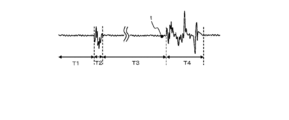
- FIG. 3 is a diagram showing a processing example of the basal body temperature specifying unit 15.
- FIG. 3 shows acceleration information obtained when an acceleration sensor is used as the motion detection sensor 12.
- time-series acceleration information obtained by the motion detection sensor 12 is illustrated as a continuous waveform, but in reality, the storage medium 14 is represented as discrete data every 30 seconds. Is recorded.
- Periods T1, T3 are periods in which the user is resting and sleeping without moving the body.
- acceleration information with a relatively large amplitude is detected by the motion detection sensor 12 at that moment, and is recorded in the storage medium 14 by the information recording unit 13 (period T2). Further, when the user wakes up, acceleration information having a relatively large amplitude is detected by the motion detection sensor 12 over a long period of time, and is recorded in the storage medium 14 by the information recording unit 13 (period T4).
- the basal body temperature specifying unit 15 determines the start timing of the period T4 in which acceleration information having a relatively large amplitude continues for a long time, And body temperature information measured at timing t immediately before the wake-up timing is specified as the basal body temperature. That is, the body temperature information recorded in the storage medium 14 in association with the time stamp at the timing t is specified as the basal body temperature of the user.
- Timing t is a timing included in a period T3 in which the user is in a resting state. Therefore, by specifying the body temperature recorded at the timing t as the basal body temperature, the correct basal body temperature measured by the user under the resting state during sleep can be obtained.
- the basal body temperature specifying unit 15 notifies the second information recording unit 16 of the specified basal body temperature of the user.
- the second information recording unit 16 records the basal body temperature notified from the basal body temperature specifying unit 15 in the storage medium 14 in association with the calendar information indicating the measurement date. By measuring and recording this basal body temperature every day, it becomes possible to grasp the rhythm of changes in basal body temperature.
- the information (body temperature information and movement information, specified basal body temperature information) recorded in the storage medium 14 can be output to an external computer (not shown) for use.
- the basal body temperature measurement device 10 itself may be provided with a display so that the information recorded in the storage medium 14 can be visualized and displayed graphically.
- the body temperature information measured by the temperature sensor 11 during the sleep period is stored in association with the motion information detected by the motion detection sensor 12 during the sleep period.
- the motion information recorded on the storage medium 14 is analyzed to detect the user's wake-up timing, and the body temperature information measured immediately before the wake-up timing is specified as the basal body temperature. Yes.
- the body temperature of the user can be measured in a resting state during sleep and recorded in the storage medium 14, and the body temperature recorded immediately before getting up is used as a basis. It can be specified as body temperature. For this reason, the correct basal body temperature measured in the resting state just before getting up can be obtained.
- basal body temperature may change even with a slight movement. Therefore, as the basal body temperature, it is desirable to acquire the body temperature when the user is sleeping and the body is not moving. However, since the basal body temperature was conventionally measured after getting up, the true basal body temperature could not be measured. On the other hand, according to the first embodiment, it is possible to measure the true basal body temperature.
- the basal body temperature measuring device 10 includes the temperature sensor 11, the motion detection sensor 12, the information recording unit 13, the storage medium 14, the basal body temperature specifying unit 15, and the second information recording unit 16.
- a portable basal body temperature measurement device 10 ′ includes a temperature sensor 11, a motion detection sensor 12, an information recording unit 13, and a storage medium 14, and is wirelessly connected to the basal body temperature measurement device 10 ′.
- the external computer 20 connected by wire may have a system configuration including the basal body temperature specifying unit 15, the second information recording unit 16, and the storage medium 41.
- the basal body temperature measuring device 10 ′ and the external computer 20 can be connected via a cable such as a USB (Universal Serial Bus), for example.
- both the basal body temperature measuring device 10 ′ and the external computer 20 are provided with wireless communication means such as Bluetooth (registered trademark) or wireless LAN, and the basal body temperature measuring device 10 ′ is connected to the external computer 20 in the storage medium 14.
- the recorded information may be transmitted wirelessly.
- both the basal body temperature measuring device 10 ′ and the external computer 20 are provided with Internet connection means, and the information recorded in the storage medium 14 is uploaded from the basal body temperature measuring device 10 ′ to a server device (not shown) on the Internet. Then, the external computer 20 may be able to download it from the server device.
- FIG. 5 is a block diagram illustrating a functional configuration example of the basal body temperature measurement device 10A according to the second embodiment.
- those given the same reference numerals as those shown in FIG. 1 have the same functions, and therefore redundant description is omitted here.
- the external configuration of the basal body temperature measuring device 10A is the same as that shown in FIG.
- the basal body temperature measurement device 10 ⁇ / b> A further includes a sleep state determination unit 51 as its functional configuration. Further, an information recording unit 13A is provided instead of the information recording unit 13.
- the sleep state determination unit 51 determines whether the user is in a REM sleep state or a non-REM sleep state based on body temperature information measured by the temperature sensor 11.
- REM sleep is a state where the body is sleeping but the brain is awake, and the sleep is shallow.
- Non-REM sleep is a state where the brain is asleep and deep sleep.
- REM sleep and non-REM sleep there is a correlation between REM sleep and non-REM sleep and body temperature.
- REM sleep when a person first goes to sleep, their body temperature suddenly drops about once, and then enters a deep sleep, non-REM sleep. Then, after about 90 minutes, it shifts to REM sleep, which is a shallow sleep.
- This rhythm of non-REM sleep and REM sleep is set as one sleep cycle, and this is repeated 4 to 5 times in one night.
- the duration of the REM sleep is as short as about 2 to 3 minutes in the first sleep cycle, and becomes longer as the sleep cycle is repeated.
- Body temperature goes up and down slightly even after body temperature suddenly drops about 1 degree immediately after falling asleep.
- sweating becomes active and body temperature decreases.
- body temperature rises when going from non-REM sleep to REM sleep. Therefore, whether the user is in the REM sleep state or the non-REM sleep state by monitoring whether the body temperature measured by the temperature sensor 11 is in the decrease state or the increase state, by the sleep state determination unit 51. Can be determined.
- the information recording unit 13A starts recording the body temperature information and the motion information in the storage medium 14. If the user wakes up naturally without using an alarm clock or the like, it is likely to wake up during the REM sleep period when the sleep is shallow. Therefore, if recording to the storage medium 14 is started when the transition from the non-REM sleep state to the REM sleep state is detected, the basal body temperature in the resting state immediately before getting up is measured and recorded without making unnecessary recording as much as possible. be able to.
- recording to the storage medium 14 may be started when, for example, the transition to the fourth REM sleep is detected.
- the user may start recording from the nth REM sleep (where n is a desired value of 1 to 5). May be specified for the basal body temperature measuring device 10A.
- the recording operation to the storage medium 14 may be performed during each REM sleep period, and the recording operation may not be performed during each non-REM sleep period.
- the example of determining the REM sleep state / non-REM sleep state based on the body temperature information measured by the temperature sensor 11 has been described.
- the motion detection sensor 12 Based on the detected motion information, the REM sleep state / non-REM sleep state may be determined.
- REM sleep is a state where the body is sleeping but the brain is awake. Therefore, the body hardly moves during REM sleep.
- non-REM sleep is a state where the brain is asleep, the muscles that support the body are working, and can be turned over. Therefore, the sleep state determination unit 51 can determine whether the user is in a REM sleep state or a non-REM sleep state by monitoring whether or not a body motion is detected by the motion detection sensor 12. Is possible.
- a basal body temperature measurement device 10A ′ including a temperature sensor 11, a motion detection sensor 12, an information recording unit 13A, a storage medium 14, and a sleep state determination unit 51, and a basal A system configuration including the body temperature specifying unit 15, the second information recording unit 16, and the external computer 20 including the storage medium 41 may be employed.
- FIG. 6 is a block diagram illustrating a functional configuration example of a basal body temperature measurement device 10B according to the third embodiment.
- components having the same reference numerals as those shown in FIG. 1 have the same functions, and thus redundant description is omitted here.
- the external configuration of the basal body temperature measuring device 10B is the same as that in FIG.
- the basal body temperature measurement device 10 ⁇ / b> B further includes a second sleep state determination unit 61 as a functional configuration. Further, a second information recording unit 16B is provided instead of the second information recording unit 16.
- the second sleep state determination unit 61 is configured to measure the basal body temperature specified by the basal body temperature specifying unit 15 based on at least one of the body temperature information and the motion information recorded in the storage medium 14 (timing t in FIG. 3). Then, it is determined whether the user is in a REM sleep state or a non-REM sleep state. The determination method is as described in the second embodiment. The second sleep state determination unit 61 notifies the determined sleep state to the second information recording unit 16B.
- the second information recording unit 16B represents the sleep state (either the REM sleep state or the non-REM sleep state) determined by the second sleep state determination unit 61, based on the basal body temperature specified by the basal body temperature specifying unit 15. It is recorded on the storage medium 14 together with the information.
- the basal body temperature measurement device 10B ′ including the temperature sensor 11, the motion detection sensor 12, the information recording unit 13, and the storage medium 14, the basal body temperature specifying unit 15, the first It is good also as a system structure provided with the external computer 20 containing the 2 information recording part 16B, the storage medium 41, and the 2nd sleep state determination part 61.
- FIG. 4 the basal body temperature measurement device 10B ′ including the temperature sensor 11, the motion detection sensor 12, the information recording unit 13, and the storage medium 14, the basal body temperature specifying unit 15, the first It is good also as a system structure provided with the external computer 20 containing the 2 information recording part 16B, the storage medium 41, and the 2nd sleep state determination part 61.
- an acceleration sensor is used as an example of the motion detection sensor 12 and the user's wake-up timing is detected based on acceleration information as shown in FIG.
- the present invention is not limited to this.
- an angular velocity sensor may be used instead of or in addition to the acceleration sensor.
- the basal body temperature specifying unit 15 can detect when a large change in the posture occurs as the wake-up timing, and can specify the body temperature information measured immediately before the wake-up timing as the basal body temperature.
- each of the first to third embodiments described above is merely an example of a specific example for carrying out the present invention, and the technical scope of the present invention should not be construed as being limited thereto. It will not be. That is, the present invention can be implemented in various forms without departing from the gist or the main features thereof.
Landscapes
- Health & Medical Sciences (AREA)
- Life Sciences & Earth Sciences (AREA)
- Physics & Mathematics (AREA)
- Surgery (AREA)
- General Health & Medical Sciences (AREA)
- Veterinary Medicine (AREA)
- Pathology (AREA)
- Engineering & Computer Science (AREA)
- Biomedical Technology (AREA)
- Heart & Thoracic Surgery (AREA)
- Medical Informatics (AREA)
- Molecular Biology (AREA)
- Public Health (AREA)
- Animal Behavior & Ethology (AREA)
- Biophysics (AREA)
- Physiology (AREA)
- Dentistry (AREA)
- Oral & Maxillofacial Surgery (AREA)
- General Physics & Mathematics (AREA)
- Reproductive Health (AREA)
- Gynecology & Obstetrics (AREA)
- Anesthesiology (AREA)
- Measurement Of The Respiration, Hearing Ability, Form, And Blood Characteristics Of Living Organisms (AREA)
- Measuring And Recording Apparatus For Diagnosis (AREA)
- Recording Measured Values (AREA)
Abstract
睡眠の期間中に温度センサ11により測定される体温情報を、同じく睡眠の期間中に動き検出センサ12により検出される動き情報に関連付けて記憶媒体14に記録する情報記録部13と、当該記憶媒体14に記録された動き情報を分析して使用者の起床タイミングを検出し、当該起床タイミングの直前に測定された体温情報を基礎体温として特定する基礎体温特定部15とを備え、使用者の体温を睡眠中の安静状態下で測定して記憶媒体14に記録することができるようにし、しかも、起床直前に記録された体温を基礎体温として特定することができるようにする。
Description
本発明は、基礎体温測定システムおよび基礎体温測定装置に関し、特に、睡眠の期間中に使用者の身体に装着して基礎体温を測定するための装置およびシステムに関するものである。
人間の基礎体温は、活動による体温変化などの要因を排除し、生命維持に必要な最小限のエネルギーしか消費していない安静状態で測定した体温のことをいう。女性の場合、基礎体温は排卵サイクルとの関連が深い。そのため、妊娠または非妊娠を希望している女性の参考用、月経不順の原因分析や経過観察など、基礎体温は様々な目的で利用される。最近では、美容や健康状態の調整用にも基礎体温が利用されることがある。
通常、女性の基礎体温は、病気や重いストレスがあるときなどを除けば、ほぼ0.3~0.5度の間で周期的に変化している。この基礎体温を毎日測定してリズム(体温の変化)を知ることにより、排卵の有無や月経の時期、妊娠しやすい時期など、身体の状態を把握することが可能となる。
このように細かい値の変化を正確に捉える必要があるため、基礎体温は、身体を安静にした状態で測るのが通常である。具体的な測定方法としては、十分な睡眠をとった起床直後、まだ身体を動かす前で身体の内部が休んでいる状態のとき、布団に寝たままの状態で測定することが推奨されている。
従来、目覚まし時計の設定時刻の5分前(温度センサが体温を測定するために要する標準的な時間)になったタイミングで各種センサを起動し、使用者が基礎体温を測定しようとしているか否かをこれらのセンサによって判定し、測定を忘れている可能性がある場合に警告を行うようにした技術が提案されている(例えば、特許文献1参照)。
この特許文献1に記載の技術によれば、起床直後に、使用者が忘れることなく基礎体温を測定するよう促すことができる。しかしながら、この特許文献1に記載の技術では、目覚まし時計によって無理に起こされた後、または、装置から警告を受けた後に基礎体温を測定することになるため、安静状態下での測定ということはできない。
これに対し、下着内部の収納ポケットに体温測定装置を装着して就寝し、睡眠中に基礎体温を測定してメモリに記録するようにした技術も提案されている(例えば、特許文献2参照)。この特許文献2には、加速度センサにより使用者の入眠を確認した後に、測温素子により体温の測定を開始することも記載されている。この特許文献2に記載の技術によれば、睡眠中の安静状態下で基礎体温を測定することができる。
しかしながら、上記特許文献2に記載の技術では、使用者が入眠してから起床するまでの間ずっと体温を測定しており、その間のどの時間帯の体温を基礎体温として把握するかを特定できない。体温は寝返り等のほんの微妙な動きでも変わってしまうため、入眠から起床までの間に測定される体温には変動がある。特許文献2の場合は、この変動している体温のどれを基礎体温するかを特定できないという問題がある。
本発明は、このような問題を解決するために成されたものであり、基礎体温を安静状態下で正確に測定することができるようにすることを目的とする。
上記した課題を解決するために、本発明では、睡眠の期間中に温度センサにより測定される体温情報を、同じく睡眠の期間中に動き検出センサにより検出される動き情報に関連付けて記憶媒体に記録した後、当該記憶媒体に記録された動き情報を分析して使用者の起床タイミングを検出し、当該起床タイミングの直前に測定された体温情報を基礎体温として特定するようにしている。
上記のように構成した本発明によれば、使用者の体温を睡眠中の安静状態下で測定して記憶媒体に記録することができ、しかも、起床直前に記録された体温を基礎体温として特定することができる。このため、起床直前の安静状態の下で測定した正しい基礎体温を得ることができる。
(第1の実施形態)
以下、本発明の第1の実施形態を図面に基づいて説明する。図1は、第1の実施形態による基礎体温測定装置の機能構成例を示すブロック図である。図2は、第1の実施形態による基礎体温測定装置の外観構成例を示す図である。
以下、本発明の第1の実施形態を図面に基づいて説明する。図1は、第1の実施形態による基礎体温測定装置の機能構成例を示すブロック図である。図2は、第1の実施形態による基礎体温測定装置の外観構成例を示す図である。
第1の実施形態による基礎体温測定装置10は、睡眠の期間中に使用者の身体に装着して基礎体温を測定するためのものである。図2に示すように、筐体の表面には温度センサ11が設けられており、この温度センサ11が使用者の身体に触れるように基礎体温測定装置10を装着する。例えば、使用者の胸部または腹部に温度センサ11が触れるように基礎体温測定装置10を装着して体温を測定する。
なお、睡眠中に基礎体温測定装置10が身体からずれ落ちないように、基礎体温測定装置10を身体に固定するためのベルト21が備えられている。ここではベルト21を用いているが、固定方法はこれに限定されない。例えば、テープ等を使って基礎体温測定装置10を身体に固定するようにしてもよい。
図1に示すように、第1の実施形態による基礎体温測定装置10は、その機能構成として、温度センサ11、動き検出センサ12、情報記録部13、記憶媒体14、基礎体温特定部15および第2の情報記録部16を備えている。このうち、情報記録部13、基礎体温特定部15および第2の情報記録部16の機能ブロックは、ハードウェア、DSP(Digital Signal Processor)、ソフトウェアの何れによっても構成することが可能である。
例えばソフトウェアによって構成する場合、上記各機能ブロック13,15,16は、実際にはコンピュータのCPU、RAM、ROMなどを備えて構成され、RAMやROM、ハードディスクまたは半導体メモリ等の記憶媒体に記憶されたプログラムが動作することによって実現される。このプログラムが記憶される記憶媒体は、記憶媒体14と同じものであってもよいし、別のものであってもよい。
温度センサ11は、睡眠中に使用者の身体の温度を測定する。動き検出センサ12は、睡眠中における使用者の身体の動きを検出する。この動き検出センサ12は、一例として、加速度センサにより構成することが可能である。使用者の身体が動くと、加速度センサは、動いたときに生じる加速度を検出し、加速度情報を出力する。
情報記録部13は、温度センサ11により測定される体温情報を、動き検出センサ12に検出される動き情報(加速度情報)に関連付けて記憶媒体14に記録する。記憶媒体14は、ハードディスクまたは半導体メモリ等の不揮発性の記憶媒体である。
体温情報と動き情報との関連付けは、例えば、測定時刻を介して行うことが可能である。具体的には、情報記録部13は、温度センサ11および動き検出センサ12からそれぞれ入力される体温情報および動き情報を、所定の時間間隔(例えば、30秒間隔)でタイムスタンプと共に記憶媒体14に記録する。
なお、体温情報と動き情報とを関連付けるために用いる情報は、上述のタイムスタンプに限定されない。例えば、タイムスタンプに代えて、測定の開始から所定の時間間隔ごとに順次発行する連番のような単純な識別子を用いるようにしてもよい。
基礎体温特定部15は、記憶媒体14に記録された動き情報を分析して使用者の起床タイミングを検出し、当該起床タイミングの直前に測定された体温情報を基礎体温として特定する。
図3は、この基礎体温特定部15の処理例を示す図である。図3は、動き検出センサ12として加速度センサを用いた場合に得られる加速度情報を示している。なお、ここではイメージとして分かりやすいように、動き検出センサ12により得られる時系列の加速度情報を連続的な波形として図示しているが、実際には30秒ごとの離散的なデータとして記憶媒体14に記録されている。
例えば、基礎体温測定装置10を使用者の胸部に装着した場合、使用者の呼吸に伴う胸部の動きにより、呼吸の周期に合わせて比較的小さい振幅の加速度情報が動き検出センサ12により検出され、情報記録部13によって記憶媒体14に記録される(期間T1,T3)。期間T1,T3は、使用者が身体を動かすことなく安静して睡眠している期間である。
また、睡眠中に使用者が寝返りをすると、その瞬間は比較的大きな振幅の加速度情報が動き検出センサ12により検出され、情報記録部13によって記憶媒体14に記録される(期間T2)。さらに、使用者が起床をすると、比較的大きな振幅の加速度情報が長い時間にわたって動き検出センサ12により検出され、情報記録部13によって記憶媒体14に記録される(期間T4)。
基礎体温特定部15は、記憶媒体14に記録された図3に示すような加速度情報に基づいて、比較的大きな振幅の加速度情報が長い時間続いている期間T4の開始タイミングを使用者の起床タイミングとして検出し、その起床タイミングの直前のタイミングtに測定された体温情報を基礎体温として特定する。すなわち、タイミングtのタイムスタンプに関連付けて記憶媒体14に記録された体温情報を、使用者の基礎体温として特定する。
タイミングtは、使用者が安静状態にある期間T3に含まれるタイミングである。よって、このタイミングtに記録された体温を基礎体温として特定することにより、使用者が睡眠中の安静状態下で測定した正しい基礎体温を得ることができる。
基礎体温特定部15は、特定した使用者の基礎体温を第2の情報記録部16に通知する。第2の情報記録部16は、基礎体温特定部15から通知された基礎体温を、測定日を表すカレンダ情報に関連付けて記憶媒体14に記録する。この基礎体温を毎日測定して記録することにより、基礎体温の変化のリズムを把握することが可能となる。
なお、記憶媒体14に記録された情報(体温情報および動き情報、特定された基礎体温情報)は、図示しない外部コンピュータに出力して利用することが可能である。あるいは、基礎体温測定装置10自体にディスプレイを設け、記憶媒体14に記録された情報をグラフィック的に可視化して表示できるようにしてもよい。
以上詳しく説明したように、第1の実施形態では、睡眠の期間中に温度センサ11により測定される体温情報を、同じく睡眠の期間中に動き検出センサ12に検出される動き情報に関連付けて記憶媒体14に記録した後、当該記憶媒体14に記録された動き情報を分析して使用者の起床タイミングを検出し、当該起床タイミングの直前に測定された体温情報を基礎体温として特定するようにしている。
このように構成した第1の実施形態によれば、使用者の体温を睡眠中の安静状態下で測定して記憶媒体14に記録することができ、しかも、起床直前に記録された体温を基礎体温として特定することができる。このため、起床直前の安静状態の下で測定した正しい基礎体温を得ることができる。
上述したように、基礎体温は、少しの体動があっても変わってしまう可能性がある。そのため、基礎体温としては、使用者が眠っていて身体が動いていないときの体温を取得するのが望ましい。しかし、従来は起床した後に基礎体温を測定していたため、本当の意味での基礎体温を測定することはできなかった。これに対し、第1の実施形態によれば、真の基礎体温を測定することが可能である。
なお、上記実施形態では、温度センサ11、動き検出センサ12、情報記録部13、記憶媒体14、基礎体温特定部15および第2の情報記録部16の全てを基礎体温測定装置10が備える構成を示したが、本発明はこれに限定されない。例えば、図4に示すように、温度センサ11、動き検出センサ12、情報記録部13および記憶媒体14を携帯型の基礎体温測定装置10’が備え、当該基礎体温測定装置10’に対して無線または有線で接続される外部コンピュータ20が基礎体温特定部15、第2の情報記録部16および記憶媒体41を備えるシステム構成としてもよい。
この場合、基礎体温測定装置10’と外部コンピュータ20との間は、例えばUSB(Universal Serial Bus)などのケーブルを介して接続することが可能である。または、基礎体温測定装置10’と外部コンピュータ20との双方にBluetooth(登録商標)や無線LAN等の無線通信手段を備え、基礎体温測定装置10’から外部コンピュータ20に対して、記憶媒体14に記録された情報を無線で送信できるようにしてもよい。あるいは、基礎体温測定装置10’と外部コンピュータ20との双方にインターネット接続手段を備え、記憶媒体14に記録された情報を基礎体温測定装置10’からインターネット上のサーバ装置(図示せず)にアップロードし、これを外部コンピュータ20がサーバ装置からダウンロードできるようにしてもよい。
(第2の実施形態)
次に、本発明の第2の実施形態を図面に基づいて説明する。図5は、第2の実施形態による基礎体温測定装置10Aの機能構成例を示すブロック図である。なお、この図5において、図1に示した符号と同一の符号を付したものは同一の機能を有するものであるので、ここでは重複する説明を省略する。基礎体温測定装置10Aの外観構成は、図2と同様である。
次に、本発明の第2の実施形態を図面に基づいて説明する。図5は、第2の実施形態による基礎体温測定装置10Aの機能構成例を示すブロック図である。なお、この図5において、図1に示した符号と同一の符号を付したものは同一の機能を有するものであるので、ここでは重複する説明を省略する。基礎体温測定装置10Aの外観構成は、図2と同様である。
図5に示すように、第2の実施形態による基礎体温測定装置10Aは、その機能構成として、睡眠状態判定部51を更に備えている。また、情報記録部13に代えて情報記録部13Aを備えている。
睡眠状態判定部51は、温度センサ11により測定される体温情報に基づいて、使用者がレム睡眠状態にあるかノンレム睡眠状態にあるかを判定する。レム睡眠とは、身体は眠っているのに脳は起きている状態であり、眠りが浅い状態をいう。ノンレム睡眠とは、脳が眠っている状態であり、眠りが深い状態をいう。
このレム睡眠およびノンレム睡眠と体温との間には相関があることが知られている。すなわち、人はまず眠りに入ると、体温が急激に1度くらい下がり、深い眠りであるノンレム睡眠に入っていく。その後、90分くらい経過すると、浅い眠りであるレム睡眠に移行する。このノンレム睡眠とレム睡眠とのリズムを1つの睡眠周期として、これが一晩のうちに4~5回くり返される。レム睡眠の期間は、最初の睡眠周期では2~3分程度と短く、睡眠周期が繰り返されるごとに長くなる。
入眠した直後に体温が急激に1度くらい下がった後も、体温は微妙に上下する。ノンレム睡眠に入っていくときには、発汗作用が活発になり、体温は下がる。一方、ノンレム睡眠からレム睡眠になっていくときに、体温は上昇する。したがって、睡眠状態判定部51は、温度センサ11により測定される体温が低下状態にあるか、上昇状態にあるかを監視することによって、使用者がレム睡眠状態にあるかノンレム睡眠状態にあるかを判定することが可能である。
情報記録部13Aは、睡眠状態判定部51によりノンレム睡眠状態からレム睡眠状態へ移行したと判定されたときに、体温情報および動き情報の記憶媒体14への記録を開始する。使用者が目覚まし時計等を使わずに自然に起きる場合、眠りの浅いレム睡眠の期間中に起きる可能性が高い。そこで、ノンレム睡眠状態からレム睡眠状態への移行を検知したときに記憶媒体14への記録を開始すれば、無駄な記録を極力せずに、起床直前の安静状態における基礎体温を測定および記録することができる。
なお、一晩の睡眠中にレム睡眠は4~5回生じるので、例えば4回目のレム睡眠への移行を検知したときに記憶媒体14への記録を開始するようにしてもよい。あるいは、使用者が予定している睡眠時間から何回の睡眠周期があるかを考慮して、n回目(nは1~5の所望の値)のレム睡眠から記録を開始することを使用者が基礎体温測定装置10Aに対して指定できるようにしてもよい。また、別の例として、各レム睡眠期間中は記憶媒体14への記録動作を行い、各ノンレム睡眠期間中は記録動作を行わないようにしてもよい。
上記第2の実施形態では、温度センサ11により測定される体温情報に基づいてレム睡眠状態/ノンレム睡眠状態を判定する例について説明したが、体温情報に代えてまたは加えて、動き検出センサ12により検出される動き情報に基づいて、レム睡眠状態/ノンレム睡眠状態を判定するようにしてもよい。
上述したように、レム睡眠は、身体は眠っているのに脳は起きている状態である。そのため、レム睡眠中は、身体は殆ど動かない。これに対し、ノンレム睡眠は、脳が眠っている状態であり、身体を支える筋肉は働いており、寝返りを打つことができる。したがって、睡眠状態判定部51は、動き検出センサ12により身体の動きが検出されるか否かを監視することによって、使用者がレム睡眠状態にあるかノンレム睡眠状態にあるかを判定することが可能である。
また、上記第2の実施形態においても図4と同様に、温度センサ11、動き検出センサ12、情報記録部13A、記憶媒体14および睡眠状態判定部51を含む基礎体温測定装置10A’と、基礎体温特定部15、第2の情報記録部16および記憶媒体41を含む外部コンピュータ20とを備えたシステム構成としてもよい。
(第3の実施形態)
次に、本発明の第3の実施形態を図面に基づいて説明する。図6は、第3の実施形態による基礎体温測定装置10Bの機能構成例を示すブロック図である。なお、この図6において、図1に示した符号と同一の符号を付したものは同一の機能を有するものであるので、ここでは重複する説明を省略する。基礎体温測定装置10Bの外観構成は、図2と同様である。
次に、本発明の第3の実施形態を図面に基づいて説明する。図6は、第3の実施形態による基礎体温測定装置10Bの機能構成例を示すブロック図である。なお、この図6において、図1に示した符号と同一の符号を付したものは同一の機能を有するものであるので、ここでは重複する説明を省略する。基礎体温測定装置10Bの外観構成は、図2と同様である。
図6に示すように、第3の実施形態による基礎体温測定装置10Bは、その機能構成として、第2の睡眠状態判定部61を更に備えている。また、第2の情報記録部16に代えて第2の情報記録部16Bを備えている。
第2の睡眠状態判定部61は、記憶媒体14に記録された体温情報または動き情報の少なくとも一方に基づいて、基礎体温特定部15により特定された基礎体温の測定タイミング(図3のタイミングt)において、使用者がレム睡眠状態であったかノンレム睡眠状態であったかを判定する。その判定方法は、第2の実施形態で説明した通りである。第2の睡眠状態判定部61は、判定した睡眠状態を第2の情報記録部16Bに通知する。
第2の情報記録部16Bは、基礎体温特定部15により特定された基礎体温を、第2の睡眠状態判定部61により判定された睡眠状態(レム睡眠状態またはノンレム睡眠状態の何れか)を表す情報と共に記憶媒体14に記録する。
上述のように、使用者が目覚まし時計を使わずに自然に起きる場合、眠りの浅いレム睡眠の期間中に起きる可能性が高い。しかし、常にそうであるとは限らない。そこで、タイミングtで測定した基礎体温がレム睡眠中のものであるかノンレム睡眠中のものであるかを記録として残すことにより、記録された基礎体温がノンレム睡眠中の低めの体温なのか、レム睡眠中の高めの体温なのかを把握することができる。
また、上記第3の実施形態においても図4と同様に、温度センサ11、動き検出センサ12、情報記録部13および記憶媒体14を含む基礎体温測定装置10B’と、基礎体温特定部15、第2の情報記録部16B、記憶媒体41および第2の睡眠状態判定部61を含む外部コンピュータ20とを備えたシステム構成としてもよい。
なお、上記第1~第3の実施形態では、動き検出センサ12の一例として加速度センサを用い、図3に示すような加速度情報に基づいて使用者の起床タイミングを検出する例について説明したが、本発明はこれに限定されない。例えば、加速度センサに代えてまたは加えて、角速度センサ(ジャイロセンサ)を用いてもよい。
例えば、ジャイロセンサによって使用者の姿勢を検出する場合、横になって眠っているときと、起床して起立したときでは姿勢に大きな変化が生じる。このため、基礎体温特定部15は、この姿勢の大きな変化が生じたときを起床タイミングとして検出し、当該起床タイミングの直前に測定された体温情報を基礎体温として特定することが可能である。
その他、上記第1~第3の実施形態は、何れも本発明を実施するにあたっての具体化の一例を示したものに過ぎず、これらによって本発明の技術的範囲が限定的に解釈されてはならないものである。すなわち、本発明はその要旨、またはその主要な特徴から逸脱することなく、様々な形で実施することができる。
10,10’,10A,10B 基礎体温測定装置
11 温度センサ
12 動き検出センサ
13,13A 情報記録部
14 記憶媒体
15 基礎体温特定部
16,16B 第2の情報記録部
20 外部コンピュータ
51 睡眠状態判定部
61 第2の睡眠状態判定部
11 温度センサ
12 動き検出センサ
13,13A 情報記録部
14 記憶媒体
15 基礎体温特定部
16,16B 第2の情報記録部
20 外部コンピュータ
51 睡眠状態判定部
61 第2の睡眠状態判定部
Claims (11)
- 睡眠の期間中に使用者の身体に装着して基礎体温を測定するための装置を備えた基礎体温測定システムであって、
上記身体の温度を測定する温度センサと、
上記身体の動きを検出する動き検出センサと、
上記温度センサにより測定される体温情報を、上記動き検出センサにより検出される動き情報に関連付けて記憶媒体に記録する情報記録部と、
上記記憶媒体に記録された動き情報を分析して使用者の起床タイミングを検出し、当該起床タイミングの直前に測定された体温情報を上記基礎体温として特定する基礎体温特定部とを備えたことを特徴とする基礎体温測定システム。 - 上記基礎体温特定部により特定された上記基礎体温を記憶媒体に記録する第2の情報記録部を更に備えたことを特徴とする請求項1に記載の基礎体温測定システム。
- 上記温度センサにより測定される上記体温情報または上記動き検出センサにより検出される上記動き情報の少なくとも一方に基づいて、上記使用者がレム睡眠状態にあるかノンレム睡眠状態にあるかを判定する睡眠状態判定部を更に備え、
上記情報記録部は、上記睡眠状態判定部により上記ノンレム睡眠状態から上記レム睡眠状態へ移行したと判定されたときに、上記体温情報および上記動き情報の上記記憶媒体への記録を開始することを特徴とする請求項1に記載の基礎体温測定システム。 - 上記記憶媒体に記録された上記体温情報または上記動き情報の少なくとも一方に基づいて、上記基礎体温特定部により特定された上記基礎体温の測定タイミングにおいて、上記使用者がレム睡眠状態であったかノンレム睡眠状態であったかを判定する第2の睡眠状態判定部を更に備えたことを特徴とする請求項1に記載の基礎体温測定システム。
- 上記基礎体温特定部により特定された上記基礎体温を、上記第2の睡眠状態判定部により判定された睡眠状態を表す情報と共に記憶媒体に記録する第2の情報記録部を更に備えたことを特徴とする請求項4に記載の基礎体温測定システム。
- 上記温度センサ、上記動き検出センサ、上記記憶媒体および上記情報記録部が携帯型の基礎体温測定装置に備えられ、上記基礎体温特定部が上記基礎体温測定装置に対して無線または有線で接続される外部コンピュータに備えられることを特徴とする請求項1に記載の基礎体温測定システム。
- 睡眠の期間中に使用者の身体に装着して基礎体温を測定するための基礎体温測定装置であって、
上記身体の温度を測定する温度センサと、
上記身体の動きを検出する動き検出センサと、
上記温度センサにより測定される体温情報を、上記動き検出センサにより検出される動き情報に関連付けて記憶媒体に記録する情報記録部と、
上記記憶媒体に記録された動き情報を分析して使用者の起床タイミングを検出し、当該起床タイミングの直前に測定された体温情報を上記基礎体温として特定する基礎体温特定部とを備えたことを特徴とする基礎体温測定装置。 - 上記基礎体温特定部により特定された上記基礎体温を記憶媒体に記録する第2の情報記録部を更に備えたことを特徴とする請求項7に記載の基礎体温測定装置。
- 上記温度センサにより測定される上記体温情報または上記動き検出センサに検出される上記動き情報の少なくとも一方に基づいて、上記使用者がレム睡眠状態にあるかノンレム睡眠状態にあるかを判定する睡眠状態判定部を更に備え、
上記情報記録部は、上記睡眠状態判定部により上記ノンレム睡眠状態から上記レム睡眠状態へ移行したと判定されたときに、上記体温情報および上記動き情報の上記記憶媒体への記録を開始することを特徴とする請求項7に記載の基礎体温測定装置。 - 上記記憶媒体に記録された上記体温情報または上記動き情報の少なくとも一方に基づいて、上記基礎体温特定部により特定された上記基礎体温の測定タイミングにおいて、上記使用者がレム睡眠状態であったかノンレム睡眠状態であったかを判定する第2の睡眠状態判定部を更に備えたことを特徴とする請求項7に記載の基礎体温測定装置。
- 上記基礎体温特定部により特定された上記基礎体温を、上記第2の睡眠状態判定部により判定された睡眠状態を表す情報と共に記憶媒体に記録する第2の情報記録部を更に備えたことを特徴とする請求項10に記載の基礎体温測定装置。
Priority Applications (6)
| Application Number | Priority Date | Filing Date | Title |
|---|---|---|---|
| US15/316,986 US10383523B2 (en) | 2016-03-22 | 2016-03-22 | Basal body temperature measuring system and basal body temperature measuring device |
| PCT/JP2016/058925 WO2017163300A1 (ja) | 2016-03-22 | 2016-03-22 | 基礎体温測定システムおよび基礎体温測定装置 |
| JP2016544636A JP6013668B1 (ja) | 2016-03-22 | 2016-03-22 | 基礎体温測定システムおよび基礎体温測定装置 |
| CN201680001564.4A CN106535749A (zh) | 2016-03-22 | 2016-03-22 | 基础体温测量系统和基础体温测量装置 |
| EP16800865.4A EP3242115B1 (en) | 2016-03-22 | 2016-03-22 | Basal body temperature measurement system and basal body temperature measurement device |
| US16/133,036 US20190021605A1 (en) | 2016-03-22 | 2018-09-17 | Basal body temperature measuring system and basal body temperature measuring device |
Applications Claiming Priority (1)
| Application Number | Priority Date | Filing Date | Title |
|---|---|---|---|
| PCT/JP2016/058925 WO2017163300A1 (ja) | 2016-03-22 | 2016-03-22 | 基礎体温測定システムおよび基礎体温測定装置 |
Publications (1)
| Publication Number | Publication Date |
|---|---|
| WO2017163300A1 true WO2017163300A1 (ja) | 2017-09-28 |
Family
ID=57145178
Family Applications (1)
| Application Number | Title | Priority Date | Filing Date |
|---|---|---|---|
| PCT/JP2016/058925 Ceased WO2017163300A1 (ja) | 2016-03-22 | 2016-03-22 | 基礎体温測定システムおよび基礎体温測定装置 |
Country Status (5)
| Country | Link |
|---|---|
| US (2) | US10383523B2 (ja) |
| EP (1) | EP3242115B1 (ja) |
| JP (1) | JP6013668B1 (ja) |
| CN (1) | CN106535749A (ja) |
| WO (1) | WO2017163300A1 (ja) |
Families Citing this family (9)
| Publication number | Priority date | Publication date | Assignee | Title |
|---|---|---|---|---|
| US11328152B2 (en) * | 2019-06-17 | 2022-05-10 | Pixart Imaging Inc. | Recognition system employing thermal sensor |
| CN109419496A (zh) * | 2017-09-05 | 2019-03-05 | 深圳乐测物联网科技有限公司 | 体温测量方法和装置 |
| CN109222916A (zh) * | 2018-08-31 | 2019-01-18 | 上海镭乐智能科技有限公司 | 测量人体基础体温的装置及方法 |
| US20210041287A1 (en) | 2019-08-09 | 2021-02-11 | Apple Inc. | On-Bed Differential Piezoelectric Sensor |
| US11771406B2 (en) * | 2020-08-12 | 2023-10-03 | Apple Inc. | In-bed temperature array for menstrual cycle tracking |
| CN113074837A (zh) * | 2021-03-16 | 2021-07-06 | 厦门中翎易优创科技有限公司 | 一种基础体温监测仪及监测方法 |
| KR102333196B1 (ko) * | 2021-05-17 | 2021-12-01 | 선문대학교 산학협력단 | 시계열 예측 인공지능을 이용한 배란일 예측 서버, 및 이를 이용한 배란일 예측 방법 |
| CN113598837A (zh) * | 2021-08-23 | 2021-11-05 | 合肥综合性国家科学中心人工智能研究院(安徽省人工智能实验室) | 服饰、基础体温检测方法及基础体温检测系统 |
| CN116269516B (zh) * | 2023-02-21 | 2025-09-30 | 广东壹健康健康产业集团股份有限公司 | 基于体温的排卵期与经期推测方法、装置及存储介质 |
Citations (6)
| Publication number | Priority date | Publication date | Assignee | Title |
|---|---|---|---|---|
| JPS63260542A (ja) * | 1987-04-16 | 1988-10-27 | 株式会社リコー | 基礎体温測定方法及びその装置 |
| JPH05228116A (ja) * | 1992-02-24 | 1993-09-07 | Toto Ltd | 健康管理ネットワークシステム |
| JP2005164405A (ja) | 2003-12-03 | 2005-06-23 | Anet Corporation | 体温測定装置 |
| WO2010098022A1 (ja) * | 2009-02-26 | 2010-09-02 | テルモ株式会社 | 状態監視装置 |
| JP2012220287A (ja) | 2011-04-06 | 2012-11-12 | Nec Saitama Ltd | 基礎体温測定装置 |
| JP2014233585A (ja) * | 2013-06-05 | 2014-12-15 | 日本電信電話株式会社 | 体温測定装置、方法及びプログラム |
Family Cites Families (8)
| Publication number | Priority date | Publication date | Assignee | Title |
|---|---|---|---|---|
| JPH1147136A (ja) | 1997-07-30 | 1999-02-23 | Koji Nagata | マイクロコンピューター内蔵腕輪型婦人基礎体温計 |
| CN203252647U (zh) * | 2012-09-29 | 2013-10-30 | 艾利佛公司 | 用于判定生理特征的可佩带的设备 |
| CN103815878B (zh) * | 2014-02-21 | 2016-01-13 | 深圳清华大学研究院 | 基础体温检测装置以及基础体温的检测方法 |
| US20150316419A1 (en) * | 2014-05-03 | 2015-11-05 | Seenath Punnakkal | Method and apparatus for monitoring body temperature and activity |
| GB2532919B (en) * | 2014-10-24 | 2019-05-15 | Cambridge temperature concepts ltd | Monitoring physiology |
| CN204636322U (zh) * | 2015-05-17 | 2015-09-16 | 派凡科技(上海)有限公司 | 一种用于女性基础体温测量的体温计 |
| CN105105719A (zh) * | 2015-07-17 | 2015-12-02 | 中山市中舜信息科技有限公司 | 智能测量人体体温及预测妇女排卵期的方法及装置 |
| US20180214028A1 (en) * | 2015-07-23 | 2018-08-02 | Yono Health Inc. | System for body temperature measurement |
-
2016
- 2016-03-22 JP JP2016544636A patent/JP6013668B1/ja not_active Expired - Fee Related
- 2016-03-22 US US15/316,986 patent/US10383523B2/en not_active Expired - Fee Related
- 2016-03-22 WO PCT/JP2016/058925 patent/WO2017163300A1/ja not_active Ceased
- 2016-03-22 CN CN201680001564.4A patent/CN106535749A/zh active Pending
- 2016-03-22 EP EP16800865.4A patent/EP3242115B1/en not_active Not-in-force
-
2018
- 2018-09-17 US US16/133,036 patent/US20190021605A1/en not_active Abandoned
Patent Citations (6)
| Publication number | Priority date | Publication date | Assignee | Title |
|---|---|---|---|---|
| JPS63260542A (ja) * | 1987-04-16 | 1988-10-27 | 株式会社リコー | 基礎体温測定方法及びその装置 |
| JPH05228116A (ja) * | 1992-02-24 | 1993-09-07 | Toto Ltd | 健康管理ネットワークシステム |
| JP2005164405A (ja) | 2003-12-03 | 2005-06-23 | Anet Corporation | 体温測定装置 |
| WO2010098022A1 (ja) * | 2009-02-26 | 2010-09-02 | テルモ株式会社 | 状態監視装置 |
| JP2012220287A (ja) | 2011-04-06 | 2012-11-12 | Nec Saitama Ltd | 基礎体温測定装置 |
| JP2014233585A (ja) * | 2013-06-05 | 2014-12-15 | 日本電信電話株式会社 | 体温測定装置、方法及びプログラム |
Non-Patent Citations (1)
| Title |
|---|
| See also references of EP3242115A4 |
Also Published As
| Publication number | Publication date |
|---|---|
| EP3242115A1 (en) | 2017-11-08 |
| JP6013668B1 (ja) | 2016-10-25 |
| US10383523B2 (en) | 2019-08-20 |
| US20190021605A1 (en) | 2019-01-24 |
| CN106535749A (zh) | 2017-03-22 |
| EP3242115B1 (en) | 2018-09-12 |
| US20180153413A1 (en) | 2018-06-07 |
| JPWO2017163300A1 (ja) | 2018-04-05 |
| EP3242115A4 (en) | 2017-11-22 |
Similar Documents
| Publication | Publication Date | Title |
|---|---|---|
| JP6013668B1 (ja) | 基礎体温測定システムおよび基礎体温測定装置 | |
| JP5740006B2 (ja) | 呼吸測定システム及びrem睡眠判定システム | |
| JP5263774B2 (ja) | 計算機システム | |
| TWI655928B (zh) | 生理監控裝置、生理監控方法及實現該生理控制方法之電腦可讀取記錄媒體 | |
| CN108697391A (zh) | 警觉性预测系统和方法 | |
| JP5767833B2 (ja) | 臥位推定装置、臥位推定システム及び臥位推定方法 | |
| CN109788913B (zh) | 用于确定人的睡眠的时间窗口的方法和系统 | |
| CN103823562A (zh) | 自动提醒用户睡觉的方法、系统及可穿戴设备 | |
| JPWO2013171799A1 (ja) | 生体リズム推定装置 | |
| JP6702559B2 (ja) | 電子機器、方法及びプログラム | |
| JP2014233585A (ja) | 体温測定装置、方法及びプログラム | |
| CN103815878A (zh) | 基础体温检测装置以及基础体温的检测方法 | |
| CN111712190A (zh) | 检测人的睡眠阶段的方法、设备和系统 | |
| JP2015150034A (ja) | 睡眠状態判定装置、および睡眠状態判定方法、睡眠状態判定システム | |
| CN110167436B (zh) | 血压测定装置、系统和存储介质 | |
| EP1163878A1 (en) | Device for body activity detection and processing | |
| JP2004008471A (ja) | 行動状況モニター装置、行動状況解析装置および行動状況解析システム | |
| JP2007105111A (ja) | 睡眠状態検出装置 | |
| JP2009045227A (ja) | 目覚まし装置 | |
| KR102476015B1 (ko) | 반려 동물의 생체 정보를 측정하기 위한 장치 | |
| TWI665534B (zh) | 睡眠喚起系統及方法 | |
| JP2020140329A (ja) | 介護支援装置、介護支援方法、および介護支援システム | |
| JP4598581B2 (ja) | 睡眠日誌作成支援装置 | |
| CN113384243B (zh) | 非接触式睡眠监测装置及监测方法 | |
| KR20230069811A (ko) | 수면 모니터링 장치 및 그 동작 방법 |
Legal Events
| Date | Code | Title | Description |
|---|---|---|---|
| ENP | Entry into the national phase |
Ref document number: 2016544636 Country of ref document: JP Kind code of ref document: A |
|
| REEP | Request for entry into the european phase |
Ref document number: 2016800865 Country of ref document: EP |
|
| WWE | Wipo information: entry into national phase |
Ref document number: 2016800865 Country of ref document: EP |
|
| WWE | Wipo information: entry into national phase |
Ref document number: 15316986 Country of ref document: US |
|
| NENP | Non-entry into the national phase |
Ref country code: DE |