WO2017163413A1 - Système de chromatographie liquide à colonne creuse et séparation de substance en utilisant ledit système - Google Patents
Système de chromatographie liquide à colonne creuse et séparation de substance en utilisant ledit système Download PDFInfo
- Publication number
- WO2017163413A1 WO2017163413A1 PCT/JP2016/059702 JP2016059702W WO2017163413A1 WO 2017163413 A1 WO2017163413 A1 WO 2017163413A1 JP 2016059702 W JP2016059702 W JP 2016059702W WO 2017163413 A1 WO2017163413 A1 WO 2017163413A1
- Authority
- WO
- WIPO (PCT)
- Prior art keywords
- column
- liquid chromatography
- chromatography system
- separation
- hollow
- Prior art date
- Legal status (The legal status is an assumption and is not a legal conclusion. Google has not performed a legal analysis and makes no representation as to the accuracy of the status listed.)
- Ceased
Links
Images










Classifications
-
- G—PHYSICS
- G01—MEASURING; TESTING
- G01N—INVESTIGATING OR ANALYSING MATERIALS BY DETERMINING THEIR CHEMICAL OR PHYSICAL PROPERTIES
- G01N30/00—Investigating or analysing materials by separation into components using adsorption, absorption or similar phenomena or using ion-exchange, e.g. chromatography or field flow fractionation
- G01N30/02—Column chromatography
- G01N30/60—Construction of the column
-
- G—PHYSICS
- G01—MEASURING; TESTING
- G01N—INVESTIGATING OR ANALYSING MATERIALS BY DETERMINING THEIR CHEMICAL OR PHYSICAL PROPERTIES
- G01N30/00—Investigating or analysing materials by separation into components using adsorption, absorption or similar phenomena or using ion-exchange, e.g. chromatography or field flow fractionation
- G01N30/02—Column chromatography
- G01N30/88—Integrated analysis systems specially adapted therefor, not covered by a single one of the groups G01N30/04 - G01N30/86
Definitions
- the present invention relates to a method for separating and analyzing substances by liquid chromatography using a hollow column.
- Chromatography is now widely used as a separation analysis method in almost all fields such as medicine, engineering, agriculture and medicine, and it can be said that it is one of the technologies that support the current scientific research and social life. It's not too much to say. With the progress of society and science, higher sensitivity, higher selectivity, higher resolution, higher speed, automation, and miniaturization have been achieved, but in the research field of life science and nanotechnology, even better separation analysis methods Is craving. For example, in the analysis of environmental samples and biological samples, in recent years, efficient separation and purification methods of polymer compounds and nanoparticles are desired for compounds with low environmental loads and improved separation performance, particularly for compounds with small molecular weights.
- a protein is a polymer composed of amino acid residues and has a string-like structure. When the string is folded, a specific structure is formed and plays an important role in vivo. On the other hand, many cases have been found in which illness is caused by the fact that folding is not performed accurately or the formed structure is deformed. In recent new drugs, the proportion of pharmaceuticals using proteins called protein preparations is rapidly increasing, and the proportion is expected to increase further in the future. A protein preparation exhibits a desired drug effect when the protein maintains its original structure. However, a change in the structure may not only show the drug effect but also worsen the disease.
- Non-patent Document 1 and Non-patent Document 1). Reference 2 In conventional liquid chromatography, separation analysis could not be performed while maintaining the protein structure.
- folding diseases such as Alzheimer's disease and prion disease are caused by abnormal aggregation as a result of a change in the structure of the protein contained in the tissue.
- ⁇ -amyloid which is suspected to be closely related to the onset of Alzheimer's disease, forms different structures, and each has different properties such as toxicity. Since the size of the intermediate formed in the protein aggregation process is as large as several nanometers to several tens of micrometers, the general-purpose column cannot pass through the gaps between the packing materials and cannot be analyzed. Furthermore, it was expected that structural changes would occur due to protein adsorbed on the packing material in the column.
- the present invention is a liquid chromatography system that uses a long column that is not packed with a packing material and uses a weak acting force, and separation of substances that cannot be separated even if a conventional liquid chromatography system has a small separation acting force.
- the purpose of this invention is to provide a liquid chromatography system that enables this.
- Liquid chromatography is a separation method that uses the difference in the moving speed of each substance when moving into the stationary phase by the mobile phase.
- the stationary phase is packed into the column as a packing material.
- various measures are required for the main stationary phase and the mobile phase.
- the material, surface modification, size, shape, surface area, etc. affect the separation performance.
- what to use as a filler is an important issue.
- the composition of the mobile phase and the distribution ratio of the components become separation influencing factors. In order to achieve good material separation, the above factors of the stationary and mobile phases need to be adjusted appropriately.
- the present inventor has intensively studied a separation method by liquid chromatography in which the packing material is eliminated and the mobile phase does not become a large separation influencing factor. As a result, it was possible to develop a separation method that enables separation of substances without considering analysis conditions.
- the present inventor has found a system that makes it possible to separate substances using the weak interaction between the substance to be separated and the inner wall of the column or the influence of hydrodynamic flow. It is anticipated that any mobile phase can be utilized with the method of the present invention. Further, the problem that the interaction for separation is weak can be solved by increasing the length of the column, and the separation performance of the substance can be improved. By increasing the length of the column, the frequency of the interaction for separation can be increased. Even when the movement speed difference between substances to be separated from each other is small, the number of theoretical plates becomes high, and it becomes possible to separate the detection peaks of substances that were difficult to separate by the conventional method.
- the analysis system of the present invention can reduce the amount of solvent used, and can use only pure water or phosphate buffered saline (PBS) as a mobile phase instead of an organic solvent. It enables analysis with less burden on the environment.
- PBS phosphate buffered saline
- a liquid chromatography system used for separation of a physiologically active substance characterized by comprising at least a hollow column, wherein the hollow column is not filled with a filler.
- a liquid chromatography system which is a capillary column made of hollow quartz silica or natural quartz.
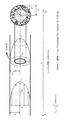
- FIG. 1 It is a figure which shows the structure of the used splitter. It is a figure which shows the outline
- FIG. It is a figure which shows the comparison of the chromatogram analyzed using the hollow column of a different internal diameter in the liquid chromatography system. It is a figure which shows the comparison of the chromatogram analyzed using the hollow column of different length with the liquid chromatography system 2.
- FIG. It is a figure which shows the summary of the examination result of the internal diameter and length of a column. It is a figure which shows the result of isolation
- the present invention is a liquid chromatography system used in a purification process of a physiologically active substance.
- the liquid chromatography system of the present invention includes at least a hollow column, and may further include a micropump, a splitter, a detection unit, a connection unit, and the like.
- the hollow column used in the present invention is a column that is not filled with a filler, and is an untreated hollow column that is not subjected to modification treatment such as loading of a stationary phase on the inner wall.
- the hollow column can also be called a hollow capillary column.
- the column is made of quartz silica or natural quartz, preferably made of quartz silica. Further, a column made of fused silica (quartz glass) or doped quartz silica is preferable.
- a commercially available fused silica (quartz glass) or doped silica silica capillary can be used, for example, Polymicro Technologies (trademark) capillary (Phoenix, AZ, USA).
- the hollow column used in the liquid chromatography system of the present invention is not packed with a packing material, it is separated without causing an interaction between the material to be separated and the packing material, such as adsorption of the packing material. be able to.
- the substance to be separated may be adsorbed on the packing material, and separation may not be successful. There is no such problem in a liquid chromatography system.
- the length of the hollow column used in the liquid chromatography system of the present invention is 3 to 72 m, preferably 8 to 72 m.
- the column may be linear, but in the case of a long column, a column wound in a coil shape may be used to save installation space. As the column length increases, the resolution improves. Moreover, it is preferable to use one continuous column, and it is better that there is no connection part in the middle. Usually, a long column results in a large back pressure. In the present invention, the back pressure can be reduced by using an unfilled hollow column.
- the inner diameter of the column is not important, and any inner diameter can be used.
- the inner diameter of the column is 1 ⁇ m or less, the thickness of the thin layer cannot be ignored, and the influence of the inner diameter is likely to occur. Therefore, it is preferably 1 ⁇ m or more, preferably 5 ⁇ m or more, and more preferably 25 ⁇ m or more.
- the upper limit of the inner diameter of the column is 50 ⁇ m, preferably 40 ⁇ m, more preferably 30 ⁇ m. As the inner diameter of the column becomes smaller, the resolution is further improved.
- the silica glass When a silica silica hollow column is used, the silica glass has a negatively charged silanol group (SiH 3 OH-) on the inner wall of the hollow column and is weak between the substance to be separated and the silanol group on the inner wall of the hollow column. Electrostatic interaction occurs. This weak interaction helps elution of charged substances and results in improved separation of the hollow column.
- SiH 3 OH- negatively charged silanol group
- a micro pump is a pump that sends liquid at a low flow rate, and can minimize pulse waves.
- a commercially available micropump can be used.
- the splitter is a component that divides the flow of the mobile phase into two parts.
- the splitter divides the mobile phase into two streams: a flow through the separation column and a flow through the drain column.
- the ratio of the mobile phase toward the two flows can be adjusted as appropriate.
- a splitter for a commercially available liquid chromatography system can be used.
- the part that controls the flow rate in the splitter is called a restrictor.
- the detection unit has a detection cell through which the substance separated through the hollow column passes, and the absorbance, fluorescence, etc. of the substance passing through the cell are measured and quantified with an absorptiometer detector or a fluorescence detector.
- the inner diameter of the detection cell is preferably smaller than the inner diameter of the hollow column.
- connection part refers to the part that connects the parts.
- the liquid chromatography system of the present invention may include an auto sampler.
- the precise injection volume of a commercially available autosampler is 1 ⁇ L or more, and it is preferable to place the autosampler in front of the splitter before introducing a sample of nL order into the column.
- the above-mentioned micropump, splitter, etc. are used to minimize the flow rate (nL / min), minute sample injection (nL / injection), minimize dead volume, and minimize sample diffusion. Etc. can be achieved.
- any mobile phase can be used as long as it can be used for liquid chromatography. It can be used freely according to the purpose of analysis. For example, pure water or phosphate buffered saline (PBS) can be mentioned. Since the mobile phase does not contain an organic solvent or a surfactant, the substance to be separated does not receive a denaturing action due to the organic solvent or the surfactant.
- PBS phosphate buffered saline
- the hollow column of the present invention can be washed simply by flowing with sodium hydroxide, and can be used for a long time.
- Separation of substances by the liquid chromatography system of the present invention involves the action of the substance to be separated and the inner wall of the hollow column, that is, the electrostatic interaction with the inner surface of the hollow column and the hydrodynamic flow.
- the interaction with the inner surface of the hollow column is due to weak electrostatic interaction with the silanol groups on the inner wall of the hollow column.
- hydrodynamic flow the mobile phase flows as a laminar flow, and the separation of materials is affected by the laminar flow.
- the laminar flow means a flow in which the liquid parts flow in parallel with the column axis of the column without being mixed with each other. As the laminar flow gets closer to the column, the flow velocity becomes smaller and the flow velocity becomes highest at the center of the column.
- Substances having different degrees of diffusion in the column are separated by a laminar flow.
- a laminar flow is formed when conditions such as the inner diameter of the column, the flow rate, and the viscosity of the mobile phase are constant. As long as the above inner diameter column is used, a laminar flow is formed.
- Fig. 23 shows the elution time (Okada T, 2010. J. Liq, Chromatogr. Rel. Technol. 33: 1116-29) created based on laminar flow characteristics.
- the flow state in the column is evaluated by the Reynolds number. Since the Reynolds number was in the range of 0.04 to 0.9, the flow in the column is considered laminar.
- the elution time model was then evaluated based on the laminar flow characteristics. Since the flow velocity near the inner wall is considered to be zero, the elution of thiourea, which is a neutral low molecule, becomes the average flow velocity of water.
- the central maximum linear flow velocity is twice the average flow velocity.
- the inner diameter of the column is a
- the cross-sectional radius of the sample volume injected into the column is r.
- the elution volume of the sample is obtained by integration. From the elution of the negatively charged compound and the average flow rate, r is obtained. Further, the distance represented by a-r is the distance at which the sample is excluded from the inner wall.
- the liquid chromatography system having the hollow column of the present invention When the liquid chromatography system having the hollow column of the present invention is used, substances can be separated at a low pressure and can be separated at a low flow rate. For this reason, the number of theoretical plates of separation can be improved, and improvement of separation performance can be expected.
- the flow rate is 1.3 to 89 mm / sec (0.039 to 2.6 ⁇ L / min), and the injection amount of the sample divided by the splitter into the column is 0.20 to 4.9 ⁇ 10 3 nL. is there.
- the liquid chromatography system of the present invention When the liquid chromatography system of the present invention is used, it can be widely separated and analyzed from low molecular substances to high molecular substances such as proteins.
- it is suitable for separation of physiologically active substances in that the substance to be separated is not denatured, and the liquid chromatography system of the present invention can be used in the separation step of physiologically active substances.
- the physiologically active substance refers to a chemical substance that acts on a living body and controls various biological reactions, and includes low molecular weight substances to high molecular weight substances.
- Physiologically active substances include proteins, nucleic acids such as DNA and RNA, sugars and lipids.
- the column of the liquid chromatography system of the present invention is a hollow column having no packing material, it has a large void in the column and can pass a polymer substance.
- a ⁇ amyloid ⁇
- the mechanism of the onset of Alzheimer's disease will be clarified by analyzing the mechanism of A ⁇ polymerization and accumulation in detail using the liquid chromatography system of the present invention. If the polymerization process becomes clear in detail and the reaction can be inhibited, the onset of Alzheimer's disease can be suppressed. Furthermore, if the polymer can be decomposed, it may be possible to treat Alzheimer's disease.
- the charged substance is easily separated by electrostatic interaction with the inner wall of the hollow column.
- the ion-exclusion effect acts on the negatively charged substance
- An ion exchange effect acts on the substance having, and is separated. That is, the electric double layer in the hollow column becomes thick, and the negatively charged substance is excluded from the inner wall of the column and distributed in the center of the column.
- the electric double layer is a layer in which a potential difference occurs between the bulk portion of the solution sufficiently separated from the surface due to an ion concentration gradient on the surface.
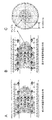
- FIG. 24A shows the distribution of substances having a small negative charge
- FIG. 24B shows the distribution of substances having a large negative charge.
- FIG. 24C shows a state observed from the flow direction.
- the thick line on the outside indicates the tube wall of the column, and a silanol group (SiH 3 OH—) is present on the inner wall of the column.
- An electric double layer is formed due to the negatively charged silanol group (SiH 3 OH-) on the inner wall of the column, and the negatively charged substance is removed from the inner wall of the column and flows through the vicinity of the center.
- the arrows indicate the flow of the mobile phase.
- a thin solid line parallel to the column wall of the column indicates that an electric double layer is formed at that portion.
- a portion surrounded by a dotted line indicates a sample zone in which substances to be separated are gathered, and a rectangular one in the sample zone indicates a substance to be separated.
- the ability to improve the separation of negatively charged substances increases.
- the solution in the layer of a certain thickness from the surface of the contact phase where the mobile phase and the inner wall are in contact is viscous.
- the electric double layer ( ⁇ 1000 nm) existing on the inner wall cannot be ignored and can be called a dynamic double layer rather than a static double layer.
- the present invention encompasses a method for separating proteins using the liquid chromatography system of the present invention and using phosphate buffered saline (PBS) as a mobile phase.
- PBS phosphate buffered saline
- the number of theoretical plates when separating proteins using the liquid chromatography system of the present invention is 10,000 or more, which is larger than when separating using a normal liquid chromatography system.
- Example 1 Construction of a liquid chromatography system having a hollow column
- System 1 MP711 pump (GL Science, Tokyo, Japan) MI709 Autosampler (GL Science) Connection from pump to autosampler
- L Hollow capillary (inner diameter 30 ⁇ m, 0.73m) amicro 21 UV-02 UV Array Detector (Jasco, Tokyo, Japan) HPLC system organizer (EZChrom Elite v.3.1.7J)
- Capillary Polymicro technology (Phoenix, AZ, USA) Connection: GL Science
- System 3 Consists of: Pump NCP-3200RS Nano / Cap Pump, WPS-3000PL (RS) (Thermo Fisher Scientific, Japan) Injection unit: WPS-3000FC autosampler (ThermoFisher Scientific, Japan) Connection from pump to autosampler L: Hollow capillary (inner diameter 20 ⁇ m, 1.5m) Detector: VWD-3100 and VWD-3400RS ((ThermoFisher Scientific, Japan. Variable wavelength detector capable of recording multiple absorption spectra in a single chromatography. Detection cell is a capillary with an inner diameter of 20 ⁇ m and a length of 50 cm. ) Splitter: T-shaped splitter (LCap splitter, GL Sciences, Japan) Connection: PTFE Tubing, Thermo Fisher Scientific Capillary: Polymicro technology (Phoenix, AZ, USA)
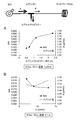
- FIG. 1A The splitter 1 used in the systems 1 and 2 is shown in FIG. 1A, and the splitter 2 used in the system 3 is shown in FIG. 1B.
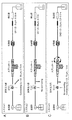
- FIG. 2A An overview of each system is shown in FIG. 2A shows system 1, FIG. 2B shows system 2, and FIG. 2C shows system 3.
- the column was made of fused silica, and a hollow capillary column without a filler was used.
- FIG. 3 shows the diversion effect by the splitter.
- the splitter splitting ratio was determined by the column pressure and the split splitting pressure.
- the inner diameter of both the column and splitter split was 25 ⁇ m, and the column length was 10 m.
- the pump feed rate is constant at 1 ⁇ L / min, and by adjusting the splitter split length from 0.5 to 2.3 m, the splitter diversion ratio can be adjusted from 81% to 26%.
- the flow rate of the passing mobile phase can be adjusted from 0.81 ⁇ L / min to 0.26 ⁇ L / min (FIG. 1A).
- the pump feed can be adjusted from 17% to 11% by adjusting the pump feed from 7 to 13 ⁇ L / min.
- the flow rate passing through the column could be adjusted to 0.1 ⁇ L / min.
- the pump liquid supply was 9 ⁇ L / min or more, the reproducibility was good, the diversion ratio was constant and stable (FIG. 1B).
- FIG. 4 shows the influence of the delivery flow rate in the column and the amount of sample injected into the column depending on the length of the capillary column.
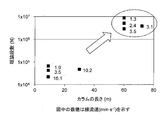
- FIG. 5 shows the relationship between the theoretical plate number, the column length, and the linear flow rate obtained in this study.
- the column should not be connected to multiple columns. Instead, a single long capillary column was used. In addition, the volume of the system flow path other than the column was minimized. That is, as shown in the system 3, the capillary column was passed through the splitter (splitter 2 in FIG. 1B), and the capillary column was directly connected to the liquid sample outlet of the autosampler. In addition, a detector having a 20 ⁇ m capillary cell in which the inner diameter of the detection cell of the detection unit was thinner than the inner diameter of 25 ⁇ m of the column was used.
- a hollow capillary column made of fused silica having an inner diameter of 25 ⁇ m and a length of 10 m was used as the hollow capillary column. Pure water was used as the mobile phase.
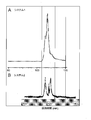
- FIG. 6A shows the result of separation by system 1
- FIG. 6B shows the result of separation by system 2.
- the last peak is the fluorescein peak and the previous peak is the fluorescein isothiocyanate (FITC) -dextran peak.
- FITC fluorescein isothiocyanate
- the inner diameter of the capillary cell of the detection unit of the system 1 is larger than the inner diameter of the column, and the injected sample passes through the column and then diffuses when it reaches the detection unit. As a result, the detected peak width is It became wide.
- the detection part is provided by making a detection window in the hollow capillary column, the inner diameter of the detection part and the inner diameter of the hollow capillary column are the same. For this reason, the width of the detected peak was reduced, and better separation was possible.
- a hollow capillary column made of fused silica having an inner diameter of 25 ⁇ m and a length of 9 m was used for both the system 2 and the system 3 as the hollow capillary column. Pure water was used as the mobile phase.
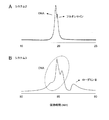
- FIG. 7A shows the result of separation by system 2
- FIG. 7B shows the result of separation by system 3.
- the first peak is a DNA peak
- the latter peak is a rhodamine B peak.
- a hollow capillary column was passed through the splitter and directly connected to the liquid delivery outlet of the autosampler (using splitter 2 in FIG. 1B).
- a capillary cell having an inner diameter of 20 ⁇ m thinner than the inner diameter of the column of 25 ⁇ m was used. As a result, it was possible to improve the accuracy of DNA detection peaks.
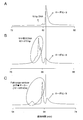
- Example 2 Examination of influence of column inner diameter and length on resolution (1) Examination of influence of column inner diameter on resolution Separation experiment was performed using the liquid chromatography system of System 2. As a sample to be separated, DNA (salmon-derived DNA, 90 to 270 bp) and fluorescein were used.
- the hollow capillary column is a hollow silica column made of fused silica having an inner diameter of 50 ⁇ m and a length of 17.8 m, a hollow capillary column made of fused silica having an inner diameter of 25 ⁇ m and a length of 47.6 m, and a hollow made of fused silica having an inner diameter of 5 ⁇ m and a length of 5.0 m.
- a capillary column was used. Pure water was used as the mobile phase.
- FIG. 8A shows the result of using a column having an inner diameter of 50 ⁇ m and a length of 17.8 m
- FIG. 8B shows the result of using a column having an inner diameter of 25 ⁇ m and a length of 47.6 m
- FIG. 8C shows the result of using a column having an inner diameter of 5 ⁇ m and a length of 5.0 m. Indicates.
- the flow rate is 0.43 ⁇ l / min when using a column with an inner diameter of 50 ⁇ m and a length of 17.8 m, and 0.33 ⁇ l / min when using a column with an inner diameter of 25 ⁇ m and a length of 47.6 m, a column with an inner diameter of 5 ⁇ m and a length of 5.0 m. When used, it was 0.0015 ⁇ l / min.
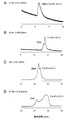
- a hollow capillary column made of fused silica having an inner diameter of 25 ⁇ m and a length of 3.1 m, 6.0 m, 9.0 m, or 47.6 m was used as the hollow capillary column. Pure water was used as the mobile phase.
- FIG. 9A, B, C and D show the results using columns of length 3.1 m, 6.0 m, 9.0 m or 47.6 m, respectively.
- the flow rate is 0.61 ⁇ l / min when a column with a length of 3.1 m is used, 0.46 ⁇ l / min when a column with a length of 6.0 m is used, 0.22 ⁇ l / min when a column with a length of 9.0 m is used, When a column having a length of 47.6 m was used, the value was 0.33 ⁇ l / min.
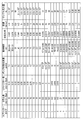
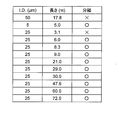
- Fig. 10 shows a summary of the results of examination of the inner diameter and length of the column.
- Example 3 Separation using a liquid chromatography system Analysis using pure water as mobile phase (1) Separation of low-molecular substances Since thiourea (0), a neutral low-molecular substance, can ignore the effects of charge and size, and elution of the mobile phase can appear.
- BCECF (2 ', 7'-Bis (carboxyethyl) -4 or 5-carboxyfluorescein) (-4), fluorescein (-2), rhodamine (0) and rhodamine 6G (+ 1) and standard substance were separated. The number in parentheses indicates the number of charges.
- a hollow capillary column made of fused silica having an inner diameter of 25 ⁇ m and a length of 9.0 m was used as the column, and pure water was used as the mobile phase.
- the linear velocity (flow velocity) was 1.8 ⁇ 0.1 mm / s, and detection was performed at UV 254 nm.
- FIGS. 11A, B, C and D The results of separation of thiourea and low-molecular substances BCECF (-4), fluorescein (-2), rhodamine (0) or rhodamine 6G (+1) are shown in FIGS. 11A, B, C and D, respectively. .
- FIG. 11-2 shows the relative retention time of each low-molecular charge substance.
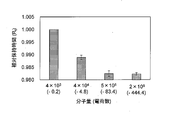
- Fluorescein isothiocyanate (FITC) -dextran (molecular weight 4kDa (-0.2), 40kDa (-4.8), 500kDa (-83.4) and 2000kDa (-444.4), parentheses The number in the figure indicates the number of charges) and thiourea was used for separation.
- FIG. 13 shows the characteristics (molecular weight, degree of substitution, number of charges, hydrodynamic radius, etc.) of fluorescein isothiocyanate (FITC) -dextran used.
- a hollow capillary column made of fused silica having an inner diameter of 25 ⁇ m and a length of 9.0 m was used as the column, and pure water was used as the mobile phase.
- the linear velocity (flow velocity) was 2.6 ⁇ 0.3 mm / s, and detection was performed at UV 254 nm.
- FITC fluorescein isothiocyanate
- FIG. 14A shows the result of separation of 10 bp DNA and rhodamine B
- FIG. 14B shows the result of separation of 90 to 270 bp DNA and rhodamine B
- FIG. 14C shows the result of separation of 90 to 270 bp DNA, rhodamine B and molecular weight marker. .
- Example 4 Effect of Mobile Phase Salt Concentration on Relative Retention Time Ratio of FITC-Dextran Fluorescein isothiocyanate (FITC) using a fused silica hollow capillary column with an inner diameter of 25 ⁇ m and a length of 60 m and a NaCl solution as the mobile phase ) -Dextran and thiourea were separated.
- the NaCl concentration was 5 ⁇ 10 ⁇ 3 M, 5 ⁇ 10 ⁇ 4 M, 5 ⁇ 10 ⁇ 5 M, 5 ⁇ 10 ⁇ 6 M and 0M.
- Example 5 Examination of the interaction by the inner wall of the column due to pH
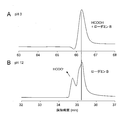
- a hollow capillary column made of fused silica having an inner diameter of 25 ⁇ m and a length of 9 m was used, and the buffer solution as the mobile phase was used to separate Rhodamine B from formic acid (pKa 3.77).
- Buffer A prepared 0.2M citric acid solution A and 0.05M sodium phosphate dibasic dodecahydrate solution B.
- a buffer solution of pH 3 was obtained by mixing 176 mL of the A solution and 24 mL of the B solution.
- a buffer solution having a pH of 12 was obtained by mixing 17 mL of the A solution and 183 mL of the B solution.
- the pH value was confirmed with a pH meter (HM-30R, GST-5741C electrode, DKK-TOA Corporation).
- the linear velocity (flow rate) of the mobile phase was 1.8 ⁇ 0.1 mm / s, and detection was performed at UV 254 nm.
- Results are shown in FIG. By changing the pH from 3 to 12, formic acid and rhodamine B can be separated. Even when the pH was changed from 3 to 12, the inner wall of the hollow capillary maintained a negative charge, and it was predicted that the carboxy group was dissociated and had a negative charge so that it could be separated. This result indicates that there is an interaction between the inner wall of the hollow capillary column and the substance to be separated.
- Example 6 Protein Analysis Using Phosphate Buffered Saline (PBS) as the Mobile Phase
- PBS Phosphate Buffered Saline
- PI4.5 molecular weight 9.9 ⁇ 10 4
- catalase pI5.6, molecular weight 4.9 ⁇ 10 4
- ⁇ chymotrypsin pI8.8, molecular weight 2.3 ⁇ 10 4
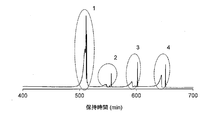
- Example 7 Improvement of analysis time efficiency A hollow capillary column made of fused silica having an inner diameter of 25 ⁇ m and a length of 60 m was used, and pure water was used as a mobile phase. As a result of extending the analysis time and continuously injecting the substance to be separated, it became possible to analyze multiple samples in one analysis. The results are shown in FIG. In the study showing the results in FIG. 21, the analysis time for one time was about 650 minutes, and the sample was injected once in 60 minutes, and then the sample was continuously injected four times for analysis. With an analysis time of 650 minutes, it was possible to analyze four types of samples at the same time, shortening the analysis time and increasing the efficiency of the analysis.
- Example 8 Examination of the thickness of the electric double layer and the distance at which negatively charged substances are excluded from the inner wall in the tube A hollow capillary column made of fused silica having a length of 60 m was used, and FITC-dextran (average molecular weight 5 ⁇ 10 ⁇ 5) was used as a sample. M, charge -83), and compared the thickness of the electric double layer and the distance at which negatively charged substances are removed from the inner wall in the tube.
- FIG. 22 shows a comparison between the thickness of the electric double layer and the distance at which negatively charged material is removed from the inner wall in the tube. The thickness of the electric double layer was compared with the distance at which the injected sample was excluded from the inner wall by changing the salt NaCl concentration.
- the electric double layer thickness was calculated by two methods. As a result of comparison, it was found that when the salt concentration was 5 ⁇ 10 ⁇ 5 M or less, the distance of the sample from the inner wall was smaller than that of the electric double layer. When the salt concentration is low, the electric double layer becomes thick, suggesting that the substance is distributed in the electric double layer. When the electric double layer becomes thinner and smaller than the particle size of the substance to be separated, it is considered that the distance from the inner wall of the substance increases the influence of the particle size of the substance to be separated.
Landscapes
- Physics & Mathematics (AREA)
- Health & Medical Sciences (AREA)
- Life Sciences & Earth Sciences (AREA)
- Chemical & Material Sciences (AREA)
- Analytical Chemistry (AREA)
- Biochemistry (AREA)
- General Health & Medical Sciences (AREA)
- General Physics & Mathematics (AREA)
- Immunology (AREA)
- Pathology (AREA)
- Treatment Of Liquids With Adsorbents In General (AREA)
Abstract
La présente invention concerne un système de chromatographie liquide ayant pour objectif de rendre possible la séparation de substances qui ne peuvent pas être séparées dans un système de chromatographie liquide conventionnel parce que l'effet de séparation est faible. Le système de chromatographie liquide selon l'invention est utilisé pour séparer des substances biologiquement actives et il est caractérisé en ce qu'il est pourvu d'au moins une colonne creuse. La colonne creuse est une colonne capillaire en silice de quartz creux non traitée ou en quartz naturel qui n'est pas rempli d'une charge.
Priority Applications (4)
| Application Number | Priority Date | Filing Date | Title |
|---|---|---|---|
| PCT/JP2016/059702 WO2017163413A1 (fr) | 2016-03-25 | 2016-03-25 | Système de chromatographie liquide à colonne creuse et séparation de substance en utilisant ledit système |
| CN201780031858.6A CN109219747B (zh) | 2016-03-25 | 2017-03-27 | 中空柱液相色谱系统和使用该系统进行的物质分离 |
| JP2018507464A JP6476386B2 (ja) | 2016-03-25 | 2017-03-27 | 中空カラム液体クロマトグラフィーシステム及び該システムを用いた物質の分離 |
| PCT/JP2017/012357 WO2017164417A1 (fr) | 2016-03-25 | 2017-03-27 | Système de chromatographie en phase liquide à colonne tubulaire ouverte, et séparation de substances à l'aide dudit système |
Applications Claiming Priority (1)
| Application Number | Priority Date | Filing Date | Title |
|---|---|---|---|
| PCT/JP2016/059702 WO2017163413A1 (fr) | 2016-03-25 | 2016-03-25 | Système de chromatographie liquide à colonne creuse et séparation de substance en utilisant ledit système |
Publications (1)
| Publication Number | Publication Date |
|---|---|
| WO2017163413A1 true WO2017163413A1 (fr) | 2017-09-28 |
Family
ID=59899590
Family Applications (2)
| Application Number | Title | Priority Date | Filing Date |
|---|---|---|---|
| PCT/JP2016/059702 Ceased WO2017163413A1 (fr) | 2016-03-25 | 2016-03-25 | Système de chromatographie liquide à colonne creuse et séparation de substance en utilisant ledit système |
| PCT/JP2017/012357 Ceased WO2017164417A1 (fr) | 2016-03-25 | 2017-03-27 | Système de chromatographie en phase liquide à colonne tubulaire ouverte, et séparation de substances à l'aide dudit système |
Family Applications After (1)
| Application Number | Title | Priority Date | Filing Date |
|---|---|---|---|
| PCT/JP2017/012357 Ceased WO2017164417A1 (fr) | 2016-03-25 | 2017-03-27 | Système de chromatographie en phase liquide à colonne tubulaire ouverte, et séparation de substances à l'aide dudit système |
Country Status (3)
| Country | Link |
|---|---|
| JP (1) | JP6476386B2 (fr) |
| CN (1) | CN109219747B (fr) |
| WO (2) | WO2017163413A1 (fr) |
Families Citing this family (1)
| Publication number | Priority date | Publication date | Assignee | Title |
|---|---|---|---|---|
| JP6964065B2 (ja) * | 2018-12-10 | 2021-11-10 | 株式会社日立ハイテク | 液体クロマトグラフ質量分析装置 |
Citations (1)
| Publication number | Priority date | Publication date | Assignee | Title |
|---|---|---|---|---|
| JP2005337713A (ja) * | 2004-05-24 | 2005-12-08 | Shiseido Co Ltd | クロマトグラフィー用充填剤 |
Family Cites Families (2)
| Publication number | Priority date | Publication date | Assignee | Title |
|---|---|---|---|---|
| JP4723725B2 (ja) * | 1999-04-20 | 2011-07-13 | ターゲット ディスカバリー, インコーポレイテッド | 代謝経路を分析するための方法 |
| CN102680557B (zh) * | 2012-05-24 | 2014-06-04 | 严丽娟 | 一种用于固相萃取-毛细管电泳在线联用的毛细管微柱的制备方法 |
-
2016
- 2016-03-25 WO PCT/JP2016/059702 patent/WO2017163413A1/fr not_active Ceased
-
2017
- 2017-03-27 JP JP2018507464A patent/JP6476386B2/ja active Active
- 2017-03-27 WO PCT/JP2017/012357 patent/WO2017164417A1/fr not_active Ceased
- 2017-03-27 CN CN201780031858.6A patent/CN109219747B/zh active Active
Patent Citations (1)
| Publication number | Priority date | Publication date | Assignee | Title |
|---|---|---|---|---|
| JP2005337713A (ja) * | 2004-05-24 | 2005-12-08 | Shiseido Co Ltd | クロマトグラフィー用充填剤 |
Non-Patent Citations (4)
| Title |
|---|
| KAGAKUTEKI TOKUSEI O SONAETA TOKUSHU HAIKAN (TUBE), SGE ANALYTICAL SCIENCE, 2013, Retrieved from the Internet <URL:http://www.sge.com/jp/tubing> [retrieved on 20160620] * |
| SHIN'YA KITAGAWA ET AL.: "Investigation and Applications of Applied Voltage Effect on Retention Factor in Capillary Electrochromatography", JOURNAL OF JAPAN SOCIETY FOR ANALYTICAL CHEMISTRY, vol. 56, no. 8, 2007, pages 617 - 630 * |
| SUSUMU KURIOKA ET AL.: "Protein analysis by untreated fused silica capillary electrophoresis", SEIBUTSU BUTSURI KAGAKU, vol. 37, no. 3, 1993, pages 175 - 181 * |
| TOYOHIDE TAKEUCHI: "Capillary Ekitai Chromatography no Kaihatsu", BAN'YU SYMPOSIUM YOSHISHU, 2006, pages l-2 * |
Also Published As
| Publication number | Publication date |
|---|---|
| CN109219747B (zh) | 2021-03-02 |
| WO2017164417A1 (fr) | 2017-09-28 |
| JP6476386B2 (ja) | 2019-03-06 |
| CN109219747A (zh) | 2019-01-15 |
| JPWO2017164417A1 (ja) | 2019-01-24 |
Similar Documents
| Publication | Publication Date | Title |
|---|---|---|
| Gasper et al. | Comparison and modeling study of vancomycin, ristocetin A, and teicoplanin for CE enantioseparations | |
| Risley et al. | Chiral separations of polar compounds by hydrophilic interaction chromatography with evaporative light scattering detection | |
| Spégel et al. | Selectivity toward multiple predetermined targets in nanoparticle capillary electrochromatography | |
| Liu et al. | Investigation of the. | |
| Terabe | Capillary separation: micellar electrokinetic chromatography | |
| Billiot et al. | Chiral separations using dipeptide polymerized surfactants: effect of amino acid order | |
| Peng et al. | Design of experiment techniques for the optimization of chromatographic analysis conditions: A review | |
| de Oliveira Isac Moraes et al. | A new restricted access molecularly imprinted polymer capped with albumin for direct extraction of drugs from biological matrices: the case of chlorpromazine in human plasma | |
| Yarabe et al. | Enantiomeric separations by use of polymeric surfactant electrokinetic chromatography | |
| Al‐Othman et al. | Enantio‐separation of drugs with multiple chiral centers by chromatography and capillary electrophoresis | |
| Okamoto et al. | Simultaneous determination of ingredients in a cold medicine by cyclodextrin-modified microemulsion electrokinetic chromatography | |
| Wang et al. | Rapid preparation and evaluation of chiral open-tubular columns supported with bovine serum album and zeolite imidazolate framework-8 for mini-capillary electrochromatography | |
| Cârcu-Dobrin et al. | Enantioselective analysis of fluoxetine in pharmaceutical formulations by capillary zone electrophoresis | |
| Farhadi et al. | Microextraction techniques in therapeutic drug monitoring | |
| D’Orazio et al. | Enantiomers separation by capillary electrochromatography using polysaccharide‐based stationary phases | |
| Fanali et al. | Recent developments in electromigration techniques related to pharmaceutical and biomedical analysis–A review | |
| Della Posta et al. | Recent advances in the hyphenation of electromigration techniques with mass spectrometry | |
| Sekhon | An overview of capillary electrophoresis: pharmaceutical, biopharmaceutical and biotechnology applications | |
| Pourghobadi et al. | Determination of gabapentin in human plasma using simultaneous cloud point extraction and precolumn derivatization by HPLC | |
| Damiati et al. | Albumin-bound nanodiscs as delivery vehicle candidates: Development and characterization | |
| Carda-Broch et al. | pH dependence of the hydrophobicity of β-blocker amine compounds measured by counter-current chromatography | |
| Pinto et al. | Development and validation of a stability‐indicating HPLC method for topiramate using a mixed‐mode column and charged aerosol detector | |
| JP6476386B2 (ja) | 中空カラム液体クロマトグラフィーシステム及び該システムを用いた物質の分離 | |
| Broderick et al. | Optimisation and use of water-in-oil MEEKC in pharmaceutical analysis | |
| Kato | Overview of the state-of-the-art liposomal drug analysis using high-performance liquid chromatography |
Legal Events
| Date | Code | Title | Description |
|---|---|---|---|
| 121 | Ep: the epo has been informed by wipo that ep was designated in this application |
Ref document number: 16895444 Country of ref document: EP Kind code of ref document: A1 |
|
| NENP | Non-entry into the national phase |
Ref country code: JP |
|
| 122 | Ep: pct application non-entry in european phase |
Ref document number: 16895444 Country of ref document: EP Kind code of ref document: A1 |