WO2017172795A1 - Novel compositions and methods - Google Patents

Novel compositions and methods Download PDF

Info

Publication number
WO2017172795A1
WO2017172795A1 PCT/US2017/024575 US2017024575W WO2017172795A1 WO 2017172795 A1 WO2017172795 A1 WO 2017172795A1 US 2017024575 W US2017024575 W US 2017024575W WO 2017172795 A1 WO2017172795 A1 WO 2017172795A1
Authority
WO
WIPO (PCT)
Prior art keywords
compound
formula
alkyl
dementia
pharmaceutically acceptable
Prior art date
Legal status (The legal status is an assumption and is not a legal conclusion. Google has not performed a legal analysis and makes no representation as to the accuracy of the status listed.)
Ceased
Application number
PCT/US2017/024575
Other languages
French (fr)
Inventor
Lawrence P. Wennogle
Current Assignee (The listed assignees may be inaccurate. Google has not performed a legal analysis and makes no representation or warranty as to the accuracy of the list.)
Intra Cellular Therapies Inc
Original Assignee
Intra Cellular Therapies Inc
Priority date (The priority date is an assumption and is not a legal conclusion. Google has not performed a legal analysis and makes no representation as to the accuracy of the date listed.)
Filing date
Publication date
Application filed by Intra Cellular Therapies Inc filed Critical Intra Cellular Therapies Inc
Priority to EP17776474.3A priority Critical patent/EP3436083A4/en
Priority to US16/090,142 priority patent/US10682354B2/en
Priority to JP2018550673A priority patent/JP2019510039A/en
Publication of WO2017172795A1 publication Critical patent/WO2017172795A1/en
Anticipated expiration legal-status Critical
Ceased legal-status Critical Current

Links

Classifications

    • AHUMAN NECESSITIES
    • A61MEDICAL OR VETERINARY SCIENCE; HYGIENE
    • A61KPREPARATIONS FOR MEDICAL, DENTAL OR TOILETRY PURPOSES
    • A61K31/00Medicinal preparations containing organic active ingredients
    • A61K31/33Heterocyclic compounds
    • A61K31/395Heterocyclic compounds having nitrogen as a ring hetero atom, e.g. guanethidine or rifamycins
    • A61K31/495Heterocyclic compounds having nitrogen as a ring hetero atom, e.g. guanethidine or rifamycins having six-membered rings with two or more nitrogen atoms as the only ring heteroatoms, e.g. piperazine or tetrazines
    • A61K31/505Pyrimidines; Hydrogenated pyrimidines, e.g. trimethoprim
    • A61K31/519Pyrimidines; Hydrogenated pyrimidines, e.g. trimethoprim ortho- or peri-condensed with heterocyclic rings
    • AHUMAN NECESSITIES
    • A61MEDICAL OR VETERINARY SCIENCE; HYGIENE
    • A61KPREPARATIONS FOR MEDICAL, DENTAL OR TOILETRY PURPOSES
    • A61K31/00Medicinal preparations containing organic active ingredients
    • A61K31/33Heterocyclic compounds
    • A61K31/395Heterocyclic compounds having nitrogen as a ring hetero atom, e.g. guanethidine or rifamycins
    • A61K31/495Heterocyclic compounds having nitrogen as a ring hetero atom, e.g. guanethidine or rifamycins having six-membered rings with two or more nitrogen atoms as the only ring heteroatoms, e.g. piperazine or tetrazines
    • A61K31/4985Pyrazines or piperazines ortho- or peri-condensed with heterocyclic ring systems
    • AHUMAN NECESSITIES
    • A61MEDICAL OR VETERINARY SCIENCE; HYGIENE
    • A61KPREPARATIONS FOR MEDICAL, DENTAL OR TOILETRY PURPOSES
    • A61K31/00Medicinal preparations containing organic active ingredients
    • A61K31/33Heterocyclic compounds
    • A61K31/395Heterocyclic compounds having nitrogen as a ring hetero atom, e.g. guanethidine or rifamycins
    • A61K31/535Heterocyclic compounds having nitrogen as a ring hetero atom, e.g. guanethidine or rifamycins having six-membered rings with at least one nitrogen and one oxygen as the ring hetero atoms, e.g. 1,2-oxazines
    • A61K31/53751,4-Oxazines, e.g. morpholine
    • A61K31/53831,4-Oxazines, e.g. morpholine ortho- or peri-condensed with heterocyclic ring systems
    • AHUMAN NECESSITIES
    • A61MEDICAL OR VETERINARY SCIENCE; HYGIENE
    • A61KPREPARATIONS FOR MEDICAL, DENTAL OR TOILETRY PURPOSES
    • A61K45/00Medicinal preparations containing active ingredients not provided for in groups A61K31/00 - A61K41/00
    • A61K45/06Mixtures of active ingredients without chemical characterisation, e.g. antiphlogistics and cardiaca
    • AHUMAN NECESSITIES
    • A61MEDICAL OR VETERINARY SCIENCE; HYGIENE
    • A61PSPECIFIC THERAPEUTIC ACTIVITY OF CHEMICAL COMPOUNDS OR MEDICINAL PREPARATIONS
    • A61P25/00Drugs for disorders of the nervous system
    • A61P25/14Drugs for disorders of the nervous system for treating abnormal movements, e.g. chorea, dyskinesia
    • A61P25/16Anti-Parkinson drugs
    • AHUMAN NECESSITIES
    • A61MEDICAL OR VETERINARY SCIENCE; HYGIENE
    • A61PSPECIFIC THERAPEUTIC ACTIVITY OF CHEMICAL COMPOUNDS OR MEDICINAL PREPARATIONS
    • A61P25/00Drugs for disorders of the nervous system
    • A61P25/18Antipsychotics, i.e. neuroleptics; Drugs for mania or schizophrenia
    • AHUMAN NECESSITIES
    • A61MEDICAL OR VETERINARY SCIENCE; HYGIENE
    • A61PSPECIFIC THERAPEUTIC ACTIVITY OF CHEMICAL COMPOUNDS OR MEDICINAL PREPARATIONS
    • A61P25/00Drugs for disorders of the nervous system
    • A61P25/28Drugs for disorders of the nervous system for treating neurodegenerative disorders of the central nervous system, e.g. nootropic agents, cognition enhancers, drugs for treating Alzheimer's disease or other forms of dementia

Definitions

  • the present invention relates to use of (i) a 5-HT2A or 5-HT2A/D2 receptor ligand, for example a substituted heterocycle fused gamma-carbolines as described herein, in free, pharmaceutically acceptable salt or prodrug form, and (ii) a cyclic nucleotide phosphodiesterase 1 (PDE1) inhibitor, for example a 7,8-dihydro-imidazo[l,2-a]pyrazolo[4,3-e]pyrimidin-4-one compounds, in combination (sequentially or simultaneously, or in the form of a fixed dose combination for the prophylaxis or treatment of one or more disorders associated with dementia (including behavioral or mood disturbances (e.g., agitation/aggression), psychosis, depression and/or sleep disturbances), or enhancing cognition, for example in schizophrenia or dementia.
  • a 5-HT2A or 5-HT2A/D2 receptor ligand for example a substituted heterocycle fused gamma-carbolines
  • Dementia is a disorder characterized by the loss of cognitive abilities affecting memory, reasoning, judgment and behavior.
  • MCI mild cognitive impairment
  • incipient dementia or isolated memory impairment
  • AD Alzheimer's disease
  • Alzheimer's disease is the most common type of dementia and is an irreversible, progressive neurodegenerative disease that disrupts memory, perception, reasoning, judgment, information processing, emotional behavior, personality as well as social and occupational functions.
  • Drugs approved in the United States for the treatment of Alzheimer's disease, which are also used to treat dementia in general include acetylcholinesterase inhibitors (e.g., Tacrine, rivastigmine (Exelon), donepezil (Aricept), and galantamine (Razadyne, formerly called Reminyl)) and NMDA receptor antagonist (e.g., memantine (Namenda)). While these drugs improve mental function (such as memory, attention, social interaction, reasoning ability, language ability, and ability to perform activities of daily living), they often cause side effects including stomach upset, diarrhea, nausea, vomiting, muscle cramps, fatigue, difficulty falling or staying asleep or excess sleepiness, depression, bradycardia and other side effects.
  • acetylcholinesterase inhibitors e.g., Tacrine, rivastigmine (Exelon), donepezil (Aricept), and galantamine (Razadyne, formerly called Reminyl)
  • these drugs do not treat affective symptoms and/or other behavior disruptions such as mood swing, agitation, aggressive/assaultive behavior and paranoia which are common in dementias.
  • memantine a drug approved for Alzheimer's disease and often used for dementias in general, may have some adverse effects on neuropsychiatry functioning, particularly agitation/aggression, delusions or hallucinations.
  • These untreated and sometimes aggravated behavioral disruptions often prevent the patients from integrating back into society, causing further distress to the caregivers and eventually leading to the patients' institutionalization.
  • antipsychotic drugs are used to control aggression and psychosis in dementia, particularly in Alzheimer's disease.
  • antipsychotic drugs such as haloperidol, risperidone and quetiapine are associated with serious side effects including extrapyramidal side effects (akinesia or akathisia), bone marrow
  • SCN suprachiasmatic nucleus
  • agents such as temazepam (Restoril), Zolpidem (Ambien), or zaleplon (Sonata), or sedating antidepressants, such as trazodone (Desyrel, Molipaxin), may be useful in managing insomnia, failure of these drugs to improve sleep quality in addition to the associated risk of falling due to drowsiness and psychomotor impairment caused by these agents render them undesirable for dementia, particularly Alzheimer's patients.
  • behavioral/mood disturbances e.g., agitation, aggressive/assaultive behavior
  • sleep disturbances in patients suffering from dementia or psychosis associated with dementia.
  • Substituted heterocycle fused gamma-carbolines are known to be 5-HT2A or 5- HT2A/D2 receptor ligands, useful in treating central nervous system disorders. These compounds have been disclosed in U.S. Pat. No. 6,548,493; 7,238,690; 6,552,017; 6,713,471; U.S. RE39680, and U.S. RE39679, as novel compounds useful for the treatment of disorders associated with 5-HT2A receptor modulation such as obesity, anxiety, depression, psychosis, schizophrenia, sleep disorders, sexual disorders, migraine, conditions associated with cephalic pain, and social phobias. PCT/US08/03340 and U.S. Pat. No.
  • 7,081,455 also disclose methods of making substituted heterocycle fused gamma-carbolines and uses of these gamma-carbolines as serotonin agonists and antagonists useful for the control and prevention of central nervous system disorders such as addictive behavior and sleep disorders.
  • PDEl is a Ca 2+ -calmodulin-dependent phosphodiesterase (CaM-PDE), which can downregulate intracellular cAMP and cGMP signaling by hydrolyzing these cyclic nucleotides to their respective inactive 5 '-monophosphates (5 ⁇ and 5'GMP).
  • CaM-PDE Ca 2+ -calmodulin-dependent phosphodiesterase
  • PDEl plays a critical role in mediating signal transduction in brain cells, particularly within an area of the brain known as the basal ganglia or striatum.
  • NMDA-type glutamate receptor activation and/or dopamine D2 receptor activation result in increased intracellular calcium concentrations, leading to activation of effectors such as calmodulin-dependent kinase II (CaMKII) and calcineurin and to activation of PDEl, resulting in reduced cAMP and cGMP.
  • CaMKII calmodulin-dependent kinase II
  • calcineurin calcineurin
  • PDEl calmodulin-dependent kinase II
  • Dopamine Dl receptor activation leads to activation of calcium dependent nucleotide cyclases, resulting in increased cAMP and cGMP.
  • PKA protein kinase A
  • PKG protein kinase G
  • DARPP-32 dopamine and cAMP-regulated phosphoprotein
  • CREB cAMP responsive element binding protein
  • Inhibition of PDEl can thus potentiate the effect of a dopamine Dl agonist by protecting cGMP and cAMP from degradation, and likewise can inhibit dopamine D2 receptor signaling pathways, by inhibiting PDEl activity.
  • WO 2014/145617 incorporated herein by reference, e.g., for its disclosure of PDEl inhibitors, describes the use of PDEl inhibitors as neuroprotective agents and/or neural regenerative agents, e.g. to prevent the development of a CNS disease or disorder in an individual at risk for the development of a CNS disease or disorder.
  • PDEl inhibitors can initiate the transcription of genes that are necessary for overcoming myelin inhibition of regeneration after nerve injury and promoting neurite outgrowth and/or axonal regeneration in the case of a CNS disease, disorder, or injury, thus encouraging axonal regeneration and/or neuroprotection while simultaneously decreasing or lessening damage associated with chronically elevated intracellular calcium levels, which can lead to calmodulin activation of PDEl.
  • the invention provides a method of treating dementia (including associated disorders such as behavioral or mood disturbances (e.g., agitation/aggression), psychosis, depression and/or sleep disturbances), and/or enhancing cognition, for example in patients suffering from schizophrenia or dementia, comprising administering an effective amount of (i) a 5-HT2A or 5- HT2A/D2 receptor ligand, for example a substituted heterocycle fused gamma-carbolines as described herein, in free, pharmaceutically acceptable salt or prodrug form, together with (ii) a PDEl inhibitor, as described herein.
  • the 5-HT2A/D2 ligand promotes quality of sleep and reduces agitation, while the PDEl inhibitor promotes cognitive function.
  • the administration may be sequential or simultaneous.
  • the invention further provides a pharmaceutical composition, e.g., for use in such a method, comprising (i) a 5-HT2A or 5-HT2A/D2 receptor ligand and (ii) a PDEl inhibitor.
  • a PDEl inhibitor as described herein will enhance cognition and also act to increase levels of intracellular cAMP and initiate the transcription of genes that are necessary for overcoming the inhibition of axonal regeneration and promoting neurite outgrowth and/or axonal regeneration thus inhibiting the neurodegenerative process.
  • increased intracellular cAMP such as would result from PDEl inhibition, leads to increased activity of cAMP-dependent proteins, such as protein kinase C (PKC).
  • PKC protein kinase C
  • Another benefit of the administration of a PDEl inhibitor of the invention is an increase in intracellular cGMP.
  • This increase in intracellular cGMP may lead to an increase in the activity of PKG, preventing a further rise in intracellular calcium levels.
  • the administration of a PDEl inhibitor could have the dual benefit of, for example, playing a beneficial role in axonal regeneration (and/or neuroprotection) while simultaneously decreasing the deleterious effects that may be associated with elevated intracellular calcium levels.
  • the 5-HT2A or 5-HT2A/D2 receptor ligand is a compound which antagonizes serotonin-2A (5-HT2A) receptor, and/ modulates dopamine receptor signaling at the level of key intra-cellular phosphoproteins and therefore is useful for the treatment of not only acute symptoms, but also residual symptoms of pyschosis, particularly schizophrenia.
  • these compounds At dopamine D2 receptors, these compounds have dual properties and act as both post-synaptic antagonists and pre-synaptic partial agonists. They also stimulate phosphorylation of glutamatergic NMDA NR2B, or GluN2B, receptors in a mesolimbic specific manner.
  • the combination of the PDE1 inhibitor with a 5-HT2A or 5- HT2A/D2 receptor ligand will be particularly useful, e.g., in the treatment of dementia or psychosis (e.g., schizophrenia) and disorders associated thereof.
  • dementia or psychosis e.g., schizophrenia
  • disorders associated thereof e.g., schizophrenia
  • they are useful in treating sleep, aggression and agitation.
  • they can treat acute exacerbated and residual schizophrenia, bipolar disorders, and mood disorders.
  • 5-HT2A or 5-HT2A/D2 receptor ligand compounds used in the current disclosure are effective in treating not just acute symptoms, but also residual symptoms of psychosis, their combination with a PDE1 inhibitor disclosed herein, which is believed to provide a
  • neuroprotective effect is useful in the treatment of a wide range of symptoms and disorders associated with dementia or psychosis such as schizophrenia.
  • the invention provides a method (Method I) for the prophylaxis or treatment of one or more disorders associated with dementia (e.g., disorders associated with mild to severe cognition impairment and dementing illnesses including senile dementia, Alzheimer's disease, Pick's disease, frontotemporal dementia, paraminenculear palsy, dementia with Lewy bodies, vascular dementia, Huntington's disease, Parkinson's disease, multiple sclerosis, amyotrophic lateral sclerosis, Down syndrome, elderly depression, Wernicke- Korsakoff s syndrome, corticobasal degenerations, and prion disease; and further including behavioral or mood disturbances (e.g., agitation/aggression), psychosis, depression and/or sleep disturbances, as well as enhancing cognition, for example in schizophrenia or dementia) comprising administering to a patient in need thereof, a therapeutically effective amount of (i) a 5-HT2A or 5-HT2A/D2 rece tor lig
  • a therapeutically effective amount of i
  • X is -N(H)-, -N(CH 3 )- or -0-;
  • Ri is -C(0)-O-2ialkyl (e.g., -C(0)-Ci- 5 alkyl, -C(0)-C 6 -i 5 alkyl or -C(0)-Ci 6 -2ialkyl), preferably said alkyl is a straight chain, optionally saturated or unsaturated and optionally substituted with one or more hydroxy or Ci-nalkoxy (e.g., ethoxy) groups, for example Ri is -C(0)-C 6 alkyl, -C(0)-C 7 alkyl, -C(0)-C 9 alkyl, -C(0)-Cnalkyl, - C(0)-Ci3alkyl or -C(0)-Cisalkyl wherein such compound hydrolyzes to form the residue of a natural or unnatural, saturated or unsaturated fatty acid, e.g., the compound hydrolyzes to form the hydroxy compound on the one hand and octanoic acid, decanoic acid, dodecanoic
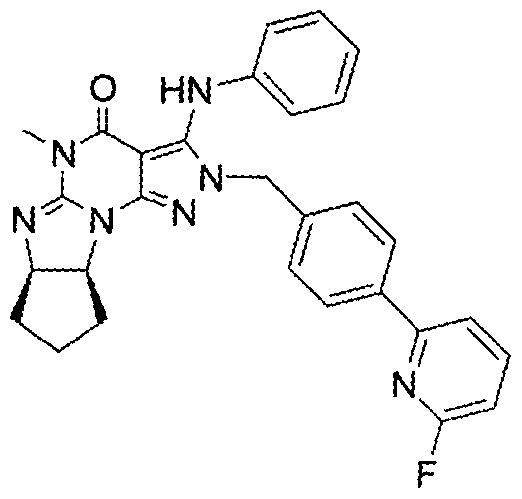
  • a PDE1 inhibitor for example a compound according to Formula II
  • R 2 is H and R 3 and R 4 together form a tri- or tetra-methylene bridge [pref. with the carbons carrying R 3 and R 4 having the R and S configuration respectively]; or R 2 and R 3 are each methyl and R 4 is H; or R 2 and R 4 are H and R 3 is isopropyl [pref. the carbon carrying R 3 having the R configuration] ;
  • R 6 is (optionally halo-subsitututed) phenylamino or (optionally halo-subsitututed) benzylamino;
  • Rio is (optionally halo-subsitututed) phenyl, (optionally halo-subsitututed) pyridyl (for example 3-fluoropyrid-2-yl), or thiadiazolyl (e.g., l,2,3-thiadiazol-4-yl);
  • Method 1 may be as follows:
  • Ri in the compound of Formula I is -C(0)-O-2ialkyl (e.g., -C(0)-Ci- 5 alkyl, -C(0)-C 6 -i5alkyl or -C(0)-Ci 6 -2ialkyl), preferably said alkyl is a straight chain, optionally saturated or unsaturated and optionally substituted with one or more hydroxy or O-nalkoxy (e.g., ethoxy) groups, for example Ri is -C(0)-C 6 alkyl, -C(0)-C 7 alkyl, -C(0)-C 9 alkyl, -C(0)-Cnalkyl, - C(0)-Ci3alkyl or -C(0)-Cisalkyl wherein such compound hydrolyzes to form the residue of a natural or unnatural, saturated or unsaturated fatty acid, e.g., the compound hydrolyzes to form the hydroxy compound on the one hand and oct
  • C(0)-Ci- 5 alkyl e.g., -C(0)-C 3 alkyl.
  • R 6 is phenylamino or 4-fluorophenylamino.
  • R 6 is phenylamino or 4-fluorophenylamino and Rio is 3-fluoropyrid-2-yl or methylcarbonyl.
  • Any foregoing Method comprising administration of a pharmaceutical composition comprising effective amounts of both a Compound of Formula I and a Compound of Formula II.
  • Method 1.21 wherein the compound of Formula 1 is in tosylate salt form administered in a daily dose equivalent to 1 to 5 mg of free base, the compound of Formula II is in monophosphate salt form administered in a daily dose equivalent to 0.5 to 2 mg of free base.
  • any foregoing Method wherein the compound of Formula I and/or of Formula II is deuterated, e.g., wherein the deuterium:protium ratio at a specified position in the molecule is significantly higher, e.g., at least 2x, for example at least lOx higher, than the natural isotope ratios.
  • Any foregoing Method wherein the Compound of Formula I is a Compound of Formula 1 as described in WO 2015/154025, the contents of which are incorporated herein by reference, e.g., wherein the -CH2- adjacent to X and/or Y is -CHD- or -CD2-.
  • Method 1.22 wherein the method comprises once daily administration of a unit dosage for oral administration, for example a tablet or capsule, comprising the compound of Formula I in tosylate salt form in an amount equivalent to 1 to 5 mg of free base, the compound of Formula II in monophosphate salt form in an amount equivalent to 0.5 to 2 mg of free base, and a pharmaceutically acceptable diluent or carrier.
  • disorders associated with dementia are disorders associated with Huntington's disease, Parkinson's disease, Mulitple sclerosis, Amyotrophic lateral sclerosis, Down syndrome, Eldery depression, Wernicke-Korsakoff s syndrome, corticobasal degenerations, and prion disease.
  • disorders associated with dementia are disorders associated with mild cognition impairment and dementing illnesses including senile dementia, Alzheimer' s disease, Pick' s disease, frontotemporal dementia, paraminenculear palsy, dementia with Lewy bodies and vascular dementia.
  • disorders associated with dementia are disorders associated with senile dementia, Alzheimer's disease, Pick's disease, frontotemporal dementia, paranynculear palsy, dementia with Lewy bodies and vascular dementia.
  • disorders associated with dementia are disorders associated with Alzheimer's disease.
  • disorders associated with dementia are disorders associated with mild cognition impairment.
  • the disorder associated with dementia to be treated is selected from the group consisting of (1) behavioral or mood disorders such as agitation/irritation, aggressive/assaultive behavior, anger, physical or emotional outbursts; (2) psychosis; (3) depression; and (4) sleep disorders in patients suffering from dementia, particularly Alzheimer's disease.
  • any foregoing method wherein the disorder to be treated is psychosis in a patient with dementia, particularly Alzheimer's disease.
  • any foregoing method wherein the disorder to be treated is depression in a patient with dementia, particularly Alzheimer's disease.
  • any foregoing method wherein the disorder to be treated is behavioral or mood disorders such as agitation/irritation, aggressive/assaultive behavior, anger, physical or emotional outbursts in a patient with dementia, particularly
  • any foregoing method wherein the disorder to be treated is sleep disorders in a patient with dementia, particularly Alzheimer's disease.
  • Method I et seq. wherein the disorder to be treated is sleep maintenance insomnia, frequent awakenings, and waking up feeling unrefreshed in a patient with dementia, particularly Alzheimer's disease.
  • any foregoing method wherein the disorder to be treated is sleep maintenance insomnia in a patient with dementia, particularly Alzheimer's disease.
  • Method I et seq. wherein the disorder to be treated is advanced sleep- phase syndrome in a patient with dementia, particularly Alzheimer's disease.
  • Any foregoing method wherein the disorder to be treated is delayed sleep-phase syndrome in a patient with dementia, particularly Alzheimer's disease.
  • the disorder associated with dementia is selected from behavioral or mood disturbances (e.g., agitation/aggression), psychosis, depression and/or sleep disturbances.
  • behavioral or mood disturbances e.g., agitation/aggression
  • psychosis e.g., depression and/or sleep disturbances.
  • Any foregoing method comprising enhancing cognition, for example in schizophrenia or dementia.
  • Any foregoing method further comprising administering one or more additional therapeutic agents useful for the prophylaxis or treatment of dementia, particularly Alzheimer's disease.
  • the therapeutic agent useful for the prophylaxis or treatment of dementia, particularly Alzheimer' s disease is a cholinesterase inhibitor (e.g., acetylcholinesterase inhibitor) or an N-Methyl D-Asparate (NMD A) receptor antagonist, in free or pharmaceutically acceptable salt form;
  • a cholinesterase inhibitor e.g., acetylcholinesterase inhibitor
  • NMD A N-Methyl D-Asparate
  • acetylcholinesterase inhibitor is selected from the group consisting of Tacrine, rivastigmine (Exelon), donepezil (Aricept), and galantamine (Razadyne, formerly called Reminyl)) in free or pharmaceutically acceptable salt form;
  • acetylcholinesterase inhibitor is donepezil in free or pharmaceutically acceptable salt form
  • NMDA receptor antagonist e.g., memantine in free or pharmaceutically acceptable salt form
  • any foregoing method further comprising administering one or more additional therapeutic agents useful for the prophylaxis or treatment of dementia, particularly Alzheimer's disease, wherein the therapeutic agent useful for the prophylaxis or treatment of dementia, particularly Alzheimer' s disease is a combination of a cholinesterase inhibitor (e.g., acetylcholinesterase inhibitor) and an N-Methyl D-Asparate (NMDA) receptor antagonist, in free or
  • a cholinesterase inhibitor e.g., acetylcholinesterase inhibitor
  • NMDA N-Methyl D-Asparate
  • the one or more therapeutic agent(s) useful for the prophylaxis or treatment of dementia, particularly Alzheimer' s disease or symptoms thereof is a combination of donepezil and memantine in free or pharmaceutically acceptable salt form.
  • Any foregoing method further comprising administering one or more therapeutic agents useful for the prophylaxis or treatment of dementia, particularly
  • Alzheimer's disease further comprises administering one or more therapeutic agents selected from antidepressant compounds, compounds that modulate GABA activity (e.g., enhances the activity and facilitates GABA transmission), a GABA- B agonist, a serotonin-2 antagonist/reuptake inhibitor (SARIs), an orexin receptor antagonist, an H3 agonist, a noradrenergic antagonist, a galanin agonist, a CRH antagonist, human growth hormone, a growth hormone agonist, estrogen, an estrogen agonist, a neurokinin- 1 drug, , and an antipsychotic agent, e.g., an atypical antipsychotic agent, in free or pharmaceutically acceptable salt form.
  • GABA activity e.g., enhances the activity and facilitates GABA transmission
  • GABA- B agonist e.g., a GABA- B agonist
  • SARIs serotonin-2 antagonist/reuptake inhibitor
  • an orexin receptor antagonist e.g., an H3 agonist, a noradrene
  • the invention provides a pharmaceutical composition
  • Composition 1 for the prophylaxis or treatment of one or more disorders associated with dementia (e.g., disorders associated with mild to severe cognition impairment and dementing illnesses including senile dementia, Alzheimer's disease, Pick's disease, frontotemporal dementia, paraminenculear palsy, dementia with Lewy bodies, vascular dementia, Huntington's disease, Parkinson's disease, multiple sclerosis, amyotrophic lateral sclerosis, Down syndrome, elderly depression, Wernicke-Korsakoff s syndrome, corticobasal degenerations, and prion disease, e.g., for use in any of Methods 1 et seq.],
  • disorders associated with dementia e.g., disorders associated with mild to severe cognition impairment and dementing illnesses including senile dementia, Alzheimer's disease, Pick's disease, frontotemporal dementia, paraminenculear palsy, dementia with Lewy bodies, vascular dementia, Huntington's disease, Parkinson's disease, multiple sclerosis, amyotroph
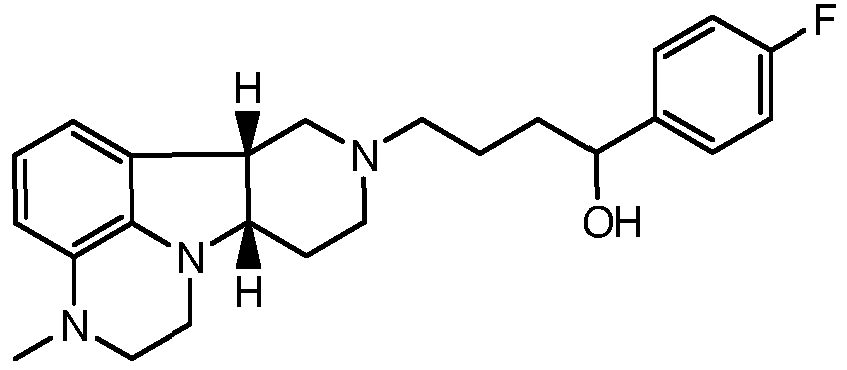
  • a 5-HT2A or 5-HT2A/D2 rece tor ligand for example a compound of Formula I:
  • X is -N(H)-, -N(CH 3 )- or -0-;
  • Ri is -C(0)-O-2ialkyl (e.g., -C(0)-Ci- 5 alkyl, -C(0)-C 6 -i 5 alkyl or -C(0)-Ci 6 -2ialkyl), preferably said alkyl is a straight chain, optionally saturated or unsaturated and optionally substituted with one or more hydroxy or Ci-nalkoxy (e.g., ethoxy) groups, for example Ri is -C(0)-C 6 alkyl, -C(0)-C 7 alkyl, -C(0)-C 9 alkyl, -C(0)-Cnalkyl, - C(0)-Ci3alkyl or -C(0)-Cisalkyl wherein such compound hydrolyzes to form the residue of a natural or unnatural, saturated or unsaturated fatty acid, e.g., the compound hydrolyzes to form the hydroxy compound on the one hand and octanoic acid, decanoic acid, dodecanoic
  • a PDE1 inhibitor for example a compound according to Formula II
  • R 2 is H and R 3 and R 4 together form a tri- or tetra-methylene bridge [pref. with the carbons carrying R 3 and R 4 having the R and S configuration respectively]; or R 2 and R 3 are each methyl and R 4 is H; or R 2 and R 4 are H and R 3 is isopropyl [pref. the carbon carrying R 3 having the R configuration] ;
  • R 6 is (optionally halo-subsitututed) phenylamino or (optionally halo-subsitututed) benzylamino; for example, phenylamino or 4-fluorophenylamino;
  • Rio is methylcarbonyl, (optionally halo-subsitututed) phenyl, (optionally halo- subsitututed) pyridyl (for example 3-fluoropyrid-2-yl), or thiadiazolyl (e.g., 1,2,3- thiadiazol-4-yl);
  • Composition 1 includes, inter alia, the following embodiments:
  • Composition I wherein X in the compound of Formula I is -N(H)-, -N(CH 3 )- or -0-;
  • composition I or 1.1 wherein X in the compound of Formula I is -N(CH 3 )-; Composition I or 1.1, wherein X in the compound of Formula I is -0-;
  • composition I or any of formulae 1.1-1.4, wherein Y in the compound of Formula
  • Composition I or any of formulae 1.1-1.4, wherein Y in the compound of Formula I is -C(H)(OH);
  • Composition I or any of formulae 1.1-1.4, wherein Y in the compound of Formula I is -C(H)(ORi);
  • Ri in the compound of Formula I is -C(0)-Ci- iialkyl (e.g., -C(0)-Ci- 5 alkyl, -C(0)-C 6 -i5alkyl or -C(0)-Ci 6 -2ialkyl), preferably said alkyl is a straight chain, optionally saturated or unsaturated and optionally substituted with one or more hydroxy or O-nalkoxy (e.g., ethoxy) groups, for example Ri is -C(0)-C 6 alkyl, -C(0)-C 7 alkyl, -C(0)-C 9 alkyl, -C(0)-Cnalkyl, - C(0)-Ci3alkyl or -C(0)-Cisalkyl wherein such compound hydrolyzes to form the residue of a natural or unnatural, saturated or unsaturated fatty acid, e.g., the compound hydrolyzes to form the hydroxy compound on the one hand and oc
  • C(0)-Ci- 5 alkyl e.g., -C(0)-C 3 alkyl.
  • Composition I or an of 1.1- 1.5 or 1.7, wherein the Compound of Formula I is:
  • Composition I or any of 1.1- 1.5 or 1.7, wherein the Compound of Formula I is:
  • Composition I or an of 1.1- 1.5 or 1.7, wherein the Compound of Formula I is:
  • Composition I or any of 1.1, 1.3. 1.5 or 1.7, wherein the Compound of Formula I is:
  • Composition I or any of 1.1, 1.3, 1.5 or 1.6, wherein the Compound of Formula I is:
  • Composition 1.14 wherein the Compound of Formula I is in the form of the tosylate salt. Any foregoing Composition wherein, in the Compound of Formula II, R 6 is phenylamino or 4-fluorophenylamino.
  • R 6 is phenylamino or 4-fluorophenylamino and Rio is 3-fluoropyrid-2-yl or methylcarbonyl.
  • any foregoing Composition comprising effective amounts of both a Compound of Formula I and a Compound of Formula II.
  • any foregoing Composition in unit daily dosage form comprising 1 mg to 60 mg, e.g. 1 mg to 10 mg, e.g. 2 mg to 7mg of the Compound of Formula 1.
  • composition in unit daily dosage form comprising 0.1 mg to 10 mg e.g., lmg to 5 mg, of the Compound of Formula II,
  • composition further comprising a pharmaceutically acceptable diluent or carrier.
  • composition in the form of a transdermal patch.
  • Compound of Formula II are in a bioerodable matrix, e.g., a bioerodable copolymer, for example poly(lactic-co-glycolic acid), e.g., for administration by injection to form a depot.
  • a bioerodable matrix e.g., a bioerodable copolymer, for example poly(lactic-co-glycolic acid), e.g., for administration by injection to form a depot.
  • Composition 1.30 in the form of a tablet or capsule for oral administration comprising the compound of Formula I in tosylate salt form in an amount equivalent to 1 to 5 mg of free base, the compound of Formula II in monophosphate salt form in an amount equivalent to 0.5 to 2 mg of free base, and a pharmaceutically acceptable diluent or carrier.
  • any foregoing Composition wherein the compound of Formula I and/or of Formula II is deuterated e.g., wherein the deuterium:protium ratio at a specified position in the molecule is significantly higher, e.g., at least 2x, for example at least lOx higher, than above the natural isotope ratios.
  • the disclosure further provides the use of a compound of Formula I as hereinbefore described in combination with a compound of Formula II as hereinbefore described, for use in the manufacture of a medicament, e.g., according to any of Composition 1, et seq., for use in any of Methods 1 et seq.
  • the 5-HT2A or 5-HT2A/D2 receptor ligand for use in the foregoing Methods and Compositions may for example be a 5-HT2A or 5-HT2A/D2 receptor ligand compound as disclosed in any of the following: U.S. Pat. No. 6,548,493; 7,238,690; 6,552,017; 6,713,471; U.S. RE39680, U.S. RE39679; for example as disclosed in US 8,598,119, or WO 2011/133224 or WO 2015/154025, for example, a Compound of Formula I as described above.
  • the compounds of Formula I and their pharmaceutically acceptable salts and salt crystals may be made using the methods as described and exemplified in any of the following patents or applications: U.S. Pat. No. 6,548,493; 7,238,690; 6,552,017; 6,713,471; U.S. RE39680; U.S. RE39679; PCT/US08/03340; U.S. Application Serial No. 10/786,935; WO 2009/114181 and WO 2011/133224, the contents of each of which are incorporated by reference in their entirety.
  • the Compounds of Formula I as hereinbefore described have a selective receptor profile wherein at low doses, e.g., 5-10 mg, they fully saturate the 5-HT2A receptors and only partially occupy (e.g. 5%- 15% occupancy) the dopamine D2 receptors, and also bind to dopamine D2 receptors more extensively and to serotonin reuptake transporter (SERT) at a higher dose.
  • low doses e.g., 5-10 mg
  • they fully saturate the 5-HT2A receptors and only partially occupy (e.g. 5%- 15% occupancy) the dopamine D2 receptors, and also bind to dopamine D2 receptors more extensively and to serotonin reuptake transporter (SERT) at a higher dose.
  • SERT serotonin reuptake transporter
  • the Compounds of the Invention are effective in treating one or more disorders associated with dementia, e.g., one or more disorders associated with mild cognition impairment and dementing illnesses including senile dementia, Alzheimer's disease, Pick's disease, frontotemporal dementia, paraminenculear palsy, dementia with Lewy bodies, vascular dementia, Huntington's disease, Parkinson's disease, multiple sclerosis, amyotrophic lateral sclerosis, Down syndrome, elderly depression, Wernicke-Korsakoff s syndrome, corticobasal degenerations, and prion disease, particularly behavioral/mood disturbances (e.g., agitation, aggressive/assaultive behavior) and sleep disorders, which are inadequately treated by the current marketed drugs for dementia and Alzheimer's disease, as well as treating psychosis and depressive disorders in patients suffering from dementia.
  • dementia e.g., one or more disorders associated with mild cognition impairment and dementing illnesses including senile dementia, Alzheimer's disease, Pick's disease,
  • the PDE1 inhibitor may for example be a PDE1 inhibitor compound as disclosed in any of the following: WO 2006/133261, WO 2007/025103, WO 2007/143705, WO
  • the PDE1 inhibitor may be a compound of Formula II as hereinbefore described.
  • the combinations as disclosed may be administered simultaneously, separately or sequentially with one or more other active agents to treat dementia or dementing illnesses as hereinbefore described, particularly Alzheimer' s disease or symptoms thereof.
  • the second or further therapeutic agents useful for the prophylaxis or treatment of dementia as hereinbefore described, particularly Alzheimer's disease, e.g., as described in Method 1 and 2 above, include but are not limited to a cholinesterase inhibitor and/or N-Methyl D-Asparate (NMDA) receptor antagonist.
  • NMDA N-Methyl D-Asparate
  • Cholinesterase inhibitors e.g., acetylcholinesterase inhibitors
  • acetylcholinesterase inhibitors are known in the art and/or are described e.g., in U.S. Pat No. 4,895,841; and U.S. Pat. 4,948,807, the contents of each of which are incorporated by reference in their entirety.
  • Preferred cholinesterase inhibitors to be used with the compound of the present invention include donepezil, rivastignmine, galantamine and tacrine.
  • NMDA receptor antagonists are also known in the art and are described in U.S. Pat. 5,061,703, the contents of which are incorporated by reference in their entirety.
  • Preferred NMDA receptor antagonist to be used with the compound of the present invention is memantine.
  • Compounds of Formula I normalize brain dopamine activity, particularly in the prefrontal cortex.
  • the Compounds of Formula I bind to 5- HT2A and dopamine D 2 receptors.
  • Compounds of Formula I also exhibit nanomolar binding affinity for SERT compared to known antidepressants. Therefore, the compounds of Formula I are useful for the treatment of (1) behavioral or mood disorders such as agitation/irritation, aggressive/assaultive behavior, anger, physical or emotional outbursts; (2) psychosis; (3) depression; and (4) sleep disorders in patients suffering from dementia, particularly Alzheimer's disease.
  • the methods of the invention as hereinbefore described may optionally further comprises one or more therapeutic agents selected from antidepressant compounds, compounds that modulate GABA activity (e.g., enhances the activity and facilitates GABA transmission), a GABA-B agonist, a 5-HT modulator (e.g., a 5 -HTIA agonist, a 5-HT2A antagonist, a 5-HT2A inverse agonist, etc.), a melatonin agonist, an ion channel modulator (e.g., blocker) , a serotonin-2 antagonist/reuptake inhibitor (SARIs), an orexin receptor antagonist, an H3 antagonist, a noradrenergic antagonist, a galanin agonist, a CRH antagonist, human growth hormone, a growth hormone agonist, estrogen, an estrogen agonist, a neurokinin- 1 drug, , and an antipsychotic agent, e.g., an atypical antipsychotic agent, in
  • the therapeutic agents may be adjunctive to the compounds of the invention.
  • adjunctive refers to any treatment that is used in conjunction with another to increase the chance of cure, or to increase the first treatment's efficacy.
  • adjunctive therapy acts as an aid to the primary treatment.
  • the combinations of the invention can include mixtures of the combined drugs, as well as two or more separate compositions of the drugs, which individual compositions can be, for example, co-administered together to a patient at the same of different times.
  • the antidepressant useful for the invention may be selected from amitriptyline, amoxapine, bupropion, citalopram, clomipramine, desipramine, doxepin, duloxetine,
  • escitaloprame fluoxetine, fluvoxamine, imipramine, isocarboxazid, maprotiline, mirtazapine, nefazodone, nortriptyline, paroxetine, phenelzine sulfate, protiptyline, sertraline,
  • the antidepressant(s) is a selective serotonin reuptake inhibitor (SSRI).
  • the SSRI compound is selected from the group consisting of citalopram , escitalopram oxalate, fluoxetine, fluvoxamine maleate, paroxetine, sertraline, and dapoxetine, in free or pharmaceutically acceptable salt form.
  • the dosages for combined therapy with a compound of Formula I, a compound of Formula II, and a further therapeutic agent can be the same as or lower than the approved dosage for the drug, the clinical or literature test dosage or the dosage used for the drug as a
  • the dosages of a compound of Formula I of Formula II, and/or the additional therapeutic agents are lower than when used in a monotherapy.
  • GABA A refers to gamma- aminobutyric acid.
  • the GABA compounds are compounds which bind to the GABA receptor, and include, but are not limited to one or more of doxepin, alprazolam, bromazepam, clobazam, clonazepam, clorazepate, diazepam,
  • flunitrazepam flurazepam, lorazepam, midazolam, nitrazepam, oxazepam, temazapam, triazolam, indiplon, zopiclone, eszopiclone, zaleplon, Zolpidem, gabaxadol, vigabatrin, tiagabine, EVT 201 (Evotec Pharmaceuticals) or estazolam.
  • 5HT 2 A antagonists include ketanserin, risperidone, eplivanserin, volinanserin (Sanofi- Aventis, France), pruvanserin, pimavanserin (ACP-103), MDL 100907 (Sanofi-Aventis, France), HY10275 (Eli Lilly), APD125 (Arena Pharmaceuticals, San Diego, CA), AVE8488 (Sanofi- Aventis, France) and pizotifen.
  • 5HTIA agonists include repinotan, sarizotan, eptapirone, buspirone and MN-305
  • Melatonin agonists include melatonin, ramelteon (ROZEREM ® , Takeda
  • VEC- 162 (Vanda Pharmaceuticals, Rockville, MD)
  • PD-6735 Phase II Discovery
  • agomelatine
  • Ion channel blockers such as lamotrigine, gabapentin or pregabalin.
  • Orexin receptor antagonists include orexin, a 1,3-biarylurea, SB-334867-a
  • Serotonin-2 antagonist/reuptake inhibitors include Org 50081 (Organon -
  • Neurokinin- 1 drugs include Casopitant (GlaxoSmithKline).
  • additional therapeutic agents useful for the current invention include modafinil, armodafinil, doxepin, alprazolam, bromazepam, clobazam, clonazepam, clorazepate, diazepam, flunitrazepam, flurazepam, lorazepam, midazolam, nitrazepam, oxazepam, temazapam, triazolam, indiplon, zopiclone, eszopiclone, zaleplon, Zolpidem, gabaxadol, vigabatrin, tiagabine, EVT 201 (Evotec Pharmaceuticals), estazolam, ketanserin, risperidone, eplivanserin, volinanserin (Sanofi-Aventis, France), pruvanserin, pimavanserin (ACP-103), pizotifen, MDL 10090
  • treatment and “treating” are to be understood accordingly as embracing prophylaxis and treatment or amelioration of symptoms of disease and/or treatment of the cause of the disease.
  • the word “treatment” and “treating” refers to prophylaxis or amelioration of symptoms of the disease.
  • patient may include a human or non-human patient.
  • dementia is intended to refer to a condition or disorder characterized by the loss of cognitive ability affecting memory, thinking, language, judgment and behavior.
  • Early symptoms of dementia may include difficulty performing tasks that require some thought (balancing a checkbook, playing games (such as bridge); learning new information; getting lost on familiar routes; having language difficulties (difficulties in finding name of familiar objects); losing interest in things previously enjoy; losing social skills.
  • More severe symptoms of dementia include change in sleep patterns, often waking up at night; difficulty performing basic tasks such as brushing teeth or preparing a meal; forgetting details about current events; having hallucinations, violent behavior, delusions, depression, agitation; difficulty reading or writing; having poor judgment or loss of ability to recognize danger; losing the ability to recognize family members or understand language.
  • the term "dementia” refers to any of the dementing illnesses as described herein regardless of etiology and therefore shall include but not limited to mild or severe cognition impairment and dementing illnesses such as senile dementia,
  • Alzheimer's disease Pick's disease, frontotemporal dementia, parenculear palsy, dementia with Lewy bodies, vascular dementia, Huntington's disease, Parkinson's disease, multiple sclerosis, amyotrophic lateral sclerosis, Down syndrome, elderly depression, Wernicke- Korsakoff s syndrome, corticobasal degenerations, and prion disease.
  • Alzheimer's disease Pick's disease, frontotemporal dementia, parenculear palsy, dementia with Lewy bodies, vascular dementia, Huntington's disease, Parkinson's disease, multiple sclerosis, amyotrophic lateral sclerosis, Down syndrome, elderly depression, Wernicke- Korsakoff s syndrome, corticobasal degenerations, and prion disease.
  • dementia refers to mild cognitive impairment. In another embodiment, dementia refers to Alzheimer's disease.
  • disorder associated with dementia means common co-morbid psychiatric disorders or conditions associated with dementia, which include but not limited to (1) behavioral or mood disorders such as agitation/irritation, aggressive/assaultive behavior, anger, physical or emotional outbursts; (2) psychosis; (3) depression; and (4) sleep disorders.
  • the disorders associated with dementia are disorders associated Alzheimer's disease.
  • MCI cognitive impairment
  • incipient dementia or isolated memory impairment
  • Symptoms of MCI include difficulty performing more than one task at a time, solving problems or making decisions, forgetting recent events or
  • Alkyl as used herein is a saturated or unsaturated hydrocarbon moiety, e.g., one to twenty-one carbon atoms in length, which may be linear or branched (e.g., n-butyl or tert-butyl), preferably linear, unless otherwise specified.
  • “Ci-21 alkyl” denotes alkyl having 1 to 21 carbon atoms.
  • alkyl is optionally substituted with one or more hydroxy or Ci- 22 alkoxy (e.g., ethoxy) groups.
  • alkyl contains 1 to 21 carbon atoms, preferably straight chain and optionally saturated or unsaturated
  • Ri is an alkyl chain containing 1 to 21 carbon atoms, preferably 6-15 carbon atoms, 16-21 carbon atoms, e.g., so that together with the -C(O)- to which it attaches, e.g., when cleaved from the compound of Formula I, forms the residue of a natural or unnatural, saturated or unsaturated fatty acid.
  • the 5-HT2A or 5-HT2A/D2 receptor ligand for example a substituted heterocycle fused gamma-carbolines as described herein and/or the PDE1 inhibitor for use in the Methods and Compositions of the disclosure may be in free, pharmaceutically acceptable salt or prodrug form.
  • Pharmaceutically acceptable salts include, for example, the tosylate salts in the case of
  • the 5-HT2A or 5-HT2A/D2 receptor ligand and/or the PDE1 inhibitor may in some cases also exist in prodrug form.
  • a prodrug form is compound which converts in the body to the active compound.
  • compounds which contain hydroxy or carboxy substituents may form physiologically hydrolysable and acceptable esters.
  • physiologically hydrolysable and acceptable ester means esters which are hydrolysable under physiological conditions to yield acids (in the case of compounds which have hydroxy substituents) or alcohols (in the case of compounds which have carboxy substituents) which are themselves
  • Y of the compound of Formula I is -C(H)(ORi)
  • Ri is -C(0)-C 1-21 alkyl, e.g., -C(0)-C 3 alkyl or -C(0)-C 9 alkyl
  • these compounds may hydrolyze under physiological condition to yield a compound of Formula I wherein Y is -C(H)(OH) on the one hand and Ci- 2 ialkyl-C(0)OH, e.g., C alkyl-C(0)OH or C9alkyl-C(0)OH on the other hand.
  • the term thus embraces conventional pharmaceutical prodrug forms.
  • a prodrug e.g., the compound of formula (I) wherein Ri is -C(0)-Ci-2ialkyl
  • the term "simultaneously" when referring to a therapeutic use means administration of two or more active ingredients at or about the same time by the same route of administration.
  • the term "separately" when referring to a therapeutic use means administration of two or more active ingredients at or about the same time by different route of administration.
  • disorder(s) associated with Alzheimer's disease includes, but is not limited to (1) behavioral or mood disorders such as agitation/irritation, aggressive/assaultive behavior, anger, physical or emotional outbursts; (2) psychosis; (3) depression; and (4) sleep disorders in patients suffering from Alzheimer's disease.
  • an amount of an active compound for administration refers to or is based on the amount of the compound in free form (i.e., the calculation of the amount is based on the amount of active moiety in free form, not taking into account the weight of the counter ion in the case of a salt).
  • a prodrug e.g., the compound of formula (I) wherein Ri is -C(0)-Ci-2ialkyl
  • Compounds of the Invention may be administered by any suitable route, including orally, intra-muscularly, subcutaneously, parenterally or transdermally, but are preferably administered orally.
  • Compounds of the Invention may be administered by any suitable route, including orally, parenterally or transdermally, but are preferably administered orally.
  • any disclosure of a numerical range, e.g., "up to X” amount is intended to include the upper numerical limit X. Therefore, a disclosure of "up to 60mg” is intended to include 60mg.
  • compositions comprising compounds of the Invention may be prepared using conventional diluents or excipients and techniques known in the galenic art.
  • oral dosage forms may include tablets, capsules, solutions, suspensions and the like.

Landscapes

  • Health & Medical Sciences (AREA)
  • Chemical & Material Sciences (AREA)
  • Medicinal Chemistry (AREA)
  • Pharmacology & Pharmacy (AREA)
  • Life Sciences & Earth Sciences (AREA)
  • Animal Behavior & Ethology (AREA)
  • General Health & Medical Sciences (AREA)
  • Public Health (AREA)
  • Veterinary Medicine (AREA)
  • Epidemiology (AREA)
  • Engineering & Computer Science (AREA)
  • Bioinformatics & Cheminformatics (AREA)
  • Biomedical Technology (AREA)
  • Neurology (AREA)
  • Neurosurgery (AREA)
  • Nuclear Medicine, Radiotherapy & Molecular Imaging (AREA)
  • Organic Chemistry (AREA)
  • Chemical Kinetics & Catalysis (AREA)
  • General Chemical & Material Sciences (AREA)
  • Psychiatry (AREA)
  • Hospice & Palliative Care (AREA)
  • Psychology (AREA)
  • Pharmaceuticals Containing Other Organic And Inorganic Compounds (AREA)
  • Nitrogen Condensed Heterocyclic Rings (AREA)
  • Medicinal Preparation (AREA)
  • Medicines That Contain Protein Lipid Enzymes And Other Medicines (AREA)

Abstract

The invention provides methods for the prophylaxis or treatment of one or more disorders associated with dementia comprising administering to a patient in need thereof, a therapeutically effective amount of (i) a 5-HT2A or 5-HT2A/D2 receptor ligand and (ii) a PDE1 inhibitor, and pharmaceutical compositions comprising (i) a 5-HT2A or 5-HT2A/D2 receptor ligand and (ii) a PDE1 inhibitor.

Description

NOVEL COMPOSITIONS AND METHODS
CROSS-REFERENCE TO RELATED APPLICATIONS
[0001] This application claims priority to and the benefit of U.S. Provisional Application No. 62/314,314, filed March 28, 2016, the contents of which are hereby incorporated by reference in their entirety.
TECHNICAL FIELD
[0002] The present invention relates to use of (i) a 5-HT2A or 5-HT2A/D2 receptor ligand, for example a substituted heterocycle fused gamma-carbolines as described herein, in free, pharmaceutically acceptable salt or prodrug form, and (ii) a cyclic nucleotide phosphodiesterase 1 (PDE1) inhibitor, for example a 7,8-dihydro-imidazo[l,2-a]pyrazolo[4,3-e]pyrimidin-4-one compounds, in combination (sequentially or simultaneously, or in the form of a fixed dose combination for the prophylaxis or treatment of one or more disorders associated with dementia (including behavioral or mood disturbances (e.g., agitation/aggression), psychosis, depression and/or sleep disturbances), or enhancing cognition, for example in schizophrenia or dementia.
BACKGROUND OF THE INVENTION
[0003] Dementia is a disorder characterized by the loss of cognitive abilities affecting memory, reasoning, judgment and behavior. At an early stage of dementia, people may experience mild cognitive impairment (MCI, also known as incipient dementia, or isolated memory impairment) which is cognitive impairment beyond that expected based on the age and education of the individual, but which is not significant enough to interfere with their daily activities. Studies suggest that these individuals tend to progress to probable Alzheimer's disease at a rate of approximately 10% to 15% per year. Alzheimer's disease is the most common type of dementia and is an irreversible, progressive neurodegenerative disease that disrupts memory, perception, reasoning, judgment, information processing, emotional behavior, personality as well as social and occupational functions. Of date, 5.4 million of Americans are believed to be living with Alzheimer's and nearly 36 million people worldwide are believed to be living with this disease or other dementias. [0004] Currently, there is no cure or standard of treatment for dementia. Available treatments are palliative and symptomatic in nature aiming to manage and slow the progression of the cognitive manifestation of the disease. Drugs approved in the United States for the treatment of Alzheimer's disease, which are also used to treat dementia in general include acetylcholinesterase inhibitors (e.g., Tacrine, rivastigmine (Exelon), donepezil (Aricept), and galantamine (Razadyne, formerly called Reminyl)) and NMDA receptor antagonist (e.g., memantine (Namenda)). While these drugs improve mental function (such as memory, attention, social interaction, reasoning ability, language ability, and ability to perform activities of daily living), they often cause side effects including stomach upset, diarrhea, nausea, vomiting, muscle cramps, fatigue, difficulty falling or staying asleep or excess sleepiness, depression, bradycardia and other side effects. In addition, these drugs do not treat affective symptoms and/or other behavior disruptions such as mood swing, agitation, aggressive/assaultive behavior and paranoia which are common in dementias. In fact, some studies have shown that memantine, a drug approved for Alzheimer's disease and often used for dementias in general, may have some adverse effects on neuropsychiatry functioning, particularly agitation/aggression, delusions or hallucinations. These untreated and sometimes aggravated behavioral disruptions often prevent the patients from integrating back into society, causing further distress to the caregivers and eventually leading to the patients' institutionalization. To control aggression and psychosis in dementia, particularly in Alzheimer's disease, antipsychotic drugs are used. However, antipsychotic drugs such as haloperidol, risperidone and quetiapine are associated with serious side effects including extrapyramidal side effects (akinesia or akathisia), bone marrow
suppression, seizure, orthostatic hypotension, insomnia, sedation, somnolence and weight gain. Many atypical antipsychotic agents also have a higher risk of heart failure. Therefore, the use of these antipsychotic agents in combination with anticholinesterase inhibitor or NMDA receptor antagonist is undesirable.
[0005] In addition to behavior and mood disturbances, many dementia patients, particularly those at a more serious stage of the disease also commonly experience sleep disturbances wherein the patients either have difficulty falling asleep, maintaining sleep or experience changes in their sleep-wake cycle/pattern. These patients may also feel restless or agitated in the late afternoon or early evening (often called "sundowning"). In fact, studies have shown evidence that a loss in the suprachiasmatic nucleus (SCN) neuronal population coincides with Alzheimer's patients' stage of dementia. This loss of SCN neuronal population appears to be causative in the observed disturbances in melantonin rhythm which may underlie accompanying sleep disturbances. While agents such as temazepam (Restoril), Zolpidem (Ambien), or zaleplon (Sonata), or sedating antidepressants, such as trazodone (Desyrel, Molipaxin), may be useful in managing insomnia, failure of these drugs to improve sleep quality in addition to the associated risk of falling due to drowsiness and psychomotor impairment caused by these agents render them undesirable for dementia, particularly Alzheimer's patients.
[0006] Particularly in later stages of dementia, patients may suffer psychosis. While psychosis is often associated with schizophrenia in young people, people with dementia may, as the disease progresses, exhibit a spectrum of behaviors from agitation to positive symptoms of psychosis such as paranoia, delusions and hallucinations. The patients may also suffer negative symptoms such as emotional withdrawal, passive social withdrawal, and stereotyped thinking, and symptoms of general psychopathology including active social avoidance, anxiety, tension, and somatic concerns. These negative symptoms are often accompanied by depression, cognitive dysfunction and insomnia. Collectively, these residual phase symptoms are not well- treated by many antipsychotic drugs currently available on the market and therefore are usually most apparent when the more dramatic positive or active phase symptoms have been brought under control by antipsychotic medications.
[0007] There remains an urgent need for an effective therapeutic regime for the prophylaxis or treatment of dementia and disorders associated thereof, particularly to alleviate
behavioral/mood disturbances (e.g., agitation, aggressive/assaultive behavior) and sleep disturbances in patients suffering from dementia or psychosis associated with dementia.
[0008] Substituted heterocycle fused gamma-carbolines are known to be 5-HT2A or 5- HT2A/D2 receptor ligands, useful in treating central nervous system disorders. These compounds have been disclosed in U.S. Pat. No. 6,548,493; 7,238,690; 6,552,017; 6,713,471; U.S. RE39680, and U.S. RE39679, as novel compounds useful for the treatment of disorders associated with 5-HT2A receptor modulation such as obesity, anxiety, depression, psychosis, schizophrenia, sleep disorders, sexual disorders, migraine, conditions associated with cephalic pain, and social phobias. PCT/US08/03340 and U.S. Pat. No. 7,081,455 also disclose methods of making substituted heterocycle fused gamma-carbolines and uses of these gamma-carbolines as serotonin agonists and antagonists useful for the control and prevention of central nervous system disorders such as addictive behavior and sleep disorders. WO 2009/145900 and WO 2013/155506, each incorporated herein by reference, disclose use of specific substituted heterocycle fused gamma-carbolines for the treatment of a combination of psychosis and depressive disorders as well as sleep, depressive and/or mood disorders in patients with psychosis or Parkinson's disease and for the treatment or prophylaxis of disorders associated with dementia, particularly behavioral or mood disturbances such as agitation, irritation,
aggressive/assaultive behavior, anger, physical or emotional outbursts and psychosis and sleep disorders associated with dementia.
[0009] PDEl is a Ca2+-calmodulin-dependent phosphodiesterase (CaM-PDE), which can downregulate intracellular cAMP and cGMP signaling by hydrolyzing these cyclic nucleotides to their respective inactive 5 '-monophosphates (5ΆΜΡ and 5'GMP). PDEl plays a critical role in mediating signal transduction in brain cells, particularly within an area of the brain known as the basal ganglia or striatum. For example, NMDA-type glutamate receptor activation and/or dopamine D2 receptor activation result in increased intracellular calcium concentrations, leading to activation of effectors such as calmodulin-dependent kinase II (CaMKII) and calcineurin and to activation of PDEl, resulting in reduced cAMP and cGMP. Dopamine Dl receptor activation, on the other hand, leads to activation of calcium dependent nucleotide cyclases, resulting in increased cAMP and cGMP. These cyclic nucleotides in turn activate protein kinase A (PKA; cAMP-dependent protein kinase) and/or protein kinase G (PKG; cGMP-dependent protein kinase) that phosphorylate downstream signal transduction pathway elements such as DARPP-32 (dopamine and cAMP-regulated phosphoprotein) and cAMP responsive element binding protein (CREB). Inhibition of PDEl can thus potentiate the effect of a dopamine Dl agonist by protecting cGMP and cAMP from degradation, and likewise can inhibit dopamine D2 receptor signaling pathways, by inhibiting PDEl activity. WO 2014/145617, incorporated herein by reference, e.g., for its disclosure of PDEl inhibitors, describes the use of PDEl inhibitors as neuroprotective agents and/or neural regenerative agents, e.g. to prevent the development of a CNS disease or disorder in an individual at risk for the development of a CNS disease or disorder. By facilitating increased levels of intracellular cAMP and/or cGMP, PDEl inhibitors can initiate the transcription of genes that are necessary for overcoming myelin inhibition of regeneration after nerve injury and promoting neurite outgrowth and/or axonal regeneration in the case of a CNS disease, disorder, or injury, thus encouraging axonal regeneration and/or neuroprotection while simultaneously decreasing or lessening damage associated with chronically elevated intracellular calcium levels, which can lead to calmodulin activation of PDEl.
[0010] New methods of treating and improving the quality of life in patients having dementia and slowing the progression of dementia are urgently needed.
SUMMARY OF THE INVENTION
[0011] The invention provides a method of treating dementia (including associated disorders such as behavioral or mood disturbances (e.g., agitation/aggression), psychosis, depression and/or sleep disturbances), and/or enhancing cognition, for example in patients suffering from schizophrenia or dementia, comprising administering an effective amount of (i) a 5-HT2A or 5- HT2A/D2 receptor ligand, for example a substituted heterocycle fused gamma-carbolines as described herein, in free, pharmaceutically acceptable salt or prodrug form, together with (ii) a PDEl inhibitor, as described herein. The 5-HT2A/D2 ligand promotes quality of sleep and reduces agitation, while the PDEl inhibitor promotes cognitive function. The administration may be sequential or simultaneous. The invention further provides a pharmaceutical composition, e.g., for use in such a method, comprising (i) a 5-HT2A or 5-HT2A/D2 receptor ligand and (ii) a PDEl inhibitor.
DETAILED DESCRIPTION
[0012] Administration of a PDEl inhibitor as described herein will enhance cognition and also act to increase levels of intracellular cAMP and initiate the transcription of genes that are necessary for overcoming the inhibition of axonal regeneration and promoting neurite outgrowth and/or axonal regeneration thus inhibiting the neurodegenerative process. For instance, increased intracellular cAMP, such as would result from PDEl inhibition, leads to increased activity of cAMP-dependent proteins, such as protein kinase C (PKC).
[0013] Another benefit of the administration of a PDEl inhibitor of the invention is an increase in intracellular cGMP. This increase in intracellular cGMP may lead to an increase in the activity of PKG, preventing a further rise in intracellular calcium levels. Thus, it is believed that the administration of a PDEl inhibitor could have the dual benefit of, for example, playing a beneficial role in axonal regeneration (and/or neuroprotection) while simultaneously decreasing the deleterious effects that may be associated with elevated intracellular calcium levels.
[0014] The 5-HT2A or 5-HT2A/D2 receptor ligand is a compound which antagonizes serotonin-2A (5-HT2A) receptor, and/ modulates dopamine receptor signaling at the level of key intra-cellular phosphoproteins and therefore is useful for the treatment of not only acute symptoms, but also residual symptoms of pyschosis, particularly schizophrenia. At dopamine D2 receptors, these compounds have dual properties and act as both post-synaptic antagonists and pre-synaptic partial agonists. They also stimulate phosphorylation of glutamatergic NMDA NR2B, or GluN2B, receptors in a mesolimbic specific manner. It is believed that this regional selectivity in the brain areas thought to mediate the efficacy of antipsychotic drugs, together with serotonergic, glutamatergic, and dopaminergic interactions, may result in antipsychotic efficacy for positive, negative, affective and cognitive symptoms associated with schizophrenia. The compounds also exhibit serotonin reuptake inhibition, providing antidepressant activity for the treatment of schizoaffective disorder, co-morbid depression, and/or as a stand-alone treatment for major depressive disorder. The 5-HT2A or 5-HT2A/D2 receptor ligands as described are also useful for the treatment of bipolar disorder and other psychiatric and neurodegenerative disorders, particularly behavioral disturbances associated with dementia, autism and other CNS diseases. These features may be able to improve the quality of life of patients with schizophrenia and enhance social function to allow them to more fully integrate into their families and their workplace. At a low-dose, the Thus, the combination of the PDE1 inhibitor with a 5-HT2A or 5- HT2A/D2 receptor ligand will be particularly useful, e.g., in the treatment of dementia or psychosis (e.g., schizophrenia) and disorders associated thereof. At lower doses, they are useful in treating sleep, aggression and agitation. At a high-dose, they can treat acute exacerbated and residual schizophrenia, bipolar disorders, and mood disorders.
[0015] As 5-HT2A or 5-HT2A/D2 receptor ligand compounds used in the current disclosure are effective in treating not just acute symptoms, but also residual symptoms of psychosis, their combination with a PDE1 inhibitor disclosed herein, which is believed to provide a
neuroprotective effect, is useful in the treatment of a wide range of symptoms and disorders associated with dementia or psychosis such as schizophrenia.
[0016] Therefore, in a particular embodiment, the invention provides a method (Method I) for the prophylaxis or treatment of one or more disorders associated with dementia (e.g., disorders associated with mild to severe cognition impairment and dementing illnesses including senile dementia, Alzheimer's disease, Pick's disease, frontotemporal dementia, parasupranculear palsy, dementia with Lewy bodies, vascular dementia, Huntington's disease, Parkinson's disease, multiple sclerosis, amyotrophic lateral sclerosis, Down syndrome, elderly depression, Wernicke- Korsakoff s syndrome, corticobasal degenerations, and prion disease; and further including behavioral or mood disturbances (e.g., agitation/aggression), psychosis, depression and/or sleep disturbances, as well as enhancing cognition, for example in schizophrenia or dementia) comprising administering to a patient in need thereof, a therapeutically effective amount of (i) a 5-HT2A or 5-HT2A/D2 rece tor ligand, for example a compound of Formula I:
Figure imgf000008_0001
wherein:
X is -N(H)-, -N(CH3)- or -0-;
Y is -C(=0)-, -C(H)(OH)- or -C(H)(ORi)-;
Ri is -C(0)-O-2ialkyl (e.g., -C(0)-Ci-5alkyl, -C(0)-C6-i5alkyl or -C(0)-Ci6-2ialkyl), preferably said alkyl is a straight chain, optionally saturated or unsaturated and optionally substituted with one or more hydroxy or Ci-nalkoxy (e.g., ethoxy) groups, for example Ri is -C(0)-C6alkyl, -C(0)-C7alkyl, -C(0)-C9alkyl, -C(0)-Cnalkyl, - C(0)-Ci3alkyl or -C(0)-Cisalkyl wherein such compound hydrolyzes to form the residue of a natural or unnatural, saturated or unsaturated fatty acid, e.g., the compound hydrolyzes to form the hydroxy compound on the one hand and octanoic acid, decanoic acid, dodecanoic acid, tetradecanoic acid or hexadecanoic acid on the other hand),
in free, pharmaceutically acceptable salt or prodrug form;
and
(ii) a PDE1 inhibitor, for example a compound according to Formula II
Figure imgf000009_0001
π10
Formula II wherein
R2 is H and R3 and R4 together form a tri- or tetra-methylene bridge [pref. with the carbons carrying R3 and R4 having the R and S configuration respectively]; or R2 and R3 are each methyl and R4 is H; or R2 and R4 are H and R3 is isopropyl [pref. the carbon carrying R3 having the R configuration] ;
R6 is (optionally halo-subsitututed) phenylamino or (optionally halo-subsitututed) benzylamino;
Rio is (optionally halo-subsitututed) phenyl, (optionally halo-subsitututed) pyridyl (for example 3-fluoropyrid-2-yl), or thiadiazolyl (e.g., l,2,3-thiadiazol-4-yl);
in free or pharmaceutically acceptable salt form. For example, Method 1 may be as follows:
1.1. Method I, wherein X in the compound of Formula I is -N(H)-, -N(CH3)- or -0-;
1.2. Method I or 1.1, wherein X in the compound of Formula I is -N(H);
1.3. Method I or 1.1, wherein X in the compound of Formula I is -N(CH3)-;
1.4. Method I or 1.1, wherein X in the compound of Formula I is -0-;
1.5. Method I or any of formulae 1.1- 1.4, wherein Y in the compound of Formula I is -C(=0)-, -C(H)(OH)- or -C(H)(ORi)-;
1.6. Method I or any of formulae 1.1- 1.4, wherein Y in the compound of Formula I is -C(=0)-; Method I or any of formulae 1.1-1.4, wherein Y in the compound of Formula I
C(H)(OH)-;
Method I or any of formulae 1.1-1.4, wherein Y in the compound of Formula I
-C(H)(ORi)-;
1.9. Method I or 1.8, wherein Ri in the compound of Formula I is -C(0)-O-2ialkyl (e.g., -C(0)-Ci-5alkyl, -C(0)-C6-i5alkyl or -C(0)-Ci6-2ialkyl), preferably said alkyl is a straight chain, optionally saturated or unsaturated and optionally substituted with one or more hydroxy or O-nalkoxy (e.g., ethoxy) groups, for example Ri is -C(0)-C6alkyl, -C(0)-C7alkyl, -C(0)-C9alkyl, -C(0)-Cnalkyl, - C(0)-Ci3alkyl or -C(0)-Cisalkyl wherein such compound hydrolyzes to form the residue of a natural or unnatural, saturated or unsaturated fatty acid, e.g., the compound hydrolyzes to form the hydroxy compound on the one hand and octanoic acid, decanoic acid, dodecanoic acid, tetradecanoic acid or hexadecanoic acid on the other hand); e.g., wherein Ri in the compound of Formula I is - C(O)- C6-i5alkyl, e.g., -C(0)-C9alkyl; or wherein Ri in the compound of Formula I is -
C(0)-Ci-5alkyl, e.g., -C(0)-C3alkyl.
1.10. Method I or any of 1.1- 1. or 1.7, wherein the Compound of Formula I is:
Figure imgf000010_0001
1.11. Method I or any of 1.1- 1.5 or 1.7 wherein the Compound of Formula I is:
Figure imgf000010_0002
1.12. Any foregoing Method 1, or 1.1-1.3, 1.5, or 1.9 wherein the Compound of Formula I is
Figure imgf000011_0001
1.13. Method 1.12 wherein the Compound of Formula 1 is in the form of the tosylate salt.
1.14. Method 1.12 wherein the Compound of Formula 1 is in the form of the free base.
1.15. Any foregoing Method wherein, in the Compound of Formula II, R6 is phenylamino or 4-fluorophenylamino.
1.16. Any foregoing Method wherein, in the Compound of Formula II, Rio is 3- fluoropyrid-2-yl or methylcarbonyl.
1.17. Any foregoing Method wherein, in the Compound of Formula II, R6 is phenylamino or 4-fluorophenylamino and Rio is 3-fluoropyrid-2-yl or methylcarbonyl.
1.18. Any foregoing Method wherein the Compound of Formula II is
Figure imgf000011_0002
in free or pharmaceutically acceptable salt form. Method 1.16 wherein the Compound of Formula II is in the form of the monophosphate salt.
Any foregoing Method, wherein the Compound of Formula I is:
Figure imgf000012_0001
in free of pharmaceutically acceptable salt form, e.g., tosylate salt form; and the Compound of Formula II is:
Figure imgf000012_0002
in free of pharmaceutically acceptable salt form, e.g., monophosphate salt form. Any foregoing Method comprising administration of a pharmaceutical composition comprising effective amounts of both a Compound of Formula I and a Compound of Formula II.
Any foregoing method wherein the daily dosage of the Compound of Formula 1 is 1 mg to 10 mg.
Any foregoing method wherein the daily dosage of the Compound of Formula II is 0.1 mg to 10 mg.
Any foregoing method wherein the Compound of Formula I is:
Figure imgf000013_0001
in free or pharmaceutically acceptable salt form, administered in a daily dose of 1 mg to 10 mg, e.g., 2mg to 7mg, the dosage calculated as the free base equivalent; and the Compound of Formula II is:
Figure imgf000013_0002
in free or pharmaceutically acceptable salt form, administered in a daily dose of 0.5 mg to 10 mg, e.g. 0.5 to 2 mg, or 1 to 5 mg, the dosage calculated as the free base equivalent. Method 1.21 wherein the compound of Formula 1 is in tosylate salt form administered in a daily dose equivalent to 1 to 5 mg of free base, the compound of Formula II is in monophosphate salt form administered in a daily dose equivalent to 0.5 to 2 mg of free base.
Any foregoing Method wherein the compound of Formula I and/or of Formula II is deuterated, e.g., wherein the deuterium:protium ratio at a specified position in the molecule is significantly higher, e.g., at least 2x, for example at least lOx higher, than the natural isotope ratios. Any foregoing Method wherein the Compound of Formula I is a Compound of Formula 1 as described in WO 2015/154025, the contents of which are incorporated herein by reference, e.g., wherein the -CH2- adjacent to X and/or Y is -CHD- or -CD2-.
Method 1.22 wherein the method comprises once daily administration of a unit dosage for oral administration, for example a tablet or capsule, comprising the compound of Formula I in tosylate salt form in an amount equivalent to 1 to 5 mg of free base, the compound of Formula II in monophosphate salt form in an amount equivalent to 0.5 to 2 mg of free base, and a pharmaceutically acceptable diluent or carrier.
Any foregoing method wherein the disorders associated with dementia are disorders associated with Huntington's disease, Parkinson's disease, Mulitple sclerosis, Amyotrophic lateral sclerosis, Down syndrome, Eldery depression, Wernicke-Korsakoff s syndrome, corticobasal degenerations, and prion disease. Any foregoing method wherein the disorders associated with dementia are disorders associated with mild cognition impairment and dementing illnesses including senile dementia, Alzheimer' s disease, Pick' s disease, frontotemporal dementia, parasupranculear palsy, dementia with Lewy bodies and vascular dementia.
Any foregoing method wherein the disorders associated with dementia are disorders associated with senile dementia, Alzheimer's disease, Pick's disease, frontotemporal dementia, parasupranculear palsy, dementia with Lewy bodies and vascular dementia.
Any foregoing method wherein the disorders associated with dementia are disorders associated with Alzheimer's disease.
Any foregoing method wherein the disorders associated with dementia are disorders associated with mild cognition impairment.
Any foregoing method wherein the disorder associated with dementia to be treated is selected from the group consisting of (1) behavioral or mood disorders such as agitation/irritation, aggressive/assaultive behavior, anger, physical or emotional outbursts; (2) psychosis; (3) depression; and (4) sleep disorders in patients suffering from dementia, particularly Alzheimer's disease.
Any foregoing method wherein the disorder to be treated is psychosis in a patient with dementia, particularly Alzheimer's disease.
Any foregoing method wherein the disorder to be treated is depression in a patient with dementia, particularly Alzheimer's disease.
Any foregoing method wherein the disorder to be treated is behavioral or mood disorders such as agitation/irritation, aggressive/assaultive behavior, anger, physical or emotional outbursts in a patient with dementia, particularly
Alzheimer's disease.
Any foregoing method wherein the disorder to be treated is sleep disorders in a patient with dementia, particularly Alzheimer's disease.
Any of Method I et seq. wherein the disorder to be treated is sleep maintenance insomnia, frequent awakenings, and waking up feeling unrefreshed in a patient with dementia, particularly Alzheimer's disease.
Any foregoing method wherein the disorder to be treated is sleep maintenance insomnia in a patient with dementia, particularly Alzheimer's disease.
Any of Method I et seq. wherein the disorder to be treated is advanced sleep- phase syndrome in a patient with dementia, particularly Alzheimer's disease. Any foregoing method wherein the disorder to be treated is delayed sleep-phase syndrome in a patient with dementia, particularly Alzheimer's disease.
Any foregoing method wherein the disorder associated with dementia is selected from behavioral or mood disturbances (e.g., agitation/aggression), psychosis, depression and/or sleep disturbances.
Any foregoing method comprising enhancing cognition, for example in schizophrenia or dementia.
Any foregoing method further comprising administering one or more additional therapeutic agents useful for the prophylaxis or treatment of dementia, particularly Alzheimer's disease.
The foregoing method wherein the therapeutic agent useful for the prophylaxis or treatment of dementia, particularly Alzheimer' s disease is a cholinesterase inhibitor (e.g., acetylcholinesterase inhibitor) or an N-Methyl D-Asparate (NMD A) receptor antagonist, in free or pharmaceutically acceptable salt form; The foregoing method wherein the cholinesterase inhibitor (e.g.,
acetylcholinesterase inhibitor) is selected from the group consisting of Tacrine, rivastigmine (Exelon), donepezil (Aricept), and galantamine (Razadyne, formerly called Reminyl)) in free or pharmaceutically acceptable salt form;
The foregoing method wherein the cholinesterase inhibitor (e.g.,
acetylcholinesterase inhibitor) is donepezil in free or pharmaceutically acceptable salt form;
Any foregoing method wherein the patient additionally receives a NMDA receptor antagonist, e.g., memantine in free or pharmaceutically acceptable salt form;
Any foregoing method further comprising administering one or more additional therapeutic agents useful for the prophylaxis or treatment of dementia, particularly Alzheimer's disease, wherein the therapeutic agent useful for the prophylaxis or treatment of dementia, particularly Alzheimer' s disease is a combination of a cholinesterase inhibitor (e.g., acetylcholinesterase inhibitor) and an N-Methyl D-Asparate (NMDA) receptor antagonist, in free or
pharmaceutically acceptable salt form.
The foregoing method wherein the one or more therapeutic agent(s) useful for the prophylaxis or treatment of dementia, particularly Alzheimer' s disease or symptoms thereof is a combination of donepezil and memantine in free or pharmaceutically acceptable salt form.
Any foregoing method further comprising administering one or more therapeutic agents useful for the prophylaxis or treatment of dementia, particularly
Alzheimer's disease further comprises administering one or more therapeutic agents selected from antidepressant compounds, compounds that modulate GABA activity (e.g., enhances the activity and facilitates GABA transmission), a GABA- B agonist, a serotonin-2 antagonist/reuptake inhibitor (SARIs), an orexin receptor antagonist, an H3 agonist, a noradrenergic antagonist, a galanin agonist, a CRH antagonist, human growth hormone, a growth hormone agonist, estrogen, an estrogen agonist, a neurokinin- 1 drug, , and an antipsychotic agent, e.g., an atypical antipsychotic agent, in free or pharmaceutically acceptable salt form.
[0018] In another aspect, the invention provides a pharmaceutical composition
(Composition 1) [e.g., for the prophylaxis or treatment of one or more disorders associated with dementia (e.g., disorders associated with mild to severe cognition impairment and dementing illnesses including senile dementia, Alzheimer's disease, Pick's disease, frontotemporal dementia, parasupranculear palsy, dementia with Lewy bodies, vascular dementia, Huntington's disease, Parkinson's disease, multiple sclerosis, amyotrophic lateral sclerosis, Down syndrome, elderly depression, Wernicke-Korsakoff s syndrome, corticobasal degenerations, and prion disease, e.g., for use in any of Methods 1 et seq.],
comprising
(i) a 5-HT2A or 5-HT2A/D2 rece tor ligand, for example a compound of Formula I:
Figure imgf000017_0001
wherein:
X is -N(H)-, -N(CH3)- or -0-;
Y is -C(=0), -C(H)(OH) or -C(H)(ORi);
Ri is -C(0)-O-2ialkyl (e.g., -C(0)-Ci-5alkyl, -C(0)-C6-i5alkyl or -C(0)-Ci6-2ialkyl), preferably said alkyl is a straight chain, optionally saturated or unsaturated and optionally substituted with one or more hydroxy or Ci-nalkoxy (e.g., ethoxy) groups, for example Ri is -C(0)-C6alkyl, -C(0)-C7alkyl, -C(0)-C9alkyl, -C(0)-Cnalkyl, - C(0)-Ci3alkyl or -C(0)-Cisalkyl wherein such compound hydrolyzes to form the residue of a natural or unnatural, saturated or unsaturated fatty acid, e.g., the compound hydrolyzes to form the hydroxy compound on the one hand and octanoic acid, decanoic acid, dodecanoic acid, tetradecanoic acid or hexadecanoic acid on the other hand), in free, pharmaceutically acceptable salt or prodrug form;
and
(ii) a PDE1 inhibitor, for example a compound according to Formula II
Figure imgf000018_0001
10
Formula II wherein
R2 is H and R3 and R4 together form a tri- or tetra-methylene bridge [pref. with the carbons carrying R3 and R4 having the R and S configuration respectively]; or R2 and R3 are each methyl and R4 is H; or R2 and R4 are H and R3 is isopropyl [pref. the carbon carrying R3 having the R configuration] ;
R6 is (optionally halo-subsitututed) phenylamino or (optionally halo-subsitututed) benzylamino; for example, phenylamino or 4-fluorophenylamino;
Rio is methylcarbonyl, (optionally halo-subsitututed) phenyl, (optionally halo- subsitututed) pyridyl (for example 3-fluoropyrid-2-yl), or thiadiazolyl (e.g., 1,2,3- thiadiazol-4-yl);
in free or pharmaceutically acceptable salt form.
[0019] For example, Composition 1 includes, inter alia, the following embodiments:
1.1. Composition I, wherein X in the compound of Formula I is -N(H)-, -N(CH3)- or -0-;
1.2. Composition I or 1.1, wherein X in the compound of Formula I is -N(H);
1.3. Composition I or 1.1, wherein X in the compound of Formula I is -N(CH3)-; Composition I or 1.1, wherein X in the compound of Formula I is -0-;
Composition I or any of formulae 1.1-1.4, wherein Y in the compound of Formula
I is -C(=0), -C(H)(OH) or -C(H)(ORi);
Composition I or any of formulae 1.1-1.4, wherein Y in the compound of Formula I is -C(=0);
Composition I or any of formulae 1.1-1.4, wherein Y in the compound of Formula I is -C(H)(OH);
Composition I or any of formulae 1.1-1.4, wherein Y in the compound of Formula I is -C(H)(ORi);
Composition I or 1.8, wherein Ri in the compound of Formula I is -C(0)-Ci- iialkyl (e.g., -C(0)-Ci-5alkyl, -C(0)-C6-i5alkyl or -C(0)-Ci6-2ialkyl), preferably said alkyl is a straight chain, optionally saturated or unsaturated and optionally substituted with one or more hydroxy or O-nalkoxy (e.g., ethoxy) groups, for example Ri is -C(0)-C6alkyl, -C(0)-C7alkyl, -C(0)-C9alkyl, -C(0)-Cnalkyl, - C(0)-Ci3alkyl or -C(0)-Cisalkyl wherein such compound hydrolyzes to form the residue of a natural or unnatural, saturated or unsaturated fatty acid, e.g., the compound hydrolyzes to form the hydroxy compound on the one hand and octanoic acid, decanoic acid, dodecanoic acid, tetradecanoic acid or hexadecanoic acid on the other hand); e.g., wherein Ri in the compound of Formula I is - C(O)- C6-i5alkyl, e.g., -C(0)-C9alkyl; or wherein Ri in the compound of Formula I is -
C(0)-Ci-5alkyl, e.g., -C(0)-C3alkyl.
Composition I or an of 1.1- 1.5 or 1.7, wherein the Compound of Formula I is:
Figure imgf000019_0001
Composition I or any of 1.1- 1.5 or 1.7, wherein the Compound of Formula I is:
Figure imgf000020_0001
Composition I or an of 1.1- 1.5 or 1.7, wherein the Compound of Formula I is:
Figure imgf000020_0002
Composition I or any of 1.1, 1.3. 1.5 or 1.7, wherein the Compound of Formula I is:
Figure imgf000020_0003
Composition I or any of 1.1, 1.3, 1.5 or 1.6, wherein the Compound of Formula I is:
Figure imgf000020_0004
Composition 1.14 wherein the Compound of Formula I is in the form of the tosylate salt. Any foregoing Composition wherein, in the Compound of Formula II, R6 is phenylamino or 4-fluorophenylamino.
Any foregoing Composition wherein, in the Compound of Formula II, Rio is 3- fluoropyrid-2-yl or methylcarbonyl.
Any foregoing Composition wherein, in the Compound of Formula II, R6 is phenylamino or 4-fluorophenylamino and Rio is 3-fluoropyrid-2-yl or methylcarbonyl.
Any foregoing Composition wherein the Compound of Formula II is
Figure imgf000021_0001
Figure imgf000021_0002
in free or pharmaceutically acceptable salt form.
Any foregoing Composition wherein the Compound of Formula II is in the form of the monophosphate salt.
Any foregoing Composition, wherein the Compound of Formula I is:
Figure imgf000022_0001
in free of pharmaceutically acceptable salt form, e.g., tosylate salt form; and the Compound of Formula II is:
Figure imgf000022_0002
in free of pharmaceutically acceptable salt form, e.g., monophosphate salt form. Any foregoing Composition comprising effective amounts of both a Compound of Formula I and a Compound of Formula II.
Any foregoing Composition in unit daily dosage form comprising 1 mg to 60 mg, e.g. 1 mg to 10 mg, e.g. 2 mg to 7mg of the Compound of Formula 1.
Any foregoing Composition in unit daily dosage form comprising 0.1 mg to 10 mg e.g., lmg to 5 mg, of the Compound of Formula II,
Any foregoing Composition further comprising a pharmaceutically acceptable diluent or carrier.
Any foregoing Composition in the form of a tablet.
Any foregoing Composition in the form of a capsule.
Any foregoing Composition in the form of a transdermal patch.
Any foregoing composition wherein the Compound of Formula I and the
Compound of Formula II are in a bioerodable matrix, e.g., a bioerodable copolymer, for example poly(lactic-co-glycolic acid), e.g., for administration by injection to form a depot. 1.30. Any foregoing Composition in unit dosage form wherein the Compound of Formula I is:
Figure imgf000023_0001
in free or pharmaceutically acceptable salt form, in an amount of 1 mg to 10 mg, e.g., 2mg to 7mg, the dosage calculated as the free base equivalent; and the Compound of Formula II is:
Figure imgf000023_0002
in free or pharmaceutically acceptable salt form, in an amount of 0.5 mg to 10 mg, e.g. 1 to 5 mg, the dosage calculated as the free base equivalent. . Composition 1.30 in the form of a tablet or capsule for oral administration comprising the compound of Formula I in tosylate salt form in an amount equivalent to 1 to 5 mg of free base, the compound of Formula II in monophosphate salt form in an amount equivalent to 0.5 to 2 mg of free base, and a pharmaceutically acceptable diluent or carrier.
. Any foregoing Composition wherein the compound of Formula I and/or of Formula II is deuterated, e.g., wherein the deuterium:protium ratio at a specified position in the molecule is significantly higher, e.g., at least 2x, for example at least lOx higher, than above the natural isotope ratios.
1.33. Any foregoing Composition wherein the Compound of Formula I is a Compound of Formula 1 as described in WO 2015/154025, the contents of which are incorporated herein by reference, e.g., wherein the -CH2- adjacent to X and or Y is -CHD- or -CD2-, wherein D signifies a deuterium hydrogen.
[0020] Any foregoing Composition for use in any of Methods 1, et seq. The disclosure further provides the use of a compound of Formula I as hereinbefore described in combination with a compound of Formula II as hereinbefore described, for use in the manufacture of a medicament, e.g., according to any of Composition 1, et seq., for use in any of Methods 1 et seq.
[0021] The 5-HT2A or 5-HT2A/D2 receptor ligand for use in the foregoing Methods and Compositions may for example be a 5-HT2A or 5-HT2A/D2 receptor ligand compound as disclosed in any of the following: U.S. Pat. No. 6,548,493; 7,238,690; 6,552,017; 6,713,471; U.S. RE39680, U.S. RE39679; for example as disclosed in US 8,598,119, or WO 2011/133224 or WO 2015/154025, for example, a Compound of Formula I as described above. The compounds of Formula I and their pharmaceutically acceptable salts and salt crystals may be made using the methods as described and exemplified in any of the following patents or applications: U.S. Pat. No. 6,548,493; 7,238,690; 6,552,017; 6,713,471; U.S. RE39680; U.S. RE39679; PCT/US08/03340; U.S. Application Serial No. 10/786,935; WO 2009/114181 and WO 2011/133224, the contents of each of which are incorporated by reference in their entirety.
[0022] The Compounds of Formula I as hereinbefore described have a selective receptor profile wherein at low doses, e.g., 5-10 mg, they fully saturate the 5-HT2A receptors and only partially occupy (e.g. 5%- 15% occupancy) the dopamine D2 receptors, and also bind to dopamine D2 receptors more extensively and to serotonin reuptake transporter (SERT) at a higher dose.
Therefore the Compounds of the Invention are effective in treating one or more disorders associated with dementia, e.g., one or more disorders associated with mild cognition impairment and dementing illnesses including senile dementia, Alzheimer's disease, Pick's disease, frontotemporal dementia, parasupranculear palsy, dementia with Lewy bodies, vascular dementia, Huntington's disease, Parkinson's disease, multiple sclerosis, amyotrophic lateral sclerosis, Down syndrome, elderly depression, Wernicke-Korsakoff s syndrome, corticobasal degenerations, and prion disease, particularly behavioral/mood disturbances (e.g., agitation, aggressive/assaultive behavior) and sleep disorders, which are inadequately treated by the current marketed drugs for dementia and Alzheimer's disease, as well as treating psychosis and depressive disorders in patients suffering from dementia.
[0023] The PDE1 inhibitor may for example be a PDE1 inhibitor compound as disclosed in any of the following: WO 2006/133261, WO 2007/025103, WO 2007/143705, WO
2009/075784, WO 2009/073210, WO 2010/065153, WO 2010/065148, WO 2010/065151, WO 2010/065149, WO 2010/065147, WO 2010/065152, WO 2011/043816, WO 2011/153129, WO 2011/153135, WO 2011/153136, WO 2011/153138, WO 2012/171016, WO 2013/192556, WO 2014/151409, WO 2014/205354, or WO 2014/145617, for example as disclosed in WO
2009/075784, the contents of each of which are incorporated by reference herein in their entireties. For example, the PDE1 inhibitor may be a compound of Formula II as hereinbefore described.
[0024] The combinations as disclosed (i.e., of Compounds of Formula I and Formula II as hereinbefore described) may be administered simultaneously, separately or sequentially with one or more other active agents to treat dementia or dementing illnesses as hereinbefore described, particularly Alzheimer' s disease or symptoms thereof.
[0025] The second or further therapeutic agents useful for the prophylaxis or treatment of dementia as hereinbefore described, particularly Alzheimer's disease, e.g., as described in Method 1 and 2 above, include but are not limited to a cholinesterase inhibitor and/or N-Methyl D-Asparate (NMDA) receptor antagonist.
[0026] Cholinesterase inhibitors, e.g., acetylcholinesterase inhibitors, are known in the art and/or are described e.g., in U.S. Pat No. 4,895,841; and U.S. Pat. 4,948,807, the contents of each of which are incorporated by reference in their entirety. Preferred cholinesterase inhibitors to be used with the compound of the present invention include donepezil, rivastignmine, galantamine and tacrine.
[0027] NMDA receptor antagonists are also known in the art and are described in U.S. Pat. 5,061,703, the contents of which are incorporated by reference in their entirety. Preferred NMDA receptor antagonist to be used with the compound of the present invention is memantine.
[0028] Unlike dopamine receptor antagonists, Compounds of Formula I normalize brain dopamine activity, particularly in the prefrontal cortex. The Compounds of Formula I bind to 5- HT2A and dopamine D2 receptors. Compounds of Formula I also exhibit nanomolar binding affinity for SERT compared to known antidepressants. Therefore, the compounds of Formula I are useful for the treatment of (1) behavioral or mood disorders such as agitation/irritation, aggressive/assaultive behavior, anger, physical or emotional outbursts; (2) psychosis; (3) depression; and (4) sleep disorders in patients suffering from dementia, particularly Alzheimer's disease. Therefore, in addition to the therapeutic agents useful for the treatment of dementia, the methods of the invention as hereinbefore described may optionally further comprises one or more therapeutic agents selected from antidepressant compounds, compounds that modulate GABA activity (e.g., enhances the activity and facilitates GABA transmission), a GABA-B agonist, a 5-HT modulator (e.g., a 5 -HTIA agonist, a 5-HT2A antagonist, a 5-HT2A inverse agonist, etc.), a melatonin agonist, an ion channel modulator (e.g., blocker) , a serotonin-2 antagonist/reuptake inhibitor (SARIs), an orexin receptor antagonist, an H3 antagonist, a noradrenergic antagonist, a galanin agonist, a CRH antagonist, human growth hormone, a growth hormone agonist, estrogen, an estrogen agonist, a neurokinin- 1 drug, , and an antipsychotic agent, e.g., an atypical antipsychotic agent, in free or pharmaceutically acceptable salt form. In such methods, the therapeutic agents may be adjunctive to the compounds of the invention. As used herein the term "adjunctive" refers to any treatment that is used in conjunction with another to increase the chance of cure, or to increase the first treatment's efficacy. In other words, adjunctive therapy acts as an aid to the primary treatment. The combinations of the invention can include mixtures of the combined drugs, as well as two or more separate compositions of the drugs, which individual compositions can be, for example, co-administered together to a patient at the same of different times.
[0029] The antidepressant useful for the invention may be selected from amitriptyline, amoxapine, bupropion, citalopram, clomipramine, desipramine, doxepin, duloxetine,
escitaloprame, fluoxetine, fluvoxamine, imipramine, isocarboxazid, maprotiline, mirtazapine, nefazodone, nortriptyline, paroxetine, phenelzine sulfate, protiptyline, sertraline,
tranylcypromine, trazodone, trimipramine, and velafaxine, in free or pharmaceutically acceptable salt form. In certain embodiment, the antidepressant(s) is a selective serotonin reuptake inhibitor (SSRI). In a further embodiment, the SSRI compound is selected from the group consisting of citalopram , escitalopram oxalate, fluoxetine, fluvoxamine maleate, paroxetine, sertraline, and dapoxetine, in free or pharmaceutically acceptable salt form. [0030] The dosages for combined therapy with a compound of Formula I, a compound of Formula II, and a further therapeutic agent can be the same as or lower than the approved dosage for the drug, the clinical or literature test dosage or the dosage used for the drug as a
monotherapy. In a specific embodiment, the dosages of a compound of Formula I of Formula II, and/or the additional therapeutic agents are lower than when used in a monotherapy.
[0031] The term "GAB A" refers to gamma- aminobutyric acid. The GABA compounds are compounds which bind to the GABA receptor, and include, but are not limited to one or more of doxepin, alprazolam, bromazepam, clobazam, clonazepam, clorazepate, diazepam,
flunitrazepam, flurazepam, lorazepam, midazolam, nitrazepam, oxazepam, temazapam, triazolam, indiplon, zopiclone, eszopiclone, zaleplon, Zolpidem, gabaxadol, vigabatrin, tiagabine, EVT 201 (Evotec Pharmaceuticals) or estazolam.
[0032] 5HT2A antagonists include ketanserin, risperidone, eplivanserin, volinanserin (Sanofi- Aventis, France), pruvanserin, pimavanserin (ACP-103), MDL 100907 (Sanofi-Aventis, France), HY10275 (Eli Lilly), APD125 (Arena Pharmaceuticals, San Diego, CA), AVE8488 (Sanofi- Aventis, France) and pizotifen.
[0033] 5HTIA agonists include repinotan, sarizotan, eptapirone, buspirone and MN-305
(MediciNova, San Diego, CA).
[0034] Melatonin agonists include melatonin, ramelteon (ROZEREM®, Takeda
Pharmaceuticals, Japan), VEC- 162 (Vanda Pharmaceuticals, Rockville, MD), PD-6735 (Phase II Discovery) and agomelatine.
[0035] Ion channel blockers such as lamotrigine, gabapentin or pregabalin.
[0036] Orexin receptor antagonists include orexin, a 1,3-biarylurea, SB-334867-a
(GlaxoSmithKline, UK), GW649868 (GlaxoSmithKline) and a benzamide derivative, for example.
[0037] Serotonin-2 antagonist/reuptake inhibitors (SARI) include Org 50081 (Organon -
Netherlands), ritanserin, nefazodone, serzone and trazodone.
[0038] Neurokinin- 1 drugs include Casopitant (GlaxoSmithKline).
[0039] Specific examples of additional therapeutic agents useful for the current invention include modafinil, armodafinil, doxepin, alprazolam, bromazepam, clobazam, clonazepam, clorazepate, diazepam, flunitrazepam, flurazepam, lorazepam, midazolam, nitrazepam, oxazepam, temazapam, triazolam, indiplon, zopiclone, eszopiclone, zaleplon, Zolpidem, gabaxadol, vigabatrin, tiagabine, EVT 201 (Evotec Pharmaceuticals), estazolam, ketanserin, risperidone, eplivanserin, volinanserin (Sanofi-Aventis, France), pruvanserin, pimavanserin (ACP-103), pizotifen, MDL 100907 (Sanofi-Aventis, France), HY10275 (Eli Lilly), APD125 (Arena Pharmaceuticals, San Diego, CA), AVE8488 (Sanofi-Aventis, France), repinotan, sarizotan, eptapirone, buspirone, MN-305 (MediciNova, San Diego, CA), melatonin, ramelteon (ROZEREM®, Takeda Pharmaceuticals, Japan), VEC- 162 (Vanda Pharmaceuticals, Rockville, MD), PD-6735 (Phase II Discovery), agomelatine, lamotrigine, gabapentin, pregabalin, orexin, a 1,3-biarylurea, SB-334867-a (GlaxoSmithKline, UK), GW649868 (GlaxoSmithKline), a benzamide derivative, Org 50081 (Organon -Netherlands), ritanserin, nefazodone, serzone, trazodone, Casopitant (GlaxoSmithKline), amitriptyline, amoxapine, bupropion, citalopram, clomipramine, desipramine, doxepin, duloxetine, escitaloprame, fluoxetine, fluvoxamine, imipramine, isocarboxazid, maprotiline, mirtazapine, nefazodone, nortriptyline, paroxetine, phenlzine sulfate, protiptyline, sertraline, tranylcypromine, trazodone, trimipramine, velafaxine, chlorpromazine, haloperidol, droperidol, fluphenazine, loxapine, mesoridazine molidone, perphenazine, pimozide, prochlorperazine promazine, thioridazine, thiothixene, trifluoperazine, clozapine, aripiparazole, olanzapine, quetiapine, risperidone, ziprasidone and paliperidone, asenapine, lurasidone, iloperidone and cariprazine, in free or pharmaceutically acceptable salt form.
[0040] If not commercially available, starting materials for these processes may be made using techniques similar or analogous to the synthesis of known compounds. All references cited herein are hereby incorporated in their entirety by reference.
[0041] The words "treatment" and "treating" are to be understood accordingly as embracing prophylaxis and treatment or amelioration of symptoms of disease and/or treatment of the cause of the disease. In particular embodiment, the word "treatment" and "treating" refers to prophylaxis or amelioration of symptoms of the disease.
[0042] The term "patient" may include a human or non-human patient.
[0043] The term "dementia" is intended to refer to a condition or disorder characterized by the loss of cognitive ability affecting memory, thinking, language, judgment and behavior. Early symptoms of dementia may include difficulty performing tasks that require some thought (balancing a checkbook, playing games (such as bridge); learning new information; getting lost on familiar routes; having language difficulties (difficulties in finding name of familiar objects); losing interest in things previously enjoy; losing social skills. More severe symptoms of dementia include change in sleep patterns, often waking up at night; difficulty performing basic tasks such as brushing teeth or preparing a meal; forgetting details about current events; having hallucinations, violent behavior, delusions, depression, agitation; difficulty reading or writing; having poor judgment or loss of ability to recognize danger; losing the ability to recognize family members or understand language. The term "dementia" refers to any of the dementing illnesses as described herein regardless of etiology and therefore shall include but not limited to mild or severe cognition impairment and dementing illnesses such as senile dementia,
Alzheimer's disease, Pick's disease, frontotemporal dementia, parasupranculear palsy, dementia with Lewy bodies, vascular dementia, Huntington's disease, Parkinson's disease, multiple sclerosis, amyotrophic lateral sclerosis, Down syndrome, elderly depression, Wernicke- Korsakoff s syndrome, corticobasal degenerations, and prion disease. In a particular
embodiment, dementia refers to mild cognitive impairment. In another embodiment, dementia refers to Alzheimer's disease.
[0044] The term "disorder associated with dementia" means common co-morbid psychiatric disorders or conditions associated with dementia, which include but not limited to (1) behavioral or mood disorders such as agitation/irritation, aggressive/assaultive behavior, anger, physical or emotional outbursts; (2) psychosis; (3) depression; and (4) sleep disorders. In particular embodiment of the invention, the disorders associated with dementia are disorders associated Alzheimer's disease.
[0045] The term "mild cognitive impairment" or "mild cognition impairment" (MCI, also known as incipient dementia, or isolated memory impairment) is cognitive impairment beyond that expected based on the age and education of the individual, but which is not significant enough to interfere with their daily activities. Symptoms of MCI include difficulty performing more than one task at a time, solving problems or making decisions, forgetting recent events or
conversations and taking longer to perform more difficult mental activities.
[0046] If not otherwise specified or clear from context, the following terms herein have the following meanings:
[0047] "Alkyl" as used herein is a saturated or unsaturated hydrocarbon moiety, e.g., one to twenty-one carbon atoms in length, which may be linear or branched (e.g., n-butyl or tert-butyl), preferably linear, unless otherwise specified. For example, "Ci-21 alkyl" denotes alkyl having 1 to 21 carbon atoms. In one embodiment, alkyl is optionally substituted with one or more hydroxy or Ci-22alkoxy (e.g., ethoxy) groups. In another embodiment, alkyl contains 1 to 21 carbon atoms, preferably straight chain and optionally saturated or unsaturated, for example Ri is an alkyl chain containing 1 to 21 carbon atoms, preferably 6-15 carbon atoms, 16-21 carbon atoms, e.g., so that together with the -C(O)- to which it attaches, e.g., when cleaved from the compound of Formula I, forms the residue of a natural or unnatural, saturated or unsaturated fatty acid.
[0048] The 5-HT2A or 5-HT2A/D2 receptor ligand, for example a substituted heterocycle fused gamma-carbolines as described herein and/or the PDE1 inhibitor for use in the Methods and Compositions of the disclosure may be in free, pharmaceutically acceptable salt or prodrug form. Pharmaceutically acceptable salts include, for example, the tosylate salts in the case of
Compounds of Formula 1, the phosphate salts in the case of Compounds of Formula II, and other salts as described above. Where dosages or amounts of a salt are given by weight, e.g., milligrams per day or milligrams per unit dose, the dosage amount of the salt is given as the weight of the corresponding free base, unless otherwise indicated.
[0049] The 5-HT2A or 5-HT2A/D2 receptor ligand and/or the PDE1 inhibitor may in some cases also exist in prodrug form. A prodrug form is compound which converts in the body to the active compound. For example compounds which contain hydroxy or carboxy substituents may form physiologically hydrolysable and acceptable esters. As used herein, "physiologically hydrolysable and acceptable ester" means esters which are hydrolysable under physiological conditions to yield acids (in the case of compounds which have hydroxy substituents) or alcohols (in the case of compounds which have carboxy substituents) which are themselves
physiologically tolerable at doses to be administered. For example, wherein Y of the compound of Formula I is -C(H)(ORi), and Ri is -C(0)-C 1-21 alkyl, e.g., -C(0)-C3alkyl or -C(0)-C9alkyl, these compounds may hydrolyze under physiological condition to yield a compound of Formula I wherein Y is -C(H)(OH) on the one hand and Ci-2ialkyl-C(0)OH, e.g., C alkyl-C(0)OH or C9alkyl-C(0)OH on the other hand. As will be appreciated the term thus embraces conventional pharmaceutical prodrug forms. Wherein a prodrug (e.g., the compound of formula (I) wherein Ri is -C(0)-Ci-2ialkyl) is used, the dosage amount is calculated based on the amount of the compound of formula (I) wherein Y is -C(=0)- or -CH(OH)-, in free base form. [0050] The term "simultaneously" when referring to a therapeutic use means administration of two or more active ingredients at or about the same time by the same route of administration.
[0051] The term "separately" when referring to a therapeutic use means administration of two or more active ingredients at or about the same time by different route of administration.
[0052] The phrase "disorder(s) associated with Alzheimer's disease" includes, but is not limited to (1) behavioral or mood disorders such as agitation/irritation, aggressive/assaultive behavior, anger, physical or emotional outbursts; (2) psychosis; (3) depression; and (4) sleep disorders in patients suffering from Alzheimer's disease.
[0053] Dosages employed in practicing the present invention will of course vary depending, e.g. on the particular disease or condition to be treated, the particular active compounds used, the mode of administration, and the therapy desired. Unless otherwise indicated, an amount of an active compound for administration (whether administered as a free base or as a salt form) refers to or is based on the amount of the compound in free form (i.e., the calculation of the amount is based on the amount of active moiety in free form, not taking into account the weight of the counter ion in the case of a salt). Wherein a prodrug (e.g., the compound of formula (I) wherein Ri is -C(0)-Ci-2ialkyl) is used, the dosage amount is calculated based on the amount of the compound of formula (I) wherein Y is C(=0) in free base form. Compounds of the Invention may be administered by any suitable route, including orally, intra-muscularly, subcutaneously, parenterally or transdermally, but are preferably administered orally. Compounds of the Invention may be administered by any suitable route, including orally, parenterally or transdermally, but are preferably administered orally.
[0054] For the avoidance of doubt, any disclosure of a numerical range, e.g., "up to X" amount is intended to include the upper numerical limit X. Therefore, a disclosure of "up to 60mg" is intended to include 60mg.
[0055] Pharmaceutical compositions comprising compounds of the Invention may be prepared using conventional diluents or excipients and techniques known in the galenic art. Thus oral dosage forms may include tablets, capsules, solutions, suspensions and the like.

Claims

1. A method for the prophylaxis or treatment of one or more disorders associated with
dementia comprising administering to a patient in need thereof, a therapeutically effective amount of (i) a 5-HT2A or 5-HT2A/D2 receptor ligand and (ii) a PDE1 inhibitor.
2. The method of claim 1 wherein the 5-HT2A or 5-HT2A/D2 receptor ligand is a
compound of Formula I:
Figure imgf000032_0001
wherein:
X is -N(H)-, -N(CH3)- or -0-;
Y is -C(=0), -C(H)(OH) or -C(H)(ORi);
Ri is -C(0)-O-2ialkyl (e.g., -C(0)-Ci-5alkyl, -C(0)-C6-i5alkyl or -C(0)-Ci6-2ialkyl), preferably said alkyl is a straight chain, optionally saturated or unsaturated and optionally substituted with one or more hydroxy or Ci-nalkoxy (e.g., ethoxy) groups, for example Ri is -C(0)-C6alkyl, -C(0)-C7alkyl, -C(0)-C9alkyl, -C(0)-Cn alkyl, -C(0)-Ci3alkyl or -C(0)-Ci5alkyl wherein such compound hydrolyzes to form the residue of a natural or unnatural, saturated or unsaturated fatty acid, e.g., the compound hydrolyzes to form the hydroxy compound on the one hand and octanoic acid, decanoic acid, dodecanoic acid, tetradecanoic acid or hexadecanoic acid on the other hand),
in free, pharmaceutically acceptable salt or prodrug form.
3. The method of claim 1 or 2 wherein the PDE1 inhibitor is a compound according to
Formula II
Figure imgf000033_0001
10
Formula II wherein
R2 is H and R3 and R4 together form a tri- or tetra-methylene bridge [pref. with the carbons carrying R3 and R4 having the R and S configuration respectively]; or R2 and R3 are each methyl and R4 is H; or R2 and R4 are H and R3 is isopropyl [pref. the carbon carrying R3 having the R configuration] ;
R6 is (optionally halo-subsitututed) phenylamino or (optionally halo-subsitututed) benzylamino;
Rio is (optionally halo-subsitututed) phenyl, (optionally halo-subsitututed) pyridyl (for example 3-fluoropyrid-2-yl), or thiadiazolyl (e.g., l,2,3-thiadiazol-4-yl);
in free or pharmaceutically acceptable salt form.
4. The method of an foregoing claim wherein the Compound of Formula I is
Figure imgf000033_0002
5. The method of any foregoing claim wherein the Compound of Formula II is
Figure imgf000034_0001
Figure imgf000034_0002
in free or pharmaceutically acceptable salt form.
6. The method of any foregoing claim wherein comprising administration of a
pharmaceutical composition comprising effective amounts of both a Compound of Formula I and a Compound of Formula II.
7. The method of any foregoing claim wherein the daily dosage of the Compound of Formula 1 is 1 mg to 10 mg.
8. The method of any foregoing claim wherein the daily dosage of the Compound of Formula II is 0.1 mg to 10 mg.
9. The method of an foregoing claim wherein the Compound of Formula I is:
Figure imgf000034_0003
in free or pharmaceutically acceptable salt form, administered in a daily dose of 1 mg to 10 mg, e.g., 2mg to 7mg, the dosage calculated as the free base equivalent;
and the Compound of Formula II is:
Figure imgf000035_0001
in free or pharmaceutically acceptable salt form, administered in a daily dose of 0.5 mg to 10 mg, e.g. 0.5 to 2 mg, or 1 to 5 mg, the dosage calculated as the free base equivalent.
10. The method of claim 9 wherein the compound of Formula I is in tosylate salt form
administered in a daily dose equivalent to 1 to 5 mg of free base and the compound of Formula II is in monophosphate salt form administered in a daily dose equivalent to 0.5 to 2 mg of free base.
11. The method of claim 10 wherein the method comprises once daily administration of a unit dosage for oral administration, for example a tablet or capsule, comprising the compound of Formula I in tosylate salt form in an amount equivalent to 1 to 5 mg of free base, the compound of Formula II in monophosphate salt form in an amount equivalent to 0.5 to 2 mg of free base, and a pharmaceutically acceptable diluent or carrier.
12. The method of any foregoing claim wherein the one or more disorders associated with dementia are selected from disorders associated with mild to severe cognition impairment and dementing illnesses including senile dementia, Alzheimer's disease, Pick's disease, frontotemporal dementia, parasupranculear palsy, dementia with Lewy bodies, vascular dementia, Huntington's disease, Parkinson's disease, multiple sclerosis, amyotrophic lateral sclerosis, Down syndrome, elderly depression, Wernicke-Korsakoff s syndrome, corticobasal degenerations, and prion disease.
13. The method of any foregoing claim wherein the disorders associated with dementia
include one or more of behavioral or mood disturbances (e.g., agitation/aggression), psychosis, depression and/or sleep disturbances.
14. The method of any foregoing claim comprising enhancing cognition in a patient with dementia.
15. The method of any foregoing claim wherein the disorder is Alzheimer's disease or
symptoms thereof.
16. A pharmaceutical composition comprising a therapeutically effective amount of (i) a 5- HT2A or 5-HT2A/D2 receptor ligand and (ii) a PDE1 inhibitor.
17. The pharmaceutical composition of claim 16 wherein the 5-HT2A or 5-HT2A/D2
rece tor ligand is a compound of Formula I:
Figure imgf000036_0001
wherein:
X is -N(H)-, -N(CH3)- or -0-;
Y is -C(=0), -C(H)(OH) or -C(H)(ORi);
Ri is -C(0)-O-2ialkyl (e.g., -C(0)-Ci-5alkyl, -C(0)-C6-i5alkyl or -C(0)-Ci6-2ialkyl), preferably said alkyl is a straight chain, optionally saturated or unsaturated and optionally substituted with one or more hydroxy or O-nalkoxy (e.g., ethoxy) groups, for example Ri is -C(0)-C6alkyl, -C(0)-C7alkyl, -C(0)-C9alkyl, -C(0)-Cn alkyl, -C(0)-Ci3alkyl or -C(0)-Ci5alkyl wherein such compound hydrolyzes to form the residue of a natural or unnatural, saturated or unsaturated fatty acid, e.g., the compound hydrolyzes to form the hydroxy compound on the one hand and octanoic acid, decanoic acid, dodecanoic acid, tetradecanoic acid or hexadecanoic acid on the other hand),
in free, pharmaceutically acceptable salt or prodrug form.
18. The pharmaceutical composition of claim 16 or 17 wherein the PDE1 inhibitor is a
compound according to Formula II
Figure imgf000037_0001
Formula II wherein
R2 is H and R3 and R4 together form a tri- or tetra-methylene bridge [pref. with the carbons carrying R3 and R4 having the R and S configuration respectively]; or R2 and R3 are each methyl and R4 is H; or R2 and R4 are H and R3 is isopropyl [pref. the carbon carrying R3 having the R configuration] ;
R6 is (optionally halo-subsitututed) phenylamino or (optionally halo-subsitututed) benzylamino;
Rio is (optionally halo-subsitututed) phenyl, (optionally halo-subsitututed) pyridyl (for example 3-fluoropyrid-2-yl), or thiadiazolyl (e.g., l,2,3-thiadiazol-4-yl);
in free or pharmaceutically acceptable salt form.
19. The pharmaceutical composition of any of claim 16 - 18 wherein the Compound of Formula I is
Figure imgf000037_0002
20. The pharmaceutical composition of any of claim 16 - 19 wherein the Compound of Formula II is
Figure imgf000038_0001
in free or pharmaceutically acceptable salt form.
21. The pharmaceutical composition of any of claims 16-20 further comprising a
pharmaceutically acceptable diluent or carrier.
22. The pharmaceutical composition of any of claims 16-21 in the form of a tablet, capsule, or transdermal patch.
23. The pharmaceutical composition of any of claims 16-21 comprising a Compound of Formula I and the Compound of Formula II in a bioerodable matrix, e.g., a bioerodable copolymer, for example poly(lactic-co-glycolic acid).
24. The pharmaceutical composition of any of claims 16-21 in unit dosage form wherein the Compound of Formula I is:
Figure imgf000039_0001
in free or pharmaceutically acceptable salt form, in an amount of 1 mg to 10 mg, e.g., 2mg to 7mg, the dosage calculated as the free base equivalent; and
the Compound of Formula II is:
Figure imgf000039_0002
in free or pharmaceutically acceptable salt form, in an amount of 0.5 mg to 10 mg, e.g. 1 to 5 mg, the dosage calculated as the free base equivalent.
25. The pharmaceutical composition of claim 24 in the form of a tablet or capsule for oral administration comprising the compound of Formula I in tosylate salt form in an amount equivalent to 1 to 5 mg of free base, the compound of Formula II in monophosphate salt form in an amount equivalent to 0.5 to 2 mg of free base, and a pharmaceutically acceptable diluent or carrier.
26. A method of any of claims 1-15 comprising administration of a composition according to any of claims 16-25.
27. A method selected from any of Methods 1, et seq. as hereinbefore described.
28. A composition selected from any of Composition 1, et seq., as hereinbefore described.
PCT/US2017/024575 2016-03-28 2017-03-28 Novel compositions and methods Ceased WO2017172795A1 (en)

Priority Applications (3)

Application Number Priority Date Filing Date Title
EP17776474.3A EP3436083A4 (en) 2016-03-28 2017-03-28 NEW COMPOSITIONS AND METHODS
US16/090,142 US10682354B2 (en) 2016-03-28 2017-03-28 Compositions and methods
JP2018550673A JP2019510039A (en) 2016-03-28 2017-03-28 Novel compositions and methods

Applications Claiming Priority (2)

Application Number Priority Date Filing Date Title
US201662314314P 2016-03-28 2016-03-28
US62/314,314 2016-03-28

Publications (1)

Publication Number Publication Date
WO2017172795A1 true WO2017172795A1 (en) 2017-10-05

Family

ID=59966433

Family Applications (1)

Application Number Title Priority Date Filing Date
PCT/US2017/024575 Ceased WO2017172795A1 (en) 2016-03-28 2017-03-28 Novel compositions and methods

Country Status (4)

Country Link
US (1) US10682354B2 (en)
EP (1) EP3436083A4 (en)
JP (1) JP2019510039A (en)
WO (1) WO2017172795A1 (en)

Cited By (9)

* Cited by examiner, † Cited by third party
Publication number Priority date Publication date Assignee Title
US10034861B2 (en) 2016-07-04 2018-07-31 H. Lundbeck A/S 1H-pyrazolo[4,3-b]pyridines as PDE1 inhibitors
US10351561B2 (en) 2016-12-22 2019-07-16 H. Lundbeck A/S Pyrazolo[3,4-b]pyridines and imidazo[1,5-b]pyridazines as PDE1 inhibitors
US10618913B2 (en) 2017-12-20 2020-04-14 H. Lundbeck A/S Macrocycles as PDE1 inhibitors
US10766893B2 (en) 2017-12-20 2020-09-08 H. Lundbeck A/S 1H-pyrazolo[4,3-b]pyridines as PDE1 inhibitors
WO2021108691A1 (en) * 2019-11-27 2021-06-03 Intra-Cellular Therapies, Inc. Methods of treatment
US11535611B2 (en) 2017-12-20 2022-12-27 H. Lundbeck A/S Pyrazolo[3,4-B]pyridines and imidazo[1,5-B]pyridazines as PDE1 inhibitors
US11634416B2 (en) 2017-12-14 2023-04-25 H. Lundbeck A/S Combination treatments comprising administration of 1H-pyrazolo[4,3-b]pyridines
US11851425B2 (en) 2017-12-14 2023-12-26 H. Lundbeck A/S Combination treatments comprising administration of 1H-pyrazolo[4,3-B]pyridines
WO2024173901A1 (en) * 2023-02-17 2024-08-22 Intra-Cellular Therapies, Inc. Lumateperone and derivatives thereof for modulating the nervous system

Families Citing this family (12)

* Cited by examiner, † Cited by third party
Publication number Priority date Publication date Assignee Title
CN108883111B (en) 2016-01-26 2021-10-08 细胞内治疗公司 organic compounds
JP7224333B2 (en) 2017-07-26 2023-02-17 イントラ-セルラー・セラピーズ・インコーポレイテッド organic compound
CN111107847A (en) 2017-09-26 2020-05-05 细胞内治疗公司 Novel salts and crystals
WO2019178484A1 (en) 2018-03-16 2019-09-19 Intra-Cellular Therapies, Inc. Novel methods
AU2019240226B2 (en) 2018-03-23 2024-11-28 Intra-Cellular Therapies, Inc. Organic compounds
WO2019237037A1 (en) 2018-06-08 2019-12-12 Intra-Cellular Therapies, Inc. Novel methods
IL283963B2 (en) 2018-12-17 2025-01-01 Intra Cellular Therapies Inc Substituted heterocycle fused gamma-carbolines synthesis
WO2020132605A1 (en) 2018-12-21 2020-06-25 Intra-Cellular Therapies, Inc. Organic compounds
EP4034119A4 (en) 2019-09-25 2023-10-18 Intra-Cellular Therapies, Inc. Novel methods
WO2021127517A1 (en) * 2019-12-18 2021-06-24 Intra-Cellular Therapies, Inc. Novel uses
AU2022214610A1 (en) * 2021-01-27 2023-07-27 Intra-Cellular Therapies, Inc. Salt crystals
US12414948B2 (en) 2022-05-18 2025-09-16 Intra-Cellular Therapies, Inc. Methods

Citations (3)

* Cited by examiner, † Cited by third party
Publication number Priority date Publication date Assignee Title
US20070208029A1 (en) * 2005-10-21 2007-09-06 Braincells, Inc. Modulation of neurogenesis by pde inhibition
US20080188492A1 (en) * 2005-06-06 2008-08-07 Intra-Cellular Therapies, Inc Organic Compounds
US20150072964A1 (en) * 2012-04-14 2015-03-12 Intra-Cellular Therapies, Inc. Novel methods

Family Cites Families (205)

* Cited by examiner, † Cited by third party
Publication number Priority date Publication date Assignee Title
US2490813A (en) 1944-11-29 1949-12-13 Standard Oil Co Continuous process for making aryl amines
US3299078A (en) 1962-10-01 1967-01-17 Smith Kline French Lab Pyrido [3', 4': 4, 5] pyrrolo [3, 2, 1-hi] indoles and-[3, 2, 1-ij] quinolines
US3813392A (en) 1969-06-09 1974-05-28 J Sellstedt Pyrrolo(1,2,3-alpha epsilon)quinoxalin-2(3h)-ones and related compounds
US4183936A (en) 1972-06-19 1980-01-15 Endo Laboratories, Inc. Pyridopyrrolobenzheterocycles
US4115577A (en) 1972-06-19 1978-09-19 Endo Laboratories, Inc. Pyridopyrrolobenzheterocycles
US3914421A (en) 1972-06-19 1975-10-21 Endo Lab Pyridopyrrolobenzheterocycles for combatting depression
US4238607A (en) 1972-06-19 1980-12-09 Endo Laboratories Inc. Pyridopyrrolo benzheterocycles
IE41352B1 (en) 1974-04-01 1979-12-19 Pfizer 5-aryl-1,2,3,4-tetrahydro- -carbolines
US4001263A (en) 1974-04-01 1977-01-04 Pfizer Inc. 5-Aryl-1,2,3,4-tetrahydro-γ-carbolines
JPS6032638B2 (en) 1976-09-01 1985-07-29 武田薬品工業株式会社 3-Aminopyrazolo[3,4-d]pyrimidine derivative
US4219550A (en) 1978-11-09 1980-08-26 E. I. Du Pont De Nemours And Company Cis- and trans- octahydropyridopyrrolobenzheterocycles
US4389330A (en) 1980-10-06 1983-06-21 Stolle Research And Development Corporation Microencapsulation process
IE52535B1 (en) 1981-02-16 1987-12-09 Ici Plc Continuous release pharmaceutical compositions
EP0077372A1 (en) 1981-04-22 1983-04-27 Byk Gulden Lomberg Chemische Fabrik GmbH NEW DERIVATIVES OF PYRAZOLO(3,4-d)PYRIMIDINE, PREPARATION METHOD THEREOF AND REMEDY CONTAINING THEM
US4469868A (en) 1982-05-24 1984-09-04 Warner-Lambert Company Alkylimidazo[1,2-c]pyrazolo[3,4-e]pyrimidines
US4530840A (en) 1982-07-29 1985-07-23 The Stolle Research And Development Corporation Injectable, long-acting microparticle formulation for the delivery of anti-inflammatory agents
US4522944A (en) 1982-12-23 1985-06-11 Erba Farmitalia Carboxamido-derivatives of 5H-1,3,4-thiadiazolo[3,2-a]pyrimidines, compositions and use
CH656884A5 (en) 1983-08-26 1986-07-31 Sandoz Ag POLYOLESTERS, THEIR PRODUCTION AND USE.
DE3467754D1 (en) 1983-10-03 1988-01-07 Squibb & Sons Inc ENKEPHALINASE INHIBITORS
US4722810A (en) 1984-08-16 1988-02-02 E. R. Squibb & Sons, Inc. Enkephalinase inhibitors
US4666908A (en) 1985-04-05 1987-05-19 Warner-Lambert Company 5-Substituted pyrazolo[4,3-d]pyrimidine-7-ones and methods of use
ES2058068T3 (en) 1986-03-19 1994-11-01 Kumiai Chemical Industry Co DERIVATIVES OF 5H-1,3,4-TIADIAZOL- (3,2-A) -PIRIMIDIN-5-ONA AND FUNGICIDE COMPOUNDS CONTAINED IN SUCH DERIVATIVES.
EP0242690B1 (en) 1986-04-07 1993-06-30 Kumiai Chemical Industry Co., Ltd. 5H-1,3,4-Thiadiazolo[3,2-a]pyrimidin-5-one derivatives and agricultural-horticultural fungicide composition containing the same
US4929641B1 (en) 1988-05-11 1994-08-30 Schering Corp Mercapto-acylamino acid antihypertensives
KR880007441A (en) 1986-12-11 1988-08-27 알렌 제이.스피겔 Spiro-Substituted Glutaramide Diuretics
HU208484B (en) 1988-08-17 1993-11-29 Chinoin Gyogyszer Es Vegyeszet Process for producing pharmaceutical composition containing acid additional salt of selegilin as active component for treating schisofrenia
GB8820844D0 (en) 1988-09-05 1988-10-05 Pfizer Ltd Therapeutic agents
US5114976A (en) 1989-01-06 1992-05-19 Norden Michael J Method for treating certain psychiatric disorders and certain psychiatric symptoms
US5538739A (en) 1989-07-07 1996-07-23 Sandoz Ltd. Sustained release formulations of water soluble peptides
KR920004437B1 (en) 1989-09-12 1992-06-05 삼성전자 주식회사 How to manage customers in cash register
AU7168091A (en) 1989-12-22 1991-07-24 Schering Corporation Mercaptocycloacyl aminoacid endopeptidase inhibitors
ZA914727B (en) 1990-06-21 1992-03-25 Schering Corp Polycyclic guanine derivatives
US5202328A (en) 1991-03-06 1993-04-13 Merck & Co., Inc. Substituted fused pyrimidinones
EP0509442A1 (en) 1991-04-16 1992-10-21 Schering Corporation Use of neutral endopeptidase inhibitors in the treatment of nephrotoxicity
FI922867A7 (en) 1991-06-21 1992-12-22 Tanabe Seiyaku Co DICARBON ACID DERIVATIVES OCH FOERFARANDE FOER FRAMSTAELLNING AV DEM
GB9123353D0 (en) 1991-11-04 1991-12-18 Fujisawa Pharmaceutical Co New mercapto-amide derivatives,processes for the preparation thereof and pharmaceutical composition comprising the same
US5217996A (en) 1992-01-22 1993-06-08 Ciba-Geigy Corporation Biaryl substituted 4-amino-butyric acid amides
US5294612A (en) 1992-03-30 1994-03-15 Sterling Winthrop Inc. 6-heterocyclyl pyrazolo [3,4-d]pyrimidin-4-ones and compositions and method of use thereof
RU2124503C1 (en) 1992-05-18 1999-01-10 И.Р.Сквибб энд Санз, Инк. Heterocyclic nitrogen-containing derivatives of carboxylic acid, method of their synthesis, pharmaceutical composition
JPH06199850A (en) 1992-12-28 1994-07-19 Tanabe Seiyaku Co Ltd Indole-containing peptide and its production
WO1994015908A1 (en) 1993-01-14 1994-07-21 Yoshitomi Pharmaceutical Industries, Ltd. Propionamide derivative and medicinal use thereof
WO1994019351A1 (en) 1993-02-26 1994-09-01 Schering Corporation 2-benzyl-polycyclic guanine derivatives and process for preparing them
GB9304919D0 (en) 1993-03-10 1993-04-28 Celltech Ltd Chemical compounds
IT1271352B (en) 1993-04-08 1997-05-27 Boehringer Ingelheim Italia INDOLE DERIVATIVES USEFUL IN THE TREATMENT OF DISORDERS OF THE CENTRAL NERVOUS SYSTEM
GB9315017D0 (en) 1993-07-20 1993-09-01 Glaxo Lab Sa Chemical compounds
CN1074923C (en) 1993-11-19 2001-11-21 詹森药业有限公司 Microencapsulated 3-piperidinyl-substituted 1,2-benzisoxazoles and 1,2-benzisothiazoles
US6221335B1 (en) 1994-03-25 2001-04-24 Isotechnika, Inc. Method of using deuterated calcium channel blockers
US6334997B1 (en) 1994-03-25 2002-01-01 Isotechnika, Inc. Method of using deuterated calcium channel blockers
US5576460A (en) 1994-07-27 1996-11-19 Massachusetts Institute Of Technology Preparation of arylamines
WO1996014293A1 (en) 1994-11-04 1996-05-17 Santen Pharmaceutical Co., Ltd. Novel 1,3-dialkylurea derivative having hydroxyl group
DE19510566A1 (en) 1995-03-23 1996-09-26 Kali Chemie Pharma Gmbh Benzazepine, benzoxazepine and benzothiazepine N-acetic acid derivatives and process for their preparation and medicaments containing these compounds
GB9523675D0 (en) 1995-11-20 1996-01-24 Celltech Therapeutics Ltd Chemical compounds
US5824683A (en) 1995-11-28 1998-10-20 Schering Corporation 2'- 4'-halo- 1,1'-biphenyl!-4-yl!methyl!-5'-methyl-spiro cyclopentane-1,7' (8'H)- 3H! imidazo 2,1-b!purin!-4' (5'H)-ones
GB9526245D0 (en) 1995-12-21 1996-02-21 Celltech Therapeutics Ltd Chemical compounds
US5648539A (en) 1996-02-29 1997-07-15 Xerox Corporation Low temperature arylamine processes
US5648542A (en) 1996-02-29 1997-07-15 Xerox Corporation Arylamine processes
US5654482A (en) 1996-02-29 1997-08-05 Xerox Corporation Triarylamine processes
DE19638020A1 (en) 1996-09-18 1998-03-19 Solvay Pharm Gmbh Gastrointestinal blood flow promoting drugs
US5847166A (en) 1996-10-10 1998-12-08 Massachusetts Institute Of Technology Synthesis of aryl ethers
GB9622363D0 (en) 1996-10-28 1997-01-08 Celltech Therapeutics Ltd Chemical compounds
US6057329A (en) 1996-12-23 2000-05-02 Celltech Therapeutics Limited Fused polycyclic 2-aminopyrimidine derivatives
US5705697A (en) 1997-01-30 1998-01-06 Xerox Corporation Arylamine processes
US5723671A (en) 1997-01-30 1998-03-03 Xerox Corporation Arylamine processes
US5723669A (en) 1997-01-30 1998-03-03 Xerox Corporation Arylamine processes
TWI242011B (en) 1997-03-31 2005-10-21 Eisai Co Ltd 1,4-substituted cyclic amine derivatives
SE9701398D0 (en) 1997-04-15 1997-04-15 Astra Pharma Prod Novel compounds
IT1291372B1 (en) 1997-05-21 1999-01-07 Schering Plough S P A USE OF HETEROCYCLIC ANALOGS OF 1,2,4-TRIAZOLE (1,5-C) PYRIMIDINS FOR THE PREPARATION OF MEDICATIONS USEFUL FOR THE TREATMENT OF DISEASES
US6323366B1 (en) 1997-07-29 2001-11-27 Massachusetts Institute Of Technology Arylamine synthesis
GB2328686B (en) 1997-08-25 2001-09-26 Sankio Chemical Co Ltd Method for producing arylamine
US6395939B1 (en) 1997-10-06 2002-05-28 Massachusetts Institute Of Technology Diaryl ether condensation reactions
US6013621A (en) 1997-10-17 2000-01-11 The Rockfeller University Method of treating psychosis and/or hyperactivity
GB9722520D0 (en) 1997-10-24 1997-12-24 Pfizer Ltd Compounds
WO1999043643A2 (en) 1998-02-26 1999-09-02 Massachusetts Institute Of Technology Metal-catalyzed arylations and vinylations of hydrazines, hydrazones, hydroxylamines and oximes
US6235936B1 (en) 1998-02-26 2001-05-22 Massachusetts Institute Of Technology Metal-catalyzed arylations of hydrazines, hydrazones, and related substrates
DE69943144D1 (en) 1998-03-31 2011-03-03 Kyowa Hakko Kirin Co Ltd NITROGEN-CONTAINING HETEROCYCLIC COMPOUNDS
US5902901A (en) 1998-05-07 1999-05-11 Xerox Corporation Arylamine processes
US6133273A (en) 1998-05-08 2000-10-17 American Home Products Corporation Pyrazolopyrimidine-2,4-dione sulfonamides
EP1097158B1 (en) 1998-07-10 2006-01-25 Massachusetts Institute Of Technology Ligands for metals and metal-catalyzed processes
US6395916B1 (en) 1998-07-10 2002-05-28 Massachusetts Institute Of Technology Ligands for metals and improved metal-catalyzed processes based thereon
US7223879B2 (en) 1998-07-10 2007-05-29 Massachusetts Institute Of Technology Ligands for metals and improved metal-catalyzed processes based thereon
US6307087B1 (en) 1998-07-10 2001-10-23 Massachusetts Institute Of Technology Ligands for metals and improved metal-catalyzed processes based thereon
US20010008942A1 (en) 1998-12-08 2001-07-19 Buchwald Stephen L. Synthesis of aryl ethers
US6440710B1 (en) 1998-12-10 2002-08-27 The Scripps Research Institute Antibody-catalyzed deuteration, tritiation, dedeuteration or detritiation of carbonyl compounds
WO2000035419A2 (en) 1998-12-17 2000-06-22 Alza Corporation Conversion of liquid filled gelatin capsules into controlled release systems by multiple coatings
GB9907658D0 (en) 1999-04-06 1999-05-26 Zeneca Ltd Chemical compounds
US6407092B1 (en) 1999-04-23 2002-06-18 Pharmacia & Upjohn Company Tetracyclic azepinoindole compounds
PE20010052A1 (en) 1999-04-23 2001-01-27 Upjohn Co AZEPININDOL TETRACYCLIC COMPOUNDS AS AGONISTS OR ANTAGONISTS OF THE 5-HT RECEPTOR
MXPA01012969A (en) 1999-06-15 2003-10-14 Bristol Myers Squibb Pharma Co Substituted heterocycle fused gamma-carbolines.
US6713471B1 (en) 1999-06-15 2004-03-30 Bristol-Myers Squibb Pharma Company Substituted heterocycle fused gamma-carbolines
US7071186B2 (en) 1999-06-15 2006-07-04 Bristol-Myers Squibb Pharma Co. Substituted heterocycle fused gamma-carbolines
WO2001000214A1 (en) 1999-06-30 2001-01-04 Merck & Co., Inc. Src kinase inhibitor compounds
AU5636900A (en) 1999-06-30 2001-01-31 Merck & Co., Inc. Src kinase inhibitor compounds
DE19931206A1 (en) 1999-07-07 2001-01-11 Stief Christian Relaxing, or increasing cyclic adenosine monophosphate concentration in smooth muscular tissue, e.g. by administration of cAMP phosphodiesterase inhibitors, dipyridamole or sildenafil
DE60023926T2 (en) 1999-09-10 2006-07-20 Merck & Co., Inc. TYROSINE KINASE INHIBITORS
JP2003510325A (en) 1999-09-30 2003-03-18 ニューロジェン・コーポレーション Certain alkylenediamine-substituted pyrazolo [1,5-a] -1,5-pyrimidines and pyrazolo [1,5-a] -1,3,5-triazines
AP2002002455A0 (en) 1999-10-11 2002-06-30 Pfizer 5-(2-substituted-5-heterocyclylsulphonylpyrid-3-yl)-dIhydropyrazolo[4,3-D] pyrimidin-7-ones as phosphodiesterase inhibitors.
TWI265925B (en) 1999-10-11 2006-11-11 Pfizer Pyrazolo[4,3-d]pyrimidin-7-ones useful in inhibiting type 5 cyclic guanosine 3',5'-monophosphate phosphodiesterases(cGMP PDE5), process and intermediates for their preparation, their uses and composition comprising them
IL139073A0 (en) 1999-10-21 2001-11-25 Pfizer Treatment of neuropathy
IL139457A0 (en) 1999-11-08 2001-11-25 Pfizer Compounds for the treatment of female sexual dysfunction
PT1104760E (en) 1999-12-03 2003-06-30 Pfizer Prod Inc SULFAMOYL-HETEROARILPIRAZOLE COMPOUNDS AS ANALGESIC AND ANTI-INFLAMMATORY AGENTS
MY125533A (en) 1999-12-06 2006-08-30 Bristol Myers Squibb Co Heterocyclic dihydropyrimidine compounds
GB0004890D0 (en) 2000-03-01 2000-04-19 Astrazeneca Uk Ltd Chemical compounds
JP2004500425A (en) 2000-04-19 2004-01-08 リリー アイコス リミテッド ライアビリティ カンパニー Use of cyclic GMP-specific phosphodiesterase inhibitors for the treatment of Parkinson's disease
US20020028799A1 (en) 2000-07-06 2002-03-07 Naylor Alasdair Mark Treatment of male sexual dysfunction
US6541639B2 (en) 2000-07-26 2003-04-01 Bristol-Myers Squibb Pharma Company Efficient ligand-mediated Ullmann coupling of anilines and azoles
US6693099B2 (en) 2000-10-17 2004-02-17 The Procter & Gamble Company Substituted piperazine compounds optionally containing a quinolyl moiety for treating multidrug resistance
US6849619B2 (en) 2000-12-20 2005-02-01 Bristol-Myers Squibb Company Substituted pyridoindoles as serotonin agonists and antagonists
PL366233A1 (en) 2000-12-20 2005-01-24 Bristol-Myers Squibb Company Substituted pyridoindoles as serotonin agonists and antagonists
EP1372656B1 (en) 2001-03-16 2005-06-22 Pfizer Limited Pyrazolo[4,3-d]pyrimidinone compounds as cgmp pde inhibitors
US20030032579A1 (en) 2001-04-20 2003-02-13 Pfizer Inc. Therapeutic use of selective PDE10 inhibitors
US6759554B2 (en) 2001-04-24 2004-07-06 Massachusetts Institute Of Technology Copper-catalyzed formation of carbon-heteroatom and carbon-carbon bonds
WO2002088079A2 (en) 2001-05-01 2002-11-07 Bristol-Myers Squibb Company Dual inhibitors of pde 7 and pde 4
SE0102315D0 (en) 2001-06-28 2001-06-28 Astrazeneca Ab Compounds
US6849640B2 (en) 2001-08-08 2005-02-01 Pharmacia & Upjohn Company Therapeutic 1H-pyrido [4,3-b] indoles
WO2003020724A1 (en) 2001-08-28 2003-03-13 Schering Corporation Polycyclic guanine phosphodiesterase v inhibitors
EP1575916B1 (en) 2001-08-31 2013-05-22 The Rockefeller University Phosphodiesterase activity and regulation of phosphodiesterase 1-b-mediated signaling in brain
CA2465893A1 (en) 2001-11-09 2003-05-22 Schering Corporation Polycyclic guanine derivative phosphodiesterase v inhibitors
EP1314554A1 (en) 2001-11-23 2003-05-28 Kba-Giori S.A. Removing device for security-elements
AU2003219770B2 (en) 2002-02-15 2008-10-09 Merckle Gmbh Conjugates of biologically active compounds, methods for their preparation and use, formulation and pharmaceutical applications thereof
IL163575A0 (en) 2002-02-21 2005-12-18 Univ Rockefeller Compositions and method for regulation of calcium-dependent signalling in brain
US20050232995A1 (en) 2002-07-29 2005-10-20 Yam Nyomi V Methods and dosage forms for controlled delivery of paliperidone and risperidone
KR100699516B1 (en) 2002-07-29 2007-03-26 알자 코포레이션 Methods and dosage forms for the controlled delivery of paliperidone
KR20050032107A (en) 2002-08-02 2005-04-06 메사추세츠 인스티튜트 오브 테크놀로지 Copper-catalyzed formation of carbon-heteroatom and carbon-carbon bonds
GB0230045D0 (en) 2002-12-23 2003-01-29 Glaxo Group Ltd Compounds
WO2004031375A2 (en) 2002-10-01 2004-04-15 Bayer Healthcare Ag Regulation of human 3’, 5’ cyclic nucleotide phosphodiesterase pde1c
AU2003287433A1 (en) 2002-11-01 2004-06-07 Oregon Health And Science University Treatment of hyperkinetic movement disorder with donepezil
US7223870B2 (en) 2002-11-01 2007-05-29 Pfizer Inc. Methods for preparing N-arylated oxazolidinones via a copper catalyzed cross coupling reaction
TW200413273A (en) 2002-11-15 2004-08-01 Wako Pure Chem Ind Ltd Heavy hydrogenation method of heterocyclic rings
PL377426A1 (en) 2002-12-19 2006-02-06 Bristol-Myers Squibb Company Substituted tricyclic gamma-carbolines as serotonin receptor agonists and antagonists
US20070155662A1 (en) 2003-03-11 2007-07-05 Stefan Golz Diagnostics and therapeutics for diseases associated with phosphodiesterase 1a (pde1a)
EP1613747A1 (en) 2003-03-31 2006-01-11 Pfizer Products Inc. Crystal structure of 3 ,5 -cyclic nucleotide phosphodiesterase 1b (pde1b) and uses thereof
MXPA05010373A (en) 2003-04-01 2005-12-05 Applied Research Systems Inhibitors of phosphodiesterases in infertility.
AU2004259741A1 (en) 2003-07-21 2005-02-03 Smithkline Beecham Corporation (2S,4S)-4-fluoro-1-[4-fluoro-beta-(4-fluorophenyl)-L-phenylalanyl]-2-pyrrolidinecarbonitrile p-toluenesulfonic acid salt and anhydrous crystalline forms thereof
US20050113379A1 (en) 2003-09-05 2005-05-26 Ping Ge Heteroaryl fused pyridines, pyrazines and pyrimidines as CRF1 receptor ligands
JP2005259113A (en) 2004-02-12 2005-09-22 Ricoh Co Ltd Process editing apparatus, process management apparatus, process editing program, process management program, recording medium, process editing method and process management method
US20080280941A1 (en) 2004-03-05 2008-11-13 Pierre Lourtie 8-Phenoxy-Gamma Carboline Derivatives
US20050222209A1 (en) 2004-04-01 2005-10-06 Zeldis Jerome B Methods and compositions for the treatment, prevention or management of dysfunctional sleep and dysfunctional sleep associated with disease
US7592454B2 (en) 2004-04-14 2009-09-22 Bristol-Myers Squibb Company Substituted hexahydro-pyridoindole derivatives as serotonin receptor agonists and antagonists
WO2006020171A1 (en) 2004-07-19 2006-02-23 University Of Florida Research Foundation, Inc. Methods and materials for treating mental illness
AU2005286943A1 (en) 2004-09-20 2006-03-30 Mount Sinai School Of Medicine Use of memantine (NAMENDA) to treat autism, compulsivity, and impulsivity
JP2008513432A (en) 2004-09-21 2008-05-01 ファイザー・プロダクツ・インク N-methylhydroxyethylamine useful for the treatment of CNS conditions
US7614727B2 (en) 2004-09-30 2009-11-10 Fujifilm Corporation Liquid ejection head, manufacturing method thereof, and image forming apparatus
WO2006063709A1 (en) 2004-12-15 2006-06-22 F.Hoffmann-La Roche Ag Bi- and tricyclic substituted phenyl methanones as glycine transporter i (glyt-1) inhibitors for the treatment of alzheimer’s disease
JP2008528514A (en) 2005-01-25 2008-07-31 セルジーン・コーポレーション Methods and compositions using 4-amino-2- (3-methyl-2,6-dioxopiperidin-3-yl) -isoindole-1,3-dione
EP1919287A4 (en) 2005-08-23 2010-04-28 Intra Cellular Therapies Inc ORGANIC COMPOUNDS FOR TREATING A REDUCED DOPAMINE RECEPTOR ACTIVITY SIGNAL
DE102005042877A1 (en) 2005-09-09 2007-03-22 Bayer Healthcare Ag Use of PDE1A polypeptides, or nucleic acid, for identifying their specific inhibitors, which are useful for treatment and prevention of cardiac insufficiency
CN101309917B (en) 2005-10-06 2013-09-11 奥斯拜客斯制药有限公司 Deuterated inhibitor of gastric H+, K+-ATPase with enhanced therapeutic properties
WO2007084841A2 (en) 2006-01-13 2007-07-26 Wyeth Sulfonyl substituted 1h-indoles as ligands for the 5-hydroxytryptamine receptors
US7750168B2 (en) 2006-02-10 2010-07-06 Sigma-Aldrich Co. Stabilized deuteroborane-tetrahydrofuran complex
JP5453086B2 (en) 2006-06-06 2014-03-26 イントラ−セルラー・セラピーズ・インコーポレイテッド Organic compounds
US20070286890A1 (en) 2006-06-07 2007-12-13 John Garnett Walt Eyelash applicator and method
EP2068872A1 (en) 2006-09-08 2009-06-17 Braincells, Inc. Combinations containing a 4-acylaminopyridine derivative
JP2010509399A (en) 2006-11-13 2010-03-25 イントラ−セルラー・セラピーズ・インコーポレイテッド Organic compounds
US9006258B2 (en) 2006-12-05 2015-04-14 Intra-Cellular Therapies, Inc. Method of treating female sexual dysfunction with a PDE1 inhibitor
KR102065319B1 (en) 2007-03-12 2020-01-10 인트라-셀룰라 써래피스, 인코퍼레이티드. Substituted heterocycle fused gamma-carbolines synthesis
PT2152712E (en) 2007-05-11 2012-02-29 Pfizer Amino-heterocyclic compounds
WO2009017836A1 (en) 2007-08-01 2009-02-05 Medivation Neurology, Inc. Methods and compositions for treating schizophrenia using antipsychotic combination therapy
WO2009023253A2 (en) 2007-08-15 2009-02-19 Arena Pharmaceuticals Inc. IMIDAZO[L,2-α]PYRIDINE DERIVATIVES AS MODULATORS OF THE 5-HT2A SEROTONIN RECEPTOR USEFUL FOR THE TREATMENT OF DISORDERS RELATED THERETO
AU2008335811B2 (en) 2007-12-06 2012-05-17 Intra-Cellular Therapies, Inc. Organic compounds
ES2588238T3 (en) 2007-12-06 2016-10-31 Intra-Cellular Therapies, Inc. Derivatives of pyrazolopyrimidin-4,6-dione and its use as a pharmaceutical product
AU2009212065B2 (en) 2008-02-05 2014-03-20 Clera Inc. Compositions and methods for alleviating depression or improving cognition
JP5611846B2 (en) 2008-03-12 2014-10-22 イントラ−セルラー・セラピーズ・インコーポレイテッドIntra−Cellular Therapies, Inc. Substituted heterocyclic fused gamma-carbolines solids
EP2279009A4 (en) 2008-05-05 2011-09-21 Univ Rochester METHODS AND COMPOSITIONS FOR TREATING OR PREVENTING PATHOLOGICAL CARDIAC REMODELING AND CARDIAC INSUFFICIENCY
CN105168219B (en) 2008-05-27 2018-11-20 细胞内治疗公司 Method and composition for sleep disturbance and other diseases
US20120070443A1 (en) 2008-12-02 2012-03-22 University Of Utah Research Foundation Pde1 as a target therapeutic in heart disease
MX2011005936A (en) 2008-12-06 2011-12-16 Intra Cellular Therapies Inc Organic compounds.
CN102231953A (en) 2008-12-06 2011-11-02 细胞内治疗公司 Organic compounds
WO2010065147A1 (en) 2008-12-06 2010-06-10 Intra-Cellular Therapies, Inc. Organic compounds
AU2009322904A1 (en) 2008-12-06 2010-06-10 Intra-Cellular Therapies, Inc. Organic compounds
KR20110098732A (en) 2008-12-06 2011-09-01 인트라-셀룰라 써래피스, 인코퍼레이티드. Organic compounds
JP5989993B2 (en) 2008-12-06 2016-09-07 イントラ−セルラー・セラピーズ・インコーポレイテッドIntra−Cellular Therapies, Inc. Organic compounds
JP2012518685A (en) 2009-02-25 2012-08-16 イントラ−セルラー・セラピーズ・インコーポレイテッド PDE1 inhibitor for eye disorders
US9468637B2 (en) 2009-05-13 2016-10-18 Intra-Cellular Therapies, Inc. Organic compounds
SG178279A1 (en) 2009-08-05 2012-03-29 Intra Cellular Therapies Inc Novel regulatory proteins and inhibitors
JP2013507360A (en) 2009-10-08 2013-03-04 イントラ−セルラー・セラピーズ・インコーポレイテッド Phosphodiesterase 1-target tracer and method
EP2560676B8 (en) 2010-04-22 2016-10-12 Intra-Cellular Therapies, Inc. Organic compounds
US9434730B2 (en) 2010-05-31 2016-09-06 Intra-Cellular Therapies, Inc. PDE1 inhibitor compounds
TW201206937A (en) 2010-05-31 2012-02-16 Intra Cellular Therapies Inc Organic compounds
US9763948B2 (en) 2010-05-31 2017-09-19 Intra-Cellular Therapies, Inc. PDE1 inhibitory compounds and methods
WO2011153135A1 (en) 2010-05-31 2011-12-08 Intra-Cellular Therapies, Inc. Organic compounds
ES2653215T3 (en) 2011-05-31 2018-02-06 Theravance Biopharma R&D Ip, Llc Neprilysin inhibitors
EP2717877B1 (en) 2011-06-10 2017-11-08 Intra-Cellular Therapies, Inc. Organic compounds
CA2845039A1 (en) 2011-08-18 2013-02-21 Shire Ag Combinations of a 5-ht4 receptor agonist and a pde4 inhibitor for use in therapy
CN104470521B (en) 2012-06-08 2017-04-12 施万生物制药研发Ip有限责任公司 Neprilysin inhibitors
AR091507A1 (en) 2012-06-21 2015-02-11 Intra Cellular Therapies Inc SALTS OF (6aR, 9aS) -5.6a, 7,8,9,9a-HEXAHYDRO-5-METHYL-3- (PHENYLAMINE) -2 - ((4- (6-FLUOROPIRIDIN-2-IL) PHENYL) METAL ) -CICLOPENT [4,5] IMIDAZO [1,2-a] PIRAZOLO [4,3-e] PYRIMIDIN-4 (2H) -ONA
US10011602B2 (en) 2012-07-06 2018-07-03 The University Of Melbourne Immunological reagents and uses therefor
SG11201501894VA (en) 2012-09-14 2015-04-29 Abbvie Inc Tricyclic quinoline and quinoxaline derivatives
US9801882B2 (en) 2013-02-17 2017-10-31 Intra-Cellular Therapies, Inc. Phosphodiesterase-1 inhibitors and their use in treatment of cardiovascular diseases
HUE053159T2 (en) 2013-03-15 2021-06-28 Intra Cellular Therapies Inc Organic compounds
US9545406B2 (en) 2013-03-15 2017-01-17 Intra-Cellular Therapies, Inc. Method of treating a CNS injury with a PDE1 inhibitor
CA2906640C (en) 2013-03-15 2021-07-20 Intra-Cellular Therapies, Inc. Substituted imidazo-[1,2-a]pyrazolo[4.3-e]pyrimidin-4[5h]-one compounds and pharmaceutical compositions and use therof as pde1 inhibitors
IL305990B2 (en) * 2013-12-03 2025-12-01 Intra Cellular Therapies Inc A long-acting injectable preparation containing polymeric microspheres of modified compressed gamma-carboline heterocyclic compounds or a sustained-release pharmaceutical preparation containing these compounds for use in the treatment of bipolar I and/or bipolar II disorders
EP3091983B1 (en) * 2014-01-08 2019-10-02 Intra-Cellular Therapies, Inc. Pharmaceutical compositions comprising a pde-1 inhibitor and a pde-2 inhibitor
MX365969B (en) 2014-04-04 2019-06-21 Intra Cellular Therapies Inc Organic compounds.
RU2016143091A (en) 2014-04-04 2018-05-08 Интра-Селлулар Терапиз, Инк. ORGANIC COMPOUNDS
WO2015191554A1 (en) 2014-06-09 2015-12-17 Intra-Cellular Therapies, Inc. Compounds and methods of use to treat schizophrenia
WO2015196186A1 (en) 2014-06-20 2015-12-23 Intra-Cellular Therapies, Inc. Organic compounds
WO2016022893A1 (en) 2014-08-07 2016-02-11 Intra-Cellular Therapies, Inc. Organic compounds
US10285992B2 (en) 2014-08-07 2019-05-14 Intra-Cellular Therapies, Inc. Combinations of PDE1 inhibitors and NEP inhibitors and associated methods
CA3254279A1 (en) 2015-06-03 2025-03-18 Triastek, Inc. Dosage forms and use thereof
CN108883111B (en) 2016-01-26 2021-10-08 细胞内治疗公司 organic compounds
US20200392135A1 (en) 2016-03-25 2020-12-17 Intra-Cellular Therapies, Inc. Organic compounds
PL3407889T3 (en) 2016-03-25 2021-11-22 Intra-Cellular Therapies, Inc. Organic compounds and their use in treating or preventing central nervous system disorders
WO2018049417A1 (en) * 2016-09-12 2018-03-15 Intra-Cellular Therapies, Inc. Novel uses
WO2019178484A1 (en) * 2018-03-16 2019-09-19 Intra-Cellular Therapies, Inc. Novel methods

Patent Citations (3)

* Cited by examiner, † Cited by third party
Publication number Priority date Publication date Assignee Title
US20080188492A1 (en) * 2005-06-06 2008-08-07 Intra-Cellular Therapies, Inc Organic Compounds
US20070208029A1 (en) * 2005-10-21 2007-09-06 Braincells, Inc. Modulation of neurogenesis by pde inhibition
US20150072964A1 (en) * 2012-04-14 2015-03-12 Intra-Cellular Therapies, Inc. Novel methods

Non-Patent Citations (1)

* Cited by examiner, † Cited by third party
Title
LI ET AL.: "Discovery of a Tetracyclic Quinoxaline Derivative as a Potent and Orally Active Multifunctional Drug Candidate for the Treatment of Neuropsychiatric and Neurological Disorders", J. MED. CHEM., vol. 57, 2014, pages 2670 - 2682, XP008177111 *

Cited By (15)

* Cited by examiner, † Cited by third party
Publication number Priority date Publication date Assignee Title
US11026923B2 (en) 2016-07-04 2021-06-08 H. Lundbeck A/S 1H-pyrazolo[4,3-b]pyridines as PDE1 inhibitors
US11491140B2 (en) 2016-07-04 2022-11-08 H. Lundbeck A/S 1H-pyrazolo[4,3-b]pyridines as PDE1 inhibitors
US10512632B2 (en) 2016-07-04 2019-12-24 H. Lundbeck A/S 1 H-pyrazolo[4,3-B]pyridines as PDE1 inhibitors
US10034861B2 (en) 2016-07-04 2018-07-31 H. Lundbeck A/S 1H-pyrazolo[4,3-b]pyridines as PDE1 inhibitors
US11026924B2 (en) 2016-07-04 2021-06-08 H. Lundbeck A/S 1H-pyrazolo[4,3-b]pyridines as PDE1 inhibitors
US10806718B2 (en) 2016-07-04 2020-10-20 H. Lundbeck A/S 1H-pyrazolo[4,3-b]pyridines as PDE1 inhibitors
US10689379B2 (en) 2016-12-22 2020-06-23 H. Lundbeck A/S Pyrazolo[3,4-B]pyridines and imidazo[1,5-B]pyridazines as PDE1 inhibitors
US10351561B2 (en) 2016-12-22 2019-07-16 H. Lundbeck A/S Pyrazolo[3,4-b]pyridines and imidazo[1,5-b]pyridazines as PDE1 inhibitors
US11634416B2 (en) 2017-12-14 2023-04-25 H. Lundbeck A/S Combination treatments comprising administration of 1H-pyrazolo[4,3-b]pyridines
US11851425B2 (en) 2017-12-14 2023-12-26 H. Lundbeck A/S Combination treatments comprising administration of 1H-pyrazolo[4,3-B]pyridines
US10766893B2 (en) 2017-12-20 2020-09-08 H. Lundbeck A/S 1H-pyrazolo[4,3-b]pyridines as PDE1 inhibitors
US10618913B2 (en) 2017-12-20 2020-04-14 H. Lundbeck A/S Macrocycles as PDE1 inhibitors
US11535611B2 (en) 2017-12-20 2022-12-27 H. Lundbeck A/S Pyrazolo[3,4-B]pyridines and imidazo[1,5-B]pyridazines as PDE1 inhibitors
WO2021108691A1 (en) * 2019-11-27 2021-06-03 Intra-Cellular Therapies, Inc. Methods of treatment
WO2024173901A1 (en) * 2023-02-17 2024-08-22 Intra-Cellular Therapies, Inc. Lumateperone and derivatives thereof for modulating the nervous system

Also Published As

Publication number Publication date
US10682354B2 (en) 2020-06-16
US20200022981A9 (en) 2020-01-23
EP3436083A4 (en) 2019-11-27
EP3436083A1 (en) 2019-02-06
US20190117658A1 (en) 2019-04-25
JP2019510039A (en) 2019-04-11

Similar Documents

Publication Publication Date Title
US10682354B2 (en) Compositions and methods
US12565499B2 (en) Compounds and methods
US8304431B2 (en) Use of D4 and 5-HT2A antagonists, inverse agonists or partial agonists
US12291535B2 (en) Benzodiazepine derivatives, compositions, and methods for treating cognitive impairment
US12528819B2 (en) Benzodiazepine derivatives, compositions, and methods for treating cognitive impairment
JP2021080294A (en) Pharmaceutical compositions comprising an antipsychotic drug and a vmat2 inhibitor and uses thereof
JP5666910B2 (en) Kits, compositions, products or medicaments for treating cognitive impairment
JP2017509686A5 (en)
EP3310785B1 (en) Benzodiazepine derivatives, compositions, and methods for treating cognitive impairment
EP3083569A1 (en) Benzodiazepine derivatives, compositions, and methods for treating cognitive impairment
CN116940362A (en) Use of benzodiazepine to increase sensitivity to oudemansiella radicata following a chronic SSRI regimen
CN115175911A (en) Benzodiazepine derivatives, compositions and methods for the treatment of cognitive impairment
KR20140011320A (en) Treatment of cognitive dysfunction in schizophrenia
US11505555B2 (en) Benzodiazepine derivatives, compositions, and methods for treating cognitive impairment
WO2025076541A1 (en) Uses of anti-psychotic agents
HK40034983A (en) Treatment of post-traumatic syndrome disorder
RS51331B (en) USE OF PIPAMPERON AND D2-RECEPTOR ANTAGONISTS OR SEROTONIN / DOPAMINE ANTAGONISTS FOR THE TREATMENT OF PSYCHOTIC DISORDERS
HK1254300A1 (en) Benzodiazepine derivatives, compositions, and methods for treating cognitive impairment
HK1254300B (en) Benzodiazepine derivatives, compositions, and methods for treating cognitive impairment
AU2014200818A1 (en) Kit, composition, product or medicament for treating cognitive impairment

Legal Events

Date Code Title Description
ENP Entry into the national phase

Ref document number: 2018550673

Country of ref document: JP

Kind code of ref document: A

NENP Non-entry into the national phase

Ref country code: DE

WWE Wipo information: entry into national phase

Ref document number: 2017776474

Country of ref document: EP

ENP Entry into the national phase

Ref document number: 2017776474

Country of ref document: EP

Effective date: 20181029

121 Ep: the epo has been informed by wipo that ep was designated in this application

Ref document number: 17776474

Country of ref document: EP

Kind code of ref document: A1