WO2018012321A1 - Icモジュール、icカード、及び照合装置 - Google Patents
Icモジュール、icカード、及び照合装置 Download PDFInfo
- Publication number
- WO2018012321A1 WO2018012321A1 PCT/JP2017/024151 JP2017024151W WO2018012321A1 WO 2018012321 A1 WO2018012321 A1 WO 2018012321A1 JP 2017024151 W JP2017024151 W JP 2017024151W WO 2018012321 A1 WO2018012321 A1 WO 2018012321A1
- Authority
- WO
- WIPO (PCT)
- Prior art keywords
- verification
- similarity
- card
- data
- collation
- Prior art date
- Legal status (The legal status is an assumption and is not a legal conclusion. Google has not performed a legal analysis and makes no representation as to the accuracy of the status listed.)
- Ceased
Links
Images



Classifications
-
- G—PHYSICS
- G06—COMPUTING OR CALCULATING; COUNTING
- G06F—ELECTRIC DIGITAL DATA PROCESSING
- G06F21/00—Security arrangements for protecting computers, components thereof, programs or data against unauthorised activity
- G06F21/30—Authentication, i.e. establishing the identity or authorisation of security principals
- G06F21/31—User authentication
- G06F21/32—User authentication using biometric data, e.g. fingerprints, iris scans or voiceprints
-
- G—PHYSICS
- G06—COMPUTING OR CALCULATING; COUNTING
- G06F—ELECTRIC DIGITAL DATA PROCESSING
- G06F21/00—Security arrangements for protecting computers, components thereof, programs or data against unauthorised activity
- G06F21/30—Authentication, i.e. establishing the identity or authorisation of security principals
- G06F21/31—User authentication
-
- G—PHYSICS
- G06—COMPUTING OR CALCULATING; COUNTING
- G06F—ELECTRIC DIGITAL DATA PROCESSING
- G06F18/00—Pattern recognition
- G06F18/20—Analysing
- G06F18/22—Matching criteria, e.g. proximity measures
-
- G—PHYSICS
- G06—COMPUTING OR CALCULATING; COUNTING
- G06F—ELECTRIC DIGITAL DATA PROCESSING
- G06F21/00—Security arrangements for protecting computers, components thereof, programs or data against unauthorised activity
- G06F21/30—Authentication, i.e. establishing the identity or authorisation of security principals
- G06F21/31—User authentication
- G06F21/34—User authentication involving the use of external additional devices, e.g. dongles or smart cards
-
- G—PHYSICS
- G06—COMPUTING OR CALCULATING; COUNTING
- G06F—ELECTRIC DIGITAL DATA PROCESSING
- G06F21/00—Security arrangements for protecting computers, components thereof, programs or data against unauthorised activity
- G06F21/30—Authentication, i.e. establishing the identity or authorisation of security principals
- G06F21/31—User authentication
- G06F21/34—User authentication involving the use of external additional devices, e.g. dongles or smart cards
- G06F21/35—User authentication involving the use of external additional devices, e.g. dongles or smart cards communicating wirelessly
-
- G—PHYSICS
- G06—COMPUTING OR CALCULATING; COUNTING
- G06F—ELECTRIC DIGITAL DATA PROCESSING
- G06F21/00—Security arrangements for protecting computers, components thereof, programs or data against unauthorised activity
- G06F21/30—Authentication, i.e. establishing the identity or authorisation of security principals
- G06F21/45—Structures or tools for the administration of authentication
-
- G—PHYSICS
- G06—COMPUTING OR CALCULATING; COUNTING
- G06K—GRAPHICAL DATA READING; PRESENTATION OF DATA; RECORD CARRIERS; HANDLING RECORD CARRIERS
- G06K19/00—Record carriers for use with machines and with at least a part designed to carry digital markings
- G06K19/06—Record carriers for use with machines and with at least a part designed to carry digital markings characterised by the kind of the digital marking, e.g. shape, nature, code
- G06K19/067—Record carriers with conductive marks, printed circuits or semiconductor circuit elements, e.g. credit or identity cards also with resonating or responding marks without active components
- G06K19/07—Record carriers with conductive marks, printed circuits or semiconductor circuit elements, e.g. credit or identity cards also with resonating or responding marks without active components with integrated circuit chips
-
- G—PHYSICS
- G06—COMPUTING OR CALCULATING; COUNTING
- G06T—IMAGE DATA PROCESSING OR GENERATION, IN GENERAL
- G06T7/00—Image analysis
-
- G—PHYSICS
- G06—COMPUTING OR CALCULATING; COUNTING
- G06V—IMAGE OR VIDEO RECOGNITION OR UNDERSTANDING
- G06V10/00—Arrangements for image or video recognition or understanding
- G06V10/98—Detection or correction of errors, e.g. by rescanning the pattern or by human intervention; Evaluation of the quality of the acquired patterns
-
- G—PHYSICS
- G06—COMPUTING OR CALCULATING; COUNTING
- G06V—IMAGE OR VIDEO RECOGNITION OR UNDERSTANDING
- G06V40/00—Recognition of biometric, human-related or animal-related patterns in image or video data
- G06V40/50—Maintenance of biometric data or enrolment thereof
- G06V40/55—Performing matching on a personal external card, e.g. to avoid submitting reference information
-
- G—PHYSICS
- G06—COMPUTING OR CALCULATING; COUNTING
- G06V—IMAGE OR VIDEO RECOGNITION OR UNDERSTANDING
- G06V40/00—Recognition of biometric, human-related or animal-related patterns in image or video data
- G06V40/10—Human or animal bodies, e.g. vehicle occupants or pedestrians; Body parts, e.g. hands
- G06V40/12—Fingerprints or palmprints
- G06V40/1365—Matching; Classification
-
- G—PHYSICS
- G06—COMPUTING OR CALCULATING; COUNTING
- G06V—IMAGE OR VIDEO RECOGNITION OR UNDERSTANDING
- G06V40/00—Recognition of biometric, human-related or animal-related patterns in image or video data
- G06V40/10—Human or animal bodies, e.g. vehicle occupants or pedestrians; Body parts, e.g. hands
- G06V40/14—Vascular patterns
-
- G—PHYSICS
- G06—COMPUTING OR CALCULATING; COUNTING
- G06V—IMAGE OR VIDEO RECOGNITION OR UNDERSTANDING
- G06V40/00—Recognition of biometric, human-related or animal-related patterns in image or video data
- G06V40/10—Human or animal bodies, e.g. vehicle occupants or pedestrians; Body parts, e.g. hands
- G06V40/18—Eye characteristics, e.g. of the iris
- G06V40/197—Matching; Classification
Definitions
- Embodiments of the present invention relate to an IC (Integrated Circuit) module, an IC card, and a verification device.
- IC Integrated Circuit
- VERIFY command is defined in ISO / IEC7816-4, the international standard for contact IC cards. According to these rules, if the verification data transmitted from the terminal to the IC card and the reference data stored in the IC card do not match, the IC card may record a verification failure. Yes. For example, the IC card can limit the number of times the reference data is used based on a record of verification failure. However, this rule does not specify how to limit the number of uses.
- the IC card holds the upper limit of the number of times of use of reference data, and if the verification data and reference data do not match, the cumulative failure count is counted as one by one Up.
- the IC card compares the upper limit of the number of times of use of the reference data with the cumulative number of failures, and limits the number of times of use of the reference data.
- the success or failure of collation may be determined by the degree of similarity as in biometric authentication. The meaning of collation failure differs between the former and the latter.
- An object of the present invention is to provide an IC module, an IC card, and a verification device that can update a verification failure history by weighting according to the degree of similarity.
- the IC module of the embodiment includes a storage unit, a communication unit, and a processing unit.
- the storage unit stores reference data.
- the communication unit receives verification data.
- the processing unit detects a similarity between the reference data and the verification data. Furthermore, the processing unit determines that the matching is successful when the similarity is equal to or greater than a first threshold, determines that the matching fails when the similarity is less than the first threshold, and weights according to the similarity To update the verification failure history.
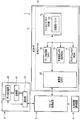
- FIG. 1 is a diagram illustrating an example of a collation system according to an embodiment.
- the verification system includes an IC card 1, an IC card processing device 2 that communicates with the IC card, and a biological information reading device 3 that reads biological information.
- the IC card is also called a smart card.
- the biometric information reading device 3 reads the biometric information and transmits verification data based on the read biometric information to the IC card processing device 2. For example, the biometric information reading device 3 reads a fingerprint, an iris, a blood vessel pattern, a voice print, a signature, or the like as biometric information, and transmits verification data based on the read biometric information to the IC card processing device 2. In addition, the biometric information reading device 3 can transmit information indicating the type of biometric information (verification data) (for example, one of the thumb of the right or left hand, the index finger, the middle finger, the ring finger, or the little finger) together with the verification data. .
- verification data for example, one of the thumb of the right or left hand, the index finger, the middle finger, the ring finger, or the little finger
- the biological information reading device 3 displays a guide for pressing the right thumb against the reading unit, and outputs information read from the finger pressed corresponding to the guidance display as verification data for the right thumb.
- the biometric information reading device 3 includes a biometric information type input unit (for example, a touch panel), and the right thumb is designated via the type input unit, and information read from the finger is used as verification data for the right thumb. Can be output.
- the IC card processing device 2 communicates with the IC card 1 in contact or non-contact.
- the IC card processing device 2 transmits a command to the IC card 1 according to a specific protocol, and reads or rewrites information in the IC card 1.
- the IC card processing device 2 transmits to the IC card 1 a command including verification data generated based on biometric information and type information (identifier) of the verification data.
- IC card 1 is a contact type or non-contact type IC card.
- the IC card 1 contacts and communicates with an IC card processing device (reader / writer) 2.
- the IC card 1 communicates with the IC card processing device 2 in a non-contact manner.
- the IC card 1 may be a combination IC card that supports both a contact type and a non-contact type. In this case, the IC card 1 can communicate with the contact-type IC card processing apparatus 2 in contact, and can communicate with the non-contact-type IC card processing apparatus 2 without contact.
- the IC card 1 includes, for example, a plastic card (base material) 1 a and an IC module (IC chip) 10.
- the IC module 10 includes a program memory (for example, ROM: Read Only Memory) 11 and a main memory (for example, RAM: Random Access).
- Memory ⁇ ⁇ ⁇ 12 nonvolatile memory (for example, EEPROM (registered trademark): Electrically Erasable and Programmable Read Only Memory) 13, data processing unit (for example, CPU: Central Processing Unit) 14, and communication unit (for example, UART: Universal Asynchronous Receiver Transmitter) 15 Is provided.
- the main memory 12 includes a reception buffer 121.
- the main memory 12 functions as a working memory.
- the program memory 11 holds an IC card program executed by the data processing unit 14.
- the data processing unit 14 operates based on an IC card program or the like stored in the program memory 11.
- the IC card 1 holds the command received via the UART 15 in the reception buffer 121.
- the data processing unit 14 interprets the command held in the reception buffer 121 and performs processing according to the command. For example, the data processing unit 14 reads data stored in the nonvolatile memory 13 or the main memory 12 based on the received command, writes data to the nonvolatile memory 13 or the main memory 12, The command execution result is returned via the UART 15 (the command execution result is transmitted to the IC card processing device 2).
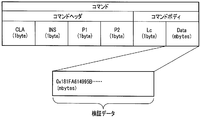
- FIG. 2 is a diagram illustrating an example of a command transmitted from the IC card processing apparatus according to the embodiment to the IC card.
- a command transmitted from the IC card processing device 2 to the IC card 1 is in the format of Command / Application / Data / Unit (C-APDU) defined in ISO / IEC 7816-3.
- the command includes a command header and a command body.
- the command header includes CLA (1 Byte) and INS (1 Byte) representing the command type, and P1 (1 Byte) and P2 (1 Byte) representing the parameter.
- the command body includes Lc (1 Byte) indicating the length of Data and Data (mBytes). For example, verification data generated based on the biometric information of the person (authorized user of the IC card) is stored in the Data section in which Data is stored.
- P1 or P2 included in the command includes an identifier
- the identifier indicates a finger type (for example, one of the thumb of the right hand or the left hand, the index finger, the middle finger, the ring finger, or the little finger).
- the verification data in the Data portion included in this command indicates the biological information of the thumb of the right hand.
- FIG. 3 is a diagram illustrating an example of collation management information according to the embodiment.
- the nonvolatile memory 13 includes reference data (first biological information) generated based on the person's biological information, the cumulative number of failures for each reference data, and the failure for each reference data.
- the upper limit of the number of times (retry condition) and an identifier for identifying each reference data are held.
- the identifier indicates the kind of finger (either the thumb of the right hand or the left hand, the index finger, the middle finger, the ring finger, or the little finger).
- the reference data corresponding to the identifier indicates the biological information of the thumb of the right hand.
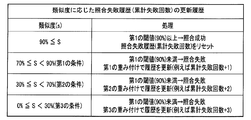
- FIG. 4 is a diagram illustrating an example of a process for updating the verification failure history (total number of failures) according to the similarity by the IC card according to the embodiment.
- the data processing unit 14 of the IC card 1 collates the verification data (second biological information) and the reference data (first biological information), calculates (detects) the similarity (S), and calculates the calculated similarity.
- the verification failure history for example, the cumulative failure count
- the cumulative failure count is updated (changed).
- the data processing unit 14 determines that the collation is successful when the similarity is equal to or higher than a first threshold (for example, 90%), and determines that the collation fails when the similarity is less than the first threshold. Furthermore, when the degree of similarity is less than the first threshold, that is, when it is determined that collation has failed, the data processing unit 14 updates the collation failure history by weighting according to the degree of similarity.
- a first threshold for example, 90%
- the verification failure history is updated by weighting. For example, the data processing unit 14 adds +1 (first value) to the cumulative failure count.
- the data processing unit 14 determines that the second condition is satisfied when the second condition that the degree of similarity is less than the second threshold and greater than or equal to a third threshold (for example, 30%) smaller than the second threshold is satisfied.
- the verification failure history is updated by weighting. For example, the data processing unit 14 adds +2 (second value) to the cumulative failure count.
- the data processing unit 14 determines that the third condition is satisfied when the third condition that the degree of similarity is less than the third threshold and greater than or equal to a fourth threshold (for example, 0%) smaller than the third threshold is satisfied.
- the verification failure history is updated by weighting. For example, the data processing unit 14 adds +3 (third value) to the cumulative failure count.
- the data processing unit 14 may add the upper limit of the number of failures or the upper limit of the number of failures + 1 to the cumulative number of failures. In this case, if the third condition is satisfied, the cumulative number of failures immediately reaches the upper limit of the number of failures or the upper limit of the number of failures + 1.
- first, second, and third values are not limited to +1, +2, and +3, respectively, and may be +1, +3, and +5, respectively.
- the cumulative failure count associated with the first reference data of the first identifier is 0 and the upper limit of the failure count (retry condition) is 5. If the cumulative failure count is 5 or less, the verification retry is allowed, and if it exceeds 5, the verification retry is rejected.
- the data processing unit 14 When the IC card 1 receives the command (first time) shown in FIG. 2 and P1 or P2 included in the command indicates the first identifier, the data processing unit 14 is included in the command (first time). The similarity is calculated by comparing the first verification data with the first reference data associated with the first identifier. For example, when the second condition is satisfied, the data processing unit 14 adds +2 to the cumulative failure count and updates the cumulative failure count to two. If the total number of failures is 2, the retry condition is satisfied without exceeding the upper limit of 5 failures. Therefore, the data processing unit 14 allows verification retry based on the command shown in FIG.
- the data processing unit 14 receives the command (second time).
- the similarity is calculated by comparing the first verification data included with the first reference data associated with the first identifier.
- the data processing unit 14 adds +2 to the cumulative failure count and updates the cumulative failure count to four times. If the cumulative number of failures is 4, the retry condition is satisfied without exceeding the upper limit of 5 failures. Therefore, the data processing unit 14 allows verification retry based on the command shown in FIG.
- the data processing unit 14 receives the command (third time).
- the similarity is calculated by comparing the first verification data included with the first reference data associated with the first identifier.
- the data processing unit 14 adds +3 to the cumulative failure number, and updates the cumulative failure number to seven times.
- the cumulative number of failures is 7, the upper limit of the number of failures exceeds 5 and the retry condition is not satisfied. Therefore, the data processing unit 14 rejects the verification retry based on the command shown in FIG.
- the data processing unit 14 resets the verification failure history. In other words, the cumulative failure count of 2 or 4 is set to 0.
- the upper limit of the number of failures associated with the second reference data of the second identifier is set to three times, or the number of failures associated with the third reference data of the third identifier is set.
- the upper limit is set to one time, the number of verification retries can be severely limited to prevent fraud.
- FIG. 5 is a flowchart showing an example of the collation process according to the embodiment.
- the IC card 1 receives a command (see FIG. 2) transmitted from the IC card processing device via the communication unit 15 (S1).
- the IC card 1 stores the received command in the reception buffer 121.
- the data processing unit 14 interprets the received command and calculates the similarity between the verification data included in the command and the reference data included in the nonvolatile memory 13 (S2). For example, the data processing unit 14 interprets the first identifier from P1 or P2 included in this command, and the similarity between the verification data included in the command and the first reference data associated with the first identifier Is calculated.
- the data processing unit 14 determines that the collation is successful when the similarity is equal to or higher than a first threshold value (for example, 90%) (S3, YES), and resets the cumulative failure count stored in the nonvolatile memory 13 (S4). As a response to the received command, normal termination indicating successful verification is transmitted to the IC card processing device 2 (S5).
- a first threshold value for example, 90%
- the data processing unit 14 determines that the collation has failed when the similarity is less than a first threshold (for example, 90%) (S3, NO), and counts up the cumulative failure count by weighting according to the similarity ( S6) An abnormal end indicating a verification failure is transmitted to the IC card processing apparatus 2 as a response to the received command (S7).
- a first threshold for example, 90%
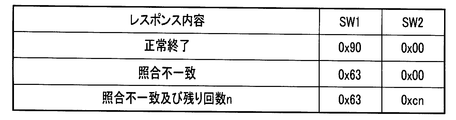
- FIG. 6 is a diagram illustrating an example of a data structure of a response according to the embodiment.
- the response includes status words SW1 and SW2.
- a response indicating normal termination a response indicating a verification failure (verification mismatch)
- a response indicating a verification failure a response indicating a verification failure and the remaining number n.
- the second condition is satisfied, and +2 is added to the cumulative failure count by the second weighting Is assumed.
- a second response indicating that the verification failure and the remaining number of times are two is transmitted. That is, the remaining number of times decreases by two after one verification retry.
- FIG. 7 is a diagram illustrating another example of the verification system according to the embodiment.
- the verification system includes an IC card 1, an IC card processing device 2 that communicates with the IC card 1, a biological information reading device 3 that reads biological information, and a server 4.
- the server 4 includes a storage unit 41, a data processing unit 42, a communication unit 43, and the like.
- the collation process by the IC card 1 may be executed by the server 4.
- the program memory 11 or the non-volatile memory 13 of the IC card 1 holds card identification information.
- the IC card processing device 2 transmits the biometric information from the biometric information reading device 3 and the type of the biometric information, and the card identification information read from the IC card 1 to the server 4.
- the storage unit 41 of the server 4 stores the matching management information shown in FIG. 3 in association with the card identification information.
- the communication unit 43 of the server 4 receives the verification data from the IC card processing device 2, the type of the verification data, and the card identification information.
- the data processing unit 42 matches the verification management information associated with the received card identification information. Is read. Further, the data processing unit 42 selects reference data corresponding to the type of received verification data from the read verification management information, and compares the received verification data with the selected reference data to calculate the similarity (S). (Detection), and update (change) the verification failure history (for example, the cumulative failure count) according to the calculated similarity.
- the update of the verification failure history is as described above. In this way, the verification process may be executed by the server 4 instead of the IC card 1.
- the IC card 1 or the server 4 determines the amount of increase in the cumulative failure count according to the similarity between the verification data and the reference data in counting up the cumulative failure count when collation fails.
- the correct verification person there are accidental reasons such as poor physical condition and environment when sensing biological information.
- the degree of similarity obtained when the collation fails by the correct collator (person) is relatively high.
- the increase amount of the cumulative failure count is set to be relatively small.
- the similarity obtained at the time of collation failure by an unauthorized person (other person) is relatively low.
- the degree of similarity is relatively low, the amount of increase in the cumulative failure count is set to be relatively large. Thereby, when the correct collator (person) fails in collation, the risk of early arrival at the collation frequency limit can be reduced. In addition, it is possible to improve safety by quickly reaching the limit on the number of verifications against verification by an unauthorized person. That is, both convenience and safety can be achieved.
- an IC module As described above, according to the present embodiment, it is possible to provide an IC module, an IC card, and a verification device that can update the verification failure history by weighting according to the degree of similarity.
- the collation processing in the IC card of this embodiment can be realized in an ISO compliant card, and the IC card processing device 2 can be realized in a general-purpose card reader / writer. Further, according to the collation process of the present embodiment, when a collation result having a relatively low similarity is obtained, the collation retry is rejected while the number of times of rewriting of the nonvolatile memory 13 is small. Since the nonvolatile memory 13 has an upper limit (limit) in the number of rewrites, it is advantageous from the viewpoint of memory use.
- the verification process described above can be executed by software. For this reason, the said process is realizable by the IC card 1 provided with the program memory 11 which memorize
- the above processing can be realized in the IC card 1 by transmitting a program for executing the above processing procedure from the IC card processing device 2 to the IC card 1 and storing the program to be transmitted by the IC card 1. .
- the server 4 stores the program for executing the procedure of the process, so that the process can be realized in the server 4.
Landscapes
- Engineering & Computer Science (AREA)
- Theoretical Computer Science (AREA)
- Computer Security & Cryptography (AREA)
- Physics & Mathematics (AREA)
- General Physics & Mathematics (AREA)
- General Engineering & Computer Science (AREA)
- Computer Hardware Design (AREA)
- Software Systems (AREA)
- Data Mining & Analysis (AREA)
- Multimedia (AREA)
- Computer Vision & Pattern Recognition (AREA)
- Computer Networks & Wireless Communication (AREA)
- Life Sciences & Earth Sciences (AREA)
- Evolutionary Computation (AREA)
- Artificial Intelligence (AREA)
- Bioinformatics & Cheminformatics (AREA)
- Evolutionary Biology (AREA)
- Bioinformatics & Computational Biology (AREA)
- Quality & Reliability (AREA)
- Human Computer Interaction (AREA)
- Microelectronics & Electronic Packaging (AREA)
- Collating Specific Patterns (AREA)
- Techniques For Improving Reliability Of Storages (AREA)
- Credit Cards Or The Like (AREA)
Abstract
実施形態のICモジュールは、記憶部と、通信部と、処理部とを備える。前記記憶部は、参照データを記憶する。前記通信部は、検証データを受信する。前記処理部は、前記参照データと前記検証データの類似度を検出する。さらに、前記処理部は、前記類似度が第1の閾値以上の場合に照合成功と判定し、前記類似度が第1の閾値未満の場合に照合失敗と判定し、前記類似度に応じた重み付けにより照合失敗履歴を更新する。
Description
本発明の実施形態は、IC(Integrated Circuit)モジュール、ICカード、及び照合装置に関する。
接触式ICカードの国際標準であるISO/IEC7816-4において、VERIFYコマンドが規定されている。本規程によれば、端末からICカードに送信された検証データと、ICカード内に格納されている参照データが不一致であった場合、ICカードは照合の失敗を記録しても良いとされている。例えば、ICカードは、照合の失敗の記録に基づき、参照データの使用回数を制限することができる。しかしながら、本規程には、どのように使用回数を制限するかは明記されていない。
PIN(Personal Identification Number)による照合を例にすると、ICカードは、参照データの使用回数の上限を保持し、検証データと参照データが不一致であった場合、照合失敗として累計失敗回数を1ずつカウントアップする。ICカードは、参照データの使用回数の上限と累計失敗回数とを比較し、参照データの使用回数を制限する。
PINによる照合のように完全一致により照合の成功又は失敗が判定される場合だけでなく、生体認証のように類似度により照合の成功又は失敗が判定される場合がある。前者と後者では照合失敗の意味が異なる。
後者、即ち、類似度により照合の成功又は失敗が判定される場合、正しい照合者(本人)による照合失敗時の類似度と、不正者による照合失敗時の類似度は異なると考えられる。このように、類似度に応じて照合失敗を区別して管理する技術が要望されている。
本発明の目的は、類似度に応じた重み付けにより照合失敗履歴を更新することが可能なICモジュール、ICカード、及び照合装置を提供することである。
実施形態のICモジュールは、記憶部と、通信部と、処理部とを備える。前記記憶部は、参照データを記憶する。前記通信部は、検証データを受信する。前記処理部は、前記参照データと前記検証データの類似度を検出する。さらに、前記処理部は、前記類似度が第1の閾値以上の場合に照合成功と判定し、前記類似度が第1の閾値未満の場合に照合失敗と判定し、前記類似度に応じた重み付けにより照合失敗履歴を更新する。
以下、図面を参照して実施形態について説明する。
図1は、実施形態に係る照合システムの一例を示す図である。図1に示すように、照合システムは、ICカード1、ICカードと通信するICカード処理装置2、及び生体情報を読み取る生体情報読取装置3を備える。なお、ICカードは、スマートカードとも呼ばれる。
生体情報読取装置3は、生体情報を読み取り、読み取った生体情報に基づく検証データをICカード処理装置2へ送信する。例えば、生体情報読取装置3は、生体情報として、指紋、虹彩、血管パターン、声紋、又は署名等を読み取り、読み取った生体情報に基づく検証データをICカード処理装置2へ送信する。また、生体情報読取装置3は、検証データと共に、生体情報(検証データ)の種別(例えば右手又は左手の親指、人差し指、中指、薬指、又は小指の何れか)を示す情報を送信することができる。例えば、生体情報読取装置3は、右手親指を読取部へ押し当てる旨の案内を表示し、この案内表示に対応して押し当てられた指から読み取られた情報を右手親指の検証データとして出力することができる。或いは、生体情報読取装置3は、生体情報の種別入力部(例えばタッチパネル)を備え、種別入力部を介して右手親指が指定された上で、指から読み取られた情報を右手親指の検証データとして出力することができる。
ICカード処理装置2は、接触又は非接触でICカード1と通信する。ICカード処理装置2は、特定のプロトコルに従ってコマンドをICカード1へ送信し、ICカード1内の情報を読み出したり、書き換えたりする。例えば、ICカード処理装置2は、生体情報を基に生成された検証データ及び検証データの種別情報(識別子)を含むコマンドをICカード1へ送信する。
ICカード1は接触式タイプ又は非接触式タイプのICカードである。接触式タイプICカードの場合、ICカード1は、ICカード処理装置(リーダライタ)2と接触して通信する。非接触式タイプICカードの場合、ICカード1は、ICカード処理装置2と非接触で通信する。なお、ICカード1は、接触式と非接触式の両タイプをサポートするコンビ型ICカードであってもよい。この場合、ICカード1は、接触式のICカード処理装置2に対しては接触で通信し、非接触式のICカード処理装置2に対しては非接触で通信することができる。
ICカード1は、例えばプラスティックカード(基材)1aとICモジュール(ICチップ)10とを備え、ICモジュール10は、プログラムメモリ(例えばROM : Read Only Memory)11、メインメモリ(例えばRAM : Random Access Memory )12、不揮発性メモリ(例えばEEPROM(登録商標): Electrically Erasable and Programmable Read Only Memory)13、データ処理部(例えばCPU : Central Processing Unit)14、通信部(例えばUART : Universal Asynchronous Receiver Transmitter)15を備える。例えば、メインメモリ12は、受信用バッファ121を備える。
メインメモリ12は、ワーキングメモリとして機能する。プログラムメモリ11は、データ処理部14により実行されるICカードプログラムを保持する。データ処理部14は、プログラムメモリ11に記憶されたICカードプログラム等に基づき動作する。また、ICカード1はUART15を介して受信したコマンドを受信用バッファ121に保持する。その後、データ処理部14は、受信用バッファ121に保持したコマンドを解釈し、コマンドに応じた処理を実施する。例えば、データ処理部14は、受信したコマンドに基づき、不揮発性メモリ13又はメインメモリ12に記憶されたデータを読み出したり、不揮発性メモリ13又はメインメモリ12に対してデータを書き込んだり、さらには、UART15を介してコマンド実行結果を返信(ICカード処理装置2へコマンド実行結果を送信)したりする。
図2は、実施形態に係るICカード処理装置からICカードに送信されるコマンドの一例を示す図である。図2に示すように、例えば、ICカード処理装置2からICカード1に送信されるコマンドは、ISO/IEC 7816-3に規定されているCommand Application Data Unit(C-APDU)の形式である。コマンドは、コマンドヘッダ及びコマンドボディを含む。コマンドヘッダはコマンドの種別を表すCLA(1Byte)、及びINS(1Byte)と、パラメータを表すP1(1Byte)、及びP2(1Byte)を含む。コマンドボディは、Dataの長さを表すLc(1Byte)と、Data(mBytes)を含む。例えば、Dataが格納されるData部には、本人(ICカードの正当な使用者)の生体情報を基に生成された検証データが格納される。
例えば、コマンドに含まれるP1又はP2が識別子を含み、識別子は指の種類(例えば右手又は左手の親指、人差し指、中指、薬指、又は小指の何れか)を示す。例えば、識別子が右手の親指を示す場合、このコマンドに含まれるData部の検証データは右手の親指の生体情報を示すことになる。
図3は、実施形態に係る照合管理情報の一例を示す図である。例えば、図3に示すように、不揮発性メモリ13は、本人の生体情報を基に生成された参照データ(第1の生体情報)と、参照データごとの累計失敗回数と、参照データごとの失敗回数の上限(再試行条件)と、各参照データを識別するための識別子を保持する。例えば、識別子は指の種類(右手又は左手の親指、人差し指、中指、薬指、又は小指の何れか)を示す。例えば、識別子が右手の親指を示す場合、この識別子に対応する参照データは右手の親指の生体情報を示すことになる。
図4は、実施形態に係るICカードによる類似度に応じた照合失敗履歴(累計失敗回数)の更新処理の一例を示す図である。ICカード1のデータ処理部14は、検証データ(第2の生体情報)と参照データ(第1の生体情報)を照合し類似度(S)を算出(検出)し、算出された類似度に応じて照合失敗履歴(例えば累計失敗回数)を更新(変更)する。
例えば、データ処理部14は、類似度が第1の閾値(例えば90%)以上の場合に照合成功と判定し、類似度が第1の閾値未満の場合に照合失敗と判定する。さらに、データ処理部14は、類似度が第1の閾値未満の場合、つまり、照合失敗と判定した場合には、類似度に応じた重みづけにより照合失敗履歴を更新する。
例えば、データ処理部14は、類似度が第1の閾値未満であり且つ第1の閾値より小さい第2の閾値(例えば70%)以上であるという第1の条件が満たされる場合に第1の重み付けにより照合失敗履歴を更新する。例えば、データ処理部14は、累計失敗回数に+1(第1の値)を加算する。
また、データ処理部14は、類似度が第2の閾値未満であり且つ第2の閾値より小さい第3の閾値(例えば30%)以上であるという第2の条件が満たされる場合に第2の重み付けにより照合失敗履歴を更新する。例えば、データ処理部14は、累計失敗回数に+2(第2の値)を加算する。
また、データ処理部14は、類似度が第3の閾値未満であり且つ第3の閾値より小さい第4の閾値(例えば0%)以上であるという第3の条件が満たされる場合に第3の重み付けにより照合失敗履歴を更新する。例えば、データ処理部14は、累計失敗回数に+3(第3の値)を加算する。或いは、データ処理部14は、累計失敗回数に失敗回数の上限又は失敗回数の上限+1を加算するようにしてもよい。この場合、第3の条件を満たせば、即、累計失敗回数が失敗回数の上限又は失敗回数の上限+1に達することになる。
なお、第1、第2、第3の値は、それぞれ、+1、+2、+3に限られるものではなく、例えば、それぞれ、+1、+3、+5でもよい。
例えば、第1の識別子の第1の参照データに対応付けられた累計失敗回数が0回であり失敗回数の上限(再試行条件)が5回の場合を仮定する。累計失敗回数が5回以下であれば照合再試行を許容し、5回を越える場合に照合再試行を拒否する。
ICカード1が、図2に示すコマンド(1回目)を受信し、このコマンドに含まれるP1又はP2が第1の識別子を示す場合、データ処理部14は、このコマンド(1回目)に含まれる第1の検証データと第1の識別子に対応付けられた第1の参照データとを比較し類似度を算出する。例えば、データ処理部14は、第2の条件が満たされる場合に、累計失敗回数に+2を加算し、累計失敗回数を2回に更新する。累計失敗回数が2回の場合、失敗回数の上限5回を越えず、再試行条件を満たす。従って、データ処理部14は、図2に示すコマンドに基づく照合再試行を許容する。
さらに、ICカード1が、図2に示すコマンド(2回目)を受信し、このコマンドに含まれるP1又はP2が第1の識別子を示す場合、データ処理部14は、このコマンド(2回目)に含まれる第1の検証データと第1の識別子に対応付けられた第1の参照データとを比較し類似度を算出する。データ処理部14は、第2の条件が満たされる場合に、累計失敗回数に+2を加算し、累計失敗回数を4回に更新する。累計失敗回数が4回の場合、失敗回数の上限5回を越えず、再試行条件を満たす。従って、データ処理部14は、図2に示すコマンドに基づく照合再試行を許容する。
さらに、ICカード1が、図2に示すコマンド(3回目)を受信し、このコマンドに含まれるP1又はP2が第1の識別子を示す場合、データ処理部14は、このコマンド(3回目)に含まれる第1の検証データと第1の識別子に対応付けられた第1の参照データとを比較し類似度を算出する。データ処理部14は、第3の条件が満たされた場合に、累計失敗回数に+3を加算し、累計失敗回数を7回に更新する。累計失敗回数が7回の場合、失敗回数の上限5回を越えており、再試行条件を満たさない。従って、データ処理部14は、図2に示すコマンドに基づく照合再試行を拒否する。
このように、類似度に応じて失敗回数のカウントに重み付けすることにより、類似度に応じた安全性を確保することができる。即ち、類似度が比較的高い場合は本人による照合である確率が比較的高いことから照合再試行回数を厳しく制限せずに利便性を確保する。また、類似度が比較的低い場合は本人による照合である確率が比較的低いことから照合再試行回数を厳しく制限し不正防止を図る。
なお、1回目の照合失敗又は2回目の照合失敗の後、コマンド(2回目又は3回目)を受信し、照合に成功した場合、データ処理部14は、照合失敗履歴をリセットする。つまり、累計失敗回数の2回又は4回を0回に設定する。
また、例えば、第2の識別子の第2の参照データに対応付けられた失敗回数の上限を3回に設定したり、又は第3の識別子の第3の参照データに対応付けられた失敗回数の上限を1回に設定したりすることにより、照合再試行回数を厳しく制限し不正防止を図ることもできる。
図5は、実施形態に係る照合処理の一例を示すフローチャートである。
ICカード1は、通信部15を介してICカード処理装置から送信されるコマンド(図2参照)を受信する(S1)。ICカード1は、受信したコマンドを受信用バッファ121に格納する。
データ処理部14は、受信したコマンドを解釈し、コマンドに含まれる検証データと、不揮発性メモリ13に含まれる参照データとの類似度を算出する(S2)。例えば、データ処理部14は、このコマンドに含まれるP1又はP2から第1の識別子を解釈し、コマンドに含まれる検証データと第1の識別子に対応付けられた第1の参照データとの類似度を算出する。
データ処理部14は、類似度が第1の閾値(例えば90%)以上の場合に照合成功と判定し(S3、YES)、不揮発性メモリ13に保存された累計失敗回数をリセットし(S4)、受信したコマンドのレスポンスとして照合成功を示す正常終了をICカード処理装置2へ送信する(S5)。
また、データ処理部14は、類似度が第1の閾値(例えば90%)未満の場合に照合失敗と判定し(S3、NO)、類似度に応じた重み付けで累計失敗回数をカウントアップし(S6)、受信したコマンドのレスポンスとして照合失敗を示す異常終了をICカード処理装置2へ送信する(S7)。
図6は、実施形態に係るレスポンスのデータ構造の一例を示す図である。図6に示すように、レスポンスはステータスワードSW1及びSW2を含む。例えば、正常終了を示すレスポンス、照合失敗(照合不一致)を示すレスポンス、照合失敗及び残り回数nを示すレスポンスがある。例えば、照合失敗及び残り回数が4回を示す第1のレスポンスが送信された後の照合再試行において、第2の条件が満たされ、第2の重み付けにより累計失敗回数に+2が加算されるケースを想定する。このようなケースでは、第1のレスポンスが送信された後、照合失敗及び残り回数が2回を示す第2のレスポンスが送信される。つまり、1回の照合再試行後に、残り回数が2回減少する。
図7は、実施形態に係る照合システムの別例を示す図である。図7に示すように、照合システムは、ICカード1、ICカード1と通信するICカード処理装置2、生体情報を読み取る生体情報読取装置3、及びサーバ4を備える。サーバ4は、記憶部41、データ処理部42、及び通信部43等を備える。
図1~図6を参照し、ICカード1による照合処理について説明したが、サーバ4により照合処理を実行してもよい。例えば、ICカード1のプログラムメモリ11又は不揮発性メモリ13はカード識別情報を保持する。ICカード処理装置2は、生体情報読取装置3からの生体情報及び生体情報の種別と、ICカード1から読み取ったカード識別情報とをサーバ4へ送信する。
サーバ4の記憶部41は、カード識別情報に対応付けて図3に示す照合管理情報を記憶する。サーバ4の通信部43は、ICカード処理装置2からの検証データ及び検証データの種別とカード識別情報とを受信し、データ処理部42は、受信したカード識別情報に対応付けられた照合管理情報を読み出す。さらに、データ処理部42は、読み出した照合管理情報から、受信した検証データの種別に対応する参照データを選択し、受信した検証データと選択した参照データとを照合し類似度(S)を算出(検出)し、算出された類似度に応じて照合失敗履歴(例えば累計失敗回数)を更新(変更)する。照合失敗履歴の更新については上記説明した通りである。このように、ICカード1に替えてサーバ4で照合処理を実行するようにしてもよい。
本実施形態のICカード1又はサーバ4は、照合失敗時の累計失敗回数のカウントアップにおいて、検証データと参照データの類似度に応じて累計失敗回数の増加量を決定する。正しい照合者(本人)による照合失敗の原因として、体調不良や生体情報をセンシング時の環境などの偶発的な理由が挙げられる。正しい照合者(本人)による照合失敗時に得られる類似度は、比較的高いと推測される。類似度が比較的高い場合、累計失敗回数の増加量を比較的小さく設定する。逆に、不正者(他人)による照合失敗時に得られる類似度は、比較的低いと推測される。類似度が比較的低い場合、累計失敗回数の増加量を比較的大きく設定する。これにより、正しい照合者(本人)が照合を失敗したときには照合回数制限への早期到達リスクを低減することができる。また、不正者による照合に対しては照合回数制限へ早期に到達させることにより安全性を高めることができる。即ち、利便性と安全性を両立することができる。
以上説明したように、本実施形態によれば、類似度に応じた重み付けにより照合失敗履歴を更新することが可能なICモジュール、ICカード、及び照合装置を提供することができる。
また、本実施形態のICカードにおける照合処理は、ISO準拠のカードにおいて実現でき、ICカード処理装置2は汎用のカードリーダライタで実現することができる。また、本実施形態の照合処理によれば、類似度が比較的低い照合結果が得られる場合には、不揮発性メモリ13の書き換え回数が少ないうちに照合再試行が拒否される。不揮発性メモリ13には書き換え回数に上限(限界)があるため、メモリ使用の観点でも有利である。
なお、上記説明した照合処理はソフトウェアによって実行することが可能である。このため、上記処理の手順を実行するプログラムを記憶したプログラムメモリ11を備えたICカード1により、上記処理を実現することができる。或いは、上記処理の手順を実行するプログラムをICカード処理装置2からICカード1へ送信し、ICカード1が送信されるプログラムを記憶することにより、ICカード1において上記処理を実現することができる。或いは、上記処理の手順を実行するプログラムをサーバ4が記憶することにより、サーバ4において上記処理を実現することができる。
本発明のいくつかの実施形態を説明したが、これらの実施形態は、例として提示したものであり、発明の範囲を限定することは意図していない。これら実施形態は、その他の様々な形態で実施されることが可能であり、発明の要旨を逸脱しない範囲で、種々の省略、置き換え、変更を行うことができる。これら実施形態やその変形は、発明の範囲や要旨に含まれると同様に、特許請求の範囲に記載された発明とその均等の範囲に含まれるものである。
Claims (10)
- 参照データを記憶する記憶部と、
検証データを受信する通信部と、
前記参照データと前記検証データの類似度を検出する処理部と、
を備え、
前記処理部は、
前記類似度が第1の閾値以上の場合に照合成功と判定し、
前記類似度が第1の閾値未満の場合に照合失敗と判定し、前記類似度に応じた重み付けにより照合失敗履歴を更新する
ICモジュール。 - 前記処理部は、
前記類似度が前記第1の閾値未満であり且つ前記第1の閾値より小さい第2の閾値以上であるという第1の条件が満たされる場合に第1の重み付けにより前記照合失敗履歴を更新し、
前記類似度が前記第2の閾値未満であるという第2の条件が満たされる場合に前記第1の重み付けより重い第2の重み付けにより前記照合失敗履歴を更新する
請求項1のICモジュール。 - 前記照合失敗履歴は照合失敗回数である、
請求項2のICモジュール。 - 前記処理部は、
前記第1の条件が満たされる場合に前記照合失敗回数に第1の値を加算し、
前記第2の条件が満たされる場合に前記照合失敗回数に第2の値を加算する
請求項3のICモジュール。 - 前記記憶部は、再試行条件を記憶し、
前記処理部は、前記照合失敗履歴に基づき、前記再試行条件が満たされる場合に照合再試行を許容し、前記再試行条件が満たされない場合に照合再試行を拒否する請求項1乃至4の何れか1つのICモジュール。 - 前記記憶部は、前記照合失敗の上限回数を記憶し、
前記処理部は、前記照合失敗回数が前記上限回数以下の場合に照合再試行を許容し、前記照合失敗回数が前記上限回数を越える場合に照合再試行を拒否する請求項3又は4のICモジュール。 - 前記処理部は、前記照合成功に基づき、前記照合失敗履歴をリセットする請求項1乃至6の何れか1つのICモジュール。
- 前記参照データ及び前記検証データは、それぞれ生体情報に基づき生成されたデータである請求項1乃至7の何れか1つのICモジュール。
- 請求項1乃至8の何れか1つのICモジュールを備えるICカード。
- 参照データを記憶する記憶部と、
検証データを受信する通信部と、
前記参照データと前記検証データの類似度を検出する処理部と、
を備え、
前記処理部は、
前記類似度が第1の閾値以上の場合に照合成功と判定し、
前記類似度が第1の閾値未満の場合に照合失敗と判定し、前記類似度に応じた重み付けにより照合失敗履歴を更新する
照合装置。
Priority Applications (5)
| Application Number | Priority Date | Filing Date | Title |
|---|---|---|---|
| EA201892492A EA201892492A1 (ru) | 2016-07-15 | 2017-06-30 | Ic-модуль, ic-карта и устройство верификации |
| CN201780031076.2A CN109154955B (zh) | 2016-07-15 | 2017-06-30 | Ic模块、ic卡以及对照装置 |
| KR1020197001351A KR102231954B1 (ko) | 2016-07-15 | 2017-06-30 | Ic 모듈, ic 카드 및 대조 장치 |
| EP17827451.0A EP3486819B1 (en) | 2016-07-15 | 2017-06-30 | Ic module, ic card, and collation device |
| US16/179,303 US10915616B2 (en) | 2016-07-15 | 2018-11-02 | IC module, IC card, and verification device |
Applications Claiming Priority (2)
| Application Number | Priority Date | Filing Date | Title |
|---|---|---|---|
| JP2016140699A JP6753713B2 (ja) | 2016-07-15 | 2016-07-15 | Icモジュール、icカード、及び照合装置 |
| JP2016-140699 | 2016-07-15 |
Related Child Applications (1)
| Application Number | Title | Priority Date | Filing Date |
|---|---|---|---|
| US16/179,303 Continuation US10915616B2 (en) | 2016-07-15 | 2018-11-02 | IC module, IC card, and verification device |
Publications (1)
| Publication Number | Publication Date |
|---|---|
| WO2018012321A1 true WO2018012321A1 (ja) | 2018-01-18 |
Family
ID=60952549
Family Applications (1)
| Application Number | Title | Priority Date | Filing Date |
|---|---|---|---|
| PCT/JP2017/024151 Ceased WO2018012321A1 (ja) | 2016-07-15 | 2017-06-30 | Icモジュール、icカード、及び照合装置 |
Country Status (8)
| Country | Link |
|---|---|
| US (1) | US10915616B2 (ja) |
| EP (1) | EP3486819B1 (ja) |
| JP (1) | JP6753713B2 (ja) |
| KR (1) | KR102231954B1 (ja) |
| CN (1) | CN109154955B (ja) |
| EA (1) | EA201892492A1 (ja) |
| TW (1) | TWI654565B (ja) |
| WO (1) | WO2018012321A1 (ja) |
Cited By (2)
| Publication number | Priority date | Publication date | Assignee | Title |
|---|---|---|---|---|
| JP2022069184A (ja) * | 2020-10-23 | 2022-05-11 | 大日本印刷株式会社 | Icカード,icカードのコマンド管理方法およびicカード用のマイクロコントローラ |
| JP2022092399A (ja) * | 2020-12-10 | 2022-06-22 | 株式会社東芝 | 認証装置およびicカード |
Families Citing this family (2)
| Publication number | Priority date | Publication date | Assignee | Title |
|---|---|---|---|---|
| JP7162466B2 (ja) * | 2018-08-07 | 2022-10-28 | 株式会社東海理化電機製作所 | 生体情報認証装置 |
| CN114470792B (zh) * | 2021-12-02 | 2025-07-11 | 腾讯科技(深圳)有限公司 | 组队匹配方法、存储介质和电子设备 |
Citations (4)
| Publication number | Priority date | Publication date | Assignee | Title |
|---|---|---|---|---|
| JP2010152506A (ja) * | 2008-12-24 | 2010-07-08 | Hitachi Omron Terminal Solutions Corp | 利用者認証端末、認証システム、利用者認証方法、および利用者認証プログラム |
| JP2010286936A (ja) * | 2009-06-10 | 2010-12-24 | Hitachi Ltd | 半導体素子および認証装置、認証システム |
| JP2015148952A (ja) * | 2014-02-06 | 2015-08-20 | シャープ株式会社 | 情報処理装置および情報処理プログラム |
| JP2016057890A (ja) | 2014-09-10 | 2016-04-21 | 株式会社東芝 | Icカード、携帯可能電子装置、及び、icカード処理装置 |
Family Cites Families (23)
| Publication number | Priority date | Publication date | Assignee | Title |
|---|---|---|---|---|
| US5870723A (en) * | 1994-11-28 | 1999-02-09 | Pare, Jr.; David Ferrin | Tokenless biometric transaction authorization method and system |
| PA8581901A1 (es) | 2002-09-10 | 2004-05-21 | Ivi Smart Technologies Inc | Verificacion biometrica segura de identidad |
| EP1664990A2 (en) * | 2003-05-19 | 2006-06-07 | Modular Computing & Communications Corporation | Apparatus and method for mobile personal computing and communications |
| AR051670A1 (es) | 2004-11-16 | 2007-01-31 | Imageware Systems Inc | Plataforma biometrica multimodal |
| JP2006189999A (ja) * | 2005-01-04 | 2006-07-20 | Fujitsu Ltd | セキュリティ管理方法、プログラム及び情報機器 |
| US20060206724A1 (en) * | 2005-02-16 | 2006-09-14 | David Schaufele | Biometric-based systems and methods for identity verification |
| JP4868947B2 (ja) * | 2006-06-05 | 2012-02-01 | 株式会社日立製作所 | 生体認証装置と生体認証システム及びicカード並びに生体認証方法 |
| SG146551A1 (en) * | 2007-03-29 | 2008-10-30 | Toshiba Kk | Portable electronic device and control method of portable electronic device |
| JP2009258860A (ja) * | 2008-04-14 | 2009-11-05 | Sony Corp | 情報処理装置および方法、記録媒体、プログラム、並びに情報処理システム |
| JP4845057B2 (ja) * | 2008-04-14 | 2011-12-28 | 京セラ株式会社 | 携帯電子機器及びプログラム |
| JP2010140467A (ja) * | 2008-11-13 | 2010-06-24 | Hitachi Ltd | 生体認証方法、生体認証システム、icカード、および端末 |
| WO2011046556A1 (en) * | 2009-10-15 | 2011-04-21 | Mmrb Holdings Llc | Biometric identification system |
| JP5669082B2 (ja) * | 2010-04-19 | 2015-02-12 | パナソニックIpマネジメント株式会社 | 照合装置 |
| JP5388991B2 (ja) * | 2010-11-10 | 2014-01-15 | 日立オムロンターミナルソリューションズ株式会社 | 生体認証ユニット、自動取引処理装置、生体認証方法、及び生体認証プログラム |
| CN102542687A (zh) * | 2010-12-29 | 2012-07-04 | 盛大计算机(上海)有限公司 | 微支付系统及其实现方法 |
| JP5903257B2 (ja) * | 2011-12-08 | 2016-04-13 | 株式会社Nttファシリティーズ | 認証システム、登録装置、及び認証装置 |
| US8396265B1 (en) * | 2012-06-26 | 2013-03-12 | Google Inc. | Facial recognition |
| GB2517952B (en) * | 2013-09-05 | 2017-05-31 | Barclays Bank Plc | Biometric verification using predicted signatures |
| CN204347874U (zh) * | 2014-03-31 | 2015-05-20 | 上海古鳌电子科技股份有限公司 | Ic卡处理装置 |
| WO2015183974A1 (en) * | 2014-05-30 | 2015-12-03 | Apple Inc. | User authentication retry with a biometric sensing device |
| KR102302350B1 (ko) * | 2014-06-02 | 2021-09-15 | 삼성전자 주식회사 | 보안 기능을 제공하는 방법 및 장치 |
| CN104320389B (zh) * | 2014-10-11 | 2018-04-27 | 南京邮电大学 | 一种基于云计算的融合身份保护系统及方法 |
| CN104408343B (zh) * | 2014-11-09 | 2017-03-29 | 河南华辰智控技术有限公司 | 通过认证系统对生物特征识别的一种阈值计算方法 |
-
2016
- 2016-07-15 JP JP2016140699A patent/JP6753713B2/ja active Active
-
2017
- 2017-06-16 TW TW106120216A patent/TWI654565B/zh active
- 2017-06-30 EP EP17827451.0A patent/EP3486819B1/en active Active
- 2017-06-30 KR KR1020197001351A patent/KR102231954B1/ko active Active
- 2017-06-30 EA EA201892492A patent/EA201892492A1/ru unknown
- 2017-06-30 WO PCT/JP2017/024151 patent/WO2018012321A1/ja not_active Ceased
- 2017-06-30 CN CN201780031076.2A patent/CN109154955B/zh active Active
-
2018
- 2018-11-02 US US16/179,303 patent/US10915616B2/en active Active
Patent Citations (4)
| Publication number | Priority date | Publication date | Assignee | Title |
|---|---|---|---|---|
| JP2010152506A (ja) * | 2008-12-24 | 2010-07-08 | Hitachi Omron Terminal Solutions Corp | 利用者認証端末、認証システム、利用者認証方法、および利用者認証プログラム |
| JP2010286936A (ja) * | 2009-06-10 | 2010-12-24 | Hitachi Ltd | 半導体素子および認証装置、認証システム |
| JP2015148952A (ja) * | 2014-02-06 | 2015-08-20 | シャープ株式会社 | 情報処理装置および情報処理プログラム |
| JP2016057890A (ja) | 2014-09-10 | 2016-04-21 | 株式会社東芝 | Icカード、携帯可能電子装置、及び、icカード処理装置 |
Non-Patent Citations (1)
| Title |
|---|
| See also references of EP3486819A4 |
Cited By (4)
| Publication number | Priority date | Publication date | Assignee | Title |
|---|---|---|---|---|
| JP2022069184A (ja) * | 2020-10-23 | 2022-05-11 | 大日本印刷株式会社 | Icカード,icカードのコマンド管理方法およびicカード用のマイクロコントローラ |
| JP7327349B2 (ja) | 2020-10-23 | 2023-08-16 | 大日本印刷株式会社 | Icカード,icカードのコマンド管理方法およびicカード用のマイクロコントローラ |
| JP2022092399A (ja) * | 2020-12-10 | 2022-06-22 | 株式会社東芝 | 認証装置およびicカード |
| JP7500410B2 (ja) | 2020-12-10 | 2024-06-17 | 株式会社東芝 | 認証装置およびicカード |
Also Published As
| Publication number | Publication date |
|---|---|
| CN109154955B (zh) | 2022-04-26 |
| KR102231954B1 (ko) | 2021-03-25 |
| EP3486819A4 (en) | 2020-02-12 |
| CN109154955A (zh) | 2019-01-04 |
| TWI654565B (zh) | 2019-03-21 |
| KR20190019162A (ko) | 2019-02-26 |
| JP2018010590A (ja) | 2018-01-18 |
| EA201892492A1 (ru) | 2019-06-28 |
| US10915616B2 (en) | 2021-02-09 |
| US20190073466A1 (en) | 2019-03-07 |
| JP6753713B2 (ja) | 2020-09-09 |
| EP3486819A1 (en) | 2019-05-22 |
| TW201804376A (zh) | 2018-02-01 |
| EP3486819B1 (en) | 2021-04-28 |
Similar Documents
| Publication | Publication Date | Title |
|---|---|---|
| US10915616B2 (en) | IC module, IC card, and verification device | |
| JP6721435B2 (ja) | Icカード、携帯可能電子装置及び情報処理方法 | |
| US10872137B2 (en) | IC card and method for controlling IC card | |
| US20190180018A1 (en) | Portable electronic device | |
| US9183400B2 (en) | IC card and IC card control method | |
| EP3657368A1 (en) | Ic card, portable electronic device, ic card processing method and program | |
| US20170374066A1 (en) | Server, ic card processing apparatus, and ic card processing system | |
| TWI639958B (zh) | IC card, portable electronic device, and control method of IC card | |
| US20230214474A1 (en) | Portable electronic device and ic card | |
| JPH01217689A (ja) | 携帯可能電子装置およびicチップ | |
| KR20220156685A (ko) | 등록 생체 정보 및 등록 핀 정보를 포함하는 ic 카드, 이의 동작 방법, 및 이와 통신하는 카드 리더기의 동작 방법 | |
| JP6860352B2 (ja) | Icカードおよび携帯可能電子装置 | |
| JP7380667B2 (ja) | 電子情報記憶媒体、処理方法、及びプログラム | |
| JP4876449B2 (ja) | Icカード、および、icカードプログラム | |
| JP2014203248A (ja) | Icカード、ステータスワード出力方法、及びステータスワード出力処理プログラム | |
| KR20250150887A (ko) | 지문 스마트 카드의 지문 등록 방법, 지문 스마트 카드, 및 지문 등록 시스템 | |
| JPH01263894A (ja) | 携帯可能電子装置 | |
| JPH01177183A (ja) | 携帯可能電子装置 | |
| JPH01217690A (ja) | 携帯可能電子装置 | |
| KR20180114879A (ko) | 카드 | |
| JPH01214992A (ja) | 携帯可能電子装置 |
Legal Events
| Date | Code | Title | Description |
|---|---|---|---|
| 121 | Ep: the epo has been informed by wipo that ep was designated in this application |
Ref document number: 17827451 Country of ref document: EP Kind code of ref document: A1 |
|
| ENP | Entry into the national phase |
Ref document number: 20197001351 Country of ref document: KR Kind code of ref document: A |
|
| NENP | Non-entry into the national phase |
Ref country code: DE |
|
| ENP | Entry into the national phase |
Ref document number: 2017827451 Country of ref document: EP Effective date: 20190215 |