WO2018016149A1 - 赤外線透過性レンズの製造方法、赤外線透過性レンズ及び赤外線カメラ - Google Patents
赤外線透過性レンズの製造方法、赤外線透過性レンズ及び赤外線カメラ Download PDFInfo
- Publication number
- WO2018016149A1 WO2018016149A1 PCT/JP2017/016237 JP2017016237W WO2018016149A1 WO 2018016149 A1 WO2018016149 A1 WO 2018016149A1 JP 2017016237 W JP2017016237 W JP 2017016237W WO 2018016149 A1 WO2018016149 A1 WO 2018016149A1
- Authority
- WO
- WIPO (PCT)
- Prior art keywords
- infrared
- lens
- producing
- chalcogenide glass
- glass
- Prior art date
- Legal status (The legal status is an assumption and is not a legal conclusion. Google has not performed a legal analysis and makes no representation as to the accuracy of the status listed.)
- Ceased
Links
Images
Classifications
-
- C—CHEMISTRY; METALLURGY
- C03—GLASS; MINERAL OR SLAG WOOL
- C03B—MANUFACTURE, SHAPING, OR SUPPLEMENTARY PROCESSES
- C03B23/00—Re-forming shaped glass
- C03B23/0013—Re-forming shaped glass by pressing
-
- C—CHEMISTRY; METALLURGY
- C03—GLASS; MINERAL OR SLAG WOOL
- C03B—MANUFACTURE, SHAPING, OR SUPPLEMENTARY PROCESSES
- C03B5/00—Melting in furnaces; Furnaces so far as specially adapted for glass manufacture
- C03B5/06—Melting in furnaces; Furnaces so far as specially adapted for glass manufacture in pot furnaces
-
- C—CHEMISTRY; METALLURGY
- C03—GLASS; MINERAL OR SLAG WOOL
- C03B—MANUFACTURE, SHAPING, OR SUPPLEMENTARY PROCESSES
- C03B11/00—Pressing molten glass or performed glass reheated to equivalent low viscosity without blowing
-
- C—CHEMISTRY; METALLURGY
- C03—GLASS; MINERAL OR SLAG WOOL
- C03B—MANUFACTURE, SHAPING, OR SUPPLEMENTARY PROCESSES
- C03B11/00—Pressing molten glass or performed glass reheated to equivalent low viscosity without blowing
- C03B11/06—Construction of plunger or mould
- C03B11/08—Construction of plunger or mould for making solid articles, e.g. lenses
-
- C—CHEMISTRY; METALLURGY
- C03—GLASS; MINERAL OR SLAG WOOL
- C03B—MANUFACTURE, SHAPING, OR SUPPLEMENTARY PROCESSES
- C03B19/00—Other methods of shaping glass
- C03B19/02—Other methods of shaping glass by casting molten glass, e.g. injection moulding
-
- C—CHEMISTRY; METALLURGY
- C03—GLASS; MINERAL OR SLAG WOOL
- C03B—MANUFACTURE, SHAPING, OR SUPPLEMENTARY PROCESSES
- C03B19/00—Other methods of shaping glass
- C03B19/06—Other methods of shaping glass by sintering, e.g. by cold isostatic pressing of powders and subsequent sintering, by hot pressing of powders, by sintering slurries or dispersions not undergoing a liquid phase reaction
-
- C—CHEMISTRY; METALLURGY
- C03—GLASS; MINERAL OR SLAG WOOL
- C03B—MANUFACTURE, SHAPING, OR SUPPLEMENTARY PROCESSES
- C03B32/00—Thermal after-treatment of glass products not provided for in groups C03B19/00, C03B25/00 - C03B31/00 or C03B37/00, e.g. crystallisation, eliminating gas inclusions or other impurities; Hot-pressing vitrified, non-porous, shaped glass products
-
- C—CHEMISTRY; METALLURGY
- C03—GLASS; MINERAL OR SLAG WOOL
- C03C—CHEMICAL COMPOSITION OF GLASSES, GLAZES OR VITREOUS ENAMELS; SURFACE TREATMENT OF GLASS; SURFACE TREATMENT OF FIBRES OR FILAMENTS MADE FROM GLASS, MINERALS OR SLAGS; JOINING GLASS TO GLASS OR OTHER MATERIALS
- C03C3/00—Glass compositions
- C03C3/32—Non-oxide glass compositions, e.g. binary or ternary halides, sulfides or nitrides of germanium, selenium or tellurium
-
- C—CHEMISTRY; METALLURGY
- C03—GLASS; MINERAL OR SLAG WOOL
- C03C—CHEMICAL COMPOSITION OF GLASSES, GLAZES OR VITREOUS ENAMELS; SURFACE TREATMENT OF GLASS; SURFACE TREATMENT OF FIBRES OR FILAMENTS MADE FROM GLASS, MINERALS OR SLAGS; JOINING GLASS TO GLASS OR OTHER MATERIALS
- C03C3/00—Glass compositions
- C03C3/32—Non-oxide glass compositions, e.g. binary or ternary halides, sulfides or nitrides of germanium, selenium or tellurium
- C03C3/321—Chalcogenide glasses, e.g. containing S, Se, Te
-
- C—CHEMISTRY; METALLURGY
- C03—GLASS; MINERAL OR SLAG WOOL
- C03C—CHEMICAL COMPOSITION OF GLASSES, GLAZES OR VITREOUS ENAMELS; SURFACE TREATMENT OF GLASS; SURFACE TREATMENT OF FIBRES OR FILAMENTS MADE FROM GLASS, MINERALS OR SLAGS; JOINING GLASS TO GLASS OR OTHER MATERIALS
- C03C3/00—Glass compositions
- C03C3/32—Non-oxide glass compositions, e.g. binary or ternary halides, sulfides or nitrides of germanium, selenium or tellurium
- C03C3/321—Chalcogenide glasses, e.g. containing S, Se, Te
- C03C3/323—Chalcogenide glasses, e.g. containing S, Se, Te containing halogen, e.g. chalcohalide glasses
-
- C—CHEMISTRY; METALLURGY
- C03—GLASS; MINERAL OR SLAG WOOL
- C03C—CHEMICAL COMPOSITION OF GLASSES, GLAZES OR VITREOUS ENAMELS; SURFACE TREATMENT OF GLASS; SURFACE TREATMENT OF FIBRES OR FILAMENTS MADE FROM GLASS, MINERALS OR SLAGS; JOINING GLASS TO GLASS OR OTHER MATERIALS
- C03C4/00—Compositions for glass with special properties
- C03C4/10—Compositions for glass with special properties for infrared transmitting glass
-
- G—PHYSICS
- G02—OPTICS
- G02B—OPTICAL ELEMENTS, SYSTEMS OR APPARATUS
- G02B1/00—Optical elements characterised by the material of which they are made; Optical coatings for optical elements
-
- C—CHEMISTRY; METALLURGY
- C03—GLASS; MINERAL OR SLAG WOOL
- C03B—MANUFACTURE, SHAPING, OR SUPPLEMENTARY PROCESSES
- C03B2201/00—Type of glass produced
- C03B2201/80—Non-oxide glasses or glass-type compositions
- C03B2201/86—Chalcogenide glasses, i.e. S, Se or Te glasses
-
- C—CHEMISTRY; METALLURGY
- C03—GLASS; MINERAL OR SLAG WOOL
- C03B—MANUFACTURE, SHAPING, OR SUPPLEMENTARY PROCESSES
- C03B2215/00—Press-moulding glass
- C03B2215/40—Product characteristics
- C03B2215/46—Lenses, e.g. bi-convex
-
- C—CHEMISTRY; METALLURGY
- C03—GLASS; MINERAL OR SLAG WOOL
- C03B—MANUFACTURE, SHAPING, OR SUPPLEMENTARY PROCESSES
- C03B2215/00—Press-moulding glass
- C03B2215/66—Means for providing special atmospheres, e.g. reduced pressure, inert gas, reducing gas, clean room
-
- G—PHYSICS
- G02—OPTICS
- G02B—OPTICAL ELEMENTS, SYSTEMS OR APPARATUS
- G02B3/00—Simple or compound lenses
Definitions
- the present invention relates to a method for manufacturing an infrared transmissive lens used for an infrared sensor, an infrared camera, or the like.
- In-vehicle night vision and security systems are equipped with infrared sensors that are used to detect living bodies at night. Since the infrared sensor senses infrared rays having a wavelength of about 8 to 14 ⁇ m emitted from a living body, an optical element such as a filter or a lens that transmits infrared rays in the wavelength range is provided in front of the sensor unit.
- Examples of the material for the optical element as described above include Ge and ZnSe. Since these are crystal bodies, they are inferior in workability and difficult to process into a complicated shape such as an aspherical lens. Therefore, there is a problem that it is difficult to mass-produce and it is difficult to reduce the size of the infrared sensor.
- chalcogenide glass has been proposed as a vitreous material that transmits infrared rays having a wavelength of about 8 to 14 ⁇ m and is relatively easy to process.
- Patent Document 1 Japanese Patent Document 1
- the chalcogenide glass can be molded, and an optical element such as an aspherical lens can be obtained by sandwiching between the upper mold and the lower mold and hot pressing.
- an optical element such as an aspherical lens
- the chalcogenide glass has a problem in that a concave portion is formed on the surface of the optical element of the molded lens due to heating during pressing, and the surface quality of the lens is deteriorated.
- a concave portion is formed on the surface of the optical element of the molded lens due to heating during pressing, and the surface quality of the lens is deteriorated.
- the image is distorted or disturbed when used as a camera lens.
- the present invention has been made in view of such circumstances, and an object of the present invention is to provide a method for manufacturing an infrared transmissive lens having excellent surface quality.
- the chalcogenide glass generates gas when the surface adsorbed water of the chalcogenide glass reacts with components in the chalcogenide glass during hot press molding.
- a sulfide-based chalcogenide glass containing a large amount of sulfur water adsorbed on the glass surface and sulfur in the glass react to generate H 2 S from the glass surface.
- the lens surface after hot press molding is likely to be dented and the surface quality is liable to deteriorate. Therefore, if the preform of the chalcogenide glass is baked in an inert gas atmosphere before hot press molding, water adsorbed on the surface of the glass can be removed. Recesses are less likely to occur on the lens surface after hot press molding.
- the method for producing an infrared transmitting lens of the present invention is characterized in that a chalcogenide glass preform is fired in an inert gas atmosphere to obtain a fired body, and then the fired body is hot press-molded.
- the preform is baked at a temperature 0 to 50 ° C. lower than the yield point.
- the method for producing the infrared transmitting lens of the present invention it is preferable to heat press-mold the fired body at a temperature not lower than the yield point of the chalcogenide glass and not higher than the softening point.
- the chalcogenide glass preferably contains any one of S, Se, and Te.
- the chalcogenide glass preferably contains 30% to 80% of S + Se + Te in mol%.
- the infrared transmissive lens of the present invention is made of chalcogenide glass and is characterized in that the number of recesses having a diameter of 2.5 ⁇ m to 100 ⁇ m per unit area (1 mm ⁇ 1 mm) on the surface is 100 or less.
- the infrared camera of the present invention uses the above infrared transmissive lens.
- the method for producing an infrared transmitting lens of the present invention is characterized in that a chalcogenide glass preform is fired in an inert gas atmosphere to obtain a fired body, and then the fired body is hot press-molded.
- a chalcogenide glass preform is fired in an inert gas atmosphere to obtain a fired body, and then the fired body is hot press-molded.
- a chalcogenide glass preform is obtained as follows.
- the composition of the chalcogenide glass will be described later.
- the raw materials are mixed to obtain a desired glass composition to obtain a raw material batch.
- the quartz glass ampule is evacuated while being heated, and then a raw material batch is put therein, and the quartz glass ampule is sealed with an oxygen burner while evacuating.
- the sealed quartz glass ampule is heated in a melting furnace at a rate of 10 to 20 ° C./hour to 650 to 1000 ° C. and then held for 6 to 12 hours. During the holding time, the quartz glass ampoule is turned upside down as necessary to stir the melt.
- the quartz glass ampoule is taken out of the melting furnace and rapidly cooled to room temperature to obtain chalcogenide glass.
- the obtained chalcogenide glass is processed by cutting, polishing or the like to obtain a preform of chalcogenide glass.
- the obtained preform is fired to obtain a fired body. Thereby, as above-mentioned, generation
- the firing atmosphere is an inert atmosphere, and is preferably a nitrogen, argon or helium atmosphere. From the point of being inexpensive, a nitrogen atmosphere is particularly preferable.
- the firing temperature is preferably 0 to 50 ° C. lower than the yield point of the glass, more preferably 0 to 40 ° C. lower, and particularly preferably 0 to 20 ° C. lower. If the firing temperature is too high, the surface adsorbed water reacts with the components in the chalcogenide glass during firing to generate gas and lower the surface quality of the fired body. On the other hand, if the firing temperature is too low, water adsorbed on the surface of the glass cannot be completely removed, gas is generated during hot press molding, and the surface quality after molding tends to deteriorate.
- the obtained fired body is hot press molded with a mold to obtain an infrared transmitting lens.
- the hot pressing atmosphere is preferably an inert atmosphere, such as a nitrogen, argon or helium atmosphere. From the point of being inexpensive, a nitrogen atmosphere is particularly preferable.
- the pressing temperature is preferably higher than the glass yield point and lower than the softening point, more preferably 0 to 50 ° C. higher than the glass yield point, and 0 to 30 ° C.
- the mold preferably has an optically polished surface.
- the lens shape is preferably a meniscus shape.
- the infrared transmissive lens manufactured according to the present invention is excellent in surface quality. Specifically, the number of recesses having a diameter of 2.5 ⁇ m to 100 ⁇ m per unit area (1 mm ⁇ 1 mm) is preferably 100 or less, more preferably 50 or less, and 30 or less. It is more preferable that the number is 10 or less.
- the infrared transmissive lens manufactured according to the present invention is excellent in surface quality, and thus is suitable as an optical element such as a lens for condensing infrared light on the infrared sensor portion of the infrared camera.
- the chalcogenide glass preferably contains any of S, Se, and Te.
- the chalcogen elements S, Se, and Te are components that form a glass skeleton.
- the content of S + Se + Te (the total amount of S, Se and Te) is preferably 30 to 80%, more preferably 35 to 70% in terms of mol%. When there is too little content of S + Se + Te, it will become difficult to vitrify, and when too much, there exists a possibility that a weather resistance may fall.
- chalcogen element it is preferable to select S or Te from an environmental viewpoint.
- Ge, Ga, Sb, Bi, and Sn are components that widen the vitrification range and enhance the thermal stability of the glass, and the content thereof is preferably 0 to 50% in terms of mol%, and is preferably 0 to More preferably, it is 40%. When there is too much content of these components, it will become difficult to vitrify.
- Zn, In, and P are components that widen the vitrification range, and the content thereof is preferably mol% and 0 to 20% each. When there is too much content of these components, it will become difficult to vitrify.
- Cl, F, and I are components that widen the infrared transmission wavelength range, and their content is preferably 0 to 20% in terms of mol%. When there is too much content of these components, a weather resistance will fall easily.
- substantially does not contain means that the material is not intentionally contained in the raw material, and does not exclude mixing of impurity levels. Objectively, the content of each component indicates less than 1000 ppm.
- the yield point of chalcogenide glass is preferably 200 to 400 ° C, particularly preferably 220 to 340 ° C.
- the softening point is preferably 230 to 430 ° C, particularly preferably 250 to 370 ° C.
- the lens of the example was manufactured as follows.
- the raw materials were blended so as to be S 61%, Ge 5%, Bi 1%, and Sb 33% in mol% to obtain a raw material batch.
- the quartz glass ampule washed with pure water was evacuated while being heated, and then a raw material batch was put, and the quartz glass ampule was sealed with an oxygen burner while evacuating.
- the sealed quartz glass ampule was heated to 650-1000 ° C. at a rate of 10-20 ° C./hour in a melting furnace and then held for 6-12 hours. During the holding time, the quartz glass ampoule was turned upside down every 2 hours to stir the melt. Thereafter, the quartz glass ampoule was taken out of the melting furnace and rapidly cooled to room temperature to obtain chalcogenide glass (deflection point 240 ° C., softening point 270 ° C.).
- the obtained chalcogenide glass was processed into a preform shape. After the processing, the glass surface was baked in a nitrogen atmosphere at a temperature 10 to 20 ° C. lower than the yield point for 6 to 12 hours to remove water adhering to the glass surface.
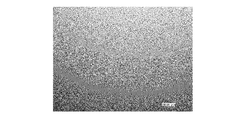
- FIG. 1 shows a photograph of the surface state of the lens.
- the number of recesses having a diameter of 2.5 ⁇ m or more and 100 ⁇ m or less per unit area (1 mm ⁇ 1 mm) on the lens surface was 6, and the surface quality was good.
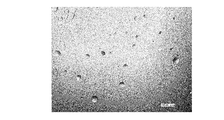
- FIG. 2 shows a photograph of the surface state of the lens.
- the number of concave portions having a diameter of 2.5 ⁇ m or more and 100 ⁇ m or less per unit area (1 mm ⁇ 1 mm) on the lens surface was 162, which was inferior in surface quality.
- the infrared transmissive lens manufactured in the present invention is suitable as an optical element such as a lens for condensing infrared light on an infrared sensor part of an infrared camera.
Landscapes
- Chemical & Material Sciences (AREA)
- Engineering & Computer Science (AREA)
- Materials Engineering (AREA)
- Organic Chemistry (AREA)
- Chemical Kinetics & Catalysis (AREA)
- Geochemistry & Mineralogy (AREA)
- General Chemical & Material Sciences (AREA)
- Life Sciences & Earth Sciences (AREA)
- Physics & Mathematics (AREA)
- Manufacturing & Machinery (AREA)
- General Physics & Mathematics (AREA)
- Optics & Photonics (AREA)
- Dispersion Chemistry (AREA)
- Thermal Sciences (AREA)
- Glass Compositions (AREA)
Abstract
表面品位に優れた赤外線透過性レンズの製造方法を提供する。 カルコゲナイドガラスのプリフォームを不活性ガス雰囲気下で焼成し、焼成体を得た後、前記焼成体を、熱プレス成形することを特徴とする。
Description
本発明は、赤外線センサ、赤外線カメラ等に使用される赤外線透過性レンズの製造方法に関する。
車載ナイトビジョンやセキュリティシステム等は、夜間の生体検知に用いられる赤外線センサを備えている。赤外線センサは、生体から発せられる波長約8~14μmの赤外線を感知するため、センサ部の前には当該波長範囲の赤外線を透過するフィルターやレンズ等の光学素子が設けられる。
上記のような光学素子用の材料として、GeやZnSeが挙げられる。これらは結晶体であるため加工性に劣り、非球面レンズ等の複雑な形状に加工することが困難である。そのため量産しにくく、また赤外線センサの小型化も困難であるという問題がある。
そこで、波長約8~14μmの赤外線を透過し、加工が比較的容易なガラス質の材料として、カルコゲナイドガラスが提案されている。(例えば特許文献1参照)
カルコゲナイドガラスは、モールド成形が可能であり、上型と下型で挟み込んで熱プレスすることで、非球面レンズなどの光学素子を得ることができる。(例えば特許文献2参照)
カルコゲナイドガラスは、プレス時の加熱により、成形したレンズの光学素子表面に凹部が生じ、レンズの表面品位が低下する問題がある。光学素子の表面に多数の凹部が生じた場合、カメラのレンズとして用いた際に像に歪みや乱れが生じる。
本発明は、このような状況に鑑みてなされたものであり、表面品位に優れた赤外線透過性レンズの製造方法を提供することを目的とする。
本発明者等は、種々の検討を行った結果、以下の知見を得て、本発明を提案するに至った。カルコゲナイドガラスは、熱プレス成形時に、カルコゲナイドガラスの表面吸着水とカルコゲナイドガラス中の成分が反応することにより、ガスを発生する。例えば、硫黄を多く含有する硫化物系のカルコゲナイドガラスでは、ガラスの表面吸着水と、ガラス中の硫黄が反応し、H2Sがガラス表面から発生する。そのガスが、カルコゲナイドガラスと金型との界面で生じると、熱プレス成形後のレンズ表面に凹みが発生しやすくなり表面品位が低下しやすい。そこで、熱プレス成形前にカルコゲナイドガラスのプリフォームを不活性ガス雰囲気で焼成すると、ガラスの表面吸着水を除去できるため、カルコゲナイドガラスの焼成体を熱プレス成形する際にガスが発生しにくくなり、熱プレス成形後のレンズ表面に凹みが発生しにくくなる。
本発明の赤外線透過性レンズの製造方法は、カルコゲナイドガラスのプリフォームを不活性ガス雰囲気下で焼成し、焼成体を得た後、前記焼成体を、熱プレス成形することを特徴とする。
本発明の赤外線透過性レンズの製造方法は、プリフォームを屈伏点より0~50℃低い温度で焼成することが好ましい。
本発明の赤外線透過性レンズの製造方法は、プリフォームを窒素雰囲気下で焼成することが好ましい。
本発明の赤外線透過性レンズの製造方法は、カルコゲナイドガラスの屈伏点以上、軟化点以下の温度で、焼成体を熱プレス成形することが好ましい。
本発明の赤外線透過性レンズの製造方法は、焼成体を、不活性ガス雰囲気中で、熱プレス成形することが好ましい。
本発明の赤外線透過性レンズの製造方法は、焼成体を、窒素雰囲気中で、熱プレス成形することが好ましい。
本発明の赤外線透過性レンズの製造方法は、上記のカルコゲナイドガラスが、S、Se及びTeのいずれかを含有することが好ましい。
本発明の赤外線透過性レンズの製造方法は、上記のカルコゲナイドガラスが、モル%で、S+Se+Te 30~80%を含有することが好ましい。
本発明の赤外線透過性レンズは、カルコゲナイドガラスからなり、表面における、単位面積(1mm×1mm)当たりの直径2.5μm以上100μm以下の凹部の個数が100個以下であることを特徴とする。
本発明の赤外線カメラは、上記の赤外線透過性レンズを用いてなる。
本発明によれば、表面品位に優れた赤外線透過性レンズの製造方法を提供することができる。
本発明の赤外線透過性レンズの製造方法は、カルコゲナイドガラスのプリフォームを不活性ガス雰囲気下で焼成し、焼成体を得た後、前記焼成体を、熱プレス成形することを特徴とする。以下、本発明の赤外線透過性レンズの製造方法について詳細に説明する。
まず、例えば、以下のようにしてカルコゲナイドガラスのプリフォームを得る。なお、カルコゲナイドガラスの組成については、後述する。所望のガラス組成となるように、原料を混合し、原料バッチを得る。次に、石英ガラスアンプルを加熱しながら真空排気した後、原料バッチを入れ、真空排気を行いながら酸素バーナーで石英ガラスアンプルを封管する。封管された石英ガラスアンプルを溶融炉内で10~20℃/時間の速度で650~1000℃まで昇温後、6~12時間保持する。保持時間中、必要に応じて、石英ガラスアンプルの上下を反転し、溶融物を攪拌する。その後、石英ガラスアンプルを溶融炉から取り出し、室温まで急冷することによりカルコゲナイドガラスを得る。得られたカルコゲナイドガラスを切断、研磨等により加工し、カルコゲナイドガラスのプリフォームを得る。
得られたプリフォームを焼成し、焼成体を得る。これにより、上述したように、ガラス表面からのガスの発生を抑制できる。
焼成雰囲気は、不活性雰囲気であり、窒素、アルゴンまたはヘリウム雰囲気であることが好ましい。安価である点から、特に窒素雰囲気が好ましい。雰囲気制御を行わずに焼成した場合、ガラスが酸化され、赤外線透過特性が低下する傾向がある。焼成温度は、ガラスの屈伏点から0~50℃低い温度であることが好ましく、0~40℃低い温度がより好ましく、0~20℃低い温度であることが特に好ましい。焼成温度が高すぎると、焼成時に、表面吸着水とカルコゲナイドガラス中の成分が反応することによりガスが発生し、焼成体の表面品位が低下する。一方、焼成温度が低すぎると、ガラスの表面吸着水が完全に除去できず、熱プレス成形時にガスが発生し、成形後の表面品位が低下する傾向がある。
得られた焼成体を、金型にて、熱プレス成形を行い赤外線透過性レンズを得る。熱プレス雰囲気は、不活性雰囲気、例えば、窒素、アルゴンまたはヘリウム雰囲気であることが好ましい。安価である点から、特に窒素雰囲気が好ましい。雰囲気制御を行わずに熱プレスした場合、ガラスが酸化され、赤外線透過特性が低下する傾向がある。また、金型が酸化されることで劣化が進んで金型の使用寿命が縮み、製造コストが高くなる傾向がある。さらに、プレス温度は、ガラスの屈伏点以上、軟化点以下の温度であることが好ましく、ガラスの屈伏点より0~50℃高い温度であることがより好ましく、ガラスの屈伏点より0~30℃高い温度であることがさらに好ましく、ガラスの屈伏点より0~20℃高い温度であることが特に好ましい。プレス温度が低すぎると、ガラスが軟化変形せず、プレス圧により破壊されるおそれがある。また、プレス温度が高すぎると、プレス時のガス発生量が増し、成形後のレンズ表面品位が低下する傾向がある。ちなみに、金型は、光学的な研磨面を有することが好ましい。また、レンズ形状は、メニスカス形状が好ましい。
本発明により製造された赤外線透過性レンズは表面品位に優れる。具体的には、単位面積(1mm×1mm)当たりの直径2.5μm以上100μm以下の凹部の個数が100個以下であることが好ましく、50個以下であることがより好ましく、30個以下であることがさらに好ましく、10個以下であることが特に好ましい。本発明により製造された赤外線透過性レンズは表面品位に優れるため、赤外線カメラの赤外線センサ部に赤外光を集光させるためのレンズ等の光学素子として好適である。
以下、本発明で使用するカルコゲナイドガラスについて説明する。
カルコゲナイドガラスは、S、Se及びTeのいずれかを含有することが好ましい。カルコゲン元素であるS、Se及びTeはガラス骨格を形成する成分である。S+Se+Teの含有量(S、Se及びTeの合量)は、モル%で、30~80%であることが好ましく、35~70%であることがより好ましい。S+Se+Teの含有量が少なすぎると、ガラス化しにくくなり、一方、多すぎると耐候性が低下する恐れがある。
なお、カルコゲン元素としては、環境面からSまたはTeを選択することが好ましい。
上記成分以外にも、下記の成分を含有させることができる。
Ge、Ga、Sb、Bi及びSnはガラス化範囲を広げ、ガラスの熱的安定性を高める成分であり、その含有量は、モル%で、それぞれ0~50%であることが好ましく、0~40%であることがより好ましい。これらの成分の含有量が多すぎると、ガラス化しにくくなる。
Zn、In及びPはガラス化範囲を広げる成分であり、その含有量は、モル%で、それぞれ0~20%であることが好ましい。これらの成分の含有量が多すぎると、ガラス化しにくくなる。
Cl、F及びIは赤外線の透過波長範囲を広げる成分であり、その含有量は、モル%で、それぞれ0~20%であることが好ましい。これらの成分の含有量が多すぎると、耐候性が低下しやすくなる。
なお、有毒物質であるAs、Cd、Tl及びPbを実質的に含有しないことが好ましい。このようにすれば、環境面への影響を最小限に抑えることができる。ここで、「実質的に含有しない」とは、意図的に原料中に含有させないという意味であり、不純物レベルの混入をも排除するものではない。客観的には、各成分の含有量が1000ppm未満を指す。
カルコゲナイドガラスの屈伏点は、200~400℃が好ましく、特に220~340℃が好ましい。軟化点は、230~430℃が好ましく、特に250~370℃が好ましい。
(実施例)
以下、本発明を実施例に基づいて説明するが、本発明はこれらの実施例に限定されるものではない。
以下、本発明を実施例に基づいて説明するが、本発明はこれらの実施例に限定されるものではない。
実施例のレンズは次のようにして作製した。モル%で、S 61%、Ge 5%、Bi 1%、Sb 33%になるように原料を調合し、原料バッチを得た。次に、純水で洗浄した石英ガラスアンプルを加熱しながら真空排気した後、原料バッチを入れ、真空排気を行いながら酸素バーナーで石英ガラスアンプルを封管した。
封管された石英ガラスアンプルを溶融炉内で10~20℃/時間の速度で650~1000℃まで昇温後、6~12時間保持した。保持時間中、2時間ごとに石英ガラスアンプルの上下を反転し、溶融物を攪拌した。その後、石英ガラスアンプルを溶融炉から取り出し、室温まで急冷することによりカルコゲナイドガラス(屈伏点 240℃、軟化点 270℃)を得た。
得られたカルコゲナイドガラスをプリフォーム形状に加工した。加工後、窒素雰囲気下にて、屈伏点より10~20℃低い温度で6~12時間焼成し、ガラスの表面付着水を除去した。
焼成後のプリフォームを窒素雰囲気下にて、屈伏点より10~20℃高い温度に加熱し、光学的な研磨面を有する金型にてメニスカスレンズ形状に熱プレス成形を行い、レンズを得た。得られたレンズについてデジタルマイクロスコープにて表面観察を行った。図1に、レンズの表面状態を撮影した写真を示す。レンズ表面における、単位面積(1mm×1mm)当たりの直径2.5μm以上100μm以下の凹部の個数は6個であり、良好な表面品位であった。
(比較例)
プリフォームの焼成を行わずに熱プレス成形したこと以外は、実施例と同様にしてレンズを得た。図2に、レンズの表面状態を撮影した写真を示す。レンズ表面における単位面積(1mm×1mm)当たりの直径2.5μm以上100μm以下の凹部の個数は162個であり、表面品位に劣っていた。
プリフォームの焼成を行わずに熱プレス成形したこと以外は、実施例と同様にしてレンズを得た。図2に、レンズの表面状態を撮影した写真を示す。レンズ表面における単位面積(1mm×1mm)当たりの直径2.5μm以上100μm以下の凹部の個数は162個であり、表面品位に劣っていた。
本発明で製造した赤外線透過性レンズは、赤外線カメラの、赤外線センサ部に赤外光を集光させるためのレンズ等の光学素子として好適である。
Claims (10)
- カルコゲナイドガラスのプリフォームを不活性ガス雰囲気下で焼成し、焼成体を得た後、前記焼成体を、熱プレス成形することを特徴とする赤外線透過性レンズの製造方法。
- プリフォームを屈伏点より0~50℃低い温度で焼成することを特徴とする請求項1に記載の赤外線透過性レンズの製造方法。
- プリフォームを窒素雰囲気下で焼成することを特徴とする請求項1または2に記載の赤外線透過性レンズの製造方法。
- カルコゲナイドガラスの屈伏点以上、軟化点以下の温度で、焼成体を熱プレス成形することを特徴とする請求項1~3のいずれかに記載の赤外線透過性レンズの製造方法。
- 焼成体を、不活性ガス雰囲気中で、熱プレス成形することを特徴とする請求項1~4のいずれかに記載の赤外線透過性レンズの製造方法。
- 焼成体を、窒素雰囲気中で、熱プレス成形することを特徴とする請求項5に記載の赤外線透過性レンズの製造方法。
- カルコゲナイドガラスが、S、Se及びTeのいずれかを含有することを特徴とする請求項1~6のいずれかに記載の赤外線透過性レンズの製造方法。
- カルコゲナイドガラスが、モル%で、S+Se+Te 30~80%を含有することを特徴とする請求項1~7のいずれかに記載の赤外線透過性レンズの製造方法。
- カルコゲナイドガラスからなり、表面における単位面積(1mm×1mm)当たりの直径2.5μm以上、100μm以下の凹部の個数が100個以下であることを特徴とする赤外線透過性レンズ。
- 請求項9に記載の赤外線透過性レンズを用いてなることを特徴とする赤外線カメラ。
Priority Applications (3)
| Application Number | Priority Date | Filing Date | Title |
|---|---|---|---|
| CN201780022608.6A CN108883956B (zh) | 2016-07-20 | 2017-04-24 | 红外线透过性透镜的制造方法、红外线透过性透镜和红外线摄像机 |
| EP17830669.2A EP3489201B1 (en) | 2016-07-20 | 2017-04-24 | Method for manufacturing infrared-transmissible lens |
| US16/091,611 US11155487B2 (en) | 2016-07-20 | 2017-04-24 | Method for manufacturing infrared-transmissible lens, infrared-transmissible lens, and infrared camera |
Applications Claiming Priority (2)
| Application Number | Priority Date | Filing Date | Title |
|---|---|---|---|
| JP2016142059A JP6938864B2 (ja) | 2016-07-20 | 2016-07-20 | 赤外線透過性レンズの製造方法 |
| JP2016-142059 | 2016-07-20 |
Publications (1)
| Publication Number | Publication Date |
|---|---|
| WO2018016149A1 true WO2018016149A1 (ja) | 2018-01-25 |
Family
ID=60992060
Family Applications (1)
| Application Number | Title | Priority Date | Filing Date |
|---|---|---|---|
| PCT/JP2017/016237 Ceased WO2018016149A1 (ja) | 2016-07-20 | 2017-04-24 | 赤外線透過性レンズの製造方法、赤外線透過性レンズ及び赤外線カメラ |
Country Status (5)
| Country | Link |
|---|---|
| US (1) | US11155487B2 (ja) |
| EP (1) | EP3489201B1 (ja) |
| JP (1) | JP6938864B2 (ja) |
| CN (2) | CN112897859A (ja) |
| WO (1) | WO2018016149A1 (ja) |
Cited By (1)
| Publication number | Priority date | Publication date | Assignee | Title |
|---|---|---|---|---|
| WO2020105719A1 (ja) * | 2018-11-21 | 2020-05-28 | 日本電気硝子株式会社 | カルコゲナイドガラスレンズ |
Families Citing this family (1)
| Publication number | Priority date | Publication date | Assignee | Title |
|---|---|---|---|---|
| CN115594388B (zh) * | 2022-10-28 | 2023-12-05 | 湖北戈碧迦光电科技股份有限公司 | 一种中红外波段低吸收的As-Se硫系玻璃的制备方法 |
Citations (6)
| Publication number | Priority date | Publication date | Assignee | Title |
|---|---|---|---|---|
| JPH05229838A (ja) * | 1992-02-21 | 1993-09-07 | Matsushita Electric Ind Co Ltd | 赤外線透過性ガラスロッドの成形方法 |
| JPH0692651A (ja) * | 1992-09-07 | 1994-04-05 | Matsushita Electric Ind Co Ltd | 赤外線透過性レンズの製造方法 |
| JPH0692652A (ja) * | 1992-09-14 | 1994-04-05 | Matsushita Electric Ind Co Ltd | 赤外線透過性レンズの製造方法 |
| JPH06183760A (ja) * | 1992-12-22 | 1994-07-05 | Matsushita Electric Ind Co Ltd | 赤外線透過性レンズの製造方法 |
| JPH06211540A (ja) | 1993-01-20 | 1994-08-02 | Matsushita Electric Ind Co Ltd | 赤外用光学素子およびその製造方法 |
| WO2009084619A1 (ja) * | 2007-12-28 | 2009-07-09 | Isuzu Glass Co., Ltd. | モールド成型用赤外線透過ガラス |
Family Cites Families (11)
| Publication number | Priority date | Publication date | Assignee | Title |
|---|---|---|---|---|
| JPH0777964B2 (ja) * | 1988-12-13 | 1995-08-23 | 非酸化物ガラス研究開発株式会社 | レンズ作製方法 |
| US5315434A (en) * | 1991-05-21 | 1994-05-24 | Matsushita Electric Industrial Co., Ltd. | Infrared-transmissive lens and human body detecting sensor using the same |
| US7143609B2 (en) * | 2002-10-29 | 2006-12-05 | Corning Incorporated | Low-temperature fabrication of glass optical components |
| JP5296345B2 (ja) * | 2007-08-10 | 2013-09-25 | 株式会社オハラ | 光学ガラス |
| CN101148319B (zh) * | 2007-09-14 | 2010-12-15 | 中国科学院上海硅酸盐研究所 | 一种硫卤微晶玻璃红外光学元件的热压成型制备方法 |
| JP2010072484A (ja) | 2008-09-19 | 2010-04-02 | Hitachi Maxell Ltd | 光学素子、光学素子成形用の金型の製造方法および光学素子の製造方法 |
| JP2010285308A (ja) * | 2009-06-10 | 2010-12-24 | Hitachi Maxell Ltd | 光学素子製造装置及び方法 |
| JP6269075B2 (ja) * | 2014-01-09 | 2018-01-31 | 日本電気硝子株式会社 | 赤外線透過ガラス |
| JP6540684B2 (ja) * | 2014-02-20 | 2019-07-10 | コニカミノルタ株式会社 | 光学素子の製造方法 |
| CN104310755B (zh) | 2014-08-11 | 2016-09-07 | 宁波鼎创红外精密光学科技有限公司 | 一种硫系玻璃非球面透镜成形方法 |
| US10414687B2 (en) * | 2015-03-31 | 2019-09-17 | National University Corporation Kyoto Institute Of Technology | Infrared-transmitting glass suitable for mold forming |
-
2016
- 2016-07-20 JP JP2016142059A patent/JP6938864B2/ja active Active
-
2017
- 2017-04-24 EP EP17830669.2A patent/EP3489201B1/en active Active
- 2017-04-24 CN CN202110188643.3A patent/CN112897859A/zh active Pending
- 2017-04-24 WO PCT/JP2017/016237 patent/WO2018016149A1/ja not_active Ceased
- 2017-04-24 CN CN201780022608.6A patent/CN108883956B/zh active Active
- 2017-04-24 US US16/091,611 patent/US11155487B2/en active Active
Patent Citations (7)
| Publication number | Priority date | Publication date | Assignee | Title |
|---|---|---|---|---|
| JPH05229838A (ja) * | 1992-02-21 | 1993-09-07 | Matsushita Electric Ind Co Ltd | 赤外線透過性ガラスロッドの成形方法 |
| JPH0692651A (ja) * | 1992-09-07 | 1994-04-05 | Matsushita Electric Ind Co Ltd | 赤外線透過性レンズの製造方法 |
| JPH0692652A (ja) * | 1992-09-14 | 1994-04-05 | Matsushita Electric Ind Co Ltd | 赤外線透過性レンズの製造方法 |
| JPH06183760A (ja) * | 1992-12-22 | 1994-07-05 | Matsushita Electric Ind Co Ltd | 赤外線透過性レンズの製造方法 |
| JPH06211540A (ja) | 1993-01-20 | 1994-08-02 | Matsushita Electric Ind Co Ltd | 赤外用光学素子およびその製造方法 |
| WO2009084619A1 (ja) * | 2007-12-28 | 2009-07-09 | Isuzu Glass Co., Ltd. | モールド成型用赤外線透過ガラス |
| JP2009161374A (ja) | 2007-12-28 | 2009-07-23 | Isuzu Seiko Glass Kk | モールド成型用赤外線透過ガラス |
Non-Patent Citations (1)
| Title |
|---|
| See also references of EP3489201A4 |
Cited By (3)
| Publication number | Priority date | Publication date | Assignee | Title |
|---|---|---|---|---|
| WO2020105719A1 (ja) * | 2018-11-21 | 2020-05-28 | 日本電気硝子株式会社 | カルコゲナイドガラスレンズ |
| JPWO2020105719A1 (ja) * | 2018-11-21 | 2021-10-14 | 日本電気硝子株式会社 | カルコゲナイドガラスレンズ |
| JP7495667B2 (ja) | 2018-11-21 | 2024-06-05 | 日本電気硝子株式会社 | カルコゲナイドガラスレンズ |
Also Published As
| Publication number | Publication date |
|---|---|
| EP3489201A4 (en) | 2020-03-11 |
| CN108883956B (zh) | 2022-03-01 |
| US11155487B2 (en) | 2021-10-26 |
| CN112897859A (zh) | 2021-06-04 |
| JP6938864B2 (ja) | 2021-09-22 |
| US20190127259A1 (en) | 2019-05-02 |
| JP2018012617A (ja) | 2018-01-25 |
| EP3489201B1 (en) | 2024-12-04 |
| EP3489201A1 (en) | 2019-05-29 |
| CN108883956A (zh) | 2018-11-23 |
Similar Documents
| Publication | Publication Date | Title |
|---|---|---|
| WO2020105719A1 (ja) | カルコゲナイドガラスレンズ | |
| JP5339720B2 (ja) | モールド成型用赤外線透過ガラス | |
| US11760681B2 (en) | Chalcogenide glass material | |
| JP7058825B2 (ja) | 赤外線透過ガラス | |
| JP6269075B2 (ja) | 赤外線透過ガラス | |
| WO2017110500A1 (ja) | 赤外線透過ガラス | |
| JP2019048752A (ja) | カルコゲナイドガラス材 | |
| KR102283586B1 (ko) | 칼코게나이드 잉곳 제조 방법 | |
| EP3778507B1 (en) | Chalcogenide glass material | |
| WO2018016149A1 (ja) | 赤外線透過性レンズの製造方法、赤外線透過性レンズ及び赤外線カメラ | |
| WO2019188025A1 (ja) | カルコゲナイドガラス材 | |
| JPWO2016052159A1 (ja) | カルコゲナイドガラスレンズの製造方法 | |
| JP6709499B2 (ja) | 赤外線透過ガラス | |
| US20210230046A1 (en) | Optical cap component | |
| JP6819920B2 (ja) | カルコゲナイドガラス | |
| WO2017208679A1 (ja) | 近赤外線吸収ガラスの製造方法及び製造装置 | |
| JP2020045265A (ja) | 赤外線透過ガラス | |
| JP6788816B2 (ja) | 赤外線透過ガラス | |
| KR20220074613A (ko) | 중금속 성분을 포함하지 않는 친환경 원적외광 투과 유리용 조성물 및 그의 제조방법 | |
| JP7026892B2 (ja) | 赤外線透過ガラス | |
| JP2018043916A (ja) | エンコーダ用光学レンズ | |
| JP2018145070A (ja) | 赤外線透過ガラス、光学素子およびプリフォーム |
Legal Events
| Date | Code | Title | Description |
|---|---|---|---|
| 121 | Ep: the epo has been informed by wipo that ep was designated in this application |
Ref document number: 17830669 Country of ref document: EP Kind code of ref document: A1 |
|
| NENP | Non-entry into the national phase |
Ref country code: DE |
|
| ENP | Entry into the national phase |
Ref document number: 2017830669 Country of ref document: EP Effective date: 20190220 |