WO2018043015A1 - 無線通信装置および決済システム - Google Patents
無線通信装置および決済システム Download PDFInfo
- Publication number
- WO2018043015A1 WO2018043015A1 PCT/JP2017/028069 JP2017028069W WO2018043015A1 WO 2018043015 A1 WO2018043015 A1 WO 2018043015A1 JP 2017028069 W JP2017028069 W JP 2017028069W WO 2018043015 A1 WO2018043015 A1 WO 2018043015A1
- Authority
- WO
- WIPO (PCT)
- Prior art keywords
- payment
- wireless communication
- server
- information
- control unit
- Prior art date
- Legal status (The legal status is an assumption and is not a legal conclusion. Google has not performed a legal analysis and makes no representation as to the accuracy of the status listed.)
- Ceased
Links
Images

Classifications
-
- G—PHYSICS
- G07—CHECKING-DEVICES
- G07F—COIN-FREED OR LIKE APPARATUS
- G07F7/00—Mechanisms actuated by objects other than coins to free or to actuate vending, hiring, coin or paper currency dispensing or refunding apparatus
- G07F7/08—Mechanisms actuated by objects other than coins to free or to actuate vending, hiring, coin or paper currency dispensing or refunding apparatus by coded identity card or credit card or other personal identification means
- G07F7/0873—Details of the card reader
- G07F7/088—Details of the card reader the card reader being part of the point of sale [POS] terminal or electronic cash register [ECR] itself
-
- G—PHYSICS
- G06—COMPUTING OR CALCULATING; COUNTING
- G06Q—INFORMATION AND COMMUNICATION TECHNOLOGY [ICT] SPECIALLY ADAPTED FOR ADMINISTRATIVE, COMMERCIAL, FINANCIAL, MANAGERIAL OR SUPERVISORY PURPOSES; SYSTEMS OR METHODS SPECIALLY ADAPTED FOR ADMINISTRATIVE, COMMERCIAL, FINANCIAL, MANAGERIAL OR SUPERVISORY PURPOSES, NOT OTHERWISE PROVIDED FOR
- G06Q20/00—Payment architectures, schemes or protocols
- G06Q20/30—Payment architectures, schemes or protocols characterised by the use of specific devices or networks
- G06Q20/32—Payment architectures, schemes or protocols characterised by the use of specific devices or networks using wireless devices
- G06Q20/327—Short range or proximity payments by means of M-devices
- G06Q20/3278—RFID or NFC payments by means of M-devices
-
- G—PHYSICS
- G06—COMPUTING OR CALCULATING; COUNTING
- G06Q—INFORMATION AND COMMUNICATION TECHNOLOGY [ICT] SPECIALLY ADAPTED FOR ADMINISTRATIVE, COMMERCIAL, FINANCIAL, MANAGERIAL OR SUPERVISORY PURPOSES; SYSTEMS OR METHODS SPECIALLY ADAPTED FOR ADMINISTRATIVE, COMMERCIAL, FINANCIAL, MANAGERIAL OR SUPERVISORY PURPOSES, NOT OTHERWISE PROVIDED FOR
- G06Q20/00—Payment architectures, schemes or protocols
- G06Q20/02—Payment architectures, schemes or protocols involving a neutral party, e.g. certification authority, notary or trusted third party [TTP]
-
- G—PHYSICS
- G06—COMPUTING OR CALCULATING; COUNTING
- G06Q—INFORMATION AND COMMUNICATION TECHNOLOGY [ICT] SPECIALLY ADAPTED FOR ADMINISTRATIVE, COMMERCIAL, FINANCIAL, MANAGERIAL OR SUPERVISORY PURPOSES; SYSTEMS OR METHODS SPECIALLY ADAPTED FOR ADMINISTRATIVE, COMMERCIAL, FINANCIAL, MANAGERIAL OR SUPERVISORY PURPOSES, NOT OTHERWISE PROVIDED FOR
- G06Q20/00—Payment architectures, schemes or protocols
- G06Q20/04—Payment circuits
- G06Q20/06—Private payment circuits, e.g. involving electronic currency used among participants of a common payment scheme
- G06Q20/065—Private payment circuits, e.g. involving electronic currency used among participants of a common payment scheme using e-cash
- G06Q20/0655—Private payment circuits, e.g. involving electronic currency used among participants of a common payment scheme using e-cash e-cash managed centrally
-
- G—PHYSICS
- G06—COMPUTING OR CALCULATING; COUNTING
- G06Q—INFORMATION AND COMMUNICATION TECHNOLOGY [ICT] SPECIALLY ADAPTED FOR ADMINISTRATIVE, COMMERCIAL, FINANCIAL, MANAGERIAL OR SUPERVISORY PURPOSES; SYSTEMS OR METHODS SPECIALLY ADAPTED FOR ADMINISTRATIVE, COMMERCIAL, FINANCIAL, MANAGERIAL OR SUPERVISORY PURPOSES, NOT OTHERWISE PROVIDED FOR
- G06Q20/00—Payment architectures, schemes or protocols
- G06Q20/08—Payment architectures
- G06Q20/20—Point-of-sale [POS] network systems
-
- G—PHYSICS
- G06—COMPUTING OR CALCULATING; COUNTING
- G06Q—INFORMATION AND COMMUNICATION TECHNOLOGY [ICT] SPECIALLY ADAPTED FOR ADMINISTRATIVE, COMMERCIAL, FINANCIAL, MANAGERIAL OR SUPERVISORY PURPOSES; SYSTEMS OR METHODS SPECIALLY ADAPTED FOR ADMINISTRATIVE, COMMERCIAL, FINANCIAL, MANAGERIAL OR SUPERVISORY PURPOSES, NOT OTHERWISE PROVIDED FOR
- G06Q20/00—Payment architectures, schemes or protocols
- G06Q20/30—Payment architectures, schemes or protocols characterised by the use of specific devices or networks
- G06Q20/32—Payment architectures, schemes or protocols characterised by the use of specific devices or networks using wireless devices
- G06Q20/322—Aspects of commerce using mobile devices [M-devices]
- G06Q20/3226—Use of secure elements separate from M-devices
-
- G—PHYSICS
- G06—COMPUTING OR CALCULATING; COUNTING
- G06Q—INFORMATION AND COMMUNICATION TECHNOLOGY [ICT] SPECIALLY ADAPTED FOR ADMINISTRATIVE, COMMERCIAL, FINANCIAL, MANAGERIAL OR SUPERVISORY PURPOSES; SYSTEMS OR METHODS SPECIALLY ADAPTED FOR ADMINISTRATIVE, COMMERCIAL, FINANCIAL, MANAGERIAL OR SUPERVISORY PURPOSES, NOT OTHERWISE PROVIDED FOR
- G06Q20/00—Payment architectures, schemes or protocols
- G06Q20/30—Payment architectures, schemes or protocols characterised by the use of specific devices or networks
- G06Q20/32—Payment architectures, schemes or protocols characterised by the use of specific devices or networks using wireless devices
- G06Q20/325—Payment architectures, schemes or protocols characterised by the use of specific devices or networks using wireless devices using wireless networks
-
- G—PHYSICS
- G06—COMPUTING OR CALCULATING; COUNTING
- G06Q—INFORMATION AND COMMUNICATION TECHNOLOGY [ICT] SPECIALLY ADAPTED FOR ADMINISTRATIVE, COMMERCIAL, FINANCIAL, MANAGERIAL OR SUPERVISORY PURPOSES; SYSTEMS OR METHODS SPECIALLY ADAPTED FOR ADMINISTRATIVE, COMMERCIAL, FINANCIAL, MANAGERIAL OR SUPERVISORY PURPOSES, NOT OTHERWISE PROVIDED FOR
- G06Q20/00—Payment architectures, schemes or protocols
- G06Q20/38—Payment protocols; Details thereof
- G06Q20/382—Payment protocols; Details thereof insuring higher security of transaction
- G06Q20/3821—Electronic credentials
- G06Q20/38215—Use of certificates or encrypted proofs of transaction rights
-
- G—PHYSICS
- G06—COMPUTING OR CALCULATING; COUNTING
- G06Q—INFORMATION AND COMMUNICATION TECHNOLOGY [ICT] SPECIALLY ADAPTED FOR ADMINISTRATIVE, COMMERCIAL, FINANCIAL, MANAGERIAL OR SUPERVISORY PURPOSES; SYSTEMS OR METHODS SPECIALLY ADAPTED FOR ADMINISTRATIVE, COMMERCIAL, FINANCIAL, MANAGERIAL OR SUPERVISORY PURPOSES, NOT OTHERWISE PROVIDED FOR
- G06Q20/00—Payment architectures, schemes or protocols
- G06Q20/38—Payment protocols; Details thereof
- G06Q20/382—Payment protocols; Details thereof insuring higher security of transaction
- G06Q20/3829—Payment protocols; Details thereof insuring higher security of transaction involving key management
-
- G—PHYSICS
- G06—COMPUTING OR CALCULATING; COUNTING
- G06Q—INFORMATION AND COMMUNICATION TECHNOLOGY [ICT] SPECIALLY ADAPTED FOR ADMINISTRATIVE, COMMERCIAL, FINANCIAL, MANAGERIAL OR SUPERVISORY PURPOSES; SYSTEMS OR METHODS SPECIALLY ADAPTED FOR ADMINISTRATIVE, COMMERCIAL, FINANCIAL, MANAGERIAL OR SUPERVISORY PURPOSES, NOT OTHERWISE PROVIDED FOR
- G06Q2220/00—Business processing using cryptography
- G06Q2220/10—Usage protection of distributed data files
Definitions
- This disclosure relates to a wireless communication device and a payment system.
- Patent Document 1 discloses an information processing method in which a mobile terminal relays communication between an offline terminal and an electronic money server.
- the mobile terminal only functions as a relay for information communication, and a plurality of payment types can be selected. Difficult to do.
- the present disclosure proposes a new and improved wireless communication device and settlement system that can further reduce the processing burden on the store side in multi-settlement.
- a communication unit that performs wireless communication with the connection device, and a control unit that encrypts a wireless communication path with the connection device based on an electronic certificate issued by the certificate authority server, The communication unit receives payment information and a valid payment type from the connection device via the encrypted wireless communication path, and the control unit determines a payment server based on the valid payment type, A wireless communication device is provided that causes the communication unit to transmit a payment request based on the payment information to the payment server.
- the communication unit that performs wireless communication with the connection device and the wireless communication with the connection device based on the key information of the connection device that is generated based on the electronic certificate issued by the certificate authority.
- a wireless communication device wherein the control unit causes the communication unit to transmit payment information and a valid payment type via the encrypted wireless communication path. Is provided.
- the first wireless communication apparatus that transmits the advertisement related to the payment process and the second wireless communication apparatus that establishes wireless communication with the first wireless communication apparatus based on the advertisement. And at least one or more of executing a payment process between the certificate authority server that performs authentication related to the payment process and the payment request from the second wireless communication apparatus.
- the second wireless communication device based on a communication unit that performs wireless communication with the first wireless communication device and an electronic certificate issued by the certificate authority server.
- a control unit that encrypts a wireless communication channel with one wireless communication device, and the communication unit receives payment information and valid information from the first wireless communication device via the encrypted wireless communication channel.
- the unit determines the payment server based on the valid payment type, causes the communication unit to transmit the payment information and the selected payment type to the certification authority server, and receives the payment received from the certification authority server.
- a payment system is provided that causes the communication unit to transmit a payment request based on the payment information to the payment server based on the approval.
- Embodiment 1.1 Configuration example of payment system according to the present embodiment 1.2. Comparison with rich client type R / W payment system 1.3. Comparison with thin client type payment system using R / W 1.4. Functional configuration of wireless communication terminal 10 1.5. Functional configuration of R / W 20 1.6. Operation of payment system 2. Hardware configuration example Summary
- the R / W that performs wireless communication with the mobile terminal is required to handle key information related to the plurality of electronic money.
- the store side is required to have a method of reducing the cost of installing the rich client type R / W as described above and the processing burden due to the rich client type R / W.
- the wireless communication terminal determines a payment server based on the payment information received via the wireless communication path with the encrypted R / W and the effective payment type, and the payment server A function of transmitting a payment request based on the payment information;
- the configuration features of the wireless communication terminal, the R / W, and the payment system according to the present disclosure and the effects exerted by the features will be specifically described.
- a case where the wireless communication terminal R / W and the payment system according to the present disclosure are applied to a commercial store will be described as an example.
- the wireless communication terminal, the R / W, and the payment system according to the present disclosure are not limited to the example.
- the wireless communication terminal, the R / W, and the payment system according to the present disclosure can be applied to electronic payment in, for example, a vending machine or a taxi.
- Wireless communication terminals, R / Ws, and payment systems can be widely applied to various services using electronic payment.
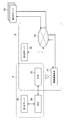
- FIG. 1 is a diagram illustrating a configuration example of a payment system according to the present embodiment.
- the payment system according to this embodiment includes a wireless communication terminal 10, an R / W 20, a POS 30, a first server 40, a second server 50, and a third server 60.
- the wireless communication terminal 10 and the second server 50 and the wireless communication terminal 10 and the third server 60 are connected to each other via the network 70 so that they can communicate with each other.
- the wireless communication terminal 10 may be various wireless communication devices including SE (Secure Element).
- SE Secure Element
- the wireless communication terminal 10 according to the present embodiment can be, for example, a mobile phone, a smartphone, a tablet, a wearable device, etc. possessed by a user.
- the wireless communication terminal 10 according to the present embodiment has a function of encrypting a wireless communication path with the R / W 20 and receiving payment information and a valid payment type from the R / W 20.
- the wireless communication terminal 10 according to the present embodiment performs wireless communication with the R / W 20 using, for example, BLE (Bluetooth Low Energy).
- BLE Bluetooth Low Energy
- the wireless communication terminal 10 according to the present embodiment determines the third server 60 to be connected based on the received valid payment type, and transmits a payment request based on the payment information to the third server 60. It has a function.
- the wireless communication terminal 10 according to the present embodiment may determine the third server 60 to be connected based on the payment type selected by the user. Details of the functions of the wireless communication terminal 10 according to the present embodiment will be described later.
- the R / W 20 according to the present embodiment is connected to a POS 30 installed on the store side and performs wireless communication with the wireless communication terminal 10.
- the R / W 20 according to the present embodiment has a server certificate issued from the second server 50 based on pre-authentication. Details of the functions of the R / W 20 according to the present embodiment will be described later.
- the POS 30 according to the present embodiment is an information management system installed on the store side.
- the POS 30 according to the present embodiment receives information read by the R / W 20 and transmits it to the first server 40.
- the first server 40 may be an information processing server installed by a business provider (hereinafter also referred to as a service provider) in a store.
- the first server 40 according to the present embodiment may have a function of receiving various information from the POS 30 and storing the information and performing various processes based on the information. Further, the first server 40 according to the present embodiment outputs billing information for the third server 60 based on the process log output by the second server 50.
- the second server 50 may be an information processing server installed by an intermediate business operator that mediates processing between the service provider and the electronic money business. Further, the second server 50 according to the present embodiment plays a role as a certificate authority server. The second server 50 according to the present embodiment authenticates the service provider and issues an electronic certificate related to the authentication.
- the electronic certificate may include a server certificate and a CA certificate.
- the second server 50 performs payment approval based on the payment information, payment type, store information, and the like received from the wireless communication terminal 10 and transmits information related to the approval to the wireless communication terminal 10. To do.
- the second server 50 has a function of outputting a processing log related to payment periodically or irregularly based on the payment information, payment type, store information, etc. received from the wireless communication terminal 10.
- the processing log may be output for each service provider or store, for example.
- the third server 60 according to the present embodiment may be a settlement server installed by an electronic money business operator. That is, the third server 60 according to the present embodiment can be installed by different electronic money business operators for each settlement type (hereinafter also referred to as electronic money type). Therefore, a plurality of third servers 60 according to the present embodiment may exist as shown in FIG.
- the third server 60 according to the present embodiment has a function of executing a payment process based on the payment request received from the wireless communication terminal 10. At this time, the above-described settlement processing is performed E2E (End-to-End) between the wireless communication terminal 10 and the third server 60.
- the network 70 has a function of connecting the wireless communication terminal 10 and the second server 50, and the wireless communication terminal 10 and the third server 60.
- the network 70 may include a public line network such as the Internet, a telephone line network, a satellite communication network, various LANs (Local Area Network) including Ethernet (registered trademark), a WAN (Wide Area Network), and the like. Further, the network 70 may include a dedicated line network such as an IP-VPN (Internet Protocol-Virtual Private Network).
- the network 70 may include a wireless communication network such as Wi-Fi (registered trademark) or Bluetooth.
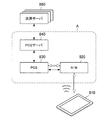
- FIG. 2 is a diagram showing a configuration example of a rich client type system.
- the rich client type system includes an IC card 810, an R / W 820, a POS 830, a POS server 840, and a settlement server 860.
- the IC card 810 holds information related to a plurality of electronic money. Further, the IC card 810 may be a mobile terminal having an IC card function.
- the R / W 820 has a function of performing short-range wireless communication with the IC card 810, reading information recorded on the IC card 810, and writing information to the IC card 810. At this time, the R / W 820 performs short-range wireless communication with the IC card 810 using NFC or the like, for example.
- the R / W 820 is a rich client type R / W that executes settlement processing based on the determined electronic money type with the IC card 810. For this reason, the R / W 820 has key information related to a plurality of electronic money.
- the POS 830 has a function of receiving information related to electronic payment from the connected R / W 820 and transmitting the electronic money type used for payment to the R / W 820.
- the electronic money type used for the above-mentioned settlement can be determined by the effective electronic money type at the store side, the electronic money type possessed by the IC card 810, and the electronic money type selected by the user or the staff at the store side. .
- the user or the staff on the store side may select the electronic money type used for settlement via the display unit and the input unit provided in the POS 830.
- the POS server 840 is an information processing server installed by a service provider.
- the POS server 840 acquires information related to electronic payment from the POS 830 and executes a billing process to the payment server 860 for each electronic money type related to the electronic payment.
- the settlement server 860 is an information processing server set by an electronic money business operator.
- the settlement server 860 executes various processes based on the request from the POS server 840.
- the rich client type system uses a rich client type R / W 820 that supports a plurality of electronic money and executes settlement processing with the IC card 810. For this reason, the rich client type system tends to have a higher installation cost than the payment system that can employ the general-purpose R / W 20 according to the present embodiment. That is, according to the payment system according to the present embodiment, it is possible to greatly reduce the installation cost on the store side by using a cheaper R / W 20.
- FIGS. 1 and 2 communication related to the settlement processing is indicated by white arrows.
- a payment process is performed between the wireless communication terminal 10 and the third server 60.
- settlement processing is executed among the IC card 810, R / W 820, and POS 830.
- the processing burden on the store side is large, and for the electronic money business operator, the burden of entrusting the key information to the service business operator is also increased. is there.
- the payment system according to the present embodiment by executing the payment process between the wireless communication terminal 10 owned by the user and the third server 60, the processing load on the store side is greatly reduced, It is possible to reduce the burden on the electronic money business.
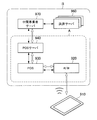
- FIG. 3 is a diagram showing a configuration example of a thin client type system.
- the thin client type system includes an IC card 910, an R / W 920, a POS 930, a POS server 940, an intermediate business server 970, and a settlement server 960.
- the rich client type system will be mainly described, and description of configurations and functions common to the rich client type system will be omitted.
- the R / W 920 may be an R / W that does not have a function of a settlement process with the IC card 910. Therefore, the R / W 920 has a minimum function such as a wireless communication function using NFC.
- the POS 930 receives information related to electronic money from the connected R / W 920. Further, the POS 930 transmits to the POS server 940 payment information including information related to the electronic money, an electronic money type used for payment, and a payment amount.
- the POS server 940 transmits the information related to the electronic money received from the POS 930, the electronic money type used for payment, and the payment information including the payment amount to the intermediate business server 970.
- the intermediate business server 970 may be an information processing server installed by an intermediate business that mediates the processing between the service provider and the electronic money business.
- the intermediate business server 970 executes a payment process based on the information related to the electronic money received from the POS server 940, the electronic money type used for payment, and the payment information including the payment amount, and the payment server 960 performs the payment process. Execute billing process.
- the thin client system can use the relatively inexpensive R / W 920 unlike the rich client system.
- the settlement processing is performed among the IC card 910, the R / W 920, the POS 930, the POS server 940, and the intermediate business server 970.
- Each component installed on the store side is always required to be online in order to connect to the intermediate business server 970.
- the R / W 20, the POS 30, and the first server 40 installed on the store side are not necessarily online, and the R / W 20 or the like is an offline terminal. Or, even when a network failure occurs on the store side, it is possible to execute the settlement process.
- FIGS. 1 to 3 show the service provider's responsibility range A and the intermediate provider's responsibility range B related to the settlement processing.
- the responsibility range A of the service provider and the responsibility range B of the intermediate provider are largely overlapped, and the responsibility division is complicated.
- the responsibility range A of the service provider and the responsibility range B of the intermediate provider are greatly simplified as compared with the thin client type system.
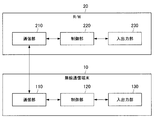
- FIG. 4 is a functional block diagram of the wireless communication terminal 10 and the R / W 20 according to the present embodiment.
- the wireless communication terminal 10 according to the present embodiment includes a communication unit 110, a control unit 120, and an input / output unit 130.
- the communication unit 110 has a function of performing wireless communication with the connection device.
- the communication unit 110 performs wireless communication with the R / W 20 as a connection device using, for example, BLE.
- the communication unit 110 according to the present embodiment can establish wireless communication with the R / W 20 based on the advertisement transmitted by the R / W 20.
- the communication unit 110 has a function of transmitting and receiving information related to encryption of the wireless communication path with the R / W 20.
- the communication unit 110 according to the present embodiment may receive a server certificate from the R / W 20, for example.
- the communication unit 110 receives payment information, valid payment type, and store information from the R / W 20 via the encrypted wireless communication path.
- the payment information may include, for example, a payment amount, a payment item, a payment currency type, and the like.
- the valid settlement type may be an electronic money type that can be handled on the store side.
- the store information may be identification information for specifying a store where the R / W 20 is installed or a service provider.
- the communication unit 110 transmits a settlement request to the third server 60 based on the control by the control unit 120. Moreover, the communication part 110 which concerns on this embodiment transmits a payment completion notification to R / W20 based on control by the control part 120, when the payment process based on said payment request is completed.
- the control unit 120 has a function of controlling the overall operation of the wireless communication terminal 10. Specifically, the control unit 120 according to the present embodiment has a function of encrypting a wireless communication path with the R / W 20 based on an electronic certificate issued by the second server 50. As described above, the electronic certificate may include a server certificate and a CA certificate.
- control unit 120 has a function of determining the third server 60 to be connected based on the valid electronic money type received by the communication unit 110. At this time, the control unit 120 may determine the third server 60 to be connected based on the electronic money type selected by the user. In addition, the control unit 120 according to the present embodiment causes the communication unit 110 to transmit the settlement request based on the settlement information to the third server 60 determined as described above.
- control unit 120 may perform control for receiving a payment approval from the second server 50 prior to the control of the payment request to the third server 60. Specifically, the control unit 120 may cause the communication unit 110 to transmit the payment information, the store information, and the selected electronic money type to the second server 50. In this case, the control unit 120 can cause the communication unit 110 to transmit a settlement request based on the fact that the settlement approval based on the above-described information has been received from the second server 50.
- control unit 120 has a function of determining information on electronic money held by the wireless communication terminal 10 when performing communication control related to the above-described payment approval or payment request. Specifically, the control unit 120 transmits the payment approval or information transmission related to the payment approval based on the fact that the electronic money corresponding to the valid electronic money type received by the communication unit 110 is held. 110 may be executed. Further, the control unit 120 may cause the communication unit 110 to execute the payment approval or the information transmission related to the payment approval based on the fact that the balance of the electronic money is equal to or more than the payment amount.
- control unit 120 causes the communication unit 110 to transmit a payment completion notification to the R / W 20 based on the completion of the payment process based on the payment request.
- control unit 120 may have a function of controlling input / output related to the input / output unit 130.
- control unit 120 may execute various processes based on information input from the input / output unit 130 and cause the input / output unit 130 to output the result of the process.
- control unit 120 may operate as an SE.
- control unit 120 executes processing related to encryption and decryption in communication of the communication unit 110.
- the input / output unit 130 has a function of accepting an input operation by a user.
- the above functions may be realized by, for example, various buttons and levers, a keyboard, a mouse, a touch panel, a microphone, and the like.
- the input / output unit 130 has a function of outputting various information based on the control of the control unit 120.
- the input / output unit 130 according to the present embodiment has a function of displaying a UI (User Interface) for the user to select a payment type, for example.
- said function can be implement
- the above display device may be realized by, for example, a CRT (Cathode Ray Tube) display device, a liquid crystal display (LCD) device, an OLED (Organic Light Emitting Diode) device, or the like.
- a CRT Cathode Ray Tube
- LCD liquid crystal display
- OLED Organic Light Emitting Diode
- the functional configuration of the wireless communication terminal 10 according to the present embodiment has been described above. In the above description using FIG. 4, the case where the wireless communication terminal 10 includes the communication unit 110, the control unit 120, and the input / output unit 130 has been described. However, the functional configuration of the wireless communication terminal 10 according to the present embodiment is as follows. It is not limited to such an example.
- the wireless communication terminal 10 according to the present embodiment may further include a configuration other than that illustrated in FIG. 4.
- the wireless communication terminal 10 may further include, for example, a storage unit that holds various data used for processing by the control unit 120.
- the functional configuration of the wireless communication terminal 10 according to the present embodiment can be flexibly changed according to service specifications and operations.
- the R / W 20 includes a communication unit 210, a control unit 220, and an input / output unit 230.
- the communication unit 210 has a function of performing wireless communication with the connection device.
- the communication unit 210 performs wireless communication with the wireless communication terminal 10 as a connection device using, for example, BLE.
- the communication unit 210 according to the present embodiment has a function of transmitting / receiving information related to encryption of a wireless communication path with the wireless communication terminal 10.
- the communication unit 210 transmits settlement information, valid electronic money type, and store information to the wireless communication terminal 10 via the encrypted wireless communication path based on the control by the control unit 220. To do.
- the communication unit 210 receives a payment completion notification from the wireless communication terminal 10 via the encrypted wireless communication path. Further, the communication unit 210 may transmit the received payment completion notification to the POS 30.
- the control unit 220 has a function of controlling the operation of the R / W 20 as a whole. Specifically, the control unit 220 according to the present embodiment uses the wireless communication path with the wireless communication terminal 10 based on key information generated by the wireless communication terminal 10 based on the electronic certificate issued by the second server 50. Has a function of performing the encryption processing.
- control unit 220 causes the communication unit 210 to transmit payment information, valid electronic money type, and store information via the encrypted wireless communication path.
- control unit 220 may have a function of controlling input / output related to the input / output unit 230.
- the control unit 220 may execute various processes based on information input from the input / output unit 230 and cause the input / output unit 230 to output a result of the process.
- the input / output unit 230 has a function of accepting an input operation by a user or a store operator.
- the above functions may be realized by various buttons and levers, a keyboard, a mouse, a touch panel, and the like, for example.
- the input / output unit 230 has a function of outputting various information based on the control of the control unit 220.
- the above functions can be realized by, for example, various display devices, audio output devices, light sources including LEDs, and the like.
- the above display device may be realized by, for example, a CRT display device, a liquid crystal display device, an OLED device, or the like.
- the functional configuration of the R / W 20 according to the present embodiment has been described above. In the above description using FIG. 4, the case where the R / W 20 includes the communication unit 210, the control unit 220, and the input / output unit 230 has been described, but the functional configuration of the R / W 20 according to the present embodiment It is not limited to examples.
- the R / W 20 according to the present embodiment may further include a configuration other than that illustrated in FIG. 4, for example.
- the R / W 20 may further include, for example, a storage unit that holds various data used for processing by the control unit 220.
- the R / W 20 may not have either the input function or the output function of the input / output unit 230, or both functions. In this case, it is possible to further reduce the manufacturing cost of the R / W 20.
- the functional configuration of the R / W 20 according to the present embodiment can be flexibly changed according to service specifications and operations.
- the operation of the payment system according to this embodiment mainly includes establishment of a wireless communication path between the wireless communication terminal 10 and the R / W 20 (S1010), encryption of the wireless communication path (S1020), and payment processing (S1030). ) And billing process (S1050).
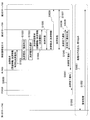
- FIG. 5 is a sequence diagram showing the operation of the payment system related to establishment and encryption of the wireless communication path according to the present embodiment.
- the POS 30 transmits a settlement request according to the product or service purchased by the user to the R / W 20 (S1001). Note that step S1001 may be performed after step S1010 or step S1020.
- the R / W 20 transmits an advertisement relating to the settlement process (S1011).
- the wireless communication terminal 10 makes a connection request to the R / W 20 based on the advertisement transmitted in step S1011 (S1012).
- the R / W 20 executes a connection response to the connection request made in step S1012 (S1013).
- the wireless communication path between the wireless communication terminal 10 and the R / W 20 is established by the connection request in step S1012 and the connection response in step S1013.
- the wireless communication terminal 10 may notify the user that the connection has been established by turning on or vibrating the light source.
- the second server 50 issues an electronic certificate in advance (S1021). Specifically, the second server 50 may issue a telegraph certificate and a CA certificate.
- step S1010 When the wireless communication path is established in step S1010, first, the wireless communication terminal 10 requests the server certificate from the R / W 20 (S1022).
- the R / W 20 transmits the server certificate and server public key issued in step S1021 to the wireless communication terminal 10 (S1023).
- the wireless communication terminal 10 verifies the server certificate received in step S1023 using the CA certificate issued in step S1021 (S1024).
- the wireless communication terminal 10 when the validity of the server certificate is confirmed, the wireless communication terminal 10 then generates a temporary key pair (S1025). At this time, the wireless communication terminal 10 may generate a client temporary secret key and a client temporary public key, for example.
- the wireless communication terminal 10 generates a session key using the server public key received in step S1023 and the client temporary secret key generated in step S1025 (S1026).
- the wireless communication terminal 10 transmits the client temporary public key generated in step S1025 to the R / W 20 (S1027).
- the R / W 20 generates a session key using the client temporary public key received in step S1027 and the server secret key held (S1028).
- the wireless communication terminal 10 and the R / W 20 encrypt the wireless communication path using the session key generated in steps S1026 and S1028 (S1029).
- the wireless communication terminal 10 performs payment processing only with the R / W 20 having a server certificate issued in advance by the second server 50. Such communication can be performed. Therefore, according to the wireless communication terminal 10, the R / W 20, and the payment system according to the present embodiment, it is possible to realize highly secure electronic payment while reducing the processing burden on the store side.
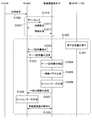
- FIG. 6 is a sequence diagram illustrating the operation of the payment system according to the payment process and the billing process according to the present embodiment.
- the R / W 20 makes a settlement request to the wireless communication terminal 10 (S1031). Specifically, the R / W 20 transmits settlement information, store information, and a valid electronic money type.
- the payment information may include information such as the payment amount, the payment item, and the payment currency type.
- the wireless communication terminal 10 determines the electronic money type and the balance based on the settlement request received in step S1031 (S1032). Specifically, the wireless communication terminal 10 compares the valid electronic money type received in step S1031 with the electronic money type possessed by the wireless communication terminal 10, and determines the valid electronic money type.
- the wireless communication terminal 10 compares the payment amount received in step S1031 with the balance of the above-mentioned valid electronic money type, and determines an electronic money type that can be used for payment.
- the wireless communication terminal 10 may end the process related to the payment process.
- the wireless communication terminal 10 may display on the input / output unit 130 that there is no electronic money type that can be used for payment.
- the wireless communication terminal 10 displays a UI for the user to select the electronic money type used for payment on the input / output unit 130, and the user The electronic money type used for the settlement is determined based on the selection operation by (S1033).
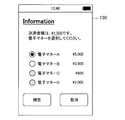
- FIG. 7 is an example of an electronic money type selection screen output to the input / output unit 130 of the wireless communication terminal 10.
- the payment amount and a plurality of electronic money types possessed by the wireless communication terminal 10 are displayed on the electronic money type selection screen.
- the electronic money A and the electronic money B are selectable, and the electronic money C and the electronic money D are not selectable.
- the wireless communication terminal 10 according to the present embodiment may perform control so that the user cannot select an electronic money type that is not supported by the store side or an electronic money type with insufficient balance.
- the electronic money C indicates an electronic money type that is supported on the store side but cannot be used for settlement because the balance is insufficient.
- the electronic money D indicates an electronic money type that cannot be used for settlement because the store does not support it.
- the wireless communication terminal 10 can perform the above-described control based on the payment information received in step S1031 and the valid electronic money type. According to the above function of the wireless communication terminal 10 according to the present embodiment, the POS 30 installed by the service provider does not need to have a UI related to the selection of the electronic money type. Can be reduced.
- the selection of the electronic money type by the user in step S1033 is not necessarily performed.
- the wireless communication terminal 10 according to the present embodiment can automatically select an effective electronic money type having a large balance.
- the wireless communication terminal 10 may select an electronic money type used for payment based on a priority selected in advance by the user.
- the wireless communication terminal 10 according to the present embodiment performs the above-described processing, it is possible to reduce the time related to the payment processing and to eliminate the complexity of the user operating the screen.
- the wireless communication terminal 10 When the electronic money type used for payment is selected by the user, the wireless communication terminal 10 subsequently transmits a payment approval to the second server 50 (S1034). Specifically, the wireless communication terminal 10 transmits store information, payment information, and the selected electronic money type to the second server 50.
- the second server 50 stores the information received in step S1034 and transmits a notification related to the payment approval to the wireless communication terminal 10 (S1035).
- the second server 50 approves the settlement in step S1035
- the second server 50 can save the trail related to the electronic settlement and realize the subsequent billing process (S1050).
- middle provider which installs the 2nd server 50 can acquire a user's purchasing information in addition to the payment processing proxy, it can anticipate that the said information is analyzed and utilized as big data.
- the wireless communication terminal 10 When the payment approval is received in step S1035, the wireless communication terminal 10 next determines the third server 60 to be connected based on the electronic money seed unit selected in step S1033, and sends the third server 60 to the third server 60. A settlement request is transmitted (S1036). Specifically, the wireless communication terminal 10 may transmit the payment amount included in the payment information to the third server 60. Thus, by determining the third server 60 to which the wireless communication terminal 10 is connected, it is possible to greatly reduce the processing burden on the store side.
- the third server 60 executes a payment process with the wireless communication terminal 10 based on the payment request received in step S1036 (S1037).
- the payment processing is performed by E2E between the wireless communication terminal 10 and the third server 60, so that the burden on the electronic money business operator can be reduced.
- the wireless communication terminal 10 transmits a payment completion notification to the second server 50 (S1038). Further, the second server 50 that has received the payment completion notification in step S1038 transmits a payment completion notification response to the wireless communication terminal 10 (S1039).
- the wireless communication terminal 10 transmits a payment completion notification to the R / W 20 based on the reception of the payment completion notification response in step S1039 (S1040).
- the R / W 20 transmits the settlement completion notification received in step S1040 to the POS 30 (S1041), and ends the settlement process (S1030).
- the second server 50 can output the processing log based on the store information, the payment information, and the selected electronic money type stored in step S1035. Further, the second server 50 may output a processing log for each store or each service provider. The output of the processing log by the second server 50 can be performed regularly or irregularly.
- the first server 40 performs a billing process for the third server 60 based on the process log fetched in step S1051 (S1052).
- the billing process in step S1052 may be performed by outputting a billing file and importing the billing file, as in step S1051.
- the first server 40 may output the billing file for each third server 60 that performs billing.
- the billing process by the first server 40 can be performed regularly or irregularly.
- the billing process according to the present embodiment has been described.
- the billing process according to the present embodiment can be realized by outputting a file and importing the file. That is, the billing process according to the present embodiment does not necessarily have to be performed in real time online. For this reason, according to the payment system according to the present embodiment, it is possible to greatly reduce the burden associated with the billing process.
- FIG. 8 is a block diagram illustrating a hardware configuration example of the wireless communication terminal 10 and the R / W 20 according to the present embodiment.
- the wireless communication terminal 10 and the R / W 20 include, for example, a CPU 871, a ROM 872, a RAM 873, a host bus 874, a bridge 875, an external bus 876, an interface 877, an input device 878, An output device 879, a storage 880, a drive 881, a connection port 882, and a communication device 883 are included.
- the hardware configuration shown here is an example, and some of the components may be omitted. Moreover, you may further include components other than the component shown here.
- the CPU 871 functions as, for example, an arithmetic processing unit or a control unit, and controls the overall operation or a part of each component based on various programs recorded in the ROM 872, RAM 873, storage 880, or removable recording medium 901.
- the ROM 872 is a means for storing programs read by the CPU 871, data used for calculations, and the like.
- the RAM 873 for example, a program read by the CPU 871, various parameters that change as appropriate when the program is executed, and the like are temporarily or permanently stored.
- the CPU 871, the ROM 872, and the RAM 873 are connected to each other via, for example, a host bus 874 capable of high-speed data transmission.
- the host bus 874 is connected to an external bus 876 having a relatively low data transmission speed via a bridge 875, for example.
- the external bus 876 is connected to various components via an interface 877.
- the input device 878 for example, a mouse, a keyboard, a touch panel, a button, a switch, a lever, or the like is used. Further, as the input device 878, a remote controller capable of transmitting a control signal using infrared rays or other radio waves may be used.
- the input device 878 includes a voice input device such as a microphone.
- the output device 879 is a display device such as a CRT (Cathode Ray Tube), LCD, or organic EL, an audio output device such as a speaker or a headphone, a printer, a mobile phone, or a facsimile. It is a device that can be notified visually or audibly.
- the output device 879 according to the present disclosure may include various devices that provide a tactile sensation to the user, such as a motor that generates vibration.
- the storage 880 is a device for storing various data.
- a magnetic storage device such as a hard disk drive (HDD), a semiconductor storage device, an optical storage device, a magneto-optical storage device, or the like is used.
- the drive 881 is a device that reads information recorded on a removable recording medium 901 such as a magnetic disk, an optical disk, a magneto-optical disk, or a semiconductor memory, or writes information to the removable recording medium 901.
- a removable recording medium 901 such as a magnetic disk, an optical disk, a magneto-optical disk, or a semiconductor memory
- the removable recording medium 901 is, for example, a DVD medium, a Blu-ray (registered trademark) medium, an HD DVD medium, or various semiconductor storage media.
- the removable recording medium 901 may be, for example, an IC card on which a non-contact IC chip is mounted, an electronic device, or the like.
- connection port 882 is a port for connecting an external connection device 902 such as a USB (Universal Serial Bus) port, an IEEE 1394 port, a SCSI (Small Computer System Interface), an RS-232C port, or an optical audio terminal. is there.
- an external connection device 902 such as a USB (Universal Serial Bus) port, an IEEE 1394 port, a SCSI (Small Computer System Interface), an RS-232C port, or an optical audio terminal. is there.
- the external connection device 902 is, for example, a printer, a portable music player, a digital camera, a digital video camera, or an IC recorder.
- the communication device 883 is a communication device for connecting to a network.
- the wireless communication terminal 10 encrypts the wireless communication path with the R / W 20, and the payment information, the store information, and the information from the R / W 20 through the encrypted wireless communication path. Get a valid electronic money type. Further, the wireless communication terminal 10 according to the present disclosure determines a third server to be connected based on the received valid electronic money type and the electronic money type selected by the user, and makes a payment to the third server. A request can be sent. According to such a configuration, it is possible to further reduce the processing burden on the store side in the multi-settlement.
- the case where the R / W 20 is Peripheral and the wireless communication terminal 10 is Central is described as an example, but the present technology is not limited to such an example.
- the roles of Peripheral and Central according to the present disclosure may be opposite to the above. That is, in the present disclosure, the wireless communication terminal 10 may be Peripheral and the R / W 20 may be Central.
- the settlement processing according to the present disclosure is realized by a method such as an HCE (Host Card Emulation) in addition to a method using the SE. May be.
- HCE Home Card Emulation
- the wireless communication terminal 10 and the R / W 20 encrypt the wireless communication path using ECDHE (elliptic curve Diffie-Hellman key sharing) has been described as an example. It is not limited to.
- the wireless communication terminal 10 and the R / W 20 according to the present disclosure may encrypt the wireless communication path using other widely used encryption methods.
- each step in the processing of the wireless communication terminal 10, the R / W 20, and the payment system according to the present disclosure does not necessarily have to be processed in time series in the order described in the sequence diagram.
- each step in the processing of the wireless communication terminal 10, the R / W 20, and the payment system may be processed in an order different from the order described in the sequence diagram or may be processed in parallel.
- a communication unit that performs wireless communication with the connection device; Based on an electronic certificate issued by a certificate authority server, a control unit that encrypts a wireless communication path with the connection device; With The communication unit receives payment information and a valid payment type from the connection device via the encrypted wireless communication path; The control unit determines a payment server based on the valid payment type, and causes the communication unit to transmit a payment request based on the payment information to the payment server.
- Wireless communication device The controller determines the payment server further based on a payment type selected by a user; The wireless communication device according to (1).
- the control unit causes the communication unit to transmit the payment information and the selected payment type to a certificate authority server, and sends the payment request to the communication unit based on the payment approval received from the certificate authority server. Send it to the payment server,
- the communication unit further receives store information from the connection device, and further transmits the store information to the certificate authority server based on control by the control unit.
- Input / output unit for user to select payment type Further comprising The wireless communication device according to any one of (2) to (4).
- the control unit causes the communication unit to transmit a payment completion notification to the connection device based on the completion of the payment process based on the payment request.
- the communication unit receives a server certificate from the connection device, The control unit encrypts a wireless communication path with the connection device based on the server certificate and a CA certificate issued from the certificate authority server.
- the wireless communication device according to any one of (1) to (6).
- the control unit causes the communication unit to transmit the payment request based on holding electronic money corresponding to the valid payment type;
- the wireless communication device according to any one of (1) to (7).
- the payment information includes at least a payment amount,
- the control unit causes the communication unit to transmit the payment request based on the balance of the electronic money being equal to or greater than the payment amount.
- the wireless communication device according to (8).
- the communication unit establishes wireless communication with the connection device based on an advertisement transmitted from the connection device;
- the wireless communication device according to any one of (1) to (9).
- (11) A communication unit that performs wireless communication with the connection device; Based on the key information of the connection device generated based on an electronic certificate issued by a certificate authority, a control unit that performs encryption processing related to a wireless communication path with the connection device; With The control unit causes the communication unit to transmit payment information and a valid payment type via the encrypted wireless communication path.
- Wireless communication device is
- a first wireless communication device that transmits an advertisement relating to a settlement process;
- a second wireless communication device that establishes wireless communication with the first wireless communication device based on the advertisement;
- At least one payment server that executes a payment process with the second wireless communication device based on a payment request from the second wireless communication device;
- the second wireless communication device is: A communication unit for performing wireless communication with the first wireless communication device;
- a controller that encrypts a wireless communication path with the first wireless communication device based on an electronic certificate issued by a certificate authority;
- the communication unit receives payment information and a valid payment type from the first wireless communication device via the encrypted wireless communication path;
- the control unit determines the payment server based on the valid payment type, and causes the communication unit to transmit a payment request based on the payment information to the payment server.
- wireless communication terminal 110 communication unit 120 control unit 130 input / output unit 20 R / W 210 Communication unit 220 Control unit 230 Input / output unit 30 POS 40 first server 50 second server 60 third server 70 network
Landscapes
- Business, Economics & Management (AREA)
- Engineering & Computer Science (AREA)
- Accounting & Taxation (AREA)
- General Physics & Mathematics (AREA)
- Physics & Mathematics (AREA)
- Strategic Management (AREA)
- General Business, Economics & Management (AREA)
- Theoretical Computer Science (AREA)
- Finance (AREA)
- Computer Networks & Wireless Communication (AREA)
- Computer Security & Cryptography (AREA)
- Financial Or Insurance-Related Operations Such As Payment And Settlement (AREA)
- Cash Registers Or Receiving Machines (AREA)
Abstract
【課題】マルチ決済における店舗側の処理負担をより軽減する。 【解決手段】接続装置との無線通信を行う通信部と、認証局サーバの発行する電子証明書に基づいて、前記接続装置との無線通信路を暗号化する制御部と、を備え、前記通信部は、暗号化された前記無線通信路を介して前記接続装置から決済情報および有効な決済種別を受信し、前記制御部は、前記有効な決済種別に基づいて決済サーバを決定し、前記通信部に、前記決済情報に基づく決済要求を前記決済サーバに送信させる、無線通信装置が提供される。
Description
本開示は、無線通信装置および決済システムに関する。
近年、情報通信技術の発展に伴い、電子決済に関する技術開発が多く行われている。具体的には、NFC(Near Field Communication)やBluetooth(登録商標)などの無線通信を利用した決済サービス技術が存在する。
また、近年では、利用者が有する携帯端末を用いて店舗側に設置される決済端末の処理負担を軽減する手法を提案されている。例えば、特許文献1には、オフライン端末と電子マネーサーバとの通信を、携帯端末が中継する情報処理方法が開示されている。
しかし、特許文献1に記載の情報処理方法において、携帯端末は、情報通信の中継器として機能するに留まり、複数の決済種別が選択され得る、いわゆるマルチ決済の場合には、当該携帯端末を採用することが困難である。
そこで、本開示では、マルチ決済における店舗側の処理負担をより軽減することが可能な、新規かつ改良された無線通信装置および決済システムを提案する。
本開示によれば、接続装置との無線通信を行う通信部と、認証局サーバの発行する電子証明書に基づいて、前記接続装置との無線通信路を暗号化する制御部と、を備え、前記通信部は、暗号化された前記無線通信路を介して前記接続装置から決済情報および有効な決済種別を受信し、前記制御部は、前記有効な決済種別に基づいて決済サーバを決定し、前記通信部に、前記決済情報に基づく決済要求を前記決済サーバに送信させる、無線通信装置が提供される。
また、本開示によれば、接続装置との無線通信を行う通信部と、認証局の発行する電子証明書に基づき生成される前記接続装置の鍵情報に基づいて、前記接続装置との無線通信路に係る暗号化処理を行う制御部と、を備え、前記制御部は、前記通信部に、暗号化された前記無線通信路を介して決済情報および有効な決済種別を送信させる、無線通信装置が提供される。
また、本開示によれば、決済処理に係るアドバタイズを送信する第1の無線通信装置と、前記アドバタイズに基づいて、前記第1の無線通信装置との無線通信を確立する第2の無線通信装置と、前記決済処理に係る認証を行う認証局サーバと、前記第2の無線通信装置からの決済要求に基づいて、前記第2の無線通信装置との間で決済処理を実行する少なくとも1つ以上の決済サーバと、を備え、前記第2の無線通信装置は、前記第1の無線通信装置との無線通信を行う通信部と、前記認証局サーバの発行する電子証明書に基づいて、前記第1の無線通信装置との無線通信路を暗号化する制御部と、を備え、前記通信部は、暗号化された前記無線通信路を介して前記第1の無線通信装置から決済情報および有効な決済種別を受信し、前記制御部は、前記有効な決済種別に基づいて前記決済サーバを決定し、前記通信部に前記決済情報および前記選択された決済種別を前記認証局サーバに送信させ、前記認証局サーバから受信された決済承認に基づいて、前記通信部に前記決済情報に基づく決済要求を前記決済サーバに送信させる、決済システムが提供される。
以上説明したように本開示によれば、マルチ決済における店舗側の処理負担をより軽減することが可能となる。
なお、上記の効果は必ずしも限定的なものではなく、上記の効果とともに、または上記の効果に代えて、本明細書に示されたいずれかの効果、または本明細書から把握され得る他の効果が奏されてもよい。
以下に添付図面を参照しながら、本開示の好適な実施の形態について詳細に説明する。なお、本明細書及び図面において、実質的に同一の機能構成を有する構成要素については、同一の符号を付することにより重複説明を省略する。
なお、説明は以下の順序で行うものとする。
0.はじめに
0.1.本開示の概要
1.実施形態
1.1.本実施形態に係る決済システムの構成例
1.2.リッチクライアント型のR/Wを用いた決済システムとの比較
1.3.シンクライアント型のR/Wを用いた決済システムとの比較
1.4.無線通信端末10の機能構成
1.5.R/W20の機能構成
1.6.決済システムの動作
2.ハードウェア構成例
3.まとめ
0.はじめに
0.1.本開示の概要
1.実施形態
1.1.本実施形態に係る決済システムの構成例
1.2.リッチクライアント型のR/Wを用いた決済システムとの比較
1.3.シンクライアント型のR/Wを用いた決済システムとの比較
1.4.無線通信端末10の機能構成
1.5.R/W20の機能構成
1.6.決済システムの動作
2.ハードウェア構成例
3.まとめ
<0.はじめに>
<<0.1.本開示の概要>>
近年、IC(Integrated Circuit)カードやICカード機能を有する携帯端末を用いた決済種別が普及している。消費者は、例えば、店頭における商品購入において、現金に代わる支払手段として上記のような決済種別を選択することが可能である。具体的には、POS(Point Of Sales)端末と接続するR/W(Reader/Writer)などが、ICカードが保持する電子マネーの情報をNFCなどの無線通信を介して読み取ることで、決済処理が行われる。上記のような決済種別によれば、現金の受け渡しに係る煩雑さを排除し、消費者および販売者の双方の利便性を高めることができる。
一方、上記のような決済に複数の電子マネーが選択され得る場合、携帯端末と無線通信を行うR/Wは、複数の電子マネーに係る鍵情報を扱うことが求められる。このため、店舗側にとっては、上記のようなリッチクライアント型のR/Wを設置するコストや、当該リッチクライアント型のR/Wによる処理負担を軽減する手法が求められている。
他方、汎用的なシンクライアント型のR/Wが読み取った情報に基づいて、マルチ決済サービス事業者が電子マネー事業者との決済処理を仲介する手法も普及している。しかし、上記のような手法を用いる場合、店舗側とマルチ決済事業者との責任分界は複雑となる。
本開示に係る技術思想は、上記の点に着目して発想されたものであり、マルチ決済における店舗側の処理負担を軽減すると共に、電子決済に係る責任分界を単純化することを可能とする。このため、本開示に係る無線通信端末は、暗号化されたR/Wとの無線通信路を介して受信した決済情報および有効な決済種別に基づいて決済サーバを決定し、当該決済サーバに上記決済情報に基づく決済要求を送信する機能を有する。
以下における実施形態の説明では、本開示に係る無線通信端末、R/W、および決済システムが有する構成上の特徴や当該特徴が奏する効果について具体的に説明する。また、以下における実施形態の説明では、本開示に係る無線通信端末R/W、および決済システムが、商業店舗に適用される場合を例に述べる。しかし、本開示に係る無線通信端末、R/W、および決済システムは、係る例に限定されない。本開示に係る無線通信端末、R/W、および決済システムは、例えば、自動販売機やタクシーなどにおける電子決済にも適用可能である。無線通信端末、R/W、および決済システムは、電子決済を利用した種々のサービスに広く適用され得る。
<1.実施形態>
<<1.1.本実施形態に係る決済システムの構成例>>
まず、本開示の実施形態に係る決済システムの構成例について説明する。図1は、本実施形態に係る決済システムの構成例を示す図である。図1を参照すると、本実施形態に係る決済システムは、無線通信端末10、R/W20、POS30、第1のサーバ40、第2のサーバ50、および第3のサーバ60により構成される。また、無線通信端末10と第2のサーバ50、および無線通信端末10と第3のサーバ60は、ネットワーク70を介して互いに通信が行えるように接続される。
<<1.1.本実施形態に係る決済システムの構成例>>
まず、本開示の実施形態に係る決済システムの構成例について説明する。図1は、本実施形態に係る決済システムの構成例を示す図である。図1を参照すると、本実施形態に係る決済システムは、無線通信端末10、R/W20、POS30、第1のサーバ40、第2のサーバ50、および第3のサーバ60により構成される。また、無線通信端末10と第2のサーバ50、および無線通信端末10と第3のサーバ60は、ネットワーク70を介して互いに通信が行えるように接続される。
(無線通信端末10)
本実施形態に係る無線通信端末10は、SE(Secure Element)を備える種々の無線通信装置であってよい。本実施形態に係る無線通信端末10は、例えば、利用者が所持する携帯電話、スマートフォン、タブレット、ウェアラブルデバイスなどであり得る。
本実施形態に係る無線通信端末10は、SE(Secure Element)を備える種々の無線通信装置であってよい。本実施形態に係る無線通信端末10は、例えば、利用者が所持する携帯電話、スマートフォン、タブレット、ウェアラブルデバイスなどであり得る。
また、本実施形態に係る無線通信端末10は、R/W20との無線通信路を暗号化し、R/W20から決済情報や有効な決済種別を受信する機能を有する。この際、本実施形態に係る無線通信端末10は、例えば、BLE(Bluetooth Low Energy)などを用いてR/W20との無線通信を行う。また、本実施形態に係る無線通信端末10は、受信した有効な決済種別に基づいて接続する第3のサーバ60を決定し、当該第3のサーバ60に、決済情報に基づく決済要求を送信する機能を有する。この際、本実施形態に係る無線通信端末10は、ユーザにより選択された決済種別に基づいて、接続する第3のサーバ60を決定してもよい。本実施形態に係る無線通信端末10が有する機能の詳細については、後述する。
(R/W20)
本実施形態に係るR/W20は、店舗側に設置されるPOS30に接続され、無線通信端末10との無線通信を行う。また、本実施形態に係るR/W20は、事前認証に基づき第2のサーバ50から発行されるサーバ証明書を有することを特徴の一つとする。本実施形態に係るR/W20の有する機能の詳細については、後述する。
本実施形態に係るR/W20は、店舗側に設置されるPOS30に接続され、無線通信端末10との無線通信を行う。また、本実施形態に係るR/W20は、事前認証に基づき第2のサーバ50から発行されるサーバ証明書を有することを特徴の一つとする。本実施形態に係るR/W20の有する機能の詳細については、後述する。
(POS30)
本実施形態に係るPOS30は、店舗側に設置される情報管理システムである。本実施形態に係るPOS30は、R/W20が読み取った情報を受信し、第1のサーバ40に送信する。
本実施形態に係るPOS30は、店舗側に設置される情報管理システムである。本実施形態に係るPOS30は、R/W20が読み取った情報を受信し、第1のサーバ40に送信する。
(第1のサーバ40)
本実施形態に係る第1のサーバ40は、店舗においてサービスを提供する事業者(以下、サービス提供事業者、とも称する)が設置する情報処理サーバであってよい。本実施形態に係る第1のサーバ40は、POS30から種々の情報を受信し、当該情報の保存や、当該情報に基づく種々の処理を行う機能を有してよい。また、本実施形態に係る第1のサーバ40は、第2のサーバ50が出力する処理ログに基づいて、第3のサーバ60に対する請求情報を出力する。
本実施形態に係る第1のサーバ40は、店舗においてサービスを提供する事業者(以下、サービス提供事業者、とも称する)が設置する情報処理サーバであってよい。本実施形態に係る第1のサーバ40は、POS30から種々の情報を受信し、当該情報の保存や、当該情報に基づく種々の処理を行う機能を有してよい。また、本実施形態に係る第1のサーバ40は、第2のサーバ50が出力する処理ログに基づいて、第3のサーバ60に対する請求情報を出力する。
(第2のサーバ50)
本実施形態に係る第2のサーバ50は、サービス提供事業者と電子マネー事業者との間の処理を仲介する中間事業者が設置する情報処理サーバであってよい。また、本実施形態に係る第2のサーバ50は、認証局サーバとしての役割を果たす。本実施形態に係る第2のサーバ50は、サービス提供事業者の認証を行い、当該認証に係る電子証明書を発行する。ここで、上記の電子証明書には、サーバ証明書およびCA証明書が含まれてよい。
本実施形態に係る第2のサーバ50は、サービス提供事業者と電子マネー事業者との間の処理を仲介する中間事業者が設置する情報処理サーバであってよい。また、本実施形態に係る第2のサーバ50は、認証局サーバとしての役割を果たす。本実施形態に係る第2のサーバ50は、サービス提供事業者の認証を行い、当該認証に係る電子証明書を発行する。ここで、上記の電子証明書には、サーバ証明書およびCA証明書が含まれてよい。
また、本実施形態に係る第2のサーバ50は、無線通信端末10から受信した決済情報、決済種別、店舗情報などに基づいて決済承認を行い、当該承認に係る情報を無線通信端末10に送信する。
また、本実施形態に係る第2のサーバ50は、無線通信端末10から受信した決済情報、決済種別、店舗情報などに基づいて、定期または不定期に決済に係る処理ログを出力する機能を有する。ここで、上記の処理ログは、例えば、サービス事業者や店舗ごとに出力されてもよい。
(第3のサーバ60)
本実施形態に係る第3のサーバ60は、電子マネー事業者が設置する決済サーバであってよい。すなわち、本実施形態に係る第3のサーバ60は、決済種別(以下、電子マネー種別、とも称する)ごとに異なる電子マネー事業者により設置され得る。このため、本実施形態に係る第3のサーバ60は、図1に示すように、複数台存在してよい。本実施形態に係る第3のサーバ60は、無線通信端末10から受信した決済要求に基づく決済処理を実行する機能を有する。この際、上記の決済処理は、無線通信端末10と第3のサーバ60との間において、E2E(End-to-End)に行われる。
本実施形態に係る第3のサーバ60は、電子マネー事業者が設置する決済サーバであってよい。すなわち、本実施形態に係る第3のサーバ60は、決済種別(以下、電子マネー種別、とも称する)ごとに異なる電子マネー事業者により設置され得る。このため、本実施形態に係る第3のサーバ60は、図1に示すように、複数台存在してよい。本実施形態に係る第3のサーバ60は、無線通信端末10から受信した決済要求に基づく決済処理を実行する機能を有する。この際、上記の決済処理は、無線通信端末10と第3のサーバ60との間において、E2E(End-to-End)に行われる。
(ネットワーク70)
ネットワーク70は、無線通信端末10と第2のサーバ50、および無線通信端末10と第3のサーバ60を接続する機能を有する。ネットワーク70は、インターネット、電話回線網、衛星通信網などの公衆回線網や、Ethernet(登録商標)を含む各種のLAN(Local Area Network)、WAN(Wide Area Network)などを含んでもよい。また、ネットワーク70は、IP-VPN(Internt Protocol-Virtual Private Network)などの専用回線網を含んでもよい。また、ネットワーク70は、Wi-Fi(登録商標)、Bluetoothなど無線通信網を含んでもよい。
ネットワーク70は、無線通信端末10と第2のサーバ50、および無線通信端末10と第3のサーバ60を接続する機能を有する。ネットワーク70は、インターネット、電話回線網、衛星通信網などの公衆回線網や、Ethernet(登録商標)を含む各種のLAN(Local Area Network)、WAN(Wide Area Network)などを含んでもよい。また、ネットワーク70は、IP-VPN(Internt Protocol-Virtual Private Network)などの専用回線網を含んでもよい。また、ネットワーク70は、Wi-Fi(登録商標)、Bluetoothなど無線通信網を含んでもよい。
<<1.2.リッチクライアント型のR/Wを用いた決済システムとの比較>>
次に、本実施系形態に係る決済システムとリッチクライアント型のR/Wを用いた決済システム(以下、リッチクライアント型システム、とも称する)との比較について述べる。まず、リッチクライアント型システムの構成について説明する。
次に、本実施系形態に係る決済システムとリッチクライアント型のR/Wを用いた決済システム(以下、リッチクライアント型システム、とも称する)との比較について述べる。まず、リッチクライアント型システムの構成について説明する。
図2は、リッチクライアント型システムの構成例を示す図である。図2を参照すると、リッチクライアント型システムは、ICカード810、R/W820、POS830、POSサーバ840、および決済サーバ860により構成される。
(ICカード810)
ICカード810は、複数の電子マネーに係る情報を保有する。また、ICカード810は、ICカード機能を有する移動端末であってもよい。
ICカード810は、複数の電子マネーに係る情報を保有する。また、ICカード810は、ICカード機能を有する移動端末であってもよい。
(R/W820)
R/W820は、ICカード810と近距離無線通信を行い、ICカード810に記録される情報の読み取り、およびICカード810への情報の書き込みを行う機能を有する。この際、R/W820は、例えば、NFCなどを用いてICカード810との近距離無線通信を行う。また、R/W820は、ICカード810との間で、決定された電子マネー種別に基づく決済処理を実行するリッチクライアント型のR/Wである。このためR/W820は、複数の電子マネーに係る鍵情報を有する。
R/W820は、ICカード810と近距離無線通信を行い、ICカード810に記録される情報の読み取り、およびICカード810への情報の書き込みを行う機能を有する。この際、R/W820は、例えば、NFCなどを用いてICカード810との近距離無線通信を行う。また、R/W820は、ICカード810との間で、決定された電子マネー種別に基づく決済処理を実行するリッチクライアント型のR/Wである。このためR/W820は、複数の電子マネーに係る鍵情報を有する。
(POS830)
POS830は、接続されるR/W820から電子決済に係る情報を受信し、また、決済に用いる電子マネー種別をR/W820に送信する機能を有する。ここで、上記の決済に用いる電子マネー種別は、店舗側における有効な電子マネー種別、ICカード810が有する電子マネー種別、および利用者または店舗側のスタッフにより選択された電子マネー種別により決定され得る。利用者または店舗側のスタッフは、例えば、POS830が備える表示部および入力部を介して、決済に用いる電子マネー種別を選択してよい。
POS830は、接続されるR/W820から電子決済に係る情報を受信し、また、決済に用いる電子マネー種別をR/W820に送信する機能を有する。ここで、上記の決済に用いる電子マネー種別は、店舗側における有効な電子マネー種別、ICカード810が有する電子マネー種別、および利用者または店舗側のスタッフにより選択された電子マネー種別により決定され得る。利用者または店舗側のスタッフは、例えば、POS830が備える表示部および入力部を介して、決済に用いる電子マネー種別を選択してよい。
(POSサーバ840)
POSサーバ840は、サービス提供事業者により設置される情報処理サーバである。POSサーバ840は、POS830から電子決済に係る情報を取得し、当該電子決済に係る電子マネー種別ごとに決済サーバ860への請求処理を実行する。
POSサーバ840は、サービス提供事業者により設置される情報処理サーバである。POSサーバ840は、POS830から電子決済に係る情報を取得し、当該電子決済に係る電子マネー種別ごとに決済サーバ860への請求処理を実行する。
(決済サーバ860)
決済サーバ860は、電子マネー事業者により設定される情報処理サーバである。決済サーバ860は、POSサーバ840からの請求に基づく種々の処理を実行する。
決済サーバ860は、電子マネー事業者により設定される情報処理サーバである。決済サーバ860は、POSサーバ840からの請求に基づく種々の処理を実行する。
以上、リッチクライアント型システムの構成について述べた。上述したように、リッチクライアント型システムでは、複数の電子マネーに対応し、ICカード810との間で決済処理を実行するリッチクライアント型のR/W820を用いることを特徴とする。このため、リッチクライアント型システムは、本実施形態に係る汎用的なR/W20を採用できる決済システムと比較し、設置コストが高額となる傾向がある。すなわち、本実施形態に係る決済システムによれば、より安価なR/W20を用いることで、店舗側の設置コストを大きく削減することが可能である。
また、図1および図2には、決済処理に係る通信が白抜きの矢印により示されている。ここで、図1を参照すると、本実施形態に係る決済システムにおいては、無線通信端末10と第3のサーバ60との間で決済処理が行われている。一方、図2を参照すると、リッチクライアント型システムにおいては、ICカード810、R/W820、およびPOS830の間で決済処理が実行される。このため、リッチクライアント型のシステムでは、本実施形態に係る決済システムと比較し、店舗側における処理負担が大きく、また、電子マネー事業者にとっても、自らの鍵情報をサービス事業者に預ける負担がある。一方、本実施形態に係る決済システムでは、利用者の所持する無線通信端末10と第3のサーバ60との間で決済処理を実行することで、店舗側の処理負担を大幅に削減すると同時に、電子マネー事業者の負担を軽減することが可能である。
<<1.3.シンクライアント型のR/Wを用いた決済システムとの比較>>
次に、本実施系形態に係る決済システムとシンクライアント型のR/Wを用いた決済システム(以下、シンクライアント型システム、とも称する)との比較について述べる。まず、シンクライアント型システムの構成について説明する。
次に、本実施系形態に係る決済システムとシンクライアント型のR/Wを用いた決済システム(以下、シンクライアント型システム、とも称する)との比較について述べる。まず、シンクライアント型システムの構成について説明する。
図3は、シンクライアント型システムの構成例を示す図である。図3を参照すると、シンクライアント型システムは、ICカード910、R/W920、POS930、POSサーバ940、中間事業者サーバ970および決済サーバ960により構成される。以下における説明においては、リッチクライアント型システムとの差異について中心に述べ、リッチクライアント型システムと共通する構成および機能については、説明を省略する。
(R/W920)
R/W920は、リッチクライアント型システムにおけるR/W820とは異なり、ICカード910との間における決済処理の機能を有さないR/Wであってよい。このため、R/W920は、NFCを用いた無線通信機能などの最小限の機能を有することを特徴とする。
R/W920は、リッチクライアント型システムにおけるR/W820とは異なり、ICカード910との間における決済処理の機能を有さないR/Wであってよい。このため、R/W920は、NFCを用いた無線通信機能などの最小限の機能を有することを特徴とする。
(POS930)
POS930は、接続されるR/W920から電子マネーに係る情報を受信する。また、POS930は、上記の電子マネーに係る情報、決済に用いる電子マネー種別、および決済金額を含む決済情報をPOSサーバ940に送信する。
POS930は、接続されるR/W920から電子マネーに係る情報を受信する。また、POS930は、上記の電子マネーに係る情報、決済に用いる電子マネー種別、および決済金額を含む決済情報をPOSサーバ940に送信する。
(POSサーバ940)
POSサーバ940は、POS930から受信した電子マネーに係る情報、決済に用いる電子マネー種別、および決済金額を含む決済情報を中間事業者サーバ970に送信する。
POSサーバ940は、POS930から受信した電子マネーに係る情報、決済に用いる電子マネー種別、および決済金額を含む決済情報を中間事業者サーバ970に送信する。
(中間事業者サーバ970)
中間事業者サーバ970は、サービス提供事業者と電子マネー事業者との間の処理を仲介する中間事業者が設置する情報処理サーバであってよい。中間事業者サーバ970は、POSサーバ940から受信した電子マネーに係る情報、決済に用いる電子マネー種別、および決済金額を含む決済情報に基づく決済処理を実行し、決済サーバ960に当該決済処理に係る請求処理を実行する。
中間事業者サーバ970は、サービス提供事業者と電子マネー事業者との間の処理を仲介する中間事業者が設置する情報処理サーバであってよい。中間事業者サーバ970は、POSサーバ940から受信した電子マネーに係る情報、決済に用いる電子マネー種別、および決済金額を含む決済情報に基づく決済処理を実行し、決済サーバ960に当該決済処理に係る請求処理を実行する。
以上、シンクライアント型システムの構成について述べた。上述したように、シンクライアント型システムでは、リッチクライアント型システムとは異なり、比較的安価なR/W920を用いることができる。一方、シンクライアント型システムでは、図3に示すように、決済処理がICカード910、R/W920、POS930、POSサーバ940、および中間事業者サーバ970の間で行われるため、店舗側における処理負担が大きくなる傾向がある。また、店舗側に設置される各構成は、中間事業者サーバ970と接続するために常にオンラインであることが求められる。一方、本実施形態に係る決済システムにおいては、店舗側に設置されるR/W20、POS30、および第1のサーバ40は、必ずしもオンラインである必要はなく、R/W20などがオフライン端末である場合や、店舗側においてネットワーク障害が発生した場合であっても、決済処理を実行することが可能である。
また、図1~図3には、決済処理に係るサービス事業者の責任範囲Aおよび中間事業者の責任範囲Bが示されている。ここで、図3を参照すると、シンクライアント型システムでは、サービス事業者の責任範囲Aと中間事業者の責任範囲Bとは大きく重複しており、責任分界が複雑なことがわかる。一方、図1に示す本実施形態に係る決済システムにおいては、サービス事業者の責任範囲Aと中間事業者の責任範囲Bとは、シンクライアント型システムと比較して非常に単純化されている。このように、本実施形態に係る決済システムによれば、店舗側の処理負担を大幅に軽減すると共に、サービス事業者と中間事業者の責任分界点を明確にすることが可能となる。
<<1.4.無線通信端末10の機能構成>>
次に、本実施形態に係る無線通信端末10の機能構成について説明する。図4は、本実施形態に係る無線通信端末10およびR/W20の機能ブロック図である。図4を参照すると、本実施形態に係る無線通信端末10は、通信部110、制御部120、および入出力部130を備える。
次に、本実施形態に係る無線通信端末10の機能構成について説明する。図4は、本実施形態に係る無線通信端末10およびR/W20の機能ブロック図である。図4を参照すると、本実施形態に係る無線通信端末10は、通信部110、制御部120、および入出力部130を備える。
(通信部110)
通信部110は、接続装置との無線通信を行う機能を有する。通信部110は、例えば、BLEを用いて、接続装置としてのR/W20と無線通信を行う。本実施形態に係る通信部110は、R/W20が送信するアドバタイズに基づいて、R/W20との無線通信を確立することができる。
通信部110は、接続装置との無線通信を行う機能を有する。通信部110は、例えば、BLEを用いて、接続装置としてのR/W20と無線通信を行う。本実施形態に係る通信部110は、R/W20が送信するアドバタイズに基づいて、R/W20との無線通信を確立することができる。
また、本実施形態に係る通信部110は、R/W20との無線通信路の暗号化に係る情報を送受信する機能を有する。本実施形態に係る通信部110は、例えば、R/W20からサーバ証明書などを受信してよい。
また、本実施形態に係る通信部110は、暗号化された無線通信路を介して、R/W20から決済情報、有効な決済種別、および店舗情報を受信する。ここで、上記の決済情報は、例えば、決済金額、決済品目、決済通貨種別などを含んでよい。また、上記の有効な決済種別とは、店舗側で対応可能な電子マネー種別であってよい。また、上記の店舗情報とは、R/W20が設置される店舗、またはサービス事業者を特定するための識別情報であってよい。
また、本実施形態に係る通信部110は、制御部120による制御に基づいて、第3のサーバ60に決済要求を送信する。また、本実施形態に係る通信部110は、上記の決済要求に基づく決済処理が完了した場合、制御部120による制御に基づいて、決済完了通知をR/W20に送信する。
(制御部120)
制御部120は、無線通信端末10の動作を全体的に制御する機能を有する。具体的には、本実施形態に係る制御部120は、第2のサーバ50が発行する電子証明書に基づいて、R/W20との無線通信路を暗号する機能を備える。上述したように、上記の電子証明書には、サーバ証明書およびCA証明書が含まれてよい。
制御部120は、無線通信端末10の動作を全体的に制御する機能を有する。具体的には、本実施形態に係る制御部120は、第2のサーバ50が発行する電子証明書に基づいて、R/W20との無線通信路を暗号する機能を備える。上述したように、上記の電子証明書には、サーバ証明書およびCA証明書が含まれてよい。
また、本実施形態に係る制御部120は、通信部110が受信した有効な電子マネー種別に基づいて、接続する第3のサーバ60を決定する機能を有する。この際、制御部120は、ユーザにより選択された電子マネー種別にさらに基づいて、接続する第3のサーバ60を決定してもよい。また、本実施形態に係る制御部120は、通信部110に、決済情報に基づく決済要求を上記のように決定した第3のサーバ60に送信させる。
また、本実施形態に係る制御部120は、第3のサーバ60に対する決済要求の制御に先立ち、第2のサーバ50から決済承認を受けるための制御を行ってよい。具体的には、制御部120は、通信部110に、決済情報、店舗情報、および選択された電子マネー種別を第2のサーバ50に送信させてよい。この場合、制御部120は、上記の各情報に基づく決済承認を第2のサーバ50から受信したことに基づいて、通信部110に決済要求を送信させることができる。
また、本実施形態に係る制御部120は、上述した決済承認または決済要求に係る通信制御を行う場合、無線通信端末10が保有する電子マネーの情報を判定する機能を有する。具体的には、制御部120は、通信部110が受信した有効な電子マネー種別に対応する電子マネーを保持していることに基づいて、上記の決済承認または決済承認に係る情報送信を通信部110に実行させてよい。また、制御部120は、電子マネーの残高が決済金額以上であることに基づいて、上記の決済承認または決済承認に係る情報送信を通信部110に実行させてもよい。
また、本実施形態に係る制御部120は、上記の決済要求に基づく決済処理が完了したことに基づいて、通信部110に決済完了通知をR/W20へと送信させる。
また、制御部120は、入出力部130に係る入出力を制御する機能を有してよい。制御部120は、例えば、入出力部130から入力された情報に基づいて種々の処理を実行し、当該処理の結果を入出力部130に出力させてもよい。
なお、制御部120は、一部がSEとして動作してもよい。例えば、制御部120は、通信部110の通信における暗号化および復号に係る処理を実行する。
(入出力部130)
入出力部130は、ユーザによる入力操作を受け付ける機能を有する。上記の機能は、例えば、各種のボタンやレバー、キーボード、マウス、タッチパネル、マイクロフォンなどにより実現されてもよい。また、入出力部130は、制御部120の制御に基づいて種々の情報を出力する機能を有する。本実施形態に係る入出力部130は、例えば、ユーザが決済種別を選択するためのUI(User Interface)を表示する機能を有する。なお、上記の機能は、例えば、各種の表示装置、音声出力装置、LED(Light Emitting Diode)などを含む光源などにより実現され得る。
入出力部130は、ユーザによる入力操作を受け付ける機能を有する。上記の機能は、例えば、各種のボタンやレバー、キーボード、マウス、タッチパネル、マイクロフォンなどにより実現されてもよい。また、入出力部130は、制御部120の制御に基づいて種々の情報を出力する機能を有する。本実施形態に係る入出力部130は、例えば、ユーザが決済種別を選択するためのUI(User Interface)を表示する機能を有する。なお、上記の機能は、例えば、各種の表示装置、音声出力装置、LED(Light Emitting Diode)などを含む光源などにより実現され得る。
また、上記の表示装置は、例えば、CRT(Cathode Ray Tube)ディスプレイ装置、液晶ディスプレイ(LCD:Liquid Crystal Display)装置、OLED(Organic Light Emitting Diode)装置などにより実現されてもよい。
以上、本実施形態に係る無線通信端末10の機能構成について説明した。図4を用いた上記の説明では、無線通信端末10が、通信部110、制御部120、および入出力部130を備える場合について説明したが、本実施形態に係る無線通信端末10の機能構成は、係る例に限定されない。本実施形態に係る無線通信端末10は、例えば、図4に示す以外の構成をさらに備えてもよい。無線通信端末10は、例えば、制御部120による処理に用いられる各種のデータを保持する記憶部などをさらに備えてよい。本実施形態に係る無線通信端末10の機能構成は、サービスの仕様や運用に応じて柔軟に変更され得る。
<<1.5.R/W20の機能構成>>
引き続き図4を参照して、本実施形態に係るR/W20の機能構成について説明する。図4を参照すると、本実施形態に係るR/W20は、通信部210、制御部220、および入出力部230を備える。
引き続き図4を参照して、本実施形態に係るR/W20の機能構成について説明する。図4を参照すると、本実施形態に係るR/W20は、通信部210、制御部220、および入出力部230を備える。
(通信部210)
通信部210は、接続装置との無線通信を行う機能を有する。通信部210は、例えばBLEを用いて、接続装置としての無線通信端末10との無線通信を行う。また、本実施形態に係る通信部210は、無線通信端末10との無線通信路の暗号化に係る情報を送受信する機能を有する。
通信部210は、接続装置との無線通信を行う機能を有する。通信部210は、例えばBLEを用いて、接続装置としての無線通信端末10との無線通信を行う。また、本実施形態に係る通信部210は、無線通信端末10との無線通信路の暗号化に係る情報を送受信する機能を有する。
また、本実施形態に係る通信部210は、制御部220による制御に基づき、暗号化された無線通信路を介して、無線通信端末10に決済情報、有効な電子マネー種別、および店舗情報を送信する。
また、本実施形態に係る通信部210は、暗号化された無線通信路を介して、無線通信端末10から決済完了通知を受信する。また、通信部210は、POS30に受信した決済完了通知を送信してよい。
(制御部220)
制御部220は、R/W20の動作を全体的に制御する機能を有する。具体的には、本実施形態に係る制御部220は、第2のサーバ50が発行する電子証明書に基づき無線通信端末10が生成する鍵情報に基づいて、無線通信端末10との無線通信路に係る暗号化処理を行う機能を有する。
制御部220は、R/W20の動作を全体的に制御する機能を有する。具体的には、本実施形態に係る制御部220は、第2のサーバ50が発行する電子証明書に基づき無線通信端末10が生成する鍵情報に基づいて、無線通信端末10との無線通信路に係る暗号化処理を行う機能を有する。
また、本実施形態に係る制御部220は、通信部210に、暗号化された無線通信路を介して、決済情報、有効な電子マネー種別、および店舗情報を送信させる。
また、本実施形態に係る制御部220は、入出力部230に係る入出力を制御する機能を有してよい。制御部220は、例えば、入出力部230から入力された情報に基づいて種々の処理を実行し、当該処理の結果を入出力部230に出力させてもよい。
(入出力部230)
入出力部230は、ユーザまたは店舗オペレータによる入力操作を受け付ける機能を有する。上記の機能は、例えば、各種のボタンやレバー、キーボード、マウス、タッチパネルなどにより実現されてもよい。また、入出力部230は、制御部220の制御に基づいて種々の情報を出力する機能を有する。上記の機能は、例えば、各種の表示装置、音声出力装置、LEDなどを含む光源などにより実現され得る。
入出力部230は、ユーザまたは店舗オペレータによる入力操作を受け付ける機能を有する。上記の機能は、例えば、各種のボタンやレバー、キーボード、マウス、タッチパネルなどにより実現されてもよい。また、入出力部230は、制御部220の制御に基づいて種々の情報を出力する機能を有する。上記の機能は、例えば、各種の表示装置、音声出力装置、LEDなどを含む光源などにより実現され得る。
また、上記の表示装置は、例えば、CRTディスプレイ装置、液晶ディスプレイ装置、OLED装置などにより実現されてもよい。
以上、本実施形態に係るR/W20の機能構成について説明した。図4を用いた上記の説明では、R/W20が、通信部210、制御部220、および入出力部230を備える場合について説明したが、本実施形態に係るR/W20の機能構成は、係る例に限定されない。本実施形態に係るR/W20は、例えば、図4に示す以外の構成をさらに備えてもよい。R/W20は、例えば、制御部220による処理に用いられる各種のデータを保持する記憶部などをさらに備えてもよい。
また、R/W20は、入出力部230の入力機能もしくは出力機能のいずれか、または双方の機能を有していなくてもよい。この場合、R/W20の製造コストをより低減することが可能である。本実施形態に係るR/W20の機能構成は、サービスの仕様や運用に応じて柔軟に変更され得る。
<<1.6.決済システムの動作>>
次に、本実施形態に係る決済システムの動作について具体的に説明する。本実施形態に係る決済システムの動作は、主に、無線通信端末10とR/W20との間における無線通信路の確立(S1010)、当該無線通信路の暗号化(S1020)、決済処理(S1030)、および請求処理(S1050)に大別される。
次に、本実施形態に係る決済システムの動作について具体的に説明する。本実施形態に係る決済システムの動作は、主に、無線通信端末10とR/W20との間における無線通信路の確立(S1010)、当該無線通信路の暗号化(S1020)、決済処理(S1030)、および請求処理(S1050)に大別される。
(無線通信路の確立)
まず、本実施形態に係る無線通信端末10とR/W20との間における無線通信路の確立(S1010)の流れについて説明する。図5は、本実施形態に係る無線通信路の確立および暗号化に係る決済システムの動作を示すシーケンス図である。
まず、本実施形態に係る無線通信端末10とR/W20との間における無線通信路の確立(S1010)の流れについて説明する。図5は、本実施形態に係る無線通信路の確立および暗号化に係る決済システムの動作を示すシーケンス図である。
図5を参照すると、まず、本実施形態に係るPOS30は、利用者が購入した商品やサービスに応じた決済要求をR/W20に送信する(S1001)。なお、ステップS1001は、ステップS1010またはステップS1020のあとに実施されてもよい。
次に、本実施形態に係るR/W20および無線通信端末10による無線通信路の確立が行われる(S1010)。ここでは、まず、R/W20が決済処理に係るアドバタイズを送信する(S1011)。
次に、本実施形態に係る無線通信端末10は、ステップS1011で送信されるアドバタイズに基づいて、R/W20に接続要求を行う(S1012)。
次に、R/W20は、ステップS1012で行われる接続要求に対し接続応答を実行する(S1013)。ステップS1012における接続要求およびステップS1013における接続応答により、無線通信端末10とR/W20との間の無線通信路が確立される。なお、この際、無線通信端末10は、接続が確立されたことを光源の点灯や振動を発生させることにより利用者に通知してもよい。
(無線通信路の暗号化)
引き続き図5を参照し、本実施形態に係る無線通信路の暗号化(S1020)の流れについて説明する。ステップS1020における無線通信路の暗号化では、予め、第2のサーバ50が電子証明書を発行する(S1021)。具体的には、第2のサーバ50は、電信証明書およびCA証明書を発行してよい。
引き続き図5を参照し、本実施形態に係る無線通信路の暗号化(S1020)の流れについて説明する。ステップS1020における無線通信路の暗号化では、予め、第2のサーバ50が電子証明書を発行する(S1021)。具体的には、第2のサーバ50は、電信証明書およびCA証明書を発行してよい。
ステップS1010において無線通信路が確立されると、まず、無線通信端末10は、R/W20にサーバ証明書の要求を行う(S1022)。
次に、R/W20は、ステップS1022で行われる要求に対応して、ステップS1021で発行されたサーバ証明書およびサーバ公開鍵を無線通信端末10に送信する(S1023)。
次に、無線通信端末10は、ステップS1021において発行されたCA証明書を用いて、ステップS1023で受信したサーバ証明書の検証を行う(S1024)。
ここで、サーバ証明書の正当性が確認された場合、続いて、無線通信端末10は、一時鍵ペアの生成を行う(S1025)。この際、無線通信端末10は、例えば、クライアント一時秘密鍵およびクライアント一時公開鍵を生成してもよい。
続いて、無線通信端末10は、ステップS1023で受信したサーバ公開鍵、およびステップS1025で生成したクライアント一時秘密鍵を用いて、セッションキーを生成する(S1026)。
また、続いて、無線通信端末10は、ステップS1025で生成したクライアント一時公開鍵をR/W20に送信する(S1027)。
次に、R/W20は、ステップS1027で受信したクライアント一時公開鍵と保有するサーバ秘密鍵とを用いてセッションキーの生成を行う(S1028)。
次に、無線通信端末10およびR/W20は、ステップS1026およびステップS1028で生成したセッションキーを用いて無線通信路の暗号化を行う(S1029)。
以上、本実施形態に係る無線通信路の確立および暗号化の流れについて述べた。本実施形態に係る無線通信端末10およびR/W20が有する上記の機能によれば、無線通信端末10は、予め第2のサーバ50が発行したサーバ証明書を有するR/W20のみと決済処理に係る通信を行うことが可能となる。このため、本実施形態に係る無線通信端末10、R/W20、および決済システムによれば、店舗側の処理負担を軽減しながらもセキュリティ性の高い電子決済を実現することができる。
(決済処理)
次に、本実施形態に係る無線通信端末10と第3のサーバ60との間における決済処理(S1030)の流れについて説明する。図6は、本実施形態に係る決済処理および請求処理に係る決済システムの動作を示すシーケンス図である。
次に、本実施形態に係る無線通信端末10と第3のサーバ60との間における決済処理(S1030)の流れについて説明する。図6は、本実施形態に係る決済処理および請求処理に係る決済システムの動作を示すシーケンス図である。
図6を参照すると、まず、本実施形態に係るR/W20は、無線通信端末10に対し決済要求を行う(S1031)。具体的には、R/W20は、決済情報、店舗情報、および有効な電子マネー種別を送信する。ここで、上記の決済情報には、上述したとおり、決済金額、決済品目、および決済通貨種別などの情報が含まれてよい。
次に、無線通信端末10は、ステップS1031で受信した決済要求に基づいて、電子マネー種別および残高の判定を行う(S1032)。具体的には、無線通信端末10は、ステップS1031で受信した有効な電子マネー種別と無線通信端末10が有する電子マネー種別を比較し、有効な電子マネー種別を判定する。
また、無線通信端末10は、ステップS1031で受信した決済金額と、上記の有効な電子マネー種別の残高とを比較し、決済に用いることが可能な電子マネー種別を判定する。ここで、無線通信端末10が決済に用いることが可能な電子マネー種別を有していない場合、無線通信端末10は、決済処理に係る処理を終了してもよい。この際、無線通信端末10は、入出力部130に、決済に用いることが可能な電子マネー種別が存在しない旨を表示してもよい。
一方、決済に用いることが可能な電子マネー種別が存在する場合、無線通信端末10は、入出力部130に、利用者が決済に用いる電子マネー種別を選択するためのUIを表示し、利用者による選択操作に基づいて、決済に用いる電子マネー種別を決定する(S1033)。
図7は、無線通信端末10の入出力部130に出力される電子マネー種別の選択画面の一例である。図7を参照すると、電子マネー種別の選択画面には、決済金額と、無線通信端末10が有する複数の電子マネー種別が表示されている。ここで、図7に示す一例においては、電子マネーAおよび電子マネーBが選択可能な状態となっており、電子マネーCおよび電子マネーDは選択が不可能な状態となっている。このように、本実施形態に係る無線通信端末10は、店舗側が対応していない電子マネー種別や残高の足りない電子マネー種別を利用者が選択できないように制御してもよい。
図7に示す一例の場合、電子マネーCは、店舗側で対応しているが残高が不足しているため、決済に利用できない電子マネー種別を示している。また、電子マネーDは、店舗側で対応していないため、決済に利用できない電子マネー種別を示している。無線通信端末10は、ステップS1031で受信する決済情報や有効な電子マネー種別に基づいて、上記のような制御を行うことが可能である。本実施形態に係る無線通信端末10が有する上記の機能によれば、サービス事業者が設置するPOS30が電子マネー種別の選択に係るUIを有する必要がないため、店舗側における設置コストや処理負担を低減することができる。
なお、ステップS1033における利用者による電子マネー種別の選択は必ずしも実施されなくてもよい。本実施形態に係る無線通信端末10は、例えば、残高の多い有効な電子マネー種別を自動的に選択することもできる。また、無線通信端末10は、利用者が予め選択した優先度に基づいて、決済に用いる電子マネー種別を選択してもよい。本実施形態に係る無線通信端末10が上記のような処理を行うことで、決済処理に係る時間を短縮すると共に、利用者が画面を操作する煩雑さを排除することが可能である。
再び図6を参照して、決済処理に係る動作について説明を続ける。利用者により決済に用いる電子マネー種別が選択されると、続いて、無線通信端末10は、第2のサーバ50に決済承認を送信する(S1034)。具体的には、無線通信端末10は、第2のサーバ50に、店舗情報、決済情報、および選択された電子マネー種別を送信する。
次に、第2のサーバ50は、ステップS1034で受信した上記の情報を保存し、無線通信端末10に決済承認に係る通知を送信する(S1035)。第2のサーバ50が、ステップS1035における決済承認を行うことで、第2のサーバ50が電子決済に係る証跡を保存し、後の請求処理(S1050)を実現することが可能となる。また、第2のサーバ50を設置する中間事業者は、決済処理の代行に加え、利用者の購買情報を取得することができるため、当該情報をビッグデータとして解析、利用することが期待できる。
ステップS1035において決済承認を受信すると、次に、無線通信端末10は、ステップS1033で選択された電子マネー種部に基づいて、接続する第3のサーバ60を決定し、当該第3のサーバ60に決済要求を送信する(S1036)。具体的には、無線通信端末10は、第3のサーバ60に、決済情報に含まれる決済金額を送信してよい。このように、無線通信端末10が接続する第3のサーバ60を判定することで、店舗側の処理負担を大幅に削減することが可能である。
次に、第3のサーバ60は、ステップS1036で受信した決済要求に基づいて、無線通信端末10との間で決済処理を実行する(S1037)。このように、本実施形態では、決済処理が無線通信端末10と第3のサーバ60との間においてE2Eで行われることで、電子マネー事業者の負担も軽減することが可能である。
ステップS1037における決済処理が完了すると、無線通信端末10は、第2のサーバ50に決済完了通知を送信する(S1038)。また、ステップS1038において決済完了通知を受信した第2のサーバ50は、無線通信端末10に決済完了通知応答を送信する(S1039)。
次に、無線通信端末10は、ステップS1039において決済完了通知応答を受信したことに基づいて、R/W20に決済完了通知を送信する(S1040)。
次に、R/W20は、ステップS1040で受信した決済完了通知をPOS30に送信し(S1041)、決済処理(S1030)を終了する。
(請求処理)
引き続き図6を参照して、本実施形態に係る請求処理(S1050)の流れについて説明する。図6を参照すると、本実施形態に係る第2のサーバ50が決済に係る処理ログを出力し、また、第1のサーバ40が当該処理ログの取り込みを行う(S1051)。
引き続き図6を参照して、本実施形態に係る請求処理(S1050)の流れについて説明する。図6を参照すると、本実施形態に係る第2のサーバ50が決済に係る処理ログを出力し、また、第1のサーバ40が当該処理ログの取り込みを行う(S1051)。
この際、第2のサーバ50は、ステップS1035で保存した店舗情報、決済情報、および選択された電子マネー種別に基づいて、上記の処理ログを出力することができる。また、第2のサーバ50は、店舗ごと、またはサービス事業者ごとに処理ログを出力してよい。また、第2のサーバ50による処理ログの出力は、定期または不定期に行われ得る。
次に、第1のサーバ40は、ステップS1051で取り込んだ処理ログに基づいて、第3のサーバ60に対する請求処理を実施する(S1052)。ここで、ステップS1052における請求処理は、ステップS1051と同様に、請求ファイルの出力と当該請求ファイルの取り込みにより行われてもよい。また、この際、第1のサーバ40は、請求を行う第3のサーバ60ごとに上記の請求ファイルを出力してもよい。第1のサーバ40による請求処理は、定期または不定期に行われ得る。
以上、本実施形態に係る請求処理について説明した。上述したように、本実施形態に係る請求処理は、ファイルの出力と当該ファイルの取り込みなどにより実現され得る。すなわち、本実施形態に係る請求処理は必ずしもオンライン上でリアルタイムに行われなくてもよい。このため、本実施形態に係る決済システムによれば、請求処理に係る負担を大幅に軽減することが可能である。
<2.ハードウェア構成例>
次に、本実施形態に係る無線通信端末10およびR/W20に共通するハードウェア構成例について説明する。図8は、本実施形態に係る無線通信端末10およびR/W20のハードウェア構成例を示すブロック図である。図8を参照すると、無線通信端末10およびR/W20は、例えば、CPU871と、ROM872と、RAM873と、ホストバス874と、ブリッジ875と、外部バス876と、インターフェース877と、入力装置878と、出力装置879と、ストレージ880と、ドライブ881と、接続ポート882と、通信装置883と、を有する。なお、ここで示すハードウェア構成は一例であり、構成要素の一部が省略されてもよい。また、ここで示される構成要素以外の構成要素をさらに含んでもよい。
次に、本実施形態に係る無線通信端末10およびR/W20に共通するハードウェア構成例について説明する。図8は、本実施形態に係る無線通信端末10およびR/W20のハードウェア構成例を示すブロック図である。図8を参照すると、無線通信端末10およびR/W20は、例えば、CPU871と、ROM872と、RAM873と、ホストバス874と、ブリッジ875と、外部バス876と、インターフェース877と、入力装置878と、出力装置879と、ストレージ880と、ドライブ881と、接続ポート882と、通信装置883と、を有する。なお、ここで示すハードウェア構成は一例であり、構成要素の一部が省略されてもよい。また、ここで示される構成要素以外の構成要素をさらに含んでもよい。
(CPU871)
CPU871は、例えば、演算処理装置又は制御装置として機能し、ROM872、RAM873、ストレージ880、又はリムーバブル記録媒体901に記録された各種プログラムに基づいて各構成要素の動作全般又はその一部を制御する。
CPU871は、例えば、演算処理装置又は制御装置として機能し、ROM872、RAM873、ストレージ880、又はリムーバブル記録媒体901に記録された各種プログラムに基づいて各構成要素の動作全般又はその一部を制御する。
(ROM872、RAM873)
ROM872は、CPU871に読み込まれるプログラムや演算に用いるデータ等を格納する手段である。RAM873には、例えば、CPU871に読み込まれるプログラムや、そのプログラムを実行する際に適宜変化する各種パラメータ等が一時的又は永続的に格納される。
ROM872は、CPU871に読み込まれるプログラムや演算に用いるデータ等を格納する手段である。RAM873には、例えば、CPU871に読み込まれるプログラムや、そのプログラムを実行する際に適宜変化する各種パラメータ等が一時的又は永続的に格納される。
(ホストバス874、ブリッジ875、外部バス876、インターフェース877)
CPU871、ROM872、RAM873は、例えば、高速なデータ伝送が可能なホストバス874を介して相互に接続される。一方、ホストバス874は、例えば、ブリッジ875を介して比較的データ伝送速度が低速な外部バス876に接続される。また、外部バス876は、インターフェース877を介して種々の構成要素と接続される。
CPU871、ROM872、RAM873は、例えば、高速なデータ伝送が可能なホストバス874を介して相互に接続される。一方、ホストバス874は、例えば、ブリッジ875を介して比較的データ伝送速度が低速な外部バス876に接続される。また、外部バス876は、インターフェース877を介して種々の構成要素と接続される。
(入力装置878)
入力装置878には、例えば、マウス、キーボード、タッチパネル、ボタン、スイッチ、及びレバー等が用いられる。さらに、入力装置878としては、赤外線やその他の電波を利用して制御信号を送信することが可能なリモートコントローラが用いられることもある。また、入力装置878には、マイクロフォンなどの音声入力装置が含まれる。
入力装置878には、例えば、マウス、キーボード、タッチパネル、ボタン、スイッチ、及びレバー等が用いられる。さらに、入力装置878としては、赤外線やその他の電波を利用して制御信号を送信することが可能なリモートコントローラが用いられることもある。また、入力装置878には、マイクロフォンなどの音声入力装置が含まれる。
(出力装置879)
出力装置879は、例えば、CRT(Cathode Ray Tube)、LCD、又は有機EL等のディスプレイ装置、スピーカ、ヘッドホン等のオーディオ出力装置、プリンタ、携帯電話、又はファクシミリ等、取得した情報を利用者に対して視覚的又は聴覚的に通知することが可能な装置である。また、本開示に係る出力装置879には、振動を発生させるモータなど、利用者に触覚的感覚を提供する種々の装置が含まれてよい。
出力装置879は、例えば、CRT(Cathode Ray Tube)、LCD、又は有機EL等のディスプレイ装置、スピーカ、ヘッドホン等のオーディオ出力装置、プリンタ、携帯電話、又はファクシミリ等、取得した情報を利用者に対して視覚的又は聴覚的に通知することが可能な装置である。また、本開示に係る出力装置879には、振動を発生させるモータなど、利用者に触覚的感覚を提供する種々の装置が含まれてよい。
(ストレージ880)
ストレージ880は、各種のデータを格納するための装置である。ストレージ880としては、例えば、ハードディスクドライブ(HDD)等の磁気記憶デバイス、半導体記憶デバイス、光記憶デバイス、又は光磁気記憶デバイス等が用いられる。
ストレージ880は、各種のデータを格納するための装置である。ストレージ880としては、例えば、ハードディスクドライブ(HDD)等の磁気記憶デバイス、半導体記憶デバイス、光記憶デバイス、又は光磁気記憶デバイス等が用いられる。
(ドライブ881)
ドライブ881は、例えば、磁気ディスク、光ディスク、光磁気ディスク、又は半導体メモリ等のリムーバブル記録媒体901に記録された情報を読み出し、又はリムーバブル記録媒体901に情報を書き込む装置である。
ドライブ881は、例えば、磁気ディスク、光ディスク、光磁気ディスク、又は半導体メモリ等のリムーバブル記録媒体901に記録された情報を読み出し、又はリムーバブル記録媒体901に情報を書き込む装置である。
(リムーバブル記録媒体901)
リムーバブル記録媒体901は、例えば、DVDメディア、Blu-ray(登録商標)メディア、HD DVDメディア、各種の半導体記憶メディア等である。もちろん、リムーバブル記録媒体901は、例えば、非接触型ICチップを搭載したICカード、又は電子機器等であってもよい。
リムーバブル記録媒体901は、例えば、DVDメディア、Blu-ray(登録商標)メディア、HD DVDメディア、各種の半導体記憶メディア等である。もちろん、リムーバブル記録媒体901は、例えば、非接触型ICチップを搭載したICカード、又は電子機器等であってもよい。
(接続ポート882)
接続ポート882は、例えば、USB(Universal Serial Bus)ポート、IEEE1394ポート、SCSI(Small Computer System Interface)、RS-232Cポート、又は光オーディオ端子等のような外部接続機器902を接続するためのポートである。
接続ポート882は、例えば、USB(Universal Serial Bus)ポート、IEEE1394ポート、SCSI(Small Computer System Interface)、RS-232Cポート、又は光オーディオ端子等のような外部接続機器902を接続するためのポートである。
(外部接続機器902)
外部接続機器902は、例えば、プリンタ、携帯音楽プレーヤ、デジタルカメラ、デジタルビデオカメラ、又はICレコーダ等である。
外部接続機器902は、例えば、プリンタ、携帯音楽プレーヤ、デジタルカメラ、デジタルビデオカメラ、又はICレコーダ等である。
(通信装置883)
通信装置883は、ネットワークに接続するための通信デバイスであり、例えば、有線又は無線LAN、Bluetooth(登録商標)、BLE、NFC、又はWUSB(Wireless USB)用の通信カード、光通信用のルータ、ADSL(Asymmetric Digital Subscriber Line)用のルータ、又は各種通信用のモデム等である。
通信装置883は、ネットワークに接続するための通信デバイスであり、例えば、有線又は無線LAN、Bluetooth(登録商標)、BLE、NFC、又はWUSB(Wireless USB)用の通信カード、光通信用のルータ、ADSL(Asymmetric Digital Subscriber Line)用のルータ、又は各種通信用のモデム等である。
<3.まとめ>
以上説明したように、本開示に係る無線通信端末10は、R/W20との無線通信路を暗号化し、当該暗号化した無線通信路を介して、R/W20から決済情報、店舗情報、および有効な電子マネー種別を取得する。また、本開示に係る無線通信端末10は、受信した有効な電子マネー種別、およびユーザにより選択された電子マネー種別に基づいて、接続する第3のサーバを決定し、当該第3のサーバに決済要求を送信することができる。係る構成によれば、マルチ決済における店舗側の処理負担をより軽減することが可能となる。
以上、添付図面を参照しながら本開示の好適な実施形態について詳細に説明したが、本開示の技術的範囲はかかる例に限定されない。本開示の技術分野における通常の知識を有する者であれば、請求の範囲に記載された技術的思想の範疇内において、各種の変更例または修正例に想到し得ることは明らかであり、これらについても、当然に本開示の技術的範囲に属するものと了解される。
例えば、上記実施形態では、R/W20がPeripheralであり、無線通信端末10がCentralである場合を例に説明したが、本技術はかかる例に限定されない。本開示に係るPeripheralおよびCentralの役割は、上記とは反対であってもよい。すなわち、本開示では、無線通信端末10がPeripheralであり、R/W20がCentralであってもよい。
また、上記の実施形態では、無線通信端末10がSEを備える場合を例に説明したが、本開示に係る決済処理は、SEを用いる方式のほか、HCE(Host Card Emulation)などの方式により実現されてもよい。
また、上記の実施形態では、無線通信端末10およびR/W20がECDHE(楕円曲線ディフィー・ヘルマン鍵共有)を用いて無線通信路を暗号化する場合を例に説明したが、本技術は係る例に限定されない。本開示に係る無線通信端末10およびR/W20は、広く用いられる他の暗号化手法を用いて、無線通信路を暗号化してもよい。
また、本開示の無線通信端末10、R/W20、および決済システムの処理における各ステップは、必ずしもシーケンス図に記載された順序に沿って時系列に処理する必要はない。例えば、無線通信端末10、R/W20、および決済システムの処理における各ステップは、シーケンス図に記載した順序と異なる順序で処理されても、並列的に処理されてもよい。
また、本明細書に記載された効果は、あくまで説明的または例示的なものであって限定的ではない。つまり、本開示に係る技術は、上記の効果とともに、または上記の効果に代えて、本明細書の記載から当業者には明らかな他の効果を奏しうる。
なお、以下のような構成も本開示の技術的範囲に属する。
(1)
接続装置との無線通信を行う通信部と、
認証局サーバの発行する電子証明書に基づいて、前記接続装置との無線通信路を暗号化する制御部と、
を備え、
前記通信部は、暗号化された前記無線通信路を介して前記接続装置から決済情報および有効な決済種別を受信し、
前記制御部は、前記有効な決済種別に基づいて決済サーバを決定し、前記通信部に、前記決済情報に基づく決済要求を前記決済サーバに送信させる、
無線通信装置。
(2)
前記制御部は、ユーザにより選択された決済種別にさらに基づいて、前記決済サーバを決定する、
前記(1)に記載の無線通信装置。
(3)
前記制御部は、前記通信部に前記決済情報および前記選択された決済種別を認証局サーバに送信させ、前記認証局サーバから受信された決済承認に基づいて、前記通信部に前記決済要求を前記決済サーバに送信させる、
前記(2)に記載の無線通信装置。
(4)
前記通信部は、前記接続装置から店舗情報をさらに受信し、前記制御部による制御に基づいて、前記店舗情報を前記認証局サーバにさらに送信する、
前記(3)に記載の無線通信装置。
(5)
ユーザが決済種別を選択するための入出力部、
をさらに備える、
前記(2)~(4)のいずれかに記載の無線通信装置。
(6)
前記制御部は、前記決済要求に基づく決済処理が完了したことに基づいて、前記通信部に、決済完了通知を前記接続装置へと送信させる、
前記(1)~(5)のいずれかに記載の無線通信装置。
(7)
前記通信部は、前記接続装置からサーバ証明書を受信し、
前記制御部は、前記サーバ証明書および前記認証局サーバから発行されるCA証明書に基づいて、前記接続装置との無線通信路を暗号化する、
前記(1)~(6)のいずれかに記載の無線通信装置。
(8)
前記制御部は、前記有効な決済種別に対応する電子マネーを保持していることに基づいて、前記通信部に前記決済要求を送信させる、
前記(1)~(7)のいずれかに記載の無線通信装置。
(9)
前記決済情報は、少なくとも決済金額を含み、
前記制御部は、前記電子マネーの残高が前記決済金額以上であることに基づいて、前記通信部に前記決済要求を送信させる、
前記(8)に記載の無線通信装置。
(10)
前記通信部は、前記接続装置から送信されるアドバタイズに基づいて前記接続装置との無線通信を確立する、
前記(1)~(9)のいずれかに記載の無線通信装置。
(11)
接続装置との無線通信を行う通信部と、
認証局の発行する電子証明書に基づき生成される前記接続装置の鍵情報に基づいて、前記接続装置との無線通信路に係る暗号化処理を行う制御部と、
を備え、
前記制御部は、前記通信部に、暗号化された前記無線通信路を介して決済情報および有効な決済種別を送信させる、
無線通信装置。
(12)
決済処理に係るアドバタイズを送信する第1の無線通信装置と、
前記アドバタイズに基づいて、前記第1の無線通信装置との無線通信を確立する第2の無線通信装置と、
前記第2の無線通信装置からの決済要求に基づいて、前記第2の無線通信装置との間で決済処理を実行する少なくとも1つ以上の決済サーバと、
を備え、
前記第2の無線通信装置は、
前記第1の無線通信装置との無線通信を行う通信部と、
認証局の発行する電子証明書に基づいて、前記第1の無線通信装置との無線通信路を暗号化する制御部と、
を備え、
前記通信部は、暗号化された前記無線通信路を介して前記第1の無線通信装置から決済情報および有効な決済種別を受信し、
前記制御部は、前記有効な決済種別に基づいて前記決済サーバを決定し、前記通信部に、前記決済情報に基づく決済要求を前記決済サーバに送信させる、
決済システム。
10 無線通信端末
110 通信部
120 制御部
130 入出力部
20 R/W
210 通信部
220 制御部
230 入出力部
30 POS
40 第1のサーバ
50 第2のサーバ
60 第3のサーバ
70 ネットワーク
110 通信部
120 制御部
130 入出力部
20 R/W
210 通信部
220 制御部
230 入出力部
30 POS
40 第1のサーバ
50 第2のサーバ
60 第3のサーバ
70 ネットワーク
Claims (12)
- 接続装置との無線通信を行う通信部と、
認証局サーバの発行する電子証明書に基づいて、前記接続装置との無線通信路を暗号化する制御部と、
を備え、
前記通信部は、暗号化された前記無線通信路を介して前記接続装置から決済情報および有効な決済種別を受信し、
前記制御部は、前記有効な決済種別に基づいて決済サーバを決定し、前記通信部に、前記決済情報に基づく決済要求を前記決済サーバに送信させる、
無線通信装置。 - 前記制御部は、ユーザにより選択された決済種別にさらに基づいて、前記決済サーバを決定する、
請求項1に記載の無線通信装置。 - 前記制御部は、前記通信部に前記決済情報および前記選択された決済種別を認証局サーバに送信させ、前記認証局サーバから受信された決済承認に基づいて、前記通信部に前記決済要求を前記決済サーバに送信させる、
請求項2に記載の無線通信装置。 - 前記通信部は、前記接続装置から店舗情報をさらに受信し、前記制御部による制御に基づいて、前記店舗情報を前記認証局サーバにさらに送信する、
請求項3に記載の無線通信装置。 - ユーザが決済種別を選択するための入出力部、
をさらに備える、
請求項2に記載の無線通信装置。 - 前記制御部は、前記決済要求に基づく決済処理が完了したことに基づいて、前記通信部に、決済完了通知を前記接続装置へと送信させる、
請求項1に記載の無線通信装置。 - 前記通信部は、前記接続装置からサーバ証明書を受信し、
前記制御部は、前記サーバ証明書および前記認証局サーバから発行されるCA証明書に基づいて、前記接続装置との無線通信路を暗号化する、
請求項1に記載の無線通信装置。 - 前記制御部は、前記有効な決済種別に対応する電子マネーを保持していることに基づいて、前記通信部に前記決済要求を送信させる、
請求項1に記載の無線通信装置。 - 前記決済情報は、少なくとも決済金額を含み、
前記制御部は、前記電子マネーの残高が前記決済金額以上であることに基づいて、前記通信部に前記決済要求を送信させる、
請求項8に記載の無線通信装置。 - 前記通信部は、前記接続装置から送信されるアドバタイズに基づいて前記接続装置との無線通信を確立する、
請求項1に記載の無線通信装置。 - 接続装置との無線通信を行う通信部と、
認証局の発行する電子証明書に基づき生成される前記接続装置の鍵情報に基づいて、前記接続装置との無線通信路に係る暗号化処理を行う制御部と、
を備え、
前記制御部は、前記通信部に、暗号化された前記無線通信路を介して決済情報および有効な決済種別を送信させる、
無線通信装置。 - 決済処理に係るアドバタイズを送信する第1の無線通信装置と、
前記アドバタイズに基づいて、前記第1の無線通信装置との無線通信を確立する第2の無線通信装置と、
前記決済処理に係る認証を行う認証局サーバと、
前記第2の無線通信装置からの決済要求に基づいて、前記第2の無線通信装置との間で決済処理を実行する少なくとも1つ以上の決済サーバと、
を備え、
前記第2の無線通信装置は、
前記第1の無線通信装置との無線通信を行う通信部と、
前記認証局サーバの発行する電子証明書に基づいて、前記第1の無線通信装置との無線通信路を暗号化する制御部と、
を備え、
前記通信部は、暗号化された前記無線通信路を介して前記第1の無線通信装置から決済情報および有効な決済種別を受信し、
前記制御部は、前記有効な決済種別に基づいて前記決済サーバを決定し、前記通信部に前記決済情報および前記有効な決済種別を前記認証局サーバに送信させ、前記認証局サーバから受信された決済承認に基づいて、前記通信部に前記決済情報に基づく決済要求を前記決済サーバに送信させる、
決済システム。
Priority Applications (3)
| Application Number | Priority Date | Filing Date | Title |
|---|---|---|---|
| EP17846024.2A EP3509027A4 (en) | 2016-08-31 | 2017-08-02 | WIRELESS COMMUNICATION DEVICE AND PAYMENT SYSTEM |
| JP2018537059A JP7146639B2 (ja) | 2016-08-31 | 2017-08-02 | 無線通信装置および決済システム |
| US16/325,072 US11494758B2 (en) | 2016-08-31 | 2017-08-02 | Wireless communication device and payment system |
Applications Claiming Priority (2)
| Application Number | Priority Date | Filing Date | Title |
|---|---|---|---|
| JP2016168807 | 2016-08-31 | ||
| JP2016-168807 | 2016-08-31 |
Publications (1)
| Publication Number | Publication Date |
|---|---|
| WO2018043015A1 true WO2018043015A1 (ja) | 2018-03-08 |
Family
ID=61300534
Family Applications (1)
| Application Number | Title | Priority Date | Filing Date |
|---|---|---|---|
| PCT/JP2017/028069 Ceased WO2018043015A1 (ja) | 2016-08-31 | 2017-08-02 | 無線通信装置および決済システム |
Country Status (4)
| Country | Link |
|---|---|
| US (1) | US11494758B2 (ja) |
| EP (1) | EP3509027A4 (ja) |
| JP (1) | JP7146639B2 (ja) |
| WO (1) | WO2018043015A1 (ja) |
Cited By (6)
| Publication number | Priority date | Publication date | Assignee | Title |
|---|---|---|---|---|
| JP6664652B1 (ja) * | 2018-11-22 | 2020-03-13 | 株式会社オーガスタス | 電子決済対応型サービス提供システム |
| JP2020129156A (ja) * | 2019-02-07 | 2020-08-27 | オムロン株式会社 | 決済処理支援端末、取引処理システム、決済処理支援方法、および決済処理支援プログラム |
| JP2020166808A (ja) * | 2019-03-30 | 2020-10-08 | 株式会社オーガスタス | マルチ電子決済システム |
| JP2021174159A (ja) * | 2020-04-22 | 2021-11-01 | トヨタ自動車株式会社 | サーバ、ウォレットシステム、プログラムおよび通知方法 |
| JP2024019664A (ja) * | 2019-09-24 | 2024-02-09 | 東芝テック株式会社 | 登録決済装置及びその制御プログラム |
| JP2024047673A (ja) * | 2022-09-27 | 2024-04-08 | コニカミノルタ株式会社 | 情報処理装置、課金方法、及び、プログラム |
Families Citing this family (2)
| Publication number | Priority date | Publication date | Assignee | Title |
|---|---|---|---|---|
| JP2021197113A (ja) * | 2020-06-10 | 2021-12-27 | 学 山本 | 電子決済処理装置、電子決済処理方法及び電子決済処理プログラム |
| GB202108281D0 (en) * | 2021-06-10 | 2021-07-28 | Mastercard International Inc | Wireless terminal apparatus and method |
Citations (5)
| Publication number | Priority date | Publication date | Assignee | Title |
|---|---|---|---|---|
| JP2002342685A (ja) * | 2001-05-11 | 2002-11-29 | Ntt Docomo Inc | 電子商取引システム及び電子商取引方法 |
| JP2007102319A (ja) * | 2005-09-30 | 2007-04-19 | Matsushita Electric Ind Co Ltd | 携帯端末および決済装置 |
| JP2009181224A (ja) * | 2008-01-29 | 2009-08-13 | Internatl Business Mach Corp <Ibm> | 電子決済システム、携帯端末、電子決済端末、電子決済方法およびコンピュータ・プログラム |
| JP2013145600A (ja) * | 2013-04-25 | 2013-07-25 | Nec Casio Mobile Communications Ltd | 携帯端末装置および携帯端末処理プログラム |
| JP2016133921A (ja) * | 2015-01-16 | 2016-07-25 | Line株式会社 | 決済サーバ装置、決済システム、及びプログラム |
Family Cites Families (14)
| Publication number | Priority date | Publication date | Assignee | Title |
|---|---|---|---|---|
| JPS5227482B1 (ja) | 1971-03-09 | 1977-07-20 | ||
| US7133845B1 (en) * | 1995-02-13 | 2006-11-07 | Intertrust Technologies Corp. | System and methods for secure transaction management and electronic rights protection |
| CN1973480A (zh) * | 2004-04-21 | 2007-05-30 | 松下电器产业株式会社 | 内容提供系统、信息处理设备以及存储卡 |
| JP5311612B2 (ja) * | 2008-01-24 | 2013-10-09 | 楽天株式会社 | 決済装置、決済方法及び決済プログラム、並びにアクセス装置、アクセス方法及びアクセスプログラム |
| JP5657364B2 (ja) | 2010-12-08 | 2015-01-21 | フェリカネットワークス株式会社 | 情報処理装置および方法、プログラム、並びに情報処理システム |
| EP3306547A1 (en) | 2011-04-08 | 2018-04-11 | BlackBerry Limited | Payment processing system including mobile wireless communications device to send a payment confirmation to a transaction terminal and associated methods |
| US20130054473A1 (en) * | 2011-08-23 | 2013-02-28 | Htc Corporation | Secure Payment Method, Mobile Device and Secure Payment System |
| US9524499B2 (en) * | 2011-09-28 | 2016-12-20 | Paypal, Inc. | Systems, methods, and computer program products providing electronic communication during transactions |
| WO2013047879A1 (ja) | 2011-09-30 | 2013-04-04 | 楽天株式会社 | 決済システム、決済端末、決済方法、決済プログラム、及びそのプログラムを記録するコンピュータ読取可能な記録媒体 |
| US20140180852A1 (en) * | 2012-09-12 | 2014-06-26 | Shreyas Kamat | Communicating payments |
| EP2733654A1 (en) | 2012-11-20 | 2014-05-21 | Nagravision S.A. | Electronic payment method, system and device for securely exchanging payment information |
| US9646303B2 (en) | 2013-08-15 | 2017-05-09 | Visa International Service Association | Secure remote payment transaction processing using a secure element |
| US20150317626A1 (en) | 2014-04-30 | 2015-11-05 | Intuit Inc. | Secure proximity exchange of payment information between mobile wallet and point-of-sale |
| WO2016147278A1 (ja) * | 2015-03-13 | 2016-09-22 | 楽天株式会社 | 可搬無線通信装置、無線通信方法及びプログラム |
-
2017
- 2017-08-02 JP JP2018537059A patent/JP7146639B2/ja active Active
- 2017-08-02 WO PCT/JP2017/028069 patent/WO2018043015A1/ja not_active Ceased
- 2017-08-02 US US16/325,072 patent/US11494758B2/en active Active
- 2017-08-02 EP EP17846024.2A patent/EP3509027A4/en not_active Ceased
Patent Citations (5)
| Publication number | Priority date | Publication date | Assignee | Title |
|---|---|---|---|---|
| JP2002342685A (ja) * | 2001-05-11 | 2002-11-29 | Ntt Docomo Inc | 電子商取引システム及び電子商取引方法 |
| JP2007102319A (ja) * | 2005-09-30 | 2007-04-19 | Matsushita Electric Ind Co Ltd | 携帯端末および決済装置 |
| JP2009181224A (ja) * | 2008-01-29 | 2009-08-13 | Internatl Business Mach Corp <Ibm> | 電子決済システム、携帯端末、電子決済端末、電子決済方法およびコンピュータ・プログラム |
| JP2013145600A (ja) * | 2013-04-25 | 2013-07-25 | Nec Casio Mobile Communications Ltd | 携帯端末装置および携帯端末処理プログラム |
| JP2016133921A (ja) * | 2015-01-16 | 2016-07-25 | Line株式会社 | 決済サーバ装置、決済システム、及びプログラム |
Non-Patent Citations (1)
| Title |
|---|
| See also references of EP3509027A4 * |
Cited By (9)
| Publication number | Priority date | Publication date | Assignee | Title |
|---|---|---|---|---|
| JP6664652B1 (ja) * | 2018-11-22 | 2020-03-13 | 株式会社オーガスタス | 電子決済対応型サービス提供システム |
| JP2020129156A (ja) * | 2019-02-07 | 2020-08-27 | オムロン株式会社 | 決済処理支援端末、取引処理システム、決済処理支援方法、および決済処理支援プログラム |
| JP7111016B2 (ja) | 2019-02-07 | 2022-08-02 | オムロン株式会社 | 決済処理支援端末、取引処理システム、決済処理支援方法、および決済処理支援プログラム |
| JP2020166808A (ja) * | 2019-03-30 | 2020-10-08 | 株式会社オーガスタス | マルチ電子決済システム |
| JP2024019664A (ja) * | 2019-09-24 | 2024-02-09 | 東芝テック株式会社 | 登録決済装置及びその制御プログラム |
| JP7605951B2 (ja) | 2019-09-24 | 2024-12-24 | 東芝テック株式会社 | 登録決済装置及びその制御プログラム |
| JP2021174159A (ja) * | 2020-04-22 | 2021-11-01 | トヨタ自動車株式会社 | サーバ、ウォレットシステム、プログラムおよび通知方法 |
| US11907951B2 (en) | 2020-04-22 | 2024-02-20 | Toyota Jidosha Kabushiki Kaisha | Server, wallet system, computer readable recording medium, and notification method |
| JP2024047673A (ja) * | 2022-09-27 | 2024-04-08 | コニカミノルタ株式会社 | 情報処理装置、課金方法、及び、プログラム |
Also Published As
| Publication number | Publication date |
|---|---|
| JP7146639B2 (ja) | 2022-10-04 |
| US20210312423A1 (en) | 2021-10-07 |
| EP3509027A4 (en) | 2019-07-31 |
| US11494758B2 (en) | 2022-11-08 |
| EP3509027A1 (en) | 2019-07-10 |
| JPWO2018043015A1 (ja) | 2019-06-24 |
Similar Documents
| Publication | Publication Date | Title |
|---|---|---|
| JP7146639B2 (ja) | 無線通信装置および決済システム | |
| US12367475B2 (en) | Initiation of online payments using an electronic device identifier | |
| JP6592583B1 (ja) | 情報交換用の方法及び装置 | |
| US12073394B2 (en) | Conducting transactions using electronic devices with non-native credentials | |
| US11403684B2 (en) | System, manufacture, and method for performing transactions similar to previous transactions | |
| US12381728B2 (en) | Accessory assisted account recovery | |
| JP6620168B2 (ja) | 動的な暗号化方法、端末、およびサーバ | |
| US10122534B2 (en) | Apparatus and method for managing use of secure tokens | |
| US9043597B2 (en) | Systems and methods for verifying the authenticity of a remote device | |
| JP2020017298A (ja) | 分散された、非集中化されたデータ集約 | |
| CN110023910A (zh) | 减少处理停机时间的预加载数据的计算模式的预测分析 | |
| CN105490711B (zh) | 蓝牙自动连接方法以及主设备、从设备和系统 | |
| WO2012113189A1 (zh) | 移动支付系统、移动终端及移动支付业务的实现方法 | |
| EP3017416A1 (en) | Financial account authentication | |
| CN114448629A (zh) | 身份验证方法及装置、存储介质及电子设备 | |
| WO2017040346A1 (en) | A dock for extending the utility of an electronic device | |
| CN111767550A (zh) | 数据存储方法和装置 | |
| KR101964757B1 (ko) | Otp를 이용한 인증 시스템 및 방법 | |
| CN115988058B (zh) | 一种消息处理方法、装置、电子设备及计算机可读介质 | |
| KR101701625B1 (ko) | 암호화된 컨텐츠의 복호화 키를 안전하게 획득하여 컨텐츠를 재생하기 위한 방법 및 시스템 | |
| CN108234427A (zh) | 多屏Android POS系统的交互方法 | |
| KR20130042672A (ko) | 스마트 노래방 반주 시스템 | |
| CN120235618A (zh) | 交易方法、装置、电子设备及存储介质 | |
| KR20150051255A (ko) | 쿠키를 이용한 거래 서비스 시스템 및 방법 |
Legal Events
| Date | Code | Title | Description |
|---|---|---|---|
| 121 | Ep: the epo has been informed by wipo that ep was designated in this application |
Ref document number: 17846024 Country of ref document: EP Kind code of ref document: A1 |
|
| ENP | Entry into the national phase |
Ref document number: 2018537059 Country of ref document: JP Kind code of ref document: A |
|
| NENP | Non-entry into the national phase |
Ref country code: DE |
|
| ENP | Entry into the national phase |
Ref document number: 2017846024 Country of ref document: EP Effective date: 20190401 |