WO2018056541A1 - 아디포넥틴 수용체에 대한 작용제 펩타이드 - Google Patents

아디포넥틴 수용체에 대한 작용제 펩타이드 Download PDF

Info

Publication number
WO2018056541A1
WO2018056541A1 PCT/KR2017/003872 KR2017003872W WO2018056541A1 WO 2018056541 A1 WO2018056541 A1 WO 2018056541A1 KR 2017003872 W KR2017003872 W KR 2017003872W WO 2018056541 A1 WO2018056541 A1 WO 2018056541A1
Authority
WO
WIPO (PCT)
Prior art keywords
peptide
tyr
phe
seq
pro
Prior art date
Legal status (The legal status is an assumption and is not a legal conclusion. Google has not performed a legal analysis and makes no representation as to the accuracy of the status listed.)
Ceased
Application number
PCT/KR2017/003872
Other languages
English (en)
French (fr)
Inventor
김브라이언
Current Assignee (The listed assignees may be inaccurate. Google has not performed a legal analysis and makes no representation or warranty as to the accuracy of the list.)
Individual
Original Assignee
Individual
Priority date (The priority date is an assumption and is not a legal conclusion. Google has not performed a legal analysis and makes no representation as to the accuracy of the date listed.)
Filing date
Publication date
Application filed by Individual filed Critical Individual
Priority to CN201780055746.4A priority Critical patent/CN109689678B/zh
Priority to US15/776,407 priority patent/US10561705B2/en
Priority to EP17853255.2A priority patent/EP3549948B1/en
Priority to JP2019536798A priority patent/JP6716187B2/ja
Priority to CN202310638424.XA priority patent/CN116535469A/zh
Publication of WO2018056541A1 publication Critical patent/WO2018056541A1/ko
Anticipated expiration legal-status Critical
Ceased legal-status Critical Current

Links

Images

Classifications

    • CCHEMISTRY; METALLURGY
    • C07ORGANIC CHEMISTRY
    • C07KPEPTIDES
    • C07K7/00Peptides having 5 to 20 amino acids in a fully defined sequence; Derivatives thereof
    • C07K7/04Linear peptides containing only normal peptide links
    • C07K7/08Linear peptides containing only normal peptide links having 12 to 20 amino acids
    • AHUMAN NECESSITIES
    • A61MEDICAL OR VETERINARY SCIENCE; HYGIENE
    • A61KPREPARATIONS FOR MEDICAL, DENTAL OR TOILETRY PURPOSES
    • A61K38/00Medicinal preparations containing peptides
    • A61K38/04Peptides having up to 20 amino acids in a fully defined sequence; Derivatives thereof
    • A61K38/10Peptides having 12 to 20 amino acids
    • AHUMAN NECESSITIES
    • A61MEDICAL OR VETERINARY SCIENCE; HYGIENE
    • A61KPREPARATIONS FOR MEDICAL, DENTAL OR TOILETRY PURPOSES
    • A61K47/00Medicinal preparations characterised by the non-active ingredients used, e.g. carriers or inert additives; Targeting or modifying agents chemically bound to the active ingredient
    • A61K47/50Medicinal preparations characterised by the non-active ingredients used, e.g. carriers or inert additives; Targeting or modifying agents chemically bound to the active ingredient the non-active ingredient being chemically bound to the active ingredient, e.g. polymer-drug conjugates
    • A61K47/51Medicinal preparations characterised by the non-active ingredients used, e.g. carriers or inert additives; Targeting or modifying agents chemically bound to the active ingredient the non-active ingredient being chemically bound to the active ingredient, e.g. polymer-drug conjugates the non-active ingredient being a modifying agent
    • A61K47/56Medicinal preparations characterised by the non-active ingredients used, e.g. carriers or inert additives; Targeting or modifying agents chemically bound to the active ingredient the non-active ingredient being chemically bound to the active ingredient, e.g. polymer-drug conjugates the non-active ingredient being a modifying agent the modifying agent being an organic macromolecular compound, e.g. an oligomeric, polymeric or dendrimeric molecule
    • A61K47/59Medicinal preparations characterised by the non-active ingredients used, e.g. carriers or inert additives; Targeting or modifying agents chemically bound to the active ingredient the non-active ingredient being chemically bound to the active ingredient, e.g. polymer-drug conjugates the non-active ingredient being a modifying agent the modifying agent being an organic macromolecular compound, e.g. an oligomeric, polymeric or dendrimeric molecule obtained otherwise than by reactions only involving carbon-to-carbon unsaturated bonds, e.g. polyureas or polyurethanes
    • A61K47/60Medicinal preparations characterised by the non-active ingredients used, e.g. carriers or inert additives; Targeting or modifying agents chemically bound to the active ingredient the non-active ingredient being chemically bound to the active ingredient, e.g. polymer-drug conjugates the non-active ingredient being a modifying agent the modifying agent being an organic macromolecular compound, e.g. an oligomeric, polymeric or dendrimeric molecule obtained otherwise than by reactions only involving carbon-to-carbon unsaturated bonds, e.g. polyureas or polyurethanes the organic macromolecular compound being a polyoxyalkylene oligomer, polymer or dendrimer, e.g. PEG, PPG, PEO or polyglycerol
    • AHUMAN NECESSITIES
    • A61MEDICAL OR VETERINARY SCIENCE; HYGIENE
    • A61KPREPARATIONS FOR MEDICAL, DENTAL OR TOILETRY PURPOSES
    • A61K47/00Medicinal preparations characterised by the non-active ingredients used, e.g. carriers or inert additives; Targeting or modifying agents chemically bound to the active ingredient
    • A61K47/50Medicinal preparations characterised by the non-active ingredients used, e.g. carriers or inert additives; Targeting or modifying agents chemically bound to the active ingredient the non-active ingredient being chemically bound to the active ingredient, e.g. polymer-drug conjugates
    • A61K47/51Medicinal preparations characterised by the non-active ingredients used, e.g. carriers or inert additives; Targeting or modifying agents chemically bound to the active ingredient the non-active ingredient being chemically bound to the active ingredient, e.g. polymer-drug conjugates the non-active ingredient being a modifying agent
    • A61K47/62Medicinal preparations characterised by the non-active ingredients used, e.g. carriers or inert additives; Targeting or modifying agents chemically bound to the active ingredient the non-active ingredient being chemically bound to the active ingredient, e.g. polymer-drug conjugates the non-active ingredient being a modifying agent the modifying agent being a protein, peptide or polyamino acid
    • A61K47/64Drug-peptide, drug-protein or drug-polyamino acid conjugates, i.e. the modifying agent being a peptide, protein or polyamino acid which is covalently bonded or complexed to a therapeutically active agent
    • AHUMAN NECESSITIES
    • A61MEDICAL OR VETERINARY SCIENCE; HYGIENE
    • A61PSPECIFIC THERAPEUTIC ACTIVITY OF CHEMICAL COMPOUNDS OR MEDICINAL PREPARATIONS
    • A61P3/00Drugs for disorders of the metabolism
    • A61P3/08Drugs for disorders of the metabolism for glucose homeostasis
    • A61P3/10Drugs for disorders of the metabolism for glucose homeostasis for hyperglycaemia, e.g. antidiabetics
    • CCHEMISTRY; METALLURGY
    • C07ORGANIC CHEMISTRY
    • C07KPEPTIDES
    • C07K14/00Peptides having more than 20 amino acids; Gastrins; Somatostatins; Melanotropins; Derivatives thereof
    • C07K14/435Peptides having more than 20 amino acids; Gastrins; Somatostatins; Melanotropins; Derivatives thereof from animals; from humans
    • C07K14/575Hormones
    • C07K14/5759Products of obesity genes, e.g. leptin, obese (OB), tub, fat

Definitions

  • the present invention relates generally to the fields of pharmacy, cell biology, and molecular biology, and more particularly relates to agonist peptides that act on adiponectin receptors for the treatment of type 2 diabetes.
  • Diabetes has problems with insulin secretion, such as decreased insulin secretion and resistance due to genetic and environmental causes, or malfunctions of insulin, causing glucose in the blood to not be transferred / stored to the cells, resulting in too much blood in the blood. It is a serious metabolic disease with symptoms of hyperglycemia that are much higher than normal. Diabetes is largely classified into Type 1 Diabetes (T1), Type 2 Diabetes, and Gestational Diabete.
  • T1 Type 1 Diabetes
  • Type 2 Diabetes Type 2 Diabetes
  • Gestational Diabete Gestational Diabete
  • type 2 diabetes which is related to the present invention, accounts for the majority of diabetic patients in Korea, and unlike type 1 diabetes, which occurs mainly in children, mainly occurs in adults, and a sufficient amount of insulin to function properly. It is caused by insulin resistance, which is not secreted by the body or the cells do not respond to insulin.
  • Existing diabetic drugs can be classified into insulin preparations, sulfonurea-based drugs, thiazolidinedione (TZD) -based drugs, biguanide-based drugs, ⁇ -Glucosidase inhibitors, miglitinides, Incretin mimetics, and DPP-IV inhibitors.
  • ZD thiazolidinedione
  • biguanide-based drugs ⁇ -Glucosidase inhibitors
  • miglitinides miglitinides
  • Incretin mimetics and DPP-IV inhibitors.
  • treatment of diabetes is generally used alone or in combination with anti-diabetic drugs, referring to the guidelines of the American Diabetes Association (ADA).
  • ADA American Diabetes Association
  • the drug of choice is metformin of biguanide type
  • the second and third drugs are sulfonylurea type, glinide type, thiazolidinedione and DPP4 inhibitors, and then GLP-1 (glucagon like peptide-1) agonist injection or insulin injection.
  • Phenoformin and metformin belonging to Biguanides began to be used for the treatment of diabetes since 1957. However, phenformin has been banned in many countries because of its side effects of lactic acid hyperactivity, and metformin is currently the most widely used type II diabetes drug in the world. Metformin lowers blood sugar levels but does not cause hypoglycemia and does not promote insulin secretion. In addition, metformin has no effect on body weight or has a slight weight loss effect and a good effect on plasma lipids. The main side effect of metformin therapy is in the digestive system. Patients taking 2,550 mg of metformin daily experience abdominal discomfort, bloating, and metallic palate.
  • TZDs-based drugs derived from clofibrate which have a slight hypoglycemic effect as a hyperlipidemic agent, have a hypoglycemic effect and a slight hyperlipidemic effect as a diabetic agent.
  • TZDs regulate blood glucose levels by decreasing insulin resistance, increasing blood glucose consumption by insulin, increasing blood glucose utilization in muscles and fats, and inhibiting blood glucose production in the liver.
  • TZDs are ligands of PPAR ⁇ , a gene that regulates genes involved in adipocyte differentiation and lipoprotein metabolism. When TZDs activate PPAR ⁇ , adipocyte differentiation occurs, and blood glucose utilization and insulin resistance in adipocytes are improved.
  • TZDs improve insulin resistance in muscle by indirect effects through action on adipocytes.
  • the main side effects of TZDs are weight gain and edema.
  • ⁇ -Glucosidase inhibitors are drugs that are absorbed and do not function in the body and are not drugs that improve the pathological defects of type 2 diabetes.
  • ⁇ -Glucosidase is present on the brush border of the small intestine and is an enzyme required to break down carbohydrates such as starch, dextrins and maltose into absorbable monosaccharides. Inhibitors of this enzyme do not prevent and delay the absorption of digested carbohydrates, which prevents the rapid rise in blood sugar and insulin levels after meals. In patients with type 2 diabetes, the proper amount of insulin corresponding to elevated blood glucose after food intake is either not secreted or is slowly released.
  • AGIs AGIs are common in the digestive system, including abdominal pain, farts, and diarrhea. These side effects are due to the osmotic fluid retraction of unabsorbed carbohydrates through the large intestine, and the fart is due to the gaseous products produced by the GI flora metabolizing carbohydrates.
  • the present invention aims to provide an agent peptide designed based on adiponectin receptor analysis, thereby minimizing side effects of diabetes, in particular, type 2 diabetes, and at the same time providing a therapeutic agent that is more effective than conventional therapeutics.
  • Xaa1 is any one selected from the group consisting of tyrosine, tryptophan, phenylalanine and unnatural amino acids having the same properties as these,
  • Xaa2 may be any one selected from the group consisting of tyrosine, tryptophan, phenylalanine, and unnatural amino acids having the same properties as these.
  • the amino acid sequence of X-L1 may be further coupled to the N terminal of the amino acid sequence
  • the L1 may be a compound that serves as a single bond or linkage connecting the N-terminal of the SEQ ID NO: 1 and the X.
  • the L2 may be a compound that serves as a single bond or linkage connecting the C-terminal of the SEQ ID NO: 1 and the Z.
  • the peptide may be an agonist of the adiponectin receptor.
  • the peptide may have a dissociation constant of 2 to 16 ⁇ M with adiponectin receptor 1.
  • the peptide may require 0.8 to 4 ⁇ M to phosphorylate AMP-activated protein kinase (AMPK).
  • AMPK AMP-activated protein kinase
  • composition according to another aspect of the present invention may include a polynucleotide encoding the peptide.
  • the therapeutic pharmaceutical composition according to another aspect of the present invention may be for the prevention or treatment of type 2 diabetes, using the peptide as an active ingredient.
  • the agonist peptide for the adiponectin receptor has a better affinity for ADIPOR1 than the reference peptide ADP355.
  • the agonist peptide for the adiponectin receptor can activate AMPK phosphorylation more effectively than the reference peptide ADP355.
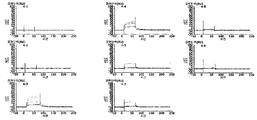
  • Figure 1 shows the dissociation constant value through Surface Plasmon Resonance experiments of synthetic peptides (three peptides in 3-round, four peptides in 4-round) for adiponectin receptor ADIPOR1.
  • Figure 2 is a graph showing the dissociation constant value of 3-round peptides through the Surface Plasmon Resonance experiment.
  • Figure 3 is a graph showing the dissociation constant value of 4-round peptides through the Surface Plasmon Resonance experiment.
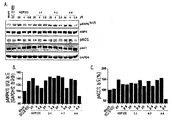
  • FIG. 4 shows experimental results of Western blotting in HepG2 cell line for measuring AMPK phosphorylation activity of 3-1 peptide, 4-3 peptide and 4-4 peptide.
  • FIG. 5 shows experimental results of Western blotting in C2C12 cell line for measuring AMPK phosphorylation activity of 3-1 peptide, 4-3 peptide and 4-4 peptide.
  • Figure 6 shows adiponectin expected binding site and binding model using molecular modeling techniques based on the X-ray structure analysis of ADIPOR1 published by Hiroaki Tanabe group.
  • the N-terminal 88 amino acid sequence was removed from the same as that used for the analysis of ADIPOR1 structure, and the genes capable of making this protein sequence were synthesized through codon optimization (IDT).
  • IDTT codon optimization
  • BamHI restriction enzyme site, Flag tag and TEV protease recognition sequence (ENLYFQG) were inserted at 5 'end and EcoRI restriction site at 3' end for smooth cloning and purification of expressed protein.
  • the obtained gene was cloned into pFASTbac1 vector required for baculovirus production.
  • the cloned vector was injected into DH10bac (Invitrogen) to secure Bacmid containing the ADIPOR1 gene through recombination.
  • Bacmid obtained for the production of Baculovirus was transfected into SF9 cells (5 x 10 ⁇ 4 cells) using Transfectine (Qiagen), and 5 days later, baculovirus secreted into the medium was obtained. After the amplication process, a large amount of baculovirus was produced. Baculovirus was inoculated into SF9 cells (5 x 10 ⁇ 6 cells / ml) incubated in 1L SFM900 medium, and the protein was expressed at 27 ° C for 3 days. SF9 cells expressing recombinant ADIPOR1 were secured through centrifuse, and the obtained cell pellets were stored by aliquoting at -80 ° C and used for protein purification as needed. The disadvantages of membrane proteins are minimized.
  • ADIPOR1 a membrane protein expressed on the cell membrane, it was dissolved using detergent (1% DDM), and the dissolved sample was reacted with anti-Flag antibody bead (Sigma) for 1 hour on ice. Then, the flag peptide was elution of ADIPOR1 bound to anti-Flag antibody bead.
  • the first purified ADIPOR1 was obtained only by monomeric protein through size exclusion chormatography (Supderdex200, GE healthcare). For purification using this size exclusion chromatography, 0.1% DDM, 0.005% CHS, 20 mM HEPES, and 150 mM NaCl buffer were used.
  • Test Example 1 Detection of binding peptide and measurement of binding force using Surface Plasmon Resonance (SPR)
  • Adiponectin is a polypeptide derived from adipocytes and binds to adiponectin receptors ADIPOR1 or 2 and is involved in AMPK or PPAR-a signaling. Obesity is known to lower blood adiponectin levels, which is known to increase insulin resistance to cause type 2 diabetes. Proteins that are active in other organs after secretion from adipose tissue are called adipocaine or adipocytokine. Adiponectin is a type of adipocaine.
  • the two adiponectin receptors have been identified and are the main receptors to which adiponectin binds. It is known as a receptor protein with a 7-transmembrane domain.
  • ADIPOR1 is known to activate the AMPK signal.
  • the adiponectin receptor may be ADIPOR1 and ADIPOR2, preferably may be ADIPOR1.
  • the peptide refers to a molecule in which two or more amino acids covalently bond with a peptide bond.
  • the peptide may be a natural peptide, recombinant peptide or synthetic peptide.
  • the amino acid refers to a molecule having a specific structure in which an amine group (-NH2) having basic properties and a carboxyl group (-COOH) having acidic properties coexist.
  • the reaction of an amino group bound to one amino acid molecule with a carboxyl group bound to another amino acid molecule results in the formation of a new molecule consisting of water and two amino acids.
  • the new molecule is called a dipeptide, and the resulting bond is called a peptide bond.
  • the part with an amine group is called N terminal, and the part with a carboxyl group is called C terminal.
  • many peptide bonds must be formed.
  • amino acids in nature 12 of which are glycine, alanine, aginine, asginine, asparagine, aspartate, cysteine and glutamate.
  • Glutamine, histidine, proline, serine and tyrosine are synthesized in our bodies from foods we eat.
  • the other eight isoleucines, leucine, lysine, tryptophan, valine, metaionine, phenylalanine and threonine are not synthesized. .
  • the non-natural amino acid refers to an amino acid that does not exist in nature and refers to an amino acid synthesized or made by a human. Specifically, iodinated tyrosine, methylated tyrosine, glycosylated serine, glycosylated threonine, azetidine-2-carboxylic acid, 3,4- Dihydroproline (3,4-dehydroproline), perthiaproline (perthiaproline), canavanine, ethionine, norleucine, selenomethionine, anihexahexanoic acid (animohexanoic acid), telluromethionine, homoallylglycine and homopropargylglycine, and D-amino acids are included in unnatural amino acids.
  • the non-natural amino acid having the same characteristics refers to an unnatural amino acid having physical, chemical or functional similar characteristics to that of the natural amino acid, and when the natural amino acid is replaced, it refers to a similar or identical effect of the natural amino acid.
  • the same properties as tyrosine, tryptophan and phenylalanine may be amino acids having aromatic (aromatic) properties.
  • An aromatic amino acid refers to an amino acid having an aromatic ring (benzene ring and derivatives) in the side chain of the amino acid. Thus, it may be an unnatural amino acid having the same or similar properties as the aromatic amino acid.
  • the polyethylene glycol (PEG) refers to a polymer of ethylene oxide.
  • the polyethylene glycol is methoxyl PEG maleimide (mPEG (MAL)), methoxyl PEG forked maleimide (mPEG2 (MAL))), Methoxyl PEG ortho-pyridyldisulfide (mPEG-OPSS), PEG-vinylsulphone, or methoxyl PEG aldehyde (mPEG-ALD) and ortho- Or a composition of ortho-pyridyldisulfide-PEG-hydrazide (OPSS-PEG-hy-drazide).
  • the polyethylene glycol is 5k-mPEG (MAL), 20k-mPEG (MAL), 40k-mPEG2 (MAL), 5k-mPEG-OPSS, lOk-mPEG-OPSS, 20k mPEG-OPSS, or mPEG30 kD-ALD and OPSS-PEG2k-hydrazide.
  • the aliphatic compound is a compound present in nature, specifically, a saturated or unsaturated fatty acid, fatty acid diketone, terpene, prostaglandin, vitamin, carotenoid, steroid, Or synthetic compounds, specifically carbonic acid, alcohols, amines, sulfonic acids with one or more alkyl, allyl, alkynyl, or other unsaturated compounds.
  • the peptide transduction domain refers to a protein that can penetrate a cell membrane protein, and may be combined with other compounds to impart an ability to allow a complex formed to enter a cell membrane.
  • the peptide transduction domain may be a protein having a known transmembrane properties.
  • L1 or L2 is located between the X or Z and the N or C terminus of the amino acid sequence of the agonist peptide to add stability of the agonist peptide Specifically, there may be at least two functional groups.
  • the L1 or L2 may be two and several functional groups, for example alkyl-, allyl-, aralkyl- or peptide functional groups.
  • the agonist peptide for the adiponectin receptor may be designed by building a binding model predicted by molecular modeling techniques based on the X-ray structure analysis of the adiponectin receptor.
  • molecular modeling technique uses the empirical force field called Molecular Mechanics to obtain the three-dimensional structure of various molecules, calculate physical and chemical properties of these molecules, and shape them using computer graphics. Means the technique. The goal is to obtain a three-dimensional molecular structure that is closest to the actual molecule, and by using several possible methods (such as quantum mechanical calculation or X-ray database search) to obtain the optimal structure, the structure is then used to create the Physical and chemical properties are calculated and based on this, it is possible to design new molecules.
  • Software for molecular modeling includes Discovery Studio 4.1 (Biovia) and Maestro (Schrodinger).
  • a binding model can be constructed by removing amino acids 364 and later of ADIPOR1 that have high flexibility in X-ray structure of ADIPOR1 and do not significantly affect adiponectin binding and activation (see FIG. 6).
  • Tyr158 and Phe160 of adiponectin can be located in the hydrophobic pocket of ADIPOR1.
  • the hydrophobic pocket is one of the sites where the ligand protein binds to the adiponectin receptor, and the amino acid of the ligand is a site capable of hydrophobic binding to the adiponectin receptor.
  • the agonist peptide for the adiponectin receptor may be designed based on the constructed binding model, and agonist peptide for the adiponectin receptor known in the art may be used.
  • the active region of adiponectin, an agonist peptide of ADIPOR1, ADP355 (H-DAsn-Ile-Pro-Nva-Leu-Tyr-DSer-Phe-Ala-DSer-NH2), and ADP399 (H -DAsn-Ile-Pro-Nva-Leu-Tyr-DSer-Phe-Ala-DSer-His-Pro) 2-Dab-NH2) may be used.
  • the dissociation constant is the dissociation constant when the law of mass action is established between the undissociated molecule and the atom or atomic group produced by dissociation.
  • the dissociation constant is used to measure the affinity or affinity between the receptor and each ligand.
  • the dissociation constant can be used to determine the affinity between the agonist peptide and the adiponectin receptor for the adiponectin receptor of the present invention.
  • the pharmaceutical composition according to another aspect of the present invention may include an agonist peptide for adiponectin receptor as an active ingredient.
  • the pharmaceutical composition may be added variously, such as a pharmaceutically acceptable carrier or other additives, and thus a detailed description thereof will be omitted.

Landscapes

  • Health & Medical Sciences (AREA)
  • Chemical & Material Sciences (AREA)
  • Life Sciences & Earth Sciences (AREA)
  • Medicinal Chemistry (AREA)
  • General Health & Medical Sciences (AREA)
  • Organic Chemistry (AREA)
  • Proteomics, Peptides & Aminoacids (AREA)
  • Engineering & Computer Science (AREA)
  • Bioinformatics & Cheminformatics (AREA)
  • Animal Behavior & Ethology (AREA)
  • Public Health (AREA)
  • Diabetes (AREA)
  • Pharmacology & Pharmacy (AREA)
  • Veterinary Medicine (AREA)
  • Molecular Biology (AREA)
  • Epidemiology (AREA)
  • Gastroenterology & Hepatology (AREA)
  • Biophysics (AREA)
  • Biochemistry (AREA)
  • Genetics & Genomics (AREA)
  • Endocrinology (AREA)
  • Obesity (AREA)
  • Immunology (AREA)
  • Chemical Kinetics & Catalysis (AREA)
  • Nuclear Medicine, Radiotherapy & Molecular Imaging (AREA)
  • General Chemical & Material Sciences (AREA)
  • Hematology (AREA)
  • Emergency Medicine (AREA)
  • Child & Adolescent Psychology (AREA)
  • Toxicology (AREA)
  • Zoology (AREA)
  • Medicines That Contain Protein Lipid Enzymes And Other Medicines (AREA)
  • Peptides Or Proteins (AREA)
  • Medicinal Preparation (AREA)

Abstract

본 발명의 일 실시예에 따를 때, 아디포넥틴 수용체에 작용제 펩타이드와 아디포넥틴 수용체간의 친화도가 증가하여 AMPK 인산화를 효과적으로 활성화 시킬 수 있는 아디포넥틴 수용체에 대한 작용제 펩타이드를 제공한다. 또한 본 발명의 일 실시예에 따를 때, 제2형 당뇨병 치료제가 가지는 부작용을 최소화함과 동시에 기존 치료제보다 효능이 뛰어난 치료제를 제공한다.

Description

아디포넥틴 수용체에 대한 작용제 펩타이드
본 발명은 약학, 세포생물학, 그리고 분자생물학의 분야에 전반적으로 관련된 것으로, 더욱 상세하게는 제2형 당뇨병 치료를 위한 아디포넥틴 수용체에 대해 작용하는 작용제 펩타이드에 관한 것이다.
당뇨병은 유전적, 환경적 원인에 의해 인슐린 분비 감소 및 저항성 등과 같이 인슐린 분비에 문제가 있거나 인슐린의 기능에 이상이 생겨 혈액 속의 포도당이 세포로 전달/저장되지 못하고 혈액 중에 지나치게 많아져 혈당의 수치가 정상인보다 훨씬 높아지는 고혈당증(hyperglycemia) 증상을 보이는 심각한 대사성 질환이다. 당뇨병은 크게 제1형 당뇨병 (Type 1 Diabetes: T1), 제2형 당뇨병 (Type 2 Diabetes), 임신성 당뇨병 (Gestational Diabete)으로 분류한다.
특히, 본 발명과 관련이 있는 제2형 당뇨병은 대한민국 당뇨환자의 대부분을 차지하는 데 주로 소아에서 발생하는 제1형 당뇨병과는 달리 주로 성인에서 발생하는데, 적절한 기능을 할 수 있는 충분한 양의 인슐린이 체내에서 분비 되지 않거나 세포가 인슐린에 반응하지 않는 인슐린 저항성으로 인해 생긴다.
체중감량, 건강식 섭취, 충분한 운동, 지속적인 혈당수치 체크를 통해 당뇨증세를 조절할 수는 있지만 이 질환은 진행성 질병이기 때문에 초기에는 약으로 조절 가능하나 점차적으로 증상이 악화되어 결국에는 인슐린 주사를 투여 받아야 한다. 과체중 및 비만인 사람의 경우 체내로부터 심혈관/대사 시스템을 불안정하게 할 수 있는 화학물질을 분비되기 때문에 정상 체중인 사람에 비해 제2형 당뇨병으로 진행될 위험성이 훨씬 높은 것으로 알려져 있다. 제2형 당뇨병이 발병할 위험은 나이가 들수록 높아진다고 할 수 있지만 이는 체중이 늘어나고 물리적인 운동량이 줄어들기 때문으로 볼 수 있다.
기존 당뇨 치료제로는 크게 인슐린 제제, 설폰우레아 계열약물, 티아졸리딘디온(TZD)계열 약물, 비구아니드계열 약물, α-Glucosidase 저해제, 미글리티나이드계, Incretin mimetics, DPP-IV 저해제 등으로 구분할 수 있다. 당뇨 진단 후 운동, 식이 요법을 이용한 치료에 실패할 경우 당뇨의 치료는 일반적으로 미국 당뇨병 학회 (ADA: American Diabetes Association)의 가이드라인을 참고하여 항 당뇨 치료제의 단독 또는 병용 투여 요법이 사용되고 있는데 1차로 선택되는 약제는 biguanide계의 metformin이고 2, 3차 약제는 sulfonylurea계, glinide계, thiazolidinedione 및 DPP4 inhibitors 등이며 이후 GLP-1 (glucagon like peptide-1) agonist 주사제 또는 insulin 주사제가 사용된다.
Biguanides에 속하는 phenformin과 metformin은 1957년부터 당뇨병 치료제로 사용되기 시작하였다. 그러나 phenformin은 젖산 과다증의 부작용을 나타내어 많은 나라에서 사용이 금지되었으며 metformin은 제2형 당뇨병 치료제로 현재 세계적으로 가장 많이 사용되고 있다. Metformin은 혈당치를 낮추지만 저혈당증을 유발하지 않고 인슐린 분비를 촉진하지도 않는다. 게다가 metformin은 체중에 영향을 미치지 않거나 약간의 체중 감소 효과를 나타내고 혈장의 지질에도 좋은 효과를 나타낸다. Metformin요법의 주요 부작용은 소화기관에서 나타난다. 매일 2,550 mg의 metformin을 복용한 환자는 복부 불쾌감, 복부팽만감, 금속성 입맛 등을 경험한다.
고지혈증 치료제로 약간의 혈당강하 작용을 가진 clofibrate로부터 유도된 TZDs계열 약물은 당뇨병 치료제로서 혈당강하 작용과 약간의 고지혈증 치료효과를 가지고 있다. TZDs는 인슐린 저항성을 감소시키고, 인슐린에 의한 혈당 소비를 증가시키며, 근육과 지방에서의 혈당 이용율 증가와 간에서의 혈당 생성 억제를 통하여 혈당치를 조절한다. TZDs는 지방세포의 분화와 지단백의 대사에 관여하는 유전자들을 총체적으로 조절하는 유전자인 PPARγ의 ligand로 TZDs가 PPARγ를 활성화시키면 지방세포의 분화가 일어나고 지방세포에서의 혈당 이용과 인슐린 저항성이 개선된다. PPARγ는 근육세포에 아주 소량 발현되고 간세포에는 발현되지 않기 때문에 TZDs가 근육에서의 인슐린 저항성을 개선하는 것은 지방세포에서의 작용을 통한 간접적인 효과라고 알려져 있다. TZDs계열 약물의 주요 부작용은 체중 증가와 부종 등이다.
α-Glucosidase 억제제 (AGIs)는 흡수되어 체내에서 작용하지 않는 약물로 제2형 당뇨병의 병리학적 결함을 개선시키는 약물이 아니다. α-Glucosidase는 소장의 brush border에 존재하며 전분, dextrins, maltose와 같은 탄수화물을 흡수가능한 단당류로 분해시킬 때 필요한 효소이다. 이 효소의 억제제는 소화된 탄수화물의 흡수를 방지하지는 못하고 지연시켜 식후 혈당과 인슐린 농도가 급격히 상승하지 못하게 한다. 제2형 당뇨병 환자에서는 음식물 섭취 후 상승된 혈당에 대응하는 적절한 양의 인슐린이 분비되지 않거나 서서히 분비된다. 소장에서 당의 흡수를 지연시키면 췌장이 적정량의 인슐린을 분비할 수 있게 하여 식후 혈당치가 급격히 상승하는 것을 막아준다. 식후 혈당치가 급격히 상승하는 것은 심혈관계 사망률과 밀접한 관계가 있다. AGIs의 부작용은 소화기계에 주로 나타나는데 복통, 방귀, 설사 등이다. 이러한 부작용은 흡수되지 않은 탄수화물이 대장을 통과하면서 생기는 삼투압에 의한 fluid retraction에 기인하며 방귀는 GI flora가 탄수화물을 대사시켜 생성된 기체상의 산물 때문이다.
현재 임상에서 사용되고 있는 기존 경구용 당뇨 치료제의 경우 지속적인 혈당의 정상화 유지라는 긍정적인 측면 이외에 장기 복용시 저혈당 유발, 설사, 복부팽만감, 체중증가, 젖산 혈중, 심장 독성, 간독성과 같은 다양한 부작용을 일으킬 뿐만 아니라 결국에는 인슐린 분비 기능을 하는 췌장의 베타세포가 비가역적으로 손상/파괴되고 인슐린 저항성이 생기기 때문에 결국 약효가 떨어져 인슐린을 주사해야 되는 상태가 된다. 또한 당뇨병 치료제로 가장 많이 사용되고 있는 인슐린의 경우도 매일 2-3회 피하주사를 해야 하기 때문에 주사에 대한 불편함/거부감이 크며 이 또한 저혈당 유발 가능성이 매우 큰 문제점을 지니고 있다. 따라서 장기 복용해도 췌장 베타세포 보호기능을 가지면서 저혈당 유발이 없이 혈당 수치를 매우 효과적으로 낮춤과 동시에 체중 증가 및 인슐린 저항성을 획기적으로 해결할 수 있는 보다 효능이 우수하고 안전한 약물의 개발이 필요하며 또한 환자의 편의성을 도모하기 위한 장기 지속형 당뇨병 치료제의 개발이 절실히 요구되고 있다.
본 발명이 이루고자 하는 기술적 과제는 아디포넥틴 수용체 분석을 바탕으로 설계된 작용제 펩타이드를 제공함으로써, 당뇨병, 특히 제2형 당뇨병 치료제가 가지는 부작용을 최소화함과 동시에 기존 치료제보다 효능이 뛰어난 치료제를 제공하는 것이다.
본 발명이 이루고자 하는 기술적 과제는 이상에서 언급한 기술적 과제로 제한되지 않으며, 언급되지 않은 또 다른 기술적 과제들은 아래의 기재로부터 본 발명이 속하는 기술 분야에서 통상의 지식을 가진 자에게 명확하게 이해될 수 있을 것이다.
상기 기술적 과제를 달성하기 위하여,
본 발명의 일측면에 따른 펩타이드는,
서열번호1(Xaa1-Tyr-Phe-Ala-Tyr-His-Pro-Asn-Ile-Pro-Gly-Leu-Xaa2-Tyr-Phe)을 포함하며,
상기 아미노산 서열에서, 상기 Xaa1은 티로신, 트립토판, 페닐알라닌 및 이들과 동일 특성을 가진 비자연적 아미노산으로 이루어지는 군에서 선택되는 어느 하나이고,
상기 Xaa2는 티로신, 트립토판, 페닐알라닌 및 이들과 동일 특성을 가진 비자연적 아미노산으로 이루어지는 군에서 선택되는 어느 하나일 수 있다.
상기 펩타이드는,
상기 아미노산 서열의 N말단에 X-L1의 아미노산 서열이 추가로 결합될 수 있으며,
상기 X는,
1내지 10개의 아미노산;
1내지 200kDa의 무게를 가진 선형 형태 또는 가지가 달린 형태의 폴리에틸렌 글리콜(polyethylene glycol);
지방친화 화합물; 및
펩타이드 트랜스덕션 도메인(peptide transduction domain)으로 이루어진 군에서 선택되는 어느 하나이고,
상기 L1은 상기 서열번호 1의 N말단과 상기 X를 연결하는 단일 결합 또는 연결고리 역할을 하는 화합물일 수 있다.
상기 펩타이드는,
상기 아미노산 서열의
C말단에 L2-Z의 아미노산 서열을 더 포함하고,
상기 Z는,
1내지 10개의 아미노산;
1내지 200kDa의 무게를 가진 선형 형태 또는 가지가 달린 형태의 폴리에틸렌 글리콜(polyethylene glycol);
지방친화 화합물; 및
펩타이드 트랜스덕션 도메인(peptide transduction domain)으로 이루어진 군에서 선택되는 어느 하나이고,
상기 L2는 상기 서열번호 1의 C말단과 상기 Z를 연결하는 단일 결합 또는 연결고리 역할을 하는 화합물일 수 있다.
상기 펩타이드는 아디포넥틴 수용체의 작용제일 수 있다.
상기 펩타이드는 아디포넥틴 수용체 1과의 해리상수가 2 내지 16 μM일 수 있다.
상기 펩타이드는 AMPK(AMP-activated protein kinase)를 인산화시키는데 있어서 0.8 내지 4 μM가 필요할 수 있다.
상기 펩타이드는,
Tyr-Tyr-Phe-Ala-Tyr-His-Pro-Asn-Ile-Pro-Gly-Leu-Tyr-Tyr-Phe (서열번호 2);
Trp-Tyr-Phe-Ala-Tyr-His-Pro-Asn-Ile-Pro-Gly-Leu-Trp-Tyr-Phe (서열번호3); 및
Phe-Tyr-Phe-Ala-Tyr-His-Pro-Asn-Ile-Pro-Gly-Leu-Phe-Tyr-Phe (서열번호4)
로 이루어진 군에서 선택되는 어느 하나일 수 있다.
본 발명의 다른 일측면에 따른 조성물은 상기 펩타이드를 인코딩하는 폴리뉴클레오타이드를 포함할 수 있다.
본 발명의 다른 일측면에 따른 치료용 약학적 조성물은 상기 펩타이드를 유효성분으로 하는, 제2형 당뇨병의 예방 또는 치료를 위한 것 일 수 있다.
본 발명의 일실시예에 따르면, 아디포넥틴 수용체에 대한 작용제 펩타이드는 Reference 펩타이드 ADP355에 비해 보다 ADIPOR1에 대한 친화도가 더 좋게 나왔다. 본 발명의 또다른 일실시예에 따르면, 아디포넥틴 수용체에 대한 작용제 펩타이드는 Reference 펩타이드 ADP355에 비해 보다 효과적으로AMPK 인산화를 활성화 시킬 수 있다.
본 발명의 효과는 상기한 효과로 한정되는 것은 아니며, 본 발명의 상세한 설명 또는 특허청구범위에 기재된 발명의 구성으로부터 추론 가능한 모든 효과를 포함하는 것으로 이해되어야 한다.
도 1은 아디포넥틴 수용체 ADIPOR1에 대한 합성 펩타이드(3-round에서 3개 펩타이드, 4-round에서 4개 펩타이드)의 Surface Plasmon Resonance 실험을 통한 해리상수값을 나타낸 것이다.
도 2는 Surface Plasmon Resonance 실험을 통한 3-round 펩타이드들의 해리상수값을 나타낸 그래프이다.
도 3은 Surface Plasmon Resonance 실험을 통한 4-round 펩타이드들의 해리상수값을 나타낸 그래프이다.
도 4는 3-1 펩타이드, 4-3 펩타이드 및 4-4 펩타이드의 AMPK인산화 활성도 측정을 위한 HepG2 세포주에서 웨스턴 블로팅의 실험 결과이다.
도 5는 3-1 펩타이드, 4-3 펩타이드 및 4-4 펩타이드의 AMPK인산화 활성도 측정을 위한 C2C12세포주에서 웨스턴 블로팅의 실험 결과이다.
도 6은 Hiroaki Tanabe group 에서 발표한 ADIPOR1의 X-ray 구조 분석 결과를 토대로 분자모델링 기법을 이용한 아디포넥틴 예상 결합사이트 및 결합모델을 나타낸 것이다.
이하, 본 발명이 속하는 기술 분야에서 통상의 지식을 가진 자가 용이하게 실시할 수 있도록 본 발명의 실시예에 대하여 상세히 설명한다. 그러나 본 발명은 여러 가지 상이한 형태로 구현될 수 있으며 여기에서 설명하는 실시예에 한정되지 않는다.
실시예 1 : ADIPOR1 재조합 단백질 합성 및 분리 정제
ADIPOR1 단백질 서열은 ADIPOR1구조 분석에 사용되었던 것과 같은 N-terminal 88개의 아미노산이 제거된 서열을 사용하였고, 이 단백질 서열을 만들수 있는 유전자를 codon optimization과정을 거쳐 유전자를 합성하였다 (IDT). 이때 원활한 cloning과 발현된 단백질의 정제를 위해서 5’ end에는 BamHI 제한효소 사이트와 Flag tag과 TEV protease recognistion 서열 (ENLYFQG)을 삽입하였고, 3’ end에는 EcoRI 제한효소 사이트를 삽입하였다. 확보된 유전자는 baculovirus제작에 필요한 pFASTbac1 vector에 넣어서 클로닝을 진행하였다. 클로닝된 벡터를 DH10bac (Invitrogen)에 주입하여 recombination을 통해 ADIPOR1 유전자를 포함하는 Bacmid를 확보하였다. Baculovirus를 제작하기 위해 확보된 Bacmid를 Transfectine (Qiagen)을 이용하여 SF9 cells (5 x 10^4 cells)에 transfection시켰고, 5일 후 배지로 분비된 baculovirus를 확보하였다. 이후 amplication과정을 거쳐 다량의 baculovirus를 제작하였다. 확보된 Baculovirus를 1L SFM900배지에 배양된 SF9 cell (5 x 10^6 cells/ ml)에 넣어 감염 시키고, 3일간 27도 온도에서 단백질을 발현 시켰다. 재조합 ADIPOR1을 발현하는 SF9 세포는 센트리퓨즈를 통해 확보 하였고, 확보된 세포 pellet은 -80℃에 aliquote해서 보관하여, 필요에 따라 신선하게 단백질 정제에 사용하여 정제 후 보관에 따른 단백질의 불활성화 가능성이 있는 막단백질의 단점을 최소화 시켰다. 세포막에 발현된 막단백질인 ADIPOR1정제하기 위해 detergent (1% DDM)을 이용하여 용해화 시켰고, 용해된 샘플은 anti-Flag antibody bead (Sigma)와 1시간 동안 Ice에서 반응 시켰다. 이후 flag peptide로 anti-Flag antibody bead에 결합된 ADIPOR1을 elution 시켰다. 이렇게 1차 정제된 ADIPOR1을 size exclusion chormatography (Supderdex200, GE healthcare)를 통해 monomeric 단백질만을 확보하였다. 이 size exclusion chromatography를 이용한 정제에는 0.1% DDM, 0.005% CHS, 20mM HEPES, 150mM NaCl 버퍼가 사용되었다.
실시예 2 : 세포의 유지
C2C12 및 HepG2 세포는 ATCC에서 구매하였으며, DMEM (Hyclone) 배지에 10%의 FBS (Hyclone) 과 1% 의 페니실린/스트랩토마이신을 참가하여, 37℃, 5 % CO2환경의 인큐베이터에서 배양하여 사용.
실시예 3 : C2C12 myotube 분화
C2C12 세포를 12 well에 plating 후 80% 이상의 confluency를 보일 때 PBS로 1회 수세후 DMEM에 2.5%의 Horse serum 및 1% 페니실린/스트랩토마이신이 첨가된 분화 배지로 교체 하였으며, 그 후 매일 새로운 분화 배지로 배지를 교환하며 5-7일간 분화 후 실험에 사용.
실시예 4 : 화합물의 처리, Sampling 및 Immunoblot
아디포넥틴(Adiponectin)과 Adiporon의 경우 분화된 C2C12에 5-15분간 처리시, ADP355의 경우 여러 cancer cell line에서 24h starvation 후 1h recovery 진행 후 15, 30, 45, 60분 동안 처리시, 30분에서 그 효과가 최대치인 것이 이미 보고가 되어있었기에 위와 같은 선행 연구를 토대로, 실험에 사용할 세포 수를 최적화 한 뒤, HepG2의 경우 5시간의 starvation 후 리커버리를 거쳐 30min간, C2C12는 24시간 Strarvation후 10분 동안 Peptide를 처리를 수행. 처리가 끝난 세포 샘플은 차가운 PBS로 한번 수세후, protease inhibitor와 phosphatase inhibitor가 첨가된 RiPA buffer를 첨가하여 15분 동안 lysis를 진행하였음. 15분후, 14000 rpm에서 5분간 원심 분리를 진행하여 단백질만을 수거하고, 정량 후 4 x Sample Buffer 및 2-ME를 첨가하여, 웨스턴 블로팅용 샘플을 제조 하였음. 웨스턴 블로팅은 일반적인 웨스턴 블로팅 실험 기법을 사용하였으며, AMPK, p-AMPK, p-AKT, p-ACC, GAPDH의 항체를 종류에 따라 1:1000 또는 1:2000으로 희석하여 진행하고, LAS-4000 장비를 사용해 이미지화.
시험예 1 : Surface Plasmon Resonance (SPR)을 이용한 결합 peptide 탐색 및 결합력 측정
펩타이드와 ADIPOR1간의 결합력을 분석하기 위해 정제한 재조합 ADIPOR1(Δ88)을 CM5 chip에 Amine coupling을 통해 3000 RU 이상으로 부착하였다. 펩타이드는 running buffer (0.1% DDM, 0.005% CHS, 10mM HEPES, 150mM NaCl pH 7.4)로 희석하여 다양한 농도로 SPR장비에 주입하여 결합력을 분석하였다. 이때 affinity fitting 혹은 kinetics fitting 방법을 이용하여 affinity값을 계산하였다. Peptide의 용해도 분석을 위해 DMSO로 peptide stock을 만든 후, 적절한 버퍼에 희석시키고, 용해되지 않은 침전물을 제거하고 펩타이드들의 농도를 각 펩타이드들의 extiction coefficient 값과 A280 흡광도 값을 측정해 계산하였다.
총 4개 round별로 합성된 펩타이드들의 친화도를 확인하였고, 특히 3-round 및 4-round 펩타이드들의 친화도는 각각 도 2 및 도 3에 나타내었다.
도 2의 세부 그림은 다음과 같다.
3-1 펩타이드: cyan:100uM, pink: 25uM, blue: 10uM, green: 5uM, orange: 2.5uM
나머지 펩타이드: yellow: 50uM, : 25uM, pink: 10uM, blue: 2.5uM, green: 1uM,, red: 0.5uM
도 2에서 3-1의 경우 3-1의 경우 Kd 값 (∽16uM)로 같이 디자인된 다른 펩타이드들보다 높아 비교적 높은 affinity를 보였다.
도 3의 세부 그림은 다음과 같다.
yellow: 50uM, cyan: 25uM, pink: 12.5uM, blue: 6.25uM, green: 3.12uM, orange: 1.56uM
도 3에서 4-3, 4-4번 펩타이드들이 각각 6~10uM과 2~4.3uM의 Kd값이 측정되었다.
시험예 2 : HepG2 세포주에서의 약효 평가
실험 전 날 HepG2 세포주를 12well plate에 8*10^5 cell/well 의 농도로 분주 후, 밤새도록 배양 한 뒤, 당일 serum free midia로 5시간 starvation 시킨 후 DMSO 0.4%(MOCK), adiponectin 10ug/ml과 더불어Reference 펩타이드 ADP355, 3-1 펩타이드, 4-3 펩타이드, 4-4 펩타이드를 20uM, 4uM, 0.8uM 농도로 30분 동안 처리한 뒤, RIPA buffer를 사용해 Lysis하고, Sample을 만들어 95℃에서 10분간 끓인 후 12ug 을 loading하여 웨스턴 블로팅을 실시하였다.
위와 같은 웨스턴 블로팅의 결과를 도4에 나타내었고 각 세부 그림은 아래와 같다.
A. Reference 펩타이드 ADP355, 3-1펩타이드, 4-3펩타이드, 4-4펩타이드의 농도별 웨스턴 블로팅 결과
B. Reference 펩타이드 ADP355, 3-1펩타이드, 4-3펩타이드, 4-4펩타이드의 pAMPK에 대한 상대적 농도
C. Reference 펩타이드 ADP355, 3-1펩타이드, 4-3펩타이드, 4-4펩타이드의 pACC에 대한 상대적 농도
도 4는 HepG2 세포주에서 Reference 펩타이드 ADP355, 3-1펩타이드, 4-3펩타이드, 4-4펩타이드의 AMPK 인산화 활성도를 나타내고 있다.
시험예 3 : C2C12 myotube 분화 및 C2C12 세포주에서의 약효 평가
C2C12 세포를 12 well에 plating 후 80% 이상의 confluency를 보일 때 PBS로 1회 수세 후 DMEM에 2.5%의 Horse serum 및 1% 페니실린/스트랩토마이신이 첨가된 분화 배지로 교체 하였으며, 그 후 매일 새로운 분화 배지로 배지를 교환하며 5-7일간 분화 후 실험에 사용하였다.
8*10^5 개의 C2C12 세포주를 12Well Plate에 분주하고, 위와 같은 방법으로 Myotube로 분화를 유도 시킨 뒤, DMSO 0.4%(MOCK), adiponectin 10ug 및 Reference 펩타이드 ADP355, 3-1 펩타이드, 4-3 펩타이드, 4-4 펩타이드를 20uM, 4uM, 0.8uM 농도로 10분간 처리한 후 HepG2 세포주와 같은 방법으로 웨스턴 블로팅을 실시하였다.
위와 같은 웨스턴 블로팅의 결과를 도5에 나타내었고 각 세부 그림은 아래와 같다.
A. Reference 펩타이드 ADP355, 3-1펩타이드, 4-3펩타이드, 4-4펩타이드의 농도별 웨스턴 블로팅 결과
B. Reference 펩타이드 ADP355, 3-1펩타이드, 4-3펩타이드, 4-4펩타이드의 pAMPK에 대한 상대적 농도
C. Reference 펩타이드 ADP355, 3-1펩타이드, 4-3펩타이드, 4-4펩타이드의 pACC에 대한 상대적 농도
도 5는 C2C12 세포주에서Reference 펩타이드 ADP355, 3-1펩타이드, 4-3펩타이드, 4-4펩타이드의 AMPK 인산화 활성도를 나타내고 있다.
전술한 본 발명의 설명은 예시를 위한 것이며, 본 발명이 속하는 기술분야의 통상의 지식을 가진 자는 본 발명의 기술적 사상이나 필수적인 특징을 변경하지 않고서 다른 구체적인 형태로 쉽게 변형이 가능하다는 것을 이해할 수 있을 것이다. 그러므로 이상에서 기술한 실시예들은 모든 면에서 예시적인 것이며 한정적이 아닌 것으로 이해해야만 한다. 예를 들어, 단일형으로 설명되어 있는 각 구성 요소는 분산되어 실시될 수도 있으며, 마찬가지로 분산된 것으로 설명되어 있는 구성 요소들도 결합된 형태로 실시될 수 있다.
본 발명의 범위는 후술하는 특허청구범위에 의하여 나타내어지며, 특허청구범위의 의미 및 범위 그리고 그 균등 개념으로부터 도출되는 모든 변경 또는 변형된 형태가 본 발명의 범위에 포함되는 것으로 해석되어야 한다.

이하에서는 첨부한 도면을 참조하여 본 발명을 설명하기로 한다. 그러나 본 발명은 여러 가지 상이한 형태로 구현될 수 있으며, 따라서 여기에서 설명하는 실시예로 한정되는 것은 아니다. 그리고 도면에서 본 발명을 명확하게 설명하기 위해서 설명과 관계없는 부분은 생략하였으며, 명세서 전체를 통하여 유사한 부분에 대해서는 유사한 도면 부호를 붙였다.
명세서 전체에서, 어떤 부분이 다른 부분과 "연결(접속, 접촉, 결합)"되어 있다고 할 때, 이는 "직접적으로 연결"되어 있는 경우뿐 아니라, 그 중간에 다른 부재를 사이에 두고 "간접적으로 연결"되어 있는 경우도 포함한다. 또한 어떤 부분이 어떤 구성요소를 "포함"한다고 할 때, 이는 특별히 반대되는 기재가 없는 한 다른 구성요소를 제외하는 것이 아니라 다른 구성요소를 더 구비할 수 있다는 것을 의미한다.
본 명세서에서 사용한 용어는 단지 특정한 실시예를 설명하기 위해 사용된 것으로, 본 발명을 한정하려는 의도가 아니다. 단수의 표현은 문맥상 명백하게 다르게 뜻하지 않는 한, 복수의 표현을 포함한다. 본 명세서에서, "포함하다" 또는 "가지다" 등의 용어는 명세서상에 기재된 특징, 숫자, 단계, 동작, 구성요소, 부품 또는 이들을 조합한 것이 존재함을 지정하려는 것이지, 하나 또는 그 이상의 다른 특징들이나 숫자, 단계, 동작, 구성요소, 부품 또는 이들을 조합한 것들의 존재 또는 부가 가능성을 미리 배제하지 않는 것으로 이해되어야 한다.
이하 첨부된 도면을 참고하여 본 발명의 실시예를 상세히 설명하기로 한다.
상기 아디포넥틴(adiponectin)은 지방세포에서 유래된 폴리펩타이드이며, 아디포넥틴 수용체인ADIPOR1 혹은 2에 결합하여 AMPK 혹은 PPAR-a 신호에 관여한다. 비만인 경우 혈중 아디포넥틴 수치가 낮은 것으로 알려져 있고, 이는 인슐린 저항성을 높여 제 2형 당뇨병을 유발시키는 것으로 알려져 있다. 지방조직에서 분비된 후 기타 기관에서 활성을 갖는 단백질을 아디포카인 또는 아디포사이토카인이라고 하는데, 아디포넥틴은 이러한 아디포카인의 일종이다. 아디포넥틴은 분비량이 감소되면 지방축적량이 증가되는 고유의 특성과 함께 혈중 지방산 농도 및 간과 근육에서 중성 지방 수치를 감소시켜 인슐린 감수성을 증가시키며, 혈관 내피세포에 TNF-a 유발 단핵세포 유착을 감소시키고, 혈소판을 억제하여 항염증과 항아테롬성 효과를 초래한다. 또한 근육에서는(acetyo AcA-carboxylase) ACC의 인산화, 지방산소비, 혈당 섭취, 그리고 젖산(lactate) 생성을 자극하며, 간에서는 ACC의 인산화 및 당신생 과정에 포함된 분자들을 감소시킴으로써 혈당을 낮추는 역할을 한다.
상기 아디포넥틴은 trimer 혹은 hexamer 형태로 혈액내에 존재하며 순환되고, 특히, 상기 아디포넥틴의 globular domain은 ADIPOR1의 결합 사이트를 갖고 있는 도메인으로 알려졌으며, 주요 결합 조각(fragment)이 아미노산 153부터 162(Asn-Ile-Pro-Gly-Leu-Tyr-Tyr-Phe-Ala-Tyr; 아디포넥틴active region)인 것으로 알려져 있다.
상기 아디포넥틴 수용체는 ADIPOR1과 ADIPOR2, 이렇게 2가지가 밝혀져 있으며, 아디포넥틴이 결합하는 주요 수용체이다. 7-transmembrane domain을 갖는 수용체 단백질로 알려져 있다. 특히, ADIPOR1은 AMPK 신호를 활성화 시키는 것으로 알려져 있다. 본 발명의 일실시예에 따르면, 상기 아디포넥틴 수용체는 ADIPOR1과 ADIPOR2일 수 있고, 바람직하게는 ADIPOR1일 수 있다.
상기 작용제(agonist)란, 어느 생체작용물질의 수용체에 결합해서 그 물질이 갖는 작용과 같은(또는 유사한) 작용을 하는 물질 또는 약제, 혹은 수용부위의 활성을 높이는 분자를 말한다. 생체 안에서 생산되는 내인성인 것과 생체 밖에서 투여되는 외인성인 것이 있다. 부분 작용제는 수용체와 결합해도 100%의 약리작용을 발현하지는 않으며 용량을 증가시켜도 효과는 커지지 않는다.
상기 펩타이드란, 2개이상의 아미노산이 펩타이드 결합으로 공유결합을 이루는 분자를 말한다. 본 발명의 일 실시예에 따르면, 상기 펩타이드는 자연상태의 펩타이드, 재조합 펩타이드 또는 합성 펩타이드일 수 있다.
상기 아미노산이란 염기성 성질을 가진 아민기(-NH2)와 산성 성질을 가진 카르복실기(-COOH)가 공존하는 특정한 구조를 지닌 분자를 말하며 단백질의 구성요소이다. 하나의 아미노산 분자에 결합되어 있는 아미노기와 또 다른 아미노산 분자에 결합되어 있는 카르복실기가 반응을 하면 물과 두 개의 아미노산으로 구성된 한 개의 새로운 분자가 형성된다. 새로운 분자는 다이펩타이드라 하며, 반응 결과 이루어진 결합을 펩타이드 결합이라 한다. 아민기가 있는 부분은 N 말단이라고 부르며, 카르복실기가 있는 부분을 C말단이라고 부른다. 단백질 하나가 형성되기 위해서는 수 많은 펩타이드 결합이 형성되어야 한다. 자연에는 20개의 아미노산이 존재하고 있으며 그 중에서 12개인 글리신(glycine), 알라닌(alanine), 아지닌(arginine), 아스파라진(asparagine), 아스파테이트(aspartate), 시스틴(cysteine), 글루타메이트(glutamate), 글루타민(glutamine), 히스티딘(histidine), 프롤린(proline), 세린(serine), 티로신(tyrosine)은 먹는 식품을 원료로 우리 몸에서 합성이 된다. 나머지 8개인 이소루신(isoleucine), 루신(leucine), 라이신(lysine), 트립토판(tryptophan), 발린(valine), 메타이오닌(methionine), 페닐알라닌(phenylalanie), 트레오닌(threonine)는 합성이 되지 않는다.
상기 비자연적 아미노산이란, 자연에는 존재하지 않는 아미노산을 말하는 것으로서 사람에 의해 합성되거나 만들어진 아미노산을 말한다. 구체적으로는 요오드화 티로신(iodinated tyrosine), 메틸화 티로신(methylated tyrosine), 당화 세린(glycosylated serine), 당화 트레오닌(glycosylated threonine), 아제티딘-2-카르복시산(azetidine-2-carboxylic acid), 3,4-디하이로프롤린(3,4-dehydroproline), 퍼티아프롤린(perthiaproline), 카나바닌(canavanine), 에타이오닌(ethionine), 노어루신(norleucine), 셀레노메타이오닌(selenomethionine), 아니모헥사노산(animohexanoic acid), 텔루로메타이오인(telluromethionine), 호모알릴글리신(homoallylglycine) 및 호모프로파길글리신(homopropargylglycine)을 포함하며, D-아미노산도 비자연적 아미노산에 포함된다.
상기 동일특성을 가진 비자연적 아미노산이란, 자연적 아미노산과 물리적, 화학적 혹은 기능적으로 유사한 특징을 가지고 있는 비자연적 아미노산을 말하는 것이며 자연적 아미노산을 대체했을 때, 자연적 아미노산이 가지는 효과와 유사하거나 동일한 것을 말한다. 본 발명의 일실시예에 따르면, 티로신, 트립토판 및 페닐알라닌과 동일 특성이라는 것은 아로마틱(방향족) 특성을 가지는 아미노산일 수 있다. 아로마틱 아미노산이란 아미노산 곁사슬에 방향고리(벤젠고리와 그 유도체)를 갖는 아미노산을 말한다. 따라서, 아로마틱 아미노산과 동일 혹은 유사한 특성을 가지는 비자연적 아미노산일 수 있다.
상기 폴리에틸렌 글리콜(polyethylene glycol, PEG)이란, 에틸렌 옥사이드(ethylene oxide)의 중합체를 말한다. 본 발명의 일실시예에 따르면, 상기 폴리에틸렌 글리콜은 메톡실PEG 말레이마이드(methoxyl PEG maleimide (mPEG(MAL))), 메톡실 PEG 분기된 말레이마이드(methoxyl PEG forked maleimide (mPEG2(MAL))), 메톡실 PEG 오소-피리딜 이중황화물(methoxyl PEG ortho-pyridyldisulfide (mPEG-OPSS)), PEG-비닐술폰(PEG-vinylsulphone), 혹은 메톡실 PEG 알데하이드(methoxyl PEG aldehyde(mPEG-ALD))와 오소-피리딜 이중황화-PEG-하이드라지드(ortho-pyridyldisulfide-PEG-hydrazide (OPSS-PEG-hy-drazide))의 조성물일 수 있다. 본발명의 또다른 일실시예에 따르면, 상기 폴리 에틸렌 글리콜은 5k-mPEG(MAL), 20k-mPEG(MAL), 40k-mPEG2(MAL), 5k-mPEG-OPSS, lOk-mPEG-OPSS, 20k-mPEG-OPSS, 또는 mPEG30 kD-ALD 와OPSS-PEG2k-hydrazide의 조성물으로 이루어진 군에서 선택될 수 있다.
상기 지방친화 화합물이란 자연에 존재하는 화합물로서 구체적으로는 포화 또는 불포화 지방산, 지방산 디케톤(fatty acid diketone), 터핀(terpene), 프로스타글란딘(prostaglandin), 비타민, 카로티노이드(carotenoid), 스테로이드(steroid), 또는 합성 화합물, 구체적으로는 탄산(carbon acid), 알코올, 아민(amine), 하나 이상의 알킬(alkyl), 알릴(aryl), 알키닐(alkenyl), 혹은 다른 여러 불포화 화합물을 가진 술폰산일 수 있다.
상기 펩타이드 트랜스덕션 도메인(peptide transduction domain)이란 세포막 단백질을 침투해 들어갈 수 있는 단백질을 말하며, 다른 화합물과 결합이 되어 생성된 복합체가 세포막 안으로 들어가게 해줄 수 있는 능력을 부여할 수 있다. 본 발명의 일실시예에 따르면, 상기 펩타이드 트랜스덕션 도메인은 이미 알려진 막투과 특성을 지닌 단백질일 수 있다.
상기 단일결합 또는 연결고리 역할을 하는 화합물, 즉, 상기 L1또는 L2는 상기 X 혹은 상기 Z와 상기 작용제 펩타이드의 아미노산 서열의 N 또는 C말단사이에서 위치해서 상기 작용제 펩타이드의 안정성을 부가시켜줄 수 있는 화합물로서, 구체적으로 최소 2개의 작용기일 수 있다. 바람직하게는 상기 L1또는 L2는 2개 그리고 여러 개의 작용기, 예를 들어 알킬기(alkyl-), 알릴기(aryl-), 아랄킬기(arakyl-) 또는 펩타이드 작용기일 수 있다.
상기 X가 상기 작용제 펩타이드에 들어가지 않는다면, L1도 역시 들어가지 않게 된다는 것은 당업자에게 있어서 자명한 일이다.
또한, 상기 Z가 상기 작용제 펩타이드에 들어가지 않는다면, L2도 역시 들어가지 않게 된다는 것은 당업자에게 있어서 자명한 일이다.
본 발명의 일실시예에 따르면, 상기 아디포넥틴 수용체에 대한 작용제 펩타이드는 아디포넥틴 수용체의X-ray 구조 분석 결과를 토대로 분자모델링 기법에 의해 예측된 결합모델을 구축하여 설계될 수 있다. 여기서, 분자모델링 기법이란 분자메카닉스(Molecular Mechanics) 라는 empirical force field를 사용하여 여러 가지 분자들의 3차원적 구조를 구하고, 이로부터 이 분자들의 물리적, 화학적 성질들을 계산하고, 컴퓨터 그래픽을 사용하여 형상화하는 기법을 의미한다. 실제의 분자와 가장 가까운 3차원적 분자구조를 얻는 것이 목표이며, 여러 가지 가능한 방법을 통하여(양자역학적 계산 혹은 X-ray Database 검색등) 최적의 구조를 얻은 후, 이 구조를 사용하여 관심 있는 여러가지 물리적, 화학적 성질들을 계산하고 이를 토대로 하여 새로운 분자의 Design 이 가능하게 해주는 역할을 한다. 분자모델링 관련 소프트웨어는 Discovery Studio 4.1 (Biovia사) 와 Maestro (Schrodinger사) 등이 있다.
구체적으로 살펴보면, ADIPOR1의 X-ray구조에서 flexibility가 높고 아디포넥틴의 결합 및 이에 의한 활성화에 큰 영향을 주지 않는 ADIPOR1의 364번 이후 아미노산을 제거하여 결합모델을 구축할 수 있다(도 6참조). 구축된 결합모델 상에서 아디포넥틴의 Tyr158과 Phe160은 ADIPOR1의 hydrophobic pocket에 위치하여 결합할 수 있다. 여기서, hydrophobic pocket이란, 아디포넥틴 수용체에 리간드 단백질이 결합하는 부위 중의 하나로서, 리간드의 아미노산이 아디포넥틴 수용체에 hydrophobic binding을 할 수 있는 부위이다.
도 6을 참고해 보면, 도 6-A는 아디포넥틴 결합 pocket을 확인할 수 있으며 각각의 pocket에 대한 아디포넥틴 active region(도 6-B)의 결합모델이 도 6-C및 도 6-D와 같이 구축될 수 있다. 그리고, Predicted binding-1 사이트에 결합모델(도 6-C)에서 확인할 수 있듯이, 아디포넥틴의 Tyrosine(Y)와 Phenylalanine(F) 부분이 hydrophobic pocket(파란색 포켓)에 들어갈 수 있는 것으로 확인할 수 있으며, 각 amide bond 의 backbone과 ADIPOR1 간의 수소결합은 빨간색 점선으로 표시할 수 있다. Predicted binding-2에 대한 결합모델도 유사하게 Tyrosine(Y)와 Phenylalanine(F) 부분이 hydrophobic pocket에 들어가고, 추가적인 수소결합을 할 수 있는 것으로 확인할 수 있다.
상기 구축된 결합모델을 기반으로 상기 아디포넥틴 수용체에 대한 작용제 펩타이드를 설계할 수 있으며, 또한 기존에 알려진 아디포넥틴 수용체에 대한 작용제 펩타이드가 이용될 수 있다. 본 발명의 일실시예에 따르면, ADIPOR1의 작용제 펩타이드인 아디포넥틴의 active region, ADP355(H-DAsn-Ile-Pro-Nva-Leu-Tyr-DSer-Phe-Ala-DSer-NH2), 및 ADP399(H-DAsn-Ile-Pro-Nva-Leu-Tyr-DSer-Phe-Ala-DSer-His-Pro)2-Dab-NH2)가 이용될 수 있다.
상기 해리상수란, 해리되어 있지 않은 분자와 해리에 의해서 생성한 원자 또는 원자단 사이에 질량작용의 법칙이 성립할 때, 그 평형상수를 해리상수라 한다. 상기 해리상수는 수용체와 각 리간드간의 결합력 또는 친화도(affinity)를 측정하는데 사용된다. 상기 해리상수는 본 발명의 아디포넥틴 수용체에 대한 작용제 펩타이드와 상기 아디포넥틴 수용체간의 친화도를 측정하는데 사용될 수 있다.
도 3 및 도 4를 참조해보면, 본 발명에서 상기 작용제 펩타이드와 상기 아디포넥틴 수용체, 특히 아디포넥틴 수용체1(ADIPOR1)간의 해리상수를 측정하기 위해서 SPR(Surface Plasmon Resonance)실험을 수행하였다. 먼저, 발현 정제된 아디포넥틴 수용체인 ADIPOR1을 고정화시키고 총 4 round에 걸쳐서 후보 펩타이드들과의 해리상수를 측정하였다. 도 3에서는, 3-round의 펩타이드 후보들에 대한 해리상수를 측정한 결과를 보여주고 있으며, 특히 서열번호 2의 아미노산 서열을 가지고 있는3-1 펩타이드가 해리상수값이16uM이하로, Laszlo Otvos 그룹에서 개발한 ADIPOR1의 다른 작용제로 알려진 Reference 펩타이드 ADP355가 가지는100uM이상의 해리상수값에 비해 좋은 친화력을 보여주었다. 또한 도 4에서는 4-round에서 펩타이드 후보들에 대한 친화력을 측정한 결과를 보여주고 있으며, 서열번호 3의 아미노산 서열을 가지고 있는 4-3펩타이드와 서열번호 4의 아미노산 서열을 가지고 있는 4-4 펩타이드가 각각 6~10uM와 2~4.3uM의 해리상수값이 측정되어 이 역시 Reference 펩타이드 ADP355가 가지는 100uM이상의 해리상수값 비해 좋은 친화도를 보여주었다.
상기 AMPK(AMP-activated protein kinase)란, serine/threonine kinase로서 지질과 포도당 대사의 조절인자로 알려져 있으며, 당뇨와 비만에 중요한 조절작용을 한다. AMPK는 세포내 에너지 소모 시 증가되는 AMP에 의해 활성화되어 ATP 사용을 억제하며, 이화작용(catabolism)을 유도하여 에너지 항상성(homeostasis)을 유지하는데 핵심적인 역할을 한다. 지방대사 측면에서 AMPK 활성화는 지방산 합성을 유도하는 효소인 FAS (fatty acid synthase)와 ACC(acetyl CoA carboxylase)를 억제하며, 콜레스테롤 생합성의 제한효소(rate-limiting enzyme)인 HMG-CoA reductase를 억제하므로 체내 지질 생성 조절에 영향을 미친다. 포도당의 생성과정에는 gluconeogenesis를 억제하는 작용을 하며, 근육세포의 GLUT4 양을 증가시켜 근육으로 포도당 이동을 증가시키는 작용을 한다. 따라서 당뇨병 환자에서 AMPK 활성화를 유도하면 다양한 치료기전을 가지게 된다.
도 4를 참조해보면, AMPK에 대한 인산화 측정과 관련해서 hepatocyte cell line인 HepG2 세포주에서 상기 서열번호 2의 아미노산 서열을 가지고 있는3-1 펩타이드, 상기 서열번호 3의 아미노산 서열을 가지고 있는 4-3펩타이드 및 상기 서열번호 4의 아미노산 서열을 가지고 있는 4-4 펩타이드를 대상으로 웨스턴 블로팅을 수행한 결과를 보여주고 있는데, 실험 결과로 살펴볼 때, 상기 3-1 펩타이드 및 상기4-3 펩타이드는 최하 농도인 0.8uM 에서부터 AMPK를 인산화 시키는 것을 확인 하였으며, 이는 20uM에서 인산화가 소량 확인된 ADP355에 비하여 그 효능이 월등히 높다. 또한 상기 3종의 펩타이드가 AMPK의 하위 단백질인 ACC의 인산화에 미치는 역할을 살펴봤을 때, 상기 3-1 및 상기 4-3 펩타이드가 상기Reference 펩타이드ADP-355와 비교시 동등 또는 더욱더 ACC를 인산화시키는 것이 관찰되었다(도 4-A 및 도 4-C참조).
도 5를 참조해보면, AMPK에 대한 인산화 측정과 관련해서 C2C12세포주에서 상기 3-1 펩타이드, 상기 4-3펩타이드 및 상기 4-4 펩타이드를 대상으로 웨스턴 블로팅을 수행한 결과를 보여주고 있는데, 상기 3-1펩타이드는 0.8uM의 낮은 농도에서도 AMPK를 인산화 시키는 것을 관찰할 수가 있었으나, 상기 4-3 펩타이드 및 4-4 펩타이드, Reference 펩타이드ADP355의 경우는 4uM부터 인산화가 확인되었다. 이러한 결과로, 상기 3-1 펩타이드의 활성이 가장 탁월했다 (도 5-A 및 5-B 참조). 또한 AMPK의 하위 단백질인 ACC의 경우는 상기4-4펩타이드의 0.8uM 조건을 제외한 모든 조건에서 인산화가 증가됨이 확인되었다(도 5-A 및 5-C 참조).
본 발명의 다른 측면에 따른 상기 폴리뉴클레오타이드란, 뉴클레오타이드가 인산과 당 사이의 공유 결합으로 다른 뉴클레오타이드와 연결되어 사슬 형태로 형성된 것을 말하며 이는 DNA 혹은 RNA가 그 예시이다. 뉴클레오타이드는 핵산을 구성하는 단위체로, 인산·당·염기로 이루어진다. DNA를 이루는 기본 단위체를 디옥시리보뉴클레오타이드, RNA의 단위체를 리보뉴클레오타이드라고 부른다. 뉴클레오타이드의 당은 5개의 탄소로 구성된 단당류인데, 2번 탄소의 자리에 수산기를 가질 경우 리보스(ribose)라고 하며 산소 없이 수소만 있을 경우 디옥시리보스(deoxyribose)라고 한다. 리보스는 RNA, 디옥시리보스는 DNA의 구성 요소이다. 아데닌(A), 구아닌(G), 사이토신(C), 티민(T)이 DNA의 염기를 구성하며, RNA의 염기에는 티민 대신 유라실(U)이 사용된다.
본 발명의 또 다른 측면에 따른 상기 약학적 조성물은 아디포넥틴 수용체에 대한 작용제 펩타이드를 유효성분으로 포함할 수 있다. 상기 약학적 조성물에는 상기 아디포넥틴 수용체에 대한 작용제 펩타이드 이외에도 약학적으로 허용되는 담체 또는 기타 첨가제 등이 다양하게 첨가될 수 있음은 자명한 사항이므로 이에 대한 구체적 설명은 제외하기로 한다.
본 발명의 범위는 후술하는 특허청구범위에 의하여 나타내어지며, 특허청구범위의 의미 및 범위 그리고 그 균등 개념으로부터 도출되는 모든 변경 또는 변형된 형태가 본 발명의 범위에 포함되는 것으로 해석되어야 한다.

Claims (9)

  1. 서열번호 1(Xaa1-Tyr-Phe-Ala-Tyr-His-Pro-Asn-Ile-Pro-Gly-Leu-Xaa2-Tyr-Phe)을 포함하는 펩타이드:
    상기 서열번호 1에서, 상기 Xaa1은 티로신, 트립토판, 페닐알라닌 및 이들과 동일 특성을 가진 비자연적 아미노산으로 이루어지는 군에서 선택되는 어느 하나이고,
    상기 Xaa2는 티로신, 트립토판, 페닐알라닌 및 이들과 동일 특성을 가진 비자연적 아미노산으로 이루어지는 군에서 선택되는 어느 하나임.
  2. 제1항에 있어서,
    상기 아미노산 서열의 N말단에 X-L1의 아미노산 서열이 추가로 결합된 펩타이드:
    상기 X는,
    1내지 10개의 아미노산;
    1내지 200kDa의 무게를 가진 선형 형태 또는 가지가 달린 형태의 폴리에틸렌 글리콜(polyethylene glycol);
    지방친화 화합물; 및
    펩타이드 트랜스덕션 도메인(peptide transduction domain)으로 이루어진 군에서 선택되는 어느 하나이고,
    상기 L1은 상기 서열번호 1의 N말단과 상기 X를 연결하는 단일 결합 또는 연결고리 역할을 하는 화합물임.
  3. 제1항에 있어서,
    상기 아미노산 서열의
    C말단에 L2-Z의 아미노산 서열을 더 포함하고,
    상기 Z는,
    1내지 10개의 아미노산;
    1내지 200kDa의 무게를 가진 선형 형태 또는 가지가 달린 형태의 폴리에틸렌 글리콜(polyethylene glycol);
    지방친화 화합물; 및
    펩타이드 트랜스덕션 도메인(peptide transduction domain)으로 이루어진 군에서 선택되는 어느 하나이고,
    상기 L2는 상기 서열번호 1의 C말단과 상기 Z를 연결하는 단일 결합 또는 연결고리 역할을 하는 화합물임.
  4. 제 1항에 있어서, 아디포넥틴 수용체의 작용제인, 펩타이드.
  5. 제1항에 있어서,
    아디포넥틴 수용체 1과의 해리상수가 2 내지 16 μM인, 펩타이드.
  6. 제 1항에 있어서, AMPK(AMP-activated protein kinase)를 인산화시키는데 있어서 0.8 내지 4 μM가 필요한, 펩타이드.
  7. 제 1항에 있어서, 상기 서열번호1은
    Tyr-Tyr-Phe-Ala-Tyr-His-Pro-Asn-Ile-Pro-Gly-Leu-Tyr-Tyr-Phe (서열번호 2);
    Trp-Tyr-Phe-Ala-Tyr-His-Pro-Asn-Ile-Pro-Gly-Leu-Trp-Tyr-Phe (서열번호3); 및
    Phe-Tyr-Phe-Ala-Tyr-His-Pro-Asn-Ile-Pro-Gly-Leu-Phe-Tyr-Phe (서열번호4)
    로 이루어진 군에서 선택되는 어느 하나인, 펩타이드.
  8. 제 1항의 펩타이드를 인코딩하는 폴리뉴클레오타이드.
  9. 제 1항의 펩타이드를 유효성분으로 하는, 제2형 당뇨병의 예방 또는 치료용 약학 조성물.
PCT/KR2017/003872 2016-09-20 2017-04-10 아디포넥틴 수용체에 대한 작용제 펩타이드 Ceased WO2018056541A1 (ko)

Priority Applications (5)

Application Number Priority Date Filing Date Title
CN201780055746.4A CN109689678B (zh) 2016-09-20 2017-04-10 用于脂联素受体的激动剂肽
US15/776,407 US10561705B2 (en) 2016-09-20 2017-04-10 Agonist peptide for adiponectin receptor
EP17853255.2A EP3549948B1 (en) 2016-09-20 2017-04-10 Agonist peptide for adiponectin receptor
JP2019536798A JP6716187B2 (ja) 2016-09-20 2017-04-10 アディポネクチン受容体に対する作用薬ペプチド
CN202310638424.XA CN116535469A (zh) 2016-09-20 2017-04-10 具有脂联素受体激动剂功能的肽和脂联素受体的激动剂

Applications Claiming Priority (4)

Application Number Priority Date Filing Date Title
KR10-2016-0119821 2016-09-20
KR20160119821 2016-09-20
KR1020170037762A KR101838622B1 (ko) 2016-09-20 2017-03-24 아디포넥틴 수용체에 대한 작용제 펩타이드
KR10-2017-0037762 2017-03-24

Publications (1)

Publication Number Publication Date
WO2018056541A1 true WO2018056541A1 (ko) 2018-03-29

Family

ID=61660180

Family Applications (2)

Application Number Title Priority Date Filing Date
PCT/KR2017/003871 Ceased WO2018056540A1 (ko) 2016-09-20 2017-04-10 아디포넥틴 수용체에 대한 작용제 펩타이드
PCT/KR2017/003872 Ceased WO2018056541A1 (ko) 2016-09-20 2017-04-10 아디포넥틴 수용체에 대한 작용제 펩타이드

Family Applications Before (1)

Application Number Title Priority Date Filing Date
PCT/KR2017/003871 Ceased WO2018056540A1 (ko) 2016-09-20 2017-04-10 아디포넥틴 수용체에 대한 작용제 펩타이드

Country Status (6)

Country Link
US (1) US10561705B2 (ko)
EP (1) EP3549948B1 (ko)
JP (1) JP6716187B2 (ko)
KR (2) KR101838622B1 (ko)
CN (2) CN116535469A (ko)
WO (2) WO2018056540A1 (ko)

Cited By (1)

* Cited by examiner, † Cited by third party
Publication number Priority date Publication date Assignee Title
CN109810176A (zh) * 2019-01-29 2019-05-28 中山大学 用于治疗非酒精性脂肪肝炎及肝纤维化的脂联素受体-1及受体-2的双激动剂肽

Families Citing this family (3)

* Cited by examiner, † Cited by third party
Publication number Priority date Publication date Assignee Title
US10308698B2 (en) * 2016-07-08 2019-06-04 Northwestern University Therapeutic targeting of SET1B/compass pathway for treating cancers
KR102486996B1 (ko) * 2020-09-04 2023-01-10 서울대학교병원 펩타이드 및 이를 포함하는 피부 주름 개선용 조성물 및 대사성 질환 치료용 조성물
KR20230086480A (ko) * 2021-12-08 2023-06-15 한미약품 주식회사 신규한 아디포넥틴 아날로그 및 결합체

Citations (3)

* Cited by examiner, † Cited by third party
Publication number Priority date Publication date Assignee Title
US20130273567A1 (en) * 2010-03-16 2013-10-17 Takashi Kadowaki Screening Method for Candidate Agonist Compounds for Adiponectin Receptor I
KR20150032401A (ko) * 2013-09-17 2015-03-26 강원대학교산학협력단 아디포넥틴으로부터 유래한 펩타이드 및 이를 포함하는 조성물
US9073965B2 (en) * 2011-04-12 2015-07-07 Temple University—Of the Commonwealth System of Higher Education Adiponectin receptor agonists and methods of use

Family Cites Families (3)

* Cited by examiner, † Cited by third party
Publication number Priority date Publication date Assignee Title
US7592423B2 (en) * 2005-01-07 2009-09-22 Xencor, Inc. Globular adiponectin variants
EP2983473A4 (en) * 2013-03-15 2016-11-23 Als Mountain Llc PHARMACEUTICAL COMPOSITION COMPRISING AN AMPK ACTIVATOR AND A SEROTONINERGIC AGENT AND METHODS OF USING SAME
JP2014230493A (ja) * 2013-05-28 2014-12-11 三菱レイヨン株式会社 間葉系幹細胞からの分化状態を識別する遺伝子群及び分化状態の評価方法

Patent Citations (3)

* Cited by examiner, † Cited by third party
Publication number Priority date Publication date Assignee Title
US20130273567A1 (en) * 2010-03-16 2013-10-17 Takashi Kadowaki Screening Method for Candidate Agonist Compounds for Adiponectin Receptor I
US9073965B2 (en) * 2011-04-12 2015-07-07 Temple University—Of the Commonwealth System of Higher Education Adiponectin receptor agonists and methods of use
KR20150032401A (ko) * 2013-09-17 2015-03-26 강원대학교산학협력단 아디포넥틴으로부터 유래한 펩타이드 및 이를 포함하는 조성물

Non-Patent Citations (4)

* Cited by examiner, † Cited by third party
Title
OKADA-IWABU ET AL.: "A Small-molecule AdipoR Agonist for Type 2 Diabetes and Short Life in Obesity", NATURE, vol. 503, 2013, pages 493 - 499, XP055343097, DOI: doi:10.1038/nature12656 *
OTVOS ET AL.: "Design and Development of a Peptide-based Adiponectin Receptor Agonist for Cancer Treatment", BMC BIOTECHNOLOGY, vol. 11, no. 90, 2011, pages 1 - 14, XP021110409, DOI: doi:10.1186/1472-6750-11-90 *
See also references of EP3549948A4 *
SUN ET AL.: "identification of Adiponectin Receptor Agonist Utilizing a Fluorescence Polarization Based High Throughput Assay", PLOS ONE, vol. 8, no. 5, 2013, pages 1 - 8, XP055580802 *

Cited By (2)

* Cited by examiner, † Cited by third party
Publication number Priority date Publication date Assignee Title
CN109810176A (zh) * 2019-01-29 2019-05-28 中山大学 用于治疗非酒精性脂肪肝炎及肝纤维化的脂联素受体-1及受体-2的双激动剂肽
CN109810176B (zh) * 2019-01-29 2020-07-28 中山大学 用于治疗非酒精性脂肪肝炎及肝纤维化的脂联素受体-1及受体-2的双激动剂肽

Also Published As

Publication number Publication date
EP3549948A1 (en) 2019-10-09
US20180325981A1 (en) 2018-11-15
KR101838625B1 (ko) 2018-03-14
EP3549948B1 (en) 2020-07-08
JP6716187B2 (ja) 2020-07-01
EP3549948A4 (en) 2019-12-25
CN109689678A (zh) 2019-04-26
CN109689678B (zh) 2024-04-09
KR101838622B1 (ko) 2018-03-14
US10561705B2 (en) 2020-02-18
CN116535469A (zh) 2023-08-04
JP2019531094A (ja) 2019-10-31
WO2018056540A1 (ko) 2018-03-29

Similar Documents

Publication Publication Date Title
Harnedy et al. Blue whiting (Micromesistius poutassou) muscle protein hydrolysate with in vitro and in vivo antidiabetic properties
Wu et al. Identification of fatty acid binding protein 4 as an adipokine that regulates insulin secretion during obesity
TWI451873B (zh) 調酸素肽類似物
US20210346468A1 (en) Amylin analogues
AU2016232218B2 (en) Amylin analogues
Kowalczyk et al. Convergent chemoenzymatic synthesis of a library of glycosylated analogues of pramlintide: structure–activity relationships for amylin receptor agonism
TW201143793A (en) Oxyntomodulin peptide analogue
US20150005233A1 (en) Treatment of hypoglycemia
KR102497242B1 (ko) 당뇨병, 고혈압 및 고콜레스테롤혈증을 치료하기 위한 조성물 및 방법
WO2018056541A1 (ko) 아디포넥틴 수용체에 대한 작용제 펩타이드
RS57152B1 (sr) Mimetici kalcitonina za lečenje bolesti i poremećaja
KR20240095310A (ko) 당뇨병을 위한 gip/glp1 공효능제의 사용 방법
AU2026202104A1 (en) Dual Amylin And Calcitonin Receptor Agonists And Uses Thereof
CA3149581A1 (en) Q-er peptide
WO2017179824A2 (ko) 항비만 및 항당뇨 효능을 갖는 펩타이드 및 이의 용도
JP2008535797A (ja) ヒトレプチン由来のポリペプチドとその使用
Watanabe et al. Structure–activity relationships of glucagon-like peptide-1 (7–36) amide: insulinotropic activities in perfused rat pancreases, and receptor binding and cyclic AMP production in RINm5F cells
JP4548335B2 (ja) 腸管細胞のインスリン産生細胞への変換誘導剤、及び糖尿病治療剤
CN105492459A (zh) 用于治疗糖尿病的修饰的ingap肽
Yang et al. Adipose-renal axis in diabetic nephropathy
JP7553115B2 (ja) 糖尿病治療のためのペプチド断片
US20200131495A1 (en) Proteins derived from clpb and uses thereof
JP2024537244A (ja) 好ましくは血糖コントロールと組み合わせた、血管新生コントロール
CN110799527A (zh) 用于治疗疾病和病症的降钙素模拟物
US20250281572A1 (en) Compositions and methods for treating and preventing metabolic disorders

Legal Events

Date Code Title Description
WWE Wipo information: entry into national phase

Ref document number: 15776407

Country of ref document: US

121 Ep: the epo has been informed by wipo that ep was designated in this application

Ref document number: 17853255

Country of ref document: EP

Kind code of ref document: A1

ENP Entry into the national phase

Ref document number: 2019536798

Country of ref document: JP

Kind code of ref document: A

NENP Non-entry into the national phase

Ref country code: DE

ENP Entry into the national phase

Ref document number: 2017853255

Country of ref document: EP

Effective date: 20190423