WO2018097104A1 - Dispositif de commande de moteur à auto-allumage par compression - Google Patents
Dispositif de commande de moteur à auto-allumage par compression Download PDFInfo
- Publication number
- WO2018097104A1 WO2018097104A1 PCT/JP2017/041692 JP2017041692W WO2018097104A1 WO 2018097104 A1 WO2018097104 A1 WO 2018097104A1 JP 2017041692 W JP2017041692 W JP 2017041692W WO 2018097104 A1 WO2018097104 A1 WO 2018097104A1
- Authority
- WO
- WIPO (PCT)
- Prior art keywords
- combustion
- engine
- ignition
- self
- rate
- Prior art date
- Legal status (The legal status is an assumption and is not a legal conclusion. Google has not performed a legal analysis and makes no representation as to the accuracy of the status listed.)
- Ceased
Links
Images









Classifications
-
- F—MECHANICAL ENGINEERING; LIGHTING; HEATING; WEAPONS; BLASTING
- F02—COMBUSTION ENGINES; HOT-GAS OR COMBUSTION-PRODUCT ENGINE PLANTS
- F02B—INTERNAL-COMBUSTION PISTON ENGINES; COMBUSTION ENGINES IN GENERAL
- F02B3/00—Engines characterised by air compression and subsequent fuel addition
- F02B3/02—Engines characterised by air compression and subsequent fuel addition with positive ignition
-
- F—MECHANICAL ENGINEERING; LIGHTING; HEATING; WEAPONS; BLASTING
- F02—COMBUSTION ENGINES; HOT-GAS OR COMBUSTION-PRODUCT ENGINE PLANTS
- F02B—INTERNAL-COMBUSTION PISTON ENGINES; COMBUSTION ENGINES IN GENERAL
- F02B23/00—Other engines characterised by special shape or construction of combustion chambers to improve operation
- F02B23/08—Other engines characterised by special shape or construction of combustion chambers to improve operation with positive ignition
- F02B23/10—Other engines characterised by special shape or construction of combustion chambers to improve operation with positive ignition with separate admission of air and fuel into cylinder
-
- F—MECHANICAL ENGINEERING; LIGHTING; HEATING; WEAPONS; BLASTING
- F02—COMBUSTION ENGINES; HOT-GAS OR COMBUSTION-PRODUCT ENGINE PLANTS
- F02D—CONTROLLING COMBUSTION ENGINES
- F02D35/00—Controlling engines, dependent on conditions exterior or interior to engines, not otherwise provided for
- F02D35/02—Controlling engines, dependent on conditions exterior or interior to engines, not otherwise provided for on interior conditions
- F02D35/025—Controlling engines, dependent on conditions exterior or interior to engines, not otherwise provided for on interior conditions by determining temperatures inside the cylinder, e.g. combustion temperatures
- F02D35/026—Controlling engines, dependent on conditions exterior or interior to engines, not otherwise provided for on interior conditions by determining temperatures inside the cylinder, e.g. combustion temperatures using an estimation
-
- F—MECHANICAL ENGINEERING; LIGHTING; HEATING; WEAPONS; BLASTING
- F02—COMBUSTION ENGINES; HOT-GAS OR COMBUSTION-PRODUCT ENGINE PLANTS
- F02D—CONTROLLING COMBUSTION ENGINES
- F02D37/00—Non-electrical conjoint control of two or more functions of engines, not otherwise provided for
- F02D37/02—Non-electrical conjoint control of two or more functions of engines, not otherwise provided for one of the functions being ignition
-
- F—MECHANICAL ENGINEERING; LIGHTING; HEATING; WEAPONS; BLASTING
- F02—COMBUSTION ENGINES; HOT-GAS OR COMBUSTION-PRODUCT ENGINE PLANTS
- F02D—CONTROLLING COMBUSTION ENGINES
- F02D41/00—Electrical control of supply of combustible mixture or its constituents
- F02D41/0025—Controlling engines characterised by use of non-liquid fuels, pluralities of fuels, or non-fuel substances added to the combustible mixtures
- F02D41/0047—Controlling exhaust gas recirculation [EGR]
- F02D41/005—Controlling exhaust gas recirculation [EGR] according to engine operating conditions
- F02D41/0052—Feedback control of engine parameters, e.g. for control of air/fuel ratio or intake air amount
-
- F—MECHANICAL ENGINEERING; LIGHTING; HEATING; WEAPONS; BLASTING
- F02—COMBUSTION ENGINES; HOT-GAS OR COMBUSTION-PRODUCT ENGINE PLANTS
- F02D—CONTROLLING COMBUSTION ENGINES
- F02D41/00—Electrical control of supply of combustible mixture or its constituents
- F02D41/0025—Controlling engines characterised by use of non-liquid fuels, pluralities of fuels, or non-fuel substances added to the combustible mixtures
- F02D41/0047—Controlling exhaust gas recirculation [EGR]
- F02D41/005—Controlling exhaust gas recirculation [EGR] according to engine operating conditions
- F02D41/0057—Specific combustion modes
-
- F—MECHANICAL ENGINEERING; LIGHTING; HEATING; WEAPONS; BLASTING
- F02—COMBUSTION ENGINES; HOT-GAS OR COMBUSTION-PRODUCT ENGINE PLANTS
- F02D—CONTROLLING COMBUSTION ENGINES
- F02D41/00—Electrical control of supply of combustible mixture or its constituents
- F02D41/0025—Controlling engines characterised by use of non-liquid fuels, pluralities of fuels, or non-fuel substances added to the combustible mixtures
- F02D41/0047—Controlling exhaust gas recirculation [EGR]
- F02D41/006—Controlling exhaust gas recirculation [EGR] using internal EGR
-
- F—MECHANICAL ENGINEERING; LIGHTING; HEATING; WEAPONS; BLASTING
- F02—COMBUSTION ENGINES; HOT-GAS OR COMBUSTION-PRODUCT ENGINE PLANTS
- F02D—CONTROLLING COMBUSTION ENGINES
- F02D41/00—Electrical control of supply of combustible mixture or its constituents
- F02D41/0025—Controlling engines characterised by use of non-liquid fuels, pluralities of fuels, or non-fuel substances added to the combustible mixtures
- F02D41/0047—Controlling exhaust gas recirculation [EGR]
- F02D41/0065—Specific aspects of external EGR control
-
- F—MECHANICAL ENGINEERING; LIGHTING; HEATING; WEAPONS; BLASTING
- F02—COMBUSTION ENGINES; HOT-GAS OR COMBUSTION-PRODUCT ENGINE PLANTS
- F02D—CONTROLLING COMBUSTION ENGINES
- F02D41/00—Electrical control of supply of combustible mixture or its constituents
- F02D41/30—Controlling fuel injection
- F02D41/3011—Controlling fuel injection according to or using specific or several modes of combustion
- F02D41/3017—Controlling fuel injection according to or using specific or several modes of combustion characterised by the mode(s) being used
- F02D41/3035—Controlling fuel injection according to or using specific or several modes of combustion characterised by the mode(s) being used a mode being the premixed charge compression-ignition mode
- F02D41/3041—Controlling fuel injection according to or using specific or several modes of combustion characterised by the mode(s) being used a mode being the premixed charge compression-ignition mode with means for triggering compression ignition, e.g. spark plug
-
- F—MECHANICAL ENGINEERING; LIGHTING; HEATING; WEAPONS; BLASTING
- F02—COMBUSTION ENGINES; HOT-GAS OR COMBUSTION-PRODUCT ENGINE PLANTS
- F02D—CONTROLLING COMBUSTION ENGINES
- F02D41/00—Electrical control of supply of combustible mixture or its constituents
- F02D41/30—Controlling fuel injection
- F02D41/38—Controlling fuel injection of the high pressure type
- F02D41/40—Controlling fuel injection of the high pressure type with means for controlling injection timing or duration
- F02D41/401—Controlling injection timing
-
- F—MECHANICAL ENGINEERING; LIGHTING; HEATING; WEAPONS; BLASTING
- F02—COMBUSTION ENGINES; HOT-GAS OR COMBUSTION-PRODUCT ENGINE PLANTS
- F02P—IGNITION, OTHER THAN COMPRESSION IGNITION, FOR INTERNAL-COMBUSTION ENGINES; TESTING OF IGNITION TIMING IN COMPRESSION-IGNITION ENGINES
- F02P15/00—Electric spark ignition having characteristics not provided for in, or of interest apart from, groups F02P1/00 - F02P13/00 and combined with layout of ignition circuits
-
- F—MECHANICAL ENGINEERING; LIGHTING; HEATING; WEAPONS; BLASTING
- F02—COMBUSTION ENGINES; HOT-GAS OR COMBUSTION-PRODUCT ENGINE PLANTS
- F02P—IGNITION, OTHER THAN COMPRESSION IGNITION, FOR INTERNAL-COMBUSTION ENGINES; TESTING OF IGNITION TIMING IN COMPRESSION-IGNITION ENGINES
- F02P5/00—Advancing or retarding ignition; Control therefor
- F02P5/04—Advancing or retarding ignition; Control therefor automatically, as a function of the working conditions of the engine or vehicle or of the atmospheric conditions
- F02P5/045—Advancing or retarding ignition; Control therefor automatically, as a function of the working conditions of the engine or vehicle or of the atmospheric conditions combined with electronic control of other engine functions, e.g. fuel injection
-
- F—MECHANICAL ENGINEERING; LIGHTING; HEATING; WEAPONS; BLASTING
- F02—COMBUSTION ENGINES; HOT-GAS OR COMBUSTION-PRODUCT ENGINE PLANTS
- F02P—IGNITION, OTHER THAN COMPRESSION IGNITION, FOR INTERNAL-COMBUSTION ENGINES; TESTING OF IGNITION TIMING IN COMPRESSION-IGNITION ENGINES
- F02P5/00—Advancing or retarding ignition; Control therefor
- F02P5/04—Advancing or retarding ignition; Control therefor automatically, as a function of the working conditions of the engine or vehicle or of the atmospheric conditions
- F02P5/145—Advancing or retarding ignition; Control therefor automatically, as a function of the working conditions of the engine or vehicle or of the atmospheric conditions using electrical means
-
- F—MECHANICAL ENGINEERING; LIGHTING; HEATING; WEAPONS; BLASTING
- F02—COMBUSTION ENGINES; HOT-GAS OR COMBUSTION-PRODUCT ENGINE PLANTS
- F02P—IGNITION, OTHER THAN COMPRESSION IGNITION, FOR INTERNAL-COMBUSTION ENGINES; TESTING OF IGNITION TIMING IN COMPRESSION-IGNITION ENGINES
- F02P5/00—Advancing or retarding ignition; Control therefor
- F02P5/04—Advancing or retarding ignition; Control therefor automatically, as a function of the working conditions of the engine or vehicle or of the atmospheric conditions
- F02P5/145—Advancing or retarding ignition; Control therefor automatically, as a function of the working conditions of the engine or vehicle or of the atmospheric conditions using electrical means
- F02P5/155—Analogue data processing
-
- F—MECHANICAL ENGINEERING; LIGHTING; HEATING; WEAPONS; BLASTING
- F02—COMBUSTION ENGINES; HOT-GAS OR COMBUSTION-PRODUCT ENGINE PLANTS
- F02B—INTERNAL-COMBUSTION PISTON ENGINES; COMBUSTION ENGINES IN GENERAL
- F02B1/00—Engines characterised by fuel-air mixture compression
- F02B1/02—Engines characterised by fuel-air mixture compression with positive ignition
- F02B1/04—Engines characterised by fuel-air mixture compression with positive ignition with fuel-air mixture admission into cylinder
-
- F—MECHANICAL ENGINEERING; LIGHTING; HEATING; WEAPONS; BLASTING
- F02—COMBUSTION ENGINES; HOT-GAS OR COMBUSTION-PRODUCT ENGINE PLANTS
- F02B—INTERNAL-COMBUSTION PISTON ENGINES; COMBUSTION ENGINES IN GENERAL
- F02B1/00—Engines characterised by fuel-air mixture compression
- F02B1/12—Engines characterised by fuel-air mixture compression with compression ignition
-
- F—MECHANICAL ENGINEERING; LIGHTING; HEATING; WEAPONS; BLASTING
- F02—COMBUSTION ENGINES; HOT-GAS OR COMBUSTION-PRODUCT ENGINE PLANTS
- F02D—CONTROLLING COMBUSTION ENGINES
- F02D41/00—Electrical control of supply of combustible mixture or its constituents
- F02D41/30—Controlling fuel injection
- F02D41/38—Controlling fuel injection of the high pressure type
- F02D2041/389—Controlling fuel injection of the high pressure type for injecting directly into the cylinder
-
- F—MECHANICAL ENGINEERING; LIGHTING; HEATING; WEAPONS; BLASTING
- F02—COMBUSTION ENGINES; HOT-GAS OR COMBUSTION-PRODUCT ENGINE PLANTS
- F02D—CONTROLLING COMBUSTION ENGINES
- F02D2200/00—Input parameters for engine control
- F02D2200/02—Input parameters for engine control the parameters being related to the engine
- F02D2200/10—Parameters related to the engine output, e.g. engine torque or engine speed
-
- F—MECHANICAL ENGINEERING; LIGHTING; HEATING; WEAPONS; BLASTING
- F02—COMBUSTION ENGINES; HOT-GAS OR COMBUSTION-PRODUCT ENGINE PLANTS
- F02D—CONTROLLING COMBUSTION ENGINES
- F02D35/00—Controlling engines, dependent on conditions exterior or interior to engines, not otherwise provided for
- F02D35/02—Controlling engines, dependent on conditions exterior or interior to engines, not otherwise provided for on interior conditions
- F02D35/023—Controlling engines, dependent on conditions exterior or interior to engines, not otherwise provided for on interior conditions by determining the cylinder pressure
-
- F—MECHANICAL ENGINEERING; LIGHTING; HEATING; WEAPONS; BLASTING
- F02—COMBUSTION ENGINES; HOT-GAS OR COMBUSTION-PRODUCT ENGINE PLANTS
- F02D—CONTROLLING COMBUSTION ENGINES
- F02D41/00—Electrical control of supply of combustible mixture or its constituents
- F02D41/30—Controlling fuel injection
- F02D41/38—Controlling fuel injection of the high pressure type
- F02D41/40—Controlling fuel injection of the high pressure type with means for controlling injection timing or duration
- F02D41/402—Multiple injections
-
- F—MECHANICAL ENGINEERING; LIGHTING; HEATING; WEAPONS; BLASTING
- F02—COMBUSTION ENGINES; HOT-GAS OR COMBUSTION-PRODUCT ENGINE PLANTS
- F02P—IGNITION, OTHER THAN COMPRESSION IGNITION, FOR INTERNAL-COMBUSTION ENGINES; TESTING OF IGNITION TIMING IN COMPRESSION-IGNITION ENGINES
- F02P5/00—Advancing or retarding ignition; Control therefor
- F02P5/04—Advancing or retarding ignition; Control therefor automatically, as a function of the working conditions of the engine or vehicle or of the atmospheric conditions
- F02P5/145—Advancing or retarding ignition; Control therefor automatically, as a function of the working conditions of the engine or vehicle or of the atmospheric conditions using electrical means
- F02P5/15—Digital data processing
- F02P5/1502—Digital data processing using one central computing unit
-
- Y—GENERAL TAGGING OF NEW TECHNOLOGICAL DEVELOPMENTS; GENERAL TAGGING OF CROSS-SECTIONAL TECHNOLOGIES SPANNING OVER SEVERAL SECTIONS OF THE IPC; TECHNICAL SUBJECTS COVERED BY FORMER USPC CROSS-REFERENCE ART COLLECTIONS [XRACs] AND DIGESTS
- Y02—TECHNOLOGIES OR APPLICATIONS FOR MITIGATION OR ADAPTATION AGAINST CLIMATE CHANGE
- Y02T—CLIMATE CHANGE MITIGATION TECHNOLOGIES RELATED TO TRANSPORTATION
- Y02T10/00—Road transport of goods or passengers
- Y02T10/10—Internal combustion engine [ICE] based vehicles
- Y02T10/12—Improving ICE efficiencies
-
- Y—GENERAL TAGGING OF NEW TECHNOLOGICAL DEVELOPMENTS; GENERAL TAGGING OF CROSS-SECTIONAL TECHNOLOGIES SPANNING OVER SEVERAL SECTIONS OF THE IPC; TECHNICAL SUBJECTS COVERED BY FORMER USPC CROSS-REFERENCE ART COLLECTIONS [XRACs] AND DIGESTS
- Y02—TECHNOLOGIES OR APPLICATIONS FOR MITIGATION OR ADAPTATION AGAINST CLIMATE CHANGE
- Y02T—CLIMATE CHANGE MITIGATION TECHNOLOGIES RELATED TO TRANSPORTATION
- Y02T10/00—Road transport of goods or passengers
- Y02T10/10—Internal combustion engine [ICE] based vehicles
- Y02T10/40—Engine management systems
Definitions
- the present invention relates to a control device for a compression self-ignition engine having an engine configured to self-ignite an air-fuel mixture in a combustion chamber.
- Patent Document 1 A technique related to the present invention is disclosed in, for example, Patent Document 1.
- Patent Document 1 in a compression self-ignition engine that applies auxiliary energy to an air-fuel mixture in a combustion chamber to promote self-ignition, a target in-cylinder temperature at top dead center is set, and the target in-cylinder temperature is A technique for controlling the in-cylinder temperature with an intake air heating device provided in an intake passage so as to be realized is disclosed.
- the present inventors have considered a combustion mode that combines SI (Spark Ignition) combustion and CI (CompressionCompressIgnition) combustion.
- SI combustion corresponding to the first combustion
- CI CompressionCompressIgnition
- the SI combustion is performed by forcibly igniting the air-fuel mixture in the combustion chamber, and the unburned air-fuel mixture in the combustion chamber is self-ignited by the heat generated by the SI combustion.
- SI combustion has a relatively small pressure fluctuation, it is possible to suppress the generation of combustion noise.
- CI combustion the combustion period is shortened and combustion efficiency is improved compared to combustion by flame propagation. Therefore, the combustion mode combining SI combustion and CI combustion can improve fuel efficiency while suppressing the generation of combustion noise.
- This combustion mode is hereinafter referred to as “SPCCI combustion” because SI combustion controls CI combustion.
- the inventors of the present invention relate to SPCCI combustion in relation to the total amount of heat generated in SI combustion and CI combustion or the ratio of the amount of heat generated by SI combustion to the amount of heat generated in CI combustion in one combustion cycle of the engine.
- SI rate an index to be changed and changing this SI rate according to the operating state of the engine, it is possible to suppress the generation of combustion noise and improve the fuel consumption over a wide operating range, The point which can be compatible is discovered.
- the SI rate is determined only from the viewpoint of suppressing combustion noise, it becomes difficult to control the self-ignition timing in CI combustion. If the self-ignition timing of CI combustion deviates from a desired timing, it leads to deterioration of fuel consumption and combustion stability.
- the present invention has been made to solve the above-described problems of the prior art, and appropriately controls both the SI rate and the self-ignition timing in a control device for a compression self-ignition engine that performs SPCCI combustion. With the goal.
- the present invention provides a combustion chamber for combusting a mixture of fuel and air, an injector for injecting fuel to supply fuel into the combustion chamber, and an ignition for igniting the mixture in the combustion chamber.
- An engine configured to self-ignite the air-fuel mixture in the combustion chamber by ignition of the spark plug, and a controller configured to operate the engine by controlling at least the injector and the spark plug of the engine
- the control device of the compression self-ignition engine has a first combustion in which the air-fuel mixture is combusted by flame propagation by ignition of the spark plug, and the air-fuel mixture is self-ignited due to the flame propagation.
- a second combustion is performed, and the controller is based on the operating state of the engine during one combustion cycle of the engine.
- a first control means for controlling the SI rate as an index related to the ratio of the total amount of heat generated in the first and second combustion or the amount of heat generated in the first combustion to the amount of heat generated in the second combustion;
- a second control means for controlling the in-cylinder temperature that is the temperature in the combustion chamber before the start of the first combustion, and the first control means and the second control means both perform the first control during one combustion cycle of the engine.
- the combustion state of both of 2nd combustion is changed according to the driving
- both the first control means for controlling the SI rate and the second control means for controlling the in-cylinder temperature before the start of combustion are caused by the first combustion and self-ignition by flame propagation.
- Both combustion states of the second combustion are changed according to the operating state of the engine.
- the second control means of the controller performs control to lower the in-cylinder temperature as the engine load as the operating state of the engine increases.
- the second control means performs control to lower the in-cylinder temperature before the start of combustion, thereby appropriately adjusting the SI rate as the engine load increases. It becomes possible to enlarge.
- the first and second control means of the controller maintain the combustion center of gravity position in the combined combustion of the first and second combustion substantially constant irrespective of the engine load as the engine operating state. In this manner, the SI rate and the in-cylinder temperature are controlled.
- the position of the center of gravity of combustion in the combined combustion of the first and second combustion is maintained almost constant, so that the required torque from the driver can be appropriately ensured. For example, if the center of gravity of combustion is maintained near the compression top dead center (the crank angle near the compression top dead center and after the compression top dead center), the fuel efficiency can be effectively improved.
- the present invention preferably, further comprising a state quantity setting device configured to set the combustion chamber to a desired state by adjusting the introduction of fresh air and burned gas into the combustion chamber of the engine
- the second control means of the controller adjusts the in-cylinder temperature by controlling the state quantity setting device so as to adjust the ratio of fresh air and burnt gas introduced into the combustion chamber.
- the in-cylinder temperature can be appropriately controlled by adjusting the ratio of fresh air and burned gas introduced into the combustion chamber.
- the in-cylinder temperature can be increased by increasing the ratio of burned gas to fresh air.
- the controller sets a target SI rate according to the operating state of the engine and a target in-cylinder temperature before the start of the first combustion, and these targets are set by both the first and second control means.
- Control for adjusting the SI rate and control for adjusting the in-cylinder temperature are performed so that the SI rate and the target in-cylinder temperature are realized.
- a desired combustion waveform that combines the first and second combustion is obtained. It can be realized appropriately.
- a state quantity setting device configured to set the combustion chamber to a desired state by adjusting the introduction of fresh air and burned gas into the combustion chamber of the engine
- the controller controls the state quantity setting device to adjust the ratio of fresh air and burned gas introduced into the combustion chamber in order to achieve the target in-cylinder temperature, and the actual cylinder before the start of the first combustion.
- the internal temperature is acquired, and based on this in-cylinder temperature, the ignition timing by the spark plug is controlled so that the self-ignition timing according to the target SI rate and the target in-cylinder temperature is realized.
- the control for adjusting the in-cylinder state is performed before the start of combustion, the actual in-cylinder temperature before the start of combustion is acquired, and the ignition timing is controlled based on the in-cylinder temperature.
- the target SI rate and the target in-cylinder temperature can be reliably realized.
- the second control means of the controller may adjust the in-cylinder temperature when the engine piston is at the bottom dead center as the in-cylinder temperature before the start of the first combustion.
- the present invention provides a combustion chamber for burning a mixture of fuel and air, an injector for injecting fuel to supply fuel into the combustion chamber, and mixing in the combustion chamber.
- An engine configured to self-ignite the air-fuel mixture in the combustion chamber by ignition of the spark plug, and to control the injector and the spark plug of the engine to operate the engine.
- a controller for a compression self-ignition engine having a configured controller, wherein in the engine, a first combustion in which an air-fuel mixture burns by flame propagation by ignition of a spark plug, and mixing caused by the flame propagation The second combustion in which the gas is burned by self-ignition is performed, and the controller determines the engine 1 based on the operating state of the engine.
- First control for controlling the SI rate as an index related to the ratio of the total amount of heat generated in the first and second combustion or the amount of heat generated in the second combustion to the amount of heat generated in the first combustion during the firing cycle
- Means and second control means for controlling the self-ignition timing, which is the time when self-ignition occurs, and the first and second combustion during one combustion cycle of the engine by both the first and second control means. Both combustion states are changed in accordance with the operating state of the engine.
- the controller includes both the first combustion by flame propagation and the first control means for controlling the SI rate and the second control means for controlling the self-ignition timing of the second combustion. Both combustion states of the second combustion due to self-ignition are changed according to the operating state of the engine. Thereby, the combustion waveform which combined the 1st and 2nd combustion can be made into a desired combustion waveform. Specifically, a desired SI rate and self-ignition timing can be appropriately realized. As a result, it becomes possible to achieve improvements in fuel consumption, combustion stability and combustion noise suppression.
- the second control means of the controller performs control to set the self-ignition timing to the retard side as the engine load as the engine operating state increases.
- the second control means sets the self-ignition timing to a relatively advanced angle side, so that self-ignition is achieved. Stability can be ensured.
- the second control means can set the self-ignition timing to the retard side, thereby extending the period during which the second combustion is performed as much as possible and ensuring fuel consumption.
- the second control means of the controller sets the self-ignition timing to the retard side within a range not exceeding the predetermined retard limit. According to the present invention configured as described above, since the retard of the self-ignition timing is limited by the retard limit, the self-ignition stability of the second combustion can be ensured.
- the first and second control means of the controller maintain the combustion center of gravity position in the combined combustion of the first and second combustion substantially constant irrespective of the engine load as the engine operating state.
- the position of the center of gravity of combustion in the combined combustion of the first and second combustion is maintained substantially constant, so that the required torque from the driver can be appropriately ensured. For example, if the center of gravity of combustion is maintained near the compression top dead center (the crank angle near the compression top dead center and after the compression top dead center), the fuel efficiency can be effectively improved.
- the 2nd control means of a controller controls the ignition timing by a spark plug, and adjusts self-ignition timing.
- the subsequent self-ignition timing of the second combustion can be appropriately controlled by adjusting the start timing of the first combustion according to the ignition timing by the spark plug.
- the controller sets a target SI rate and a target self-ignition timing according to the operating state of the engine, and both the target SI rate and the target self-ignition timing are set by both the first and second control means. Control is performed to adjust the SI rate and the self-ignition timing so that is realized.
- desired combustion in which the first and second combustion are combined by adjusting the SI rate and the self-ignition timing so that the target SI rate and the target self-ignition timing are realized.
- a waveform can be appropriately realized.
- a state quantity setting device configured to set the combustion chamber to a desired state by adjusting the introduction of fresh air and burned gas into the combustion chamber of the engine
- the controller obtains the state in the combustion chamber before the start of the first combustion to be set according to the target SI rate and the target self-ignition timing, and in order to realize this state, fresh air and burned gas introduced into the combustion chamber
- the state quantity setting device is controlled so as to adjust the ratio, and the actual combustion chamber state before the start of the first combustion is acquired, and ignition is performed based on this state so that the target self-ignition timing is realized. Controls ignition timing by plug.
- the control for adjusting the in-cylinder state is performed before the start of combustion, the actual in-cylinder temperature before the start of combustion is obtained, and the ignition timing is based on the in-cylinder temperature. By controlling this, it is possible to reliably realize the target SI rate and the target self-ignition timing.
- the first control means of the controller performs control to increase the SI rate as the engine load as the engine operating state increases.
- the first control unit when the engine load is low, can shorten the combustion period by reducing the SI rate, thereby improving the fuel consumption.
- the first control means can suppress the generation of combustion noise due to the second combustion by increasing the SI rate when the engine load is high.
- the first control means of the controller controls the ignition timing by the spark plug to adjust the SI rate.
- the SI rate can be appropriately controlled by adjusting the ignition timing by the spark plug for starting the first combustion.
- the SI rate can be increased by advancing the ignition timing, and the SI rate can be decreased by retarding the ignition timing.
- the SI ratio is appropriately controlled by adjusting the ratio of fresh air and burned gas introduced into the combustion chamber to control the in-cylinder state (for example, in-cylinder temperature). can do.
- the SI ratio can be appropriately controlled by delaying the start of the first combustion by adjusting the ratio between the fresh air and the burned gas to increase the in-cylinder temperature before the start of combustion.
- the controller injects fuel before and after the ignition timing by the spark plug so as to form a substantially homogeneous mixture in the combustion chamber, and the latter-stage injection.
- the first control means controls the fuel injection amount from the injector in the subsequent stage injection to perform the first stage injection for injecting the fuel at a timing before and at a timing away from the ignition timing. Adjust.
- the fuel injected by the post-injection undergoes the first combustion, and the fuel injected by the pre-injection is the main fuel.
- the SI rate can be appropriately controlled by adjusting the fuel injection amount from the injector in the latter-stage injection.
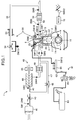
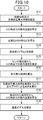
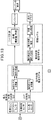
- FIG. 1 is a schematic configuration diagram of a compression self-ignition engine according to an embodiment of the present invention. It is sectional drawing of the combustion chamber of the compression self-ignition engine by embodiment of this invention. It is a block diagram which shows the electric constitution of the control apparatus of the compression self-ignition engine by embodiment of this invention. It is explanatory drawing about the driving
- FIG. 1 is a diagram illustrating the configuration of a compression self-ignition engine according to this embodiment.
- FIG. 2 is a cross-sectional view illustrating the configuration of the combustion chamber according to the present embodiment.
- the intake side is the left side of the drawing, and the exhaust side is the right side of the drawing.
- the intake side in FIG. 2 is the right side of the drawing, and the exhaust side is the left side of the drawing.
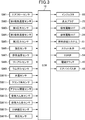
- FIG. 3 is a block diagram illustrating the configuration of the control device for the compression self-ignition engine according to the present embodiment.
- Engine 1 is mounted on a four-wheeled vehicle. The vehicle travels when the engine 1 is driven.
- the fuel of the engine 1 is gasoline in this configuration example.
- the fuel may be gasoline containing bioethanol or the like.
- the fuel of the engine 1 may be any fuel as long as it is a liquid fuel containing at least gasoline.
- the engine 1 includes a cylinder block 12 and a cylinder head 13 placed thereon. A plurality of cylinders 11 are formed inside the cylinder block 12. 1 and 2, only one cylinder 11 is shown.
- the engine 1 is a multi-cylinder engine.
- the piston 3 is slidably inserted in each cylinder 11.
- the piston 3 is connected to the crankshaft 15 via a connecting rod 14.
- the piston 3 defines a combustion chamber 17 together with the cylinder 11 and the cylinder head 13.
- the “combustion chamber” is not limited to the meaning of the space formed when the piston 3 reaches compression top dead center.
- the term “combustion chamber” may be used in a broad sense. That is, the “combustion chamber” may mean a space formed by the piston 3, the cylinder 11, and the cylinder head 13 regardless of the position of the piston 3.
- the upper surface of the piston 3 is a flat surface.
- a cavity 31 is formed on the upper surface of the piston 3.
- the cavity 31 is recessed from the upper surface of the piston 3.
- the cavity 31 has a shallow dish shape.
- the cavity 31 faces an injector 6 described later when the piston 3 is positioned near the compression top dead center.
- the cavity 31 has a convex portion 311.
- the convex portion 311 is provided substantially at the center of the cylinder 11.
- the convex part 311 is substantially conical.
- the convex portion 311 extends upward from the bottom of the cavity 31 along the central axis X of the cylinder 11.
- the upper end of the convex portion 311 is almost the same height as the upper surface of the cavity 31.
- the cavity 31 also has a concave portion 312 provided around the convex portion 311.
- the lower surface of the cylinder head 13, that is, the ceiling surface of the combustion chamber 17 is composed of an inclined surface 1311 and an inclined surface 1312.
- the inclined surface 1311 has an upward slope from the intake side toward the axis X.
- the inclined surface 1312 has an upward slope from the exhaust side toward the axis X.
- the ceiling surface of the combustion chamber 17 has a so-called pent roof shape.
- the shape of the combustion chamber 17 is not limited to the shape illustrated in FIG.
- the shape of the cavity 31, the shape of the upper surface of the piston 3, the shape of the ceiling surface of the combustion chamber 17, and the like can be changed as appropriate.
- the geometric compression ratio of the engine 1 is set high for the purpose of improving the theoretical thermal efficiency and stabilizing the CI (Compression Ignition) combustion described later.
- the geometric compression ratio of the engine 1 is 14 or more.
- the geometric compression ratio may be 16, for example.
- the geometric compression ratio may be set as appropriate in the range of 14 to 20.
- the cylinder head 13 has two intake ports 18 for each cylinder 11.
- the intake port 18 communicates with the combustion chamber 17.
- An intake valve 21 is disposed in the intake port 18.
- the intake valve 21 opens and closes between the combustion chamber 17 and the intake port 18.
- the intake valve 21 is opened and closed at a predetermined timing by an intake valve mechanism.
- the intake valve mechanism has an intake electric VVT (Variable Valve Timing) 23 that is a variable valve mechanism as shown in FIG.
- the intake electric VVT 23 is configured to continuously change the rotation phase of the intake camshaft within a predetermined angle range. Thereby, the valve opening timing and the valve closing timing of the intake valve 21 are continuously changed.
- the intake valve mechanism may have a hydraulic VVT instead of the electric VVT.
- the cylinder head 13 is also formed with two exhaust ports 19 for each cylinder 11.
- the exhaust port 19 communicates with the combustion chamber 17.
- An exhaust valve 22 is disposed in the exhaust port 19.
- the exhaust valve 22 opens and closes between the combustion chamber 17 and the exhaust port 19.
- the exhaust valve 22 is opened and closed at a predetermined timing by an exhaust valve mechanism.
- the exhaust valve mechanism has an exhaust electric VVT 24 that is a variable valve mechanism as shown in FIG.
- the exhaust electric VVT 24 is configured to continuously change the rotation phase of the exhaust camshaft within a predetermined angle range. Thereby, the valve opening timing and the valve closing timing of the exhaust valve 22 continuously change.
- the exhaust valve mechanism may have a hydraulic VVT instead of the electric VVT.
- the engine 1 adjusts the length of the overlap period related to the opening of the intake valve 21 and the opening of the exhaust valve 22 by the intake electric VVT 23 and the exhaust electric VVT 24.
- residual gas in the combustion chamber 17 is scavenged, hot burned gas is confined in the combustion chamber 17 (that is, internal EGR (Exhaust Gas Recirculation) gas is introduced into the combustion chamber 17).
- internal EGR Extra Gas Recirculation
- the intake electric VVT 23 and the exhaust electric VVT 24 constitute an internal EGR system as one of the state quantity setting devices. Note that the internal EGR system is not necessarily configured by VVT.
- An injector 6 is attached to the cylinder head 13 for each cylinder 11.
- the injector 6 is configured to inject fuel directly into the combustion chamber 17.
- the injector 6 is disposed in a valley portion of the pent roof where the intake-side inclined surface 1311 and the exhaust-side inclined surface 1312 intersect.
- the injector 6 is arranged such that its injection axis is along the central axis X of the cylinder 11.
- the injection axis of the injector 6 and the position of the convex portion 311 of the cavity 31 substantially coincide.
- the injector 6 faces the cavity 31.
- the injection axis of the injector 6 may not coincide with the center axis X of the cylinder 11. Even in this case, it is desirable that the injection axis of the injector 6 and the position of the convex portion 311 of the cavity 31 coincide with each other.
- the injector 6 is constituted by a multi-injection type fuel injection valve having a plurality of injection holes.
- the injector 6 injects fuel so that the fuel spray spreads radially from the center of the combustion chamber 17 as indicated by arrows in FIG.
- the injector 6 may inject fuel at the timing when the piston 3 is positioned near the compression top dead center.
- the injector 6 injects the fuel
- the fuel spray flows downward along the convex portion 311 of the cavity 31 while mixing with fresh air, and along the bottom surface and the peripheral side surface of the concave portion 312, the combustion chamber. From the center of 17, it spreads radially outward in the radial direction. Thereafter, the air-fuel mixture reaches the opening of the cavity 31 and flows from the radially outer side toward the center of the combustion chamber 17 along the inclined surface 1311 on the intake side and the inclined surface 1312 on the exhaust side.
- the injector 6 is not limited to a multi-hole injector.
- the injector 6 may employ an external valve opening type injector.
- the fuel supply system 61 is connected to the injector 6.
- the fuel supply system 61 includes a fuel tank 63 configured to store fuel, and a fuel supply path 62 that connects the fuel tank 63 and the injector 6 to each other.
- a fuel pump 65 and a common rail 64 are interposed in the fuel supply path 62.
- the fuel pump 65 pumps fuel to the common rail 64.
- the fuel pump 65 is a plunger-type pump driven by the crankshaft 15.
- the common rail 64 is configured to store the fuel pumped from the fuel pump 65 at a high fuel pressure. When the injector 6 is opened, the fuel stored in the common rail 64 is injected into the combustion chamber 17 from the injection port of the injector 6.
- the fuel supply system 61 is configured to be able to supply high pressure fuel of 30 MPa or more to the injector 6.
- the maximum fuel pressure of the fuel supply system 61 may be about 120 MPa, for example.
- the pressure of the fuel supplied to the injector 6 may be changed according to the operating state of the engine 1.
- the configuration of the fuel supply system 61 is not limited to the above configuration.
- a spark plug 25 is attached to the cylinder head 13 for each cylinder 11.
- the spark plug 25 forcibly ignites the air-fuel mixture in the combustion chamber 17.
- the spark plug 25 is disposed on the intake side across the center axis X of the cylinder 11.
- the spark plug 25 is located between the two intake ports 18.
- the spark plug 25 is attached to the cylinder head 13 so as to be inclined from the top to the bottom toward the center of the combustion chamber 17. As shown in FIG. 2, the electrode of the spark plug 25 faces the combustion chamber 17 and is located near the ceiling surface of the combustion chamber 17.
- An intake passage 40 is connected to one side of the engine 1.
- the intake passage 40 communicates with the intake port 18 of each cylinder 11.
- the intake passage 40 is a passage through which gas introduced into the combustion chamber 17 flows.
- An air cleaner 41 that filters fresh air is disposed at the upstream end of the intake passage 40.
- a surge tank 42 is disposed near the downstream end of the intake passage 40.
- a throttle valve 43 is disposed between the air cleaner 41 and the surge tank 42 in the intake passage 40.
- the throttle valve 43 is configured to adjust the amount of fresh air introduced into the combustion chamber 17 by adjusting the opening of the valve.
- the throttle valve 43 constitutes one of state quantity setting devices.
- a supercharger 44 is disposed downstream of the throttle valve 43.
- the supercharger 44 is configured to supercharge the gas introduced into the combustion chamber 17.
- the supercharger 44 is a mechanical supercharger driven by the engine 1.
- the mechanical supercharger 44 may be, for example, a roots type.
- the configuration of the mechanical supercharger 44 may be any configuration.
- the mechanical supercharger 44 may be a Rishorum type or a centrifugal type.
- An electromagnetic clutch 45 is interposed between the supercharger 44 and the engine 1.
- the electromagnetic clutch 45 transmits a driving force from the engine 1 to the supercharger 44 between the supercharger 44 and the engine 1 or interrupts the transmission of the driving force.
- the supercharger 44 is switched on and off. That is, in the engine 1, the supercharger 44 can switch between supercharging the gas introduced into the combustion chamber 17 and the supercharger 44 not supercharging the gas introduced into the combustion chamber 17. It is configured to be able to.
- An intercooler 46 is disposed downstream of the supercharger 44 in the intake passage 40.
- the intercooler 46 is configured to cool the gas compressed in the supercharger 44.
- the intercooler 46 may be configured to be, for example, a water cooling type.
- a bypass passage 47 is connected to the intake passage 40.
- the bypass passage 47 connects the upstream portion of the supercharger 44 and the downstream portion of the intercooler 46 in the intake passage 40 so as to bypass the supercharger 44 and the intercooler 46.
- An air bypass valve 48 is disposed in the bypass passage 47. The air bypass valve 48 adjusts the flow rate of the gas flowing through the bypass passage 47.
- the air bypass valve 48 When the supercharger 44 is turned off (that is, when the electromagnetic clutch 45 is disconnected), the air bypass valve 48 is fully opened. As a result, the gas flowing through the intake passage 40 bypasses the supercharger 44 and is introduced into the combustion chamber 17 of the engine 1.
- the engine 1 is operated in a non-supercharged state, that is, in a natural intake state.
- the supercharger 44 When the supercharger 44 is turned on (that is, when the electromagnetic clutch 45 is connected), part of the gas that has passed through the supercharger 44 flows backward through the bypass passage 47 upstream of the supercharger. . Since the reverse flow rate can be adjusted by adjusting the opening degree of the air bypass valve 48, the supercharging pressure of the gas introduced into the combustion chamber 17 can be adjusted.
- the supercharger 44, the bypass passage 47, and the air bypass valve 48 constitute a supercharging system 49.
- the air bypass valve 48 constitutes one of state quantity setting devices.
- the exhaust passage 50 is connected to the other side of the engine 1.
- the exhaust passage 50 communicates with the exhaust port 19 of each cylinder 11.
- the exhaust passage 50 is a passage through which exhaust gas discharged from the combustion chamber 17 flows.
- the upstream portion of the exhaust passage 50 constitutes an independent passage branched for each cylinder 11.
- the upstream end of the independent passage is connected to the exhaust port 19 of each cylinder 11.
- An exhaust gas purification system having one or more catalytic converters 51 is disposed in the exhaust passage 50.
- the catalytic converter 51 includes a three-way catalyst. Note that the exhaust gas purification system is not limited to the one including only the three-way catalyst.
- the EGR passage 52 constituting the external EGR system is connected between the intake passage 40 and the exhaust passage 50.
- the EGR passage 52 is a passage for returning a part of burned gas to the intake passage 40.
- the upstream end of the EGR passage 52 is connected downstream of the catalytic converter 51 in the exhaust passage 50.
- the downstream end of the EGR passage 52 is connected to the upstream side of the supercharger 44 in the intake passage 40.
- a water-cooled EGR cooler 53 is disposed in the EGR passage 52.
- the EGR cooler 53 is configured to cool the burned gas.
- An EGR valve 54 is also disposed in the EGR passage 52.
- the EGR valve 54 is configured to adjust the flow rate of burnt gas flowing through the EGR passage 52. By adjusting the opening degree of the EGR valve 54, the recirculation amount of the cooled burned gas, that is, the external EGR gas can be adjusted.
- the EGR system 55 includes an external EGR system that includes an EGR passage 52 and an EGR valve 54, and an internal EGR system that includes the above-described intake electric VVT 23 and exhaust electric VVT 24. It is configured.
- the EGR valve 54 also constitutes one of the state quantity setting devices.
- the control device for the compression self-ignition engine includes an ECU (Engine Control Unit) 10 for operating the engine 1.
- the ECU 10 is a controller based on a well-known microcomputer, and includes a central processing unit (CPU) that executes a program and, for example, a RAM (Random Access Memory) or a ROM (Read Only Memory).
- CPU central processing unit
- RAM Random Access Memory
- ROM Read Only Memory
- a memory for storing programs and data, and an input / output bus for inputting and outputting electrical signals.
- the ECU 10 is an example of a controller.
- the ECU 10 is connected to various sensors SW1 to SW16 as shown in FIGS.
- the sensors SW1 to SW16 output detection signals to the ECU 10.
- the sensors include the following sensors.
- the air flow sensor SW1 that is disposed downstream of the air cleaner 41 in the intake passage 40 and detects the flow rate of fresh air flowing through the intake passage 40
- the first intake temperature sensor SW2 that detects the temperature of fresh air
- the intake passage 40 the first pressure sensor SW3 that is disposed downstream of the connection position of the EGR passage 52 and upstream of the supercharger 44 and detects the pressure of the gas flowing into the supercharger 44, and supercharging in the intake passage 40
- the second intake air temperature sensor SW4 which is disposed downstream of the machine 44 and upstream of the connection position of the bypass passage 47 and detects the temperature of the gas flowing out from the supercharger 44, is attached to the surge tank 42, and A second pressure sensor SW5 for detecting the pressure of the gas downstream of the feeder 44, attached to the cylinder head 13 corresponding to each cylinder 11, and each A finger pressure sensor SW6 that detects the pressure (in-cylinder pressure) in the firing chamber 17, an exhaust temperature sensor SW7 that is disposed in the exhaust passage 50 and detects the temperature of the exhaust gas discharge
- a linear O 2 sensor SW8 that is disposed upstream of the exhaust gas and detects the oxygen concentration in the exhaust gas
- a lambda O 2 sensor SW9 that is disposed downstream of the catalytic converter 51 in the exhaust passage 50 and detects the oxygen concentration in the exhaust gas.
- a water temperature sensor SW10 that is attached to the engine 1 and detects the temperature of the cooling water, a crank angle sensor SW11 that is attached to the engine 1 and detects the rotation angle of the crankshaft 15, an accelerator pedal mechanism, and an accelerator pedal Accelerator opening sensor SW12 for detecting the accelerator opening corresponding to the operation amount
- An intake cam angle sensor SW13 that is attached to the engine 1 and detects the rotation angle of the intake camshaft, an exhaust cam angle sensor SW14 that is attached to the engine 1 and detects the rotation angle of the exhaust camshaft, and an EGR passage 52 are arranged.
- an EGR differential pressure sensor SW15 that detects a differential pressure upstream and downstream of the EGR valve 54, and a fuel pressure sensor SW16 that is attached to the common rail 64 of the fuel supply system 61 and detects the pressure of the fuel supplied to the injector 6 is there.
- the ECU10 judges the driving
- the ECU 100 sends a control signal related to the calculated control amount to the electromagnetic clutch 45 of the injector 6, spark plug 25, intake electric VVT 23, exhaust electric VVT 24, fuel supply system 61, throttle valve 43, EGR valve 54, and supercharger 44. And output to the air bypass valve 48.
- the ECU 10 adjusts the boost pressure by adjusting the opening of the air bypass valve 48 based on the differential pressure across the turbocharger 44 obtained from the detection signals of the first pressure sensor SW3 and the second pressure sensor SW5. adjust.
- the ECU 10 adjusts the opening degree of the EGR valve 54 based on the differential pressure across the EGR valve 54 obtained from the detection signal of the EGR differential pressure sensor SW15, whereby the amount of external EGR gas introduced into the combustion chamber 17 is adjusted. Adjust. Details of control of the engine 1 by the ECU 10 will be described later.
- FIG. 4 illustrates an operation region of the engine 1.
- the operating region of the engine 1 is roughly divided into three regions with respect to the load level. Specifically, the three regions include a low load region (A) including idle operation, a high load region (C) including a fully open load, and a low load region (A) and a high load region (C). It is a medium load region (B).
- the engine 1 performs combustion by compression self-ignition in an intermediate load region with the main purpose of improving fuel consumption and exhaust gas performance.
- combustion modes in each of the low load region, the medium load region, and the high load region will be described in order.
- the combustion mode when the operating state of the engine 1 is in the low load region is SI (Spark Ignition) combustion in which the air-fuel mixture is combusted by flame propagation when the spark plug 25 ignites the air-fuel mixture in the combustion chamber 17. is there.
- SI Spark Ignition
- the A / F of the air-fuel mixture may be set within the purification window of the three-way catalyst. Therefore, the excess air ratio ⁇ of the air-fuel mixture may be set to 1.0 ⁇ 0.2.
- the EGR system 55 introduces EGR gas into the combustion chamber 17 when the operating state of the engine 1 is in a low load region.
- the G / F of the air-fuel mixture that is, the mass ratio of the total gas and fuel in the combustion chamber 17 is set to 18.5 or more and 30 or less.
- the mixture is EGR lean.
- the dilution ratio of the mixture is high. If the G / F of the air-fuel mixture is set to 25, for example, SI combustion can be performed stably in the low load operation region without causing the air-fuel mixture to self-ignite. In the low load region, the G / F of the air-fuel mixture is kept constant regardless of the load level of the engine 1. By doing so, SI combustion is stabilized throughout the low load region. Further, the fuel efficiency of the engine 1 is improved and the exhaust gas performance is improved.
- combustion The filling amount of the gas introduced into the chamber 17 must be less than 100%.
- the engine 1 executes throttling for adjusting the opening degree of the throttle valve 43 and / or a mirror cycle for delaying the closing timing of the intake valve 21 after the intake bottom dead center.
- the combustion temperature of the air-fuel mixture and the exhaust gas temperature may be increased by further reducing the gas filling amount. This is advantageous in maintaining the catalytic converter 51 in an active state.
- the engine 1 performs SPCCI combustion combining SI combustion and CI combustion in the medium load region.
- the spark plug 25 forcibly ignites the air-fuel mixture in the combustion chamber 17 so that the air-fuel mixture burns by flame propagation, and the temperature in the combustion chamber 17 increases due to the heat generated by SI combustion. By becoming high, the unburned air-fuel mixture burns by self-ignition.
- the calorific value of the SI combustion By adjusting the calorific value of the SI combustion, the temperature variation in the combustion chamber 17 before the start of compression can be absorbed. Even if the temperature in the combustion chamber 17 before the start of compression varies, the self-ignition timing can be controlled by adjusting the SI combustion start timing by adjusting the ignition timing, for example.
- the timing of self-ignition In SPCCI combustion, in order to accurately control the timing of self-ignition, the timing of self-ignition must change in response to changing the ignition timing. It is preferable that the sensitivity at which the self-ignition timing changes is high with respect to the change in the ignition timing.
- the change in the ignition timing changes sufficiently. If the change in the self-ignition timing changes sufficiently with respect to the change in the ignition timing, the self-ignition timing can be accurately controlled, and the self-ignition timing can be changed quickly according to the operating state of the engine. be able to. In addition, about CI combustion air-fuel
- a method of forming a swirl in the combustion chamber by narrowing the passages of some of the intake passages using a swirl control valve or the like may be used.
- EGR gas gathers on the combustion chamber wall surface side, and there is little EGR gas near the spark plug in the center of the combustion chamber, and the G / F can be made small.
- the engine 1 when the operating state of the engine 1 is in the medium load region, the engine 1 is in a state in the combustion chamber 17 where the ⁇ of the mixture is 1.0 ⁇ 0.2 and the G / F of the mixture is Set to 18.5 or more and 30 or less.
- ⁇ By controlling the timing of self-ignition with high accuracy, an increase in combustion noise can be avoided when the operating state of the engine 1 is in the middle load region. Further, by performing the CI combustion with the dilution ratio of the air-fuel mixture as high as possible, the fuel efficiency performance of the engine 1 can be enhanced. Furthermore, by setting ⁇ of the air-fuel mixture to 1.0 ⁇ 0.2, it becomes possible to purify the exhaust gas by the three-way catalyst, so that the exhaust gas performance of the engine 1 becomes good.
- the G / F of the mixture is set to 18.5 or more and 30 or less (for example, 25), and ⁇ of the mixture is set to 1.0 ⁇ 0.2.
- the state quantity in the combustion chamber 17 does not fluctuate greatly between when the operating state of the engine 1 is in the low load region and when it is in the medium load region. Therefore, the robustness of the control of the engine 1 against the change in the load of the engine 1 is enhanced.
- the amount of fuel increases, unlike in the low load region, so there is no need to adjust the filling amount of the gas introduced into the combustion chamber 17.
- the opening degree of the throttle valve 43 is fully open.
- the medium load region (B) is a region that is higher than the predetermined load, and is a first medium load region (B1) that performs supercharging, and a region that is below the predetermined load and that does not perform supercharging. It is divided into a medium load region (B2).
- the predetermined load is, for example, a 1 ⁇ 2 load.
- the second medium load region is a region having a lower load than the first medium load region.
- the combustion mode in the first medium load region may be referred to as supercharging SPCCI combustion
- the combustion mode in the second medium load region may be referred to as non-supercharging SPCCI combustion.
- the engine 1 adjusts the amount of fresh air introduced into the combustion chamber 17 by adjusting the amount of EGR gas introduced into the combustion chamber 17. .
- the state quantity in the combustion chamber 17 is substantially constant, for example, ⁇ of the air-fuel mixture is 1.0, while the G / F of the air-fuel mixture is changed in the range of 25 to 28.
- the engine 1 increases both fresh air and EGR gas introduced into the combustion chamber 17 as the fuel amount increases.
- the G / F of the air-fuel mixture is constant even when the load on the engine 1 increases.
- the state quantity in the combustion chamber 17 is, for example, ⁇ of the air-fuel mixture becomes substantially constant at 1.0, and G / F of the air-fuel mixture is constant at 25.
- the combustion mode when the operating state of the engine 1 is in the high load region is SI combustion.
- the combustion mode in the high load region may be referred to as high load SI combustion.
- the ⁇ of the air-fuel mixture is 1.0 ⁇ 0.2. Further, the G / F of the air-fuel mixture is set to 18.5 or more and 30 or less. In the high load region, the opening degree of the throttle valve 43 is fully open, and the supercharger 44 performs supercharging.
- the engine 1 reduces the amount of EGR gas as the load increases.
- the G / F of the air-fuel mixture decreases as the load on the engine 1 increases. Since the amount of fresh air introduced into the combustion chamber 17 is increased by the amount of EGR gas reduced, the amount of fuel can be increased. This is advantageous in increasing the maximum output of the engine 1.
- the G / F of the air-fuel mixture is changed, for example, in the range of 17 to 25 in the high load region.
- the state quantity in the combustion chamber 17 does not fluctuate greatly between when the operating state of the engine 1 is in the high load region and when it is in the medium load region. The robustness of the control of the engine 1 against the change of the load of the engine 1 is increased.
- the engine 1 performs SI combustion in a high load region, but there is a problem that abnormal combustion such as pre-ignition and knocking is likely to occur due to a high geometric compression ratio and the like. . Therefore, the engine 1 is configured to avoid abnormal combustion by devising the form of fuel injection in the high load region. Specifically, the ECU 10 injects fuel into the combustion chamber 17 at a high fuel pressure of 30 MPa or more and at a timing within a period from the latter stage of the compression stroke to the early stage of the expansion stroke (hereinafter, this period is referred to as a retard period). Thus, a control signal is output to the fuel supply system 61 and the injector 6.
- the ECU 10 also outputs a control signal to the spark plug 25 so that the air-fuel mixture is ignited at a timing near the compression top dead center after fuel injection.
- injecting fuel into the combustion chamber 17 at a high fuel pressure and at a timing within the retard period is referred to as high-pressure retarded injection.
- the reaction time of the air-fuel mixture includes (1) a period during which the injector 6 injects fuel (that is, an injection period), and (2) after the fuel injection is completed, This is a time obtained by adding the period until formation (that is, the mixture formation period) and (3) the period until SI combustion started by ignition ends ((3) combustion period).
- the injection period and the mixture formation period are shortened.
- the timing for starting fuel injection can be made closer to the ignition timing.
- the fuel is injected at the timing within the retard period from the latter stage of the compression stroke to the early stage of the expansion stroke.
- High-pressure retarded injection can shorten the injection period, the mixture formation period, and the combustion period. Compared with the case where fuel is injected into the combustion chamber 17 during the intake stroke, the high-pressure retarded injection can greatly shorten the time for the air-fuel mixture to react. In the high pressure retarded injection, the time for which the air-fuel mixture reacts is shortened, so that abnormal combustion can be avoided.
- the fuel pressure is set to 30 MPa or more, for example, the injection period, the mixture formation period, and the combustion period can be effectively shortened.
- the fuel pressure is preferably set as appropriate according to the properties of the fuel.
- the upper limit value of the fuel pressure may be 120 MPa.
- the high-pressure retarded injection also injects fuel into the combustion chamber 17 only after the compression top dead center is reached. Therefore, in the compression stroke, in the combustion chamber 17, a gas that does not contain fuel, in other words, a specific heat ratio. High gas is compressed. If high pressure retarded injection is performed when the number of revolutions of the engine 1 is high, the in-cylinder temperature at the compression top dead center, that is, the compression end temperature becomes high. An increase in the compression end temperature may cause abnormal combustion such as knocking.
- the high load region (C) is divided into the first high load region (C1) on the low rotation side and the second high load region (C2) having a higher rotational speed than the first high load region (C1). ).
- the first high load region may include a low rotation region and a medium rotation region when the high load region is divided into three regions of low rotation, medium rotation, and high rotation.
- the second high load region may include a high rotation region obtained by dividing the inside of the high load region into three regions of low rotation, medium rotation, and high rotation.
- the injector 6 receives the control signal from the ECU 10 and performs the above-described high-pressure retarded injection.
- the injector 6 receives a control signal from the ECU 10 and injects fuel at a predetermined timing during the intake stroke.
- the fuel injection performed during the intake stroke does not require high fuel pressure.
- the ECU 10 outputs a control signal to the fuel supply system 61 so that the fuel pressure is lower than the fuel pressure of the high pressure retarded injection (for example, the fuel pressure is less than 40 MPa). By reducing the fuel pressure, the mechanical resistance loss of the engine 1 is reduced, which is advantageous for improving fuel consumption.
- the specific heat ratio of the gas in the combustion chamber 17 is lowered, so that the compression end temperature is lowered. Since the compression end temperature becomes low, the engine 1 can avoid abnormal combustion. Since it is not necessary to retard the ignition timing in order to avoid abnormal combustion, in the second high load region, the spark plug 25 is mixed at the timing near the compression top dead center, as in the first high load region. I ignite my mind.
- the air-fuel mixture does not reach self-ignition due to the high-pressure retarded injection, so the engine 1 can perform stable SI combustion.
- the air-fuel mixture does not reach self-ignition due to fuel injection during the intake stroke, and therefore the engine 1 can perform stable SI combustion.
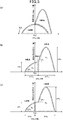
- FIGS. 5A to 5C show waveforms illustrating the change in the heat generation rate with respect to the crank angle in SPCCI combustion.
- the unburned mixture self-ignites.
- the inclination of the waveform of the heat generation rate changes from small to large almost at the compression top dead center. That is, the heat generation rate waveform has an inflection point at the timing when CI combustion starts.
- dp / d ⁇ can be used as an index representing combustion noise.
- SPCCI combustion can reduce dp / d ⁇ as described above, it is possible to avoid excessive combustion noise. . Combustion noise can be suppressed below an acceptable level.
- SPCCI combustion ends.
- CI combustion has a shorter combustion period than SI combustion.
- the combustion end timing is earlier than SI combustion.
- SPCCI combustion can bring the combustion end time during the expansion stroke closer to the compression top dead center.
- the SPCCI combustion is more advantageous for improving the fuel efficiency of the engine 1 than the SI combustion. Therefore, SPCCI combustion can achieve both prevention of combustion noise and improvement in fuel efficiency.
- SI rate is defined as a parameter indicating the characteristics of SPCCI combustion.
- the SI rate is a ratio between SI combustion and CI combustion in SPCCI combustion combining SI combustion and CI combustion. When the SI rate is high, the SI combustion rate is high, and when the SI rate is low, the CI combustion rate is high.
- the SI rate is not limited to the above definition. Various definitions can be considered for the SI rate.
- the waveform of the heat generation rate has an inflection point at the timing when CI combustion starts. Therefore, as shown in FIG. 5B, the inflection point in the waveform of the heat release rate may be used as a boundary, and the range on the advance side of the boundary may be SI combustion and the range on the retard side may be CI combustion.
- the SI rate may be defined on the basis of a part of the area rather than the entire area on the advance side from the boundary and a part of the area on the retard side from the boundary.
- SI rate ⁇ P SI / ( ⁇ P SI + ⁇ P CI ) may be calculated from the peak ⁇ P SI of the heat generation rate in the range on the advance side of the boundary and the peak ⁇ P CI of the heat generation rate in the range on the retard side.
- SI rate ⁇ P SI / ⁇ P CI .
- the SI rate ⁇ SI / ( ⁇ SI + ⁇ CI ) may be calculated based on the inclination ⁇ SI of the heat generation rate in the advance angle range from the boundary and the heat generation rate inclination ⁇ CI in the retard angle range.
- the SI rate may be ⁇ SI / ⁇ CI .
- the SI rate is defined from the magnitude of the generation rate) or the slope (that is, the rate of change of the heat generation rate).
- the SI rate may be similarly defined from the area, the length of the horizontal axis, the length of the vertical axis, or the slope.
- the inflection point of the combustion waveform related to the heat generation rate or pressure does not always appear clearly.
- the following definition may be used as the definition of the SI rate that is not based on the inflection point. That is, as shown in FIG. 5C, in the combustion waveform, the range on the advance side from the compression top dead center (TDC) is SI combustion, and the range on the retard side from the compression top dead center is CI combustion. Also good.
- the area (Q SI , Q CI ), the horizontal axis length ( ⁇ SI , ⁇ CI ), the vertical axis length ( ⁇ P SI , ⁇ P CI ), or the slope ( ⁇ SI , ⁇ CI ), the SI rate may be defined.
- the SI rate may be defined not based on the combustion waveform actually performed in the combustion chamber 17 but based on the fuel amount.
- split injection including front-stage injection and rear-stage injection is performed.
- the fuel injected into the combustion chamber 17 by the post-injection is not diffused in the combustion chamber 17 and is positioned in the vicinity of the spark plug 25 because the time from injection to ignition is short. Therefore, the fuel injected into the combustion chamber 17 by the post-stage injection mainly burns by SI combustion.
- the fuel injected into the combustion chamber 17 by the pre-stage injection mainly burns by CI combustion.
- the engine 1 switches between SI combustion and SPCCI combustion according to the operating state.
- the engine 1 also changes the SI rate according to the operating state of the engine 1. Since the operating range in which combustion is performed by self-ignition is expanded, the engine 1 is compatible with both suppressing the generation of combustion noise and improving fuel consumption.
- FIG. 6 shows the change in the SI ratio, the change in the state quantity in the combustion chamber 17 with respect to the load of the engine 1, the change in the valve opening period of the intake valve and the valve opening period of the exhaust valve, and the fuel injection timing. And changes in ignition timing are illustrated.
- the basic operation control of the engine 1 according to the present embodiment will be described on the assumption that the load of the engine 1 gradually increases at a predetermined rotational speed.
- Low load area low load SI combustion
- the SI rate is constant at 100%.
- the G / F of the air-fuel mixture is kept constant between 18.5 and 30 as described above.
- the engine 1 introduces fresh air and burned gas in an amount corresponding to the amount of fuel into the combustion chamber 17. As described above, the amount of fresh air introduced is adjusted by throttling and / or mirror cycles. Since the dilution rate is high, the in-cylinder temperature is increased in order to stabilize SI combustion.
- the engine 1 introduces internal EGR gas into the combustion chamber 17 in a low load region.
- the internal EGR gas is introduced into the combustion chamber 17 by providing a negative overlap period in which both the intake valve 21 and the exhaust valve 22 are closed across the exhaust top dead center (that is, the burned gas is introduced into the combustion chamber). 17).
- the internal EGR gas amount is adjusted by adjusting the opening timing of the intake valve 21 by the intake electric VVT 23 and adjusting the opening timing of the exhaust valve 22 by the exhaust electric VVT 24. This is done by appropriately setting the length.
- the filling amount introduced into the combustion chamber 17 is adjusted to less than 100%. As the amount of fuel increases, the amount of fresh air introduced into the combustion chamber 17 and the amount of internal EGR gas gradually increase.
- the EGR rate in the low load region (that is, the mass ratio of EGR gas to the total gas in the combustion chamber 17) is, for example, 50%.
- the injector 6 injects fuel into the combustion chamber 17 during the intake stroke.
- a homogeneous air-fuel mixture is formed in which the excess air ratio ⁇ is 1.0 ⁇ 0.2 and the G / F is 18.5-30.
- the spark plug 25 ignites the air-fuel mixture at a predetermined timing before the compression top dead center, the air-fuel mixture burns by flame propagation without reaching self-ignition.
- the engine 1 switches from the low load SI combustion to the non-supercharged SPCCI combustion.
- the SI rate is less than 100%.
- the rate of CI combustion is increased as the fuel amount increases.
- the SI rate gradually decreases as the load on the engine 1 increases. In the example of FIG. 6, the SI rate decreases to a predetermined value (minimum value) of 50% or less. Since the amount of fuel increases, the combustion temperature becomes higher in the second medium load region. If the in-cylinder temperature becomes too high, heat generation at the start of CI combustion becomes intense. If it becomes so, combustion noise will increase.
- the hot internal EGR gas is gradually reduced and the cooled external EGR gas is gradually increased.
- the negative overlap period is changed from the maximum to zero as the load increases in the second medium load region.
- the internal EGR gas becomes zero when the load becomes highest in the second medium load region.
- the opening degree of the EGR valve 54 is changed in the second medium load region so that the external EGR gas increases as the load increases.
- the amount of external EGR gas introduced into the combustion chamber 17 is adjusted, for example, between 0 and 30% when expressed in terms of the EGR rate.
- the EGR gas is replaced from the internal EGR gas to the external EGR gas as the load on the engine 1 increases.
- the amount of EGR gas introduced into the combustion chamber 17 is continuous between the low load region and the second medium load region.
- a large amount of internal EGR gas is introduced into the combustion chamber 17 as in the low load region. Since the in-cylinder temperature becomes high, the air-fuel mixture reliably ignites when the load on the engine 1 is low.
- the external EGR gas is introduced into the combustion chamber 17 in the high load region in the second medium load region. Since the in-cylinder temperature is lowered, combustion noise associated with CI combustion can be suppressed when the load on the engine 1 is high.
- the filling amount introduced into the combustion chamber 17 is made 100%.
- the opening degree of the throttle valve 43 is fully open.
- the timing of self-ignition becomes earlier as the ratio of CI combustion increases. If the timing of self-ignition becomes earlier than the compression top dead center, heat generation when CI combustion starts becomes intense. If it becomes so, combustion noise will increase. Therefore, when the load on the engine 1 reaches the predetermined load L1, the engine 1 gradually increases the SI rate as the load on the engine 1 increases.
- the engine 1 increases the rate of SI combustion as the fuel amount increases.
- the ignition timing is gradually advanced as the fuel amount increases.
- the in-cylinder temperature is adjusted by reducing the introduction amount of the internal EGR gas and increasing the introduction amount of the external EGR gas. Therefore, even if the fuel amount increases, the in-cylinder temperature due to SI combustion. It is possible to suppress the rise.
- the rate of change in the heat generation rate of SI combustion should be almost unchanged even when the load increases. If the ignition timing is advanced, the amount of heat generated by SI combustion increases as the SI combustion starts earlier.
- the unburned mixture self-ignites at a timing after the compression top dead center.
- the heat generation by the CI combustion is almost the same even if the load of the engine 1 is high because the heat generation amount of the SI combustion is increased. Therefore, it is possible to avoid an increase in combustion noise by setting the SI rate gradually higher in accordance with the load on the engine 1 becoming higher. Note that the combustion center of gravity of the non-supercharged SPCCI combustion is retarded as the load increases.
- the injector 6 injects fuel into the combustion chamber 17 in two steps, a front injection and a rear injection, during the compression stroke.
- the front-stage injection injects fuel at a timing away from the ignition timing
- the rear-stage injection injects fuel at a timing close to the ignition timing.
- a substantially homogeneous air / fuel mixture having an excess air ratio ⁇ of 1.0 ⁇ 0.2 and a G / F of 18.5 to 30 is formed. Since the air-fuel mixture is substantially homogeneous, it is possible to improve fuel efficiency by reducing unburned loss and to improve exhaust gas performance by avoiding the generation of smoke.
- the spark plug 25 ignites the air-fuel mixture at a predetermined timing before the compression top dead center, the air-fuel mixture burns by flame propagation. Thereafter, the unburned mixture self-ignites and performs CI combustion.
- the fuel injected by the latter-stage injection mainly undergoes SI combustion.
- the fuel injected by the pre-stage injection mainly undergoes CI combustion. Since the pre-injection is performed during the compression stroke, it is possible to prevent the fuel injected by the pre-injection from inducing abnormal combustion such as premature ignition. Moreover, the fuel injected by the latter stage injection can be stably burned by flame propagation.
- Second medium load region (supercharged SPCCI combustion)
- the supercharger 44 supercharges fresh air and external EGR gas.
- Both the amount of fresh air introduced into the combustion chamber 17 and the amount of external EGR gas increase as the load on the engine 1 increases.
- the amount of external EGR gas introduced into the combustion chamber 17 is, for example, 30% in terms of the EGR rate.
- the EGR rate is constant regardless of the load level of the engine 1. Accordingly, the G / F of the air-fuel mixture is also constant regardless of the load of the engine 1. Note that the amount of EGR gas introduced into the combustion chamber 17 is continuous between the second medium load region and the first medium load region.
- the SI rate is a predetermined value less than 100%, and is constant with respect to the load of the engine 1.
- the SI rate in the first medium load region is The SI rate in the first medium load region with a high load of 1 is higher than the SI rate in the second medium load region.
- the SI rate is continuous at the boundary between the first medium load region and the second medium load region.
- the ignition timing is gradually advanced as the fuel amount increases.
- the amount of fresh air and EGR gas introduced into the combustion chamber 17 is increased by supercharging, the heat capacity is large. Even if the amount of fuel increases, it is possible to suppress an increase in in-cylinder temperature due to SI combustion.
- the waveform of the heat release rate of supercharged SPCCI combustion increases in a similar manner as the load increases.
- the rate of change in the heat generation rate of SI combustion hardly changes, and the amount of heat generation in SI combustion increases.
- the unburned mixture self-ignites at approximately the same timing after compression top dead center.
- the amount of heat generated by CI combustion increases as the load on the engine 1 increases.
- both the heat generation amount of SI combustion and the heat generation amount of CI combustion increase, so the SI rate becomes constant with respect to the load of the engine 1.
- the combustion noise increases.
- the load of the engine 1 is relatively high in the first medium load region, a certain level of combustion noise can be tolerated. Note that the combustion gravity center of supercharged SPCCI combustion is retarded as the load increases.
- an overlap period is provided in which both the intake valve 21 and the exhaust valve 22 are opened with the exhaust top dead center interposed therebetween.
- the burned gas remaining in the combustion chamber 17 is scavenged by the supercharging pressure.
- the self-ignition timing can be set to an appropriate timing in a region where the load of the engine 1 is relatively high, and the SI rate can be maintained at a predetermined SI rate. .
- the amount of fresh air in the combustion chamber 17 can be increased by scavenging the burned gas.
- the injector 6 injects fuel into the combustion chamber 17 in the compression stroke in two steps, the first injection and the second injection, in the same manner as in the second medium load region.
- the front-stage injection injects fuel at a timing away from the ignition timing
- the rear-stage injection injects fuel at a timing close to the ignition timing.
- a substantially homogeneous air / fuel mixture having an excess air ratio ⁇ of 1.0 ⁇ 0.2 and a G / F of 18.5 to 30 is formed. Since the air-fuel mixture is substantially homogeneous, it is possible to improve fuel efficiency by reducing unburned loss and to improve exhaust gas performance by avoiding the generation of smoke.
- the spark plug 25 ignites the air-fuel mixture at a predetermined timing before the compression top dead center, the air-fuel mixture burns by flame propagation. Thereafter, the unburned mixture self-ignites and performs CI combustion.
- the fuel injected by the latter-stage injection mainly undergoes SI combustion.
- the fuel injected by the pre-stage injection mainly undergoes CI combustion. Since the pre-injection is performed during the compression stroke, it is possible to prevent the fuel injected by the pre-injection from inducing abnormal combustion such as premature ignition. Moreover, the fuel injected by the latter stage injection can be stably burned by flame propagation.
- the throttle valve 43 is fully open.
- the supercharger 44 supercharges fresh air and external EGR gas even in a high load region.
- the EGR valve 54 adjusts the opening to gradually reduce the amount of external EGR gas introduced as the load on the engine 1 increases. By doing so, the fresh air introduced into the combustion chamber 17 increases as the load on the engine 1 increases. As the amount of fresh air increases, the amount of fuel can be increased, which is advantageous in increasing the maximum output of the engine 1. Note that the amount of EGR gas introduced into the combustion chamber 17 is continuous between the first medium load region and the high load region.
- an overlap period is provided in which both the intake valve 21 and the exhaust valve 22 are opened across the exhaust top dead center.
- the burned gas remaining in the combustion chamber 17 is scavenged by the supercharging pressure. Thereby, generation
- the amount of fresh air in the combustion chamber 17 can be increased.
- the injector 6 injects fuel into the combustion chamber 17 within the retard period as described above.
- the injector 6 injects fuel into the combustion chamber 17 during the intake stroke.
- a substantially homogeneous air-fuel mixture is formed in the combustion chamber 17 with an excess air ratio ⁇ of 1.0 ⁇ 0.2 and a G / F of 18.5-30.
- the ECU 10 functions as means (first and second control means) for controlling each of the SI rate and the self-ignition timing, and by these means, during one combustion cycle of the engine 1, SI combustion and Both combustion states of the CI combustion are changed according to the operating state of the engine 1.
- a desired SPCCI combustion waveform is realized.
- a desired SI rate and self-ignition timing are realized.
- FIG. 7 is a diagram for explaining the relationship between the engine load, the SI rate, and the self-ignition timing in the present embodiment.
- the abscissa indicates the crank angle, and the ordinate indicates the heat generation rate (dQ / d ⁇ ), and the combustion waveforms (in other words, the heat generation shape) of a plurality of SPCCI combustions applied according to the engine load. Is shown.
- Such a combustion waveform shown in FIG. 7 is typically applied in the above-described second medium load region B2 where supercharging is not performed, more specifically, in a region exceeding the predetermined load L1 in the second medium load region B2. (See FIG. 6). Note that, since the amount of generated heat Q increases as the engine load increases, the area of “dQ / d ⁇ ” increases.
- the value of “dQ / d ⁇ ” Shows a combustion waveform in which is normalized to have approximately the same area.
- the ECU 10 has a crank angle near the compression top dead center (TDC) that can realize stable self-ignition. (Relatively advanced crank angle) is applied to the self-ignition timing of CI combustion. Further, since the fuel consumption is better when the combustion period is shorter, the ECU 10 decreases the SI rate in SPCCI combustion, that is, increases the ratio of CI combustion in SPCCI combustion.
- the ECU 10 increases the SI rate (arrows A11 and A12) and suppresses the period during which CI combustion is performed in order to suppress the generation of combustion noise.
- the self-ignition timing of CI combustion is retarded so as to extend as much as possible (arrow A13).
- the ECU 10 increases the SI rate as the engine load increases and retards the self-ignition timing (arrows A14, A15, A16).
- the self-ignition timing is fixed to this retardation limit ⁇ lim so that the self-ignition timing is not retarded from the retardation limit ⁇ lim .
- This retard angle limit ⁇ lim is determined based on the limit ignition timing at which the CI combustion self-ignition stability is ensured, and by limiting the retard angle of the self-ignition timing by such retard angle limit ⁇ lim . , CI combustion self-ignition stability is ensured.
- the retardation limit ⁇ lim is not limited to being set to a fixed value, and may be changed according to various states of the engine 1 (for example, the in-cylinder temperature).
- the ECU 10 determines the crank angle at which the heat generation rate (dQ / d ⁇ ) in SI combustion becomes almost maximum as shown in the graph G14 (the broken line graph G15 indicating only SI combustion also).
- the self-ignition stability of CI combustion is ensured by applying the self-ignition timing.
- the ECU 10 applies the crank angle corresponding to the heat generation peak (50% combustion position) of SI combustion to the self-ignition timing.
- the ECU 10 shifts from the second middle load region B2 to the first middle load region B1, thereby suppressing combustion noise by executing supercharging by the supercharger 44.
- the combustion waveform applied in this case is almost the same as that of the graph G14.
- the ECU 10 ensures that the combustion center of gravity position in the SPCCI combustion becomes substantially constant regardless of the engine load in order to reliably satisfy the target engine torque according to the driver request.
- Set the SI rate and self-ignition timing In particular, since the fuel efficiency is improved when the combustion center of gravity in SPCCI combustion is in the vicinity of 2 to 6 degrees (ATDC 2 to 6 degrees) after compression top dead center, the ECU 10 maintains the combustion center of gravity position in such SPCCI combustion. As described above, the SI rate and the self-ignition timing are set in consideration of the engine load. At this time, the ECU 10 further adjusts the in-cylinder temperature before the start of combustion.
- the ECU 10 performs control to increase the in-cylinder temperature before the start of combustion as the engine load decreases (in other words, performs control to decrease the in-cylinder temperature before the start of combustion as the engine load increases). For example, the ECU 10 performs control to increase the internal EGR rate so as to increase the in-cylinder temperature before the start of combustion. Thereby, the start of SI combustion can be delayed, that is, the start of SI combustion can be prevented from being accelerated.
- the ignition timing for SI combustion may be advanced so that the SI rate increases as the engine load increases.
- set the ignition timing to the advance side within a range that does not exceed the predetermined advance limit. It is good to do.
- it is preferable to increase the SI rate by decreasing the in-cylinder temperature as much as the engine load increases. This is because if the in-cylinder temperature before the start of combustion is high, the in-cylinder temperature quickly reaches the ignition temperature after SI combustion, so that CI combustion may occur earlier than the desired self-ignition timing.
- the ECU 10 functions as means (first and second control means) for controlling each of the SI rate and the in-cylinder temperature, and by these means, during one combustion cycle of the engine 1, SI combustion and Both combustion states of the CI combustion are changed according to the operating state of the engine 1.
- a desired SPCCI combustion waveform is realized.
- a desired SI rate and self-ignition timing are realized.
- FIG. 8 is an explanatory diagram of a method for controlling the SI rate according to the in-cylinder temperature before the start of combustion in the present embodiment.
- FIG. 8 shows the crank angle on the horizontal axis and the in-cylinder temperature on the vertical axis.
- the graph G21 shows only the operation of the piston 3 when the in-cylinder temperature before the start of combustion is relatively low (corresponding to motoring).
- the graph G23 shows the change in the in-cylinder temperature only due to the operation of the piston 3 when the in-cylinder temperature before the start of combustion is relatively high.
- the graph G22 shows the change in the in-cylinder temperature when the SI combustion is performed so that the self-ignition is generated at the compression top dead center (TDC) when the in-cylinder temperature before the start of the combustion is relatively low.
- Graph G24 shows the change in the in-cylinder temperature when the SI combustion is performed so that self-ignition occurs almost at the compression top dead center when the in-cylinder temperature before the start of combustion is relatively high.
- FIG. 9 is an explanatory diagram of a method for controlling the SI rate so as to realize a desired self-ignition timing in accordance with the in-cylinder temperature before the start of combustion in the present embodiment.
- the horizontal axis indicates the crank angle
- the vertical axis indicates the heat generation rate (dQ / d ⁇ ).
- Graph G31 shows a combustion waveform (in other words, heat generation shape) applied when the in-cylinder temperature before the start of combustion is relatively low
- graph G32 shows when the in-cylinder temperature before the start of combustion is relatively high.
- the combustion waveform to be applied (in other words, the heat generation shape) is shown.
- the ECU 10 controls the SI rate so as to realize a desired self-ignition timing of CI combustion (that is, target self-ignition timing) regardless of the in-cylinder temperature before the start of combustion. Specifically, as described above, the ECU 10 increases the SI rate as the in-cylinder temperature before the start of combustion decreases (in other words, the SI rate decreases as the in-cylinder temperature before the start of combustion increases). In this case, the ECU 10 increases the SI rate as the in-cylinder temperature before the start of combustion decreases at the same engine load.
- the ECU 10 controls the area of “dQ / d ⁇ ” up to the self-ignition timing ⁇ CL as the SI rate, that is, the amount of heat generated by SI combustion so that the target self-ignition timing is realized. Further, the ECU 10 increases the SI rate by, for example, advancing the ignition timing by the spark plug 25 to accelerate the start of SI combustion.
- SPCCI combustion control in order to achieve desired SPCCI combustion (specifically, desired SI rate, self-ignition timing, etc.) that can achieve improvement in fuel consumption, ensuring combustion stability, suppressing combustion noise, etc., Details of the SPCCI combustion control performed by the ECU 10 will be described.
- the ECU 10 sets a target SI rate and a target self-ignition timing according to the operating state of the engine 1 and starts SPCCI combustion to be set according to the target SI rate and the target self-ignition timing.
- the previous in-cylinder temperature specifically, the in-cylinder temperature at the time of closing the intake valve 21 (hereinafter referred to as “IVC” as appropriate) is obtained, and the EGR rate and the like are set so as to realize this in-cylinder temperature.
- IVC in-cylinder temperature at the time of closing the intake valve 21
- a higher SI rate can be realized by setting the target in-cylinder temperature lower than when the target SI rate is low. If the target in-cylinder temperature is set low, the EGR rate decreases and the in-cylinder temperature decreases. Further, when the target self-ignition timing is relatively advanced, the self-ignition timing can be advanced by setting the target in-cylinder temperature higher than when the target self-ignition timing is relatively retarded. If the target in-cylinder temperature is set high, the EGR rate increases and the in-cylinder temperature rises.
- the ECU 10 obtains the in-cylinder temperature at the IVC time point from the sensor detection value after the control as described above, and controls the ignition timing so that the target self-ignition timing is realized based on this in-cylinder temperature.
- the target self-ignition timing is appropriately realized by performing control with quicker response than the control of the EGR rate, that is, ignition control immediately before SPCCI combustion.
- the ECU 10 determines the in-cylinder temperature at the IVC point before the SPCCI combustion based on the in-cylinder pressure detected by the finger pressure sensor SW6 during the SPCCI combustion after the SPCCI combustion is actually performed by the control as described above. Ask. Then, the ECU 10 calculates the two in-cylinder temperatures calculated when the next SPCCI combustion is performed based on the calculated in-cylinder temperature, specifically, the in-cylinder calculated to realize the target self-ignition timing. The temperature and the in-cylinder temperature calculated from the sensor detection value thereafter are corrected. By doing so, the calculation (estimation) accuracy of the in-cylinder temperature is improved, and the SI rate and the self-ignition timing can be accurately controlled.
- FIG. 10 is a flowchart showing the basic control of SPCCI combustion according to the present embodiment
- FIG. 11 is an explanatory diagram of a method for estimating the in-cylinder temperature before combustion according to the present embodiment. Note that the flow shown in FIG. 10 is repeatedly executed by the ECU 10 when the engine 1 is in an operating state in which SPCCI combustion is performed, typically when the engine load is in the middle load region (B1 or B2).
- the middle load region B1 or B2
- step S11 the ECU 10 reads the detection signals of the sensors SW1 to SW16, determines the operating state of the engine 1, and determines the target SI rate and the target self-ignition timing. Set. Specifically, the ECU 10 obtains a target engine torque corresponding to the accelerator opening detected by the accelerator opening sensor SW12, and sets a target SI rate and a target self-ignition timing suitable for realizing the target engine torque. To do.
- step S12 the ECU 10 uses a predetermined combustion model and in-cylinder state estimation model to determine the in-cylinder temperature at the time of IVC that should be set in order to achieve the target self-ignition timing.
- a method of obtaining the in-cylinder temperature at the time of IVC will be specifically described with reference to FIG.
- step S12 the ECU 10 obtains a target air amount corresponding to the operating state of the engine 1 in addition to the in-cylinder temperature at the time of IVC.
- FIG. 11 shows the crank angle on the horizontal axis and the in-cylinder temperature on the vertical axis
- the graph G41 shows the change in the in-cylinder temperature due to SPCCI combustion
- the graph G42 shows only the operation of the piston 3 (motoring). It shows the change in the in-cylinder temperature due to (sometimes).
- the ECU 10 obtains the in-cylinder temperature at the self-ignition portion (unburned portion) at the compression top dead center (TDC) from the target self-ignition timing ( ⁇ CL ) set as described above (point P11) (point). P12).
- the ECU 10 subtracts the temperature increase of the self-ignition portion due to SI combustion corresponding to the target SI rate as shown by the arrow A3 from the obtained in-cylinder temperature, so that the compression top dead center at the time of motoring is reduced.
- the in-cylinder temperature is obtained (point P13).
- the ECU 10 obtains the in-cylinder temperature at the intake bottom dead center (BDC) by subtracting the temperature rise due to the compression of the air-fuel mixture during the polytropic process of the engine 1 from the obtained in-cylinder temperature (point P14). ).
- the ECU 10 obtains the in-cylinder temperature at the time of IVC by converting the obtained in-cylinder temperature in the polytropic process (point P15).
- a point P16 indicates the crank angle and the in-cylinder temperature when SI combustion is started by ignition of the spark plug 25.
- step S13 the ECU 10 uses the predetermined in-cylinder state estimation model in consideration of the current intake air amount to realize the in-cylinder temperature at the IVC time obtained in step S12.
- the degree of EGR gas to be introduced into the gas (that is, the EGR rate) is obtained.
- the ECU 10 obtains an internal EGR rate necessary for realizing the in-cylinder temperature at the time of IVC.
- step S14 the ECU 10 controls various actuators using a predetermined in-cylinder state control model in order to realize the EGR rate obtained in step S13.
- the ECU 10 simply introduces the intake electric VVT 23 and the exhaust electric VVT 24 (hereinafter referred to as “the combination of these” in order to introduce the internal EGR gas corresponding to the internal EGR rate for realizing the in-cylinder temperature at the time of IVC.
- the phase angle of the intake / exhaust VVT 23, 24 ” may be controlled.
- the ECU 10 opens the throttle valve 43, the air bypass valve 48, the electromagnetic clutch 45 shut-off / connection, and the EGR valve 54 open so as to realize the target air amount obtained in step S12. Control the degree.
- Such a control of the ECU 10 changes the state in the combustion chamber 17 to a desired state.
- step S15 the ECU 10 reads the detection signals of the sensors SW1 to SW16 and obtains the in-cylinder temperature at the actual IVC time using a predetermined in-cylinder state estimation model. Specifically, the ECU 10 detects the intake air amount detected by the air flow sensor SW1, the intake air temperature detected by the first intake air temperature sensor SW2 and the second intake air temperature sensor SW4, the intake cam angle sensor SW13 and the exhaust cam angle. The intake camshaft and exhaust camshaft rotation angles detected by the sensor SW14 are acquired, and the in-cylinder temperature at the time of IVC is obtained based on these. In this case, ECU10 calculates
- the ECU 10 determines the fuel injection amounts of the front-stage injection and the rear-stage injection when performing split injection including the front-stage injection and the rear-stage injection.
- the fuel injected by the post-stage injection undergoes SI combustion
- the fuel injected by the pre-stage injection mainly undergoes CI combustion.
- the fuel injection amount of the post-stage injection with respect to the pre-stage injection It is preferable to adjust the ratio (when the air-fuel ratio is made lean, the fuel injection amount of the post-injection may be adjusted independently). Then, the ECU 10 controls the injector 6 to inject the fuel injection amount determined in this way. Further, the ECU 10 controls the injector 6 so that fuel is injected at an injection timing based on a preset map.
- step S16 the ECU 10 obtains the self-ignition timing in CI combustion from the in-cylinder temperature at the IVC time obtained in step S15, using a predetermined in-cylinder state estimation model. Specifically, the ECU 10 obtains each state quantity in the order of point P15 ⁇ point P14 ⁇ point P13 ⁇ point P12 ⁇ point P11 in detail in the reverse order of the procedure described with reference to FIG. Then, the self-ignition time in CI combustion is obtained.
- the ECU 10 performs ignition by the spark plug 25 so that the target self-ignition timing set at step S11 is realized as much as possible using a predetermined combustion model based on the self-ignition timing obtained at step S16. Decide when. That is, the ECU 10 determines the ignition timing by the spark plug 25 for starting SI combustion so that the CI combustion starts as close to the target self-ignition timing as possible. The ECU 10 controls the spark plug 25 so that ignition is performed at the ignition timing thus determined.
- step S17 SPCCI combustion including SI combustion and CI combustion is performed in the engine 1.
- step S18 finish of SPCCI combustion.
- the ECU 10 uses the predetermined combustion model and the in-cylinder state estimation model on the basis of the in-cylinder pressure detected by the finger pressure sensor SW6 while the SPCCI combustion is being performed, and the IVC time point before the SPCCI combustion. Find the in-cylinder temperature at. That is, the ECU 10 retrospectively obtains the in-cylinder temperature at the IVC time before the start of the previous SPCCI combustion. The method for obtaining the in-cylinder temperature at the time of IVC will be specifically described with reference to FIG. 11 again.
- the ECU 10 obtains the self-ignition timing ( ⁇ CL ) from the in-cylinder pressure detected by the finger pressure sensor SW6 (point P11). For example, the ECU 10 determines the crank angle corresponding to the inflection point in the detected in-cylinder pressure waveform (corresponding to the heat generation rate waveform) as the self-ignition timing. Then, the ECU 10 obtains the in-cylinder temperature at the self-ignition portion (unburned portion) at the compression top dead center (TDC) from the self-ignition timing ( ⁇ CL ) (P12).
- TDC compression top dead center
- the ECU 10 determines the in-cylinder temperature at the compression top dead center during motoring by subtracting the temperature increase of the self-ignition part due to SI combustion as indicated by the arrow A3 from the determined in-cylinder temperature ( Point P13).
- the ECU 10 obtains the in-cylinder temperature at the intake bottom dead center (BDC) by subtracting the temperature rise due to the compression of the air-fuel mixture during the polytropic process of the engine 1 from the obtained in-cylinder temperature (point P14).
- the ECU 10 obtains the in-cylinder temperature at the time of IVC by converting the obtained in-cylinder temperature in the polytropic process (point P15).
- step S19 the ECU 10 corrects the in-cylinder temperature calculated in the current SPCCI combustion based on the in-cylinder temperature at the IVC time in the previous SPCCI combustion obtained in step S18. Specifically, the ECU 10 corrects the in-cylinder temperature estimation error based on the in-cylinder state estimation model executed in steps S12 and S15 for the current SPCCI combustion. That is, the ECU 10 determines the in-cylinder temperature at the IVC time calculated to realize the target self-ignition timing (step S12), and the in-cylinder temperature at the IVC time calculated from the sensor detection value thereafter (step S15). ) Is corrected based on the in-cylinder temperature obtained in step S18.
- the ECU 10 does not correct the in-cylinder temperature calculated in steps S12 and S15 so as to match the in-cylinder temperature in step S18, but the control is found after the actual SPCCI combustion by the SPCCI combustion control.
- the correction in step S19 is performed.
- FIG. 12 is a block diagram showing a first control model for controlling the in-cylinder state in advance so as to realize the target self-ignition timing in the present embodiment.
- FIG. 13 is a block diagram showing a second control model for performing quick control of responsiveness so as to realize the target self-ignition timing based on the sensor detection value after the control in the first control model in the present embodiment.
- the in-cylinder temperature is estimated based on the in-cylinder pressure detected during SPCCI combustion, and the in-cylinder temperature estimated by the first and second control models in the subsequent SPCCI combustion is corrected.
- It is a block diagram which shows the 3rd control model for doing.
- the ECU 10 is configured to execute control in the first to third control models.
- the ECU 10 refers to a map set in advance and obtains a target engine torque corresponding to the accelerator opening detected by the accelerator opening sensor SW12. A target combustion pressure corresponding to the target engine torque is obtained. Next, the ECU 10 obtains a target combustion pressure to be finally applied and a target combustion mode based on the current operating state of the engine 1. Basically, any one of a combustion mode in which only SI combustion is performed and a combustion mode in which SPCCI combustion including SI combustion and CI combustion is performed is applied to the target combustion mode.
- the ECU 10 obtains the target air amount, the target self-ignition timing, and the target SI rate as the target combustion state based on the final target combustion pressure and the target combustion mode.
- the ECU 10 obtains the in-cylinder temperature at the target self-ignition timing by subtracting the temperature increase of the self-ignition part due to SI combustion corresponding to the target SI rate using a predetermined combustion model (in-cylinder at TDC). The temperature may be obtained), and the in-cylinder temperature at the time of IVC is obtained from this in-cylinder temperature using a predetermined in-cylinder state estimation model. Since the method of obtaining the in-cylinder temperature at the time of IVC is as described in FIGS. 10 and 11, the description thereof is omitted here.
- the in-cylinder state estimation is performed based on the in-cylinder temperature in the previous SPCCI combustion estimated in the third control model (see FIG. 14). Correct the estimation error of the cylinder temperature by the model.
- the ECU 10 refers to a preset map or the like, and based on the target air amount and the in-cylinder temperature at the time of IVC, the target EGR rate indicating the degree of EGR gas to be introduced into the combustion chamber 17, particularly A target internal EGR rate is obtained. Then, the ECU 10 obtains a target valve closing timing (target IVC) of the target intake valve 21 and a target valve closing timing (target EVC) of the target exhaust valve 22 for realizing the target internal EGR rate.
- target IVC target valve closing timing
- target EVC target valve closing timing
- the ECU 10 determines a target phase angle (target intake / exhaust VVT) of each of the intake / exhaust VVTs 23 and 24 corresponding to the target IVC and the target EVC using a predetermined in-cylinder state control model, and sets the target phase angle to the target phase angle.
- the intake and exhaust VVTs 23 and 24 are controlled so as to be set.
- the ECU 10 uses a predetermined in-cylinder state control model to achieve the target air amount described above, and uses the predetermined throttle position and target external EGR. A rate, a target air bypass opening, and a target clutch opening (corresponding to disconnection / connection of the electromagnetic clutch 45) are determined. Then, the ECU 10 controls the throttle valve 43 according to the target throttle opening, controls the EGR valve 54 according to the target external EGR rate, controls the air bypass valve 48 according to the target air bypass opening, and opens the target clutch. The electromagnetic clutch 45 is controlled according to the degree. Thereafter, SPCCI combustion is performed in the engine 1.
- the ECU 10 detects the intake air amount detected by the airflow sensor SW1 and the intake air temperature detected by the first intake air temperature sensor SW2 and the second intake air temperature sensor SW4. Further, the rotation angles of the intake camshaft and the exhaust camshaft detected by the intake cam angle sensor SW13 and the exhaust cam angle sensor SW14 are acquired. Next, the ECU 10 obtains the actual intake gas (fresh air) state quantity, typically temperature and pressure, based on the intake air quantity and the outside air EGR rate corresponding to these sensor detection values.
- fresh air fresh air
- the ECU 10 determines the actual internal EGR based on the phase angles of the intake and exhaust VVTs 23 and 24 corresponding to the rotation angles of the intake camshaft and the exhaust camshaft (basically, the phase angle is on the advance side).
- the state quantity of gas typically temperature and pressure, is determined.
- the ECU 10 obtains the in-cylinder temperature at the actual IVC time point from the intake gas state quantity and the internal EGR gas state quantity using a predetermined in-cylinder state estimation model.
- the ECU 10 corrects the estimation error due to the in-cylinder state estimation model based on the in-cylinder temperature in the previous SPCCI combustion estimated in the third control model (see FIG. 14), and the cylinder at the time of IVC. Find the internal temperature.
- the ECU 10 obtains an intake charge amount, an in-cylinder oxygen concentration, and the like as state quantities in the cylinder.
- the fuel injection amount from is determined.
- the ECU 10 determines the fuel injection amounts of the front-stage injection and the rear-stage injection when performing split injection including the front-stage injection and the rear-stage injection.
- the ECU 10 controls the injector 6 to inject the fuel injection amount determined in this way. Further, the ECU 10 controls the injector 6 so that fuel is injected at an injection timing based on a preset map.
- the ECU 10 obtains the self-ignition timing by obtaining the in-cylinder temperature when self-ignition occurs from the obtained in-cylinder temperature at substantially the same time as the control of the injector 6 described above. Since the method for obtaining the self-ignition timing is as described in FIGS. 10 and 11, the description thereof is omitted here.
- the ECU 10 determines a target ignition timing by the spark plug 25 so as to realize the initially set target self-ignition timing based on the determined self-ignition timing using a predetermined combustion model. Then, the ECU 10 controls the spark plug 25 so that ignition is performed at the target ignition timing thus determined. Thereafter, SPCCI combustion is performed in the engine 1.
- the second control model is not limited to being performed after the first control model, and the second control model may be performed substantially in parallel with the first control model.
- the processes in steps S15 to S17 corresponding to the second control model may be performed substantially in parallel with the processes in steps S11 to S14 corresponding to the first control model.
- Good. the ECU 10 obtains the in-cylinder temperature at the time of IVC and repeatedly controls the internal EGR rate and the like using the first control model.
- the process for obtaining the ignition timing for realizing the target self-ignition timing by obtaining the in-cylinder temperature at the time of IVC based on the sensor detection value by the second control model is repeatedly performed.
- the ECU 10 interrupts execution of the first control model after reaching the crank angle corresponding to IVC, and the ignition timing obtained from the in-cylinder temperature corresponding to the sensor detection value when reaching the IVC. Ignition control is performed using.
- the ECU 10 acquires the in-cylinder pressure detected by the finger pressure sensor SW ⁇ b> 6 while the SPCCI combustion is being performed after the SPCCI combustion in the engine 1. .
- the ECU 10 determines the combustion state of SPCCI combustion using a predetermined fuel detection model. For example, the ECU 10 determines an inflection point or the like in the acquired in-cylinder pressure waveform (corresponding to the heat generation rate waveform) as the combustion state.
- the ECU 10 obtains the in-cylinder temperature at the self-ignition timing from the combustion state of SPCCI combustion using a predetermined in-cylinder state estimation model, and obtains the in-cylinder temperature at the IVC point from this in-cylinder temperature. Since the method of obtaining the in-cylinder temperature at the time of IVC is as described in FIGS. 10 and 11, the description thereof is omitted here.
- the ECU 10 corrects the in-cylinder temperature calculated in the current SPCCI combustion based on the obtained in-cylinder temperature at the time of IVC. That is, the ECU 10 corrects the estimation error of the in-cylinder temperature by the in-cylinder state estimation model executed in the current SPCCI combustion.
- the ECU 10 determines the in-cylinder temperature at the IVC time point (see FIG. 12) calculated to realize the target self-ignition timing in the first control model, and the sensor detection value in the second control model.
- the calculated in-cylinder temperature at the time of IVC is corrected.
- the in-cylinder temperature obtained from the third control model is set as an actual value (reference value), and the in-cylinder temperature obtained from the first and second control models with respect to the in-cylinder temperature as the actual value. Is treated as including an error, and the above correction is performed.
- FIG. 15 shows, in order from the top, the heat generation rate (dQ / d ⁇ ), the closing timing of the intake valve 21 (actual IVC and target IVC), and the in-cylinder temperature at the IVC time point estimated in the second control model (hereinafter referred to as “in-cylinder temperature”) Is called “temperature estimated value based on intake / exhaust model” as appropriate), the in-cylinder temperature at the time of IVC estimated in the third control model (hereinafter referred to as “temperature estimated value based on combustion model”), and combustion model
- the correction amount of the error of the temperature estimated value by the intake / exhaust model with respect to the temperature estimated value, the estimated temperature after correction, the ignition timing, the self-ignition timing, and the SI rate are shown.
- FIG. 15 shows the crank angle on the horizontal axis, and shows changes in parameters with respect to the crank angle.
- FIG. 15 shows only the closing timing (IVC) of the intake valve 21, but the closing timing (EVC) of the exhaust valve 22 also changes in the same way as IVC.
- FIG. 15 shows an example in which the error (true value) of the temperature estimated value by the intake / exhaust model with respect to the temperature estimated value by the combustion model changes by about 50 [K] due to disturbance immediately after the start of the nth cycle.
- the ECU 10 estimates the in-cylinder temperature at the IVC time point using the second control model, and obtains 400 [K] as the estimated temperature value based on the intake / exhaust model (arrow A41).
- SPCCI combustion is performed in the engine 1, and after this combustion, the ECU 10 in-cylinder at the self-ignition timing ⁇ CL in the SPCCI combustion based on the in-cylinder pressure detected by the finger pressure sensor SW6 by the third control model.
- the in-cylinder temperature at the IVC point is estimated from the temperature (arrow A42), and 450 [K] is obtained as the estimated temperature value by the combustion model.
- the error of the temperature estimated value by the intake / exhaust model with respect to the temperature estimated value by the combustion model is ⁇ 50 [K] (arrow A43). Therefore, the ECU 10 sets the correction amount of the error of the temperature estimated value by the intake / exhaust model to 50 [K] with respect to the temperature estimated value by the combustion model (arrow A44), and the estimated temperature by the intake / exhaust model is 450 [K] from this correction amount. (Arrows A45 and A46). This estimated temperature is deviated from the target temperature 480 [K]. Therefore, in the nth cycle, since the temperature estimation error correction by the intake / exhaust model has shifted, the self-ignition timing deviates from the target self-ignition timing, and the SI rate also deviates from the target SI rate.
- the ECU 10 corrects the target IVC of the intake valve 21 with the first control model so that the estimated temperature after correction becomes 480 [K] (arrow A47). As a result, the temperature estimation error (change) in the nth cycle is reflected.
- the ECU 10 estimates the in-cylinder temperature at the IVC time point using the second control model, obtains 420 [K] as an estimated temperature value based on the intake / exhaust model (arrow A48), and the 420 [K] is described above. Correction is made to 470 [K] by the correction amount 50 [K] (arrows A49 and A50). Further, the ECU 10 corrects the ignition timing based on the corrected estimated temperature 470 [K] (arrow A51). As a result, the ignition timing reflecting both the intake state in the current (n + 1) th cycle and the combustion result in the previous nth cycle is applied.
- the actual IVC of the intake valve 21 is still deviated from the target IVC, so that the SI rate remains slightly deviated from the target SI rate.
- the temperature estimation error by the intake / exhaust model is correctly corrected, and the estimated temperature after correction becomes the target temperature 480 [K], so the actual IVC of the intake valve 21 reaches the target IVC, The SI rate almost coincides with the target SI rate.
- the deviation in the correction of the temperature estimation error due to the intake / exhaust model as described above is caused by a delay in the operation of a device that adjusts the in-cylinder state (intake / exhaust VVT23, 24 that adjusts the internal EGR, etc.) This can be caused by not operating properly.
- the control for adjusting the SI rate and the control for adjusting the self-ignition timing and / or the in-cylinder temperature are performed, and SI combustion and CI combustion are performed.
- the combustion state in the SPCCI combustion including is controlled.
- desired SPCCI combustion can be realized appropriately.
- each of the SI rate and the self-ignition timing in SPCCI combustion can be appropriately set to the target value. As a result, it becomes possible to achieve improvements in fuel consumption, combustion stability and combustion noise suppression.
- control (such as control of internal EGR gas) is performed to adjust the in-cylinder temperature before the start of SPCCI combustion, and after this control, the actual in-cylinder temperature before the start of combustion is obtained.
- the SI rate is adjusted by controlling the ignition timing based on the in-cylinder temperature. As a result, the SI rate can be appropriately controlled in consideration of control deviations of various state quantity setting devices.
- various control values for adjusting the SI rate in the current combustion cycle are corrected based on the in-cylinder temperature acquired in the previous combustion cycle, so that the target SI rate in SPCCI combustion is effective.
- the target SI rate in SPCCI combustion is effective.
- the desired combustion state can be appropriately realized for both the transient combustion state and the steady combustion state in the SPCCI combustion.
- the in-cylinder temperature at the closing timing (IVC time) of the intake valve 21 is used, but instead of this, various cylinder temperatures are used by using the in-cylinder temperature at the intake bottom dead center (BDC time). Control may be performed.
- the in-cylinder temperature is obtained from the intake air amount detected by the airflow sensor SW1 in the second control model.
- the in-cylinder pressure is detected from the in-cylinder pressure detected by the finger pressure sensor SW6.
- the internal temperature may be obtained.
- the in-cylinder temperature is obtained from the in-cylinder pressure detected by the finger pressure sensor SW6.
- the in-cylinder temperature is obtained from the intake air amount detected by the airflow sensor SW1. May be.
- a swirl flow may be generated in the combustion chamber by a swirl control valve attached to the intake passage.
- the swirl control valve is disposed in the secondary passage among the primary passage connected to the first intake port and the secondary passage connected to the second intake port, and the flow passage area of the secondary passage is set to the flow passage of the primary passage.
- the swirl may be formed by closing the swirl control valve so as to be narrower than the area.
- SPCCI combustion is performed in a G / F lean mixture with an excess air ratio ⁇ of 1.0 ⁇ 0.2 and a G / F of 18.5 to 30 in a low load region to a medium load region.
- SPCCI combustion may be performed with an A / F lean with an average A / F in the cylinder of 30 or more.
- the A / F of the SI combustion mixture around the spark plug is less than 25, and the A / F of the CI combustion mixture around the SI combustion mixture is set to 35 or more, thereby making the SI combustion steep.
- the in-cylinder temperature is low in the low load region, the combustion noise is relatively small even in the A / F lean SPCCI combustion. Fuel consumption can be further improved due to A / F lean.
- split injection is performed in the compression stroke, but split injection may be performed during the intake stroke, during the compression stroke, specifically during the latter half of the compression stroke.
- the fuel can be distributed substantially evenly in the combustion chamber, and by performing the second injection during the compression stroke, the combustion chamber is heated by the latent heat of vaporization of the fuel. The temperature inside can be lowered. It is possible to prevent the air-fuel mixture including the fuel injected by the first injection from being prematurely ignited.
Landscapes
- Engineering & Computer Science (AREA)
- Chemical & Material Sciences (AREA)
- Combustion & Propulsion (AREA)
- Mechanical Engineering (AREA)
- General Engineering & Computer Science (AREA)
- Signal Processing (AREA)
- Output Control And Ontrol Of Special Type Engine (AREA)
- Combustion Methods Of Internal-Combustion Engines (AREA)
- Electrical Control Of Air Or Fuel Supplied To Internal-Combustion Engine (AREA)
- Combined Controls Of Internal Combustion Engines (AREA)
Abstract
Moteur à auto-allumage par compression (1) effectuant une combustion SI dans laquelle un mélange air-carburant brûle en raison d'une propagation de flamme au moyen de l'allumage d'une bougie d'allumage (25), et une combustion CI dans laquelle le mélange air-carburant brûle en raison de l'auto-allumage provoquée par cette propagation de flamme. Une ECU (10) est équipée d'un premier moyen de commande qui, sur la base de l'état de fonctionnement du moteur (1), commande un débit SI, en tant qu'indice associé au pourcentage de la quantité de chaleur produite par combustion SI avec par rapport à la quantité de chaleur produite par combustion CI ou à la quantité totale de chaleur produite par combustion SI et combustion CI, et d'un second moyen de commande qui commande une température de cylindre avant la combustion SI. L'état de combustion de la combustion SI et de la combustion CI est modifié à l'aide des premier et second moyens de commande conformément à l'état de fonctionnement du moteur (1) pendant un cycle de combustion du moteur (1).
Priority Applications (3)
| Application Number | Priority Date | Filing Date | Title |
|---|---|---|---|
| US16/086,295 US10677143B2 (en) | 2016-11-22 | 2017-11-20 | Control device for compression self-ignition engine |
| EP17874151.8A EP3418542B1 (fr) | 2016-11-22 | 2017-11-20 | Dispositif de commande de moteur à auto-allumage par compression |
| CN201780016805.7A CN108779730B (zh) | 2016-11-22 | 2017-11-20 | 压缩自燃式发动机的控制装置 |
Applications Claiming Priority (4)
| Application Number | Priority Date | Filing Date | Title |
|---|---|---|---|
| JP2016-227201 | 2016-11-22 | ||
| JP2016227201A JP6555539B2 (ja) | 2016-11-22 | 2016-11-22 | 圧縮自己着火式エンジンの制御装置 |
| JP2016-227200 | 2016-11-22 | ||
| JP2016227200A JP6555538B2 (ja) | 2016-11-22 | 2016-11-22 | 圧縮自己着火式エンジンの制御装置 |
Publications (1)
| Publication Number | Publication Date |
|---|---|
| WO2018097104A1 true WO2018097104A1 (fr) | 2018-05-31 |
Family
ID=62195961
Family Applications (1)
| Application Number | Title | Priority Date | Filing Date |
|---|---|---|---|
| PCT/JP2017/041692 Ceased WO2018097104A1 (fr) | 2016-11-22 | 2017-11-20 | Dispositif de commande de moteur à auto-allumage par compression |
Country Status (4)
| Country | Link |
|---|---|
| US (1) | US10677143B2 (fr) |
| EP (1) | EP3418542B1 (fr) |
| CN (1) | CN108779730B (fr) |
| WO (1) | WO2018097104A1 (fr) |
Cited By (4)
| Publication number | Priority date | Publication date | Assignee | Title |
|---|---|---|---|---|
| EP3599360A1 (fr) * | 2018-07-26 | 2020-01-29 | Mazda Motor Corporation | Système de commande pour moteur à allumage par compression, moteur à combustion interne, procédé de détermination de la température dans les cylindres et produit programme informatique |
| JP2020112095A (ja) * | 2019-01-11 | 2020-07-27 | マツダ株式会社 | エンジンの燃焼制御装置 |
| JP2020183728A (ja) * | 2019-05-08 | 2020-11-12 | マツダ株式会社 | エンジンの制御装置 |
| JP2020183729A (ja) * | 2019-05-08 | 2020-11-12 | マツダ株式会社 | エンジンの制御装置 |
Families Citing this family (23)
| Publication number | Priority date | Publication date | Assignee | Title |
|---|---|---|---|---|
| WO2018096587A1 (fr) * | 2016-11-22 | 2018-05-31 | マツダ株式会社 | Dispositif de commande pour moteur de type à auto-allumage par compression |
| WO2018096586A1 (fr) * | 2016-11-22 | 2018-05-31 | マツダ株式会社 | Dispositif de commande pour moteur de type à auto-allumage par compression |
| WO2018096652A1 (fr) * | 2016-11-25 | 2018-05-31 | マツダ株式会社 | Dispositif de commande pour moteur à auto-allumage par compression |
| JP7047581B2 (ja) * | 2018-05-02 | 2022-04-05 | マツダ株式会社 | 圧縮着火式エンジンの制御装置 |
| JP7024584B2 (ja) * | 2018-05-02 | 2022-02-24 | マツダ株式会社 | 圧縮着火式エンジンの制御装置 |
| JP7043961B2 (ja) * | 2018-05-02 | 2022-03-30 | マツダ株式会社 | 圧縮着火式エンジンの制御装置 |
| JP7047580B2 (ja) * | 2018-05-02 | 2022-04-05 | マツダ株式会社 | 圧縮着火式エンジンの制御装置 |
| JP7024587B2 (ja) | 2018-05-02 | 2022-02-24 | マツダ株式会社 | 圧縮着火式エンジンの制御装置 |
| JP7043960B2 (ja) | 2018-05-02 | 2022-03-30 | マツダ株式会社 | 圧縮着火式エンジンの制御装置 |
| US10934965B2 (en) | 2019-04-05 | 2021-03-02 | Woodward, Inc. | Auto-ignition control in a combustion engine |
| JP7223271B2 (ja) | 2019-04-19 | 2023-02-16 | マツダ株式会社 | 予混合圧縮着火式エンジンの制御装置 |
| JP7167831B2 (ja) | 2019-04-19 | 2022-11-09 | マツダ株式会社 | 圧縮着火式エンジンの制御装置 |
| JP7298282B2 (ja) * | 2019-05-08 | 2023-06-27 | マツダ株式会社 | エンジンの制御装置 |
| US10837396B1 (en) * | 2019-05-14 | 2020-11-17 | Science Applications International Corporation | Torque-slewing diesel engine operation |
| JP2020186717A (ja) | 2019-05-17 | 2020-11-19 | マツダ株式会社 | 圧縮着火式エンジンの制御装置 |
| JP2020186716A (ja) | 2019-05-17 | 2020-11-19 | マツダ株式会社 | 圧縮着火式エンジンの制御装置 |
| JP2021021340A (ja) * | 2019-07-24 | 2021-02-18 | マツダ株式会社 | エンジンの燃料噴射制御装置 |
| JP2021021339A (ja) * | 2019-07-24 | 2021-02-18 | マツダ株式会社 | エンジンの燃料噴射制御装置 |
| JP2021021337A (ja) * | 2019-07-24 | 2021-02-18 | マツダ株式会社 | エンジンの燃料噴射制御装置 |
| JP2021021338A (ja) * | 2019-07-24 | 2021-02-18 | マツダ株式会社 | エンジンの燃料噴射制御装置 |
| JP7487646B2 (ja) * | 2020-11-13 | 2024-05-21 | マツダ株式会社 | エンジンシステム |
| US11459964B2 (en) * | 2020-12-07 | 2022-10-04 | Ford Global Technologies, Llc | Methods and systems for an exhaust gas recirculation system |
| JP2023053507A (ja) * | 2021-10-01 | 2023-04-13 | マツダ株式会社 | エンジンシステム、及びエンジンの制御方法 |
Citations (5)
| Publication number | Priority date | Publication date | Assignee | Title |
|---|---|---|---|---|
| JP2003090239A (ja) * | 2001-09-19 | 2003-03-28 | Nissan Motor Co Ltd | 筒内直接噴射式内燃機関 |
| JP2007154859A (ja) * | 2005-12-08 | 2007-06-21 | Mazda Motor Corp | 火花点火式ガソリンエンジンの制御装置 |
| JP2009108777A (ja) * | 2007-10-30 | 2009-05-21 | Toyota Motor Corp | 圧縮着火式内燃機関 |
| JP2012246783A (ja) * | 2011-05-25 | 2012-12-13 | Mazda Motor Corp | 火花点火式エンジンの制御装置 |
| JP2015094334A (ja) * | 2013-11-14 | 2015-05-18 | マツダ株式会社 | 予混合圧縮着火式エンジンの制御装置 |
Family Cites Families (39)
| Publication number | Priority date | Publication date | Assignee | Title |
|---|---|---|---|---|
| JP3362657B2 (ja) * | 1998-01-30 | 2003-01-07 | トヨタ自動車株式会社 | スパークアシスト式自着火内燃機関 |
| JP3817977B2 (ja) * | 1999-07-06 | 2006-09-06 | 株式会社日立製作所 | 圧縮着火式エンジンの制御方法 |
| JP2001073775A (ja) | 1999-08-30 | 2001-03-21 | Nissan Motor Co Ltd | 圧縮着火式内燃機関 |
| JP3760725B2 (ja) * | 2000-05-16 | 2006-03-29 | 日産自動車株式会社 | 圧縮自己着火式ガソリン機関 |
| JP3873580B2 (ja) * | 2000-06-15 | 2007-01-24 | 日産自動車株式会社 | 圧縮自己着火式内燃機関 |
| JP3931549B2 (ja) * | 2000-10-19 | 2007-06-20 | 日産自動車株式会社 | 内燃機関のバルブタイミング制御装置 |
| JP3945152B2 (ja) * | 2000-11-21 | 2007-07-18 | 日産自動車株式会社 | 内燃機関の燃焼制御装置 |
| JP3988383B2 (ja) * | 2000-12-19 | 2007-10-10 | 日産自動車株式会社 | 自己着火式エンジン及びその制御装置 |
| JP3975702B2 (ja) * | 2001-08-02 | 2007-09-12 | 日産自動車株式会社 | 自己着火式エンジンの制御装置 |
| US6968825B2 (en) * | 2003-06-06 | 2005-11-29 | Mazda Motor Corporation | Control device for spark-ignition engine |
| JP4120567B2 (ja) * | 2003-11-11 | 2008-07-16 | トヨタ自動車株式会社 | 内燃機関の噴射制御装置 |
| JP2005307759A (ja) * | 2004-04-16 | 2005-11-04 | Toyota Industries Corp | 予混合圧縮自着火機関の運転方法及び予混合圧縮自着火機関 |
| US7275514B2 (en) * | 2005-04-28 | 2007-10-02 | Gm Global Technology Operations, Inc. | Method of HCCI and SI combustion control for a direct injection internal combustion engine |
| US7240659B2 (en) * | 2005-09-21 | 2007-07-10 | Ford Global Technologies, Llc | Transition strategy for engine operation with spark ignition and homogeneous charge compression ignition modes |
| JP2007113485A (ja) * | 2005-10-20 | 2007-05-10 | Hitachi Ltd | 内燃機関の制御方法及び制御装置 |
| JP4444275B2 (ja) * | 2006-12-28 | 2010-03-31 | 本田技研工業株式会社 | 内燃機関の制御装置 |
| JP4779975B2 (ja) * | 2007-01-10 | 2011-09-28 | 株式会社デンソー | エンジン制御装置 |
| JP4836088B2 (ja) * | 2007-11-08 | 2011-12-14 | 日立オートモティブシステムズ株式会社 | 圧縮自己着火式内燃機関の制御装置および制御方法 |
| JP4625111B2 (ja) * | 2008-05-19 | 2011-02-02 | 本田技研工業株式会社 | 内燃機関の燃料制御装置 |
| JP5040951B2 (ja) * | 2009-03-31 | 2012-10-03 | マツダ株式会社 | 直噴エンジンの制御方法および直噴エンジン |
| US8122868B2 (en) * | 2009-09-25 | 2012-02-28 | GM Global Technology Operations LLC | Method and system for estimating and reducing engine auto-ignition and knock |
| US8434450B2 (en) * | 2010-01-27 | 2013-05-07 | GM Global Technology Operations LLC | Method for operating a direct-injection spark-assisted compression-ignition engine |
| JP5644123B2 (ja) * | 2010-01-27 | 2014-12-24 | マツダ株式会社 | エンジンの制御方法および制御装置 |
| CN102822485B (zh) * | 2010-03-26 | 2015-07-08 | 丰田自动车株式会社 | 内燃机的燃烧控制装置 |
| JP5834829B2 (ja) * | 2011-11-28 | 2015-12-24 | マツダ株式会社 | 火花点火式ガソリンエンジンの制御装置 |
| US8918265B2 (en) * | 2012-01-18 | 2014-12-23 | GM Global Technology Operations LLC | Method and apparatus for controlling operation of an internal combustion engine operating in HCCI combustion mode |
| US9429087B2 (en) * | 2012-09-07 | 2016-08-30 | Mazda Motor Corporation | Spark ignition engine |
| JP5915472B2 (ja) * | 2012-09-07 | 2016-05-11 | マツダ株式会社 | 火花点火式直噴エンジン |
| JP5784682B2 (ja) * | 2013-10-31 | 2015-09-24 | 三菱電機株式会社 | 内燃機関の制御装置 |
| JP5858971B2 (ja) * | 2013-11-18 | 2016-02-10 | 三菱電機株式会社 | 内燃機関の制御装置およびその方法 |
| US9869287B2 (en) * | 2013-11-26 | 2018-01-16 | GM Global Technology Operations LLC | System and method for controlling fuel injection timing based on spark ignition timing while heating a catalyst to the light-off temperature |
| JP6191837B2 (ja) * | 2015-02-19 | 2017-09-06 | マツダ株式会社 | エンジンの制御装置 |
| JP6056895B2 (ja) * | 2015-03-23 | 2017-01-11 | マツダ株式会社 | 直噴エンジンの燃料噴射制御装置 |
| JP6337912B2 (ja) * | 2016-01-25 | 2018-06-06 | トヨタ自動車株式会社 | 内燃機関 |
| JP6315005B2 (ja) * | 2016-02-15 | 2018-04-25 | トヨタ自動車株式会社 | 内燃機関の制御装置 |
| JP2017186984A (ja) * | 2016-04-07 | 2017-10-12 | トヨタ自動車株式会社 | 内燃機関の制御装置 |
| JP6414152B2 (ja) * | 2016-07-12 | 2018-10-31 | トヨタ自動車株式会社 | 内燃機関の制御装置 |
| US10487720B2 (en) * | 2017-05-19 | 2019-11-26 | Mazda Motor Corporation | Control system of compression-ignition engine |
| US10539098B2 (en) * | 2017-05-19 | 2020-01-21 | Mazda Motor Corporation | Control system of compression-ignition engine |
-
2017
- 2017-11-20 WO PCT/JP2017/041692 patent/WO2018097104A1/fr not_active Ceased
- 2017-11-20 US US16/086,295 patent/US10677143B2/en active Active
- 2017-11-20 CN CN201780016805.7A patent/CN108779730B/zh active Active
- 2017-11-20 EP EP17874151.8A patent/EP3418542B1/fr active Active
Patent Citations (5)
| Publication number | Priority date | Publication date | Assignee | Title |
|---|---|---|---|---|
| JP2003090239A (ja) * | 2001-09-19 | 2003-03-28 | Nissan Motor Co Ltd | 筒内直接噴射式内燃機関 |
| JP2007154859A (ja) * | 2005-12-08 | 2007-06-21 | Mazda Motor Corp | 火花点火式ガソリンエンジンの制御装置 |
| JP2009108777A (ja) * | 2007-10-30 | 2009-05-21 | Toyota Motor Corp | 圧縮着火式内燃機関 |
| JP2012246783A (ja) * | 2011-05-25 | 2012-12-13 | Mazda Motor Corp | 火花点火式エンジンの制御装置 |
| JP2015094334A (ja) * | 2013-11-14 | 2015-05-18 | マツダ株式会社 | 予混合圧縮着火式エンジンの制御装置 |
Cited By (11)
| Publication number | Priority date | Publication date | Assignee | Title |
|---|---|---|---|---|
| EP3599360A1 (fr) * | 2018-07-26 | 2020-01-29 | Mazda Motor Corporation | Système de commande pour moteur à allumage par compression, moteur à combustion interne, procédé de détermination de la température dans les cylindres et produit programme informatique |
| US20200032761A1 (en) * | 2018-07-26 | 2020-01-30 | Mazda Motor Corporation | Control system for compression-ignition engine and method of determining in-cylinder temperature |
| CN110778410A (zh) * | 2018-07-26 | 2020-02-11 | 马自达汽车株式会社 | 压缩着火式发动机的控制装置 |
| US10900460B2 (en) | 2018-07-26 | 2021-01-26 | Mazda Motor Corporation | Control system for compression-ignition engine and method of determining in-cylinder temperature |
| CN110778410B (zh) * | 2018-07-26 | 2022-06-28 | 马自达汽车株式会社 | 压缩着火式发动机的控制装置 |
| JP2020112095A (ja) * | 2019-01-11 | 2020-07-27 | マツダ株式会社 | エンジンの燃焼制御装置 |
| JP7139962B2 (ja) | 2019-01-11 | 2022-09-21 | マツダ株式会社 | エンジンの燃焼制御装置 |
| JP2020183728A (ja) * | 2019-05-08 | 2020-11-12 | マツダ株式会社 | エンジンの制御装置 |
| JP2020183729A (ja) * | 2019-05-08 | 2020-11-12 | マツダ株式会社 | エンジンの制御装置 |
| JP7263905B2 (ja) | 2019-05-08 | 2023-04-25 | マツダ株式会社 | エンジンの制御装置 |
| JP7263906B2 (ja) | 2019-05-08 | 2023-04-25 | マツダ株式会社 | エンジンの制御装置 |
Also Published As
| Publication number | Publication date |
|---|---|
| US20190107040A1 (en) | 2019-04-11 |
| CN108779730A (zh) | 2018-11-09 |
| CN108779730B (zh) | 2022-01-11 |
| EP3418542A1 (fr) | 2018-12-26 |
| EP3418542B1 (fr) | 2020-07-08 |
| US10677143B2 (en) | 2020-06-09 |
| EP3418542A4 (fr) | 2019-07-17 |
Similar Documents
| Publication | Publication Date | Title |
|---|---|---|
| EP3418542B1 (fr) | Dispositif de commande de moteur à auto-allumage par compression | |
| JP6555539B2 (ja) | 圧縮自己着火式エンジンの制御装置 | |
| JP6562165B2 (ja) | エンジンの制御装置 | |
| JP6562164B2 (ja) | エンジンの制御装置 | |
| JP2018087566A (ja) | 圧縮自己着火式エンジンの制御装置 | |
| WO2018096585A1 (fr) | Dispositif de commande de moteur de type à auto-allumage par compression | |
| JP6601371B2 (ja) | 圧縮自己着火式エンジンの制御装置 | |
| WO2018096589A1 (fr) | Dispositif de commande de moteur de type à auto-allumage par compression | |
| JP6562163B2 (ja) | 圧縮自己着火式エンジンの燃焼制御装置 | |
| JP6562162B2 (ja) | 圧縮自己着火式エンジンの燃焼制御装置 | |
| JP6562166B2 (ja) | エンジンの制御装置 | |
| WO2018096584A1 (fr) | Dispositif de commande de moteur de type à auto-allumage par compression | |
| WO2018096587A1 (fr) | Dispositif de commande pour moteur de type à auto-allumage par compression | |
| JP6558427B2 (ja) | 圧縮着火式エンジンの制御装置 | |
| JP6555538B2 (ja) | 圧縮自己着火式エンジンの制御装置 | |
| JP6601481B2 (ja) | 圧縮着火式エンジンの制御装置 | |
| JP6555540B2 (ja) | 圧縮自己着火式エンジンの制御装置 | |
| JP6555537B2 (ja) | 圧縮自己着火式エンジンの制御装置 | |
| JP6493504B2 (ja) | 圧縮着火式エンジンの制御装置 | |
| JP6558426B2 (ja) | 圧縮着火式エンジンの制御装置 | |
| JP6558425B2 (ja) | 圧縮着火式エンジンの制御装置 | |
| JP6555308B2 (ja) | 圧縮着火式エンジンの制御装置 |
Legal Events
| Date | Code | Title | Description |
|---|---|---|---|
| WWE | Wipo information: entry into national phase |
Ref document number: 2017874151 Country of ref document: EP |
|
| ENP | Entry into the national phase |
Ref document number: 2017874151 Country of ref document: EP Effective date: 20180920 |
|
| 121 | Ep: the epo has been informed by wipo that ep was designated in this application |
Ref document number: 17874151 Country of ref document: EP Kind code of ref document: A1 |
|
| NENP | Non-entry into the national phase |
Ref country code: DE |