WO2018107664A1 - 一种干扰抑制方法、装置及计算机存储介质 - Google Patents
一种干扰抑制方法、装置及计算机存储介质 Download PDFInfo
- Publication number
- WO2018107664A1 WO2018107664A1 PCT/CN2017/085544 CN2017085544W WO2018107664A1 WO 2018107664 A1 WO2018107664 A1 WO 2018107664A1 CN 2017085544 W CN2017085544 W CN 2017085544W WO 2018107664 A1 WO2018107664 A1 WO 2018107664A1
- Authority
- WO
- WIPO (PCT)
- Prior art keywords
- multipath
- common signal
- specified user
- cell common
- signal autocorrelation
- Prior art date
- Legal status (The legal status is an assumption and is not a legal conclusion. Google has not performed a legal analysis and makes no representation as to the accuracy of the status listed.)
- Ceased
Links
Images


Classifications
-
- H—ELECTRICITY
- H04—ELECTRIC COMMUNICATION TECHNIQUE
- H04B—TRANSMISSION
- H04B1/00—Details of transmission systems, not covered by a single one of groups H04B3/00 - H04B13/00; Details of transmission systems not characterised by the medium used for transmission
- H04B1/69—Spread spectrum techniques
- H04B1/707—Spread spectrum techniques using direct sequence modulation
- H04B1/7097—Interference-related aspects
- H04B1/711—Interference-related aspects the interference being multi-path interference
- H04B1/7115—Constructive combining of multi-path signals, i.e. RAKE receivers
-
- H—ELECTRICITY
- H04—ELECTRIC COMMUNICATION TECHNIQUE
- H04B—TRANSMISSION
- H04B7/00—Radio transmission systems, i.e. using radiation field
- H04B7/02—Diversity systems; Multi-antenna system, i.e. transmission or reception using multiple antennas
- H04B7/04—Diversity systems; Multi-antenna system, i.e. transmission or reception using multiple antennas using two or more spaced independent antennas
- H04B7/06—Diversity systems; Multi-antenna system, i.e. transmission or reception using multiple antennas using two or more spaced independent antennas at the transmitting station
- H04B7/0613—Diversity systems; Multi-antenna system, i.e. transmission or reception using multiple antennas using two or more spaced independent antennas at the transmitting station using simultaneous transmission
- H04B7/0615—Diversity systems; Multi-antenna system, i.e. transmission or reception using multiple antennas using two or more spaced independent antennas at the transmitting station using simultaneous transmission of weighted versions of same signal
- H04B7/0617—Diversity systems; Multi-antenna system, i.e. transmission or reception using multiple antennas using two or more spaced independent antennas at the transmitting station using simultaneous transmission of weighted versions of same signal for beam forming
-
- H—ELECTRICITY
- H04—ELECTRIC COMMUNICATION TECHNIQUE
- H04B—TRANSMISSION
- H04B7/00—Radio transmission systems, i.e. using radiation field
- H04B7/02—Diversity systems; Multi-antenna system, i.e. transmission or reception using multiple antennas
- H04B7/04—Diversity systems; Multi-antenna system, i.e. transmission or reception using multiple antennas using two or more spaced independent antennas
- H04B7/08—Diversity systems; Multi-antenna system, i.e. transmission or reception using multiple antennas using two or more spaced independent antennas at the receiving station
- H04B7/0837—Diversity systems; Multi-antenna system, i.e. transmission or reception using multiple antennas using two or more spaced independent antennas at the receiving station using pre-detection combining
- H04B7/0842—Weighted combining
- H04B7/0848—Joint weighting
Definitions
- the present invention relates to anti-interference technology in the field of communications, and in particular, to an interference suppression method and apparatus, and a computer storage medium.
- IRC technology is a more advanced RAKE receiver, which not only considers the interference of time characteristics, but also considers the interference of spatial characteristics, so the anti-interference performance is obviously improved, and the uplink is effectively improved.
- the signal quality of the road improves the demodulation performance of the uplink signal.
- the key to suppressing interference using IRC algorithm is to obtain the correlation matrix of interference and noise and the weighting vector. Accurately obtaining the correlation characteristics of interference and noise has a great influence on the performance of IRC algorithm.
- BBU Building Baseband Unit
- an embodiment of the present invention provides an interference suppression method, apparatus, and computer storage medium, which are intended to solve the problem of high computational complexity when the BBU side RAKE receiver performs IRC processing.
- an embodiment of the present invention provides an interference suppression method, where the method includes:
- the determining, according to the uplink sampling antenna data, the cell common signal autocorrelation inverse matrix including:
- the cell common signal autocorrelation inverse matrix is obtained according to the cell common signal autocorrelation matrix.
- the calculating a cell common signal autocorrelation matrix according to the uplink sampling antenna data includes:
- the cell common signal autocorrelation matrix is calculated according to the sampling position index and the chip index.
- the same multipath is stored in the same structure, and each multipath information can only be stored in one structure.
- the obtaining, according to the multi-path matching result of the specified user and the multipath information, the auto-correlation inverse matrix of the specified user signal is obtained from the cell common signal auto-relational inverse matrix, including:
- the calculating the sampling position according to the multi-path matching result of the specified user and the multipath information includes:
- the sampling position is obtained according to the delay relationship of each multipath in the multipath that can be successfully matched;
- the sampling position is obtained according to the multipath delay corresponding to the multipath that failed to match successfully.
- a determining unit configured to determine a cell common signal autocorrelation inverse matrix according to the uplink sampling antenna data
- a matching unit configured to perform specified multipath matching according to the uplink sampling antenna data
- the processing unit is configured to perform modulation and demodulation on the data channel of the designated user based on the specified user merge weight.
- the determining unit is further configured to:
- the matching unit is further configured to:
- the determining unit calculates the cell common signal autocorrelation matrix according to the uplink sampling antenna data, performing specified user multipath matching according to the uplink sampling antenna data;
- the determining unit obtains the cell common signal autocorrelation inverse matrix from the correlation matrix according to the cell common signal, performing specified user multipath matching according to the uplink sampling antenna data;
- the determining unit calculates the cell common signal autocorrelation matrix according to the uplink sampling antenna data, and before the determining unit obtains the cell common signal autocorrelation inverse matrix according to the cell common signal autocorrelation matrix, performs the specified user according to the uplink sampling antenna data. Multipath matching.
- the cell common signal autocorrelation matrix is calculated according to the sampling position index and the chip index.
- the acquiring unit is further configured to:
- the sampling position is obtained according to the delay relationship of each multipath in the multipath that can be successfully matched;
- the sampling position is obtained according to the multipath delay corresponding to the multipath that failed to match successfully.
- the cell common signal autocorrelation inverse matrix is determined according to the uplink sampling antenna data; multipath matching is performed according to the uplink sampling antenna data; and the cell sharing is performed according to the specified user multipath matching result and multipath information.
- the interference suppression method and device and the computer storage medium provided by the embodiments of the present invention can solve the problem of high computational complexity when the BBU side RAKE receiver performs IRC processing, and can greatly improve the computational complexity and also greatly improve the same. Uplink data channel demodulation performance.
- FIG. 1 is a schematic flowchart diagram of an interference suppression method according to an embodiment of the present invention
- FIG. 4 is a flowchart of performing multipath matching in a 4-antenna configuration according to an embodiment of the present invention
- FIG. 5 is a diagram showing an example of multipath delay of a specified user according to an embodiment of the present invention.
- FIG. 6 is a schematic diagram of a self-correlation matrix of a specified user signal in a 4-antenna configuration according to an embodiment of the present invention
- FIG. 7 is a schematic diagram of successful 2-channel multipath matching according to an embodiment of the present invention.
- FIG. 8 is a schematic diagram of multipath matching in a 2-antenna according to an embodiment of the present invention.
- FIG. 9 is a flowchart of calculating a specified user autocorrelation matrix when two antennas are performed according to an embodiment of the present invention.
- FIG. 11 is a structural block diagram of a method for implementing interference suppression according to an embodiment of the present invention.
- FIG. 12 is a schematic structural diagram of an interference suppression apparatus according to an embodiment of the present invention.
- FIG. 1 is a schematic flowchart of an interference suppression method according to an embodiment of the present invention, which is applied to an indoor baseband processing unit (BBU) side. As shown in FIG. 1, the interference suppression method includes the following steps:
- Step 101 Determine a cell common signal autocorrelation inverse matrix according to the uplink sampling antenna data.
- the uplink sampling antenna data is sampled uplink antenna data.
- the antenna described herein generally refers to a receiving antenna.
- the determining, according to the uplink sampling antenna data, the cell common signal autocorrelation inverse matrix includes:
- Step 101a Calculate a cell common signal autocorrelation matrix according to the uplink sampling antenna data.
- Step 101b Obtain a cell common signal autocorrelation inverse matrix from the correlation matrix according to the cell common signal.
- the cell common signal autocorrelation matrix is first calculated, and then the cell common signal autocorrelation inverse matrix is calculated according to the calculated cell common signal autocorrelation matrix.
- Step 102 Perform specified user multipath matching according to the uplink sampling antenna data.
- Step 102 is performed before step 101a;
- Step 102 is performed after step 101b;
- Step 102 is performed after step 101a, before step 101b;
- Step 102 is implemented in synchronization with steps 101a and 101b.
- the performing user multipath matching is performed according to the uplink sampling antenna data, include:
- the same multipath is stored in the same structure, and each multipath information can only be stored in one structure.
- the designated user is a RAKE user corresponding to the RRU, and the purpose of the multipath matching is to find the multipath with the same delay on the N antennas.
- FIG. 3 shows a schematic diagram of multipath matching at 4 antennas. As shown in FIG. 3, it can be seen from FIG. 3 that one set is four multipath matching successes, one set is three multipath matching successes, and two groups are Two multipath matching succeeds, and one multipath on antenna 2 does not match successfully.
- Step 402 Select a path from delay1 in sequence, and then perform step 403; in FIG. 4, delay1 is represented by d1;
- Step 404 Determine whether there is a path matching the paired paths in the delay3, if yes, go to step 405; if not, go to step 407; in Figure 4, delay3 is denoted by d3;
- Step 405 Determine whether there is a path matching the paired paths in the delay4, if yes, go to step 406; if not, go to step 408; in Figure 4, delay4 is represented by d4;
- Step 406 The paired 4 paths are stored in match4; in FIG. 4, match4 is represented by m4;
- Step 408 The matched 3 paths are stored in match3; in FIG. 4, match3 is represented by m3;
- Step 410 Whether there is a path in the delay3 and the path match, if yes, step 411; if not, step 413;
- Step 412 The matched 3 paths are stored in match3;
- Step 413 Determine whether there is a path in the delay4 and the path match, if yes, go to step 414; if not, go to step 415;
- Step 415 The path is stored in match1, and then step 416 is performed; in FIG. 4, match1 is represented by m1;
- Step 416 Select an unmatched path from delay2, and then perform step 417;
- Step 417 Determine whether there is a path in the delay3 and the path match, if yes, go to step 418; if not, go to step 420;
- Step 418 Whether there is a path in the delay4 matching the paired paths, if yes, step 419; if not, step 421;
- Step 419 The matched 3 paths are stored in match3;
- Step 420 Whether there is a path in the delay4 and the path match, if yes, step 421; if not, step 422;
- Step 421 The matched 2 paths are stored in match2;
- Step 422 the path is stored in match1, and then step 423 is performed;
- Step 423 Select an unmatched path in delay3, and then perform step 424;
- Step 425 The matched 2 paths are stored in match2;
- Step 426 the path is stored in match1, and then step 427 is performed;
- Step 427 After all the paths in delay3 are queried, the remaining path in delay4 is stored in match1.
- the number of RAKE users corresponding to the same RRU is large, and it is impossible to calculate the correlation matrix of interference and noise for each RAKE user and invert the same, which may cause the computational complexity of the entire system to be too high to be realized.
- RAKE users of the same RRU they The data of multiple antennas on the RRU are shared, and the autocorrelation matrix of the received signal can be calculated by using the antenna data as an approximate estimation of the interference and noise covariance matrix, and the autocorrelation inverse matrix is obtained.
- FIG. 5 is a diagram showing an example of multipath delay of a specified user according to an embodiment of the present invention.
- T C is the chip time. It is assumed that the designated user is User 1, and User 1 has two paths of time 0 and 1/2 in units of chip periods.
- R(0,0) the correlation between the first multipath and itself
- the product is corresponding to the time pair (1, 1)
- the other products of (2, 2) and the like are averaged to obtain the autocorrelation of the first multipath.
- This correlation is denoted herein as R(0,0), where the first index represents the sampling phase and the second index represents the hysteresis between the two chip samples.
- R(0,0) the first index represents the sampling phase
- the second index represents the hysteresis between the two chip samples.
- User 1 averages the products corresponding to time pairs (1/2, 1/2), (3/2, 3/2), and the like.
- past samples can also be used such that R(x, y) is periodic on x,
- Multipath delays for all RAKE users can be mapped to The autocorrelation matrix of the antenna diversity signal of each multipath delay position is from R(i S ), i S ⁇ 0, 1, . . . , Y ⁇ . Applied to a specific RAKE user, if a multipath delay is ⁇ , there is a mapping relationship:
- the calculated R_rake tmp (i S ) can not only represent the autocorrelation matrix of the signals on the N antennas, but also the results of the signal autocorrelation operations on the N antennas. Then, when calculating the auto-correlation inverse matrix of the shared signal, it needs to be performed separately according to the number of antennas.
- the autocorrelation inverse matrices on the two antennas are arranged by the antenna index to form a vector:
- Step 103 Acquire a specified user signal autocorrelation inverse matrix from the cell common signal autocorrelation inverse matrix according to the specified user multipath matching result and multipath information.
- the calculating the sampling location according to the specified user multipath matching result and the multipath information includes:
- i A1 , . . . , i An corresponds to the antenna index, r 1 , . . . , r n corresponding to the multipath index, n ⁇ ⁇ 2, 3, 4 ⁇ . It is necessary to use the correlation of the delays to obtain the sampling position and then find the corresponding matrix. According to the judgment criterion of multipath matching shown in Fig. 2, the determination of the sampling position is also divided into three cases:
- the autocorrelation inverse matrix at the sampling position can be selected from R_rake in combination with the antenna index.
- the minimum multipath delay 1 is selected, and then the formula 1 is obtained to obtain the sampling position 1, and then the four multipaths are obtained.
- the corresponding matrix is R_rake(1), as shown in multipath matching result 1 in Figure 6.
- the minimum multipath delay 29 is selected.
- ⁇ 1 is 30, and 30 is brought into Formula 1, and the obtained sampling position is 6.
- the elements corresponding to the antennas 1, 3, and 4 are selected from R_rake(6) to form the matrix corresponding to the three paths, that is, more in FIG.
- the diameter matches the black portion shown in result 5.
- the sampling position 1 is directly obtained according to the multipath delay, and then the second diagonal element is selected from R_rake(1), which is its autocorrelation matrix, as shown in the matching result 4 in FIG. .
- the matrix obtained by the five sets of multipath matching results is the signal autocorrelation matrix of the user.
- the signal autocorrelation matrix corresponding to other users is also calculated by the same method, and will not be described here.
- Step 104 Calculate a specified user merge weight according to the specified user channel estimation value and the specified user signal autocorrelation inverse matrix.
- the method before calculating the specified user merge weight according to the specified user channel estimation value and the specified user signal autocorrelation inverse matrix, the method further includes:
- the calculation of the specified user channel estimate is performed based on the result of the control channel adjustment demodulation.
- the method for performing control channel adjustment and demodulation includes:
- the manner of determining multipath information includes:
- Multipath information is obtained based on the results of the search and determination.
- the calculation of the combined weights is performed according to the results of the multipath matching:
- RCE(r,l,b C ) [c SF (r,b C ) c SF (l,b C )] T ,
- RCE(r,l,b c ) represents an accurate channel estimation matrix
- c SF (r,b C ) represents an accurate channel estimate on multipath r
- c SF (l,b C ) represents multipath l
- r indicates the first multipath with successful multipath matching
- l indicates the second multipath with successful multipath matching
- b C is the symbol index, ranging from 0 to N.
- the signal autocorrelation inverse matrix is calculated in the order of antenna 1 and antenna 2
- the first row in the above equation is used to store the accurate channel estimation value corresponding to the multipath on the antenna 1 for the convenience of calculation, and the second row is stored on the antenna 2 The exact channel estimate corresponding to the multipath.
- tmp_RCE(r, l, b c ) represents the combined weight matrix of the multipath
- invR2(i S ) represents the signal autocorrelation matrix corresponding to the multipath
- RCE(r,r,b c ) c SF (r,b c );
- the initial value of the iteration is:
- the iterative process is:
- RICE N (b C , p, k) represents the combined weight value
- k is the number of iterations
- the initial setting is 3
- m corresponds to the multi-index.
- Step 105 Perform modulation and demodulation on a data channel of the specified user based on the specified user merge weight.
- the modem performs modulation and demodulation on a data channel of the specified user based on the specified user merge weight, including:
- the data channel of the designated user is modulated and demodulated according to the uplink sampling antenna data, the multipath information, and the specified user combining weight.
- the method further includes:
- the data modulated and demodulated by the data channel of the specified user is output to the BBU side.
- the number of RAKE users corresponding to the same RRU is large, it is impossible to separately calculate and invert the correlation matrix of interference and noise for each RAKE user, which may cause the operation complexity of the entire system to be too high. can not achieve.
- Corresponding to all RAKE users of the same RRU they share the data of multiple antennas on the RRU, and the antenna data can be used to calculate the autocorrelation matrix of the received signal as an approximate estimate of the interference and noise covariance matrix. Autocorrelation inverse matrix. Then, according to the multipath delay of each RAKE user, the inverse matrix of each user's own signal autocorrelation matrix can be obtained by a simple matrix operation, so that the RAKE user obtains the IRC gain with a minimum calculation amount.
- the method proposed by the embodiment of the present invention can solve the problem that the computational complexity is too high when the BBU side RAKE receiver performs IRC processing, and can greatly reduce the computational complexity, The uplink data channel demodulation performance is also greatly improved.
- the calculated R_rake tmp (i S ) can not only represent the autocorrelation matrix of the signals on the N antennas, but also the results of the signal autocorrelation operations on the N antennas. Then, when calculating the auto-correlation inverse matrix of the shared signal, it needs to be performed separately according to the number of antennas.
- the autocorrelation inverse matrices on the two antennas are arranged by the antenna index to form a vector:
- the A -1 obtained at different sampling positions in the time slot is stored at the sampling position, and the obtained matrix of Y*2*2 is invR2 tmp (i S ).
- processing accuracy is 1/8 chip, and the 2 antenna is taken as an example for detailed description.
- Figure 7 shows the multipath matching success diagram of the two antennas.
- Case1-Case3 in Figure 7 indicates that the delay deviation of the two multipaths on the two antennas does not exceed 1/4 chip;
- Case1-Case5 in Figure 7 indicates two The delay deviation of the two multipaths on the antenna does not exceed 1/2 chip. The following is an example to illustrate the specific process of multipath matching.
- the multipaths on the two antennas are arranged according to the search results. use To indicate multipath delay. Where i A ⁇ 1,2 ⁇ is the antenna index and r is the multipath index. Let the two antennas have n and m diameters, respectively.
- Delay1 [ ⁇ 1,1 ⁇ 1,2 ... ⁇ 1,n ],
- Delay2 [ ⁇ 2,1 ⁇ 2,2 ... ⁇ 2,m ].
- the delay of each path on the antenna 1 is taken as a reference. First, find the absolute value of the deviation from ⁇ 1 , 1 in delay2 not more than 1/4 chip multipath. If there is, the matching is successful, and record the two multipaths; if not, continue to find and in delay2 The absolute value of the deviation of ⁇ 1,2 does not exceed the multipath of 1/4 chip;
- each lookup operation on delay2 is performed for an unmatched multipath sequence.
- the delay deviation of two multipaths on the same antenna is not less than 3/4 chips.
- the second step it is judged whether there is a multipath with a deviation of 1/2 chip, which is for the unmatched multipath after the end of the first step, and the delay of each path on the antenna 1 is still taken as a reference.
- ⁇ 1 in delay1 i does not match successfully, and the absolute value of the deviation of ⁇ 1,i in the unmatched multipath in delay2 does not exceed the multipath of 1/2 chip. If yes, the match is successful, and the two multipaths are recorded; if not, the next multipath in delay1 is matched.
- Equation 2 calculates the sampling position.
- Equation 2 calculates the sampling position.
- Equation 2 calculates the sampling position.
- Equation 2 calculates the sampling position.
- case 1-3 is a case where the delay deviation corresponding to the two multipaths does not exceed 1/4 chip.
- the autocorrelation inverse matrix at the sampling position can be selected from invR2(i S ).
- the autocorrelation inverse matrix is searched for according to the antenna index.
- the unsuccessful multipath is matched, and the delay is ⁇ 2,j .
- the sampling position is obtained in the same way, the element corresponding to the sampling position on the antenna 2 is searched from invR1(i S ).
- the technical solution in this embodiment proposes that the autocorrelation matrix is not calculated according to the user, but the autocorrelation matrix is calculated according to the same RRU antenna, which is an approximate estimation of the covariance matrix of interference and noise, which greatly simplifies the operation of the system. Complexity. According to the user multipath delay, a simple algorithm is used to obtain the correlation matrix and inverse matrix of different users by sharing the autocorrelation matrix and the inverse matrix, so that each user can obtain greater gain.
- a larger data demodulation gain can be obtained, which is greatly improved.
- the effect of data demodulation gain improves the signal-to-noise ratio of the signal and achieves the goal of increasing system capacity.
- FIG. 11 is a block diagram of a RAKE_IRC architecture according to an embodiment of the present invention.
- the architecture diagram mainly includes an upsampling module A, a common signal autocorrelation matrix generating module B, a signal autocorrelation matrix inversion module C, and a multipath search.
- Module D multipath matching calculation module F, signal autocorrelation inverse matrix generation module G of specified user, designated user signal weight calculation module H, control channel demodulation module M, data channel demodulation module E, RCE (refined channel estimate) Computing module P; wherein
- the upsampling module A is responsible for interpolating the antenna data to improve the sampling accuracy
- the shared signal autocorrelation matrix generation module B is responsible for generating a common signal autocorrelation matrix for each time slot of the cell (RRU);
- the common signal autocorrelation matrix inversion module C is responsible for generating a common signal autocorrelation inverse matrix for each time slot of the cell (RRU);
- the multipath search module D is responsible for searching and determining the location of the user multipath
- the multipath matching calculation module F is responsible for determining and calculating matching of multiple multipaths of a specified user according to the result of the multipath search;
- the signal autocorrelation inverse matrix generation module G of the specified user is responsible for acquiring the specified user autocorrelation inverse matrix according to the determination result of the specified user multipath matching and the common signal autocorrelation inverse matrix.
- the control channel demodulation module M is responsible for modulation and demodulation of the control channel
- the RCE (refined channel estimate) calculation module P is responsible for channel estimation calculation according to the result of the control channel adjustment demodulation.
- the RAKE IRC demodulation scheme is proposed in the embodiment of the present invention, and the original pure RAKE demodulation scheme is effectively upgraded, and only a new calculation module can be implemented on the basis of retaining the original architecture, and the compatibility is good.
- the embodiment of the present invention provides an interference suppression device.
- the schematic structure of the interference suppression device is as shown in FIG. 12, and the interference suppression device includes:
- the determining unit 21 is configured to determine a cell common signal autocorrelation inverse matrix according to the uplink sampling antenna data
- the matching unit 22 is configured to perform specified multipath matching according to the uplink sampling antenna data.
- the obtaining unit 23 is configured to acquire, according to the specified user multipath matching result and the multipath information, the auto-correlation inverse matrix of the specified user signal from the cell common signal autocorrelation inverse matrix;
- Computing unit 24 configured to determine a user channel estimate value and the specified user signal
- the autocorrelation inverse matrix calculates the specified user merge weight
- the processing unit 25 is configured to perform modulation and demodulation on the data channel of the designated user based on the specified user merge weight.
- the determining unit 21 is further configured to:
- the cell common signal autocorrelation inverse matrix is obtained according to the cell common signal autocorrelation matrix.
- the matching unit 22 is further configured to:
- the determining unit 21 calculates the cell common signal autocorrelation matrix according to the uplink sampling antenna data, performing specified user multipath matching according to the uplink sampling antenna data;
- the determining unit 21 obtains the cell common signal autocorrelation inverse matrix from the correlation matrix according to the cell common signal, performing specified user multipath matching according to the uplink sampling antenna data;
- the determining unit 21 calculates the cell common signal autocorrelation matrix according to the uplink sampling antenna data, and before the determining unit 21 obtains the cell common signal autocorrelation inverse matrix from the correlation matrix according to the cell common signal, according to the uplink sampling antenna data. Specify user multipath matching.
- the determining unit 21 is further configured to:
- the cell common signal autocorrelation matrix is calculated according to the sampling position index and the chip index.
- the matching unit 22 is further configured to:
- the obtaining unit 23 is further configured to:
- the sampling position is obtained according to the delay relationship of each multipath in the multipath that can be successfully matched;
- the determining unit 21, the matching unit 22, the obtaining unit 23, the calculating unit 24, and the processing unit 25 in the interference suppression device may be used by the interference suppression device or the terminal to which the interference suppression device belongs in practical applications. Realized by a central processing unit (CPU), a digital signal processor (DSP), or a field-programmable gate array (FPGA).
- CPU central processing unit
- DSP digital signal processor
- FPGA field-programmable gate array
- the interference suppression device of the embodiment of the present invention can solve the problem that the computational complexity is too high when the RBU receiver of the BBU side performs IRC processing, and can greatly improve the demodulation performance of the uplink data channel while greatly reducing the computational complexity.
- Embodiments of the present invention also describe a computer storage medium storing one or more programs, the one or more programs being executable by one or more processors to implement the following steps:
- Modulating and demodulating a data channel of a specified user based on the specified user merge weight Modulating and demodulating a data channel of a specified user based on the specified user merge weight.
- the one or more programs may be further executed by the one or more processors to implement the following steps. :
- the cell common signal autocorrelation inverse matrix is obtained according to the cell common signal autocorrelation matrix.
- the cell common signal autocorrelation inverse matrix is obtained according to the cell common signal autocorrelation matrix.
- the cell common signal autocorrelation matrix is calculated according to the sampling position index and the chip index.
- the one or more programs may also be executed by the one or more processors to implement the following steps:
- the same multipath is stored in the same structure, and each multipath information can only be stored in one structure.
- the one or more The program can also be executed by the one or more processors to implement the following steps:
- the disclosed method and smart device may be implemented in other manners.
- the device embodiments described above are merely illustrative.
- the division of the unit is only a logical function division.
- there may be another division manner such as: multiple units or components may be combined, or Can be integrated into another system, or some features can be ignored or not executed.
- the coupling, or direct coupling, or communication connection of the components shown or discussed may be indirect coupling or communication connection through some interfaces, devices or units, and may be electrical, mechanical or other forms. of.
- the units described above as separate components may or may not be physically separated, and the components displayed as the unit may or may not be physical units, that is, may be located in one place or distributed to multiple network units; Some or all of the units may be selected according to actual needs to achieve the purpose of the solution of the embodiment.
- each functional unit in each embodiment of the present invention may be integrated into one second processing unit, or each unit may be separately used as one unit, or two or more units may be integrated into one unit;
- the above integrated unit can be implemented in the form of hardware or in the form of hardware plus software functional units.
Landscapes
- Engineering & Computer Science (AREA)
- Computer Networks & Wireless Communication (AREA)
- Signal Processing (AREA)
- Noise Elimination (AREA)
- Radio Transmission System (AREA)
- Mobile Radio Communication Systems (AREA)
Abstract
本发明实施例公开了一种干扰抑制方法、装置及计算机存储介质,其中,所述方法包括:根据上行采样天线数据确定小区共用信号自相关逆矩阵;根据上行采样天线数据进行多径匹配;根据指定用户多径匹配结果以及多径信息,从所述小区共用信号自相关逆矩阵中获取指定用户信号自相关逆矩阵;根据指定用户信道估计值以及指定用户信号自相关逆矩阵计算指定用户合并权重;基于所述指定用户合并权重,对指定用户的数据信道进行调制解调。
Description
相关申请的交叉引用
本申请基于申请号为201611146831.5、申请日为2016年12月13日的中国专利申请提出,并要求该中国专利申请的优先权,该中国专利申请的全部内容在此引入本申请作为参考。
本发明涉及通信领域中的抗干扰技术,尤其涉及一种干扰抑制方法、装置及计算机存储介质。
用户对通讯需求爆发式的增长,推动无线传输技术不断向前发展,各种新技术新方法不断被应用。多天线阵列技术已经广泛应用于第三代合作伙伴计划(3GPP,3rd Generation Partnership Project)中,而在实际应用中,用户可能会受到本小区其他用户或者相邻小区的干扰,这些干扰将严重降低数据信道的解调性能。为了提供解调性能,采用提高接收信号的信噪比的方式来降低干扰的影响。在实际使用中,通常采用的最大比合并(Maximal Ratio Combining,MRC)及干扰抑制合并(Interference Reject Combining,IRC)这两种技术来提高信噪比。
相对于传统的MRC技术来说,IRC技术是一种更高级的RAKE接收机,它不光考虑了时间特性的干扰,而且考虑了空间特性的干扰,因而抗干扰性能有明显提升,有效改善上行链路的信号质量,提升上行信号的解调性能。使用IRC算法抑制干扰的关键是获得干扰和噪声的相关矩阵以及加权向量,精确获得干扰与噪声的相关特性对IRC算法的性能有很大的影响。
对每个用户分别计算干扰与噪声的相关矩阵并求逆,能得到更好的增益,但是整个基带处理单元(BBU,Building Baseband Unit)RAKE接收机需要处理的用户数众多,如果对每个用户都分别计算干扰与噪声的相关矩阵并求逆,这样会导致整个系统的运算复杂度过高,无法实现。
发明内容
为解决上述技术问题,本发明实施例提供了一种干扰抑制方法、装置及计算机存储介质,旨在解决BBU侧RAKE接收机进行IRC处理时运算复杂度过高的问题。
本发明实施例的技术方案是这样实现的:
第一方面,本发明实施例提供了一种干扰抑制方法,所述方法包括:
根据上行采样天线数据确定小区共用信号自相关逆矩阵;
根据上行采样天线数据进行指定用户多径匹配;
根据指定用户多径匹配结果以及多径信息,从所述小区共用信号自相关逆矩阵中获取指定用户信号自相关逆矩阵;
根据指定用户信道估计值以及所述指定用户信号自相关逆矩阵计算指定用户合并权重;
基于所述指定用户合并权重,对指定用户的数据信道进行调制解调。
本发明实施例中,所述根据上行采样天线数据确定小区共用信号自相关逆矩阵,包括:
根据上行采样天线数据计算小区共用信号自相关矩阵;
根据小区共用信号自相关矩阵得到小区共用信号自相关逆矩阵。
本发明实施例中,所述根据上行采样天线数据进行指定用户多径匹配的步骤:
在根据上行采样天线数据计算小区共用信号自相关矩阵之前进行;
在根据小区共用信号自相关矩阵得到小区共用信号自相关逆矩阵之后
进行;
在根据上行采样天线数据计算小区共用信号自相关矩阵之后,在根据小区共用信号自相关矩阵得到小区共用信号自相关逆矩阵之前进行。
本发明实施例中,所述根据上行采样天线数据计算小区共用信号自相关矩阵,包括:
根据采样位置索引以及码片索引计算小区共用信号自相关矩阵。
本发明实施例中,所述根据上行采样天线数据进行多径匹配,包括:
查找小区内指定用户多天线上延迟相同的多径;
将延迟相同的多径存放于同一结构体,且每条多径信息只能存放在一个结构体中。
本发明实施例中,所述根据指定用户多径匹配结果以及多径信息,从所述小区共用信号自相关逆矩阵中获取指定用户信号自相关逆矩阵,包括:
根据指定用户多径匹配结果以及多径信息计算采样位置;
基于所述采样位置,结合天线索引,从小区共用信号自相关逆矩阵中选出所述采样位置上的指定用户信号自相关逆矩阵。
本发明实施例中,所述根据指定用户多径匹配结果以及多径信息计算采样位置,包括:
对于指定用户能匹配成功的多径,根据能匹配成功的多径中各多径的延迟关系获得采样位置;
对于指定用户未能匹配成功的多径,根据未能匹配成功的多径对应的多径延迟得到采样位置。
第二方面,本发明实施例还提供了一种干扰抑制装置,所述装置包括:
确定单元,配置为根据上行采样天线数据确定小区共用信号自相关逆矩阵;
匹配单元,配置为根据上行采样天线数据进行指定用户多径匹配;
获取单元,配置为根据指定用户多径匹配结果以及多径信息,从所述小区共用信号自相关逆矩阵中获取指定用户信号自相关逆矩阵;
计算单元,配置为根据指定用户信道估计值以及所述指定用户信号自相关逆矩阵计算指定用户合并权重;
处理单元,配置为基于所述指定用户合并权重,对指定用户的数据信道进行调制解调。
本发明实施例中,所述确定单元,还配置为:
根据上行采样天线数据计算小区共用信号自相关矩阵;
根据小区共用信号自相关矩阵得到小区共用信号自相关逆矩阵。
本发明实施例中,所述匹配单元还配置为:
在所述确定单元根据上行采样天线数据计算小区共用信号自相关矩阵之前,根据上行采样天线数据进行指定用户多径匹配;
在所述确定单元根据小区共用信号自相关矩阵得到小区共用信号自相关逆矩阵之后进行,根据上行采样天线数据进行指定用户多径匹配;
在所述确定单元根据上行采样天线数据计算小区共用信号自相关矩阵之后,且在所述确定单元根据小区共用信号自相关矩阵得到小区共用信号自相关逆矩阵之前,根据上行采样天线数据进行指定用户多径匹配。
本发明实施例中,所述确定单元,还配置为:
根据采样位置索引以及码片索引计算小区共用信号自相关矩阵。
本发明实施例中,所述匹配单元,还配置为:
查找小区内指定用户多天线上延迟相同的多径;
将延迟相同的多径存放于同一结构体,且每条多径信息只能存放在一个结构体中。
本发明实施例中,所述获取单元,还配置为:
根据指定用户多径匹配结果以及多径信息计算采样位置;
基于所述采样位置,结合天线索引,从小区共用信号自相关逆矩阵中选出所述采样位置上的指定用户信号自相关逆矩阵。
本发明实施例中,所述获取单元,还配置为:
对于指定用户能匹配成功的多径,根据能匹配成功的多径中各多径的延迟关系获得采样位置;
对于指定用户未能匹配成功的多径,根据未能匹配成功的多径对应的多径延迟得到采样位置。
第三方面,本发明实施例提供了一种计算机存储介质,所述计算机存储介质中存储有计算机可执行指令,所述计算机可执行指令用于执行本发明实施例所述的干扰抑制方法。
本发明实施例的技术方案中,根据上行采样天线数据确定小区共用信号自相关逆矩阵;根据上行采样天线数据进行多径匹配;根据指定用户多径匹配结果以及多径信息,从所述小区共用信号自相关逆矩阵中获取指定用户信号自相关逆矩阵;根据指定用户信道估计值以及指定用户信号自相关逆矩阵计算指定用户合并权重;基于所述指定用户合并权重,对指定用户的数据信道进行调制解调。通过本发明实施例提出的干扰抑制方法、装置及计算机存储介质,能够解决BBU侧RAKE接收机进行IRC处理时运算复杂度过高的问题,在大幅降低运算复杂度的同时,也能同样大大提高上行数据信道解调性能。
图1为本发明实施例的一种干扰抑制方法的流程示意图;
图2为本发明实施例的4天线多径匹配成功示意图;
图3为本发明实施例的4天线时多径匹配的示意图;
图4为本发明实施例的4天线配置时进行多径匹配的流程图;
图5为本发明实施例的某个指定用户的多径延迟示例图;
图6为本发明实施例的4天线配置时指定用户信号自相关矩阵示意图;
图7为本发明实施例的2天线多径匹配成功示意图;
图8为本发明实施例的2天线时多径匹配的示意图;
图9为本发明实施例的2天线时计算指定用户自相关矩阵的流程图;
图10为本发明实施例的干扰用户/受益用户=6dB的RAKE与RAKE_IRC仿真对比图;
图11为本发明实施例的实现干扰抑制方法的一种架构框图;
图12为本发明实施例的一种干扰抑制装置的结构组成示意图。
为了能够更加详尽地了解本发明实施例的特点与技术内容,下面结合附图对本发明实施例的实现进行详细阐述,所附附图仅供参考说明之用,并非用来限定本发明实施例。
实施例一
图1为本发明实施例的一种干扰抑制方法的流程示意图,应用于室内基带处理单元(BBU,Building Baseband Unit)侧,如图1所示,所述干扰抑制方法包括以下步骤:
步骤101:根据上行采样天线数据确定小区共用信号自相关逆矩阵。
这里,所述上行采样天线数据是采样的上行链路的天线数据。其中,这里所述的天线一般指接收天线。
本实施例中,所述小区共用信号自相关逆矩阵,是远端射频模块(RRU,Remote Radio Unit)每个时隙的共用信号自相关逆矩阵。
一般来说,BBU与RRU之间采用光纤传输,RRU再通过同轴电缆及功分器(耦合器)等连接至天线,即主干采用光纤,支路采用同轴电缆。对于下行方向:光纤从BBU直接连到RRU,BBU和RRU之间传输的是基带数字信号,这样基站可以控制某个用户的信号从指定的RRU通道发射出
去,这样可以大大降低对本小区其他通道上用户的干扰。对于上行方向:用户手机信号被距离最近的通道收到,然后从这个通道经过光纤传到基站,这样也可以大大降低不同通道上用户之间的干扰。
在一可选实施方式中,所述根据上行采样天线数据确定小区共用信号自相关逆矩阵,包括:
步骤101a:根据上行采样天线数据计算小区共用信号自相关矩阵;
步骤101b:根据小区共用信号自相关矩阵得到小区共用信号自相关逆矩阵。
也就是说,先计算小区共用信号自相关矩阵,然后再根据计算得到的小区共用信号自相关矩阵,计算小区共用信号自相关逆矩阵。
步骤102:根据上行采样天线数据进行指定用户多径匹配。
可选地,根据上行采样天线数据进行指定用户多径匹配的步骤,在根据上行采样天线数据计算小区共用信号自相关矩阵之前实施;或
在根据小区共用信号自相关矩阵得到小区共用信号自相关逆矩阵之后实施;或
在根据上行采样天线数据计算小区共用信号自相关矩阵之后,在根据小区共用信号自相关矩阵得到小区共用信号自相关逆矩阵之前实施;
与根据上行采样天线数据计算小区共用信号自相关矩阵、根据小区共用信号自相关矩阵得到小区共用信号自相关逆矩阵,同步实施。
也就是说,步骤102与步骤101的执行顺序,包括:
步骤102在步骤101a之前实施;或
步骤102在步骤101b之后实施;或
步骤102在步骤101a之后,步骤101b之前实施;或
步骤102与步骤101a、步骤101b同步实施。
在一实施方式中,所述根据上行采样天线数据进行指定用户多径匹配,
包括:
查找小区内指定用户多天线上延迟相同的多径;
将延迟相同的多径存放于同一结构体,且每条多径信息只能存放在一个结构体中。
这里,所述指定用户是RRU对应的RAKE用户,多径匹配的目的是查找N根天线上延迟相同的多径。
作为一种实施方式,所述根据上行采样天线数据进行多径匹配之后,还包括:
设置与天线数量N相匹配的N个结构体,用于存放多径匹配结果;
其中一个结构体用于存放没有匹配成功的多径信息,而剩余的N-1个结构体分别用于存放匹配成功数目不同的多径信息。
下面以多径精度为1/8码片,天线数量为4进行说明。
图2示出了4天线多径匹配成功示意图,如图2所示,图2示出了3种匹配成功可能的情况,即4根天线上的延迟最大偏差不超过1/4码片的,视作匹配成功。在实际系统中,4条多径匹配成功的概率比较小。更多的时候,是3条多径或者2条多径的延迟偏差不超过1/4码片,这样的情况视为局部匹配。
图3示出了4天线时多径匹配的示意图,如图3所示,从图3上可以看到有一组是4条多径匹配成功,一组是3条多径匹配成功,两组是2条多径匹配成功,天线2上还有1条多径没有匹配成功。
具体地,设天线1、天线2、天线3、天线4上各径的延迟分别组成向量delay1、delay2、delay3和delay4。定义4个结构体match1,match2,match3和match4。其中,match1中存放的是没有匹配成功的多径信息;match2中存放的是匹配成功的2条多径的信息;match3中存放的是匹配成功的3条多径的信息;match4中存放的是匹配成功的4条多径的信息。每条多径信息只能存
放在一个结构体里,即4条匹配成功的多径,不能再取其中几条分别算2条匹配或者3条匹配,以此类推。
图4示出了4天线配置时进行多径匹配的流程图,如图4所示,该流程主要包括:
步骤401:4条天线的数据分别存放到4个向量,然后执行步骤402;
步骤402:从delay1中按顺序选一条径,然后执行步骤403;在图4中,delay1用d1表示;
步骤403:判断delay2中是否有径和该径相匹配,如果有,执行步骤404;如果没有,执行步骤410;在图4中,delay2用d2表示;
步骤404:判断delay3中是否有径和已配对的2条径匹配,如果有,执行步骤405;如果没有,执行步骤407;在图4中,delay3用d3表示;
步骤405:判断delay4中是否有径和已配对的3条径匹配,如果有,执行步骤406;如果没有,执行步骤408;在图4中,delay4用d4表示;
步骤406:已配对的4条径存入match4;在图4中,match4用m4表示;
步骤407:delay4中是否有径和已配对的2条径匹配,如果有,执行步骤408;如果没有,执行步骤409;
步骤408:已匹配的3条径存入match3;在图4中,match3用m3表示;
步骤409:已配对的2条径存入match2;在图4中,match2用m2表示;
步骤410:delay3中是否有径和该径匹配,如果有,执行步骤411;如果没有,执行步骤413;
步骤411:delay4中是否有径和已配对的2条径匹配,如果有,执行步骤412;如果没有,执行步骤413;
步骤412:已匹配的3条径存入match3;
步骤413:判断delay4中是否有径和该径匹配,如果有,执行步骤414;如果没有,执行步骤415;
步骤414:已匹配的2条径存入match2;
步骤415:该径存入match1,然后执行步骤416;在图4中,match1用m1表示;
步骤416:从delay2中选择未匹配过的径,然后执行步骤417;
步骤417:判断delay3中是否有径和该径匹配,如果有,执行步骤418;如果没有,执行步骤420;
步骤418:delay4中是否有径和已配对的2条径匹配,如果有,执行步骤419;如果没有,执行步骤421;
步骤419:已匹配的3条径存入match3;
步骤420:delay4中是否有径和该径匹配,如果有,执行步骤421;如果没有,执行步骤422;
步骤421:已匹配的2条径存入match2;
步骤422:该径存入match1,然后执行步骤423;
步骤423:delay3中选择未匹配过的径,然后执行步骤424;
步骤424:delay4中是否有径和该径匹配,如果有,执行步骤425;如果没有,执行步骤426;
步骤425:已匹配的2条径存入match2;
步骤426:该径存入match1,然后执行步骤427;
步骤427:delay3中所有径查询完后,delay4中剩余的径存入match1。
一般来说,同一RRU对应的RAKE用户数量很多,不可能对每个RAKE用户分别计算干扰与噪声的相关矩阵并求逆,这样会导致整个系统的运算复杂度过高,无法实现。对应于同一个RRU的所有RAKE用户而言,它们
都共用该RRU上多根天线的数据,可以利用天线数据计算接收信号的自相关矩阵,作为干扰与噪声协方差矩阵的近似估计,并求得自相关逆矩阵。
为了同一个RRU对应的RAKE用户能共用一个信号相关逆矩阵,步骤101a中的小区共用信号自相关矩阵,必须要覆盖所有RAKE用户的多径延迟。
图5为本发明实施例的某个指定用户的多径延迟示例图。在图5中,TC为码片时间。假定该指定用户为用户1,且用户1具有以码片周期为单位的时间0和1/2的两条径。按照常规的做法,用户1估计第一条多径与其自身的相关性时,需要将时间0的码片抽样乘以自身的共轭,然后将该积与对应于时间对(1,1)、(2,2)等的其他积求平均,从而得到第一条多径的自相关性。该相关性在此记为为R(0,0),其中,第一索引表示抽样相位,第二索引表示两个码片抽样之间的滞后。对于第二条多径来说,用户1将对应于时间对(1/2,1/2)、(3/2,3/2)等的积求平均。这里,也可以使用过去的抽样,以便R(x,y)在x上是周期性的,其中,周期为1。
下面,以处理精度为1/Y码片,N天线为例,进行详细描述。
如果每个码片上存在Y个抽样,那么对于x来说,只需要考虑Y个值,即x=0、x=1/Y、x=2/Y、x=3/Y、…、x=(Y-1)/Y。首先,需要合并的是同一条多径延迟位置上的所有天线分集信号,所以需要计算某一多径延迟位置上所有天线分集信号的自相关矩阵。以图5为例,假设有N根接收天线,某一多径延迟位置τ上所有天线分集信号为r(τ)=[r1(τ) r2(τ) ... rN(τ)]T;那么,多径延迟位置τ时刻的天线分集信号自相关阵为R(τ)=r(τ)*rH(τ),是一个N*N的方阵。因为R(τ)=R(τ+TC),即以码片为周期循环,所以使用R(τ),τ∈[0,TC)即可覆盖所有RAKE用户的多径位置。
所有RAKE用户的多径延迟都可以映射到 中,
每一个多径延迟位置的天线分集信号的自相关矩阵均来自R(iS),iS∈{0,1,...Y}。应用到某一个具体的RAKE用户,若某条多径延迟为τ,则有映射关系:
中,
每一个多径延迟位置的天线分集信号的自相关矩阵均来自R(iS),iS∈{0,1,...Y}。应用到某一个具体的RAKE用户,若某条多径延迟为τ,则有映射关系:
iS=mod(τ,Y) (公式1)
其中,iS∈{0,1,...Y},对应于每个码片内 采样位置。
采样位置。
可选地,小区共用信号自相关矩阵是每个时隙计算一次。
设zU(k,iA)为一个时隙内所有有效的Y倍采样的天线数据。其中,k∈[0,2560*Y-1],为天线数据的样本索引;iA∈{1,2,...,N},为天线索引。设该时隙内,样本索引为kU的N个天线数据构成的向量为:
u(kU)=[zU(kU,1) ... zU(kU,N)]T,
该向量对应的自相关矩阵为:

设每时隙下有2560个码片,分别计算每个码片内Y个采样位置上的信号自相关矩阵后,再将每个采样位置上2560个矩阵进行平均,可获得该时隙共用信号自相关矩阵,即:

其中:iS∈{0,1,...,Y},为采样位置索引;iC为码片索引。
这里,计算得到的R_raketmp(iS)不仅可表示N根天线上信号的自相关矩阵,还包含了N根天线上各自进行信号自相关运算的结果。那么,计算共用信号自相关逆矩阵时,需要根据天线条数分别进行。
设该时隙内,指定采样位置上的共用信号自相关矩阵为 从前文所述可知,a11对应的是天线1上信号的自相关矩阵,a22对应的是天线2上信号的自相关矩阵,aNN对应的是天线2上信号的自相关矩阵。对于这种只有一根天线的情况,求解信号自相关逆矩阵只需根据天线索引计算a11或a22的倒数即可,如
将该采样位置上,两根天线上的自相关逆矩阵按天线索引排列,形成向量为:

将该时隙内,不同采样位置上得到的 按采样位置进行存放,得到的Y*2的矩阵为invR1tmp(iS)。
对于求解N根天线的信号自相关逆矩阵,则按下式进行:

将该时隙内,不同采样位置上得到的A-1按采样位置进行存放,得到的Y*2*2的矩阵为invR2tmp(iS)。
步骤103:根据指定用户多径匹配结果以及多径信息,从所述小区共用信号自相关逆矩阵中获取指定用户信号自相关逆矩阵。
在一可选实施方式中,所述根据指定用户多径匹配结果以及多径信息,从所述小区共用信号自相关逆矩阵中获取指定用户信号自相关逆矩阵,包括:
根据指定用户多径匹配结果以及多径信息计算采样位置;
基于所述采样位置,结合天线索引,从小区共用信号自相关逆矩阵中选出所述采样位置上的指定用户信号自相关逆矩阵。
在一具体实施方式中,所述根据指定用户多径匹配结果以及多径信息计算采样位置,包括:
对于指定用户能匹配成功的多径,根据能匹配成功的多径中各多径的延迟关系获得采样位置;
对于指定用户未能匹配成功的多径,根据未能匹配成功的多径对应的多径延迟得到采样位置。
设用户1有匹配成功的n条径,它们的延迟分别为 其中,iA1,…,iAn对应的是天线索引,r1,…,rn对应的多径索引,n∈{2,3,4}。需要利用各延迟的相互关系来获得采样位置,然后查找对应的矩阵。根据图2所示多径匹配的判断准则,采样位置的确定也分3种情况:
当n条径的延迟相同,即:

则 将τ1代入公式1计算采样位置。
当n条径的最大延迟和最小延迟相差1/8码片,即:

则 将τ1代入公式1计算采样位置。
当n条径的最大延迟和最小延迟相差1/4码片,即

则 将τ1代入公式1计算采样位置。
得到匹配成功的n条多径对应的采样位置后,结合天线索引,即可从R_rake中选出该采样位置上自相关逆矩阵。
而对于用户1上未能匹配的多径,将根据其多径延迟和天线索引从共用信号自相关逆矩阵中查找其对应的元素。
仍以图3中4条天线上的多径匹配结果为例,对于4条径匹配成功的
情况,选择最小多径延迟1,然后带入公式1,得到采样位置1,然后这4条多径对应的矩阵就是R_rake(1),如图6中多径匹配结果1所示。对于局部匹配的情况,比如天线1、3、4上有3条径匹配成功,选择最小多径延迟29,带入式 得到τ1为30,将30带入公式1,得到的采样位置为6,则从R_rake(6)选择天线1,3,4对应的元素构成这3条径对应的矩阵,即图6中多径匹配结果5所示黑色部分。对于没有匹配成功的多径,直接根据多径延迟得到采样位置1,然后从R_rake(1)中选择第2个对角线元素,即为其自相关矩阵,如图6中匹配结果4所示。这5组多径匹配结果得到的矩阵即为该用户的信号自相关矩阵。
其他用户对应的信号自相关阵也是采用同样的方法进行计算,在此不再赘述。
步骤104:根据指定用户信道估计值以及指定用户信号自相关逆矩阵计算指定用户合并权重。
在一可选实施方式中,所述根据指定用户信道估计值以及指定用户信号自相关逆矩阵计算指定用户合并权重之前,还包括:
根据控制信道调整解调的结果进行指定用户信道估计值的计算。
在一可选实施方式中,进行控制信道调整解调的方式,包括:
根据上行采样天线数据以及多径信息进行控制信道调整解调。
在一可选实施方式中,确定多径信息的方式,包括:
对指定用户多径位置进行搜索及确定;
基于搜索及确定的结果获得多径信息。
在一可选实施方式中,RAKE用户进行空间IRC处理时,合并权重的计算会根据多径匹配的结果分情况进行:
对于匹配成功的两条多径,需先挑出这两条多径上的精确信道估计值,组成2*5的矩阵:
RCE(r,l,bC)=[cSF(r,bC) cSF(l,bC)]T,
其中,RCE(r,l,bc)表示精确信道估计矩阵;cSF(r,bC)表示多径r上的精确信道估计值;cSF(l,bC)表示多径l上的精确信道估计值;r表示多径匹配成功的第一条多径;l表示多径匹配成功的第二条多径;bC是符号索引,取值范围0~N。
由于信号自相关逆矩阵是按天线1、天线2的顺序计算所得,为了便于计算,上式中第一行用来存放天线1上多径对应的精确信道估计值,第二行存放天线2上多径对应的精确信道估计值。
结合得到的这两条多径对应的信号自相关矩阵,对这两条多径进行空间IRC的计算公式为:
tmp_RCE(r,l,bc)=invR2(iS)*RCE(r,l,bc);
其中,tmp_RCE(r,l,bc)表示这条多径的合并权重矩阵;invR2(iS)表示这条多径对应的信号自相关阵;
对于匹配不成功的径,先查找其对应的精确信道估计值,组成1*5的向量:
RCE(r,r,bc)=cSF(r,bc);
结合得到的这条多径对应的信号自相关逆矩阵,对这条多径进行IRC处理的计算公式为:
tmp_RCE(r,r,bc)=invR1(iS)*RCE(r,r,bc);
其中,RCE(r,r,bc)中的两个r,表示未匹配成功多径号。
需要说明的是,当N较大时,当N>=3时,此时自相关矩阵的维度N*N,直接求解逆阵的运算复杂度太高,可参考ARAKE接收机的方法,利用高斯-赛德尔迭代法求解线性方程组,从而获得合并权重。
设此时N条多径对应的自相关矩阵为tmp_RN,合并权重为:

迭代初始值为:
RICEN(bC,m,0)=0,
迭代过程为:

其中,RICEN(bC,p,k)表示合并权重值,k为迭代次数,初始设置为3,m对应多经索引。
步骤105:基于所述指定用户合并权重,对指定用户的数据信道进行调制解调。
在一可选实施方式中,所述基于所述指定用户合并权重,对指定用户的数据信道进行调制解调,包括:
根据上行采样天线数据、多径信息、以及所述指定用户合并权重,对指定用户的数据信道进行调制解调。
进一步地,所述方法还包括:
将指定用户的数据信道调制解调后的数据输出至BBU侧。
本发明实施例的技术方案中,由于同一RRU对应的RAKE用户数量很多,不可能对每个RAKE用户分别计算干扰与噪声的相关矩阵并求逆,这样会导致整个系统的运算复杂度过高,无法实现。对应于同一个RRU的所有RAKE用户而言,它们都共用该RRU上多根天线的数据,可以利用天线数据计算接收信号的自相关矩阵,作为干扰与噪声协方差矩阵的近似估计,并求得自相关逆矩阵。然后根据各个RAKE用户的多径延迟,通过简单的矩阵操作,便可获得各个用户自身的信号自相关矩阵的逆矩阵,从而使得RAKE用户以最小的计算量获得IRC增益。
通过本发明实施例提出的方法,能够解决BBU侧RAKE接收机进行IRC处理时运算复杂度过高的问题,在大幅降低运算复杂度的同时,也能
同样大大提高上行数据信道解调性能。
实施例二
下面结合具体实施场景对本发明的干扰抑制方法做详细描述。
示例性地,以处理精度为1/8码片,N天线为例,进行详细描述。
如果每个码片上存在8个抽样,那么对于x来说,只需要考虑8个值,即x=0、x=1/8、x=1/4、x=3/8、x=1/2、x=5/8、x=3/4、x=7/8。所有RAKE用户的多径延迟都可以映射到 中,每一个多径延迟位置的天线分集信号的自相关矩阵均来自R(iS),iS∈{0,1,...,7}。应用到某一个具体的RAKE用户,若某条多径延迟为τ,则有映射关系:
iS=mod(τ,8) (公式2)
其中,iS∈{0,1,...,7},对应于每个码片内 采样位置。
采样位置。
设zU(k,iA)为一个时隙内所有有效的8倍采样的天线数据。其中,k∈[0,2560*8-1],为天线数据的样本索引;iA∈{1,2,...,N},为天线索引。设该时隙内,样本索引为kU的N个天线数据构成的向量为:
u(kU)=[zU(kU,1) zU(kU,2)]T
该向量对应的自相关矩阵为:

这里,计算得到的R_raketmp(iS)不仅可表示N根天线上信号的自相关矩阵,还包含了N根天线上各自进行信号自相关运算的结果。那么,计算共用信号自相关逆矩阵时,需要根据天线条数分别进行。
设该时隙内,指定采样位置上的共用信号自相关矩阵为 从前文所述可知,a11对应的是天线1上信号的自相关矩阵,a22对应的是天线2上信号的自相关矩阵。对于这种只有一根天线的情况,求解信号自相关逆矩阵只需根据天线索引计算a11或a22的倒数即可,如
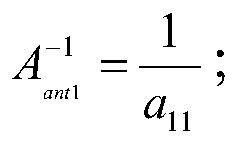

将该采样位置上,两根天线上的自相关逆矩阵按天线索引排列,形成向量为:

将该时隙内,不同采样位置上得到的 按采样位置进行存放,得到的Y*2的矩阵为invR1tmp(iS)。
对于求解两根天线的信号自相关逆矩阵,则按下式进行:

将该时隙内,不同采样位置上得到的A-1按采样位置进行存放,得到的Y*2*2的矩阵为invR2tmp(iS)。
进一步地,以处理精度为1/8码片,2天线为例,进行详细描述。
图7示出了两根天线的多径匹配成功示意图,图7中Case1-Case3,表示两天线上两条多径的延迟偏差不超过1/4码片;图7中Case1-Case5,表示两天线上两条多径的延迟偏差不超过1/2码片。下面举例来说明多径匹配的具体过程。
分别将两根天线上的多径根据搜索结果进行排列。用 来表示多径延迟。其中,iA∈{1,2},为天线索引,r为多径索引。设两根天线上分别有n和m条径,
天线1上排序后各径的延迟形成向量:
delay1=[τ1,1 τ1,2 … τ1,n],
天线2上排序后各径的延迟形成向量:
delay2=[τ2,1 τ2,2 … τ2,m]。
以偏差1/4码片来判定多径匹配的步骤为:
以天线1上各径的延迟作为参考。首先,在delay2中查找和τ1,1偏差的绝对值不超过1/4码片的多径,如果有,则匹配成功,并记录这两条多径;如果没有,则继续在delay2查找和τ1,2偏差的绝对值不超过1/4码片的多径;依次进行。
需要注意的是,每次在delay2上的查找操作,都是针对未匹配过的多径顺序进行。
目前系统中,相同天线上两条多径的延迟偏差不小于3/4码片。为确保多径匹配是优先选择偏差小的两条多径,以偏差1/2码片来判定多径匹配需分两步进行:
第一步,判断是否有偏差1/4码片的多径。以天线1上各径的延迟作为参考。首先,在delay2中查找和τ1,1偏差的绝对值不超过1/4码片的多径,如果有,则匹配成功,并记录这两条多径;如果没有,则继续在delay2查找和τ1,2偏差的绝对值不超过1/4码片的多径;依次进行。
第二步,判断是否有偏差1/2码片的多径,这是针对第一步结束后未匹配的多径进行,依旧是以天线1上各径的延迟作为参考。设第一步结束后,delay1中有延迟τ1,i没匹配成功,在delay2中没匹配的多径中查找和τ1,i偏差的绝对值不超过1/2码片的多径,如果有,则匹配成功,并记录这两条多径;如果没有,则继续对delay1中下一条多径进行匹配。
需注意的是,匹配完成后,可能delay1和delay2中还存在未匹配的多径。
图8为两根天线的多径匹配示意图,如图8所示,delay1=[1 13 29],delay2=[2 11 19],则匹配后的结果为:两对成功匹配的多径,两条未配对的多径。
图9示出了计算指定用户自相关矩阵的流程示意图,如图9所示,设用户1有匹配成功的两条径,它们的延迟分别为τ1,a和τ2,b。需要利用τ1,a和τ2,b的相互关系来获得采样位置,然后查找对应的矩阵。根据多径匹配的判断准则,采样位置的确定也分5种情况:
当两条径的延迟相同,即τ1,a=τ2,b=τ1时,直接利用τ1按式(公式2)计算采样位置。
当两条径的延迟相差1/8码片,即|τ1,a-τ2,b|=1时,则τ1=min(τ1,a,τ2,b),将τ1代入式(公式2)计算采样位置。
当两条径的延迟相差1/4码片,即|τ1,a-τ2,b|=2时,则τ1=(τ1,a+τ2,b)/2,同样也是将τ1代入式(公式2)计算采样位置。
当两条径的延迟相差3/8码片,即|τ1,a-τ2,b|=3时,则τ1=min(τ1,a,τ2,b)+1,然后将τ1代入式(公式2)计算采样位置。
当两条径的延迟相差1/2码片,即|τ1,a-τ2,b|=4时,则τ1=(τ1,a+τ2,b)/2,同样也是将τ1代入式(公式2)计算采样位置。
其中,case1-3是对应于两条多径的延迟偏差不超过1/4码片的情形。
得到匹配成功的两条多径对应的采样位置后,即可从invR2(iS)选出该采样位置上自相关逆矩阵。
对于用户1上未能匹配的多径,将根据天线索引分别查找其自相关逆矩阵。设天线1上匹配不成功的多径的延迟为τ1,i,将τ1,i代入式(公式2)得到采样位置后,从invR1(iS)中查找天线1上该采样位置对应的元素。而天线2上匹配不成功的多径,设其延迟为τ2,j,按照同样的方法得到采样位置
后,从invR1(iS)中查找天线2上该采样位置对应的元素。
可见,与单纯按用户分别计算干扰与噪声相关矩阵及求逆的算法比较,降低了整个系统的运算复杂度,使IRC干扰与噪声的相关矩阵及求逆的计算量降低到可以接受的范围。
本实施例所述技术方案,提出了不按用户进行自相关矩阵计算,而是按照同一RRU天线进行自相关矩阵计算,作为干扰与噪声的协方差矩阵的近似估计,大大简化了系统的运算的复杂程度。根据用户多径延时,采用简单算法,通过共用自相关矩阵及逆矩阵得到不同用户的自身的相关矩阵及逆矩阵,保证每个用户能获得更大的增益。
图10为本发明实施例的干扰用户/受益用户=6dB的RAKE与RAKE_IRC仿真对比图,从图10可以看出,与现有RAKE技术相比,能获得更大的数据解调增益,大幅提高数据解调增益的效果,提高了信号的信噪比,达到了提高系统容量的目的。
实施例三
图11为本发明实施例的RAKE_IRC架构框图,如图11所示,该架构图主要包括上采样模块A、共用信号自相关矩阵生成模块B、用信号自相关矩阵求逆模块C、多径搜索模块D、多径匹配计算模块F、指定用户的信号自相关逆矩阵生成模块G、指定用户信号权重计算模块H、控制信道解调模块M、数据信道解调模块E、RCE(refined channel estimate)计算模块P;其中,
上采样模块A,负责对天线数据进行插值计算,以提高采样精度;
共用信号自相关矩阵生成模块B,负责生成小区(RRU)每个时隙的共用信号自相关矩阵;
共用信号自相关矩阵求逆模块C,负责生成小区(RRU)每个时隙的共用信号自相关逆矩阵;
多径搜索模块D,负责对用户多径的位置进行搜索及确定;
多径匹配计算模块F,负责根据多径搜索的结果,对指定用户的多个多径进行匹配的判定和计算;
指定用户的信号自相关逆矩阵生成模块G,负责根据指定用户多径匹配的判定结果及共用信号自相关逆矩阵,获取指定用户自相关逆矩阵。
指定用户信号权重计算模块H,负责计算指定用户信号权重;
控制信道解调模块M,负责对控制信道进行调制解调;
数据信道解调模块E,负责对数据信道进行调制解调;
RCE(refined channel estimate)计算模块P,负责根据控制信道调整解调的结果进行信道估计计算。
其中A、C、D、M、E、P使用的现有技术。
本领域技术人员应当理解,本发明实施例框架图中各模块的功能,可参照前述干扰抑制方法的相关描述而理解,在此不再赘述。
本发明实施例提出了RAKE IRC解调方案,对原来的单纯RAKE解调方案进行了有效升级,在保留原有架构的基础上只用增加新的计算模块即可实现,具有良好的兼容性。
实施例四
本实施例提供了一种干扰抑制装置,所述干扰抑制装置的组成结构示意图如图12所示,所述干扰抑制装置包括:
确定单元21,配置为根据上行采样天线数据确定小区共用信号自相关逆矩阵;
匹配单元22,配置为根据上行采样天线数据进行指定用户多径匹配;
获取单元23,配置为根据指定用户多径匹配结果以及多径信息,从所述小区共用信号自相关逆矩阵中获取指定用户信号自相关逆矩阵;
计算单元24,配置为根据指定用户信道估计值以及所述指定用户信号
自相关逆矩阵计算指定用户合并权重;
处理单元25,配置为基于所述指定用户合并权重,对指定用户的数据信道进行调制解调。
在一可选实施方式中,所述确定单元21,还配置为:
根据上行采样天线数据计算小区共用信号自相关矩阵;
根据小区共用信号自相关矩阵得到小区共用信号自相关逆矩阵。
在一可选实施方式中,所述匹配单元22还配置为:
在所述确定单元21根据上行采样天线数据计算小区共用信号自相关矩阵之前,根据上行采样天线数据进行指定用户多径匹配;
在所述确定单元21根据小区共用信号自相关矩阵得到小区共用信号自相关逆矩阵之后进行,根据上行采样天线数据进行指定用户多径匹配;
在所述确定单元21根据上行采样天线数据计算小区共用信号自相关矩阵之后,且在所述确定单元21根据小区共用信号自相关矩阵得到小区共用信号自相关逆矩阵之前,根据上行采样天线数据进行指定用户多径匹配。
在一可选实施方式中,所述确定单元21,还配置为:
根据采样位置索引以及码片索引计算小区共用信号自相关矩阵。
在一可选实施方式中,所述匹配单元22,还配置为:
查找小区内指定用户多天线上延迟相同的多径;
将延迟相同的多径存放于同一结构体,且每条多径信息只能存放在一个结构体中。
在一可选实施方式中,所述获取单元23,还配置为:
根据指定用户多径匹配结果以及多径信息计算采样位置;
基于所述采样位置,结合天线索引,从小区共用信号自相关逆矩阵中选出所述采样位置上的指定用户信号自相关逆矩阵。
在一可选实施方式中,所述获取单元23,还配置为:
对于指定用户能匹配成功的多径,根据能匹配成功的多径中各多径的延迟关系获得采样位置;
对于指定用户未能匹配成功的多径,根据未能匹配成功的多径对应的多径延迟得到采样位置。
本领域技术人员应当理解,本发明实施例的干扰抑制装置中各处理单元的功能,可参照前述干扰抑制方法的相关描述而理解,本发明实施例的干扰抑制装置中各处理单元,可通过实现本发明实施例所述的功能的模拟电路而实现,也可以通过执行本发明实施例所述的功能的软件在智能终端上的运行而实现。
本实施例中,所述干扰抑制装置中的确定单元21、匹配单元22、获取单元23、计算单元24、处理单元25,在实际应用中可由所述干扰抑制装置或所述干扰抑制装置所属终端中的中央处理器(CPU,Central Processing Unit)、数字信号处理器(DSP,Digital Signal Processor)或可编程门阵列(FPGA,Field-Programmable Gate Array)等实现。
本发明实施例的干扰抑制装置,能够解决BBU侧RAKE接收机进行IRC处理时运算复杂度过高的问题,在大幅降低运算复杂度的同时,也能同样大大提高上行数据信道解调性能。
本发明实施例还记载了一种计算机存储介质,所述计算机存储介质存储有一个或者多个程序,所述一个或者多个程序可被一个或者多个处理器执行,以实现以下步骤:
根据上行采样天线数据确定小区共用信号自相关逆矩阵;
根据上行采样天线数据进行指定用户多径匹配;
根据指定用户多径匹配结果以及多径信息,从所述小区共用信号自相关逆矩阵中获取指定用户信号自相关逆矩阵;
根据指定用户信道估计值以及所述指定用户信号自相关逆矩阵计算指
定用户合并权重;
基于所述指定用户合并权重,对指定用户的数据信道进行调制解调。
作为一种实施方式,执行所述根据上行采样天线数据确定小区共用信号自相关逆矩阵的步骤时,所述一个或者多个程序还可被所述一个或者多个处理器执行,以实现以下步骤:
根据上行采样天线数据计算小区共用信号自相关矩阵;
根据小区共用信号自相关矩阵得到小区共用信号自相关逆矩阵。
作为一种实施方式,执行所述根据上行采样天线数据进行指定用户多径匹配的步骤时,所述一个或者多个程序还可被所述一个或者多个处理器执行,以实现以下步骤:
在根据上行采样天线数据计算小区共用信号自相关矩阵之前进行;
在根据小区共用信号自相关矩阵得到小区共用信号自相关逆矩阵之后进行;
在根据上行采样天线数据计算小区共用信号自相关矩阵之后,在根据小区共用信号自相关矩阵得到小区共用信号自相关逆矩阵之前进行。
作为一种实施方式,执行所述根据上行采样天线数据计算小区共用信号自相关矩阵的步骤时,所述一个或者多个程序还可被所述一个或者多个处理器执行,以实现以下步骤:
根据采样位置索引以及码片索引计算小区共用信号自相关矩阵。
作为一种实施方式,执行所述根据上行采样天线数据进行多径匹配的步骤时,所述一个或者多个程序还可被所述一个或者多个处理器执行,以实现以下步骤:
查找小区内指定用户多天线上延迟相同的多径;
将延迟相同的多径存放于同一结构体,且每条多径信息只能存放在一个结构体中。
作为一种实施方式,执行所述根据指定用户多径匹配结果以及多径信息,从所述小区共用信号自相关逆矩阵中获取指定用户信号自相关逆矩阵的步骤时,所述一个或者多个程序还可被所述一个或者多个处理器执行,以实现以下步骤:
根据指定用户多径匹配结果以及多径信息计算采样位置;
基于所述采样位置,结合天线索引,从小区共用信号自相关逆矩阵中选出所述采样位置上的指定用户信号自相关逆矩阵。
本领域技术人员应当理解,本实施例的计算机存储介质中各程序的功能,可参照前述各实施例所述的干扰抑制方法的相关描述而理解。
在本发明所提供的几个实施例中,应该理解到,所揭露的方法和智能设备,可以通过其它的方式实现。以上所描述的设备实施例仅仅是示意性的,例如,所述单元的划分,仅仅为一种逻辑功能划分,实际实现时可以有另外的划分方式,如:多个单元或组件可以结合,或可以集成到另一个系统,或一些特征可以忽略,或不执行。另外,所显示或讨论的各组成部分相互之间的耦合、或直接耦合、或通信连接可以是通过一些接口,设备或单元的间接耦合或通信连接,可以是电性的、机械的或其它形式的。
上述作为分离部件说明的单元可以是、或也可以不是物理上分开的,作为单元显示的部件可以是、或也可以不是物理单元,即可以位于一个地方,也可以分布到多个网络单元上;可以根据实际的需要选择其中的部分或全部单元来实现本实施例方案的目的。
另外,在本发明各实施例中的各功能单元可以全部集成在一个第二处理单元中,也可以是各单元分别单独作为一个单元,也可以两个或两个以上单元集成在一个单元中;上述集成的单元既可以采用硬件的形式实现,也可以采用硬件加软件功能单元的形式实现。
以上所述,仅为本发明的具体实施方式,但本发明的保护范围并不局
限于此,任何熟悉本技术领域的技术人员在本发明揭露的技术范围内,可轻易想到变化或替换,都应涵盖在本发明的保护范围之内。
本发明实施例的技术方案根据上行采样天线数据确定小区共用信号自相关逆矩阵;根据上行采样天线数据进行多径匹配;根据指定用户多径匹配结果以及多径信息,从所述小区共用信号自相关逆矩阵中获取指定用户信号自相关逆矩阵;根据指定用户信道估计值以及指定用户信号自相关逆矩阵计算指定用户合并权重;基于所述指定用户合并权重,对指定用户的数据信道进行调制解调;如此,能够解决BBU侧RAKE接收机进行IRC处理时运算复杂度过高的问题,在大幅降低运算复杂度的同时,也能同样大大提高上行数据信道解调性能。
Claims (15)
- 一种干扰抑制方法,所述方法包括:根据上行采样天线数据确定小区共用信号自相关逆矩阵;根据上行采样天线数据进行指定用户多径匹配;根据指定用户多径匹配结果以及多径信息,从所述小区共用信号自相关逆矩阵中获取指定用户信号自相关逆矩阵;根据指定用户信道估计值以及所述指定用户信号自相关逆矩阵计算指定用户合并权重;基于所述指定用户合并权重,对指定用户的数据信道进行调制解调。
- 根据权利要求1所述的干扰抑制方法,其中,所述根据上行采样天线数据确定小区共用信号自相关逆矩阵,包括:根据上行采样天线数据计算小区共用信号自相关矩阵;根据小区共用信号自相关矩阵得到小区共用信号自相关逆矩阵。
- 根据权利要求2所述的干扰抑制方法,其中,所述根据上行采样天线数据进行指定用户多径匹配的步骤:在根据上行采样天线数据计算小区共用信号自相关矩阵之前进行;在根据小区共用信号自相关矩阵得到小区共用信号自相关逆矩阵之后进行;在根据上行采样天线数据计算小区共用信号自相关矩阵之后,在根据小区共用信号自相关矩阵得到小区共用信号自相关逆矩阵之前进行。
- 根据权利要求2所述的干扰抑制方法,其中,所述根据上行采样天线数据计算小区共用信号自相关矩阵,包括:根据采样位置索引以及码片索引计算小区共用信号自相关矩阵。
- 根据权利要求1所述的干扰抑制方法,其中,所述根据上行采样天线数据进行多径匹配,包括:查找小区内指定用户多天线上延迟相同的多径;将延迟相同的多径存放于同一结构体,且每条多径信息只能存放在一个结构体中。
- 根据权利要求1所述的干扰抑制方法,其中,所述根据指定用户多径匹配结果以及多径信息,从所述小区共用信号自相关逆矩阵中获取指定用户信号自相关逆矩阵,包括:根据指定用户多径匹配结果以及多径信息计算采样位置;基于所述采样位置,结合天线索引,从小区共用信号自相关逆矩阵中选出所述采样位置上的指定用户信号自相关逆矩阵。
- 根据权利要求6所述的干扰抑制方法,其中,所述根据指定用户多径匹配结果以及多径信息计算采样位置,包括:对于指定用户能匹配成功的多径,根据能匹配成功的多径中各多径的延迟关系获得采样位置;对于指定用户未能匹配成功的多径,根据未能匹配成功的多径对应的多径延迟得到采样位置。
- 一种干扰抑制装置,所述装置包括:确定单元,配置为根据上行采样天线数据确定小区共用信号自相关逆矩阵;匹配单元,配置为根据上行采样天线数据进行指定用户多径匹配;获取单元,配置为根据指定用户多径匹配结果以及多径信息,从所述小区共用信号自相关逆矩阵中获取指定用户信号自相关逆矩阵;计算单元,配置为根据指定用户信道估计值以及所述指定用户信号自相关逆矩阵计算指定用户合并权重;处理单元,配置为基于所述指定用户合并权重,对指定用户的数据信道进行调制解调。
- 根据权利要求8所述的干扰抑制装置,其中,所述确定单元,还配置为:根据上行采样天线数据计算小区共用信号自相关矩阵;根据小区共用信号自相关矩阵得到小区共用信号自相关逆矩阵。
- 根据权利要求9所述的干扰抑制装置,其中,所述匹配单元还配置为:在所述确定单元根据上行采样天线数据计算小区共用信号自相关矩阵之前,根据上行采样天线数据进行指定用户多径匹配;在所述确定单元根据小区共用信号自相关矩阵得到小区共用信号自相关逆矩阵之后进行,根据上行采样天线数据进行指定用户多径匹配;在所述确定单元根据上行采样天线数据计算小区共用信号自相关矩阵之后,且在所述确定单元根据小区共用信号自相关矩阵得到小区共用信号自相关逆矩阵之前,根据上行采样天线数据进行指定用户多径匹配。
- 根据权利要求9所述的干扰抑制装置,其中,所述确定单元,还配置为:根据采样位置索引以及码片索引计算小区共用信号自相关矩阵。
- 根据权利要求8所述的干扰抑制装置,其中,所述匹配单元,还配置为:查找小区内指定用户多天线上延迟相同的多径;将延迟相同的多径存放于同一结构体,且每条多径信息只能存放在一个结构体中。
- 根据权利要求8所述的干扰抑制装置,其中,所述获取单元,还配置为:根据指定用户多径匹配结果以及多径信息计算采样位置;基于所述采样位置,结合天线索引,从小区共用信号自相关逆矩阵中 选出所述采样位置上的指定用户信号自相关逆矩阵。
- 根据权利要求13所述的干扰抑制装置,其中,所述获取单元,还配置为:对于指定用户能匹配成功的多径,根据能匹配成功的多径中各多径的延迟关系获得采样位置;对于指定用户未能匹配成功的多径,根据未能匹配成功的多径对应的多径延迟得到采样位置。
- 一种计算机存储介质,所述计算机存储介质中存储有计算机可执行指令,所述计算机可执行指令用于执行权利要求1至7任一项所述的干扰抑制方法。
Priority Applications (2)
| Application Number | Priority Date | Filing Date | Title |
|---|---|---|---|
| EP17882147.6A EP3557771B1 (en) | 2016-12-13 | 2017-05-23 | Interference suppression method and device, and computer storage medium |
| ES17882147T ES2895250T3 (es) | 2016-12-13 | 2017-05-23 | Procedimiento y dispositivo de supresión de interferencias y medio de almacenamiento informático |
Applications Claiming Priority (2)
| Application Number | Priority Date | Filing Date | Title |
|---|---|---|---|
| CN201611146831.5 | 2016-12-13 | ||
| CN201611146831.5A CN108233984B (zh) | 2016-12-13 | 2016-12-13 | 一种干扰抑制方法及装置 |
Publications (1)
| Publication Number | Publication Date |
|---|---|
| WO2018107664A1 true WO2018107664A1 (zh) | 2018-06-21 |
Family
ID=62557941
Family Applications (1)
| Application Number | Title | Priority Date | Filing Date |
|---|---|---|---|
| PCT/CN2017/085544 Ceased WO2018107664A1 (zh) | 2016-12-13 | 2017-05-23 | 一种干扰抑制方法、装置及计算机存储介质 |
Country Status (5)
| Country | Link |
|---|---|
| EP (1) | EP3557771B1 (zh) |
| CN (1) | CN108233984B (zh) |
| ES (1) | ES2895250T3 (zh) |
| HU (1) | HUE056641T2 (zh) |
| WO (1) | WO2018107664A1 (zh) |
Cited By (2)
| Publication number | Priority date | Publication date | Assignee | Title |
|---|---|---|---|---|
| CN110289892A (zh) * | 2019-05-23 | 2019-09-27 | 武汉虹信通信技术有限责任公司 | 一种数据传输方法及通信基站 |
| CN114785426A (zh) * | 2022-03-30 | 2022-07-22 | 西安宇飞电子技术有限公司 | 多天线抗干扰方法、装置、设备和计算机可读存储介质 |
Families Citing this family (3)
| Publication number | Priority date | Publication date | Assignee | Title |
|---|---|---|---|---|
| CN111836184B (zh) * | 2019-04-16 | 2022-02-25 | 华为技术有限公司 | 处理数据的方法、装置、设备及可读存储介质 |
| CN113556301B (zh) * | 2020-04-24 | 2023-01-10 | 大唐移动通信设备有限公司 | 一种信号处理方法及装置 |
| CN118101076B (zh) * | 2024-04-23 | 2024-09-13 | 浙江大学 | 光纤通信多径干扰抑制方法和系统 |
Citations (4)
| Publication number | Priority date | Publication date | Assignee | Title |
|---|---|---|---|---|
| CN102104562A (zh) * | 2009-12-17 | 2011-06-22 | 中兴通讯股份有限公司 | 一种多天线干扰抑制合并的方法及装置 |
| CN103825847A (zh) * | 2012-11-19 | 2014-05-28 | 中兴通讯股份有限公司 | 一种信道干扰对消方法、装置和基站 |
| US20150049829A1 (en) * | 2009-10-12 | 2015-02-19 | Motorola Mobility Llc | Configurable spatial channel information feedback in wireless communication system |
| CN105959049A (zh) * | 2016-07-14 | 2016-09-21 | 大唐联诚信息系统技术有限公司 | 一种信号处理方法和装置 |
Family Cites Families (2)
| Publication number | Priority date | Publication date | Assignee | Title |
|---|---|---|---|---|
| US8971386B2 (en) * | 2011-08-17 | 2015-03-03 | Telefonaktiebolaget L M Ericsson (Publ) | Receiver unit and method for suppressing interference in a multipath radio signal |
| CN103138820B (zh) * | 2011-11-29 | 2017-11-03 | 邳州高新区生物医药研究院有限公司 | Vamos模式下的信号检测方法及装置 |
-
2016
- 2016-12-13 CN CN201611146831.5A patent/CN108233984B/zh active Active
-
2017
- 2017-05-23 ES ES17882147T patent/ES2895250T3/es active Active
- 2017-05-23 WO PCT/CN2017/085544 patent/WO2018107664A1/zh not_active Ceased
- 2017-05-23 HU HUE17882147A patent/HUE056641T2/hu unknown
- 2017-05-23 EP EP17882147.6A patent/EP3557771B1/en active Active
Patent Citations (4)
| Publication number | Priority date | Publication date | Assignee | Title |
|---|---|---|---|---|
| US20150049829A1 (en) * | 2009-10-12 | 2015-02-19 | Motorola Mobility Llc | Configurable spatial channel information feedback in wireless communication system |
| CN102104562A (zh) * | 2009-12-17 | 2011-06-22 | 中兴通讯股份有限公司 | 一种多天线干扰抑制合并的方法及装置 |
| CN103825847A (zh) * | 2012-11-19 | 2014-05-28 | 中兴通讯股份有限公司 | 一种信道干扰对消方法、装置和基站 |
| CN105959049A (zh) * | 2016-07-14 | 2016-09-21 | 大唐联诚信息系统技术有限公司 | 一种信号处理方法和装置 |
Non-Patent Citations (1)
| Title |
|---|
| See also references of EP3557771A4 * |
Cited By (4)
| Publication number | Priority date | Publication date | Assignee | Title |
|---|---|---|---|---|
| CN110289892A (zh) * | 2019-05-23 | 2019-09-27 | 武汉虹信通信技术有限责任公司 | 一种数据传输方法及通信基站 |
| CN110289892B (zh) * | 2019-05-23 | 2022-07-15 | 武汉虹信科技发展有限责任公司 | 一种数据传输方法及通信基站 |
| CN114785426A (zh) * | 2022-03-30 | 2022-07-22 | 西安宇飞电子技术有限公司 | 多天线抗干扰方法、装置、设备和计算机可读存储介质 |
| CN114785426B (zh) * | 2022-03-30 | 2023-11-03 | 西安宇飞电子技术有限公司 | 多天线抗干扰方法、装置、设备和计算机可读存储介质 |
Also Published As
| Publication number | Publication date |
|---|---|
| EP3557771A1 (en) | 2019-10-23 |
| HUE056641T2 (hu) | 2022-03-28 |
| EP3557771B1 (en) | 2021-09-08 |
| EP3557771A4 (en) | 2020-08-26 |
| CN108233984A (zh) | 2018-06-29 |
| ES2895250T3 (es) | 2022-02-18 |
| CN108233984B (zh) | 2020-03-31 |
Similar Documents
| Publication | Publication Date | Title |
|---|---|---|
| JP4421106B2 (ja) | Cdma通信容量を改善するための実用的な空間−時間無線方法 | |
| KR100735813B1 (ko) | 차세대 코드분할다중접속 무선 통신용 스마트안테나에서의 가중 벡터 생성 방법 | |
| US6347234B1 (en) | Practical space-time radio method for CDMA communication capacity enhancement | |
| CN101536355B (zh) | 具有全向和扇形定向天线模式的自适应多天线系统 | |
| WO2018107664A1 (zh) | 一种干扰抑制方法、装置及计算机存储介质 | |
| Affes et al. | A new receiver structure for asynchronous CDMA: STAR-the spatio-temporal array-receiver | |
| Masmoudi et al. | A maximum-likelihood channel estimator in MIMO full-duplex systems | |
| CN109379122A (zh) | 一种毫米波通信多径信道动态波束训练方法 | |
| CN105933254A (zh) | 毫米波多小区多天线系统中基于波束空间的信道估计方法 | |
| CN107070818B (zh) | 基于毫米波mimo系统的多普勒频偏估计方法及装置 | |
| US11764857B2 (en) | Systems and methods for multiple signal reception using receiver diversity | |
| Chen et al. | A novel AWSF algorithm for DOA estimation in virtual MIMO systems | |
| CN106911367B (zh) | 基于迭代干扰消除的多小区大规模mimo信道估计方法和装置 | |
| CN105847196B (zh) | 一种基于DOA的多小区Massive MIMO系统的信道估计方法 | |
| WO2017080359A1 (zh) | 一种干扰消除方法、装置及基站 | |
| CN101686074A (zh) | 一种确定来波方向的方法及装置 | |
| KR100241503B1 (ko) | 배열안테나를 이용한 이동통신 시스템에서의 송수신 신호 처리방법 및 장치 | |
| CN115884227A (zh) | NAFD uRLLC系统的频谱效率确定方法及组件 | |
| CN119031409B (zh) | 一种同频干扰抑制方法、设备、介质及产品 | |
| CN114205901B (zh) | 一种多径低信噪比下多天线合并的大规模mimo时间同步方法 | |
| CN102291339B (zh) | 一种实现小区初搜的下行同步方法、系统及移动终端 | |
| Cheng et al. | SWISS: Spectrum weighted identification of signal sources for mmWave systems | |
| KR20020057594A (ko) | 위상 추정을 이용한 스마트 안테나 장치 | |
| CN117201235A (zh) | 一种天线阵列系统稳健多径信道估计方法 | |
| Espandar et al. | DOA estimation for rectangular antenna array in multipath fading and MIMO channels |
Legal Events
| Date | Code | Title | Description |
|---|---|---|---|
| 121 | Ep: the epo has been informed by wipo that ep was designated in this application |
Ref document number: 17882147 Country of ref document: EP Kind code of ref document: A1 |
|
| NENP | Non-entry into the national phase |
Ref country code: DE |
|
| ENP | Entry into the national phase |
Ref document number: 2017882147 Country of ref document: EP Effective date: 20190715 |