WO2018117114A1 - 高アスペクト比板状ハイドロタルサイト、その製造方法及びその樹脂組成物 - Google Patents
高アスペクト比板状ハイドロタルサイト、その製造方法及びその樹脂組成物 Download PDFInfo
- Publication number
- WO2018117114A1 WO2018117114A1 PCT/JP2017/045583 JP2017045583W WO2018117114A1 WO 2018117114 A1 WO2018117114 A1 WO 2018117114A1 JP 2017045583 W JP2017045583 W JP 2017045583W WO 2018117114 A1 WO2018117114 A1 WO 2018117114A1
- Authority
- WO
- WIPO (PCT)
- Prior art keywords
- plate
- hydrotalcite
- average
- thickness
- primary particles
- Prior art date
- Legal status (The legal status is an assumption and is not a legal conclusion. Google has not performed a legal analysis and makes no representation as to the accuracy of the status listed.)
- Ceased
Links
Images


Classifications
-
- C—CHEMISTRY; METALLURGY
- C01—INORGANIC CHEMISTRY
- C01F—COMPOUNDS OF THE METALS BERYLLIUM, MAGNESIUM, ALUMINIUM, CALCIUM, STRONTIUM, BARIUM, RADIUM, THORIUM, OR OF THE RARE-EARTH METALS
- C01F7/00—Compounds of aluminium
- C01F7/78—Compounds containing aluminium, with or without oxygen or hydrogen, and containing two or more other elements
- C01F7/786—Compounds containing aluminium, with or without oxygen or hydrogen, and containing two or more other elements containing, besides aluminium, only anions, e.g. Al[OH]xCly[SO4]z
-
- C—CHEMISTRY; METALLURGY
- C01—INORGANIC CHEMISTRY
- C01F—COMPOUNDS OF THE METALS BERYLLIUM, MAGNESIUM, ALUMINIUM, CALCIUM, STRONTIUM, BARIUM, RADIUM, THORIUM, OR OF THE RARE-EARTH METALS
- C01F7/00—Compounds of aluminium
- C01F7/78—Compounds containing aluminium, with or without oxygen or hydrogen, and containing two or more other elements
- C01F7/784—Layered double hydroxide, e.g. comprising nitrate, sulfate or carbonate ions as intercalating anions
- C01F7/785—Hydrotalcite
-
- C—CHEMISTRY; METALLURGY
- C08—ORGANIC MACROMOLECULAR COMPOUNDS; THEIR PREPARATION OR CHEMICAL WORKING-UP; COMPOSITIONS BASED THEREON
- C08K—Use of inorganic or non-macromolecular organic substances as compounding ingredients
- C08K3/00—Use of inorganic substances as compounding ingredients
- C08K3/18—Oxygen-containing compounds, e.g. metal carbonyls
- C08K3/20—Oxides; Hydroxides
- C08K3/22—Oxides; Hydroxides of metals
-
- C—CHEMISTRY; METALLURGY
- C08—ORGANIC MACROMOLECULAR COMPOUNDS; THEIR PREPARATION OR CHEMICAL WORKING-UP; COMPOSITIONS BASED THEREON
- C08L—COMPOSITIONS OF MACROMOLECULAR COMPOUNDS
- C08L101/00—Compositions of unspecified macromolecular compounds
-
- C—CHEMISTRY; METALLURGY
- C01—INORGANIC CHEMISTRY
- C01P—INDEXING SCHEME RELATING TO STRUCTURAL AND PHYSICAL ASPECTS OF SOLID INORGANIC COMPOUNDS
- C01P2004/00—Particle morphology
- C01P2004/01—Particle morphology depicted by an image
- C01P2004/03—Particle morphology depicted by an image obtained by SEM
-
- C—CHEMISTRY; METALLURGY
- C01—INORGANIC CHEMISTRY
- C01P—INDEXING SCHEME RELATING TO STRUCTURAL AND PHYSICAL ASPECTS OF SOLID INORGANIC COMPOUNDS
- C01P2004/00—Particle morphology
- C01P2004/20—Particle morphology extending in two dimensions, e.g. plate-like
- C01P2004/24—Nanoplates, i.e. plate-like particles with a thickness from 1-100 nanometer
-
- C—CHEMISTRY; METALLURGY
- C01—INORGANIC CHEMISTRY
- C01P—INDEXING SCHEME RELATING TO STRUCTURAL AND PHYSICAL ASPECTS OF SOLID INORGANIC COMPOUNDS
- C01P2004/00—Particle morphology
- C01P2004/30—Particle morphology extending in three dimensions
-
- C—CHEMISTRY; METALLURGY
- C01—INORGANIC CHEMISTRY
- C01P—INDEXING SCHEME RELATING TO STRUCTURAL AND PHYSICAL ASPECTS OF SOLID INORGANIC COMPOUNDS
- C01P2004/00—Particle morphology
- C01P2004/54—Particles characterised by their aspect ratio, i.e. the ratio of sizes in the longest to the shortest dimension
-
- C—CHEMISTRY; METALLURGY
- C01—INORGANIC CHEMISTRY
- C01P—INDEXING SCHEME RELATING TO STRUCTURAL AND PHYSICAL ASPECTS OF SOLID INORGANIC COMPOUNDS
- C01P2006/00—Physical properties of inorganic compounds
- C01P2006/12—Surface area
-
- C—CHEMISTRY; METALLURGY
- C08—ORGANIC MACROMOLECULAR COMPOUNDS; THEIR PREPARATION OR CHEMICAL WORKING-UP; COMPOSITIONS BASED THEREON
- C08K—Use of inorganic or non-macromolecular organic substances as compounding ingredients
- C08K3/00—Use of inorganic substances as compounding ingredients
- C08K3/18—Oxygen-containing compounds, e.g. metal carbonyls
- C08K3/20—Oxides; Hydroxides
- C08K3/22—Oxides; Hydroxides of metals
- C08K2003/2227—Oxides; Hydroxides of metals of aluminium
-
- C—CHEMISTRY; METALLURGY
- C08—ORGANIC MACROMOLECULAR COMPOUNDS; THEIR PREPARATION OR CHEMICAL WORKING-UP; COMPOSITIONS BASED THEREON
- C08K—Use of inorganic or non-macromolecular organic substances as compounding ingredients
- C08K2201/00—Specific properties of additives
- C08K2201/002—Physical properties
- C08K2201/003—Additives being defined by their diameter
-
- C—CHEMISTRY; METALLURGY
- C08—ORGANIC MACROMOLECULAR COMPOUNDS; THEIR PREPARATION OR CHEMICAL WORKING-UP; COMPOSITIONS BASED THEREON
- C08K—Use of inorganic or non-macromolecular organic substances as compounding ingredients
- C08K2201/00—Specific properties of additives
- C08K2201/002—Physical properties
- C08K2201/004—Additives being defined by their length
-
- C—CHEMISTRY; METALLURGY
- C08—ORGANIC MACROMOLECULAR COMPOUNDS; THEIR PREPARATION OR CHEMICAL WORKING-UP; COMPOSITIONS BASED THEREON
- C08K—Use of inorganic or non-macromolecular organic substances as compounding ingredients
- C08K2201/00—Specific properties of additives
- C08K2201/011—Nanostructured additives
Definitions
- the present invention relates to a plate-like hydrotalcite having a large average width of primary particles, a thin average thickness, a high monodispersity, and a high aspect ratio, a production method thereof, and a resin composition thereof.
- Plate-shaped hydrotalcite can be synthesized by the coprecipitation method.
- the primary particles of plate-like hydrotalcite synthesized by this method can obtain only fine crystals having an average lateral width of several tens of nm.
- these primary particles are strongly aggregated to form many secondary particles (several ⁇ m to several tens of ⁇ m), there is a problem that requires improvement when used as a resin additive.
- the present inventors have developed a method of hydrothermal treatment at 150 to 180 ° C. after the coprecipitation reaction. This method makes it possible to produce monodisperse particles in which primary particles grow well and there is little aggregation between the primary particles.
- the average horizontal width of primary particles of the plate-like hydrotalcite is 0.4 to 0.5 ⁇ m, the average thickness is 0.1 to 0.2 ⁇ m, and the aspect ratio is 4 to 5.
- Non-Patent Document 1 hydrothermal treatment is performed at a high temperature of 220 ° C. to promote primary particle growth, and large primary particles having an average lateral width of 1 to 2 ⁇ m and an average thickness of 0.1 ⁇ m are obtained. Boehmite is by-produced and primary particles are aggregated.
- Non-Patent Document 2 by performing hydrothermal treatment at a higher temperature of 300 ° C., coarse crystals having an average primary particle width of 15 ⁇ m and an average thickness of 0.1 ⁇ m are obtained, but boehmite is a by-product. In addition, the primary particles are aggregated.
- Non-Patent Document 2 by performing hydrothermal treatment at a higher temperature of 300 ° C., coarse crystals having an average primary particle width of 15 ⁇ m and an average thickness of 0.1 ⁇ m are obtained, but boehmite is a by-product. In addition, the primary particles are aggregated.
- hydrotalcite has a refractive index close to that of resin
- a highly transparent film can be obtained by blending with resin.
- increasing the treatment temperature during hydrothermal treatment as in Non-Patent Documents 1 and 2 to obtain primary particles having a large average lateral width boehmite is generated as an impurity, and the film has transparency due to the difference in refractive index. descend. Therefore, there has been a demand for increasing the average lateral width of the primary particles while not including impurities such as boehmite that reduce transparency.
- the hydrotalcite having a high aspect ratio is obtained by reacting a carboxylic acid having 2 to 6 carbon atoms with a lower alcohol in the reaction system at 100 to 200 ° C. It is said that a plate-like hydrotalcite having a lateral width of 0.3 to 10 ⁇ m and an aspect ratio of 45 or more was obtained.
- the average secondary particle diameter (D 50 ) of the plate-like hydrotalcite before refinement produced by this method is 22 ⁇ m (Example 5), and the primary particles of the plate-like hydrotalcite before refinement Since the average lateral width of the sheet is 1 ⁇ m (Example 1, Table 1), it can be considered that the plate-like hydrotalcite (before refining) produced by this method is intensively aggregated.
- the monodispersity of the width and thickness is not expected to be 50% or more.
- Patent Document 3 proposes a method for producing plate-like hydrotalcite, in which a bicarbonate is added to and reacted with an aqueous solution containing divalent metal ions and trivalent metal ions.
- the average width of the primary particles is 0.9 to 10 ⁇ m and the aspect ratio (the major axis of the particles when the plate surface is a hexagonal plate shape) It is said that a plate-like hydrotalcite having a thickness ratio of 40 or more was obtained.
- the reaction temperature is as low as 70 to 100 ° C.
- the average plate surface diameter of the obtained plate-like hydrotalcite is 0.82 to 1.3 ⁇ m (Table 1) and does not reach 2 ⁇ m.
- the thickness is unknown. Therefore, the monodispersity of the width and thickness is not expected to be 50% or more.
- Patent Document 4 describes a plate-shaped hydrotalcite having an aspect ratio of more than 50 used for a sealing agent for liquid crystal dropping method, but does not disclose how to manufacture it.
- the product name Parkerite A100 and Parkerite LD from Parkerite are used only (Table 1), and the aspect ratio is 200 to 300.
- Patent Document 4 the coefficient of variation (CV value) of the particle size of the plate-like hydrotalcite is also described.
- both the standard deviation and the average particle diameter of the particle diameter used for calculating the CV value are those of the primary particles, and are different from the definitions of the monodispersity of the lateral width and thickness defined in the present application.
- the aspect ratio of the secondary particles is important. Even when the aspect ratio of the primary particles is high, when a large number of secondary particles are formed by agglomeration (when the monodispersity of the width and thickness is low), the aspect ratio of the entire particles is only the primary particles. Since the ratio is greatly reduced as compared with the aspect ratio, the filler performance is not sufficiently exhibited. Therefore, in addition to “primary particles having a high aspect ratio”, “to increase the monodispersity of width and thickness” becomes a problem. Such a problem cannot be found in the prior art.
- a plate-shaped hydrotalcite having a large average width of primary particles and a thin average thickness, resulting in a large aspect ratio, and less aggregation of primary particles (high monodispersity of width and thickness), And the manufacturing method in which the by-product which inhibits transparency of resin is not produced
- An object of the present invention is to solve the problems of the prior art that occur when the average lateral width of primary particles is increased. That is, for the plate-like hydrotalcite, (1) relatively decreasing the average thickness, suppressing aggregation of primary particles and increasing the aspect ratio of secondary particles (for example, 10 or more), and (2) It is to suppress the formation of by-products that impair the transparency of the resin.
- the horizontal width of the primary particles is as large as 1 ⁇ m or more, the thickness of the primary particles is thinner than 80 nm, and the aspect ratio is a plate-like hydrotalcite, which has It is to provide a plate-shaped hydrotalcite having an increased aspect ratio of secondary particles by increasing the monodispersity and a method for producing the same.
- Another object of the present invention is to provide a resin composition with improved resin function and a molded product thereof by blending a plate-like hydrotalcite with an increased aspect ratio of secondary particles into the resin.
- the present invention provides a plate-like hydrotalcite represented by the following formula (1) satisfying the following (A) to (D), which overcomes the above problems.
- M 2+ is a divalent metal of at least one or more
- M 3+ is a trivalent metal of at least one or more
- a n-n-valent anion, n is an integer of 1-6 respectively
- X and m are in the range of 0.1 ⁇ x ⁇ 0.33 and 0 ⁇ m ⁇ 10, respectively.
- the average width of primary particles by SEM is 1 ⁇ m or more
- the average thickness of primary particles by SEM method is 80 nm or less
- the high aspect ratio plate-like hydrotalcite of the present invention can be obtained by the following method.
- the plate-shaped hydrotalcite containing a monovalent anion between layers obtained by the coprecipitation reaction and represented by the following formula (2) is hydrothermally treated at 200 to 300 ° C. for 10 to 24 hours.
- Monovalent carboxylic acid is not essential, but coexistence is preferable for crystal growth.
- M 2+ 1-x (M 3+ ) x (OH) 2 (A n ⁇ ) x / n ⁇ mH 2 O (2)
- M 3+ is at least one kind of trivalent metal
- a n-is F -, Cl -, Br - , I -, NO 3 - , CH 3 COO - respectively a monovalent anion such as a, x and m are each in the range of 0.1 ⁇ x ⁇ 0.33,0 ⁇ m ⁇ 10).
- Ion exchange with a divalent or higher anion after hydrothermal treatment converts the interlayer anion represented by the formula (1) into the plate-like hydrotalcite of the present invention containing any kind of anion including a divalent or higher anion. it can.
- the plate-like hydrotalcite of the present invention can be imparted with rigidity, flame retardancy, glossiness, and gas barrier properties by blending with resin.
- a rust-preventing effect can be imparted by blending with a paint, and it can also be used as a base for pearl pigments.
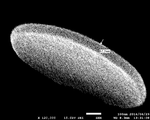
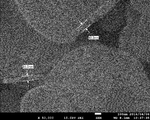
- FIG. 2 is a 10,000 times SEM photograph of the plate-like hydrotalcite of Sample 1 of Example 1.
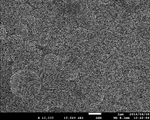
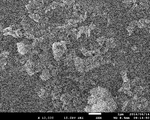
- FIG. 2 is a SEM photograph of 120,000 times the plate-like hydrotalcite of Sample 1 of Example 1.
- 10 is a 10,000 times SEM photograph of plate-like hydrotalcite of Sample 9 of Comparative Example 2.
- 5 is an SEM photograph of 50,000 times the plate-like hydrotalcite of Sample 9 of Comparative Example 2.
- 10 is a 10,000 times SEM photograph of plate-like hydrotalcite of Sample 10 of Comparative Example 3.
- 4 is a 100,000 times SEM photograph of the plate-like hydrotalcite of Sample 10 of Example 3.
- FIG. 1 is a SEM photograph of 120,000 times the plate-like hydrotalcite of Sample 1 of Example 1.
- 10 is a 10,000 times SEM photograph of plate-like hydrotalcite of Sample 9 of Comparative Example 2.
- 5 is an SEM photograph of 50,000 times the plate-like hydrotalcite of Sample 9 of Comparative Example 2.
- 10 is a 10,000 times SEM photograph of plate-like hydro
- the plate-type hydrotalcite of the present invention the type of metal, the range of x (abundance ratio of divalent metal and trivalent metal), the range of m, the type of interlayer anion, the average lateral width of the primary particles, the primary particles Average thickness, monodispersity of width, monodispersity of thickness, BET specific surface area, boehmite content and surface treatment are as follows.
- M 2+ is at least one divalent metal and M 3+ is at least one trivalent metal.
- a preferred divalent metal is at least one selected from the group consisting of Mg and Zn, and a preferred trivalent metal is Al. This is because the safety to the living body is high, the particles are white, and the usage is wide.
- the crystal water is desorbed at about 180-230 ° C. Accordingly, when used for a synthetic resin having a relatively high kneading (or treatment such as crosslinking) temperature, for example, 200 ° C. or higher, the range of m is preferably 0 ⁇ m ⁇ 0.05. Problems such as resin foaming and silver streak due to the detachment of crystal water can be prevented.
- a n- is an n-valent anion
- n is an integer of 1 to 6, respectively, preferably A n- is CO 3 is 2.
- a n ⁇ represents a monovalent anion such as F ⁇ , Cl ⁇ , Br ⁇ , I ⁇ , NO 3 ⁇ , CH 3 COO ⁇ , etc.
- a n- is F -, Cl -, Br - , I - a.
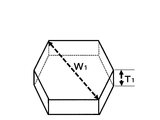
- FIG. 1 is a schematic diagram illustrating the width and thickness of primary particles. As shown in FIG. 1, the lateral width W 1 of the primary particles and the thickness T 1 of the primary particles are defined. That is, when the primary particle is a hexagonal plate surface, the major axis of the particle is “lateral width W 1 of the primary particle”, and the thickness of the plate surface is “primary particle thickness T 1 ”.
- Secondary particles are particles in which a plurality of primary particles gather to form an aggregate.
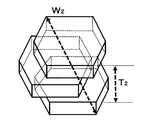
- FIG. 2 is a schematic diagram for explaining the width and thickness of the secondary particles.
- the lateral width W 2 of the secondary particles and the thickness T 2 of the secondary particles are defined. That is, since the primary particles have a hexagonal plate surface, when the primary particles are stacked in the thickness direction of the plate surface to become secondary particles, the total of the stacked primary particles in the plate surface direction.
- the thickness is “secondary particle thickness T 2 ”, and the maximum diagonal length of the stacked primary particles, that is, the diameter of the sphere when the secondary particles are considered to be encapsulated in the sphere is “secondary particle”.
- the average lateral width of the primary particles by (A) SEM method is 1 ⁇ m or more, preferably 2 ⁇ m or more, more preferably 3 ⁇ m or more.
- the average lateral width of the primary particles is obtained from the arithmetic average of the measured lateral widths of any 100 crystals in the SEM photograph by the SEM method.
- the lateral width of primary particles cannot be measured by laser diffraction in principle. Therefore, it confirms visually by SEM method.
- the lateral width of the primary particles is W 1 .
- the average thickness of the primary particles by (B) SEM method is 80 nm or less, preferably 60 nm or less, more preferably 40 nm or less.
- the average thickness of the primary particles is determined from the arithmetic average of the measured values of the thickness of arbitrary 100 crystals in the SEM photograph by the SEM method.
- the thickness of the primary particles cannot be measured by the laser diffraction method in principle. Therefore, it confirms visually by SEM method. In FIG. 1, the thickness of the primary particles is T 1 .
- the monodispersity of the lateral width represented by the following formula is 50% or more, preferably 80% or more.
- the lateral width of the secondary particles is measured by a laser diffraction method. This is because it is difficult to accurately measure the secondary particle width in the SEM method.
- FIG. 2 is a schematic diagram for explaining the width and thickness of the secondary particles. In FIG. 2, the lateral width of the secondary particles is W 2 .
- Horizontal monodispersity (%) (Average primary particle width by SEM method / Average secondary particle width by laser diffraction method) ⁇ 100
- the monodispersity of the thickness represented by the following formula is 50% or more, preferably 80% or more.
- the thickness of secondary particles cannot be measured by laser diffraction in principle. Therefore, it confirms visually by SEM method. 2, the thickness of the secondary particles is T 2.
- Monodispersity of thickness (%) (average primary particle thickness by SEM method / average secondary particle thickness by SEM method) ⁇ 100
- the aspect ratio of secondary particles (average secondary particle width by laser diffraction method / average secondary particle thickness by SEM method) is 10 or more, preferably Is 20 or more, more preferably 30 or more. If the aspect ratio of the secondary particles is less than 10, the reinforcing effect on the resin is not sufficient.
- the BET specific surface area is 1 to 50 m 2 / g, preferably 3 to 40 m 2 / g, more preferably 5 to 30 m 2 / g.
- the boehmite content is 0.1% by weight or less, preferably 0.05% by weight or less, more preferably 0%, based on the plate-like hydrotalcite. .01% by weight or less.
- the content of boehmite is more than 0.1% by weight, the transparency when the plate-like hydrotalcite is blended in the film is not preferable.
- surface treatment In the plate-like hydrotalcite represented by the formula (1), it is desirable to perform a surface treatment on the surface of the particles in order to improve the dispersibility in the resin.
- surface treatment agents include anionic surfactants, phosphate esters, silane coupling agents, titanate coupling agents, aluminum coupling agents, silicone treatment agents, water glass, silica, and cationic surfactants. You can, but this is not the case.
- the amount of the surface treatment agent is 0.01 to 20% by weight, preferably 0.5 to 5% by weight, based on the weight of the plate-like hydrotalcite represented by the formula (1).
- the resin composition of the present invention contains 0.1 to 250 parts by weight of the plate-like hydrotalcite of the present invention with respect to 100 parts by weight of the resin.
- the amount of the plate-like hydrotalcite is more preferably 1 to 200 parts by weight.
- the resin used in the present invention means a resin and / or rubber.
- a resin and / or rubber for example, polyethylene, a copolymer of ethylene and another ⁇ -olefin, a copolymer of ethylene and vinyl acetate, ethylene and an acrylate ether, Copolymers of ethylene and methyl acrylate, polypropylene, copolymers of propylene and other ⁇ -olefins, polybutene-1, poly-4-methylpentene-1, polystyrene, styrene and acrylonitrile.
- Copolymer Copolymer, Copolymer of ethylene and propylene diene rubber, Copolymer of ethylene and butadiene, Polyvinyl acetate, Polylactic acid, Polyvinyl alcohol, Polyacrylate, Polymethacrylate, Polyurethane, Polyester, Polyether, Polyamide, ABS , Polycarbonate, polyphenylene sulfide, etc. Sex resins.
- thermosetting resins such as a phenol resin, a melamine resin, an epoxy resin, an unsaturated polyester resin, an alkyd resin, are mentioned.
- EPDM EPDM, SBR, NBR, butyl rubber, chloroprene rubber, isoprene rubber, chlorosulfonated polyethylene rubber, silicon rubber, fluorine rubber, chlorinated butyl rubber, brominated butyl rubber, epichlorohydrin rubber, chlorinated polyethylene and the like can be mentioned.
- the resin composition of the present invention includes other additives such as antioxidants, reinforcing agents such as talc, ultraviolet absorbers, lubricants, matting agents such as fine silica, carbon black and the like.
- Flame retardants such as pigments, bromine-based flame retardants and phosphate ester-based flame retardants can be appropriately selected and blended.
- flame retardant aids such as zinc stannate, alkali metal stannate, carbon powder, and fillers such as calcium carbonate can be appropriately selected and blended.
- the preferred compounding amounts of these additives are 0.01 to 5 parts by weight of antioxidant, 0.1 to 50 parts by weight of reinforcing agent, and 0.01 to 5 parts by weight of UV absorber with respect to 100 parts by weight of the resin.
- the present invention includes a molded body made of the resin composition.
- a plate-like hydrotalcite containing a monovalent anion represented by the formula (2) obtained by the coprecipitation reaction is dispersed in water to prepare a slurry,
- the slurry is hydrothermally treated at 200 to 300 ° C. for 10 to 24 hours.
- monovalent carboxylate ions do not have to coexist, but the presence thereof is preferable for crystal growth.
- the raw materials for the plate-like hydrotalcite represented by the formula (2) are a divalent metal salt, a trivalent metal salt and an alkali.
- a divalent metal salt containing a monovalent anion and a trivalent metal salt containing a monovalent anion can be used.
- the divalent metal salt containing a monovalent anion include, but are not limited to, magnesium chloride, magnesium bromide, magnesium nitrate, magnesium acetate, zinc chloride, zinc bromide, zinc nitrate, and zinc acetate.
- magnesium chloride and / or zinc chloride is used. Two or more divalent metal salts may be combined.
- Examples of the trivalent metal salt containing a monovalent anion include, but are not limited to, aluminum chloride, aluminum bromide, aluminum nitrate, and aluminum acetate. Two or more kinds of trivalent metal salts may be combined.
- Aluminum chloride is preferably used.
- an alkali containing a monovalent anion can be used. Examples include alkali metal hydroxides and ammonia, but are not limited thereto. A preferred alkali is sodium hydroxide or ammonia.
- an alkali containing a divalent or higher anion it is not preferable because a divalent or higher anion enters between the layers of the plate-like hydrotalcite after the reaction.
- a slurry containing a plate-shaped hydrotalcite of the formula (2) can be prepared by preparing a mixed aqueous solution of a divalent metal salt and a trivalent metal salt and reacting with an alkali.
- the reaction method include batch reaction and continuous reaction, but are not limited thereto.
- a continuous reaction is preferably used.
- the concentration during the reaction is 1 to 200 g / L, preferably 5 to 170 g / L, more preferably 10 to 140 g / L, in terms of plate-like hydrotalcite.
- productivity is low, and when it is higher than 200 g / L, primary particles are aggregated, which is not preferable.
- the temperature during the reaction is 0 to 100 ° C., preferably 10 to 80 ° C., more preferably 20 to 60 ° C.
- the slurry containing the plate-like hydrotalcite represented by the above formula (2) is put in an autoclave.
- the slurry is hydrothermally treated at 200 to 300 ° C. for 10 to 24 hours.
- monovalent carboxylate ions do not have to coexist, but the presence thereof is preferable for crystal growth.
- monovalent carboxylic acids include, but are not limited to, acetic acid, propionic acid, butyric acid, and the like.
- acetic acid is used.
- the amount of the monovalent carboxylic acid used is preferably 0.1 to 1 mol, more preferably 0.15 to 0.8 mol, based on the total number of moles of the divalent metal and the trivalent metal.
- the amount of the monovalent carboxylic acid used is less than 0.1 mol, the effect of promoting the growth of the crystal in the horizontal axis direction and the effect of suppressing the growth of the thickness are not sufficiently exhibited.
- the amount is more than 1 mol, the aggregation of the primary particles becomes strong and the monodispersity is lowered, which is not preferable.
- the more preferable range of the hydrothermal treatment temperature is 210 to 280 ° C, more preferably 220 to 260 ° C.
- a more preferable range of the hydrothermal treatment time is 11 to 20 hours, and more preferably 12 to 18 hours.
- the concentration during hydrothermal treatment is 1 to 200 g / L, more preferably 5 to 170 g / L, and still more preferably 10 to 140 g / L in terms of plate-like hydrotalcite.
- the first is a method of dispersing the plate-like hydrotalcite after water washing in water and / or alcohol, adding an anion-containing aqueous solution, and stirring and holding.
- the equivalent of the anion is 1 to 5 equivalents, more preferably 1.5 to 3 equivalents with respect to the plate-like hydrotalcite.
- the temperature for stirring and holding is preferably 30 to 90 ° C, more preferably 50 to 80 ° C.
- the concentration of the plate-like hydrotalcite slurry is preferably 1 to 200 g / L, more preferably 5 to 100 g / L in terms of plate-like hydrotalcite.
- the second is a method of directly adding an anion-containing aqueous solution to the plate-like hydrotalcite cake after washing with water described above. At this time, the equivalent of the anion is 1 to 5 equivalents, more preferably 1.5 to 3 equivalents with respect to the plate-like hydrotalcite.
- the dispersibility in the resin when added, kneaded, and dispersed in the resin can be improved.
- a wet method and a dry method are used.
- a plate-like hydrotalcite after ion exchange is dispersed in water and / or alcohol, and a surface treatment agent dissolved under stirring is added.
- the plate-like hydrotalcite slurry and the surface treatment agent are appropriately adjusted depending on the type of the surface treatment agent.
- a heated and melted surface treatment agent is sprayed on the plate-like hydrotalcite under stirring.
- the wet method is preferable in that the particles can be uniformly processed.
- Examples of surface treatment agents include anionic surfactants, phosphate esters, silane coupling agents, titanate coupling agents, aluminum coupling agents, silicone treatment agents, water glass, silica, and cationic surfactants. You can, but this is not the case.
- the addition amount of the surface treatment agent is preferably 0.01 to 20% by weight, more preferably 0.5 to 5% by weight, based on the weight of the plate-like hydrotalcite represented by the formula (1).
- Granulation, pulverization, classification, drying After ion exchange or surface treatment, granulation, pulverization, classification, drying, etc. are appropriately performed. Granulation is effective for improving workability during resin kneading.
- the drying temperature is preferably 100 to 350 ° C. and the holding time is preferably 1 to 24 hours. If the drying temperature is less than 100 ° C., the drying is not sufficient, and if it is higher than 350 ° C., the shape of the plate-like hydrotalcite is broken and the aspect ratio of the secondary particles is lowered, which is not preferable. When the drying time is less than 1 hour, the drying is not sufficient, and even if the drying time is longer than 24 hours, there is no change and it is economically disadvantageous.
- the drying temperature is preferably 120 to 350 ° C. and the holding time is preferably 1 to 24 hours.
- the range of m of the plate-like hydrotalcite can be set to 0 ⁇ m ⁇ 0.05.
- Decrystallized water type plate-shaped hydrotalcite has physical properties such as average primary particle width, primary particle average thickness, width monodispersity, thickness monodispersity, and BET specific surface area. It is almost the same as before, and the performance when kneaded into resin does not change.
- a more preferable drying temperature is 130 to 340 ° C, more preferably 140 to 330 ° C.
- a further preferable drying time is 1.5 to 22 hours, and more preferably 2 to 20 hours.
- A Average width and average thickness of primary particles After adding a sample to alcohol and performing ultrasonic treatment for 5 minutes, using a scanning electron microscope (SEM) (manufactured by JEOL, JSM-7600F), any 100 The lateral width and thickness of the primary particles of the individual crystals were measured, and the arithmetic average was taken as the average lateral width and average thickness of the primary particles.
- SEM scanning electron microscope
- (K) Measuring method of flexural modulus of resin composition 100 parts by weight of polypropylene, 6 parts by weight of test powder sample, and 12 parts by weight of talc are mixed, melt-kneaded at about 180 ° C. using a twin screw extruder, and pellets Was made. Using the obtained pellets, a test piece having a length of 15 cm, a width of 5 cm, and a thickness of 3 mm was produced at about 200 ° C. by an injection molding machine. Using the prepared test piece, the flexural modulus of the resin composition was determined according to JIS. K. Measured based on 7171.
- reaction product was filtered and washed with deionized water, and then the cake was dispersed in deionized water to obtain a slurry containing plate-like hydrotalcite represented by the formula (2).
- a surface treatment agent 2% by weight of sodium stearate was used with respect to the plate-like hydrotalcite and dissolved in 50 mL of deionized water heated to 80 ° C. to prepare a stearic acid-containing treatment solution.
- the stearic acid-containing treatment liquid was added to the washed slurry after the hydrothermal treatment that was heated to 80 ° C., and the mixture was stirred and held at 80 ° C. for 20 minutes. After cooling the surface-treated slurry to 30 ° C., filtration and deionization washing were performed. Thereafter, the cake was put into a hot air dryer, dried at 110 ° C.
- FIG. 1 shows a 10,000 times SEM photograph of Sample 1
- FIG. 4 shows a 120,000 times SEM photograph.
- Example 1 a plate-like hydrotalcite was prepared in the same manner except that 0.25 equivalent of acetic acid was added to the slurry before hydrothermal treatment with respect to the total number of moles of Mg and Al. Hydrotalcite sample 2 was obtained.
- Sample 1 the experimental conditions are shown in Table 1, and the chemical composition, average primary particle width / average thickness, secondary particle average width / average thickness, monodispersity of width, monodispersity of thickness, secondary Table 2 shows the particle aspect ratio, BET specific surface area, boehmite content, and surface treatment amount.
- Each solution containing a monovalent anion was continuously supplied to the reaction vessel at 20 mL / min using a metering pump to cause a coprecipitation reaction.
- the reaction tank is made of stainless steel and overflows with a capacity of 500 mL. 300 mL of deionized water is put in advance in this reaction tank, the temperature is adjusted to 30 ° C., and the mixture is stirred with a stirrer. Similarly, the raw material whose temperature was adjusted to 30 ° C. was supplied to the reaction vessel, and the flow rate was adjusted to 20 mL / L.
- the obtained reaction product was filtered and washed with deionized water, and then the cake was dispersed in deionized water to obtain a slurry containing plate-like hydrotalcite represented by the formula (2).
- a plate-shaped hydrotalcite was prepared in the same manner as in Example 1 to obtain a plate-shaped hydrotalcite sample 3 of the present invention.
- the experimental conditions are shown in Table 1, the chemical composition, the average width and average thickness of the primary particles, the average width and average thickness of the secondary particles, the monodispersity of the width, the monodispersity of the thickness, The aspect ratio, BET specific surface area, boehmite content, and surface treatment amount of the secondary particles are shown in Table 2 (the same applies to Samples 4 to 7 of Examples and Samples 8 to 14 of Comparative Examples shown below). ).
- Each solution containing a monovalent anion was continuously supplied to the reaction vessel at 20 mL / min using a metering pump to cause a coprecipitation reaction.
- the reaction tank is made of stainless steel and overflows with a capacity of 500 mL. 300 mL of deionized water is put in advance in this reaction tank, the temperature is adjusted to 30 ° C., and the mixture is stirred with a stirrer.
- the raw material whose temperature was adjusted to 30 ° C. was supplied to the reaction vessel, and the flow rate was adjusted to 20 mL / L.
- the obtained reaction product was filtered and washed with deionized water, and then the cake was dispersed in deionized water to obtain a slurry containing plate-like hydrotalcite represented by the formula (2).
- a plate-shaped hydrotalcite was prepared in the same manner as in Example 1 to obtain a plate-shaped hydrotalcite sample 4 of the present invention.
- Each solution was continuously supplied to the reaction vessel at 20 mL / min using a metering pump to cause a coprecipitation reaction.
- the reaction tank is made of stainless steel and overflows with a capacity of 500 mL.
- the obtained reaction product was filtered and washed with deionized water, and then the cake was dispersed in deionized water to obtain a slurry containing plate-like hydrotalcite represented by the formula (2).
- the steps after hydrothermal treatment were prepared in the same manner as in Example 1 to obtain a plate-like hydrotalcite sample 5 of the present invention.
- Example 1 after washing the slurry after hydrothermal treatment, 1.6 equivalent of an aqueous sodium carbonate solution was directly added to the plate-like hydrotalcite cake, and ion exchange was performed. . After addition of the aqueous sodium carbonate solution, washing was performed with deionized water, and the washed cake was redispersed with deionized water. After the surface treatment, it was produced in the same manner as in Example 1 to obtain a plate-shaped hydrotalcite sample 6 of the present invention.
- Example 1 After the surface-treated slurry was cooled to 30 ° C., filtration and deionization washing were performed. Thereafter, the cake was put into a hot air dryer, dried at 200 ° C. for 12 hours, and then pulverized to obtain a plate-like hydrotalcite sample 7 of the present invention.
- Example 1 A plate-like hydrotalcite was prepared in the same manner as in Example 1 except that the Mg raw material was reagent grade magnesium sulfate and the Al raw material was reagent grade aluminum sulfate, and sample 8 was obtained.
- Example 3 (Comparative Example 3) In Example 1, a plate-like hydrotalcite was produced in the same manner except that the holding temperature during hydrothermal treatment was 170 ° C., and Sample 10 was obtained.
- Example 4 A plate-like hydrotalcite was prepared in the same manner as in Example 1 except that the holding time during hydrothermal treatment was 5 hours, and Sample 11 was obtained.
- Example 5 plate-like hydrotalcite was similarly prepared except that 0.25 equivalent of acetic acid was added to the total number of moles of Mg and Al in the slurry before hydrothermal treatment, and the hydrothermal treatment time was set to 5 hours. A sample 12 was obtained.
- Example 6 (Comparative Example 6) In Example 1, 0.25 equivalent of acetic acid was added to the slurry before hydrothermal treatment with respect to the total number of moles of Mg and Al, the retention temperature during hydrothermal treatment was 170 ° C., and the retention time was 5 hours. Produced a plate-like hydrotalcite in the same manner, and a sample 13 was obtained.
- Example 7 (Comparative Example 7)
- a plate-like hydrotalcite was prepared in the same manner except that was prepared, and a sample 14 was obtained.
- the plate-like hydrotalcite of Examples 1 to 7 has a primary particle width of 1 ⁇ m or more and an average thickness of 60 nm or less.
- the monodispersity is 50 or more in both width and thickness, indicating high dispersibility.
- the hydrothermal treatment temperature is as high as 250 ° C.
- the boehmite content is 0.01% by weight or less based on the plate-like hydrotalcite.
- the powder sample 1 produced in Example 1 was mixed with 12 parts by weight, 100 parts by weight of polypropylene and 0.2 parts by weight of an antioxidant, and melt-kneaded at about 180 ° C. using a twin screw extruder to produce pellets. .
- a test piece having a length of 15 cm, a width of 5 cm, and a thickness of 3 mm was produced at about 200 ° C. by an injection molding machine, and used as a resin sample 1.
- Table 3 shows the flexural modulus of the resin sample 1.
- Example 2 Using the powder sample 2 produced in Example 2, a resin composition was produced in the same manner as in Example 8, and designated as Resin Sample 2. Table 3 shows the flexural modulus of the resin sample 2.
- Example 3 Using the powder sample 3 produced in Example 3, a resin composition was produced in the same manner as in Example 8 to obtain a resin sample 3.
- Table 3 shows the flexural modulus of the resin sample 3.
- Example 4 Using the powder sample 4 produced in Example 4, a resin composition was produced in the same manner as in Example 8 to obtain a resin sample 4.
- Table 3 shows the flexural modulus of the resin sample 4.
- Example 5 Using the powder sample 5 produced in Example 5, a resin composition was produced in the same manner as in Example 8 to obtain a resin sample 5.
- Table 3 shows the flexural modulus of the resin sample 5.
- Example 6 Using the powder sample 6 produced in Example 6, a resin composition was produced in the same manner as in Example 8, and the resin sample 6 was obtained. Table 3 shows the flexural modulus of the resin sample 6.
- Example 7 Using the powder sample 7 produced in Example 7, a resin composition was produced in the same manner as in Example 8 to obtain a resin sample 7.
- Table 3 shows the flexural modulus of the resin sample 6.
- Comparative Example 8 Using the powder sample 8 produced in Comparative Example 1, a resin composition was produced in the same manner as in Example 8 to obtain a resin sample 8.
- Table 3 shows the flexural modulus of the resin sample 8.
- Comparative Example 10 Using the powder sample 10 prepared in Comparative Example 3, a resin composition was prepared in the same manner as in Example 8, and the resin sample 10 was obtained. Table 3 shows the flexural modulus of the resin sample 10.
- Comparative Example 11 Using the powder sample 11 produced in Comparative Example 4, a resin composition was produced in the same manner as in Example 8, and the resin sample 11 was obtained. Table 3 shows the flexural modulus of the resin sample 11.
- Comparative Example 12 Using the powder sample 12 produced in Comparative Example 5, a resin composition was produced in the same manner as in Example 8 to obtain a resin sample 12.
- Table 3 shows the flexural modulus of the resin sample 12.
- Comparative Example 13 Using the powder sample 13 produced in Comparative Example 6, a resin composition was produced in the same manner as in Example 8, and the resin sample 13 was obtained. Table 3 shows the flexural modulus of the resin sample 13.
- Comparative Example 14 Using the powder sample 14 produced in Comparative Example 7, a resin composition was produced in the same manner as in Example 8, and the resin sample 14 was obtained. Table 3 shows the flexural modulus of the resin sample 14.
- the plate-like hydrotalcite of the present invention can be imparted with rigidity, flame retardancy, glossiness, and gas barrier properties by blending with resin.
- a rust-preventing effect can be imparted by blending with a paint, and it can also be used as a base for pearl pigments.
Landscapes
- Chemical & Material Sciences (AREA)
- Organic Chemistry (AREA)
- Health & Medical Sciences (AREA)
- Chemical Kinetics & Catalysis (AREA)
- Medicinal Chemistry (AREA)
- Polymers & Plastics (AREA)
- Life Sciences & Earth Sciences (AREA)
- Geology (AREA)
- Inorganic Chemistry (AREA)
- Compounds Of Alkaline-Earth Elements, Aluminum Or Rare-Earth Metals (AREA)
- Compositions Of Macromolecular Compounds (AREA)
- Inorganic Compounds Of Heavy Metals (AREA)
Abstract
1次粒子の平均横幅を大きくした板状ハイドロタルサイトについて、(1)平均厚みを相対的に小さくし、1次粒子の凝集を抑制して2次粒子のアスペクト比を高くするとともに、2)樹脂の透明性を損なう副生物の生成を抑制する。以下の(A)~(D)を満たす下記式(1)で表される板状ハイドロタルサイト;(M2+)1-X(M3+)X(OH)2(An-)X/n・mH2O (1) (ただし、式中M2+は2価金属の少なくとも1種以上、M3+は3価金属の少なくとも1種以上、An-はn価のアニオン、nは1~6の整数をそれぞれ示し、xおよびmはそれぞれ、0.1≦x≦0.33、0≦m≦10の範囲にある。)、(A)SEM法による1次粒子の平均横幅が1μm以上、(B)SEM法による1次粒子の平均厚みが80nm以下、(C)横幅の単分散度が50%以上、(D)厚みの単分散度が50%以上。
Description
本発明は、1次粒子の平均横幅が大きく、平均厚みが薄く、単分散度が高く、かつアスペクト比の高い板状ハイドロタルサイト、その製造方法及びその樹脂組成物に関する。
板状ハイドロタルサイトは共沈法で合成できる。しかし、この方法で合成した板状ハイドロタルサイトの1次粒子は、平均横幅が数10nmの微細な結晶しか得ることができない。加えて、これらの1次粒子は強く凝集して多くの2次粒子(数μm~数10μm)を形成するため、樹脂添加剤として用いるには、改善を要する問題があった。
このため、本発明者らは、共沈反応後に、150~180℃で水熱処理する方法を開発した。この方法では、1次粒子がよく成長し、かつ1次粒子間の凝集が少ない、単分散の粒子を製造できるようになった。この板状ハイドロタルサイトの1次粒子の平均横幅は0.4~0.5μm、平均厚みは0.1~0.2μmで、アスペクト比4~5である。(特許文献1)
その結果、板状ハイドロタルサイトの樹脂中での分散性が改善され、樹脂添加剤として新規用途が開かれた。用途としては、例えば塩ビの熱安定剤、ポリオレフィン重合触媒残渣の分解及び中和剤、農業用フィルムの保温剤(赤外線吸収剤)、ハロゲン含有ゴムの受酸剤等がある。
このような流れに沿って、1次粒子の平均横幅がさらに大きい1μm以上の板状ハイドロタルサイトを合成する試みも種々行われてきた。しかし、いずれの方法も、樹脂に添加した場合にその透明性を悪化させるベーマイトが不純物として副生するか、あるいは1次粒子が強く凝集するため、樹脂添加剤としては改善を要するものであった。例えば、非特許文献1では、水熱処理を高温の220℃で行い1次粒子の成長を促して、平均横幅1~2μmで、かつ平均厚み0.1μmの大きな1次粒子が得られているが、ベーマイトが副生し、かつ1次粒子が凝集している。(非特許文献1)
また、非特許文献2では、水熱処理をさらに高温の300℃で行うことにより、1次粒子の平均横幅15μmで、平均厚み0.1μmの粗大な結晶が得られているが、ベーマイトが副生し、かつ1次粒子が凝集している。(非特許文献2)
ハイドロタルサイトは樹脂と近い屈折率を持つため、樹脂に配合することで透明性の高いフィルムを得ることができる。しかし、非特許文献1及び2のように水熱処理時の処理温度を上げて平均横幅の大きい1次粒子を得ようとすると、不純物としてベーマイトが生成し、屈折率の違いからフィルムの透明性が低下する。そこで、ベーマイトなどの透明性を低下させる不純物を含まないようにしながら、1次粒子の平均横幅を大きくするという要望があった。
一方、特許文献2では、高いアスペクト比を有するハイドロタルサイトについて、反応系に炭素数2~6のカルボン酸と、低級アルコールを共存させ100~200℃で反応させることにより、1次粒子の平均横幅が0.3~10μmであり、かつアスペクト比が45以上である板状ハイドロタルサイトが得られたとされている。
しかし、この方法で製造された微細化前の板状ハイドロタルサイトの平均2次粒子径(D50)は22μmであり(実施例5)、微細化前の板状ハイドロタルサイトの1次粒子の平均横幅は1μmであることから(実施例1、表1)、この方法で製造された板状ハイドロタルサイト(微細化前)は、激しく凝集しているとみることができる。その横幅及び厚みの単分散度は50%以上であることは窺われない。(特許文献2)
また、特許文献3では、2価金属イオンと3価金属イオンを含む水溶液に重炭酸塩を添加して反応させる、板状ハイドロタルサイトの製造方法が提案されている。この方法では、2価金属と3価金属のモル比を調整することで、1次粒子の平均横幅が0.9~10μm、かつアスペクト比(板面を六角板状としたときの粒子の長径と厚さの比)が40以上である板状ハイドロタルサイトが得られたとされている。
しかし、その反応温度は70~100℃と低く、また、得られた板状ハイドロタルサイトの平均板面径は0.82~1.3μmであり(表1)、2μmに達していない。また、その厚みについては不明である。従って、その横幅及び厚みの単分散度も50%以上であることは窺われない。(特許文献3)
また、特許文献4では、液晶滴下工法用シール剤に用いるアスペクト比が50を超える板状ハイドロタルサイトについて記載があるが、これをどのように製造するかについては開示がない。パーカライト社の商品名パーカライトA100、パーカライトLDを用いるとするのみで(表1)、そのアスペクト比は200~300とされている。
なお、特許文献4では、板状ハイドロタルサイトの粒子径の変動係数(CV値)についても述べられている。計算式は、粒子径のCV値(%)=(粒子径の標準偏差/平均粒子径)×100であること、CV値は50%以下が望ましいとされている。ただし、CV値の計算に使用する粒子径の標準偏差と平均粒子径は、ともに1次粒子のものであり、本願で規定する横幅及び厚みの単分散度の定義とは異なる。(特許文献4)
樹脂の剛性、ガスバリア性等の機能向上を目的として樹脂添加剤として配合する場合、重要になるのは2次粒子のアスペクト比である。1次粒子のアスペクト比が高くても、凝集して多くの2次粒子を形成するような場合(横幅及び厚みの単分散度が低い場合)は、粒子全体のアスペクト比は1次粒子だけのアスペクト比と比較して大きく低下するため、十分にフィラーの性能が発揮されない。従って、「アスペクト比の高い1次粒子」に加えて、「横幅及び厚みの単分散度を高くさせること」が課題となる。このような課題については、先行技術において見つけることができない。
すなわち、1次粒子の平均横幅が大きく、平均厚みが薄く、その結果アスペクト比が大きい板状ハイドロタルサイトであって、1次粒子の凝集が少なく(横幅及び厚みの単分散度が高く)、かつ、樹脂の透明性を阻害する副生物が生成されない製造方法が要望されていた。
A.SCHUTZ and P.BILOEN, J.Solid State Chemistry, 68, 360, 1987
W.T.REICHLE, Solid State Ionics, 22, 135, 1986
M.Ogawa and H.Kaiho, Langmuir, 18, 4240, 2002
本発明の課題は、1次粒子の平均横幅を大きくしたときに生じる従来技術の問題を解決することである。すなわち、板状ハイドロタルサイトについて、(1)平均厚みを相対的に小さくし、1次粒子の凝集を抑制して2次粒子のアスペクト比を高くすること(例えば10以上)、及び(2)樹脂の透明性を損なう副生物の生成を抑制することである。
換言すれば、ベーマイトの副生を抑えながら、1次粒子の横幅が1μm以上と大きく、1次粒子の厚みが80nmより薄く、アスペクト比の高い板状ハイドロタルサイトであって、横幅と厚みの単分散度を高くすることで、2次粒子のアスペクト比を高めた板状ハイドロタルサイトと、その製造方法を提供することである。
本発明の別の課題は、2次粒子のアスペクト比を高めた板状ハイドロタルサイトを樹脂に配合することで、樹脂機能を改善した樹脂組成物及びその成形品を提供することである。
本発明は、上記課題を克服した、以下の(A)~(D)を満たす下記式(1)で表される板状ハイドロタルサイトを提供する。
(M2+)1-x(M3+)x(OH)2(An-)x/n・mH2O (1)
(ただし、式中M2+は2価金属の少なくとも1種以上、M3+は3価金属の少なくとも1種以上、An-はn価のアニオン、nは1~6の整数をそれぞれ示し、x及びmはそれぞれ、0.1≦x≦0.33、0≦m≦10の範囲にある。)
(A)SEM法による1次粒子の平均横幅が1μm以上、
(B)SEM法による1次粒子の平均厚みが80nm以下、
(C)下記式で表わされる横幅の単分散度が50%以上;
横幅の単分散度(%)=(SEM法よる1次粒子の平均横幅/レーザー回折法による2次粒子の平均横幅)×100、
(D)下記式で表される厚みの単分散度が50%以上;
厚みの単分散度(%)=(SEM法による1次粒子の平均厚み/SEM法による2次粒子の平均厚み)×100。
本発明の高アスペクト比板状ハイドロタルサイトは、以下の方法で得られる。
共沈反応で得られた下記式(2)で表される、1価のアニオンを層間に含む板状ハイドロタルサイトを、200~300℃で10~24時間水熱処理をする。なお、1価のカルボン酸は必須ではないが、共存させた方が結晶成長には好ましい。
(M2+)1-x(M3+)x(OH)2(An-)x/n・mH2O (2)
(ただし、式中M2+は2価金属の少なくとも1種以上、M3+は3価金属の少なくとも1種以上、An-はF-、Cl-、Br-、I-、NO3 -、CH3COO-等の1価のアニオンをそれぞれ示し、x及びmはそれぞれ、0.1≦x≦0.33、0≦m≦10の範囲にある。)
(M2+)1-x(M3+)x(OH)2(An-)x/n・mH2O (2)
(ただし、式中M2+は2価金属の少なくとも1種以上、M3+は3価金属の少なくとも1種以上、An-はF-、Cl-、Br-、I-、NO3 -、CH3COO-等の1価のアニオンをそれぞれ示し、x及びmはそれぞれ、0.1≦x≦0.33、0≦m≦10の範囲にある。)
水熱処理後に2価以上のアニオンでイオン交換することで、式(1)で表される層間アニオンが2価以上のアニオンを含むいかなる種類のアニオンを含む、本発明の板状ハイドロタルサイトに変換できる。
本発明の板状ハイドロタルサイトは、樹脂に配合することで剛性、難燃性、光沢性、ガスバリア性を付与することができる。加えて、塗料に配合することで防錆効果を付与することができ、パール顔料の下地としても利用可能である。
以下、本発明について具体的に説明する。
<板状ハイドロタルサイト>
本発明の板状ハイドロタルサイトの、金属の種類、xの範囲(2価金属と3価金属の存在比)、mの範囲、層間アニオンの種類、1次粒子の平均横幅、1次粒子の平均厚み、横幅の単分散度、厚みの単分散度、BET比表面積、ベーマイトの含有量及び表面処理は以下の通りである。
<板状ハイドロタルサイト>
本発明の板状ハイドロタルサイトの、金属の種類、xの範囲(2価金属と3価金属の存在比)、mの範囲、層間アニオンの種類、1次粒子の平均横幅、1次粒子の平均厚み、横幅の単分散度、厚みの単分散度、BET比表面積、ベーマイトの含有量及び表面処理は以下の通りである。
(金属の種類)
式(1)及び(2)で表される板状ハイドロタルサイトにおいて、M2+は2価金属の少なくとも1種以上、M3+は3価金属の少なくとも1種以上である。好ましい2価金属としてはMg及びZnからなる群より選ばれる1種類以上であり、好ましい3価金属としてはAlである。これは、生体への安全性が高く、かつ粒子が白色で用途が広いためである。
式(1)及び(2)で表される板状ハイドロタルサイトにおいて、M2+は2価金属の少なくとも1種以上、M3+は3価金属の少なくとも1種以上である。好ましい2価金属としてはMg及びZnからなる群より選ばれる1種類以上であり、好ましい3価金属としてはAlである。これは、生体への安全性が高く、かつ粒子が白色で用途が広いためである。
(xの範囲)
式(1)及び(2)で表される板状ハイドロタルサイトにおいて、xの範囲は0.1≦x≦0.33であり、好ましくは0.15≦x≦0.25である。xが0.33を超えるとベーマイトが副生し、逆に0.1より小さくなると水酸化マグネシウムが副生し、いずれも透明性低下の原因となる。
式(1)及び(2)で表される板状ハイドロタルサイトにおいて、xの範囲は0.1≦x≦0.33であり、好ましくは0.15≦x≦0.25である。xが0.33を超えるとベーマイトが副生し、逆に0.1より小さくなると水酸化マグネシウムが副生し、いずれも透明性低下の原因となる。
(mの範囲)
式(1)及び(2)で表される板状ハイドロタルサイトにおいて、mの範囲は0≦m≦10であり、好ましくは0≦m≦6である。
式(1)及び(2)で表される板状ハイドロタルサイトにおいて、mの範囲は0≦m≦10であり、好ましくは0≦m≦6である。
板状ハイドロタルサイトは昇温していくと約180~230℃付近で結晶水の脱離を起こす。従って、混錬(又は架橋等の処理)温度が比較的高い、例えば200℃以上の合成樹脂に使用する場合、mの範囲が0≦m≦0.05であることが好ましい。結晶水の脱離による樹脂の発泡、シルバーストリークなどの問題を防ぐことができる。
(層間アニオンの種類)
式(1)で表される板状ハイドロタルサイトにおいて、An-はn価のアニオン、nは1~6の整数をそれぞれ示し、好ましいAn-はCO3 2-である。
式(1)で表される板状ハイドロタルサイトにおいて、An-はn価のアニオン、nは1~6の整数をそれぞれ示し、好ましいAn-はCO3 2-である。
式(2)で表される板状ハイドロタルサイトにおいて、An-はF-、Cl-、Br-、I-、NO3
-、CH3COO-等の1価のアニオンをそれぞれ示し、より好ましいAn-はF-、Cl-、Br-、I-である。ハロゲン化物イオンを用いることにより、板状ハイドロタルサイトの層間に働く結合力を弱め、より厚みの薄い1次粒子を製造することができる。
(1次粒子の定義)
1次粒子とは、幾何学的にこれ以上分割できない明確な境界を持った粒子である。図1は、1次粒子についての横幅と厚みを説明する模式図である。図1に示すように、1次粒子の横幅W1、1次粒子の厚みT1を規定する。すなわち、1次粒子が六角形状の板面としたときの粒子の長径が「1次粒子の横幅W1」であり、板面の厚さが「1次粒子の厚みT1」である。
1次粒子とは、幾何学的にこれ以上分割できない明確な境界を持った粒子である。図1は、1次粒子についての横幅と厚みを説明する模式図である。図1に示すように、1次粒子の横幅W1、1次粒子の厚みT1を規定する。すなわち、1次粒子が六角形状の板面としたときの粒子の長径が「1次粒子の横幅W1」であり、板面の厚さが「1次粒子の厚みT1」である。
(2次粒子の定義)
2次粒子とは、1次粒子が複数個集まり、凝集体となった粒子である。図2は、2次粒子についての横幅と厚みを説明する模式図である。図2に示すように、2次粒子の横幅W2、2次粒子の厚みT2を規定する。すなわち、1次粒子は六角形状の板面とされるので、この1次粒子が板面の厚み方向に積み重なって2次粒子となったときの、積み重なった1次粒子の板面方向の全体の厚さが「2次粒子の厚みT2」であり、積み重なった1次粒子の最大対角線の長さ、すなわち、2次粒子が球体に包まれると考えたときの球体の直径が「2次粒子の横幅W2」である。
2次粒子とは、1次粒子が複数個集まり、凝集体となった粒子である。図2は、2次粒子についての横幅と厚みを説明する模式図である。図2に示すように、2次粒子の横幅W2、2次粒子の厚みT2を規定する。すなわち、1次粒子は六角形状の板面とされるので、この1次粒子が板面の厚み方向に積み重なって2次粒子となったときの、積み重なった1次粒子の板面方向の全体の厚さが「2次粒子の厚みT2」であり、積み重なった1次粒子の最大対角線の長さ、すなわち、2次粒子が球体に包まれると考えたときの球体の直径が「2次粒子の横幅W2」である。
(1次粒子の平均横幅)
式(1)で表される板状ハイドロタルサイトにおいて、(A)SEM法による1次粒子の平均横幅は1μm以上であり、好ましくは2μm以上、さらに好ましくは3μm以上である。1次粒子の平均横幅は、SEM法によりSEM写真中の任意の100個の結晶の横幅の測定値の算術平均から求める。1次粒子の横幅は、原理上レーザー回折法では測定することができない。したがって、SEM法により目視で確認する。図1において、1次粒子の横幅は、W1である。
式(1)で表される板状ハイドロタルサイトにおいて、(A)SEM法による1次粒子の平均横幅は1μm以上であり、好ましくは2μm以上、さらに好ましくは3μm以上である。1次粒子の平均横幅は、SEM法によりSEM写真中の任意の100個の結晶の横幅の測定値の算術平均から求める。1次粒子の横幅は、原理上レーザー回折法では測定することができない。したがって、SEM法により目視で確認する。図1において、1次粒子の横幅は、W1である。
(1次粒子の平均厚み)
式(1)で表される板状ハイドロタルサイトにおいて、(B)SEM法による1次粒子の平均厚みは80nm以下であり、好ましくは60nm以下、さらに好ましくは40nm以下である。1次粒子の平均厚みは、SEM法によりSEM写真中の任意の100個の結晶の厚みの測定値の算術平均から求める。1次粒子の厚みは、原理上レーザー回折法では測定することができない。したがって、SEM法により目視で確認する。図1において、1次粒子の厚みは、T1である。
式(1)で表される板状ハイドロタルサイトにおいて、(B)SEM法による1次粒子の平均厚みは80nm以下であり、好ましくは60nm以下、さらに好ましくは40nm以下である。1次粒子の平均厚みは、SEM法によりSEM写真中の任意の100個の結晶の厚みの測定値の算術平均から求める。1次粒子の厚みは、原理上レーザー回折法では測定することができない。したがって、SEM法により目視で確認する。図1において、1次粒子の厚みは、T1である。
(横幅の単分散度)
式(1)で表される板状ハイドロタルサイトにおいて、(C)下記式で表わされる横幅の単分散度が50%以上であり、好ましくは80%以上である。2次粒子の横幅は、レーザー回折法により測定する。SEM法では、2次粒子横幅を正確に測定することが困難なためである。図2は、2次粒子についての横幅と厚みを説明する模式図である。図2において、2次粒子の横幅はW2である。
横幅の単分散度(%)=(SEM法よる1次粒子の平均横幅/レーザー回折法による2次粒子の平均横幅)×100
式(1)で表される板状ハイドロタルサイトにおいて、(C)下記式で表わされる横幅の単分散度が50%以上であり、好ましくは80%以上である。2次粒子の横幅は、レーザー回折法により測定する。SEM法では、2次粒子横幅を正確に測定することが困難なためである。図2は、2次粒子についての横幅と厚みを説明する模式図である。図2において、2次粒子の横幅はW2である。
横幅の単分散度(%)=(SEM法よる1次粒子の平均横幅/レーザー回折法による2次粒子の平均横幅)×100
(厚みの単分散度)
式(1)で表される板状ハイドロタルサイトにおいて、(D)下記式で表される厚みの単分散度が50%以上であり、好ましくは80%以上である。2次粒子の厚みは、原理上レーザー回折法では測定することができない。したがって、SEM法により目視で確認する。図2において、2次粒子の厚みはT2である。
厚みの単分散度(%)=(SEM法による1次粒子の平均厚み/SEM法による2次粒子の平均厚み)×100
式(1)で表される板状ハイドロタルサイトにおいて、(D)下記式で表される厚みの単分散度が50%以上であり、好ましくは80%以上である。2次粒子の厚みは、原理上レーザー回折法では測定することができない。したがって、SEM法により目視で確認する。図2において、2次粒子の厚みはT2である。
厚みの単分散度(%)=(SEM法による1次粒子の平均厚み/SEM法による2次粒子の平均厚み)×100
(2次粒子のアスペクト比)
式(1)で表される板状ハイドロタルサイトにおいて、2次粒子のアスペクト比(レーザー回折法による2次粒子の平均横幅/SEM法による2次粒子の平均厚み)は10以上であり、好ましくは20以上、さらに好ましくは30以上である。2次粒子のアスペクト比が10未満では、樹脂に対する補強効果が十分ではない。
式(1)で表される板状ハイドロタルサイトにおいて、2次粒子のアスペクト比(レーザー回折法による2次粒子の平均横幅/SEM法による2次粒子の平均厚み)は10以上であり、好ましくは20以上、さらに好ましくは30以上である。2次粒子のアスペクト比が10未満では、樹脂に対する補強効果が十分ではない。
(BET比表面積)
式(1)で表される板状ハイドロタルサイトにおいて、BET比表面積は1~50m2/gであり、好ましくは3~40m2/g、さらに好ましくは5~30m2/gである。
式(1)で表される板状ハイドロタルサイトにおいて、BET比表面積は1~50m2/gであり、好ましくは3~40m2/g、さらに好ましくは5~30m2/gである。
(ベーマイトの含有量)
式(1)で表される板状ハイドロタルサイトにおいて、ベーマイトの含有量は板状ハイドロタルサイトに対して0.1重量%以下であり、好ましくは0.05重量%以下、さらに好ましくは0.01重量%以下である。ベーマイトの含有量が0.1重量%より多いと、板状ハイドロタルサイトをフィルムに配合した際の透明性が低下するため好ましくない。
式(1)で表される板状ハイドロタルサイトにおいて、ベーマイトの含有量は板状ハイドロタルサイトに対して0.1重量%以下であり、好ましくは0.05重量%以下、さらに好ましくは0.01重量%以下である。ベーマイトの含有量が0.1重量%より多いと、板状ハイドロタルサイトをフィルムに配合した際の透明性が低下するため好ましくない。
(表面処理)
式(1)で表される板状ハイドロタルサイトにおいて、樹脂中での分散性を改善するため、粒子の表面に表面処理をすることが望ましい。表面処理剤としては、アニオン系界面活性剤、リン酸エステル類、シランカップリング剤、チタネートカップリング剤、アルミニウムカップリング剤、シリコーン系処理剤、水ガラス、シリカ、カチオン系界面活性剤等を例示することができるが、この限りではない。表面処理剤の量は、式(1)で表される板状ハイドロタルサイトの重量に対して、0.01~20重量%、好ましくは0.5~5重量%である。
式(1)で表される板状ハイドロタルサイトにおいて、樹脂中での分散性を改善するため、粒子の表面に表面処理をすることが望ましい。表面処理剤としては、アニオン系界面活性剤、リン酸エステル類、シランカップリング剤、チタネートカップリング剤、アルミニウムカップリング剤、シリコーン系処理剤、水ガラス、シリカ、カチオン系界面活性剤等を例示することができるが、この限りではない。表面処理剤の量は、式(1)で表される板状ハイドロタルサイトの重量に対して、0.01~20重量%、好ましくは0.5~5重量%である。
<樹脂組成物>
本発明の樹脂組成物は、100重量部の樹脂に対して、0.1~250重量部の本発明の板状ハイドロタルサイトを含有する。板状ハイドロタルサイトの配合量は、より好ましくは1~200重量部である。
本発明の樹脂組成物は、100重量部の樹脂に対して、0.1~250重量部の本発明の板状ハイドロタルサイトを含有する。板状ハイドロタルサイトの配合量は、より好ましくは1~200重量部である。
樹脂と本発明の板状ハイドロタルサイトとの混合、混練方法には特別の制約はないが、両者を均一に混合できる方法が好ましい。例えば、1軸又は2軸押出機、ロール、バンバリーミキサー等により混合、混練される。
成形方法にも特別の制約はなく、樹脂及びゴムの種類、所望成形品の種類等に応じて、公知の成形手段を任意に採用できる。例えば射出成形、押出成形、ブロー成形、プレス成形、回転成形カレンダー成形、シートフォーミング成形、トランスファー成形、積層成形、真空成形等である。
成形方法にも特別の制約はなく、樹脂及びゴムの種類、所望成形品の種類等に応じて、公知の成形手段を任意に採用できる。例えば射出成形、押出成形、ブロー成形、プレス成形、回転成形カレンダー成形、シートフォーミング成形、トランスファー成形、積層成形、真空成形等である。
本発明で用いる樹脂とは、樹脂及び/又はゴムを意味し、例えば、ポリエチレン、エチレンと他のα-オレフィンとの共重合体、エチレンと酢酸ビニルとの共重合体、エチレンとアクリル酸エーテルとの共重合体、エチレンとアクリル酸メチルとの共重合体、ポリプロピレン、プロピレンと他のα-オレフィンとの共重合体、ポリブテン-1、ポリ4-メチルペンテン-1、ポリスチレン、スチレンとアクリロニトリルとの共重合体、エチレンとプロピレンジエンゴムとの共重合体、エチレンとブタジエンとの共重合体、ポリ酢酸ビニル、ポリ乳酸、ポリビニルアルコール、ポリアクリレート、ポリメタクリレート、ポリウレタン、ポリエステル、ポリエーテル、ポリアミド、ABS、ポリカーボネート、ポリフェニレンサルファイド等の熱可塑性樹脂が挙げられる。
また、フェノール樹脂、メラミン樹脂、エポキシ樹脂、不飽和ポリエステル樹脂、アルキッド樹脂等の熱硬化性樹脂が挙げられる。また、EPDM、SBR、NBR、ブチルゴム、クロロプレンゴム、イソプレンゴム、クロロスルホン化ポリエチレンゴム、シリコンゴム、フッ素ゴム、塩素化ブチルゴム、臭素化ブチルゴム、エピクロルヒドリンゴム、塩素化ポリエチレン等が挙げられる。
また、フェノール樹脂、メラミン樹脂、エポキシ樹脂、不飽和ポリエステル樹脂、アルキッド樹脂等の熱硬化性樹脂が挙げられる。また、EPDM、SBR、NBR、ブチルゴム、クロロプレンゴム、イソプレンゴム、クロロスルホン化ポリエチレンゴム、シリコンゴム、フッ素ゴム、塩素化ブチルゴム、臭素化ブチルゴム、エピクロルヒドリンゴム、塩素化ポリエチレン等が挙げられる。
本発明の樹脂組成物は、板状ハイドロタルサイト以外に、他の添加剤、例えば酸化防止剤、タルク等の補強剤、紫外線吸収剤、滑剤、微粒シリカ等の艶消し剤、カーボンブラック等の顔料、臭素系難燃剤やリン酸エステル系難燃剤等の難燃剤を適宜選択して配合することができる。また、スズ酸亜鉛、スズ酸アルカリ金属塩、炭素粉末等の難燃助剤、炭酸カルシウム等の充填剤を適宜選択して配合することができる。
これら添加剤の好ましい配合量は、樹脂100重量部に対し、0.01~5重量部の酸化防止剤、0.1~50重量部の補強剤、0.01~5重量部の紫外線吸収剤、0.1~5重量部の滑剤、0.01~5重量部の艶消し剤、0.01~5重量部の顔料、0.1~50重量部の難燃剤、0.01~10重量部の難燃助剤、1~50重量部の充填剤である。
これら添加剤の好ましい配合量は、樹脂100重量部に対し、0.01~5重量部の酸化防止剤、0.1~50重量部の補強剤、0.01~5重量部の紫外線吸収剤、0.1~5重量部の滑剤、0.01~5重量部の艶消し剤、0.01~5重量部の顔料、0.1~50重量部の難燃剤、0.01~10重量部の難燃助剤、1~50重量部の充填剤である。
本発明は、上記樹脂組成物よりなる成形体を包含する。
<板状ハイドロタルサイトの製造方法>
(i)共沈反応で得られた式(2)で表される、1価のアニオンを層間に含む板状ハイドロタルサイトを、水に分散させ、スラリーを作製し、
(ii)該スラリーを、200~300℃で10~24時間水熱処理をする。水熱処理の際、1価のカルボン酸イオンは共存させなくてもよいが、存在させた方が結晶成長には好ましい。
(i)共沈反応で得られた式(2)で表される、1価のアニオンを層間に含む板状ハイドロタルサイトを、水に分散させ、スラリーを作製し、
(ii)該スラリーを、200~300℃で10~24時間水熱処理をする。水熱処理の際、1価のカルボン酸イオンは共存させなくてもよいが、存在させた方が結晶成長には好ましい。
(スラリーの製造)
式(2)で表される板状ハイドロタルサイトの原料は、2価の金属塩、3価の金属塩およびアルカリである。金属塩には、1価のアニオンを含む2価の金属塩及び1価のアニオンを含む3価の金属塩が用いることができる。1価のアニオンを含む2価の金属塩としては、例えば塩化マグネシウム、臭化マグネシウム、硝酸マグネシウム、酢酸マグネシウム、塩化亜鉛、臭化亜鉛、硝酸亜鉛、酢酸亜鉛等が挙げられるが、この限りではない。好ましくは、塩化マグネシウム及び/又は塩化亜鉛が用いられる。 2種以上の2価の金属塩を組み合わせることもできる。1価のアニオンを含む3価の金属塩としては、例えば塩化アルミニウム、臭化アルミニウム、硝酸アルミニウム、酢酸アルミニウムが挙げられるが、この限りではない。2種以上の3価の金属塩を組み合わせることもできる。好ましくは塩化アルミニウムが用いられる。アルカリには、1価のアニオンを含むアルカリを用いることができる。例えばアルカリ金属水酸化物、アンモニアが挙げられるが、この限りではない。好ましいアルカリは、水酸化ナトリウム又はアンモニアである。2価以上のアニオンを含むアルカリを用いた場合、反応後の板状ハイドロタルサイトの層間に2価以上のアニオンが入ってしまうため好ましくない。
式(2)で表される板状ハイドロタルサイトの原料は、2価の金属塩、3価の金属塩およびアルカリである。金属塩には、1価のアニオンを含む2価の金属塩及び1価のアニオンを含む3価の金属塩が用いることができる。1価のアニオンを含む2価の金属塩としては、例えば塩化マグネシウム、臭化マグネシウム、硝酸マグネシウム、酢酸マグネシウム、塩化亜鉛、臭化亜鉛、硝酸亜鉛、酢酸亜鉛等が挙げられるが、この限りではない。好ましくは、塩化マグネシウム及び/又は塩化亜鉛が用いられる。 2種以上の2価の金属塩を組み合わせることもできる。1価のアニオンを含む3価の金属塩としては、例えば塩化アルミニウム、臭化アルミニウム、硝酸アルミニウム、酢酸アルミニウムが挙げられるが、この限りではない。2種以上の3価の金属塩を組み合わせることもできる。好ましくは塩化アルミニウムが用いられる。アルカリには、1価のアニオンを含むアルカリを用いることができる。例えばアルカリ金属水酸化物、アンモニアが挙げられるが、この限りではない。好ましいアルカリは、水酸化ナトリウム又はアンモニアである。2価以上のアニオンを含むアルカリを用いた場合、反応後の板状ハイドロタルサイトの層間に2価以上のアニオンが入ってしまうため好ましくない。
2価金属塩及び3価金属塩の混合水溶液を作製し、アルカリと反応させることで、式(2)の板状ハイドロタルサイトを含んだスラリーを作製することができる。反応方法としては、例えばバッチ反応、連続反応が挙げられるが、この限りではない。生産性を考慮した場合、好ましくは連続反応が好適に用いられる。反応時の濃度は、板状ハイドロタルサイト換算で1~200g/Lであり、好ましくは5~170g/L、さらに好ましくは10~140g/Lである。反応時の濃度が1g/Lより低い場合は生産性が低く、200g/Lより高い場合は1次粒子が凝集するため好ましくない。反応時の温度は、0~100℃であり、好ましくは10~80℃、さらに好ましくは20~60℃である。
(水熱処理)
上記式(2)で表される板状ハイドロタルサイトを含むスラリーを、オートクレーブに入れる。該スラリーを、200~300℃で10~24時間の水熱処理を行う。水熱処理の際、1価のカルボン酸イオンは共存させなくてもよいが、存在させた方が結晶成長には好ましい。1価のカルボン酸としては、例えば酢酸、プロピオン酸、酪酸等が挙げられるが、この限りではない。好ましくは、酢酸が用いられる。1価のカルボン酸の使用量は、好ましくは2価金属と3価金属の合計mol数に対し、0.1~1mol、より好ましくは0.15~0.8molである。1価のカルボン酸の使用量が0.1mol未満だと、結晶の横軸方向の成長促進効果及び厚みの成長抑制効果が十分発揮されない。1molより多いと、1次粒子の凝集が強くなり、単分散度が下がるため好ましくない。また、水熱処理温度のより好ましい範囲は210~280℃、さらに好ましくは220~260℃である。水熱処理時間のより好ましい範囲は11~20時間、さらに好ましくは12~18時間である。水熱処理時の濃度は板状ハイドロタルサイト換算で1~200g/L、より好ましくは5~170g/L、さらに好ましくは10~140g/Lである。
上記式(2)で表される板状ハイドロタルサイトを含むスラリーを、オートクレーブに入れる。該スラリーを、200~300℃で10~24時間の水熱処理を行う。水熱処理の際、1価のカルボン酸イオンは共存させなくてもよいが、存在させた方が結晶成長には好ましい。1価のカルボン酸としては、例えば酢酸、プロピオン酸、酪酸等が挙げられるが、この限りではない。好ましくは、酢酸が用いられる。1価のカルボン酸の使用量は、好ましくは2価金属と3価金属の合計mol数に対し、0.1~1mol、より好ましくは0.15~0.8molである。1価のカルボン酸の使用量が0.1mol未満だと、結晶の横軸方向の成長促進効果及び厚みの成長抑制効果が十分発揮されない。1molより多いと、1次粒子の凝集が強くなり、単分散度が下がるため好ましくない。また、水熱処理温度のより好ましい範囲は210~280℃、さらに好ましくは220~260℃である。水熱処理時間のより好ましい範囲は11~20時間、さらに好ましくは12~18時間である。水熱処理時の濃度は板状ハイドロタルサイト換算で1~200g/L、より好ましくは5~170g/L、さらに好ましくは10~140g/Lである。
(イオン交換)
水熱処理後のスラリーを脱水し、固形分に対して20倍の脱イオン水で水洗浄した後に、2価以上のアニオンでイオン交換することで、式(1)で表される層間アニオンが2価以上のアニオンを含むいかなる種類のアニオンを含む、本発明の板状ハイドロタルサイトに変換できる。イオン交換の方法は2つある。
水熱処理後のスラリーを脱水し、固形分に対して20倍の脱イオン水で水洗浄した後に、2価以上のアニオンでイオン交換することで、式(1)で表される層間アニオンが2価以上のアニオンを含むいかなる種類のアニオンを含む、本発明の板状ハイドロタルサイトに変換できる。イオン交換の方法は2つある。
第1は、水洗浄後の板状ハイドロタルサイトを水及び/又はアルコールに分散させ、アニオン含有水溶液を添加し、撹拌保持する方法である。このとき、アニオンの当量は、板状ハイドロタルサイトに対して1~5当量、より好ましくは1.5~3当量である。撹拌保持の温度は、好ましくは30~90℃、より好ましくは50~80℃である。板状ハイドロタルサイトスラリーの濃度は、板状ハイドロタルサイト換算で、好ましくは1~200g/L、より好ましくは5~100g/Lである。
第2は、前述した水洗浄後の板状ハイドロタルサイトのケーキに対して、アニオン含有水溶液を直接添加する方法である。このとき、アニオンの当量は、板状ハイドロタルサイトに対して1~5当量、より好ましくは1.5~3当量である。
第2は、前述した水洗浄後の板状ハイドロタルサイトのケーキに対して、アニオン含有水溶液を直接添加する方法である。このとき、アニオンの当量は、板状ハイドロタルサイトに対して1~5当量、より好ましくは1.5~3当量である。
(表面処理)
イオン交換後、板状ハイドロタルサイトに対して表面処理を行うことで、樹脂に添加、混練、分散する場合の、樹脂中での分散性を改善できる。表面処理は、湿式法、及び乾式法を用いる。湿式法では、イオン交換後の板状ハイドロタルサイトを、水及び/又はアルコールに分散させ、撹拌下に溶解させた表面処理剤を添加する。板状ハイドロタルサイトスラリー及び表面処理剤は、表面処理剤の種類によって適宜調整する。乾式法では、撹拌下の板状ハイドロタルサイトに対し、加熱溶融させた表面処理剤を噴霧する。湿式法の方が粒子に対して均一に処理ができるという点で好ましい。
イオン交換後、板状ハイドロタルサイトに対して表面処理を行うことで、樹脂に添加、混練、分散する場合の、樹脂中での分散性を改善できる。表面処理は、湿式法、及び乾式法を用いる。湿式法では、イオン交換後の板状ハイドロタルサイトを、水及び/又はアルコールに分散させ、撹拌下に溶解させた表面処理剤を添加する。板状ハイドロタルサイトスラリー及び表面処理剤は、表面処理剤の種類によって適宜調整する。乾式法では、撹拌下の板状ハイドロタルサイトに対し、加熱溶融させた表面処理剤を噴霧する。湿式法の方が粒子に対して均一に処理ができるという点で好ましい。
表面処理剤としては、アニオン系界面活性剤、リン酸エステル類、シランカップリング剤、チタネートカップリング剤、アルミニウムカップリング剤、シリコーン系処理剤、水ガラス、シリカ、カチオン系界面活性剤等を例示することができるが、この限りではない。表面処理剤の添加量は、式(1)で表される板状ハイドロタルサイトの重量に対して、好ましくは0.01~20重量%、より好ましくは0.5~5重量%である。
(造粒・粉砕・分級・乾燥)
イオン交換後又は表面処理後、造粒、粉砕、分級、乾燥等を適宜行う。造粒は、樹脂混錬時の作業性向上に有効である。
イオン交換後又は表面処理後、造粒、粉砕、分級、乾燥等を適宜行う。造粒は、樹脂混錬時の作業性向上に有効である。
乾燥時の温度は100~350℃で、保持時間は1~24時間が好ましい。乾燥温度が100℃未満では乾燥が十分ではなく、350℃より高ければ板状ハイドロタルサイトの形状が崩れ、2次粒子のアスペクト比が低下するため、好ましくない。乾燥時間が1時間未満では乾燥が十分ではなく、24時間より長く乾燥させても変化はなく経済上不利である。
(脱結晶水)
式(1)で表される板状ハイドロタルサイトにおいて、結晶水を取り除く場合、乾燥時の温度は120~350℃の温度で、保持時間は1~24時間が好ましい。この処理により、板状ハイドロタルサイトのmの範囲を0≦m≦0.05とすることができる。脱結晶水タイプの板状ハイドロタルサイトは、1次粒子の平均横幅、1次粒子の平均厚み、横幅の単分散度、厚みの単分散度、BET比表面積などの物理的性質は脱結晶水前とほぼ同様であり、樹脂に混錬した際の性能は変わらない。
また、さらに好ましい乾燥温度は130~340℃、より好ましくは140~330℃である。そして、さらに好ましい乾燥時間は1.5~22時間であり、より好ましくは2~20時間である。
以下実施例により本発明を詳細に説明するが、本発明はこれらの実施例のみに限定されるものではない。実施例において、各物性は以下の(a)から(k)の方法で測定した。
(a)1次粒子の平均横幅、平均厚み
試料をアルコールに加え、超音波処理を5分間行った後、走査型電子顕微鏡(SEM)(日本電子製、JSM-7600F)を用い、任意の100個の結晶の1次粒子の横幅、厚みを測定し、その算術平均をもって1次粒子の平均横幅、平均厚みとした。
試料をアルコールに加え、超音波処理を5分間行った後、走査型電子顕微鏡(SEM)(日本電子製、JSM-7600F)を用い、任意の100個の結晶の1次粒子の横幅、厚みを測定し、その算術平均をもって1次粒子の平均横幅、平均厚みとした。
(b)2次粒子の平均横幅
試料をアルコールに加え、超音波処理を5分間行った後、レーザー回折法粒度測定機(日機装製、マイクロトラック)を用いて粒度分布を測定し、その個数平均径をもって、2次粒子の平均横幅とした。
試料をアルコールに加え、超音波処理を5分間行った後、レーザー回折法粒度測定機(日機装製、マイクロトラック)を用いて粒度分布を測定し、その個数平均径をもって、2次粒子の平均横幅とした。
(c)2次粒子の平均厚み
試料をアルコールに加え、超音波処理を5分間行った後、走査型電子顕微鏡(SEM)を用い、任意の100個の結晶の2次粒子の厚みを測定し、その算術平均をもって2次粒子の平均厚みとした。
試料をアルコールに加え、超音波処理を5分間行った後、走査型電子顕微鏡(SEM)を用い、任意の100個の結晶の2次粒子の厚みを測定し、その算術平均をもって2次粒子の平均厚みとした。
(d)横幅の単分散度
以下の式に基づいて、上記の(a)及び(b)の値から算出した。
横幅の単分散度(%)=(1次粒子の平均横幅/2次粒子の平均横幅)×100
以下の式に基づいて、上記の(a)及び(b)の値から算出した。
横幅の単分散度(%)=(1次粒子の平均横幅/2次粒子の平均横幅)×100
(e)厚みの単分散度
以下の式に基づいて、上記の(a)及び(c)の値から算出した。
厚みの単分散度(%)=(1次粒子の平均厚み/2次粒子の平均厚み)×100
以下の式に基づいて、上記の(a)及び(c)の値から算出した。
厚みの単分散度(%)=(1次粒子の平均厚み/2次粒子の平均厚み)×100
(f)2次粒子のアスペクト比
以下の式に基づいて、上記の(b)及び(c)の値から算出した。
2次粒子のアスペクト比=(2次粒子の平均横幅/2次粒子の平均厚み)
以下の式に基づいて、上記の(b)及び(c)の値から算出した。
2次粒子のアスペクト比=(2次粒子の平均横幅/2次粒子の平均厚み)
(g)BET比表面積
比表面積の測定装置(ユアサアイオニクス製、NOVA2000)を使用して、ガス吸着法により比表面積を測定した。
比表面積の測定装置(ユアサアイオニクス製、NOVA2000)を使用して、ガス吸着法により比表面積を測定した。
(h)ベーマイトの有無
X線回折装置(PANalytical製、Empyrean)を使用して、X線回折パターンの存在から判断した。
X線回折装置(PANalytical製、Empyrean)を使用して、X線回折パターンの存在から判断した。
(i)化学組成の定量
サンプルを硝酸に加熱・溶解させた後、Mg、Zn、Alはキレート滴定にて、Clはフォルハルト法滴定にて、Brは酸化還元滴定にて、Nはケルダール法にて定量した。CO3はJIS.R.9101に基づき、AGK式CO2簡易精密定量装置にて定量した。層間水は、TG-DTAを用い重量減少から算出した。
サンプルを硝酸に加熱・溶解させた後、Mg、Zn、Alはキレート滴定にて、Clはフォルハルト法滴定にて、Brは酸化還元滴定にて、Nはケルダール法にて定量した。CO3はJIS.R.9101に基づき、AGK式CO2簡易精密定量装置にて定量した。層間水は、TG-DTAを用い重量減少から算出した。
(j)表面処理量の定量
サンプルのステアリン酸処理量は、エーテル抽出法にて定量した。
サンプルのステアリン酸処理量は、エーテル抽出法にて定量した。
(k)樹脂組成物の曲げ弾性率の測定法
ポリプロピレン100重量部、試験粉末サンプル6重量部及び、タルク12重量部を混合し、二軸押出機を用い、約180℃で溶融混練し、ペレットを作製した。得られたペレットを使用し、射出成型機により、約200℃で縦15cm、横5cm、厚さ3mmの試験片を作製した。作製した試験片を用い、樹脂組成物の曲げ弾性率をJIS.K.7171に基づいて測定した。
ポリプロピレン100重量部、試験粉末サンプル6重量部及び、タルク12重量部を混合し、二軸押出機を用い、約180℃で溶融混練し、ペレットを作製した。得られたペレットを使用し、射出成型機により、約200℃で縦15cm、横5cm、厚さ3mmの試験片を作製した。作製した試験片を用い、樹脂組成物の曲げ弾性率をJIS.K.7171に基づいて測定した。
(式(2)で表される板状ハイドロタルサイトを含むスラリーの製造)
原料として、試薬1級の塩化マグネシウムと試薬1級の試薬1級の塩化アルミニウムを脱イオン水に溶解させ、Mg=0.8mol/L、Al=0.2mol/Lの混合水溶液を作製した。一方、試薬1級の水酸化ナトリウムを脱イオン水に溶解させ、Na=2mol/Lのアルカリ溶液を作製した。それぞれの溶液を、計量ポンプを用いて20mL/minで連続的に反応槽に供給し、共沈反応をさせた。反応槽はステンレス製、容量500mLでオーバーフローする構造となっており、この反応槽にあらかじめ300mLの脱イオン水を入れ、30℃に温度調整し、攪拌機で撹拌をしておく。同じく30℃に温度調整した原料を反応槽に供給し、それぞれが20mL/Lになるように流量を調整した。
原料として、試薬1級の塩化マグネシウムと試薬1級の試薬1級の塩化アルミニウムを脱イオン水に溶解させ、Mg=0.8mol/L、Al=0.2mol/Lの混合水溶液を作製した。一方、試薬1級の水酸化ナトリウムを脱イオン水に溶解させ、Na=2mol/Lのアルカリ溶液を作製した。それぞれの溶液を、計量ポンプを用いて20mL/minで連続的に反応槽に供給し、共沈反応をさせた。反応槽はステンレス製、容量500mLでオーバーフローする構造となっており、この反応槽にあらかじめ300mLの脱イオン水を入れ、30℃に温度調整し、攪拌機で撹拌をしておく。同じく30℃に温度調整した原料を反応槽に供給し、それぞれが20mL/Lになるように流量を調整した。
得られた反応生成物を濾過、脱イオン水洗した後、ケーキを脱イオン水に分散させ、式(2)で表される板状ハイドロタルサイトを含むスラリーを得た。
(水熱処理)
式(2)で表される板状ハイドロタルサイトを含むスラリーをオートクレーブに入れ、250℃で15時間撹拌保持し、水熱処理を行った。水熱処理後のスラリーを取り出し、濾過、固形分に対して20倍の脱イオン水で洗浄した後、脱イオン水に分散させ、スラリーを作製した。
式(2)で表される板状ハイドロタルサイトを含むスラリーをオートクレーブに入れ、250℃で15時間撹拌保持し、水熱処理を行った。水熱処理後のスラリーを取り出し、濾過、固形分に対して20倍の脱イオン水で洗浄した後、脱イオン水に分散させ、スラリーを作製した。
(表面処理)
表面処理剤として板状ハイドロタルサイトに対して2重量%のステアリン酸ナトリウムを用い、80℃に熱した50mLの脱イオン水に溶解させ、ステアリン酸含有処理液を作製した。同じく80℃に昇温した水熱処理後の洗浄済みスラリーにステアリン酸含有処理液を加え、80℃で20分間撹拌保持した。表面処理後のスラリーを30℃まで冷却した後、濾過、脱イオン洗浄を行った。その後、ケーキを熱風乾燥器に入れ、110℃で12時間乾燥させた後、粉砕し、本発明の板状ハイドロタルサイトサンプル1を得た。サンプル1の実験条件を表1に、化学組成、1次粒子の平均横幅・平均厚み、2次粒子の平均横幅・平均厚み、横幅の単分散度、厚みの単分散度、2次粒子のアスペクト比、BET比表面積、ベーマイトの含有量、表面処理量を、表2に示す。図3に、サンプル1の10,000倍のSEM写真を、図4に、120,000倍のSEM写真を示す。
表面処理剤として板状ハイドロタルサイトに対して2重量%のステアリン酸ナトリウムを用い、80℃に熱した50mLの脱イオン水に溶解させ、ステアリン酸含有処理液を作製した。同じく80℃に昇温した水熱処理後の洗浄済みスラリーにステアリン酸含有処理液を加え、80℃で20分間撹拌保持した。表面処理後のスラリーを30℃まで冷却した後、濾過、脱イオン洗浄を行った。その後、ケーキを熱風乾燥器に入れ、110℃で12時間乾燥させた後、粉砕し、本発明の板状ハイドロタルサイトサンプル1を得た。サンプル1の実験条件を表1に、化学組成、1次粒子の平均横幅・平均厚み、2次粒子の平均横幅・平均厚み、横幅の単分散度、厚みの単分散度、2次粒子のアスペクト比、BET比表面積、ベーマイトの含有量、表面処理量を、表2に示す。図3に、サンプル1の10,000倍のSEM写真を、図4に、120,000倍のSEM写真を示す。
実施例1において、水熱処理前のスラリーに、MgとAlの合計mol数に対し、0.25当量の酢酸を加えること以外は同様にして板状ハイドロタルサイトを作製し、本発明の板状ハイドロタルサイトサンプル2を得た。サンプル1と同様に、実験条件を表1に、化学組成、1次粒子の平均横幅・平均厚み、2次粒子の平均横幅・平均厚み、横幅の単分散度、厚みの単分散度、2次粒子のアスペクト比、BET比表面積、ベーマイトの含有量、表面処理量を、表2に示す。
原料として試薬1級の臭化マグネシウム、試薬1級の臭化アルミニウムを水に溶解させ、Mg=0.8mol/L、Al=0.2mol/Lの混合水溶液を作製した。1価のアニオンを含むそれぞれの溶液を、計量ポンプを用いて20mL/minで連続的に反応槽に供給し、共沈反応をさせた。反応槽はステンレス製、容量500mLでオーバーフローする構造となっており、この反応槽にあらかじめ300mLの脱イオン水を入れ、30℃に温度調整し、攪拌機で撹拌をしておく。同じく30℃に温度調整した原料を反応槽に供給し、それぞれが20mL/Lになるように流量を調整した。
得られた反応生成物を濾過、脱イオン水洗した後、ケーキを脱イオン水に分散させ、式(2)で表される板状ハイドロタルサイトを含むスラリーを得た。水熱処理以降の工程は実施例1と同様にして板状ハイドロタルサイトを作製し、本発明の板状ハイドロタルサイトサンプル3を得た。サンプル1、2と同様に、実験条件を表1に、化学組成、1次粒子の平均横幅・平均厚み、2次粒子の平均横幅・平均厚み、横幅の単分散度、厚みの単分散度、2次粒子のアスペクト比、BET比表面積、ベーマイトの含有量、表面処理量を、表2に示す(以下に示す実施例のサンプル4~7、比較例のサンプル8~14においても同様である。)。
原料として試薬1級の硝酸マグネシウム、試薬1級の硝酸アルミニウムを水に溶解させ、Mg=0.8mol/L、Al=0.2mol/Lの混合水溶液を作製した。1価のアニオンを含むそれぞれの溶液を、計量ポンプを用いて20mL/minで連続的に反応槽に供給し、共沈反応をさせた。反応槽はステンレス製、容量500mLでオーバーフローする構造となっており、この反応槽にあらかじめ300mLの脱イオン水を入れ、30℃に温度調整し、攪拌機で撹拌をしておく。同じく30℃に温度調整した原料を反応槽に供給し、それぞれが20mL/Lになるように流量を調整した。
得られた反応生成物を濾過、脱イオン水洗した後、ケーキを脱イオン水に分散させ、式(2)で表される板状ハイドロタルサイトを含むスラリーを得た。水熱処理以降の工程は実施例1と同様にして板状ハイドロタルサイトを作製し、本発明の板状ハイドロタルサイトサンプル4を得た。
試薬1級の塩化マグネシウム、試薬1級の塩化亜鉛及び試薬1級の塩化アルミニウムを脱イオン水に溶解させ、Mg=0.6mol/L、Zn=0.2mol/L、Al=0.2mol/Lの混合水溶液を作製した。一方、試薬1級の水酸化ナトリウムを脱イオン水に溶解させ、Na=2mol/Lのアルカリ溶液を作製した。それぞれの溶液を、計量ポンプを用いて20mL/minで連続的に反応槽に供給し、共沈反応をさせた。反応槽はステンレス製、容量500mLでオーバーフローする構造となっており、この反応槽にあらかじめ300mLの脱イオン水を入れ、30℃に温度調整し、攪拌機で撹拌をしておく。同じく30℃に温度調整した原料を反応槽に供給し、それぞれが20mL/Lになるように流量を調整した。
得られた反応生成物を濾過、脱イオン水洗した後、ケーキを脱イオン水に分散させ、式(2)で表される板状ハイドロタルサイトを含むスラリーを得た。水熱処理以降の工程は実施例1と同様に作製し、本発明の板状ハイドロタルサイトサンプル5を得た。
実施例1において、水熱処理後のスラリーを洗浄した後、板状ハイドロタルサイトに対して1.6当量の炭酸ナトリウム水溶液を、板状ハイドロタルサイトのケーキに直接添加し、イオン交換を行った。炭酸ナトリウム水溶液の添加後、脱イオン水にて洗浄を行い、洗浄後のケーキを脱イオン水にて再分散させた。表面処理以降は、実施例1と同様に作製し、本発明の板状ハイドロタルサイトサンプル6を得た。
実施例1において、表面処理後のスラリーを30℃まで冷却した後、濾過、脱イオン洗浄を行った。その後、ケーキを熱風乾燥器に入れ、200℃で12時間乾燥させた後、粉砕し、本発明の板状ハイドロタルサイトサンプル7を得た。
(比較例1)
実施例1において、Mg原料を試薬1級の硫酸マグネシウム、Al原料を試薬1級の硫酸アルミニウムとしたこと以外は同様に板状ハイドロタルサイトを作製し、サンプル8を得た。
実施例1において、Mg原料を試薬1級の硫酸マグネシウム、Al原料を試薬1級の硫酸アルミニウムとしたこと以外は同様に板状ハイドロタルサイトを作製し、サンプル8を得た。
(比較例2)
実施例1において、Mg、Al混液の濃度を、Mg=0.66mol/L、Al=0.34mol/Lとしたこと以外は同様に板状ハイドロタルサイトを作製し、サンプル9を得た。
実施例1において、Mg、Al混液の濃度を、Mg=0.66mol/L、Al=0.34mol/Lとしたこと以外は同様に板状ハイドロタルサイトを作製し、サンプル9を得た。
(比較例3)
実施例1において、水熱処理時の保持温度を170℃としたこと以外は同様に板状ハイドロタルサイトを作製し、サンプル10を得た。
実施例1において、水熱処理時の保持温度を170℃としたこと以外は同様に板状ハイドロタルサイトを作製し、サンプル10を得た。
(比較例4)
実施例1において、水熱処理時の保持時間を5時間としたこと以外は同様に板状ハイドロタルサイトを作製し、サンプル11を得た。
実施例1において、水熱処理時の保持時間を5時間としたこと以外は同様に板状ハイドロタルサイトを作製し、サンプル11を得た。
(比較例5)
実施例1において、水熱処理前のスラリーに、MgとAlの合計mol数に対し、0.25当量の酢酸を加え、水熱処理時間を5時間としたこと以外は同様にして板状ハイドロタルサイトを作製し、サンプル12を得た。
実施例1において、水熱処理前のスラリーに、MgとAlの合計mol数に対し、0.25当量の酢酸を加え、水熱処理時間を5時間としたこと以外は同様にして板状ハイドロタルサイトを作製し、サンプル12を得た。
(比較例6)
実施例1において、水熱処理前のスラリーに、MgとAlの合計mol数に対し、0.25当量の酢酸を加え、水熱処理時の保持温度を170℃、保持時間を5時間としたこと以外は同様に板状ハイドロタルサイトを作製し、サンプル13を得た。
実施例1において、水熱処理前のスラリーに、MgとAlの合計mol数に対し、0.25当量の酢酸を加え、水熱処理時の保持温度を170℃、保持時間を5時間としたこと以外は同様に板状ハイドロタルサイトを作製し、サンプル13を得た。
(比較例7)
実施例1において、原料として試薬1級の水酸化ナトリウムと試薬1級の炭酸ナトリウムを脱イオン水に溶解させ、NaOH=1.8mol/L、Na2CO3=0.2mol/Lのアルカリ溶液を作製したこと以外は同様に板状ハイドロタルサイトを作製し、サンプル14を得た。
実施例1において、原料として試薬1級の水酸化ナトリウムと試薬1級の炭酸ナトリウムを脱イオン水に溶解させ、NaOH=1.8mol/L、Na2CO3=0.2mol/Lのアルカリ溶液を作製したこと以外は同様に板状ハイドロタルサイトを作製し、サンプル14を得た。
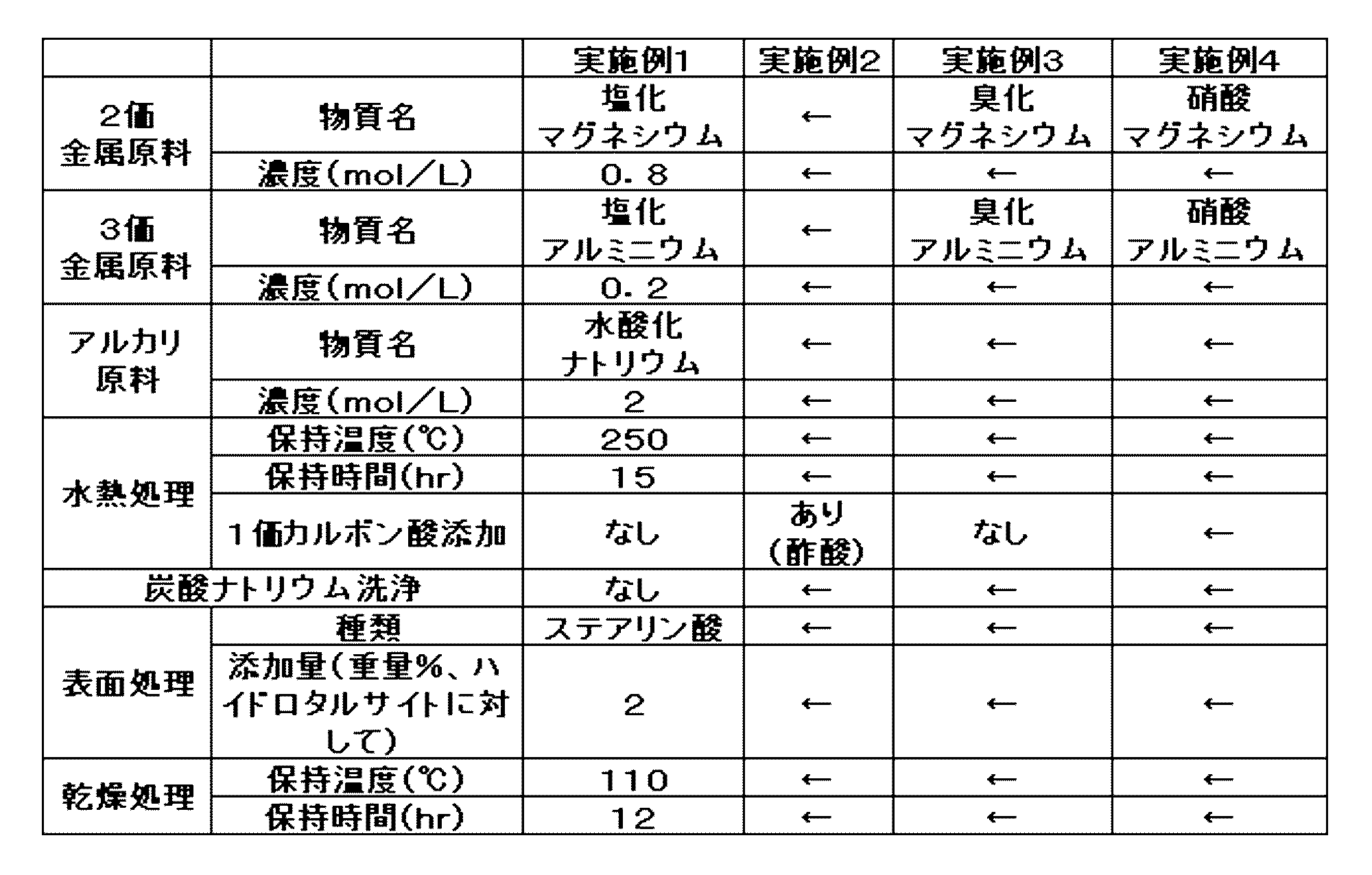
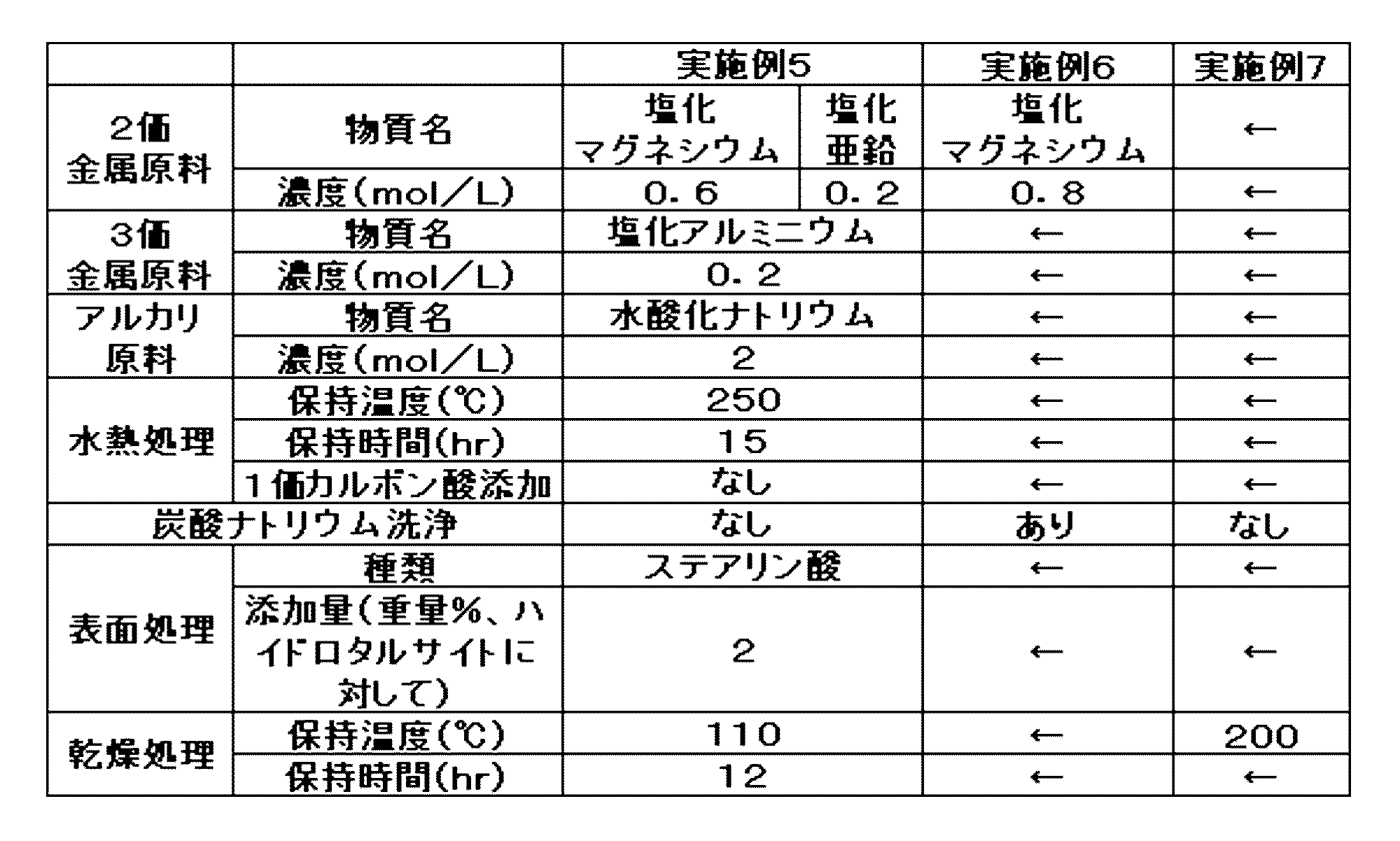
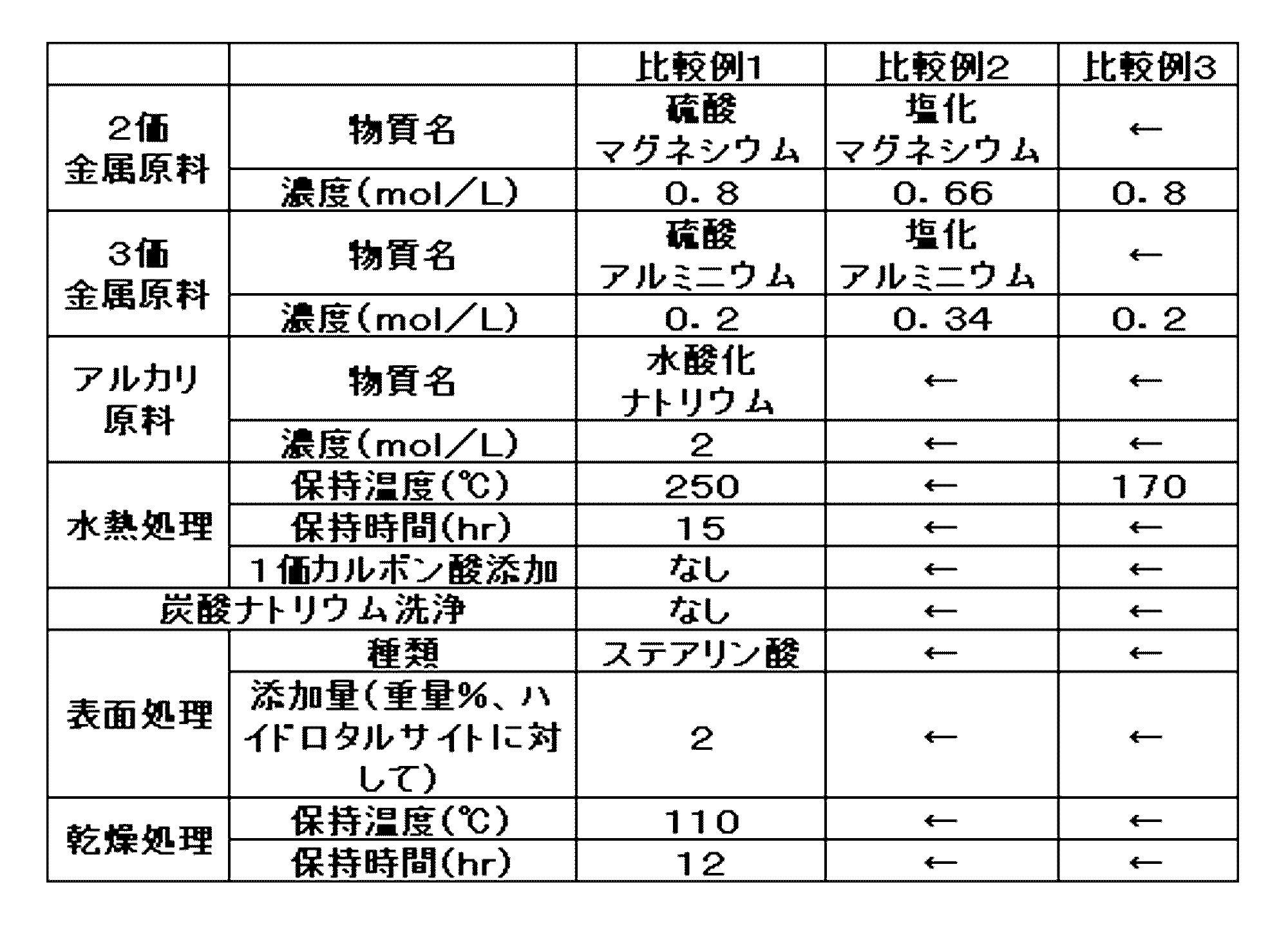

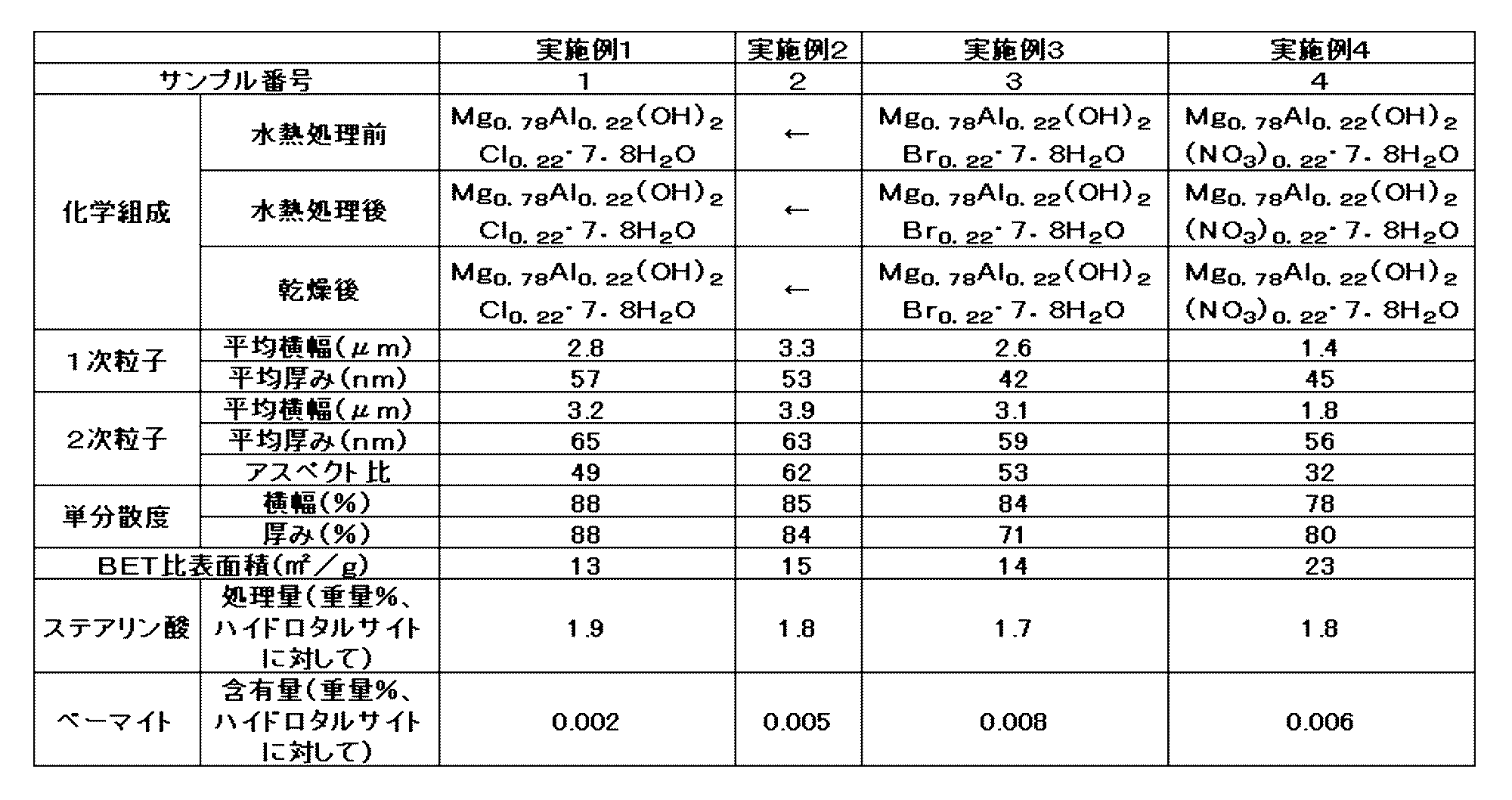
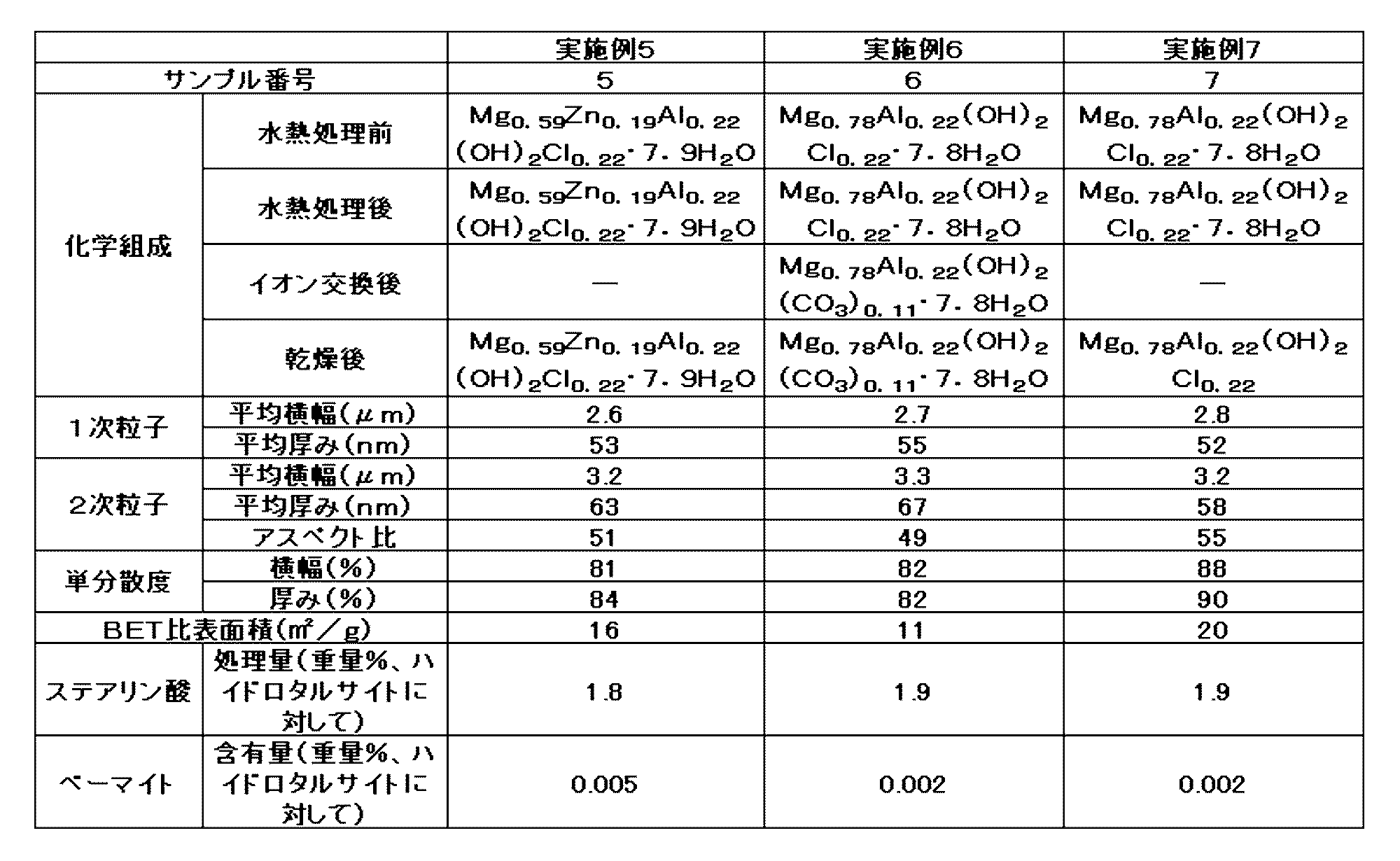
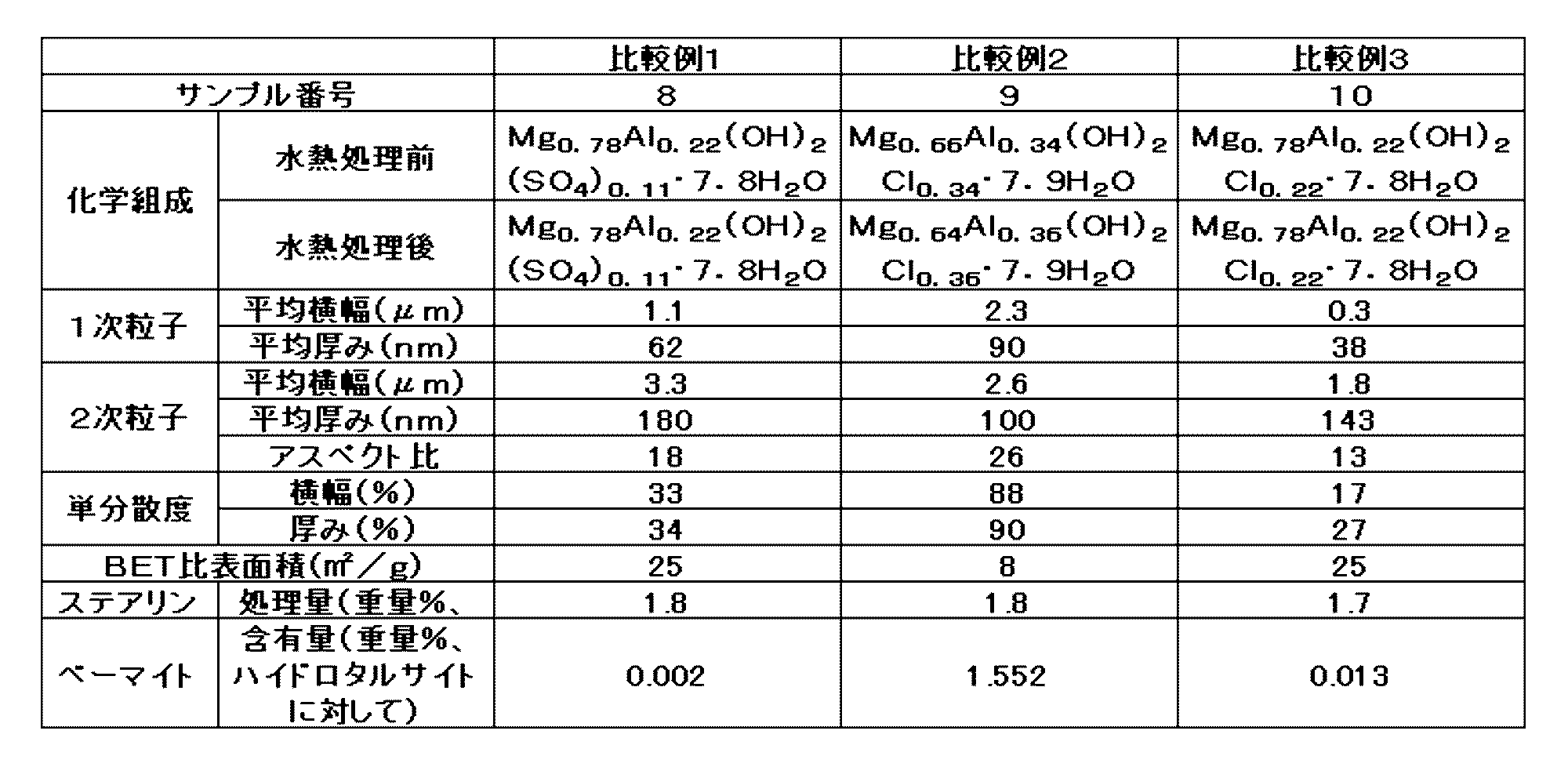
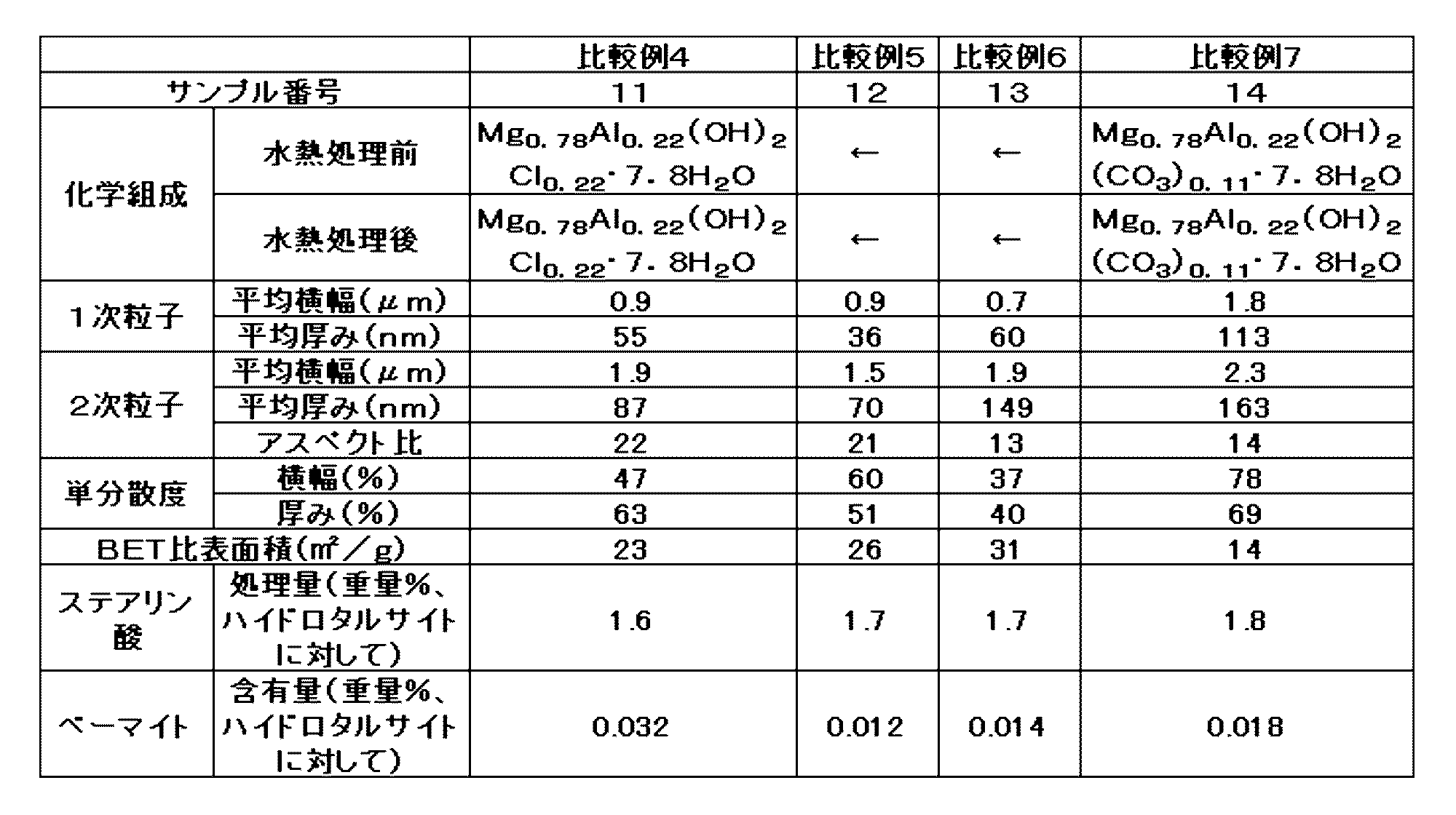
表1及び2より、実施例1~7の板状ハイドロタルサイトは、1次粒子の横幅が1μm以上であり、かつ平均厚みが60nm以下である。また単分散度は横幅、厚み共に50以上であり、高い分散性を示している。さらに、水熱処理温度が250℃と高いにも関わらず、ベーマイトの含有量が板状ハイドロタルサイトに対して0.01重量%以下である。
表2より、比較例1では、1次粒子の平均横幅が1.1μmで、平均厚みが62nmである粒子が得られている。しかし、2価アニオンである硫酸イオンの効果により、1次粒子が強く凝集し、単分散度が低く、2次粒子のアスペクト比が小さくなっている。
表2より、比較例2では、2価金属の3価金属に対する割合が小さく、ベーマイトの含有量が板状ハイドロタルサイトに対して1.552重量%と多い。
表2より、比較例3~6では、水熱処理時の保持温度及び保持時間が変更されているが、いずれも1次粒子の平均横幅が小さい。
表2より、比較例7では、反応時のアルカリ原料として水酸化ナトリウムと炭酸ナトリウムの混液が用いられている。炭酸ナトリウムの効果により、水熱処理前の板状ハイドロタルサイトの層間アニオンは2価の炭酸イオンとなっており、水熱処理後の1次粒子の厚みは113nmと大きい。
実施例1で作製した粉末サンプル1を12重量部、ポリプロピレン100重量部及び酸化防止剤0.2重量部を混合し、二軸押出機を用い、約180℃で溶融混練し、ペレットを作製した。得られたペレットを使用し、射出成形機により、約200℃で縦15cm、横5cm、厚さ3mmの試験片を作製し、樹脂サンプル1とした。樹脂サンプル1の曲げ弾性率を表3に示す。
実施例2で作製した粉末サンプル2を用い、実施例8と同様の方法で樹脂組成物を作製し、樹脂サンプル2とした。樹脂サンプル2の曲げ弾性率を表3に示す。
実施例3で作製した粉末サンプル3を用い、実施例8と同様の方法で樹脂組成物を作製し、樹脂サンプル3とした。樹脂サンプル3の曲げ弾性率を表3に示す。
実施例4で作製した粉末サンプル4を用い、実施例8と同様の方法で樹脂組成物を作製し、樹脂サンプル4とした。樹脂サンプル4の曲げ弾性率を表3に示す。
実施例5で作製した粉末サンプル5を用い、実施例8と同様の方法で樹脂組成物を作製し、樹脂サンプル5とした。樹脂サンプル5の曲げ弾性率を表3に示す。
実施例6で作製した粉末サンプル6を用い、実施例8と同様の方法で樹脂組成物を作製し、樹脂サンプル6とした。樹脂サンプル6の曲げ弾性率を表3に示す。
実施例7で作製した粉末サンプル7を用い、実施例8と同様の方法で樹脂組成物を作製し、樹脂サンプル7とした。樹脂サンプル6の曲げ弾性率を表3に示す。
(比較例8)
比較例1で作製した粉末サンプル8を用い、実施例8と同様の方法で樹脂組成物を作製し、樹脂サンプル8とした。樹脂サンプル8の曲げ弾性率を表3に示す。
比較例1で作製した粉末サンプル8を用い、実施例8と同様の方法で樹脂組成物を作製し、樹脂サンプル8とした。樹脂サンプル8の曲げ弾性率を表3に示す。
(比較例9)
比較例2で作製した粉末サンプル9を用い、実施例8と同様の方法で樹脂組成物を作製し、樹脂サンプル9とした。樹脂サンプル9の曲げ弾性率を表3に示す。
比較例2で作製した粉末サンプル9を用い、実施例8と同様の方法で樹脂組成物を作製し、樹脂サンプル9とした。樹脂サンプル9の曲げ弾性率を表3に示す。
(比較例10)
比較例3で作製した粉末サンプル10を用い、実施例8と同様の方法で樹脂組成物を作製し、樹脂サンプル10とした。樹脂サンプル10の曲げ弾性率を表3に示す。
比較例3で作製した粉末サンプル10を用い、実施例8と同様の方法で樹脂組成物を作製し、樹脂サンプル10とした。樹脂サンプル10の曲げ弾性率を表3に示す。
(比較例11)
比較例4で作製した粉末サンプル11を用い、実施例8と同様の方法で樹脂組成物を作製し、樹脂サンプル11とした。樹脂サンプル11の曲げ弾性率を表3に示す。
比較例4で作製した粉末サンプル11を用い、実施例8と同様の方法で樹脂組成物を作製し、樹脂サンプル11とした。樹脂サンプル11の曲げ弾性率を表3に示す。
(比較例12)
比較例5で作製した粉末サンプル12を用い、実施例8と同様の方法で樹脂組成物を作製し、樹脂サンプル12とした。樹脂サンプル12の曲げ弾性率を表3に示す。
比較例5で作製した粉末サンプル12を用い、実施例8と同様の方法で樹脂組成物を作製し、樹脂サンプル12とした。樹脂サンプル12の曲げ弾性率を表3に示す。
(比較例13)
比較例6で作製した粉末サンプル13を用い、実施例8と同様の方法で樹脂組成物を作製し、樹脂サンプル13とした。樹脂サンプル13の曲げ弾性率を表3に示す。
比較例6で作製した粉末サンプル13を用い、実施例8と同様の方法で樹脂組成物を作製し、樹脂サンプル13とした。樹脂サンプル13の曲げ弾性率を表3に示す。
(比較例14)
比較例7で作製した粉末サンプル14を用い、実施例8と同様の方法で樹脂組成物を作製し、樹脂サンプル14とした。樹脂サンプル14の曲げ弾性率を表3に示す。
比較例7で作製した粉末サンプル14を用い、実施例8と同様の方法で樹脂組成物を作製し、樹脂サンプル14とした。樹脂サンプル14の曲げ弾性率を表3に示す。
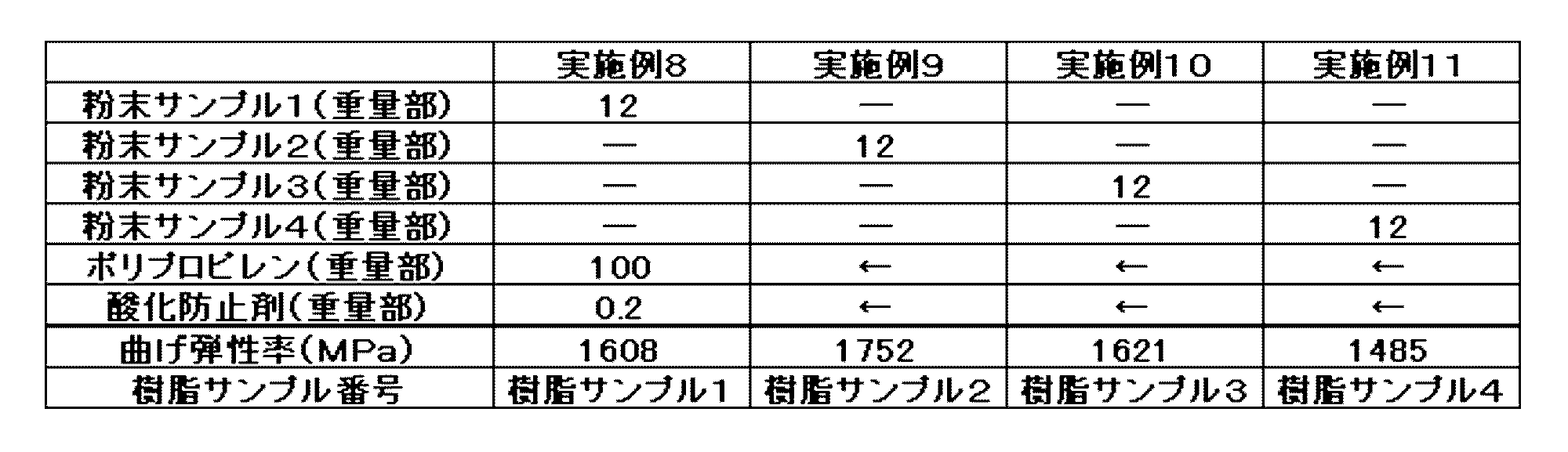
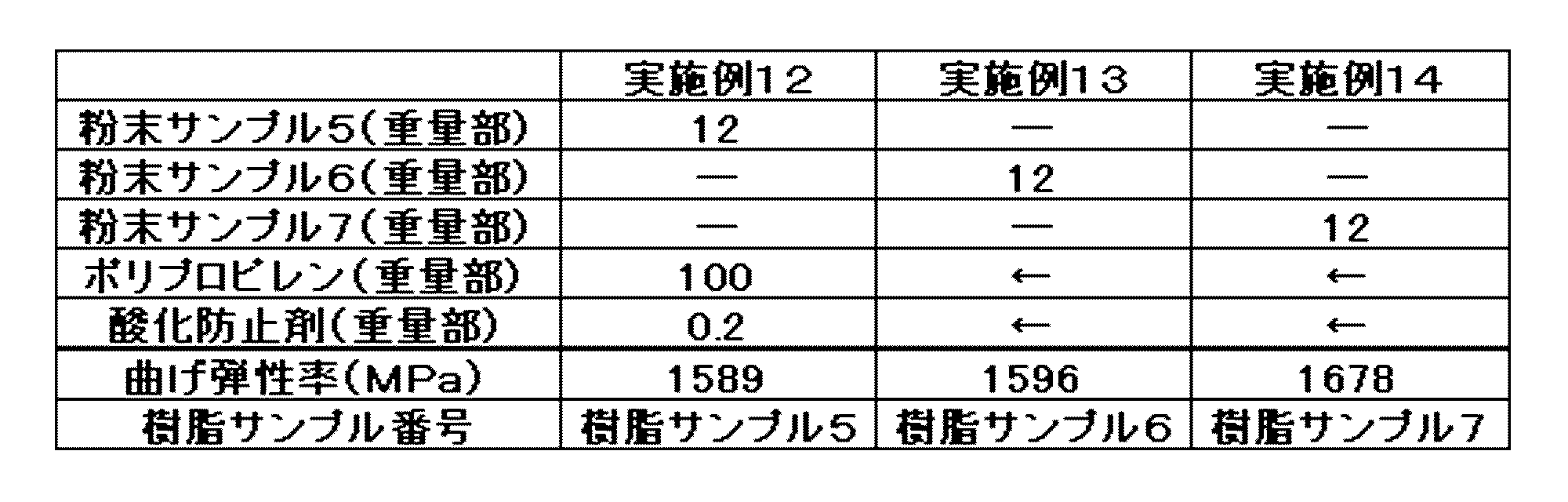
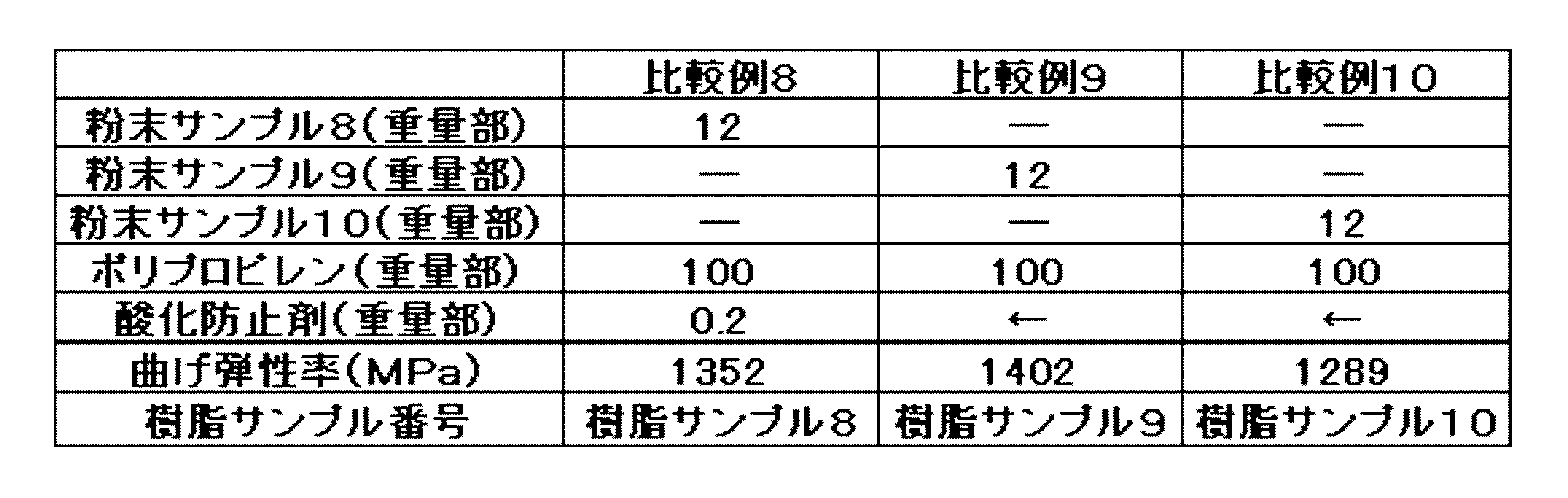
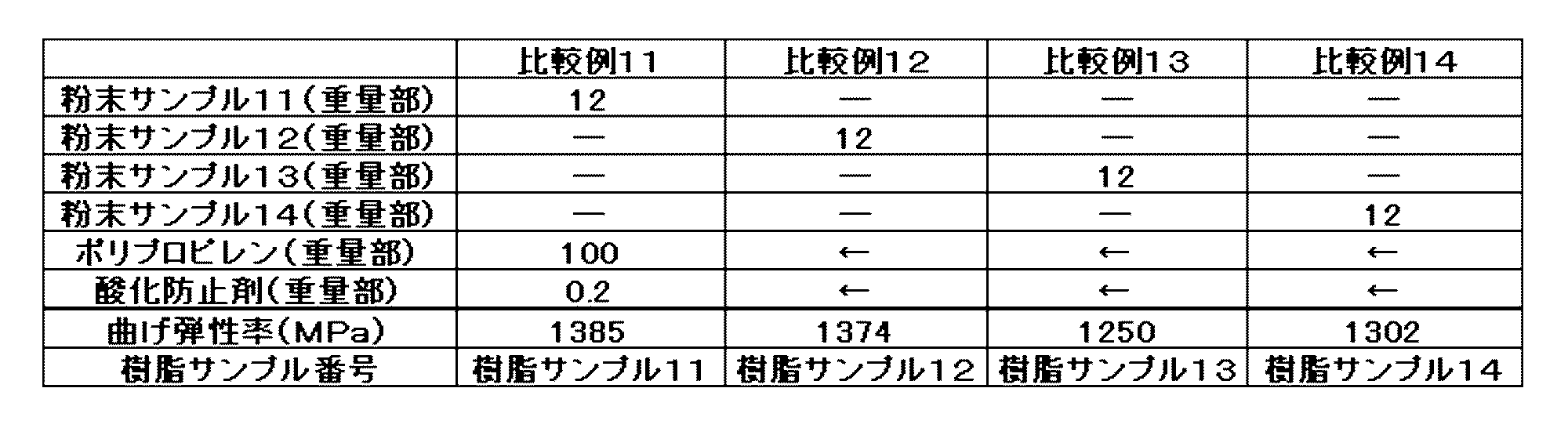
表3より、実施例8~14の樹脂サンプル1~7は、比較例8~14の樹脂サンプル8~14に比べ、高い曲げ弾性率を有していることが分かる。表2及び表3より、板状ハイドロタルサイトの2次粒子のアスペクト比が大きくなると、樹脂の曲げ弾性率が向上していることが分かる。
本発明の板状ハイドロタルサイトは、樹脂に配合することで剛性、難燃性、光沢性、ガスバリア性を付与することができる。加えて、塗料に配合することで防錆効果を付与することができ、パール顔料の下地としても利用可能である。
W1…1次粒子の横幅
W2…2次粒子の横幅
T1…1次粒子の厚み
T2…2次粒子の厚み
W2…2次粒子の横幅
T1…1次粒子の厚み
T2…2次粒子の厚み
Claims (16)
- 以下の(A)~(D)を満たす下記式(1)で表される板状ハイドロタルサイト;
(M2+)1-X(M3+)X(OH)2(An-)X/n・mH2O (1)
(ただし、式中M2+は2価金属の少なくとも1種以上、M3+は3価金属の少なくとも1種以上、An-はn価のアニオン、nは1~6の整数をそれぞれ示し、xおよびmはそれぞれ、0.1≦x≦0.33、0≦m≦10の範囲にある。)、
(A)SEM法による1次粒子の平均横幅が1μm以上、
(B)SEM法による1次粒子の平均厚みが80nm以下、
(C)下記式で表わされる横幅の単分散度が50%以上;
横幅の単分散度(%)=(SEM法よる1次粒子の平均横幅/レーザー回折法による2次粒子の平均横幅)×100、
(D)下記式で表される厚みの単分散度が50%以上;
厚みの単分散度(%)=(SEM法による1次粒子の平均厚み/SEM法による2次粒子の平均厚み)×100。 - 請求項1において、(A)1次粒子の平均横幅が2μm以上である、請求項1記載の板状ハイドロタルサイト。
- 請求項1において、(B)1次粒子の平均厚みが60nm以下である、請求項1記載の板状ハイドロタルサイト。
- 請求項1において、(C)横幅の単分散度が80%以上である、請求項1記載の板状ハイドロタルサイト。
- 請求項1において、(D)厚みの単分散度が80%以上である、請求項1記載の板状ハイドロタルサイト。
- 請求項1の式(1)において、M2+がMg,Znからなる群より選ばれる1種以上であり、M3+がAlである、請求項1記載の板状ハイドロタルサイト。
- 請求項1の式(1)において、xの範囲が0.15≦x≦0.25である、請求項1記載の板状ハイドロタルサイト。
- ベーマイトの含有量が板状ハイドロタルサイトに対して0.1重量%以下である、請求項1記載の板状ハイドロタルサイト。
- 板状ハイドロタルサイト類粒子の表面が、アニオン系界面活性剤、リン酸エステル類、シランカップリング剤、チタネートカップリング剤、アルミニウムカップリング剤、シリコーン系処理剤、水ガラス、シリカ、カチオン系界面活性剤からなる群より選ばれる1種以上で表面処理されている、請求項1記載の板状ハイドロタルサイト。
- 以下の(A)~(E)を満たす下記式(1)で表される板状ハイドロタルサイト;
(M2+)1-X(M3+)X(OH)2(An-)X/n・mH2O (1)
(ただし、式中M2+は2価金属の少なくとも1種以上、M3+は3価金属の少なくとも1種以上、An-はn価のアニオン、nは1~6の整数をそれぞれ示し、xおよびmはそれぞれ、0.1≦x≦0.33、0≦m≦10の範囲にある。)、
(A)SEM法による1次粒子の平均横幅が1μm以上、
(B)SEM法による1次粒子の平均厚みが80nm以下、
(C)下記式で表わされる横幅の単分散度が50%以上;
横幅の単分散度(%)=(SEM法よる1次粒子の平均横幅/レーザー回折法による2次粒子の平均横幅)×100、
(D)下記式で表される厚みの単分散度が50%以上;
厚みの単分散度(%)=(SEM法による1次粒子の平均厚み/SEM法による2次粒子の平均厚み)×100、
(E)2次粒子のアスペクト比(レーザー回折法による2次粒子の平均横幅/SEM法による2次粒子の平均厚み)が10以上。 - 100重量部の樹脂に対して、0.1~250重量部の請求項1記載の板状ハイドロタルサイトを含有する樹脂組成物。
- 請求項11に記載の樹脂組成物よりなる成形体。
- (i)下記式(2)で表される板状ハイドロタルサイトを、水に分散させ、スラリーを作製し、(ii)スラリーを200~300℃で10~24時間水熱処理する、
各工程を含む板状ハイドロタルサイトの製造方法;
(M2+)1-X(M3+)X(OH)2(An-)X/n・mH2O (2)
(ただし、式中M2+は2価金属の少なくとも1種以上、M3+は3価金属の少なくとも1種以上、An-はF-、Cl-、Br-、I-、NO3 -、CH3COO-等の1価のアニオンをそれぞれ示し、xおよびmはそれぞれ、0.1≦x≦0.33、0≦m≦10の範囲にある。)。 - 請求項13記載の板状ハイドロタルサイトの製造方法であって、
式(2)で表される板状ハイドロタルサイトのAn-がF-、Cl-、Br-、I-からなる群より選ばれる1種である、板状ハイドロタルサイトの製造方法。 - 請求項1記載の板状ハイドロタルサイトであって、
式(1)において、mの範囲が0≦m≦0.05である、板状ハイドロタルサイト。 - 請求項15記載の板状ハイドロタルサイトの製造方法であって、
請求項1記載の板状ハイドロタルサイトを、さらに120℃~350℃で1~24時間乾燥して得ることを特徴とする、板状ハイドロタルサイトの製造方法。
Priority Applications (3)
| Application Number | Priority Date | Filing Date | Title |
|---|---|---|---|
| JP2018558007A JP6598271B2 (ja) | 2016-12-22 | 2017-12-19 | 高アスペクト比板状ハイドロタルサイト、その製造方法及びその樹脂組成物 |
| EP17883340.6A EP3560893A4 (en) | 2016-12-22 | 2017-12-19 | HIGH ASPECT RATIO PLATE-SHAPED HYDROTALCITE, ITS MANUFACTURING METHOD AND RESIN COMPOSITION |
| US16/470,716 US11078087B2 (en) | 2016-12-22 | 2017-12-19 | Plate-shaped hydrotalcite with high aspect ratio, method for manufacturing same and resin composition |
Applications Claiming Priority (2)
| Application Number | Priority Date | Filing Date | Title |
|---|---|---|---|
| JP2016-250094 | 2016-12-22 | ||
| JP2016250094 | 2016-12-22 |
Publications (1)
| Publication Number | Publication Date |
|---|---|
| WO2018117114A1 true WO2018117114A1 (ja) | 2018-06-28 |
Family
ID=62626471
Family Applications (1)
| Application Number | Title | Priority Date | Filing Date |
|---|---|---|---|
| PCT/JP2017/045583 Ceased WO2018117114A1 (ja) | 2016-12-22 | 2017-12-19 | 高アスペクト比板状ハイドロタルサイト、その製造方法及びその樹脂組成物 |
Country Status (4)
| Country | Link |
|---|---|
| US (1) | US11078087B2 (ja) |
| EP (1) | EP3560893A4 (ja) |
| JP (1) | JP6598271B2 (ja) |
| WO (1) | WO2018117114A1 (ja) |
Cited By (2)
| Publication number | Priority date | Publication date | Assignee | Title |
|---|---|---|---|---|
| JPWO2022050173A1 (ja) * | 2020-09-01 | 2022-03-10 | ||
| WO2025220448A1 (ja) * | 2024-04-17 | 2025-10-23 | セトラスホールディングス株式会社 | 複合体、複合体の製造方法、複合体を含む樹脂組成物、および、樹脂組成物の製造方法 |
Families Citing this family (1)
| Publication number | Priority date | Publication date | Assignee | Title |
|---|---|---|---|---|
| CN110612271B (zh) * | 2017-03-17 | 2022-06-21 | 协和化学工业株式会社 | 微粒水滑石、其制备方法、其树脂组合物及其悬浮液 |
Citations (9)
| Publication number | Priority date | Publication date | Assignee | Title |
|---|---|---|---|---|
| JPS4829477B1 (ja) * | 1970-12-29 | 1973-09-10 | ||
| JPS5580447A (en) | 1978-12-14 | 1980-06-17 | Kyowa Chem Ind Co Ltd | Prevention of rust, deterioration or coloring of polyolefin and composition |
| JP2000086235A (ja) * | 1998-09-16 | 2000-03-28 | Kawai Sekkai Kogyo Kk | 板状ベーマイト及び板状アルミナ並びにそれらの製造方法 |
| JP2008525292A (ja) * | 2004-12-24 | 2008-07-17 | ザ ユニバーシティー オブ クイーンズランド | 懸濁液の調製方法 |
| JP2011197435A (ja) * | 2010-03-19 | 2011-10-06 | Canon Inc | 負帯電性トナー及びその製造方法 |
| CN103318933A (zh) * | 2013-07-12 | 2013-09-25 | 肇庆学院 | 一种采用水镁石制备表面改性水滑石类化合物的方法 |
| JP2013212937A (ja) | 2012-03-30 | 2013-10-17 | Kao Corp | 層状複水酸化物の製造方法 |
| JP2014129202A (ja) | 2012-12-28 | 2014-07-10 | Kao Corp | 層状複水酸化物の製造方法 |
| JP2015022289A (ja) | 2013-07-23 | 2015-02-02 | 積水化学工業株式会社 | 液晶滴下工法用シール剤、上下導通材料、及び、液晶表示素子 |
Family Cites Families (6)
| Publication number | Priority date | Publication date | Assignee | Title |
|---|---|---|---|---|
| JPS5115759B2 (ja) * | 1971-08-18 | 1976-05-19 | ||
| ATE358101T1 (de) * | 1998-12-14 | 2007-04-15 | Kyowa Chem Ind Co Ltd | Magnesiumhydroxid teilchen, verfahren zur herstellung derselben und harz diese enthaltend |
| DE60014818T2 (de) * | 1999-10-01 | 2006-03-09 | Toda Kogyo Corp. | Auf Mg-Al basierende Hydrotalcitteilchen, Stabilisator für chlorhaltige Harze und Verfahren zur Herstellung der Teilchen |
| CN1333113C (zh) * | 2004-11-15 | 2007-08-22 | 北京化工大学 | 高度定向层状双羟基复合金属氧化物薄膜及其制备方法 |
| KR100775602B1 (ko) * | 2006-10-24 | 2007-11-15 | 신원화학 주식회사 | 하이드로탈사이트의 제조방법 |
| KR102070333B1 (ko) * | 2015-09-24 | 2020-01-28 | 주식회사 단석산업 | 하이드로탈사이트 입자 및 그의 제조방법 |
-
2017
- 2017-12-19 EP EP17883340.6A patent/EP3560893A4/en active Pending
- 2017-12-19 JP JP2018558007A patent/JP6598271B2/ja active Active
- 2017-12-19 WO PCT/JP2017/045583 patent/WO2018117114A1/ja not_active Ceased
- 2017-12-19 US US16/470,716 patent/US11078087B2/en active Active
Patent Citations (9)
| Publication number | Priority date | Publication date | Assignee | Title |
|---|---|---|---|---|
| JPS4829477B1 (ja) * | 1970-12-29 | 1973-09-10 | ||
| JPS5580447A (en) | 1978-12-14 | 1980-06-17 | Kyowa Chem Ind Co Ltd | Prevention of rust, deterioration or coloring of polyolefin and composition |
| JP2000086235A (ja) * | 1998-09-16 | 2000-03-28 | Kawai Sekkai Kogyo Kk | 板状ベーマイト及び板状アルミナ並びにそれらの製造方法 |
| JP2008525292A (ja) * | 2004-12-24 | 2008-07-17 | ザ ユニバーシティー オブ クイーンズランド | 懸濁液の調製方法 |
| JP2011197435A (ja) * | 2010-03-19 | 2011-10-06 | Canon Inc | 負帯電性トナー及びその製造方法 |
| JP2013212937A (ja) | 2012-03-30 | 2013-10-17 | Kao Corp | 層状複水酸化物の製造方法 |
| JP2014129202A (ja) | 2012-12-28 | 2014-07-10 | Kao Corp | 層状複水酸化物の製造方法 |
| CN103318933A (zh) * | 2013-07-12 | 2013-09-25 | 肇庆学院 | 一种采用水镁石制备表面改性水滑石类化合物的方法 |
| JP2015022289A (ja) | 2013-07-23 | 2015-02-02 | 積水化学工業株式会社 | 液晶滴下工法用シール剤、上下導通材料、及び、液晶表示素子 |
Non-Patent Citations (6)
| Title |
|---|
| A. SCHUTZP. BILOEN, J. SOLID STATE CHEMISTRY, vol. 68, 1987, pages 360 |
| LIU, Z. ET AL.: "Selective and Controlled Synthesis of a - and [b-Cobalt Hydroxides in Highly Developed Hexagonal Platelets", J. AM. CHEM. SOC., vol. 127, no. 40, 2005, pages 13869 - 13874, XP055494813 * |
| M. OGAWAH. KAIHO, LANGMUIR, vol. 18, 2002, pages 4240 |
| See also references of EP3560893A4 |
| T AO, Q. ET AL.: "Synthesis and characterization of layered double hydroxides with a high aspect ratio", JOURNAL OF SOLID STATE CHEMISTRY, vol. 179, no. 3, 2006, pages 708 - 715, XP024952273 * |
| W. T. REICHLE, SOLID STATE IONICS, vol. 22, 1986, pages 135 |
Cited By (4)
| Publication number | Priority date | Publication date | Assignee | Title |
|---|---|---|---|---|
| JPWO2022050173A1 (ja) * | 2020-09-01 | 2022-03-10 | ||
| WO2022050173A1 (ja) * | 2020-09-01 | 2022-03-10 | 協和化学工業株式会社 | 表面処理ハイドロタルサイト及びその懸濁液、並びにそれを用いた機能性分子送達系 |
| JP7389913B2 (ja) | 2020-09-01 | 2023-11-30 | セトラスホールディングス株式会社 | 表面処理ハイドロタルサイト及びその懸濁液、並びにそれを用いた機能性分子送達系 |
| WO2025220448A1 (ja) * | 2024-04-17 | 2025-10-23 | セトラスホールディングス株式会社 | 複合体、複合体の製造方法、複合体を含む樹脂組成物、および、樹脂組成物の製造方法 |
Also Published As
| Publication number | Publication date |
|---|---|
| EP3560893A4 (en) | 2020-08-12 |
| US11078087B2 (en) | 2021-08-03 |
| JP6598271B2 (ja) | 2019-10-30 |
| EP3560893A1 (en) | 2019-10-30 |
| US20200087157A1 (en) | 2020-03-19 |
| JPWO2018117114A1 (ja) | 2019-10-31 |
Similar Documents
| Publication | Publication Date | Title |
|---|---|---|
| JP4789422B2 (ja) | 耐熱劣化剤 | |
| EP3210940B1 (en) | Process for the preparation of high-aspect-ratio magnesium hydroxide | |
| JP5732040B2 (ja) | 合成樹脂用充填剤の発泡障害を抑制する剤および方法 | |
| KR102491799B1 (ko) | 미립자 하이드로탈사이트와 그 제조 방법, 그 수지 조성물 및 그 현탁액 | |
| JP4775950B2 (ja) | 水酸化カルシウムを含有する樹脂組成物および成形品 | |
| TW201702182A (zh) | 氫氧化鎂粒子及其製造方法 | |
| JP6598271B2 (ja) | 高アスペクト比板状ハイドロタルサイト、その製造方法及びその樹脂組成物 | |
| US10233305B2 (en) | Magnesium hydroxide-based solid solution, and resin composition and precursor for highly active magnesium oxide which include same | |
| WO2013151188A1 (ja) | 樹脂組成物 | |
| JP6593942B2 (ja) | 微粒子複合金属水酸化物、その焼成物、その製造方法及びその樹脂組成物 | |
| WO2016174987A1 (ja) | ハイドロタルサイト粒子を用いた透明合成樹脂成形品の製造法 | |
| CN100448776C (zh) | 氢氧化钙、含有它的树脂组合物和成形制品 |
Legal Events
| Date | Code | Title | Description |
|---|---|---|---|
| 121 | Ep: the epo has been informed by wipo that ep was designated in this application |
Ref document number: 17883340 Country of ref document: EP Kind code of ref document: A1 |
|
| ENP | Entry into the national phase |
Ref document number: 2018558007 Country of ref document: JP Kind code of ref document: A |
|
| NENP | Non-entry into the national phase |
Ref country code: DE |
|
| ENP | Entry into the national phase |
Ref document number: 2017883340 Country of ref document: EP Effective date: 20190722 |