WO2018117162A1 - 透明AlN焼結体及びその製法 - Google Patents
透明AlN焼結体及びその製法 Download PDFInfo
- Publication number
- WO2018117162A1 WO2018117162A1 PCT/JP2017/045765 JP2017045765W WO2018117162A1 WO 2018117162 A1 WO2018117162 A1 WO 2018117162A1 JP 2017045765 W JP2017045765 W JP 2017045765W WO 2018117162 A1 WO2018117162 A1 WO 2018117162A1
- Authority
- WO
- WIPO (PCT)
- Prior art keywords
- aln
- sintered body
- plate
- powder
- aln sintered
- Prior art date
- Legal status (The legal status is an assumption and is not a legal conclusion. Google has not performed a legal analysis and makes no representation as to the accuracy of the status listed.)
- Ceased
Links
Images



Classifications
-
- C—CHEMISTRY; METALLURGY
- C04—CEMENTS; CONCRETE; ARTIFICIAL STONE; CERAMICS; REFRACTORIES
- C04B—LIME, MAGNESIA; SLAG; CEMENTS; COMPOSITIONS THEREOF, e.g. MORTARS, CONCRETE OR LIKE BUILDING MATERIALS; ARTIFICIAL STONE; CERAMICS; REFRACTORIES; TREATMENT OF NATURAL STONE
- C04B35/00—Shaped ceramic products characterised by their composition; Ceramics compositions; Processing powders of inorganic compounds preparatory to the manufacturing of ceramic products
- C04B35/515—Shaped ceramic products characterised by their composition; Ceramics compositions; Processing powders of inorganic compounds preparatory to the manufacturing of ceramic products based on non-oxide ceramics
- C04B35/58—Shaped ceramic products characterised by their composition; Ceramics compositions; Processing powders of inorganic compounds preparatory to the manufacturing of ceramic products based on non-oxide ceramics based on borides, nitrides, i.e. nitrides, oxynitrides, carbonitrides or oxycarbonitrides or silicides
- C04B35/581—Shaped ceramic products characterised by their composition; Ceramics compositions; Processing powders of inorganic compounds preparatory to the manufacturing of ceramic products based on non-oxide ceramics based on borides, nitrides, i.e. nitrides, oxynitrides, carbonitrides or oxycarbonitrides or silicides based on aluminium nitride
-
- C—CHEMISTRY; METALLURGY
- C01—INORGANIC CHEMISTRY
- C01B—NON-METALLIC ELEMENTS; COMPOUNDS THEREOF; METALLOIDS OR COMPOUNDS THEREOF NOT COVERED BY SUBCLASS C01C
- C01B21/00—Nitrogen; Compounds thereof
- C01B21/06—Binary compounds of nitrogen with metals, with silicon, or with boron, or with carbon, i.e. nitrides; Compounds of nitrogen with more than one metal, silicon or boron
- C01B21/072—Binary compounds of nitrogen with metals, with silicon, or with boron, or with carbon, i.e. nitrides; Compounds of nitrogen with more than one metal, silicon or boron with aluminium
- C01B21/0728—After-treatment, e.g. grinding, purification
-
- C—CHEMISTRY; METALLURGY
- C01—INORGANIC CHEMISTRY
- C01B—NON-METALLIC ELEMENTS; COMPOUNDS THEREOF; METALLOIDS OR COMPOUNDS THEREOF NOT COVERED BY SUBCLASS C01C
- C01B21/00—Nitrogen; Compounds thereof
- C01B21/06—Binary compounds of nitrogen with metals, with silicon, or with boron, or with carbon, i.e. nitrides; Compounds of nitrogen with more than one metal, silicon or boron
- C01B21/072—Binary compounds of nitrogen with metals, with silicon, or with boron, or with carbon, i.e. nitrides; Compounds of nitrogen with more than one metal, silicon or boron with aluminium
-
- C—CHEMISTRY; METALLURGY
- C01—INORGANIC CHEMISTRY
- C01F—COMPOUNDS OF THE METALS BERYLLIUM, MAGNESIUM, ALUMINIUM, CALCIUM, STRONTIUM, BARIUM, RADIUM, THORIUM, OR OF THE RARE-EARTH METALS
- C01F7/00—Compounds of aluminium
- C01F7/02—Aluminium oxide; Aluminium hydroxide; Aluminates
- C01F7/16—Preparation of alkaline-earth metal aluminates or magnesium aluminates; Aluminium oxide or hydroxide therefrom
- C01F7/164—Calcium aluminates
-
- C—CHEMISTRY; METALLURGY
- C04—CEMENTS; CONCRETE; ARTIFICIAL STONE; CERAMICS; REFRACTORIES
- C04B—LIME, MAGNESIA; SLAG; CEMENTS; COMPOSITIONS THEREOF, e.g. MORTARS, CONCRETE OR LIKE BUILDING MATERIALS; ARTIFICIAL STONE; CERAMICS; REFRACTORIES; TREATMENT OF NATURAL STONE
- C04B35/00—Shaped ceramic products characterised by their composition; Ceramics compositions; Processing powders of inorganic compounds preparatory to the manufacturing of ceramic products
- C04B35/622—Forming processes; Processing powders of inorganic compounds preparatory to the manufacturing of ceramic products
- C04B35/626—Preparing or treating the powders individually or as batches ; preparing or treating macroscopic reinforcing agents for ceramic products, e.g. fibres; mechanical aspects section B
- C04B35/62605—Treating the starting powders individually or as mixtures
- C04B35/62685—Treating the starting powders individually or as mixtures characterised by the order of addition of constituents or additives
-
- C—CHEMISTRY; METALLURGY
- C04—CEMENTS; CONCRETE; ARTIFICIAL STONE; CERAMICS; REFRACTORIES
- C04B—LIME, MAGNESIA; SLAG; CEMENTS; COMPOSITIONS THEREOF, e.g. MORTARS, CONCRETE OR LIKE BUILDING MATERIALS; ARTIFICIAL STONE; CERAMICS; REFRACTORIES; TREATMENT OF NATURAL STONE
- C04B35/00—Shaped ceramic products characterised by their composition; Ceramics compositions; Processing powders of inorganic compounds preparatory to the manufacturing of ceramic products
- C04B35/622—Forming processes; Processing powders of inorganic compounds preparatory to the manufacturing of ceramic products
- C04B35/64—Burning or sintering processes
- C04B35/645—Pressure sintering
-
- C—CHEMISTRY; METALLURGY
- C01—INORGANIC CHEMISTRY
- C01P—INDEXING SCHEME RELATING TO STRUCTURAL AND PHYSICAL ASPECTS OF SOLID INORGANIC COMPOUNDS
- C01P2002/00—Crystal-structural characteristics
- C01P2002/80—Crystal-structural characteristics defined by measured data other than those specified in group C01P2002/70
- C01P2002/84—Crystal-structural characteristics defined by measured data other than those specified in group C01P2002/70 by UV- or VIS- data
-
- C—CHEMISTRY; METALLURGY
- C01—INORGANIC CHEMISTRY
- C01P—INDEXING SCHEME RELATING TO STRUCTURAL AND PHYSICAL ASPECTS OF SOLID INORGANIC COMPOUNDS
- C01P2004/00—Particle morphology
- C01P2004/01—Particle morphology depicted by an image
-
- C—CHEMISTRY; METALLURGY
- C01—INORGANIC CHEMISTRY
- C01P—INDEXING SCHEME RELATING TO STRUCTURAL AND PHYSICAL ASPECTS OF SOLID INORGANIC COMPOUNDS
- C01P2004/00—Particle morphology
- C01P2004/20—Particle morphology extending in two dimensions, e.g. plate-like
-
- C—CHEMISTRY; METALLURGY
- C01—INORGANIC CHEMISTRY
- C01P—INDEXING SCHEME RELATING TO STRUCTURAL AND PHYSICAL ASPECTS OF SOLID INORGANIC COMPOUNDS
- C01P2006/00—Physical properties of inorganic compounds
- C01P2006/80—Compositional purity
-
- C—CHEMISTRY; METALLURGY
- C04—CEMENTS; CONCRETE; ARTIFICIAL STONE; CERAMICS; REFRACTORIES
- C04B—LIME, MAGNESIA; SLAG; CEMENTS; COMPOSITIONS THEREOF, e.g. MORTARS, CONCRETE OR LIKE BUILDING MATERIALS; ARTIFICIAL STONE; CERAMICS; REFRACTORIES; TREATMENT OF NATURAL STONE
- C04B2235/00—Aspects relating to ceramic starting mixtures or sintered ceramic products
- C04B2235/02—Composition of constituents of the starting material or of secondary phases of the final product
- C04B2235/30—Constituents and secondary phases not being of a fibrous nature
- C04B2235/32—Metal oxides, mixed metal oxides, or oxide-forming salts thereof, e.g. carbonates, nitrates, (oxy)hydroxides, chlorides
- C04B2235/3205—Alkaline earth oxides or oxide forming salts thereof, e.g. beryllium oxide
- C04B2235/3208—Calcium oxide or oxide-forming salts thereof, e.g. lime
-
- C—CHEMISTRY; METALLURGY
- C04—CEMENTS; CONCRETE; ARTIFICIAL STONE; CERAMICS; REFRACTORIES
- C04B—LIME, MAGNESIA; SLAG; CEMENTS; COMPOSITIONS THEREOF, e.g. MORTARS, CONCRETE OR LIKE BUILDING MATERIALS; ARTIFICIAL STONE; CERAMICS; REFRACTORIES; TREATMENT OF NATURAL STONE
- C04B2235/00—Aspects relating to ceramic starting mixtures or sintered ceramic products
- C04B2235/02—Composition of constituents of the starting material or of secondary phases of the final product
- C04B2235/30—Constituents and secondary phases not being of a fibrous nature
- C04B2235/32—Metal oxides, mixed metal oxides, or oxide-forming salts thereof, e.g. carbonates, nitrates, (oxy)hydroxides, chlorides
- C04B2235/3217—Aluminum oxide or oxide forming salts thereof, e.g. bauxite, alpha-alumina
-
- C—CHEMISTRY; METALLURGY
- C04—CEMENTS; CONCRETE; ARTIFICIAL STONE; CERAMICS; REFRACTORIES
- C04B—LIME, MAGNESIA; SLAG; CEMENTS; COMPOSITIONS THEREOF, e.g. MORTARS, CONCRETE OR LIKE BUILDING MATERIALS; ARTIFICIAL STONE; CERAMICS; REFRACTORIES; TREATMENT OF NATURAL STONE
- C04B2235/00—Aspects relating to ceramic starting mixtures or sintered ceramic products
- C04B2235/02—Composition of constituents of the starting material or of secondary phases of the final product
- C04B2235/30—Constituents and secondary phases not being of a fibrous nature
- C04B2235/32—Metal oxides, mixed metal oxides, or oxide-forming salts thereof, e.g. carbonates, nitrates, (oxy)hydroxides, chlorides
- C04B2235/3217—Aluminum oxide or oxide forming salts thereof, e.g. bauxite, alpha-alumina
- C04B2235/3222—Aluminates other than alumino-silicates, e.g. spinel (MgAl2O4)
-
- C—CHEMISTRY; METALLURGY
- C04—CEMENTS; CONCRETE; ARTIFICIAL STONE; CERAMICS; REFRACTORIES
- C04B—LIME, MAGNESIA; SLAG; CEMENTS; COMPOSITIONS THEREOF, e.g. MORTARS, CONCRETE OR LIKE BUILDING MATERIALS; ARTIFICIAL STONE; CERAMICS; REFRACTORIES; TREATMENT OF NATURAL STONE
- C04B2235/00—Aspects relating to ceramic starting mixtures or sintered ceramic products
- C04B2235/02—Composition of constituents of the starting material or of secondary phases of the final product
- C04B2235/30—Constituents and secondary phases not being of a fibrous nature
- C04B2235/32—Metal oxides, mixed metal oxides, or oxide-forming salts thereof, e.g. carbonates, nitrates, (oxy)hydroxides, chlorides
- C04B2235/3224—Rare earth oxide or oxide forming salts thereof, e.g. scandium oxide
-
- C—CHEMISTRY; METALLURGY
- C04—CEMENTS; CONCRETE; ARTIFICIAL STONE; CERAMICS; REFRACTORIES
- C04B—LIME, MAGNESIA; SLAG; CEMENTS; COMPOSITIONS THEREOF, e.g. MORTARS, CONCRETE OR LIKE BUILDING MATERIALS; ARTIFICIAL STONE; CERAMICS; REFRACTORIES; TREATMENT OF NATURAL STONE
- C04B2235/00—Aspects relating to ceramic starting mixtures or sintered ceramic products
- C04B2235/02—Composition of constituents of the starting material or of secondary phases of the final product
- C04B2235/30—Constituents and secondary phases not being of a fibrous nature
- C04B2235/38—Non-oxide ceramic constituents or additives
- C04B2235/3852—Nitrides, e.g. oxynitrides, carbonitrides, oxycarbonitrides, lithium nitride, magnesium nitride
- C04B2235/3865—Aluminium nitrides
-
- C—CHEMISTRY; METALLURGY
- C04—CEMENTS; CONCRETE; ARTIFICIAL STONE; CERAMICS; REFRACTORIES
- C04B—LIME, MAGNESIA; SLAG; CEMENTS; COMPOSITIONS THEREOF, e.g. MORTARS, CONCRETE OR LIKE BUILDING MATERIALS; ARTIFICIAL STONE; CERAMICS; REFRACTORIES; TREATMENT OF NATURAL STONE
- C04B2235/00—Aspects relating to ceramic starting mixtures or sintered ceramic products
- C04B2235/02—Composition of constituents of the starting material or of secondary phases of the final product
- C04B2235/50—Constituents or additives of the starting mixture chosen for their shape or used because of their shape or their physical appearance
- C04B2235/52—Constituents or additives characterised by their shapes
- C04B2235/528—Spheres
-
- C—CHEMISTRY; METALLURGY
- C04—CEMENTS; CONCRETE; ARTIFICIAL STONE; CERAMICS; REFRACTORIES
- C04B—LIME, MAGNESIA; SLAG; CEMENTS; COMPOSITIONS THEREOF, e.g. MORTARS, CONCRETE OR LIKE BUILDING MATERIALS; ARTIFICIAL STONE; CERAMICS; REFRACTORIES; TREATMENT OF NATURAL STONE
- C04B2235/00—Aspects relating to ceramic starting mixtures or sintered ceramic products
- C04B2235/02—Composition of constituents of the starting material or of secondary phases of the final product
- C04B2235/50—Constituents or additives of the starting mixture chosen for their shape or used because of their shape or their physical appearance
- C04B2235/52—Constituents or additives characterised by their shapes
- C04B2235/5292—Flakes, platelets or plates
-
- C—CHEMISTRY; METALLURGY
- C04—CEMENTS; CONCRETE; ARTIFICIAL STONE; CERAMICS; REFRACTORIES
- C04B—LIME, MAGNESIA; SLAG; CEMENTS; COMPOSITIONS THEREOF, e.g. MORTARS, CONCRETE OR LIKE BUILDING MATERIALS; ARTIFICIAL STONE; CERAMICS; REFRACTORIES; TREATMENT OF NATURAL STONE
- C04B2235/00—Aspects relating to ceramic starting mixtures or sintered ceramic products
- C04B2235/02—Composition of constituents of the starting material or of secondary phases of the final product
- C04B2235/50—Constituents or additives of the starting mixture chosen for their shape or used because of their shape or their physical appearance
- C04B2235/52—Constituents or additives characterised by their shapes
- C04B2235/5296—Constituents or additives characterised by their shapes with a defined aspect ratio, e.g. indicating sphericity
-
- C—CHEMISTRY; METALLURGY
- C04—CEMENTS; CONCRETE; ARTIFICIAL STONE; CERAMICS; REFRACTORIES
- C04B—LIME, MAGNESIA; SLAG; CEMENTS; COMPOSITIONS THEREOF, e.g. MORTARS, CONCRETE OR LIKE BUILDING MATERIALS; ARTIFICIAL STONE; CERAMICS; REFRACTORIES; TREATMENT OF NATURAL STONE
- C04B2235/00—Aspects relating to ceramic starting mixtures or sintered ceramic products
- C04B2235/02—Composition of constituents of the starting material or of secondary phases of the final product
- C04B2235/50—Constituents or additives of the starting mixture chosen for their shape or used because of their shape or their physical appearance
- C04B2235/54—Particle size related information
- C04B2235/5418—Particle size related information expressed by the size of the particles or aggregates thereof
- C04B2235/5436—Particle size related information expressed by the size of the particles or aggregates thereof micrometer sized, i.e. from 1 to 100 micron
-
- C—CHEMISTRY; METALLURGY
- C04—CEMENTS; CONCRETE; ARTIFICIAL STONE; CERAMICS; REFRACTORIES
- C04B—LIME, MAGNESIA; SLAG; CEMENTS; COMPOSITIONS THEREOF, e.g. MORTARS, CONCRETE OR LIKE BUILDING MATERIALS; ARTIFICIAL STONE; CERAMICS; REFRACTORIES; TREATMENT OF NATURAL STONE
- C04B2235/00—Aspects relating to ceramic starting mixtures or sintered ceramic products
- C04B2235/02—Composition of constituents of the starting material or of secondary phases of the final product
- C04B2235/50—Constituents or additives of the starting mixture chosen for their shape or used because of their shape or their physical appearance
- C04B2235/54—Particle size related information
- C04B2235/5463—Particle size distributions
- C04B2235/5472—Bimodal, multi-modal or multi-fraction
-
- C—CHEMISTRY; METALLURGY
- C04—CEMENTS; CONCRETE; ARTIFICIAL STONE; CERAMICS; REFRACTORIES
- C04B—LIME, MAGNESIA; SLAG; CEMENTS; COMPOSITIONS THEREOF, e.g. MORTARS, CONCRETE OR LIKE BUILDING MATERIALS; ARTIFICIAL STONE; CERAMICS; REFRACTORIES; TREATMENT OF NATURAL STONE
- C04B2235/00—Aspects relating to ceramic starting mixtures or sintered ceramic products
- C04B2235/65—Aspects relating to heat treatments of ceramic bodies such as green ceramics or pre-sintered ceramics, e.g. burning, sintering or melting processes
- C04B2235/656—Aspects relating to heat treatments of ceramic bodies such as green ceramics or pre-sintered ceramics, e.g. burning, sintering or melting processes characterised by specific heating conditions during heat treatment
-
- C—CHEMISTRY; METALLURGY
- C04—CEMENTS; CONCRETE; ARTIFICIAL STONE; CERAMICS; REFRACTORIES
- C04B—LIME, MAGNESIA; SLAG; CEMENTS; COMPOSITIONS THEREOF, e.g. MORTARS, CONCRETE OR LIKE BUILDING MATERIALS; ARTIFICIAL STONE; CERAMICS; REFRACTORIES; TREATMENT OF NATURAL STONE
- C04B2235/00—Aspects relating to ceramic starting mixtures or sintered ceramic products
- C04B2235/65—Aspects relating to heat treatments of ceramic bodies such as green ceramics or pre-sintered ceramics, e.g. burning, sintering or melting processes
- C04B2235/656—Aspects relating to heat treatments of ceramic bodies such as green ceramics or pre-sintered ceramics, e.g. burning, sintering or melting processes characterised by specific heating conditions during heat treatment
- C04B2235/6567—Treatment time
-
- C—CHEMISTRY; METALLURGY
- C04—CEMENTS; CONCRETE; ARTIFICIAL STONE; CERAMICS; REFRACTORIES
- C04B—LIME, MAGNESIA; SLAG; CEMENTS; COMPOSITIONS THEREOF, e.g. MORTARS, CONCRETE OR LIKE BUILDING MATERIALS; ARTIFICIAL STONE; CERAMICS; REFRACTORIES; TREATMENT OF NATURAL STONE
- C04B2235/00—Aspects relating to ceramic starting mixtures or sintered ceramic products
- C04B2235/65—Aspects relating to heat treatments of ceramic bodies such as green ceramics or pre-sintered ceramics, e.g. burning, sintering or melting processes
- C04B2235/66—Specific sintering techniques, e.g. centrifugal sintering
- C04B2235/661—Multi-step sintering
-
- C—CHEMISTRY; METALLURGY
- C04—CEMENTS; CONCRETE; ARTIFICIAL STONE; CERAMICS; REFRACTORIES
- C04B—LIME, MAGNESIA; SLAG; CEMENTS; COMPOSITIONS THEREOF, e.g. MORTARS, CONCRETE OR LIKE BUILDING MATERIALS; ARTIFICIAL STONE; CERAMICS; REFRACTORIES; TREATMENT OF NATURAL STONE
- C04B2235/00—Aspects relating to ceramic starting mixtures or sintered ceramic products
- C04B2235/70—Aspects relating to sintered or melt-casted ceramic products
- C04B2235/72—Products characterised by the absence or the low content of specific components, e.g. alkali metal free alumina ceramics
-
- C—CHEMISTRY; METALLURGY
- C04—CEMENTS; CONCRETE; ARTIFICIAL STONE; CERAMICS; REFRACTORIES
- C04B—LIME, MAGNESIA; SLAG; CEMENTS; COMPOSITIONS THEREOF, e.g. MORTARS, CONCRETE OR LIKE BUILDING MATERIALS; ARTIFICIAL STONE; CERAMICS; REFRACTORIES; TREATMENT OF NATURAL STONE
- C04B2235/00—Aspects relating to ceramic starting mixtures or sintered ceramic products
- C04B2235/70—Aspects relating to sintered or melt-casted ceramic products
- C04B2235/72—Products characterised by the absence or the low content of specific components, e.g. alkali metal free alumina ceramics
- C04B2235/723—Oxygen content
-
- C—CHEMISTRY; METALLURGY
- C04—CEMENTS; CONCRETE; ARTIFICIAL STONE; CERAMICS; REFRACTORIES
- C04B—LIME, MAGNESIA; SLAG; CEMENTS; COMPOSITIONS THEREOF, e.g. MORTARS, CONCRETE OR LIKE BUILDING MATERIALS; ARTIFICIAL STONE; CERAMICS; REFRACTORIES; TREATMENT OF NATURAL STONE
- C04B2235/00—Aspects relating to ceramic starting mixtures or sintered ceramic products
- C04B2235/70—Aspects relating to sintered or melt-casted ceramic products
- C04B2235/74—Physical characteristics
- C04B2235/77—Density
-
- C—CHEMISTRY; METALLURGY
- C04—CEMENTS; CONCRETE; ARTIFICIAL STONE; CERAMICS; REFRACTORIES
- C04B—LIME, MAGNESIA; SLAG; CEMENTS; COMPOSITIONS THEREOF, e.g. MORTARS, CONCRETE OR LIKE BUILDING MATERIALS; ARTIFICIAL STONE; CERAMICS; REFRACTORIES; TREATMENT OF NATURAL STONE
- C04B2235/00—Aspects relating to ceramic starting mixtures or sintered ceramic products
- C04B2235/70—Aspects relating to sintered or melt-casted ceramic products
- C04B2235/74—Physical characteristics
- C04B2235/78—Grain sizes and shapes, product microstructures, e.g. acicular grains, equiaxed grains, platelet-structures
- C04B2235/786—Micrometer sized grains, i.e. from 1 to 100 micron
-
- C—CHEMISTRY; METALLURGY
- C04—CEMENTS; CONCRETE; ARTIFICIAL STONE; CERAMICS; REFRACTORIES
- C04B—LIME, MAGNESIA; SLAG; CEMENTS; COMPOSITIONS THEREOF, e.g. MORTARS, CONCRETE OR LIKE BUILDING MATERIALS; ARTIFICIAL STONE; CERAMICS; REFRACTORIES; TREATMENT OF NATURAL STONE
- C04B2235/00—Aspects relating to ceramic starting mixtures or sintered ceramic products
- C04B2235/70—Aspects relating to sintered or melt-casted ceramic products
- C04B2235/74—Physical characteristics
- C04B2235/78—Grain sizes and shapes, product microstructures, e.g. acicular grains, equiaxed grains, platelet-structures
- C04B2235/787—Oriented grains
-
- C—CHEMISTRY; METALLURGY
- C04—CEMENTS; CONCRETE; ARTIFICIAL STONE; CERAMICS; REFRACTORIES
- C04B—LIME, MAGNESIA; SLAG; CEMENTS; COMPOSITIONS THEREOF, e.g. MORTARS, CONCRETE OR LIKE BUILDING MATERIALS; ARTIFICIAL STONE; CERAMICS; REFRACTORIES; TREATMENT OF NATURAL STONE
- C04B2235/00—Aspects relating to ceramic starting mixtures or sintered ceramic products
- C04B2235/70—Aspects relating to sintered or melt-casted ceramic products
- C04B2235/80—Phases present in the sintered or melt-cast ceramic products other than the main phase
- C04B2235/85—Intergranular or grain boundary phases
-
- C—CHEMISTRY; METALLURGY
- C04—CEMENTS; CONCRETE; ARTIFICIAL STONE; CERAMICS; REFRACTORIES
- C04B—LIME, MAGNESIA; SLAG; CEMENTS; COMPOSITIONS THEREOF, e.g. MORTARS, CONCRETE OR LIKE BUILDING MATERIALS; ARTIFICIAL STONE; CERAMICS; REFRACTORIES; TREATMENT OF NATURAL STONE
- C04B2235/00—Aspects relating to ceramic starting mixtures or sintered ceramic products
- C04B2235/70—Aspects relating to sintered or melt-casted ceramic products
- C04B2235/96—Properties of ceramic products, e.g. mechanical properties such as strength, toughness, wear resistance
- C04B2235/9646—Optical properties
- C04B2235/9653—Translucent or transparent ceramics other than alumina
Definitions
- the present invention relates to a transparent AlN sintered body and a method for producing the same.
- transparent materials transparent resins, glass, quartz, transparent YAG sintered bodies, transparent ALON sintered bodies, transparent spinel sintered bodies, and the like are known. However, all of these thermal conductivities are about 30 W / mK or less, and no transparent material having high thermal conductivity has been known.
- AlN has a high thermal conductivity, it is used for a heat dissipation substrate or the like, but a general sintered body is opaque. In the AlN sintered body, the factors that make it opaque are (1) the presence of pores, heterogeneous phase, solid solution impurities, etc., and (2) the crystal structure of AlN is a wurtzite structure, which is optically anisotropic. For example, a sintered body with random crystal orientation causes scattering due to birefringence at grain boundaries.
- an AlN sintered body having optical transparency has been developed.
- Patent Document 1 an AlN sintered body having a total light transmittance of about 70% and a linear transmittance of 13.5% at a wavelength of 600 nm is obtained by controlling the amount of metal impurities, oxygen concentration, and density.
- Non-Patent Document 1 an oriented AlN sintered body is produced by molding and sintering in a rotating magnetic field. This oriented AlN sintered body has a c-axis orientation of about 0.7 using Lotgering and a total light transmittance of about 60% at a wavelength of 600 nm.
- Patent Document 1 the AlN sintered bodies of Patent Document 1 and Non-Patent Document 1 have only a certain degree of light transmittance. Therefore, development of a more transparent AlN sintered body has been desired.
- the present invention has been made to solve the above-described problems, and has as its main object to provide an AlN sintered body that is more transparent than conventional ones.
- the method for producing the transparent AlN sintered body of the present invention is as follows: A step of forming a molded body by forming a mixture in which a sintering aid is mixed with an AlN raw material powder containing a plate-like AlN powder whose plate surface is a c-plane, and the plate surface of the plate-like AlN powder is formed by the molding A first step of shaping the mixture along the surface of the body; A second step of obtaining an oriented AlN sintered body by hot-press firing the molded body in a non-oxidizing atmosphere while pressing the surface of the molded body; A third step of obtaining a transparent AlN sintered body by removing the components derived from the sintering aid by firing the oriented AlN sintered body at normal pressure in a non-oxidizing atmosphere; Is included.
- the molded body is formed such that the plate surface (c surface) of the plate-like AlN powder is along the surface of the molded body.
- This molded body contains a sintering aid.
- the molded body is hot-press fired, the molded body is hot-press fired in a non-oxidizing atmosphere while pressing the surface of the molded body, that is, pressing the molded body from a direction substantially perpendicular to the surface of the molded body. Then, sintering of the AlN raw material powder containing the plate-like AlN powder is promoted by the sintering aid.
- the plate surface (c surface) of the plate-like AlN powder is arranged along the surface of the molded body, the plate-like AlN powder serves as a template and sintering proceeds.
- an oriented AlN sintered body having a high degree of c-plane orientation is obtained.
- this oriented AlN sintered body has low transparency because the component derived from the sintering aid exists between the AlN sintered particles. Therefore, this oriented AlN sintered body is fired at normal pressure in a non-oxidizing atmosphere to remove components derived from the sintering aid.
- the AlN sintered body obtained thereby becomes more transparent than the conventional one.
- the transparent AlN sintered body of the present invention has a polycrystalline structure having a c-plane orientation degree of 70% or more by the Lotgering method and a linear transmittance of 48% or more at a wavelength of 450 nm.
- This transparent AlN sintered body is excellent in plasma resistance and piezoelectric characteristics because of its high degree of c-plane orientation. Moreover, since the linear transmittance is high, it is more transparent than the conventional one. Furthermore, the characteristics unique to AlN such as high thermal conductivity, high refractive index, and high crystallinity are maintained as they are.
- Such a transparent AlN sintered body can be suitably produced by the above-described method for producing a transparent AlN sintered body.
- Explanatory drawing which shows an example of the process of manufacturing an AlN sintered compact by TGG method.
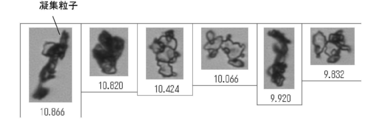
- the photograph which shows the image of the single particle of plate-like AlN powder.
- the photograph which shows the image of the aggregation particle
- the photograph which shows the image of what the fine particle adhered to the single particle of plate-like AlN powder.
- the method for producing the transparent AlN sintered body of this embodiment is as follows: A step of forming a molded body by forming a mixture in which a sintering aid is mixed with an AlN raw material powder containing a plate-like AlN powder whose plate surface is a c-plane, and the plate surface of the plate-like AlN powder is formed by the molding A first step of shaping the mixture along the surface of the body; A second step of obtaining an oriented AlN sintered body by hot-press firing the molded body in a non-oxidizing atmosphere while pressing the surface of the molded body; A third step of obtaining a transparent AlN sintered body by removing the components derived from the sintering aid by firing the oriented AlN sintered body at normal pressure in a non-oxidizing atmosphere; Is included.
- the plate-like AlN powder is an AlN powder having a c-plane plate surface.
- the aspect ratio of the plate-like AlN powder is preferably 3 or more.
- the aspect ratio is average particle diameter / average thickness.
- the average particle diameter is the average value in the major axis direction of the plate surface, and the average thickness is the average value of the minor axis lengths of the particles.
- the average particle size of the plate-like AlN powder is preferably larger from the viewpoint of high orientation, preferably 2 ⁇ m or more, preferably 5 ⁇ m or more, and more preferably 7 ⁇ m or more. However, from the viewpoint of densification, it is preferably smaller, preferably 20 ⁇ m or less, and more preferably 10 ⁇ m or less. For these reasons, the average particle size is preferably 2 to 20 ⁇ m in order to achieve both high orientation and densification.
- the average thickness is preferably 0.05 ⁇ m or more, preferably 0.07 ⁇ m or more, more preferably 0.1 ⁇ m or more, more preferably 0.3 ⁇ m or more, from the viewpoint of easy production of the plate-like AlN powder.
- the plate-like AlN powder is more preferable, and 0.8 ⁇ m or more is still more preferable.
- 1,8 ⁇ m or less is preferable, 1.5 ⁇ m or less is more preferable, 1 ⁇ m or less is more preferable, and 0.5 ⁇ m or less is still more preferable.
- the average thickness of the plate-like AlN powder is too large, for example, when adjusting the thickness of the green body before firing using a doctor blade or the like, the shear stress applied to the plate-like AlN particles from the blade is measured on the particle side surface (thickness direction). The ratio received by the plane parallel to the surface increases, and the orientation of the plate-like AlN particles may be disturbed.
- the average thickness is preferably 0.05 to 1.8 ⁇ m in order to achieve both the ease of producing the plate-like AlN powder and the ease of orientation.
- the particles constituting the plate-like AlN powder are preferably separated into single particles without agglomeration.
- at least one of a classification process, a crushing process, and a water tank process may be employed.
- the classification treatment include air classification.
- Examples of the crushing treatment include pot crushing and wet atomization.
- the varicella treatment is preferably employed when fine powder is mixed.
- the particles constituting the plate-like AlN powder are single particles can be determined based on an image obtained by a wet flow type particle size / shape analyzer (model number FPIA-3000S, manufactured by Sysmex Corporation). it can.
- the plate-like AlN powder is preferably a high-purity one.
- the purity of the plate-like AlN powder is preferably 98% by mass or more, and more preferably 99% by mass or more.
- the metal impurity concentration concentration of metal other than Al
- the oxygen concentration is preferably 1 mass% or less, particularly preferably 0.8 mass% or less.
- the same component as the sintering aid or impurities that volatilize and disappear during firing may be included.
- the AlN raw material powder may be a plate-like AlN powder itself, or a mixed AlN powder obtained by mixing a plate-like AlN powder and a spherical AlN powder.
- the average particle size of the spherical AlN powder is preferably smaller than the average particle size of the plate-like AlN powder, and is preferably 1.5 ⁇ m or less.
- the plate-like AlN powder becomes a seed crystal (template) at the time of firing, the spherical AlN powder becomes a matrix, and the template grows homoepitaxially while taking in the matrix.
- TGG Temporated Grain Growth
- the mass ratio of the plate-like AlN powder to the spherical AlN powder may be appropriately set in consideration of the aspect ratio and average particle size of the plate-like AlN powder.
- the mass ratio of the plate-like AlN powder to the spherical AlN powder may be reduced as the average particle size of the plate-like AlN powder is larger.
- the sintering aid plays a role of promoting the sintering of AlN. Since AlN is harder to sinter than alumina or the like, it is preferable to add such a sintering aid and perform hot press firing.
- a volatile sintering aid is preferable. This is because in the case of volatile, it is easily vaporized and removed during normal pressure firing after hot press firing.
- the volatile sintering aid it is preferable to use a complex oxide of Ca and Al or a rare earth oxide such as yttria. Examples of the composite oxide of Ca and Al include composite oxides containing CaO and Al 2 O 3 such as C2A, C3A, and C4A at an appropriate ratio.
- the sintering aid is preferably used in an amount of 1 to 10% by mass, more preferably 2 to 8% by mass, based on the total mass of the plate-like AlN powder, spherical AlN powder and sintering aid.
- the first step when forming a mixture by molding a mixture in which a sintering aid is mixed with AlN raw material powder, the mixture is formed so that the plate surface of the plate-like AlN powder is along the surface of the formed body.
- the c-axis of the plate-like AlN powder is easily arranged in a direction perpendicular to the surface of the molded body, so that the c-plane orientation degree of the AlN sintered body is improved.
- the molding method in this case is not particularly limited, and examples thereof include tape molding, extrusion molding, cast molding, injection molding, and uniaxial press molding. Moreover, it is good also as a laminated molded object by laminating
- the shaped body obtained in the first step is hot-press fired while pressing the surface of the shaped body to obtain an oriented AlN sintered body.
- the hot press firing atmosphere is preferably a non-oxidizing atmosphere such as a nitrogen atmosphere, an argon atmosphere, or a vacuum.
- the pressure in the hot press firing (surface pressure) is preferably 50 kgf / cm 2 or more, 200 kgf / cm 2 or more.
- the hot press firing temperature (maximum temperature reached) is preferably 1800 to 1950 ° C, more preferably 1880 to 1920 ° C.
- the hot press firing time is not particularly limited, but may be set appropriately within a range of 2 to 10 hours, for example.
- the hot press firing furnace is not particularly limited, and a graphite furnace or the like can be used.
- the oriented AlN sintered body obtained in the second step is subjected to normal pressure firing to remove components derived from the sintering aid, thereby obtaining a transparent AlN sintered body.
- the oriented AlN sintered body obtained in the second step has a high degree of c-plane orientation by the Lotgering method, but there is a grain boundary phase containing components derived from the sintering aid between the AlN sintered particles. Therefore, the linear transmittance is low. Therefore, in the third step, the linear transmittance of the oriented AlN sintered body is improved by removing the grain boundary phase (component derived from the sintering aid) existing between the AlN sintered particles. .
- the atmospheric pressure firing is preferably a non-oxidizing atmosphere such as a nitrogen atmosphere or an argon atmosphere.
- the temperature for normal pressure firing (maximum temperature reached) is preferably 1750 to 1950 ° C., more preferably 1800 to 1920 ° C.
- the time for the normal pressure firing is not particularly limited, but may be appropriately set within a range of, for example, 20 to 100 hours.
- the furnace for normal pressure firing is not particularly limited, but an AlN sheath or the like can be used.
- the transparent AlN sintered body of the present embodiment is a polycrystalline structure having a c-plane orientation degree of 70% or more by the Lotgering method and a linear transmittance of 48% or more at a wavelength of 450 nm.
- This transparent AlN sintered body can be suitably manufactured by the above-described method for producing a transparent AlN sintered body.
- the linear transmittance at a wavelength of 600 nm of such a transparent AlN sintered body is usually equal to or higher than the linear transmittance at a wavelength of 450 nm.
- the transparent AlN sintered body of the present embodiment has excellent plasma resistance and piezoelectric characteristics because of its high c-plane orientation. Therefore, it is useful as a material for a member that requires plasma resistance such as a member for a semiconductor manufacturing apparatus or a member that requires high piezoelectric properties such as a high-temperature sensor. Moreover, since the linear transmittance is high, it is more transparent than the conventional one. Furthermore, the characteristics unique to AlN such as high thermal conductivity, high refractive index, and high crystallinity are maintained as they are. Therefore, it is also useful as a transparent high thermal conductivity member, a transparent high refractive index member, and a transparent highly crystalline member.
- Examples of the transparent high thermal conductivity member include a phosphor substrate for ultra-high brightness LED, a heat spreader for solid laser crystal, and a transparent mounting substrate for LED.
- a phosphor substrate for an ultra-bright LED it is possible to suppress the phosphor from becoming too hot and lowering the luminous efficiency.
- a heat spreader for a solid-state laser crystal it is possible to suppress the oscillation efficiency from being lowered due to the laser crystal becoming too hot. If it uses for the transparent mounting board
- Examples of the transparent high refractive index member include a high refractive index lens for an ultraviolet laser.
- the transparent highly crystalline member When used in such a lens, it is possible to realize a high light quantity, a short focal length, and a high resolution.
- the transparent highly crystalline member include a base substrate for forming an ultraviolet AlN-LED. When used for such a base substrate, it is possible to achieve high quality, low defect and high heat dissipation of the functional layer.
- the relative density is preferably 99.1% or more, more preferably 99.8% or more, and further preferably 100%. This is because the higher the relative density, the higher the transparency and the better the plasma resistance.
- the oxygen content is preferably 600 mass ppm or less.
- the impurity metal content is preferably 40 ppm by mass or less. This is because the lower the impurity metal content, the higher the transparency.
- the impurity metal means a substance that is not solid-solved but segregates at the grain boundary other than Al and the added sintering aid.
- the c-plane orientation degree is preferably 95% or more, more preferably 97% or more, and still more preferably 100%.
- the linear transmittance at a wavelength of 450 nm is preferably 60% or more, and more preferably 65% or more.
- FIG. 1 shows an example of a process for producing an AlN sintered body by the TGG method.
- a plate-like AlN powder 10 is prepared (see FIG. 1A).
- a plate surface 10a of the plate-like AlN powder 10 is a c-plane.
- a molded body 20 is produced using a mixed AlN powder obtained by mixing the plate-like AlN powder 10, the spherical AlN powder 12, and the sintering aid 14 (see the first step, FIG. 1B).
- the plate surface 10 a (c surface) of the plate-like AlN powder 10 is arranged along the surface 20 a of the molded body 20.
- the compact 20 is subjected to hot press firing while being pressed from a direction substantially perpendicular to the surface 20a (second step, see FIG. 1C). Then, sintering of the plate-like AlN powder 10 and the spherical AlN powder 12 is promoted by the sintering aid 14. Moreover, since the plate surface 10a (c surface) of the plate-like AlN powder 10 is arranged along the surface 20a of the molded body 20, the plate-like AlN powder 10 serves as a template and sintering proceeds. As a result, an oriented AlN sintered body 30 having a high degree of c-plane orientation is obtained.
- the transparent AlN sintered body 40 is obtained by removing the components derived from the sintering aid 14 by firing the oriented AlN sintered body 30 under normal pressure in a non-oxidizing atmosphere (third step, FIG. 1 (d) )reference).
- a transparent AlN sintered body 40 having a high c-plane orientation and high linear transmittance is obtained.
- Those having an average particle diameter of 2 ⁇ m had an average thickness of 0.08 ⁇ m and an aspect ratio of 25.
- Those having an average particle diameter of 5 ⁇ m had an average thickness of 0.07 ⁇ m and an aspect ratio of 70.
- Those having an average particle diameter of 7 ⁇ m had an average thickness of 0.1 ⁇ m and an aspect ratio of 70. Then, it dried with the rotary evaporator.
- the dried plate-like alumina-carbon mixture was lightly pulverized with a mortar, filled with 100 g of carbon in each crucible, and set in a high-temperature atmosphere furnace. While flowing nitrogen at 3 L / min, the temperature was increased to 1600 ° C.
- plate-like AlN powders having various average particle diameters, average thicknesses, and aspect ratios were used, but these plate-like AlN powders were prepared as plate-like alumina powders having different shapes. It was produced by nitriding. Plate-like alumina powders having different shapes were produced as follows. First, the gibbsite-type aluminum hydroxide and wet pulverized and adjusted to an average particle diameter of 0.4 ⁇ 3 [mu] m, 1.0 orthophosphate relative to aluminum hydroxide 1 mol ⁇ 10 -5 ⁇ 1.0 ⁇ 10 - Two moles were added to form a slurry.
- the average particle diameter of aluminum hydroxide is increased, the average particle diameter of alumina is increased, and when the addition amount of orthophosphoric acid is increased, the aspect ratio is increased.
- the obtained slurry was granulated and dried at a drying temperature of 140 ° C. using spray drying (Okawara Chemical Co., Ltd., FL-12 type) to make the water content in the raw material less than 1 wt%.
- the obtained powder was made into a 50 wt% aqueous slurry, and then hydrothermal synthesis was performed at a synthesis temperature of 600 ° C. and a pressure of 15 MPa. After hydrothermal synthesis, white alumina particles were obtained by washing with water and drying.
- the particle diameter of alumina can be made small without changing an aspect ratio by adding a part of orthophosphoric acid to the water at the time of hydrothermal synthesis without adding it when forming the slurry.
- the single particles were selected by performing crushing treatment and classification treatment. Specifically, 100 g of the obtained plate-like AlN powder, 300 g of ⁇ 15 mm alumina cobblestone, and 60 mL of IPA (Tokuyama Co., Ltd., Tokuso IPA) were placed in a polypot container and crushed at 30 rpm for 240 minutes. Then, it dried with the rotary evaporator. The dried plate-like AlN powder was classified using a precision air classifier (model number TC-15NSC) manufactured by Nisshin Engineering. The classification point was set to the same size as the average particle size, and fine particles after classification were used as raw materials.
- IPA Tokyo Co., Ltd., Tokuso IPA
- FIGS. 2 is an image of a single particle
- FIG. 3 is an image of an agglomerated particle
- FIG. 4 is an image of a fine particle attached to a single particle.
- the numerical values displayed below these images indicate the length of the plate surface in the long axis direction, that is, the particle size ( ⁇ m).
- the case where fine particles adhered to single particles was also regarded as single particles.
- the average particle diameter and average thickness of the plate-like AlN powder were considered to be the same as the plate-like alumina powder used.
- C2A was synthesized in the same manner as described above using 47 g of calcium carbonate and 24 g of alumina, and used as an auxiliary agent composed of C3A and C12A7.
- C4A was synthesized by mixing 40 g of C3A and 15 g of CaCO 3 . Note that the CaO / Al 2 O 3 (molar ratio) of C3A, C2A, and C4A is 3, 2 , and 4, respectively.
- a tape compact was produced using the slurry thus prepared. That is, the sheet shape is such that the thickness after drying the slurry on the PET film by the doctor blade method is 100 ⁇ m so that the plate surface (c surface) of the plate-like AlN powder is aligned along the surface of the tape molded body. It was molded into a tape molded body. The obtained tape molded body was cut into a circle having a diameter of 20 mm, stacked 40 sheets, placed on an Al plate having a thickness of 10 mm, and then put into a package to make the inside vacuum, thereby obtaining a vacuum pack. This vacuum pack was hydrostatically pressed at a pressure of 100 kgf / cm 2 in 85 ° C. warm water to obtain a disk-shaped laminated molded body.
- the pressurizing direction at the time of hot pressing was the laminating direction of the laminated molded body (a direction substantially perpendicular to the surface of the tape molded body). Further, when the temperature was lowered from the firing temperature, the press pressure was maintained up to room temperature.
- Experimental Example 16 as shown in Table 3, the obtained degreased body was fired at normal pressure, in nitrogen, at a firing temperature (maximum reached temperature) of 1880 ° C. for 5 hours, and sintered with AlN after the primary firing. Got the body.
- P is a value obtained from XRD of the obtained AlN sintered body
- P 0 is a value calculated from standard AlN (JCPDS card No. 076-0567).
- f ⁇ (P ⁇ P 0 ) / (1 ⁇ P 0 ) ⁇ ⁇ 100
- P 0 ⁇ I 0 (002) / ⁇ I 0 (hkl)
- P ⁇ I (002) / ⁇ I (hkl)
- Impurity metal amount and oxygen amount of primary and secondary sintered AlN sintered bodies The amount of impurity metal was determined by an ICP (inductively coupled plasma) emission spectrometer (pressure-coupled sulfuric acid decomposition method according to JIS R1649). Analysis was performed using Hitachi High-Tech Science PS3520UV-DD). Here, the measurement was performed for impurity metals such as Si, Fe, Ti, Ca, Mg, K, Na, P, Cr, Mn, Ni, Zn, Ga, Y, and Zr.
- the amount of oxygen was measured by an inert gas melting-infrared absorption method according to JIS R1675 (a scientific analysis method for AlN fine powder for fine ceramics). These units are ppm by mass.
- P is a value obtained from XRD of the obtained AlN sintered body
- P0 is a value calculated from standard AlN (JCPDS card No. 076-0567).
- f ⁇ (P ⁇ P 0 ) / (1 ⁇ P 0 ) ⁇ ⁇ 100
- P 0 ⁇ I 0 (002) / ⁇ I 0 (hkl)
- P ⁇ I (002) / ⁇ I (hkl)
- AlN sintered body was cut into a size of 10 mm ⁇ 10 mm, and four pieces were cut at 90 ° intervals on the outermost peripheral portion of a ⁇ 68 mm metal surface plate. It fixed, it grind
- the 10 mm ⁇ 10 mm ⁇ 0.5 mm thick sample after polishing was washed with acetone, ethanol, and ion-exchanged water in this order for 3 minutes.
- the obtained surface was photographed with a scanning electron microscope (JSM-6390, manufactured by JEOL Ltd.). Specifically, the magnification to be observed was measured by a section method from a photograph taken at a magnification of 1000, and the average particle diameter of the AlN sintered particles was obtained.
- cross section polisher (JEOL Manufactured by SM-09010).
- CP belongs to the category of ion milling.
- a reflected electron image of the obtained cross section was taken with a scanning electron microscope (JSM-6390, manufactured by JEOL Ltd.) at a magnification of 2000 times.
- the polished 10 mm ⁇ 10 mm ⁇ 0.6 mm thick sample was washed in order of acetone, ethanol, and ion-exchanged water for 3 minutes, respectively, and then linearized at a wavelength of 450 nm using a spectrophotometer (Perkin Elmer, Lambda 900). The transmittance was measured. In some experimental examples, the linear transmittance at a wavelength of 600 nm was also measured.
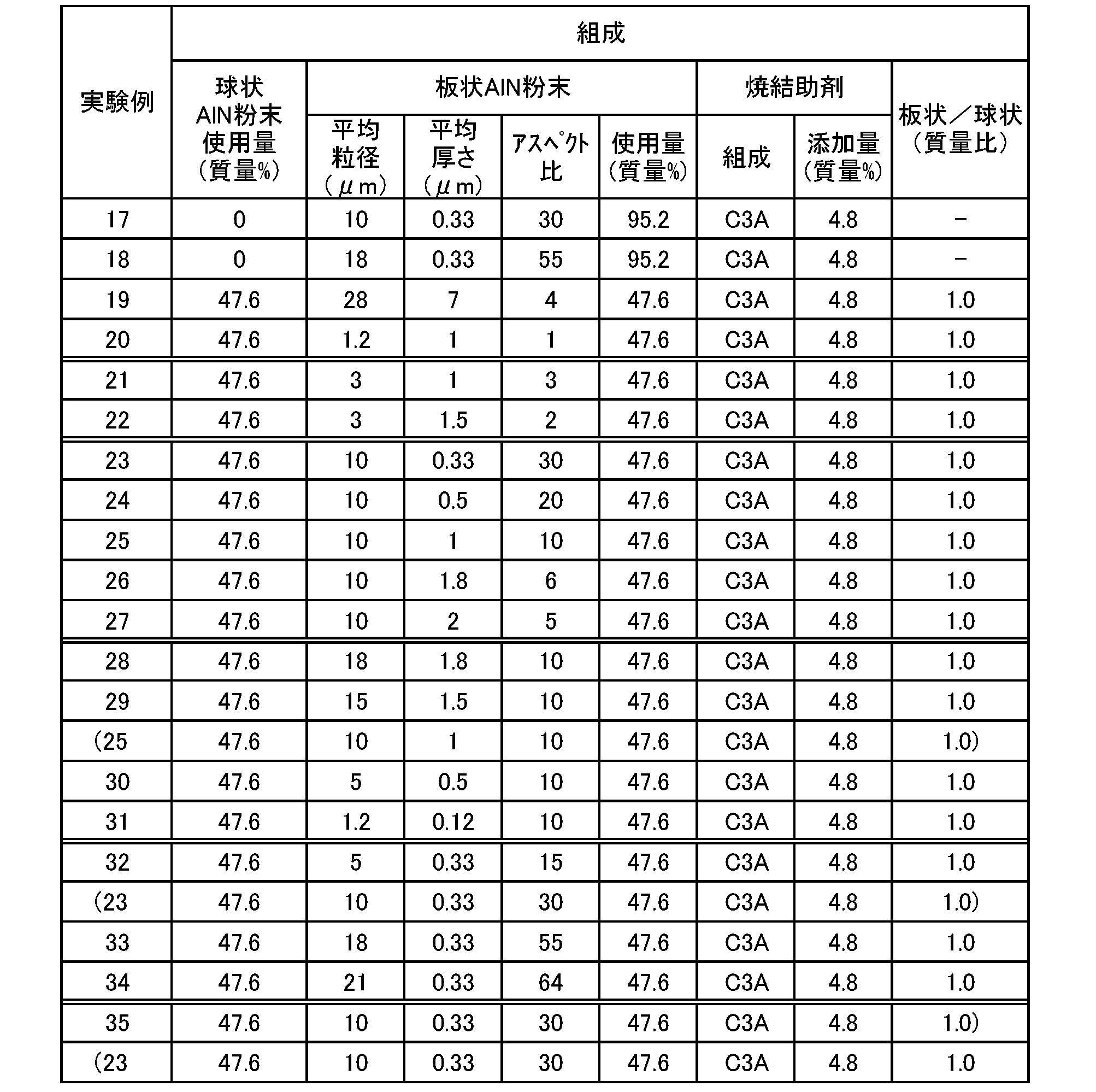
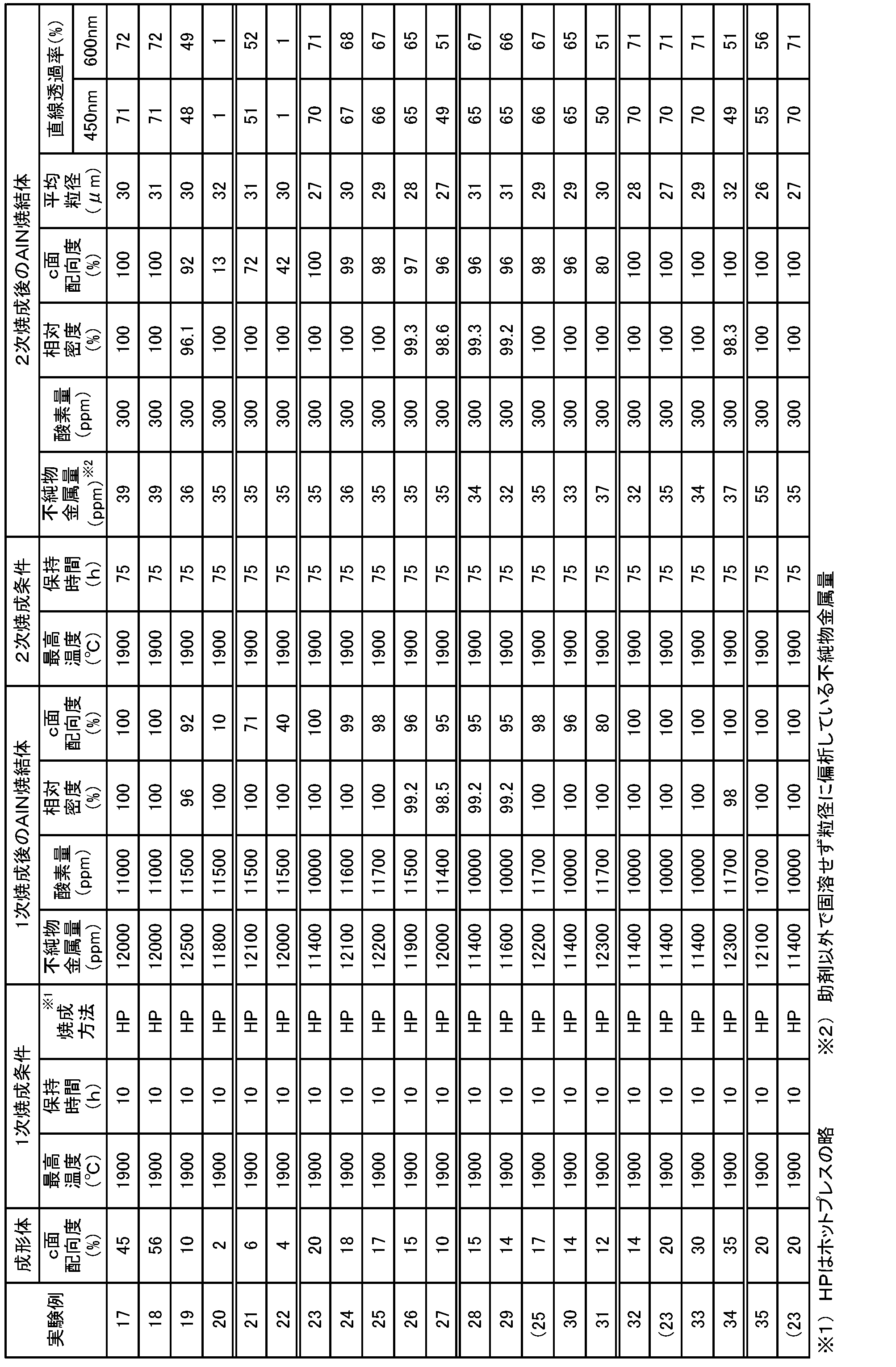
- Results and Evaluation Tables 3 and 4 show the evaluation results of the AlN sintered body after the primary firing and the AlN sintered body after the secondary firing.
- the AlN sintered body after the secondary firing has a high c-plane orientation degree of 70% or more and a linear transmittance of 48% or more at a wavelength of 450 nm. It was expensive.
- Experimental Example 16 when the compact was fired, normal pressure firing was adopted instead of hot press firing, so the c-plane orientation degree of the AlN sintered body after the secondary firing was as low as 44%, and the linear transmittance was There was only 1%.
- the c-plane orientation was as low as 13% and 42%, respectively.
- the AlN sintered bodies after the secondary firing obtained in Experimental Examples 1-15, 17-19, 21, 23-35 have excellent plasma resistance and piezoelectric characteristics because the c-plane orientation degree is as high as 70% or more. Therefore, it is useful as a material for a member that requires plasma resistance such as a member for a semiconductor manufacturing apparatus or a member that requires high piezoelectric properties such as a high-temperature sensor. Further, since the linear transmittance at a wavelength of 450 nm is 48% or more, it is more transparent than the conventional one. Furthermore, the characteristics unique to AlN such as high thermal conductivity, high refractive index, and high crystallinity are maintained as they are.
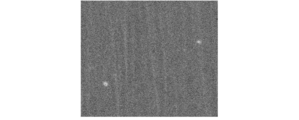
- FIG. 5 shows a photograph of the backscattered electron image of the AlN sintered body after the primary firing in Experimental Example 3.
- the portion that looks black is AlN
- the white spots (two) are Ca—Al-based oxides (Ca is a component derived from the sintering aid) contained in the grain boundary phase between the AlN sintered particles. ).
- the Ca—Al-based oxide appears brighter than AlN because the average atomic weight is larger than that of AlN. Therefore, it can be easily distinguished visually.
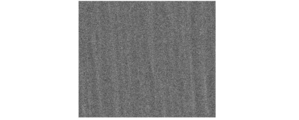
- a photograph of the backscattered electron image of the AlN sintered body after the secondary firing in Experimental Example 3 is shown in FIG. In FIG. 6, white spots, that is, Ca—Al-based oxides disappeared, and the whole became AlN. In other experimental examples (excluding Experimental example 16), the same reflected electron image photograph was obtained.
- the oriented AlN sintered body of the present invention can be used as, for example, a plasma resistant material or a piezoelectric material.
Landscapes
- Chemical & Material Sciences (AREA)
- Engineering & Computer Science (AREA)
- Ceramic Engineering (AREA)
- Organic Chemistry (AREA)
- Manufacturing & Machinery (AREA)
- Inorganic Chemistry (AREA)
- Materials Engineering (AREA)
- Structural Engineering (AREA)
- Life Sciences & Earth Sciences (AREA)
- Geology (AREA)
- Ceramic Products (AREA)
Abstract
Description
板面がc面である板状AlN粉末を含むAlN原料粉末に焼結助剤を混合した混合物を成形して成形体を作製する工程であって、前記板状AlN粉末の板面が前記成形体の表面に沿うように前記混合物を成形する第1工程と、
前記成形体の表面を加圧しながら非酸化雰囲気下、前記成形体をホットプレス焼成して配向AlN焼結体を得る第2工程と、
非酸化雰囲気下、前記配向AlN焼結体を常圧焼成して前記焼結助剤に由来する成分を除去することにより透明AlN焼結体を得る第3工程と、
を含むものである。
板面がc面である板状AlN粉末を含むAlN原料粉末に焼結助剤を混合した混合物を成形して成形体を作製する工程であって、前記板状AlN粉末の板面が前記成形体の表面に沿うように前記混合物を成形する第1工程と、
前記成形体の表面を加圧しながら非酸化雰囲気下、前記成形体をホットプレス焼成して配向AlN焼結体を得る第2工程と、
非酸化雰囲気下、前記配向AlN焼結体を常圧焼成して前記焼結助剤に由来する成分を除去することにより透明AlN焼結体を得る第3工程と、
を含むものである。


1.高配向AlN焼結体の製法
(1)板状AlN粉末の合成
板状アルミナ(キンセイマテック(株)製)を100g、カーボンブラック(三菱化学(株))を50g 、φ2のアルミナ玉石を1000g、IPA(トクヤマ(株)製、トクソーIPA)を350mL、それぞれ秤量してポリポット容器に入れ、30rpm で240分間粉砕・混合した。なお、板状アルミナとしては、平均粒径が2μm、5μm、7μmのものを用いた。平均粒径が2μmのものは平均厚さが0.08μmでありアスペクト比が25であった。平均粒径が5μmのものは平均厚さが0.07μmでありアスペクト比が70であった。平均粒径が7μmのものは平均厚さが0.1μmでありアスペクト比が70であった。その後、ロータリーエバポレータにより乾燥した。乾燥した板状アルミナ-炭素混合物を乳鉢で軽く粉砕し、カーボン製坩堝にそれぞれ100g充填し、高温雰囲気炉中にセットした。窒素を3L/ m i n 流通させながら、昇温速度200℃/hrで1600℃ まで昇温し、その温度で20時間保持した。反応終了後、自然冷却し、坩堝よりサンプルを取り出した。更に、残存している炭素を除去するためマッフル炉を用いて酸化雰囲気下、650℃で10hr熱処理し、板状AlN粉末を得た。
C3Aは、以下のようにして合成した。まず、炭酸カルシウム(白石(株)製、Shilver-W)56g、γ―アルミナ(大明化学工業(株)製、TM-300D)19g、φ15のアルミナ玉石1000g、IPA(トクヤマ(株)製、トクソーIPA)125mLをポリポット容器に入れ、110rpm で120分間粉砕・混合した。その後、ロータリーエバポレータにより乾燥し、混合粉末を調製した。この混合粉末をアルミナ製坩堝に70g充填し、大気炉中にセットした。昇温速度200℃/hrで1250℃ まで昇温し、その温度で3時間保持した。反応終了後、自然冷却し、坩堝よりサンプルを取り出した。C2Aは、炭酸カルシウム47g、アルミナ24gを用いて上記と同様に合成し、C3AとC12A7から構成される助剤とした。また、C4Aは、C3Aを40gとCaCO3を15g混合して合成した。なお、C3A,C2A,C4AのCaO/Al2O3(モル比)はそれぞれ3,2,4である。
上記(1)で得られた板状AlN粉末と、市販の球状AlN粉末(トクヤマ(株)製、Fグレード、平均粒径1.2μm)と、上記(2)で得られたCa-Al-O系助剤とを、それぞれ表1,2に示す質量割合で合計20gとなるように秤量した。これらを、φ15mmのアルミナ玉石300gとIPA(トクヤマ(株)製、トクソーIPA)60mLと共にポリポット容器に入れ、30rpm で240分間粉砕・混合した。その後、ロータリーエバポレータにより乾燥し、混合粉末を調製した。
上記(3)で調製した混合粉末100質量部に対し、バインダとしてポリビニルブチラール(品番BM-2、積水化学工業製)7.8質量部と、可塑剤としてジ(2-エチルヘキシル)フタレート(黒金化成製)3.9質量部と、分散剤としてトリオレイン酸ソルビタン(レオドールSP-O30、花王製)2質量部と、分散媒として2-エチルヘキサノールとを加えて混合した。分散媒の量は、スラリー粘度が20000cPとなるように調整した。このようにして調製されたスラリーを用いてテープ成形体を作製した。すなわち、板状AlN粉末の板面(c面)がテープ成形体の表面に沿って並ぶように、ドクターブレード法によってスラリーをPETフィルムの上に乾燥後の厚さが100μmとなるようにシート状のテープ成形体に成形した。得られたテープ成形体を直径20mmの円形に切断した後40枚積層し、厚さ10mmのAl板の上に載置した後、パッケージに入れて内部を真空にすることで真空パックとした。この真空パックを85℃の温水中で100kgf/cm2の圧力にて静水圧プレスを行い、円板状の積層成形体を得た。
上記(4)で得られた積層成形体を脱脂炉中に配置し、600℃で10時間の条件で脱脂を行った。実験例1~15,17~35では、それぞれ表3,4に示す1次焼成条件にしたがって1次焼成を行い、1次焼成後のAlN焼結体を得た。すなわち、脱脂体を黒鉛製の型を用い、ホットプレスにて窒素中、焼成温度(最高到達温度)1800~1900℃で2~10時間、面圧200kgf/cm2という条件で焼成し、1次焼成後のAlN焼結体を得た。なお、ホットプレス時の加圧方向は、積層成形体の積層方向(テープ成形体の表面と略垂直方向)とした。また、焼成温度から降温する際は室温までプレス圧を維持した。実験例16では、表3に示すように、得られた脱脂体を常圧、窒素中、焼成温度(最高到達温度)1880℃で5時間という条件で焼成し、1次焼成後のAlN焼結体を得た。
実験例1~15,17~35では、それぞれ表3,4に示す2次焼成条件にしたがって1次焼成後のAlN焼結体の焼成を行い、2次焼成後のAlN焼結体を得た。すなわち、上記(5)で得られた1次焼成後のAlN焼結体の表面を研削してφ20mm、厚さ1.5mmの形状のサンプルを作製した。このサンプルを窒化アルミニウム製のサヤに充填し、雰囲気炉にて窒素中、焼成温度(最高到達温度)1900℃で75時間で焼成し、2次焼成後のAlN焼結体を得た。実験例16では、表3に示すように、1次焼成後のAlN焼結体を研削してφ20mm、厚さ1.5mmの形状のサンプルを作成した。このサンプルを窒化アルミニウム製のサヤに充填し、雰囲気炉にて窒素中、焼成温度(最高到達温度)1880℃で50時間焼成し、2次焼成後のAlN焼結体を得た。
(1)成形体のc面配向度
得られたAlN積層成形体の配向度を確認するため、円板状のAlN積層成形体の上面に対して平行になるようにXRD装置にセットして、X線を照射しc面配向度を測定した。XRD装置(リガク製、RINT-TTR III)を用い、2θ=20~70°の範囲でXRDプロファイルを測定した。具体的には、CuKα線を用いて電圧50kV、電流300mAという条件で測定した。c面配向度f(%)は、ロットゲーリング法によって算出した。具体的には、以下の式により算出した。式中、Pは得られたAlN焼結体のXRDから得られた値であり、P0は標準AlN(JCPDSカードNo.076-0566)から算出された値である。なお、(hkl)として、(100),(002),(101),(102),(110),(103)を使用した。
f={(P-P0)/(1-P0)}×100
P0=ΣI0(002)/ΣI0(hkl)
P=ΣI(002)/ΣI(hkl)
不純物金属量は、JIS R1649に準拠した加圧硫酸分解法にて、ICP(誘導結合プラズマ)発光分析装置(日立ハイテクサイエンス製 PS3520UV-DD)を使用して分析した。ここでは、不純物金属として、Si,Fe,Ti,Ca,Mg,K,Na,P,Cr,Mn,Ni,Zn,Ga,Y,Zrについて測定した。酸素量は、JIS R1675(ファインセラミックス用AlN微粉末の科学分析方法)に従い、不活性ガス融解-赤外線吸収法で測定した。これらの単位は質量ppmである。
JIS R1634(ファインセラミックスの焼結体密度・開気孔率の測定方法)に従い、かさ密度を測定し、理論密度を3.260として、相対密度を算出した。
得られたAlN焼結体の配向度を確認するため、円板状のAlN焼結体の上面に対して平行になるように研磨加工した後、その研磨面に対してX線を照射しc面配向度を測定した。XRD装置(リガク製、RINT-TTR III)を用い、2θ=20~70°の範囲でXRDプロファイルを測定した。具体的には、CuKα線を用いて電圧50kV、電流300mAという条件で測定した。c面配向度f(%)は、ロットゲーリング法によって算出した。具体的には、以下の式により算出した。式中、Pは得られたAlN焼結体のXRDから得られた値であり、P0は標準AlN(JCPDSカードNo.076-0566)から算出された値である。なお、(hkl)として、(100),(002),(101),(102),(110),(103)を使用した。
f={(P-P0)/(1-P0)}×100
P0=ΣI0(002)/ΣI0(hkl)
P=ΣI(002)/ΣI(hkl)
得られたAlN焼結体を、10mm×10mmの大きさに切り出し、φ68mmの金属製定盤の最外周部に90°おきに4個固定し、粒径が9μm及び3μmのダイヤモンド砥粒を含むスラリーを滴下した銅製ラッピング盤により研磨し、コロイダルシリカを含むスラリーを滴下したバフ盤で300分間研磨した。その後、研磨後の10mm×10mm×0.5mm厚の試料をアセトン、エタノール、イオン交換水の順でそれぞれ3分間洗浄した。得られた表面を走査型電子顕微鏡(日本電子製、JSM-6390)にて撮影した。観察する倍率は、具体的には、倍率1000倍で撮影した写真から切片法により測定し、AlN焼結粒子の平均粒径を求めた。
得られたAlN焼結体の任意の断面をダイヤモンド砥粒を用いて予備研磨した後、クロスセクションポリッシャ(CP)(日本電子製、SM-09010)で研磨した。CPはイオンミリングの範疇に属する。得られた断面を走査型電子顕微鏡(日本電子製、JSM-6390)にて倍率2000倍で反射電子像を撮影した。
得られたAlN焼結体を、10mm×10mmの大きさに切り出し、φ68mmの金属製定盤の最外周部に90°おきに4個固定し、粒径が9μm及び3μmのダイヤモンド砥粒を含むスラリーを滴下した銅製ラッピング盤により研磨し、コロイダルシリカを含むスラリーを滴下したバフ盤で300分間研磨した。その後、研磨後の10mm×10mm×0.6mm厚の試料をアセトン、エタノール、イオン交換水の順でそれぞれ3分間洗浄した後、分光光度計(Perkin Elmer製、Lambda900)を用いて波長450nmにおける直線透過率を測定した。なお、一部の実験例では、波長600nmにおける直線透過率も測定した。
表3,4に1次焼成後のAlN焼結体及び2次焼成後のAlN焼結体の評価結果を示す。実験例1~15,17~19,21,23~35では、2次焼成後のAlN焼結体は、c面配向度が70%以上と高く、波長450nmにおける直線透過率が48%以上と高いものであった。一方、実験例16では、成形体を焼成する際にホットプレス焼成ではなく常圧焼成を採用したため、2次焼成後のAlN焼結体のc面配向度は44%と低く、直線透過率は1%しかなかった。また、実験例20,22では、使用した板状AlN粉末のアスペクト比が3未満だったため、c面配向度がそれぞれ13%、42%と低かった。
Claims (11)
- 板面がc面であり、アスペクト比が3以上の板状AlN粉末を含むAlN原料粉末に焼結助剤を混合した混合物を成形して成形体を作製する工程であって、前記板状AlN粉末の板面が前記成形体の表面に沿うように前記混合物を成形する第1工程と、
前記成形体の表面を加圧しながら非酸化雰囲気下、前記成形体をホットプレス焼成して配向AlN焼結体を得る第2工程と、
非酸化雰囲気下、前記配向AlN焼結体を常圧焼成して前記焼結助剤に由来する成分を除去することにより透明AlN焼結体を得る第3工程と、
を含む透明AlN焼結体の製法。 - 前記第1工程では、前記板状AlN粉末に含まれる粒子は、凝集せず分離している、
請求項1に記載の透明AlN焼結体の製法。 - 前記第1工程では、前記混合粉末をシート状に成形したテープ成形体を複数積層して積層成形体とし、
前記第2工程では、前記積層成形体をホットプレス焼成する、
請求項1又は2に記載の透明AlN焼結体の製法。 - 前記AlN原料粉末は、前記板状AlN粉末のほかに球状AlN粉末を含む、
請求項1~3のいずれか1項に記載の透明AlN焼結体の製法。 - 前記焼結助剤は、CaとAlとの複合酸化物又は希土類酸化物である、
請求項1~4のいずれか1項に記載の透明AlN焼結体の製法。 - 前記板状AlN粉末の平均厚さは0.05~1.8μmである、
請求項1~5のいずれか1項に記載の透明AlN焼結体の製法。 - 前記板状AlN粉末の平均粒径は2~20μmである、
請求項1~6のいずれか1項に記載の透明AlN焼結体の製法。 - ロットゲーリング法によるc面配向度が70%以上、波長450nmにおける直線透過率が48%以上である、多結晶構造の透明AlN焼結体。
- 前記c面配向度が95%以上、前記直線透過率が60%以上である、
請求項8に記載の透明AlN焼結体。 - 相対密度が99.1%以上である、
請求項8又は9に記載の配向AlN焼結体。 - Al及び焼結助剤以外で固溶せず粒界に偏析している不純物金属の濃度が40質量ppm以下である、
請求項8~10のいずれか1項に記載の配向AlN焼結体。
Priority Applications (5)
| Application Number | Priority Date | Filing Date | Title |
|---|---|---|---|
| CN201780073409.8A CN110072826B (zh) | 2016-12-21 | 2017-12-20 | 透明AlN烧结体及其制法 |
| KR1020197015819A KR102557205B1 (ko) | 2016-12-21 | 2017-12-20 | 투명 AlN 소결체 및 그 제법 |
| EP17885115.0A EP3560905B1 (en) | 2016-12-21 | 2017-12-20 | Transparent aln sintered body and production method therefor |
| JP2018558038A JP7027338B2 (ja) | 2016-12-21 | 2017-12-20 | 透明AlN焼結体及びその製法 |
| US16/419,313 US11014855B2 (en) | 2016-12-21 | 2019-05-22 | Transparent AlN sintered body and method for producing the same |
Applications Claiming Priority (4)
| Application Number | Priority Date | Filing Date | Title |
|---|---|---|---|
| JP2016247874 | 2016-12-21 | ||
| JP2016-247874 | 2016-12-21 | ||
| JP2017025085 | 2017-07-10 | ||
| JPPCT/JP2017/025085 | 2017-07-10 |
Related Child Applications (1)
| Application Number | Title | Priority Date | Filing Date |
|---|---|---|---|
| US16/419,313 Continuation US11014855B2 (en) | 2016-12-21 | 2019-05-22 | Transparent AlN sintered body and method for producing the same |
Publications (1)
| Publication Number | Publication Date |
|---|---|
| WO2018117162A1 true WO2018117162A1 (ja) | 2018-06-28 |
Family
ID=62627398
Family Applications (1)
| Application Number | Title | Priority Date | Filing Date |
|---|---|---|---|
| PCT/JP2017/045765 Ceased WO2018117162A1 (ja) | 2016-12-21 | 2017-12-20 | 透明AlN焼結体及びその製法 |
Country Status (7)
| Country | Link |
|---|---|
| US (1) | US11014855B2 (ja) |
| EP (1) | EP3560905B1 (ja) |
| JP (1) | JP7027338B2 (ja) |
| KR (1) | KR102557205B1 (ja) |
| CN (1) | CN110072826B (ja) |
| TW (1) | TWI749132B (ja) |
| WO (1) | WO2018117162A1 (ja) |
Cited By (1)
| Publication number | Priority date | Publication date | Assignee | Title |
|---|---|---|---|---|
| JP2022086877A (ja) * | 2020-11-30 | 2022-06-09 | 東京都公立大学法人 | 異方性多結晶体及びその製造方法 |
Families Citing this family (2)
| Publication number | Priority date | Publication date | Assignee | Title |
|---|---|---|---|---|
| EP3604214B1 (en) * | 2017-03-22 | 2022-11-16 | NGK Insulators, Ltd. | Aluminum nitride particles |
| CN113460981B (zh) * | 2021-07-09 | 2022-11-18 | 南充三环电子有限公司 | 一种氮化铝粉体及其制备方法与应用 |
Citations (6)
| Publication number | Priority date | Publication date | Assignee | Title |
|---|---|---|---|---|
| JPS63134569A (ja) * | 1985-10-31 | 1988-06-07 | 京セラ株式会社 | 窒化アルミニウム焼結体 |
| JPS63206360A (ja) * | 1987-02-20 | 1988-08-25 | 住友電気工業株式会社 | 窒化アルミニウム焼結体の製造方法 |
| JP2005119953A (ja) * | 2003-09-25 | 2005-05-12 | Tokuyama Corp | 窒化アルミニウム焼結体及びその製造方法 |
| WO2009031510A1 (ja) * | 2007-09-03 | 2009-03-12 | Tokuyama Corporation | 改質窒化アルミニウム焼結体及びその製造方法 |
| WO2012002545A1 (ja) * | 2010-07-02 | 2012-01-05 | 国立大学法人静岡大学 | 窒化アルミニウム結晶粒子の製造装置、窒化アルミニウム結晶粒子の製造方法および窒化アルミニウム結晶粒子 |
| WO2014123247A1 (ja) * | 2013-02-08 | 2014-08-14 | 株式会社トクヤマ | 窒化アルミニウム粉末 |
Family Cites Families (9)
| Publication number | Priority date | Publication date | Assignee | Title |
|---|---|---|---|---|
| JPS6321511A (ja) * | 1986-07-15 | 1988-01-29 | Mitsubishi Electric Corp | 試験用パルス発振装置 |
| US4847221A (en) * | 1987-01-13 | 1989-07-11 | Kabushiki Kaisha Toshiba | AlN sintered body having high thermal conductivity and a method of fabricating the same |
| US7081425B2 (en) * | 2003-09-25 | 2006-07-25 | Tokuyama Corporation | Aluminum nitride sintered body |
| JP2005281046A (ja) * | 2004-03-29 | 2005-10-13 | Ngk Insulators Ltd | 窒化アルミニウム基板及びその製造方法 |
| CN101033139A (zh) * | 2007-02-07 | 2007-09-12 | 山东理工大学 | 透明氮氧化铝陶瓷的制备工艺 |
| JP5919190B2 (ja) * | 2010-06-08 | 2016-05-18 | デンカ株式会社 | 回路基板用窒化アルミニウム基板及びその製造方法 |
| KR20120098118A (ko) * | 2011-02-28 | 2012-09-05 | 영남대학교 산학협력단 | 투명도가 향상된 다결정 산질화알루미늄의 제조방법 |
| CN103011830A (zh) * | 2012-12-31 | 2013-04-03 | 河南理工大学 | 一种透明氮化铝陶瓷的超高压低温烧结制备方法 |
| EP3604214B1 (en) * | 2017-03-22 | 2022-11-16 | NGK Insulators, Ltd. | Aluminum nitride particles |
-
2017
- 2017-12-20 CN CN201780073409.8A patent/CN110072826B/zh active Active
- 2017-12-20 KR KR1020197015819A patent/KR102557205B1/ko active Active
- 2017-12-20 EP EP17885115.0A patent/EP3560905B1/en not_active Not-in-force
- 2017-12-20 WO PCT/JP2017/045765 patent/WO2018117162A1/ja not_active Ceased
- 2017-12-20 JP JP2018558038A patent/JP7027338B2/ja active Active
- 2017-12-21 TW TW106145028A patent/TWI749132B/zh active
-
2019
- 2019-05-22 US US16/419,313 patent/US11014855B2/en active Active
Patent Citations (7)
| Publication number | Priority date | Publication date | Assignee | Title |
|---|---|---|---|---|
| JPS63134569A (ja) * | 1985-10-31 | 1988-06-07 | 京セラ株式会社 | 窒化アルミニウム焼結体 |
| JPS63206360A (ja) * | 1987-02-20 | 1988-08-25 | 住友電気工業株式会社 | 窒化アルミニウム焼結体の製造方法 |
| JP2005119953A (ja) * | 2003-09-25 | 2005-05-12 | Tokuyama Corp | 窒化アルミニウム焼結体及びその製造方法 |
| WO2009031510A1 (ja) * | 2007-09-03 | 2009-03-12 | Tokuyama Corporation | 改質窒化アルミニウム焼結体及びその製造方法 |
| JP5366811B2 (ja) | 2007-09-03 | 2013-12-11 | 株式会社トクヤマ | 改質窒化アルミニウム焼結体 |
| WO2012002545A1 (ja) * | 2010-07-02 | 2012-01-05 | 国立大学法人静岡大学 | 窒化アルミニウム結晶粒子の製造装置、窒化アルミニウム結晶粒子の製造方法および窒化アルミニウム結晶粒子 |
| WO2014123247A1 (ja) * | 2013-02-08 | 2014-08-14 | 株式会社トクヤマ | 窒化アルミニウム粉末 |
Non-Patent Citations (1)
| Title |
|---|
| See also references of EP3560905A4 |
Cited By (1)
| Publication number | Priority date | Publication date | Assignee | Title |
|---|---|---|---|---|
| JP2022086877A (ja) * | 2020-11-30 | 2022-06-09 | 東京都公立大学法人 | 異方性多結晶体及びその製造方法 |
Also Published As
| Publication number | Publication date |
|---|---|
| CN110072826A (zh) | 2019-07-30 |
| CN110072826B (zh) | 2022-03-01 |
| US20190270676A1 (en) | 2019-09-05 |
| KR20190098133A (ko) | 2019-08-21 |
| US11014855B2 (en) | 2021-05-25 |
| JP7027338B2 (ja) | 2022-03-01 |
| EP3560905B1 (en) | 2022-05-04 |
| TW201840513A (zh) | 2018-11-16 |
| TWI749132B (zh) | 2021-12-11 |
| EP3560905A4 (en) | 2020-06-17 |
| EP3560905A1 (en) | 2019-10-30 |
| JPWO2018117162A1 (ja) | 2019-10-31 |
| KR102557205B1 (ko) | 2023-07-18 |
Similar Documents
| Publication | Publication Date | Title |
|---|---|---|
| KR102376825B1 (ko) | 알루미나 소결체 및 광학 소자용 하지 기판 | |
| JP7062229B2 (ja) | 板状の窒化ケイ素質焼結体およびその製造方法 | |
| JP7201103B2 (ja) | 板状の窒化ケイ素質焼結体およびその製造方法 | |
| KR102382726B1 (ko) | 투명 알루미나 소결체의 제법 | |
| JP6872074B2 (ja) | 窒化アルミニウム板 | |
| JP6649959B2 (ja) | 透明アルミナ焼結体の製法 | |
| US11014855B2 (en) | Transparent AlN sintered body and method for producing the same | |
| TWI746750B (zh) | 配向AlN燒結體及其製法 | |
| JP3883106B2 (ja) | 透光性酸化スカンジウム焼結体及びその製造方法 |
Legal Events
| Date | Code | Title | Description |
|---|---|---|---|
| 121 | Ep: the epo has been informed by wipo that ep was designated in this application |
Ref document number: 17885115 Country of ref document: EP Kind code of ref document: A1 |
|
| ENP | Entry into the national phase |
Ref document number: 2018558038 Country of ref document: JP Kind code of ref document: A |
|
| ENP | Entry into the national phase |
Ref document number: 20197015819 Country of ref document: KR Kind code of ref document: A |
|
| NENP | Non-entry into the national phase |
Ref country code: DE |
|
| ENP | Entry into the national phase |
Ref document number: 2017885115 Country of ref document: EP Effective date: 20190722 |