WO2018141256A1 - 一种发送随机接入前导的方法及其装置 - Google Patents
一种发送随机接入前导的方法及其装置 Download PDFInfo
- Publication number
- WO2018141256A1 WO2018141256A1 PCT/CN2018/074983 CN2018074983W WO2018141256A1 WO 2018141256 A1 WO2018141256 A1 WO 2018141256A1 CN 2018074983 W CN2018074983 W CN 2018074983W WO 2018141256 A1 WO2018141256 A1 WO 2018141256A1
- Authority
- WO
- WIPO (PCT)
- Prior art keywords
- random access
- access preamble
- preamble
- user equipment
- network device
- Prior art date
- Legal status (The legal status is an assumption and is not a legal conclusion. Google has not performed a legal analysis and makes no representation as to the accuracy of the status listed.)
- Ceased
Links
Images



Classifications
-
- H—ELECTRICITY
- H04—ELECTRIC COMMUNICATION TECHNIQUE
- H04L—TRANSMISSION OF DIGITAL INFORMATION, e.g. TELEGRAPHIC COMMUNICATION
- H04L41/00—Arrangements for maintenance, administration or management of data switching networks, e.g. of packet switching networks
- H04L41/06—Management of faults, events, alarms or notifications
- H04L41/0654—Management of faults, events, alarms or notifications using network fault recovery
-
- H—ELECTRICITY
- H04—ELECTRIC COMMUNICATION TECHNIQUE
- H04W—WIRELESS COMMUNICATION NETWORKS
- H04W72/00—Local resource management
- H04W72/50—Allocation or scheduling criteria for wireless resources
- H04W72/56—Allocation or scheduling criteria for wireless resources based on priority criteria
-
- H—ELECTRICITY
- H04—ELECTRIC COMMUNICATION TECHNIQUE
- H04W—WIRELESS COMMUNICATION NETWORKS
- H04W74/00—Wireless channel access
- H04W74/08—Non-scheduled access, e.g. ALOHA
- H04W74/0833—Random access procedures, e.g. with 4-step access
-
- H—ELECTRICITY
- H04—ELECTRIC COMMUNICATION TECHNIQUE
- H04W—WIRELESS COMMUNICATION NETWORKS
- H04W74/00—Wireless channel access
- H04W74/002—Transmission of channel access control information
- H04W74/006—Transmission of channel access control information in the downlink, i.e. towards the terminal
Definitions
- the present invention relates to the field of communications technologies, and in particular, to a method and apparatus for transmitting a random access preamble.
- the contention-based random access procedure can be seen in the flowchart shown in FIG. 1 , including: User Equipment (UE) sends a random access preamble to the base station (message 1)
- the base station sends a random access response (message 2) to the UE when detecting the random access preamble sent by the UE, and the message 2 includes the index number of the detected random access preamble, the adjustment information for the uplink time synchronization, Sending the uplink resource allocated by the message 3 to the UE; when receiving the message 2, the UE decodes the message 2, obtains the uplink time synchronization and the uplink resource, and sends the message 3 to the base station, where the message 3 carries the UE identifier; the base station detects When the message 3 is sent, the UE sends a conflict resolution message (message 4), and the message 4 carries the UE identifier.
- UE User Equipment
- the UE determines whether the UE identifier carried by the message 4 matches the UE identifier carried in the message 3 to determine whether the message is successful.
- the access base station determines that the UE successfully accesses the base station if it matches, and determines that the UE fails to access the base station if it does not match.
- the UE may experience an access failure during the random access process.
- the reasons for the failure of LTE random access are as follows: (1) the random access preamble sent by the UE to the base station does not reach the base station, so that the base station does not detect the random access preamble; (2) the base station detects the random access preamble and sends the random access preamble to the UE. The random access response, but the UE failed to successfully detect the random access response; (3) the UE successfully detected the random access response, and sent the message 3 to the base station, but the base station did not detect the message 3, or the message 3 detected an error.
- the base station successfully detects the message 3, and sends the message 4 to the UE, but the UE does not detect the message 4; or the UE detects the message 4, but the message 4
- the carried UE identifier does not match the UE identifier carried by the message 3 sent by the UE.
- the UE may also experience access failure during the random access process.
- the solution to the random access failure in the LTE system may not be applicable to the future wireless communication network, and has not been proposed yet.
- the embodiment of the invention provides a method for transmitting a random access preamble and a device thereof, which solves the problem of random access failure caused by a random access preamble not arriving at a network device in a future wireless communication network, and can improve a random access preamble The probability of reaching a network device, thereby increasing the success rate of random access.
- an embodiment of the present invention provides a method for sending a random access preamble, including:
- the user equipment sends a first random access preamble to the network device, where the first random access preamble is used by the user equipment to access the network device;
- the user equipment If the user equipment fails to access the network device by using the first random access preamble, the user equipment sends at least one second random access preamble to the network device, where the at least one second The access feature information of each second random access preamble in the random access preamble is different from the access feature information of the first random access preamble, where the access feature information includes a time length, a transmit beam, and a random At least one of the access resources, the at least one second random access preamble is used by the user equipment to access the network device.
- the user equipment selects at least one second random access preamble different from the access feature information of the first random access preamble to access, if the first random access preamble access network device fails, The problem of random access failure caused by the random access preamble not reaching the network device in the future wireless communication network is solved, and the probability of the random access preamble reaching the network device is improved, thereby improving the success rate of the random access.
- the access feature information of any two of the at least one second random access preamble is different, so as to improve the success rate of the random access.
- each of the second random access preamble if the length of time of each second random access preamble is different from the length of time of the first random access preamble, then each of the second random access preambles The length of time is longer than the length of time of the first random access preamble, such that the energy of each of the second random access preambles is higher than the energy of the first random access preamble to improve the second each The probability that the random access preamble arrives at the network device.
- each of the second random access preamble if the transmit beam of each second random access preamble is different from the transmit beam of the first random access preamble, then each of the second random access preambles
- the random access resource is the same as or different from the random access resource of the first random access preamble, that is, if the transmit beams are different, the same or no random access resources as the first random access preamble may be used.
- the same random access resource performs the transmission of the second random access preamble, and attempts to obtain the best matched transmit beam-random access resource, thereby improving the success rate of the random access.
- each of the second random access preamble random access resources is different from the first random access preamble random access resource
- each of the second random The transmit beam of the access preamble is the same as or different from the transmit beam of the first random access preamble, that is, if the random access resources are different, the transmit beam of the first random access preamble may be selected to be the same or not.
- the same transmit beam performs the second random access preamble transmission, and attempts to obtain the best matched transmit beam-random access resource, thereby improving the success rate of the random access.
- the random access resource corresponds to a receive beam of the network device, or a location in time, or a location on a frequency.
- the transmit power of each second random access preamble is the same as or different from the transmit power of the first random access preamble, and the at least one second random access preamble is in the middle
- the transmit power of any two second random access preambles is the same or different.
- the transmit power of each of the second random access preambles may be greater than the transmit power of the first random access preamble to improve the success rate of the random access.
- the transmit power of each of the second random access preambles may also be smaller than the transmit power of the first random access preamble.
- the user equipment sends the at least one second to the network device according to the length of time, the sending power, the sending beam, and a priority level of the random access resource.
- Random access preamble to improve the success rate of random access.
- the priority order of the four elements is from high to low, the transmit beam, the random access resource, the transmit power, and the length of time.
- the first random access preamble access fails, the first random access is selected.
- the second random access preamble A (the other three elements may be the same as the first random access preamble) with different transmit beams of the preamble is transmitted, and in the case that the second random access preamble A access fails, the selection and the A random access preamble or a second random access preamble B with different random access resources of the second random access preamble A is sent, and so on, until the access is successful or the number of transmissions reaches the maximum number of times.
- the user equipment may change at least two elements to select a random access preamble to transmit, if the second random access preamble access fails by changing an element, to improve The success rate of random access.
- the number of the at least one second random access preamble is indicated by the downlink random access channel information sent by the network device, and the number of the at least one second random access preamble is avoided. More conflicts.
- an embodiment of the present invention provides a method for receiving a random access preamble, including:
- the at least one second random access preamble Receiving, by the network device, at least one second random access preamble sent by the user equipment, where the first random access preamble request fails to access the network device, the at least one second random access
- the access feature information of each second random access preamble in the preamble is different from the access feature information of the first random access preamble, where the access feature information includes a time length, a transmit beam, and a random access resource.
- At least one of the at least one second random access preamble is configured to request access to the network device.
- the network device receives at least one second random access preamble that is different from the access feature information of the first random access preamble. Improve the success rate of random access of user equipment.
- the access feature information of any two of the at least one second random access preamble is different, so as to improve the success rate of the random access.
- each of the second random access preamble if the length of time of each second random access preamble is different from the length of time of the first random access preamble, then each of the second random access preambles The length of time is longer than the length of the first random access preamble, such that the energy of each of the second random access preambles is higher than the energy of the first random access preamble, so that the network device can receive .
- each of the second random access preamble if the transmit beam of each second random access preamble is different from the transmit beam of the first random access preamble, then each of the second random access preambles
- the random access resource is the same as or different from the random access resource of the first random access preamble, that is, if the transmit beams are different, the same as the random access resource of the first random access preamble may be the same or not
- the same random access resource performs the reception of the second random access preamble, thereby improving the success rate of the random access.
- each of the second random access preamble random access resources is different from the first random access preamble random access resource
- each of the second random The transmit beam of the access preamble is the same as or different from the transmit beam of the first random access preamble, that is, if the random access resources are different, the same as the transmit beam of the first random access preamble may be the same or not
- the same transmit beam performs the reception of the second random access preamble, thereby improving the success rate of the random access.
- the random access resource corresponds to a receive beam of the network device, or a location in time, or a location on a frequency.
- the transmit power of each second random access preamble is the same as or different from the transmit power of the first random access preamble, and the at least one second random access preamble is in the middle
- the transmit power of any two second random access preambles is the same or different.
- the transmit power of each of the second random access preambles may be greater than the transmit power of the first random access preamble, so that the network device can receive, thereby improving the success rate of the random access.
- the transmit power of each of the second random access preambles may also be smaller than the transmit power of the first random access preamble.
- the network device sends a downlink random access channel information indication to the user equipment, indicating the number of the at least one second random access preamble, and avoiding the at least one second random connection. Too many of the predecessors caused conflicts.
- an embodiment of the present invention provides a user equipment, including a processor and a transceiver.
- the transceiver is configured to send a first random access preamble to the network device, where the first random access preamble is used by the user equipment to access the network device;
- the transceiver is further configured to: when the user equipment fails to access the network device by using the first random access preamble, send at least one second random access preamble to the network device, where The access feature information of each of the at least one second random access preamble is different from the access feature information of the first random access preamble, where the access feature information includes a time length, At least one of a transmit beam and a random access resource, where the at least one second random access preamble is used by the user equipment to access the network device.
- the user equipment provided by the third aspect is used to perform the method for transmitting a random access preamble provided by the first aspect.
- an embodiment of the present invention provides a network device, including a processor and a transceiver.
- the transceiver unit is configured to receive a first random access preamble sent by the user equipment, where the first random access preamble is used to request access to the network device;
- the receiving unit is further configured to receive, when the first random access preamble request fails to access the network device, at least one second random access preamble sent by the user equipment, where the at least one The access feature information of each second random access preamble in the second random access preamble is different from the access feature information of the first random access preamble, where the access feature information includes a time length, a transmit beam, At least one of the random access resources, the at least one second random access preamble is used to request access to the network device.
- the network device provided by the fourth aspect is configured to perform the method for receiving a random access preamble provided by the second aspect.
- an embodiment of the present invention provides a computer storage medium for storing computer software instructions for use by the user equipment, including a program designed to perform the above aspects.
- an embodiment of the present invention provides a computer storage medium for storing computer software instructions used by the network device, including a program designed to perform the above aspects.
- the user equipment when the first random access preamble access network device fails, the user equipment sends the access feature information to the network device and the access feature information of the first random access preamble is not
- the same at least one second random access preamble is used to solve the problem of random access failure caused by the random access preamble not reaching the network device in the future wireless communication network, and the probability of the random access preamble reaching the network device is improved, thereby improving The success rate of random access.
- 1 is a schematic flowchart of a contention-based random access procedure in an LTE system
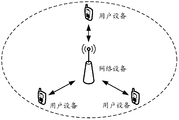
- FIG. 2 is a schematic diagram of a network architecture to which an embodiment of the present invention is applied;
- 3a is a schematic diagram of random access time in an LTE system
- FIG. 3b is a schematic diagram of random access time in an embodiment of the present invention.
- FIG. 4 is a schematic diagram of communication of a random access method according to an embodiment of the present invention.
- FIG. 5 is a schematic diagram of an example of a random access method 1 according to an embodiment of the present disclosure
- FIG. 5b is a schematic diagram of an example of a random access mode 2 according to an embodiment of the present disclosure.
- FIG. 5 is a schematic diagram of an example of a random access mode 3 according to an embodiment of the present disclosure.
- FIG. 5 is a schematic diagram of an example of a random access method 4 according to an embodiment of the present disclosure.
- FIG. 5 e is a schematic diagram of an example of a random access method 5 according to an embodiment of the present disclosure.
- FIG. 6 is a schematic diagram of a beam according to an embodiment of the present invention.
- FIG. 7 is a schematic diagram of an example of a random access manner for different receiving beams according to an embodiment of the present invention.
- FIG. 7 is a schematic diagram of an example of a random access manner for different transmit beams according to an embodiment of the present invention.
- FIG. 7c is a schematic diagram of another example of a random access manner for different receiving beams according to an embodiment of the present disclosure.
- FIG. 7 is a schematic diagram of another example of a random access manner for different transmit beams according to an embodiment of the present disclosure.
- FIG. 8 is a schematic structural diagram of a user equipment according to an embodiment of the present disclosure.
- FIG. 9 is a schematic structural diagram of a network device according to an embodiment of the present invention.
- GSM Global System of Mobile Communication
- CDMA Code Division Multiple Access
- WCDMA Wideband Code Division Multiple Access
- LTE Long Term Evolution
- FDD Frequency Division Duplex
- TDD Time Division Duplex
- UMTS Universal Mobile Telecommunication System
- Future wireless communication systems may include fifth generation mobile communication (5th-Generation, 5G) systems.
- a user equipment may also refer to an access terminal, subscriber unit, subscriber station, mobile station, mobile station, remote station, remote terminal, mobile device, user terminal, terminal, wireless communication device, user agent, or user device.
- the access terminal may be a cellular phone, a cordless phone, a Session Initiation Protocol (SIP) phone, a Wireless Local Loop (WLL) station, a Personal Digital Assistant (PDA), with wireless communication.
- the present invention describes various embodiments in connection with a network device.
- the network device may be a device for communicating with the user equipment, for example, may be a base station (Base Transceiver Station, BTS) in the GSM system or CDMA, or a base station (NodeB, NB) in the WCDMA system, or may be An evolved base station (Evolutional Node B, eNB or eNodeB) in the LTE system, or the network device may be a relay station, an access point, an in-vehicle device, a wearable device, and a network device in a future wireless communication network.
- BTS Base Transceiver Station
- NodeB NodeB
- NB base station
- eNodeB evolved base station
- the network device may be a relay station, an access point, an in-vehicle device, a wearable device, and a network device in a future wireless communication network.
- FIG. 2 is a schematic diagram of a network architecture to which an embodiment of the present invention is applied.
- the figure is a network architecture diagram of a cell, including a network device and a user equipment. It should be noted that the network device and the user equipment shown in FIG. The number and form do not constitute a limitation on the embodiments of the present invention.
- the network device broadcasts a downlink random access channel (RACH) information to the user equipment in the cell, and the downlink RACH information may be sent through system information (SI) in a future wireless communication network.
- the downlink RACH information may also be sent by using other information.
- the user equipment selects a random access preamble according to the downlink RACH information, and sends a random access preamble to the network device; the network device detects the random access. At the time of the preamble, a random access response can be sent to the user equipment.
- the user equipment in the embodiment of the present invention may select a random access preamble, a transmit beam, and a random access preamble according to downlink RACH information and transmission information of the user equipment (eg, retransmission times, downlink path loss estimation values, and the like). Transmit power, etc.
- the user equipment may further select a receiving beam of the network device according to the downlink RACH information and the sending information of the user equipment.
- the network device in the embodiment of the present invention may receive a random access preamble of different time lengths sent by the user equipment, a random access preamble of different preamble formats, a random access preamble of different transmission powers, and random access sent by different transmit beams. Preamble, random access preamble sent through different random access resources
- the random access time in the embodiment of the present invention refers to the time when the user equipment has the opportunity to initiate random access.
- the default user equipment has obtained the downlink RACH information when initiating the random access.
- the name of the random access time is used to indicate the time when the user equipment has the opportunity to initiate random access.
- the name does not constitute a limitation on the embodiment of the present invention. Other names may be used to indicate that the user equipment has the opportunity to initiate random access. Access time.
- the random access resource in the embodiment of the present invention refers to a specific resource used by the user equipment to send a random access preamble to the network device, and the random access resource and the transmission beam of the synchronization signal have a certain correspondence relationship, and the user equipment can pass The synchronization signal is detected to determine the random access resources it uses.
- a random access resource can be understood as a receiving beam of a network device, or a position in time, or a position in frequency.
- FIG. 3a is a schematic diagram of random access time in an LTE system.
- the preamble is a random access preamble, and its time domain structure includes a Cyclic Prefix (CP) and a preamble sequence.
- CP Cyclic Prefix
- the preamble sequence is used to distinguish user equipments during the random access procedure, and the time delay amount is estimated.
- the five preamble formats are defined in the LTE system, the CP parameters and the length of time in the various preamble formats are different.
- the network equipment in the LTE system uses the downlink RACH information to designate user equipments in the same cell to adopt the same preamble format.
- the preamble is sent.
- FIG. 3b is a schematic diagram of random access time in an embodiment of the present invention, which may be a schematic diagram of random access time in a wireless communication system in the future.
- a random access time includes K optional preambles.
- the preamble m transmitted at the first random access time may be the same as or different from the preamble format of the preamble n transmitted at the second random access time; the sequence of the preamble m and the preamble n may be the same or different;
- the frequency domain resources occupied by the preamble m and the preamble n may be the same or different; the time domain positions corresponding to the preamble m and the preamble n may be the same or different.
- the same time domain position corresponding to the preamble n and the preamble n refers to the same receive beam of the preamble m and the preamble n for the network device.
- the receive beam 1 of the network device can receive 4 orthogonal frequency division multiplexing (Orthogonal Frequency Division Multiplexing, OFDM) symbol
- the preamble m can carry two OFDM symbols
- the preamble n can carry two OFDM symbols
- the user equipment sends the preamble m to the receiving beam 1, in the case that the access through the preamble m fails and the network device detects the preamble m
- the receiving beam 1 can also receive two OFDM symbols, and the user equipment can continue to transmit the preamble n to the receiving beam 1, that is, the preamble m and the preamble n are both for the receiving beam 1, and the preamble m has the same time domain position corresponding to the preamble n.
- FIG. 4 is a schematic diagram of communication of a random access method according to an embodiment of the present invention. It should be noted that the embodiment shown in FIG. 4 is described by a network device and a user equipment in a cell. The method shown in this embodiment includes but is not limited to the following steps:
- Step S101 The user equipment sends a first random access preamble to the network device.
- the user equipment receives the downlink RACH message sent by the network device, and the downlink RACH message is used to notify the user equipment that random access may be initiated before sending the random access preamble to the network device.
- the downlink RACH message includes configuration information of random access, and the configuration information may include Preamble Initial Received Target Power, power offset based on a preamble format (Delta_Preamble), and power ramp factor (Power). Ramping Step) and other information.
- the Preamble Initial Received Target Power indicates the initial power of the random access preamble that the network device expects to receive, and the user equipment uses the value to calculate the transmission power of the random access preamble to initiate a random access procedure.
- the Delta_Preamble is associated with the preamble format, and its value can be indicated by the downlink PACH message or by looking up the table.
- the Power Ramping Step indicates the increased transmit power of the next access after each access failure.
- the Preamble Initial Received Target Power, the Delta_Preamble, and the Power Ramping Step may be used by the user equipment to calculate a preamble reception target power (PREAMBLE_RECEIVED_TARGET_POWER) that the network device expects to receive.
- the downlink RACH message is further used to indicate that the number of preambles corresponding to the random access time is one or more, and a preamble format of each preamble, a sequence of each preamble bearer, and the like.
- the user equipment sends a first random access preamble to the network device at a first time, where the first random access preamble is used by the user equipment to access the network. device.
- the time is used to indicate the time when the user equipment can initiate random access, which may be referred to as a random access time, or may be referred to as another name.
- the specific value of the random access time is set by the network device. set.
- the first time may be understood as the time when the user equipment may initiate random access after receiving the downlink RACH message, and may also be understood as the first time after the random access failure of the user equipment.
- the time when one or a certain random access can be initiated can also be understood as the time when any random access can be initiated.
- the first random access preamble is one of the K optional preambles corresponding to the random access time, and specifically, which is selected by the user equipment.
- the user equipment may select one of the multiple preambles corresponding to the first time as the first random access according to the downlink RACH message and the path loss of the user equipment to the network device. Leading.
- the user equipment sends a first random access preamble to the network device for the first time, where the first random access preamble is used by the user equipment to access the user equipment.
- the first random access preamble sent by the user equipment to the network device may or may not be received by the network device. And if the network device detects the first random access preamble, the network device sends a random access response for the first random access preamble to the user equipment, where the random access response includes An index number of the first random access preamble, adjustment information used for uplink time synchronization, an uplink resource allocated to the user equipment, and the like. If the network device does not detect the first random access preamble, the user equipment does not receive the random access response sent by the network device for the first random access preamble. The first random access preamble may not be sent to the network device, and the user equipment fails to access the network device by using the first random access preamble.
- Step S102 If the user equipment fails to access the network device by using the first random access preamble, the user equipment sends at least one second random access preamble to the network device, where the at least The access feature information of each second random access preamble in the second random access preamble is different from the access feature information of the first random access preamble, and the access feature information includes a time length and a sending At least one of a beam and a random access resource;
- the user equipment may determine, by using the following procedure, whether the first random access preamble successfully accesses the network device:
- the user equipment determines, in a first preset time period, whether a random access response of the network device for the first random access preamble is received, and if the random access response is not received, Determining the access failure, wherein the first preset time period is a random access response window (Random Access Response window);
- the user equipment sends a message 3 to the network device, where the message 3 carries the identifier of the user equipment;
- the user equipment determines, in the second preset time period, whether the message 4 sent by the network device for the message 3 is received, and if the message 4 is not received, determining that the access fails, wherein the second The preset time period is a time period corresponding to a medium access control-macrier resolution timer (mac-Contention Resolution Timer);
- the user equipment determines whether the identifier of the user equipment carried in the message 4 matches the information reported to the network device in the message 3. If the user equipment matches, the user equipment It is considered that the random access conflict is won and the access is determined to be successful; if not, the random access failure is determined.
- the processes (1) and (2) are also applicable to the non-contention based random access procedure.
- the user equipment fails to access the network device by using the first random access preamble according to the following conditions:
- the first random access preamble sent by the user equipment to the network device does not reach the network device, and the network device does not detect the first random access preamble
- the network device detects the first random access preamble, and sends a random access response to the user equipment, but the user equipment does not successfully detect the random access response;
- the network device successfully detects the message 3, and sends the message 4 to the user equipment, but the user equipment does not detect the message 4; or the user equipment detects the message 4, but the user carried by the message 4
- the device identification does not match the identity of the user equipment in message 3.
- the user equipment needs to send the random access preamble again. And in a case that the user equipment fails to access the network device by using the first random access preamble, the user equipment sends at least one second random access preamble to the network device.
- the at least one second random access preamble is used by the user equipment to re-access the network device.
- the access feature information of each of the at least one second random access preamble is different from the access feature information of the first random access preamble, and the access feature information includes time At least one of a length, a transmit beam, and a random access resource. As long as one of the three elements of the second random access preamble is different from the first random access preamble, the access feature information of the second random access preamble and the first random access preamble may be determined.
- the access feature information is different.
- the user equipment sends a second random access preamble A to the network device at a second time.
- the access feature information of the second random access preamble A is different from the access feature information of the first random access preamble, for example, the time length of the second random access preamble A is greater than the
- the first random access preamble has a long time length.
- the second time is the same as the time length of the first time, and the second time is a time after the user equipment fails to access the user equipment by using the first random access preamble. It is not necessarily the next time immediately following the first time.
- the user equipment sends another second random to the network device at a third time.
- the access feature information of the second random access preamble B is different from the access feature information of the first random access preamble, and the access feature information of the second random access preamble A is not
- the length of the second random access preamble A is longer than the length of the first random access preamble, and the second random access preamble B has a longer time length than the second random access.
- the length of the leading A is long. This is repeated until the user equipment successfully accesses the network device, or the number of transmissions exceeds the maximum allowed number of transmissions.
- the maximum allowed number of transmissions is indicated by the downlink RACH information.
- the third time is a time after the user equipment fails to access the user equipment by using the second random access preamble, and is not necessarily the next time immediately after the second time. .
- the user equipment sends at least a first second random access preamble to the network device. Specifically, the user equipment sends a second random access preamble B at a third time, and sends a second random access preamble C... at a fourth time until the user equipment successfully accesses the network device, or sends The number of times exceeds the maximum allowed number of transmissions.
- the maximum allowed number of transmissions is indicated by the downlink RACH information.
- the possible implementation manner may be applied to the scenario where the user equipment is at a cell edge or the signal strength of the user equipment is weak. This kind of possible implementation can effectively reduce the access delay and improve the success rate of random access.
- the user equipment when the user equipment fails to determine that the user equipment fails to access the network device by using the second random access preamble, the user equipment sends the foregoing to the network device at a third time.
- the second access preamble B at this time, the third time is the next time immediately following the second time.
- the random access channel time is 10 ms
- the second time is 11-20 ms
- the third time is 21-30 ms.
- the user equipment sends the network device to the network device.
- the third random access preamble is described.
- the possible implementation manner is configured by the downlink RACH information, that is, the network device configures the capability for the user equipment, or the user equipment has the capability, and the downlink RACH information indicates the user The device activates this capability.
- the user equipment sends a second random access preamble A to the network device for a second time.
- the access feature information of the second random access preamble A is different from the access feature information of the first random access preamble, for example, the time length of the second random access preamble A is greater than the The first random access preamble has a long time length.
- the user equipment In a case that the user equipment fails to access the network device by using the second random access preamble A, the user equipment sends another second random access preamble B to the network device for a third time.
- the access feature information of the second random access preamble B is different from the access feature information of the first random access preamble, and the access feature information of the second random access preamble A is not
- the length of the second random access preamble A is longer than the length of the first random access preamble
- the second random access preamble B has a longer time length than the second random access.
- the length of the leading A is long. This is repeated until the user equipment successfully accesses the network device, or the number of transmissions exceeds the maximum allowed number of transmissions.
- the maximum allowed number of transmissions is indicated by the downlink RACH information.
- the user equipment sends at least one second random access preamble to the network device for a second time, and each second random access in the at least one second random access preamble The access feature information of the preamble and the access feature information of the first random access preamble.
- the number of the at least one second random access preamble may be indicated by the downlink RACH information, and avoiding the collision of the number of the at least one second random access preamble is too large.
- the time length of each of the second random access preambles is smaller than the first random number
- the length of time to access the preamble is long.
- the length of the first random access preamble is 1 ms
- the length of the second random access preamble A is 2 ms.
- the user equipment selects a preamble whose time length is longer than the length of the first random access preamble, and uses the first random access preamble A as the second random access preamble A, specifically the first random access.
- the difference in time length between the preamble and the second random access preamble is not limited.
- the user equipment superimposes or lengthens the time length of the first random access preamble to obtain the second random access preamble A, and the superimposed multiple and the extended length are not used herein.
- the first random access preamble has a time length of 1 ms, and is superimposed by 1 time to obtain a preamble with a time length of 2 ms, and the preamble is determined as the second random access preamble A.
- the length of the random access preamble allowed in the random access process is limited, that is, the time length threshold exists. Once the time length reaches the time length threshold, the time length is not increased.
- the specific value of the time length threshold may be set by the network device, and the user equipment may be notified by downlink system information or RACH information.
- the transmit beam of each of the second random access preambles is different from the transmit beam of the first random access preamble, the random access resources of each second random access preamble and the first The random access resources of the random access preamble are the same or different.
- the transmit beams of any two of the at least one second random access preamble are the same or different.
- the transmit beam of each second random access preamble and the The transmit beams of the first random access preamble are the same or different.
- the random access resources of any two of the at least one second random access preamble are the same or different.
- the transmission power of each of the second random access preambles is the same as or different from the transmission power of the first random access preamble, and any two of the at least one second random access preamble are randomly selected.
- the transmit power of the preamble is the same or different.
- the sequence of the first random access preamble and the second random access preamble bearer are different.
- the first random access preamble is the same as or different from the frequency domain resource occupied by the second random access preamble.
- the same means that the number of occupied subcarriers is the same and the positions of the occupied subcarriers are the same.
- the user equipment sends the at least one second random access preamble to the network device according to a time length, a transmit power, a transmit beam, and a priority level of the random access resource.
- the four elements of the time length, the transmission power, the transmission beam, and the random access resource are prioritized, and after the failure of the random access preamble access by changing one element, the priority is selected.
- the random access preamble of another element is sent, for example, the priority order of the four elements is from high to low, the transmit beam, the random access resource, the transmit power, and the length of time, and the first random access preamble access fails.
- the transmit beam is different from the first random access preamble, and the second random access preamble is used.
- the second random access preamble B different from the random access resource of the first random access preamble or the second random access preamble A is selected for transmission, and so on, until the access is successful or The maximum number of times sent.
- the transmit beam of the second random access preamble B is the same as or different from the transmit beam of the second random access preamble A.
- selecting to change the random access preamble of at least two of the four elements for transmission after changing the random access preamble access of one element, selecting to change the random access preamble of at least two of the four elements for transmission.
- the embodiment shown in FIG. 4 solves the problem that the random access preamble does not reach the network device in the future wireless communication network by sending the random access preamble with the access feature information different from the access feature information of the last random access preamble.
- the problem of random access failure can improve the probability that the random access preamble arrives at the network device, thereby improving the success rate of random access.
- FIG. 5 is a schematic diagram of an example of five random access modes according to an embodiment of the present invention.
- FIG. 5a to FIG. 5 e show horizontal access preambles sent by user equipments, and cross-stripes indicate network equipment reception. Random access preamble to. The following five methods are respectively introduced, where the number of transmissions is three, and it is assumed that the network device can detect the random access preamble sent by the user equipment.
- the user equipment performs the first transmission, and sends the first random access preamble to the network device.
- the second transmission is performed, and the second random is sent to the network device.
- the length of the third random access preamble is longer than the second random access preamble, and the length of the second random access preamble is longer than the first random access preamble, and the transmission power of the third transmission is the same, assuming the transmit power Is P.
- the calculation method of P is not limited herein.
- the calculation formula of the transmission power P is:
- the unit of P is dBm;
- P CMAX (i) represents the maximum allowed transmission power of the user equipment in the i-th subframe, and the unit is dBm;
- PL represents the path loss (PathLoss) of the user equipment to the network equipment estimated by the user equipment, The unit is dB;
- PREAMBLE_RECEIVED_TARGET_POWER is the preamble receiving target power that the network device expects to receive, and is designated as Preamble Initial Received Target Power by the Media Access Control (MAC) layer, and the downlink RACH message sent by the network device by the Preamble Initial Received Target Power. Specified.
- Figure 5b differs from the first method in that the transmission power of the random access preamble is different in the second mode, and the second time is smaller than the first time, and the third time is smaller than the second time.
- the transmit power P1 of the first random access preamble is calculated by the user equipment according to the path loss and the downlink RACH message, and the difference between the transmit power of the second random access preamble and the first random access preamble is calculated by the downlink RACH message.
- the specific calculation method is not limited herein.
- the length of time of the k random access preamble for the k-th transmission T k, its transmission power P k may be calculated according to the formula:
- P k min ⁇ P CMAX (i), PREAMBLE_RECEIVED_TARGET_POWER+PL ⁇ ,
- P CMAX (i) represents the maximum allowed transmission power of the user equipment in the i-th subframe, and the unit is dBm
- PL represents the path loss of the user equipment to the network equipment estimated by the user equipment, and the unit is dB
- PREAMBLE_RECEIVED_TARGET_POWER is the preamble receiving target power that the network device expects to receive, which is specified by the MAC layer as: Preamble Initial Received Target Power–10log10(T k /T 1 )+(k–1)*Power Ramping Step.
- the PREAMBLE_TRANSMISSION_COUNTER is the number of retransmissions.
- the Power Ramping Step indicates the transmission power boosted by the next access after each access failure, which is specified by the downlink RACH message.
- Preamble Initial Received Target Power is specified by the downstream RACH message.
- the third method can be seen in Figure 5c.
- the difference from the first method is that the transmission power of the random access preamble is different every time in the third mode, and the second time is larger than the first time, and the third time is larger than the second time. .
- Increasing the transmission power can solve the access failure caused by the distance between the user equipment and the network equipment.
- the length of the second random access preamble sent by the second time is the same as the length of the first random access preamble sent by the first time, and the sending power of the second random access preamble is higher than The transmission power of the first random access preamble;
- the transmission power of the third random access preamble transmitted in the third time is the same as the transmission power of the first random access preamble sent in the first time, and the length of the third random access preamble Greater than the transmit power of the first random access preamble.
- Mode 4 first increases the transmission power for access. If the transmission power access fails, the random access preamble with a longer duration is selected for access to improve the access success rate.
- Method 5 is different from the first method in that the total length of the random access preamble sent in the third manner in the fifth manner is longer, and the sending time is discontinuous.
- the scenario implemented by the foregoing five access modes is to perform multiple random access preamble transmissions based on the same transmit beam and the same random access resource. If the random access preamble access network device fails to be sent through the third access mode, the fourth random access preamble transmission is performed and repeated according to this, until the number of successful access or transmission exceeds the maximum. The number of times allowed to send.
- the length of the random access preamble sent in the fourth time may be longer than the random access preamble sent in the third time, and the sending power is larger than the random preamble sent in the third time; or the random access preamble sent in the fourth time.
- the length of time is the same as that of the random access preamble sent for the third time, and the transmission power is larger than that of the random preamble transmitted for the third time; or the time length of the random access preamble transmitted for the fourth time is more random than the random transmission of the third transmission.
- the length of the incoming preamble is the same as the random preamble of the third transmission; or the total length of the random access preamble sent for the fourth time is longer than the total length of the random access preamble sent for the third time, and the transmission power is It is the same as the random preamble sent for the third time or larger than the random preamble sent for the third time.
- Beamforming techniques are used to limit the energy of a transmitted signal to a certain beam direction, thereby increasing the efficiency of signal transmission and reception. Beamforming technology can effectively expand the transmission range of wireless signals and reduce signal interference, thereby achieving higher communication efficiency and higher network capacity.
- FIG. 6 is a schematic diagram of a beam according to an embodiment of the present invention.
- the user equipment can transmit through three transmit beams, and the network device can receive through three receive beams.
- the number of the beams shown in FIG. 6 does not limit the embodiment of the present invention, and the specific number depends on the specific situation.
- the transmit beam (Beam) and the receive beam need to be matched first, so that the gain from the sender to the receiver is maximized, otherwise a relatively high communication efficiency cannot be obtained.
- the base station beam is required to be scanned. Therefore, when the user equipment and the base station respectively establish an uplink connection and a downlink connection, beam scanning is required to obtain an optimal transmit-receive beam pair.
- the transmit beam of the user equipment does not match the receive beam of the base station, which may cause random access failure.
- FIG. 6 it is assumed that the transmit beam 2 of the user equipment and the receive beam 2' of the network device are the best transmit-receive beam pairs, but the user equipment sends the transmit beam 2 to the receive beam 2', which may cause random connection. Failure failed.
- the random access retransmission method in the LTE system does not support multi-beam scanning and cannot meet the requirements of future wireless communication systems.
- the random access preamble in the embodiment of the present invention may be sent through different transmit beams or through the same transmit beam; the random access preamble may be for different receive beams or for the same receive beam. It is possible to achieve a match between the transmit beam and the receive beam, thereby increasing the random access success rate.
- the five access modes shown in FIG. 5a to FIG. 5e can be performed under the condition that the transmit beam and the receive beam are matched. If the start transmit beam does not match the receive beam, the user equipment needs beam scanning, and the handover is performed.
- Beams and/or receive beams are used to attempt random access to determine matching transmit and receive beams.
- the receiving beam of the network device corresponds to a random access resource, or a position in time (for example, in FIG. 7c, two receiving beams B2 and B3 are adjacent in time, and are recorded as t1 to t4.
- the network device does not have the definition of "beam", then the different receiving beams are distinguished by the position in time, in other words, the receiving beam B2 occupies t1 ⁇ t2, the receiving beam B3 occupies t3 ⁇ t4), or the position on the frequency.
- FIG. 7 is a schematic diagram of an example of a random access manner for different receiving beams according to an embodiment of the present invention.
- the user equipment performing a first transmission, the transmission power P 1 for transmitting a first random access preamble received beams B1 network device.
- the transmission power P 1 for a time reception beam B1 than the first network device transmits a random access preamble of the long length of the second random access preamble.
- the third transmission is performed, and the transmission power P 2 is sent to the receiving beam B2 of the network device to send a third random access preamble that is longer than the second random access preamble for the network device. .
- P 1 and P 2 and a downlink path loss calculated RACH message by a user equipment both may be the same or different.
- the user equipment can switch the receiving beam to transmit and send a random access preamble that is longer than the previous time.
- the path loss in the transmit power P 1 is obtained according to the first receive beam B1 sent by the network device to the user equipment, and the path loss in the transmit power P 2 is sent to the user equipment according to the network device.
- Receive beam B2 is obtained.
- the user equipment may send a random access preamble that is higher than the transmit power.
- the user equipment may send a random access preamble that is longer than the previous time and has a higher transmit power.
- FIG. 7a shows two kinds of receiving beams (B1 and B2, respectively corresponding to cross and diagonal stripes) and one type of transmitting beam (horizontal stripes), that is, for different receiving beams, based on the same transmitting beam.
- the user equipment may determine whether to switch the receiving beam according to the spatial positional relationship between the receiving beams, for example, the receiving beam 2 is spatially adjacent to the receiving beam 1, and then the random access preamble access for the receiving beam 1 After the failure, a random access preamble for receive beam 2 is transmitted.
- the user equipment may determine whether to switch the receiving beam according to the receiving quality of the receiving beam. For example, the user equipment determines that the receiving beam 2 may obtain better receiving quality than the receiving beam 1, and then performs random access for the receiving beam 1. After the preamble access fails, a random access preamble for the receive beam 2 is transmitted.
- FIG. 7 is a schematic diagram of an example of a random access manner for different transmit beams according to an embodiment of the present invention.
- the user equipment performs a first transmission based on the transmit beam b1 to transmit power P 1 .
- a second transmission based on the transmission beams b1, transmitted at transmission power P 1 is longer than the first random access preamble time length of the second random access preamble.
- the third transmission based on the transmission beams b2, P 2 transmits the transmission power of the transmission time is longer than the length of the second random access preamble of the random access preamble to a third network device.
- P 1 and P 2 and a downlink path loss calculated RACH message by a user equipment both may be the same or different.
- the user equipment can switch the transmit beam to transmit and send a random access preamble that is longer than the previous time.
- the user equipment may send a random access preamble that is higher than the transmit power.
- the user equipment may send a random access preamble that is longer than the previous time and has a higher transmit power.
- FIG. 7b shows two kinds of transmission beams (b1 and b2 corresponding to horizontal stripes and vertical stripes, respectively) and one reception beam (cross-strip), that is, for different transmission beams, based on the same reception beam.
- the user equipment can simultaneously switch the transmit beam and the receive beam when the random access preamble access with a longer duration is used.
- the user equipment may select whether to switch the transmit beam according to the spatial location relationship between the transmit beams. For example, if the transmit beam 2 is spatially adjacent to the transmit beam 1, then the random access preamble access based on the transmit beam 1 is used. After the failure, a random access preamble based on the transmit beam 2 is transmitted.
- the user equipment may determine whether to switch the transmit beam according to the transmission quality of the transmit beam. For example, the user equipment determines that the transmit beam 2 may obtain better transmission quality than the transmit beam 1, and then performs random access based on the transmit beam 1. After the preamble access fails, a random access preamble based on the transmit beam 2 is transmitted.
- FIG. 7c is a schematic diagram showing another example of a random access manner for different receiving beams according to an embodiment of the present invention.
- the difference from FIG. 7a is that the random access preamble transmitted here for the third time is performed in two receiving beams of the network device, and the total time is longer than the second transmission time, and the two transmission times are not Continuously, the time interval of the specific interval of the two transmission times, the user equipment can learn from the PACH information.
- the random access preamble transmitted for the third time is not limited to being performed in two receiving beams of the network device, and may be performed in more receiving beams.
- FIG. 7 is a schematic diagram of another example of a random access manner for different transmit beams according to an embodiment of the present invention.
- the random access preamble transmitted here is performed by two transmission beams of the user equipment, and the total time is longer than the second transmission time, and the two transmission times are discontinuous.
- the random access preamble transmitted for the third time is not limited to being performed by two transmission beams of the user equipment, and may be performed by using more transmission beams.
- the four random access modes shown in FIG. 7a to FIG. 7d are based on FIG. 5a, that is, the transmission power is unchanged, and the random access preamble with a longer time length is selected for random access. It should be noted that the five random access modes shown in FIG. 5a to FIG. 5e can be arbitrarily combined with the four random access modes shown in FIG. 7a to FIG. 7d, for example, as shown in FIG. 7a.
- the random access mode is combined with the random access mode shown in FIG. 5c, that is, the receiving beam is changed, the transmission power is increased, and the random access preamble with a longer time length is selected for random access.
- FIG. 8 is a schematic structural diagram of a user equipment according to an embodiment of the present invention.
- the user equipment 90 may include a transceiver 913.
- the transceiver 913 is configured to send a first random access preamble to the network device, where the first random access preamble is used by the user equipment to access the network device;
- the transceiver 913 is further configured to: when the user equipment fails to access the network device by using the first random access preamble, send at least one second random access preamble to the network device, where The access feature information of each second random access preamble in the at least one second random access preamble is different from the access feature information of the first random access preamble, and the access feature information includes a time length. At least one of a transmit beam and a random access resource, where the at least one second random access preamble is used by the user equipment to access the network device.
- the access feature information of any two of the at least one second random access preamble is different.
- the length of time of each second random access preamble is different from the length of time of the first random access preamble, the length of time of each second random access preamble is greater than The first random access preamble has a long time length.
- the random access resource of each second random access preamble is The random access resources of the first random access preamble are the same or different.
- each second random access preamble is different from the random access resource of the first random access preamble
- the sending of each second random access preamble is performed.
- the beam is the same or different from the transmit beam of the first random access preamble.
- the transmit power of each second random access preamble is the same as or different from the transmit power of the first random access preamble, and any two of the at least one second random access preamble The transmission power of the two random access preambles is the same or different.
- the transceiver 913 is configured to send the at least one second random access preamble to the network device according to the time length, the transmit power, the transmit beam, and the priority level of the random access resource. .
- transceiver 913 is configured to perform step S101 and step S102 in the embodiment shown in FIG. 4, and is also used to implement communication or data transmission between the user equipment 90 and a network device such as a satellite.
- the transceiver 913 can also be a transceiver circuit or a communication module or the like.
- User device 90 also includes a processor 914, a power source 911, a user interface 912, a display system 915, a sensing system 916, and an audio system 917.
- the user equipment 90 may represent the user equipment described in FIG. 4, and the structure of the user equipment shown in FIG. 8 does not constitute a limitation on the embodiment of the present invention.
- the processor 914 can be a central processing unit (CPU), a general-purpose processor, a digital signal processor (DSP), an application-specific integrated circuit (ASIC), and a field programmable gate. Field Programmable Gate Array (FPGA) or other programmable logic device, transistor logic device, hardware component, or any combination thereof. It is possible to implement or carry out the various illustrative logical blocks, modules and circuits described in connection with the present disclosure.
- the processor may also be a combination of computing functions, for example, including one or more microprocessor combinations, a combination of a DSP and a microprocessor, and the like.
- the power supply 911 provides power protection for the implementation of various functions of the user equipment 90.
- the user interface 912 is used by the user device 90 to connect with other devices or devices to enable communication or data transfer of other devices or devices with the user device 90.
- Display system 915 is used for output display of information and for receiving user input operations.
- Sensing system 916 includes various sensors such as temperature sensors, distance sensors, and the like.
- Audio system 917 is used for the output of audio signals.
- FIG. 9 is a schematic structural diagram of a network device according to an embodiment of the present invention.
- the network device 100 may include a transceiver 1012.
- the transceiver 1012 is configured to send a first random access preamble to the network device, where the first random access preamble is used by the user equipment to access the network device;
- the transceiver 1012 is further configured to: when the user equipment fails to access the network device by using the first random access preamble, send at least one second random access preamble to the network device, where The access feature information of each second random access preamble in the at least one second random access preamble is different from the access feature information of the first random access preamble, and the access feature information includes a time length. At least one of a transmit beam and a random access resource, where the at least one second random access preamble is used by the user equipment to access the network device.
- the transceiver 1012 is further configured to send downlink RACH information to the user equipment.
- the transceiver 1012 performs the foregoing process.
- the network device 100 may receive the first random access preamble, may not receive the first random access preamble, may receive the second random access preamble, and may not receive the second random access preamble.
- the network device 100 may receive random access preambles of different time lengths sent by the user equipment, random access preambles of different preamble formats, and random access preambles of different transmission powers.
- Network device 100 also includes a processor 1011 and an antenna. It should be noted that, in actual application, the transceiver 1012 is not limited to two, and the antenna is not limited to two. The structure of the network device 100 does not constitute a limitation on the embodiment of the present invention.
- the processor 1011 mainly includes four components: a cell controller, a voice channel controller, a signaling channel controller, and a multiplexer interface for expansion.
- the processor 1011 is responsible for all mobile communication interface management, primarily the allocation, release and management of wireless channels.
- the transceiver 1012 includes a receiver and a transmitter. For the user equipment, uplink data can be transmitted through the transmitter, and downlink data can be received through the receiver.
- the embodiment of the invention further provides a computer storage medium for storing computer software instructions for the user equipment, which comprises a program designed to execute the above aspects.
- the embodiment of the invention further provides a computer storage medium for storing computer software instructions used by the network device, which comprises a program designed to execute the above aspects.
- Computer readable media includes both computer storage media and communication media including any medium that facilitates transfer of a computer program from one location to another.
- a storage medium may be any available media that can be accessed by a computer.
- the computer readable medium may include a random access memory (RAM), a read-only memory (ROM), and an electrically erasable programmable read-only memory (Electrically Erasable Programmable).
- EEPROM Electrically Error Read-Only Memory
- CD-ROM Compact Disc Read-Only Memory
- Any connection may suitably be a computer readable medium.
- the software is transmitted from a website, server, or other remote source using coaxial cable, fiber optic cable, twisted pair, Digital Subscriber Line (DSL), or wireless technologies such as infrared, radio, and microwave, Then coaxial cable, fiber optic cable, twisted pair, DSL or wireless technologies such as infrared, wireless and microwave are included in the fixing of the associated medium.
- DSL Digital Subscriber Line
- a disk and a disc include a compact disc (CD), a laser disc, a compact disc, a digital versatile disc (DVD), a floppy disk, and a Blu-ray disc, wherein the disc is usually magnetically copied, and the disc is The laser is used to optically replicate the data. Combinations of the above should also be included within the scope of the computer readable media.
Landscapes
- Engineering & Computer Science (AREA)
- Computer Networks & Wireless Communication (AREA)
- Signal Processing (AREA)
- Mobile Radio Communication Systems (AREA)
Abstract
Description
Claims (14)
- 一种发送随机接入前导的方法,其特征在于,包括:用户设备向网络设备发送第一随机接入前导,所述第一随机接入前导用于所述用户设备接入所述网络设备;在所述用户设备通过所述第一随机接入前导接入所述网络设备失败的情况下,所述用户设备向所述网络设备发送至少一个第二随机接入前导,所述至少一个第二随机接入前导中的每个第二随机接入前导的接入特征信息与所述第一随机接入前导的接入特征信息不相同,所述接入特征信息包括时间长度、发送波束、随机接入资源中的至少一种,所述至少一个第二随机接入前导用于所述用户设备接入所述网络设备。
- 如权利要求1所述的方法,其特征在于,所述至少一个第二随机接入前导中的任意两个第二随机接入前导的接入特征信息不相同。
- 如权利要求1所述的方法,其特征在于,若所述每个第二随机接入前导的时间长度与所述第一随机接入前导的时间长度不相同,则所述每个第二随机接入前导的时间长度比所述第一随机接入前导的时间长度长。
- 如权利要求1所述的方法,其特征在于,若所述每个第二随机接入前导的发送波束与所述第一随机接入前导的发送波束不相同,则所述每个第二随机接入前导的随机接入资源与所述第一随机接入前导的随机接入资源相同或不相同。
- 如权利要求1所述的方法,其特征在于,若所述每个第二随机接入前导的随机接入资源与所述第一随机接入前导的随机接入资源不相同,则所述每个第二随机接入前导的发送波束与所述第一随机接入前导的发送波束相同或不相同。
- 如权利要求1-5所述的方法,其特征在于,所述每个第二随机接入前导的发送功率与所述第一随机接入前导的发送功率相同或不相同,所述至少一个第二随机接入前导中的任意两个第二随机接入前导的发送功率相同或不相同。
- 如权利要求1所述的方法,其特征在于,所述用户设备向所述网络设备发送至少一个第二随机接入前导,包括:所述用户设备根据所述时间长度、所述发送功率、所述发送波束、所述随机接入资源的优先等级向所述网络设备发送所述至少一个第二随机接入前导。
- 一种用户设备,其特征在于,包括:处理器和收发器,所述收发器,用于向网络设备发送第一随机接入前导,所述第一随机接入前导用于所述用户设备接入所述网络设备;所述收发器,还用于在所述用户设备通过所述第一随机接入前导接入所述网络设备失败的情况下,向所述网络设备发送至少一个第二随机接入前导,所述至少一个第二随机接入前导中的每个第二随机接入前导的接入特征信息与所述第一随机接入前导的接入特征信息不相同,所述接入特征信息包括时间长度、发送波束、随机接入资源中的至少一种,所述至少一个第二随机接入前导用于所述用户设备接入所述网络设备。
- 如权利要求8所述的用户设备,其特征在于,所述至少一个第二随机接入前导中的任意两个第二随机接入前导的接入特征信息不相同。
- 如权利要求8所述的用户设备,其特征在于,若所述每个第二随机接入前导的时间长度与所述第一随机接入前导的时间长度不相同,则所述每个第二随机接入前导的时间长度比所述第一随机接入前导的时间长度长。
- 如权利要求8所述的用户设备,其特征在于,若所述每个第二随机接入前导的发送波束与所述第一随机接入前导的发送波束不相同,则所述每个第二随机接入前导的随机接入资源与所述第一随机接入前导的随机接入资源相同或不相同。
- 如权利要求8所述的用户设备,其特征在于,若所述每个第二随机接入前导的随机接入资源与所述第一随机接入前导的随机接入资源不相同,则所述每个第二随机接入前导的发送波束与所述第一随机接入前导的发送波束相同或不相同。
- 如权利要求8-12所述的用户设备,其特征在于,所述每个第二随机接入前导的发送功率与所述第一随机接入前导的发送功率相同或不相同,所述至少一个第二随机接入前导中的任意两个第二随机接入前导的发送功率相同或不相同。
- 如权利要求8所述的用户设备,其特征在于,所述收发器具体用于根据所述时间长度、所述发送功率、所述发送波束、所述随机接入资源的优先等级向所述网络设备发送所述至少一个第二随机接入前导。
Priority Applications (3)
| Application Number | Priority Date | Filing Date | Title |
|---|---|---|---|
| EP18747197.4A EP3562252B1 (en) | 2017-02-03 | 2018-02-01 | Random access preamble transmission method and device therefor |
| BR112019016025-6A BR112019016025A2 (pt) | 2017-02-03 | 2018-02-01 | Método e aparelho de envio de preâmbulo de acesso aleatório |
| US16/530,649 US11026267B2 (en) | 2017-02-03 | 2019-08-02 | Random access preamble sending method and apparatus |
Applications Claiming Priority (2)
| Application Number | Priority Date | Filing Date | Title |
|---|---|---|---|
| CN201710063468.9 | 2017-02-03 | ||
| CN201710063468.9A CN108391319B (zh) | 2017-02-03 | 2017-02-03 | 一种发送随机接入前导的方法及其装置 |
Related Child Applications (1)
| Application Number | Title | Priority Date | Filing Date |
|---|---|---|---|
| US16/530,649 Continuation US11026267B2 (en) | 2017-02-03 | 2019-08-02 | Random access preamble sending method and apparatus |
Publications (1)
| Publication Number | Publication Date |
|---|---|
| WO2018141256A1 true WO2018141256A1 (zh) | 2018-08-09 |
Family
ID=63039226
Family Applications (1)
| Application Number | Title | Priority Date | Filing Date |
|---|---|---|---|
| PCT/CN2018/074983 Ceased WO2018141256A1 (zh) | 2017-02-03 | 2018-02-01 | 一种发送随机接入前导的方法及其装置 |
Country Status (5)
| Country | Link |
|---|---|
| US (1) | US11026267B2 (zh) |
| EP (1) | EP3562252B1 (zh) |
| CN (1) | CN108391319B (zh) |
| BR (1) | BR112019016025A2 (zh) |
| WO (1) | WO2018141256A1 (zh) |
Cited By (1)
| Publication number | Priority date | Publication date | Assignee | Title |
|---|---|---|---|---|
| CN112383386A (zh) * | 2020-11-11 | 2021-02-19 | 腾讯科技(深圳)有限公司 | 数据传输方法、装置、计算机设备及计算机可读存储介质 |
Families Citing this family (9)
| Publication number | Priority date | Publication date | Assignee | Title |
|---|---|---|---|---|
| CN108633100B (zh) * | 2017-03-24 | 2023-10-20 | 华为技术有限公司 | 随机接入响应的方法和设备以及随机接入的方法和设备 |
| ES2976959T3 (es) * | 2018-07-25 | 2024-08-13 | Guangdong Oppo Mobile Telecommunicationscorp Ltd | Método y aparato de transmisión de señales, dispositivo terminal y dispositivo de red |
| JP7413349B2 (ja) * | 2018-08-31 | 2024-01-15 | 富士通株式会社 | ランダムアクセス方法、データ受信方法及びその装置、通信システム |
| CN110312322B (zh) * | 2019-05-31 | 2023-07-14 | 华为技术有限公司 | 随机接入的方法及执行随机接入的设备 |
| CN112399453B (zh) * | 2019-08-12 | 2022-10-18 | 大唐移动通信设备有限公司 | 一种小区接入失败后的处理方法和装置 |
| CN110461007B (zh) * | 2019-08-21 | 2021-01-29 | 华为技术有限公司 | 一种随机接入的方法及通信装置 |
| US11871215B2 (en) * | 2019-09-18 | 2024-01-09 | Qualcomm Incorporated | Uplink-centric handover in a wireless multi-hop network |
| US20210321460A1 (en) * | 2020-04-08 | 2021-10-14 | Qualcomm Incorporated | Fallback procedure on a random access channel |
| CN112929950B (zh) * | 2021-03-11 | 2023-03-17 | 南昌凯峰软件有限责任公司 | 一种基于前导的自组织网络接入方法 |
Citations (3)
| Publication number | Priority date | Publication date | Assignee | Title |
|---|---|---|---|---|
| CN101478778A (zh) * | 2008-01-04 | 2009-07-08 | 中兴通讯股份有限公司 | 一种蜂窝通讯系统随机接入方法及其参数传递的方法 |
| US20090316586A1 (en) * | 2008-06-18 | 2009-12-24 | Lg Electronics Inc. | Method for detecting failures of random access procedures |
| CN101662836A (zh) * | 2009-09-23 | 2010-03-03 | 普天信息技术研究院有限公司 | 竞争随机接入的方法、系统和演进基站 |
Family Cites Families (11)
| Publication number | Priority date | Publication date | Assignee | Title |
|---|---|---|---|---|
| CN103096355B (zh) * | 2011-11-02 | 2015-11-25 | 华为技术有限公司 | 一种处理随机接入参数的方法及设备 |
| US9699811B2 (en) * | 2012-07-12 | 2017-07-04 | Samsung Electronics Co., Ltd. | Apparatus and method for random access with multiple antennas in a wireless network |
| US9019823B1 (en) * | 2013-01-16 | 2015-04-28 | Sprint Spectrum L.P. | Random access preamble selection |
| US9794959B2 (en) * | 2013-01-17 | 2017-10-17 | Telefonaktiebolaget Lm Ericsson (Publ) | Dynamic random access resource size configuration and selection |
| US9451639B2 (en) * | 2013-07-10 | 2016-09-20 | Samsung Electronics Co., Ltd. | Method and apparatus for coverage enhancement for a random access process |
| CN105794297B (zh) * | 2013-12-05 | 2019-03-12 | Lg 电子株式会社 | 执行用于会聚增强的随机接入过程的方法和装置 |
| US20160278127A1 (en) * | 2014-03-20 | 2016-09-22 | Telefonaktiebolaget L M Ericsson (Publ) | A Network Node, a User Equipment and Methods Therein for Random Access |
| EP3225070A1 (en) * | 2014-11-26 | 2017-10-04 | IDAC Holdings, Inc. | Initial access in high frequency wireless systems |
| US10631330B2 (en) * | 2015-04-03 | 2020-04-21 | Qualcomm Incorporated | Random access procedures under coverage limitations |
| CN106162924B (zh) * | 2015-04-17 | 2021-04-06 | 中兴通讯股份有限公司 | 一种接入网络的方法、装置和系统 |
| CN106304383A (zh) * | 2015-05-22 | 2017-01-04 | 中兴通讯股份有限公司 | 一种随机接入的方法、基站以及用户设备 |
-
2017
- 2017-02-03 CN CN201710063468.9A patent/CN108391319B/zh active Active
-
2018
- 2018-02-01 WO PCT/CN2018/074983 patent/WO2018141256A1/zh not_active Ceased
- 2018-02-01 EP EP18747197.4A patent/EP3562252B1/en active Active
- 2018-02-01 BR BR112019016025-6A patent/BR112019016025A2/pt not_active IP Right Cessation
-
2019
- 2019-08-02 US US16/530,649 patent/US11026267B2/en active Active
Patent Citations (3)
| Publication number | Priority date | Publication date | Assignee | Title |
|---|---|---|---|---|
| CN101478778A (zh) * | 2008-01-04 | 2009-07-08 | 中兴通讯股份有限公司 | 一种蜂窝通讯系统随机接入方法及其参数传递的方法 |
| US20090316586A1 (en) * | 2008-06-18 | 2009-12-24 | Lg Electronics Inc. | Method for detecting failures of random access procedures |
| CN101662836A (zh) * | 2009-09-23 | 2010-03-03 | 普天信息技术研究院有限公司 | 竞争随机接入的方法、系统和演进基站 |
Non-Patent Citations (3)
| Title |
|---|
| HUAWEI: "RACH Preamble and Procedures for Unified Single and Multiple Beam Based Access", 3GPP TSG RAN WG1 MEETING #86BIS, R1-1608824, 1 October 2016 (2016-10-01), XP051148878 * |
| HUAWEI: "Unified Single/Multiple Beam-based Initial Access Procedure in NR", 3GPP TSG RAN WG1 MEETING #86BIS, R1-1608823, 1 October 2016 (2016-10-01), XP051148877 * |
| See also references of EP3562252A4 * |
Cited By (2)
| Publication number | Priority date | Publication date | Assignee | Title |
|---|---|---|---|---|
| CN112383386A (zh) * | 2020-11-11 | 2021-02-19 | 腾讯科技(深圳)有限公司 | 数据传输方法、装置、计算机设备及计算机可读存储介质 |
| CN112383386B (zh) * | 2020-11-11 | 2024-01-05 | 腾讯科技(深圳)有限公司 | 数据传输方法、装置、计算机设备及计算机可读存储介质 |
Also Published As
| Publication number | Publication date |
|---|---|
| US20190357271A1 (en) | 2019-11-21 |
| EP3562252A1 (en) | 2019-10-30 |
| EP3562252B1 (en) | 2021-07-28 |
| CN108391319B (zh) | 2023-05-16 |
| CN108391319A (zh) | 2018-08-10 |
| US11026267B2 (en) | 2021-06-01 |
| BR112019016025A2 (pt) | 2020-03-31 |
| EP3562252A4 (en) | 2019-12-11 |
Similar Documents
| Publication | Publication Date | Title |
|---|---|---|
| CN108391319B (zh) | 一种发送随机接入前导的方法及其装置 | |
| TWI701966B (zh) | 用於使用者設備的隨機存取資源選擇方法及使用者設備 | |
| CN114390714B (zh) | 覆盖增强的传输方法、装置、终端设备、网络设备及介质 | |
| CN110832913B (zh) | 随机接入功率控制方法、装置以及通信系统 | |
| JP6934525B2 (ja) | ランダムアクセス方法、ユーザ機器、及びネットワークデバイス | |
| US9826553B2 (en) | Methods and apparatuses for handling connection setups in a telecommunications system | |
| WO2020038331A1 (zh) | 确定上行资源的方法与装置 | |
| US8223791B2 (en) | Methods and apparatuses for performing random access in a telecommunications systems | |
| US12604344B2 (en) | Random access method and related device | |
| JP7520883B2 (ja) | ランダムアクセス方法、装置及び通信システム | |
| WO2019029498A1 (zh) | 一种通信的方法和装置 | |
| KR102875451B1 (ko) | 향상된 랜덤 액세스 절차의 시스템 및 방법 | |
| CN108702635A (zh) | 用户装置以及随机接入方法 | |
| WO2018232696A1 (zh) | 通信的方法和设备 | |
| CN116017756A (zh) | 控制电路 | |
| CN113489522B (zh) | 无线通信中的链路恢复 | |
| WO2020061945A1 (zh) | 用于随机接入的方法、网络设备和终端设备 | |
| WO2018103050A1 (zh) | 用于随机接入的方法和设备 | |
| US20200137802A1 (en) | Random access method and terminal device | |
| WO2020223878A1 (zh) | 随机接入的方法、终端设备和网络设备 | |
| JP7023977B2 (ja) | 端末装置がネットワークにアクセスするための方法、端末装置及びネットワーク装置 | |
| US10667299B2 (en) | Control plane latency reduction in a wireless communications network | |
| CN121890022A (zh) | 配置用于接入无线通信网络的唤醒信号 | |
| WO2020082394A1 (zh) | 随机接入的方法、终端设备和网络设备 | |
| CN112771954A (zh) | 用于波束故障恢复的载波选择 |
Legal Events
| Date | Code | Title | Description |
|---|---|---|---|
| 121 | Ep: the epo has been informed by wipo that ep was designated in this application |
Ref document number: 18747197 Country of ref document: EP Kind code of ref document: A1 |
|
| NENP | Non-entry into the national phase |
Ref country code: DE |
|
| ENP | Entry into the national phase |
Ref document number: 2018747197 Country of ref document: EP Effective date: 20190725 |
|
| REG | Reference to national code |
Ref country code: BR Ref legal event code: B01A Ref document number: 112019016025 Country of ref document: BR |
|
| ENP | Entry into the national phase |
Ref document number: 112019016025 Country of ref document: BR Kind code of ref document: A2 Effective date: 20190802 |