WO2018155451A1 - 核酸化合物およびオリゴヌクレオチド - Google Patents
核酸化合物およびオリゴヌクレオチド Download PDFInfo
- Publication number
- WO2018155451A1 WO2018155451A1 PCT/JP2018/006062 JP2018006062W WO2018155451A1 WO 2018155451 A1 WO2018155451 A1 WO 2018155451A1 JP 2018006062 W JP2018006062 W JP 2018006062W WO 2018155451 A1 WO2018155451 A1 WO 2018155451A1
- Authority
- WO
- WIPO (PCT)
- Prior art keywords
- group
- nucleic acid
- salt
- oligonucleotide
- acid compound
- Prior art date
- Legal status (The legal status is an assumption and is not a legal conclusion. Google has not performed a legal analysis and makes no representation as to the accuracy of the status listed.)
- Ceased
Links
- 0 **OC(C1**2)[C@@]2(CO*(*)*)O[C@]1N(C=C(*)C(N1)=O)C1=* Chemical compound **OC(C1**2)[C@@]2(CO*(*)*)O[C@]1N(C=C(*)C(N1)=O)C1=* 0.000 description 1
Images


Classifications
-
- C—CHEMISTRY; METALLURGY
- C07—ORGANIC CHEMISTRY
- C07H—SUGARS; DERIVATIVES THEREOF; NUCLEOSIDES; NUCLEOTIDES; NUCLEIC ACIDS
- C07H19/00—Compounds containing a hetero ring sharing one ring hetero atom with a saccharide radical; Nucleosides; Mononucleotides; Anhydro-derivatives thereof
- C07H19/02—Compounds containing a hetero ring sharing one ring hetero atom with a saccharide radical; Nucleosides; Mononucleotides; Anhydro-derivatives thereof sharing nitrogen
- C07H19/04—Heterocyclic radicals containing only nitrogen atoms as ring hetero atom
- C07H19/06—Pyrimidine radicals
- C07H19/067—Pyrimidine radicals with ribosyl as the saccharide radical
-
- C—CHEMISTRY; METALLURGY
- C07—ORGANIC CHEMISTRY
- C07H—SUGARS; DERIVATIVES THEREOF; NUCLEOSIDES; NUCLEOTIDES; NUCLEIC ACIDS
- C07H19/00—Compounds containing a hetero ring sharing one ring hetero atom with a saccharide radical; Nucleosides; Mononucleotides; Anhydro-derivatives thereof
- C07H19/02—Compounds containing a hetero ring sharing one ring hetero atom with a saccharide radical; Nucleosides; Mononucleotides; Anhydro-derivatives thereof sharing nitrogen
- C07H19/04—Heterocyclic radicals containing only nitrogen atoms as ring hetero atom
- C07H19/06—Pyrimidine radicals
- C07H19/10—Pyrimidine radicals with the saccharide radical esterified by phosphoric or polyphosphoric acids
-
- C—CHEMISTRY; METALLURGY
- C07—ORGANIC CHEMISTRY
- C07H—SUGARS; DERIVATIVES THEREOF; NUCLEOSIDES; NUCLEOTIDES; NUCLEIC ACIDS
- C07H21/00—Compounds containing two or more mononucleotide units having separate phosphate or polyphosphate groups linked by saccharide radicals of nucleoside groups, e.g. nucleic acids
- C07H21/02—Compounds containing two or more mononucleotide units having separate phosphate or polyphosphate groups linked by saccharide radicals of nucleoside groups, e.g. nucleic acids with ribosyl as saccharide radical
-
- C—CHEMISTRY; METALLURGY
- C12—BIOCHEMISTRY; BEER; SPIRITS; WINE; VINEGAR; MICROBIOLOGY; ENZYMOLOGY; MUTATION OR GENETIC ENGINEERING
- C12N—MICROORGANISMS OR ENZYMES; COMPOSITIONS THEREOF; PROPAGATING, PRESERVING, OR MAINTAINING MICROORGANISMS; MUTATION OR GENETIC ENGINEERING; CULTURE MEDIA
- C12N15/00—Mutation or genetic engineering; DNA or RNA concerning genetic engineering, vectors, e.g. plasmids, or their isolation, preparation or purification; Use of hosts therefor
- C12N15/09—Recombinant DNA-technology
- C12N15/11—DNA or RNA fragments; Modified forms thereof; Non-coding nucleic acids having a biological activity
- C12N15/113—Non-coding nucleic acids modulating the expression of genes, e.g. antisense oligonucleotides; Antisense DNA or RNA; Triplex- forming oligonucleotides; Catalytic nucleic acids, e.g. ribozymes; Nucleic acids used in co-suppression or gene silencing
-
- A—HUMAN NECESSITIES
- A61—MEDICAL OR VETERINARY SCIENCE; HYGIENE
- A61K—PREPARATIONS FOR MEDICAL, DENTAL OR TOILETRY PURPOSES
- A61K31/00—Medicinal preparations containing organic active ingredients
- A61K31/70—Carbohydrates; Sugars; Derivatives thereof
- A61K31/7088—Compounds having three or more nucleosides or nucleotides
- A61K31/7125—Nucleic acids or oligonucleotides having modified internucleoside linkage, i.e. other than 3'-5' phosphodiesters
-
- A—HUMAN NECESSITIES
- A61—MEDICAL OR VETERINARY SCIENCE; HYGIENE
- A61P—SPECIFIC THERAPEUTIC ACTIVITY OF CHEMICAL COMPOUNDS OR MEDICINAL PREPARATIONS
- A61P43/00—Drugs for specific purposes, not provided for in groups A61P1/00-A61P41/00
-
- C—CHEMISTRY; METALLURGY
- C12—BIOCHEMISTRY; BEER; SPIRITS; WINE; VINEGAR; MICROBIOLOGY; ENZYMOLOGY; MUTATION OR GENETIC ENGINEERING
- C12N—MICROORGANISMS OR ENZYMES; COMPOSITIONS THEREOF; PROPAGATING, PRESERVING, OR MAINTAINING MICROORGANISMS; MUTATION OR GENETIC ENGINEERING; CULTURE MEDIA
- C12N15/00—Mutation or genetic engineering; DNA or RNA concerning genetic engineering, vectors, e.g. plasmids, or their isolation, preparation or purification; Use of hosts therefor
- C12N15/09—Recombinant DNA-technology
-
- C—CHEMISTRY; METALLURGY
- C12—BIOCHEMISTRY; BEER; SPIRITS; WINE; VINEGAR; MICROBIOLOGY; ENZYMOLOGY; MUTATION OR GENETIC ENGINEERING
- C12N—MICROORGANISMS OR ENZYMES; COMPOSITIONS THEREOF; PROPAGATING, PRESERVING, OR MAINTAINING MICROORGANISMS; MUTATION OR GENETIC ENGINEERING; CULTURE MEDIA
- C12N2310/00—Structure or type of the nucleic acid
- C12N2310/10—Type of nucleic acid
- C12N2310/11—Antisense
Definitions
- the present invention relates to a nucleic acid compound that is difficult to form non-Watson-Crick type base pairs and an oligonucleotide that contains the nucleic acid compound and has reduced non-specific binding between nucleic acids other than the target nucleic acid.
- telome is composed of DNA double strands.
- a double chain is partially formed in the mRNA molecule.
- various therapeutic methods utilizing interactions between nucleic acids have been developed.
- an antisense oligonucleotide binds to a single-stranded portion of RNA related to a disease to form a duplex and inhibits its action.
- a method is known in which complementary DNA is bound to a single-stranded part of mRNA to form a double strand, and that part is hydrolyzed and cleaved with RNaseH.
- RNA interference a method of inhibiting transcription from DNA to mRNA by forming a triplex with an antigene complementary to a gene related to a disease and the DNA duplex of the gene is also known.
- SiRNA also specifically cleaves target mRNA by RNA interference.
- nucleic acid strands are based on hydrogen bonding between nucleobases.
- adenosine adenine and thymidine thymine is shown below.
- Non-Watson-Crick base pair a non-Watson-Crick base pair called a wobble base pair may be formed.
- Such a fluctuation base pair may cause the antisense oligonucleotide or the like to bind to a nucleic acid other than the original target nucleic acid, and may lead to unexpected expression of genes or suppression of expression of important genes.
- Such a phenomenon is called an off-target effect and can cause serious side effects (Non-Patent Document 1).
- Non-Patent Document 2 discloses that by converting the 2-position carbonyl group of thymine to a thiocarbonyl group, the hydrogen bond strength with guanine can be reduced and the formation of GT non-Watson-Crick base pairing can be suppressed.
- nucleic acid drugs such as the above-mentioned antisense oligonucleotides have the advantage of high specificity, but have the problem that they are not sufficiently stable in vivo because they become nuclease substrates.
- the nucleoside moiety in the nucleic acid has an N-type or S-type structure, and this structure also affects the interaction between nucleobases. Therefore, the present inventors' research group has developed a technique for cross-linking the 2′-position and the 4′-position of the nucleic acid, stabilizing the nucleic acid conformation, increasing the nuclease resistance, and increasing the affinity for the target nucleic acid. (Patent Documents 1 to 5).
- non-Watson-Crick type base pairs are considered to be one of the causes of side effects caused by nucleic acid drugs, and a method for further suppressing the formation of non-Watson-Crick type base pairs has been demanded.
- an object of the present invention is to provide a nucleic acid compound that is difficult to form non-Watson-Crick type base pairs and an oligonucleotide containing the nucleic acid compound and having reduced non-specific binding between nucleic acids other than the target nucleic acid.
- the inventors of the present invention have made extensive studies to solve the above problems.
- the 2′-position and 4′-position cross-links in the nucleic acid compound in the nucleic acid chain serve to improve the affinity with the complementary nucleic acid chain, but in addition to the modification of the 2-position carbonyl group of thymine, 2 It was found that the formation of non-Watson-Crick base pairs can be unexpectedly suppressed by cross-linking the “position” and the “4” position, thereby completing the present invention.
- the present invention will be described.
- X 1 and X 2 independently represent S or Se
- Y represents any guanidino group represented by the following formulas (III) to (VI)
- Z represents a single bond or a C 1-4 alkylene group
- R 5 to R 18 independently represent H, a C 1-6 alkyl group, a C 3-10 cycloalkyl group, an amino protecting group or a 2-cyanoethyloxycarbonyl group
- Y is O, S, —N (R 19 ) — group, —C ( ⁇ O) —O— group, —C ( ⁇ O) —N (R 20 ) — group
- R 19 and R 20 are independently
- H represents a C 1-6 alkyl group
- Z represents a cyclopropyl group represented by the following formula (VII):
- R 21 and R 22 independently represent H, a C 1-6 alkyl group, or R 21 and R 22 may be combined to form a C 1-4 alkylene group.
- Y and Z together represent a —C ( ⁇ O) —O— group or a —C ( ⁇ O) —N (R 20 ) — group (R 20 represents H or a C 1-6 alkyl group).
- Indicate R 1 represents H or a C 1-6 alkyl group
- R 2 and R 3 independently represent H, a protecting group for a hydroxyl group, or a phosphate group represented by the following formula (VIII);
- Q represents O or S
- R 23 represents H, a hydroxyl group, or a C 1-6 alkoxy group which may be substituted with a cyano group
- R 24 is substituted with a hydroxyl group or a cyano group.
- An optionally substituted C 1-6 alkoxy group or an NR 25 R 26 group (wherein R 25 and R 26 independently represent H, a C 1-6 alkyl group or a 2-cyanoethyl group); n represents 0 or 1)
- R 4 represents H, a C 1-6 alkyl group or a 2-cyanoethyl group.
- X 1 represents S or Se
- Y represents any guanidino group represented by the following formulas (III) to (VI)
- Z represents a single bond or a C 1-4 alkylene group
- R 5 to R 18 independently represent H, a C 1-6 alkyl group, a C 3-10 cycloalkyl group, an amino protecting group or a 2-cyanoethyloxycarbonyl group
- Y is O, S, —N (R 19 ) — group, —C ( ⁇ O) —O— group, —C ( ⁇ O) —N (R 20 ) — group
- R 19 and R 20 are independently
- H represents a C 1-6 alkyl group
- Z represents a cyclopropyl group represented by the following formula (VII):
- R 21 and R 22 independently represent H, a C 1-6 alkyl group, or R 21 and R 22 may be combined to form a C 1-4 alkylene group.
- Y and Z together represent a —C ( ⁇ O) —O— group or a —C ( ⁇ O) —N (R 20 ) — group (R 20 represents H or a C 1-6 alkyl group).
- Indicate R 1 represents H or a C 1-6 alkyl group.
- C 1-6 alkyl group refers to a linear or branched monovalent saturated aliphatic hydrocarbon group having 1 to 6 carbon atoms.
- a C 1-4 alkyl group is preferable, a C 1-2 alkyl group is more preferable, and methyl is most preferable.
- C 3-10 cycloalkyl group refers to a cyclic monovalent saturated aliphatic hydrocarbon group having 3 to 10 carbon atoms.
- it is a C 3-6 cycloalkyl group.
- amino-protecting group examples include alkoxycarbonyl-based protecting groups such as t-butoxycarbonyl, methoxycarbonyl, ethoxycarbonyl; benzyloxycarbonyl, p-methoxybenzyloxycarbonyl, p-nitrobenzyloxycarbonyl, o- Arylmethoxycarbonyl protecting groups such as nitrobenzyloxycarbonyl; arylmethyl protecting groups such as benzyl, 4-methoxybenzyl and triphenylmethyl; alkanoyl protecting groups such as formyl and acetyl; aroyl protecting groups such as benzoyl; 2 And arylsulfonyl protecting groups such as 1,4-dinitrobenzenesulfonyl and o-nitrobenzenesulfonyl.
- alkoxycarbonyl-based protecting groups such as t-butoxycarbonyl, methoxycarbonyl, ethoxycarbonyl
- C 1-4 alkylene group refers to a linear or branched divalent saturated aliphatic hydrocarbon group having 1 to 4 carbon atoms.
- methylene ethylene, methylmethylene, n-propylene, methylethylene, n-butylene, methylpropylene, dimethylethylene and the like.
- a C 1-2 alkylene group is preferred, and methylene is more preferred.
- hydroxyl protecting group examples include alkanoyl protecting groups such as formyl, acetyl and propionyl; aralkyl protecting groups such as benzyl, p-methoxybenzyl and p-nitrobenzyl; trimethylsilyl, triethylsilyl, t-butyldimethyl Silyl protecting groups such as silyl; trityl protecting groups such as trityl, monomethoxytrityl and dimethoxytrityl; alkoxyalkyl protecting groups such as methoxymethyl; ether protecting groups such as tetrahydropyranyl (THP) it can.
- alkanoyl protecting groups such as formyl, acetyl and propionyl
- aralkyl protecting groups such as benzyl, p-methoxybenzyl and p-nitrobenzyl
- trimethylsilyl triethylsilyl, t-butyldimethyl Silyl
- the “C 1-6 alkoxy group” refers to a linear or branched aliphatic hydrocarbon oxy group having 1 to 6 carbon atoms.
- methoxy, ethoxy, n-propoxy, isopropoxy, n-butoxy, isobutoxy, t-butoxy, n-pentoxy, n-hexoxy, etc. preferably a C 1-4 alkoxy group, more preferably C 1 -2 is an alkoxy group.
- the C 1-6 alkoxy group which may be substituted with a cyano group is preferably a 2-cyanoethoxy group.
- the “salt of nucleic acid compound” is not particularly limited, but for example, alkali metal salts such as sodium salt, potassium salt and lithium salt; alkaline earth metal salts such as calcium salt; magnesium salt; aluminum salt, iron salt and zinc Metal salts such as salts, copper salts, nickel salts and cobalt salts; inorganic amine salts such as ammonium salts; t-octylamine salts, dibenzylamine salts, morpholine salts, glucosamine salts, phenylglycine alkyl ester salts, ethylenediamine salts, N -Methylglucamine salt, guanidine salt, diethylamine salt, triethylamine salt, dicyclohexylamine salt, N, N'-dibenzylethylenediamine salt, chloroprocaine salt, procaine salt, diethanolamine salt, N-benzyl-phenethylamine salt, piperazine salt, tetra Me
- the “pharmacologically acceptable salt” is not particularly limited as long as it is harmless or less harmful to a living body, and examples thereof include alkali metal salts such as sodium salt, potassium salt and lithium salt; calcium salt Alkaline earth metal salts such as; magnesium salts; metal salts such as aluminum salts, iron salts, zinc salts, copper salts, nickel salts, cobalt salts; inorganic amine salts such as ammonium salts; t-octylamine salts, dibenzylamine Salt, morpholine salt, glucosamine salt, phenylglycine alkyl ester salt, ethylenediamine salt, N-methylglucamine salt, guanidine salt, diethylamine salt, triethylamine salt, dicyclohexylamine salt, N, N'-dibenzylethylenediamine salt, chloroprocaine salt , Procaine salt, diethanolamine salt, N-benzyl- Organic amine salts such as ethen
- the nucleic acid compound according to the present invention is a derivative of thymidine or uridine, and while its affinity for adenosine is maintained while its affinity for guanosine is significantly reduced, non-Watson-Crick type base pairing is performed. Hard to form.
- the oligonucleotide containing the nucleic acid compound according to the present invention hardly binds to a nucleic acid chain other than its complementary chain. Therefore, the oligonucleotide according to the present invention hardly causes a side effect due to the off-target effect when used as an antisense oligonucleotide or the like of the antisense method, and is useful as an active ingredient of a nucleic acid drug.
- FIG. 1 is a graph showing the results of evaluating the GR gene expression inhibitory activity in Examples described later.
- FIG. 2 is a graph showing the results of evaluating the GR gene expression inhibitory activity in Examples described later.
- FIG. 3 is a graph showing the results of evaluating the hepatotoxicity of antisense oligonucleic acids in the examples described later.
- nucleic acid compounds can synthesize nucleic acid compounds according to the present invention from known compounds.
- 2-position carbonyl group of thymine or uracil is disclosed in Sekine, M et al. Org. Chem. 68, pp. 9971-9982 (2003) can be converted to a thiocarbonyl group by the following scheme.
- R 27 and R 28 independently represent H or a protecting group for a hydroxyl group; R 29 represents a protecting group for a hydroxyl group]
- the nucleic acid compound (X) in which the 3′-position hydroxyl group and the 5′-position hydroxyl group are unprotected, and at least one of the 3′-position hydroxyl group and the 5′-position hydroxyl group is protected is, for example, WO 2014/046212 or WO / 2015/1255783 and the like.
- the 4-position carbonyl group of the pyrimidine moiety in the nucleic acid compound (X) is selectively converted to TPS by treatment with 2,4,6-triisopropylbenzenesulfonyl chloride (TPSCl) in a solvent such as acetonitrile.
- TPSCl 2,4,6-triisopropylbenzenesulfonyl chloride
- nucleic acid compound (XI) is selectively protected with a base and 2,6-dimethylphenol to obtain a nucleic acid compound (XI).
- a nucleic acid compound (X) in which both the 3'-position hydroxyl group and the 5'-position hydroxyl group are protected.
- Lawesson's reagent only the 2-position carbonyl group of the pyrimidine moiety of the nucleic acid compound (XI) can be converted to a thiocarbonyl group.
- a nucleic acid compound (XIII) in which the 2-position of the pyrimidine moiety is thiocarbonylated can be obtained.
- R 30 represents a C 1-6 alkyl group
- the nucleic acid compound (XIII) is preferably a compound in which at least the 5'-position hydroxyl group is protected since there is a possibility that the 5'-position hydroxyl group may be alkylated during S-alkylation unless the 5'-position hydroxyl group is protected.
- the 2-position thiocarbonyl group of the nucleic acid compound (XIII) may be directly converted into a selenocarbonyl group using a Woollins reagent, but the 4-position carbonyl group may be selenocarbonylated.
- nucleic acid compound (XIV) it is preferable to obtain a nucleic acid compound (XIV) by selectively alkylating a 2-position thiocarbonyl group which is adjacent to two nitrogen atoms and which is more easily negatively polarized than the oxygen atom of the 4-position carbonyl group. Such alkylation facilitates elimination of the 2-position sulfur atom.
- the nucleic acid compound (XV) can be obtained by reacting the nucleic acid compound (XIV) with selenium together with a relatively weak reducing agent such as sodium borohydride.
- the selenocarbonyl group is unstable and has higher reactivity than the thiocarbonyl group, it is preferable to protect the selenocarbonyl group according to the following formula when a phosphate group is introduced at the 3'-position.
- a phosphate group is introduced at the 3'-position.
- the 2-position thiocarbonyl may be protected.
- a phosphorous acid group is also included in the phosphoric acid group.
- R 31 represents a C 1-6 alkyl group or a 2-cyanoethyl group.
- a nucleic acid compound having a phosphoramidite group introduced into the 3′-position hydroxyl group can be used as a monomer for the automatic synthesis of oligonucleotides.
- the phosphoramidite group include a —P (OCH 2 CH 2 CN) (N (iPr) 2 ) group and a —P (OCH 2 CN) (N (iPr) 2) group, wherein iPr is an isopropyl group. Is shown].
- a 2-cyanoethyl group (—CH 2 CH 2 CN group) is used as a protecting group for the 2-position thiocarbonyl group or the 2-position selenocarbonyl group, the protecting group for the phosphate group is removed in automatic oligonucleotide synthesis. Can be deprotected at the same time.
- the functional functional group may be selectively protected or deprotected, or the protective group may be exchanged by a method known to those skilled in the art.
- the oligonucleotide according to the present invention can be synthesized by, for example, normal automatic nucleic acid synthesis except that the above-described nucleic acid compound having a phosphoramidite introduced at the 3 'position is used as a monomer.
- the group that binds the 5′-position and the 3′-position of the nucleic acid residue is not particularly limited as long as it is used in oligonucleotides such as a general phosphite group, a phosphite group, and a thiophosphate group. .
- the oligonucleotide according to the present invention is used in the antisense method, since the oligonucleotide according to the present invention has at least one thymidine or uridine in the sequence introduced by the nucleic acid compound according to the present invention, T The formation of non-Watson-Crick base pairs of -G or UG is suppressed, and the occurrence of side effects due to off-target effects is suppressed.
- the base sequence of the oligonucleotide is preferably complementary to the target mRNA.
- one or more of the oligonucleotide thymidine or uridine is introduced with the nucleic acid compound according to the present invention, that is, the 2-position carbonyl group of thymine or uracil is functionally converted with sulfur or selenium, and the 2′-position and 4′-position are converted. Cross-link position.
- the base length of the oligonucleotide according to the present invention is preferably 7 nt or more and 30 nt or less. If the base length is 7 nt or more, sufficient binding affinity and specificity for the target mRNA can be ensured. On the other hand, if the base length is 30 nt or less, the antigenicity is sufficiently suppressed and the synthesis is easy.
- the base length is preferably 10 nt or more, more preferably 12 nt or more, more preferably 25 nt or less, and preferably 20 nt or less.
- the base length is set to 17 nt to improve specificity. It is also possible to make it above.
- the nucleic acid residues at both ends are preferably 2 ', 4'-bridged nucleic acids. Since the nucleic acids at both terminal portions are 2 ', 4'-crosslinked, they are less susceptible to attack by various nucleases in the living body and can be present in the living body for a long time after administration to the living body. In addition, since the structure is stabilized by 2 ', 4'-crosslinking, it is easy to form a duplex with the target mRNA.
- the lengths of both terminal portions to be composed of the 2 ', 4'-bridged nucleic acid may be appropriately adjusted. For example, the lengths may be 1 nt or more and 5 nt or less independently from each of both ends.
- the number of modified bases at each terminal portion is preferably 5 nt or less or 4 nt or less, more preferably 3 nt or less, although it depends on the 2 ′, 4′-bridged nucleic acid residue at each terminal portion. 1nt or 2nt Is even more preferable.
- thymidine or uridine among the one or more 2 ', 4'-bridged nucleic acid residues at both terminal portions by the nucleic acid compound according to the present invention.
- the oligonucleotide according to the present invention may have one or more non-2 ′, 4′-bridged nucleic acid residues between both terminal portions composed of 2 ′, 4′-bridged nucleic acid residues. preferable.
- portions other than the both end portions may be referred to as “intermediate portions”.
- the non-2 ′, 4′-bridged nucleic acid residue in the middle part may be RNA, DNA, a nucleic acid derivative, or a combination of two or more thereof, provided that the 2′-4 ′ position is not cross-linked .
- nucleic acid derivatives for example, 2'-halogeno acid, 2'-2'-C 1-6 alkylcarbonyloxy nucleic acid such as acetoxy nucleic acid 2'-C 1-6 alkyloxy nucleic acid such as 2'-methoxy nucleic acids, 2'-tri-C 1-6 alkylsilyloxy nucleic acid such as 2'-trimethylsilyloxy nucleic acid can be mentioned.
- it is preferable that all the nucleic acids in the intermediate portion are DNA.
- the nucleic acid in the intermediate portion is all DNA, an RNA-DNA duplex is formed with respect to the target mRNA, the duplex becomes a substrate for RNAseH, and the target mRNA is cleaved.
- the length of the intermediate portion is preferably 4 nt or more, more preferably 5 nt or more, and even more preferably 6 nt or more.
- the length of the intermediate portion is preferably 10 nt or less from the viewpoint of antigenicity.
- the oligonucleotide of the present invention contains, for example, adjuvants commonly used in the pharmaceutical formulation technical field such as excipients, binders, preservatives, oxidation stabilizers, disintegrants, lubricants, and corrigents, It can be a parenteral preparation or a liposome preparation.
- adjuvants commonly used in the pharmaceutical formulation technical field such as excipients, binders, preservatives, oxidation stabilizers, disintegrants, lubricants, and corrigents
- It can be a parenteral preparation or a liposome preparation.
- a topical preparation such as a solution, cream, ointment and the like can be prepared by blending a pharmaceutical carrier usually used in the art.
- the oligonucleotide of the present invention can be administered to animals other than humans and humans.
- the dose may be appropriately adjusted according to the patient's age, sex, weight, condition, type of disease, severity, prophylactic use or therapeutic use, for example,
- the dose per dose for an adult human and per kg of body weight can be 0.01 ⁇ g or more and 100 g or less.
- the amount is preferably 0.1 ⁇ g or more or 1.0 ⁇ g or more, more preferably 10 ⁇ g or more or 100 ⁇ g or more, still more preferably 1 mg or more, and preferably 10 g or less or 1.0 g or less, 100 mg or less or 10 mg or less. Is more preferable, and 5 mg or less is still more preferable.
- what is necessary is just to adjust suitably between about 3 times or less per day from once a month as a frequency
- reaction solution was allowed to cool to room temperature, 2,6-dimethylphenol (121 mg, 0.99 mmol) and 1,4-diazabicyclo-2,2,2-octane (24 mg, 0.21 mmol) were added, Stir at 50 ° C. for 1 hour.
- the reaction solution was added dropwise to a saturated aqueous ammonium chloride solution cooled to 0 ° C., and extracted with ethyl acetate. The organic phase was washed with water and saturated brine, dried over anhydrous sodium sulfate, and the solvent was evaporated under reduced pressure.
- Example 3 Synthesis of oligonucleotides
- the oligonucleotides used in the following test examples were synthesized under the following conditions.
- a 0.1M anhydrous acetonitrile solution of the amidite block synthesized in Examples 1 and 2 (compounds 7 and 11) and commercially available dG (iBu), dC (Bz) and T phosphoramidites was prepared, and GeneDesign nS-8 was prepared.
- Oligonucleotides were synthesized on an 0.2 ⁇ mol scale, tritylon condition using an Oligonucleotides Synthesizer.
- Activator 42 (0.25 M acetonitrile solution) was used as the activator, and the condensation time was 8 minutes for the amidite block and 32 seconds for the natural amidite block.
- the oxidizing agent was tert-butyl hydroperoxide / acetonitrile / water (7: 60: 3), and the oxidation time was 10 minutes.
- Other operations followed the usual phosphoramidite method.
- the base part and the phosphate diester part are deprotected by treating with a 28% aqueous ammonia solution at room temperature for 1.5 hours, cutting out from the column carrier, and then standing at 55 ° C. for 3 hours. Went. Subsequently, it was purified by a simple reverse phase column (Waters Sep-Pak (registered trademark) Plus C18 Environmental Cartridges), and further purified by reverse phase HPLC.
- the molecular weight of the oligonucleotide was confirmed by MALDI-TOF MS. The molecular weight was measured in the negative reflector mode, and oligothymidylic acid (7mer, 15mer and 23mer) was used as an external standard.
- the oligonucleotide was quantified by measuring the ultraviolet absorption at 254 nm using an absorbance meter.
- Test Example 1 Double-strand formation ability test for complementary strand RNA and mismatched sequence RNA Synthesis of ssRNA having a sequence of 5′-r (AGCAAAYAACGC) -3 ′ was outsourced to Gene Design Co., Ltd.
- phosphate buffer (10 mM, pH 7.2, 130 ⁇ L)
- Test Example 2 Duplex formation ability test for complementary DNA and mismatched sequence RNA Synthesis of ssDNA having the same base sequence as ssRNA used in Test Example 1 was outsourced to Gene Design Co., Ltd. Tm values with the oligonucleotides shown in Table 2 were determined in the same manner as in Test Example 1 except that the ssDNA was used instead of ssRNA. The results are shown in Table 2.
- Test Example 3 Gene Expression Inhibitory Effect in Mice GR (Glcocorticoid Receptor) is a kind of steroid receptor that acts as a receptor for hydrocortisone, a steroid hormone, but also translocates into the nucleus in a ligand-dependent manner as a transcription factor. work. Therefore, Posi12 (Nucleic Acid Ther., 2012, 22, 5, 344-359) was selected as an antisense oligonucleic acid targeting this, and synthesis of Posi12 derivatives having the sequences shown in Table 3 was made by Gene Design Co., Ltd. Was outsourced.
- (L) indicates that the 4′-position and the 2′-position are bridged by —CH 2 —O—
- ⁇ indicates that the 5′-position and the 3′-position are thiophosphoric acid.
- “5” indicates 5-methylcytidine
- “scpBNA” indicates that the 4′-position and the 2′-position are bridged with —cyclopropylmethylene-O—.
- the lower case letter indicates DNA.
- Each antisense oligonucleic acid was dissolved in physiological saline (manufactured by Otsuka Pharmaceutical Co., Ltd.) to give a 2 mg / mL solution, which was stored frozen at ⁇ 30 ° C. until used for experiments.
- 5-week-old male C57BL / 6NCrl mice (Nippon Charles River Co., Ltd.) were quarantined for 1 week, and then randomly divided into 5 groups of 4 mice each with physiological saline (Otsuka Pharmaceutical Co., Ltd.) or each antisense oligonucleic acid.
- the solution was administered once in the tail vein at a dose of 20 mg / kg body weight.
- mice On the 4th day (96 hours) after administration, the mice were anesthetized with 2.0-4.0% isoflurane (DS Pharma Animal Health) and blood was collected from the posterior vena cava abdomen as much as possible. However, in the Posi12-LNA-T administration group, 2 animals were bled on the 3rd day because severe locomotor decline was observed on the 3rd day. After blood collection, the mice were frozen and euthanized, the liver was removed and weighed. About 100 mg was collected as a sample from a site where no abnormalities were observed in the extracted liver. After measuring the weight of the collected sample, it was frozen in liquid nitrogen and stored in an ultra-low temperature freezer.
- isoflurane DS Pharma Animal Health
- the cryopreserved liver sample was homogenized as much as possible using a homogenator (“Shake Master auto” Bio Medical Science Inc.) and TRIzol reagent (Thermo Fisher Scientific) under ice-cooling, and total RNA was extracted.
- the UV absorption spectrum of the extracted total RNA was measured using Nano Vue or Nano Vue Plus (GE Healthcare), and the RNA concentration and O.D. D. 260 / O. D. Purity was calculated from the 280 ratio.
- Total RNA was subjected to quantitative PCR using One Step SYBR PrimeScript RT-PCR Kit (Takara) and Applied Biosystems 7500 (Life Technologies Japan Ltd) in the sense oligo group administered with the sense oligo group.
- the expression ratio was calculated and the activity was evaluated.
- breeding and experimentation of the animal experiment of the present disclosure were performed in the animal experiment facility of the New Japan Science Institute for Safety, in accordance with the animal experiment regulations of New Japan Science Co., Ltd. The results are shown in FIG.
- the antisense oligonucleic acid according to the present invention (Posi12-scpBNA-S 2) containing a nucleic acid residue crosslinked at the 4′-position and the 2′-position in addition to modification of the 2-position carbonyl group of thymine. It was also clarified that T) can effectively suppress the expression of the target gene as well as other antisense oligonucleic acids.
- Test Example 4 Gene Expression Inhibitory Effect in Mice Posi14 (Nucleic Acid Ther., 2012, 22, 5, 344-359) was selected as an antisense oligonucleic acid targeting mouse GR. Table 4 The synthesis of the Posi14 derivative having the sequence shown in FIG.
- the expression suppression activity against the GR gene was measured in the same manner as in Test Example 3 above.
- the results are shown in FIG.
- an antisense oligonucleic acid having a different base sequence includes a nucleic acid residue cross-linked at the 4′-position and the 2′-position in addition to the modification of the 2-position carbonyl group of thymine. It was revealed that the antisense oligonucleic acid (Posi14-scpBNA-S 2 T) according to the present invention can suppress the expression of the GR gene as well as other antisense oligonucleic acids.
- Test Example 5 Evaluation of hepatotoxicity # 12 that induces strong hepatotoxicity was selected, and synthesis of # 12 derivatives having the sequences shown in Table 5 was outsourced to Gene Design Co., Ltd.
- mice 5-week-old male C57BL / 6NCrl mice (Nippon Charles River Co., Ltd.) were acclimatized for 1 week, then divided into 3 groups of 4 mice each, and physiological saline (Otsuka Pharmaceutical Co., Ltd.) or each antisense oligonucleic acid.
- the solution was administered once in the tail vein at a dose of 20 mg / kg body weight.
- the mice were anesthetized with 2.0-4.0% isoflurane (DS Pharma Animal Health) and blood was collected from the posterior vena cava abdomen as much as possible. The obtained blood was allowed to stand at room temperature for 20 to 60 minutes, and then centrifuged at 1700 ⁇ g for 5 minutes to obtain serum.
- the antisense oligonucleic acid according to the present invention (# 12-scpBNA-S) containing a nucleic acid residue crosslinked at the 4′-position and the 2′-position in addition to modification of the 2-position carbonyl group of thymine 2 T) was found to have reduced liver toxicity.
- the nucleic acid residue according to the present invention suppresses the formation of non-Watson-Crick base pairs, and further suppresses non-specific binding with nucleic acids other than the target nucleic acid.
Landscapes
- Chemical & Material Sciences (AREA)
- Organic Chemistry (AREA)
- Health & Medical Sciences (AREA)
- Life Sciences & Earth Sciences (AREA)
- Engineering & Computer Science (AREA)
- Genetics & Genomics (AREA)
- Molecular Biology (AREA)
- Biochemistry (AREA)
- Biotechnology (AREA)
- General Health & Medical Sciences (AREA)
- Biomedical Technology (AREA)
- General Engineering & Computer Science (AREA)
- Bioinformatics & Cheminformatics (AREA)
- Wood Science & Technology (AREA)
- Zoology (AREA)
- Physics & Mathematics (AREA)
- Biophysics (AREA)
- Plant Pathology (AREA)
- Microbiology (AREA)
- Pharmaceuticals Containing Other Organic And Inorganic Compounds (AREA)
- Saccharide Compounds (AREA)
Abstract
本発明は、非Watson-Crick型塩基対を形成し難い、式(I)または式(II)で表される核酸化合物と、当該核酸化合物を含み、標的核酸以外の核酸との非特異的結合が低減されているオリゴヌクレオチドを提供することを目的とする。本発明に係る核酸化合物は、ピリミジン塩基の2位カルボニル基が官能基変換されていると共に(X1とX2は、独立してSまたはSeを示す)、2'位と4'位が特定構造で架橋されていることを特徴とする。本発明に係るオリゴヌクレオチドは、そのチミジンまたはウリジンの少なくとも1つが当該核酸化合物であることを特徴とする。
Description
本発明は、非Watson-Crick型塩基対を形成し難い核酸化合物と、当該核酸化合物を含み、標的核酸以外の核酸との非特異的結合が低減されているオリゴヌクレオチドに関するものである。
染色体は、DNA二重鎖で構成されていることがWatsonとCrickにより明らかにされている。また、mRNA分子内でも、一部で二重鎖が形成されている。さらに近年、核酸間の相互作用を利用した治療方法が種々開発されている。例えばアンチセンスオリゴヌクレオチドは、疾病に関係するRNAの一本鎖部分に結合して二重鎖を形成し、その作用を阻害するものである。代表的には、mRNAの一本鎖部分に相補的なDNAを結合させて二重鎖を形成させ、RNaseHによりその部分を加水分解して切断させる方法が知られている。
その他、疾病に関係する遺伝子に相補的なアンチジーンと、当該遺伝子のDNA二重鎖とで三重鎖を形成させ、DNAからmRNAへの転写を阻害する方法も知られている。また、siRNAは、RNA干渉により特異的に標的mRNAを切断する。
上記の核酸鎖間の相互作用は、核酸塩基間の水素結合に基づく。例えば、アデノシンのアデニンとチミジンのチミンとの相互作用を以下に示す。
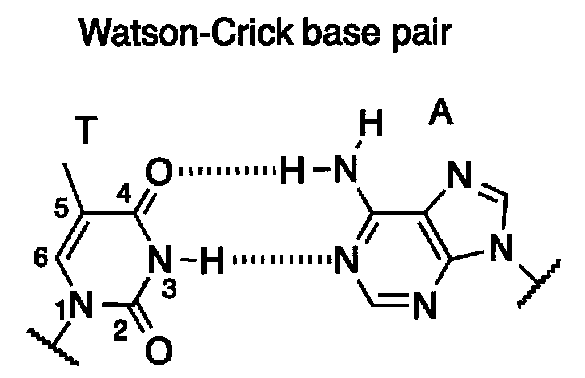
しかし、以下に示すチミンとグアニンとの間の相互作用も熱力学的に比較的安定であることから、ゆらぎ(Wobble)塩基対と呼ばれる非Watson-Crick型塩基対が形成されることがある。かかるゆらぎ塩基対は、上記アンチセンスオリゴヌクレオチド等が本来の標的核酸以外の核酸へ結合する原因となり得、予想外の遺伝子の発現や、重要な遺伝子の発現抑制につながるおそれがある。このような現象はオフターゲット効果といわれ、重篤な副作用の原因となり得る(非特許文献1)。

そこで、チミンの2位カルボニル基をチオカルボニル基に官能基変換することにより、グアニンとの水素結合力を低減し、G-T非Watson-Crick型塩基対の形成を抑制できることが明らかにされている(非特許文献2)。
ところで、上記のアンチセンスオリゴヌクレオチドなどの核酸医薬は、特異性が高いという利点を有するが、ヌクレアーゼの基質となるために生体内での安定性が十分でないという問題を有する。また、核酸中のヌクレオシド部分はN型またはS型の構造を取り、かかる構造が核酸塩基間の相互作用にも影響を与える。そこで本発明者らの研究グループは、核酸の2’位と4’位を架橋し、核酸のコンフォメーションを安定化して、ヌクレアーゼ耐性を高め、且つ標的核酸に対する親和性を高める技術を開発している(特許文献1~5)。
Obika,Sら,Nucleic Acids Res.,37,pp.1225-1238(2009)
Herman.Oら,J.Am.Chem.Soc.,128,pp.396-397(2006)
上述したように、チミンの2位カルボニル基をチオカルボニル基に官能基変換することにより、G-T非Watson-Crick型塩基対の形成を抑制できることは知られていた。しかし非Watson-Crick型塩基対は核酸医薬による副作用の原因の一つとも考えられており、非Watson-Crick型塩基対の形成をより一層抑制する方法が求められていた。
そこで本発明は、非Watson-Crick型塩基対を形成し難い核酸化合物と、当該核酸化合物を含み、標的核酸以外の核酸との非特異的結合が低減されているオリゴヌクレオチドを提供することを目的とする。
本発明者らは、上記課題を解決するために鋭意研究を重ねた。その結果、核酸鎖中の核酸化合物における2’位と4’位との架橋は、相補的核酸鎖との親和性を向上する方向に働くが、チミンの2位カルボニル基の修飾に加えて2’位と4’位を架橋することにより、意外にも非Watson-Crick型塩基対の形成をかえって抑制できることを見出して、本発明を完成した。
以下、本発明を示す。
以下、本発明を示す。
[1] 下記式(I)または下記式(II)で表されることを特徴とする核酸化合物またはその塩。

[式中、
X1とX2は、独立してSまたはSeを示し、
Yは下記式(III)~(VI)で表されるいずれかのグアニジノ基を示し、且つ、Zは単結合もしくはC1-4アルキレン基を示すか、
X1とX2は、独立してSまたはSeを示し、
Yは下記式(III)~(VI)で表されるいずれかのグアニジノ基を示し、且つ、Zは単結合もしくはC1-4アルキレン基を示すか、
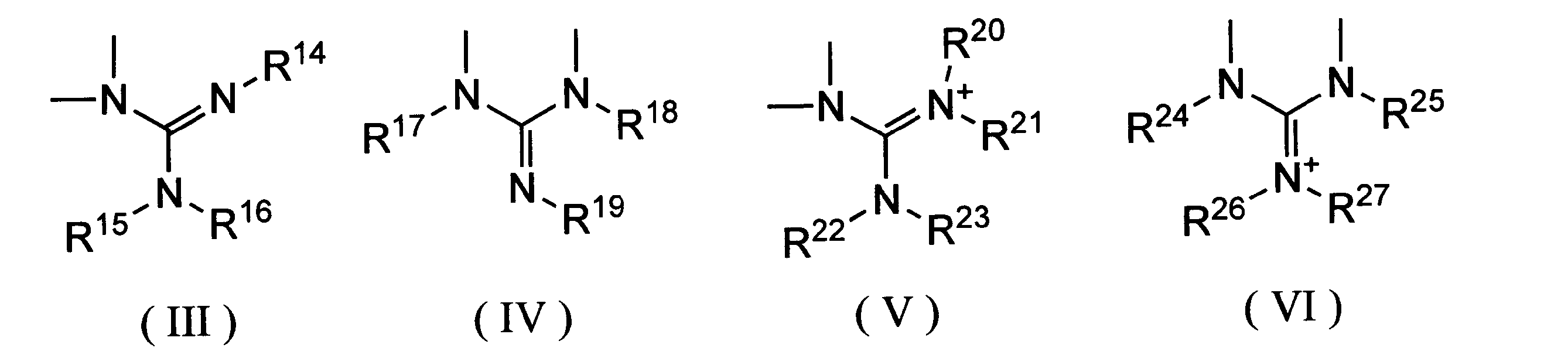
(式中、R5~R18は、独立して、H、C1-6アルキル基、C3-10シクロアルキル基、アミノ基の保護基または2-シアノエチルオキシカルボニル基を示す)、または、
Yは、O、S、-N(R19)-基、-C(=O)-O-基、-C(=O)-N(R20)-基(R19とR20は、独立して、HまたはC1-6アルキル基を示す)を示し、且つ、Zは下記式(VII)で表されるシクロプロピル基を示すか、
Yは、O、S、-N(R19)-基、-C(=O)-O-基、-C(=O)-N(R20)-基(R19とR20は、独立して、HまたはC1-6アルキル基を示す)を示し、且つ、Zは下記式(VII)で表されるシクロプロピル基を示すか、

(式中、R21とR22は、独立して、H、C1-6アルキル基を示すか、または、R21とR22が一緒になってC1-4アルキレン基を形成してもよい)、または、
YとZは、一緒になって-C(=O)-O-基もしくは-C(=O)-N(R20)-基(R20は、HまたはC1-6アルキル基を示す)を示し、
R1は、HまたはC1-6アルキル基を示し、
R2とR3は、独立して、H、水酸基の保護基、または、下記式(VIII)で表されるリン酸基を示し、
YとZは、一緒になって-C(=O)-O-基もしくは-C(=O)-N(R20)-基(R20は、HまたはC1-6アルキル基を示す)を示し、
R1は、HまたはC1-6アルキル基を示し、
R2とR3は、独立して、H、水酸基の保護基、または、下記式(VIII)で表されるリン酸基を示し、

(式中、QはOまたはSを示し、R23は、H、水酸基、またはシアノ基で置換されていてもよいC1-6アルコキシ基を示し;R24は、水酸基、シアノ基で置換されていてもよいC1-6アルコキシ基またはNR25R26基(式中、R25とR26は、独立して、H、C1-6アルキル基または2-シアノエチル基を示す)を示し;nは0または1を示す)
R4は、H、C1-6アルキル基または2-シアノエチル基を示す。]
R4は、H、C1-6アルキル基または2-シアノエチル基を示す。]
[2] YがOであり、且つ、Zが上記式(VII)で表されるシクロプロピル基である上記[1]に記載の核酸化合物またはその塩。
[3] R1がメチル基である上記[1]または[2]に記載の核酸化合物またはその塩。
[4] 1以上の核酸残基が下記式(IX)で表される構造を有することを特徴とするオリゴヌクレオチドまたはその薬理学上許容される塩。

[式中、
X1は、SまたはSeを示し、
Yは下記式(III)~(VI)で表されるいずれかのグアニジノ基を示し、且つ、Zは単結合もしくはC1-4アルキレン基を示すか、
X1は、SまたはSeを示し、
Yは下記式(III)~(VI)で表されるいずれかのグアニジノ基を示し、且つ、Zは単結合もしくはC1-4アルキレン基を示すか、

(式中、R5~R18は、独立して、H、C1-6アルキル基、C3-10シクロアルキル基、アミノ基の保護基または2-シアノエチルオキシカルボニル基を示す)、または、
Yは、O、S、-N(R19)-基、-C(=O)-O-基、-C(=O)-N(R20)-基(R19とR20は、独立して、HまたはC1-6アルキル基を示す)を示し、且つ、Zは下記式(VII)で表されるシクロプロピル基を示すか、
Yは、O、S、-N(R19)-基、-C(=O)-O-基、-C(=O)-N(R20)-基(R19とR20は、独立して、HまたはC1-6アルキル基を示す)を示し、且つ、Zは下記式(VII)で表されるシクロプロピル基を示すか、
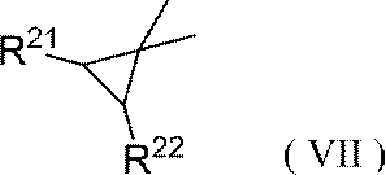
(式中、R21とR22は、独立して、H、C1-6アルキル基を示すか、または、R21とR22が一緒になってC1-4アルキレン基を形成してもよい)、または、
YとZは、一緒になって-C(=O)-O-基もしくは-C(=O)-N(R20)-基(R20は、HまたはC1-6アルキル基を示す)を示し、
R1は、HまたはC1-6アルキル基を示す。]
YとZは、一緒になって-C(=O)-O-基もしくは-C(=O)-N(R20)-基(R20は、HまたはC1-6アルキル基を示す)を示し、
R1は、HまたはC1-6アルキル基を示す。]
[5] YがOであり、且つ、Zが上記式(VII)で表されるシクロプロピル基である上記[4]に記載のオリゴヌクレオチドまたはその薬理学上許容される塩。
[6] R1がメチル基である上記[4]または[5]に記載のオリゴヌクレオチドまたはその薬理学上許容される塩。
本開示において「C1-6アルキル基」は、炭素数1以上、6以下の直鎖状または分枝鎖状の一価飽和脂肪族炭化水素基をいう。例えば、メチル、エチル、n-プロピル、イソプロピル、n-ブチル、イソブチル、s-ブチル、t-ブチル、n-ペンチル、n-ヘキシル等である。好ましくはC1-4アルキル基であり、より好ましくはC1-2アルキル基であり、最も好ましくはメチルである。
「C3-10シクロアルキル基」は、炭素数3以上、10以下の環状の一価飽和脂肪族炭化水素基をいう。例えば、シクロプロピル、メチルシクロプロピル、ジメチルシクロプロピル、シクロブチル、シクロペンチル、シクロヘキシル、アダマンチル等である。好ましくはC3-6シクロアルキル基である。
「アミノ基の保護基」としては、例えば、t-ブトキシカルボニル、メトキシカルボニル、エトキシカルボニル等のアルコキシカルボニル系保護基;ベンジルオキシカルボニル、p-メトキシベンジルオキシカルボニル、p-ニトロベンジルオキシカルボニル、o-ニトロベンジルオキシカルボニル等のアリールメトキシカルボニル系保護基;ベンジル、4-メトキシベンジル、トリフェニルメチル等のアリールメチル系保護基;ホルミルやアセチル等のアルカノイル系保護基;ベンゾイル等のアロイル系保護基;2,4-ジニトロベンゼンスルホニル、o-ニトロベンゼンスルホニル等のアリールスルホニル系保護基などを挙げることができる。
「C1-4アルキレン基」は、炭素数1以上、4以下の直鎖状または分枝鎖状の二価飽和脂肪族炭化水素基をいう。例えば、メチレン、エチレン、メチルメチレン、n-プロピレン、メチルエチレン、n-ブチレン、メチルプロピレン、ジメチルエチレン等である。好ましくはC1-2アルキレン基であり、より好ましくはメチレンである。
「水酸基の保護基」としては、例えば、ホルミル、アセチル、プロピオニル等のアルカノイル系保護基;ベンジル、p-メトキシベンジル、p-ニトロベンジル等のアラルキル系保護基;トリメチルシリル、トリエチルシリル、t-ブチルジメチルシリル等のシリル系保護基;トリチル、モノメトキシトリチル、ジメトキシトリチル等のトリチル系保護基;メトキシメチル等のアルコキシアルキル系保護基;テトラヒドロピラニル(THP)等のエーテル系保護基などを挙げることができる。
「C1-6アルコキシ基」とは、炭素数1以上、6以下の直鎖状または分枝鎖状の脂肪族炭化水素オキシ基をいう。例えば、メトキシ、エトキシ、n-プロポキシ、イソプロポキシ、n-ブトキシ、イソブトキシ、t-ブトキシ、n-ペントキシ、n-ヘキソキシ等であり、好ましくはC1-4アルコキシ基であり、より好ましくはC1-2アルコキシ基である。シアノ基で置換されていてもよいC1-6アルコキシ基としては、2-シアノエトキシ基が好ましい。
「核酸化合物の塩」としては、特に制限されないが、例えば、ナトリウム塩、カリウム塩、リチウム塩などのアルカリ金属塩;カルシウム塩などのアルカリ土類金属塩;マグネシウム塩;アルミニウム塩、鉄塩、亜鉛塩、銅塩、ニッケル塩、コバルト塩などの金属塩;アンモニウム塩などの無機アミン塩;t-オクチルアミン塩、ジベンジルアミン塩、モルホリン塩、グルコサミン塩、フェニルグリシンアルキルエステル塩、エチレンジアミン塩、N-メチルグルカミン塩、グアニジン塩、ジエチルアミン塩、トリエチルアミン塩、ジシクロヘキシルアミン塩、N,N’-ジベンジルエチレンジアミン塩、クロロプロカイン塩、プロカイン塩、ジエタノールアミン塩、N-ベンジル-フェネチルアミン塩、ピペラジン塩、テトラメチルアンモニウム塩、トリス(ヒドロキシメチル)アミノメタン塩などの有機アミン塩;フッ化水素酸塩、塩酸塩、臭化水素酸塩、ヨウ化水素酸塩などのハロゲン化水素酸塩;硝酸塩、過塩素酸塩、硫酸塩、リン酸塩などの無機酸塩;メタンスルホン酸塩、トリフルオロメタンスルホン酸塩、エタンスルホン酸塩などの低級アルカンスルホン酸塩;ベンゼンスルホン酸塩やp-トルエンスルホン酸塩などのアリールスルホン酸塩;酢酸塩、リンゴ酸塩、フマル酸塩、コハク酸塩、クエン酸塩、酒石酸塩、シュウ酸塩、マレイン酸塩などの有機酸塩;グリシン塩、リジン塩、アルギニン塩、オルニチン塩、グルタミン酸塩、アスパラギン酸塩などのアミノ酸塩などを挙げることができる。
「薬理学上許容される塩」は、生体に対して無害であるか又は害が少ないものであれば特に制限されないが、例えば、ナトリウム塩、カリウム塩、リチウム塩などのアルカリ金属塩;カルシウム塩などのアルカリ土類金属塩;マグネシウム塩;アルミニウム塩、鉄塩、亜鉛塩、銅塩、ニッケル塩、コバルト塩などの金属塩;アンモニウム塩などの無機アミン塩;t-オクチルアミン塩、ジベンジルアミン塩、モルホリン塩、グルコサミン塩、フェニルグリシンアルキルエステル塩、エチレンジアミン塩、N-メチルグルカミン塩、グアニジン塩、ジエチルアミン塩、トリエチルアミン塩、ジシクロヘキシルアミン塩、N,N’-ジベンジルエチレンジアミン塩、クロロプロカイン塩、プロカイン塩、ジエタノールアミン塩、N-ベンジル-フェネチルアミン塩、ピペラジン塩、テトラメチルアンモニウム塩、トリス(ヒドロキシメチル)アミノメタン塩などの有機アミン塩;塩酸塩、臭化水素酸塩、ヨウ化水素酸塩などのハロゲン化水素酸塩;硝酸塩、過塩素酸塩、硫酸塩、リン酸塩などの無機酸塩;メタンスルホン酸塩、トリフルオロメタンスルホン酸塩、エタンスルホン酸塩などの低級アルカンスルホン酸塩;ベンゼンスルホン酸塩、p-トルエンスルホン酸塩などのアリールスルホン酸塩;酢酸塩、リンゴ酸塩、フマル酸塩、コハク酸塩、クエン酸塩、酒石酸塩、シュウ酸塩、マレイン酸塩などの有機酸塩;グリシン塩、リジン塩、アルギニン塩、オルニチン塩、グルタミン酸塩、アスパラギン酸塩などのアミノ酸塩を挙げることができる。
なお、上記式(VIII)において、Q=Sで且つR23またはR24の少なくとも一方が水酸基である場合、当該水酸基は-O-であってもよく、また、>P(=S)O-は>P(=O)S-と等価である。
本発明に係る核酸化合物は、チミジンまたはウリジンの誘導体であり、アデノシンに対する親和性が維持されている一方で、グアノシンに対する親和性が顕著に低減されていることから、非Watson-Crick型塩基対を形成し難い。その結果、本発明に係る核酸化合物を含むオリゴヌクレオチドは、その相補鎖以外の核酸鎖と結合し難い。よって本発明に係るオリゴヌクレオチドは、アンチセンス法のアンチセンスオリゴヌクレオチド等として利用する場合にオフターゲット効果による副作用を起こし難く、核酸医薬の有効成分として有用である。
当業者であれば、本発明に係る核酸化合物を公知化合物から合成することができる。例えば、チミンまたはウラシルの2位カルボニル基は、Sekine,Mら,J.Org.Chem.,68,pp.9971-9982(2003)を参照して、下記スキームによりチオカルボニル基に変換することができる。
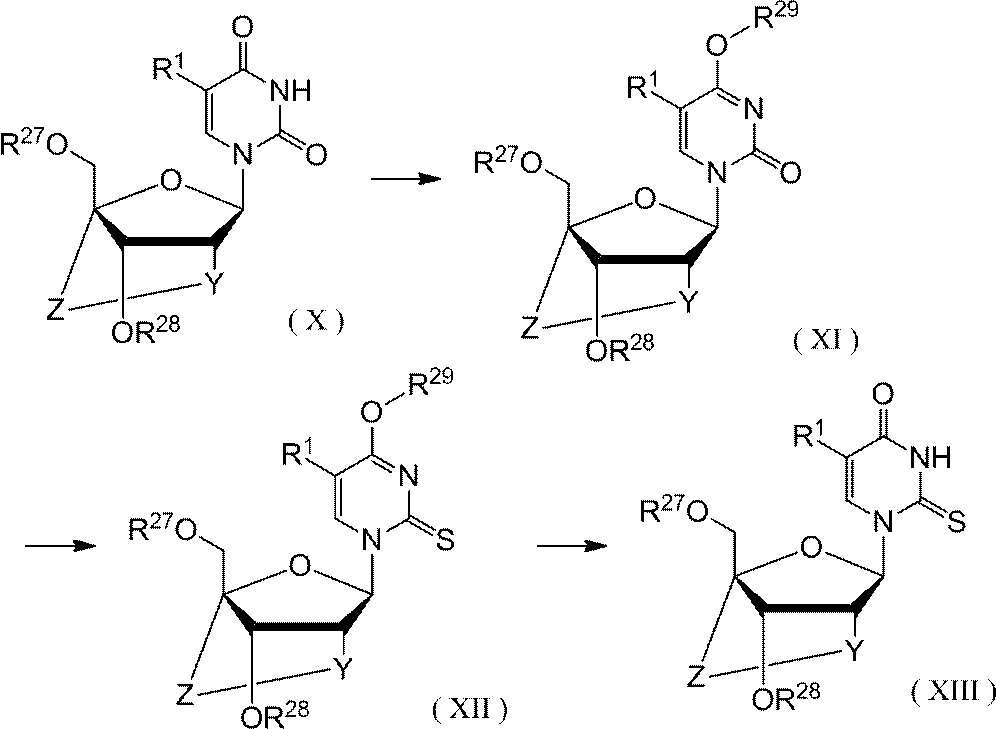
[式中、Y、ZおよびR1は前記と同義を示し、R27とR28は、独立して、Hまたは水酸基の保護基を示し;R29は、水酸基の保護基を示す]
3’位水酸基および5’位水酸基が無保護、並びに、3’位水酸基および5’位水酸基のうち少なくとも一方が保護されている上記核酸化合物(X)は、例えば、WO2014/046212号公報やWO/2015/125783号公報などに記載されている公知化合物である。先ず、上記核酸化合物(X)中のピリミジン部分の4位カルボニル基を、アセトニトリルなどの溶媒中、2,4,6-トリイソプロピルベンゼンスルホニルクロライド(TPSCl)で処理して選択的にTPS化した後、塩基と2,6-ジメチルフェノールなどを用いて4位を選択的に保護することにより核酸化合物(XI)を得る。なお、この際には、3’位水酸基と5’位水酸基が共に保護されている核酸化合物(X)を用いることが好ましい。次に、ローソン試薬を用いれば核酸化合物(XI)のピリミジン部分の2位カルボニル基のみをチオカルボニル基に変換することができる。最後にピリミジン部分の4位水酸基の保護基を除去することにより、ピリミジン部分の2位がチオカルボニル化された核酸化合物(XIII)を得ることができる。
また、ピリミジン部分のチオカルボニル基をセレン化する方法としては、例えば、Huang,Zら,J.Am.Chem.Soc.,132,pp.2120-2121(2020)を参照し、以下のスキームを挙げることができる。

[式中、Y、Z、R1、R27およびR28は前記と同義を示し、R30はC1-6アルキル基を示す]
核酸化合物(XIII)としては、5’位水酸基が保護されていないとS-アルキル化の際にアルキル化されてしまうおそれがあり得るため、少なくとも5’位水酸基が保護されているものが好ましい。核酸化合物(XIII)の2位チオカルボニル基は、Woollins試薬を使ってセレノカルボニル基へ直接官能基変換する方法もあり得るが、4位カルボニル基がセレノカルボニル化される可能性があり得るため、2つの窒素原子に隣接しており4位カルボニル基の酸素原子よりもマイナスに分極し易くなっている2位チオカルボニル基を選択的にアルキル化して核酸化合物(XIV)を得ることが好ましい。かかるアルキル化によって、2位硫黄原子が脱離し易くなる。次いで、核酸化合物(XIV)にホウ素化水素ナトリウムなど比較的弱い還元剤と共にセレンを反応させることにより、核酸化合物(XV)を得ることができる。
さらに、セレノカルボニル基はチオカルボニル基に比べて不安定であり反応性が高いため、3’位にリン酸基を導入する際などには下記式の通り保護しておくことが好ましい。勿論、2位チオカルボニルを保護してもよい。なお、本開示においては、便宜上、亜リン酸基もリン酸基に含める。
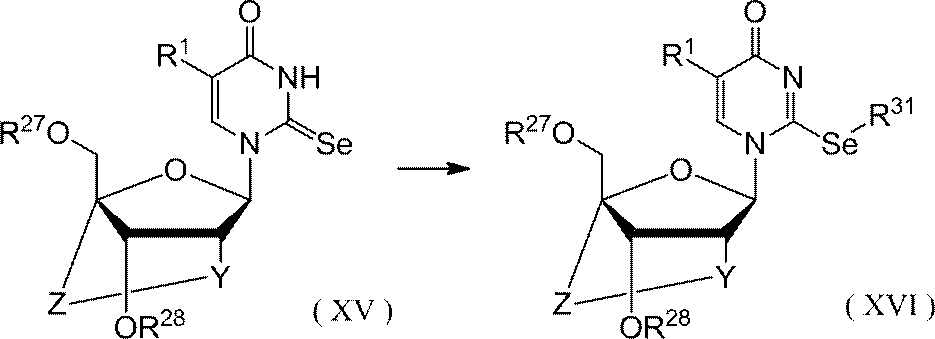
[式中、Y、Z、R1、R27およびR28は前記と同義を示し、R31はC1-6アルキル基または2-シアノエチル基を示す。]
さらに、3’位水酸基へホスホロアミダイト基を導入した核酸化合物は、オリゴヌクレオチドの自動合成のためのモノマーとして用いることができる。ホスホロアミダイト基としては、例えば、-P(OCH2CH2CN)(N(iPr)2)基や-P(OCH2CN)(N(iPr)2)基[式中、iPrはイソプロピル基を示す]が挙げられる。なお、2位チオカルボニル基や2位セレノカルボニル基の保護基として2-シアノエチル基(-CH2CH2CN基)を用いれば、オリゴヌクレオチドの自動合成において、リン酸基の保護基を除去する際に同時に脱保護することができる。
なお、本発明の核酸化合物を合成するに当たっては、当業者公知の方法により官能性官能基を適時選択的に保護したり脱保護したり、或いは保護基を交換したりしてもよい。
本発明に係るオリゴヌクレオチドは、例えば、3’位にホスホロアミダイトが導入された上記核酸化合物をモノマーとして用いること以外、通常の核酸の自動合成により合成することができる。但し、核酸残基の5’位と3’位を結合する基は、一般的なリン酸基の他、亜リン酸基やチオリン酸基など、オリゴヌクレオチドで用いられるものであれば特に制限されない。
本発明に係るオリゴヌクレオチドをアンチセンス法で用いる場合、本発明に係るオリゴヌクレオチドは、その配列中の少なくとも1以上のチミジンまたはウリジンが、本発明に係る上記核酸化合物により導入されているため、T-GまたはU-Gの非Watson-Crick型塩基対の形成が抑制されており、オフターゲット効果による副作用の発生が抑制されている。アンチセンス法で用いる場合には、オリゴヌクレオチドの塩基配列は標的mRNAと相補的にすることが好ましい。但し、オリゴヌクレオチドのチミジンまたはウリジンのうちの1以上を本発明に係る核酸化合物で導入する、即ち、チミンまたはウラシルの2位カルボニル基を硫黄またはセレンで官能基変換し且つ2’位と4’位を架橋する。
本発明に係るオリゴヌクレオチドの塩基長としては、7nt以上、30nt以下が好ましい。塩基長が7nt以上であれば、標的mRNAに対する結合親和性や特異性を十分に確保することができる。一方、塩基長が30nt以下であれば抗原性が十分に抑制され、また、合成もし易い。当該塩基長としては、10nt以上が好ましく、12nt以上がより好ましく、また、25nt以下が好ましく、20nt以下が好ましい。なお、塩基長が17ntのオリゴ核酸は417=1.7×10¹⁰種あり、ヒトゲノムの全塩基数である2×3×109を超えるため、特異性の向上のため当該塩基長を17nt以上にすることも可能である。
オリゴヌクレオチドでは、両末端部分の核酸残基が2’,4’-架橋型核酸であることが好ましい。両末端部分における核酸が2’,4’-架橋されていることにより、生体内において各種ヌクレアーゼによる攻撃を受け難くなっており、生体への投与後、生体内に長時間存在することができる。また、2’,4’-架橋により構造が安定化されていることから、標的mRNAと二重鎖を形成し易い。2’,4’-架橋型核酸で構成すべき両末端部分の長さは適宜調整すればよいが、例えば、各両末端からそれぞれ独立して1nt以上、5nt以下とすることができる。各両末端部分における修飾塩基の数としては、各両末端部分における2’,4’-架橋型核酸残基にもよるが、5nt以下または4nt以下が好ましく、3nt以下がより好ましく、1ntまたは2ntがよりさらに好ましい。
本発明においては、上記両末端部分における1以上の2’,4’-架橋型核酸残基のうちチミジンまたはウリジンを、本発明に係る核酸化合物により導入することが好ましい。
本発明に係るオリゴヌクレオチドは、2’,4’-架橋型核酸残基で構成される両末端部分の間に、1以上の非2’,4’-架橋型の核酸残基を有することが好ましい。以下、本開示においては、上記両末端部分以外の部分を「中間部分」ということがある。中間部分の非2’,4’-架橋型核酸残基は、2’位-4’位間が架橋されていなければRNA、DNA、核酸誘導体、およびこれら2以上の組合わせであってもよい。核酸誘導体としては、例えば、2’-ハロゲノ核酸、2’-アセトキシ核酸などの2’-C1-6アルキルカルボニルオキシ核酸、2’-メトキシ核酸などの2’-C1-6アルキルオキシ核酸、2’-トリメチルシリルオキシ核酸などの2’-トリC1-6アルキルシリルオキシ核酸などを挙げることができる。しかし、上記中間部分の核酸がすべてDNAであることが好ましい。中間部分の核酸がすべてDNAである場合、標的mRNAに対してRNA-DNA二本鎖が形成され、当該二本鎖がRNAseHの基質となり、標的mRNAが切断される。RNAseHの基質の観点から、上記中間部分の長さとしては4nt以上が好ましく、5nt以上がより好ましく、6nt以上がよりさらに好ましい。一方、上記中間部分の長さとしては、抗原性の観点から、10nt以下が好ましい。
本発明のオリゴヌクレオチドは、例えば、賦形剤、結合剤、防腐剤、酸化安定剤、崩壊剤、滑沢剤、矯味剤などの医薬の製剤技術分野において通常用いられる補助剤を配合して、非経口投与製剤またはリポソーム製剤とすることができる。また、例えば、当該技術分野で通常用いられる医薬用担体を配合して、液剤、クリーム剤、軟膏剤などの局所用の製剤を調製できる。
本発明のオリゴヌクレオチドは、ヒト以外の動物およびヒトに投与することができる。その投与量は、患者の年齢、性別、体重、状態、疾患の種類、重篤度、予防的な使用であるか或いは治療的な使用であるかなどに応じて適宜調整すればよいが、例えば、成人のヒトに対する1回当たり及び体重1kg当たりの投与量として、0.01μg以上、100g以下とすることができる。当該量としては、0.1μg以上または1.0μg以上が好ましく、10μg以上または100μg以上がより好ましく、1mg以上がよりさらに好ましく、また、10g以下または1.0g以下が好ましく、100mg以下または10mg以下がより好ましく、5mg以下がよりさらに好ましい。また、投与回数としては、1ヶ月に1回から1日当たり3回以下程度の間で適宜調整すればよい。
本願は、2017年2月21日に出願された日本国特許出願第2017-30490号に基づく優先権の利益を主張するものである。2017年2月21日に出願された日本国特許出願第2017-30490号の明細書の全内容が、本願に参考のため援用される。
以下、実施例を挙げて本発明をより具体的に説明するが、本発明はもとより下記実施例によって制限を受けるものではなく、前・後記の趣旨に適合し得る範囲で適当に変更を加えて実施することも勿論可能であり、それらはいずれも本発明の技術的範囲に包含される。
実施例1: scpBNA-S2Tの合成
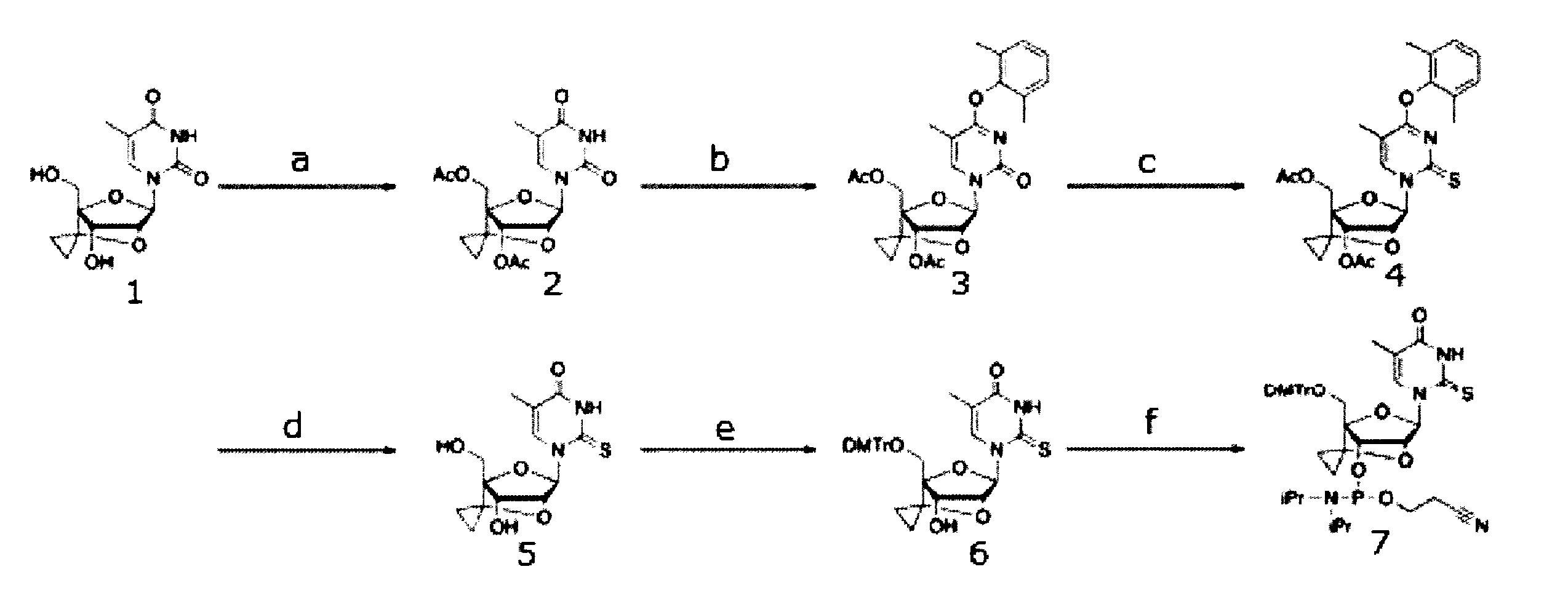
(1) 化合物2の合成
化合物1(32mg,0.11mmol)を無水ピリジンで共沸脱水した後、無水ピリジン(1.1mL)、4-ジメチルアミノピリジン(7mg,0.06mmol)と無水酢酸(30.5μL,0.32mmol)を窒素気流下で順次加え、室温で40分間撹拌した。反応終了後に水を加え、酢酸エチルで抽出した。抽出液を水で洗浄後、溶媒を減圧留去し、トルエン共沸を行った。得られた残渣をシリカゲルカラムクロマトグラフィー(SiO2,酢酸エチル:ヘキサン=2:1)により精製し、化合物2(収量:40mg,収率:定量的)を白色個体として得た。
1H NMR(300MHz,CDCl3)δ0.77-1.02(m,4H),1.96(d,J=1.4Hz,3H),2.14(s,3H),2.18(s,3H),4.03(d,J=12.4Hz,1H),4.26(d,J=12.9Hz,1H),4.69(s,1H),4.99(s,1H),5.80(s,1H),7.51(d,J=1.4Hz,1H),8.93(s,1H)
13C NMR(76MHz,CDCl3)δ5.4,9.7,13.1,20.8,20.9,58.1,68.3,72.5,78.1,85.9,87.1,110.8,134.1,149.8,163.5,170.1,170.1
IR(KBr):3022,2840,1746,1704,1239,1212,1052cm-1
[α]D 23 +28.40(c1.00,CHCl3)
HRMS(MALDI) Calcd. for C17H20N2O8Na [M+Na]+:403.1112,Found:403.1113
化合物1(32mg,0.11mmol)を無水ピリジンで共沸脱水した後、無水ピリジン(1.1mL)、4-ジメチルアミノピリジン(7mg,0.06mmol)と無水酢酸(30.5μL,0.32mmol)を窒素気流下で順次加え、室温で40分間撹拌した。反応終了後に水を加え、酢酸エチルで抽出した。抽出液を水で洗浄後、溶媒を減圧留去し、トルエン共沸を行った。得られた残渣をシリカゲルカラムクロマトグラフィー(SiO2,酢酸エチル:ヘキサン=2:1)により精製し、化合物2(収量:40mg,収率:定量的)を白色個体として得た。
1H NMR(300MHz,CDCl3)δ0.77-1.02(m,4H),1.96(d,J=1.4Hz,3H),2.14(s,3H),2.18(s,3H),4.03(d,J=12.4Hz,1H),4.26(d,J=12.9Hz,1H),4.69(s,1H),4.99(s,1H),5.80(s,1H),7.51(d,J=1.4Hz,1H),8.93(s,1H)
13C NMR(76MHz,CDCl3)δ5.4,9.7,13.1,20.8,20.9,58.1,68.3,72.5,78.1,85.9,87.1,110.8,134.1,149.8,163.5,170.1,170.1
IR(KBr):3022,2840,1746,1704,1239,1212,1052cm-1
[α]D 23 +28.40(c1.00,CHCl3)
HRMS(MALDI) Calcd. for C17H20N2O8Na [M+Na]+:403.1112,Found:403.1113
(2) 化合物3の合成
化合物2(270mg,0.71mmol)を五酸化二リン存在下で減圧乾燥した後、無水アセトニトリル(7.1mL)に溶解させた。窒素気流下、2,4,6-トリイソプロピルベンゼンスルホニルクロリド(279mg,0.92mmol)と乾燥させた炭酸カリウム(490mg,3.54mmol)を加え、60℃で2.5時間撹拌した。原料消失後、反応溶液を室温まで放冷し、2,6-ジメチルフェノール(121mg,0.99mmol)と1,4-ジアザビシクロ-2,2,2-オクタン(24mg,0.21mmol)を加え、50℃で1時間撹拌した。反応溶液を0℃に冷却した飽和塩化アンモニウム水溶液へ滴下し、酢酸エチルで抽出した。有機相を水と飽和食塩水で洗浄後、無水硫酸ナトリウムで乾燥させ、溶媒を減圧留去した。得られた残渣をシリカゲルカラムクロマトグラフィー(SiO2,酢酸エチル:ヘキサン=1:1)により精製し、化合物3(収量:337mg,収率:定量的)を白色個体として得た。
1H NMR(300MHz,CDCl3)δ0.77-1.01(m,4H),2.11(s,3H),2.13(s,3H),2.15(s,3H),2.21(s,6H),4.03(d,J=12.4Hz,1H),4.30(d,J=12.9Hz,1H),4.77(s,1H),5.03(s,1H),5.86(s,1H),7.05(s,3H),7.82(d,J=0.9Hz,1H)
13C NMR(76MHz,CDCl3)δ5.3,9.6,13.1,16.6,16.7,20.8,20.9,58.2,68.2,72.3,77.9,85.9,87.9,104.2,126.0,128.8,139.7,149.4,155.2,170.1,170.2
IR(KBr):2927,1748,1669,1537,1218,1048cm-1
[α]D 24 +86.19(c1.00,CDCl3)
HRMS(MALDI) Calcd. for C25H28N2O8Na [M+Na]+:507.1738,Found:507.1740
化合物2(270mg,0.71mmol)を五酸化二リン存在下で減圧乾燥した後、無水アセトニトリル(7.1mL)に溶解させた。窒素気流下、2,4,6-トリイソプロピルベンゼンスルホニルクロリド(279mg,0.92mmol)と乾燥させた炭酸カリウム(490mg,3.54mmol)を加え、60℃で2.5時間撹拌した。原料消失後、反応溶液を室温まで放冷し、2,6-ジメチルフェノール(121mg,0.99mmol)と1,4-ジアザビシクロ-2,2,2-オクタン(24mg,0.21mmol)を加え、50℃で1時間撹拌した。反応溶液を0℃に冷却した飽和塩化アンモニウム水溶液へ滴下し、酢酸エチルで抽出した。有機相を水と飽和食塩水で洗浄後、無水硫酸ナトリウムで乾燥させ、溶媒を減圧留去した。得られた残渣をシリカゲルカラムクロマトグラフィー(SiO2,酢酸エチル:ヘキサン=1:1)により精製し、化合物3(収量:337mg,収率:定量的)を白色個体として得た。
1H NMR(300MHz,CDCl3)δ0.77-1.01(m,4H),2.11(s,3H),2.13(s,3H),2.15(s,3H),2.21(s,6H),4.03(d,J=12.4Hz,1H),4.30(d,J=12.9Hz,1H),4.77(s,1H),5.03(s,1H),5.86(s,1H),7.05(s,3H),7.82(d,J=0.9Hz,1H)
13C NMR(76MHz,CDCl3)δ5.3,9.6,13.1,16.6,16.7,20.8,20.9,58.2,68.2,72.3,77.9,85.9,87.9,104.2,126.0,128.8,139.7,149.4,155.2,170.1,170.2
IR(KBr):2927,1748,1669,1537,1218,1048cm-1
[α]D 24 +86.19(c1.00,CDCl3)
HRMS(MALDI) Calcd. for C25H28N2O8Na [M+Na]+:507.1738,Found:507.1740
(3) 化合物4の合成
窒素気流下、化合物3(422mg,0.87mmol)の無水トルエン溶液(8.7mL)にローソン試薬(352mg,0.87mmol)を加え、1時間加熱還流した。反応終了後、0℃まで冷却し、沈殿物を濾過した。濾液を減圧濃縮した後、得られた黄色個体の化合物4(656mg,crude)は、それ以上精製することなく即座に次の反応に用いた。
窒素気流下、化合物3(422mg,0.87mmol)の無水トルエン溶液(8.7mL)にローソン試薬(352mg,0.87mmol)を加え、1時間加熱還流した。反応終了後、0℃まで冷却し、沈殿物を濾過した。濾液を減圧濃縮した後、得られた黄色個体の化合物4(656mg,crude)は、それ以上精製することなく即座に次の反応に用いた。
(4) 化合物5の合成
化合物4(656mg,crude)を無水トルエンで共沸脱水した後、無水アセトニトリル(8.7mL)、乾燥させた炭酸カリウム(722mg,5.23mmol)とsyn-o-ニトロベンズアルドオキシム(434mg,2.61mmol)を窒素気流下で順次加え、50℃で17.5時間撹拌した。その後メタノール(8.7mL)を加え、50℃で20分間撹拌した。反応終了後室温まで冷却し、沈殿物を濾過した。濾液を減圧濃縮した後、得られた残渣をシリカゲルカラムクロマトグラフィー(SiO2,クロロホルム:メタノール=12:1)により精製し、化合物5(2ステップでの収量:173mg,収率:64%)を茶色個体として得た。
1H NMR(300 MHz,CD3OD)δ0.73-0.93(m,4H),1.94(d,J=1.4Hz,3H),3.57(d,J=12.9Hz,1H),3.74(d,J=12.4Hz,1H),4.18(s,1H),4.63(s,1H),6.16(s,1H)7.98(d,J=1.4Hz,1H)
13C NMR(76MHz,CD3OD)δ5.0,9.9,12.9,56.6,68.6,71.7,80.6,90.6,91.3,116.0,138.2,163.3,175.5
IR(KBr):3076,2942,1681,1496,1273,1040cm-1
[α]D 25 -9.5(c1.00,MeOH)
HRMS(MALDI) Calcd. for C13H16N2O5NaS [M+Na]+:335.0672,Found:335.0656
化合物4(656mg,crude)を無水トルエンで共沸脱水した後、無水アセトニトリル(8.7mL)、乾燥させた炭酸カリウム(722mg,5.23mmol)とsyn-o-ニトロベンズアルドオキシム(434mg,2.61mmol)を窒素気流下で順次加え、50℃で17.5時間撹拌した。その後メタノール(8.7mL)を加え、50℃で20分間撹拌した。反応終了後室温まで冷却し、沈殿物を濾過した。濾液を減圧濃縮した後、得られた残渣をシリカゲルカラムクロマトグラフィー(SiO2,クロロホルム:メタノール=12:1)により精製し、化合物5(2ステップでの収量:173mg,収率:64%)を茶色個体として得た。
1H NMR(300 MHz,CD3OD)δ0.73-0.93(m,4H),1.94(d,J=1.4Hz,3H),3.57(d,J=12.9Hz,1H),3.74(d,J=12.4Hz,1H),4.18(s,1H),4.63(s,1H),6.16(s,1H)7.98(d,J=1.4Hz,1H)
13C NMR(76MHz,CD3OD)δ5.0,9.9,12.9,56.6,68.6,71.7,80.6,90.6,91.3,116.0,138.2,163.3,175.5
IR(KBr):3076,2942,1681,1496,1273,1040cm-1
[α]D 25 -9.5(c1.00,MeOH)
HRMS(MALDI) Calcd. for C13H16N2O5NaS [M+Na]+:335.0672,Found:335.0656
(5) 化合物6の合成
化合物5(165mg,0.53mmol)を無水ピリジンで共沸脱水した後、窒素気流下、無水ピリジン(10.6mL)と4,4’-ジメトキシトリチルクロリド(268mg,0.79mmol)を加え、室温で4.5時間撹拌した。反応終了後に水を加え、酢酸エチルで抽出した。抽出液を水で洗浄し、溶媒の減圧留去とトルエン共沸を行なった。得られた残渣をシリカゲルカラムクロマトグラフィー(SiO2,0.5%トリエチルアミン含有、酢酸エチル:ヘキサン=1:1)により精製し、化合物6(収量:311mg,収率:96%)を白色個体として得た。
1H NMR(300MHz,CDCl3)δ0.51-0.55(m,1H),0.71-0.74(m,1H),0.89-0.98(m,2H),1.69(d,J=0.9Hz,3H),2.26(d,J=9.2Hz,1H),3.18(d,J=11.0Hz,1H),3.34(d,J=10.6Hz,1H),3.79(s,6H),4.32(d,J=9.6Hz,1H),4.77(s,1H),6.23(s,1H),6.85(d,J=8.3Hz,4H),7.24-7.36(m,7H),7.43-7.46(m,2H),7.84(d,J=1.4Hz,1H),9.79(s,1H)
13C NMR(76MHz,CDCl3)δ5.4,9.7,12.9,55.4,57
.7,67.8,72.7,79.2,87.2,88.8,90.1,113.5,116.2,127.3,128.2,128.2,130.2,130.2,135.1,135.3,136.0,144.3,158.9,160.7,173.6
IR(KBr):3432,2956,1681,1508,1253,1177,1046,833,766cm-1
[α]D 25 -38.0(c1.00,CDCl3)
HRMS(MALDI) Calcd. For C34H34N2O7NaS [M+Na]+:637.1979,Found:637.1972
化合物5(165mg,0.53mmol)を無水ピリジンで共沸脱水した後、窒素気流下、無水ピリジン(10.6mL)と4,4’-ジメトキシトリチルクロリド(268mg,0.79mmol)を加え、室温で4.5時間撹拌した。反応終了後に水を加え、酢酸エチルで抽出した。抽出液を水で洗浄し、溶媒の減圧留去とトルエン共沸を行なった。得られた残渣をシリカゲルカラムクロマトグラフィー(SiO2,0.5%トリエチルアミン含有、酢酸エチル:ヘキサン=1:1)により精製し、化合物6(収量:311mg,収率:96%)を白色個体として得た。
1H NMR(300MHz,CDCl3)δ0.51-0.55(m,1H),0.71-0.74(m,1H),0.89-0.98(m,2H),1.69(d,J=0.9Hz,3H),2.26(d,J=9.2Hz,1H),3.18(d,J=11.0Hz,1H),3.34(d,J=10.6Hz,1H),3.79(s,6H),4.32(d,J=9.6Hz,1H),4.77(s,1H),6.23(s,1H),6.85(d,J=8.3Hz,4H),7.24-7.36(m,7H),7.43-7.46(m,2H),7.84(d,J=1.4Hz,1H),9.79(s,1H)
13C NMR(76MHz,CDCl3)δ5.4,9.7,12.9,55.4,57
.7,67.8,72.7,79.2,87.2,88.8,90.1,113.5,116.2,127.3,128.2,128.2,130.2,130.2,135.1,135.3,136.0,144.3,158.9,160.7,173.6
IR(KBr):3432,2956,1681,1508,1253,1177,1046,833,766cm-1
[α]D 25 -38.0(c1.00,CDCl3)
HRMS(MALDI) Calcd. For C34H34N2O7NaS [M+Na]+:637.1979,Found:637.1972
(6) 化合物7の合成
化合物6(41mg,0.07mmol)を無水トルエンで共沸脱水した後、無水アセトニトリル(0.7mL)、N,N-ジイソプロピルエチルアミン(34.5μL,0.20mmol)と2-シアノエチル-N,N-ジイソプロピルホスホロクロリダート(22.5μL,0.10mmol)を窒素気流下で順次加え、室温で4時間撹拌した。溶媒を減圧留去し、得られた残渣をシリカゲルカラムクロマトグラフィー(SiO2,0.5%トリエチルアミン含有、酢酸エチル:ヘキサン=1:1)により精製し、化合物7(収量:43mg,収率:78%)を白色固体として得た。
31P NMR(121.7MHz,CDCl3)δ148.7,149.2
HRMS(MALDI) Calcd. for C43H51N4O8NaPS [M+Na]+:837.3057,Found:837.3055
化合物6(41mg,0.07mmol)を無水トルエンで共沸脱水した後、無水アセトニトリル(0.7mL)、N,N-ジイソプロピルエチルアミン(34.5μL,0.20mmol)と2-シアノエチル-N,N-ジイソプロピルホスホロクロリダート(22.5μL,0.10mmol)を窒素気流下で順次加え、室温で4時間撹拌した。溶媒を減圧留去し、得られた残渣をシリカゲルカラムクロマトグラフィー(SiO2,0.5%トリエチルアミン含有、酢酸エチル:ヘキサン=1:1)により精製し、化合物7(収量:43mg,収率:78%)を白色固体として得た。
31P NMR(121.7MHz,CDCl3)δ148.7,149.2
HRMS(MALDI) Calcd. for C43H51N4O8NaPS [M+Na]+:837.3057,Found:837.3055
実施例2: scpBNA-Se2Tの合成
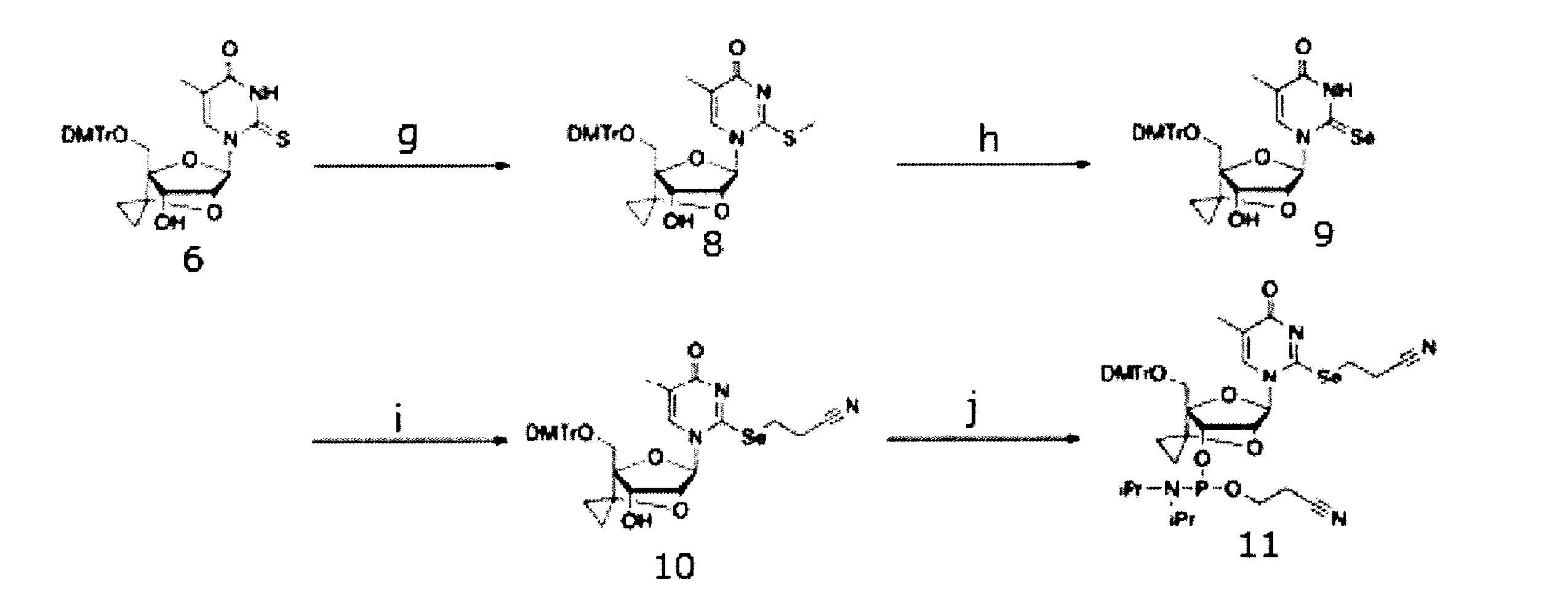
(1) 化合物8の合成
窒素気流下、化合物6(412mg,0.67mmol)の無水DMF溶液(6.7mL)にヨードメタン(420μL,6.75mmol)と1,8-ジアザビシクロ[5.4.0]-7-ウンデセン(150μL,1.00mmol)を加え、0℃で1時間撹拌した。反応終了後に水を過剰量加え、沈殿物を濾取した。得られた残渣をシリカゲルカラムクロマトグラフィー(SiO2,酢酸エチル:メタノール=13:1)により精製し、化合物8(収量:336mg,収率:80%)を淡黄色個体として得た。
1H NMR(300MHz,CDCl3)δ0.53-0.63(m,1H),0.77-0.91(m,3H),1.78(d,J=0.9Hz,3H),2.61(s,3H),3.09(d,J=8.1Hz,1H),3.20(d,J=10.8Hz,1H),3.40(d,J=11.0Hz,1H),3.78(s,6H),4.38(d,J=7.6Hz,1H),4.44(s,1H),5.80(s,1H),6.82-6.85(m,4H),7.21-7.35(m,7H),7.44-7.47(m,2H),7.82(d,J=1.2Hz,1H)
13C NMR(76MHz,CDCl3)δ5.5,9.8,14.2,14.7,55.4,57.9,68.3,72.2,80.1,87.1,88.3,113.5,118.8,127.3,128.1,128.2,130.1,130.2,133.7,135.1,135.3,144.3,158.8,160.2,169.5
IR(KBr):2933,1640,1609,1509,1486,1254,1177,1046,755cm-1
[α]D 21 -25.32(c1.00,CHCl3)
HRMS(MALDI)Calcd. for C35H36N2O7NaS [M+Na]+:651.2135,Found:651.2134
窒素気流下、化合物6(412mg,0.67mmol)の無水DMF溶液(6.7mL)にヨードメタン(420μL,6.75mmol)と1,8-ジアザビシクロ[5.4.0]-7-ウンデセン(150μL,1.00mmol)を加え、0℃で1時間撹拌した。反応終了後に水を過剰量加え、沈殿物を濾取した。得られた残渣をシリカゲルカラムクロマトグラフィー(SiO2,酢酸エチル:メタノール=13:1)により精製し、化合物8(収量:336mg,収率:80%)を淡黄色個体として得た。
1H NMR(300MHz,CDCl3)δ0.53-0.63(m,1H),0.77-0.91(m,3H),1.78(d,J=0.9Hz,3H),2.61(s,3H),3.09(d,J=8.1Hz,1H),3.20(d,J=10.8Hz,1H),3.40(d,J=11.0Hz,1H),3.78(s,6H),4.38(d,J=7.6Hz,1H),4.44(s,1H),5.80(s,1H),6.82-6.85(m,4H),7.21-7.35(m,7H),7.44-7.47(m,2H),7.82(d,J=1.2Hz,1H)
13C NMR(76MHz,CDCl3)δ5.5,9.8,14.2,14.7,55.4,57.9,68.3,72.2,80.1,87.1,88.3,113.5,118.8,127.3,128.1,128.2,130.1,130.2,133.7,135.1,135.3,144.3,158.8,160.2,169.5
IR(KBr):2933,1640,1609,1509,1486,1254,1177,1046,755cm-1
[α]D 21 -25.32(c1.00,CHCl3)
HRMS(MALDI)Calcd. for C35H36N2O7NaS [M+Na]+:651.2135,Found:651.2134
(2) 化合物9の合成
窒素気流下、無水エタノール(4.5mL)にセレン(107mg,1.36mmol)と水素化ホウ素ナトリウム(62mg,1.64mmol)を加え、透明の溶液になるまで0℃で30分間撹拌した。生成したNaSeHのエタノール溶液を、あらかじめ無水トルエンで共沸脱水した化合物8(261mg,0.42mmol)へ空気に触れさせずに、窒素気流下、0℃で加えた。3日間室温で撹拌した後、水を加えセライト濾過を行い、濾液を酢酸エチルで抽出した。抽出液を水と飽和食塩水で洗浄後、無水硫酸ナトリウムで乾燥させ、溶媒を減圧蒸留した。得られた残渣をシリカゲルカラムクロマトグラフィー(SiO2,酢酸エチル:ヘキサン=1:1)により精製し、化合物9(収量:230mg,収率:84%)を淡黄色個体として得た。
1H NMR(300MHz,CDCl3)δ0.49-0.57(m,1H),0.68-0.76(m,1H),0.86-1.04(m,2H),1.63(d,J=1.0Hz,3H),2.09(d,J=10.0Hz,1H),3.19(d,J=10.8Hz,1H),3.33(d,J=10.8Hz,1H),3.80(s,6H),4.33(d,J=8.9Hz,1H),4.88(s,1H),6.30(s,1H),6.84-6.87(m,4H),7.23-7.46(m,9H),7.88(d,J=1.2Hz,1H),9.91(s,1H)
13C NMR(76MHz,CDCl3)δ5.4,9.7,13.1,55.4,57.6,67.8,72.6,79.6,87.2,89.1,92.2,113.5,118.0,127.4,128.1,128.2,130.2,130.2,135.1,135.2,136.2,144.3,158.9,160.0,173.5
IR(KBr):2936,1682,1509,1255,1178,1053,1038,757,606cm-1
[α]D 20 -52.56(c1.00,CHCl3)
HRMS(MALDI) Calcd. for C34H34N2O7NaSe [M+Na]+:685.1423,Found:685.1429
窒素気流下、無水エタノール(4.5mL)にセレン(107mg,1.36mmol)と水素化ホウ素ナトリウム(62mg,1.64mmol)を加え、透明の溶液になるまで0℃で30分間撹拌した。生成したNaSeHのエタノール溶液を、あらかじめ無水トルエンで共沸脱水した化合物8(261mg,0.42mmol)へ空気に触れさせずに、窒素気流下、0℃で加えた。3日間室温で撹拌した後、水を加えセライト濾過を行い、濾液を酢酸エチルで抽出した。抽出液を水と飽和食塩水で洗浄後、無水硫酸ナトリウムで乾燥させ、溶媒を減圧蒸留した。得られた残渣をシリカゲルカラムクロマトグラフィー(SiO2,酢酸エチル:ヘキサン=1:1)により精製し、化合物9(収量:230mg,収率:84%)を淡黄色個体として得た。
1H NMR(300MHz,CDCl3)δ0.49-0.57(m,1H),0.68-0.76(m,1H),0.86-1.04(m,2H),1.63(d,J=1.0Hz,3H),2.09(d,J=10.0Hz,1H),3.19(d,J=10.8Hz,1H),3.33(d,J=10.8Hz,1H),3.80(s,6H),4.33(d,J=8.9Hz,1H),4.88(s,1H),6.30(s,1H),6.84-6.87(m,4H),7.23-7.46(m,9H),7.88(d,J=1.2Hz,1H),9.91(s,1H)
13C NMR(76MHz,CDCl3)δ5.4,9.7,13.1,55.4,57.6,67.8,72.6,79.6,87.2,89.1,92.2,113.5,118.0,127.4,128.1,128.2,130.2,130.2,135.1,135.2,136.2,144.3,158.9,160.0,173.5
IR(KBr):2936,1682,1509,1255,1178,1053,1038,757,606cm-1
[α]D 20 -52.56(c1.00,CHCl3)
HRMS(MALDI) Calcd. for C34H34N2O7NaSe [M+Na]+:685.1423,Found:685.1429
(3) 化合物10の合成
窒素気流下、化合物9(98mg,0.15mmol)と3-ヨードプロピオニトリル(200μL,2.25mmol)の無水ジクロロメタン溶液(1.5mL)にN,N-ジイソプロピルエチルアミン(380μL,2.22mmol)を0℃で滴下した。0℃で40分間撹拌した後、原料が消失するまでさらに3-ヨードプロピオニトリルとN,N-ジイソプロピルエチルアミンを加え撹拌した。原料消失後、水を加え、酢酸エチルで抽出し、抽出液を水と飽和食塩水で洗浄した。無水硫酸ナトリウムで乾燥させ、溶媒を減圧蒸留した後、得られた残渣をシリカゲルカラムクロマトグラフィー(SiO2,酢酸エチル:メタノール=1:0→12:1)により精製し、化合物10(収量:99mg,収率:94%)を淡黄色個体として得た。
1H NMR(300MHz,CDCl3)δ0.54-0.58(m,1H),0.77-0.96(m,3H),1.78(d,J=1.0Hz,3H),2.51(d,J=8.9Hz,1H),3.01-3.06(m,2H),3.21(d,J=11.0Hz,1H),3.37(d,J=11.0Hz,1H),3.42-3.55(m,2H),3.79(s,6H),4.39(d,J=8.9Hz,1H),4.42(s,1H),5.69(s,1H),6.82-6.87(m,4H),7.25-7.46(m,9H),7.85(d,J=1.2Hz,1H)
13C NMR(76MHz,CDCl3)δ5.5,9.8,14.2,18.9,23.8,55.4,57.7,68.3,72.2,80.3,87.2,88.5,89.4,113.5,118.8,119.9,127.3,128.1,128.3,130.1,130.2,134.2,135.1,135.2,144.3,154.8,158.9,168.9
IR(KBr):3006,2951,1634,1609,1508,1485,1253,1177,1053,1039,834,752,581cm-1
[α]D 20 -38.08(c1.00,CHCl3)
HRMS(MALDI)Calcd. for C37H37N3O7NaSe [M+Na]+:738.1689,Found:738.1706
窒素気流下、化合物9(98mg,0.15mmol)と3-ヨードプロピオニトリル(200μL,2.25mmol)の無水ジクロロメタン溶液(1.5mL)にN,N-ジイソプロピルエチルアミン(380μL,2.22mmol)を0℃で滴下した。0℃で40分間撹拌した後、原料が消失するまでさらに3-ヨードプロピオニトリルとN,N-ジイソプロピルエチルアミンを加え撹拌した。原料消失後、水を加え、酢酸エチルで抽出し、抽出液を水と飽和食塩水で洗浄した。無水硫酸ナトリウムで乾燥させ、溶媒を減圧蒸留した後、得られた残渣をシリカゲルカラムクロマトグラフィー(SiO2,酢酸エチル:メタノール=1:0→12:1)により精製し、化合物10(収量:99mg,収率:94%)を淡黄色個体として得た。
1H NMR(300MHz,CDCl3)δ0.54-0.58(m,1H),0.77-0.96(m,3H),1.78(d,J=1.0Hz,3H),2.51(d,J=8.9Hz,1H),3.01-3.06(m,2H),3.21(d,J=11.0Hz,1H),3.37(d,J=11.0Hz,1H),3.42-3.55(m,2H),3.79(s,6H),4.39(d,J=8.9Hz,1H),4.42(s,1H),5.69(s,1H),6.82-6.87(m,4H),7.25-7.46(m,9H),7.85(d,J=1.2Hz,1H)
13C NMR(76MHz,CDCl3)δ5.5,9.8,14.2,18.9,23.8,55.4,57.7,68.3,72.2,80.3,87.2,88.5,89.4,113.5,118.8,119.9,127.3,128.1,128.3,130.1,130.2,134.2,135.1,135.2,144.3,154.8,158.9,168.9
IR(KBr):3006,2951,1634,1609,1508,1485,1253,1177,1053,1039,834,752,581cm-1
[α]D 20 -38.08(c1.00,CHCl3)
HRMS(MALDI)Calcd. for C37H37N3O7NaSe [M+Na]+:738.1689,Found:738.1706
(4) 化合物11の合成
化合物10(139mg,0.19mmol)を無水トルエンで共沸脱水した後、無水アセトニトリル(2.0mL)、N,N-ジイソプロピルエチルアミン(100μL,0.58mmol)と2-シアノエチル-N,N-ジイソプロピルホスホロクロリダート(65μL,0.29mmol)を窒素気流下で順次加え、室温で2時間撹拌した。溶媒を減圧留去し、得られた残渣をジオールシリカゲルカラムクロマトグラフィー(DIOL-SiO2,酢酸エチル:ヘキサン=1:2→1:10)により精製し、化合物11(収量:144mg,収率:81%)を白色固体として得た。
31P NMR(121.7MHz,CDCl3)δ149.1,149.5
HRMS(MALDI) Calcd. for C46H54N5O8NaPSe [M+Na]+:938.2767,Found:938.2777
化合物10(139mg,0.19mmol)を無水トルエンで共沸脱水した後、無水アセトニトリル(2.0mL)、N,N-ジイソプロピルエチルアミン(100μL,0.58mmol)と2-シアノエチル-N,N-ジイソプロピルホスホロクロリダート(65μL,0.29mmol)を窒素気流下で順次加え、室温で2時間撹拌した。溶媒を減圧留去し、得られた残渣をジオールシリカゲルカラムクロマトグラフィー(DIOL-SiO2,酢酸エチル:ヘキサン=1:2→1:10)により精製し、化合物11(収量:144mg,収率:81%)を白色固体として得た。
31P NMR(121.7MHz,CDCl3)δ149.1,149.5
HRMS(MALDI) Calcd. for C46H54N5O8NaPSe [M+Na]+:938.2767,Found:938.2777
実施例3: オリゴヌクレオチドの合成
下記の試験例で用いたオリゴヌクレオチドは、以下の条件で合成した。上記実施例1,2で合成したアミダイトブロック(化合物7,11)と市販のdG(iBu)、dC(Bz)、Tのホスホロアミダイトの0.1M無水アセトニトリル溶液を調製し、GeneDesign nS-8 Oligonucleotides Synthesizerを用いて、0.2μmolスケール、トリチルオン条件でオリゴヌクレオチドを合成した。活性化剤にはActivator 42(0.25Mアセトニトリル溶液)を用い、縮合時間はアミダイトブロックで8分間、天然のアミダイトブロックで32秒間とした。酸化剤はtert-ブチルヒドロペルオキシド/アセトニトリル/水(7:60:3)を用い、酸化時間を10分間とした。その他の操作は通常のホスホロアミダイト法に従った。合成完了後、28%アンモニア水溶液を用い、室温下で1.5時間処理してカラム担体からの切り出しを行い、引き続き55℃で3時間静置することで塩基部とリン酸ジエステル部の脱保護を行った。続いて簡易逆相カラム(Waters Sep-Pak(登録商標)Plus C18 Environmental Cartridges)により精製し、さらに逆相HPLCにて精製した。
下記の試験例で用いたオリゴヌクレオチドは、以下の条件で合成した。上記実施例1,2で合成したアミダイトブロック(化合物7,11)と市販のdG(iBu)、dC(Bz)、Tのホスホロアミダイトの0.1M無水アセトニトリル溶液を調製し、GeneDesign nS-8 Oligonucleotides Synthesizerを用いて、0.2μmolスケール、トリチルオン条件でオリゴヌクレオチドを合成した。活性化剤にはActivator 42(0.25Mアセトニトリル溶液)を用い、縮合時間はアミダイトブロックで8分間、天然のアミダイトブロックで32秒間とした。酸化剤はtert-ブチルヒドロペルオキシド/アセトニトリル/水(7:60:3)を用い、酸化時間を10分間とした。その他の操作は通常のホスホロアミダイト法に従った。合成完了後、28%アンモニア水溶液を用い、室温下で1.5時間処理してカラム担体からの切り出しを行い、引き続き55℃で3時間静置することで塩基部とリン酸ジエステル部の脱保護を行った。続いて簡易逆相カラム(Waters Sep-Pak(登録商標)Plus C18 Environmental Cartridges)により精製し、さらに逆相HPLCにて精製した。
得られたオリゴヌクレオチドの構造の確認と定量は、以下の条件で行った。マトリックス(10mg/mL 3-ヒドロキシピコリン酸水溶液:1mg/mL クエン酸二アンモニウム水溶液=1:1,1μL)を乾燥させたアンカーチップ上に、各オリゴヌクレオチド水溶液(50μM,1μL)を載せて再度乾燥させ、MALDI-TOF MSによってオリゴヌクレオチドの分子量を確認した。分子量の測定はネガティブリフレクターモードで行い、オリゴチミジル酸(7mer、15merおよび23mer)を外部標準として用いた。また、オリゴヌクレオチドの定量は、吸光度測定器を用い、254nmの紫外部吸収を測定することで行った。
試験例1: 相補鎖RNAとミスマッチ配列RNAに対する二重鎖形成能試験
株式会社ジーンデザインに、5’-r(AGCAAAYAACGC)-3’の配列を有するssRNAの合成を外注した。当該ssRNA(5’-r(AGCAAAYAACGC)-3’)と、実施例1,2で合成した2’,4’-架橋核酸を含むオリゴヌクレオチド(5’-d(GCGTTXTTTGCT)-3’)と塩化ナトリウムを、それぞれ終濃度4μMおよび100mMでリン酸緩衝液(10mM,pH7.2,130μL)に加えて混合した後、沸騰水中に浴し、次いで室温までゆっくり冷却した。その後、窒素気流下で5℃まで冷却し、次に0.5℃/minで90℃まで昇温するに当たり、0.5℃間隔で260nmにおける吸光度を測定した。温度に対する吸光度をプロットし、中線法によりTm値を算出した。測定を3回行い、Tm値の平均値を算出した。結果を表1に示す。
株式会社ジーンデザインに、5’-r(AGCAAAYAACGC)-3’の配列を有するssRNAの合成を外注した。当該ssRNA(5’-r(AGCAAAYAACGC)-3’)と、実施例1,2で合成した2’,4’-架橋核酸を含むオリゴヌクレオチド(5’-d(GCGTTXTTTGCT)-3’)と塩化ナトリウムを、それぞれ終濃度4μMおよび100mMでリン酸緩衝液(10mM,pH7.2,130μL)に加えて混合した後、沸騰水中に浴し、次いで室温までゆっくり冷却した。その後、窒素気流下で5℃まで冷却し、次に0.5℃/minで90℃まで昇温するに当たり、0.5℃間隔で260nmにおける吸光度を測定した。温度に対する吸光度をプロットし、中線法によりTm値を算出した。測定を3回行い、Tm値の平均値を算出した。結果を表1に示す。

表1に示す結果の通り、2’,4’-架橋に加えてチミンの2位カルボニル基をチオカルボニル基またはセレノカルボニル基に変換した場合(実施例1,2)、チミジンの2’,4’位架橋を架橋したのみの場合(比較例1)に比べ、T-A間のWatson-Crick塩基対のTm値は変わらない一方で、T-G間のゆらぎ塩基対のTm値を明らかに低減することができた。このように本発明に係る核酸をオリゴヌクレオチドへ導入することにより、T-G間のミスマッチ塩基対形成を抑制し、オフターゲットを低減できることが実証された。
試験例2: 相補鎖DNAとミスマッチ配列RNAに対する二重鎖形成能試験
株式会社ジーンデザインに、上記試験例1で用いたssRNAと同一の塩基配列を有するssDNAの合成を外注した。上記試験例1において、ssRNAの代わりに当該ssDNAを用いた以外は同様にして、表2に示すオリゴヌクレオチドとのTm値を求めた。
結果を表2に示す。
株式会社ジーンデザインに、上記試験例1で用いたssRNAと同一の塩基配列を有するssDNAの合成を外注した。上記試験例1において、ssRNAの代わりに当該ssDNAを用いた以外は同様にして、表2に示すオリゴヌクレオチドとのTm値を求めた。
結果を表2に示す。
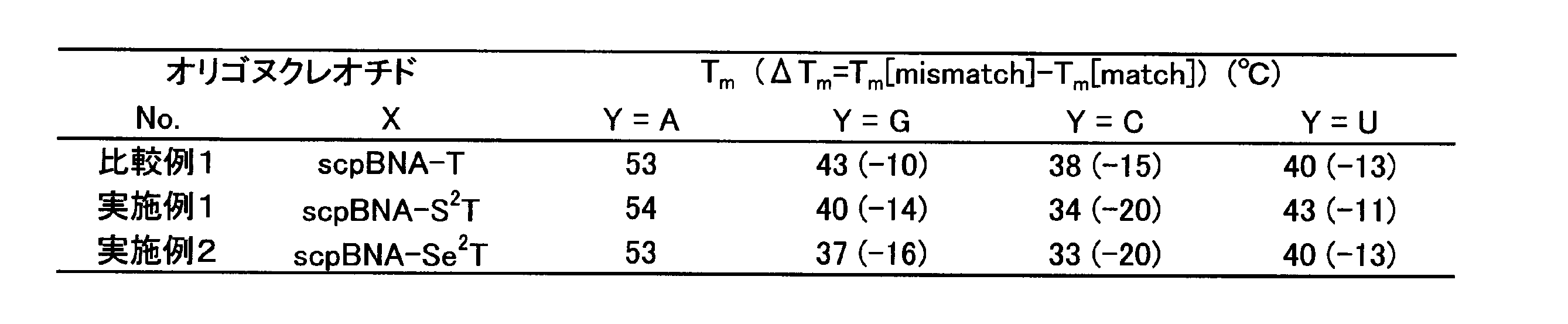
表2に示す結果の通り、DNAに対しても、本発明に係る核酸をオリゴヌクレオチドへ導入することにより、T-G間のミスマッチ塩基対形成を抑制し、オフターゲットを低減できることが実証された。
試験例3: マウスにおける遺伝子発現抑制効果
GR(Glcocortiocoid Receptor)はステロイド受容体の一種であり、ステロイドホルモンであるヒドロコルチゾンに対する受容体として働く一方で、リガンド依存的に核内移行して転写因子としても働く。そこで、これを標的とするアンチセンスオリゴ核酸としてPosi12(Nucleic Acid Ther.,2012,22,5,344-359)を選択し、株式会社ジーンデザインに、表3に示す配列を有するPosi12誘導体の合成を外注した。表3中、「(L)」は4’位と2’位が-CH2-O-で架橋されている構造を有することを示し、「^」は5’位と3’位がチオリン酸基で結合されていることを示し、「5」は5-メチルシチジンを示し、「scpBNA」は4’位と2’位が-シクロプロピルメチレン-O-で架橋されている構造を有することを示し、「S2T」はチミンの第2位が=Sであることを示し、「AmNA」は4’位と2’位が-C(=O)-N(-CH3)-で架橋されている構造を有することを示し、小文字はDNAであることを示す。
GR(Glcocortiocoid Receptor)はステロイド受容体の一種であり、ステロイドホルモンであるヒドロコルチゾンに対する受容体として働く一方で、リガンド依存的に核内移行して転写因子としても働く。そこで、これを標的とするアンチセンスオリゴ核酸としてPosi12(Nucleic Acid Ther.,2012,22,5,344-359)を選択し、株式会社ジーンデザインに、表3に示す配列を有するPosi12誘導体の合成を外注した。表3中、「(L)」は4’位と2’位が-CH2-O-で架橋されている構造を有することを示し、「^」は5’位と3’位がチオリン酸基で結合されていることを示し、「5」は5-メチルシチジンを示し、「scpBNA」は4’位と2’位が-シクロプロピルメチレン-O-で架橋されている構造を有することを示し、「S2T」はチミンの第2位が=Sであることを示し、「AmNA」は4’位と2’位が-C(=O)-N(-CH3)-で架橋されている構造を有することを示し、小文字はDNAであることを示す。

各アンチセンスオリゴ核酸を生理食塩水(大塚製薬社製)に溶解して2mg/mL溶液とし、実験に用いるまで-30℃で凍結保存した。
5週齢の雄性C57BL/6NCrlマウス(日本チャールス・リバー株式会社)を1週間検疫馴化した後、任意に4匹ずつ5群に分け、生理食塩水(大塚製薬社製)または各アンチセンスオリゴ核酸溶液を20mg/kg体重の投与量で尾静脈内に単回投与した。投与から4日目(96時間後)に、マウスを2.0~4.0%のイソフルラン(DSファーマアニマルヘルス社製)で吸入麻酔して、後大静脈腹部から可能な限り採血した。但し、Posi12-LNA-T投与群のうち2匹は3日目に高度の自発運動の低下が認められたため、3日目に採血した。採血した後、マウスを凍結安楽死させ、肝臓を摘出して重量を測定した。摘出した肝臓において肉眼的に異常のみられない部位から約100mgを試料として採取した。採取した試料の重量を測定後、液体窒素にて凍結させ、超低温フリーザーで保存した。凍結保存した肝臓試料を、氷冷下でホモジネーター(「Shake Master auto」Bio Medical Science Inc.)とTRIzol試薬(Thermo Fisher Scientific社)を用いて可能な限りホモジナイズし、total RNAを抽出した。抽出したtotal RNAのUV吸収スペクトルを、Nano VueあるいはNano Vue Plus(GEヘルスケア社)を用いて測定し,RNA濃度とO.D.260/O.D.280比から純度を算出した。Total RNAについてOne Step SYBR PrimeScript RT-PCR Kit(Takara社)およびApplied Biosystems 7500(Life Technologies Japan Ltd)を用いて定量PCRを行い、生理食塩水投与群に対してアンチセンスオリゴ核酸投与群の標的遺伝子の発現比率を算出し、活性を評価した。なお、本開示の動物実験の飼育と実験は、株式会社新日本科学の動物実験規定に準じ、株式会社新日本科学安全性研究所の動物実験施設内で行った。結果を図1に示す。
5週齢の雄性C57BL/6NCrlマウス(日本チャールス・リバー株式会社)を1週間検疫馴化した後、任意に4匹ずつ5群に分け、生理食塩水(大塚製薬社製)または各アンチセンスオリゴ核酸溶液を20mg/kg体重の投与量で尾静脈内に単回投与した。投与から4日目(96時間後)に、マウスを2.0~4.0%のイソフルラン(DSファーマアニマルヘルス社製)で吸入麻酔して、後大静脈腹部から可能な限り採血した。但し、Posi12-LNA-T投与群のうち2匹は3日目に高度の自発運動の低下が認められたため、3日目に採血した。採血した後、マウスを凍結安楽死させ、肝臓を摘出して重量を測定した。摘出した肝臓において肉眼的に異常のみられない部位から約100mgを試料として採取した。採取した試料の重量を測定後、液体窒素にて凍結させ、超低温フリーザーで保存した。凍結保存した肝臓試料を、氷冷下でホモジネーター(「Shake Master auto」Bio Medical Science Inc.)とTRIzol試薬(Thermo Fisher Scientific社)を用いて可能な限りホモジナイズし、total RNAを抽出した。抽出したtotal RNAのUV吸収スペクトルを、Nano VueあるいはNano Vue Plus(GEヘルスケア社)を用いて測定し,RNA濃度とO.D.260/O.D.280比から純度を算出した。Total RNAについてOne Step SYBR PrimeScript RT-PCR Kit(Takara社)およびApplied Biosystems 7500(Life Technologies Japan Ltd)を用いて定量PCRを行い、生理食塩水投与群に対してアンチセンスオリゴ核酸投与群の標的遺伝子の発現比率を算出し、活性を評価した。なお、本開示の動物実験の飼育と実験は、株式会社新日本科学の動物実験規定に準じ、株式会社新日本科学安全性研究所の動物実験施設内で行った。結果を図1に示す。
図1に示す結果の通り、チミンの2位カルボニル基の修飾に加えて4’位と2’位が架橋された核酸残基を含む本発明に係るアンチセンスオリゴ核酸(Posi12-scpBNA-S2T)も、他のアンチセンスオリゴ核酸と同様に標的遺伝子の発現を効果的に抑制できることが明らかにされた。
試験例4: マウスにおける遺伝子発現抑制効果
マウスGRを標的とするアンチセンスオリゴ核酸としてPosi14(Nucleic Acid Ther.,2012,22,5,344-359)を選択し、株式会社ジーンデザインに、表4に示す配列を有するPosi14誘導体の合成を外注した。
マウスGRを標的とするアンチセンスオリゴ核酸としてPosi14(Nucleic Acid Ther.,2012,22,5,344-359)を選択し、株式会社ジーンデザインに、表4に示す配列を有するPosi14誘導体の合成を外注した。

得られた各アンチセンスオリゴ核酸に関して、上記試験例3と同様にしてGR遺伝子に対する発現抑制活性を測定した。結果を図2に示す。
図2に示す結果の通り、別の塩基配列を有するアンチセンスオリゴ核酸であっても、チミンの2位カルボニル基の修飾に加えて4’位と2’位が架橋された核酸残基を含む本発明に係るアンチセンスオリゴ核酸(Posi14-scpBNA-S2T)も、他のアンチセンスオリゴ核酸と同様にGR遺伝子の発現を抑制できることが明らかにされた。
図2に示す結果の通り、別の塩基配列を有するアンチセンスオリゴ核酸であっても、チミンの2位カルボニル基の修飾に加えて4’位と2’位が架橋された核酸残基を含む本発明に係るアンチセンスオリゴ核酸(Posi14-scpBNA-S2T)も、他のアンチセンスオリゴ核酸と同様にGR遺伝子の発現を抑制できることが明らかにされた。
試験例5: 肝毒性評価
強い肝毒性を誘発する#12を選択し、株式会社ジーンデザインに、表5に示す配列を有する#12の誘導体の合成を外注した。
強い肝毒性を誘発する#12を選択し、株式会社ジーンデザインに、表5に示す配列を有する#12の誘導体の合成を外注した。

5週齢の雄性C57BL/6NCrlマウス(日本チャールス・リバー株式会社)を1週間検疫馴化した後、任意に4匹ずつ3群に分け、生理食塩水(大塚製薬社製)または各アンチセンスオリゴ核酸溶液を20mg/kg体重の投与量で尾静脈内に単回投与した。
投与から4日目(96時間後)に、マウスを2.0~4.0%のイソフルラン(DSファーマアニマルヘルス社製)で吸入麻酔して、後大静脈腹部から可能な限り採血した。得られた血液を室温で20~60分静置後、1700×gで5分間遠心分離して血清を得た。血液採取の際、血液量が分析に必要な量に達しない場合は注射用水を用いて希釈した後、分析に用いた。生化学自動分析装置(「JCA-BM6070」日本電子社製)を用いて、得られた血清中のアラニントランスアミナーゼ(ALT)の濃度を測定した。結果を図3に示す。
図3に示す結果の通り、チミンの2位カルボニル基の修飾に加えて4’位と2’位が架橋された核酸残基を含む本発明に係るアンチセンスオリゴ核酸(#12-scpBNA-S2T)の肝毒性が低減されていることが明らかにされた。その理由としては、本発明に係る核酸残基により非Watson-Crick型塩基対の形成が抑制され、延いては標的核酸以外の核酸との非特異的結合が抑制されたことが考えられる。
投与から4日目(96時間後)に、マウスを2.0~4.0%のイソフルラン(DSファーマアニマルヘルス社製)で吸入麻酔して、後大静脈腹部から可能な限り採血した。得られた血液を室温で20~60分静置後、1700×gで5分間遠心分離して血清を得た。血液採取の際、血液量が分析に必要な量に達しない場合は注射用水を用いて希釈した後、分析に用いた。生化学自動分析装置(「JCA-BM6070」日本電子社製)を用いて、得られた血清中のアラニントランスアミナーゼ(ALT)の濃度を測定した。結果を図3に示す。
図3に示す結果の通り、チミンの2位カルボニル基の修飾に加えて4’位と2’位が架橋された核酸残基を含む本発明に係るアンチセンスオリゴ核酸(#12-scpBNA-S2T)の肝毒性が低減されていることが明らかにされた。その理由としては、本発明に係る核酸残基により非Watson-Crick型塩基対の形成が抑制され、延いては標的核酸以外の核酸との非特異的結合が抑制されたことが考えられる。
Claims (6)
- 下記式(I)または下記式(II)で表されることを特徴とする核酸化合物またはその塩。

[式中、
X1とX2は、独立してSまたはSeを示し、
Yは下記式(III)~(VI)で表されるいずれかのグアニジノ基を示し、且つ、Zは単結合もしくはC1-4アルキレン基を示すか、
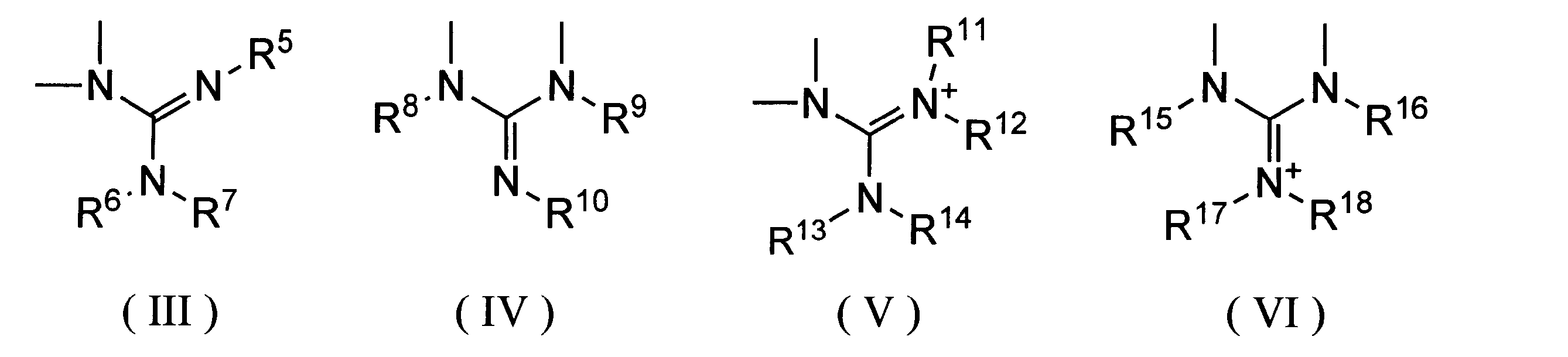
(式中、R5~R18は、独立して、H、C1-6アルキル基、C3-10シクロアルキル基、アミノ基の保護基または2-シアノエチルオキシカルボニル基を示す)、または、
Yは、O、S、-N(R19)-基、-C(=O)-O-基、-C(=O)-N(R20)-基(R19とR20は、独立して、HまたはC1-6アルキル基を示す)を示し、且つ、Zは下記式(VII)で表されるシクロプロピル基を示すか、
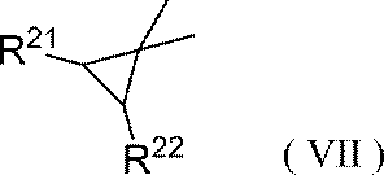
(式中、R21とR22は、独立して、H、C1-6アルキル基を示すか、または、R21とR22が一緒になってC1-4アルキレン基を形成してもよい)、または、
YとZは、一緒になって-C(=O)-O-基もしくは-C(=O)-N(R20)-基(R20は、HまたはC1-6アルキル基を示す)を示し、
R1は、HまたはC1-6アルキル基を示し、
R2とR3は、独立して、H、水酸基の保護基、または、下記式(VIII)で表されるリン酸基を示し、
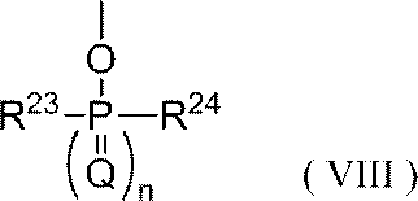
(式中、QはOまたはSを示し、R23は、H、水酸基、またはシアノ基で置換されていてもよいC1-6アルコキシ基を示し;R24は、水酸基、シアノ基で置換されていてもよいC1-6アルコキシ基またはNR25R26基(式中、R25とR26は、独立して、H、C1-6アルキル基または2-シアノエチル基を示す)を示し;nは0または1を示す)
R4は、H、C1-6アルキル基または2-シアノエチル基を示す。] - YがOであり、且つ、Zが上記式(VII)で表されるシクロプロピル基である請求項1に記載の核酸化合物またはその塩。
- R1がメチル基である請求項1または2に記載の核酸化合物またはその塩。
- 1以上の核酸残基が下記式(IX)で表される構造を有することを特徴とするオリゴヌクレオチドまたはその薬理学上許容される塩。
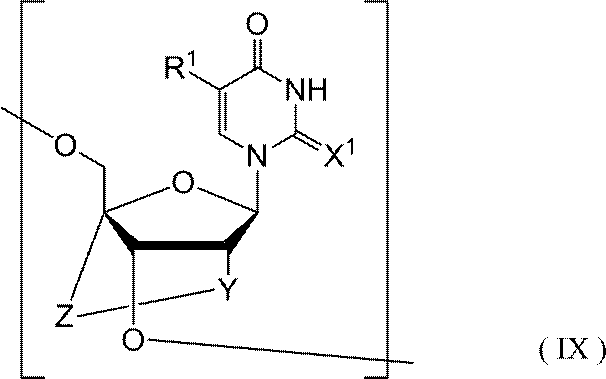
[式中、
X1は、SまたはSeを示し、
Yは下記式(III)~(VI)で表されるいずれかのグアニジノ基を示し、且つ、Zは単結合もしくはC1-4アルキレン基を示すか、
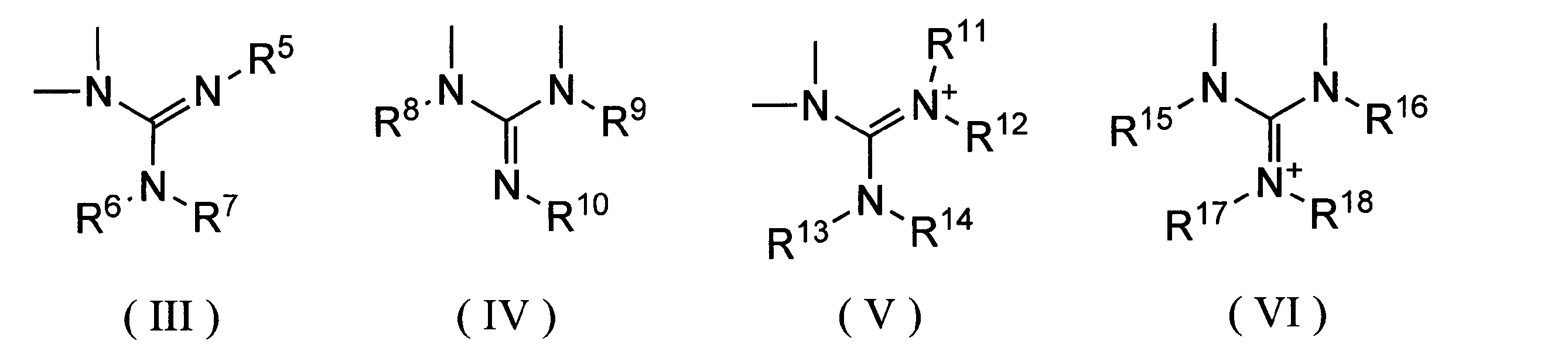
(式中、R5~R18は、独立して、H、C1-6アルキル基、C3-10シクロアルキル基、アミノ基の保護基または2-シアノエチルオキシカルボニル基を示す)、または、
Yは、O、S、-N(R19)-基、-C(=O)-O-基、-C(=O)-N(R20)-基(R19とR20は、独立して、HまたはC1-6アルキル基を示す)を示し、且つ、Zは下記式(VII)で表されるシクロプロピル基を示すか、
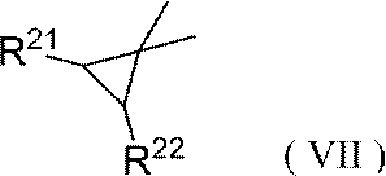
(式中、R21とR22は、独立して、H、C1-6アルキル基を示すか、または、R21とR22が一緒になってC1-4アルキレン基を形成してもよい)、または、
YとZは、一緒になって-C(=O)-O-基もしくは-C(=O)-N(R20)-基(R20は、HまたはC1-6アルキル基を示す)を示し、
R1は、HまたはC1-6アルキル基を示す。] - YがOであり、且つ、Zが上記式(VII)で表されるシクロプロピル基である請求項4に記載のオリゴヌクレオチドまたはその薬理学上許容される塩。
- R1がメチル基である請求項4または5に記載のオリゴヌクレオチドまたはその薬理学上許容される塩。
Priority Applications (4)
| Application Number | Priority Date | Filing Date | Title |
|---|---|---|---|
| JP2019501349A JP7138349B2 (ja) | 2017-02-21 | 2018-02-20 | 核酸化合物およびオリゴヌクレオチド |
| EP18757437.1A EP3587432B1 (en) | 2017-02-21 | 2018-02-20 | Nucleic acid compound and oligonucleotide |
| US16/487,785 US11286275B2 (en) | 2017-02-21 | 2018-02-20 | Nucleic acid compound and oligonucleotide |
| US17/667,988 US11905308B2 (en) | 2017-02-21 | 2022-02-09 | Nucleic acid compound and oligonucleotide |
Applications Claiming Priority (2)
| Application Number | Priority Date | Filing Date | Title |
|---|---|---|---|
| JP2017-030490 | 2017-02-21 | ||
| JP2017030490 | 2017-02-21 |
Related Child Applications (2)
| Application Number | Title | Priority Date | Filing Date |
|---|---|---|---|
| US16/487,785 A-371-Of-International US11286275B2 (en) | 2017-02-21 | 2018-02-20 | Nucleic acid compound and oligonucleotide |
| US17/667,988 Division US11905308B2 (en) | 2017-02-21 | 2022-02-09 | Nucleic acid compound and oligonucleotide |
Publications (1)
| Publication Number | Publication Date |
|---|---|
| WO2018155451A1 true WO2018155451A1 (ja) | 2018-08-30 |
Family
ID=63254238
Family Applications (1)
| Application Number | Title | Priority Date | Filing Date |
|---|---|---|---|
| PCT/JP2018/006062 Ceased WO2018155451A1 (ja) | 2017-02-21 | 2018-02-20 | 核酸化合物およびオリゴヌクレオチド |
Country Status (4)
| Country | Link |
|---|---|
| US (2) | US11286275B2 (ja) |
| EP (1) | EP3587432B1 (ja) |
| JP (1) | JP7138349B2 (ja) |
| WO (1) | WO2018155451A1 (ja) |
Cited By (4)
| Publication number | Priority date | Publication date | Assignee | Title |
|---|---|---|---|---|
| JPWO2018155450A1 (ja) * | 2017-02-21 | 2020-02-20 | 国立大学法人大阪大学 | アンチセンスオリゴ核酸 |
| WO2021167029A1 (ja) * | 2020-02-19 | 2021-08-26 | 国立大学法人大阪大学 | 架橋型ヌクレオシドおよびそれを用いたヌクレオチド |
| JP2022535735A (ja) * | 2019-05-31 | 2022-08-10 | アリゴス セラピューティクス インコーポレイテッド | 修飾ギャップマーオリゴヌクレオチドおよび使用方法 |
| WO2022234855A1 (ja) | 2021-05-06 | 2022-11-10 | ルクサナバイオテク株式会社 | 中枢毒性が低減したオリゴヌクレオチドの設計方法 |
Families Citing this family (2)
| Publication number | Priority date | Publication date | Assignee | Title |
|---|---|---|---|---|
| US11286275B2 (en) | 2017-02-21 | 2022-03-29 | Osaka University | Nucleic acid compound and oligonucleotide |
| US20250368996A1 (en) | 2024-05-14 | 2025-12-04 | Aligos Therapeutics, Inc. | Modified antisense oligonucleotides for treating hepatitis b virus |
Citations (7)
| Publication number | Priority date | Publication date | Assignee | Title |
|---|---|---|---|---|
| US20040033973A1 (en) * | 2002-08-16 | 2004-02-19 | Muthiah Manoharan | Compounds and oligomeric compounds comprising novel nucleobases |
| WO2011052436A1 (ja) | 2009-10-29 | 2011-05-05 | 国立大学法人大阪大学 | 架橋型人工ヌクレオシドおよびヌクレオチド |
| WO2014046212A1 (ja) | 2012-09-21 | 2014-03-27 | 国立大学法人大阪大学 | グアニジン架橋を有する人工ヌクレオシドおよびオリゴヌクレオチド |
| WO2014112463A1 (ja) | 2013-01-15 | 2014-07-24 | 国立大学法人大阪大学 | スルホンアミド構造を有するヌクレオシドおよびヌクレオチド |
| WO2015125783A1 (ja) | 2014-02-18 | 2015-08-27 | 国立大学法人大阪大学 | 架橋型ヌクレオシドおよびヌクレオチド |
| WO2016017422A1 (ja) | 2014-07-31 | 2016-02-04 | 国立大学法人大阪大学 | 架橋型ヌクレオシドおよびヌクレオチド |
| JP2017030490A (ja) | 2015-07-31 | 2017-02-09 | トヨタ紡織株式会社 | 乗物用シート |
Family Cites Families (4)
| Publication number | Priority date | Publication date | Assignee | Title |
|---|---|---|---|---|
| US20050032069A1 (en) * | 2002-11-05 | 2005-02-10 | Muthiah Manoharan | Oligomeric compounds having modified bases for binding to adenine and guanine and their use in gene modulation |
| EP1556510A2 (en) * | 2002-10-21 | 2005-07-27 | Exiqon A/S | Oligonucleotide analogues for detecting and analyzing nucleic acids |
| JP2018140938A (ja) | 2015-07-24 | 2018-09-13 | 日産化学株式会社 | 人工ヌクレオシド及び人工ヌクレオチド並びに人工オリゴヌクレオチド |
| US11286275B2 (en) | 2017-02-21 | 2022-03-29 | Osaka University | Nucleic acid compound and oligonucleotide |
-
2018
- 2018-02-20 US US16/487,785 patent/US11286275B2/en active Active
- 2018-02-20 EP EP18757437.1A patent/EP3587432B1/en active Active
- 2018-02-20 JP JP2019501349A patent/JP7138349B2/ja active Active
- 2018-02-20 WO PCT/JP2018/006062 patent/WO2018155451A1/ja not_active Ceased
-
2022
- 2022-02-09 US US17/667,988 patent/US11905308B2/en active Active
Patent Citations (7)
| Publication number | Priority date | Publication date | Assignee | Title |
|---|---|---|---|---|
| US20040033973A1 (en) * | 2002-08-16 | 2004-02-19 | Muthiah Manoharan | Compounds and oligomeric compounds comprising novel nucleobases |
| WO2011052436A1 (ja) | 2009-10-29 | 2011-05-05 | 国立大学法人大阪大学 | 架橋型人工ヌクレオシドおよびヌクレオチド |
| WO2014046212A1 (ja) | 2012-09-21 | 2014-03-27 | 国立大学法人大阪大学 | グアニジン架橋を有する人工ヌクレオシドおよびオリゴヌクレオチド |
| WO2014112463A1 (ja) | 2013-01-15 | 2014-07-24 | 国立大学法人大阪大学 | スルホンアミド構造を有するヌクレオシドおよびヌクレオチド |
| WO2015125783A1 (ja) | 2014-02-18 | 2015-08-27 | 国立大学法人大阪大学 | 架橋型ヌクレオシドおよびヌクレオチド |
| WO2016017422A1 (ja) | 2014-07-31 | 2016-02-04 | 国立大学法人大阪大学 | 架橋型ヌクレオシドおよびヌクレオチド |
| JP2017030490A (ja) | 2015-07-31 | 2017-02-09 | トヨタ紡織株式会社 | 乗物用シート |
Non-Patent Citations (8)
| Title |
|---|
| HABUCHI, TAKAKI ET AL.: "27U-am09S Synthesis and property of scpBNA-2-thiothymine", 137TH ANNUAL MEETING OF THE PHARMACEUTICAL SOCIETY OF JAPAN, vol. 137, 1 February 2017 (2017-02-01), pages 134, XP009516364, ISSN: 0918-9823 * |
| HERMAN. 0 ET AL., J. AM. CHEM. SOC., vol. 128, 2006, pages 396 - 397 |
| HUANG, Z ET AL., J. AM. CHEM. SOC., vol. 132, 2020, pages 2120 - 2121 |
| NUCLEIC ACID THER., vol. 22, no. 5, 2012, pages 344 - 359 |
| OBIKA, S ET AL., NUCLEIC ACIDS RES., vol. 37, 2009, pages 1225 - 1238 |
| See also references of EP3587432A4 |
| SEKINE, M ET AL., J. ORG. CHEM., vol. 68, 2003, pages 9971 - 9982 |
| SINTIM, H. O. ET AL.: "Enhanced base pairing and replication efficiency of thiothymidines , expanded-size variants of thymidine", JOURNAL OF AMERICAN CHEMICAL SOCIETY, vol. 128, 2006, pages 396 - 397, XP055555149 * |
Cited By (11)
| Publication number | Priority date | Publication date | Assignee | Title |
|---|---|---|---|---|
| JPWO2018155450A1 (ja) * | 2017-02-21 | 2020-02-20 | 国立大学法人大阪大学 | アンチセンスオリゴ核酸 |
| US11261440B2 (en) | 2017-02-21 | 2022-03-01 | Osaka University | Antisense oligonucleic acid |
| JP7095893B2 (ja) | 2017-02-21 | 2022-07-05 | 国立大学法人大阪大学 | アンチセンスオリゴ核酸 |
| US12104154B2 (en) | 2017-02-21 | 2024-10-01 | Osaka University | Antisense oligonucleic acid |
| JP2022535735A (ja) * | 2019-05-31 | 2022-08-10 | アリゴス セラピューティクス インコーポレイテッド | 修飾ギャップマーオリゴヌクレオチドおよび使用方法 |
| US11466274B2 (en) | 2019-05-31 | 2022-10-11 | Aligos Therapeutics, Inc. | Modified gapmer oligonucleotides and methods of use |
| WO2021167029A1 (ja) * | 2020-02-19 | 2021-08-26 | 国立大学法人大阪大学 | 架橋型ヌクレオシドおよびそれを用いたヌクレオチド |
| JPWO2021167029A1 (ja) * | 2020-02-19 | 2021-08-26 | ||
| CN115151555A (zh) * | 2020-02-19 | 2022-10-04 | 国立大学法人大阪大学 | 桥连型核苷和使用了该桥连型核苷的核苷酸 |
| JP7678994B2 (ja) | 2020-02-19 | 2025-05-19 | 国立大学法人大阪大学 | 架橋型ヌクレオシドおよびそれを用いたヌクレオチド |
| WO2022234855A1 (ja) | 2021-05-06 | 2022-11-10 | ルクサナバイオテク株式会社 | 中枢毒性が低減したオリゴヌクレオチドの設計方法 |
Also Published As
| Publication number | Publication date |
|---|---|
| US11286275B2 (en) | 2022-03-29 |
| EP3587432A4 (en) | 2021-01-06 |
| JP7138349B2 (ja) | 2022-09-16 |
| US20200055890A1 (en) | 2020-02-20 |
| EP3587432B1 (en) | 2026-05-06 |
| EP3587432A1 (en) | 2020-01-01 |
| JPWO2018155451A1 (ja) | 2019-12-26 |
| US20220169671A1 (en) | 2022-06-02 |
| US11905308B2 (en) | 2024-02-20 |
Similar Documents
| Publication | Publication Date | Title |
|---|---|---|
| US11905308B2 (en) | Nucleic acid compound and oligonucleotide | |
| AU2022202011B2 (en) | Short interfering nucleic acid (siNA) molecules containing a 2' internucleoside linkage | |
| JP6647430B2 (ja) | アンチセンス核酸 | |
| AU2017315670B2 (en) | Compositions comprising reversibly modified oligonucleotides and uses thereof | |
| RU2695430C2 (ru) | Антисмысловые нуклеиновые кислоты | |
| TW202220695A (zh) | 寡核苷酸之全身遞送 | |
| JP6358955B2 (ja) | 新規修飾核酸 | |
| BR112020018902A2 (pt) | oligonucleotídeo antissenso com toxicidade reduzida | |
| WO2020158910A1 (ja) | 5'位修飾ヌクレオシドおよびそれを用いたヌクレオチド | |
| CN116615542A (zh) | 寡核苷酸的全身递送 | |
| CN115298192A (zh) | 4′-o-亚甲基膦酸酯核酸及其类似物 | |
| WO2024002006A1 (zh) | 具有增强的稳定性的核苷酸替代物 | |
| WO2020166551A1 (ja) | 5'位修飾ヌクレオシドおよびそれを用いたヌクレオチド | |
| WO2025031479A1 (zh) | 含有核苷酸类似物的双链rna | |
| WO2006030906A1 (ja) | ヌクレオシド類似体またはその塩 | |
| WO2024002007A1 (zh) | 含有可降低脱靶毒性的核苷酸类似物的双链rna | |
| WO2021167029A1 (ja) | 架橋型ヌクレオシドおよびそれを用いたヌクレオチド | |
| WO2012074012A1 (ja) | ヌクレオシド類縁体又はその塩、オリゴヌクレオチド類縁体、遺伝子発現抑制剤、及び遺伝子検出用核酸プローブ | |
| EP4541804A1 (en) | Cyclic phosphonate-modified nucleotide | |
| HK40005478B (en) | Compositions comprising reversibly modified oligonucleotides and uses thereof | |
| HK40005478A (en) | Compositions comprising reversibly modified oligonucleotides and uses thereof |
Legal Events
| Date | Code | Title | Description |
|---|---|---|---|
| 121 | Ep: the epo has been informed by wipo that ep was designated in this application |
Ref document number: 18757437 Country of ref document: EP Kind code of ref document: A1 |
|
| ENP | Entry into the national phase |
Ref document number: 2019501349 Country of ref document: JP Kind code of ref document: A |
|
| NENP | Non-entry into the national phase |
Ref country code: DE |
|
| ENP | Entry into the national phase |
Ref document number: 2018757437 Country of ref document: EP Effective date: 20190923 |