WO2018157732A1 - 一种数据传输方法及装置 - Google Patents
一种数据传输方法及装置 Download PDFInfo
- Publication number
- WO2018157732A1 WO2018157732A1 PCT/CN2018/076295 CN2018076295W WO2018157732A1 WO 2018157732 A1 WO2018157732 A1 WO 2018157732A1 CN 2018076295 W CN2018076295 W CN 2018076295W WO 2018157732 A1 WO2018157732 A1 WO 2018157732A1
- Authority
- WO
- WIPO (PCT)
- Prior art keywords
- terminal
- resource
- information
- data transmission
- uplink data
- Prior art date
- Legal status (The legal status is an assumption and is not a legal conclusion. Google has not performed a legal analysis and makes no representation as to the accuracy of the status listed.)
- Ceased
Links
Images



Classifications
-
- H—ELECTRICITY
- H04—ELECTRIC COMMUNICATION TECHNIQUE
- H04W—WIRELESS COMMUNICATION NETWORKS
- H04W72/00—Local resource management
- H04W72/20—Control channels or signalling for resource management
-
- H—ELECTRICITY
- H04—ELECTRIC COMMUNICATION TECHNIQUE
- H04W—WIRELESS COMMUNICATION NETWORKS
- H04W72/00—Local resource management
- H04W72/04—Wireless resource allocation
- H04W72/044—Wireless resource allocation based on the type of the allocated resource
- H04W72/0453—Resources in frequency domain, e.g. a carrier in FDMA
-
- H—ELECTRICITY
- H04—ELECTRIC COMMUNICATION TECHNIQUE
- H04W—WIRELESS COMMUNICATION NETWORKS
- H04W72/00—Local resource management
- H04W72/12—Wireless traffic scheduling
- H04W72/121—Wireless traffic scheduling for groups of terminals or users
-
- H—ELECTRICITY
- H04—ELECTRIC COMMUNICATION TECHNIQUE
- H04W—WIRELESS COMMUNICATION NETWORKS
- H04W72/00—Local resource management
- H04W72/12—Wireless traffic scheduling
- H04W72/1263—Mapping of traffic onto schedule, e.g. scheduled allocation or multiplexing of flows
- H04W72/1268—Mapping of traffic onto schedule, e.g. scheduled allocation or multiplexing of flows of uplink data flows
-
- H—ELECTRICITY
- H04—ELECTRIC COMMUNICATION TECHNIQUE
- H04W—WIRELESS COMMUNICATION NETWORKS
- H04W72/00—Local resource management
- H04W72/20—Control channels or signalling for resource management
- H04W72/23—Control channels or signalling for resource management in the downlink direction of a wireless link, i.e. towards a terminal
-
- H—ELECTRICITY
- H04—ELECTRIC COMMUNICATION TECHNIQUE
- H04W—WIRELESS COMMUNICATION NETWORKS
- H04W72/00—Local resource management
- H04W72/50—Allocation or scheduling criteria for wireless resources
- H04W72/53—Allocation or scheduling criteria for wireless resources based on regulatory allocation policies
-
- H—ELECTRICITY
- H04—ELECTRIC COMMUNICATION TECHNIQUE
- H04W—WIRELESS COMMUNICATION NETWORKS
- H04W72/00—Local resource management
- H04W72/50—Allocation or scheduling criteria for wireless resources
- H04W72/56—Allocation or scheduling criteria for wireless resources based on priority criteria
- H04W72/566—Allocation or scheduling criteria for wireless resources based on priority criteria of the information or information source or recipient
- H04W72/569—Allocation or scheduling criteria for wireless resources based on priority criteria of the information or information source or recipient of the traffic information
Definitions
- the present application relates to the field of wireless communications technologies, and in particular, to a data transmission method and apparatus.
- Enhanced Mobile Broadband eMBB
- Ultra-Reliable and Low-Latency Communication URLLC
- massive machine-like communication Massive Machine Type Communications, mMTC
- the URLLC service requires a very high transmission delay.
- the transmission delay of the URLLC service is required to be within 0.5 ms without requiring reliability.
- the transmission delay of the URLLC service is required when the reliability is required to be 99.999%.
- the request is still within 1ms. For this reason, data can be transmitted using a shorter transmission interval, such as Short Transmission Time Interval (sTTI) or mini-slot mini-slot.
- Typical URLLC services include industrial control in the Internet of Things, automatic control in driverless cars, and the like.
- Typical eMBB services include Ultra HD video, Virtual Reality (VR), and Augmented Reality (AR).
- the URLLC terminal Since the TTI for transmitting the eMBB service is long, when the URLLC terminal needs to perform the data transmission of the URLLC service, if the URL LC service data is sent to the base station after waiting for the eMBB service data transmission that is currently being scheduled, the URLLC service is transmitted. The delay is too long to meet the transmission delay requirement of the URLLC service. Furthermore, in order to ensure that the transmission delay of the URLLC service is within the target range, the URLLC terminal can directly transmit the URLLC service data by using the uplink resource that is transmitting the eMBB service data.
- the eMBB terminal will continue to use the uplink resource to send the eMBB service data to the base station, and the eMBB terminal and the URLLC terminal simultaneously send data on the same resource.
- the eMBB terminal and the URLLC terminal simultaneously send data on the same resource.
- the embodiment of the present application provides a data transmission method and apparatus to solve the problem of interference between an eMBB service and a URLLC service caused by uplink resource preemption in the prior art.
- the embodiment of the present application provides a data transmission method, including: a first terminal sends first information to a second terminal, where the first information is used to indicate that the second terminal stops using the first resource to send uplink data, and then the first The terminal uses the first resource to send uplink data. It can be seen that when the first terminal needs to use the first resource of the second terminal to send data, the second terminal is notified to stop using the first resource to send uplink data, so that the first terminal and the second terminal do not use the same uplink resource at the same time. The data is transmitted, thereby solving the problem of mutual interference between the eMBB service and the URLLC service.
- the second information from the second terminal may be received, where the second information includes the second resource used by the second terminal for uplink data transmission. information. It can be seen that, before the first terminal sends the uplink data, the second information of the second terminal is obtained, so that when the first terminal needs to send the uplink data, it is more convenient and quick to determine the first resource that needs to be preempted according to the second resource, and reduce the first resource.
- the transmission delay of the service supported by the first terminal, and the second terminal corresponding to the first resource is determined in time, and the second terminal is notified to stop using the first resource to send uplink data, thereby avoiding the first terminal and the second terminal. Business interference between.
- the first terminal may send third information, and the third information is used to request to acquire information about the second resource used by the second terminal for uplink data transmission.
- the first terminal determines, according to the second resource, the first resource used by the first terminal for uplink data transmission, and the first resource may be part or all of the second resource. It can be seen that the first terminal can directly determine the first resource for uplink data transmission according to the second resource received in advance, instead of performing information interaction with the second terminal to determine the first resource when the service needs to be performed, so that The time for determining the first resource is reduced, and the transmission delay of the service supported by the first terminal is reduced.
- an embodiment of the present application provides a data transmission method, including: receiving, by a second terminal, first information from a first terminal, where the first information is used to indicate that the second terminal stops using the first resource to send uplink data, and then The second terminal stops using the first resource to send uplink data. It can be seen that the second terminal stops using the first resource to send uplink data, and the base station does not receive the data sent by the two terminals on the first resource at the same time, thereby avoiding service interference between the two terminals.
- the second terminal before the second terminal receives the first information from the first terminal, the second terminal needs to send the second information to the first terminal, where the second information includes the second terminal used for uplink data transmission.
- Information on two resources The second terminal sends the information of the second resource for the uplink data transmission to the first resource, which may be convenient for the first terminal to determine the first resource according to the second resource, and notify the second terminal that the second terminal needs to be preempted.
- the first resource reduces the transmission delay of the service supported by the first terminal and avoids the service interference between the first terminal and the second terminal.
- the second terminal receives third information from the first terminal, and the third information is used to request to acquire information of the second resource used by the second terminal for uplink data transmission.
- the first terminal in the first aspect and the second aspect is a high-reliability low-latency communication URLLC service terminal, and the second terminal is a mobile broadband enhanced eMBB service terminal.
- an embodiment of the present application provides a data transmission apparatus, where the apparatus can implement the functions performed by the first terminal in the foregoing first aspect, and the functions may be implemented by using hardware or by executing corresponding software by hardware.
- the hardware or software includes one or more modules corresponding to the above functions.
- the apparatus includes a processor and a transceiver configured to support the apparatus to perform the corresponding functions of the above methods.
- the transceiver is used to support communication between the device and other network elements.
- the apparatus can also include a memory for coupling with the processor that retains the program instructions and data necessary for the apparatus.
- an embodiment of the present application provides a data transmission apparatus, where the apparatus can implement the functions performed by the second terminal in the foregoing second aspect, and the functions can be implemented by using hardware or by executing corresponding software through hardware.
- the hardware or software includes one or more modules corresponding to the above functions.
- the apparatus includes a processor and a transceiver configured to support the apparatus to perform the corresponding functions of the above methods.
- the transceiver is used to support communication between the device and other network elements.
- the apparatus can also include a memory for coupling with the processor that retains the program instructions and data necessary for the apparatus.
- an embodiment of the present application provides a data transmission system, including a base station and the first terminal and the second terminal in the foregoing aspect.
- an embodiment of the present application provides a computer storage medium for storing computer software instructions for use in the first terminal, including a program designed to perform the above aspects.
- an embodiment of the present application provides a computer storage medium for storing computer software instructions for use in the second terminal, including a program designed to perform the above aspects.
- the resource of the eMBB terminal is directly preempted, so that the URLLC terminal and the eMBB terminal use the same uplink resource to send data, which causes a service interference.
- the first terminal needs to use the first resource to send the uplink data
- the first terminal notifies the second terminal to stop using the first resource to send the uplink data, so that the first terminal and the second terminal do not simultaneously use the same uplink resource to send data
- the base station Only the uplink data sent by the first terminal is received on the first resource, and the problem of mutual interference between the eMBB service and the URLLC service is solved while reducing the service transmission delay of the first terminal.
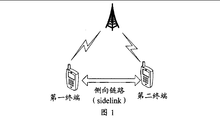
- FIG. 1 is a schematic structural diagram of a communication system according to an embodiment of the present application.
- FIG. 2 is a flowchart of a data transmission method according to an embodiment of the present application.
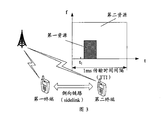
- FIG. 3 is an exemplary schematic diagram of a data transmission method according to an embodiment of the present application.
- FIG. 4 is a flowchart of another data transmission method according to an embodiment of the present application.
- FIG. 5 is a flowchart of another data transmission method according to an embodiment of the present application.
- FIG. 6 is a schematic diagram of a logical structure of a first terminal according to an embodiment of the present application.
- FIG. 7 is a schematic diagram of a logical structure of a second terminal according to an embodiment of the present application.
- FIG. 8 is a schematic diagram of a logical structure of another first terminal according to an embodiment of the present application.
- FIG. 9 is a schematic diagram of a logical structure of another second terminal according to an embodiment of the present application.
- the terminal in the embodiment of the present application may be a mobile phone, a tablet, a computer with wireless transceiver function, a virtual reality (VR) terminal device, and an augmented reality (AR) terminal device.
- wireless terminal in industrial control wireless terminal in self driving, wireless terminal in remote medical, wireless terminal in smart grid, transportation security Wireless terminal in safety), wireless terminal in smart city, wireless terminal in smart home, and the like.
- the embodiment of the present application does not limit the application scenario.
- the data transmission method provided by the embodiment of the present application is applied to a communication system, as shown in FIG. 1 , which is a schematic diagram of a system architecture applied by a data transmission method provided by an embodiment of the present application, where the communication system includes at least The base station, the first terminal, and the second terminal, the first terminal and the second terminal may communicate by means of a device-to-device (D2D), and when the communication is performed by using a D2D mode, the communication link between the terminals It is called a sidelink.
- D2D device-to-device
- the first terminal may be a URLLC service terminal
- the second terminal may be an eMBB service terminal, but the application does not limit this.
- the eMBB service terminal refers to the terminal that carries the eMBB service
- the URLLC service terminal refers to the terminal that carries the URLLC service. It should be noted that the same terminal may carry different services in different time periods, and the terminal is carrying the eMBB service.
- the time period is called an eMBB service terminal, and is called a URLLC service terminal in a time period in which the URLLC service is carried. Because the URLLC service has a high transmission delay requirement, when the URLLC service terminal needs to perform the URLLC service, it directly performs data interaction with the eMBB service terminal (for example, data exchange through the sidelink), thereby occupying the uplink of the eMBB service data being transmitted. Resources to transfer URLLC business data.
- the embodiment of the present application provides a data transmission method. As shown in FIG. 2 , the method includes:
- the first terminal sends the first information to the second terminal, where the first information is used to indicate that the second terminal stops using the first resource to send the uplink data.
- the first terminal and the second terminal are used to indicate the terminal that performs the different services.
- the service performed by the first terminal has a high requirement on the transmission delay, and the sTTI needs to be used to support the service of the first terminal, and the service performed by the second terminal.
- the scheduling time is longer and the transmission delay is lower, for example, 1 ms TTI can be used.
- the first terminal is a URLLC service terminal
- the second terminal is an eMBB service terminal
- the type of the first terminal and the second terminal are not limited in this application.
- the first resource may be selected from the second resource used by the eMBB service terminal for uplink data transmission.
- the eMBB service terminal needs to be sent to the eMBB service terminal. a message.
- the first resource may be an uplink resource used by the eMBB service terminal for uplink data transmission, or may be a partial uplink resource used by the eMBB service terminal for uplink data transmission, and the URLLC service terminal may select the most suitable uplink resource according to the service requirement.
- the first resource for example, may select the best uplink resource of the channel quality indicator (CQI) as the first resource, but the application is not limited thereto, and the first resource may be selected according to other principles.
- CQI channel quality indicator
- the first information may also be used to notify the second terminal to stop sending uplink data. For example, when the second terminal receives the first information, the uplink data currently being transmitted is stopped. Or, the first information includes the first time, when the second terminal receives the first information, if the time domain range of a scheduled uplink transmission of the second terminal includes the first time, stopping sending the transmission Upstream data after the first time.
- the communication process between the first terminal and the second terminal may be performed in whole or in part through the sidelink, but the communication method between the first terminal and the second terminal is not performed in this application. limited.
- the second terminal stops using the first resource to send uplink data according to the first information.
- the first terminal sends the uplink data by using the first resource.
- the eMBB service terminal is transmitting uplink data to the base station by using the second resource shown in FIG. 3.
- the URLLC service terminal needs to perform the URLLC service, but the URLLC service terminal waits for the eMBB service terminal.
- the URLLC service cannot meet the transmission delay requirement.
- the direct occupation of the eMBB service resource causes the eMBB service terminal and the URLLC service terminal to simultaneously use the same resource to send uplink data to generate services. interference.
- the URLLC service terminal may notify the eMBB service terminal to stop transmitting uplink data on the first resource when the URLLC service needs to be performed, and then the URLLC service terminal may use the first resource to send uplink data to the base station, as shown in FIG. It can be seen that the URLLC service terminal uses the first resource in the second resource to send the uplink data, which can reduce the transmission delay of the URLLC service, after waiting for the eMBB service terminal to use the second resource to complete the uplink data transmission and then perform the URLLC service.
- the data transmission method provided by the embodiment of the present application directly captures the resources of the eMBB service terminal when the URLLC service terminal needs to perform the URLLC service, so that the URLLC service terminal and the eMBB service terminal use the same uplink resource to send data, resulting in the appearance of the data.
- the first terminal when the first terminal needs to use the first resource to send the uplink data, the first terminal notifies the second terminal to stop using the first resource to send the uplink data, so that the first terminal and the first terminal
- the second terminal does not use the same uplink resource to transmit data at the same time, and the base station only receives the uplink data sent by the first terminal on the first resource, and solves the eMBB service while reducing the service transmission delay of the first terminal.
- the first terminal Before the first terminal preempts the uplink resource of the second terminal to send the uplink data, the first resource needs to be determined first. To facilitate the first terminal to quickly determine the first resource, the first terminal may know the second terminal for uplink data transmission in advance. Based on the information of the second resource, in another implementation manner provided by the embodiment of the present application, as shown in FIG. 4, before performing the method flow shown in FIG. 2, the following steps may also be performed:
- the first terminal sends the third information, where the third information is used to request to obtain information about the second resource used by the second terminal for uplink data transmission.
- the first terminal may send a detection signal to discover the surrounding second terminal. After receiving the detection signal, the second terminal returns a response message to the first terminal, and then the first terminal returns a second response message to the first terminal. The terminal sends the third information to request to acquire the second resource information used by the second terminal that returns the response message for the uplink data transmission.
- the third information is a broadcast message, or the third information may be carried in the detection signal sent by the first terminal.
- the second terminal receives the message carrying the third information, the second terminal directly returns to the uplink data transmission. Second resource information.
- the detection signal may be sent by the second terminal, and the first terminal may receive the detection signals sent by the multiple second terminals, and then send the third information to each second terminal respectively. And obtaining the second resource information used by the surrounding second terminal for uplink data transmission.
- the second terminal sends the second information to the first resource, where the second information includes information about the second resource used by the second terminal for uplink data transmission.
- the information about the second resource used by the second terminal for uplink data transmission may be the location information of the second resource allocated by the base station for the second terminal for uplink data transmission.
- the information about the second resource used by the second terminal for the uplink data transmission included in the second information may be information about all the second resources used by the second terminal for uplink data transmission, or may be used by the second terminal for uplink data transmission. Information about some of the second resources.
- the second terminal may return the second information to the first terminal, or the second terminal may also actively move to the nearby A terminal sends the second information. It can be understood that if the second terminal actively sends the second information to the first terminal, step 401 need not be performed.
- the first terminal stores information about a second resource used by the second terminal for uplink data transmission.
- the first terminal may establish a second terminal resource group, where the second terminal resource group includes information about the second resource for uplink data transmission of each second terminal received by the first terminal.
- the second terminal needs to maintain and update the information of the second resource for the uplink data transmission of each second terminal in the second terminal resource group in real time, because the second resource of the second terminal is used for the uplink data transmission. .
- step 501 can also be performed.
- the first terminal determines, according to the second resource, a first resource used by the first terminal for uplink data transmission.
- the first resource may be selected from the second terminal resource group, and then the second terminal to which the first resource belongs is determined, and then the first resource is sent to the first resource.
- the associated second terminal sends the first information; or, when the first terminal needs to send the uplink data, the second terminal may be selected from the second terminal resource group, and then the first resource is selected from the selected uplink resources of the second terminal. And sending the first information to the selected second terminal, to instruct the second terminal to stop using the first resource to send the uplink data.
- the first terminal may select the first resource from the second resources of the same second terminal in the second terminal resource group.
- the first resource may be selected from the multiple second terminals in the second terminal resource group, and the first information is sent to each selected second terminal respectively to indicate that the resource is The selected second terminal stops using the first resource to send uplink data or stops sending uplink data.
- the base station may reserve a part of uplink resources for the first terminal, when the first terminal does not select the first resource from the second terminal resource group, or select the first resource.
- the first terminal may use the selected first resource and the reserved resource to send uplink data, or when the selected first resource is insufficient, the first terminal may also use the reserved resource instead of using the first resource. Upstream data.
- the base station may reserve a part of the uplink resource for the URLLC service terminal. If there is no eMBB service terminal around the URLLC service terminal, or the eMBB service terminal around the URLLC service terminal is not allocated the uplink resource, the eMBB service terminal resource group will be The information of the second resource is such that the URLLC service terminal does not have the first resource that can be selected; or when there is not enough second resource in the eMBB service terminal resource group, the URLLC service terminal cannot select enough first resources.
- the reserved resource may be directly used to send uplink data, or when the URLLC service terminal does not select enough first resources from the eMBB service terminal resource group, the uplink data may be sent by using the selected first resource and the reserved resource.
- the base station may allocate the reserved resource to the eMBB service terminal with insufficient resources, or when there is idle reserved resource, the base station may directly reserve the reserved resource. It is allocated to the eMBB service terminal in the eMBB service terminal resource group.
- the reserved resource has been allocated to the eMBB service terminal by the base station, when the URLLC service terminal needs to use the reserved resource, the first information is sent to the eMBB service terminal that is using the reserved resource to indicate the eMBB.
- the service terminal stops using the reserved resources to send uplink data to avoid service interference.
- the data transmission method provided by the embodiment of the present application directly captures the resources of the eMBB service terminal when the URLLC service terminal needs to perform the URLLC service, so that the URLLC service terminal and the eMBB service terminal use the same uplink resource to send data, resulting in the appearance of the data.
- the preemption eMBB service terminal is first sent a preemption instruction to notify the preempted eMBB service terminal to stop using the preempted eMBB service resource.
- Uplink data so that the base station only receives the uplink data sent by the URLLC service terminal on the preempted eMBB service resource, and solves the problem of mutual interference between the eMBB service and the URLLC service while reducing the transmission delay of the URLLC service. .
- the solution provided by the embodiment of the present application is mainly introduced from the perspectives of the first terminal and the second terminal. It can be understood that the first terminal and the second terminal comprise corresponding hardware structures and/or software modules for performing respective functions.
- the present application can be implemented in a combination of hardware or hardware and computer software in combination with the elements and algorithm steps of the various examples described in the embodiments disclosed herein. Whether a function is implemented in hardware or computer software to drive hardware depends on the specific application and design constraints of the solution. A person skilled in the art can use different methods to implement the described functions for each particular application, but such implementation should not be considered to be beyond the scope of the present application.
- the embodiment of the present application may perform the division of the function modules on the first terminal and the second terminal according to the foregoing method example.
- each function module may be divided according to each function, or two or more functions may be integrated into one process.
- the above integrated modules can be implemented in the form of hardware or in the form of software functional modules. It should be noted that the division of modules in the embodiments of the present application is schematic, and is only a logical function division, and may be further divided in actual implementation.
- the embodiment of the present application further provides a data transmission device, which may be the first terminal in the foregoing embodiment.
- FIG. 6 shows a possible structural diagram of the first terminal involved in the foregoing embodiment.
- the first terminal includes a sending module 601, a receiving module 602, and a determining module 603.
- the sending module 601 is configured to support the first terminal to perform steps 201 and 203 in FIG. 2 and step 401 in FIG. 4, and the receiving module 602 is configured to support the first terminal to receive the second information sent by the second terminal, and determine the module. 603.
- the method is used to support the first terminal to perform step 501 in FIG. 5. All the related content of the steps involved in the foregoing method embodiments may be referred to the functional description of the corresponding functional modules, and details are not described herein again.
- the embodiment of the present application further provides another data transmission device, which may be the second terminal in the foregoing embodiment, as shown in FIG. 7, and FIG. 7 shows one of the second terminals involved in the foregoing embodiment.
- the second terminal includes: a receiving module 701, and a sending module 702.
- the receiving module 701 is configured to support the second terminal to receive the first information and the third information from the first terminal
- the sending module 702 is configured to support the second terminal to perform step 402 in FIG. 4 . All the related content of the steps involved in the foregoing method embodiments may be referred to the functional description of the corresponding functional modules, and details are not described herein again.
- FIG. 8 is a schematic diagram showing another possible structure of the first terminal involved in the foregoing embodiment.
- the first terminal includes: a processor 802, a transceiver 803, a memory 801, and a bus 804.
- the transceiver 803, the processor 802, and the memory 801 are connected to each other through a bus 804.
- the bus 804 may be a Peripheral Component Interconnect (PCI) bus or an Extended Industry Standard Architecture (EISA) bus. .
- PCI Peripheral Component Interconnect
- EISA Extended Industry Standard Architecture
- the bus can be divided into an address bus, a data bus, a control bus, and the like. For ease of representation, only one thick line is shown in Figure 8, but it does not mean that there is only one bus or one type of bus.
- the memory 801 is configured to store program codes and data of the first terminal.
- the transceiver 803 is configured to support communication between the first terminal and other network entities, for example, to support the first terminal to perform step 201 and step 203 in FIG. 2, and step 401 in FIG.
- the processor 803 is configured to control the action of the first terminal, for example, to support the first terminal to perform step 501 in FIG. 5, and/or other processes for the techniques described herein.
- FIG. 9 is a schematic diagram showing another possible structure of the second terminal involved in the foregoing embodiment.
- the second terminal includes: a processor 902, a transceiver 903, a memory 901, and a bus 904.
- the transceiver 903, the processor 902, and the memory 901 are connected to each other through a bus 904.
- the bus 904 may be a Peripheral Component Interconnect (PCI) bus or an Extended Industry Standard Architecture (EISA) bus. .
- PCI Peripheral Component Interconnect
- EISA Extended Industry Standard Architecture
- the bus can be divided into an address bus, a data bus, a control bus, and the like. For ease of representation, only one thick line is shown in Figure 8, but it does not mean that there is only one bus or one type of bus.
- the memory 901 is configured to store program codes and data of the second terminal.
- the transceiver 903 is configured to support communication between the second terminal and other network entities, for example, to support the second terminal to perform step 402 in FIG.
- the processor 803 is configured to control the action of the second terminal, for example, to support the second terminal to perform step 202 in FIG. 2, and/or other processes for the techniques described herein.
- the steps of a method or algorithm described in connection with the present disclosure may be implemented in a hardware or may be implemented by a processor executing software instructions.
- the software instructions may be composed of corresponding software modules, which may be stored in a random access memory (RAM), a flash memory, a read only memory (ROM), an erasable programmable read only memory ( Erasable Programmable ROM (EPROM), electrically erasable programmable read only memory (EEPROM), registers, hard disk, removable hard disk, compact disk read only (CD-ROM) or any other form of storage medium known in the art.
- An exemplary storage medium is coupled to the processor to enable the processor to read information from, and write information to, the storage medium.
- the storage medium can also be an integral part of the processor.
- the processor and the storage medium can be located in an ASIC. Additionally, the ASIC can be located in a core network interface device.
- the processor and the storage medium may also exist as discrete components in the core network interface device.
- the computer program product includes one or more computer instructions.
- the computer can be a general purpose computer, a special purpose computer, a computer network, or other programmable device.
- the computer instructions can be stored in or transmitted by a computer readable storage medium.
- the computer instructions can be from a website site, computer, server or data center to another website site by wire (eg, coaxial cable, fiber optic, digital subscriber line (DSL)) or wireless (eg, infrared, wireless, microwave, etc.) Transfer from a computer, server, or data center.
- the computer readable storage medium can be any available media that can be accessed by a computer or a data storage device such as a server, data center, or the like that includes one or more available media.
- the usable medium may be a magnetic medium (eg, a floppy disk, a hard disk, a magnetic tape), an optical medium (eg, a DVD), or a semiconductor medium (such as a solid state disk (SSD)).
- the present application can be implemented by means of software plus necessary general hardware, and of course, by hardware, but in many cases, the former is a better implementation. .
- the technical solution of the present application which is essential or contributes to the prior art, may be embodied in the form of a software product stored in a readable storage medium, such as a floppy disk of a computer.
- a hard disk or optical disk, etc. includes instructions for causing a computer device (which may be a personal computer, server, or network device, etc.) to perform the methods described in various embodiments of the present application.
Landscapes
- Engineering & Computer Science (AREA)
- Computer Networks & Wireless Communication (AREA)
- Signal Processing (AREA)
- Mobile Radio Communication Systems (AREA)
Abstract
Description
Claims (18)
- 一种数据传输方法,其特征在于,包括:第一终端向第二终端发送第一信息,所述第一信息用于指示所述第二终端停止使用第一资源发送上行数据;所述第一终端使用所述第一资源发送上行数据。
- 根据权利要求1所述的数据传输方法,其特征在于,在所述第一终端向第二终端发送第一信息之前,所述方法还包括:所述第一终端接收来自所述第二终端的第二信息,所述第二信息包括所述第二终端用于上行数据传输的第二资源的信息。
- 根据权利要求2所述的数据传输方法,其特征在于,所述方法还包括:所述第一终端发送第三信息,所述第三信息用于请求获取所述第二终端用于上行数据传输的第二资源的信息。
- 根据权利要求2或3所述的数据传输方法,其特征在于,所述方法还包括:所述第一终端根据所述第二资源确定所述第一终端用于上行数据传输的所述第一资源,所述第一资源为所述第二资源中的一部分或全部。
- 根据权利要求1至4任一项所述的数据传输方法,其特征在于,所述第一终端为高可靠低时延通信URLLC业务终端,所述第二终端为移动宽带增强eMBB业务终端。
- 一种数据传输方法,其特征在于,包括:第二终端接收来自第一终端的第一信息,所述第一信息用于指示所述第二终端停止使用第一资源发送上行数据;所述第二终端停止使用所述第一资源发送上行数据。
- 根据权利要求6所述的数据传输方法,其特征在于,在所述第二终端接收来自第一终端的第一信息之前,所述方法还包括:所述第二终端向所述第一终端发送第二信息,所述第二信息包括所述第二终端用于上行数据传输的第二资源的信息。
- 根据权利要求7所述的数据传输方法,其特征在于,所述方法还包括:所述第二终端接收来自所述第一终端的第三信息,所述第三信息用于请求获取所述第二终端用于上行数据传输的第二资源的信息。
- 根据权利要求6至8任一项所述的数据传输方法,其特征在于,所述第一终端为高可靠低时延通信URLLC业务终端,所述第二终端为移动宽带增强eMBB业务终端。
- 一种数据传输装置,其特征在于,包括:确定模块,用于确定第一信息,所述第一信息用于指示第二终端停止使用第一资源发送上行数据;发送模块,用于向所述第二终端发送第一信息以及使用所述第一资源发送上行数据。
- 根据权利要求10所述的数据传输装置,其特征在于,所述装置还包括:接收模块,用于接收来自所述第二终端的第二信息,所述第二信息包括所述第二 终端用于上行数据传输的第二资源的信息。
- 根据权利要求11所述的数据传输装置,其特征在于,所述发送模块,还用于发送第三信息,所述第三信息用于请求获取所述第二终端用于上行数据传输的第二资源的信息。
- 根据权利要求11或12所述的数据传输装置,其特征在于,所述装置还包括:确定模块,用于根据所述第二资源确定所述发送模块用于上行数据传输的所述第一资源,所述第一资源为所述第二资源中的一部分或全部。
- 根据权利要求10至13任一项所述的数据传输装置,其特征在于,所述数据传输装置为高可靠低时延通信URLLC业务终端,所述第二终端为移动宽带增强eMBB业务终端。
- 一种数据传输装置,其特征在于,包括:接收模块,用于接收来自第一终端的第一信息,所述第一信息用于指示第二终端停止使用所述第一资源发送上行数据;发送模块,用于使用第二资源中除所述第一资源之外的资源发送上行数据。
- 根据权利要求15所述的数据传输装置,其特征在于,所述发送模块,还用于向所述第一终端发送第二信息,所述第二信息包括所述发送模块用于上行数据传输的第二资源的信息。
- 根据权利要求16所述的数据传输装置,其特征在于,所述接收模块,还用于接收来自所述第一终端的第三信息,所述第三信息用于请求获取所述发送模块用于上行数据传输的第二资源的信息。
- 根据权利要求15至17任一项所述的数据传输装置,其特征在于,所述第一终端为高可靠低时延通信URLLC业务终端,所述数据传输装置为移动宽带增强eMBB业务终端。
Priority Applications (3)
| Application Number | Priority Date | Filing Date | Title |
|---|---|---|---|
| EP18760766.8A EP3579644B1 (en) | 2017-02-28 | 2018-02-11 | Data transmission method and apparatus |
| BR112019017420A BR112019017420A2 (pt) | 2017-02-28 | 2018-02-11 | método e aparelho para transmissão de dados e sistema de comunicação |
| US16/552,371 US11083004B2 (en) | 2017-02-28 | 2019-08-27 | Data transmission method and apparatus |
Applications Claiming Priority (2)
| Application Number | Priority Date | Filing Date | Title |
|---|---|---|---|
| CN201710114720.4 | 2017-02-28 | ||
| CN201710114720.4A CN108513358A (zh) | 2017-02-28 | 2017-02-28 | 一种数据传输方法及装置 |
Related Child Applications (1)
| Application Number | Title | Priority Date | Filing Date |
|---|---|---|---|
| US16/552,371 Continuation US11083004B2 (en) | 2017-02-28 | 2019-08-27 | Data transmission method and apparatus |
Publications (1)
| Publication Number | Publication Date |
|---|---|
| WO2018157732A1 true WO2018157732A1 (zh) | 2018-09-07 |
Family
ID=63369752
Family Applications (1)
| Application Number | Title | Priority Date | Filing Date |
|---|---|---|---|
| PCT/CN2018/076295 Ceased WO2018157732A1 (zh) | 2017-02-28 | 2018-02-11 | 一种数据传输方法及装置 |
Country Status (5)
| Country | Link |
|---|---|
| US (1) | US11083004B2 (zh) |
| EP (1) | EP3579644B1 (zh) |
| CN (1) | CN108513358A (zh) |
| BR (1) | BR112019017420A2 (zh) |
| WO (1) | WO2018157732A1 (zh) |
Cited By (1)
| Publication number | Priority date | Publication date | Assignee | Title |
|---|---|---|---|---|
| WO2020034429A1 (en) * | 2018-11-02 | 2020-02-20 | Zte Corporation | Methods, apparatus and systems for indicating uplink transmission resources related to various services |
Families Citing this family (8)
| Publication number | Priority date | Publication date | Assignee | Title |
|---|---|---|---|---|
| CN109804657B (zh) | 2016-09-28 | 2022-09-06 | Idac控股公司 | 针对灵活无线电服务的5g nr数据传送 |
| US11172471B2 (en) * | 2017-01-05 | 2021-11-09 | Motorola Mobility Llc | Resource reservation |
| EP3635887B1 (en) * | 2017-05-03 | 2021-10-20 | Convida Wireless, LLC | Infrastructure equipment, mobile terminal, computer software and methods |
| EP3827630A1 (en) * | 2018-07-25 | 2021-06-02 | Sony Corporation | Base station, user equipment, circuitry, mobile telecommunications system and method |
| WO2020056782A1 (en) | 2018-09-22 | 2020-03-26 | Qualcomm Incorporated | Preemption indication for dl multiplexing of embb and urllc with non-coherent joint transmission |
| CN111510872B (zh) * | 2019-01-11 | 2022-01-18 | 中国信息通信研究院 | 一种车联网通信信道预占用通知方法、装置和系统 |
| WO2020215192A1 (zh) * | 2019-04-22 | 2020-10-29 | Oppo广东移动通信有限公司 | 用于无线通信的方法和设备 |
| CN110278614B (zh) * | 2019-06-24 | 2020-12-18 | 西安理工大学 | 一种数据信道的传输方法及装置 |
Citations (5)
| Publication number | Priority date | Publication date | Assignee | Title |
|---|---|---|---|---|
| CN104919878A (zh) * | 2013-01-09 | 2015-09-16 | 夏普株式会社 | 终端装置以及基站装置 |
| CN104955156A (zh) * | 2014-03-26 | 2015-09-30 | 华为技术有限公司 | 一种数据发送方法、装置、基站及用户设备 |
| CN105338635A (zh) * | 2014-08-06 | 2016-02-17 | 电信科学技术研究院 | 一种业务传输的方法和设备 |
| US20160352551A1 (en) * | 2015-06-01 | 2016-12-01 | Liqing Zhang | System and scheme of scalable ofdm numerology |
| GB2558564A (en) * | 2017-01-05 | 2018-07-18 | Tcl Communication Ltd | Methods and devices for downlink resource sharing between URLLC and eMBB transmissions in wireless communication systems |
Family Cites Families (4)
| Publication number | Priority date | Publication date | Assignee | Title |
|---|---|---|---|---|
| US8744465B2 (en) | 2005-06-16 | 2014-06-03 | Qualcomm Incorporated | Resource allocation method in a communication system |
| US8830947B2 (en) | 2011-08-30 | 2014-09-09 | Broadcom Corporation | Channel sensing in uplink transmission |
| US10021536B2 (en) * | 2013-09-27 | 2018-07-10 | Kyocera Corporation | Communication control method and user terminal for selecting a D2D synchronization reference |
| WO2015135214A1 (zh) * | 2014-03-14 | 2015-09-17 | 华为技术有限公司 | 数据传输方法、用户设备及基站 |
-
2017
- 2017-02-28 CN CN201710114720.4A patent/CN108513358A/zh active Pending
-
2018
- 2018-02-11 WO PCT/CN2018/076295 patent/WO2018157732A1/zh not_active Ceased
- 2018-02-11 EP EP18760766.8A patent/EP3579644B1/en active Active
- 2018-02-11 BR BR112019017420A patent/BR112019017420A2/pt not_active IP Right Cessation
-
2019
- 2019-08-27 US US16/552,371 patent/US11083004B2/en active Active
Patent Citations (5)
| Publication number | Priority date | Publication date | Assignee | Title |
|---|---|---|---|---|
| CN104919878A (zh) * | 2013-01-09 | 2015-09-16 | 夏普株式会社 | 终端装置以及基站装置 |
| CN104955156A (zh) * | 2014-03-26 | 2015-09-30 | 华为技术有限公司 | 一种数据发送方法、装置、基站及用户设备 |
| CN105338635A (zh) * | 2014-08-06 | 2016-02-17 | 电信科学技术研究院 | 一种业务传输的方法和设备 |
| US20160352551A1 (en) * | 2015-06-01 | 2016-12-01 | Liqing Zhang | System and scheme of scalable ofdm numerology |
| GB2558564A (en) * | 2017-01-05 | 2018-07-18 | Tcl Communication Ltd | Methods and devices for downlink resource sharing between URLLC and eMBB transmissions in wireless communication systems |
Non-Patent Citations (1)
| Title |
|---|
| See also references of EP3579644A4 |
Cited By (2)
| Publication number | Priority date | Publication date | Assignee | Title |
|---|---|---|---|---|
| WO2020034429A1 (en) * | 2018-11-02 | 2020-02-20 | Zte Corporation | Methods, apparatus and systems for indicating uplink transmission resources related to various services |
| US11997688B2 (en) | 2018-11-02 | 2024-05-28 | Zte Corporation | Methods, apparatus and systems for indicating uplink transmission resources related to various services |
Also Published As
| Publication number | Publication date |
|---|---|
| EP3579644A4 (en) | 2020-01-22 |
| EP3579644A1 (en) | 2019-12-11 |
| EP3579644B1 (en) | 2023-05-24 |
| US20190387538A1 (en) | 2019-12-19 |
| CN108513358A (zh) | 2018-09-07 |
| US11083004B2 (en) | 2021-08-03 |
| BR112019017420A2 (pt) | 2020-04-07 |
Similar Documents
| Publication | Publication Date | Title |
|---|---|---|
| US11083004B2 (en) | Data transmission method and apparatus | |
| CN114726829B (zh) | 通信方法、用户面网关及通信系统 | |
| CN109542614B (zh) | 资源配置方法、装置、终端及存储介质 | |
| WO2019084714A1 (zh) | 系统信息发送方法、装置、计算机设备及存储介质 | |
| CN112491978B (zh) | 一种调度方法和设备 | |
| WO2017113130A1 (zh) | 一种资源请求方法、设备、网络侧节点及系统 | |
| CN113301513A (zh) | 基于VoLTE的彩铃业务处理方法、设备和存储介质 | |
| CN109640289A (zh) | 一种通信方法及设备、通信系统 | |
| CN112867156A (zh) | 信道占用时间确定方法、装置、第一通信节点及存储介质 | |
| KR102329095B1 (ko) | 네트워크 접속 방법, 관련 기기 및 시스템 | |
| CN107249194A (zh) | 管理无线网络连接的方法、装置及设备 | |
| CN110113781A (zh) | 缓冲区状态报告的上报、资源分配方法、终端及网络设备 | |
| CN110959300B (zh) | 数据传输方法、装置、设备、系统及存储介质 | |
| JP2017531336A (ja) | トランキング通信サービス処理方法、コアネットワーク装置、及びue、記憶媒体 | |
| CN111131846A (zh) | 视频播放方法、多媒体播放设备、边缘服务器和核心网 | |
| CN115720367A (zh) | 直连链路通信方法、装置、设备及存储介质 | |
| US20210377972A1 (en) | Transmission configuration method and apparatus, device, system, and storage medium | |
| CN111148171B (zh) | 通话切换方法及服务器 | |
| CN113170350B (zh) | 资源确定方法及相关设备 | |
| US12177883B2 (en) | Signal transmission method and apparatus, mobile terminal, and storage medium | |
| US12309779B2 (en) | Resource configuration method and apparatus, terminal, and non-volatile storage medium | |
| WO2018049627A1 (zh) | 一种集群组呼处理方法、相关设备和系统 | |
| CN106413123B (zh) | 数据传输方法及装置 | |
| CN110944305A (zh) | 一种v2x双模终端的数据传输方法、4g基站及终端 | |
| WO2017177822A1 (zh) | 节点选择方法、装置及节点 |
Legal Events
| Date | Code | Title | Description |
|---|---|---|---|
| 121 | Ep: the epo has been informed by wipo that ep was designated in this application |
Ref document number: 18760766 Country of ref document: EP Kind code of ref document: A1 |
|
| NENP | Non-entry into the national phase |
Ref country code: DE |
|
| REG | Reference to national code |
Ref country code: BR Ref legal event code: B01A Ref document number: 112019017420 Country of ref document: BR |
|
| ENP | Entry into the national phase |
Ref document number: 2018760766 Country of ref document: EP Effective date: 20190902 |
|
| ENP | Entry into the national phase |
Ref document number: 112019017420 Country of ref document: BR Kind code of ref document: A2 Effective date: 20190821 |