WO2018157754A1 - 一种业务管理方法及其装置 - Google Patents
一种业务管理方法及其装置 Download PDFInfo
- Publication number
- WO2018157754A1 WO2018157754A1 PCT/CN2018/076985 CN2018076985W WO2018157754A1 WO 2018157754 A1 WO2018157754 A1 WO 2018157754A1 CN 2018076985 W CN2018076985 W CN 2018076985W WO 2018157754 A1 WO2018157754 A1 WO 2018157754A1
- Authority
- WO
- WIPO (PCT)
- Prior art keywords
- gateway
- user equipment
- policy
- user plane
- authentication
- Prior art date
- Legal status (The legal status is an assumption and is not a legal conclusion. Google has not performed a legal analysis and makes no representation as to the accuracy of the status listed.)
- Ceased
Links
Images


Classifications
-
- H—ELECTRICITY
- H04—ELECTRIC COMMUNICATION TECHNIQUE
- H04L—TRANSMISSION OF DIGITAL INFORMATION, e.g. TELEGRAPHIC COMMUNICATION
- H04L12/00—Data switching networks
- H04L12/02—Details
- H04L12/14—Charging, metering or billing arrangements specially adapted for data communications, e.g. authentication, authorisation and accounting [AAA] framework
- H04L12/1403—Architecture for metering, charging or billing
- H04L12/1407—Policy-and-charging control [PCC] architecture
-
- H—ELECTRICITY
- H04—ELECTRIC COMMUNICATION TECHNIQUE
- H04L—TRANSMISSION OF DIGITAL INFORMATION, e.g. TELEGRAPHIC COMMUNICATION
- H04L67/00—Network arrangements or protocols for supporting network services or applications
- H04L67/14—Session management
- H04L67/141—Setup of application sessions
-
- H—ELECTRICITY
- H04—ELECTRIC COMMUNICATION TECHNIQUE
- H04L—TRANSMISSION OF DIGITAL INFORMATION, e.g. TELEGRAPHIC COMMUNICATION
- H04L41/00—Arrangements for maintenance, administration or management of data switching networks, e.g. of packet switching networks
- H04L41/08—Configuration management of networks or network elements
- H04L41/0894—Policy-based network configuration management
-
- H—ELECTRICITY
- H04—ELECTRIC COMMUNICATION TECHNIQUE
- H04L—TRANSMISSION OF DIGITAL INFORMATION, e.g. TELEGRAPHIC COMMUNICATION
- H04L41/00—Arrangements for maintenance, administration or management of data switching networks, e.g. of packet switching networks
- H04L41/50—Network service management, e.g. ensuring proper service fulfilment according to agreements
-
- H—ELECTRICITY
- H04—ELECTRIC COMMUNICATION TECHNIQUE
- H04L—TRANSMISSION OF DIGITAL INFORMATION, e.g. TELEGRAPHIC COMMUNICATION
- H04L47/00—Traffic control in data switching networks
- H04L47/10—Flow control; Congestion control
- H04L47/20—Traffic policing
-
- H—ELECTRICITY
- H04—ELECTRIC COMMUNICATION TECHNIQUE
- H04L—TRANSMISSION OF DIGITAL INFORMATION, e.g. TELEGRAPHIC COMMUNICATION
- H04L63/00—Network architectures or network communication protocols for network security
- H04L63/08—Network architectures or network communication protocols for network security for authentication of entities
-
- H—ELECTRICITY
- H04—ELECTRIC COMMUNICATION TECHNIQUE
- H04L—TRANSMISSION OF DIGITAL INFORMATION, e.g. TELEGRAPHIC COMMUNICATION
- H04L63/00—Network architectures or network communication protocols for network security
- H04L63/08—Network architectures or network communication protocols for network security for authentication of entities
- H04L63/0876—Network architectures or network communication protocols for network security for authentication of entities based on the identity of the terminal or configuration, e.g. MAC address, hardware or software configuration or device fingerprint
-
- H—ELECTRICITY
- H04—ELECTRIC COMMUNICATION TECHNIQUE
- H04L—TRANSMISSION OF DIGITAL INFORMATION, e.g. TELEGRAPHIC COMMUNICATION
- H04L65/00—Network arrangements, protocols or services for supporting real-time applications in data packet communication
- H04L65/1066—Session management
- H04L65/1069—Session establishment or de-establishment
-
- H—ELECTRICITY
- H04—ELECTRIC COMMUNICATION TECHNIQUE
- H04M—TELEPHONIC COMMUNICATION
- H04M15/00—Arrangements for metering, time-control or time indication ; Metering, charging or billing arrangements for voice wireline or wireless communications, e.g. VoIP
- H04M15/66—Policy and charging system
-
- H—ELECTRICITY
- H04—ELECTRIC COMMUNICATION TECHNIQUE
- H04W—WIRELESS COMMUNICATION NETWORKS
- H04W12/00—Security arrangements; Authentication; Protecting privacy or anonymity
- H04W12/06—Authentication
-
- H—ELECTRICITY
- H04—ELECTRIC COMMUNICATION TECHNIQUE
- H04W—WIRELESS COMMUNICATION NETWORKS
- H04W4/00—Services specially adapted for wireless communication networks; Facilities therefor
- H04W4/24—Accounting or billing
-
- H—ELECTRICITY
- H04—ELECTRIC COMMUNICATION TECHNIQUE
- H04W—WIRELESS COMMUNICATION NETWORKS
- H04W48/00—Access restriction; Network selection; Access point selection
- H04W48/18—Selecting a network or a communication service
Definitions
- the present invention relates to the field of communications technologies, and in particular, to a service management method and apparatus therefor.
- DPI Deep Packet Inspection
- GPRS General Packet Radio Service
- GGSN GPRS Support Node
- PGW Packet Data Network Gateway
- TDF Traffic Detection Function
- the PGW is a functional entity in an Evolved Packet Core (EPC) network, and is a user plane anchor between a 3rd Generation Partnership Project (3GPP) access network and a non-3GPP access network. It is an interface between the EPC core network packet switching domain and an external packet data network (PDN), and is used for the execution of the service data flow detection, charging, and control policies.
- EPC Evolved Packet Core
- 3GPP 3rd Generation Partnership Project
- PDN packet data network
- PGW as a policy and charging enforcement function (Policy and Charging Enforcement Function, PCEF ) It is connected to the Policy Charging and Rules Function (PCRF) through the Gx interface.
- PCEF Policy Charging and Rules Function
- the GGSN can be used as a PCEF in a second generation mobile communication (2 nd -Generation, 2G) network.
- the PCEF supports the basic functions of the Policy and Charging Control (PCC), and implements policy and charging control through the policies delivered by the PCRF.
- the PCEF supports the policy or local configuration policy delivered by the PCRF/Authentication, Authorization, and Accounting (AAA) server, and is responsible for service data flow detection, policy enforcement, and flow-based charging processing.
- AAA Authentication, Authorization, and Accounting
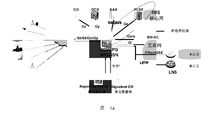
- Figure 1a shows the deployment of the gateway device in the 2G/3G/4G network architecture.
- the service management is performed on the PGW/GGSN, for example, the sensing of all services, the policy matching, and the execution of the accounting and control policies.
- User equipment User Equipment (User In the entire network function division, only the traffic flow template (TFT), the bearer level identifier, and the quality of service (QoS) delivered by the control device of the core network based on the signaling message are supported. And other related information, thereby implementing bearer selection and QoS policies for the uplink service flow.
- TFT traffic flow template
- QoS quality of service
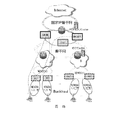
- Deployment schematic gateway user plane shown in FIG. 1b / separation control plane network architecture (e.g., a fifth-generation mobile communication (5 th -Generation, 5G) network architecture) under, centralized deployment backbone network gateways include a serving gateway (Service Gateway, SGW) and the functions of the control plane of the PGW, such as handover of mobile signaling plane anchor points between base stations, inter-operator roaming charging, access signaling processing, dedicated bearer creation signaling processing, address pool allocation User access authentication control, etc.; deploy distributed gateways in the metro core network, including user plane functions of SGW and PGW, such as handover mobile data description, user data forwarding, user charging information collection, charging, and Control strategy execution, business DPI processing, etc.
- SGW Service Gateway
- the centralized gateway/distributed gateway completes the functions of the Serving GateWay (SGW)/PGW.
- SGW Serving GateWay
- PGW Packet Control Function
- the technical problem to be solved by the embodiments of the present invention is to provide a service management method and device thereof, which implements service management of the user equipment, can improve the participation of the user equipment, and improve the management capability of the user equipment.
- a first aspect of the embodiments of the present invention provides a service management method, including:
- the user equipment acquires a communication address of the gateway user plane, and establishes a communication link with the gateway user plane through the communication address;
- the user equipment sends a session connection establishment request message to the gateway user plane through the communication link, where the session connection establishment request message includes authentication information of the gateway terminal module of the user equipment, and the gateway of the user equipment
- the authentication information of the terminal module is used by the gateway user plane to trigger the gateway control plane to request the authentication server to authenticate the gateway terminal module of the user equipment;
- the user equipment performs service management according to the service policy information sent by the gateway user plane through the communication link.
- the user equipment establishes a communication link with the gateway user plane through the communication address of the gateway user plane, so that the user equipment performs the service policy information sent by the gateway user plane when the user equipment is authenticated.
- the service management implements the service management of the user equipment, improves the participation of the user equipment, and improves the management capability of the user equipment.
- the authentication information of the gateway terminal module of the user equipment includes information such as an identifier, a keyword information, and the like of the gateway terminal module of the user equipment, and is used by the authentication server to the gateway terminal of the user equipment.
- the module performs authentication.
- the service policy information includes a current at least one network slice connection policy, where the current at least one network slice connection policy is an initial at least one network slice connection policy or an updated at least one network a slice connection policy, where the network slice connection policy is used to indicate a session connection relationship between the application identifier and the network slice;
- the process of performing service management by the user equipment according to the service policy information sent by the gateway user plane through the communication link is:
- the user equipment acquires an application identifier of the current application
- the user equipment searches for a network slice corresponding to the application identifier of the current application in the current at least one network slice connection policy sent by the gateway user plane through the communication link;
- the user equipment establishes a session connection and performs service access according to the found network slice.
- the possible implementation manner allows the user equipment to independently select the network slice for session connection and service access, reduce the processing pressure of the core network device, and improve the processing capability of the user equipment.
- the current at least one network slice connection policy is the updated at least one network slice connection policy
- the user equipment sends a session connection update response message to the gateway user plane through the communication link, and the session connection update is performed according to the service policy information sent by the gateway user plane through the communication link.
- the response message is used to indicate that the user equipment has updated the initial at least one network slice connection policy, so that the gateway user plane knows the update condition of the user equipment.
- the service policy information includes at least one service charging and control policy, where the service charging and control policy is used to indicate a correspondence between the application identifier and the charging and control policy;
- the process of performing service management by the user equipment according to the service policy information sent by the gateway user plane through the communication link is:
- the user equipment acquires an application identifier of a current application that accesses the data service
- the user equipment searches for the charging and control policy corresponding to the application identifier of the current application in the at least one service charging and control policy sent by the gateway user plane through the communication link;
- the user equipment performs statistics and access control of data traffic according to the found charging and control policy.
- the possible implementation of the user equipment to perform statistics and access control on the data traffic of the current application, and improve the participation and processing capability of the user equipment.
- the user equipment After the user equipment performs service management according to the service policy information sent by the gateway user plane through the communication link, periodically, the user equipment faces the gateway user through the communication link.
- Sending a usage report request message where the usage report request message includes feature attribute information of the user equipment, application usage amount statistics information, and the usage report request message informs the gateway user of usage, for requesting the gateway
- the user plane generates an online or offline bill and feeds back a report confirmation message, where the usage report confirmation message is used to indicate that the gateway user plane has confirmed the application usage statistics.
- the user equipment acquires a communication address of the gateway user plane according to the attach response message sent by the access network gateway, where the attach response message includes a communication address of the gateway user plane, and is obtained according to the attach response message. No need to send a request specifically, it is simple and convenient.
- the user equipment acquires a communication address of the gateway user plane according to the pre-configuration information of the user equipment, where the pre-configuration information is configured by the operator when the user equipment is customized, and is obtained according to the pre-configuration information. Will not change the existing activation process.
- the user equipment acquires the communication address of the gateway user plane according to the configuration mode selected by the user, that is, the user equipment obtains by manual configuration, and does not change the existing activation process.
- the user equipment before the user equipment establishes a communication link with the gateway user plane by using the communication address, detecting a gateway terminal module of the user equipment, rights of the user equipment, and Whether the network operating environment satisfies the preset condition, and if the detection result is yes, establish a communication link with the gateway user plane through the communication address. It is determined by a preset condition whether the user equipment can establish a communication link to ensure the security of the communication link.
- the session connection establishment request message further includes feature attribute information of the user equipment, where the feature attribute information of the user equipment includes a mobile station integrated service digital network number MSISDN and an international mobile subscriber identity code. IMSI for identification of user equipment.
- connection session establishment response message further includes feature attribute information of the user equipment to associate the user equipment with the authentication result.
- the authentication information of the gateway terminal module of the user plane device is encrypted and transmitted in the communication link to prevent tampering and ensure the security of the transmission.
- a second aspect of the embodiments of the present invention provides a service management method, including:
- the gateway user plane receives the session connection establishment request message sent by the user equipment, where the session connection establishment request message includes the authentication information of the gateway terminal module of the user equipment, where the communication link is the user equipment Obtaining a link between the communication address of the gateway user plane and the user plane of the gateway;
- the gateway user sends an authentication request message to the gateway control plane, where the authentication request message includes authentication information of the gateway terminal module of the user equipment, where the authentication request message is used to trigger the gateway control plane to request the authentication.
- the right server authenticates the gateway terminal module of the user equipment;
- the gateway user plane receives the service policy information sent by the gateway control plane, and sends the service policy information to the user equipment by using the communication link,
- the service policy information is used by the user equipment to perform service management according to the service policy information.
- the service policy information is sent to the user equipment through the communication link established with the user equipment, and the user equipment performs service management according to the service policy information, thereby reducing the core network.
- the business management pressure of the device improves the business management capability of the user equipment.
- the service policy information includes a current at least one network slice connection policy, where the current at least one network slice connection policy is an initial at least one network slice connection policy or an updated at least one network
- the slice connection policy is used to indicate the session connection relationship between the application identifier and the network slice, so that the user equipment independently selects the network slice for session connection and service access, reduces the processing pressure of the core network device, and improves the user equipment. Processing capacity.
- the gateway user plane receives the user equipment sending by using the communication link.
- the session connection update response message is used to indicate that the user equipment has updated the initial at least one network slice connection policy to learn the update status of the user equipment.
- the service policy information includes at least one service charging and control policy, where the service charging and control policy is used to indicate a correspondence between the application identifier and the charging and control policy, so as to implement the user.
- the device collects statistics and access control on the data traffic of the current application, and improves the participation and processing capability of the user equipment.
- the gateway user plane receives, by using the communication link, a usage report request message periodically sent by the user equipment, where the usage report request message includes feature attribute information of the user equipment, Applying usage statistics information; generating an online or offline CDR according to the usage report request message and feeding back a usage report confirmation message to the user equipment over the communication link, the usage report confirmation message is used to indicate the gateway user The application usage statistics have been confirmed.
- the session connection establishment request message further includes feature attribute information of the user equipment, and the feature attribute information of the user equipment includes an MSISDN and an IMSI for identifying the user equipment.
- the authentication response message, the connection session establishment response message further includes feature attribute information of the user equipment, and is used to associate the user equipment with the authentication result.
- the authentication information of the gateway terminal module of the user plane device is encrypted and transmitted in the communication link to prevent tampering and ensure the security of the transmission.
- a third aspect of the embodiments of the present invention provides a user equipment, including:
- An obtaining unit configured to obtain a communication address of a gateway user plane
- Establishing a unit configured to establish, by using the communication address, a communication link with the gateway user plane;
- a sending unit configured to send, by using the communication link, a session connection establishment request message to the gateway user plane, where the session connection establishment request message includes authentication information of a gateway terminal module of the user equipment, where the user equipment is The authentication information of the gateway terminal module is used by the gateway user plane to trigger the gateway control plane to request the authentication server to authenticate the gateway terminal module of the user equipment;
- a receiving unit configured to receive, by using the communication link, a session connection establishment response message sent by the gateway user plane, where the session connection establishment response message includes an authentication result;
- the management unit is configured to perform service management according to the service policy information sent by the gateway user plane through the communication link, if the authentication result is successful.
- the user equipment provided by the third aspect of the embodiments of the present invention is used to implement the functions performed by the user equipment in the service management method provided by the first aspect of the embodiments of the present invention.
- a fourth aspect of the embodiments of the present invention provides a gateway user plane, including:
- a receiving unit configured to receive, by using a communication link, a session connection establishment request message sent by the user equipment, where the session connection establishment request message includes authentication information of a gateway terminal module of the user equipment, where the communication link is the user The link between the device and the user plane of the gateway established by the device through the obtained communication address of the gateway user plane;
- a sending unit configured to send an authentication request message to the gateway control plane, where the authentication request message includes authentication information of the gateway terminal module of the user equipment, where the authentication request message is used to trigger the gateway control plane request
- the authentication server authenticates the gateway terminal module of the user equipment
- the receiving unit is further configured to receive an authentication response message sent by the gateway control plane;
- the sending unit is further configured to send a session connection establishment response message to the user equipment by using the communication link, where the authentication response message and the session connection establishment response message include an authentication result;
- the receiving unit is further configured to: if the authentication result is successful, receive the service policy information sent by the gateway control plane;
- the sending unit is further configured to send the service policy information to the user equipment by using the communication link, where the service policy information is used by the user equipment to perform service management according to the service policy information.
- the gateway user plane provided by the fourth aspect of the embodiment of the present invention is used to implement the function performed by the gateway user plane in the service management method provided by the second aspect of the embodiment of the present invention.
- a fifth aspect of the embodiments of the present invention provides another user equipment, including a processor and a transceiver.
- the processor is configured to acquire a communication address of a gateway user plane, and establish a communication link with the gateway user plane by using the communication address;
- the transceiver is configured to send, by using the communication link, a session connection establishment request message to the gateway user plane, where the session connection establishment request message includes authentication information of a gateway terminal module of the user equipment, where the user equipment is The authentication information of the gateway terminal module is used by the gateway user plane to trigger the gateway control plane to request the authentication server to authenticate the gateway terminal module of the user equipment;
- the transceiver is further configured to receive, by using the communication link, a session connection establishment response message sent by the gateway user plane, where the session connection establishment response message includes an authentication result;
- the processor is further configured to perform service management according to the service policy information sent by the gateway user plane through the communication link.
- the user equipment provided by the fifth aspect of the embodiments of the present invention is used to implement the functions performed by the user equipment in the service management method provided by the first aspect of the embodiments of the present invention.
- a sixth aspect of the embodiments of the present invention provides another gateway user plane, including a processor and a transceiver.
- the transceiver is configured to receive, by using a communication link, a session connection establishment request message sent by a user equipment, where the session connection establishment request message includes authentication information of a gateway terminal module of the user equipment, where the communication link is the user The link between the device and the user plane of the gateway established by the device through the obtained communication address of the gateway user plane;
- the transceiver is further configured to send an authentication request message to the gateway control plane, where the authentication request message includes authentication information of the gateway terminal module of the user equipment, where the authentication request message is used to trigger the gateway control
- the surface request authentication server authenticates the gateway terminal module of the user equipment
- the transceiver is further configured to receive an authentication response message sent by the gateway control plane, and send a session connection establishment response message to the user equipment by using the communication link, where the authentication response message, the session connection Establishing a response message including an authentication result;
- the transceiver is further configured to receive the service policy information sent by the gateway control plane, and send the service policy information to the user equipment by using the communication link,
- the service policy information is used by the user equipment to perform service management according to the service policy information.
- the gateway user plane provided by the sixth aspect of the embodiment of the present invention is used to implement the function performed by the gateway user plane in the service management method provided by the second aspect of the embodiment of the present invention.
- the user equipment acquires the communication address of the gateway user plane, establishes a communication link with the gateway user plane, and sends the authentication information of the gateway terminal module carrying the user equipment to the gateway user plane through the communication link.
- the gateway user plane sends an authentication request message to the gateway control plane, which is used to trigger the gateway control plane to request the authentication server to authenticate the gateway terminal module of the user equipment.
- the authentication server authenticates the gateway terminal module of the user equipment, and feeds the authentication result to the gateway control plane; when receiving the authentication result, the gateway control plane carries the authentication result in the authentication response message and sends it to the authentication response message.
- the gateway user plane sends the authentication result to the user equipment in the session connection establishment response message by the gateway user plane; if the authentication result is successful, the gateway control sends the service policy information to the gateway user plane, and the gateway user plane
- the service policy information is sent to the user equipment, and the user equipment performs the business according to the business policy information. Management, enabling users to manage their business equipment, can increase user engagement equipment, improve the user device management capabilities to the business.
- FIG. 1a is a schematic diagram of deployment of a gateway device in a 2G/3G/4G network architecture
- FIG. 1b is a schematic diagram of deployment of a gateway device in a user plane/control plane separated network structure
- FIG. 2 is a schematic structural diagram of a service management system according to an embodiment of the present invention.
- FIG. 3 is a schematic structural diagram of a user equipment according to an embodiment of the present disclosure.
- FIG. 4 is a schematic structural diagram of a gateway user plane according to an embodiment of the present invention.
- FIG. 5 is a schematic diagram of communication of a service management method according to Embodiment 1 of the present invention.
- FIG. 6 is a schematic diagram of communication of a service management method according to Embodiment 2 of the present invention.
- FIG. 7 is a schematic diagram of communication of a service management method according to Embodiment 3 of the present invention.
- FIG. 8 is a schematic diagram of communication of a service management method according to Embodiment 4 of the present invention.
- FIG. 9 is a schematic structural diagram of another user equipment according to an embodiment of the present disclosure.
- FIG. 10 is a schematic structural diagram of another gateway user plane according to an embodiment of the present invention.
- FIG. 2 is a schematic structural diagram of a service management system according to an embodiment of the present invention.
- the service management system includes a user equipment (User Equipment, UE), an access network (Radio Access Network, RAN), and a gateway control.
- Gateway Control Plane (GW-C) Gateway User Plane (GW-U) 1, Gateway User Plane 2, Internet (Internet) and Augmented Reality (AR) servers (Figure 2) Enterprise).
- GW-C Gateway Control Plane
- GW-U Gateway User Plane
- Internet Internet
- AR Augmented Reality
- the UE has a gateway terminal (GW-T) module, and the module can implement functions such as authentication, policy interaction, and statistical information reporting with the GW-U through the data communication link, so as to assist the core network side. Dynamic deployment and selection of future network slices, statistical reporting of application data services, and policy control.
- GW-T gateway terminal
- the access network may be an access network under a 2G/3G/4G network architecture, an access network under a user plane/control plane separation network structure, or an access network under a future communication network architecture.
- the gateway control plane is a gateway control plane function entity
- the gateway user plane is a gateway user plane function entity.
- the GW-C may be a Service Gateway-Control Plane (SGW-C) or a Packet Data Network Gateway-Control Plane (PGW-C), and may also integrate control planes in the core network device.
- SGW-C Service Gateway-Control Plane
- PGW-C Packet Data Network Gateway-Control Plane
- the functions include, for example, the functions of the control planes of the SGW and the PGW; the GW-U may be a Service Gateway-User Plane (SGW-U) or a Packet Data Network Gateway-User Plane (Packet Data Network Gateway-User Plane, PGW-U) can also combine the functions of the user plane in the core network device, for example, the functions of the user plane including the SGW and the PGW.
- GW-C and GW-U can be deployed together or separately. Further, for different application scenarios, the GW-U may be different. For example, the GW-U 1 application shown in FIG. 2 is used to access the Internet, and the GW-U 2 is applied to the scenario of accessing the AR service.
- AR is to use technology to add content on the basis of reality.
- the core technologies used include real object recognition, geographic location, and real-time calculus according to different scenarios.
- the AR server may be different for different types of AR services.
- the UE accesses the Internet through the dotted lines 1 and 2 shown in FIG. 2, the dotted line 1 indicates that the UE establishes a public network service session, and the dotted line 2 indicates that the GW-C notifies the GW-U 1 to establish an Sx bearer context; when the UE accesses the AR service,
- the dashed lines 6 and 7 shown in Fig. 2 are implemented, the broken line 6 indicates that the UE establishes an AR service session, and the dashed line 7 indicates that the GW-C notifies the GW-U 2 to establish an Sx bearer context.
- Sx represents a session connection between GW-C and GW-U. It can be seen that the current UE access service needs to be implemented by GW-C and GW-U.
- the UE may establish a data communication link with the GW-U, specifically, the GW-T module of the UE may establish a data communication link with the GW-U, and the UE establishes the data communication. After the link, the service is directly accessed through the GW-U.
- the solid line 4 indicates that the UE completes the authentication process for the GW-T module through the data communication link; the solid line 3 indicates that the UE accesses the Internet through the GW-U 1; the solid line 5 indicates the GW-U.
- the service policy is delivered to the UE through the data communication link, and the service policy may include a network slice connection policy, a charging and control policy, and the like; the solid line 8 indicates that the UE accesses the AR service through the GW-U 2.
- FIG. 2 may also include a server corresponding to the Internet of Things (IoT), telemedicine, and autopilot, and GW-U.
- IoT Internet of Things
- telemedicine Telemedicine
- autopilot GW-U
- SLAs Service-Level Agreements
- the user equipment in the embodiment of the present invention may be an access terminal, a subscriber unit, a subscriber station, a mobile station, a mobile station, a remote station, a remote terminal, a mobile device, a user terminal, a terminal, a wireless communication device, a user agent, or a user equipment.
- the access terminal may be a cellular phone, a cordless phone, a Session Initiation Protocol (SIP) phone, a Wireless Local Loop (WLL) station, a Personal Digital Assistant (PDA), with wireless communication.
- SIP Session Initiation Protocol
- WLL Wireless Local Loop
- PDA Personal Digital Assistant
- the user equipment in the embodiment of the present invention has a GW-T module, and the module may be a chip or a hardware module designed in the user equipment, or may be a system application installed in the user equipment. If the user device is not root, the application cannot be deleted, as the case may be. In other words, the user equipment in the embodiment of the present invention may be a customized user equipment provided by an operator.
- FIG. 3 is a schematic structural diagram of a user equipment according to an embodiment of the present invention.
- the user equipment 101 includes a processor 1011 and a transceiver 1012.
- other components such as a power supply and a display module, may be included.
- the processor 1011 may be a controller, a central processing unit (CPU), a general-purpose processor, a digital signal processor (DSP), and an application-specific integrated circuit (ASIC).
- FPGA Field Programmable Gate Array
- Processor 1011 may also be a combination of computing functions, such as one or more microprocessor combinations, a combination of a DSP and a microprocessor, and the like.
- the transceiver 1012 is configured to implement communication or data transmission between the user equipment 101 and a network device such as a base station or a satellite, and is used to implement communication or data transmission between the user equipment 101 and other user equipment, and is used in the embodiment of the present invention.
- the transceiver 1012 is used for communication or data transmission between the user equipment 101 and the gateway user plane. If the GW-T module is a chip or a hardware module designed in the user equipment, the user equipment 101 shown in FIG. 3 further includes a GW-T module 1013 for implementing authentication and policy interaction with the gateway user plane.
- the GW-T module 1013 may be integrated in the processor 1011 or the transceiver 1012, or it may be a module that is deployed independently.
- FIG. 4 is a schematic structural diagram of a gateway user plane according to an embodiment of the present invention.
- 102 includes a processor 1021 and a transceiver 1022.
- the processor 1021 is used to implement or perform various exemplary logical blocks, modules and circuits described in connection with embodiments of the present invention.
- the transceiver 1022 is configured to implement communication or data transmission between the gateway user plane 102 and the gateway control plane, user equipment, and other core network devices.
- the gateway user plane 102 includes a communication address (GW-U IP Address for GW-T) for the GW-T module of the user equipment.
- the gateway user plane includes multiple communication addresses, and the GW-U IP Address for GW-T is used.
- the data communication link is established with the GW-T module of the user equipment, so that the gateway user plane 102 sends the service policy information to the user equipment.
- the schematic diagram of the gateway user plane shown in FIG. 4 may also be a schematic structural diagram of the gateway control plane.
- the embodiment of the present invention further relates to an authentication server, that is, an AAA server, for authenticating the GW-T module of the user equipment.
- FIG. 5 to FIG. 8 are introduced from the perspective of user equipment and gateway user interaction.
- the embodiment shown in FIG. 5 is a general introduction to a pair of service management methods, and the second embodiment and the third embodiment shown in FIG. 6 and FIG. 7 describe the network slice connection of the AR service, and FIG. 8
- the fourth embodiment shows the charging and control of the data service.
- FIG. 5 is a schematic diagram of communication of a service management method according to Embodiment 1 of the present invention, where the method includes but is not limited to the following steps:
- Step S101 The user equipment acquires a communication address of the gateway user plane.
- the user equipment before acquiring the communication address of the gateway user plane, the user equipment initiates an activation request message, and initiates activation according to the process defined in the 3GPP standard document 23401.
- the specific process of initiating the activation request message is: the UE sends an attach request to the RAN; when the RAN receives the Attach Request, it sends a Mobility Management Entity (MME) to the Mobility Management Entity (MME).
- MME Mobility Management Entity
- MME Mobility Management Entity
- Sending an Attach Request when receiving the Attach Request, the MME sends a Create Session Request to the SGW-C; when receiving the Create Session Request, the SGW-C sends a Create Session Request to the PGW-C; PGW-C Upon receiving the Create Session Request, the SGW-C sends a Create Session Response to the SGW-C; when receiving the Create Session Response, the SGW-C sends a Create Session Response to the MME; when the MME receives the Create Session Response, the MME The RAN sends an Attach Accept. When the RAN receives the Attach Accept, it sends an Attach Accept to the UE to complete the activation.
- the SGW-C establishes the SGW-C and the SGW by sending an Sx Session Establishment Request to the SGW-U and an Sx Session Establishment Response sent by the SGW-U to the SGW-C.
- the Sx session connection between Us can establish an Sx session connection between PGW-C and PGW-U.
- the MME sends a Create Session Request to the GW-C; when receiving the Create Session Request, the GW-C sends a Create Session Response to the MME; the GW-C can also establish a GW-U with the GW-U.
- the connection between the Sx sessions are examples of the Sx sessions.
- the user equipment acquires a communication address of a gateway user plane according to an attach response message sent by the access network gateway, where the attach response message includes a communication address of the gateway user plane. That is, the user equipment obtains the communication address of the gateway user plane through the Attach Accept sent by the RAN, specifically, obtains the GW-U IP Address for GW-T.
- the Create Session Response sent by the PGW-C to the SGW-C carries the GW-U IP Address for GW-T, and the GW-U can be represented by adding a cell to the Create Session Response.
- the Create Session Response sent by the SGW-C to the MME carries the GW-U IP Address for GW-T
- the Attach Accept sent by the MME to the RAN carries the GW-U IP Address for GW-T
- the UE sends the GW-U IP Address for GW-T in the Attach Accept, so that the UE obtains the GW-U IP Address for GW-T through the Attach Accept sent by the RAN.
- the user equipment acquires a communication address of a gateway user plane according to the pre-configuration information of the user equipment.
- the pre-configuration information includes a communication address of the gateway user plane, and specifically includes a GW-U IP Address for GW-T.
- the pre-configuration information may be configured by the operator when the user equipment is customized, or may be configured by the manufacturer of the user equipment, and may also be configured by the system of the user equipment, which is not limited herein.
- the user equipment acquires a communication address of a gateway user plane according to a configuration mode selected by the user.
- the user equipment provides several configurations for the user, and obtains the GW-U IP Address for GW-T according to the configuration mode selected by the user.
- Step S102 The user equipment establishes a communication link with the gateway user plane.
- the user equipment may establish a communication link with the gateway user plane, where the communication link is a data communication link, and the gateway may be used for the gateway.
- the user sends service policy information to the user equipment, and the user equipment sends a usage report request message or the like to the gateway user plane.
- the communication link may encrypt the transmitted content, or the communication link transmits the encrypted content.
- the user equipment Before establishing the communication link, the user equipment detects whether the gateway terminal module of the user equipment, the authority of the user equipment, and the network running environment meet the preset condition, and if the detection result is yes, establish The communication link.
- the preset conditions include that the UE has a GW-T module, the UE is not rooted, the operation authority has been acquired, and the network running environment is secure. If the user equipment does not have the gateway terminal module, the user equipment is rooted, the operation authority is not acquired, and the network operating environment is insecure, it is determined that the preset condition is not met.
- the maximum privilege of the UE being changed by the root is changed.
- the root privilege of the UE is the same as that of the factory. The highest privilege is not changed.
- Obtaining the operation authority means that the UE is operable and can be used normally.
- the communication link is a Hyper Text Transfer Protocol over Secure Socket Layer (HTTPS) transmission channel
- HTTPS Hyper Text Transfer Protocol over Secure Socket Layer
- the gateway user plane decrypts the preset key by receiving the request, and sends an HTTPS connection response to the user equipment, thereby implementing the user equipment and the The establishment of a communication link between the user planes of the gateway.
- HTTPS Hyper Text Transfer Protocol over Secure Socket Layer
- the communication link is another Secure Sockets Layer (SSL) transmission channel
- the user equipment initiates a connection request with the GW-U IP Address for GW-T by using a preset key.
- the gateway user plane decrypts the preset key and sends a connection response to the user equipment, so as to implement a communication chain between the user equipment and the gateway user plane. The establishment of the road.
- SSL Secure Sockets Layer
- HTTPS transmission channel and SSL transmission channel are safe and reliable transmission channels, and other safe and reliable transmission channels can also be adopted.
- Step S103 The user equipment sends a session connection establishment request message to the gateway user plane through the communication link, where the session connection establishment request message includes authentication information of the gateway terminal module of the user equipment;
- the user equipment sends a session connection establishment request message (Session Connection Create Request) to the gateway user plane through the communication link, where the session connection establishment request message includes a reference of the gateway terminal module of the user equipment.
- the authentication information of the gateway terminal module of the user equipment includes information such as an identifier of the GW-T module, keyword information (authorization/authentication key), and the like, where the gateway user plane triggers the gateway control plane to request the authentication server.
- the GW-T module of the user equipment performs authentication.
- the session connection establishment request message further includes feature attribute information of the user equipment, and the feature attribute information of the user equipment includes a Mobile Subscriber International Integrated Service Digital Network/Public Switched Telephone Network number (MSISDN). And information such as the International Mobile Subscriber Identification Number (IMSI).
- MSISDN Mobile Subscriber International Integrated Service Digital Network/Public Switched Telephone Network number
- IMSI International Mobile Subscriber Identification Number
- the authentication information of the gateway terminal module of the user equipment may be the binding of the feature attribute information of the user equipment, and whether the binding is set by the operator.
- the user equipment encrypts the session connection establishment request message by using the preset key, or uses the preset key to authenticate information of the gateway terminal module of the user equipment,
- the feature attribute information of the user equipment is encrypted to ensure transmission security.
- Step S104 The gateway user plane receives the session connection establishment request message through the communication link;
- the gateway user plane receives the session connection establishment request message through the communication link, parses the session connection establishment request message, and acquires authentication information of the gateway terminal module of the user equipment. If the session connection establishment request message is encrypted by using the preset key, the gateway user plane decrypts the session connection establishment request message by using the preset key, and parses the user equipment. The authentication information of the gateway terminal module; if the session connection establishment request message further includes the feature attribute information of the user equipment, parsing the same. If the authentication information of the gateway terminal module of the user equipment and the feature attribute information of the user equipment are encrypted by using the preset key, the gateway user plane decrypts by using the preset key. Analysis.
- Step S105 The gateway user sends a first authentication request message to the gateway control plane, where the first authentication request message includes authentication information of the gateway terminal module of the user equipment;
- the first authentication request message further includes a session identifier, where the session identifier is a session identifier of the Sx session, and is used to identify the Sx.
- the gateway user plane and gateway control plane of the session In the system architecture shown in FIG. 2, there may be multiple gateway user planes and multiple gateway control planes, and the Sx session identifier is used to distinguish different gateway user planes connected to the gateway control plane.
- the first authentication request message further includes feature attribute information of the user equipment.
- Step S106 The gateway control plane receives the first authentication request message.
- the gateway control plane receives the first authentication request message, and parses the first authentication request message.
- Step S107 The gateway control sends a second authentication request message to the authentication server, where the second authentication request message includes authentication information of the gateway terminal module of the user equipment;
- the gateway control plane constructs a second authentication request message according to the parsing result, and sends the second authentication request message to the authentication server, where the second authentication request message includes a gateway terminal of the user equipment. Authentication information of the module. And in the case that the gateway user plane is deployed separately from the gateway control plane, the second authentication request message further includes the session identifier.
- the second authentication request message further includes feature attribute information of the user equipment.
- Step S108 The authentication server receives the second authentication request message, and performs authentication on the gateway terminal module of the user equipment.
- the authentication server receives the second authentication request message, and parses the second authentication request message to obtain authentication information of the gateway terminal module of the user equipment, according to the user equipment.
- the authentication information of the gateway terminal module authenticates the gateway terminal module of the user equipment.
- Step S109 The authentication server sends a second authentication response message to the gateway control plane, where the second authentication response message includes an authentication result.
- the authentication server authenticates the gateway terminal module of the user equipment to obtain an authentication result, where the authentication result is an authentication success or an authentication failure. After obtaining the authentication result, the authentication server sends a second authentication response message to the gateway control plane, where the second authentication response message includes the authentication result.
- the second authentication response message further includes feature attribute information of the user equipment.
- Step S110 The gateway control plane receives the second authentication response message.
- the gateway control plane receives the second authentication response message sent by the authentication server.
- Step S111 The gateway control sends a first authentication response message to the gateway user plane, where the first authentication response message includes the authentication result;
- the gateway control plane sends a first authentication response message carrying the authentication result to the gateway user plane, regardless of whether the authentication succeeds or the authentication fails.
- the first authentication response message further includes feature attribute information of the user equipment.
- Step S112 The gateway user plane receives the first authentication response message.
- the gateway user plane receives the first authentication response message sent by the gateway control plane by using an Sx session connection.
- Step S113 The gateway user sends a session connection establishment response message to the user equipment, where the session connection establishment response message includes the authentication result;
- the gateway user plane sends a session connection establishment response message to the user equipment by using the communication link, where the session connection establishment response message includes the authentication result, and whether the user equipment is authenticated.
- the authentication result or the session connection establishment response message is encrypted and sent.
- the session connection establishment response message further includes feature attribute information of the user equipment.
- Step S114 The user equipment receives the session connection establishment response message
- the user equipment receives the session connection establishment response message sent by the gateway user plane through the communication link.
- Step S115 If the authentication result is successful, the gateway control sends service policy information to the gateway user plane.
- the gateway control plane sends the service policy information to the gateway user plane.
- the service policy information may be carried in the first authentication response message, or may not be carried in the first authentication response message, that is, after the first authentication response message is sent, the service is sent.
- Strategy information may be carried in the first authentication response message, or may not be carried in the first authentication response message, that is, after the first authentication response message is sent, the service is sent.
- the service policy information includes a current at least one network slice connection policy, where the current at least one network slice connection policy is an initial at least one network slice connection policy or an updated at least one network
- the slice connection policy is used to indicate a session connection relationship between the application identifier and the network slice.
- the network slice connection policy includes the correspondence between the application identifier, the access type, and the access point name (APN), and reflects the session connection relationship between the application identifier and the network slice, that is, which application is used. Which access point is connected to the access type.
- the service policy information includes at least one service charging and control policy, where the service charging and control policy is used to indicate a correspondence between the application identifier and the charging and control policy.
- the service charging and control policy includes the correspondence between the application identifier and the service identifier, the rate group, and the quality of service (QoS), and reflects the correspondence between the application identifier and the charging and control policy, that is, Which application is used for billing and control.
- the two types of policies included in the foregoing service policy information are not limited to the first embodiment of the present invention.
- the foregoing service policy information may also include other types of policies.
- step S115 can be performed simultaneously with step S111, that is, in the case that the gateway terminal module of the user equipment passes the authentication, the gateway control simultaneously sends the first authentication response to the gateway user plane.
- the message and the service policy information, or the first control response message sent by the gateway to the user plane of the gateway simultaneously carries the authentication result and the service policy information.
- Step S115 may also be performed after step S111, that is, the authentication response message is sent first, and the service policy information is sent when the gateway terminal module of the user equipment passes the authentication.
- Step S116 The gateway user plane receives the service policy information.
- the gateway user plane receives the service policy information sent by the gateway control plane, and caches the service policy information.
- step S116 can be performed simultaneously with step S112.
- Step S117 The gateway user sends the service policy information to the user equipment.
- the gateway user plane sends the service policy information to the user equipment by using the communication link.
- the service policy information is encrypted and sent.
- step S117 can be performed simultaneously with step S113.
- Step S118 The user equipment receives the service policy information.
- the user equipment receives the service policy information sent by the gateway user plane.
- step S118 can be performed simultaneously with step S114.
- Step S119 The user equipment performs service management according to the service policy information.
- the user equipment acquires an application identifier of a current application, and searches for the current at least one network slice connection policy sent by the gateway user plane through the communication link.
- the application identifier of the application identifies a corresponding network slice, and establishes a session connection and performs service access according to the found network slice.
- the current application of the user equipment is an application identifier of the Internet of Things
- the corresponding network slice that is, the corresponding access type and the access point name
- the type initiates a session connection to the access point name and makes a business access after establishing a session connection.
- the possible implementation manner allows the UE to independently select the network slice for session connection and service access, reduce the processing pressure of the core network device, and improve the processing capability of the UE.
- the user equipment acquires an application identifier of a current application that accesses a data service, and is in the at least one service charging and control policy sent by the gateway user plane through the communication link.
- the billing and control policy corresponding to the application identifier of the current application is searched, and the data traffic statistics and access control are performed according to the found billing and control policy.
- the access control includes QoS control, and a re-recording (Remark) of a differentiated service code point (DSCP) value for the uplink service packet.
- DSCP differentiated service code point
- the current application of the user equipment accessing the data service is a certain social application, obtaining an application identifier of the social application, and searching for the billing corresponding to the application identifier of the social application in the at least one service charging and control policy. And controlling the policy, and performing data traffic statistics and access control according to the charging and control policy, that is, counting how much traffic is used by the social application, and controlling according to usage.
- the user equipment periodically sends a usage report request message to the gateway user plane through the communication link, where the usage report request message includes feature attribute information of the user equipment, and application usage statistics.
- the usage report request message is used to request the gateway user plane to generate an online or offline CDR and feed back a usage report confirmation message, where the usage report confirmation message is used to indicate that the gateway user plane has confirmed the application usage statistics.
- the application usage statistics include application usage statistics, service identifiers, and rate groups.
- the user equipment When the service policy information includes other types of policies, the user equipment performs corresponding service management according to a specific policy.
- the user equipment acquires the communication address of the gateway user plane, establishes a communication link with the gateway user plane, and sends a gateway terminal module carrying the user equipment to the gateway user plane through the communication link.
- the session connection establishment request message of the authentication information when receiving the session connection establishment request message, the gateway user plane sends an authentication request message to the gateway control plane, which is used to trigger the gateway control plane to request the authentication server to the gateway terminal of the user equipment.
- the module performs authentication; the authentication server authenticates the gateway terminal module of the user equipment, and feeds the authentication result to the gateway control plane; when receiving the authentication result, the gateway control plane carries the authentication result in the authentication response.
- the message is sent to the gateway user plane, and the gateway user plane carries the authentication result in the session connection establishment response message and sends the message to the user equipment. If the authentication result is successful, the gateway controls the gateway user plane to send the service policy information.
- the service policy information is sent to the user equipment by the gateway user plane, and the user equipment is based on the service policy information. Line of business management, enabling the user equipment to manage their business can increase user engagement equipment, improve the user device management capabilities to the business.
- FIG. 6 is a schematic diagram of communication of a service management method according to Embodiment 2 of the present invention.
- the AAA shown in Embodiment 2 is an authentication server, and the method includes but is not limited to the following steps:
- Step S201 The UE acquires GW-U IP Address for GW-T;
- Step S202 The UE establishes a communication link with the GW-U.
- Step S203 The UE sends a session connection establishment request message (authentication information of the GW-T of the UE) to the GW-U;
- the session connection establishment request message further includes feature attribute information of the UE, and the feature attribute information of the UE includes information such as an MSISDN, an IMSI, and keyword information.
- Step S204 The GW-U receives the session connection establishment request message.
- Step S205 The GW-U sends a first authentication request message (authentication information of the GW-T of the UE) to the GW-C;
- the first authentication request message further includes feature attribute information of the UE.
- Step S206 The GW-C receives the first authentication request message.
- Step S207 The GW-C sends a second authentication request message (authentication information of the GW-T of the UE) to the AAA;
- the second authentication request message further includes feature attribute information of the UE.
- Step S208 The AAA receives the second authentication request message, and performs authentication on the GW-T module of the UE.
- Step S209 The AAA sends a second authentication response message (authentication result) to the GW-C;
- the second authentication response message further includes feature attribute information of the UE.
- Step S210 The GW-C receives the second authentication response message.
- Step S211 The GW-C sends a first authentication response message (authentication result) to the GW-U.
- the first authentication response message further includes feature attribute information of the UE.
- Step S212 The GW-U receives the first authentication response message.
- Step S213 The GW-U sends a session connection establishment response message (authentication result) to the UE;
- the session connection establishment response message further includes feature attribute information of the UE.
- Step S214 The UE receives a session connection establishment response message.
- Step S215 If the authentication result is successful, the GW-C sends at least one network slice connection policy to the GW-U.
- the at least one network slice connection policy is the initial at least one network slice connection policy in the first embodiment.
- the network slice connection policy is used to indicate the session connection relationship between the application identifier and the network slice.
- the network slice connection policy includes the correspondence between the application identifier, the access type, and the APN, and reflects the session connection relationship between the application identifier and the network slice, that is, which application is connected to which access point.
- Step S216 The GW-U receives at least one network slice connection policy.
- Step S217 The GW-U sends at least one network slice connection policy to the UE.
- Step S218 The UE receives at least one network slice connection policy.
- the UE receives at least one network slice connection policy and caches.
- Step S219 The UE acquires an application identifier of the current application.
- the current application is an SLA application, such as an AR application, an Internet of Things application, a telemedicine application, and an autopilot application, which is currently running by the UE.
- the UE acquires an application identifier of the current application, that is, determines an application identifier of the running application.
- the current number of apps may be one or more, depending on the situation.
- Step S220 The UE searches for a network slice corresponding to the application identifier of the current application in at least one network slice connection policy.
- the UE searches for the network slice corresponding to the application identifier of the current application in the at least one network slice connection policy, that is, determines the access type and the APN corresponding to the current application identifier.
- Step S221 The UE establishes a session connection according to the found network slice and performs service access.
- the UE establishes a session connection with the APN and performs service access to the APN according to the access type and the APN corresponding to the current application.
- the UE selects a network slice corresponding to the application identifier of the current application to establish a session connection and performs service access according to at least one network slice connection policy sent by the GW-U, so as to implement dynamic and autonomous network segmentation of the UE. Connection strategy to improve UE participation and processing power.
- FIG. 7 is a schematic diagram of communication of a service management method according to Embodiment 3 of the present invention.
- the application scenario of the third embodiment is that the UE has obtained the initial at least one network slice connection policy, GW-C. Based on the adjustment of the network slice deployment architecture, the initial at least one network slice connection policy is updated.
- the method includes but is not limited to the following steps:
- Step S301 The GW-C updates the initial at least one network slice connection policy to obtain the updated at least one network slice connection policy.
- GW-C adjusts the network slice corresponding to some application identifiers.
- Step S302 The GW-C sends a session modification request message to the GW-U (at least one network slice connection policy after the update);
- the session update modification message (Sx Session Modification Request) further includes feature attribute information of the UE.
- Step S303 The GW-U receives the session modification request message.
- Step S304 The GW-U sends a session connection update request message (at least one network slice connection policy after the update) to the UE;
- the session connection update request message (Session Connection Update Request) further includes feature attribute information and an authentication result of the UE.
- Step S305 The UE receives a session connection update request message.
- the UE receives the session connection update request message, and caches the updated at least one network slice connection policy.
- Step S306 The UE sends a session connection update response message to the GW-U.
- the session connection update response message (Session Connection Update Response) is used to notify the GW-U that the UE has updated the initial at least one network slice connection policy.
- Step S307 The UE acquires an application identifier of the current application.
- Step S308 The UE searches for the network slice corresponding to the application identifier of the current application by using the updated at least one network slice connection policy.
- Step S309 The UE establishes a session connection according to the found network slice and performs service access.
- the updated at least one network slice connection policy is sent to the GW-U, and is sent by the GW-U to the UE.
- the UE performs service management according to the updated at least one network slice connection policy.
- FIG. 8 is a schematic diagram of communication of a service management method according to Embodiment 4 of the present invention, where the method includes but is not limited to the following steps:
- Step S401 The UE acquires GW-U IP Address for GW-T;
- Step S402 The UE establishes a communication link with the GW-U.
- Step S403 The UE sends a session connection establishment request message (authentication information of the GW-T of the UE) to the GW-U.
- Step S404 The GW-U receives the session connection establishment request message.
- Step S405 The GW-U sends a first authentication request message (authentication information of the GW-T of the UE) to the GW-C;
- Step S406 The GW-C receives the first authentication request message.
- Step S407 The GW-C sends a second authentication request message (a session identifier of the authentication information of the GW-T of the UE) to the AAA;
- Step S408 The AAA receives the second authentication request message.
- Step S409 The AAA sends a second authentication response message (authentication result) to the GW-C;
- Step S410 The GW-C receives the second authentication response message.
- Step S411 The GW-C sends a first authentication response message (authentication result) to the GW-U;
- Step S412 The GW-U receives the first authentication response message.
- Step S413 The GW-U sends a session connection establishment response message (authentication result) to the UE;
- Step S414 The UE receives a session connection establishment response message.
- Step S415 If the authentication result is successful, the GW-C sends at least one service charging and control policy to the GW-U.
- the service charging and control policy includes a correspondence between the application identifier and the service identifier, the rate group, and the QoS, and reflects the correspondence between the application identifier and the charging and control policy, that is, which application is used. Policies for billing and control.
- Step S416 The GW-U receives at least one service charging and control policy.
- Step S417 The GW-U sends at least one service charging and control policy to the UE.
- Step S418 The UE receives at least one service charging and control policy.
- Step S419 The UE acquires an application identifier of the current application that accesses the data service.
- the current application of the access data service is an application that the UE is currently running and needs to connect to the network or use data traffic, and may include a social application, a shopping application, an audio application, a video application, and the like.
- Step S420 The UE searches for the charging and control policy corresponding to the application identifier of the current application in at least one service charging and control policy.
- Step S421 The UE performs data traffic statistics and access control according to the found charging and control policy.
- the GW-U periodically sends a usage report request message, where the usage report request message includes feature attribute information of the UE and application usage statistics.
- the usage report request message is used to request the GW-U to generate an online or offline CDR for the UE and to feed back the usage report acknowledgment message, the usage report acknowledgment message is used to indicate that the GW-U has confirmed the application usage statistics.
- the application usage statistics include application usage statistics, service identifiers, and rate groups.
- the UE determines the service charging and control policy corresponding to the application identifier of the current application according to the at least one service charging and control policy sent by the GW-U, and performs statistics and access control of the data traffic.
- the UE performs statistics and access control on data traffic, and improves UE participation and processing capability.
- FIG. 5 to FIG. 8 describes the case where the gateway user plane and the gateway control plane are separately deployed. If the gateway user plane and the gateway control plane are deployed together, the gateway user plane and the gateway control plane are used. The interaction process between the two can be an internal operation of the unified deployment device, and the portion shown by the dotted line can not be embodied in the communication diagram.
- FIG. 9 is a schematic structural diagram of another user equipment according to an embodiment of the present invention.
- the user equipment 501 shown in FIG. 9 includes an obtaining unit 5011, an establishing unit 5012, a sending unit 5013, a receiving unit 5014, and a management unit. 5015.
- the obtaining unit 5011 is configured to obtain a communication address of the gateway user plane.
- An establishing unit 5012 configured to establish, by using the communication address, a communication link with the gateway user plane;
- a sending unit 5013 configured to send, by using the communication link, a session connection establishment request message to the gateway user plane, where the session connection establishment request message includes authentication information of a gateway terminal module of the user equipment, where the user equipment is The authentication information of the gateway terminal module is used by the gateway user plane to trigger the gateway control plane to request the authentication server to authenticate the gateway terminal module of the user equipment;
- the receiving unit 5014 is configured to receive, by using the communications link, a session connection setup response message sent by the gateway user plane, where the session connection setup response message includes an authentication result;
- the management unit 5015 is configured to perform service management according to the service policy information sent by the gateway user plane through the communication link, if the authentication result is successful.
- the obtaining unit 5011 is configured to perform step S101 in the first embodiment shown in FIG. 5; the establishing unit 5012 is configured to perform step S102 in the first embodiment shown in FIG. 5; the sending unit 5013 Step S103 for performing the first embodiment shown in FIG. 5; the receiving unit 5014 is configured to execute steps S114 and S118 in the first embodiment shown in FIG. 5; the management unit 5015 is configured to execute the method shown in FIG. Step S119 in the first embodiment.
- the acquiring unit 5011, the establishing unit 5012, and the managing unit 5015 may be the processor 1011 of the user equipment shown in FIG. 3; the sending unit 5013 and the receiving unit 5014 may be the user equipment shown in FIG. Transceiver 1012.
- FIG. 10 is a schematic structural diagram of another gateway user plane according to an embodiment of the present invention.
- the gateway user plane 601 shown in FIG. 10 includes a receiving unit 6011 and a sending unit 6012.
- the receiving unit 6011 is configured to receive, by using a communication link, a session connection establishment request message sent by the user equipment, where the session connection establishment request message includes authentication information of the gateway terminal module of the user equipment, where the communication link is a link established by the user equipment with the gateway user plane established by the obtained communication address of the gateway user plane;
- the sending unit 6012 is configured to send an authentication request message to the gateway control plane, where the authentication request message includes authentication information of the gateway terminal module of the user equipment, where the authentication request message is used to trigger the gateway control plane. Requesting an authentication server to authenticate the gateway terminal module of the user equipment;
- the receiving unit 6011 is further configured to receive an authentication response message sent by the gateway control plane;
- the sending unit 6012 is further configured to send a session connection establishment response message to the user equipment by using the communication link, where the authentication response message and the session connection establishment response message include an authentication result;
- the receiving unit 6011 is further configured to: if the authentication result is successful, receive the service policy information sent by the gateway control plane;
- the sending unit 6012 is further configured to send the service policy information to the user equipment by using the communication link, where the service policy information is used by the user equipment to perform service management according to the service policy information.
- the receiving unit 6011 is configured to perform steps S104, S112, and S116 in the first embodiment shown in FIG. 5;
- the sending unit 6012 is configured to perform steps S105 and S113 in the first embodiment shown in FIG. , S117.
- the receiving unit 6011 and the sending unit 6012 may be the transceiver 1022 of the gateway user plane shown in FIG.
- the steps of the method or algorithm described in connection with the disclosure of the embodiments of the present invention may be implemented in a hardware manner, or may be implemented by a processor executing software instructions.
- the software instructions may be composed of corresponding software modules, which may be stored in a random access memory (RAM), a flash memory, a read only memory (ROM), an erasable programmable read only memory ( Erasable Programmable ROM (EPROM), Electrically Erasable Programmable Read Only Memory (EEPROM), registers, hard disk, removable hard disk, read-only optical disk (CD-ROM) or any other form of storage medium known in the art.
- An exemplary storage medium is coupled to the processor to enable the processor to read information from, and write information to, the storage medium.
- the storage medium can also be an integral part of the processor.
- the processor and the storage medium can be located in an ASIC.
- the ASIC can be located in the first management unit or the second management unit.
- the processor and the storage medium may also exist as discrete components in the first management unit or the second management unit.
- the functions described in the embodiments of the present invention may be implemented in hardware, software, firmware, or any combination thereof.
- the functions may be stored in a computer readable medium or transmitted as one or more instructions or code on a computer readable medium.
- Computer readable media includes both computer storage media and communication media including any medium that facilitates transfer of a computer program from one location to another.
- a storage medium may be any available media that can be accessed by a general purpose or special purpose computer.
Landscapes
- Engineering & Computer Science (AREA)
- Computer Networks & Wireless Communication (AREA)
- Signal Processing (AREA)
- Computer Security & Cryptography (AREA)
- Business, Economics & Management (AREA)
- Computer Hardware Design (AREA)
- Computing Systems (AREA)
- General Engineering & Computer Science (AREA)
- Power Engineering (AREA)
- General Business, Economics & Management (AREA)
- Multimedia (AREA)
- Accounting & Taxation (AREA)
- Mobile Radio Communication Systems (AREA)
Abstract
Description
Claims (36)
- 一种业务管理方法,其特征在于,包括:用户设备获取网关用户面的通信地址,通过所述通信地址建立与所述网关用户面之间的通信链路;所述用户设备通过所述通信链路向所述网关用户面发送会话连接建立请求消息,所述会话连接建立请求消息包括所述用户设备的网关终端模块的鉴权信息,所述用户设备的网关终端模块的鉴权信息用于所述网关用户面触发网关控制面请求鉴权服务器对所述用户设备的网关终端模块进行鉴权;所述用户设备通过所述通信链路接收所述网关用户面发送的会话连接建立响应消息,所述会话连接建立响应消息包括鉴权结果;若所述鉴权结果为鉴权成功,则所述用户设备根据所述网关用户面通过所述通信链路发送的业务策略信息进行业务管理。
- 如权利要求1所述的方法,其特征在于,所述业务策略信息包括当前的至少一个网络切片连接策略,所述当前的至少一个网络切片连接策略为初始的至少一个网络切片连接策略或更新后的至少一个网络切片连接策略,网络切片连接策略用于指示应用标识与网络切片之间的会话连接关系;所述用户设备根据所述网关用户面通过所述通信链路发送的业务策略信息进行业务管理,包括:所述用户设备获取当前应用的应用标识;所述用户设备在所述网关用户面通过所述通信链路发送的所述当前的至少一个网络切片连接策略中查找所述当前应用的应用标识对应的网络切片;所述用户设备根据查找到的所述网络切片建立会话连接并进行业务访问。
- 如权利要求2所述的方法,其特征在于,所述当前的至少一个网络切片连接策略为所述更新后的至少一个网络切片连接策略;所述用户设备根据所述网关用户面通过所述通信链路发送的业务策略信息进行业务管理之前,还包括:所述用户设备通过所述通信链路向所述网关用户面发送会话连接更新响应消息,所述会话连接更新响应消息用于指示所述用户设备已更新所述初始的至少一个网络切片连接策略。
- 如权利要求1所述的方法,其特征在于,所述业务策略信息包括至少一个业务计费与控制策略,业务计费与控制策略用于指示应用标识与计费与控制策略之间的对应关系;所述用户设备根据所述网关用户面通过所述通信链路发送的业务策略信息进行业务管理,包括:所述用户设备获取访问数据业务的当前应用的应用标识;所述用户设备在所述网关用户面通过所述通信链路发送的所述至少一个业务计费与控制策略中查找所述当前应用的应用标识对应的计费与控制策略;所述用户设备根据查找到的所述计费与控制策略进行数据流量的统计和访问控制。
- 如权利要求4所述的方法,其特征在于,所述用户设备根据所述网关用户面通过所述通信链路发送的业务策略信息进行业务管理之后,还包括:所述用户设备通过所述通信链路周期性地向所述网关用户面发送使用报告请求消息,所述使用报告请求消息包括所述用户设备的特征属性信息、应用使用量统计信息,所述使用报告请求消息用于请求所述网关用户面生成在线或离线话单并反馈使用报告确认消息,所述使用报告确认消息用于指示所述网关用户面已确认所述应用使用量统计信息。
- 如权利要求1所述的方法,其特征在于,所述用户设备获取网关用户面的通信地址,包括:用户设备根据接入网网关发送的附着响应消息获取网关用户面的通信地址,所述附着响应消息包括所述网关用户面的通信地址;或,用户设备根据所述用户设备的预配置信息获取网关用户面的通信地址;或,用户设备根据用户选择的配置方式获取网关用户面的通信地址。
- 如权利要求1所述的方法,其特征在于,所述用户设备通过所述通信地址建立与所述网关用户面之间的通信链路之前,还包括:所述用户设备检测所述用户设备的网关终端模块、所述用户设备的权限以及网络运行环境是否满足预设条件;若检测结果为是,则所述用户设备执行通过所述通信地址建立与所述网关用户面之间的通信链路的步骤。
- 如权利要求1-7任一项所述的方法,其特征在于,所述会话连接建立请求消息还包括所述用户设备的特征属性信息,所述用户设备的特征属性信息包括移动台综合业务数字网号码MSISDN和国际移动用户识别码IMSI。
- 如权利要求1-8任一项所述的方法,其特征在于,所述连接会话建立响应消息还包括所述用户设备的特征属性信息。
- 如权利要求1-9任一项所述的方法,其特征在于,所述用户面设备的网关终端模块的鉴权信息、所述鉴权结果、所述业务策略信息、所述用户设备的特征属性信息以及所述应用使用量统计信息在所述通信链路中加密传输。
- 一种业务管理方法,其特征在于,包括:网关用户面通过通信链路接收用户设备发送的会话连接建立请求消息,所述会话连接建立请求消息包括所述用户设备的网关终端模块的鉴权信息,所述通信链路为所述用户设备通过获取的网关用户面的通信地址建立的与所述网关用户面之间的链路;所述网关用户面向网关控制面发送鉴权请求消息,所述鉴权请求消息包括所述用户设备的网关终端模块的鉴权信息,所述鉴权请求消息用于触发所述网关控制面请求鉴权服务器对所述用户设备的网关终端模块进行鉴权;所述网关用户面接收所述网关控制面发送的鉴权响应消息,并通过所述通信链路向所述用户设备发送会话连接建立响应消息,所述鉴权响应消息、所述会话连接建立响应消息包括鉴权结果;若所述鉴权结果为鉴权成功,则所述网关用户面接收所述网关控制面发送的业务策略信息,并通过所述通信链路向所述用户设备发送所述业务策略信息,所述业务策略信息用于所述用户设备根据所述业务策略信息进行业务管理。
- 如权利要求11所述的方法,其特征在于,所述业务策略信息包括当前的至少一个网络切片连接策略,所述当前的至少一个网络切片连接策略为初始的至少一个网络切片连接策略或更新后的至少一个网络切片连接策略,网络切片连接策略用于指示应用标识与网络切片 之间的会话连接关系。
- 如权利要求12所述的方法,其特征在于,所述当前的至少一个网络切片连接策略为所述更新后的至少一个网络切片连接策略;所述方法还包括:所述网关用户面通过所述通信链路接收所述用户设备发送的会话连接更新响应消息,所述会话连接更新响应消息用于指示所述用户设备已更新所述初始的至少一个网络切片连接策略。
- 如权利要求11所述的方法,其特征在于,所述业务策略信息包括至少一个业务计费与控制策略,业务计费与控制策略用于指示应用标识与计费与控制策略之间的对应关系。
- 如权利要求14所述的方法,其特征在于,所述方法还包括:所述网关用户面通过所述通信链路接收所述用户设备周期性发送的使用报告请求消息,所述使用报告请求消息包括所述用户设备的特征属性信息、应用使用量统计信息;所述网关用户面根据所述使用报告请求消息生成在线或离线话单并通过所述通信链路向所述用户设备反馈使用报告确认消息,所述使用报告确认消息用于指示所述网关用户面已确认所述应用使用量统计信息。
- 如权利要求11-15任一项所述的方法,其特征在于,所述会话连接建立请求消息还包括所述用户设备的特征属性信息,所述用户设备的特征属性信息包括MSISDN和IMSI。
- 如权利要求11-16任一项所述的方法,其特征在于,所述鉴权响应消息、所述连接会话建立响应消息还包括所述用户设备的特征属性信息。
- 如权利要求11-17任一项所述的方法,其特征在于,所述用户面设备的网关终端模块的鉴权信息、所述鉴权结果、所述业务策略信息、所述用户设备的特征属性信息以及所述应用使用量统计信息在所述通信链路中加密传输。
- 一种用户设备,其特征在于,包括处理器和收发器,所述处理器用于获取网关用户面的通信地址,通过所述通信地址建立与所述网关用户面之间的通信链路;所述收发器用于通过所述通信链路向所述网关用户面发送会话连接建立请求消息,所述会话连接建立请求消息包括所述用户设备的网关终端模块的鉴权信息,所述用户设备的网关终端模块的鉴权信息用于所述网关用户面触发网关控制面请求鉴权服务器对所述用户设备的网关终端模块进行鉴权;所述收发器还用于通过所述通信链路接收所述网关用户面发送的会话连接建立响应消息,所述会话连接建立响应消息包括鉴权结果;若所述鉴权结果为鉴权成功,则所述处理器还用于根据所述网关用户面通过所述通信链路发送的业务策略信息进行业务管理。
- 如权利要求19所述的用户设备,其特征在于,所述业务策略信息包括当前的至少一个网络切片连接策略,所述当前的至少一个网络切片连接策略为初始的至少一个网络切片连接策略或更新后的至少一个网络切片连接策略,网络切片连接策略用于指示应用标识与网络切片之间的会话连接关系;所述处理器具体用于获取当前应用的应用标识,在所述网关用户面通过所述通信链路发送的所述当前的至少一个网络切片连接策略中查找所述当前应用的应用标识对应的网络切片,根据查找到的所述网络切片建立会话连接并进行业务访问。
- 如权利要求20所述的用户设备,其特征在于,所述当前的至少一个网络切片连接策略为所述更新后的至少一个网络切片连接策略;所述收发器还用于通过所述通信链路向所述网关用户面发送会话连接更新响应消息,所述会话连接更新响应消息用于指示所述用户设备已更新所述初始的至少一个网络切片连接策略。
- 如权利要求19所述的用户设备,其特征在于,所述业务策略信息包括至少一个业务计费与控制策略,业务计费与控制策略用于指示应用标识与计费与控制策略之间的对应关系;所述处理器具体用于获取访问数据业务的当前应用的应用标识,在所述网关用户面通过所述通信链路发送的所述至少一个业务计费与控制策略中查找所述当前应用的应用标识对应的计费与控制策略,根据查找到的所述计费与控制策略进行数据流量的统计和访问控制。
- 如权利要求22所述的用户设备,其特征在于,所述收发器还用于通过所述通信链路周期性地向所述网关用户面发送使用报告请求消息,所述使用报告请求消息包括所述用户设备的特征属性信息、应用使用量统计信息,所述使用报告请求消息用于请求所述网关用户面生成在线或离线话单并反馈使用报告确认消息,所述使用报告确认消息用于指示所述网关用户面已确认所述应用使用量统计信息。
- 如权利要求19所述的用户设备,其特征在于,所述处理器具体用于根据接入网网关发送的附着响应消息获取网关用户面的通信地址,所述附着响应消息包括所述网关用户面的通信地址;或,根据所述用户设备的预配置信息获取网关用户面的通信地址;或,根据用户选择的配置方式获取网关用户面的通信地址。
- 如权利要求19所述的用户设备,其特征在于,所述处理器还用于检测所述用户设备的网关终端模块、所述用户设备的权限以及网络运行环境是否满足预设条件;若检测结果为是,则所述收发器执行通过所述通信地址建立与所述网关用户面之间的通信链路的步骤。
- 如权利要求19-25任一项所述的用户设备,其特征在于,所述会话连接建立请求消息还包括所述用户设备的特征属性信息,所述用户设备的特征属性信息包括移动台综合业务数字网号码MSISDN和国际移动用户识别码IMSI。
- 如权利要求19-26任一项所述的用户设备,其特征在于,所述连接会话建立响应消息还包括所述用户设备的特征属性信息。
- 如权利要求19-27任一项所述的用户设备,其特征在于,所述用户面设备的网关终端模块的鉴权信息、所述鉴权结果、所述业务策略信息、所述用户设备的特征属性信息以及所述应用使用量统计信息在所述通信链路中加密传输。
- 一种网关用户面,其特征在于,包括处理器和收发器,所述收发器用于通过通信链路接收用户设备发送的会话连接建立请求消息,所述会话连接建立请求消息包括所述用户设备的网关终端模块的鉴权信息,所述通信链路为所述用户设备通过获取的网关用户面的通信地址建立的与所述网关用户面之间的链路;所述收发器还用于向网关控制面发送鉴权请求消息,所述鉴权请求消息包括所述用户设备的网关终端模块的鉴权信息,所述鉴权请求消息用于触发所述网关控制面请求鉴权服务器对所述用户设备的网关终端模块进行鉴权;所述收发器还用于接收所述网关控制面发送的鉴权响应消息,并通过所述通信链路向所 述用户设备发送会话连接建立响应消息,所述鉴权响应消息、所述会话连接建立响应消息包括鉴权结果;若所述鉴权结果为鉴权成功,则所述收发器还用于接收所述网关控制面发送的业务策略信息,并通过所述通信链路向所述用户设备发送所述业务策略信息,所述业务策略信息用于所述用户设备根据所述业务策略信息进行业务管理。
- 如权利要求29所述的网关用户面,其特征在于,所述业务策略信息包括当前的至少一个网络切片连接策略,所述当前的至少一个网络切片连接策略为初始的至少一个网络切片连接策略或更新后的至少一个网络切片连接策略,网络切片连接策略用于指示应用标识与网络切片之间的会话连接关系。
- 如权利要求30所述的网关用户面,其特征在于,所述当前的至少一个网络切片连接策略为所述更新后的至少一个网络切片连接策略;所述收发器还用于通过所述通信链路接收所述用户设备发送的会话连接更新响应消息,所述会话连接更新响应消息用于指示所述用户设备已更新所述初始的至少一个网络切片连接策略。
- 如权利要求29所述的网关用户面,其特征在于,所述业务策略信息包括至少一个业务计费与控制策略,业务计费与控制策略用于指示应用标识与计费与控制策略之间的对应关系。
- 如权利要求32所述的网关用户面,其特征在于,所述收发器还用于通过所述通信链路接收所述用户设备周期性发送的使用报告请求消息,所述使用报告请求消息包括所述用户设备的特征属性信息、应用使用量统计信息;所述处理器用于根据所述使用报告请求消息生成在线或离线话单并通过所述通信链路向所述用户设备反馈使用报告确认消息,所述使用报告确认消息用于指示所述网关用户面已确认所述应用使用量统计信息。
- 如权利要求29-33任一项所述的网关用户面,其特征在于,所述会话连接建立请求消息还包括所述用户设备的特征属性信息,所述用户设备的特征属性信息包括MSISDN和IMSI。
- 如权利要求29-34任一项所述的网关用户面,其特征在于,所述鉴权响应消息、所述连接会话建立响应消息还包括所述用户设备的特征属性信息。
- 如权利要求29-35任一项所述的网关用户面,其特征在于,所述用户面设备的网关终端模块的鉴权信息、所述鉴权结果、所述业务策略信息、所述用户设备的特征属性信息以及所述应用使用量统计信息在所述通信链路中加密传输。
Priority Applications (4)
| Application Number | Priority Date | Filing Date | Title |
|---|---|---|---|
| KR1020197027599A KR102209599B1 (ko) | 2017-02-28 | 2018-02-23 | 서비스 관리 방법 및 그 장치 |
| EP18761755.0A EP3573311B1 (en) | 2017-02-28 | 2018-02-23 | Service management method and device thereof |
| JP2019542725A JP6911263B2 (ja) | 2017-02-28 | 2018-02-23 | サービス管理方法およびその装置 |
| US16/552,806 US11265226B2 (en) | 2017-02-28 | 2019-08-27 | Service management method and apparatus thereof |
Applications Claiming Priority (2)
| Application Number | Priority Date | Filing Date | Title |
|---|---|---|---|
| CN201710113550.8 | 2017-02-28 | ||
| CN201710113550.8A CN108512878B (zh) | 2017-02-28 | 2017-02-28 | 一种业务管理方法及其装置 |
Related Child Applications (1)
| Application Number | Title | Priority Date | Filing Date |
|---|---|---|---|
| US16/552,806 Continuation US11265226B2 (en) | 2017-02-28 | 2019-08-27 | Service management method and apparatus thereof |
Publications (1)
| Publication Number | Publication Date |
|---|---|
| WO2018157754A1 true WO2018157754A1 (zh) | 2018-09-07 |
Family
ID=63369824
Family Applications (1)
| Application Number | Title | Priority Date | Filing Date |
|---|---|---|---|
| PCT/CN2018/076985 Ceased WO2018157754A1 (zh) | 2017-02-28 | 2018-02-23 | 一种业务管理方法及其装置 |
Country Status (6)
| Country | Link |
|---|---|
| US (1) | US11265226B2 (zh) |
| EP (1) | EP3573311B1 (zh) |
| JP (1) | JP6911263B2 (zh) |
| KR (1) | KR102209599B1 (zh) |
| CN (2) | CN112910969B (zh) |
| WO (1) | WO2018157754A1 (zh) |
Cited By (2)
| Publication number | Priority date | Publication date | Assignee | Title |
|---|---|---|---|---|
| CN113259231A (zh) * | 2021-05-12 | 2021-08-13 | 中移(上海)信息通信科技有限公司 | 网关设备、信息传输方法及装置 |
| CN114286450A (zh) * | 2020-09-27 | 2022-04-05 | 中国移动通信集团设计院有限公司 | 承载建立方法、装置、电子设备及存储介质 |
Families Citing this family (27)
| Publication number | Priority date | Publication date | Assignee | Title |
|---|---|---|---|---|
| EP3646664A1 (en) * | 2017-06-29 | 2020-05-06 | Nokia Solutions and Networks Oy | Enhanced interfaces for network slice selection based on charging rules |
| CN111869242B (zh) * | 2018-03-20 | 2021-11-12 | 诺基亚通信公司 | 用于移动边缘计算中的配额管理的系统、方法和介质 |
| JP6623268B1 (ja) * | 2018-09-26 | 2019-12-18 | ソフトバンク株式会社 | 制御プレーン機器、プログラム、システム及び情報処理装置 |
| CN110972198B (zh) * | 2018-09-30 | 2023-10-10 | 中兴通讯股份有限公司 | 业务控制方法、网络设备、及存储介质 |
| CN111010744B (zh) * | 2018-10-08 | 2022-05-13 | 华为技术有限公司 | 建立会话的方法和装置以及发送报文的方法和装置 |
| CN114363063A (zh) * | 2018-11-01 | 2022-04-15 | 西安万像电子科技有限公司 | 数据传输方法、装置及系统 |
| US11539847B2 (en) * | 2018-11-12 | 2022-12-27 | Telefonaktiebolaget Lm Ericsson (Publ) | Method and apparatus for a chargeable party at a session management with required quality of service |
| CN111263346B (zh) * | 2018-11-30 | 2023-05-02 | 中国电信股份有限公司 | 用户面选择方法、系统和接入控制网元 |
| CN111278024B (zh) * | 2018-12-04 | 2023-03-24 | 中兴通讯股份有限公司 | 本端gtpu节点信息上报方法、装置及存储介质 |
| CN111917563B (zh) * | 2019-05-07 | 2023-03-10 | 华为技术有限公司 | 一种路由规则的配置方法及通信装置 |
| CN112867016B (zh) * | 2019-11-26 | 2023-06-30 | 成都鼎桥通信技术有限公司 | 一种宽带集群通信的核心网设备及其部署方法和装置 |
| CN113163468A (zh) * | 2020-01-22 | 2021-07-23 | 中国电信股份有限公司 | 网络切片的接入方法、系统和终端 |
| CN115299158A (zh) * | 2020-03-30 | 2022-11-04 | 瑞典爱立信有限公司 | 无线电通信网络中的用户设备、核心网节点和方法 |
| WO2021223103A1 (en) * | 2020-05-06 | 2021-11-11 | Nokia Shanghai Bell Co., Ltd. | Method and apparatus for preventing network attacks in a network slice |
| CN113630821B (zh) * | 2020-05-09 | 2023-03-10 | 华为技术有限公司 | 通信方法及装置 |
| WO2021237391A1 (en) * | 2020-05-25 | 2021-12-02 | Qualcomm Incorporated | Encrypting application identifiers |
| CN113939041B (zh) * | 2020-07-13 | 2023-11-28 | 中国电信股份有限公司 | 用于建立协议数据单元会话的方法和系统 |
| CN114363393B (zh) * | 2020-09-30 | 2025-10-03 | 中兴通讯股份有限公司 | Pfd管理方法、网元及计算机可读存储介质 |
| CN114422619B (zh) * | 2020-10-12 | 2023-11-10 | 中国移动通信集团广东有限公司 | 业务识别方法、装置、设备及存储介质 |
| CN114521004A (zh) * | 2020-11-19 | 2022-05-20 | 中国移动通信集团有限公司 | 数据发送方法、装置、设备及存储介质 |
| CN114980034B (zh) | 2021-02-26 | 2024-10-22 | 维沃移动通信有限公司 | 原生算力业务实现方法、装置、网络设备及终端 |
| CN115915127A (zh) * | 2021-09-30 | 2023-04-04 | 维沃移动通信有限公司 | 用户相关的数据服务的处理方法、装置及网元 |
| US12457549B2 (en) * | 2022-04-13 | 2025-10-28 | T-Mobile Usa, Inc. | Serving gateway selection based on packet data network type |
| CN117014972A (zh) * | 2022-04-29 | 2023-11-07 | 大唐移动通信设备有限公司 | 通信方法、装置、设备及存储介质 |
| WO2023228249A1 (ja) * | 2022-05-23 | 2023-11-30 | 楽天モバイル株式会社 | 通信経路制御システム、通信端末、中継装置、通信経路制御方法及びプログラム |
| EP4425828B1 (en) * | 2023-03-01 | 2025-11-26 | Deutsche Telekom AG | Techniques to provide network-related services |
| CN119402255B (zh) * | 2024-10-29 | 2025-12-12 | 成都安准网络安全技术有限公司 | 基于ai大模型训练的信息化数据安全传输方法 |
Citations (4)
| Publication number | Priority date | Publication date | Assignee | Title |
|---|---|---|---|---|
| CN103731929A (zh) * | 2012-10-11 | 2014-04-16 | 中兴通讯股份有限公司 | 承载管理方法、装置及系统 |
| CN105828315A (zh) * | 2016-03-11 | 2016-08-03 | 北京北方烽火科技有限公司 | 服务网关选择方法及系统 |
| US20160344635A1 (en) * | 2015-05-21 | 2016-11-24 | Qualcomm Incorporated | Efficient policy enforcement for downlink traffic using network access tokens - control-plane approach |
| WO2017021649A1 (fr) * | 2015-08-05 | 2017-02-09 | Orange | Procedes et dispositifs d'identification d'un serveur d'authentification |
Family Cites Families (21)
| Publication number | Priority date | Publication date | Assignee | Title |
|---|---|---|---|---|
| CN101378522B (zh) * | 2007-08-31 | 2012-01-25 | 华为技术有限公司 | 分发策略的方法、系统和策略分发实体 |
| CN101159923B (zh) * | 2007-11-09 | 2010-12-08 | 华为技术有限公司 | 业务处理方法及系统、sip应用接入网关模块 |
| JP5203780B2 (ja) * | 2008-04-07 | 2013-06-05 | 株式会社日立製作所 | 移動無線通信システムおよびアクセスゲートウェイ |
| US8793758B2 (en) * | 2009-01-28 | 2014-07-29 | Headwater Partners I Llc | Security, fraud detection, and fraud mitigation in device-assisted services systems |
| WO2013089660A1 (en) * | 2011-11-30 | 2013-06-20 | 1/1Affirmed Networks, Inc. | Distributed content management wireless network architecture |
| WO2014000219A1 (zh) * | 2012-06-28 | 2014-01-03 | 华为技术有限公司 | 拥塞状态上报方法及接入网设备 |
| PT2854475T (pt) * | 2012-06-29 | 2019-02-04 | Huawei Tech Co Ltd | Sistema de gateway, dispositivo e método de comunicação |
| US9253810B2 (en) * | 2013-11-21 | 2016-02-02 | Cisco Technology, Inc. | Localizing a mobile data path in a radio access network under control of a mobile packet core in a network environment |
| CN105101136B (zh) * | 2014-04-08 | 2019-01-11 | 华为技术有限公司 | 一种数据业务的计费方法、装置及系统 |
| CN111246527B (zh) * | 2015-08-17 | 2023-11-17 | 华为技术有限公司 | 一种更新用户面网关的方法及装置 |
| CN105260842B (zh) * | 2015-10-12 | 2020-05-15 | 用友网络科技股份有限公司 | 异构erp系统之间的通信方法和系统 |
| US10897507B2 (en) * | 2016-04-01 | 2021-01-19 | Qualcomm Incorporated | Mechanism to enable connectivity sessions and IP session establishment |
| US20170289791A1 (en) * | 2016-04-05 | 2017-10-05 | Electronics And Telecommunications Research Institute | Communication method and apparatus using network slice |
| CN105933246B (zh) * | 2016-06-28 | 2019-02-22 | 北京邮电大学 | 一种基于sdn的核心网系统及其使用方法 |
| US10666458B2 (en) * | 2016-09-30 | 2020-05-26 | Huawei Technologies Co., Ltd | Method and apparatus for data transmission involving tunneling in wireless communication networks |
| US10448239B2 (en) * | 2017-02-06 | 2019-10-15 | Qualcomm Incorporated | Mechanism to enable optimized user plane anchoring for minimization of user plane relocation due to user equipment mobility |
| US20180241635A1 (en) * | 2017-02-21 | 2018-08-23 | Huawei Technologies Co., Ltd. | Method for enabling automation of management and orchestration of network slices |
| CN109104394B (zh) * | 2017-06-20 | 2022-01-21 | 华为技术有限公司 | 会话处理方法和设备 |
| US10951427B2 (en) * | 2017-10-09 | 2021-03-16 | Comcast Cable Communications, Llc | Ethernet type packet data unit session communications |
| US11330547B2 (en) * | 2017-11-20 | 2022-05-10 | Lenovo (Singapore) Pte. Ltd. | Mobile network policy freshness |
| US10708318B2 (en) * | 2018-03-21 | 2020-07-07 | Ofinno, Llc | Supporting termination access domain selection for a dual registered wireless device |
-
2017
- 2017-02-28 CN CN202110078320.9A patent/CN112910969B/zh active Active
- 2017-02-28 CN CN201710113550.8A patent/CN108512878B/zh active Active
-
2018
- 2018-02-23 WO PCT/CN2018/076985 patent/WO2018157754A1/zh not_active Ceased
- 2018-02-23 KR KR1020197027599A patent/KR102209599B1/ko active Active
- 2018-02-23 EP EP18761755.0A patent/EP3573311B1/en active Active
- 2018-02-23 JP JP2019542725A patent/JP6911263B2/ja active Active
-
2019
- 2019-08-27 US US16/552,806 patent/US11265226B2/en active Active
Patent Citations (4)
| Publication number | Priority date | Publication date | Assignee | Title |
|---|---|---|---|---|
| CN103731929A (zh) * | 2012-10-11 | 2014-04-16 | 中兴通讯股份有限公司 | 承载管理方法、装置及系统 |
| US20160344635A1 (en) * | 2015-05-21 | 2016-11-24 | Qualcomm Incorporated | Efficient policy enforcement for downlink traffic using network access tokens - control-plane approach |
| WO2017021649A1 (fr) * | 2015-08-05 | 2017-02-09 | Orange | Procedes et dispositifs d'identification d'un serveur d'authentification |
| CN105828315A (zh) * | 2016-03-11 | 2016-08-03 | 北京北方烽火科技有限公司 | 服务网关选择方法及系统 |
Non-Patent Citations (1)
| Title |
|---|
| See also references of EP3573311A4 |
Cited By (3)
| Publication number | Priority date | Publication date | Assignee | Title |
|---|---|---|---|---|
| CN114286450A (zh) * | 2020-09-27 | 2022-04-05 | 中国移动通信集团设计院有限公司 | 承载建立方法、装置、电子设备及存储介质 |
| CN114286450B (zh) * | 2020-09-27 | 2023-09-19 | 中国移动通信集团设计院有限公司 | 承载建立方法、装置、电子设备及存储介质 |
| CN113259231A (zh) * | 2021-05-12 | 2021-08-13 | 中移(上海)信息通信科技有限公司 | 网关设备、信息传输方法及装置 |
Also Published As
| Publication number | Publication date |
|---|---|
| EP3573311A4 (en) | 2020-01-01 |
| US20190386894A1 (en) | 2019-12-19 |
| EP3573311A1 (en) | 2019-11-27 |
| CN108512878A (zh) | 2018-09-07 |
| US11265226B2 (en) | 2022-03-01 |
| CN108512878B (zh) | 2021-01-29 |
| CN112910969A (zh) | 2021-06-04 |
| JP6911263B2 (ja) | 2021-07-28 |
| EP3573311B1 (en) | 2021-05-26 |
| KR20190113985A (ko) | 2019-10-08 |
| KR102209599B1 (ko) | 2021-01-28 |
| CN112910969B (zh) | 2022-07-29 |
| JP2020509666A (ja) | 2020-03-26 |
Similar Documents
| Publication | Publication Date | Title |
|---|---|---|
| CN108512878B (zh) | 一种业务管理方法及其装置 | |
| KR101854095B1 (ko) | 액세스 및 트래픽 차등화를 위한 다수의 크리렌셜의 이용 | |
| EP4683423A2 (en) | Method for implementing user plane security policy, apparatus, and system | |
| CN105828413B (zh) | 一种d2d模式b发现的安全方法、终端和系统 | |
| CN109792597B (zh) | 一种本地业务授权方法及相关设备 | |
| CN111226452B (zh) | 一种业务策略创建方法及装置 | |
| RU2009138223A (ru) | Профиль пользователя, политика и распределение ключей pmip в сети беспроводной связи | |
| CN107251522A (zh) | 将网络令牌用于服务控制面办法的高效策略实施 | |
| US20150110044A1 (en) | Third party interface for provisioning bearers according to a quality of service subscription | |
| CN103313239B (zh) | 一种用户设备接入融合核心网的方法及系统 | |
| CN111869182A (zh) | 无线通信网络认证 | |
| WO2017173941A9 (zh) | 服务质量QoS策略的处理方法、装置及系统 | |
| CN105611533B (zh) | 完整性校验码mic检查方法及装置 | |
| EP3509265B1 (en) | Network access authorization method, and related device and system | |
| CN116210252A (zh) | 接收用于边缘计算的用户同意的网络操作 | |
| US9647935B2 (en) | Inter-layer quality of service preservation | |
| CN115918113B (zh) | 用户设备系连策略 | |
| WO2018058691A1 (zh) | 一种建立公用数据网连接的方法及相关设备 | |
| CN116235526A (zh) | 一种数据分析方法及装置 | |
| US11606303B1 (en) | Device initiated quality of service | |
| US12414005B2 (en) | Systems and methods for selectable application-specific quality of service parameters in a wireless network | |
| EP4677815A1 (en) | Multiple vpn tunnels and ursp traffic categories | |
| CN102572932A (zh) | 一种实现家庭基站网络资源区分管理控制的方法和系统 | |
| CN116235515A (zh) | 对用于边缘计算的用户同意的安全保护 | |
| WO2014110923A1 (zh) | 一种网络信息处理方法、装置和系统 |
Legal Events
| Date | Code | Title | Description |
|---|---|---|---|
| 121 | Ep: the epo has been informed by wipo that ep was designated in this application |
Ref document number: 18761755 Country of ref document: EP Kind code of ref document: A1 |
|
| ENP | Entry into the national phase |
Ref document number: 2019542725 Country of ref document: JP Kind code of ref document: A |
|
| NENP | Non-entry into the national phase |
Ref country code: DE |
|
| ENP | Entry into the national phase |
Ref document number: 2018761755 Country of ref document: EP Effective date: 20190819 |
|
| ENP | Entry into the national phase |
Ref document number: 20197027599 Country of ref document: KR Kind code of ref document: A |