WO2018173737A1 - 吸収体 - Google Patents
吸収体 Download PDFInfo
- Publication number
- WO2018173737A1 WO2018173737A1 PCT/JP2018/008474 JP2018008474W WO2018173737A1 WO 2018173737 A1 WO2018173737 A1 WO 2018173737A1 JP 2018008474 W JP2018008474 W JP 2018008474W WO 2018173737 A1 WO2018173737 A1 WO 2018173737A1
- Authority
- WO
- WIPO (PCT)
- Prior art keywords
- sheet
- absorbent
- width direction
- polymer particles
- absorber
- Prior art date
- Legal status (The legal status is an assumption and is not a legal conclusion. Google has not performed a legal analysis and makes no representation as to the accuracy of the status listed.)
- Ceased
Links
Images



Classifications
-
- A—HUMAN NECESSITIES
- A61—MEDICAL OR VETERINARY SCIENCE; HYGIENE
- A61F—FILTERS IMPLANTABLE INTO BLOOD VESSELS; PROSTHESES; DEVICES PROVIDING PATENCY TO, OR PREVENTING COLLAPSING OF, TUBULAR STRUCTURES OF THE BODY, e.g. STENTS; ORTHOPAEDIC, NURSING OR CONTRACEPTIVE DEVICES; FOMENTATION; TREATMENT OR PROTECTION OF EYES OR EARS; BANDAGES, DRESSINGS OR ABSORBENT PADS; FIRST-AID KITS
- A61F13/00—Bandages or dressings; Absorbent pads
- A61F13/15—Absorbent pads, e.g. sanitary towels, swabs or tampons for external or internal application to the body; Supporting or fastening means therefor; Tampon applicators
- A61F13/53—Absorbent pads, e.g. sanitary towels, swabs or tampons for external or internal application to the body; Supporting or fastening means therefor; Tampon applicators characterised by the absorbing medium
- A61F13/534—Absorbent pads, e.g. sanitary towels, swabs or tampons for external or internal application to the body; Supporting or fastening means therefor; Tampon applicators characterised by the absorbing medium having an inhomogeneous composition through the thickness of the pad
- A61F13/53409—Absorbent pads, e.g. sanitary towels, swabs or tampons for external or internal application to the body; Supporting or fastening means therefor; Tampon applicators characterised by the absorbing medium having an inhomogeneous composition through the thickness of the pad having a folded core
-
- A—HUMAN NECESSITIES
- A61—MEDICAL OR VETERINARY SCIENCE; HYGIENE
- A61F—FILTERS IMPLANTABLE INTO BLOOD VESSELS; PROSTHESES; DEVICES PROVIDING PATENCY TO, OR PREVENTING COLLAPSING OF, TUBULAR STRUCTURES OF THE BODY, e.g. STENTS; ORTHOPAEDIC, NURSING OR CONTRACEPTIVE DEVICES; FOMENTATION; TREATMENT OR PROTECTION OF EYES OR EARS; BANDAGES, DRESSINGS OR ABSORBENT PADS; FIRST-AID KITS
- A61F13/00—Bandages or dressings; Absorbent pads
- A61F13/15—Absorbent pads, e.g. sanitary towels, swabs or tampons for external or internal application to the body; Supporting or fastening means therefor; Tampon applicators
- A61F13/45—Absorbent pads, e.g. sanitary towels, swabs or tampons for external or internal application to the body; Supporting or fastening means therefor; Tampon applicators characterised by the shape
- A61F13/49—Absorbent pads, e.g. sanitary towels, swabs or tampons for external or internal application to the body; Supporting or fastening means therefor; Tampon applicators characterised by the shape specially adapted to be worn around the waist, e.g. diapers or nappies
- A61F13/494—Absorbent pads, e.g. sanitary towels, swabs or tampons for external or internal application to the body; Supporting or fastening means therefor; Tampon applicators characterised by the shape specially adapted to be worn around the waist, e.g. diapers or nappies characterised by edge leakage prevention means
- A61F13/49406—Absorbent pads, e.g. sanitary towels, swabs or tampons for external or internal application to the body; Supporting or fastening means therefor; Tampon applicators characterised by the shape specially adapted to be worn around the waist, e.g. diapers or nappies characterised by edge leakage prevention means the edge leakage prevention means being at the crotch region
-
- A—HUMAN NECESSITIES
- A61—MEDICAL OR VETERINARY SCIENCE; HYGIENE
- A61F—FILTERS IMPLANTABLE INTO BLOOD VESSELS; PROSTHESES; DEVICES PROVIDING PATENCY TO, OR PREVENTING COLLAPSING OF, TUBULAR STRUCTURES OF THE BODY, e.g. STENTS; ORTHOPAEDIC, NURSING OR CONTRACEPTIVE DEVICES; FOMENTATION; TREATMENT OR PROTECTION OF EYES OR EARS; BANDAGES, DRESSINGS OR ABSORBENT PADS; FIRST-AID KITS
- A61F13/00—Bandages or dressings; Absorbent pads
- A61F13/15—Absorbent pads, e.g. sanitary towels, swabs or tampons for external or internal application to the body; Supporting or fastening means therefor; Tampon applicators
- A61F13/53—Absorbent pads, e.g. sanitary towels, swabs or tampons for external or internal application to the body; Supporting or fastening means therefor; Tampon applicators characterised by the absorbing medium
- A61F13/531—Absorbent pads, e.g. sanitary towels, swabs or tampons for external or internal application to the body; Supporting or fastening means therefor; Tampon applicators characterised by the absorbing medium having a homogeneous composition through the thickness of the pad
- A61F13/532—Absorbent pads, e.g. sanitary towels, swabs or tampons for external or internal application to the body; Supporting or fastening means therefor; Tampon applicators characterised by the absorbing medium having a homogeneous composition through the thickness of the pad inhomogeneous in the plane of the pad
- A61F13/5323—Absorbent pads, e.g. sanitary towels, swabs or tampons for external or internal application to the body; Supporting or fastening means therefor; Tampon applicators characterised by the absorbing medium having a homogeneous composition through the thickness of the pad inhomogeneous in the plane of the pad having absorbent material located in discrete regions, e.g. pockets
-
- A—HUMAN NECESSITIES
- A61—MEDICAL OR VETERINARY SCIENCE; HYGIENE
- A61F—FILTERS IMPLANTABLE INTO BLOOD VESSELS; PROSTHESES; DEVICES PROVIDING PATENCY TO, OR PREVENTING COLLAPSING OF, TUBULAR STRUCTURES OF THE BODY, e.g. STENTS; ORTHOPAEDIC, NURSING OR CONTRACEPTIVE DEVICES; FOMENTATION; TREATMENT OR PROTECTION OF EYES OR EARS; BANDAGES, DRESSINGS OR ABSORBENT PADS; FIRST-AID KITS
- A61F13/00—Bandages or dressings; Absorbent pads
- A61F13/15—Absorbent pads, e.g. sanitary towels, swabs or tampons for external or internal application to the body; Supporting or fastening means therefor; Tampon applicators
- A61F13/53—Absorbent pads, e.g. sanitary towels, swabs or tampons for external or internal application to the body; Supporting or fastening means therefor; Tampon applicators characterised by the absorbing medium
- A61F2013/530481—Absorbent pads, e.g. sanitary towels, swabs or tampons for external or internal application to the body; Supporting or fastening means therefor; Tampon applicators characterised by the absorbing medium having superabsorbent materials, i.e. highly absorbent polymer gel materials
- A61F2013/53051—Absorbent pads, e.g. sanitary towels, swabs or tampons for external or internal application to the body; Supporting or fastening means therefor; Tampon applicators characterised by the absorbing medium having superabsorbent materials, i.e. highly absorbent polymer gel materials being only in particular parts or specially arranged
- A61F2013/53054—Absorbent pads, e.g. sanitary towels, swabs or tampons for external or internal application to the body; Supporting or fastening means therefor; Tampon applicators characterised by the absorbing medium having superabsorbent materials, i.e. highly absorbent polymer gel materials being only in particular parts or specially arranged the maximum being along the side edges
-
- A—HUMAN NECESSITIES
- A61—MEDICAL OR VETERINARY SCIENCE; HYGIENE
- A61F—FILTERS IMPLANTABLE INTO BLOOD VESSELS; PROSTHESES; DEVICES PROVIDING PATENCY TO, OR PREVENTING COLLAPSING OF, TUBULAR STRUCTURES OF THE BODY, e.g. STENTS; ORTHOPAEDIC, NURSING OR CONTRACEPTIVE DEVICES; FOMENTATION; TREATMENT OR PROTECTION OF EYES OR EARS; BANDAGES, DRESSINGS OR ABSORBENT PADS; FIRST-AID KITS
- A61F13/00—Bandages or dressings; Absorbent pads
- A61F13/15—Absorbent pads, e.g. sanitary towels, swabs or tampons for external or internal application to the body; Supporting or fastening means therefor; Tampon applicators
- A61F13/53—Absorbent pads, e.g. sanitary towels, swabs or tampons for external or internal application to the body; Supporting or fastening means therefor; Tampon applicators characterised by the absorbing medium
- A61F2013/530481—Absorbent pads, e.g. sanitary towels, swabs or tampons for external or internal application to the body; Supporting or fastening means therefor; Tampon applicators characterised by the absorbing medium having superabsorbent materials, i.e. highly absorbent polymer gel materials
- A61F2013/5307—Absorbent pads, e.g. sanitary towels, swabs or tampons for external or internal application to the body; Supporting or fastening means therefor; Tampon applicators characterised by the absorbing medium having superabsorbent materials, i.e. highly absorbent polymer gel materials characterized by the quantity or ratio of superabsorbent material
-
- A—HUMAN NECESSITIES
- A61—MEDICAL OR VETERINARY SCIENCE; HYGIENE
- A61F—FILTERS IMPLANTABLE INTO BLOOD VESSELS; PROSTHESES; DEVICES PROVIDING PATENCY TO, OR PREVENTING COLLAPSING OF, TUBULAR STRUCTURES OF THE BODY, e.g. STENTS; ORTHOPAEDIC, NURSING OR CONTRACEPTIVE DEVICES; FOMENTATION; TREATMENT OR PROTECTION OF EYES OR EARS; BANDAGES, DRESSINGS OR ABSORBENT PADS; FIRST-AID KITS
- A61F13/00—Bandages or dressings; Absorbent pads
- A61F13/15—Absorbent pads, e.g. sanitary towels, swabs or tampons for external or internal application to the body; Supporting or fastening means therefor; Tampon applicators
- A61F13/53—Absorbent pads, e.g. sanitary towels, swabs or tampons for external or internal application to the body; Supporting or fastening means therefor; Tampon applicators characterised by the absorbing medium
- A61F2013/530868—Absorbent pads, e.g. sanitary towels, swabs or tampons for external or internal application to the body; Supporting or fastening means therefor; Tampon applicators characterised by the absorbing medium characterized by the liquid distribution or transport means other than wicking layer
- A61F2013/530927—Absorbent pads, e.g. sanitary towels, swabs or tampons for external or internal application to the body; Supporting or fastening means therefor; Tampon applicators characterised by the absorbing medium characterized by the liquid distribution or transport means other than wicking layer having longitudinal barriers
- A61F2013/530956—Absorbent pads, e.g. sanitary towels, swabs or tampons for external or internal application to the body; Supporting or fastening means therefor; Tampon applicators characterised by the absorbing medium characterized by the liquid distribution or transport means other than wicking layer having longitudinal barriers being only in particular parts or specially arranged
- A61F2013/530985—Absorbent pads, e.g. sanitary towels, swabs or tampons for external or internal application to the body; Supporting or fastening means therefor; Tampon applicators characterised by the absorbing medium characterized by the liquid distribution or transport means other than wicking layer having longitudinal barriers being only in particular parts or specially arranged being along the side edges
Definitions
- This invention relates to the absorber used for absorbent articles, such as a disposable diaper, a napkin, and a pad.
- Patent Document 1 the both sides in the width direction of a liquid-permeable front sheet, a liquid-permeable back sheet, and an absorbent sheet provided with an absorbent polymer between the front sheet and the liquid-permeable back sheet are folded inward. Absorbers formed by folding are known.
- the absorbent body of Patent Document 2 has a large thickness of the folded-up absorbent body, which may give the wearer an uncomfortable feeling.
- an object of the present invention is to provide an absorbent body that prevents leakage of excess excretory fluid that could not be absorbed by the absorbent body.
- the first means is an absorbent body formed by folding both sides in the width direction of the absorbent sheet inward
- the absorbent sheet is formed of a liquid-permeable front sheet, a liquid-permeable back sheet, and absorbent polymer particles that absorb excretory liquid provided between the front sheet and the back sheet, and on the inside Absorbent polymer particles formed between the folded sides and having a width in the width direction of 10 to 50% with respect to the width in the width direction of the absorbent body. A part of is leaked into the surface sheet at the portion folded inward.
- the second means has a first joint portion extending in the front-rear direction with a predetermined interval in the width direction, and a predetermined length in the front-rear direction, in the width direction, in a plan view. Joining by the 2nd junction part extended in the width direction at intervals, and having arranged the absorptive polymer particles in a plurality of cells divided by the 1st junction part and the 2nd junction part Features.
- the third means is characterized in that, in the configuration of the first or second means, the basis weight of the top sheet is formed larger than the basis weight of the back sheet.
- the fourth means is characterized in that, in the structure of any one of the first to third means, the thickness of the top sheet is made larger than the thickness of the back sheet.
- the fifth means is the construction of the means according to any one of the first to fourth aspects, wherein the weight of the absorbent polymer particles in the part folded inside is determined by the part folded inside the absorbent sheet. It is characterized by being disposed more than the basis weight of the absorbent polymer particles in the portion excluding.
- the absorbent sheet is formed of a liquid permeable front side sheet, a liquid permeable back side sheet, and absorbent polymer particles that absorb excretory liquid provided between the front side sheet and the back side sheet.
- the width in the width direction formed between both sides folded inward is 10 to 50% of the width in the width direction of the absorber, and absorbability in the portion folded inward Part of the polymer particles leaked into the surface sheet at the part folded inward, so that a large amount of excretory fluid diffused in the width direction on both sides of the absorber was absorbed and leaked to the outside. It is possible to prevent the sticking out, and it is also possible to prevent the gel blocking phenomenon by dispersing the absorbent polymer particles in the surface sheet. Moreover, since the pulp fiber is not provided, the absorber can be formed thin, and the uncomfortable feeling given to the wearer can be reduced.
- the second means in addition to the effect of the first means, in the plan view, the front side sheet and the back side sheet, the first joint portion extending in the front-rear direction with a predetermined interval in the width direction, and the front-rear direction Since the absorbent polymer particles are disposed in a plurality of cells partitioned by the first joint portion and the second joint portion, the absorbent polymer particles are joined by the second joint portion extending in the width direction at a predetermined interval.
- the excretory fluid transferred to the central portion in the width direction of the absorber can be quickly diffused to both sides of the absorber.
- the uneven distribution of an absorptive polymer particle can be suppressed and the gel blocking phenomenon of an absorptive polymer particle can also be prevented more.
- the top sheet is leaked into the top sheet at the portion folded inward.
- the amount of leakage of the absorbent polymer particles to be lowered can be adjusted to a predetermined amount.
- the thickness of the top sheet is formed to be greater than the thickness of the back side sheet.
- the amount of the absorbent polymer particles leaking into the sheet can be adjusted by a predetermined amount.
- the basis weight of the absorbent polymer particles in the part folded inwardly is folded inside the absorbent sheet. Since the amount of the absorbent polymer particles is larger than the weight of the absorbent polymer particles in the part excluding the part that has been removed, more of the excretory liquid diffused in the width direction on both sides of the absorbent body is absorbed, and the excretion liquid leaks to the outside. More can be prevented.
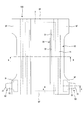
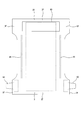
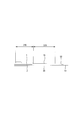
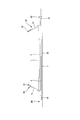
- FIG. 2 is a cross-sectional view taken along the line AA in FIG.
- FIG. 3 is a cross-sectional view taken along the line BB in FIG.
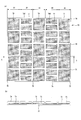
- FIG. 2A is a plan view of the inner surface of the absorbent body according to the first embodiment
- FIG. 3A is a plan view of the inner surface of the absorbent body immediately before folding according to the first embodiment
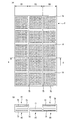
- FIG. (A) of the absorber of 1st Embodiment is an inner surface top view
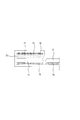
- (b) is AA sectional drawing. It is explanatory drawing of the folded left side part of the absorber of 1st Embodiment.
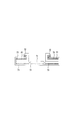
- FIG. 2A is a plan view of the inner surface of the absorbent body immediately before folding according to the second embodiment, and FIG. It is explanatory drawing of the folded left side part of the absorber of 2nd Embodiment. It is another folding form.
- ⁇ Disposable diapers> The absorbent body excellent in liquid diffusibility and liquid permeability of the present invention will be described with reference to the drawings.
- front-rear direction refers to the direction connecting the abdomen and back
- width direction refers to the direction orthogonal to the front-rear direction
- vertical direction refers to the waist direction of the disposable diaper when worn.
- inner surface refers to the body side surface of each member
- outer surface refers to the anti-body side surface of each member.
- the disposable diaper 100 includes a body-side liquid-permeable top sheet 1, a non-body-side liquid-impermeable back sheet 2, and the top sheet 1 and the back sheet 2. It is formed from the arranged absorber 3. An exterior sheet 20 is provided on the outer surface of the back sheet 2.
- a three-dimensional gather 30 for legs is provided, and the excretion of the excrement to the outside is provided outside the three-dimensional gather 30.
- Each of the leg gathers 40 for preventing the leg is provided.
- End flap portions EF to which the absorber 3 does not extend are respectively provided on the outer side in the front-rear direction of the absorber 3, and side flap portions SF to which the absorber 3 does not extend are provided on the outer side in the width direction of the absorber 3. Each is provided.
- Fastening tape 50 extending toward the outside in the width direction is provided on the back side of the side flap portion SF, and the fastening tape 50 is engaged with the abdomen side of the outer surface of the exterior sheet 20 when the disposable diaper 100 is mounted.
- a target sheet 60 to be stopped is provided.
- top sheet The top sheet 1 extends outside the outer peripheral edge of the absorbent body 3, and the outer surface of the extending portion is fixed to the inner surface of the back sheet 2 via an adhesive such as hot melt.
- a perforated or non-porous nonwoven fabric or a perforated plastic sheet is used.
- material fiber constituting the nonwoven fabric synthetic fibers such as polyethylene or polypropylene, synthetic fibers such as polyester and amide, recycled fibers such as rayon and cupra, and natural fibers such as cotton can be used.
- a processing method of a nonwoven fabric well-known methods, such as the spunlace method, the spun bond method, the SMS method, the thermal bond method, the melt blown method, the needle punch method, the air through method, the point bond method, can be used.
- the basis weight of the nonwoven fabric used for the top sheet 1 is preferably 15 to 30 g / m 2 , and the thickness is preferably 0.05 to 1 mm.
- the back sheet 2 extends outward from the outer peripheral edge of the absorber 3 and blocks movement of excrement absorbed by the absorber 3 to the outside.
- a sheet having moisture permeability can be used without impairing water shielding from the viewpoint of preventing stuffiness.
- This water-impervious and moisture-permeable sheet is a microporous sheet obtained by, for example, melt-kneading an inorganic filler in an olefin resin such as polyethylene or polypropylene to form a sheet, and then stretching in a uniaxial or biaxial direction. Can be used.
- the weight per unit area of the backsheet 2 is preferably 13 to 40 g / m 2 and the thickness is preferably 0.01 to 0.1 mm.
- the absorbent body 3 is folded inward in the width direction so that the front side sheet 71 of the left side folding part A ⁇ b> 1 of the absorbent body sheet 70 faces the front side sheet 71 of the left side part A ⁇ b> 2.
- the front side sheet 71 of the right side folding part A5 of the absorbent body sheet 70 is formed to be folded inward in the width direction so as to oppose the front side sheet 71 of the right side part A2.
- the absorber sheet 70 will be described later.
- the exterior sheet 20 covers the outer surface of the back sheet 2, and the outer surface of the disposable diaper 100 has a cloth-like appearance and feel.
- the exterior sheet 20 is preferably formed of a nonwoven fabric.
- As the material fiber olefin fiber such as polyethylene or polypropylene, polyester fiber, polyamide fiber, etc., recycled fiber such as rayon and cupra, and natural fiber such as cotton can be used.
- the spun bond method, the thermal bond method, the air through method, the needle punch method and the like can be used.
- a long-fiber nonwoven fabric such as a spunbond nonwoven fabric, an SMS nonwoven fabric, or an SMMS nonwoven fabric is preferable in that both the touch and strength can be achieved.
- a plurality of nonwoven fabrics can also be used.
- a plurality of nonwoven fabrics it is preferable to fix the nonwoven fabrics together with an adhesive such as hot melt.
- the basis weight of the fiber is preferably 10 to 50 g / m 2 , particularly preferably 15 to 30 g / m 2 .
- the outer surface of the base 31A of the gather sheet 31 forming the leg gathering three-dimensional gathers 30 extends in the front-rear direction to the outer side in the width direction of the inner surface of the back sheet 2 and the outer side in the width direction of the inner surface of the exterior sheet 20, respectively. It is fixed. Further, both end portions in the front-rear direction of the upright portion 31B of the gather sheet 31 are fixed to the outer side portion in the width direction of the inner surface of the top sheet 1, and an intermediate portion in the front-rear direction of the upright portion 31B of the gather sheet 31 is It is not fixed to the inner surface of and is spaced apart.
- the standing portion 31B of the gather sheet 31 is provided with a plurality of elongated elastic elastic members 32 extending in the front-rear direction with a predetermined interval in the width direction in a predetermined extended state.
- the standing portion 31B is raised toward the wearer's crotch portion by the contraction force of the elastic elastic member 32, and the tip portion of the standing portion 31B is pressed against the wearer's crotch portion. Leakage of excrement can be prevented.
- the gather sheet 31 may be a non-woven fabric such as a spunbond non-woven fabric, a plastic film similar to that used for the back sheet 2, or a laminate sheet thereof. However, from the viewpoint of touch to the skin, Nonwoven fabric subjected to water treatment is preferred.
- the elastic elastic member 32 natural rubber or synthetic rubber formed in a thread shape, string shape, belt shape, etc., specifically, styrene rubber, olefin rubber, urethane rubber, ester rubber, polyurethane, polyethylene, polystyrene, Commonly used materials such as styrene butadiene, silicon, and polyester can be used.
- the thickness of the elastic elastic member 32 is preferably about 500 to 1500 dtex, especially about 800 to 1300 dtex (about 0.1 to 3 mm, especially about 0.5 to 3 mm in the case of natural rubber). About 150 to 250%, particularly about 160 to 200% is preferable.
- planar gathers 40 for the legs are provided on the base portion 31 ⁇ / b> A of the gather sheet 31 that forms the three-dimensional gather 30.
- an elongated elastic elastic member 41 extending in the front-rear direction with a predetermined interval in the width direction is predetermined. It is provided in the extended state.
- the elastic elastic member 41 natural rubber or synthetic rubber formed in a thread shape, string shape, belt shape, etc., specifically, styrene rubber, olefin rubber, urethane rubber, ester rubber, polyurethane, polyethylene, polystyrene, Commonly used materials such as styrene butadiene, silicon, and polyester can be used.
- the interval between the elastic elastic members 41 is preferably about 2 to 15 mm, particularly about 3 to 7 mm.
- the thickness of the elastic elastic member 41 is preferably about 500 to 1500 dtex, particularly about 800 to 1300 dtex (about 0.1 to 3 mm, especially about 0.5 to 3 mm in the case of natural rubber). About 150 to 250%, particularly about 160 to 200% is preferable.
- a fastening tape 50 extending outward is provided on the back side portion of the side flap portion SF.
- the fastening tape 50 is formed of a base sheet 51 and a locking part 52 provided on the outer side of the inner surface of the base sheet 51. Further, the inner side portion of the base sheet 51 is fixed to the outer side portions of the gather sheet 31 and the exterior sheet 20 in the width direction.
- the material of the base sheet 51 is preferably a non-woven fabric, and any known non-woven fabric can be used without any particular limitation.
- fibers constituting the nonwoven fabric synthetic fibers such as polyethylene or polypropylene such as olefin, polyester and amide, recycled fibers such as rayon and cupra, and natural fibers such as cotton can be used.
- well-known methods such as the spunlace method, the spunbond method, the SMS method, the thermal bond method, the melt blown method, the needle punch method, the air through method, the point bond method, can be used.
- a spunbond nonwoven fabric and an SMS nonwoven fabric using olefin fibers are preferable.
- the basis weight of the nonwoven fabric to be used can be determined as appropriate, but the total basis weight of the nonwoven fabric in the main body portion 5b is 20 to 75 g / m 2 , particularly 26 to 46 g / m 2 , and the nonwoven fabric in the fixing portion 5f and the tip portion 5p.
- the total basis weight is preferably 35 to 130 g / m 2 , particularly 46 to 116 g / m 2 .
- the strength and rigidity of the base portion fixed between the exterior sheet 20 and the gather sheet 31 can be secured, and the flexibility and stretchability of the main body 74 can be secured.
- a hook material of a mechanical fastener is preferable.
- the hook material has a large number of engaging protrusions.
- the shape of the engaging protrusion is (A) Le-shaped, (B) J-shaped, (C) Mushroom-shaped, (D) T-shaped, (E) Double J-shaped (J-shaped And the like may be any shape. Moreover, it can replace with a hook material and can also use an adhesive layer.
- Target sheet As the target sheet 60, a plastic film, a nonwoven fabric or the like in which a large number of loop yarns are provided on the surface is preferable. Thereby, when mounting
- an intermediate sheet 4 is provided between the top sheet 1 and the absorber 3. Thereby, the excretion liquid which permeate
- the intermediate sheet 4 is fixed to the outer surface of the top sheet 1 by hot melt adhesive, heat embossing or ultrasonic welding.
- the intermediate sheet 4 in addition to using a nonwoven fabric, a resin film having a large number of permeation holes can be used.
- the nonwoven fabric the same material as that of the top sheet 1 can be used. However, a material having higher hydrophilicity than the top sheet 1 or a material having a higher fiber density is used to transfer excretory fluid from the top sheet 1 to the intermediate sheet 4. It is preferable because of its excellent characteristics.
- the absorbent sheet 70 includes a liquid-permeable front sheet 71 on the top sheet 1 side, a liquid-permeable back sheet 72 on the back sheet 2 side, and between the front sheet 71 and the back sheet 72. Are formed from the absorbent polymer particles 73 provided on the surface.
- the front side sheet 71 and the back side sheet 72 are joined by a joint part, and the absorbent polymer particles 73 are respectively provided in a plurality of cells 74 partitioned by the joint part.
- the front side sheet 71 and the back side sheet 72 located in the cell 74 are not joined and are separated to form a predetermined space. Thereby, it can prevent that the absorptive polymer particle 73 exists in a part of absorber sheet
- the absorbent polymer particles 73 can be non-adhered to the front sheet 71 or the back sheet 72, but can also be adhered to the front sheet 71 or the back sheet 72 via a hot melt adhesive or the like.
- the joint portions include six joint portions (“first joint portions” in the claims) 75 extending in the front-rear direction with a predetermined interval in the width direction of the absorbent sheet 70, and the front-rear direction of the absorber sheet 70.
- first joint portions in the claims
- second joints are formed of six joints
- left side folding part A1 the part divided by the 1st junction part 75 and the 2nd junction part 75 in order from the left side
- the part divided by the 2nd junction part 75 and the 3rd junction part 75 Is referred to as the left side portion A2
- a portion defined by the third joint portion 75 and the fourth joint portion 75 is referred to as a central portion A3
- a portion defined by the fourth joint portion 75 and the fifth joint portion 75 is referred to as the right side portion A4.
- the cell 74 formed in the left-side folded portion A1 is formed in a substantially square shape, and the cell 74 formed in the left-side portion A2 is separated by a joint portion 77 extending in the width direction and separated.
- the small cells 74A are formed in a substantially rectangular shape having long sides in the width direction.
- the cell 74 formed in the central portion A3 is formed in a substantially square shape, the cell 74 formed in the right side portion A4 is separated back and forth by a joint portion 77 extending in the width direction, and the separated small cell 74A is It is formed in a substantially rectangular shape having long sides in the width direction.
- the cell 74 formed in the right side fold portion A5 is formed in a substantially square shape.
- the front sheet 71 a porous or non-porous nonwoven fabric is used.
- a non-woven fabric it is preferable to use a non-woven fabric processed by an air-through method, a melt blown method, or a needle punch method, and the fiber diameter of the non-woven fabric used for the front sheet 71 is made larger than the fiber diameter used for the back sheet 72.
- the fabric weight of the nonwoven fabric of the front sheet 71 is larger than the fabric weight of the nonwoven fabric used for the back sheet 72, and the thickness of the nonwoven fabric of the front sheet 71 is made thicker than the nonwoven fabric used for the back sheet 72. preferable.
- a predetermined amount of the absorbent polymer particles 73 provided in the cell 74 is transferred to the inside of the left side folded part A1 folded inside the left side part A2 of the absorbent sheet 70, and excreted to diffuse in the width direction.
- the liquid can be absorbed efficiently.
- excretion that a predetermined amount of absorbent polymer particles 73 provided in the cell 74 is transferred to the inside of the right side folding part A5 folded inside the right side part A4 of the absorbent sheet 70 and diffuses in the width direction.
- the liquid can be absorbed efficiently.
- the fiber diameter of the nonwoven fabric used for the front sheet 71 is preferably 3.0 to 30 dtex
- the fiber basis weight is preferably 20 to 100 g / m 2
- the thickness is preferably 2 to 5 mm.
- the back sheet 72 a perforated or non-porous nonwoven fabric is used.
- a non-woven fabric it is preferable to use a non-woven fabric with a high fiber density processed by the spunbond method, melt blown method, or single punch method, thereby reducing the dropping of the absorbent polymer particles 73 from the cells 74. Can do.
- the fiber diameter of the nonwoven fabric used for the back sheet 72 is preferably 1.0 to 3.0 dtex, the fiber basis weight is preferably 10 to 20 g / m 2 , and the thickness is preferably 0.2 to 2 mm.
- superabsorbent polymer particles used in absorbent articles such as disposable diapers and napkins are used.
- Superabsorbent polymer particles include starch, cellulose, and synthetic polymers.
- Starch-acrylic acid (salt) graft copolymer, saponified starch-acrylonitrile copolymer, cross-linked sodium carboxymethyl cellulose and acrylic An acid (salt) polymer or the like can be used.
- the water absorption amount of the absorbent polymer particles 73 is 40 g / g or more, and the water absorption speed is preferably 70 seconds or less, particularly 40 seconds or less.
- the gel strength of the absorbent polymer particles 73 is preferably 1000 Pa or more. Thereby, the sticky feeling of the absorber sheet
- the particle size of the absorbent polymer particles 73 is sieving (shaking for 5 minutes) using a 500 ⁇ m standard sieve (JIS Z8801-1: 2006), and a 180 ⁇ m standard sieve for particles falling under the sieve by this sieving ( When sieving (shaking for 5 minutes) using JIS Z8801-1: 2006), the proportion of particles remaining on the 500 ⁇ m standard sieve is 30% by weight or less, and the particles remaining on the 180 ⁇ m standard sieve The ratio is preferably 60% by weight or more.
- the basis weight of the absorbent polymer particles 73 in the cell 74 is appropriately determined according to the required absorption amount, but is preferably 50 to 350 g / m 2 .
- the basis weight is less than 50 g / m 2 , it is difficult to secure the amount of absorption, and when it exceeds 350 g / m 2 , the amount of absorption becomes excessive.
- the shape of the cell 74 is formed in the square by planar view, it can also be formed in a rectangle, a rhombus, a hexagon, a circle, and an ellipse.
- the joint portion 75 extends in the front-rear direction while being uneven in the width direction along the hexagonal width direction shape, and the joint portion 76 is It is formed extending in the width direction while being uneven in the front-rear direction along the shape of the hexagonal front-rear direction.
- the width in the width direction of the joint portion 75 is 5 to 10 mm
- the width in the front and rear direction of the joint portion 76 is 5 to 10 mm
- the width in the front and rear direction of the joint portion 77 is 5 to 10 mm.
- the joining portion 75, the joining portion 76, and the joining portion 77 are preferably joined by welding the front side sheet 71 and the back side sheet 72 as in ultrasonic welding or heat sealing, but are joined via a hot melt adhesive. You can also
- a hot melt adhesive 78 is applied to the front sheet 71 located on the left side A2 and the right side A4 of the absorbent sheet 70.
- the hot melt adhesive 78 is preferably applied in a spiral shape or a stripe shape in order to maintain high liquid permeability.
- the left fold portion A1 is folded inward with a fold line 79A extending in the front-rear direction at the center in the substantially width direction of the joint portion 75 between the left fold portion A1 and the left side portion A2.
- the front side sheet 71 located in the left folding part A1 is folded and fixed to the front side sheet 71 located in the left side part A2 via a hot-melt adhesive 78.
- the right fold portion A5 is folded inward with a fold line 79B extending in the front-rear direction at the center in the substantially width direction of the joint portion 75 between the right fold portion A5 and the right side portion A4.
- the front side sheet 71 located in the right side folding part A5 is folded and fixed to the front side sheet 71 located in the right side part A4 via a hot melt adhesive 78.
- the hot melt adhesive 78 In place of the hot melt adhesive 78, the left folded portion A1 and the left folded portion A2, and the right folded portion A5 and the right folded portion A4 can be fixed by thermocompression bonding or ultrasonic bonding.
- the absorber 3 formed by folding the absorber sheet 70 will be described.
- the left side B ⁇ b> 1 and the right side B ⁇ b> 3 in the width direction of the absorbent body 3 are formed in a convex shape toward the inner side (body side) than the central part B ⁇ b> 2 in the width direction of the absorbent body 3.
- the width in the width direction of the central portion B2 of the absorber 3 is preferably 10 to 40% with respect to the width in the width direction of the absorber 3.
- the width of the central part B2 is less than 10%, the excretory liquid that has permeated through the top sheet 1 may be transferred to the left part B1 or the right part B3 of the absorber 3.
- variety of center part B2 exceeds 40%, there exists a possibility that all the excess excretion liquid diffused in the width direction cannot be absorbed.
- a joining portion 76 extending in the width direction is formed on the left side B1 and the right side B3 of the absorber 3. Thereby, the excess excretion liquid can be rapidly diffused in the left side B1 and the right side B3 of the absorber 3, and the occurrence of gel blocking can be suppressed.
- a joint 77 extending in the width direction is further formed on the left side A2 that forms the outside (on the opposite side) of the left side B1 of the absorber 3 and the right side A4 that forms the outside of the right side B3. ing.
- the absorber sheet 70 of the second embodiment that forms the absorber 3 will be described.
- symbol is attached
- FIG. 9 in the absorbent sheet 70 of the second embodiment, the basis weight of the absorbent polymer particles 73 provided in the cells 74 formed in the left folded part A1 and the right folded part A5 of the absorbent sheet 70 is shown. The amount is set to 150% with respect to the weight of the absorbent polymer particles 73 provided in the cells 74 formed in the left side portion A2, the central portion A3, and the right side portion A4 of the absorbent sheet 70.
- the basis weight of the absorbent polymer particles 73 is made different, but the material, water absorption, gel strength, or particle size of the absorbent polymer particles 73 are made different. You can also.
- Many absorbent polymer particles 73 that have leaked from the cells 74 are dispersed in the front side sheet 71 of the part A5. Thereby, more excess excretion liquid diffused in the left side B1 and right side B3 of the absorber 3 can be absorbed, and leakage to the outside can be further prevented.
- the present invention can be used for absorbent articles such as tape-type disposable diapers, pants-type disposable diapers, napkins and pads.
Landscapes
- Health & Medical Sciences (AREA)
- Epidemiology (AREA)
- Engineering & Computer Science (AREA)
- Biomedical Technology (AREA)
- Heart & Thoracic Surgery (AREA)
- Vascular Medicine (AREA)
- Life Sciences & Earth Sciences (AREA)
- Animal Behavior & Ethology (AREA)
- General Health & Medical Sciences (AREA)
- Public Health (AREA)
- Veterinary Medicine (AREA)
- Absorbent Articles And Supports Therefor (AREA)
Abstract
【課題】余剰排泄液の外部への漏れ出しを防止した、吸収体を提供する。 【解決手段】吸収体を形成する吸収体シートを、液透過性の表側シートと、液透過性の裏側シートと、表側シートと裏側シートの間に設けられた排泄液を吸収する吸収性ポリマー粒子で形成し、内側に折畳まれた両側部の間に形成された幅方向の幅を、吸収体の幅方向の幅に対して10~50%に形成し、内側に折畳まれた部位における吸収性ポリマー粒子の一部を、内側に折畳まれた部位における表面シート内に漏下させることにより解決される。
Description
本発明は、使い捨ておむつ、ナプキン、パット等の吸収性物品に用いられる吸収体に関するものである。
従来、液透過性の表側シートと、液透過性の裏側シートと、表側シートと透液性の裏側シートの間に吸収性ポリマーが設けられた吸収体シートの幅方向の両側部を内側に折畳んで形成した吸収体が知られている。(特許文献1)
また、液透過性の表側シートと、液透過性の裏側シートと、表側シートと透液性の裏側シートの間に吸収性ポリマーとパルプ繊維が設けられた吸収体シートの幅方向の両側部を内側に折畳み、且つ、折畳まれた両側部の内側部を外側に折畳んだ吸収体が知られている。(特許文献2)
しかし、特許文献1の吸収体は、内側に折畳まれた両側部の間に形成される空間がスリット状に形成されているので、吸収体で吸収できなかった余剰排泄液が外部に漏れ出す恐れがあった。
また、特許文献2の吸収体は、折畳まれて形成された吸収体の厚みが厚く、装着者に違和感を与える恐れがあった。
そこで、本発明の課題は、吸収体で吸収できなかった余剰排泄液の外部への漏れ出しを防止した吸収体を提供することにある。
上記課題を解決した手段は次記のとおりである。
第1手段は、吸収体シートの幅方向の両側部を内側に折畳んで形成した吸収体において、
前記吸収体シートを、液透過性の表側シートと、液透過性の裏側シートと、前記表側シートと裏側シートの間に設けられた排泄液を吸収する吸収性ポリマー粒子で形成し、前記内側に折畳まれた両側部の間に形成された幅方向の幅を、前記吸収体の幅方向の幅に対して10~50%に形成し、前記内側に折畳まれた部位における吸収性ポリマー粒子の一部を、前記内側に折畳まれた部位における表面シート内に漏下させたことを特徴とする。
第1手段は、吸収体シートの幅方向の両側部を内側に折畳んで形成した吸収体において、
前記吸収体シートを、液透過性の表側シートと、液透過性の裏側シートと、前記表側シートと裏側シートの間に設けられた排泄液を吸収する吸収性ポリマー粒子で形成し、前記内側に折畳まれた両側部の間に形成された幅方向の幅を、前記吸収体の幅方向の幅に対して10~50%に形成し、前記内側に折畳まれた部位における吸収性ポリマー粒子の一部を、前記内側に折畳まれた部位における表面シート内に漏下させたことを特徴とする。
第2手段は、第1手段の構成において、平面視において、前記表側シートと裏側シートを、幅方向に所定の間隔を隔てて前後方向に延在する第1接合部と、前後方向に所定の間隔を隔てて幅方向に延在する第2接合部によって接合して、前記吸収性ポリマー粒子を、前記第1接合部と第2接合部によって区画される複数のセル内に配設したことを特徴とする。
第3手段は、第1又は2手段の構成において、前記表面シートの目付け量を、前記裏側シートの目付け量よりも多く形成したことを特徴とする。
第4手段は、第1~3のいずれか1項の手段の構成において、前記表面シートの厚みを、前記裏側シートの厚みよりも厚く形成したことを特徴とする。
第5手段は、第1~4のいずれか1項の手段の構成において、前記内側に折畳まれた部位における吸収性ポリマー粒子の目付け量を、前記吸収体シートの内側に折畳まれた部位を除いた部位における吸収性ポリマー粒子の目付け量よりも多く配設したことを特徴とする。
第1手段によれば、吸収体シートを、液透過性の表側シートと、液透過性の裏側シートと、表側シートと裏側シートの間に設けられた排泄液を吸収する吸収性ポリマー粒子で形成し、内側に折畳まれた両側部の間に形成された幅方向の幅を、吸収体の幅方向の幅に対して10~50%に形成し、内側に折畳まれた部位における吸収性ポリマー粒子の一部を、内側に折畳まれた部位における表面シート内に漏下させたので、吸収体の両側部で幅方向に拡散した排泄液を多く吸収して排泄液の外部への漏れ出しを防止することができ、また、吸収性ポリマー粒子を表面シート内にも分散してゲルブロッキング現象を防止することができる。また、パルプ繊維を設けていないので、吸収体が薄く形成でき、装着者に与える違和感も軽減することができる。
第2手段によれば、第1手段による効果に加えて、平面視において、表側シートと裏側シートを、幅方向に所定の間隔を隔てて前後方向に延在する第1接合部と、前後方向に所定の間隔を隔てて幅方向に延在する第2接合部によって接合して、吸収性ポリマー粒子を、第1接合部と第2接合部によって区画される複数のセル内に配設したので、吸収体の幅方向の中心部に移送された排泄液を迅速に吸収体の両側部に拡散することができる。また、吸収性ポリマー粒子の偏在を抑制して吸収性ポリマー粒子のゲルブロッキング現象をより防止することもできる。
第3手段によれば、第1又は2手段による効果に加えて、表面シートの目付け量を、裏側シートの目付け量よりも多く形成したので、内側に折畳まれた部位における表面シート内に漏下する吸収性ポリマー粒子の漏下量を所定量に調整することができる。
第4手段によれば、第1~3のいずれか1項の手段による効果に加えて、表面シートの厚みを、裏側シートの厚みよりも厚く形成したので、内側に折畳まれた部位における表面シート内に漏下する吸収性ポリマー粒子の漏下量を所定量により調整することができる。
第5手段によれば、第1~4のいずれか1項の手段による効果に加えて、内側に折畳まれた部位における吸収性ポリマー粒子の目付け量を、吸収体シートの内側に折畳まれた部位を除いた部位における吸収性ポリマー粒子の目付け量よりも多く配設したので、吸収体の両側部で幅方向に拡散した排泄液をより多く吸収して排泄液の外部への漏れ出しをより防止することができる。
<使い捨ておむつ>
本発明の液拡散性に優れ、液通液性に優れた吸収体について図面を参照しながら説明する。本明細書では、「前後方向」は腹側と背側を結ぶ方向をいい、「幅方向」は前後方向と直交する方向をいい、「上下方向」は装着時の使い捨ておむつの胴回り方向と直交する方向をいい、「内面」はそれぞれの部材の身体側面をいい、「外面」とはそれぞれの部材の反身体側面をいうものとする。
本発明の液拡散性に優れ、液通液性に優れた吸収体について図面を参照しながら説明する。本明細書では、「前後方向」は腹側と背側を結ぶ方向をいい、「幅方向」は前後方向と直交する方向をいい、「上下方向」は装着時の使い捨ておむつの胴回り方向と直交する方向をいい、「内面」はそれぞれの部材の身体側面をいい、「外面」とはそれぞれの部材の反身体側面をいうものとする。
図1,2に示すように、使い捨ておむつ100は、身体側の液透過性のトップシート1と、反身体側の液不透過性のバックシート2と、トップシート1とバックシート2の間に配置された吸収体3から形成されている。また、バックシート2の外面には、外装シート20が設けられている。
吸収体3の幅方向の外側には、排泄物の外部への漏れを防止するために脚周り用の立体ギャザー30がそれぞれ設けられ、立体ギャザー30の外側には、排泄物の外部への漏れを防止する脚周り用の平面ギャザー40がそれぞれ設けられている。
吸収体3の前後方向の外側には、吸収体3が延在しないエンドフラップ部EFがそれぞれ設けられ、吸収体3の幅方向の外側には、吸収体3が延在しないサイドフラップ部SFがそれぞれ設けられている。
サイドフラップ部SFの背側には、幅方向の外側に向かって延在するファスニングテープ50がそれぞれ設けられ、外装シート20の外面の腹側には、使い捨ておむつ100の装着時にファスニングテープ50を係止するターゲットシート60が設けられている。
(トップシート)
トップシート1は、吸収体3の外周縁よりも外側に延在し、延在部の外面は、ホットメルト等の接着剤を介してバックシート2の内面に固定されている。
トップシート1は、吸収体3の外周縁よりも外側に延在し、延在部の外面は、ホットメルト等の接着剤を介してバックシート2の内面に固定されている。
トップシート1としては、有孔または無孔の不織布や穴あきプラスチックシートなどが用いられる。不織布を構成する素材繊維としては、ポリエチレンまたはポリプロピレン等のオレフィン系、ポリエステル系、アミド系等の合成繊維の他、レーヨンやキュプラ等の再生繊維、綿等の天然繊維を用いることができる。また、不織布の加工方法としては、スパンレース法、スパンボンド法、SMS法、サーマルボンド法、メルトブローン法、ニードルパンチ法、エアスルー法、ポイントボンド法等の公知の方法を用いることができる。トップシート1に用いる不織布の繊維目付け量は15~30g/m2が好ましく、厚みは0.05~1mmが好ましい。
(バックシート)
バックシート2は、吸収体3の外周縁よりも外側に延在し、吸収体3に吸収された排泄物の外部への移動を遮断するものである。
バックシート2は、吸収体3の外周縁よりも外側に延在し、吸収体3に吸収された排泄物の外部への移動を遮断するものである。
バックシート2としては、ポリエチレンフィルム等のプラスチックフィルムの他、ムレ防止の点から遮水性を損なわずに透湿性を備えたシートも用いることができる。この遮水・透湿性シートは、例えばポリエチレンやポリプロピレン等のオレフィン系樹脂中に無機充填材を溶融混練してシートを形成した後、一軸または二軸方向に延伸することにより得られる微多孔性シートを用いることができる。バックシート2の単位面積あたりの重量は13~40g/m2が好ましく、厚みは0.01~0.1mmが好ましい。
(吸収体)
図3,4,7に示すように、吸収体3は、吸収体シート70の左側折畳み部A1の表側シート71が左側部A2の表側シート71と対抗するように幅方向の内側に向けて折畳み、吸収体シート70の右側折畳み部A5の表側シート71が右側部A2の表側シート71と対抗するように幅方向の内側に向けて折畳んで形成されている。なお、吸収体シート70については後述する。
図3,4,7に示すように、吸収体3は、吸収体シート70の左側折畳み部A1の表側シート71が左側部A2の表側シート71と対抗するように幅方向の内側に向けて折畳み、吸収体シート70の右側折畳み部A5の表側シート71が右側部A2の表側シート71と対抗するように幅方向の内側に向けて折畳んで形成されている。なお、吸収体シート70については後述する。
(外装シート)
外装シート20は、バックシート2の外面を覆い、使い捨ておむつ100の外面を布のような外観、肌触りとするものである。外装シート20としては、不織布で形成するのが好ましい。素材繊維は、ポリエチレンまたはポリプロピレン等のオレフィン系、ポリエステル系、ポリアミド系等の合成繊維の他、レーヨンやキュプラ等の再生繊維、綿等の天然繊維を用いることができ、加工法は、スパンレース法、スパンボンド法、サーマルボンド法、エアスルー法、ニードルパンチ法等を用いて製作することができる。但し、肌触り及び強度を両立できる点でスパンボンド不織布やSMS不織布、SMMS不織布等の長繊維不織布が好ましい。
外装シート20は、バックシート2の外面を覆い、使い捨ておむつ100の外面を布のような外観、肌触りとするものである。外装シート20としては、不織布で形成するのが好ましい。素材繊維は、ポリエチレンまたはポリプロピレン等のオレフィン系、ポリエステル系、ポリアミド系等の合成繊維の他、レーヨンやキュプラ等の再生繊維、綿等の天然繊維を用いることができ、加工法は、スパンレース法、スパンボンド法、サーマルボンド法、エアスルー法、ニードルパンチ法等を用いて製作することができる。但し、肌触り及び強度を両立できる点でスパンボンド不織布やSMS不織布、SMMS不織布等の長繊維不織布が好ましい。
不織布は一枚で使用する他、複数枚を重ねて使用することもでき、複数枚を重ねて使用する場合は、不織布相互をホットメルト等の接着剤を介して固定するのが好ましい。また、不織布を用いる場合は、その繊維目付け量は10~50g/m2、特に15~30g/m2が好ましい。
(脚周り用の立体ギャザー)
脚周り用の立体ギャザー30を形成するギャザーシート31の基部31Aの外面は、バックシート2の内面の幅方向の外側部と外装シート20の内面の幅方向の外側部に前後方向に亘ってそれぞれ固定されている。また、ギャザーシート31の起立部31Bの前後方向の両端部は、トップシート1の内面の幅方向の外側部に固定され、ギャザーシート31の起立部31Bの前後方向の中間部は、トップシート1の内面には固定されておらず離間している。
脚周り用の立体ギャザー30を形成するギャザーシート31の基部31Aの外面は、バックシート2の内面の幅方向の外側部と外装シート20の内面の幅方向の外側部に前後方向に亘ってそれぞれ固定されている。また、ギャザーシート31の起立部31Bの前後方向の両端部は、トップシート1の内面の幅方向の外側部に固定され、ギャザーシート31の起立部31Bの前後方向の中間部は、トップシート1の内面には固定されておらず離間している。
ギャザーシート31の起立部31Bには、幅方向に所定の間隔を隔てて前後方向に延在する複数の細長状の弾性伸縮部材32が所定の伸張状態で設けられている。これにより、使い捨ておむつ100の装着時には、弾性伸縮部材32の収縮力によって起立部31Bを装着者の股間部に向かって起立させて、起立部31Bの先端部を装着者の股間部に押接させ排泄物の外部への漏れを防止することができる。
ギャザーシート31としては、スパンボンド不織布等の不織布の他、バックシート2に用いられるものと同様のプラスチックフィルム、又はこれらの積層シートを用いることができるが、肌への感触性の点で、撥水処理を施した不織布が好ましい。
弾性伸縮部材32としては、糸状、紐状、帯状等に形成された天然ゴム又は合成ゴム、具体的にはスチレン系ゴム、オレフィン系ゴム、ウレタン系ゴム、エステル系ゴム、ポリウレタン、ポリエチレン、ポリスチレン、スチレンブタジエン、シリコン、ポリエステル等、通常使用される素材を用いることができる。また、弾性伸縮部材32の太さは500~1500dtex程度、特に800~1300dtex程度(天然ゴムの場合0.1~3mm程度、特に0.5~3mm程度)が好ましく、また取り付け時の伸張率は150~250%程度、特に160~200%程度が好ましい。
(脚周り用の平面ギャザー)
脚周り用の平面ギャザー40は、立体ギャザー30を形成するギャザーシート31の基部31Aに設けられている。サイドフラップ部SFを形成するギャザーシート31の基部31Aとバックシート2の幅方向の外側部には、幅方向に所定の間隔を隔てて前後方向に延在する細長状の弾性伸縮部材41が所定の伸張状態で設けられている。これにより、使い捨ておむつ100の装着時には、弾性伸縮部材41の収縮力によって平面ギャザー40が装着者の脚部に押接させ排泄物の外部への漏れを防止することができる。
脚周り用の平面ギャザー40は、立体ギャザー30を形成するギャザーシート31の基部31Aに設けられている。サイドフラップ部SFを形成するギャザーシート31の基部31Aとバックシート2の幅方向の外側部には、幅方向に所定の間隔を隔てて前後方向に延在する細長状の弾性伸縮部材41が所定の伸張状態で設けられている。これにより、使い捨ておむつ100の装着時には、弾性伸縮部材41の収縮力によって平面ギャザー40が装着者の脚部に押接させ排泄物の外部への漏れを防止することができる。
弾性伸縮部材41としては、糸状、紐状、帯状等に形成された天然ゴム又は合成ゴム、具体的にはスチレン系ゴム、オレフィン系ゴム、ウレタン系ゴム、エステル系ゴム、ポリウレタン、ポリエチレン、ポリスチレン、スチレンブタジエン、シリコン、ポリエステル等、通常使用される素材を用いることができる。また、弾性伸縮部材41の間隔は2~15mm程度、特に3~7mm程度が好ましい。さらに、弾性伸縮部材41の太さは500~1500dtex程度、特に800~1300dtex程度(天然ゴムの場合0.1~3mm程度、特に0.5~3mm程度)が好ましく、また取り付け時の伸張率は150~250%程度、特に160~200%程度が好ましい。
(ファスニングテープ)
図1~3に示すように、サイドフラップ部SFの背側部には、それぞれ外側に向かって延在するファスニングテープ50が設けられている。ファスニングテープ50は、基材シート51と、基材シート51の内面の外側部に設けられた係止部52から形成されている。また、基材シート51の内側部は、ギャザーシート31と外装シート20の幅方向の外側部に固定されている。
図1~3に示すように、サイドフラップ部SFの背側部には、それぞれ外側に向かって延在するファスニングテープ50が設けられている。ファスニングテープ50は、基材シート51と、基材シート51の内面の外側部に設けられた係止部52から形成されている。また、基材シート51の内側部は、ギャザーシート31と外装シート20の幅方向の外側部に固定されている。
基材シート51の素材は、不織布が好ましく、不織布としては公知のものを特に限定無く用いることができる。不織布を構成する繊維としては、ポリエチレンまたはポリプロピレン等のオレフィン系、ポリエステル系、アミド系等の合成繊維の他、レーヨンやキュプラ等の再生繊維、綿等の天然繊維を用いることができる。また、不織布の製造方法としては、スパンレース法、スパンボンド法、SMS法、サーマルボンド法、メルトブローン法、ニードルパンチ法、エアスルー法、ポイントボンド法等の公知の方法を用いることができる。特にオレフィン系繊維を用いたスパンボンド不織布、SMS不織布が好ましい。使用する不織布の坪量は適宜定めることができるが、本体部5bにおける不織布の総坪量が20~75g/m2、特に26~46g/m2であり、固定部5f及び先端部5pにおける不織布の総坪量がそれぞれ35~130g/m2、特に46~116g/m2であると好ましい。この範囲内であれば、外装シート20とギャザーシート31の間に固定される基部における強度や剛性を確保でき、且つ本体部74の柔軟性や伸縮性の確保をすることができる。
係止部52としては、メカニカルファスナーのフック材が好ましい。フック材は、多数の係合突起を有する。係合突起の形状としては、(A)レ字状、(B)J字状、(C)マッシュルーム状、(D)T字状、(E)ダブルJ字状(J字状のものを背合わせに結合した形状のもの)等が存在するが、いずれの形状であっても良い。また、フック材に替えて粘着剤層を用いることもできる。
(ターゲットシート)
ターゲットシート60としては、ループ糸が表面に多数設けられたプラスチックフィルムや不織布等が好ましい。これにより、装着者に使い捨ておむつ100を装着する場合には、ファスニングテープ50の係止部52をターゲットシート60に効率良く係止することができる。
ターゲットシート60としては、ループ糸が表面に多数設けられたプラスチックフィルムや不織布等が好ましい。これにより、装着者に使い捨ておむつ100を装着する場合には、ファスニングテープ50の係止部52をターゲットシート60に効率良く係止することができる。
(中間シート)
実施形態1においては、トップシート1と吸収体3の間に、中間シート4が設けられている。これにより、トップシート1を透過した排泄液を吸収体3に速やかに移動させて、排泄液がトップシート1に逆戻りするのを防止することができる。なお、中間シート4は、トップシート1の外面に、ホットメルト接着剤、ヒートエンボスや超音波溶着によって固定されている。
実施形態1においては、トップシート1と吸収体3の間に、中間シート4が設けられている。これにより、トップシート1を透過した排泄液を吸収体3に速やかに移動させて、排泄液がトップシート1に逆戻りするのを防止することができる。なお、中間シート4は、トップシート1の外面に、ホットメルト接着剤、ヒートエンボスや超音波溶着によって固定されている。
中間シート4としては、不織布を用いる他、多数の透過孔を有する樹脂フィルムを用いることもできる。不織布としては、トップシート1と同様の素材を用いることができるが、トップシート1よりも親水性が高いものや、繊維密度が高いものが、トップシート1から中間シート4への排泄液の移動特性に優れるため好ましい。
<吸収体シート>
(第1実施形態)
吸収体3を形成する第1実施形態の吸収体シート70について説明する。図5に示すように、吸収体シート70は、トップシート1側の液透過性の表側シート71と、バックシート2側の液透過性の裏側シート72と、表側シート71と裏側シート72の間に設けられた吸収性ポリマー粒子73から形成されている。
(第1実施形態)
吸収体3を形成する第1実施形態の吸収体シート70について説明する。図5に示すように、吸収体シート70は、トップシート1側の液透過性の表側シート71と、バックシート2側の液透過性の裏側シート72と、表側シート71と裏側シート72の間に設けられた吸収性ポリマー粒子73から形成されている。
表側シート71と裏側シート72は、接合部によって接合され、吸収性ポリマー粒子73は、接合部によって区画された複数のセル74にそれぞれ設けられている。なお、セル74に位置する表側シート71と裏側シート72は、接合されずに離間して所定の空間が形成されている。これにより、吸収性ポリマー粒子73が吸収体シート70の一部分に遍在するのを防止して、ゲルブロッキングの発生を抑制することができる。また、吸収性ポリマー粒子73は、表側シート71又は裏側シート72に非接着とすることもできるが、表側シート71又は裏側シート72にホットメルト接着剤等を介して接着させることもできる。
接合部は、吸収体シート70の幅方向に所定の間隔を隔てて前後方向に延在する6本の接合部(請求項における「第1接合部」)75と、吸収体シート70の前後方向に所定の間隔を隔てて幅方向に向かって延在する6本の接合部(請求項における「第2接合部」)76で形成されている。本明細書では、左側から順に数えて第1接合部75と第2接合部75で区画される部位を左側折畳み部A1と言い、第2接合部75と第3接合部75で区画される部位を左側部A2と言い、第3接合部75と第4接合部75で区画される部位を中央部A3と言い、第4接合部75と第5接合部75で区画される部位を右側部A4と言い、第5接合部75と第6接合部75で区画される部位を右側折畳み部A5と言う。
平面視において、左側折畳み部A1に形成されたセル74は略正方形に形成され、左側部A2に形成されたセル74は、幅方向に延在する接合部77によって前後に分離され、分離された小セル74Aは、幅方向に長辺を有する略長方形に形成されている。中央部A3に形成されたセル74は略正方形に形成され、右側部A4に形成されたセル74は、幅方向に延在する接合部77によって前後に分離され、分離された小セル74Aは、幅方向に長辺を有する略長方形に形成されている。右側折畳み部A5に形成されたセル74は略正方形に形成されている。
表側シート71としては、有孔または無孔の不織布が用いられる。不織布を用いる場合は、エアスルー法、メルトブローン法、ニ一ドルパンチ法によって加工された不織布を用いるのが好ましく、表側シート71に用いられる不織布の繊維径を裏側シート72に用いられる繊維径よりも太くし、表側シート71の不織布の繊維目付け量を裏側シート72に用いられる不織布の繊維目付け量よりも多くし、表側シート71の不織布の厚みを裏側シート72に用いられる不織布の厚みよりも厚くするのが好ましい。これにより、吸収体シート70の左側部A2の内側に折畳まれた左側折畳み部A1の内部にセル74に設けられた所定量の吸収性ポリマー粒子73が移送されて、幅方向に拡散する排泄液を効率良く吸収することができる。同様に、吸収体シート70の右側部A4の内側に折畳まれた右側折畳み部A5の内部にセル74に設けられた所定量の吸収性ポリマー粒子73が移送されて、幅方向に拡散する排泄液を効率良く吸収することができる。なお、表側シート71に用いられる不織布の繊維径は3.0~30dtexが好ましく、繊維目付け量は20~100g/m2が好ましく、厚みは2~5mmが好ましい。
裏側シート72としては、有孔または無孔の不織布が用いられる。不織布を用いる場合は、スパンボンド法、メルトブローン法、ニ一ドルパンチ法によって加工された繊維密度が高い不織布を用いるのが好ましく、これにより、吸収性ポリマー粒子73のセル74からの脱落を軽減することができる。なお、裏側シート72に用いられる不織布の繊維径は1.0~3.0dtexが好ましく、繊維目付け量は10~20g/m2が好ましく、厚みは0.2~2mmが好ましい。
吸収性ポリマー粒子73としては、使い捨ておむつ、ナプキン等の吸収性物品に使用されている高吸収性ポリマー粒子が用いられる。高吸収性ポリマー粒子としては、でんぷん系、セルロース系や合成ポリマー系があり、でんぷん-アクリル酸(塩)グラフト共重合体、でんぷん-アクリロニトリル共重合体のケン化物、ナトリウムカルボキシメチルセルロースの架橋物やアクリル酸(塩)重合体等を用いることができる。
吸収性ポリマー粒子73の吸水量は、40g/g以上で、吸水速度は、70秒以下、特に40秒以下のものが好ましい。これにより、トップシート1を透過した排泄液を吸収体シート70で吸効率良く吸収することができ、排泄液がトップシート1に逆戻りするのを防止することができる。
吸収性ポリマー粒子73のゲル強度は、1000Pa以上のものが好ましい。これにより、排泄液を吸収した吸収体シート70のべとつき感を低減することができる。
吸収性ポリマー粒子73の粒径は、500μmの標準ふるい(JIS Z8801-1:2006)を用いたふるい分け(5分間の振とう)、及びこのふるい分けでふるい下に落下する粒子について180μmの標準ふるい(JIS Z8801-1:2006)を用いたふるい分け(5分間の振とう)を行ったときに、500μmの標準ふるい上に残る粒子の割合が30重量%以下で、180μmの標準ふるい上に残る粒子の割合が60重量%以上のものが好ましい。
セル74の吸収性ポリマー粒子73の目付け量は、要求される吸収量に応じて適宜定められるが、50~350g/m2とするのが好ましい。なお、目付け量が50g/m2未満の場合は、吸収量の確保が困難になり、350g/m2を超えた場合は、吸収量が過大になりすぎる。また、セル74の形状は、平面視で正方形に形成されているが、長方形、菱形、六角形、円形、及び楕円形に形成することもできる。なお、セル74が六角形に形成される場合には、接合部75は、六角形の幅方向の形状に沿って幅方向に凹凸しながら前後方向に向かって延在し、接合部76は、六角形の前後方向の形状に沿って前後方向に凹凸しながら幅方向に向かって延在して形成される。
接合部75の幅方向の幅は、5~10mmに形成され、接合部76の前後方向の幅は、5~10mmに形成され、接合部77の前後方向の幅は、5~10mmに形成されている。これにより、トップシート1を透過した排泄液を吸収体シート70の全域に拡散させて、複数のセル74で排泄液を効率良く吸収することができる。
接合部75と、接合部76と、接合部77は、超音波溶着やヒートシールのように表側シート71と裏側シート72を溶着させて接合するのが好ましいが、ホットメルト接着剤を介して接合することもできる。
次に、吸収体シート70を折畳んで吸収体3を形成する方法について説明する。図6に示すように、先ず、吸収体シート70の左側部A2と右側部A4に位置する表側シート71にホットメルト接着剤78を塗布する。なお、ホットメルト接着剤78は、高い通液性を維持するために、スパイラル状、ストライプ状に塗布するのが好ましい。
次に、左側折畳み部A1と左側部A2の間の接合部75の略幅方向の中心部に前後方向に向けて延在する折畳み線79Aを中心として、左側折畳み部A1を内側に向けて折畳んで、左側折畳み部A1に位置する表側シート71を左側部A2に位置する表側シート71にホットメルト接着剤78を介して固定する。同様に、右側折畳み部A5と右側部A4の間の接合部75の略幅方向の中心部に前後方向に向けて延在する折畳み線79Bを中心として、右側折畳み部A5を内側に向けて折畳んで、右側折畳み部A5に位置する表側シート71を右側部A4に位置する表側シート71にホットメルト接着剤78を介して固定する。なお、ホットメルト接着剤78に替えて、左側折畳み部A1と左側部A2、及び右側折畳み部A5と右側部A4を熱圧着や超音波接着によって固定することもできる。
次に、吸収体シート70を折畳んで形成された吸収体3について説明する。図7に示すように、吸収体3の幅方向の左側部B1と右側部B3は、吸収体3の幅方向の中央部B2よりも内側(身体側)に向けて凸状に形成される。これにより、装着者の臀部等に吸収体3の中央部B2で吸収できなかった排泄液(以下、余剰排泄液と言う。)が接触するのを防止して装着者に不快感を与えるのを抑制することができる。
吸収体3の中央部B2の幅方向の幅は、吸収体3の幅方向の幅に対して10~40%にするのが好ましい。中央部B2の幅が10%未満の場合、トップシート1を透過した排泄液が吸収体3の左側部B1又は右側部B3に移送される恐れがある。また、中央部B2の幅が40%超の場合には、幅方向に拡散された全ての余剰排泄液を吸収できない恐れがある。
吸収体3の左側部B1と右側部B3には、幅方向に延在する接合部76が形成されている。これにより、余剰排泄液を吸収体3の左側部B1と右側部B3に迅速に拡散させることができ、ゲルブロッキングの発生を抑制することができる。また、吸収体3の左側部B1の外側(反身体側)を形成する左側部A2と右側部B3の外側を形成する右側部A4には、幅方向に延在する接合部77がさらに形成されている。これにより、多くの余剰排泄液を接合部76と接合部77によって吸収体3の左側部B1と右側部B3により迅速に拡散させて、吸収速度を速めて、外部への漏れ出しを防止することができる。また、吸収体3の左側部B1に拡散された余剰排泄液は、左側部B1を形成する左側折畳み部A1と左側部A2で吸収され、吸収体3の右側部B3に拡散された余剰排泄液は、右側部B3を形成する右側折畳み部A5と右側部A4で吸収されて濡れ戻り現象を低減し、装着者に与える不快感を抑制することができる。
図8に示すように、吸収体3の左側部B1を形成する左側折畳み部A1の表側シート71と右側部B3を形成する右側折畳み部A5の表側シート71には、セル74から漏下した吸収性ポリマー粒子73が分散されている。これにより、吸収体3の左側部B1と右側部B3に拡散された余剰排泄液を吸収して、外部への漏れ出しを防止することができる。
(第2実施形態)
吸収体3を形成する第2実施形態の吸収体シート70について説明する。なお、第1実施形態の吸収体シート70と同一部材については同一符号を付して説明を省略する。図9に示すように、第2実施形態の吸収体シート70においては、吸収体シート70の左側折畳み部A1と右側折畳み部A5に形成されたセル74に設けられた吸収性ポリマー粒子73の目付け量を、吸収体シート70の左側部A2と、中央部A3と、右側部A4に形成されたセル74に設けられた吸収性ポリマー粒子73の目付け量に対して150%に設定している。なお、第2実施形態の吸収体シート70においては、吸収性ポリマー粒子73の目付け量を相違させているが、吸収性ポリマー粒子73の素材、吸水量、ゲル強度、又は粒径を相違させることもできる。
吸収体3を形成する第2実施形態の吸収体シート70について説明する。なお、第1実施形態の吸収体シート70と同一部材については同一符号を付して説明を省略する。図9に示すように、第2実施形態の吸収体シート70においては、吸収体シート70の左側折畳み部A1と右側折畳み部A5に形成されたセル74に設けられた吸収性ポリマー粒子73の目付け量を、吸収体シート70の左側部A2と、中央部A3と、右側部A4に形成されたセル74に設けられた吸収性ポリマー粒子73の目付け量に対して150%に設定している。なお、第2実施形態の吸収体シート70においては、吸収性ポリマー粒子73の目付け量を相違させているが、吸収性ポリマー粒子73の素材、吸水量、ゲル強度、又は粒径を相違させることもできる。
図10に示すように、第2実施形態の吸収体シート70を折畳んで形成された吸収体3の左側部B1を形成する左側折畳み部A1の表側シート71と右側部B3を形成する右側折畳み部A5の表側シート71には、セル74から漏下した多くの吸収性ポリマー粒子73が分散されている。これにより、吸収体3の左側部B1と右側部B3に拡散されたより多くの余剰排泄液を吸収して、外部への漏れ出しをより防止することができる。
(他の折畳み形態)
次に、他の折畳み形態について説明する。なお、第1実施形態の吸収体シート70と同一部材については同一符号を付して説明を省略する。図11に示すように、吸収体3の左側部B1を形成する左側折畳み部A1の幅方向の内側部を外側に向けて折畳み、吸収体3の右側部B3を形成する右側折畳み部A5の幅方向の内側部を外側に向けて折畳むことができる。これにより、装着者の臀部等に余剰排泄液が接触するのをより防止して装着者に不快感を与えるのをより抑制すことができる。
次に、他の折畳み形態について説明する。なお、第1実施形態の吸収体シート70と同一部材については同一符号を付して説明を省略する。図11に示すように、吸収体3の左側部B1を形成する左側折畳み部A1の幅方向の内側部を外側に向けて折畳み、吸収体3の右側部B3を形成する右側折畳み部A5の幅方向の内側部を外側に向けて折畳むことができる。これにより、装着者の臀部等に余剰排泄液が接触するのをより防止して装着者に不快感を与えるのをより抑制すことができる。
本発明は、テープ式使い捨ておむつ、パンツ式使い捨ておむつ、ナプキン、パッド等の吸収性物品に利用できるものである。
70 吸収体シート
71 表側シート
72 裏側シート
73 吸収性ポリマー粒子
74 セル
75 接合部(第1接合部)
76 接合部(第2接合部)
71 表側シート
72 裏側シート
73 吸収性ポリマー粒子
74 セル
75 接合部(第1接合部)
76 接合部(第2接合部)
Claims (5)
- 吸収体シートの幅方向の両側部を内側に折畳んで形成した吸収体において、
前記吸収体シートを、液透過性の表側シートと、液透過性の裏側シートと、前記表側シートと裏側シートの間に設けられた排泄液を吸収する吸収性ポリマー粒子で形成し、
前記内側に折畳まれた両側部の間に形成された幅方向の幅を、前記吸収体の幅方向の幅に対して10~50%に形成し、
前記内側に折畳まれた部位における吸収性ポリマー粒子の一部を、前記内側に折畳まれた部位における表面シート内に漏下させたことを特徴とする吸収体。 - 平面視において、前記表側シートと裏側シートを、幅方向に所定の間隔を隔てて前後方向に延在する第1接合部と、前後方向に所定の間隔を隔てて幅方向に延在する第2接合部によって接合して、
前記吸収性ポリマー粒子を、前記第1接合部と第2接合部によって区画される複数のセル内に配設した請求項1記載の吸収体。 - 前記表面シートの目付け量を、前記裏側シートの目付け量よりも多く形成した請求項1又は2記載の吸収体。
- 前記表面シートの厚みを、前記裏側シートの厚みよりも厚く形成した請求項1~3のいずれか1項に記載の吸収体。
- 前記内側に折畳まれた部位における吸収性ポリマー粒子の目付け量を、前記吸収体シートの内側に折畳まれた部位を除いた部位における吸収性ポリマー粒子の目付け量よりも多く配設した請求項1~4のいずれか1項に記載の吸収体。
Priority Applications (3)
| Application Number | Priority Date | Filing Date | Title |
|---|---|---|---|
| US16/493,016 US11291596B2 (en) | 2017-03-21 | 2018-03-06 | Absorbent pad |
| EP18770445.7A EP3603595B1 (en) | 2017-03-21 | 2018-03-06 | Absorbent pad |
| CN201880019104.3A CN110446480B (zh) | 2017-03-21 | 2018-03-06 | 吸收体 |
Applications Claiming Priority (2)
| Application Number | Priority Date | Filing Date | Title |
|---|---|---|---|
| JP2017-055039 | 2017-03-21 | ||
| JP2017055039A JP6396527B1 (ja) | 2017-03-21 | 2017-03-21 | 吸収体 |
Publications (1)
| Publication Number | Publication Date |
|---|---|
| WO2018173737A1 true WO2018173737A1 (ja) | 2018-09-27 |
Family
ID=63585967
Family Applications (1)
| Application Number | Title | Priority Date | Filing Date |
|---|---|---|---|
| PCT/JP2018/008474 Ceased WO2018173737A1 (ja) | 2017-03-21 | 2018-03-06 | 吸収体 |
Country Status (5)
| Country | Link |
|---|---|
| US (1) | US11291596B2 (ja) |
| EP (1) | EP3603595B1 (ja) |
| JP (1) | JP6396527B1 (ja) |
| CN (1) | CN110446480B (ja) |
| WO (1) | WO2018173737A1 (ja) |
Cited By (2)
| Publication number | Priority date | Publication date | Assignee | Title |
|---|---|---|---|---|
| US12390376B2 (en) | 2018-02-28 | 2025-08-19 | Kimberly-Clark Worldwide, Inc. | Multi-layer absorbent cores and methods of manufacture |
| US12661277B2 (en) | 2021-03-30 | 2026-06-23 | Kimberly-Clark Worldwide, Inc. | Multi-layer absorbent cores and methods of manufacture |
Families Citing this family (1)
| Publication number | Priority date | Publication date | Assignee | Title |
|---|---|---|---|---|
| KR102584193B1 (ko) * | 2018-07-19 | 2023-10-05 | 티더블유이 뮬베케 | 일회용 흡수성 제품의 구성 요소로서 사용되는 다층 부직 구조체 |
Citations (7)
| Publication number | Priority date | Publication date | Assignee | Title |
|---|---|---|---|---|
| US3968798A (en) * | 1975-07-03 | 1976-07-13 | Parke, Davis & Company | Incontinent pad |
| JPH0549658A (ja) * | 1991-08-27 | 1993-03-02 | Honshu Paper Co Ltd | 使い捨ておむつ |
| JP2004500165A (ja) | 1999-11-08 | 2004-01-08 | パラゴン トレード ブランズ インコーポレイテッド | 吸水性積層材を折り重ねて作られた吸水コア |
| JP2006297073A (ja) * | 2005-03-23 | 2006-11-02 | Kao Corp | 吸収性物品 |
| WO2013094726A1 (ja) * | 2011-12-21 | 2013-06-27 | ユニ・チャーム株式会社 | 使い捨て着用物品 |
| JP2013132460A (ja) | 2011-12-27 | 2013-07-08 | Kao Corp | 吸収性物品 |
| JP2016526983A (ja) * | 2013-07-03 | 2016-09-08 | ディーエスジー テクノロジー ホールディングス リミテッド | 吸収複合材、吸収複合材を用いた吸収物品、並びに吸収複合材及び/又は吸収物品の製造方法、製造システム、及び製造装置 |
Family Cites Families (7)
| Publication number | Priority date | Publication date | Assignee | Title |
|---|---|---|---|---|
| US4029101A (en) * | 1974-09-06 | 1977-06-14 | Colgate-Palmolive Company | Absorbent article |
| US4505705A (en) * | 1983-03-03 | 1985-03-19 | Kimberly-Clark Corporation | Sanitary napkin with following baffle |
| US5611879A (en) * | 1987-12-18 | 1997-03-18 | Kimberly-Clark Corporation | Absorbent article having an absorbent with a variable density in the Z direction and a method of forming said article |
| US6068620A (en) * | 1998-03-30 | 2000-05-30 | Paragon Trade Brands | Absorbent laminate |
| KR101672568B1 (ko) * | 2009-03-31 | 2016-11-03 | 다이오 페이퍼 코퍼레이션 | 흡수성 물품 |
| CN106232073B (zh) * | 2014-02-28 | 2020-11-03 | 阿坦斯医疗保健产品公司 | 具有多层折叠吸收芯的吸收性用品 |
| CN103948471B (zh) * | 2014-04-29 | 2015-08-19 | 瑞光(上海)电气设备有限公司 | 吸收芯体、吸收芯体成型设备以及吸收芯体的制造方法 |
-
2017
- 2017-03-21 JP JP2017055039A patent/JP6396527B1/ja active Active
-
2018
- 2018-03-06 CN CN201880019104.3A patent/CN110446480B/zh active Active
- 2018-03-06 US US16/493,016 patent/US11291596B2/en active Active
- 2018-03-06 EP EP18770445.7A patent/EP3603595B1/en active Active
- 2018-03-06 WO PCT/JP2018/008474 patent/WO2018173737A1/ja not_active Ceased
Patent Citations (7)
| Publication number | Priority date | Publication date | Assignee | Title |
|---|---|---|---|---|
| US3968798A (en) * | 1975-07-03 | 1976-07-13 | Parke, Davis & Company | Incontinent pad |
| JPH0549658A (ja) * | 1991-08-27 | 1993-03-02 | Honshu Paper Co Ltd | 使い捨ておむつ |
| JP2004500165A (ja) | 1999-11-08 | 2004-01-08 | パラゴン トレード ブランズ インコーポレイテッド | 吸水性積層材を折り重ねて作られた吸水コア |
| JP2006297073A (ja) * | 2005-03-23 | 2006-11-02 | Kao Corp | 吸収性物品 |
| WO2013094726A1 (ja) * | 2011-12-21 | 2013-06-27 | ユニ・チャーム株式会社 | 使い捨て着用物品 |
| JP2013132460A (ja) | 2011-12-27 | 2013-07-08 | Kao Corp | 吸収性物品 |
| JP2016526983A (ja) * | 2013-07-03 | 2016-09-08 | ディーエスジー テクノロジー ホールディングス リミテッド | 吸収複合材、吸収複合材を用いた吸収物品、並びに吸収複合材及び/又は吸収物品の製造方法、製造システム、及び製造装置 |
Cited By (2)
| Publication number | Priority date | Publication date | Assignee | Title |
|---|---|---|---|---|
| US12390376B2 (en) | 2018-02-28 | 2025-08-19 | Kimberly-Clark Worldwide, Inc. | Multi-layer absorbent cores and methods of manufacture |
| US12661277B2 (en) | 2021-03-30 | 2026-06-23 | Kimberly-Clark Worldwide, Inc. | Multi-layer absorbent cores and methods of manufacture |
Also Published As
| Publication number | Publication date |
|---|---|
| EP3603595A1 (en) | 2020-02-05 |
| EP3603595B1 (en) | 2021-08-11 |
| JP2018153574A (ja) | 2018-10-04 |
| US11291596B2 (en) | 2022-04-05 |
| EP3603595A4 (en) | 2020-03-18 |
| US20200060894A1 (en) | 2020-02-27 |
| CN110446480A (zh) | 2019-11-12 |
| JP6396527B1 (ja) | 2018-09-26 |
| CN110446480B (zh) | 2021-11-05 |
Similar Documents
| Publication | Publication Date | Title |
|---|---|---|
| JP6379248B1 (ja) | 吸収体 | |
| JP6211777B2 (ja) | 吸収性物品 | |
| JP6416961B2 (ja) | 吸収体 | |
| US20210137750A1 (en) | Underpants-type disposable diaper | |
| JP7059485B2 (ja) | パンツ型吸収性物品 | |
| WO2011118473A1 (ja) | 使い捨て吸収性物品 | |
| JP6396527B1 (ja) | 吸収体 | |
| JP5988347B2 (ja) | 使い捨て吸収性物品 | |
| JP2011200445A5 (ja) | ||
| JP6551829B2 (ja) | 使い捨ておむつ | |
| JP6353237B2 (ja) | 吸収性物品 | |
| JP2021078872A (ja) | 使い捨ておむつ | |
| JP5988346B2 (ja) | 使い捨て吸収性物品 | |
| JP6483903B2 (ja) | 吸収体 | |
| JP6461409B2 (ja) | 吸収体 | |
| JP6814582B2 (ja) | 使い捨て水着 | |
| JP6726416B2 (ja) | 使い捨ておむつ | |
| JP2011200443A5 (ja) | ||
| JP2019080802A (ja) | 軟便用吸収性物品 | |
| JP2015177901A (ja) | 吸収性物品 | |
| JP5782269B2 (ja) | 使い捨ておむつ | |
| JP6974094B2 (ja) | 使い捨ておむつ | |
| JP2020031866A (ja) | 女性用パンツ型吸収性物品 | |
| JP2019110995A (ja) | 吸収性物品 | |
| JP2018130201A (ja) | 使い捨ておむつ |
Legal Events
| Date | Code | Title | Description |
|---|---|---|---|
| 121 | Ep: the epo has been informed by wipo that ep was designated in this application |
Ref document number: 18770445 Country of ref document: EP Kind code of ref document: A1 |
|
| NENP | Non-entry into the national phase |
Ref country code: DE |
|
| ENP | Entry into the national phase |
Ref document number: 2018770445 Country of ref document: EP Effective date: 20191021 |