WO2018179852A1 - 蓄電池制御装置および制御方法 - Google Patents
蓄電池制御装置および制御方法 Download PDFInfo
- Publication number
- WO2018179852A1 WO2018179852A1 PCT/JP2018/003902 JP2018003902W WO2018179852A1 WO 2018179852 A1 WO2018179852 A1 WO 2018179852A1 JP 2018003902 W JP2018003902 W JP 2018003902W WO 2018179852 A1 WO2018179852 A1 WO 2018179852A1
- Authority
- WO
- WIPO (PCT)
- Prior art keywords
- sohq
- battery
- threshold
- sohr
- calculation unit
- Prior art date
- Legal status (The legal status is an assumption and is not a legal conclusion. Google has not performed a legal analysis and makes no representation as to the accuracy of the status listed.)
- Ceased
Links
Images

Classifications
-
- G—PHYSICS
- G01—MEASURING; TESTING
- G01R—MEASURING ELECTRIC VARIABLES; MEASURING MAGNETIC VARIABLES
- G01R31/00—Arrangements for testing electric properties; Arrangements for locating electric faults; Arrangements for electrical testing characterised by what is being tested not provided for elsewhere
- G01R31/36—Arrangements for testing, measuring or monitoring the electrical condition of accumulators or electric batteries, e.g. capacity or state of charge [SoC]
- G01R31/392—Determining battery ageing or deterioration, e.g. state of health
-
- H—ELECTRICITY
- H01—ELECTRIC ELEMENTS
- H01M—PROCESSES OR MEANS, e.g. BATTERIES, FOR THE DIRECT CONVERSION OF CHEMICAL ENERGY INTO ELECTRICAL ENERGY
- H01M10/00—Secondary cells; Manufacture thereof
- H01M10/42—Methods or arrangements for servicing or maintenance of secondary cells or secondary half-cells
- H01M10/48—Accumulators combined with arrangements for measuring, testing or indicating the condition of cells, e.g. the level or density of the electrolyte
-
- G—PHYSICS
- G01—MEASURING; TESTING
- G01R—MEASURING ELECTRIC VARIABLES; MEASURING MAGNETIC VARIABLES
- G01R31/00—Arrangements for testing electric properties; Arrangements for locating electric faults; Arrangements for electrical testing characterised by what is being tested not provided for elsewhere
- G01R31/36—Arrangements for testing, measuring or monitoring the electrical condition of accumulators or electric batteries, e.g. capacity or state of charge [SoC]
-
- G—PHYSICS
- G01—MEASURING; TESTING
- G01R—MEASURING ELECTRIC VARIABLES; MEASURING MAGNETIC VARIABLES
- G01R31/00—Arrangements for testing electric properties; Arrangements for locating electric faults; Arrangements for electrical testing characterised by what is being tested not provided for elsewhere
- G01R31/36—Arrangements for testing, measuring or monitoring the electrical condition of accumulators or electric batteries, e.g. capacity or state of charge [SoC]
- G01R31/389—Measuring internal impedance, internal conductance or related variables
-
- H—ELECTRICITY
- H02—GENERATION; CONVERSION OR DISTRIBUTION OF ELECTRIC POWER
- H02J—ELECTRIC POWER NETWORKS; CIRCUIT ARRANGEMENTS OR SYSTEMS FOR SUPPLYING OR DISTRIBUTING ELECTRIC POWER; SYSTEMS FOR STORING ELECTRIC ENERGY
- H02J7/00—Circuit arrangements for charging or discharging batteries or for supplying loads from batteries
-
- Y—GENERAL TAGGING OF NEW TECHNOLOGICAL DEVELOPMENTS; GENERAL TAGGING OF CROSS-SECTIONAL TECHNOLOGIES SPANNING OVER SEVERAL SECTIONS OF THE IPC; TECHNICAL SUBJECTS COVERED BY FORMER USPC CROSS-REFERENCE ART COLLECTIONS [XRACs] AND DIGESTS
- Y02—TECHNOLOGIES OR APPLICATIONS FOR MITIGATION OR ADAPTATION AGAINST CLIMATE CHANGE
- Y02E—REDUCTION OF GREENHOUSE GAS [GHG] EMISSIONS, RELATED TO ENERGY GENERATION, TRANSMISSION OR DISTRIBUTION
- Y02E60/00—Enabling technologies; Technologies with a potential or indirect contribution to GHG emissions mitigation
- Y02E60/10—Energy storage using batteries
Definitions
- SOHR internal resistance
- SOHQ capacity deterioration rate
- an SOC (hereinafter abbreviated as SOCv) calculated based on two open circuit voltages (Open Circuit Voltage, hereinafter abbreviated as OCV) estimated from the voltage during charging and discharging, and between the two points
- OCV Open Circuit Voltage
- the SOHQ calculation method there is known a method of calculating the full charge capacity from two SOCvs and a current integrated value therebetween.
- the accuracy of SOHQ is lowered due to various error factors such as an OCV estimation error. It was.
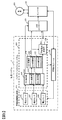
- FIG. 1 shows a battery system according to the present invention. This configuration is used in a wide range of applications such as a power storage device for mobile objects, a power storage device for grid connection stabilization, a battery system 1 that stores electric power, an inverter 104 that charges and discharges the battery system 1, and an inverter And a host controller 103 that controls the battery system 1 and the inverter 104.
- a power storage device for mobile objects such as a power storage device for mobile objects, a power storage device for grid connection stabilization, a battery system 1 that stores electric power, an inverter 104 that charges and discharges the battery system 1, and an inverter And a host controller 103 that controls the battery system 1 and the inverter 104.
- the battery system 1 performs battery control value calculations such as storage and discharge of electric power, SOC that is a control value necessary for these, and SOH allowable current that is a control value necessary for grasping the current performance of the battery.
- the host controller 103 controls the storage battery module 100 and issues power input / output commands to the inverter 104 according to the state of the load 105, the control value of the battery output from the battery system 1, and other external commands.
- the inverter 104 inputs and outputs power to the storage battery module 100 and the load 105 in accordance with a command from the host controller 103.
- the load 105 is, for example, a three-phase AC motor or a power system.
- the voltage output from the storage battery module 100 is a DC voltage that changes in accordance with the charging rate, and in many cases, power cannot be directly provided to the load 105 that requires AC. Therefore, the inverter 104 performs conversion from DC to AC and voltage conversion as necessary. With such a configuration, the battery system can appropriately supply an output suitable for the load.
- the configuration of the battery system 1 for realizing this configuration will be described.
- the storage battery module 100 is composed of a plurality of storage batteries. Each storage battery is connected in series or in parallel depending on the output voltage and capacity required for the storage battery module 100. This series number is determined in consideration of the fact that the output voltage of the storage battery changes according to its SOC.
- One voltage sensor 108 is installed for each storage battery. Thereby, the voltage difference measurement between each storage battery becomes possible, and equalization control of each storage battery voltage based on this becomes possible.
- the allowable current calculation unit 111 calculates an allowable current that is the maximum current that can be charged and discharged based on the SOH and the battery information.
- the battery management system 102 outputs the SOC, SOH, and allowable current of the battery calculated by the SOC calculation unit 109, SOH calculation unit 110, and allowable current calculation unit 111 to the host controller.
- the host controller 103 can send a power output command corresponding to the load to the storage battery in consideration of the storage battery state.
- the SOCv calculation unit 113 calculates the SOC using an equivalent circuit of the storage battery.
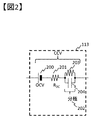
- the configuration of the battery equivalent circuit model used for the calculation is shown in FIG.
- the battery equivalent circuit model used in the present embodiment has an OCV as the voltage source 200, a DC resistance representing the resistance of the electrolytic solution, etc. as a resistance 201, and the polarization portion 202 derived from the concentration polarization of ions in the electrolytic solution.
- the resistance component is represented by the resistor 203 and the polarization capacitance component is represented by the capacitor 204, and the sum of these represents the current voltage (closed circuit voltage, hereinafter referred to as CCV) of the battery.
- CCV closed circuit voltage
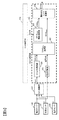
- the configuration of the SOHQ calculation unit 115 is shown in FIG.
- the SOCv two-point calculation unit 300 selects two SOCv 1 and two SOCv 2 appropriate for calculation from the SOCv sequentially output from the SOCv calculation unit 113.
- the SOCv calculates the SOC by estimating the OCV by using an equivalent circuit model of the battery. It is important to select an equivalent value of the true SOC value and the close SOCv to the battery equivalent circuit model.
- the charge / discharge capacity ⁇ Idt between the SOCvs 1 and 2 is calculated by the current integrating unit 301 that integrates the current values flowing between the SOCv1 and SOCv2.
- SOHQ SOCv SOHQ (hereinafter abbreviated as SOHQ SOCv ) calculated directly from the battery information using the SOCv1 and 2 and ⁇ Idt is calculated by the SOHQ SOCv calculation unit 302.
- SOHQ SOCv SOHQ SOCv
- the arithmetic expression of this SOHQ SOCv is as the following number (1).
- Qmax is the initial full charge capacity of the battery.
- SOHQ SOHR SOHQ SOCv
- SOHQ SOHR SOHQ SOHR
- This correlation may be simply shown by, for example, an inversely proportional relational expression. In general, it is known that the relationship between SOHR and SOHQ is close to this inversely proportional relationship. Therefore, the correlation can be easily set without evaluating the representative battery.
- the result of measuring the transition of SOHR and SOHQ may be introduced as a correlation equation. Since a correlation based on the behavior of the fabricated actual battery can be introduced rather than a simple inverse proportional expression, it is better to adopt this if a representative battery is being measured.
- the final SOHQ calculation unit 304 completes the calculation and outputs SOHQ to the outside.
- the final SOHQ calculation unit 304 An example of calculation contents performed by the final SOHQ calculation unit 304 is shown.
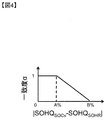
- the degree of coincidence ⁇ between SOHQ SOCv and SOHQ SOHR is defined.
- A is defined as an SOHR calculation or a calculation error between SOHQ SOCv and SOHQ SOHR
- B is defined as a value that allows SOHQ to deviate by at least B% from the correlation with SOHR. Since SOOHQ SOHR is used only for ⁇ and is not directly reflected in the final calculation result, it can cope with a deterioration mode deviating from the correlation between the representative batteries of SOHR and SOHQ.
- the final SOHQ is calculated by performing the averaging process shown by the previous result SOHQ_z of the SOHQ calculation and (Equation 2) using the degree of coincidence ⁇ .
- N is the number of samplings for averaging. Since SOHQ does not change rapidly, the previous value of SOHQ and N are used to smooth the calculation value.
- Example 2 the correlation expression between SOHR and SOHQ is considered as one, and averaging processing is performed according to the difference between the SOHQ SOHR and SOHQ SOCv calculated from the correlation expression. Also good.
- the resistance internal resistance
- the capacity deterioration is more likely to occur than the resistance (internal resistance) due to the correlation between the representative batteries.
- the determined correlation is shown. Since the battery immediately after shipment is about 100% in both SOHR and SOHQ, it does not deviate greatly from the correlation between SOHR and SOHQ before deterioration.
- a threshold value as shown in FIG. 5 may be provided, and the degree of coincidence ⁇ may be set to 1 within two curves. As described in the first embodiment, since SOHQ and SOHR themselves have calculation errors, the degree of coincidence ⁇ may be 1 even if C% deviates from the curve of FIG. By doing in this way, the threshold value output by the SOHQ threshold value calculation unit can cope with various degradation modes, and the degradation range can be grasped with higher accuracy than in the first embodiment.
- FIG. 3 shows a configuration in which the usage history storage unit 600 that stores the usage history such as the usage temperature of the battery and the number of times of charging / discharging based on the current, temperature, and voltage information outputs the historical information to the SOHQ SOHR threshold value calculation unit 601 based on the history. It is a difference.
- the curve is determined assuming a plurality of battery deterioration modes as shown in the second embodiment, the range of deterioration modes assumed based on the battery usage history can be limited.
- the range of the deterioration mode can be limited to a range close to the curve of the battery in which resistance deterioration is likely to occur.
- the deterioration range dynamically from the history information, it is possible to increase the accuracy of the SOHQ calculation as compared with the second embodiment.
- Example 4 Hereinafter, a fourth embodiment will be described with reference to FIG.
- a description will be given of a configuration in which the SOHR result is not used for SOOHQ calculation when the calculated value of SOHR changes abruptly.
- This configuration is shown in FIG.
- the difference from the configuration of the first embodiment is that there is a SOHR sudden change detection unit 700 that sequentially detects the SOHR calculation value and determines whether or not there is a sudden change. Since the SOHR basically does not change abruptly, the output value of the SOHQ SOHR threshold value calculator does not change abruptly. However, for example, when the battery is left unused for a long time, the SOHR calculation value may fluctuate rapidly due to the effect of long-term storage deterioration.
- the SOHQ threshold also changes suddenly due to the suddenly changing SOHR calculation value
- the SOHQ calculation is not stable. Therefore, when the SOHR sudden change detection unit 701 determines that the SOHR is suddenly changing, the configuration is such that only the result of the SOHCQ SOCv is used without using the SOOHQ SOHR . By doing in this way, calculation is possible without being influenced by the sudden change of SOHR.
- a SOHQ calculation unit that calculates SOHQ based on a value including a current value and / or a voltage value of a battery
- a threshold value determination unit that determines a SOHQ threshold value based on an internal resistance of the battery
- a SOHQ calculated by the SOHQ calculation unit a SOHQ determination unit that determines SOHQ based on a comparison between the SOHQ threshold and the SOHQ threshold.
- the method for comparing the SOHQ and the SOHQ threshold varies depending on the internal resistance of the battery.
- the battery control device has a storage unit, and the SOHQ threshold is determined based on the deterioration characteristics of one or more batteries built in the storage unit in advance.
- the battery control device determines the SOHQ threshold value based on the battery data having the most similar deterioration tendency among the deterioration characteristics of the batteries built in the storage unit according to the temperature and usage history of the battery up to the present time. To do.
- the deterioration range dynamically from the history information it is possible to improve the accuracy of the SOHQ calculation.
- the battery control device calculates the final SOHQ based only on the SOHQ calculation unit when the change in the internal resistance is abrupt.
- the present invention is not limited to the above-described embodiments, and various designs can be made without departing from the spirit of the present invention described in the claims. It can be changed.
- the above-described embodiment has been described in detail for easy understanding of the present invention, and is not necessarily limited to one having all the configurations described.
- a part of the configuration of an embodiment can be replaced with the configuration of another embodiment, and the configuration of another embodiment can be added to the configuration of an embodiment.
- battery system 100 storage battery module 101: storage battery information acquisition unit 102: battery management system 103: host controller 104: inverter 105: load 106: current sensor 107: temperature sensor 108: voltage sensor 109: SOC calculation unit 110: SOH calculation Unit 111: Allowable current calculation unit 112: SOCi calculation unit 113: SOCv calculation unit 114: SOHR calculation unit 115: SOHQ calculation unit 200: OCV 201: DC resistance 202: Polarization term 203: Polarization resistance 204: Polarization capacitor 300: SOCv2 point selection unit 301: Current integration unit 302: SOHQ SOCv calculation unit 303: SOHQ SOHR threshold calculation unit 304: Final SOHQ calculation unit 600: Usage history storage unit 601: SOHQ SOHR threshold calculation unit 700 based on history: SOHR sudden change detection unit
Landscapes
- Engineering & Computer Science (AREA)
- Physics & Mathematics (AREA)
- General Physics & Mathematics (AREA)
- Manufacturing & Machinery (AREA)
- Chemical & Material Sciences (AREA)
- Chemical Kinetics & Catalysis (AREA)
- Electrochemistry (AREA)
- General Chemical & Material Sciences (AREA)
- Power Engineering (AREA)
- Secondary Cells (AREA)
- Tests Of Electric Status Of Batteries (AREA)
- Charge And Discharge Circuits For Batteries Or The Like (AREA)
Abstract
SOHQ演算方法において、2点のSOCvとその間での電流積算値により満充電容量を算出する方法が知られているが、OCV推定誤差等の多様な誤差要因によりSOHQの精度が低下してしまう課題がある。電池の電流値及び/又は電圧値を含む値に基づいてSOHQを演算するSOHQ演算部と、前記電池の内部抵抗に基づいてSOHQ閾値を決定する閾値決定部と、前記SOHQ演算部による前記SOHQと前記SOHQ閾値との比較に基づいてSOHQを決定するSOHQ決定部と、を備える電池制御装置。
Description
本発明は、リチウムイオン電池等を用いた蓄電池システムの、特に劣化状態を推定する方法に関する。
近年、地球温暖化問題に対応するため、エネルギーの有効利用が可能な蓄電池に注目が集まっている。特に、移動体向け蓄電装置や系統連系安定化用蓄電装置といった電池システムは、化石燃料への依存度を下げることが可能であるため、一層の普及が期待されている。これらシステムの性能を引き出すには電池の充電率(State of Charge、以下SOCと略す)や劣化度(State of Health、以下SOHと略す)、充放電可能な最大電流(許容電流)といったパラメータを用いた適切な充放電制御や、各電池の充電率均等化が必要である。これらを実現するため各電池には電池電圧計測用の回路(セルコントローラ)が取り付けられ、これらセルコントローラから送信される情報に基づき中央演算処理装置(CPU)を搭載したバッテリコントローラが前記演算や動作を実行する。
中でも寿命到達まで電池を有効に使用するために重要な指標となるSOH演算には、抵抗(内部抵抗)の劣化率(以下SOHRと略す)と容量の劣化率(以下SOHQと略す)の2種類があり、それぞれによって把握できる電池性能は異なる。SOHRでは、現在の抵抗を知ることが出来るため、現在の電池が出力できる電力を知ることで出力性能の把握が可能である。一方でSOHQでは、現在の満充電容量を知ることができるため、現在の電池の負担できる電力量を知ることで容量性能の把握が可能である。
このSOHQを演算する方法として、充放電中の電圧から推定した2点の開放電圧(Open Circuit Voltage、以下OCVと略す)を元に算出したSOC(以下SOCvと略す)と、その2点間の電流積算値に基づいて現在の満充電容量を推定し、電池の初期満充電容量と比較することでSOHQを演算する方法が知られている。しかし、電池が充放電されている状態でOCVを正確に推定することは困難である上に、電圧センサの誤差や電流センサの誤差等多くの誤差要因により、SOHQの真値を精度よく推定できず、真値から大きく乖離した外れ値を出力してしまう課題を有している。
SOHQ演算に関する先行技術には特許文献1がある。この文献では、SOCvと電流積算値によって演算したSOHQと、電池の使用が開始されてから現在までの総放電容量に基づいて推定したSOHQを組み合わせることで、SOHQの外れ値を除外し高精度化を図っている。一方で、総放電容量に基づいて推定したSOHQとは、電池の代表的な特性値からSOHQと総放電容量の関係式を導いているため、電池のSOHQの個体差や総放電容量に依らない劣化要因には対応できないという課題を有している。
SOHQ演算方法においては、2点のSOCvとその間での電流積算値により満充電容量を算出する方法が知られているが、OCV推定誤差等の多様な誤差要因によりSOHQの精度低下が課題であった。また、このSOHQと総放電容量から算出したSOHQを組み合わせることでこの精度向上を図る方法も知られているが、電池の個体差や総放電容量に依らない劣化要因に対応できないという課題を有している。故に、SOHQ演算には、SOHQの精度が向上することと、電池個体差や電池の多様な劣化要因にも対応可能である必要がある。
電池の電流値及び/又は電圧値を含む値に基づいてSOHQを演算するSOHQ演算部と、前記電池の内部抵抗に基づいてSOHQ閾値を決定する閾値決定部と、前記SOHQ演算部による前記SOHQと前記SOHQ閾値との比較に基づいてSOHQを決定するSOHQ決定部と、を備える電池制御装置。
本発明によれば、電池のSOHQを高精度に演算することが可能であり、且つ、電池情報から直接的に推定している内部抵抗の劣化指標SOHRに基づくSOHQ閾値を用いることで、電池個体差や多様な劣化要因にも対応可能である。
以下、本発明について説明する。
≪実施例1≫
以下、第一の実施例について、図1から4を用いて説明する。図1に本発明にかかる電池システムを示す。この構成は移動体向け蓄電装置、系統連系安定化用蓄電装置等幅広い用途で使用される形態であり、電力を蓄える電池システム1と、電池システム1に対し充放電を行うインバータ104と、インバータに接続された負荷105と、電池システム1やインバータ104を制御する上位コントローラ103から構成される。
以下、第一の実施例について、図1から4を用いて説明する。図1に本発明にかかる電池システムを示す。この構成は移動体向け蓄電装置、系統連系安定化用蓄電装置等幅広い用途で使用される形態であり、電力を蓄える電池システム1と、電池システム1に対し充放電を行うインバータ104と、インバータに接続された負荷105と、電池システム1やインバータ104を制御する上位コントローラ103から構成される。
電池システム1は、電力の蓄電や放電及びこれらに必要な制御値であるSOCや、電池の現在の性能把握に必要な制御値であるSOH許容電流等の電池の制御値演算を行う。上位コントローラ103は、負荷105の状態や電池システム1が出力した電池の制御値、その他外部からの指令に応じ蓄電池モジュール100の制御や、インバータ104に対する電力の入出力指令を行う。インバータ104は上位コントローラ103からの指令に従い、蓄電池モジュール100及び負荷105に対して電力の入出力を行う。負荷105は例えば三相交流モータや電力系統である。
蓄電池モジュール100の出力する電圧は充電率に応じて変化する直流電圧であり、多くの場合交流を必要とする負荷105へ電力を直接提供することはできない。そこで、インバータ104は必要に応じ直流から交流への変換や電圧の変換を行う。このような構成にすることで、電池システムは負荷に適した出力を適宜供給することが可能となる。以下、この構成を実現するための電池システム1の構成について述べる。
電池システム1は蓄電池モジュール100と、蓄電池情報取得部101と、バッテリーマネジメントシステム102から構成され、電力の蓄電・放電をし、SOC・許容電流といった電池の制御値を演算する。
蓄電池モジュール100は複数の蓄電池から構成される。各蓄電池は蓄電池モジュール100に要求される出力電圧や容量に応じ、直列、又は並列に接続されている。この直列数は、蓄電池の出力電圧がそのSOCに応じ変化することを考慮して決定する。
蓄電池情報取得部101は、蓄電池に流れる電流値を測定する電流センサ106、蓄電池表面温度を測定する温度センサ107、蓄電池電圧を測定する電圧センサ108から成る。
電流センサ106は蓄電池モジュール100と外部との間に1つ、もしくは複数設置する場合がある。1つ設置した場合にはコストを最小限に抑えることが可能である。複数設置した場合には並列接続している蓄電池間の電流配分を把握することが可能である。
電圧センサ108は各蓄電池に1つ設置する。これにより各蓄電池間の電圧差測定が可能となり、これを元にした各蓄電池電圧の均等化制御が可能となる。
温度センサ107も蓄電池モジュール100内の温度差を把握するために1つ、もしくは複数設置する。1つ設置した場合には、最小限のコストで蓄電池モジュール100内の最高温度になる予測できる地点の温度を計測できる。複数設置した場合には、蓄電池モジュール100内の温度ばらつきを計測することで、最低温度や最高温度を考慮した制御構築が可能となる。
バッテリーマネジメントシステム102は主にSOC演算部109、SOH演算部110、許容電流演算部111から成る。SOC演算部109は電流積算量からSOCを演算するSOCi演算部112と、電池の電圧、電流、温度から推定したOCVを元にSOCを演算するSOCv演算部113から成る。SOH演算部110は、これら電池取得部101からの情報とSOCを元に、抵抗(内部抵抗)の劣化率であるSOHRを演算するSOHR演算部114と容量の劣化率であるSOHQを演算するSOHQ演算部115から成る。許容電流演算部111はこのSOH及び電池情報を元にして充放電可能な最大電流である許容電流を演算する。バッテリーマネジメントシステム102は、これらSOC演算部109とSOH演算部110、許容電流演算部111が演算した電池のSOCやSOH、許容電流を上位コントローラに出力する。このように上位コントローラ103に蓄電池の制御に必要な情報を出力する構成にすることで、上位コントローラ103は蓄電池状態を考慮した上で、負荷に対応した電力出力指令を蓄電池に送ることができる。
SOCv演算部113は蓄電池の等価回路を用いてSOCを演算している。演算に用いる電池等価回路モデルの構成を図2に示す。本実施例で使用する電池等価回路モデルは、OCVを電圧源200で、電解液の抵抗等を表現する直流抵抗を抵抗201で、電解液中のイオンの濃度分極等に由来する分極部202の抵抗成分を抵抗203で、分極容量成分をキャパシタ204でそれぞれ表現し、これらの足し合わせで電池の現在の電圧(Closed circuit voltage、以下CCVと略す)を表現する。尚本実施例では分極項を1個としているが、複数個用いて高精度化を図ってもよい。この等価回路モデルを用いることで、前述した蓄電池情報取得部101で測定した電流値、電圧値、温度の各電池情報から、現在の蓄電池のOCVを推定することでSOCを演算することが可能となる。
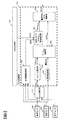
SOHQ演算部115の構成を図3に示す。SOHQ演算部115では、まずSOCv演算部113から逐次出力されるSOCvの中から演算に適切な2点のSOCv1、2をSOCv2点演算部300によって選択する。前述したようにSOCvとは電池の等価回路モデルを用いることでOCVを推定しSOCを算出している。この電池の等価回路モデルに誤差が少なく、SOC真値とSOCvが近い値を選択することが重要となる。また、このSOCv1、2間で流れた電流値を積算する電流積算部301によってSOCv1、2間の充放電容量∫Idtが演算される。このSOCv1、2と∫Idtを用いて電池情報から直接的に算出するSOHQ(以下SOHQSOCvと略す)がSOHQSOCv演算部302で演算する。このSOHQSOCvの演算式は以下の数(1)の通りである。

Qmaxとは電池の初期の満充電容量である。このSOHQSOCvとは別にSOHR演算部114で演算されたSOHRとSOHQの相関関係により算出するSOHQ(以下SOHQSOHRと略す)をSOHQSOHR閾値演算部303が現在のSOHR値を元に演算する。この相関関係は、例えば反比例の関係式で簡易的に示しても良い。一般的にSOHRとSOHQの関係はこの反比例の関係に近いことが知られているため、代表電池を評価せずとも相関関係を容易に設定する事が可能である。
一方、代表電池のSOHRとSOHQの相関関係を測定しているのであれば、SOHRとSOHQの推移を測定した結果を相関式として導入しても良い。簡易的な反比例式よりも、作製した実電池の挙動を踏まえた相関関係を導入できるため、代表電池を測定しているのであればこちらを採用するのが良い。これらSOHQSOCvとSOHQSOHRを用いて最終的なSOHQ演算部304にて演算が完了しSOHQが外部に出力する。
最終的なSOHQ演算部304で行っている演算内容例を示す。図4に示すようにSOHQSOCvとSOHQSOHRの一致度αを定義する。この図4のAはSOHR演算やSOHQSOCvとSOHQSOHRの演算誤差を、BはSOHQがSOHRとの相関関係から最高でもB%乖離しうるという値で定めている。SOHQSOHRはαに用いられるのみで最終的な演算結果に直接反映させない処置としたため、SOHRとSOHQの代表電池の相関関係から乖離した劣化モードにも対応可能である。この一致度αを用いてSOHQ演算の前回結果SOHQ_zと(数2)で示す平均化処理を行うことで最終的なSOHQを演算している。

Nとは平均化のサンプリング数である。SOHQは急激に変動しないため、SOHQ前回値とNを使用し、演算値の平滑化を図っている。
このような構成によって、SOHQSOHRによって劣化の起こりうる範囲を限定することが可能であるため、SOHQSOCvの課題であった誤差要因を低減し、高精度なSOHQ演算が可能である。
≪実施例2≫
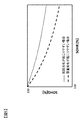
以下、第二の実施例について、図5を用いて説明する。実施例1ではSOHRとSOHQの相関関係式を一つとして考え、そこから算出したSOHQSOHRとSOHQSOCvの差に応じて平均化処理を行っているが、SOHRとSOHQの関係式は複数持っても良い。本実施例では意図的に代表電池の相関関係から容量の劣化よりも抵抗(内部抵抗)の劣化が起こりやすいような場合と抵抗(内部抵抗)よりも容量の劣化が起こりやすい場合を想定して決定した相関関係を示す。出荷直後の電池はSOHRもSOHQも100%前後であるため劣化する以前はSOHRとSOHQの相関関係から大きく乖離することはない。しかし、劣化が進行するにつれて電池の使用方法によってはSOHQとSOHRは相関関係から大きく乖離してしまう。この乖離の挙動をあらかじめデータとして持っておくことが可能であれば図5のような閾値を設け、2つの曲線内であれば一致度αを1にするというようにしても良い。実施例1でも述べたようにSOHQとSOHR自体も演算誤差を持つため、この誤差を考慮し図5の曲線からC%乖離しても一致度αは1であるといいうようにしても良い。このようにすることで、SOHQ閾値演算部で出力する閾値が多様な劣化モードに対応可能で、且つ、劣化範囲を実施例1よりも高精度に把握可能となる。
以下、第二の実施例について、図5を用いて説明する。実施例1ではSOHRとSOHQの相関関係式を一つとして考え、そこから算出したSOHQSOHRとSOHQSOCvの差に応じて平均化処理を行っているが、SOHRとSOHQの関係式は複数持っても良い。本実施例では意図的に代表電池の相関関係から容量の劣化よりも抵抗(内部抵抗)の劣化が起こりやすいような場合と抵抗(内部抵抗)よりも容量の劣化が起こりやすい場合を想定して決定した相関関係を示す。出荷直後の電池はSOHRもSOHQも100%前後であるため劣化する以前はSOHRとSOHQの相関関係から大きく乖離することはない。しかし、劣化が進行するにつれて電池の使用方法によってはSOHQとSOHRは相関関係から大きく乖離してしまう。この乖離の挙動をあらかじめデータとして持っておくことが可能であれば図5のような閾値を設け、2つの曲線内であれば一致度αを1にするというようにしても良い。実施例1でも述べたようにSOHQとSOHR自体も演算誤差を持つため、この誤差を考慮し図5の曲線からC%乖離しても一致度αは1であるといいうようにしても良い。このようにすることで、SOHQ閾値演算部で出力する閾値が多様な劣化モードに対応可能で、且つ、劣化範囲を実施例1よりも高精度に把握可能となる。
≪実施例3≫
以下、第三の実施例について、図6を用いて説明する。SOHQSOHRとSOHQSOCvを比較する際の閾値は電池の使用履歴に基づいて狭めても良い。この構成に関して図6に示す。電流、温度、電圧情報を元に電池の使用温度、充放電回数等の使用履歴を記憶する使用履歴記憶部600が、履歴情報を履歴に基づくSOHQSOHR閾値演算部 601に出力する構成が図3との違いである。実施例2に示したように電池の複数の劣化モードを想定して曲線を決めている場合、電池の使用履歴によって想定される劣化モードの範囲が限定できる。例えば図5に示した抵抗劣化が起こりやすいような電池に近い使用履歴であった場合に、抵抗劣化が起こりやすい電池の曲線に近い範囲に劣化モードの範囲を限定することが可能である。このように動的に履歴情報から劣化範囲を特定していくことにより、実施例2よりもSOHQ演算の高精度化が可能である。
以下、第三の実施例について、図6を用いて説明する。SOHQSOHRとSOHQSOCvを比較する際の閾値は電池の使用履歴に基づいて狭めても良い。この構成に関して図6に示す。電流、温度、電圧情報を元に電池の使用温度、充放電回数等の使用履歴を記憶する使用履歴記憶部600が、履歴情報を履歴に基づくSOHQSOHR閾値演算部 601に出力する構成が図3との違いである。実施例2に示したように電池の複数の劣化モードを想定して曲線を決めている場合、電池の使用履歴によって想定される劣化モードの範囲が限定できる。例えば図5に示した抵抗劣化が起こりやすいような電池に近い使用履歴であった場合に、抵抗劣化が起こりやすい電池の曲線に近い範囲に劣化モードの範囲を限定することが可能である。このように動的に履歴情報から劣化範囲を特定していくことにより、実施例2よりもSOHQ演算の高精度化が可能である。
≪実施例4≫
以下、第四の実施例について、図7を用いて説明する。本実施例ではSOHRの演算値が急激に変化した場合には、SOHQの演算にSOHRの結果を使用しない構成に関して説明する。この構成に関して図7に示す。実施例1の構成との差は、SOHR演算値を逐次検知し急変か否かを判定するSOHR急変検知部700があることである。SOHRは基本的に急激に変化することはないため、SOHQSOHR閾値演算部の出力値も急変しない。しかし、例えば長時間電池が使用されず放置されていた場合に長時間の保存劣化の影響でSOHR演算値が急激に変動する場合がある。この時、急変するSOHR演算値によってSOHQ閾値も急変してしまうと、SOHQ演算が安定しない。故に、SOHRが急変しているとSOHR急変検知部701が判定した場合にはSOHQSOHRを使用せず、SOHQSOCvの結果のみを使用する構成とした。このようにすることで、SOHRの急変の影響を受けずに演算が可能である。
以下、第四の実施例について、図7を用いて説明する。本実施例ではSOHRの演算値が急激に変化した場合には、SOHQの演算にSOHRの結果を使用しない構成に関して説明する。この構成に関して図7に示す。実施例1の構成との差は、SOHR演算値を逐次検知し急変か否かを判定するSOHR急変検知部700があることである。SOHRは基本的に急激に変化することはないため、SOHQSOHR閾値演算部の出力値も急変しない。しかし、例えば長時間電池が使用されず放置されていた場合に長時間の保存劣化の影響でSOHR演算値が急激に変動する場合がある。この時、急変するSOHR演算値によってSOHQ閾値も急変してしまうと、SOHQ演算が安定しない。故に、SOHRが急変しているとSOHR急変検知部701が判定した場合にはSOHQSOHRを使用せず、SOHQSOCvの結果のみを使用する構成とした。このようにすることで、SOHRの急変の影響を受けずに演算が可能である。
以上、本発明について簡単にまとめる。
本発明では、電池の電流値及び/又は電圧値を含む値に基づいてSOHQを演算するSOHQ演算部と、電池の内部抵抗に基づいてSOHQ閾値を決定する閾値決定部と、SOHQ演算部によるSOHQとSOHQ閾値との比較に基づいてSOHQを決定するSOHQ決定部と、を備える。このような構成にすることによって、電池個体差や多様な劣化要因にも対応可能である。
本発明では、電池の電流値及び/又は電圧値を含む値に基づいてSOHQを演算するSOHQ演算部と、電池の内部抵抗に基づいてSOHQ閾値を決定する閾値決定部と、SOHQ演算部によるSOHQとSOHQ閾値との比較に基づいてSOHQを決定するSOHQ決定部と、を備える。このような構成にすることによって、電池個体差や多様な劣化要因にも対応可能である。
また、本発明では、SOHQとSOHQ閾値との比較方法は電池の内部抵抗に応じて変化する。このような構成にすることによって、抵抗劣化が起こりやすいような電池に近い使用履歴であった場合に、抵抗劣化が起こりやすい電池の曲線に近い範囲に劣化モードの範囲を限定することが可能となる。
また、本発明では、電池制御装置は記憶部を有し、SOHQ閾値はあらかじめ記憶部に内蔵しておいた1つ以上の電池の劣化特性に基づいて決定する。
また、本発明では、電池制御装置は電池の現在までの温度や使用履歴によって、記憶部に内蔵されている電池の劣化特性のうち、最も劣化傾向の似ている電池データに基づきSOHQ閾値を決定する。このように動的に履歴情報から劣化範囲を特定していくことにより、よりSOHQ演算の高精度化が可能となる。
また、本発明では、電池制御装置は、内部抵抗の変化が急激であった場合にはSOHQ演算部のみに基づいて最終的なSOHQを演算する。
以上、本発明の実施形態について詳述したが、本発明は、前記の実施形態に限定されるものではなく、特許請求の範囲に記載された本発明の精神を逸脱しない範囲で、種々の設計変更を行うことができるものである。例えば、前記した実施の形態は本発明を分かりやすく説明するために詳細に説明したものであり、必ずしも説明した全ての構成を備えるものに限定されるものではない。また、ある実施形態の構成の一部を他の実施形態の構成に置き換えることが可能であり、また、ある実施形態の構成に他の実施形態の構成を加えることも可能である。さらに、各実施形態の構成の一部について、他の構成の追加・削除・置換をすることが可能である。
1 :電池システム
100:蓄電池モジュール
101:蓄電池情報取得部
102:バッテリーマネジメントシステム
103:上位コントローラ
104:インバータ
105:負荷
106:電流センサ
107:温度センサ
108:電圧センサ
109:SOC演算部
110:SOH演算部
111:許容電流演算部
112:SOCi演算部
113:SOCv演算部
114:SOHR演算部
115:SOHQ演算部
200:OCV
201:直流抵抗
202:分極項
203:分極抵抗
204:分極キャパシタ
300:SOCv2点選択部
301:電流積算部
302:SOHQSOCv演算部
303:SOHQSOHR閾値演算部
304:最終的なSOHQ演算部
600:使用履歴記憶部
601:履歴に基づくSOHQSOHR閾値演算部
700:SOHR急変検知部
100:蓄電池モジュール
101:蓄電池情報取得部
102:バッテリーマネジメントシステム
103:上位コントローラ
104:インバータ
105:負荷
106:電流センサ
107:温度センサ
108:電圧センサ
109:SOC演算部
110:SOH演算部
111:許容電流演算部
112:SOCi演算部
113:SOCv演算部
114:SOHR演算部
115:SOHQ演算部
200:OCV
201:直流抵抗
202:分極項
203:分極抵抗
204:分極キャパシタ
300:SOCv2点選択部
301:電流積算部
302:SOHQSOCv演算部
303:SOHQSOHR閾値演算部
304:最終的なSOHQ演算部
600:使用履歴記憶部
601:履歴に基づくSOHQSOHR閾値演算部
700:SOHR急変検知部
Claims (5)
- 電池の電流値及び/又は電圧値を含む値に基づいてSOHQを演算するSOHQ演算部と、前記電池の内部抵抗に基づいてSOHQ閾値を決定する閾値決定部と、前記SOHQ演算部による前記SOHQと前記SOHQ閾値との比較に基づいてSOHQを決定するSOHQ決定部と、を備える電池制御装置。
- 請求項1に記載の電池制御装置において、前記SOHQと前記SOHQ閾値との比較方法は前記電池の内部抵抗に応じて変化することを特徴とする電池制御装置。
- 請求項1に記載の電池制御装置において、当該電池制御装置はさらに記憶部を有し、前記SOHQ閾値はあらかじめ前記記憶部に内蔵しておいた1つ以上の電池の劣化特性に基づいて決定する事を特徴とする電池制御装置。
- 請求項3に記載の電池制御装置において、前記電池の現在までの温度や使用履歴によって、前記記憶部に内蔵されている電池の劣化特性の内、最も劣化傾向の似ている電池データに基づき前記SOHQ閾値を決定する事を特徴とする電池制御装置。
- 請求項1に記載の電池制御装置において、内部抵抗の変化が急激であった場合には前記SOHQ演算部のみに基づいて最終的なSOHQを演算することを特徴とする電池制御装置。
Priority Applications (2)
| Application Number | Priority Date | Filing Date | Title |
|---|---|---|---|
| EP18775676.2A EP3605123B1 (en) | 2017-03-30 | 2018-02-06 | Storage battery control device and control method |
| CN201880003515.3A CN110446938B (zh) | 2017-03-30 | 2018-02-06 | 蓄电池控制装置以及控制方法 |
Applications Claiming Priority (2)
| Application Number | Priority Date | Filing Date | Title |
|---|---|---|---|
| JP2017-066632 | 2017-03-30 | ||
| JP2017066632A JP2018169284A (ja) | 2017-03-30 | 2017-03-30 | 蓄電池制御装置および制御方法 |
Publications (1)
| Publication Number | Publication Date |
|---|---|
| WO2018179852A1 true WO2018179852A1 (ja) | 2018-10-04 |
Family
ID=63675056
Family Applications (1)
| Application Number | Title | Priority Date | Filing Date |
|---|---|---|---|
| PCT/JP2018/003902 Ceased WO2018179852A1 (ja) | 2017-03-30 | 2018-02-06 | 蓄電池制御装置および制御方法 |
Country Status (4)
| Country | Link |
|---|---|
| EP (1) | EP3605123B1 (ja) |
| JP (3) | JP2018169284A (ja) |
| CN (1) | CN110446938B (ja) |
| WO (1) | WO2018179852A1 (ja) |
Cited By (4)
| Publication number | Priority date | Publication date | Assignee | Title |
|---|---|---|---|---|
| CN111381174A (zh) * | 2018-12-28 | 2020-07-07 | 天津银隆新能源有限公司 | 燃料电池测试与锂离子电池化成分容耦合系统及方法 |
| CN112083335A (zh) * | 2020-09-28 | 2020-12-15 | 国联汽车动力电池研究院有限责任公司 | 一种车用蓄电池的快充方法及系统 |
| JPWO2024048033A1 (ja) * | 2022-08-29 | 2024-03-07 | ||
| WO2024247406A1 (ja) * | 2023-06-02 | 2024-12-05 | 株式会社日立ハイテク | 電池状態の診断方法、電池診断装置、および、電池診断システム |
Families Citing this family (2)
| Publication number | Priority date | Publication date | Assignee | Title |
|---|---|---|---|---|
| JP7553332B2 (ja) | 2020-11-20 | 2024-09-18 | 株式会社日立製作所 | 電池制御装置およびプログラム |
| JP2022145273A (ja) * | 2021-03-19 | 2022-10-03 | 本田技研工業株式会社 | 二次電池の状態推定装置 |
Citations (5)
| Publication number | Priority date | Publication date | Assignee | Title |
|---|---|---|---|---|
| JP2008122165A (ja) * | 2006-11-09 | 2008-05-29 | Sanyo Electric Co Ltd | 電池の劣化度の検出方法 |
| JP2014011060A (ja) * | 2012-06-29 | 2014-01-20 | Sanyo Electric Co Ltd | 電池モジュールの入れ替え方法、電源システム、これを備える車両、蓄電装置及び入れ替え管理プログラム |
| JP2014059226A (ja) * | 2012-09-18 | 2014-04-03 | Calsonic Kansei Corp | バッテリの健全度算出装置および健全度算出方法 |
| JP2015121520A (ja) * | 2013-12-25 | 2015-07-02 | 株式会社東芝 | 蓄電池状態監視装置及び蓄電池装置 |
| JP2016070682A (ja) * | 2014-09-26 | 2016-05-09 | スズキ株式会社 | 二次電池の劣化状態推定装置 |
Family Cites Families (8)
| Publication number | Priority date | Publication date | Assignee | Title |
|---|---|---|---|---|
| JP5348987B2 (ja) * | 2008-09-27 | 2013-11-20 | 三洋電機株式会社 | 電池の劣化度の検出方法 |
| JP5633227B2 (ja) * | 2009-10-14 | 2014-12-03 | ソニー株式会社 | 電池パックおよび電池パックの劣化度検出方法 |
| DE102010038646A1 (de) * | 2010-07-29 | 2012-02-02 | Robert Bosch Gmbh | Verfahren und Anordnung zum Abschätzen der Leistungsfähigkeit mindestens einer Batterieeinheit einer wiederaufladbaren Batterie |
| WO2014027389A1 (ja) * | 2012-08-13 | 2014-02-20 | 日立ビークルエナジー株式会社 | 電池制御装置、二次電池システム |
| JP6033155B2 (ja) * | 2013-03-29 | 2016-11-30 | 日立オートモティブシステムズ株式会社 | 電池制御装置 |
| EP2957921B1 (en) * | 2013-07-04 | 2018-04-04 | LG Chem, Ltd. | Method and system for estimating soc of battery |
| JP6443656B2 (ja) * | 2014-07-02 | 2018-12-26 | パナソニックIpマネジメント株式会社 | 電池状態判定装置 |
| CN105388426A (zh) * | 2015-12-10 | 2016-03-09 | 东软集团股份有限公司 | 估计电池健康寿命soh的方法和装置 |
-
2017
- 2017-03-30 JP JP2017066632A patent/JP2018169284A/ja active Pending
-
2018
- 2018-02-06 CN CN201880003515.3A patent/CN110446938B/zh active Active
- 2018-02-06 EP EP18775676.2A patent/EP3605123B1/en active Active
- 2018-02-06 WO PCT/JP2018/003902 patent/WO2018179852A1/ja not_active Ceased
-
2022
- 2022-08-10 JP JP2022127665A patent/JP2022167921A/ja active Pending
-
2023
- 2023-11-30 JP JP2023202911A patent/JP7587007B2/ja active Active
Patent Citations (5)
| Publication number | Priority date | Publication date | Assignee | Title |
|---|---|---|---|---|
| JP2008122165A (ja) * | 2006-11-09 | 2008-05-29 | Sanyo Electric Co Ltd | 電池の劣化度の検出方法 |
| JP2014011060A (ja) * | 2012-06-29 | 2014-01-20 | Sanyo Electric Co Ltd | 電池モジュールの入れ替え方法、電源システム、これを備える車両、蓄電装置及び入れ替え管理プログラム |
| JP2014059226A (ja) * | 2012-09-18 | 2014-04-03 | Calsonic Kansei Corp | バッテリの健全度算出装置および健全度算出方法 |
| JP2015121520A (ja) * | 2013-12-25 | 2015-07-02 | 株式会社東芝 | 蓄電池状態監視装置及び蓄電池装置 |
| JP2016070682A (ja) * | 2014-09-26 | 2016-05-09 | スズキ株式会社 | 二次電池の劣化状態推定装置 |
Cited By (6)
| Publication number | Priority date | Publication date | Assignee | Title |
|---|---|---|---|---|
| CN111381174A (zh) * | 2018-12-28 | 2020-07-07 | 天津银隆新能源有限公司 | 燃料电池测试与锂离子电池化成分容耦合系统及方法 |
| CN112083335A (zh) * | 2020-09-28 | 2020-12-15 | 国联汽车动力电池研究院有限责任公司 | 一种车用蓄电池的快充方法及系统 |
| CN112083335B (zh) * | 2020-09-28 | 2023-10-17 | 国联汽车动力电池研究院有限责任公司 | 一种车用蓄电池的快充方法及系统 |
| JPWO2024048033A1 (ja) * | 2022-08-29 | 2024-03-07 | ||
| WO2024048033A1 (ja) * | 2022-08-29 | 2024-03-07 | 株式会社日立ハイテク | 容量劣化推定装置 |
| WO2024247406A1 (ja) * | 2023-06-02 | 2024-12-05 | 株式会社日立ハイテク | 電池状態の診断方法、電池診断装置、および、電池診断システム |
Also Published As
| Publication number | Publication date |
|---|---|
| JP2022167921A (ja) | 2022-11-04 |
| JP2018169284A (ja) | 2018-11-01 |
| JP7587007B2 (ja) | 2024-11-19 |
| CN110446938B (zh) | 2022-03-18 |
| JP2024026232A (ja) | 2024-02-28 |
| EP3605123A4 (en) | 2020-08-19 |
| EP3605123A1 (en) | 2020-02-05 |
| CN110446938A (zh) | 2019-11-12 |
| EP3605123B1 (en) | 2025-04-09 |
Similar Documents
| Publication | Publication Date | Title |
|---|---|---|
| JP7587007B2 (ja) | 蓄電池制御装置および制御方法 | |
| JP5492291B2 (ja) | 二次電池の劣化診断方法、及び劣化診断装置 | |
| JP5863603B2 (ja) | 電池状態推定装置、電池制御装置、電池システム、電池状態推定方法 | |
| JP4405558B2 (ja) | 充電状態を用いた電池平滑化システム及び方法 | |
| JP6324248B2 (ja) | 電池状態検知装置、二次電池システム、電池状態検知プログラム、電池状態検知方法 | |
| CN104597402B (zh) | 车辆高压蓄电池的劣化判定装置及方法 | |
| US9018907B2 (en) | Method for precise power prediction for battery packs | |
| JP6749080B2 (ja) | 蓄電システム、二次電池の制御システム及び二次電池の制御方法 | |
| JP6316690B2 (ja) | 電池状態検知装置、二次電池システム、電池状態検知プログラム、電池状態検知方法 | |
| JP6764553B2 (ja) | 電池制御装置、電池システム及び車両 | |
| CN104184182A (zh) | 电池管理系统及其驱动方法 | |
| CN107925135A (zh) | 劣化程度估计装置和劣化程度估计方法 | |
| RU2690724C1 (ru) | Устройство оценки коэффициента емкости или способ оценки коэффициента емкости | |
| JP2014153353A (ja) | バッテリ管理システムおよびその駆動方法 | |
| WO2021157120A1 (ja) | 電池管理装置、電池管理方法、電力貯蔵システム | |
| JP2016171716A (ja) | 電池残量予測装置及びバッテリパック | |
| CN107076800A (zh) | 电池容量监测器 | |
| WO2015075814A1 (ja) | 二次電池の余寿命診断方法並びに余寿命診断装置及びこれを備えた電池システム | |
| JP6821525B2 (ja) | 二次電池制御装置 | |
| JP5851514B2 (ja) | 電池制御装置、二次電池システム | |
| US11448703B2 (en) | Device and method for estimating SOC via open-circuit voltage of battery |
Legal Events
| Date | Code | Title | Description |
|---|---|---|---|
| 121 | Ep: the epo has been informed by wipo that ep was designated in this application |
Ref document number: 18775676 Country of ref document: EP Kind code of ref document: A1 |
|
| NENP | Non-entry into the national phase |
Ref country code: DE |
|
| ENP | Entry into the national phase |
Ref document number: 2018775676 Country of ref document: EP Effective date: 20191030 |
|
| WWG | Wipo information: grant in national office |
Ref document number: 2018775676 Country of ref document: EP |