WO2018186421A1 - 間葉系幹細胞を含む細胞集団とその製造方法、及び医薬組成物 - Google Patents
間葉系幹細胞を含む細胞集団とその製造方法、及び医薬組成物 Download PDFInfo
- Publication number
- WO2018186421A1 WO2018186421A1 PCT/JP2018/014326 JP2018014326W WO2018186421A1 WO 2018186421 A1 WO2018186421 A1 WO 2018186421A1 JP 2018014326 W JP2018014326 W JP 2018014326W WO 2018186421 A1 WO2018186421 A1 WO 2018186421A1
- Authority
- WO
- WIPO (PCT)
- Prior art keywords
- expression level
- gene
- cell population
- less
- cell
- Prior art date
- Legal status (The legal status is an assumption and is not a legal conclusion. Google has not performed a legal analysis and makes no representation as to the accuracy of the status listed.)
- Ceased
Links
Images
Classifications
-
- C—CHEMISTRY; METALLURGY
- C12—BIOCHEMISTRY; BEER; SPIRITS; WINE; VINEGAR; MICROBIOLOGY; ENZYMOLOGY; MUTATION OR GENETIC ENGINEERING
- C12N—MICROORGANISMS OR ENZYMES; COMPOSITIONS THEREOF; PROPAGATING, PRESERVING, OR MAINTAINING MICROORGANISMS; MUTATION OR GENETIC ENGINEERING; CULTURE MEDIA
- C12N5/00—Undifferentiated human, animal or plant cells, e.g. cell lines; Tissues; Cultivation or maintenance thereof; Culture media therefor
- C12N5/06—Animal cells or tissues; Human cells or tissues
- C12N5/0602—Vertebrate cells
- C12N5/0652—Cells of skeletal and connective tissues; Mesenchyme
- C12N5/0662—Stem cells
- C12N5/0668—Mesenchymal stem cells from other natural sources
-
- A—HUMAN NECESSITIES
- A61—MEDICAL OR VETERINARY SCIENCE; HYGIENE
- A61K—PREPARATIONS FOR MEDICAL, DENTAL OR TOILETRY PURPOSES
- A61K35/00—Medicinal preparations containing materials or reaction products thereof with undetermined constitution
- A61K35/12—Materials from mammals; Compositions comprising non-specified tissues or cells; Compositions comprising non-embryonic stem cells; Genetically modified cells
- A61K35/28—Bone marrow; Haematopoietic stem cells; Mesenchymal stem cells of any origin, e.g. adipose-derived stem cells
-
- A—HUMAN NECESSITIES
- A61—MEDICAL OR VETERINARY SCIENCE; HYGIENE
- A61K—PREPARATIONS FOR MEDICAL, DENTAL OR TOILETRY PURPOSES
- A61K9/00—Medicinal preparations characterised by special physical form
- A61K9/0012—Galenical forms characterised by the site of application
- A61K9/0019—Injectable compositions; Intramuscular, intravenous, arterial, subcutaneous administration; Compositions to be administered through the skin in an invasive manner
-
- A—HUMAN NECESSITIES
- A61—MEDICAL OR VETERINARY SCIENCE; HYGIENE
- A61P—SPECIFIC THERAPEUTIC ACTIVITY OF CHEMICAL COMPOUNDS OR MEDICINAL PREPARATIONS
- A61P1/00—Drugs for disorders of the alimentary tract or the digestive system
- A61P1/04—Drugs for disorders of the alimentary tract or the digestive system for ulcers, gastritis or reflux esophagitis, e.g. antacids, inhibitors of acid secretion, mucosal protectants
-
- A—HUMAN NECESSITIES
- A61—MEDICAL OR VETERINARY SCIENCE; HYGIENE
- A61P—SPECIFIC THERAPEUTIC ACTIVITY OF CHEMICAL COMPOUNDS OR MEDICINAL PREPARATIONS
- A61P1/00—Drugs for disorders of the alimentary tract or the digestive system
- A61P1/16—Drugs for disorders of the alimentary tract or the digestive system for liver or gallbladder disorders, e.g. hepatoprotective agents, cholagogues, litholytics
-
- A—HUMAN NECESSITIES
- A61—MEDICAL OR VETERINARY SCIENCE; HYGIENE
- A61P—SPECIFIC THERAPEUTIC ACTIVITY OF CHEMICAL COMPOUNDS OR MEDICINAL PREPARATIONS
- A61P11/00—Drugs for disorders of the respiratory system
-
- A—HUMAN NECESSITIES
- A61—MEDICAL OR VETERINARY SCIENCE; HYGIENE
- A61P—SPECIFIC THERAPEUTIC ACTIVITY OF CHEMICAL COMPOUNDS OR MEDICINAL PREPARATIONS
- A61P17/00—Drugs for dermatological disorders
-
- A—HUMAN NECESSITIES
- A61—MEDICAL OR VETERINARY SCIENCE; HYGIENE
- A61P—SPECIFIC THERAPEUTIC ACTIVITY OF CHEMICAL COMPOUNDS OR MEDICINAL PREPARATIONS
- A61P17/00—Drugs for dermatological disorders
- A61P17/02—Drugs for dermatological disorders for treating wounds, ulcers, burns, scars, keloids, or the like
-
- A—HUMAN NECESSITIES
- A61—MEDICAL OR VETERINARY SCIENCE; HYGIENE
- A61P—SPECIFIC THERAPEUTIC ACTIVITY OF CHEMICAL COMPOUNDS OR MEDICINAL PREPARATIONS
- A61P17/00—Drugs for dermatological disorders
- A61P17/06—Antipsoriatics
-
- A—HUMAN NECESSITIES
- A61—MEDICAL OR VETERINARY SCIENCE; HYGIENE
- A61P—SPECIFIC THERAPEUTIC ACTIVITY OF CHEMICAL COMPOUNDS OR MEDICINAL PREPARATIONS
- A61P19/00—Drugs for skeletal disorders
- A61P19/02—Drugs for skeletal disorders for joint disorders, e.g. arthritis, arthrosis
-
- A—HUMAN NECESSITIES
- A61—MEDICAL OR VETERINARY SCIENCE; HYGIENE
- A61P—SPECIFIC THERAPEUTIC ACTIVITY OF CHEMICAL COMPOUNDS OR MEDICINAL PREPARATIONS
- A61P19/00—Drugs for skeletal disorders
- A61P19/04—Drugs for skeletal disorders for non-specific disorders of the connective tissue
-
- A—HUMAN NECESSITIES
- A61—MEDICAL OR VETERINARY SCIENCE; HYGIENE
- A61P—SPECIFIC THERAPEUTIC ACTIVITY OF CHEMICAL COMPOUNDS OR MEDICINAL PREPARATIONS
- A61P25/00—Drugs for disorders of the nervous system
-
- A—HUMAN NECESSITIES
- A61—MEDICAL OR VETERINARY SCIENCE; HYGIENE
- A61P—SPECIFIC THERAPEUTIC ACTIVITY OF CHEMICAL COMPOUNDS OR MEDICINAL PREPARATIONS
- A61P27/00—Drugs for disorders of the senses
- A61P27/02—Ophthalmic agents
-
- A—HUMAN NECESSITIES
- A61—MEDICAL OR VETERINARY SCIENCE; HYGIENE
- A61P—SPECIFIC THERAPEUTIC ACTIVITY OF CHEMICAL COMPOUNDS OR MEDICINAL PREPARATIONS
- A61P29/00—Non-central analgesic, antipyretic or antiinflammatory agents, e.g. antirheumatic agents; Non-steroidal antiinflammatory drugs [NSAID]
-
- A—HUMAN NECESSITIES
- A61—MEDICAL OR VETERINARY SCIENCE; HYGIENE
- A61P—SPECIFIC THERAPEUTIC ACTIVITY OF CHEMICAL COMPOUNDS OR MEDICINAL PREPARATIONS
- A61P3/00—Drugs for disorders of the metabolism
- A61P3/08—Drugs for disorders of the metabolism for glucose homeostasis
- A61P3/10—Drugs for disorders of the metabolism for glucose homeostasis for hyperglycaemia, e.g. antidiabetics
-
- A—HUMAN NECESSITIES
- A61—MEDICAL OR VETERINARY SCIENCE; HYGIENE
- A61P—SPECIFIC THERAPEUTIC ACTIVITY OF CHEMICAL COMPOUNDS OR MEDICINAL PREPARATIONS
- A61P35/00—Antineoplastic agents
-
- A—HUMAN NECESSITIES
- A61—MEDICAL OR VETERINARY SCIENCE; HYGIENE
- A61P—SPECIFIC THERAPEUTIC ACTIVITY OF CHEMICAL COMPOUNDS OR MEDICINAL PREPARATIONS
- A61P37/00—Drugs for immunological or allergic disorders
- A61P37/02—Immunomodulators
-
- A—HUMAN NECESSITIES
- A61—MEDICAL OR VETERINARY SCIENCE; HYGIENE
- A61P—SPECIFIC THERAPEUTIC ACTIVITY OF CHEMICAL COMPOUNDS OR MEDICINAL PREPARATIONS
- A61P37/00—Drugs for immunological or allergic disorders
- A61P37/02—Immunomodulators
- A61P37/06—Immunosuppressants, e.g. drugs for graft rejection
-
- A—HUMAN NECESSITIES
- A61—MEDICAL OR VETERINARY SCIENCE; HYGIENE
- A61P—SPECIFIC THERAPEUTIC ACTIVITY OF CHEMICAL COMPOUNDS OR MEDICINAL PREPARATIONS
- A61P37/00—Drugs for immunological or allergic disorders
- A61P37/08—Antiallergic agents
-
- A—HUMAN NECESSITIES
- A61—MEDICAL OR VETERINARY SCIENCE; HYGIENE
- A61P—SPECIFIC THERAPEUTIC ACTIVITY OF CHEMICAL COMPOUNDS OR MEDICINAL PREPARATIONS
- A61P9/00—Drugs for disorders of the cardiovascular system
- A61P9/04—Inotropic agents, i.e. stimulants of cardiac contraction; Drugs for heart failure
-
- A—HUMAN NECESSITIES
- A61—MEDICAL OR VETERINARY SCIENCE; HYGIENE
- A61P—SPECIFIC THERAPEUTIC ACTIVITY OF CHEMICAL COMPOUNDS OR MEDICINAL PREPARATIONS
- A61P9/00—Drugs for disorders of the cardiovascular system
- A61P9/10—Drugs for disorders of the cardiovascular system for treating ischaemic or atherosclerotic diseases, e.g. antianginal drugs, coronary vasodilators, drugs for myocardial infarction, retinopathy, cerebrovascula insufficiency, renal arteriosclerosis
-
- C—CHEMISTRY; METALLURGY
- C12—BIOCHEMISTRY; BEER; SPIRITS; WINE; VINEGAR; MICROBIOLOGY; ENZYMOLOGY; MUTATION OR GENETIC ENGINEERING
- C12N—MICROORGANISMS OR ENZYMES; COMPOSITIONS THEREOF; PROPAGATING, PRESERVING, OR MAINTAINING MICROORGANISMS; MUTATION OR GENETIC ENGINEERING; CULTURE MEDIA
- C12N2501/00—Active agents used in cell culture processes, e.g. differentation
- C12N2501/70—Enzymes
- C12N2501/73—Hydrolases (EC 3.)
- C12N2501/734—Proteases (EC 3.4.)
Definitions
- the present invention relates to a method for producing a cell population containing mesenchymal stem cells. Furthermore, the present invention relates to a cell population containing mesenchymal stem cells and a pharmaceutical composition containing the cell population.
- Mesenchymal stem cells also called mesenchymal stromal cells, are somatic stem cells that have been reported to exist in bone marrow, adipose tissue, dental pulp, etc. Recently, placenta, umbilical cord, egg membrane It has been found that it also exists in fetal appendages. Mesenchymal stem cells have attracted attention as a promising cell source in regenerative medicine because they have the ability to differentiate into bone, cartilage, fat and the like.
- mesenchymal stem cells have not only differentiation ability but also immunosuppression ability, it has been reported that immune related diseases and inflammatory diseases can be treated by intravenous administration.
- Patent Document 1 describes a method for producing an amniotic mesenchymal cell composition, a cryopreservation method, and a therapeutic agent.
- a cryopreservation method for producing an amniotic mesenchymal cell composition
- a cryopreservation method for producing an amniotic mesenchymal cell composition
- a cryopreservation method for producing an amniotic mesenchymal cell composition
- a cryopreservation method a therapeutic agent.
- Patent Document 2 (D) a step of collecting a cell population of mesenchymal cells from a mammal's amniotic membrane, and (E) seeding the collected cell population at a cell concentration of 400 to 35000 / cm 2 , A step of initial culture for 2 to 3 days, and (F) 3 to 4 subcultures inoculated at a cell concentration of 1/5000 or more and less than 1/10 of the initial culture and changing the medium twice a week And a step of (G) maintaining a culture in the same culture dish until the cells become confluent when a colony of cells having a spindle-like morphology is formed in the subculture.
- a method for preparing a stem cell population has been described.
- Patent Document 3 confirms that human mesenchymal stem cells secrete COL11A1 and COL16A1 by analyzing the proteome of human mesenchymal stem cells.
- mesenchymal stem cells derived from fetal appendages are heterogeneous cell populations containing various cells having different differentiation ability, proliferation ability, and cytokine production ability.
- cell aggregates composed of the administered mesenchymal stem cells may become clogged in capillaries or thicker blood vessels and cause embolization It is pointed out that there is. Therefore, it is necessary to obtain mesenchymal stem cells with lower cell aggregation from the viewpoint of improving safety as a cell therapeutic agent.
- Patent Document 1 discloses that a mixture containing amnion mesenchymal cells is cryopreserved in a specific cryopreservation solution, thereby suppressing a decrease in the survival rate of the amnion mesenchymal cells after thawing, and cryopreserved amniotic membrane. It is described that mesenchymal cells can be produced as cell preparations optimized for transplantation. However, there is a cell aggregation property useful for selectively preparing mesenchymal stem cells having specific excellent characteristics from mesenchymal stem cells, specifically for intravenous administration of cell preparations. There is no description about selectively preparing a cell population containing many low mesenchymal stem cells using the characteristics of mesenchymal stem cells as an index.
- Patent Document 2 discloses that a mesenchymal stem cell population having high proliferation ability and differentiation ability is prepared by seeding cells at a low density, but mesenchymal stem cells included in the mesenchymal stem cell population. There is no description or suggestion of a cell population containing many mesenchymal stem cells with low cell aggregability using the above characteristics as an index.
- Patent Document 3 describes that mesenchymal stem cells secrete COL11A1 and COL16A1. However, Patent Document 3 does not describe the expression intensity of COL11A1 and COL16A1, and selectively prepares a cell population containing many mesenchymal stem cells with low cell aggregation properties using the characteristics of mesenchymal stem cells as an index. There is no description or suggestion.
- the present invention provides a cell population containing mesenchymal cells with low cell aggregation and a method for producing the same, and a pharmaceutical composition containing the cell population, which are useful for intravenous administration of cell preparations. Let it be an issue.
- mesenchymal stem cells with low expression levels of the COL11A1 gene and the COL16A1 gene are contained in the cell population containing cells collected from fetal appendages. Furthermore, it has been found that cell aggregation is suppressed in a cell population containing mesenchymal stem cells having the above-described cell characteristics. The present invention has been completed based on these findings.
- a method for producing a cell population containing mesenchymal stem cells comprising obtaining a cell population having the following cell characteristics: The cell population satisfies that the relative expression level of the COL11A1 gene with respect to the expression level of the SDHA gene is 6.0 or less, and the relative expression level of the COL16A1 gene with respect to the expression level of the SDHA gene is 1.5 or less.
- a cell population containing mesenchymal stem cells having the following cell characteristics: The cell population satisfies that the relative expression level of the COL11A1 gene with respect to the expression level of the SDHA gene is 6.0 or less, and the relative expression level of the COL16A1 gene with respect to the expression level of the SDHA gene is 1.5 or less. [3] The cell population according to [2], wherein the cell population satisfies that the relative expression level of the COL4A5 gene with respect to the expression level of the SDHA gene is 0.4 or less.
- the relative expression level of the VCAN gene with respect to the expression level of the SDHA gene is 6.0 or less
- the relative expression level of the DCN gene with respect to the expression level of the SDHA gene is 3.0 or less
- the cell population according to [2] or [3] wherein the relative expression level of the LUM gene with respect to the expression level of the SDHA gene satisfies any one or more of 6.0 or less.
- [6] The cell population according to any one of [2] to [5], wherein the ratio of mesenchymal stem cells that are positive for CDH6 is 30% or more in the cell population.
- a pharmaceutical composition comprising the cell population according to any one of [2] to [7] and a pharmaceutically acceptable medium.
- the pharmaceutical composition according to [8], wherein a single dose of mesenchymal stem cells to human is 10 9 cells / kg body weight or less.
- the pharmaceutical composition according to [8] or [9], wherein the pharmaceutical composition is a liquid.
- [13] A cell population obtained by the production method according to [1].
- [14] Use of the cell population according to any one of [2] to [7] for the manufacture of a pharmaceutical composition.
- the pharmaceutical composition is a pharmaceutical composition in which a single dose of mesenchymal stem cells to human is 10 9 cells / kg body weight or less.
- the pharmaceutical composition is a liquid.
- the pharmaceutical composition is an injection solution.
- [19] The cell population according to any one of [2] to [7] for use in the treatment of a disease.
- [20] The cell population according to [19], wherein a single dose of mesenchymal stem cells to a human is 10 9 cells / kg body weight or less.
- [21] The cell population according to [19] or [20], which is a liquid agent.
- [22] The cell population according to any one of [19] to [21], which is a liquid for injection.
- the disease is immune-related disease, ischemic disease, lower limb ischemia, cerebrovascular ischemia, renal ischemia, pulmonary ischemia, neurological disease, graft-versus-host disease, inflammatory bowel disease, Crohn's disease, ulcer Colitis, radiation enteritis, systemic lupus erythematosus, lupus erythematosus, collagen disease, stroke, cerebral infarction, intracerebral hematoma, cerebrovascular paralysis, cirrhosis, atopic dermatitis, multiple sclerosis, psoriasis, epidermolysis bullosa, diabetes , Mycosis fungoides, scleroderma, diseases resulting from degeneration and / or inflammation of connective tissues such as cartilage, articular cartilage defect, meniscus injury, osteoelastic osteochondrosis, non-rotating osteonecrosis, osteoarthritis of the knee , Inflammatory arthritis, rheumatoid
- a method for treating a disease comprising administering the cell population according to any one of [2] to [7] to a patient in need of treatment.
- the method for treating a disease according to [24] wherein a single dose of mesenchymal stem cells to human is 10 9 cells / kg body weight or less.
- the disease is immune-related disease, ischemic disease, lower limb ischemia, cerebrovascular ischemia, renal ischemia, pulmonary ischemia, neurological disease, graft-versus-host disease, inflammatory bowel disease, Crohn's disease, ulcer Colitis, radiation enteritis, systemic lupus erythematosus, lupus erythematosus, collagen disease, stroke, cerebral infarction, intracerebral hematoma, cerebrovascular paralysis, cirrhosis, atopic dermatitis, multiple sclerosis, psoriasis, epidermolysis bullosa, diabetes , Mycosis fungoides, scleroderma, diseases resulting from degeneration and / or inflammation of connective tissues such as cartilage, articular cartilage defect, meniscus injury, osteoelastic osteochondrosis, non-rotating osteonecrosis, osteoarthritis of the knee , Inflammatory arthritis, rheumatoid
- composition comprising the cell population according to any one of [2] to [7] and a medium.
- a method for measuring the relative expression level of the COL11A1 gene relative to the expression level of the SDHA gene and the relative expression level of the COL16A1 gene relative to the expression level of the SDHA gene, and evaluating cell aggregation of mesenchymal stem cells using the following cell characteristics as an index satisfies that the relative expression level of the COL11A1 gene with respect to the expression level of the SDHA gene is 6.0 or less, and the relative expression level of the COL16A1 gene with respect to the expression level of the SDHA gene is 1.5 or less.
- a cell population containing mesenchymal stem cells is collected from a donor, and the relative expression level of the COL11A1 gene with respect to the expression level of the SDHA gene and the relative expression level of the COL16A1 gene with respect to the expression level of the SDHA gene are measured.
- the relative expression level of the COL11A1 gene relative to the expression level of the SDHA gene and the relative expression level of the COL16A1 gene relative to the expression level of the SDHA gene are measured for the cell population obtained by enzyme treatment of the sample collected from the donor A method for judging and / or predicting an optimal enzyme treatment condition for the sample, wherein the following cell characteristics are evaluated as an index.
- the cell population satisfies that the relative expression level of the COL11A1 gene with respect to the expression level of the SDHA gene is 6.0 or less, and the relative expression level of the COL16A1 gene with respect to the expression level of the SDHA gene is 1.5 or less.
- a cell population containing mesenchymal cells with low cell aggregation can be obtained.
- the relative expression level of various genes with respect to housekeeping genes can be used as an indicator of cell population formation including mesenchymal stem cells with low cell aggregation properties.
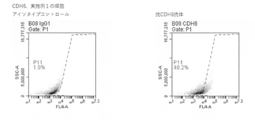
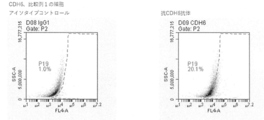
- Example 1 The result of having measured the ratio of the cell which becomes positive with respect to CDH6 using the flow cytometer regarding the amniotic membrane MSC cultured in Example 1 is shown. The result of having measured the ratio of the cell which becomes positive with respect to CDH6 using the flow cytometer about the amniotic membrane MSC cultured by the comparative example 1 is shown.
- Fretal appendage in the present specification refers to egg membrane, placenta, umbilical cord and amniotic fluid.
- the “egg membrane” is a fetal sac containing fetal amniotic fluid and consists of an amnion, chorion and decidua from the inside. Of these, the amnion and chorion originate from the fetus.
- Amnion refers to a transparent thin film with poor blood vessels in the innermost layer of the egg membrane.
- the inner layer of the amniotic membrane (also called the epithelial cell layer) is covered with a layer of secretory epithelial cells to secrete amniotic fluid, and the outer layer of the amniotic membrane (also called the extracellular matrix layer, which corresponds to the stroma) contains mesenchymal stem cells. Including.
- MSC Mesenchymal stem cells
- mesenchymal stem cells i) Adhesive to plastic under culture conditions in standard medium. ii) The surface antigens CD105, CD73, and CD90 are positive, and CD45, CD34, CD11b, CD79alpha, CD19, and HLA-DR are negative.
- the “mesenchymal stem cell population” in the present specification means a cell population containing mesenchymal stem cells, and the form thereof is not particularly limited. For example, a cell pellet, a cell aggregate, a cell suspension or a cell suspension Etc.
- amniotic mesenchymal stem cells refers to mesenchymal stem cells derived from amniotic membrane, and is used without distinction from “amniotic mesenchymal stromal cells”. In the present specification, “amniotic mesenchymal stem cells” may be described as “amniotic MSC”.
- cell aggregation means that a plurality of single cells adhere to each other to form a group.
- Cell aggregation can be evaluated by, for example, observation using a microscope, cell counting using a cell counter, aggregation rate measurement, size distribution measurement, or the like.
- the ratio of mesenchymal stem cells that are positive for CDH6 refers to the ratio of cells that are positive for the surface antigen analyzed by flow cytometry, as described in the Examples below. In the present specification, “the ratio of mesenchymal stem cells that are positive for CDH6” may be described as “positive rate”.
- the cell population containing mesenchymal stem cells provided by the present invention is a cell population having the following cell characteristics: The cell population satisfies that the relative expression level of the COL11A1 gene with respect to the expression level of the SDHA gene is 6.0 or less, and the relative expression level of the COL16A1 gene with respect to the expression level of the SDHA gene is 1.5 or less. When the above conditions are satisfied, a cell population containing mesenchymal cells with low cell aggregation is formed. Therefore, in the present invention, the above conditions can be used as an index for forming a cell population with low cell aggregation.
- the upper limit of the relative expression level of the COL11A1 gene with respect to the expression level of the SDHA gene is 5.5 or less, 5.0 or less, 4.5 or less, 4.0 or less, 3.5 or less, 3.0 or less, 2.9 or less 2.8 or less, 2.7 or less, 2.6 or less, 2.5 or less, 2.4 or less, 2.3 or less, 2.2 or less, 2.1 or less, 2.0 or less, 1.9 or less 1.8 or less, 1.7 or less, 1.6 or less, 1.5 or less, 1.4 or less, 1.3 or less, or 1.2 or less.
- the lower limit of the relative expression level of the COL11A1 gene relative to the expression level of the SDHA gene is 0.1 or more, 0.2 or more, 0.3 or more, 0.4 or more, 0.5 or more, 0.6 or more, 0. It may be 7 or more, 0.8 or more, 0.9 or more, or 1.0 or more.
- the upper limit of the relative expression level of the COL16A1 gene with respect to the expression level of the SDHA gene is 1.4 or less, 1.3 or less, 1.2 or less, 1.1 or less, 1.0 or less, 0.9 or less, 0.8 or less 0.7 or less, 0.6 or less, 0.5 or less, 0.4 or less, 0.3 or less, or 0.2 or less.
- the lower limit of the relative expression level of the COL16A1 gene relative to the expression level of the SDHA gene may be 0.02 or more, 0.04 or more, 0.06 or more, or 0.08 or more.
- the cell population containing mesenchymal stem cells provided by the present invention satisfies that the relative expression level of the COL4A5 gene with respect to the expression level of the SDHA gene is 0.4 or less. Also good.
- the upper limit of the relative expression level of the COL4A5 gene with respect to the expression level of the SDHA gene is 0.38 or less, 0.36 or less, 0.34 or less, 0.32 or less, 0.30 or less, 0.30 or less, 0.28 or less 0.26 or less, 0.24 or less, or 0.22 or less.
- the lower limit of the relative expression level of the COL4A5 gene relative to the expression level of the SDHA gene may be 0.02 or more, 0.04 or more, 0.06 or more, 0.08 or more, or 0.10 or more.
- the cell population containing mesenchymal stem cells provided by the present invention has a relative expression level of the VCAN gene of 6.0 or less relative to the expression level of the SDHA gene, and expression of the SDHA gene.
- the relative expression level of the DCN gene relative to the expression level is 3.0 or less, or the relative expression level of the LUM gene relative to the expression level of the SDHA gene is 6.0 or less. Any two or more are satisfied, more preferably all of the above are satisfied.
- the upper limit of the relative expression level of the VCAN gene with respect to the expression level of the SDHA gene is 5.5 or less, 5.0 or less, 4.5 or less, 4.0 or less, 3.9 or less, 3.8 or less, 3.7 or less Or 3.6 or less.
- the lower limit of the relative expression level of the VCAN gene relative to the expression level of the SDHA gene may be 1.0 or more, 1.5 or more, 2.0 or more, 2.5 or more, or 3.0 or more.
- the upper limit of the relative expression level of the DCN gene with respect to the expression level of the SDHA gene is 2.9 or less, 2.8 or less, 2.7 or less, 2.6 or less, 2.5 or less, 2.4 or less, 2.3 or less 2.2 or less, 2.1 or less, 2.0 or less, or 1.9 or less.
- the lower limit of the relative expression level of the DCN gene with respect to the expression level of the SDHA gene is 1.0 or more, 1.1 or more, 1.2 or more, 1.3 or more, 1.4 or more, 1.5 or more, 1.6 or more Or 1.7 or more.
- the upper limit of the relative expression level of the LUM gene with respect to the expression level of the SDHA gene is 5.5 or less, 5.0 or less, 4.5 or less, 4.0 or less, 3.5 or less, 3.0 or less, or 2.5. It may be the following.
- the lower limit of the relative expression level of the LUM gene with respect to the expression level of the SDHA gene is 1.0 or more, 1.1 or more, 1.2 or more, 1.3 or more, 1.4 or more, 1.5 or more, 1.6 or more It may be 1.7 or more, 1.8 or more, 1.9 or more, 2.0 or more, or 2.1 or more.
- the cell population containing mesenchymal stem cells provided by the present invention satisfies that the relative expression level of the GPC4 gene with respect to the expression level of the SDHA gene is 0.5 or less. Also good.
- the upper limit of the relative expression level of the GPC4 gene with respect to the expression level of the SDHA gene is 0.45 or less, 0.40 or less, 0.35 or less, 0.30 or less, 0.25 or less, 0.20 or less, or 0.15 or less But you can.
- the lower limit of the relative expression level of the GPC4 gene relative to the expression level of the SDHA gene may be 0.02 or more, 0.04 or more, 0.06 or more, or 0.08 or more.
- the microarray can be performed by the following procedures (1) to (5).
- the following procedures (3) to (5) can be performed by entrusting to RIKEN GENESIS.
- RNA stabilization reagent RNAlater (Thermo Fisher Scientific)
- total RNA is extracted and purified using an RNA extraction kit (RNeasy Plus Mini kit (QIAGEN)) To do.
- RNA extraction kit RNeasy Plus Mini kit (QIAGEN)
- cDNA is synthesized by reverse transcription reaction using the purified total RNA as a template, and further, the synthesized cDNA is transferred to cRNA by in vitro transcription and labeled with biotin.
- biotin-labeled cRNA to the hybridization buffer, and perform hybridization for 16 hours on a Human GeneGenome U133A 2.0 Array (manufactured by Affymetrix).
- SDHA succinate dehydrogenase complex, subunit A
- ID: 6389 in the gene database of the National Center for Biotechnology Information.
- ID: 1462 is registered in the gene database of the National Center for Biotechnology Information of the VCAN (Versican) gene.
- ID: 1634 is registered in the gene database of National Center for Biotechnology Information of DCN (Decorin) gene. It is registered as ID: 4060 in the gene database of National Center for Biotechnology Information of LUM (Lumican) gene.
- GPC4 (Glypican-4) gene is registered as ID: 2239 in the gene database of National Center for Biotechnology Information.
- ID: 1301 in the gene database of National Center for Biotechnology Information of COL11A1 (collagen type XI alpha 1 chain) gene. It is registered as ID: 1307 in the gene database of National Center for Biotechnology Information of COL16A1 (collagen type XVI alpha 1 chain) gene. It is registered as ID: 1287 in the gene database of National Center for Biotechnology Information of COL4A5 (Collagen Type IV Alpha 5 Chain) gene.
- the timing for measuring the above gene expression level is not particularly limited. For example, immediately after separating cells from a biological sample, during the culture process, after purification in the culture process, and immediately after N passages (N is 1 or more). An integer), during maintenance culture, before cryopreservation, after thawing, before formulation, or after formulation.
- the cell population containing mesenchymal stem cells provided by the present invention has a ratio of mesenchymal stem cells positive for CDH6 of 30% or more.
- CDH6 Cadherin 6 and is a member of the cadherin superfamily.
- VCAN means Versican.
- DCN means Decorin.
- LUM means Lumican.
- the proportion of mesenchymal stem cells that are positive for CDH6 in the cell population is 31% or more, 32% or more, 33% or more, 34% or more, 35% or more, 36% or more, 37% or more, 38% or more, 39% It may be more than 40% or more.
- Each surface antigen marker can be detected by any detection method known in the art.
- methods for detecting surface antigen markers include, but are not limited to, flow cytometry or cell staining.
- flow cytometry using a fluorescence-labeled antibody when a cell that emits stronger fluorescence than a negative control (isotype control) is detected, the cell is determined to be “positive” for the marker.
- the fluorescent labeled antibody any antibody known in the art can be used, and examples thereof include antibodies labeled with fluorescein isothiocyanate (FITC), phycoerythrin (PE), allophycocyanin (APC), and the like. However, it is not limited to these.
- the cell staining when cells that are colored or fluoresce are observed under a microscope, the cells are determined to be “positive” for the marker.
- the cell staining may be immune cell staining using an antibody or non-immune cell staining without using an antibody.
- the ratio of cells positive for each surface antigen marker is measured by the following procedures (1) to (8) using dot plot development analysis of flow cytometry. be able to.
- the cells After fixing the cells with 4% paraformaldehyde, the cells were washed with phosphate buffer (PBS), and the cells were adjusted to 1.0 ⁇ 10 6 cells / mL with 2% BSA / PBS. A suspension is prepared.
- PBS phosphate buffer
- Negative rate (%) 100-positive rate
- the timing for detecting the surface antigen marker is not particularly limited. For example, immediately after separating cells from a biological sample, during the culture process, after purification in the culture process, and immediately after N passages (N is 1 or more) An integer), during maintenance culture, before cryopreservation, after thawing, before formulation, or after formulation.
- the cell aggregation property of the cell population can be evaluated by calculating the cell aggregation rate by the following procedures (1) to (6).
- Medium for example, 10% fetal bovine serum (FBS) (inactivated) and 1 ⁇ Antibiotic-Antilytic (Thermo Fisher Scientific) so that the cell population is 2.0 ⁇ 10 5 cells / mL
- the cell suspension is prepared by suspending in ⁇ MEM (Alpha Modification of Minimum Essential Medium Eagle).
- ⁇ MEM Alpha Modification of Minimum Essential Medium Eagle
- 4 mL of the prepared cell suspension is seeded in 6-well plates for suspension culture (Sumitomo Bakelite Co., Ltd./Part No .: MS-8006R).
- a 6-well plate for suspension culture is placed on an incubator shaker Orbital Shaker OS-762 (Optima), and CO 2 concentration of 3% to 5%, 37 ° C. environment, 90 rpm. Rotate culture (floating culture) for 24 hours.
- the cell suspension obtained by swirl culture is collected and filtered with a cell strainer (35 ⁇ m nylon mesh filter) (Corning / product number: 352235), and the cell aggregate is trapped on the mesh.
- a cell suspension that has not been filtered that is, cell aggregates and single cells are included
- a cell suspension that is obtained by filter filtration are trypan blue.
- the cells are counted using an automatic cell counter Countess II FL (Thermo Fisher Scientific).
- the cell aggregation rate is calculated by the following formula.
- Cell aggregation rate (%) 100 ⁇ (number of cells per mL of cell suspension obtained by filtration / total number of cells per mL of cell suspension not filtered)
- the timing for evaluating the cell aggregating property is not particularly limited. For example, immediately after separating cells from a biological sample, during the culturing process, after purification in the culturing process, and immediately after N passages (N is 1 or more). An integer), during maintenance culture, before cryopreservation, after thawing, before formulation, or after formulation.
- the cell population containing mesenchymal stem cells provided by the present invention may be passaged.
- the lower limit of the number of passages is preferably 1 or more, more preferably 2 or more, more preferably 3 or more, more preferably 4 or more, and more preferably 5 or more.
- the upper limit of the number of passages is preferably 25 times or less, more preferably 20 times or less, still more preferably 15 times or less, and still more preferably 10 times or less.
- the cell population containing mesenchymal stem cells provided by the present invention may be population doubled.
- the lower limit of the number of population doublings is preferably 5 times or more, more preferably 10 times or more, further preferably 15 times or more, more preferably 20 times or more, further preferably 25 times or more, and further preferably 30 times or more.
- the upper limit of the number of population doublings is preferably 60 times or less, more preferably 55 times or less, and further preferably 50 times or less.
- the number of population doublings is the number of times the cell population has divided in a certain culture period, [log 10 (number of cells at the end of culture) ⁇ log 10 (number of cells at the start of culture)] / log 10 (2) It is calculated by the following formula. When subculture is performed, the total population doubling number is calculated by calculating the number of population doublings for each passage by the above formula and then accumulating.
- the origin of the mesenchymal stem cells is not particularly limited, but for example, mesenchymal stem cells derived from fetal appendages, bone marrow, fat, or dental pulp can be used.
- the mesenchymal stem cell is preferably a mesenchymal stem cell derived from a fetal appendage, and more preferably a mesenchymal stem cell derived from an amniotic membrane.
- the mesenchymal stem cell is a mesenchymal stem cell isolated from an autologous, allogeneic or heterogeneous biological sample, and preferably a mesenchymal stem cell isolated from an allogeneic biological sample.
- the mesenchymal stem cells are mesenchymal stem cells that have been genetically modified or not genetically modified, and are preferably mesenchymal stem cells that have not been genetically modified.
- the cell population of the present invention can comprise any number of mesenchymal stem cells.
- the cell population of the present invention includes, for example, 1.0 ⁇ 10 1 cells, 1.0 ⁇ 10 2 cells, 1.0 ⁇ 10 3 cells, 1.0 ⁇ 10 4 cells, 1.0 ⁇ 10 5 cells, 1 0.0 ⁇ 10 6 pieces, 1.0 ⁇ 10 7 pieces, 1.0 ⁇ 10 8 pieces, 1.0 ⁇ 10 9 pieces, 1.0 ⁇ 10 10 pieces, 1.0 ⁇ 10 11 pieces, 1.0 It can include, but is not limited to, x10 12 , 1.0 x 10 13 or more or less mesenchymal stem cells.
- the cell population of the present invention may contain any component other than mesenchymal stem cells.
- examples of the above components include salts, polysaccharides (eg, hydroxylethyl starch (HES), dextran, etc.), proteins (eg, albumin, etc.), DMSO, amino acids, medium components (eg, components contained in RPMI 1640 medium, etc.) ) And the like, but is not limited thereto.
- the cell population of the present invention can be stored in a frozen state until just before use.
- the cell population described above may contain a cryopreservation solution in addition to the mesenchymal stem cells.
- a cryopreservation solution a commercially available cryopreservation solution may be used.
- CP-1 registered trademark
- BAMBANKER manufactured by Lymphoctec
- STEM-CELLBANKER manufactured by Nippon Zenyaku Kogyo Co., Ltd.
- ReproCryo RM manufactured by Reprocell
- CryoNovo Acron Biotechnology
- MSC Freezing Solution Biological Industries
- CryoStor HemaCare
- the cell population of the present invention may be provided as a composition in combination with a medium.
- a medium for example, a medium, DMSO, a cryopreservation solution, or a pharmaceutically acceptable medium described later
- a liquid medium for example, a medium, DMSO, a cryopreservation solution, or a pharmaceutically acceptable medium described later
- the composition containing the cell population and the medium of the present invention can have any cell concentration.
- the cell concentration of the composition comprising the cell population of the present invention and the medium is, for example, 1.0 ⁇ 10 1 cells / mL, 1.0 ⁇ 10 2 cells / mL, 1.0 ⁇ 10 3 cells / mL, 1 0.0 ⁇ 10 4 / mL, 1.0 ⁇ 10 5 / mL, 1.0 ⁇ 10 6 / mL, 1.0 ⁇ 10 7 / mL, 1.0 ⁇ 10 8 / mL, 1
- the cell concentration may be 0.0 ⁇ 10 9 cells / mL, 1.0 ⁇ 10 10 cells / mL or more, or less, but is not limited thereto.
- the method for producing a cell population containing mesenchymal stem cells according to the present invention is a method including obtaining a cell population having the following cell characteristics: The cell population satisfies that the relative expression level of the COL11A1 gene with respect to the expression level of the SDHA gene is 6.0 or less, and the relative expression level of the COL16A1 gene with respect to the expression level of the SDHA gene is 1.5 or less.
- the method for producing a cell population containing mesenchymal stem cells uses a cell population containing mesenchymal stem cells from the above cell characteristics (the COL11A1 cell population containing mesenchymal stem cells corresponds to the expression level of the SDHA gene).
- the above condition is an indicator of cell population formation including mesenchymal stem cells with low cell aggregation properties, and the production method of the present invention is not particularly limited as long as the indicator is satisfied.
- the production method of the present invention includes a cell population obtaining step of obtaining a cell population containing mesenchymal stem cells by enzymatic treatment of a sample containing mesenchymal stem cells (for example, fetal appendages such as amniotic membrane). But you can.
- the cell population acquisition step may include a step of obtaining an amniotic membrane by cesarean section.
- the cell population acquisition step may include a step of washing a sample containing mesenchymal stem cells.
- Amniotic membrane is composed of an epithelial cell layer and an extracellular matrix layer, and the latter includes amniotic mesenchymal stem cells.
- Amniotic epithelial cells like other epithelial cells, express epithelial cadherin (E-cadherin: CD324) and epithelial adhesion factor (EpCAM: CD326), whereas amniotic MSCs express these epithelial specific surface antigen markers. Is not expressed and can be easily distinguished by flow cytometry.
- the cell population containing mesenchymal stem cells in the present invention is preferably a cell population obtained by treating a sample containing an epithelial cell layer and an extracellular matrix layer collected from fetal appendages with at least collagenase.
- Enzymatic treatment of a sample collected from a fetal appendage preferably a sample including an epithelial cell layer and an extracellular matrix layer
- a sample collected from a fetal appendage preferably a sample including an epithelial cell layer and an extracellular matrix layer
- an enzyme that does not degrade the epithelial cell layer.
- Such an enzyme is not particularly limited, and examples thereof include collagenase and / or metal proteinase.
- metal proteinases include, but are not particularly limited to, thermolysin and / or dispase, which are metal proteinases that cleave the N-terminal side of nonpolar amino acids.
- the active concentration of collagenase is preferably 50 PU / ml or more, more preferably 100 PU / ml or more, further preferably 200 PU / ml or more, further preferably 300 PU / ml or more, and further preferably 400 PU / ml or more.
- the active concentration of collagenase is not particularly limited, and is, for example, 1000 PU / ml or less, 900 PU / ml or less, 800 PU / ml or less, 700 PU / ml or less, 600 PU / ml or less, 500 PU / ml or less.
- PU Protease Unit
- PU Protease Unit
- the active concentration of the metalloproteinase is preferably 50 PU / ml or more, more preferably 100 PU / ml or more, further preferably 200 PU / ml or more, more preferably 300 PU / ml or more, further preferably 400 PU / ml or more.
- the activity concentration of the metal proteinase is preferably 1000 PU / ml or less, more preferably 900 PU / ml or less, further preferably 800 PU / ml or less, more preferably 700 PU / ml or less, further preferably 600 PU / ml or less, and further preferably Is 500 PU / ml or less.
- PU Protease Unit
- PU is defined as the amount of enzyme that liberates amino acid corresponding to 1 ug of tyrosine from lactate casein per minute at pH 7.5 and 30 ° C.
- the mesenchymal stem cells contained in the extracellular matrix layer can be efficiently released while preventing contamination of the epithelial cells contained in the fetal appendage epithelial cell layer.
- a combination of preferred concentrations of collagenase and / or metalloproteinase can be determined by microscopic observation of fetal appendages after enzyme treatment or flow cytometry of the obtained cells.
- thermolysin and / or dispase can be used, but are not limited thereto.
- the enzyme treatment of the fetal appendage is preferably carried out by immersing the amniotic membrane washed with a washing solution such as physiological saline or Hank's balanced salt solution in the enzyme solution and stirring with stirring means.
- stirring means for example, a stirrer or a shaker can be used from the viewpoint of efficiently releasing mesenchymal stem cells contained in the extracellular matrix layer of the fetal appendage, but is not limited thereto.
- the stirring speed is not particularly limited, but when a stirrer or shaker is used, it is, for example, 5 rpm or more, 10 rpm or more, 20 rpm or more, 30 rpm or more, 40 rpm or more, or 50 rpm or more.
- stirring speed is not specifically limited, When a stirrer or a shaker is used, it is 100 rpm or less, 90 rpm or less, 80 rpm or less, 70 rpm or less, or 60 rpm or less, for example.
- the enzyme treatment time is not particularly limited, and is, for example, 10 minutes or more, 20 minutes or more, 30 minutes or more, 40 minutes or more, 50 minutes or more, 60 minutes or more, 70 minutes or more, 80 minutes or more, or 90 minutes or more.
- the enzyme treatment time is not particularly limited, and is, for example, 6 hours or less, 5 hours or less, 4 hours or less, 3 hours or less, 2 hours or less, 110 minutes or less, or 100 minutes or less.
- the enzyme treatment temperature is not particularly limited.
- the enzyme treatment temperature is 15 ° C or higher, 16 ° C or higher, 17 ° C or higher, 18 ° C or higher, 19 ° C or higher, 20 ° C or higher, 21 ° C or higher, 22 ° C or higher, 23 ° C or higher, 24 ° C. 25 ° C or higher, 26 ° C or higher, 27 ° C or higher, 28 ° C or higher, 29 ° C or higher, 30 ° C or higher, 31 ° C or higher, 32 ° C or higher, 33 ° C or higher, 34 ° C or higher, 35 ° C or higher, or 36 ° C or higher. is there.
- the enzyme treatment temperature is not particularly limited, and is, for example, 40 ° C. or lower, 39 ° C. or lower, 38 ° C. or lower, or 37 ° C. or lower.
- the mesenchymal stem cells released from the enzyme solution containing the released mesenchymal stem cells are separated and / or collected by a known method such as a filter, centrifugation, hollow fiber separation membrane, cell sorter or the like. can do.
- the enzyme solution containing mesenchymal stem cells released by the filter is filtered.
- the enzyme solution is filtered with a filter, only the released cells pass through the filter, and the undegraded epithelial cell layer cannot pass through the filter and remains on the filter, so that the released mesenchymal stem cells can be easily removed.
- the risk of contamination with bacteria and viruses can also be reduced.
- the pore size (mesh size) of the mesh filter is not particularly limited, and is, for example, 40 ⁇ m or more, 50 ⁇ m or more, 60 ⁇ m or more, 70 ⁇ m or more, 80 ⁇ m or more, or 90 ⁇ m or more.
- the pore size of the mesh filter is not particularly limited, and is, for example, 200 ⁇ m or less, 190 ⁇ m or less, 180 ⁇ m or less, 170 ⁇ m or less, 160 ⁇ m or less, 150 ⁇ m or less, 140 ⁇ m or less, 130 ⁇ m or less, 120 ⁇ m or less, 110 ⁇ m or less, or 100 ⁇ m or less.
- the filtration rate is not particularly limited, but by setting the pore size of the mesh filter within the above range, the enzyme solution containing mesenchymal stem cells can be filtered by natural fall, thereby preventing a decrease in cell viability. be able to.
- Nylon is preferably used as the mesh filter material.
- a tube containing a 40 ⁇ m, 70 ⁇ m, 95 ⁇ m or 100 ⁇ m nylon mesh filter such as a Falcon cell strainer widely used for research can be used.
- the medical mesh cloth nylon and polyester
- an arterial filter polyyester mesh filter, pore size: 40 ⁇ m or more and 120 ⁇ m or less
- Other materials such as a stainless mesh filter can also be used.
- mesenchymal stem cells When mesenchymal stem cells are passed through a filter, natural fall (free fall) is preferred. Although forced filter passage such as suction using a pump or the like is possible, it is desirable to make the pressure as weak as possible in order to avoid damaging the cells.
- the mesenchymal stem cells that have passed through the filter can be recovered by centrifugation after diluting the filtrate with a double or more medium or a balanced salt buffer.
- a balanced salt buffer Dulbecco's phosphate buffer (DPBS), Earl balanced salt solution (EBSS), Hanks balanced salt solution (HBSS), phosphate buffer (PBS) and the like can be used, but not limited thereto.
- the cell population obtained in the above cell population acquisition step is The cell population satisfies that the relative expression level of the COL11A1 gene with respect to the expression level of the SDHA gene is 6.0 or less and that the relative expression level of the COL16A1 gene with respect to the expression level of the SDHA gene is 1.5 or less.
- Prepare under conditions. The above conditions are useful as an index for obtaining a cell population containing mesenchymal stem cells having low cell aggregation properties.
- the preparation method is not particularly limited as long as it satisfies the above index.
- a cell population satisfying that the relative expression level of the COL11A1 gene with respect to the expression level of the SDHA gene is 6.0 or less with a cell sorter and then, for the obtained cell population, A cell population satisfying that the relative expression level of the COL16A1 gene with respect to the expression level of the SDHA gene may be 1.5 or less, or the relative expression level of the COL16A1 gene with respect to the expression level of the SDHA gene is 1.5 or less.
- a cell population satisfying a certain condition is selected, and then, for the obtained cell population, a cell population satisfying that the relative expression level of the COL11A1 gene with respect to the expression level of the SDHA gene is 6.0 or less is sorted using a cell sorter. May be.
- the cell population may be prepared under the above two conditions (the cell population has a relative expression level of the COL11A1 gene with respect to the expression level of the SDHA gene of 6.0 or less. And the relative expression level of the COL16A1 gene with respect to the expression level of the SDHA gene is 1.5 or less).
- Examples of the culture method satisfying the index include a step of repeatedly inoculating and culturing a cell population in an uncoated plastic culture vessel at a density of 400 to 5,000 cells / cm 2. Can do.
- the density at the time of seeding the cell population is more preferably 500 cells / cm 2 or more, more preferably 600 cells / cm 2 or more, further preferably 700 cells / cm 2 or more, more preferably 800 cells.
- the density at the time of seeding the cell population is more preferably 4800 cells / cm 2 or less, further preferably 4600 cells / cm 2 or less, further preferably 4400 cells / cm 2 or less, more preferably 4200 cells.
- / Cm 2 or less more preferably 4000 cells / cm 2 or less, further preferably 3800 cells / cm 2 or less, more preferably 3600 cells / cm 2 or less, and further preferably 3400 cells / cm 2.
- 2 or less more preferably 3200 cells / cm 2 or less, further preferably 3000 cells / cm 2 or less, more preferably 2800 cells / cm 2 or less, and further preferably 2600 cells / cm 2 or less.
- More preferably 2400 cells / cm 2 or less Preferably it is 2200 cells / cm 2 or less.
- a coating agent at a density of 400 to 5,000 cells / cm 2.
- the preferable conditions for the density when seeding the cell population are the same as those described above.
- coating agent examples include extracellular matrix, fibronectin, vitronectin, osteopontin, laminin, entactin, collagen I, collagen II, collagen III, collagen IV, collagen V, collagen VI, gelatin, poly-L-ornithine, poly-D. -Lysine, Matrigel® matrix may be mentioned, but not limited to.
- Still another culture method that satisfies the above-mentioned index includes, for example, culturing by adding basic fibroblast growth factor (bFGF) to a basal medium used for culture.
- the concentration of the basic fibroblast growth factor is preferably 2 ng / mL or more, more preferably 4 ng / mL or more, further preferably 6 ng / mL or more, more preferably 8 ng / mL or more, More preferably, it is 10 ng / mL or more.
- the concentration of basic fibroblast growth factor is preferably 20 ng / mL or less, more preferably 18 ng / mL or less, 16 ng / mL or less, more preferably 14 ng / mL or less, and more preferably 12 ng / mL or less.
- the timing for adding the basic fibroblast growth factor is not particularly limited. For example, at the beginning of the culture process, during the culture process, immediately after purification in the culture process, and immediately after N passages (N is an integer of 1 or more) In the middle of maintenance culture, before cryopreservation, or after thawing.
- Examples of the culture period of the above-mentioned single culture include 4 to 10 days, and more specifically, 4 days, 5 days, 6 days, 7 days, 8 days, 9 days, or 10 days. Can be mentioned.
- the medium used for the above culture can be prepared by using any animal cell culture liquid medium as a basal medium and adding other components (serum, serum replacement reagent, growth factor, etc.) as necessary. .
- BME medium BME medium, BGJb medium, CMRL 1066 medium, Glasgow MEM medium, Improved MEM Zinc Option medium, IMDM medium (Iscove's Modified Dulbecco's Medium), Medium 199Mem, AlF Minimum Essential Medium Eagle medium, DMEM medium (Dulbecco's Modified Eagle's Medium), Ham F10 medium, Ham F12 medium, RPMI 1640 medium, Fischer's medium, and mixed media (for example, DMEM / F12 medium) Dulbecco's Modified Eagle's Medium / Nutrient Mixture F-12 Ham)) but the medium and the like can be used is not particularly limited.
- IMDM medium Iscove's Modified Dulbecco's Medium
- Medium 199Mem AlF Minimum Essential Medium Eagle medium
- DMEM medium Dulbecco's Modified Eagle's Medium
- Ham F10 medium Ham F12 medium
- RPMI 1640 medium RPMI 1640 medium
- Fischer's medium and mixed media
- a commercially available serum-free medium may be used.
- examples include STK1 and STK2 (DS Pharma Biomedical), EXPREP MSC Medium (Biomimetics Sympathies), Corning stemgro human mesenchymal stem cell medium (Corning), but are not particularly limited.
- albumin a reagent for stabilizing the growth factor in the medium
- serum a reagent for stabilizing the growth factor in the medium
- growth factor a reagent for stabilizing the growth factor in the medium
- the growth factor may be further added in addition to the growth factor, or the growth factor may be preliminarily added with a gel or a polysaccharide. It may be stabilized and then a stabilized growth factor may be added to the basal medium.
- Culture of mesenchymal stem cells can be performed, for example, by the following steps. First, the cell suspension is centrifuged, the supernatant is removed, and the resulting cell pellet is suspended in a medium. Next, the cells are seeded in an uncoated plastic culture vessel, and cultured at a CO 2 concentration of 3% or more and 5% or less at 37 ° C. using a culture medium so that the confluence rate is 95% or less. Examples of the medium include, but are not limited to, ⁇ MEM, M199, or a medium based on these. The cells obtained by the culture as described above are cells cultured once.
- the cells cultured once can be further subcultured and cultured as follows, for example. First, the cells cultured once are treated with a cell peeling means, then treated with trypsin, and detached from the plastic culture vessel. Next, the obtained cell suspension is centrifuged, the supernatant is removed, and the obtained cell pellet is suspended in a medium. Finally, the cells are seeded in an uncoated plastic culture vessel, and cultured at a CO 2 concentration of 3% or more and 5% or less in a 37 ° C. environment using a culture medium so that the confluence rate is 95% or less. Examples of the medium include, but are not limited to, ⁇ MEM, M199, or a medium based on these.
- Cells obtained by passage and culture as described above are cells that have been passaged once. By performing similar passage and culture, cells that have been passaged N times can be obtained (N represents an integer of 1 or more).
- the lower limit of the number N of passages is, for example, 1 or more times, preferably 2 times or more, more preferably 3 times or more, further preferably 4 times or more, further preferably 5 times or more, from the viewpoint of producing a large amount of cells.
- the upper limit of the number N of passages is preferably, for example, 50 times or less, 45 times or less, 40 times or less, 35 times or less, or 30 times or less from the viewpoint of suppressing cell aging.
- a cell detaching agent for example, a cell detaching agent may be used.
- the cell peeling agent trypsin, collagenase, dispase, ethylenediaminetetraacetic acid (EDTA) and the like can be used, but are not particularly limited.
- a commercially available cell release agent may be used as the cell release agent.
- trypsin-EDTA solution manufactured by Thermo Fisher Scientific
- TrypLE Select manufactured by Thermo Fisher Scientific
- Accutase manufactured by Stemcell Technologies
- Accumax manufactured by Techel Limited
- a physical cell peeling means may be used as the cell peeling means.
- a cell scraper manufactured by Corning
- the cell peeling means may be used alone or in combination.
- a cell population containing mesenchymal stem cells with low cell aggregation can be obtained, and thereby a cell preparation (pharmaceutical composition) useful for intravenous administration is produced.
- the lower limit of the number of cells acquired per batch of culture varies depending on the number of seeded cells, the seeding density, etc., for example, 1.0 ⁇ 10 5 (cells / cm 2 / day) or more, 2.0 ⁇ 10 5 (pieces / cm 2 / day) or more, 3.0 ⁇ 10 5 (pieces / cm 2 / day) or more, 4.0 ⁇ 10 5 (pieces / cm 2 / day) or more, 5.0 ⁇ 10 5 (pieces / cm 2 / day) or more, 6.0 ⁇ 10 5 (pieces / cm 2 / day) or more, 7.0 ⁇ 10 5 (pieces / cm 2 / day) Or more, 8.0
- the upper limit of the number of obtained cells per batch of culture is not particularly limited. For example, 10.0 ⁇ 10 8 (cells / cm 2 / day) or less, 9.0 ⁇ 10 8 (cells / cm 2 / day).
- 8.0 ⁇ 10 8 (pieces / cm 2 / day) or less 7.0 ⁇ 10 8 (pieces / cm 2 / day) or less, 6.0 ⁇ 10 8 (pieces / cm 2 / day) or less , 5.0 ⁇ 10 8 (pieces / cm 2 / day) or less, 4.0 ⁇ 10 8 (pieces / cm 2 / day) or less, 3.0 ⁇ 10 8 (pieces / cm 2 / day) or less, 2 0.0 ⁇ 10 8 (pieces / cm 2 / day) or less or 1.0 ⁇ 10 8 (pieces / cm 2 / day) or less.
- a cell population containing mesenchymal stem cells with low cell aggregation can be obtained.
- the mesenchymal stem cells obtained by the production method of the present invention are preferably used after in vitro culturing, preferably after 40 days, more preferably after 45 days, after 50 days, after 55 days, after 60 days, Until day 65, after day 65, after day 70, after day 75, after day 80, after day 85, after day 85, after day 90, after day 95, after day 100, after day 105, or It is possible to culture until after 110 days.
- the mesenchymal stem cells obtained by the production method of the present invention preferably have a doubling number of 10 times or more, more preferably 15 times or more, 20 times or more, 25 times or more, 30 times after the start of in vitro culture. As described above, the culture can be performed until 35 times, 40 times, 45 times, or 50 times or more.
- the cell population has a relative expression level of COL11A1 gene with respect to the expression level of SDHA gene of 6.0 or less, and a relative expression level of COL16A1 gene with respect to the expression level of SDHA gene is 1.5.
- An identification step of identifying a cell population including mesenchymal cells with low cell aggregation properties may be included using as an index the condition that the following is satisfied.
- the means for identifying the cell population containing the mesenchymal stem cells is preferably flow cytometry, microarray and / or quantitative RT-PCR.
- the relative expression levels of the COL11A1 gene and the COL16A1 gene with respect to the expression level of the SDHA gene can be measured using a microarray according to the procedure described above in the present specification.
- timing for performing the above identification is not particularly limited, for example, immediately after separating cells from a biological sample, in the middle of a culture process, after purification in the culture process, and immediately after N passages (N represents an integer of 1 or more) ), During maintenance culture, before cryopreservation, after thawing, before formulation, or after formulation.
- the production method of the present invention can include a step of selectively separating the identified cell population after identifying the cell population containing the mesenchymal stem cells using the above conditions as an index.
- the means for selectively separating the identified cell population is not particularly limited, and examples thereof include sorting of the cell population by a cell sorter, purification of the cell population by culture, and the like.
- the production method of the present invention can include a step of cryopreserving a cell population containing the mesenchymal stem cells.
- the cell population may be identified, separated, collected and / or cultured as necessary after thawing the cell population.
- the cell population may be used as it is after thawing.
- the means for cryopreserving the cell population containing the mesenchymal stem cells is not particularly limited, and examples thereof include a program freezer, a deep freezer, and immersion in liquid nitrogen.
- the freezing temperature is preferably -30 ° C or lower, -40 ° C or lower, -50 ° C or lower, -60 ° C or lower, -70 ° C or lower, -80 ° C or lower, -90 ° C or lower.
- preferable freezing rates when freezing are, for example, -1 ° C / min, -2 ° C / min, -3 ° C / min, -4 ° C / min, -5 ° C / min, -6 ° C / min, -7 ° C / min, -8 ° C / min, -9 ° C / min, -10 ° C / min, -11 ° C / min, -12 ° C / min, -13 ° C / min, -14 ° C / min Min or ⁇ 15 ° C./min.
- the temperature is between ⁇ 50 ° C. and ⁇ 30 ° C.
- the temperature is further lowered to a temperature of ⁇ 100 ° C. to ⁇ 80 ° C. (eg, ⁇ 90 ° C.) at a freezing rate of ⁇ 11 ° C./min to ⁇ 9 ° C./min (eg, ⁇ 10 ° C./min).
- the temperature can be rapidly lowered to ⁇ 196 ° C. and frozen, and then frozen and stored in liquid nitrogen (gas phase).
- the above cell population may be frozen in an arbitrary storage container.
- storage containers include, but are not limited to, cryotubes, cryovials, freezing bags, infusion bags, and the like.
- cryopreservation solution a commercially available cryopreservation solution may be used.
- BAMBANKER manufactured by Lymphoctec
- STEM-CELLBANKER manufactured by Nippon Zenyaku Kogyo Co., Ltd.
- ReproCryo RM manufactured by Reprocell
- Examples include, but are not limited to, CryoNovo (Acron Biotechnology), MSC Freezing Solution (Biological Industries), CryoStor (HemaCare).
- the above cryopreservation solution can contain a predetermined concentration of polysaccharide.
- the preferable concentration of the polysaccharide is, for example, 1% by mass or more, 2% by mass or more, 3% by mass or more, 4% by mass or more, 5% by mass or more, 6% by mass or more, 7% by mass or more, 8% by mass or more, 9% It is 10 mass% or more, 11 mass% or more, or 12 mass% or more.
- concentration of polysaccharide is 40 mass% or less, 35 mass% or less, 30 mass% or less, 25 mass% or less, 20 mass% or less, 19 mass% or less, 18 mass% or less, 17 mass% or less, for example.
- polysaccharides include, but are not limited to, hydroxylethyl starch (HES) or dextran (such as Dextran 40).
- HES hydroxylethyl starch
- dextran such as Dextran 40
- the above-mentioned cryopreservation solution can contain a predetermined concentration of dimethyl sulfoxide (DMSO).
- DMSO dimethyl sulfoxide
- the preferred concentration of DMSO is, for example, 1% by mass or more, 2% by mass or more, 3% by mass or more, 4% by mass or more, 5% by mass or more, 6% by mass or more, 7% by mass or more, 8% by mass or more, or 9% by mass. % Or more.
- concentration of DMSO is 20 mass% or less, 19 mass% or less, 18 mass% or less, 17 mass% or less, 16 mass% or less, 15 mass% or less, 14 mass% or less, 13 mass% or less, It is 12 mass% or less, 11 mass% or less, or 10 mass% or less.
- the above cryopreservation solution may contain a predetermined concentration of albumin greater than 0% by mass.
- the preferred concentration of albumin is, for example, 0.5 mass% or more, 1 mass% or more, 2 mass% or more, 3 mass% or more, 4 mass% or more, 5 mass% or more, 6 mass% or more, 7 mass% or more, or It is 8 mass% or more.
- concentration of albumin is 40 mass% or less, 35 mass% or less, 30 mass% or less, 25 mass% or less, 20 mass% or less, 15 mass% or less, 10 mass% or less, or 9 mass% or less, for example. is there.
- albumin include, but are not limited to, bovine serum albumin, mouse albumin, human albumin and the like.
- the production method of the present invention can include a step of washing the cell population containing the mesenchymal stem cells.
- the washing solution used in the step of washing the cell population containing the mesenchymal stem cells include physiological saline, Dulbecco's phosphate buffer (DPBS), Earl balanced salt solution (EBSS), Hank's balanced salt solution (HBSS). ), Phosphate buffer (PBS) and the like, but are not limited thereto. Allergens, endotoxins, and the like can be reduced or removed by washing the cell population.
- the allergen include, but are not limited to, bovine serum albumin (BSA), porcine trypsin, porcine heparin, and the like.
- the production method of the present invention can include a step of filling a storage container with a cell population containing the mesenchymal stem cells.
- the storage container include, but are not limited to, cryotubes, cryovials, freezing bags, and infusion bags.
- the cell population in the cell population containing mesenchymal stem cells, the cell population has a relative expression level of COL11A1 gene of 6.0 or less with respect to the expression level of SDHA gene, and COL16A1 gene with respect to the expression level of SDHA gene. Is measured using the condition that the relative expression level is 1.5 or less as an index (preferably by measuring over time), the cell aggregation of mesenchymal stem cells can be evaluated. Examples of the process that requires the evaluation include a culturing process, a cryopreservation process, and / or a formulation process.
- changes in cell aggregation of mesenchymal stem cells can be grasped and predicted quickly and easily by measuring the index over time. It can be seen that in a cell population containing mesenchymal stem cells satisfying the above-mentioned index, the mesenchymal stem cells maintain low cell aggregation.
- the culture state in which the value deviates from the above index continues, it can be predicted that the cell aggregability of the mesenchymal stem cells is increasing.
- cell aggregation can be suppressed by appropriately changing the culture conditions (seeding density, medium, growth factors, serum, etc.) as necessary. can do.
- the index is not satisfied, for example, by using a cell sorting technique, it is possible to sort only a cell population including mesenchymal stem cells that satisfy the index. Thereafter, cell aggregation can be suppressed by reseeding and subculturing the mesenchymal stem cells in the cell population.
- the culture conditions seeding density, medium, growth factor, change of serum, etc.
- the above index is set at least in the final stage. It only needs to be satisfied.
- a cell population containing mesenchymal stem cells is obtained from a donor, the relative expression level of the COL11A1 gene relative to the expression level of the SDHA gene, and the relative expression level of the COL16A1 gene relative to the expression level of the SDHA gene are measured, Indicating the condition that the relative expression level of the COL11A1 gene relative to the expression level of the SDHA gene is 6.0 or less and the relative expression level of the COL16A1 gene relative to the expression level of the SDHA gene is 1.5 or less As a result, the quality of the donor itself and / or the sample collected from the donor can be evaluated.
- the relative expression level in the cell population containing the mesenchymal stem cells deviates from the index
- Cell aggregation can be suppressed by separating the population and seeding and culturing mesenchymal stem cells in the cell population.
- the culture conditions seeding density, medium, growth factor, change of serum, etc.
- the preparation method of a sample, a processing method, and the cultivation method of a cell population are not specifically limited, Arbitrary methods are employable.
- the relative expression level of the COL11A1 gene with respect to the expression level of the SDHA gene and the relative expression level of the COL16A1 gene with respect to the expression level of the SDHA gene with respect to the cell population obtained by enzyme treatment of the sample collected from the donor And the cell population has a relative expression level of COL11A1 gene relative to the expression level of SDHA gene of 6.0 or less, and a relative expression level of COL16A1 gene relative to the expression level of SDHA gene is 1.5 or less , And the optimal enzyme treatment conditions for the sample can be judged and / or predicted.
- the sample preparation and treatment method and the cell population culturing method are not particularly limited, and any method can be adopted.
- the above index may be measured at a necessary timing, and is not particularly limited. However, immediately after separating cells from a biological sample, in the middle of a culturing process, immediately after purification in the culturing process, and immediately after N passages (N is 1 or more) An integer), during maintenance culture, before cryopreservation, after thawing, before formulation, or after formulation.
- compositions The cell population containing mesenchymal stem cells according to the present invention can be used as a pharmaceutical composition. That is, according to the present invention, there is provided a pharmaceutical composition comprising the cell population according to the present invention and a pharmaceutically acceptable medium.
- the pharmaceutical composition of the present invention is preferably a liquid, and more preferably an injectable liquid.
- the pharmaceutical composition of the present invention can be used as a cell therapeutic agent, for example, an intractable disease therapeutic agent.
- the pharmaceutical composition of the present invention is an immune-related disease, ischemic disease, lower limb ischemia, cerebrovascular ischemia, renal ischemia, pulmonary ischemia, neurological disease, graft-versus-host disease, inflammatory bowel disease, Crohn's disease Ulcerative colitis, radiation enteritis, systemic lupus erythematosus, lupus erythematosus, collagen disease, stroke, cerebral infarction, intracerebral hematoma, cerebrovascular paralysis, cirrhosis, atopic dermatitis, multiple sclerosis, psoriasis, epidermolysis bullosa , Diabetes, mycosis fungoides, scleroderma, diseases caused by degeneration and / or inflammation of connective tissue
- a cell population comprising mesenchymal stem cells according to the present invention used for a pharmaceutical composition.
- a cell population comprising mesenchymal stem cells according to the present invention used for a cell therapeutic agent.
- immune related diseases ischemic diseases, lower limb ischemia, cerebrovascular ischemia, renal ischemia, pulmonary ischemia, neurological diseases, graft-versus-host disease, inflammatory bowel disease, Crohn's disease, ulcer Colitis, radiation enteritis, systemic lupus erythematosus, lupus erythematosus, collagen disease, stroke, cerebral infarction, intracerebral hematoma, cerebrovascular paralysis, cirrhosis, atopic dermatitis, multiple sclerosis, psoriasis, epidermolysis bullosa, diabetes , Mycosis fungoides, scleroderma, diseases resulting from degeneration and / or inflammation of connective tissues such as cartilage, articular cartilage defect, meniscus injury, osteoelastic osteochondrosis, non-rotating osteonecrosis, osteoarthritis of the knee , Inflammatory arthritis, rheumatoid arthritis
- mesenchymal stem cells according to the present invention which are administered to a patient or a subject and used for myocardial regeneration, cardiomyocyte production, angiogenesis, vascular repair, or suppression of immune response
- a cell population comprising is provided.
- a method of transplanting cells into a patient or subject comprising the step of administering to the patient or subject a therapeutically effective amount of a cell population comprising mesenchymal stem cells according to the present invention, and a disease of the patient or subject.
- a method of treatment is provided.
- a cell population comprising mesenchymal stem cells according to the present invention for the manufacture of a pharmaceutical composition.
- a cell population comprising mesenchymal stem cells according to the present invention for the manufacture of a cell therapeutic agent.
- immune related diseases ischemic diseases, lower limb ischemia, cerebrovascular ischemia, renal ischemia, pulmonary ischemia, neurological diseases, graft-versus-host disease, inflammatory bowel disease, Crohn's disease, ulcer Colitis, radiation enteritis, systemic lupus erythematosus, lupus erythematosus, collagen disease, stroke, cerebral infarction, intracerebral hematoma, cerebrovascular paralysis, cirrhosis, atopic dermatitis, multiple sclerosis, psoriasis, epidermolysis bullosa, diabetes , Mycosis fungoides, scleroderma, diseases resulting from degeneration and / or inflammation of connective tissues such as cartilage, articular cartilage defect, meniscus injury, osteoelastic osteochondrosis, non-rotating osteonecrosis, osteoarthritis of the knee , Inflammatory arthritis, rheumatoid arthritis
- a therapeutic agent required for myocardial regeneration for the manufacture of a therapeutic agent required for myocardial regeneration, cardiomyocyte production, angiogenesis, vascular repair or suppression of immune response when administered to a patient or subject.
- a cell population comprising mesenchymal stem cells is provided.
- the pharmaceutical composition of the present invention may be obtained by diluting a cell population containing mesenchymal stem cells with a pharmaceutically acceptable medium.
- the pharmaceutically acceptable medium is not particularly limited as long as it is a solution that can be administered to a patient or a subject.
- the pharmaceutically acceptable medium may be an infusion preparation, for example, water for injection, physiological saline solution, 5% glucose solution, Ringer solution, lactated Ringer solution, Ringer acetate solution, Ringer's bicarbonate solution, amino acid solution, starting solution (No. 1 Liquid), dehydration replenishment liquid (No. 2 liquid), maintenance infusion liquid (No. 3 liquid), postoperative recovery liquid (No. 4 liquid), Plasma-Lyte A (registered trademark), etc., but are not limited thereto. .
- the “patient or subject” is typically a human but may be other animals.
- Other animals include, for example, dogs, cats, cows, horses, pigs, goats, sheep, monkeys (cynomolgus monkeys, rhesus monkeys, common marmosets, Japanese monkeys), ferrets, rabbits, rodents (mouses, rats, gerbils, guinea pigs, Mammals such as hamster), and birds such as chicken and quail, but are not limited thereto.
- the “immune-related disease” in the present specification is not particularly limited as long as it is a disease related to the immune response of a patient or a subject.
- graft-versus-host disease GVHD
- IBD inflammatory bowel disease
- Crohn's disease Ulcerative colitis radiation enteritis, diabetes, systemic lupus erythematosus, collagen disease, mycosis fungoides, multiple sclerosis, psoriasis, autoimmune blistering, rheumatoid arthritis and the like.
- the pharmaceutical composition of the present invention may contain any component used in the treatment of a patient or a subject.
- examples of the above components include salts, polysaccharides (eg, hydroxylethyl starch (HES), dextran, etc.), proteins (eg, albumin, etc.), DMSO, amino acids, medium components (eg, components contained in RPMI 1640 medium, etc.) ) And the like, but is not limited thereto.
- the pharmaceutical composition of the present invention comprises various additives for increasing storage stability, isotonicity, absorbability, and / or viscosity, such as emulsifiers, dispersants, buffers, preservatives, wetting agents, anti-wetting agents.
- An oxidizing agent, a chelating agent, a thickener, a gelling agent, a pH adjusting agent, etc. may be included.
- the thickener include, but are not limited to, HES, dextran, methylcellulose, xanthan gum, carboxymethylcellulose, hydroxypropylcellulose, and the like.
- the concentration of the thickener depends on the selected thickener, but can be arbitrarily set within a range of concentrations that are safe when administered to a patient or subject and achieve a desired viscosity.
- the pH of the pharmaceutical composition of the invention is not particularly limited as long as it is near neutral, but can be, for example, pH 6.5 or more or pH 7.0 or more, and pH 8.5 or less or pH 8.0 or less. can do.
- the pharmaceutical composition of the present invention is preferably a solution, more preferably an injection solution.
- liquid solutions for injection liquid preparations suitable for injection are known, for example, in International Publication Nos. WO2011 / 043136 and JP2013-256510A.
- the pharmaceutical composition of the present invention can also be used as an injectable solution described in the above literature.
- the pharmaceutical composition of the present invention can be used as a preparation for transplantation of a cell mass or a sheet-like structure or a gel preparation mixed with an arbitrary gel for the purpose of treating other diseases. Is possible.
- the dosage of the pharmaceutical composition of the present invention is such an amount of cells that, when administered to a patient or subject, can obtain a therapeutic effect on the disease compared to a non-administered patient or subject.
- the specific dose can be appropriately determined depending on the administration form, administration method, purpose of use, age of patient or subject, body weight, symptoms and the like.
- the single dose of mesenchymal stem cells to humans is not particularly limited, and is, for example, 10 4 cells / kg body weight or more, 10 5 cells / kg body weight or more, or 10 6 cells / kg body weight or more.
- the dose of mesenchymal stem cells to human being is not particularly limited, and is, for example, 10 9 cells / kg body weight or less, 10 8 cells / kg body weight or less, or 10 7 cells / kg body weight or less.
- the administration method of the pharmaceutical composition of the present invention is not particularly limited, and for example, subcutaneous injection, intralymphatic injection, intravenous injection, intraarterial injection, intraperitoneal injection, intrathoracic injection or direct local injection, or local injection And transplanting directly.
- administration method of the pharmaceutical composition see, for example, JP-A-2015-61520, Onken JE, tal. American College of Gastroenterology Conference 2006 Las Vegas, NV, Abstract 121. Garcia-Olmo D, et al. Dis Colon Rectum 2005; 48: 1416-23.
- Intravenous injection, intravenous drip injection, local direct injection, direct local transplantation and the like are known.
- the pharmaceutical composition of the present invention can also be administered by various methods described in the above literature.
- the pharmaceutical composition of the present invention can be stored in a frozen state until just before use.
- the cryopreservation temperature is preferably ⁇ 30 ° C. or lower, ⁇ 40 ° C. or lower, ⁇ 50 ° C. or lower, ⁇ 80 ° C. or lower, ⁇ 90 ° C. or lower, ⁇ 100 ° C. or lower, ⁇ 150 ° C. or lower, ⁇ 180 ° C. or lower, or ⁇ It is 196 degrees C (liquid nitrogen temperature) or less.
- Step 1 Collection of amniotic membrane
- the egg membrane and placenta were aseptically collected from a pregnant woman (donor) with a waiting cesarean section who obtained informed consent.
- the obtained egg membrane and placenta were housed in a sterile vat containing physiological saline, and the amniotic membrane was manually peeled from the stump of the egg membrane.
- the amniotic membrane was washed with Hanks balanced salt solution (not containing Ca ⁇ Mg) to remove the adhering blood and clot.
- Step 2 Enzymatic treatment of amniotic membrane and recovery of amniotic membrane MSC
- the amniotic membrane containing the epithelial cell layer and the extracellular matrix layer is immersed in a Hank's balanced salt solution (containing Ca ⁇ Mg) containing 300 PU / mL collagenase and 200 PU / mL dispase I, and incubated at 37 ° C. for 90 minutes at 50 rpm.
- the amniotic membrane was enzymatically treated by stirring under conditions.
- the solution after the enzyme treatment was filtered through a nylon mesh having an opening of 95 ⁇ m to remove undigested amniotic membrane, and a cell suspension containing amniotic membrane MSC was recovered.
- the ratio of cells positive for the expression of CD90 which is one of the surface antigens known as typical positive markers of MSC, was analyzed using a flow cytometer. It was confirmed that the amniotic membrane MSC was separated from the amniotic membrane by purity.
- BD Accu TM C6 Flow Cytometer manufactured by Becton Dickinson (BD) was used, and the measurement conditions were the number of analyzed cells: 10,000 cells, and the flow rate setting: Slow (14 ⁇ L / min).
- FITC Mouse Anti-Human CD90 (BD / Model: 561969) was used as an antibody corresponding to the CD90 antigen
- FITC Mouse IgG1, ⁇ Isotype Control (BD / Model: 349041) was used as an antibody for isotype control.
- Step 3 Cryopreservation of amniotic membrane MSC
- the cell population obtained in the above “Step 2: Enzymatic treatment of amniotic membrane and recovery of amniotic MSC” is suspended in a bunker (Lymphtec Corporation) so as to be 1.0 ⁇ 10 7 cells / mL, Dispense into tubes.
- the cryotube was placed in a bicell (freezing container) (Nippon Freezer), stored at ⁇ 80 ° C. for 12 hours, and then stored frozen at liquid nitrogen temperature.
- Step 4 Culture of amniotic membrane MSC
- the cell population obtained in the above “Step 3: Cryopreservation of amniotic MSC” is seeded in an uncoated plastic culture container, and 10% fetal bovine serum (FBS) (inactivated) and 1 ⁇ Antibiotic- Adhesion culture was performed until ⁇ -MEM (Alpha Modification of Minimum Essential Medium) containing Anticotic (manufactured by Thermo Fisher Scientific) until subconfluent. Thereafter, the cells are detached using TrypLE Select (1 ⁇ ) (manufactured by Thermo Fisher Scientific), and 1 ⁇ 4 amount of cells is seeded in an uncoated plastic culture vessel of the same scale as the previous culture. Subculture was performed. Medium exchange was performed twice a week. In this way, subculture was continued.
- FBS fetal bovine serum
- Step 1 Collection of amniotic membrane
- the amniotic membrane was obtained in the same manner as in Step 1 of Comparative Example 1 except that the egg membrane and placenta as fetal appendages were aseptically collected from a donor different from the donor in Comparative Example 1.
- Step 2 Enzymatic treatment of amniotic membrane and recovery of amniotic membrane MSC
- a cell suspension containing amniotic membrane MSC was collected by the same method as in Step 2 of Comparative Example 1.
- cells with positive expression of CD90 which is one of surface antigens known as typical positive markers of MSC, using a flow cytometer in the same manner as in Comparative Example 1 This ratio was analyzed, and it was confirmed that the amniotic membrane MSC was separated from the amniotic membrane with high purity.
- Step 3 Cryopreservation of amniotic membrane MSC
- Step 2 Enzymatic treatment of amniotic membrane and recovery of amniotic membrane MSC
- Step 4 Culture of amniotic membrane MSC
- the cell population obtained in “Step 3: Cryopreservation of amniotic membrane MSC” was adherently cultured until it became subconfluent by the same method as in Step 4 of Comparative Example 1. Subculture was performed in the same manner as in Step 4 of Comparative Example 1.
- Anti-CDH6-Mouse Mono IgG1 (R & D Systems / Model: MAB2715) as the primary antibody corresponding to CDH6 antigen
- Mouse Mono IgG1 (R & D Systems / Model: MAB002)
- CDH6 antigen as the isotype control antibody.
- Mouse F (ab) 2 IgG (H + L) APC-conjugated Antibody (R & D Systems / model number: F0101B) was used as a primary antibody corresponding to the above and a secondary antibody corresponding to the isotype control antibody.
- the results of the analysis are shown in FIG. 1 and FIG. Compared with the cell population of Comparative Example 1, the cell population of Example 1 improved the positive rate of CDH6. Further, in the cell population of Comparative Example 1, the proportion of mesenchymal stem cells that are positive for CDH6 is less than 30% (specifically, 20.1%), whereas in the cell population of Example 1, The proportion of mesenchymal stem cells that were positive for CDH6 was 30% or more (specifically, 40.2%).
- Microarray analysis was performed according to the following procedures (1) to (5).
- the following procedures (3) to (5) were performed by entrusting RIKEN GENESIS.
- (1) The sixth passage cell population cultured in Comparative Example 1 and Example 1 was detached from the plastic culture vessel using a cell scraper (manufactured by Corning) and collected by centrifugation.
- (2) RNAlater (manufactured by Thermo Fisher Scientific) was added to the obtained cell pellet to stably preserve the RNA, and then total RNA was extracted and purified using an RNeasy Plus Mini kit (manufactured by QIAGEN).
- cDNA was synthesized from 100 ng of total RNA by reverse transcription, transferred from cDNA to cRNA by in vitro transcription, and labeled with biotin (using 3'IVT PLUS Reagent Kit).
- the expression level of each gene was determined as a relative expression level with respect to the expression level of the SDHA gene. The results are shown in the table below.
- the cell population of Example 1 has a lower relative expression level of the COL11A1 gene and the COL16A1 gene than the cell population of Comparative Example 1, and specifically, the cell population of Example 1 is It was found that the relative expression level of the COL11A1 gene with respect to the expression level of the SDHA gene was 6.0 or less, and the relative expression level of the COL16A1 gene with respect to the expression level of the SDHA gene was 1.5 or less. On the other hand, in the cell population of Comparative Example 1, the relative expression level of the COL11A1 gene relative to the expression level of the SDHA gene is greater than 6.0 or less, and the relative expression level of the COL16A1 gene relative to the expression level of the SDHA gene may be greater than 1.5. I understood.
- Table 1 also shows that the cell population of Example 1 has a lower relative expression level of the COL4A5 gene compared to the cell population of Comparative Example 1.
- the cell population of Example 1 is SDHA. It was found that the relative expression level of the COL4A5 gene with respect to the gene expression level was 0.4 or less. On the other hand, it was found that the relative expression level of the COL4A5 gene relative to the expression level of the SDHA gene was greater than 0.4 in the cell population of Comparative Example 1.
- Example 1 shows that the cell population of Example 1 has less relative expression levels of the VCAN gene, the DCN gene, and the LUM gene compared to the cell population of Comparative Example 1. Specifically, Example 1 In the cell population, the relative expression level of the VCAN gene with respect to the expression level of the SDHA gene is 6.0 or less, the relative expression level of the DCN gene with respect to the expression level of the SDHA gene is 3.0 or less, and the expression level of the SDHA gene It was found that the relative expression level of the LUM gene was 6.0 or less.
- the relative expression level of the VCAN gene relative to the expression level of the SDHA gene is greater than 6.0
- the relative expression level of the DCN gene relative to the expression level of the SDHA gene is greater than 3.0
- the SDHA gene It was found that the relative expression level of the LUM gene was higher than 6.0 relative to the expression level of.
- Example 1 has a lower relative expression level of the GPC4 gene compared to the cell population of Comparative Example 1, and specifically, the cell population of Example 1 is SDHA. It was found that the relative expression level of the GPC4 gene relative to the gene expression level was 0.5 or less. On the other hand, it was found that the relative expression level of the GPC4 gene relative to the expression level of the SDHA gene was greater than 0.5 in the cell population of Comparative Example 1.
- Cell aggregation was evaluated by the following procedures (1) to (6).
- X Cell suspension was prepared by suspending in ⁇ MEM (Alpha Modification of Minimum Medium Eagle) containing Antibiotic-Antimitic (manufactured by Thermo Fisher Scientific).
- ⁇ MEM Alpha Modification of Minimum Medium Eagle
- Antibiotic-Antimitic manufactured by Thermo Fisher Scientific.
- (2) 4 mL of the prepared cell suspension was seeded in 6-well plates for suspension culture (Sumitomo Bakelite Co., Ltd./Part No .: MS-8006R).
- a 6-well plate for suspension culture is placed on an incubator shaker Orbital Shaker OS-762 (Optima), and CO 2 concentration of 3% to 5%, 37 ° C. environment, 90 rpm. Then, swirl culture (floating culture) was performed for 24 hours. (4) The cell suspension obtained by swirling culture was observed with a microscope, and it was confirmed that cell aggregates were formed. The cell suspension obtained by swirling culture was collected and filtered with a cell strainer (35 ⁇ m nylon mesh filter) (Corning / product number: 352235), and the cell aggregate was trapped on the mesh.
- a cell strainer 35 ⁇ m nylon mesh filter
- a cell suspension that has not been filtered that is, cell aggregates and single cells are included
- a cell suspension that is obtained by filter filtration which does not include cell aggregates
- the cells were counted using an automatic cell counter Countess II FL (Thermo Fisher Scientific).
- the cell aggregation rate of the cell population of Comparative Example 1 was 65.1%, and the cell population rate of the cell population of Example 1 was 47.7%. From the above, it was revealed that the cell population of Example 1 has lower cell aggregation than the cell population of Comparative Example 1.
- a cell population having the following cell characteristics has low cell aggregation properties.
- the cell population satisfies that the relative expression level of the COL11A1 gene with respect to the expression level of the SDHA gene is 6.0 or less, and the relative expression level of the COL16A1 gene with respect to the expression level of the SDHA gene is 1.5 or less.
- cell aggregation was low even when the cell population satisfied that the relative expression level of the COL4A5 gene with respect to the expression level of the SDHA gene was 0.4 or less. Further, in the cell population, the relative expression level of the VCAN gene with respect to the expression level of the SDHA gene is 6.0 or less, the relative expression level of the DCN gene with respect to the expression level of the SDHA gene is 3.0 or less, or SDHA It was also found that cell aggregation was low when the relative expression level of the LUM gene with respect to the gene expression level was 6.0 or less. Furthermore, when the cell population satisfies that the relative expression level of the GPC4 gene with respect to the expression level of the SDHA gene is 0.5 or less, it was found that the cell aggregation property is low.
- the relative expression level of the COL11A1 gene with respect to the expression level of the SDHA gene is 6.0 or less and the expression level of the SDHA gene It is effective to satisfy that the relative expression level of the COL16A1 gene is 1.5 or less, and a cell population containing mesenchymal stem cells with low cell aggregation is obtained by using the above conditions as an index. It became clear that it was possible. Thus, if a cell preparation is produced from a cell population containing mesenchymal stem cells with low cell aggregation obtained by the present invention, a highly safe cell preparation with reduced risk of causing embolism can be produced. .
- Example 2 From a pregnant woman of a waiting cesarean section who obtained informed consent (a donor different from Comparative Example 1 and Example 1), in the same manner as in Example 1, “Step 1: Collection of amniotic membrane”, “Step 2: Amniotic membrane Enzyme treatment and collection of amniotic membrane MSC ”,“ step 3: cryopreservation of amniotic membrane MSC ”and“ step 4: culture of amniotic membrane MSC ”were performed. In the culture of amniotic membrane MSC, a part of the cell population was collected at each passage, and the following conditions (a) and (b) were evaluated for each collected cell population.
- the same methods as those used in the above “analysis of CDH6 expression” and “analysis of gene expression” were used.
- the collected cell population includes a cell population that satisfies the conditions (a) and (b) and a cell population that does not satisfy the conditions (a) and (b), the two types of cell populations are the same as “Evaluation of cell aggregation” described in paragraph 0153.
- the cell aggregability was evaluated by the method described above.
- the cell aggregation rate of the cell population that does not satisfy the conditions (a) and (b) is 69.0%, and the cell aggregation rate of the cell population that satisfies the conditions (a) and (b) is 43. 7%.
- the cell population that satisfies the above conditions (a) and (b) has low cell aggregation properties.
- a cell population with low cell aggregation can be selectively obtained.
- the following conditions (c) and (d) were also evaluated for the cell population satisfying the conditions (a) and (b) and the cell population not satisfying the conditions (a) and (b).
- the cell population including mesenchymal stem cells has a relative expression level of COL11A1 gene relative to the expression level of SDHA gene of 6.0 or less; and (d) relative expression level of COL16A1 gene relative to the expression level of SDHA gene. Is 1.5 or less.
- the conditions that the relative expression level of the COL11A1 gene with respect to the expression level of the SDHA gene in the culturing step is 6.0 or less, and the relative expression level of the COL16A1 gene with respect to the expression level of the SDHA gene is 1.5 or less. Since the satisfying cell population has lower cell aggregation than the cell population not satisfying the above conditions, the cell aggregation of mesenchymal stem cells can be evaluated by using the condition as an index. Further, if the above condition is used as an index, a cell population with low cell aggregation can be selectively obtained. Furthermore, according to the present invention, it is possible to quickly grasp and predict a change in cell aggregation of mesenchymal stem cells by measuring the index (or by measuring with time). Thereby, a cell preparation useful for intravenous administration can be produced.
- Example 3 Production of pharmaceutical composition> Part of the cell population obtained in Example 1 above is used for the preparation of a pharmaceutical composition.
- a pharmaceutical composition (cell preparation) comprising 20 mL of RPMI1640 medium containing 8 amniotic MSC 4.0 ⁇ 10 8 cells, HES 800 mg, DMSO 0.7 mL and human serum albumin 800 mg is prepared.
- the pharmaceutical composition is enclosed in a freezing bag and stored in a frozen state. In use, the pharmaceutical composition can be thawed and provided to the patient.
- Example 4> Collection of amniotic membrane and acquisition of amniotic membrane MSC
- Comparative Example 1 and Example 1 except that the egg membrane and placenta as fetal appendages were aseptically collected from two donors (donors X and Y) different from Comparative Example 1, Example 1 and Example 2. And the amniotic membrane was acquired by the method similar to the process 1 of Example 2.
- FIG. The amniotic membrane MSCs obtained from the two fetal appendages are designated #X and #Y, respectively.
- the cell population containing #X and #Y amniotic MSCs obtained above was cryopreserved in the same manner as in Step 3 of Comparative Example 1, Example 1 and Example 2, and cultured by the following method.
- Step 2 Culture of amniotic membrane MSC
- the cell population obtained above was seeded in an uncoated plastic culture vessel, and adherently cultured in ⁇ MEM containing 10% FBS and 1 ⁇ Antibiotic-Antilytic until it became subconfluent. Subculture was performed in the same manner as in Step 4 of Comparative Example 1, Example 1, and Example 2.
- Step 2 Culture of amniotic membrane MSC
- Step 2 Culture of amniotic membrane MSC
- the remaining cell population is microarray analyzed. These were stored frozen until the results were obtained.
- the relative expression level of the COL11A1 gene with respect to the expression level of the SDHA gene is 6.0 or less
- the relative expression level of the COL16A1 gene with respect to the expression level of the SDHA gene is 1.5 or less. Satisfy that there is.
- Table 4 shows the analysis results of each gene in the 6th passage cell population.
- the relative expression level of COL11A1 gene relative to the expression level of SDHA gene is 2.6, and relative expression of COL16A1 gene relative to the expression level of SDHA gene relative to the expression level of SDHA gene The amount was 0.4.
- the relative expression level of the COL11A1 gene relative to the expression level of the SDHA gene was 2.9, and the relative expression level of the COL16A1 gene relative to the expression level of the SDHA gene was 0.1.
- the relative expression level of the COL16A1 gene with respect to the expression level of the SDHA gene is 1.5 or less, and the relative expression level of the COL11A1 gene with respect to the expression level of the SDHA gene is 6.0 or less. It turns out that. Specifically, in the cell population in this example, the relative expression level of the COL16A1 gene with respect to the expression level of the SDHA gene is 0.5 or less, and the relative expression level of the COL11A1 gene with respect to the expression level of the SDHA gene is 3.0 or less. It turns out that.
- the cell population derived from donor X has a relative expression level of VCAN gene with respect to the expression level of SDHA gene is 5.5, a relative expression level of DCN gene with respect to the expression level of SDHA gene is 2.0, SDHA The relative expression level of the LUM gene with respect to the gene expression level was 2.4.
- the cell population derived from donor Y has a relative expression level of VCAN gene 4.9 with respect to the expression level of SDHA gene, a relative expression level of DCN gene with respect to an expression level of SDHA gene, and an expression level of SDHA gene.
- the relative expression level of the LUM gene was 3.0.
- the relative expression level of the VCAN gene with respect to the expression level of the SDHA gene is 6.0 or less, and the relative expression level of the DCN gene with respect to the expression level of the SDHA gene is 3.0 or less.
- the relative expression level of the LUM gene with respect to the expression level of the SDHA gene was found to be 6.0 or less.
- the relative expression level of the VCAN gene with respect to the expression level of the SDHA gene is 5.5 or less, and the relative expression level of the DCN gene with respect to the expression level of the SDHA gene is 2.5 or less.
- the relative expression level of the LUM gene with respect to the expression level of the SDHA gene was found to be 4.0 or less.
- the relative expression level of the GPC4 gene relative to the expression level of the SDHA gene was 0.1.
- the cell population derived from donor Y had a relative expression level of GPC4 gene of 0.2 relative to the expression level of SDHA gene.
- the cell population derived from donors X and Y had a relative expression level of GPC4 gene of 0.5 or less with respect to the expression level of SDHA gene. Specifically, the cell population in this example was found to have a relative expression level of GPC4 gene of 0.3 or less.
- Example 4 From the above, it was confirmed that a cell population having the above cell characteristics can be obtained even in a cell population obtained from a donor different from Comparative Example 1, Example 1 and Example 2. In Example 1 and Example 2, it was shown that the cell population having the above cell characteristics has low cell aggregation properties. Therefore, the cell population obtained in this Example (Example 4) is also cell aggregation property. Can be estimated to be low.
Landscapes
- Health & Medical Sciences (AREA)
- Life Sciences & Earth Sciences (AREA)
- Engineering & Computer Science (AREA)
- Chemical & Material Sciences (AREA)
- General Health & Medical Sciences (AREA)
- Medicinal Chemistry (AREA)
- Animal Behavior & Ethology (AREA)
- Public Health (AREA)
- Pharmacology & Pharmacy (AREA)
- Bioinformatics & Cheminformatics (AREA)
- Veterinary Medicine (AREA)
- Organic Chemistry (AREA)
- Nuclear Medicine, Radiotherapy & Molecular Imaging (AREA)
- Chemical Kinetics & Catalysis (AREA)
- General Chemical & Material Sciences (AREA)
- Immunology (AREA)
- Biomedical Technology (AREA)
- Developmental Biology & Embryology (AREA)
- Cell Biology (AREA)
- Zoology (AREA)
- Biotechnology (AREA)
- Dermatology (AREA)
- Epidemiology (AREA)
- Hematology (AREA)
- Rheumatology (AREA)
- Diabetes (AREA)
- Cardiology (AREA)
- Wood Science & Technology (AREA)
- Genetics & Genomics (AREA)
- Virology (AREA)
- Physical Education & Sports Medicine (AREA)
- Pulmonology (AREA)
- Heart & Thoracic Surgery (AREA)
- Biochemistry (AREA)
- Microbiology (AREA)
- General Engineering & Computer Science (AREA)
- Transplantation (AREA)
- Gastroenterology & Hepatology (AREA)
- Hospice & Palliative Care (AREA)
- Urology & Nephrology (AREA)
Abstract
本発明の課題は、細胞製剤を経静脈的に投与するのに有用な、細胞凝集性の低い間葉系細胞を含む細胞集団及びその製造方法、並びに上記細胞集団を含む医薬組成物を提供することである。本発明によれば、間葉系幹細胞を含む細胞集団の製造方法であって、以下に示す細胞特性を有する細胞集団を取得することを含む、製造方法(前記細胞集団が、SDHA遺伝子の発現量に対するCOL11A1遺伝子の相対発現量が6.0以下であること、及びSDHA遺伝子の発現量に対するCOL16A1遺伝子の相対発現量が1.5以下であることを満たす)が提供される。
Description
本発明は、間葉系幹細胞を含む細胞集団の製造方法に関する。さらに本発明は、間葉系幹細胞を含む細胞集団、及び上記細胞集団を含む医薬組成物に関する。
間葉系間質細胞(Mesenchymal stromal cells)ともよばれる間葉系幹細胞は、骨髄、脂肪組織、歯髄などに存在することが報告されている体性幹細胞であり、最近では、胎盤、臍帯、卵膜などの胎児付属物にも存在することが明らかになっている。間葉系幹細胞は、骨、軟骨及び脂肪などに分化する能力を有するため、再生医療における有望な細胞ソースとして注目されている。
また、間葉系幹細胞は、分化能だけでなく免疫抑制能を有するため、経静脈的に投与することにより免疫関連疾患や炎症性疾患等の治療が可能であることが報告されている。
特許文献1には、羊膜間葉系細胞組成物の製造方法及び凍結保存方法、並びに治療剤について記載されている。特に、ジメチルスルホキシドを5~10質量%含有し、ヒドロキシルエチルデンプンを5~10質量%又はデキストランを1~5質量%含有する溶液中に羊膜間葉系細胞を含む混合物を凍結保存することによって、凍結保存された羊膜間葉系細胞を移植に至適化した細胞製剤として製造できることが記載されている。
特許文献2には、(D)哺乳動物の羊膜から間葉系細胞の細胞集団を採取するステップと、(E)前記採取された細胞集団を400~35000/cm2の細胞濃度において播種し、2~3日間初期培養するステップと、(F)前記初期培養の1/5000以上1/10未満の細胞濃度において播種し、1週間に2回の培地交換を行う継代培養を3~4回繰り返すステップと、(G)前記継代培養において紡錘状の形態を有する細胞のコロニーが形成されたとき、細胞がコンフルエントになるまで同一の培養皿で培養を維持するステップとを含む、羊膜間葉系幹細胞集団を調製する方法が記載されている。
特許文献3には、ヒト間葉系幹細胞のプロテオームの解析により、ヒト間葉系幹細胞がCOL11A1及びCOL16A1を分泌することが確認されている。
近年、胎児付属物に由来する間葉系幹細胞には、分化能や増殖能、サイトカイン産生能が異なる様々な細胞を含むヘテロな細胞集団であることが分かってきた。安定した品質の細胞製剤を製造するために、純化された均一性の高い細胞集団を調製する必要がある。また、間葉系幹細胞を含む細胞懸濁液を経静脈的に投与した場合、投与された間葉系幹細胞からなる細胞凝集塊が毛細血管やそれより太い血管に詰まることで塞栓を引き起こす危険性があると指摘されている。従って、細胞治療剤としての安全性を向上させる観点から、より細胞凝集性の低い間葉系幹細胞を取得する必要がある。
特許文献1には、羊膜間葉系細胞を含む混合物を、特定の凍結保存液にて凍結保存することにより、解凍後の羊膜間葉系細胞の生存率減少を抑制し、凍結保存された羊膜間葉系細胞を移植に至適化した細胞製剤として製造できることは記載されている。しかしながら、間葉系幹細胞の中から特定の優れた特徴を有する間葉系幹細胞を選択的に調製すること、具体的には、細胞製剤を経静脈的に投与するのに有用な細胞凝集性が低い間葉系幹細胞を多く含む細胞集団を、間葉系幹細胞の特性を指標として選択的に調製することについては、一切記載されていない。また、特許文献2には、低密度で細胞を播種することによって、高い増殖能と分化能を有する間葉系幹細胞集団を調製しているものの、間葉系幹細胞集団に含まれる間葉系幹細胞の特性を指標として、細胞凝集性が低い間葉系幹細胞を多く含む細胞集団については記載も示唆もない。
特許文献3には、間葉系幹細胞がCOL11A1及びCOL16A1を分泌することが記載されている。しかし、特許文献3には、COL11A1及びCOL16A1の発現強度は記載されておらず、細胞凝集性が低い間葉系幹細胞を多く含む細胞集団を間葉系幹細胞の特性を指標として選択的に調製することについては記載も示唆もない。
特許文献3には、間葉系幹細胞がCOL11A1及びCOL16A1を分泌することが記載されている。しかし、特許文献3には、COL11A1及びCOL16A1の発現強度は記載されておらず、細胞凝集性が低い間葉系幹細胞を多く含む細胞集団を間葉系幹細胞の特性を指標として選択的に調製することについては記載も示唆もない。
本発明は、細胞製剤を経静脈的に投与するのに有用な、細胞凝集性の低い間葉系細胞を含む細胞集団及びその製造方法、並びに上記細胞集団を含む医薬組成物を提供することを課題とする。
本発明者らは上記課題を解決するために鋭意検討した結果、胎児付属物から採取した細胞を含む細胞集団に中にCOL11A1遺伝子及びCOL16A1遺伝子の発現量が少ない間葉系幹細胞が含まれていることを見出し、さらに、上記した細胞特性を有する間葉系幹細胞を含む細胞集団は、細胞凝集が抑制されていることを見出した。本発明は、これらの知見に基づいて完成したものである。
すなわち、本明細書によれば、以下の発明が提供される。
[1] 間葉系幹細胞を含む細胞集団の製造方法であって、以下に示す細胞特性を有する細胞集団を取得することを含む、製造方法:
前記細胞集団が、SDHA遺伝子の発現量に対するCOL11A1遺伝子の相対発現量が6.0以下であること、及びSDHA遺伝子の発現量に対するCOL16A1遺伝子の相対発現量が1.5以下であることを満たす。
[2] 間葉系幹細胞を含む細胞集団であって、以下に示す細胞特性を有する細胞集団:
前記細胞集団が、SDHA遺伝子の発現量に対するCOL11A1遺伝子の相対発現量が6.0以下であること、及びSDHA遺伝子の発現量に対するCOL16A1遺伝子の相対発現量が1.5以下であることを満たす。
[3] 前記細胞集団が、SDHA遺伝子の発現量に対するCOL4A5遺伝子の相対発現量が0.4以下であることを満たす[2]に記載の細胞集団。
[4] 前記細胞集団が、SDHA遺伝子の発現量に対するVCAN遺伝子の相対発現量が6.0以下であること、SDHA遺伝子の発現量に対するDCN遺伝子の相対発現量が3.0以下であること、又はSDHA遺伝子の発現量に対するLUM遺伝子の相対発現量が6.0以下であることの何れか一以上を満たす、[2]又は[3]に記載の細胞集団。
[5] 前記細胞集団が、SDHA遺伝子の発現量に対するGPC4遺伝子の相対発現量が0.5以下であることを満たす、[2]から[4]の何れか一に記載の細胞集団。
[6] 前記細胞集団において、CDH6が陽性を呈する間葉系幹細胞の比率が30%以上である、[2]から[5]の何れか一に記載の細胞集団。
[7] 前記間葉系幹細胞が、胎児付属物に由来するものである、[2]から[6]の何れか一に記載の細胞集団。
[8] [2]から[7]の何れか一に記載の細胞集団と、製薬上許容し得る媒体とを含む、医薬組成物。
[9] ヒトへの間葉系幹細胞の1回の投与量が109個/kg体重以下である、[8]に記載の医薬組成物。
[10] 前記医薬組成物が、液剤である、[8]又は[9]に記載の医薬組成物。
[11] 前記医薬組成物が、注射用液剤である、[8]から[10]の何れか一に記載の医薬組成物。
[12] 免疫関連疾患、虚血性疾患、下肢虚血、脳血管虚血、腎臓虚血、肺虚血、神経性疾患、移植片対宿主病、炎症性腸疾患、クローン病、潰瘍性大腸炎、放射線腸炎、全身性エリテマトーデス、紅斑性狼瘡、膠原病、脳卒中、脳梗塞、脳内血腫、脳血管麻痺、肝硬変、アトピー性皮膚炎、多発性硬化症、乾癬、表皮水疱症、糖尿病、菌状息肉腫、強皮症、軟骨等の結合組織の変性及び/又は炎症から起こる疾患、関節軟骨欠損、半月板損傷、離弾性骨軟骨症、無腐性骨壊死、変形性膝関節症、炎症性関節炎、関節リウマチ、眼疾患、血管新生関連疾患、虚血性心疾患、冠動脈性心疾患、心筋梗塞、狭心症、心不全、心筋症、弁膜症、創傷、上皮損傷、線維症、肺疾患、及び癌から選択される疾患の治療剤である、[8]から[11]の何れか一に記載の医薬組成物。
[1] 間葉系幹細胞を含む細胞集団の製造方法であって、以下に示す細胞特性を有する細胞集団を取得することを含む、製造方法:
前記細胞集団が、SDHA遺伝子の発現量に対するCOL11A1遺伝子の相対発現量が6.0以下であること、及びSDHA遺伝子の発現量に対するCOL16A1遺伝子の相対発現量が1.5以下であることを満たす。
[2] 間葉系幹細胞を含む細胞集団であって、以下に示す細胞特性を有する細胞集団:
前記細胞集団が、SDHA遺伝子の発現量に対するCOL11A1遺伝子の相対発現量が6.0以下であること、及びSDHA遺伝子の発現量に対するCOL16A1遺伝子の相対発現量が1.5以下であることを満たす。
[3] 前記細胞集団が、SDHA遺伝子の発現量に対するCOL4A5遺伝子の相対発現量が0.4以下であることを満たす[2]に記載の細胞集団。
[4] 前記細胞集団が、SDHA遺伝子の発現量に対するVCAN遺伝子の相対発現量が6.0以下であること、SDHA遺伝子の発現量に対するDCN遺伝子の相対発現量が3.0以下であること、又はSDHA遺伝子の発現量に対するLUM遺伝子の相対発現量が6.0以下であることの何れか一以上を満たす、[2]又は[3]に記載の細胞集団。
[5] 前記細胞集団が、SDHA遺伝子の発現量に対するGPC4遺伝子の相対発現量が0.5以下であることを満たす、[2]から[4]の何れか一に記載の細胞集団。
[6] 前記細胞集団において、CDH6が陽性を呈する間葉系幹細胞の比率が30%以上である、[2]から[5]の何れか一に記載の細胞集団。
[7] 前記間葉系幹細胞が、胎児付属物に由来するものである、[2]から[6]の何れか一に記載の細胞集団。
[8] [2]から[7]の何れか一に記載の細胞集団と、製薬上許容し得る媒体とを含む、医薬組成物。
[9] ヒトへの間葉系幹細胞の1回の投与量が109個/kg体重以下である、[8]に記載の医薬組成物。
[10] 前記医薬組成物が、液剤である、[8]又は[9]に記載の医薬組成物。
[11] 前記医薬組成物が、注射用液剤である、[8]から[10]の何れか一に記載の医薬組成物。
[12] 免疫関連疾患、虚血性疾患、下肢虚血、脳血管虚血、腎臓虚血、肺虚血、神経性疾患、移植片対宿主病、炎症性腸疾患、クローン病、潰瘍性大腸炎、放射線腸炎、全身性エリテマトーデス、紅斑性狼瘡、膠原病、脳卒中、脳梗塞、脳内血腫、脳血管麻痺、肝硬変、アトピー性皮膚炎、多発性硬化症、乾癬、表皮水疱症、糖尿病、菌状息肉腫、強皮症、軟骨等の結合組織の変性及び/又は炎症から起こる疾患、関節軟骨欠損、半月板損傷、離弾性骨軟骨症、無腐性骨壊死、変形性膝関節症、炎症性関節炎、関節リウマチ、眼疾患、血管新生関連疾患、虚血性心疾患、冠動脈性心疾患、心筋梗塞、狭心症、心不全、心筋症、弁膜症、創傷、上皮損傷、線維症、肺疾患、及び癌から選択される疾患の治療剤である、[8]から[11]の何れか一に記載の医薬組成物。
[13] [1]に記載の製造方法により得られる、細胞集団。
[14] 医薬組成物の製造のための、[2]から[7]の何れか一に記載の細胞集団の使用。
[15] 前記医薬組成物が、ヒトへの間葉系幹細胞の1回の用量が109個/kg体重以下である医薬組成物である、[14]に記載の使用。
[16] 前記医薬組成物が、液剤である、[14]又は[15]に記載の使用。
[17] 前記医薬組成物が、注射用液剤である、[14]から[16]の何れか一に記載の使用。
[18] 免疫関連疾患、虚血性疾患、下肢虚血、脳血管虚血、腎臓虚血、肺虚血、神経性疾患、移植片対宿主病、炎症性腸疾患、クローン病、潰瘍性大腸炎、放射線腸炎、全身性エリテマトーデス、紅斑性狼瘡、膠原病、脳卒中、脳梗塞、脳内血腫、脳血管麻痺、肝硬変、アトピー性皮膚炎、多発性硬化症、乾癬、表皮水疱症、糖尿病、菌状息肉腫、強皮症、軟骨等の結合組織の変性及び/又は炎症から起こる疾患、関節軟骨欠損、半月板損傷、離弾性骨軟骨症、無腐性骨壊死、変形性膝関節症、炎症性関節炎、関節リウマチ、眼疾患、血管新生関連疾患、虚血性心疾患、冠動脈性心疾患、心筋梗塞、狭心症、心不全、心筋症、弁膜症、創傷、上皮損傷、線維症、肺疾患、及び癌から選択される疾患の治療剤である、[14]から[17]の何れか一に記載の使用。
[14] 医薬組成物の製造のための、[2]から[7]の何れか一に記載の細胞集団の使用。
[15] 前記医薬組成物が、ヒトへの間葉系幹細胞の1回の用量が109個/kg体重以下である医薬組成物である、[14]に記載の使用。
[16] 前記医薬組成物が、液剤である、[14]又は[15]に記載の使用。
[17] 前記医薬組成物が、注射用液剤である、[14]から[16]の何れか一に記載の使用。
[18] 免疫関連疾患、虚血性疾患、下肢虚血、脳血管虚血、腎臓虚血、肺虚血、神経性疾患、移植片対宿主病、炎症性腸疾患、クローン病、潰瘍性大腸炎、放射線腸炎、全身性エリテマトーデス、紅斑性狼瘡、膠原病、脳卒中、脳梗塞、脳内血腫、脳血管麻痺、肝硬変、アトピー性皮膚炎、多発性硬化症、乾癬、表皮水疱症、糖尿病、菌状息肉腫、強皮症、軟骨等の結合組織の変性及び/又は炎症から起こる疾患、関節軟骨欠損、半月板損傷、離弾性骨軟骨症、無腐性骨壊死、変形性膝関節症、炎症性関節炎、関節リウマチ、眼疾患、血管新生関連疾患、虚血性心疾患、冠動脈性心疾患、心筋梗塞、狭心症、心不全、心筋症、弁膜症、創傷、上皮損傷、線維症、肺疾患、及び癌から選択される疾患の治療剤である、[14]から[17]の何れか一に記載の使用。
[19] 疾患の治療において使用するための、[2]から[7]の何れか一に記載の細胞集団。
[20] ヒトへの間葉系幹細胞の1回の用量が109個/kg体重以下である、[19]に記載の細胞集団。
[21] 液剤である、[19]又は[20]に記載の細胞集団。
[22] 注射用液剤である、[19]から[21]の何れか一に記載の細胞集団。
[23] 疾患が、免疫関連疾患、虚血性疾患、下肢虚血、脳血管虚血、腎臓虚血、肺虚血、神経性疾患、移植片対宿主病、炎症性腸疾患、クローン病、潰瘍性大腸炎、放射線腸炎、全身性エリテマトーデス、紅斑性狼瘡、膠原病、脳卒中、脳梗塞、脳内血腫、脳血管麻痺、肝硬変、アトピー性皮膚炎、多発性硬化症、乾癬、表皮水疱症、糖尿病、菌状息肉腫、強皮症、軟骨等の結合組織の変性及び/又は炎症から起こる疾患、関節軟骨欠損、半月板損傷、離弾性骨軟骨症、無腐性骨壊死、変形性膝関節症、炎症性関節炎、関節リウマチ、眼疾患、血管新生関連疾患、虚血性心疾患、冠動脈性心疾患、心筋梗塞、狭心症、心不全、心筋症、弁膜症、創傷、上皮損傷、線維症、肺疾患、及び癌から選択される疾患である、[19]から[22]の何れか一に記載の細胞集団。
[20] ヒトへの間葉系幹細胞の1回の用量が109個/kg体重以下である、[19]に記載の細胞集団。
[21] 液剤である、[19]又は[20]に記載の細胞集団。
[22] 注射用液剤である、[19]から[21]の何れか一に記載の細胞集団。
[23] 疾患が、免疫関連疾患、虚血性疾患、下肢虚血、脳血管虚血、腎臓虚血、肺虚血、神経性疾患、移植片対宿主病、炎症性腸疾患、クローン病、潰瘍性大腸炎、放射線腸炎、全身性エリテマトーデス、紅斑性狼瘡、膠原病、脳卒中、脳梗塞、脳内血腫、脳血管麻痺、肝硬変、アトピー性皮膚炎、多発性硬化症、乾癬、表皮水疱症、糖尿病、菌状息肉腫、強皮症、軟骨等の結合組織の変性及び/又は炎症から起こる疾患、関節軟骨欠損、半月板損傷、離弾性骨軟骨症、無腐性骨壊死、変形性膝関節症、炎症性関節炎、関節リウマチ、眼疾患、血管新生関連疾患、虚血性心疾患、冠動脈性心疾患、心筋梗塞、狭心症、心不全、心筋症、弁膜症、創傷、上皮損傷、線維症、肺疾患、及び癌から選択される疾患である、[19]から[22]の何れか一に記載の細胞集団。
[24] [2]から[7]の何れか一に記載の細胞集団を、治療を必要とする患者に投与することを含む、疾患の治療方法。
[25] ヒトへの間葉系幹細胞の1回の用量が109個/kg体重以下である、[24]に記載の疾患の治療方法。
[26] 液剤である、[24]又は[25]に記載の疾患の治療方法。
[27] 注射用液剤である、[24]から[26]の何れか一に記載の疾患の治療方法。
[28] 疾患が、免疫関連疾患、虚血性疾患、下肢虚血、脳血管虚血、腎臓虚血、肺虚血、神経性疾患、移植片対宿主病、炎症性腸疾患、クローン病、潰瘍性大腸炎、放射線腸炎、全身性エリテマトーデス、紅斑性狼瘡、膠原病、脳卒中、脳梗塞、脳内血腫、脳血管麻痺、肝硬変、アトピー性皮膚炎、多発性硬化症、乾癬、表皮水疱症、糖尿病、菌状息肉腫、強皮症、軟骨等の結合組織の変性及び/又は炎症から起こる疾患、関節軟骨欠損、半月板損傷、離弾性骨軟骨症、無腐性骨壊死、変形性膝関節症、炎症性関節炎、関節リウマチ、眼疾患、血管新生関連疾患、虚血性心疾患、冠動脈性心疾患、心筋梗塞、狭心症、心不全、心筋症、弁膜症、創傷、上皮損傷、線維症、肺疾患、及び癌から選択される疾患である、[24]から[27]の何れか一に記載の疾患の治療方法。
[25] ヒトへの間葉系幹細胞の1回の用量が109個/kg体重以下である、[24]に記載の疾患の治療方法。
[26] 液剤である、[24]又は[25]に記載の疾患の治療方法。
[27] 注射用液剤である、[24]から[26]の何れか一に記載の疾患の治療方法。
[28] 疾患が、免疫関連疾患、虚血性疾患、下肢虚血、脳血管虚血、腎臓虚血、肺虚血、神経性疾患、移植片対宿主病、炎症性腸疾患、クローン病、潰瘍性大腸炎、放射線腸炎、全身性エリテマトーデス、紅斑性狼瘡、膠原病、脳卒中、脳梗塞、脳内血腫、脳血管麻痺、肝硬変、アトピー性皮膚炎、多発性硬化症、乾癬、表皮水疱症、糖尿病、菌状息肉腫、強皮症、軟骨等の結合組織の変性及び/又は炎症から起こる疾患、関節軟骨欠損、半月板損傷、離弾性骨軟骨症、無腐性骨壊死、変形性膝関節症、炎症性関節炎、関節リウマチ、眼疾患、血管新生関連疾患、虚血性心疾患、冠動脈性心疾患、心筋梗塞、狭心症、心不全、心筋症、弁膜症、創傷、上皮損傷、線維症、肺疾患、及び癌から選択される疾患である、[24]から[27]の何れか一に記載の疾患の治療方法。
[29] [2]から[7]の何れか一に記載の細胞集団と、媒体とを含む、組成物。
[30] 間葉系幹細胞を含む細胞集団において、
SDHA遺伝子の発現量に対するCOL11A1遺伝子の相対発現量、及びSDHA遺伝子の発現量に対するCOL16A1遺伝子の相対発現量を測定し、以下に示す細胞特性を指標として間葉系幹細胞の細胞凝集性を評価する方法。
前記細胞集団が、SDHA遺伝子の発現量に対するCOL11A1遺伝子の相対発現量が6.0以下であること、及びSDHA遺伝子の発現量に対するCOL16A1遺伝子の相対発現量が1.5以下であることを満たす。
[31] ドナーから間葉系幹細胞を含む細胞集団を採取し、SDHA遺伝子の発現量に対するCOL11A1遺伝子の相対発現量、及びSDHA遺伝子の発現量に対するCOL16A1遺伝子の相対発現量を測定し、以下に示す細胞特性を指標として評価する、ドナー及び/又はドナーから採取した試料の評価方法。
前記細胞集団が、SDHA遺伝子の発現量に対するCOL11A1遺伝子の相対発現量が6.0以下であること、及びSDHA遺伝子の発現量に対するCOL16A1遺伝子の相対発現量が1.5以下であることを満たす。
[32] ドナーから採取した試料を酵素処理して得られた細胞集団に対して、SDHA遺伝子の発現量に対するCOL11A1遺伝子の相対発現量、及びSDHA遺伝子の発現量に対するCOL16A1遺伝子の相対発現量を測定し、以下に示す細胞特性を指標として評価する、前記試料の最適な酵素処理条件を判断及び/又は予測する方法。
前記細胞集団が、SDHA遺伝子の発現量に対するCOL11A1遺伝子の相対発現量が6.0以下であること、及びSDHA遺伝子の発現量に対するCOL16A1遺伝子の相対発現量が1.5以下であることを満たす。
SDHA遺伝子の発現量に対するCOL11A1遺伝子の相対発現量、及びSDHA遺伝子の発現量に対するCOL16A1遺伝子の相対発現量を測定し、以下に示す細胞特性を指標として間葉系幹細胞の細胞凝集性を評価する方法。
前記細胞集団が、SDHA遺伝子の発現量に対するCOL11A1遺伝子の相対発現量が6.0以下であること、及びSDHA遺伝子の発現量に対するCOL16A1遺伝子の相対発現量が1.5以下であることを満たす。
[31] ドナーから間葉系幹細胞を含む細胞集団を採取し、SDHA遺伝子の発現量に対するCOL11A1遺伝子の相対発現量、及びSDHA遺伝子の発現量に対するCOL16A1遺伝子の相対発現量を測定し、以下に示す細胞特性を指標として評価する、ドナー及び/又はドナーから採取した試料の評価方法。
前記細胞集団が、SDHA遺伝子の発現量に対するCOL11A1遺伝子の相対発現量が6.0以下であること、及びSDHA遺伝子の発現量に対するCOL16A1遺伝子の相対発現量が1.5以下であることを満たす。
[32] ドナーから採取した試料を酵素処理して得られた細胞集団に対して、SDHA遺伝子の発現量に対するCOL11A1遺伝子の相対発現量、及びSDHA遺伝子の発現量に対するCOL16A1遺伝子の相対発現量を測定し、以下に示す細胞特性を指標として評価する、前記試料の最適な酵素処理条件を判断及び/又は予測する方法。
前記細胞集団が、SDHA遺伝子の発現量に対するCOL11A1遺伝子の相対発現量が6.0以下であること、及びSDHA遺伝子の発現量に対するCOL16A1遺伝子の相対発現量が1.5以下であることを満たす。
本発明によれば、細胞凝集性の低い間葉系細胞を含む細胞集団を取得することができる。また、本発明によれば、細胞凝集性の低い間葉系幹細胞を含む細胞集団形成の指標として、各種遺伝子のハウスキーピング遺伝子に対する相対発現量を使用することができる。これにより、経静脈的に投与するのに有用な細胞製剤(医薬組成物)を効率的に製造することができる。
以下、本発明の実施形態について具体的に説明するが、下記の説明は本発明の理解を容易にするためのものであり、本発明の範囲は、下記の実施形態に限られるものではなく、当業者が下記の実施形態の構成を適宜置換した他の実施形態も本発明の範囲に含まれる。
[1]用語の説明
本明細書における「胎児付属物」は、卵膜、胎盤、臍帯及び羊水を指す。さらに「卵膜」は、胎児の羊水を含む胎嚢であり、内側から羊膜、絨毛膜及び脱落膜からなる。このうち、羊膜と絨毛膜は胎児を起源とする。「羊膜」は、卵膜の最内層にある血管に乏しい透明薄膜を指す。羊膜の内層(上皮細胞層ともよばれる)は分泌機能のある一層の上皮細胞で覆われ羊水を分泌し、羊膜の外層(細胞外基質層ともよばれ、間質に相当する)は間葉系幹細胞を含む。
本明細書における「胎児付属物」は、卵膜、胎盤、臍帯及び羊水を指す。さらに「卵膜」は、胎児の羊水を含む胎嚢であり、内側から羊膜、絨毛膜及び脱落膜からなる。このうち、羊膜と絨毛膜は胎児を起源とする。「羊膜」は、卵膜の最内層にある血管に乏しい透明薄膜を指す。羊膜の内層(上皮細胞層ともよばれる)は分泌機能のある一層の上皮細胞で覆われ羊水を分泌し、羊膜の外層(細胞外基質層ともよばれ、間質に相当する)は間葉系幹細胞を含む。
本明細書における「間葉系幹細胞(Mesenchymal stem cells:MSC)」は、下記の定義を満たす幹細胞を指し、「間葉系間質細胞(Mesenchymal stromal cells)」と区別なく用いられる。本明細書において、「間葉系幹細胞」は「MSC」と記載されることがある。
間葉系幹細胞の定義
i)標準培地での培養条件で、プラスチックに接着性を示す。
ii)表面抗原CD105、CD73、CD90が陽性であり、CD45、CD34、CD11b、CD79alpha、CD19、HLA-DRが陰性。
i)標準培地での培養条件で、プラスチックに接着性を示す。
ii)表面抗原CD105、CD73、CD90が陽性であり、CD45、CD34、CD11b、CD79alpha、CD19、HLA-DRが陰性。
本明細書における「間葉系幹細胞集団」は、間葉系幹細胞を含む細胞集団を意味し、その形態は特に限定されず、例えば、細胞ペレット、細胞凝集塊、細胞浮遊液又は細胞懸濁液などが挙げられる。
本明細書における「羊膜間葉系幹細胞」は、羊膜に由来する間葉系幹細胞を指し、「羊膜間葉系間質細胞」と区別なく用いられる。本明細書において、「羊膜間葉系幹細胞」は「羊膜MSC」と記載されることがある。
本明細書における「細胞凝集」とは、複数の単細胞同士が付着して一群となることをいう。細胞凝集は、例えば、顕微鏡を用いた観察、又はセルカウンターを用いた細胞計数、凝集率測定、サイズ分布測定等により評価することができる。
本明細書における「CDH6が陽性を呈する間葉系幹細胞の比率」とは、後記する実施例に記載の通り、フローサイトメトリーによって解析した上記表面抗原について陽性である細胞の比率を示す。本明細書において、「CDH6が陽性を呈する間葉系幹細胞の比率」は「陽性率」と記載されることがある。
[2]間葉系幹細胞を含む細胞集団
本発明により提供される間葉系幹細胞を含む細胞集団は、以下に示す細胞特性を有する細胞集団である:
前記細胞集団が、SDHA遺伝子の発現量に対するCOL11A1遺伝子の相対発現量が6.0以下であること、及びSDHA遺伝子の発現量に対するCOL16A1遺伝子の相対発現量が1.5以下であることを満たす。
上記の条件を満たすと、細胞凝集性の低い間葉系細胞を含む細胞集団を形成する。そのため、本発明においては、前記条件を細胞凝集性の低い細胞集団形成の指標とすることができる。
本発明により提供される間葉系幹細胞を含む細胞集団は、以下に示す細胞特性を有する細胞集団である:
前記細胞集団が、SDHA遺伝子の発現量に対するCOL11A1遺伝子の相対発現量が6.0以下であること、及びSDHA遺伝子の発現量に対するCOL16A1遺伝子の相対発現量が1.5以下であることを満たす。
上記の条件を満たすと、細胞凝集性の低い間葉系細胞を含む細胞集団を形成する。そのため、本発明においては、前記条件を細胞凝集性の低い細胞集団形成の指標とすることができる。
SDHA遺伝子の発現量に対するCOL11A1遺伝子の相対発現量の上限は、5.5以下、5.0以下、4.5以下、4.0以下、3.5以下、3.0以下、2.9以下、2.8以下、2.7以下、2.6以下、2.5以下、2.4以下、2.3以下、2.2以下、2.1以下、2.0以下、1.9以下、1.8以下、1.7以下、1.6以下、1.5以下、1.4以下、1.3以下又は1.2以下でもよい。また、SDHA遺伝子の発現量に対するCOL11A1遺伝子の相対発現量の下限は、0.1以上、0.2以上、0.3以上、0.4以上、0.5以上、0.6以上、0.7以上、0.8以上、0.9以上又は1.0以上でもよい。
SDHA遺伝子の発現量に対するCOL16A1遺伝子の相対発現量の上限は、1.4以下、1.3以下、1.2以下、1.1以下、1.0以下、0.9以下、0.8以下、0.7以下、0.6以下、0.5以下、0.4以下、0.3以下又は0.2以下でもよい。また、SDHA遺伝子の発現量に対するCOL16A1遺伝子の相対発現量の下限は、0.02以上、0.04以上、0.06以上又は0.08以上でもよい。
SDHA遺伝子の発現量に対するCOL16A1遺伝子の相対発現量の上限は、1.4以下、1.3以下、1.2以下、1.1以下、1.0以下、0.9以下、0.8以下、0.7以下、0.6以下、0.5以下、0.4以下、0.3以下又は0.2以下でもよい。また、SDHA遺伝子の発現量に対するCOL16A1遺伝子の相対発現量の下限は、0.02以上、0.04以上、0.06以上又は0.08以上でもよい。
本発明の一態様によれば、本発明により提供される間葉系幹細胞を含む細胞集団においては、SDHA遺伝子の発現量に対するCOL4A5遺伝子の相対発現量が0.4以下であることを満たしていてもよい。
SDHA遺伝子の発現量に対するCOL4A5遺伝子の相対発現量の上限は、0.38以下、0.36以下、0.34以下、0.32以下、0.30以下、0.30以下、0.28以下、0.26以下、0.24以下又は0.22以下でもよい。また、SDHA遺伝子の発現量に対するCOL4A5遺伝子の相対発現量の下限は、0.02以上、0.04以上、0.06以上、0.08以上又は0.10以上でもよい。
本発明の一態様によれば、本発明により提供される間葉系幹細胞を含む細胞集団は、SDHA遺伝子の発現量に対するVCAN遺伝子の相対発現量が6.0以下であること、SDHA遺伝子の発現量に対するDCN遺伝子の相対発現量が3.0以下であること、又はSDHA遺伝子の発現量に対するLUM遺伝子の相対発現量が6.0以下であることの何れか一以上を満たし、好ましくは上記の何れか二以上を満たし、より好ましくは上記の全てを満たす。
SDHA遺伝子の発現量に対するVCAN遺伝子の相対発現量の上限は、5.5以下、5.0以下、4.5以下、4.0以下、3.9以下、3.8以下、3.7以下、又は3.6以下でもよい。SDHA遺伝子の発現量に対するVCAN遺伝子の相対発現量の下限は、1.0以上、1.5以上、2.0以上、2.5以上、又は3.0以上でもよい。
SDHA遺伝子の発現量に対するDCN遺伝子の相対発現量の上限は、2.9以下、2.8以下、2.7以下、2.6以下、2.5以下、2.4以下、2.3以下、2.2以下、2.1以下、2.0以下、又は1.9以下でもよい。SDHA遺伝子の発現量に対するDCN遺伝子の相対発現量の下限は、1.0以上、1.1以上、1.2以上、1.3以上、1.4以上、1.5以上、1.6以上、又は1.7以上でもよい。
SDHA遺伝子の発現量に対するLUM遺伝子の相対発現量の上限は、5.5以下、5.0以下、4.5以下、4.0以下、3.5以下、3.0以下、又は2.5以下でもよい。SDHA遺伝子の発現量に対するLUM遺伝子の相対発現量の下限は、1.0以上、1.1以上、1.2以上、1.3以上、1.4以上、1.5以上、1.6以上、1.7以上、1.8以上、1.9以上、2.0以上、又は2.1以上でもよい。
本発明の一態様によれば、本発明により提供される間葉系幹細胞を含む細胞集団においては、SDHA遺伝子の発現量に対するGPC4遺伝子の相対発現量が0.5以下であることを満たしていてもよい。
SDHA遺伝子の発現量に対するGPC4遺伝子の相対発現量の上限は、0.45以下、0.40以下、0.35以下、0.30以下、0.25以下、0.20以下又は0.15以下でもよい。また、SDHA遺伝子の発現量に対するGPC4遺伝子の相対発現量の下限は、0.02以上、0.04以上、0.06以上又は0.08以上でもよい。
SDHA遺伝子の発現量に対する各遺伝子の相対発現量の測定方法としては、マイクロアレイを用いた測定を使用することができる。マイクロアレイは、具体的には、以下の手順(1)~(5)にて行なうことができる。なお、以下の手順(3)~(5)は、株式会社理研ジェネシスに委託して実施することができる。
(1)対象となる細胞が接着細胞の場合、プラスチック製培養容器から、セルスクレーパー(コーニング社製)を用いて非酵素的に接着細胞を剥離し、遠心分離により細胞を回収する。対象となる細胞が非接着細胞の場合、遠心分離により細胞を回収する。
(2)RNA安定化試薬(RNAlater(Thermo Fisher Scientific社製))を用いて細胞を安定保存した後、RNA抽出キット(RNeasy Plus Miniキット(QIAGEN社製))を用いてトータルRNAを抽出、精製する。
(3)精製したトータルRNAを鋳型として用いて逆転写反応によりcDNAを合成し、さらに合成されたcDNAからin vitro transcriptionによりcRNAに転写してビオチン標識を行う。
(4)ビオチン標識cRNAをハイブリダイゼーションバッファーに加え、Human GeneGenome U133A 2.0 Array(Affymetrix社製)上で16時間のハイブリダイゼーションを行う。GeneChip Fluidics Station 450(Affymetrix社製)にて洗浄し、フィコエリスリン染色後、GeneChip Scanner 3000 7G(Affymetrix社製)にてスキャンを行い、AGCC(Affymetrix GeneChip Command Console Software)(Affymetrix社製)にて画像解析し、Affymetrix Expression Console(Affymetrix社製)を用いて数値化する。
(5)数値データファイルを、解析ソフトGeneSpring GX(アジレント・テクノロジー社製)を用いて比較解析する。各細胞におけるSDHA遺伝子の発現量に対する各遺伝子の相対発現量を算出する。
(1)対象となる細胞が接着細胞の場合、プラスチック製培養容器から、セルスクレーパー(コーニング社製)を用いて非酵素的に接着細胞を剥離し、遠心分離により細胞を回収する。対象となる細胞が非接着細胞の場合、遠心分離により細胞を回収する。
(2)RNA安定化試薬(RNAlater(Thermo Fisher Scientific社製))を用いて細胞を安定保存した後、RNA抽出キット(RNeasy Plus Miniキット(QIAGEN社製))を用いてトータルRNAを抽出、精製する。
(3)精製したトータルRNAを鋳型として用いて逆転写反応によりcDNAを合成し、さらに合成されたcDNAからin vitro transcriptionによりcRNAに転写してビオチン標識を行う。
(4)ビオチン標識cRNAをハイブリダイゼーションバッファーに加え、Human GeneGenome U133A 2.0 Array(Affymetrix社製)上で16時間のハイブリダイゼーションを行う。GeneChip Fluidics Station 450(Affymetrix社製)にて洗浄し、フィコエリスリン染色後、GeneChip Scanner 3000 7G(Affymetrix社製)にてスキャンを行い、AGCC(Affymetrix GeneChip Command Console Software)(Affymetrix社製)にて画像解析し、Affymetrix Expression Console(Affymetrix社製)を用いて数値化する。
(5)数値データファイルを、解析ソフトGeneSpring GX(アジレント・テクノロジー社製)を用いて比較解析する。各細胞におけるSDHA遺伝子の発現量に対する各遺伝子の相対発現量を算出する。
SDHA(Succinate dehydrogenase complex,subunit A)遺伝子の配列は、National Center for Biotechnology Infomationの遺伝子データベースにID:6389として登録されている。
VCAN(Versican)遺伝子のNational Center for Biotechnology Infomationの遺伝子データベースにID:1462として登録されている。
DCN(Decorin)遺伝子のNational Center for Biotechnology Infomationの遺伝子データベースにID:1634として登録されている。
LUM(Lumican)遺伝子のNational Center for Biotechnology Infomationの遺伝子データベースにID:4060として登録されている。
VCAN(Versican)遺伝子のNational Center for Biotechnology Infomationの遺伝子データベースにID:1462として登録されている。
DCN(Decorin)遺伝子のNational Center for Biotechnology Infomationの遺伝子データベースにID:1634として登録されている。
LUM(Lumican)遺伝子のNational Center for Biotechnology Infomationの遺伝子データベースにID:4060として登録されている。
GPC4(Glypican-4)遺伝子のNational Center for Biotechnology Infomationの遺伝子データベースにID:2239として登録されている。
COL11A1(collagen type XI alpha 1 chain)遺伝子のNational Center for Biotechnology Infomationの遺伝子データベースにID:1301として登録されている。
COL16A1(collagen type XVI alpha 1 chain)遺伝子のNational Center for Biotechnology Infomationの遺伝子データベースにID:1307として登録されている。
COL4A5(Collagen Type IV Alpha 5 Chain)遺伝子のNational Center for Biotechnology Infomationの遺伝子データベースにID:1287として登録されている。
COL16A1(collagen type XVI alpha 1 chain)遺伝子のNational Center for Biotechnology Infomationの遺伝子データベースにID:1307として登録されている。
COL4A5(Collagen Type IV Alpha 5 Chain)遺伝子のNational Center for Biotechnology Infomationの遺伝子データベースにID:1287として登録されている。
上記した遺伝子発現量を測定するタイミングは、特に限定されないが、例えば、生体試料から細胞を分離した直後、培養工程の途中、培養工程における純化後、N回継代した直後(Nは1以上の整数を示す)、維持培養の途中、凍結保存前、解凍後、製剤化する前、又は製剤化した後などが挙げられる。
本発明の一態様によれば、本発明により提供される間葉系幹細胞を含む細胞集団は、CDH6が陽性を呈する間葉系幹細胞の比率が30%以上である。
CDH6は、Cadherin6を意味し、カドヘリンスーパーファミリーの一員である。VCANは、Versicanを意味する。DCNは、Decorinを意味する。LUMは、Lumicanを意味する。
細胞集団においてCDH6が陽性を呈する間葉系幹細胞の比率は、31%以上、32%以上、33%以上、34%以上、35%以上、36%以上、37%以上、38%以上、39%以上、又は40%以上でもよい。
各表面抗原マーカーは、当該技術分野において公知の任意の検出方法により検出することができる。表面抗原マーカーを検出する方法としては、例えばフローサイトメトリー又は細胞染色が挙げられるが、これらに限定されない。蛍光標識抗体を用いるフローサイトメトリーにおいて、ネガティブコントロール(アイソタイプコントロール)と比較してより強い蛍光を発する細胞が検出された場合、当該細胞は当該マーカーについて「陽性」と判定される。蛍光標識抗体は、当該技術分野において公知の任意の抗体を使用することができ、例えば、イソチオシアン酸フルオレセイン(FITC)、フィコエリスリン(PE)、アロフィコシアニン(APC)等により標識された抗体が挙げられるが、これらに限定されない。細胞染色において、着色するか若しくは蛍光を発する細胞が顕微鏡下にて観察された場合、当該細胞は当該マーカーについて「陽性」と判定される。細胞染色は、抗体を使用する免疫細胞染色であってもよく、抗体を使用しない非免疫細胞染色であってもよい。
各表面抗原マーカーに対して陽性である細胞の比率(陽性率)は、具体的には、フローサイトメトリーのドットプロット展開解析を用いて、以下の手順(1)~(8)にて測定することができる。
(1)対象となる細胞が接着細胞の場合、プラスチック製培養容器から、トリプシン-EDTA(Thermo Fisher Scientific社)を用いて接着細胞を剥離し、遠心分離により細胞を回収する。対象となる細胞が非接着細胞の場合、遠心分離により細胞を回収する。
(2)4%パラホルムアルデヒドを用いて細胞を固定した後、リン酸バッファー(PBS)にて細胞を洗浄し、2%BSA/PBSにて1.0×106個/mLとなるように細胞懸濁液を調製する。前記細胞懸濁液を100μLずつ分注する。
(3)分注した細胞懸濁液を遠心分離し、得られた細胞ペレットに0.5%BSA/PBSを100μLずつ添加する。次いで、各表面抗原マーカーに対応する抗体、又はそのアイソタイプコントロール用抗体を添加する。なお、表面抗原マーカーであるCDH6を解析する場合は、次いで2次抗体としてMouse IgG(H+L)を添加する。各反応液をVoltexにて混和した後、4℃にて20分間静置する。
(4)0.5%BSA/PBSを添加し、遠心分離により細胞を洗浄した後、0.5%BSA/PBSにて細胞を懸濁し、セルストレーナー(35μmナイロンメッシュフィルター)(コーニング社/品番:352235)にてフィルターろ過する。
(5)フィルターろ過により得られた細胞懸濁液を、BD AccuriTM C6 Flow Cytometer(ベクトン・ディッキンソン社)にてALL Event 10000で解析する。
(6)測定結果を、縦軸にSSC(側方散乱光)(数値範囲:0以上16777215以下)、横軸を抗体に標識された色素の蛍光強度(数値範囲:101以上107.2以下)としたドットプロットで展開する。
(7)ドットプロット展開図において、アイソタイプコントロール用抗体で測定した総細胞のうち、より蛍光強度が強い細胞集団が1.0%以下となる全ての領域(ゲート)を選択する。
(8)表面抗原マーカーに対応する抗体で測定した総細胞のうち、(7)で選択したゲート内に含まれる細胞の割合を算出する。
(1)対象となる細胞が接着細胞の場合、プラスチック製培養容器から、トリプシン-EDTA(Thermo Fisher Scientific社)を用いて接着細胞を剥離し、遠心分離により細胞を回収する。対象となる細胞が非接着細胞の場合、遠心分離により細胞を回収する。
(2)4%パラホルムアルデヒドを用いて細胞を固定した後、リン酸バッファー(PBS)にて細胞を洗浄し、2%BSA/PBSにて1.0×106個/mLとなるように細胞懸濁液を調製する。前記細胞懸濁液を100μLずつ分注する。
(3)分注した細胞懸濁液を遠心分離し、得られた細胞ペレットに0.5%BSA/PBSを100μLずつ添加する。次いで、各表面抗原マーカーに対応する抗体、又はそのアイソタイプコントロール用抗体を添加する。なお、表面抗原マーカーであるCDH6を解析する場合は、次いで2次抗体としてMouse IgG(H+L)を添加する。各反応液をVoltexにて混和した後、4℃にて20分間静置する。
(4)0.5%BSA/PBSを添加し、遠心分離により細胞を洗浄した後、0.5%BSA/PBSにて細胞を懸濁し、セルストレーナー(35μmナイロンメッシュフィルター)(コーニング社/品番:352235)にてフィルターろ過する。
(5)フィルターろ過により得られた細胞懸濁液を、BD AccuriTM C6 Flow Cytometer(ベクトン・ディッキンソン社)にてALL Event 10000で解析する。
(6)測定結果を、縦軸にSSC(側方散乱光)(数値範囲:0以上16777215以下)、横軸を抗体に標識された色素の蛍光強度(数値範囲:101以上107.2以下)としたドットプロットで展開する。
(7)ドットプロット展開図において、アイソタイプコントロール用抗体で測定した総細胞のうち、より蛍光強度が強い細胞集団が1.0%以下となる全ての領域(ゲート)を選択する。
(8)表面抗原マーカーに対応する抗体で測定した総細胞のうち、(7)で選択したゲート内に含まれる細胞の割合を算出する。
なお、各表面抗原に対して陰性である細胞の比率(陰性率)は、以下の式により算出する。
陰性率(%)=100-陽性率
陰性率(%)=100-陽性率
上記した表面抗原マーカーを検出するタイミングは、特に限定されないが、例えば、生体試料から細胞を分離した直後、培養工程の途中、培養工程における純化後、N回継代した直後(Nは1以上の整数を示す)、維持培養の途中、凍結保存前、解凍後、製剤化する前、又は製剤化した後などが挙げられる。
細胞集団の細胞凝集性は、以下の手順(1)~(6)にて細胞凝集率を算出することにより評価することができる。
(1)細胞集団を、2.0×10⁵個/mLとなるように培地(例えば、10%ウシ胎児血清(FBS)(非働化済み)及び1×Antibiotic-Antimycotic(Thermo Fisher Scientific社製)を含むαMEM(Alpha Modification of Minimum Essential Medium Eagle))にて懸濁し、細胞懸濁液を調製する。
(2)調製した細胞懸濁液を、浮遊培養用6ウェルプレート(住友ベークライト社/品番:MS-8006R)に4mLずつ播種する。
(3)浮遊培養用6ウェルプレートを、インキュベーター内用シェーカーOrbital Shaker OS-762(オプティマ社)の上に設置し、3%以上5%以下のCO2濃度、37℃環境、90rpmの条件下にて24時間旋回培養(浮遊培養)を行う。
(4)旋回培養により得られた細胞懸濁液を回収し、セルストレーナー(35μmナイロンメッシュフィルター)(コーニング社/品番:352235)にてフィルターろ過し、細胞凝集塊をメッシュ上にトラップする。
(5)フィルターろ過していない細胞懸濁液(すなわち、細胞凝集塊とシングル細胞とを含む)と、フィルターろ過により得られた細胞懸濁液(細胞凝集塊を含まない)とを、トリパンブルーにて染色し、自動セルカウンターCountess II FL(Thermo Fisher Scientific社)を用いて細胞計数を行う。
(6)以下の式により、細胞凝集率を算出する。
細胞凝集率(%)=100-(フィルターろ過により得られた細胞懸濁液1mLあたりの細胞数/フィルターろ過していない細胞懸濁液1mLあたりの全細胞数)
(1)細胞集団を、2.0×10⁵個/mLとなるように培地(例えば、10%ウシ胎児血清(FBS)(非働化済み)及び1×Antibiotic-Antimycotic(Thermo Fisher Scientific社製)を含むαMEM(Alpha Modification of Minimum Essential Medium Eagle))にて懸濁し、細胞懸濁液を調製する。
(2)調製した細胞懸濁液を、浮遊培養用6ウェルプレート(住友ベークライト社/品番:MS-8006R)に4mLずつ播種する。
(3)浮遊培養用6ウェルプレートを、インキュベーター内用シェーカーOrbital Shaker OS-762(オプティマ社)の上に設置し、3%以上5%以下のCO2濃度、37℃環境、90rpmの条件下にて24時間旋回培養(浮遊培養)を行う。
(4)旋回培養により得られた細胞懸濁液を回収し、セルストレーナー(35μmナイロンメッシュフィルター)(コーニング社/品番:352235)にてフィルターろ過し、細胞凝集塊をメッシュ上にトラップする。
(5)フィルターろ過していない細胞懸濁液(すなわち、細胞凝集塊とシングル細胞とを含む)と、フィルターろ過により得られた細胞懸濁液(細胞凝集塊を含まない)とを、トリパンブルーにて染色し、自動セルカウンターCountess II FL(Thermo Fisher Scientific社)を用いて細胞計数を行う。
(6)以下の式により、細胞凝集率を算出する。
細胞凝集率(%)=100-(フィルターろ過により得られた細胞懸濁液1mLあたりの細胞数/フィルターろ過していない細胞懸濁液1mLあたりの全細胞数)
上記した細胞凝集性を評価するタイミングは、特に限定されないが、例えば、生体試料から細胞を分離した直後、培養工程の途中、培養工程における純化後、N回継代した直後(Nは1以上の整数を示す)、維持培養の途中、凍結保存前、解凍後、製剤化する前、又は製剤化した後などが挙げられる。
本発明により提供される間葉系幹細胞を含む細胞集団は、継代されていてもよい。継代回数の下限は、好ましくは1回以上、さらに好ましくは2回以上、さらに好ましくは3回以上、さらに好ましくは4回以上、さらに好ましくは5回以上である。また、継代回数の上限は、好ましくは25回以下、さらに好ましくは20回以下、さらに好ましくは15回以下、さらに好ましくは10回以下である。
本発明により提供される間葉系幹細胞を含む細胞集団は、集団倍加されていてもよい。集団倍加回数の下限は、好ましくは5回以上、さらに好ましくは10回以上、さらに好ましくは15回以上、さらに好ましくは20回以上、さらに好ましくは25回以上、さらに好ましくは30回以上である。また、集団倍加回数の上限は、好ましくは60回以下、さらに好ましくは55回以下、さらに好ましくは50回以下である。
集団倍加回数とは、ある一定の培養期間において細胞集団が分裂した回数であり、[log10(培養終了時の細胞数)-log10(培養開始時の細胞数)]/log10(2)の計算式にて算出される。継代培養を行った場合は、継代毎の集団倍加回数を上記の式で計算した後、累積することによって、総集団倍加回数が算出される。
間葉系幹細胞の由来は特に限定されないが、例えば、胎児付属物、骨髄、脂肪、又は歯髄に由来する間葉系幹細胞を使用することができる。間葉系幹細胞は、好ましくは、胎児付属物に由来する間葉系幹細胞であり、より好ましくは、羊膜に由来する間葉系幹細胞である。間葉系幹細胞は、自己、同種異系又は異種の生体試料から単離された間葉系幹細胞であり、好ましくは、同種異系の生体試料から単離された間葉系幹細胞である。
間葉系幹細胞は、遺伝子組み換えされた又は遺伝子組み換えされていない間葉系幹細胞であり、好ましくは、遺伝子組み換えされていない間葉系幹細胞である。
本発明の細胞集団は、任意の数の間葉系幹細胞を含むことができる。本発明の細胞集団は、例えば、1.0×101個、1.0×10²個、1.0×10³個、1.0×10⁴個、1.0×10⁵個、1.0×10⁶個、1.0×10⁷個、1.0×10⁸個、1.0×10⁹個、1.0×10¹⁰個、1.0×10¹¹個、1.0×10¹²個、1.0×10¹³個以上又は以下の間葉系幹細胞を含むことができるが、これらに限定されない。
本発明の細胞集団は、間葉系幹細胞以外に、任意の成分を含んでもよい。上記の成分としては、例えば、塩類、多糖類(例えば、ヒドロキシルエチルデンプン(HES)、デキストランなど)、タンパク質(例えば、アルブミンなど)、DMSO、アミノ酸、培地成分(例えば、RPMI1640培地に含まれる成分など)などを挙げることができるが、これらに限定されない。
本発明の細胞集団は、使用直前まで凍結状態にて保存することができる。上記の細胞集団は、間葉系幹細胞以外に、凍結保存液を含んでもよい。上記の凍結保存液としては、市販の凍結保存液を用いてもよい。例えば、CP-1(登録商標)(極東製薬工業社製)、BAMBANKER(リンフォテック社製)、STEM-CELLBANKER(日本全薬工業社製)、ReproCryo RM(リプロセル社製)、CryoNovo(Akron Biotechnology社製)、MSC Freezing Solution(Biological Industries社製)、CryoStor(HemaCare社製)などが挙げられるが、これらに限定されない。
本発明の細胞集団は、媒体と組み合わせた組成物として提供してもよい。媒体としては、好ましくは液体媒体(例えば、培地、DMSO、凍結保存液、又は後記する製薬上許容し得る媒体など)を使用することができる。
本発明の細胞集団と媒体とを含む組成物は、任意の細胞濃度とすることができる。本発明の細胞集団と媒体とを含む組成物の細胞濃度は、例えば、1.0×101個/mL、1.0×102個/mL、1.0×103個/mL、1.0×104個/mL、1.0×105個/mL、1.0×106個/mL、1.0×107個/mL、1.0×108個/mL、1.0×109個/mL、1.0×1010個/mL以上又は以下の細胞濃度とすることができるが、これらに限定されない。
[3]間葉系幹細胞を含む細胞集団の製造方法
本発明による間葉系幹細胞を含む細胞集団の製造方法は、以下に示す細胞特性を有する細胞集団を取得することを含む方法である:
前記細胞集団が、SDHA遺伝子の発現量に対するCOL11A1遺伝子の相対発現量が6.0以下であること、及びSDHA遺伝子の発現量に対するCOL16A1遺伝子の相対発現量が1.5以下であることを満たす。
本発明による間葉系幹細胞を含む細胞集団の製造方法は、以下に示す細胞特性を有する細胞集団を取得することを含む方法である:
前記細胞集団が、SDHA遺伝子の発現量に対するCOL11A1遺伝子の相対発現量が6.0以下であること、及びSDHA遺伝子の発現量に対するCOL16A1遺伝子の相対発現量が1.5以下であることを満たす。
即ち、本発明による間葉系幹細胞を含む細胞集団の製造方法は、間葉系幹細胞を含む細胞集団を、上記の細胞特性(間葉系幹細胞を含む細胞集団が、SDHA遺伝子の発現量に対するCOL11A1遺伝子の相対発現量が6.0以下であること、及びSDHA遺伝子の発現量に対するCOL16A1遺伝子の相対発現量が1.5以下であることを満たすという条件)を維持する条件下において調製する工程を含む方法である。上記の条件は、細胞凝集性の低い間葉系幹細胞を含む細胞集団形成の指標であり、本発明の製造方法は、前記指標を満たせば特に制限されない。
本発明の製造方法は、間葉系幹細胞を含む試料(例えば、羊膜などの胎児付属物など)を酵素処理することにより、間葉系幹細胞を含む細胞集団を取得する細胞集団取得工程を含むものでもよい。上記の細胞集団取得工程は、羊膜を帝王切開により得る工程を含む工程でもよい。また、上記の細胞集団取得工程は、間葉系幹細胞を含む試料を洗浄する工程を含むものでもよい。
羊膜は、上皮細胞層と細胞外基質層からなり、後者には羊膜間葉系幹細胞が含まれている。羊膜上皮細胞は、他の上皮細胞同様、特徴として上皮カドヘリン(E-cadherin:CD324)及び上皮接着因子(EpCAM:CD326)を発現しているのに対し、羊膜MSCはこれら上皮特異的表面抗原マーカーを発現しておらず、フローサイトメトリーで容易に区別可能である。
本発明における間葉系幹細胞を含む細胞集団は、好ましくは胎児付属物から採取した上皮細胞層と細胞外基質層とを含む試料を少なくともコラゲナーゼで処理して得た細胞集団である。
胎児付属物から採取した試料(好ましくは上皮細胞層と細胞外基質層とを含む試料)の酵素処理は、好ましくは、胎児付属物の細胞外基質層に含まれる間葉系幹細胞を遊離することができ、かつ上皮細胞層を分解しない酵素(又はその組み合わせ)による処理である。かかる酵素としては、特に限定されないが、例えば、コラゲナーゼ及び/又は金属プロテイナーゼを挙げることができる。金属プロテイナーゼとしては、非極性アミノ酸のN末端側を切断する金属プロテイナーゼであるサーモリシン及び/又はディスパーゼを挙げることができるが、特に限定されない。
コラゲナーゼの活性濃度は、好ましくは50PU/ml以上、より好ましくは100PU/ml以上、さらに好ましくは200PU/ml以上、さらに好ましくは300PU/ml以上、さらに好ましくは400PU/ml以上である。また、コラゲナーゼの活性濃度は、特に限定されないが、例えば、1000PU/ml以下、900PU/ml以下、800PU/ml以下、700PU/ml以下、600PU/ml以下、500PU/ml以下である。ここで、PU(Protease Unit)とは、pH7.5、30℃において、FITC-collagen 1ugを1分間で分解する酵素量と定義する。
金属プロテイナーゼ(例えば、サーモリシン及び/又はディスパーゼ)の活性濃度は、好ましくは50PU/ml以上、より好ましくは100PU/ml以上、さらに好ましくは200PU/ml以上、さらに好ましくは300PU/ml以上、さらに好ましくは400PU/ml以上である。また、金属プロテイナーゼの活性濃度は、好ましくは1000PU/ml以下、より好ましくは900PU/ml以下、さらに好ましくは800PU/ml以下、さらに好ましくは700PU/ml以下、さらに好ましくは600PU/ml以下、さらに好ましくは500PU/ml以下である。ここで、金属プロテイナーゼとしてディスパーゼを用いた態様において、PU(Protease Unit)とは、pH7.5、30℃において、乳酸カゼインから1分間に1ugのチロシンに相当するアミノ酸を遊離する酵素量と定義される。上記の酵素濃度の範囲において、胎児付属物の上皮細胞層に含まれる上皮細胞の混入を防止しながら、細胞外基質層に含まれる間葉系幹細胞を効率よく遊離させることができる。コラゲナーゼ及び/又は金属プロテイナーゼの好ましい濃度の組み合わせは、酵素処理後の胎児付属物の顕微鏡観察や、取得した細胞のフローサイトメトリーにより決定することができる。
生細胞を効率的に回収する観点から、コラゲナーゼ及び金属プロテイナーゼを組み合わせて胎児付属物を同時一括に処理することが好ましい。この場合の金属プロテイナーゼとしては、サーモリシン及び/又はディスパーゼを使用することができるが、これらに限定されない。コラゲナーゼ及び金属プロテイナーゼを含有する酵素液を用いて胎児付属物を一回のみ処理することにより、間葉系幹細胞を簡便に取得することができる。また、同時一括に処理することにより、細菌やウィルス等のコンタミネーションのリスクを低減することができる。
胎児付属物の酵素処理は、生理食塩水やハンクス平衡塩溶液等の洗浄液を用いて洗浄した羊膜を酵素液に浸漬し、撹拌手段によって撹拌しながら処理することが好ましい。かかる撹拌手段としては、胎児付属物の細胞外基質層に含まれる間葉系幹細胞を効率よく遊離させる観点から、例えば、スターラー又はシェーカーを使用することができるが、これらに限定されない。撹拌速度は、特に限定されないが、スターラー又はシェーカーを用いた場合、例えば、5rpm以上、10rpm以上、20rpm以上、30rpm以上、40rpm以上又は50rpm以上である。また、撹拌速度は、特に限定されないが、スターラー又はシェーカーを用いた場合、例えば、100rpm以下、90rpm以下、80rpm以下、70rpm以下又は60rpm以下である。酵素処理時間は、特に限定されないが、例えば、10分以上、20分以上、30分以上、40分以上、50分以上、60分以上、70分以上、80分以上又は90分以上である。また、酵素処理時間は、特に限定されないが、例えば、6時間以下、5時間以下、4時間以下、3時間以下、2時間以下、110分以下、100分以下である。酵素処理温度は、特に限定されないが、例えば、15℃以上、16℃以上、17℃以上、18℃以上、19℃以上、20℃以上、21℃以上、22℃以上、23℃以上、24℃以上、25℃以上、26℃以上、27℃以上、28℃以上、29℃以上、30℃以上、31℃以上、32℃以上、33℃以上、34℃以上、35℃以上又は36℃以上である。また、酵素処理温度は、特に限定されないが、例えば、40℃以下、39℃以下、38℃以下又は37℃以下である。
本発明の製造方法において、所望により、遊離した間葉系幹細胞を含む酵素溶液からフィルター、遠心分離や中空糸分離膜、セルソーター等の公知の方法により遊離した間葉系幹細胞を分離及び/又は回収することができる。好ましくは、フィルターによって遊離した間葉系幹細胞を含む酵素溶液を濾過する。前記酵素溶液をフィルターによって濾過する態様においては、遊離した細胞のみがフィルターを通過し、分解されなかった上皮細胞層はフィルターを通過できずにフィルター上に残るため、遊離した間葉系幹細胞を容易に分離及び/又は回収することができるだけでなく、細菌やウィルス等のコンタミネーションのリスクも低減することができる。フィルターとしては、特に限定されないが、例えば、メッシュフィルターを挙げることができる。メッシュフィルターのポアサイズ(メッシュの大きさ)は、特に限定されないが、例えば、40μm以上、50μm以上、60μm以上、70μm以上、80μm以上、又は90μm以上である。また、メッシュフィルターのポアサイズは、特に限定されないが、例えば、200μm以下、190μm以下、180μm以下、170μm以下、160μm以下、150μm以下、140μm以下、130μm以下、120μm以下、110μm以下、又は100μm以下である。濾過速度に関しては特に限定されないが、メッシュフィルターのポアサイズを上記の範囲とすることにより、間葉系幹細胞を含む酵素溶液を自然落下により濾過することができ、これにより細胞生存率の低下を防止することができる。
メッシュフィルターの材質としては、ナイロンが好ましく用いられる。研究用として汎用されるFalconセルストレーナーなどの40μm、70μm、95μm又は100μmのナイロンメッシュフィルターを含有するチューブが利用可能である。また、血液透析などで使用されている医療用メッシュクロス(ナイロン及びポリエステル)が利用できる。さらに、体外循環時に使用される動脈フィルター(ポリエステルメッシュフィルター、ポアサイズ:40μm以上120μm以下)も利用可能である。他の材質、例えば、ステンレスメッシュフィルター等も用いることが可能である。
間葉系幹細胞をフィルター通過させる場合、自然落下(自由落下)が好ましい。ポンプ等を用いた吸引など強制的なフィルター通過も可能であるが、細胞に損傷を与えることを避けるため、できるだけ弱い圧力とすることが望ましい。
フィルターを通した間葉系幹細胞は、倍量又はそれ以上の培地又は平衡塩緩衝液で濾液を希釈した後、遠心分離により回収することができる。平衡塩緩衝液としては、ダルベッコリン酸バッファー(DPBS)、アール平衡塩溶液(EBSS)、ハンクス平衡塩溶液(HBSS)、リン酸バッファー(PBS)等を用いることができるが、これらに限定されない。
上記の細胞集団取得工程で得られた細胞集団は、
前記細胞集団が、SDHA遺伝子の発現量に対するCOL11A1遺伝子の相対発現量が6.0以下であること、及びSDHA遺伝子の発現量に対するCOL16A1遺伝子の相対発現量が1.5以下であることを満たすという条件下において調製する。前記条件は、細胞凝集性の低い間葉系幹細胞を含む細胞集団を取得する際の指標として有用である。調製方法としては、前記指標を満たすものであれば、特に限定されない。そのような方法としては、例えば、セルソーターにてSDHA遺伝子の発現量に対するCOL11A1遺伝子の相対発現量が6.0以下であることを満たす細胞集団を分取し、次いで、得られた細胞集団について、SDHA遺伝子の発現量に対するCOL16A1遺伝子の相対発現量が1.5以下であることを満たす細胞集団を選択してもよいし、SDHA遺伝子の発現量に対するCOL16A1遺伝子の相対発現量が1.5以下であることを満たす細胞集団を選択し、次いで、得られた細胞集団について、セルソーターにてSDHA遺伝子の発現量に対するCOL11A1遺伝子の相対発現量が6.0以下であることを満たす細胞集団を分取してもよい。また、前記指標を満たす細胞集団の他の調製方法としては、細胞集団を、上記の2つの条件(前記細胞集団が、SDHA遺伝子の発現量に対するCOL11A1遺伝子の相対発現量が6.0以下であること、及びSDHA遺伝子の発現量に対するCOL16A1遺伝子の相対発現量が1.5以下であること)を満たす条件下において培養することが挙げられる。
前記細胞集団が、SDHA遺伝子の発現量に対するCOL11A1遺伝子の相対発現量が6.0以下であること、及びSDHA遺伝子の発現量に対するCOL16A1遺伝子の相対発現量が1.5以下であることを満たすという条件下において調製する。前記条件は、細胞凝集性の低い間葉系幹細胞を含む細胞集団を取得する際の指標として有用である。調製方法としては、前記指標を満たすものであれば、特に限定されない。そのような方法としては、例えば、セルソーターにてSDHA遺伝子の発現量に対するCOL11A1遺伝子の相対発現量が6.0以下であることを満たす細胞集団を分取し、次いで、得られた細胞集団について、SDHA遺伝子の発現量に対するCOL16A1遺伝子の相対発現量が1.5以下であることを満たす細胞集団を選択してもよいし、SDHA遺伝子の発現量に対するCOL16A1遺伝子の相対発現量が1.5以下であることを満たす細胞集団を選択し、次いで、得られた細胞集団について、セルソーターにてSDHA遺伝子の発現量に対するCOL11A1遺伝子の相対発現量が6.0以下であることを満たす細胞集団を分取してもよい。また、前記指標を満たす細胞集団の他の調製方法としては、細胞集団を、上記の2つの条件(前記細胞集団が、SDHA遺伝子の発現量に対するCOL11A1遺伝子の相対発現量が6.0以下であること、及びSDHA遺伝子の発現量に対するCOL16A1遺伝子の相対発現量が1.5以下であること)を満たす条件下において培養することが挙げられる。
前記指標を満たす培養方法としては、例えば、細胞集団を、コーティングしていないプラスチック製培養容器に400~5,000細胞/cm2の密度で播種し、培養することを複数回繰り返す工程を挙げることができる。細胞集団を播種する際の密度はさらに好ましくは500細胞/cm2以上であり、さらに好ましくは600細胞/cm2以上であり、さらに好ましくは700細胞/cm2以上であり、さらに好ましくは800細胞/cm2以上であり、さらに好ましくは900細胞/cm2以上であり、さらに好ましくは1000細胞/cm2以上であり、さらに好ましくは1100細胞/cm2以上であり、さらに好ましくは1200細胞/cm2以上であり、さらに好ましくは1300細胞/cm2以上であり、さらに好ましくは1400細胞/cm2以上であり、さらに好ましくは1500細胞/cm2以上であり、さらに好ましくは1600細胞/cm2以上であり、さらに好ましくは1700細胞/cm2以上であり、さらに好ましくは1800細胞/cm2以上であり、さらに好ましくは1900細胞/cm2以上であり、さらに好ましくは2000細胞/cm2以上である。細胞集団を播種する際の密度はさらに好ましくは4800細胞/cm2以下であり、さらに好ましくは4600細胞/cm2以下であり、さらに好ましくは4400細胞/cm2以下であり、さらに好ましくは4200細胞/cm2以下であり、さらに好ましくは4000細胞/cm2以下であり、さらに好ましくは3800細胞/cm2以下であり、さらに好ましくは3600細胞/cm2以下であり、さらに好ましくは3400細胞/cm2以下であり、さらに好ましくは3200細胞/cm2以下であり、さらに好ましくは3000細胞/cm2以下であり、さらに好ましくは2800細胞/cm2以下であり、さらに好ましくは2600細胞/cm2以下であり、さらに好ましくは2400細胞/cm2以下であり、さらに好ましくは2200細胞/cm2以下である。
前記指標を満たす他の培養方法としては、例えば、細胞集団を、コーティング剤によりコーティングしたプラスチック製培養容器に400~5,000細胞/cm2の密度で播種し、培養することを複数回繰り返す工程を挙げることができる。細胞集団を播種する際の密度の好ましい条件は、上記した条件と同様である。
コーティング剤としては、例えば、細胞外基質、フィブロネクチン、ビトロネクチン、オステオポンチン、ラミニン、エンタクチン、コラーゲンI、コラーゲンII、コラーゲンIII、コラーゲンIV、コラーゲンV、コラーゲンVI、ゼラチン、ポリ-L-オルニチン、ポリ-D-リジン、マトリゲル(登録商標)マトリックスを挙げることができるが、これらに限定されない。
前記指標を満たすさらに他の培養方法としては、例えば、培養に用いる基礎培地に、塩基性線維芽細胞増殖因子(bFGF)を添加して培養することが挙げられる。塩基性線維芽細胞増殖因子の濃度は、好ましくは2ng/mL以上であり、さらに好ましくは4ng/mL以上であり、さらに好ましくは6ng/mL以上であり、さらに好ましくは8ng/mL以上であり、さらに好ましくは10ng/mL以上である。塩基性線維芽細胞増殖因子の濃度は、好ましくは20ng/mL以下であり、さらに好ましくは18ng/mL以下であり、16ng/mL以下であり、さらに好ましくは14ng/mL以下であり、さらに好ましくは12ng/mL以下である。塩基性線維芽細胞増殖因子を添加するタイミングは、特に限定されないが、例えば、培養工程の最初、培養工程の途中、培養工程における純化後、N回継代した直後(Nは1以上の整数を示す)、維持培養の途中、凍結保存前、又は解凍後などが挙げられる。
上記の1回の培養の培養期間としては、例えば4~10日間を挙げることができ、より具体的には、4日間、5日間、6日間、7日間、8日間、9日間又は10日間を挙げることができる。
上記の培養に用いる培地は、任意の動物細胞培養用液体培地を基礎培地とし、必要に応じて他の成分(血清、血清代替試薬、増殖因子など)を適宜添加することにより調製することができる。
基礎培地としては、BME培地、BGJb培地、CMRL1066培地、Glasgow MEM培地、Improved MEM Zinc Option培地、IMDM培地(Iscove’s Modified Dulbecco’s Medium)、Medium 199培地、Eagle MEM培地、αMEM(Alpha Modification of Minimum Essential Medium Eagle)培地、DMEM培地(Dulbecco’s Modified Eagle’s Medium)、ハムF10培地、ハムF12培地、RPMI 1640培地、Fischer’s培地、及びこれらの混合培地(例えば、DMEM/F12培地(Dulbecco’s Modified Eagle’s Medium/Nutrient Mixture F-12 Ham))等の培地を使用することができるが、特に限定されない。
また、上記の培養に用いる培地は、一般的に市販されている無血清培地を用いても良い。例えば、STK1やSTK2(DSファーマバイオメディカル社)、EXPREP MSC Medium(バイオミメティクスシンパシーズ社)、Corning stemgro ヒト間葉系幹細胞培地(コーニング社)などが挙げられるが、特に限定されない。
前記基礎培地に対して添加する他の成分としては、例えば、アルブミン、血清、血清代替試薬又は増殖因子などが挙げられる。前記基礎培地にアルブミンを添加する態様においては、アルブミンの濃度は0.05%より多く5%以下が好ましい。また、前記基礎培地に血清を添加する態様においては、血清の濃度は5%以上が好ましい。増殖因子を添加する態様においては、増殖因子を培地中で安定化させるための試薬(ヘパリンなど)を、増殖因子に加えてさらに添加してもよいし、増殖因子をあらかじめゲルや多糖類などで安定化しておき、その後、安定化した増殖因子を前記基礎培地に対して添加してもよい。
間葉系幹細胞の培養は、例えば、以下のような工程にて行うことができる。まず、細胞懸濁液を遠心分離し、上清を除去し、得られた細胞ペレットを培地にて懸濁する。次に、コーティングしていないプラスチック製培養容器に細胞を播種し、3%以上5%以下のCO2濃度、37℃環境にて、培地を用いてコンフルエント率95%以下となるように培養する。上記の培地としては、例えば、αMEM、M199、或いはこれらを基礎とする培地を挙げることができるが、これらに限定されない。上記のような培養により取得した細胞は、1回培養した細胞である。
上記の1回培養した細胞は、例えば、以下のようにさらに継代し、培養することができる。まず、1回培養した細胞を、細胞剥離手段にて処理した後にトリプシンにて処理してプラスチック製培養容器から剥離させる。次に、得られた細胞懸濁液を遠心分離し、上清を除去し、得られた細胞ペレットを培地にて懸濁する。最後に、コーティングしていないプラスチック製培養容器に細胞を播種し、3%以上5%以下のCO2濃度、37℃環境にて、培地を用いてコンフルエント率95%以下となるように培養する。上記の培地としては、例えば、αMEM、M199、或いはこれらを基礎とする培地を挙げることができるが、これらに限定されない。上記のような継代及び培養により取得した細胞は、1回継代した細胞である。同様の継代及び培養を行うことにより、N回継代した細胞を取得することができる(Nは1以上の整数を示す)。継代回数Nの下限は、細胞を大量に製造する観点から、例えば、1回以上、好ましくは2回以上、より好ましくは3回以上、さらに好ましくは4回以上、さらに好ましくは5回以上、さらに好ましくは6回以上、さらに好ましくは7回以上、さらに好ましくは8回以上、さらに好ましくは9回以上、さらに好ましくは10回以上、さらに好ましくは11回以上、さらに好ましくは12回以上、さらに好ましくは13回以上、さらに好ましくは14回以上、さらに好ましくは15回以上、さらに好ましくは16回以上、さらに好ましくは17回以上、さらに好ましくは18回以上、さらに好ましくは19回以上、さらに好ましくは20回以上、さらに好ましくは25回以上である。また、継代回数Nの上限は、細胞の老化を抑える観点から、例えば、50回以下、45回以下、40回以下、35回以下、30回以下であることが好ましい。
上記の細胞剥離手段として、例えば、細胞剥離剤を使用してもよい。細胞剥離剤としては、トリプシン、コラゲナーゼ、ディスパーゼ、エチレンジアミン四酢酸(EDTA)等を使用することができるが、特に限定されない。細胞剥離剤として、市販の細胞剥離剤を用いてもよい。例えば、トリプシン-EDTA溶液(Thermo Fisher Scientific社製)、TrypLE Select(Thermo Fisher Scientific社製)、Accutase(Stemcell Technologies社製)、Accumax(Stemcell Technologies社製)などが挙げられるが、これらに限定されない。また、細胞剥離手段として、物理的な細胞剥離手段を使用してもよく、例えば、セルスクレーパー(コーニング社製)を使用することができるが、これに限定されない。細胞剥離手段は、単独で使用してもよく、複数を組み合わせて使用してもよい。
本発明の製造方法によれば、細胞凝集性の低い間葉系幹細胞を含む細胞集団を得ることができ、これにより経静脈的に投与するのに有用な細胞製剤(医薬組成物)を製造することができる。培養1バッチあたりの取得細胞数(単位表面積あたり、単位培養日数あたりの得られる細胞数)の下限は、播種細胞数、播種密度等によって異なるが、例えば、1.0×10⁵(個/cm2/day)以上、2.0×105(個/cm2/day)以上、3.0×105(個/cm2/day)以上、4.0×105(個/cm2/day)以上、5.0×105(個/cm2/day)以上、6.0×105(個/cm2/day)以上、7.0×105(個/cm2/day)以上、8.0×105(個/cm2/day)以上、9.0×105(個/cm2/day)以上又は10.0×105(個/cm2/day)以上である。また、培養1バッチあたりの取得細胞数の上限は、特に限定されないが、例えば、10.0×108(個/cm2/day)以下、9.0×108(個/cm2/day)以下、8.0×108(個/cm2/day)以下、7.0×108(個/cm2/day)以下、6.0×108(個/cm2/day)以下、5.0×108(個/cm2/day)以下、4.0×108(個/cm2/day)以下、3.0×108(個/cm2/day)以下、2.0×108(個/cm2/day)以下又は1.0×108(個/cm2/day)以下である。
本発明の製造方法によれば、細胞凝集性の低い間葉系幹細胞を含む細胞集団を得ることができる。また、本発明の製造方法によって得られる間葉系幹細胞は、生体外での培養開始後、好ましくは40日以降まで、さらに好ましくは45日以降まで、50日以降まで、55日以降まで、60日以降まで、65日以降まで、70日以降まで、75日以降まで、80日以降まで、85日以降まで、90日以降まで、95日以降まで、100日以降まで、105日以降まで、又は110日以降まで、培養することが可能である。
また、本発明の製造方法によって得られる間葉系幹細胞は、生体外での培養開始後、倍加回数が好ましくは10回以上、さらに好ましくは15回以上、20回以上、25回以上、30回以上、35回以上、40回以上、45回以上、又は50回以上になるまで培養することが可能である。
本発明の製造方法は、前記細胞集団が、SDHA遺伝子の発現量に対するCOL11A1遺伝子の相対発現量が6.0以下であること、及びSDHA遺伝子の発現量に対するCOL16A1遺伝子の相対発現量が1.5以下であることを満たすという条件を指標として、細胞凝集性の低い間葉系細胞を含む細胞集団を識別する識別工程を含むものでもよい。
前記間葉系幹細胞を含む細胞集団を識別するための手段は、好ましくは、フローサイトメトリー、マイクロアレイ及び/又は定量RT-PCRである。
SDHA遺伝子の発現量に対するCOL11A1遺伝子及びCOL16A1遺伝子の相対発現量は、マイクロアレイを用いて、本明細書中において上記で述べた手順に従って測定することができる。
上記した識別を行うタイミングは、特に限定されないが、例えば、生体試料から細胞を分離した直後、培養工程の途中、培養工程における純化後、N回継代した直後(Nは1以上の整数を示す)、維持培養の途中、凍結保存前、解凍後、製剤化する前、又は製剤化した後などが挙げられる。
また、本発明の製造方法は、上記の条件を指標として前記間葉系幹細胞を含む細胞集団を識別した後に、識別した細胞集団を選択的に分離する工程を含むことができる。前記識別した細胞集団を選択的に分離するための手段は、特に限定されないが、例えば、セルソーターによる細胞集団の分取、培養による細胞集団の純化などが挙げられる。
また、本発明の製造方法は、前記間葉系幹細胞を含む細胞集団を凍結保存する工程を含むことができる。前記細胞集団を凍結保存する工程を含む態様においては、前記細胞集団を解凍後、必要に応じて前記細胞集団を識別、分離、回収及び/又は培養してもよい。また、前記細胞集団を解凍後、そのまま使用してもよい。
前記間葉系幹細胞を含む細胞集団を凍結保存するための手段は、特に限定されないが、例えば、プログラムフリーザー、ディープフリーザー、液体窒素への浸漬などが挙げられる。プログラムフリーザーを用いた場合、凍結する際の温度は、好ましくは-30℃以下、-40℃以下、-50℃以下、-60℃以下、-70℃以下、-80℃以下、-90℃以下、-100℃以下、-110℃以下、-120℃以下、-130℃以下、-140℃以下、-150℃以下、-160℃以下、-170℃以下、-180℃以下、-190℃以下、又は-196℃(液体窒素温度)以下である。プログラムフリーザーを用いた場合、凍結する際の好ましい凍結速度は、例えば、-1℃/分、-2℃/分、-3℃/分、-4℃/分、-5℃/分、-6℃/分、-7℃/分、-8℃/分、-9℃/分、-10℃/分、-11℃/分、-12℃/分、-13℃/分、-14℃/分又は-15℃/分である。かかる凍結手段としてプログラムフリーザーを用いた場合、例えば、-2℃/分以上-1℃/分以下の凍結速度で-50℃以上-30℃以下の間の温度(例えば、-40℃)まで温度を下げ、さらに-11℃/分以上-9℃/分以下(例えば、-10℃/分)の凍結速度で-100℃以上-80℃以下の温度(例えば、-90℃)まで温度を下げることができる。また、かかる凍結手段として液体窒素への浸漬を用いた場合、例えば、-196℃まで急速に温度を下げて凍結させた後、液体窒素(気相)中で凍結保存することができる。
上記の凍結手段により凍結する際、上記の細胞集団は、任意の保存容器に入った状態で凍結されてもよい。かかる保存容器としては、例えば、クライオチューブ、クライオバイアル、凍結用バッグ、輸注バッグなどが挙げられるが、これらに限定されない。
上記の凍結手段により凍結する際、上記の細胞集団は、任意の凍結保存液中で凍結されてもよい。かかる凍結保存液として、市販されている凍結保存液を用いても良く、例えば、BAMBANKER(リンフォテック社製)、STEM-CELLBANKER(日本全薬工業社製)、ReproCryo RM(リプロセル社製)、CryoNovo(Akron Biotechnology社)、MSC Freezing Solution(Biological Industries社)、CryoStor(HemaCare社)などが挙げられるが、これらに限定されない。
上記の凍結保存液は、所定濃度の多糖類を含有することができる。多糖類の好ましい濃度は、例えば、1質量%以上、2質量%以上、3質量%以上、4質量%以上、5質量%以上、6質量%以上、7質量%以上、8質量%以上、9質量%以上、10質量%以上、11質量%以上又は12質量%以上である。また、多糖類の好ましい濃度は、例えば、40質量%以下、35質量%以下、30質量%以下、25質量%以下、20質量%以下、19質量%以下、18質量%以下、17質量%以下、16質量%以下、15質量%以下、14質量%以下又は13質量%以下である。多糖類としては、例えば、ヒドロキシルエチルデンプン(HES)又はデキストラン(Dextran40など)などを挙げることができるが、これらに限定されない。
上記の凍結保存液は、所定濃度のジメチルスルホキシド(DMSO)を含有することができる。DMSOの好ましい濃度は、例えば、1質量%以上、2質量%以上、3質量%以上、4質量%以上、5質量%以上、6質量%以上、7質量%以上、8質量%以上又は9質量%以上である。また、DMSOの好ましい濃度は、例えば、20質量%以下、19質量%以下、18質量%以下、17質量%以下、16質量%以下、15質量%以下、14質量%以下、13質量%以下、12質量%以下、11質量%以下又は10質量%以下である。
上記の凍結保存液は、0質量%より多い所定濃度のアルブミンを含有するものでもよい。アルブミンの好ましい濃度は、例えば、0.5質量%以上、1質量%以上、2質量%以上、3質量%以上、4質量%以上、5質量%以上、6質量%以上、7質量%以上又は8質量%以上である。また、アルブミンの好ましい濃度は、例えば、40質量%以下、35質量%以下、30質量%以下、25質量%以下、20質量%以下、15質量%以下、10質量%以下又は9質量%以下である。アルブミンとしては、例えば、ウシ血清アルブミン、マウスアルブミン、ヒトアルブミン等を挙げることができるが、これに限定されない。
本発明の製造方法は、前記間葉系幹細胞を含む細胞集団を洗浄する工程を含むことができる。上記の間葉系幹細胞を含む細胞集団を洗浄する工程において使用される洗浄液としては、例えば、生理食塩液、ダルベッコリン酸バッファー(DPBS)、アール平衡塩溶液(EBSS)、ハンクス平衡塩溶液(HBSS)、リン酸バッファー(PBS)等を挙げることができるが、これらに限定されない。細胞集団を洗浄することにより、アレルゲン、エンドトキシン等を低減又は除去することができる。上記のアレルゲンとしては、例えば、ウシ血清アルブミン(BSA)、ブタトリプシン、ブタヘパリンなどを挙げることができるが、これらに限定されない。
本発明の製造方法は、前記間葉系幹細胞を含む細胞集団を保存容器に充填する工程を含むことができる。上記の保存容器としては、例えば、クライオチューブ、クライオバイアル、凍結用バッグ、輸注バッグなどが挙げられるが、これらに限定されない。
[4]間葉系幹細胞の細胞凝集性を評価する方法、ドナー及び/又はドナーから採取した試料の評価方法、並びに最適な酵素処理条件の判断及び/又は予測方法
本発明においては、間葉系幹細胞を含む細胞集団において、前記細胞集団が、SDHA遺伝子の発現量に対するCOL11A1遺伝子の相対発現量が6.0以下であること、及びSDHA遺伝子の発現量に対するCOL16A1遺伝子の相対発現量が1.5以下である、という条件を指標として測定することによって(好ましくは経時的に測定することによって)、間葉系幹細胞の細胞凝集性を評価することができる。前記評価が必要な工程としては、例えば、培養する工程、凍結保存する工程、及び/又は製剤化する工程である。
例えば培養する工程においては、指標を経時的に測定することで、間葉系幹細胞の細胞凝集性の変化を迅速かつ簡便に把握且つ予測することができる。上記指標を満たす間葉系幹細胞を含む細胞集団においては、間葉系幹細胞が低い細胞凝集性を維持することが分かる。一方、上記指標から値が逸脱した培養状態が継続している場合には、間葉系幹細胞の細胞凝集性が増加しつつあることが予測できる。細胞凝集性が増加しつつあることを指標から読み取った場合には、培養条件(播種密度、培地、増殖因子、血清の変更など)を必要に応じて適切に変更することによって、細胞凝集を抑制することができる。また、上記指標を満たさない場合には、例えばセルソーティング技術を利用することによって、上記指標を満たす間葉系幹細胞を含む細胞集団のみを分取することができる。その後、前記細胞集団における間葉系幹細胞を再度播種して継代培養することによって、細胞凝集を抑制することができる。なお、培養初期段階においては、その工程の最終段階において前記指標を満たすように培養条件(播種密度、培地、増殖因子、血清の変更など)を設計して、少なくとも最終段階においては、上記指標を満たすことができればよい。
本発明においては、ドナーから間葉系幹細胞を含む細胞集団を取得し、SDHA遺伝子の発現量に対するCOL11A1遺伝子の相対発現量、及びSDHA遺伝子の発現量に対するCOL16A1遺伝子の相対発現量を測定し、前記細胞集団が、SDHA遺伝子の発現量に対するCOL11A1遺伝子の相対発現量が6.0以下であること、及びSDHA遺伝子の発現量に対するCOL16A1遺伝子の相対発現量が1.5以下である、という条件を指標として測定することによって、当該ドナー自体及び/又はドナーから採取した試料の品質を評価することができる。上記指標を満たす間葉系幹細胞を含む細胞集団が得られる場合(好ましくは容易に得られる場合)には、前記ドナー及び/又はドナーから採取した試料の品質が良好であることを確認できる。一方、前記間葉系幹細胞を含む細胞集団における上記相対発現量が、上記指標から逸脱している場合には、ドナーから採取した試料に含まれる細胞集団が細胞凝集を起こしやすい可能性が高いため、培養条件(播種密度、培地、増殖因子、血清の変更など)を適切に変更することによって、細胞凝集を抑制することができる。また、前記間葉系幹細胞を含む細胞集団における上記相対発現量が、上記指標から逸脱している場合には、例えばセルソーティング技術を利用することによって、上記指標を満たす間葉系幹細胞を含む細胞集団を分取し、前記細胞集団における間葉系幹細胞を播種して培養することによって、細胞凝集を抑制することができる。培養初期段階においては、その工程の最終段階において前記指標を満たすように培養条件(播種密度、培地、増殖因子、血清の変更など)を設計して、少なくとも最終段階においては、上記指標を満たすことができればよい。なお、ドナーから採取した試料の品質を確認する場合については、試料の調製及び処理方法、細胞集団の培養方法は特に限定されず、任意の方法を採用することができる。
本発明においては、ドナーから採取した試料を酵素処理して得られた細胞集団に対して、SDHA遺伝子の発現量に対するCOL11A1遺伝子の相対発現量、及びSDHA遺伝子の発現量に対するCOL16A1遺伝子の相対発現量を測定し、前記細胞集団が、SDHA遺伝子の発現量に対するCOL11A1遺伝子の相対発現量が6.0以下であること、及びSDHA遺伝子の発現量に対するCOL16A1遺伝子の相対発現量が1.5以下である、という条件を指標として評価することで、前記試料の最適な酵素処理条件を判断及び/又は予測することができる。上記指標を満たす間葉系幹細胞を含む細胞集団が得られる場合(好ましくは容易に得られる場合)には、ドナーから採取した試料の酵素処理方法が適切であることを判断及び/又は予測することができる。一方、上記指標から値が逸脱した培養状態が継続している場合には、ドナーから採取した試料の酵素処理方法が不適切であることを判断及び/又は予測することができる。なお、最適な酵素処理方法を判断及び/又は予測する場合については、試料の調製及び処理方法、細胞集団の培養方法は特に限定されず、任意の方法を採用することができる。
上記の指標は必要なタイミングで測定すればよく、特に限定されないが、生体試料から細胞を分離した直後、培養工程の途中、培養工程における純化後、N回継代した直後(Nは1以上の整数を示す)、維持培養の途中、凍結保存前、解凍後、製剤化する前、又は製剤化した後などが挙げられる。
[5]医薬組成物
本発明による間葉系幹細胞を含む細胞集団は、医薬組成物として使用することができる。即ち、本発明によれば、本発明による細胞集団と、製薬上許容し得る媒体とを含む、医薬組成物が提供される。
本発明による間葉系幹細胞を含む細胞集団は、医薬組成物として使用することができる。即ち、本発明によれば、本発明による細胞集団と、製薬上許容し得る媒体とを含む、医薬組成物が提供される。
本発明の医薬組成物は、好ましくは液剤であり、より好ましくは注射用液剤である。
本発明の医薬組成物は、細胞治療剤、例えば、難治性疾患治療剤として使用することができる。
本発明の医薬組成物は、免疫関連疾患、虚血性疾患、下肢虚血、脳血管虚血、腎臓虚血、肺虚血、神経性疾患、移植片対宿主病、炎症性腸疾患、クローン病、潰瘍性大腸炎、放射線腸炎、全身性エリテマトーデス、紅斑性狼瘡、膠原病、脳卒中、脳梗塞、脳内血腫、脳血管麻痺、肝硬変、アトピー性皮膚炎、多発性硬化症、乾癬、表皮水疱症、糖尿病、菌状息肉腫、強皮症、軟骨等の結合組織の変性及び/又は炎症から起こる疾患、関節軟骨欠損、半月板損傷、離弾性骨軟骨症、無腐性骨壊死、変形性膝関節症、炎症性関節炎、関節リウマチ、眼疾患、血管新生関連疾患、虚血性心疾患、冠動脈性心疾患、心筋梗塞、狭心症、心不全、心筋症、弁膜症、創傷、上皮損傷、線維症、肺疾患、及び癌から選択される疾患の治療剤として使用することができる。本発明の医薬組成物を治療部位に効果が計測できる量投与することで、上記疾患を治療することができる。
本発明の医薬組成物は、細胞治療剤、例えば、難治性疾患治療剤として使用することができる。
本発明の医薬組成物は、免疫関連疾患、虚血性疾患、下肢虚血、脳血管虚血、腎臓虚血、肺虚血、神経性疾患、移植片対宿主病、炎症性腸疾患、クローン病、潰瘍性大腸炎、放射線腸炎、全身性エリテマトーデス、紅斑性狼瘡、膠原病、脳卒中、脳梗塞、脳内血腫、脳血管麻痺、肝硬変、アトピー性皮膚炎、多発性硬化症、乾癬、表皮水疱症、糖尿病、菌状息肉腫、強皮症、軟骨等の結合組織の変性及び/又は炎症から起こる疾患、関節軟骨欠損、半月板損傷、離弾性骨軟骨症、無腐性骨壊死、変形性膝関節症、炎症性関節炎、関節リウマチ、眼疾患、血管新生関連疾患、虚血性心疾患、冠動脈性心疾患、心筋梗塞、狭心症、心不全、心筋症、弁膜症、創傷、上皮損傷、線維症、肺疾患、及び癌から選択される疾患の治療剤として使用することができる。本発明の医薬組成物を治療部位に効果が計測できる量投与することで、上記疾患を治療することができる。
本発明によれば、医薬組成物のために使用される、本発明による間葉系幹細胞を含む細胞集団が提供される。
本発明によれば、細胞治療剤のために使用される、本発明による間葉系幹細胞を含む細胞集団が提供される。
本発明によれば、細胞治療剤のために使用される、本発明による間葉系幹細胞を含む細胞集団が提供される。
本発明によれば、免疫関連疾患、虚血性疾患、下肢虚血、脳血管虚血、腎臓虚血、肺虚血、神経性疾患、移植片対宿主病、炎症性腸疾患、クローン病、潰瘍性大腸炎、放射線腸炎、全身性エリテマトーデス、紅斑性狼瘡、膠原病、脳卒中、脳梗塞、脳内血腫、脳血管麻痺、肝硬変、アトピー性皮膚炎、多発性硬化症、乾癬、表皮水疱症、糖尿病、菌状息肉腫、強皮症、軟骨等の結合組織の変性及び/又は炎症から起こる疾患、関節軟骨欠損、半月板損傷、離弾性骨軟骨症、無腐性骨壊死、変形性膝関節症、炎症性関節炎、関節リウマチ、眼疾患、血管新生関連疾患、虚血性心疾患、冠動脈性心疾患、心筋梗塞、狭心症、心不全、心筋症、弁膜症、創傷、上皮損傷、線維症、肺疾患、及び癌から選択される疾患の治療のために使用される、本発明による間葉系幹細胞を含む細胞集団が提供される。
本発明によれば、患者又は被験者に投与して、心筋の再生、心筋細胞の産生、血管新生、血管の修復、又は、免疫応答の抑制のために使用される、本発明による間葉系幹細胞を含む細胞集団が提供される。
本発明によれば、患者又は被験者に、本発明による間葉系幹細胞を含む細胞集団の治療有効量を投与する工程を含む、患者又は被験者に細胞を移植する方法、並びに患者又は被験者の疾患の治療方法が提供される。
本発明によれば、医薬組成物の製造のための、本発明による間葉系幹細胞を含む細胞集団の使用が提供される。
本発明によれば、細胞治療剤の製造のための、本発明による間葉系幹細胞を含む細胞集団の使用が提供される。
本発明によれば、細胞治療剤の製造のための、本発明による間葉系幹細胞を含む細胞集団の使用が提供される。
本発明によれば、免疫関連疾患、虚血性疾患、下肢虚血、脳血管虚血、腎臓虚血、肺虚血、神経性疾患、移植片対宿主病、炎症性腸疾患、クローン病、潰瘍性大腸炎、放射線腸炎、全身性エリテマトーデス、紅斑性狼瘡、膠原病、脳卒中、脳梗塞、脳内血腫、脳血管麻痺、肝硬変、アトピー性皮膚炎、多発性硬化症、乾癬、表皮水疱症、糖尿病、菌状息肉腫、強皮症、軟骨等の結合組織の変性及び/又は炎症から起こる疾患、関節軟骨欠損、半月板損傷、離弾性骨軟骨症、無腐性骨壊死、変形性膝関節症、炎症性関節炎、関節リウマチ、眼疾患、血管新生関連疾患、虚血性心疾患、冠動脈性心疾患、心筋梗塞、狭心症、心不全、心筋症、弁膜症、創傷、上皮損傷、線維症、肺疾患、及び癌から選択される疾患の治療剤の製造のための、本発明による間葉系幹細胞を含む細胞集団の使用が提供される。
本発明によれば、患者又は被験者に投与して、心筋の再生、心筋細胞の産生、血管新生、血管の修復、又は、免疫応答の抑制に必要な治療剤の製造のための、本発明による間葉系幹細胞を含む細胞集団の使用が提供される。
本発明の医薬組成物は、間葉系幹細胞を含む細胞集団を、製薬上許容し得る媒体により希釈したものでもよい。上記の製薬上許容し得る媒体は、患者又は被験者に投与し得る溶液であれば特に限定されない。製薬上許容し得る媒体は、輸液製剤であってもよく、例えば、注射用水、生理食塩液、5%ブドウ糖液、リンゲル液、乳酸リンゲル液、酢酸リンゲル液、重炭酸リンゲル液、アミノ酸液、開始液(1号液)、脱水補給液(2号液)、維持輸液(3号液)、術後回復液(4号液)、Plasma-Lyte A(登録商標)等を挙げることができるが、これらに限定されない。
本明細書における「患者又は被験者」とは、典型的にはヒトであるが、他の動物であってもよい。他の動物としては、例えば、イヌ、ネコ、ウシ、ウマ、ブタ、ヤギ、ヒツジ、サル(カニクイザル、アカゲザル、コモンマーモセット、ニホンザル)、フェレット、ウサギ、げっ歯類(マウス、ラット、スナネズミ、モルモット、ハムスター)等の哺乳動物、ニワトリ、ウズラ等の鳥類が挙げられるが、これらに限定されない。
本明細書における「免疫関連疾患」としては、患者又は被験者の免疫応答が関わる疾患であれば特に限定されないが、例えば、移植片対宿主病(GVHD)、炎症性腸疾患(IBD)、クローン病、潰瘍性大腸炎、放射線腸炎、糖尿病、全身性エリテマトーデス、膠原病、菌状息肉症、多発性硬化症、乾癬、自己免疫性水疱症、関節リウマチ等を挙げることができる。
本発明の医薬組成物は、患者又は被験者の治療の際に用いられる任意の成分を含んでもよい。上記の成分としては、例えば、塩類、多糖類(例えば、ヒドロキシルエチルデンプン(HES)、デキストランなど)、タンパク質(例えば、アルブミンなど)、DMSO、アミノ酸、培地成分(例えば、RPMI1640培地に含まれる成分など)などを挙げることができるが、これらに限定されない。
本発明の医薬組成物は、保存安定性、等張性、吸収性、及び/又は粘性を増加するための種々の添加剤、例えば、乳化剤、分散剤、緩衝剤、保存剤、湿潤剤、抗酸化剤、キレート剤、増粘剤、ゲル化剤、pH調整剤等を含んでもよい。前記増粘剤としては、例えば、HES、デキストラン、メチルセルロース、キサンタンガム、カルボキシメチルセルロース、ヒドロキシプロピルセルロース等が挙げられるが、これらに限定されない。増粘剤の濃度は、選択される増粘剤によるが、患者又は被験者に投与した場合に安全であり、かつ所望の粘性を達成する濃度の範囲で、任意に設定することができる。
発明の医薬組成物のpHは、中性付近のpHであれば特に限定されないが、例えば、pH6.5以上又はpH7.0以上とすることができ、またpH8.5以下又はpH8.0以下とすることができる。
本発明の医薬組成物は、好ましくは液剤であり、より好ましくは注射用液剤である。注射用液剤としては、例えば、国際公開WO2011/043136号公報、特開2013-256510号公報などにおいて、注射に適した液体調製物が知られている。本発明の医薬組成物も、上記文献に記載されている注射用液剤とすることができる。
また、本発明の一態様によれば、本発明の医薬組成物は、他の疾患治療目的に、細胞塊又はシート状構造の移植用製剤、或いは任意のゲルと混合したゲル製剤として用いることも可能である。
本発明の医薬組成物の投与量としては、患者又は被験者に投与した場合に、投与していない患者又は被験者と比較して疾患に対して治療効果を得ることができるような細胞の量である。具体的な投与量は、投与形態、投与方法、使用目的、及び患者又は被験者の年齢、体重及び症状等によって適宜決定することができる。ヒトへの間葉系幹細胞の1回の投与量は、特に限定されないが、例えば、104個/kg体重以上、105個/kg体重以上又は106個/kg体重以上である。また、ヒトへの間葉系幹細胞の1回の投与量は、特に限定されないが、例えば、109個/kg体重以下、108個/kg体重以下又は107個/kg体重以下である。
本発明の医薬組成物の投与方法は、特に限定されないが、例えば、皮下注射、リンパ節内注射、静脈内注射、動脈内注射、腹腔内注射、胸腔内注射又は局所への直接注射、又は局所に直接移植することなどが挙げられる。医薬組成物の投与方法については、例えば、特開2015-61520号公報、Onken JE, t al.American College of Gastroenterology Conference 2006Las Vegas,NV, Abstract 121.、Garcia-Olmo D,et al.Dis Colon Rectum 2005;48:1416-23.などにおいて、静脈内注射、点滴静脈注射、局所への直接注射、局所への直接移植などが知られている。本発明の医薬組成物も、上記文献に記載されている各種方法により投与することができる。
本発明の医薬組成物は、使用直前まで凍結状態にて保存することができる。凍結保存の温度は、好ましくは-30℃以下、-40℃以下、-50℃以下、-80℃以下、-90℃以下、-100℃以下、-150℃以下、-180℃以下、又は-196℃(液体窒素温度)以下である。本発明の医薬組成物を患者又は被験者に投与する際には、37℃で急速に解凍して使用することができる。
以下の実施例にて本発明を具体的に説明するが、本発明は実施例によって限定されるものではない。
<比較例1>
(工程1:羊膜の採取)
インフォームドコンセントを得た待機的帝王切開症例の妊婦(ドナー)から、胎児付属物である卵膜及び胎盤を無菌的に採取した。得られた卵膜及び胎盤を生理食塩水が入った滅菌バットに収容し、卵膜の断端から羊膜を用手的に剥離した。羊膜をハンクス平衡塩溶液(Ca・Mg不含有)にて洗浄し、付着した血液及び血餅を除去した。
(工程1:羊膜の採取)
インフォームドコンセントを得た待機的帝王切開症例の妊婦(ドナー)から、胎児付属物である卵膜及び胎盤を無菌的に採取した。得られた卵膜及び胎盤を生理食塩水が入った滅菌バットに収容し、卵膜の断端から羊膜を用手的に剥離した。羊膜をハンクス平衡塩溶液(Ca・Mg不含有)にて洗浄し、付着した血液及び血餅を除去した。
(工程2:羊膜の酵素処理及び羊膜MSCの回収)
上皮細胞層と細胞外基質層とを含む羊膜を、300PU/mLコラゲナーゼと200PU/mLディスパーゼIとを含有するハンクス平衡塩溶液(Ca・Mg含有)に浸し、37℃にて90分間、50rpmの条件にて振盪攪拌することにより羊膜を酵素処理した。酵素処理後の溶液を目開き95μmのナイロンメッシュでろ過することにより羊膜の未消化物を取り除き、羊膜MSCを含む細胞懸濁液を回収した。得られた細胞懸濁液に関し、フローサイトメーターを用いて、MSCの代表的な陽性マーカーとして知られている表面抗原の一つであるCD90の発現が陽性である細胞の比率を解析し、高純度で羊膜から羊膜MSCを分離できていることを確認した。
上皮細胞層と細胞外基質層とを含む羊膜を、300PU/mLコラゲナーゼと200PU/mLディスパーゼIとを含有するハンクス平衡塩溶液(Ca・Mg含有)に浸し、37℃にて90分間、50rpmの条件にて振盪攪拌することにより羊膜を酵素処理した。酵素処理後の溶液を目開き95μmのナイロンメッシュでろ過することにより羊膜の未消化物を取り除き、羊膜MSCを含む細胞懸濁液を回収した。得られた細胞懸濁液に関し、フローサイトメーターを用いて、MSCの代表的な陽性マーカーとして知られている表面抗原の一つであるCD90の発現が陽性である細胞の比率を解析し、高純度で羊膜から羊膜MSCを分離できていることを確認した。
表面抗原解析は、ベクトン・ディッキンソン(BD)社のBD AccuriTM C6 Flow Cytometerを用い、測定条件は解析細胞数:10,000cells、流速設定:Slow(14μL/min)とした。CD90抗原に対応する抗体としてFITC Mouse Anti-Human CD90(BD社/型番:561969)を、そのアイソタイプコントロール用抗体としてFITC Mouse IgG1, κ Isotype Control(BD社/型番:349041)を使用した。
(工程3:羊膜MSCの凍結保存)
上記の「工程2:羊膜の酵素処理及び羊膜MSCの回収」で得られた細胞集団を、1.0×10⁷個/mLとなるようにバンバンカー(リンフォテック社)に懸濁し、クライオチューブに分注した。クライオチューブをバイセル(凍結処理容器)(日本フリーザー社)に入れ、-80℃にて12時間保存の後、液体窒素温度にて凍結保存した。
上記の「工程2:羊膜の酵素処理及び羊膜MSCの回収」で得られた細胞集団を、1.0×10⁷個/mLとなるようにバンバンカー(リンフォテック社)に懸濁し、クライオチューブに分注した。クライオチューブをバイセル(凍結処理容器)(日本フリーザー社)に入れ、-80℃にて12時間保存の後、液体窒素温度にて凍結保存した。
(工程4:羊膜MSCの培養)
上記の「工程3:羊膜MSCの凍結保存」で得られた細胞集団を、コーティングしていないプラスチック製培養容器に播種し、10%ウシ胎児血清(FBS)(非働化済み)及び1×Antibiotic-Antimycotic(Thermo Fisher Scientific社製)を含むαMEM(Alpha Modification of Minimum Essential Medium Eagle)にてサブコンフルエントになるまで接着培養した。その後、TrypLE Select(1×)(Thermo Fisher Scientific社製)を用いて細胞を剥離し、1/4量の細胞を先の培養と同じスケールのコーティングしていないプラスチック製培養容器に播種することにより、継代培養を行った。培地交換は週2回の頻度で実施した。このようにして継代培養を続けた。
上記の「工程3:羊膜MSCの凍結保存」で得られた細胞集団を、コーティングしていないプラスチック製培養容器に播種し、10%ウシ胎児血清(FBS)(非働化済み)及び1×Antibiotic-Antimycotic(Thermo Fisher Scientific社製)を含むαMEM(Alpha Modification of Minimum Essential Medium Eagle)にてサブコンフルエントになるまで接着培養した。その後、TrypLE Select(1×)(Thermo Fisher Scientific社製)を用いて細胞を剥離し、1/4量の細胞を先の培養と同じスケールのコーティングしていないプラスチック製培養容器に播種することにより、継代培養を行った。培地交換は週2回の頻度で実施した。このようにして継代培養を続けた。
<実施例1>
(工程1:羊膜の採取)
比較例1におけるドナーとは異なるドナーから、胎児付属物である卵膜及び胎盤を無菌的に採取した以外は、比較例1の工程1と同様の手法にて羊膜を取得した。
(工程1:羊膜の採取)
比較例1におけるドナーとは異なるドナーから、胎児付属物である卵膜及び胎盤を無菌的に採取した以外は、比較例1の工程1と同様の手法にて羊膜を取得した。
(工程2:羊膜の酵素処理及び羊膜MSCの回収)
比較例1の工程2と同様の手法にて羊膜MSCを含む細胞懸濁液を回収した。得られた細胞懸濁液に関し、フローサイトメーターを用いて比較例1と同様にして、MSCの代表的な陽性マーカーとして知られている表面抗原の一つであるCD90の発現が陽性である細胞の比率を解析し、高純度で羊膜から羊膜MSCを分離できていることを確認した。
比較例1の工程2と同様の手法にて羊膜MSCを含む細胞懸濁液を回収した。得られた細胞懸濁液に関し、フローサイトメーターを用いて比較例1と同様にして、MSCの代表的な陽性マーカーとして知られている表面抗原の一つであるCD90の発現が陽性である細胞の比率を解析し、高純度で羊膜から羊膜MSCを分離できていることを確認した。
(工程3:羊膜MSCの凍結保存)
上記の「工程2:羊膜の酵素処理及び羊膜MSCの回収」で得られた細胞集団を、比較例1の工程3と同様の手法にて凍結保存した。
上記の「工程2:羊膜の酵素処理及び羊膜MSCの回収」で得られた細胞集団を、比較例1の工程3と同様の手法にて凍結保存した。
(工程4:羊膜MSCの培養)
上記の「工程3:羊膜MSCの凍結保存」で得られた細胞集団を、比較例1の工程4と同様の手法にてサブコンフルエントになるまで接着培養した。継代培養は、比較例1の工程4と同様の手法にて行った。
上記の「工程3:羊膜MSCの凍結保存」で得られた細胞集団を、比較例1の工程4と同様の手法にてサブコンフルエントになるまで接着培養した。継代培養は、比較例1の工程4と同様の手法にて行った。
<CDH6発現の解析>
比較例1及び実施例1で培養した6継代目の細胞集団に関し、フローサイトメーターを用いてCDH6に対して陽性となる細胞の比率を測定した。
比較例1及び実施例1で培養した6継代目の細胞集団に関し、フローサイトメーターを用いてCDH6に対して陽性となる細胞の比率を測定した。
本測定では、CDH6抗原に対応する1次抗体としてAnti-CDH6-Mouse Mono IgG1(R&D Systems社/型番:MAB2715)、アイソタイプコントロール用抗体としてMouse Mono IgG1(R&D Systems社/型番:MAB002)、CDH6抗原に対応する1次抗体及びそのアイソタイプコントロール用抗体に対応する2次抗体としてMouse F(ab)2 IgG (H+L) APC-conjugated Antibody(R&D Systems社/型番:F0101B)を使用した。
解析の結果を図1及び図2に示す。比較例1の細胞集団と比べて、実施例1の細胞集団ではCDH6の陽性率が向上した。また、比較例1の細胞集団では、CDH6が陽性を呈する間葉系幹細胞の比率が30%未満(具体的には20.1%)であるのに対して、実施例1の細胞集団では、CDH6が陽性を呈する間葉系幹細胞の比率が30%以上(具体的には40.2%)であった。
<遺伝子発現の解析>
比較例1及び実施例1で培養した6継代目の細胞集団に関し、マイクロアレイ解析により、VCAN遺伝子、DCN遺伝子、LUM遺伝子、GPC4遺伝子、COL11A1遺伝子、COL16A1遺伝子、COL4A5遺伝子及びSDHA遺伝子の発現を解析した。
比較例1及び実施例1で培養した6継代目の細胞集団に関し、マイクロアレイ解析により、VCAN遺伝子、DCN遺伝子、LUM遺伝子、GPC4遺伝子、COL11A1遺伝子、COL16A1遺伝子、COL4A5遺伝子及びSDHA遺伝子の発現を解析した。
以下の手順(1)~(5)によりマイクロアレイ解析を実施した。なお、以下の手順(3)~(5)は、株式会社理研ジェネシスに委託して実施した。
(1)比較例1及び実施例1で培養した6継代目の細胞集団を、セルスクレーパー(コーニング社製)を用いてプラスチック製培養容器から剥離し、遠心分離により回収した。
(2)得られた細胞ペレットにRNAlater(Thermo Fisher Scientific社製)を添加してRNAを安定保存した後、RNeasy Plus Miniキット(QIAGEN社製)を用いてトータルRNAを抽出、精製した。
(3)100ngのトータルRNAから逆転写反応によりcDNAを合成し、cDNAからin vitro transcriptionによりcRNAに転写してビオチン標識を行った(3’IVT PLUS Reagent Kitを使用)。
(4)10.0μgの標識cRNAをハイブリダイゼーションバッファーに加え、Human GeneGenome U133A 2.0 Array(Affymetrix社製)上で16時間のハイブリダイゼーションを行った。GeneChip Fluidics Station 450(Affymetrix社製)にて洗浄、フィコエリスリン染色後、GeneChip Scanner 3000 7G(Affymetrix社製)にてスキャンを行い、AGCC(Affymetrix GeneChip Command Console Software)(Affymetrix社製)にて画像解析し、Affymetrix Expression Console(Affymetrix社製)を用いて数値化した。
(5)数値データファイルを、解析ソフトGeneSpring GX(アジレント・テクノロジー社製)を用いて解析した。
(1)比較例1及び実施例1で培養した6継代目の細胞集団を、セルスクレーパー(コーニング社製)を用いてプラスチック製培養容器から剥離し、遠心分離により回収した。
(2)得られた細胞ペレットにRNAlater(Thermo Fisher Scientific社製)を添加してRNAを安定保存した後、RNeasy Plus Miniキット(QIAGEN社製)を用いてトータルRNAを抽出、精製した。
(3)100ngのトータルRNAから逆転写反応によりcDNAを合成し、cDNAからin vitro transcriptionによりcRNAに転写してビオチン標識を行った(3’IVT PLUS Reagent Kitを使用)。
(4)10.0μgの標識cRNAをハイブリダイゼーションバッファーに加え、Human GeneGenome U133A 2.0 Array(Affymetrix社製)上で16時間のハイブリダイゼーションを行った。GeneChip Fluidics Station 450(Affymetrix社製)にて洗浄、フィコエリスリン染色後、GeneChip Scanner 3000 7G(Affymetrix社製)にてスキャンを行い、AGCC(Affymetrix GeneChip Command Console Software)(Affymetrix社製)にて画像解析し、Affymetrix Expression Console(Affymetrix社製)を用いて数値化した。
(5)数値データファイルを、解析ソフトGeneSpring GX(アジレント・テクノロジー社製)を用いて解析した。
各遺伝子の発現レベルを、SDHA遺伝子の発現レベルに対する相対発現量として求めた。結果を下記表に示す。

表1より、比較例1の細胞集団と比べて、実施例1の細胞集団は、COL11A1遺伝子及びCOL16A1遺伝子の相対発現量が少ないことが分かり、具体的には、実施例1の細胞集団は、SDHA遺伝子の発現量に対するCOL11A1遺伝子の相対発現量が6.0以下であり、SDHA遺伝子の発現量に対するCOL16A1遺伝子の相対発現量が1.5以下であることが分かった。一方、比較例1の細胞集団は、SDHA遺伝子の発現量に対するCOL11A1遺伝子の相対発現量が6.0以下より多く、SDHA遺伝子の発現量に対するCOL16A1遺伝子の相対発現量が1.5より多いことが分かった。
また、表1より、比較例1の細胞集団と比べて、実施例1の細胞集団は、COL4A5遺伝子の相対発現量が少ないことが分かり、具体的には、実施例1の細胞集団は、SDHA遺伝子の発現量に対するCOL4A5遺伝子の相対発現量が0.4以下であることが分かった。一方、比較例1の細胞集団は、SDHA遺伝子の発現量に対するCOL4A5遺伝子の相対発現量が0.4より多いことが分かった。
また、表1より、比較例1の細胞集団と比べて、実施例1の細胞集団は、VCAN遺伝子、DCN遺伝子及びLUM遺伝子の相対発現量が少ないことが分かり、具体的には、実施例1の細胞集団は、SDHA遺伝子の発現量に対するVCAN遺伝子の相対発現量が6.0以下であり、SDHA遺伝子の発現量に対するDCN遺伝子の相対発現量が3.0以下であり、SDHA遺伝子の発現量に対するLUM遺伝子の相対発現量が6.0以下であることが分かった。一方、比較例1の細胞集団は、SDHA遺伝子の発現量に対するVCAN遺伝子の相対発現量が6.0より多く、SDHA遺伝子の発現量に対するDCN遺伝子の相対発現量が3.0より多く、SDHA遺伝子の発現量に対するLUM遺伝子の相対発現量が6.0より多いことが分かった。
また、表1より、比較例1の細胞集団と比べて、実施例1の細胞集団は、GPC4遺伝子の相対発現量が少ないことが分かり、具体的には、実施例1の細胞集団は、SDHA遺伝子の発現量に対するGPC4遺伝子の相対発現量が0.5以下であることが分かった。一方、比較例1の細胞集団は、SDHA遺伝子の発現量に対するGPC4遺伝子の相対発現量が0.5より多いことが分かった。
<細胞凝集性の評価>
細胞凝集性を以下の手順(1)~(6)により評価した。
(1)比較例1及び実施例1で培養した6継代目の細胞集団を、2.0×10⁵個/mLとなるように、10%ウシ胎児血清(FBS)(非働化済み)及び1×Antibiotic-Antimycotic(Thermo Fisher Scientific社製)を含むαMEM(Alpha Modification of Minimum Essential Medium Eagle)にて懸濁し、細胞懸濁液を調製した。
(2)調製した細胞懸濁液を、浮遊培養用6ウェルプレート(住友ベークライト社/品番:MS-8006R)に4mLずつ播種した。
(3)浮遊培養用6ウェルプレートを、インキュベーター内用シェーカーOrbital Shaker OS-762(オプティマ社)の上に設置し、3%以上5%以下のCO2濃度、37℃環境、90rpmの条件下にて24時間旋回培養(浮遊培養)を行った。
(4)旋回培養により得られた細胞懸濁液を顕微鏡にて観察し、細胞凝集塊が形成されていることを確認した。旋回培養により得られた細胞懸濁液を回収し、セルストレーナー(35μmナイロンメッシュフィルター)(コーニング社/品番:352235)にてフィルターろ過し、細胞凝集塊をメッシュ上にトラップした。
(5)フィルターろ過していない細胞懸濁液(すなわち、細胞凝集塊とシングル細胞とを含む)と、フィルターろ過により得られた細胞懸濁液(細胞凝集塊を含まない)とを、トリパンブルーにて染色し、自動セルカウンターCountess II FL(Thermo Fisher Scientific社)を用いて細胞計数を行った。
(6)以下の式により、細胞凝集率を算出した。
細胞凝集率(%)=100-(フィルターろ過により得られた細胞懸濁液1mLあたりの細胞数/フィルターろ過していない細胞懸濁液1mLあたりの全細胞数)
細胞凝集性を以下の手順(1)~(6)により評価した。
(1)比較例1及び実施例1で培養した6継代目の細胞集団を、2.0×10⁵個/mLとなるように、10%ウシ胎児血清(FBS)(非働化済み)及び1×Antibiotic-Antimycotic(Thermo Fisher Scientific社製)を含むαMEM(Alpha Modification of Minimum Essential Medium Eagle)にて懸濁し、細胞懸濁液を調製した。
(2)調製した細胞懸濁液を、浮遊培養用6ウェルプレート(住友ベークライト社/品番:MS-8006R)に4mLずつ播種した。
(3)浮遊培養用6ウェルプレートを、インキュベーター内用シェーカーOrbital Shaker OS-762(オプティマ社)の上に設置し、3%以上5%以下のCO2濃度、37℃環境、90rpmの条件下にて24時間旋回培養(浮遊培養)を行った。
(4)旋回培養により得られた細胞懸濁液を顕微鏡にて観察し、細胞凝集塊が形成されていることを確認した。旋回培養により得られた細胞懸濁液を回収し、セルストレーナー(35μmナイロンメッシュフィルター)(コーニング社/品番:352235)にてフィルターろ過し、細胞凝集塊をメッシュ上にトラップした。
(5)フィルターろ過していない細胞懸濁液(すなわち、細胞凝集塊とシングル細胞とを含む)と、フィルターろ過により得られた細胞懸濁液(細胞凝集塊を含まない)とを、トリパンブルーにて染色し、自動セルカウンターCountess II FL(Thermo Fisher Scientific社)を用いて細胞計数を行った。
(6)以下の式により、細胞凝集率を算出した。
細胞凝集率(%)=100-(フィルターろ過により得られた細胞懸濁液1mLあたりの細胞数/フィルターろ過していない細胞懸濁液1mLあたりの全細胞数)
測定結果を下記表に示す。
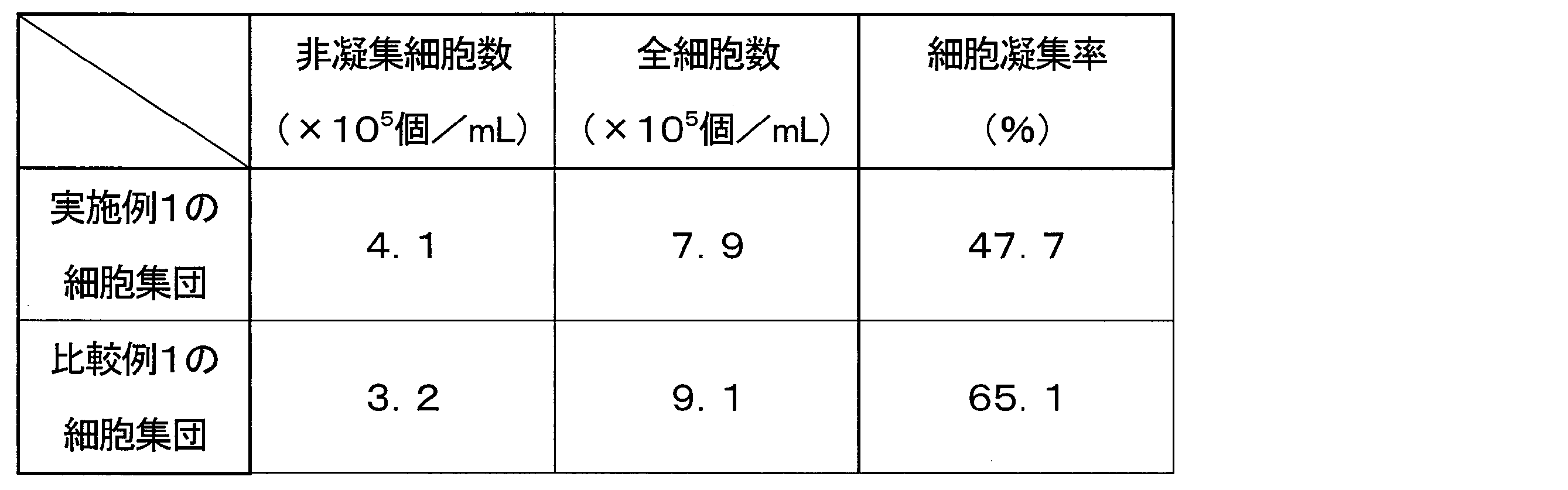
表2より、比較例1の細胞集団の細胞凝集率は65.1%、実施例1の細胞集団の細胞凝集率は47.7%であった。以上より、比較例1の細胞集団と比べて、実施例1の細胞集団は、細胞凝集性が低いことが明らかになった。
よって、以下に示す細胞特性を有する細胞集団は、細胞凝集性が低いことが分かった。
前記細胞集団が、SDHA遺伝子の発現量に対するCOL11A1遺伝子の相対発現量が6.0以下であること、及びSDHA遺伝子の発現量に対するCOL16A1遺伝子の相対発現量が1.5以下であることを満たす。
前記細胞集団が、SDHA遺伝子の発現量に対するCOL11A1遺伝子の相対発現量が6.0以下であること、及びSDHA遺伝子の発現量に対するCOL16A1遺伝子の相対発現量が1.5以下であることを満たす。
さらに、細胞集団が、SDHA遺伝子の発現量に対するCOL4A5遺伝子の相対発現量が0.4以下であることを満たす場合も、細胞凝集性が低いことが分かった。
さらに、細胞集団が、SDHA遺伝子の発現量に対するVCAN遺伝子の相対発現量が6.0以下であること、SDHA遺伝子の発現量に対するDCN遺伝子の相対発現量が3.0以下であること、又はSDHA遺伝子の発現量に対するLUM遺伝子の相対発現量が6.0以下であることの何れか一以上を満たす場合も、細胞凝集性が低いことが分かった。
さらに、細胞集団が、SDHA遺伝子の発現量に対するGPC4遺伝子の相対発現量が0.5以下であることを満たす場合も、細胞凝集性が低いことが分かった。
さらに、細胞集団が、SDHA遺伝子の発現量に対するVCAN遺伝子の相対発現量が6.0以下であること、SDHA遺伝子の発現量に対するDCN遺伝子の相対発現量が3.0以下であること、又はSDHA遺伝子の発現量に対するLUM遺伝子の相対発現量が6.0以下であることの何れか一以上を満たす場合も、細胞凝集性が低いことが分かった。
さらに、細胞集団が、SDHA遺伝子の発現量に対するGPC4遺伝子の相対発現量が0.5以下であることを満たす場合も、細胞凝集性が低いことが分かった。
つまり、細胞凝集性の低い細胞集団を取得するための指標として、少なくとも上記の条件(SDHA遺伝子の発現量に対するCOL11A1遺伝子の相対発現量が6.0以下であること、及びSDHA遺伝子の発現量に対するCOL16A1遺伝子の相対発現量が1.5以下であること)を満たすことが有効であり、上記の条件を指標とすることによって、細胞凝集性の低い間葉系幹細胞を含む細胞集団を取得することができることが明らかとなった。これにより、本発明により得られた細胞凝集性の低い間葉系幹細胞を含む細胞集団により細胞製剤を製造すれば、塞栓を引き起こす危険性を低減した安全性の高い細胞製剤を製造することができる。
<実施例2>
インフォームドコンセントを得た待機的帝王切開症例の妊婦(比較例1及び実施例1とは異なるドナー)から、実施例1と同様に、「工程1:羊膜の採取」、「工程2:羊膜の酵素処理及び羊膜MSCの回収」、「工程3:羊膜MSCの凍結保存」及び「工程4:羊膜MSCの培養」を行った。羊膜MSCの培養においては、継代ごとに細胞集団の一部を採取し、採取したそれぞれの細胞集団について下記(a)及び(b)の条件を評価した。前記条件の評価は、上記「CDH6発現の解析」及び「遺伝子発現の解析」と同様の手法を使用した。
(a)前記細胞集団において、CDH6が陽性を呈する間葉系幹細胞の比率が30%以上であり、かつ
(b)前記細胞集団が、SDHA遺伝子の発現量に対するVCAN遺伝子の相対発現量が6.0以下であること、SDHA遺伝子の発現量に対するDCN遺伝子の相対発現量が3.0以下であること、又はSDHA遺伝子の発現量に対するLUM遺伝子の相対発現量が6.0以下であることの何れか一以上を満たす。
インフォームドコンセントを得た待機的帝王切開症例の妊婦(比較例1及び実施例1とは異なるドナー)から、実施例1と同様に、「工程1:羊膜の採取」、「工程2:羊膜の酵素処理及び羊膜MSCの回収」、「工程3:羊膜MSCの凍結保存」及び「工程4:羊膜MSCの培養」を行った。羊膜MSCの培養においては、継代ごとに細胞集団の一部を採取し、採取したそれぞれの細胞集団について下記(a)及び(b)の条件を評価した。前記条件の評価は、上記「CDH6発現の解析」及び「遺伝子発現の解析」と同様の手法を使用した。
(a)前記細胞集団において、CDH6が陽性を呈する間葉系幹細胞の比率が30%以上であり、かつ
(b)前記細胞集団が、SDHA遺伝子の発現量に対するVCAN遺伝子の相対発現量が6.0以下であること、SDHA遺伝子の発現量に対するDCN遺伝子の相対発現量が3.0以下であること、又はSDHA遺伝子の発現量に対するLUM遺伝子の相対発現量が6.0以下であることの何れか一以上を満たす。
採取した細胞集団には、(a)及び(b)の条件を満たす細胞集団と満たさない細胞集団が存在したため、前記2種類の細胞集団について段落0153に記載の「細胞凝集性の評価」と同様の手法にて細胞凝集性を評価した。
評価結果を下記表に示す。
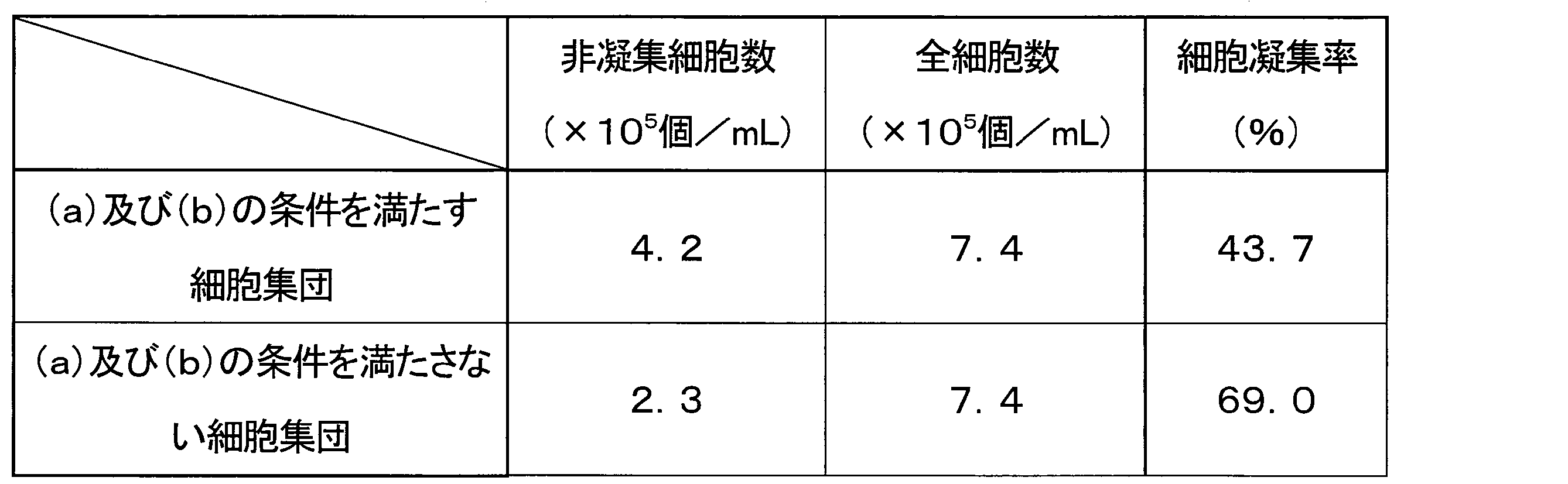
表3より、上記(a)及び(b)の条件を満たさない細胞集団の細胞凝集率は69.0%、上記(a)及び(b)の条件を満たす細胞集団の細胞凝集率は43.7%であった。上記(a)及び(b)の条件を満たさない細胞集団と比べて、上記(a)及び(b)の条件を満たす細胞集団は、細胞凝集性が低いことから、上記(a)及び(b)の条件を指標とすれば、細胞凝集性の低い細胞集団を選択的に取得することができる。
また、上記(a)及び(b)の条件を満たす細胞集団と満たさない細胞集団について、下記(c)及び(d)の条件についても評価を実施した。
(c)間葉系幹細胞を含む細胞集団が、SDHA遺伝子の発現量に対するCOL11A1遺伝子の相対発現量が6.0以下であること、及び
(d)SDHA遺伝子の発現量に対するCOL16A1遺伝子の相対発現量が1.5以下であることを満たす。
(a)及び(b)の条件を満たす細胞集団については、(c)及び(d)の条件を満たし、一方、(a)及び(b)の条件を満たさない細胞集団については、(c)及び(d)の条件を満たさなかった。
また、上記(a)及び(b)の条件を満たす細胞集団と満たさない細胞集団について、下記(c)及び(d)の条件についても評価を実施した。
(c)間葉系幹細胞を含む細胞集団が、SDHA遺伝子の発現量に対するCOL11A1遺伝子の相対発現量が6.0以下であること、及び
(d)SDHA遺伝子の発現量に対するCOL16A1遺伝子の相対発現量が1.5以下であることを満たす。
(a)及び(b)の条件を満たす細胞集団については、(c)及び(d)の条件を満たし、一方、(a)及び(b)の条件を満たさない細胞集団については、(c)及び(d)の条件を満たさなかった。
以上より、培養工程においてSDHA遺伝子の発現量に対するCOL11A1遺伝子の相対発現量が6.0以下であること、及びSDHA遺伝子の発現量に対するCOL16A1遺伝子の相対発現量が1.5以下であるという条件を満たす細胞集団は、上記条件を満たさない細胞集団と比較して細胞凝集性が低いことから、前記条件を指標とすることによって、間葉系幹細胞の細胞凝集性を評価することができる。また、上記条件を指標とすれば、細胞凝集性の低い細胞集団を選択的に取得することができる。さらに、本発明によれば、前記指標を測定することによって(あるいは経時的に測定することによって)、間葉系幹細胞の細胞凝集性の変化を迅速に把握し、予測することができる。これにより、経静脈的に投与するのに有用な細胞製剤を製造することができる。
<実施例3:医薬組成物の製造>
上記の実施例1で得られた細胞集団の一部を医薬組成物の調製に供する。羊膜MSC4.0×108個、HES800mg、DMSO0.7mL及びヒト血清アルブミン800mgを含有するRPMI1640培地20mLからなる医薬組成物(細胞製剤)を調製する。当該医薬組成物を凍結用バッグに封入し、凍結状態で保存する。尚、使用時に医薬組成物を解凍し、患者に供することができる。
上記の実施例1で得られた細胞集団の一部を医薬組成物の調製に供する。羊膜MSC4.0×108個、HES800mg、DMSO0.7mL及びヒト血清アルブミン800mgを含有するRPMI1640培地20mLからなる医薬組成物(細胞製剤)を調製する。当該医薬組成物を凍結用バッグに封入し、凍結状態で保存する。尚、使用時に医薬組成物を解凍し、患者に供することができる。
<実施例4>
(工程1:羊膜の採取及び羊膜MSCの取得)
比較例1、実施例1及び実施例2とは異なるドナー2名(ドナーX、Y)から、胎児付属物である卵膜及び胎盤を無菌的に採取した以外は、比較例1、実施例1及び実施例2の工程1と同様の手法にて羊膜を取得した。2名の胎児付属物から得られた羊膜MSCはそれぞれ#X、#Yとする。
上記で得られる#X、#Yの羊膜MSCを含む細胞集団を比較例1、実施例1及び実施例2の工程3と同様の手法にて凍結保存し、下記の方法で培養した。
(工程1:羊膜の採取及び羊膜MSCの取得)
比較例1、実施例1及び実施例2とは異なるドナー2名(ドナーX、Y)から、胎児付属物である卵膜及び胎盤を無菌的に採取した以外は、比較例1、実施例1及び実施例2の工程1と同様の手法にて羊膜を取得した。2名の胎児付属物から得られた羊膜MSCはそれぞれ#X、#Yとする。
上記で得られる#X、#Yの羊膜MSCを含む細胞集団を比較例1、実施例1及び実施例2の工程3と同様の手法にて凍結保存し、下記の方法で培養した。
(工程2:羊膜MSCの培養)
上記で得られた細胞集団を、コーティングしていないプラスチック製培養容器に播種し、10%のFBS及び1×Antibiotic-Antimycoticを含むαMEMにてサブコンフルエントになるまで接着培養した。継代培養は、比較例1、実施例1及び実施例2の工程4と同様の手法にて行った。
上記で得られた細胞集団を、コーティングしていないプラスチック製培養容器に播種し、10%のFBS及び1×Antibiotic-Antimycoticを含むαMEMにてサブコンフルエントになるまで接着培養した。継代培養は、比較例1、実施例1及び実施例2の工程4と同様の手法にて行った。
(遺伝子発現解析)
上記の「工程2:羊膜MSCの培養」で得られた6継代目の細胞集団の一部を採取し、マイクロアレイ解析に供して下記の条件を満たすか確認するとともに、残りの細胞集団をマイクロアレイ解析の結果が得られるまで凍結保存した。
間葉系幹細胞を含む細胞集団が、SDHA遺伝子の発現量に対するCOL11A1遺伝子の相対発現量が6.0以下であること、及びSDHA遺伝子の発現量に対するCOL16A1遺伝子の相対発現量が1.5以下であることを満たす。
上記の「工程2:羊膜MSCの培養」で得られた6継代目の細胞集団の一部を採取し、マイクロアレイ解析に供して下記の条件を満たすか確認するとともに、残りの細胞集団をマイクロアレイ解析の結果が得られるまで凍結保存した。
間葉系幹細胞を含む細胞集団が、SDHA遺伝子の発現量に対するCOL11A1遺伝子の相対発現量が6.0以下であること、及びSDHA遺伝子の発現量に対するCOL16A1遺伝子の相対発現量が1.5以下であることを満たす。
<遺伝子発現解析>
6継代目の細胞集団における各遺伝子の解析結果を表4に示す。
6継代目の細胞集団における各遺伝子の解析結果を表4に示す。

表4に示すように、ドナーXに由来する細胞集団は、SDHA遺伝子の発現量に対するCOL11A1遺伝子の相対発現量が2.6、SDHA遺伝子の発現量に対するSDHA遺伝子の発現量に対するCOL16A1遺伝子の相対発現量が0.4であった。また、ドナーYに由来する細胞集団は、SDHA遺伝子の発現量に対するCOL11A1遺伝子の相対発現量が2.9、SDHA遺伝子の発現量に対するCOL16A1遺伝子の相対発現量が0.1であった。
よって、ドナーX及びYに由来する細胞集団は、SDHA遺伝子の発現量に対するCOL16A1遺伝子の相対発現量が1.5以下であり、SDHA遺伝子の発現量に対するCOL11A1遺伝子の相対発現量が6.0以下であることが分かった。具体的には、本実施例における細胞集団は、SDHA遺伝子の発現量に対するCOL16A1遺伝子の相対発現量が0.5以下であり、SDHA遺伝子の発現量に対するCOL11A1遺伝子の相対発現量が3.0以下であることが分かった。
また、表4より、ドナーXに由来する細胞集団は、SDHA遺伝子の発現量に対するVCAN遺伝子の相対発現量が5.5、SDHA遺伝子の発現量に対するDCN遺伝子の相対発現量が2.0、SDHA遺伝子の発現量に対するLUM遺伝子の相対発現量が2.4であった。また、ドナーYに由来する細胞集団は、SDHA遺伝子の発現量に対するVCAN遺伝子の相対発現量が4.9、SDHA遺伝子の発現量に対するDCN遺伝子の相対発現量が2.3、SDHA遺伝子の発現量に対するLUM遺伝子の相対発現量が3.0であった。
よって、ドナーX及びYに由来する細胞集団は、SDHA遺伝子の発現量に対するVCAN遺伝子の相対発現量が6.0以下であり、SDHA遺伝子の発現量に対するDCN遺伝子の相対発現量が3.0以下であり、SDHA遺伝子の発現量に対するLUM遺伝子の相対発現量が6.0以下であることが分かった。具体的には、本実施例における細胞集団は、SDHA遺伝子の発現量に対するVCAN遺伝子の相対発現量が5.5以下であり、SDHA遺伝子の発現量に対するDCN遺伝子の相対発現量が2.5以下であり、SDHA遺伝子の発現量に対するLUM遺伝子の相対発現量が4.0以下であることが分かった。
さらに、表4より、ドナーXに由来する細胞集団は、SDHA遺伝子の発現量に対するGPC4遺伝子の相対発現量が0.1であった。また、ドナーYに由来する細胞集団は、SDHA遺伝子の発現量に対するGPC4遺伝子の相対発現量が0.2であった。
よって、ドナーX及びYに由来する細胞集団は、SDHA遺伝子の発現量に対するGPC4遺伝子の相対発現量が0.5以下であることが分かった。具体的には、本実施例における細胞集団は、GPC4遺伝子の相対発現量が0.3以下であることが分かった。
以上より、比較例1、実施例1及び実施例2とは異なるドナーから取得した細胞集団においても、上記の細胞特性を有する細胞集団を取得できることが確認された。実施例1及び実施例2において、上記の細胞特性を有する細胞集団は細胞凝集性が低いことが示されていることから、本実施例(実施例4)において得られた細胞集団も細胞凝集性が低いことが推測できる。
Claims (12)
- 間葉系幹細胞を含む細胞集団の製造方法であって、以下に示す細胞特性を有する細胞集団を取得することを含む、製造方法:
前記細胞集団が、SDHA遺伝子の発現量に対するCOL11A1遺伝子の相対発現量が6.0以下であること、及びSDHA遺伝子の発現量に対するCOL16A1遺伝子の相対発現量が1.5以下であることを満たす。 - 間葉系幹細胞を含む細胞集団であって、以下に示す細胞特性を有する細胞集団:
前記細胞集団が、SDHA遺伝子の発現量に対するCOL11A1遺伝子の相対発現量が6.0以下であること、及びSDHA遺伝子の発現量に対するCOL16A1遺伝子の相対発現量が1.5以下であることを満たす。 - 前記細胞集団が、SDHA遺伝子の発現量に対するCOL4A5遺伝子の相対発現量が0.4以下であることを満たす、請求項2に記載の細胞集団。
- 前記細胞集団が、SDHA遺伝子の発現量に対するVCAN遺伝子の相対発現量が6.0以下であること、SDHA遺伝子の発現量に対するDCN遺伝子の相対発現量が3.0以下であること、又はSDHA遺伝子の発現量に対するLUM遺伝子の相対発現量が6.0以下であることの何れか一以上を満たす、請求項2又は3に記載の細胞集団。
- 前記細胞集団が、SDHA遺伝子の発現量に対するGPC4遺伝子の相対発現量が0.5以下であることを満たす、請求項2から4の何れか一項に記載の細胞集団。
- 前記細胞集団において、CDH6が陽性を呈する間葉系幹細胞の比率が30%以上である、請求項2から5の何れか一項に記載の細胞集団。
- 前記間葉系幹細胞が、胎児付属物に由来するものである、請求項2から6の何れか一項に記載の細胞集団。
- 請求項2から7の何れか一項に記載の細胞集団と、製薬上許容し得る媒体とを含む、医薬組成物。
- ヒトへの間葉系幹細胞の1回の投与量が109個/kg体重以下である、請求項8に記載の医薬組成物。
- 前記医薬組成物が、液剤である、請求項8又は9に記載の医薬組成物。
- 前記医薬組成物が、注射用液剤である、請求項8から10の何れか一項に記載の医薬組成物。
- 免疫関連疾患、虚血性疾患、下肢虚血、脳血管虚血、腎臓虚血、肺虚血、神経性疾患、移植片対宿主病、炎症性腸疾患、クローン病、潰瘍性大腸炎、放射線腸炎、全身性エリテマトーデス、紅斑性狼瘡、膠原病、脳卒中、脳梗塞、脳内血腫、脳血管麻痺、肝硬変、アトピー性皮膚炎、多発性硬化症、乾癬、表皮水疱症、糖尿病、菌状息肉腫、強皮症、軟骨等の結合組織の変性及び/又は炎症から起こる疾患、関節軟骨欠損、半月板損傷、離弾性骨軟骨症、無腐性骨壊死、変形性膝関節症、炎症性関節炎、関節リウマチ、眼疾患、血管新生関連疾患、虚血性心疾患、冠動脈性心疾患、心筋梗塞、狭心症、心不全、心筋症、弁膜症、創傷、上皮損傷、線維症、肺疾患、及び癌から選択される疾患の治療剤である、請求項8から11の何れか一項に記載の医薬組成物。
Priority Applications (4)
| Application Number | Priority Date | Filing Date | Title |
|---|---|---|---|
| CN201880021547.6A CN110494556B (zh) | 2017-04-03 | 2018-04-03 | 包含间充质系干细胞的细胞群、其制造方法、以及医药组合物 |
| JP2019511270A JP7102397B2 (ja) | 2017-04-03 | 2018-04-03 | 間葉系幹細胞を含む細胞集団とその製造方法、及び医薬組成物 |
| EP18781238.3A EP3608400B1 (en) | 2017-04-03 | 2018-04-03 | Cell population including mesenchymal stem cells, production method therefor, and pharmaceutical composition |
| US16/590,918 US11186826B2 (en) | 2017-04-03 | 2019-10-02 | Cell population including mesenchymal stem cells and production method therefor, and pharmaceutical composition |
Applications Claiming Priority (2)
| Application Number | Priority Date | Filing Date | Title |
|---|---|---|---|
| JP2017-073984 | 2017-04-03 | ||
| JP2017073984 | 2017-04-03 |
Related Child Applications (1)
| Application Number | Title | Priority Date | Filing Date |
|---|---|---|---|
| US16/590,918 Continuation-In-Part US11186826B2 (en) | 2017-04-03 | 2019-10-02 | Cell population including mesenchymal stem cells and production method therefor, and pharmaceutical composition |
Publications (1)
| Publication Number | Publication Date |
|---|---|
| WO2018186421A1 true WO2018186421A1 (ja) | 2018-10-11 |
Family
ID=63712286
Family Applications (1)
| Application Number | Title | Priority Date | Filing Date |
|---|---|---|---|
| PCT/JP2018/014326 Ceased WO2018186421A1 (ja) | 2017-04-03 | 2018-04-03 | 間葉系幹細胞を含む細胞集団とその製造方法、及び医薬組成物 |
Country Status (5)
| Country | Link |
|---|---|
| US (1) | US11186826B2 (ja) |
| EP (1) | EP3608400B1 (ja) |
| JP (1) | JP7102397B2 (ja) |
| CN (1) | CN110494556B (ja) |
| WO (1) | WO2018186421A1 (ja) |
Cited By (11)
| Publication number | Priority date | Publication date | Assignee | Title |
|---|---|---|---|---|
| CN110494556A (zh) * | 2017-04-03 | 2019-11-22 | 株式会社钟化 | 包含间充质系干细胞的细胞群、其制造方法、以及医药组合物 |
| WO2020251020A1 (ja) * | 2019-06-14 | 2020-12-17 | 株式会社カネカ | 間葉系細胞を含む細胞集団、それを含む医薬組成物、及び、その製造方法 |
| EP3608399A4 (en) * | 2017-04-03 | 2021-01-13 | Kaneka Corporation | CELL POPULATION CONTAINING ADHERENT CELLS DERIVED FROM THE FETAL APPENDIX AS WELL AS A METHOD FOR MANUFACTURING THE SAME, AND PHARMACEUTICAL COMPOSITION |
| JP2021161098A (ja) * | 2020-04-03 | 2021-10-11 | 国立研究開発法人農業・食品産業技術総合研究機構 | 試料冷却方法、冷却物の製造方法及び冷却用具 |
| US11446334B2 (en) | 2019-10-18 | 2022-09-20 | Amniotics Ab | Use of term amniotic fluid cells for the treatment of acute and chronic respiratory diseases |
| US11542473B2 (en) | 2016-10-21 | 2023-01-03 | Amniotics Ab | Methods and compositions for generating hematopoietic cells |
| CN115792237A (zh) * | 2021-09-09 | 2023-03-14 | 中国中医科学院中药研究所 | 一种早期预测心力衰竭的生物标志物 |
| JP2023162956A (ja) * | 2022-04-27 | 2023-11-09 | 株式会社カネカ | 抗炎症作用を有する細胞外小胞製剤 |
| EP4424317A4 (en) * | 2021-10-29 | 2025-08-06 | Anhui Hygeiancells Biomedical Co Ltd | MEDICINE FOR THE PREVENTION OR TREATMENT OF ENTERITIS AND INTESTINAL CANCER |
| US12435308B2 (en) | 2020-11-06 | 2025-10-07 | Amniotics Ab | Immunomodulation by amniotic fluid mesenchymal stem cells |
| US12465878B2 (en) | 2019-06-20 | 2025-11-11 | Amniotics Ab | Apparatus for filtering amniotic fluid |
Families Citing this family (4)
| Publication number | Priority date | Publication date | Assignee | Title |
|---|---|---|---|---|
| US8961956B2 (en) | 2011-11-30 | 2015-02-24 | Ocata Therapeutics, Inc. | Mesenchymal stromal cells and uses related thereto |
| SI2785359T1 (sl) | 2011-11-30 | 2018-11-30 | Astellas Institute For Regenerative Medicine | Mezenhimske stromalne celice in uporabe povezane z njimi |
| HK1208054A1 (en) | 2012-07-12 | 2016-02-19 | 爱姆斯坦生物技术公司 | Mesenchymal-like stem cells derived from human embryonic stem cells, methods and uses thereof |
| CN113106059B (zh) * | 2021-04-07 | 2023-08-15 | 清华大学深圳国际研究生院 | 一种高迁徙间充质干细胞及其制备方法和应用 |
Citations (8)
| Publication number | Priority date | Publication date | Assignee | Title |
|---|---|---|---|---|
| JP2008178403A (ja) * | 2006-12-28 | 2008-08-07 | Mitsubishi Chemical Medience Corp | 間葉系幹細胞などの細胞を検出するための遺伝子マーカー |
| JP2010500047A (ja) | 2006-08-15 | 2010-01-07 | エージェンシー フォー サイエンス,テクノロジー アンド リサーチ | 間葉系幹細胞馴化培地 |
| JP2010538681A (ja) * | 2008-10-10 | 2010-12-16 | 深▲セン▼市嘉天源生物科技有限公司 | 人または動物胚から間葉系幹細胞を抽出及びその分泌物を抽出する方法 |
| WO2011043136A1 (ja) | 2009-10-08 | 2011-04-14 | 国立大学法人名古屋大学 | 脂肪組織由来間葉系幹細胞を含有する免疫抑制剤及びその用途 |
| WO2013077428A1 (ja) | 2011-11-25 | 2013-05-30 | 国立大学法人 富山大学 | 羊膜間葉系幹細胞の調製方法および単離された羊膜間葉系幹細胞集団 |
| JP2013256510A (ja) | 2005-11-09 | 2013-12-26 | Athersys Inc | 多能性成体前駆細胞の免疫調節性とその使用 |
| JP2015500810A (ja) * | 2011-11-30 | 2015-01-08 | アドバンスド セル テクノロジー、インコーポレイテッド | 間葉系間質細胞及びその関連用途 |
| JP2015061520A (ja) | 2013-08-19 | 2015-04-02 | 独立行政法人国立循環器病研究センゾ�環器病研究センター�ー | 羊膜間葉系細胞組成物の製造方法及び凍結保存方法、並びに治療剤 |
Family Cites Families (24)
| Publication number | Priority date | Publication date | Assignee | Title |
|---|---|---|---|---|
| PT2471904T (pt) * | 2005-12-29 | 2019-02-25 | Celularity Inc | População de células estaminais placentárias |
| WO2008111161A1 (ja) * | 2007-03-12 | 2008-09-18 | Two Cells Co., Ltd. | 間葉系幹細胞の均質性識別方法、および、その方法を用いて単離された均質な間葉系幹細胞 |
| CA2734446C (en) * | 2008-08-22 | 2017-06-20 | Anthrogenesis Corporation | Methods and compositions for treatment of bone defects with placental cell populations |
| US8961956B2 (en) * | 2011-11-30 | 2015-02-24 | Ocata Therapeutics, Inc. | Mesenchymal stromal cells and uses related thereto |
| EP2837682B1 (en) * | 2012-04-13 | 2017-09-20 | Jeong Chan Ra | Use of aspirin in composition for preventing stem cell disruption and aggregation |
| US20160237400A1 (en) * | 2013-03-15 | 2016-08-18 | The Jackson Laboratory | Isolation of non-embryonic stem cells and uses thereof |
| KR101516763B1 (ko) * | 2014-01-07 | 2015-05-04 | 주식회사 강스템바이오텍 | Dna 메틸기전달효소 억제제를 처리한 줄기세포 또는 그 배양물을 포함하는 면역질환 또는 염증질환의 예방 또는 치료용 약학조성물 |
| WO2016083458A1 (en) * | 2014-11-26 | 2016-06-02 | Ieo - Istituto Europeo Di Oncologia S.R.L. | Reprogramming-based models of neurodevelopmental disorders and uses thereof |
| EP3369810A4 (en) * | 2015-10-27 | 2019-05-01 | Kaneka Corporation | METHOD FOR PRODUCING CELL POPULATION WITH MESENCHYMAL STEM CELLS, MESENCHYMAL STEM CELLS, CELL POPULATION AND PHARMACEUTICAL COMPOSITION |
| JP7105195B2 (ja) * | 2016-11-15 | 2022-07-22 | 株式会社カネカ | 胎児付属物に由来する間葉系幹細胞を含む細胞集団とその製造方法、及び医薬組成物 |
| KR20180093396A (ko) * | 2017-02-13 | 2018-08-22 | (주)오스티오뉴로젠 | 섬유증 치료제의 개발에 유용한 간엽줄기세포주 |
| CN110494556B (zh) * | 2017-04-03 | 2024-04-30 | 株式会社钟化 | 包含间充质系干细胞的细胞群、其制造方法、以及医药组合物 |
| JP7132908B2 (ja) * | 2017-04-03 | 2022-09-07 | 株式会社カネカ | 間葉系幹細胞を含む細胞集団とその製造方法、及び医薬組成物 |
| JP7152389B2 (ja) * | 2017-04-03 | 2022-10-12 | 株式会社カネカ | 間葉系幹細胞を含む細胞集団とその製造方法、間葉系幹細胞及び医薬組成物 |
| WO2018204764A1 (en) * | 2017-05-05 | 2018-11-08 | Camp4 Therapeutics Corporation | Identification and targeted modulation of gene signaling networks |
| CN111566205B (zh) * | 2017-12-28 | 2024-10-29 | 株式会社钟化 | 包含贴壁性干细胞的细胞群、其制备方法、以及医药组合物 |
| EP3750987A4 (en) * | 2017-12-28 | 2021-11-10 | Kaneka Corporation | CELL POPULATION INCLUDING ADHESIVE STEM CELLS, ITS PRODUCTION PROCESS, AND PHARMACEUTICAL COMPOSITION |
| KR102863376B1 (ko) * | 2018-06-11 | 2025-09-24 | 헬스 앤드 바이오테크 프랑스 (에이치 앤드 비 프랑스) | 중간엽 줄기 세포로부터 유래된 세포외 소포 |
| EP3984596A4 (en) * | 2019-06-14 | 2023-06-21 | Kaneka Corporation | POPULATION OF CELLS COMPRISING MESENCHYMATOUS CELLS, PHARMACEUTICAL COMPOSITION COMPRISING THEM AND METHOD FOR PRODUCTION THEREOF |
| CN110499364A (zh) * | 2019-07-30 | 2019-11-26 | 北京凯昂医学诊断技术有限公司 | 一种用于检测扩展型遗传病全外显子的探针组及其试剂盒和应用 |
| JP7701348B2 (ja) * | 2019-09-20 | 2025-07-01 | ベイジン・インスティチュート・フォー・ステム・セル・アンド・リジェネラティヴ・メディスン | 多能性幹細胞、医薬組成物、並びにそれらの調製方法及びそれらの適用 |
| KR20210091664A (ko) * | 2020-01-14 | 2021-07-22 | 경북대학교 산학협력단 | 중간엽 줄기세포 유래 단백질을 포함하는 소뇌성운동실조증의 치료 예후를 예측하기 위한 바이오마커, 및 이를 이용한 소뇌성운동실조증의 치료용 조성물 |
| TW202307203A (zh) * | 2021-07-15 | 2023-02-16 | 日商富士軟片股份有限公司 | 特定細胞的品質管理方法及製造特定細胞之方法 |
| WO2023286305A1 (ja) * | 2021-07-15 | 2023-01-19 | 富士フイルム株式会社 | 細胞の品質管理方法及び細胞を製造する方法 |
-
2018
- 2018-04-03 CN CN201880021547.6A patent/CN110494556B/zh active Active
- 2018-04-03 WO PCT/JP2018/014326 patent/WO2018186421A1/ja not_active Ceased
- 2018-04-03 JP JP2019511270A patent/JP7102397B2/ja active Active
- 2018-04-03 EP EP18781238.3A patent/EP3608400B1/en active Active
-
2019
- 2019-10-02 US US16/590,918 patent/US11186826B2/en active Active
Patent Citations (8)
| Publication number | Priority date | Publication date | Assignee | Title |
|---|---|---|---|---|
| JP2013256510A (ja) | 2005-11-09 | 2013-12-26 | Athersys Inc | 多能性成体前駆細胞の免疫調節性とその使用 |
| JP2010500047A (ja) | 2006-08-15 | 2010-01-07 | エージェンシー フォー サイエンス,テクノロジー アンド リサーチ | 間葉系幹細胞馴化培地 |
| JP2008178403A (ja) * | 2006-12-28 | 2008-08-07 | Mitsubishi Chemical Medience Corp | 間葉系幹細胞などの細胞を検出するための遺伝子マーカー |
| JP2010538681A (ja) * | 2008-10-10 | 2010-12-16 | 深▲セン▼市嘉天源生物科技有限公司 | 人または動物胚から間葉系幹細胞を抽出及びその分泌物を抽出する方法 |
| WO2011043136A1 (ja) | 2009-10-08 | 2011-04-14 | 国立大学法人名古屋大学 | 脂肪組織由来間葉系幹細胞を含有する免疫抑制剤及びその用途 |
| WO2013077428A1 (ja) | 2011-11-25 | 2013-05-30 | 国立大学法人 富山大学 | 羊膜間葉系幹細胞の調製方法および単離された羊膜間葉系幹細胞集団 |
| JP2015500810A (ja) * | 2011-11-30 | 2015-01-08 | アドバンスド セル テクノロジー、インコーポレイテッド | 間葉系間質細胞及びその関連用途 |
| JP2015061520A (ja) | 2013-08-19 | 2015-04-02 | 独立行政法人国立循環器病研究センゾ�環器病研究センター�ー | 羊膜間葉系細胞組成物の製造方法及び凍結保存方法、並びに治療剤 |
Non-Patent Citations (5)
| Title |
|---|
| GARCIA-OLMO D ET AL., DIS COLON RECTUM, vol. 48, 2005, pages 1416 - 23 |
| NEJADNIK, HOSSEIN ET AL.: "Improved Approach for Chondrogenic Differentiation of Human Induced Pluripotent Stem Cells", STEM CELL REV AND REP, vol. 11, 2015, pages 242 - 253, XP035485517 * |
| ONKEN JE ET AL.: "American College of Gastroenterology Conference", 2006 |
| See also references of EP3608400A4 |
| WEGMEYER, HEIKE ET AL.: "Mesenchymal Stromal Cell Characteristics Vary Depending on Their Origin", STEM CELLS AND DEVELOPMENT, vol. 22, no. 19, 2013, pages 2606 - 2618, XP055557848 * |
Cited By (17)
| Publication number | Priority date | Publication date | Assignee | Title |
|---|---|---|---|---|
| US11542473B2 (en) | 2016-10-21 | 2023-01-03 | Amniotics Ab | Methods and compositions for generating hematopoietic cells |
| CN110494556B (zh) * | 2017-04-03 | 2024-04-30 | 株式会社钟化 | 包含间充质系干细胞的细胞群、其制造方法、以及医药组合物 |
| EP3608399A4 (en) * | 2017-04-03 | 2021-01-13 | Kaneka Corporation | CELL POPULATION CONTAINING ADHERENT CELLS DERIVED FROM THE FETAL APPENDIX AS WELL AS A METHOD FOR MANUFACTURING THE SAME, AND PHARMACEUTICAL COMPOSITION |
| US11518979B2 (en) | 2017-04-03 | 2022-12-06 | Kaneka Corporation | Cell population comprising adherent cells derived from fetal appendage, method for producing the same, and pharmaceutical composition |
| CN110494556A (zh) * | 2017-04-03 | 2019-11-22 | 株式会社钟化 | 包含间充质系干细胞的细胞群、其制造方法、以及医药组合物 |
| WO2020251020A1 (ja) * | 2019-06-14 | 2020-12-17 | 株式会社カネカ | 間葉系細胞を含む細胞集団、それを含む医薬組成物、及び、その製造方法 |
| US12564607B2 (en) | 2019-06-14 | 2026-03-03 | Kaneka Corporation | Cell population comprising mesenchymal cells, pharmaceutical composition comprising the same, and method for producing the same |
| CN113993527A (zh) * | 2019-06-14 | 2022-01-28 | 株式会社钟化 | 包含间充质细胞的细胞群、包含其的医药组合物及其制造方法 |
| EP3984596A4 (en) * | 2019-06-14 | 2023-06-21 | Kaneka Corporation | POPULATION OF CELLS COMPRISING MESENCHYMATOUS CELLS, PHARMACEUTICAL COMPOSITION COMPRISING THEM AND METHOD FOR PRODUCTION THEREOF |
| US12465878B2 (en) | 2019-06-20 | 2025-11-11 | Amniotics Ab | Apparatus for filtering amniotic fluid |
| US11446334B2 (en) | 2019-10-18 | 2022-09-20 | Amniotics Ab | Use of term amniotic fluid cells for the treatment of acute and chronic respiratory diseases |
| JP7526460B2 (ja) | 2020-04-03 | 2024-08-01 | 国立研究開発法人農業・食品産業技術総合研究機構 | 試料冷却方法、冷却物の製造方法及び冷却用具 |
| JP2021161098A (ja) * | 2020-04-03 | 2021-10-11 | 国立研究開発法人農業・食品産業技術総合研究機構 | 試料冷却方法、冷却物の製造方法及び冷却用具 |
| US12435308B2 (en) | 2020-11-06 | 2025-10-07 | Amniotics Ab | Immunomodulation by amniotic fluid mesenchymal stem cells |
| CN115792237A (zh) * | 2021-09-09 | 2023-03-14 | 中国中医科学院中药研究所 | 一种早期预测心力衰竭的生物标志物 |
| EP4424317A4 (en) * | 2021-10-29 | 2025-08-06 | Anhui Hygeiancells Biomedical Co Ltd | MEDICINE FOR THE PREVENTION OR TREATMENT OF ENTERITIS AND INTESTINAL CANCER |
| JP2023162956A (ja) * | 2022-04-27 | 2023-11-09 | 株式会社カネカ | 抗炎症作用を有する細胞外小胞製剤 |
Also Published As
| Publication number | Publication date |
|---|---|
| CN110494556A (zh) | 2019-11-22 |
| JP7102397B2 (ja) | 2022-07-19 |
| US11186826B2 (en) | 2021-11-30 |
| EP3608400A1 (en) | 2020-02-12 |
| EP3608400B1 (en) | 2025-03-26 |
| JPWO2018186421A1 (ja) | 2020-02-20 |
| US20200040305A1 (en) | 2020-02-06 |
| CN110494556B (zh) | 2024-04-30 |
| EP3608400A4 (en) | 2021-01-06 |
Similar Documents
| Publication | Publication Date | Title |
|---|---|---|
| JP7102397B2 (ja) | 間葉系幹細胞を含む細胞集団とその製造方法、及び医薬組成物 | |
| JP7583413B2 (ja) | 間葉系幹細胞を含む細胞集団の製造方法、間葉系幹細胞、細胞集団、並びに医薬組成物 | |
| JP7132908B2 (ja) | 間葉系幹細胞を含む細胞集団とその製造方法、及び医薬組成物 | |
| JP7530893B2 (ja) | 間葉系細胞を含む細胞集団、それを含む医薬組成物、及び、その製造方法 | |
| JP7708909B2 (ja) | 接着性幹細胞を含む細胞集団とその製造方法、及び医薬組成物 | |
| US20220340869A1 (en) | Cell population comprising mesenchymal stem cells derived from fetal appendage, method for producing the same, and pharmaceutical composition | |
| JP7526001B2 (ja) | 接着性幹細胞を含む細胞集団とその製造方法、及び医薬組成物 | |
| JP7152389B2 (ja) | 間葉系幹細胞を含む細胞集団とその製造方法、間葉系幹細胞及び医薬組成物 | |
| JP7140752B2 (ja) | 胎児付属物由来接着細胞を含む細胞集団とその製造方法、及び医薬組成物 |
Legal Events
| Date | Code | Title | Description |
|---|---|---|---|
| 121 | Ep: the epo has been informed by wipo that ep was designated in this application |
Ref document number: 18781238 Country of ref document: EP Kind code of ref document: A1 |
|
| ENP | Entry into the national phase |
Ref document number: 2019511270 Country of ref document: JP Kind code of ref document: A |
|
| NENP | Non-entry into the national phase |
Ref country code: DE |
|
| ENP | Entry into the national phase |
Ref document number: 2018781238 Country of ref document: EP Effective date: 20191104 |