WO2018193808A1 - 情報処理装置、情報処理方法及びプログラム - Google Patents
情報処理装置、情報処理方法及びプログラム Download PDFInfo
- Publication number
- WO2018193808A1 WO2018193808A1 PCT/JP2018/013280 JP2018013280W WO2018193808A1 WO 2018193808 A1 WO2018193808 A1 WO 2018193808A1 JP 2018013280 W JP2018013280 W JP 2018013280W WO 2018193808 A1 WO2018193808 A1 WO 2018193808A1
- Authority
- WO
- WIPO (PCT)
- Prior art keywords
- information
- condition
- area
- candidate
- displayed
- Prior art date
- Legal status (The legal status is an assumption and is not a legal conclusion. Google has not performed a legal analysis and makes no representation as to the accuracy of the status listed.)
- Ceased
Links
Images








Classifications
-
- H—ELECTRICITY
- H04—ELECTRIC COMMUNICATION TECHNIQUE
- H04W—WIRELESS COMMUNICATION NETWORKS
- H04W4/00—Services specially adapted for wireless communication networks; Facilities therefor
- H04W4/02—Services making use of location information
- H04W4/029—Location-based management or tracking services
-
- G—PHYSICS
- G06—COMPUTING OR CALCULATING; COUNTING
- G06F—ELECTRIC DIGITAL DATA PROCESSING
- G06F16/00—Information retrieval; Database structures therefor; File system structures therefor
- G06F16/20—Information retrieval; Database structures therefor; File system structures therefor of structured data, e.g. relational data
- G06F16/29—Geographical information databases
-
- G—PHYSICS
- G01—MEASURING; TESTING
- G01C—MEASURING DISTANCES, LEVELS OR BEARINGS; SURVEYING; NAVIGATION; GYROSCOPIC INSTRUMENTS; PHOTOGRAMMETRY OR VIDEOGRAMMETRY
- G01C21/00—Navigation; Navigational instruments not provided for in groups G01C1/00 - G01C19/00
- G01C21/26—Navigation; Navigational instruments not provided for in groups G01C1/00 - G01C19/00 specially adapted for navigation in a road network
- G01C21/34—Route searching; Route guidance
- G01C21/36—Input/output arrangements for on-board computers
- G01C21/3605—Destination input or retrieval
- G01C21/3617—Destination input or retrieval using user history, behaviour, conditions or preferences, e.g. predicted or inferred from previous use or current movement
-
- G—PHYSICS
- G01—MEASURING; TESTING
- G01C—MEASURING DISTANCES, LEVELS OR BEARINGS; SURVEYING; NAVIGATION; GYROSCOPIC INSTRUMENTS; PHOTOGRAMMETRY OR VIDEOGRAMMETRY
- G01C21/00—Navigation; Navigational instruments not provided for in groups G01C1/00 - G01C19/00
- G01C21/26—Navigation; Navigational instruments not provided for in groups G01C1/00 - G01C19/00 specially adapted for navigation in a road network
- G01C21/34—Route searching; Route guidance
- G01C21/36—Input/output arrangements for on-board computers
- G01C21/3679—Retrieval, searching and output of POI information, e.g. hotels, restaurants, shops, filling stations, parking facilities
- G01C21/3682—Retrieval, searching and output of POI information, e.g. hotels, restaurants, shops, filling stations, parking facilities output of POI information on a road map
-
- G—PHYSICS
- G06—COMPUTING OR CALCULATING; COUNTING
- G06F—ELECTRIC DIGITAL DATA PROCESSING
- G06F3/00—Input arrangements for transferring data to be processed into a form capable of being handled by the computer; Output arrangements for transferring data from processing unit to output unit, e.g. interface arrangements
- G06F3/01—Input arrangements or combined input and output arrangements for interaction between user and computer
- G06F3/048—Interaction techniques based on graphical user interfaces [GUI]
- G06F3/0484—Interaction techniques based on graphical user interfaces [GUI] for the control of specific functions or operations, e.g. selecting or manipulating an object, an image or a displayed text element, setting a parameter value or selecting a range
- G06F3/04842—Selection of displayed objects or displayed text elements
-
- G—PHYSICS
- G06—COMPUTING OR CALCULATING; COUNTING
- G06Q—INFORMATION AND COMMUNICATION TECHNOLOGY [ICT] SPECIALLY ADAPTED FOR ADMINISTRATIVE, COMMERCIAL, FINANCIAL, MANAGERIAL OR SUPERVISORY PURPOSES; SYSTEMS OR METHODS SPECIALLY ADAPTED FOR ADMINISTRATIVE, COMMERCIAL, FINANCIAL, MANAGERIAL OR SUPERVISORY PURPOSES, NOT OTHERWISE PROVIDED FOR
- G06Q50/00—Information and communication technology [ICT] specially adapted for implementation of business processes of specific business sectors, e.g. utilities or tourism
- G06Q50/10—Services
- G06Q50/26—Government or public services
- G06Q50/265—Personal security, identity or safety
-
- H—ELECTRICITY
- H04—ELECTRIC COMMUNICATION TECHNIQUE
- H04W—WIRELESS COMMUNICATION NETWORKS
- H04W88/00—Devices specially adapted for wireless communication networks, e.g. terminals, base stations or access point devices
- H04W88/02—Terminal devices
-
- G—PHYSICS
- G08—SIGNALLING
- G08B—SIGNALLING SYSTEMS, e.g. PERSONAL CALLING SYSTEMS; ORDER TELEGRAPHS; ALARM SYSTEMS
- G08B21/00—Alarms responsive to a single specified undesired or abnormal condition and not otherwise provided for
- G08B21/02—Alarms for ensuring the safety of persons
- G08B21/04—Alarms for ensuring the safety of persons responsive to non-activity, e.g. of elderly persons
- G08B21/0407—Alarms for ensuring the safety of persons responsive to non-activity, e.g. of elderly persons based on behaviour analysis
- G08B21/0423—Alarms for ensuring the safety of persons responsive to non-activity, e.g. of elderly persons based on behaviour analysis detecting deviation from an expected pattern of behaviour or schedule
-
- H—ELECTRICITY
- H04—ELECTRIC COMMUNICATION TECHNIQUE
- H04L—TRANSMISSION OF DIGITAL INFORMATION, e.g. TELEGRAPHIC COMMUNICATION
- H04L67/00—Network arrangements or protocols for supporting network services or applications
- H04L67/50—Network services
- H04L67/52—Network services specially adapted for the location of the user terminal
Definitions
- the present disclosure relates to an information processing apparatus, an information processing method, and a program.
- an information processing system using position information of an object there is a watching system for monitoring whether or not a state including the position of the object is a normal state. Specifically, in the watching system, it is determined whether or not the position of the object is within a reference area that is a geographical area.
- a monitoring system for example, a guardian or the like that an object such as a person to be protected has moved outside the reference area from the reference area that is often located around the home or school The user can be notified.
- the information processing apparatus it is determined whether or not the position of the target object is within a reference area that is a geographical area, extracting a reference area candidate that is a candidate for the reference area, and extraction And outputting the information related to the reference area candidate, which is associated with the reference condition, by the information processing apparatus.
- the computer extracts a determination unit that determines whether or not the position of the target object is within a reference region that is a geographical region, and a reference region candidate that is a candidate for the reference region.
- a program for functioning as an extraction unit and an output unit that outputs information related to the extracted reference region candidate in association with a reference condition is provided.
- It is explanatory drawing which shows an example of the setting screen about the notification setting of the event displayed by the user terminal etc. which concern on the embodiment. It is a schematic diagram which shows an example of schematic structure of the watching system which concerns on an application example. It is explanatory drawing which shows an example of the map screen displayed at the time of notification of a determination result by the agent apparatus which concerns on an application example. It is explanatory drawing which shows an example of the map screen displayed in the case of the notification of a determination result by a user terminal.
- FIG. 1 is a schematic diagram illustrating an example of a schematic configuration of a watching system 1 according to the present embodiment.
- FIG. 2 is an explanatory diagram illustrating an example of a status screen displayed by the user terminal 20 according to the present embodiment.
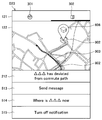
- FIG. 3 is an explanatory diagram illustrating an example of a map screen displayed by the user terminal 20 according to the present embodiment.
- FIG. 4 is a block diagram illustrating an example of a functional configuration of the server device 30 according to the present embodiment.
- the watching system 1 is an information processing system including a target terminal 10, a user terminal 20, and a server device 30 as shown in FIG.
- the target terminal 10, the user terminal 20, and the server device 30 communicate with each other via a wired or wireless information network N10.
- the number of the target terminals 10 and the user terminals 20 in the watching system 1 is not limited to the example illustrated in the drawings, and may be a plurality, for example.
- an example in which the number of target terminals 10 and user terminals 20 in the monitoring system 1 is one will be mainly described.
- the user terminal 20 is an example of a device used by a guardian who monitors the state of the guardian.
- the guardian corresponds to an example of a user according to the present disclosure.
- the user terminal 20 notifies the guardian of information transmitted from the server device 30.
- the user terminal 20 notifies the guardian by visually displaying information.
- the user terminal 20 receives input information that is information input from a guardian and transmits the input information to the server device 30.
- the user terminal 20 may detect the position information of the guardian and transmit the detection result.
- the user terminal 20 may detect various other information different from the guardian's position information and transmit the detection result.
- the user terminal 20 may be an information processing terminal such as a personal computer, a smartphone, or a tablet terminal. Note that the user terminal 20 is not limited to the information processing terminal as long as it has a function of notifying a guardian, receiving input information, and transmitting input information.
- the status screen D11 shows, for example, display areas 112a, 112b, 112c, and 112d in which the current position of each member of the family to which the guardian belongs is displayed using, for example, characters.
- the display areas 112a and 112d are areas in which the current positions of members corresponding to guardians who use the user terminal 20 are displayed.
- the display areas 112b and 112c are areas in which the current positions of members corresponding to the protected persons who use the target terminal 10 are displayed.
- the user terminal 20 can receive the position information of the guardian transmitted from the target terminal 10 and the position information of the guardian transmitted from another user terminal 20. Thereby, the user terminal 20 can update the current position of each member displayed in each display area.
- a display area 122 is displayed in which an icon 601 indicating the position of a family member is displayed superimposed on the map. Also, below the display area 122, a display area 123 in which the current position of the member corresponding to the icon 601 is displayed by, for example, characters or the like is shown.
- the server device 30 corresponds to an example of an information processing device according to the present disclosure.
- the server device 30 includes a CPU (Central Processing Unit) that is an arithmetic processing unit, a ROM (Read Only Memory) that is a storage element that stores programs used by the CPU, operational parameters, and the like, parameters that change as appropriate during execution of the CPU, and the like. It includes a RAM (Random Access Memory) that is a storage element for temporary storage.
- a CPU Central Processing Unit
- ROM Read Only Memory
- RAM Random Access Memory
- the server device 30 includes, for example, a communication unit 31, a determination unit 32, an extraction unit 33, a setting unit 34, and a storage unit 35 as illustrated in FIG.
- the determination unit 32 executes determination processing such as determination as to whether or not the position of the guardian is within the reference area.
- the extraction unit 33 executes an extraction process such as extraction of a reference area candidate that is a reference area candidate.
- the setting unit 34 executes setting processing in the watching system 1 such as setting of the reference area.
- the storage unit 35 stores data referred to for various processes performed by the server device 30.
- the storage unit 35 stores information received by the communication unit 31.
- the storage unit 35 stores the determination result by the determination unit 32.
- the storage unit 35 stores the extraction result obtained by the extraction unit 33.
- the storage unit 35 stores information set by the setting unit 34.
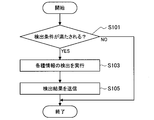
- step S101 the target terminal 10 determines whether or not the detection condition is satisfied.
- step S101 / YES the process proceeds to step S103.
- step S101 / NO the processing flow shown in FIG. 5 ends.
- step S103 the target terminal 10 executes detection of various types of information including the position information of the protected person.
- the target terminal 10 can detect information indicating a guardian's companion as information related to the behavior of the guardian based on information obtained by a sensor that acquires sound and position information of the guardian. .
- the target terminal 10 determines whether or not the guardian is having a drinking party based on the position information of the guardian, information obtained by a sensor that acquires sound, and information indicating a companion of the guardian. Such information can be detected as information on the behavior of the person to be protected.
- the target terminal 10 uses the application state of the target terminal 10, a screen on / off switching operation, a touch operation on the screen, Information relating to the operation of the button, the state of charge or the connection state of the earphone can be detected as information relating to the state of the target terminal 10.
- step S ⁇ b> 105 the target terminal 10 transmits the detection result to the server device 30.
- the detection result transmitted from the target terminal 10 is stored in the storage unit 35 of the server device 30.
- FIG. 6 is a flowchart illustrating an example of a flow of determination processing performed by the server device 30 according to the present embodiment. The process flow shown in FIG. 6 is always repeated, for example.
- FIG. 7 is an explanatory diagram illustrating an example of a reference area and a reference condition set in the server device 30 according to the present embodiment.
- step S311 the determination unit 32 of the server device 30 determines whether or not the position of the person to be protected is within the reference area. When it is determined that the position of the person to be protected is within the reference area (step S311 / YES), the process proceeds to step S313. On the other hand, if it is determined that the position of the protected person is not within the reference area (step S311 / NO), the process proceeds to step S315.
- the reference condition includes, for example, a time condition, an environmental condition, and an action condition.
- the time condition is a condition that defines information about time.
- the environmental condition is a condition that prescribes information related to the environment.
- the action condition is a condition that defines information related to the behavior of the guardian.
- the server device 30 for example, the reference area and the reference condition shown in FIG. 7 are set. In FIG. 7, the reference region and the reference condition are associated with each other for each column. Information indicating the reference region and the reference condition set in the server device 30 can be stored in the storage unit 35.
- the reference area “home” corresponds to an area within a reference radius (for example, 120 m) from the representative point of the protected person's home.
- the reference area “school” corresponds to an area within a reference radius from the representative point of the guardian's school.
- the reference area “friend's house” corresponds to an area within a reference radius from the representative point of the friend's friend's house.
- the reference area may be an area within a reference radius from a specific representative point. Note that the reference radii may be different between the reference regions.
- the reference area “home to school” corresponds to an area in the route having a reference width (for example, 200 m) from the representative point of the protected person's home to the representative point of the school.
- the reference area “home to friend's house route 1” corresponds to an area in the route having a reference width from the representative point of the protected person's home to the representative point of the friend's house.
- the reference area “home to friend's house route 2” is an area in the route having a reference width from the representative point of the protected person's home to the representative point of the friend's house, and the reference region “home to friend's house route”. This corresponds to a region different from “1”.
- the reference area may be an area in a route having a reference width between specific representative points. Note that the reference width may be different between the reference regions.
- the time condition is specifically that information about time corresponds to the reference area.
- Information about time includes, for example, information indicating a day of the week or a time zone.
- the environmental condition is that information about the environment corresponds to the reference area.
- Information about the environment includes, for example, information indicating weather, temperature, humidity, atmospheric pressure, or illuminance.
- the action condition is that information related to the behavior of the guardian corresponds to the reference area.
- the information regarding the behavior of the protected person includes, for example, information indicating the movement method of the protected person, the accompanying person, or the action content.
- the content of the action of the guardian may include the content of the action over a relatively long time such as a meal, a drinking party, a walk, or work, in addition to the content of the action in a relatively short time such as sitting or standing.
- the example of the information regarding the time, the information regarding the environment, and the information regarding the action of the guardian described above is merely an example, and various types of information may include other information.
- the target terminal 10 may be appropriately provided with a sensor for detecting other information, for example.
- a time condition indicating that the day of the week is a weekday and an action condition indicating that the movement method is a train are set in association with each other.
- a time condition that the day of the week is Saturday or Sunday is set as the reference condition corresponding to the reference area “Friend's House”.
- reference conditions corresponding to the reference area “home to friend's house route 1” the time condition that the day of the week is Saturday or Sunday, the environmental condition that the weather is clear, and the movement method are walking.
- the action condition of the effect is linked and set.
- the time condition that the day of the week is Saturday or Sunday
- the environmental condition that the weather is rainy is a bus
- the action condition of the effect is linked and set.
- reference area where the reference condition is not set, such as the reference area “home”.
- a plurality of combinations of reference conditions may be set for the same reference region.
- step S ⁇ b> 311 the determination unit 32 determines whether the position of the person to be protected is within the reference area for each reference area. Execute the judgment.
- step S313 the determination unit 32 determines whether the reference condition is satisfied.
- the determination unit 32 determines whether or not the reference condition corresponding to the reference region in which it is determined in step S311 that the person to be protected is located is satisfied.
- the determination unit 32 determines that the position of the person to be protected is within the reference area “home to school”, the time condition that the day of the week is a weekday, and the movement method It is determined whether or not an action condition indicating that the vehicle is a train is satisfied.
- the server device 30 can acquire time-related information by measuring time or by receiving time-related information from an external device.
- the determination unit 32 can determine whether or not the time condition is satisfied based on the information regarding the time acquired in this way. Further, the determination unit 32 can determine whether the environmental condition and the action condition are satisfied based on the detection result transmitted from the target terminal 10.
- step S315 the determination unit 32 stores the determination result in the storage unit 35.
- the determination result stored in the storage unit 35 specifically includes a determination result as to whether or not the position of the person to be protected is within the reference area in step S311.
- the determination result stored in the storage unit 35 includes a determination result as to whether or not the reference condition in step S313 is satisfied.
- step S317 the communication unit 31 transmits information related to the determination result to the user terminal 20 according to the determination result by the determination unit 32.
- the communication unit 31 determines that the position of the protected person is different when the determination result as to whether or not the position of the protected person is within any reference area is different from the determination result in the previous determination process.
- Information indicating that the user has moved from within any reference area to outside the reference area or from outside the reference area to the reference area is transmitted to the user terminal 20.
- the communication part 31 may transmit the information to that effect to the user terminal 20 continuously, when it determines with a to-be-protected person's position being outside a reference
- the communication unit 31 determines that the protected person Information indicating that the user has moved from the inside of the area to the outside of the reference area is transmitted to the user terminal 20.
- the communication unit 31 may determine that the position of the person to be protected is outside the reference area regardless of the determination result of step S311.
- the communication unit 31 determines from which reference area the protected person is located when the determination result regarding which reference area the protected person is located in is different from the determination result in the previous determination process. Information indicating to which reference area the vehicle has moved is transmitted to the user terminal 20.
- the communication unit 31 indicates that the protected person is within the reference area “home to school”.
- the information indicating that the user has moved to the reference area “school” is transmitted to the user terminal 20.
- the communication unit 31 transmits information to that effect to the user terminal 20.
- the communication unit 31 indicates that the action condition is not satisfied and the moving method of the protected person is different from normal. Information is transmitted to the user terminal 20.
- the example of the reference condition shown in FIG. 7 is merely an example.
- the number of reference conditions associated with the reference region may be larger than that in the example illustrated in FIG.
- combinations of determination results necessary for transmitting the determination results can be set as appropriate.
- the communication unit 31 may transmit the determination result to the user terminal 20 when a plurality of specific conditions among the reference conditions are satisfied or when a plurality of specific conditions are not satisfied.
- the communication unit 31 may transmit the determination result to the user terminal 20 when the determination result for a plurality of specific conditions among the reference conditions has changed from the previous determination process.
- the communication unit 31 may transmit information related to the determination result by the determination unit 32 based on the history of input information from the guardian with respect to the information related to the determination result by the determination unit 32 transmitted.
- the input information is information input by a guardian.
- the communication unit 31 can transmit information on the determination result by the determination unit 32 based on the history of positive input information and negative input information transmitted from the user terminal 20. For example, a relatively large amount of positive input information may be transmitted when the guardian is at home, and a relatively large amount of negative input information may be transmitted when the guardian is out of the home. In such a case, the communication unit 31 may lower the transmission frequency of information related to the determination result when the guardian is away from home than when the guardian is at home.
- FIG. 8 is a flowchart illustrating an example of a determination result notification process performed by the user terminal 20 according to the present embodiment. The process flow shown in FIG. 8 is always repeated, for example.
- step S211 the user terminal 20 determines whether or not information related to the determination result has been received.
- step S211 / YES the process proceeds to step S213.
- step S211 / NO the processing flow shown in FIG. 8 ends.
- step S213 the user terminal 20 notifies the guardian of information related to the determination result.
- step S215 the user terminal 20 determines whether or not there is an input operation by the guardian with respect to the information regarding the determination result.
- step S215 / YES the process proceeds to step S217.
- step S215 / NO the processing flow illustrated in FIG. 8 ends.
- step S217 the user terminal 20 transmits the input information from the guardian to the information related to the determination result to the server device 30.
- the input information from the guardian with respect to the information related to the determination result transmitted from the user terminal 20 is stored in the storage unit 35 of the server device 30.
- FIG. 9 is a flowchart illustrating an example of the flow of extraction processing performed by the server device 30 according to the present embodiment. The process flow shown in FIG. 9 is repeated, for example, every time a preset set time (for example, 24 hours) elapses.
- a preset set time for example, 24 hours
- step S321 the extraction unit 33 of the server device 30 acquires a history of detection results transmitted from the target terminal 10 from the storage unit 35.
- the extraction unit 33 acquires a detection result detected within a preset setting period (for example, a period between the past three months) from the storage unit 35.
- step S323 the extraction unit 33 extracts a reference area candidate that is a reference area candidate.
- the extraction unit 33 extracts a reference area candidate based on the position history of the person to be protected.
- the extraction unit 33 has a relatively high density of plot points on the map when the position of the guardian at each time is plotted on the map based on the acquired history of the position information of the guardian. Extract regions. Then, representative points such as facilities near the center of the region where the density of plot points is relatively high are extracted. Here, a position corresponding to the center of an area where the density of plot points is relatively high may be extracted as a representative point. Then, an area within the reference radius from the extracted representative point is extracted as a reference area candidate.
- the extraction unit 33 sets, for example, a setting ratio (for example, 95%) in which the ratio of plot points located in the reference area candidate among the plot points forming the area where the density of plot points is relatively high is set in advance.
- the reference radius is determined so as to be the above.
- the extracting unit 33 plots plot points on the map when connecting the plot points indicating the positions of the guardians at each time with line segments in the order of time (hereinafter referred to as line segments between plot points).
- An area having a relatively high density between line segments is extracted.
- a route between the representative points is extracted so that at least a part of the line between the plot points has a relatively high density.
- an area in the route having the reference width between the extracted representative points is extracted as a reference area candidate.
- the extraction unit 33 is, for example, a set ratio in which the ratio of line segments between plot points located within the reference area candidate is set in advance among plot points that form an area where the density of line segments between plot points is relatively high
- the reference width is determined so as to be (for example, 95%) or more.
- the reference area candidate is extracted based on the position information of the person to be protected detected by the target terminal 10 using the sensor. Therefore, for example, the accuracy of the position of the representative point of the facility in the extracted reference area candidate can be improved as compared with the representative point of the facility registered in the map application. Further, the position information of the protected person detected by the target terminal 10 using the sensor is also used in the determination process described above. Therefore, when the reference region is set based on the extracted reference region candidate, compared with the case where the reference region is set without depending on the extracted reference region candidate, the determination process is performed due to the measurement error by the sensor. By suppressing the decrease in accuracy, the accuracy in the determination process can be improved.
- step S325 the extraction unit 33 extracts a reference condition corresponding to the extracted reference region candidate.
- the extraction unit 33 extracts the reference condition corresponding to the reference region candidate based on the history of the position of the protected person.
- the extraction of the reference condition can be executed by appropriately using a history of other information different from the position information of the protected person in addition to the history of the position information of the protected person.
- the extraction unit 33 can extract the time condition corresponding to the reference region candidate based on the history of the position information of the protected person and the history of information on the time. For example, the extraction unit 33 extracts a day of the week having a relatively high frequency as a day of the week when the guardian is located in the reference area candidate as a day of the week corresponding to the reference area candidate.
- the extraction unit 33 can extract the environmental condition corresponding to the reference area candidate based on the history of the position information of the protected person and the history of information on the environment. For example, the extraction unit 33 extracts, as the weather corresponding to the reference area candidate, the weather having a relatively high frequency as the weather when the guardian is located in the reference area candidate.
- the extraction unit 33 can extract the action condition corresponding to the reference area candidate based on the history of the position information of the protected person and the history of the information related to the action of the protected person. For example, the extraction unit 33 extracts a moving method having a relatively high frequency as a moving method of the protected person when the protected person is positioned in the reference area candidate as a moving method corresponding to the reference area candidate.
- step S327 the extraction unit 33 stores the extraction result in the storage unit 35.
- the extracted reference area candidate is stored in the storage unit 35 in association with the reference condition.
- a map screen D24 shown in FIG. 21 is an example of a map screen in such a case. Specifically, as described above, the map screen D24 shown in FIG. 21 displays information related to an event when a specific three members visit a furniture store or a park as an event. It is an example of a screen.
- a condition that is further necessary for the occurrence of the event is satisfied as a reference condition.
- a determination may be made as to whether or not.
- a reference condition in determining whether or not such an event has occurred for example, various conditions including the above-described time condition, environmental condition, or action condition can be used.
- the behavior conditions include who is the companion for the member corresponding to the event, how the companion is related to the member, how many people are acting together, How many times you have visited in the past (or during this month, during this week, or during this day), how long you have stayed in the reference area, and how you are moving Conditions can be used that define how many images have been taken in time or what the subject is in the captured image.
- the notification setting list screen D61 shows display areas 208a, 208b, 208c, and 208d in which the contents of the notification setting for each determination result are displayed.
- the display areas 208a, 208b, 208c, and 208d are simply referred to as the display area 208 unless otherwise distinguished.
- a display area 161 in which various buttons and messages are displayed is shown at the top of the list screen D61.
- an estimated value of battery consumption based on the notification setting that is currently ON is displayed. For example, in the example in which the four notification settings in FIG. 23 are ON, it is displayed that the notification setting increases about 12% per day. In the example in which the three notification settings in FIG. 23 are ON, It is displayed that the notification setting increases about 8% per day. For example, when the content of each notification setting is changed, the estimated value of the battery consumption displayed on the list screen D61 is changed accordingly. Thus, by displaying the estimated value of the battery consumption on the list screen D61, it is possible to determine which notification setting to turn on from the viewpoint of power saving. For example, as shown in FIG. 23, by turning off the notification setting corresponding to the display area 208d, the battery consumption by the notification setting can be reduced by about 4% per day.
- the estimated value of the battery consumption by the notification setting is calculated by the server device 30 or the terminal of each member.
- the estimated value of the battery consumption can be calculated based on the type of sensor used to realize the notification defined by each notification setting, the detection frequency by the sensor, and the like.
- the setting screen D71 described below is a setting screen for adjusting the reference area in the event notification settings, but an icon indicating the reference condition corresponding to the reference area is displayed in the display area 207. When such an icon is selected, a setting screen for adjusting the reference condition is displayed.
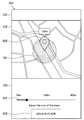
- the setting screen D71 includes a reference area candidate 707 that is an area corresponding to the park indicated by the icon 318 in FIG. 21 and an icon 607 indicating the position of the representative point of the reference area candidate 707.
- a display area 172 displayed superimposed on the map is shown.
- the extracted reference area candidate 707 corresponds to an area within a reference radius of 120 m from the representative point.
- a display area 173 for accepting an input operation is shown below the display area 172.
- a setting tab 325 and a battery tab 326 are provided.
- the display area 173 displays a slider 511 for adjusting the reference radius of the reference area candidate 707 and a button 512 for completing the adjustment of the reference area candidate 707. .
- the content displayed in the display area 173 is information related to the battery consumption by the notification setting corresponding to the setting screen D71.
- the estimated number of notifications generated by the notification setting corresponding to the setting screen D71 (in the example of FIG. 24, 10 times per week, 1 month 32 times) is displayed.
- the estimated value of the number of notifications can be predicted based on the position history of each member of the family by using a method such as machine learning, for example.
- an estimated value of battery consumption by notification setting corresponding to the setting screen D71 in the example of FIG. 24, an increase of about 3% per day
- the notification setting corresponding to the setting screen D71 can be appropriately adjusted from the viewpoint of power saving.
- a display area 171 in which various buttons and messages are displayed is shown above the display area 172.
- a display area 209 showing the same content as the display area 207 in FIG. 22 may be displayed in the display area 171.
- the monitoring system 1 it is determined whether or not the position of the object is within a reference area that is a geographical area. Also, a reference area candidate that is a reference area candidate is extracted. Information about the extracted reference area candidate is output in correspondence with the reference condition. Thereby, a user such as a guardian can make settings related to the reference region while referring to the reference region candidate and the reference condition corresponding to the reference region candidate. Therefore, it is possible to reduce the human burden in the setting work for the watching system 1.
- the watching system 1 when it is determined that the position of the object is within the reference region, it can be determined whether or not the reference condition corresponding to the reference region is satisfied. Thereby, in addition to the determination result as to whether or not the position of the object is within the reference region, the state of the object is determined based on the determination result as to whether or not the reference condition corresponding to the reference region is satisfied. A more appropriate determination can be made.
- the reference condition may include a time condition that is a condition for defining information related to time.
- the state of the object can be more appropriately determined according to the information about time. For example, it is possible to more appropriately execute the determination as to whether or not the position of the object is in the normal state according to the information related to time.
- information related to the determination result can be output based on the history of input information from the user for the information related to the output determination result.
- the output of the information regarding the determination result can be more appropriately adjusted based on the user's preference for the information regarding the determination result being output.
- the reference area candidate can be extracted based on the history of the position of the object. Thereby, it is possible to appropriately extract a region where the frequency of the position of the object is relatively high as a reference region candidate.
- FIG. 25 is a schematic diagram illustrating an example of a schematic configuration of the watching system 2 according to the application example.
- FIG. 26 is an explanatory diagram illustrating an example of a map screen D81 displayed when the determination result is notified by the agent device 40 according to the application example.
- FIG. 27 is an explanatory diagram illustrating an example of a map screen D23 displayed when the user terminal 20 notifies the determination result.
- the agent device 40 is a device that can be operated by voice. Specifically, when the agent device 40 is spoken by the user, the agent device 40 can recognize the spoken content and output a sound or display a screen according to the content. Thus, the agent device 40 is a device that can provide various information to the user according to the content spoken by the user. As will be described later, the agent device 40 may provide various information to the user by using a trigger other than what is spoken by the user.
- the agent device 40 includes, for example, a camera, a microphone, a projector, and a speaker.
- the agent device 40 can recognize the user by acquiring an image showing the user with a camera and performing image processing on the image. Further, the agent device 40 can acquire information indicating a user's voice using a microphone, and can recognize the content of the user's voice using the information. Further, the agent device 40 can project and display the screen on the wall 5 or the like with a projector. In FIG. 25, a state in which the screen D80 is projected and displayed on the wall 5 by the agent device 40 is shown. Further, the agent device 40 can output sound through a speaker.
- the agent device 40 can communicate with the server device 30, by using the agent device 40, various information obtained by the processing performed by the server device 30 described above is provided to the user. be able to.
- various types of information notified by the user terminal 20 described above can be provided to the user also by outputting sound by the agent device 40 or displaying a screen.
- the example of the process regarding provision of the information to the user using such an agent apparatus 40 is demonstrated more concretely.
- the determination unit 32 of the server device 30 indicates that the protected person has moved as such. Is determined.
- information related to the determination result by the determination unit 32 can be transmitted from the server device 30 to the agent device 40.
- the transmission destination of the information related to the determination result can be set by operating the user terminal 20, for example. For example, such a screen for setting the transmission destination is displayed on the user terminal 20, and the agent device 40 is set as a transmission destination of information related to the determination result by an operation on the screen.
- the agent device 40 is set as a transmission destination of information related to the determination result
- information related to the determination result is transmitted from the server device 30 to the agent device 40.
- the user terminal 20 is set in addition to the agent device 40 as the transmission destination of the information related to the determination result
- the information related to the determination result is also transmitted from the server device 30 to the user terminal 20.
- the agent device 40 can provide information regarding the acquired determination result to the user, for example, by outputting sound and displaying a screen. For example, when a user registered in advance in the agent device 40 approaches the vicinity of the agent device 40, the agent device 40 outputs and displays information regarding the acquired determination result in a voice.
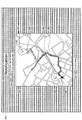
- a map screen D81 shown in FIG. 26 is an example of a map screen showing the determination result displayed together with the audio output by the agent device 40 in such a case.
- the agent device 40 can determine that the user has approached the vicinity of the agent device 40 when the user recognizes that the user is located within a set distance from the agent device 40 by the camera. In addition, when a plurality of users are registered in the agent device 40, the agent device 40 may change the screen to be displayed according to the user who has approached the vicinity of the agent device 40. Further, the agent device 40 may determine whether or not to display a screen according to a user who has approached the vicinity of the agent device 40.
- a display area 210 in which the content of the determination result is displayed by characters or the like.
- the protected person leaves the reference area 903 corresponding to the area in the route from home to school
- the protected person leaves the reference area 903 above the display area 181 as shown in FIG.
- a display area 210 indicating that it has been displayed is displayed.
- the time when the protected person leaves the reference area 903 may be displayed.
- a display area 211 is further shown in which the current location of the protected person who has left the reference area 903 is displayed in characters or the like.
- the agent device 40 when the user approaches the vicinity of the agent device 40, the agent device 40 outputs a voice to the effect that the protected person has left the reference area 903, and displays the map screen D81 shown in FIG. Project and display. Note that when there are a plurality of pieces of information related to the determination result acquired from the server device 30, the agent device 40 may preferentially provide the user with information with the latest acquired time.
- the agent device 40 may output by voice that the message can be transmitted to the target terminal 10 carried by the protected person. Thereafter, for example, when the user talks to send a message, the agent device 40 switches the displayed map screen D81 to a screen for sending a message. Then, the user can transmit a desired message to the target terminal 10 by speaking the message to be transmitted to the agent device 40. Note that a message can be transmitted from the target terminal 10 to the agent device 40, and the agent device 40 can display a message transmitted and received between the target terminal 10 and the agent device 40 on the screen. Good. Further, in each message transmitted and received between the target terminal 10 and the agent device 40, the name of the user corresponding to the destination terminal may be displayed. Further, the agent device 40 may output a message to that effect when sending / receiving a message.
- the information related to the determination result can be transmitted from the server device 30 to the user terminal 20 in addition to the agent device 40.
- the user terminal 20 displays the map screen D22 described with reference to FIG.
- the screen displayed by the user terminal 20 as the screen related to the notification of the determination result is not limited to the above example, and various screens can be applied as such a screen.
- the user terminal 20 may display a screen including an object for transmitting a message to the target terminal 10 carried by the guardian.
- a map screen D23 shown in FIG. 27 is an example of a map screen in such a case.
- the map screen D23 shown in FIG. 27 is mainly different from the map screen D22 shown in FIG. 17 in the content displayed at the bottom of the screen. As shown in FIG. 27, at the bottom of the map screen D23, for example, the contents of the determination result (specifically, the fact that the guardian has left the reference area 903) are displayed by letters or the like in order from the top.
- a button 515 for inputting information is displayed.
- the guardian can switch the displayed map screen D23 to a screen for sending a message by selecting the button 513 by a tap operation or the like.
- the guardian can transmit a desired message to the target terminal 10 by inputting the message to be transmitted.
- a message can be transmitted from the target terminal 10 to the user terminal 20, and the user terminal 20 can display a message transmitted and received between the target terminal 10 and the user terminal 20 on the screen.
- a message transmitted / received between the target terminal 10 and the user terminal 20 may be transmitted from each terminal to the agent device 40, and the message may be displayed by the agent device 40.
- the server device 30 can acquire various information including information detected by the target terminal 10 and the user terminal 20.
- the server device 30 may perform various processes other than the processes described above using various information obtained in this way.
- the server device 30 may determine whether or not members of a group such as a family have met, and may transmit information regarding the determination result to the agent device 40 or the user terminal 20.
- such a process can be specifically realized by using position information of each member detected by a terminal carried by each member.
- the agent device 40 uses the voice output and the screen display to output the information related to the acquired determination result to the user. Can be provided. Further, the agent device 40 may execute a process for transmitting a message to a terminal carried by each member that has been met, similar to the process for transmitting a message to the target terminal 10 described above.
- the user terminal 20 can display various screens related to the notification of the acquired determination result as described above.
- the user terminal 20 may execute a process for transmitting a message to a terminal carried by each member who has met, in the same manner as the process for transmitting a message to the target terminal 10 described above.
- the server device 30 has the member in the region. Encountering may be extracted as the event described above. In this case, for example, the server device 30 extracts the region where the members meet as a reference region candidate in the determination of whether or not an event has occurred. After that, the server device 30 can determine whether or not an event corresponding to the members meeting in the region has occurred by applying the extracted reference region candidate as the reference region.
- the server device 30 may transmit information regarding the determination result in the determination as to whether or not such an event has occurred to the agent device 40 or the user terminal 20. For example, when the members meet again in the area, the server device 30 may transmit information regarding the determination result indicating the fact to the agent device 40 or the user terminal 20. Even in this case, the agent device 40 can provide information regarding the determination result to the user as described above by outputting the sound and displaying the screen. In addition, as described above, the user terminal 20 can display various screens related to notification of the acquired determination result.
- the server device 30 includes the determination unit 32 that determines whether or not the position of the object is within the reference region that is a geographical region, and the reference that is a candidate for the reference region.
- An extraction unit 33 that extracts region candidates, and a communication unit 31 that outputs information on the extracted reference region candidates in association with the reference conditions.
- a user such as a guardian can make settings related to the reference region while referring to the reference region candidate and the reference condition corresponding to the reference region candidate. Therefore, it is possible to reduce the human burden in the setting work for the watching system 1.
- the server device 30 has been described as an example of an information processing device according to the present disclosure.
- other devices in the monitoring system 1 have functions of the information processing device according to the present disclosure. You may have some or all.
- the user terminal 20 may have all the functions described above as the functions of the server device 30.
- a part of the function described above as the function of the server device 30 may be divided into the user terminal 20 and the server device 30.
- the server device 30 according to the present embodiment may correspond to a computer.
- a computer-readable recording medium storing such a computer program can be provided.
- the recording medium is, for example, a magnetic disk, an optical disk, a magneto-optical disk, a flash memory, or the like.
- the above computer program may be distributed via a network, for example, without using a recording medium.
- each function of the server device 30 according to the present embodiment may be divided by a plurality of computers. In this case, each function of the plurality of computers may be realized by the above computer program.
- processing described using the flowchart in this specification does not necessarily have to be executed in the order shown in the flowchart. Some processing steps may be performed in parallel. Further, additional processing steps may be employed, and some processing steps may be omitted.
- a determination unit that determines whether or not the position of the object is within a reference area that is a geographical area; An extraction unit for extracting a reference area candidate that is a candidate for the reference area; An output unit that outputs information related to the extracted reference region candidate in association with a reference condition; Comprising Information processing device.
- the determination unit determines whether the reference condition corresponding to the reference region is satisfied, The information processing apparatus according to (1).
- the reference condition includes a time condition that is a condition that prescribes information about time, an environmental condition that is a condition that prescribes information about the environment, or an action condition that is a condition that prescribes information about the action of the object,
- the information related to the behavior of the object includes information indicating the movement method of the object, a companion or action content, The information processing apparatus according to (3).
- a setting unit configured to set the reference region and the reference condition based on the extracted reference region candidate; The information processing apparatus according to any one of (1) to (4).
- the output unit outputs information on a determination result by the determination unit; The information processing apparatus according to (5).
- the setting unit sets the reference region and the reference condition based on a history of input information from a user with respect to the information related to the determination result by the determination unit.
- the output unit outputs information on the determination result by the determination unit based on a history of input information from the user for the information on the determination result by the output determination unit.
- the extraction unit extracts the reference region candidate or the reference condition corresponding to the reference region candidate based on the position history of the object.
- the information processing apparatus according to any one of (1) to (8).
- (10) Determining whether the location of the object is within a reference area, which is a geographical area; Extracting a reference area candidate that is a candidate for the reference area; Outputting information related to the extracted reference region candidate in association with a reference condition by an information processing device; including, Information processing method.
- (11) Computer A determination unit that determines whether or not the position of the object is within a reference area that is a geographical area; An extraction unit for extracting a reference area candidate that is a candidate for the reference area; An output unit that outputs information related to the extracted reference region candidate in association with a reference condition; Program to function as.
- the determination unit determines whether the reference condition corresponding to the reference region is satisfied, The program according to (11) above.
- the reference condition includes a time condition that is a condition that prescribes information about time, an environmental condition that is a condition that prescribes information about the environment, or an action condition that is a condition that prescribes information about the action of the object, The program according to (11) or (12).
- the information related to the behavior of the object includes information indicating the movement method of the object, a companion or action content, The program according to (13) above.
- the output unit outputs information on a determination result by the determination unit;
- the setting unit sets the reference region and the reference condition based on a history of input information from a user with respect to the information related to the determination result by the determination unit.
- the output unit outputs information on the determination result by the determination unit based on a history of input information from the user for the information on the determination result by the output determination unit.
- the extraction unit extracts the reference region candidate or the reference condition corresponding to the reference region candidate based on the position history of the object.
Landscapes
- Engineering & Computer Science (AREA)
- Remote Sensing (AREA)
- Theoretical Computer Science (AREA)
- Radar, Positioning & Navigation (AREA)
- General Physics & Mathematics (AREA)
- Physics & Mathematics (AREA)
- General Engineering & Computer Science (AREA)
- Databases & Information Systems (AREA)
- Business, Economics & Management (AREA)
- Signal Processing (AREA)
- Computer Networks & Wireless Communication (AREA)
- Automation & Control Theory (AREA)
- Data Mining & Analysis (AREA)
- General Health & Medical Sciences (AREA)
- Health & Medical Sciences (AREA)
- Tourism & Hospitality (AREA)
- Human Computer Interaction (AREA)
- Social Psychology (AREA)
- Educational Administration (AREA)
- Human Resources & Organizations (AREA)
- Marketing (AREA)
- Primary Health Care (AREA)
- Strategic Management (AREA)
- General Business, Economics & Management (AREA)
- Economics (AREA)
- Development Economics (AREA)
- Computer Security & Cryptography (AREA)
- Alarm Systems (AREA)
- Navigation (AREA)
- Telephonic Communication Services (AREA)
- Management, Administration, Business Operations System, And Electronic Commerce (AREA)
Abstract
Description
1.見守りシステムの構成
2.見守りシステムの動作
2-1.検出処理
2-2.判定処理
2-3.判定結果の通知処理
2-4.抽出処理
2-5.抽出結果の送信処理
2-6.抽出結果の通知処理
2-7.設定処理
2-8.各種画面の表示例
2-8-1.設定画面の表示例
2-8-2.判定結果の通知に関する画面の表示例
2-8-3.履歴画面の表示例
2-8-4.イベントに関する画面の表示例
3.見守りシステムの効果
4.応用例
5.まとめ
まず、図1~図4を参照して、本開示の実施形態に係る見守りシステム1の構成について説明する。
続いて、図5~図15を参照して、本実施形態に係る見守りシステム1の動作について説明する。
図5は、実施形態に係る対象端末10が行う検出処理の流れの一例を示すフローチャートである。図5に示される処理フローは、例えば、常時繰り返される。
図6は、本実施形態に係るサーバ装置30が行う判定処理の流れの一例を示すフローチャートである。図6に示される処理フローは、例えば、常時繰り返される。図7は、本実施形態に係るサーバ装置30において設定されている基準領域及び基準条件の一例を示す説明図である。
図8は、本実施形態に係るユーザ端末20が行う判定結果の通知処理の流れの一例を示すフローチャートである。図8に示される処理フローは、例えば、常時繰り返される。
図9は、本実施形態に係るサーバ装置30が行う抽出処理の流れの一例を示すフローチャートである。図9に示される処理フローは、例えば、あらかじめ設定された設定時間(例えば、24時間)が経過するごとに繰り返される。
図10は、本実施形態に係るサーバ装置30が行う抽出結果の送信処理の流れの一例を示すフローチャートである。図10に示される処理フローは、例えば、常時繰り返される。
図11は、本実施形態に係るユーザ端末20が行う抽出結果の通知処理の流れの一例を示すフローチャートである。図11に示される処理フローは、例えば、常時繰り返される。
図12は、本実施形態に係るサーバ装置30が行う設定処理の流れの一例を示すフローチャートである。図12に示される処理フローは、例えば、常時繰り返される。
続いて、上記で説明した見守りシステム1のユーザ端末20等により表示される各種画面の表示例について説明する。
まず、図13~図15を参照して、ユーザ端末20により表示される設定画面の表示例について説明する。図13は、本実施形態に係るユーザ端末20により表示される設定画面の第1の例を示す説明図である。図14は、本実施形態に係るユーザ端末20により表示される設定画面の第2の例を示す説明図である。図15は、本実施形態に係るユーザ端末20により表示される設定画面の第3の例を示す説明図である。
次に、図16~図18を参照して、ユーザ端末20により表示される判定結果の通知に関する画面の表示例について説明する。図16は、本実施形態に係るユーザ端末20により判定結果の通知の際に表示されるホーム画面の一例を示す説明図である。図17は、本実施形態に係るユーザ端末20により判定結果の通知の際に表示されるマップ画面の一例を示す説明図である。図18は、本実施形態に係るユーザ端末20により表示される判定結果の通知設定の変更案の一例を示す説明図である。
次に、図19及び図20を参照して、ユーザ端末20等により表示される履歴画面の表示例について説明する。図19は、本実施形態に係るユーザ端末20等により表示されるメニューの一例を示す説明図である。図20は、本実施形態に係るユーザ端末20等により表示される履歴画面の一例を示す説明図である。
次に、図21~図24を参照して、ユーザ端末20等により表示されるイベントに関する画面の表示例について説明する。図21は、本実施形態に係るユーザ端末20等によりイベントの提示の際に表示されるマップ画面の一例を示す説明図である。図22は、本実施形態に係るユーザ端末20等により表示されるイベントの通知設定の一例を示す説明図である。図23は、本実施形態に係るユーザ端末20等により表示される通知設定の一覧画面の一例を示す説明図である。図24は、本実施形態に係るユーザ端末20等により表示されるイベントの通知設定についての設定画面の一例を示す説明図である。
続いて、本実施形態に係る見守りシステム1の効果について説明する。
続いて、図25~図27を参照して、応用例に係る見守りシステム2について説明する。
以上説明したように、本実施形態に係るサーバ装置30は、対象物の位置が地理的な領域である基準領域内であるか否かを判定する判定部32と、基準領域の候補である基準領域候補を抽出する抽出部33と、抽出された基準領域候補に関する情報を基準条件と対応させて出力する通信部31とを備える。それにより、保護者等のユーザは、基準領域候補及び基準領域候補と対応する基準条件を参照しつつ、基準領域に関する設定を行うことができる。ゆえに、見守りシステム1についての設定作業における人的負担を軽減することが可能となる。
(1)
対象物の位置が地理的な領域である基準領域内であるか否かを判定する判定部と、
前記基準領域の候補である基準領域候補を抽出する抽出部と、
抽出された前記基準領域候補に関する情報を基準条件と対応させて出力する出力部と、
を備える、
情報処理装置。
(2)
前記判定部は、前記対象物の位置が前記基準領域内であると判定された場合、前記基準領域と対応する前記基準条件が満たされるか否かを判定する、
前記(1)に記載の情報処理装置。
(3)
前記基準条件は、時間に関する情報を規定する条件である時間条件、環境に関する情報を規定する条件である環境条件、又は前記対象物の行動に関する情報を規定する条件である行動条件を含む、
前記(1)又は(2)に記載の情報処理装置。
(4)
前記対象物の行動に関する情報は、前記対象物の移動方法、同伴者又は行動内容を示す情報を含む、
前記(3)に記載の情報処理装置。
(5)
抽出された前記基準領域候補に基づいて前記基準領域及び前記基準条件を設定する設定部を備える、
前記(1)~(4)のいずれか一項に記載の情報処理装置。
(6)
前記出力部は、前記判定部による判定結果に関する情報を出力する、
前記(5)に記載の情報処理装置。
(7)
前記設定部は、出力された前記判定部による判定結果に関する情報に対するユーザからの入力情報の履歴に基づいて、前記基準領域及び前記基準条件を設定する、
前記(6)に記載の情報処理装置。
(8)
前記出力部は、出力された前記判定部による判定結果に関する情報に対するユーザからの入力情報の履歴に基づいて、前記判定部による判定結果に関する情報を出力する、
前記(6)又は(7)に記載の情報処理装置。
(9)
前記抽出部は、前記対象物の位置の履歴に基づいて前記基準領域候補又は前記基準領域候補と対応する前記基準条件を抽出する、
前記(1)~(8)のいずれか一項に記載の情報処理装置。
(10)
対象物の位置が地理的な領域である基準領域内であるか否かを判定することと、
前記基準領域の候補である基準領域候補を抽出することと、
抽出された前記基準領域候補に関する情報を基準条件と対応させて情報処理装置によって出力することと、
を含む、
情報処理方法。
(11)
コンピュータを、
対象物の位置が地理的な領域である基準領域内であるか否かを判定する判定部と、
前記基準領域の候補である基準領域候補を抽出する抽出部と、
抽出された前記基準領域候補に関する情報を基準条件と対応させて出力する出力部と、
として機能させるためのプログラム。
(12)
前記判定部は、前記対象物の位置が前記基準領域内であると判定された場合、前記基準領域と対応する前記基準条件が満たされるか否かを判定する、
前記(11)に記載のプログラム。
(13)
前記基準条件は、時間に関する情報を規定する条件である時間条件、環境に関する情報を規定する条件である環境条件、又は前記対象物の行動に関する情報を規定する条件である行動条件を含む、
前記(11)又は(12)に記載のプログラム。
(14)
前記対象物の行動に関する情報は、前記対象物の移動方法、同伴者又は行動内容を示す情報を含む、
前記(13)に記載のプログラム。
(15)
前記コンピュータを、抽出された前記基準領域候補に基づいて前記基準領域及び前記基準条件を設定する設定部としてさらに機能させるための、
前記(11)~(14)のいずれか一項に記載のプログラム。
(16)
前記出力部は、前記判定部による判定結果に関する情報を出力する、
前記(15)に記載のプログラム。
(17)
前記設定部は、出力された前記判定部による判定結果に関する情報に対するユーザからの入力情報の履歴に基づいて、前記基準領域及び前記基準条件を設定する、
前記(16)に記載のプログラム。
(18)
前記出力部は、出力された前記判定部による判定結果に関する情報に対するユーザからの入力情報の履歴に基づいて、前記判定部による判定結果に関する情報を出力する、
前記(16)又は(17)に記載のプログラム。
(19)
前記抽出部は、前記対象物の位置の履歴に基づいて前記基準領域候補又は前記基準領域候補と対応する前記基準条件を抽出する、
前記(11)~(18)のいずれか一項に記載のプログラム。
10 対象端末
20 ユーザ端末
30 サーバ装置
31 通信部
32 判定部
33 抽出部
34 設定部
35 記憶部
N10 情報ネットワーク
Claims (19)
- 対象物の位置が地理的な領域である基準領域内であるか否かを判定する判定部と、
前記基準領域の候補である基準領域候補を抽出する抽出部と、
抽出された前記基準領域候補に関する情報を基準条件と対応させて出力する出力部と、
を備える、
情報処理装置。 - 前記判定部は、前記対象物の位置が前記基準領域内であると判定された場合、前記基準領域と対応する前記基準条件が満たされるか否かを判定する、
請求項1に記載の情報処理装置。 - 前記基準条件は、時間に関する情報を規定する条件である時間条件、環境に関する情報を規定する条件である環境条件、又は前記対象物の行動に関する情報を規定する条件である行動条件を含む、
請求項1に記載の情報処理装置。 - 前記対象物の行動に関する情報は、前記対象物の移動方法、同伴者又は行動内容を示す情報を含む、
請求項3に記載の情報処理装置。 - 抽出された前記基準領域候補に基づいて前記基準領域及び前記基準条件を設定する設定部を備える、
請求項1に記載の情報処理装置。 - 前記出力部は、前記判定部による判定結果に関する情報を出力する、
請求項5に記載の情報処理装置。 - 前記設定部は、出力された前記判定部による判定結果に関する情報に対するユーザからの入力情報の履歴に基づいて、前記基準領域及び前記基準条件を設定する、
請求項6に記載の情報処理装置。 - 前記出力部は、出力された前記判定部による判定結果に関する情報に対するユーザからの入力情報の履歴に基づいて、前記判定部による判定結果に関する情報を出力する、
請求項6に記載の情報処理装置。 - 前記抽出部は、前記対象物の位置の履歴に基づいて前記基準領域候補又は前記基準領域候補と対応する前記基準条件を抽出する、
請求項1に記載の情報処理装置。 - 対象物の位置が地理的な領域である基準領域内であるか否かを判定することと、
前記基準領域の候補である基準領域候補を抽出することと、
抽出された前記基準領域候補に関する情報を基準条件と対応させて情報処理装置によって出力することと、
を含む、
情報処理方法。 - コンピュータを、
対象物の位置が地理的な領域である基準領域内であるか否かを判定する判定部と、
前記基準領域の候補である基準領域候補を抽出する抽出部と、
抽出された前記基準領域候補に関する情報を基準条件と対応させて出力する出力部と、
として機能させるためのプログラム。 - 前記判定部は、前記対象物の位置が前記基準領域内であると判定された場合、前記基準領域と対応する前記基準条件が満たされるか否かを判定する、
請求項11に記載のプログラム。 - 前記基準条件は、時間に関する情報を規定する条件である時間条件、環境に関する情報を規定する条件である環境条件、又は前記対象物の行動に関する情報を規定する条件である行動条件を含む、
請求項11に記載のプログラム。 - 前記対象物の行動に関する情報は、前記対象物の移動方法、同伴者又は行動内容を示す情報を含む、
請求項13に記載のプログラム。 - 前記コンピュータを、抽出された前記基準領域候補に基づいて前記基準領域及び前記基準条件を設定する設定部としてさらに機能させるための、
請求項11に記載のプログラム。 - 前記出力部は、前記判定部による判定結果に関する情報を出力する、
請求項15に記載のプログラム。 - 前記設定部は、出力された前記判定部による判定結果に関する情報に対するユーザからの入力情報の履歴に基づいて、前記基準領域及び前記基準条件を設定する、
請求項16に記載のプログラム。 - 前記出力部は、出力された前記判定部による判定結果に関する情報に対するユーザからの入力情報の履歴に基づいて、前記判定部による判定結果に関する情報を出力する、
請求項16に記載のプログラム。 - 前記抽出部は、前記対象物の位置の履歴に基づいて前記基準領域候補又は前記基準領域候補と対応する前記基準条件を抽出する、
請求項11に記載のプログラム。
Priority Applications (5)
| Application Number | Priority Date | Filing Date | Title |
|---|---|---|---|
| US16/491,440 US11026054B2 (en) | 2017-04-21 | 2018-03-29 | Information processing apparatus, information processing method, and program for determining a position of a target in relation to a reference region |
| CN201880025136.4A CN110520891B (zh) | 2017-04-21 | 2018-03-29 | 信息处理装置、信息处理方法和程序 |
| EP18788088.5A EP3614331B1 (en) | 2017-04-21 | 2018-03-29 | Information processing device, information processing method, and program |
| JP2019513532A JP7060014B2 (ja) | 2017-04-21 | 2018-03-29 | 情報処理装置、情報処理方法及びプログラム |
| US17/307,357 US11985568B2 (en) | 2017-04-21 | 2021-05-04 | Information processing apparatus, information processing method, and program |
Applications Claiming Priority (4)
| Application Number | Priority Date | Filing Date | Title |
|---|---|---|---|
| JP2017084834 | 2017-04-21 | ||
| JP2017-084834 | 2017-04-21 | ||
| JP2018001585 | 2018-01-10 | ||
| JP2018-001585 | 2018-01-10 |
Related Child Applications (2)
| Application Number | Title | Priority Date | Filing Date |
|---|---|---|---|
| US16/491,440 A-371-Of-International US11026054B2 (en) | 2017-04-21 | 2018-03-29 | Information processing apparatus, information processing method, and program for determining a position of a target in relation to a reference region |
| US17/307,357 Continuation US11985568B2 (en) | 2017-04-21 | 2021-05-04 | Information processing apparatus, information processing method, and program |
Publications (1)
| Publication Number | Publication Date |
|---|---|
| WO2018193808A1 true WO2018193808A1 (ja) | 2018-10-25 |
Family
ID=63855686
Family Applications (1)
| Application Number | Title | Priority Date | Filing Date |
|---|---|---|---|
| PCT/JP2018/013280 Ceased WO2018193808A1 (ja) | 2017-04-21 | 2018-03-29 | 情報処理装置、情報処理方法及びプログラム |
Country Status (5)
| Country | Link |
|---|---|
| US (2) | US11026054B2 (ja) |
| EP (1) | EP3614331B1 (ja) |
| JP (1) | JP7060014B2 (ja) |
| CN (1) | CN110520891B (ja) |
| WO (1) | WO2018193808A1 (ja) |
Cited By (6)
| Publication number | Priority date | Publication date | Assignee | Title |
|---|---|---|---|---|
| JP2020182123A (ja) * | 2019-04-25 | 2020-11-05 | ソースネクスト株式会社 | 通知エリア設定システム、通知エリア設定方法及びプログラム |
| JP2021056638A (ja) * | 2019-09-27 | 2021-04-08 | 日本電気株式会社 | 情報処理装置、情報処理システム、情報処理方法、及びプログラム |
| JP2022110300A (ja) * | 2021-01-18 | 2022-07-29 | 株式会社LogicLinks | 通知システム、通知方法及びプログラム |
| JP2024111001A (ja) * | 2020-12-28 | 2024-08-16 | 株式会社Lixil | 制御システムおよび制御方法 |
| JP2025058640A (ja) * | 2023-09-28 | 2025-04-09 | デジタルアーツ株式会社 | 情報処理装置、情報処理方法、及び情報処理プログラム |
| US12387584B2 (en) | 2019-04-01 | 2025-08-12 | Bsize Inc. | Monitoring system, monitoring method, and program |
Citations (4)
| Publication number | Priority date | Publication date | Assignee | Title |
|---|---|---|---|---|
| JP2005267079A (ja) * | 2004-03-17 | 2005-09-29 | Sony Ericsson Mobilecommunications Japan Inc | 行動範囲監視サーバ装置及び行動範囲監視システム |
| JP2008102751A (ja) * | 2006-10-19 | 2008-05-01 | Secom Co Ltd | 登下校監視システム |
| JP2009145234A (ja) | 2007-12-14 | 2009-07-02 | Sony Corp | ガイド情報提示システム、ガイド情報提示方法、サーバ装置、端末装置 |
| JP2010277491A (ja) * | 2009-05-30 | 2010-12-09 | Toshiaki Odate | 移動ルート作成および登録方法 |
Family Cites Families (12)
| Publication number | Priority date | Publication date | Assignee | Title |
|---|---|---|---|---|
| JP5495235B2 (ja) * | 2010-12-02 | 2014-05-21 | 株式会社日立製作所 | 監視対象者の行動を監視する装置及び方法 |
| JP5566364B2 (ja) * | 2011-11-16 | 2014-08-06 | 株式会社ゼンリンデータコム | 日常圏設定システム、日常圏設定方法及び日常圏設定プログラム |
| JP6127388B2 (ja) | 2012-06-13 | 2017-05-17 | ソニー株式会社 | 情報処理装置、情報処理方法、およびプログラム |
| US9960986B2 (en) * | 2014-03-19 | 2018-05-01 | Uber Technologies, Inc. | Providing notifications to devices based on real-time conditions related to an on-demand service |
| JP6340866B2 (ja) * | 2014-03-27 | 2018-06-13 | 富士通株式会社 | 相乗り依頼方法、相乗り依頼装置およびプログラム |
| SG11201609213TA (en) | 2014-05-07 | 2016-12-29 | Otta Inc | Position information notification system |
| CN103994764B (zh) * | 2014-05-30 | 2017-01-25 | 云朵网络有限公司 | 一种随身定位系统 |
| JPWO2015190141A1 (ja) * | 2014-06-13 | 2017-04-20 | ソニー株式会社 | 情報処理装置、情報処理方法、およびプログラム |
| US10852151B2 (en) * | 2014-12-12 | 2020-12-01 | Square, Inc. | Dynamic reconfiguring of geo-fences |
| WO2016185913A1 (ja) * | 2015-05-19 | 2016-11-24 | ソニー株式会社 | 情報処理装置、情報処理方法、及び、プログラム |
| US9877154B2 (en) * | 2016-02-05 | 2018-01-23 | Google Llc | Method and apparatus for providing target location reminders for a mobile device |
| CN106056516B (zh) * | 2016-05-31 | 2018-12-04 | 杭州致峰网络科技有限公司 | 监护方法及系统 |
-
2018
- 2018-03-29 WO PCT/JP2018/013280 patent/WO2018193808A1/ja not_active Ceased
- 2018-03-29 JP JP2019513532A patent/JP7060014B2/ja active Active
- 2018-03-29 US US16/491,440 patent/US11026054B2/en active Active
- 2018-03-29 CN CN201880025136.4A patent/CN110520891B/zh active Active
- 2018-03-29 EP EP18788088.5A patent/EP3614331B1/en active Active
-
2021
- 2021-05-04 US US17/307,357 patent/US11985568B2/en active Active
Patent Citations (4)
| Publication number | Priority date | Publication date | Assignee | Title |
|---|---|---|---|---|
| JP2005267079A (ja) * | 2004-03-17 | 2005-09-29 | Sony Ericsson Mobilecommunications Japan Inc | 行動範囲監視サーバ装置及び行動範囲監視システム |
| JP2008102751A (ja) * | 2006-10-19 | 2008-05-01 | Secom Co Ltd | 登下校監視システム |
| JP2009145234A (ja) | 2007-12-14 | 2009-07-02 | Sony Corp | ガイド情報提示システム、ガイド情報提示方法、サーバ装置、端末装置 |
| JP2010277491A (ja) * | 2009-05-30 | 2010-12-09 | Toshiaki Odate | 移動ルート作成および登録方法 |
Non-Patent Citations (1)
| Title |
|---|
| See also references of EP3614331A4 |
Cited By (10)
| Publication number | Priority date | Publication date | Assignee | Title |
|---|---|---|---|---|
| US12387584B2 (en) | 2019-04-01 | 2025-08-12 | Bsize Inc. | Monitoring system, monitoring method, and program |
| JP2020182123A (ja) * | 2019-04-25 | 2020-11-05 | ソースネクスト株式会社 | 通知エリア設定システム、通知エリア設定方法及びプログラム |
| JP2021056638A (ja) * | 2019-09-27 | 2021-04-08 | 日本電気株式会社 | 情報処理装置、情報処理システム、情報処理方法、及びプログラム |
| JP7388097B2 (ja) | 2019-09-27 | 2023-11-29 | 日本電気株式会社 | 情報処理装置、情報処理システム、情報処理方法、及びプログラム |
| JP2024111001A (ja) * | 2020-12-28 | 2024-08-16 | 株式会社Lixil | 制御システムおよび制御方法 |
| JP7663746B2 (ja) | 2020-12-28 | 2025-04-16 | 株式会社Lixil | 制御システムおよび制御方法 |
| JP2022110300A (ja) * | 2021-01-18 | 2022-07-29 | 株式会社LogicLinks | 通知システム、通知方法及びプログラム |
| JP2022111029A (ja) * | 2021-01-18 | 2022-07-29 | 株式会社LogicLinks | 通知システム、通知方法及びプログラム |
| JP7569501B2 (ja) | 2021-01-18 | 2024-10-18 | 株式会社LogicLinks | 通知システム、通知方法及びプログラム |
| JP2025058640A (ja) * | 2023-09-28 | 2025-04-09 | デジタルアーツ株式会社 | 情報処理装置、情報処理方法、及び情報処理プログラム |
Also Published As
| Publication number | Publication date |
|---|---|
| JPWO2018193808A1 (ja) | 2020-03-05 |
| US11026054B2 (en) | 2021-06-01 |
| JP7060014B2 (ja) | 2022-04-26 |
| US20210258738A1 (en) | 2021-08-19 |
| EP3614331A4 (en) | 2020-03-18 |
| CN110520891B (zh) | 2023-12-15 |
| US11985568B2 (en) | 2024-05-14 |
| CN110520891A (zh) | 2019-11-29 |
| US20200034376A1 (en) | 2020-01-30 |
| EP3614331A1 (en) | 2020-02-26 |
| EP3614331B1 (en) | 2023-05-31 |
Similar Documents
| Publication | Publication Date | Title |
|---|---|---|
| JP7060014B2 (ja) | 情報処理装置、情報処理方法及びプログラム | |
| EP3790292B1 (en) | Method and apparatus for activating near field communication card | |
| US9618346B2 (en) | Predictive travel notifications | |
| EP2567318B1 (en) | Application state and activity transfer between devices | |
| Pielot et al. | PocketNavigator: studying tactile navigation systems in-situ | |
| TWI410906B (zh) | 使用擴增實境導航路徑之方法及使用該方法之行動終端機 | |
| US8373549B2 (en) | Tactile feedback in an electronic device | |
| US9574894B1 (en) | Behavior-based inferences and actions | |
| CN104798417B (zh) | 基于语义位置的地理围栏 | |
| JP6183047B2 (ja) | 情報処理装置、情報処理方法およびプログラム | |
| US20100115459A1 (en) | Method, apparatus and computer program product for providing expedited navigation | |
| US20200260245A1 (en) | Method for device to control another device and the device | |
| US20110187865A1 (en) | Accessing web-based cameras arranged by category | |
| CN116866827A (zh) | 在紧急通话界面显示当前地理位置的方法及终端 | |
| WO2014061224A1 (ja) | エリアマップ提供システム、端末装置、及びサーバ装置 | |
| EP3112807B1 (en) | Mobile terminal and method for controlling the same | |
| JPWO2014203597A1 (ja) | 情報処理装置、情報処理方法およびプログラム | |
| KR20210117129A (ko) | 사용자 단말 장치, 서버 및 이들을 이용한 운전자 주행 정보 제공 방법 | |
| JP6317689B2 (ja) | サーバ、クライアントおよび情報共有システム | |
| JP6378635B2 (ja) | クライアント、サーバおよび情報共有システム | |
| JP6141894B2 (ja) | サーバ、クライアントおよび情報共有システム | |
| JP2025031194A (ja) | 見守りシステム、見守り方法及びコンピュータプログラム | |
| JP2015095031A (ja) | 情報処理装置およびコメント投稿方法 |
Legal Events
| Date | Code | Title | Description |
|---|---|---|---|
| 121 | Ep: the epo has been informed by wipo that ep was designated in this application |
Ref document number: 18788088 Country of ref document: EP Kind code of ref document: A1 |
|
| ENP | Entry into the national phase |
Ref document number: 2019513532 Country of ref document: JP Kind code of ref document: A |
|
| NENP | Non-entry into the national phase |
Ref country code: DE |
|
| WWE | Wipo information: entry into national phase |
Ref document number: 2018788088 Country of ref document: EP |
|
| ENP | Entry into the national phase |
Ref document number: 2018788088 Country of ref document: EP Effective date: 20191121 |