WO2018216689A1 - ナノシートを含むnmr測定用配向剤 - Google Patents
ナノシートを含むnmr測定用配向剤 Download PDFInfo
- Publication number
- WO2018216689A1 WO2018216689A1 PCT/JP2018/019655 JP2018019655W WO2018216689A1 WO 2018216689 A1 WO2018216689 A1 WO 2018216689A1 JP 2018019655 W JP2018019655 W JP 2018019655W WO 2018216689 A1 WO2018216689 A1 WO 2018216689A1
- Authority
- WO
- WIPO (PCT)
- Prior art keywords
- nanosheet
- group
- tins
- protein
- coating agent
- Prior art date
- Legal status (The legal status is an assumption and is not a legal conclusion. Google has not performed a legal analysis and makes no representation as to the accuracy of the status listed.)
- Ceased
Links
Images







Classifications
-
- G—PHYSICS
- G01—MEASURING; TESTING
- G01R—MEASURING ELECTRIC VARIABLES; MEASURING MAGNETIC VARIABLES
- G01R33/00—Arrangements or instruments for measuring magnetic variables
- G01R33/20—Arrangements or instruments for measuring magnetic variables involving magnetic resonance
- G01R33/44—Arrangements or instruments for measuring magnetic variables involving magnetic resonance using nuclear magnetic resonance [NMR]
- G01R33/46—NMR spectroscopy
-
- B—PERFORMING OPERATIONS; TRANSPORTING
- B32—LAYERED PRODUCTS
- B32B—LAYERED PRODUCTS, i.e. PRODUCTS BUILT-UP OF STRATA OF FLAT OR NON-FLAT, e.g. CELLULAR OR HONEYCOMB, FORM
- B32B9/00—Layered products comprising a layer of a particular substance not covered by groups B32B11/00 - B32B29/00
- B32B9/04—Layered products comprising a layer of a particular substance not covered by groups B32B11/00 - B32B29/00 comprising such particular substance as the main or only constituent of a layer, which is next to another layer of the same or of a different material
-
- C—CHEMISTRY; METALLURGY
- C01—INORGANIC CHEMISTRY
- C01B—NON-METALLIC ELEMENTS; COMPOUNDS THEREOF; METALLOIDS OR COMPOUNDS THEREOF NOT COVERED BY SUBCLASS C01C
- C01B32/00—Carbon; Compounds thereof
- C01B32/15—Nano-sized carbon materials
- C01B32/182—Graphene
- C01B32/194—After-treatment
-
- C—CHEMISTRY; METALLURGY
- C01—INORGANIC CHEMISTRY
- C01B—NON-METALLIC ELEMENTS; COMPOUNDS THEREOF; METALLOIDS OR COMPOUNDS THEREOF NOT COVERED BY SUBCLASS C01C
- C01B32/00—Carbon; Compounds thereof
- C01B32/15—Nano-sized carbon materials
- C01B32/182—Graphene
- C01B32/198—Graphene oxide
-
- C—CHEMISTRY; METALLURGY
- C01—INORGANIC CHEMISTRY
- C01G—COMPOUNDS CONTAINING METALS NOT COVERED BY SUBCLASSES C01D OR C01F
- C01G23/00—Compounds of titanium
- C01G23/04—Oxides; Hydroxides
-
- C—CHEMISTRY; METALLURGY
- C01—INORGANIC CHEMISTRY
- C01G—COMPOUNDS CONTAINING METALS NOT COVERED BY SUBCLASSES C01D OR C01F
- C01G23/00—Compounds of titanium
- C01G23/04—Oxides; Hydroxides
- C01G23/047—Titanium dioxide
-
- C—CHEMISTRY; METALLURGY
- C01—INORGANIC CHEMISTRY
- C01G—COMPOUNDS CONTAINING METALS NOT COVERED BY SUBCLASSES C01D OR C01F
- C01G33/00—Compounds of niobium
-
- G—PHYSICS
- G01—MEASURING; TESTING
- G01N—INVESTIGATING OR ANALYSING MATERIALS BY DETERMINING THEIR CHEMICAL OR PHYSICAL PROPERTIES
- G01N24/00—Investigating or analyzing materials by the use of nuclear magnetic resonance, electron paramagnetic resonance or other spin effects
- G01N24/08—Investigating or analyzing materials by the use of nuclear magnetic resonance, electron paramagnetic resonance or other spin effects by using nuclear magnetic resonance
-
- G—PHYSICS
- G01—MEASURING; TESTING
- G01N—INVESTIGATING OR ANALYSING MATERIALS BY DETERMINING THEIR CHEMICAL OR PHYSICAL PROPERTIES
- G01N24/00—Investigating or analyzing materials by the use of nuclear magnetic resonance, electron paramagnetic resonance or other spin effects
- G01N24/08—Investigating or analyzing materials by the use of nuclear magnetic resonance, electron paramagnetic resonance or other spin effects by using nuclear magnetic resonance
- G01N24/087—Structure determination of a chemical compound, e.g. of a biomolecule such as a protein
-
- C—CHEMISTRY; METALLURGY
- C01—INORGANIC CHEMISTRY
- C01P—INDEXING SCHEME RELATING TO STRUCTURAL AND PHYSICAL ASPECTS OF SOLID INORGANIC COMPOUNDS
- C01P2002/00—Crystal-structural characteristics
- C01P2002/70—Crystal-structural characteristics defined by measured X-ray, neutron or electron diffraction data
-
- C—CHEMISTRY; METALLURGY
- C01—INORGANIC CHEMISTRY
- C01P—INDEXING SCHEME RELATING TO STRUCTURAL AND PHYSICAL ASPECTS OF SOLID INORGANIC COMPOUNDS
- C01P2002/00—Crystal-structural characteristics
- C01P2002/80—Crystal-structural characteristics defined by measured data other than those specified in group C01P2002/70
-
- C—CHEMISTRY; METALLURGY
- C01—INORGANIC CHEMISTRY
- C01P—INDEXING SCHEME RELATING TO STRUCTURAL AND PHYSICAL ASPECTS OF SOLID INORGANIC COMPOUNDS
- C01P2004/00—Particle morphology
- C01P2004/01—Particle morphology depicted by an image
- C01P2004/04—Particle morphology depicted by an image obtained by TEM, STEM, STM or AFM
-
- C—CHEMISTRY; METALLURGY
- C01—INORGANIC CHEMISTRY
- C01P—INDEXING SCHEME RELATING TO STRUCTURAL AND PHYSICAL ASPECTS OF SOLID INORGANIC COMPOUNDS
- C01P2004/00—Particle morphology
- C01P2004/20—Particle morphology extending in two dimensions, e.g. plate-like
- C01P2004/24—Nanoplates, i.e. plate-like particles with a thickness from 1-100 nanometer
-
- C—CHEMISTRY; METALLURGY
- C01—INORGANIC CHEMISTRY
- C01P—INDEXING SCHEME RELATING TO STRUCTURAL AND PHYSICAL ASPECTS OF SOLID INORGANIC COMPOUNDS
- C01P2004/00—Particle morphology
- C01P2004/60—Particles characterised by their size
- C01P2004/61—Micrometer sized, i.e. from 1-100 micrometer
Definitions
- the present invention relates to an alignment agent for NMR measurement in which a nanosheet that spontaneously aligns in a magnetic field is coated with a specific compound such as protein.
- X-ray crystal structure analysis is intended to predict the three-dimensional structure of a protein by irradiating a crystallized measurement object with X-rays and measuring the diffraction phenomenon at that time.
- a very big compound can be made into a measuring object.
- this technique is not applicable to samples that cannot be crystallized.
- X-ray crystal structure analysis is originally not intended for dynamic analysis of biomolecules and the like because it is intended to measure a stationary structure with atomic level accuracy.
- the structure analysis method using nuclear magnetic resonance does not require a crystallization process, and can acquire information on the local structure and mobility around the nucleus in a non-destructive manner.
- NMR nuclear magnetic resonance
- anisotropic terms such as residual dipole coupling (RDC), nuclear quadrupole interaction, chemical shift, etc.
- RDC residual dipole coupling
- nuclear quadrupole interaction nuclear quadrupole interaction
- chemical shift etc.
- the molecules to be measured have random thermal motion in the solvent.
- anisotropy terms such as residual dipole coupling (RDC)
- RDC residual dipole coupling
- Also called an agent can be used together to orient the molecules to be measured, thereby improving the accuracy of NMR.
- a bicell As a generally available aligning agent, a lipid aggregate called a bicell which is a micelle having a lipid bilayer structure and has a disk shape is known (Patent Document 1).
- Non-patent Document 1 an aligning agent using filamentous phage called pf1 is generally available (Non-patent Document 1).
- the concentration of the bicelle must be adjusted to a relatively high concentration. Since the bicelle has a high cost per unit weight, a high-concentration alignment agent using the bicelle is not economically preferable. Further, in order to orient the bicelle by a magnetic field, it is necessary to adjust the temperature of the solution containing the bicelle to a limited range of about 30 to 50 ° C. That is, there is a problem that alignment agents using bicelles are difficult to prepare. Furthermore, there is a problem that the alignment agent and the molecule to be measured cannot be recovered after use.
- the orientation agent using filamentous phage functions at a low concentration, it is more expensive than bicelle. Moreover, since the orientation agent using filamentous phage cannot perform surface modification according to the molecule to be measured, the molecule to be measured is very limited and the versatility is low. In addition, since a phage is used as the aligning agent, there is a problem that an appropriate biohazard countermeasure is required for use.
- an object of the present invention is to provide an alignment agent for NMR measurement that solves the above-mentioned problems of the prior art, is easy to prepare, is easy to handle, economical and versatile, and enables stable magnetic field alignment. It is in.
- the present inventors have found that the following nanosheet can solve the above-mentioned problems, and have completed the present invention. That is, the present invention provides the following inventions.
- ⁇ 1> Having at least 35 functional groups in one molecule selected from nanosheets and hydroxy groups, amino groups, amide groups, carbonyl groups, carboxyl groups, sulfo groups, phosphate groups, imidazole groups and guanidine groups, And a compound having a molecular weight of 1,500 or more, wherein the nanosheet is coated with the compound.
- nanosheet is at least one nanosheet selected from titanium oxide, niobium oxide, and graphene oxide.
- ⁇ 4> The orientation agent for NMR measurement according to any one of ⁇ 1> to ⁇ 3>, wherein the compound is at least one selected from protein, tannic acid, polydiallyldimethylamine chloride, and chondroitin sulfate.
- ⁇ 5> The alignment agent for NMR measurement according to ⁇ 4>, wherein the protein is at least one selected from casein, lysozyme, and albumin.
- Niobium oxide nanosheets coated with casein ⁇ 7> Niobium oxide nanosheets coated with casein.
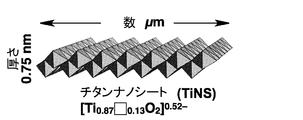
- FIG. 1 is a schematic view of a titanium oxide nanosheet.
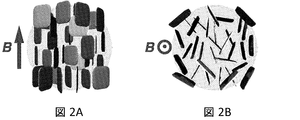
- 2A and 2B are schematic views of a titanium oxide nanosheet that is magnetically oriented.
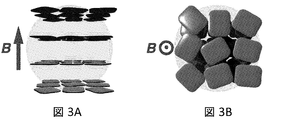
- 3A and 3B are schematic views of a niobium oxide nanosheet and a graphene oxide nanosheet that are magnetically oriented.
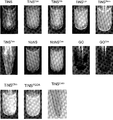
- FIG. 4 is a photograph of the nanosheet dispersion.
- FIG. 5 is a photograph of the nanosheet dispersion in the presence of sodium chloride.
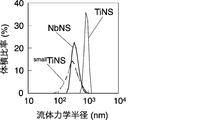
- FIG. 6 is a graph showing a size distribution of a nanosheet without a coating agent by a dynamic light scattering (DLS) method.
- 7A and 7B are graphs showing the size distribution of the nanosheets by dynamic light scattering (DLS) method.
- FIGS. 8A to 8C are transmission electron microscope (TEM) images of nanosheets without a coating agent.
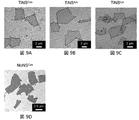
- 9A to 9D are transmission electron microscope (TEM) images of nanosheets coated with a coating agent.
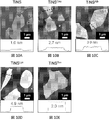
- 10A-10E are atomic force microscope (AFM) images of nanosheets.
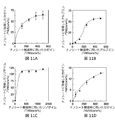
- FIGS. 11A to 11D are graphs showing the correlation between the amount of protein used at the time of producing the nanosheet and the amount of protein adsorbed on the nanosheet.
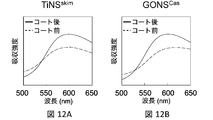
- 12A and 12B are absorption spectra of nanosheets before and after protein coating by CBB staining.
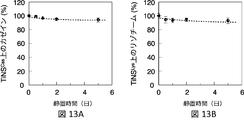
- 13A and 13B are graphs showing changes with time in the amount of protein adsorbed.
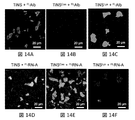
- 14A to 14F are confocal laser scanning microscope images of a fluorescently labeled model compound and a nanosheet mixed solution.
- FIG. 15A to FIG. 15D are schematic diagrams of nanosheet X-ray small angle scattering (SAX) analysis and nanosheet X-ray small angle scattering (SAX) analysis images.
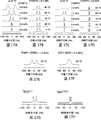
- 16A-16F are split peaks of D 2 O quadrupole interaction in nanosheet dispersions without coating agent.
- FIGS. 17A-17H are split peaks of D 2 O quadrupole interactions in nanosheet dispersions coated with a coating agent.
- Figure 18A ⁇ FIG. 18C is a 13 C-NMR measurement results of the 13 C labeled glucose.
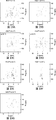
- 19A to 19G are IPAP-HSQC spectra of TiNS Cas and NbNS Cas .
- FIGS. 20A to 20F are diagrams summarizing RDC results calculated from IPAP-HSQC spectrum analysis of TiNS Cas and NbNS Cas .
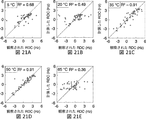
- FIGS. 21A to 21E are graphs showing the correlation between RDC calculated from IPAP-HSQC spectrum analysis of TiNS Cas and RDC calculated from the reported structure.
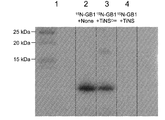
- FIG. 22 is a diagram showing the results of SDS-PAGE of the supernatant after centrifugation of TiNS Cas and TiNS.
- Nanosheet refers to a sheet having a nanoscale thickness.
- the thickness of the nanosheet can be reduced to the thickness of one atom, but it is generally difficult to produce nanosheets of 0.5 nm or less.
- the thickness of the nanosheet of the present invention is preferably 0.5 to 3.0 nm, more preferably 1.0 to 2.5 nm, excluding the coating agent described later.
- the thickness of the nanosheet including the coating agent is preferably 10 nm or less.
- the thickness of the nanosheet refers to a value calculated from a cross-sectional profile at an arbitrary position observed by an atomic force microscope (AFM).
- AFM atomic force microscope
- the size of the nanosheet of the present invention is preferably 100 nm or more from the viewpoint of magnetic field orientation.
- the size of the nanosheet is preferably large as long as it is dispersed in the solution, but the upper limit is actually about 100 ⁇ m.
- the size of the nanosheet is intended to be the size in the spreading direction of the nanosheet, and the particle size is 50% of the cumulative frequency in the volume-based frequency distribution measured by the dynamic light scattering method. The calculated value. Therefore, a typical nanosheet has a size of several ⁇ m and a thickness of the order of several nm, and in this case, the aspect ratio of the size to the thickness is about 1:10 3 .
- a nanosheet having an anisotropic property with respect to an external magnetic field is used.
- the degree to which the nanosheet feels the magnetic field varies depending on the direction in which the magnetic field is applied.
- the nanosheets are oriented in the direction.
- Such a nanosheet can be manufactured using a known method, and a nanosheet having a large surface area can be obtained by making a layered precursor into a single layer. By obtaining a large surface area, a larger magnetic field orientation can be obtained.
- the nanosheet of the present invention can orient small molecules such as saccharides such as water and glucose in a state of only a nanosheet without a coating.
- a coating agent such as protein, which will be described later
- a protein having a large molecular weight can be magnetically oriented in the solution. The magnetic orientation of the nanosheet occurs when the total magnetization anisotropy of the atoms constituting the nanosheet exceeds the free motion in the solution.
- nanosheets are made up of atoms with magnetization anisotropy. Regardless, all the nanosheets are oriented. For this reason, as a nanosheet of this invention, if the nanosheet which has magnetic field orientation, the kind and composition will not ask
- the nanosheet of the present invention is particularly preferably a nanosheet of titanium oxide, niobium oxide and graphene oxide.
- Titanium oxide nanosheets Titanium oxide nanosheets have a two-dimensional nanostructure, and a single crystal of a layered titanate compound is chemically treated under mild conditions to peel it down to one layer, which is the basic minimum unit of the crystal structure. Can be obtained. Titanium oxide nanosheets have a shape with a very large axial ratio. For example, titanium oxide having a crystal structure of Ti 0.87 ⁇ 0.13 O 2 ( ⁇ : vacancy) has a thickness of about 0.75 nm and a width of several ⁇ m. (See FIG. 1).
- the orientation axis by the magnetic field is in the thickness direction of the nanosheet, and since it has a high density negative charge and a large surface area, a strong electrostatic repulsive force acts between the sheets. For this reason, it has excellent dispersibility due to the strong electrostatic repulsion between the sheets, and the nanosheets are arranged in layers in an external magnetic field.
- 2A to 2B are schematic views of a titanium oxide nanosheet that is magnetically oriented.
- 2A shows a side view and FIG. 2B shows a top view.
- Symbol B represents a magnetic field
- an arrow and a solid black circle mark beside the symbol B indicate the direction of the magnetic field.
- the titanium oxide nanosheets are oriented so that the direction of the external magnetic field matches the normal direction of the sheet. Further, since the electrostatic repulsive force works greatly, all nanosheet surfaces have the property of being oriented in the same direction and facing each other. For this reason, it has strong orientation power.
- FIGS. 3A-3B are schematic views of a niobium oxide sheet that is magnetically oriented.
- 3A shows a side view and FIG. 3B shows a top view.
- Symbol B represents a magnetic field, and an arrow and a solid black circle beside the symbol B indicate the direction of the magnetic field. Since the niobium oxide nanosheet is oriented so that the direction of the external magnetic field coincides with the tangential direction of the sheet, it is rotatable about the nanosheet orientation axis that is the tangential direction of the sheet.
- Graphene oxide nanosheets As graphene oxide nanosheets are oriented so that the direction of the external magnetic field matches the tangential direction of the sheet, as with niobium oxide nanosheets, they are rotatable around the nanosheet's orientation axis, which is the tangential direction of the sheet. Yes.
- Nanosheet Coating Agent By coating the nanosheet of the present invention with a coating agent, not only a small molecule such as glucose but also a protein having a larger molecular weight can be subjected to NMR measurement by orienting the magnetic field. And, by selecting the coating agent that coats the nanosheet surface according to the molecule to be measured by NMR, the interaction between the nanosheet and the molecule to be measured is optimally adjusted, and thus nonspecific adsorption of protein (measuring molecule), etc. Can be suppressed. Furthermore, the dispersibility of the nanosheet can be maintained by the coating with the coating agent without being greatly influenced by the pH and the presence of salt.
- the coating agent of the present invention is a water-soluble compound that can be physically adsorbed to the nanosheet from multiple points.
- the coating agent is adsorbed to the nanosheet through hydrogen bonding, dipole interaction, and the like.
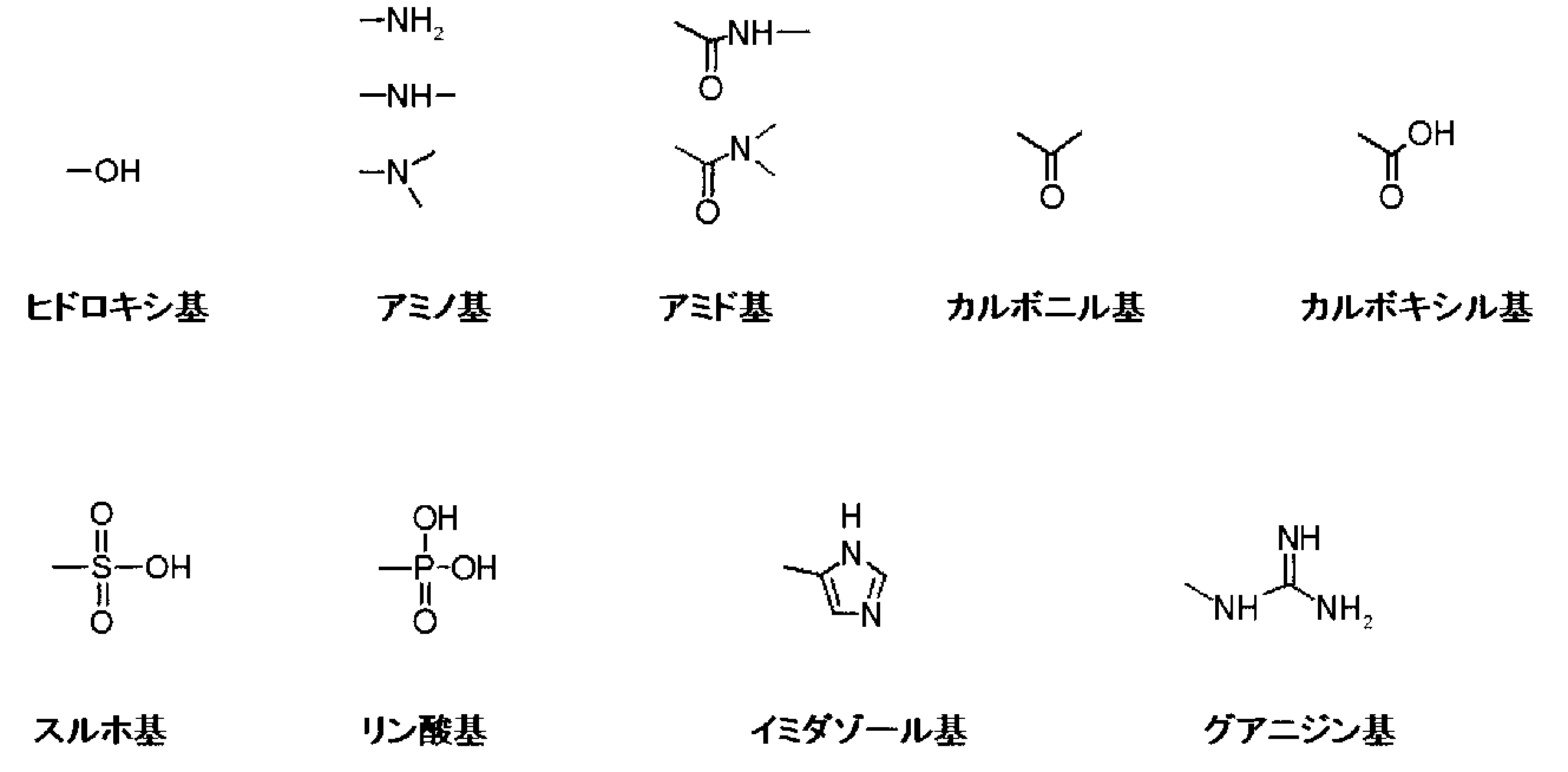
- the coating agent of the present invention is at least one selected from a hydroxy group, an amino group, an amide group, a carbonyl group, a carboxyl group, a sulfo group, a phosphoric acid group, an imidazole group, and a guanidine group represented by the following structure. It is a compound having 35 or more functional groups having polar species in one molecule.
- the number of at least one functional group selected from hydroxy group, amino group, amide group, carbonyl group, carboxyl group, sulfo group, phosphoric acid group, imidazole group and guanidine group in one molecule is 50 or more. And more preferably 100 or more.
- the upper limit of the number of functional groups is not particularly limited, but is usually about 100 to 1000 in the protein described later.
- the number of the functional groups is counted as one functional group.
- the coating agent has an amide group in the molecule, the amide group is not divided into a carbonyl group and an amino group and counted as two functional groups, but counted as one functional group as one amide group.
- the molecular weight of the nanosheet coating agent of the present invention needs to be 1,500 or more and 1,700 or more in order to perform physical adsorption and interaction with the nanosheet from multiple points. It is preferable.
- the molecular weight of the coating agent is appropriately determined according to the type of the coating agent. For example, when the coating agent is a single compound such as tannic acid described below, the molecular weight is a chemical formula weight.
- the coating agent is a synthetic polymer compound typified by polydiallyldimethylamine chloride described later, the molecular weight of the compound is a volume-based frequency calculated by the dynamic light scattering method (DLS) of the compound.
- DLS dynamic light scattering method
- the coating agent is a protein typified by casein, which will be described later, the molecular weight of the protein is calculated from the molecular structure of a known amino acid sequence.
- the upper limit of the molecular weight of the coating agent is not particularly limited, but is usually about 10,000 to 100,000 for proteins described later.
- Examples of the coating agent having the above functional group number and molecular weight include a polymer compound in which a plurality of the following structural units are bonded, and this polymer compound may be a natural polymer compound or a synthetic polymer compound.
- constituent unit of the coating agent examples include arginine, histidine, alanine, glycine, serine, aspartic acid, lysine, glutamic acid, alanine, glutamine, methionine, phenylalanine, proline, isoleucine, leucine, cysteine, valine, tyrosine, tryptophan, threonine. And amino acids such as asparagine.
- the coating agent may be a polyamino acid having one of these amino acids as a structural unit, or a polyamino acid having two or more structural units as a structural unit.
- One type of amino acid as a structural unit and a polyamino acid polyarginine, polyhistidine, polyalanine, polyglycine, polyserine, polyaspartic acid, polylysine, polyglutamic acid, polyalanine, polyglutamine, polymethionine, polyphenylalanine, polyproline, Examples thereof include polyisoleucine, polyleucine, polycysteine, polyvaline, polytyrosine, polytryptophan, polythreonine, polyasparagine and the like.
- Polyamino acids having two or more amino acids as structural units include casein, lysozyme, albumin, pepsin, ribonuclease, serum protein, protamine, concanavalin A, fibroblast growth factor (FGF), tumor necrosis factor (TNF), Transforming growth factor (TGF), nerve growth factor (NGF), epidermal growth factor (EGF), insulin-like growth factor (IGF), brain-derived neurotrophic factor (BDNF), vascular endothelial growth factor (VEGF), granulocytes Colony stimulating factor (G-CSF), granulocyte macrophage colony stimulating factor (GM-CSF), platelet derived growth factor (PDGF), erythropoietin (EPO), thrombopoietin (TPO), hepatocyte growth factor (HGF), bone morphogenetic protein (BMP), immunoglobulin, gluco Soxidase, ovalbumin, lectin, ferritin, hemoglobin, myoglobin
- these may be a homopolymer or a copolymer comprising two or more of these, and in the case of a copolymer, the sequence of each monomer may be random, block, or graft. Good. Further, when these polymers are ionic electrolytes, their salts are also included as coating agents.
- sugar chains such as agarose, chitin, chitosan, alginic acid, hyaluronic acid, curdlan, pullulan, cellulose, gellan gum, dextran, cyclodextran, albinogalactan, starch, chondroitin sulfate, heparan sulfate, heparin, pectin, etc. Can be mentioned.
- sugar chains are ionic electrolytes, salts thereof are also included as coating agents.
- a coating agent in addition to the above-described polymer compound in which a plurality of structural units are bonded, a compound having many phenolic hydroxyl groups in one molecule such as tannic acid can be used as long as the above functional group number and molecular weight are satisfied. It is.
- the nanosheet coating agent of the present invention may be a mixture containing at least one of the above compounds.
- the mixture contains 2% by weight or more and less than 99% by weight of the compound in the mixture, preferably 20 to 80% by weight. Examples of such a mixture include skim milk and agar.
- the type of coating agent is appropriately selected according to the NMR measurement target molecule.
- the nanosheet is preferably coated with an anionic coating agent such as casein.
- the nanosheet is preferably coated with a cationic coating agent such as lysozyme.
- a coating agent for example, when a nanosheet coated with a coating agent and a fluorescently labeled molecule to be measured are mixed and observed with a confocal laser microscope, strong fluorescence is observed, it is not preferable as a coating agent. This is because the interaction between the nanosheet coated with the coating agent and the molecule to be measured is strong, which hinders the orientation.
- the orientation of the nanosheet coated with the coating agent is favorably aligned with the molecule to be measured without being hindered, which is preferable as the coating agent.
- the nanosheet can be coated, for example, as follows. 1. An excess amount of the coating agent with respect to the nanosheet and the nanosheet are mixed in a suitable solvent. The solvent used at this time is appropriately selected depending on the combination of the coating agent and the nanosheet. That is, the solvent is appropriately selected from solvents that can be dissolved or dispersed and that do not react with both. For example, water, various buffer solutions, tetramethylammonium (TMA), tetrabutylammonium (TBA), etc. can be used. An excessive amount of coating agent is usually sufficient if the coating agent is 5 times the weight or more of the nanosheet.
- TMA tetramethylammonium
- TSA tetrabutylammonium
- the prepared mixed solution of coating agent and nanosheet is allowed to stand for a certain period of time.
- the standing time at this time is appropriately determined depending on the combination of the coating agent and the nanosheet, that is, the strength of the interaction between the two, and is usually about several minutes to 60 minutes.
- the stationary mixed solution is centrifuged. If necessary, the precipitate obtained after centrifugation may be redispersed in an appropriate solvent, and washing by centrifugation and redispersion may be repeated. Centrifugation conditions at this time depend on the type of coating agent and nanosheet, but are usually 15,000 rpm and 4 ° C. for 15 minutes.
- Casein Commercial product (manufactured by Wako) Albumin: Commercial product (manufactured by Wako) Lysozyme: Commercial product (Wako) Skimmed milk: commercial product (made by Wako, containing 27% by weight of casein)
- Tannic acid Commercial product (Aldrich)
- Polydiallyldimethylamine chloride commercial product (Aldrich, average molecular weight 36,000, polar functional group 222/1 molecule)
- Chondroitin sulfate Commercial product (Wako, average molecular weight 144,000, polar functional group number 1787/1 molecule)
- PEG-modified catechol synthesized by the following method.
- Casein was treated with sodium hydroxide overnight with sodium hydroxide and then precipitated by centrifugation after referring to past reports (Tomishige M, Vale RD. (1998) J Cell Biol 151: 1081-92). What removed the thing was used.
- As the coating agent other than casein a commercially available product was used as it was.
- the molecular weight of polydiallyldimethylamine chloride was 4.17 nm when the average particle diameter was determined by dynamic light scattering (DLS), and was determined by conversion to the molecular weight of PEG having the same particle radius.
- the molecular weight of chondroitin sulfate was found to be 6.61 nm when the average particle size determined by the dynamic light scattering method (DLS) was determined, and was determined by conversion to the molecular weight of PEG having the same particle radius.
- Nanosheet size measurement device by dynamic light scattering DLS: Zetasizer Nano ZSP (trade name, manufactured by Malvern) Measurement conditions: Room temperature Sample: A nanosheet dispersion liquid having a titanium oxide nanosheet weight of 0.008% by weight was used for measurement.
- TEM transmission electron microscope
- Nanosheet observation device by atomic force microscope (AFM): CypherS (trade name, manufactured by Asylum Research) Measurement conditions: room temperature
- Zeta potential measuring device Zetasizer Nano ZSP (trade name, manufactured by Malvern) Measurement conditions: Room temperature Sample: A nanosheet dispersion liquid having a titanium oxide nanosheet weight of 0.008% by weight was used for measurement.
- SAX X-ray small angle scattering
- Nuclear magnetic resonance (NMR) measuring device JNM-ECA-500 (trade name, manufactured by JEOL) Measurement conditions: 0 ° C. to 90 ° C., measurement of quadrupole interaction of heavy water with nanosheets Sample: used for measurement of nanosheet dispersion with titanium oxide nanosheet weight of 0.1 to 3.0% by weight.
- ACANCE-600 (trade name, manufactured by Bruker) Measurement conditions: 65 ° C. to 80 ° C., HSQC analysis of protein 1 H- 15 N sample: Titanium oxide nanosheet Weight of nanosheet with 1.5% by weight and 15N-labeled GB1 protein (4 mg / mL) dispersion Used for measurement.
- TiNS titanium oxide nanosheet
- TMA tetramethylammonium
- Example 2 Manufacture of small TiNS
- the TiNS manufactured in Example 1 was subjected to ultrasonic treatment with an ultrasonic generator (trade name XL-2000 MicrosoftTM, manufactured by Qsonica) for 3 minutes, and a titanium oxide nanosheet ("small " (Designated “TiNS”).
- an ultrasonic generator trade name XL-2000 MicrosoftTM, manufactured by Qsonica
- TiNS titanium oxide nanosheet
- small TiNS dispersed in a tetramethylammonium (TMA) solution (1 mM) was used for various measurements.
- TMA tetramethylammonium
- NbNS niobium oxide nanosheet
- composition Ca 2 Nb 3 O 10 composition Ca 2 Nb 3 O 10 , expressed as “NbNS”
- Example 1 Production of TiNS Cas 500 ⁇ L of Tris-HCl buffer (1 mM, pH 8.0) containing 2.0% by weight of casein and 500 ⁇ L of an aqueous solution containing 0.4% by weight of TiNS of Reference Example 1 A mixed solution was prepared. The mixture was allowed to stand for 60 minutes, and then the mixture was sonicated for 10 seconds. In order to remove unadsorbed casein, centrifugation (15,000 rpm) was performed at 4 ° C. for 15 minutes using a centrifuge (trade name CT15RE, manufactured by HITACHI). The resulting precipitate was redispersed in 1 mL Tris-HCl buffer (1 mM, pH 7.7).
- TiNS Cas casein-coated titanium nanosheet
- Example 2 Production of TiNS Alb An albumin-coated titanium nanosheet (TiNS Alb ) dispersion was prepared in the same manner as in Example 1 except that 2.0% by weight of albumin was used instead of 2.0% by weight of casein. Obtained.
- Example 3 Production of TiNS Lys 500 ⁇ L of tetramethylammonium (TMA) solution (2 mM) containing 2.0% by weight of lysozyme and 500 ⁇ L of an aqueous solution containing 0.1% by weight of TiNS of Reference Example 1 A mixed solution was prepared. The mixture was allowed to stand for 60 minutes, and then unadsorbed lysozyme was removed by the same centrifugal operation as in Example 1. The precipitate was dispersed in 500 ⁇ L of Tris-HCl buffer (1 mM, pH 2.3) to obtain a lysozyme-coated titanium nanosheet (TiNS Lys ) dispersion.
- TMA tetramethylammonium
- Example 4 Production of TiNS Skim A skimmed milk coated titanium nanosheet (TiNS Skim ) dispersion was prepared in the same manner as in Example 1 except that 2.0% by weight of skim milk was used instead of 2.0% by weight of casein. Obtained.
- Example 5 Production of TiNS Tan A mixed solution of 1 mL of an aqueous solution containing 0.85% by weight of tannic acid and 4 mL of an aqueous solution containing 0.5% by weight of TiNS of Reference Example 1 was prepared. The mixed liquid was allowed to stand for 5 minutes, and then the same washing operation as in Example 1 was performed 10 times using pure water as a redispersed aqueous solution to obtain a tannic acid-coated titanium nanosheet (TiNS Tan ) dispersion.
- TiNS Tan tannic acid-coated titanium nanosheet
- Example 6 Production of TiNS PDDA A mixture of 1 mL of an aqueous solution containing 0.1% by weight of polydiallyldimethylamine chloride (PDDA) and 1 mL of an aqueous solution containing 0.02% by weight of TiNS of Reference Example 1 was made. After the mixture was allowed to stand for 60 minutes, unadsorbed PDDA was removed by the same centrifugation operation as in Example 3, whereby the precipitate was dispersed in 500 ⁇ L of Tris-HCl buffer (1 mM, pH 2.3). A coated titanium nanosheet (TiNS PDDA ) dispersion was obtained.
- PDDA polydiallyldimethylamine chloride
- Example 7 Production of TiNS Cho A mixed solution of 1 mL of an aqueous solution containing 0.2 wt% chondroitin sulfate (Cho) and 1 mL of an aqueous solution containing 0.01 wt% of TiNS of Reference Example 1 was prepared. . The mixture was allowed to stand for 60 minutes, and then the same washing operation as in Example 1 was performed three times using pure water as a redispersion aqueous solution to obtain a chondroitin sulfate-coated titanium nanosheet (TiNS Cho ) dispersion.
- Cho a mixed solution of 1 mL of an aqueous solution containing 0.2 wt% chondroitin sulfate (Cho) and 1 mL of an aqueous solution containing 0.01 wt% of TiNS of Reference Example 1 was prepared. . The mixture was allowed to stand for 60 minutes, and then the same washing operation as in Example 1 was performed three times using pure water as a redispersion aque
- Example 8 Production of NbNS Cas A casein-coated niobium nanosheet (NbNS Cas ) dispersion was obtained in the same manner as in Example 1 except that NbNS of Reference Example 3 was used instead of TiNS of Reference Example 1.
- Example 9 Manufacture of GONS Cas Casein-coated graphene oxide nanosheets in the same manner as in Example 1 except that GONS (trade name RapeGO (TQ11), manufactured by NiSiNa material) was used instead of TiNS in Reference Example 1. A (GONS Cas ) dispersion was obtained.
- GONS trade name RapeGO (TQ11), manufactured by NiSiNa material
- Comparative Example 1 Production of TiNS Cate A mixed solution of 1 mL of an aqueous solution containing 0.2% by weight of PEG-modified catechol and 1 mL of an aqueous solution containing 0.8% by weight of TiNS of Reference Example 1 was prepared. After the mixture was allowed to stand for 60 minutes, the same washing operation as in Example 1 was performed 10 times to obtain a PEG-modified catechol-coated titanium nanosheet (TiNS Cate ) dispersion.
- TiNS Cate PEG-modified catechol-coated titanium nanosheet
- nanosheet concentration 0.8 wt%) and 500 ⁇ L of sodium chloride aqueous solution (20 mM) were mixed, and the influence of the salt concentration in the nanosheet dispersion was examined.
- the photograph of the nanosheet dispersion liquid after sodium chloride aqueous solution addition is shown in FIG.
- nanosheet precipitation was confirmed.
- the nanosheet coated with the coating agent it was confirmed that the dispersibility of the nanosheet could be maintained even in the presence of salt.
- TiNS Cate of Comparative Example 1 was precipitated in the presence of salt, the nanosheet was used in the present invention. It was confirmed that the multipoint interaction between and the coating agent is important. Since the nanosheet coated with the coating agent of the present invention is stably dispersed even in the presence of salt, the nanosheet is expected to be used as an alignment agent for protein solution NMR measurement.
- FIG. 6 shows a size distribution by DLS of a nanosheet without a coating agent.
- the sizes calculated from DLS were 825 nm for TiNS, 295 nm for small TiNS, and 325 nm for NbNS.
- FIGS. 7A to 7B the size distribution before and after coating with the coating agent is shown in FIGS. 7A to 7B.
- the size of the nanosheet coated with the coating agent for both TiNS and NbNS slightly increased, suggesting that the nanosheet was coated with the coating agent.
- the nanosheet coated with the coating agent was dispersed in the solution in the same manner as the nanosheet without the coating agent.
- FIGS. 8A to 8C show TEM images of nanosheets without a coating agent
- FIGS. 9A to 9D show TEM images of nanosheets coated with a coating agent. .
- the dotted line in the TEM image is drawn to emphasize the outline of the nanosheet. All of the nanosheets were dispersed without agglomeration, and the size was confirmed to support the measured value of DLS.
- FIGS. 10A to 10E (4) Observation with Atomic Force Microscope (AFM) and Calculation of Average Nanosheet Thickness AFM images of TiNS are shown in FIGS. 10A to 10E.
- the average thickness of the nanosheet was calculated from the cross-sectional profile along the dotted line of the AFM image.
- the thickness increased by about 1.0 to 5.0 nm compared to the nanosheet without the coating agent, strongly suggesting that the coating agent was adsorbed on the TiNS surface. .
- the zeta potential of TiNS Cas was ⁇ 43.6 mV, suggesting that casein, an anionic protein, was adsorbed on the nanosheet surface.
- the zeta potential of TiNS Lys was +50.1 mV, suggesting that lysozyme, a cationic protein, was adsorbed on the nanosheet surface.
- the surface of TiNS PDDA is adsorbed on the nanosheet surface with polydiallyldimethylamine chloride, a cationic polymer, and the surface of TiNS Cho with anionic chondroitin sulfate. was suggested.
- the coating agent was adsorbed on the nanosheet surface. Furthermore, the adsorption amount of the protein coating agent with respect to the nanosheet was quantitatively evaluated using Coomassie Brilliant Blue (CBB).
- CBB Coomassie Brilliant Blue
- FIGS. 12A to 12B The results are shown in FIGS. 12A to 12B.
- an absorption peak around 585 nm derived from the adsorption of CBB to the protein was increased, and it was confirmed that the protein was adsorbed to TiNS and GONS.
- TiNS Cas (0.7 wt%) was dispersed in Tris-HCl buffer (1 mM, pH 7.7), and the dispersion was allowed to stand at room temperature. Centrifugation (15,000 rpm) is performed on each dispersion after standing for 0.5, 1, 2, 5 days from the manufacture of the nanosheet using a centrifuge (trade name CT15RE, manufactured by HITACHI). C. for 15 minutes. The protein contained in the supernatant was quantified by CBB staining.
- the amount of protein deviated from the nanosheet after standing for 0.5, 1, 2, 5 days is defined as 0% of the amount of protein deviated from the nanosheet calculated from the amount of protein contained in the supernatant immediately after the nanosheet production.
- the amount of protein adsorbed on the nanosheet was calculated by subtracting the ratio from 100%.
- the ratio of the protein adsorbed on the nanosheets was calculated for TiNS Lys (0.9 wt%) in Tris-HCl buffer (1 mM, pH 2.3). The results are shown in FIGS. 13A to 13B. It was confirmed that Cas and Lys hardly desorbed from TiNS even after 5 days.
- a fluorescently labeled protein as a model compound, after mixing with a nanosheet dispersion and allowing to stand, the nanosheet dispersion is observed with a confocal laser microscope (CLSM) to confirm the interaction between the nanosheet and the model compound.
- CLSM confocal laser microscope
- albumin ( FL Alb) fluorescently labeled as an anionic protein and ribonuclease A ( Fl RN-A) fluorescently labeled as a cationic protein were used.
- FL Alb 0.5 mg / mL
- TiNS nanosheet concentration 0.4 wt% in Tris-HCl buffer (1 mM, pH 7.7
- FIG. 14A shows the results when TiNS Cas in Tris-HCl buffer (1 mM, pH 7.7) is used as the nanosheet, and results when TiNS Lys in Tris-HCl buffer (1 mM, pH 2.3) is used. Is shown in FIG. 14C.
- FIGS. 14D to 14F show the results when Fl RN-A (0.5 mg / mL) was mixed with TiNS, TiNS Cas or TiNS Lys , respectively.
- the anionic FL Alb is greatly suppressed in the adsorption to the negatively charged TiNS Cas
- the cationic Fl RN-A is a positively charged TiNS Lys.
- FIG. 15A represents a schematic diagram of the main measurement, and symbol B in the figure represents a magnetic field vector. From the SAX analysis results shown in FIGS. 15B to 15D, it was confirmed that the nanosheet coated with the protein was oriented perpendicular to the magnetic field in the same manner as TiNS without the coating agent.
- FIGS. 18A to 18C show the measurement result of glucose labeled with 13 C without adding the nanosheet
- FIG. 18B shows the measurement result with addition of TiNS
- FIG. 18C shows the measurement result with addition of NbNS. From the coupling shift of 13 C, it was confirmed that when either TiNS or NbNS was added, it was shifted as compared with the case where no nanosheet was added, and ⁇ -glucose molecules were oriented.
- N-GB1 15 N-labeled protein G .beta.1 domain
- TiNS Cas was measured at various measurement temperatures of 5 to 80 ° C.
- NbNS Cas was measured at 35 ° C.
- FIGS. 20A to 20F show residual dipole bonds (RDC) of 1 H- 15 N bonds derived from amino acid skeletons calculated from IPAP-HSQC spectrum analysis. It was confirmed that the IPAP-HSQC spectrum and RDC were observed in the presence of the nanosheet.
- RDC residual dipole bonds
- FIGS. 21A to 21E are graphs summarizing the correlation between the measured RDC of TiNS Cas and the RDC data calculated from the reported structure for each measured temperature (5 to 65 ° C.).
- a band derived from 15 N-GB1 was detected from the supernatant of TiNS Cas , and it was confirmed that 15 N-GB1 could be recovered.
- the coating agent nanosheet of the present invention it was found that the protein to be measured by NMR that could not be recovered by a conventional alignment agent can be recovered by a simple centrifugation operation, and the nanosheet itself that is an alignment agent can be reused.
Landscapes
- Chemical & Material Sciences (AREA)
- Physics & Mathematics (AREA)
- Organic Chemistry (AREA)
- High Energy & Nuclear Physics (AREA)
- Life Sciences & Earth Sciences (AREA)
- Inorganic Chemistry (AREA)
- Health & Medical Sciences (AREA)
- General Physics & Mathematics (AREA)
- Engineering & Computer Science (AREA)
- Pathology (AREA)
- Immunology (AREA)
- General Health & Medical Sciences (AREA)
- Biochemistry (AREA)
- Analytical Chemistry (AREA)
- Nanotechnology (AREA)
- Materials Engineering (AREA)
- Spectroscopy & Molecular Physics (AREA)
- Environmental & Geological Engineering (AREA)
- Geology (AREA)
- General Life Sciences & Earth Sciences (AREA)
- Molecular Biology (AREA)
- Crystallography & Structural Chemistry (AREA)
- Condensed Matter Physics & Semiconductors (AREA)
- Inorganic Compounds Of Heavy Metals (AREA)
- Ceramic Engineering (AREA)
- Carbon And Carbon Compounds (AREA)
Abstract
調製が容易で取扱い性、経済性及び汎用性に優れ、安定的な磁場配向が可能なナノシートを含むNMR測定用配向剤を提供する。 ナノシートが、ヒドロキシ基、アミノ基、アミド基、カルボニル基、カルボキシル基、スルホ基、リン酸基、イミダゾール基及びグアニジン基から選ばれる少なくとも1種の官能基を1分子中に35個以上有し、かつ分子量1,500以上の化合物で被覆されているNMR測定用配向剤。
Description
本発明は磁場中にて自発配向するナノシートをタンパク質等の特定化合物で被覆したNMR測定用配向剤に関する。
タンパク質の構造解析の手法としては、X線結晶構造解析や核磁気共鳴(NMR)を利用した解析手法が確立されている。
X線結晶構造解析は、結晶化した測定対象にX線を照射し、そのときの回折現象を測定することで、タンパク質の立体構造を予測しようとするものである。この場合、測定対象の分子量に制限がないため、非常に大きな化合物を測定対象とすることができる。当然ながら、この手法は結晶化できないサンプルには適応できない。またX線結晶構造解析は、本来、静止した構造を原子レベルの精度で測定しようとするものなので、生体分子等の動的な解析には不向きである。
一方、核磁気共鳴(NMR)を利用した構造解析手法は結晶化のプロセスを必要とせず、核のまわりの局所構造や運動性に関する情報を非破壊的に取得することができる。特に、残余双極子結合(RDC)、核四極子相互作用、化学シフト等の異方性項を測定することで、近距離にある原子の相対距離、角度に関する情報のみならず、外部磁場を基準として、互いに離れた原子同士の角度、距離に関する情報を取得することができる。これにより、より精密なタンパク質の立体解析が可能となる。
通常、測定対象となる分子は溶媒中でランダムな熱運動をしている。残余双極子結合(RDC)等の異方性項を測定するためには、測定対象の分子を磁場配向させる必要があるが、静磁場に対し一定の方向に配向する性質を持つメディア(以下配向剤とよぶ)を併用することで、測定対象となる分子を配向させ、以ってNMRの精度を向上させることができる。
一般に利用可能な配向剤としては、脂質二重膜構造を有するミセルであって、円盤状の形状をしているバイセルと呼ばれる脂質会合体が知られている(特許文献1)。バイセルはアルキル鎖の長いリン脂質と短いリン脂質からなり、P=O結合の磁化率の異方性によって静磁場に対して配向する。配向したバイセルが測定対象となる分子と相互作用を繰り返すことにより、対象分子を磁場に対して配向させることができる。
また、pf1と呼ばれる繊維状ファージを用いた配向剤も一般に利用可能である(非特許文献1)。
Hansen MR, Mueller L, Pardi A.(1998) Nat Struct Biol Dec;5(12):1065-74
しかしながら、測定対象の分子を、バイセルを用いて配向させる場合には、バイセルの濃度を比較的高濃度に調整しなければならない。バイセルは単位重量あたりのコストが高いので、バイセルを用いた高濃度の配向剤は経済的に好ましくない。さらに、バイセルを磁場によって自発磁場配向させるためには、バイセルを含有する溶液温度を約30~50℃という限られた範囲に調整する必要がある。つまりバイセルを用いた配向剤は調製が難しいという問題がある。さらに、配向剤や測定対象の分子を使用後に回収できないという問題もある。
繊維状ファージ(pf1)を用いた配向剤は、低濃度で機能するものの、バイセルよりも高価格である。また、繊維状ファージを用いた配向剤は測定対象の分子に合わせた表面修飾ができないため、測定対象の分子が非常に限られ汎用性が低い。加えて、配向剤にファージを用いるため、使用に際して適切なバイオハザード対策が必要となる問題がある。
従って、本発明の目的は、上記従来技術の問題点を解消し、調製が容易で取扱い性、経済性及び汎用性に優れ、安定的な磁場配向が可能なNMR測定用配向剤を提供することにある。
本発明者らは、上記課題を解決するため鋭意研究した結果、下記のナノシートが上述した課題を解決できることを見出し、本発明を完成した。
即ち、本発明は、次の発明を提供するものである。
即ち、本発明は、次の発明を提供するものである。
<1>
ナノシートと、ヒドロキシ基、アミノ基、アミド基、カルボニル基、カルボキシル基、スルホ基、リン酸基、イミダゾール基及びグアニジン基から選ばれる少なくとも1種の官能基を1分子中に35個以上有し、かつ分子量1,500以上の化合物と、を含み、前記ナノシートが前記化合物で被覆されていることを特徴とするNMR測定用配向剤。
ナノシートと、ヒドロキシ基、アミノ基、アミド基、カルボニル基、カルボキシル基、スルホ基、リン酸基、イミダゾール基及びグアニジン基から選ばれる少なくとも1種の官能基を1分子中に35個以上有し、かつ分子量1,500以上の化合物と、を含み、前記ナノシートが前記化合物で被覆されていることを特徴とするNMR測定用配向剤。
<2>
前記ナノシートの厚みが0.5~3nm、前記ナノシートの大きさが100nm~100μmである<1>記載のNMR測定用配向剤。
前記ナノシートの厚みが0.5~3nm、前記ナノシートの大きさが100nm~100μmである<1>記載のNMR測定用配向剤。
<3>
前記ナノシートが酸化チタン、酸化ニオブ及び酸化グラフェンから選ばれる少なくとも1種のナノシートである<1>又は<2>に記載のNMR測定用配向剤。
前記ナノシートが酸化チタン、酸化ニオブ及び酸化グラフェンから選ばれる少なくとも1種のナノシートである<1>又は<2>に記載のNMR測定用配向剤。
<4>
前記化合物が、タンパク質、タンニン酸、ポリジアリルジメチルアミンクロライド及びコンドロイチン硫酸から選ばれる少なくとも1種である<1>~<3>のいずれか1に記載のNMR測定用配向剤。
前記化合物が、タンパク質、タンニン酸、ポリジアリルジメチルアミンクロライド及びコンドロイチン硫酸から選ばれる少なくとも1種である<1>~<3>のいずれか1に記載のNMR測定用配向剤。
<5>
前記タンパク質が、カゼイン、リゾチーム及びアルブミンから選ばれる少なくとも1種である<4>に記載のNMR測定用配向剤。
前記タンパク質が、カゼイン、リゾチーム及びアルブミンから選ばれる少なくとも1種である<4>に記載のNMR測定用配向剤。
<6>
タンパク質、タンニン酸、ポリジアリルジメチルアミンクロライド及びコンドロイチン硫酸から選ばれる少なくとも1種で被覆されている酸化チタンナノシート。
タンパク質、タンニン酸、ポリジアリルジメチルアミンクロライド及びコンドロイチン硫酸から選ばれる少なくとも1種で被覆されている酸化チタンナノシート。
<7>
カゼインで被覆されている酸化ニオブナノシート。
カゼインで被覆されている酸化ニオブナノシート。
<8>
カゼインで被覆されている酸化グラフェンナノシート。
カゼインで被覆されている酸化グラフェンナノシート。
ナノシート
本明細書において「ナノシート」とは、ナノスケールの厚みを持つシートを指す。ナノシートの厚みは、原理的には原子一つ分の厚みまで薄くすることができるが、一般的に0.5nm以下のナノシートは作製が難しい。本発明のナノシートの厚みは、後述するコーティング剤を含めないで0.5~3.0nmが好ましく、1.0~2.5nmがより好ましい。また、コーティング剤を含めたナノシートの厚みは10nm以下であることが好ましい。なお、本発明において、ナノシートの厚みは、原子間力顕微鏡(AFM)によって観察される任意の箇所の断面プロファイルから算出した値をいう。
本発明のナノシートの大きさは、磁場配向性の観点から100nm以上が好ましい。ナノシートの大きさは溶液に分散する限り大きいことが好ましいが、実際、上限値としては100μm程である。
なお、本発明において、ナノシートの大きさとは、ナノシートの広がり方向の大きさを意図するものであり、動的光散乱法によって測定した体積基準の頻度分布において累積頻度で50%となる粒径として算出された値をいう。
したがって、典型的なナノシートの大きさは数μm、厚みは数nmのオーダーであって、この場合、厚みに対する大きさのアスペクト比は約1:103である。
本明細書において「ナノシート」とは、ナノスケールの厚みを持つシートを指す。ナノシートの厚みは、原理的には原子一つ分の厚みまで薄くすることができるが、一般的に0.5nm以下のナノシートは作製が難しい。本発明のナノシートの厚みは、後述するコーティング剤を含めないで0.5~3.0nmが好ましく、1.0~2.5nmがより好ましい。また、コーティング剤を含めたナノシートの厚みは10nm以下であることが好ましい。なお、本発明において、ナノシートの厚みは、原子間力顕微鏡(AFM)によって観察される任意の箇所の断面プロファイルから算出した値をいう。
本発明のナノシートの大きさは、磁場配向性の観点から100nm以上が好ましい。ナノシートの大きさは溶液に分散する限り大きいことが好ましいが、実際、上限値としては100μm程である。
なお、本発明において、ナノシートの大きさとは、ナノシートの広がり方向の大きさを意図するものであり、動的光散乱法によって測定した体積基準の頻度分布において累積頻度で50%となる粒径として算出された値をいう。
したがって、典型的なナノシートの大きさは数μm、厚みは数nmのオーダーであって、この場合、厚みに対する大きさのアスペクト比は約1:103である。
本発明では、ナノシートとして、外部磁場に対する磁場感受率が異方的性質を示すものを用いる。この種のナノシートに外部から磁場を加えると、ナノシートが磁場を感じる度合(磁場感受率)が磁場の印加方向によって異なるため、エネルギー的に最も安定な方向、つまり磁場とナノシートの相互作用ポテンシャルが最小となる方向にナノシートが配向する。
このようなナノシートは公知の方法を用いて製造することが可能で、特に層状の前駆体を単層化することで表面積の大きなナノシートを得ることができる。大きな表面積が得られることにより、より大きな磁場配向性を得ることができる。本発明のナノシートは、被覆のないナノシートのみの状態で水、グルコース等の糖類などの小分子を配向させることが可能である。加えて、ナノシートを後述するタンパク質等のコーティング剤で被覆することで、分子量の大きなタンパク質を溶液中にて磁場配向させることも可能となる。
ナノシートの磁場配向は、ナノシートを構成する原子の磁化異方性の総和が溶液中の自由運動よりも上回ったときに起こる。異方性の大きさに差はあるものの、全てのナノシートは磁化異方性がある原子から構成されているため、ナノシートの大きさが十分に大きければ、理論上は構成する原子の種類や組成によらず、すべてナノシートは配向する。このため、本発明のナノシートとしては、磁場配向性を有するナノシートであればその種類や組成は問わないが、例えば、以下のものが挙げられる。
ナノシートの磁場配向は、ナノシートを構成する原子の磁化異方性の総和が溶液中の自由運動よりも上回ったときに起こる。異方性の大きさに差はあるものの、全てのナノシートは磁化異方性がある原子から構成されているため、ナノシートの大きさが十分に大きければ、理論上は構成する原子の種類や組成によらず、すべてナノシートは配向する。このため、本発明のナノシートとしては、磁場配向性を有するナノシートであればその種類や組成は問わないが、例えば、以下のものが挙げられる。
Ti0.91O2、Ti0.87O2、Ti3O7、Ti4O9、Ti5O11等の酸化チタンナノシート;Nb3O8、Nb6O17、Ca2Nb3O10等の酸化ニオブナノシート;酸化グラフェン;グラフェン;ボロンナイトライド(h-BN);グラフィティックカーボンナイトライド(g-C3N4);ポリ乳酸、ポリチオフェン、ポリスチレン等のナノシート;DNA(DNA折り紙);金属有機構造体(Molecular organic framework; MOF) ナノシート;共有結合性有機構造体(Covalent organic framework; COF) ナノシート;黒リンナノシート;ペプトイドのナノシート;ハイドロキシアパタイト(Ca5(PO4)3(OH))、NbS3、NbSe3、NbTe3、Ti、Ti-Ni、Zn-Ti、Zn-Al、Pd、Co9Se8、TiS3、TiSe3、TiTe3、TaS3、TaSe3、TaTe3、MnPS3、CdPS3、NiPS3、Mn0.5Fe0.5PS3、MoCl2、MoS2、RuCl2、CrCl2、BiI3、BiS3、PbCl4、V2O5、MoO3、TaO3、WO3、HNbWO6、HTaWO6、HNb3O8、MnO2、Nax(Mn4+,Mn3+)2O4、Sr2RuO4、KCa2Nb3O10、H2W2O7、LaNb2O7、La0.90Eu0.05Nb2O7、Eu0.56Ta2O7、Sr2RuO4、Sr3Ru2O7、SrTa2O7、Bi2SrTa2O9、Sr2Nb3O10、NaCaTa3O10、CaLaNb2TiO10、La2Ti2NbO10、Ba5Ta4O15、LaOCuCh (Ch: カルケノイドおよびその誘導体)、Sr2MO2Cu2-δS2 (M = Mn, Co, Ni)、Sr2MnO2Cu2m-0.5Sm+1 (m = 1-3)、Sr4Mn3O7.5、Cu2Ch2 (Ch=S, Se)、LaOFeAs、VOCl、CrOCl、FeOCl、NbO2F、WO2Cl2、FeMoO4Cl、GaX (X = S, Se, Te)、InX (X = S, Se, Te)、CaHPO4、Mn+
x/n. yH2O[Al4-xMgx](Si8)O20(OH)4 (M: カチオン) 、 [(Mg3)(Si2O5)2(OH)2]、[Mg6Si6Al2O20(OH)4] [Mn+
1/n] (Mg6) (M: カチオン) 、[(MgFe)3(Si3Al)O10(OH)2]K、[(Mg6)(Si6Al2)O20(OH)4]Ba、[Mg11/4(Si6Al2)O20F4][(M2+)3/2(M: カチオン) 、[(Al2)(Si2Al2)O10(OH)2]Ca、[(Al2)(Si3Al)O10(OH)2]K、[Al4Si4O10](OH)8、Al4Si4O10(OH)8.4H2O、(Mg2+
x, Mg3+
x(OH)2 (An-)x/n. yH2O) (A: アニオン)、Ti3C2等のナノシート
上記した中でも、本発明のナノシートとしては、酸化チタン、酸化ニオブ及び酸化グラフェンのナノシートが特に好ましい。
酸化チタンナノシート
酸化チタンナノシートは二次元的なナノ構造を有し、層状チタン酸化合物の単結晶を、温和な条件にて化学処理し、結晶構造の基本最小単位である層1枚にまで剥離することにより得ることができる。酸化チタンナノシートは非常に大きい軸比の形状を持っており、例えばTi0.87□0.13O2(□:空孔)の結晶構造を有する酸化チタンは、厚さ約0.75nm、横幅が数μmとなる(図1を参照)。この種のナノシートは磁場による配向軸がナノシートの厚み方向であり、また高密度の負電荷を帯びて表面積も大きいため、シート間には強い静電反発力が働いている。このため、シート間の強い静電反発力のために分散性に優れており、外部磁場中にてナノシートが層状に配列する。
酸化チタンナノシートは二次元的なナノ構造を有し、層状チタン酸化合物の単結晶を、温和な条件にて化学処理し、結晶構造の基本最小単位である層1枚にまで剥離することにより得ることができる。酸化チタンナノシートは非常に大きい軸比の形状を持っており、例えばTi0.87□0.13O2(□:空孔)の結晶構造を有する酸化チタンは、厚さ約0.75nm、横幅が数μmとなる(図1を参照)。この種のナノシートは磁場による配向軸がナノシートの厚み方向であり、また高密度の負電荷を帯びて表面積も大きいため、シート間には強い静電反発力が働いている。このため、シート間の強い静電反発力のために分散性に優れており、外部磁場中にてナノシートが層状に配列する。
図2A~図2Bは磁場配向している酸化チタンナノシートの概略図である。図2Aは側面図、図2Bは上面図を示す。記号Bは磁場を表し、記号B横の矢印及び中黒丸印は磁場の方向を示している。酸化チタンナノシートは外部磁場の方向がシートの法線方向に一致するように配向する。また、静電的な斥力が大きく働くため、全てのナノシートの面が同一方向を向き、互いに向かい合わせとなるように配向する性質を持つ。このため強力な配向力を有する。
酸化ニオブナノシート
図3A~図3Bは磁場配向している酸化ニオブシートの概略図である。図3Aは側面図、図3Bは上面図を示す。記号Bは磁場を表し、記号Bの脇にある矢印及び中黒丸印は磁場の方向を示している。酸化ニオブナノシートは外部磁場の方向がシートの接線方向に一致するように配向するため、シートの接線方向となるナノシートの配向軸を中心に回転自在となっている。
図3A~図3Bは磁場配向している酸化ニオブシートの概略図である。図3Aは側面図、図3Bは上面図を示す。記号Bは磁場を表し、記号Bの脇にある矢印及び中黒丸印は磁場の方向を示している。酸化ニオブナノシートは外部磁場の方向がシートの接線方向に一致するように配向するため、シートの接線方向となるナノシートの配向軸を中心に回転自在となっている。
酸化グラフェンナノシート
酸化グラフェンナノシートは、酸化ニオブナノシートと同様に外部磁場の方向がシートの接線方向に一致するように配向するため、シートの接線方向となるナノシートの配向軸を中心に回転自在となっている。
酸化グラフェンナノシートは、酸化ニオブナノシートと同様に外部磁場の方向がシートの接線方向に一致するように配向するため、シートの接線方向となるナノシートの配向軸を中心に回転自在となっている。
ナノシートコーティング剤
本発明のナノシートはコーティング剤で被覆することによって、グルコース等の小分子のみならず、より分子量の大きなタンパク質を磁場配向させてNMR測定することができる。そして、ナノシート表面を被覆するコーティング剤をNMR測定対象分子に応じて選択することにより、ナノシートと測定対象分子の相互作用を最適に調節し、以ってタンパク質(測定対象分子)の非特異吸着等を抑制することができる。さらに、コーティング剤による被覆によってナノシートの分散性をpH及び塩の存在に大きく左右されずに保持することができる。
本発明のナノシートはコーティング剤で被覆することによって、グルコース等の小分子のみならず、より分子量の大きなタンパク質を磁場配向させてNMR測定することができる。そして、ナノシート表面を被覆するコーティング剤をNMR測定対象分子に応じて選択することにより、ナノシートと測定対象分子の相互作用を最適に調節し、以ってタンパク質(測定対象分子)の非特異吸着等を抑制することができる。さらに、コーティング剤による被覆によってナノシートの分散性をpH及び塩の存在に大きく左右されずに保持することができる。
本発明のコーティング剤は、多点的にナノシートに物理吸着できる水溶性化合物である。上記コーティング剤は水素結合、双極子相互作用などを介してナノシートに吸着する。このため、本発明のコーティング剤は、以下の構造で表される、ヒドロキシ基、アミノ基、アミド基、カルボニル基、カルボキシル基、スルホ基、リン酸基、イミダゾール基及びグアニジン基から選ばれる少なくとも1種の極性を持つ官能基を1分子中に35個以上有する化合物である。
1分子中のヒドロキシ基、アミノ基、アミド基、カルボニル基、カルボキシル基、スルホ基、リン酸基、イミダゾール基及びグアニジン基から選ばれる少なくとも1種の官能基の数は、50個以上であることが好ましく、100個以上であることがより好ましい。該官能基の数の上限値は特に制限されないが、後述するタンパク質においては、通常100~1000個程である。
なお、本発明において、該官能基の数は、上述した官能基を1つの官能基として数えるものとする。例えば、コーティング剤がその分子中にアミド基を有する場合、該アミド基をカルボニル基とアミノ基とに分けて官能基数2と数えるのではなく、1つのアミド基として官能基数1と数える。
なお、本発明において、該官能基の数は、上述した官能基を1つの官能基として数えるものとする。例えば、コーティング剤がその分子中にアミド基を有する場合、該アミド基をカルボニル基とアミノ基とに分けて官能基数2と数えるのではなく、1つのアミド基として官能基数1と数える。
上記官能基数に加えて、ナノシートに物理吸着し相互作用が多点的に行われるためには、本発明のナノシートコーティング剤の分子量は1,500以上である必要があり、1,700以上であることが好ましい。本発明において、コーティング剤の分子量は、コーティング剤の種類に応じて適宜決定される。例えば、コーティング剤が後述するタンニン酸のような単一の化合物である場合、分子量は化学式量である。一方、コーティング剤が後述するポリジアリルジメチルアミンクロライドに代表される合成高分子化合物である場合、該化合物の分子量は、該化合物の動的光散乱法(DLS)によって算出された、体積基準の頻度分布において累積頻度で50%となる平均粒径から、同程度の粒径を有するポリエチレングリコール(PEG)の分子量への換算した平均分子量である。また、コーティング剤が後述するカゼインに代表されるタンパク質である場合、当該タンパク質の分子量は、既知のアミノ酸配列の分子構造から計算で求めたものである。
コーティング剤の分子量の上限値は特に制限されないが、後述するタンパク質においては、通常一万~十万程度である。
コーティング剤の分子量の上限値は特に制限されないが、後述するタンパク質においては、通常一万~十万程度である。
上記官能基数及び分子量を有するコーティング剤としては、以下の構成単位が複数結合した高分子化合物が挙げられ、この高分子化合物は天然高分子化合物であっても合成高分子化合物であってもよい。
コーティング剤の構成単位としては、例えば、アルギニン、ヒスチジン、アラニン、グリシン、セリン、アスパラギン酸、リシン、グルタミン酸、アラニン、グルタミン、メチオニン、フェニルアラニン、プロリン、イソロイシン、ロイシン、システイン、バリン、チロシン、トリプトファン、トレオニン、アスパラギン等のアミノ酸を挙げることができる。
コーティング剤としては、これらアミノ酸のうち1種類を構成単位とするポリアミノ酸であってもよく、2種以上を構成単位とするポリアミノ酸であってもよい。1種類のアミノ酸を構成単位とポリアミノ酸として、ポリアルギニン、ポリヒスチジン、ポリアラニン、ポリグリシン、ポリセリン、ポリアスパラギン酸、ポリリシン、ポリグルタミン酸、ポリアラニン、ポリグルタミン、ポリメチオニン、ポリフェニルアラニン、ポリプロリン、ポリイソロイシン、ポリロイシン、ポリシステイン、ポリバリン、ポリチロシン、ポリトリプトファン、ポリトレオニン、ポリアスパラギン等が挙げられる。
また、2種以上のアミノ酸を構成単位とするポリアミノ酸として、カゼイン、リゾチーム、アルブミン、ペプシン、リボヌクレアーゼ、血清タンパク質、プロタミン、コンカナバリンA、線維芽細胞増殖因子(FGF)、腫瘍壊死因子(TNF)、トランスフォーミング成長因子(TGF)、神経成長因子(NGF)、上皮成長因子(EGF)、インスリン様成長因子(IGF)、脳由来神経栄養因子(BDNF)、血管内皮細胞増殖因子(VEGF)、顆粒球コロニー刺激因子(G-CSF)、顆粒球マクロファージコロニー刺激因子(GM-CSF)、血小板由来成長因子(PDGF)、エリスロポエチン(EPO)、トロンボポエチン(TPO)、肝細胞増殖因子(HGF)、骨形成タンパク質(BMP)、免疫グロブリン、グルコースオキシダーゼ、オボアルブミン、レクチン、フェリチン、ヘモグロビン、ミオグロビン、トリプシン、チトクロムC、コラーゲン、ゼラチン、ストレプアビチン、アビチン、シャペロニン、インスリン、アミロイドβ、ペルオキシダーゼ、カタラーゼ、蛍光タンパク質(GFP、BFP、YFP、RFP)、フィブロネクチン、ラミニン、プロテオグリカン、テネイシン、エラスチン、フィブリリン、エンタクチン、アミラーゼ、セルラーゼ、アルカリホスファターゼ、エステラーゼ等の各種タンパク質が挙げられる。
また、コーティング剤として、ポリビニルアルコール、ポリカテコール、ポリアクリルアミド、ポリ(N-イソプロピルアクリルアミド)、ポリジメチルアクリルアミド、ポリアミドアミン、ポリビニルピロリドン、ポリアクリルアミド2-メチル1-プロパンスルホン酸、ポリウレタン、ポリウレア、ポリチオウレア、ポリエチレンイミン、ポリアクリル酸、ポリアリルアミン、ポリスチレンスルホン酸、ポリビニルスルホン酸、ポリジアリルジメチルアミンクロライド、ポリジメチルアミノエトキシメタクリレート、ポリトリメチルアミノエトキシメタクリレート塩酸塩、ポリアネトールスルホン酸等が挙げられる。
これらは単独重合体であっても、これら2種以上からなる共重合体であってもよく、共重合体である場合、各単量体の配列はランダム、ブロック、グラフトのいずれであってもよい。また、これらの重合体がイオン性電解質の場合は、その塩もコーティング剤として含まれる。
これらは単独重合体であっても、これら2種以上からなる共重合体であってもよく、共重合体である場合、各単量体の配列はランダム、ブロック、グラフトのいずれであってもよい。また、これらの重合体がイオン性電解質の場合は、その塩もコーティング剤として含まれる。
さらに、コーティング剤として、アガロース、キチン、キトサン、アルギン酸、ヒアルロン酸、カードラン、プルラン、セルロース、ジェランガム、デキストラン、シクロデキストラン、アルビノガラクタン、デンプン、コンドロイチン硫酸、ヘパラン硫酸、ヘパリン、ペクチン等の糖鎖も挙げられる。これらの糖鎖がイオン性電解質の場合は、その塩もコーティング剤として含まれる。
また、コーティング剤として、上述した構成単位が複数結合した高分子化合物以外に、タンニン酸のような1分子中に多数のフェノール性水酸基を有する化合物も、上記官能基数及び分子量を満たす限りにおいて使用可能である。
さらに、本発明のナノシートコーティング剤としては、前記化合物のうち少なくとも1種を含む混合物であってもよい。該混合物は、前記化合物を混合物中2重量%以上99重量%未満含むものであり、20~80重量%含むものが好ましい。このような混合物としては、スキムミルク、寒天等を挙げることができる。
コーティング剤の種類は、NMR測定対象分子に応じて適宜選択される。例えば、測定対象分子がアニオン性である場合には、ナノシートはカゼイン等のアニオン性のコーティング剤で被覆されることが好ましい。また、測定対象分子がカチオン性の分子である場合には、ナノシートはリゾチーム等のカチオン性のコーティング剤で被覆されることが好ましい。
コーティング剤の選択に際しては、例えば、コーティング剤で被覆したナノシートと蛍光ラベルした測定対象分子とを混合し、共焦点レーザー顕微鏡により観察したとき強い蛍光が観察される場合は、コーティング剤として好ましくない。これは、コーティング剤で被覆したナノシート及び測定対象分子との相互作用が強く、その配向性の妨げになるためである。一方、同様に観察したとき弱い蛍光が観察される場合は、コーティング剤で被覆したナノシートの配向性が妨げられることなく、測定対象分子と共に良好に配向するため、コーティング剤として好ましい。
コーティング剤の選択に際しては、例えば、コーティング剤で被覆したナノシートと蛍光ラベルした測定対象分子とを混合し、共焦点レーザー顕微鏡により観察したとき強い蛍光が観察される場合は、コーティング剤として好ましくない。これは、コーティング剤で被覆したナノシート及び測定対象分子との相互作用が強く、その配向性の妨げになるためである。一方、同様に観察したとき弱い蛍光が観察される場合は、コーティング剤で被覆したナノシートの配向性が妨げられることなく、測定対象分子と共に良好に配向するため、コーティング剤として好ましい。
コーティング剤によって被覆されたナノシートの調製
ナノシートの被覆は例えば以下の通り行うことができる。
1.ナノシートに対して過剰量のコーティング剤と、ナノシートとを、適当な溶媒中で混合する。
このとき用いる溶媒は、コーティング剤及びナノシートの組み合わせによって適宜選択される。すなわち、両者が溶解又は分散可能で、かつ両者と反応しない溶媒から適宜選択される。例えば、水、各種緩衝液、テトラメチルアンモニウム(TMA)、テトラブチルアンモニウム(TBA)等を用いることができる。過剰量のコーティング剤とは、通常ナノシートに対してコーティング剤を5倍重量以上とすれば十分である。
ナノシートの被覆は例えば以下の通り行うことができる。
1.ナノシートに対して過剰量のコーティング剤と、ナノシートとを、適当な溶媒中で混合する。
このとき用いる溶媒は、コーティング剤及びナノシートの組み合わせによって適宜選択される。すなわち、両者が溶解又は分散可能で、かつ両者と反応しない溶媒から適宜選択される。例えば、水、各種緩衝液、テトラメチルアンモニウム(TMA)、テトラブチルアンモニウム(TBA)等を用いることができる。過剰量のコーティング剤とは、通常ナノシートに対してコーティング剤を5倍重量以上とすれば十分である。
2.調製したコーティング剤とナノシートの混合溶液を一定時間静置する。
このときの静置時間は、コーティング剤及びナノシートの組み合わせ、すなわち両者の相互作用の強さにより適宜決定されるが、通常数分~60分程である。
このときの静置時間は、コーティング剤及びナノシートの組み合わせ、すなわち両者の相互作用の強さにより適宜決定されるが、通常数分~60分程である。
3.未吸着のコーティング剤を除去するため、静置された混合溶液に遠心操作を行う。
必要に応じて、遠心操作後に得られた沈殿物を適当な溶媒に再分散させてもよく、さらに遠心操作と再分散による洗浄を繰り返し行ってもよい。このときの遠心条件は、コーティング剤及びナノシートの種類によるが、通常15,000rpm、4℃で15分である。
必要に応じて、遠心操作後に得られた沈殿物を適当な溶媒に再分散させてもよく、さらに遠心操作と再分散による洗浄を繰り返し行ってもよい。このときの遠心条件は、コーティング剤及びナノシートの種類によるが、通常15,000rpm、4℃で15分である。
なお、本明細書において言及される全ての文献はその全体が引用により本明細書に取り込まれる。
以下に説明する本発明の実施例は例示のみを目的とし、本発明の技術的範囲を限定するものではない。本発明の技術的範囲は特許請求の範囲の記載によってのみ限定される。本発明の趣旨を逸脱しないことを条件として、本発明の変更、例えば、本発明の構成要件の追加、削除及び置換を行うことができる。
[実験材料及び方法]
コーティング剤は以下のものを用いた。
カゼイン:市販品(Wako社製)
アルブミン:市販品(Wako社製)
リゾチーム:市販品(Wako社製)
スキムミルク:市販品(Wako社製、カゼイン27重量%含有物)
タンニン酸:市販品(Aldrich社製)
ポリジアリルジメチルアミンクロライド:市販品(Aldrich社製、平均分子量36,000、極性官能基数222/1分子)
コンドロイチン硫酸:市販品(Wako社製、平均分子量144,000、極性官能基数1787/1分子)
PEG修飾カテコール:以下の方法により合成した。
コーティング剤は以下のものを用いた。
カゼイン:市販品(Wako社製)
アルブミン:市販品(Wako社製)
リゾチーム:市販品(Wako社製)
スキムミルク:市販品(Wako社製、カゼイン27重量%含有物)
タンニン酸:市販品(Aldrich社製)
ポリジアリルジメチルアミンクロライド:市販品(Aldrich社製、平均分子量36,000、極性官能基数222/1分子)
コンドロイチン硫酸:市販品(Wako社製、平均分子量144,000、極性官能基数1787/1分子)
PEG修飾カテコール:以下の方法により合成した。
PEG修飾カテコールの合成方法
0.025mmolのPEG-NHS(分子量10,000 g/mol、SUNBRIGHT社)と0.040 mmolのカテコール(東京化成)を0.070 mmolの4-Nメチルモルフォリン存在下、ジメチルホルムアミド(DMF)中において一晩反応させた。その後、透析処理によって未反応分子を除去し、反応生成物である下記式に示すPEG修飾カテコール(平均分子量10,153、極性官能基数3個/1分子)を得た。なお、PEG-NHSの分子量はゲルパーミエーションクロマトグラフィー(GPC)による、PEG換算により求めた。

n=223(平均値)
0.025mmolのPEG-NHS(分子量10,000 g/mol、SUNBRIGHT社)と0.040 mmolのカテコール(東京化成)を0.070 mmolの4-Nメチルモルフォリン存在下、ジメチルホルムアミド(DMF)中において一晩反応させた。その後、透析処理によって未反応分子を除去し、反応生成物である下記式に示すPEG修飾カテコール(平均分子量10,153、極性官能基数3個/1分子)を得た。なお、PEG-NHSの分子量はゲルパーミエーションクロマトグラフィー(GPC)による、PEG換算により求めた。
また、カゼインは過去の報告(Tomishige M, Vale RD.(1998) J Cell Biol 151:1081-92)を参考にし、市販のカゼインを水酸化ナトリウムで一晩塩基処理をし、その後遠心操作によって沈殿物を取り除いたものを用いた。カゼイン以外のコーティング剤は、市販品をそのまま用いた。
ポリジアリルジメチルアミンクロライドの分子量は、動的光散乱法(DLS)によって平均粒径を求めたところ4.17 nmであり、同程度の粒子半径を有するPEGの分子量への換算により求めた。
同様に、コンドロイチン硫酸の分子量は動的光散乱法(DLS)によって求めた平均粒径を求めたところ6.61 nmであり、同程度の粒子半径を有するPEGの分子量への換算により求めた。
同様に、コンドロイチン硫酸の分子量は動的光散乱法(DLS)によって求めた平均粒径を求めたところ6.61 nmであり、同程度の粒子半径を有するPEGの分子量への換算により求めた。
動的光散乱(DLS)によるナノシートの大きさ測定
装置:Zetasizer Nano ZSP(商品名、Malvern社製)
測定条件:室温
試料:酸化チタンナノシート重量が0.008重量%のナノシート分散液を測定に用いた。
装置:Zetasizer Nano ZSP(商品名、Malvern社製)
測定条件:室温
試料:酸化チタンナノシート重量が0.008重量%のナノシート分散液を測定に用いた。
透過型電子顕微鏡(TEM)によるナノシートの観察
装置:JEM-1230(商品名、JEOL社製)
測定条件:室温、真空環境下
試料:酸化チタンナノシート重量が0.008重量%のナノシート分散液を測定に用いた。
装置:JEM-1230(商品名、JEOL社製)
測定条件:室温、真空環境下
試料:酸化チタンナノシート重量が0.008重量%のナノシート分散液を測定に用いた。
原子間力顕微鏡(AFM)によるナノシートの観察
装置:CypherS(商品名、Asylum Research社製)
測定条件:室温
装置:CypherS(商品名、Asylum Research社製)
測定条件:室温
ゼータ電位測定
装置:Zetasizer Nano ZSP(商品名、Malvern社製)
測定条件:室温
試料:酸化チタンナノシート重量が0.008重量%のナノシート分散液を測定に用いた。
装置:Zetasizer Nano ZSP(商品名、Malvern社製)
測定条件:室温
試料:酸化チタンナノシート重量が0.008重量%のナノシート分散液を測定に用いた。
X線小角散乱(SAX)
装置:BL45XU in SPring-8
試料:酸化チタンナノシート重量が0.4重量%のナノシート分散液を磁場で配向させた状態でハイドロゲル化によって固定し、測定に用いた。
装置:BL45XU in SPring-8
試料:酸化チタンナノシート重量が0.4重量%のナノシート分散液を磁場で配向させた状態でハイドロゲル化によって固定し、測定に用いた。
核磁気共鳴(NMR)測定
装置:JNM-ECA-500(商品名、JEOL社製)
測定条件:0℃~90℃、ナノシートによる重水の四極子相互作用の測定
試料:酸化チタンナノシート重量が0.1~3.0重量%のナノシート分散液の測定に用いた。
装置:ACANCE-500(商品名、Bruker社製)
測定条件:0℃~50℃、タンパク質の1H-15NのHSQC解析
試料:酸化チタンナノシート重量が1.5重量%のナノシートおよび15NでラベルされたGB1タンパク(4 mg/mL)分散液の測定に用いた。
装置:ACANCE-600(商品名、Bruker社製)
測定条件:65℃~80℃、タンパク質の1H-15NのHSQC解析
試料:酸化チタンナノシート重量が1.5重量%のナノシートおよび15NでラベルされたGB1タンパク(4 mg/mL)分散液の測定に用いた。
装置:JNM-ECA-500(商品名、JEOL社製)
測定条件:0℃~90℃、ナノシートによる重水の四極子相互作用の測定
試料:酸化チタンナノシート重量が0.1~3.0重量%のナノシート分散液の測定に用いた。
装置:ACANCE-500(商品名、Bruker社製)
測定条件:0℃~50℃、タンパク質の1H-15NのHSQC解析
試料:酸化チタンナノシート重量が1.5重量%のナノシートおよび15NでラベルされたGB1タンパク(4 mg/mL)分散液の測定に用いた。
装置:ACANCE-600(商品名、Bruker社製)
測定条件:65℃~80℃、タンパク質の1H-15NのHSQC解析
試料:酸化チタンナノシート重量が1.5重量%のナノシートおよび15NでラベルされたGB1タンパク(4 mg/mL)分散液の測定に用いた。
[ナノシートの製造]
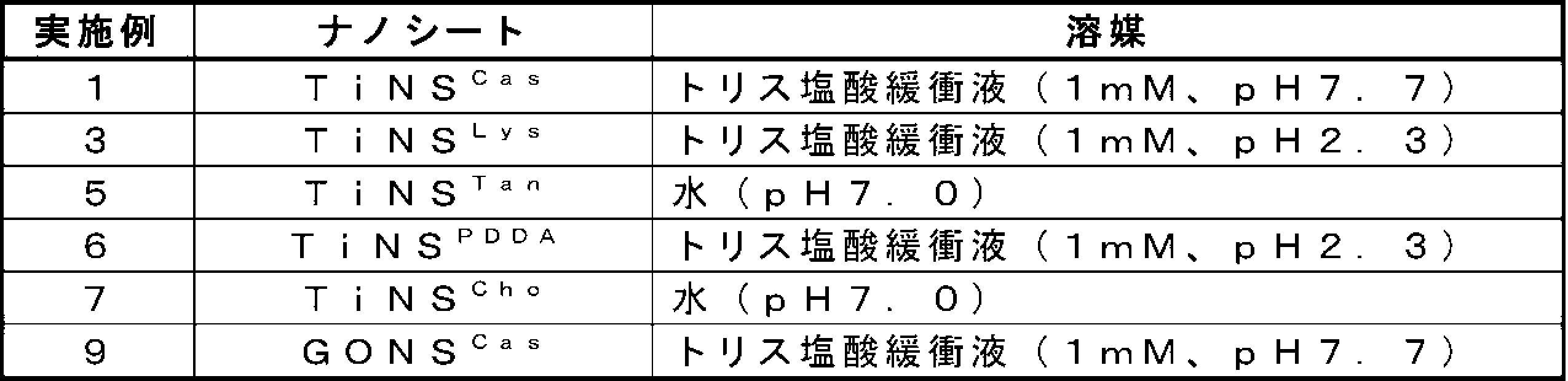
参考例、実施例及び比較例で用いたナノシートを表1にまとめた。各例のナノシートの製造方法を以下に示す。

参考例、実施例及び比較例で用いたナノシートを表1にまとめた。各例のナノシートの製造方法を以下に示す。
[参考例1]TiNSの製造
既報(Tanaka T, Ebina Y, Takada K, Kurashima K, Sasaki T.(2003) Chem Mater;15:3564-3568)に従い酸化チタンナノシート(「TiNS」と表記する、組成Ti0.87O2)を製造した。以下特段の記載がない限り、TiNSはテトラメチルアンモニウム(TMA)溶液(1mM)に分散させたものを各種測定に用いた。
既報(Tanaka T, Ebina Y, Takada K, Kurashima K, Sasaki T.(2003) Chem Mater;15:3564-3568)に従い酸化チタンナノシート(「TiNS」と表記する、組成Ti0.87O2)を製造した。以下特段の記載がない限り、TiNSはテトラメチルアンモニウム(TMA)溶液(1mM)に分散させたものを各種測定に用いた。
[参考例2]smallTiNSの製造
実施例1で製造したTiNSに対して超音波発生機(商品名XL-2000 MicrosonTM、Qsonica社製)で超音波処理を3分間行い、酸化チタンナノシート(「smallTiNS」と表記する)を製造した。以下特段の記載がない限り、smallTiNSはテトラメチルアンモニウム(TMA)溶液(1mM)に分散させたものを各種測定に用いた。
実施例1で製造したTiNSに対して超音波発生機(商品名XL-2000 MicrosonTM、Qsonica社製)で超音波処理を3分間行い、酸化チタンナノシート(「smallTiNS」と表記する)を製造した。以下特段の記載がない限り、smallTiNSはテトラメチルアンモニウム(TMA)溶液(1mM)に分散させたものを各種測定に用いた。
[参考例3]NbNSの製造
既報(Schaak RE, Mallouk T.(2002) Chem Mater 14:1455-1471)に従い酸化ニオブナノシート(「NbNS」と表記する、組成Ca2Nb3O10)を製造した。以下特段の記載がない限り、NbNSはテトラブチルアンモニウム(TBA)溶液(1mM)に分散させたものを各種測定に用いた。
既報(Schaak RE, Mallouk T.(2002) Chem Mater 14:1455-1471)に従い酸化ニオブナノシート(「NbNS」と表記する、組成Ca2Nb3O10)を製造した。以下特段の記載がない限り、NbNSはテトラブチルアンモニウム(TBA)溶液(1mM)に分散させたものを各種測定に用いた。
[実施例1]TiNSCasの製造
2.0重量%のカゼインを含有するトリス塩酸緩衝液(1mM、pH8.0)を500μLと、0.4重量%の参考例1のTiNSを含有する水溶液500μLとの混合液を作製した。該混合液を60分間静置した後、該混合液に10秒間超音波処理を行った。
未吸着のカゼインを除去するため、遠心分離機(商品名CT15RE、HITACHI社製)を用いて遠心操作(15,000rpm)を4℃で15分行った。
生じた沈殿物を1mLのトリス塩酸緩衝液(1mM、pH7.7)に再分散させた。この遠心操作と再分散による洗浄操作を3回行い、最終沈殿物を500μLのトリス塩酸緩衝液(1mM、pH7.7)に再分散させ、カゼインコートチタンナノシート(TiNSCas)分散液を得た。なお、分散液におけるTiNSCasの濃度は、最終沈殿物を分散させる緩衝液量を調節して、各種測定に最適な濃度となるように調整した。また、以下特段の記載がない限り、TiNSCasは再分散時の緩衝液に分散させたものを各種測定に用いた。
2.0重量%のカゼインを含有するトリス塩酸緩衝液(1mM、pH8.0)を500μLと、0.4重量%の参考例1のTiNSを含有する水溶液500μLとの混合液を作製した。該混合液を60分間静置した後、該混合液に10秒間超音波処理を行った。
未吸着のカゼインを除去するため、遠心分離機(商品名CT15RE、HITACHI社製)を用いて遠心操作(15,000rpm)を4℃で15分行った。
生じた沈殿物を1mLのトリス塩酸緩衝液(1mM、pH7.7)に再分散させた。この遠心操作と再分散による洗浄操作を3回行い、最終沈殿物を500μLのトリス塩酸緩衝液(1mM、pH7.7)に再分散させ、カゼインコートチタンナノシート(TiNSCas)分散液を得た。なお、分散液におけるTiNSCasの濃度は、最終沈殿物を分散させる緩衝液量を調節して、各種測定に最適な濃度となるように調整した。また、以下特段の記載がない限り、TiNSCasは再分散時の緩衝液に分散させたものを各種測定に用いた。
[実施例2]TiNSAlbの製造
2.0重量%のカゼインの代わりに2.0重量%のアルブミンを用いた以外は実施例1と同様にして、アルブミンコートチタンナノシート(TiNSAlb)分散液を得た。
2.0重量%のカゼインの代わりに2.0重量%のアルブミンを用いた以外は実施例1と同様にして、アルブミンコートチタンナノシート(TiNSAlb)分散液を得た。
[実施例3]TiNSLysの製造
2.0重量%のリゾチームを含有するテトラメチルアンモニウム(TMA)溶液(2mM)500μLと、0.1重量%の参考例1のTiNSを含有する水溶液500μLとの混合液を作製した。該混合液を60分間静置した後、実施例1と同様の遠心操作によって未吸着のリゾチームを取り除いた。沈殿物を500μLのトリス塩酸緩衝液(1mM、pH2.3)に分散させ、リゾチームコートチタンナノシート(TiNSLys)分散液を得た。
2.0重量%のリゾチームを含有するテトラメチルアンモニウム(TMA)溶液(2mM)500μLと、0.1重量%の参考例1のTiNSを含有する水溶液500μLとの混合液を作製した。該混合液を60分間静置した後、実施例1と同様の遠心操作によって未吸着のリゾチームを取り除いた。沈殿物を500μLのトリス塩酸緩衝液(1mM、pH2.3)に分散させ、リゾチームコートチタンナノシート(TiNSLys)分散液を得た。
[実施例4]TiNSSkimの製造
2.0重量%のカゼインの代わりに2.0重量%のスキムミルクを用いた以外は実施例1と同様にして、スキムミルクコートチタンナノシート(TiNSSkim)分散液を得た。
2.0重量%のカゼインの代わりに2.0重量%のスキムミルクを用いた以外は実施例1と同様にして、スキムミルクコートチタンナノシート(TiNSSkim)分散液を得た。
[実施例5]TiNSTanの製造
0.85重量%のタンニン酸を含有する水溶液1mLと、0.5重量%の参考例1のTiNSを含有する水溶液4mLとの混合液を作製した。該混合液を5分間静置した後、実施例1と同様の洗浄操作を再分散水溶液として純水を用いて10回行うことで、タンニン酸コートチタンナノシート(TiNSTan)分散液を得た。
0.85重量%のタンニン酸を含有する水溶液1mLと、0.5重量%の参考例1のTiNSを含有する水溶液4mLとの混合液を作製した。該混合液を5分間静置した後、実施例1と同様の洗浄操作を再分散水溶液として純水を用いて10回行うことで、タンニン酸コートチタンナノシート(TiNSTan)分散液を得た。
[実施例6]TiNSPDDAの製造
0.1重量%のポリジアリルジメチルアミンクロライド(PDDA)を含有する水溶液1mLと、0.02重量%の参考例1のTiNSを含有する水溶液1mLとの混合液を作製した。該混合液を60分間静置した後、実施例3と同様の遠心操作によって未吸着のPDDAを取り除くことで、沈殿物を500μLのトリス塩酸緩衝液(1mM、pH2.3)に分散させ、PDDAコートチタンナノシート(TiNSPDDA)分散液を得た。
0.1重量%のポリジアリルジメチルアミンクロライド(PDDA)を含有する水溶液1mLと、0.02重量%の参考例1のTiNSを含有する水溶液1mLとの混合液を作製した。該混合液を60分間静置した後、実施例3と同様の遠心操作によって未吸着のPDDAを取り除くことで、沈殿物を500μLのトリス塩酸緩衝液(1mM、pH2.3)に分散させ、PDDAコートチタンナノシート(TiNSPDDA)分散液を得た。
[実施例7]TiNSChoの製造
0.2重量%のコンドロイチン硫酸(Cho)を含有する水溶液1mLと、0.01重量%の参考例1のTiNSを含有する水溶液1mLとの混合液を作製した。該混合液を60分間静置した後、実施例1と同様の洗浄操作を再分散水溶液として純水を用いて3回行うことで、コンドロイチン硫酸コートチタンナノシート(TiNSCho)分散液を得た。
0.2重量%のコンドロイチン硫酸(Cho)を含有する水溶液1mLと、0.01重量%の参考例1のTiNSを含有する水溶液1mLとの混合液を作製した。該混合液を60分間静置した後、実施例1と同様の洗浄操作を再分散水溶液として純水を用いて3回行うことで、コンドロイチン硫酸コートチタンナノシート(TiNSCho)分散液を得た。
[実施例8]NbNSCasの製造
参考例1のTiNSの代わりに参考例3のNbNSを用いた以外は実施例1と同様にして、カゼインコートニオブナノシート(NbNSCas)分散液を得た。
参考例1のTiNSの代わりに参考例3のNbNSを用いた以外は実施例1と同様にして、カゼインコートニオブナノシート(NbNSCas)分散液を得た。
[実施例9]GONSCasの製造
参考例1のTiNSの代わりにGONS(商品名Rap eGO(TQ11)、NiSiNa material社製)を用いた以外は実施例1と同様にして、カゼインコート酸化グラフェンナノシート(GONSCas)分散液を得た。
参考例1のTiNSの代わりにGONS(商品名Rap eGO(TQ11)、NiSiNa material社製)を用いた以外は実施例1と同様にして、カゼインコート酸化グラフェンナノシート(GONSCas)分散液を得た。
[比較例1]TiNSCateの製造
0.2重量%のPEG修飾カテコールを含有する水溶液1mLと、0.8重量%の参考例1のTiNSを含有する水溶液1mLとの混合液を作製した。該混合液を60分間静置した後、実施例1と同様の洗浄操作を10回行うことで、PEG修飾カテコールコートチタンナノシート(TiNSCate)分散液を得た。
0.2重量%のPEG修飾カテコールを含有する水溶液1mLと、0.8重量%の参考例1のTiNSを含有する水溶液1mLとの混合液を作製した。該混合液を60分間静置した後、実施例1と同様の洗浄操作を10回行うことで、PEG修飾カテコールコートチタンナノシート(TiNSCate)分散液を得た。
[ナノシートの構造評価]
(1)分散液の観察
各例で得られたナノシート分散液(ナノシート濃度0.4重量%)の写真を図4に示す。いずれの実施例のナノシートも液中で分散していることが目視で確認できた。また、TiNSの分散液においてはTiNSのドメイン構造に由来する特徴的なもや状のテクスチャーがコート後の分散液においても確認できた。
(1)分散液の観察
各例で得られたナノシート分散液(ナノシート濃度0.4重量%)の写真を図4に示す。いずれの実施例のナノシートも液中で分散していることが目視で確認できた。また、TiNSの分散液においてはTiNSのドメイン構造に由来する特徴的なもや状のテクスチャーがコート後の分散液においても確認できた。
次に、TiNS、TiNSCas、TiNSAlb、TiNSLys又はTiNSCate(ナノシート濃度0.8重量%)500μLと塩化ナトリウム水溶液(20mM)500μLを混合し、ナノシート分散液における塩濃度の影響を調べた。塩化ナトリウム水溶液添加後のナノシート分散液の写真を図5に示す。
コーティング剤なしのTiNSでは、ナノシートの沈殿が確認された。一方、コーティング剤でコートされたナノシートでは、塩存在下でもナノシートの分散性を保持できることが確認されたが、比較例1のTiNSCateは塩存在下で沈殿が生じたことから、本発明においてナノシートとコーティング剤との多点的な相互作用が重要であることが確認された。
本発明のコーティング剤でコートされたナノシートは、塩存在下においても安定に分散していることから、タンパク質の溶液NMR測定用配向剤としての利用が期待された。
コーティング剤なしのTiNSでは、ナノシートの沈殿が確認された。一方、コーティング剤でコートされたナノシートでは、塩存在下でもナノシートの分散性を保持できることが確認されたが、比較例1のTiNSCateは塩存在下で沈殿が生じたことから、本発明においてナノシートとコーティング剤との多点的な相互作用が重要であることが確認された。
本発明のコーティング剤でコートされたナノシートは、塩存在下においても安定に分散していることから、タンパク質の溶液NMR測定用配向剤としての利用が期待された。
以上各実施例のナノシートが分散していることを目視で確認した。さらに、各例のナノシートについて、各種構造解析を行った。
(2)動的光散乱(DLS)法による大きさ測定
コーティング剤なしのナノシートのDLSによる大きさ分布を図6に示す。DLSから算出される大きさは、TiNSは825nm、smallTiNSは295nm、NbNSは325nmであった。
次に、コーティング剤によるコート前後における大きさ分布を図7A~図7Bに示す。TiNS及びNbNS共にコーティング剤でコートされたナノシートの大きさがわずかに増大していることから、コーティング剤によってナノシートがコートされていることが示唆された。また、コーティング剤なしのナノシートと同様に、コーティング剤でコートされたナノシートも、溶液中で分散していることが確認できた。
コーティング剤なしのナノシートのDLSによる大きさ分布を図6に示す。DLSから算出される大きさは、TiNSは825nm、smallTiNSは295nm、NbNSは325nmであった。
次に、コーティング剤によるコート前後における大きさ分布を図7A~図7Bに示す。TiNS及びNbNS共にコーティング剤でコートされたナノシートの大きさがわずかに増大していることから、コーティング剤によってナノシートがコートされていることが示唆された。また、コーティング剤なしのナノシートと同様に、コーティング剤でコートされたナノシートも、溶液中で分散していることが確認できた。
(3)透過型電子顕微鏡(TEM)によるナノシート分散液の観察
コーティング剤なしのナノシートのTEM画像を図8A~図8Cに、コーティング剤でコートされたナノシートのTEM画像を図9A~図9Dに示す。TEM画像中の点線はナノシートの輪郭を強調するために記したものである。
いずれのナノシートも凝集することなく分散しており、大きさもDLSの測定値を支持するものであることが確認できた。
コーティング剤なしのナノシートのTEM画像を図8A~図8Cに、コーティング剤でコートされたナノシートのTEM画像を図9A~図9Dに示す。TEM画像中の点線はナノシートの輪郭を強調するために記したものである。
いずれのナノシートも凝集することなく分散しており、大きさもDLSの測定値を支持するものであることが確認できた。
(4)原子間力顕微鏡(AFM)による観察とナノシートの平均厚さの算出
TiNSのAFM画像を図10A~図10Eに示す。AFM画像の点線における断面プロファイルから、ナノシートの平均厚さを算出した。コーティング剤によるコート後のナノシートでは、コーティング剤なしのナノシートと比較して厚さが1.0~5.0nm程増加しており、コーティング剤がTiNS表面に吸着していることが強く示唆された。
TiNSのAFM画像を図10A~図10Eに示す。AFM画像の点線における断面プロファイルから、ナノシートの平均厚さを算出した。コーティング剤によるコート後のナノシートでは、コーティング剤なしのナノシートと比較して厚さが1.0~5.0nm程増加しており、コーティング剤がTiNS表面に吸着していることが強く示唆された。
(5)ゼータ電位測定
以下に示す実施例のナノシート分散液のゼータ電位を測定した。結果を表2に示す。
以下に示す実施例のナノシート分散液のゼータ電位を測定した。結果を表2に示す。

TiNSCasのゼータ電位は-43.6mVであり、アニオン性タンパク質であるカゼインがナノシート表面に吸着していることが示唆された。一方、TiNSLysのゼータ電位は+50.1mVであり、カチオン性タンパク質であるリゾチームがナノシート表面に吸着していることが示唆された。
同様に、ゼータ電位測定結果から、TiNSPDDAの表面にはカチオン性高分子であるポリジアリルジメチルアミンクロライドが、TiNSChoの表面にはアニオン性のコンドロイチン硫酸が、それぞれナノシート表面に吸着していることが示唆された。
同様に、ゼータ電位測定結果から、TiNSPDDAの表面にはカチオン性高分子であるポリジアリルジメチルアミンクロライドが、TiNSChoの表面にはアニオン性のコンドロイチン硫酸が、それぞれナノシート表面に吸着していることが示唆された。
以上の構造解析により、ナノシート表面にコーティング剤が吸着していることが示唆された。さらに、クマシーブリリアントブルー(CBB)を用いてナノシートに対するタンパク質コーティング剤の吸着量を定量的に評価した。
[コーティング剤吸着の評価]
(6)コーティング剤吸着確認
コーティング剤としてタンパク質を用いたナノシートにおいて、コートするタンパク質の量を変化させ(0~2.0mg/mL)ナノシートを製造し、コート後のタンパク質の吸着量をCBB染色で定量した。その結果を図11A~図11Dに示す。
いずれのタンパク質を用いた場合もナノシート上への吸着量が飽和しており、シートの全面がタンパク質でコーティングされていることが支持された。
なお、上述した実施例のナノシートの製造方法において、本実験で確認された飽和吸着量以上のコーティング剤を用いてナノシートの製造を行った。
(6)コーティング剤吸着確認
コーティング剤としてタンパク質を用いたナノシートにおいて、コートするタンパク質の量を変化させ(0~2.0mg/mL)ナノシートを製造し、コート後のタンパク質の吸着量をCBB染色で定量した。その結果を図11A~図11Dに示す。
いずれのタンパク質を用いた場合もナノシート上への吸着量が飽和しており、シートの全面がタンパク質でコーティングされていることが支持された。
なお、上述した実施例のナノシートの製造方法において、本実験で確認された飽和吸着量以上のコーティング剤を用いてナノシートの製造を行った。
また、TiNSSkim及びGONSCasに対して同様にCBB染色を行い、タンパク質吸着の確認を行った。その結果を図12A~図12Bに示す。いずれのナノシートにおいても、CBBのタンパク質への吸着に由来する585nm付近の吸収ピークが増加しており、TiNS及びGONSへタンパク質が吸着していることが確認できた。
さらに、経時で安定してタンパク質がナノシートに吸着していることを確認するため、以下の方法によりナノシートへのタンパク質吸着量の経時変化を確認した。
まず、TiNSCas(0.7重量%)をトリス塩酸緩衝液(1mM、pH7.7)に分散させ、該分散液を室温下静置した。ナノシートの製造から0.5、1、2、5日間静置した後の各分散液に対して、遠心分離機(商品名CT15RE、HITACHI社製)を用いて遠心操作(15,000rpm)を4℃で15分行った。上澄み液に含まれるタンパク質をCBB染色によって定量した。
ナノシート製造直後の上澄み液に含まれるタンパク質量から算出したナノシート上から乖離したタンパク質量を0%として、0.5、1、2、5日間静置した後のナノシート上から乖離したタンパク質の割合を算出し、100%からその割合を引くことでナノシート上に吸着したタンパク質の量を算出した。
同様に、TiNSLys(0.9重量%)のトリス塩酸緩衝液(1mM、pH2.3)についても、ナノシート上に吸着したタンパク質の割合を算出した。結果を図13A~図13Bに示す。
Cas及びLysは、いずれも5日後にもほとんどTiNS上から脱着しないことが確認された。
まず、TiNSCas(0.7重量%)をトリス塩酸緩衝液(1mM、pH7.7)に分散させ、該分散液を室温下静置した。ナノシートの製造から0.5、1、2、5日間静置した後の各分散液に対して、遠心分離機(商品名CT15RE、HITACHI社製)を用いて遠心操作(15,000rpm)を4℃で15分行った。上澄み液に含まれるタンパク質をCBB染色によって定量した。
ナノシート製造直後の上澄み液に含まれるタンパク質量から算出したナノシート上から乖離したタンパク質量を0%として、0.5、1、2、5日間静置した後のナノシート上から乖離したタンパク質の割合を算出し、100%からその割合を引くことでナノシート上に吸着したタンパク質の量を算出した。
同様に、TiNSLys(0.9重量%)のトリス塩酸緩衝液(1mM、pH2.3)についても、ナノシート上に吸着したタンパク質の割合を算出した。結果を図13A~図13Bに示す。
Cas及びLysは、いずれも5日後にもほとんどTiNS上から脱着しないことが確認された。
また、モデル化合物として蛍光ラベルしたタンパク質を用い、ナノシート分散液と混合して静置した後、該ナノシート分散液を共焦点レーザー顕微鏡(CLSM)により観察し、ナノシートとモデル化合物との相互作用を確認した。
モデル化合物としては、アニオン性タンパク質として蛍光ラベルしたアルブミン(FLAlb)を、カチオン性タンパク質として蛍光ラベルしたリボヌクレアーゼA(FlRN-A)を用いた。
FLAlb(0.5mg/mL)をトリス塩酸緩衝液(1mM、pH7.7)中のTiNS(ナノシート濃度0.4重量%)と混合して、24時間後のナノシート分散液のCLSM画像を図14Aに示す。また、ナノシートとしてトリス塩酸緩衝液(1mM、pH7.7)中のTiNSCasを用いた場合の結果を図14B、トリス塩酸緩衝液(1mM、pH2.3)中のTiNSLysを用いた場合の結果を図14Cに示す。
同様に、FlRN-A(0.5mg/mL)を用いて、TiNS、TiNSCas又はTiNSLysと混合した場合の結果をそれぞれ図14D~図14Fに示す。
図14B及び図14Fにおいて蛍光強度が弱いことから、アニオン性のFLAlbは、マイナス電荷を有するTiNSCasへの吸着が大きく抑制されており、カチオン性のFlRN-Aはプラス電荷を有するTiNSLysへの吸着が大きく抑制されていることが確認できた。
NMR測定対象分子がナノシートと強く相互作用することは、その配向性の妨げになるため、好ましくない。このため、NMR測定対象分子とナノシートの選定にあたって、本結果の図14B及び図14Fに示すような弱い蛍光強度が確認されるようなものの組み合わせとすることが好ましい。
モデル化合物としては、アニオン性タンパク質として蛍光ラベルしたアルブミン(FLAlb)を、カチオン性タンパク質として蛍光ラベルしたリボヌクレアーゼA(FlRN-A)を用いた。
FLAlb(0.5mg/mL)をトリス塩酸緩衝液(1mM、pH7.7)中のTiNS(ナノシート濃度0.4重量%)と混合して、24時間後のナノシート分散液のCLSM画像を図14Aに示す。また、ナノシートとしてトリス塩酸緩衝液(1mM、pH7.7)中のTiNSCasを用いた場合の結果を図14B、トリス塩酸緩衝液(1mM、pH2.3)中のTiNSLysを用いた場合の結果を図14Cに示す。
同様に、FlRN-A(0.5mg/mL)を用いて、TiNS、TiNSCas又はTiNSLysと混合した場合の結果をそれぞれ図14D~図14Fに示す。
図14B及び図14Fにおいて蛍光強度が弱いことから、アニオン性のFLAlbは、マイナス電荷を有するTiNSCasへの吸着が大きく抑制されており、カチオン性のFlRN-Aはプラス電荷を有するTiNSLysへの吸着が大きく抑制されていることが確認できた。
NMR測定対象分子がナノシートと強く相互作用することは、その配向性の妨げになるため、好ましくない。このため、NMR測定対象分子とナノシートの選定にあたって、本結果の図14B及び図14Fに示すような弱い蛍光強度が確認されるようなものの組み合わせとすることが好ましい。
[磁場配向性の評価]
(7)X線小角散乱(SAX)
コーティング剤でコートされたナノシートの磁場配向性を調べるため、TiNSCas、TiNSAlb及びTiNSLys(それぞれ0.4重量%)をジメチルアクリルアミドゲルに包埋した後にSAX解析を行った。
(7)X線小角散乱(SAX)
コーティング剤でコートされたナノシートの磁場配向性を調べるため、TiNSCas、TiNSAlb及びTiNSLys(それぞれ0.4重量%)をジメチルアクリルアミドゲルに包埋した後にSAX解析を行った。
図15Aは、本測定の概略図を表すものであり、図中の記号Bは磁場ベクトルを表す。図15B~図15Dに示したSAX解析結果より、タンパク質でコートされたナノシートもコーティング剤なしのTiNSと同様に磁場に対して垂直に配向していることが確認できた。
(8)D2O四極子相互作用の分裂ピークによる配向性評価
本発明のナノシートの磁場配向性を評価するにあたり、まず低分子である水を用いて、水の四極子分裂の分裂ピーク幅により評価した。このピーク幅が大きいほど、水分子が配向しており、配向性が高いことを表す。
本発明のナノシートの磁場配向性を評価するにあたり、まず低分子である水を用いて、水の四極子分裂の分裂ピーク幅により評価した。このピーク幅が大きいほど、水分子が配向しており、配向性が高いことを表す。
まず、コーティング剤なしのナノシートについて、測定温度を24℃に一定に保ち測定試料中のナノシート濃度を変えてナノシート濃度依存性を調べた。また、測定試料中のナノシート濃度を一定に保ち測定温度を変えて測定し、温度依存性を調べた。
各ナノシートの表3に示す溶液におけるD2O四極子相互作用の分裂ピークを図16A~図16Fに示す。
各ナノシートの表3に示す溶液におけるD2O四極子相互作用の分裂ピークを図16A~図16Fに示す。

既報のバイセル(Shapiro RA, Brindley AJ, Martin RW.(2010) J Am Chem Soc 132:11406-11407)は測定温度22℃の条件下でピークが分裂していないのに対し、本願発明のナノシートでは分裂ピークが観測され、磁場中でナノシート及び水分子が配向していることがわかった。
また、ナノシート濃度の上昇に伴いD2O四極子相互作用の分裂ピーク幅が大きいことから、濃度依存的に配向性が高くなることがわかった。さらに、測定温度によらず0℃~90℃まで広い温度範囲でD2O四極子相互作用の分裂ピークがみられたことから、温度に対して安定的に配向性を有することがわかった。
また、ナノシート濃度の上昇に伴いD2O四極子相互作用の分裂ピーク幅が大きいことから、濃度依存的に配向性が高くなることがわかった。さらに、測定温度によらず0℃~90℃まで広い温度範囲でD2O四極子相互作用の分裂ピークがみられたことから、温度に対して安定的に配向性を有することがわかった。
次に、コーティング剤でコートされたナノシートについて、各ナノシートの表4に示す溶液におけるD2O四極子相互作用の分裂ピークを図17A~図17Hに示す。
コーティング剤なしのナノシート同様に分裂ピークが観測され、磁場中でナノシート及び水分子が配向していることがわかった。
(9)グルコースの配向性評価
続いて、TiNS又はNbNSを用いて、13Cラベルしたグルコースの13C-NMR測定を行った。
NMR測定試料は、TiNS(1.5重量%)のTMA(1mM)溶液又はNbNS(4.0重量%)のTBA(1mM)溶液に、3重量%のグルコースを添加して得た。結果を図18A~図18Cに示す。
図18Aはナノシートを添加せずに13Cラベルしたグルコースの測定結果、図18BはTiNSを添加した測定結果、図18CはNbNSを添加した結果測定である。13Cのカップリングシフトから、TiNS及びNbNSのいずれを添加した場合も、ナノシートを添加しなかった場合に比べてシフトしており、βグルコース分子が配向していることが確認できた。
続いて、TiNS又はNbNSを用いて、13Cラベルしたグルコースの13C-NMR測定を行った。
NMR測定試料は、TiNS(1.5重量%)のTMA(1mM)溶液又はNbNS(4.0重量%)のTBA(1mM)溶液に、3重量%のグルコースを添加して得た。結果を図18A~図18Cに示す。
図18Aはナノシートを添加せずに13Cラベルしたグルコースの測定結果、図18BはTiNSを添加した測定結果、図18CはNbNSを添加した結果測定である。13Cのカップリングシフトから、TiNS及びNbNSのいずれを添加した場合も、ナノシートを添加しなかった場合に比べてシフトしており、βグルコース分子が配向していることが確認できた。
(10)タンパク質の配向性評価
TiNSCas又はNbNSCasを用いて、15NラベルしたプロテインG β1ドメイン(15N-GB1)のNMR測定を行った。
NMR測定試料は、TiNSCas(2.5重量%)又はNbNSCas(4.1重量%)のトリス塩酸緩衝液(10mM、pH6.8)(D2O=10%)に、15N-GB1(4.0mg/mL)を添加して得た。TiNSCasは、5~80℃の種々の測定温度で測定を行った。NbNSCasは35℃で測定を行った。
TiNSCas又はNbNSCasを用いて、15NラベルしたプロテインG β1ドメイン(15N-GB1)のNMR測定を行った。
NMR測定試料は、TiNSCas(2.5重量%)又はNbNSCas(4.1重量%)のトリス塩酸緩衝液(10mM、pH6.8)(D2O=10%)に、15N-GB1(4.0mg/mL)を添加して得た。TiNSCasは、5~80℃の種々の測定温度で測定を行った。NbNSCasは35℃で測定を行った。
図19A~図19GにIPAP-HSQCスペクトルを、図20A~図20FにIPAP-HSQCスペクトル解析から算出したアミノ酸骨格に由来する1H-15N結合の残余双極子結合(RDC)一覧を示す。
ナノシートの存在下でIPAP-HSQCスペクトル及びRDCが観察されることが確認された。
ナノシートの存在下でIPAP-HSQCスペクトル及びRDCが観察されることが確認された。
さらに、TiNSCasの実測されたRDCと既報の構造から計算されたRDCデータの相関関係を各測定温度(5~65℃)についてまとめたグラフを図21A~図21Eに示す。
35℃と50℃において既報であるGB1(蛋白質構造データバンクPDB:2PLP)と高い相関が見られたのに対し、5、20、65℃においては低い相関を示し、GB1の構造変化が起こっていることがわかった。
本発明のナノシートは、従来の配向剤に比べて、広い温度範囲でタンパク質のNMR測定用配向剤として機能することが明らかとなった。
本発明のナノシートは、従来の配向剤に比べて、広い温度範囲でタンパク質のNMR測定用配向剤として機能することが明らかとなった。
次に、TiNSCas(2.5重量%)と15N-GB1(4mg/mL)をトリス塩酸緩衝液(10mM、pH6.8)中で2時間混合し、遠心操作(15,000rpm)を行い、上澄み液を得た。
同様に、TiNS(1.5重量%)と15N-GB1(4mg/ml)をトリス塩酸緩衝液(10mM、pH6.8)中で2時間混合し、遠心操作を行い、上澄み液を得た。
各上澄み液をSDS-ポリアクリルアミドゲル電気泳動(SDS-PAGE)に供した。SDS-PAGEの結果を図22に示す。レーン1がタンパク質マーカーであり、レーン2が15N-GB1であり、レーン3がTiNSCasの上澄み液であり、レーン4がTiNSの上澄み液である。
同様に、TiNS(1.5重量%)と15N-GB1(4mg/ml)をトリス塩酸緩衝液(10mM、pH6.8)中で2時間混合し、遠心操作を行い、上澄み液を得た。
各上澄み液をSDS-ポリアクリルアミドゲル電気泳動(SDS-PAGE)に供した。SDS-PAGEの結果を図22に示す。レーン1がタンパク質マーカーであり、レーン2が15N-GB1であり、レーン3がTiNSCasの上澄み液であり、レーン4がTiNSの上澄み液である。
TiNSCasの上澄み液からは15N-GB1に由来するバンドが検出され、15N-GB1が回収可能であることが確認された。
本発明のコーティング剤ナノシートは、従来の配向剤では回収不可能であったNMR測定対象のタンパク質を簡便な遠心操作により回収でき、配向剤であるナノシート自体も再利用可能であることがわかった。
本発明のコーティング剤ナノシートは、従来の配向剤では回収不可能であったNMR測定対象のタンパク質を簡便な遠心操作により回収でき、配向剤であるナノシート自体も再利用可能であることがわかった。
Claims (8)
- ナノシートと、
ヒドロキシ基、アミノ基、アミド基、カルボニル基、カルボキシル基、スルホ基、リン酸基、イミダゾール基及びグアニジン基から選ばれる少なくとも1種の官能基を1分子中に35個以上有し、かつ分子量1,500以上の化合物と、
を含み、前記ナノシートが前記化合物で被覆されていることを特徴とするNMR測定用配向剤。 - 前記ナノシートの厚みが0.5~3nm、前記ナノシートの大きさが100nm~100μmである請求項1記載のNMR測定用配向剤。
- 前記ナノシートが酸化チタン、酸化ニオブ及び酸化グラフェンから選ばれる少なくとも1種のナノシートである請求項1又は2に記載のNMR測定用配向剤。
- 前記化合物が、タンパク質、タンニン酸、ポリジアリルジメチルアミンクロライド及びコンドロイチン硫酸から選ばれる少なくとも1種である請求項1~3のいずれか1項に記載のNMR測定用配向剤。
- 前記タンパク質が、カゼイン、リゾチーム及びアルブミンから選ばれる少なくとも1種である請求項4に記載のNMR測定用配向剤。
- タンパク質、タンニン酸、ポリジアリルジメチルアミンクロライド及びコンドロイチン硫酸から選ばれる少なくとも1種で被覆されている酸化チタンナノシート。
- カゼインで被覆されている酸化ニオブナノシート。
- カゼインで被覆されている酸化グラフェンナノシート。
Priority Applications (2)
| Application Number | Priority Date | Filing Date | Title |
|---|---|---|---|
| EP18806859.7A EP3633362A4 (en) | 2017-05-26 | 2018-05-22 | Nanosheet-containing orientation agent for nmr measurement |
| US16/615,916 US20200271740A1 (en) | 2017-05-26 | 2018-05-22 | Nanosheet-containing orientation agent for nmr measurement |
Applications Claiming Priority (2)
| Application Number | Priority Date | Filing Date | Title |
|---|---|---|---|
| JP2017-105022 | 2017-05-26 | ||
| JP2017105022A JP6792268B2 (ja) | 2017-05-26 | 2017-05-26 | ナノシートを含むnmr測定用配向剤 |
Publications (1)
| Publication Number | Publication Date |
|---|---|
| WO2018216689A1 true WO2018216689A1 (ja) | 2018-11-29 |
Family
ID=64395665
Family Applications (1)
| Application Number | Title | Priority Date | Filing Date |
|---|---|---|---|
| PCT/JP2018/019655 Ceased WO2018216689A1 (ja) | 2017-05-26 | 2018-05-22 | ナノシートを含むnmr測定用配向剤 |
Country Status (4)
| Country | Link |
|---|---|
| US (1) | US20200271740A1 (ja) |
| EP (1) | EP3633362A4 (ja) |
| JP (1) | JP6792268B2 (ja) |
| WO (1) | WO2018216689A1 (ja) |
Cited By (1)
| Publication number | Priority date | Publication date | Assignee | Title |
|---|---|---|---|---|
| JP2022537029A (ja) * | 2019-06-17 | 2022-08-23 | カンザス、ステート、ユニバーシティ、リサーチ、ファウンデーション | グラフェン/酸化グラフェンコア/シェル粒子、それを作製する方法、およびそれを使用する方法 |
Families Citing this family (6)
| Publication number | Priority date | Publication date | Assignee | Title |
|---|---|---|---|---|
| JP2020138941A (ja) * | 2019-02-28 | 2020-09-03 | 国立研究開発法人理化学研究所 | バイセル及びその利用 |
| JP7498452B2 (ja) * | 2019-12-17 | 2024-06-12 | 国立研究開発法人理化学研究所 | エアロゲル及びその製造方法 |
| CN114010783B (zh) * | 2021-11-03 | 2022-10-18 | 大连理工大学 | 一种基于共价有机框架材料的多功能富硼纳米靶向制剂及制备方法和应用 |
| CN115487310A (zh) * | 2022-09-19 | 2022-12-20 | 中南大学湘雅医院 | 一种靶向药物及其制备方法和应用 |
| CN116084041B (zh) * | 2022-12-06 | 2024-11-12 | 海南大学 | 黑磷复合材料、抗菌纳米纤维材料、制备方法及应用 |
| WO2024148340A1 (en) * | 2023-01-06 | 2024-07-11 | University Of Houston System | Composites containing magnetically aligned graphene nanosheets and methods of manufacture thereof |
Citations (2)
| Publication number | Priority date | Publication date | Assignee | Title |
|---|---|---|---|---|
| JP2001089946A (ja) | 1999-07-22 | 2001-04-03 | Du Pont Toray Co Ltd | ゴム補強用芳香族ポリアミド繊維コード |
| US20130177503A1 (en) * | 2010-09-29 | 2013-07-11 | Yuping Y. Bao | Shape-controlled magnetic nanoparticles as t1 contrast agents for magnetic resonance imaging |
Family Cites Families (1)
| Publication number | Priority date | Publication date | Assignee | Title |
|---|---|---|---|---|
| CN103317786A (zh) * | 2012-03-22 | 2013-09-25 | 中国科学院海洋研究所 | 一种二氧化钛纳米片/溶菌酶多层复合薄膜及其制备和应用 |
-
2017
- 2017-05-26 JP JP2017105022A patent/JP6792268B2/ja active Active
-
2018
- 2018-05-22 US US16/615,916 patent/US20200271740A1/en not_active Abandoned
- 2018-05-22 WO PCT/JP2018/019655 patent/WO2018216689A1/ja not_active Ceased
- 2018-05-22 EP EP18806859.7A patent/EP3633362A4/en not_active Withdrawn
Patent Citations (2)
| Publication number | Priority date | Publication date | Assignee | Title |
|---|---|---|---|---|
| JP2001089946A (ja) | 1999-07-22 | 2001-04-03 | Du Pont Toray Co Ltd | ゴム補強用芳香族ポリアミド繊維コード |
| US20130177503A1 (en) * | 2010-09-29 | 2013-07-11 | Yuping Y. Bao | Shape-controlled magnetic nanoparticles as t1 contrast agents for magnetic resonance imaging |
Non-Patent Citations (8)
| Title |
|---|
| HANSEN MRMUELLER LPARDI A, NAT STRUCT BIOL, vol. 5, no. 12, December 1998 (1998-12-01), pages 1065 - 74 |
| MU, QINGXIN ET AL.: "Size-Dependent Cell Uptake of Protein-Coated Graphene Oxide Nanosheets", APPLIED MATERIALS & INTERFACES, vol. 4, 13 March 2012 (2012-03-13), pages 2259 - 2266, XP055548959 * |
| SCHAAK REMALLOUK T., CHEM MATER, vol. 14, 2002, pages 1455 - 1471 |
| See also references of EP3633362A4 |
| SHAPIRO RABRINDLEY AJMARTIN RW, J AM CHEM SOC, vol. 132, 2010, pages 11406 - 11407 |
| TANAKA TEBINA YTAKADA KKURASHIMA KSASAKI T, CHEM MATER, vol. 15, 2003, pages 3564 - 3568 |
| TOMISHIGE MVALE RD, J CELL BIOL, vol. 151, 1998, pages 1081 - 92 |
| YAN, YAJING ET AL.: "Hydroxyapatite/gelatin functionalized graphene oxide composite coatings deposited on Ti02 nanotube by electrochemical deposition for biomedical applications", APPLIED SURFACE SCIENCE, vol. 329, 28 February 2015 (2015-02-28), pages 76 - 82, XP029139245 * |
Cited By (3)
| Publication number | Priority date | Publication date | Assignee | Title |
|---|---|---|---|---|
| JP2022537029A (ja) * | 2019-06-17 | 2022-08-23 | カンザス、ステート、ユニバーシティ、リサーチ、ファウンデーション | グラフェン/酸化グラフェンコア/シェル粒子、それを作製する方法、およびそれを使用する方法 |
| JP7721854B2 (ja) | 2019-06-17 | 2025-08-13 | カンザス、ステート、ユニバーシティ、リサーチ、ファウンデーション | グラフェン/酸化グラフェンコア/シェル粒子、それを作製する方法、およびそれを使用する方法 |
| US12540080B2 (en) | 2019-06-17 | 2026-02-03 | Kansas State University Research Foundation | Graphene/graphene oxide core/shell particulates and methods of making and using the same |
Also Published As
| Publication number | Publication date |
|---|---|
| EP3633362A4 (en) | 2021-04-07 |
| JP6792268B2 (ja) | 2020-11-25 |
| JP2018200233A (ja) | 2018-12-20 |
| EP3633362A1 (en) | 2020-04-08 |
| US20200271740A1 (en) | 2020-08-27 |
Similar Documents
| Publication | Publication Date | Title |
|---|---|---|
| WO2018216689A1 (ja) | ナノシートを含むnmr測定用配向剤 | |
| Nosrati et al. | Green and one‐pot surface coating of iron oxide magnetic nanoparticles with natural amino acids and biocompatibility investigation | |
| Yu et al. | Immobilization of BSA on silica-coated magnetic iron oxide nanoparticle | |
| Safi et al. | Interactions between sub-10-nm iron and cerium oxide nanoparticles and 3T3 fibroblasts: the role of the coating and aggregation state | |
| Illés et al. | Novel carboxylated PEG-coating on magnetite nanoparticles designed for biomedical applications | |
| Sun et al. | Effect of zeta potential and particle size on the stability of SiO2 nanospheres as carrier for ultrasound imaging contrast agents | |
| Yin et al. | The effects of particle size and surface coating on the cytotoxicity of nickel ferrite | |
| Basly et al. | Dendronized iron oxide nanoparticles as contrast agents for MRI | |
| JP5569837B2 (ja) | 表面被覆無機物粒子の製造方法 | |
| Lee et al. | Preparation of non-aggregated fluorescent nanodiamonds (FNDs) by non-covalent coating with a block copolymer and proteins for enhancement of intracellular uptake | |
| US20130272965A1 (en) | Biocompatible Agent for Dispersing Nanoparticles into an Aqueous Medium Using Mussel Adhesive Protein-Mimetic Polymer | |
| El Kurdi et al. | Tuning the surface of Au nanoparticles using poly (ethylene glycol)-block-poly (propylene glycol)-block-poly (ethylene glycol): enzyme free and label free sugar sensing in serum samples using resonance Rayleigh scattering spectroscopy | |
| EP2289553A1 (en) | Dispersant stabilization of inorganic non-metallic particles | |
| Liu et al. | In situ synthesis of multidentate PEGylated chitosan modified gold nanoparticles with good stability and biocompatibility | |
| WO2013109832A1 (en) | Stable colloidal suspensions of gold nanoconjugates and the method for preparing the same | |
| Berret et al. | Versatile coating platform for metal oxide nanoparticles: applications to materials and biological science | |
| Liu et al. | Thermo-responsive gold/poly (vinyl alcohol)-b-poly (N-vinylcaprolactam) core–corona nanoparticles as a drug delivery system | |
| Kulkarni et al. | Characterization techniques for stimuli-responsive delivery nanoplatforms in cancer treatment | |
| Solodov et al. | Polyethyleneimine-modified iron oxide nanoparticles: their synthesis and state in water and in solutions of ligands | |
| Jadhav et al. | Studies on enhanced colloidal stability and heating ability of glycine functionalized LSMO nanoparticles for cancer hyperthermia therapy | |
| Chen et al. | Biocompatible polysiloxane-containing diblock copolymer PEO-b-PγMPS for coating magnetic nanoparticles | |
| Qin et al. | Antifouling performance of nano-sized spherical poly (N-hydroxyethyl acrylamide) brush | |
| Balan et al. | Biotinylated chitosan-based SPIONs with potential in blood-contacting applications | |
| Park et al. | Mannose-functionalized core@ shell nanoparticles and their interactions with bacteria | |
| Andreeva et al. | Polyelectrolyte-based magnetic photonic crystals with anticoagulant activity |
Legal Events
| Date | Code | Title | Description |
|---|---|---|---|
| 121 | Ep: the epo has been informed by wipo that ep was designated in this application |
Ref document number: 18806859 Country of ref document: EP Kind code of ref document: A1 |
|
| NENP | Non-entry into the national phase |
Ref country code: DE |
|
| WWE | Wipo information: entry into national phase |
Ref document number: 2018806859 Country of ref document: EP |
|
| ENP | Entry into the national phase |
Ref document number: 2018806859 Country of ref document: EP Effective date: 20200102 |