WO2018216986A1 - 브레이크 패드 마찰재용 수지 조성물 및 상기 수지 조성물로 제조된 브레이크 패드 마찰재 - Google Patents
브레이크 패드 마찰재용 수지 조성물 및 상기 수지 조성물로 제조된 브레이크 패드 마찰재 Download PDFInfo
- Publication number
- WO2018216986A1 WO2018216986A1 PCT/KR2018/005791 KR2018005791W WO2018216986A1 WO 2018216986 A1 WO2018216986 A1 WO 2018216986A1 KR 2018005791 W KR2018005791 W KR 2018005791W WO 2018216986 A1 WO2018216986 A1 WO 2018216986A1
- Authority
- WO
- WIPO (PCT)
- Prior art keywords
- brake pad
- resin composition
- friction material
- group
- pad friction
- Prior art date
- Legal status (The legal status is an assumption and is not a legal conclusion. Google has not performed a legal analysis and makes no representation as to the accuracy of the status listed.)
- Ceased
Links
- 0 *c1c(*)c(*)c(*c(c(*)c(*)c(*)c2*)c2I)c(*)c1* Chemical compound *c1c(*)c(*)c(*c(c(*)c(*)c(*)c2*)c2I)c(*)c1* 0.000 description 1
Classifications
-
- C—CHEMISTRY; METALLURGY
- C08—ORGANIC MACROMOLECULAR COMPOUNDS; THEIR PREPARATION OR CHEMICAL WORKING-UP; COMPOSITIONS BASED THEREON
- C08G—MACROMOLECULAR COMPOUNDS OBTAINED OTHERWISE THAN BY REACTIONS ONLY INVOLVING UNSATURATED CARBON-TO-CARBON BONDS
- C08G73/00—Macromolecular compounds obtained by reactions forming a linkage containing nitrogen with or without oxygen or carbon in the main chain of the macromolecule, not provided for in groups C08G12/00 - C08G71/00
- C08G73/06—Polycondensates having nitrogen-containing heterocyclic rings in the main chain of the macromolecule
- C08G73/10—Polyimides; Polyester-imides; Polyamide-imides; Polyamide acids or similar polyimide precursors
-
- C—CHEMISTRY; METALLURGY
- C08—ORGANIC MACROMOLECULAR COMPOUNDS; THEIR PREPARATION OR CHEMICAL WORKING-UP; COMPOSITIONS BASED THEREON
- C08J—WORKING-UP; GENERAL PROCESSES OF COMPOUNDING; AFTER-TREATMENT NOT COVERED BY SUBCLASSES C08B, C08C, C08F, C08G or C08H
- C08J5/00—Manufacture of articles or shaped materials containing macromolecular substances
- C08J5/04—Reinforcing macromolecular compounds with loose or coherent fibrous material
-
- C—CHEMISTRY; METALLURGY
- C08—ORGANIC MACROMOLECULAR COMPOUNDS; THEIR PREPARATION OR CHEMICAL WORKING-UP; COMPOSITIONS BASED THEREON
- C08K—Use of inorganic or non-macromolecular organic substances as compounding ingredients
- C08K3/00—Use of inorganic substances as compounding ingredients
- C08K3/01—Use of inorganic substances as compounding ingredients characterized by their specific function
- C08K3/013—Fillers, pigments or reinforcing additives
-
- C—CHEMISTRY; METALLURGY
- C08—ORGANIC MACROMOLECULAR COMPOUNDS; THEIR PREPARATION OR CHEMICAL WORKING-UP; COMPOSITIONS BASED THEREON
- C08K—Use of inorganic or non-macromolecular organic substances as compounding ingredients
- C08K3/00—Use of inorganic substances as compounding ingredients
- C08K3/18—Oxygen-containing compounds, e.g. metal carbonyls
- C08K3/20—Oxides; Hydroxides
- C08K3/22—Oxides; Hydroxides of metals
-
- C—CHEMISTRY; METALLURGY
- C08—ORGANIC MACROMOLECULAR COMPOUNDS; THEIR PREPARATION OR CHEMICAL WORKING-UP; COMPOSITIONS BASED THEREON
- C08K—Use of inorganic or non-macromolecular organic substances as compounding ingredients
- C08K3/00—Use of inorganic substances as compounding ingredients
- C08K3/34—Silicon-containing compounds
-
- F—MECHANICAL ENGINEERING; LIGHTING; HEATING; WEAPONS; BLASTING
- F16—ENGINEERING ELEMENTS AND UNITS; GENERAL MEASURES FOR PRODUCING AND MAINTAINING EFFECTIVE FUNCTIONING OF MACHINES OR INSTALLATIONS; THERMAL INSULATION IN GENERAL
- F16D—COUPLINGS FOR TRANSMITTING ROTATION; CLUTCHES; BRAKES
- F16D69/00—Friction linings; Attachment thereof; Selection of coacting friction substances or surfaces
- F16D69/02—Composition of linings ; Methods of manufacturing
Definitions
- Resin composition for brake pad friction material and brake pad friction material made of said resin composition
- the present invention relates to a resin pad for a brake pad friction material and a brake pad friction material made of the resin composition. [Technique to become background of invention]
- a brake or a brake device refers to a device for forcibly stopping by applying friction to an object traveling or rotating at high speed.
- a brake system is provided to control the traveling speed, and a brake pad is provided inside the corresponding braking device in contact with the friction surface under the control of the driver.
- a composition comprising a layering agent, a reinforcing agent and a binder resin is generally used, and a material having a relatively low heat resistance is a binder resin.
- the binder resin is a phenol resin, an acrylic rubber modified phenol resin, NBR (nitrile butadiene rubber) Rubber modified phenolic resins, melamine resins, epoxy resins and acrylic rubbers are used.
- NBR nonitrile butadiene rubber
- Rubber modified phenolic resins, melamine resins, epoxy resins and acrylic rubbers are used.
- most of these binder resins do not exceed the heat resistance of 150 ° C, there is a limit that can not guarantee the reliability and running stability of the brake pad friction material in extreme conditions.
- the present invention is to provide a resin composition for brake pad friction materials having high heat resistance and excellent workability.
- the present invention is to provide a brake pad friction material that is made of the resin composition can ensure improved durability and stable brake performance.
- a resin composition for brake pad friction materials comprising a cured resin binder, reinforcing fibers, layering agent, abrasive, and lubricant from a composition containing a phthalonitrile compound.
- a brake pad friction material made of the resin composition there is also provided a brake pad friction material made of the resin composition.
- the resin composition for the brake pad friction material and the brake pad friction material made of the resin ancestor according to the embodiments of the present invention will be described in detail.
- 1 to 1 embodies a particular characteristic, region, integer, step, operation, element and / or component, and other specific characteristics, region, integer, step, operation, element, It does not exclude the presence or addition of ingredients and / or groups.
- a resin composition for brake pad friction materials comprising a cured resin binder, reinforcing fibers, layering agent, abrasive, and lubricant from a composition containing a phthalonitrile compound.
- the resin binder cured from the composition containing the phthalonitrile compound is applied to the resin composition for the brake pad friction material, the brake can exhibit excellent workability and ensure improved heat resistance and stable brake performance. It has been found that the pad friction material can be provided.
- the resin composition for the brake pad friction material provided through the present invention may minimize thermal breakage of the brake pad friction material due to frictional heat as the resin binder includes the resin binder, thereby improving durability and life of the brake pad friction material.
- the said resin composition for brake pad friction materials contains the resin binder hardened
- the resin binder is added to impart molding processability to the resin composition for the brake pad friction material and to stably fix and bond the additives to the brake pad friction material.
- the additive means components including reinforcing fibers, fillers, abrasives, and lubricants included in the resin composition for the brake pad friction material.
- the resin composition for the brake pad friction material is provided with the additives dispersed in a matrix of the resin binder.
- the resin binder compared with the conventional and polyimide resin having high heat resistance It allows the provision of brake pad friction materials in an easy process equivalent to conventional thermosetting or thermoplastic binders without the need for complicated machining processes.
- the resin binder is a compound cured from a composition containing a phthalonitrile compound, and may be a mixture of a phthalonitrile compound and a curing agent or a prepolymer formed by reaction of the mixture.
- the prepolymer refers to a state in which reaction of the phthalonitrile compound and the curing agent occurs to some extent in the resin composition for the brake pad friction material (for example, a state in which a so-called A or B stage polymerization occurs). It can mean the state which can process to the brake pad friction material material which is mentioned later, for example, showing appropriate fluidity, without reaching a polymerized state.
- the prepolymer corresponds to a state in which the polymerization of the phthalonitrile compound and the curing agent is carried out to some extent, and the melt viscosity measured in silver in the range of about 150 ° C. to 25 CTC is 100 cP to 50,000 cP, 100 cP to 10,000. cP, or a state within a range of 100 cP to 5000 cP. Accordingly, the prepolymer may also exhibit excellent curability, low melting temperature, and a wide process window like the resin composition for the brake pad friction material.
- the processing temperature of the prepolymer may be in the range of 150 ° C to 35 C C.
- the processing temperature means a temperature at which the prepolymer exists in a processable state.
- a processing temperature may be, for example, a melting temperature (T m ) or a glass transition temperature (T g ).
- T m melting temperature
- T g glass transition temperature
- the absolute value of the process window of the prepolymer i.e. the difference between the processing temperature (T p ) and the curing temperature (T c ) of the prepolymer (T c — T p ) is at least 30 ° C, at least 50 ° C or It may be at least 100 ° C.
- the curing temperature (T c ) may be higher than the processing temperature ( ⁇ ⁇ ). This range may be advantageous to secure appropriate workability using a prepolymer, for example, in the process of manufacturing a brake pad friction material described below.
- the upper limit of the process window is not particularly limited, but for example, the absolute value of the difference (T c -Tp) between the processing temperature ( ⁇ ⁇ ) and the curing temperature (Tc) may be 400 ° C. or less or 30 CTC or less. have.
- the kind of phthalonitrile compound that can be applied to the resin binder is not particularly limited, for example, a phthalonitrile structure that can form a phthalonitrile resin through reaction with a curing agent with the phthalonitrile compound Compounds containing two or more black, 2 to 20 black, 2 to 16 black, 2 to 12 black, 2 to 8 black, or 2 to 4 scattered may be used.
- the resin binder may be one in which the composition containing the phthalonitrile compound is cured by at least one curing agent selected from the group consisting of an amine compound, a hydroxy compound, and an imide compound.
- the amine compound, hydroxy compound and imide compound mean a compound having at least one amino group, hydroxy group or imide group in each molecule.
- the curing agent may be a compound represented by the following formula (1):
- M is a tetravalent radical derived from an aliphatic, cycloaliphatic or aromatic compound
- X 1 and X 2 are each independently an alkylene group, an alkylidene group or an aromatic compound Is a divalent radical derived,
- n is a number of 1 or more.
- the imide-based compound represented by Chemical Formula 1 includes an imide structure in a molecule, so that the resin binder has excellent heat resistance, but adversely affects physical properties even when the resin composition for the brake pad friction material is processed or cured at a high temperature.
- M may be a tetravalent radical derived from an aliphatic, alicyclic or aromatic compound.
- Radicals formed by leaving four hydrogen atoms may have a structure in which each carbon atom of the carbonyl group of Formula 1 is connected.
- alkanes, alkenes, or alkynes straight or branched alkanes, alkenes, or alkynes can be exemplified.
- alkanes, alkenes, or alkynes having 2 to 20 carbon atoms, 2 to 16 carbon atoms, 2 to 12 carbon atoms, 2 to 8 carbon atoms, or 2 to 4 carbon atoms may be used.
- the alkanes, alkenes, or alkynes may be optionally substituted by one or more substituents.
- Examples of the alicyclic compound include hydrocarbon compounds having a non-aromatic ring structure having 3 to 20 carbon atoms, 3 to 16 carbon atoms, 3 to 12 carbon atoms, 3 to 8 carbon atoms, or 3 to 4 carbon atoms. Such an alicyclic hydrocarbon compound may include at least one hetero atom such as oxygen or nitrogen as a ring constituent atom, and may be optionally substituted with one or more substituents if necessary.
- Examples of the aromatic compound include benzene, a compound containing benzene, or a derivative of any one of the above.
- the compound containing benzene may mean a compound having a structure in which two or more benzene rings are condensed while sharing one or two carbon atoms, or are directly connected or connected by an appropriate linker.
- L 1 to L 8 are each independently a single bond, -0-, an alkylene group, Or an alkylidene group; Ar i and Ar 2 may each independently be an arylene group.
- the aromatic compound may include, for example, 6 to 30, 6 to 28, 6 to 27, 6 to 25, 6 to 20 or 6 to 12 carbon atoms. It may be substituted by one or more substituents if necessary.
- the number of carbon atoms of the said aromatic compound is the number including the carbon atom which exists in the linker, when the compound contains the above-mentioned linker.
- M may be a tetravalent radical derived from an alkane, alkene, or alkyne, or a tetravalent radical derived from a compound represented by any one of the following Formulas 2 to 7.
- R i to R 6 are each independently hydrogen, an alkyl group, an alkoxy group, or an aryl group.
- R 1 to R 8 are each independently hydrogen, an alkyl group, an alkoxy group, or an aryl group.
- 1 single bond 1 means a case where an atom is not present in the portion. Therefore, when X in Formula 4 is a single bond, it means a case in which no atom is present in the moiety represented by X. In this case, benzene gora on both sides of X may be directly connected to form a biphenyl structure.
- L 6 and L 8 may be -O-;
- L 7 may be an alkylene group or an alkylidene group having 1 to 12 carbon atoms, 1 to 8 carbon atoms, or 1 to 4 carbon atoms;
- the alkylene group or alkylidene group may be substituted or unsubstituted.
- the Ar i and Ar 2 may be a phenylene group, based on the L 7 in this case the L 6 and L 8 may be respectively connected to the ortho, meta or para position of the phenylene.
- R 4 Two of R 4 may be linked to each other to form an alkylene group
- A is an alkylene group or alkenylene group, wherein the alkylene group or alkenylene group of A may contain one or more oxygen atoms as a hetero atom.
- R 1 to R 4 are each independently hydrogen
- A is an alkylene group.
- Ri to Ri Q are each independently hydrogen, an alkyl group, or an alkoxy group.
- the tetravalent radical derived from the compound represented by Formulas 2 to 7 is formed by directly leaving R 1 to R 10 which is a substituent of Formulas 2 to 7, or black is an alkyl group which is a substituent which may be present in R 1 to Ri Q.
- the hydrogen atom belonging to the alkoxy group, the aryl group, the alkylene group or the alkenylene group may be formed by leaving.
- the tetravalent radical is derived from a compound of Formula 3, at least one, at least two, at least three or four of R 1 to R 6 of Formula 3 form a radical, or R 1
- the radicals may be formed by leaving the hydrogen atoms of the alkyl group, alkoxy group, or aryl group present in R 6 to R 6 . Radicals from above Forming may mean that the site is linked to the carbon atom of the carbonyl group of the formula (1) as described above.
- R 1 to R 10 of Formula 4 each independently represent a hydrogen, an alkyl group, an alkoxy group or an aryl group, at least one, at least two, and at least three. Two or more may form a radical linked to the formula (1). Each of which does not form the radical may be hydrogen, an alkyl group or an alkoxy group, or may be hydrogen or an alkyl group.
- any two of R 7 to R 9 and any two of R 2 to R 4 may form the radical, and the other substituents are each independently hydrogen, an alkyl group, an alkoxy group, or an aryl group, or a hydrogen or alkyl group. Or an alkoxy group, or a hydrogen or alkyl group.
- the compound represented by Chemical Formula 2 may be benzene or 1,2,4,5-tetraalkylbenzene, but is not limited thereto.
- the compound represented by Formula 4 may be a biphenyl, or a compound represented by any one of Formulas A to F, but is not limited thereto.
- the compound represented by Chemical Formula 5 may be a cycloalkane having 4 to 8 carbon atoms such as cyclonucleic acid, a cycloalkene having 4 to 8 carbon atoms such as cyclonucleoside which may be substituted with one or more alkyl groups, or any of the following Formulas G to I It may be a compound represented by one chemical formula, but is not limited thereto.
- the compound represented by Chemical Formula 6 may be represented by the following Chemical Formula J, or a compound in which at least one hydrogen atom is substituted with an alkyl group by the compound represented by Chemical Formula j, but is not limited thereto.
- X 1 and X 2 may each independently be a divalent radical derived from an aromatic compound.
- X 1 and X 2 are, each independently, can be a divalent radical derived from an aromatic compound having 6 to 40 carbon atoms.
- the divalent radical derived from an aromatic compound may be a divalent radical derived from the aromatic compound mentioned above.
- ⁇ and X 2 may each independently be a divalent radical derived from a compound represented by any one of Formulas 8 to 10 below.
- R 11 to R 16 are each independently hydrogen, an alkyl group alkoxy group, an aryl group, a hydroxy group, or a carboxyl group.
- Rll are each independently hydrogen, an alkyl group, an alkoxy group, an aryl group, a hydroxy group, or a carboxyl group,
- R 21 is hydrogen, an alkyl group alkoxy group, or an aryl group;
- L 9 to L 13 are each independently a single bond, -O-alkylene group, or alkylidene group;
- Ar 3 to Ar 5 are each independently an arylene group.
- Rii to R ⁇ are each independently hydrogen, an alkyl group, an alkoxy group, an aryl group, a hydroxy group, or a carboxyl group.
- the divalent radical derived from the compound represented by Formulas 8 to 10 is formed by directly leaving R 11 to R 20 which is a substituent of Formula 8 to 10, or black is an alkyl group which is a substituent which may be present in R 11 to R 20 .
- the hydrogen atom belonging to the alkoxy group, the aryl group, the alkylene group or the alkenylene group may be formed by leaving.
- the substitution position of the amine group based on the moiety linked to ⁇ in ⁇ ⁇ of formula (1) is represented by ortho ( ortho, meta or para position, and the substitution position of the amine group based on the site linked to N in X 2 of Formula 1 is also ortho, meta or para (para) location.
- any one of R 7 to R 9 of Formula 9 and R 2 to R 4 of Formula 9 is connected to the nitrogen atom of Formula 1 To form radicals.
- the other substituents other than the substituents forming the radicals may each independently be hydrogen, an alkyl group, an alkoxy group or an aryl group, a hydrogen, an alkyl group or an alkoxy group, or may be a hydrogen or an alkyl group.
- the compound represented by Formula 8 is at least Benzene, which may be substituted with one hydroxy group or carboxyl group, may be exemplified, but is not limited thereto.
- the compound represented by Formula 9 may be biphenyl which may be substituted with at least one hydroxy group or carboxyl group, a compound which may be substituted with at least one hydroxy group or carboxyl group and represented by any one of Formulas A to F, or Compounds which may be substituted with at least one hydroxy group or carboxyl group and represented by K or M may be exemplified, but are not limited thereto.
- the compound represented by Chemical Formula 10 may be represented by Chemical Formula N, or a compound in which at least one of hydrogen of the compound represented by Chemical Formula N is substituted with a hydroxy group or a carboxyl group may be exemplified, but is not limited thereto.
- the alkyl group may be an alkyl group having 1 to 20 carbon atoms, 1 to 16 carbon atoms, 1 to 12 carbon atoms, 1 to 8 carbon atoms, or 1 to 4 carbon atoms, unless otherwise specified.
- the alkyl group may be linear, branched, or cyclic and may be substituted by one or more substituents if necessary.
- the alkoxy group may be an alkoxy group having 1 to 20 carbon atoms, 1 to 16 carbon atoms, 1 to 12 carbon atoms, 1 to 8 carbon atoms, or 1 to 4 carbon atoms.
- the alkoxy group may be linear, branched, or cyclic and may be substituted by one or more substituents if necessary.
- an aryl group may mean a monovalent moiety derived from the aforementioned aromatic compound, unless otherwise specified.
- an alkylene group or an alkylidene group is an alkylene group or an alkylidene group having 1 to 20 carbon atoms, 1 to 16 carbon atoms, 1 to 12 carbon atoms, 1 to 8 carbon atoms, or 1 to 4 carbon atoms, unless otherwise specified. Can mean.
- the alkylene group or alkylidene group may be linear, branched, or cyclic.
- the alkylene group or alkylidene group may be optionally substituted with one or more substituents.
- substituents that may be optionally substituted with an aliphatic compound, an alicyclic compound, an aromatic compound, an alkyl group, an alkoxy group, an aryl group, an alkylene group, or an alkyllipene group may be used, such as halogen, such as chlorine or fluorine;
- Epoxy groups such as glycidyl group, epoxyalkyl group, glycidoxyalkyl group or alicyclic epoxy group, acryloyl group, methacryloyl group, isocyanate group, thiol group, alkyl group, alkoxy group, aryl group and the like can be exemplified, but It is not limited.
- n means the number of imide repeating units and is one or more. Specifically, n is 1 or more, black is 2 or more; And 200 or less, or 150 or less, black or less, 100 or less, 80 or less, black or less, or 60 or less, or 50 or less, black or less, .40 or less, black or less, or 20 or less, or black or less, Or 5 or less.
- the curing agent may be more preferably applied in that the compound in the formula (1) wherein n is a number of 2 or more, or more than 3, preferably in the range of 2 to 200 to enable the expression of high thermal stability and heat resistance.
- the compound represented by the formula (1) can be synthesized according to the synthesis method of known organic compounds, the specific manner is not particularly limited.
- the compound represented by the formula (1) can be formed by dehydration condensation reaction of a dianhydride compound and a diamine compound.
- the compound represented by Chemical Formula 1 has a high boiling point, does not volatilize or decompose at high temperatures, and thus, while maintaining the curability of the resin composition for the brake pad friction material stably, adversely affects physical properties during high temperature processing or curing. It does not form a void that can give
- the decomposition temperature may be 300 ° C or more, 350 ° C or more, 400 ° C or more or 500 ° C or more.
- the decomposition temperature may mean a temperature at which the decomposition rate of the compound represented by Chemical Formula 1 is maintained in a range of 10% or less, 5% or less, or 1% or less.
- the upper limit of the decomposition temperature is not particularly limited, but may be, for example, about 1,000 ° C. or less.
- the compound represented by the formula (1) is a process window of the resin composition for the brake pad friction material itself, that is, the resin composition for the brake pad friction material by the selection of X 1 or X 2 which is M or a linker of the core. It is possible to easily control the difference between the melting temperature and the curing temperature of the, can act as a curing agent of various physical properties.
- the resin binder is a composition containing the phthalonitrile compound is cured by the curing agent, the curing agent is It may be applied in a ratio of 0.02 mol to 1.5 mol relative to 1 mol of the phthalonitrile compound.
- the curing agent is preferably applied at 0.02 moles or more relative to 1 mole of the phthalonitrile compound.
- the curing agent is preferably applied at 1.5 mol or less with respect to 1 mol of the phthalonitrile compound.
- the amount of the resin binder may vary depending on the type of content, the friction substance of the abrasive particles and layer assumption, and preferably be from 5 to 30 parts by weight 0/0 of the total weight of the brake pad friction resin composition have.
- the resin binder is the brake pad friction resin composition 5 parts by weight of the total weight 0/0 above, black is 10 parts by weight 0/0 above, black is more than 15% by weight, black is 20 parts by weight 0/0 or more; And 30 parts by weight 0/0 or less, the black can be included more than 25 parts by weight 0/0.
- the brake pad friction material and, while improving the strength of the friction material to exhibit a heat resistance aiming at the additive are less than the content of the resin binder is 5 parts by weight 0/0 in order to be able to be coupled sufficiently layer to the brake pad friction material It is preferable. However, since if the resinous binder is added in an excessive frictional resistance can be low friction performance of the brake pad decreases, and the resin binder are preferably contained to less than 30 wt. 0/0. On the other hand, the resin composition for the brake pad friction material may be included without particular limitation additives well known in the art.
- the resin composition for the brake pad friction material includes reinforcing fibers, layering agents, abrasives, and lubricants as the additives.
- the reinforcing fibers may be one or more fibers selected from the group consisting of metal fibers, carbon fibers, glass fibers, aramid fibers, potassium titanate fibers, celoidoid fibers, sepiolite fibers, ceramic fibers, and acrylic fibers. have.
- the content of the reinforcing fiber may be 15 to 45% by weight of the total weight of the resin composition for the brake pad friction material, depending on the desired reinforcing properties.
- the reinforcing fibers are the brake pad friction resin composition the total amount of 15 parts by weight 0/0 or more, graphite will increase 20% or more, and black is 25 parts by weight 0/0 or more; And 45% increase or less, or 40 wt. 0/0 or less, the black can be incorporated to 35 parts by weight 0/0 or less, or 30% by weight.
- the content of the reinforcing fibers is preferably at least 15 wt. 0/0.
- the layer agent may be one or more compounds selected from the group consisting of barium sulfate and calcium carbonate, but is not limited thereto.
- the content of the layer agent is, depending on the characteristics such as reducing the price and increasing the density of the friction material while maintaining the basic properties such as the stiffness, compressive strength, bending coefficient, wear resistance, thermal conductivity, conductivity of the brake pad friction material, of the total weight of the friction resin composition it can be 10 to 40 parts by weight 0/0.
- the premise is that the brake pad friction layer resin composition the total amount of 10 parts by weight 0/0 above, black is 15 parts by weight 0/0 or more; And 40 parts by weight 0/0 or less, the black can be incorporated to 35 parts by weight 0/0. If the layer is low, so assumptions may deteriorate the wear resistance and decrease the density of the friction material in order to be able to be expressed sufficiently charging effect, the amount of the layer premise is preferably not less than 10 wt. 0/0.
- the layer reprint comprises less than 40 parts by weight 0/0 It is preferable to be.
- the abrasive may be one or more compounds selected from the group consisting of zirconia, alumina, zirconium silicate, and silicon carbide, but is not limited thereto.
- the amount of the abrasive may be 5 to 20% by weight of the total amount of the resin composition for the brake pad friction material, depending on the friction characteristics to be applied to the brake pad friction material.
- the abrasive is the brake pad friction resin composition 5 parts by weight of the total weight 0/0 or more, or 10 wt. 0/0 or more; And increased 20 0 /.
- black may be included as up to 15 wt. 0/0. Adjusting the friction force of the brake pad friction material and to allow the thermal deformation of the friction layer removal on the surface of the brake disk can be made sufficiently layer, the content of the abrasive is preferably not less than 5 parts by weight 0/0.
- the lubricant may be one or more compounds selected from the group consisting of graphite, coke, antimony oxide, molybdenum sulfide, nucleated boron nitride, graphene, carbon nanolube, and metal sulfide, but is not limited thereto. .
- the amount of the lubricant may be 5 to 30% by weight of the total weight of the resin composition for the brake pad friction material, depending on the lubrication characteristics to be applied to the brake pad friction material.
- the lubricant is the brake pad friction damper resin ancestor 5 parts by weight of the total increase of water 0/0 or more, or 10 wt 0 / above, black is more than 15% by weight; And it may include less than 30 weight 0/0 or less, or 25% increase or less, or 20 increased 0/0.
- the amount of the lubricant is preferably not less than 5 parts by weight 0/0.
- the lubricant comprises less than 30 wt. 0/0.
- the resin composition for the brake pad friction material as the additive Carbon composite materials, metal alloys, sintered alloys, friction modifiers and the like may be further included.
- organic fillers such as cashew dust, rubber dust, various kinds of unvulcanized rubber particles, various kinds of vulcanized rubber particles, and the like may be applied.
- a brake pad friction material made of the above resin composition.
- the brake pad friction material is manufactured by the resin composition for the brake pad friction material described above, thermal decomposition or thermal breakage of the brake pad friction material due to frictional heat during the operation of the brake can be minimized, thereby exhibiting improved durability and lifespan. This ensures stable brake performance.
- the brake pad friction material may be manufactured by a method well known in the art using the above-described resin composition for brake pad friction material.
- the resin binder for example, after uniformly mixing the reinforcing fibers, the layering agent, the abrasive, and the lubricant among the constituents of the resin composition for the brake pad friction material described above, and adding the resin binder under a predetermined degree of silver and pressure conditions Prepare the mixture.
- the mixture is preformed under predetermined temperature and pressure conditions, followed by drying and preheating to form a preform.
- the preform is molded in the form of a pad under predetermined silver and pressure conditions to form a press molded article.
- the final molded product of the brake pad friction material may be manufactured by heat-treating the pressure-molded product to a predetermined temperature.
- the resin composition for a brake pad friction material according to the present invention has a high heat resistance and excellent workability, thereby enabling the provision of a brake pad friction material capable of ensuring improved durability and stable brake performance.
- the cooled Banung Yongmec was poured into a 0.2N aqueous hydrochloric acid solution to neutralize precipitate, and washed with water after filtering. Thereafter, the filtered reaction product was dried in a vacuum Aubon at 100 ° C. for 1 day, and after removing the water and the residual solvent, the target compound (PN2) was obtained in a yield of about 83% by weight.
- the result of H-NMR analysis of the obtained compound of Formula 14 (PN2) is shown in FIG. 2.
- Compound (CA1) of Formula 15 was synthesized by dehydration of diamine and dianhydride.
- 24 g of 4,4'-oxydianiline (4,4'-oxydianiline) and 40 g of N-methyl-pyrrolidone (NMP) were added to a 3-neck RBF (3-neck round bottom flask), and stirred at room temperature to dissolve. I was.
- the above was cooled by a water bath, and 8.7 g of the compound of Formula 16 was slowly added in three portions and 40 g of NMP was added thereto. When all of the added compound was dissolved, 16 g of toluene was added to the reaction solution for azeotrope.
- Compound (CA2) of Formula 17 was synthesized by dehydration of diamine and dianhydride. 8.1 g of m-phenylene diamine and 50 g of NMP (N—methyl pyrrolidone) were added to a 3-neck RBF (3 neck round bottom flask), and stirred at room temperature to dissolve. The above was identified by a water bath, and 26 g of the compound of Formula 18 was slowly added in three portions and added with 60 g of NMP. When all the added compound was dissolved, 23 g of toluene was added to the reaction for the azeotrope reaction. The Dean Stark unit and the reflux condenser were installed and filled with toluene in the Dean Stark unit.
- NMP N—methyl pyrrolidone
- ⁇ is about 3.
- a resin binder in which the curing agent (CA1) of Preparation Example 3 was mixed at a ratio of 0.2 mol to 1 mol of the phthalonitrile compound (PN1) of Preparation Example 1 was prepared.
- aramid fibers increased 5%, by weight of rock wool 5 0/0, and potassium titanate fibers 15 weight 0/0;
- a filler barium sulfate 25 parts by weight 0/0;
- the binder resin 20 parts by weight 0/0
- the resin composition was put into a thermoforming mold, and heated and press molded for 5 minutes under conditions of a molding temperature of 200 to 250 ° C. and a molding pressure of 30 MPa to obtain a molded product.
- the molded product was cured by heat treatment at 350 ° C. for 6 hours, followed by painting, baking, and polishing to prepare a brake pad friction material specimen.
- Example 2
- a resin binder was prepared in which the curing agent (CA2) of Preparation Example 4 was mixed at a ratio of 0.2 mol to 1 mol of the phthalonitrile compound (PN1) of Preparation Example 1.
- Reinforcing fibers aramid fibers 5 parts by weight 0/0, 5 parts by weight rock wool 0/0, and potassium titanate fibers to
- the binder resin 20 parts by weight 0/0
- a brake pad friction material specimen was prepared in the same manner as in Example 1 using the resin composition.
- Example 3
- a resin binder was prepared in which the curing agent (CA1) of Preparation Example 3 was mixed at a ratio of 0.2 mol to 1 mol of the phthalonitrile compound (PN2) of Preparation Example 2.
- a filler barium sulfate 25 parts by weight 0/0;
- the binder resin 20 parts by weight 0/0
- a brake pad friction material specimen was prepared in the same manner as in Example 1 using the resin composition.
- Example 4
- a resin binder in which the curing agent (CA2) of Preparation Example 4 was mixed was prepared at a ratio of 0.2 mol to 1 mol of the phthalonitrile compound (PN2) of Preparation Example 2.
- Graphite as a lubricant increased 5 0/0, and molybdenum sulfide, 10 parts by weight 0/0;
- the binder resin 20 parts by weight 0/0
- a brake pad friction material specimen was prepared in the same manner as in Example 1 using the resin composition. Comparative Example 1
- a filler barium sulfate 25 parts by weight 0/0;
- Resin binder straight (straight) phenol resins of the structure 20 increase 0/0
- a brake pad friction material specimen was prepared in the same manner as in Example 1 using the resin composition. Comparative Example 2
- the resin composition was put into a thermoforming mold, and the molding was obtained by repeatedly heating and pressing for 3 hours under repeated molding under a condition of a molding pressure of 30 MPa while gradually raising the silver to a molding temperature of 250 V to 350 ° C.
- the molded product was cured by heat treatment at 350 ° C. for 3 hours, and then coated, baked, and ground to prepare a brake pad friction material specimen.
- H-NMR analysis was performed on the PN1, PN2, CA1, and CA2 compounds obtained in Preparation Examples 1 to 4 using Agilent's 500 MHz NMR equipment according to the manufacturer's manual. Samples for NMR measurements were prepared by dissolving the compound of interest in dimethyl sulfoxide (DMSO) —d6. H-NMR analysis results for each compound are shown in FIGS. 1 to 4. Test Example 2 Evaluation of Thermal Stability
- thermogravimetric analysis evaluated the thermal stability (degree of pyrolysis) of the brake pad friction material specimens, and the results are shown in Table 1 below. Specifically, the TGA was performed using the TGA e850 instrument of Mettler-Toledo, and the temperature of the measurement at a rate of 10 ° C / min from about 25 ° C to 800 ° C at a rate of 10 ° C / min in an atmosphere of N 2 flow The analysis was performed. Test Example 3. Evaluation of Heat Resistance
- Heat resistance of the resin binder for the brake pad friction material was evaluated by heat deflection temperature (HDT) measurement, and the results are shown in Table 1 below. Specifically, the heat resistance was measured according to the test method of ASTM D648-16 (Method B) standard. Test Example 4 Evaluation of Anti-Fade Characteristics
- the brake pad friction material was applied to an automobile brake to evaluate and compare brake braking performance and fade resistance, and the results are shown in Table 1 below.
- the brake braking performance is carried out in accordance with the JASO C406 approved test method, and performs the dynamo test, the basic performance conditions of the brake (vehicle speed: 50 km / h, deceleration: 0.1-0.6 G), high speed performance of the brake (vehicle speed : 100 km / h, deceleration rate: 0.5 G) were compared with the average coefficient of friction and the lowest coefficient of friction at high temperature performance test.
- the brake pad friction material was applied to an automobile brake to compare high temperature wear resistance according to brake braking, and the results are shown in Table 1 below. Specifically, the brake braking performance using the Krauss friction tester The abrasion test was carried out and the abrasion resistance at high temperatures was evaluated by proceeding a braking distance of 25 km while maintaining the pressure at 7 kgf / cm 2 and the brake disc temperature at 350 ° C. And, the thickness of the brake friction material before and after the brake braking test was compared to measure the wear resistance.
- the brake pad friction material specimens according to Examples 1 to 4 were found to exhibit improved durability and stable brake performance, while having a relatively high heat resistance compared to the specimen of Comparative Example 1.
- the brake pad friction material specimens according to Examples 1 to 4 were easier to manufacture than the specimens of Comparative Example 2, thus showing higher productivity.
Landscapes
- Chemical & Material Sciences (AREA)
- Health & Medical Sciences (AREA)
- Chemical Kinetics & Catalysis (AREA)
- Medicinal Chemistry (AREA)
- Polymers & Plastics (AREA)
- Organic Chemistry (AREA)
- Engineering & Computer Science (AREA)
- General Engineering & Computer Science (AREA)
- Mechanical Engineering (AREA)
- Manufacturing & Machinery (AREA)
- Materials Engineering (AREA)
- Compositions Of Macromolecular Compounds (AREA)
Abstract
본 발명은 브레이크 패드 마찰재용 수지 조성물 및 상기 수지 조성물로 제조된 브레이크 패드 마찰재에 관한 것이다. 본 발명에 따른 브레이크 패드 마찰재용 수지 조성물은 높은 내열성과 우수한 가공성을 가져, 향상된 내구성과 안정적인 브레이크 성능을 확보할 수 있는 브레이크 패드 마찰재의 제공을 가능케 한다.
Description
【발명의 명칭】
브레이크 패드 마찰재용 수지 조성물 및 상기 수지 조성물로 제조된 브레이크 패드 마찰재 【기술분야】
관련 출원과의 상호 인용
본 출원은 2017년 5월 22 일자 한국 특허 출원 제 10-2017—0063090호 및 2018 년 5 월 17 일자 한국 특허 출원 제 10-2018-0056587 호에 기초한 우선권의 이익을 주장하며, 해당 한국 특허 출원의 문헌들에 개시된 모든 내용은 본 명세서의 일부로서 포함된다. 본 발명은 브레아크 패드 마찰재용 수지 초성물 및 상기 수지 조성물로 제조된 브레이크 패드 마찰재에 관한 것이다. 【발명의 배경이 되는 기술】
일반적으로 브레이크 또는 제동장치는 고속으로 주행 또는 회전하는 물체에 마찰을 가하여 강제적으로 정지시키는 장치를 의미한다. 자동차의 경우 주행 속도의 제어를 위해 브레이크 시스템이 구비되며, 해당 제동장치 내부에는 운전자의 제어에 의해 마찰면과 접촉하는 브레이크 패드가 설치되어 있다.
보통의 제동 조건에서는 브레이크 패드에 소정 '온도의 열이 발생하더라도 브레이크 패드가 크게 손상되지 않는다. 그러나 지속적인 고속 조건이나 내리막길 조건에서는 마찰에 의한 발열이 심화된다.
예를 들어, 일반적인 주행 조건에서는 브레이크 패드에서 100 내지 200 °C 정도의 열이 발생하지만, 내라막길 주행에서는 1000 1가 넘는 온도까지 마찰열이 상승하기도 한다. 브레이크 패드에서의 이러한 발열은 마찰계수의 급격한 감소가 발생하는 페이드 현상등을 유발할수 있어 안전상에 큰 문제를 일으킬 수 있다. 브레이크 패드 마찰재의 제조에는 일반적으로 층전제, 보강제 및 바인더 수지를 포함하는 조성물이 사용되며, 그 중 내열성이 상대적으로 낮은 물질은 바인더 수지이다.
일반적으로 상기 바인더 수지로는 페놀 수지, 아크릴 고무변성 페놀 수지,
NBR (nitrile butadiene rubber) 고무변성 페놀 수지, 멜라민 수지, 에폭시 수지, 아크릴 고무 등이 사용되고 있다. 하지만 이러한 바인더 수지는 대부분 내열성이 150 °C 수준을 넘지 못하여, 극한의 상황에서 브레이크 패드 마찰재의 신뢰도와 주행 안정성을 보장할수 없는 한계가 있다.
【발명의 내용】
【해결하고자 하는 과제】
본 발명은 높은 내열성과 우수한 가공성을 갖는 브레이크 패드 마찰재용 수지 조성물을 제공하기 위한 것이다.
그리고, 본 발명은 상기 수지 조성물로 제조되어 향상된 내구성과 안정적인 브레이크 성능을 확보할 수 있는 브레이크 패드 마찰재를 제공하기 위한 것이다.
【과제의 해결 수단】
본 발명에 따르면,
프탈로니트릴 화합물을 함유한 조성물로부터 경화된 수지 결합제, 강화 섬유, 층전제, 연마제, 및 윤활제를 포함한, 브레이크 패드 마찰재용 수지 조성물이 제공된다.
또한, 본 발명에 따르면, 상기 수지 조성물로 제조된 브레이크 패드 마찰재가 제공된다. 이하, 발명의 구현 예들에 따른 브레이크 패드 마찰재용 수지 조성물 및 상기 수지 조상물로 제조된 브레이크 패드 마찰재에 대해 상세히 설명하기로 한다.
그에 앞서, 본 명세서에서 명시적인 언급이 없는 한, 전문용어는 단지 특정 실시예를 언급하기 위한 것이며, 본 발명을 한정하는 것을 의도하지 않는다. 본 명세서에서 사용되는 단수 형태들은 문구들이 이와 명백히 반대의 의미를 나타내지 않는 한 복수 형태들도 포함한다.
본 명세서에서 사용되는 1포함1의 의미는 특정 특성, 영역, 정수, 단계, 동작, 요소 및 /또는 성분을 구체화하며, 다른 특정 특성 , 영역 , 정수, 단계 , 동작, 요소,
성분 및 /또는 군의 존재나 부가를 제외시키는 것은 아니다.
I. 브레이크 패드 마찰재용 수지 조성물
발명의 일 구현 예에 따르면,
프탈로니트릴 화합물을 함유한 조성물로부터 경화된 수지 결합제, 강화 섬유, 층전제, 연마제, 및 윤활제를 포함한, 브레이크 패드 마찰재용 수지 조성물이 제공된다. 본 발명자들의 계속적인 연구 결과, 브레이크 패드 마찰재용 수지 조성물에 프탈로니트릴 화합물을 함유한 조성물로부터 경화된 수지 결합제를 적용할 경우 우수한 가공성을 나타내면서도, 향상된 내열성과 안정적인 브레이크 성능을 확보할 수 있는 브레이크 패드 마찰재를 제공할수 있음이 확인되었다. 특히, 본 발명을 통해 제공되는 상기 브레이크 패드 마찰재용 수지 조성물은 상기 수지 결합제를 포함함에 따라 마찰열에 의한 브레이크 패드 마찰재의 열분해 흑은 열적 파손을 최소화할 수 있어 브레이크 패드 마찰재가 갖는 내구도 및 수명의 향상과 안정적인 브레이크 성능의 확보를 가능케 한다. 이하, 상기 브레이크 패드 마찰재용 수지 조성물에 포함될 수 있는 성분들에 대하여 보다구체적으로 설명한다. 상기 브레이크 패드 마찰재용 수지 조성물은 프탈로니트릴 화합물을 함유한 조성물로부터 경화된 수지 결합제를 포함한다.
상기 수지 결합제는 상기 브레이크 패드 마찰재용 수지 조성물에 성형 가공성을 부여하고 첨가제들을 브레이크 패드 마찰재에 안정적으로 고정하여 결합시키기 위해 첨가된다. 여기서, 상기 첨가제는 상기 브레이크 패드 마찰재용 수지 조성물에 포함되는 강화 섬유, 충전제, 연마제, 및 윤활제를 포함하는 성분들을 의미한다.
상기 브레이크 패드 마찰재용 수지 조성물은 상기 수지 결합제를 매트릭스로 상기 첨가제들이 분산된 상태로 제공된다.
상기 수지 결합제는 고내열성을 갖는 종래와 폴리이미드 수지에 비하여
복잡한 가공 공정이 요구되지 않으면서도, 종래의 열경화성 또는 열가소성 수지 결합제와 동등한 정도의 손쉬운 공정으로 브레이크 패드 마찰재의 제공을 가능케 한다.
상기 수지 결합제는 프탈로니트릴 화합물을 함유한 조성물로부터 경화된 화합물로서, 프탈로니트릴 화합물과 경화제의 흔합물 또는 상기 흔합물의 반응에 의해 형성된 프리폴리머일 수 있다.
여기서, 프리폴리머라 함은, 상기 브레이크 패드 마찰재용 수지 조성물 내에서 프탈로니트릴 화합물과 경화제의 반웅이 어느 정도의 일어난 상태 (예를 들어, 소위 A 또는 B 스테이지 단계의 중합이 일어난 상태)이나, 완전히 중합된 상태에는 이르지 않고, 적절한 유동성을 나타내어, 예를 들어, 후술하는 바와 같은 브레이크 패드 마찰재용 소재로의 가공이 가능한 상태를 의미할수 있다.
또한, 상기 프리폴리머는 상기 프탈로니트릴 화합물과 경화제의 중합이 어느 정도 진행된 상태에 해당하는 것으로, 약 150°C 내지 25CTC의 범위 내의 은도에서 측정된 용융 점도가 100 cP 내지 50,000 cP, 100 cP 내지 10,000 cP, 또는 100 cP 내지 5000 cP의 범위 내에 있는 상태를 의미할 수 있다. 따라서, 상기 프리폴리머 역시 상기 브레이크 패드 마찰재용 수지 조성물과 마찬가지로 우수한 경화성, 낮은 용융 온도 및 넓은 프로세스 원도우 (process window)를 나타낼 수 있다.
예를 들어, 상기 프리폴리머의 가공 온도는 150°C 내지 35C C의 범위 내일 수 있다. 이때, 가공 온도라 함은 상기 프리폴리머가 가공 가능한 상태로 존재하는 온도를 의미한다. 이러한 가공 온도는, 예를 들어, 용융 온도 (Tm) 또는 유리전이온도 (Tg)일 수 있다. 이러한 경우에 상기 프리폴리머의 프로세스 윈도우, 즉 상기 가공 온도 (Tp)와 상기 프리폴리머의 경화 온도 (Tc)의 차이 (Tc— Tp)의 절대값은 30 °C 이상, 50°C 이상 또는 100°C 이상일 수 있다. 하나의 예시에서 상기 경화 온도 (Tc)가 상기 가공 온도 (Τρ)에 비하여 높을 수 있다. 이러한 범위는 프리폴리머를 사용하여, 예를 들어 후술하는 브레이크 패드 마찰재를 제조하는 과정에서 적절한 가공성을 확보하는 것에 유리할 수 있다. 상기에서 프로세스 원도우의 상한은 특별히 제한되는 것은 아니나, 예를 들어, 상기 가공 온도 (Τρ)와 경화온도 (Tc)의 차이 (Tc-Tp)의 절대값은 400 °C 이하 또는 30CTC 이하일 수 있다.
한편, 상기 수지 결합제에 적용될 수 있는 프탈로니트릴 화합물의 종류는 특별히 한정되지 않으나, 예를 들어, 상기 프탈로니트릴 화합물로 경화제와의 반웅을 통해 프탈로니트릴 수지를 형성할수 있는 프탈로니트릴 구조를 2개 이상, 흑은 2개 내지 20개, 흑은 2개 내지 16개,흑은 2개 내지 12개, 흑은 2개 내지 8개, 혹은 2개 내지 4개흩 포함하는 화합물이 사용될 수 있다.
상기 프탈로니트릴 수지의 형성에 적합한 것으로 공지되어 있는 화합물은 다양하게 존재하며, 본 발명에서는 상기와 같은 공지의 화합물이 모두 사용될 수 있다. 하나의 예시에서 화합물의 예로는, 미국 특허 제 4,408,035호, 미국 특허 쩌 15,003,039호, 미국 특허 계 5,003,078호, 미국 특허 게 5,004,8이호, 미국 특허 제 5,132,396호, 미국 특허 제 5,139,054호, 미국 특허 제 5,208,318호, 미국 특허 거 15,237,045호, 미국 특허 제 5,292,854호 또는 미국 특허 게 5,350,828호 등에서 공지되어 있는 화합물이 예시될 수 있으며, 상기 문헌들에 의한 것 외에도 업계에서 공지되어 있는 다양한 화합물이 상기 예시에 포함될 수 있다. 그리고, 상기 수지 결합제는 상기 프탈로니트릴 화합물을 함유한 조성물이 아민계 화합물, 히드록시계 화합물 및 이미드계 화합물로 이루어진 군에서 선택된 1종 이상의 경화제에 의해 경화된 것일 수 있다. 상기 아민계 화합물, 히드록시계 화합물 및 이미드계 화합물은 각각 분자 내에 적어도 하나의 아미노기, 히드록시기 또는 이미드기를 갖는 화합물을 의미한다.
바람직하게는, 상기 경화제는 하기 화학식 1로 표시되는 화합물일 수 있다:
[화학식 1]
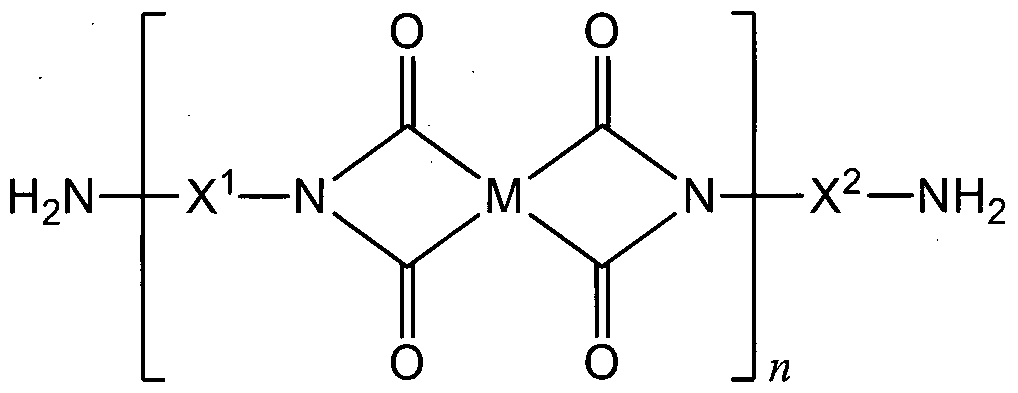
M은 지방족, 지환족 또는 방향족 화합물 유래의 4가 라디칼이고,
X1 및 X2는 각각 독립적으로 알킬렌기, 알킬리덴기 또는 방향족 화합물
유래의 2가 라디칼이고,
n은 1 이상의 수이다.
상기 화학식 1로 표시되는 이미드계 화합물은 분자 내에 이미드 구조를 포함함으로써, 상기 수지 결합제가 우수한 내열성을 갖도록 하면서도, 상기 브레이크 패드 마찰재용 수지 조성물이 높은 온도에서 가공 또는 경화되는 경우에도 물성에 악영향을 미칠 수 있는 보이드 (void) 등의 결함을 유발시키지 않도록 한다 : 상기 화학식 1에서, M은 지방족, 지환족 또는 방향족 화합물 유래의 4가 라디칼일 수 있다. 여기서, 상기 지방족, 지환족 또는 방향족 화합물에서 분자 내
4개의 수소 원자가 이탈되어 형성된 라디칼이 각각 상기 화학식 1의 카보닐기의 탄소 원자와 연결되는 구조를 가질 수 있다.
구체적으로, 상기 지방족 화합물로는, 직쇄형 또는 분지쇄형인 알칸, 알켄, 또는 알킨이 예시될 수 있다. 상기 지방족 화합물로는, 탄소수 2 내지 20, 탄소수 2 내지 16, 탄소수 2 내지 12, 탄소수 2 내지 8 또는 탄소수 2 내지 4의 알칸, 알켄, 또는 알킨이 사용될 수 있다. 상기 알칸, 알켄, 또는 알킨은 임의로 하나 이상의 치환기에 의해 치환되어 있을 수 있다.
상기 지환족 화합물로는, 탄소수 3 내지 20, 탄소수 3 내지 16, 탄소수 3 내지 12, 탄소수 3 내지 8 또는 탄소수 3 내지 4의 비방향족 고리 구조를 포함하는 탄화수소 화합물이 예시될 수 있다. 이러한 지환족 탄화수소 화합물은 고리 구성 원자로서 , 산소 또는 질소와 같은 헤테로 원자를 적어도 하나 포함할 수도 있으며, 필요한 경우에 임의로 하나 이상의 치환기로 치환되어 있을 수 있다. 상기 방향족 화합물로는, 벤젠, 벤젠을 포함하는 화합물 또는 상기 중 어느 하나의 유도체가 예시될 수 있다. 상기 벤젠을 포함하는 화합물로는, 2개 이상의 벤젠 고리가 하나 또는 2개의 탄소 원자를 공유하면서 축합되어 있거나, 직접 연결된 구조 또는 적절한 링커 (linker)에 의해 연결되어 있는 구조의 화합물을 의미할 수 있다. 상기 2개의 벤젠 고리를 연결하는 것에 적용되는 링커로는, 알킬렌기, 알킬리덴기, -0-, -S-, -C(=0)-,— S(=0)—, -S(=0)2-, -C(O)— Ο-ΙΛΟ-
C(=O)-, -L2-C(=0)-0-L3-, -L4-0-C(=0)-L5-, 또는 -ΙΛΑ -ΙΛΑ^-ΙΛ 등이 예시될 수 있다. 상기 예시에서 L1 내지 L8는 각각 독립적으로, 단일 결합, -0-, 알킬렌기,
또는 알킬리덴기이고; Ari 및 Ar2는 각각 독립적으로 아릴렌기일 수 있다. 상기 방향족 화합물은, 예를 들어, 6개 내지 30개, 6개 내지 28개, 6개 내지 27개, 6개 내지 25개, 6개 내지 20개 또는 6개 내지 12개의 탄소 원자를 포함할 수 있고, 필요한 경우에 하나 이상의 치환기에 의해 치환되어 있을 수 있다. 상기 방향족 화합물의 탄소 원자의 수는, 그 화합물이 전술한 링커를 포함하는 경우에, 그 링커에 존재하는 탄소 원자도 포함한 수이다. 구체적으로 예를 들어, 상기 화학식 1에서 M은 알칸, 알켄, 또는 알킨 유래의 4가 라디칼이거나, 또는 하기 화학식 2 내지 7 중 어느 하나로 표시되는 화합물 유래의 4가 라디칼일 수 있다.
화학식 2]

[화학식 3]

상기 화학식 3에서, R1 내지 R8은 각각 독립적으로, 수소, 알킬기, 알콕시기, 또는 아릴기이다.
[화학식 4ᅵ

상기 화학식 4에서 ,
R1 내지 R10은 각각 독립적으로, 수소, 알킬기, 알콕시기, 또는 아릴기이고, X는 단일 결합, 알킬렌기, 알킬리덴기, -0-,ᅳ s-, -c(=o)-, -s(=o)-, -S(=O)2-, - C{=0)-0-U-0-C(=0)-, -L2-C(=0)-O-L3-, -L4-O-C(=0)-L5-, 또는 -ΙΛΑ ΙΛΑ^-ΙΛ 이며; 여기에서 L1 내지 L8은 각각 독립적으로, 단일 결합, -Ο-, 알킬렌기, 또는 알킬리덴기이고; Ar1 및 Ar2는 각각 독립적으로 아릴렌기이다.
본 명세서에서 1단일 결합1은 그 부분에 원자가 존재하지 않은 경우를 의미한다. 따라서, 상기 화학식 4에서 X가 단일 결합인 경우, X로 표시되는 부분에 원자가 존재하지 않은 경우를 의미하고, 이 경우 X의 양측의 벤젠 고라는 직접 연결되어 비페닐 구조를 형성할 수 있다.
상기 화학식 4에서, 상기 X중에서 -qo^o-L -o-qo)-, -L2-C(=O)-0-L3-, 또는 -L4-O-C(=O)-L5-에서 L1 내지 L5는 각각 독립적으로, 탄소수 1 내지 12, 탄소수 1 내지 8, 또는 탄소수 1 내지 4의 알킬렌기 또는 알킬리덴기일 수 있고; 상기 알킬렌기 또는 알킬리덴기는 치환 또는 비치환되어 있을 수 있다.
또한, 화학식 4의 X 중에서 - l^-ArLLZ-A -L8-에서, 상기에서 L6 및 L8은 - O-일 수 있고; L7은 탄소수 1 내지 12, 탄소수 1 내지 8, 또는 탄소수 1 내지 4의 알킬렌기 또는 알킬리덴기일 수 있으며; 상기 알킬렌기 또는 알킬리덴기는 치환 또는 비치환되어 있을 수 있다. 상기 Ari 및 Ar2는 페닐렌기일 수 있고, 이러한 경우에 L7을 기준으로 상기 L6 및 L8은 각각 상기 페닐렌의 오소, 메타 또는 파라 위치에 연결되어 있을 수 있다.
5]
 상기 화학식 5에서
R1 내지 R4는 각각 독립적으로, 수소, 알킬기, 또는 알콕시기이되, R1 내지
상기 화학식 5에서
R1 내지 R4는 각각 독립적으로, 수소, 알킬기, 또는 알콕시기이되, R1 내지
R4 중 2개는 서로 연결되어 알킬렌기를 형성할 수 있고,
A는 알킬렌기 또는 알케닐렌기이되, A의 알킬렌기 또는 알케닐렌기는 헤테로 원자로서 하나 이상의 산소 원자를 포함할 수 있다.
6]

상기 화학식 6에서, R1 내지 R4는 각각 독립적으로, 수소,
알콕시기이고 , A는 알킬렌기이다.
화학식 7]

예를 들어, 상기 4가 라디칼이 화학식 3의 화합물로부터 유래하는 경우, 화학식 3의 R1 내지 R6 중 1개 이상, 2개 이상, 3개 이상 또는 4개가 라디칼을 형성하거나, 혹은 상기 R1 내지 R6에 존재하는 알킬기, 알콕시기, 또는 아릴기의 수소 원자가 이탈되어 상기 라디칼이 형성될 수 있다. 상기에서 라디칼을
형성한다는 것은, 상술한 바와 같이 그 부위가 화학식 1의 카보닐기의 탄소 원자에 연결되는 것을 의미할 수 있다.
또한, 상기 4가 라디칼이 화학식 4의 화합물로부터 유래하는 경우, 화학식 4의 R1 내지 R10은 각각 독립적으로, 수소, 알킬기, 알콕시기 또는 아릴기이되, 1개 이상, 2개 이상, 3개 이상 또는 4개는 화학식 1에 연결되는 라디칼을 형성할 수 있다. 상기 라디칼을 형성하지 않는 각각은 수소, 알킬기 또는 알콕시기이거나, 수소 또는 알킬기일 수 있다. 하나의 예시에서 화학식 4에서는 R7 내지 R9 중 어느 2개와 R2 내지 R4 중 어느 2개가 상기 라디칼을 형성할 수 있고, 다른 치환기는 각각 독립적으로 수소, 알킬기, 알콕시기 또는 아릴기이거나, 수소, 알킬기 또는 알콕시기이거나, 또는 수소 또는 알킬기일 수 있다. 더욱 구체적으로 예를 들어, 상기 화학식 2로 표시되는 화합물은 벤젠 또는 1,2,4,5-테트라알킬벤젠 둥일 수 있으나, 이로 제한되는 것은 아니다.
상기 화학식 4로, 표시되는 화합물은 비페닐이나, 또는 하기 화학식 A 내지 F 중 어느 하나의 화학식으로 표시되는 화합물일 수 있으나, 이로 제한되는 것은 아니다:


]

[화학식 I]
众
상기 화학식 6으로 표시되는 화합물은 하기 화학식 J로 표시되거나, 또는 하기 화학식 j로 표시되는 화합물와 수소 증 적어도 하나가 알킬기로 치환되어 있는 화합물이 예시될 수 있으나, 이로 제한되는 것은 아니다.
[화학식 J]

구체적으로 예를 들어 , χι 및 X2는 각각 독립적으로, 하기 화학식 8 내지 10중 어느 하나로 표시되는 화합물 유래의 2가 라디칼일 수 있다.
화학식 8

[화학식 9]

상기 화학식 9에서,
Rll 내지 은 각각 독립적으로, 수소, 알킬기, 알콕시기, 아릴기, 히드록시기, 또는 카르복실기이고,
X'은 단일 결합, 알킬렌기, 알킬리덴기 -0-, -S-, -C(=O)-, -NR21-, -S(=O)-, -
S(=O)2-, -L9-Ar3— Lio- 또는 LU-A^-L^-A^-L13- 이며; 여기에서 R21은 수소, 알킬기 알콕시기, 또는 아릴기이고; L9 내지 L13은 각각 독립적으로, 단일 결합, -ᄋ- 알킬렌기, 또는 알킬리덴기이고; Ar3 내지 Ar5는 각각 독립적으로 아릴렌기이다.
[화학식 1이

예를 들어, 상기 2가 라디칼이 상기 화학식 8로 표시되는 화합물로부터 유래하고, 그 예로 페닐렌인 경우, 화학식 1의 Χΐ에서 Ν에 연결되는 부위를 기준으로 한 아민기의 치환 위치는 오소 (ortho), 메타 (meta) 또는 파라 (para) 위치일 수 있고, 화학식 1의 X2에서 N에 연결되는 부위를 기준으로 한 아민기의 치환 위치는 역시 오소 (ortho), 메타 (meta) 또는 파라 (para) 위치일 수 있다.
또한, 상기 2가 라디칼이 상기 화학식 9로 표시되는 화합물로부터 유래하는 경우, 화학식 9의 R7내지 R9중 어느 하나와 화학식 9의 R2 내지 R4 중 어느 하나가 화학식 1의 질소 원자에 연결되는 라디칼을 형성할 수 있다. 상기 라디칼을 형성하는 치환기를 계외한 다른 치환기는 각각 독립적으로 수소, 알킬기, 알콕시기 또는 아릴기이거나, 수소, 알킬기 또는 알콕시기이거나, 또는 수소 또는 알킬기일 수 있다. 더욱 구체적으로 예를 들어, 상기 화학식 8로 표시돠는 화합물은 적어도
하나의 히드록시기 또는 카복실기로 치환되어 있을 수 있는 벤젠이 예시될 수 있으나, 이로 제한되는 것은 아니다.
상기 화학식 9로 표시되는 화합물은 적어도 하나의 히드록시기 또는 카복실기로 치환되어 있을 수 있는 비페닐, 상기 화학식 A 내지 F 중 어느 하나로 표시되면서 적어도 하나의 히드록시기 또는 카복실기로 치환되어 있을 수 있는 화합물, 또는 하기 화학식 K 또는 M으로 표시되면서 적어도 하나의 히드록시기 또는 카복실기로 치환되어 있을 수 있는 화합물이 예시될 수 있으나, 이에 제한되는 것은 아니다.


M]

상기 화학식 10으로 표시되는 화합물은 하기 화학식 N으로 표시되거나, 또는 하기 화학식 N으로 표시되는 화합물의 수소 중 적어도 하나가 히드록시기 또는 카복실기로 치환되어 있는 화합물이 예시될 수 있으나, 이에 제한되는 것은 아니다.
[화학식 N]

본 명세서에 있어서, 알킬기는 특별히 달리 규정하지 않는 한, 탄소수 1 내지 20, 탄소수 1 내지 16, 탄소수 1 내지 12, 탄소수 1 내지 8, 또는 탄소수 1 내지 4의 알킬기일 수 있다. 상기 알킬기는 직쇄형, 분지쇄형, 또는 고리형일 수 있으며, 필요한 경우에 하나 이상의 치환기에 의해 치환되어 있을 수 있다.
본 명세서에 있어서, 알콕시기는 특별히 달리 규정하지 않는 한, 탄소수 1 내지 20, 탄소수 1 내지 16, 탄소수 1 내지 12, 탄소수 1 내지 8, 또는 탄소수 1 내지 4의 알콕시기일 수 있다. 상기 알콕시기는 직쇄형, 분지쇄형, 또는 고리형일 수 있으며, 필요한 경우에 하나 이상의 치환기에 의해 치환되어 있을 수 있다. 본 명세서에 있어서, 아릴기는 특별히 달리 규정하지 않는 한, 전술한 방향족 화합물로부터 유래된 1가 잔기를 의미할수 있다.
본 명세서에 있어서, 알킬렌기 또는 알킬리덴기는 특별히 달리 규정하지 않는 한, 탄소수 1 내지 20, 탄소수 1 내지 16, 탄소수 1 내지 12, 탄소수 1 내지 8, 또는 탄소수 1 내지 4의 알킬헨기 또는 알킬리덴기를 의미할 수 있다. 상기 알킬렌기 또는 알킬리덴기는 직쇄형, 분지쇄형, 또는 고리형일 수 있다. 또한, 상기 알킬렌기 또는 알킬리덴기는 임의적으로 하나 이상의 치환기로 치환되어 있을 수 있다.
본 명세서에 있어서, 지방족 화합물, 지환족 화합물, 방향족 화합물, 알킬기, 알콕시기, 아릴기, 알킬렌기, 또는 알킬리펜기 등에 임의적으로 치환되어 밌을 수 있는 치환기로는, 염소 또는 불소등의 할로겐, 글리시딜기, 에폭시알킬기, 글리시독시알킬기 또는 지환식 에폭시기 등의 에폭시기, 아크릴로일기, 메타크릴로일기, 이소시아네이트기, 티올기, 알킬기, 알콕시기, 또는 아릴기 등이 예시될 수 있으나, 이로 제한되는 것은 아니다.
한편, 상기 화학식 1에서, n은 이미드 반복 단위의 개수를 의미하며, 1 이상의 수이다. 구체적 ^로, 상기 n은 1 이상, 흑은 2 이상; 그리고 200 이하, 혹은 150 이하, 흑은 100 이하, 혹은 80 이하, 흑은 70 이하, 혹은 60 이하, 혹은 50 이하, 흑은 .40 이하, 흑은 30 이하, 흑은 20 이하, 혹은 10 이하, 혹은 5 이하일 수 있다.
특히, 상기 경화제는 상기 화학식 1에서 상기 n이 2 이상, 혹은 3 이상, 바람직하게는 2 내지 200 범위 내의 수인 화합물인 것이 높은 열안정성과 내열성의 발현을 가능하게 한다는 점에서 보다 바람직하게 적용될 수 있다. 한편, 상기 화학식 1로 표시되는 화합물은 공지의 유기 화합물의 합성법에 따라 합성할수 있으며, 그 구체적인 방식은 특별히 제한되지 않는다. 예를 들어, 화학식 1로 표시되는 화합물은, 디안하이드라이드 (dianhydride) 화합물과 디아민 화합물의 탈수 축합 반웅 등에 의해 형성할수 있다.
또한, 상기 화학식 1로 표시되는 화합물은 높은 비점을 가져서, 고온에서 휘발 내지는 분해되지 않으며, 이에 따라 상기 브레이크 패드 마찰재용 수지 조성물의 경화성이 안정적으로 유지되면서도, 고온의 가공 내지는 경화 과정에서 물성에 악영향을 줄 수 있는 보이드 (void)를형성하지 않는다.
일 예에 따르면, 상기 화학식 1로 표시되는 화합물은, 분해 온도가 300 °C 이상, 350 °C 이상, 400 °C 이상 또는 500°C 이상일 수 있다. 이때 분해 온도는, 상기 화학식 1로 표시되는 화합물의 분해율이 10% 이하, 5% 이하 또는 1% 이하의 범위로 유지되는 온도를 의미할 수 있다. 상기 분해 온도의 상한은 특별히 제한되지 않으나, 예를 들어, 약 1,000 °C 이하일 수 있다.
또한, 상기 화학식 1로 표시되는 화합물은, 코어의 M이나 링커인 X1 또는 X2의 선택에 의하여 상기 브레이크 패드 마찰재용 수지 조성물 자체의 프로세스 원도우 (process window), 즉 상기 브레이크 패드 마찰재용 수지 조성물의 용융 온도와 경화 온도의 차이를 용이하게 조절할 수 있어서, 다양한 물성의 경화제로서 작용할 수 있다. 상술한 바와 같이, 상기 수지 결합제는 상기 프탈로니트릴 화합물을 함유한 조성물이 상기 경화제에 의해 경화된 것으로서 , 상기 경화제는 상기
프탈로니트릴 화합물 1 몰 대비 0.02몰 내지 1.5 몰의 비율로 적용될 수 있다. 상기 프탈로니트릴 화합물이 충분히 경화되어 수지 결합제를 형성할 수 있도록 하기 위하여, 상기 경화제는 상기 프탈로니트릴 화합물 1 몰 대비 0.02 몰 이상으로 적용되는 것이 바람직하다. 다만, 경화제가 과량으로 적용될 경우 상기 수지 결합제를 포함하는 브레이크 패드 마찰재용 수지 조성물의 프로세스 원도우가 좁아질 수 있으므로, 상기 경화제는 상기 프탈로니트릴 화합물 1 몰 대비 1.5 몰 이하로 적용되는 것이 바람직하다. 그리고, 상기 수지 결합제의 함량은 상기 연마 입자 및 층전제의 함량, 마찰 대상 물질의 종류 등에 따라 달라질 수 있으며, 바람직하게는 상기 브레이크 패드 마찰재용 수지 조성물 전체 중량의 5 내지 30 중량0 /0일 수 있다. 구체적으로, 상기 수지 결합제는 상기 브레이크 패드 마찰재용 수지 조성물 전체 중량의 5 중량0 /0 이상, 흑은 10중량0 /0 이상, 흑은 15 중량 % 이상, 흑은 20 중량0 /0 이상; 그리고 30 중량0 /0 이하,흑은 25 중량0 /0 이하로 포함될 수 있다.
상기 브레이크 패드 마찰재가 목표로 하는 내열성을 나타낼 수 있도록 하면서도 마찰재의 강도를 향상시키고, 상기 첨가제들이 브레이크 패드 마찰재에 층분히 결합되어 있을 수 있도록 하기 위하여, 상기 수지 결합제의 함량은 5 중량0 /0 이상인 것이 바람직하다. 다만, 수지 결합제가 과량으로 첨가될 경우 마찰 저항이 낮아져 브레이크 패드의 마찰성능이 저하될 수 있으므로, 상기 수지 결합제는 30 중량0 /0 이하로 포함되는 것이 바람직하다. 한편, 상기 브레이크 패드 마찰재용 수지 조성물은 본 발명이 속하는 기술분야에서 잘 알려진 첨가제들이 특별한 제한 없이 포함될 수 있다.
바람직하게는, 상기 브레이크 패드 마찰재용 수지 조성물은 상기 첨가제로 강화 섬유, 층전제, 연마제, 및 윤활제를 포함한다.
상기 강화 섬유, 층전제, 연마제, 및 윤활제로는 각각 본 발명이 속하는 기술분야에서 잘 알려진 것이 특별한 제한 없이 적용될 수 있다. 상기 강화 섬유, 층전제, 연마제, 및 윤활제의 구체적인 종류는 브레이크 패드 마찰재에 요구되는 특성에 따라 적절히 조절될 수 있다.
일 예로, 상기 강화 섬유는 금속 섬유, 탄소 섬유, 유리 섬유, 아라미드 섬유, 티탄산칼륨 섬유, 셀를로이드 섬유, 해포석 (sepiolite) 섬유, 세라믹 섬유, 및 아크릴 섬유로 이루어진 군에서 선택된 1종 이상의 섬유일 수 있다.
상기 강화 섬유의 함량은 목적으로 하는 강화 특성에 따라 상기 브레이크 패드 마찰재용 수지 조성물 전체 중량의 15 내지 45 중량%일 수 있다.
구체적으로, 상기 강화 섬유는 상기 브레이크 패드 마찰재용 수지 조성물 전체 중량의 15 중량0 /0 이상, 흑은 20 증량 % 이상, 흑은 25 중량0 /0 이상; 그리고 45 증량% 이하, 혹은 40 중량0 /0 이하, 흑은 35 중량0 /0 이하, 혹은 30 중량 % 이하로 포함될 수 있다. 마찰재의 강도를 향상시키고 결합제와의 강화 효과가 층분히 발현될 수 있도록 하기 위하여, 상기 강화 섬유의 함량은 15 중량0 /0 이상인 것이 바람직하다. 다만, 강화 섬유가 과량으로 첨가될 경우 결합제와 결합되지 않은 강화섬유가 고온에서 쉽게 떨어져 나가고, 제동 소음의 발생 빈도를 증가시켜 브레이크 패드의 마찰 성능이 저하될 수 있으므로, 상기 강화 섬유는 45 중량0 /0 이하로 포함되는 것이 바람직하다. 상기 층전제는 황산바륨 및 탄산칼슴으로 이루어진 군에서 선택된 1종 이상의 화합물일 수 있으며, 이로 제한되는 것은 아니다.
상기 층전제의 함량은, 브레이크 패드 마찰재가 나타내는 강성, 압축 강도, 굽힘 계수, 내마모도, 열전도율, 전성 등 기본적인 물성을 유지하면서 가격 저감 및 마찰재의 밀도 증가와 같은 목적으로 하는 특성에 따라, 상기 브레이크 패드 마찰재용 수지 조성물 전체 중량의 10 내지 40중량0 /0일 수 있다.
구체적으로, 상기 층전제는 상기 브레이크 패드 마찰재용 수지 조성물 전체 중량의 10 중량0 /0 이상, 흑은 15 중량0 /0 이상; 그리고 40 중량0 /0 이하, 흑은 35 중량0 /0 이하로 포함될 수 있다. 층전제가 부족할 경우 마찰재의 밀도가 감소하여 내마모성이 떨어질 수 있으므로 충전 효과가 충분히 발현될 수 있도록 하기 위하여, 상기 층전제의 함량은 10 중량0 /0 이상인 것이 바람직하다. 다만, 층전제가 과량으로 첨가될 경우 브레이크 패드의 마찰 성능이 저하되거나 결합제와 결합되지 않은 층전제가 브레이크 패드 마찰재의 표면으로부터 쉽게 탈락될 수 있으므로, 상기 층전재는 40 중량0 /0 이하로 포함되는 것이 바람직하다.
상기 연마제는 지르코니아, 알루미나, 지르코늄 실리케이트, 및 실리콘 카바이드로 이루어진 군에서 선택된 1종 이상의 화합물일 수 있으며, 이로 제한되는 것은 아니다.
' 상기 연마제의 함량은, 브레이크 패드 마찰재에 부여하고자 하는 마찰 특성에 따라, 상기 브레이크 패드 마찰재용 수지 조성물 전체 증량의 5 내지 20 중량 %일 수 있다.
구체적으로, 상기 연마재는 상기 브레이크 패드 마찰재용 수지 조성물 전체 중량의 5 중량0 /0 이상, 혹은 10 중량0 /0 이상; 그리고 20 증량0 /。 이하, 흑은 15 중량0 /0 이하로 포함될 수 있다. 상기 브레이크 패드 마찰재의 마찰력을 조절하고 브레이크 디스크의 표면에 열변형된 마찰막의 제거가 층분히 이루어질 수 있도록 하기 위하여, 상기 연마제의 함량은 5 중량0 /0 이상인 것이 바람직하다. 다만, 연마제가 과량으로 첨가될 경우 브레이크 디스크가 과도하게 마모되어 토크 진폭을 증가시키고 저더 (judder)와 같은 진동 및 소음의 발생 빈도를 증가시켜 브레이크 성능을 저하시킬 수 있으므로, 상기 연마제는 20 중량0 /0 이하로 포함되는 것이 바람직하다. 그리고, 상기 윤활제는 흑연, 코크스, 안티몬 산화물, 몰리브덴 설파이드, 핵사고날 보론나이트라이드, 그래핀, 탄소나노류브, 및 금속 설파이드로 이루어진 군에서 선택된 1종 이상의 화합물일 수 있으며, 이로 제한되는 것은 아니다.
상기 윤활제의 함량은, 브레이크 패드 마찰재에 부여하고자 하는 윤활 특성에 따라, 상기 브레이크 패드 마찰재용 수지 조성물 전체 중량의 5 내지 30 중량%일 수 있다. 구체적으로, 상기 윤활제는 상기 브레이크 패드 마찰재용 수지 조상물 전체 증량의 5 중량0 /0 이상, 혹은 10 중량0 /。 이상, 흑은 15 중량 % 이상; 그리고 30 중량0 /0 이하, 혹은 25 증량 % 이하, 혹은 20증량0 /0 이하로 포함될 수 있다. 적절한 마찰막 형성을 통해 윤활 효과가 발현될 수 있도록 하기 위하여, 상기 윤활제의 함량은 5 중량0 /0 이상인 것이 바람직하다. 다만, 윤활제가 과량으로 첨가될 경우 브레이크 패드의 마찰 성능이 저하될 수 있으므로, 상기 윤활제는 30 중량0 /0 이하로 포함되는 것이 바람직하다. 이 밖에도, 상기 브레이크 패드 마찰재용 수지 조성물에는 상기 첨가제로
탄소 복합 재료 , 금속 합금, 소결 합금, 마찰 조정재 등이 더욱 포함될 수 있다. 예를 들어 , 상기 마찰 조정재로는 캐슈 더스트, 고무 더스트, 미가황의 각종 고무 입자, 가황된 각종 고무 입자 등의 유기 충전제가 적용될 수 있다. II. 브레이크 패드 마찰재
발명의 다른 일 구현 예에 따르면, 상술한 수지 조성물로 제조된 브레이크 패드 마찰재가 제공된다.
특히, 상기 브레이크 패드 마찰재는 상술한 브레이크 패드 마찰재용 수지 조성물에 의해 제조됨에 따라 브레이크의 작동 과정에서 마찰열에 의한 브레이크 패드 마찰재의 열분해 혹은 열적 파손이 최소화될 수 있어, 향상된 내구도와 수명을 나타낼 수 있고, 안정적인 브레이크 성능의 확보를 가능케 한다.
상기 브레이크 패드 마찰재는 상술한 브레이크 패드 마찰재용 수지 조성물을 사용하여 본 발명이 속하는 기술분야에 잘 알려진 방법에 의해 제조될 수 있다.
예를 들어, 상술한 브레이크 패드 마찰재용 수지 조성물의 구성 성분들 중 강화 섬유, 층전제, 연마제, 및 윤활제를 균일하게 혼합한 후, 소정의 은도 및 압력 조건 하에서 상기 수지 결합제를 첨가하여 흔련한흔합물을 준비한다. 상기 흔합물을 소정의 온도 및 압력 조건 하에서 예비 성형한 후 건조 및 예열하여 예비 성형품을 형성한다. 이어서, 상기 예비 성형품을 소정의 은도와 압력 조건 하에서 패드의 형태로 성형하여 가압 성형품을 형성한다. 그리고, 상기 가압 성형품을 소정의 온도로 열처리하여 브레이크 패드 마찰재의 최종 제품이 제조될 수 있다.
【발명의 효과】
본 발명에 따른 브레이크 패드 마찰재용 수지 조성물은 높은 내열성과 우수한 가공성을 가져, 향상된 내구성과 안정적인 브레이크 성능을 확보할 수 있는 브레이크 패드 마찰재의 제공을 가능케 한다.
【도면의 간단한 설명】
도 1 은 본 발명의 제조예 1 에 따른 화합물 (PN1)에 대한 Ή-NMR 스펙트럼이다
도 2 는 발명의 제조예 2 에 따른 화합물 (PN2)에 대한 iH-NMR 스펙트럼이다.
도 3 은 발명의 제조예 3 에 따른 화합물 (CA1)에 대한 iH-NMR 스펙트럼이다
도 4 는 발명의 제조예 4 에 따른 화합물 (CA2)에 대한 iH-NMR 스펙트럼이다.
【발명을 실시하기 위한 구체적인 내용】
이하, 발명의 이해를 돕기 위하여 바람직한 실시예들을 제시한다. 그러나 하기의 실시예들은 발명을 예시하기 위한 것일 뿐, 발명을 이들만으로 한정하는 것은 아니다. 제조예 1. 프탈로니트릴 화합물 (PN1ᅵ의 합성
하기 화학식 11의 화합물 (PN1)을 다음의 방식으로 합성하였다.
하기 화학식 12의 화합물 32.7 g 및 120 g의 DMF(dimethyl formamide)를 3-neck RBF(3 neck round bottom flask)에 투입하고, 상온에서 교반하여 용해시켰다. 이어서 하기 화학식 13의 화합물 51.9 g을 추가하고, DMF 50 g을 추가한 후에 교반하여 용해시켰다. 이어서 탄산칼륨 62.2 g 및 DMF 50 g을 함께 투입하고, 교반하면서 온도를 85° C까지 승온시켰다. 상기 상태에서 약 5 시간 정도 반웅시킨 후에 상온까지 냉각시켰다. 넁각된 반웅 용액을 0.2N 농도의 염산 수용액에 부어 중화 침전시키고, 필터링 후에 물로 세척하였다. 그 후, 필터링된 반웅물을 100°C의 진공 오본에서 1일 건조하고, 물과 잔류 용매를 제거한 후에 하기 화학식 11의 화합물 (PN1)을 약 80 중량0 /0의 수율로 수득하였다. 수득한 화학식 11의 화합물 (PN1)에 대한 Ή-NMR분석 결과를 도 1에 나타내었다.
[화학식 11]

2]

제조예 2. 프탈로니트릴 화합물 (PN2ᅵ의 합성
하기 화학식 14의 화합물 (PN2)은 다음의 방식으로 합성하였다.
4,4'-bis(hydroxyphenyl)methane 28.0 g 및 150 mL의 DMF(dimethyl formamide)를 500 mL 3-neck RBF(3 neck round bottom flask)에 투입하고, 상온에서 용해시켰다. 이어서 상기 흔합물에 4-nitrophthalonitrile 48.5 g을 추가하고, DMF 50 g을 추가한 후에 교반하여 용해시켰다. 이어서 탄산칼륨 58.1 g 및 DMF 50 g을 함께 투입하고, 교반하면서 온도를 85° C까지 승온시켰다. 약 5 시간 정도 반웅시킨 후에 상온까지 냉각시켰다. 냉각된 반웅 용멕을 0.2N 농도의 염산 수용액에 부어 중화 침전시키고, 필터링 후에 물로 세척하였다. 그 후, 필터링된 반웅물을 100°C의 진공 오본에서 1일 건조하고, 물과 잔류 용매를 제거한 후에 목적 화합물 (PN2)을 약 83중량 %의 수율로 수득하였다. 수득한 화학식 14의 화합물 (PN2)에 대한 H-NMR분석 결과를 도 2에 나타내었다.
[화학식 14]

하기 화학식 15의 화합물 (CA1)은 디아민과 디안하이드라이드의 탈수축합에 의해 합성하였다. 4,4'-옥시디아닐린 (4,4'-oxydianiline) 24 g 및 NMP(N-methyl-pyrrolidone) 40 g을 3-neck RBF(3 neck round bottom flask)에 투입하고, 상온에서 교반하여 용해시켰다. 워터 배스 (water bath)로 상기를 냉각시키고, 하기 화학식 16의 화합물 8.7 g을 서서히 3번에 나누어 40 g의 NMP와 함께 투입하였다. 투입된 화합물이 모두 용해되면, azeotrope를 위해 반웅물에 를루엔 16 g을 투입하였다. Dean-Stark 장치와 리플력스 콘덴서를 설치하고, Dean-Stark 장치에 를루엔을 투입하여 채웠다. 탈수 축합 촉매로 피리딘 4.2 mL를 투입하고, 온도를 170°C까지 승온시키고, 3 시간 동안 교반하였다. 이미드 고리가 형성되면서 발생되는 물을 Dean Stark 장치로 제거해 주면서 2 시간 동안 추가 교반하고, 잔류 를루엔과 피리딘을 제거하였다. 반웅 생성불을 상온까지 냉각하고, 메탄올에 침전시켜서 회수하였다. 회수된 침전물을 메탄올로 추출하여 잔류 반웅물을 제거하고, 진공 오븐에서 건조하여 화학식 15의 화합물 (CA1)을 약 85 중량 %의 수율로 수득하였다. 수득한 화학식 15와 화합물 (CA1)에 대한 iH-NMR분석 결과를 도 3에 나타내었다.
15]

[화학식 16]
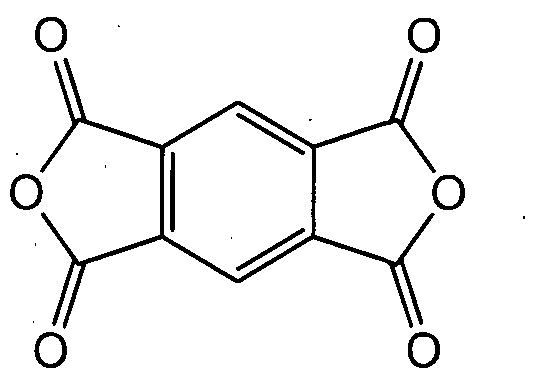
하기 화학식 17의 화합물 (CA2)은 디아민과 디안하이드라이드의 탈수축합에 의해 합성하였다. m-phenylene diamine 8.1 g과 NMP(N— methyl pyrrolidone) 50 g을 3-neck RBF(3 neck round bottom flask)에 투입하고, 상온에서 교반하여 용해시켰다. 워터 배스 (water bath)로 상기를 넁각하고, 하기 화학식 18의 화합물 26 g을 서서히 3번에 나누어 60 g의 NMP와 함께 투입하였다. 투입된 화합물이 모두 용해되면, azeotrope 반응을 위해 반응물에 를루엔 23 g을 투입하였다. Dean Stark 장치와 리플럭스 콘덴서를 설치하고, Dean Stark 장치에 를루엔을 투입하여 채웠다. 탈수 축합 촉매로 피리딘 5.2 mL을 투입하고, 온도를 170°C까지 승온시키고, 3 시간 동안 교반하였다. 이미드 고리가 형성되면서 발생되는 물을 Dean Stark 장치로 제거하면서, 2 시간 동안 추가 교반하고, 잔류 를루엔과 피리딘을 제거하였다. 반웅 생성물을 상온까지 냉각하고, 메탄올에 침전시켜서 회수하였다. 회수된 침전물을 메탄올로 Soxhlet 추출하여 잔류 반옹물을 제거하고, 진공 오본에서 건조하여 화학식 17의 화합물 (CA2)을 약 93 중량 %의 수율로 수득하였다. 상기 화학식 17의 화합물 (CA2)에 대한 1H-NMR 분석 결과를 도 4에 나타내었다.

상기 화학식 17에서 η은 약 3이다.

상기 제조예 1의 프탈로니트릴 화합물 (PN1)의 1 몰 대비 0.2 몰의 비율로 상기 제조예 3의 경화제 (CA1)를 흔합한 수지 결합제를 준비하였다.
강화 섬유로 아라미드 섬유 5 증량%, 암면 5 중량0 /0, 및 티탄산칼륨 섬유 15 중량0 /0;
충전제로 황산바륨 25 중량0 /0;
연마제로 지르코니아 15 중량0 /0;
윤활제로 혹연 5 중량0 /0 및 몰리브덴 설파이드 10 중량0 /0; 및
상기 수지 결합제 20 중량0 /0
를 뢰디게 믹서에 투입하고, 5 분간 흔합하여 브레이크 패드 마찰재용 수지 조성물을 제조하였다.
상기 수지 조성물을 열 성형 금형에 투입하고 성형 온도 200 내지 250 °C 및 성형 압력 30 MPa의 조건 하에서 5 분간 가열, 가압 성형하여 성형물을 얻었다. 상기 성형물을 350 °C에서 6 시간 동안 열처리하여 경화시킨 후, 도장, 소부, 연마하여 브레이크 패드 마찰재 시편을 제조하였다. 실시예 2
상기 제조예 1의 프탈로니트릴 화합물 (PN1)의 1 몰 대비 0.2 몰의 비율로 상기 제조예 4의 경화제 (CA2)를 혼합한수지 결합제를 준비하였다.
강화 섬유로 아라미드 섬유 5 중량0 /0, 암면 5 중량0 /0, 및 티탄산칼륨 섬유
15 중량0 /0;
층전제로 황산바륨 25 중량0 /0;
연마제로 지르코니아 15 중량0 /0;
윤활제로 흑연 5 중량0 /。 및 몰리브덴 설파이드 10 중량0 /0; 및
상기 수지 결합제 20 중량0 /0
를 뢰디게 믹서에 투입하고, 5 분간 흔합하여 브레이크 패드 마찰재용 수지 조성물을 제조하였다.
상기 수지 조성물을 사용하여 상기 실시예 1과 동일한 방법으로 브레이크 패드 마찰재 시편을 제조하였다.
실시예 3
상기 제조예 2의 프탈로니트릴 화합물 (PN2)의 1 몰 대비 0.2 몰의 비율로 상기 제조예 3의 경화제 (CA1)를 흔합한수지 결합제를 준비하였다.
강화 섬유로 아라미드 섬유 5 중량0 /0, 암면 5 증량 %, 및 티탄산칼륨 섬유 15 중량0 /0;
충전제로 황산바륨 25 중량0 /0;
연마제로 지르코니아 15 중량0 /0;
윤활제로 흑연 5 중량0 /0 및 몰리브덴 설파이드 10중량0 /0; 및
상기 수지 결합제 20중량0 /0
를 뢰디게 믹서에 투입하고, 5 분간 흔합하여 브레이크 패드 마찰재용 수지 조성물을 제조하였다.
상기 수지 조성물을 사용하여 상기 실시예 1과 동일한 방법으로 브레이크 패드 마찰재 시편을 제조하였다. 실시예 4
상기 제조예 2의 프탈로니트릴 화합물 (PN2)의 1 몰 대비 0.2 몰의 비율로 상기 제조예 4의 경화제 (CA2)를 흔합한 수지 결합제를 준비하였다.
강화 섬유로 아라미드 섬유 5 중량0 /0, 암면 5 증량0 /0, 및 티탄산칼륨 섬유 15 중량0 /0;
층전제로 황산바륨 25 중량0 /0; .
연마제로 지르코니아 15 증량0 /0;
윤활제로 흑연 5 증량0 /0 및 몰리브덴 설파이드 10 중량0 /0; 및
상기 수지 결합제 20중량0 /0
를 뢰디게 믹서에 투입하고, 5 분간 흔합하여 브레이크 패드 마찰재용 수지 조성물을 제조하였다.
상기 수지 조성물을 사용하여 상기 실시예 1과 동일한 방법으로 브레이크 패드 마찰재 시편을 제조하였다. 비교예 1
강화 섬유로 아라미드 섬유 5 중량0 /0, 암면 5 중량0 /0, 및 티탄산칼륨 섬유
15 중량0 /0;
충전제로 황산바륨 25 중량0 /0;
연마제로 지르코니아 15 중량0 /0;
윤활제로 흑연 5 중량0 /0 및 몰리브덴 설파이드 10 중량 %; 및
수지 결합제로 스트레이트 (straight) 구조의 페놀 레진 20 증량0 /0
를 흔합하여, 브레이크 패드 마찰재용 수지 조성물을 제조하였다.
상기 수지 조성물을 사용하여 상기 실시예 1과 동일한 방법으로 브레이크 패드 마찰재 시편을 제조하였다. 비교예 2
강화 섬유로 아라미드 섬유 5 중량0 /0, 암면 5 증량0 /0, 및 티탄산칼륨 섬유 15 중량0 /0;
층전제로 황산바륨 25 중량 %;
연마제로 지르코니아 15 중량0 /0;
윤활제로 흑연 5 중량0 /0 및 몰리브덴 설파이드 10 증량0 /0; 및
수지 결합제로 폴리이미드 수지 20 중량 %를 흔합하여, 브레이크 패드 마찰재용 수지 조성물을 제조하였다.
상기 수지 조성물을 열 성형 금형에 투입하고 성형 온도 250 V 내지 350 °C까지 은도를 순차적으로 올리면서 성형 압력 30 MPa의 조건 하에서 가압과 감압을 반복하며 3 시간 동안 가열, 가압 성형하여 성형물을 얻었다. 상기 성형물을 350 °C에서 3 시간 동안 열처리하여 경화시킨 후, 도장, 소부, 연마하여 브레이크 패드 마찰재 시편을 제조하였다.
시험예 1. NMR분석
제조예 1 내지 제조예 4에서 얻은 PN1, PN2, CA1, 및 CA2 화합물에 대하여 Agilent사의 500 MHz NMR 장비를 이용하여 제조사의 매뉴얼 대로 H- NMR 분석을 수행하였다. NMR 측정을 위한 샘플은 대상 화합물을 DMSO(dimethyl sulfoxide)— d6에 용해시켜 제조하였다. 각 화합물에 대한 H- NMR분석 결과를 도 1 내지 도 4에 나타내었다.
시험예 2. 열안정성 평가
TGA (thermogravimetric analysis)를 통해 브레이크 패드 마찰재 시편에 대한 열안정성 (열분해 정도)를 평가하였고, 그 결과를 아래 표 1에 나타내었다. 구체적으로, TGA는 Mettler-Toledo사의 TGA e850 장비를 이용하여 수행하였고, 측정의 시편에 대하여 약 25°C에서 800°C까지 10°C/분의 속도로 온도를 승온시키면서 N2 flow의 분위기에서 분석을 수행하였다. 시험예 3. 내열성 평가
HDT(heat deflection temperature) 측정을 통해 브레이크 패드 마찰재용 수지 결합제에 대한 내열성을 평가하였고, 그 결과를 아래 표 1에 나타내었다. 구체적으로, 상기 내열성은 ASTM D648-16 (Method B) 규격의 시험법에 따라 측정하였다. 시험예 4. 내페이드 (anti-fade) 특성 평가
상기 브레이크 패드 마찰재를 자동차용 브레이크에 적용하여 브레이크 제동 성능 및 내페이드 특성을 평가 및 비교하였고 , 그 결과를 아래 표 1에 나타내었다.
구체적으로, 상기 브레이크 제동 성능은 JASO C406의 공인시험법에 준하여 다이나모 시험을 실행하고, 브레이크의 기본 성능 조건 (차속: 50 km/h, 감속도: 0.1-0.6 G), 브레이크의 고속 성능 (차속: 100 km/h, 감속도: 0.5 G)의 평균 마찰계수 및 고온 성능 시험시의 최저 마찰계수를 비교하였다. 그리고, 내페이드 특성 측정을 위해 상기 브레이크 제동 성능 실험 중 평균 마찰계수와 고속 성능 시험시 페이드로 감소한 마찰계수 (페이드양 = 평균마찰계수 - 최저마찰계수)를 비교하였다. 시험예 5. 고은 내마모성 평가
상기 브레이크 패드 마찰재를 자동차용 브레이크에 적용하여 브레이크 제동에 따른 고온 내마모성을 비교하였고, 그 결과를 아래 표 1에 나타내었다. 구체적으로, 상기 브레이크 제동 성능은 Krauss식 마찰 시험기를 이용하여
마모 시험을 실행하고, 압력 7 kgf/cm2 및 브레이크 디스크 온도 350 °C로 유지하면서 제동거리 25 km를 진행하여 고온에서의 내마모성을 평가하였다. 그리고, 내마모성 측정을 위해 브레이크 제동 실험 전 후의 브레이크 마찰재의 두께를 비교하였다.
【표 1】

Claims
【청구항 1】
프탈로니트릴 화합물을 함유한 조성물로부터 경화된 수지 결합제, 강화 섬유, 층전제, 연마제, 및 윤활제를 포함한, 브레이크 패드 마찰재용 수지 조성물.
"
【청구항 2】
제 1 항에 있어서,
상기 수지 결합제는 상기 프탈로니트릴 화합물을 함유한 조성물이 아민계 화합물, 히드록시계 화합물 및 이미드계 화합물로 이루어진 군에서 선택된 1종 이상의 경화제에 의해 경화된 것인, 브레이크 패드 마찰재용 수지 조성물.
[청구항 3】
제 2 항에 있어서 ,
상기 경화제는 하기 화학식 1로 표시되는 화합물인, 브레이크 패드 마찰재용 수지 조성물:
[화학식 1]

M은 지방족, 지환족 또는 방향족 화합물 유래의 4가 라디칼이고,
XI 및 X2는 각각 독립적으로 알킬렌기, 알킬리덴기 또는 방향족 화합물 유래의 2가 라디칼이고,
η은 1 아상의 수이다.
【청구항 4】
제 3 항에 있어서 ,
상기 경화제는 상기 화학식 1에서 상기 η이 2 내지 200 범위 내의 수인
화합물인, 브레이크 패드 마찰재용 수지 조성물.
【청구항 5】
제 1 항에 있어서,
상기 강화 섬유는 금속 섬유, 탄소 섬유, 유리 섬유, 아라미드 섬유, 티탄산칼륨 섬유, 셀를로이드 섬유, 해포석 (sepiolite) 섬유, 세라믹 섬유, 및 아크릴 섬유로 이루어진 군에서 선택된 1종 이상을 포함하는, 브레이크 패드 마찰재용 수지 조성물.
【청구항 6】
제 1 항에 있어서,
상기 층전제는 황산바륨 및 탄산칼슘으로 이루어진 군에서 선택된 . 1종 이상을 포함하는, 브레이크 패드 마찰재용 수지 조성물.
【청구항 7】
제 1 항에 있어서 ,
상기 연마제는 지르코니아, 알루미나, 지르코늄 실리케이트, 및 실리콘 카바이드로 이루어진 군에서 선택된 1종 이상을 포함하는, 브레이크 패드 마찰재용 수지 조성물.
【청구항 8】
제 1 항에 있어서,
상기 윤활제는 흑연, 코크스, 안티몬 산화물, 몰리브덴 설파이드, 핵사고날 보론나이트라이드, 그래핀, 탄소나노튜브, 및 금속 설파이드로 이루어진 군에서 선택된 1종 이상을 포함하는, 브레아크 패드 마찰재용 수지 조성물.
【청구항 9】
제 1 항에 있어서,
5 내지 30 중량 %의 상기 수지 결합제
15 내자 45 중량 %의 상기 강화 섬유,
10 내지 40 중량 %의 상기 층전제,
5 내지 20 중량0 /0의 상기 연마제, 및
5 내지 30 중량 %의 상기 윤활제
를 포함한, 브레이크 패드 마찰재용 수지 조성물.
【청구항 10】
제 1 항의 수지 조성물로 제조된 브레이크 패드 마
Priority Applications (4)
| Application Number | Priority Date | Filing Date | Title |
|---|---|---|---|
| JP2019534354A JP6873242B2 (ja) | 2017-05-22 | 2018-05-21 | ブレーキパッド摩擦材用樹脂組成物および前記樹脂組成物で製造されたブレーキパッド摩擦材 |
| CN201880008148.6A CN110214237B (zh) | 2017-05-22 | 2018-05-21 | 用于制动衬块摩擦材料的树脂组合物和由该树脂组合物制成的制动衬块摩擦材料 |
| US16/468,901 US11002329B2 (en) | 2017-05-22 | 2018-05-21 | Resin composition for brake pad friction materials and brake pad friction materials made of the resin composition |
| EP18805477.9A EP3597957B1 (en) | 2017-05-22 | 2018-05-21 | Resin composition for brake pad friction materials and brake pad friction materials made of the resin composition |
Applications Claiming Priority (4)
| Application Number | Priority Date | Filing Date | Title |
|---|---|---|---|
| KR10-2017-0063090 | 2017-05-22 | ||
| KR20170063090 | 2017-05-22 | ||
| KR10-2018-0056587 | 2018-05-17 | ||
| KR1020180056587A KR102060191B1 (ko) | 2017-05-22 | 2018-05-17 | 브레이크 패드 마찰재용 수지 조성물 및 상기 수지 조성물로 제조된 브레이크 패드 마찰재 |
Publications (1)
| Publication Number | Publication Date |
|---|---|
| WO2018216986A1 true WO2018216986A1 (ko) | 2018-11-29 |
Family
ID=64395737
Family Applications (1)
| Application Number | Title | Priority Date | Filing Date |
|---|---|---|---|
| PCT/KR2018/005791 Ceased WO2018216986A1 (ko) | 2017-05-22 | 2018-05-21 | 브레이크 패드 마찰재용 수지 조성물 및 상기 수지 조성물로 제조된 브레이크 패드 마찰재 |
Country Status (1)
| Country | Link |
|---|---|
| WO (1) | WO2018216986A1 (ko) |
Cited By (3)
| Publication number | Priority date | Publication date | Assignee | Title |
|---|---|---|---|---|
| CN110256292A (zh) * | 2019-06-12 | 2019-09-20 | 四川大学 | 含烷基的具有自催化固化特性的邻苯二甲腈单体及其制备方法与应用 |
| EP3527607A4 (en) * | 2017-05-18 | 2019-09-25 | LG Chem, Ltd. | FRICTION-FREE POLYMERIZABLE COMPOSITION |
| EP3527327A4 (en) * | 2017-05-24 | 2019-11-06 | LG Chem, Ltd. | RESIN COMPOSITION FOR A GRINDING TOOL AND GRINDING TOOL PRODUCED FROM THE RESIN COMPOSITION |
Citations (15)
| Publication number | Priority date | Publication date | Assignee | Title |
|---|---|---|---|---|
| US4408035A (en) | 1981-08-24 | 1983-10-04 | The United States Of America As Represented By The Secretary Of The Navy | Phthalonitrile resin from diphthalonitrile monomer and amine |
| US5003078A (en) | 1989-05-16 | 1991-03-26 | The United States Of America As Represented By The Secretary Of The Navy | Synthesis of phthalonitrile resins containing ether and imide linkages |
| US5003039A (en) | 1988-11-18 | 1991-03-26 | The United States Of America As Represented By The Secretary Of The Navy | Amino phenyl containing curing agent for high performance phthalonitrile resin |
| US5004801A (en) | 1988-11-21 | 1991-04-02 | The United States Of America As Represented By The Secretary Of The Navy | Polymer of dithioether-linked phthalonitrile |
| US5132396A (en) | 1990-04-30 | 1992-07-21 | The United States Of America As Represented By The Secretary Of The Navy | Phthalonitrile monomers containing imide and/or phenoxy linkages, and polymers thereof |
| US5139054A (en) | 1991-06-28 | 1992-08-18 | Leggett & Platt, Incorporated | Spring interior forming and assembling apparatus |
| US5208318A (en) | 1991-03-15 | 1993-05-04 | Keller Teddy M | Phosphazene-containing amine as curing agent for phthalonitrile-base polymer |
| US5237045A (en) | 1992-01-09 | 1993-08-17 | The United States Of America As Represented By The Secretary Of The Navy | Curing phthalonitrile resins with acid and amine |
| US5292854A (en) | 1989-05-16 | 1994-03-08 | The United States Of America As Represented By The Secretary Of The Navy | Synthesis of phthalonitrile resins containing ether and imide linkages with aromatic diamine curing agent |
| KR100558158B1 (ko) * | 1997-10-02 | 2006-03-10 | 더 거번먼트 오브 더 유나이티드 스테이츠 오브 아메리카, 애즈 레프리젠티드 바이 더 세크러테리 오브 더 네이비 네이벌 리서치 래보러토리 | 낮은 반응성을 지닌 방향족 아민 경화제로 경화시킨섬유-강화 프탈로니트릴 조성물 |
| KR20070018159A (ko) * | 2005-08-09 | 2007-02-14 | 현대자동차주식회사 | 친환경 브레이크 마찰재용 이중재 조성물 및 이의 제조방법 |
| KR20110028187A (ko) * | 2009-09-11 | 2011-03-17 | 상신브레이크주식회사 | 자동차 브레이크 패드용 마찰재 |
| WO2016064298A1 (ru) * | 2014-10-24 | 2016-04-28 | Закрытое акционерное общество "Институт новых углеродных материалов и технологий" (ЗАО "ИНУМиТ") | Модифицированный кремний органическими фрагментами фталонитрильный мономер |
| KR20160115543A (ko) * | 2015-03-27 | 2016-10-06 | 주식회사 엘지화학 | 중합성 조성물 |
| KR20170065954A (ko) * | 2015-12-04 | 2017-06-14 | 주식회사 엘지화학 | 중합성 조성물 |
-
2018
- 2018-05-21 WO PCT/KR2018/005791 patent/WO2018216986A1/ko not_active Ceased
Patent Citations (16)
| Publication number | Priority date | Publication date | Assignee | Title |
|---|---|---|---|---|
| US4408035A (en) | 1981-08-24 | 1983-10-04 | The United States Of America As Represented By The Secretary Of The Navy | Phthalonitrile resin from diphthalonitrile monomer and amine |
| US5003039A (en) | 1988-11-18 | 1991-03-26 | The United States Of America As Represented By The Secretary Of The Navy | Amino phenyl containing curing agent for high performance phthalonitrile resin |
| US5004801A (en) | 1988-11-21 | 1991-04-02 | The United States Of America As Represented By The Secretary Of The Navy | Polymer of dithioether-linked phthalonitrile |
| US5350828A (en) | 1988-11-21 | 1994-09-27 | The United States Of America As Represented By The Secretary Of The Navy | Synthesis and polymerization of dithioether-linked phthalonitrile monomers |
| US5292854A (en) | 1989-05-16 | 1994-03-08 | The United States Of America As Represented By The Secretary Of The Navy | Synthesis of phthalonitrile resins containing ether and imide linkages with aromatic diamine curing agent |
| US5003078A (en) | 1989-05-16 | 1991-03-26 | The United States Of America As Represented By The Secretary Of The Navy | Synthesis of phthalonitrile resins containing ether and imide linkages |
| US5132396A (en) | 1990-04-30 | 1992-07-21 | The United States Of America As Represented By The Secretary Of The Navy | Phthalonitrile monomers containing imide and/or phenoxy linkages, and polymers thereof |
| US5208318A (en) | 1991-03-15 | 1993-05-04 | Keller Teddy M | Phosphazene-containing amine as curing agent for phthalonitrile-base polymer |
| US5139054A (en) | 1991-06-28 | 1992-08-18 | Leggett & Platt, Incorporated | Spring interior forming and assembling apparatus |
| US5237045A (en) | 1992-01-09 | 1993-08-17 | The United States Of America As Represented By The Secretary Of The Navy | Curing phthalonitrile resins with acid and amine |
| KR100558158B1 (ko) * | 1997-10-02 | 2006-03-10 | 더 거번먼트 오브 더 유나이티드 스테이츠 오브 아메리카, 애즈 레프리젠티드 바이 더 세크러테리 오브 더 네이비 네이벌 리서치 래보러토리 | 낮은 반응성을 지닌 방향족 아민 경화제로 경화시킨섬유-강화 프탈로니트릴 조성물 |
| KR20070018159A (ko) * | 2005-08-09 | 2007-02-14 | 현대자동차주식회사 | 친환경 브레이크 마찰재용 이중재 조성물 및 이의 제조방법 |
| KR20110028187A (ko) * | 2009-09-11 | 2011-03-17 | 상신브레이크주식회사 | 자동차 브레이크 패드용 마찰재 |
| WO2016064298A1 (ru) * | 2014-10-24 | 2016-04-28 | Закрытое акционерное общество "Институт новых углеродных материалов и технологий" (ЗАО "ИНУМиТ") | Модифицированный кремний органическими фрагментами фталонитрильный мономер |
| KR20160115543A (ko) * | 2015-03-27 | 2016-10-06 | 주식회사 엘지화학 | 중합성 조성물 |
| KR20170065954A (ko) * | 2015-12-04 | 2017-06-14 | 주식회사 엘지화학 | 중합성 조성물 |
Cited By (4)
| Publication number | Priority date | Publication date | Assignee | Title |
|---|---|---|---|---|
| EP3527607A4 (en) * | 2017-05-18 | 2019-09-25 | LG Chem, Ltd. | FRICTION-FREE POLYMERIZABLE COMPOSITION |
| US11136520B2 (en) | 2017-05-18 | 2021-10-05 | Lg Chem, Ltd. | Low-friction polymerizable composition |
| EP3527327A4 (en) * | 2017-05-24 | 2019-11-06 | LG Chem, Ltd. | RESIN COMPOSITION FOR A GRINDING TOOL AND GRINDING TOOL PRODUCED FROM THE RESIN COMPOSITION |
| CN110256292A (zh) * | 2019-06-12 | 2019-09-20 | 四川大学 | 含烷基的具有自催化固化特性的邻苯二甲腈单体及其制备方法与应用 |
Similar Documents
| Publication | Publication Date | Title |
|---|---|---|
| KR102060191B1 (ko) | 브레이크 패드 마찰재용 수지 조성물 및 상기 수지 조성물로 제조된 브레이크 패드 마찰재 | |
| KR102545905B1 (ko) | 프탈로니트릴 반응성 희석제 및 다이프탈로니트릴 수지를 함유하는 수지 블렌드, 프리프레그, 및 물품 | |
| JP6710782B2 (ja) | 化合物 | |
| WO2018216986A1 (ko) | 브레이크 패드 마찰재용 수지 조성물 및 상기 수지 조성물로 제조된 브레이크 패드 마찰재 | |
| JP2019533063A (ja) | 重合性組成物 | |
| CN108431085A (zh) | 邻苯二甲腈树脂 | |
| Zhang et al. | Preparation and characterization of POSS‐SiO2/cyanate ester composites with high performance | |
| KR102046576B1 (ko) | 저마찰 중합성 조성물 | |
| WO1995023833A1 (fr) | Composition de liant pour materiaux de friction et materiau de friction | |
| KR102395758B1 (ko) | 브레이크 패드 마찰재용 수지 조성물 및 상기 수지 조성물로 제조된 브레이크 패드 마찰재 | |
| KR102067688B1 (ko) | 연삭 공구용 수지 조성물 및 상기 수지 조성물로 제조된 연삭 공구 | |
| JP7080537B2 (ja) | 化合物 | |
| KR102818598B1 (ko) | 열 경화성 수지 조성물 및 페놀 수지 조성물 | |
| KR102202060B1 (ko) | 저마찰 수지 복합체 | |
| WO2018217038A1 (ko) | 연삭 공구용 수지 조성물 및 상기 수지 조성물로 제조된 연삭 공구 | |
| WO2018212533A1 (ko) | 저마찰 중합성 조성물 | |
| KR102409436B1 (ko) | 고내열 및 저마찰 특성을 갖는 금속성 표면 코팅용 수지 조성물 및 상기 수지 조성물로 표면 코팅된 금속성 기재 | |
| CN104788902A (zh) | 一种无机/有机杂化物环氧树脂增强剂 | |
| KR20190061840A (ko) | 저마찰 중합성 조성물 |
Legal Events
| Date | Code | Title | Description |
|---|---|---|---|
| 121 | Ep: the epo has been informed by wipo that ep was designated in this application |
Ref document number: 18805477 Country of ref document: EP Kind code of ref document: A1 |
|
| ENP | Entry into the national phase |
Ref document number: 2019534354 Country of ref document: JP Kind code of ref document: A |
|
| NENP | Non-entry into the national phase |
Ref country code: DE |
|
| ENP | Entry into the national phase |
Ref document number: 2018805477 Country of ref document: EP Effective date: 20190515 |