WO2018230404A1 - 水溶性マトリックス、樹脂粒子を含む予備成形体、及び樹脂粒子の製造方法 - Google Patents
水溶性マトリックス、樹脂粒子を含む予備成形体、及び樹脂粒子の製造方法 Download PDFInfo
- Publication number
- WO2018230404A1 WO2018230404A1 PCT/JP2018/021640 JP2018021640W WO2018230404A1 WO 2018230404 A1 WO2018230404 A1 WO 2018230404A1 JP 2018021640 W JP2018021640 W JP 2018021640W WO 2018230404 A1 WO2018230404 A1 WO 2018230404A1
- Authority
- WO
- WIPO (PCT)
- Prior art keywords
- resin
- water
- resin particles
- group
- soluble
- Prior art date
- Legal status (The legal status is an assumption and is not a legal conclusion. Google has not performed a legal analysis and makes no representation as to the accuracy of the status listed.)
- Ceased
Links
Images

Classifications
-
- C—CHEMISTRY; METALLURGY
- C08—ORGANIC MACROMOLECULAR COMPOUNDS; THEIR PREPARATION OR CHEMICAL WORKING-UP; COMPOSITIONS BASED THEREON
- C08J—WORKING-UP; GENERAL PROCESSES OF COMPOUNDING; AFTER-TREATMENT NOT COVERED BY SUBCLASSES C08B, C08C, C08F, C08G or C08H
- C08J3/00—Processes of treating or compounding macromolecular substances
- C08J3/12—Powdering or granulating
- C08J3/16—Powdering or granulating by coagulating dispersions
-
- C—CHEMISTRY; METALLURGY
- C08—ORGANIC MACROMOLECULAR COMPOUNDS; THEIR PREPARATION OR CHEMICAL WORKING-UP; COMPOSITIONS BASED THEREON
- C08J—WORKING-UP; GENERAL PROCESSES OF COMPOUNDING; AFTER-TREATMENT NOT COVERED BY SUBCLASSES C08B, C08C, C08F, C08G or C08H
- C08J3/00—Processes of treating or compounding macromolecular substances
- C08J3/12—Powdering or granulating
-
- C—CHEMISTRY; METALLURGY
- C08—ORGANIC MACROMOLECULAR COMPOUNDS; THEIR PREPARATION OR CHEMICAL WORKING-UP; COMPOSITIONS BASED THEREON
- C08K—Use of inorganic or non-macromolecular organic substances as compounding ingredients
- C08K5/00—Use of organic ingredients
- C08K5/04—Oxygen-containing compounds
- C08K5/05—Alcohols; Metal alcoholates
- C08K5/053—Polyhydroxylic alcohols
-
- C—CHEMISTRY; METALLURGY
- C08—ORGANIC MACROMOLECULAR COMPOUNDS; THEIR PREPARATION OR CHEMICAL WORKING-UP; COMPOSITIONS BASED THEREON
- C08K—Use of inorganic or non-macromolecular organic substances as compounding ingredients
- C08K5/00—Use of organic ingredients
- C08K5/04—Oxygen-containing compounds
- C08K5/15—Heterocyclic compounds having oxygen in the ring
- C08K5/151—Heterocyclic compounds having oxygen in the ring having one oxygen atom in the ring
- C08K5/1535—Five-membered rings
-
- C—CHEMISTRY; METALLURGY
- C08—ORGANIC MACROMOLECULAR COMPOUNDS; THEIR PREPARATION OR CHEMICAL WORKING-UP; COMPOSITIONS BASED THEREON
- C08L—COMPOSITIONS OF MACROMOLECULAR COMPOUNDS
- C08L29/00—Compositions of homopolymers or copolymers of compounds having one or more unsaturated aliphatic radicals, each having only one carbon-to-carbon double bond, and at least one being terminated by an alcohol, ether, aldehydo, ketonic, acetal or ketal radical; Compositions of hydrolysed polymers of esters of unsaturated alcohols with saturated carboxylic acids; Compositions of derivatives of such polymers
- C08L29/02—Homopolymers or copolymers of unsaturated alcohols
- C08L29/04—Polyvinyl alcohol; Partially hydrolysed homopolymers or copolymers of esters of unsaturated alcohols with saturated carboxylic acids
-
- C—CHEMISTRY; METALLURGY
- C08—ORGANIC MACROMOLECULAR COMPOUNDS; THEIR PREPARATION OR CHEMICAL WORKING-UP; COMPOSITIONS BASED THEREON
- C08L—COMPOSITIONS OF MACROMOLECULAR COMPOUNDS
- C08L77/00—Compositions of polyamides obtained by reactions forming a carboxylic amide link in the main chain; Compositions of derivatives of such polymers
-
- C—CHEMISTRY; METALLURGY
- C08—ORGANIC MACROMOLECULAR COMPOUNDS; THEIR PREPARATION OR CHEMICAL WORKING-UP; COMPOSITIONS BASED THEREON
- C08J—WORKING-UP; GENERAL PROCESSES OF COMPOUNDING; AFTER-TREATMENT NOT COVERED BY SUBCLASSES C08B, C08C, C08F, C08G or C08H
- C08J2331/00—Characterised by the use of copolymers of compounds having one or more unsaturated aliphatic radicals, each having only one carbon-to-carbon double bond, and at least one being terminated by an acyloxy radical of a saturated carboxylic acid, or carbonic acid, or of a haloformic acid
- C08J2331/02—Characterised by the use of omopolymers or copolymers of esters of monocarboxylic acids
- C08J2331/04—Homopolymers or copolymers of vinyl acetate
-
- C—CHEMISTRY; METALLURGY
- C08—ORGANIC MACROMOLECULAR COMPOUNDS; THEIR PREPARATION OR CHEMICAL WORKING-UP; COMPOSITIONS BASED THEREON
- C08J—WORKING-UP; GENERAL PROCESSES OF COMPOUNDING; AFTER-TREATMENT NOT COVERED BY SUBCLASSES C08B, C08C, C08F, C08G or C08H
- C08J2377/00—Characterised by the use of polyamides obtained by reactions forming a carboxylic amide link in the main chain; Derivatives of such polymers
-
- C—CHEMISTRY; METALLURGY
- C08—ORGANIC MACROMOLECULAR COMPOUNDS; THEIR PREPARATION OR CHEMICAL WORKING-UP; COMPOSITIONS BASED THEREON
- C08J—WORKING-UP; GENERAL PROCESSES OF COMPOUNDING; AFTER-TREATMENT NOT COVERED BY SUBCLASSES C08B, C08C, C08F, C08G or C08H
- C08J2427/00—Characterised by the use of homopolymers or copolymers of compounds having one or more unsaturated aliphatic radicals, each having only one carbon-to-carbon double bond, and at least one being terminated by a halogen; Derivatives of such polymers
- C08J2427/02—Characterised by the use of homopolymers or copolymers of compounds having one or more unsaturated aliphatic radicals, each having only one carbon-to-carbon double bond, and at least one being terminated by a halogen; Derivatives of such polymers not modified by chemical after-treatment
- C08J2427/04—Characterised by the use of homopolymers or copolymers of compounds having one or more unsaturated aliphatic radicals, each having only one carbon-to-carbon double bond, and at least one being terminated by a halogen; Derivatives of such polymers not modified by chemical after-treatment containing chlorine atoms
-
- C—CHEMISTRY; METALLURGY
- C08—ORGANIC MACROMOLECULAR COMPOUNDS; THEIR PREPARATION OR CHEMICAL WORKING-UP; COMPOSITIONS BASED THEREON
- C08J—WORKING-UP; GENERAL PROCESSES OF COMPOUNDING; AFTER-TREATMENT NOT COVERED BY SUBCLASSES C08B, C08C, C08F, C08G or C08H
- C08J2429/00—Characterised by the use of homopolymers or copolymers of compounds having one or more unsaturated aliphatic radicals, each having only one carbon-to-carbon double bond, and at least one being terminated by an alcohol, ether, aldehydo, ketonic, acetal, or ketal radical; Hydrolysed polymers of esters of unsaturated alcohols with saturated carboxylic acids; Derivatives of such polymer
- C08J2429/02—Homopolymers or copolymers of unsaturated alcohols
- C08J2429/04—Polyvinyl alcohol; Partially hydrolysed homopolymers or copolymers of esters of unsaturated alcohols with saturated carboxylic acids
-
- C—CHEMISTRY; METALLURGY
- C08—ORGANIC MACROMOLECULAR COMPOUNDS; THEIR PREPARATION OR CHEMICAL WORKING-UP; COMPOSITIONS BASED THEREON
- C08J—WORKING-UP; GENERAL PROCESSES OF COMPOUNDING; AFTER-TREATMENT NOT COVERED BY SUBCLASSES C08B, C08C, C08F, C08G or C08H
- C08J2477/00—Characterised by the use of polyamides obtained by reactions forming a carboxylic amide link in the main chain; Derivatives of such polymers
- C08J2477/06—Polyamides derived from polyamines and polycarboxylic acids
Definitions
- the present invention provides a water-soluble matrix (matrix composition or matrix component) excellent in surface smoothness and useful for producing spherical resin particles (such as thermoplastic resin particles), and a preliminary in which resin particles are dispersed in the matrix.
- matrix composition or matrix component a water-soluble matrix
- the present invention relates to a molded body and a method for producing resin particles from the preform.
- Resin particles have properties not found in inorganic particles, such as light diffusing agents, matting agents, lubricants, anti-blocking agents, cosmetics, shading agents, toners, fillers, ceramic pore forming materials, fiber reinforced composites. It is used in a wide range of materials.
- a method for producing such resin particles a molded product in which a water-soluble component that can be melt-kneaded and a water-insoluble thermoplastic resin are melt-kneaded and the thermoplastic resin is dispersed in a matrix of the water-soluble component is obtained.
- a method of preparing and recovering resin particles by eluting a water-soluble component from the molded body is known.
- Patent Document 1 JP-A-60-13816
- polyethylene glycol and a thermoplastic resin are melted and stirred, they are poured into water to coagulate both polymers, and the polyethylene glycol is removed with water.
- the production of thermoplastic resin particles is described.
- the melt-kneaded product of polyethylene glycol and thermoplastic resin has a very slow cooling and solidification rate and maintains a bowl-like form for a long time. Reduces particle productivity.
- thermoplastic resin having a functional group when a thermoplastic resin having a functional group is used, the peroxide generated during the kneading process at a high temperature reacts with the thermoplastic resin or its functional group, and the concentration of the functional group in the obtained resin particles changes. There is a case.
- resin particles having a reduced amino group concentration and an increased carboxyl group concentration may be generated. Therefore, the use of resin particles is limited.
- JP-A-2005-162840 (Patent Document 2) is produced by melt-kneading a meltable organic solid component (A) and a water-soluble auxiliary component (B) containing at least an oligosaccharide (B1).
- a method for producing particles of the organic solid component (A) by eluting the auxiliary component (B) from a dispersion is described.
- the water-soluble auxiliary component (B) is a water-soluble plastic such as a sugar alcohol. It is also described that the chemical component (B2) is included.
- Patent Document 3 discloses a water-soluble emulsifying medium that is incompatible with meltable water-insoluble resin (A), water-soluble resin (B), and resin (A).
- a method of producing a spherical composite resin particle containing a water-soluble resin (B) by melting and kneading (C) to form a dispersion, dissolving at least the emulsification medium (C) of the dispersion with water is described.
- a vinyl alcohol resin is described as the water-soluble resin (B), and it is also described that the emulsification medium (C) contains an oligosaccharide (C1) and a sugar alcohol (C2).
- thermoplastic resin having a high melting point or glass transition temperature.
- thermoplastic resin and the matrix water-soluble auxiliary component or emulsification medium
- the matrix contains low molecular weight sugars, there is little entanglement between the melt-kneaded product and the screw of the extruder. If the discharge amount from the extruder cannot be improved and the discharge amount is increased, irregular shaped particles such as yarns are generated. Therefore, the productivity of resin particles cannot be improved.
- thermoplastic resin with respect to the matrix when the content of the thermoplastic resin with respect to the matrix is increased, irregularly shaped particles and the like are generated, and the content of the thermoplastic resin cannot be increased. Furthermore, the melt-kneaded material is in a flaky form, has low fluidity, and deteriorates handleability.
- the polyvinyl alcohol resin usually has a melting point close to the thermal decomposition temperature, the temperature range capable of being melt kneaded is narrow, and the molding processability is lowered. Furthermore, it is difficult to improve the dissolution property with respect to water. Therefore, further improvement in melt moldability and water solubility is required.
- JP-A-60-13816 (Claims, Examples) Japanese Patent Laying-Open No. 2005-162840 (Claims and Examples) JP 2006-328219 A (Claims and Examples) JP-A-9-165457 (Claims)
- the object of the present invention is to improve the water solubility, elution with water, and improved melt moldability, and the water kneading temperature can be adjusted over a wide range according to the melting point or glass transition temperature of the resin.
- An object of the present invention is to provide a porous matrix (matrix composition or matrix component), a preform (or dispersion) in which a resin is dispersed in the form of particles in the water-soluble matrix, and a method for producing resin particles.
- Another object of the present invention is to provide a water-soluble matrix (or matrix composition) and preform that are useful for producing resin particles of a thermoplastic resin by melt-kneading without changing the functional group concentration of the thermoplastic resin. And providing a method for producing resin particles.
- Still another object of the present invention is to provide a water-soluble matrix (or matrix composition) that can be melt-kneaded even when the resin particle content is increased, a preform, and a method that can efficiently produce resin particles. It is in.
- Another object of the present invention is to provide a water-soluble matrix (or matrix composition) that can increase the discharge rate and improve the production efficiency of resin particles, a preform, and a method that can advantageously produce resin particles industrially. There is to do.
- Still another object of the present invention is to provide a water-soluble matrix (or matrix composition), a preform, and a method for producing resin particles that can be molded into a form such as a highly handleable pellet.
- a modified polyvinyl alcohol resin into which a predetermined functional group has been introduced has a melt moldability in a wide temperature range.
- a water-soluble matrix or matrix composition or matrix component
- a compatible system with sugars and can be melt-kneaded in a wide temperature range depending on the ratio of both, and such a water-soluble matrix has high water solubility.
- the functional group concentration can be increased. It was found that it could be maintained, and the present invention was completed.
- a preform (or dispersion) in which resin particles are dispersed in a water-soluble matrix is contacted with an aqueous solvent to elute the matrix to produce resin particles.
- the water-soluble matrix contains a water-soluble polyvinyl alcohol resin and a saccharide (water-soluble saccharide).
- the water-soluble polyvinyl alcohol resin includes a modified polyvinyl alcohol resin modified with a hydrophilic modifying group, and the side chain of the modified polyvinyl alcohol resin has at least one hydroxyl group (one or more hydroxyl groups). An alkyl group or an alkyl chain having a hydroxyl group).
- the modified polyvinyl alcohol-based resin may be modified with a modifying group having at least a primary hydroxyl group, and has a hydroxyl group-containing alkyl group or alkyl chain of the following (a1) and / or (a2) in the side chain. May be.
- A1 An alkyl group having a primary hydroxyl group
- a2 An alkyl group having a primary hydroxyl group and a secondary hydroxyl group.
- the modified polyvinyl alcohol resin may contain a unit represented by the following formula (1) and may have a 1,2-diol structure (1,2-dihydroxyalkyl group) in the side chain.
- the modified polyvinyl alcohol resin may contain, for example, a unit represented by the following formula (1-1).
- R 1 , R 2 , R 3 , R 4 , R 5 , R 6 are the same or different and represent a hydrogen atom or an organic group, and X represents a single bond or a bond chain
- the resin particles may be formed of, for example, a thermoplastic resin having a glass transition temperature of 30 to 250 ° C. (eg, 50 to 250 ° C.).
- the resin particles may be resin particles having at least an amino group, for example, polyamide resin particles having an amino group and a carboxyl group.
- the melt kneading temperature can be adjusted according to the melting point / glass transition temperature of the thermoplastic resin.
- the volume average particle diameter of the resin particles may be, for example, 5 ⁇ m or more.
- the present invention also includes the preform (or dispersion) and its matrix. That is, a preform including a water-soluble matrix containing a water-soluble polyvinyl alcohol resin and resin particles dispersed in the matrix; a water-soluble matrix containing a water-soluble polyvinyl alcohol resin and dispersing resin particles ( Alternatively, a water-soluble matrix for dispersing a thermoplastic resin in a particulate form by kneading is also included. These water-soluble matrices contain the modified polyvinyl alcohol resin and saccharides (water-soluble saccharides).
- melt-kneading temperature and the molding processing temperature can be adjusted in a wide range. Therefore, depending on the type of resin (melting point or glass transition temperature), a preform can be formed in which a dispersed phase (dispersed resin particles) of a thermoplastic resin is dispersed in a water-soluble matrix by melt kneading. By eluting with a solvent, resin particles can be produced efficiently. In addition, resin particles can be produced without changing the functional group concentration of the thermoplastic resin.
- thermoplastic resin even if the content of the thermoplastic resin is increased, a preform with dispersed resin particles can be formed. Furthermore, when the water-soluble matrix (or matrix composition) of the present invention is used, the entanglement with the screw of the extruder is large, and resin particles can be generated even when the discharge rate is increased, improving the production efficiency of the resin particles. it can. Moreover, a preform (dispersion) can be obtained in the form of pellets with high handleability even by melt kneading, and the production efficiency of resin particles can be further improved.
- FIG. 1 is a graph showing the results of Example 1.
- the water-soluble matrix (or matrix composition or matrix component) of the present invention contains a water-soluble polyvinyl alcohol (PVA) resin and a saccharide (water-soluble saccharide, hereinafter sometimes referred to simply as saccharide),
- PVA-based resin contains a modified polyvinyl alcohol-based resin (hereinafter, sometimes simply referred to as a modified PVA-based resin) that has been modified with a predetermined modifying group (having a wide usable temperature range for melt-kneading).
- the modified polyvinyl alcohol-based resin is modified with a hydrophilic modifying group, and (a) an alkyl group or an alkyl chain having at least one hydroxyl group (one or a plurality of hydroxyl groups) in the side chain (or the alkyl group). (Or a unit containing an alkyl chain).
- the side chain alkyl group or alkyl chain of the modified PVA resin is a linear or branched C 1-12 alkyl group such as methyl group, ethyl group, propyl group, butyl group, pentyl group, hexyl group (for example, C 2-8 alkyl group) and the like.
- the number of hydroxyl groups per alkyl group (or alkyl chain) or side chain is, for example, 1 to 7 (for example, 1 to 5), preferably 2 to 4, more preferably about 2 to 3, and particularly preferably 2. That is, the side chain of the modified polyvinyl alcohol resin may include an alkyl group having a plurality of hydroxyl groups.
- the modified PVA-based resin is often modified with a modified group (or side chain) having at least a primary hydroxyl group, and the side chain of the modified PVA-based resin has at least a primary hydroxyl group, for example.
- the modified PVA-based resin often has the following alkyl group (or unit containing an alkyl group) (a1) and / or (a2) in the side chain.
- A1 an alkyl group having a primary hydroxyl group (or a unit containing an alkyl group)
- A2 An alkyl group (or a unit containing an alkyl group) having a primary hydroxyl group and a secondary hydroxyl group.
- the number of primary hydroxyl groups is, for example, about 1 to 5 (for example, 1 to 4), preferably 1 to 3, more preferably 1 or 2 (particularly 1) per alkyl group (or alkyl chain) or side chain. There may be.
- the modified PVA-based resin has a hydroxyalkyl group, particularly two hydroxyl groups or two hydroxy C 1-4 alkyl groups (hydroxymethyl) in the side chain (or the alkyl group or alkyl chain of the side chain).
- the group has an alkyl group (dihydroxyalkyl group or dihydroxyalkyl-alkyl group) substituted on the same or adjacent carbon atom.
- the modified PVA-based resin often has a unit represented by the following formula (1) containing a dihydroxyalkyl group, for example.
- R 1 , R 2 , R 3 , R 4 , R 5 , R 6 are the same or different and each represents a hydrogen atom or an organic group, and X represents a single bond or a bond chain (or a linking group).
- Examples of the organic group include a linear or branched C 1-4 alkyl group such as a methyl group, an ethyl group, an n-propyl group, an isopropyl group, an n-butyl group, an isobutyl group, and a t-butyl group. Can be illustrated.
- a preferred alkyl group is a methyl group or an ethyl group.
- These alkyl groups may have a substituent such as a halogen atom, a hydroxyl group, an alkoxy group, a carboxyl group, an alkoxycarbonyl group, or a sulfonyl group, if necessary.
- preferable R 1 to R 6 are hydrogen atoms.
- Examples of the bond chain (linking group) represented by X include, for example, an alkylene group (C 2-10 alkylene group such as ethylene group), an alkenylene group (C 2-6 alkenylene group such as vinylene group, propenylene group, etc.) , Hydrocarbon groups such as alkynylene groups and arylene groups (phenylene groups, naphthylene groups, etc.) (these hydrocarbon groups may be substituted with halogen atoms such as fluorine, chlorine and bromine atoms), ether groups ( —O—), C 2-4 alkyleneoxy group [— (CH 2 O) m —, — (OCH 2 ) m —, — (CH 2 O) m CH 2 — etc.], carbonyl group (—CO—) , Diketo group (—COCO—), alkylene dicarbonyl group (—CO (CH 2 ) m CO— etc.), arene dicarbonyl group (—CO (C 6 H 4 ) CO
- each R is independently an arbitrary substituent, and may be, for example, a hydrogen atom, a C 1-12 alkyl group, an alkoxy group, an acyl group, or the like, and each m is independently a natural number. Indicates.
- bonding chains (linking groups) X a C 2-6 alkylene group (particularly a C 1-2 alkylene group such as a methylene group) and —CH 2 OCH 2 — are preferred. Particularly preferred X is a single bond.
- the modified PVA resin preferably has a 1,2-diol structure (or 1,2-dihydroxyalkyl group) in the side chain (or the alkyl group of the side chain). It is preferable to have a unit represented by
- Such a modified PVA-based resin is a modified PVA-based resin in which a side chain having the alkyl group (or a unit containing this alkyl group) (a) is introduced by modifying an unmodified PVA-based resin (for example, glycolic acid, Modified PVA resin modified by esterification, etherification, acetalization, urethanization, phosphoric esterification, etc. with hydroxycarboxylic acid such as lactic acid and glycerol acid) or copolymer modified PVA resin .
- an unmodified PVA-based resin for example, glycolic acid, Modified PVA resin modified by esterification, etherification, acetalization, urethanization, phosphoric esterification, etc. with hydroxycarboxylic acid such as lactic acid and glycerol acid
- copolymer modified PVA resin for example, glycolic acid, Modified PVA resin modified by esterification, etherification, acetalization, urethanization, phosphoric esterification
- a preferred modified PVA-based resin is a copolymerized modified PVA-based resin, for example, a copolymer of a vinyl ester monomer and a copolymerizable monomer copolymerizable with the vinyl ester monomer.
- the copolymerizable monomer can be prepared by saponification, and the copolymerizable monomer can introduce a side chain having at least the alkyl group (or a unit containing the alkyl group) (a) (first monomer). As long as it contains any other copolymerizable monomer (second copolymerizable monomer).
- vinyl ester monomers examples include vinyl formate, vinyl acetate, vinyl propionate, vinyl valelate, vinyl butyrate, vinyl isobutyrate, vinyl piperate, vinyl vinyl laurate, vinyl laurate, vinyl stearate, versatic.
- vinyl C 1-20 alkanoates such as vinyl acid or vinyl arenecarboxylates such as C 2-20 vinyl alkenoate and vinyl benzoate.
- substituted vinyl acetates such as 1-methoxyvinyl acetate and isopropenyl acetate can also be used.
- These vinyl ester monomers can be used alone or in combination of two or more. Of these vinyl ester monomers, vinyl C1-3 alkanoates, particularly vinyl acetate, is often used from the viewpoint of economy.
- Examples of the first copolymerizable monomer include hydroxy group-containing C 3-10 ⁇ -olefins such as 3-buten-1-ol, 4-penten-1-ol, and 5-hexen-1-ol. Or derivatives thereof (for example, acylated products such as acetylated products); monomers represented by the following formulas (1a) to (1c).
- R 7 and R 8 each independently represent a hydrogen atom or an acyl group R 9 —CO— (R 9 represents a hydrogen atom or a C 1-4 alkyl group), and R 10 and R 11 each independently represent A hydrogen atom or a C 1-4 alkyl group, and R 1 to R 6 and X are the same as above)
- acyl group examples include a formyl group; a C 1-4 alkyl-carbonyl group such as an acetyl group and a propionyl group.
- the acyl group is often a C 1-2 alkyl-carbonyl group, particularly an acetyl group.
- the alkyl group is often a C 1-4 alkyl group such as a methyl group or an ethyl group (particularly a methyl group or an ethyl group).
- R 7 and R 8 are usually a hydrogen atom or an acetyl group
- R 10 and R 11 are usually a hydrogen atom or a C 1-2 alkyl group in many cases.
- Representative compounds represented by the formula (1a) include, for example, diacyl C 4-10 alkenes such as 1,4-diacyloxy-2-butene (eg 1,4-diacetyloxy-2-butene). Etc.), 3,4-diacyloxy-1-butene (for example, 3,4-diacetyloxy-1-butene, etc.) and the like, and representative compounds represented by the formula (1b) include, for example, 2,2-dialkyl-4-vinyl-1,3-dioxolane (for example, 2,2-dimethyl-4-vinyl-1,3-dioxolane) can be exemplified, and a typical example represented by the formula (1c) Examples of the compound include vinyl C 2-6 alkylene carbonate (eg, vinyl ethylene carbonate).
- first copolymerizable monomers can be used alone or in combination of two or more.
- the compound represented by the formula (1a) for example, 3,4-diacetyloxy-1-butene is used from the viewpoint of copolymerization reactivity and industrial handleability. ) Is often used.
- 3,4-diacyloxy-1-butene (eg, 3,4-diacetyloxy-1-butene) is a by-product produced by saponification, and is a by-product produced by saponification of a vinyl ester monomer.
- the alkanoic acid for example, acetic acid
- acetic acid is the same as the compound to be used, and the treatment after the saponification of the copolymer and the solvent recovery are possible without providing any special equipment or process, which is a great industrial advantage.
- the copolymer obtained by copolymerizing the monomers represented by the formulas (1b) and (1c) is insufficiently decarboxylated or deketalized, the remaining carbonate ring or acetal ring causes a modified PVA system.
- the resin may be cross-linked to form a gel.
- the compounds represented by the formulas (1a) to (1c) are known and may be prepared by a known method or may be obtained from the market.
- the monomer represented by the formula (1a) is a method described in International Publication No. 2000/24702, US Pat. No. 5,562,086, US Pat. No. 6,072,079, or the like, or a method thereof.
- 3,4-diacetyloxy-1-butene can be prepared by synthesis using an epoxybutene derivative or 1,4-diacetyloxy-, which is an intermediate product of 1,4-butanediol production process. It can be produced by a reaction in which 1-butene is isomerized using a metal catalyst such as palladium chloride.
- the monomer represented by the formula (1a) can also be obtained from Acros.
- Examples of the second copolymerizable monomer include various vinyl compounds, for example, linear or branched C 2-12 olefins such as ethylene, propylene, isobutylene, ⁇ -octene, ⁇ -dodecene, ⁇ -octadecene and the like.
- the amount of the second copolymerizable monomer used is, for example, 0 to 30 mol% (for example, 1 to 25 mol%), preferably 0 to 20 mol% (for example, 3 to 15 mol) in all monomers. Mol%), more preferably about 0 to 10 mol% (for example, 5 to 10 mol%).
- the modified PVA resin is, for example, a vinyl ester monomer and a monomer corresponding to at least the above formula (1) as a copolymerizable monomer (for example, represented by the above formulas (1a) to (1c)).
- the copolymer can be prepared by saponifying at least a copolymer with a copolymerizable monomer.
- the modified PVA resin is, for example, (i) a vinyl ester monomer and a copolymerizable monomer containing at least a monomer represented by the formula (1a) as a copolymerizable monomer.
- a method of saponifying a copolymer with a monomer (ii) a copolymerizable monomer comprising a vinyl ester monomer and at least a monomer represented by the formula (1b) as a copolymerizable monomer
- a method of saponifying and deketalizing a copolymer with a monomer (iii) a copolymer containing a vinyl ester monomer and at least a monomer represented by the above formula (1c) as a copolymerizable monomer It can be prepared by a method of saponifying and decarboxylating a copolymer with a polymerizable monomer. Regarding these methods, for example, JP-A-2006-95825 can be referred to.
- the amount of modification of the modified PVA-based resin (ratio of the unit represented by the formula (1) with respect to the total units of the modified PVA-based resin) varies depending on the nature of the modified group, but usually, for example, 1 to 30 mol% ( For example, 1 to 20 mol%), preferably 1.2 to 12 mol% (for example, 1.5 to 10 mol%), more preferably 2 to 10 mol% (for example, 3 to 8 mol%). May be. If the introduction amount of the modifying group is too small, the melting point becomes high, so that the molding temperature needs to be increased, and insoluble matter tends to be generated due to thermal deterioration, and the water solubility tends to decrease.
- the content of the unit represented by the formula (1) is determined from a 1 H-NMR spectrum (solvent: DMSO-d 6 , internal standard: tetramethylsilane) of a completely saponified modified PVA resin. Can do. Specifically, from a peak area derived from a hydroxyl group proton, a methine proton and a methylene proton in a structural unit represented by the formula (1), a methylene proton in a main chain, a proton in a hydroxyl group bonded to the main chain, and the like. It can be calculated.
- the average degree of polymerization of the modified PVA resin is, for example, 100 to 3000 (for example, 150 to 2000), preferably 170 to 1000 (for example, 200 to 800), and more preferably 230. It may be about 600 (for example, 250-600). If the average degree of polymerization is too low, the production efficiency of the modified PVA-based resin tends to decrease, and if it is too high, the melt viscosity increases and the melt moldability tends to decrease.
- the viscosity of the 4% by weight aqueous solution of the modified PVA resin (20 ° C., Heppler viscometer) is, for example, 1 to 100 mPa ⁇ s (eg, 1.5 to 75 mPa ⁇ s), preferably 2 to 70 mPa ⁇ s (eg, 2.3 to 60 mPa ⁇ s), more preferably about 3 to 50 mPa ⁇ s (for example, 5 to 30 mPa ⁇ s), and 1.5 to 10 mPa ⁇ s (for example, 2 to 8 mPa ⁇ s).
- it may be about 2.3 to 5 mPa ⁇ s (for example, 2.5 to 4 mPa ⁇ s).
- the degree of saponification of the modified PVA-based resin is, for example, 50 to 100 mol%, preferably 60 to 100 mol% (for example, 70 to 100 mol%), and more preferably 80 It may be about ⁇ 100 mol% (for example, 90 to 100 mol%), or may be about 95 to 100 mol% (for example, 98 to 100 mol%). If the degree of saponification is too low, water solubility and thermal stability in the melt molding process may be lowered, and an acetic acid odor may occur.
- the melt viscosity of the modified PVA resin is, for example, 2 to 100 Pa ⁇ s (eg, 5 to 80 Pa ⁇ s), preferably 7 to 75 Pa ⁇ s (eg, 10 to 70 Pa) at a temperature of 260 ° C. and a shear rate of 122 sec ⁇ 1 . S), more preferably about 12 to 65 Pa ⁇ s (for example, 15 to 50 Pa ⁇ s), or about 20 to 60 Pa ⁇ s (for example, 30 to 50 Pa ⁇ s).
- the melt viscosity can be measured with a melt polymer flow property measuring device (“Capillograph 1D” manufactured by Toyo Seiki Seisakusho Co., Ltd.) with a barrel diameter of 9.55 mm and a barrel total length of 350 mm (effective length of 250 mm). .
- the melt flow rate (MFR) of the modified PVA resin is, for example, 1 to 160 g / 10 minutes (for example, 10 to 155 g / 10 minutes), preferably 15 to 150 g / 10 minutes (for example, at a temperature of 210 ° C. and a load of 2160 g) 20 to 140 g / 10 min), more preferably about 25 to 120 g / 10 min (for example, 30 to 100 g / 10 min), or 10 to 100 g / 10 min (for example, 15 to 80 g / 10 min). ), Preferably about 20 to 70 g / 10 minutes (for example, 25 to 50 g / 10 minutes). When MFR is too low, fluid moldability and productivity are likely to be lowered, and when too high, moldability tends to be lowered.
- the modified PVA resin has a feature that it has not only high heat resistance but also a wide molding temperature range (molding temperature range) compared to the unmodified PVA resin.
- the melting point of the modified PVA resin is, for example, 120 to 225 ° C. (for example, 130 to 220 ° C.) when heated at a rate of 10 ° C./min under a nitrogen stream by differential scanning calorimetry (DSC), preferably It may be about 140 to 215 ° C (eg, 145 to 210 ° C), more preferably about 150 to 205 ° C (eg, 160 to 200 ° C), 150 to 225 ° C (eg, 160 to 222 ° C), preferably It may be about 165 to 220 ° C.
- the modified PVA resin has a temperature that decreases by 1% by weight when the temperature is raised at a rate of 10 ° C./min under a nitrogen stream by differential scanning calorimetry (DSC) at 255 ° C. or more ( For example, the temperature decreases by 2% by weight is 275 ° C. or higher (for example, about 276-280 ° C.). Furthermore, in thermogravimetric analysis (TGA), when the temperature is increased from 30 ° C. to 600 ° C.
- DSC differential scanning calorimetry
- the thermal decomposition temperature of the modified PVA resin is 330 to 420 ° C. (for example, 350 to 410 ° C., preferably 370 to 405 ° C., more preferably 380 to 400 ° C., and 320 to 410 ° C. (for example, 340 to 400 ° C., preferably 360 to 395 ° C., more preferably 370 to 390) in an air atmosphere. Degree). Therefore, the modified PVA resin has a wide melt molding processing temperature range and is excellent in moldability.
- the molding processing temperature (or melt kneading temperature) may be about 170 to 230 ° C., preferably 175 to 225 ° C., more preferably about 180 to 210 ° C. (for example, 185 to 210 ° C.).
- the melting point of the completely saponified unmodified PVA resin is, for example, about 227 ° C., and the temperature that decreases by 1% by weight is, for example, about 257.4 ° C., and the temperature that decreases by 2% by weight is, for example, 277. It is about 3 ° C.
- TGA thermogravimetric analysis
- the thermal decomposition temperature of the completely saponified unmodified PVA resin was 292 ° C. in a nitrogen atmosphere. And 303 ° C. in an air atmosphere. Therefore, the unmodified PVA resin has a narrow melt molding processing temperature range.
- the contact angle of the modified PVA resin with respect to water is 60 ⁇ m thick (produced by pouring a 5% by weight aqueous solution into a 10 cm ⁇ 10 cm mold and drying it in an environment of 23 ° C. and 50% RH for 2 days) It may be 20 to 80 °, preferably 25 to 80 °, more preferably 30 to 75 °, and particularly about 30 to 70 °. If the contact angle to water is too small, the uniformity of the particle size and particle shape of the hydrophilic resin particles is impaired, and if too large, the uniformity of the particle size and particle shape of the hydrophobic resin particles may be impaired. In addition, in an environment of 23 ° C.
- the water-soluble matrix may be other water-soluble resin such as polyethylene glycol resin (polyethylene glycol, polyethylene glycol-polypropylene glycol block copolymer, etc.), unmodified polyvinyl alcohol resin, polyvinyl pyrrolidone resin, Cellulose ethers (such as hydroxypropyl cellulose, carboxymethyl cellulose or a salt thereof), polysaccharides (such as alginic acid or a salt thereof) and the like may be included.
- polyethylene glycol resin polyethylene glycol, polyethylene glycol-polypropylene glycol block copolymer, etc.
- unmodified polyvinyl alcohol resin polyvinyl pyrrolidone resin
- Cellulose ethers such as hydroxypropyl cellulose, carboxymethyl cellulose or a salt thereof
- polysaccharides such as alginic acid or a salt thereof
- the water-soluble matrix contains water-soluble saccharides (or hot-melt saccharides) in addition to the water-soluble modified PVA resin.
- the saccharide may be a monosaccharide, a sugar alcohol, or the like. Examples of monosaccharides include arabinose, ribose, xylose, glucose, mannose, galactose, and fructose. These monosaccharides can be used alone or in combination of two or more.
- sugar alcohols examples include erythritol, pentaerythritol, xylitol, sorbitol, mannitol and the like. These sugar alcohols can also be used alone or in combination of two or more. The sugar alcohol often contains at least one selected from erythritol, pentaerythritol, xylitol, and sorbitol.
- the saccharide may contain water-soluble oligosaccharides (for example, disaccharides such as trehalose and sucrose, trisaccharides such as maltotriose, and oligosaccharides such as tetrasaccharide such as maltotetraose).
- the oligosaccharide may contain at least a tetrasaccharide.
- examples of the oligosaccharide include starch sugar (starch saccharified product, reduced starch saccharified product, etc.), galactooligosaccharide, coupling sugar, fructooligosaccharide, xylooligosaccharide, soybean oligosaccharide, and the like.
- examples include sugars, chitin oligosaccharides, chitosan oligosaccharides, and the like. These oligosaccharides can also be used alone or in combination of two or more.
- Sugars often contain at least sugar alcohol (such as sorbitol).
- the water-solubility is greatly improved and the elution of the water-soluble matrix with respect to water can be greatly improved. Can be distributed efficiently.
- the melt moldability is greatly improved, and the type of resin (melting point or glass transition temperature) depends on the ratio of the water-soluble modified PVA resin and saccharide.
- the melt-kneading temperature can be adjusted according to the above. Therefore, even a thermoplastic resin having a high melting point or glass transition temperature can uniformly disperse the resin particles by melt kneading.
- the thermoplastic resin can be dispersed in the form of spherical particles by melt-kneading with the thermoplastic resin.
- resin particles are produced by contacting a preform (or dispersion) in which resin particles are dispersed in the water-soluble matrix (or matrix component) with an aqueous solvent, and eluting or removing the water-soluble matrix. it can. More specifically, the resin particles are produced by a forced emulsification method, for example, a melt-kneading step in which the water-soluble matrix (or matrix component) and the resin (meltable resin) are melt-kneaded, and the resin particles produced in this kneading step.
- the temperature and humidity can be controlled through a moisture adjustment step of drying or conditioning the collected resin particles.
- the resin particles are formed of various water-insoluble resins or water-insoluble resins that are incompatible with the matrix, such as thermosetting resins (phenol resins, epoxy resins, etc.). However, usually, it is often formed of a thermoplastic resin (particularly a resin that can be melt-kneaded).
- Thermoplastic resins include olefin resins, acrylic resins, styrene resins, halogen-containing resins, vinyl ester resins or water-insoluble derivatives thereof, polyester resins, polyamide resins, polycarbonate resins, polyurethane resins, poly ( Thio) ether resins (eg, polyphenylene ether resins, polysulfide resins such as polyphenylene sulfide resins), polysulfone resins (eg, polysulfone resins, polyether sulfone resins), polyether ketone resins (polyphenylene ether ethers) Ketone resins, polyimide resins (eg, polyetherimide resins, polyamideimide resins, polybenzimidazole resins, etc.), polyacetal resins, and cellulose ester resins (cells).
- Thio) ether resins eg, polyphenylene ether resins, polysulfide resins such as polyphen
- thermoplastic elastomers eg, polyamide elastomers (polyamide-polyether block copolymers, etc.), polyester elastomers, polyurethane elastomers, polystyrene elastomers, polyolefin elastomers, fluorine thermoplastic elastomers, etc.
- These resins can be used alone or in combination of two or more.
- olefin-based resin examples include homopolymers or copolymers of ⁇ -C 2-6 olefins such as polyethylene, polypropylene, and ethylene-propylene copolymers, copolymers of olefins and copolymerizable monomers (ethylene- Examples thereof include (meth) acrylic acid copolymers, ethylene- (meth) acrylic acid ester copolymers, and the like; homopolymers or copolymers of cyclic olefins such as dicyclopentadiene (ethylene-norbornene copolymers, etc.).
- acrylic resins include poly (meth) acrylic acid esters such as poly (meth) methyl acrylate, methyl methacrylate- (meth) acrylic acid copolymer, methyl methacrylate-acrylic acid ester- (meth) acrylic.
- Single or copolymer of (meth) acrylic monomers such as acid copolymer, methyl methacrylate- (meth) acrylic acid ester copolymer, (meth) acrylic acid ester-styrene copolymer (MS resin, etc.) Examples include coalescence.
- styrenic resin examples include styrene monomers such as polystyrene, styrene-vinyltoluene copolymer, styrene- ⁇ -methylstyrene copolymer, or styrene-acrylonitrile copolymer (AS resin).
- styrene monomers such as polystyrene, styrene-vinyltoluene copolymer, styrene- ⁇ -methylstyrene copolymer, or styrene-acrylonitrile copolymer (AS resin).
- halogen-containing resin examples include a polyvinyl chloride resin, a vinyl chloride-vinyl acetate copolymer, a vinylidene chloride resin, and a fluororesin (a melt-flowable fluororesin).
- vinyl ester resins or water-insoluble derivatives thereof include carboxylic acid vinyl ester homo- or copolymers (polyvinyl acetate, ethylene-vinyl acetate copolymer, etc.), and derivatives from these saponified products (for example, polyvinyl acetate).
- examples thereof include polyvinyl acetal resins such as formal and polyvinyl butyral).
- polyester resin examples include poly C 2-6 alkylene-arylate resins such as polyethylene terephthalate, poly (trimethylene terephthalate), polypropylene terephthalate, polybutylene terephthalate, polyethylene naphthalate, polybutylene naphthalate, and poly (1, Polycyclo C 6-10 alkylene-arylate resin such as 4-cyclohexyldimethylene terephthalate), C 2-6 alkylene-arylate unit or cyclo C 6-10 alkylene-arylate unit as a main component (for example, 50% by weight or more) ) Copolyesters (for example, copolyesters in which the copolymerization component is aliphatic dicarboxylic acid, isophthalic acid, phthalic acid, etc.), polyarylate resins, liquid crystalline polyesters and other aromatic polyester resins ; Poly C 2-6 alkylene - succinate, poly C 2-6 alkylene - poly (C 2-6 alkylene glycol -C
- polyamide resin examples include aliphatic polyamide, alicyclic polyamide, and aromatic polyamide.
- the polyamide resin may be a polyamide-forming component homopolyamide (homopolymerized polyamide resin) or copolyamide (copolymerized polyamide resin).
- homopolyamide includes an aliphatic diamine component [alkane diamine (eg, C 4-16 alkylene diamine such as tetramethylene diamine, hexamethylene diamine, trimethyl hexamethylene diamine, dodecane diamine, preferably C 6-14 alkylene diamine, more preferably C 6-12 alkylene diamine etc.)] and aliphatic dicarboxylic acid component [eg C 4-20 alkane such as alkane dicarboxylic acid (eg adipic acid, sebacic acid, dodecanedioic acid etc.) Dicarboxylic acid, preferably C 5-18 alkanedicarboxylic acid, more preferably C 6-16 alkanedicarboxylic acid)]] or homopolyamide, lactam [ ⁇ -caprolactam, ⁇ -laurolactam, etc.
- alkane diamine eg, C 4-16 alkylene diamine such as tetramethylene diamine, hexamethylene
- a lactam having about 6 to 16 carbon atoms, more preferably about 8 to 14 carbon atoms or an aminocarboxylic acid (for example, C 4-20 aminocarboxylic acid such as ⁇ -aminoundecanoic acid, ⁇ -aminododecanoic acid, Preferably a C 6-16 amino carboxylic acid, more preferably a C 8-14 amino carboxylic acid homo- or copolyamide, a first amide-forming component combining an aliphatic diamine component and an aliphatic dicarboxylic acid component; Copolyamides with a second amide-forming component of lactam and / or aminocarboxylic acid are included.
- an aminocarboxylic acid for example, C 4-20 aminocarboxylic acid such as ⁇ -aminoundecanoic acid, ⁇ -aminododecanoic acid, Preferably a C 6-16 amino carboxylic acid, more preferably a C 8-14 amino carboxylic acid homo- or
- the dicarboxylic acid component of the polyamide resin may contain a dimer acid unit. Furthermore, the polyamide-based resin may have biodegradability.
- the aliphatic polyamide resin may contain units derived from at least one component selected from laurolactam, aminoundecanoic acid and aminododecanoic acid.
- aliphatic polyamide-based resin examples include polyamide 6, polyamide 11, polyamide 12, polyamide 46, polyamide 66, polyamide 610, polyamide 611, polyamide 612, polyamide 613, polyamide 1010, polyamide 1012, polyamide 1212, and polyamide. 66/11, polyamide 6/12, polyamide 66/12, polyamide 610/12, polyamide 6/12/612, and the like.
- alicyclic polyamide-based resin examples include homopolyamides and copolyamides obtained by polymerizing at least one selected from an alicyclic diamine component and an alicyclic dicarboxylic acid component as monomers, for example, diamine components and dicarboxylic acids.
- acid components an alicyclic polyamide obtained by using an alicyclic diamine and / or an alicyclic dicarboxylic acid can be used as at least a part of the components.
- the diamine component and dicarboxylic acid component it is preferable to use the aliphatic diamine component and / or aliphatic dicarboxylic acid component exemplified above together with the alicyclic diamine component and / or alicyclic dicarboxylic acid component.
- Such an alicyclic polyamide has high transparency and is known as a so-called transparent polyamide.
- Examples of the alicyclic diamine component include diaminocycloalkanes such as diaminocyclohexane (diamino C 5-10 cycloalkanes); bis (4-aminocyclohexyl) methane, bis (4-amino-3-methylcyclohexyl) methane, 2, Bis (aminocycloalkyl) alkanes such as 2-bis (4′-aminocyclohexyl) propane [bis (aminoC 5-8 cycloalkyl) C 1-3 alkanes and the like]; hydrogenated xylylenediamine and the like.
- diaminocycloalkanes such as diaminocyclohexane (diamino C 5-10 cycloalkanes); bis (4-aminocyclohexyl) methane, bis (4-amino-3-methylcyclohexyl) methane, 2, Bis (aminocycloalkyl) al
- the alicyclic diamine component has a substituent such as an alkyl group (a C 1-6 alkyl group such as a methyl group or an ethyl group, preferably a C 1-4 alkyl group, more preferably a C 1-2 alkyl group). It may be.
- alkyl group a C 1-6 alkyl group such as a methyl group or an ethyl group, preferably a C 1-4 alkyl group, more preferably a C 1-2 alkyl group.
- the alicyclic dicarboxylic acid include cycloalkane dicarboxylic acids such as 1,4-cyclohexanedicarboxylic acid and 1,3-cyclohexanedicarboxylic acid (C 5-10 cycloalkane-dicarboxylic acid and the like).
- Typical alicyclic polyamide-based resins include, for example, an alicyclic diamine component [eg, bis (aminocyclohexyl) alkane and the like] and an aliphatic dicarboxylic acid component [eg, alkane dicarboxylic acid (eg, C 4-20 alkane). -Dicarboxylic acid component etc.) and the like].
- an alicyclic diamine component eg, bis (aminocyclohexyl) alkane and the like
- an aliphatic dicarboxylic acid component eg, alkane dicarboxylic acid (eg, C 4-20 alkane). -Dicarboxylic acid component etc.
- the aromatic polyamide-based resin includes a polyamide in which at least one of an aliphatic diamine component and an aliphatic dicarboxylic acid component is an aromatic component in an aliphatic polyamide, for example, a polyamide in which a diamine component is an aromatic diamine component [
- a diamine component is an aromatic diamine component
- a condensate of an aromatic diamine (such as metaxylylenediamine) and an aliphatic dicarboxylic acid (for example, MXD-6) or the like a polyamide whose dicarboxylic acid component is an aromatic component [for example, an aliphatic diamine (trimethyl) Hexamethylenediamine, etc.) and aromatic dicarboxylic acids (terephthalic acid, isophthalic acid, etc.).
- the aromatic polyamide resin may be a wholly aromatic polyamide (aramid) such as polyamide [poly (m-phenyleneisophthalamide) or the like] in which the diamine component and the dicar
- the polyamide resin may be used alone or in combination of two or more.
- the polyamide resin may be an aromatic polyamide resin in which one of the aliphatic diamine component and the aliphatic dicarboxylic acid component is an aromatic component, but is usually an aliphatic polyamide and / or an alicyclic ring. In many cases, it is a group polyamide.
- the polyamide-based resin (copolyamide and the like) is derived from a long-chain alkylene group due to a dicarboxylic acid, a lactam and / or an aminocarboxylic acid (for example, at least one component selected from a lactam and an aminoalkanecarboxylic acid), For example, it often has a C 8-16 alkylene group, preferably a C 10-14 alkylene group.
- the polyamide-based resin may be a copolyamide (copolymerized polyamide-based resin) whose characteristics can be adjusted according to the application.
- polycarbonate-based resin examples include aromatic polycarbonates based on bisphenols such as bisphenol A-type polycarbonate resins, and aliphatic polycarbonates such as diethylene glycol bisallyl carbonate.
- polyurethane-based resins examples include aliphatic, alicyclic or aromatic diisocyanates, polyols (for example, polyether polyols such as polyester polyols and polytetramethylene ether glycols, polycarbonate polyols, etc.), and chain extenders as necessary. Examples thereof include polyurethane resins obtained by the above reaction.
- thermoplastic resins for example, olefin resins, acrylic resins, styrene resins, polyester resins, polyamide resins and the like are often used, and biodegradable resins such as polyester resins (for example, polyresins) In many cases, biodegradable polyester resins such as lactic acid resins, polylactone resins, and polyester amides are used.
- the thermoplastic resin may be a nonpolar or inert resin having no functional group, or may be a resin having a functional group.
- a thermoplastic resin such as an olefin resin or a styrene resin does not necessarily have a functional group.
- resin particles can be generated while maintaining the concentration of the functional group. Therefore, the concentration of these functional groups is not particularly limited, and in the case of a resin having a plurality of different functional groups, the ratio of the concentration of different functional groups is not particularly limited.
- thermoplastic resin having such a functional group is, for example, a thermoplastic resin having a hydroxyl group, a carboxyl group, and / or an alkoxycarbonyl group [for example, a modified olefin resin, an acrylic resin, or a styrene having a functional group introduced therein. Resin), thermoplastic resins having carboxyl groups and / or hydroxyl groups (typically polyester resins, polycarbonate resins, etc.), thermoplastic resins having amino groups and / or carboxyl groups (typically, Polyamide-based resin) and the like.
- the present invention is useful for producing resin particles having at least an amino group as a functional group.
- the polyamide resin particles having a high amino group concentration (terminal amino group concentration) relative to the carboxyl group (terminal carboxyl group concentration) can be used for various applications (for example, fiber-reinforced composite materials, etc.) by utilizing the high activity of amino groups. ) Available. Therefore, in the polyamide-based resin, the amino group concentration (terminal amino group concentration, unit: mmol / kg) can be selected from a wide range of about 1 to 160 (for example, 2 to 155, particularly 5 to 150).
- 10 to 150 for example, 15 to 120
- 20 to 100 for example, 25 to 80
- more preferably about 30 to 60 for example, 35 to 55
- 1 to 150 for example, 1 to 100
- preferably 2 to 75 for example, 5 to 70
- more preferably about 10 to 60 for example, 15 to 50
- the concentration (content) of these functional groups can be measured by using a conventional method such as titration method, spectroscopic analysis method, NMR method, etc. depending on the type of resin.
- concentration of the functional group of the resin may be measured by a titration method.
- the number average molecular weight of the thermoplastic resin can be selected from the range of about 3000 to 500,000 depending on the type of the resin, for example, 5000 to 200000, preferably 7500 to 150,000, and more preferably 10,000. It may be about ⁇ 100,000.
- the number average molecular weight can be measured by a general method according to the type of resin, for example, gel permeation chromatography using polystyrene as a standard substance.
- the viscosity average molecular weight can be employed.
- the thermoplastic resin may be amorphous or crystalline. Olefin resins, polyester resins, polyamide resins (such as copolyamide) are often crystalline.
- the crystallinity of the crystalline thermoplastic resin is often 90% or less (for example, 1 to 70%, preferably about 5 to 50%).
- the crystallization of a semicrystalline or crystalline polyamide resin The degree is 40% or less, for example, 1 to 30% (for example, 2 to 25%), preferably 3 to 20% (for example, 4 to 17%), more preferably 5 to 20% (for example, 5 to 15). %) Degree.
- the melting point of the crystalline thermoplastic resin can be selected from the range of, for example, about 50 to 350 ° C.
- the melting point of a semi-crystalline or crystalline polyamide resin can be selected from the range of about 80 to 350 ° C. (eg, 100 to 320 ° C.), and usually 120 to 300
- the temperature may be about 0 ° C. (for example, 150 to 280 ° C.), preferably about 160 to 270 ° C. (for example, 170 to 260 ° C.).
- crystallinity or the melting point is too high, melt kneadability and uniform dispersibility may be lowered, and the use of resin particles may be limited.
- the crystallinity and the melting point can be measured by a conventional method such as an X-ray method or a differential scanning calorimetry (DSC) method.
- the glass transition temperature of the thermoplastic resin can be selected from the range of 25 ° C. or higher (eg, about 25 to 280 ° C.) depending on the type of resin, and is usually 30 to 270 ° C. (eg, 50 to 250 ° C.), preferably May be about 70 to 230 ° C. (for example, 100 to 220 ° C.), more preferably about 120 to 210 ° C.
- the glass transition temperature of the polyamide-based resin can be selected, for example, from a range of about 30 to 250 ° C. (for example, 35 to 230 ° C.), 40 to 200 ° C. (for example, 45 to 190 ° C.), preferably 50 to 180 ° C.
- the glass transition temperature is too high, melt kneadability with the water-soluble matrix and the dispersibility of the thermoplastic resin may be reduced. If the glass transition temperature is too low, the uniformity of the resin particle shape may be reduced. is there.
- the water-soluble matrix and / or resin may be various additives such as fillers, stabilizers (heat stabilizers, weathering stabilizers, antioxidants, UV absorbers, etc.), colorings. Agents, plasticizers, dispersants, preservatives, antifoaming agents, lubricants, flame retardants, antistatic agents, and the like.
- the additives may be used alone or in combination of two or more.
- the ratio of each additive or the total ratio of the additives may be, for example, 10 parts by weight or less (for example, about 0.01 to 10 parts by weight) with respect to 100 parts by weight of the water-soluble matrix or resin.
- the resin (heat-meltable resin, particularly thermoplastic resin) is forcibly emulsified by kneading or melt-kneading with the water-soluble matrix, and can be dispersed in the matrix in the form of particles.
- the kneading or melt kneading is carried out using a conventional kneading machine (for example, a single or twin screw extruder, a kneader, a calender roll, a Banbury mixer, etc.), if necessary, by mixing a water-soluble matrix and a resin in advance. Can do.
- the kneading temperature (for example, the cylinder temperature of the extruder) can be selected from, for example, a temperature equal to or higher than the melting point of the resin or the glass transition temperature, for example, about 90 to 350 ° C. (for example, 100 to 330 ° C.).
- the melt kneading temperature of the polyamide resin can also be selected from the range of about 200 to 350 ° C. (for example, 230 to 350 ° C.) depending on the type of the polyamide resin, for example, 240 to 350 ° C., preferably 250 to 320 ° C., More preferably, it may be about 260 to 300 ° C.
- the water-soluble matrix can prevent the saccharides from scorching during the kneading process because the modified PVA resin and saccharides form a compatible system.
- the kneading time may be, for example, about 10 seconds to 1 hour.
- the melt-kneaded product (preliminary dispersion or preform) can be effectively produced from the kneader because the entanglement of the melt-kneaded product is large with respect to the screw or blade in the kneader.
- the entanglement with the screw of the extruder is large, and the discharge amount from the extruder can be increased.
- the kneaded material from an extruder can be shape
- the melt-kneaded product is usually cooled (slow cooling or rapid cooling), and in the matrix removal step, the water-soluble matrix of the formed preform (or dispersion) is eluted and removed with an aqueous solvent.
- the water-soluble matrix may be eluted or removed by bringing the preform (or dispersion) into contact with an aqueous solvent.
- the preform (or dispersion) is removed from the aqueous solvent while applying a shearing force or stirring force. It can be eluted or removed by mixing and washing.
- the aqueous solvent may contain a water-soluble organic solvent such as an alcohol (such as ethanol) or a water-soluble ketone (such as acetone), but usually water is often used. If necessary, the water-soluble matrix may be eluted by heating.
- the dissolution rate of the water-soluble matrix can be greatly improved by incorporating saccharides into the modified PVA resin. Therefore, the production efficiency of resin particles can be improved.
- Resin particles can be generated by removing the matrix from the preform, and the generated resin particles can be recovered by a conventional solid-liquid separation method such as filtration or centrifugation.
- the recovered resin particles may be adjusted in the moisture content of the resin particles in a moisture adjustment step. That is, the resin particles may be dried, and the water content may be adjusted to, for example, about 0.1 to 5% by weight (for example, 0.5 to 3% by weight) depending on the use of the resin particles. .
- the moisture content of the polyamide resin particles is, for example, 0.5 to 2.5% by weight (for example, 0.5 to 2% by weight), preferably 0.55 to 2% by weight (for example, 0.8%). 8 to 1.5% by weight), more preferably 0.6 to 1.5% by weight (for example, 0.65 to 1% by weight), and particularly about 0.7 to 0.8% by weight. .
- the moisture content can be measured by a conventional method such as a Karl Fischer method, a thermal analysis method, or a trace moisture measuring device equipped with a moisture vaporizer.
- a crystalline thermoplastic resin crystallization may proceed when heated excessively or when the heating time is lengthened. Therefore, in the crystalline thermoplastic resin particles, the heating or drying conditions are controlled (for example, at a temperature lower than the glass transition temperature Tg (for example, (Tg-30 ° C.) or lower, at a humidity of about 40 to 90% RH).
- the resin particles may be adjusted so that the crystallinity of the resin particles is controlled within the above range by suppressing the increase in crystallinity of the resin particles (for example, polyamide resin).
- the particles are useful for improving the toughness of a cured product of a fiber-reinforced composite material such as an epoxy resin composition containing reinforcing fibers such as carbon fibers.
- the shape of the obtained resin particles may be in the form of particles, and may be, for example, spherical or irregular (ellipsoidal, polygonal, prismatic, cylindrical, rod, indeterminate, etc.).
- the resin particles may be porous particles, coated particles, and the like.
- the preferred resin particle form is spherical.
- particles of about 3/1 to 1/1 for example, 1.2 / 1 to 1/1
- the surface of the resin particles may have irregularities, but it is preferable that the surface is smooth and the surface smoothness is high.
- the average particle diameter (volume average particle diameter) of the resin particles is not particularly limited, and can be selected from a range of about 0.1 to 1000 ⁇ m (for example, 0.5 to 500 ⁇ m), for example, 1 to 300 ⁇ m, depending on the application. Preferably, it may be about 3 to 150 ⁇ m, more preferably about 5 ⁇ m or more (for example, 5 to 100 ⁇ m). More specifically, the average particle diameter (average particle diameter) of the polyamide resin particles is, for example, 1 to 100 ⁇ m (for example, 3 to 80 ⁇ m), preferably 5 to 100 ⁇ m (for example, 7 to 80 ⁇ m), and more preferably. It may be about 10 to 75 ⁇ m (for example, 15 to 70 ⁇ m).
- the average particle diameter is represented by a volume average primary particle diameter and can be measured by a laser diffraction scattering method or the like.
- the form (particle shape, average particle diameter, etc.) of the resin particles obtained by eluting the matrix usually has the form of resin particles dispersed in the matrix.
- the specific surface area of the resin particles by the BET method is not particularly limited, and is, for example, 0.08 to 12 m 2 / g (for example, 0.15 to 6 m 2 / g), preferably 0.2 depending on the average particle diameter. It may be about ⁇ 3 m 2 / g (for example, 0.3 to 2 m 2 / g).
- the temperature range between the glass transition temperature and the melting point (for example, 1 to 1 than the glass transition temperature). It may have an exothermic peak at 70 ° C., preferably 1 to 60 ° C., more preferably 1 to 50 ° C. (for example, 1 to 40 ° C.).
- the polyamide resin particles having such thermal characteristics can improve the toughness of the cured product of the fiber-reinforced composite material and the reinforcing effect of the reinforcing fiber.
- Water-soluble matrix [Modified PVA resin]: A modified PVA resin was prepared as follows.
- the copolymer solution was diluted with methanol, the solid content concentration was adjusted to 50% by weight, the methanol solution was charged into a kneader, and the solution temperature was kept at 35 ° C., while the sodium content in sodium hydroxide was 2 Saponification was carried out by adding 8% by weight methanol solution at a ratio of 8 mmol to 1 mol of vinyl acetate structural unit and 3,4-diacetyloxy 1-butene structural unit in the copolymer.
- the degree of saponification of the obtained PVA resin having a 1,2-diol structure in the side chain is determined by the alkali consumption required for hydrolysis of the structural units of residual vinyl acetate and 3,4-diacetyloxy 1-butene in the resin. was 99 mol%.
- the average degree of polymerization was 300 when analyzed according to JIS K 6726.
- the content of the 1,2-diol structural unit represented by the formula (1-1) was determined by 1 H-NMR (300 MHz proton NMR, solvent DMSO-d 6 , internal standard substance; tetramethylsilane, 50 ° C. It was 5.6 mol% when it computed from the integrated value measured by.
- the above PVA resin was pelletized under the following conditions.
- Average particle diameter D50 About 1 g of resin particles are added to 50 ml of pure water, and 1 drop of a detergent containing a surfactant (“Mama Lemon (registered trademark)” manufactured by Lion Corporation) is added to an ultrasonic disperser (“US” manufactured by ASONE Corporation). Cleaner ”) for 1 minute, then disperse the resin particles in water and measure the average particle size (volume basis) D50 using a particle size distribution measuring device (" LA960 "manufactured by Horiba, Ltd.). did.
- a detergent containing a surfactant (“Mama Lemon (registered trademark)” manufactured by Lion Corporation)
- US ultrasonic disperser” manufactured by ASONE Corporation
- Crystallization temperature Tc of the water-soluble matrix, the melting point Tm of the polyamide resin, and the glass transition temperature Tg were measured using a differential scanning calorimeter (“X-DSC7000” manufactured by SII Co., Ltd.) as follows.
- Crystallization temperature Tc observed when the temperature is increased from 20 ° C. to 230 ° C. at a temperature increase rate of 10 ° C./min in a nitrogen atmosphere, then maintained at 230 ° C. for 1 minute, and cooled at a temperature decrease rate of 10 ° C./min.
- the peak top temperature of crystallization was defined as the crystallization temperature Tc.
- Melting point Tm of the resin after raising the temperature from 20 ° C. to 280 ° C. at a heating rate of 10 ° C./min in a nitrogen atmosphere, holding at that temperature for 1 minute, cooling to 20 ° C. at a cooling rate of 10 ° C./min. After maintaining at the temperature for 1 minute, the temperature was raised at 10 ° C./minute, and the observed peak top temperature of melting of the crystal was defined as the melting point Tm.
- Glass transition temperature Tg of the resin After raising the temperature from 20 ° C. to 280 ° C. at a rate of temperature increase of 10 ° C./min in a nitrogen atmosphere, hold the same temperature for 1 minute and cool to 20 ° C. at a rate of temperature decrease of 10 ° C./min. After maintaining at the same temperature for 1 minute, the temperature was raised at 10 ° C./minute, and the glass transition temperature Tg was measured in this temperature raising process.
- a composition corresponding to the maximum resin concentration (a composition containing a water-soluble matrix and a resin) is melt-kneaded with an extruder, the discharge amount is changed, the melt-kneaded product is extruded from a die, cooled, and then each kneaded product. By washing with water, the maximum discharge amount at which the resin was obtained in the form of resin particles (powder) was determined. When the maximum discharge amount is exceeded, irregularly shaped resin particles such as elongated shapes and aggregates of resin particles are generated.
- Carboxyl group concentration A polyamide resin sample was dissolved in benzyl alcohol to prepare a 1 wt% benzyl alcohol solution, neutralized with a 1/100 N aqueous KOH solution, and the carboxyl group concentration was measured.
- Amino group concentration A polyamide resin sample was dissolved in a 10: 1 mixed solvent of phenol and ethanol in a volume ratio to prepare a 1% by weight solution, and neutralized with 1/100 N HCl aqueous solution. Concentration was measured.
- Example 1 The modified PVA resin and sugar alcohol were melted and mixed at the ratio shown in Table 1, and the dissolution property of the water-soluble matrix in water was examined. That is, a sheet having a thickness of 1 mm was prepared from the molten mixture, a sample having a predetermined size (1 cm ⁇ 1 cm) was cut out, and the weight of the sample was measured. Using a pipette, 20 ml of pure water was put into a screw tube (capacity 50 ml) and a stirring bar was put.
- the temperature is raised to a predetermined temperature while stirring the stirring bar at 700 rpm, and after reaching the predetermined temperature, the sample (about 0.12 to 0.13 g) is immediately put into the screw tube, and the sample is dissolved from the loading of the sample. Then, the time (dissolution time) during disappearance was measured. Then, the dissolution time per 0.1 g of the sample was calculated, and a dissolution curve was created with “EXCEL” (Microsoft Corporation). The results are shown in FIG.
- the dissolution property of the water-soluble matrix is greatly improved by adding a small amount of saccharide. Further, when the water temperature was increased to 80 ° C. above the glass transition temperature of the modified PVA resin, the dissolution behavior showed the same tendency as the solubility at a temperature of 40 ° C., although the dissolution time was greatly shortened.
- Example 2 Crystallization temperature of water-soluble matrix 50 parts by weight of modified PVA resin and 50 parts by weight of sugar alcohol were melt-mixed at 230 ° C. in a nitrogen atmosphere to prepare a water-soluble matrix.
- Tc of the obtained water-soluble matrix was measured, it was 118 ° C. and only one endothermic peak was observed. Therefore, it was judged that the water-soluble matrix formed a completely compatible system.
- the preform is poured into water and stirred to elute the water-soluble matrix, and the resulting resin particles are recovered by filtration through a glass filter, and then naturally dried at a temperature of 23 ° C. and a humidity of 50% RH. Resin particles (powder) were obtained.
- the obtained polyamide resin particles were spherical, and the average particle size was 38 ⁇ m.
- the crystallization temperature Tc of the water-soluble matrix was 143 ° C.
- the maximum resin concentration of the resin (A) was 48% by weight
- the maximum discharge rate was 25 kg / h.
- the obtained polyamide resin particles were spherical, and the average particle size was 23 ⁇ m.
- the crystallization temperature Tc of the water-soluble matrix was 150 ° C.
- the maximum resin concentration of the resin (A) was 49% by weight
- the maximum discharge rate was 25 kg / h.
- the obtained polyamide resin particles were spherical and the average particle size was 10 ⁇ m.
- the crystallization temperature Tc of the water-soluble matrix was 147 ° C.
- the maximum resin concentration of the resin (B) was 41% by weight
- the maximum discharge rate was 30 kg / h.
- the obtained polyamide resin particles were spherical and the average particle size was 12 ⁇ m.
- Comparative Example 1 In place of the water-soluble matrix of Example 2, polyethylene glycol (PEG) is used, and polyethylene glycol (PEG) and alicyclic polyamide resin (A) are used in a ratio of 51 parts by weight of the former and 49 parts by weight of the latter.
- polyamide resin particles were produced.
- the crystallization temperature Tc of polyethylene glycol was 42 ° C., and although the melt-kneaded material was discharged from the extruder die at a discharge rate of 25 kg / h, it became a bowl-like lump and was difficult to recover. Further, the obtained polyamide resin particles had an irregular shape (thread shape), and the average particle diameter could not be measured accurately.
- Comparative Example 3 In place of the water-soluble matrix of Example 2, a water-soluble matrix obtained by melt-mixing 80 parts by weight of oligosaccharide and 20 parts by weight of sugar alcohol was used, and instead of the resin (A) of Example 2, resin (A) Polyamide 12 resin (C) having a lower glass transition temperature was used. The crystallization temperature Tc of the water-soluble matrix (oligosaccharide composition) could not be measured.
- the maximum resin concentration is the same as in Example 2 except that the water-soluble matrix (oligosaccharide composition) and the polyamide 12 resin (C) are used and the melt kneading temperature is 230 ° C. (cylinder temperature 230 ° C.). Was 33% by weight.
- melt-kneaded cylinder temperature 230 ° C.
- melt-kneaded product could be discharged in the form of flakes at a maximum discharge rate of 15 kg / h.
- the obtained polyamide resin particles were spherical and the average particle size was 3 ⁇ m.
- Comparative Example 4 In the same manner as in Example 2, 75 parts by weight of a water-soluble matrix (60 parts by weight of oligosaccharide and 15 parts by weight of sugar alcohol) and 25 parts by weight of alicyclic polyamide-based resin (A) were melt-kneaded (cylinder temperature 270 ° C. ) And the water-soluble matrix was thermally decomposed, and the melt-kneaded product could not be extruded from the die. That is, the water-soluble matrix containing the oligosaccharide and sugar alcohol cannot withstand the kneading temperature of the resin (A) (cylinder temperature 270 ° C.) and cannot produce resin particles of the resin (A). It was.
- Table 1 shows the results of Examples 2 to 5 and Comparative Examples 1 to 3 except for Comparative Example 4 in which the water-soluble matrix was decomposed.
- the unit of terminal carboxyl group concentration (COOH group concentration) and terminal amino group concentration (NH 2 concentration) is mmol / kg.
- the polyamide resin can be melt-kneaded at a high concentration, and can be discharged at a high resin-containing concentration and a large discharge amount.
- Productivity of spherical resin particles is high.
- a preform can be obtained in the form of pellets, the handleability and the productivity of resin particles can be improved.
- resin particles can be produced without lowering the functional group (particularly amino group) concentration of the polyamide-based resin.
- the resin particles of the present invention can be used in a wide range of fields such as cosmetics, coating agents, paints and molding materials.
- resin particles may be light diffusing agents, matting agents, lubricants, anti-blocking agents, cosmetics, shading agents, toners, fillers, ceramic pore forming materials, fibers, depending on the type of resin, average particle size, etc. It can be used as a reinforcing agent for reinforced composite materials.
- resin particles having an average particle size of 5 ⁇ m or less (for example, about 0.1 to 3 ⁇ m) can be used in the fields of cosmetics, coating agents, paints, molding materials, etc., and the average particle size is 5 to 40 ⁇ m (for example, 10 to 10 ⁇ m).
- Resin particles having a size of about 30 ⁇ m, preferably about 15 to 25 ⁇ m may be used in the field of fiber-reinforced composite materials (particularly materials containing epoxy resin), and have an average particle size of about 30 to 100 ⁇ m (for example, 50 to 75 ⁇ m).
- the resin particles may be used in the field of modeling by a 3D printer or the like.
- thermosetting resin such as an epoxy resin (such as a bisphenol A type epoxy resin) or a vinyl ester resin
- reinforcing fibers including cloth-like reinforcing fibers
- a predetermined amount of the resin particles for example, crystalline aliphatic or alicyclic polyamide resin particles having the water content and crystallinity
- a reinforcing agent for example, 0.1 to
- the fiber reinforced composite material FRP is formed by adding or impregnating 15% by volume, preferably about 0.5 to 5% by volume, and molding by a molding method such as a hand lay-up molding method
- the toughness of the cured product FRP Interlayer toughness can be improved, and the reinforcing effect of reinforcing fibers (particularly carbon fibers) can be improved.
- the prepreg may contain a curing agent such as an aromatic amine curing agent, and a curing accelerator such as a phosphine or a tertiary amine.
- structural members in various fields, for example, vehicles (for example, airplanes, helicopters, rockets, automobiles, motorcycles, bicycles, trains, Ships, wheelchairs, etc.), artificial satellites, windmills, sports equipment (golf shafts, tennis rackets), casings (notebook PC casings, etc.), medical products (artificial bones, etc.), IC trays, fishing rods, Examples include piers.
Landscapes
- Chemical & Material Sciences (AREA)
- Health & Medical Sciences (AREA)
- Chemical Kinetics & Catalysis (AREA)
- Medicinal Chemistry (AREA)
- Polymers & Plastics (AREA)
- Organic Chemistry (AREA)
- Dispersion Chemistry (AREA)
- Compositions Of Macromolecular Compounds (AREA)
- Processes Of Treating Macromolecular Substances (AREA)
Abstract
樹脂の融点又はガラス転移温度に応じて溶融混練温度を調整可能な水溶性マトリックス、この水溶性マトリックス中に樹脂粒子が分散した予備成形体、及び樹脂粒子の製造方法を提供する。この製造方法は、変性ポリビニルアルコール系樹脂と、水溶性糖類とを、前者/後者=99/1~50/50の重量割合で含む水溶性マトリックスと、熱可塑性樹脂とを溶融混練し、樹脂粒子が分散した予備成形体を水性溶媒と接触させて前記マトリックスを溶出させることを含む。前記変性ポリビニルアルコール系樹脂は、側鎖に、少なくとも1つヒドロキシル基を有するアルキル基(例えば、1,2-ジヒドロキシアルキル基)を含んでいる。
Description
本発明は、表面平滑性に優れ、球状の樹脂粒子(熱可塑性樹脂粒子など)を製造するのに有用な水溶性マトリックス(マトリックス組成物又はマトリックス成分)、このマトリックス中に樹脂粒子が分散した予備成形体、この予備成形体から樹脂粒子を製造する方法に関する。
樹脂粒子は、無機粒子にはない特性を有しており、光拡散剤、艶消し剤、滑剤、ブロッキング防止剤、化粧料、遮光剤、トナー、充填剤、セラミックス空孔形成材、繊維強化複合材料などの広い分野で利用されている。このような樹脂粒子の製造方法として、溶融混練可能な水溶性成分と、非水溶性熱可塑性樹脂とを溶融混練して水溶性成分のマトリックス中に熱可塑性樹脂が粒子状に分散した成形体を調製し、この成形体から水溶性成分を溶出して樹脂粒子を回収する方法が知られている。
例えば、特開昭60-13816号公報(特許文献1)には、ポリエチレングリコールと熱可塑性樹脂とを溶融撹拌した後、水中に投入して両ポリマーを凝固させ、水でポリエチレングリコールを除去し、熱可塑性樹脂粒子を製造することが記載されている。しかし、ポリエチレングリコールの結晶化温度が低いためか、ポリエチレングリコールと熱可塑性樹脂との溶融混練物は、冷却固化速度が極めて遅く、餅状の形態を長時間に亘り維持するため、取り扱い性及び樹脂粒子の生産性を低下させる。さらに、官能基を有する熱可塑性樹脂を用いると、高温での混練過程で生成した過酸化物が熱可塑性樹脂又はその官能基と反応し、得られた樹脂粒子での官能基の濃度が変化する場合がある。例えば、ポリアミド系樹脂を用いると、アミノ基濃度が低減し、カルボキシル基濃度が増加した樹脂粒子が生成する場合がある。そのため、樹脂粒子の用途が制限される。
特開2005-162840号公報(特許文献2)には、溶融可能な有機固体成分(A)と、少なくともオリゴ糖(B1)を含む水溶性助剤成分(B)とを溶融混練し、生成した分散体から、前記助剤成分(B)を溶出させて、前記有機固体成分(A)の粒子を製造する方法が記載され、水溶性助剤成分(B)が、糖アルコールなどの水溶性可塑化成分(B2)を含むことも記載されている。特開2006-328219号公報(特許文献3)には、溶融可能な非水溶性樹脂(A)と、水溶性樹脂(B)と、樹脂(A)に対して非相溶の水溶性乳化媒体(C)とを溶融混練して分散体を生成させ、少なくとも分散体の乳化媒体(C)を水で溶解し、水溶性樹脂(B)を含む球状の複合樹脂粒子を製造する方法が記載され、水溶性樹脂(B)としてビニルアルコール系樹脂が記載され、乳化媒体(C)がオリゴ糖(C1)及び糖アルコール(C2)を含むことも記載されている。
しかし、これらの方法は、オリゴ糖及び糖アルコールの耐熱性が低く、高温では焦げ付き易くなるため、融点又はガラス転移温度の高い熱可塑性樹脂と溶融混練して樹脂粒子を形成するのが困難となる場合がある。また、熱可塑性樹脂とマトリックス(水溶性助剤成分又は乳化媒体)とが非相溶系であり、かつマトリックスが低分子量の糖類を含むためか、溶融混練物と押出機のスクリューとの絡み合いが少なく、押出機からの吐出量を向上できず、吐出量を増大させると、糸状などの異形粒子などが生成する。そのため、樹脂粒子の生産性を向上できない。さらに、マトリックスに対する熱可塑性樹脂の含有量を増加させると、異形粒子などが生成し、熱可塑性樹脂の含有量を増加できない。さらには、溶融混練物がフレーク状の形態であり、流動性が低く、取り扱い性を低下させる。
特開平9-165457号公報(特許文献4)には、溶融成形可能な水溶性高分子(A)(オキシアルキレン基含有ポリビニルアルコール系樹脂)と熱可塑性樹脂(B)とを混合重量比(A)/(B)=99/1~30/70で混合して溶融成形物を得た後、該成形物を水と接触させて水溶性高分子(A)を除去し、樹脂微粒子を製造する方法が記載されている。
しかし、通常、ポリビニルアルコール系樹脂は、融点が熱分解温度と近いため、溶融混練可能な温度幅が狭く、成形加工性が低下する。さらに、水に対する溶出性を向上させることが困難である。そのため、さらなる溶融成形性と水溶性の向上が求められている。
従って、本発明の目的は、水溶性が向上し、水で溶出可能であるとともに、溶融成形性が改善され、樹脂の融点又はガラス転移温度に応じて溶融混練温度を広い範囲で調整可能な水溶性マトリックス(マトリックス組成物又はマトリックス成分)、この水溶性マトリックス中に樹脂が粒子状の形態で分散した予備成形体(又は分散体)、並びに樹脂粒子の製造方法を提供することにある。
本発明の他の目的は、熱可塑性樹脂の官能基濃度を変化させることなく、溶融混練により熱可塑性樹脂の樹脂粒子を製造するのに有用な水溶性マトリックス(又はマトリックス組成物)及び予備成形体、並びに樹脂粒子の製造方法を提供することにある。
本発明のさらに他の目的は、樹脂粒子の含有量を増加しても溶融混練可能な水溶性マトリックス(又はマトリックス組成物)、予備成形体、並びに樹脂粒子を効率よく製造できる方法を提供することにある。
本発明の別の目的は、吐出量を増加でき、樹脂粒子の生産効率を向上できる水溶性マトリックス(又はマトリックス組成物)、予備成形体、並びに樹脂粒子を工業的に有利に製造できる方法を提供することにある。
本発明のさらに別の目的は、取り扱い性の高いペレット状などの形態に成形可能な水溶性マトリックス(又はマトリックス組成物)、予備成形体、並びに樹脂粒子の製造方法を提供することにある。
本発明者らは、前記課題を達成するため鋭意検討の結果、所定の官能基が導入された変性ポリビニルアルコール系樹脂が広い温度域で溶融成形性を有すること、このようなポリビニルアルコール系樹脂が糖類と相溶系を形成し、両者の割合により広い温度範囲で溶融混練可能な水溶性マトリックス(又はマトリックス組成物若しくはマトリックス成分)を形成すること、このような水溶性マトリックスが、高い水溶性を有するとともに、熱可塑性樹脂の含有量が多くても、溶融混練により熱可塑性樹脂粒子を効率よく生成すること、さらにはアミノ基などの官能基を有する熱可塑性樹脂と溶融混練しても官能基濃度を維持できることを見いだし、本発明を完成した。
すなわち、本発明の方法では、水溶性マトリックス中に樹脂粒子が分散した予備成形体(又は分散体)を水性溶媒と接触させて前記マトリックスを溶出させ、樹脂粒子を製造する。この方法において、前記水溶性マトリックスは、水溶性ポリビニルアルコール系樹脂と、糖類(水溶性糖類)とを含んでいる。また、水溶性ポリビニルアルコール系樹脂は、親水性の変性基で変性された変性ポリビニルアルコール系樹脂を含んでおり、この変性ポリビニルアルコール系樹脂の側鎖は、少なくとも1つのヒドロキシル基(1又は複数のヒドロキシル基)を有するアルキル基又はアルキル鎖を含んでいる。
前記変性ポリビニルアルコール系樹脂は、少なくとも一級ヒドロキシル基を有する変性基で変性されていてもよく、側鎖に下記(a1)及び/又は(a2)のヒドロキシル基含有アルキル基又はアルキル鎖を有していてもよい。
(a1)一級ヒドロキシル基を有するアルキル基
(a2)一級ヒドロキシル基と二級ヒドロキシル基とを有するアルキル基。
(a2)一級ヒドロキシル基と二級ヒドロキシル基とを有するアルキル基。
変性ポリビニルアルコール系樹脂は、下記式(1)で表される単位を含んでいてもよく、側鎖に1,2-ジオール構造(1,2-ジヒドロキシアルキル基)を有していてもよい。変性ポリビニルアルコール系樹脂は、例えば、下記式(1-1)で表される単位を含んでいてもよい。
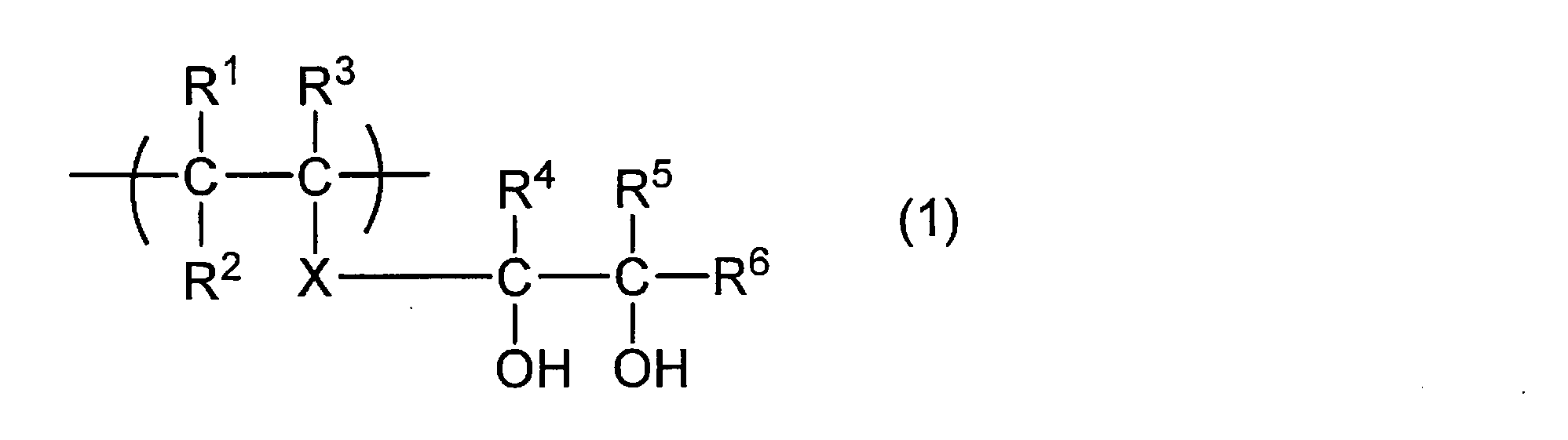
(式中、R1,R2,R3,R4,R5,R6は、同一又は異なって、水素原子又は有機基を示し、Xは単結合又は結合鎖を示す)
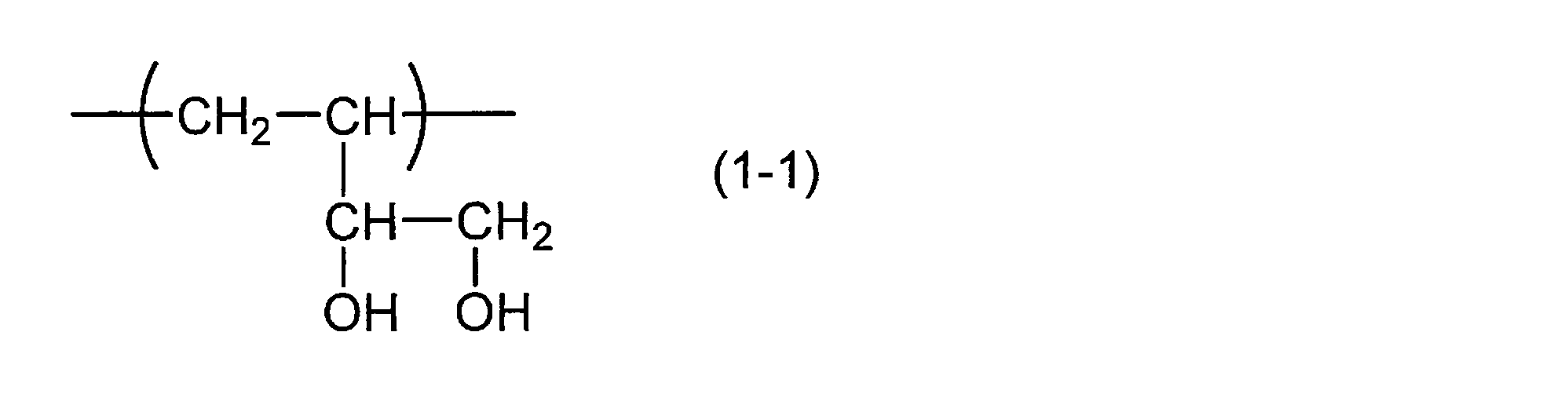
前記樹脂粒子は、例えば、ガラス転移温度30~250℃(例えば、50~250℃)の熱可塑性樹脂で形成してもよい。また、樹脂粒子は、少なくともアミノ基を有する樹脂粒子、例えば、アミノ基及びカルボキシル基を有するポリアミド系樹脂粒子であってもよい。
前記変性ポリビニルアルコール系樹脂と糖類との重量割合は、例えば、前者/後者=99/1~50/50程度であってもよい。両者の割合を調整することにより、熱可塑性樹脂の融点/ガラス転移温度に応じて、溶融混練温度を調整できる。樹脂粒子の体積平均粒子径は、例えば、5μm以上であってもよい。
本発明は、前記予備成形体(又は分散体)並びにそのマトリックスも包含する。すなわち、水溶性ポリビニルアルコール系樹脂を含む水溶性マトリックスと、このマトリックス中に分散した樹脂粒子とを含む予備成形体;水溶性ポリビニルアルコール系樹脂を含み、樹脂粒子を分散させるための水溶性マトリックス(又は混練により熱可塑性樹脂を粒子状の形態で分散させるための水溶性マトリックス)も包含する。これらの水溶性マトリックスは、前記変性ポリビニルアルコール系樹脂と、糖類(水溶性糖類)とを含んでいる。
本発明では、ポリビニルアルコール系樹脂を含んでいても、所定の変性基で変性されているとともに、糖類と組み合わせているため、水での溶出性が高いだけでなく、溶融成形性を大きく改善でき、溶融混練温度及び成形加工温度を広い範囲で調整できる。そのため、樹脂の種類(融点又はガラス転移温度)に応じて、溶融混練により熱可塑性樹脂の分散相(分散樹脂粒子)が水溶性マトリックス中に分散した予備成形体を形成でき、水溶性マトリックスを水性溶媒で溶出することにより、樹脂粒子を効率よく製造できる。また、熱可塑性樹脂の官能基濃度を変化させることなく、樹脂粒子を製造できる。さらに、熱可塑性樹脂の含有量を増加しても樹脂粒子が分散した予備成形体を形成できる。さらには、本発明の水溶性マトリックス(又はマトリックス組成物)を用いると、押出機のスクリューとの絡みあいが大きく、吐出量を増加しても樹脂粒子を生成でき、樹脂粒子の生産効率を向上できる。また、溶融混練しても取り扱い性の高いペレット状の形態で予備成形体(分散体)を得ることができ、樹脂粒子の生産効率をさらに向上できる。
本発明の水溶性マトリックス(又はマトリックス組成物若しくはマトリックス成分)は、水溶性ポリビニルアルコール(PVA)系樹脂と、糖類(水溶性糖類、以下、単に糖類という場合がある)とを含んでおり、前記PVA系樹脂は、所定の変性基で変性された(溶融混練の可使温度範囲が広い)変性ポリビニルアルコール系樹脂(以下、単に変性PVA系樹脂という場合がある)を含んでいる。
[変性PVA系樹脂]
変性ポリビニルアルコール系樹脂は、親水性の変性基で変性されており、側鎖に、(a)少なくとも1つのヒドロキシル基(1又は複数のヒドロキシル基)を有するアルキル基又はアルキル鎖(又はこのアルキル基(又はアルキル鎖)を含む単位)を含んでいる。
変性ポリビニルアルコール系樹脂は、親水性の変性基で変性されており、側鎖に、(a)少なくとも1つのヒドロキシル基(1又は複数のヒドロキシル基)を有するアルキル基又はアルキル鎖(又はこのアルキル基(又はアルキル鎖)を含む単位)を含んでいる。
変性PVA系樹脂の側鎖のアルキル基又はアルキル鎖は、メチル基、エチル基、プロピル基、ブチル基、ペンチル基、ヘキシル基などの直鎖状又は分岐鎖状C1-12アルキル基(例えば、C2-8アルキル基)などであってもよい。
ヒドロキシル基の数は、アルキル基(又はアルキル鎖)若しくは側鎖当たり、例えば、1~7(例えば、1~5)、好ましくは2~4、さらに好ましくは2~3程度、特に2が好ましい。すなわち、変性ポリビニルアルコール系樹脂の側鎖は、複数のヒドロキシル基を有するアルキル基を備えていてもよい。
さらに、変性PVA系樹脂は、少なくとも一級ヒドロキシル基を有する変性基(又は側鎖)で変性されている場合が多く、変性PVA系樹脂の側鎖は、例えば、少なくとも一級ヒドロキシル基を有している場合が多い。すなわち、変性PVA系樹脂は、側鎖に、下記アルキル基(又はアルキル基を含む単位)(a1)及び/又は(a2)を有している場合が多い。
(a1)一級ヒドロキシル基を有するアルキル基(又はアルキル基を含む単位)
(a2)一級ヒドロキシル基と二級ヒドロキシル基とを有するアルキル基(又はアルキル基を含む単位)。
(a2)一級ヒドロキシル基と二級ヒドロキシル基とを有するアルキル基(又はアルキル基を含む単位)。
一級ヒドロキシル基の数は、アルキル基(又はアルキル鎖)若しくは側鎖当たり、例えば、1~5(例えば、1~4)、好ましくは1~3、さらに好ましくは1又は2(特に1)程度であってもよい。
より具体的には、変性PVA系樹脂は、側鎖(又は側鎖のアルキル基若しくはアルキル鎖)に、ヒドロキシアルキル基、特に、2つのヒドロキシル基又は2つのヒドロキシC1-4アルキル基(ヒドロキシメチル基など)が同一又は隣接する炭素原子に置換したアルキル基(ジヒドロキシアルキル基、又はジヒドロキシアルキル-アルキル基)を有する場合が多い。変性PVA系樹脂は、例えば、ジヒドロキシアルキル基を含む下記式(1)で表される単位を有する場合が多い。

(式中、R1,R2,R3,R4,R5,R6は、同一又は異なって、水素原子又は有機基を示し、Xは単結合又は結合鎖(又は連結基)を示す)
前記有機基としては、例えば、メチル基、エチル基、n-プロピル基、イソプロピル基、n-ブチル基、イソブチル基、t-ブチル基などの直鎖状又は分岐鎖状C1-4アルキル基などが例示できる。好ましいアルキル基は、メチル基又はエチル基である。これらのアルキル基は、必要により、ハロゲン原子、ヒドロキシル基、アルコキシ基、カルボキシル基、アルコキシカルボニル基、スルホニル基などの置換基を有していてもよい。前記式(1)において、好ましいR1~R6は水素原子である。
Xで表される結合鎖(連結基)としては、例えば、アルキレン基(エチレン基などのC2-10アルキレン基など)、アルケニレン基(ビニレン基、プロペニレン基などのC2-6アルケニレン基など)、アルキニレン基、アリーレン基(フェニレン基、ナフチレン基など)などの炭化水素基(これらの炭化水素基は、フッ素、塩素、臭素原子などのハロゲン原子などが置換されていてもよい)、エーテル基(-O-)、C2-4アルキレンオキシ基[-(CH2O)m-、-(OCH2)m-、-(CH2O)mCH2-など]、カルボニル基(-CO-)、ジケト基(-COCO-)、アルキレンジカルボニル基(-CO(CH2)mCO-など)、アレーンジカルボニル基(-CO(C6H4)CO-など)、チオエーテル基(-S-)、チオカルボニル基(-CS-)、スルフィニル基(-SO-)、スルフォニル基(-SO2-)、イミノ基又は置換イミノ基(-NR-)、ウレタン基(-CONR-、-NRCO-)、チオウレタン基(-CSNR-、-NRCS-)、-NRCS-)、アゾ基(-NRNR-)、リン酸エステル基(-HPO4-)、ケイ素含有基[-Si(OR)2-、-OSi(OR)2-、-OSi(OR)2O-]、チタン含有基[-Ti(OR)2-、-OTi(OR)2-など]、アルミニウム含有基[-Al(OR)-、-OAl(OR)-、-OAl(OR)O-など]などが例示できる。なお、Rは、それぞれ独立して、任意の置換基であり、例えば、水素原子、C1-12アルキル基、アルコキシ基、アシル基などであってもよく、mは、それぞれ独立して、自然数を示す。
これらの結合鎖(連結基)Xのうち、C2-6アルキレン基(特にメチレン基などのC1-2アルキレン基)、-CH2OCH2-が好ましい。特に、好ましいXは単結合である。
特に、変性PVA系樹脂は、側鎖(又は側鎖のアルキル基)に、1,2-ジオール構造(又は1,2-ジヒドロキシアルキル基)を有するのが好ましく、例えば、下記式(1-1)で表される単位を有するのが好ましい。
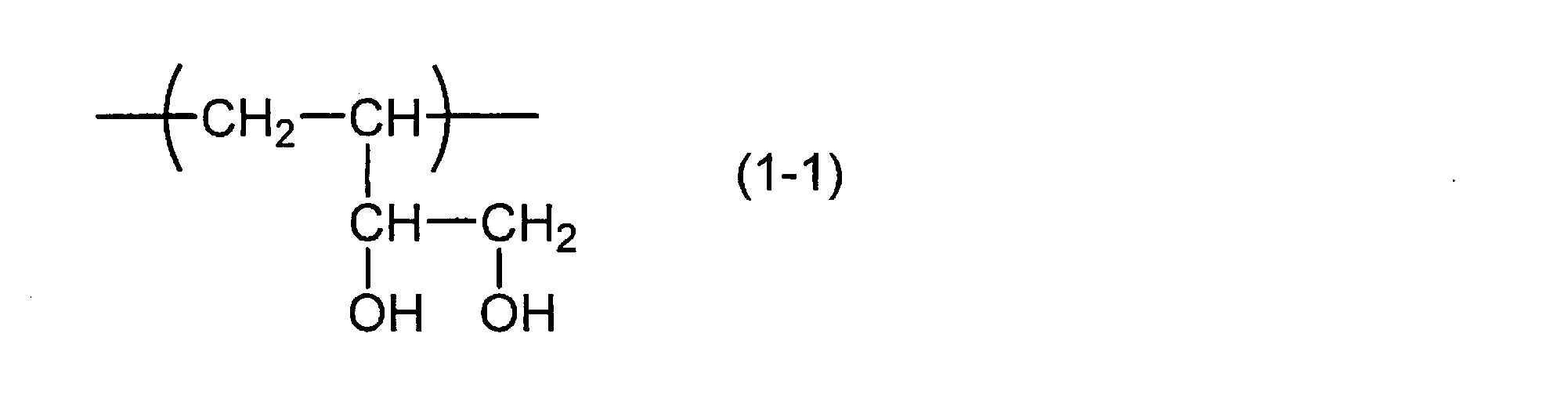
このような変性PVA系樹脂は、未変性PVA系樹脂を変性して前記アルキル基(又はこのアルキル基を含む単位)(a)を有する側鎖を導入した変性PVA系樹脂(例えば、グリコール酸、乳酸、グリセロール酸などのヒドロキシカルボン酸とのエステル化、エーテル化、アセタール化、ウレタン化、リン酸エステル化などにより変性した変性PVA系樹脂)、共重合変性PVA系樹脂のいずれであってもよい。好ましい変性PVA系樹脂は、共重合変性PVA系樹脂、例えば、ビニルエステル系単量体と、ビニルエステル系単量体に対して共重合可能な共重合性単量体との共重合体を少なくともケン化して調製可能であり、前記共重合性単量体は、少なくとも前記アルキル基(又はこのアルキル基を含む単位)(a)を有する側鎖を導入可能な共重合性単量体(第1の共重合性単量体)を含んでいればよく、さらに他の共重合性単量体(第2の共重合性単量体)を含んでいてもよい。
ビニルエステル系単量体としては、例えば、ギ酸ビニル、酢酸ビニル、プロピオン酸ビニル、バレリン酸ビニル、酪酸ビニル、イソ酪酸ビニル、ピパリン酸ビニル、力プリン酸ビニル、ラウリン酸ビニル、ステアリン酸ビニル、バーサチック酸ビニルなどのC1-20アルカン酸ビニル又はC2-20アルケン酸ビニル、安息香酸ビニルなどのアレーンカルボン酸ビニルなどが例示できる。また、必要であれば、1ーメトキシビニルアセテート、酢酸イソプロペニルなどの置換酢酸ビニル類も使用できる。これらのビニルエステル系単量体は、単独で又は二種以上組み合わせて使用できる。これらのビニルエステル系単量体のうち、経済性などの観点からC1-3アルカン酸ビニル、特に、酢酸ビニルを用いる場合が多い。
第1の共重合性単量体としては、例えば、3-ブテン-1-オール、4-ペンテン-1-オール、5-ヘキセン-1-オールなどのヒドロキシ基含有C3-10α-オレフィン類又はその誘導体(例えば、アセチル化物などのアシル化物);下記式(1a)~(1c)で表される単量体が例示できる。
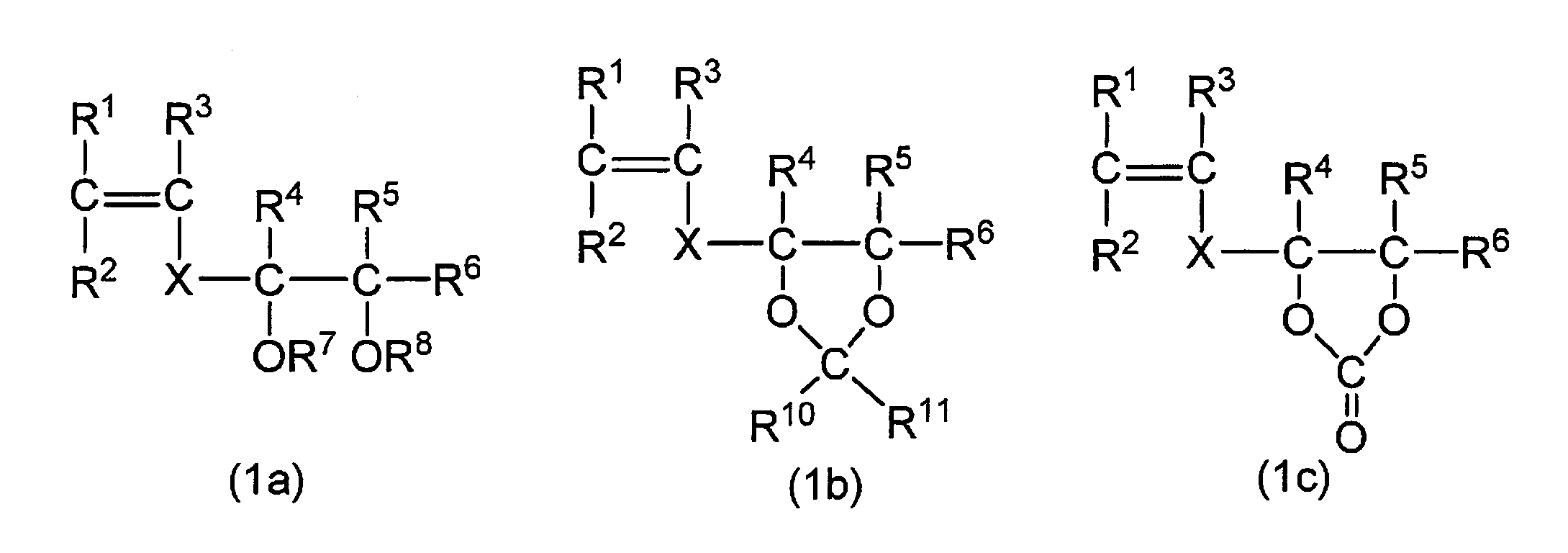
(式中、R7及びR8はそれぞれ独立して水素原子又はアシル基R9-CO-(R9は水素原子又はC1-4アルキル基)を示し、R10及びR11はそれぞれ独立して水素原子又はC1-4アルキル基を示し、R1~R6、Xは前記に同じ)
前記アシル基としては、例えば、ホルミル基;アセチル基、プロピオニル基などのC1-4アルキル-カルボニル基が例示できる。アシル基は、C1-2アルキル-カルボニル基,特にアセチル基である場合が多い。アルキル基として、メチル基、エチル基などのC1-4アルキル基(特に、メチル基又はエチル基)である場合が多い。R7及びR8は、通常、水素原子又はアセチル基であり、R10及びR11は、通常、水素原子又はC1-2アルキル基である場合が多い。
式(1a)で表される代表的な化合物としては、例えば、ジアシルC4-10アルケン類、例えば、1,4-ジアシルオキシ-2-ブテン(例えば、1,4-ジアセチルオキシ-2-ブテンなど)、3,4-ジアシルオキシ-1-ブテン(例えば、3,4-ジアセチルオキシ-1-ブテンなど)などが例示でき、式(1b)で表される代表的な化合物としては、例えば、2,2-ジアルキル-4-ビニル-1,3-ジオキソラン(例えば、2,2-ジメチル-4-ビニル-1,3-ジオキソラン)などが例示でき、式(1c)で表される代表的な化合物としては、例えば、ビニルC2-6アルキレンカーボネート(例えば、ビニルエチレンカーボネート)などが例示できる。
これらの第1の共重合性単量体は単独で又は二種以上組み合わせて使用できる。これらの第1の共重合性単量体のうち、共重合反応性及び工業的な取り扱い性の点から、式(1a)で表される化合物(例えば、3,4-ジアセチルオキシ-1-ブテン)を用いる場合が多い。
例えば、ビニルエステル系単量体としての酢酸ビニルと、3,4-ジアセチルオキシ-1-ブテンとの共重合において、各単量体の反応性比(r)は、酢酸ビニルのr=0.710に対して、3,4-ジアセチルオキシ-1-ブテンのr=0.701であり、共重合性が高い。なお、酢酸ビニルと、式(1c)で表される化合物としてのビニルエチレンカーボネートとの共重合では、酢酸ビニルのr=0.85に対して、ビニルエチレンカーボネートのr=5.4である。
また、3,4-ジアセチルオキシ-1-ブテンの連鎖移動定数(Cx)は、0.003(65℃)であり、ビニルエチレンカーボネー卜のCx=0.005(65℃)、式(1b)で表される化合物としての2,2-ジメチル-4-ビニル-1,3-ジオキソランのCx=0.023(65℃)と比較して、重合性が高い。
さらに、3,4-ジアシルオキシ-1-ブテン(例えば、3,4-ジアセチルオキシ-1-ブテンなど)は、ケン化により生成する副生物が、ビニルエステル系単量体のケン化により副生する化合物と同様にアルカン酸(例えば、酢酸)であり、特別な装置や工程を設けることなく、共重合体のケン化後の処理や溶剤回収が可能であり、工業的に大きな利点である。なお、式(1b)及び(1c)で表される単量体を共重合した共重合体の脱炭酸又は脱ケタール化が不十分であると、残存するカーボネート環又はアセタール環により、変性PVA系樹脂が架橋し、ゲル状物が生成する場合がある。
前記式(1a)~(1c)で表される化合物は公知であり、公知の方法により調製してもよく、市場から入手してもよい。例えば、式(1a)で表される単量体は、国際公開第2000/24702号公報、米国特許第5623086号明細書、米国特許第6072079号明細書などに記載された方法又はその方法に類する方法で調製でき、例えば、3,4-ジアセチルオキシ-1-ブテンは、エポキシブテン誘導体を経由する合成方法や、1,4-ブタンジオール製造工程の中間生成物である1,4-ジアセチルオキシ-1-ブテンを塩化パラジウムなどの金属触媒を用いて異性化する反応によって製造できる。また、式(1a)で表される単量体は、アクロス社などから入手することもできる。
ビニルエステル系単量体と第1の共重合性単量体との割合(モル比)は、PVA系樹脂の変性度に応じて、例えば、前者/後者=50/50~99.5/0.5(例えば、70/30~99/1)、好ましくは80/20~98.5/1.5(例えば、85/15~98/2)、さらに好ましくは90/10~97/3(例えば、92/8~97.5/2.5)程度であってもよい。
第2の共重合性単量体としては、種々のビニル化合物、例えば、エチレン、プロピレン、イソブチレン、α-オクテン、α-ドデセン、α-オクタデセンなどの直鎖状又は分岐鎖状C2-12オレフィン類;(メタ)アクリル酸、クロトン酸、マレイン酸、無水マレイン酸、フマル酸、イタコン酸、ウンデシレン酸などの不飽和カルボン酸類又はその誘導体(例えば、その塩、モノ又はジアルキルエステル);(メタ)アクリロニトリルなどのニトリル類;ジアセトンアクリルアミド、(メタ)アクリルアミドなどのアミド類;エチレンスルホン酸、(メタ)アリルスルホン酸などのオレフィンスルホン酸類又はその塩;アルキルビニルエーテル類;ビニルケトン類(ジメチルアリルビニルケトン、N-ビニルピロリドンなど);ハロゲン含有ビニル化合物(塩化ビニル、塩化ビニリデンなど);アリルエーテル類(グリセリンモノアリルエーテルなど);ビニルカーボネート類(ビニレンカーボネトなど)などが例示できる。これらの共重合性単量体は単独で又は二種以上組み合わせて使用できる。
第2の共重合性単量体の使用量は、例えば、全単量体中、0~30モル%(例えば、1~25モル%)、好ましくは0~20モル%(例えば、3~15モル%)、さらに好ましくは0~10モル%(例えば、5~10モル%)程度であってもよい。
前記変性PVA系樹脂は、例えば、ビニルエステル系単量体と、共重合性単量体として少なくとも前記式(1)に対応する単量体(例えば、前記式(1a)~(1c)で表される単量体)を含む共重合性単量体との共重合体を少なくともケン化することにより調製できる。より具体的には、前記変性PVA系樹脂は、例えば、(i)ビニルエステル系単量体と、共重合性単量体として少なくとも前記式(1a)で示される単量体を含む共重合性単量体との共重合体をケン化する方法、(ii)ビニルエステル系単量体と、共重合性単量体として少なくとも前記式(1b)で示される単量体を含む共重合性単量体との共重合体をケン化及び脱ケタール化する方法、(iii)ビニルエステル系単量体と、共重合性単量体として少なくとも前記式(1c)で示される単量体を含む共重合性単量体との共重合体をケン化及び脱炭酸する方法などにより調製できる。これらの方法については、例えば、特開2006-95825号公報などを参照できる。
前記変性PVA系樹脂の変性量(変性PVA系樹脂の全単位に対する前記式(1)で表される単位の割合)は、変性基の性質により異なるが、通常、例えば、1~30モル%(例えば、1~20モル%)、好ましくは1.2~12モル%(例えば、1.5~10モル%)、さらに好ましくは2~10モル%(例えば、3~8モル%)程度であってもよい。変性基の導入量が少なすぎると、融点が高くなるため成形温度を高くする必要があり、熱劣化による不溶分が発生する傾向があるとともに、水溶性が低下する傾向がある。一方、変性基の導入量が多すぎると、溶融成形性が低下する傾向がある。なお、前記式(1)で表される単位の含有率は、完全にケン化した変性PVA系樹脂の1H-NMRスペクトル(溶媒:DMSO-d6、内部標準:テトラメチルシラン)から求めることができる。具体的には、式(1)で表される構造単位中のヒドロキシル基のプロトン、メチンプロトン及びメチレンプロトン、主鎖のメチレンプロトン、主鎖に結合するヒドロキシル基のプロトンなどに由来するピーク面積から算出できる。
変性PVA系樹脂の平均重合度(JIS K 6726に準拠して測定)は、例えば、100~3000(例えば、150~2000)、好ましくは170~1000(例えば、200~800)、さらに好ましくは230~600(例えば、250~600)程度であってもよい。平均重合度が低すぎると、変性PVA系樹脂の生産効率が低下しやすく、高すぎると溶融粘度が高くなり、溶融成形性が低下しやすい。
なお、変性PVA系樹脂の4重量%水溶液粘度(20℃、ヘプラー粘度計)は、例えば、1~100mPa・s(例えば、1.5~75mPa・s)、好ましくは2~70mPa・s(例えば、2.3~60mPa・s)、さらに好ましくは3~50mPa・s(例えば、5~30mPa・s)程度であってもよく、1.5~10mPa・s(例えば、2~8mPa・s)、好ましくは2.3~5mPa・s(例えば、2.5~4mPa・s)程度であってもよい。
JIS K 6726に準拠して測定したとき、変性PVA系樹脂のケン化度は、例えば、50~100モル%、好ましくは60~100モル%(例えば、70~100モル%)、さらに好ましくは80~100モル%(例えば、90~100モル%)程度であってもよく、95~100モル%(例えば、98~100モル%)程度であってもよい。ケン化度が低すぎると、水溶性、溶融成形過程の熱安定性が低下するとともに、酢酸臭がする場合がある。
変性PVA系樹脂の溶融粘度は、温度260℃、剪断速度122sec-1において、例えば、2~100Pa・s(例えば、5~80Pa・s)、好ましくは7~75Pa・s(例えば、10~70Pa・s)、さらに好ましくは12~65Pa・s(例えば、15~50Pa・s)程度であってもよく、20~60Pa・s(例えば、30~50Pa・s)程度であってもよい。溶融粘度は、溶融ポリマーの流動特性測定装置((株)東洋精機製作所製「キャピログラフ 1D」)を用い、バレル径:9.55mm、バレル全長:350mm(有効長さ250mm)で測定することができる。
変性PVA系樹脂のメルトフローレート(MFR)は、温度210℃、荷重2160gにおいて、例えば、1~160g/10分(例えば、10~155g/10分)、好ましくは15~150g/10分(例えば、20~140g/10分)、さらに好ましくは25~120g/10分(例えば、30~100g/10分)程度であってもよく、10~100g/10分(例えば、15~80g/10分)、好ましくは20~70g/10分(例えば、25~50g/10分)程度であってもよい。MFRが低すぎると、流動成形性および生産性が低下しやすく、高すぎると成形性が低下する傾向がある。
前記変性PVA系樹脂は、未変性のPVA系樹脂に対して、耐熱性が高いだけでなく、成形温度幅(成形加工温度域)が広いという特色がある。変性PVA系樹脂の融点は、示差走査熱量分析(DSC)により、窒素気流下、10℃/分の速度で昇温したとき、例えば、120~225℃(例えば、130~220℃)、好ましくは140~215℃(例えば、145~210℃)、さらに好ましくは150~205℃(例えば、160~200℃)程度であってもよく、150~225℃(例えば、160~222℃)、好ましくは165~220℃(例えば、170~220℃)、さらに好ましくは175~215℃程度であってもよい。一方、熱分解開始温度に関し、変性PVA系樹脂は、示差走査熱量分析(DSC)により、窒素気流下、10℃/分の速度で昇温したとき、1重量%減少する温度が255℃以上(例えば、256~260℃程度)であり、2重量%減少する温度が275℃以上(例えば、276~280℃程度)である。さらに、熱重量分析(TGA)において、昇温速度10℃/分で温度30℃から600℃へ昇温したとき、変性PVA樹脂の熱分解温度は、窒素雰囲気下で330~420℃(例えば、350~410℃、好ましくは370~405℃、さらに好ましくは380~400℃)、空気雰囲気下で320~410℃(例えば、340~400℃、好ましくは360~395℃、さらに好ましくは370~390℃)程度である。そのため、変性PVA系樹脂は溶融成形加工温度域が広く、成形性に優れている。例えば、成形加工温度(又は溶融混練温度)は、170~230℃、好ましくは175~225℃、さらに好ましくは180~210℃(例えば、185~210℃)程度であってもよい。
なお、完全ケン化の未変性PVA樹脂の融点は、例えば、227℃程度であり、1重量%減少する温度は、例えば、257.4℃程度、2重量%減少する温度は、例えば、277.3℃程度である。また、熱重量分析(TGA)において、昇温速度10℃/分で温度30℃から600℃へ昇温したとき、完全ケン化の未変性PVA樹脂の熱分解温度は、窒素雰囲気下で292℃、空気雰囲気下で303℃である。そのため、未変性PVA樹脂は、溶融成形加工温度幅が狭い。
水に対する変性PVA系樹脂の接触角は、厚さ60μmのフィルム(5重量%水溶液を、10cm×10cmの型枠に流し込み、23℃、50%RHの環境で2日間乾燥させて作製)において、20~80°、好ましくは25~80°、さらに好ましくは30~75°、特に30~70°程度であってもよい。水に対する接触角が小さすぎると、親水性樹脂粒子の粒子サイズ及び粒子形状の均一性が損なわれ、大きすぎると疎水性樹脂粒子の粒子サイズ及び粒子形状の均一性が損なわれる場合がある。なお、23℃、50%RHの環境下、フィルム表面に精製水0.2mlを滴下し、水滴とフィルム表面との角度を測定することにより、水に対する接触角を求めることができ、このような測定を10回行い、その平均値を接触角とすることができる。接触角の測定には、例えば、協和界面科学(株)製「固液界面解析装置」を利用できる。
なお、水溶性マトリックスは、必要により、他の水溶性樹脂、例えば、ポリエチレングリコール系樹脂(ポリエチレングリコール、ポリエチレングリコール-ポリプロピレングリコールブロック共重合体など)、未変性ポリビニルアルコール系樹脂、ポリビニルピロリドン系樹脂、セルロースエーテル類(ヒドロキシプロピルセルロース、カルボキシメチルセルロース又はその塩など)、多糖類(アルギン酸又はその塩など)などを含んでいてもよい。
[糖類]
水溶性マトリックスは、水溶性の前記変性PVA系樹脂に加えて、水溶性糖類(又は熱溶融性糖類)を含んでいる。この糖類は、単糖類、糖アルコールなどであってもよい。単糖類としては、例えば、アラビノース、リボース、キシロース、グルコース、マンノース、ガラクトース、フルクトースなどが例示できる。これらの単糖類は単独で又は二種以上組み合わせて使用できる。
水溶性マトリックスは、水溶性の前記変性PVA系樹脂に加えて、水溶性糖類(又は熱溶融性糖類)を含んでいる。この糖類は、単糖類、糖アルコールなどであってもよい。単糖類としては、例えば、アラビノース、リボース、キシロース、グルコース、マンノース、ガラクトース、フルクトースなどが例示できる。これらの単糖類は単独で又は二種以上組み合わせて使用できる。
糖アルコールとしては、例えば、エリスリトール、ペンタエリスリトール、キシリトール、ソルビトール、マンニトールなどが挙げられる。これらの糖アルコールも単独で又は二種以上組み合わせて使用できる。糖アルコールは、エリスリトール、ペンタエリスリトール、キシリトール、ソルビトールから選択された少なくとも一種を含む場合が多い。
さらに、糖類は、水溶性オリゴ糖類(例えば、トレハロース、スクロースなどの二糖類、マルトトリオースなどの三糖類、マルトテトラオースなど四糖類などのオリゴ糖)を含んでいてもよい。オリゴ糖は、少なくとも四糖類を含んでいてもよく、オリゴ糖としては、例えば、デンプン糖(デンプン糖化物、還元デンプン糖化物など)、ガラクトオリゴ糖、カップリングシュガー、フルクトオリゴ糖、キシロオリゴ糖、大豆オリゴ糖、キチンオリゴ糖、キトサンオリゴ糖などが例示できる。これらのオリゴ糖も単独で又は二種以上組み合わせて使用できる。
糖類は、少なくとも糖アルコール(ソルビトールなど)を含んでいる場合が多い。
前記水溶性変性PVA系樹脂と糖類とは相溶系を形成するためか、樹脂の融点又はガラス転移温度に応じて、任意の割合で混合して水溶性マトリックスの溶融混練温度を広い範囲で調整できる。そのため、前記水溶性変性PVA系樹脂と糖類との重量割合は、前者/後者=99.5/0.5~60/40程度の広い範囲から選択でき、通常、99/1~50/50(例えば、98/2~60/40)、好ましくは97/3~70/30(例えば、95/5~75/25)、さらに好ましくは90/10~80/20程度であってもよく、97.5/2.5~85/15(例えば、97/3~90/10)程度であってもよい。
前記水溶性変性PVA系樹脂単独に比べて、少量の糖類を含有させることにより、水溶性が大きく向上し、水に対する水溶性マトリックスの溶出性を大きく改善でき、しかも水溶性マトリックスは混練により樹脂粒子を効率よく分散できる。また、水溶性変性PVA系樹脂の成形加工温度域が広いことと相まって、溶融成形性も大きく改善し、水溶性変性PVA系樹脂と糖類との割合により、樹脂の種類(融点又はガラス転移温度)に応じて溶融混練温度を調整できる。そのため、融点又はガラス転移温度の高い熱可塑性樹脂であっても溶融混練により樹脂粒子を均一に分散できる。特に、熱可塑性樹脂との溶融混練により、球状粒子の形態で熱可塑性樹脂を分散できる。
[予備成形体、及び樹脂粒子の製造方法]
本発明では、前記水溶性マトリックス(又はマトリックス成分)中に樹脂粒子が分散した予備成形体(又は分散体)を水性溶媒と接触させ、前記水溶性マトリックスを溶出又は除去することにより樹脂粒子を製造できる。より具体的には、樹脂粒子は、強制乳化法、例えば、前記水溶性マトリックス(又はマトリックス成分)と樹脂(溶融可能な樹脂)とを溶融混練する溶融混練工程、この混練工程で生成した樹脂粒子が前記水溶性マトリックス中に分散した予備成形体(溶融混練物)から前記水溶性マトリックスを水性溶媒で溶出除去して樹脂粒子を生成させるマトリックス除去工程、生成した樹脂粒子を回収する回収工程、必要により温度及び湿度を制御し、回収した樹脂粒子を乾燥又は調湿する水分調整工程を経て得ることができる。
本発明では、前記水溶性マトリックス(又はマトリックス成分)中に樹脂粒子が分散した予備成形体(又は分散体)を水性溶媒と接触させ、前記水溶性マトリックスを溶出又は除去することにより樹脂粒子を製造できる。より具体的には、樹脂粒子は、強制乳化法、例えば、前記水溶性マトリックス(又はマトリックス成分)と樹脂(溶融可能な樹脂)とを溶融混練する溶融混練工程、この混練工程で生成した樹脂粒子が前記水溶性マトリックス中に分散した予備成形体(溶融混練物)から前記水溶性マトリックスを水性溶媒で溶出除去して樹脂粒子を生成させるマトリックス除去工程、生成した樹脂粒子を回収する回収工程、必要により温度及び湿度を制御し、回収した樹脂粒子を乾燥又は調湿する水分調整工程を経て得ることができる。
予備成形体(又は分散体)において、樹脂粒子は、前記マトリックスに対して非相溶の種々の非水溶性樹脂又は水不溶性樹脂、例えば、熱硬化性樹脂(フェノール樹脂、エポキシ樹脂など)で形成してもよいが、通常、熱可塑性樹脂(特に、溶融混練可能な樹脂)で形成する場合が多い。
熱可塑性樹脂としては、オレフィン系樹脂、アクリル系樹脂、スチレン系樹脂、ハロゲン含有樹脂、ビニルエステル系樹脂又はその水不溶性誘導体、ポリエステル系樹脂、ポリアミド系樹脂、ポリカーボネート系樹脂、ポリウレタン系樹脂、ポリ(チオ)エーテル系樹脂(例えば、ポリフェニレンエーテル系樹脂、ポリフェニレンスルフィド系樹脂などのポリスルフィド系樹脂など)、ポリスルホン系樹脂(例えば、ポリスルホン樹脂、ポリエーテルスルホン系樹脂)、ポリエーテルケトン系樹脂(ポリフェニレンエーテルエーテルケトン系樹脂など)、ポリイミド系樹脂(例えば、ポリエーテルイミド系樹脂、ポリアミドイミド系樹脂、ポリベンズイミダゾール系樹脂など)、ポリアセタール系樹脂、及びセルロースエステル系樹脂(セルロースアセテートなど)、熱可塑性エラストマー(例えば、ポリアミド系エラストマー(ポリアミド-ポリエーテルブロック共重合体など)、ポリエステル系エラストマー、ポリウレタン系エラストマー、ポリスチレン系エラストマー、ポリオレフィン系エラストマー、フッ素系熱可塑性エラストマーなど)などが例示できる。これらの樹脂は単独で又は二種以上組み合わせて使用できる。
オレフィン系樹脂としては、例えば、ポリエチレン、ポリプロピレン、エチレン-プロピレン共重合体などのα-C2-6オレフィンの単独又は共重合体、オレフィンと共重合性単量体との共重合体(エチレン-(メタ)アクリル酸共重合体、エチレン-(メタ)アクリル酸エステル共重合体など;ジシクロペンタジエンなどの環状オレフィンの単独又は共重合体(エチレン-ノルボルネン共重合体など)など)が例示できる。
アクリル系樹脂としては、例えば、ポリ(メタ)アクリル酸メチルなどのポリ(メタ)アクリル酸エステル、メタクリル酸メチル-(メタ)アクリル酸共重合体、メタクリル酸メチル-アクリル酸エステル-(メタ)アクリル酸共重合体、メタクリル酸メチル-(メタ)アクリル酸エステル共重合体、(メタ)アクリル酸エステル-スチレン共重合体(MS樹脂など)などの(メタ)アクリル系単量体の単独又は共重合体などが例示できる。
スチレン系樹脂としては、例えば、ポリスチレン、スチレン-ビニルトルエン共重合体、スチレン-α-メチルスチレン共重合体などのスチレン系単量体の単独又は共重合体;スチレン-アクリロニトリル共重合体(AS樹脂)、(メタ)アクリル酸エステル-スチレン共重合体(MS樹脂など)、スチレン-無水マレイン酸共重合体などのスチレン系単量体と共重合性単量体との共重合体;スチレン-ブタジエンブロック共重合体などのブロック共重合体など;ゴム成分の存在下、少なくともスチレン系単量体をグラフト重合したグラフト重合体、例えば、耐衝撃性ポリスチレン(HIPS)、アクリロニトリル-ブタジエン-スチレン共重合体(ABS樹脂)、メタクリル酸メチル-ブタジエンゴム-スチレン共重合体(MBS樹脂)などのゴム含有スチレン系共重合体が挙げられる。
ハロゲン含有樹脂としては、例えば、ポリ塩化ビニル系樹脂、塩化ビニル-酢酸ビニル共重合体、塩化ビニリデン系樹脂、フッ素樹脂(溶融流動可能なフッ素樹脂)などが例示できる。ビニルエステル系樹脂又はその水不溶性誘導体としては、例えば、カルボン酸ビニルエステルの単独又は共重合体(ポリ酢酸ビニル、エチレン-酢酸ビニル共重合体など)、これらのケン化物からの誘導体(例えば、ポリビニルホルマール、ポリビニルブチラールなどのポリビニルアセタール系樹脂など)などが例示できる。
ポリエステル系樹脂としては、例えば、ポリエチレンテレフタレート、ポリ(トリメチレンテレフタレート)、ポリプロピレンテレフタレート、ポリブチレンテレフタレート、ポリエチレンナフタレート、ポリブチレンナフタレートなどのポリC2-6アルキレン-アリレート系樹脂、ポリ(1,4-シクロへキシルジメチレンテレフタレート)などのポリシクロC6-10アルキレン-アリレート系樹脂、C2-6アルキレン-アリレート単位又はシクロC6-10アルキレン-アリレート単位を主成分(例えば、50重量%以上)として含むコポリエステル(例えば、共重合成分が、脂肪族ジカルボン酸、イソフタル酸、フタル酸などのコポリエステル)、ポリアリレート系樹脂、液晶性ポリエステルなどの芳香族ポリエステル系樹脂;ポリC2-6アルキレン-サクシネート、ポリC2-6アルキレン-アジペートなどのポリ(C2-6アルキレングリコール-C2-10脂肪族ジカルボン酸エステル)、ポリオキシカルボン酸系樹脂(例えば、ポリグリコール酸やポリ乳酸、グリコール酸-乳酸共重合体など)、ポリカプロラクトンなどのラクトン系樹脂など)、これらのコポリエステル(例えば、ポリカプロラクトン-ポリブチレンサクシネート共重合樹脂など)などが挙げられる。ポリエステル系樹脂はウレタン結合を含んでいてもよい。さらに、ポリエステル系樹脂は生分解性を有していてもよい。
ポリアミド系樹脂としては、例えば、脂肪族ポリアミド、脂環族ポリアミド、芳香族ポリアミドなどが挙げられる。ポリアミド系樹脂は、ポリアミド形成成分のホモポリアミド(単独重合ポリアミド系樹脂)又はコポリアミド(共重合ポリアミド系樹脂)であってもよい。
脂肪族ポリアミド系樹脂のうち、ホモポリアミドとしては、脂肪族ジアミン成分[アルカンジアミン(例えば、テトラメチレンジアミン、ヘキサメチレンジアミン、トリメチルヘキサメチレンジアミン、ドデカンジアミンなどのC4-16アルキレンジアミン、好ましくはC6-14アルキレンジアミン、さらに好ましくはC6-12アルキレンジアミン)など]と、脂肪族ジカルボン酸成分[例えば、アルカンジカルボン酸(例えば、アジピン酸、セバシン酸、ドデカン二酸などのC4-20アルカンジカルボン酸、好ましくはC5-18アルカンジカルボン酸、さらに好ましくはC6-16アルカンジカルボン酸)など]とのホモ又はコポリアミド、ラクタム[ε-カプロラクタム、ω-ラウロラクタムなどの炭素数4~20(好ましくは炭素数6~16、さらに好ましくは炭素数8~14)程度のラクタムなど]又はアミノカルボン酸(例えば、ω-アミノウンデカン酸、ω-アミノドデカン酸などのC4-20アミノカルボン酸、好ましくはC6-16アミノカルボン酸、さらに好ましくはC8-14アミノカルボン酸など)のホモ又はコポリアミド、脂肪族ジアミン成分と脂肪族ジカルボン酸成分とを組み合わせた第1のアミド形成成分と、ラクタム及び/又はアミノカルボン酸の第2のアミド形成成分とのコポリアミドなどが含まれる。ポリアミド系樹脂のジカルボン酸成分はダイマー酸単位を含んでいてもよい。さらに、ポリアミド系樹脂は生分解性を有していてもよい。脂肪族ポリアミド系樹脂は、ラウロラクタム、アミノウンデカン酸及びアミノドデカン酸から選択された少なくとも一種の成分に由来する単位を含んでいてもよい。
具体的な脂肪族ポリアミド系樹脂としては、例えば、ポリアミド6、ポリアミド11、ポリアミド12、ポリアミド46、ポリアミド66、ポリアミド610、ポリアミド611、ポリアミド612、ポリアミド613、ポリアミド1010、ポリアミド1012、ポリアミド1212、ポリアミド66/11、ポリアミド6/12、ポリアミド66/12、ポリアミド610/12、ポリアミド6/12/612などが挙げられる。
脂環族ポリアミド系樹脂としては、脂環族ジアミン成分及び脂環族ジカルボン酸成分から選択された少なくとも一種を単量体として重合したホモポリアミド又はコポリアミドなどが挙げられ、例えば、ジアミン成分及びジカルボン酸成分のうち、少なくとも一部の成分として脂環族ジアミン及び/又は脂環族ジカルボン酸を用いて得られる脂環族ポリアミドなどが使用できる。特に、ジアミン成分及びジカルボン酸成分として、脂環族ジアミン成分及び/又は脂環族ジカルボン酸成分と共に、前記例示の脂肪族ジアミン成分及び/又は脂肪族ジカルボン酸成分を併用するのが好ましい。このような脂環族ポリアミドは、透明性が高く、いわゆる透明ポリアミドとして知られている。
脂環族ジアミン成分としては、ジアミノシクロヘキサンなどのジアミノシクロアルカン(ジアミノC5-10シクロアルカンなど);ビス(4-アミノシクロヘキシル)メタン、ビス(4-アミノ-3-メチルシクロヘキシル)メタン、2,2-ビス(4’-アミノシクロヘキシル)プロパンなどのビス(アミノシクロアルキル)アルカン[ビス(アミノC5-8シクロアルキル)C1-3アルカンなど];水添キシリレンジアミンなどが挙げられる。脂環族ジアミン成分は、アルキル基(メチル基、エチル基などのC1-6アルキル基、好ましくはC1-4アルキル基、さらに好ましくはC1-2アルキル基)などの置換基を有していてもよい。また、脂環族ジカルボン酸としては、1,4-シクロヘキサンジカルボン酸、1,3-シクロヘキサンジカルボン酸などのシクロアルカンジカルボン酸(C5-10シクロアルカン-ジカルボン酸など)などが挙げられる。
代表的な脂環族ポリアミド系樹脂としては、例えば、脂環族ジアミン成分[例えば、ビス(アミノシクロヘキシル)アルカンなど]と脂肪族ジカルボン酸成分[例えば、アルカンジカルボン酸(例えば、C4-20アルカン-ジカルボン酸成分など)など]との縮合物などが挙げられる。
芳香族ポリアミド系樹脂には、脂肪族ポリアミドにおいて、脂肪族ジアミン成分及び脂肪族ジカルボン酸成分のうち少なくとも一方の成分が芳香族成分であるポリアミド、例えば、ジアミン成分が芳香族ジアミン成分であるポリアミド[例えば、芳香族ジアミン(メタキシリレンジアミンなど)と脂肪族ジカルボン酸との縮合物(例えば、MXD-6など)など]、ジカルボン酸成分が芳香族成分であるポリアミド[例えば、脂肪族ジアミン(トリメチルヘキサメチレンジアミンなど)と芳香族ジカルボン酸(テレフタル酸、イソフタル酸など)との縮合物など]などが含まれる。また、芳香族ポリアミド系樹脂は、ジアミン成分及びジカルボン酸成分が芳香族成分であるポリアミド[ポリ(m-フェニレンイソフタルアミド)など]の全芳香族ポリアミド(アラミド)であってもよい。
これらのポリアミド系樹脂は、単独で又は2種以上組み合わせてもよい。なお、ポリアミド系樹脂は、脂肪族ジアミン成分及び脂肪族ジカルボン酸成分のうち一方の成分が芳香族成分である芳香族ポリアミド系樹脂であってもよいが、通常、脂肪族ポリアミド及び/又は脂環族ポリアミドである場合が多い。また、ポリアミド系樹脂(コポリアミドなど)は、ジカルボン酸、ラクタム及び/又はアミノカルボン酸(例えば、ラクタム及びアミノアルカンカルボン酸から選択された少なくとも一種の成分)に起因して、長鎖アルキレン基、例えば、C8-16アルキレン基、好ましくはC10-14アルキレン基などを有する場合が多い。また、ポリアミド系樹脂は、用途に応じて特性を調整可能なコポリアミド(共重合ポリアミド系樹脂)であってもよい。
ポリカーボネート系樹脂としては、ビスフェノールA型ポリカーボネート樹脂などのビスフェノール類をベースとする芳香族ポリカーボネート、ジエチレングリコールビスアリルカーボネートなどの脂肪族ポリカーボネートなどが含まれる。
ポリウレタン系樹脂としては、脂肪族、脂環族又は芳香族ジイソシアネート類と、ポリオール類(例えば、ポリエステルポリオール、ポリテトラメチレンエーテルグリコールなどのポリエーテルポリオール、ポリカーボネートポリオールなど)と、必要により鎖伸長剤との反応により得られるポリウレタン系樹脂が例示できる。
これらの熱可塑性樹脂のうち、例えば、オレフィン系樹脂、アクリル系樹脂、スチレン系樹脂、ポリエステル系樹脂、ポリアミド系樹脂などを用いる場合が多く、生分解性樹脂、例えば、ポリエステル系樹脂(例えば、ポリ乳酸系樹脂、ポリラクトン系樹脂、ポリエステルアミドなど)などの生分解性ポリエステル系樹脂を用いる場合も多い。
熱可塑性樹脂は、官能基を有していない非極性又は不活性樹脂であってもよく、官能基を有する樹脂であってもよい。例えば、オレフィン系樹脂やスチレン系樹脂などの熱可塑性樹脂では、必ずしも官能基を有する必要はない。本発明では、熱可塑性樹脂が官能基(例えば、ヒドロキシル基、カルボキシル基、アルコキシカルボニル基、アミノ基など)を有していても、官能基の濃度を維持しつつ、樹脂粒子を生成できる。そのため、これらの官能基の濃度は特に制限されず、異なる複数の官能基を有する樹脂では、異なる官能基の濃度の割合も特に制限されない。このような官能基を有する熱可塑性樹脂は、例えば、ヒドロキシル基、カルボキシル基、及び/又はアルコキシカルボニル基を有する熱可塑性樹脂[例えば、変性オレフィン系樹脂、アクリル系樹脂、官能基が導入されたスチレン系樹脂)、カルボキシル基及び/又はヒドロキシル基を有する熱可塑性樹脂(代表的には、ポリエステル系樹脂、ポリカーボネート系樹脂など)、アミノ基及び/又はカルボキシル基を有する熱可塑性樹脂(代表的には、ポリアミド系樹脂)など]であってもよい。特に、ポリエチレングリコールと異なり、前記水溶性マトリックスと溶融混練すると、樹脂のアミノ基の濃度が減少することがなく、カルボキシル基濃度が増大することもない。そのため、本発明は、官能基として少なくともアミノ基を有する樹脂粒子を製造するのに有用である。
より具体的には、前記水溶性マトリックスと、アミノ基及びカルボキシル基を有するポリアミド系樹脂とを溶融混練してポリアミド樹脂粒子を生成しても、ポリアミド樹脂粒子において、これらの官能基の濃度の変動を抑制でき、アミノ基濃度を維持できる。そのため、ポリアミド系樹脂において、アミノ基(末端アミノ基)とカルボキシル基(末端カルボキシル基)との割合(モル比)は、前者/後者=1/99~99/1(例えば、2/98~98/2)、好ましくは5/95~95/5(例えば、10/90~90/10)、さらに好ましくは20/80~80/20(例えば、30/70~70/30)程度であってもよく、25/75~60/40(例えば、40/60~60/40)程度であってもよい。なお、カルボキシル基(末端カルボキシル基濃度)に対してアミノ基濃度(末端アミノ基濃度)が高いポリアミド樹脂粒子は、アミノ基の高い活性を利用して、種々の用途(例えば、繊維強化複合材料など)に利用できる。そのため、ポリアミド系樹脂において、アミノ基濃度(末端アミノ基濃度,単位:mmol/kg)は、例えば、1~160(例えば、2~155、特に5~150)程度の広い範囲から選択でき、通常、10~150(例えば、15~120)、好ましくは20~100(例えば、25~80)、さらに好ましくは30~60(例えば、35~55)程度であってもよく、1~150(例えば、1~100)、好ましくは2~75(例えば、5~70)、さらに好ましくは10~60(例えば、15~50)程度であってもよい。また、アミノ基(末端アミノ基)とカルボキシル基(末端カルボキシル基)との割合(モル比)は、前者/後者=20/80~95/5(例えば、25/75~80/20)、好ましくは30/70~70/30(例えば、35/65~60/40)程度であってもよく、30/70~50/50(例えば、35/65~45/55)程度であってもよい。
なお、これらの官能基の濃度(含有量)は、樹脂の種類に応じて、慣用の方法、例えば、滴定法、分光分析法、NMR法などを利用して測定でき、ポリエステル系樹脂、ポリアミド系樹脂の官能基の濃度は、滴定法で測定してもよい。
なお、熱可塑性樹脂(ポリアミド系樹脂など)の数平均分子量は、樹脂の種類に応じて、3000~500000程度の範囲から選択でき、例えば、5000~200000、好ましくは7500~150000、さらに好ましくは10000~100000程度であってもよい。なお、数平均分子量は、樹脂の種類に応じて一般的な方法、例えば、ポリスチレンなどを標準物質とし、ゲルパーミエーションクロマトグラフィーなどにより測定できる。ゲルパーミエーションクロマトグラフィーによる分子量の測定が困難なセルロース誘導体(セルロースエステル系樹脂など)などの熱可塑性樹脂については、粘度平均分子量を採用できる。
熱可塑性樹脂は、非晶性であってもよく、結晶性であってもよい。オレフィン系樹脂、ポリエステル系樹脂、ポリアミド系樹脂(コポリアミドなど)などは結晶性である場合が多い。結晶性熱可塑性樹脂の結晶化度は、90%以下(例えば、1~70%、好ましくは5~50%程度)である場合が多く、例えば、半結晶性又は結晶性ポリアミド系樹脂の結晶化度は、40%以下、例えば、1~30%(例えば、2~25%)、好ましくは3~20%(例えば、4~17%)、さらに好ましくは5~20%(例えば、5~15%)程度であってもよい。また、結晶性熱可塑性樹脂の融点は、例えば、50~350℃(例えば、70~300℃)程度の範囲から選択でき、80~280℃(例えば、90~250℃)、好ましくは100~240℃(例えば、120~230℃)程度であってもよい。例えば、半結晶性又は結晶性ポリアミド系樹脂(脂肪族ポリアミド、脂環族ポリアミドなど)の融点は、80~350℃(例えば、100~320℃)程度の範囲から選択でき、通常、120~300℃(例えば、150~280℃)、好ましくは160~270℃(例えば、170~260℃)程度であってもよい。結晶化度又は融点が高すぎると、溶融混練性及び均一な分散性が低下する場合があり、樹脂粒子の用途が制限される可能性がある。結晶化度及び融点は、慣用の方法、例えば、X線法、示差走査熱量測定(DSC)法によって測定できる。
熱可塑性樹脂のガラス転移温度は、樹脂の種類に応じて、25℃以上(例えば、25~280℃程度)の範囲から選択でき、通常、30~270℃(例えば、50~250℃)、好ましくは70~230℃(例えば、100~220℃)、さらに好ましくは120~210℃程度であってもよい。ポリアミド系樹脂のガラス転移温度は、例えば、30~250℃(例えば、35~230℃)程度の範囲から選択でき、40~200℃(例えば、45~190℃)、好ましくは50~180℃(例えば、60~170℃)、さらに好ましくは70~160℃(例えば、80~150℃)程度であってもよく、100~160℃(例えば、105~155℃)、好ましくは120~150℃(例えば、125~150℃)程度であってもよい。ガラス転移温度が高すぎると、水溶性マトリックスとの溶融混練性、熱可塑性樹脂の分散性が低下する場合があり、ガラス転移温度が低すぎると、樹脂粒子の形態の均一性が低下する場合がある。
前記水溶性マトリックスは、樹脂の含有量(又は水溶性マトリックスに対する樹脂の割合)が高くても、樹脂を粒子状の形態で均一に分散できる。そのため、熱可塑性樹脂などの樹脂(又は樹脂粒子)と前記水溶性マトリックスとの重量割合は、前者/後者=1/99~70/30(例えば、10/90~60/40)程度の広い範囲で選択でき、通常、20/80~50/50(例えば、25/75~50/50)、好ましくは30/70~50/50(例えば、35/65~45/55)、さらに好ましくは40/60~50/50(例えば、45/55~50/50)程度であってもよく、40/60~49/51程度であってもよい。水溶性マトリックスの割合が多すぎると、樹脂粒子の生産性が低下する虞があり、逆に少なすぎると、小粒径の樹脂粒子を製造するのが困難となる虞がある。
なお、前記水溶性マトリックス及び/又は樹脂(熱可塑性樹脂など)は、種々の添加剤、例えば、充填剤、安定剤(耐熱安定剤、耐候安定剤、酸化防止剤、紫外線吸収剤など)、着色剤、可塑剤、分散剤、防腐剤、消泡剤、滑剤、難燃剤、帯電防止剤などを含んでいてもよい。添加剤は、単独で又は2種以上組み合わせてもよい。各添加剤の割合若しくは添加剤の合計割合は、水溶性マトリックス又は樹脂100重量部に対して、例えば、10重量部以下(例えば0.01~10重量部程度)であってもよい。
溶融混練工程において、前記水溶性マトリックスとの混練又は溶融混練により、樹脂(熱溶融性樹脂、特に熱可塑性樹脂)は強制的に乳化され、粒子状の形態でマトリックス中に分散できる。
前記混練又は溶融混練は、必要により水溶性マトリックスと樹脂とを予め混合し、慣用の混練機(例えば、単軸又は二軸スクリュー押出機、ニーダー、カレンダーロール、バンバリーミキサーなど)を用いて行なうことができる。混練温度(例えば、押出機のシリンダー温度)は、例えば、樹脂の融点又はガラス転移温度以上の温度、例えば、90~350℃(例えば、100~330℃)程度の範囲から選択でき、通常、120~320℃、好ましくは150~310℃(例えば、170~300℃)、さらに好ましくは180~280℃程度であってもよい。ポリアミド系樹脂の溶融混練温度も、ポリアミド系樹脂の種類に応じて200~350℃(例えば、230~350℃)程度の範囲から選択でき、例えば、240~350℃、好ましくは250~320℃、さらに好ましくは260~300℃程度であってもよい。なお、オリゴ糖と糖類とを含む水性媒体と異なり、水溶性マトリックスでは前記変性PVA系樹脂と糖類とが相溶系を形成するためか、混練過程で糖類が焦げ付くのを防止できる。混練時間は、例えば、10秒~1時間程度であってもよい。
本発明では、混練機でのスクリュー又はブレードに対して溶融混練物の絡み合いが大きいためか、混練機から溶融混練物(予備分散体又は予備成形体)を有効に生成できる。例えば、押出機のスクリューとの絡み合いが大きく、押出機からの吐出量を増加できる。さらに、押出機からの混練物をペレットの形態に成形でき、成形体(樹脂粒子が分散した予備成形体)の取り扱い性を向上できる。そのため、水溶性マトリックスは、溶融混練により樹脂を粒子状に分散させ、幅広い樹脂粒子を製造するのに適している。
溶融混練物は、通常、冷却(徐冷又は急冷)され、マトリックス除去工程において、生成した予備成形体(又は分散体)の水溶性マトリックスは水性溶媒により溶出して除去される。水溶性マトリックスは、予備成形体(又は分散体)を水性溶媒と接触させて溶出又は除去すればよく、通常、剪断力又は撹拌力を作用させつつ、予備成形体(又は分散体)を水性溶媒と混合して洗浄することにより溶出又は除去できる。水性溶媒は、アルコール(エタノールなど)、水溶性ケトン(アセトンなど)などの水溶性有機溶媒を含んでいてもよいが、通常、水を用いる場合が多い。水溶性マトリックスは、必要により、加温して溶出してもよい。
このマトリックス除去工程において、前記のように、変性PVA系樹脂に糖類を含有させることにより、水溶性マトリックスの溶出速度を大きく改善できる。そのため、樹脂粒子の生産効率も改善できる。
予備成形体からのマトリックスの除去により樹脂粒子を生成でき、生成した樹脂粒子は、濾過、遠心分離などの慣用の固液分離方法で回収できる。
回収した樹脂粒子は、必要により水分調整工程で樹脂粒子の水分含量を調整してもよい。すなわち、樹脂粒子は乾燥してもよく、樹脂粒子の用途に応じて、水分含量を、例えば、0.1~5重量%(例えば、0.5~3重量%)程度に調整してもよい。具体的には、ポリアミド樹脂粒子の水分含量は、例えば、0.5~2.5重量%(例えば、0.5~2重量%)、好ましくは0.55~2重量%(例えば、0.8~1.5重量%)、さらに好ましくは0.6~1.5重量%(例えば、0.65~1重量%)、特に0.7~0.8重量%程度に調整してもよい。なお、水分含有量は、カールフィッシャー法、熱分析法、水分気化装置を備えた微量水分測定装置などの慣用の方法で測定できる。また、結晶性熱可塑性樹脂では、過度に加熱したり加熱時間を長くすると、結晶化が進行する場合がある。そのため、結晶性熱可塑性樹脂粒子では、加熱又は乾燥条件を制御し(例えば、ガラス転移温度Tgよりも低い温度(例えば、(Tg-30℃)以下の温度、40~90%RH程度の湿度で乾燥し)、樹脂粒子の結晶化度の増加を抑制し、前記結晶化度を前記範囲に調整してもよい。このような水分含量又は結晶化度を調整した樹脂粒子(例えば、ポリアミド系樹脂粒子など)は、例えば、炭素繊維などの強化繊維を含むエポキシ樹脂組成物などの繊維強化複合材料の硬化物の靱性を向上させるのに有用である。
得られた樹脂粒子の形状は、粒子状であればよく、例えば、球状、異形(楕円体状、多角体状、角柱状、円柱状、棒状、不定形状など)であってもよい。また、樹脂粒子は、多孔粒子、被覆粒子などであってもよい。好ましい樹脂粒子の形態は球状である。球状粒子には、真球状に限らず、真球状に準ずる形状、例えば、長径と短径とが近似した形状、例えば、長径/短径=1.5/1~1/1、好ましくは1.3/1~1/1(例えば、1.2/1~1/1)、さらに好ましくは1.1/1~1/1程度の粒子も含まれる。また、樹脂粒子の表面は、凹凸を有していてもよいが、表面が滑らかで表面平滑性が高いのが好ましい。
樹脂粒子の平均粒子径(体積平均粒子径)は、特に制限されず、用途に応じて、0.1~1000μm(例えば、0.5~500μm)程度の範囲から選択でき、例えば、1~300μm、好ましくは3~150μm、さらに好ましくは5μm以上(例えば、5~100μm)程度であってもよい。より具体的には、ポリアミド系樹脂粒子の平均粒径(平均粒子径)は、例えば、1~100μm(例えば、3~80μm)、好ましくは5~100μm(例えば、7~80μm)、さらに好ましくは10~75μm(例えば、15~70μm)程度であってもよい。なお、平均粒子径は、体積平均一次粒子径で表され、レーザー回折散乱法などにより測定できる。マトリックスを溶出して得られた樹脂粒子の形態(粒子形状、平均粒子径など)は、通常、マトリックス中に分散した樹脂粒子の形態を有している。
BET法による樹脂粒子の比表面積は、特に制限されず、平均粒子径に応じて、例えば、0.08~12m2/g(例えば、0.15~6m2/g)、好ましくは0.2~3m2/g(例えば、0.3~2m2/g)程度であってもよい。
さらに、ポリアミド系樹脂粒子は、示差走査熱量測定(DSC)によって10℃/分の速度で昇温したときに、ガラス転移温度と融点との間の温度範囲(例えば、ガラス転移温度よりも1~70℃、好ましくは1~60℃、さらに好ましくは1~50℃(例えば、1~40℃)程度高い位置)に発熱ピークを有していてもよい。このような熱的特性(結晶構造)を有するポリアミド系樹脂粒子は、繊維強化複合材料の硬化物の靱性、及び強化繊維の補強効果を向上できる。
以下に、実施例に基づいて本発明をより詳細に説明するが、本発明はこれらの実施例によって限定されるものではない。実施例及び比較例で使用した材料の略号、及び評価項目とその評価方法は下記の通りである。
[材料]
(1)水溶性マトリックス
[変性PVA系樹脂]:変性PVA系樹脂を以下のようにして調製した。
(1)水溶性マトリックス
[変性PVA系樹脂]:変性PVA系樹脂を以下のようにして調製した。
[変性PVA系樹脂の製造]
還流冷却器、滴下装置、撹拌機を備えた反応缶に、酢酸ビニル14重量部(全体の14重量%を初期仕込み)、メタノール29重量部、及び3,4-ジアセチルオキシ1-ブテン1.68重量部(全体の14重量%を初期仕込み)を仕込み、撹拌しながら窒素気流下で温度を上昇させ、沸点に到達した後、アセチルパーオキサイドを0.093重量部投入し、重合を開始した。
還流冷却器、滴下装置、撹拌機を備えた反応缶に、酢酸ビニル14重量部(全体の14重量%を初期仕込み)、メタノール29重量部、及び3,4-ジアセチルオキシ1-ブテン1.68重量部(全体の14重量%を初期仕込み)を仕込み、撹拌しながら窒素気流下で温度を上昇させ、沸点に到達した後、アセチルパーオキサイドを0.093重量部投入し、重合を開始した。
さらに、重合開始から1.0時間目にアセチルパーオキサイドを0.04重量部追加した。
さらに、重合開始から1.0時間後に酢酸ビニル86重量部と3,4-ジアセチルオキシ1-ブテン10.32重量部を19.7時間かけて等速で滴下した。酢酸ビニルの重合率が93%となった時点で、m-ジニトロベンゼンを所定量添加して重合を終了し、続いて、メタノール蒸気を吹き込みつつ蒸留することで未反応の酢酸ビニルモノマーを系外に除去し、共重合体のメタノール溶液を得た。
次いで、上記共重合体の溶液をメタノールで希釈し、固形分濃度を50重量%に調整し、このメタノール溶液をニーダーに仕込み、溶液温度を35℃に保ちながら、水酸化ナトリウム中のナトリウム含量2重量%のメタノール溶液を共重合体中の酢酸ビニル構造単位及び3,4-ジアセチルオキシ1-ブテン構造単位の合計量1モルに対して8ミリモルの割合で加えてケン化を行った。ケン化が進行すると共にケン化物が析出し、粒子状となった時点で、さらに上記ナトリウム含量2重量%メタノール溶液を酢酸ビニル構造単位及び3,4-ジアセチルオキシ1-ブテン構造単位の合計量1モルに対して5ミリモル追加しケン化を行った。その後、水酸化ナトリウムに対して中和用の酢酸0.8当量を添加し、濾別し、メタノールでよく洗浄して熱風乾燥機中で乾燥し、側鎖に1,2-ジオール構造を有するPVA系樹脂を得た。
得られた側鎖に1,2-ジオール構造を有するPVA系樹脂のケン化度を、樹脂中の残存酢酸ビニルおよび3,4-ジアセチルオキシ1-ブテンの構造単位の加水分解に要するアルカリ消費量にて分析したところ、99モル%であった。また、平均重合度は、JIS K 6726に準じて分析を行ったところ、300であった。
また、前記式(1-1)で表される1,2-ジオール構造単位の含有量を、1H-NMR(300MHzプロトンNMR、溶媒DMSO-d6、内部標準物質;テトラメチルシラン、50℃)にて測定した積分値より算出したところ、5.6モル%であった。
上記のPVA系樹脂を以下の条件でペレット化を行った。
押出機:テクノベル社製 15mmφ L/D=60
押出温度:C1/C2/C3/C4/C5/C6/C7/C8/D
=100/170/180/190/200/210/220/220/210℃
回転数:200rpm
吐出量:1.5kg/h
[オリゴ糖]:デンプン糖(東和化成工業(株)製、還元デンプン糖化物PO-10)
[糖アルコール]:三菱商事フードテック(株)製、D-ソルビトール LTSパウダー20M
[ポリエチレングリコール(PEG)]:明成化学工業(株)製「アルコックスR150」。
押出温度:C1/C2/C3/C4/C5/C6/C7/C8/D
=100/170/180/190/200/210/220/220/210℃
回転数:200rpm
吐出量:1.5kg/h
[オリゴ糖]:デンプン糖(東和化成工業(株)製、還元デンプン糖化物PO-10)
[糖アルコール]:三菱商事フードテック(株)製、D-ソルビトール LTSパウダー20M
[ポリエチレングリコール(PEG)]:明成化学工業(株)製「アルコックスR150」。
(2)熱可塑性樹脂
(A):脂環族ポリアミド系樹脂、ダイセル・エボニック(株)製「トロガミドPACM12」、融点247℃、末端カルボキシル基濃度(COOH基濃度)67mmol/kg、末端アミノ基(NH2濃度)濃度41mmol/kg
(B):ポリアミド12(PA12)系樹脂、ダイセル・エボニック(株)製「ベスタミドL1901」、融点178℃、末端カルボキシル基濃度(COOH基濃度)75mmol/kg、末端アミノ基濃度(NH2濃度)3mmol/kg
(C):ポリアミド12(PA12)系樹脂、ダイセル・エボニック(株)製「ダイアミドL1640」、融点178℃、末端カルボキシル基濃度(COOH基濃度)130mmol/kg、末端アミノ基濃度(NH2濃度)4mmol/kg。
(A):脂環族ポリアミド系樹脂、ダイセル・エボニック(株)製「トロガミドPACM12」、融点247℃、末端カルボキシル基濃度(COOH基濃度)67mmol/kg、末端アミノ基(NH2濃度)濃度41mmol/kg
(B):ポリアミド12(PA12)系樹脂、ダイセル・エボニック(株)製「ベスタミドL1901」、融点178℃、末端カルボキシル基濃度(COOH基濃度)75mmol/kg、末端アミノ基濃度(NH2濃度)3mmol/kg
(C):ポリアミド12(PA12)系樹脂、ダイセル・エボニック(株)製「ダイアミドL1640」、融点178℃、末端カルボキシル基濃度(COOH基濃度)130mmol/kg、末端アミノ基濃度(NH2濃度)4mmol/kg。
[平均粒径D50]
純水50mlに樹脂粒子約1gを添加するとともに、界面活性剤を含む洗浄剤(ライオン(株)製「ママレモン(登録商標)」)1滴を添加して超音波分散機(アズワン社製「US Cleaner」)で1分間に亘り分散させた後、樹脂粒子を水に分散し、粒子径分布測定装置((株)堀場製作所製「LA960」)を用いて平均粒径(体積基準)D50を測定した。
純水50mlに樹脂粒子約1gを添加するとともに、界面活性剤を含む洗浄剤(ライオン(株)製「ママレモン(登録商標)」)1滴を添加して超音波分散機(アズワン社製「US Cleaner」)で1分間に亘り分散させた後、樹脂粒子を水に分散し、粒子径分布測定装置((株)堀場製作所製「LA960」)を用いて平均粒径(体積基準)D50を測定した。
[結晶化温度、融点、ガラス転移温度]
水溶性マトリックスの結晶化温度Tc、ポリアミド系樹脂の融点Tm及びガラス転移温度Tgを、示差走査熱量計(SII(株)製「X-DSC7000」)を用いて、以下のようにして測定した。
水溶性マトリックスの結晶化温度Tc、ポリアミド系樹脂の融点Tm及びガラス転移温度Tgを、示差走査熱量計(SII(株)製「X-DSC7000」)を用いて、以下のようにして測定した。
結晶化温度Tc:窒素雰囲気下、昇温速度10℃/分で20℃から230℃まで昇温した後、230℃に1分間保持し、降温速度10℃/分で冷却したとき、観察される結晶化のピークトップ温度を結晶化温度Tcとした。
樹脂の融点Tm:窒素雰囲気下、昇温速度10℃/分で20℃から280℃まで昇温した後、同温度に1分間保持し、降温速度10℃/分で20℃まで冷却し、同温度で1分間保持した後、10℃/分で昇温し、観察される結晶の融解のピークトップ温度を融点Tmとした。
樹脂のガラス転移温度Tg:窒素雰囲気下、昇温速度10℃/分で20℃から280℃まで昇温した後、同温度に1分間保持し、降温速度10℃/分で20℃まで冷却し、同温度で1分間保持した後、10℃/分で昇温し、この昇温過程でガラス転移温度Tgを測定した。
[最大樹脂濃度及び最大吐出量]
水溶性マトリックスと樹脂との重量割合を変えて、押出機(日本製鋼(株)製「TEX30」)で溶融混練し、溶融混練物をダイから押し出して、冷却した後、各混練物を水洗することにより、樹脂が樹脂粒子(パウダー)の形態で得られる最大の樹脂濃度を求めた。
水溶性マトリックスと樹脂との重量割合を変えて、押出機(日本製鋼(株)製「TEX30」)で溶融混練し、溶融混練物をダイから押し出して、冷却した後、各混練物を水洗することにより、樹脂が樹脂粒子(パウダー)の形態で得られる最大の樹脂濃度を求めた。
なお、最大樹脂濃度を超えると、水溶性が極端に低下し、細長状などの異形の樹脂粒子や樹脂粒子の凝集体が生成する。そのため、異形の樹脂粒子や樹脂粒子の凝集体が生成しているか否かに基づいて判断し、最大樹脂濃度(真球状の樹脂粒子が生成する最大濃度)を求めた。
最大樹脂濃度に対応する組成物(水溶性マトリックスと樹脂とを含む組成物)を押出機で溶融混練し、吐出量を変えて、溶融混練物をダイから押し出して、冷却した後、各混練物を水洗することにより、樹脂が樹脂粒子(パウダー)の形態で得られる最大の吐出量を求めた。なお、最大吐出量を超えると、細長状などの異形の樹脂粒子や樹脂粒子の凝集体が生成する。
[カルボキシル基濃度及びアミノ基濃度]
熱可塑性樹脂としてのポリアミド系樹脂及び得られたポリアミド系樹脂粒子について、末端カルボキシル基濃度(COOH基濃度)、及び末端アミノ基濃度(NH2濃度)を次のような滴定法により測定した。
熱可塑性樹脂としてのポリアミド系樹脂及び得られたポリアミド系樹脂粒子について、末端カルボキシル基濃度(COOH基濃度)、及び末端アミノ基濃度(NH2濃度)を次のような滴定法により測定した。
カルボキシル基濃度:ポリアミド樹脂の試料をベンジルアルコールに溶解して、1重量%ベンジルアルコール溶液を調製し、1/100規定KOH水溶液で中和滴定し、カルボキシル基濃度を測定した。
アミノ基濃度:ポリアミド樹脂の試料を、フェノールとエタノールとの体積比で10:1の混合溶媒に溶解し、1重量%溶液を調製し、1/100規定HCl水溶液で中和滴定し、アミノ基濃度を測定した。
実施例1
変性PVA系樹脂と糖アルコールとを表1に示す割合で溶融混合し、水に対する水溶性マトリックスの溶出性を調べた。すなわち、前記溶融混合物から厚み1mmのシートを調製し、所定サイズ(1cm×1cm)の試料を切り出し、試料の重量を測定した。スクリュー管(容量50ml)にピペットを用いて純水20mlを入れるとともに撹拌子を入れた。そして、撹拌子を700rpmで撹拌させながら所定温度まで昇温し、所定温度に達した後、試料(約0.12~0.13g)を直ちにスクリュー管に投入し、試料の投入から試料が溶解して消失する間での時間(溶解時間)を計測した。そして、試料0.1g当たりの溶解時間を算出し、「EXCEL」(マイクロソフト社)で溶解曲線を作成した。結果を図1に示す。
変性PVA系樹脂と糖アルコールとを表1に示す割合で溶融混合し、水に対する水溶性マトリックスの溶出性を調べた。すなわち、前記溶融混合物から厚み1mmのシートを調製し、所定サイズ(1cm×1cm)の試料を切り出し、試料の重量を測定した。スクリュー管(容量50ml)にピペットを用いて純水20mlを入れるとともに撹拌子を入れた。そして、撹拌子を700rpmで撹拌させながら所定温度まで昇温し、所定温度に達した後、試料(約0.12~0.13g)を直ちにスクリュー管に投入し、試料の投入から試料が溶解して消失する間での時間(溶解時間)を計測した。そして、試料0.1g当たりの溶解時間を算出し、「EXCEL」(マイクロソフト社)で溶解曲線を作成した。結果を図1に示す。
図1から明らかなように、少量の糖類を添加するだけで、水溶性マトリックスの溶出性が大幅に向上する。また、水温を変性PVA系樹脂のガラス転移温度以上の温度80℃に高くすると、溶解時間は大幅に短縮したものの、溶解性の挙動は温度40℃での溶解性と同じ傾向を示した。
実施例2
(1)水溶性マトリックスの結晶化温度
変性PVA系樹脂50重量部と糖アルコール50重量部とを、窒素雰囲気中、230℃で溶融混合し、水溶性マトリックスを調製した。得られた水溶性マトリックスの結晶化温度Tcを測定したところ、118℃であり、1つの吸熱ピークしか観測されなかった。そのため、水溶性マトリックスは完全相溶系を形成していると判断された。
(1)水溶性マトリックスの結晶化温度
変性PVA系樹脂50重量部と糖アルコール50重量部とを、窒素雰囲気中、230℃で溶融混合し、水溶性マトリックスを調製した。得られた水溶性マトリックスの結晶化温度Tcを測定したところ、118℃であり、1つの吸熱ピークしか観測されなかった。そのため、水溶性マトリックスは完全相溶系を形成していると判断された。
(2)最大樹脂濃度
前記水溶性マトリックス(変性PVA系樹脂/糖アルコール=50/50(重量比))と脂環族ポリアミド樹脂(A)との重量割合を変えて、押出機(日本製鋼(株)製「TEX30」)で溶融混練(シリンダー温度270℃)し、溶融混練物をダイから押し出して、最大樹脂濃度(最大樹脂含有量)を求めたところ、49重量%であった。
前記水溶性マトリックス(変性PVA系樹脂/糖アルコール=50/50(重量比))と脂環族ポリアミド樹脂(A)との重量割合を変えて、押出機(日本製鋼(株)製「TEX30」)で溶融混練(シリンダー温度270℃)し、溶融混練物をダイから押し出して、最大樹脂濃度(最大樹脂含有量)を求めたところ、49重量%であった。
そして、樹脂(A)の最大樹脂濃度49重量%に対応させて、水溶性マトリックス成分51重量部(変性PVA系樹脂25.5重量部及び糖アルコール25.5重量部)と樹脂(A)49重量部とを、上記押出機で溶融混練(シリンダー温度270℃)し、溶融混練物をダイから押し出したところ、最大吐出量25kg/hで吐出できた。押し出された溶融混練物を冷却してカッティングし、ペレット状の形態の予備成形体を得た。この予備成形体を水に投入して撹拌し、水溶性マトリックスを溶出させ、生成した樹脂粒子を、グラスフィルターで濾過して回収した後、温度23℃及び湿度50%RHで自然乾燥させ、ポリアミド樹脂粒子(パウダー)を得た。得られたポリアミド樹脂粒子は真球状であり、平均粒径は38μmであった。
実施例3
水溶性マトリックスを、変性PVA系樹脂/糖アルコール=80/20(重量比)の割合で調製する以外、実施例2と同様にして、ポリアミド樹脂粒子を製造した。なお、水溶性マトリックスの結晶化温度Tcは143℃であり、樹脂(A)の最大樹脂濃度は48重量%、最大吐出量は25kg/hであった。また、得られたポリアミド樹脂粒子は真球状であり、平均粒径は23μmであった。
水溶性マトリックスを、変性PVA系樹脂/糖アルコール=80/20(重量比)の割合で調製する以外、実施例2と同様にして、ポリアミド樹脂粒子を製造した。なお、水溶性マトリックスの結晶化温度Tcは143℃であり、樹脂(A)の最大樹脂濃度は48重量%、最大吐出量は25kg/hであった。また、得られたポリアミド樹脂粒子は真球状であり、平均粒径は23μmであった。
実施例4
水溶性マトリックスを、変性PVA系樹脂/糖アルコール=95/5(重量比)の割合で調製する以外、実施例2と同様にして、ポリアミド樹脂粒子を製造した。なお、水溶性マトリックスの結晶化温度Tcは150℃であり、樹脂(A)の最大樹脂濃度は49重量%、最大吐出量は25kg/hであった。また、得られたポリアミド樹脂粒子は真球状であり、平均粒径は10μmであった。
水溶性マトリックスを、変性PVA系樹脂/糖アルコール=95/5(重量比)の割合で調製する以外、実施例2と同様にして、ポリアミド樹脂粒子を製造した。なお、水溶性マトリックスの結晶化温度Tcは150℃であり、樹脂(A)の最大樹脂濃度は49重量%、最大吐出量は25kg/hであった。また、得られたポリアミド樹脂粒子は真球状であり、平均粒径は10μmであった。
実施例5
水溶性マトリックスを、変性PVA系樹脂/糖アルコール=90/10(重量比)の割合で調製し、樹脂(A)に変えてポリアミド12系樹脂(B)を用い、溶融混練温度(シリンダー温度)を230℃とする以外、実施例2と同様にして、ポリアミド樹脂粒子を製造した。なお、水溶性マトリックスの結晶化温度Tcは147℃であり、樹脂(B)の最大樹脂濃度は41重量%、最大吐出量は30kg/hであった。また、得られたポリアミド樹脂粒子は真球状であり、平均粒径は12μmであった。
水溶性マトリックスを、変性PVA系樹脂/糖アルコール=90/10(重量比)の割合で調製し、樹脂(A)に変えてポリアミド12系樹脂(B)を用い、溶融混練温度(シリンダー温度)を230℃とする以外、実施例2と同様にして、ポリアミド樹脂粒子を製造した。なお、水溶性マトリックスの結晶化温度Tcは147℃であり、樹脂(B)の最大樹脂濃度は41重量%、最大吐出量は30kg/hであった。また、得られたポリアミド樹脂粒子は真球状であり、平均粒径は12μmであった。
比較例1
実施例2の水溶性マトリックスに変えて、ポリエチレングリコール(PEG)を用い、ポリエチレングリコール(PEG)と脂環族ポリアミド樹脂(A)とを、前者51重量部、後者49重量部の割合で用いる以外、実施例2と同様にして、ポリアミド樹脂粒子を製造した。なお、ポリエチレングリコールの結晶化温度Tcは42℃であり、押出機のダイからは、溶融混練物が吐出量25kg/hで吐出したものの、餅状の塊となり回収が困難であった。また、得られたポリアミド樹脂粒子は異形状(糸状)であり、平均粒径を正確に測定できなかった。
実施例2の水溶性マトリックスに変えて、ポリエチレングリコール(PEG)を用い、ポリエチレングリコール(PEG)と脂環族ポリアミド樹脂(A)とを、前者51重量部、後者49重量部の割合で用いる以外、実施例2と同様にして、ポリアミド樹脂粒子を製造した。なお、ポリエチレングリコールの結晶化温度Tcは42℃であり、押出機のダイからは、溶融混練物が吐出量25kg/hで吐出したものの、餅状の塊となり回収が困難であった。また、得られたポリアミド樹脂粒子は異形状(糸状)であり、平均粒径を正確に測定できなかった。
比較例2
実施例2の水溶性マトリックスに変えて、ポリエチレングリコール(PEG)を用いる以外、実施例2と同様にして、脂環族ポリアミド系樹脂(A)の最大樹脂濃度を調べたところ42重量%であった。そこで、樹脂(A)とポリエチレングリコール(PEG)との割合を、前者/後者=42重量部/58重量部とし、実施例2と同様にして、ポリアミド樹脂粒子を製造した。その結果、押出機のダイからは、餅状の形態の溶融混練物が最大吐出量10kg/hで吐出した。得られたポリアミド樹脂粒子は真球状であり、平均粒径は3μmであった。
実施例2の水溶性マトリックスに変えて、ポリエチレングリコール(PEG)を用いる以外、実施例2と同様にして、脂環族ポリアミド系樹脂(A)の最大樹脂濃度を調べたところ42重量%であった。そこで、樹脂(A)とポリエチレングリコール(PEG)との割合を、前者/後者=42重量部/58重量部とし、実施例2と同様にして、ポリアミド樹脂粒子を製造した。その結果、押出機のダイからは、餅状の形態の溶融混練物が最大吐出量10kg/hで吐出した。得られたポリアミド樹脂粒子は真球状であり、平均粒径は3μmであった。
比較例3
実施例2の水溶性マトリックスに変えて、オリゴ糖80重量部と糖アルコール20重量部とを溶融混合した水溶性マトリックスを用いるとともに、実施例2の樹脂(A)に変えて、樹脂(A)よりもガラス転移温度の低いポリアミド12系樹脂(C)を用いた。前記水溶性マトリックス(オリゴ糖組成物)の結晶化温度Tcは測定不能であった。
実施例2の水溶性マトリックスに変えて、オリゴ糖80重量部と糖アルコール20重量部とを溶融混合した水溶性マトリックスを用いるとともに、実施例2の樹脂(A)に変えて、樹脂(A)よりもガラス転移温度の低いポリアミド12系樹脂(C)を用いた。前記水溶性マトリックス(オリゴ糖組成物)の結晶化温度Tcは測定不能であった。
上記水溶性マトリックス(オリゴ糖組成物)と、ポリアミド12系樹脂(C)とを用い、溶融混練温度を230℃(シリンダー温度230℃)とする以外、実施例2と同様にして、最大樹脂濃度を調べたところ、33重量%であった。
そして、最大樹脂濃度33重量%に対応させて、水溶性マトリックス67重量部(オリゴ糖53.6重量部及び糖アルコール13.4重量部)と樹脂(C)33重量部とを前記押出機で溶融混練(シリンダー温度230℃)し、実施例2と同様にして、押し出したところ、溶融混練物をフレーク状の形態で最大吐出量15kg/hで吐出できた。得られたポリアミド樹脂粒子は真球状であり、平均粒径は3μmであった。
比較例4
水溶性マトリックス75重量部(オリゴ糖60重量部と糖アルコール15重量部)と脂環族ポリアミド系樹脂(A)25重量部とを、実施例2と同様にして、溶融混練(シリンダー温度270℃)して押し出したところ、水溶性マトリックスが熱分解し、ダイから溶融混練物を押出すことができなかった。すなわち、上記オリゴ糖と糖アルコールとを含む水溶性マトリックスは、樹脂(A)の混練温度(シリンダー温度270℃)に耐えることができず、樹脂(A)の樹脂粒子を製造することができなかった。
水溶性マトリックス75重量部(オリゴ糖60重量部と糖アルコール15重量部)と脂環族ポリアミド系樹脂(A)25重量部とを、実施例2と同様にして、溶融混練(シリンダー温度270℃)して押し出したところ、水溶性マトリックスが熱分解し、ダイから溶融混練物を押出すことができなかった。すなわち、上記オリゴ糖と糖アルコールとを含む水溶性マトリックスは、樹脂(A)の混練温度(シリンダー温度270℃)に耐えることができず、樹脂(A)の樹脂粒子を製造することができなかった。
水溶性マトリックスが分解した比較例4を除き、実施例2~5及び比較例1~3の結果を表1に示す。

なお、表中、末端カルボキシル基濃度(COOH基濃度)及び末端アミノ基濃度(NH2濃度)の単位はmmol/kgである。
表1の結果から明らかなように、実施例では、ガラス転移温度の高いポリアミド系樹脂であっても、ポリアミド樹脂を高濃度で溶融混練できるとともに、高い樹脂含有濃度及び大きな吐出量で吐出でき、球状樹脂粒子の生産性が高い。また、ペレット状の形態で予備成形体を得ることができるため、取り扱い性及び樹脂粒子の生産性を向上できる。特に、比較例1及び2と異なり、ポリアミド系樹脂の官能基(特に、アミノ基)濃度を低下させることなく、樹脂粒子を製造できる。
本発明の樹脂粒子は、例えば、化粧品、コーティング剤、塗料、成形材料などの広い分野で使用できる。例えば、樹脂粒子は、樹脂の種類、平均粒子径などに応じて、光拡散剤、艶消し剤、滑剤、ブロッキング防止剤、化粧料、遮光剤、トナー、充填剤、セラミックス空孔形成材、繊維強化複合材料の補強剤などして利用できる。例えば、平均粒子径が5μm以下(例えば、0.1~3μm程度)の樹脂粒子は、化粧品、コーティング剤、塗料、成形材料など分野で使用でき、平均粒子径が5~40μm(例えば、10~30μm、好ましくは15~25μm)程度の樹脂粒子は、繊維強化複合材料(特にエポキシ樹脂を含む材料)の分野で使用してもよく、平均粒子径が30~100μm(例えば、50~75μm)程度の樹脂粒子は、3Dプリンターなどによる造形の分野で使用してもよい。
また、エポキシ樹脂(ビスフェノールA型エポキシ樹脂など)、ビニルエステル樹脂などの熱硬化性樹脂と、炭素繊維、ガラス繊維などの補強繊維(布状補強繊維を含む)とを含む繊維強化複合材料用組成物(又はプリプレグ)に、補強剤として前記樹脂粒子(例えば、前記水分含量及び結晶化度を有する結晶性の脂肪族又は脂環族ポリアミド系樹脂粒子など)の所定量(例えば、0.1~15体積%、好ましくは0.5~5体積%程度)を添加又は含浸し、ハンドレイアップ成形法などの成形法で成形して繊維強化複合材料FRPを形成すると、硬化物の靱性(FRPの層間靱性を含む)を向上でき、強化繊維(特に炭素繊維)による補強効果を向上できる。なお、前記プリプレグは、芳香族アミン系硬化剤などの硬化剤、ホスフィン類、3級アミン類などの硬化促進剤を含んでいてもよい。
前記組成物(又はプリプレグ)の硬化物で形成された成形体としては、種々の分野の構造部材(構造材料)、例えば、乗り物(例えば、飛行機、ヘリコプター、ロケット、自動車、バイク、自転車、電車、船、車いすなど)、人工衛星、風車、スポーツ用品(ゴルフのシャフト、テニスラケット)、筐体(ノートパソコンの筐体など)、医療分野の成形品(人工骨など)、ICトレイ、つり竿、橋脚などが例示できる。
Claims (13)
- 水溶性マトリックス中に樹脂粒子が分散した予備成形体を水性溶媒と接触させて前記マトリックスを溶出させ、樹脂粒子を製造する方法であって、
前記水溶性マトリックスが、水溶性ポリビニルアルコール系樹脂と、糖類とを含み、
前記水溶性ポリビニルアルコール系樹脂が、少なくとも1つのヒドロキシル基を有するアルキル基又はアルキル鎖を含む側鎖を有する変性ポリビニルアルコール系樹脂を含む、樹脂粒子の製造方法。 - 変性ポリビニルアルコール系樹脂が、側鎖に下記(a1)及び/又は(a2)のヒドロキシル基含有アルキル基又はアルキル鎖を有する請求項1記載の方法。
(a1)一級ヒドロキシル基を有するアルキル基
(a2)一級ヒドロキシル基と二級ヒドロキシル基とを有するアルキル基 - 変性ポリビニルアルコール系樹脂が、下記式(1)で表される単位を含む請求項1又は2記載の方法。

- 変性ポリビニルアルコール系樹脂が、側鎖に1,2-ジオール構造を有する請求項1~3のいずれかに記載の方法。
- 変性ポリビニルアルコール系樹脂が、下記式(1-1)で表される単位を含む請求項1~4のいずれかに記載の方法。
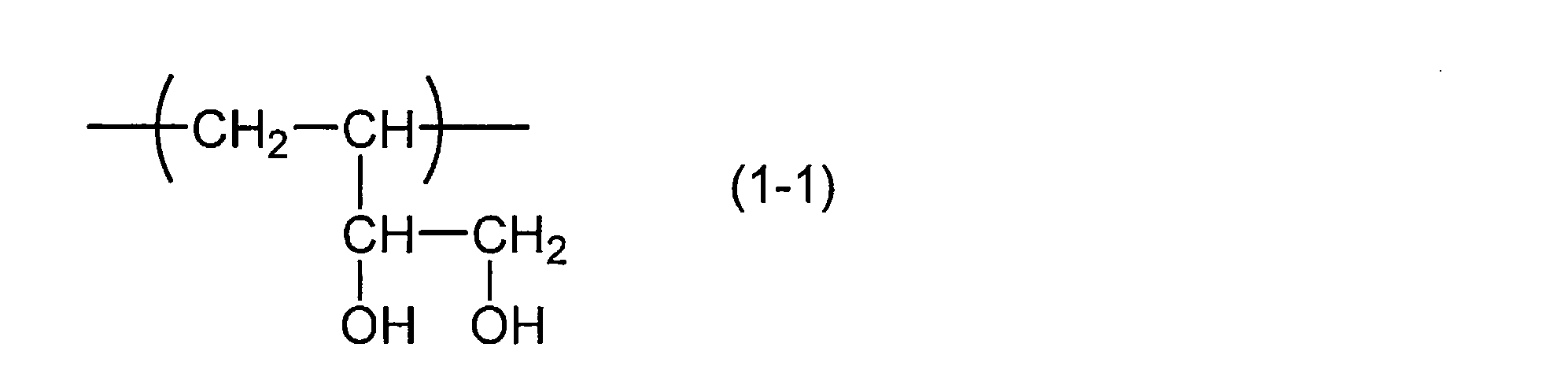
- 変性ポリビニルアルコール系樹脂と糖類との重量割合が、前者/後者=99/1~50/50である請求項1~5のいずれかに記載の方法。
- 樹脂粒子が、ガラス転移温度30~250℃の熱可塑性樹脂で形成されている請求項1~6のいずれかに記載の方法。
- 樹脂粒子が、少なくともアミノ基を有する請求項1~7のいずれかに記載の方法。
- 樹脂粒子が、アミノ基及びカルボキシル基を有するポリアミド系樹脂粒子である請求項1~8のいずれかに記載の方法。
- 樹脂粒子の体積平均粒子径が5μm以上である請求項1~9のいずれかに記載の方法。
- 樹脂粒子と水溶性マトリックスとの重量割合が、前者/後者=10/90~60/40である請求項1~10のいずれかに記載の方法。
- 水溶性ポリビニルアルコール系樹脂を含み、樹脂粒子を分散させるための水溶性マトリックスであって、請求項1~5のいずれかに記載の変性ポリビニルアルコール系樹脂と、糖類とを含む、水溶性マトリックス。
- 水溶性ポリビニルアルコール系樹脂を含む水溶性マトリックスと、このマトリックスに分散した樹脂粒子とを含む予備成形体であって、前記水溶性マトリックスが、請求項1~5のいずれかに記載の変性ポリビニルアルコール系樹脂と、糖類とを含む、予備成形体。
Priority Applications (5)
| Application Number | Priority Date | Filing Date | Title |
|---|---|---|---|
| US16/615,571 US11066529B2 (en) | 2017-06-16 | 2018-06-06 | Water-soluble matrix, pre-molded article containing resin particles, and method for producing resin particles |
| KR1020207000985A KR102484107B1 (ko) | 2017-06-16 | 2018-06-06 | 수용성 매트릭스, 수지 입자를 포함하는 예비 성형체, 및 수지 입자의 제조 방법 |
| EP18817583.0A EP3640283B1 (en) | 2017-06-16 | 2018-06-06 | Water-soluble matrix, preliminarily molded article containing resin particles, and production method for resin particles |
| CN201880040075.9A CN111094402B (zh) | 2017-06-16 | 2018-06-06 | 水溶性基质、包含树脂粒子的预成型体、以及树脂粒子的制造方法 |
| ES18817583T ES2899602T3 (es) | 2017-06-16 | 2018-06-06 | Matriz soluble en agua, artículo moldeado preliminarmente que contiene partículas de resina, y método de producción de partículas de resina |
Applications Claiming Priority (2)
| Application Number | Priority Date | Filing Date | Title |
|---|---|---|---|
| JP2017-119049 | 2017-06-16 | ||
| JP2017119049A JP6909065B2 (ja) | 2017-06-16 | 2017-06-16 | 水溶性マトリックス、樹脂粒子を含む予備成形体、及び樹脂粒子の製造方法 |
Publications (1)
| Publication Number | Publication Date |
|---|---|
| WO2018230404A1 true WO2018230404A1 (ja) | 2018-12-20 |
Family
ID=64660433
Family Applications (1)
| Application Number | Title | Priority Date | Filing Date |
|---|---|---|---|
| PCT/JP2018/021640 Ceased WO2018230404A1 (ja) | 2017-06-16 | 2018-06-06 | 水溶性マトリックス、樹脂粒子を含む予備成形体、及び樹脂粒子の製造方法 |
Country Status (8)
| Country | Link |
|---|---|
| US (1) | US11066529B2 (ja) |
| EP (1) | EP3640283B1 (ja) |
| JP (1) | JP6909065B2 (ja) |
| KR (1) | KR102484107B1 (ja) |
| CN (1) | CN111094402B (ja) |
| ES (1) | ES2899602T3 (ja) |
| TW (1) | TWI745597B (ja) |
| WO (1) | WO2018230404A1 (ja) |
Families Citing this family (6)
| Publication number | Priority date | Publication date | Assignee | Title |
|---|---|---|---|---|
| JP7007818B2 (ja) * | 2017-06-16 | 2022-02-10 | ダイセル・エボニック株式会社 | 樹脂粒子の製造方法 |
| EP4198084A4 (en) * | 2020-08-11 | 2024-02-14 | Mitsubishi Chemical Corporation | POLY(VINYL ALCOHOL) RESIN COMPOSITION AND MELT-MOLDED BODY USING SAID RESIN COMPOSITION |
| KR20230112617A (ko) * | 2020-11-30 | 2023-07-27 | 도레이 카부시키가이샤 | 폴리아미드 미립자, 및 그 제조 방법 |
| KR102552701B1 (ko) * | 2021-04-22 | 2023-07-05 | 전주대학교 산학협력단 | 다공성 폴리이미드막 및 이의 제조 방법 |
| EP4685189A1 (en) * | 2024-07-24 | 2026-01-28 | Evonik Operations GmbH | Polyamide composition and articles prepared therefrom |
| CN118791673B (zh) * | 2024-09-12 | 2025-01-21 | 浙江大学 | 一种碳酸亚乙烯酯改性烯烃-降冰片烯共聚物微球及其制备方法 |
Citations (10)
| Publication number | Priority date | Publication date | Assignee | Title |
|---|---|---|---|---|
| JPS6013816A (ja) | 1983-07-06 | 1985-01-24 | Showa Denko Kk | 熱可塑性樹脂微粒子の製造法 |
| US5623086A (en) | 1995-12-29 | 1997-04-22 | Eastman Chemical Company | Process for the production of 1,2-bis (acyloxylates) |
| JPH09165457A (ja) | 1995-12-13 | 1997-06-24 | Nippon Synthetic Chem Ind Co Ltd:The | 樹脂微粒子の製造法 |
| WO2000024702A1 (fr) | 1998-10-23 | 2000-05-04 | Daicel Chemical Industries, Ltd. | Procede de preparation de diesters organiques |
| US6072079A (en) | 1999-03-03 | 2000-06-06 | Eastman Chemical Company | Continuous process for the production of diacetoxybutene |
| CN1624025A (zh) * | 2004-11-05 | 2005-06-08 | 清华大学 | 一种平均粒径可控的制备高堆积密度聚酰胺粉体的方法 |
| JP2005162840A (ja) | 2003-12-01 | 2005-06-23 | Daicel Chem Ind Ltd | オリゴ糖を含む有機組成物及び有機固体粒子の製造方法 |
| JP2006095825A (ja) | 2004-09-29 | 2006-04-13 | Nippon Synthetic Chem Ind Co Ltd:The | 記録用媒体 |
| JP2006328219A (ja) | 2005-05-26 | 2006-12-07 | Daicel Chem Ind Ltd | 親水性樹脂粒子及びその製造方法 |
| JP2017110148A (ja) * | 2015-12-18 | 2017-06-22 | 日本合成化学工業株式会社 | 球状親水性樹脂の製造方法 |
Family Cites Families (7)
| Publication number | Priority date | Publication date | Assignee | Title |
|---|---|---|---|---|
| JPH07179707A (ja) * | 1993-12-24 | 1995-07-18 | Kuraray Co Ltd | 易崩壊性組成物 |
| JP4574978B2 (ja) * | 2003-11-28 | 2010-11-04 | ダイセル化学工業株式会社 | 複合粒子及び分散体 |
| JP4217199B2 (ja) * | 2004-09-22 | 2009-01-28 | 日本合成化学工業株式会社 | 溶融成形用ポリビニルアルコール系樹脂及びその製造方法、並びにその用途 |
| JP2007186660A (ja) * | 2006-01-16 | 2007-07-26 | Daicel Chem Ind Ltd | 水溶性糖組成物 |
| JP5248045B2 (ja) * | 2007-06-05 | 2013-07-31 | ダイセル・エボニック株式会社 | 樹脂粒子の製造方法 |
| JP5558702B2 (ja) * | 2008-12-05 | 2014-07-23 | ダイセル・エボニック株式会社 | 球状複合粒子およびその製造方法 |
| EP3205675B1 (en) * | 2014-10-09 | 2019-09-04 | Kuraray Co., Ltd. | Modified polyvinyl alcohol, resin composition, and film |
-
2017
- 2017-06-16 JP JP2017119049A patent/JP6909065B2/ja active Active
-
2018
- 2018-06-06 WO PCT/JP2018/021640 patent/WO2018230404A1/ja not_active Ceased
- 2018-06-06 ES ES18817583T patent/ES2899602T3/es active Active
- 2018-06-06 KR KR1020207000985A patent/KR102484107B1/ko active Active
- 2018-06-06 CN CN201880040075.9A patent/CN111094402B/zh active Active
- 2018-06-06 US US16/615,571 patent/US11066529B2/en active Active
- 2018-06-06 EP EP18817583.0A patent/EP3640283B1/en active Active
- 2018-06-13 TW TW107120302A patent/TWI745597B/zh active
Patent Citations (10)
| Publication number | Priority date | Publication date | Assignee | Title |
|---|---|---|---|---|
| JPS6013816A (ja) | 1983-07-06 | 1985-01-24 | Showa Denko Kk | 熱可塑性樹脂微粒子の製造法 |
| JPH09165457A (ja) | 1995-12-13 | 1997-06-24 | Nippon Synthetic Chem Ind Co Ltd:The | 樹脂微粒子の製造法 |
| US5623086A (en) | 1995-12-29 | 1997-04-22 | Eastman Chemical Company | Process for the production of 1,2-bis (acyloxylates) |
| WO2000024702A1 (fr) | 1998-10-23 | 2000-05-04 | Daicel Chemical Industries, Ltd. | Procede de preparation de diesters organiques |
| US6072079A (en) | 1999-03-03 | 2000-06-06 | Eastman Chemical Company | Continuous process for the production of diacetoxybutene |
| JP2005162840A (ja) | 2003-12-01 | 2005-06-23 | Daicel Chem Ind Ltd | オリゴ糖を含む有機組成物及び有機固体粒子の製造方法 |
| JP2006095825A (ja) | 2004-09-29 | 2006-04-13 | Nippon Synthetic Chem Ind Co Ltd:The | 記録用媒体 |
| CN1624025A (zh) * | 2004-11-05 | 2005-06-08 | 清华大学 | 一种平均粒径可控的制备高堆积密度聚酰胺粉体的方法 |
| JP2006328219A (ja) | 2005-05-26 | 2006-12-07 | Daicel Chem Ind Ltd | 親水性樹脂粒子及びその製造方法 |
| JP2017110148A (ja) * | 2015-12-18 | 2017-06-22 | 日本合成化学工業株式会社 | 球状親水性樹脂の製造方法 |
Non-Patent Citations (1)
| Title |
|---|
| See also references of EP3640283A4 |
Also Published As
| Publication number | Publication date |
|---|---|
| JP6909065B2 (ja) | 2021-07-28 |
| EP3640283A4 (en) | 2020-05-27 |
| TW201905046A (zh) | 2019-02-01 |
| TWI745597B (zh) | 2021-11-11 |
| US20200207931A1 (en) | 2020-07-02 |
| JP2019001941A (ja) | 2019-01-10 |
| CN111094402B (zh) | 2023-06-09 |
| EP3640283B1 (en) | 2021-11-17 |
| KR20200020795A (ko) | 2020-02-26 |
| ES2899602T3 (es) | 2022-03-14 |
| US11066529B2 (en) | 2021-07-20 |
| KR102484107B1 (ko) | 2023-01-04 |
| EP3640283A1 (en) | 2020-04-22 |
| CN111094402A (zh) | 2020-05-01 |
Similar Documents
| Publication | Publication Date | Title |
|---|---|---|
| WO2018230405A1 (ja) | 樹脂粒子の製造方法 | |
| US11066529B2 (en) | Water-soluble matrix, pre-molded article containing resin particles, and method for producing resin particles | |
| CN1164676C (zh) | 水溶性树脂组合物和水溶性膜 | |
| CN102803385B (zh) | 聚酰胺树脂组合物和聚酰胺树脂组合物的制造法 | |
| JP5615343B2 (ja) | 樹脂組成物およびその成形品 | |
| JP5779744B2 (ja) | 樹脂組成物およびその成形品 | |
| JP5545652B2 (ja) | 樹脂組成物およびその成形品 | |
| US20230023495A1 (en) | Support material for fused deposition modeling, and manufacturing method of fused deposition modeled structure and three-dimensional object using same | |
| JP2000178396A (ja) | 溶融成形用ポリビニルアルコール系樹脂組成物 | |
| JP6710958B2 (ja) | 球状親水性樹脂の製造方法 | |
| JP7620269B2 (ja) | 複合樹脂組成物および繊維強化複合材料とその製造方法 | |
| EP4139395A1 (en) | Water soluble polymer blend compositions | |
| WO2024203672A1 (ja) | 樹脂組成物、これを用いた成形品及びサポート材材料 | |
| JP2001164069A (ja) | ビニルアルコール系重合体組成物および成形品 |
Legal Events
| Date | Code | Title | Description |
|---|---|---|---|
| 121 | Ep: the epo has been informed by wipo that ep was designated in this application |
Ref document number: 18817583 Country of ref document: EP Kind code of ref document: A1 |
|
| NENP | Non-entry into the national phase |
Ref country code: DE |
|
| ENP | Entry into the national phase |
Ref document number: 20207000985 Country of ref document: KR Kind code of ref document: A |
|
| ENP | Entry into the national phase |
Ref document number: 2018817583 Country of ref document: EP Effective date: 20200116 |