WO2019017389A1 - Th1細胞誘導性細菌に対する抗菌組成物 - Google Patents
Th1細胞誘導性細菌に対する抗菌組成物 Download PDFInfo
- Publication number
- WO2019017389A1 WO2019017389A1 PCT/JP2018/026922 JP2018026922W WO2019017389A1 WO 2019017389 A1 WO2019017389 A1 WO 2019017389A1 JP 2018026922 W JP2018026922 W JP 2018026922W WO 2019017389 A1 WO2019017389 A1 WO 2019017389A1
- Authority
- WO
- WIPO (PCT)
- Prior art keywords
- bacteria
- nucleotide sequence
- cells
- strain
- kp2h7
- Prior art date
- Legal status (The legal status is an assumption and is not a legal conclusion. Google has not performed a legal analysis and makes no representation as to the accuracy of the status listed.)
- Ceased
Links
Images




Classifications
-
- A—HUMAN NECESSITIES
- A61—MEDICAL OR VETERINARY SCIENCE; HYGIENE
- A61K—PREPARATIONS FOR MEDICAL, DENTAL OR TOILETRY PURPOSES
- A61K35/00—Medicinal preparations containing materials or reaction products thereof with undetermined constitution
- A61K35/66—Microorganisms or materials therefrom
- A61K35/74—Bacteria
-
- G—PHYSICS
- G01—MEASURING; TESTING
- G01N—INVESTIGATING OR ANALYSING MATERIALS BY DETERMINING THEIR CHEMICAL OR PHYSICAL PROPERTIES
- G01N33/00—Investigating or analysing materials by specific methods not covered by groups G01N1/00 - G01N31/00
- G01N33/48—Biological material, e.g. blood, urine; Haemocytometers
- G01N33/50—Chemical analysis of biological material, e.g. blood, urine; Testing involving biospecific ligand binding methods; Immunological testing
- G01N33/53—Immunoassay; Biospecific binding assay; Materials therefor
- G01N33/569—Immunoassay; Biospecific binding assay; Materials therefor for microorganisms, e.g. protozoa, bacteria, viruses
- G01N33/56911—Bacteria
-
- A—HUMAN NECESSITIES
- A61—MEDICAL OR VETERINARY SCIENCE; HYGIENE
- A61K—PREPARATIONS FOR MEDICAL, DENTAL OR TOILETRY PURPOSES
- A61K35/00—Medicinal preparations containing materials or reaction products thereof with undetermined constitution
- A61K35/66—Microorganisms or materials therefrom
- A61K35/74—Bacteria
- A61K35/741—Probiotics
-
- A—HUMAN NECESSITIES
- A61—MEDICAL OR VETERINARY SCIENCE; HYGIENE
- A61P—SPECIFIC THERAPEUTIC ACTIVITY OF CHEMICAL COMPOUNDS OR MEDICINAL PREPARATIONS
- A61P1/00—Drugs for disorders of the alimentary tract or the digestive system
-
- A—HUMAN NECESSITIES
- A61—MEDICAL OR VETERINARY SCIENCE; HYGIENE
- A61P—SPECIFIC THERAPEUTIC ACTIVITY OF CHEMICAL COMPOUNDS OR MEDICINAL PREPARATIONS
- A61P31/00—Antiinfectives, i.e. antibiotics, antiseptics, chemotherapeutics
- A61P31/04—Antibacterial agents
-
- A—HUMAN NECESSITIES
- A61—MEDICAL OR VETERINARY SCIENCE; HYGIENE
- A61P—SPECIFIC THERAPEUTIC ACTIVITY OF CHEMICAL COMPOUNDS OR MEDICINAL PREPARATIONS
- A61P37/00—Drugs for immunological or allergic disorders
- A61P37/02—Immunomodulators
- A61P37/06—Immunosuppressants, e.g. drugs for graft rejection
-
- C—CHEMISTRY; METALLURGY
- C12—BIOCHEMISTRY; BEER; SPIRITS; WINE; VINEGAR; MICROBIOLOGY; ENZYMOLOGY; MUTATION OR GENETIC ENGINEERING
- C12N—MICROORGANISMS OR ENZYMES; COMPOSITIONS THEREOF; PROPAGATING, PRESERVING, OR MAINTAINING MICROORGANISMS; MUTATION OR GENETIC ENGINEERING; CULTURE MEDIA
- C12N1/00—Microorganisms; Compositions thereof; Processes of propagating, maintaining or preserving microorganisms or compositions thereof; Processes of preparing or isolating a composition containing a microorganism; Culture media therefor
- C12N1/20—Bacteria; Culture media therefor
-
- C—CHEMISTRY; METALLURGY
- C12—BIOCHEMISTRY; BEER; SPIRITS; WINE; VINEGAR; MICROBIOLOGY; ENZYMOLOGY; MUTATION OR GENETIC ENGINEERING
- C12Q—MEASURING OR TESTING PROCESSES INVOLVING ENZYMES, NUCLEIC ACIDS OR MICROORGANISMS; COMPOSITIONS OR TEST PAPERS THEREFOR; PROCESSES OF PREPARING SUCH COMPOSITIONS; CONDITION-RESPONSIVE CONTROL IN MICROBIOLOGICAL OR ENZYMOLOGICAL PROCESSES
- C12Q1/00—Measuring or testing processes involving enzymes, nucleic acids or microorganisms; Compositions therefor; Processes of preparing such compositions
- C12Q1/02—Measuring or testing processes involving enzymes, nucleic acids or microorganisms; Compositions therefor; Processes of preparing such compositions involving viable microorganisms
-
- C—CHEMISTRY; METALLURGY
- C12—BIOCHEMISTRY; BEER; SPIRITS; WINE; VINEGAR; MICROBIOLOGY; ENZYMOLOGY; MUTATION OR GENETIC ENGINEERING
- C12Q—MEASURING OR TESTING PROCESSES INVOLVING ENZYMES, NUCLEIC ACIDS OR MICROORGANISMS; COMPOSITIONS OR TEST PAPERS THEREFOR; PROCESSES OF PREPARING SUCH COMPOSITIONS; CONDITION-RESPONSIVE CONTROL IN MICROBIOLOGICAL OR ENZYMOLOGICAL PROCESSES
- C12Q1/00—Measuring or testing processes involving enzymes, nucleic acids or microorganisms; Compositions therefor; Processes of preparing such compositions
- C12Q1/02—Measuring or testing processes involving enzymes, nucleic acids or microorganisms; Compositions therefor; Processes of preparing such compositions involving viable microorganisms
- C12Q1/04—Determining presence or kind of microorganism; Use of selective media for testing antibiotics or bacteriocides; Compositions containing a chemical indicator therefor
-
- G—PHYSICS
- G01—MEASURING; TESTING
- G01N—INVESTIGATING OR ANALYSING MATERIALS BY DETERMINING THEIR CHEMICAL OR PHYSICAL PROPERTIES
- G01N33/00—Investigating or analysing materials by specific methods not covered by groups G01N1/00 - G01N31/00
- G01N33/48—Biological material, e.g. blood, urine; Haemocytometers
- G01N33/50—Chemical analysis of biological material, e.g. blood, urine; Testing involving biospecific ligand binding methods; Immunological testing
- G01N33/68—Chemical analysis of biological material, e.g. blood, urine; Testing involving biospecific ligand binding methods; Immunological testing involving proteins, peptides or amino acids
- G01N33/6863—Cytokines, i.e. immune system proteins modifying a biological response such as cell growth proliferation or differentiation, e.g. TNF, CNF, GM-CSF, lymphotoxin, MIF or their receptors
-
- G—PHYSICS
- G01—MEASURING; TESTING
- G01N—INVESTIGATING OR ANALYSING MATERIALS BY DETERMINING THEIR CHEMICAL OR PHYSICAL PROPERTIES
- G01N2800/00—Detection or diagnosis of diseases
- G01N2800/06—Gastro-intestinal diseases
- G01N2800/065—Bowel diseases, e.g. Crohn, ulcerative colitis, IBS
-
- Y—GENERAL TAGGING OF NEW TECHNOLOGICAL DEVELOPMENTS; GENERAL TAGGING OF CROSS-SECTIONAL TECHNOLOGIES SPANNING OVER SEVERAL SECTIONS OF THE IPC; TECHNICAL SUBJECTS COVERED BY FORMER USPC CROSS-REFERENCE ART COLLECTIONS [XRACs] AND DIGESTS
- Y02—TECHNOLOGIES OR APPLICATIONS FOR MITIGATION OR ADAPTATION AGAINST CLIMATE CHANGE
- Y02A—TECHNOLOGIES FOR ADAPTATION TO CLIMATE CHANGE
- Y02A50/00—TECHNOLOGIES FOR ADAPTATION TO CLIMATE CHANGE in human health protection, e.g. against extreme weather
- Y02A50/30—Against vector-borne diseases, e.g. mosquito-borne, fly-borne, tick-borne or waterborne diseases whose impact is exacerbated by climate change
Definitions
- the present invention relates to an antibacterial composition against bacteria that induce proliferation or activation of Th1 cells in the intestinal tract (hereinafter also referred to as “Th1 cell-inducing bacteria”).
- the present invention also relates to a pharmaceutical composition or method for treating, ameliorating or preventing a disease caused by Th1 cells.
- the present invention relates to enterobacteria having antibacterial activity against Th1 cell-inducing bacteria.
- the present invention also relates to a composition for testing a disease caused by Th1 cells, which comprises the substance for specifically detecting the enterobacteria.
- the present invention relates to the use of the enterobacteria for producing a pharmaceutical composition for treating, ameliorating or preventing a disease caused by Th1 cells.
- Non-patent documents 1 to 6 Humans produce about 1.5 liters of saliva every day and swallow it. Usually, bacteria contained in saliva (intraoral bacteria) simply pass through the intestinal tract and do not settle. However, under certain circumstances, oral bacteria may colonize the intestinal tract. In particular, in the case of Crohn's disease, liver cirrhosis, and colon cancer, it has been reported that intestinal colonization of oral bacteria is observed from the early stage of disease onset. Then, it is known that the established bacteria in the oral cavity affect the disease state of the disease (Non-patent documents 1 to 6).
- a disease such as Crohn's disease, which targets bacteria in the oral cavity which induces Crohn's disease etc. by colonization in the intestinal tract.
- the present inventors first establish the intestinal tract from bacteria in the oral cavity of a patient such as Crohn's disease, and induce Th1 cells to develop the disease. Have been successfully isolated and cultured and identified (Patent Document 1).
- the present inventors significantly increase interferon-gamma (IFN- ⁇ ) -producing CD4 positive T cells (Th1 cells) in the large intestine. I'm finding out.
- IFN- ⁇ interferon-gamma
- Th1 cells CD4 positive T cells
- Kp2H7 strains thought to belong to Klebsiella pneumoniae have been successfully isolated and cultured from the intestine of mice in which this increase in Th1 cells was observed. Furthermore, it has also been clarified that the bacteria derived from saliva of Crohn's disease patients are involved in the onset of enteritis by colonizing the intestinal tract and inducing the proliferation or activation of Th1 cells.
- Th1 cells are significantly induced in the large intestine as in the aforementioned Crohn's disease patients. Furthermore, as a result of identifying bacteria that induce Th1 cells, it is a strain different from the Kp2H7 strain, and K. coli. It has also been revealed that the Ka11E12 strain belonging to Klebsiella aeromobilis, which is a closely related species of P. pneumoniae, is involved in the induction of Th1 cells in the large intestine.
- an antibacterial composition against bacteria which induces proliferation or activation of Th1 cells in the intestinal tract which comprises enterobacteria as an active ingredient.
- enterobacteria as an active ingredient.
- the bacterium according to any one of [9] to [12] which is a bacterium having an antibacterial action against a bacterium that induces proliferation or activation of Th1 cells in the intestinal tract.
- a composition for testing a disease caused by Th1 cells comprising an antibody that specifically recognizes the bacterium according to any one of [8] to [13].
- a composition for testing a disease caused by Th1 cells comprising a polynucleotide for detecting a nucleotide sequence specific to bacteria according to any one of [8] to [13] .
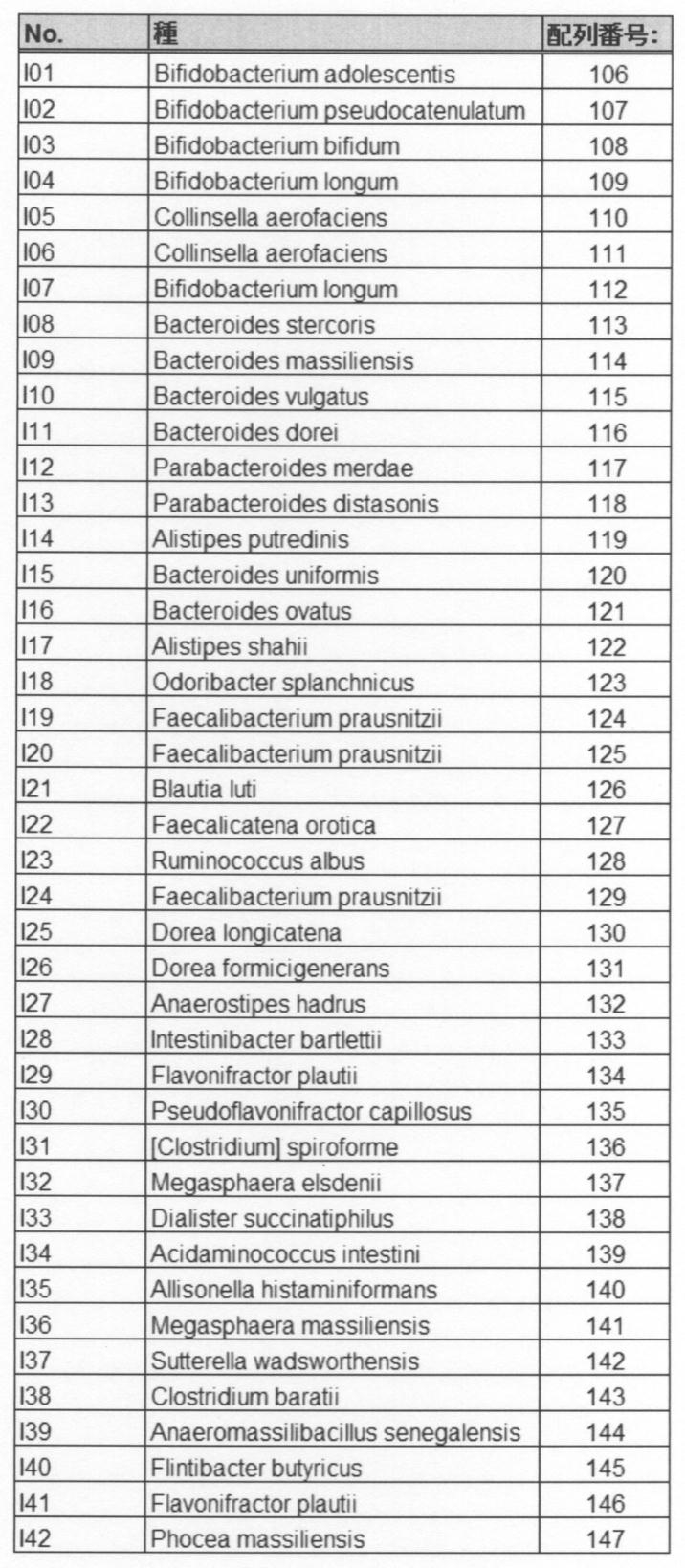
- nucleotide sequences set forth in SEQ ID NOs: 1 to 68 are the nucleotide sequences of 16 r DNA of each of 68 bacterial strains isolated from feces derived from healthy people # K.
- the nucleotide sequence of any one of 69 to 105 is a nucleotide sequence of 16 r DNA of each of 37 bacterial strains isolated from feces from healthy subject #F, and is one of SEQ ID NOs: 106 to 147
- the nucleotide sequence described in any of them is a nucleotide sequence of 16 r DNA of each of 42 bacterial strains isolated from feces from healthy subject #I.
- the present invention it is possible to suppress the proliferation or activation of Th1 cells and to suppress the immunity in the intestinal tract by suppressing the colonization of Th1 cell-inducing bacteria into the intestinal tract, and in turn, a disease caused by Th1 cells. Can be treated, ameliorated or prevented. Furthermore, according to the present invention, it is also possible to test for diseases caused by Th1 cells.
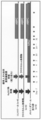
- FIG. 1 shows an outline of a stool sample administration experiment from a healthy individual (#K) to a sterile mouse inoculated with the Kp2H7 strain.
- “ABPC” indicates an ampicillin administration period
- “MNZ” indicates a metronidazole administration period.
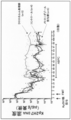
- FIG. 16 is a graph showing the results of qPCR analysis of the time-dependent change in intestinal colonization amount of Kp2H7 strain in a sterile mouse fed a stool sample derived from a healthy individual (#K) after inoculation of the Kp2H7 strain.
- “FMT” shows the administration day of a stool sample
- “ABPC” shows an ampicillin administration period.
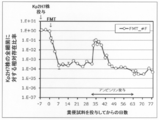
- FIG. 16 is a graph showing the results of qPCR analysis of the time-dependent change in the intestinal colonization amount of Kp2H7 strain in a sterile mouse fed a stool sample derived from a healthy individual (#F) after inoculation of the Kp2H7 strain.
- “FMT” shows the administration day of a feces sample.
- FIG. 16 is a graph showing the results of qPCR analysis of the time-dependent change in intestinal colonization amount of Kp2H7 strain in a sterile mouse fed a stool sample derived from a healthy individual (#I) after inoculation of the Kp2H7 strain.
- “FMT” shows the administration day of a feces sample.
- FIG 16 is a graph showing the results of qPCR analysis of the time-dependent change in intestinal colonization amount of Kp2H7 strain in a sterile mouse fed a stool sample derived from a healthy individual (#K) after inoculation of the Kp2H7 strain.
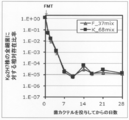
- “FMT” shows the administration day of a feces sample. It is the figure which accumulated the graph shown to FIGS. 5-7. It is the graph which showed the time-dependent change of the enteral colonization amount of Kp2H7 strain in the CFU in the germfree mouse which ingested the bacterial cocktail derived from healthy human feces after inoculation of Kp2H7 strain.
- K_47 mix indicates a sterile mouse administered a cocktail consisting of 47 bacterial strains isolated from stool of healthy subject #K
- F_37 mix is isolated from stool of healthy subject #F
- I_42 mix represents a sterile mouse administered a cocktail consisting of 42 bacterial strains isolated from stool of healthy people #I
- fece I represents a sterile mouse administered a cocktail consisting of 37 bacterial strains. Indicates a sterile mouse to which a stool sample from healthy human #I was administered.
- FMT indicates the administration date of the bacterial cocktail or fecal sample. The notation in the figure is the same as in FIG.
- FIG. 1 is a graph which shows the result of having analyzed the time-lapse change of the amount of intestinal colonization of Kp2H7 strain by qPCR in the germfree mouse which took the bacterial cocktail derived from healthy human feces 7 days after inoculation of Kp2H7 strain.
- the present inventors have revealed that colonization of bacteria that induce proliferation or activation of Th1 cells in the intestinal tract is suppressed by enteric bacteria.
- the present invention provides an antibacterial composition against bacteria (Th1 cell-inducing bacteria) that induces proliferation or activation of Th1 cells in the intestinal tract, which contains enteric bacteria as an active ingredient.
- a bacterium that induces proliferation or activation of Th1 cells in the intestinal tract is usually present in the oral cavity of a human, but by establishing in the intestinal tract, proliferation or activation of Th1 cells is achieved. It is a bacteria that induces. Preferably, they are bacteria that belong to Klebsiella, more preferably belong to Klebsiella pneumoniae or Klebsiella aeromobilis, and induce proliferation or activation of Th1 cells in the intestinal tract.
- the “bacteria that induce the proliferation or activation of Th1 cells in the intestinal tract” is preferably a bacterium that easily settles in the intestinal environment, the diversity of which is changed by the administration of the antimicrobial agent as compared to the healthy state. In addition, it is also a bacterium that is easily established in the intestinal environment in which the diversity has changed as compared to a healthy state due to colitis and the like.
- a bacterium that induces proliferation or activation of Th1 cells in the intestinal tract As described in Patent Document 1, the inventors of the present invention produce significant induction of Th1 cells when colonized in the intestinal tract These include the Kp2H7 strain, the Ka11E12 strain, the 34E1 strain, the BAA-1705 strain, the 700603 strain, or the 40B3 strain belonging to Klebsiella.
- the Kp2H7 strain, the Ka11E12 strain, the 34E1 strain and the 40B3 strain are bacteria (bacterial in the oral cavity) normally present in human oral cavity.
- strains BAA-1705 and 700603, which are bacteria normally present in the oral cavity of a human being, are bacteria detected in human urine (bacteria in urine).
- the “bacteria which induces proliferation or activation of Th1 cells in the intestinal tract” of the present invention preferably comprises a gene encoding at least 5 proteins selected from the following protein group each of the 64 genes encode: Preferably, it carries a gene encoding at least 10 proteins selected from the following protein group, more preferably carries a gene encoding at least 20 proteins selected from the following protein group Preferably, a gene encoding at least 30 proteins selected from the following protein group is carried, and more preferably, a gene encoding at least 50 proteins selected from the following protein group is carried.
- Mannose 1-phosphate guanyltransferase 1 Mannose 1 -phosphate guanyl transferase 1
- Multiphosphoryl transfer protein Multiphosphoryl transfer protein
- PTS system fructose specific EII ABC component protein PTS system fructose-specific EII ABC component
- Phosphomannomutase / phosphoglucomutase Phosphomannomutase / phosphoglucomutase
- Mannosylfructose-phosphate synthetase 3-oxoacyl [acyl transport protein] reductase FabG (3-oxoacyl- [acyl-carrier-protein] reductase FabG
- Rhamnosyl / mannosyl transferase rhamnosyl / mannosyl transferase
- Galactitol-1-phosphate 5-dehydrogenase Galactitol-1-phosphate 5-dehydrogenase
- 2242, 2552, KP-1, 700721, 13882, 40B3, 341 and 1, 1705, 11E12, 700603 and 2H7 are the 2242 strain, the BAA-2552 strain, the KP-1 strain, the 700721 strain, and 13882 described later.
- the strain, 40B3 strain, 34E1 strain, BAA-1705 strain, Ka11E12 strain, 700603 strain and Kp2H7 strain are shown, respectively. Also, weak, medium and strong indicate the degree of action to induce the proliferation or activation of Th1 cells in the intestine of each strain.
- Table 1 shows annotations and information (KEGG or UniProt) of genes related to carbohydrate metabolism in genes related to the induction of colon Th1 cells
- Table 2 shows induction levels of colon Th1 cells in a strain belonging to Klebsiella. And the degree of possession of genes associated with the carbohydrate metabolism.
- Table 3 shows annotations and information (KEGG or UniProt) of genes related to membrane transport in the genes related to the induction of large intestine Th1 cells
- Table 4 shows the induction levels of large intestine Th1 cells in the strain belonging to Klebsiella. And the degree of retention of genes associated with the membrane transport.
- Table 5 shows annotations and information (KEGG or UniProt) of genes related to amino acid metabolism in the genes related to the induction of colon Th1 cells
- Table 6 shows induction levels of colon Th1 cells in the strain belonging to Klebsiella. And the degree of possession of genes associated with the amino acid metabolism.
- Table 7 shows annotations and information (KEGG or UniProt) of genes related to gene regulation in the genes related to the induction of colon Th1 cells
- Table 8 shows induction levels of colon Th1 cells in the strain belonging to Klebsiella. And the degree of possession of the gene associated with the gene regulation.
- Table 9 shows annotations and information (KEGG or UniProt) of other genes than Tables 1 to 8 in the genes related to the induction of the large intestine Th1 cells, and Table 10 shows large intestine Th1 cells in the strain belonging to Klebsiella. And the degree of retention of the other genes.
- these proteins are specified by a specific amino acid sequence (an amino acid sequence defined by the ID of KEGG or UniProt), but the protein according to the present invention has these typical amino acid sequences.
- the protein to be identified but also functionally active derivatives thereof, functionally active fragments thereof, homologs thereof, hybridizing to the nucleic acid encoding this protein under high or low stringency conditions
- variants encoded by nucleic acids are preferably at least 60% (preferably 70%, more preferably 80%, more preferably 90%, more preferably) relative to the specific amino acid sequence.
- the homology or identity of the sequence can be determined by the program (Altschul et al. J. Mol. Biol., 215: 403) of BLAST (Basic Local Alignment Search). -410, 1990) can be used.
- the program is based on the algorithm BLAST according to Karlin and Altschul (Proc. Natl. Acad. Sci. USA, 87: 2264-2268, 1990, Proc. Natl. Acad. Sci. USA, 90: 5873-5877, 1993). There is.
- BLAST for example, using BLAST of the National Center for Biological Information (NCBI) etc. (eg, using default or default parameters) It can be decided.
- the proteins of the present invention include proteins involved in the metabolism of mannose, fructose or galactose. Therefore, it is preferable that "a bacterium that induces proliferation or activation of Th1 cells in the intestinal tract" expresses a gene involved in mannose, fructose or galactose metabolism.
- a bacterium that induces proliferation or activation of Th1 cells in the intestinal tract preferably belongs to Klebsiella, does not form a capsule, and induces proliferation or activation of Th1 cells in the intestinal tract Bacteria, more preferably belonging to Klebsiella pneumoniae, not forming capsule, producing outer membrane vesicle (OMV) or OMV-like structure, and inducing proliferation or activation of Th1 cells in the intestinal tract Bacteria that
- a bacterium that induces proliferation or activation of Th1 cells in the intestinal tract is preferably a bacterium belonging to Klebsiella and having flagella, and preferably a bacterium belonging to Klebsiella and having a stimulatory activity to TLR5. It is.
- the Kp2H7 strain, the Ka11E12 strain, the 34E1 strain, the BAA-1705 strain, the 700603 strain, which belong to Klebsiella. 40B3 strain is mentioned.
- the Kp2H7 strain or the Ka11E12 strain is more preferable, and the Kp2H7 strain is particularly preferable. See Table 11 for details of these bacteria.
- the nucleotide sequence specific to the Kp2H7 strain or the Ka11E12 strain is not particularly limited, but preferably the Kp2H7 strain or the Ka11E12 strain is possessed, but it is recognized in the BAA-2552 strain and the 700721 strain belonging to Klebsiella as well as these strains. Nucleotide sequences that are not found (more preferably, nucleotide sequences not found in strains BAA-2552, KCTC 2242, KP-1, 700721 and 13882).
- the 700721 strain, the 13882 strain, the KP-1 strain, the BAA-2552 strain, and the KCTC 2242 strain are K. coli. It is a P. pneumoniae strain, but the action of inducing proliferation or activation of Th1 cells in the intestinal tract is weak or moderate (for these bacteria, see Tables 1 to 11 and Patent Document 1).
- bacteria that induces proliferation or activation of Th1 cells in the intestinal tract a nucleotide sequence encoding 16S rRNA of strains Kp2H7, Ka11E12, 34E1, BAA-1705, 700603 or 40B3.
- the DNA-containing bacteria may be mentioned, and a nucleotide sequence specific to Kp2H7 strain, Ka11E12 strain, 34E1 strain, BAA-1705 strain, 700603 strain or 40B3 strain and 70% or more (preferably 80% or more, more preferably) 85% or more, more preferably 90% or more, more preferably 95% or more (96% or more, 97%
- bacteria can also be mentioned containing DNA consisting of a nucleotide sequence having 99% or higher)) homology or identity.
- Th1 cells refers to a subpopulation of CD4 positive helper T cells (Th cells) and cells that enhance cellular immunity.
- the activity of Th1 cells refers to the production of Th1 cytokines (IFN- ⁇ and the like) by the cells, the activation of cells such as macrophages and cytotoxic T cells (CTL) by the cytokines, and the cells by the activation. It is meant to include the enhancement of sexual immunity.
- induction of proliferation or activation of Th1 cells is meant to also include differentiation induction from naive T cells to Th1 cells leading to proliferation or activation of Th1 cells.
- Th1 cell specific markers eg, CD4 and IFN- ⁇
- Such quantitative detection can be performed by known techniques, for example, flow cytometry, imaging cytometry, ELISA, radioimmunoassay, immunohistochemical staining, immunoprecipitation, immunoblotting, antibody array analysis Etc. can be carried out by a method (immunological method) of detection using an antibody such as
- Whether any bacteria or the like has an action to induce proliferation or activation of Th1 cells in the intestinal tract can be determined, for example, by IFN in CD4 + TCR ⁇ + T cells in the intestinal tract detected by flow cytometry.
- the proportion of - ⁇ + cells is 10% or more, it can be determined that the aforementioned bacteria or the like have an effect of inducing proliferation or activation of Th1 cells in the intestinal tract (25%
- the bacteria etc. have an action to induce proliferation or activation of Th1 cells in the intestinal tract, and when 30% or more, the bacteria, It is more preferable to determine that the substance or the like has an effect of inducing proliferation or activation of Th1 cells in the intestinal tract).
- intestinal bacteria which are included as an active ingredient of the antimicrobial composition of the present invention, will be described.
- the enterobacteria contained as an active ingredient of the antifungal composition has an antifungal action against bacteria that induce the growth or activation of Th1 cells in the intestinal tract.
- the "antibacterial activity” means an activity to suppress the activity of bacteria, more specifically, an activity to suppress growth or colonization of bacteria, or to kill bacteria.
- enteric bacteria bacteria present in the intestinal tract of an animal.
- animals in which such bacteria exist include human and non-human animals (mouse, rat, monkey, pig, cow, horse, sheep, goat, chicken, duck, ostrich, duck, dog, cat, rabbit, hamster, etc.) Among these animals, humans are preferred.
- “enteric bacteria” may be one strain of bacteria or a mixture of bacterial strains composed of multiple strains of bacteria.
- it is desirable for at least one bacterial strain to have the antifungal activity with respect to Th1 cell induction bacteria.
- the bacteria having the plurality of strains even if the bacterial strain does not have the antibacterial activity, the bacteria having the effect of enhancing the activity of the bacterial strain having the antibacterial activity.
- enteric bacteria includes, for example, a DNA consisting of the nucleotide sequence of any one of SEQ ID NOs: 1 to 147 or a nucleotide sequence having at least 70% identity to the nucleotide sequence.
- At least one bacterium having DNA comprising at least one bacterium, the nucleotide sequence of any one of SEQ ID NOs: 1 to 68 or a nucleotide sequence having at least 70% identity to the nucleotide sequence
- the nucleotide sequence according to any one of to 147 or a nucleotide sequence having at least 70% identity to the nucleotide sequence Having Ranaru DNA it includes at least one of the bacteria.
- the “at least 70% identity” in the enterobacteria of the present invention is preferably 80% or more, more preferably 85% or more, still more preferably 90% or more (eg, identity) to each base sequence. 91% or more, 92% or more, 93% or more, 94% or more), more preferably 95% or more (for example, 96% or more, 97% or more, 98% or more), particularly preferably 99% or more.
- enteric bacteria having a DNA comprising the nucleotide sequence of any one of SEQ ID NOs: 1 to 147 or a nucleotide sequence having at least 70% identity to the nucleotide sequence is preferably used. Is at least 15 bacteria in the group of intestinal bacteria, more preferably at least 30 bacteria in the group of intestinal bacteria, and still more preferably at least 75 in the group of intestinal bacteria.
- Bacteria more preferably at least 120 bacteria of the enterobacteria group, still more preferably at least 135 bacteria of the enterobacteria group, more preferably, the intestine At least 140 bacteria of the bacterial group, more preferably the nucleotide sequence of any one of SEQ ID NOs: 1 to 147 or less relative to the nucleotide sequence 147 enterobacteria each having a DNA consisting of a base sequence having at least 70% identity, particularly preferably a DNA consisting of a base sequence according to any one of SEQ ID NOs: 1 to 147 It has 147 bacteria.
- enteric bacteria having a DNA comprising the nucleotide sequence of any one of SEQ ID NOs: 1 to 68 or a nucleotide sequence having at least 90% identity to the nucleotide sequence is preferably used.
- enteric bacteria having a DNA consisting of the nucleotide sequence of any one of SEQ ID NOs: 1 to 68 or a nucleotide sequence having at least 70% identity to the nucleotide sequence
- ampicillin It is desirable to have resistance.
- each has a DNA consisting of the nucleotide sequence of any one of SEQ ID NOs: 1 to 46 or a nucleotide sequence having at least 70% identity to the nucleotide sequence. 46 bacteria are also suitably used in the present invention.
- enteric bacteria having a DNA consisting of the nucleotide sequence of any one of SEQ ID NOs: 69 to 105 or a nucleotide sequence having at least 70% identity to the nucleotide sequence is preferable.
- enteric bacteria having a DNA consisting of the nucleotide sequence of any one of SEQ ID NOs: 69 to 105 or a nucleotide sequence having at least 70% identity to the nucleotide sequence
- ampicillin It is desirable to have sensitivity.
- enteric bacteria having a DNA consisting of the nucleotide sequence of any one of SEQ ID NOs: 106 to 147 or a nucleotide sequence having at least 70% identity to the nucleotide sequence is preferable. Is at least 4 bacteria in the group of intestinal bacteria, more preferably at least 9 bacteria in the group of intestinal bacteria, and still more preferably at least 22 in the group of intestinal bacteria.
- At least 41 bacteria of the bacterial group and more preferably, the nucleotide sequence set forth in any of SEQ ID NOs: 106 to 147 or less relative to the nucleotide sequence 42 enterobacteria each having a DNA consisting of a nucleotide sequence having 70% identity, and particularly preferably a DNA consisting of the nucleotide sequence according to any one of SEQ ID NOs: 106 to 147 It has 42 bacteria.
- enteric bacteria having a DNA consisting of the nucleotide sequence of any of SEQ ID NOs: 106 to 147 or a nucleotide sequence having at least 70% identity to the nucleotide sequence, ampicillin It is desirable to have sensitivity.
- enterobacteria as one embodiment of “enteric bacteria”, as shown in the examples described later, resistance to at least one compound selected from the group consisting of spectinomycin and / or ampicillin, tylosin And enterobacteria which are sensitive to at least one compound selected from the group consisting of and chloroform. Also, another embodiment includes an enterobacteria that exhibits resistance to metronidazole and / or sensitivity to at least one compound selected from the group consisting of vancomycin and tylosin.
- composition of the present invention only needs to contain the above-mentioned enteric bacteria, and the bacteria may be a living cell or a dead cell.
- the enteric bacteria described above are present separately in two or more compositions. You can also
- composition of the present invention may be in the form of a pharmaceutical composition, food and drink (including animal feed), or a reagent used for research purpose (for example, in vitro and in vivo experiments).
- composition of the present invention suppresses the induction and immunity of Th1 cells in the intestinal tract of bacteria that induce proliferation or activation of Th1 cells in the intestinal tract, and therefore for the treatment, prevention or amelioration of a disease caused by Th1 cells.
- the composition is suitably used as a pharmaceutical composition or food and drink of
- composition of the present invention can be formulated by known pharmaceutical methods. For example, capsules, tablets, pills, solutions, powders, granules, fine granules, film coatings, pellets, troches, sublingual agents, lozenges, buccal agents, pastes, syrups, suspensions, Elixirs, emulsions, coatings, ointments, plasters, patches, transdermal preparations, lotions, aspirants, aerosols, injections, suppositories, etc.
- parenterally Used for administration by the route consisting of internal, intramuscular, intravenous, intratracheal, intranasal, transdermal, intradermal, subcutaneous, intraocular, vaginal, intraperitoneal, rectal or inhalation), or a combination of these be able to.
- pharmacologically or food-acceptable carriers specifically, sterile water, physiological saline, buffers, culture media, vegetable oils, solvents, bases, emulsifiers, suspensions, surfactants Agent, stabilizer, flavoring agent, fragrance, excipient, vehicle, preservative, binder, diluent, tonicity agent, soothing agent, bulking agent, disintegrant, buffer, coating agent, lubricant Colorants, sweeteners, thickeners, flavoring agents, solubilizers or other additives may be used as appropriate.
- the composition of the present invention may be combined with a composition that enables efficient delivery inside.
- a composition that enables such delivery into the intestinal tract is not particularly limited, and a known composition can be appropriately adopted.
- a pH-sensitive composition a composition that suppresses the release to the intestinal tract Materials (cellulose polymers, acrylic acid polymers and copolymers, vinyl acid polymers and copolymers, etc.), bioadhesive compositions that adhere specifically to intestinal mucosa (eg, US Pat. No. 6,368,586) Polymers described in the specification, protease inhibitor-containing compositions, and compositions that are specifically degraded by intestinal enzymes).
- the antimicrobial composition of the present invention when used as a pharmaceutical composition, it further comprises known substances (for example, anti-inflammatory agents, immunosuppressants) used for the treatment, prevention or amelioration of diseases caused by Th1 cells. Or may be used in combination with such a substance.
- known substances for example, anti-inflammatory agents, immunosuppressants
- the food or drink may be, for example, a health food, a functional food, a food for specified health use, a nutritive function food, a functional display food, a nutritional supplement, a food for the sick, or It may be an animal feed.
- Specific examples of food and drink include fermented drinks, products containing oil, soups, milk drinks, soft drinks, tea drinks, alcoholic drinks, drink products, liquid foods such as drinks, carbohydrate-containing foods, livestock processed foods Processed fishery products; processed vegetable foods, semi-solid foods, fermented foods, confectioneries, retort products, microwave compatible foods and the like.
- manufacture of the food-drinks in this invention can be implemented with the manufacturing technology well-known to the said technical field.
- the component for example, nutrient etc.
- the product (pharmaceutical, food, drink, reagent) of the composition of the present invention or instructions therefor is used to suppress the proliferation or activation of Th1 cells, or to treat, ameliorate or prevent diseases caused by Th1 cells. It may be marked with a message.
- the display of the health function as a health functional food can be made according to the present invention so that the form and target people can distinguish them from general foods. It may be attached to the product etc. of the composition.
- indicating the indication on the product or instruction means that the indication is attached to the main body of the product, the container, the package or the like, or an instruction document, a package insert, a promotional item, other printed matter for disclosing the product information It means that the display was attached to etc.
- the composition of the present invention may be in the form of a kit.
- the enteric bacteria of the present invention and the like can be used to produce a pharmaceutical composition by a known formulation technique. Therefore, the present invention also provides the use of the enterobacteria and the like of the present invention for producing a pharmaceutical composition for treating, ameliorating or preventing a disease caused by Th1 cells.
- ⁇ A bacterium having antibacterial activity against bacteria that induce Th1 cells in the intestinal tract As shown in FIG. 1, when the Kp2H7 strain was orally administered to SPF mice, intestinal colonization of the Kp2H7 strain was not observed. However, administration of ampicillin or tylosin to SPF mice has revealed that the Kp2H7 strain can be established in the mouse intestine. On the other hand, it was also found by the present inventors that administration of metronidazole or spectinomycin to SPF mice does not cause intestinal colonization of the Kp2H7 strain.
- the present invention provides bacteria having antibacterial activity against bacteria that induce proliferation or activation of Th1 cells in the intestinal tract.
- any bacteria may be used as long as they have the above-mentioned antibacterial activity, and examples thereof include the enteric bacteria described above.
- the present invention relates to the above-mentioned antibacterial composition or pharmaceutical composition, or the above-mentioned enteric bacteria as the active ingredient thereof, bacteria having the above-mentioned antibacterial activity (hereinafter referred to as “the pharmaceutical composition of the present invention, etc. Or the like) is taken into a subject, a method of suppressing proliferation or activation of Th1 cells in a subject, a method of suppressing immunity in the subject, or ascribed to Th1 cells in the subject It also provides a method of treating, ameliorating or preventing a disease.
- a disease caused by Th1 cells means a disease induced by proliferation or activation of Th1 cells, and is a chronic disease such as inflammatory bowel disease (Crohn's disease, ulcerative colitis, inflammatory bowel disease Inflammatory bowel diseases and the like), type 1 diabetes, rheumatoid arthritis, experimental immune encephalitis (EAE), multiple sclerosis, autoimmune diseases such as systemic lupus erythematosus and chronic inflammatory diseases.
- "immunity" to be suppressed in the present invention includes not only mucosal immunity (intestinal immunity etc.) but also systemic immunity. Furthermore, not only cellular immunity but also humoral immunity is included.
- the pharmaceutical composition and the like of the present invention or the active ingredients thereof can be used for animals including humans, but there is no particular limitation as animals other than humans, and various livestock, poultry, pets, for experimental use An animal etc. can be targeted.
- an intake target of intestinal bacteria and the like of the present invention animals having Th1 cell-inducing bacteria can be mentioned regardless of the onset of a disease caused by Th1 cells.
- an animal that does not possess or is suspected of possessing the bacterium may ingest the pharmaceutical composition and the like of the present invention, the active ingredient thereof and the like.
- the method of intake of the pharmaceutical composition and the like of the present invention or their active ingredients and the like there is no particular limitation on the method of intake of the pharmaceutical composition and the like of the present invention or their active ingredients and the like, and oral administration or parenteral administration (for example, administration into the intestinal tract) may be used.
- oral administration from the viewpoint of further improving the effects of the pharmaceutical composition and the like of the present invention or their active ingredients and the like, the intake target of the pharmaceutical composition and the like of the present invention or their active ingredients and the like
- the production of gastric acid is reduced by intake of a proton pump inhibitor (PPI) or the like.
- PPI proton pump inhibitor
- the amount taken may be the age, weight, symptoms of disease, health condition, type of composition (pharmaceuticals, food and drink, etc.) Those skilled in the art can appropriately select according to the intake method and the like.
- the presence of enteric bacteria that can suppress the establishment of Th1 cell-inducing bacteria in the intestinal tract is revealed. Therefore, by detecting the presence of the enteric bacteria, it is possible to examine a disease caused by Th1 cells.
- the present invention provides a composition for testing the following diseases caused by Th1 cells.
- a composition for testing a disease caused by Th1 cells which comprises an antibody that specifically recognizes the intestinal bacteria and the like of the present invention.
- a composition for testing a disease caused by Th1 cells which comprises a polynucleotide for detecting a nucleotide sequence specific to intestinal bacteria etc. of the present invention.
- the "antibody specifically recognizing enteric bacteria etc. of the present invention” may be a polyclonal antibody or a monoclonal antibody as long as it can specifically recognize the bacteria.
- Functional fragments eg, Fab, Fab ′, F (ab ′) 2, variable region fragment (Fv), disulfide linked Fv, single chain Fv (scFv), sc (Fv) 2, diabody, multispecificity Antibodies, or polymers thereof).
- the antibody of the present invention is a polyclonal antibody, it immunizes an immune animal with an antigen (polypeptide, polynucleotide, sugar chain, lipid, etc. derived from intestinal bacteria etc.
- monoclonal antibodies can be prepared by hybridoma method or recombinant DNA method.
- an antibody conjugated with a labeling substance can be used as the antibody used in the test of the present invention.
- detecting the labeled substance it is possible to directly measure the amount of antibody bound to the enterobacteria or the like of the present invention or a substance derived from the bacterium.
- the labeling substance is not particularly limited as long as it can bind to an antibody and can be detected by chemical or optical methods.
- fluorescent dyes GFP etc.
- enzymes HRP etc.
- radioactive Substances can be mentioned.
- the test composition of the present invention can contain, in addition to the antibody component, other components acceptable as a composition.
- Such other components include, for example, carriers, excipients, disintegrants, buffers, emulsifiers, suspensions, stabilizers, preservatives, preservatives, physiological saline, labeling substances, secondary antibodies, etc. .
- a substrate necessary for detection of a labeled substance, a positive control or negative control, a buffer solution used for dilution or washing of a sample, a tube or plate used for reaction of the sample with the antibody of the present invention Etc. can be combined, and it can also be used as a test kit for a disease caused by Th1 cells.
- kits for testing a disease caused by such Th1 cells can include instructions for using the kit.
- test composition of the present invention can be combined with a device for detecting the antibody of the present invention.
- a device for detecting the antibody of the present invention include, for example, flow cytometry devices, microplate readers.
- a polynucleotide for detecting a nucleotide sequence specific to enteric bacteria etc. of the present invention is not particularly limited as long as a sequence specific to said bacteria is detected, for example, at least 15 A polynucleotide having any of the following (a) to (b) and having a strand length of a nucleotide is mentioned.
- a polynucleotide which is a pair of primers designed to sandwich the specific nucleotide sequence (b) A polynucleotide which is a primer or a probe which hybridizes to a nucleotide sequence containing the specific nucleotide sequence.
- the polynucleotide of the present invention has a base sequence that is complementary to the nucleotide sequence of the enterobacteria of the present invention.
- “complementary” may not be completely complementary as long as it hybridizes.
- These polynucleotides usually have a homology of 80% or more, preferably 90% or more, more preferably 95% or more, particularly preferably 100%, to the nucleotide sequence.
- the “strand length” in the polynucleotide of the present invention is usually 15 to 100 nucleotides, preferably 17 to 30 nucleotides, and more preferably 20 to 25 nucleotides.
- the “strand length” in the polynucleotide of the present invention is usually 15 to 1000 nucleotides, preferably 20 to 100 nucleotides.
- the polynucleotide of the present invention may be DNA or RNA, and in part or all thereof, LNA (registered trademark, crosslinked nucleic acid), ENA (registered trademark, 2'-O, 4'-).
- LNA registered trademark, crosslinked nucleic acid
- ENA registered trademark, 2'-O, 4'-
- the nucleotides may be substituted by artificial nucleic acids such as C-Ethylene-bridged nucleic acids), GNA (glycerol nucleic acid), TNA (threose nucleic acid), PNA (peptide nucleic acid) and the like.
- the polynucleotide of the present invention can be chemically synthesized using a commercially available automatic nucleotide synthesizer or the like.
- a polynucleotide to which a labeling substance is bound can be used as the polynucleotide used for the test of the present invention.
- the labeling substance is not particularly limited as long as it can bind to a polynucleotide and can be detected by chemical or optical methods.
- fluorescent dyes (DEAC, FITC, R6G, TexRed, Cy5, etc.
- fluorochromes dyes such as DAB (chromogen), enzymes, radioactive substances.
- composition for examination of the present invention may contain other pharmacologically acceptable components in addition to the aforementioned polynucleotide.
- examples of such other components include buffers, emulsifiers, suspensions, stabilizers, preservatives, physiological saline and the like.
- the sample and the present invention are combined with a substrate necessary for detection of a labeling substance added to a polynucleotide, a positive control or a negative control, and a standard such as a buffer solution used for dilution or washing of a sample.
- a standard such as a buffer solution used for dilution or washing of a sample.
- the tube, the plate, etc. used for the reaction with the polynucleotide of (1) can be combined, and it can also be used as a test kit for a disease caused by Th1 cells.
- the kit for testing a disease caused by such Th1 cells can include instructions for using the kit.
- test composition of the present invention can be combined with a device for detecting a nucleotide sequence specific to the enterobacteria etc. of the present invention.
- a device for detecting a nucleotide sequence specific to the enterobacteria etc. of the present invention include, for example, thermal cyclers, sequencers, and microarrays.
- the present invention also provides a method for testing a disease caused by Th1 cells, using the aforementioned antibody, polynucleotide or test composition. That is, Contacting the antibody, polynucleotide, or test composition with a sample isolated from a subject, and detecting the presence or absence of the enteric bacterium of the present invention or the like in the intestinal tract by the contact.
- the present invention provides a method for testing a disease caused by Th1 cells, which comprises the steps of
- the subject is not particularly limited, and includes animals such as humans suspected to be affected by a disease caused by Th1 cells.
- the sample isolated from such a subject is not particularly limited, but the fecal sample of the subject, the culture thereof, or the polypeptide, polynucleotide, sugar chain, lipid and the like extracted from them are the present invention.
- the fecal sample of the subject, the culture thereof, or the polypeptide, polynucleotide, sugar chain, lipid and the like extracted from them are the present invention.
- Examples of the method for detecting the presence or absence of the enteric bacteria of the present invention by contacting the antibody of the present invention or the composition for examination containing the same with the above-mentioned sample include, for example, ELISA method, immunoblotting, Methods of detection using antibodies such as antibody array analysis, immunohistochemical staining, flow cytometry, imaging cytometry, radioimmunoassay, immunoprecipitation, etc. (immunological techniques) can be mentioned.
- PCR RT -PCR, real-time PCR, quantitative PCR
- DNA microarray analysis for example, DNA microarray analysis, Northern blotting, 16srRNA sequencing, next-generation sequencing (synthetic sequencing (for example, Illumina Soleex Genome Analyzer or Hiseq (Sequencing-by-synthesis) Sequencing under the registered trademark 2000), pyrosequencing methods (for example, sequencing with the sequencer GSLX or FLX manufactured by Roche Diagnostics (454) (so-called 454 sequencing) ), Ligase reaction sequencing (for example, sequencing with SoliD (registered trademark) or 5500xl from Life Technologies), bead array method, in situ hybridization, dot blot, RNase protection assay, mass spectrometry, Genomic PCR, Southern blotting
- PCR RT -PCR, real-time PCR, quantitative PCR
- DNA microarray analysis for example, DNA microarray analysis, Northern blotting, 16srRNA sequencing, next-generation sequencing (synthetic
- testing for a disease caused by Th1 cells includes not only the presence or absence of onset of the disease but also testing for the risk of the onset, and the method of the present invention If the presence of enteric bacteria and the like is detected, it can be determined that the disease caused by Th1 cells has not developed or the risk of its development is low.
- Diagnosis of a disease caused by Th1 cells in a subject is usually performed by a doctor (including those instructed by a doctor), but the data obtained by the method of the present invention is useful for diagnosis by a doctor. .
- the method of the present invention can also be expressed as a method of collecting and presenting data useful for diagnosis by a doctor.
- a companion diagnostic method using the above-mentioned test method, and an agent thereof can also be provided. That is, the present invention also provides the following.
- a method for determining the efficacy of a pharmaceutical composition of the present invention or the like or an active ingredient thereof in the treatment, amelioration or prevention of a disease caused by Th1 cells comprising the antibody, polynucleotide or composition for examination Contacting with a sample isolated from the subject, detecting the presence or absence of the enteric bacteria or the like by the contacting, if the presence of the bacteria is not detected in the step, A method determined to be highly effective in the treatment, amelioration or prevention of the disease, such as the pharmaceutical composition of the present invention or the active ingredient thereof or the like in the subject.
- a method for treating, ameliorating or preventing a disease caused by Th1 cells which comprises using the method according to the above-mentioned method to a patient who is judged to be highly effective as the pharmaceutical composition of the present invention or the active ingredient thereof.
- a method comprising the step of ingesting the composition etc. or their active ingredients etc.
- a composition for treating, ameliorating or preventing a disease caused by a Th1 cell which comprises the enteric bacteria etc. of the present invention as an active ingredient, which is a subject determined to be highly effective by the above determination method
- the composition to be ingested is a subject determined to be highly effective by the above determination method.
- the present invention provides a method of screening for enterobacteria having antibacterial activity against bacteria that induce proliferation or activation of Th1 cells in the intestinal tract, comprising the steps of:
- Non-human germfree animal means a non-human animal that is born and grown under sterile conditions. Examples of non-human animals include, but are not limited to, mice, rats, monkeys, pigs, cattle, horses, sheep, goats, chickens, ducks, ostrich, ducks, dogs, cats, rabbits, hamsters, etc. . In these animals, a mouse is preferably used.
- the test enteric bacteria to be fed to the non-human germfree animal may be any bacteria existing in the intestine of the animal, and such animals include human and non-human animals (mouse, rat, monkey, pig, cow, horse, Sheep, goats, chickens, ducks, ostrich, ducks, dogs, cats, rabbits, hamsters, etc.).
- the test enteric bacteria to be fed to the non-human aseptic animal may be isolated enteric bacteria, but a sample containing the enteric bacteria (eg, a stool sample of the animal or a culture thereof) is It can be mentioned.
- test enteric bacteria and Th1 cell-inducing bacteria there is no particular limitation on the method for "ingesting" test enteric bacteria and Th1 cell-inducing bacteria into non-human animals, and it is usually performed orally but parenteral administration (eg, administration in the intestinal tract) ) May be.
- parenteral administration eg, administration in the intestinal tract
- the intake of the test enteric bacteria and the Th1 cell-inducing bacteria may be simultaneous, and the test enteric bacteria are taken into non-human animals, and then the Th1 cell-inducing bacteria are taken into the animals.
- the test enteric bacteria may be ingested by the non-human animal after the Th1 cell-inducing bacteria are ingested by the animal.
- the “detection” of the Th1 cell-inducing bacteria in the intestinal tract can be carried out by detecting the nucleotide sequence specific to the Th1 cell-inducing bacteria.
- a detection method for example, PCR (RT-PCR, real-time PCR, quantitative PCR), DNA microarray analysis, northern blotting, 16srRNA sequencing, next-generation sequencing (synthetic sequencing (synthetic sequencing, eg, Sequencing with Illumina Solex Solexa Genome Analyzer or Hiseq (registered trademark) 2000, Pyrosequencing method (eg sequencing with Roche Diagnostics (454) sequencer GSLX or FLX (so-called 454 sequencing) ), Ligase reaction sequencing method (eg, SoliD (registered trademark) manufactured by Life Technology Co., Ltd. or 5500 xl) Grayed), bead array method, in situ hybridization, dot blots, RNase protection assay, Mass spectrometry, genomic PCR method, and Southern blotting.
- “detection” of Th1 cell-inducing bacteria in the intestinal tract can be performed, for example, by detecting an amino acid sequence specific to the Th1 cell-inducing bacteria.
- a detection method a method of detection using an antibody such as ELISA, immunoblotting, antibody array analysis, immunohistochemical staining, flow cytometry, imaging cytometry, radioimmunoassay, immunoprecipitation, etc. Method).
- the timing of detection is not particularly limited, and can be appropriately adjusted by those skilled in the art according to the type of animal to be used.
- the screening method of the present invention when it is not possible to select an enterobacteria having antibacterial activity against bacteria that induce proliferation or activation of Th1 cells in the intestinal tract by one execution.
- the enteric sample containing the bacteria thus obtained is taken up by a new non-human germfree animal as the next test enteric bacteria, and the enteric bacteria having the above-mentioned antibacterial activity are carried out by performing the aforementioned screening multiple times. It can be isolated.
- Example 1 Establishment of Th1 cell-inducing bacteria in mice treated with antibiotics The following antibiotics were administered via drinking water for 4 days, before SPF mice (wild-type C57BL / 6) were gavaged with Th1 cell-inducing bacteria. In addition, mice not receiving these antibiotics were also prepared.
- Antibiotics ampicillin (200 mg / L), tylosin (500 mg / L), metronidazole (500 mg / L), spectinomycin (200 mg / L), vancomycin (200 mg / L).
- Th1 cell-inducing bacteria Kp2H7 strain or Ka11E12 strain were cultured in LB broth until log phase, and 1 to 2 ⁇ 10 8 CFUs were used for inoculation of mice.
- feces were collected and DNA was extracted 1, 3, 7, 14 and 21 days later. Then, using these DNAs as templates, qPCR was performed using the following primers specific to each bacterial strain, and the amount of colonization of each bacterial strain was evaluated.
- the Kp2H7 strain colonizes the intestinal tract and induces Th1 cells when administered to a sterile mouse.
- the present inventors have also confirmed that the bacterial strain is a bacterial strain having resistance to ampicillin, tylosin, metronidazole or spectinomycin.
- the present inventors have also clarified that, when administered to a sterile mouse, the Ka11E12 strain is established in the intestinal tract to induce Th1 cells. Furthermore, the present inventors have confirmed that the bacterial strain is a bacterial strain having resistance to vancomycin, tylosin or metronidazole.
- Example 2 Administration 1 of human fecal samples to sterile mice inoculated with Th1 cell-inducing bacteria As shown in FIG. 3, as in Example 1, sterile mice were inoculated with the Kp2H7 strain. Then, one week after the inoculation, human feces samples collected from healthy persons (#K) were orally administered. Also, for 31 to 94 days after the oral administration, administration of ampicillin was continued as in Example 1 (hereinafter, the mouse thus treated is also referred to as "control").
- mice treated in this manner Is also referred to as "chloroform-treated group").
- mice were treated in the same manner as in the control except that administration of metronidazole was continued similarly to Example 1 from 1 day before oral administration of human fecal samples (hereinafter referred to as “metronidazole administration Also called "group").
- Example 3 Administration 2 of human fecal samples to sterile mice inoculated with Th1 cell-inducing bacteria 2 Preparation of stool samples Feces (#K stool sample, #F stool sample and #I stool sample) provided by each healthy volunteer (#K, F and I), in glycerol PBS solution (final concentration of glycerol: 20 volumes) %), And filtered through a 100 ⁇ m diameter filter, and stored at -80 ° C. as a stock solution.
- the healthy volunteer #K in the present embodiment and the healthy human #K in the second embodiment are the same.
- the Kp2H7 strain was cultured in Schaedler blood medium, LB medium, or their agar plates at 37 ° C. in a 10% CO 2 anaerobic environment. After orally administering 200 ⁇ L of a suspension of any of the above media containing 1 ⁇ 10 10 CFU equivalent of Kp 2 H 7 into the stomach of an 8 to 11 week-old mouse, and rearing it in a sterile isolator for 1 week Fixing mice were produced.
- bacterial genomic DNA extracted from mouse feces was amplified and quantified using a Kp2H7 genome-specific primer and a universal bacterial primer to calculate the abundance ratio of Kp2H7 strain in bacteria in a mouse fecal sample.
- the qPCR measurement was performed according to the following procedure.
- Kp2H7 primer Forward (5'-AGCACTAGCGGCTGTGGTAT-3 '[SEQ ID NO: 150]), Reverse (5'-ACT TACTCGGGCCCTTGATT-3' [SEQ ID NO: 151]) Universal Bacterial Primer: Forward (5'-GGTGAATACGTTCCCGG-3 '[SEQ ID NO: 154]), Reverse (5'-TACGGCTACCTTGTTACGACTT-3' [SEQ ID NO: 155]) The obtained results (results of qPCR measurement of intestinal bacterial genome) are shown in FIGS.
- the Kp2H7 strain is a multidrug resistant bacterium that is resistant to at least ampicillin, tylosin, spectinomycin and metronidazole (nitroimidazole).
- Example 4 Isolation of bacteria from healthy volunteers' stools 1
- Each frozen stool sample from #I and #F prepared in Example 3 was thawed at normal temperature, diluted with PBS, Schaedler blood culture medium (Wako; 517-45805), Luria Bertani (LB) In an agar plate of medium (Nacalai Tesque, Inc .: 20068-75), DHL medium (Nippon Pharmaceutical Co., Ltd .: 05040) or MacConkey medium (Merck: 1.46461.0010), 37 ° C., 10% CO 2 anaerobic The cells were cultured under environment to isolate the formed colonies.
- Example 5 Isolation of bacteria from healthy volunteers' feces 2
- a fecal sample derived from healthy volunteer #K was intragastrically administered to a Kp2H7 monoclinic colonized mouse in which the Kp2H7 strain monocyte was bred for 1 week after intragastric administration and the microbes were established, according to the method according to Example 3.
- a stool sample treated with chloroform in the following procedure was also administered intragastrically.
- Chloroform treatment The stock solution of the K-derived fecal sample prepared in Example 3 was thawed at normal temperature. Then, chloroform was added to a final concentration of 3%, and after shaking and stirring at 37 ° C. for 1 hour, chloroform was removed through nitrogen gas.
- mice prepared as described above were allowed to freely drink either water or the following antibiotic aqueous solution for 2 months, and then feces were collected.
- Example 6 Establishment of Bacteria by Culture of Isolated Bacteria
- Each strain isolated in Examples 4 and 5 was treated with Schaedler blood culture medium, LB culture medium, LB culture medium, DHL culture medium or MacConkey culture medium at 37 ° C. under 10% CO 2 anaerobic environment, respectively It was cultured for 3 days. Equal volumes of the bacterial solution that has reached stationary phase were mixed, and 200 ⁇ L was orally administered into the stomach of the Kp2H7 single-fixed mouse prepared in Example 3. For another month, they were bred under free water and feeding conditions in a sterile isolator to allow the bacteria to settle. Then, after eliminating the established bacteria by administering the antibiotic ampicillin by the method described in Example 3, the amount of Kp2H7 established in the intestine was measured. The obtained results are shown in FIGS.
- I_42 mix does not contain ampicillin resistant bacteria that eliminate Kp2H7 colonization, which is included in #I stool before isolation. Therefore, I_42mix is an effective bacterial cocktail for elimination of the Kp2H7 strain.
- Kp2H7 of 10 ⁇ 10 10 CFU was bred for 1 week after the intragastric administration, and K_68mix was intragastrically administered to mice in which only Kp2H7 single bacterial species were sufficiently established.
- FIGS. 11 and 12 elimination of Kp2H7 was observed with the progress of free breeding for one month after treatment.
- K_68mix the elimination of Kp2H7 at a level equivalent to that of F_37mix was observed.
- K_68mix excluding Kp2H7 was greater than that of Kp2H7 by transplantation of #K stool before isolation. That is, it is considered that K_68mix is concentrated in bacteria that inhibit the establishment of the Kp2H7 strain, or excludes bacteria that do not participate in or support the establishment of Kp2H7. Thus, K_68mix is an effective bacterial cocktail for elimination of Kp2H7.
- the present invention it is possible to suppress the proliferation or activation of Th1 cells and to suppress the immunity in the intestinal tract by suppressing the colonization of Th1 cell-inducing bacteria in the intestinal tract, etc. It becomes possible to treat, ameliorate or prevent a disease caused by Th1 cells. Furthermore, according to the present invention, it is also possible to test for diseases caused by Th1 cells.
- the present invention is extremely useful in the development, treatment, amelioration, prevention and diagnosis of pharmaceuticals related to inflammatory bowel diseases, autoimmune diseases, chronic inflammatory diseases and the like caused by Th1 cells.
Landscapes
- Health & Medical Sciences (AREA)
- Life Sciences & Earth Sciences (AREA)
- Chemical & Material Sciences (AREA)
- Engineering & Computer Science (AREA)
- Organic Chemistry (AREA)
- Immunology (AREA)
- General Health & Medical Sciences (AREA)
- Molecular Biology (AREA)
- Microbiology (AREA)
- Medicinal Chemistry (AREA)
- Bioinformatics & Cheminformatics (AREA)
- Wood Science & Technology (AREA)
- Zoology (AREA)
- Biotechnology (AREA)
- Proteomics, Peptides & Aminoacids (AREA)
- Public Health (AREA)
- Biochemistry (AREA)
- Pharmacology & Pharmacy (AREA)
- Animal Behavior & Ethology (AREA)
- Veterinary Medicine (AREA)
- Biomedical Technology (AREA)
- Analytical Chemistry (AREA)
- Physics & Mathematics (AREA)
- Genetics & Genomics (AREA)
- Urology & Nephrology (AREA)
- Hematology (AREA)
- General Engineering & Computer Science (AREA)
- Mycology (AREA)
- Cell Biology (AREA)
- Nuclear Medicine, Radiotherapy & Molecular Imaging (AREA)
- General Chemical & Material Sciences (AREA)
- Chemical Kinetics & Catalysis (AREA)
- Biophysics (AREA)
- Epidemiology (AREA)
- General Physics & Mathematics (AREA)
- Tropical Medicine & Parasitology (AREA)
- Virology (AREA)
- Food Science & Technology (AREA)
- Pathology (AREA)
- Transplantation (AREA)
Abstract
Description
[1] 腸内細菌を有効成分として含有する、腸管内でTh1細胞の増殖又は活性化を誘導する細菌に対する抗菌組成物。
[2] 前記腸内細菌が、配列番号:1~147のうちのいずれかに記載の塩基配列又は当該塩基配列に対して少なくとも90%の同一性を有する塩基配列からなるDNAを有する、少なくとも1の細菌である、[1]に記載の抗菌組成物。
[3] 前記腸内細菌が、配列番号:1~68のうちのいずれかに記載の塩基配列又は当該塩基配列に対して少なくとも90%の同一性を有する塩基配列からなるDNAを有する、少なくとも1の細菌である、[1]に記載の抗菌組成物。
[4] 前記腸内細菌が、配列番号:69~105のうちのいずれかに記載の塩基配列又は当該塩基配列に対して少なくとも90%の同一性を有する塩基配列からなるDNAを有する、少なくとも1の細菌である、[1]に記載の抗菌組成物。
[5] 前記腸内細菌が、配列番号:106~147のうちのいずれかに記載の塩基配列又は当該塩基配列に対して少なくとも90%の同一性を有する塩基配列からなるDNAを有する、少なくとも1の細菌である、[1]に記載の抗菌組成物。
[6] 医薬組成物である、[1]~[5]のうちのいずれか一項に記載の抗菌組成物。
[7] Th1細胞に起因する疾患を治療、改善又は予防するための医薬組成物である、[1]~[5]のうちのいずれか一項に記載の抗菌組成物。
[8] 腸管内でTh1細胞の増殖又は活性化を誘導する細菌に対して、抗菌作用を有する細菌。
[9] 配列番号:1~147のうちのいずれかに記載の塩基配列又は当該塩基配列に対して少なくとも90%の同一性を有する塩基配列からなるDNAを有する、少なくとも1の細菌。
[10] 配列番号:1~68のうちのいずれかに記載の塩基配列又は当該塩基配列に対して少なくとも90%の同一性を有する塩基配列からなるDNAを有する、少なくとも1の細菌。
[11] 配列番号:69~105のうちのいずれかに記載の塩基配列又は当該塩基配列に対して少なくとも90%の同一性を有する塩基配列からなるDNAを有する、少なくとも1の細菌。
[12] 配列番号:106~147のうちのいずれかに記載の塩基配列又は当該塩基配列に対して少なくとも90%の同一性を有する塩基配列からなるDNAを有する、少なくとも1の細菌。
[13] 腸管内でTh1細胞の増殖又は活性化を誘導する細菌に対して抗菌作用を有する細菌である、[9]~[12]のうちのいずれか一項に記載の細菌。
[14] [8]~[13]のうちのいずれか一項に記載の細菌を特異的に認識する抗体を含む、Th1細胞に起因する疾患を検査するための組成物。
[15] [8]~[13]のうちのいずれか一項に記載の細菌に特異的なヌクレオチド配列を検出するためのポリヌクレオチドを含む、Th1細胞に起因する疾患を検査するための組成物。
[16] [8]~[13]のうちのいずれか一項に記載の細菌を、対象に摂取させ、該対象におけるTh1細胞に起因する疾患を治療、改善又は予防する方法。
[17] Th1細胞に起因する疾患を治療、改善又は予防するための医薬組成物を製造するための、[8]~[13]のうちのいずれか一項に記載の細菌の使用。
本発明において、「腸管内でTh1細胞の増殖又は活性化を誘導する細菌」は、通常ヒトの口腔内に存在しているが、腸管内に定着することにより、Th1細胞の増殖又は活性化を誘導する細菌である。好ましくは、Klebsiellaに属し、より好ましくは、Klebsiella pneumoniae又はKlebsiella aeromobilisに属し、かつ腸管内でTh1細胞の増殖又は活性化を誘導する細菌である。「腸管内でTh1細胞の増殖又は活性化を誘導する細菌」は、好ましくは、抗菌剤の投薬により健常状態と比較して多様性が変化した腸内環境において、定着しやすい細菌である。また、大腸炎等により健常状態と比較して多様性が変化した腸内環境において、定着しやすい細菌でもある。
マンノース-1-リン酸グアニルトランスフェラーゼ1(Mannose-1-phosphate guanylyltransferase 1)、
マルチホスホリル転移タンパク質(Multiphosphoryl transfer protein)、
PTS系フルクトース特異的EIIABC構成タンパク質(PTS system fructose-specific EIIABC component)、
ホスホマンノムターゼ/ホスホグルコムターゼ(Phosphomannomutase/phosphoglucomutase)、
マンノシルフルクトース-リン酸合成酵素(Mannosylfructose-phosphate synthase)、
3-オキソアシル[アシル輸送タンパク質]レダクターゼ FabG(3-oxoacyl-[acyl-carrier-protein] reductase FabG)、
ラムノシル/マンノシルトランスフェラーゼ(rhamnosyl/mannosyltransferase)、
ガラクチトール-1-リン酸5-デヒドロゲナーゼ(Galactitol-1-phosphate 5-dehydrogenase)、
ガラクチトールパーミアーゼIIC構成タンパク質(Galactitol permease IIC component)、
ガラクチトール特異的ホスホトランスフェラーゼ酵素IIB構成タンパク質(Galactitol-specific phosphotransferase enzyme IIB component)、
D-タガトース-1,6-ビスリン酸アルドラーゼサブユニット GatZ(D-tagatose-1,6-bisphosphate aldolase subunit GatZ)、
タガトース-6-リン酸キナーゼ(Tagatose-6-phosphate kinase)、
D-タガトース-1,6-ビスリン酸アルドラーゼサブユニット GatY(D-tagatose-1,6-bisphosphate aldolase subunit GatY)、
ガラクチトールパーミアーゼIIC構成タンパク質(Galactitol permease IIC component)、
GDP-マンノース-依存性 α-(1-2)-ホスファチジルイノシトール マンノシルトランスフェラーゼ(GDP-mannose-dependent alpha-(1-2)-phosphatidylinositol mannosyltransferase)、
L-キシルロース/3-ケト-L-グロン酸キナーゼ(L-xylulose/3-keto-L-gulonate kinase)、
2-デヒドロ-3-デオキシグルコノキナーゼ(2-dehydro-3-deoxygluconokinase)、
莢膜グルカン合成酵素(Capsular glucan synthase)、
3-オクタプレニル-4-ヒドロキシベンゾエートカルボキシ-リアーゼ パートナータンパク質(3-octaprenyl-4-hydroxybenzoate carboxy-lyase partner protein)、
2-オクタプレニルフェノールヒドロキシラーゼ(2-octaprenylphenol hydroxylase)、
フェノール酸デカルボキシラーゼ サブユニットC(Phenolic acid decarboxylase subunit C)、
オキサロ酢酸デカルボキシラーゼβ鎖(Oxaloacetate decarboxylase beta chain)、
アコニット酸ヒドラターゼ2(Aconitate hydratase 2)、
推定アルドラーゼ LsrF(Putative aldolase LsrF)、
推定アセチルトランスフェラーゼ(Putative acetyltransferase)、
プロパンジオール利用タンパク質 PduA(Propanediol utilization protein PduA)、
推定グリコシルトランスフェラーゼ EpsF(Putative glycosyltransferase EpsF)、
へミン結合ペリプラズムタンパク質 HmuT前駆体(Hemin-binding periplasmic protein HmuT precursor)、
タイコ酸排出ATP結合タンパク質 TagH(Teichoic acids export ATP-binding protein TagH)、
タイコ酸移行透過タンパク質 TagG(Teichoic acid translocation permease protein TagG)、
外膜タンパク質 TolC前駆体(Outer membrane protein TolC precursor)、
多剤輸送体 EmrE(Multidrug transporter EmrE)、
マグネシウム及びコバルト排出タンパク質 CorC(Magnesium and cobalt efflux protein CorC)、
内膜タンパク質 YibH(Inner membrane protein YibH)、
アスパラギン酸/アラニン交換輸送体(Aspartate/alanine antiporter)、
鉄エンテロバクチン受容体前駆体(Ferric enterobactin receptor precursor)、
シグナル伝達ヒスチジン-プロテインキナーゼ BarA(Signal transduction histidine-protein kinase BarA)、
ヘモリシン輸送タンパク質 ShlB前駆体(Hemolysin transporter protein ShlB precursor)、
オリゴペプチド輸送ATP結合タンパク質 OppD(Oligopeptide transport ATP-binding protein OppD)、
ヒ素ポンプ-駆動ATPアーゼ(Arsenical pump-driving ATPase)、
推定抗シグマ因子アンタゴニスト(Putative anti-sigma factor antagonist)、
推定膜タンパク質 YdfK(Putative membrane protein YdfK)、
推定ヘモグロビン及びヘモグロビン-へパトグロビン結合タンパク質2前駆体(Putative hemoglobin and hemoglobin-haptoglobin-binding protein 2 precursor)、
(2R)-3-スルホ乳酸デヒドロゲナーゼ(NADP(+))((2R)-3-sulfolactate dehydrogenase (NADP(+)))、
ぺプチダーゼE(Peptidase E)、
オリゴペプチダーゼA(Oligopeptidase A)、
ホスフィノトリシン N-アセチルトランスフェラーゼ(Phosphinothricin N-acetyltransferase)、
推定2-ヒドロキシ酸デヒドロゲナーゼ YoaD(Putative 2-hydroxyacid dehydrogenase YoaD)、
mRNAインターフェラーゼ RelE(mRNA interferase RelE)、
一本鎖DNA特異的エクソヌクレアーゼ RecJ(Single-stranded-DNA-specific exonuclease RecJ)、
チロシンリコンビナーゼ XerD_6(Tyrosine recombinase XerD_6)、
チロシンリコンビナーゼ XerD(Tyrosine recombinase XerD)、
グルシトールオペロンリプレッサー(Glucitol operon repressor)、
ギ酸塩ヒドロゲンリアーゼ転写活性因子(Formate hydrogenlyase transcriptional activator)、
HTH-タイプ転写制御因子 TdfR(HTH-type transcriptional regulator TdfR)、
HTH-タイプ転写制御因子 CatM(HTH-type transcriptional regulator CatM)、
転写制御タンパク質 tctD(Transcriptional regulatory protein tctD)、
HTH-タイプ転写抑制因子 AseR(HTH-type transcriptional repressor AseR)、
サイクリックdi-GMPホスホジエステラーゼ YahA(Cyclic di-GMP phosphodiesterase YahA)、
セリン-プロテインキナーゼ RsbW(Serine-protein kinase RsbW)、
繊維状赤血球凝集素(Filamentous hemagglutinin)、
ジヒドロプテロイン酸合成酵素(Dihydropteroate synthase)、
δ-アミノレブリン酸デヒドラターゼ(Delta-aminolevulinic acid dehydratase)、
好気呼吸制御タンパク質 ArcA(Aerobic respiration control protein ArcA)。





本発明において、抗菌組成物の有効成分として含まれる腸内細菌は、腸管内でTh1細胞の増殖又は活性化を誘導する細菌に対して抗菌作用を有する。
本発明の組成物は、前述の腸内細菌を含むものであればよく、当該細菌は、生菌であってもよく、死菌体であってもよい。また、組成物を複合して用いることができ、結果として併用して摂取又は吸収される場合(併用組成物の場合)、前述の腸内細菌は2種以上の組成物の中に分けて存在することもできる。
本発明に関しては、図1に示すとおり、Kp2H7株をSPFマウスに経口投与した場合、Kp2H7株の腸内定着は認められなかった。しかしながら、アンピシリン又はタイロシンをSPFマウスに投与することによって、Kp2H7株はマウス腸内に定着できるようになることが明らかになった。一方、メトロニダゾール又はスペクチノマイシンをSPFマウスに投与しても、Kp2H7株の腸内定着は生じないことも、本発明者らによって見出された。
本発明は、上述の抗菌組成物若しくは医薬組成物、又はそれらの有効成分となる上述の腸内細菌、前述の抗菌活性を有する細菌(以下、「本発明の医薬組成物等又はそれらの有効成分等」とも総称する)を、対象に摂取させることを特徴とする、対象におけるTh1細胞の増殖若しくは活性化を抑制する方法、該対象における免疫を抑制する方法、又は該対象におけるTh1細胞に起因する疾患を治療、改善又は予防する方法をも提供するものである。
上述の通り、本発明において、Th1細胞誘導性細菌が腸管に定着等することを抑制し得る腸内細菌の存在が明らかになった。そのため、当該腸内細菌の存在を検出することにより、Th1細胞に起因する疾患を検査することが可能となる。
(a)前記特異的なヌクレオチド配列を挟み込むように設計された一対のプライマーであるポリヌクレオチド
(b)前記特異的なヌクレオチド配列を含むヌクレオチド配列にハイブリダイズするプライマー又はプローブであるポリヌクレオチド。
前記抗体、ポリヌクレオチド、又は検査用組成物と、被検体から単離された試料とを接触させる工程、及び、該接触により、腸管内で本発明の腸内細菌等の存在又は非存在を検出する工程、を含む、Th1細胞に起因する疾患の検査方法を、本発明は提供する。
上述のとおり、腸内細菌において、腸管内でTh1細胞を誘導する細菌の定着等を抑制する細菌が存在することも、本発明者らによって初めて明らかとなった。したがって、本発明は、以下の工程を含む、腸管内でTh1細胞の増殖又は活性化を誘導する細菌に対して抗菌活性を有する腸内細菌をスクリーニングする方法を提供する。
該非ヒト無菌動物の腸管内において、前記Th1細胞の増殖又は活性化を誘導する細菌を検出する工程、
前記工程にて検出された細菌の数が、前記被験腸内細菌を摂取させなかった場合と比較して減少している場合に、該被験腸内細菌を、腸管内でTh1細胞の増殖又は活性化を誘導する細菌に対して抗菌活性を有する腸内細菌であると判定する工程。
<抗生物質にて処理したマウスにおける、Th1細胞誘導性細菌の定着>
SPFマウス(野生型 C57BL/6 )を、Th1細胞誘導性細菌を強制摂取させる前に、下記抗生物質を飲料水を介して4日間投与した。また、これら抗生物質を投与しないマウスも用意した。
抗生物質:アンピシリン(200mg/L)、タイロシン(500mg/L)、メトロニダゾール(500mg/L)、スペクチノマイシン(200mg/L)、バンコマイシン(200mg/L)。
Klebsiella(ompK36-3_F:5’-GCGACCAGACCTACATGCGT-3’[配列番号:148],ompK36-3_R:5’-AGTCGAAAGAGCCCGCGTC-3’[配列番号:149])、
Kp-2H7(sca4_298_F:5’-AGCACTAGCGGCTGTGGTAT-3’[配列番号:150],sca4_298_R:5’-ACTTACTCGGGCCCTTGATT-3’[配列番号:151])、
Ka-11E12(group_4037_F:5’-CTTCGCCTTCATCAGCTTCA-3’[配列番号:152],group_4037_R:5’-TCATCATTAACGCGGGTCAG-3’[配列番号:153])
得られた結果を、図1及び図2に示す。
<Th1細胞誘導性細菌を接種した無菌マウスへの、ヒト糞便試料の投与1>
図3に示すとおり、実施例1同様に、無菌マウスにKp2H7株を接種した。そして、当該接種1週間後に、健常人(♯K)から採取したヒト糞便試料を経口投与した。また当該経口投与から31~94日間は、実施例1同様に、アンピシリンを投与し続けた(以下、このように処理したマウスを「コントロール」とも称する)。
<Th1細胞誘導性細菌を接種した無菌マウスへの、ヒト糞便試料の投与2>
糞便試料の調製
各健常者ボランティア(♯K、F及びI)から提供された糞便(♯K便サンプル、#F便サンプル及び#I便サンプル)を、グリセロールPBS溶液(グリセロールの終濃度:20体積%)で5倍重量に希釈し、100μm径フィルタで濾過したものを、ストック液として-80℃で保存した。なお、当該実施例における健常者ボランティア♯Kと、実施例2における健常人♯Kとは同一人である。
C57BL/6N Jclノトバイオートマウス(日本クレア株式会社製、4~8週齢)を、飼育用ビニールアイソレータ(無菌アイソレータ)(株式会社アイシーエム製;ICM-1B)内にて自由飲水給餌条件で1週間以上飼育し、環境馴化させた。
上記のとおり調製した各糞便試料のストック液を常温にて融解し、PBSで10倍容量に希釈した。200μLの該希釈液をKp2H7単菌定着マウスの胃内に経口投与した。さらに1ヶ月間、無菌アイソレータ内にて自由飲水給餌条件で飼育して、移植便中の菌を該マウスに定着させた。
前記1ヶ月の培養後、自由飲水を200mg/Lアンピシリン水溶液に変更し、更に1ヶ月間飼育して、アンピシリン非耐性菌の排除を行った。
健常人の糞便試料を経口投与し、更にアンピシリンを投与したKp2H7単菌定着マウスの腸内に定着しているKp2H7株の存在比率を、CFU及び腸内細菌ゲノムのqPCR測定により求めた。
100μm径フィルタで濾過したサンプル液100μLに、15mgリゾチーム(Sigma-Aldrich社製、Lysozyme from chicken egg white;L4919)及び5μL RNase(Thermo Fisher Scientific社製、PureLink RNase A(20mg/mL);12091-021)を溶解した10mM Tris/10mM EDTA緩衝液(pH8.0,以下「TE10」とも称する)800μLを加え、37℃で1時間振盪した。続いて、アクロモペプチダーゼ(登録商標)(Wako;015-09951)2,000Uを添加し、37℃で30分間振盪し、溶菌した。
20%SDS TE10溶液 50μLと、終濃度が20mg/mlプロテイナーゼK(Roche,Proteinase K,recombinant,PCR Grade;03115852001)を溶解したTE10溶液50μLを加え、55℃で60分間振盪した。
Phenol/Chloroform/Isoamyl alcohol(25:24:1)(Wako;311-90151)による液-液抽出法によりDNAを抽出し、エタノール沈殿により細菌ゲノムDNAを得た。
各プライマーの配列は以下のとおりである。
Kp2H7プライマー:Forward(5‘-AGCACTAGCGGCTGTGGTAT-3‘[配列番号:150]),Reverse(5‘-ACTTACTCGGGCCCTTGATT-3‘[配列番号:151])
ユニバーサル細菌プライマー:Forward(5‘-GGTGAATACGTTCCCGG-3‘[配列番号:154]),Reverse(5‘-TACGGCTACCTTGTTACGACTT-3‘[配列番号:155])
得られた結果(腸内細菌ゲノムのqPCR測定結果)を、図5~8に示す。
健常者ボランティア便からの菌の単離 1
実施例3において調製した、#I及び#F由来の各凍結便サンプルを、常温にて融解した後、PBSで希釈し、Schaedler血液培地(Wako社製;517-45805)、Luria Bertani(LB)培地(ナカライテスク社製;20068-75)、DHL培地(日本製薬社製;05040)又はMacConkey培地(Merck社製;1.46461.0010)のアガープレートにて、37℃,10%CO2嫌気環境下で培養し、形成したコロニーを単離した。
27Forward-mod(5’-AGRGTTTGATYMTGGCTCAG-3’ [配列番号:156])
1492Reverse(5’-GGYTACCTTGTTACGACTT-3’ [配列番号:157])。
健常者ボランティア便からの菌の単離 2
Kp2H7株単菌を胃内投与後1週間飼育して当該菌を定着させた、Kp2H7単菌定着マウスに、健常者ボランティア#K由来の糞便試料を、実施例3に準じる方法で胃内投与した。また、下記手順でクロロホルム処理した糞便試料も同様に胃内投与した。
アンピシリン、スペクチノマイシン、タイロシン、メトロニダゾール:200mg/L
ストレプトマイシン:50mg/L。


単離菌培養液による菌の定着
実施例4及び5で単離した各菌株を、Schaedler血液培地、LB培地、DHL培地又はMacConkey培地で、それぞれ37℃,10%CO2嫌気環境下で1~3日間培養した。定常期に至った菌液を等容量ずつ混和し、200μLを、実施例3にて調製したKp2H7単菌定着マウスの胃内に経口投与した。さらに1ヶ月間、無菌アイソレータ内にて自由飲水給餌条件で飼育して、菌を定着させた。そして、実施例3に記載の方法にて、抗生物質アンピシリン投与により定着菌の排除を行なった後、腸内Kp2H7定着量の測定を行なった。得られた結果を、図9~12に示す。
・#F便より単離した37菌及び#K便より単離した47菌は、単離前の便と同等以上の、Kp2H7株を排除する活性を有していた。特に、F_37mixがKp2H7を排除する活性は、単離前の#F便の移植によるKp2H7株の排除活性を上回っていた。つまり、F_37mixには、Kp2H7株の定着を阻害する菌が濃縮されている、または、Kp2H7株の定着に関与しないか定着を支援する菌が除外されていると考えられる。したがって、F_37mixは、Kp2H7株の排除に有効な菌カクテルである。
・#I便より単離した42菌は、充分なKp2H7を排除する活性を有しているものの、単離前の#I便の移植によるKp2H7の排除活性に及ばなかった。また、単離前の#I便の移植の場合には認められなかったアンピシリンに対する感受性が認められた。つまり、I_42mixには、単離前の#I便に含まれる、Kp2H7の定着を排除するアンピシリン抵抗性の菌が含まれないと考えられる。したがって、I_42mixは、Kp2H7株の排除に有効な菌カクテルである。
<223> 人工的に合成されたプライマーの配列
Claims (17)
- 腸内細菌を有効成分として含有する、腸管内でTh1細胞の増殖又は活性化を誘導する細菌に対する抗菌組成物。
- 前記腸内細菌が、配列番号:1~147のうちのいずれかに記載の塩基配列又は当該塩基配列に対して少なくとも90%の同一性を有する塩基配列からなるDNAを有する、少なくとも1の細菌である、請求項1に記載の抗菌組成物。
- 前記腸内細菌が、配列番号:1~68のうちのいずれかに記載の塩基配列又は当該塩基配列に対して少なくとも90%の同一性を有する塩基配列からなるDNAを有する、少なくとも1の細菌である、請求項1に記載の抗菌組成物。
- 前記腸内細菌が、配列番号:69~105のうちのいずれかに記載の塩基配列又は当該塩基配列に対して少なくとも90%の同一性を有する塩基配列からなるDNAを有する、少なくとも1の細菌である、請求項1に記載の抗菌組成物。
- 前記腸内細菌が、配列番号:106~147のうちのいずれかに記載の塩基配列又は当該塩基配列に対して少なくとも90%の同一性を有する塩基配列からなるDNAを有する、少なくとも1の細菌である、請求項1に記載の抗菌組成物。
- 医薬組成物である、請求項1~5のうちのいずれか一項に記載の抗菌組成物。
- Th1細胞に起因する疾患を治療、改善又は予防するための医薬組成物である、請求項1~5のうちのいずれか一項に記載の抗菌組成物。
- 腸管内でTh1細胞の増殖又は活性化を誘導する細菌に対して、抗菌作用を有する細菌。
- 配列番号:1~147のうちのいずれかに記載の塩基配列又は当該塩基配列に対して少なくとも90%の同一性を有する塩基配列からなるDNAを有する、少なくとも1の細菌。
- 配列番号:1~68のうちのいずれかに記載の塩基配列又は当該塩基配列に対して少なくとも90%の同一性を有する塩基配列からなるDNAを有する、少なくとも1の細菌。
- 配列番号:69~105のうちのいずれかに記載の塩基配列又は当該塩基配列に対して少なくとも90%の同一性を有する塩基配列からなるDNAを有する、少なくとも1の細菌。
- 配列番号:106~147のうちのいずれかに記載の塩基配列又は当該塩基配列に対して少なくとも90%の同一性を有する塩基配列からなるDNAを有する、少なくとも1の細菌。
- 腸管内でTh1細胞の増殖又は活性化を誘導する細菌に対して抗菌作用を有する細菌である、請求項9~12のうちのいずれか一項に記載の細菌。
- 請求項8~13のうちのいずれか一項に記載の細菌を特異的に認識する抗体を含む、Th1細胞に起因する疾患を検査するための組成物。
- 請求項8~13のうちのいずれか一項に記載の細菌に特異的なヌクレオチド配列を検出するためのポリヌクレオチドを含む、Th1細胞に起因する疾患を検査するための組成物。
- 請求項8~13のうちのいずれか一項に記載の細菌を、対象に摂取させ、該対象におけるTh1細胞に起因する疾患を治療、改善又は予防する方法。
- Th1細胞に起因する疾患を治療、改善又は予防するための医薬組成物を製造するための、請求項8~13のうちのいずれか一項に記載の細菌の使用。
Priority Applications (7)
| Application Number | Priority Date | Filing Date | Title |
|---|---|---|---|
| JP2019530567A JP7109794B2 (ja) | 2017-07-18 | 2018-07-18 | Th1細胞誘導性細菌に対する抗菌組成物 |
| EP18834915.3A EP3656389A4 (en) | 2017-07-18 | 2018-07-18 | ANTIBACTERIAL COMPOSITION AGAINST BACTERIA INDUCING TH1 CELLS |
| CA3069567A CA3069567A1 (en) | 2017-07-18 | 2018-07-18 | Anti-bacterial composition against th1 cell-inducing bacteria |
| AU2018302641A AU2018302641B2 (en) | 2017-07-18 | 2018-07-18 | Anti-bacterial composition against Th1 cell-inducing bacteria |
| US16/631,496 US11633433B2 (en) | 2017-07-18 | 2018-07-18 | Anti-bacterial composition against TH1 cell-inducing bacteria |
| CN201880046871.3A CN110891583B (zh) | 2017-07-18 | 2018-07-18 | 针对Th1细胞诱导性细菌的抗菌组合物 |
| US18/057,335 US12036249B2 (en) | 2017-07-18 | 2022-11-21 | Anti-bacterial composition against TH1 cell-inducing bacteria |
Applications Claiming Priority (2)
| Application Number | Priority Date | Filing Date | Title |
|---|---|---|---|
| US201762533844P | 2017-07-18 | 2017-07-18 | |
| US62/533844 | 2017-07-18 |
Related Child Applications (2)
| Application Number | Title | Priority Date | Filing Date |
|---|---|---|---|
| US16/631,496 A-371-Of-International US11633433B2 (en) | 2017-07-18 | 2018-07-18 | Anti-bacterial composition against TH1 cell-inducing bacteria |
| US18/057,335 Division US12036249B2 (en) | 2017-07-18 | 2022-11-21 | Anti-bacterial composition against TH1 cell-inducing bacteria |
Publications (1)
| Publication Number | Publication Date |
|---|---|
| WO2019017389A1 true WO2019017389A1 (ja) | 2019-01-24 |
Family
ID=65016297
Family Applications (1)
| Application Number | Title | Priority Date | Filing Date |
|---|---|---|---|
| PCT/JP2018/026922 Ceased WO2019017389A1 (ja) | 2017-07-18 | 2018-07-18 | Th1細胞誘導性細菌に対する抗菌組成物 |
Country Status (7)
| Country | Link |
|---|---|
| US (2) | US11633433B2 (ja) |
| EP (1) | EP3656389A4 (ja) |
| JP (1) | JP7109794B2 (ja) |
| CN (1) | CN110891583B (ja) |
| AU (1) | AU2018302641B2 (ja) |
| CA (1) | CA3069567A1 (ja) |
| WO (1) | WO2019017389A1 (ja) |
Cited By (7)
| Publication number | Priority date | Publication date | Assignee | Title |
|---|---|---|---|---|
| WO2020071463A1 (ja) * | 2018-10-04 | 2020-04-09 | 国立研究開発法人理化学研究所 | ILC2を標的としたIgA産生誘導方法 |
| WO2020162405A1 (ja) * | 2019-02-04 | 2020-08-13 | 国立研究開発法人理化学研究所 | 皮膚疾患の予防、改善または治療用医薬組成物 |
| JPWO2020179868A1 (ja) * | 2019-03-07 | 2020-09-10 | ||
| WO2021080864A3 (en) * | 2019-10-21 | 2021-07-01 | Dupont Nutrition Biosciences Aps | Compositions for gut health |
| EP3858363A1 (en) * | 2020-01-28 | 2021-08-04 | Institut national de recherche pour l'agriculture, l'alimentation et l'environnement | Composition for treating intestinal or pulmonary diseases |
| WO2021221110A1 (ja) * | 2020-04-29 | 2021-11-04 | 学校法人慶應義塾 | Th1細胞及び/又はTh17細胞の増殖又は活性化を誘導する小腸内細菌 |
| WO2024185738A1 (ja) * | 2023-03-07 | 2024-09-12 | 慶應義塾 | グルコン酸消費菌を有効成分とする抗菌組成物 |
Families Citing this family (4)
| Publication number | Priority date | Publication date | Assignee | Title |
|---|---|---|---|---|
| EP3444330B1 (en) * | 2016-06-14 | 2025-08-20 | HealthBiome, Inc. | Strain of genus agathobaculum having effects of preventing or treating degenerative brain diseases, and use thereof |
| WO2021030198A1 (en) * | 2019-08-09 | 2021-02-18 | Vedanta Biosciences, Inc. | Compositions and methods for suppressing pathogenic organisms |
| US20250034579A1 (en) * | 2021-12-07 | 2025-01-30 | Cornell University | Methods and compositions for genetically modifying human gut microbes |
| CN120924424A (zh) * | 2024-05-10 | 2025-11-11 | 合肥瀚微生物科技有限公司 | 一种另枝杆菌及其在肠炎治疗中的用途 |
Citations (4)
| Publication number | Priority date | Publication date | Assignee | Title |
|---|---|---|---|---|
| US6368586B1 (en) | 1996-01-26 | 2002-04-09 | Brown University Research Foundation | Methods and compositions for enhancing the bioadhesive properties of polymers |
| JP2011200211A (ja) * | 2010-03-26 | 2011-10-13 | Morinaga Milk Ind Co Ltd | 新規乳酸菌、並びに新規乳酸菌を含有する医薬、飲食品、及び飼料 |
| JP2014501100A (ja) * | 2010-12-17 | 2014-01-20 | コンパニ・ジェルベ・ダノン | 消化器の病的状態の改善に使用するためのラクトコッカスラクティス株 |
| WO2018084172A1 (ja) | 2016-11-01 | 2018-05-11 | 学校法人慶応義塾 | Th1細胞を誘導する細菌 |
Family Cites Families (10)
| Publication number | Priority date | Publication date | Assignee | Title |
|---|---|---|---|---|
| US6673616B1 (en) * | 1992-12-07 | 2004-01-06 | Third Wave Technologies, Inc. | Methods and compositions for characterizing nucleic acids |
| JP3932358B2 (ja) * | 2001-02-28 | 2007-06-20 | 独立行政法人産業技術総合研究所 | ブラディオン遺伝子導入ショウジョウバエ株 |
| US20030103938A1 (en) * | 2001-05-09 | 2003-06-05 | Alk-Abello A/S | Pharmaceutical compositions for preventing or treating Th1 and Th2 cell related diseases by modulating the Th1/Th2 ratio |
| CA2511775A1 (en) * | 2002-12-10 | 2004-06-24 | Epimmune Inc. | Hla-a1,-a2 -a3,-a24,-b7,and -b44 tumor associated antigen peptides and compositions |
| WO2011151941A1 (ja) * | 2010-06-04 | 2011-12-08 | 国立大学法人東京大学 | 制御性t細胞の増殖または集積を誘導する作用を有する組成物 |
| JP5916946B2 (ja) * | 2013-03-11 | 2016-05-11 | 学校法人関西文理総合学園 | モノクローナルIgA抗体の製造方法 |
| WO2014178892A1 (en) * | 2013-05-03 | 2014-11-06 | Scanlan Thomas S | Use of sobetirome in the treatment of x-linked adrenolenoleukodystrophy |
| WO2015095796A1 (en) * | 2013-12-20 | 2015-06-25 | President And Fellows Of Harvard College | An engineered genetic enteric sensor bacteria and uses thereof |
| MA41020A (fr) * | 2014-11-25 | 2017-10-03 | Evelo Biosciences Inc | Compositions probiotiques et prébiotiques, et leurs procédés d'utilisation pour la modulation du microbiome |
| US12053495B2 (en) | 2017-12-11 | 2024-08-06 | Vedanta Biosciences, Inc. | Compositions and methods for suppressing pathogenic organisms |
-
2018
- 2018-07-18 AU AU2018302641A patent/AU2018302641B2/en active Active
- 2018-07-18 WO PCT/JP2018/026922 patent/WO2019017389A1/ja not_active Ceased
- 2018-07-18 EP EP18834915.3A patent/EP3656389A4/en active Pending
- 2018-07-18 JP JP2019530567A patent/JP7109794B2/ja active Active
- 2018-07-18 CA CA3069567A patent/CA3069567A1/en active Pending
- 2018-07-18 CN CN201880046871.3A patent/CN110891583B/zh active Active
- 2018-07-18 US US16/631,496 patent/US11633433B2/en active Active
-
2022
- 2022-11-21 US US18/057,335 patent/US12036249B2/en active Active
Patent Citations (4)
| Publication number | Priority date | Publication date | Assignee | Title |
|---|---|---|---|---|
| US6368586B1 (en) | 1996-01-26 | 2002-04-09 | Brown University Research Foundation | Methods and compositions for enhancing the bioadhesive properties of polymers |
| JP2011200211A (ja) * | 2010-03-26 | 2011-10-13 | Morinaga Milk Ind Co Ltd | 新規乳酸菌、並びに新規乳酸菌を含有する医薬、飲食品、及び飼料 |
| JP2014501100A (ja) * | 2010-12-17 | 2014-01-20 | コンパニ・ジェルベ・ダノン | 消化器の病的状態の改善に使用するためのラクトコッカスラクティス株 |
| WO2018084172A1 (ja) | 2016-11-01 | 2018-05-11 | 学校法人慶応義塾 | Th1細胞を誘導する細菌 |
Non-Patent Citations (11)
| Title |
|---|
| ALTSCHUL ET AL., J. MOL. BIOL., vol. 215, 1990, pages 403 - 410 |
| C. A. LOZUPONE ET AL., CELL HOST & MICROBE, vol. 14, 2013, pages 329 - 339 |
| C. L. SEARSW. S. GARRETT, CELL HOST & MICROBE, vol. 15, 2014, pages 317 - 328 |
| GOURGUE-JEANNOT. C. ET AL.: "Dietary fructool igosaccharides alter the cultivable faecal population of rats but do not stimulate the growth of intestinal bifidobacteria", CAN J MICROBIOL, vol. 52, no. 10, 2006, pages 924 - 33, XP009518192, ISSN: 0008-4166, DOI: 10.1139/w06-053 * |
| I. VUJKOVIC-CVIJIN ET AL., SCIENCE TRANSLATIONAL MEDICINE, vol. 5, 2013, pages 193ra191 |
| KARLINALTSCHUL, PROC. NATL. ACAD. SCI. USA, vol. 87, 1990, pages 2264 - 2268 |
| KOYASU, SHIGEO: "Treatment achieved by exploring symbiotic strategy of pathogenic microorganism with host immune system, development of control method, intractable immune disorder, and infectious disease", ADVANCED MEDICAL TECHNOLOGY FOR INTRACTABLE IMMUNE DISEASES AND INFECTIOUS DISEASES, 2002, pages 1 - 5, XP009518203, Retrieved from the Internet <URL:https://www.jst.go.jp/kisoken/crest/report/heiseil5/pdf/pdfl0/10_l/0007.pdf> [retrieved on 20180807] * |
| N. QIN ET AL., NATURE, vol. 513, 2014, pages 59 - 64 |
| PROC. NATL. ACAD. SCI. USA, vol. 90, 1993, pages 5873 - 5877 |
| See also references of EP3656389A4 |
| Y. CHEN ET AL., SCIENTIFIC REPORTS, vol. 6, 2016, pages 34055 |
Cited By (21)
| Publication number | Priority date | Publication date | Assignee | Title |
|---|---|---|---|---|
| JPWO2020071463A1 (ja) * | 2018-10-04 | 2021-09-16 | 国立研究開発法人理化学研究所 | ILC2を標的としたIgA産生誘導方法 |
| JP7444459B2 (ja) | 2018-10-04 | 2024-03-06 | 国立研究開発法人理化学研究所 | ILC2を標的としたIgA産生誘導方法 |
| WO2020071463A1 (ja) * | 2018-10-04 | 2020-04-09 | 国立研究開発法人理化学研究所 | ILC2を標的としたIgA産生誘導方法 |
| WO2020162405A1 (ja) * | 2019-02-04 | 2020-08-13 | 国立研究開発法人理化学研究所 | 皮膚疾患の予防、改善または治療用医薬組成物 |
| JPWO2020162405A1 (ja) * | 2019-02-04 | 2020-08-13 | ||
| JP7444362B2 (ja) | 2019-02-04 | 2024-03-06 | 国立研究開発法人理化学研究所 | 皮膚疾患の予防、改善または治療用医薬組成物 |
| US12582680B2 (en) | 2019-02-04 | 2026-03-24 | Riken | Pharmaceutical composition for prevention, amelioration, or treatment of skin disease |
| CN113692281A (zh) * | 2019-02-04 | 2021-11-23 | 国立研究开发法人理化学研究所 | 皮肤病的预防、改善或治疗用医药组合物 |
| WO2020179868A1 (ja) | 2019-03-07 | 2020-09-10 | 学校法人慶應義塾 | 薬剤耐性細菌又は炎症惹起性細菌に対する抗菌組成物 |
| CN113573780A (zh) * | 2019-03-07 | 2021-10-29 | 学校法人庆应义塾 | 针对耐药性细菌或炎症诱导性细菌的抗菌组合物 |
| CN113573780B (zh) * | 2019-03-07 | 2025-05-06 | 学校法人庆应义塾 | 针对耐药性细菌或炎症诱导性细菌的抗菌组合物 |
| AU2020232066B2 (en) * | 2019-03-07 | 2025-05-08 | Keio University | Antibacterial composition against drug-resistant bacteria or pro-inflammatory bacteria |
| EP3957367A4 (en) * | 2019-03-07 | 2023-03-22 | Keio University | ANTIBACTERIAL COMPOSITION AGAINST DRUG-RESISTANT BACTERIA OR PRO-INFLAMMATORY BACTERIA |
| TWI843817B (zh) * | 2019-03-07 | 2024-06-01 | 學校法人慶應義塾 | 對於耐藥性細菌或發炎誘導性細菌之抗菌組成物 |
| JPWO2020179868A1 (ja) * | 2019-03-07 | 2020-09-10 | ||
| JP7488581B2 (ja) | 2019-03-07 | 2024-05-22 | 慶應義塾 | 薬剤耐性細菌又は炎症惹起性細菌に対する抗菌組成物 |
| WO2021080864A3 (en) * | 2019-10-21 | 2021-07-01 | Dupont Nutrition Biosciences Aps | Compositions for gut health |
| WO2021151956A1 (en) * | 2020-01-28 | 2021-08-05 | Institut National De Recherche Pour L'agriculture, L'alimentation Et L'environnement | Composition for treating intestinal or pulmonary diseases |
| EP3858363A1 (en) * | 2020-01-28 | 2021-08-04 | Institut national de recherche pour l'agriculture, l'alimentation et l'environnement | Composition for treating intestinal or pulmonary diseases |
| WO2021221110A1 (ja) * | 2020-04-29 | 2021-11-04 | 学校法人慶應義塾 | Th1細胞及び/又はTh17細胞の増殖又は活性化を誘導する小腸内細菌 |
| WO2024185738A1 (ja) * | 2023-03-07 | 2024-09-12 | 慶應義塾 | グルコン酸消費菌を有効成分とする抗菌組成物 |
Also Published As
| Publication number | Publication date |
|---|---|
| EP3656389A1 (en) | 2020-05-27 |
| US20200171099A1 (en) | 2020-06-04 |
| CN110891583A (zh) | 2020-03-17 |
| US20230190827A1 (en) | 2023-06-22 |
| CN110891583B (zh) | 2023-06-06 |
| US12036249B2 (en) | 2024-07-16 |
| US11633433B2 (en) | 2023-04-25 |
| EP3656389A4 (en) | 2021-11-03 |
| JPWO2019017389A1 (ja) | 2020-05-28 |
| JP7109794B2 (ja) | 2022-08-02 |
| CA3069567A1 (en) | 2019-01-24 |
| AU2018302641B2 (en) | 2024-12-19 |
| AU2018302641A1 (en) | 2020-02-06 |
Similar Documents
| Publication | Publication Date | Title |
|---|---|---|
| JP7109794B2 (ja) | Th1細胞誘導性細菌に対する抗菌組成物 | |
| JP7482494B2 (ja) | Th1細胞を誘導する細菌 | |
| JP7588436B2 (ja) | Paraprevotella属に属する細菌を有効成分として含有する、トリプシン活性を抑制するための組成物 | |
| US20250249049A1 (en) | Antibacterial composition against drug-resistant bacteria or pro-inflammatory bacteria | |
| CA3147739A1 (en) | Clostridia consortia compositions and methods of treating obesity, metabolic syndrome and irritable bowel disease | |
| CN113308416B (zh) | 一株具有抑制肾结石形成能力的植物乳杆菌及其应用 | |
| US20230263839A1 (en) | Composition for inhibiting trypsin activity containing as active ingredient bacterium belonging to genus paraprevotella | |
| HK40018045A (en) | Anti-bacterial composition against th1 cell-inducing bacteria | |
| CN121182672A (zh) | 一株具有减重作用的植物乳植杆菌及其后生元组合物 | |
| WO2021221110A1 (ja) | Th1細胞及び/又はTh17細胞の増殖又は活性化を誘導する小腸内細菌 |
Legal Events
| Date | Code | Title | Description |
|---|---|---|---|
| 121 | Ep: the epo has been informed by wipo that ep was designated in this application |
Ref document number: 18834915 Country of ref document: EP Kind code of ref document: A1 |
|
| ENP | Entry into the national phase |
Ref document number: 2019530567 Country of ref document: JP Kind code of ref document: A |
|
| ENP | Entry into the national phase |
Ref document number: 3069567 Country of ref document: CA |
|
| NENP | Non-entry into the national phase |
Ref country code: DE |
|
| ENP | Entry into the national phase |
Ref document number: 2018302641 Country of ref document: AU Date of ref document: 20180718 Kind code of ref document: A |
|
| ENP | Entry into the national phase |
Ref document number: 2018834915 Country of ref document: EP Effective date: 20200218 |