WO2019018583A1 - 1,8-naphthyridinone compounds and uses thereof - Google Patents

1,8-naphthyridinone compounds and uses thereof Download PDF

Info

Publication number
WO2019018583A1
WO2019018583A1 PCT/US2018/042776 US2018042776W WO2019018583A1 WO 2019018583 A1 WO2019018583 A1 WO 2019018583A1 US 2018042776 W US2018042776 W US 2018042776W WO 2019018583 A1 WO2019018583 A1 WO 2019018583A1
Authority
WO
WIPO (PCT)
Prior art keywords
alkylene
compound
halogen
alkyl
membered
Prior art date
Legal status (The legal status is an assumption and is not a legal conclusion. Google has not performed a legal analysis and makes no representation as to the accuracy of the status listed.)
Ceased
Application number
PCT/US2018/042776
Other languages
French (fr)
Inventor
Son Minh Pham
Jiyun Chen
Amantullah ANSARI
Pradeep S. Jadhavar
Varshavekumar S. PATIL
Farha KHAN
Sreekanth A. RAMACHANDRAN
Anil Kumar AGARWAL
Sarvajit Chakravarty
Current Assignee (The listed assignees may be inaccurate. Google has not performed a legal analysis and makes no representation or warranty as to the accuracy of the list.)
Girafpharma LLC
Original Assignee
Girafpharma LLC
Priority date (The priority date is an assumption and is not a legal conclusion. Google has not performed a legal analysis and makes no representation as to the accuracy of the date listed.)
Filing date
Publication date
Priority to EP18835580.4A priority Critical patent/EP3654982A4/en
Priority to CA3070073A priority patent/CA3070073A1/en
Priority to KR1020207004250A priority patent/KR20200040764A/en
Priority to BR112020000962-8A priority patent/BR112020000962A2/en
Priority to JP2020503017A priority patent/JP2020527593A/en
Priority to CN201880059414.8A priority patent/CN111093666A/en
Priority to MX2020000693A priority patent/MX2020000693A/en
Priority to AU2018302178A priority patent/AU2018302178A1/en
Priority to SG11202000431PA priority patent/SG11202000431PA/en
Application filed by Girafpharma LLC filed Critical Girafpharma LLC
Publication of WO2019018583A1 publication Critical patent/WO2019018583A1/en
Priority to IL272055A priority patent/IL272055A/en
Anticipated expiration legal-status Critical
Ceased legal-status Critical Current

Links

Classifications

    • CCHEMISTRY; METALLURGY
    • C07ORGANIC CHEMISTRY
    • C07DHETEROCYCLIC COMPOUNDS
    • C07D471/00Heterocyclic compounds containing nitrogen atoms as the only ring hetero atoms in the condensed system, at least one ring being a six-membered ring with one nitrogen atom, not provided for by groups C07D451/00 - C07D463/00
    • C07D471/02Heterocyclic compounds containing nitrogen atoms as the only ring hetero atoms in the condensed system, at least one ring being a six-membered ring with one nitrogen atom, not provided for by groups C07D451/00 - C07D463/00 in which the condensed system contains two hetero rings
    • C07D471/04Ortho-condensed systems
    • AHUMAN NECESSITIES
    • A61MEDICAL OR VETERINARY SCIENCE; HYGIENE
    • A61KPREPARATIONS FOR MEDICAL, DENTAL OR TOILETRY PURPOSES
    • A61K31/00Medicinal preparations containing organic active ingredients
    • A61K31/33Heterocyclic compounds
    • A61K31/395Heterocyclic compounds having nitrogen as a ring hetero atom, e.g. guanethidine or rifamycins
    • A61K31/435Heterocyclic compounds having nitrogen as a ring hetero atom, e.g. guanethidine or rifamycins having six-membered rings with one nitrogen as the only ring hetero atom
    • A61K31/4353Heterocyclic compounds having nitrogen as a ring hetero atom, e.g. guanethidine or rifamycins having six-membered rings with one nitrogen as the only ring hetero atom ortho- or peri-condensed with heterocyclic ring systems
    • A61K31/4375Heterocyclic compounds having nitrogen as a ring hetero atom, e.g. guanethidine or rifamycins having six-membered rings with one nitrogen as the only ring hetero atom ortho- or peri-condensed with heterocyclic ring systems the heterocyclic ring system containing a six-membered ring having nitrogen as a ring heteroatom, e.g. quinolizines, naphthyridines, berberine, vincamine
    • AHUMAN NECESSITIES
    • A61MEDICAL OR VETERINARY SCIENCE; HYGIENE
    • A61KPREPARATIONS FOR MEDICAL, DENTAL OR TOILETRY PURPOSES
    • A61K31/00Medicinal preparations containing organic active ingredients
    • A61K31/33Heterocyclic compounds
    • A61K31/395Heterocyclic compounds having nitrogen as a ring hetero atom, e.g. guanethidine or rifamycins
    • A61K31/435Heterocyclic compounds having nitrogen as a ring hetero atom, e.g. guanethidine or rifamycins having six-membered rings with one nitrogen as the only ring hetero atom
    • A61K31/44Non condensed pyridines; Hydrogenated derivatives thereof
    • A61K31/4427Non condensed pyridines; Hydrogenated derivatives thereof containing further heterocyclic ring systems
    • A61K31/444Non condensed pyridines; Hydrogenated derivatives thereof containing further heterocyclic ring systems containing a six-membered ring with nitrogen as a ring heteroatom, e.g. amrinone
    • AHUMAN NECESSITIES
    • A61MEDICAL OR VETERINARY SCIENCE; HYGIENE
    • A61KPREPARATIONS FOR MEDICAL, DENTAL OR TOILETRY PURPOSES
    • A61K31/00Medicinal preparations containing organic active ingredients
    • A61K31/33Heterocyclic compounds
    • A61K31/395Heterocyclic compounds having nitrogen as a ring hetero atom, e.g. guanethidine or rifamycins
    • A61K31/435Heterocyclic compounds having nitrogen as a ring hetero atom, e.g. guanethidine or rifamycins having six-membered rings with one nitrogen as the only ring hetero atom
    • A61K31/47Quinolines; Isoquinolines
    • A61K31/4709Non-condensed quinolines and containing further heterocyclic rings
    • AHUMAN NECESSITIES
    • A61MEDICAL OR VETERINARY SCIENCE; HYGIENE
    • A61KPREPARATIONS FOR MEDICAL, DENTAL OR TOILETRY PURPOSES
    • A61K31/00Medicinal preparations containing organic active ingredients
    • A61K31/33Heterocyclic compounds
    • A61K31/395Heterocyclic compounds having nitrogen as a ring hetero atom, e.g. guanethidine or rifamycins
    • A61K31/435Heterocyclic compounds having nitrogen as a ring hetero atom, e.g. guanethidine or rifamycins having six-membered rings with one nitrogen as the only ring hetero atom
    • A61K31/47Quinolines; Isoquinolines
    • A61K31/472Non-condensed isoquinolines, e.g. papaverine
    • A61K31/4725Non-condensed isoquinolines, e.g. papaverine containing further heterocyclic rings
    • AHUMAN NECESSITIES
    • A61MEDICAL OR VETERINARY SCIENCE; HYGIENE
    • A61KPREPARATIONS FOR MEDICAL, DENTAL OR TOILETRY PURPOSES
    • A61K31/00Medicinal preparations containing organic active ingredients
    • A61K31/33Heterocyclic compounds
    • A61K31/395Heterocyclic compounds having nitrogen as a ring hetero atom, e.g. guanethidine or rifamycins
    • A61K31/495Heterocyclic compounds having nitrogen as a ring hetero atom, e.g. guanethidine or rifamycins having six-membered rings with two or more nitrogen atoms as the only ring heteroatoms, e.g. piperazine or tetrazines
    • A61K31/4985Pyrazines or piperazines ortho- or peri-condensed with heterocyclic ring systems
    • AHUMAN NECESSITIES
    • A61MEDICAL OR VETERINARY SCIENCE; HYGIENE
    • A61KPREPARATIONS FOR MEDICAL, DENTAL OR TOILETRY PURPOSES
    • A61K31/00Medicinal preparations containing organic active ingredients
    • A61K31/33Heterocyclic compounds
    • A61K31/395Heterocyclic compounds having nitrogen as a ring hetero atom, e.g. guanethidine or rifamycins
    • A61K31/495Heterocyclic compounds having nitrogen as a ring hetero atom, e.g. guanethidine or rifamycins having six-membered rings with two or more nitrogen atoms as the only ring heteroatoms, e.g. piperazine or tetrazines
    • A61K31/505Pyrimidines; Hydrogenated pyrimidines, e.g. trimethoprim
    • A61K31/517Pyrimidines; Hydrogenated pyrimidines, e.g. trimethoprim ortho- or peri-condensed with carbocyclic ring systems, e.g. quinazoline, perimidine
    • AHUMAN NECESSITIES
    • A61MEDICAL OR VETERINARY SCIENCE; HYGIENE
    • A61PSPECIFIC THERAPEUTIC ACTIVITY OF CHEMICAL COMPOUNDS OR MEDICINAL PREPARATIONS
    • A61P35/00Antineoplastic agents
    • CCHEMISTRY; METALLURGY
    • C07ORGANIC CHEMISTRY
    • C07DHETEROCYCLIC COMPOUNDS
    • C07D519/00Heterocyclic compounds containing more than one system of two or more relevant hetero rings condensed among themselves or condensed with a common carbocyclic ring system not provided for in groups C07D453/00 or C07D455/00

Definitions

  • This disclosure relates generally to therapeutics for treatment mediated through a G- protein-coupled receptor (GPCR) signaling pathway and, more particularly, to compounds that inhibit an adenosine receptor (such as an A2A antagonist).
  • GPCR G- protein-coupled receptor
  • the disclosure also provides pharmaceutically acceptable compositions comprising such compounds and methods of using the compounds or compositions in the treatment of a disease associated with a GPCR signaling pathway.
  • Adenosine receptors are distributed throughout the body and are responsible for numerous biological functions.
  • the seven trans-membrane G -protein-coupled receptors (GPCRs) have been divided into four different subtypes: A;, A 2 A, A 2 B, and A3.
  • the A 2 A and A 2B ARs stimulate activity of the adenylyl cyclase, inducing an increase of c AMP levels.
  • a 2 AARS have a distinct tissue localization, different biochemical pathways, and specific pharmacological profiles.
  • Adenosine is one of the human body's most important neuromodulators in both the central and the peripheral nervous systems. Adenosine is released from tumor cells and its concentration in the extracellular fluid of tumors can reach immunosuppressive levels (Blay et ai. (1997), Cancer Res., 57(13), pp. 2602-5). The extracellular fluid of solid carcinomas contains immunosuppressive concentrations of adenosine. Id. This increase in adenosine concentration is a result of increases in CD 73 (ecto-5 '-nucleotidase) and CD39 (nucleoside triphosphate dephosphorylase) enzymes, which are responsible for directly catabolizing ATP into adenosine.
  • CD 73 ecto-5 '-nucleotidase
  • CD39 nucleoside triphosphate dephosphorylase
  • upregulations are triggered by hypoxia and the generation of HIF- ⁇ .
  • High levels of adenosine around tumor cells act to regulate multiple immune cells (e.g., CD4 " T-celis and cytotoxic CD8 " T-cells) via activation of multiple adenosine receptor subtypes, but particularly A 2 A receptors, resulting the suppressing of pro-inflammatory activities and upregulation of antiinflammatory molecules and immunoregulatory cells (Kumar et al. (2013), Adenosine as an endogenous immunoregulator in cancer pathogenesis: where to go? Piirinergic Signal., 9(2), pp
  • CAR chimeric antigen receptor
  • Blockade of striatal adenosine A 2 A receptor reduces, through a presynaptic mechanism, quinolinic acid-induced excitotoxicity: possible relevance to neuroprotective interventions in neurodegenerative diseases of the striatum, J. Neurosci, 22(5) pp. 1967-75, Gessi et al. (2011). Adenosine receptors and cancer. Biochim Biophys Acta, 1808(5), pp, 1400-12),
  • a 2A and A 3 subtypes appear promising targets for therapeutic development.
  • activation of A 2 A receptors leads to immunosuppressive effects, which decreases anti -tumoral immunity and thereby encourages tumor growth.
  • the A 2B receptor is another potential target for therapeutic development.
  • a 2S blockade may reduce tumor metastasis in an immune-independent manner (Beavis et ai. (2013). Blockade of A 2 A receptors potently suppresses the metabolism of CD73 " Tumors. Proc. Natl. Acad. Set., 110(36) pp. 14711-6). A 2B expression also correlates with relapse-free survival (RFS) in triple negative breast cancer suggesting that this pathway may be clinically relevant. A 2 B blockade also has the potential to modulate the
  • tumor-associated immune cells including dendritic ceils and myeloid-derived suppressor cells (MDSCs) (Cekic et al. (2011). Adenosine A2B receptor blockade slows growth of bladder and breast tumors. J. Immunol. 188(1), pp. 198-205;
  • Blockade of A 2B adenosine receptor reduces tumor growth and immune suppression mediated by myeloid-derived suppressor cells in a mouse model of melanoma. Neoplasia, 15(12), pp. 1400-9.
  • the compound of the formula (I), or a tautomer or isomer thereof, or a pharmaceutically acceptable salt of any of the foregoing is of the formula (II) or (III), or a tautomer or isomer thereof, or a pharmaceutically acceptable salt of any of the foregoing, as detailed herein.
  • the compound of the formula (I), or a tautomer thereof, or a salt of any of the foregoing is of the formula (II).
  • the compound of the formula (I), or a tautomer thereof, or a salt of any of the foregoing is of the formula (III).
  • a disease such as a proliferative disease
  • the compound of formula (I) or a tautomer thereof, or a salt of any of the foregoing is administered to the individual in combination with another therapeutic agent.
  • the compound of fonnula (I) or a tautomer or isomer thereof, or a pharmaceutically acceptable salt of any of the foregoing is administered to the individual in combination with another therapeutic agent.
  • the compound of formula (I) or a salt thereof is a compound of the formula (II) or (III) or a tautomer thereof, or a or a salt of any of the foregoing.
  • pharmaceutically acceptable salt of any of the foregoing is a compound of the formula (II) or (III), or a tautomer or isomer thereof, or a pharmaceutically acceptable salt of any of the foregoing.
  • compositions comprising (A) a compound detailed herein, such as a compound of formula (I) or a tautomer or isomer thereof, or a pharmaceutically acceptable salt of any of the foregoing, or a compound of fonnula (II) or a tautomer or isomer thereof, or a pharmaceutically acceptable salt of any of the foregoing, or a compound of formula (III) or a tautomer or isomer thereof, or a pharmaceutically acceptable salt of any of the foregoing, and (B) a pharmaceutically acceptable carrier or excipient.
  • a compound detailed herein such as a compound of formula (I) or a tautomer or isomer thereof, or a pharmaceutically acceptable salt of any of the foregoing, or a compound of fonnula (II) or a tautomer or isomer thereof, or a pharmaceutically acceptable salt of any of the foregoing, or a compound of formula (III) or a tautomer or is
  • compositions comprising (A) a compound detailed herein, such as a compound of formula (I) or a tautomer thereof, or a or a salt of any of the foregoing, or a compound of fonnula (II) or a tautomer thereof, or a or a salt of any of the foregoing, or a compound of fonnula (III) or a tautomer thereof, or a or a salt of any of the foregoing, and (B) a pharmaceutically acceptable earner or excipient.
  • a compound detailed herein such as a compound of formula (I) or a tautomer thereof, or a or a salt of any of the foregoing, or a compound of fonnula (II) or a tautomer thereof, or a or a salt of any of the foregoing, or a compound of fonnula (III) or a tautomer thereof, or a or a salt of any
  • Kits comprising a compound detailed herein or a tautomer or isomer thereof, or a pharmaceutically acceptable salt of any of the foregoing and instructions for use are also provided. Kits comprising a compound detailed herein or a salt thereof and instructions for use are also provided. A compound detailed herein or a tautomer or isomer thereof, or a pharmaceutically acceptable salt of any of the foregoing is also provided for the manufacture of a medicament for the treatment of cancer. Compounds as detailed herein or a pharmaceutically acceptable salt thereof are also provided for the manufacture of a medicament for the treatment of cancer. DETAILED DESCRIPTION OF THE INVENTION
  • the alkenyl group may be in "cis” or “trans” configurations, or alternatively in "E” or "Z” configurations.
  • alkenyl groups are those having 2 to 20 carbon atoms (a "C 2 -C 2 0 alkenyl"), having 2 to 8 carbon atoms (a “C 2 - Cg alkenyl”), having 2 to 6 carbon atoms (a “C ⁇ -Ce alkenyl”), or having 2 to 4 carbon atoms (a "C 2 -C4 alkenyl”).
  • alkenyl examples include, but are not limited to, groups such as ethenyl (or vinyl), prop-l-enyl, prop-2-enyl (or aliyi), 2-methylprop-l-enyl, but-l-enyl, but-2-enyl, but- 3- enyl, buta ⁇ i,3 ⁇ dienyl, 2-methylbuta- 1 ,3 -dienyl, homologs and isomers thereof, and the like.
  • groups such as ethenyl (or vinyl), prop-l-enyl, prop-2-enyl (or aliyi), 2-methylprop-l-enyl, but-l-enyl, but-2-enyl, but- 3- enyl, buta ⁇ i,3 ⁇ dienyl, 2-methylbuta- 1 ,3 -dienyl, homologs and isomers thereof, and the like.
  • alkyl refers to and includes saturated linear and branched univalent hydrocarbon stractures and combination thereof, having the number of carbon atoms designated ⁇ i.e. , C 1 -C 10 means one to ten carbons). Particular alkyl groups are those having 1 to 20 carbon atoms (a "C 1 -C 2 0 alkyl").
  • alkyl groups are those having 1 to 8 carbon atoms (a "Cj-Cg alkyl"), 3 to 8 carbon atoms (a “Cs-Cg alkyl”), 1 to 6 carbon atoms (a “Cj-Q alkyl”), 1 to 5 carbon atoms (a "C 1 -C5 alkyl”), or 1 to 4 carbon atoms (a "C 1 -C4 alkyl”).
  • alkyl examples include, but are not limited to, groups such as methyl, ethyl, n-propyl, isopropyl, n -butyl, t-butyl, isobutyl, sec-butyl, homologs and isomers of, for example, n-pentyl, n-hexyl, n-heptyl, n-octyl, and the like.
  • alkylene refers to the same residues as alkyl, but having bivalency. Particular alkylene groups are those having 1 to 6 carbon atoms (a "Cj-Ce alkylene"), 1 to 5 carbon atoms (a “C 1 -C5 alkylene”), 1 to 4 carbon atoms (a “C1-C4 alkylene”) or 1 to 3 carbon atoms (a "C 1 -C3 alkylene”). Examples of alkylene include, but are not limited to, groups such as methylene (-CH 2 -), ethylene (-CH 2 CH 2 -), propylene (-CH 2 CH 2 CH 2 -), butylene
  • Alkynyl refers to an unsaturated linear or branched univalent hydrocarbon chain or combination thereof, having at least one site of acetylenic unsaturation (i.e. , having at least one moiety of the formula ( ' C) and having the number of carbon atoms designated (i.e., C 2 -C 10 means two to ten carbon atoms).
  • Particular alkynyl groups are those having 2 to 20 carbon atoms (a "C 2 -C 20 a kynyl"), having 2 to 8 carbon atoms (a "Ci-Cg aikynyi”), having 2 to 6 carbon atoms (a "C Ce alkynyl”), or having 2 to 4 carbon atoms (a "C 2 - C4 alkynyl”) .
  • alkynyl examples include, but are not l imited to, groups such as ethynyl (or acetylenyl), prop-l-ynyl, prop-2-ynyl (or propargyl), but-l -ynyl, but-2-ynyl, but-3-ynyl, homologs and isomers thereof, and the like.
  • aryl refers to and includes polyunsaturated aromatic hydrocarbon groups.
  • Aryl may contain additional fused rings (e.g., from 1 to 3 rings), including additionally fused aryl, heteroaryl, cycloalkyl, and/or heterocyclyl rings.
  • the aryl group contains from 6 to 14 annular carbon atoms. Examples of aryl groups include, but are not lim ited to, phenyl, naphthyl, biphenyl, and the like.
  • cycloalkyl or “carbocycle” are used interchangeably and refer to and include cyclic univalent hydrocarbon structures, which may be fully saturated, mono- or polyunsaturated, but which are non-aromatic, having the number of carbon atoms designated (e.g. , Ci -Cio means one to ten carbons).
  • Cycloalkyl or carbocycle groups can consist of one ring, such as cyclohexyl, or multiple rings, such as adamantyl, but excludes aryl groups.
  • a cycloalkyl or carbocycle comprising more than one ring may be fused, spiro or bridged, or combinations thereof.
  • a preferred cycloalkyl or carbocycle is a cyclic hydrocarbon having from 3 to 13 annular carbon atoms.
  • a more preferred cycloalkyl or carbocycle is a cyclic hydrocarbon having from. 3 to 8 annular carbon atoms (a "Cs-Cs cycloalkyl").
  • Examples of cycloalkyl or carbocycle groups include, but are not limited to, cyclopropyl, cyclobutyl, cyclopentyl, cyclohexyl, 1-cyclohexenyl, 3-cyclohexenyl, cycloheptyl, norbornyl, and the like.
  • Halo or "halogen” refers to elements of the Group 17 series having atomic number 9 to 85.
  • Preferred halo groups include fluoro, chloro, bromo and iodo. Where a residue is substituted with more than one halogen, it may be referred to by using a prefix corresponding to the number of halogen moieties attached, e.g., dihaloaryl, dihaloalkyl, trihaloaryl etc. refer to aryl and alkyl substituted with two ("di") or three ("tri") halo groups, which may be but are not necessarily the same halo; thus 4-chloro-3 -fluorophenyl is within the scope of dihaloaryl.
  • An alkyl group in which each hydrogen is replaced with a halo group is referred to as a
  • perhaloalkyl A preferred perhaloalkyl group is trifluoroalkyl (-CF 3 ).
  • perhaloalkoxy refers to an alkoxy group in which a halogen takes the place of each H in the hydrocarbon making up the alkyl moiety of the alkoxy group.
  • An example of a perhaloalkoxy group is trifluoromethoxy (-OCF3).
  • heteroaryl refers to and includes unsaturated aromatic cyclic groups having from 1 to 10 annular carbon atoms and at least one annular heteroatom, including but not limited to heteroatonis such as nitrogen, oxygen and sulfur, wherein the nitrogen and sulfur atoms are optionally oxidized, and the nitrogen atom(s) are optionally quaternized.
  • a heteroaryl group can be attached to the remainder of the molecule at an annular carbon or at an annular heteroatom.
  • Heteroaryl may contain additional fused rings (e.g., from 1 to 3 rings), including additionally fused aryl, heteroaryl, cycloalkyl, and/or heterocyclyl rings.
  • heteroaryl groups include, but are not limited to, pyridyl, pyrimidy], thiophenyl, furanyl, thiazolyl, and the like.
  • he teroaryl groups also include, but are not limited to, pyridyl, pyrimidyl, thiophenyl, furanyl, thiazolyl, oxazolyl, isoxazolyl, thiophenyl, pyrrolyl, pyrazolyl, 1,3,4- oxadiazolyl, imidazolyl, isothiazolyl, triazolyl, 1 ,3,4-thiadiazolyl, tetrazolyl, benzofuranyl, benzothiophenyl, pyrazolopyridinyl, indazolyl, benzothiazolyl, benzooxazoly] or
  • a heteroaryl containing at least one additional fused ring that is nonaromatic is attached to the parent structure at an annular atom of the additional ring.
  • a heteroaryl containing at least one additional ring that is nonaromatic is attached to the parent stmcture at an annular atom of the aromatic ring,
  • heterocycle or “heteroeyclyf' refers to a saturated or an unsaturated nonaromatic group having from 1 to 10 annular carbon atoms and from. 1 to 4 annular heteroatonis, such as nitrogen, sulfur or oxygen, and the like, wherein the nitrogen and sulfur atoms are optionally oxidized, and the nitrogen atom(s) are optionally quaternized.
  • a heterocyclyl group may have a single ring or multiple condensed rings, but excludes heteroaryl groups.
  • a heterocycle comprising more than one ring may be fused, spiro or bridged, or any combination thereof. In fused ring systems, one or more of the fused rings can be aryl, cycloalkyl or heterocyclyl. Examples of heterocyclyl groups include, but are not limited to,
  • a heterocyclyl containing at least one additional ring (such as a fused additional ring) that does not contain a heteroatom is attached to the parent structure at an annular atom of the additional ring.
  • a heterocyclyl containing at least one additional ring (such as a fused additional ring) that does not contain a heteroatom is attached to the parent stmcture at an annular atom of the ring containing a heteroatom.
  • Optionally substituted unless otherwise specified means that a group may be unsubstituted or substituted by one or more (e.g., 1, 2, 3, 4 or 5) of the substituents listed for that group in which the substituents may be the same of different.
  • an optionally substituted group has one substituent.
  • an optionally substituted group has two substituents.
  • an optionally substituted group has three substituents.
  • an optionally substituted group has four substituents.
  • an optionally substituted group has 1 to 2, 2 to 5, 3 to 5, 2 to 3, 2 to 4, 3 to 4, 1 to 3, 1 to 4 or 1 to 5 substituents.
  • a "pharmaceutically acceptable earner” refers to an ingredient in a pharmaceutical formulation, other than an active ingredient, which is nontoxic to a subject.
  • a pharmaceutically acceptable carrier includes, but is not limited to, a buffer, excipient, stabilizer, or preservative.
  • treatment is an approach for obtaining beneficial or desired results including clinical results.
  • beneficial or desired results include, but are not limited to, one or more of the following: decreasing symptoms resulting from the disease, increasing the quality of life of those suffering from the disease, decreasing the dose of oilier medications required to treat the disease, delaying the progression of the disease, and/or prolonging survival of individuals.
  • beneficial or desired results include shrinking a tumor (reducing tumor size); decreasing the growth rate of the tumor (such as to suppress tumor growth); reducing the number of cancer ceils; inhibiting, retarding or slowing to some extent and preferably stopping cancer cell infiltration into peripheral organs; inhibiting (slowing to some extent and preferably stopping) tumor metastasis; inhibiting tumor growth; preventing or delaying occurrence and/or recurrence of tumor; and/or relieving to some extent one or more of the symptoms associated with the cancer.
  • beneficial or desired results include preventing or delaying occurrence and/or recurrence, such as of unwanted cell proliferation.
  • delaying development of a disease means to defer, hinder, slow, retard, stabilize, and/or postpone development of the disease (such as cancer). This delay can be of varying lengths of time, depending on the history- of the disease and/or individual being treated. As is evident to one skilled in the art, a sufficient or significant delay can, in effect, encompass prevention, in that the individual does not develop the disease. For example, a late stage cancer, such as development of metastasis, may be delayed.
  • an "effective dosage" or “effective amount” of compound or salt thereof or pharmaceutical composition is an amount sufficient to effect beneficial or desired results.
  • beneficial or desired results include results such as eliminating or reducing the risk, lessening the severity of, or delaying the onset of the disease, including biochemical, histological and/or behavioral symptoms of the disease, its complications and intermediate pathological phenotypes presenting during development of the disease.
  • beneficial or desired results include ameliorating, palliating, lessening, delaying or decreasing one or more symptoms resulting from the disease, increasing the quality of life of those suffering from the disease, decreasing the dose of other medications required to treat the disease, enhancing effect of another medication such as via targeting, delaying the progression of the disease, and/or prolonging survival.
  • an effective amount comprises an amount sufficient to cause a tumor to shrink and/or to decrease the growth rate of the tumor (such as to suppress tumor growth) or to prevent or delay oilier unwanted cell proliferation. In some embodiments, an effective amount is an amount sufficient to delay development. In some embodiments, an effective amount is an amount sufficient to prevent or delay occurrence and/or recurrence.
  • an effective amount can be administered in one or more administrations, in the case of cancer, the effective amount of the drug or composition may: (i) reduce the number of cancer cells; (ii) reduce tumor size; (iii) inhibit, retard, slow to some extent and preferably stop cancer cell infiltration into peripheral organs; (iv) inhibit (i.e., slow to some extent and preferably stop) tumor metastasis; (v) inhibit tumor growth; (vi) prevent or delay occurrence and/or recurrence of tumor; and/or (vii) relieve to some extent one or more of the symptoms associated with the cancer.
  • An effective dosage can be administered in one or more administrations.
  • an effective dosage of compound or a salt thereof, or pharmaceutical composition is an amount sufficient to accomplish prophylactic or therapeutic treatment either directly or indirectly. It is intended and understood that an effective dosage of a compound or salt thereof, or pharmaceutical
  • composition may or may not be achieved in conjunction with another drug, compound, or pharmaceutical composition.
  • an "effective dosage" may be considered in the context of administering one or more therapeutic agents, and a single agent may be considered to be given in an effective amount if, in conjunction with one or more other agents, a desirable result may be or is achieved.
  • the term "individual” is a mammal, including humans.
  • An individual includes, but is not limited to, human, bovine, horse, feline, canine, rodent, or primate.
  • the individual is human.
  • the individual (such as a human) may have advanced disease or lesser extent of disease, such as low tumor burden, in some embodiments, the individual is at an early stage of a proliferative disease (such as cancer). In some embodiments, the individual is at an advanced stage of a proliferati ve disease (such as an advanced cancer).
  • Reference to "about” a value or parameter herein includes (and describes) embodiments that are directed to that value or parameter per se. For example, description referring to '"about X” includes description of "X”.
  • R 1 is H or Cj-Ce alkyi wherein the Ci-Ce alkyl of R 1 is optionally substituted with oxo or
  • R 2 and R 4 are each independently H, R D or oxo;
  • R- and R " are each independently H or R c ;
  • each R a , R , and R c is independently Ci -Ce alkyl, Cj-Ce aikenyl, Cj-Ce aikynyi, halogen,
  • each R 3 , R b , and R ' is independently optionally substituted by halogen, oxo, -OR ! 1 , -NR n R 12 , -C(0)R n , -CN, -S(0)R n , -S(0) 2 R n ,
  • R 1 is Ci-Q alkyl
  • R is other tlian -NR 9 R l0 and R' is otlie than - C(0)R 8 :
  • is a single bond or a double bond, wherem when *n v is a double bond, R 4 is oxo;
  • one of and » ⁇ is a double bond and the other is a single bond
  • A is C6-C 12 aryl, 5- to 10-membered heteroaryl, 9- to 10-membered carbocycle, or 9- to 10-membered heterocycle, wherein the C & -Ci 2 aryl, 5- to 10-membered heteroaryl, 9- to 10- membered carbocycle, or 9- to 10-membered heterocycle of A is optionally further substituted with R 6 ;
  • B is phenyl, 5- to 6-membered heteroaryl, 5- to 6-membered carbocycle, 5- to 6- membered heterocycle, or 9 ⁇ to 10-membered heteroaryl, wherein the phenyl, 5- to 6-membered heteroaryl, 5- to 6-membered carbocycle, 5- to 6-membered heterocycle, or 9- to 10-membered heteroaryl of B is optionally further substituted with R-';
  • each R 6 and R 7 is independently oxo, Ci -Ce alkyl, Ci-Ce alkenyl, C 2 -Ce alkynyl, halogen,
  • each R 8 is independently hydrogen, C Ce alkyl, C 2 -Ce alkenyl, C 2 -C'e alkynyl, C3-C6 cycloalkyi, Ce-Ci 4 aryl, 5-6-membered heteroaryl, 3-6-membered lieterocyclyl, -(Cr
  • R and R'° are each independently hydrogen, Ci-Cg alkyl, C 2 -Ce alkenyl, C 2 -C6 alkynyl, Cs-Ce cycloalkyi, C6-C14 aryl, 5-6-membered heteroaryl, 3-6 membered lieterocyclyl, ⁇ (Cr C3 alkyleneJNR 1 'R 12 , -(C1-C3 alkylene)(C 3 -C6 cycloalkyi), -(C1-C3 alkylene)(3-6-membered heterocyely!), -(Ci-C 3 alkyiene)(5-6-membered heteroaryl) or -(Cj-C 3 alkylene)(C 6 aryl), wherein the C Ce alkyl, C 2 -Ce alkenyl, C 2 -Ce alkynyl, C 3 -Ce cycloalkyi, Ce-Ci4 aryl, 5-6-
  • R 9 and R 10 are taken together with the atom to which they attached to form a 3- 6 membered lieterocyclyl optionally substituted by halogen, oxo, -OR 13 , -NR 3 R 14 or Ci- Ce alkyl optionally substituted by halogen, oxo or -OH;
  • R J i and R are each independently hydrogen, Ci -Ce alkyl optionally substituted by halogen or oxo, ( ⁇ - ⁇ ' ,. alkenyl optionally substituted by halogen or oxo, or C 2 -Ce alkynyl optionally substituted by halogen or oxo;
  • R' 1 and R 12 are taken together with the atom to which they attached to form a
  • R" and R 14 are each independently hydrogen, Ci-C& alkyl optionally substituted by halogen or oxo, Cq-Ce alkenyl optionally substituted by halogen or oxo, or C -Ce alkynyl optionally substituted by halogen or oxo;
  • R 1J and R 14 are taken together with the atom to which they attached to form a
  • R 1 is H or Ci-Ce alkyl wherein tiie Cj-Ce alkyl of R 1 is optionally substituted witli oxo or
  • R 2 and R 4 are each independently H, R b or oxo;
  • R 3 and R 5 are each independently H or R°;
  • each R a , R b , and R c is independently optionally substituted by halogen, oxo, -OR 11 , -NR n R 12 , -C(0)R 1 ! , -CN, -S(0)R n , -S(0) 2 R n ,
  • R 1 is Ci-Ce alkyl
  • R 4 is other than -NR 9 R'° and R 3 is other than - OC(0)R 8 ;
  • R " is oxo
  • is a single bond or a double bond, wherein when ⁇ i s a double bond, R 4 is oxo;
  • A is aryl, 5- to 10-membered heteroaiyl, 9 ⁇ to 10 ⁇ membered carbocycle, or 9- to 10-membered heterocycle, wherein the C6-C 12 aryl, 5- to 10-membered heteroaryl, 9- to 10- membered carbocycle, or 9- to 10-membered heterocycle of A is optionally further substituted with R 6 ;
  • B is phenyl, 5- to 6 ⁇ membered heteroaryl, 5- to 6-membered carbocycle, 5- to 6- membered heterocycle, or 9- to 10-membered heteroaiyl, wherein the phenyl, 5- to 6-membered heteroaryl, 5- to 6-membered carbocycle, 5- to 6-membered heterocycle, or 9- to 10-membered heteroaryl of B is optionally further substituted with R ';
  • B is 5- to 6-membered heterocycle, A is other than phenyl or pyridyl optionally further substituted with R' ;
  • each R 6 and R 7 is independently oxo, Ci -Ce alkyl, C 2 -Ce aikenyl, C 2 -Ce alkynyl, halogen,
  • R 8 is independently hydrogen, Cj -Ce alkyl, C 2 -Ce aikenyl, C 2 -Ce alkynyl, C3-C6
  • cycloalkyl C C 14 aryl, 5-6-membered heteroaryl or 3-6-membered heterocyclyi, wherein the C i -Ce alkyl, C 2 -Ce aikenyl, C 2 -Ce alkynyl, C 3 -C6 cycloalkyl, Ce-Cw aiyl, 5-6-membered heteroaiyl and 3-6-membered heterocyclyi are independently optionally substituted by halogen, oxo, -CN, -OR 13 , -NR 13 R 14 , -P(0)(OR 13 )(OR l4 ), phenyl optionally substituted by halogen, or Ci- C alkyl optionally substituted by halogen, -OH or oxo;
  • R 9 and R 10 are each independently hydrogen, Cj-Ce alkyl, C 2 -C6 aikenyl, C 2 -Ce alkynyl, C3-C6 cycloalkyl, C6-C1 aryl, 5-6-membered heteroaryl or 3-6 membered heterocyclyi, wherein the CrCe alkyi, C 2 -C6 aikenyl, C 2 -Ce alkynyl, C 3 -Ce cycloalkyl, Q-Cu aryl, 5-6-membered heteroaiyl and 3-6 membered heterocyclyi are independently optionally substituted by halogen, oxo, -CN, -OR 13 , -NR 13 R 14 or Ci-Ce alkyl optionally substituted by halogen, -OH or oxo;
  • R 9 and R 10 are taken together with the atom to which they attached to form a 3-
  • Ce alkyl optionally substituted by halogen, oxo or -OH;
  • R 11 and R l are each independently hydrogen, Ci -Ce alkyl optionally substituted by halogen or oxo, C 2 -Ce aikenyl optionally substituted by halogen or oxo, or Cj-Ce alkynyl optionally substituted by halogen or oxo;
  • R 11 and R 12 are taken together with the atom to which they attached to form a
  • R 13 and R 14 are each independently hydrogen, C i -Ce alkyl optionally substituted by halogen or oxo, C 2 -Ce aikenyl optionally substituted by halogen or oxo, or C 2 -Ce alkynyl optionally substituted by halogen or oxo; or R l3 and R 14 are taken together with the atom to which they attached to form a 3-6 membered heterocyclyl optionally substituted by halogen, oxo or Ci-Ce alkyl optionally substituted by oxo or halogen.
  • A is selected from the group consisting of e-Cn aryl and 5- to 10-membered heteroaryl, wherein the Ce-Cn aryl and 5- to 10-membered heteroaryl of A is optionally further substituted with R u .
  • B is selected from the group consisting of phenyl and 5- to 6- membered heteroaryl, wherein the phenyl and 5- to 6-membered heteroaryl of B is optionally further substituted with R' .
  • A is selected from the group consisting of Ce-Cn aryl and 5- to 10-membered heteroaryl, wherein the Ce-Cn aryl and 5- to 10-membered heteroaryl of A is optionally further substituted with R D and B is selected from the group consisting of phenyl and 5- to 6-membered heteroaryl, wherein the phenyl and 5- to 6-membered heteroaryl of B is optionally further substituted with R'.
  • R 3 , R b , and R c are independently Ci-Ce alkyl, C 2 -C 6 alkenyl, C 2 ⁇ C 6 alkynyl, halogen, -CN, -OR 8 , -SR.
  • R", R b , and R c are independently Cj-Ce alkyl, C 2 -C 6 alkenyl, C 2 -C 6 alkynyl, halogen, -CN, -OR 8 , -SR 8 , -NR 9 R 10 , -C(0)NR 9 R 10 , -NR 8 C(0)R 9 , C3-C6 cycloalkyl, 3-12-membered heterocyclyl, 5- to 10-membered heteroaryl or Ce-Ci 4 aryl.
  • R 3 , R b , and R c are independently Ci-Ce alkyl, halogen, -CN, -OR 8 , -SR 8 or -NR 9 9R formula10
  • R", R , and R" are independently -CH 3 , halogen, -CN or -OCH 3 .
  • R 1 is H or methyl .
  • R s is H, Ci-Ce alkyl, halogen,
  • R 1 , R 2 , R 3 , and ⁇ ⁇ are each H and R 4 is oxo. In some embodiments of the compound of Formula (I), R 1 , R 3 , R and R 3 are each H and R is oxo.
  • At least one of R 3 , R 4 , and R ' is not H.
  • at least one of R 3 , R 4 , and R 5 is Cj -Ce alkyl, halogen, C6-C14 aryl, -CN, or -OR 8 .
  • R R 3 , R 4 , and R 5 are each H.
  • At least one of R 2 , R ! . and R 5 is not H.
  • at least one of R 2 , R 3 , and R J is C ⁇ ⁇ Ce alkyl, halogen, Ce ⁇ Ci 4 aryl, -CN, or -OR 8 .
  • R R 2 , R J , and R 5 are each H.
  • R 1 is Ci-C 6 alkyl, ( ⁇ .-( ' ,. alkenyl, C 2 -C 6 alkynyl, halogen, -CN, -OR s , -SR 8 , ⁇ NR 9 R !0 , -C(O)NR 9 R !0 , -NR 8 C(0)R 9 , -NR 8 C(0)NR 9 R 10 , -S(0)R 8 , -S(0) 2 R 8 , -NR 8 S(0)R 9 , -NR 8 S(0) 2 R 9 , -S(O)NR 9 R i0 , -S(0) 2 NR 9 R 10 , C3-C6 cycloalkyi, 3-12-membered heterocyclyl, 5- to 10-membered heteroaryl or C6-C14 aryl.
  • R 1 is Ci-Ce alkyl, C 2 -Ce alkenyl, C 2 -C 6 alkynyl, halogen, -CN, -OR 8 , -SR 8 , -NR 9 R !0 , -C(O)NR 9 R !0 , -NR 8 C(0)R 9 , C 3 - Ce cycloalkyi, 3- 12-membered heterocyclyl, 5- to 10-membered heteroaryl or C6-C14 aryl.
  • R 1 is Ci -Ce alkyl, halogen, -CN, -OR 8 , -SR 8 or -NR R 10 .
  • R 1 is - CH 3 , halogen, -CN or -OCH 3 .
  • R 1 is H or methyl.
  • R 1 is H, Ci -Ce alkyl, halogen, -CN, or -OR 8 .
  • R ! is H or C 1 -C & alkyl.
  • R 1 is H or methyl. In some embodiments, R 1 is H.
  • R 2 is Ci-Cc, alkyl, C 2 -C 6 alkenyl, C 2 ⁇ C 6 alkynyl, halogen, -CN, -OR 8 , -SR.
  • R 2 is Ci-Ce alkyl, C 2 -Ce alkenyl, C 2 ⁇ C 6 alkynyl, halogen, -CN, -OR 8 , -SR. 8 , -NR 9 R !0 , -C(O)NR 9 R !0 , -NR 8 C(0)R 9 , C 3 - Ce cycloalkyl, 3- 12-membered heterocyclyl, 5- to 10-membered heteroaryl or C6-C14 aryl.
  • R 2 is Ci -Ce alkyl, halogen, -CN, -OR * , -SR" or -NR R .
  • R ' is - CH3, halogen, -CN or -OCH3.
  • R 2 is H or methyl.
  • R 2 is H, Ci-C & alkyl, halogen, -CN, or -OR 8 .
  • R 2 is oxo.
  • R J is Ci-C 6 alkyl, ( ⁇ .-( ' ,. alkenyl, C 2 -C 6 alkynyl, halogen, -CN, -OR 8 , -SR.*.
  • R 3 is C .
  • R 3 is Ci -Ce alkyl, halogen, -CN, -OR * , -SR e or -NR R .
  • R is - CH 3 , halogen, -CN or -OCH 3 .
  • R 3 is H or methyl.
  • R J is H, Ci-C 6 alkyl, halogen, -CN, or -OR 8 .
  • R 4 is CpCe alkyl
  • R 4 is Ci-Ce aikyl, QrG aikenyl, C 2 -C 6 alkynyl, halogen, -CN, -OR 8 , -SR 8 , -NR 9 R i0 , -C(O)NR 9 R i0 , -NR 8 C(0)R 9 , C 3 - Ce cycloaikyl, 3-12-membered heterocyciyi, 5- to 10-nienibered heteroaiyl or Ce-Ci 4 aryl.
  • R 4 is Ci-Ce aikyl, halogen, -CN, -OR 8 . -SR 8 or -NR 9 R 10 .
  • R is - CH3, halogen, -CN or -OCH3.
  • ir is H or methyl.
  • R is H, Ci-Ce aikyl, halogen, -CN, or -OR 8 .
  • R 4 is oxo.
  • R 5 is Ci-Ce aikyl, (X V. aikenyl, ( >-C profession alkynyl, halogen, -CN, -OR 8 , -SR 8 , -NR 9 R 10 , -C(O)NR 9 R i0 , -NR 8 C(0)R 9 , -NR 8 C(0)NR 9 R 10 , -S(0)R 8 , -S(0) 2 R 8 , -NR 8 S(0)R 9 , -NR 8 S(0) 2 R 9 , -S(O)NR 9 R !0 , -S(0) 2 NR 9 R 10 , C 3 -C6 cycloaikyl, 3-12-membered heterocyciyi, 5- to 10-membered heteroaiyl or C6-C14 aryl.
  • R 3 is Ci-Cr, aikyl, C 2 -C & aikenyl, C 2 -C6 alkynyl, halogen, -CN, -OR 8 , -SR 8 , -NR 9 R i0 , -C(O)NR 9 R i0 , -NR 8 C(0)R 9 , C 3 ⁇
  • R 5 is Ci-Ce aikyl, halogen, -CN, -OR 8 . -SR 8 or -NR 9 R 10 .
  • R 3 is - CH 3 , halogen, -CN or -OCH 3 .
  • R 3 is H or methyl.
  • R 5 is H, Ci-Ce aikyl, halogen, -CN, or -OR 8 . In some embodiments of a compound of Formula (I), (II), or (III), R 5 is H, Ci-Ce aikyl, halogen, -CN, or -OR 8 . In some embodiments, R 5 is H. In particular embodiments of a compound of Formula (I), (II), or (III), R 1 is H or Ci-Ce aikyl (such as methyl) and R 5 is H, ( ' ⁇ . -( " (, aikyl, halogen, -CN, or -OR 8 .
  • A is Ce-C ⁇ . aryl optionally further substituted with R 6 .
  • A is phenyl or naphthyl, optionally substituted with R D .
  • A is phenyl.
  • A is naphthyl.
  • A is phenyl or naphthyl, substituted with one or more groups selected from halogen, -CN, -OR 8 , -SR 8 , -NR 9 R 10 , -N() 2 , -C(0)R 8 , -C(0)OR 8 , -C(0)NR 9 R 10 ,
  • A is phenyl, substituted with one or more groups selected from halogen, -CN, -OH, -OC Ce aikyl, -NH 2 , -N0 2 , C 3 -C 6 cycloaikyl and C C 6 aikyl optionally substituted by halogen.
  • A is phenyl, substituted with one or more groups selected from halogen, -OH, and Ci-Ce alkyl.
  • A is 5- to 10- membered heteroaryl optionally further substituted with R b .
  • A is selected from the group consisting of pyridyl, quinolinyl, isoquinolinyl, quinoxalinyl, cinnolinyl, quinazolinyl, naphthyridinyl, benzoxazolyl, benzothiazolyl, benzoimidazoyl, pyrrolyl, pyrazolvl, imidazolyi, triazolyl, tetrazolyl, furanyl, isoxazolyl, oxazolvl, oxadiazolyl, thioplienyl, isothiazolyl, thiazolyl, thiadiazolyl, pyridazinyl, pyrimidinyl, pyrazinyl, triazinyl, te
  • the optional substitution with R 6 provides a moiety that is unsubstituted.
  • the optional substitution with R D provides a moiety that is substituted with 1-3 R 6 , which may be the same or different.
  • A is a 10-membered heteroaryl optionally further substituted with R D , wherein the 10-membered heteroaryl is a 6/6-ring fused system (i.e., a ring system formed by fusing a 6-membered ring with a 6-membered ring).
  • A is a 9- membered heteroaryl, wherein the 9-membered heteroaryl is a 6/5 -ring fused system (i.e., a ring system formed by fusing a 6-membered ring with a 5-membered ring).
  • the 6/5 -ring fused system of A is attached to the rest of the compound via the 6-membered ring.
  • the 6/5-ring fused system of A is attached to the rest of the compound via the 5-membered ring.
  • A is selected from the group consisting of:
  • such groups are not further substituted with R 6 .
  • A is selected from the group consisting of:
  • A is 5- to 10-membered heteroaryl optionally further substituted with one or more groups selected from halogen, -CN, -OR 8 , -SR S , -NR 9 R 10 , -N0 2 , -C(0)R 8 , -C(0)OR 8 , -C(())NR 9 R i0 , -C(0)NR 8 S(0) 2 R 9 , -OC(())R 8 , -OC(O)NR 9 R !0 , -NR 8 C(0)R 9 , -NR 8 C(O)NR 9 R i0 , -S(0)R 8 , -S(0) 2 R 8 , C3-C6 cycloaikyl and Ci-Ce alkyl optionally substituted by halogen.
  • A is 5- to 10-membere
  • A is a 9- to 10- membered carbocycle optionally further substituted with R 6 .
  • A is a 10- membered carbocycle, wherein the 10-membered carbocycle is a 6/6-ring fused system (i.e., a ring system formed by fusing a 6-membered ring with a 6-membered ring).
  • A is a 9-membered carbocycle, wherein the 9 ⁇ membered carbocycle is a 6/5-ring fused system (i.e., a ring system formed by fusing a 6-membered ring with a 5 -membered ring).
  • the 6/5-ring fused system of A is attached to the rest of the compound via the 6-membered ring.
  • the 6/5-ring fused system of A is attached to the rest of the compound via the 5 -me inhered ring.
  • A is a fully saturated 9- to 10-membered carbocycle.
  • A is a partially saturated 9- to 10- membered carbocycle.
  • A is selected from the group consisting of decahydronaphthalenyl, octahydroindenyl, 1,2,3,4- tetrahydronaphthalenyl, and 2,3-dihydroindenyl, each optionally substituted with R 6 .
  • A is a 9- to 10-membered carbocycle optionally further substituted with one or more groups selected from halogen, -CN, -OR 8 , -SR.
  • A is a 9- to 10-membered carbocy cle optionally further substituted with one or more groups selected from Ci -Ce alkyl, halogen, -CN, -OH, and -OCi-Ce alkyl.
  • A is a 9- to 10-membered heterocycle optionally further substituted with R b .
  • A is a 10-membered heterocycle optionally further substituted with R D , wherein the 10-membered heterocycle is a 6/6-ring fused system, (i.e., a ring system formed by fusing a 6-membered ring with a 6-membered ring).
  • A is a 9-membered heterocycle, wherein the 9-membered heterocycle is a 6/5-ring fused system (i.e., a ring system formed by fusing a 6-membered ring with a 5-membered ring).
  • the 6/5-ring fused system of A is attached to the rest of the compound via the 6- membered ring. In other embodiments, the 6/5-ring fused system of A is attached to the rest of the compound via the 5-membered ring. In some embodiments, A is a fully saturated 9- to 10- membered heterocycle. In some embodiments, A is a partially saturated 9- to 10-membered heterocycle.
  • A is selected from the group consisting of teirahydroquinolinvl, tetrahydroisoquinolinyl, decahydroquinolinyl, decahydroisoquinolinyl, indolinyl, isomdolinyl, tetrahydronaphthyridinyl and hexahydrobenzoimidazolyl, each optionally further substituted with R b .
  • A is a 9- to 10-membered heterocycle optionally further substituted with one or more groups selected from halogen, -CN, -OR 8 , -SR 8 , -NR 9 R 10 , -NO 2 , -C(0)R 8 , -C(())()R 8 , -C(O)NR 9 R !0 , -C(0)NR 8 S(0) 2 R 9 , -OC(0)R 8 , -OC(O)NR 9 R i0 , -NR 8 C(0)R 9 , -NR 8 C(O)NR 9 R !0 , -S(0)R 8 , -S(0) 2 R 8 , C 3 -C 6 cycloaikyl and d- Cf 3 alkyl optionally substituted by halogen.
  • A is a 9- to 10-membered heterocycle optionally further substituted with one or more groups selected from Ci-Ce alkyl, halogen, -CN, -QCi-Ce alkyl. In some embodiments, A is selected from the group
  • R D each optionally substituted with R D .
  • such groups are not further substituted with R b .
  • such groups are further substituted with 1-3 R 6 , which may be the same or different.
  • R" is independently selected from the group consisting of halogen, -CN, -OR 8 , -SR 8 , -NR 9 R !0 , -N0 2 , -C(0)R 8 , -C(())()R 8 , -C(0)NR 9 R 10 , -C(0)NR 8 S(0) 2 R 9 , -OC(0)R 8 , -OC(O)NR 9 R i0 , -NR 8 C(0)R 9 , -NR 8 C(0)NR 9 R 10 , -S(Q)R 8 , -S(0) 2 R 8 , C 3 -C 6 cycloaikyl and C C 6 alkyl optionally substituted by halogen.
  • R 6 is independently selected from the group consisting of halogen, -CN
  • each R 6 is independently selected from the group consisting of halogen, -CN, -OR 8 , -SR 8 , -NR V R 10 , -NO 2 , -C(())R 8 , -C(0)OR 8 , -C(O)NR 9 R !0 , -C(0)NR 8 S(0) 2 R 9 , -OC(0)R 8 , -OC(0)NR 9 R 10 ,
  • R D is independently selected from the group consisting of Ci-Ce alkyl, halogen, -CN, and -OR 8 .
  • A is selected from group consisting of:
  • each description of A may be combined with each description of R 1 - R 5 the same as if each and every combination were specifically and individually listed. It is similarly understood that each description of A may be combined with each description of B (and furtlier with each description of R 1 -R 5 ) the same as if each and every combination were specifically and individually listed.
  • each description of A may be combined in one aspect with a variation in which R 1 , R J , R 5 are each hydrogen and one of R 2 and R 4 is hydrogen and one of R 2 and R 4 is oxo. In one such variation, each description of A is combined in one aspect with a variation in which R !
  • each description of A is combined in one aspect with a variation in which R ! , R 3 , R 4 , R 3 are each hydrogen and R is oxo.
  • Such embodiments may furher be combined with each description of B.
  • B is phenyl, optionally further substituted with R' .
  • B is 5- to 6-membered heteroaryl optionally further substituted with R' .
  • B is pyrrolyl, pyrazolyl,
  • imidazolyl triazolyl, tetrazolyl, furanyl, isoxazolyi, oxazolyl, oxadiazolyl, thiophenyl,
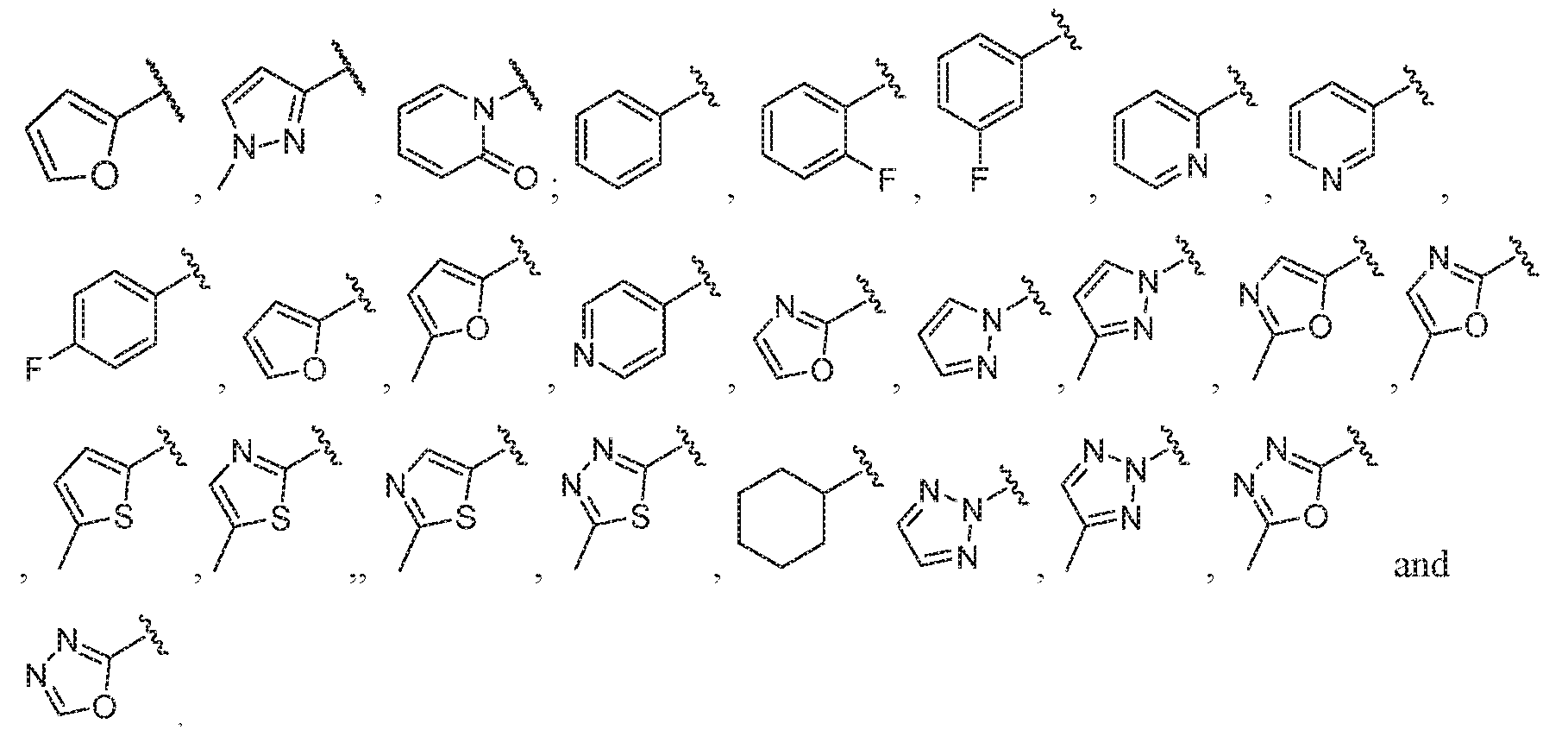
  • B is furanyl, pyridinyl, oxazoyi, or oxadiazoyl, each optionally substituted with R 7 .
  • B is a 5- to 6- membered carbocycle optionally further substituted with R 7 .
  • B is a fully saturated 5- to 6-membered carbocycle optionally further substituted with R .
  • B is cyclopentyl or cyclohexyl, optionally further substituted with R' .
  • B is a 5- to 6-membered carbocycle optionally substituted with one or more groups selected from halogen, -CN, -OR 8 , -SR 8 , -NR 9 R 10 , -NC) 2 , -C(0)R 8 , -C(0)OR 8 ,
  • B is a 5- to 6-membered carbocycle optionally substituted with halogen.
  • B is a 5- to 6- membered heterocycJe optionally further substituted with R' .
  • B is a fully saturated 5- to 6-membered heterocycle optionally further substituted with R 7 .
  • B is pyrrolidinyl, pyrazolidinyl, imidazolidinyl, tetrahydrofuranyl, 1,3-dioxolanyl, tetrahydrothiophenyl, oxathiolanyl, sulfolanyl, piperidinyl, piperazinyl, tetrahydropyranyl, dioxanyl, thianyl, dithianyi, trithianyl, morpholinyl, thiomorpholinyl optionally further substituted with R' .
  • B is a 5- to 6-membered heterocycle optionally substituted with one or more groups selected from halogen, -CN, -OR 8 , -SR 8 , ⁇ NR 9 R 10 , ⁇ N0 2 , -C(0)R 8 , -C(0)OR 8 , -C(0)NR 9 R 10 , -C(0)NR 8 S(0) 2 R 9 , -OC(0)R 8 , -OC(0)NR 9 R 10 ,
  • B is a 5- to 6-membered heterocycle optionally substituted with halogen.
  • B is a 9- to 10- membered heteroaryl optionally further substituted with R 7 .
  • B is selected from the group consisting of pyridyl, quinolinyl, isoquinolinyl, quinoxalinyl, cinnolinyl.
  • B is a 9- to 10-membered heteroaryi optionally substituted with one or more groups selected from halogen, -CN, -OR 8 , -SR S , -NR 9 R 10 , -N0 2 , -C(0)R 8 , -C(0)OR 8 , -C(O)NR 9 R 10 5 -C(0)NR 8 S(0) 2 R 9 , -OC(0)R 8 , -OC(O)NR 9 R !0 , -NR 8 C(0)R 9 , -NR 8 C(0)NR 9 R 10 , -S(0)R 8 , -S(0) 2 R 8 , C 3 -C 6 cycloalkyl and CVC 6 alkyl optionally substituted by halogen.
  • B is a 9- to 10-membered heteroaryi optionally substituted with halogen.
  • R 7 is
  • R 7 is halogen.
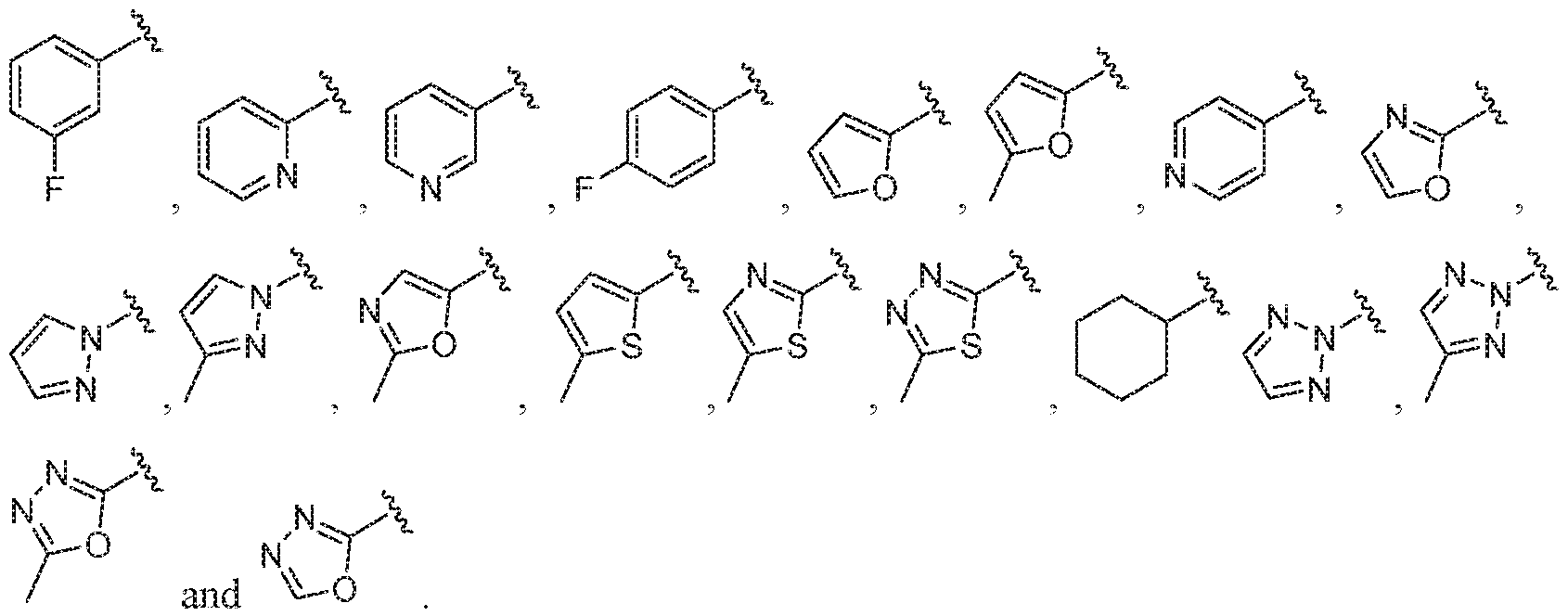
  • B is selected from the group consisting of:
  • B is selected from the group consisting of:
  • B is selected from
  • A is C 6 -Ci 2 aryl or 5- to 10-rnembered heteroaryl, each optionally further substituted with R 6
  • B is phenyl or 5- to 6-membered heteroaryl, each optionally further substituted with R .
  • A is Ce-Cii aryl, optionaliy further substituted with R 6
  • B is phenyl, optionally further substituted with R ' .
  • A is Ce-Cu aryl, optionally further substituted with R 6 , and B is 5- to 6-membered heteroaryl, optionally further substituted with R ' .
  • A is 5- to 10-membered heteroaryl, optionaliy further substituted with R 6
  • B is phenyl, optionally further substituted with R' .
  • A is 5- to 10-membered heteroaryl, optionally further substituted with R 6
  • B is 5- to 6-membered heteroaryl, optionally further substituted with R 7 .
  • A is 9- to 10- membered carbocycle or 9- to 10-membered heterocycle, each optionally further substituted with R°, and B is phenyl, 5- to 6-membered heteroaryl, 5- to 6-membered carbocycle, or 5- to 6- membered heterocycle, each optionally further substituted with R ' .
  • A is 9- to 10-membered carbocycle, optionally further substituted with R 6
  • B is phenyl, optionally further substituted with R ? .
  • A is 9- to 10-membered carbocycle, optionaliy further substituted with R 6 , and B is 5- to 6-membered heteroaryl, optionally further substituted with R' .
  • A is 9- to 10-membered carbocycle, optionally further substituted with R 6 , and B is 5- to 6-membered carbocycle, optionally further substituted with R' .
  • A is 9- to 10-membered carbocycle, optionally further substituted with R 6 , and B is 5- to 6-membered heterocycle, optionally further substituted with R 7 .
  • A is Ce-Cu aryl or
  • A is Ce-C] -, aryl, optionally further substituted with R 6 , and B is 5- to
  • A is C & - Ci2 aryl, optionally further substituted with R 6 , and B is 5- to 6-membered heterocycle, optionally further substituted with R 7 .
  • A is 5- to 10-membered heteroaryi, optionally further substituted with R 6 , and B is 5- to 6-membered carbocycle, optionally further substituted with R 7 .
  • A is 5- to 10-membered heteroaryi, optionally further substituted with R b
  • B is 5- to 6-membered heterocycle, optionally further substituted with R' .
  • B is not a saturated heterocycle.
  • A is C 6 -C !2 aryl or 5- to 10-membered heteroaiyl, each optionally further substituted with R 6 , and B is 9- to 10- membered carbocycle, optionally further substituted with R' .
  • A is Ce- Ci 2 aryl, optionally further substituted with R", and B is 9- to 10-membered carbocycle, optionally further substituted with R' .
  • A is 5- to 10-membered heteroaryi, optionally fuither substituted with R 6 , and B is 9- to 10-membered carbocycle, optionally further substituted with R' .
  • A is
  • R 6a , R 6 , R 6c , R 6d , R 6e , and R 6f are each independently H, C, -C 6 alkyl, C 2 -C 6 alkenyl, C 2 ⁇ C 6 alkynyl, halogen, -CN, -OR 8 , -SR.
  • R 6a , R 6b , R 6e , R 6d , R 6e , and R 6f are each independently H, C C 6 alkyi, halogen, -CN, or -OC, -C 6 alkyi.
  • R 63 , R 6b , R 6c , R 6d , R 6e , and R 6f are each H,
  • one of R 6a , R 6b , R 6c , R 6d , R 6e , and R 6f is CI, F, Br, or I.
  • one of R 6a , R 6b , R 6c , R 6d , R 6e , and R 6f is CI.
  • one of R 6a , R 6b , R DC , R 6d , R ue , and R ui is halogen and the others are each H.
  • one of R 6a , R 6 , R 6c , R 6d , R 6e , and R 6f is halogen and one of R 6a , R 6b , R & , R 6d , R 6e , and R 6f is C,-C 6 alkyi.
  • R 6a , R 6b , R 6c , R 6d , R 6e , and R 6f is CI and one of R 6a , R 6b , R 6c , R 6d , R 6e , and R Di is methyl.
  • R 6a is CpCe alkyi.
  • R 6b is C ⁇ - Ce alkyi.
  • R bc is Cj-Q alkyi.
  • R 6d is Ci-Ce alkyi.
  • R 6e is C ⁇ ⁇ alkyi.
  • R of is C e alkyi.
  • R 6a is methyl, ethyl, n-propyl, isopropyi, n-buty], isobutyl, secbutyl, or tertbutyl.
  • R 6 ° is methyl, ethyl, n-propyl, isopropyi, n-buty 1, isobutyl, secbutyl, or teitbutyl.
  • R 6c is methyl, ethyl, n-propyl, isopropyi, n-buty 1, isobutyl, secbutyl, or tertbutyl.
  • R 6a is methyl, ethyl, n-propyl, isopropyi, n-butyl, isobutyl, secbutyl, or tertbutyl.
  • R 68 is methyl, ethyl, n-propyl, isopropyi, n-butyl, isobutyl, secbutyl, or tertbutyi.
  • R 6f is methyl, ethyl, n-propyl, isopropyi, n-butyl, isobutyl, secbutyl, or tertbutyl.
  • R D3 is Cj-Ce alkyi and R bb is halogen.
  • R 6a is Ci-C'e alkyi and R bC is halogen.
  • R 6d is Ci-Ce alkyi and R Dd is halogen.
  • R ud is Ci-Ce alkyi and R 6e is halogen.
  • R 6a is Ci -Ce alkyi and R 6f is halogen.
  • R 6b is Ci-C & alkyi and R b3 is halogen.
  • R 6b is Ci-C & alkyi and R 6c is halogen .
  • R 6b is Ci-Ce alkyi and R 6a is halogen.
  • R ob is Cj-Ce alkyi and R 6e is halogen.
  • R 6b is Ci-Ce alkyi and R" f is halogen.
  • R" is Cj-Ce alkyi and R 6a is halogen.
  • R 6c is Ci-Ce alkvl and R 6b is halogen.
  • R 6c is Ci-Ce alkvl and R 6u is halogen.
  • R 6c is Cj -Ce alkyi and R 6e is halogen.
  • R 6c is Ci-Ce alkvl and R of is halogen.
  • R od is Cj -Ce alkyl and R 6a is halogen.
  • R 6d is Ci-Ce alkyl and R 6b is halogen.
  • R 6a is Ci-Ce alkyl and R 6'" is halogen.
  • R 6a is Ci-Ce alkyl and R De is halogen.
  • R 6d is Ci-Ce alkyl and R Di is halogen.
  • R oe is Ci-Ce alkyl and R 6d is halogen.
  • R 6e is Ci-C& alkyl and R 6b is halogen. In some embodiments, R 6e is Ci-Cr, alkyl and R 6c is halogen. In some embodiments, R 6e is Ci-Ce alkyl and R Dd is halogen. In some embodiments, R ue is Ci-Ce alkyl and R 61 is halogen. In some embodiments, R 61 is Cj -Ce alkyl and R 6a is halogen. In some embodiments, R 61 is Ci-Ce alkyl and R 6b is halogen. In some embodiments, oi is C Cc, alkyl and R 6c is halogen .
  • R 6 ' is Ci-Ce alkyl and R 6d is halogen.
  • R Di is C i-Ce alkyl and R De is halogen.
  • two of R ud , R Db , R 6c , R 6 , R 6e , and R 6f are halogen.
  • two of R 63 , R 6b , R 6c , R 6d , R 6e , and R 6f are Ci-Ce alkyl ,
  • A is
  • R 6a , R 6b , R 6c , R 6d , R 6e , and R 6f are independently selected from the group consisting of Cj -Ce alkyl, halogen, -CN, and -OCi-Ce alkyl, and the remainder of R 63 , R 6b , R 6c , R 6d , R 6e , and R bf are each H; and B is phenyl, optionally substituted with R 7 .
  • A is
  • R 6a , R 6b , R 6c , R 6a , R 6e , and R 6 ' are independently selected from the group consisting of C pCe alkyl, halogen, -CN, and -OCj -Ce alkyl, and the remainder of R 6a , R 6b , R DC , R bd , R 6e , and R 61 are each H: and B is a 5- to 6-membered heteroaryl, optionally substituted with R 7 .
  • R 6a , R 6b , R 6c , R 6d , R 6e , and R 6f are independently selected from the group consisting of Ci-Cr, alkvl, halogen, -CN, and -Od-Ce alkyl, and the remainder of R 6 ", R Db , R 6t , R ud , R 6s , and R 6i are each H; and B is a 5- to 6-membered carbocycle, optionally substituted with R 7 .
  • A is
  • R 6a , R 6 , R 6c , R 6d , R 6e , and R 6f are independently selected from the group consisting of d-Ce alkyl, halogen, -CN, and -OCi-Ce alkyl, and the remainder of R 6a , R 6b , R 6c , R 6d , R 6e , and R 6f are each H: and B is a 5- to 6-membered
  • R 6a , R 6b , R 6c , R 6d , R 6e , and R 6f are independently selected from the group consisting of Ci-Cr, alkyl, halogen, -CN, and -Od-Ce alkyl, and remainder of R 6a , R Db , R 6t , R ud , R 6s , and R 6i are each H; and B is a 9- to 10-membered
  • heteroaryi optionally substituted with R .
  • A is
  • R 6a , R 6 , R 6c , R 6d , R 6e , and R 6f are independently lected from the group consisting of d-Ce alkyl, halogen, -CN, and -OCi ⁇ Ce alkyl, and th
  • R b3 , R 6b , R" 1' , R od , R 6s , and R 61 are each H: and B is selected from the group consisting of:
  • A is
  • R 6a , R 6b , R 6c , R 6a , R 6e , and R 6 ' are independently selected from the group consisting of Ci-Ce alkyl, halogen, -CN, and -OCj -Ce aikyl, and the remainder of R b3 , R 6b , R" 1' , R od , R 6s , and R 61 are each H: and B is selected from the group consisting of
  • A is
  • R 6a , R , R 6a , R 6e , and R are independent! selected from the group consisting of Ci ⁇ C 6 alkyl, halogen, -CN, and -OCi-C 6 alkyl, and the
  • R 6b , R 6c , R bd , R 6e , R 6f , and R 6g are each independently H, C C 6 alkyl, halogen, ⁇ CN, or -OCi-Ce alkyl.
  • R 6D , R 6'" , R 6d , R 6e , R 6f , and R 6 ⁇ are each H.
  • one of R 6b , R uC , R Dd , R 6e , R ui , and R 6g is CI, F, Br, or I.
  • one of R* R 6c , R 6d , R 6e , R 6f , and R 6g is CI.
  • one of R* R 6c , R 6d , R 6e , R 61 , and R Dg is halogen and the others are each H.
  • one of R 6b , R 6c , R 6d , R 6e , R 6f , and R 6g is halogen and one of R 6b , R 6c , R 6d , R 6e , R 6f , and R 6g is C C 6 alkyl.
  • R 6b , R 6c , R 6d , R 6e , R 6f , and R 6 is CI and one of R 6b , R 6c , R 6d , R 68 , R 6i , and R Dg is methyl.
  • R 6g is Ci-Ce alkyl.
  • R bb is Cr C-6 alkyl.
  • R D£ is Ci-Ce alkyl.
  • R 6d is C 5 ⁇ C & alkyl.
  • R 6e is Cj-Ce alkyl .
  • R 6f is Cj -Ce alkyl.
  • R 6s is methyl, ethyl, n-propyl, isopropyl, n-butyl, isobutyi, secbutyl, or tertbutyl.
  • R b0 is methyl, ethyl, n-propyl, isopropyl, n-butyl, isobutyi, secbutyl, or terthuty!.
  • R 6c is methyl, ethyl, n-propyl, isopropyl, n-butyl, isobutyi, secbutyl, or tertbutyl.
  • R ba is methyl, ethyl, n-propyl, isopropyl, n-butyl, isobutyi, secbutyl, or tertbutyl.
  • R 6e is metliyl, ethyl, n-propyl, isopropyl, n-butyl, isobutyi, secbutyl, or tertbutyl.
  • R 6t is methyl, ethyl, n-propyl, isopropyl, n-butyl, isobutyi, secbutyl, or tertbutyl.
  • R 6g is C -.
  • R 6 is Ci-Ce alkyl and R 6c is halogen.
  • R 6g is Ci -Ce alkyl and R 6d is halogen.
  • R 6g is Cj-Ce alkyl and R 6e is halogen .
  • R 6 is d-Ce alkyl and R 61 is halogen.
  • R bb is Ci-C-6 alkyl and R 6 is halogen.
  • R 6b is Ci-Ce alkyl and R 6 is halogen.
  • R 6b is Ci-Ce alkyl and R DC is halogen.
  • R 6b is Ci-Ce alkyl and R DC1 is halogen.
  • R" b is C . -Ce alkyl and R 6s is halogen.
  • R Db is Ci -Ce alkyl and R 6f is halogen.
  • R bL is Ci-Ce alkyl and R bg is halogen.
  • R 6c is Ci-Ce alkyl and R Db is halogen.
  • R uC is Ci-Ce alkyl and R 6d is halogen.
  • R bc is Cj -Ce alkyl and R 6e is halogen.
  • R 6c is Ci ⁇ Ce alkyl and R" 1 is halogen .
  • R od is Ci-Ce alkyl and R 6g is halogen. In some embodiments, R 6d is Ci-Ce alkyl and R 6b is halogen. In some embodiments, R DC1 is Ci-C-6 alkyl and R 6 " is halogen. In some embodiments, R bC! is Ci-Ce alkyl and R oe is halogen. In some embodiments, R 6d is Ci-Ce alkyl and R of is halogen. In some embodiments, R 6e is G-G alkyl and R 6g is halogen. In some embodiments, R 6e is G-G alkyl and R 6b is halogen.
  • R 6s is G-G alkyl and R 6c is halogen.
  • R 6e is G ⁇ G alkyl and R od is halogen.
  • R 6e is G-G alkyl and R 61 is halogen.
  • R 6i is G ⁇ G alkyl and R 6g is halogen.
  • R 6i is G-G alkyl and R 6b is halogen.
  • R 6f is G ⁇ G alkyl and R DC is halogen.
  • R 6x is G-G alkyl and R 6d is halogen.
  • R of is G-G alkyl and R oe is halogen.
  • two of R 6b , R w' , R 6d , R be , R 6 , and R 6g are halogen.
  • two of R 6b , R 6c , R 6d , R be , R 6i , and R 6g are d-Ce alkyl .
  • A is
  • R Dg are independently selected from the group consisting of Cj-Ce alkyl, halogen, -CN, and ⁇ OG ⁇ G alkyl, and the remainder of R 6D , R 6" , R 6d , R 6e , R 6f , and R 6g are each H; and B is phenyl, optionally substituted with R .
  • R 6b , R DC , R 6d , R 6t , R DI , and R 6g are independently selected from the group consisting of Ci-CV, alkyl, halogen, -CN, and -OG-Ce alkyl, and the remainder of R 6b , R 6c , R 6d , R 6e , R 61 , and R 6g are each H; and B is a 5- to 6-membered heteroaryl, optionally substituted with R 7 .
  • R Dg are independently selected from the group consisting of G-Ce alkyl, halogen, -CN, and -QG-G alkyl, and the remainder of R 6b , R 6c , R 6d , R 6e , R 61 , and R 6g are each H; and B is a 5- to 6-membered carbocycle, optionally substituted with R ? .
  • R Dg are independently selected from the group consisting of Cj-Ce alkyl, halogen, -CN, and -OC ⁇ ⁇ C ⁇ , alkvl, and the remainder of R 6 °, R 6" , R 6d , R 6e , R 6f , and R 6g are each H; and B is a 5- to 6-membered heterocycle, optionally substituted with R'.
  • R 6b , R DC , R 6d , R & , R DI , and R 6g are independently selected from the group consisting of Ci-Ce alkyl, halogen, -CN, and -OCj-Ce alkyl, and the remainder of R 6b , R 6c , R 6d , R 6e , R 61 , and R 6g are each H; and B is a 9- to 10-membered heteroaryl, optionally substituted with R 7 .
  • R Dg are independently selected from the group consisting of Cj-Ce alkyl, halogen, -CN, and -OC ⁇ ⁇ C ⁇ , alkyl, and the remainder of 6b , R 6'" , R 6d , R 6e , R 6f , and R 6g are each H; and B is selected from the group
  • R 6 °, R 6c , R 6d , R Dt , R 6f , and R 6 are each H; and B is selected from the group consisting of:
  • R , R 6c , R , R , R , and R 6g are independently selected from the group consisting of Ci-Ce alkyl, halogen, -CN, and -OCj-Ce alkyl, and the remainder of R 6b , R 6c , R 6d , R 6e , R 6 , and R 6g are each H; and B is selected from the group
  • R 6b , R 6c , R 6d , R 6s , R 6f , and R 6g are independently selected from the group consisting of Cj-Ce alkyl, halogen, -CN, and -OCi-Ce alkyl, and the
  • R 6b , R 6c , R 6d , R 6e , R 6 , and R 6g are each H; and B is selected
  • X is selected from the group consisting of N, C, and CH; X is selected from the group consisting of NH, O, and S; and R 6a , R 6b , and R bC are each
  • each R Da , R 6 °, and R 6c is independently optionally substituted by halogen, oxo, -OR 11 , -NR l l R 12 , -C(0)R n , -CN, -8(0)1 ' -S(Q) 2 R 1 !
  • A is , wherein X 1 is selected from the group consisting of N, C, and CH; X 2 is selected from the group consisting of NH, O, and S; and R Da , R 6 °, and R 6c are each
  • R ⁇ a , R , and R 6c are each H.
  • one of R 6 , R D0 , and R 6c is CI, F, Br, or I.
  • one of R ba , R 6 °, and R 6c is CI.
  • one of R ba , R 6 °, and R 6c is halogen and the others are each H.
  • one of R 6a , R ub , and R 6c is halogen and one of R 6a , R 6b , and R 6c is C C 6 alkyi.
  • one of R 63 , R 6b , and R bc is CI and one of R 6 , R b0 , and R 6c is methyl.
  • R 6a is Ci-Ce alkyi.
  • R 6b is C i -Ce alkyi.
  • R 6c is Ci-Ce alkyi. in some
  • R 6d is methyl, ethyl, n-propyl, isopropvl, n-butyl, isobutyl, secbutyl, or tertbutyl.
  • R b0 is methyl, ethyl, n-propyl, isopropvl, n-butyl, isobutyl, secbutyl, or tertbutyl.
  • R 6c is methyl, ethyl, n-propyl, isopropyl, n-butyl, isobutyl, secbutyl, or tertbutyl.
  • R ba is Cj-Ce alkyi and R 6b is halogen.
  • R oa is Cj-Ce alkyi and R 6c is halogen.
  • R 6 is Cj -Ce aikyl and R"' 1 is halogen.
  • R 6b is C Ce, alkyi and R" is halogen.
  • R 6c is Ci-Ce alkyi and R 6a is halogen .
  • R 6c is Ci-Ce alkyi and R 6b is halogen.
  • two of R 6a , R ub , and R 6c are halogen.
  • two of R 6a , R" b , and R DC are C Ce alkyi.
  • A is , wherein one or two of R 6a , R 6b , and R bC are independently selected from the group consisting of C Ce alkyi, halogen, -CN, and -OCpCe alkyi, and the remainder of R Da , R 6b , and R 6c are each H; and B is phenyl, optionally substituted with R' .
  • A is , wherein one or two of R 6a , R 6D , and R are independently selected from the group consisting of C-.
  • A is , wherein one or two of R 6a , R 60 , and R 61' are independently selected from the group consisting of C -.
  • R 6a , R 6 and R° c are each H; and B is a 5- to 6-membered carbocycle, optionally substituted with R'. 0104] In some embodiments of a compound of Formula (I), (II), or ( I I I )..
  • A is , wherein one or two of R 6a , R 6B , and R 6c are independently selected from the group consisting of Ci-Ce alkyl, halogen, -CN, and -OCi -Ce alkyl, and the remainder of R 6a , R* and R 6c are each H; and B is a 5- to 6-membered heterocycle, optionally substituted with R' .
  • A is , wh ⁇ erei ⁇ n one or two of - R-- 6a a , R,6 °, and T Rj6 ' c c are independently selected from the group consisting of Ci-Ce alkyl, halogen, -CN, and -OCi -Ce alkyl, and the remainder of R 6a , R*, and R 6c are each H; and B is a 9- to 10-membered heteroaryl, optionally substituted with R 7 .
  • R DC are independently selected from the group consisting of Ci-Ce alkyl, halogen, -CN, and -OCi -Ce alkyl, and the remainder of R 6a , R*,
  • R 6d , R 6 °, and R are independently selected from the group consisting of Ci-Ce alkyl, halogen, ⁇ CN, and -OCi -Ce alkyl, and the remainder of R 6a , R* and R 6c are each H; and B is selected from the group consisting of:
  • A is and R DC are independently selected from the group consisting of Ci-Ce alkyl, halogen, -CN, and -OCi-C & alkyl, a nndd tthhee rreemmaaiinnddeerr of R 'a , R b , and R DC are each H; and B is selected from the group consisting of
  • R a , R " utilizaton and R' c are independently selected from tlie group consisting of Ci-Ce alkyl, halogen, -CN, and -OC i -Ce alkyl, and the remainder of R ba , R 6b ,
  • R "' are each 1 1, and B is selected from
  • X is selected from the group consisting of N, C, and CH; X is selected from the group consisting of NH, O, and S; and R 6g , R Db , and R DC are each
  • X 1 is selected from the group consisting of N, C, and CH
  • X 2 is selected from the group consisting of NH, O, and S
  • R bg , R 6b , and R 6c are each
  • R 6G , R 6B , and R 6C is CI, F, Br, or I. In some embodiments, one of R 6G , R 6B , and R 6C is CI. In some embodiments, one of R 6G , R 6B , and R DC is halogen and the others are each H. In some embodiments, one of R 6g , R 6B , and R 6C is halogen and one of R 6G , R B0 , and R 6T is Ci-Ce alkyl. In some embodiments, one of R BG , R 6B , and R 6l is CI and one of R 6G , R 6B , and R 6'" is methyl. In some embodiments, R 6S is Ci -Ce alkyl. In some embodiments, R 6 ° is C Ce alkyl. In some embodiments, R 6 ° is C Ce alkyl. In some embodiments, R 6 ° is C Ce alkyl. In some embodiments, R 6 ° is
  • R 6C is Ci-Ce alkyl.
  • R BG is methyl, ethyl, n-propyl, isopropvi, n-butyl, isobutyl, secbutyl, or tertbutyl.
  • R B0 is methyl, ethyl, n-propyl, isopropyl, n-butyl, isobutyl, secbutyl, or tertbutyl.
  • R 6C is methyl, ethyl, n- propyl, isopropyl, n-butyl, isobutyl, secbutyl, or tertbutyl.
  • R 6G is Cj- Ce alkyl and R* is halogen. In some embodiments, R 6G is C 5 ⁇ C & alkyl and R 6C is halogen. In some embodiments, R 6B is C ⁇ ⁇ Ce alkyl and R 6G is halogen. In some embodiments, R 6 ° is Cr C-6 alkyl and R UC is halogen. In some embodiments, R DC is Cj-Ce alkyl and R 6G is halogen. In
  • R DC is Cj -Ce alkyl and R° is halogen.
  • R og , R ! and R bC are halogen.
  • R bg , R 61 , and R" c are Ci-Ce alkyl.
  • R bg , R 6b , and R 6c are independently selected from the
  • R 6b group consisting of C Ce alkyl, halogen, -CN, and -OCpCe alkyl, and the remainder of R Dg , R* and R 6c are each H; and B is phenyl, optionally substituted with R' .
  • B is phenyl, optionally substituted with R' .
  • R 6g , R 6b , and R 6c are independently selected from the group consisting of Ci-Ce alkyl, halogen, -CN, and -OCi -Ce alkyl, and the remainder of R 6g , R 6b , and R 6c are each H; and B is a 5- to 6-membered heteroaryl, optionally substituted with R 7 .
  • A is
  • R 6b , and R 6t are independently selected from the group consisting of Ci-Ce alkyl, halogen, -CN, and -QCi -C& alkyl, and the remainder of R 6g , R 6b , and R 6c are each H; and B is a 5- to 6-membered carbocycle, optionally substituted with R ' .
  • R Gg , R 6 , and R ⁇ c are independently selected from the
  • R 6b group consisting of Ci-Ce alkyl, halogen, -CN, and -OCi -Ce alkyl, and the remainder of R Dg , R* and R 6c are each H; and B is a 5- to 6-membered heterocycle, optionally substituted with R'
  • R 6 , R 6 , and R" 1' are independently selected from the group consisting of Ci-Ce alkyl, halogen, -CN, and -OC i -Ce alkyl, and the remainder of R bg , R 6b , and R 6c are each H; and B is a 9- to lO-mernbered heteroaryl, optionally substituted with R' .
  • R R , and R Dt' are independently selected from the group consisting of Ci -Ce alkyl, halogen, -CN, and -OCi -Ce alkyl, and the remainder of R 6g , R 6b ,
  • R 6b , and R 6t are independently selected from the group consisting of Ci-Ce alkyl, halogen, -CN, and -OCi -Ce alkyl, and the remainder of R 6g , R 6! and R 6c are each H; and B is selected from the group consisting of:
  • A is herein one or two of R Dg , R 6b , and R 6t are independently selected from the group consisting of C Ce alkyl, halogen, -CN, and -OCi-Ce alkyl, and the remainder of R 6 ' g R D 6b and R D are each H; and B is selected from the group consisting
  • A is , wherein one or two of R bg , R 6b , and R 6c are independently selected from the 6b group consisting of Ci-Ce alkyl, hal remainder of R og , R*
  • R "' are each 1 1, and B is selecte rom
  • salts of compounds referred to herein such as pharmaceutically acceptable salts.
  • the invention also includes any or all of the stereochemical forms, including any enantiomeric or diastereomeric forms, and any tautomers or other forms of the compounds described.
  • a compound as detailed herein may in one aspect be in a purified form and compositions comprising a compound in purified forms are detailed herein.
  • Compositions comprising a compound as detailed herein or a salt thereof are provided, such as compositions of substantially pure compounds.
  • a composition containing a compound as detailed herein or a salt thereof is in substantially pure form.
  • substantially pure intends a composition that contains no more than 35 % impurity, wherein the impurity denotes a compound other than the compound comprising the majority of the composition or a salt thereof.
  • a composition of substantially pure compound or a salt thereof is provided wherein the composition con tains no more than 25 %, 20%, 15%, 10%, or 5% impurity.
  • a composition of substantially pure compound or a salt thereof is provided wherein the composition contains or no more than 3 %, 2%, 1% or 0.5% impurity,
  • the compounds depicted herein may be present as salts even if salts are not depicted and it is understood that the present disclosure embraces all salts and solvates of the compounds depicted here, as well as the non-salt and non-so!vate form of the compound, as is well understood by the skilled artisan.
  • the salts of the compounds provided herein are pharmaceutically acceptable salts. Where one or more tertiary amine moiety is present in the compound, the N-oxides are also provided and described.
  • tautomeric forms may be present for any of the compounds described herein, each and every tautomeric form is intended even though only one or some of the tautomeric forms may be explicitly depicted .
  • the tautomeric forms specifically depicted may or may not be the predominant forms in solution or when used according to the methods described herein.
  • the present disclosure also includes any or all of the stereochemical forms, including any enantiomeric or diastereomeric forms of the compounds described. The structure or name is intended to embrace all possible isomers of a compound depicted.
  • compositions comprising a compound of the invention are also intended, such as a composition of substantially pure compound, including a specific stereochemical form thereof, or a composition comprising mixtures of compounds of the invention in any ratio, including two or more stereochemical forms, such as in a racemic or non-racemic mixture.
  • the invention also intends isotopically-labeled and/or isotopically-enriched forms of compounds described herein.
  • the compounds herein may contain unnatural proportions of atomic isotopes at one or more of the atoms that constitute such compounds.
  • the compound is isotopically-labeled, such as an isotopically-labeled compound of the formula (I) or v ariations thereof described herein, where a fraction of one or more atoms are replaced by an isotope of the same element.
  • Exemplary isotopes that can be incorporated into compounds of the invention include isotopes of hydrogen, carbon, nitrogen, oxygen, phosphorus, sulfur, chlorine, such as 2 H, H, i !
  • isotope labeled compounds e.g. 3 ⁇ 4 and 14 C
  • isotope labeled compounds are useful in compound or substrate tissue distribution study. Incorporation of heavier isotopes such as deuterium ( 2 H) can afford certain therapeutic advantages resulting from greater metabolic stability, for example, increased in vivo half-life, or reduced dosage requirements and, hence may be preferred in some instances.
  • Isotopically-labeled compounds of the present invention can generally be prepared by standard methods and techniques known to those skilled in the art or by procedures similar to those described in the accompanying Examples substituting appropriate isotopically-labeled reagents in place of the corresponding non-labeled reagent.
  • the invention also includes any or all metabolites of any of the compounds described.
  • the metabolites may include any chemical species generated by a biotransformation of any of the compounds described, such as intermediates and products of metabolism of the compound, such as would be generated in vivo following administration to a human.
  • Articles of manufacture comprising a compound described herein, or a salt or solvate thereof, in a suitable container are provided.
  • the container may be a vial, jar, ampoule, preloaded syringe, i.v. bag, and the like.
  • the compounds detailed herein are orally bioavailable.
  • the compounds may also be formulated for parenteral (e.g., intravenous) administration.
  • One or several compounds described herein can be used in the preparation of a medicament by combining the compound or compounds as an active ingredient with a pharmacologically acceptable carrier, which are known in the art.
  • a pharmacologically acceptable carrier which are known in the art.
  • the carrier may be in various forms.
  • the manufacture of a medicament is for use in any of the methods disclosed herein, e.g., for the treatment of cancer.
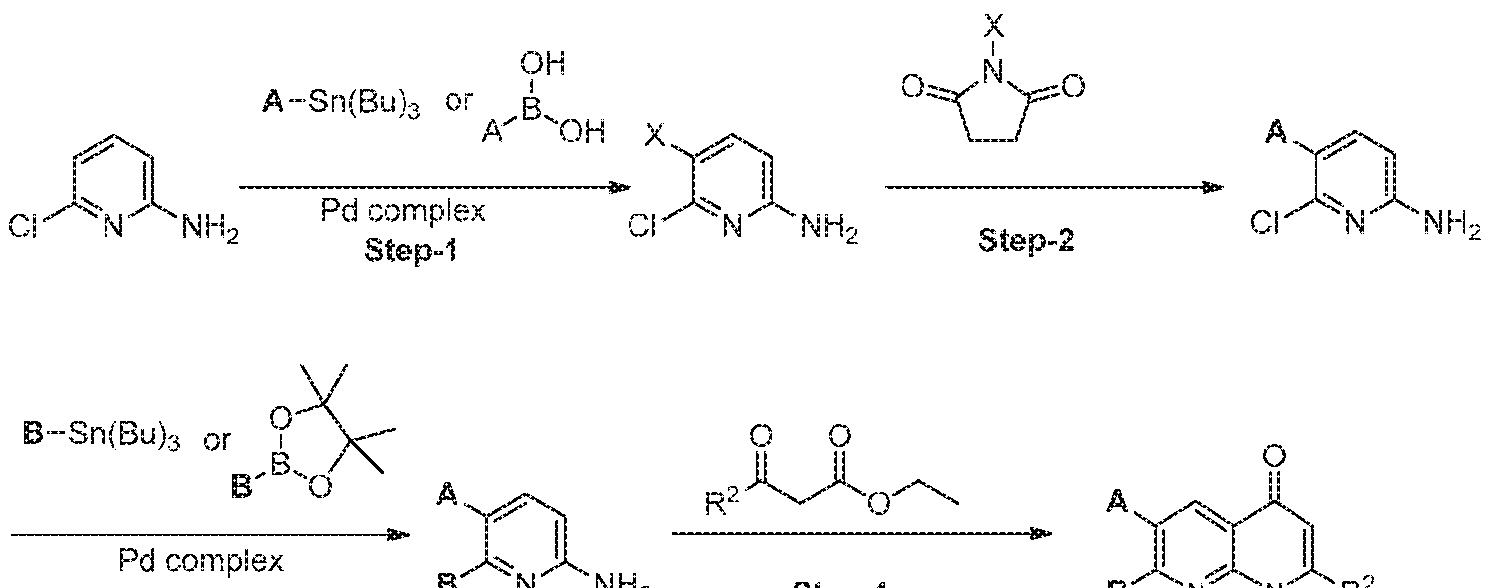
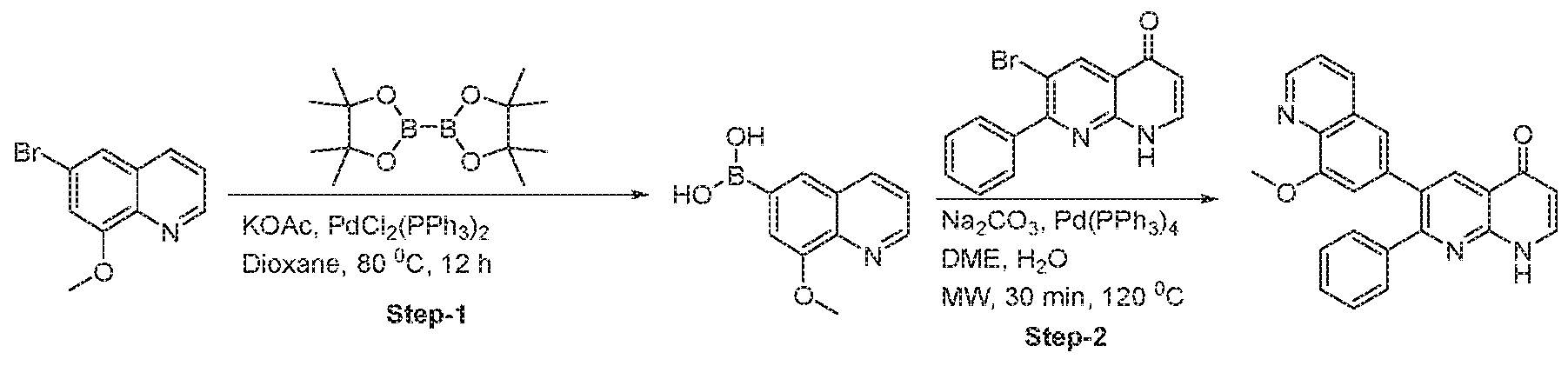
  • the compounds of the invention may be prepared by a number of processes as generally described below and more specifically in the Examples hereinafter (such as the schemes provided in the Examples below).
  • the symbols when used in the formulae depicted are to be understood to represent those groups described above in relation to the formulae herein.
  • enantiomer of a compound may be accomplished from a corresponding mixture of enantiomers using any suitable conventional procedure for separating or resolving enantiomers.
  • diastereomeric derivatives may be produced by reaction of a mixture of enantiomers, e.g.. a racernate, and an appropriate chiral compound.
  • Tire diastereomers may then he separated by any convenient means, for example by crystallization and the desired enantiomer recovered.
  • a racemate may be separated using chiral High Performance Liquid
  • Chromatography, recrystallization and other conventional separation procedures may also be used with intermediates or final products where it is desired to obtain a particular isomer of a compound or to otherwise purify a product of a reaction.
  • Solvates and/or polymorphs of a compound provided herein or a pharmaceutically acceptable salt thereof are also contemplated.
  • Solvates contain either stoichiometric or non- stoichiometric amounts of a solvent, and are often formed during the process of crystallization. Hydrates are formed when the solvent is water, or alcoholates are formed when the solvent is alcohol.
  • Polymorphs include the different crystal packing arrangements of the same elemental composition of a compound. Polymorphs usually have different X-ray diffraction patterns, infrared spectra, melting points, density, hardness, crystal shape, optical and electrical properties, stability, and/or solubility. Various factors such as the recrystallization solvent, rate of crystallization, and storage temperature may cause a single crystal form to dominate
  • compounds of the formula (1) may be synthesized according to Scheme 1, 2, 3, 4, or 5.
  • compositions of any of the compounds detailed herein are embraced by this disclosure.
  • the present disclosure includes pharmaceutical compositions comprising a compound as detailed herein or a pharmaceutically acceptable salt thereof and a pharmaceutically acceptable carrier or excipient.
  • the pharmaceutically acceptable salt is an acid addition salt, such as a salt formed with an inorganic or organic acid.
  • compositions may take a form, suitable for oral, buccal, parenteral, nasal, topical, or rectal administration or a form suitable for administration by inhalation.
  • a compound as detailed herein may in one aspect be in a purified form and compositions comprising a compound in purified forms are detailed herein.
  • Compositions comprising a compound as detailed herein or a salt thereof are provided, such as compositions of substantially pure compounds.
  • a composition containing a compound as detailed herein or a salt thereof is in substantially pure form.
  • the compounds herein are synthetic compounds prepared for administration to an individual.
  • compositions are provided containing a compound in substantially pure form.
  • the present disclosure embraces pharmaceutical compositions comprising a compound detailed herein and a pharmaceutically acceptable carrier.
  • methods of administering a compound are provided. The purified forms, pharmaceutical compositions and methods of administering the compounds are suitable for any compound or form thereof detailed herein.
  • a compound detailed herein or salt thereof may be formulated for any available deliver ⁇ 7 route, including an oral, mucosal, (e.g., nasal, sublingual, vaginal, buccal or rectal), parenteral (e.g., intramuscular, subcutaneous or intravenous), topical or transdermal delivery form.
  • an oral, mucosal e.g., nasal, sublingual, vaginal, buccal or rectal
  • parenteral e.g., intramuscular, subcutaneous or intravenous
  • topical or transdermal delivery form e.g., topical or transdermal delivery form.
  • a compound or salt thereof may be formulated with suitable carriers to provide delivery forms that include, but are not limited to, tablets, capiets, capsules (such as hard gelatin capsules or soft elastic gelatin capsules), cachets, troches, lozenges, gums, dispersions, suppositories, ointments, cataplasms (poultices), pastes, powders, dressings, creams, solutions, patches, aerosols ⁇ e.g., nasal spray or inhalers), gels, suspensions (e.g., aqueous or non-aqueous liquid suspensions, oil-in-water emulsions or water-in-oil liquid emulsions), solutions and elixirs.
  • suitable carriers include, but are not limited to, tablets, capiets, capsules (such as hard gelatin capsules or soft elastic gelatin capsules), cachets, troches, lozenges, gums, dispersions, suppositories, ointments, cataplasm
  • One or several compounds described herein or a salt thereof can be used in the preparation of a formulation, such as a pharmaceutical formulation, by combining the compound or compounds, or a salt thereof, as an active ingredient with a pharmaceutically acceptable carrier, such as those mentioned above.
  • a pharmaceutically acceptable carrier such as those mentioned above.
  • the carrier may be in various forms.
  • the carrier may be in various forms.
  • compositions may contain preservatives, solubilizers, stabilizers, re-wetting agents, emuigators, sweeteners, dyes, adjusters, and salts for the adjustment of osmotic pressure, buffers, coating agents or antioxidants.
  • Formulations comprising the compound may also contain other substances which have valuable therapeutic properties.
  • Pharmaceutical formulations may be prepared by known pharmaceutical methods. Suitable formulations can be found, e.g., in Remington 's Pharmaceutical Sciences, Mack Publishing Company, Philadelphia, PA, 20* ed. (2000), which is incorporated herein by reference.
  • Compounds as described herein may be administered to individuals in a form of generally accepted oral compositions, such as tablets, coated tablets, and gel capsules in a hard or in soft shell, emulsions or suspensions.
  • carriers which may be used for the preparation of such compositions, are lactose, com starch or its derivatives, talc, stearate or its salts, etc.
  • Acceptable carriers for gel capsules with soft, shell are, for instance, plant oils, wax, fats, semisolid and liquid poly-ols, and so on.
  • pharmaceutical formulations may contain preservatives, solubilizers, stabilizers, re-wetting agents, emuigators, sweeteners, dyes, adjusters, and salts for the adjustment of osmotic pressure, buffers, coating agents or antioxidants.
  • any of the compounds described herein can be formulated in a tablet in any dosage form described, for example, a compound as described herein or a pharmaceutically acceptable salt thereof can be formulated as a 10 mg tablet.
  • compositions comprising a compound provided herein are also described.
  • the composition comprises a compound or salt thereof and a pharmaceutically acceptable carrier or excipient.
  • a composition of substantially pure compound is provided.
  • Compounds and compositions detailed herein such as a pharmaceutical composition containing a compound of any formula provided herein or a salt thereof and a pharmaceutically acceptable carrier or excipient, may be used in methods of administration and treatment as provided herein.
  • the compounds and compositions may also be used in in vitro methods, such as in vitro methods of administering a compound or composition to cells for screening purposes and/or for conducting quality control assays.
  • Provided herein is a method of treating a disease in an individual comprising administering an effective amount of a compound of formula (I) or any embodiment, variation or aspect thereof (collectively, a compound of formula (I) or the present compounds or the compounds detailed or described herein) or a pharmaceutically acceptable salt thereof, to the individual.
  • a method of treating a disease mediated by a G protein coupled receptor signaling pathway in an individual comprising administering an effecti ve amount of a compound of formula (I), or a pharmaceutically acceptable salt thereof, to the individual.
  • the disease is mediated by a class A G protein coupled receptor.
  • the disease is mediated by a class B G protein coupled receptor.
  • the disease is mediated by a class C G protein coupled receptor.
  • the G protein coupled receptor is a purinergic G protein receptor.
  • the G protein coupled receptor is an adenosine receptor, such as any of the Aj, A 2 A, A 2 B, and A 3 receptors.
  • the present compounds or salts thereof are believed to be effective for treating a variety of diseases and disorders.
  • the present compositions may be used to treat a proliferative disease, such as cancer.
  • the cancer is a solid tumor.
  • the cancer is any of adult and pediatric oncology, myxoid and round cell carcinoma, locally advanced tumors, metastatic cancer, human soft tissue sarcomas, including E wing's sarcoma, cancer metastases, including lymphatic metastases, squamous cell carcinoma, particularly of the head and neck, esophageal squamous cell carcinoma, oral carcinoma, blood cell malignancies, including multiple myeloma, leukemias, including acute lymphocytic leukemia, acute nonlymphocytic leukemia, chronic lymphocytic leukemia, chronic myelocytic leukemia, and hairy cell leukemia, effusion lymphomas (body cavity based lymphomas), thymic lymphoma lung cancer, including small cell carcinoma, cutaneous T cell lymphoma, Hodgkin's lymphoma, non-Hodgkin's lymphoma, cancer of the adrenal cortex, ACTH-producing tumors, nonsmall cell cancers, breast cancer
  • the present compounds or salts thereof are used in treatment of tumors which produce high levels of ATP and/or adenosine.
  • the extracellular concentration of adenosine is 10-20 times higher in the tumor compared to adjacent tissue.
  • the present compounds or salts thereof are used in treatment of tumors that express high levels of an ectonucleotidase.
  • the ectonucleotidase is CD39.
  • the ectonucleotidase is CD73.
  • ⁇ 55 Also provided herein is a method of enhancing an immune response in an individual in need thereof comprising administering an effective amount of a compound of formula (I), or a pharmaceutically acceptable salt thereof, to the individual.
  • Adenosine receptors are known to play an immunosuppressive role in cancer biology. High levels of adenosine present in the tumor microenvironment bind to adenosine receptors on immune cells to provide an
  • a receptor provides an immunosuppressive signal that inhibits T cell proliferation, cytokine production and cytotoxicity.
  • the AIA receptor signaling has been implicated in adenosine-mediated inhibition of NK cell cytotoxicity, NKT cell cytokine production and CD40L upregulation. Therefore, use of an A 2 A receptor antagonist, such as those provided herein, may reverse the
  • the immune response is enhanced by a compound of formula (I) or a salt thereof enhancing activity of natural killer (NK) cells.
  • NK natural killer
  • the present compounds or salts thereof increase NK cell-meditated cytotoxicity.
  • the immune response is enhanced by enhancing the activity of CD8T cells.
  • the present compounds or salts thereof cause an inflammatory response in the tumor microenvironment.
  • the present disclosure further provides a method of increasing the activity of a natural killer cell in an individual comprising administering an effective amount of a compound of formula (I), or a pharmaceutically acceptable salt thereof, to the individual.
  • the present compounds or salts thereof increase NK cell-meditated cytotoxicity.
  • a compound of formula (I) or a salt thereof increases the number of NK cells.
  • a compound of formula (I) or a salt thereof may be useful for modulating the activity of G protein receptor coupled signaling pathway proteins.
  • a compound of formula (I) or a salt thereof activates a G protein receptor coupled signaling pathway protein (i.e. is an agonist of a G protein receptor).
  • a compound of formula (I) or a salt thereof inhibits a G protein receptor coupled Signaling pathway protein (i.e., is a G protein receptor antagonist).
  • a compound of formula (I) or a salt thereof is an adenosine receptor antagonist.
  • a compound of formula (I) or a salt thereof is an antagonist of any of the A ( , A 2 A, A 2B , and A3 receptors.
  • a method of modulating the activity of an A 2 A receptor in an individual comprising administering an effective amount of a compound of formula (I), or a pharmaceutically acceptable salt thereof to an individual.
  • a compound of formula (I) or a salt thereof is an A 2 A receptor antagonist.
  • a compound of formula (I) or a salt thereof reduces A 2 A receptor signaling by at least 10%, 2.0%, 30%, 40%, 50%, 60%, 70%, 80%, 90%, 91%, 92%, 93%, 94%, 95%, 96%, 97%j, 98%, or 99%.
  • a compound of formula (I) or a salt thereof reduces A 2A receptor signaling by 40-99%, 50-99%, 60-99%, 70-99%, 80-99%, 90-99%, or 95-99%.
  • a compound of formula (I) or a salt thereof binds to the A 2 A receptor with an IC50 of less than 1 ⁇ , less than 900 nM, less than 800 nM, less than 700 nM, less than 600 nM, less than 500 nM, less than 400 nM, less than 300 nM, less than 200 nM, less than 100 nM, less than 10 nM, less than 1 nM or less than 100 pM.
  • [compound x] binds to the A 2 A receptor with an IC 50 of 500 nM to 100 pM, 400 nM to 100 pM, 300 nM to 100 pM, 200 nM to 100 pM, or 100 nM to 100 pM.
  • Also provided herein is a method of modulating the activity of an A 2B receptor in an individual comprising administering an effective amount of a compound of formula (I), or a pharmaceutically acceptable salt thereof to an individual .
  • a compound of formula (I) or a salt thereof is an A?B receptor antagonist.
  • a compound of formula (1) or a salt thereof reduces A 2 B receptor signaling by at least 10%, 20%, 30%, 40%,
  • a compound of formula (I) or a salt thereof reduces A 2B receptor signaling by 40-
  • a compound of formula (I) or a salt thereof binds to the A 2B receptor with an IC 50 of less than 1 ⁇ , less than 900 nM, less than 800 nM, less than 700 nM, less than 600 nM, less than 500 nM, less than 400 nM, less than 300 nM, less than 200 nM, less than 100 nM, less than 10 nM, less than 1 nM or less than 100 pM.
  • a compound of formula (I) or a salt thereof binds to the A 2B receptor with an IC 50 of 500 nM to 100 pM, 400 nM to 100 pM, 300 nM to 100 pM, 200 nM to 100 pM, or 100 nM to 100 pM.
  • a method of modulating the activity of an A3 receptor in an individual comprising administering an effective amount of a compound of formula (1), or a pharmaceutically acceptable salt thereof to an individual , in some embodiments a compound of formula (I) or a salt thereof is an A 3 receptor antagonist.
  • a compound of formula (1) or a salt thereof reduces A 3 receptor signaling by at least 10%, 20%, 30%, 40%, 50%, 60%, 70%, 80%, 90%, 91%, 92%, 93%, 94%, 95%, 96%, 97%, 98%, or 99%.
  • a compound of formula (I) or a salt thereof reduces A3 receptor signaling by 40- 99%, 50-99%, 60-99%, 70-99%, 80-99%, 90-99%, or 95-99%.
  • a compound of formula (I) or a salt thereof binds to the A3 receptor with an IC JO of less than 1 ⁇ , less than 900 nM, less than 800 nM, less than 700 nM, less than 600 nM, less than 500 nM, less than 400 nM, less than 300 nM, less than 200 nM, less than 100 nM, less than 10 nM, less than 1 nM or less than 100 pM.
  • a compound of formula (I) or a salt thereof binds to the A 3 receptor with an IC 50 of 500 nM to 100 pM, 400 nM to 100 pM, 300 nM to 100 pM, 200 nM to 100 pM, or 100 nM to 100 pM.
  • the present invention comprises a method of inhibiting tumor metastasis in an individual in need thereof comprising administering a compound of formula (I), or a pharmaceutically acceptable salt thereof, to the individual .
  • the metastasis is to the lung, liver, lymph node, bone, adrenal gland, brain, peritoneum, muscle, or vagina.
  • a compound of formula (I) or a salt thereof inhibits metastasis of melanoma cells.
  • the present disclosure includes a method of delaying tumor metastasis comprising administering a compound of formula (I), or a pharmaceutically acceptable salt thereof, to the individual.
  • the time to metastatic is delayed by 1 month, 2 months 3 months, 4 months, 5 months, 6 months, 12 months, or more, upon treatment with the compounds of the present invention.
  • a compound of formula (I) or a salt thereof is used to treat an individual having a proliferative disease, such as cancer as described herein.
  • the individual is at risk of developing a proliferative disease, such as cancer.
  • the individual is determined to be at risk of developing cancer based upon one or more risk factors.
  • the risk factor is a family history and/or gene associated with cancer.
  • the individual has a cancer that expresses a high level of a nucleotide metabolizing enzyme.
  • the nucleotide metabolizing enzyme is a nucleotidase, such as CD73 (ecto-5 '-nucleotidase, EctoS'NTase).
  • the individual has a cancer that expresses a high level of a nucleotidase, such as CD73.
  • the nucleotide metabolizing enzyme is a nucleotidase, such as CD73 (ecto-5 '-nucleotidase, EctoS'NTase).
  • CD73 ecto-5 '-nucleotidase, EctoS'NTase
  • the individual has a cancer that expresses a high level of a nucleotidase, such as CD73.
  • the nucleotide metabolizing enzyme is a nucleotidase, such as CD73 (ecto-5 '-nucleotidase, EctoS'NTase).
  • the metabolizing enzyme is an ecto-nucleotidase.
  • the ecto-nucleotidase degrades adenosine monophosphate.
  • the nucleotide metabolizing enzyme is CD 39 (ecto-nucleoside triphosphate diphosphohydrolase 1, E-NTPDasel).
  • the individual has a cancer that expresses a high level of CD39.
  • the individual has a cancer that expresses a high level of an adenosine receptor, such as the A 2A receptor.
  • the presently disclosed compounds or a salt thereof may activate the immune system by modulating the activity of a G protein coupled receptor signaling pathway, for example acting as an A 2A receptor antagonist, which results in significant antitumor effects. Accordingly, the present compounds or a salt thereof may be used in combination with other anti-cancer agents to enhance tumor immunotherapy.
  • a method of treating a disease mediated by a G protein coupled receptor signaling pathway in an individual comprising administering an effective amount of a compound of formula (I), or a pharmaceutically acceptable salt thereof, and an additional therapeutic agent to the individual.
  • the disease mediated by a G protein coupled receptor signaling pathway is a proliferative disease such as cancer.
  • the additional therapeutic agent is a cancer immunotherapy. In some embodiments, the additional therapeutic agent is an immunostimuiatory agent. In some embodiments, the additional therapeutic agent targets a checkpoint protein. In some embodiments, the additional therapeutic agent is effective to stimulate, enhance or improve an immune response against a tumor.
  • a combination therapy in which a compound of formula (I) is coadministered (which may be separately or simultaneously) with one or more additional agents that are effective in stimulating immune responses to thereby further enhance, stimulate or upregulate immune responses in a subject.
  • a method for stimulating an immune response in a subject comprising administering to the subject a compound of formula (I) or a salt thereof and one or more immunostimuiatory- antibodies, such as an anti-PD-l antibody, an anti-PD-Ll antibody and/or an anti-CTLA-4 antibody, such that an immune response is stimulated in the subject, for example to inhibit tumor growth.
  • a method for stimulating an immune response in a subject comprising administering to the subject a compound of formula (I) or a salt thereof and one or more immunostimulatory antibodies or immunotherapy like Chimeric antigen receptor (CAR) T-cell therapy: immunostimulatory antibodies, such as an anti-PD-l antibody, an anti-PD-Ll antibody and/or an anti-CTLA-4 antibody, such that an immune response is stimulated in the subject, for example to inhibit tumor growth.
  • the subject is administered a compound of formula (I) or a salt thereof and an anti-PD-l antibody.
  • the subject is administered a compound of formula (I) or a salt thereof and an anti-PD-Ll antibody.
  • the subject is administered a compound of formula (I) or a salt thereof and an anti-CTLA-4 antibody.
  • the immunostimulatory antibody e.g., anti- PD-l, anti-PD-Ll and/or anti-CTLA-4 antibody
  • the immunostimulatory antibody is a human antibody.
  • the immunostimulatory antibody can be, for example, a chimeric or humanized antibody (e.g., prepared from, a mouse anti-PD-l, anti-PD-Ll and/or anti-CTLA-4 antibody).
  • the subject is administered a compound of formula (I) or a salt thereof and CAR T- ceils (genetically modified T cells).
  • the present disclosure provides a method for treating a proliferative disease (e.g., cancer), comprising administering a compound of formula (I) or a salt thereof and an anti-PD-l antibody to a subject.
  • a compound of formula (I) or a salt thereof is administered at a subtherapeutic dose
  • the anti-PD-l antibody is administered at a subtherapeutic dose
  • the present disclosure provides a method for altering an adverse event associated with treatment of a hyperproliferative disease with an immunostimulatory agent, comprising administering a compound of formula (I) or a salt thereof and a subtherapeutic dose of anti-PD-l antibody to a subject.
  • the subject is human.
  • the anti-PD- 1 antibody is a human sequence monoclonal antibody
  • the present invention provides a method for treating a hyperproliferative disease (e.g., cancer), comprising administering a compound of formula (I) or a salt thereof and an anti-PD-Ll antibody to a subject.
  • a compound of formula (I) or a salt thereof is administered at a subtherapeutic dose
  • the anti-PD-Ll antibody is administered at a subtherapeutic dose
  • both are administered at a subtherapeutic dose.
  • the present invention provides a method for altering an adverse event associated with treatment of a hyperproliferative disease with an immunostimulatory agent, comprising administering a compound of formula (I) or a salt thereof and a subtherapeutic dose of anti-PD-Ll antibody to a subject.
  • the subject is human.
  • the anti-PD-Ll antibody is a human sequence monoclonal antibody.
  • the combination of therapeutic agents discussed herein can be administered concurrently as a single composition in a pharmaceutically acceptable carrier, or concurrently as separate compositions each in a pharmaceutically acceptable carrier.
  • the combination of therapeutic agents can be administered sequentially.
  • an anti-CTLA-4 antibody and a compound of formula (I) or a salt thereof can be administered sequentially, such as anti-CTLA-4 antibody being administered first and a compound of fonnula (I) or a salt thereof second, or a compound of formula (I) or a salt thereof being administered first and anti-CTLA-4 antibody second.
  • an anti-PD-1 antibody and a compound of formula (I) or a salt thereof can be administered sequentially, such as anti-PD-1 antibody being administered first and a compound of formula (I) or a salt the eof second, or a compound of formula (I) or a salt thereof being administered first and anti-PD-1 antibody second.
  • an anti-PD-Ll antibody and a compound of formula (I) or a salt thereof can be administered sequentially, such as anti-PD-Ll antibody being administered fi rst and a compound of formula (I) or a salt thereof second, or a compound of formula (I) or a salt thereof being administered first and anti-PD-L l antibody second.
  • the combination of a compound of formula (I) or a salt thereof can be further combined with an immunogenic agent, such as cancerous cells, purified tumor antigens (including recombinant proteins, peptides, and carbohydrate molecules), cells, and cells transfected with genes encoding immune stimulating cytokines.
  • an immunogenic agent such as cancerous cells, purified tumor antigens (including recombinant proteins, peptides, and carbohydrate molecules), cells, and cells transfected with genes encoding immune stimulating cytokines.
  • a compound of formula (1) or a salt thereof can also be further combined with standard cancer treatments.
  • a compound of formula (I) or a salt thereof can be effectively combined with chemotherapeutic regimes.
  • Other combination therapies with a compound of fonnula (I) or a salt thereof include radiation, surgery, or hormone deprivation.
  • Angiogenesis inhibitors can also be combined with a compound of formula (I) or a salt tliereof. Inhibition of angiogenesis leads to tumor cell death, which can be a source of tumor antigen fed into host antigen presentation pathways.
  • a compound of formula (I) or a salt thereof can be used in conjunction with anti -neoplastic antibodies.
  • treatment with an anti-cancer antibody or an anti-cancer antibody conjugated to a toxin can lead to cancer cell death (e.g., tumor cells) which would potentiate an immune response mediated by CTLA-4, PD-1, PD-L1 or a compound of formula (I) or a salt thereof.
  • a treatment of a hyperpiOliferative disease can include an anti-cancer antibody in combination with a compound of formula (I) or a salt tliereof and anti-CTLA-4 and/or anti -PD-1 and/or anti -PD -LI antibodies, concurrently or sequentially or any combination thereof, which can potentiate anti-tumor immune responses by the host.
  • Other antibodies that can be used to activate host immune responsiveness can be further used in combination with a compound of formula (I) or a salt thereof.
  • a compound of formula (I) or a salt thereof can be combined with an anti-CD73 therapy, such as an anti ⁇ CD73 antibody.
  • a compound of formula (I) or a salt thereof can be combined with an anti-CD39 therapy, such as an anti-CD 39 antibody.
  • a compound of formula (I) or a salt thereof is administered in combination another G protein receptor antagonist, such as an adenosine A ; and/or A 3 antagonist.
  • the dose of a compound administered to an individual may vary with the particular compound or salt thereof, the method of administration, and the particular disease, such as type and stage of cancer, being treated.
  • the amount of the compound or salt thereof is a therapeutically effecti e amount.
  • Hie effective amount of the compound may in one aspect be a dose of between about 0.01 and about 100 mg/kg.
  • Effective amounts or doses of the compounds of the invention may be ascertained by routine methods, such as modeling, dose escalation, or clinical trials, taking into account routine factors, e.g., the mode or route of administration or drug delivery, the pharmacokinetics of the agent, the severity and course of the disease to be treated, the subject's health status, condition, and weight.
  • An exemplary dose is in the range of about from about 0.7 mg to 7 g daily, or about 7 mg to 350 mg daily, or about 350 mg to 1 .75 g daily, or about 1.75 to 7 g daily.
  • Any of the m ethods provided herein may in one aspect comprise administering to an individual a pharmaceutical composition that contains an effective amount of a compound provided herein or a salt thereof and a pharmaceutically acceptable excipient.
  • a compound or composition of the invention may be administered to an individual in accordance with an effective dosing regimen for a desired period of time or duration, such as at least about one month, at least about 2 months, at least about 3 months, at least about 6 months, or at least about 12 months or longer, which in some variations may be for the duration of the individual's life.
  • the compound is administered on a daily or intermittent schedule.
  • the compound can be administered to an individual continuously (for example, at least once daily) over a period of time.
  • the dosing frequency can also be less than once daily, e.g. , about a once weekly dosing.
  • the dosing frequency can be more than once daily, e.g. , twice or three times daily.
  • the dosing frequency can also be intermittent, including a 'drag holiday ' (e.g. , once daily dosing for 7 days followed by no doses for 7 days, repeated for any 14 day time period, such as about 2 months, about 4 months, about 6 months or more). Any of the dosing frequencies can employ any of the compounds described herein together with any of the dosages described herein.
  • a 'drag holiday ' e.g. , once daily dosing for 7 days followed by no doses for 7 days, repeated for any 14 day time period, such as about 2 months, about 4 months, about 6 months or more.
  • the compounds provided herein or a salt thereof may be administered to an individual via various routes, including, e.g., intravenous, intramuscular, subcutaneous, oral and transdermal.
  • a compound provided herein can be administered frequently at low doses, known as 'metronomic therapy,' or as part of a maintenance therapy using compound alone or in combination with one or more additional drugs.
  • Metronomic therapy or maintenance therapy can comprise administration of a compound provided herein in cycles.
  • Metronomic therapy or maintenance therapy can comprise intra-tumoral administration of a compound provided herein.
  • the invention provides a method of treating cancer in an individual by parenterally administering to the individual (e.g., a human) an effective amount of a compound or salt thereof.
  • the route of administration is intravenous, intra-arterial, intramuscular, or subcutaneous.
  • the route of administration is oral .
  • the route of administration is transdermal.
  • compositions including pharmaceutical compositions as described herein for the use in treating, preventing, and/or delaying the onset and/or development of cancer and other methods described herein.
  • the composition comprises a pharmaceutical formulation which is present in a unit dosage form.
  • articles of manufacture comprising a compound of the disclosure or a salt thereof, composition, and unit dosages described herein in suitable packaging for use in the methods described herein.
  • suitable packaging is known in the art and includes, for example, vials, vessels, ampules, bottles, jars, flexible packaging and the like.
  • An article of manufacture may further be sterilized and/or sealed.
  • kits for carrying out the methods of the invention which comprises one or more compounds described herein or a composition comprising a compound described herein .
  • the kits may employ any of the compounds disclosed herein.
  • the kit employs a compound described herein or a pharmaceutically acceptabie salt thereof.
  • the kits may be used for any one or more of the uses described herein, and, accordingly, may contain instructions for the treatment of cancer.
  • Kits generally comprise suitable packaging.
  • Hie kits may comprise one or more containers comprising any compound described herein.
  • Each component if there is more than one component
  • kits may be in unit dosage forms, bulk packages (e.g. , multi-dose packages) or sub-unit doses.
  • kits may be provided that contain sufficient dosages of a compound as disclosed herein and/or a second pharmaceutically active compound useful for a disease detailed herein (e.g., hypertension) to pro vide effecti ve treatment of an individual for an extended period, such as any of a week, 2 weeks, 3 weeks, 4 weeks, 6 w eeks. 8 weeks, 3 months, 4 months, 5 months, 7 months, 8 months, 9 months, or more.
  • Kits may also include multiple unit doses of the compounds and instructions for use and be packaged in quantities sufficient for storage and use in pharmacies (e.g., hospital pharmacies and compounding pharmacies).
  • kits may optionally include a set of instructions, generally written instructions, although electronic storage media (e.g. , magnetic diskette or optical disk) containing instructions are also acceptable, relating to the use of component(s) of the methods of the present invention.
  • the instructions included with the kit generally include information as to the components and their administration to an individual.
  • Step 1 Synthesis of (E ⁇ -3 ⁇ (dimethyIanimo)-l-phe5iySprop-2-en-1-one: A mixture of DMF ' DMA (21.9 g, 300 mmol, 3.6 equiv) and acetophenone (10.0 g, 1.0 equiv, 83 mmol) was heated at 100 °C for 16h. The reaction mixture was then cooled to RT and diluted with cold water. The yellow precipitates were filtered under vacuum and washed with excess water followed by hexane. Tire yellow solid (6 g) was used as such for next step without further purification. LCMS: 176 [M+l
  • Step 2 Synthesis of ethyl 2-cyanoacetimidate: To a solution of malononitrile (10 g, 151.52 mmol) in diethyl ether (60 mL) was cooled to 0 °C. To this reaction mixture was ethanol (7.0 g, 151.52 mmol, 1 equiv) added 2M HQ in diethyl ether (40 mL) and the reaction mixture was allowed to stir at 10 °C for 16h. The precipitates formed were filtered and the solid was washed with ether and dried to give the desired product (6 g, 36%).
  • Step 3 Synthesis of 2-amino-6-phenylnicotinonitrile: To a solution of (E)-3-
  • Step 4 Synthesis of 2-amino-5-bromo-6-phenylnicotinonitrile: To a stirred solution of 2-amino-6-phenyl-pyridine-3-carbonitrile (2.80 g, 14.36 mmol, 1.0 equiv) in DMF (40 mL) was added NBS portion wise (2.56 g, 14.36 mmol, 1.0 equiv). The resulting solution was poured over ice to get the precipitates which were filtered under vacuum, washed with excess water and vacuum dried to get the desired product (3 g) which was used as such for next step without further purification.
  • Step 5 Synthesis of 2-amino-5-bromo-6-phenylnicotinaldehyde: To a stirred solution of 2-amino-5-bromo-6-phenyl-pyridine-3-carbonitrile ( 1.0 g, 3.64 mmol, 1.0 equiv) in THF (30 mL) was added 1M solution of DIBAL-H in toluene (12.7 mL, 12.7 mmol, 3.5 eq) and the reaction mixture was allowed to stir at 0 °C for 45 min. Progress of the reaction was monitored by TLC and ⁇ NMR.
  • reaction mixture was added 2M HC1 in water (16 mL) dropwise at 0 °C and the reaction mixture was allowed to stir at the same temperature for 10 min.
  • the reaction mixture was basified with saturated sodium carbonate solution (20 mL) and extracted with ethyl acetate (3 ⁇ 75 mL). Combined organic layers were washed (brine), dried (anhydrous a 2 SC ) and concentrated under vacuum to get the yellow solid (0.98 g) which was used as such for next step without further purification.
  • Step 6 Synthesis of ethyl (E)-3-(2-amino-5-bromo-6-phenylpyridin-3- yl)acrylate: To a solution of ethyl 2-diethoxyphosphorylacetate (0.98 g, 4.38 rnmol, 1.0 equiv) m THF was added NaH (0.174 g, 4.38 mmol, 1.1 equiv) at 0 °C. To this mixture was added 2- amino-5-bromo-6-phenyl-pyridine-3-carbaldehyde ( 1.10 g, 3,97 mmol, 1 .0 equiv). Progress of the reaction was monitored by TLC.
  • reaction mixture was quenched by adding cold water and extracted by using ethyl acetate.
  • the combined organic layers were washed (brine), dried ( anhydrous Na 2 S0 4 ) and concentrated under vacuum to get the desired product as yellow solid (0.210 g) which was used as such for next step without further purification.
  • Step 8 Synthesis of 6-(3-chloro-4-hydroxyphenyl)-7-phenyl-l,8-naphthyridin- 2(lH)-one: To a stirred solution of 6-bromo-7-phenyl-lH-l,8-naph&yridin-2-one (0.140g, 0.46 mmol, 1.0 eq) and (4-chloro-3-hydroxy-phenyl)boronic acid (0.104 g, 0.60 mmol, 1.3 eq) in dioxane (3 mL) was added 2M aq. NaiCCh (0.107 g, 1 .0 mmol, 2.2 eq, 0.5 mL).
  • Step ! Synthesis of l-(2 ⁇ ammo ⁇ 5 ⁇ bromo ⁇ 0-phenyl ⁇ 3 ⁇ pyridyi)ethanone: To a stirred solution of 2-amino-5-bromo-6-phenyl-pyridine-3-carbonitrile (2.0 g, 7.30 mmol, 1.0 eq) m THF (60 mL) was added 3M MeMgBr in diethyl ether (11.0 g, 146.9 mmol, 20.0 equiv) at 0 °C. The resulting reaction mixture was stirred at 50 °C for 16h. Reaction mixture was then cooled to 0 °C and quenched by adding dilute HCI.
  • the acidic reaction mixture was neutralized by using aq. sodium bicarbonate solution and extracted by using ethyl acetate (2 ⁇ 75 mL). The combined organic layers were washed (brine), dried (anhydrous a2S0 4 ) and concentrated under vacuum to get the light green solid (2.0 g, 94%) which was used as such for next step without further purification
  • Step 2 Synthesis of 6-bromo-7-phenyl-lH-l,8-naphthyridin-4-one: To a solution of l-(2-amino-5-bromo-6-phenyl-3-pyridyl)ethanone (2.0 g, 6.89 mmol, 1.0 eq) in DMF (10 mL) was added DMF DMA (1.5 g, 20.68 mmol, 3.0 equiv). The reaction mixture was warmed to 100 °C. After stirring for 3h, CS 2 CO3 (4.5 g, 13.78 mmol, 2.0 equiv) was added and the reaction was stirred for 16 h at 100 °C.
  • the reaction mixture was cooled to 0 °C and diluted with cold water.
  • the resulting precipitates were filtered, washed with excess water and vacuum dried.
  • the solid obtained was purified by normal phase silica gel flash chromatography to get the yellow solid (0.250 g, 12%)
  • Step 3 Synthesis of 6-(3-chloro-4-hydroxy-phenyl)-7-phenyl-lH-l,8- naphthyridin-4-one: To a stirred solution of 6-bromo-7-phenyl-lH-l,8-naphthyridin-4-one (0.120g, 0.40 mmol, 1.0 eq) and 2-ch]oro-5-(4,4,5,5-tetramethy]-l,3,2-dioxaborolan-2-yl)phenol
  • 6-bromo-7-phenyl-l ,8-naphthyridin-2(IH)-one (0.120 g, 0.40 mmol, 1.0 equiv) in dioxane (4 mL) was added 2M aqueous Na 2 CC>3 (0.084 g, 0.80 mmol, 2.0 equiv, 0.4 mL).
  • the reaction was purged with 2 for 5 min.
  • Pd(dppf)Cl 2 *DCM (0,016 g, 5 mol%) and N 2 was purged again for another 5 min.
  • the reaction mixture was heated at 90 °C for 4 h.
  • reaction mixture was allowed to cool to RT and extracted using ethyl acetate (2 ⁇ 35 mL), The combined organic layers were washed (brine), dried (anhydrous Na ⁇ SC ⁇ ) and concentrated under vacuum to get the solid residue which was purified by reverse phase column chromatography to get the desired product as off white solid (0.020 g, 14 %).
  • the reaction was monitored by 3 ⁇ 4 NMR and LCMS.
  • the reaction mixture was diluted with water (50 mL) and extracted using ethyl acetate (2 50 mL). The separated organic layer was dried over sodium sulfate and concentrated under reduced pressure.
  • the crude product was purified by reverse phase column chromatography to afford (8 mg, 8%) as desired product (8 mg, 8%).
  • Step 1 Synthesis of 6-bromo-l-methyl-7-phenyl-l,8-naphthyridin-4(lH)-one:
  • Step 2 Synthesis of l-methy! ⁇ 7-p enyl-6 ⁇ (quinol!5i-6 ⁇ yl ⁇ -l,8-naphthyridin- 4(lH)-one: To a solution of 6-bromo-l-methyl-7-phenyl-l,8-naphthyridin-4(lH)-one (140 rng, 0.44 mmol, 1 eq.) in 1,4 dioxane (8 mL): water (2 mL) was added quinolin-6-yl boronic acid (84 mg, 0.49 mmol, 1 , 1 eq.), Na 2 C0 3 (94 mg, 0.89 mmol, 2 eq.), and PdCl 2 (dppf) ⁇ ⁇ I complex ( 18 mg, 0,022 mmol, 0.05 eq).
  • the reaction mixture was deoxygenated using N 2 atmosphere followed by heating at 80 °C for 48 h.
  • the reaction was monitored by TLC and LCMS.
  • the reaction mixture was diluted with water (30 mL) and extracted using ethyl acetate (2 ⁇ 50 mL). The separated organic layer was dried over sodium sulfate and concentrated under reduced pressure. Hie crude product was purified by reverse phase column chromatography to afford the desired product (25 mg, 15%).
  • the reaction was monitored by NMR and LCMS.
  • the reaction mixture was diluted with water (30 mL) and extracted using ethyl acetate (2 ⁇ 50 mL). The separated organic layer was dried over sodium sulfate and concentrated under reduced pressure.
  • the crude product was purified by reverse phase column chromatography to afford the desired product as a TFA salt (8 mg, 11 %).
  • reaction mixture was heated at 90 °C for 18 h .
  • the reaction mixture was allowed to cool to RT and extracted using ethyl acetate (2 x 35 mL).
  • the combined organic layers were washed (brine), dried (anhydrous NaiSCX- and concentrated under vacuum to get the solid residue which was purified by reversed phase column chromatography to get the desired product as off white solid (0.006 g, 4 %).
  • Step 1 Synthesis of (l,8-naphthyridin-3-yl)boronic acid: To a solution of 3- bromo-l ,8-naphthyridine (0.160 g, 0.76 mrnol, 1 eq.) in 1,4-dioxane (3 mL) was added 5- (4,4,5,5- bis(pinacolato)diboron (0.289 mg, 1.14 mmol, 1.5 eq.), KOAc (0.224g, 2.28 mrnol, 3 eq.), and Pd(PPh.3)Cl 2 complex ( 0.026 g, 0.038 mmol, 0.05 eq.).
  • reaction mixture was deoxygenated with N 2 allowed stir at 80 °C for 16 h.
  • the reaction mixture was cooled to RT and filtered through Celiie. Tlie filtrate was concentrated (0.120 g, 90%) and used for next step without further purification.
  • Step 2 Synthesis of 2-phenyl-[3,3'-bi(l,8-naphthyridin)]-5(8H)-one: To a stirred solution of (l,8-naphthyridin-3-yl)boronic acid (0.068 g, 0.39 mmol, 1.2 equiv) and 6-bromo-7- phenyl-l,8-naphthyridin-4( lH)-one (0.100 g, 0.33 nmol, 1.0 equiv) in dioxane (3 mL) was added Na 2 C03 (0.069 g, 0.66 mmol, 2.0 equiv) and 1 mL water.
  • reaction was purged with N 2 for 5 min.
  • Pd(dppf)Cl 2 *DCM complex 0.14 g, 5 mol%) and 2 was purged again for another 5 min.
  • Tlie reaction mixture was heated at 90 °C for 18 h.
  • the reaction mixture was allowed to cool to RT and extracted using ethyl acetate (2 ⁇ 35 mL).
  • the combined organic layers were washed (brine), dried (anhydrous Na 2 S0 4 ) and concentrated under vacuum to get the solid residue which was purified by reversed phase column chromatography to get the desired product as off white solid (0.040 g, 29 %).
  • Step 1 Synthesis of 3-(dimethylamino)-l-(furan-2-yl)prop-2-en-l-one: A mixture of DMF-DMA (21 .9 g, 297.17 mmol, 3 ,6 eq) and l-(furan ⁇ 2 ⁇ yl)e ⁇ hanone (10.0 g, 90.81 mmol, 1.0 eq,) was heated at 100 °C for 16 h. The reaction mixture was then cooled to RT and diluted with cold water. The yellow precipitates were filtered under vacuum and washed with excess water followed by hexane. The yellow solid (13.4 g, 88%) was used as such for next step without further purification.
  • Step 2 Synthesis of 2-amino-6-(furan-2-yl)nicotinonitriIe: To a solution of 3- (dimethylamino)-l-(furan-2-yl)prop-2-en-l-one (9.0 g, 54.54 mmol. 1.00 eq) in ethanol (200 mL) was added ethyl 2-cyanoethanimidate hydrochloride (9.68 g, 1.2 eq, 65.45 mmol) and ammonium acetate (48.50 g, 54.5 mmol, 10 eq). The reaction mixture was allowed to stir at 85 °C for 16 h. Progress of the reaction was monitored by LCMS. Reaction mixture was cooled to RT, diluted with cold water (250 mL) and the solid was filtered. The solid was washed with hexane and dried under vacuum to afford the desired product (5.7 g, 57 %).
  • Step 3 Synthesis of 2-ammo-5 ⁇ bromo-6 ⁇ (furan-2-yi) cotinonitriie: To a stirred solution of 2-amino-6-(furan-2-yl)nicotinonitrile (3.0 g 16.21 rnmol, 1.0 equiv) in DMF (120 mL) was added NBS portion wise (2.88 g, 16.21 mmol, 1.0 equiv). The reaction mixture was allowed to stir at RT. The progress of the reaction was monitored by T ' LC. After completion of the reaction the reaction mixture was poured over ice to get the precipitates which were filtered under vacuum, washed with excess water and vacuum dried to get the desired product (2.2 g, 52 %) which was used as such for next step without further purification.
  • Step 4 Synthesis of l-(2-amino-5-bromo-6-(furan-2-yl)pyridin-3-yl)ethanone:
  • Step 5 Synthesis of l-(2-amino-5-bromo-6-(furan-2-yl)pyridin-3-yl)-3-
  • Step 6 Synthesis of 6-bromo-7-(furan-2-yl)-l,8-naphthyridin-4(lH)-one: To a stirred solution of l-(2-amino-5-bromo-6-(mran-2-yl)pyridin-3-yl)-3-(dimethylamino)prop-2- en-l-one (1.0 g, 2.98 mmol, 1.0 eq) in DMF (10,0 mL) was added Cs 2 C0 3 (1.94 g, 2.0 eq, 5.97 mmol) and allowed to stir at 100 °C for 16 h. Progress of reaction was monitored by TLC. The reaction mixture was diluted with ice cold water and the resulting precipitates were filtered and vacuum dried to get the desired product (0.400 g, 50 %).
  • Step 7 Synthesis of 7-(furan-2-yl)-6-(quinolin-6-yl)-l,8-naphthyridin-4(lH)-one:
  • the reaction mixture was diluted with water (20 mL) and extracted using ethyl acetate (2 ⁇ 20 mL). The separated organic layer was dried over anhydrous sodium sulfate and concentrated under reduced pressure. The crude product was purified by reverse phase column chromatography to afford the desired product (15 mg, 13 %),
  • Example SI 6 Synthesis of 6-(naphthalen-2-yl)- 7 -phenyl- L 8-naphthyridm-4( lH)-one.
  • the reaction mixture was diluted with water (20 mL) and extracted using ethyl acetate (2 ⁇ 20 mL). The separated organic layer was dried over anhydrous sodium sulfate and concentrated under reduced pressure. The crude product was purified by reverse phase column chromatography to afford the desired product (12 mg, 9 %).
  • Example SI 8 Synthesis of 7-(pyridin-4-yl)-6-(qiiinolin-6-yl) ' -l, 8-naphthyridin-4(lH) ' -one (Compound No. 1.18)
  • Step 6 Synthesis of (E ⁇ -3 ⁇ (dimethyIammo)-l-(pyrid!n-4 ⁇ yl)prop ⁇ 2-e5i-l ⁇ one: A mixture of DMF ' DMA (21.9 g, 297.17 mmol, 3.6 eq) and l-(pyridin-4-yl)ethan-l-one (10.0 g, 1.0 eq, 83 mmol) was heated at 100 °C for 16 h. The reaction mixture was then cooled to RT and diluted with cold water. The yellow precipitates were filtered under vacuum and washed with excess water followed by hexane. The yellow solid (14.8 g) was used as such for next step without further purification.
  • Step 2 Synthesis of 6-aminG- 2,4'-bipyridineJ-5-c3 ⁇ 4rbooitriIe: To a solution of (E)-3-(dimethylamino)-l -phenyl-prop-2-en-l-one (1 1.0 g, 62.5 mmol) in ethanol (200 mL) was added ethyl 2-cyanoethanimidate hydrochloride 11.1 g, 1.2 equiv, 75.0 mmol) and ammonium acetate (55.62g, 625.0 mmol, 10 equiv) and the reaction mixture was allowed to stir at 85 °C for 16 h. Progress of the reaction was monitored by ⁇ NMR. Reaction mixture was cooled to RT, diluted with cold water (250 mL) and the solid was filtered. The solid was washed with hexane and dried under vacuum to afford the desired product (9.8 g, 80%)
  • Step 3 Synthesis of 6-aini!io-3-bronio-[2,4 , -bipyridine]-5-carboniir0e: To a stirred solution of 6 ⁇ amino- 2,4 , -bipyridine
  • Step 4 Synthesis of l-(6-amino-3-bromo-[2,4'-bipyridin]-5-yl)ethan-l-one: To a stirred solution of 6-amino-3-bromo-[2,4'-bipyridine
  • Reaction mixture was then cooled to 0 °C and quenched by adding dilute HCI.
  • the acidic reaction mixture was neutralized by using aq. sodium bicarbonate solution and extracted by using ethyl acetate (2 ⁇ 75 mL).
  • the combined organic layers were washed (brine), dried (anhydrous and concentrated under vacuum to get the light green solid (2.27 g, 51%) which was used as such for next step without further purification.
  • Step 5 Synthesis of 6-bromo-7-(pyridin-4-yl)-l,8-naphthyridin-4(lH)-one: To a solution of l-(6-amino-3-bromo-[2,4'-bipyridin]-5-yl)ethan-l-one (1.3 g, 4.46 mmol, 1.0 eq) in DMF (10 mL) was added DMF » DMA (1.06 g, 8.92 mmol, 2.0 equiv). The reaction mixture was warmed to 100 °C.
  • Step 6 Synthesis of 7-(pyridin-4-yl)-6-(quinolin-6-yl)-l,8-naphthyridin-4(lH)- one: To a stirred solution of 6-bromo-7-(pyridin-4-yl)-l,8-naphthyridin-4(lH)-one (0.100 g, 0.33 mmol, 1.0 eq) and quinolin-6-ylboronic acid (0.068 g, 0.39 mmol, 1.2 eq) in dioxane (5 mL) was added 0.4 mL 2M aq.
  • Example S20 Synthesis of 7-(py dm-3-yl)-6-(quinolin-6-yl)-l, 8-naphthyridin-4(lH)-one.
  • Step 1 l-(3-aniino-5-pheny!-6-(quinoIin-6-y!)p razin-2 ⁇ yS)ethan ⁇ l-one : To a stirred solution of 3-amino-5-phenyl-6-(quinolin-6-yl)pyrazine-2-carbonitrile (0.100 g, 0.32 mmol, 1.0 eq) in THF (5 mL) was added 3M MeMgBr in diethyl ether (1 mL, 0.360 g, 10.0 eq, 3.0 mmol) at 0 °C. The resulting reaction mixture was stirred at 50 °C for 16 h.
  • reaction mixture was then cool to RT and acidified slowly with dilute HCL The acidified reaction mixture was stirred for lh at 50 °C. The reaction mixture was again allowed to cool to RT and extracted by using ethyl acetate (2 ⁇ 25 mL). The combined organic layers were washed (brine), dried (anhydrous NaiSO,]) and concentrated under vacuum to get the desired product as light yellow solid (0.090 g, 97%)
  • Step 2 Synthesis of 7-(pyridin-3-yl)-6-(quinolin-6-yl)-l,8-naphthyridin-4(lH)- one: To a solution of l-(6-ainino-3-(quinolin-6-yl)-2,3'-bipyridin-5-yl)ethanone (0.090 g, 0.31 mmol, 1.00 eq.), in 1,4 dioxane (5 mL), was added DMF:DMA (0.044 g, 0.37 mmol, 1.2 eq.). The reaction mixture was heated at 90 °C for 30 minute. The reaction was monitored by TLC and LCMS. The reaction solvent was evaporated under reduced pressure.
  • Step 1 Synthesis of 4-bromo-2-nitrophenol: To a solution of 6-bromophenol (5g, 28,90 mniol, 1 eq.) in acetic acid (10 mL) was added nitric acid (1 mL) drop wise. Reaction mixture was stirred at RT for Smin.The reaction was monitored by LCMS and found to be complete after 5 min. The reaction mixture was added with ice, the precipitated solid was filtered and dried to afford 4-bromo-2-nitrophenol (6 g, 95.23%) as yellow solid.
  • Step 2 Synthesis of 2 ⁇ an3 ⁇ 4ino-4"hromophenoI: To a solution of 4-bromo-2- nitrophenol (3g, 13.76 mmol, 1 eq.) in ethanol -water (50mL) was added ammonium chloride (2.1 g, 41.28 mmol, 3 eq.) and iron( 2.3g, 41.28mmol. The reaction was stirred at 90 °C for 2 h. The reaction was monitored by LCMS and found to be complete after 2h. The reaction mixture was cooled to RT, evaporated under reduced pressure to remove the solvent diluted with water (20 mL) and extracted with ethyl acetate (2 ⁇ 50 mL).
  • Step 3 Synthesis of 5-bromobenzo[d]oxazoIe: A solution of 2-amino-4- bromophenol (1.5, 7.90 mmol, 1 eq.) in methylorthoformate (10 mL) was stirred atl50 °C for 4- 6 h. The reaction was monitored by LCMS and found to be complete after 6 h. The reaction mixture was cooled to RT, evaporated under reduced pressure to remove the solvent diluted with water (20 mL) and extracted with ethyl acetate (2 x 50 mL). Combined organic layer was washed with brine (20 mL) and dried over sodium, sulfate. Removal of solvent under reduced pressure gave crude which was purified by Combi-Flash to obtain the 5-bromobenzo[d]oxazole (1.2 g, 80.0%) as yellow solid.
  • Step 4 Synthesis of 5-(4,4,5,5-tetramethyl-l,3,2-dioxaborolan-2- yl)benzo[d]oxazole: To a solution of 5-bromobenzo[d]oxazole (1.2 g, 6.06 nimol, 1 eq.) in DMF (10 mL) was added 5-(4,4,5,5- bis(pinacolato)diboron (1.68 g, 1.66 mmol, 1 .1 eq.), KOAc (1.7g, 18.09 mmol, 3eq.), PdCl 2 (dppf DCM ( 247 mg, 0.23 mmol, 0.05 eq.).
  • reaction mixture was deoxygenated with N 2 and the reaction mixture was stirred at 80 °C overnight.
  • the reaction was monitored by LCMS and found to be complete after 18 h.
  • the reaction mixture was cooled to RT, diluted with water (50 mL) and extracted with ethyl acetate (2 ⁇ 50 mL).
  • Step 5 Synthesis of 6-(benzo[d]o.xazol-5-yl)-7-phenyI-l,8-naphthyridin-4(lH)- one: To a solution of 6-bromo-7-phenylquinolin-4(lH)-one (100 mg, 0.40 mmol, 1 eq.) in DME-water (2 mL) was added 5-(4,4,5,5-tetramethyl-l,3,2-dioxaborolan-2-yl)benzo[d]oxazole (97 mg, 0.39 mmol, 1 ,2 eq,), Sa 0 - (70 mg, 0.66 mmol, 2.0 eq.), PdC12(dppf)*DCM ( 13.86 mg, 0.01 mmol, 0.05 eq.).
  • reaction mixture was deoxygenated with N 2 and the reaction mixture was stirred at 100 °C for 12 h.
  • the reaction was monitored by LCMS and found to be complete after 12h.
  • the reaction mixture was cooled to RT, diluted with water (20 mL) and extracted with ethyl acetate (2 ⁇ 50 mL). Combined organic layer was washed with brine (20 mL) and dried over sodium sulfate. Removal of solvent under reduced pressure gave crude which was purified by reverse phase column chromatography to afford the desired product (10 mg, 9%) as off white solid.
  • Step 1 Synthesis of l-methyl-5-(4,4,5,5-tetramethyl-l,3,2-dioxaborolan-2-yl)- lH-benzo[d]imidazole: To a solution of 5-bromo-l-methyl-lH-benzofd]imidazole (200 mg, 0.33 mmol, 1 eq.) in 1,4-dioxane (10 mL) was added 5-(4,4,5,5-bis(pinacolato)diboron (287 mg, 1.13 mmo! .
  • Step 2 Synthesis of 6-(l-methyl-lH-benzo[d]imidazol-5-yl)-7-phenyl-l,8- naphthyridin-4(lH)-one: To a solution of 6-bromo-7-phenyl-l ,8-iiaphthyridin-4(lH)-one
  • reaction was monitored by LCMS and found to be complete after 30 min.
  • the reaction mixture was cooled to RT, diluted with water (20 mL) and extracted with ethyl acetate (2 x 50 mL). Combined organic layer was washed with brine (20 mL) and dried over sodium sulfate. Removal of solvent under reduced pressure gave crude which was purified by reverse phase column chromatography to afford the desired product (10 mg, 10%) as off white solid.
  • Step 1 Synthesis of 8-methyl-6-(4,4,5,5-tetramethyl-l,3,2-dioxaborolan-2- yl)quinoline: To a solution of 6-bromo-8-methylquinoline (100 mg, 0.45 mmol, 1 eq.) in 1,4- dioxane (10 mL) was added 5-(4,4,5,5-bis(pinacolato)diboron (127 mg, 0.49 mmol, 1.1 eq.), KOAc (88 mg, 0.90 mmol, 2 eq.), PdCl 2 (PPh 3 ) 2 ( 15.7 mg, 0.02 mmol, 0.05 eq.).
  • reaction mixture was deoxygenated with N 2 and the reaction mixture was heated under microwave irradiation for 30 min at 120 °C. The reaction was monitored by LCMS and found to be complete after 30 min.
  • the reaction mixture was cooled to RT, diluted with water (10 mL) and extracted with ethyl acetate (2 20 mL). Combined organic layer was washed with brine (20 mL) and dried over sodium sulfate. Removal of solvent under reduced pressure gave crude ( 150 mg) which was carried to next step without any further purification.
  • Step 2 Synthesis of 6-(8-methylquinolin-6-yl)-7-phenyl-l,8-naphthyridin-4(lH)- one: To a solution of 6-bromo-7-phenyl-l,8-naphthyridin-4(lH)-one (100 mg, 0.33 mmol, 1 eq.) in DME-Water (2 mL) was added 8-methyl-6-(4,4,5,5-tetramethyl-l ,3,2-dioxaborolan-2- yl)quinoline (107 mg, 0.39 mmol, 1.2 eq.), Na 2 CC (70 rng, 0.66 mmol, 2.0 eq.),
  • reaction mixture was cooled to RT, diluted with water (20 mL) and extracted with ethyl acetate (2 ⁇ 50 mL). Combined organic layer was washed with brine (20 mL) and dried over sodium sulfate. Removal of solvent under reduced pressure gave crude which was purified by reverse phase column chromatography to afford the desired product (3 mg 10%) as a light brown solid.
  • Step I Synthesis of 2-amino-6-chloro-N-methoxy-N-methylnicotinamide: To a stirred solution of 2-amino-6-chloronicotinic acid ( 1.136 g, 6.56 mmol, 1.0 eq) and N,0- dimethylhydroxylamine hydrochloride (0.965 g, 9.85 mmol, 1.5 eq) in DMF (20 mL) was added EDC (1.9 g, 9.85 mmol, 1.5 eq), HOBt (1.5 g, 9.85 mmol, 1.5 eq), and DIPEA (2.58 g, 20.0 mmol, 3.0 eq). The reaction was allowed to stir at RT for 16 h.
  • reaction mixture was then extracted using ethyl acetate (2 ⁇ 100 mL). the combined organic layer was washed (brine), dried (anhydrous sodium sulphate) and concentrated under vacuum to get the solid which was purified by normal phase flash column chromatography to get the desired product (1 .0 g)
  • Step 2 Synthesis of l - ⁇ 2 ⁇ ammo ⁇ 6 ⁇ eh!eropyridin-3 ⁇ y!etlha5i05ie: To a solution of 2-amino-6-chloro-N-methoxy-N-methylnicotinamide (500 mg, 2.32 mmol, 1.00 eq) in THF (20 mL) was cooled to 0 °C and 3M MeMgBr in THF (2.713 mL, 3.5 mmol) was added at the same temperature. The reaction mixture was stirred at the same temperature for 30 min.
  • reaction mixture was quenched using freshly prepared saturated solution of NH CI (50 mL) and extracted using ethyl acetate (2 x 50 mL). The combined organic layer was dried over sodium sulfate and concentrated under reduced pressure to afford the desired product (300 mg, 47 %).
  • Step 3 Synthesis of l- ⁇ 2 ⁇ am!no-5 ⁇ bromo ⁇ 6-ch!oropyridin-3-yS)ethanone: To a solution of l-(2-amino-6-chloropyridin-3-yl)ethanone (1.5 g, 8.82 mmol, 1 eq.) in mixture of ACN (50 mL) was added N- bromosuccinimide (1.895 g, 10.58 mmol, 1.2 eq.). The reaction mixture was stirred at room temperature for 1 h. The reaction was monitored by TLC and NMR. The reaction solvent was evaporated under reduced pressure.
  • reaction mixture was diluted with water ( 100 mL) and extracted by ethyl acetate (2 ⁇ 50 mL). The organic layer was separated, washed water (5 ⁇ 20 mL) and brine and dried over anhydrous sodium sulfate. The solvent was evaporated under reduced pressure to afford (1.800 g, 85 %) of 1 -(2-amino-5- bromo-6-chloropyridin-3 -yl)ethanone .
  • Step 4 Synthesis of l-(2-amino-6-chloro-5-(quinolin-6-yl)pyridin-3-yl)ethanone:
  • the reaction mixture was diluted with water (50 mL) and extracted using ethyl acetate (2 x 50 mL), The separated organic layer was dried over sodium sulfate and concentrated under reduced pressure. The crude product was purified by flash column chromatography to afford the desired product (350 mg, 26 %).
  • Step 5 Synthesis of l-(2-amino-6-(5-methylfuran-2-yl)-5-(quinolin-6-yl)pyridin- 3-yl)ethanone: To a solution of l-(2-amino-6-chloro-5-(quinolin-6-yl)pyridin-3-yl)ethanone
  • Step 6 Synthesis of (E)-N'-(3-acetyl-6-(5-methylfuran-2-yl)-5-(quinolin-6- yl)pyridin-2-yl)-N,N-dimethylformimidamide: To a solution of l-(2-amino-6-(5- methylfliran-2-yl)-5-(qumolm-6-yl)pyridin-3-yl)ethanone (100 mg, 0.29 mmol, 1 eq), in 1,4- dioxane (5 mL), was added DMF:DMA (346 mg, 2.91 mmol, 2.5 eq.). The reaction mixture was heated at 90° C for 30 min. The reaction was monitored by TLC and LCMS. The reaction solvent was evaporated under reduced pressure to afford the desired product ( 100 mg, 86 %).
  • Step 7 Synthesis of 7-(5-methylfuran-2-yl)-6-(quinolin-6-yl)-l,8-naphthyridin- 4(lH)-one: To a solution ofN'-(3-a ⁇ tyl-6-(5-memyl uran-2-yl)-5-(quinolin-6-yl)pyridm-2-yi)- N,N-dimethylformimidamide (100 mg, 0.25 mmol, 1 eq), in DMF (1 mL), was added Cs 2 C0 3 (122 mg, 0.37 mmol, 1.5 eq). The reaction mixture was heated at 90° C for 18 h. The reaction was monitored by LCMS. The reaction mixture was diluted with ice cold water (25 mL). The precipitation of product was observed and filtered as sold. The crude product was submitted to reverse phase column chromatography to afford the desired product (10 mg, 11 %).
  • Step 1 Synthesis of 8-methoxyquinolin-6-ylboronic acid: To a solution of 6- 6- bromo-8-methoxyquinoline (200 mg, 084 mmol, 1 eq.) in 1,4-dioxane (10 mL) was added 5- (4,4,5,5- bis(pinacolato)diboron (256 mg, l .OOmmol, 1.2 eq.), KOAc (164 mg, 1.68 mmol, 2eq.), PdCl 2 (PPh 3 ) 2 ( 68 mg, 0.168 mmol, 0.2 eq.). The reaction mixture was deoxygenated with 2 and the reaction mixture was heated at 80 °C for 12h.
  • the reaction was monitored by LCMS and found to be complete after ! 2h.
  • the reaction mixture was cooled to RT, diluted with water (10 mL) and extracted with ethyl acetate (2 20 niL). Combined organic layer was washed with brine (20 mL) and dried over sodium sulfate. Removal of solvent under reduced pressure gave crude which was carried to next step without any purification to afford 8-methox quinolin-6- ylboronic acid. (120 mg) which was used directly to the next step.
  • Step 2 Synthesis of 6-(8-methoxyquinolin-6-yl)-7-phenyl-l,8-naphthyridin- 4(lH)-one: To a solution of 6-bromo-7-phenyl-l ,8-naphthyridin-4(l H)-one ( 100 mg, 0.33 mmol, 1 eq.) in DME-water (2 mL) was added 8-methoxyquinolin-6 ⁇ yiboronic acid (80.9 mg, 0.39 mmol 1.2 eq,), K 2 C0 3 (136.62 mg, 0,99 mmol, 3.0 eq.), PdCl 2 (dppf DCM (13.4 mg, 0.01 mmol, 0.05 eq.).
  • reaction mixture was deoxygenated with N 2 and the reaction mixture was stirred at 120 °C for 30 min in microwave. Hie reaction was monitored by LCMS and found to be complete after 30 min.
  • the reaction mixture was cooled to RT, diluted with water (20 mL) and extracted with ethyl acetate (2 50 mL). Combined organic layer was washed with brine (20 mL) and dried over sodium sulfate. Removal of solvent under reduced pressure gave crude which was purified by reversed phase column chromatography to afford the desired product (10 mg, 8%) as off white solid,
  • reaction mixture was deoxygenated with N 2 and the reaction mixture was stirred at 120 °C for 30 min under microwave irradiation. The reaction was monitored by LCMS and found to be complete after 30 min.
  • the reaction mixture was cooled to room temperature, diluted with water (20 mL) and extracted with ethyl acetate (2 ⁇ 50 mL). Combined organic layer was washed with brine (20 mL) and dried over sodium sulfate . Removal of solvent under reduced pressure gave crude which was purified by reverse phase column chromatography to afford the desired product (3 mg, 8%) as off-white solid.
  • HW!R 400 MHz, DMSO-de
  • Step 1 Synthesis of l-(6-amino-3-(quinolin-6-yl)-2,3'-bipyridin-5-yl)ethanone:
  • reaction was monitored by TLC and LCMS.
  • the reaction mixture was diluted with water (50 mL) and extracted using ethyl acetate (2 x 50 mL).
  • the separated organic layer was dried over sodium sulfate and concentrated under reduced pressure, to get the desired product (200 mg) which was used as such for next step without further purification,
  • Step 2 Synthesis of 7-(pyridin-3-yl)-6-(quinolin-6-yI)-l,8-naphthyridin-4(lH)- one: To a solution of l-(6-amino-3-(quinolin-6-yl)-2,3'-bipyridin-5-yl)ethanone (200 mg, 0.58 mmol, 1.00 eq.), in 1,4 dioxane (5 mL), was added DMF:DMA (346 mg, 2.91 mmol, 2.5 eq.).
  • the reaction mixture was heated at 90 °C for 30 min. The reaction was monitored by TLC and LCMS. The reaction solvent was evaporated under reduced pressure. The semisolid crude material obtained was dissolved in DMF (2 mL) and CS2CO3 (246 mg, 0.75 mmol, 1.5 eq.) was added. The reaction mixture was again heated at 90 °C for 18 h. The progress of the reaction was monitored by LCMS. The reaction mixture was diluted with ice cold water (25 mL) and the precipitates obtained were filtered under vacuum. The residue was purified by reversed phase column chromatography to afford the desired product (10 mg, 6 %).
  • Step 1 Synthesis of (2-amino-6-chloropyridin-3-yl)methanol: To a stirred solution of 2-amino-6-chloro-N-methoxy-N-methylnicotinamide (1.0 g, 4.6 mmol, 1.0 eq) in THF (20 mL) was added 1M solution of DIBAL-H in toluene (23.14 mL, 5.0 eq) dropwise at 0 °C. Progress of the reaction was monitored by TLC, To the reaction mixture was added aqueous NH 4 CI and extracted using ethyl acetate (3 75 mL). Combined organic layers were washed (brine), dried (anhydrous ⁇ ⁇ ⁇ >,() ⁇ ) and concentrated under vacuum to get the solid which was further triturated with pentane to give the desired product (0,330 g, 45%)
  • Step 2 Synthesis of 2-amino-6-chloronicotinaldehyde: To a solution of (2- amino-6-chloropyridin-3-yl)methanol (2.67 g, 16.83 mmol, 1.0 eq) in DCM (40 mL) was added PCC (7.26 g, 33.6 mmol, 2.0 eq) at 0°C, the reaction was allowed to stir at RT, progress of the reaction was monitored by TLC. After completion of the reaction the reaction was filtered through Celite. The filtrate were washed with brine and dried over sodium sulphate and concentrated under vacuum to get the desired product (1 .92g, 73%),
  • Step 3 Synthesis of 2-amino-5-foromo-6-cMoroiikotinaIdelhyde: To a stirred solution of 2-amino-6-chloronicotinaldehyde (1.8 g, 1.0 eq, 1 1.49 mmol) in ACN (20 niL) were added NBS (2.0 g, 1.0 eq, 11.49 mmol) at 0°C. The reaction mixture was allowed to stir at RT. The progress of the reaction was monitored by TLC. After complete conversion of the starting material the reaction mixture was concentrated under vacuum.
  • Step 4 Synthesis of ethyl (E)-3-(2-amino-5-bromo-6-chloropyridin-3- yl)acrylate: In a 20 mL THF, NaH (1.8 g, 1.0 eq, 7.6mmol) and TEPA (1.98 mL, 9.9 mmol, 1.3 eq) was added at 0°C. Followinged by addition of 2-amino-5-bromo-6-chloronicotinaldehyde (1.8 g, 1.0 eq, 7.6 mmol) and the reaction mixture was allowed to stir at RT. The progress of the reaction was monitored by TLC. The reaction was quenched by adding water extracted by using ethyl acetate (3 100 mL). The combined organics were washed by brine and dried over sodium sulphate and concentrated under vacuum to give the desired product (1.035 g, 34%)
  • Step 5 Synthesis of 6-bromo-7-chloro-l,8-naphthyridin-2(lH)-one: To a freshly prepared sodium ethoxide (0.105 g Na metal in 10 mL ethanol) at 0°C was added 20 mL solution of ethyl (E)-3-(2-amino-5-bromo-6-chloropyridin-3-yl)acrylate (1.035 g, 4.56 mmol, 1.0 eq) in ethanol and the reaction mixture was allowed to stir at RT for 16h. The progress of the reaction was monitored by T ' LC. The reaction mixture was concentrated under vacuum and extracted with ethyl acetate (3 ⁇ 75 mL), the combined organic layers were washed with brine and dried over sodium sulphate and concentrated under vacuum to get the desired product (0.650 g, 55%)
  • Step 6 Synthesis of 7-chloro-6-(quinolin-6-yl)-l,8-naphthyridin-2(lH)-one: To a stirred solution of 6-bromo-7-chloro-l ,8-naphthyridin-2(lH)-one (0, 120 g, 0,46 mmol, 1 .0 equiv) and quinolin-6-ylboronic acid (0.096 g, 0.56 mmol, 1.2 equiv) in dioxane (3 mL) was added a 2 C0 3 (0.097 g, 0.66 mmol, 2.0 equiv) and 1 mL water.
  • Step 7 Synthesis of 7-(5-methylfuran-2-yl)-6-(quinolin-6-yl)-l,8-naphthyridin- 2(lH)-one: To a stirred solution of 7-ch3oro ⁇ 6-(quinolin-6-yl)-l,8-naphthyridin-2(lH)-one (0.100 g, 0.32 mmol, 1.0 equiv) and (5-methylfuran-2-yl)boronic acid (0.050 g, 0.38 mmol, 1.2 equiv) in dioxane (3 mL) was added Na 2 C0 3 (0.062 g, 0.64 mmol, 2.0 equiv) and 1 mL water. The reaction was purged with N 2 for 5 mm. To this reaction mixture was added
  • Step 1 Synthesis of 7-chloro-6-(quinolin-6-yl)-l,8-naphthyridin-4(lH)-one
  • l -(2-ammo-5-(quinolin-6-y])pyridm-3-yl)ethanone 297 mg, 0.83 mmol, 1 eq
  • 1,4 dioxane 10 mL
  • DMF:DMA 150 rng, 1.25 mmol, 1.5 eq.
  • the reaction mixture was heated at 100 °C for 30 min.
  • the reaction was monitored by TLC and LCMS.
  • the reaction mixture was concentrated under reduced pressure.
  • Step-2 Synthesis of 7-(3-methyl-lH-pyrazol-l-yl)-6-(quinolin-6-yl)-l,8- naphthyridin-4(lH)-one: To a stirred solution of 7-chloro-6-(quinolin-6-yl)-l,8-naphthyridin- 4(lH)-one (120 mg, 0.39 mmol, leq.) in DMF (2 mL) was added 3-methyl-lH-pyrazole (320 mg, 3.9 mmol, 10 eq.) and CS 2 CO 3 (380 mg, 1.16 mmol, 3 eq.).
  • reaction mixture was heated at 90 C for 48 h, progress of the reaction was monitored by TLC and LCMS.
  • the reaction mixture was diluted with water (30 mL) and extracted with ethyl acetate (50 mL x 2). Combined organic layers were washed with water (100 mL ⁇ 2), dried with anhydrous Na 2 S0 4 and concentrated under vacuum to get the solid residue which was purified by reversed phase column chromatography to get the desired product as off white solid (2 mg, 1%).
  • Step 1 Synthesis of l-(2-3 ⁇ 4mino-6- ⁇ 5-methyIfur3 ⁇ 4n-2- S)pyridin-3-yl)ethanone: To a solution of l-(2-amino-6-chloropyridin-3-yl)ethanone (600 mg, 3.52 mmol, 1 eq.) in DME (15 mL); water (3 mL) was added 5-methylfuran-2-ylboronic acid (485 mg, 3.88 mmol, 1 .1 eq.), K 2 C0 3 (731 mg, 5.29 mmol, 1.5 eq.), PdCl 2 (dppf DCM ( 144 mg, 0.017 mmol, 0.05 eq.).
  • the reaction mixture was deoxygenated using N 2 atmosphere and the reaction mixture was heated at 80 °C for 18h. The reaction was monitored by TLC and LCMS. The reaction mixture was diluted with water (50 mL) and extracted using ethyl acetate (2 ⁇ 50 mL). The separated organic layer was dned over sodium sulfate and concentrated under reduced pressure. The crude product was purified using Combi-flash column chromatography to afford the desired product (150 mg, 20 %).
  • Step 2 Synthesis of l-(2-amino-5-bromo-6-(5-methylfuran-2-yl)pyridin-3- yI)ethanone: To a solution of l -(2-amino-6-(5-methylfuran-2-yl)pyridin-3-yl)ethanorie (150 mg, 0.69 mmol, 1 eq.) in mixture of ACN (10 mL) was added N- bromosuccimmide ( 160 mg, 0.89 mmol, 1.3 eq.). The reaction mixture was stirred at room temperature for 1 h. The reaction was monitored by TLC and NMR. The reaction solvent was evaporated under reduced pressure.
  • reaction mixture was diluted with water (100 mL) and extracted by ethyl acetate (2 ⁇ 50 mL). The organic layer was separated, washed water (5 ⁇ 20 mL) and brine and dried over anhydrous sodium sulfate. The solvent was evaporated under reduced pressure to afford the desired product (200 mg, 98 %).
  • Step 4 Synthesis of 6-bromo-7-(5-methylfuran-2-yl)-l,8-naphthyridin-4(lH)- one: To a solution of N'-(3-acetyl-5-bromo-6-(5-metiiylfuran-2-yl)pyrid
  • Step 5 Synthesis of 6-(benzo[d]thiazol-6-yl)-7-(5-methylfuran-2-yl)-l,8- naphthyridin-4(lH)-one: To a solution of 6-bromo-7-(5-methylfuran-2-yl)-l,8-naphtiiyridiri- 4(lH)-one (100 mg, 0,33 mmol, 1 eq.) in 1 ,4 dioxane (8 mL): water (2 mL) was added benzo[d]thiazol-6-ylboronic acid (64 mg, 0.36 mmol, 1.1 eq.), 2 CO 3 (68 mg, 0.49 mmol, 1.5 eq.), Pd(PPh 3 ) 4 ( 19 mg, 0.016 mmol, 0.05 eq.).
  • the reaction mixture was deoxygenated using N 2 atmosphere and the reaction mixture was heated at 80°C for 18h. The reaction was monitored by TLC and LCMS. The reaction mixture was diluted with water (50 ml.) and extracted using ethyl acetate (2 ⁇ 50 mL). The separated organic layer was dried over sodium sulfate and concentrated under reduced pressure. The crude product was purified using reverse phase column chromatography to afford the desired product as off-white solid(14 mg, 1 1 %).
  • reaction mixture was deoxygenated again & heated at 100 °C for 16 h.
  • the reaction mixture was allowed to cool to RT and extracted using ethyl acetate (3 ⁇ 25 mL).
  • the combined organic layers were washed (brine), dried (anhydrous Na 2 S0 4 ) and concentrated under vacuum to get the solid residue which was purified by reversed phase column chromatography to get the desired product as off white solid (0.015g, 13%)
  • Example S33 Synthesis of 7-(lH-pyrazol-l-yl)-6-(quinolin-6-yl)-l, 8-naphthyridin-4(lH)-one ( ompound No. 1. / 00)
  • Step 1 To a stirred solution of 7-chloro-6-(qiiinolin-6-yl)-l,8-naphthyridin-4(lH)- one(90mg, 0.29 mmol, 1.0 equiv) & hydrazine hydrate (22mg, 0.43 mmol, 1.5 equiv) in dioxane (5 mL). The resulting mixture was heated at 90 °C for 16 h . The reaction mixture was allowed to cool to RT and concentrated under vacuum to get the solid residue (90 mg cmde) which was used for next reaction without purification.
  • Step 2 To a stirred solution of 7-hydrazinyl-6-(quino]in-6-yl)-l ,8-naphthyridin- 4(lH)-one (90 mg, 0.29 mmol, 1.0 equiv) & 1,1,3, 3-tetraethoxypropane (97 mg, 0.44 mrnoi, 1.5 equiv) in dioxane (5 mL) was added 20% HCi in dioxane (0.3 ml). The reaction mixture was heated at 90 °C for 16 h. Progress of the reaction was monitored by LCMS.
  • reaction mixture was allowed to cool to RT & basified with solution of NaHCOs (lOmL) and extracted with ethyl acetate i20mL 2 ). The combined organic layers were washed with water (50mL) and brine solution (50mL), dried (anhydrous Na2S0 4 ) & concentrated under vacuum to get the solid residue which was purified by reversed phase column chromatography to get the desired product (13 mg, 13 %).
  • Reaction mixture was allowed to cool to RT & quenched by- adding aq. NaOH & extracted using ethyl acetate (3 x 100 mL) The combined organic layers were washed (brine), dried (anhydrous Na 2 S(> 4 ) & concentrated under vacuum to get the solid which was purified by normal phase column chromatography to get the desired product (0.0092 g, 8%).
  • the progress of the reaction was monitored by LCMS.
  • the reaction mixture was diluted with water (50 mL) and extracted using ethyl acetate (2 x 50 mL). The separated organic layer was dried over sodium sulfate and concentrated under reduced pressure.
  • the crude product was purified by reverse phase column chromatography to afford the desired product (25 mg, 23%)
  • the reaction mixture was deoxygenated using N 2 atmosphere and the reaction mixture was heated at 80 °C for 18 h. The reaction was monitored by NMR and LCMS. The reaction mixture was diluted with water (50 mL) and extracted using ethyl acetate (2 ⁇ 50 mL). The separated organic layer was dried over sodium sulfate and

Landscapes

  • Chemical & Material Sciences (AREA)
  • Health & Medical Sciences (AREA)
  • Organic Chemistry (AREA)
  • General Health & Medical Sciences (AREA)
  • Veterinary Medicine (AREA)
  • Pharmacology & Pharmacy (AREA)
  • Life Sciences & Earth Sciences (AREA)
  • Animal Behavior & Ethology (AREA)
  • Medicinal Chemistry (AREA)
  • Public Health (AREA)
  • Epidemiology (AREA)
  • Chemical Kinetics & Catalysis (AREA)
  • General Chemical & Material Sciences (AREA)
  • Nuclear Medicine, Radiotherapy & Molecular Imaging (AREA)
  • Pharmaceuticals Containing Other Organic And Inorganic Compounds (AREA)
  • Nitrogen Condensed Heterocyclic Rings (AREA)
  • Nitrogen And Oxygen Or Sulfur-Condensed Heterocyclic Ring Systems (AREA)

Abstract

1,8-naphthyridinone compounds as modulators of an adenosine receptor are provided. The compounds may find use as therapeutic agents for the treatment of diseases mediated through a G-protein-coupled receptor signaling pathway and may find particular use in oncology.

Description
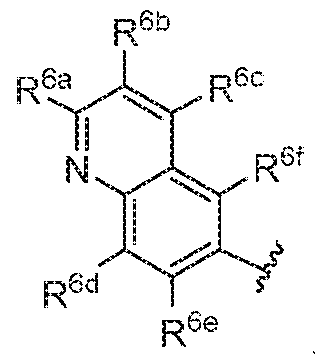
1,8-NAPHTHYRIDINONE COMPOUNDS AND USES THEREOF
CROSS-REFERENCE TO RELATED APPLICATIONS
[0001] This application claims priority to U.S. Provisional Application No. 62/534, 185, filed July 18, 2017, the contents of which are incorporated by reference in their entirety.
FIELD OF THE INVENTION
[0002] This disclosure relates generally to therapeutics for treatment mediated through a G- protein-coupled receptor (GPCR) signaling pathway and, more particularly, to compounds that inhibit an adenosine receptor (such as an A2A antagonist). The disclosure also provides pharmaceutically acceptable compositions comprising such compounds and methods of using the compounds or compositions in the treatment of a disease associated with a GPCR signaling pathway.
BACKGROUND OF THE INVENTION
[0003] Adenosine receptors (ARs) are distributed throughout the body and are responsible for numerous biological functions. The seven trans-membrane G -protein-coupled receptors (GPCRs) have been divided into four different subtypes: A;, A2A, A2B, and A3. The A2A and A2B ARs stimulate activity of the adenylyl cyclase, inducing an increase of c AMP levels. A2AARS have a distinct tissue localization, different biochemical pathways, and specific pharmacological profiles.
[0004] Adenosine is one of the human body's most important neuromodulators in both the central and the peripheral nervous systems. Adenosine is released from tumor cells and its concentration in the extracellular fluid of tumors can reach immunosuppressive levels (Blay et ai. (1997), Cancer Res., 57(13), pp. 2602-5). The extracellular fluid of solid carcinomas contains immunosuppressive concentrations of adenosine. Id. This increase in adenosine concentration is a result of increases in CD 73 (ecto-5 '-nucleotidase) and CD39 (nucleoside triphosphate dephosphorylase) enzymes, which are responsible for directly catabolizing ATP into adenosine. These upregulations are triggered by hypoxia and the generation of HIF-Ια. High levels of adenosine around tumor cells act to regulate multiple immune cells (e.g., CD4" T-celis and cytotoxic CD8 " T-cells) via activation of multiple adenosine receptor subtypes, but particularly A2A receptors, resulting the suppressing of pro-inflammatory activities and upregulation of antiinflammatory molecules and immunoregulatory cells (Kumar et al. (2013), Adenosine as an endogenous immunoregulator in cancer pathogenesis: where to go? Piirinergic Signal., 9(2), pp
145-65 and Sitkowsky et al., Hostile, hypoxia-A2-adenosinergic tumor biology as the next barrier to overcome for tumor immunologists. Cancer Immunol. Res. 2(7), pp 598-605; Ohta
(2016) , A Metabolic Immune Checkpoint: Adenosine in Tumor Microenvironment. Frontiers in Immunology. , 7 article# 109, pp 1-11). It was demonstrated that chimeric antigen receptor (CAR) T cells upregulate A2ARs upon antigen -specific stimulation in vitro and in vivo (Beavls
(2017) , Targeting the Adenosine 2A Receptor Enhances Chimeric Antigen Receptor T Cell Efficacy. J of Clin Invest. 127 (3): pp 929-941).
Θ005] Survival of cancer cells is dependent on their ability to avoid attack by the immune system. In addition, tumor cells can overtake the immune system to facilitate tumor survival and metastasis. Adenosine, whose concentration increases within hypoxic regions of solid tumors, has been recognized as being able to interfere with the recognition of tumor cells by cytolytic effector cells of the immune system, (Tuite and Riss (2013). Recent developments in the pharmacological treatment of Parkinson's disease. Expert Opin. Invest ig. Drugs. 12(8) pp 1335- 52, Popoli et ai. (2002). Blockade of striatal adenosine A2A receptor reduces, through a presynaptic mechanism, quinolinic acid-induced excitotoxicity: possible relevance to neuroprotective interventions in neurodegenerative diseases of the striatum, J. Neurosci, 22(5) pp. 1967-75, Gessi et al. (2011). Adenosine receptors and cancer. Biochim Biophys Acta, 1808(5), pp, 1400-12),
[0006] Although all adenosine receptors now have an increasing number of recognized biological roles in tumors, the A2Aand A3 subtypes appear promising targets for therapeutic development. In particular, activation of A2A receptors leads to immunosuppressive effects, which decreases anti -tumoral immunity and thereby encourages tumor growth.
[0007] The A2B receptor is another potential target for therapeutic development.
Autocrine/paracrine stimulation of A2B expressed on tumor cells is believed to enhance their metastatic potential and A2S blockade may reduce tumor metastasis in an immune-independent manner (Beavis et ai. (2013). Blockade of A2A receptors potently suppresses the metabolism of CD73" Tumors. Proc. Natl. Acad. Set., 110(36) pp. 14711-6). A2B expression also correlates with relapse-free survival (RFS) in triple negative breast cancer suggesting that this pathway may be clinically relevant. A2B blockade also has the potential to modulate the
immunosuppressive properties of tumor-associated immune cells including dendritic ceils and myeloid-derived suppressor cells (MDSCs) (Cekic et al. (2011). Adenosine A2B receptor blockade slows growth of bladder and breast tumors. J. Immunol. 188(1), pp. 198-205;
Sorrentino et al. (2 15). Myeloid-derived suppressor ceils contribute to A2B adenosine receptor- induced VEGF production and angiogenesis in a mouse melanoma model. Oncotarget 6(29), pp.
27478-89; Iannone et al. (2013). Blockade of A2B adenosine receptor reduces tumor growth and immune suppression mediated by myeloid-derived suppressor cells in a mouse model of melanoma. Neoplasia, 15(12), pp. 1400-9.
[0008] There remains a continuing need for new therapies for the treatment of diseases and disorders related to the adenosine signaling pathway,
BRIEF SUMMARY OF THE INVENTION
[0009] In one aspect, provided is a compound of the formula (1):
Figure imgf000004_0001
<D,
or a tautomer or isomer thereof, or a pharmaceutically acceptable salt of any of the foregoing, wherein A, B, R!, R2, RJ, R4, and RJ are as detailed herein.
[0010] In some embodiments, the compound of the formula (I), or a tautomer or isomer thereof, or a pharmaceutically acceptable salt of any of the foregoing, is of the formula (II) or (III), or a tautomer or isomer thereof, or a pharmaceutically acceptable salt of any of the foregoing, as detailed herein. In some embodiments, the compound of the formula (I), or a tautomer thereof, or a salt of any of the foregoing, is of the formula (II). In some embodiments, the compound of the formula (I), or a tautomer thereof, or a salt of any of the foregoing, is of the formula (III).
[0011] In another aspect, provided is a method for any one or more of: (a) treating a disease, such as a proliferative disease, in an individual in need thereof; (b) enhancing an immune response in an individual in need thereof; (c) inhibiting tumor metastasis in an individual in need thereof; (d) modulating the activity of a G protein coupled receptor signaling pathway in an individual in need thereof; (e) modulating the activity of an adenosine receptor, such as an A2A receptor, in an individual in need thereof; and (f) increasing the activity of a natural killer cell in an individual in need thereof, wherein the method comprises administering to the individual an effective amount of a compound of formula (I), or a tautomer or isomer thereof, or a
pharmaceutically acceptable salt of any of the foregoing. In some embodiments, provided is a method for any one or more of: (a) treating a disease, such as a proliferative disease, in an individual in need thereof; (b) enhancing an immune response in an individual in need thereof; (c) inhibiting tumor metastasis in an individual in need thereof; (d) modulating the activity of a G protein coupled receptor signaling pathway in an individual in need thereof; (e) modulating the activity of an adenosine receptor, such as an AJA receptor, in an individual in need thereof; and (f) increasing the activity of a natural killer cell in an individual in need thereof, wherein the method comprises administering to the individual an effective amount of a compound of fonnula (I), or a tautomer thereof, or a or a salt of any of the foregoing. In one aspect, the compound of formula (I) or a tautomer thereof, or a salt of any of the foregoing, is administered to the individual in combination with another therapeutic agent. In some embodiments, the compound of fonnula (I) or a tautomer or isomer thereof, or a pharmaceutically acceptable salt of any of the foregoing is administered to the individual in combination with another therapeutic agent. In a further aspect of the methods, the compound of formula (I) or a salt thereof is a compound of the formula (II) or (III) or a tautomer thereof, or a or a salt of any of the foregoing. In some embodiments, the compound of fonnula (I) or a tautomer or isomer thereof, or a
pharmaceutically acceptable salt of any of the foregoing is a compound of the formula (II) or (III), or a tautomer or isomer thereof, or a pharmaceutically acceptable salt of any of the foregoing.
[0012] Also provided are pharmaceutical compositions comprising (A) a compound detailed herein, such as a compound of formula (I) or a tautomer or isomer thereof, or a pharmaceutically acceptable salt of any of the foregoing, or a compound of fonnula (II) or a tautomer or isomer thereof, or a pharmaceutically acceptable salt of any of the foregoing, or a compound of formula (III) or a tautomer or isomer thereof, or a pharmaceutically acceptable salt of any of the foregoing, and (B) a pharmaceutically acceptable carrier or excipient. In some embodiments, provided are pharmaceutical compositions comprising (A) a compound detailed herein, such as a compound of formula (I) or a tautomer thereof, or a or a salt of any of the foregoing, or a compound of fonnula (II) or a tautomer thereof, or a or a salt of any of the foregoing, or a compound of fonnula (III) or a tautomer thereof, or a or a salt of any of the foregoing, and (B) a pharmaceutically acceptable earner or excipient. Kits comprising a compound detailed herein or a tautomer or isomer thereof, or a pharmaceutically acceptable salt of any of the foregoing and instructions for use are also provided. Kits comprising a compound detailed herein or a salt thereof and instructions for use are also provided. A compound detailed herein or a tautomer or isomer thereof, or a pharmaceutically acceptable salt of any of the foregoing is also provided for the manufacture of a medicament for the treatment of cancer. Compounds as detailed herein or a pharmaceutically acceptable salt thereof are also provided for the manufacture of a medicament for the treatment of cancer. DETAILED DESCRIPTION OF THE INVENTION
Definitions
[0013] For use herein, unless clearly indicated otherwise, use of the terms "a", "an" and the like refers to one or more.
[0014] "Alkenyl" as used herein refers to an unsaturated linear or branched univalent hydrocarbon chain or combination thereof, having at least one site of oiefinic unsaturation {i.e., having at least one moiety of the formula C=C) and having the number of carbon atoms designated {i.e., C2-C10 means two to ten carbon atoms). The alkenyl group may be in "cis" or "trans" configurations, or alternatively in "E" or "Z" configurations. Particular alkenyl groups are those having 2 to 20 carbon atoms (a "C2-C20 alkenyl"), having 2 to 8 carbon atoms (a "C2- Cg alkenyl"), having 2 to 6 carbon atoms (a "C^-Ce alkenyl"), or having 2 to 4 carbon atoms (a "C2-C4 alkenyl"). Examples of alkenyl include, but are not limited to, groups such as ethenyl (or vinyl), prop-l-enyl, prop-2-enyl (or aliyi), 2-methylprop-l-enyl, but-l-enyl, but-2-enyl, but- 3- enyl, buta~i,3~dienyl, 2-methylbuta- 1 ,3 -dienyl, homologs and isomers thereof, and the like.
[0015] Hie term "alkyl" refers to and includes saturated linear and branched univalent hydrocarbon stractures and combination thereof, having the number of carbon atoms designated {i.e. , C1-C10 means one to ten carbons). Particular alkyl groups are those having 1 to 20 carbon atoms (a "C1-C20 alkyl"). More particular alkyl groups are those having 1 to 8 carbon atoms (a "Cj-Cg alkyl"), 3 to 8 carbon atoms (a "Cs-Cg alkyl"), 1 to 6 carbon atoms (a "Cj-Q alkyl"), 1 to 5 carbon atoms (a "C1-C5 alkyl"), or 1 to 4 carbon atoms (a "C1-C4 alkyl"). Examples of alkyl include, but are not limited to, groups such as methyl, ethyl, n-propyl, isopropyl, n -butyl, t-butyl, isobutyl, sec-butyl, homologs and isomers of, for example, n-pentyl, n-hexyl, n-heptyl, n-octyl, and the like.
[0016] "Alkylene" as used herein refers to the same residues as alkyl, but having bivalency. Particular alkylene groups are those having 1 to 6 carbon atoms (a "Cj-Ce alkylene"), 1 to 5 carbon atoms (a "C1-C5 alkylene"), 1 to 4 carbon atoms (a "C1-C4 alkylene") or 1 to 3 carbon atoms (a "C 1 -C3 alkylene"). Examples of alkylene include, but are not limited to, groups such as methylene (-CH2-), ethylene (-CH2CH2-), propylene (-CH2CH2CH2-), butylene
ί·-Π !..('} i -.C/i ! >(! ! , -). and the like.
[0017] "Alkynyl" as used herein refers to an unsaturated linear or branched univalent hydrocarbon chain or combination thereof, having at least one site of acetylenic unsaturation (i.e. , having at least one moiety of the formula (' C) and having the number of carbon atoms designated (i.e., C2-C10 means two to ten carbon atoms). Particular alkynyl groups are those having 2 to 20 carbon atoms (a "C2-C20 a kynyl"), having 2 to 8 carbon atoms (a "Ci-Cg aikynyi"), having 2 to 6 carbon atoms (a "C Ce alkynyl"), or having 2 to 4 carbon atoms (a "C2- C4 alkynyl") . Examples of alkynyl include, but are not l imited to, groups such as ethynyl (or acetylenyl), prop-l-ynyl, prop-2-ynyl (or propargyl), but-l -ynyl, but-2-ynyl, but-3-ynyl, homologs and isomers thereof, and the like.
[0018] The term "aryl" refers to and includes polyunsaturated aromatic hydrocarbon groups. Aryl may contain additional fused rings (e.g., from 1 to 3 rings), including additionally fused aryl, heteroaryl, cycloalkyl, and/or heterocyclyl rings. In one variation, the aryl group contains from 6 to 14 annular carbon atoms. Examples of aryl groups include, but are not lim ited to, phenyl, naphthyl, biphenyl, and the like.
[0019] The terms "cycloalkyl" or "carbocycle" are used interchangeably and refer to and include cyclic univalent hydrocarbon structures, which may be fully saturated, mono- or polyunsaturated, but which are non-aromatic, having the number of carbon atoms designated (e.g. , Ci -Cio means one to ten carbons). Cycloalkyl or carbocycle groups can consist of one ring, such as cyclohexyl, or multiple rings, such as adamantyl, but excludes aryl groups. A cycloalkyl or carbocycle comprising more than one ring may be fused, spiro or bridged, or combinations thereof. A preferred cycloalkyl or carbocycle is a cyclic hydrocarbon having from 3 to 13 annular carbon atoms. A more preferred cycloalkyl or carbocycle is a cyclic hydrocarbon having from. 3 to 8 annular carbon atoms (a "Cs-Cs cycloalkyl"). Examples of cycloalkyl or carbocycle groups include, but are not limited to, cyclopropyl, cyclobutyl, cyclopentyl, cyclohexyl, 1-cyclohexenyl, 3-cyclohexenyl, cycloheptyl, norbornyl, and the like.
[0020] "Halo" or "halogen" refers to elements of the Group 17 series having atomic number 9 to 85. Preferred halo groups include fluoro, chloro, bromo and iodo. Where a residue is substituted with more than one halogen, it may be referred to by using a prefix corresponding to the number of halogen moieties attached, e.g., dihaloaryl, dihaloalkyl, trihaloaryl etc. refer to aryl and alkyl substituted with two ("di") or three ("tri") halo groups, which may be but are not necessarily the same halo; thus 4-chloro-3 -fluorophenyl is within the scope of dihaloaryl. An alkyl group in which each hydrogen is replaced with a halo group is referred to as a
"perhaloalkyl." A preferred perhaloalkyl group is trifluoroalkyl (-CF3). Similarly,
"perhaloalkoxy" refers to an alkoxy group in which a halogen takes the place of each H in the hydrocarbon making up the alkyl moiety of the alkoxy group. An example of a perhaloalkoxy group is trifluoromethoxy (-OCF3). [0021] The term "heteroaryl" refers to and includes unsaturated aromatic cyclic groups having from 1 to 10 annular carbon atoms and at least one annular heteroatom, including but not limited to heteroatonis such as nitrogen, oxygen and sulfur, wherein the nitrogen and sulfur atoms are optionally oxidized, and the nitrogen atom(s) are optionally quaternized. A heteroaryl group can be attached to the remainder of the molecule at an annular carbon or at an annular heteroatom. Heteroaryl may contain additional fused rings (e.g., from 1 to 3 rings), including additionally fused aryl, heteroaryl, cycloalkyl, and/or heterocyclyl rings. Examples of heteroaryl groups include, but are not limited to, pyridyl, pyrimidy], thiophenyl, furanyl, thiazolyl, and the like. Examples of he teroaryl groups also include, but are not limited to, pyridyl, pyrimidyl, thiophenyl, furanyl, thiazolyl, oxazolyl, isoxazolyl, thiophenyl, pyrrolyl, pyrazolyl, 1,3,4- oxadiazolyl, imidazolyl, isothiazolyl, triazolyl, 1 ,3,4-thiadiazolyl, tetrazolyl, benzofuranyl, benzothiophenyl, pyrazolopyridinyl, indazolyl, benzothiazolyl, benzooxazoly] or
benzoirnidazolyi and the like
[0022] In one variation, a heteroaryl containing at least one additional fused ring that is nonaromatic (e.g., cycloakyl or heterocyclyl) is attached to the parent structure at an annular atom of the additional ring. In another variation, a heteroaryl containing at least one additional ring that is nonaromatic (e.g., cycloakyl or heterocyclyl) is attached to the parent stmcture at an annular atom of the aromatic ring,
[0023] The term "heterocycle" or "heteroeyclyf' refers to a saturated or an unsaturated nonaromatic group having from 1 to 10 annular carbon atoms and from. 1 to 4 annular heteroatonis, such as nitrogen, sulfur or oxygen, and the like, wherein the nitrogen and sulfur atoms are optionally oxidized, and the nitrogen atom(s) are optionally quaternized. A heterocyclyl group may have a single ring or multiple condensed rings, but excludes heteroaryl groups. A heterocycle comprising more than one ring may be fused, spiro or bridged, or any combination thereof. In fused ring systems, one or more of the fused rings can be aryl, cycloalkyl or heterocyclyl. Examples of heterocyclyl groups include, but are not limited to,
tetrahydropyranyl, dihydropyranyl, piperidinyl, piperazinyl, pyrro!idinyl, thiazolinyl, thiazolidinyl, tetrahydrofuranyl, tetraliydrothiophenyl, 2,3-dihydrobenzo[b]thiophen-2-yl, 4- amino-2-oxopyrimidin-l(2H)-yl, and the like.
[0024] In one variation, a heterocyclyl containing at least one additional ring (such as a fused additional ring) that does not contain a heteroatom is attached to the parent structure at an annular atom of the additional ring. In another variation, a heterocyclyl containing at least one additional ring (such as a fused additional ring) that does not contain a heteroatom is attached to the parent stmcture at an annular atom of the ring containing a heteroatom. [0025] "Qxo" refers to the moiety =0.
[0026] "Optionally substituted" unless otherwise specified means that a group may be unsubstituted or substituted by one or more (e.g., 1, 2, 3, 4 or 5) of the substituents listed for that group in which the substituents may be the same of different. In one embodiment, an optionally substituted group has one substituent. In another embodiment, an optionally substituted group has two substituents. In another embodiment, an optionally substituted group has three substituents. In another embodiment, an optionally substituted group has four substituents. In some embodiments, an optionally substituted group has 1 to 2, 2 to 5, 3 to 5, 2 to 3, 2 to 4, 3 to 4, 1 to 3, 1 to 4 or 1 to 5 substituents.
[0027] A "pharmaceutically acceptable earner" refers to an ingredient in a pharmaceutical formulation, other than an active ingredient, which is nontoxic to a subject. A pharmaceutically acceptable carrier includes, but is not limited to, a buffer, excipient, stabilizer, or preservative.
[Θ028] As used herein, "treatment" or "treating" is an approach for obtaining beneficial or desired results including clinical results. For example, beneficial or desired results include, but are not limited to, one or more of the following: decreasing symptoms resulting from the disease, increasing the quality of life of those suffering from the disease, decreasing the dose of oilier medications required to treat the disease, delaying the progression of the disease, and/or prolonging survival of individuals. In reference to cancers or other unwanted cell proliferation, beneficial or desired results include shrinking a tumor (reducing tumor size); decreasing the growth rate of the tumor (such as to suppress tumor growth); reducing the number of cancer ceils; inhibiting, retarding or slowing to some extent and preferably stopping cancer cell infiltration into peripheral organs; inhibiting (slowing to some extent and preferably stopping) tumor metastasis; inhibiting tumor growth; preventing or delaying occurrence and/or recurrence of tumor; and/or relieving to some extent one or more of the symptoms associated with the cancer. In some embodiments, beneficial or desired results include preventing or delaying occurrence and/or recurrence, such as of unwanted cell proliferation.
[0029] As used herein, "delaying development of a disease" means to defer, hinder, slow, retard, stabilize, and/or postpone development of the disease (such as cancer). This delay can be of varying lengths of time, depending on the history- of the disease and/or individual being treated. As is evident to one skilled in the art, a sufficient or significant delay can, in effect, encompass prevention, in that the individual does not develop the disease. For example, a late stage cancer, such as development of metastasis, may be delayed. Θ030] As used herein, an "effective dosage" or "effective amount" of compound or salt thereof or pharmaceutical composition is an amount sufficient to effect beneficial or desired results. For prophylactic use, beneficial or desired results include results such as eliminating or reducing the risk, lessening the severity of, or delaying the onset of the disease, including biochemical, histological and/or behavioral symptoms of the disease, its complications and intermediate pathological phenotypes presenting during development of the disease. For therapeutic use, beneficial or desired results include ameliorating, palliating, lessening, delaying or decreasing one or more symptoms resulting from the disease, increasing the quality of life of those suffering from the disease, decreasing the dose of other medications required to treat the disease, enhancing effect of another medication such as via targeting, delaying the progression of the disease, and/or prolonging survival. In reference to cancers or other unwanted cell proliferation, an effective amount comprises an amount sufficient to cause a tumor to shrink and/or to decrease the growth rate of the tumor (such as to suppress tumor growth) or to prevent or delay oilier unwanted cell proliferation. In some embodiments, an effective amount is an amount sufficient to delay development. In some embodiments, an effective amount is an amount sufficient to prevent or delay occurrence and/or recurrence. An effective amount can be administered in one or more administrations, in the case of cancer, the effective amount of the drug or composition may: (i) reduce the number of cancer cells; (ii) reduce tumor size; (iii) inhibit, retard, slow to some extent and preferably stop cancer cell infiltration into peripheral organs; (iv) inhibit (i.e., slow to some extent and preferably stop) tumor metastasis; (v) inhibit tumor growth; (vi) prevent or delay occurrence and/or recurrence of tumor; and/or (vii) relieve to some extent one or more of the symptoms associated with the cancer. An effective dosage can be administered in one or more administrations. For purposes of this disclosure, an effective dosage of compound or a salt thereof, or pharmaceutical composition is an amount sufficient to accomplish prophylactic or therapeutic treatment either directly or indirectly. It is intended and understood that an effective dosage of a compound or salt thereof, or pharmaceutical
composition may or may not be achieved in conjunction with another drug, compound, or pharmaceutical composition. Thus, an "effective dosage" may be considered in the context of administering one or more therapeutic agents, and a single agent may be considered to be given in an effective amount if, in conjunction with one or more other agents, a desirable result may be or is achieved.
[0031] As used herein, the term "individual" is a mammal, including humans. An individual includes, but is not limited to, human, bovine, horse, feline, canine, rodent, or primate. In some embodiments, the individual is human. The individual (such as a human) may have advanced disease or lesser extent of disease, such as low tumor burden, in some embodiments, the individual is at an early stage of a proliferative disease (such as cancer). In some embodiments, the individual is at an advanced stage of a proliferati ve disease (such as an advanced cancer).
[0032] Reference to "about" a value or parameter herein includes (and describes) embodiments that are directed to that value or parameter per se. For example, description referring to '"about X" includes description of "X".
[0033] It is understood that aspects and variations described herein also include "consisting" and/or "'consisting essentially of aspects and variations.
Compounds
Figure imgf000011_0001
or a tautomer or isomer thereof, or a pharmaceutically acceptable salt of any of the foregoing, wherein:
R1 is H or Cj-Ce alkyi wherein the Ci-Ce alkyl of R1 is optionally substituted with oxo or
Ra:
R2 and R4 are each independently H, RD or oxo;
R- and R" are each independently H or Rc;
each Ra, R , and Rc is independently Ci -Ce alkyl, Cj-Ce aikenyl, Cj-Ce aikynyi, halogen,
-CN, -OR8, -SR8, -\ R':'R ". -NO;,, -C=NH(OR8), -C(0)R8, -OC(0)R8, -C(0)OR8, -C(0)NR9R10,
~OC(O)NR9Ri0, -NR8C(0)R9, ~NR8C(0)0R9, -NR8C(0)NR9R10, -S(Q)R8, -S(0)2R8,
-NR8S(())R9, -C(0)NR8S(0)R9, -NR8S(0)2R9, -C(0)NR8S(0)2R9, -S(O)NR9R!0, -S(0)2NR9R10,
-P(0)(OR9)(ORlu), C3-C6 cycloalkyl, 3-12-membered heterocyclyl, 5~ to 10-membered heteroaryl, C6-C14 aiyl, ~(C C3 alkylenejCN, -(C C3 alkylene)OR8, -(C C3 alkylene)SR8, -(C
C3 alkylene)NR9R10, -(C C3 alkylene)CF3, -(C C3 alkylene)N()2, -( =NH(()R8), -(C
C3 aikyiene)C(0)R8, -(C C3 alkylene)OC(0)R8, -(C, -C3 alkylene)C(0)OR8, -(Ci-
C3 a3kylene)C(O)NR9R!0, -(C C3 a3kylene)OC(O)NR9R!0, -(C C3 a3kylene)NR8C(0)R9, -(( ; -
C3 alkylene)NR8C(0)OR9, -(C C3 a]ky3ene)NR8C(O)NR9R!0, -(C C3 alkylene)S(0)R8, ~(C
C3 alkyiene)S(0)2R8, -(CrC3 alkylene)NR8S(())R9, -C(0)(CrC3 alkylene)NR8S(0)R9, -(C C3 alkylene)NR8S(0)2R9, ~(C C3 alkylene)C(0)NR8S(0)2R9, ~(C C3 alkylene)S(0) R9R10,
-(C 1-C3 alkylene)S(C))2NR9R10, -(CrC3 alkylene)P(0)(OR9)(()R10), -(C C3 alkylene)(C3-C6 cycloalkyl), ~(C] -C3 alkylene)(3-12-membered heterocyclyl), -(C1-C3 alk lene)(5 - 10-membered heteroaryl) or ~(Ci -C3 aikylene)(C6-Ci4 aiyi), wherein each R3, Rb, and R' is independently optionally substituted by halogen, oxo, -OR! 1, -NRnR12, -C(0)Rn, -CN, -S(0)Rn, -S(0)2Rn,
-P(0)(OR1 !)(OR!2), -(C] -C3 alkyiene)OR! i, -(C1-C3 aikylene)NR! 1Ri2, -(C
C3 alkyiene)C(0)R] !, -(C1-C3 alkylene)S(0)Ri i, -(C1-C3 alkylene)S(0)2Ru, -(C
C3 alkylene)P(0)(OR11)(ORi2), C3-C8 cycloalkyl, or Cj-Ce alky] optionally substituted by oxo,
-OH or halogen;
wherein when R1 is Ci-Q alkyl, R is other tlian -NR9Rl0 and R' is otlie than - C(0)R8:
„„„__ jg a single bond or a double bond, wherem when—— is a double bond, R is oxo;
»ΛΛΛ is a single bond or a double bond, wherem when *n v is a double bond, R4 is oxo;
one of and »ΛΛΛ is a double bond and the other is a single bond;
A is C6-C12 aryl, 5- to 10-membered heteroaryl, 9- to 10-membered carbocycle, or 9- to 10-membered heterocycle, wherein the C&-Ci2 aryl, 5- to 10-membered heteroaryl, 9- to 10- membered carbocycle, or 9- to 10-membered heterocycle of A is optionally further substituted with R6;
B is phenyl, 5- to 6-membered heteroaryl, 5- to 6-membered carbocycle, 5- to 6- membered heterocycle, or 9~ to 10-membered heteroaryl, wherein the phenyl, 5- to 6-membered heteroaryl, 5- to 6-membered carbocycle, 5- to 6-membered heterocycle, or 9- to 10-membered heteroaryl of B is optionally further substituted with R-';
wherein when B is 5- to 6-membered heterocycle, A is otlier than phenyl or pyridyl optionally further substituted with R';
each R6 and R7 is independently oxo, Ci -Ce alkyl, Ci-Ce alkenyl, C2-Ce alkynyl, halogen,
-CN, -OR8, -SR8, -N R"R ". -N02, -C==NH(OR8), -C(0)R8, -OC(0)R8, -C(0)OR8, -C(0)NR9R10,
-OC(O)NR9Ri0, -NR8C(0)R9, -NR8C(0)OR9, -NR8C(0)NR9R10, -S(0)R8, -S(0)2R8,
-NR8S(0)R9, -C(0)NR8S(0)R9, -NR8S(0)2R9, -C(0)NR8S(0)2R9, -S(O)NR9R!0, -S(0)2NR9R10,
-P(0)(OR9)(OR10), C3-C6 cycloalkyl, 3-12-membered heterocyclyl, 5- to 10-membered heteroaryl, Ce-Cu aryl, -(C1-C3 aikylene)CN, -(C1-C3 aikyiene)OR8, -(CrC3 alkylenejSR8, -(Ci-
C3 alkylene)NR9R10, -(C1-C3 alkylene)CF3, ~(Ci-C3 alkylene)N02, -C=NH(OR8), -(d-
C3 alkylene)C(0)R8, -(C1-C3 alkylene)OC(0)R8, -(C,-C3 alkylene)C(0)OR8, -(d-
C3 alkyiene)C(0)NR9R10, -(C C3 alkyiene)OC(0)NR9R10, -(C C3 alkyiene)NR8C(0)R9, -(C C3 alkylene)NR8C(0)OR9, -(C C3 alkylene)NR8C(O)NR9R!0, -(C C3 alkylene)S(0)R8, -(C
C3 alkylene)S(0)2R8, -(CrC3 alkylene)NR8S(0)R9, -C(0)(CrC3 alkylene)NR8S(0)R9, -(C,-
C3 alkyiene)NR S(Q)2R9, -(C C3 alkylene)C(Q)NR S(Q)2R9, -(C C3 aikylene)S(Q)NR9R!0,
-(( ;-(' : alkyiene)S(O)2NR9R]0, -(C C3 alkylene)P(0)(OR9)(OR10), -(C,-C3 alkylene)(C3-C6 cycloalkyi), ~(Ci-C3 alkylene)(3-12-membered lieterocyclyl), -(C1-C3 alkylene)(5-10-membered heteroaryl) or -(Ci -C3 alkylene)(C6-Ci4 aryl), wherein each RD and R? is independently optionally substituted by halogen, oxo, -OR11, -NRnR12, -C(0)Rn, -CN, -S(0)Rn, -S(Q)2RU,
-P(0)(ORn)(OR12), -(C C3 alkylene)OR! !, -(C C3 alkylene)NRi lR12, -(C
C3 alkylene)C(0)R1 !, -(C C3 alkylene)S(0)R1 !, -(CrC3 alkylene)S(0)2R! 1, -(C
C alkylene)P(0)(ORI ')(OR12), C3-C8 cycloalkyi, or C;-C6 alkyl optionally substituted by oxo,
-OH or halogen;
each R8 is independently hydrogen, C Ce alkyl, C2-Ce alkenyl, C2-C'e alkynyl, C3-C6 cycloalkyi, Ce-Ci4 aryl, 5-6-membered heteroaryl, 3-6-membered lieterocyclyl, -(Cr
C3 alkylene)(C3-C6 cycloalkyi), -(Ci-C3 alkylene)(C6-Ci4 aiyl), -(C1-C3 alkylene)(5-6-membered heteroaryl), or -(C 1-C3 alkylene)(3-6-membered lieterocyclyl), wherein the Ci-Ce alkyl, C2~Ce alkenyl, C2-Ce alkynyl, C3-C6 cycloalkyi, Ce- and, 5-6-membered heteroaryl, 3-6-membered lieterocyclyl, -(C1-C3 alkylene)(C3-C6 cycloalkyi), -(C1-C3 alkylene)(C6-Ci4 aiyl), -(Ci- C3 alkylene)(5-6-membered heteroaryl), and -(C1-C3 alkylene)(3-6-membered heterocvclvl) of R8 are independently optionally substituted by halogen, oxo, -CN, ~ORl3, -NRl3Ri4,
-P(0)(ORl )(ORl4), phenyl optionally substituted by halogen, or Cj-Ce alkyl optionally
substituted by halogen, -OH or oxo;
R and R'° are each independently hydrogen, Ci-Cg alkyl, C2-Ce alkenyl, C2-C6 alkynyl, Cs-Ce cycloalkyi, C6-C14 aryl, 5-6-membered heteroaryl, 3-6 membered lieterocyclyl, ~(Cr C3 alkyleneJNR1 'R12, -(C1-C3 alkylene)(C3-C6 cycloalkyi), -(C1-C3 alkylene)(3-6-membered heterocyely!), -(Ci-C3 alkyiene)(5-6-membered heteroaryl) or -(Cj-C3 alkylene)(C6 aryl), wherein the C Ce alkyl, C2-Ce alkenyl, C2-Ce alkynyl, C3-Ce cycloalkyi, Ce-Ci4 aryl, 5-6- membered heteroaryl, 3-6 membered heterocvclvl, -(C1-C3 alkylene)(C3-C'6 cycloalkyi), -(C C3 alkylene)(3-6-membered heterocvclvl), -(C1-C3 alkylene)(5-6-membered heteroaryl) and -(C1-C3 alkylene)(C6 aryl) of R9 and R'" are independently optionally substituted by halogen, oxo, -CN, -OR13, -NR13R14 or Ci-Cg alkyl optionally substituted by halogen, -OH or oxo;
or R9 and R10 are taken together with the atom to which they attached to form a 3- 6 membered lieterocyclyl optionally substituted by halogen, oxo, -OR13, -NR3R14 or Ci- Ce alkyl optionally substituted by halogen, oxo or -OH; RJ i and R are each independently hydrogen, Ci -Ce alkyl optionally substituted by halogen or oxo, ( < -{',. alkenyl optionally substituted by halogen or oxo, or C2-Ce alkynyl optionally substituted by halogen or oxo;
or R' 1 and R12 are taken together with the atom to which they attached to form a
3-6 membered heterocyclyl optionally substituted by halogen, oxo or Ci-Ce alkyl optionally substituted by halogen or oxo; and
R" and R14 are each independently hydrogen, Ci-C& alkyl optionally substituted by halogen or oxo, Cq-Ce alkenyl optionally substituted by halogen or oxo, or C -Ce alkynyl optionally substituted by halogen or oxo;
or R1J and R14 are taken together with the atom to which they attached to form a
3-6 membered heterocyclyl optionally substituted by halogen, oxo or Ci-Ce alkyl optionally substituted by oxo or halogen.
[0035] In some embodiments of a compound of the Formula (I):
Figure imgf000014_0001
or a tautomer thereof, or a salt of any of the foregoing, wherein:
R1 is H or Ci-Ce alkyl wherein tiie Cj-Ce alkyl of R1 is optionally substituted witli oxo or
Ra;
R2 and R4 are each independently H, Rb or oxo;
R3 and R5 are each independently H or R°;
each Ra, Rb, and Rc is independently Ci-Ce alkyl, C2-Ce alkenyl, Cj-Ce alkynyl, halogen, -CN, -OR8, -SRS, -NR9R10, -NO,, -C=NH(ORs), -C(0)R8, -OC(0)R8, ~C(0)OR8, -C(0)NR9R10, -OC(O)NR9R!0, -NR8C(0)R9, -NR8C(0)OR9, -NR8C(0)NR9R10, -S(())R8, -S(0)2R8,
-NR S(0)R9, -C(0)NR8S(0)R9, -NR8S(Q)2R9, -C(Q)NR8S(Q)2R9, -S(0)NR9R10, -S(Q)2NR9R!0, ~P(0)(OR )(OR10), C3-C6 cycloalkyl, 3-12~m.embered heterocyclyl, 5- to 10-membered heteroaiyl, C6-C!4 aryl, -(C C3 alkylene)CN, -(C C3 alkylene)OR8, -(C C3 alkylene)SR8, -(C C3 alkyiene)NR9R10, -(C C3 alkylene)CF3, -(C C3 alkylene)N02, -C-NH(OR8), -(C
C3 alkylene)C(0)R8, -(C C3 alkylene)OC(0)R8, -(C C3 alkylene)C(0)OR8, -(C
C : alkylene)C(0)NR9R10, ~(Ci-C3 alkylene)OC(O)NR9Ri0, -(Ci-C3 alkylene)NR8C(0)R9, -((" ; - C3 alkylene)NR8C(0)OR9, -(C C3 alkylene)NR8C(())NR9Ri0, -(C rC3 alkylene)S(0)R8, -(C C3 alkylene)S(0)2R8, -(C C3 alkylene)NR8S(0)R9, -C(0)(C C3 alkylene)NR8S(0)R9, -(d~
C3 alkyiene)NR8S(0)2R9, -(d-d alkylene)C(0)NR8S(0)2R9, -(d-d aikylene)S(())NR9R10,
-(d-d alkylene)S(Q)2NR9R10, -<d -d alkylene)P(Q)(QR9)(QR10), -(CrC3 alkylene)(C3-C6 cycloalkyl), -(C1-C3 alkylene)(3-12-membered lieterocyclyl), -(d-d alkylene)(5-10-membered heteroaryl) or -(d-d alkylene)(Ce-Ci4 aryl), wherein each Ra, Rb, and Rc is independently optionally substituted by halogen, oxo, -OR11, -NRnR12, -C(0)R1 !, -CN, -S(0)Rn, -S(0)2Rn,
-P(0)(ORn)(OR12), -(d-d alkylene)OR1 !, -(d-d aikylcnc)N ; R: '. -(d-
C3 alkylene)C(0)Rn, -(d -d alkylene)S(0)Rn, -(d-d alkylene)S(0)2Rn, -(d-
C-3 alkylene)P(0)(OR11)(ORl2), C3-C'8 cycloalkyl, or Ci -Ce alkyl optionally substituted by oxo,
-OH or halogen;
wherein when R1 is Ci-Ce alkyl, R4 is other than -NR9R'° and R3 is other than - OC(0)R8;
is a single bond or a double bond, wherein when is a double bond, R" is oxo;
ΛΛΛ^ is a single bond or a double bond, wherein when ΛΛΛ is a double bond, R4 is oxo;
one of and *ΛΛΛ > is a double bond and the other is a single bond;
A is
Figure imgf000015_0001
aryl, 5- to 10-membered heteroaiyl, 9~ to 10~membered carbocycle, or 9- to 10-membered heterocycle, wherein the C6-C12 aryl, 5- to 10-membered heteroaryl, 9- to 10- membered carbocycle, or 9- to 10-membered heterocycle of A is optionally further substituted with R6;
B is phenyl, 5- to 6~membered heteroaryl, 5- to 6-membered carbocycle, 5- to 6- membered heterocycle, or 9- to 10-membered heteroaiyl, wherein the phenyl, 5- to 6-membered heteroaryl, 5- to 6-membered carbocycle, 5- to 6-membered heterocycle, or 9- to 10-membered heteroaryl of B is optionally further substituted with R ';
wherein when B is 5- to 6-membered heterocycle, A is other than phenyl or pyridyl optionally further substituted with R' ;
each R6 and R7 is independently oxo, Ci -Ce alkyl, C2-Ce aikenyl, C2-Ce alkynyl, halogen,
-CN, -OR8, -SR8, -NR9R10, -N02, -C=NH(OR8), -C(0)R8, -OC(0)R8, -C(0)OR8, -C(0)NR9R10,
-OC(0)NR9R10, -NR8C(0)R9, -NR8C(0)OR9, -NR8C(0)NR9R10, -S(0)R8, -S(0)2R8,
-NR8S(())R9, -C(0)NR8S(0)R9, -NR8S(0)2R9, -C(0)NR8S(0)2R9, -S(O)NR9R!0, -S(0)2NR9R10,
-P(0)(OR9)(ORlu), C3-C6 cycloalkyl, 3-12-membered heterocyclyL 5- to 10-membered heteroaryl, Cc-Ci4 aryl, -(C1-C3 alkylene)CN, -(C1-C3 alkylene)OR8, -(C1-C3 alkylene)SRK, -(Ci-
C3 alkylene)NR9R10, -(( :-V alkylene)CF3, -(d-C3 alkylene)N02, -C=NH(OR8), -id- d aikyiene)C(0)R8, -(CrC3 alkylene)OC(0)R8, -(d -d alkylene)C(0)OR8, -(Ci- C3 alkylene)C(0)NR9R10, -(C C3 alkylene)OC(0)NR9R10, -(C C3 alkylene)NR8C(0)R9, -(C C3 alkyiene)NR8C(0)OR9, -(C C3 alkylene)NR8C(0)NR9R10, -(C, -C3 alkylene)S(0)R8, -(Cr C3 alkylene)S(0)2R8, -(C C3 alkylene)NR8S(0)R9, -C(0)(C C3 alkylene)NR8S(Q)R9, -(C, - C : alkylene)NR8S(Q)2R9, -(C C3 alkylene}C{0)NR8S{0)2R9, -(( ;-(" : alkylene)S(0)NR9R10, -(C, -C3 alkylene)S(0)2NR9R10, -(Ci-C3 alkylene)P(0)(OR9)iQR10), -(C -C = alky3ene)(C3-C6 cycloalkyl), -(C1-C3 alkylene)(3-12-membered heterocvclvl), -(C1-C3 alkylene)(5-10-membered heteroaryl) or -(Ci-C3 alk lene)(Ce-Ci4 aryl), wherein each R6 and R' is independently optionally substituted by halogen, oxo, -OR11, -NRnR12, -C(0)R! !, -CN, -S(0)Rn, -S(0)2Rn,
-P(0)(ORn)(OR12), -(C 1-C3 alkylene)OR! 1, -(C, -C3 alkylene)NR! 1R!2, -(C, - C3 alkylene)C(0)Rn, -(d-C3 alkylene)S(0)Rn, -(C C3 alkylene)S(0)2Rn, -(C
C3 alkylene)P(0)(OR' ')(OR'2), C3-Cg cycloalkyl, or Ci -Ce alkyi optionally substituted by oxo, -OH or halogen;
R8 is independently hydrogen, Cj -Ce alkyl, C2-Ce aikenyl, C2-Ce alkynyl, C3-C6
cycloalkyl, C C14 aryl, 5-6-membered heteroaryl or 3-6-membered heterocyclyi, wherein the C i -Ce alkyl, C2-Ce aikenyl, C2-Ce alkynyl, C3-C6 cycloalkyl, Ce-Cw aiyl, 5-6-membered heteroaiyl and 3-6-membered heterocyclyi are independently optionally substituted by halogen, oxo, -CN, -OR13, -NR13R14, -P(0)(OR13)(ORl4), phenyl optionally substituted by halogen, or Ci- C alkyl optionally substituted by halogen, -OH or oxo;
R9 and R10 are each independently hydrogen, Cj-Ce alkyl, C2-C6 aikenyl, C2-Ce alkynyl, C3-C6 cycloalkyl, C6-C1 aryl, 5-6-membered heteroaryl or 3-6 membered heterocyclyi, wherein the CrCe alkyi, C2-C6 aikenyl, C2-Ce alkynyl, C3-Ce cycloalkyl, Q-Cu aryl, 5-6-membered heteroaiyl and 3-6 membered heterocyclyi are independently optionally substituted by halogen, oxo, -CN, -OR13, -NR13R14 or Ci-Ce alkyl optionally substituted by halogen, -OH or oxo;
or R9 and R10 are taken together with the atom to which they attached to form a 3-
6 membered heterocyclyi optionally substituted by halogen, oxo, -OR13, ~\ R R ! or Ci-
Ce alkyl optionally substituted by halogen, oxo or -OH;
R11 and Rl are each independently hydrogen, Ci -Ce alkyl optionally substituted by halogen or oxo, C2-Ce aikenyl optionally substituted by halogen or oxo, or Cj-Ce alkynyl optionally substituted by halogen or oxo;
or R11 and R12 are taken together with the atom to which they attached to form a
3-6 membered heterocyclyi optionally substituted by halogen, oxo or Ci-Ce alkyl optionally substituted by halogen or oxo; and
R13 and R14 are each independently hydrogen, C i -Ce alkyl optionally substituted by halogen or oxo, C2-Ce aikenyl optionally substituted by halogen or oxo, or C2-Ce alkynyl optionally substituted by halogen or oxo; or Rl3 and R14 are taken together with the atom to which they attached to form a 3-6 membered heterocyclyl optionally substituted by halogen, oxo or Ci-Ce alkyl optionally substituted by oxo or halogen.
[0036] In some embodiments of the compound of Formula (I), A is selected from the group consisting of e-Cn aryl and 5- to 10-membered heteroaryl, wherein the Ce-Cn aryl and 5- to 10-membered heteroaryl of A is optionally further substituted with Ru. In some embodiments of the compound of Formula (I), B is selected from the group consisting of phenyl and 5- to 6- membered heteroaryl, wherein the phenyl and 5- to 6-membered heteroaryl of B is optionally further substituted with R' . In some embodiments of the compound of Formula (I), A is selected from the group consisting of Ce-Cn aryl and 5- to 10-membered heteroaryl, wherein the Ce-Cn aryl and 5- to 10-membered heteroaryl of A is optionally further substituted with RD and B is selected from the group consisting of phenyl and 5- to 6-membered heteroaryl, wherein the phenyl and 5- to 6-membered heteroaryl of B is optionally further substituted with R'.
[0037] In some embodiments of Formula (I), R3, Rb, and Rc are independently Ci-Ce alkyl, C2-C6 alkenyl, C2~C6 alkynyl, halogen, -CN, -OR8, -SR.8, -NR9R!0, -C(O)NR9R!0, -NR8C(0)R9, -NR8C(0)NR9R10, -S(Q)R8, -S(0)2R8, -NR8S(0)R9, -NR8S(0)2R9, -S(0)NR9R10, -S(0)2NR9R10, C3-C6 cycloalkyl, 3-12-membered heterocyclyl, 5- to 10-membered heteroaryl or Ce-Cu aryl.
[0038] In some embodiments of Formula (I), R", Rb, and Rc are independently Cj-Ce alkyl, C2-C6 alkenyl, C2-C6 alkynyl, halogen, -CN, -OR8, -SR8, -NR9R10, -C(0)NR9R10, -NR8C(0)R9, C3-C6 cycloalkyl, 3-12-membered heterocyclyl, 5- to 10-membered heteroaryl or Ce-Ci4 aryl.
[0039] In some embodiments of Formula (I), R3, Rb, and Rc are independently Ci-Ce alkyl, halogen, -CN, -OR8, -SR8 or -NR9 9R„10
In some embodiments of Formula (I), R", R , and R" are independently -CH3, halogen, -CN or -OCH3.
In some embodiments of the compound of Formula (I), R1 is H or methyl .
In some embodiments of the compound of Formula (I), Rs is H, Ci-Ce alkyl, halogen,
In some embodiments of the compound of Formula (I), R1, R2, R3, and Ι Λ are each H and R4 is oxo. In some embodiments of the compound of Formula (I), R1, R3, R and R3 are each H and R is oxo.
[0044] In some embodiments, provided is a compound of Formula (II):
Figure imgf000018_0001
or a tautomer or isomer thereof, or a pharmaceutically acceptable salt of any of tlie foregoing, wherein A, B, R1, RJ, R4, and RJ are as defined for Formula (I).
[0045] In some embodiments of a compound of Formula (II), at least one of R3, R4, and R' is not H. In some embodiments, at least one of R3, R4, and R5 is Cj -Ce alkyl, halogen, C6-C14 aryl, -CN, or -OR8. In some embodiments, R R3, R4, and R5 are each H.
[0046] In some embodiments, provided is a compound of Formula (III):
Figure imgf000018_0002
or a tautomer or isomer thereof, or a pharmaceutically acceptable salt of any of tlie foregoing, wherein A, B, R1, R2, R3 j and R5 are as defined for Formula (I).
[0047] In some embodiments of a compound of Formula (III), at least one of R2, R !. and R5 is not H. In some embodiments, at least one of R2, R3, and RJ is C\~Ce alkyl, halogen, Ce~Ci4 aryl, -CN, or -OR8. In some embodiments, R R2, RJ, and R5 are each H.
[0048] In some embodiments of a compound of Formula (I), (II), or (III), R1 is Ci-C6 alkyl, (· .-(',. alkenyl, C2-C6 alkynyl, halogen, -CN, -ORs, -SR8, ~NR9R!0, -C(O)NR9R!0, -NR8C(0)R9, -NR8C(0)NR9R10, -S(0)R8, -S(0)2R8, -NR8S(0)R9, -NR8S(0)2R9, -S(O)NR9Ri0, -S(0)2NR9R10, C3-C6 cycloalkyi, 3-12-membered heterocyclyl, 5- to 10-membered heteroaryl or C6-C14 aryl. In some embodiments of a compound of Formula (I), ( ! ! ).. or (III), R1 is Ci-Ce alkyl, C2-Ce alkenyl, C2-C6 alkynyl, halogen, -CN, -OR8, -SR8, -NR9R!0, -C(O)NR9R!0, -NR8C(0)R9, C3- Ce cycloalkyi, 3- 12-membered heterocyclyl, 5- to 10-membered heteroaryl or C6-C14 aryl. In some embodiments of a compound of Formula (I), (11), or (III), R1 is Ci -Ce alkyl, halogen, -CN, -OR8, -SR8 or -NR R10. In some embodiments of a compound of Formula (I), (II), or (III), R1 is - CH3, halogen, -CN or -OCH3. In some embodiments of a compound of Formula (Ϊ), (II), or (III), R1 is H or methyl. In some embodiments of a compound of Formula (I), (II), or (III), R1 is H, Ci -Ce alkyl, halogen, -CN, or -OR8. In some embodiments of a compound of Formuia (I), (II), or ( I I I ) . R! is H or C1-C& alkyl. In some embodiments of a compound of Formula (I), (II), or (III), R1 is H or methyl. In some embodiments, R1 is H.
[0049] In some embodiments of a compound of Formula (I), (II), or ( I I I ).. R2 is Ci-Cc, alkyl, C2-C6 alkenyl, C2~C6 alkynyl, halogen, -CN, -OR8, -SR.8, ~NR9R!0, -C(O)NR9R!0, -NR8C(0)R9, -NR8C(0)NR9R10, -S(())R8, -S(0)2R8, -NR8S(())R9, -NR8S(0)2R9, -S(())NR9Ri0, -S(0)2NR9R10, C3-C6 cycloalkyl, 3-12-membered heterocyclyl, 5- to 10-membered heteroaryl or Ce-Cu aryl. In some embodiments of a compound of Formula (I), ( ! ! ).. or (III), R2 is Ci-Ce alkyl, C2-Ce alkenyl, C2~C6 alkynyl, halogen, -CN, -OR8, -SR.8, -NR9R!0, -C(O)NR9R!0, -NR8C(0)R9, C3- Ce cycloalkyl, 3- 12-membered heterocyclyl, 5- to 10-membered heteroaryl or C6-C14 aryl. In some embodiments of a compound of Formula (I), (11), or (III), R2 is Ci -Ce alkyl, halogen, -CN, -OR*, -SR" or -NR R . In some embodiments of a compound of Formula (I), (II), or (III), R' is - CH3, halogen, -CN or -OCH3. In some embodiments of a compound of Formula (I), (II), or (III), R2 is H or methyl. In some embodiments of a compound of Formula (1), (II), or (III), R2 is H, Ci-C& alkyl, halogen, -CN, or -OR8. In some embodiments of a compound of Formula (I), (II), or (III), R2 is oxo.
[0050] In some embodiments of a compound of Formula (I), (II), or (III), RJ is Ci-C6 alkyl, (· .-(',. alkenyl, C2-C6 alkynyl, halogen, -CN, -OR8, -SR.*. ~NR9R!0, -C(O)NR9R!0, -NR8C(0)R9, -NR8C(0)NR9R10, -S(0)R8, -S(0)2R8, -NR8S(0)R9, -NR8S(0)2R9, -S(O)NR9Ri0, -S(0)2NR9R10, C3-C6 cycloalkyl, 3-12-membered heterocyclyl, 5- to 10-membered heteroaryl or C6-C14 aryl. In some embodiments of a compound of Formula (I), ( ! ! ).. or (ill), R3 is C . -Ce alkyl, C2-Ce alkenyl, C2-C6 alkynyl, halogen, -CN, -OR8, -SR8, -NR9R!0, -C(O)NR9R!0, -NR8C(0)R9, C3- Ce cycloalkyl, 3- 12-membered heterocyclyl, 5- to 10-membered heteroaryl or C6-C14 aryl. In some embodiments of a compound of Formula (I), (11), or (III), R3 is Ci -Ce alkyl, halogen, -CN, -OR*, -SRe or -NR R . In some embodiments of a compound of Formula (I), (Π), or (III), R: is - CH3, halogen, -CN or -OCH3. In some embodiments of a compound of Formula (I), (II), or (III), R3 is H or methyl. In some embodiments of a compound of Formula (I), (II), or (III), RJ is H, Ci-C6 alkyl, halogen, -CN, or -OR8.
[0051] In some embodiments of a compound of Formula (I), (II), or (III), R4 is CpCe alkyl,
C2-C6 alkenyl, C2-C6 alkynyl, halogen, -CN, -OR8, -SR8, -NR9R10, -C(0)NR9R10, -NR8C(0)R9,
-NR8C(0)NR9R10, -S(0)R8, -S(0)2R8, -NR8S(0)R9, -NR8S(0)2R9, -S(O)NR9Ri0, -S(0)2NR9R10,
C3-C6 cycloalkyl, 3-12-membered heterocyclyl, 5- to 10-membered heteroaryl or C6-Ci4 aryl . In some embodiments of a compound of Formula (I), (II), or (III), R4 is Ci-Ce aikyl, QrG aikenyl, C2-C6 alkynyl, halogen, -CN, -OR8, -SR8, -NR9Ri0, -C(O)NR9Ri0, -NR8C(0)R9, C3- Ce cycloaikyl, 3-12-membered heterocyciyi, 5- to 10-nienibered heteroaiyl or Ce-Ci4 aryl. In some embodiments of a compound of Formula (I), (II), or (III), R4 is Ci-Ce aikyl, halogen, -CN, -OR8. -SR8 or -NR9R10. In some embodiments of a compound of Formula (I), (II), or (III), R is - CH3, halogen, -CN or -OCH3. In some embodiments of a compound of Formula (I), (II), or (III), ir is H or methyl. In some embodiments of a compound of Formula (I), (II), or (III), R is H, Ci-Ce aikyl, halogen, -CN, or -OR8. In some embodiments of a compound of Formula (I), (II), or (III), R4 is oxo.
[0052] In some embodiments of a compound of Formula (I), (II), or (III), R5 is Ci-Ce aikyl, (X V. aikenyl, ( >-C„ alkynyl, halogen, -CN, -OR8, -SR8, -NR9R10, -C(O)NR9Ri0, -NR8C(0)R9, -NR8C(0)NR9R10, -S(0)R8, -S(0)2R8, -NR8S(0)R9, -NR8S(0)2R9, -S(O)NR9R!0, -S(0)2NR9R10, C3-C6 cycloaikyl, 3-12-membered heterocyciyi, 5- to 10-membered heteroaiyl or C6-C14 aryl. In some embodiments of a compound of Formula (I), (II), or (III), R3 is Ci-Cr, aikyl, C2-C& aikenyl, C2-C6 alkynyl, halogen, -CN, -OR8, -SR8, -NR9Ri0, -C(O)NR9Ri0, -NR8C(0)R9, C3~
Ce cycloaikyl, 3-12-membered heterocyciyi, 5- to 10-membered heteroaiyl or C6-C14 aryl. In some embodiments of a compound of Formula (I), (II), or (III), R5 is Ci-Ce aikyl, halogen, -CN, -OR8. -SR8 or -NR9R10. In some embodiments of a compound of Formula (I), (II), or (III), R3 is - CH3, halogen, -CN or -OCH3. In some embodiments of a compound of Formula (I), (II), or (III), R3 is H or methyl. In some embodiments of a compound of Formula (I), (II), or (III), R5 is H, Ci-Ce aikyl, halogen, -CN, or -OR8. In some embodiments of a compound of Formula (I), (II), or (III), R5 is H, Ci-Ce aikyl, halogen, -CN, or -OR8. In some embodiments, R5 is H. In particular embodiments of a compound of Formula (I), (II), or (III), R1 is H or Ci-Ce aikyl (such as methyl) and R5 is H, ('·.-("(, aikyl, halogen, -CN, or -OR8.
[0053] In some embodiments of a compound of Formula (I), (II), or (III), A is Ce-C^. aryl optionally further substituted with R6. In some embodiments, A is phenyl or naphthyl, optionally substituted with RD. In some embodiments, A is phenyl. In some embodiments, A is naphthyl. In some embodiments, A is phenyl or naphthyl, substituted with one or more groups selected from halogen, -CN, -OR8, -SR8, -NR9R10, -N()2, -C(0)R8, -C(0)OR8, -C(0)NR9R10,
-C(0)NR8S(0)2R9, -OC(0)R8, -OC(O)NR9Ri0, -NR C(0)R9, -NR8C(0)NR9R10, -S(0)R8, -S(G)2R8, C3-C6 cycloaikyl and Ci-Ce aikyl optionally substituted by halogen. In some embodiments, A is phenyl, substituted with one or more groups selected from halogen, -CN, -OH, -OC Ce aikyl, -NH2, -N02, C3-C6 cycloaikyl and C C6 aikyl optionally substituted by halogen. In some embodiments, A is phenyl, substituted with one or more groups selected from halogen, -OH, and Ci-Ce alkyl.
[0054] In some embodiments of a compound of Formula (I), (II), or (III), A is 5- to 10- membered heteroaryl optionally further substituted with Rb. In some embodiments, A is selected from the group consisting of pyridyl, quinolinyl, isoquinolinyl, quinoxalinyl, cinnolinyl, quinazolinyl, naphthyridinyl, benzoxazolyl, benzothiazolyl, benzoimidazoyl, pyrrolyl, pyrazolvl, imidazolyi, triazolyl, tetrazolyl, furanyl, isoxazolyl, oxazolvl, oxadiazolyl, thioplienyl, isothiazolyl, thiazolyl, thiadiazolyl, pyridazinyl, pyrimidinyl, pyrazinyl, triazinyl, tetrazinyl, mdolyl, isoindolyl, indazolyl, benzotnazoiyl, benzofuranyl, benzoisoxazoiyl, benzoxadiazoivl, benzothiophenyl, benzoisothiazolyl, benzothiadiazoiyl, pyrrolopyridinyl, pyrazolopyridinyl, imidazopyridinyl, triazolopyridinyl, furopyridinyl, oxazolopyridinyl, isoxazolopyridinyl, oxadiazolopyridinyi, thienopyridinyl, thiazolopyridinyl, isothiazolopyridinyl,
thiadiazolopyridinyl, thienopyridinyl, phtlialazmyi, pyrazoiothiazolyl, pyrazolothiazolyl and imidazothiazolyl, each optionally substituted with R". In one variation, the optional substitution with R6 provides a moiety that is unsubstituted. In one variation, the optional substitution with RD provides a moiety that is substituted with 1-3 R6, which may be the same or different.
[0055] In some embodiments, A is a 10-membered heteroaryl optionally further substituted with RD, wherein the 10-membered heteroaryl is a 6/6-ring fused system (i.e., a ring system formed by fusing a 6-membered ring with a 6-membered ring). In some embodiments, A is a 9- membered heteroaryl, wherein the 9-membered heteroaryl is a 6/5 -ring fused system (i.e., a ring system formed by fusing a 6-membered ring with a 5-membered ring). In some embodiments, the 6/5 -ring fused system of A is attached to the rest of the compound via the 6-membered ring. In other embodiments, the 6/5-ring fused system of A is attached to the rest of the compound via the 5-membered ring.
[0056] In some embodiments, A is selected from the group consisting of:
Figure imgf000021_0001
Figure imgf000022_0001
R1 and where the wavy line denotes attachment to the parent structure. In one variation, such groups are not further substituted with R6. In some embodiments, A is selected from the group consisting of:
Figure imgf000022_0002
variation, such groups are not further substituted with R . In one variation, such groups are further substituted with 1-3 R6, which may be the same or different. In some of these embodiments , A is 5- to 10-membered heteroaryl optionally further substituted with one or more groups selected from halogen, -CN, -OR8, -SRS, -NR9R10, -N02, -C(0)R8, -C(0)OR8, -C(())NR9Ri0, -C(0)NR8S(0)2R9, -OC(())R8, -OC(O)NR9R!0, -NR8C(0)R9, -NR8C(O)NR9Ri0, -S(0)R8, -S(0)2R8, C3-C6 cycloaikyl and Ci-Ce alkyl optionally substituted by halogen. In some embodiments, A is 5- to 10-membered heteroary! optionally further substituted with one or more groups selected from C i-Ce alkyl, halogen, -CN, -OH, and -OCi-Ce alkyl.
[0057] In some embodiments of a compound of Formula (I), (II), or ( I I I ).. A is a 9- to 10- membered carbocycle optionally further substituted with R6. In some embodiments, A is a 10- membered carbocycle, wherein the 10-membered carbocycle is a 6/6-ring fused system (i.e., a ring system formed by fusing a 6-membered ring with a 6-membered ring). In some embodiments, A is a 9-membered carbocycle, wherein the 9~membered carbocycle is a 6/5-ring fused system (i.e., a ring system formed by fusing a 6-membered ring with a 5 -membered ring). In some embodiments, the 6/5-ring fused system of A is attached to the rest of the compound via the 6-membered ring. In other embodiments, the 6/5-ring fused system of A is attached to the rest of the compound via the 5 -me inhered ring. In some embodiments, A is a fully saturated 9- to 10-membered carbocycle. In some embodiments, A is a partially saturated 9- to 10- membered carbocycle. In some embodiments of a compound of Formula (I), (II), or (III), A is selected from the group consisting of decahydronaphthalenyl, octahydroindenyl, 1,2,3,4- tetrahydronaphthalenyl, and 2,3-dihydroindenyl, each optionally substituted with R6. In some embodiments, A is a 9- to 10-membered carbocycle optionally further substituted with one or more groups selected from halogen, -CN, -OR8, -SR.8, -NR9R!0, -NQ2, -C(0)R8, -C(0)OR8, ~C(Q)NR9R10, ~C(Q)NR8S(G)2R9, -OC(0)R8, -OC(O)NR9R!0, -NR8C(0)R9, ~NR8C(G)NR9R10, -S(0)R8, -S(0)2R8, Ci-Ce cycloaikyl and Ci-Ce alkyl optionally substituted by halogen. In some embodiments, A is a 9- to 10-membered carbocy cle optionally further substituted with one or more groups selected from Ci -Ce alkyl, halogen, -CN, -OH, and -OCi-Ce alkyl.
[0058] In some embodiments, A is a 9- to 10-membered heterocycle optionally further substituted with Rb. In some embodiments, A is a 10-membered heterocycle optionally further substituted with RD, wherein the 10-membered heterocycle is a 6/6-ring fused system, (i.e., a ring system formed by fusing a 6-membered ring with a 6-membered ring). In some embodiments, A is a 9-membered heterocycle, wherein the 9-membered heterocycle is a 6/5-ring fused system (i.e., a ring system formed by fusing a 6-membered ring with a 5-membered ring). In some embodiments, the 6/5-ring fused system of A is attached to the rest of the compound via the 6- membered ring. In other embodiments, the 6/5-ring fused system of A is attached to the rest of the compound via the 5-membered ring. In some embodiments, A is a fully saturated 9- to 10- membered heterocycle. In some embodiments, A is a partially saturated 9- to 10-membered heterocycle. In some embodiments, A is selected from the group consisting of teirahydroquinolinvl, tetrahydroisoquinolinyl, decahydroquinolinyl, decahydroisoquinolinyl, indolinyl, isomdolinyl, tetrahydronaphthyridinyl and hexahydrobenzoimidazolyl, each optionally further substituted with Rb. In some embodiments, A is a 9- to 10-membered heterocycle optionally further substituted with one or more groups selected from halogen, -CN, -OR8, -SR8, -NR9R10, -NO2, -C(0)R8, -C(())()R8, -C(O)NR9R!0, -C(0)NR8S(0)2R9, -OC(0)R8, -OC(O)NR9Ri0, -NR8C(0)R9, -NR8C(O)NR9R!0, -S(0)R8, -S(0)2R8, C3-C6 cycloaikyl and d- Cf3 alkyl optionally substituted by halogen. In some embodiments, A is a 9- to 10-membered heterocycle optionally further substituted with one or more groups selected from Ci-Ce alkyl, halogen, -CN, -QCi-Ce alkyl. In some embodiments, A is selected from the group
. and
Figure imgf000024_0001
each optionally substituted with RD. In some embodiments, such groups are not further substituted with Rb. In some embodiments, such groups are further substituted with 1-3 R6, which may be the same or different. In some of these embodiments R" is independently selected from the group consisting of halogen, -CN, -OR8, -SR8, -NR9R!0, -N02, -C(0)R8, -C(())()R8, -C(0)NR9R10, -C(0)NR8S(0)2R9, -OC(0)R8, -OC(O)NR9Ri0, -NR8C(0)R9, -NR8C(0)NR9R10, -S(Q)R8, -S(0)2R8, C3-C6 cycloaikyl and C C6 alkyl optionally substituted by halogen. In some embodiments, R6 is independently selected from the group consisting of Ci - Ce alkyl, halogen, -CN, -OH, and -OCi-Ce alkyl.
[0059] In some embodiments of a compound of Formula (I), (II), or (III), each R6 is independently selected from the group consisting of halogen, -CN, -OR8, -SR8, -NRVR10, -NO2, -C(())R8, -C(0)OR8, -C(O)NR9R!0, -C(0)NR8S(0)2R9, -OC(0)R8, -OC(0)NR9R10,
-NR8C(0)R9, -NR8C(0)NR9R10, -S(0)R8, -S(0)2R8, C3-C6 cycloaikyl and CVC6 alkyl optionally substituted by halogen. In some embodiments, RD is independently selected from the group consisting of Ci-Ce alkyl, halogen, -CN, and -OR8.
In some embodiments of a compound of Formula (I), (II), or (III), A is selected from group consisting of:
Figure imgf000025_0001
Figure imgf000026_0001

Figure imgf000027_0001
[0064] It is understood that each description of A may be combined with each description of R1- R5 the same as if each and every combination were specifically and individually listed. It is similarly understood that each description of A may be combined with each description of B (and furtlier with each description of R1 -R5) the same as if each and every combination were specifically and individually listed. For example, in one aspect, it is understood that each description of A may be combined in one aspect with a variation in which R1, RJ, R5 are each hydrogen and one of R2 and R4 is hydrogen and one of R2 and R4 is oxo. In one such variation, each description of A is combined in one aspect with a variation in which R !, R2, R3, R5 are each hydrogen and R4 is oxo. In another such variation, each description of A is combined in one aspect with a variation in which R!, R3, R4, R3 are each hydrogen and R is oxo. Such embodiments may furher be combined with each description of B.
[0065] In some embodiments of a compound of Formula (I), (II), or (III), B is phenyl, optionally further substituted with R' . In some embodiments, B is 5- to 6-membered heteroaryl optionally further substituted with R' . In some embodiments, B is pyrrolyl, pyrazolyl,
imidazolyl, triazolyl, tetrazolyl, furanyl, isoxazolyi, oxazolyl, oxadiazolyl, thiophenyl,
isothiazolyl, thiazolyl, thiadiazolyl, pyridyl, pyridazinyl, pyrimidinyl, pyrazinyl, triazinyl, or teirazinyi, each optionally substituted with R . In some embodiments, B is furanyl, pyridinyl, oxazoyi, or oxadiazoyl, each optionally substituted with R7.
[0066] In some embodiments of a compound of Formula (I), (II), or (III), B is a 5- to 6- membered carbocycle optionally further substituted with R7. In some embodiments, B is a fully saturated 5- to 6-membered carbocycle optionally further substituted with R . In some embodiments, B is cyclopentyl or cyclohexyl, optionally further substituted with R' . In some embodiments, B is a 5- to 6-membered carbocycle optionally substituted with one or more groups selected from halogen, -CN, -OR8, -SR8, -NR9R10, -NC)2, -C(0)R8, -C(0)OR8,
-C(O)NR9R!0, -C(0)NR8S(0)2R9, -OC(0)R8, -QC(Q)NR9Ri0, -NR8C(0)R9, - R8C(O)NR9R!0, -S(0)R8, -S(0)2R8, Ci-C'e cycloalkyl and Ci~C6 alkyl optionally substituted by halogen. In some embodiments, B is a 5- to 6-membered carbocycle optionally substituted with halogen.
[0067] In some embodiments of a compound of Formula (I), (II), or (III), B is a 5- to 6- membered heterocycJe optionally further substituted with R' . In some embodiments, B is a fully saturated 5- to 6-membered heterocycle optionally further substituted with R7. In some embodiments, B is pyrrolidinyl, pyrazolidinyl, imidazolidinyl, tetrahydrofuranyl, 1,3-dioxolanyl, tetrahydrothiophenyl, oxathiolanyl, sulfolanyl, piperidinyl, piperazinyl, tetrahydropyranyl, dioxanyl, thianyl, dithianyi, trithianyl, morpholinyl, thiomorpholinyl optionally further substituted with R' . In some embodiments, B is a 5- to 6-membered heterocycle optionally substituted with one or more groups selected from halogen, -CN, -OR8, -SR8, ~NR9R10, ~N02, -C(0)R8, -C(0)OR8, -C(0)NR9R10, -C(0)NR8S(0)2R9, -OC(0)R8, -OC(0)NR9R10,
-NR8C(0)R9, -NR8C(0)NR9R10, -S(0)R8, -S(0)2R8, C3-C6 cycloalkyl and C;-C6 alkyl optionally substituted by halogen. In some embodiments, B is a 5- to 6-membered heterocycle optionally substituted with halogen.
[0068] In some embodiments of a compound of Formula (I), (II), or (III), B is a 9- to 10- membered heteroaryl optionally further substituted with R7. In some embodiments, B is selected from the group consisting of pyridyl, quinolinyl, isoquinolinyl, quinoxalinyl, cinnolinyl. quinazolinyl, naphthyridinyl, benzoxazolyl, benzothiazolyl, benzoimidazoyl, pyrrolyl, pyrazolyl, imidazolyl, triazolyl, tetrazolyl, furanyl, isoxazolvl, oxazolyl, oxadiazolyl, thiophenyl, isothiazolyi, thiazoiyi, thiadiazolyl, pyridazinyl, pyrimidinyl, pyrazinyl, triazinyl, tetrazmyl, indolyl, isoindolyl, indazolyl, benzotriazolyl, benzofuranyl, benzoisoxazolyl, benzoxadiazolyl, benzothiophenyl, benzoisothiazolyl, benzothiadiazolyl, pyrrolopyridinyl, pyrazolopyridinyl, imidazopyridinyl, triazolopyridinyl, furopyridinyl, oxazolopyridinyl, isoxazolopyridinyl, oxadiazolopyridinyl, thienopyridinyl, thiazolopyridinyl, isothiazolopyridinyl,
thiadiazolopyridiny], thienopyridinyl, phthalazinyl, pyrazolothiazoly], pyrazolothiazolyl and imidazothiazolyl, each optionally substituted with R7. In one aspect, such groups are
unsubsituted. In another aspect, such groups are substituted with 1-3 R7, which may be the same or different. In some embodiments, B is a 9- to 10-membered heteroaryi optionally substituted with one or more groups selected from halogen, -CN, -OR8, -SRS, -NR9R10, -N02, -C(0)R8, -C(0)OR8, -C(O)NR9R10 5 -C(0)NR8S(0)2R9, -OC(0)R8, -OC(O)NR9R!0, -NR8C(0)R9, -NR8C(0)NR9R10, -S(0)R8, -S(0)2R8, C3-C6 cycloalkyl and CVC6 alkyl optionally substituted by halogen. In some embodiments, B is a 9- to 10-membered heteroaryi optionally substituted with halogen.
[0069] In some embodiments of a compound of Formula (I), (II), or (III), R7 is
independently selected from the group consisting of halogen, -CN, -OR8, -SR8, -NR9R10, -N02, -C(0)R8, -C(0)OR8, -C(())NR9Ri0, -C(0)NR8S(0)2R9, -OC(0)R8, -OC(0)NR9R10,
-NR C(0)R9, -NR8C(0)NR9R10, -S(0)R8, -S(0)2R8, C3-C6 cycloalkyl and C C6 alkyl optionally substituted by halogen. In some embodiments, R7 is halogen.
selected from
Figure imgf000029_0001
Figure imgf000030_0001
Figure imgf000031_0001
Figure imgf000032_0001
Θ071] In some embodiments of a compound of Formula (I), (II), or (ITI), B is selected from the group consisting of:
Figure imgf000032_0002
[0072] In some embodiments of a compound of Formula (1), (II), or (III), B is selected from the group consisting of:
Figure imgf000032_0003
and of a compound of Formula
Figure imgf000033_0001
(I), (II), or (III), B is selected from
ΘΘ73] In some embodiments of a compound of Formula (I), (II), or (ΙΠ), A is C6-Ci2 aryl or 5- to 10-rnembered heteroaryl, each optionally further substituted with R6, and B is phenyl or 5- to 6-membered heteroaryl, each optionally further substituted with R . In some embodiments, A is Ce-Cii aryl, optionaliy further substituted with R6, and B is phenyl, optionally further substituted with R ' . In some embodiments, A is Ce-Cu aryl, optionally further substituted with R6, and B is 5- to 6-membered heteroaryl, optionally further substituted with R ' . In some embodiments, A is 5- to 10-membered heteroaryl, optionaliy further substituted with R6, and B is phenyl, optionally further substituted with R' . In some embodiments, A is 5- to 10-membered heteroaryl, optionally further substituted with R6, and B is 5- to 6-membered heteroaryl, optionally further substituted with R7.
[0074] In some embodiments of a compound of Formula (I), (Π), or (III), A is 9- to 10- membered carbocycle or 9- to 10-membered heterocycle, each optionally further substituted with R°, and B is phenyl, 5- to 6-membered heteroaryl, 5- to 6-membered carbocycle, or 5- to 6- membered heterocycle, each optionally further substituted with R ' . In some embodiments, A is 9- to 10-membered carbocycle, optionally further substituted with R6, and B is phenyl, optionally further substituted with R?. In some embodiments, A is 9- to 10-membered carbocycle, optionaliy further substituted with R6, and B is 5- to 6-membered heteroaryl, optionally further substituted with R' . In some embodiments, A is 9- to 10-membered carbocycle, optionally further substituted with R6, and B is 5- to 6-membered carbocycle, optionally further substituted with R' . In some embodiments, A is 9- to 10-membered carbocycle, optionally further substituted with R6, and B is 5- to 6-membered heterocycle, optionally further substituted with R7.
[ΘΘ75] In some embodiments of a compound of Formula (I), (II), or (III), A is Ce-Cu aryl or
5- to 10-membered heteroaryl, each optionally further substituted with R6, and B is 5- to 6- membered carbocycle or 5- to 6-membered heterocycle, each optionally further substituted with R . In some embodiments, A is Ce-C] -, aryl, optionally further substituted with R6, and B is 5- to
6- membered carbocycle, optionally further substituted with R' . In some embodiments, A is C&- Ci2 aryl, optionally further substituted with R6, and B is 5- to 6-membered heterocycle, optionally further substituted with R7, In some embodiments, A is 5- to 10-membered heteroaryi, optionally further substituted with R6, and B is 5- to 6-membered carbocycle, optionally further substituted with R7. In some embodiments, A is 5- to 10-membered heteroaryi, optionally further substituted with Rb, and B is 5- to 6-membered heterocycle, optionally further substituted with R' . In some embodiments, when A is phenyl or pyridyl, either of which is optionally further substituted with Ru, B is not a saturated heterocycle.
[0076] In some embodiments of a compound of Formula (I), (II), or (HI), A is C6-C!2 aryl or 5- to 10-membered heteroaiyl, each optionally further substituted with R6, and B is 9- to 10- membered carbocycle, optionally further substituted with R' . In some embodiments, A is Ce- Ci2 aryl, optionally further substituted with R", and B is 9- to 10-membered carbocycle, optionally further substituted with R' . In some embodiments, A is 5- to 10-membered heteroaryi, optionally fuither substituted with R6, and B is 9- to 10-membered carbocycle, optionally further substituted with R' .
[0077] In some embodiments of a compound of Formula (I), (II), or (HI), A is
Figure imgf000034_0001
, wherein R6a, R6 , R6c, R6d, R6e, and R6f are each independently H, C, -C6 alkyl, C2-C6 alkenyl, C2~C6 alkynyl, halogen, -CN, -OR8, -SR.8, ~NR9R!0, -N02, -C=NH(OR8), -C(0)R8, -OC(0)R8, -C(0)OR8, -C(0)NR9R10, -OC(O)NR9R!0, -NR¾(0)R9, -NR8C(0)OR9, -NR8C(0)NR9R10, -S(0)R8, -S(0)2R8, -NR8S(0)R9, -C(0)NR8S(0)R9, -NR S(Q)2R9,
-C(0)NR8S(0)2R9, -S(0)NR9R10, -S(0)2NR9R10, -P(0)(OR9)(OR10), C3-C6 cycloalkyl, 3-12- membered heterocyclyl, 5- to 10-membered heteroaiyl, C6-C14 aryl, ~(Ci-C3 alkylene)CN, -(Cj - C3 alkylene)OR8, -(C C3 alkyienejSR8, -(CrC3 alkylene)NR9R10, -(C,-C3 alkylene)CF3, -(C C3 alkylene)N02, -C=NH(OR8), -(C. -C3 alkylene)C(0)R8, -(( : -C : aikylene)OC(0)R8,
-((· ;-( ' : alkylene)C(0)OR8, -(C C3 alkylene)C(0) R9R10, ~(C;-C3 alkylene)OC(0) R9R10, -(C 1-C3 alkylene)NR8C(0)R9, -(C rC3 aikylene)NR8C(0)OR9, -(Cr
C3 alkylene)NR C(0)NR9R10, -(C,-C3 alkylene)S(0)R8, -(C C3 aikylene)S(0)2R8,
-(Ci-C3 alkylene)NR8S(0)R9, -(·((.))(( · -C . alkylene) R8S(0)R9, -(Ci-C3 alkylene)NR8S(0)2R9, -(C, -C3 alkylene)C(0)NR8S(0)2R9, -(C, -C3 alkylene)S(O)NR9R10 5 -(d- C3 alkylene)S(0)2NR9R10, ··( ( ' ; ·(' = alkylene)P(0)(OR9)(()R10), ···; ( ; ·(% alkylene)(C3-C6 cycloalkyl), -(C1-C3 alkylene)(3-12-membered heterocyclyl), -(C1-C3 alkylene)(5 - 10-membered heteroaiyl) or -(C C3 aJkylene)(C6-Ci4 aryl), wherein each R6a, R6b, R6c, R6d, R6e, and R6f is independently optionally substituted by halogen, oxo, -OR! i, -NRnR , -C(0)R", -CN, -S(0)R! !, -S(0)2R! 1, -P(C))(()R! 1)(ORi2), -(C C3 aikylene)ORn, -(C C3 alkylene)NRnR12, -(C C3 alkylene)C(0)Ru, -(d-C3 alkylene)S(0)R11, -(C, -C3 alkylene)S(0)2R1 1 5 -(C
C3 alkyi ene)P(0)(QR! ')(OR'2), C3-Cg cycloalkyl, or Ci -Ce alkyi optionally substituted by oxo, -OH or halogen.
[0078] In some embodiments of a compound of Formula (I), (II), or (III), A is
Figure imgf000035_0001
, wherein R6a, R6b, R6e, R6d, R6e, and R6f are each independently H, C C6 alkyi, halogen, -CN, or -OC, -C6 alkyi. In some embodiments, R63, R6b, R6c, R6d, R6e, and R6f are each H, In some embodiments, one of R6a, R6b, R6c, R6d, R6e, and R6f is CI, F, Br, or I. In some embodiments, one of R6a, R6b, R6c, R6d, R6e, and R6f is CI. In some embodiments, one of R6a, R6b, RDC, R6d, Rue, and Rui is halogen and the others are each H. In some embodiments, one of R6a, R6 , R6c, R6d, R6e, and R6f is halogen and one of R6a, R6b, R&, R6d, R6e, and R6f is C,-C6 alkyi. In some embodiments, one of R6a, R6b, R6c, R6d, R6e, and R6f is CI and one of R6a, R6b, R6c, R6d, R6e, and RDi is methyl. In some embodiments, R6a is CpCe alkyi. In some embodiments, R6b is C\- Ce alkyi. In some embodiments, Rbc is Cj-Q alkyi. In some embodiments, R6d is Ci-Ce alkyi. In some embodiments, R6e is C\~ alkyi. In some embodiments, Rof is C e alkyi. In some embodiments, R6a is methyl, ethyl, n-propyl, isopropyi, n-buty], isobutyl, secbutyl, or tertbutyl. In some embodiments, R6° is methyl, ethyl, n-propyl, isopropyi, n-buty 1, isobutyl, secbutyl, or teitbutyl. In some embodiments, R6c is methyl, ethyl, n-propyl, isopropyi, n-buty 1, isobutyl, secbutyl, or tertbutyl. In some embodiments, R6a is methyl, ethyl, n-propyl, isopropyi, n-butyl, isobutyl, secbutyl, or tertbutyl. In some embodiments, R68 is methyl, ethyl, n-propyl, isopropyi, n-butyl, isobutyl, secbutyl, or tertbutyi. In some embodiments, R6f is methyl, ethyl, n-propyl, isopropyi, n-butyl, isobutyl, secbutyl, or tertbutyl. In some embodiments, RD3 is Cj-Ce alkyi and Rbb is halogen. In some embodiments, R6a is Ci-C'e alkyi and RbC is halogen. In some embodiments, R6d is Ci-Ce alkyi and RDd is halogen. In some embodiments, Rud is Ci-Ce alkyi and R6e is halogen. In some embodiments, R6a is Ci -Ce alkyi and R6f is halogen. In some embodiments, R6b is Ci-C& alkyi and Rb3 is halogen. In some embodiments, R6b is Ci-C& alkyi and R6c is halogen . In some embodiments, R6b is Ci-Ce alkyi and R6a is halogen. In some embodiments, Rob is Cj-Ce alkyi and R6e is halogen. In some embodiments, R6b is Ci-Ce alkyi and R"f is halogen. In some embodiments, R" is Cj-Ce alkyi and R6a is halogen. In some embodiments, R6c is Ci-Ce alkvl and R6b is halogen. In some embodiments, R6c is Ci-Ce alkvl and R6u is halogen. In some embodiments, R6c is Cj -Ce alkyi and R6e is halogen. In some embodiments, R6c is Ci-Ce alkvl and Rof is halogen. In some embodiments, Rod is Cj -Ce alkyl and R6a is halogen. In some embodiments, R6d is Ci-Ce alkyl and R6b is halogen. In some embodiments, R6a is Ci-Ce alkyl and R6'" is halogen. In some embodiments, R6a is Ci-Ce alkyl and RDe is halogen. In some embodiments, R6d is Ci-Ce alkyl and RDi is halogen. In some embodiments, Roe is Ci-Ce alkyl and R6d is halogen. In some embodiments, R6e is Ci-C& alkyl and R6b is halogen. In some embodiments, R6e is Ci-Cr, alkyl and R6c is halogen. In some embodiments, R6e is Ci-Ce alkyl and RDd is halogen. In some embodiments, Rue is Ci-Ce alkyl and R61 is halogen. In some embodiments, R61 is Cj -Ce alkyl and R6a is halogen. In some embodiments, R61 is Ci-Ce alkyl and R6b is halogen. In some embodiments, oi is C Cc, alkyl and R6c is halogen . In some embodiments, R6' is Ci-Ce alkyl and R6d is halogen. In some embodiments, RDi is C i-Ce alkyl and RDe is halogen. In some embodiments, two of Rud, RDb, R6c, R6 , R6e, and R6f are halogen. In some embodiments, two of R63, R6b, R6c, R6d, R6e, and R6f are Ci-Ce alkyl ,
0079] In some embodiments of a compound of Formula (I), (II), or (III), A is
Figure imgf000036_0001
, wherein one or two of R6a, R6b, R6c, R6d, R6e, and R6f are independently selected from the group consisting of Cj -Ce alkyl, halogen, -CN, and -OCi-Ce alkyl, and the remainder of R63, R6b, R6c, R6d, R6e, and Rbf are each H; and B is phenyl, optionally substituted with R7.
[0080] In some embodiments of a compound of Formula (I), (II), or (III), A is
Figure imgf000036_0002
, wherein one or two of R6a, R6b, R6c, R6a, R6e, and R6' are independently selected from the group consisting of C pCe alkyl, halogen, -CN, and -OCj -Ce alkyl, and the remainder of R6a, R6b, RDC, Rbd, R6e, and R61 are each H: and B is a 5- to 6-membered heteroaryl, optionally substituted with R7. [0081] In some embodiments of a compound of Formula (I), (II), or (III),
Figure imgf000037_0001
, wherein one or two of R6a, R6b, R6c, R6d, R6e, and R6f are independently selected from the group consisting of Ci-Cr, alkvl, halogen, -CN, and -Od-Ce alkyl, and the remainder of R6", RDb, R6t, Rud, R6s, and R6i are each H; and B is a 5- to 6-membered carbocycle, optionally substituted with R7.
0082] In some embodiments of a compound of Formula (I), (TI), or (III), A is
Figure imgf000037_0002
, wherein one or two of R6a, R6 , R6c, R6d, R6e, and R6f are independently selected from the group consisting of d-Ce alkyl, halogen, -CN, and -OCi-Ce alkyl, and the remainder of R6a, R6b, R6c, R6d, R6e, and R6f are each H: and B is a 5- to 6-membered
heterocycle, optionally substituted with R'.
[0083] In some embodiments of a compound of Formula (I), (II), or (III), A is
Figure imgf000037_0003
, wherein one or two of R6a, R6b, R6c, R6d, R6e, and R6f are independently selected from the group consisting of Ci-Cr, alkyl, halogen, -CN, and -Od-Ce alkyl, and remainder of R6a, RDb, R6t, Rud, R6s, and R6i are each H; and B is a 9- to 10-membered
heteroaryi, optionally substituted with R .
0084] In some embodiments of a compound of Formula (I), (II), or (III), A is
Figure imgf000037_0004
, wherein one or two of R6a, R6 , R6c, R6d, R6e, and R6f are independently lected from the group consisting of d-Ce alkyl, halogen, -CN, and -OCi~Ce alkyl, and th
Figure imgf000038_0001
Figure imgf000039_0001
Figure imgf000040_0001
selected from the group consisting of Ci-Ce alkyl, halogen, -CN, and -OCj -Ce aikyl, and the remainder of Rb3, R6b, R"1', Rod, R6s, and R61 are each H: and B is selected from the group consisting of:
Figure imgf000041_0001
In some embodiments of a compound of Formula (I), (II), or (III), A is
Figure imgf000041_0002
, wherein one or two of R6a, R6b, R6c, R6a, R6e, and R6' are independently selected from the group consisting of Ci-Ce alkyl, halogen, -CN, and -OCj -Ce aikyl, and the remainder of Rb3, R6b, R"1', Rod, R6s, and R61 are each H: and B is selected from the group
Figure imgf000041_0003
consisting of
Figure imgf000041_0004
0087] In some embodiments of a compound of Formula (I), (II), or (III), A is
Figure imgf000041_0005
, wherein one or two of R6a, R , R , R6a, R6e, and R are independent! selected from the group consisting of Ci~C6 alkyl, halogen, -CN, and -OCi-C6 alkyl, and the
Figure imgf000042_0001
388 In some embodiments of a compound of Fomiula (ί), (II), or (HI),
Figure imgf000042_0002
RDd, R6e, R6f, and R6g are each independently H, Ci-Ce alkyl, C2-C5 alkenyl, C2-C6 alkynyi, halogen. -CN. -OR8, -SR8, -NR9R!0. -N02. -C=NH(OR8), -C(0)R8, -OC(0)R8 s -( (0 )0 I s, -C(0)NR9R10, -OC(0)NR9R10, -NR8C(0)R9, -NR C(0)OR9, N R;:( {())\ R "R '. -S(0)R8. -S(0)2R8, -NR8S(Q)R9, -C(0)NR8S(0)R9, -NR8S(0)2R9,
-C(0)NR8S(0)2R9, -S(0)NR9R'°, -S(Q)2NR9R10, -P(0)(OR9)(OR10), C3-C6 cycloalkyl, 3-12- membered heterocyclyl, 5- to 10-membered heteroarv'l, C6~Ci4 aryl, -(C1-C3 alkylene)CN, -(Cj - C3 alkylene)OR8, -(C1-C3 alkylene)SR8, -« ' : -(' < alkylene)NR9R!0, -(C1-C3 alkylene)CF3, -(d- C3 alkylene)N02, -C==NH(ORs). -{(': ··(' : alkylene)C(0)R8, -(C1-C3 alkylene)OC(0)R8,
-(Ci-C3 alkylene)C(0)OR8, -(C1-C3 alkylene)C(0)NR9R10, -(C1-C3 alkylene)OC(0)NR9R10. -(C rC3 alkylene)NR8C(0)R9, -(C C3 alkylene)NR8C(0)OR9, -(Cr
C3 alkylene)NR8C(0)NR9R10. -(C ,-C3 alkylene)S(0)R8, -(C C3 alkylene)S(0)2R8,
-(C1-C3 aIkylene)NR8S(0)R9. -C(0)(C C3 aikylene)NR8S(0)R9, -(C C3 alkylene)NR8S(0)2R9, -(Ci-C3 alkylene)C(0)NR S(0)2R9, -(C C3 alkylene)S(0)NR9R10, -(C
C3 alkylene)S(0)2NR9R10, -(CrC3 alkylene)P(O)(OR9)(()R!0). -(C C3 alkylene)(C3-C6 cycloalkyl), -(C1-C3 alkylene)(3-12-membered heterocyclyl), -(C1-C3 alky lene)(5 - 10-membered heteroaryl) or -(C1-C3 a1kylene)(C6-Ci4 aryl), wherein each R6 , R5c. R6d, R6e, R6f, and R6 is independently optionally substituted by halogen, oxo, -ORn , -NRnR , -C(0)Rn, -CN,
-S(0)Rn, -S(0)2RU, -P(0)(OR! 1 )(GR;2), -(C1-C3 aikylene)ORu , -(C1 -C3 alkylene)NRuR! ?. -(C1-C3 alkylene)C(0)Rn, -(C C3 a!kylene)S(0)Rn, -(C1-C3 alkylene)S(0)2Ru, -(C
C3 alkylene)P(O)(ORi l)(OR1-), C3-C8 cycloalkyl, or Ci -C'e alkyl optionally substituted by oxo, -OH or halogen. 0089] In some embodiments of a compound of Formula (I), (II), or (III),
Figure imgf000043_0001
, wherein R6b, R6c, Rbd, R6e, R6f, and R6g are each independently H, C C6 alkyl, halogen, ~CN, or -OCi-Ce alkyl. In some embodiments, R6D, R6'", R6d, R6e, R6f, and R are each H. In some embodiments, one of R6b, RuC, RDd, R6e, Rui, and R6g is CI, F, Br, or I. In some embodiments, one of R* R6c, R6d, R6e, R6f, and R6g is CI. In some embodiments, one of R* R6c, R6d, R6e, R61, and RDg is halogen and the others are each H. In some embodiments, one of R6b, R6c, R6d, R6e, R6f, and R6g is halogen and one of R6b, R6c, R6d, R6e, R6f, and R6g is C C6 alkyl. In some embodiments, one of R6b, R6c, R6d, R6e, R6f, and R6 is CI and one of R6b, R6c, R6d, R68, R6i, and RDg is methyl. In some embodiments, R6g is Ci-Ce alkyl. In some embodiments, Rbb is Cr C-6 alkyl. In some embodiments, R is Ci-Ce alkyl. In some embodiments, R6d is C5~C& alkyl. In some embodiments, R6e is Cj-Ce alkyl . In some embodiments, R6f is Cj -Ce alkyl. In some embodiments, R6s is methyl, ethyl, n-propyl, isopropyl, n-butyl, isobutyi, secbutyl, or tertbutyl. In some embodiments, Rb0 is methyl, ethyl, n-propyl, isopropyl, n-butyl, isobutyi, secbutyl, or terthuty!. In some embodiments, R6c is methyl, ethyl, n-propyl, isopropyl, n-butyl, isobutyi, secbutyl, or tertbutyl. In some embodiments, Rba is methyl, ethyl, n-propyl, isopropyl, n-butyl, isobutyi, secbutyl, or tertbutyl. In some embodiments, R6e is metliyl, ethyl, n-propyl, isopropyl, n-butyl, isobutyi, secbutyl, or tertbutyl. In some embodiments, R6t is methyl, ethyl, n-propyl, isopropyl, n-butyl, isobutyi, secbutyl, or tertbutyl. In some embodiments, R6g is C -. -Ce alkyl and RDb is halogen. In some embodiments, R6 is Ci-Ce alkyl and R6c is halogen. In some embodiments, R6g is Ci -Ce alkyl and R6d is halogen. In some embodiments, R6g is Cj-Ce alkyl and R6e is halogen . In some embodiments, R6 is d-Ce alkyl and R61 is halogen. In some embodiments, Rbb is Ci-C-6 alkyl and R6 is halogen. In some embodiments, R6b is Ci-Ce alkyl and RDC is halogen. In some embodiments, R6b is Ci-Ce alkyl and RDC1 is halogen. In some embodiments, R"b is C . -Ce alkyl and R6s is halogen. In some embodiments, RDb is Ci -Ce alkyl and R6f is halogen. In some embodiments, RbL is Ci-Ce alkyl and Rbg is halogen. In some embodiments, R6c is Ci-Ce alkyl and RDb is halogen. In some embodiments, RuC is Ci-Ce alkyl and R6d is halogen. In some embodiments, Rbc is Cj -Ce alkyl and R6e is halogen. In some embodiments, R6c is Ci~Ce alkyl and R"1 is halogen . In some embodiments, Rod is Ci-Ce alkyl and R6g is halogen. In some embodiments, R6d is Ci-Ce alkyl and R6b is halogen. In some embodiments, RDC1 is Ci-C-6 alkyl and R6" is halogen. In some embodiments, RbC! is Ci-Ce alkyl and Roe is halogen. In some embodiments, R6d is Ci-Ce alkyl and Rof is halogen. In some embodiments, R6e is G-G alkyl and R6g is halogen. In some embodiments, R6e is G-G alkyl and R6b is halogen. In some embodiments, R6s is G-G alkyl and R6c is halogen. In some embodiments, R6e is G~G alkyl and Rod is halogen. In some embodiments, R6e is G-G alkyl and R61 is halogen. In some embodiments, R6i is G~G alkyl and R6g is halogen. In some embodiments, R6i is G-G alkyl and R6b is halogen. In some embodiments, R6f is G~G alkyl and RDC is halogen. In some embodiments, R6x is G-G alkyl and R6d is halogen. In some embodiments, Rof is G-G alkyl and Roe is halogen. In some embodiments, two of R6b, Rw', R6d, Rbe, R6 , and R6g are halogen. In some embodiments, two of R6b, R6c, R6d, Rbe, R6i, and R6g are d-Ce alkyl .
[0090] In some embodiments of a compound of Formula (I), (II), or (III), A is
Figure imgf000044_0001
and RDg are independently selected from the group consisting of Cj-Ce alkyl, halogen, -CN, and ~OG~G alkyl, and the remainder of R6D, R6", R6d, R6e, R6f, and R6g are each H; and B is phenyl, optionally substituted with R .
[0091] In some embodiments of a compound of Formula (I), (II), or (III), A is
Figure imgf000044_0002
, wherein one or two of R6b, RDC, R6d, R6t, RDI, and R6g are independently selected from the group consisting of Ci-CV, alkyl, halogen, -CN, and -OG-Ce alkyl, and the remainder of R6b, R6c, R6d, R6e, R61, and R6g are each H; and B is a 5- to 6-membered heteroaryl, optionally substituted with R7.
[0092] In some embodiments of a compound of Formula (I), (II), or (III), A is
Figure imgf000044_0003
and RDg are independently selected from the group consisting of G-Ce alkyl, halogen, -CN, and -QG-G alkyl, and the remainder of R6b, R6c, R6d, R6e, R61, and R6g are each H; and B is a 5- to 6-membered carbocycle, optionally substituted with R?.
[0093] In some embodiments of a compound of Formula (I), (II), or (III), A is
Figure imgf000045_0001
and RDg are independently selected from the group consisting of Cj-Ce alkyl, halogen, -CN, and -OC\~C<, alkvl, and the remainder of R6°, R6", R6d, R6e, R6f, and R6g are each H; and B is a 5- to 6-membered heterocycle, optionally substituted with R'.
[0094] In some embodiments of a compound of Formula (I), (II), or ( I I I ).. A is
Figure imgf000045_0002
, wherein one or two of R6b, RDC, R6d, R&, RDI, and R6g are independently selected from the group consisting of Ci-Ce alkyl, halogen, -CN, and -OCj-Ce alkyl, and the remainder of R6b, R6c, R6d, R6e, R61, and R6g are each H; and B is a 9- to 10-membered heteroaryl, optionally substituted with R7.
[0095] In some embodiments of a compound of Formula (I), (II), or (III), A is
Figure imgf000045_0003
and RDg are independently selected from the group consisting of Cj-Ce alkyl, halogen, -CN, and -OC\~C<, alkyl, and the remainder of 6b, R6'", R6d, R6e, R6f, and R6g are each H; and B is selected from the group
consisting of:
Figure imgf000045_0004
Figure imgf000046_0001
Figure imgf000047_0001
Figure imgf000048_0001
selected from the group consisting of Cj -Ce alkyl, halogen, -CN, and -OCi-Ce alkyl, and the remainder of R6°, R6c, R6d, RDt, R6f, and R6 are each H; and B is selected from the group consisting of:
Figure imgf000048_0002
Figure imgf000049_0001
%-0
[0097] In some embodiments of a compound f Formula (I), (II), or (III )..
Figure imgf000049_0002
wherein one or two of R , R6c, R , R , R , and R6g are independently selected from the group consisting of Ci-Ce alkyl, halogen, -CN, and -OCj-Ce alkyl, and the remainder of R6b, R6c, R6d, R6e, R6 , and R6g are each H; and B is selected from the group
consisting of
Figure imgf000049_0003
Figure imgf000049_0004
e embodiments of a compound of Formula (I), (II), or (III), A is
Figure imgf000049_0005
, wherein one or two of R6b, R6c, R6d, R6s, R6f, and R6g are independently selected from the group consisting of Cj-Ce alkyl, halogen, -CN, and -OCi-Ce alkyl, and the
remainder of R6b, R6c, R6d, R6e, R6 , and R6g are each H; and B is selected
Figure imgf000049_0006
Figure imgf000049_0007
Θ099] In some embodiments of a compound of Formula (I), (II), or (III),
Figure imgf000050_0001
wherein X is selected from the group consisting of N, C, and CH; X is selected from the group consisting of NH, O, and S; and R6a, R6b, and RbC are each
independently H, Ci-C6 alkyl, C2-C6 alkenyl, C2-C6 alkynyl, halogen, -CN, -OR8, -SR8, -NR9R10, -NO2, -C=MH(OR8), -C(0)R8, -OC(0)R8, -C(0)OR8, -C(0)NR9R10, ~QC(G)NR9Ri0,
-NR8C(0)R9, -NR8C(0)OR9, -NR8C(0)NR9R10, -S(0)R8, -S(0)2R8, ~NR8S(0)R9,
-C(())NR8S(0)R9, -NR8S(0)2R9, -C(0)NR8S(0)2R9, -S(())NR9Ri0, -S(0)2NR9R10,
-P(0)(OR9)(ORlu), C3-C6 cycloalkyi, 3-12-membered heterocyclyl, 5- to 10-membered heteroaryl, Ce-Ci4 aryl, -(C1 -C3 alkylene)CN, -(C1-C3 a3kylene)OR8, -(C1-C3 alky3ene)SR8, -(C5~ C3 alkylene) R9R10, -(C C3 alkylene)CF3, ~(C C3 alkylene)N02, -C=NH(OR8), -(d- C3 alkylene)C(())R8, -(C C3 alkylene)OC(0)R8, -(d-d alkylene)C(0)OR8, -(d- C3 alkyiene)C(0)NR9R10, -(d-d alkyiene)OC(0)NR9R10, -(d-d alkyiene)NR8C(0)R9, -(C C3 a3kylene)NR8C(0)OR9, -(d-d alkylene) R8C(O)NR9R!0, -(d-d a3kylene)S(0)R8, ~(C d alkylene)S(0)2R8, -(d-d alkyiene)NR8S(0)R9, -C(0)(d-C3 alkylene)NR8S(0)R9, -(C, ~ C3 alkylene)NR8S(0)2R9, -(d-d alkylene)C(0)NR8S(0)2R9, -(d-d alkylene)S(0)NR9R10, -(d-d a3kylene)S(O)2NR9R]0, -(d-d alkylene)P(Q)(QR9)(OR10), -(d-d aik> iencKCVO. cycloalkyi), -(C1-C3 alkylene)(3-12-membered heterocyclyl), -(C1-C3 alkylene)(5-i0-membered heteroaryl) or -(CrC3 alkyleneXQ-Cw aryl), wherein each RDa, R6°, and R6c is independently optionally substituted by halogen, oxo, -OR11, -NRl lR12, -C(0)Rn, -CN, -8(0)1 ' -S(Q)2R1 !, -P(0)(ORn)(OR12), -((" :-( ' : alkylene)ORn, -(d-d alkylene)NR11R!2, -(( ;- C3 alkylene)C(0)Rn, -(( ' -( , alkylene)S(0)R11, -(d-d alkylene)S(0)2Rn, -(d- C-3 alkyiene)P(0)(OR11)(ORl2), C3-C8 cycloalkyi, or d- alkyl optionally substituted by oxo, -OH or halogen.
[0100] In some embodiments of a compound of Formula (I), (II), or (III), A is
Figure imgf000050_0002
, wherein X1 is selected from the group consisting of N, C, and CH; X2 is selected from the group consisting of NH, O, and S; and RDa, R6°, and R6c are each
independently H, d- alkyl, halogen, -CN, or -Od-d alkyl. In some embodiments of a compound of Formula (1), (II), or (111),
Figure imgf000051_0001
Figure imgf000051_0002
Figure imgf000051_0003
In some embodiments, R~a, R , and R6c are each H. In some embodiments, one of R6 , RD0, and R6c is CI, F, Br, or I. In some embodiments, one of Rba, R6°, and R6c is CI. In some embodiments, one of Rba, R6°, and R6c is halogen and the others are each H. In some embodiments, one of R6a, Rub, and R6c is halogen and one of R6a, R6b, and R6c is C C6 alkyi. In some embodiments, one of R63, R6b, and Rbc is CI and one of R6 , Rb0, and R6c is methyl. In some embodiments, R6a is Ci-Ce alkyi. In some embodiments, R6b is C i -Ce alkyi. In some embodiments, R6c is Ci-Ce alkyi. in some
embodiments, R6d is methyl, ethyl, n-propyl, isopropvl, n-butyl, isobutyl, secbutyl, or tertbutyl. In some embodiments, Rb0 is methyl, ethyl, n-propyl, isopropvl, n-butyl, isobutyl, secbutyl, or tertbutyl. In some embodiments, R6c is methyl, ethyl, n-propyl, isopropyl, n-butyl, isobutyl, secbutyl, or tertbutyl. In some embodiments, Rba is Cj-Ce alkyi and R6b is halogen. In some embodiments, Roa is Cj-Ce alkyi and R6c is halogen. In some embodiments, R6 is Cj -Ce aikyl and R"'1 is halogen. In some embodiments, R6b is C Ce, alkyi and R" is halogen. In some embodiments, R6c is Ci-Ce alkyi and R6a is halogen . In some embodiments, R6c is Ci-Ce alkyi and R6b is halogen. In some embodiments, two of R6a, Rub, and R6c are halogen. In some embodiments, two of R6a, R"b, and RDC are C Ce alkyi.
e embodiments of a compound of Formula (I), (II), or (III), A is
Figure imgf000051_0004
, wherein one or two of R6a, R6b, and RbC are independently selected from the group consisting of C Ce alkyi, halogen, -CN, and -OCpCe alkyi, and the remainder of RDa, R6b, and R6c are each H; and B is phenyl, optionally substituted with R' . [0102] In some embodiments of a compound of Formula (I), (II), or (III), A is
Figure imgf000052_0001
, wherein one or two of R6a, R6D, and R are independently selected from the group consisting of C-. -Ce alky], halogen, -CN, and -OCi-Cg alkyl, and the remainder of R6a, R6b, and Roc are each H; and B is a 5- to 6-membered heteroaryl, optionally substituted with R7. 0 03] In some embodiments of a compound of Formula (I), (II), or (III), A is
Figure imgf000052_0002
, wherein one or two of R6a, R60, and R61' are independently selected from the group consisting of C -. -Ce alky], halogen, -CN, and -OCi-Cg alkyl, and the remainder of R6a, R6 and R°c are each H; and B is a 5- to 6-membered carbocycle, optionally substituted with R'. 0104] In some embodiments of a compound of Formula (I), (II), or ( I I I ).. A is
Figure imgf000052_0003
, wherein one or two of R6a, R6B, and R6c are independently selected from the group consisting of Ci-Ce alkyl, halogen, -CN, and -OCi -Ce alkyl, and the remainder of R6a, R* and R6c are each H; and B is a 5- to 6-membered heterocycle, optionally substituted with R' .
e embodiments of a compound of Formula (I), (II), or ( I I I ).. A is
Figure imgf000052_0004
, wh erein one or two of - R-- 6aa, R,6 °, and T Rj6'cc are independently selected from the group consisting of Ci-Ce alkyl, halogen, -CN, and -OCi -Ce alkyl, and the remainder of R6a, R*, and R6c are each H; and B is a 9- to 10-membered heteroaryl, optionally substituted with R7.
[0106] In some embodiments of a compound of Formula (I), (II), or (III), A is
Figure imgf000052_0005
and RDC are independently selected from the group consisting of Ci-Ce alkyl, halogen, -CN, and -OCi -Ce alkyl, and the remainder of R6a, R*,
Figure imgf000053_0001
Figure imgf000054_0001
Figure imgf000055_0001
In some embodiments of a compound of Formula (I), (II), or ( I I I )..
Figure imgf000055_0002
wherein one or two of R6d, R6°, and R are independently selected from the group consisting of Ci-Ce alkyl, halogen, ~CN, and -OCi -Ce alkyl, and the remainder of R6a, R* and R6c are each H; and B is selected from the group consisting of:
Figure imgf000056_0001
In some embodiments of a compound of Formula (I), (11), or (III), A is
Figure imgf000056_0002
and RDC are independently selected from the group consisting of Ci-Ce alkyl, halogen, -CN, and -OCi-C& alkyl, a nndd tthhee rreemmaaiinnddeerr of R'a, Rb , and RDC are each H; and B is selected from the group consisting of
Figure imgf000056_0003
Figure imgf000056_0004
In some embodiments of a compound of Formula (I), (II), or ( I I I )..
Figure imgf000056_0005
, wherein one or two of R a, R "„ and R'c are independently selected from tlie group consisting of Ci-Ce alkyl, halogen, -CN, and -OC i -Ce alkyl, and the remainder of Rba, R6b,
and R"' are each 1 1, and B is selected from
Figure imgf000057_0001
[0110] In some embodiments of a compound of Formula (I), (II), or (III), A is
Figure imgf000057_0002
, wherein X is selected from the group consisting of N, C, and CH; X is selected from the group consisting of NH, O, and S; and R6g, RDb, and RDC are each
independently H, C, -C6 alkyl, C2-C6 alkenyl, C2-C6 aikynyl, halogen, -CN, -OR8, -SR8, -\ R"R ". -N02, -C=MH(OR8), -C(0)R8, -OC(0)R8, -C(0)OR8, ~C(Q)NR9R10, ~QC(G)NR9R10,
-NR8C(0)R9, -NR8C(0)OR9, -NR8C(0)NR9R10, -S(0)R8, -S(0)2R8, -NR8S(0)R9,
-C(0)NR8S(0)R9, -MR8S(0)2R9, -C(0)NR8S(0)2R9, -S(())NR9Ri0, -S(0)2NR9R10,
-P(0)(OR9)(ORlu), C3-C6 cycloalkyi, 3-12-membered heterocyclyl, 5- to 10-membered
heteroaiyl, Ce-Cu aryl, -(d-C3 alkylene)CN, -(C1-C3 a3kylene)OR8, -(C1-C3 alky3ene)SR8, -(Ci- C3 alkylene)NR9R10, -(( :-V alkylene)CF3, -(C1-C3 alkylene)N02, -C=NH(OR8), -(C
C3 aikyiene)C(0)R8, -(CrC3 alkylene)OC(0)R8, -(C, -C3 alkylene)C(0)OR8, -(d- C3 a3kylene)C(O)NR9R!0, -(C C3 a3kylene)OC(O)NR9R!0, -(C C3 a3kylene)NR8C(0)R9, -(( ; - C3 alkylene)NR8C(0)OR9, -(C C3 a]ky3ene)NR8C(O)NR9R!0, -(C C3 alkylene)S(0)R8, -(C C3 alkyiene)S(0)2R8, -(CrC3 alkylene)NR8S(())R9, -C(0)(CrC3 alkylene)NR8S(0)R9, -(C
C3 alkyiene)NR S(0)2R9, -(C C3 alkylene)C(0)NR S(0)2R9, -(C C3 aikylene)S(O)NR9R!0, -(( ;-(' : a3kylene)S(O)2NR9R]0, -(C C3 alkylene)P(0)(OR9)(OR10), -(C, -C3 l l ncHC A , cycloalkyi), -(C 1-C3 alkylene)(3-12-membered heterocyclyl), -(C1-C3 alkylene)(5-10-membered heteroaryi) or -(C1 -C3 alkylene)(Ce-Ci4 arj'I), wherein each RDg, R6b, and R6c is independently optionally substituted by halogen, oxo, -OR11 , -NRUR12, -C(0)Ru, -CN, -S(0)Ru, -S(0)2Rn, -P(0)(ORn)(OR12), -(C C3 alkylene)OR! !, -(C C3 alkylene)NR11R12, -(C
C3 alkyiene)C(0)R1 !, -(C C3 alkylene)S(0)R1 !, -(CrC3 alkylene)S(0)2R! 1, -(C
C3 alkyiene)P(0)(ORI 1)(ORi2), C3-Cg cycloalkyi, or C; -C6 alkyl optionally substituted by oxo, -OH or halogen.
[0111] In some embodiments of a compound of Formula (I), (II), or (III), A is
Figure imgf000057_0003
, wherein X1 is selected from the group consisting of N, C, and CH; X2 is selected from the group consisting of NH, O, and S; and Rbg, R6b, and R6c are each
independently H, C pCe alkyl, halogen, -CN, or -OCi-Ce alkyl. In some embodiments of a
Figure imgf000058_0001
one of R6G, R6B, and R6C is CI, F, Br, or I. In some embodiments, one of R6G, R6B, and R6C is CI. In some embodiments, one of R6G, R6B, and RDC is halogen and the others are each H. In some embodiments, one of R6g, R6B, and R6C is halogen and one of R6G, RB0, and R6T is Ci-Ce alkyl. In some embodiments, one of RBG, R6B, and R6l is CI and one of R6G, R6B, and R6'" is methyl. In some embodiments, R6S is Ci -Ce alkyl. In some embodiments, R6° is C Ce alkyl. In some
embodiments, R6C is Ci-Ce alkyl. In some embodiments, RBG is methyl, ethyl, n-propyl, isopropvi, n-butyl, isobutyl, secbutyl, or tertbutyl. In some embodiments, RB0 is methyl, ethyl, n-propyl, isopropyl, n-butyl, isobutyl, secbutyl, or tertbutyl. In some embodiments, R6C is methyl, ethyl, n- propyl, isopropyl, n-butyl, isobutyl, secbutyl, or tertbutyl. In some embodiments, R6G is Cj- Ce alkyl and R* is halogen. In some embodiments, R6G is C5~C& alkyl and R6C is halogen. In some embodiments, R6B is C\~Ce alkyl and R6G is halogen. In some embodiments, R6° is Cr C-6 alkyl and RUC is halogen. In some embodiments, RDC is Cj-Ce alkyl and R6G is halogen. In
6b some embodiments, RDC is Cj -Ce alkyl and R° is halogen. In some embodiments, two of Rog, R! and RbC are halogen. In some embodiments, two of Rbg, R61, and R"c are Ci-Ce alkyl.
me embodiments of a compound of Formula (I), (II), or (III), A is
Figure imgf000058_0002
5 wherein one or two of Rbg, R6b, and R6c are independently selected from the
6b group consisting of C Ce alkyl, halogen, -CN, and -OCpCe alkyl, and the remainder of RDg, R* and R6c are each H; and B is phenyl, optionally substituted with R' . [0 13] In some embodiments of a compound of Formula (I), (II), or (III),
Figure imgf000059_0001
, wherein one or two of R6g, R6b, and R6c are independently selected from the group consisting of Ci-Ce alkyl, halogen, -CN, and -OCi -Ce alkyl, and the remainder of R6g, R6b, and R6c are each H; and B is a 5- to 6-membered heteroaryl, optionally substituted with R7.
[0114] In some embodiments of a compound of Formula (I), (II), or (ΠΙ), A is
Figure imgf000059_0002
R6b, and R6t are independently selected from the group consisting of Ci-Ce alkyl, halogen, -CN, and -QCi -C& alkyl, and the remainder of R6g, R6b, and R6c are each H; and B is a 5- to 6-membered carbocycle, optionally substituted with R ' .
[0115] In some embodiments of a compound of Formula (I), (II), or (III), A is
Figure imgf000059_0003
, wherein one or two of RGg, R6 , and R~c are independently selected from the
6b group consisting of Ci-Ce alkyl, halogen, -CN, and -OCi -Ce alkyl, and the remainder of RDg, R* and R6c are each H; and B is a 5- to 6-membered heterocycle, optionally substituted with R'
[0116] In some embodiments of a compound of Formula (I), (II), or (III), A is
Figure imgf000059_0004
, wherein one or two of R6 , R6 , and R"1' are independently selected from the group consisting of Ci-Ce alkyl, halogen, -CN, and -OC i -Ce alkyl, and the remainder of Rbg, R6b, and R6c are each H; and B is a 9- to lO-mernbered heteroaryl, optionally substituted with R' .
[0117] In some embodiments of a compound of Formula (I), (II), or (III), A is
Figure imgf000059_0005
, wherein one or two of R R , and RDt' are independently selected from the group consisting of Ci -Ce alkyl, halogen, -CN, and -OCi -Ce alkyl, and the remainder of R6g, R6b,
Figure imgf000060_0001
Figure imgf000061_0001
Figure imgf000062_0001
[0118] In some embodiments of a compound of Formula (I), (II), or ( I I I )..
Figure imgf000062_0002
R6b, and R6t are independently selected from the group consisting of Ci-Ce alkyl, halogen, -CN, and -OCi -Ce alkyl, and the remainder of R6g, R6! and R6c are each H; and B is selected from the group consisting of:
Figure imgf000063_0001
[0119] In some embodiments of a compound of Formula (I), (11), or (III), A is
Figure imgf000063_0002
herein one or two of RDg, R6b, and R6t are independently selected from the group consisting of C Ce alkyl, halogen, -CN, and -OCi-Ce alkyl, and the remainder of R 6'g R D6b and RD are each H; and B is selected from the group consisting
Figure imgf000063_0003
Figure imgf000063_0004
[0120] In some embodiments of a compound of Formula (I), (II), or (III), A is
Figure imgf000063_0005
, wherein one or two of Rbg, R6b, and R6c are independently selected from the 6b group consisting of Ci-Ce alkyl, hal remainder of Rog, R*
Figure imgf000064_0001
and R"' are each 1 1, and B is selecte rom
[0121] Also provided are salts of compounds referred to herein, such as pharmaceutically acceptable salts. The invention also includes any or all of the stereochemical forms, including any enantiomeric or diastereomeric forms, and any tautomers or other forms of the compounds described.
[0122] A compound as detailed herein may in one aspect be in a purified form and compositions comprising a compound in purified forms are detailed herein. Compositions comprising a compound as detailed herein or a salt thereof are provided, such as compositions of substantially pure compounds. In some embodiments, a composition containing a compound as detailed herein or a salt thereof is in substantially pure form. Unless otherwise stated,
"substantially pure" intends a composition that contains no more than 35 % impurity, wherein the impurity denotes a compound other than the compound comprising the majority of the composition or a salt thereof. In some embodiments, a composition of substantially pure compound or a salt thereof is provided wherein the composition con tains no more than 25 %, 20%, 15%, 10%, or 5% impurity. In some embodiments, a composition of substantially pure compound or a salt thereof is provided wherein the composition contains or no more than 3 %, 2%, 1% or 0.5% impurity,
[0123] Representative compounds are listed in Table 1. It is understood that individual enantiomers and diastereomers if not depicted are embraced herein and their corresponding stractures can be readily determined therefrom.
Figure imgf000064_0002
Figure imgf000065_0001
64
Figure imgf000066_0001
65
Figure imgf000067_0001
66
Figure imgf000068_0001

Figure imgf000069_0001

Figure imgf000070_0001

Figure imgf000071_0001
70
Figure imgf000072_0001
71
Figure imgf000073_0001
72
Figure imgf000074_0001
73
Figure imgf000075_0001
74
Figure imgf000076_0001
75
Figure imgf000077_0001
Figure imgf000078_0001
77
Figure imgf000079_0001

Figure imgf000080_0001

Figure imgf000081_0001
Figure imgf000082_0001
81
Figure imgf000083_0001
82
Figure imgf000084_0001
83
Figure imgf000085_0001
84
Figure imgf000086_0001
85
Figure imgf000087_0001
86
Figure imgf000088_0001
87
Figure imgf000089_0001
88
Figure imgf000090_0001

Figure imgf000091_0001
90
Figure imgf000092_0001
91
Figure imgf000093_0001
92
Figure imgf000094_0001
93
Figure imgf000095_0001
94
Figure imgf000096_0001
95
Figure imgf000097_0001
96
Figure imgf000098_0001
Figure imgf000099_0001
98
Figure imgf000100_0001
99
Figure imgf000101_0001
100
Figure imgf000102_0001
Figure imgf000103_0001
102
Figure imgf000104_0001
Figure imgf000105_0001
104
Figure imgf000106_0001
105
Figure imgf000107_0001
106
Figure imgf000108_0001
107
Figure imgf000109_0001
Figure imgf000110_0001
109
Figure imgf000111_0001
110
Figure imgf000112_0001
111
Figure imgf000113_0001
112
Figure imgf000114_0001
113
Figure imgf000115_0001
114
Figure imgf000116_0001
115
Figure imgf000117_0001
116
Figure imgf000118_0001
117
Figure imgf000119_0001
1.621
1.623
1.625
1.627
1.629
1.631
Figure imgf000121_0001
Figure imgf000122_0001
1.659
1.661
1.663
1.665
1.667
1.669
Figure imgf000124_0001
Figure imgf000125_0001
Figure imgf000126_0001
Figure imgf000127_0001
Figure imgf000128_0001

Figure imgf000129_0001
Figure imgf000130_0001
Figure imgf000131_0001
130
Figure imgf000132_0001
Figure imgf000133_0001
Figure imgf000134_0001
Figure imgf000135_0001

Figure imgf000136_0001
Figure imgf000137_0001
Figure imgf000138_0001

Figure imgf000139_0001
Figure imgf000140_0001
Figure imgf000141_0001
Figure imgf000142_0001
Į141
Figure imgf000143_0001
ı42
Figure imgf000144_0001
Figure imgf000145_0001
ı44
Figure imgf000146_0001

Figure imgf000147_0001
Figure imgf000148_0001

Figure imgf000149_0001
 1.995
1.997
1.999
2.001
2.003
2.005
Figure imgf000151_0001
Figure imgf000152_0001
151
Figure imgf000153_0001
ı52
Figure imgf000154_0001
[0124] In some embodiments, provided herein are compounds described in Table 1, or a tautomer or isomer thereof, or a pharmaceutically acceptable salt of any of the foregoing, and uses thereof.
[0125] Hie embodiments and variations described herein are suitable for compounds of any formulae detailed herein, where applicable.
[0126] Representative examples of compounds detailed herein, including intermediates and final compounds according to the present disclosure are depicted herein. It is understood that in one aspect, any of the compounds may be used in the methods detailed herein , including, where applicable, intermediate compounds that may be isolated and administered to an individual.
[0127] The compounds depicted herein may be present as salts even if salts are not depicted and it is understood that the present disclosure embraces all salts and solvates of the compounds depicted here, as well as the non-salt and non-so!vate form of the compound, as is well understood by the skilled artisan. In some embodiments, the salts of the compounds provided herein are pharmaceutically acceptable salts. Where one or more tertiary amine moiety is present in the compound, the N-oxides are also provided and described.
[0128] Where tautomeric forms may be present for any of the compounds described herein, each and every tautomeric form is intended even though only one or some of the tautomeric forms may be explicitly depicted . The tautomeric forms specifically depicted may or may not be the predominant forms in solution or when used according to the methods described herein. [0129] The present disclosure also includes any or all of the stereochemical forms, including any enantiomeric or diastereomeric forms of the compounds described. The structure or name is intended to embrace all possible isomers of a compound depicted.
[0130] Additionally, the structure or name is intended to embrace tautomeric forms of the compounds described herein. For example, when R1 is hydrogen, the tautorner of Formula (II) is Formula (Ila):
Figure imgf000155_0001
[0131] All forms of the compounds are also embraced by the invention, such as crystalline or non-crystalline forms of the compounds. Compositions comprising a compound of the invention are also intended, such as a composition of substantially pure compound, including a specific stereochemical form thereof, or a composition comprising mixtures of compounds of the invention in any ratio, including two or more stereochemical forms, such as in a racemic or non-racemic mixture.
[0132] The invention also intends isotopically-labeled and/or isotopically-enriched forms of compounds described herein. The compounds herein may contain unnatural proportions of atomic isotopes at one or more of the atoms that constitute such compounds. In some embodiments, the compound is isotopically-labeled, such as an isotopically-labeled compound of the formula (I) or v ariations thereof described herein, where a fraction of one or more atoms are replaced by an isotope of the same element. Exemplary isotopes that can be incorporated into compounds of the invention include isotopes of hydrogen, carbon, nitrogen, oxygen, phosphorus, sulfur, chlorine, such as 2H, H, i ! C, 13C, i C i3N, 150, !70, 32P, 35S, 18F, 36Ci. Certain isotope labeled compounds (e.g. ¾ and 14C) are useful in compound or substrate tissue distribution study. Incorporation of heavier isotopes such as deuterium (2H) can afford certain therapeutic advantages resulting from greater metabolic stability, for example, increased in vivo half-life, or reduced dosage requirements and, hence may be preferred in some instances.
[0133] Isotopically-labeled compounds of the present invention can generally be prepared by standard methods and techniques known to those skilled in the art or by procedures similar to those described in the accompanying Examples substituting appropriate isotopically-labeled reagents in place of the corresponding non-labeled reagent.
[0134] The invention also includes any or all metabolites of any of the compounds described. The metabolites may include any chemical species generated by a biotransformation of any of the compounds described, such as intermediates and products of metabolism of the compound, such as would be generated in vivo following administration to a human.
[0135] Articles of manufacture comprising a compound described herein, or a salt or solvate thereof, in a suitable container are provided. The container may be a vial, jar, ampoule, preloaded syringe, i.v. bag, and the like.
[0136] Preferably, the compounds detailed herein are orally bioavailable. However, the compounds may also be formulated for parenteral (e.g., intravenous) administration.
[0137] One or several compounds described herein can be used in the preparation of a medicament by combining the compound or compounds as an active ingredient with a pharmacologically acceptable carrier, which are known in the art. Depending on the therapeutic form of the medication, the carrier may be in various forms. In one variation, the manufacture of a medicament is for use in any of the methods disclosed herein, e.g., for the treatment of cancer.
General synthetic methods
[0138] The compounds of the invention may be prepared by a number of processes as generally described below and more specifically in the Examples hereinafter (such as the schemes provided in the Examples below). In the following process descriptions, the symbols when used in the formulae depicted are to be understood to represent those groups described above in relation to the formulae herein.
[0139] Where it is desired to obtain a particular enantiomer of a compound, this may be accomplished from a corresponding mixture of enantiomers using any suitable conventional procedure for separating or resolving enantiomers. Thus, for example, diastereomeric derivatives may be produced by reaction of a mixture of enantiomers, e.g.. a racernate, and an appropriate chiral compound. Tire diastereomers may then he separated by any convenient means, for example by crystallization and the desired enantiomer recovered. In another resolution process, a racemate may be separated using chiral High Performance Liquid
Chromatography. Alternatively, if desired a particular enantiomer may be obtained by using an appropriate chiral intermediate in one of the processes described.
[0140] Chromatography, recrystallization and other conventional separation procedures may also be used with intermediates or final products where it is desired to obtain a particular isomer of a compound or to otherwise purify a product of a reaction.
[0141] Solvates and/or polymorphs of a compound provided herein or a pharmaceutically acceptable salt thereof are also contemplated. Solvates contain either stoichiometric or non- stoichiometric amounts of a solvent, and are often formed during the process of crystallization. Hydrates are formed when the solvent is water, or alcoholates are formed when the solvent is alcohol. Polymorphs include the different crystal packing arrangements of the same elemental composition of a compound. Polymorphs usually have different X-ray diffraction patterns, infrared spectra, melting points, density, hardness, crystal shape, optical and electrical properties, stability, and/or solubility. Various factors such as the recrystallization solvent, rate of crystallization, and storage temperature may cause a single crystal form to dominate
[0142] In some embodiments, compounds of the formula (1) may be synthesized according to Scheme 1, 2, 3, 4, or 5.
1
Figure imgf000157_0001
-^O O
Figure imgf000157_0002
wherein A and B are as defined for formula (1), or any variation thereof detailed herein. It is understood that modifications of Scheme 1 can be made, such as further substitution of the structures depicted. Particular examples are provided in the Example section below. Scheme 2
Figure imgf000158_0001
wherein A and B are as defined for formula (I), or any variation thereof detailed herein. It is understood that modifications of Scheme 2 can be made, such as further substitution of the structures depicted. Particular examples are provided in the Example section below.
Scheme 3
Figure imgf000158_0002
Figure imgf000158_0003
wherein A B and RJ are as defined for formula (I), or any variation thereof detailed herein. It is understood that modifications of Scheme 3 can be made, such as further substitution of the structures depicted. Particular examples are provided in the Example section below. Scheme 4
Figure imgf000159_0001
wherein A, B, R2 and R3 are as defined for formula (I), or any variation thereof detailed herein. It is understood that modifications of Scheme 4 can be made, such as further substitution of the structures depicted. Particular examples are provided in the Example section below .
Figure imgf000159_0002
Step-3 * N N Mz wherein A, B and R are as defined for formula (I), or any variation thereof detailed herein . It is understood that modifications of Scheme 4 can be made, such as further substitution of the structures depicted. Particular examples are provided in the Example section below. it is understood that General Synthetic Scheme 1, Scheme 2, Scheme 3, Scheme 4, Scheme 5 and present syntlietic routes involving steps clearly familiar to those skilled in the art, wherein the substituents described in compounds of formula (Ϊ) herein can be varied with a choice of appropriate starting materials and reagents utilized in the steps presented.
Pharmaceutical Compositions and Formulations
[0143] Pharmaceutical compositions of any of the compounds detailed herein are embraced by this disclosure. Thus, the present disclosure includes pharmaceutical compositions comprising a compound as detailed herein or a pharmaceutically acceptable salt thereof and a pharmaceutically acceptable carrier or excipient. In one aspect, the pharmaceutically acceptable salt is an acid addition salt, such as a salt formed with an inorganic or organic acid.
Pharmaceutical compositions may take a form, suitable for oral, buccal, parenteral, nasal, topical, or rectal administration or a form suitable for administration by inhalation.
[0144] A compound as detailed herein may in one aspect be in a purified form and compositions comprising a compound in purified forms are detailed herein. Compositions comprising a compound as detailed herein or a salt thereof are provided, such as compositions of substantially pure compounds. In some embodiments, a composition containing a compound as detailed herein or a salt thereof is in substantially pure form.
[0145] In one variation, the compounds herein are synthetic compounds prepared for administration to an individual. In another variation, compositions are provided containing a compound in substantially pure form.. In another variation, the present disclosure embraces pharmaceutical compositions comprising a compound detailed herein and a pharmaceutically acceptable carrier. In another variation, methods of administering a compound are provided. The purified forms, pharmaceutical compositions and methods of administering the compounds are suitable for any compound or form thereof detailed herein.
[0146] A compound detailed herein or salt thereof may be formulated for any available deliver}7 route, including an oral, mucosal, (e.g., nasal, sublingual, vaginal, buccal or rectal), parenteral (e.g., intramuscular, subcutaneous or intravenous), topical or transdermal delivery form. A compound or salt thereof may be formulated with suitable carriers to provide delivery forms that include, but are not limited to, tablets, capiets, capsules (such as hard gelatin capsules or soft elastic gelatin capsules), cachets, troches, lozenges, gums, dispersions, suppositories, ointments, cataplasms (poultices), pastes, powders, dressings, creams, solutions, patches, aerosols {e.g., nasal spray or inhalers), gels, suspensions (e.g., aqueous or non-aqueous liquid suspensions, oil-in-water emulsions or water-in-oil liquid emulsions), solutions and elixirs.
[0147] One or several compounds described herein or a salt thereof can be used in the preparation of a formulation, such as a pharmaceutical formulation, by combining the compound or compounds, or a salt thereof, as an active ingredient with a pharmaceutically acceptable carrier, such as those mentioned above. Depending on the therapeutic form of the system (e.g., transdermal patch vs. oral tablet), the carrier may be in various forms. In addition,
pharmaceutical formulations may contain preservatives, solubilizers, stabilizers, re-wetting agents, emuigators, sweeteners, dyes, adjusters, and salts for the adjustment of osmotic pressure, buffers, coating agents or antioxidants. Formulations comprising the compound may also contain other substances which have valuable therapeutic properties. Pharmaceutical formulations may be prepared by known pharmaceutical methods. Suitable formulations can be found, e.g., in Remington 's Pharmaceutical Sciences, Mack Publishing Company, Philadelphia, PA, 20* ed. (2000), which is incorporated herein by reference.
[0148] Compounds as described herein may be administered to individuals in a form of generally accepted oral compositions, such as tablets, coated tablets, and gel capsules in a hard or in soft shell, emulsions or suspensions. Examples of carriers, which may be used for the preparation of such compositions, are lactose, com starch or its derivatives, talc, stearate or its salts, etc. Acceptable carriers for gel capsules with soft, shell are, for instance, plant oils, wax, fats, semisolid and liquid poly-ols, and so on. In addition, pharmaceutical formulations may contain preservatives, solubilizers, stabilizers, re-wetting agents, emuigators, sweeteners, dyes, adjusters, and salts for the adjustment of osmotic pressure, buffers, coating agents or antioxidants.
[0149] Any of the compounds described herein can be formulated in a tablet in any dosage form described, for example, a compound as described herein or a pharmaceutically acceptable salt thereof can be formulated as a 10 mg tablet.
[0150] Compositions comprising a compound provided herein are also described. In one variation, the composition comprises a compound or salt thereof and a pharmaceutically acceptable carrier or excipient. In another variation, a composition of substantially pure compound is provided.
Methods of Use
[0151] Compounds and compositions detailed herein, such as a pharmaceutical composition containing a compound of any formula provided herein or a salt thereof and a pharmaceutically acceptable carrier or excipient, may be used in methods of administration and treatment as provided herein. The compounds and compositions may also be used in in vitro methods, such as in vitro methods of administering a compound or composition to cells for screening purposes and/or for conducting quality control assays. [0152] Provided herein is a method of treating a disease in an individual comprising administering an effective amount of a compound of formula (I) or any embodiment, variation or aspect thereof (collectively, a compound of formula (I) or the present compounds or the compounds detailed or described herein) or a pharmaceutically acceptable salt thereof, to the individual. In some embodiments, provided herein is a method of treating a disease mediated by a G protein coupled receptor signaling pathway in an individual comprising administering an effecti ve amount of a compound of formula (I), or a pharmaceutically acceptable salt thereof, to the individual. In some embodiments, the disease is mediated by a class A G protein coupled receptor. In some embodiments, the disease is mediated by a class B G protein coupled receptor. In some embodiments, the disease is mediated by a class C G protein coupled receptor. In some embodiments, the G protein coupled receptor is a purinergic G protein receptor. In some embodiments, the G protein coupled receptor is an adenosine receptor, such as any of the Aj, A2A, A2B, and A3 receptors.
[0153] The present compounds or salts thereof are believed to be effective for treating a variety of diseases and disorders. For example, in some embodiments, the present compositions may be used to treat a proliferative disease, such as cancer. In some embodiments the cancer is a solid tumor. In some embodiments the cancer is any of adult and pediatric oncology, myxoid and round cell carcinoma, locally advanced tumors, metastatic cancer, human soft tissue sarcomas, including E wing's sarcoma, cancer metastases, including lymphatic metastases, squamous cell carcinoma, particularly of the head and neck, esophageal squamous cell carcinoma, oral carcinoma, blood cell malignancies, including multiple myeloma, leukemias, including acute lymphocytic leukemia, acute nonlymphocytic leukemia, chronic lymphocytic leukemia, chronic myelocytic leukemia, and hairy cell leukemia, effusion lymphomas (body cavity based lymphomas), thymic lymphoma lung cancer, including small cell carcinoma, cutaneous T cell lymphoma, Hodgkin's lymphoma, non-Hodgkin's lymphoma, cancer of the adrenal cortex, ACTH-producing tumors, nonsmall cell cancers, breast cancer, including small cell carcinoma and ductal carcinoma, gastrointestinal cancers, including stomach cancer, colon cancer, colorectal cancer, polyps associated with colorectal neoplasia, pancreatic cancer, liver cancer, urological cancers, including bladder cancer, including primar ' superficial bladder tumors, invasive transitional cell carcinoma of the bladder, and muscle-invasive bladder cancer, prostate cancer, malignancies of the female genital tract, including ovarian carcinoma, primary peritoneal epithelial neoplasms, cervical carcinoma, uterine endometrial cancers, vaginal cancer, cancer of the vulva, uterine cancer and solid tumors in the ovarian follicle, malignancies of the male genital tract, including testicular cancer and penile cancer, kidney cancer, including renal cell carcinoma, brain cancer, including intrinsic brain tumors, neuroblastoma, astrocytic brain tumors, gliomas, metastatic tumor cell invasion in the central nervous system, bone cancers, including osteomas and osteosarcomas, skin cancers, including melanoma, tumor progression of human skin keratinocyt.es, squamous cell cancer, thyroid cancer, retinoblastoma, neuroblastoma, peritonea] effusion, malignant pleural effusion, mesothelioma, Wilms's tumors, gall bladder cancer, trophoblastic neoplasms, hemangiopericytoma, and Kaposi's sarcoma.
Θ 54] In some embodiments, the present compounds or salts thereof are used in treatment of tumors which produce high levels of ATP and/or adenosine. For example, in some embodiments the extracellular concentration of adenosine is 10-20 times higher in the tumor compared to adjacent tissue. In some embodiments, the present compounds or salts thereof are used in treatment of tumors that express high levels of an ectonucleotidase. In some embodiments, the ectonucleotidase is CD39. In some embodiments, the ectonucleotidase is CD73.
Θ 55] Also provided herein is a method of enhancing an immune response in an individual in need thereof comprising administering an effective amount of a compound of formula (I), or a pharmaceutically acceptable salt thereof, to the individual. Adenosine receptors are known to play an immunosuppressive role in cancer biology. High levels of adenosine present in the tumor microenvironment bind to adenosine receptors on immune cells to provide an
immunosuppressive microenvironment. Specifically, binding of adenosine to the A? A receptor provides an immunosuppressive signal that inhibits T cell proliferation, cytokine production and cytotoxicity. The AIA receptor signaling has been implicated in adenosine-mediated inhibition of NK cell cytotoxicity, NKT cell cytokine production and CD40L upregulation. Therefore, use of an A2A receptor antagonist, such as those provided herein, may reverse the
immunosuppressive effect of adenosine on immune cells. In some embodiments, the immune response is enhanced by a compound of formula (I) or a salt thereof enhancing activity of natural killer (NK) cells. In some embodiments, the present compounds or salts thereof increase NK cell-meditated cytotoxicity. In some embodiments, the immune response is enhanced by enhancing the activity of CD8T cells. In some embodiments, the present compounds or salts thereof cause an inflammatory response in the tumor microenvironment.
[0156] The present disclosure further prov ides a method of increasing the activity of a natural killer cell in an individual comprising administering an effective amount of a compound of formula (I), or a pharmaceutically acceptable salt thereof, to the individual. In some of these embodiments, the present compounds or salts thereof increase NK cell-meditated cytotoxicity. In some embodiments, a compound of formula (I) or a salt thereof increases the number of NK cells.
[0157] A compound of formula (I) or a salt thereof may be useful for modulating the activity of G protein receptor coupled signaling pathway proteins. In some embodiments, a compound of formula (I) or a salt thereof activates a G protein receptor coupled signaling pathway protein (i.e. is an agonist of a G protein receptor). In some embodiments, a compound of formula (I) or a salt thereof inhibits a G protein receptor coupled Signaling pathway protein (i.e., is a G protein receptor antagonist). In some embodiments, a compound of formula (I) or a salt thereof is an adenosine receptor antagonist. In some embodiments, a compound of formula (I) or a salt thereof is an antagonist of any of the A(, A2A, A2B, and A3 receptors.
[0158] Accordingly, also provided herein is a method of modulating the activity of an A2A receptor in an individual comprising administering an effective amount of a compound of formula (I), or a pharmaceutically acceptable salt thereof to an individual. In some
embodiments a compound of formula (I) or a salt thereof is an A2A receptor antagonist. In some embodiments, a compound of formula (I) or a salt thereof reduces A2A receptor signaling by at least 10%, 2.0%, 30%, 40%, 50%, 60%, 70%, 80%, 90%, 91%, 92%, 93%, 94%, 95%, 96%, 97%j, 98%, or 99%. In some embodiments, a compound of formula (I) or a salt thereof reduces A2A receptor signaling by 40-99%, 50-99%, 60-99%, 70-99%, 80-99%, 90-99%, or 95-99%. In some of these embodiments, a compound of formula (I) or a salt thereof binds to the A2A receptor with an IC50 of less than 1 μΜ, less than 900 nM, less than 800 nM, less than 700 nM, less than 600 nM, less than 500 nM, less than 400 nM, less than 300 nM, less than 200 nM, less than 100 nM, less than 10 nM, less than 1 nM or less than 100 pM. In some embodiments, [compound x] binds to the A2A receptor with an IC50 of 500 nM to 100 pM, 400 nM to 100 pM, 300 nM to 100 pM, 200 nM to 100 pM, or 100 nM to 100 pM.
[0159] Also provided herein is a method of modulating the activity of an A2B receptor in an individual comprising administering an effective amount of a compound of formula (I), or a pharmaceutically acceptable salt thereof to an individual . In some embodiments a compound of formula (I) or a salt thereof is an A?B receptor antagonist. In some embodiments, a compound of formula (1) or a salt thereof reduces A2B receptor signaling by at least 10%, 20%, 30%, 40%,
50%, 60%, 70%, 80%, 90%, 91%, 92%, 93%, 94%, 95%, 96%, 97%, 98%, or 99%. In some embodiments, a compound of formula (I) or a salt thereof reduces A2B receptor signaling by 40-
99%, 50-99%, 60-99%, 70-99%, 80-99%, 90-99%, or 95-99%. In some of these embodiments, a compound of formula (I) or a salt thereof binds to the A2B receptor with an IC50 of less than 1 μΜ, less than 900 nM, less than 800 nM, less than 700 nM, less than 600 nM, less than 500 nM, less than 400 nM, less than 300 nM, less than 200 nM, less than 100 nM, less than 10 nM, less than 1 nM or less than 100 pM. In some embodiments, a compound of formula (I) or a salt thereof binds to the A2B receptor with an IC50 of 500 nM to 100 pM, 400 nM to 100 pM, 300 nM to 100 pM, 200 nM to 100 pM, or 100 nM to 100 pM.
[0160] Also provided herein is a method of modulating the activity of an A3 receptor in an individual comprising administering an effective amount of a compound of formula (1), or a pharmaceutically acceptable salt thereof to an individual , in some embodiments a compound of formula (I) or a salt thereof is an A3 receptor antagonist. In some embodiments, a compound of formula (1) or a salt thereof reduces A3 receptor signaling by at least 10%, 20%, 30%, 40%, 50%, 60%, 70%, 80%, 90%, 91%, 92%, 93%, 94%, 95%, 96%, 97%, 98%, or 99%. In some embodiments, a compound of formula (I) or a salt thereof reduces A3 receptor signaling by 40- 99%, 50-99%, 60-99%, 70-99%, 80-99%, 90-99%, or 95-99%. In some of these embodiments, a compound of formula (I) or a salt thereof binds to the A3 receptor with an ICJO of less than 1 μΜ, less than 900 nM, less than 800 nM, less than 700 nM, less than 600 nM, less than 500 nM, less than 400 nM, less than 300 nM, less than 200 nM, less than 100 nM, less than 10 nM, less than 1 nM or less than 100 pM. In some embodiments, a compound of formula (I) or a salt thereof binds to the A3 receptor with an IC50 of 500 nM to 100 pM, 400 nM to 100 pM, 300 nM to 100 pM, 200 nM to 100 pM, or 100 nM to 100 pM.
[0161] In some embodiments, the present invention comprises a method of inhibiting tumor metastasis in an individual in need thereof comprising administering a compound of formula (I), or a pharmaceutically acceptable salt thereof, to the individual . In some embodiments, the metastasis is to the lung, liver, lymph node, bone, adrenal gland, brain, peritoneum, muscle, or vagina. In some embodiments, a compound of formula (I) or a salt thereof inhibits metastasis of melanoma cells. In some embodiments, the present disclosure includes a method of delaying tumor metastasis comprising administering a compound of formula (I), or a pharmaceutically acceptable salt thereof, to the individual. In some of these embodiments, the time to metastatic is delayed by 1 month, 2 months 3 months, 4 months, 5 months, 6 months, 12 months, or more, upon treatment with the compounds of the present invention.
[0162] In some embodiments, a compound of formula (I) or a salt thereof is used to treat an individual having a proliferative disease, such as cancer as described herein. In some embodiments, the individual is at risk of developing a proliferative disease, such as cancer. In some of these embodiments, the individual is determined to be at risk of developing cancer based upon one or more risk factors. In some of these embodiments, the risk factor is a family history and/or gene associated with cancer. In some embodiments, the individual has a cancer that expresses a high level of a nucleotide metabolizing enzyme. In some embodiments, the nucleotide metabolizing enzyme is a nucleotidase, such as CD73 (ecto-5 '-nucleotidase, EctoS'NTase). In some of these embodiments, the individual has a cancer that expresses a high level of a nucleotidase, such as CD73. In any of these embodiments, the nucleotide
metabolizing enzyme is an ecto-nucleotidase. In some embodiments, the ecto-nucleotidase degrades adenosine monophosphate. In some embodiments, the nucleotide metabolizing enzyme is CD 39 (ecto-nucleoside triphosphate diphosphohydrolase 1, E-NTPDasel). In some of these embodiments, the individual has a cancer that expresses a high level of CD39. In some embodiments, the individual has a cancer that expresses a high level of an adenosine receptor, such as the A2A receptor.
Combination Therapy
[0163] As provided herein, the presently disclosed compounds or a salt thereof may activate the immune system by modulating the activity of a G protein coupled receptor signaling pathway, for example acting as an A2A receptor antagonist, which results in significant antitumor effects. Accordingly, the present compounds or a salt thereof may be used in combination with other anti-cancer agents to enhance tumor immunotherapy. In some embodiments, provided herein is a method of treating a disease mediated by a G protein coupled receptor signaling pathway in an individual comprising administering an effective amount of a compound of formula (I), or a pharmaceutically acceptable salt thereof, and an additional therapeutic agent to the individual. In some embodiments, the disease mediated by a G protein coupled receptor signaling pathway is a proliferative disease such as cancer.
[0164] In some embodiments, the additional therapeutic agent is a cancer immunotherapy. In some embodiments, the additional therapeutic agent is an immunostimuiatory agent. In some embodiments, the additional therapeutic agent targets a checkpoint protein. In some embodiments, the additional therapeutic agent is effective to stimulate, enhance or improve an immune response against a tumor.
[0165] In another aspect, provided herein is a combination therapy in which a compound of formula (I) is coadministered (which may be separately or simultaneously) with one or more additional agents that are effective in stimulating immune responses to thereby further enhance, stimulate or upregulate immune responses in a subject. For example, provided is a method for stimulating an immune response in a subject comprising administering to the subject a compound of formula (I) or a salt thereof and one or more immunostimuiatory- antibodies, such as an anti-PD-l antibody, an anti-PD-Ll antibody and/or an anti-CTLA-4 antibody, such that an immune response is stimulated in the subject, for example to inhibit tumor growth. As another example, provided is a method for stimulating an immune response in a subject comprising administering to the subject a compound of formula (I) or a salt thereof and one or more immunostimulatory antibodies or immunotherapy like Chimeric antigen receptor (CAR) T-cell therapy: immunostimulatory antibodies, such as an anti-PD-l antibody, an anti-PD-Ll antibody and/or an anti-CTLA-4 antibody, such that an immune response is stimulated in the subject, for example to inhibit tumor growth. In one embodiment, the subject is administered a compound of formula (I) or a salt thereof and an anti-PD-l antibody. In another embodiment, the subject is administered a compound of formula (I) or a salt thereof and an anti-PD-Ll antibody. In yet another embodiment, the subject is administered a compound of formula (I) or a salt thereof and an anti-CTLA-4 antibody. In another embodiment, the immunostimulatory antibody (e.g., anti- PD-l, anti-PD-Ll and/or anti-CTLA-4 antibody) is a human antibody. Alternatively, the immunostimulatory antibody can be, for example, a chimeric or humanized antibody (e.g., prepared from, a mouse anti-PD-l, anti-PD-Ll and/or anti-CTLA-4 antibody). In another embodiment, the subject is administered a compound of formula (I) or a salt thereof and CAR T- ceils (genetically modified T cells).
[0166] In one embodiment, the present disclosure provides a method for treating a proliferative disease (e.g., cancer), comprising administering a compound of formula (I) or a salt thereof and an anti-PD-l antibody to a subject. In further embodiments, a compound of formula (I) or a salt thereof is administered at a subtherapeutic dose, the anti-PD-l antibody is administered at a subtherapeutic dose, or both are administered at a subtherapeutic dose. In another embodiment, the present disclosure provides a method for altering an adverse event associated with treatment of a hyperproliferative disease with an immunostimulatory agent, comprising administering a compound of formula (I) or a salt thereof and a subtherapeutic dose of anti-PD-l antibody to a subject. In certain embodiments, the subject is human. In certain embodiments, the anti-PD- 1 antibody is a human sequence monoclonal antibody
ΘΙ 67] In one embodiment, the present invention provides a method for treating a hyperproliferative disease (e.g., cancer), comprising administering a compound of formula (I) or a salt thereof and an anti-PD-Ll antibody to a subject. In further embodiments, a compound of formula (I) or a salt thereof is administered at a subtherapeutic dose, the anti-PD-Ll antibody is administered at a subtherapeutic dose, or both are administered at a subtherapeutic dose. In another embodiment, the present invention provides a method for altering an adverse event associated with treatment of a hyperproliferative disease with an immunostimulatory agent, comprising administering a compound of formula (I) or a salt thereof and a subtherapeutic dose of anti-PD-Ll antibody to a subject. In certain embodiments, the subject is human. In certain embodiments, the anti-PD-Ll antibody is a human sequence monoclonal antibody.
[0168] In certain embodiments, the combination of therapeutic agents discussed herein can be administered concurrently as a single composition in a pharmaceutically acceptable carrier, or concurrently as separate compositions each in a pharmaceutically acceptable carrier. In another embodiment, the combination of therapeutic agents can be administered sequentially. For example, an anti-CTLA-4 antibody and a compound of formula (I) or a salt thereof can be administered sequentially, such as anti-CTLA-4 antibody being administered first and a compound of fonnula (I) or a salt thereof second, or a compound of formula (I) or a salt thereof being administered first and anti-CTLA-4 antibody second. Additionally or alternatively, an anti-PD-1 antibody and a compound of formula (I) or a salt thereof can be administered sequentially, such as anti-PD-1 antibody being administered first and a compound of formula (I) or a salt the eof second, or a compound of formula (I) or a salt thereof being administered first and anti-PD-1 antibody second. Additionally or alternatively, an anti-PD-Ll antibody and a compound of formula (I) or a salt thereof can be administered sequentially, such as anti-PD-Ll antibody being administered fi rst and a compound of formula (I) or a salt thereof second, or a compound of formula (I) or a salt thereof being administered first and anti-PD-L l antibody second.
[0169] Furthermore, if m ore than one dose of the combination therapy is administered sequentially, the order of the sequential administration can be reversed or kept in the same order at each time point of administration, sequential administrations can be combined with concurrent administrations, or any combination thereof.
[0170] Optionally, the combination of a compound of formula (I) or a salt thereof can be further combined with an immunogenic agent, such as cancerous cells, purified tumor antigens (including recombinant proteins, peptides, and carbohydrate molecules), cells, and cells transfected with genes encoding immune stimulating cytokines.
[0171] A compound of formula (1) or a salt thereof can also be further combined with standard cancer treatments. For example, a compound of formula (I) or a salt thereof can be effectively combined with chemotherapeutic regimes. In these instances, it is possible to reduce the dose of other chemotherapeutic reagent administered with the combination of the instant disclosure (Mokyr et al. (1998) Cancer Research 58: 5301-5304). Other combination therapies with a compound of fonnula (I) or a salt thereof include radiation, surgery, or hormone deprivation. Angiogenesis inhibitors can also be combined with a compound of formula (I) or a salt tliereof. Inhibition of angiogenesis leads to tumor cell death, which can be a source of tumor antigen fed into host antigen presentation pathways.
[0172] In another example, a compound of formula (I) or a salt thereof can be used in conjunction with anti -neoplastic antibodies. By way of example and not wishing to be bound by theory, treatment with an anti-cancer antibody or an anti-cancer antibody conjugated to a toxin can lead to cancer cell death (e.g., tumor cells) which would potentiate an immune response mediated by CTLA-4, PD-1, PD-L1 or a compound of formula (I) or a salt thereof. In an exemplary embodiment, a treatment of a hyperpiOliferative disease (e.g., a cancer tumor) can include an anti-cancer antibody in combination with a compound of formula (I) or a salt tliereof and anti-CTLA-4 and/or anti -PD-1 and/or anti -PD -LI antibodies, concurrently or sequentially or any combination thereof, which can potentiate anti-tumor immune responses by the host. Other antibodies that can be used to activate host immune responsiveness can be further used in combination with a compound of formula (I) or a salt thereof.
[0173] In some embodiments, a compound of formula (I) or a salt thereof can be combined with an anti-CD73 therapy, such as an anti~CD73 antibody.
[0174] In some embodiments, a compound of formula (I) or a salt thereof can be combined with an anti-CD39 therapy, such as an anti-CD 39 antibody.
[0175] In yet further embodiments, a compound of formula (I) or a salt thereof is administered in combination another G protein receptor antagonist, such as an adenosine A; and/or A3 antagonist.
Dosing ana Method of Administration
[0176] The dose of a compound administered to an individual (such as a human) may vary with the particular compound or salt thereof, the method of administration, and the particular disease, such as type and stage of cancer, being treated. In some embodiments, the amount of the compound or salt thereof is a therapeutically effecti e amount.
[0177] Hie effective amount of the compound may in one aspect be a dose of between about 0.01 and about 100 mg/kg. Effective amounts or doses of the compounds of the invention may be ascertained by routine methods, such as modeling, dose escalation, or clinical trials, taking into account routine factors, e.g., the mode or route of administration or drug delivery, the pharmacokinetics of the agent, the severity and course of the disease to be treated, the subject's health status, condition, and weight. An exemplary dose is in the range of about from about 0.7 mg to 7 g daily, or about 7 mg to 350 mg daily, or about 350 mg to 1 .75 g daily, or about 1.75 to 7 g daily.
[0178] Any of the m ethods provided herein may in one aspect comprise administering to an individual a pharmaceutical composition that contains an effective amount of a compound provided herein or a salt thereof and a pharmaceutically acceptable excipient.
[0 79] A compound or composition of the invention may be administered to an individual in accordance with an effective dosing regimen for a desired period of time or duration, such as at least about one month, at least about 2 months, at least about 3 months, at least about 6 months, or at least about 12 months or longer, which in some variations may be for the duration of the individual's life. In one variation, the compound is administered on a daily or intermittent schedule. The compound can be administered to an individual continuously (for example, at least once daily) over a period of time. The dosing frequency can also be less than once daily, e.g. , about a once weekly dosing. The dosing frequency can be more than once daily, e.g. , twice or three times daily. The dosing frequency can also be intermittent, including a 'drag holiday' (e.g. , once daily dosing for 7 days followed by no doses for 7 days, repeated for any 14 day time period, such as about 2 months, about 4 months, about 6 months or more). Any of the dosing frequencies can employ any of the compounds described herein together with any of the dosages described herein.
[0180] The compounds provided herein or a salt thereof may be administered to an individual via various routes, including, e.g., intravenous, intramuscular, subcutaneous, oral and transdermal. A compound provided herein can be administered frequently at low doses, known as 'metronomic therapy,' or as part of a maintenance therapy using compound alone or in combination with one or more additional drugs. Metronomic therapy or maintenance therapy can comprise administration of a compound provided herein in cycles. Metronomic therapy or maintenance therapy can comprise intra-tumoral administration of a compound provided herein.
[0181] In one aspect, the invention provides a method of treating cancer in an individual by parenterally administering to the individual (e.g., a human) an effective amount of a compound or salt thereof. In some embodiments, the route of administration is intravenous, intra-arterial, intramuscular, or subcutaneous. In some embodiments, the route of administration is oral . In still other embodiments, the route of administration is transdermal.
[0182] The invention also provides compositions (including pharmaceutical compositions) as described herein for the use in treating, preventing, and/or delaying the onset and/or development of cancer and other methods described herein. In certain embodiments, the composition comprises a pharmaceutical formulation which is present in a unit dosage form.
[0183] Also provided are articles of manufacture comprising a compound of the disclosure or a salt thereof, composition, and unit dosages described herein in suitable packaging for use in the methods described herein. Suitable packaging is known in the art and includes, for example, vials, vessels, ampules, bottles, jars, flexible packaging and the like. An article of manufacture may further be sterilized and/or sealed.
Kits
[0184] Hie present disclosure further provides kits for carrying out the methods of the invention, which comprises one or more compounds described herein or a composition comprising a compound described herein . The kits may employ any of the compounds disclosed herein. In one variation, the kit employs a compound described herein or a pharmaceutically acceptabie salt thereof. The kits may be used for any one or more of the uses described herein, and, accordingly, may contain instructions for the treatment of cancer.
[0185] Kits generally comprise suitable packaging. Hie kits may comprise one or more containers comprising any compound described herein. Each component (if there is more than one component) can be packaged in separate containers or some components can be combined in one container where cross-reactivity and shelf life permit.
[0186] The kits may be in unit dosage forms, bulk packages (e.g. , multi-dose packages) or sub-unit doses. For example, kits may be provided that contain sufficient dosages of a compound as disclosed herein and/or a second pharmaceutically active compound useful for a disease detailed herein (e.g., hypertension) to pro vide effecti ve treatment of an individual for an extended period, such as any of a week, 2 weeks, 3 weeks, 4 weeks, 6 w eeks. 8 weeks, 3 months, 4 months, 5 months, 7 months, 8 months, 9 months, or more. Kits may also include multiple unit doses of the compounds and instructions for use and be packaged in quantities sufficient for storage and use in pharmacies (e.g., hospital pharmacies and compounding pharmacies).
[0187] The kits may optionally include a set of instructions, generally written instructions, although electronic storage media (e.g. , magnetic diskette or optical disk) containing instructions are also acceptable, relating to the use of component(s) of the methods of the present invention. The instructions included with the kit generally include information as to the components and their administration to an individual. [0188] The invention can he further understood by reference to the following examples, which are provided by way of illustration and are not meant to be limiting.
EXAMPLES
Synthetic Examples
Example SI. Synthesis of6-(3-chloro-4-hydroxy-p enyl)-7-phenyl-lH-l,8-napht yridin-2-one (Compound No. 1.1)
Figure imgf000172_0001
[0 89] Step 1: Synthesis of (E}-3~(dimethyIanimo)-l-phe5iySprop-2-en-1-one: A mixture of DMF'DMA (21.9 g, 300 mmol, 3.6 equiv) and acetophenone (10.0 g, 1.0 equiv, 83 mmol) was heated at 100 °C for 16h.The reaction mixture was then cooled to RT and diluted with cold water. The yellow precipitates were filtered under vacuum and washed with excess water followed by hexane. Tire yellow solid (6 g) was used as such for next step without further purification. LCMS: 176 [M+l
[0190] Step 2: Synthesis of ethyl 2-cyanoacetimidate: To a solution of malononitrile (10 g, 151.52 mmol) in diethyl ether (60 mL) was cooled to 0 °C. To this reaction mixture was ethanol (7.0 g, 151.52 mmol, 1 equiv) added 2M HQ in diethyl ether (40 mL) and the reaction mixture was allowed to stir at 10 °C for 16h. The precipitates formed were filtered and the solid was washed with ether and dried to give the desired product (6 g, 36%).
[0191] Step 3: Synthesis of 2-amino-6-phenylnicotinonitrile: To a solution of (E)-3-
(dimemylamino)-l-phenyl-prop-2-en-l-one (3.0 g, 18.18 mmol) in ethanol (100 mL) was added ethyl 2-cyanoethanimidate hydrochloride (3.2 g, 1.2 equiv, 21 .82 mmol) and ammonium acetate (14 g, 181.8 ramol, 10 equiv) and the reaction mixture was allowed to stir at 85 °C for 16 h. Progress of the reaction was monitored by Ή NMR. Reaction mixture was cooled to RT, diluted with cold water (250 mL) and the solid was filtered. The solid was washed with hexane and dried under vacuum to afford 2.9 g (78%) of desired product.
LCMS: 196 [M+lf
[0192] Step 4: Synthesis of 2-amino-5-bromo-6-phenylnicotinonitrile: To a stirred solution of 2-amino-6-phenyl-pyridine-3-carbonitrile (2.80 g, 14.36 mmol, 1.0 equiv) in DMF (40 mL) was added NBS portion wise (2.56 g, 14.36 mmol, 1.0 equiv). The resulting solution was poured over ice to get the precipitates which were filtered under vacuum, washed with excess water and vacuum dried to get the desired product (3 g) which was used as such for next step without further purification.
LCMS: 274 [M+lf
[0193] Step 5: Synthesis of 2-amino-5-bromo-6-phenylnicotinaldehyde: To a stirred solution of 2-amino-5-bromo-6-phenyl-pyridine-3-carbonitrile ( 1.0 g, 3.64 mmol, 1.0 equiv) in THF (30 mL) was added 1M solution of DIBAL-H in toluene (12.7 mL, 12.7 mmol, 3.5 eq) and the reaction mixture was allowed to stir at 0 °C for 45 min. Progress of the reaction was monitored by TLC and Ή NMR. To the reaction mixture was added 2M HC1 in water (16 mL) dropwise at 0 °C and the reaction mixture was allowed to stir at the same temperature for 10 min. The reaction mixture was basified with saturated sodium carbonate solution (20 mL) and extracted with ethyl acetate (3 < 75 mL). Combined organic layers were washed (brine), dried (anhydrous a2SC ) and concentrated under vacuum to get the yellow solid (0.98 g) which was used as such for next step without further purification.
LCMS: 277 [M+lf
[0 94] Step 6: Synthesis of ethyl (E)-3-(2-amino-5-bromo-6-phenylpyridin-3- yl)acrylate: To a solution of ethyl 2-diethoxyphosphorylacetate (0.98 g, 4.38 rnmol, 1.0 equiv) m THF was added NaH (0.174 g, 4.38 mmol, 1.1 equiv) at 0 °C. To this mixture was added 2- amino-5-bromo-6-phenyl-pyridine-3-carbaldehyde ( 1.10 g, 3,97 mmol, 1 .0 equiv). Progress of the reaction was monitored by TLC. The reaction mixture was quenched by adding cold water and extracted by using ethyl acetate. The combined organic layers were washed (brine), dried ( anhydrous Na2S04) and concentrated under vacuum to get the desired product as yellow solid (0.210 g) which was used as such for next step without further purification.
LCMS: 347 [M+lf Θ 95] Step 7 Synthesis of 6-bromo-7-pheny!-1 ,8-nap th rid!5i-2(1 H)~one: Sodium metal (0.106 g, 4.0 equiv, 4.6 mmol) was added to ethanol (2 mL) at 0 °C. The resulting mixture was stirred at this temperature for 15 mm. Solution of (E)-3-(2-amino-5-bromo-6-phenyl-3- pyridyl)prop-2-enoate (0.400 g, 1.15 mmol, 1.0 equiv) in ethanol (3 mL) was added to the above reaction mixture at 0 °C and the resulting reaction mixture was heated at 80 °C for 16h. The reaction mixture was cooled to RT and neutralized by adding dilute HCl. The resulting precipitates were filtered, washed with excess water followed by washing with hexane and vacuum dried to get the desired product which was purified by normal phase silica gel flash chromatography to get the desired product (0.300 g).
LCMS: 301 [M+l'f
[0196] Step 8: Synthesis of 6-(3-chloro-4-hydroxyphenyl)-7-phenyl-l,8-naphthyridin- 2(lH)-one: To a stirred solution of 6-bromo-7-phenyl-lH-l,8-naph&yridin-2-one (0.140g, 0.46 mmol, 1.0 eq) and (4-chloro-3-hydroxy-phenyl)boronic acid (0.104 g, 0.60 mmol, 1.3 eq) in dioxane (3 mL) was added 2M aq. NaiCCh (0.107 g, 1 .0 mmol, 2.2 eq, 0.5 mL). The reaction was purged with N?. for 5 min. Following this Pd(dppf)Cl2*DCM (0.018 g, 5 mol%) was added and N2 was purged again for 5 minute. The reaction was then heated at 100 °C for 2h. The reaction was allowed to cool to RT and extracted using ethyl acetate (2 χ 30 mL). The combined organic layers were washed (brine), dried (anhydrous NaiSCX- and concentrated under vacuum to get the solid which was purified by supercritical fluid chromatography to get the desired product (0.020 g, 16 %).
LCMS: 349 M+lf
I ί NMR (400 MHz, DMSO-de) δ 12.21 (br. s., I I I ). 10.26 (s, 1H), 8.16 (s, 1H), 7.98 (d, ,/ 9.78 Hz, 1H), 7.33 (s, 5H), 7.19 (s, 1H), 6.86 (q, J= 8.64 Hz, 2H), 6,60 (d, J= 10.27 Hz, 1H).
Example S2. Synthesis o '6-(3-chloro-4-hydroxy-phenyl)'-7^henyl-lH-l,8-naphthyndin-4-one (Compound No. 1.2}
Figure imgf000174_0001
[0197] Step !: Synthesis of l-(2~ammo~5~bromo~0-phenyl~3~pyridyi)ethanone: To a stirred solution of 2-amino-5-bromo-6-phenyl-pyridine-3-carbonitrile (2.0 g, 7.30 mmol, 1.0 eq) m THF (60 mL) was added 3M MeMgBr in diethyl ether (11.0 g, 146.9 mmol, 20.0 equiv) at 0 °C. The resulting reaction mixture was stirred at 50 °C for 16h. Reaction mixture was then cooled to 0 °C and quenched by adding dilute HCI. The acidic reaction mixture was neutralized by using aq. sodium bicarbonate solution and extracted by using ethyl acetate (2 χ 75 mL). The combined organic layers were washed (brine), dried (anhydrous a2S04) and concentrated under vacuum to get the light green solid (2.0 g, 94%) which was used as such for next step without further purification
LCMS: 291 [M+lf
[0198] Step 2: Synthesis of 6-bromo-7-phenyl-lH-l,8-naphthyridin-4-one: To a solution of l-(2-amino-5-bromo-6-phenyl-3-pyridyl)ethanone (2.0 g, 6.89 mmol, 1.0 eq) in DMF (10 mL) was added DMF DMA (1.5 g, 20.68 mmol, 3.0 equiv). The reaction mixture was wanned to 100 °C. After stirring for 3h, CS2CO3 (4.5 g, 13.78 mmol, 2.0 equiv) was added and the reaction was stirred for 16 h at 100 °C. The reaction mixture was cooled to 0 °C and diluted with cold water. The resulting precipitates were filtered, washed with excess water and vacuum dried. The solid obtained was purified by normal phase silica gel flash chromatography to get the yellow solid (0.250 g, 12%)
LCMS: 301 [M+lf
[0199] Step 3: Synthesis of 6-(3-chloro-4-hydroxy-phenyl)-7-phenyl-lH-l,8- naphthyridin-4-one: To a stirred solution of 6-bromo-7-phenyl-lH-l,8-naphthyridin-4-one (0.120g, 0.40 mmol, 1.0 eq) and 2-ch]oro-5-(4,4,5,5-tetramethy]-l,3,2-dioxaborolan-2-yl)phenol
(0.127 g, 0.50 mmol, 1.25 eq) in dioxane (5 mL) was added 0.4 mL 2M aq.
Figure imgf000175_0001
(0.084 g, 0.8 mmol, 2.0 eq) under N2. I e reaction was purged with N2 for 5 min. Following this Pd(dppf)Cl2*DCM (0.016 g, 5 mol%) was added and N2 was purged again for another 5 min. The reaction was then heated at 100 °C for 4h. The reaction was allowed to cool to RT and extracted using ethyl acetate (2 χ 30 mL). The combined organic layers were washed (brine), dried (anhydrous Na2S04) and concentrated under vacuum to get the solid which was purified by supercritical fluid chromatography to get the desired product (0.017 g, 12 %).
LCMS: 349 | .M ! | '
'H NMR (400 MHz, DMSO-de) δ 12.39 (br. s., 1H), 10.30 (br. s., 1H), 8.32 (s, 1H), 7.99 (br. s., 1H), 7,37 (d, J= 2.93 Hz, 5H), 7.18 (d, J= 1.96 Hz, 1H), 6.92 - 7.00 (m, 1H), 6.88 (d, J= 8.31 Hz, 1H), 6.16 (d. ./ 7.34 Hz, i l l ). Example S3. Synthesis of 6-(2, 6-dimethylpyridin-4-yl)- 7-phenyl-l,8-naphthyndm-4(lH)-one (Compound No, 1.3)
Figure imgf000176_0001
[0200] To a stirred solution of (2,6~dimethy]pyridin-4-yl)boromc acid (0.73g, 0,48 mmol, 1.2 equiv) and 6-bromo-7-phenyl-l,8-naphthyridin-4(lH)-one (0.073 g, 0.40 mmol, 1.0 equiv) in dioxane (2 mL) was added \α·ίΌ ; (0.085 g, 0.80 mmol, 2.0 equiv) and water 0.8 mL. The reaction was purged with N2 for 5 min. To this reaction mixture was added Pd(dppf)Cl2*DCM (0.016 g, 5 mol%) and N2 was re-purged for another 5 min. The reaction mixture was heated at 90 °C for 4 h. The reaction mixture was allowed to cool to RT and extracted using ethyl acetate (2 x 35 mL). The combined organic layers were washed (brine), dried (anhydrous Na2S04) and concentrated under vacuum to get the solid residue which was purified by reverse phase column chromatography to get the desired product as off white solid (0.030 g, 22 %).
I .CMS: 328 | .\M |
R MR (400 MHz, DMSO-d6) δ 12.37 (d, ./ 5.38 Hz, 1H), 8.39 (s, 1H), 7.93 - 8.05 (m, 1H), 7.27 - 7.47 (m, 5H), 6.89 (s, 2H), 6.15 i d. 7.34 Hz, 1H), 2.33 (s, 6H).
Example S4. Synthesis of7^henyl-6-(quinolin-6-yl)-l,8-naphthyridin-2(lH)-one (Compound No. 1.4)
Figure imgf000176_0002
6-bromo-7-phenyl-l ,8-naphthyridin-2(IH)-one (0.120 g, 0.40 mmol, 1.0 equiv) in dioxane (4 mL) was added 2M aqueous Na2CC>3 (0.084 g, 0.80 mmol, 2.0 equiv, 0.4 mL). The reaction was purged with 2 for 5 min. To this reaction mixture was added Pd(dppf)Cl2*DCM (0,016 g, 5 mol%) and N2 was purged again for another 5 min. The reaction mixture was heated at 90 °C for 4 h. The reaction mixture was allowed to cool to RT and extracted using ethyl acetate (2 < 35 mL), The combined organic layers were washed (brine), dried (anhydrous Na^SC^) and concentrated under vacuum to get the solid residue which was purified by reverse phase column chromatography to get the desired product as off white solid (0.020 g, 14 %).
LCMS: 350 | M S |
: H N .M R {400 MHz, DMSO-d6): δ 12.32 (br. s., 1H), 9.01 (d, J= 2.93 Hz, 1H), 8,54 (d, ./ = 7.83 Hz, 1H), 7,99 - 8.18 (m, 2H), 7.93 (d, J ------- 8.80 Hz, 1H), 7.70 (dd, ./ 4.65, 8.07 Hz, IH), 7.52
(dd, ,/ 1.47, 8.80 Hz, 1 1 1). 7.17 - 7,41 (m, 5H), 6.65 (d, J= 9,78 Hz, IH),
Example S5, Synthesis of 7-phenyl-6- (quinolin-6-yl)-l, 8-naphth ridin-4( lH)-one (Compound No. 1.5)
Figure imgf000177_0001
[0202] To a solution of 6-bromo-7-phenyl-l,8-naphthyridin-4(lH)-one (100 mg, 0.33 mmoi, 1 eq.) in 1,4 dioxane (8 mL): water (2 mL) was added quinolin-6-ylboronic acid (68 mg, 0.39 mmol, 1.1 eq.), NaiCQi (70 mg, 0.66 mmol, 2eq.), PdCl2(dppf)»DCM complex (6 mg, 0.008 mmol, 0.025 eq .). The reaction mixture was deoxygenated using N2 atmosphere and the reaction mixture was heated at 80 °C for 18 h. The reaction was monitored by ¾ NMR and LCMS. The reaction mixture was diluted with water (50 mL) and extracted using ethyl acetate (2 50 mL). The separated organic layer was dried over sodium sulfate and concentrated under reduced pressure. The crude product was purified by reverse phase column chromatography to afford (8 mg, 8%) as desired product (8 mg, 8%).
LCMS: 350 j M ! |
]H NMR (400 MHz, DMSO-d6) δ 6. 18(d, IH), 7,30-7,40 (m, 3H), 7.40 (d, 3H), 7.58 (m, IH), 7.82 (d, IH), 8.00 (d, I H), 8.02 i s. IH), 8.48 (d, IH), 8.50 is. IH), 8.90 (s, IH). Example S6. Synthesis of 6-( IH -benzo[d]imidazol~5-yl)- 7 -phenyl-! ,8-naphthyridin~2( IH)-one ( Compound No. 1.6)
Figure imgf000178_0001
[0203] To a stirred solution of 5~(4,4,5,54etramethyl-l,3,2"dioxaborolan"2-yl)~lH" benzo[d] imidazole (0.1 17 g, 0.48 mmoi, 1.2 equiv) and 6-bromo-7-phenyl- l,8-naphthyridin- 2(lH)-one (0.120 g, 0.40 mmoi, 1.0 equiv) in dioxane (3 mL) was added Na2C03 (0.085 g, 0.80 mmoi, 2.0 equiv) and 1 mL water. The reaction was purged with N2 for 5 min. To this reaction mixture was added Pd(dppf)Cl2 »DCM complex (0.017 g, 5 mol%) and N2 was purged again for 5 more min . The reaction mixture was heated at 90 °C for 18 h. The reaction mixture was allowed to cool to T and extracted using ethyl acetate (2 χ 35 mL). The combined organic layers were washed (brine), dried (anhydrous NaiSCV) and concentrated under vacuum to get the solid residue which was purified by reverse phase column chromatography to get the desired product as off white solid (0.015 g, 9 %) .
LCMS: 339 | .\ M |
JH NMR (400 MHz, DMSO-de) δ ¾ NMR (400 MHz, DMSO-d6) 8.14 - 8.26 (m, 2H), 8.01 (d, ,/ 9.21 Hz, i l l). 7.46 (br. s., 2H), 7.34 (d, ,/ 7.45 Hz, 2H), 7.17 - 7.30 (m, 3H), 6.97 (d, ./ 7.89 Hz, IH), 6.61 (d, ./ 9.21 Hz, i l l )
Example S7. Synthesis of 6-(lH-benzo[d]imi(kizol-5-yl)- 7-phenyl -rmphtty
(Compound No, 1. 7)
Figure imgf000178_0002
[0204] To a stirred solution of 5-(4,4,5,5-tetramethyl-l ,3,2-dioxaborolan-2-yl)-lH- benzojdjimidazole (0.117 g, 0.48 mmol, 1.2 equiv) and 6-bromo-7-phenyl-l,8-naphthyridin- 4(lH)-one (0.120 g, 0.40 mmol, 1.0 equiv) in dioxane (3 mL) was added Na2C03 (0.085 g, 0.80 mmol, 2.0 equiv) and 1 mL water. The reaction was purged with 2 for 5 min. To this reaction mixture was added Pd(dppf)Cl2*DCM complex (0.017 g, 5 mol%) and N2 was purged again for another 5 min. The reaction mixture was heated at 90 °C for 18h. The reaction mixture was allowed to cool to RT and extracted using ethyl acetate (2 χ 35 mL). The combined organic layers were washed (brine), dried (anhydrous Na2S(>4) and concentrated under vacuum to get the solid residue which was purified by reverse phase column chromatography to get the desired product as off white solid (0.010 g, 6 %).
LCMS: 339 [M+lf
¾ NMR (400 MHz, DMSO-d6) δ 12.47 (br, s, 1H), 12.28 (br, s, 1H), 8,38 (s, 1H), 8,21 (s, I S O. 7.98 (d. ./ 7.45 Hz, 1H), 7.46 (br. s., II I ). 7.38 (d, ./ 7.02 Hz, 2H), 7.19 - 7.34 (m, 3H), 7.02 (br. s., i l l). 6.13 (d. ./ 7,45 Hz, 1H)
Example S8. Synthesis of 'l-methyl-7-phenyl-6-(q inolin-6-yl)-l ,8-naphthyridin-4(lH)-one
Figure imgf000179_0001
[0205] Step 1: Synthesis of 6-bromo-l-methyl-7-phenyl-l,8-naphthyridin-4(lH)-one:
To a solution of 6-bromo-7-phenyl-l,8-naphthyridin-4(lH)-one (150 mg, 0.5 mmol, 1.00 eq.) in DMF (3mL) was added NaH ( 30 mg, 0.75 mmol, 1.5 eq) at 0 °C. After 10 min methyl iodide (85 mg, 0.6 rnmol, 1.2 eq) was added at same temperature, The reaction mixture was stirred at room temperature for 18 h. The reaction mixture was diluted with ice cold water (20 mL) and extracted with ethyl acetate (2 20 ml). The combined organic layer was wash with water (5 * 20 mL). The organic layer was dried over sodium sulfate and concentrated under reduced pressure to afford the desired product (140 mg, 87%).
LCMS: 316 [M+lf [0206] Step 2: Synthesis of l-methy!~7-p enyl-6~(quinol!5i-6~yl}-l,8-naphthyridin- 4(lH)-one: To a solution of 6-bromo-l-methyl-7-phenyl-l,8-naphthyridin-4(lH)-one (140 rng, 0.44 mmol, 1 eq.) in 1,4 dioxane (8 mL): water (2 mL) was added quinolin-6-yl boronic acid (84 mg, 0.49 mmol, 1 , 1 eq.), Na2C03 (94 mg, 0.89 mmol, 2 eq.), and PdCl2(dppf) ·ΙΧ Λ I complex ( 18 mg, 0,022 mmol, 0.05 eq). The reaction mixture was deoxygenated using N2 atmosphere followed by heating at 80 °C for 48 h. The reaction was monitored by TLC and LCMS. The reaction mixture was diluted with water (30 mL) and extracted using ethyl acetate (2 χ 50 mL). The separated organic layer was dried over sodium sulfate and concentrated under reduced pressure. Hie crude product was purified by reverse phase column chromatography to afford the desired product (25 mg, 15%).
LCMS: 364 [M+lf
!H NMR (400 MHz, DMSO) δ 3.90 (s, 3H), 6.20 (d, 1H), 7.20-7.60 (m, 7H), 7.82 (d, 1H), 8.03 (s, 1H) 8,20 (d, I I I). 8,38 (d, 1H), 8.58 (s, I I I). 8.90 (d, 1H),
Example S9. Synthesis of 6-(isoquinolin-6-yl)-7-phenyl-l ,8-naphthyridin-4(lH)-one
(Compound No. 1.9)
Figure imgf000180_0001
[0207] To a solution of 6-bromo-7-phenyl-l,8-naphthyridin-4(lH)-one (100 mg, 0.33 mmol, 1 eq.) in DME (8 mL): water (2 mL) was added isoquinolin-6-ylboronic acid (63 mg, 0.36 mmol, 1.1 eq.), Na2CQ3 (70 mg, 0.66 mmol, 2 eq,), Pd(PPh3)4 ( 11 mg, 0,011 mmol, 0.03 eq). The reaction mixture was deoxygenated using N2 atmosphere and the reaction mixture was heated at 130°C for 1 h under microwave irradiation. The reaction was monitored by NMR and LCMS. The reaction mixture was diluted with water (30 mL) and extracted using ethyl acetate (2 χ 50 mL). The separated organic layer was dried over sodium sulfate and concentrated under reduced pressure. The crude product was purified by reverse phase column chromatography to afford the desired product as a TFA salt (8 mg, 11 %).
LCMS: 350 [M+lf !H NMR (400 MHz, DMSO) δ 6,20 (d, III), 7,30-7,42 (m, 5H), 7.50 (d, 1H), 8,02 (d, 1H), 8, 18 (d, H), 8.22 (s, 1H), 8.58 (s, 1H), 8.60 (d, 1H), 9.50 (s, 1H), 12.42 (bs, 1H).
Example SI 0. Synthesis of 7-phenyl-6-( quinoxalin-6-yl)-l,8-naphthyridin-2(lH)-one
(Compound No. 1.10)
Figure imgf000181_0001
[0208] To a stirred solution of quinoxalin-6-ylboronic acid (0.84 g, 0.48 mmol, 1.2 equiv) and 6-bromo-7-phenyl-l,8-naphthyridin-2(lH)-one (0.120 g, 0.40 mmol, 1.0 equiv) in dioxane (3 mL) was added NaiCC (0.085 g, 0.80 mmol, 2.0 equiv) and 1 mL water. The reaction was purged with N? for 5 mm. To this reaction mixture was added Pd(dppf)Cl2*DCM complex (0.017 g, 5 mol%) and N2 was purged again for 5 more min. The reaction mixture was heated at 90 °C for 18 h . The reaction mixture was allowed to cool to RT and extracted using ethyl acetate (2 x 35 mL). The combined organic layers were washed (brine), dried (anhydrous NaiSCX- and concentrated under vacuum to get the solid residue which was purified by reversed phase column chromatography to get the desired product as off white solid (0.006 g, 4 %).
LCMS: 351 [M+lf
¾ NMR (400 MHz, DMSO-de) ^H NMR (400 MHz, DMSO-de) 8,84 - 8.93 (m, 2H), 8,31 (s, 1H), 8.02 - 8.14 (m, 2H), 7.91 - 8.00 (m, IH), 7,56 - 7.67 (m, 2H), 7,44 (d, J= 7.02 Hz, 2H), 7.17 - 7.34 (m, 3H), 6,73 (d,■/ 9.21 Hz, I I I).
Example Sll. Synthesis of 2-phenyl-f 3, 3 '-bi(l, 8-naphthyridin) ]-5(8H)-one (Compound No. 1.11)
Figure imgf000182_0001
STEP-1 90 °C, 18 h, Dioxarie, Water
STEP-2 Θ209] Step 1: Synthesis of (l,8-naphthyridin-3-yl)boronic acid: To a solution of 3- bromo-l ,8-naphthyridine (0.160 g, 0.76 mrnol, 1 eq.) in 1,4-dioxane (3 mL) was added 5- (4,4,5,5- bis(pinacolato)diboron (0.289 mg, 1.14 mmol, 1.5 eq.), KOAc (0.224g, 2.28 mrnol, 3 eq.), and Pd(PPh.3)Cl2 complex ( 0.026 g, 0.038 mmol, 0.05 eq.). The reaction mixture was deoxygenated with N2 allowed stir at 80 °C for 16 h. The reaction mixture was cooled to RT and filtered through Celiie. Tlie filtrate was concentrated (0.120 g, 90%) and used for next step without further purification.
LCMS: 175 | Μ · l |
[0210] Step 2: Synthesis of 2-phenyl-[3,3'-bi(l,8-naphthyridin)]-5(8H)-one: To a stirred solution of (l,8-naphthyridin-3-yl)boronic acid (0.068 g, 0.39 mmol, 1.2 equiv) and 6-bromo-7- phenyl-l,8-naphthyridin-4( lH)-one (0.100 g, 0.33 nmol, 1.0 equiv) in dioxane (3 mL) was added Na2C03 (0.069 g, 0.66 mmol, 2.0 equiv) and 1 mL water. The reaction was purged with N2 for 5 min. To this reaction mixture was added Pd(dppf)Cl2*DCM complex (0.014 g, 5 mol%) and 2 was purged again for another 5 min. Tlie reaction mixture was heated at 90 °C for 18 h. The reaction mixture was allowed to cool to RT and extracted using ethyl acetate (2 < 35 mL). The combined organic layers were washed (brine), dried (anhydrous Na2S04) and concentrated under vacuum to get the solid residue which was purified by reversed phase column chromatography to get the desired product as off white solid (0.040 g, 29 %).
LCMS: 351 | .\M |
JH NMR (400 MHz, DMSO-de) δ 12.52 (br. s., 1H), 9.14 (br. s., 1H), 8.70 (d, J = 5.26 Hz, 2H), 8.48 - 8.67 (m, 2H), 8.05 (d, J = 7.45 Hz, I I I ). 7.78 (d, J = 3.95 Hz, i l l). 7.24 - 7.48 (m, 4H), 6.21 (d, J = 7.89 Hz, IH)
Example SI 2, Synthesis of ^6-(8-chloroquinolin-6-yl)-7^henyl-l,8-naphthyridin-2(lH)-one (Compound No. 1.12)
Figure imgf000183_0001
[0211] To a stirred solution of (8-chioroquinolin-6-yl)boronic acid (0.083 g, 0.40 mmol, 1.2 equiv) and 6-bromo-7-phenyl-l,8-naphthyridin-2(lH)-one (0.100 g, 0.33 mmol, 1.0 equiv) in dioxane (3 mL) was added Na^COs (0.070 g, 0.66 mmol, 2.0 equiv) and 1 mL water. The reaction was purged with N2 for 5 min. To this reaction mixture was added Pd(dppf)Cl2 »DCM complex (0.014 g, 5 mol%) and N2 was purged again for another 5 min. The reaction mixture was heated at 90 °C for 18 h. The reaction mixture was allowed to cool to RT and extracted using ethyl acetate (2 χ 35 mL). The combined organic layers were washed (brine), dried (anhydrous Na2S04) and concentrated under vacuum to get the solid residue which was purified by reversed phase column chromatography to get the desired product as off white solid (0.013 g, 10 %).
LCMS: 384 M+lf
¾ NMR (400 MHz, DMSO-d6) δ Ή NMR (400 MHz, DMSO-d6) 12.34 (br. s., 1H), 9.01 (d, J = 3.07 Hz, 1H), 8,30 - 8.46 (m, 2H), 8.03 (d, J= 9.21 Hz, IH), 7.94 (s, 1H), 7.57 - 7.73 (m, 2H), 7.23 - 7.45 (m, 5H), 6.66 (d,■/ 9.65 Hz, I I I)
Example SI 3. Synthesis of 6-(8-chloroqtiinolin~6~yl)~7^henyl~l,8~naphthyridin-4(lH)^ne
( Compound No. 1.13)
Figure imgf000184_0001
Θ212] To a stirred solution of 6-bromo-7-phenyl- l,8-naphthyridin-4( lH)-one (0.100 g, 0.33 mmol, 1.0 equiv) and (8-chloroqiiinolin-6-yl)boronic acid (0.083 g, 0.40 mmol, 1.2 equiv) in dioxane (3 mL) was added Na^CO, (0.070 g, 0.66 mmol, 2.0 equiv) and 1 mL water. The reaction was purged with 2 for 5 nun . To this reaction mixture was added Pd(dppf)Cl2*DCM complex (0.014 g, 5 mol %) and 2 was purged again for another 5 min. The reaction mixture was heated at 90 °C for 16 h. The reaction mixture was allowed to cool to RT and extracted using ethyl acetate (2 x 35 mL). The combined organic layers were washed (brine), dried (anhydrous a^Silt) and concentrated under vacuum to get the solid residue which was purified by reversed phase column chromatography to get the desired product as off white solid (0.010 g, 10 %).
LCMS: 384 [M+lf
lH NMR (400 MHz, DMSO-d6) δ 9.01 (d, J= 2,63 Hz, 1H), 8.55 (s, 1H), 8,43 (d, ./ = 7.02 Hz, 1H), 7.97 - 8.11 (m, 2H), 7.66 (dd, J = 4.38, 8.33 Hz, 1H), 7.59 id../ 1.75 Hz, 1H), 7.28 - 7.45 (m, 5H), 6, 18 (d, ,/ 7.45 Hz, 1H)
Example SI 4. Synthesis of7-^r -2-yl)-6-(qiii hn-6-yl)-l,8- phthyridin-4(lH)-orie ( Compound No. 1.14)
Figure imgf000185_0001
[0213] Step 1: Synthesis of 3-(dimethylamino)-l-(furan-2-yl)prop-2-en-l-one: A mixture of DMF-DMA (21 .9 g, 297.17 mmol, 3 ,6 eq) and l-(furan~2~yl)e†hanone (10.0 g, 90.81 mmol, 1.0 eq,) was heated at 100 °C for 16 h. The reaction mixture was then cooled to RT and diluted with cold water. The yellow precipitates were filtered under vacuum and washed with excess water followed by hexane. The yellow solid (13.4 g, 88%) was used as such for next step without further purification.
LCMS: 166 | \i ! j "
[0214] Step 2: Synthesis of 2-amino-6-(furan-2-yl)nicotinonitriIe: To a solution of 3- (dimethylamino)-l-(furan-2-yl)prop-2-en-l-one (9.0 g, 54.54 mmol. 1.00 eq) in ethanol (200 mL) was added ethyl 2-cyanoethanimidate hydrochloride (9.68 g, 1.2 eq, 65.45 mmol) and ammonium acetate (48.50 g, 54.5 mmol, 10 eq). The reaction mixture was allowed to stir at 85 °C for 16 h. Progress of the reaction was monitored by LCMS. Reaction mixture was cooled to RT, diluted with cold water (250 mL) and the solid was filtered. The solid was washed with hexane and dried under vacuum to afford the desired product (5.7 g, 57 %).
»: 1 86 I Μ · 1 1
[0215] Step 3: Synthesis of 2-ammo-5~bromo-6~(furan-2-yi) cotinonitriie: To a stirred solution of 2-amino-6-(furan-2-yl)nicotinonitrile (3.0 g 16.21 rnmol, 1.0 equiv) in DMF (120 mL) was added NBS portion wise (2.88 g, 16.21 mmol, 1.0 equiv). The reaction mixture was allowed to stir at RT. The progress of the reaction was monitored by T'LC. After completion of the reaction the reaction mixture was poured over ice to get the precipitates which were filtered under vacuum, washed with excess water and vacuum dried to get the desired product (2.2 g, 52 %) which was used as such for next step without further purification.
LCMS: 264 | Μ · l |
[0216] Step 4: Synthesis of l-(2-amino-5-bromo-6-(furan-2-yl)pyridin-3-yl)ethanone:
To a stirred solution of 2-amino-5-bromo-6-(furan-2-yl)nicotinonitri]e (1.6 g, 6.08 mmol, 1.0 eq) in THF (60 mL) was added 3M MeMgBr in diethyl ether (40.0 mL, 121 .6 mmol, 20,0 equiv) at 0 °C. Hie resulting reaction mixture was stirred at 50 °C for 16 h. Reaction mixture was then cooled to 0 °C and quenched by adding dilute HCl. The acidic reaction mixture was neutralized by using aq. sodium bicarbonate solution and extracted by using ethyl acetate (2 χ 75 mL). The combined organic layers were washed (brine), dried (anhydrous NaiSC ) and concentrated under vacuum to get the light green solid (1.1 g, 64 %). which was used as such for next step without further purification
LC S: 281 | Μ · l |
[0217] Step 5: Synthesis of l-(2-amino-5-bromo-6-(furan-2-yl)pyridin-3-yl)-3-
{dimethyIamino)prop-2-en~l~one: To a solution of l-(2-amino-5-bromo-6-(furan-2- yl)pyridin-3-yl)ethanone (1.0 g, 3.58 mmol, 1.0 eq) in 1,4-dioxane (10 mL) was added
DMF'DMA (0.52 mL 3.94 mmol, 1.1 equiv). The reaction mixture was warmed to 100 °C for 3h. The reaction solvent was evaporated under reduced pressure to afford the desired product (800 mg, 61 %).
LCMS: 336 [M+lf
[0218] Step 6: Synthesis of 6-bromo-7-(furan-2-yl)-l,8-naphthyridin-4(lH)-one: To a stirred solution of l-(2-amino-5-bromo-6-(mran-2-yl)pyridin-3-yl)-3-(dimethylamino)prop-2- en-l-one (1.0 g, 2.98 mmol, 1.0 eq) in DMF (10,0 mL) was added Cs2C03 (1.94 g, 2.0 eq, 5.97 mmol) and allowed to stir at 100 °C for 16 h. Progress of reaction was monitored by TLC. The reaction mixture was diluted with ice cold water and the resulting precipitates were filtered and vacuum dried to get the desired product (0.400 g, 50 %).
Figure imgf000186_0001
[0219] Step 7: Synthesis of 7-(furan-2-yl)-6-(quinolin-6-yl)-l,8-naphthyridin-4(lH)-one:
To a stirred solution of 6-bromo-7-(furan-2-yl)-l,8-naphthyridir)-4(lH)-one (0.100 g, 0.34 mmol, 1.0 eq), quinoline (0.072 g, 0.41 mmol, 1.2 eq) in dioxane (5 mL) was added 0.4 mL 2M aq. Na2COs (0.073 g, 0.68 mmol, 2.0 eq) under Ni. The reaction was purged with N2 for 5 min. Following this PdidppfjCL'DCM (0.014 g, 5 mo!%) was added and N2 was purged again for another 5 min. The reaction was then heated at 100 °C for 16 h. The reaction was allowed to cool to RT and extracted using ethyl acetate (2 x 30 mL). The combined organic layers were washed (brine), dried (anhydrous Na.2S04) and concentrated under vacuum, to get the solid which was purified by supercritical fluid chromatography to get the desired product (0.018 g, 15 LCMS: 340 [M+lf
]H NMR (400 MHz, DMSO-d6) δ 12.42 (s, I I I). 8.98 (d, ./ = 2.63 Hz, 11 1). 8.46 (d, ./ 8,77 Hz, 1H), 8.35 (s, 1H), 7.91 - 8.15 (in. 3H), 7.55 - 7.76 (m, 3H), 6.44 - 6.54 (m, 1H), 6.31 {ά. .ί 3.07 Hz, 1H), 6.14 (d, ./ = 7.45 Hz, 11 1)
Figure imgf000187_0001
[0220] To a solution of 6-bromo-7-phenyl-l,8-naphthyridin-4(lH)-one (100 mg, 0.33 mmol, 1 eq.) in DME (8 mL): water (2 mL) was added quinoxaiin-6-yiboronic acid (63 mg, 0.36 mmol, 1.1 eq.), Na2C03 (70 mg, 0.66 mmol, 2eq.), Pd(PPh3)4 (11 mg, 0,008 mmol, 0.025 eq.). The reaction mixture was deoxygenated using N? atmosphere and the reaction mixture was heated at 130 °C for 1 h under microwave irradiation. The reaction was monitored by LCMS. The reaction mixture was diluted with water (20 mL) and extracted using ethyl acetate (2 χ 20 mL). The separated organic layer was dried over anhydrous sodium sulfate and concentrated under reduced pressure. The crude product was purified by reverse phase column chromatography to afford the desired product (15 mg, 13 %),
LCMS: 351 [M+lf
\ \ N MR. (400 MHz, DMSO-d6) δ 6.20 (d, 1H), 7.30 (m, 3H), 7,40 (d, 2H), 7.60 (d, H i ). 8.00 (m, 3H), 8.58 (s, 1H), 8.88 (s, 2H).
Example SI 6. Synthesis of 6-(naphthalen-2-yl)- 7 -phenyl- L 8-naphthyridm-4( lH)-one.
(Compound No. 1.16)
Figure imgf000188_0001
[0221] To a solution of 6-bromo-7-phenyl-l,8-naphthyridin-4(lH)-one (100 mg, 0.33 mmol, 1 eq.) in dioxane (8 mL): water (2 mL) was added naphthalen-2-ylboronic acid (62 mg, 0.36 mmol, 1.1 eq.), Na2C03 (70 mg, 0.66 mmol, 2eq.), Pd(PPh3) ( 13 mg, 0.008 rnmol, 0.05 eq.). The reaction mixture was deoxygenated using N2 atmosphere and the reaction mixture was heated at 100 °C for 18 h. The reaction was monitored by LCMS. The reaction mixture was diluted with water (20 mL) and extracted using ethyl acetate (2 χ 20 mL). The separated organic layer was dried over anhydrous sodium sulfate and concentrated under reduced pressure. The crude product was purified by reverse phase column chromatography to afford the desired product (12 mg, 9 %).
LCMS: 349 [M+lf
1H NMR (400 MHz, DMSO-d6) δ 6.18 (d, 1H), 7.18 (d, 1H), 7.30 (m, 3H), 7.40 (d, 2H), 7.52 (d, 2H), 7.78 (d, i l l). 7.90 (t, 2H), 8.00 (m, 21 1 ). 8.50 i s. i l l).
Example SI 7, Synthesis oj ~6-(7-chloro-lH-ben∑o[d]imidazol-5-yl)-7-phenyl-l, 8-naphthyridin- 4(lH)-one (Compound No. 1.17)
Figure imgf000188_0002
[0222] To a stirred solution of 6-bromo-7-phenyl- l,8-naphthyridin-4( lH)-one (0.100 g, 0.33 mmol, 1.0 equiv) and (7-chloro- lH-benzo[d]imidazol-5-yl)boronic acid (0.108 g, 0.39 mmol, 1.2 equiv) in dioxane (3 mL) was added Na^COs (0.069 g, 0.66 mmol, 2.0 equiv) and I mL water. The reaction was purged with N2 for 5 min. To this reaction mixture was added
Pd(dppf)Cl2*'DCM complex (0.014 g, 5 mol %) and N? was purged again for another 5 min. The reaction mixture was heated at 90 °C for 16 h. The reaction m ixture was allowed to cool to RT and extracted using ethyl acetate (2 χ 35 mL). The combined organic layers were washed (brine), dried (anhydrous NaiSCH) and concentrated under vacuum to get the solid residue which was purified by reversed phase column chromatography to get the desired product as off white solid (0.008 g, 7 %).
LCMS: 373 | M ! | '
'H NMR (400 MHz, DMSO-de) δ 8.40 (s, 1H), 8.30 (s, 1H), 8.00 (d, J= 7.45 Hz, 1H), 7,25 - 7.44 (m, 6H), 7.10 (br. s., 1H), 6.15 (d, J= 7.89 Hz, 1H)
Example SI 8. Synthesis of 7-(pyridin-4-yl)-6-(qiiinolin-6-yl)'-l, 8-naphthyridin-4(lH)'-one (Compound No. 1.18)
Figure imgf000189_0001
Step 6 Θ223] Step 1 : Synthesis of (E}-3~(dimethyIammo)-l-(pyrid!n-4~yl)prop~2-e5i-l~one: A mixture of DMF'DMA (21.9 g, 297.17 mmol, 3.6 eq) and l-(pyridin-4-yl)ethan-l-one (10.0 g, 1.0 eq, 83 mmol) was heated at 100 °C for 16 h. The reaction mixture was then cooled to RT and diluted with cold water. The yellow precipitates were filtered under vacuum and washed with excess water followed by hexane. The yellow solid (14.8 g) was used as such for next step without further purification.
LCMS: 176 [Μ+1Γ
[0224] Step 2: Synthesis of 6-aminG- 2,4'-bipyridineJ-5-c¾rbooitriIe: To a solution of (E)-3-(dimethylamino)-l -phenyl-prop-2-en-l-one (1 1.0 g, 62.5 mmol) in ethanol (200 mL) was added ethyl 2-cyanoethanimidate hydrochloride 11.1 g, 1.2 equiv, 75.0 mmol) and ammonium acetate (55.62g, 625.0 mmol, 10 equiv) and the reaction mixture was allowed to stir at 85 °C for 16 h. Progress of the reaction was monitored by Ή NMR. Reaction mixture was cooled to RT, diluted with cold water (250 mL) and the solid was filtered. The solid was washed with hexane and dried under vacuum to afford the desired product (9.8 g, 80%)
LCMS: 196 [M+l'f
[0225] Step 3: Synthesis of 6-aini!io-3-bronio-[2,4,-bipyridine]-5-carboniir0e: To a stirred solution of 6~amino- 2,4,-bipyridine |-5~carbomtrile (11.0 g, 56.06 mmol, 1.0 equiv) in DMF (120 mL) was added NBS portion wise (9.97 g, 56.06 mmol, 1.0 equiv). The resulting solution was poured over ice to get the precipitates which were filtered under vacuum, washed with excess water and vacuum dried to get the desired product (9.8 g, 64%) which was used as such for next step without further purification.
LCMS: 275 [M+lf
Θ226] Step 4: Synthesis of l-(6-amino-3-bromo-[2,4'-bipyridin]-5-yl)ethan-l-one: To a stirred solution of 6-amino-3-bromo-[2,4'-bipyridine |-5-carbomtrile (4.0 g, 14.59 mmol, 1.0 eq) in THF (60 mL) was added 3M MeMgBr in diethyl ether (35.0 ml, 291.8 mmol, 20.0 equiv) at 0 °C. The resulting reaction mixture was stirred at 50 °C for 16h. Reaction mixture was then cooled to 0 °C and quenched by adding dilute HCI. The acidic reaction mixture was neutralized by using aq. sodium bicarbonate solution and extracted by using ethyl acetate (2 χ 75 mL). The combined organic layers were washed (brine), dried (anhydrous
Figure imgf000190_0001
and concentrated under vacuum to get the light green solid (2.27 g, 51%) which was used as such for next step without further purification.
LCMS: 292 [M+lf
[0227] Step 5: Synthesis of 6-bromo-7-(pyridin-4-yl)-l,8-naphthyridin-4(lH)-one: To a solution of l-(6-amino-3-bromo-[2,4'-bipyridin]-5-yl)ethan-l-one (1.3 g, 4.46 mmol, 1.0 eq) in DMF (10 mL) was added DMF»DMA (1.06 g, 8.92 mmol, 2.0 equiv). The reaction mixture was warmed to 100 °C. After stirring for 3h, CS2CO3 (4.5 g, 13.78 mmol, 2.0 equiv) was added and the reaction was stirred for 16 h at 100 °C. The reaction mixture was cooled to 0 °C and diluted with cold water. The resulting precipitates were filtered, washed with excess water and vacuum dried . The solid obtained was purified by normal phase silica gel flash chromatography to get the yellow solid (0.700 g, 54%).
LCMS: 302 [M+lf
[0228] Step 6: Synthesis of 7-(pyridin-4-yl)-6-(quinolin-6-yl)-l,8-naphthyridin-4(lH)- one: To a stirred solution of 6-bromo-7-(pyridin-4-yl)-l,8-naphthyridin-4(lH)-one (0.100 g, 0.33 mmol, 1.0 eq) and quinolin-6-ylboronic acid (0.068 g, 0.39 mmol, 1.2 eq) in dioxane (5 mL) was added 0.4 mL 2M aq. Na2C03 (0.070 g, 0.66 mmol, 2.0 eq) under N2. The reaction was purged with N2 for 5 min. Following this Pd(dppf)Cl2 »DCM (0.014 g, 5 mol%) was added and N2 was purged again for another 5 min. The reaction was then heated at 100 °C for 16 h. The reaction was allowed to cool to RT and extracted using ethyl acetate (2 χ 30 mL). The combined organic layers were washed (brine), dried (anhydrous Na2S04) and concentrated under vacuum to get the solid which was purified by supercritical fluid chromatography to get the desired product (0.063 g, 54%).
LCMS: 351 | Μ · l |
Tl NMR (400 MHz, DMSO~d6) δ ¾ NMR (400 MHz, DMSO-d6 7.3-7.4 (2H), 7.4-7.5(lH), 7.5-7.6(lH), 7.8-7.9( 1 R) 8,0-8, 1(2H), 8.3-8.4(lH) 8.5-8.6(lH), 8,6-8,7(lH), 8.9-9.0(lH), 12.5- ! 2.6( 1 ! !).
Example SI 9. Synthesis of 6-(7-chloro-lH-benzofdJimidazol-5-yl)-7^henyl- ,8-naphthyriciin- 2(lH)-one (Compound No. 1.19)
Figure imgf000191_0001
[0229] To a stirred solution of 6-bromo-7-phenyl-l ,8-naphthyridin-2(lH)-one (0.100 g, 0.33 mmol, 1.0 equiv) and (7-chloro-lH-benzo[d]imidazol-5-yl)boronic acid (0.108 g, 0.39 mmol, 1.2 equiv) in dioxane (3 mL) was added Na?C03 (0.069 g, 0.66 mmol, 2.0 equiv) and 1 mL water. The reaction was purged with N2 for 5 min. To this reaction mixture was added
Pd(dppf)Cl2 sDCM complex (0.014 g, 5 mol %) and N2 was purged again for another 5 min. The reaction mixture was heated at 90 °C for 16 h. The reaction mixture was allowed to cool to RT and extracted using ethyl acetate (2 * 35 mL). The combined organic layers were washed (brine), dried (anhydrous Na2S04) and concentrated under vacuum to get the solid residue which was purified by reversed phase column chromatography to get the desired product as off white solid (0.008 g, 7 %).
LCMS: 373 | M S | *H NMR (400 MHz, DMSO-de) δ 12.25 (br. s., 1H), 8.25 (s, 1H), 8.29 (s, III), 8.01 (d, J = 9.65 Hz, 1H), 7.35 (d, J = 7.45 Hz, 3H), 7.28 (d, J = 7.02 Hz, 3H), 7.10 (s, 1H), 6.62 (d, J = 9,21 Hz, 1H)
Example S20. Synthesis of 7-(py dm-3-yl)-6-(quinolin-6-yl)-l, 8-naphthyridin-4(lH)-one.
( Compound No, 1.20)
Figure imgf000192_0001
[0230] Step 1: l-(3-aniino-5-pheny!-6-(quinoIin-6-y!)p razin-2~yS)ethan~l-one : To a stirred solution of 3-amino-5-phenyl-6-(quinolin-6-yl)pyrazine-2-carbonitrile (0.100 g, 0.32 mmol, 1.0 eq) in THF (5 mL) was added 3M MeMgBr in diethyl ether (1 mL, 0.360 g, 10.0 eq, 3.0 mmol) at 0 °C. The resulting reaction mixture was stirred at 50 °C for 16 h. Reaction mixture was then cool to RT and acidified slowly with dilute HCL The acidified reaction mixture was stirred for lh at 50 °C. The reaction mixture was again allowed to cool to RT and extracted by using ethyl acetate (2 χ 25 mL). The combined organic layers were washed (brine), dried (anhydrous NaiSO,]) and concentrated under vacuum to get the desired product as light yellow solid (0.090 g, 97%)
LCMS: 291 [M+lf
[0231] Step 2: Synthesis of 7-(pyridin-3-yl)-6-(quinolin-6-yl)-l,8-naphthyridin-4(lH)- one: To a solution of l-(6-ainino-3-(quinolin-6-yl)-2,3'-bipyridin-5-yl)ethanone (0.090 g, 0.31 mmol, 1.00 eq.), in 1,4 dioxane (5 mL), was added DMF:DMA (0.044 g, 0.37 mmol, 1.2 eq.). The reaction mixture was heated at 90 °C for 30 minute. The reaction was monitored by TLC and LCMS. The reaction solvent was evaporated under reduced pressure. The semisolid crude material obtained was redissolved in DMF (2 mL) and Cs2C03 (0.150 g, 0.46 mmol, 1.5 eq.) was added. The reaction mixture was again heated at 90 °C for 18 h. The progress of the reaction was monitored by LCMS. The reaction mixture was diluted with ice cold water (25 mL) and extracted by using ethyl acetate (3 χ 25 mL). The residue was purified by reverse phase column chromatography to afford the desired product (0.010 g, 10 %).
LCMS: 351 [M+lf 'H NMR (400 MHz, DMSO-de) δ 8.92 (d. ./ 3.07 Hz, i l l). 8.35 (d. J 7.45 Hz, IH), 8.14 (br. s., H), 8.06 (d, J= 5 ,26 Hz, IH), 7.91 (d, J= 8.77 Hz, 1H), 7.65 (d, J= 7.02 Hz, IH), 7.45 - 7.59 (m, 3H), 7.29 - 7.44 (m, 3H), 6.33 (d, ,/ 7.02 Hz, IH)
Example S21. Synthesis of 6-(benzofd Joxazol-5-y!)- 7-phenyl-l,8-naphthyridin-4( lH)-one ( Compound No. 1.21)
Figure imgf000193_0001
Step 1: Synthesis of 4-bromo-2-nitrophenol: To a solution of 6-bromophenol (5g, 28,90 mniol, 1 eq.) in acetic acid (10 mL) was added nitric acid (1 mL) drop wise. Reaction mixture was stirred at RT for Smin.The reaction was monitored by LCMS and found to be complete after 5 min. The reaction mixture was added with ice, the precipitated solid was filtered and dried to afford 4-bromo-2-nitrophenol (6 g, 95.23%) as yellow solid.
LCMS: 217 | Μ · l |
[0233] Step 2: Synthesis of 2~an¾ino-4"hromophenoI: To a solution of 4-bromo-2- nitrophenol (3g, 13.76 mmol, 1 eq.) in ethanol -water (50mL) was added ammonium chloride (2.1 g, 41.28 mmol, 3 eq.) and iron( 2.3g, 41.28mmol. The reaction was stirred at 90 °C for 2 h. The reaction was monitored by LCMS and found to be complete after 2h. The reaction mixture was cooled to RT, evaporated under reduced pressure to remove the solvent diluted with water (20 mL) and extracted with ethyl acetate (2 χ 50 mL). Combined organic layer was washed with brine (20 mL) and dried over sodium sulfate. Removal of solvent under reduced pressure gave crude which was purified by Combi-Flash to obtain the 2-amino-4-bromophenol (2 g, 80%) as brown solid.
LCMS: 188 [M+if
[0234] Step 3: Synthesis of 5-bromobenzo[d]oxazoIe: A solution of 2-amino-4- bromophenol (1.5, 7.90 mmol, 1 eq.) in methylorthoformate (10 mL) was stirred atl50 °C for 4- 6 h. The reaction was monitored by LCMS and found to be complete after 6 h. The reaction mixture was cooled to RT, evaporated under reduced pressure to remove the solvent diluted with water (20 mL) and extracted with ethyl acetate (2 x 50 mL). Combined organic layer was washed with brine (20 mL) and dried over sodium, sulfate. Removal of solvent under reduced pressure gave crude which was purified by Combi-Flash to obtain the 5-bromobenzo[d]oxazole (1.2 g, 80.0%) as yellow solid.
LCMS: 298 | M S |
[0235] Step 4: Synthesis of 5-(4,4,5,5-tetramethyl-l,3,2-dioxaborolan-2- yl)benzo[d]oxazole: To a solution of 5-bromobenzo[d]oxazole (1.2 g, 6.06 nimol, 1 eq.) in DMF (10 mL) was added 5-(4,4,5,5- bis(pinacolato)diboron (1.68 g, 1.66 mmol, 1 .1 eq.), KOAc (1.7g, 18.09 mmol, 3eq.), PdCl2(dppf DCM ( 247 mg, 0.23 mmol, 0.05 eq.). The reaction mixture was deoxygenated with N2 and the reaction mixture was stirred at 80 °C overnight. The reaction was monitored by LCMS and found to be complete after 18 h. The reaction mixture was cooled to RT, diluted with water (50 mL) and extracted with ethyl acetate (2 χ 50 mL).
Combined organic layer was washed with brine (20 mL) and dried over sodium sulfate.
Removal of solvent under reduced pressure gave crude which was purified by Combi-Flash (0- 100% EtOAC-Hexane) to afford the desired product (900 mg, 60%) as off white solid.
LCMS: 246 | .M ! | '
Θ236] Step 5: Synthesis of 6-(benzo[d]o.xazol-5-yl)-7-phenyI-l,8-naphthyridin-4(lH)- one: To a solution of 6-bromo-7-phenylquinolin-4(lH)-one (100 mg, 0.40 mmol, 1 eq.) in DME-water (2 mL) was added 5-(4,4,5,5-tetramethyl-l,3,2-dioxaborolan-2-yl)benzo[d]oxazole (97 mg, 0.39 mmol, 1 ,2 eq,), Sa 0 - (70 mg, 0.66 mmol, 2.0 eq.), PdC12(dppf)*DCM ( 13.86 mg, 0.01 mmol, 0.05 eq.). The reaction mixture was deoxygenated with N2 and the reaction mixture was stirred at 100 °C for 12 h. The reaction was monitored by LCMS and found to be complete after 12h. The reaction mixture was cooled to RT, diluted with water (20 mL) and extracted with ethyl acetate (2 χ 50 mL). Combined organic layer was washed with brine (20 mL) and dried over sodium sulfate. Removal of solvent under reduced pressure gave crude which was purified by reverse phase column chromatography to afford the desired product (10 mg, 9%) as off white solid.
Figure imgf000194_0001
1HN R (400 MHz, DMSC)-d6) δ 12.40(s, 1H), 8.72 (s, 1H), 8.40 (s, ffl), 8.20-8.00 (m, 2H), 7.70-7,62 (m, 2H), 7.40-7.20( m, 5H), 6. 18( d, 1H). Example S22, Synthesis of 6-(l-methyl-lH-benzo[d]imidazol-5-yl)-7^henyl-l,8-mphthyridin- 4(lH)-one (Compound No. 1,22)
Figure imgf000195_0001
MW, 30 min step-2
[0237] Step 1: Synthesis of l-methyl-5-(4,4,5,5-tetramethyl-l,3,2-dioxaborolan-2-yl)- lH-benzo[d]imidazole: To a solution of 5-bromo-l-methyl-lH-benzofd]imidazole (200 mg, 0.33 mmol, 1 eq.) in 1,4-dioxane (10 mL) was added 5-(4,4,5,5-bis(pinacolato)diboron (287 mg, 1.13 mmo! . 1.2 eq,), KOAc (276 mg, 2.82 mmol, 2eq.), PdC32(dppf>DCM ( 76 mg, 0.09 mmol . 0.09eq.). The reaction mixture was deoxygenated with N2 and the reaction mixture was stirred at 80 °C for 16 h. The reaction was monitored by LCMS and found to be complete after 18 h. The reaction mixture was cooled to RT, diluted with water (50 mL) and extracted with ethyl acetate (2 x 50 mL). Combined organic layer was washed with brine (20 mL) and dried over sodium sulfate. Removal of solvent under reduced pressure gave crude which was purified by Combi- Flash (0-100% EtOAC-Hexane) to afford the desired product (120 mg, 49%) as brown oil.
LCMS : 259 \M+\†
[0238] Step 2: Synthesis of 6-(l-methyl-lH-benzo[d]imidazol-5-yl)-7-phenyl-l,8- naphthyridin-4(lH)-one: To a solution of 6-bromo-7-phenyl-l ,8-iiaphthyridin-4(lH)-one
(100 mg, 0.40 mmol, 1 eq.) in DME-water (2 mL) was added l-methyl-5-(4,4,5,5-tetramethyl- l,3,2-dioxaborolan-2-yl)-lH-benzo[d]imidazole (102 mg, 0.39 mmol, 1.2 eq.), K2CO3 ( 136 mg, 0.99 mmol, 3 eq.), PdCl2(dppf)*DCM ( 53 mg, 0.06 mmol, 0.2 eq.). The reaction mixture was deoxygenated with N2 and the reaction mixture was stirred at 120 °C for 30 min microwave irradiation. The reaction was monitored by LCMS and found to be complete after 30 min. The reaction mixture was cooled to RT, diluted with water (20 mL) and extracted with ethyl acetate (2 x 50 mL). Combined organic layer was washed with brine (20 mL) and dried over sodium sulfate. Removal of solvent under reduced pressure gave crude which was purified by reverse phase column chromatography to afford the desired product (10 mg, 10%) as off white solid.
LCMS: 353 [M+lf INMR. (400 MHz, DMSO-d6) δ 8.56 (s, 2H), 8.00 (s, 1H), 7.98-7.80 (m, 2H), 7,65 (m, 1H), 7.40-7.20 (m, 51 1 ). 6.80 (s, 11 1 ).
Example S23. Synthesis of6-(8-methylquinolin-6-yI)-7^henyl-l,8- phlhyridm-4(lH)-one (Compound No. 1.23)
Figure imgf000196_0001
Step 1: Synthesis of 8-methyl-6-(4,4,5,5-tetramethyl-l,3,2-dioxaborolan-2- yl)quinoline: To a solution of 6-bromo-8-methylquinoline (100 mg, 0.45 mmol, 1 eq.) in 1,4- dioxane (10 mL) was added 5-(4,4,5,5-bis(pinacolato)diboron (127 mg, 0.49 mmol, 1.1 eq.), KOAc (88 mg, 0.90 mmol, 2 eq.), PdCl2(PPh3)2 ( 15.7 mg, 0.02 mmol, 0.05 eq.). The reaction mixture was deoxygenated with N2 and the reaction mixture was heated under microwave irradiation for 30 min at 120 °C. The reaction was monitored by LCMS and found to be complete after 30 min. The reaction mixture was cooled to RT, diluted with water (10 mL) and extracted with ethyl acetate (2 20 mL). Combined organic layer was washed with brine (20 mL) and dried over sodium sulfate. Removal of solvent under reduced pressure gave crude ( 150 mg) which was carried to next step without any further purification.
LCMS : 269 \M+\†
[0240] Step 2: Synthesis of 6-(8-methylquinolin-6-yl)-7-phenyl-l,8-naphthyridin-4(lH)- one: To a solution of 6-bromo-7-phenyl-l,8-naphthyridin-4(lH)-one (100 mg, 0.33 mmol, 1 eq.) in DME-Water (2 mL) was added 8-methyl-6-(4,4,5,5-tetramethyl-l ,3,2-dioxaborolan-2- yl)quinoline (107 mg, 0.39 mmol, 1.2 eq.), Na2CC (70 rng, 0.66 mmol, 2.0 eq.),
PdCl2(dppf DCM (13. mg, 0.01 mmol, 0.05 eq.). The reaction mixture was deoxygenated with N2 and the reaction mixture was stirred at 120 °C for 30 min under Microwave irradiation. The reaction was monitored by LCMS and found to be complete after 30 min. The reaction mixture was cooled to RT, diluted with water (20 mL) and extracted with ethyl acetate (2 50 mL). Combined organic layer was \\ ashed with brine (20 mL) and dried over sodium sulfate.
Removal of solvent under reduced pressure gave crude which was purified by reverse phase column chromatography to afford the desired product (10 mg, 8%) as off white solid.
LCMS: 364 [M+lf 'l-INMR (400 MHz, DMSO-d6) δ 12.40 (s, 1 H), 8.96(d, 1H), 8.58 (d, 1H), 8.35 (d, 1 H), 8.00(d 1H), 7.80 (m, 1H), 7.50-7.20 (m, 7H), 6.20 (d, 1H), 2.60 (s, 3H).
Example S24. Synthesis of 6-(benzo[d]thiazol-6-yl)- 7-phenyl-l, 8-naphthyridin-4(lH)-one
(Compound No. 1.24)
Figure imgf000197_0001
[0241] To a solution of 6-bromo-7-phenyl-l,8-naphthyridin-4(lH)-one (100 mg, 0.40 mmol, 1 eq.) in dioxane-water ( 10 mL) was added benzo[d]thiazol-6-ylboronic acid (86.0 mg, 0.48 mmol, 1.2 eq.), Na2C03 (87mg, 0.82 mmol, 2.5 eq.), and PdCl2(dppf)*DCM ( 13.4 mg, O.O lmmol, 0.05 eq.). The reaction mixture was deoxygenated with N2 and the reaction mixture was stirred at 120 °C for 30 min under microwave irradiation. The reaction mixture was cooled to RT, diluted with water (20 mL) and extracted with ethyl acetate (2 χ 50 mL). Combined organic layer was washed with brine (20 mL) and dried over sodium sulfate. Removal of solvent under reduced pressure gave crude which was purified by reverse phase column chromatography to afford the desired product (3 mg 10%) as a light brown solid.
LCMS: 356 [M+ lf
T-INMR (400 MHz, DMSO-d6) δ 12.40 (s, ! ! !}. 9.40(s, i l l). 8.50 (s, 1H), 8.20(s, I I I). 8.15-8.00 (m 2H), 7.43-7.18 (m, 6H), 6.20 (d, 1H).
Example S25. Synthesis of 7-(5-meihyljimm-2-yl)-6-(qiiinolin^
( Compound No. 1.25)
Figure imgf000198_0001
[0242] Step I : Synthesis of 2-amino-6-chloro-N-methoxy-N-methylnicotinamide: To a stirred solution of 2-amino-6-chloronicotinic acid ( 1.136 g, 6.56 mmol, 1.0 eq) and N,0- dimethylhydroxylamine hydrochloride (0.965 g, 9.85 mmol, 1.5 eq) in DMF (20 mL) was added EDC (1.9 g, 9.85 mmol, 1.5 eq), HOBt (1.5 g, 9.85 mmol, 1.5 eq), and DIPEA (2.58 g, 20.0 mmol, 3.0 eq). The reaction was allowed to stir at RT for 16 h. The reaction mixture was then extracted using ethyl acetate (2 χ 100 mL). the combined organic layer was washed (brine), dried (anhydrous sodium sulphate) and concentrated under vacuum to get the solid which was purified by normal phase flash column chromatography to get the desired product (1 .0 g)
LCMS: 216 | .M ! | '
Θ243] Step 2: Synthesis of l -{2~ammo~6~eh!eropyridin-3~y!)etlha5i05ie: To a solution of 2-amino-6-chloro-N-methoxy-N-methylnicotinamide (500 mg, 2.32 mmol, 1.00 eq) in THF (20 mL) was cooled to 0 °C and 3M MeMgBr in THF (2.713 mL, 3.5 mmol) was added at the same temperature. The reaction mixture was stirred at the same temperature for 30 min. Following this the reaction mixture was quenched using freshly prepared saturated solution of NH CI (50 mL) and extracted using ethyl acetate (2 x 50 mL). The combined organic layer was dried over sodium sulfate and concentrated under reduced pressure to afford the desired product (300 mg, 47 %).
LCMS: 171 M+lf Θ244] Step 3: Synthesis of l-{2~am!no-5~bromo~6-ch!oropyridin-3-yS)ethanone: To a solution of l-(2-amino-6-chloropyridin-3-yl)ethanone (1.5 g, 8.82 mmol, 1 eq.) in mixture of ACN (50 mL) was added N- bromosuccinimide (1.895 g, 10.58 mmol, 1.2 eq.). The reaction mixture was stirred at room temperature for 1 h. The reaction was monitored by TLC and NMR. The reaction solvent was evaporated under reduced pressure. The reaction mixture was diluted with water ( 100 mL) and extracted by ethyl acetate (2 χ 50 mL). The organic layer was separated, washed water (5 χ 20 mL) and brine and dried over anhydrous sodium sulfate. The solvent was evaporated under reduced pressure to afford (1.800 g, 85 %) of 1 -(2-amino-5- bromo-6-chloropyridin-3 -yl)ethanone .
LCMS: 249 [M+lf
[0245] Step 4: Synthesis of l-(2-amino-6-chloro-5-(quinolin-6-yl)pyridin-3-yl)ethanone:
To a solution of l-(2-amino-5-bromo-6-chloropyridm-3-}4)ethanone (1.100 g, 4.40 mmol, 1 eq.) in DME (10 mL): water (1 mL) was added quinolin-6-ylboronic acid (0.756 g, 4.39 mmol, 1.0 eq.), K2C03 (0.912 g, 6.6 mmol, 1.5 eq.), PdCi2(dppf DCM ( 0.179 g, 0.22 mmol, 0.05 eq.). The reaction mixture was deoxygenated using N2 atmosphere and the reaction mixture was heated at 140 °C for 30 min. The reaction was monitored by TLC and LCMS. The reaction mixture was diluted with water (50 mL) and extracted using ethyl acetate (2 x 50 mL), The separated organic layer was dried over sodium sulfate and concentrated under reduced pressure. The crude product was purified by flash column chromatography to afford the desired product (350 mg, 26 %).
LCMS: 298 [M+lf
[0246] Step 5: Synthesis of l-(2-amino-6-(5-methylfuran-2-yl)-5-(quinolin-6-yl)pyridin- 3-yl)ethanone: To a solution of l-(2-amino-6-chloro-5-(quinolin-6-yl)pyridin-3-yl)ethanone
(200 mg, 0.67 mmol, 1 eq.) in DME (8 mL): water (2 mL) was added 5-metliylfuran~2-ylboronic acid (109 mg, 0.87 mmol, 1.3 eq.), K2C03 (139 mg, 1.006 mmol, 1.5 eq.), PdC32(dppf>DCM ( 27 mg, 0,03 mmol, 0.05 eq.). The reaction mixture was deoxygenated using N2 atmosphere and the reaction mixture was heated at 1 10°C for Ih. The reaction was monitored by TLC and LCMS. The reaction mixture was diluted with water (50 mL) and extracted using ethyl acetate (2 x 50 mL). The separated organic layer was dried over sodium sulfate and concentrated under reduced pressure. The crude product was purified by flash column chromatography to afford the desired product (160 mg, 69%).
LCMS: 344 [M+lf [0247] Step 6: Synthesis of (E)-N'-(3-acetyl-6-(5-methylfuran-2-yl)-5-(quinolin-6- yl)pyridin-2-yl)-N,N-dimethylformimidamide: To a solution of l-(2-amino-6-(5- methylfliran-2-yl)-5-(qumolm-6-yl)pyridin-3-yl)ethanone (100 mg, 0.29 mmol, 1 eq), in 1,4- dioxane (5 mL), was added DMF:DMA (346 mg, 2.91 mmol, 2.5 eq.). The reaction mixture was heated at 90° C for 30 min. The reaction was monitored by TLC and LCMS. The reaction solvent was evaporated under reduced pressure to afford the desired product ( 100 mg, 86 %).
LCMS: 399 | M S |
[0248] Step 7: Synthesis of 7-(5-methylfuran-2-yl)-6-(quinolin-6-yl)-l,8-naphthyridin- 4(lH)-one: To a solution ofN'-(3-a< tyl-6-(5-memyl uran-2-yl)-5-(quinolin-6-yl)pyridm-2-yi)- N,N-dimethylformimidamide (100 mg, 0.25 mmol, 1 eq), in DMF (1 mL), was added Cs2C03 (122 mg, 0.37 mmol, 1.5 eq). The reaction mixture was heated at 90° C for 18 h. The reaction was monitored by LCMS. The reaction mixture was diluted with ice cold water (25 mL). The precipitation of product was observed and filtered as sold. The crude product was submitted to reverse phase column chromatography to afford the desired product (10 mg, 11 %).
LCMS: 354 [M+l]+
*H NMR (400 MHz, DMSO-de) δ 3.20 (s, 3H), 5.98 (d, I II), 6.10 (m, 2H), 7.60 (m, 1H), 7.70 (d, 1H), 7.98 (d, i l l). 8.05 (m, 2H), 8.30 (s, 1H), 8.42 (d,lH), 8.98 id. IH), 12.40 ( bs, i l l).
Example S26, Synthesis of ~6-(8-methoxyquinolin-6-yl)-'/ 7-phenyl-l,8-naphthyridin-4(lH)-one (Compound No. 1.26)
Figure imgf000200_0001
[0249] Step 1: Synthesis of 8-methoxyquinolin-6-ylboronic acid: To a solution of 6- 6- bromo-8-methoxyquinoline (200 mg, 084 mmol, 1 eq.) in 1,4-dioxane (10 mL) was added 5- (4,4,5,5- bis(pinacolato)diboron (256 mg, l .OOmmol, 1.2 eq.), KOAc (164 mg, 1.68 mmol, 2eq.), PdCl2(PPh3)2 ( 68 mg, 0.168 mmol, 0.2 eq.). The reaction mixture was deoxygenated with 2 and the reaction mixture was heated at 80 °C for 12h. The reaction was monitored by LCMS and found to be complete after ! 2h. The reaction mixture was cooled to RT, diluted with water (10 mL) and extracted with ethyl acetate (2 20 niL). Combined organic layer was washed with brine (20 mL) and dried over sodium sulfate. Removal of solvent under reduced pressure gave crude which was carried to next step without any purification to afford 8-methox quinolin-6- ylboronic acid. (120 mg) which was used directly to the next step.
LCMS : 204 [M+lf
[0250] Step 2: Synthesis of 6-(8-methoxyquinolin-6-yl)-7-phenyl-l,8-naphthyridin- 4(lH)-one: To a solution of 6-bromo-7-phenyl-l ,8-naphthyridin-4(l H)-one ( 100 mg, 0.33 mmol, 1 eq.) in DME-water (2 mL) was added 8-methoxyquinolin-6~yiboronic acid (80.9 mg, 0.39 mmol 1.2 eq,), K2C03 (136.62 mg, 0,99 mmol, 3.0 eq.), PdCl2(dppf DCM (13.4 mg, 0.01 mmol, 0.05 eq.). The reaction mixture was deoxygenated with N2 and the reaction mixture was stirred at 120 °C for 30 min in microwave. Hie reaction was monitored by LCMS and found to be complete after 30 min. The reaction mixture was cooled to RT, diluted with water (20 mL) and extracted with ethyl acetate (2 50 mL). Combined organic layer was washed with brine (20 mL) and dried over sodium sulfate. Removal of solvent under reduced pressure gave crude which was purified by reversed phase column chromatography to afford the desired product (10 mg, 8%) as off white solid,
LCMS: 380 [M+l ]*
]HNMR (400 MHz, DMSO-d6) δ 12.40 (s, i l l). 8.82(d, 1H), 8.60(s, 1H), 8.30(d, 1H), 8.00 (d, 1H), 7.60-7.20 (m, 7H), 6.80 (s, lH), 6.20 (d, 1 H), 3.60 (s, 3H).
Example S27. Synthesis of 6-(lH-benzo[d]imidazol-5-yl)- 7-(furan-2-yl)-l, 8-n phthy din- 4(lH)-one (Compound No. 1,27)
Figure imgf000201_0001
[0251] To a solution of 6-bromo-7-(furan-2-yl)-l,8-naphthyridin-4(lH)-one (100 mg, 0.33 mmol, 1 eq.) in DME-water (2 mL) was added 8-methoxyquinoiin-6-ylboronic acid (80.9 mg, 0.39 mmol, 1.2 eq.), K2C03 (136,62 mg, 0.99 mmol, 3 ,0 eq.), PdCl2(dpp†>DCM (13 ,4 mg, 0.01 mmol, 0.05 eq.). The reaction mixture was deoxygenated with N2 and the reaction mixture was stirred at 120 °C for 30 min under microwave irradiation. The reaction was monitored by LCMS and found to be complete after 30 min. The reaction mixture was cooled to room temperature, diluted with water (20 mL) and extracted with ethyl acetate (2 χ 50 mL). Combined organic layer was washed with brine (20 mL) and dried over sodium sulfate . Removal of solvent under reduced pressure gave crude which was purified by reverse phase column chromatography to afford the desired product (3 mg, 8%) as off-white solid.
Figure imgf000202_0001
HW!R (400 MHz, DMSO-de) δ 8.56 (s, 2H), 8.00 (s, 1H), 7.98-7.80 (m, 2H), 7.65 (m, 1H), 7.40-7,20 (m, 5H), 6.80 (s, 2H),
Example S28. Synthesis of7-(pyridin-3-yl)-6-(quinolin-6-yl)-l,8-naphthyridin-4(lH)-one (Compound No. 1.28)
Figure imgf000202_0002
[0252] Step 1: Synthesis of l-(6-amino-3-(quinolin-6-yl)-2,3'-bipyridin-5-yl)ethanone:
To a solution of l-(2-amino~6-chloro-5~(quinolin~6-yl)pyridin-3-yl)ethanone (100 mg, 0.33 mmol, 1 eq.) in DME (8 mL): water (2 mL) was added pyridin-3-ylboronic acid (49 mg, 0.40 mmol, 1.2 eq.), K2C03 (69 mg, 0.50 rnmol, 1.5 eq.), PdCl2(dppf DCM ( 13 rng, 0.015 mmol, 0.05 eq.). The reaction mixture was deoxygenated using N2 atmosphere and the reaction mixture was heated at 80 °C for 18 h. The reaction was monitored by TLC and LCMS. The reaction mixture was diluted with water (50 mL) and extracted using ethyl acetate (2 x 50 mL). The separated organic layer was dried over sodium sulfate and concentrated under reduced pressure, to get the desired product (200 mg) which was used as such for next step without further purification,
LCMS: 341 | .M ! | '
Θ253] Step 2: Synthesis of 7-(pyridin-3-yl)-6-(quinolin-6-yI)-l,8-naphthyridin-4(lH)- one: To a solution of l-(6-amino-3-(quinolin-6-yl)-2,3'-bipyridin-5-yl)ethanone (200 mg, 0.58 mmol, 1.00 eq.), in 1,4 dioxane (5 mL), was added DMF:DMA (346 mg, 2.91 mmol, 2.5 eq.).
The reaction mixture was heated at 90 °C for 30 min. The reaction was monitored by TLC and LCMS. The reaction solvent was evaporated under reduced pressure. The semisolid crude material obtained was dissolved in DMF (2 mL) and CS2CO3 (246 mg, 0.75 mmol, 1.5 eq.) was added. The reaction mixture was again heated at 90 °C for 18 h. The progress of the reaction was monitored by LCMS. The reaction mixture was diluted with ice cold water (25 mL) and the precipitates obtained were filtered under vacuum. The residue was purified by reversed phase column chromatography to afford the desired product (10 mg, 6 %).
LCMS: 351 | M S |
¾ NMR (400 MHz, DMSO-d6) δ 6.20 (d, IH), 7.38 (t, 1H), 7.50 (d, 1H), 7.58 (d, i l l). 7.78 (d, 1H), 7.90 ( d, 1H), 8.02 {m . 2H), 8.38 (d, I H). 8.50-8.60 (d, 1H), 8,58 (m, 2H), 8.98 (d, IH), 12,42 (bs, 1H).
Example S29. Synthesis of 7-(5-methylfuran-2-yl)-6-(quimlin-6-yl)-l -mphtty
(Compound No. 1.29)
Figure imgf000203_0001
0 '--^^0'
Figure imgf000203_0002
[0254] Step 1: Synthesis of (2-amino-6-chloropyridin-3-yl)methanol: To a stirred solution of 2-amino-6-chloro-N-methoxy-N-methylnicotinamide (1.0 g, 4.6 mmol, 1.0 eq) in THF (20 mL) was added 1M solution of DIBAL-H in toluene (23.14 mL, 5.0 eq) dropwise at 0 °C. Progress of the reaction was monitored by TLC, To the reaction mixture was added aqueous NH4CI and extracted using ethyl acetate (3 75 mL). Combined organic layers were washed (brine), dried (anhydrous \■>,()■) and concentrated under vacuum to get the solid which was further triturated with pentane to give the desired product (0,330 g, 45%)
LCMS: 159 | \i ! j "
[0255] Step 2: Synthesis of 2-amino-6-chloronicotinaldehyde: To a solution of (2- amino-6-chloropyridin-3-yl)methanol (2.67 g, 16.83 mmol, 1.0 eq) in DCM (40 mL) was added PCC (7.26 g, 33.6 mmol, 2.0 eq) at 0°C, the reaction was allowed to stir at RT, progress of the reaction was monitored by TLC. After completion of the reaction the reaction was filtered through Celite. The filtrate were washed with brine and dried over sodium sulphate and concentrated under vacuum to get the desired product (1 .92g, 73%),
Figure imgf000204_0001
[0256] Step 3: Synthesis of 2-amino-5-foromo-6-cMoroiikotinaIdelhyde: To a stirred solution of 2-amino-6-chloronicotinaldehyde (1.8 g, 1.0 eq, 1 1.49 mmol) in ACN (20 niL) were added NBS (2.0 g, 1.0 eq, 11.49 mmol) at 0°C. The reaction mixture was allowed to stir at RT. The progress of the reaction was monitored by TLC. After complete conversion of the starting material the reaction mixture was concentrated under vacuum. Water was added and the reaction mixture was extracted using ethyl acetate (3 75 mL), the combined organics organics were washed with brine and dried over anhydrous sodium sulphate and concentrated under vacuum to get the desired product (1.8 g, 67%).
LCMS: 235 | M ! | '
[0257] Step 4: Synthesis of ethyl (E)-3-(2-amino-5-bromo-6-chloropyridin-3- yl)acrylate: In a 20 mL THF, NaH (1.8 g, 1.0 eq, 7.6mmol) and TEPA (1.98 mL, 9.9 mmol, 1.3 eq) was added at 0°C. Followed by addition of 2-amino-5-bromo-6-chloronicotinaldehyde (1.8 g, 1.0 eq, 7.6 mmol) and the reaction mixture was allowed to stir at RT. The progress of the reaction was monitored by TLC. The reaction was quenched by adding water extracted by using ethyl acetate (3 100 mL). The combined organics were washed by brine and dried over sodium sulphate and concentrated under vacuum to give the desired product (1.035 g, 34%)
LCMS: 305 [M+lf
[0258] Step 5: Synthesis of 6-bromo-7-chloro-l,8-naphthyridin-2(lH)-one: To a freshly prepared sodium ethoxide (0.105 g Na metal in 10 mL ethanol) at 0°C was added 20 mL solution of ethyl (E)-3-(2-amino-5-bromo-6-chloropyridin-3-yl)acrylate (1.035 g, 4.56 mmol, 1.0 eq) in ethanol and the reaction mixture was allowed to stir at RT for 16h. The progress of the reaction was monitored by T'LC. The reaction mixture was concentrated under vacuum and extracted with ethyl acetate (3 χ 75 mL), the combined organic layers were washed with brine and dried over sodium sulphate and concentrated under vacuum to get the desired product (0.650 g, 55%)
LCMS: 259 | M ! | '
[0259] Step 6: Synthesis of 7-chloro-6-(quinolin-6-yl)-l,8-naphthyridin-2(lH)-one: To a stirred solution of 6-bromo-7-chloro-l ,8-naphthyridin-2(lH)-one (0, 120 g, 0,46 mmol, 1 .0 equiv) and quinolin-6-ylboronic acid (0.096 g, 0.56 mmol, 1.2 equiv) in dioxane (3 mL) was added a2C03 (0.097 g, 0.66 mmol, 2.0 equiv) and 1 mL water. I e reaction was purged with N2 for 5 min. To this reaction mixture was added Pd(dppf)Cl2*DCM complex (0.019 g, 5 mol %) and Nj was purged again for another 5 min. The reaction mixture was heated at 70 °C for 16 h. The reaction mixture was allowed to cool to RT and extracted using ethyl acetate (2 χ 35 mL). The combined organic layers were washed (brine), dried (anhydrous Na^SC^) and concentrated under vacuum. The light brown solid obtained was triturated with pentane to give the desired product (0.100 g) which was used as such for next step without further purification.
LCMS: 308 | M S |
[0260] Step 7: Synthesis of 7-(5-methylfuran-2-yl)-6-(quinolin-6-yl)-l,8-naphthyridin- 2(lH)-one: To a stirred solution of 7-ch3oro~6-(quinolin-6-yl)-l,8-naphthyridin-2(lH)-one (0.100 g, 0.32 mmol, 1.0 equiv) and (5-methylfuran-2-yl)boronic acid (0.050 g, 0.38 mmol, 1.2 equiv) in dioxane (3 mL) was added Na2C03 (0.062 g, 0.64 mmol, 2.0 equiv) and 1 mL water. The reaction was purged with N2 for 5 mm. To this reaction mixture was added
Pd(dppf)Cl2*DCM complex (0.015 g, 5 mol %) and N2 was purged again for another 5 min. The reaction mixture was heated at 110 °C for 1 h under microwave irradiation. Tire reaction mixture was allowed to cool to RT and extracted using ethyl acetate (2 x 35 mL). The combined organic layers were washed (brine), dried (anhydrous NaaSC^) and concentrated under vacuum, to get the solid residue which was purified by reversed phase column chromatography to get the desired product as off white solid (0.005 g, 5 %).
LCMS: 354 | .\M |
]H NMR (400 MHz, METHANOLS,) δ 8.71 (d, J= 2,63 Hz, 1H), 8.23 (d, J= 7.45 Hz, IH), 7.88 (t, J= 4 , 17 Hz, 2H), 7.77 (s, 1H), 7.79 (s, 1H), 7.48 - 7.58 (m, 1H), 7.41 (dd, J= 4.39, 8.33 Hz, 2H), 6,46 (d, J= 9.65 Hz, 1H), 6.20 (d, J= 3,07 Hz, 1H), 5.82 (d, J= 3.07 Hz, 1H), 1 ,76 - 1.92 (m, 3H)Ex mple S30. Synthesis of7-(3-methyl-lH-pyrazol-l-yl)-6-(quinolin-6-yl)-l,8- naphthyridin-4(lH)-one (Compound No. 1.92)
Figure imgf000205_0001
[0261] Step 1: Synthesis of 7-chloro-6-(quinolin-6-yl)-l,8-naphthyridin-4(lH)-one To a solution of l -(2-ammo-5-(quinolin-6-y])pyridm-3-yl)ethanone (297 mg, 0.83 mmol, 1 eq), in 1,4 dioxane (10 mL), in DMF:DMA (150 rng, 1.25 mmol, 1.5 eq.). The reaction mixture was heated at 100 °C for 30 min. The reaction was monitored by TLC and LCMS. The reaction mixture was concentrated under reduced pressure. To this CS2CO3 (820 mg, 2.5 mmol, 3.0 eq) and DMF (1 mL) was added. The reaction mixture was heated at 120 °C for 16 h. The reaction mixture was diluted with ice cold water (5 mL) and extracted with ethyl acetate (3 χ 30 mL). The separated organic layer was washed with water (5 χ 20 mL). The organic layer was dried over sodium sulfate and concentrated under reduced pressure. The crude product was purified by normal phase column chromatography to get the desired product ( 120 mg, 47%).
LCMS: 308 fM+l]+
[0262] Step-2: Synthesis of 7-(3-methyl-lH-pyrazol-l-yl)-6-(quinolin-6-yl)-l,8- naphthyridin-4(lH)-one: To a stirred solution of 7-chloro-6-(quinolin-6-yl)-l,8-naphthyridin- 4(lH)-one (120 mg, 0.39 mmol, leq.) in DMF (2 mL) was added 3-methyl-lH-pyrazole (320 mg, 3.9 mmol, 10 eq.) and CS2CO3 (380 mg, 1.16 mmol, 3 eq.). Resulting mixture was heated at 90 C for 48 h, progress of the reaction was monitored by TLC and LCMS. On completion of the reaction, the reaction mixture was diluted with water (30 mL) and extracted with ethyl acetate (50 mL x 2). Combined organic layers were washed with water (100 mL < 2), dried with anhydrous Na2S04 and concentrated under vacuum to get the solid residue which was purified by reversed phase column chromatography to get the desired product as off white solid (2 mg, 1%).
LCMS: 354 [M+if . Ή NMR (400 MHz, DMSO-d6) δ 12.47 (s, 1H), 9.05 (br. s, 1H), 8.65 (s, 1H), 8.60 (s, 1H), 8.19 (br. s., 1H), 8.11 (br. s., I ll), 7.93 - 8.04 (m, 2H), 7.76 (s, 1H), 7.47 (d, J ------ 8.33 Hz, IH), 6.31 (d, ./ 2.19 Hz, 1H), 6.19 (d. ./ 7.45 Hz, 1H), 1.96 (s, 3H).
Example S31. Synthesis of 6-(benzo[d]thiazol-6-yl)- 7-(5-methylfuran-2-yl)-l, 8-naphthyridin- 4(lH)-one (Compound No. 1.98)
Figure imgf000207_0001
Step 5
Step 1: Synthesis of l-(2-¾mino-6-{5-methyIfur¾n-2- S)pyridin-3-yl)ethanone: To a solution of l-(2-amino-6-chloropyridin-3-yl)ethanone (600 mg, 3.52 mmol, 1 eq.) in DME (15 mL); water (3 mL) was added 5-methylfuran-2-ylboronic acid (485 mg, 3.88 mmol, 1 .1 eq.), K2C03 (731 mg, 5.29 mmol, 1.5 eq.), PdCl2(dppf DCM ( 144 mg, 0.017 mmol, 0.05 eq.). The reaction mixture was deoxygenated using N2 atmosphere and the reaction mixture was heated at 80 °C for 18h. The reaction was monitored by TLC and LCMS. The reaction mixture was diluted with water (50 mL) and extracted using ethyl acetate (2 χ 50 mL). The separated organic layer was dned over sodium sulfate and concentrated under reduced pressure. The crude product was purified using Combi-flash column chromatography to afford the desired product (150 mg, 20 %).
LCMS: 217 [M+l]
[0264] Step 2: Synthesis of l-(2-amino-5-bromo-6-(5-methylfuran-2-yl)pyridin-3- yI)ethanone: To a solution of l -(2-amino-6-(5-methylfuran-2-yl)pyridin-3-yl)ethanorie (150 mg, 0.69 mmol, 1 eq.) in mixture of ACN (10 mL) was added N- bromosuccimmide ( 160 mg, 0.89 mmol, 1.3 eq.). The reaction mixture was stirred at room temperature for 1 h. The reaction was monitored by TLC and NMR. The reaction solvent was evaporated under reduced pressure. The reaction mixture was diluted with water (100 mL) and extracted by ethyl acetate (2 χ 50 mL). The organic layer was separated, washed water (5 χ 20 mL) and brine and dried over anhydrous sodium sulfate. The solvent was evaporated under reduced pressure to afford the desired product (200 mg, 98 %).
LCMS: 295 ί | ' .
3: S sis of N'-(3-acetyl-5-bromo-6-(5-methylfuran-2-yl)pyridin-2-yl)- rmimi ide: To a solution of l-(2-amino-5-bromo-6-(5-methylfuran-2- yl)pyridin-3-yl)ethanone (200 mg, 0,677 mmol, 1 eq), in 1 ,4 dioxane (10 mL), was added DMF:DMA (201 rng, 1.69 mmol, 2.5 eq.). The reaction mixture was heated at 80° C for 60 min. The reaction was monitored by TLC and LCMS. The reaction solvent was evaporated under reduced pressure. The erode product was used in next step.
LCMS: 350 i \! i f .
[0266] Step 4: Synthesis of 6-bromo-7-(5-methylfuran-2-yl)-l,8-naphthyridin-4(lH)- one: To a solution of N'-(3-acetyl-5-bromo-6-(5-metiiylfuran-2-yl)pyrid
dimethylformimidamide (200 mg, 0.57 mmol, i eq), in DMF (2 mL), was added CS2CO3 (278 mg, 0.85 mmol, 1.5 eq). The reaction mixture was heated at 90° C for 18 h. The reaction was monitored by LCMS. The reaction mixture was diluted with ice cold water (25 mL) and extracted with ethyl acetate (2 χ 50 mL). The separated organic layer was washed with water (5 x 20 mL). The organic layer was dried over sodium sulfate and concentrated under reduced pressure to afford (150 mg, 86 %) of 6-bromo-7-(5-methylfiiran-2-yl)-l,8-naphthyridin-4(lH)- one.
LCMS: 305 i \! ! | .
[0267] Step 5: Synthesis of 6-(benzo[d]thiazol-6-yl)-7-(5-methylfuran-2-yl)-l,8- naphthyridin-4(lH)-one: To a solution of 6-bromo-7-(5-methylfuran-2-yl)-l,8-naphtiiyridiri- 4(lH)-one (100 mg, 0,33 mmol, 1 eq.) in 1 ,4 dioxane (8 mL): water (2 mL) was added benzo[d]thiazol-6-ylboronic acid (64 mg, 0.36 mmol, 1.1 eq.), 2CO3 (68 mg, 0.49 mmol, 1.5 eq.), Pd(PPh3)4 ( 19 mg, 0.016 mmol, 0.05 eq.). The reaction mixture was deoxygenated using N2 atmosphere and the reaction mixture was heated at 80°C for 18h. The reaction was monitored by TLC and LCMS. The reaction mixture was diluted with water (50 ml.) and extracted using ethyl acetate (2 χ 50 mL). The separated organic layer was dried over sodium sulfate and concentrated under reduced pressure. The crude product was purified using reverse phase column chromatography to afford the desired product as off-white solid(14 mg, 1 1 %).
LCMS: 260 [M+l]+. ¾ NMR (400 MHz, DMSO-d6)□ 12,44 (d, ./ = 4.82 Hz, i l l). 9.47 (s, 1H), 8.20 - 8.28 (m, 2H), 8.15 (d, J = 8.33 Hz, 1H), 7.92 - 7.97 (m, 1H), 7.50 (dd, J = 1.75, 8.33 Hz, 1H), 6.07 - 6.12 (m, 2H), 5.86 (d, J ----- 3.51 Hz, Hi), 2.20 (s, 3H).
Example S32. Synthesis of7-(lH-pyrazol-l-yl)-6-(quinolin-6-yl)-l,8-naphthyridin-4(lH)-one (Compound No. 1.99)
Figure imgf000209_0001
To a stirred solution of 6-bromo-7-(lH-pyrazol-l-yl)-l,8-naphthyridin-2(lH)-one (0, 100 g, 0.34 nimol, 1.0 eq.) and quinolin-6-ylboronic acid (0.071 g, 0.41 mmol, 1.2 eq.) in DME (3 mL) was added Na2C03 (0.072 g, 0.68 mmol, 2.0 eq.) and 1 niL water. The reaction was deoxygenated using N2 followed by addition of Pd(dppf)Cli.DCM complex (0.014 g, 5 mol %). The reaction mixture was deoxygenated again & heated at 100 °C for 16 h. The reaction mixture was allowed to cool to RT and extracted using ethyl acetate (3 χ 25 mL). The combined organic layers were washed (brine), dried (anhydrous Na2S04) and concentrated under vacuum to get the solid residue which was purified by reversed phase column chromatography to get the desired product as off white solid (0.015g, 13%)
LCMS: 340 [M+lf . Ή NMR (400 MHz, DMSO-d6) δ 8,85 - 8.95 (m, 1H), 8.48 (s, 1H), 8,32 id. ./ 7.89 Hz, 1H), 8.19 (br. s., 1H), 8.05 (d. ./ 9.21 Hz, i l l). 7.81 - 7.93 (m, 2H), 7.46 - 7.59 (m, 2H), 7,31 (d, ,/ 8.33 Hz, 1H), 6.67 (d, J= 9,65 Hz, I I I). 6.46 (br, s.
Example S33. Synthesis of 7-(lH-pyrazol-l-yl)-6-(quinolin-6-yl)-l, 8-naphthyridin-4(lH)-one ( ompound No. 1. / 00)
Figure imgf000209_0002
Step 1: To a stirred solution of 7-chloro-6-(qiiinolin-6-yl)-l,8-naphthyridin-4(lH)- one(90mg, 0.29 mmol, 1.0 equiv) & hydrazine hydrate (22mg, 0.43 mmol, 1.5 equiv) in dioxane (5 mL). The resulting mixture was heated at 90 °C for 16 h . The reaction mixture was allowed to cool to RT and concentrated under vacuum to get the solid residue (90 mg cmde) which was used for next reaction without purification.
LCMS: 304 [M+l] Θ270] Step 2: To a stirred solution of 7-hydrazinyl-6-(quino]in-6-yl)-l ,8-naphthyridin- 4(lH)-one (90 mg, 0.29 mmol, 1.0 equiv) & 1,1,3, 3-tetraethoxypropane (97 mg, 0.44 mrnoi, 1.5 equiv) in dioxane (5 mL) was added 20% HCi in dioxane (0.3 ml). The reaction mixture was heated at 90 °C for 16 h. Progress of the reaction was monitored by LCMS. The reaction mixture was allowed to cool to RT & basified with solution of NaHCOs (lOmL) and extracted with ethyl acetate i20mL 2 ). The combined organic layers were washed with water (50mL) and brine solution (50mL), dried (anhydrous Na2S04) & concentrated under vacuum to get the solid residue which was purified by reversed phase column chromatography to get the desired product (13 mg, 13 %).
LCMS: 340 [M+l]+ ' i f NMR (400 MHz, DMSO-ifc) δ 8.89 (d, ./ 3.95 Hz, 1 H), 8.62 (s, 1 H), 8.36 (d, J = 8.33 Hz, 1 H), 8.29 (d, J = 2.19 Hz, 1 H), 8,04 (d, J = 7.45 Hz, 1 H), 7.99 (br, s, 1 H), 7.85 (d, J ------- 8.33 Hz, 1 H), 7.58-7.47 (rn, 2 1 1). 7.29 (d, ,/ 8.77 Hz, 1 H), 6.49 (br. s., 1 H),
6.16 (d, J ------ 7.45 Hz, 1 H).
Example S34. Synthesis of 3-phenyl-2-(quina∑olin-6-yl)pyrido[2, 3-h ]pyrazin-8(5H)-one ( ompound No. 1. / 01)
Figure imgf000210_0001
[0271] To a stirred solution of 2-bromo-3-phenylpyrido[2,3-6]pyraziii-8(5H)-one ( 0.100 g, 0.33 mmol, 1.0 eq.) in DME (20.0 mL) was added qumazolin-6-ylboronic acid (0.11 Og, 0.43mmol, 1.3 eq). The reaction mixture was deoxygenated using nitrogen gas. Pd(dppf)Ci2 dcm complex (0.0.013 g, 0.05 eq 0.0.16 mmol) was then added. The reaction mixture was again purged with nitrogen & heated at 120 °C for 2 hours in microwave. Progress of the reaction was monitored by TLC and LCMS. Reaction mixture was allowed to cool to RT & quenched by- adding aq. NaOH & extracted using ethyl acetate (3 x 100 mL) The combined organic layers were washed (brine), dried (anhydrous Na2S(>4) & concentrated under vacuum to get the solid which was purified by normal phase column chromatography to get the desired product (0.0092 g, 8%). LCMS:351 [M+l f *H NMR (400 MHz, DMSO-ife) δ 12,41 (d, J= 5,70 Hz, 1 H), 9,60 (s, 1 H), 9.34-9, 14 (m, 1 H) , 8,56 (s, 1 H), 8.27 (d, J = 1 ,75 Hz, 1 H), 7.99 - 8,08 (m, 1 H), 7.84 (d, J = 8.77 Hz, 1 H), 7.65 (dd, J= 8,77, 1.75 Hz, 1 H), 7,46-7.15 (m, 5H), 6.18 (d, J= 7,45 Hz, 1 H).
Example S35. Synthesis of 6-(3a, 7a-dihydro~lff-indazoI-5-yl)-7~phenyl~],8~naphihyridm- 4(lH)-one (Compound No. 1.102)
Figure imgf000211_0001
[0272] To a stirred solution of 6-bromo-7-phenyl-l,8-naphthyridin-4(lH)-one (0, 150 g, 0,5 mmol, 1.0 eq.) and (lH-indazol-5-yl)boronic acid (0.146 g, 0.6 mmol, 1.2 eq.) in dioxane (4 mL) was added Na2C03 (0.106 g, 1.0 mmol, 2.0 eq.) and 1 mL water. The reaction was purged with N2 for 5 min . To this reaction mixture was added with Pd(dppf)Cl2.DCM complex (0,021 g, 5 mol %) and N2 was purged again for another 5 min. The reaction mixture was heated at 100 °C for 18 h. The reaction mixture was allowed to cool to RT and extracted using ethyl acetate (3 χ 25 mL). The combined organic layers were washed (brine), dried (anhydrous Na2S04) and concentrated under vacuum to get the solid residue which was purified by reversed phase column chromatography to get the desired product as off white solid (0.0()5g, 3%)
LCMS: 339 [M+lf 'H NMR (400 MHz, DMSO-d6) δ 13.11 (br. s,, i l l). 12.33 (br. s., 1H), 8.39 (s, 1H), 8,05 (br. s,, 1H), 7,98 (br. s,, 1H), 7,72 (s, 1H), 7.33 - 7,46 (m, 3H), 7,28 (d, J = 7.02 Hz, 2H), 7.08 (d, J - 8.33 Hz, 1H), 6.14 (d, J = 7.45 Hz, 2H).
Example S36. Synthesis of 6-(3-chlorophenyl)-7-phenyl-l, 8-naphthyridin-4( IHj-one (Compound No. 1.30}
Figure imgf000211_0002
Θ273] To a solution of 6-bromo-7-phenyl-l,8-naphthyridin-4(lH)-one (100 mg, 0.33 mmol, 1 eq.) in 1,4-dioxane (8 mL): water (2 niL) was added 3-chlorophenylboronic acid (54 rng, 0.35 mmol, 1.05 eq.), Na2C03 (70 mg, 0.66 mmol, 2 eq.), and Pd(PPh3)4 ( 9 mg, 0.008 mmol, 0.025 eq.). The reaction mixture was deoxygenated using N2 and was allowed to heat at 80 °C for 18 h. The progress of the reaction was monitored by LCMS. The reaction mixture was diluted with water (50 mL) and extracted using ethyl acetate (2 x 50 mL). The separated organic layer was dried over sodium sulfate and concentrated under reduced pressure. The crude product was purified by reverse phase column chromatography to afford the desired product (25 mg, 23%)
LCMS: 333 | Μ · i | . ¾ NMR (400 MHz, DMSOd6) δ 6.18 (d, 1H), 7.18 (d, i l l ). 7.30-7.40 (m, 8H), 8 ,00 (d, 1H), 8,40 (s, 1H).
Example S37. Synthesis of 6-{3-chlorophenyi)-7-phenyl-l 8-naphthyridin-2( IHj-one ( Compound
No. 1.31)
Figure imgf000212_0001
[0274] To a stirred solution of 6-bromo-7-phenyl- l,8-naphthyridin-2( lH)-one (0.120 g, 0.40 mmol, 1 .0 equiv) and (3-chlorophenyl)boronic acid (0,075 g, 0,48 mmol, 1.2 equiv) in dioxane (4 mL) was added 2M aqueous NaiCC (0.085 g, 0.80 mmol, 2.0 equiv, 0.4 mL). The reaction was purged with N2 for 5 min. To this reaction mixture was added Pd(dppf)Cl2/DCM complex (0.016 g, 5 mol %) and N2 was purged again for another 5 min. The reaction mixture was heated at 90 °C for 4 h. The reaction mixture was allowed to cool to RT and extracted using ethyl acetate (2 χ 35 mL). The combined organic layers were washed (brine), dried (anhydrous Na2S(>4) and concentrated under vacuum to get the solid residue which was purified by normal phase flash column chromatography (3% Methanol in DCM) to get the desired product as off white solid (0.020 g, 15 %).
LCMS: 333 [M+lf . lH NMR (400 MHz, DMSO-d6) δ 8.23 (s, 1 H), 8.00 (d, J = 9,21 Hz, 1H), 7.22 - 7,42 (m, 8H), 7.06 - 7.17 (m, 1H), 6.63 (d, J= 9.65 Hz, 1H).
Example S38. Synthesis of 6-(2^xo-2,3-dihydro-lH-benzo[d]imidazol-5-yl)-7-phenyl-l,8- naphtliyridin-2(lH)"One (Compound No. 1.32)
Figure imgf000213_0001
Θ275] To a stirred solution of 6-bromo-7-phenyl-l,8-naphmyridin-2(lH)-one (0.120 g, 0.40 mmol, 1.0 equiv) and 5-(4,4,5,5-tetramethyl-l ,3,2-dioxaborolan-2-yl)-l,3-dihydro-2H- benzo[dJimidazol-2-one (0.124 g, 0.48 mmol, 1.2 equiv) in dioxane (4 mL) was added 2M aqueous Na2C03 (0.085 g, 0.80 mmol, 2.0 equiv, 0.4 mL). The reaction was purged with N2 for 5 min. To this reaction mixture was added Pd(dppf)Cl2 DCM complex (0.016 g, 5 mol %) and N2 was purged again for another 5 min. The reaction mixture was heated at 90 °C for 4 h. The reaction mixture was allowed to cool to RT and extracted using ethyl acetate (2 χ 35 mL). The combined organic layers were washed (brine), dried (anhydrous a2S04) and concentrated under vacuum to get the solid residue which was purified by reverse phase column
chromatography to get the desired product (0.020 g, 14 %).
LCMS: 355 | Μ · l | . !H NMR (400 MHz, DMSO-de) δ 10.57 (br. s., 2H), 8.13 (s, 1H), 7.99 (d, J= 9.65 Hz, 1H), 7.17 - 7.42 (m, 5H), 6.84 (d, J= 7.89 Hz, 1H), 6.7 ! - 6.78 (m, 2H), 6.60 (d, J == 9.21 Hz, i ! ! S.
Example S39. Synthesis of 6~(2, 6^imethylpyridin-4-yl)-7^henyl-l,8-naphthyridm-2(lH)- one ( ompound No. 1.33)
Figure imgf000213_0002
Θ276] To a stirred solution of 6-bromo-7-phenyl-l,8-naphthyridin-2(lH)-one (0.120 g, 0.40 mmol, 1.0 equiv) and (2,6-dimethylpyridin-4-yl)boronic acid (0.073 g, 0.48 mmol, 1.2 equiv) in dioxane (2 mL) was added NajCO, (0.085 g, 0.80 mmol, 2.0 equiv) and 0.8 mL water. The reaction was purged with 2 for 5 min. To this reaction mixture was added Pd(dppf)Cl2 'DCM complex (0.016 g, 5 mol %) and 2 was purged again for another 5 min. The reaction mixture was heated at 90 °C for 4 h. The reaction mixture was allowed to cool to RT and extracted using ethyl acetate (2 x 35 mL). The combined organic layers were washed (brine), dried (anhydrous NaiSCX- and concentrated under vacuum to get the solid residue which was purified by reverse phase column chromatography to get the desired product as off white solid (0.020 g, 15 %).
[0277] LCMS: 328 \Μ+\ . 1H NMR (400 MHz, DMSO-de) δ 12.28 (br. s., 1H), 8.22 (s, 1H), 8.00 (d, J= 9,78 Hz, 1H), 7.26 - 7.44 (m, 5H), 6,86 (s, 2H), 6.63 (d, J= 9.29 Hz, IH), 2.32 (s, 6H)
Example S40. Synthesis of7^henyl-6-(pyridin-4-yl)-l,8-riaphthyridin-2(lH)-one (Compound No. 1.34)
Figure imgf000214_0001
[0278] To a solution of 6-bromo-7-phenyl-l ,8-naphthyridin-2(lH)-one (100 mg, 0.33 mmol,
1 eq.) in 1 ,4-dioxane (8 mL): water (2 mL) was added pyridin-4-ylboronic acid (41 mg, 0.33 mmol, 1.00 eq.), Na2C03 (70 mg, 0.66 mmol, 2 eq.), and PdCl2(dppf)DCM complex ( 6 mg, 0.008 mmol, 0.025 eq.). The reaction mixture was deoxygenated using N2 atmosphere and the reaction mixture was heated at 80 °C for 18 h. The reaction was monitored by NMR and LCMS. The reaction mixture was diluted with water (50 mL) and extracted using ethyl acetate (2 * 50 mL). The separated organic layer was dried over sodium sulfate and concentrated under reduced pressure. The crude product was purified by reverse phase column chromatography to afford (20 mg, 20 %) as a desired product.
LCMS: 300 [M+l . Ή NMR (400 MHz, DMSO-de) δ 6.62 (d, 1H), 7.20 (d, 2H), 7.30-7.40 (bs, 5H), 8.00 (d, 1H), 8,22 (s, 1H), 8.30 (d, 2H).
Example S41. Synthesis of 6-(3^hloro-5-methylphenyl)-7^henyl-l,8-naphthyridin-2(lH)-one
(Compound No. 1.35)
Figure imgf000214_0002
[0279] To a solution of 6-bromo-7-phenyl-l ,8-naphthyridin-2(lH)-one (100 mg, 0,33 mmol, 1 eq.) in 1,4-dioxane (8 mL): water (2 mL) was added 3-chloro-5-methylphenylboronic acid (41 mg, 0.33 mmol, 1.00 eq.), Ν¾€ί¾ (70 mg, 0.66 mmol, 2 eq.), PdCl2(dppf)DCM complex ( 6 mg, 0.008 mmol, 0.025 eq.). The reaction mixture was deoxygenated using N2 atmosphere and the reaction mixture was heated at 80 °C for 18 h. The reaction was monitored by NMR and LCMS. The reaction mixture was diluted with water (50 mL) and extracted using ethyl acetate (2 χ 50 mL). The separated organic layer was dried over sodium sulfate and
concentrated under reduced pressure. The crude product was purified by reverse phase column chromatography to afford (20 mg, 17 %) as a desired product.
LCMS: ( i \i - I f ) 347. Ή NMR (400 MHz, DMSO-d6) δ 2.20 (s, 3H), 6.60 (d, 1H), 6,98-7,00 (d, 2H), 7.18 (s, 1H), 7.30-7.40 (s, 5H), 8.00 (s, 1H), 8.20 (s, 1H).
[0280] It is understood that compounds from the Table- 1 (1 ,36-1 .91, 1 ,93-1,97 and 1.103- 2.023) may be synthesized by the General Synthetic Scheme 1, Scheme 2, Scheme 3, Scheme 4, Scheme 5 or present routes involving steps clearly familiar to those skilled in the art, wherein the substituents described in compounds of formula (I) herein can be varied with a choice of appropriate starting materials and reagents utilized in the steps presented .
Biological Examples
Example Bl. Radioligand binding competition assay
[0281] Binding of selected compounds to the adenosine Aj, A2A, A2B, and A3 receptors was tested using a binding competition assay.
[0282] The general protocol for the radioligand binding competition assay was as follows. Competition binding was performed in duplicate in the wells of a 96 well plate (Master Block, Greiner, 7862 1) containing binding buffer (optimized for each receptor), membrane extracts (amount of protein/well optimized for each receptor), radiotracer (final concentration optimized for each receptor), and test compound. Nonspecific binding was determined by co-incubation with 200-fold excess of cold competitor. The samples were incubated in a final volume of 0.1 mL at 25°C for 60 minutes and then filtered over filter plates. Filters were washed six times with 0.5 mL of ice-cold washing buffer (optimized for each receptor) and 50 μΐ, of Microscint 20 (Packard) were added on each filter. The filter plates were sealed, incubated 15 min on an orbital shaker and scintillation counted with a TopCount for 30 sec/filter.
[0283] For the adenosine A2A receptor radioligand binding assay, the following
modifications were made to the general protocol . GF/C filters (Perkin Elmer, 6005 74), presoaked in 0.01% Brij for 2 h at room temperature were used. Filters were washed six times with 0.5 mL of ice-cold washing buffer (50 mM Tris pH 7.4) and 50 ,uL of Microscint 20 (Packard) was added in each well. The plates were then incubated for 15 min on an orbital shaker and then counted with a TopCount™ for 1 min/well.
[0284] Another radioligand binding assay was used to evaluate the binding affinity for the adenosine A2A receptor assay was performed in duplicate in the wells of a 384 plate. Assay buffer contained DPBS 500 mM, MgCl2 0.1 mM, and 1% DMSO. Membrane-bead suspension was prepared by mixing 25.98μΕ of human adenosine A2A membrane preparation (Perkin Elmer, RBHA2AM400UA) at 33.4 Mg/mL, 28 Ε of ADA at 20 Mg/mL, and 932 Ε of SPA beads at 3.33 mg/mL) and incubated the mixture for 20 min at room temperature. Mixed 20 μL of radiotracer (Ή-SCH 58261) at 15 nM to each well containing test articles at various
concentrations and centrifuge the plate at 1000 rpm for 1 minute. Added 30 \iL of the membraine-bead suspension to each well. Sealed the plates and incubated for 1 hr at room temperature with vigorous mixing on a plate mixer. Plates were read on Microbeta" (Perkin Elmer, 2450-0010).
[0285] For the adenosine Ai radioligand binding competition assay, a similar procedure was used except that the following reagents were used: CHO-K1-A1 cell membranes: binding buffer comprismg HEPES 25 mM pH 7.4, MgC!2 5 mM, CaCl2 ImM, NaCl 100 mM, saponin 10 Mg/mL; wash buffer comprising HEPES 25 mM pH 7.4, MgCl2 5 mM, CaClj ImM, NaCl 100 mM; Unifilter GF/B - treated for 2h with 0.5% PEI was the filter; and 1 .6 nM of3H-DPCPX was the tracer.
[0286] Similarly, the following reagents were used for the adenosine.A2B radioligand binding competition assay: HEK-293-A2b cell membranes, 20 Mg/weli, preincubated 30 min at RT with 25 Mg/mL Adenosine Deaminase; a binding buffer comprising HEPES 10 mM pH7.4, EDTA 1 mM, 0.5% BSA; a wash buffer comprising HEPES 10 mM pH7.4, EDTA 1 mM; a Unifilter GF/C - treated for 2 h with 0.5% PEI; and 10 nM 3H-DPCPX as the tracer.
[0287] For the adenosincA radioligand binding competition assay, the following reagents were used: CHO-K 1-A3 cell membranes, 1 .5 μg/ίwel] ^, a binding buffer comprising HEPES 25 mM pH 7,4, MgCl2 5 mM, CaCl2 ImM, 0.5% BSA; a wash buffer comprising HEPES 25 mM pH 7.4, MgCl2 5 mM, CaCl2 ImM: a Unifilter GF/C - treated for 2 h with 0.5% BS; and 0.4 iiM of 1251-AB- MECA as the tracer.
The results of the binding assay are shown in Table B l -1 and are shown as percent residual binding at a given concentration. Percent of residual binding means binding of a compound in the presence of competitor normalized to the amount of binding in the absence of competitor. The compounds tested showed a range of binding to the adenosine receptors tested. For example, compound 1 strongly bound to A2A (30% residual binding at a concentration of 100 nM), Ai (-3% residual binding at 300 nM) and A2B, (-9% residual binding at 300 nM) but weakly bound to A3 (96% residual binding at 300 nM).
Table Bl-1
Compound A2A radioligand binding Radioligand binding competition A2A binding 1C50 (nM) No. competition assay % residual assay % residual binding @ 300
binding @ 3000/1000/300/100 nM (A,/A2b/A3)
nM
1.1 ND/ND/54/83 1.6/17/95 ND
1 .2 ND/ND 60/77 0/0/83 ND
1.3 50/ND/ND/ND ND ND
1.4 19/17/79/71 ND D
1.5 22/12/38/74 1 1/2/104 181
1.6 57 ND ND/ND ND ND
1.7 18/21/33/52 7/0/84 ND
1.8 106/ND/ND/ND ND ND
1.9 70/ND/ND/ND ND ND
1.10 60 ND ND/ND ND ND
1.11 5 1/ND/ND/ND ND ND
1.12 14/ND/ND/ND ND ND
1.13 29/ND/ND/ND ND ND
1.14 5/ND/ND/ND 13/0/87 33
1.15 45/ND/ND/ND ND ND
1.16 76/ND/ND/ND ND ND
1.17 14/ND ND/ND ND ND
1.18 38/ND/ND/ND ND ND 1.19 25/ND/ND/ND ND ND
1.20 36/ND/ND/ND ND ND
1.21 54/ND ND/ND ND ND
1.22, 69/ND ND/ND ND ND
1.23 22/ND/ND/ND ND ND
1.24 16/ND ND/ND ND ND
1.25 0/ND/ND/ND ND ND
ND = Not c letenrsined
Table B 1 -2
Figure imgf000218_0001
ND = Not determined
Example B2. cAMP assay
[0288] Hie functional activity of compounds was tested using one of the two assays to detect the present of cAMP. Activation of G-protein coupled receptors (such as A2A) results in activation of adenylcyclase which converts ATP into cAMP which is used as a downstream, signaling molecule. Therefore, molecules which act as GPCR (or specifically A2A receptor) antagonists cause a decrease in intracellular cAMP concentration.
[0289] Both assays used HEK-293 cells expressing human recombinant adenosine A2A receptor were grown prior to the test in media without antibiotic. Assay 1 : The cells were detached by gentle flushing with PBS-EDTA (5 mM EDTA), recovered by centrifugation and suspended in assay buffer (KRH: 5 mM C1, 1.25 mM MgS04, 124 mM NaCl, 25 mM HEPES, 13.3 mM Glucose, 1.25 mM KH2P04, 1.45 mM CaC32, 0.5 g/L BSA, supplemented with Rolipram).
[0290] 12 μΕ of cells were mixed with 6 μΕ of the test compound at increasing
concentrations and then incubated for 10 min. Thereafter 6 μΕ of the reference agonist was added at a final concentration corresponding to the historical EC80. The plates were then incubated for 30 min at room temperature. After addition of the lysis buffer and 1 hour mcubation, cAMP concentrations were estimated, according to the manufacturer specification, with the HTRF® kit.
Assay 2 : 100 nL of test articles at 100* of final concentration were trasnfered to assay plate by Echo. Cells were washed twice with 5 mL of PBS 10 μΕ of cells were mixed with 5 mL PBS. After aspirating the PBS and adding 1.5 mL versine, cells were incubated at 37°C for 2-5 min. After centrifugation, 4 mL of medium was added and adjusted cell density to 5,000 cells/well with stimulation buffer. 10 μί, of cells were aliquoted to the assay plate, centrifuged at 1000 rpm for 1 minute, and incubated for 60 minutes at room temperature. 5 μΐ, 4χ Eu-cAMP tracer solution and 5 μΐ, 4* UlightTM-anti-cAMP solution were addded to assay plate, followed by centrifugation and 60-minute incubation at room temperature. Plates were read on En Vision.
Compound A2a cAMP ICso (nM) A2a cAMP % inh (% 100
No. nM
1 .1 61 ND
1.2 22 ND
1 .3 ND 50
1 ,4 ND 82
1 .5 23 ND
1 ,6 ND 43
1 .7 ND 81
1 ,8 ND 0
1 .9 ND 30
1.10 ND 40
1.1 1 ND 49
1.12 ND 100
1.13 47.7 ND 1.14 ND 94
1.15 ND 54
1.16 ND 23
1.17 ND 85
1.18 ND 61
1.19 ND 74
1.20 ND 63
1.21 ND 45
1.22 ND 30
1.23 ND 77
1.24 ND 83
1.25 18.8 ND
1 ,26 ND 64
1 .27 ND 88
1 ,28 ND 46
1 .29 ND 77
ND :=: Not determined
Compound A2a cAMP !(',„ (nM) A2a cAMP % inh @
No. 300/100 nM
1 ,92 357 ND
1.98 17.2 ND
1.99 7307 ND
1.100 3223 ND
1.101 1 81 ,8 ND
1.102 292,4 ND
1.33 ND 60 ND
1.34 ND 26 ND
1.35 ND 12 ND
ND = Not determined
Example B3: GTPf5S scintillation proximity assay for A2A receptor
[0291] A scintillation proximity assay (SPA) can be used to determine the kinetic profile of the binding of candidate molecules to the A2A receptor, [Θ292] For antagonist testing, membranes extracts are prepared from HEK-293 cells expressing recombinant human A2A receptor are mixed with GDP (volume: volume) and are incubated in assay buffer comprising 20 mM HEPES pH 7.4: 100 mM NaCl, 10 g mL saponin, 5 mM MgCli for at least 15 min on ice. In parallel, GTPy[j3S] is mixed with the beads
(volume: volume) just before starting the reaction. The following reagents are successively added in the wells of an Optiplate (Perkin Elmer): 25 jxLof test compound or reference ligand, 25 μΕ of the membranes: GDP mix, 25 μΕ of reference agonist at historical ECgo and 25 μΕ of GTPy[3jS] (PerkinElmer NEG030X), diluted in assay buffer to give 0.1 nM. The plate is incubated at room temperature for 1 hour. Then, 20 μΕ of IGEPAL is added for 30 minutes at room temperature. Following this incubation, 20 aL of beads (PVT-anti rabbit (PerkinElmer, RPNQ0016)), diluted in assay buffer at 50 mg/mL (0.5 mg/10 μ,Ε) and 20 μΕ of an Anti-GaS/olf antibody are added for a final incubation of 3 hours at room temperature. Then the plates are centrifuged for 10 min at 2000 rpm, incubated at room temperature for 1 hour and counted for 1 min/well with a PerkinElmer T'opCoimt reader.
Example B4: Human T Cell Activation Assay:
[0293] Fresh human blood was diluted with the same volume of PBS and the buffy coat containing peripheral blood mononuclear cells (PBMCs) were prepared and resuspend in culture medium at a density of 2 106/mL. 2 105 PBMCs (in 100 μΐ) were plated to each well of 96- well flat bottom plate. 25 μΕ of 8x final concentration of 10-fold serial diluted compounds were added to indicated wells and incubate for 30 nuns in 37 °C/5% C02. Beads included in T ceil activation/expansion kit (Miltenyi biotec Cat# 130-091-441) at a bead-to-ceil ratio of 1 :6 in 50 \iL were added to all well with the final concentration of DMSO at 0.1 % and final volume at 200 μΕ. 60 μΙ_. of supernatant post 24 hr and 48 hr incubation was collected for TNF-a and IFN-γ concentration evaluation using TNF-a ELISA ready-set-go kit (eBioscience, Cat# 88-7346-77) and IFN-γ ELISA ready-set-go kit (eBioscience, Cat# 88-7316-77), respectively.
Example B5: cAMP Assay
[0294] CD8+ T-cells are isolated from peripheral blood mononuclear ceils (PBMC) from normal donors using CD8+ T lymphocyte enrichment kit. Θ295] In a 96-well plate coated with anti-CD3 antibody, CD8+T~cells (1 χ 10s) were cultured alone, with 3 μΜ of NECA, or in the presence of 1 μΜ of compound of the interest with or without 3 μΜ of NECA. The cells were incubated for 30 min at 37 °C and 5% CO?., and the reaction was stopped by addition of 200 μΕ, 0.1 M hydrochloric acid. cAMP levels were determined by an ELISA kit.
Example B6: Anti-tumor Activities in Immuno-oncology Mouse Models
[0296] Hie anti-tumor activities of test articles will be evaluated in selective mouse models (e.g., syngeneic model, xenograft modle, or PDX) as a monotherapy or combination therapies. Using MC-38 syngenic model as an example: female C57BL/6 mice are inoculated
subcutaneously at right flank with MC-38 cells for tumor development. Five days after tumor inoculation, mice with tumor size ranging from 40-85 mnr' are selected and assigned into subgroups using stratified randomization with 10 mice per group based upon their tumor volumes. Mice receive pre-defined treatments include vehicle, test article at various doses alone, test article at various doses plus other anti-cancer therapy, and other anti-cancer therapy contro. Body weight and tumor sizes are measured three times per week during the treatment. Tumor volume will be expressed in mm3 using the formula: V = 0.5 a x b" where a and b are the long and short diameters of the tumor, respectively. The tumor sizes are used for the calculations of both tumor growth inhibition (TGI) and T/C values. When an individual animal reaches to the termination endpoint (e.g., with TV > 1000 mm'), the mouse are euthanized. The time from inoculation to the termination are deemed as its survival time. Survival curve are plotted by Kaplan-Meier method. At the end of study, plasma and tumor samples are collected to explore biomarkers.
Θ297] Although the foregoing invention has been described in some detail by way of illustration and example for purposes of clarity of understanding, it is apparent to those skilled in the art that certain minor changes and modifications will be practiced in light of the above teaching. Therefore, the description and examples should not be construed as limiting the scope of the invention.

Claims

What is claimed is
Figure imgf000223_0001
CD,
or a tautomer or isomer thereof, or a pharmaceutically acceptable salt of any of the foregoing, wherein:
R1 is H or C]-Ce alkyl wherein the C\~C alkyl of R1 is optionally substituted with oxo or
Ra;
R2 and R4 are each independently H, R° or oxo;
R- and are each independently H or Rc;
each Ra, R , and Rc is independently Ci -Ce alkyl, Cj-Ce aikenyl, Cj-Ce alkynyl, halogen, -CN, -OR8, -SR8, -\ R':'R ". -NO2, -C=NH(OR8), -C(0)R8, -OC(0)R8, -C(0)OR8, ~C(G)NR9R10, -OC(O)NR9Ri0, -NR8C(0)R9, ~NR8C(0)OR9, -NR8C(0) R9R10, -S(Q)R8, -S(0)2R8,
-NR8S(())R9, -C(0)NR8S(0)R9, -NR8S(0)2R9, -C(0)NR8S(0)2R9, -S(O)NR9R!0, -S(0)2NR9R10, -PCOXOR^XO 111), CVC& cycloalkyl, 3~12-membered heterocyclyl, 5~ to lO-mernbered heteroaryl, Ce-Cu aryl, -(d-C3 alkylene)CN, -(C1-C3 a3kylene)OR8, -(C 1 -C3 alky3ene)SR8, -(Ci- C3 alkylene)NR9R10, -(C C3 alkylene)CF3, -(C C3 alkylene)N()2, -O=NH(0R8), -(C
C3 alkyiene)C(0)R8, -(CrC3 alkylene)OC(0)R8, -(C,-C3 alkylene)C(0)OR8, -(Ci- C3 a3kylene)C(O)NR9R!0, -(C C3 a3kylene)OC(O)NR9R!0, -(C C3 a3kylene)NR8C(0)R9, -(( ;- C3 alkylene)NR8C(0)OR9, -(C C3 a]ky3ene)NR8C(O)NR9R!0, -(C C3 alkylene)S(0)R8, -(C C3 alkyiene)S(0)2R8, -(C C3 alkylene)NR8S(())R9, -C(0)(Ci-C3 alkylene)NR8S(0)R9, -(C,- C3 alkylene) R S(0)2R9, -(Ci-C3 alkylene)C(0)NR S(0)2R9, -(Ci-C3 alkylene)S(O)NR9R!0, -(C1-C3 a3kylene)S(0)2NR9R10, -(C -( > alkylene)P(0)(OR9)(OR10), -(Ci-C3 alkylene)(C3-C6 cycloalkyl), -(C1-C3 alkylene)(3-12-membered heterocyclyl), -(C1-C3 alkylene)(5-10-membered heteroaryl) or -(Ci -C3 alk lene)(Ce-Ci4 aryl), wherein each R3, Rb, and R° is independently optionally substituted by halogen, oxo, -OR11 , -NRUR12, -C(0)Ru, -CN, -S(0)Ru, -S(0)2R1 ], -P(0)(ORn)(OR12), -(C C3 alkylene)ORu, -(C C3 alkylene)NR11R12, -(C C3 alkylene)C(0)Rn, -{d-d alkylene)S(0)Ru, ~(C C3 alkylene)S(0)2Rn, -(C
C-3 alkylene)P(0)(OR11)(ORl2), C3-C8 cycloalkyi, or alkyl optionally substituted by oxo,
-OH or halogen;
wherein when R1 is Ci-Ce alkyl, R4 is other than ~NR9R'° and R3 is other than - C(0)R8;
is a single bond or a double bond, wherein when is a double bond, R" is oxo;
>ΛΛν is a single bond or a double bond, wherein when * > js a double bond, R4 is oxo;
one of and *ΛΛΛΓ> js a double bond and the other is a single bond;
A is C6~Ci2 aryl, 5- to 10-membered heteroaryl, 9- to 10~membered carbocycle, or 9- to 10-membered heterocycle, wherein the d-Cn aryl, 5- to 10-membered heteroaryl or 9- to 10- membered carbocycle, or 9- to 10-membered heterocycle of A is optionally further substituted with i :
B is phenyl, 5- to 6~membered heteroaryl, 5- to 6-membered carbocycle, 5- to 6- membered heterocycle, or 9- to 10-membered heteroaiyl, wherein the phenyl, 5- to 6-membered heteroaryl, 5- to 6-membered carbocycle, 5- to 6-membered heterocycle, or 9- to 10-membered heteroaryl of B is optionally further substituted with R ';
wherein when B is 5- to 6-membered heterocycle, A is other than phenyl optionally further substituted with R6 or pyridyl optionally further substituted with R6;
each R6 and R7 is independently oxo, Ci -Ce alkyl, - alkenyl, C2-Ce alkynyl, halogen, -CN, -OR8, -SR8, -\ R':'R ". -NO2, -C=NH(OR8), -C(0)R8, -OC(0)R8, -C(0)OR8, -C(0)NR9R10, -OC(O)NR9Ri0, -NR8C(0)R9, -NR8C(0)OR9, -NR8C(0)NR9R10, -S(0)R8, -S(0)2R8,
-NR8S(0)R9, -C(0)NR8S(0)R9, -NR S(0)2R9, -C(0)NR8S(0)2R9, -S(0)NR9R10, -S(0)2NR9R10, -P(O)(OR9)(OR]0), (' :-('„ cycloalkyi, 3-12-membered heterocyclyl, 5- to 10-membered heteroaiyl, C6-C14 aryl, -(C C3 alkylenejCN, -(C C3 alkylene)OR8, -(C C3 alkylene)SR8, -(C C3 alkylene)NR9R10, -(C C3 alkylene)CF3, -(C C3 alkylene)N()2, -O=NH(0R8), -(C
C3 aikyiene)C(0)R8, -(C C3 alkylene)OC(0)R8, -(C,-C3 alkylene)C(0)OR8, -(d- C3 alkylene)C(O)NR9R!0, -(C C3 alkylene)OC(O)NR9R!0, -(C C3 alkylene)NR8C(0)R9, -(( ;- C3 alkylene)NR8C(0)OR9, -(C C3 alky3ene)NR8C(O)NR9R!0, -(C C3 alkylene)S(0)R8, -(C C3 alkyiene)S(0)2R8, -(C1-C3 alkylene)NR8S(())R9, -C(0)(Ci-C3 alkylene)NR8S(0)R9, -(C,- C3 alkylene)NR S(0)2R9, -(Ci-C3 alkylene)C(0)NR S(0)2R9, -(Ci-C3 aikylene)S(O)NR9R!0, -(Ci-C3 alkylene)S(O)2NR9R]0, -(Ci-d alkylene)P(0)(OR9)(OR10), -(Ci-C3 alkylene)(C3-C6 cycloalkyi), ~(Ci-C3 alkylene)(3-12-membered heterocyclyl), -(C1-C3 alkylene)(5-10-membered heteroaryl) or -(Ci -C3 alk lene)(C6-Ci4 aryl), wherein each R6 and R7 is independently optionally substituted by halogen, oxo, -OR11, -NRnR12, -C(0)R! !, -CN, -S(0)Rn, -S(0)2Ru,
-P(0)(OR! 1)(OR12), -(C1-C3 alkylene)OR! 1, -(C C3 alkylene)NR! 1R!2, -(C
C3 alkylene)C(0)Rn, -(C C3 alkylene)S(0)R1 1, -(C C3 alkylene)S(0)2Rn, ~(C
C3 alkyl ene)P(0)(OR! ')(OR'2), C3-Cg cycloalkyl, or Ci -Ce alkyl optionally substituted by oxo,
-OH or halogen;
R* is independently hydrogen, Cj-Ce alkyl, Cj-Ce alkenyl, C2-C6 alkynyl, C3-Ce cycloalkyl, C C14 aryl, 5-6-membered heteroaryi, 3-6-membered heterocvclvi, -(Ci- C3 alkylene)(C3-C6 cycloalkyl), -(C1-C3 alkylene)(C6-Ci4 aryl), -(C1-C3 alkylene)(5-6-membered heteroaryi), or -(CrC3 alkylene)(3-6-membered heterocyclyl), wherein the Cj-Ce alkyl, Ci-Ce alkenyl, C2-Ce alkynyl, C3-Ce cycloalkyl, C6-C14 aryl, 5-6-membered heteroaryi, 3-6-membered heterocyclyl, -(Ci-C3 alkylene)(C3~C6 cycloalkyl), -(Ci-C3 alkylene)(Ce-Ci4 aryl), -(C5~
C3 alkylene)(5-6-membered heteroaryi), and -(C1-C3 alkylene)(3-6-membered heterocyclyl) are independently optionally substituted by halogen, oxo, -CN, -OR13, -NR!3R14, -P(0)(OR13)(()R14), phenyl optionally substituted by halogen, or Ci-Ce alkyl optionally substituted by halogen, -OH or oxo;
Ry and R'° are each independently hydrogen, Ci-Ce alkyl, Ci-Ce alkenyl, C2-Ce alkynyl, C3-C6 cycloalkyl, C6-C14 aryl, 5-6-membered heteroaryi, 3-6 membered heterocyclyl, -(Ci- C3 alkylene)NR"R12, -(CrC3 alkylene)(C3-C6 cycloalkyl), -(Ci -C3 alkylene)(3-6-membered heterocyclyl), -(C1-C3 alkylene)(5-6-membered heteroaryi) or -(C1-C3 alkylene)(C6 aryl), wherein the C Q alkyl, C2-Ce alkenyl, C2-Ce alkynyl, C3-C6 cycloalkyl, Ce-Cu aryl, 5-6- membered heteroaryi, 3-6 membered heterocyclyl, -(C1-C3 alkylene)(C3-C6 cycloalkyl), -(Cr C3 alkylene)(3-6~membered heterocyclyl), -(C1-C3 alkylene)(5-6-membered heteroaiyl) and -(C1-C3 alkylene)(C6 aryl) are independently optionally substituted by halogen, oxo, -CN, -OR13, -NRi3R14 or Ci-Ce alkyl optionally substituted by halogen, -OH or oxo;
or R9 and R10 are taken together with the atom to which they attached to form a 3- 6 membered heterocyclyl optionally substituted by halogen, oxo, -OR13, -NR3R14 or Cj- Ce alkyl optionally substituted by halogen, oxo or -OH;
R1 1 and Rl are each independently hydrogen, Ci -Ce alkyl optionally substituted by halogen or oxo, Cj-Ce alkenyl optionally substituted by halogen or oxo, or C2-C& alkynyl optionally substituted by halogen or oxo;
or R11 and R12 are taken together with the atom to which they attached to form a
3-6 membered heterocyclyl optionally substituted by halogen, oxo or Ci-Ce alkyl optionally substituted by halogen or oxo; and RI J and R14 are each independently hydrogen, Ci -Ce alkyl optionally substituted by halogen or oxo, ( <-{',. alkenyl optionally substituted by halogen or oxo, or C2-Ce alkynyi optionally substituted by halogen or oxo;
or R13 and RL4 are taken together with the atom to which they attached to form a 3-6 membered heterocyclyl optionally substituted by halogen, oxo or Cj-Ce alkyl optionally substituted by oxo or halogen,
2. The compound of claim 1, or a tautomer or isome thereof, or a pharmaceutically acceptable salt of any of the foregoing, wherein:
R1 is H or Ci-CV, alkyl wherein the Ci-Ce alkyl of R1 is optionally substituted with oxo or
RA;
R2 and R4 are each independently H, RB or oxo:
R3 and R5 are each independently H or RC:
each RA, RB, and RC is independently Cj-Ce alkyl, C - alkenyl, C2-Ce alkynyi, halogen, -CN, -OR8, -SRS, -NR9R! 0, -NO,, -C=NH(ORS), -C(0)R8, -OC(0)R8, -C(0)OR8, -C(0)NR9R10, -OC(O)NR9R!0, -NR8C(0)R9, -NR8C(0)OR9, -NR8C(0)NR9R10, -S(())R8, -S(0)2R8,
-NR S(0)R9, -C(0)NR8S(0)R9, -NR8S(0)2R9, -C(0)NR8S(0)2R9, -S(0)NR9R10, -S(Q)2NR9R! 0, ~P(0)(OR )(OR10), C3-C6 cycloalkyl, 3-12-membered heterocyclyl, 5- to 10-membered
heteroaryl, C6-C14 aryi, -(C C3 alkylene)CN, -(CRC3 alkylene)OR8, -(C C3 alkylene)SR8, -(C C3 alkylene) R9R10, -(C C3 alkyiene)CF3, -(C C3 alkylene)N02, · ( M !{()RN). -(C
C3 alkylene)C(0)R8, -(C C3 alky3ene)OC(0)R8, -(C C3 a3kylene)C(0)OR8, -(C, - C3 alkylene)C(0)NR9R10, -(C C3 alkylene)OC(O)NR9RI0, -(C C3 alkylene)NR8C(0)R9, -(C C3 alkylene)NR8C(0)OR9, -(C C3 alkylene)NR8C(())NR9RI0, -(d-C3 alkylene)S(0)R8, -(C C3 aikyiene)S(0)2R8, -(C, -C3 alkylene)NR8S(0)R9, -C(0)(C C3 alkyiene)NR S(0)R9, -(C C3 a3kylene)NR8S(0)2R9, ~(C C3 alkylene)C(0)NR8S(0)2R9, ~(C C3 alkylene)S(0)NR9R10, ~(Ci-C3 alkylene)S(0)2 R9R10, -(C C3 alkylene)P(0)(OR9)(OR10), -(C C3 alkylene)(C3-C6 cycloalkyl), -(C] -C3 alkylene)(3-12-membered heterocyclyl), -(C;-C3 alkylene)(5-10-membered heteroaryl) or -(Ci-C3 aikylene)(C6-Ci4 aryl), wherein each RA, R , and Rc is independently optionally substituted by halogen, oxo, ~ORU, -NR"R! 2, -C(0)R] !, -CN, -S(0)R" , -S(0)2RU, -P(0)(OR1 !)(OR!2), -(Ci-C3 alkyiene)OR! I, -(d-C3 aikylene)NR! 1RI2, -(Cr
C3 alkylene)C(0)Rn, -(C C3 alkylene)S(0)RI L, -(C, -C3 alkylene)S(0)2R1 1, -(C
C3 alkylene)P(0)(ORL I)(OR! 2), C3-Cg cycloalkyl, or Ci~C<, alkyl optionally substituted by oxo, -OH or halogen; wherein when R1 is Ci-Ce alkyl, R4 is other than -NR9R ' and RJ is other than - OC(0)R8;
is a single bond or a double bond, wherein when is a double bond, R is oxo;
is a single bond or a double bond, wherein when »ΛΛΛ js a double bond, R4 is oxo;
one of and «ΛΛΛ * is a double bond and the oilier is a smgle bond;
A is Cr3-Ci2 aryl, 5- to 10-membered heteroaryl, 9- to 10-membered carbocycle, or 9- to 10-membered heterocycle, wherein the ('.>··(': 1 aryl, 5- to 10-rnernbered heteroaryl or 9- to 10- membered carbocycle, or 9- to 10-membered heterocycle of A is optionally further substituted with R6;
B is phenyl, 5- to 6-membered heteroaiyl, 5- to 6-membered carbocycle, 5- to 6- membered heterocycle, or 9- to 10-membered heteroaryl, wherein the phenyl, 5- to 6-membered heteroaryl, 5- to 6-membered carbocycle, 5- to 6-membered heterocycle, or 9- to 10-membered heteroaiyl of B is optionally further substituted with R' ;
wherein when B is 5- to 6-membered heterocycle, A is other than phenyl optionally further substituted with R6 or pyridyl optionally further substituted with R6;
each R6 and R7 is independently oxo, Ci -Ce alky], C2-Ce alkenyl, C2-C& alkynyl, halogen,
-CN, -OR8, -SRS, -NR9R10, -NO,, -C=NH(ORs), -C(0)R8, -OC(0)R8, -C(0)OR8, -C(0)NR9R10,
-OC(O)NR9R!0, -NR8C(0)R9, -NR8C(0)0R9, -NR8C(0)NR9R10, -S(())R8, -S(0)2R8,
-NR8S(0)R9, -C(0)NR8S(0)R9, -NR8S(0)2R9, -C(0)NR8S(0)2R9, -S(0)NR9R10, -S(Q)2NR9R!0,
~P(0)(OR )(OR10), C3-C6 cycloalkyl, 3-12-membered heterocyclyl, 5- to 10-membered heteroaiyl, ( ,-C , aryl, -(C1 -C3 alkylene)CN, -(C 1-C3 alkylene)OR8, -(C1-C3 a]kylene)SR8, -(Cr
C3 alkyiene)NR9R10, -(C -( : alkylene)CF3, -(C1 -C3 alkylene)N02, ··( N i !i ()RN). -(Ci-
C3 alkylene)C(0)R8, -(C C3 alky3ene)OC(0)R8, -(C C3 alkyiene)C(0)OR8, -(C, -
C3 alkylene)C(0)NR9R10, -(C C3 alkylene)OC(O)NR9Ri0, -(C C3 alkylene)NR8C(0)R9, -(C
C3 alkylene)NR8C(0)OR9, ··« '; ·(' . alkylene)NR8C(())NR9Ri0, -(d-C3 alkylene)S(0)R8, -(C
C3 aikyiene)S(0)2R8, -(C,-C3 alkyiene)NR8S(0)R9, -C(0)(C C3 alkyiene)NR S(0)R9, -(C
C3 a3kylene)NR8S(0)2R9, -(C C3 alkylene)C(0)NR8S(0)2R9, -(C C3 alkylene)S(0)NR9R10,
-(C1-C3 alkylene)S(0)2 R9R10, -(C C3 alkylene)P(0)(OR9)(OR10), -(C C3 alkylene)(C3-C6 cycloalkyl), -(C] -C3 alkylene)(3-12-membered heterocyclyl), -(C1 -C3 alkylene)(5-10-membered heteroaryl) or -(Ci-C3 alkylene)(C6-Ci4 aryl), wherein each R6 and R7 is independently optionally substituted by halogen, oxo, -OR1 1, -NRUR12, -C(0)Ru, -CN, -S(0)Ru, -S(0)2R] !,
-P(0)(0Rn)(0R12), -(Cj-C3 alkylene)OR! 1, -(C i-C3 alkylene)NR! 1R12, -(C
C3 alkylene)C(0)Rn, -(C C3 alkylene)S(0)Ru, -(C, -C3 alkylene)S(0)2R1 1, -(C C3 alkylene)P(0)(OR11)(ORi2), Ci-Cx cycloalkyl, or Cj~C6 alkyl optionally substituted by oxo, -OH or halogen;
R8 is independently hydrogen, Ci-Ce alkyl, C -Ce alkenyl, C Ce aikynyl, C3-C6 cycloalkyl, Ce-Ci4 aryl, 5-6-membered heteroaryl or 3-6-membered heterocyclyl, wherein the Ci-Ce alkyl, Ci-Ce alkenyl, Cj-Ce aikynyl, C3-C6 cycloalkyl, Ce-Cw aryl, 5-6-membered heteroaryl and 3-6-membered heterocyclyl are independently optionally substituted by halogen, oxo, -CN, -OR13, -N R. !R \ -P(G)(QR13)(QRi4), phenyl optionally substituted by halogen, or G- Cf3 alkyl optionally substituted by halogen, -OH or oxo;
R9 and R*° are each independently hydrogen, Ci-Ce alkyl, C2-C6 alkenyl, Cj-Ce aikynyl, C3-C6 cycloalkyl, Ce-C^ aryl, 5-6-membered heteroaryl or 3-6 membered heterocyclyl, wherein the Ci-Ce alkyl, C2-C6 alkenyl, C2-C6 aikynyl, C3-C6 cycloalkyl, Ce-Ci4 aryl, 5-6-membered heteroarv'l and 3-6 membered heterocyclyl are independently optionally substituted by halogen, oxo, -CN, -OR13, -NR1JR14 or Ci-Ce alkyl optionally substituted by halogen, -OH or oxo;
or R9 and R10 are taken together with the atom to winch they attached to form a 3- 6 membered heterocyclyl optionally substituted by halogen, oxo, - OR!3, -NR3R14 or Ci - Ce alkyl optionally substituted by halogen, oxo or -OH;
Ri l and R12 are each independently hydrogen, Ci-Ce alkyl optionally substituted by halogen or oxo, C2-C6 alkenyl optionally substituted by halogen or oxo, or C2-C6 aikynyl optionally substituted by halogen or oxo;
or W1 and R12 are taken together with the atom to which they attached to form a
3-6 membered heterocyclyl optionally substituted by halogen, oxo or Ce alkyl optionally substituted by halogen or oxo; and
RiJ and R14 are each independently hydrogen, G-Ce alkyl optionally substituted by halogen or oxo, ^-Ce alkenyl optionally substituted by halogen or oxo, or C2-C6 aikynyl optionally substituted by halogen or oxo;
or Rl3 and R14 are taken together with the atom to which they attached to form a
3-6 membered heterocyclyl optionally substituted by halogen, oxo or Ci-Ce alkyl optionally substituted by oxo or halogen.
3. The compound of claim 1 or claim 2, or a tautomer or isomer thereof, or a
pharmaceutically acceptable salt of any of the foregoing, wherein R1 is H or methyl.
4. The compound of any one of claims 1 -3, or a tautomer or isomer thereof, or a
pharmaceutically acceptable salt of any of the foregoing, wherein R5 is H, Ci-Ce alkyl, halogen, -C , or -OR8.
5. The compound of any one of claims 1-4, wherein the compound is of the Formula (II):
Figure imgf000229_0001
or a tautomer or isomer thereof, or a pharmaceutically acceptable salt of any of the foregoing. wherein A, B, R1, R3, R4, and R3 are as defined for Fonnula (I).
6. The compound of claim 5, or a tautomer or isomer thereof, or a pharmaceutically acceptable salt of any of the foregoing, wherein at least one of R \ R4, and R5 is not H.
7. The compound of claim 5, or a tautomer or isomer thereof, or a pharmaceutically acceptable salt of any of the foregoing, wherein at least one of R5, R4, and RJ is C\~Ce alkyl, halogen, Cf.-( : i aryl, -CN, or -OR8.
8. The compound of claim 5, or a tautomer or isomer thereof, or a pharmaceutically acceptable salt of any of the foregoing, wherein R1, R', R4, and R5 are each H.
The compound of any one of claims 1-4, wherein the compound is of the Formula (III):
Figure imgf000229_0002
or a tautomer or isomer thereof, or a pharmaceutically acceptable salt of any of the foregoing, wherein A, B, R1, R2, RJ and R3 are as defined for Formula (I).
10. The compound of any one of claims 1-4 and 9, or a tautomer or isomer thereof, or a pharmaceutically acceptable salt of any of the foregoing, wherein at least one of R2, R3, and R5 is not H.
1 1. The compound of claim 9, or a tautomer or isomer thereof, or a pharmaceutically acceptable salt of any of the foregoing, wherein at least one of R , R3, and R3 is Cj-Ce alkyi, halogen, C C14 aryl, -CN, or -OR8.
12. The compound of claim 9, or a tautomer or isomer thereof, or a pharmaceutically acceptable salt of any of the foregoing, wherein R1, R2, R', and R^ are each H.
13. The compound of any one of claims 1-12, or a tautomer or isomer thereof, or a pharmaceutically acceptable salt of any of the foregoing, wherein R1 is H.
14. The compound of any one of claims 1-13, or a tautomer or isomer thereof, or a pharmaceutically acceptable salt of any of the foregoing, wherein A is Ce-Ci2 aryl optionally further substituted with R6.
15. The compound of claim 14, or a tautomer or isomer thereof, or a pharmaceutically acceptable salt of any of the foregoing, wherein A is phenyl or naphthyl, optionally substituted with sr.
16. The compound of any one of claims 1-13, or a tautomer or isomer thereof, or a pharmaceutically acceptable salt of any of the foregoing, wherein A is 5- to 10-membered heteroaryl optionally further substituted with R6.
17. The compound of any one of claims 1-13, or a tautomer or isomer thereof, or a
6b
6d
pharmaceutically acceptable salt of any of the foregoing, wherein A is R6e , wherein
R' !. R6b, R6c, R6d, R' . and R6f are each independently H, C.-C6 alkyi, halogen, -CN, or -OC Cf3 alkyi.
1 8. The compound of any one of claims 1 - 13 , or a tautomer or i somer thereof, or a
pharmaceutically acceptable salt of any of the foregoing, wherein A
Figure imgf000231_0001
wherein
Rbb, R6c, R'"". R6e, R6t, and Ri :' are each independently i I. C Ce alkyl, halogen, -CN, or -('.)( ';- Ce alkyl.
19. The compound of any one of claims 1-13, or a tautomer or isomer thereof, or a
pharniaceutically acceptable salt of any of the foregoing, wherein A is
Figure imgf000231_0002
, wherein X1 is selected from the group consisting of N, C, and CH; X2 is selected from the group consisting of NH, O, and S; and R6a, Rub, and R6c are each independently H, Ci-Ce alkyl, halogen, -CN, or -OCi-Ce alkyl.
20. The compound of any one of claims 1-13, or a tautomer or isomer thereof, or a
pharmaceutically acceptable salt of any of the foregoing, wherein A is
Figure imgf000231_0003
, wherein
X1 is selected from the group consisting of N, C, and CH; X" is selected from the group consisting of NH, O, and S; and R6g, R6 , and RDC are each independently H, C C6 alkyl, halogen, -CN, or -QCi-Cc, alkyl.
21. The compound of claim 16, or a tautomer or isomer thereof, or a pharmaceutically acceptable salt of any of the foregoing, wherein A is selected from the group consisting of pyridyl, quinolinyl, isoquinolinyl, quinoxalinyl, cinnolinyl, quinazolinyl, naphthyridinyl, benzoxazolyl, benzothiazolyl, benzoimidazoyl, pyrrolyl, pyrazolyi, imidazolyl, triazolyl, tetrazoiyi, furanyl, isoxazolyl, oxazolyl, oxadiazolyl, thiophenyl, isothiazolyl, thiazolyl, thiadiazolyi, pyridazinyl, pyrimidinyS, pyrazinyl, triazinyl, tetrazinyl, indolyl, isoindolyl, indazolyl, benzotriazoly], benzofurany], benzoisoxazolyi, benzoxadiazolyl, benzotliiophenyl, benzoisothiazolyl, benzothiadiazolyl, pyrrol opyridinyl, pyrazolopyndinyl, imidazopyridinyl, triazolopyridinyi, furopyridinyl, oxazolopyridinyl, isoxazolopyridinyl, oxadiazoiopyridinyl, thienopyridinyl, thiazolopyridinyl, isothiazolopyridinyl, thiadiazolopyridinyl, thienopyridinyl, plithalazinyl, pyrazolothiazolyl, pyrazolothiazolyl and imidazothiazolyl, each optionally- substituted with Ru.
22, The compound of claim 16, or a tautomer or isomer thereof, or a pharmaceutically acceptable salt of any of the foregoing, wherein A is selected from the group consisting of:
Figure imgf000232_0001
23, The compound of any one of claims 1-13, or a tautomer or isomer thereof, or a pharmaceutically acceptable salt of any of the foregoing, wherein A is a 9- to 10-membered carbocycie optionally further substituted with R6.
24. Hie compound of claim 23, or a tautomer or isomer thereof, or a pharmaceutically acceptable salt of any of the foregoing, wherein A is selected from the group consisting of decahydronaphthalenyl, octahydroindenyl, 1,2,3,4-tetrahydronaphthalenyl, and 2,3- dihydroindenyl, each optionally substituted with R6,
25. The compound of any one of claims 1-13, or a tautomer or isomer thereof, or a pharmaceutically acceptable salt of any of the foregoing, wherein A is a 9- to 10-membered heterocycle optionally further substituted with R6.
26, The compound of claim 24, or a tautomer or isomer thereof, or a pharmaceutically acceptable salt of any of the foregoing, wherein A is selected from the group consisting of tetrahydroquinolinyl, tetrahydroisoquinolinyl, decahydroquinoiinyl, decahydroisoquinolinyl, indolinyl, isoindolinyl, tetraliydronaphthyndmyl and hexahydrobenzoimidazolyl, each optionally further substituted with R6.
27, The compound of claim 1 , or a tautomer or isomer thereof, or a pharmaceutically
Figure imgf000233_0001
each optionally substituted with RJ.
28, The compound of any one of claims 14-27, or a tautomer or isomer thereof, or a pharmaceutically acceptable salt of any of the foregoing, wherein each R6 is independently- selected from the group consisting of halogen, -CN, -OR8, -SR.8, -NR9R10, -N02, -C(0)R8, -C(0)OR8, -C(0)NR9R10, -C(0)NR8S(0)2R9, -OC(0)R8, -OC(0)NR9R10, -NR8C(0)R9, -NR8C(O)NR9R] 0, -S(0)R8, -S(0)2R8, C3-C6 cycloalkyl and C,-C6 alkyl optionally substituted by halogen ,
29, The compound of claim. 28, or a tautomer or isomer thereof, or a phannaceutically acceptable salt of any of the foregoing, wherein each R6 is independently selected from the group consisting of Ci-Ce alkyl, halogen, -CN, and -OR8.
30, The compound of any one of claims 1-13, or a tautomer or isomer thereof, or a pharmaceutically acceptable salt of any of the foregoing, wherein A is selected from the group consisting of:
Figure imgf000233_0002
Figure imgf000234_0001
31. The compound of any one of claims 1 -30, or a tautomer or isomer thereof, or a pharmaceutically acceptable salt of any of the foregoing, wherein B is phenyl, optionally further substituted with R' .
32. The compound of any one of claims 1-30, or a tautomer or isomer thereof, or a pharmaceutically acceptable salt of any of the foregoing, wherein B is 5- to 6-membered heteroaryi optionally further substituted with R7.
33. The compound of claim 32, or a tautomer or isomer thereof, or a pharmaceutically acceptable salt of any of the foregoing, wherein B is pyrrolyl, pyrazolyl, imidazolyl, triazolyl, tetrazolyl, furanyl, isoxazolyl, oxazolyl, oxadiazolyl, thiophenyl, isothiazolyl, thiazolyl, ihiadiazolyl, pyridyl, pyridazinyl, pyrimidinyl, pyrazinyl, triazinyl, or tetrazinyl, each optionally substituted with R .
34. The compound of claim. 32, or a tautomer or isomer thereof, or a pharmaceutically acceptable salt of any of the foregoing, wherein B is furanyl, pyridinyl, oxazoyi, or oxadiazoyl, each optionally substituted with R7.
35. The compound of any one of claims 1-30, or a tautomer or isomer thereof, or a pharmaceutically acceptable salt of any of the foregoing, wherein B is a 5- to 6-membered fully saturated carbocycle optionally further substituted with R7.
36. The compound of claim 35, or a tautomer or isomer thereof, or a pharmaceutically acceptable salt of any of the foregoing, wherein B is cyclopentyl or cyclohexyl, optionally further substituted with R' .
37. The compound of any one of claims 1-30, or a tautomer or isomer thereof, or a pharmaceutically acceptable salt of any of the foregoing, wherein B is a 5- to 6-membered fully saturated heterocycle optionally further substituted with R'.
38. The compound of claim 37, or a tautomer thereof or isomer thereof, or a
pharmaceutically acceptable salt of any of the foregoing, wherein B is pyrrolidinyl,
pyrazoiidmyl, imidazolidinyl, tetraliydrofuranyl, 1,3-dioxolanyl, tetrahydrothiophenyl, oxathiolanyl, sulfolanyi, piperidinyl, piperazinyl, tetrahydropyranyl, dioxanyl, thianyi, dithianyl, trithianyl, morpholinyl, thiomorpholinyl optionally further substituted with R7.
39. The compound of any one of claims 1-30, or a tautomer or isomer thereof, or a pharmaceutically acceptable salt of any of the foregoing, wherein B is a 9- to 10-membered heteroaryl optionally further substituted with R7.
40. The compound of claim 39, or a tautomer or isomer thereof, or a pharmaceutically acceptable salt of any of the foregoing, wherein B is selected from the group consisting of pyridyl, quinolinyl, isoquinolinyl, quinoxalinyl, cinnolinyl, quinazolinyi, naphthyridinyl, benzoxazolyl, benzothiazolyl, benzoimidazoyl, pyrrolyl, pyrazolyl, imidazolyl, triazolyl, tetrazolyl, furanyl, isoxazolyl, oxazolyl, oxadiazolyl, thiophenyl, isothiazolyl, thiazolyl, tliiadiazolyl, pyridazinyl, pyrimidinyl, pyrazinyl, triazinyl, tetrazinyi, indolyl, isoindolyl, indazolyl, benzotriazolyl, benzofuranyl, benzoisoxazolyl, benzoxadiazoiyi, benzothiophenyi, benzoisothiazolyl, benzotbiadiazolyl, pyrrolopyridinyl, pyrazolopyridinyl, imidazopyridinyl, triazolopyridinyl, furopyridinyl, oxazolopyridinyl, isoxazolopyridinyl, oxadiazolopyridinyl, thienopyridinyl, thiazoiopyridinyl, isothiazoiopyridinyl, thiadiazolopyridinyl, thienopyndinyl, phthalazinyl, pyrazolothiazolyl, pyrazolothiazolyl and imidazothiazolyl, each optionally substituted with R '.
41. The compound of any one of claims 31 -40, or a tautomer or isomer thereof, or a pharmaceutically acceptable salt of any of the foregoing, wherein each R is independently selected from the group consisting of halogen, -CN, -OR8, -SR8, -NR9R!0, -N02, -C(0)R8, -C(())()R8, -C(0)NR9R10, -C(0)NR8S(0)2R9, -OC(0)R8, -OC(O)NR9Ri0, -NR8C(0)R9, -NR8C(0)NR9R10, -S(0)R8, -S(0)2R8, C3-C6 cycloalkyl and Ci-C6 alkyl optionally substituted by halogen.
42. The compound of claim 41 , or a tautomer or isomer thereof, or a pharmaceutically acceptable salt of any of the foregoing, wherein R? is halogen.
43. The compound of any one of claims 1-30, or a tautomer or isomer thereof, or a
pharmaceutically acceptable salt of any of the foregoing, wherein B is selected from the group consisting of:
Figure imgf000236_0001
2.043 in Table 1, or a tautomer or isomer thereof, or a pharmaceutically acceptable salt of any of the foregoing,
45. The compound of claim 44, wherein the compound is selected from in the group consisting of Compound Nos. 1.1-1.97 in Table 1, or a tautomer or isomer thereof, or a pharmaceutically acceptable salt of any of the foregoing.
46. The compound of claim 45, wherein the compound is a pharmaceutically acceptable salt of a compound in Table 1 or a tautomer or isomer thereof, or a pharmaceutically acceptable salt of any of the foregoing.
47. A pharmaceutical composition comprising a compound of any one of claims 1 to 46, or a tautomer or isomer thereof, or a pharmaceutically acceptable salt of any of the foregoing, and a pharmaceutically acceptable carrier.
48. A method of treating disease mediated by an adenosine Signaling pathway in an individual in need thereof comprising administering to the indi vidual a therapeutically effective amount of a compound of any one of claims 1 to 46, or a tautomer or isomer thereof, or a pharmaceutically acceptable salt of any of the foregoing,
49. A method of treating cancer in an individual in need thereof comprising administering to the individual a therapeutically effective amount of a compound of any one of claims 1 to 46, or a tautomer or isomer thereof, or a pharmaceutically acceptable salt of any of the foregoing.
50. A method of inhibiting adenosine receptors of subtypes Aia, A¾ or A3 in a cell, comprising administering a compound of any one of claims 1 to 46, or a tautomer or isomer thereof, or a pharmaceutically acceptable salt of any of the foregoing, to the cells.
51. The method of claim 50, wherein the adenosine receptors are of subtype A2a.
52. Use of a compound of any one of claims 1 to 46, or a pharmaceutically acceptable salt or solvate thereof, in the manufacture of a medicament for treatment of a disease mediated by an adenosine signaling pathway.
53. A kit comprising a compound of any one of claims 1 to 46, or a tautomer or isomer thereof, or a pharmaceutically acceptable salt of any of the foregoing.
PCT/US2018/042776 2017-07-18 2018-07-18 1,8-naphthyridinone compounds and uses thereof Ceased WO2019018583A1 (en)

Priority Applications (10)

Application Number Priority Date Filing Date Title
AU2018302178A AU2018302178A1 (en) 2017-07-18 2018-07-18 1,8-naphthyridinone compounds and uses thereof
CA3070073A CA3070073A1 (en) 2017-07-18 2018-07-18 1,8-naphthyridinone compounds and uses thereof
KR1020207004250A KR20200040764A (en) 2017-07-18 2018-07-18 1,8-naphthyridinone compound and use thereof
BR112020000962-8A BR112020000962A2 (en) 2017-07-18 2018-07-18 1,8-naphthyridinone compounds and uses thereof
JP2020503017A JP2020527593A (en) 2017-07-18 2018-07-18 1,8-naphthylidinone compounds and their use
EP18835580.4A EP3654982A4 (en) 2017-07-18 2018-07-18 1,8-NAPHTHYRIDINONE COMPOUNDS AND THEIR USES
MX2020000693A MX2020000693A (en) 2017-07-18 2018-07-18 1,8-naphthyridinone compounds and uses thereof.
CN201880059414.8A CN111093666A (en) 2017-07-18 2018-07-18 1,8-Naphthyridinone compound and use thereof
SG11202000431PA SG11202000431PA (en) 2017-07-18 2018-07-18 1,8-naphthyridinone compounds and uses thereof
IL272055A IL272055A (en) 2017-07-18 2020-01-15 1,8-naphthyridinone compounds and uses thereof

Applications Claiming Priority (2)

Application Number Priority Date Filing Date Title
US201762534185P 2017-07-18 2017-07-18
US62/534,185 2017-07-18

Publications (1)

Publication Number Publication Date
WO2019018583A1 true WO2019018583A1 (en) 2019-01-24

Family

ID=65014549

Family Applications (1)

Application Number Title Priority Date Filing Date
PCT/US2018/042776 Ceased WO2019018583A1 (en) 2017-07-18 2018-07-18 1,8-naphthyridinone compounds and uses thereof

Country Status (12)

Country Link
US (2) US10793561B2 (en)
EP (1) EP3654982A4 (en)
JP (1) JP2020527593A (en)
KR (1) KR20200040764A (en)
CN (1) CN111093666A (en)
AU (1) AU2018302178A1 (en)
BR (1) BR112020000962A2 (en)
CA (1) CA3070073A1 (en)
IL (1) IL272055A (en)
MX (1) MX2020000693A (en)
SG (1) SG11202000431PA (en)
WO (1) WO2019018583A1 (en)

Cited By (6)

* Cited by examiner, † Cited by third party
Publication number Priority date Publication date Assignee Title
WO2020150676A1 (en) * 2019-01-18 2020-07-23 Nuvation Bio Inc. 1,8-naphthyridinone compounds and uses thereof
US11306071B2 (en) 2019-01-18 2022-04-19 Nuvation Bio Inc. Heterocyclic compounds as adenosine antagonists
CN114507231A (en) * 2020-11-17 2022-05-17 江苏先声药业有限公司 Lactam compound and preparation method thereof
EP3911322A4 (en) * 2019-01-18 2022-08-17 Nuvation Bio Inc. COMPOUNDS AND THEIR USES
US11564928B1 (en) 2020-05-05 2023-01-31 Teon Therapeutics, Inc. Cannabinoid receptor type 2 (CB2) modulators and uses thereof
EP4276100A4 (en) * 2020-12-29 2025-06-25 Txinno Bioscience Inc. Novel naphthyridinone derivative with inhibiting activity against ectonucleotide pyrophosphatase phosphodiesterase and use thereof

Families Citing this family (3)

* Cited by examiner, † Cited by third party
Publication number Priority date Publication date Assignee Title
WO2019018584A1 (en) 2017-07-18 2019-01-24 GiraFpharma LLC Heterocyclic compounds as adenosine antagonists
EP3654982A4 (en) * 2017-07-18 2021-04-14 Nuvation Bio Inc. 1,8-NAPHTHYRIDINONE COMPOUNDS AND THEIR USES
WO2022184116A1 (en) * 2021-03-05 2022-09-09 江苏先声药业有限公司 New sos1 inhibitor, preparation method therefor and use thereof

Citations (1)

* Cited by examiner, † Cited by third party
Publication number Priority date Publication date Assignee Title
US20140243346A1 (en) * 2010-07-14 2014-08-28 Novartis Ag Ip receptor agonist heterocyclic compounds

Family Cites Families (62)

* Cited by examiner, † Cited by third party
Publication number Priority date Publication date Assignee Title
USRE47351E1 (en) 1999-06-22 2019-04-16 Gilead Sciences, Inc. 2-(N-pyrazolo)adenosines with application as adenosine A2A receptor agonists
WO2003030909A1 (en) 2001-09-25 2003-04-17 Bayer Pharmaceuticals Corporation 2- and 4-aminopyrimidines n-substtituded by a bicyclic ring for use as kinase inhibitors in the treatment of cancer
US6992087B2 (en) 2001-11-21 2006-01-31 Pfizer Inc Substituted aryl 1,4-pyrazine derivatives
CA2517256C (en) 2003-02-26 2013-04-30 Sugen, Inc. Aminoheteroaryl compounds as protein kinase inhibitors
WO2004084824A2 (en) 2003-03-24 2004-10-07 Merck & Co., Inc. Biaryl substituted 6-membered heterocyles as sodium channel blockers
CA2543644A1 (en) 2003-10-27 2005-05-06 Astellas Pharma Inc. Pyrazine derivatives and pharmaceutical use thereof
AU2004289638B2 (en) * 2003-11-04 2009-10-01 Merck Sharp & Dohme Corp. Substituted naphthyridinone derivatives
ES2270715B1 (en) * 2005-07-29 2008-04-01 Laboratorios Almirall S.A. NEW DERIVATIVES OF PIRAZINA.
GB0800741D0 (en) 2008-01-16 2008-02-20 Univ Greenwich Cyclic triazo and diazo sodium channel blockers
ES2480994T3 (en) 2008-03-31 2014-07-29 Genentech, Inc. Compounds of benzopyran and benzoxepine PI3K inhibitors and methods of use
TW201102065A (en) * 2009-05-29 2011-01-16 Astrazeneca Ab Heterocyclic urea derivatives and methods of use thereof
SI2531492T1 (en) 2010-02-05 2016-08-31 Heptares Therapeutics Limited 1,2,4-triazine-4-amine derivatives
CN103261202B (en) * 2010-09-24 2016-01-20 阿迪维纳斯疗法有限公司 As the fused tricyclic compounds of adenosine receptor antagonists
US9142781B2 (en) 2011-06-09 2015-09-22 Novaled Ag Compound for organic electronic device
AR089698A1 (en) 2012-01-13 2014-09-10 Novartis Ag ANTAGONIST HETEROCICLIC COMPOUNDS OF THE IP RECEIVER
US9266891B2 (en) 2012-11-16 2016-02-23 Boehringer Ingelheim International Gmbh Substituted [1,2,4]triazolo[4,3-A]pyrazines that are BRD4 inhibitors
EP2970312B1 (en) 2013-03-11 2017-11-15 The Regents of The University of Michigan Bet bromodomain inhibitors and therapeutic methods using the same
EP3842424B1 (en) 2013-03-15 2024-12-11 The Trustees of Columbia University in the City of New York Map kinase modulators and uses thereof in the tretament of tauopathies
CA2915838C (en) 2013-06-21 2023-04-18 Zenith Epigenetics Corp. Bicyclic bromodomain inhibitors
CN104341386A (en) 2013-07-23 2015-02-11 中国科学院上海药物研究所 Aryl heterocycle micromolecule compounds, derivatives thereof, and preparing methods and uses of the compounds and the derivatives
EP3027616B1 (en) 2013-07-30 2018-01-10 Boehringer Ingelheim International GmbH Azaindole compounds as modulators of rorc
JP6553632B2 (en) 2013-11-18 2019-07-31 フォーマ セラピューティクス,インコーポレイテッド Tetrahydroquinoline compositions as BET bromodomain inhibitors
CN106029076B (en) 2013-11-18 2019-06-07 福马疗法公司 Benzo piperazine composition as BET bromine domain inhibitor
US9580430B2 (en) 2014-02-28 2017-02-28 The Regents Of The University Of Michigan 9H-pyrimido[4,5-B]indoles and related analogs as BET bromodomain inhibitors
EA034972B1 (en) 2014-04-23 2020-04-13 Инсайт Корпорейшн 1H-PYRROLO[2,3-c]PYRIDIN-7(6H)-ONES AS INHIBITORS OF BET PROTEINS
CA2961807A1 (en) * 2014-09-19 2016-03-24 Forma Therapeutics, Inc. Phenyl quinolinone derivatives as mutant-isocitrate dehydrogenase inhibitors
CA2967944C (en) 2014-11-18 2020-11-17 Merck Sharp & Dohme Corp. Aminopyrazine compounds with a2a antagonist properties
EP3230277B1 (en) 2014-12-11 2019-09-18 Zenith Epigenetics Ltd. Substituted heterocycles as bromodomain inhibitors
EP3262045A1 (en) 2015-02-27 2018-01-03 The Regents of The University of Michigan 9h-pyrimido [4,5-b]indoles as bet bromodomain inhibitors
JP2018527293A (en) 2015-06-16 2018-09-20 オリオン コーポレーション Spiro [cyclobutane-1,3'-indoline] -2'-one derivatives as bromodomain inhibitors
SI3334431T1 (en) 2015-08-11 2020-01-31 Novartis Ag 5-bromo-2,6-di-(1h-pyrazol-l-yl)pyrimidin-4-amine for use in the treatment of cancer
CN106478651B (en) * 2015-08-31 2019-07-09 广东东阳光药业有限公司 Substituted heteroaryl compound and combinations thereof and purposes
CN108137585B (en) 2015-09-21 2021-10-22 普莱希科公司 Heterocyclic compounds and their applications
US10370356B2 (en) 2015-09-22 2019-08-06 Glaxosmithkline Intellectual Property (No. 2) Limited Pyridinone dicarboxamide for use as bromodomain inhibitors
JP6847958B2 (en) 2015-12-24 2021-03-24 コーバス・ファーマシューティカルズ・インコーポレイテッド How to treat cancer
WO2018005533A1 (en) 2016-07-01 2018-01-04 G1 Therapeutics, Inc. Antiproliferative pyrimidine-based compounds
EP3858835A1 (en) 2016-07-01 2021-08-04 G1 Therapeutics, Inc. Pyrimidine-based antiproliferative agents
JP7106462B2 (en) 2016-07-01 2022-07-26 ジー1 セラピューティクス, インコーポレイテッド Synthesis of N-(heteroaryl)-pyrrolo[3,2-D]pyrimidin-2-amines
GB201612092D0 (en) 2016-07-12 2016-08-24 Almac Discovery Ltd Pharmaceutical compounds
WO2018081863A1 (en) 2016-11-04 2018-05-11 University Of Wollongong 6-SUBSTITUTED DERIVATIVES OF HEXAMETHYLENE AMILORIDE AS INHIBITORS OF uPA AND USES THEREOF
CN110214012B (en) 2017-01-20 2023-05-09 艾库斯生物科学有限公司 Azolopyrimidines for the treatment of cancer related disorders
DK3601296T3 (en) 2017-03-30 2022-08-29 iTeos Belgium SA 2-OXO-THIAZOLE DERIVATIVES AS A2A INHIBITORS AND COMPOUNDS FOR USE IN THE TREATMENT OF CANCER
WO2018178338A1 (en) 2017-03-30 2018-10-04 Iteos Therapeutics 2-oxo-thiazole derivatives as a2a inhibitors and compounds for use in the treatment of cancers
CN107221611B (en) 2017-06-15 2019-02-05 江西冠能光电材料有限公司 A kind of stable easy processing organic semiconducting materials and its organic luminescent device application
JP2020525472A (en) 2017-06-30 2020-08-27 ライブ・セラピューティクス・スプウカ・アクツィーナRyvu Therapeutics S.A. Imidazo[1,2-A]pyrazine modulator of adenosine A2A receptor
WO2019018584A1 (en) 2017-07-18 2019-01-24 GiraFpharma LLC Heterocyclic compounds as adenosine antagonists
EP3654982A4 (en) * 2017-07-18 2021-04-14 Nuvation Bio Inc. 1,8-NAPHTHYRIDINONE COMPOUNDS AND THEIR USES
CN111565722A (en) 2017-11-06 2020-08-21 科尔沃斯制药股份有限公司 Adenosine pathway inhibitors for cancer therapy
WO2019096322A1 (en) 2017-11-20 2019-05-23 上海医药集团股份有限公司 Pyrazolone-pyrimidine compound, preparation method therefor and application thereof
EP3723754A4 (en) 2017-12-13 2021-05-19 Merck Sharp & Dohme Corp. IMIDAZO [1,2-C] QUINAZOLIN-5-AMINE COMPOUNDS WITH A2A ANTAGONIST PROPERTIES
WO2019120234A2 (en) 2017-12-20 2019-06-27 贝达药业股份有限公司 Compound functioning as bromodomain protein inhibitor, and composition
CN111315747B (en) 2018-01-05 2023-05-02 四川科伦博泰生物医药股份有限公司 Dihydropyrazolopyrimidine compounds and their preparation methods and uses
EP3741758A1 (en) 2018-01-16 2020-11-25 Shanghai Institute of Materia Medica, Chinese Academy of Sciences Bromodomain inhibitor compound and use thereof
CA3088381A1 (en) 2018-01-29 2019-08-01 Beta Pharma, Inc. 2h-indazole derivatives as cdk4 and cdk6 inhibitors and therapeutic uses thereof
CA3089159A1 (en) 2018-02-06 2019-08-15 Jiangsu Hengrui Medicine Co., Ltd. Pyrazolo[1,5-a][1,3,5]triazine-2-amine derivative, preparation method therefor and medical use thereof
CA3090795A1 (en) 2018-02-13 2019-08-22 Iovance Biotherapeutics, Inc. Expansion of tumor infiltrating lymphocytes (tils) with adenosine a2a receptor antagonists and therapeutic combinations of tils and adenosine a2a receptor antagonists
WO2019158070A1 (en) 2018-02-15 2019-08-22 杭州阿诺生物医药科技有限公司 A2a and/or a2b receptor antagonist
US11479555B2 (en) 2018-02-23 2022-10-25 Newave Pharmaceutical Inc. Substituted 1,2-dihydro-3H-pyrazolo[3,4-D]pyrimidin-3-ones as inhibitors of WEE-1 kinase
BR122023024273A2 (en) 2018-02-27 2024-02-20 Incyte Corporation IMIDAZOPIRIMIDINE AND TRIAZOLOPYRIMIDIINE COMPOUNDS, THEIR USES, METHOD FOR INHIBITING AN ADENOSINE RECEPTOR ACTIVITY AND PHARMACEUTICAL COMPOSITION THEREOF
EP3758706A4 (en) 2018-02-28 2021-11-24 The Regents Of The University Of Colorado KINASE WEE1 INHIBITORS AND METHODS OF CANCER TREATMENT USING THESE INHIBITORS
MX2020009372A (en) 2018-03-09 2020-10-14 Recurium Ip Holdings Llc Substituted 1,2-dihydro-3h-pyrazolo[3,4-d]pyrimidin-3-ones.
US11220510B2 (en) 2018-04-09 2022-01-11 Incyte Corporation Pyrrole tricyclic compounds as A2A / A2B inhibitors

Patent Citations (1)

* Cited by examiner, † Cited by third party
Publication number Priority date Publication date Assignee Title
US20140243346A1 (en) * 2010-07-14 2014-08-28 Novartis Ag Ip receptor agonist heterocyclic compounds

Non-Patent Citations (2)

* Cited by examiner, † Cited by third party
Title
DATABASE PUBCHEM. [o] 30 November 2012 (2012-11-30), Database accession no. 66665902 *
See also references of EP3654982A4 *

Cited By (9)

* Cited by examiner, † Cited by third party
Publication number Priority date Publication date Assignee Title
WO2020150676A1 (en) * 2019-01-18 2020-07-23 Nuvation Bio Inc. 1,8-naphthyridinone compounds and uses thereof
US11254670B2 (en) 2019-01-18 2022-02-22 Nuvation Bio Inc. 1,8-naphthyridinone compounds and uses thereof
US11306071B2 (en) 2019-01-18 2022-04-19 Nuvation Bio Inc. Heterocyclic compounds as adenosine antagonists
EP3911322A4 (en) * 2019-01-18 2022-08-17 Nuvation Bio Inc. COMPOUNDS AND THEIR USES
EP3911324A4 (en) * 2019-01-18 2022-08-17 Nuvation Bio Inc. 1,8-NAPHTHYRIDINONE COMPOUNDS AND THEIR USES
US11564928B1 (en) 2020-05-05 2023-01-31 Teon Therapeutics, Inc. Cannabinoid receptor type 2 (CB2) modulators and uses thereof
US11957689B2 (en) 2020-05-05 2024-04-16 Teon Therapeutics, Inc. Cannabinoid receptor type 2 (CB2) modulators and uses thereof
CN114507231A (en) * 2020-11-17 2022-05-17 江苏先声药业有限公司 Lactam compound and preparation method thereof
EP4276100A4 (en) * 2020-12-29 2025-06-25 Txinno Bioscience Inc. Novel naphthyridinone derivative with inhibiting activity against ectonucleotide pyrophosphatase phosphodiesterase and use thereof

Also Published As

Publication number Publication date
CN111093666A (en) 2020-05-01
CA3070073A1 (en) 2019-01-24
EP3654982A1 (en) 2020-05-27
EP3654982A4 (en) 2021-04-14
US20190023702A1 (en) 2019-01-24
JP2020527593A (en) 2020-09-10
MX2020000693A (en) 2020-07-29
IL272055A (en) 2020-03-31
US10793561B2 (en) 2020-10-06
BR112020000962A2 (en) 2020-07-14
AU2018302178A1 (en) 2020-02-13
US20220220111A1 (en) 2022-07-14
SG11202000431PA (en) 2020-02-27
KR20200040764A (en) 2020-04-20

Similar Documents

Publication Publication Date Title
WO2019018583A1 (en) 1,8-naphthyridinone compounds and uses thereof
US11028058B2 (en) Heterocyclic compounds as adenosine antagonists
WO2019074979A1 (en) Heterocyclic compounds and uses thereof
US11306071B2 (en) Heterocyclic compounds as adenosine antagonists
US20220169648A1 (en) 1,8-naphthyridinone compounds and uses thereof
AU2020210013A1 (en) Compounds and uses thereof
WO2020150677A1 (en) Heterocyclic compounds as adenosine antagonists
WO2021146631A1 (en) Heterocyclic compounds as adenosine antagonists
WO2022082174A1 (en) Heterocyclic compounds and uses thereof
WO2021146629A1 (en) Heterocyclic compounds as adenosine antagonists

Legal Events

Date Code Title Description
121 Ep: the epo has been informed by wipo that ep was designated in this application

Ref document number: 18835580

Country of ref document: EP

Kind code of ref document: A1

ENP Entry into the national phase

Ref document number: 3070073

Country of ref document: CA

ENP Entry into the national phase

Ref document number: 2020503017

Country of ref document: JP

Kind code of ref document: A

NENP Non-entry into the national phase

Ref country code: DE

REG Reference to national code

Ref country code: BR

Ref legal event code: B01A

Ref document number: 112020000962

Country of ref document: BR

ENP Entry into the national phase

Ref document number: 2018302178

Country of ref document: AU

Date of ref document: 20180718

Kind code of ref document: A

ENP Entry into the national phase

Ref document number: 2018835580

Country of ref document: EP

Effective date: 20200218

ENP Entry into the national phase

Ref document number: 112020000962

Country of ref document: BR

Kind code of ref document: A2

Effective date: 20200116