WO2019026328A1 - 繊維強化樹脂及びその製造方法 - Google Patents
繊維強化樹脂及びその製造方法 Download PDFInfo
- Publication number
- WO2019026328A1 WO2019026328A1 PCT/JP2018/010427 JP2018010427W WO2019026328A1 WO 2019026328 A1 WO2019026328 A1 WO 2019026328A1 JP 2018010427 W JP2018010427 W JP 2018010427W WO 2019026328 A1 WO2019026328 A1 WO 2019026328A1
- Authority
- WO
- WIPO (PCT)
- Prior art keywords
- fiber
- resin
- catalyst
- reinforced resin
- curing agent
- Prior art date
- Legal status (The legal status is an assumption and is not a legal conclusion. Google has not performed a legal analysis and makes no representation as to the accuracy of the status listed.)
- Ceased
Links
Images

Classifications
-
- C—CHEMISTRY; METALLURGY
- C08—ORGANIC MACROMOLECULAR COMPOUNDS; THEIR PREPARATION OR CHEMICAL WORKING-UP; COMPOSITIONS BASED THEREON
- C08J—WORKING-UP; GENERAL PROCESSES OF COMPOUNDING; AFTER-TREATMENT NOT COVERED BY SUBCLASSES C08B, C08C, C08F, C08G or C08H
- C08J5/00—Manufacture of articles or shaped materials containing macromolecular substances
- C08J5/04—Reinforcing macromolecular compounds with loose or coherent fibrous material
- C08J5/06—Reinforcing macromolecular compounds with loose or coherent fibrous material using pretreated fibrous materials
- C08J5/08—Reinforcing macromolecular compounds with loose or coherent fibrous material using pretreated fibrous materials glass fibres
-
- C—CHEMISTRY; METALLURGY
- C08—ORGANIC MACROMOLECULAR COMPOUNDS; THEIR PREPARATION OR CHEMICAL WORKING-UP; COMPOSITIONS BASED THEREON
- C08J—WORKING-UP; GENERAL PROCESSES OF COMPOUNDING; AFTER-TREATMENT NOT COVERED BY SUBCLASSES C08B, C08C, C08F, C08G or C08H
- C08J5/00—Manufacture of articles or shaped materials containing macromolecular substances
- C08J5/04—Reinforcing macromolecular compounds with loose or coherent fibrous material
- C08J5/0405—Reinforcing macromolecular compounds with loose or coherent fibrous material with inorganic fibres
- C08J5/042—Reinforcing macromolecular compounds with loose or coherent fibrous material with inorganic fibres with carbon fibres
-
- C—CHEMISTRY; METALLURGY
- C08—ORGANIC MACROMOLECULAR COMPOUNDS; THEIR PREPARATION OR CHEMICAL WORKING-UP; COMPOSITIONS BASED THEREON
- C08J—WORKING-UP; GENERAL PROCESSES OF COMPOUNDING; AFTER-TREATMENT NOT COVERED BY SUBCLASSES C08B, C08C, C08F, C08G or C08H
- C08J5/00—Manufacture of articles or shaped materials containing macromolecular substances
- C08J5/04—Reinforcing macromolecular compounds with loose or coherent fibrous material
- C08J5/06—Reinforcing macromolecular compounds with loose or coherent fibrous material using pretreated fibrous materials
-
- C—CHEMISTRY; METALLURGY
- C08—ORGANIC MACROMOLECULAR COMPOUNDS; THEIR PREPARATION OR CHEMICAL WORKING-UP; COMPOSITIONS BASED THEREON
- C08K—Use of inorganic or non-macromolecular organic substances as compounding ingredients
- C08K3/00—Use of inorganic substances as compounding ingredients
- C08K3/02—Elements
- C08K3/04—Carbon
- C08K3/046—Carbon nanorods, nanowires, nanoplatelets or nanofibres
-
- D—TEXTILES; PAPER
- D06—TREATMENT OF TEXTILES OR THE LIKE; LAUNDERING; FLEXIBLE MATERIALS NOT OTHERWISE PROVIDED FOR
- D06M—TREATMENT, NOT PROVIDED FOR ELSEWHERE IN CLASS D06, OF FIBRES, THREADS, YARNS, FABRICS, FEATHERS OR FIBROUS GOODS MADE FROM SUCH MATERIALS
- D06M13/00—Treating fibres, threads, yarns, fabrics or fibrous goods made from such materials, with non-macromolecular organic compounds; Such treatment combined with mechanical treatment
- D06M13/10—Treating fibres, threads, yarns, fabrics or fibrous goods made from such materials, with non-macromolecular organic compounds; Such treatment combined with mechanical treatment with compounds containing oxygen
- D06M13/184—Carboxylic acids; Anhydrides, halides or salts thereof
-
- D—TEXTILES; PAPER
- D06—TREATMENT OF TEXTILES OR THE LIKE; LAUNDERING; FLEXIBLE MATERIALS NOT OTHERWISE PROVIDED FOR
- D06M—TREATMENT, NOT PROVIDED FOR ELSEWHERE IN CLASS D06, OF FIBRES, THREADS, YARNS, FABRICS, FEATHERS OR FIBROUS GOODS MADE FROM SUCH MATERIALS
- D06M15/00—Treating fibres, threads, yarns, fabrics, or fibrous goods made from such materials, with macromolecular compounds; Such treatment combined with mechanical treatment
- D06M15/19—Treating fibres, threads, yarns, fabrics, or fibrous goods made from such materials, with macromolecular compounds; Such treatment combined with mechanical treatment with synthetic macromolecular compounds
- D06M15/37—Macromolecular compounds obtained otherwise than by reactions only involving carbon-to-carbon unsaturated bonds
- D06M15/55—Epoxy resins
-
- C—CHEMISTRY; METALLURGY
- C08—ORGANIC MACROMOLECULAR COMPOUNDS; THEIR PREPARATION OR CHEMICAL WORKING-UP; COMPOSITIONS BASED THEREON
- C08J—WORKING-UP; GENERAL PROCESSES OF COMPOUNDING; AFTER-TREATMENT NOT COVERED BY SUBCLASSES C08B, C08C, C08F, C08G or C08H
- C08J2300/00—Characterised by the use of unspecified polymers
- C08J2300/10—Polymers characterised by the presence of specified groups, e.g. terminal or pendant functional groups
-
- C—CHEMISTRY; METALLURGY
- C08—ORGANIC MACROMOLECULAR COMPOUNDS; THEIR PREPARATION OR CHEMICAL WORKING-UP; COMPOSITIONS BASED THEREON
- C08J—WORKING-UP; GENERAL PROCESSES OF COMPOUNDING; AFTER-TREATMENT NOT COVERED BY SUBCLASSES C08B, C08C, C08F, C08G or C08H
- C08J2363/00—Characterised by the use of epoxy resins; Derivatives of epoxy resins
-
- C—CHEMISTRY; METALLURGY
- C08—ORGANIC MACROMOLECULAR COMPOUNDS; THEIR PREPARATION OR CHEMICAL WORKING-UP; COMPOSITIONS BASED THEREON
- C08J—WORKING-UP; GENERAL PROCESSES OF COMPOUNDING; AFTER-TREATMENT NOT COVERED BY SUBCLASSES C08B, C08C, C08F, C08G or C08H
- C08J2363/00—Characterised by the use of epoxy resins; Derivatives of epoxy resins
- C08J2363/04—Epoxynovolacs
Definitions
- the present invention relates to a fiber reinforced resin and a method for producing the same.
- Fiber-reinforced resins in which resin is reinforced with fibers are used in many fields such as automobiles, railways, aircrafts, building members and the like because they are lightweight and excellent in strength and elastic modulus. Most of them are thermosetting fiber reinforced resins in which thermosetting resin and glass fiber or carbon fiber are combined. However, this fiber reinforced resin has a bonding surface between different materials such as fiber-resin. Therefore, in the fiber-reinforced resin, when thermal expansion and thermal contraction occur due to temperature change, distortion occurs due to the difference in expansion coefficient for each material. As a result of distortion, cracks and peeling occur at the bonding interface, and the reliability of the fiber reinforced resin is reduced. Therefore, a highly reliable fiber reinforced resin is required.
- the adhesiveness of a fiber and resin is excellent.
- a method is usually carried out in which the fiber is subjected to oxidation treatment such as gas phase oxidation or liquid phase oxidation to introduce an oxygen-containing functional group on the fiber surface.
- the strand elastic modulus is 30 t / mm 2 or more
- the surface oxygen concentration O / C of the carbon fiber measured by X-ray photoelectron spectroscopy is 0.20 or less.
- a carbon fiber is described in which the surface hydroxyl group concentration index S and the surface carboxyl group concentration index K of the carbon fiber measured by O / C and chemically modified X-ray photoelectron spectroscopy satisfy predetermined formulas.
- the required characteristics of the fiber reinforced resin are improved, and the interface adhesiveness which can be achieved by oxidation treatment etc. can not relieve the stress, and it is insufficient as a technique for preventing a crack and peeling. Therefore, in the prior art, the interface adhesion between the fiber and the resin is not sufficient, particularly when the purpose is to suppress cracking and peeling.
- the present invention has been made in view of such problems, and the problem to be solved by the present invention is to provide a fiber-reinforced resin in which the interfacial adhesion between fiber and resin is enhanced than before and a method for producing the same. It is to be.
- the gist of the present invention is a fiber-reinforced resin in which a resin and a fiber are complexed, and the resin has a dynamic covalent bond which is reversibly dissociated and bonded by an external stimulus, and the resin is formed on the surface of the fiber
- the present invention relates to a fiber reinforced resin characterized in that at least one of a catalyst that promotes dissociation and bonding of the dynamic covalent bond and a curing agent of the resin is supported.
- the fiber reinforced resin which improved the interfacial adhesiveness of a fiber and resin rather than before can be provided, and its manufacturing method.
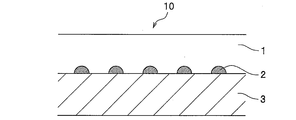
- FIG. 1 is a cross-sectional view of a fiber-reinforced resin 10 in which a catalyst 2 is supported on the surface of a fiber 3.
- the fiber reinforced resin 10 includes a resin 1 and fibers 3, and the catalyst 2 is supported on the surface of the fibers 3.
- the resin 1 has a dynamic covalent bond that reversibly dissociates and binds by an external stimulus (for example, heat or light).
- the catalyst 2 promotes dissociation and binding of the dynamic covalent bond.
- Dynamic covalent bonding is one that is capable of reversible dissociation-bonding by an external stimulus while being covalent bonding. And, in the fiber reinforced resin 10, a dynamic covalent bond is incorporated in the network structure of the resin 1. In the resin 1 having a dynamic covalent bond, the network structure is changed by the dynamic covalent bond. Therefore, when stress such as strain is generated in the resin 1, it is expected that the stress is relieved and the crack is suppressed.
- the resin 1 having a dynamic covalent bond includes an ester bond, an imine bond, a quaternary ammonium salt bond, an oxazoline bond, a spiroorthoester bond, a boric acid ester bond, a disulfide bond and the like.
- an epoxy resin etc. are mentioned, for example.
- an epoxy compound which has a polyfunctional epoxy group As a monomer which forms an ester bond at the time of hardening, it is preferable to consist of an epoxy compound which has a polyfunctional epoxy group, and carboxylic anhydride or polyvalent carboxylic acid as a hardening
- an epoxy compound bisphenol A type resin, novolak type resin, alicyclic resin, and glycidyl amine resin are preferable.
- epoxy examples include bisphenol A diglycidyl ether phenol, bisphenol F diglycidyl ether, bisphenol S diglycidyl ether, resorcinol diglycidyl ether, hexahydrobisphenol A diglycidyl ether, polypropylene glycol diglycidyl ether, neopentyl glycol diglycidyl ether Glycidyl ether, phthalic acid diglycidyl ester, dimer acid diglycidyl ester, triglycidyl isocyanurate, tetraglycidyl diaminodiphenylmethane, tetraglycidyl metaxylene diamine, cresol novolak polyglycidyl ether, tetrabromo bisphenol A diglycidyl ether, bisphenol hexafluoroacetone di Although glycidyl ether etc. are mentioned, this is The present invention is not limited to.
- the catalyst 2 be uniformly dispersed in a raw material solution (described later) of the fiber reinforced resin 10.
- a raw material solution for example, zinc (II) acetate, zinc (II) acetylacetonate, zinc (II) naphthenate, iron (III) acetylacetonate, cobalt (II) acetylacetonate, aluminum isopropoxy as the catalyst 2 for promoting the transesterification described above , Titanium isopropoxide, methoxide (triphenylphosphine) copper (I) complex, ethoxide (triphenylphosphine) copper (I) complex, propoxide (triphenylphosphine) copper (I) complex, isopropoxide (triphenyl) Phosphine) copper (I) complex, methoxide bis (triphenyl phosphine) copper (II) complex, ethoxide bis (triphenyl phosphine) copper (II
- the fibers 3 include inorganic fibers and organic fibers.
- inorganic fibers aramid fibers, glass fibers, asbestos fibers, carbon fibers, silica fibers, silica / alumina fibers, alumina fibers, zirconia fibers, potassium titanate fibers, tyranno fibers, silicon carbide fibers, metal fibers and the like can be mentioned.
- organic fibers high-strength polyethylene fibers, polyacetal fibers, aliphatic or aromatic polyamide fibers, polyacrylate fibers, fluorine fibers, boron fibers, polyacrylonitrile fibers, aramid fibers, PBO (poly-p-phenylene benzobisoxazole) And the like. These fibers can be used alone or in combination of two or more.
- Carbon fibers are preferable in terms of mechanical strength and the like.
- Carbon fibers can be classified into carbon fibers derived from synthetic polymers (polyacrylonitrile-based, polyvinyl alcohol-based, rayon-based carbon fibers and the like) and mineral-derived carbon fibers (pitch-based carbon fibers and the like) according to their raw materials.
- synthetic polymers polyacrylonitrile-based, polyvinyl alcohol-based, rayon-based carbon fibers and the like
- mineral-derived carbon fibers pitch-based carbon fibers and the like
- the catalyst 2 is localized at the bonding interface between the resin 1 and the fiber 3 (ie, the surface of the fiber 3), and reversible dissociation and bonding occur. That is, the stress generated at the interface between the resin 1 and the fiber 3 is relieved by the catalyst 2 promoting bond recombination and the functional group bonded to the dynamic covalent bond localized on the surface of the fiber 3 , Cracking and peeling are suppressed.
- FIG. 2 is a cross-sectional view of the fiber reinforced resin 20 in which the curing agent 4 is supported on the surface of the fiber 3.
- the catalyst 2 is supported in FIG. 1 described above, in the example shown in FIG. 2, the curing agent 4 for curing the resin 1 is supported on the surface of the fiber 3 instead of the catalyst 2. Also with such a configuration, the stress generated at the interface between the resin 1 and the fiber 2 is relaxed, and cracking and peeling are suppressed.
- Examples of the curing agent 4 include acid anhydrides and carboxylic acids. And carboxylic acid anhydrides and polyvalent carboxylic acids. Specifically, for example, phthalic anhydride, tetrahydrophthalic anhydride, hexahydrophthalic anhydride, methyltetrahydrophthalic anhydride, 3-dodecenyl succinic anhydride, octenyl succinic anhydride, methyl hexahydrophthalic anhydride, methyl nadic anhydride , Dodecyl succinic anhydride, chlorendic anhydride, pyromellitic anhydride, benzophenone tetracarboxylic acid anhydride, ethylene glycol bis (anhydrotrimate), methylcyclohexene tetracarboxylic acid anhydride, trimellitic acid anhydride, polyazelaic acid Anhydrides, ethylene glycol bisanhydrotrimellitate, 1,2,3,4-buta
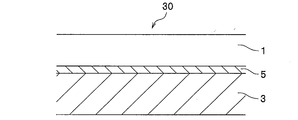
- FIG. 3 is a cross-sectional view of the fiber reinforced resin 20 in which neither the catalyst 2 nor the curing agent 4 is supported on the surface of the fiber 3. That is, the fiber reinforced resin 30 includes the resin 1 and the fibers 3 and, at the bonding interface between the resin 1 and the fibers 3, there is a stress concentration portion 5 where stress is concentrated when stress is applied.
- the stress concentration site 5 is present as a part of the resin 1. Therefore, if the stress concentration site 5 exists in a part of the resin 1, the resin 1 is uniformly configured, so that cracking or peeling occurs between the stress concentration site 5 and the fiber 3. Become.
- the fiber reinforced resin comprises at least one of a monomer which forms a dynamic covalent bond upon curing, and a monomer having a structure including a dynamic covalent bond and capable of forming a crosslinked structure (a mixture in which both are mixed) May be obtained by using That is, by bringing a fiber into contact with an organic solution in which at least one of a catalyst and a curing agent (hereinafter referred to as a catalyst or the like) is dispersed and drying it, a catalyst or the like is supported on the surface of the fiber;
- a fiber reinforced resin can be obtained by passing through a resin contact curing step in which a solution of the resin is brought into contact with the fiber having a catalyst or the like loaded on the surface obtained through the loading step and then cured.
- a fiber reinforced resin is obtained by impregnating the above-mentioned monomer, the above-mentioned fiber which carried the above-mentioned catalyst or the above-mentioned hardening agent (both may be sufficient) on the surface, and hardening it by heating etc. It can also be obtained by impregnating fibers with a mixture containing the above-mentioned monomers and a catalyst or curing agent, and heating and curing. Incidentally, although the curing time and the curing temperature vary depending on their types, it is preferable to adjust them appropriately according to the application.
- the fiber-reinforced resin obtained after curing has a dynamic covalent bond inside and has a catalyst that promotes recombination of the dynamic supply bond (in the case of the above-mentioned fiber-reinforced catalyst 10).
- This catalyst causes an exchange reaction.
- the chemical reaction formula of transesterification which is one of the dynamic covalent bonds, is shown below.
- R, R ′ and R ′ ′ represent arbitrary chemical structures.
- a catalyst or the like is supported on the surface of the fiber.
- the method of supporting the catalyst etc. on the fiber surface is not particularly limited, but for example, a method of immersing a solution such as the catalyst in the fiber and drying it, and a method of oxidizing the fiber surface and chemically bonding the catalyst etc.
- the solvent used in the solution can be optionally selected according to the type of the catalyst used, for example, alcohols, ketones, ethers, hydrocarbons , Cellosolves, amides, sulfoxides, nitriles, nitro compounds, organic acids and the like. These solvents can be used alone or in combination of two or more.
- the fiber is oxidized using ozone, UV etc, and the structure of the catalyst etc. is obtained.
- the method of chemically bonding the surface by the coupling agent is applicable.
- a coupling agent an imidazole silane coupling agent etc. are mentioned, for example.
- Example 1 A carbon fiber (CO6343 manufactured by Toray Industries, Inc.) is immersed in 1 mol / L of an ethyl acetate solution in which zinc (II) acetylacetonate (manufactured by Wako Pure Chemical Industries, Ltd.) is dissolved as a catalyst, and then 24 at 40 ° C. Let dry for hours. Thus, the catalyst was supported on the surface of the carbon fiber.
- the temperature of the obtained test piece is raised from -50 ° C. to 150 ° C. at a rate of 5 ° C./min using a temperature cycle tester, and then from 150 ° C. to -50 ° C. at a rate of 5 ° C./min It cooled down.
- the above cycle was regarded as one cycle, and the cross section of the adhesive interface between the resin and the fiber was observed by X-ray CT for the test piece after 10 cycles in total. As a result, the resin and the fiber were sufficiently adhered, and no peeling of the resin was observed at these interfaces.
- Example 2 A carbon fiber (CO6343 manufactured by Toray Industries, Inc.) was immersed in 1 mol / L of an ethyl acetate solution in which a curing agent (HN-2200 manufactured by Hitachi Chemical Co., Ltd.) was dissolved, and then dried at 40 ° C. for 24 hours. Thus, the curing agent was supported on the surface of the carbon fiber. Next, 0.5 mol equivalent of a curing agent (HN-2200 manufactured by Hitachi Chemical Co., Ltd.) with respect to an epoxy resin (jER 828 manufactured by Mitsubishi Chemical Co., Ltd.), zinc (II) acetylacetonate (manufactured by Wako Pure Chemical Industries, Ltd.) 0 as a catalyst.
- a curing agent HN-2200 manufactured by Hitachi Chemical Co., Ltd.
- an epoxy resin jER 828 manufactured by Mitsubishi Chemical Co., Ltd.
- zinc (II) acetylacetonate manufactured by Wako Pure Chemical Industries, Ltd.
- support a hardening agent was obtained by the above operation.
- test pieces were subjected to a temperature cycle test in the same manner as in Example 1 above, and the cross section of the adhesive interface between the resin and the fiber after 10 cycles was observed by X-ray CT. As a result, the resin and the fiber were sufficiently adhered, and no peeling of the resin was observed at these interfaces.
- Example 3 A carbon fiber (Toray Industries CO6343) was immersed in 1 mol / L of an ethyl acetate solution in which bis ( ⁇ -epithiopropyl) disulfide was dissolved as a curing agent, and then dried at 40 ° C. for 24 hours. Thus, the curing agent was supported on the surface of the carbon fiber.
- test pieces were subjected to a temperature cycle test in the same manner as in Example 1 above, and the cross section of the adhesive interface between the resin and the fiber after 10 cycles was observed by X-ray CT. As a result, the resin and the fiber were sufficiently adhered, and no peeling of the resin was observed at these interfaces.
- Example 4 A glass fiber (WFT110D100BS6 manufactured by NITTOBO CO., LTD.) was immersed in 1 mol / L of an ethyl acetate solution in which zinc (II) acetylacetonate (manufactured by Wako Pure Chemical Industries, Ltd.) was dissolved as a catalyst and then dried at 40 ° C for 24 hours . Thus, the catalyst was supported on the surface of the carbon fiber.
- zinc (II) acetylacetonate manufactured by Wako Pure Chemical Industries, Ltd.
- test pieces were subjected to a temperature cycle test in the same manner as in Example 1 above, and the cross section of the adhesive interface between the resin and the fiber after 10 cycles was observed by X-ray CT. As a result, the resin and the fiber were sufficiently adhered, and no peeling of the resin was observed at these interfaces.
- test pieces were subjected to a temperature cycle test in the same manner as in Example 1 above, and the cross section of the adhesive interface between the resin and the fiber after 10 cycles was observed by X-ray CT. As a result, it was confirmed that peeling occurred at the interface between the resin and the fiber.
- test pieces were subjected to a temperature cycle test in the same manner as in Example 1 above, and the cross section of the adhesive interface between the resin and the fiber after 10 cycles was observed by X-ray CT. As a result, it was confirmed that peeling occurred at the interface between the resin and the fiber.
Landscapes
- Chemical & Material Sciences (AREA)
- Engineering & Computer Science (AREA)
- Materials Engineering (AREA)
- Chemical Kinetics & Catalysis (AREA)
- Organic Chemistry (AREA)
- Health & Medical Sciences (AREA)
- Medicinal Chemistry (AREA)
- Polymers & Plastics (AREA)
- Manufacturing & Machinery (AREA)
- Textile Engineering (AREA)
- Nanotechnology (AREA)
- Inorganic Chemistry (AREA)
- Reinforced Plastic Materials (AREA)
- Treatments For Attaching Organic Compounds To Fibrous Goods (AREA)
Abstract
樹脂(1)は、外部刺激により可逆的に解離及び結合する動的共有結合を有し、繊維(3)の表面には、前記動的共有結合の解離及び結合を促進させる触媒(2)が担持されている繊維強化樹脂(10)とする。繊維強化樹脂(10)は、触媒(2)を分散させた有機溶液に繊維(3)を接触させた後に乾燥させることで、繊維(3)の表面に触媒(2)を担持させる担持工程と、当該担持工程を経て得られた、表面に触媒(2)を担持した繊維(3)に対し、樹脂(1)の溶液を接触させた後に硬化させる樹脂接触硬化工程と、を経ることで得られる。
Description
本発明は、繊維強化樹脂及びその製造方法に関する。
樹脂を繊維で強化した繊維強化樹脂は、軽量でありながら、強度、弾性率に優れるため、自動車、鉄道、航空機、建築部材等の多くの分野に用いられている。その多くは、熱硬化性樹脂とガラス繊維又は炭素繊維とを複合した熱硬化性の繊維強化樹脂である。しかしながら、この繊維強化樹脂は、繊維-樹脂間のような異種の材料間での接合面を有する。そのため、繊維強化樹脂において、温度変化による熱膨張及び熱収縮が生じた場合、材料毎の膨張率の違いにより歪みが生じる。そして、ゆがみが生じる結果、接着界面においてクラックや剥離が生じ、繊維強化樹脂の信頼性が低下する。そこで、信頼性の高い繊維強化樹脂が求められている。
繊維強化樹脂において、クラックや剥離を抑制するには、繊維と樹脂との接着性が優れることが好ましい。繊維と樹脂との界面接着性を向上させるため、通常、繊維に気相酸化や液相酸化等の酸化処理を施し、繊維表面に酸素含有官能基を導入する方法が行われる。この方法に関して、特許文献1には、ストランド弾性率が30t/mm2以上であり、かつ、X線光電子分光法により測定される炭素繊維の表面酸素濃度O/Cが0.20以下であり、かつ、O/Cと化学修飾X線光電子分光法により測定される炭素繊維の表面水酸基濃度指数S及び表面カルボキシル基濃度指数Kが所定の式を満足する炭素繊維が記載されている。
ところで、近年、繊維強化樹脂の要求特性が向上し、酸化処理等で達成できる界面接着性では応力を緩和できず、クラックや剥離を防止する技術としては不十分である。そのため、従来の技術では、特にクラックや剥離抑制を目的とした場合に、繊維と樹脂との界面接着性は十分とはいえない。
本発明はこのような課題に鑑みて為されたものであり、本発明が解決しようとする課題は、繊維と樹脂との界面接着性を従来よりも高めた繊維強化樹脂及びその製造方法を提供することである。
本発明者らは前記課題を解決するために鋭意検討を行った結果、以下の知見を見出して本発明を完成させた。即ち、本発明の要旨は、樹脂と繊維とを複合化した繊維強化樹脂であって、前記樹脂は、外部刺激により可逆的に解離及び結合する動的共有結合を有し、前記繊維の表面には、前記動的共有結合の解離及び結合を促進させる触媒、及び、前記樹脂の硬化剤、のうちの少なくとも一方が担持されていることを特徴とする、繊維強化樹脂に関する。その他の解決手段は発明を実施するための形態において後記する。
本発明によれば、繊維と樹脂との界面接着性を従来よりも高めた繊維強化樹脂及びその製造方法を提供することができる。
以下、図面を適宜参照して、本発明を実施するための形態(本実施形態)を説明する。
図1は、繊維3の表面に触媒2を担持させた繊維強化樹脂10の断面図である。図1に示すように、繊維強化樹脂10は、樹脂1と繊維3とを備え、繊維3の表面に触媒2が担持される。樹脂1は、外部刺激(例えば熱や光)により可逆的に解離及び結合する動的共有結合を有する。そして、触媒2は、動的共有結合の解離及び結合を促進させるものである。
動的共有結合は、共有結合でありながら、外部刺激により可逆的な解離-結合が可能なものである。そして、繊維強化樹脂10では、動的共有結合が樹脂1のネットワーク構造に組み込まれている。動的共有結合を有する樹脂1では、ネットワーク構造が動的共有結合により変化する。そのため、樹脂1に歪等の応力が生じたときに、その応力を緩和し、クラックを抑制することが期待される。
動的共有結合を有する樹脂1としては、エステル結合、イミン結合、四級アンモニウム塩結合、オキサゾリン結合、スピロオルトエステル結合、ほう酸エステル結合、ジスルフィルド結合等が挙げられる。具体的には例えばエポキシ樹脂等が挙げられる。中でも、機械的強度の観点から、硬化時にエステル結合を形成するモノマー、あるいはモノマー骨格としてエステル結合を含む構造を有することが望ましい。
硬化時にエステル結合を形成するモノマーとしては、多官能のエポキシ基を有するエポキシ化合物、及び、硬化剤としてカルボン酸無水物、あるいは多価カルボン酸から成ることが好ましい。さらに、エポキシ化合物としては、ビスフェノールA型樹脂、ノボラック型樹脂、脂環式樹脂、グリシジルアミン樹脂が好ましい。
エポキシの例としては、ビスフェノールAジグリシジルエーテルフェノール、ビスフェノールFジグリシジルエーテル、ビスフェノールSジグリシジルエーテル、レゾシノールジグリシジルエーテル、ヘキサヒドロビスフェノールAジグリシジルエーテル、ポリプロピレングリコールジグリシジルエーテル、ネオペンチルグリコールジグリシジルエーテル、フタル酸ジグリシジルエステル、ダイマー酸ジグリシジルエステル、トリグリシジルイソシアヌレート、テトラグリシジルジアミノジフェニルメタン、テトラグリシジルメタキシレンジアミン、クレゾールノボラックポリグリシジルエーテル、テトラブロムビスフェノールAジグリシジルエーテル、ビスフェノールヘキサフロロアセトンジグリシジルエーテル等が挙げられるが、これらに限定されるものではない。
触媒2としては、繊維強化樹脂10の原料溶液(後記する)に均一に分散するものであることが好ましい。例えば、前記のエステル交換反応を促進する触媒2として、酢酸亜鉛(II)、亜鉛(II)アセチルアセトナート、ナフテン酸亜鉛(II)、アセチルアセトン鉄(III)、アセチルアセトンコバルト(II)、アルミニウムイソプロポキシド、チタニウムイソプロポキシド、メトキシド(トリフェニルホスフィン)銅(I)錯体、エトキシド(トリフェニルホスフィン)銅(I)錯体、プロポキシド(トリフェニルホスフィン)銅(I)錯体、イソプロポキシド(トリフェニルホスフィン)銅(I)錯体、メトキシドビス(トリフェニルホスフィン)銅(II)錯体、エトキシドビス(トリフェニルホスフィン)銅(II)錯体、プロポキシドビス(トリフェニルホスフィン)銅(II)錯体、イソプロポキシドビス(トリフェニルホスフィン)銅(II)錯体、トリス(2,4-ペンタンジオナト)コバルト(III)、二酢酸すず(II)、ジ(2-エチルヘキサン酸)すず(II)、N,N-ジメチル-4-アミノピリジン、ジアザビシクロウンデセン、ジアザビシクロノネン、トリアザビシクロデセン、トリフェニルホスフィン等が挙げられるが、これらに限定されるものではない。
繊維3としては、例えば、無機繊維及び有機繊維が挙げられる。例えば無機繊維として、アラミド繊維、ガラス繊維、アスベスト繊維、炭素繊維、シリカ繊維、シリカ・アルミナ繊維、アルミナ繊維、ジルコニア繊維、チタン酸カリウム繊維、チラノ繊維、炭化ケイ素繊維、金属繊維等が挙げられる。また、例えば有機繊維として、高強度ポリエチレン繊維、ポリアセタール繊維、脂肪族又は芳香族ポリアミド繊維、ポリアクリレート繊維、フッ素繊維、ボロン繊維、ポリアクリロニトリル繊維、アラミド繊維、PBO(ポリ-p-フェニレンベンゾビスオキサゾール)繊維等が挙げられる。これらの繊維は、単独又は二種以上組み合わせて使用できる。
これらの繊維3のうち、機械的強度等の点から、有機繊維、特に炭素繊維が好ましい。炭素繊維は、その原料により、合成高分子由来の炭素繊維(ポリアクリロニトリル系、ポリビニルアルコール系、レーヨン系炭素繊維等)と、鉱物由来の炭素繊維(ピッチ系炭素繊維等)とに分類できる。これらのうち、機械的強度の観点から合成高分子由来の炭素繊維が好ましい。
繊維強化樹脂10では、樹脂1と繊維3の接着界面(即ち繊維3の表面)で触媒2が局在化しており、可逆的な解離及び結合が発現する。つまり、結合の組み換えを促進する触媒2、及び、動的共有結合に結合した官能基が繊維3の表面に局在化することで、樹脂1と繊維3との界面で発生する応力を緩和し、クラックや剥離が抑制される。
図2は、繊維3の表面に硬化剤4を担持させた繊維強化樹脂20の断面図である。前記の図1では触媒2が担持されていたが、この図2に示す例では、触媒2に代えて、樹脂1を硬化させる硬化剤4が繊維3の表面に担持されている。このような構成によっても、樹脂1と繊維2との界面で発生する応力を緩和し、クラックや剥離が抑制される。
硬化剤4としては、酸無水物、カルボン酸等が挙げられる。カルボン酸無水物、多価カルボン酸等である。具体的には、例えば、無水フタル酸、テトラヒドロ無水フタル酸、ヘキサヒドロ無水フタル酸、メチルテトラヒドロ無水フタル酸、3-ドデセニル無水コハク酸、オクテニルコハク酸無水物、メチルヘキサヒドロ無水フタル酸、無水メチルナジック酸、ドデシル無水コハク酸、無水クロレンディック酸、無水ピロメリット酸、ベンゾフェノンテトラカルボン酸無水物、エチレングリコールビス(アンヒドロトリメート)、メチルシクロヘキセンテトラカルボン酸無水物、無水トリメリット酸、ポリアゼライン酸無水物、エチレングリコール ビスアンヒドロトリメリテート、1,2,3,4-ブタンテトラカルボン酸、4-シクロヘキセン-1,2-ジカルボン酸、多価脂肪酸等が挙げられるが、これらに限定されるものではない。なお、硬化剤4とともに、前記の触媒2が併用されてもよい。
図3は、繊維3の表面に触媒2及び硬化剤4のいずれも担持させていない繊維強化樹脂20の断面図である。即ち、繊維強化樹脂30は、樹脂1及び繊維3を備えるほか、樹脂1と繊維3との接着界面には、応力がかかった際に応力が集中する応力集中部位5が存在する。なお、この応力集中部位5は、樹脂1の一部として存在するものである。従って、樹脂1の一部に応力集中部位5が存在すれば、樹脂1は一様に構成されていることから、この応力集中部位5と繊維3との間で、クラックや剥離が生じることになる。
次に、本実施形態の繊維強化樹脂の製造方法を説明する。
繊維強化樹脂は、硬化時に動的共有結合を形成するモノマー、及び、動的共有結合を含む構造を有し、かつ、架橋構造を形成可能なモノマー、のうちの少なくとも一方(双方を混合した混合物でもよい)を使用することで得られる。即ち、触媒及び硬化剤のうちの少なくとも一方(以下、触媒等という)を分散させた有機溶液に繊維を接触させた後に乾燥させることで、繊維の表面に触媒等を担持させる担持工程と、当該担持工程を経て得られた表面に触媒等を担持した前記繊維に対し、前記樹脂の溶液を接触させた後に硬化させる樹脂接触硬化工程とを経ることで、繊維強化樹脂が得られる。
より具体的な方法としては、繊維強化樹脂は、前記のモノマーを、前記触媒又は前記硬化剤(双方でもよい)を表面に担持した前記繊維に含浸させ、加熱等により硬化することで得られる。また、前記のモノマーと触媒又は硬化剤とを含む混合物を繊維に含浸させ、加熱し硬化させることでも得られる。ちなみに、硬化時間及び硬化温度は、それらの種類によっても異なるが、用途に応じて適宜調整することが好ましい。
硬化後に得られた繊維強化樹脂は、内部に動的共有結合を有し、かつ、その動的供給結合の組み換えを促進する触媒を有する(前記の繊維強化触媒10の場合)。この触媒により、交換反応が生じる。例として以下に、動的共有結合の一つであるエステル交換反応の化学反応式を示す。なお、この化学反応式において、R、R’及びR’’は任意の化学構造を表す。

また、前記のように、本実施形態の繊維強化樹脂においては、繊維の表面に触媒等が担持される。繊維表面への触媒等の担持方法は特に制限されないが、例えば、触媒等の溶液を繊維に浸漬させ、乾燥させる方法や、繊維表面を酸化処理し、触媒等を化学的に結合させる方法が挙げられる。
触媒等の溶液を繊維に浸漬させ、乾燥させる方法において、溶液に使用される溶媒としては、使用する触媒等の種類に応じて任意に選択でき、例えばアルコール類、ケトン類、エーテル類、炭化水素類、セロソルブ類、アミド類、スルホキシド類、ニトリル類、ニトロ化合物、有機酸類等が挙げられる。これらの溶媒は、単独又は二種以上組み合わせて使用できる。
また、繊維表面を酸化処理し、触媒等を化学的に結合させる方法において、酸化処理の具体的な方法としては、繊維をオゾン、UV等を用いて表面を酸化させ、触媒等の構造を有するカップリング剤により、表面を化学的に結合させる方法が適用可能である。このようなカップリング剤としては、例えばイミダゾールシランカップリング剤等が挙げられる。
以下、実施例を挙げて本発明をさらに具体的に説明する。
<実施例1> 炭素繊維(東レ社製CO6343)を、触媒として亜鉛(II)アセチルアセトナート(和光純薬社製)を溶解させた酢酸エチル溶液1mol/Lに浸した後、40℃で24時間乾燥させた。これにより、炭素繊維の表面に触媒を担持させた。次いで、エポキシ樹脂(三菱ケミカル社製jER828)に対し、硬化剤(日立化成社製HN-2200)0.5モル等量、触媒として亜鉛(II)アセチルアセトナート(和光純薬社製)0.1モル等量を加え、大気中にて攪拌及び混合した。そして、この溶液を、触媒を担持した前記の炭素繊維に真空中で含浸させ、120℃で12時間加熱し、混合物を硬化させた。以上の操作により、繊維表面に触媒を担持させた樹脂としての繊維強化樹脂の試験片を得た。
得られた試験片について、温度サイクル試験機を用いて、-50℃から150℃まで、5℃/分の速度で昇温した後、150℃から-50℃まで、5℃/分の速度で降温した。以上のサイクルを1サイクルとし、合計で10サイクル後の試験片について、樹脂と繊維との接着界面の断面をX線CTで観察した。その結果、樹脂と繊維とは十分に接着しており、これらの界面での樹脂の剥離は認められなかった。
<実施例2>
炭素繊維(東レ社製CO6343)を、硬化剤(日立化成社製HN-2200)を溶解させた酢酸エチル溶液1mol/Lに浸した後、40℃で24時間乾燥させた。これにより、炭素繊維の表面に硬化剤を担持させた。次いで、エポキシ樹脂(三菱ケミカル社製jER828)に対し、硬化剤(日立化成社製HN-2200)0.5モル等量、触媒として亜鉛(II)アセチルアセトナート(和光純薬社製)0.1モル等量を加え、大気中にて攪拌及び混合した。そして、この溶液を、触媒を担持した前記の炭素繊維に真空中で含浸させ、120℃で12時間加熱し、混合物を硬化させた。以上の操作により、繊維表面に硬化剤を担持させた樹脂としての繊維強化樹脂の試験片を得た。
炭素繊維(東レ社製CO6343)を、硬化剤(日立化成社製HN-2200)を溶解させた酢酸エチル溶液1mol/Lに浸した後、40℃で24時間乾燥させた。これにより、炭素繊維の表面に硬化剤を担持させた。次いで、エポキシ樹脂(三菱ケミカル社製jER828)に対し、硬化剤(日立化成社製HN-2200)0.5モル等量、触媒として亜鉛(II)アセチルアセトナート(和光純薬社製)0.1モル等量を加え、大気中にて攪拌及び混合した。そして、この溶液を、触媒を担持した前記の炭素繊維に真空中で含浸させ、120℃で12時間加熱し、混合物を硬化させた。以上の操作により、繊維表面に硬化剤を担持させた樹脂としての繊維強化樹脂の試験片を得た。
得られた試験片について、前記の実施例1と同様にして温度サイクル試験を行い、10サイクル後の樹脂と繊維との接着界面の断面をX線CTで観察した。その結果、樹脂と繊維とは十分に接着しており、これらの界面での樹脂の剥離は認められなかった。
<実施例3>
炭素繊維(東レ社製CO6343)を、硬化剤としてビス(β-エピチオプロピル)ジスルフィドを溶解させた酢酸エチル溶液1mol/Lに浸した後、40℃で24時間乾燥させた。これにより、炭素繊維の表面に硬化剤を担持させた。次いで、エポキシ樹脂(三菱ケミカル社製jER828)に対し、硬化剤としてビス(β-エピチオプロピル)ジスルフィド0.5モル等量、触媒として亜鉛(II)アセチルアセトナート(和光純薬社製)0.1モル等量を加え、大気中にて攪拌及び混合した。そして、この溶液を、触媒を担持した前記の炭素繊維に真空中で含浸させ、120℃で12時間加熱し、混合物を硬化させた。以上の操作により、繊維表面に硬化剤を担持させた樹脂としての繊維強化樹脂の試験片を得た。
炭素繊維(東レ社製CO6343)を、硬化剤としてビス(β-エピチオプロピル)ジスルフィドを溶解させた酢酸エチル溶液1mol/Lに浸した後、40℃で24時間乾燥させた。これにより、炭素繊維の表面に硬化剤を担持させた。次いで、エポキシ樹脂(三菱ケミカル社製jER828)に対し、硬化剤としてビス(β-エピチオプロピル)ジスルフィド0.5モル等量、触媒として亜鉛(II)アセチルアセトナート(和光純薬社製)0.1モル等量を加え、大気中にて攪拌及び混合した。そして、この溶液を、触媒を担持した前記の炭素繊維に真空中で含浸させ、120℃で12時間加熱し、混合物を硬化させた。以上の操作により、繊維表面に硬化剤を担持させた樹脂としての繊維強化樹脂の試験片を得た。
得られた試験片について、前記の実施例1と同様にして温度サイクル試験を行い、10サイクル後の樹脂と繊維との接着界面の断面をX線CTで観察した。その結果、樹脂と繊維とは十分に接着しており、これらの界面での樹脂の剥離は認められなかった。
<実施例4>
ガラス繊維(日東紡社製WF110D100BS6)を、触媒として亜鉛(II)アセチルアセトナート(和光純薬社製)を溶解させた酢酸エチル溶液1mol/Lに浸した後、40℃で24時間乾燥させた。これにより、炭素繊維の表面に触媒を担持させた。次いで、エポキシ樹脂(三菱ケミカル社製jER828)に対し、硬化剤(日立化成社製HN-2200)0.5モル等量、触媒として亜鉛(II)アセチルアセトナート(和光純薬社製)0.1モル等量を加え、大気中にて攪拌及び混合した。そして、この溶液を、触媒を担持した前記の炭素繊維に真空中で含浸させ、120℃で12時間加熱し、混合物を硬化させた。以上の操作により、繊維表面に硬化剤を担持させた樹脂としての繊維強化樹脂の試験片を得た。
ガラス繊維(日東紡社製WF110D100BS6)を、触媒として亜鉛(II)アセチルアセトナート(和光純薬社製)を溶解させた酢酸エチル溶液1mol/Lに浸した後、40℃で24時間乾燥させた。これにより、炭素繊維の表面に触媒を担持させた。次いで、エポキシ樹脂(三菱ケミカル社製jER828)に対し、硬化剤(日立化成社製HN-2200)0.5モル等量、触媒として亜鉛(II)アセチルアセトナート(和光純薬社製)0.1モル等量を加え、大気中にて攪拌及び混合した。そして、この溶液を、触媒を担持した前記の炭素繊維に真空中で含浸させ、120℃で12時間加熱し、混合物を硬化させた。以上の操作により、繊維表面に硬化剤を担持させた樹脂としての繊維強化樹脂の試験片を得た。
得られた試験片について、前記の実施例1と同様にして温度サイクル試験を行い、10サイクル後の樹脂と繊維との接着界面の断面をX線CTで観察した。その結果、樹脂と繊維とは十分に接着しており、これらの界面での樹脂の剥離は認められなかった。
<比較例1>
エポキシ樹脂(三菱ケミカル社製jER828)に対し、硬化剤(日立化成社製HN-2200)0.5モル等量、触媒として亜鉛(II)アセチルアセトナート(和光純薬社製)0.1モル等量を加え、大気中にて攪拌及び混合した。得られた溶液を炭素繊維(東レ社製CO6343)に真空中で含浸させ、120℃で12時間加熱し、混合物を硬化させた。以上の操作により、繊維表面に触媒を担持させた樹脂としての繊維強化樹脂の試験片を得た。
エポキシ樹脂(三菱ケミカル社製jER828)に対し、硬化剤(日立化成社製HN-2200)0.5モル等量、触媒として亜鉛(II)アセチルアセトナート(和光純薬社製)0.1モル等量を加え、大気中にて攪拌及び混合した。得られた溶液を炭素繊維(東レ社製CO6343)に真空中で含浸させ、120℃で12時間加熱し、混合物を硬化させた。以上の操作により、繊維表面に触媒を担持させた樹脂としての繊維強化樹脂の試験片を得た。
得られた試験片について、前記の実施例1と同様にして温度サイクル試験を行い、10サイクル後の樹脂と繊維との接着界面の断面をX線CTで観察した。その結果、樹脂と繊維との界面で剥離が生じていることが確認された。
<比較例2>
エポキシ樹脂(三菱ケミカル社製jER828)に対し、硬化剤(日立化成社製HN-2200)0.5モル等量、触媒として亜鉛(II)アセチルアセトナート(和光純薬社製)0.1モル等量を加え、大気中にて攪拌及び混合した。得られた溶液をガラス繊維(日東紡社製WF110D100BS6)に真空中で含浸させ、120℃で12時間加熱し、混合物を硬化させた。以上の操作により、繊維表面に触媒を担持させた樹脂としての繊維強化樹脂の試験片を得た。
エポキシ樹脂(三菱ケミカル社製jER828)に対し、硬化剤(日立化成社製HN-2200)0.5モル等量、触媒として亜鉛(II)アセチルアセトナート(和光純薬社製)0.1モル等量を加え、大気中にて攪拌及び混合した。得られた溶液をガラス繊維(日東紡社製WF110D100BS6)に真空中で含浸させ、120℃で12時間加熱し、混合物を硬化させた。以上の操作により、繊維表面に触媒を担持させた樹脂としての繊維強化樹脂の試験片を得た。
得られた試験片について、前記の実施例1と同様にして温度サイクル試験を行い、10サイクル後の樹脂と繊維との接着界面の断面をX線CTで観察した。その結果、樹脂と繊維との界面で剥離が生じていることが確認された。
<まとめ>
以上の結果から、実施例1~4で作製した繊維強化樹脂においては、樹脂と繊維との界面での剥離は生じなかった。そのため、本発明によれば、繊維と樹脂との界面接着性を従来よりも高めた繊維強化樹脂及びその製造方法を提供することができる。
以上の結果から、実施例1~4で作製した繊維強化樹脂においては、樹脂と繊維との界面での剥離は生じなかった。そのため、本発明によれば、繊維と樹脂との界面接着性を従来よりも高めた繊維強化樹脂及びその製造方法を提供することができる。
1 樹脂
2 触媒
3 繊維
4 硬化剤
5 応力集中部位
10,20,30 繊維強化樹脂
2 触媒
3 繊維
4 硬化剤
5 応力集中部位
10,20,30 繊維強化樹脂
Claims (4)
- 樹脂を繊維で強化した繊維強化樹脂であって、
前記樹脂は、外部刺激により可逆的に解離及び結合する動的共有結合を有し、
前記繊維の表面には、前記動的共有結合の解離及び結合を促進させる触媒、及び、前記樹脂の硬化剤、のうちの少なくとも一方が担持されていることを特徴とする、繊維強化樹脂。 - 前記繊維は、アラミド繊維、ガラス繊維、及び炭素繊維からなる群より選ばれる少なくとも一種であることを特徴とする、請求項1に記載の繊維強化樹脂。
- 前記繊維の表面には前記硬化剤が担持され、
前記硬化剤は、酸無水物、及び、カルボン酸のうちの少なくとも一方であることを特徴とする、請求項1又は2に記載の繊維強化樹脂。 - 請求項1又は2に記載の繊維強化樹脂を製造する方法であって、
前記触媒及び前記硬化剤のうちの少なくとも一方を分散させた有機溶液に前記繊維を接触させた後に乾燥させることで、前記繊維の表面に前記触媒及び前記硬化剤のうちの少なくとも一方を担持させる担持工程と、
当該担持工程を経て得られた、表面に前記触媒及び前記硬化剤のうちの少なくとも一方を担持した前記繊維に対し、前記樹脂の溶液を接触させた後に硬化させる樹脂接触硬化工程と、を含むことを特徴とする、繊維強化樹脂の製造方法。
Priority Applications (2)
| Application Number | Priority Date | Filing Date | Title |
|---|---|---|---|
| CN201880049426.2A CN110945060B (zh) | 2017-08-01 | 2018-03-16 | 纤维增强树脂及其制造方法 |
| EP18840668.0A EP3663334B1 (en) | 2017-08-01 | 2018-03-16 | Fiber-reinforced resin and method for manufacturing same |
Applications Claiming Priority (2)
| Application Number | Priority Date | Filing Date | Title |
|---|---|---|---|
| JP2017-149426 | 2017-08-01 | ||
| JP2017149426A JP6942000B2 (ja) | 2017-08-01 | 2017-08-01 | 繊維強化樹脂及びその製造方法 |
Publications (1)
| Publication Number | Publication Date |
|---|---|
| WO2019026328A1 true WO2019026328A1 (ja) | 2019-02-07 |
Family
ID=65232483
Family Applications (1)
| Application Number | Title | Priority Date | Filing Date |
|---|---|---|---|
| PCT/JP2018/010427 Ceased WO2019026328A1 (ja) | 2017-08-01 | 2018-03-16 | 繊維強化樹脂及びその製造方法 |
Country Status (4)
| Country | Link |
|---|---|
| EP (1) | EP3663334B1 (ja) |
| JP (1) | JP6942000B2 (ja) |
| CN (1) | CN110945060B (ja) |
| WO (1) | WO2019026328A1 (ja) |
Families Citing this family (2)
| Publication number | Priority date | Publication date | Assignee | Title |
|---|---|---|---|---|
| JP7570892B2 (ja) * | 2020-11-10 | 2024-10-22 | 株式会社日立製作所 | 樹脂組成物、樹脂硬化物及び繊維強化樹脂 |
| JP7759193B2 (ja) * | 2021-05-11 | 2025-10-23 | 株式会社日立製作所 | 樹脂複合体、樹脂複合体の製造方法、及び樹脂複合体の解体方法 |
Citations (8)
| Publication number | Priority date | Publication date | Assignee | Title |
|---|---|---|---|---|
| JPH04361619A (ja) | 1991-06-04 | 1992-12-15 | Toray Ind Inc | 炭素繊維及びその製造方法 |
| US20100075134A1 (en) * | 2008-08-19 | 2010-03-25 | The Board Of Trustees Of The University Of Illinois | Interfacial Functionalization For Self-Healing Composites |
| US20130059988A1 (en) * | 2010-05-19 | 2013-03-07 | Drexel University | Remendable interfaces for polymer composites |
| JP2014503670A (ja) * | 2011-01-24 | 2014-02-13 | サントル・ナシヨナル・ド・ラ・ルシエルシユ・シヤンテイフイク | 加熱成形可能で、リサイクル可能な無水エポキシ熱硬化性樹脂および熱硬化性組成物 |
| JP2015516994A (ja) * | 2012-03-07 | 2015-06-18 | ザ リージェンツ オブ ザ ユニバーシティ オブ カリフォルニアThe Regents Of The University Of California | 多機能性動的ナノコンポジットを得るためのバイオインスパイアード方法 |
| JP2015214661A (ja) * | 2014-05-13 | 2015-12-03 | 株式会社日立製作所 | 樹脂、風力発電用ブレード、電子部品、モータコイル及びケーブル |
| JP2017512244A (ja) * | 2014-03-12 | 2017-05-18 | ザ リージェンツ オブ ザ ユニバーシティ オブ コロラド,ア ボディー コーポレイトTHE REGENTS OF THE UNIVERSITY OF COLORADO,a body corporate | 共有結合で架橋された可鍛性ポリマーおよび使用方法 |
| JP2017088739A (ja) * | 2015-11-11 | 2017-05-25 | 株式会社日立製作所 | 複合体、電気機器、モータ、変圧器、構造体、移動体及び複合体の製造方法 |
Family Cites Families (4)
| Publication number | Priority date | Publication date | Assignee | Title |
|---|---|---|---|---|
| JP5733301B2 (ja) * | 2011-01-27 | 2015-06-10 | 東レ株式会社 | 繊維強化複合材料rtm成形用エポキシ樹脂組成物、繊維強化複合材料およびその製造方法 |
| CN102558591B (zh) * | 2011-12-22 | 2014-05-07 | 中国科学院宁波材料技术与工程研究所 | 纤维增强pcbt热塑性复合材料电动车底板的制备方法 |
| US10829612B2 (en) * | 2016-07-01 | 2020-11-10 | Georgia Tech Research Corporation | Methods of recycling and reshaping thermosetting polymers and composites thereof |
| JP2019025841A (ja) * | 2017-08-01 | 2019-02-21 | 株式会社日立製作所 | 繊維強化樹脂複合体及びその製造装置 |
-
2017
- 2017-08-01 JP JP2017149426A patent/JP6942000B2/ja active Active
-
2018
- 2018-03-16 EP EP18840668.0A patent/EP3663334B1/en active Active
- 2018-03-16 WO PCT/JP2018/010427 patent/WO2019026328A1/ja not_active Ceased
- 2018-03-16 CN CN201880049426.2A patent/CN110945060B/zh active Active
Patent Citations (8)
| Publication number | Priority date | Publication date | Assignee | Title |
|---|---|---|---|---|
| JPH04361619A (ja) | 1991-06-04 | 1992-12-15 | Toray Ind Inc | 炭素繊維及びその製造方法 |
| US20100075134A1 (en) * | 2008-08-19 | 2010-03-25 | The Board Of Trustees Of The University Of Illinois | Interfacial Functionalization For Self-Healing Composites |
| US20130059988A1 (en) * | 2010-05-19 | 2013-03-07 | Drexel University | Remendable interfaces for polymer composites |
| JP2014503670A (ja) * | 2011-01-24 | 2014-02-13 | サントル・ナシヨナル・ド・ラ・ルシエルシユ・シヤンテイフイク | 加熱成形可能で、リサイクル可能な無水エポキシ熱硬化性樹脂および熱硬化性組成物 |
| JP2015516994A (ja) * | 2012-03-07 | 2015-06-18 | ザ リージェンツ オブ ザ ユニバーシティ オブ カリフォルニアThe Regents Of The University Of California | 多機能性動的ナノコンポジットを得るためのバイオインスパイアード方法 |
| JP2017512244A (ja) * | 2014-03-12 | 2017-05-18 | ザ リージェンツ オブ ザ ユニバーシティ オブ コロラド,ア ボディー コーポレイトTHE REGENTS OF THE UNIVERSITY OF COLORADO,a body corporate | 共有結合で架橋された可鍛性ポリマーおよび使用方法 |
| JP2015214661A (ja) * | 2014-05-13 | 2015-12-03 | 株式会社日立製作所 | 樹脂、風力発電用ブレード、電子部品、モータコイル及びケーブル |
| JP2017088739A (ja) * | 2015-11-11 | 2017-05-25 | 株式会社日立製作所 | 複合体、電気機器、モータ、変圧器、構造体、移動体及び複合体の製造方法 |
Non-Patent Citations (2)
| Title |
|---|
| NUNOSHIGE, JUN ET AL : "Restoration function of fractured thermosetting polymer via living radical polymerization by alkylborane initiator", JOURNAL OF NETWORK POLYMER, vol. 36, no. 4, 10 July 2015 (2015-07-10), Japan, pages 192 - 198, XP055654153 * |
| See also references of EP3663334A4 |
Also Published As
| Publication number | Publication date |
|---|---|
| JP2019026781A (ja) | 2019-02-21 |
| EP3663334A4 (en) | 2021-04-28 |
| JP6942000B2 (ja) | 2021-09-29 |
| CN110945060A (zh) | 2020-03-31 |
| EP3663334B1 (en) | 2026-02-25 |
| CN110945060B (zh) | 2022-04-19 |
| EP3663334A1 (en) | 2020-06-10 |
Similar Documents
| Publication | Publication Date | Title |
|---|---|---|
| Guo et al. | Three‐dimensional structured MXene/SiO2 for improving the interfacial properties of composites by self‐assembly strategy | |
| KR100817982B1 (ko) | 가공 송전선 인장선용 고분자 복합 선재 및 그 제조방법 | |
| CN104861760B (zh) | 石墨烯复合涂层 | |
| KR20160132040A (ko) | 사이징제 도포 강화 섬유, 사이징제 도포 강화 섬유의 제조 방법, 프리프레그 및 섬유 강화 복합 재료 | |
| KR102332174B1 (ko) | 섬유강화 복합재료 | |
| CN101111905B (zh) | 用于架空传输电缆的加强件的纤维强化塑料线、其制造方法及使用其的架空传输电缆 | |
| TW201634291A (zh) | 複合材料之結合 | |
| JP2002518567A5 (ja) | ||
| CN103249753A (zh) | 纤维强化复合材料rtm成型用环氧树脂组合物、纤维强化复合材料及其制造方法 | |
| JP6202978B2 (ja) | 繊維強化複合材料及びそれを用いた圧力容器 | |
| JP6942000B2 (ja) | 繊維強化樹脂及びその製造方法 | |
| CN104629365A (zh) | 一种制备碳纤维与聚酰亚胺复合材料的方法 | |
| TW201026503A (en) | Coated reinforcement and its manufacturing method | |
| JP7411493B2 (ja) | 繊維強化樹脂及びその製造方法 | |
| JP2007191633A (ja) | プリプレグシート用樹脂組成物およびプリプレグシート | |
| TWI743495B (zh) | 樹脂層合體及樹脂層合體之製造方法 | |
| JP2015028140A (ja) | マトリックス材 | |
| KR102573168B1 (ko) | 섬유 강화 플라스틱용 수지 조성물, 그 경화물, 및 상기 경화물로 이루어지는 섬유 강화 플라스틱 | |
| KR101282664B1 (ko) | 우주발사체 탑재장비 보호용 구조물의 제조방법 | |
| JP2017155372A (ja) | サイジング剤塗布炭素繊維、サイジング剤塗布炭素繊維の製造方法、プリプレグおよび炭素繊維強化複合材料 | |
| JP7570892B2 (ja) | 樹脂組成物、樹脂硬化物及び繊維強化樹脂 | |
| CN101565535A (zh) | 耐热环氧树脂及其制备方法 | |
| JP2003020379A (ja) | 電子部品用絶縁樹脂組成物及び接着シート | |
| CN116005458B (zh) | 一种催化型上浆剂的设计及低吸湿复合材料的制备方法 | |
| JP4924769B1 (ja) | サイジング剤塗布炭素繊維の製造方法 |
Legal Events
| Date | Code | Title | Description |
|---|---|---|---|
| 121 | Ep: the epo has been informed by wipo that ep was designated in this application |
Ref document number: 18840668 Country of ref document: EP Kind code of ref document: A1 |
|
| NENP | Non-entry into the national phase |
Ref country code: DE |
|
| ENP | Entry into the national phase |
Ref document number: 2018840668 Country of ref document: EP Effective date: 20200302 |
|
| WWG | Wipo information: grant in national office |
Ref document number: 2018840668 Country of ref document: EP |