WO2019029362A1 - 信息传输方法、终端及基站 - Google Patents
信息传输方法、终端及基站 Download PDFInfo
- Publication number
- WO2019029362A1 WO2019029362A1 PCT/CN2018/097024 CN2018097024W WO2019029362A1 WO 2019029362 A1 WO2019029362 A1 WO 2019029362A1 CN 2018097024 W CN2018097024 W CN 2018097024W WO 2019029362 A1 WO2019029362 A1 WO 2019029362A1
- Authority
- WO
- WIPO (PCT)
- Prior art keywords
- symbol
- indicates
- pucch
- value
- frequency hopping
- Prior art date
- Legal status (The legal status is an assumption and is not a legal conclusion. Google has not performed a legal analysis and makes no representation as to the accuracy of the status listed.)
- Ceased
Links
Images


Classifications
-
- H—ELECTRICITY
- H04—ELECTRIC COMMUNICATION TECHNIQUE
- H04L—TRANSMISSION OF DIGITAL INFORMATION, e.g. TELEGRAPHIC COMMUNICATION
- H04L27/00—Modulated-carrier systems
- H04L27/26—Systems using multi-frequency codes
- H04L27/2601—Multicarrier modulation systems
- H04L27/2602—Signal structure
-
- H—ELECTRICITY
- H04—ELECTRIC COMMUNICATION TECHNIQUE
- H04L—TRANSMISSION OF DIGITAL INFORMATION, e.g. TELEGRAPHIC COMMUNICATION
- H04L5/00—Arrangements affording multiple use of the transmission path
- H04L5/003—Arrangements for allocating sub-channels of the transmission path
- H04L5/0053—Allocation of signalling, i.e. of overhead other than pilot signals
-
- H—ELECTRICITY
- H04—ELECTRIC COMMUNICATION TECHNIQUE
- H04B—TRANSMISSION
- H04B1/00—Details of transmission systems, not covered by a single one of groups H04B3/00 - H04B13/00; Details of transmission systems not characterised by the medium used for transmission
- H04B1/69—Spread spectrum techniques
- H04B1/713—Spread spectrum techniques using frequency hopping
-
- H—ELECTRICITY
- H04—ELECTRIC COMMUNICATION TECHNIQUE
- H04J—MULTIPLEX COMMUNICATION
- H04J13/00—Code division multiplex systems
- H04J13/0007—Code type
- H04J13/0055—ZCZ [zero correlation zone]
- H04J13/0059—CAZAC [constant-amplitude and zero auto-correlation]
-
- H—ELECTRICITY
- H04—ELECTRIC COMMUNICATION TECHNIQUE
- H04J—MULTIPLEX COMMUNICATION
- H04J13/00—Code division multiplex systems
- H04J13/0074—Code shifting or hopping
-
- H—ELECTRICITY
- H04—ELECTRIC COMMUNICATION TECHNIQUE
- H04L—TRANSMISSION OF DIGITAL INFORMATION, e.g. TELEGRAPHIC COMMUNICATION
- H04L27/00—Modulated-carrier systems
- H04L27/26—Systems using multi-frequency codes
- H04L27/2601—Multicarrier modulation systems
- H04L27/2602—Signal structure
- H04L27/2605—Symbol extensions, e.g. Zero Tail, Unique Word [UW]
- H04L27/2607—Cyclic extensions
-
- H—ELECTRICITY
- H04—ELECTRIC COMMUNICATION TECHNIQUE
- H04L—TRANSMISSION OF DIGITAL INFORMATION, e.g. TELEGRAPHIC COMMUNICATION
- H04L5/00—Arrangements affording multiple use of the transmission path
- H04L5/0001—Arrangements for dividing the transmission path
- H04L5/0003—Two-dimensional division
- H04L5/0005—Time-frequency
- H04L5/0007—Time-frequency the frequencies being orthogonal, e.g. OFDM(A) or DMT
- H04L5/0008—Wavelet-division
-
- H—ELECTRICITY
- H04—ELECTRIC COMMUNICATION TECHNIQUE
- H04L—TRANSMISSION OF DIGITAL INFORMATION, e.g. TELEGRAPHIC COMMUNICATION
- H04L5/00—Arrangements affording multiple use of the transmission path
- H04L5/003—Arrangements for allocating sub-channels of the transmission path
- H04L5/0048—Allocation of pilot signals, i.e. of signals known to the receiver
-
- H—ELECTRICITY
- H04—ELECTRIC COMMUNICATION TECHNIQUE
- H04L—TRANSMISSION OF DIGITAL INFORMATION, e.g. TELEGRAPHIC COMMUNICATION
- H04L5/00—Arrangements affording multiple use of the transmission path
- H04L5/0091—Signalling for the administration of the divided path, e.g. signalling of configuration information
-
- H—ELECTRICITY
- H04—ELECTRIC COMMUNICATION TECHNIQUE
- H04W—WIRELESS COMMUNICATION NETWORKS
- H04W72/00—Local resource management
- H04W72/20—Control channels or signalling for resource management
- H04W72/21—Control channels or signalling for resource management in the uplink direction of a wireless link, i.e. towards the network
-
- H—ELECTRICITY
- H04—ELECTRIC COMMUNICATION TECHNIQUE
- H04W—WIRELESS COMMUNICATION NETWORKS
- H04W80/00—Wireless network protocols or protocol adaptations to wireless operation
- H04W80/08—Upper layer protocols
Definitions
- the present disclosure relates to the field of communications technologies, and in particular, to an information transmission method, a terminal, and a base station.
- a new frame structure is defined in the new wireless communication system, supporting different baseband parameters (including parameters such as subcarrier spacing).
- baseband parameters including parameters such as subcarrier spacing.
- For different baseband parameters it is defined that the length of one subframe is always 1 ms, and one subframe contains A slots.
- the number of As may be different for different baseband parameters, so as to satisfy the length of one subframe. 1ms.
- one slot may contain 7 or 14 symbols (such as symbols such as OFDM or DFT-S-OFDM).
- a slot can have multiple slot structures/formats, and different slot structures/formats correspond to different uplink and downlink resource partitions. For example, all symbols in a slot can be used for downlink transmission, or both for uplink transmission, and also for partial transmission. Used for uplink transmission and partly for downlink transmission.
- the Slot structure/format can be notified to the terminal through Radio Resource Control (RRC) signaling in a semi-static manner, or can be notified to the terminal in a dynamic manner, for example, by using the Group Common PDCCH to dynamically change the slot. structure.
- RRC Radio Resource Control
- a physical uplink control channel that can occupy 4 to 14 symbol transmissions is defined in the 5G NR system, and the PUCCH is in a slot. It is possible to use a frequency hopping structure or not to use a frequency hopping structure.
- One format in the NR PUCCH can be used to carry 1 or 2 bits of information transmission, which can be used to pass the band transmission information through Binary Phase Shift Keying (BPSK) or Quadrature Phase Shift Keying (Quadrature Phase Shift).
- BPSK Binary Phase Shift Keying
- Quadrature Phase Shift Keying Quadrature Phase Shift Keying
- QPSK QPSK
- UCI Uplink Control Information
- CS Cyclic Shift
- CAZAC Constant Amplitude Zero Auto Correlation
- CG Computer generated (Computer Generation, CG) base sequence transmission
- OCC Orthogonal Cover Code
- the 5G NR system has no clear technical solution for how to obtain the CS values of NR PUCCHs with different lengths on each symbol, which easily leads to a decrease in PUCH transmission performance and an increase in PUCCH resource overhead.
- An object of the present disclosure is to provide an information transmission method, a terminal, and a base station to solve the problem that the transmission performance of the PUCCH is easily reduced due to the inability to acquire the CS value of the NR PUCCH having different lengths on each symbol in the 5G NR system.
- the present disclosure provides an information transmission method, the method comprising:
- the present disclosure also provides an information transmission method, the method comprising:
- the PUCCH is received on the symbol according to the CS value.
- the disclosure further provides a terminal, where the terminal includes:
- An acquiring module configured to acquire a symbol occupied by a physical uplink control channel PUCCH in a time unit
- Determining a module configured to determine a cyclic displacement CS value corresponding to the symbol
- a sending module configured to send the PUCCH on the symbol according to the CS value.
- the disclosure further provides a base station, where the base station includes:
- An acquiring module configured to acquire a symbol occupied by a physical uplink control channel PUCCH in a time unit
- Determining a module configured to determine a cyclic displacement CS value corresponding to the symbol
- a receiving module configured to receive the PUCCH on the symbol according to the CS value.
- the present disclosure further provides a terminal, including a first memory, a first processor, and a computer program stored on the first memory and operable on the first processor;
- the processor implements the following steps when executing the program:
- the present disclosure further provides a base station, including a second memory, a second processor, and a computer program stored on the second memory and operable on the second processor;
- the processor implements the following steps when executing the program:
- the PUCCH is received on the symbol according to the CS value.
- the present disclosure further provides a computer readable storage medium having stored thereon a computer program, the program being executed by the processor to implement the following steps:
- the present disclosure also provides a computer readable storage medium having stored thereon a computer program, the program being executed by the processor to implement the following steps:
- the PUCCH is received on the symbol according to the CS value.
- the present disclosure obtains the symbol occupied by the PUCCH in a time unit, determines the CS value corresponding to the symbol, and then transmits the PUCCH on the symbol according to the CS value, so that the CS value corresponding to the symbol can be clarified, thereby ensuring the different symbols.
- the CS values are as different as possible to achieve interference randomization, improve PUCCH transmission performance, and ensure that CSs with different lengths have the same CS acquisition mode on the same symbol to support NR PUCCHs with different lengths in the same RB.
- the multiplex transmission is used to reduce the PUCCH resource overhead of the system, and the problem that the transmission performance of the PUCCH is easily reduced due to the inability to acquire the CS value of the NR PUCCH with different lengths in each symbol in the 5G NR system is solved.
- 1 is a flow chart showing the steps of an information transmission method on the terminal side of the present disclosure
- FIG. 2 is a flow chart showing the steps of the information transmission method on the base station side of the present disclosure
- FIG. 3 is a block diagram showing the terminal of the present disclosure
- FIG. 4 is a block diagram showing a base station of the present disclosure
- Figure 5 is a block diagram showing the structure of a terminal of the present disclosure.
- Fig. 6 is a block diagram showing the structure of a base station of the present disclosure.
- system and “network” are used interchangeably herein.
- B corresponding to A means that B is associated with A, and B can be determined from A.
- determining B from A does not mean that B is only determined based on A, and that B can also be determined based on A and/or other information.
- FIG. 1 is a flow chart of steps of a method for transmitting information on a terminal side according to the present disclosure, and the method includes the following steps 101-103.
- Step 101 Acquire a symbol occupied by a physical uplink control channel PUCCH in a time unit.
- the terminal acquires the symbols occupied by the PUCCH in one time unit.
- the time unit may be one or more time slots, or one subframe, or 14 symbols.
- Step 102 Determine a cyclic displacement CS value corresponding to the symbol.
- the terminal may determine the CS value corresponding to the symbol by the following two methods:
- Manner 1 Determine the CS value corresponding to the symbol according to the number of the symbol and the PUCCH resource number notified by the configuration information.
- the configuration information may be sent through high-level signaling, or may be sent through an indication field in the PDCCH.
- the configuration information involved in the initial access process may also be carried in the PBCH, the SIB information, the Msg2, or the Msg4.
- Manner 2 Determine the CS value corresponding to the symbol according to the CS configuration index configured by the configuration signaling.
- the configuration signaling may be sent through the high layer signaling, or may be sent through the indication field in the PDCCH.
- the configuration signaling involved in the initial access process may also be carried in the PBCH, the SIB information, the Msg2, or the Msg4.
- Step 103 Send the PUCCH on a symbol according to a CS value.
- the RB number n PRB of the RB where the PUCCH transmission is located may be determined by using the following third formula, and on the RB corresponding to the symbol and the RB number. Sending the PUCCH;
- n PRB denotes an RB number of an RB for transmitting a PUCCH
- f hop indicates the number of the frequency hopping part
- N offest indicates a PUCCH resource start position pre-configured by the high layer signaling, where the value of N offest is greater than or equal to 0;
- N hop-offset1 and N hop-offset2 both indicate an uplink frequency hopping offset value
- c is a predefined value, the c is the same value for PUCCHs of different symbol lengths, or independent values for PUCCHs of different symbol lengths, or independent values for PUCCHs having different multiplexing capacities;
- c is a value determined according to the number or length of the OCC sequence, including: c is determined according to a maximum length of lengths of OCC sequences corresponding to PUCCHs of different symbol lengths, or corresponding to PUCCHs of different symbol lengths.
- the number of maximum sequences in the number of OCC sequences is determined; or, the c is determined according to the length of the OCC sequence corresponding to the PUCCH of each symbol length, or the OCC corresponding to the PUCCH according to the length of each symbol
- the number of sequences is determined; or, the c is determined according to the length of the OCC sequence corresponding to the PUCCH having the same multiplexing capacity, or according to the number of OCC sequences corresponding to the PUCCH having the same multiplexing capacity.
- the present embodiment determines the CS value corresponding to the symbol, and then sends the PUCCH on the symbol according to the CS value, so that the CS value corresponding to the symbol can be clarified, thereby ensuring that the CS values on different symbols are as different as possible to achieve interference.
- Randomize improve PUCCH transmission performance, and ensure that NR PUCCHs with different lengths have the same CS acquisition mode on the same symbol, to support NR PUCCHs with different lengths to be multiplexed in the same RB to reduce system PUCCH
- the resource overhead solves the problem that the transmission performance of the PUCCH is easily reduced due to the inability to acquire the CS value of the NR PUCCH having different lengths on each symbol in the 5G NR system.
- the following describes the specific manner of determining the CS value corresponding to the symbol in the first mode and the second mode.
- the number of the time unit and the terminal ID may be further combined according to the number of the PUCCH resource number and the symbol.
- the cell ID (the current cell ID or the cell ID of the higher layer signaling configuration) and one or more factors in the frequency hopping location are determined. Specifically, the following four scenarios are included:
- the CS value corresponding to the symbol is calculated by the following first formula group.
- the CS value corresponding to the symbol is calculated by the following second formula group.
- c() represents a pseudo-random sequence
- n s represents the number of the time unit
- l indicates the number of the symbol in a time unit
- c is a predefined value, the c is the same value for PUCCHs of different symbol lengths, or independent values for PUCCHs of different symbol lengths, or independent values for PUCCHs having different multiplexing capacities.
- c is a value determined according to the number or length of the OCC sequence, including: c is determined according to a maximum length of lengths of OCC sequences corresponding to PUCCHs of different symbol lengths, or corresponding to PUCCHs of different symbol lengths. Determine the maximum number of sequences in the number of OCC sequences; or, c is determined according to the length of the OCC sequence corresponding to the PUCCH of each symbol length, or the OCC sequence corresponding to the PUCCH according to the length of each symbol The number is determined; or, c is determined according to the length of the OCC sequence corresponding to the PUCCH having the same multiplexing capacity, or according to the number of OCC sequences corresponding to the PUCCH having the same multiplexing capacity.
- the second formula group it is applicable to the case when the PUCCH does not use the OCC sequence.
- the CS value corresponding to the symbol is calculated by the following third formula group.
- the CS value corresponding to the symbol is calculated by the following fourth formula group.
- c() represents a pseudo-random sequence
- f hop indicates the number of the frequency hopping part
- n s represents the number of the time unit
- l indicates the number of the symbol in a time unit
- c is a predefined value, the c is the same value for PUCCHs of different symbol lengths, or independent values for PUCCHs of different symbol lengths, or independent values for PUCCHs having different multiplexing capacities.
- c is a value determined according to the number or length of the OCC sequence, including: c is determined according to a maximum length of lengths of OCC sequences corresponding to PUCCHs of different symbol lengths, or corresponding to PUCCHs of different symbol lengths. Determine the maximum number of sequences in the number of OCC sequences; or, c is determined according to the length of the OCC sequence corresponding to the PUCCH of each symbol length, or the OCC sequence corresponding to the PUCCH according to the length of each symbol The number is determined; or, c is determined according to the length of the OCC sequence corresponding to the PUCCH having the same multiplexing capacity, or according to the number of OCC sequences corresponding to the PUCCH having the same multiplexing capacity.
- the fourth formula group it is applicable to the case when the PUCCH does not use the OCC sequence.
- the CS value corresponding to the symbol is calculated by the following fifth formula group.
- the CS value corresponding to the symbol is calculated by the following sixth formula group.
- c() represents a pseudo-random sequence
- l indicates the number of the symbol in a time unit
- c is a predefined value, the c is the same value for PUCCHs of different symbol lengths, or independent values for PUCCHs of different symbol lengths, or independent values for PUCCHs having different multiplexing capacities.
- c is a value determined according to the number or length of the OCC sequence, including: c is determined according to a maximum length of lengths of OCC sequences corresponding to PUCCHs of different symbol lengths, or corresponding to PUCCHs of different symbol lengths. Determine the maximum number of sequences in the number of OCC sequences; or, c is determined according to the length of the OCC sequence corresponding to the PUCCH of each symbol length, or the OCC sequence corresponding to the PUCCH according to the length of each symbol The number is determined; or, c is determined according to the length of the OCC sequence corresponding to the PUCCH having the same multiplexing capacity, or according to the number of OCC sequences corresponding to the PUCCH having the same multiplexing capacity.
- the sixth formula group it is applicable to the case when the PUCCH does not use the OCC sequence.
- the CS value is calculated by the following seventh formula group.
- the CS value is calculated by the following eighth formula group.
- c() represents a pseudo-random sequence
- f hop indicates the number of the frequency hopping part
- l indicates the number of the symbol in a time unit
- c is a predefined value, the c is the same value for PUCCHs of different symbol lengths, or independent values for PUCCHs of different symbol lengths, or independent values for PUCCHs having different multiplexing capacities.
- c is a value determined according to the number or length of the OCC sequence, including: c is determined according to a maximum length of lengths of OCC sequences corresponding to PUCCHs of different symbol lengths, or corresponding to PUCCHs of different symbol lengths. Determine the maximum number of sequences in the number of OCC sequences; or, c is determined according to the length of the OCC sequence corresponding to the PUCCH of each symbol length, or the OCC sequence corresponding to the PUCCH according to the length of each symbol The number is determined; or, c is determined according to the length of the OCC sequence corresponding to the PUCCH having the same multiplexing capacity, or according to the number of OCC sequences corresponding to the PUCCH having the same multiplexing capacity.
- the eighth formula group it is applicable to the case when the PUCCH does not use the OCC sequence.
- the OCC sequence number is determined according to the OCC sequence number.
- the OCC sequence then transmits the PUCCH on the symbol according to the CS value and the OCC sequence.
- the base station determines a PUCCH resource number, and notifies the terminal to the terminal by signaling (for example, RRC signaling is pre-configured to the terminal A or group A PUCCH resource number, and the indication field in the DCI indicates one or a group of resources to the terminal).
- the terminal calculates, according to the obtained PUCCH resource number, the CS value on each symbol in one time unit according to the above formula group (one of the first formula group to the eighth formula group). If it is determined that the PUCCH uses the OCC sequence, it is also necessary to determine the OCC sequence number according to the above formula group (the formula group including the OCC sequence number calculation formula in the first formula group to the eighth formula group), and determine the corresponding OCC according to the OCC sequence number.
- the terminal transmits the PUCCH on the corresponding symbol in the time unit according to the determined CS value and the OCC sequence.
- the PUCCH may be transmitted on all symbols in the time unit, or may only be transmitted on part of the symbols in the time unit. If only the partial symbols are transmitted, only the symbols used to transmit the PUCCH may be determined according to the above formula group.
- the CS value ie, there is no need to determine the CS value of all symbols in the time unit).
- PUCCH supporting frequency hopping if the frequency hopping is agreed or configured, it is assumed that the PUCCH is divided into two hopping parts, and the CS value and the OCC sequence of different hopping parts can be further randomized, for example, using the third.
- Formula group or seventh formula group can also use the same OCC sequence, for example using the first formula group or the fifth formula group.
- the value of the time unit changes with the number of the time unit and the number of the symbol in the time unit.
- the CS values at the same symbol position in different time units may be different, and the corresponding OCC sequences in different time units may also be different, so that Achieve further randomization.
- the value of the value changes only with the number of the symbol in the time unit, so the CS value at the same symbol position in each time unit is the same, and the corresponding OCC sequence in each time unit is the same, all according to the same A rule is obtained.
- the length of OCC sequence used respectively may be the same or different, but the number of sequences is the same to support the same multiplexing capacity.
- c 3.
- a time slot consisting of 14 symbols is used as a time unit.
- Notifying terminal 2 of the resource number Notifying terminal 3 of the resource number
- the lengths of the PUCCHs of the terminal 1 and the terminal 2 are all 7 symbols, for example, the UCI and the pilot (RS) structure are UURURUR, where U is the symbol position carrying the UCI, and R is the symbol position carrying the pilot, at one time.
- the last 7 symbols in the unit are transmitted;
- the PUCCH length of terminal 3 is 10 symbols, such as RURURURURU, the last 10 symbols transmitted in one time unit.
- the CS value of each symbol of the terminal 1, the terminal 2, and the terminal 3 can be calculated as follows:
- the values of c are different. Specifically, the c value can be determined according to the following two cases, and corresponding calculations are performed.
- the CS value is determined for the number of the maximum number of OCC sequences supported by the PUCCH of the different symbol lengths, that is, the PUCCH resource number is uniformly numbered for all PUCCHs having different symbol lengths, that is, the PUCCHs of each RB are assumed to have different symbol lengths.
- the multi-user multiplexing capacity determined by the number of supported maximum OCC sequences (the number of OCC sequences of one PUCCH is based on the number of data supported by the minimum of the OCC length of the PUCCH and the pilot respectively)
- the number specifically, the multi-user multiplexing capacity A of one RB according to the preset CS interval, the number of subcarriers in one RB, and the maximum number of OCC sequences, and is performed in one RB according to the multi-user multiplexing capacity.
- the number, that is, the number in one RB is 0 to A-1. Of course, the number is incremented in different RBs, the number in the second RB is A ⁇ 2A-1, and so on.
- terminal 1 and terminal 2 use lengths for data and pilot respectively.
- Time domain spreading for 4 and 3 OCC sequences; terminal 3 can divide the data into two groups, the first group is the first 5 symbols, the second group is the last 5 symbols, and the first group is the pair of data and pilots.
- the correspondence between the data and the corresponding OCC sequence number of the pilot is as shown in Table A, Table B, and Table C below.
- the following takes the first formula group as an example to calculate the OCC sequence number and the CS value of the terminal 1, the terminal 2, and the terminal 3, and can enable the terminal 1 to be obtained according to the calculated OCC sequence number in combination with Table A, Table B, and Table C.
- the data of the PUCCH and the OCC sequence number of the pilot are both zero. At this time, it is possible to determine the length of use between the corresponding four UCI-bearing symbols among the seven symbols.
- time-domain orthogonal spreading for the OCC sequence corresponding to the OCC sequence number 0 as shown in Table A and using the length of the corresponding three R-bearing symbols among the seven symbols Time domain orthogonal spreading is performed for an OCC sequence having a corresponding OCC sequence number of 0 as shown in Table B.
- n PRB denotes an RB number of an RB for transmitting a PUCCH; Indicates PUCCH at the antenna port Resource number on; Indicates the number of subcarriers included in one resource block RB; Indicates the CS interval pre-configured by the high layer signaling; Indicates the uplink bandwidth or the uplink hopping bandwidth; f hop indicates the number of the hopping part; N offest indicates the pre-configured PUCCH resource starting position of the high layer signaling, where the value of N offest is greater than or equal to 0, and the specific It is agreed that the parameter does not exist in the above third formula, and the default is always calculated from the most edge of the frequency band; N hop-offset1 and N hop-offset2 both indicate the uplink frequency hopping offset value, which is used to adjust the resources of the uplink frequency hopping bandwidth or PUCCH.
- the two parameter values may be the same or different.
- the third formula may not include the parameter; c is a predefined value, and the c is the same value for the PUCCH of different symbol lengths, or for different symbol lengths.
- the PUCCH is an independent value or an independent value for PUCCHs having different multiplexing capacities.
- the data of the PUCCH and the OCC sequence number of the pilot are both 0, and the spreading mode is the same as that of the terminal 1.
- the time domain orthogonal spreading is performed for the OCC sequence corresponding to the OCC sequence number 0 as shown in Table C, and the length of the corresponding three R-bearing symbols among the five symbols is used.
- time-domain orthogonal spreading for the OCC sequence corresponding to the OCC sequence number 0 as shown in Table B, and using the length of the corresponding three UCI-bearing symbols among the 5 symbols in the second group
- the time domain orthogonal spreading is performed for the OCC sequence corresponding to the OCC sequence number 0 as shown in Table B, and the length of the corresponding two R-bearing symbols among the five symbols is used.
- Time domain orthogonal spreading is performed for an OCC sequence having a corresponding OCC sequence number of 0 as shown in Table C.
- the terminal 3 can also calculate the corresponding mapped RB number according to the manner in which the RB number is calculated in the terminal 1. In this way, the terminal 3 transmits the PUCCH uplink information in the corresponding RB in the last 10 characters of the slot according to the determined OCC sequence and the CS value.
- the base station determines the above OCC sequence and CS value in the same manner, so that the PUCCH of the terminal 1 and the terminal 2 can be separated in the same resource.
- the length of the OCC sequence of the terminal 3 is different from that of the terminal 1 and the terminal 2. Therefore, if the multiplexing is transmitted in the same RB, mutual interference may occur due to misalignment of the OCC sequence, and the base station can ensure the terminal 3 by configuring an appropriate PUCCH resource number.
- Terminal 1 and terminal 2 are transmitted in different RBs.
- the maximum multiplexing capacity in one RB is So when The RB location of the terminal 3 is different from that of the terminal 1 and the terminal 2, the terminal 1 and the terminal 2 are located on the RB with the RB number 0, and the terminal 3 is located at the RB number.
- the length of the OCC sequence of the terminal 3 is different from that of the terminal 1 and the terminal 2, since there are different frequency domain resources for operation, there is no mutual influence.
- the frequency hopping position is between the third and fourth symbols, that is, URU
- the first frequency hopping part includes 3 symbols as URU
- the terminal 1 and the terminal 2 do not calculate the OCC sequence number.
- the base station avoids the collision of different terminals by using the scheduler, and can configure any PUCCH resource number assumed by any one of the RBs with the maximum c value, and assume that the terminal does not calculate.
- the OCC sequence number is set, so the PUCCH resource number with the OCC sequence number greater than 0 can also be configured for the terminal, without limitation.
- terminal 3 needs to calculate the OCC sequence number unless it is further agreed that the OCC sequence is not used when using frequency hopping.
- the first formula group may be used, or the third formula group may be used to further calculate the CS value according to the number of the frequency hopping portion, and the specific calculation is similar to the above calculation process, and will not be described again.
- the terminal 1 to the terminal 3 can respectively calculate the RB number of the RB corresponding to each hopping part according to the foregoing third formula (of course, for example, other methods for determining the RB number can refer to the third formula) .
- the terminal determines the CS value of the PUCCH of the symbol length according to the number of OCC sequences supported by the PUCCH of the symbol length, that is, the PUCCH resource number for different symbol lengths of the PUCCH or supports different OCC sequences.
- the number of PUCCHs are numbered independently, that is, for a PUCCH of a certain symbol length, an OCC sequence supported by a PUCCH assuming the symbol length in each RB
- the number of multi-user multiplexed capacities determined by the number is numbered, or for a PUCCH supporting a certain number of OCC sequences, the number of multi-user multiplexed capacities determined by the number of the OCC sequences is numbered in each RB. In this case, in order to avoid mutual interference caused by OCC sequences of different lengths, it is necessary to ensure that PUCCHs of different symbol lengths or frequency domain resources of PUCCHs supporting different numbers of OCC sequences are not in the same RB.
- PUCCHs of different lengths correspond to different c values.
- terminal 1 and terminal 2 use lengths for data and pilot respectively.
- Time domain spreading for 4 and 3 OCC sequences; terminal 3 can divide the data into two groups, the first group is the first 5 symbols, the second group is the last 5 symbols, and the first group is the pair of data and pilots.
- the correspondence between the OCC sequence corresponding to the data and the pilot and the OCC sequence number is as shown in Table A, Table B, and Table C.
- the following takes the first formula group as an example to calculate the OCC sequence number and the CS value of the terminal 1, the terminal 2, and the terminal 3, and can enable the terminal 1 to be obtained according to the calculated OCC sequence number in combination with Table A, Table B, and Table C.
- the time domain orthogonal spreading is performed for the OCC sequence corresponding to number 1 as shown in Table C, and the length of the corresponding three R-bearing symbols among the five symbols is used.
- time-domain orthogonal spreading for the OCC sequence corresponding to the OCC sequence number 1 as shown in Table B, and using the length of the corresponding three UCI-bearing symbols among the 5 symbols in the second group
- the time domain orthogonal spreading is performed for the OCC sequence corresponding to the OCC sequence number 1 as shown in Table B, and the length of the corresponding two R-bearing symbols among the five symbols is used.
- the time domain orthogonal spreading is performed for the OCC sequence corresponding to the OCC sequence number 1 as shown in Table C.
- the terminal 3 can also calculate a corresponding mapping RB number according to the third formula. In this way, the terminal 3 transmits the PUCCH uplink information in the corresponding RB on the last 10 symbols in the slot according to the determined OCC sequence and the CS value.
- the CS values on the same symbol are different and may be orthogonal, and therefore, may be multiplexed and transmitted in the same RB.
- the base station determines the above OCC sequence and CS value in the same manner, so that the PUCCH of the terminal 1 and the terminal 2 can be separated in the same resource.
- the length of the OCC sequence of the terminal 3 is different from that of the terminal 1 and the terminal 2. Therefore, if the multiplex is transmitted in the same RB, mutual interference may occur due to misalignment of the OCC sequence, and the base station can ensure the terminal 3 by configuring an appropriate PUCCH resource number.
- the terminal 1 to the terminal 3 use frequency hopping, it is assumed that the frequency hopping mode is the same as the one described above.
- the first formula group may be reused by using the corresponding c value, or the CS group value and the corresponding OCC sequence number (for terminal 3) and the RB position may be further calculated according to the number of the frequency hopping part, and the specific calculation is performed. Similar to the above calculation process, will not be described again.
- the device may receive the configuration signaling, obtain the CS configuration index according to the configuration signaling, and then determine according to the CS configuration index. The CS index corresponding to the symbol; finally, the CS value corresponding to the symbol is determined according to the CS index corresponding to the symbol.
- the CS index corresponding to the symbol may be calculated according to the CS configuration index and the symbol number by using the following first formula.
- CS init represents the CS configuration index
- l represents the number of the symbol, and l ranges from 0 to among them Represents the number of symbols contained in a time unit
- k represents a coefficient value, where k is a positive integer greater than or equal to 1
- mod represents the remainder function.
- the CS index corresponding to the symbol may also be determined according to the number of the symbol and the preset mapping relationship between the CS configuration index and a table; wherein the table records a time unit The CS index corresponding to the number of each symbol.
- the CS value corresponding to the symbol may be calculated according to the CS index corresponding to the symbol by using the following second formula.
- Representing a CS value corresponding to the symbol Representing a CS index corresponding to the symbol; Indicates the number of subcarriers included in one RB.
- the OCC sequence number may be determined according to the configuration signaling, or according to The CS configuration index determines the OCC sequence number according to a preset formula or a preset table; then determines an OCC sequence corresponding to the OCC sequence number according to the OCC sequence number; and finally transmits the PUCCH on the symbol according to the CS value and the OCC sequence.
- the following describes an example of determining the CS index corresponding to the symbol according to the number of the symbol and the preset mapping relationship between the CS configuration index and a table.
- the CS configuration index obtained according to the configuration signaling is a configuration index for determining which group of CS index values in the table, as shown in Table 1 or Table 2 or Table 3 below; or a CS configuration index obtained according to configuration signaling.
- the CS index of a particular symbol in a time unit, such as the CS index of the first symbol, and then the CS index of the subsequent other symbols corresponding to the index, and the first column is removed in Table 1 or Table 2 or Table 3.
- the base station Value select all or part of the CS index in the table to notify the terminal.
- the index value in the index 0, 2, 4, 6, 8, 10 can be selected to be notified to the terminal, or the index value in 1, 3, 5, 7, 9, 11 is selected to be notified to the terminal; for example You can select any index value in the table to notify the terminal.
- Table 1 assumes that one time unit is 14 symbols, or one time unit is one time slot and one time slot contains 14 symbols.
- Table 2 and Table 3 assume that one time unit is one time slot and one time slot contains seven time slots. symbol.
- the configuration signaling is configured to allocate an OCC sequence number to the terminal, or add a different OCC sequence number to each symbol in Table 1 or Table 2
- the combination relationship between CS indexes, through the CS configuration index, can obtain the OCC sequence number and the CS value corresponding to the corresponding transmission symbol from Table 1 or Table 2 or Table 3.
- the base station can configure different CS indexes for different terminals by using a reasonable scheduling allocation for multiplexing, and also need to indicate corresponding RB positions and used OCC sequence numbers to different terminals to implement different terminals. Multiplex transmission in one RB.
- the base station pre-configures four sets of resources for the terminal 1 to the terminal 8 through the high layer signaling.
- the base station sets the indication field in the DCI sent to the terminal 1 to indicate the first group of resources in the four groups of resources, and sets the DCI in the DCI sent to the terminal 2.
- the indication field indicates the second group resource of the four groups of resources, and the indication field indicates that the third group resource of the four groups of resources is indicated in the DCI sent to the terminal 3, and the indication field is set in the DCI sent to the terminal 4 to indicate the above.
- the corresponding terminal determines the corresponding resource group according to the indication information after receiving the DCI, and determines according to the CS index in the resource group according to Table 1, Table 2 and Table 3.
- the transmission format is URURURU, it may be determined according to the transmission format, which CS index corresponds to data, and which CS index corresponds to the pilot, so that the determined CS value and the OCC sequence (if needed) are sent on the RB indicated by the DCI. . What needs to be explained here is that other terminals work in the same way. Of course, if a group of terminals does not need to use the OCC sequence, the OCC sequence number may not be included in the pre-configured resource group.
- some embodiments of the present disclosure obtain the PUCCH corresponding to the symbol by using the symbol occupied by the PUCCH in a time unit, and then transmit the PUCCH on the symbol according to the CS value, so that the CS value corresponding to the symbol can be clarified. It can ensure that the CS values on different symbols are as different as possible to achieve interference randomization, improve the transmission performance of PUCCH, and ensure that CSs with different lengths have the same CS acquisition mode on the same symbol to support different lengths.
- the NR PUCCH multiplexes the transmission in the same RB to reduce the system PUCCH resource overhead, and solves the problem that the transmission performance of the PUCCH is easily reduced due to the inability to acquire the CS value of the NR PUCCH with different lengths on each symbol in the 5G NR system. problem.
- FIG. 2 is a flow chart of steps of an information transmission method on a base station side according to the present disclosure, and the method includes the following steps 201-203.
- Step 201 Acquire a symbol occupied by a physical uplink control channel PUCCH in a time unit.
- the base station acquires the symbols occupied by the PUCCH in one time unit.
- the time unit may be one or more time slots, or one subframe, or 14 symbols.
- Step 202 Determine a cyclic displacement CS value corresponding to the symbol.
- the base station may determine the CS value corresponding to the symbol in the following two manners:
- Manner 1 Determine the CS value corresponding to the symbol according to the number of the symbol and the PUCCH resource number notified to the terminal through the configuration information.
- the configuration information may be sent through high-level signaling, or may be sent through an indication field in the PDCCH.
- the configuration information involved in the initial access process may also be carried in the PBCH, the SIB information, the Msg2, or the Msg4.
- Manner 2 Determine the CS value corresponding to the symbol according to the CS configuration index notified to the terminal by configuration signaling.
- the configuration signaling may be sent through the high layer signaling, or may be sent through the indication field in the PDCCH.
- the configuration signaling involved in the initial access process may also be carried in PBCH, SIB information, Msg2 or Msg4.
- Step 203 Receive a PUCCH on the symbol according to the CS value.
- the RB number n PRB of the RB where the PUCCH transmission is located may be determined by using the following third formula, and on the RB corresponding to the symbol and the RB number.
- n PRB denotes an RB number of an RB for transmitting a PUCCH
- f hop indicates the number of the frequency hopping part
- N offest indicates a PUCCH resource start position pre-configured by the high layer signaling, where the value of N offest is greater than or equal to 0;
- N hop-offset1 and N hop-offset2 both indicate an uplink frequency hopping offset value
- c is a predefined value, the c is the same value for PUCCHs of different symbol lengths, or independent values for PUCCHs of different symbol lengths, or independent values for PUCCHs having different multiplexing capacities;
- c is a value determined according to the number or length of the OCC sequence, including: c is determined according to a maximum length of lengths of OCC sequences corresponding to PUCCHs of different symbol lengths, or corresponding to PUCCHs of different symbol lengths.
- the number of maximum sequences in the number of OCC sequences is determined; or, the c is determined according to the length of the OCC sequence corresponding to the PUCCH of each symbol length, or the OCC corresponding to the PUCCH according to the length of each symbol
- the number of sequences is determined; or, the c is determined according to the length of the OCC sequence corresponding to the PUCCH having the same multiplexing capacity, or according to the number of OCC sequences corresponding to the PUCCH having the same multiplexing capacity.
- the present embodiment determines the CS value corresponding to the symbol, and then sends the PUCCH on the symbol according to the CS value, so that the CS value corresponding to the symbol can be clarified, thereby ensuring that the CS values on different symbols are as different as possible to achieve interference.
- Randomize improve PUCCH transmission performance, and ensure that NR PUCCHs with different lengths have the same CS acquisition mode on the same symbol, to support NR PUCCHs with different lengths to be multiplexed in the same RB to reduce system PUCCH
- the resource overhead solves the problem that the transmission performance of the PUCCH is easily reduced due to the inability to acquire the CS value of the NR PUCCH having different lengths on each symbol in the 5G NR system.
- the following describes the specific manner of determining the CS value corresponding to the symbol in the first mode and the second mode.
- the number of the PUCCH resource number and the symbol may be further combined with the number of the time unit and the terminal ID.
- the cell ID (the current cell ID or the cell ID of the high layer signaling configuration) and one or more factors in the frequency hopping location are determined. Specifically, the following four scenarios are included:
- the CS value corresponding to the symbol is calculated by the following second formula group.
- c() represents a pseudo-random sequence
- n s represents the number of the time unit
- l indicates the number of the symbol in a time unit
- c is a predefined value, the c is the same value for PUCCHs of different symbol lengths, or independent values for PUCCHs of different symbol lengths, or independent values for PUCCHs having different multiplexing capacities.
- c is a value determined according to the number or length of the OCC sequence, including: c is determined according to a maximum length of lengths of OCC sequences corresponding to PUCCHs of different symbol lengths, or corresponding to PUCCHs of different symbol lengths. Determine the maximum number of sequences in the number of OCC sequences; or, c is determined according to the length of the OCC sequence corresponding to the PUCCH of each symbol length, or the OCC sequence corresponding to the PUCCH according to the length of each symbol The number is determined; or, c is determined according to the length of the OCC sequence corresponding to the PUCCH having the same multiplexing capacity, or according to the number of OCC sequences corresponding to the PUCCH having the same multiplexing capacity.
- the second formula group it is applicable to the case when the PUCCH does not use the OCC sequence.
- Determining a PUCCH resource number, and notifying the terminal by using configuration information; and then calculating, according to the PUCCH resource number, the symbol number, the time unit number, and the number of the frequency hopping part, the CS value corresponding to the symbol is calculated by using the following third formula group
- the CS value corresponding to the symbol is calculated by the following fourth formula group.
- c() represents a pseudo-random sequence
- f hop indicates the number of the frequency hopping part
- n s represents the number of the time unit
- l indicates the number of the symbol in a time unit
- c is a predefined value, the c is the same value for PUCCHs of different symbol lengths, or independent values for PUCCHs of different symbol lengths, or independent values for PUCCHs having different multiplexing capacities.
- c is a value determined according to the number or length of the OCC sequence, including: c is determined according to a maximum length of lengths of OCC sequences corresponding to PUCCHs of different symbol lengths, or corresponding to PUCCHs of different symbol lengths. Determine the maximum number of sequences in the number of OCC sequences; or, c is determined according to the length of the OCC sequence corresponding to the PUCCH of each symbol length, or the OCC sequence corresponding to the PUCCH according to the length of each symbol The number is determined; or, c is determined according to the length of the OCC sequence corresponding to the PUCCH having the same multiplexing capacity, or according to the number of OCC sequences corresponding to the PUCCH having the same multiplexing capacity.
- the CS value corresponding to the symbol is calculated by the following sixth formula group.
- c() represents a pseudo-random sequence
- l indicates the number of the symbol in a time unit
- c is a predefined value, the c is the same value for PUCCHs of different symbol lengths, or independent values for PUCCHs of different symbol lengths, or independent values for PUCCHs having different multiplexing capacities.
- c is a value determined according to the number or length of the OCC sequence, including: c is determined according to a maximum length of lengths of OCC sequences corresponding to PUCCHs of different symbol lengths, or corresponding to PUCCHs of different symbol lengths. Determine the maximum number of sequences in the number of OCC sequences; or, c is determined according to the length of the OCC sequence corresponding to the PUCCH of each symbol length, or the OCC sequence corresponding to the PUCCH according to the length of each symbol The number is determined; or, c is determined according to the length of the OCC sequence corresponding to the PUCCH having the same multiplexing capacity, or according to the number of OCC sequences corresponding to the PUCCH having the same multiplexing capacity.
- the CS value is calculated by the following eighth formula group.
- c() represents a pseudo-random sequence
- f hop indicates the number of the frequency hopping part
- l indicates the number of the symbol in a time unit
- c is a predefined value, the c is the same value for PUCCHs of different symbol lengths, or independent values for PUCCHs of different symbol lengths, or independent values for PUCCHs having different multiplexing capacities.
- c is a value determined according to the number or length of the OCC sequence, including: c is determined according to a maximum length of lengths of OCC sequences corresponding to PUCCHs of different symbol lengths, or corresponding to PUCCHs of different symbol lengths. Determine the maximum number of sequences in the number of OCC sequences; or, c is determined according to the length of the OCC sequence corresponding to the PUCCH of each symbol length, or the OCC sequence corresponding to the PUCCH according to the length of each symbol The number is determined; or, c is determined according to the length of the OCC sequence corresponding to the PUCCH having the same multiplexing capacity, or according to the number of OCC sequences corresponding to the PUCCH having the same multiplexing capacity.
- the OCC sequence number is determined according to the OCC sequence number.
- the OCC sequence then transmits the PUCCH on the symbol according to the CS value and the OCC sequence.
- the base station determines a PUCCH resource number, and notifies the terminal to the terminal by signaling (for example, RRC signaling is pre-configured to the terminal A or group A PUCCH resource number, and the indication field in the DCI indicates one or a group of resources to the terminal). Then, the CS value on each symbol in one time unit is calculated according to the above formula group (one of the first formula group to the eighth formula group). If it is determined that the PUCCH uses the OCC sequence, it is also necessary to determine the OCC sequence number according to the above formula group (the formula group including the OCC sequence number calculation formula in the first formula group to the eighth formula group), and determine the corresponding OCC according to the OCC sequence number.
- the sequence then receives the PUCCH on the symbol according to the CS value and the OCC sequence.
- the PUCCH may be transmitted on all symbols in the time unit, or may only be transmitted on part of the symbols in the time unit. If only the partial symbols are transmitted, only the symbols used to transmit the PUCCH may be determined according to the above formula group.
- the CS value ie, there is no need to determine the CS value of all symbols in the time unit.
- the frequency hopping is agreed or configured, it is assumed that the PUCCH is divided into two hopping parts, and the CS value and the OCC sequence of different hopping parts can be further randomized, for example, using the third.
- Formula group or seventh formula group can also use the same OCC sequence, for example using the first formula group or the fifth formula group.
- the value of the time unit changes with the number of the time unit and the number of the symbol in the time unit.
- the CS values at the same symbol position in different time units may be different, and the corresponding OCC sequences in different time units may also be different, so that Achieve further randomization.
- the value of the value changes only with the number of the symbol in the time unit, so the CS value at the same symbol position in each time unit is the same, and the corresponding OCC sequence in each time unit is the same, all according to the same A rule is obtained.
- the CS configuration index may be determined, and the CS configuration index is notified to the terminal by using configuration signaling. Then, according to the CS configuration index, the CS index corresponding to the symbol is determined; finally, according to the CS index corresponding to the symbol, the CS value corresponding to the symbol is determined.
- the CS index corresponding to the symbol may be calculated according to the CS configuration index and the symbol number by using the following first formula.
- CS init represents the CS configuration index
- l represents the number of the symbol, and l ranges from 0 to among them Represents the number of symbols contained in a time unit
- k represents a coefficient value, where k is a positive integer greater than or equal to 1
- mod represents the remainder function.
- the CS index corresponding to the symbol may also be determined according to the number of the symbol and the preset mapping relationship between the CS configuration index and a table; wherein the table records a time unit The CS index corresponding to the number of each symbol.
- the CS value corresponding to the symbol may be calculated according to the CS index corresponding to the symbol by using the following second formula.
- Representing a CS value corresponding to the symbol Representing a CS index corresponding to the symbol; Indicates the number of subcarriers included in one RB.
- the OCC sequence number may be determined according to the configuration signaling, or according to The CS configuration index determines the OCC sequence number according to a preset formula or a preset table; then determines an OCC sequence corresponding to the OCC sequence number according to the OCC sequence number; and finally transmits the PUCCH on the symbol according to the CS value and the OCC sequence.
- some embodiments of the present disclosure obtain the PUCCH corresponding to the symbol by using the symbol occupied by the PUCCH in a time unit, and then transmit the PUCCH on the symbol according to the CS value, so that the CS value corresponding to the symbol can be clarified. It can ensure that the CS values on different symbols are as different as possible to achieve interference randomization, improve the transmission performance of PUCCH, and ensure that CSs with different lengths have the same CS acquisition mode on the same symbol to support different lengths.
- the NR PUCCH multiplexes the transmission in the same RB to reduce the system PUCCH resource overhead, and solves the problem that the transmission performance of the PUCCH is easily reduced due to the inability to acquire the CS value of the NR PUCCH with different lengths on each symbol in the 5G NR system. problem.
- some embodiments of the present disclosure provide a terminal 300, including: an obtaining module 310, configured to acquire a symbol occupied by a physical uplink control channel PUCCH in a time unit; and a determining module 320, configured to determine the a cyclic shift CS value corresponding to the symbol; and a transmitting module 330, configured to send the PUCCH on the symbol according to the CS value.
- the determining module 320 includes: a first determining unit, configured to determine a CS value corresponding to the symbol according to a number of the symbol and a PUCCH resource number notified by the configuration information; or a second determining unit, configured to use, according to the configuration information
- the configured CS configuration index is used to determine the CS value corresponding to the symbol.
- the first determining unit is configured to calculate, according to the PUCCH resource number, the number of the symbol, and the number of the time unit, the CS value corresponding to the symbol by using the following first formula group.
- the CS value corresponding to the symbol is calculated by the following second formula group.
- c() represents a pseudo-random sequence
- n s represents the number of the time unit
- l indicates the number of the symbol in a time unit
- c is a predefined value, the c is the same value for PUCCHs of different symbol lengths, or independent values for PUCCHs of different symbol lengths, or independent values for PUCCHs having different multiplexing capacities.
- the first determining unit is configured to calculate, according to the PUCCH resource number, the number of the symbol, the time unit number, and the number of the frequency hopping part, the CS value corresponding to the symbol is calculated by using the following third formula group.
- the CS value corresponding to the symbol is calculated by the following fourth formula group.
- c() represents a pseudo-random sequence
- f hop indicates the number of the frequency hopping part
- n s represents the number of the time unit
- l indicates the number of the symbol in a time unit
- c is a predefined value, the c is the same value for PUCCHs of different symbol lengths, or independent values for PUCCHs of different symbol lengths, or independent values for PUCCHs having different multiplexing capacities.
- the first determining unit is configured to calculate, according to the PUCCH resource number and the number of the symbol, the CS value corresponding to the symbol by using the following fifth formula group.
- the CS value corresponding to the symbol is calculated by the following sixth formula group.
- c() represents a pseudo-random sequence
- l indicates the number of the symbol in a time unit
- c is a predefined value, the c is the same value for PUCCHs of different symbol lengths, or independent values for PUCCHs of different symbol lengths, or independent values for PUCCHs having different multiplexing capacities.
- the first determining unit is configured to calculate a CS value by using the following seventh formula group according to the PUCCH resource number, the number of the symbol, and the number of the frequency hopping part.
- the CS value is calculated by the following eighth formula group.
- c() represents a pseudo-random sequence
- f hop indicates the number of the frequency hopping part
- l indicates the number of the symbol in a time unit
- c is a predefined value, the c is the same value for PUCCHs of different symbol lengths, or independent values for PUCCHs of different symbol lengths, or independent values for PUCCHs having different multiplexing capacities.
- the sending module includes: a third determining unit, configured to: when determining to use the OCC sequence, determine an OCC sequence corresponding to the OCC sequence number according to the OCC sequence number; and a first sending unit, configured to The CS value and the OCC sequence, the PUCCH is transmitted on the symbol.
- the second determining unit includes: a receiving subunit, configured to receive configuration signaling, and obtain a CS configuration index according to the configuration signaling; and a first determining subunit, configured to determine, according to the CS configuration index, a CS index corresponding to the symbol; and a second determining subunit, configured to determine a CS value corresponding to the symbol according to the CS index corresponding to the symbol.
- the first determining subunit is configured to calculate, according to the CS configuration index and the number of the symbol, a CS index corresponding to the symbol by using the following first formula.
- CS init represents the CS configuration index
- l indicates the number of the symbol, and the value of l ranges from 0 to among them Represents the number of symbols contained in a time unit;
- k represents a coefficient value, where k is a positive integer greater than or equal to 1;
- the first determining subunit is configured to determine, according to the number of the symbol and a preset mapping relationship between the CS configuration index and a table, a CS index corresponding to the symbol; wherein the table record has a The CS index corresponding to the number of each symbol in the time unit.
- the second determining subunit is configured to calculate, according to a CS index corresponding to the symbol, a CS value corresponding to the symbol by using a second formula:
- the sending module 330 includes: a fourth determining unit, configured to determine an OCC sequence number according to the configuration signaling when determining to use the OCC sequence, or determine an OCC according to a preset formula or a preset table according to the CS configuration index. a sequence number, a fifth determining unit, configured to determine an OCC sequence corresponding to the OCC sequence number according to the OCC sequence number, and a second sending unit, configured to perform the CS value and the OCC sequence on the symbol Sending the PUCCH.
- the sending module 330 further includes a third sending unit, configured to determine, by using a third formula, an RB number n PRB of the RB where the PUCCH transmission is located, and send the RB on the symbol and the RB corresponding to the RB number.
- n PRB denotes an RB number of an RB for transmitting a PUCCH
- f hoo represents the number of the frequency hopping part
- N offest indicates a PUCCH resource start position pre-configured by the high layer signaling, where the value of N offest is greater than or equal to 0;
- N hop-offset1 and N hop-offset2 both indicate an uplink frequency hopping offset value
- c is a predefined value, the c is the same value for PUCCHs of different symbol lengths, or independent values for PUCCHs of different symbol lengths, or independent values for PUCCHs having different multiplexing capacities.
- the c is a value determined according to the number or length of the OCC sequence, and includes:
- the C is determined according to a maximum length of lengths of the OCC sequences corresponding to the PUCCHs of different symbol lengths, or according to the maximum number of sequences of the number of OCC sequences corresponding to the PUCCHs of different symbol lengths; or
- the c is determined according to the length of the OCC sequence corresponding to the PUCCH of each symbol length, or according to the number of OCC sequences corresponding to the PUCCH of each symbol length; or
- the c is determined according to the length of the OCC sequence corresponding to the PUCCH having the same multiplexing capacity, or according to the number of OCC sequences corresponding to the PUCCH having the same multiplexing capacity.
- the embodiment of the terminal is a terminal corresponding to the method in the embodiment shown in FIG. 1 , and all the implementation manners in the foregoing method embodiments are applicable to the embodiment of the terminal, and can also achieve the same. Technical effect.
- some embodiments of the present disclosure provide a base station 400, including: an obtaining module 410, configured to acquire a symbol occupied by a physical uplink control channel PUCCH in a time unit; and a determining module 420, configured to determine the a cyclic shift CS value corresponding to the symbol; and a receiving module 430, configured to receive the PUCCH on the symbol according to the CS value.
- the determining module 420 includes: a first determining unit, configured to determine a CS value corresponding to the symbol according to a number of the symbol and a PUCCH resource number notified to the terminal by using the configuration information; or a second determining unit, configured to The CS configuration index is notified to the terminal by the signaling, and the CS value corresponding to the symbol is determined.
- the first determining unit is configured to determine a PUCCH resource number, and notify the terminal by using configuration information. According to the PUCCH resource number, the number of the symbol, and the number of the time unit, the symbol corresponding to the symbol is calculated by using the following first formula group. CS value
- the CS value corresponding to the symbol is calculated by the following second formula group.
- c() represents a pseudo-random sequence
- n s represents the number of the time unit
- l indicates the number of the symbol in a time unit
- c is a predefined value, the c is the same value for PUCCHs of different symbol lengths, or independent values for PUCCHs of different symbol lengths, or independent values for PUCCHs having different multiplexing capacities.
- the first determining unit is configured to determine a PUCCH resource number, and notify the terminal by using configuration information; and according to the PUCCH resource number, the symbol number, the time unit number, and the number of the frequency hopping part, pass the following third formula group, Calculate the CS value corresponding to the symbol
- the CS value corresponding to the symbol is calculated by the following fourth formula group.
- c() represents a pseudo-random sequence
- f hop indicates the number of the frequency hopping part
- n s represents the number of the time unit
- l indicates the number of the symbol in a time unit
- c is a predefined value, the c is the same value for PUCCHs of different symbol lengths, or independent values for PUCCHs of different symbol lengths, or independent values for PUCCHs having different multiplexing capacities.
- the first determining unit is configured to determine a PUCCH resource number, and notify the terminal by using configuration information. According to the PUCCH resource number and the number of the symbol, the CS value corresponding to the symbol is calculated by using the following fifth formula group.
- the CS value corresponding to the symbol is calculated by the following sixth formula group.
- c() represents a pseudo-random sequence
- l indicates the number of the symbol in a time unit
- c is a predefined value, the c is the same value for PUCCHs of different symbol lengths, or independent values for PUCCHs of different symbol lengths, or independent values for PUCCHs having different multiplexing capacities.
- the first determining unit is configured to determine a PUCCH resource number, and notify the terminal by using configuration information; and calculate a CS value by using the following seventh formula group according to the PUCCH resource number, the number of the symbol, and the number of the frequency hopping part.
- the CS value is calculated by the following eighth formula group.
- c() represents a pseudo-random sequence
- f hop indicates the number of the frequency hopping part
- l indicates the number of the symbol in a time unit
- c is a predefined value, the c is the same value for PUCCHs of different symbol lengths, or independent values for PUCCHs of different symbol lengths, or independent values for PUCCHs having different multiplexing capacities.
- the receiving module 430 includes: a third determining unit, configured to: when determining to use the OCC sequence, determine an OCC sequence corresponding to the OCC sequence number according to the OCC sequence number; and the first receiving unit, configured to perform according to the Said CS value and said OCC sequence, said PUCCH being received on said symbol.
- the second determining unit includes: a sending subunit, configured to determine a CS configuration index, and notify the terminal of the CS configuration index by using configuration signaling; and the first determining subunit is configured to configure an index according to the CS Determining a CS index corresponding to the symbol; and determining, by the second determining subunit, a CS value corresponding to the symbol according to a CS index corresponding to the symbol.
- the first determining subunit is configured to calculate, according to the CS configuration index and the number of the symbol, a CS index corresponding to the symbol by using the following first formula.
- CS init represents the CS configuration index
- l indicates the number of the symbol, and the value of l ranges from 0 to among them Represents the number of symbols contained in a time unit;
- k represents a coefficient value, where k is a positive integer greater than or equal to 1;
- the first determining subunit is configured to determine, according to the number of the symbol and a preset mapping relationship between the CS configuration index and a table, a CS index corresponding to the symbol; wherein the table record has a The CS index corresponding to the number of each symbol in the time unit.
- the second determining subunit is configured to calculate, according to a CS index corresponding to the symbol, a CS value corresponding to the symbol by using a second formula:
- the receiving module 430 includes: a fourth determining unit, configured to determine an OCC sequence number according to configuration signaling when determining to use the OCC sequence, or determine an OCC according to a preset formula or a preset table according to the CS configuration index. a sequence number; a fifth determining unit, configured to determine an OCC sequence corresponding to the OCC sequence number according to the OCC sequence number; and a second receiving unit, configured to perform the symbol according to the CS value and the OCC sequence
- the PUCCH is received on.
- the receiving module 430 includes a third receiving unit, configured to determine, by using a third formula, an RB number n PRB of the RB where the PUCCH transmission is located, and send the RB on the symbol and the RB corresponding to the RB number. Said PUCCH;
- n PRB denotes an RB number of an RB for transmitting a PUCCH
- f hop indicates the number of the frequency hopping part
- N offest indicates a PUCCH resource start position pre-configured by the high layer signaling, where the value of N offest is greater than or equal to 0;
- N hop-offset1 and N hop-offset2 both indicate an uplink frequency hopping offset value
- c is a predefined value, the c is the same value for PUCCHs of different symbol lengths, or independent values for PUCCHs of different symbol lengths, or independent values for PUCCHs having different multiplexing capacities.
- the c is a value determined according to the number or length of the OCC sequence, and includes:
- the C is determined according to a maximum length of lengths of the OCC sequences corresponding to the PUCCHs of different symbol lengths, or according to the maximum number of sequences of the number of OCC sequences corresponding to the PUCCHs of different symbol lengths; or
- the c is determined according to the length of the OCC sequence corresponding to the PUCCH of each symbol length, or according to the number of OCC sequences corresponding to the PUCCH of each symbol length; or
- the c is determined according to the length of the OCC sequence corresponding to the PUCCH having the same multiplexing capacity, or according to the number of OCC sequences corresponding to the PUCCH having the same multiplexing capacity.
- the embodiment of the base station is a base station corresponding to the method of the foregoing embodiment shown in FIG. 2, and all implementation manners in the foregoing method embodiments are applicable to the embodiment of the base station, and can also achieve the same. Technical effects.
- Some embodiments of the present disclosure also provide a terminal including a memory, a processor, and a computer program stored on the memory and executable on the processor; the processor implementing the program to implement the following steps Obtaining a symbol occupied by the physical uplink control channel PUCCH in a time unit; determining a cyclic shift CS value corresponding to the symbol; and transmitting the PUCCH on the symbol according to the CS value.
- the embodiment provides a terminal, including: a processor 51; and a memory 53 connected to the processor 51 through a bus interface 52, where the memory 53 is configured to store the processing.
- the program and data used by the processor 51 when performing the operation when the processor 51 calls and executes the program and data stored in the memory 53, performs the following process:
- the transceiver 54 is connected to the bus interface 52 for receiving and transmitting data under the control of the processor 51, and is specifically configured to: send the PUCCH on the symbol according to the CS value.
- the bus architecture may include any number of interconnected buses and bridges, specifically linked by one or more processors represented by processor 51 and various circuits of memory represented by memory 53.
- the bus architecture can also link various other circuits such as peripherals, voltage regulators, and power management circuits, which are well known in the art and, therefore, will not be further described herein.
- the bus interface provides an interface.
- Transceiver 54 can be a plurality of components, including a transmitter and a transceiver, providing means for communicating with various other devices on a transmission medium.
- the user interface 55 may also be an interface capable of externally connecting the required devices, including but not limited to a keypad, a display, a speaker, a microphone, a joystick, and the like.
- the processor 51 is responsible for managing the bus architecture and the usual processing, and the memory 53 can store data used by the processor 51 when performing operations.
- some embodiments of the present disclosure further provide a computer readable storage medium having stored thereon a computer program, the program being executed by the processor to implement the following steps: acquiring a physical uplink control channel PUCCH occupied in a time unit a symbol; determining a cyclic shift CS value corresponding to the symbol; transmitting the PUCCH on the symbol according to the CS value.
- Some embodiments of the present disclosure also provide a base station including a memory, a processor, and a computer program stored on the memory and executable on the processor; the processor implementing the program to implement the following steps Obtaining a symbol occupied by a physical uplink control channel PUCCH in a time unit; determining a cyclic shift CS value corresponding to the symbol; and receiving the PUCCH on the symbol according to the CS value.
- the embodiment provides a base station, including: a processor 61; and a memory 63 connected to the processor 61 through a bus interface 62, where the memory 63 is configured to store the processing.
- the program and data used by the processor 61 when performing the operation when the processor 61 calls and executes the program and data stored in the memory 63, performs the following process:
- the transceiver 64 is connected to the bus interface 62 for receiving and transmitting data under the control of the processor 61, and is specifically configured to: receive the PUCCH on the symbol according to the CS value.
- the bus architecture may include any number of interconnected buses and bridges, specifically linked by one or more processors represented by processor 61 and various circuits of memory represented by memory 63.
- the bus architecture can also link various other circuits such as peripherals, voltage regulators, and power management circuits, which are well known in the art and, therefore, will not be further described herein.
- the bus interface provides an interface.
- Transceiver 64 can be a plurality of components, including a transmitter and a transceiver, providing means for communicating with various other devices on a transmission medium.
- the processor 61 is responsible for managing the bus architecture and the usual processing, and the memory 63 can store data used by the processor 61 when performing operations.
- some embodiments of the present disclosure further provide a computer readable storage medium having stored thereon a computer program, the program being executed by the processor to implement the following steps: acquiring a physical uplink control channel PUCCH occupied in a time unit a symbol; determining a cyclic shift CS value corresponding to the symbol; receiving the PUCCH on the symbol according to the CS value.
Landscapes
- Engineering & Computer Science (AREA)
- Signal Processing (AREA)
- Computer Networks & Wireless Communication (AREA)
- Power Engineering (AREA)
- Mobile Radio Communication Systems (AREA)
Abstract
Description











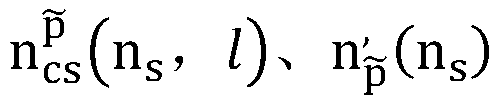





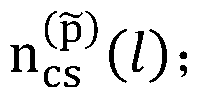


Claims (60)
- 一种信息传输方法,包括:获取物理上行控制信道PUCCH在一时间单元中占用的符号;确定所述符号对应的循环位移CS值;以及按照所述CS值,在所述符号上发送所述PUCCH。
- 根据权利要求1所述的方法,其中,所述确定所述符号对应的循环位移CS值的步骤,包括:根据符号的编号和配置信息所通知的PUCCH资源编号,确定所述符号对应的CS值;或者根据配置信令所配置的CS配置索引,确定所述符号对应的CS值。
- 根据权利要求2所述的方法,其中,所述根据符号的编号和配置信息所通知的PUCCH资源编号,确定所述符号对应的CS值的步骤,包括:根据PUCCH资源编号、符号的编号和时间单元的编号,通过以下第一公式组,计算得到符号对应的CS值

 其中,
其中, 其中,
其中,

 或者,根据PUCCH资源编号、符号的编号和时间单元的编号,通过以下第二公式组,计算得到符号对应的CS值
 其中,
其中, 其中,
其中,
 其中,表示符号对应的CS值;
 均表示中间参数;
 表示正交覆盖码OCC序列编号;
 c()表示伪随机序列;表示PUCCH在天线端口
 上的资源编号;
 mod表示取余数函数;表示一个资源块RB中包含的子载波个数;
 表示高层信令预先配置的CS间隔;
 表示一个时间单元中包含的符号个数;
 n s表示时间单元的编号;l表示一个时间单元中符号的编号;c为预先定义的值,所述c对于不同符号长度的PUCCH为同一个值,或对于不同符号长度的PUCCH为独立的值,或对于具有不同复用容量的PUCCH为独立的值。
 - 根据权利要求2所述的方法,其中,所述根据符号的编号和配置信息所通知的PUCCH资源编号,确定所述符号对应的CS值的步骤,包括:根据PUCCH资源编号、符号的编号、时间单元编号和跳频部分的编号,通过以下第三公式组,计算得到符号对应的CS值

 其中,
其中, 其中,
其中,
 当使用跳频时,若所述时间单元中包括两个跳频部分,则对于第一个跳频部分或f hopmod2=0时,
 对于第二个跳频部分或f hopmod2=1时,
 或者,根据PUCCH资源编号、符号的编号、时间单元编号和跳频部分的编号,通过以下第四公式组,计算得到符号对应的CS值
 其中,
其中, 其中,
其中, 当使用跳频时,若所述时间单元中包括两个跳频部分,则对于第一个跳频部分或f hopmod2=0时,
 对于第二个跳频部分或f hopmod2=1时,
 其中,表示符号对应的CS值;
 和
和 均表示中间参数;
 表示OCC序列编号;
 c()表示伪随机序列;表示PUCCH在天线端口
 上的资源编号;
 mod表示取余数函数;表示一个RB中包含的子载波个数;
 表示高层信令预先配置的CS间隔;
 表示一个时间单元中包含的符号个数;
 f hop表示跳频部分的编号;n s表示时间单元的编号;l表示一个时间单元中符号的编号;c为预先定义的值,所述c对于不同符号长度的PUCCH为同一个值,或对于不同符号长度的PUCCH为独立的值,或对于具有不同复用容量的PUCCH为独立的值。
 - 根据权利要求2所述的方法,其中,所述根据符号的编号和配置信息所通知的PUCCH资源编号,确定所述符号对应的CS值的步骤,包括:根据PUCCH资源编号和符号的编号,通过以下第五公式组,计算得到符号对应的CS值

 其中,
其中, 其中,
其中,

 或者,根据PUCCH资源编号和符号的编号,通过以下第六公式组,计算得到符号对应的CS值
 其中,
其中, 其中,
其中,
 其中,表示符号对应的CS值;
 和
和 均表示中间参数;
 表示OCC序列编号;
 c()表示伪随机序列;表示PUCCH在天线端口
 上的资源编号;
 mod表示取余数函数;表示一个RB中包含的子载波个数;
 表示高层信令预先配置的CS间隔;
 l表示一个时间单元中符号的编号;c为预先定义的值,所述c对于不同符号长度的PUCCH为同一个值,或对于不同符号长度的PUCCH为独立的值,或对于具有不同复用容量的PUCCH为独立的值。
 - 根据权利要求2所述的方法,其中,所述根据符号的编号和配置信息所通知的PUCCH资源编号,确定所述符号对应的CS值的步骤,包括:根据PUCCH资源编号、符号的编号和跳频部分的编号,通过以下第七公式组,计算得到CS值

 其中,其中,
 当使用跳频时,若所述时间单元中包括两个跳频部分,则对于第一个跳频部分或f hopmod2=0时;
 对于第二个跳频部分或f hopmod2=1时,
 或者,根据PUCCH资源编号、符号的编号和跳频部分的编号,通过以下第八公式组,计算得到CS值
 其中,
其中, 其中,
其中, 当使用跳频时,若所述时间单元中包括两个跳频部分,则对于第一个跳频部分或f hopmod2=0时;
 对于第二个跳频部分或f hopmod2=1时,
 其中,表示符号对应的CS值;
 和
和 均表示中间参数;
 表示OCC序列编号;
 c()表示伪随机序列;表示PUCCH在天线端口
 上的资源编号;
 mod表示取余数函数;表示一个RB中包含的子载波个数;
 表示高层信令预先配置的CS间隔;
 f hop表示跳频部分的编号;l表示一个时间单元中符号的编号;c为预先定义的值,所述c对于不同符号长度的PUCCH为同一个值,或对于不同符号长度的PUCCH为独立的值,或对于具有不同复用容量的PUCCH为独立的值。
 - 根据权利要求3至6中任一项所述的方法,其中,所述按照所述CS值,在所述符号上发送所述PUCCH的步骤,包括:当确定使用OCC序列时,根据所述OCC序列编号,确定与OCC序列编号对应的OCC序列;按照所述CS值和所述OCC序列,在所述符号上发送所述PUCCH。
- 根据权利要求2所述的方法,其中,所述根据配置信令所配置的CS配置索引,确定所述符号对应的CS值的步骤,包括:接收配置信令,根据所述配置信令得到CS配置索引;根据所述CS配置索引,确定所述符号对应的CS索引;根据所述符号对应的CS索引,确定所述符号对应的CS值。
- 根据权利要求8所述的方法,其中,所述根据所述CS配置索引,确定所述符号对应的CS索引的步骤,包括:根据所述CS配置索引以及所述符号的编号,通过以下第一公式,计算得到所述符号对应的CS索引

 其中,表示符号对应的CS索引;
 CS init表示所述CS配置索引;l表示符号的编号,且l的取值范围为0至其中
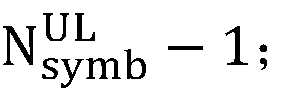 表示一个时间单元中包含的符号个数;
 k表示一系数值,其中k的取值为大于或等于1的正整数;表示一个RB中包含的子载波个数;
 mod表示取余数函数。
 - 根据权利要求8所述的方法,其中,所述根据所述CS配置索引,确定 所述符号对应的CS索引的步骤,包括:根据所述符号的编号以及所述CS配置索引与一表格之间的预设映射关系,确定所述符号对应的CS索引;其中所述表格记录有一时间单元中每一符号的编号对应的CS索引。
- 根据权利要求8所述的方法,其中,所述根据所述符号对应的CS索引,确定所述符号对应的CS值的步骤,包括:根据所述符号对应的CS索引,通过以下第二公式,计算得到所述符号对应的CS值

 其中,表示所述符号对应的CS值;
 表示所述符号对应的CS索引;
 表示一个RB中包含的子载波个数。
- 根据权利要求8所述的方法,其中,所述按照所述CS值,在所述符号上发送PUCCH的步骤,包括:当确定使用OCC序列时,根据配置信令确定OCC序列编号,或根据所述CS配置索引,按照预设公式或预设表格确定OCC序列编号;根据所述OCC序列编号,确定与OCC序列编号对应的OCC序列;按照所述CS值和所述OCC序列,在所述符号上发送所述PUCCH。
- 根据权利要求1所述的方法,其中,所述按照所述CS值,在所述符号上发送PUCCH的步骤,包括:通过以下第三公式确定所述PUCCH传输所在的RB的RB编号n PRB,并在所述符号以及所述RB编号对应的RB上发送所述PUCCH;
 或者,
或者, 其中,
其中, 或者,当使用跳频时,通过以下第四公式确定所述PUCCH传输所在的RB的RB编号n PRB,并在所述符号以及所述RB编号对应的RB上发送所述PUCCH;
 或者,
或者, 其中,或
其中,或
 其中,n PRB表示用于传输PUCCH的RB的RB编号;表示PUCCH在天线端口
 上的资源编号;
 表示一个资源块RB中包含的子载波个数;
 表示高层信令预先配置的CS间隔;
 表示上行带宽或上行跳频带宽;
 f hop表示跳频部分的编号;N offest表示高层信令预先配置的PUCCH资源起始位置,其中N offest的取值为大于或等于0;N hop-offset1和N hop-offset2均表示上行跳频偏移值;c为预先定义的值,所述c对于不同符号长度的PUCCH为同一个值,或对 于不同符号长度的PUCCH为独立的值,或对于具有不同复用容量的PUCCH为独立的值。
 - 根据权利要求3至6以及13中任一项所述的方法,其中,所述c为根据OCC序列的个数或长度确定的值,包括:所述c为根据不同符号长度的PUCCH所对应的OCC序列的长度中的最大长度确定的,或根据不同符号长度的PUCCH所对应的OCC序列的个数中的最大序列个数确定的;或者,所述c为根据每种符号长度的PUCCH所对应的OCC序列的长度确定的,或根据每种符号长度的PUCCH所对应的OCC序列的个数确定的;或者,所述c为根据具有相同复用容量的PUCCH所对应的OCC序列的长度确定的,或根据具有相同复用容量的PUCCH所对应的OCC序列的个数确定的。
- 一种信息传输方法,包括:获取物理上行控制信道PUCCH在一时间单元中占用的符号;确定所述符号对应的循环位移CS值;以及按照所述CS值,在所述符号上接收所述PUCCH。
- 根据权利要求15所述的方法,其中,所述确定所述符号对应的循环位移CS值的步骤,包括:根据符号的编号和通过配置信息通知给终端的PUCCH资源编号,确定所述符号对应的CS值;或者根据通过配置信令通知给终端的CS配置索引,确定所述符号对应的CS值。
- 根据权利要求16所述的方法,其中,所述根据符号的编号和通过配置信息通知给终端的PUCCH资源编号,确定所述符号对应的CS值的步骤,包括:确定PUCCH资源编号,并通过配置信息通知给终端;根据PUCCH资源编号、符号的编号和时间单元的编号,通过以下第一公式组,计算得到符号对应的CS值

 其中,
其中,
 其中,
其中,

 或者,根据PUCCH资源编号、符号的编号和时间单元的编号,通过以下第二公式组,计算得到符号对应的CS值
 其中,
其中, 其中,
其中,
 其中,表示符号对应的CS值;
 和
和 均表示中间参数;
 表示正交覆盖码OCC序列编号;
 c()表示伪随机序列;表示PUCCH在天线端口
 上的资源编号;
 mod表示取余数函数;表示一个资源块RB中包含的子载波个数;
 表示高层信令预先配置的CS间隔;
 表示一个时间单元中包含的符号个数;
 n s表示时间单元的编号;l表示一个时间单元中符号的编号;c为预先定义的值,所述c对于不同符号长度的PUCCH为同一个值,或对于不同符号长度的PUCCH为独立的值,或对于具有不同复用容量的PUCCH为独立的值。
 - 根据权利要求16所述的方法,其中,所述根据符号的编号和通过配置信息通知给终端的PUCCH资源编号,确定所述符号对应的CS值的步骤,包括:确定PUCCH资源编号,并通过配置信息通知给终端;根据PUCCH资源编号、符号的编号、时间单元编号和跳频部分的编号,通过以下第三公式组,计算得到符号对应的CS值

 其中,
其中, 其中,
其中,
 当使用跳频时,若所述时间单元中包括两个跳频部分,则对于第一个跳频部分或f hopmod2=0时,
 对于第二个跳频部分或f hopmod2=1时,
 或者,根据PUCCH资源编号、符号的编号、时间单元编号和跳频部分的编号,通过以下第四公式组,计算得到符号对应的CS值
 其中,
其中, 其中,
其中, 当使用跳频时,若所述时间单元中包括两个跳频部分,则对于第一个跳频部分或f hopmod2=0时,
 对于第二个跳频部分或f hopmod2=1时,
 其中,表示符号对应的CS值;
 和
和 均表示中间参数;
 表示OCC序列编号;
 c()表示伪随机序列;表示PUCCH在天线端口
 上的资源编号;
 mod表示取余数函数;表示一个RB中包含的子载波个数;
 表示高层信令预先配置的CS间隔;
 表示一个时间单元中包含的符号个数;
 f hop表示跳频部分的编号;n s表示时间单元的编号;l表示一个时间单元中符号的编号;c为预先定义的值,所述c对于不同符号长度的PUCCH为同一个值,或对于不同符号长度的PUCCH为独立的值,或对于具有不同复用容量的PUCCH为独立的值。
 - 根据权利要求16所述的方法,其中,所述根据符号的编号和通过配置信息通知给终端的PUCCH资源编号,确定所述符号对应的CS值的步骤,包括:确定PUCCH资源编号,并通过配置信息通知给终端;根据PUCCH资源编号和符号的编号,通过以下第五公式组,计算得到符号对应的CS值

 其中,
其中, 其中,
其中,

 或者,根据PUCCH资源编号和符号的编号,通过以下第六公式组,计算得到符号对应的CS值
 其中,
其中, 其中,
其中,
 其中,表示符号对应的CS值;
 和
和 均表示中间参数;
 表示OCC序列编号;
 c()表示伪随机序列;表示PUCCH在天线端口
 上的资源编号;
 mod表示取余数函数;表示一个RB中包含的子载波个数;
 表示高层信令预先配置的CS间隔;
 l表示一个时间单元中符号的编号;c为预先定义的值,所述c对于不同符号长度的PUCCH为同一个值,或对于不同符号长度的PUCCH为独立的值,或对于具有不同复用容量的PUCCH为独立的值。
 - 根据权利要求16所述的方法,其中,所述根据符号的编号和通过配置信息通知给终端的PUCCH资源编号,确定所述符号对应的CS值的步骤,包括:确定PUCCH资源编号,并通过配置信息通知给终端;根据PUCCH资源编号、符号的编号和跳频部分的编号,通过以下第七公式组,计算得到CS值
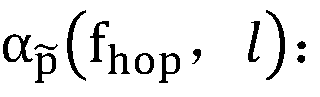
 其中,
其中, 其中,
其中,
 当使用跳频时,若所述时间单元中包括两个跳频部分,则对于第一个跳频部分或f hopmod2=0时;
 对于第二个跳频部分或f hopmod2=1时,
 或者,根据PUCCH资源编号、符号的编号和跳频部分的编号,通过以下第八公式组,计算得到CS值
 其中,
其中, 其中,
其中, 当使用跳频时,若所述时间单元中包括两个跳频部分,则对于第一个跳频 部分或f hopmod2=0时;
 对于第二个跳频部分或f hopmod2=1时,
 其中,表示符号对应的CS值;
 和
和 均表示中间参数;
 表示OCC序列编号;
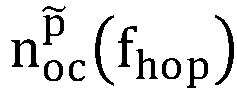 c()表示伪随机序列;表示PUCCH在天线端口
 上的资源编号;
 mod表示取余数函数;表示一个RB中包含的子载波个数;
 表示高层信令预先配置的CS间隔;
 f hop表示跳频部分的编号;l表示一个时间单元中符号的编号;c为预先定义的值,所述c对于不同符号长度的PUCCH为同一个值,或对于不同符号长度的PUCCH为独立的值,或对于具有不同复用容量的PUCCH为独立的值。
 - 根据权利要求17至20中任一项所述的方法,其中,所述按照所述CS值,在所述符号上接收所述PUCCH的步骤,包括:当确定使用OCC序列时,根据所述OCC序列编号,确定与OCC序列编号对应的OCC序列;按照所述CS值和所述OCC序列,在所述符号上接收所述PUCCH。
- 根据权利要求16所述的方法,其中,所述根据通过配置信令通知给终端的CS配置索引,确定所述符号对应的CS值的步骤,包括:确定CS配置索引,并通过配置信令将所述CS配置索引通知给终端;根据所述CS配置索引,确定所述符号对应的CS索引;根据所述符号对应的CS索引,确定所述符号对应的CS值。
- 根据权利要求22所述的方法,其中,所述根据所述CS配置索引,确定所述符号对应的CS索引的步骤,包括:根据所述CS配置索引以及所述符号的编号,通过以下第一公式,计算得到所述符号对应的CS索引

 其中,表示符号对应的CS索引;
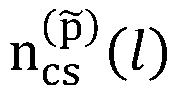 CS init表示所述CS配置索引;l表示符号的编号,且l的取值范围为0至其中
 表示一个时间单元中包含的符号个数;
 k表示一系数值,其中k的取值为大于或等于1的正整数;表示一个RB中包含的子载波个数;
 mod表示取余数函数。
 - 根据权利要求22所述的方法,其中,所述根据所述CS配置索引,确定所述符号对应的CS索引的步骤,包括:根据所述符号的编号以及所述CS配置索引与一表格之间的预设映射关系,确定所述符号对应的CS索引;其中所述表格记录有一时间单元中每一符号的编号对应的CS索引。
- 根据权利要求22所述的方法,其中,所述根据所述符号对应的CS索引,确定所述符号对应的CS值的步骤,包括:根据所述符号对应的CS索引,通过以下第二公式,计算得到所述符号对应的CS值

 其中,表示所述符号对应的CS值;
 表示所述符号对应的CS索引;
 表示一个RB中包含的子载波个数。
- 根据权利要求22所述的方法,其中,所述按照所述CS值,在所述符 号上接收所述PUCCH的步骤,包括:当确定使用OCC序列时,根据配置信令确定OCC序列编号,或根据所述CS配置索引,按照预设公式或预设表格确定OCC序列编号;根据所述OCC序列编号,确定与OCC序列编号对应的OCC序列;按照所述CS值和所述OCC序列,在所述符号上接收所述PUCCH。
- 根据权利要求15所述的方法,其中,所述按照所述CS值,在所述符号上接收所述PUCCH的步骤,包括:通过以下第三公式确定所述PUCCH传输所在的RB的RB编号n PRB,并在所述符号以及所述RB编号对应的RB上发送所述PUCCH;
 或者,
或者, 其中,或
其中,或
 或者,当使用跳频时,通过以下第四公式确定所述PUCCH传输所在的RB的RB编号n PRB,并在所述符号以及所述RB编号对应的RB上发送所述PUCCH;
 或者,
或者, 其中,或
其中,或
 其中,n PRB表示用于传输PUCCH的RB的RB编号;表示PUCCH在天线端口
 上的资源编号;
 表示一个资源块RB中包含的子载波个数;
 表示高层信令预先配置的CS间隔;
 表示上行带宽或上行跳频带宽;
 f hop表示跳频部分的编号;N offest表示高层信令预先配置的PUCCH资源起始位置,其中N offest的取值为大于或等于0;N hop-offset1和N hop-offset2均表示上行跳频偏移值;c为预先定义的值,所述c对于不同符号长度的PUCCH为同一个值,或对于不同符号长度的PUCCH为独立的值,或对于具有不同复用容量的PUCCH为独立的值。
 - 根据权利要求17至20以及27中任一项所述的方法,其中,所述c为根据OCC序列的个数或长度确定的值,包括:所述c为根据不同符号长度的PUCCH所对应的OCC序列的长度中的最大长度确定的,或根据不同符号长度的PUCCH所对应的OCC序列的个数中的最大序列个数确定的;或者,所述c为根据每种符号长度的PUCCH所对应的OCC序列的长度确定的,或根据每种符号长度的PUCCH所对应的OCC序列的个数确定的;或者,所述c为根据具有相同复用容量的PUCCH所对应的OCC序列的长度确定的,或根据具有相同复用容量的PUCCH所对应的OCC序列的个数确定的。
- 一种终端,包括:获取模块,用于获取物理上行控制信道PUCCH在一时间单元中占用的符号;确定模块,用于确定所述符号对应的循环位移CS值;以及发送模块,用于按照所述CS值,在所述符号上发送所述PUCCH。
- 根据权利要求29所述的终端,其中,所述确定模块包括:第一确定单元,用于根据符号的编号和配置信息所通知的PUCCH资源编号,确定所述符号对应的CS值;或者第二确定单元,用于根据配置信令所配置的CS配置索引,确定所述符号对应的CS值。
- 根据权利要求30所述的终端,其中,所述第一确定单元用于,根据PUCCH资源编号、符号的编号和时间单元的编号,通过以下第一公式组,计算得到符号对应的CS值

 其中,
其中, 其中,
其中,

 或者,根据PUCCH资源编号、符号的编号和时间单元的编号,通过以下第二公式组,计算得到符号对应的CS值
 其中,
其中, 其中,
其中,
 其中,表示符号对应的CS值;
 和
和 均表示中间参数;
 表示正交覆盖码OCC序列编号;
 c()表示伪随机序列;表示PUCCH在天线端口
 上的资源编号;
 mod表示取余数函数;表示一个资源块RB中包含的子载波个数;
 表示高层信令预先配置的CS间隔;
 表示一个时间单元中包含的符号个数;
 n s表示时间单元的编号;l表示一个时间单元中符号的编号;c为预先定义的值,所述c对于不同符号长度的PUCCH为同一个值,或对于不同符号长度的PUCCH为独立的值,或对于具有不同复用容量的PUCCH为独立的值。
 - 根据权利要求30所述的终端,其中,所述第一确定单元用于,根据PUCCH资源编号、符号的编号、时间单元编号和跳频部分的编号,通过以下第三公式组,计算得到符号对应的CS值

 其中,
其中, 其中,
其中,
 当使用跳频时,若所述时间单元中包括两个跳频部分,则对于第一个跳频部分或f hopmod2=0时,
 对于第二个跳频部分或f hopmod2=1时,
 或者,根据PUCCH资源编号、符号的编号、时间单元编号和跳频部分的编号,通过以下第四公式组,计算得到符号对应的CS值
 其中,
其中, 其中,
其中, 当使用跳频时,若所述时间单元中包括两个跳频部分,则对于第一个跳频部分或f hopmod2=0时,
 对于第二个跳频部分或f hopmod2=1时,
 其中,表示符号对应的CS值;
 和
和 均表示中间参数;
 表示OCC序列编号;
 c()表示伪随机序列;表示PUCCH在天线端口
 上的资源编号;
 mod表示取余数函数;表示一个RB中包含的子载波个数;
 表示高层信令预先配置的CS间隔;
 表示一个时间单元中包含的符号个数;
 f hop表示跳频部分的编号;n s表示时间单元的编号;l表示一个时间单元中符号的编号;c为预先定义的值,所述c对于不同符号长度的PUCCH为同一个值,或对于不同符号长度的PUCCH为独立的值,或对于具有不同复用容量的PUCCH为独立的值。
 - 根据权利要求30所述的终端,其中,所述第一确定单元用于,根据PUCCH资源编号和符号的编号,通过以下第五公式组,计算得到符号对应的CS值

 其中,
其中, 其中,
其中,

 或者,根据PUCCH资源编号和符号的编号,通过以下第六公式组,计算得到符号对应的CS值
 其中,
其中, 其中,
其中,
 其中,表示符号对应的CS值;
 和
和 均表示中间参数;
 表示OCC序列编号;
 c()表示伪随机序列;表示PUCCH在天线端口
 上的资源编号;
 mod表示取余数函数;表示一个RB中包含的子载波个数;
 表示高层信令预先配置的CS间隔;
 l表示一个时间单元中符号的编号;c为预先定义的值,所述c对于不同符号长度的PUCCH为同一个值,或对于不同符号长度的PUCCH为独立的值,或对于具有不同复用容量的PUCCH为独立的值。
 - 根据权利要求30所述的终端,其中,所述第一确定单元用于,根据PUCCH资源编号、符号的编号和跳频部分的编号,通过以下第七公式组,计算得到CS值

 其中,
其中, 其中,
其中,
 当使用跳频时,若所述时间单元中包括两个跳频部分,则对于第一个跳频部分或f hopmod2=0时;
 对于第二个跳频部分或f hopmod2=1时,
 或者,根据PUCCH资源编号、符号的编号和跳频部分的编号,通过以下第八公式组,计算得到CS值
 其中,
其中, 其中,
其中, 当使用跳频时,若所述时间单元中包括两个跳频部分,则对于第一个跳频部分或f hopmod2=0时;
 对于第二个跳频部分或f hopmod2=1时,
 其中,表示符号对应的CS值;
 和
和 均表示中间参数;
 表示OCC序列编号;
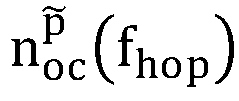 c()表示伪随机序列;表示PUCCH在天线端口
 上的资源编号;
 mod表示取余数函数;表示一个RB中包含的子载波个数;
 表示高层信令预先配置的CS间隔;
 f hop表示跳频部分的编号;l表示一个时间单元中符号的编号;c为预先定义的值,所述c对于不同符号长度的PUCCH为同一个值,或对于不同符号长度的PUCCH为独立的值,或对于具有不同复用容量的PUCCH为独立的值。
 - 根据权利要求31至34中任一项所述的终端,其中,所述发送模块包括:第三确定单元,用于当确定使用OCC序列时,根据所述OCC序列编号,确定与OCC序列编号对应的OCC序列;第一发送单元,用于按照所述CS值和所述OCC序列,在所述符号上发送所述PUCCH。
- 根据权利要求30所述的终端,其中,所述第二确定单元包括:接收子单元,用于接收配置信令,根据所述配置信令得到CS配置索引;第一确定子单元,用于根据所述CS配置索引,确定所述符号对应的CS索引;第二确定子单元,用于根据所述符号对应的CS索引,确定所述符号对应的CS值。
- 根据权利要求36所述的终端,其中,所述第一确定子单元用于,根据所述CS配置索引以及所述符号的编号,通过以下第一公式,计算得到所述符号对应的CS索引

 其中,表示符号对应的CS索引;
 CS init表示所述CS配置索引;l表示符号的编号,且l的取值范围为0至其中
 表示一个时间单元中包含的符号个数;
 k表示一系数值,其中k的取值为大于或等于1的正整数;表示一个RB中包含的子载波个数;
 mod表示取余数函数。
 - 根据权利要求36所述的终端,其中,所述第一确定子单元用于,根据所述符号的编号以及所述CS配置索引与一表格之间的预设映射关系,确定所述符号对应的CS索引;其中所述表格记录有一时间单元中每一符号的编号对应的CS索引。
- 根据权利要求36所述的终端,其中,所述第二确定子单元用于,根据所述符号对应的CS索引,通过以下第二公式,计算得到所述符号对应的CS值

 其中,表示所述符号对应的CS值;
 表示所述符号对应的CS索引;
 表示一个RB中包含的子载波个数。
- 根据权利要求36所述的终端,其中,所述发送模块包括:第四确定单元,用于当确定使用OCC序列时,根据配置信令确定OCC序列编号,或根据所述CS配置索引,按照预设公式或预设表格确定OCC序列编号;第五确定单元,用于根据所述OCC序列编号,确定与OCC序列编号对应的OCC序列;第二发送单元,用于按照所述CS值和所述OCC序列,在所述符号上发送所述PUCCH。
- 根据权利要求29所述的终端,其中,所述发送模块还包括第三发送单元,用于通过以下第三公式确定所述PUCCH传输所在的RB的RB编号n PRB,并在所述符号以及所述RB编号对应的RB上发送所述PUCCH;
 或者,
或者, 其中,或
其中,或
 或者,当使用跳频时,通过以下第四公式确定所述PUCCH传输所在的RB的RB编号n PRB,并在所述符号以及所述RB编号对应的RB上发送所述PUCCH;
 或者,
或者, 其中,或
其中,或
 其中,n PRB表示用于传输PUCCH的RB的RB编号;表示PUCCH在天线端口
 上的资源编号;
 表示一个资源块RB中包含的子载波个数;
 表示高层信令预先配置的CS间隔;
 表示上行带宽或上行跳频带宽;
 f hop表示跳频部分的编号;N offest表示高层信令预先配置的PUCCH资源起始位置,其中N offest的取值为大于或等于0;N hop-offset1和N hop-offset2均表示上行跳频偏移值;c为预先定义的值,所述c对于不同符号长度的PUCCH为同一个值,或对于不同符号长度的PUCCH为独立的值,或对于具有不同复用容量的PUCCH为独立的值。
 - 根据权利要求31至34以及41中任一项所述的终端,其中,所述c为根据OCC序列的个数或长度确定的值,包括:所述c为根据不同符号长度的PUCCH所对应的OCC序列的长度中的最大长度确定的,或根据不同符号长度的PUCCH所对应的OCC序列的个数中的最大序列个数确定的;或者,所述c为根据每种符号长度的PUCCH所对应的OCC序列的长度确定的,或根据每种符号长度的PUCCH所对应的OCC序列的个数确定的;或者,所述c为根据具有相同复用容量的PUCCH所对应的OCC序列的长度确定的,或根据具有相同复用容量的PUCCH所对应的OCC序列的个数确定的。
- 一种基站,包括:获取模块,用于获取物理上行控制信道PUCCH在一时间单元中占用的符号;确定模块,用于确定所述符号对应的循环位移CS值;以及接收模块,用于按照所述CS值,在所述符号上接收所述PUCCH。
- 根据权利要求43所述的基站,其中,所述确定模块包括:第一确定单元,用于根据符号的编号和通过配置信息通知给终端的PUCCH资源编号,确定所述符号对应的CS值;或者第二确定单元,用于根据通过配置信令通知给终端的CS配置索引,确定所述符号对应的CS值。
- 根据权利要求44所述的基站,其中,所述第一确定单元用于,确定PUCCH资源编号,并通过配置信息通知给终端;根据PUCCH资源编号、符号的编号和时间单元的编号,通过以下第一公式组,计算得到符号对应的CS值

 其中,
其中, 其中,
其中,

 或者,根据PUCCH资源编号、符号的编号和时间单元的编号,通过以下第二公式组,计算得到符号对应的CS值
 其中,
其中, 其中,
其中,
 其中,表示符号对应的CS值;
 和
和 均表示中间参数;
 表示正交覆盖码OCC序列编号;
 c()表示伪随机序列;表示PUCCH在天线端口
 上的资源编号;
 mod表示取余数函数;表示一个资源块RB中包含的子载波个数;
 表示高层信令预先配置的CS间隔;
 表示一个时间单元中包含的符号个数;
 n s表示时间单元的编号;l表示一个时间单元中符号的编号;c为预先定义的值,所述c对于不同符号长度的PUCCH为同一个值,或对于不同符号长度的PUCCH为独立的值,或对于具有不同复用容量的PUCCH为独立的值。
 - 根据权利要求44所述的基站,其中,所述第一确定单元用于,确定PUCCH资源编号,并通过配置信息通知给终端;根据PUCCH资源编号、符号的编号、时间单元编号和跳频部分的编号,通过以下第三公式组,计算得到符号对应的CS值

 其中,
其中, 其中,
其中,
 当使用跳频时,若所述时间单元中包括两个跳频部分,则对于第一个跳频部分或f hopmod2=0时,
 对于第二个跳频部分或f hopmod2=1时,
 或者,根据PUCCH资源编号、符号的编号、时间单元编号和跳频部分的编号,通过以下第四公式组,计算得到符号对应的CS值
 其中,
其中, 其中,
其中, 当使用跳频时,若所述时间单元中包括两个跳频部分,则对于第一个跳频部分或f hopmod2=0时,
 对于第二个跳频部分或f hopmod2=1时,
 其中,表示符号对应的CS值;
 和
和 均表示中间参数;
 表示OCC序列编号;
 c()表示伪随机序列;表示PUCCH在天线端口
 上的资源编号;
 mod表示取余数函数;表示一个RB中包含的子载波个数;
 表示高层信令预先配置的CS间隔;
 表示一个时间单元中包含的符号个数;
 f hop表示跳频部分的编号;n s表示时间单元的编号;l表示一个时间单元中符号的编号;c为预先定义的值,所述c对于不同符号长度的PUCCH为同一个值,或对于不同符号长度的PUCCH为独立的值,或对于具有不同复用容量的PUCCH为独立的值。
 - 根据权利要求44所述的基站,其中,所述第一确定单元用于,确定PUCCH资源编号,并通过配置信息通知给终端;根据PUCCH资源编号和符号的编号,通过以下第五公式组,计算得到符号对应的CS值

 其中,其中,


 或者,根据PUCCH资源编号和符号的编号,通过以下第六公式组,计算得到符号对应的CS值
 其中,
其中, 其中,
其中,
 其中,表示符号对应的CS值;
 和
和 均表示中间参数;
 表示OCC序列编号;
 c()表示伪随机序列;表示PUCCH在天线端口
 上的资源编号;
 mod表示取余数函数;表示一个RB中包含的子载波个数;
 表示高层信令预先配置的CS间隔;
 l表示一个时间单元中符号的编号;c为预先定义的值,所述c对于不同符号长度的PUCCH为同一个值,或对于不同符号长度的PUCCH为独立的值,或对于具有不同复用容量的PUCCH为独立的值。
 - 根据权利要求44所述的基站,其中,所述第一确定单元用于,确定PUCCH资源编号,并通过配置信息通知给终端;根据PUCCH资源编号、符号的编号和跳频部分的编号,通过以下第七公式组,计算得到CS值

 其中,
其中, 其中,
其中,
 当使用跳频时,若所述时间单元中包括两个跳频部分,则对于第一个跳频部分或f hopmod2=0时;
 对于第二个跳频部分或f hopmod2=1时,
 或者,根据PUCCH资源编号、符号的编号和跳频部分的编号,通过以下第八公式 组,计算得到CS值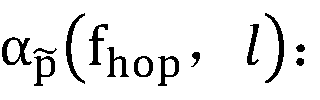
 其中,
其中, 其中,
其中, 当使用跳频时,若所述时间单元中包括两个跳频部分,则对于第一个跳频部分或f hopmod2=0时;
 对于第二个跳频部分或f hopmod2=1时,
 其中,表示符号对应的CS值;
 和
和 均表示中间参数;
 表示OCC序列编号;
 c()表示伪随机序列;表示PUCCH在天线端口
 上的资源编号;
 mod表示取余数函数;表示一个RB中包含的子载波个数;
 表示高层信令预先配置的CS间隔;
 f hop表示跳频部分的编号;l表示一个时间单元中符号的编号;c为预先定义的值,所述c对于不同符号长度的PUCCH为同一个值,或对于不同符号长度的PUCCH为独立的值,或对于具有不同复用容量的PUCCH为 独立的值。
 - 根据权利要求45至48任一项所述的基站,其中,所述接收模块包括:第三确定单元,用于当确定使用OCC序列时,根据所述OCC序列编号,确定与OCC序列编号对应的OCC序列;第一接收单元,用于按照所述CS值和所述OCC序列,在所述符号上接收所述PUCCH。
- 根据权利要求44所述的基站,其中,所述第二确定单元包括:发送子单元,用于确定CS配置索引,并通过配置信令将所述CS配置索引通知给终端;第一确定子单元,用于根据所述CS配置索引,确定所述符号对应的CS索引;第二确定子单元,用于根据所述符号对应的CS索引,确定所述符号对应的CS值。
- 根据权利要求50所述的基站,其中,所述第一确定子单元用于,根据所述CS配置索引以及所述符号的编号,通过以下第一公式,计算得到所述符号对应的CS索引

 其中,表示符号对应的CS索引;
 CS init表示所述CS配置索引;l表示符号的编号,且l的取值范围为0至其中
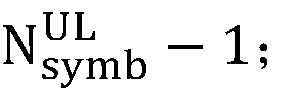 表示一个时间单元中包含的符号个数;
 k表示一系数值,其中k的取值为大于或等于1的正整数;表示一个RB中包含的子载波个数;
 mod表示取余数函数。
 - 根据权利要求50所述的基站,其中,所述第一确定子单元用于,根据所述符号的编号以及所述CS配置索引与一表格之间的预设映射关系,确定所述符号对应的CS索引;其中所述表格记录有一时间单元中每一符号的编号对应的CS索引。
- 根据权利要求50所述的基站,其中,所述第二确定子单元用于,根据所述符号对应的CS索引,通过以下第二公式,计算得到所述符号对应的CS值

 其中,表示所述符号对应的CS值;
 表示所述符号对应的CS索引;
 表示一个RB中包含的子载波个数。
- 根据权利要求50所述的基站,其中,所述接收模块包括:第四确定单元,用于当确定使用OCC序列时,根据配置信令确定OCC序列编号,或根据所述CS配置索引,按照预设公式或预设表格确定OCC序列编号;第五确定单元,用于根据所述OCC序列编号,确定与OCC序列编号对应的OCC序列;第二接收单元,用于按照所述CS值和所述OCC序列,在所述符号上接收所述PUCCH。
- 根据权利要求43所述的基站,其中,所述接收模块包括第三接收单元,用于通过以下第三公式确定所述PUCCH传输所在的RB的RB编号n PRB,并在所述符号以及所述RB编号对应的RB上发送所述PUCCH;
 或者,
或者, 其中,或
其中,或
 或者,当使用跳频时,通过以下第四公式确定所述PUCCH传输所在的RB的RB编号n PRB,并在所述符号以及所述RB编号对应的RB上发送所述PUCCH;
 或者,
或者, 其中,或
其中,或
 其中,n PRB表示用于传输PUCCH的RB的RB编号;表示PUCCH在天线端口
 上的资源编号;
 表示一个资源块RB中包含的子载波个数;
 表示高层信令预先配置的CS间隔;
 表示上行带宽或上行跳频带宽;
 f hop表示跳频部分的编号;N offest表示高层信令预先配置的PUCCH资源起始位置,其中N offest的取值为大于或等于0;N hop-offset1和N hop-offset2均表示上行跳频偏移值;c为预先定义的值,所述c对于不同符号长度的PUCCH为同一个值,或对于不同符号长度的PUCCH为独立的值,或对于具有不同复用容量的PUCCH为独立的值。
 - 根据权利要求45至48以及55任一项所述的基站,其中,所述c为根据OCC序列的个数或长度确定的值,包括:所述c为根据不同符号长度的PUCCH所对应的OCC序列的长度中的最大长度确定的,或根据不同符号长度的PUCCH所对应的OCC序列的个数中的最 大序列个数确定的;或者,所述c为根据每种符号长度的PUCCH所对应的OCC序列的长度确定的,或根据每种符号长度的PUCCH所对应的OCC序列的个数确定的;或者,所述c为根据具有相同复用容量的PUCCH所对应的OCC序列的长度确定的,或根据具有相同复用容量的PUCCH所对应的OCC序列的个数确定的。
- 一种终端,包括存储器、处理器及存储在所述存储器上并可在所述处理器上运行的计算机程序;其中,所述处理器执行所述程序时实现根据权利要求1-14中任一项所述的方法的步骤。
- 一种基站,包括存储器、处理器及存储在所述存储器上并可在所述处理器上运行的计算机程序;其中,所述处理器执行所述程序时实现根据权利要求15-28中任一项所述的方法的步骤。
- 一种计算机可读存储介质,其上存储有计算机程序,其中,该程序被处理器执行时实现根据权利要求1-14中任一项所述的方法的步骤。
- 一种计算机可读存储介质,其上存储有计算机程序,其中,该程序被处理器执行时实现根据权利要求15-28中任一项所述的方法的步骤。
Priority Applications (4)
| Application Number | Priority Date | Filing Date | Title |
|---|---|---|---|
| EP18843746.1A EP3667984B1 (en) | 2017-08-11 | 2018-07-25 | Information transmission method, terminal and base station |
| JP2020507637A JP7191935B2 (ja) | 2017-08-11 | 2018-07-25 | 情報伝送方法、端末及び基地局 |
| KR1020207007105A KR102351837B1 (ko) | 2017-08-11 | 2018-07-25 | 정보 전송 방법, 단말 및 기지국 |
| US16/638,443 US11489706B2 (en) | 2017-08-11 | 2018-07-25 | Method and apparatus for transmitting PUCCH on symbol according to cyclic shift value |
Applications Claiming Priority (2)
| Application Number | Priority Date | Filing Date | Title |
|---|---|---|---|
| CN201710687219.7A CN109391425B (zh) | 2017-08-11 | 2017-08-11 | 一种信息的传输方法、终端及基站 |
| CN201710687219.7 | 2017-08-11 |
Publications (1)
| Publication Number | Publication Date |
|---|---|
| WO2019029362A1 true WO2019029362A1 (zh) | 2019-02-14 |
Family
ID=65273244
Family Applications (1)
| Application Number | Title | Priority Date | Filing Date |
|---|---|---|---|
| PCT/CN2018/097024 Ceased WO2019029362A1 (zh) | 2017-08-11 | 2018-07-25 | 信息传输方法、终端及基站 |
Country Status (7)
| Country | Link |
|---|---|
| US (1) | US11489706B2 (zh) |
| EP (1) | EP3667984B1 (zh) |
| JP (1) | JP7191935B2 (zh) |
| KR (1) | KR102351837B1 (zh) |
| CN (1) | CN109391425B (zh) |
| TW (1) | TWI688234B (zh) |
| WO (1) | WO2019029362A1 (zh) |
Cited By (5)
| Publication number | Priority date | Publication date | Assignee | Title |
|---|---|---|---|---|
| WO2021010694A1 (ko) * | 2019-07-12 | 2021-01-21 | 엘지전자 주식회사 | 무선 통신 시스템에서 신호를 송수신하는 방법 및 장치 |
| WO2021010697A1 (ko) * | 2019-07-12 | 2021-01-21 | 엘지전자 주식회사 | 무선 통신 시스템에서 신호를 송수신하는 방법 및 장치 |
| WO2021227009A1 (en) * | 2020-05-15 | 2021-11-18 | Apple Inc. | Enhanced uplink transmission in wireless communication |
| US20220247537A1 (en) * | 2019-07-12 | 2022-08-04 | Telefonaktiebolaget Lm Ericsson (Publ) | Method for selecting physical uplink control channel (pucch) orthogonal cover codes (occ) repetition sequence |
| US12075476B2 (en) | 2020-05-15 | 2024-08-27 | Apple Inc. | Configurable uplink transmission in wireless communication |
Families Citing this family (4)
| Publication number | Priority date | Publication date | Assignee | Title |
|---|---|---|---|---|
| CN109474997B (zh) * | 2017-09-08 | 2020-02-21 | 华为技术有限公司 | 一种传输上行控制信息的方法及设备 |
| CN117061068A (zh) * | 2018-01-10 | 2023-11-14 | 交互数字专利控股公司 | 短物理上行链路控制信道(sPUCCH)结构 |
| KR20220065251A (ko) | 2020-11-13 | 2022-05-20 | 삼성전자주식회사 | 무선 통신 시스템에서 상향링크 제어 채널의 수신 성능 향상을 위한 자원 할당 방법 및 장치 |
| CN115173889B (zh) * | 2021-03-18 | 2024-04-12 | 维沃移动通信有限公司 | 跳频处理方法、装置及终端 |
Citations (1)
| Publication number | Priority date | Publication date | Assignee | Title |
|---|---|---|---|---|
| CN106559101A (zh) * | 2015-09-25 | 2017-04-05 | 电信科学技术研究院 | 一种频域扩频、解扩频方法及装置 |
Family Cites Families (15)
| Publication number | Priority date | Publication date | Assignee | Title |
|---|---|---|---|---|
| US8774156B2 (en) * | 2008-01-29 | 2014-07-08 | Texas Instruments Incorporated | ACKNAK and CQI channel mapping schemes in wireless networks |
| US8379547B2 (en) * | 2009-05-15 | 2013-02-19 | Telefonaktiebolaget L M Ericsson (Publ) | Resource selection for transmission of multiple ACK/NACK on PUCCH channel |
| KR20110112005A (ko) * | 2010-04-05 | 2011-10-12 | 주식회사 팬택 | 직교성을 제공하는 사이클릭 쉬프트 파라메터를 송수신하는 방법 및 장치 |
| US9172513B2 (en) * | 2010-10-11 | 2015-10-27 | Qualcomm Incorporated | Resource assignments for uplink control channel |
| EP2894798B1 (en) * | 2012-09-09 | 2019-11-13 | LG Electronics Inc. | Method and apparatus for transmitting and receiving data |
| WO2016010399A1 (ko) * | 2014-07-17 | 2016-01-21 | 엘지전자 주식회사 | 무선 통신 시스템에서 하향링크 신호 전송 방법 및 장치 |
| US10333671B2 (en) * | 2015-04-06 | 2019-06-25 | Lg Electronics Inc. | Method for transmitting and receiving signal based on shared resource in wireless communication system, and apparatus therefor |
| WO2016182287A1 (ko) * | 2015-05-08 | 2016-11-17 | 엘지전자 주식회사 | 무선 통신 시스템에서 상향링크 신호 송수신 방법 및 장치 |
| JP6100829B2 (ja) | 2015-05-14 | 2017-03-22 | 株式会社Nttドコモ | ユーザ端末、無線基地局及び無線通信方法 |
| CN106304347B (zh) * | 2015-05-18 | 2019-06-28 | 普天信息技术有限公司 | 一种lte-a中pucch资源配置方法 |
| WO2017099521A1 (ko) * | 2015-12-10 | 2017-06-15 | 엘지전자(주) | 짧은 전송 시간 간격을 지원하는 무선 통신 시스템에서 상향링크 신호를 전송하기 위한 방법 및 이를 지원하는 장치 |
| US10447444B2 (en) * | 2016-04-04 | 2019-10-15 | Qualcomm Incorporated | Dynamic sounding reference signal scheduling |
| US10863489B2 (en) * | 2016-07-07 | 2020-12-08 | Lg Electronics Inc. | Method for transmitting uplink control information in wireless communication system and device therefor |
| CN108809532A (zh) * | 2017-05-05 | 2018-11-13 | 华为技术有限公司 | 一种数据传输方法、装置和系统 |
| JP7234117B2 (ja) * | 2017-09-15 | 2023-03-07 | 株式会社Nttドコモ | 端末、無線通信方法及びシステム |
-
2017
- 2017-08-11 CN CN201710687219.7A patent/CN109391425B/zh active Active
-
2018
- 2018-07-25 EP EP18843746.1A patent/EP3667984B1/en active Active
- 2018-07-25 US US16/638,443 patent/US11489706B2/en active Active
- 2018-07-25 WO PCT/CN2018/097024 patent/WO2019029362A1/zh not_active Ceased
- 2018-07-25 KR KR1020207007105A patent/KR102351837B1/ko active Active
- 2018-07-25 JP JP2020507637A patent/JP7191935B2/ja active Active
- 2018-08-03 TW TW107127030A patent/TWI688234B/zh active
Patent Citations (1)
| Publication number | Priority date | Publication date | Assignee | Title |
|---|---|---|---|---|
| CN106559101A (zh) * | 2015-09-25 | 2017-04-05 | 电信科学技术研究院 | 一种频域扩频、解扩频方法及装置 |
Non-Patent Citations (8)
| Title |
|---|
| 3GPP: "3rd Generation Partnership Project; Technical Specification Group Radio Access Network; Evolved Universal Terrestrial Radio Access (E-UTRA); Physical channels and modulation (Release 14)", 3GPP TS 36.211 V14.3.0, 30 June 2017 (2017-06-30), XP051304119 * |
| CATT: "Long PUCCH for Small UCI Payloads", 3GPP TSG RAN WGI NR AD-HOC#2 R1- 1710085, 30 June 2017 (2017-06-30), XP051304807 * |
| CATT: "PUCCH Resource Allocation", 3GPP TSG RAN WGI MEETING #89 R1- 1707505, 19 May 2017 (2017-05-19), XP051261853 * |
| ERICSSON: "On the Design of Long PUCCH for Small Payloads", 3GPP TSG RAN WGI MEETING #88BIS , R1-1706038, 7 April 2017 (2017-04-07), XP051252297 * |
| INTEL CORPORATION: "UL Control Channel Design with Long Duration", 3GPP TSG RAN WGI NR AD-HOC MEETING R1-1700368, 20 January 2017 (2017-01-20), XP051202846 * |
| See also references of EP3667984A4 * |
| TEXAS INSTRUMENTS.: "Cell Specific CS Hopping and Slot Based CS /OC Remapping on PUCCH", 3GPP TSG RAN WGI #52 R1-080707, 15 February 2008 (2008-02-15), XP050109200 * |
| ZTE ET AL.: "WF on Sequence-Based sPUCCH in 2OS and 3OS sTTI", 3GPP TSG RAN WGI MEETING #89 R1-1709446, 19 May 2017 (2017-05-19), XP051285230 * |
Cited By (10)
| Publication number | Priority date | Publication date | Assignee | Title |
|---|---|---|---|---|
| WO2021010694A1 (ko) * | 2019-07-12 | 2021-01-21 | 엘지전자 주식회사 | 무선 통신 시스템에서 신호를 송수신하는 방법 및 장치 |
| WO2021010697A1 (ko) * | 2019-07-12 | 2021-01-21 | 엘지전자 주식회사 | 무선 통신 시스템에서 신호를 송수신하는 방법 및 장치 |
| CN114128175A (zh) * | 2019-07-12 | 2022-03-01 | Lg电子株式会社 | 在无线通信系统中发送/接收信号的方法和装置 |
| US20220247537A1 (en) * | 2019-07-12 | 2022-08-04 | Telefonaktiebolaget Lm Ericsson (Publ) | Method for selecting physical uplink control channel (pucch) orthogonal cover codes (occ) repetition sequence |
| US11589374B2 (en) | 2019-07-12 | 2023-02-21 | Lg Electronics Inc. | Method and device for transmitting/receiving signal in wireless communication system |
| US11606822B2 (en) | 2019-07-12 | 2023-03-14 | Lg Electronics Inc. | Method and apparatus for transmitting and receiving signal in wireless communication system |
| US12069745B2 (en) | 2019-07-12 | 2024-08-20 | Lg Electronics Inc. | Method and apparatus for transmitting and receiving signal in wireless communication system |
| WO2021227009A1 (en) * | 2020-05-15 | 2021-11-18 | Apple Inc. | Enhanced uplink transmission in wireless communication |
| US12075476B2 (en) | 2020-05-15 | 2024-08-27 | Apple Inc. | Configurable uplink transmission in wireless communication |
| US12273889B2 (en) | 2020-05-15 | 2025-04-08 | Apple Inc. | Enhanced uplink transmission in wireless communication |
Also Published As
| Publication number | Publication date |
|---|---|
| KR102351837B1 (ko) | 2022-01-18 |
| CN109391425B (zh) | 2020-10-16 |
| US20200177423A1 (en) | 2020-06-04 |
| US11489706B2 (en) | 2022-11-01 |
| EP3667984A1 (en) | 2020-06-17 |
| EP3667984A4 (en) | 2020-08-26 |
| KR20200037385A (ko) | 2020-04-08 |
| TWI688234B (zh) | 2020-03-11 |
| JP2020529810A (ja) | 2020-10-08 |
| EP3667984B1 (en) | 2023-01-04 |
| JP7191935B2 (ja) | 2022-12-19 |
| CN109391425A (zh) | 2019-02-26 |
| TW201911789A (zh) | 2019-03-16 |
Similar Documents
| Publication | Publication Date | Title |
|---|---|---|
| TWI688234B (zh) | 資訊傳輸方法、終端及基地台 | |
| US11881976B2 (en) | Reference signal transmission method, device, and system | |
| CN110912666B (zh) | 参考信号及序列配置方法和装置 | |
| CN109392122B (zh) | 数据传输方法、终端和基站 | |
| CN110832802B (zh) | 用于上行链路通信的波形的选择 | |
| WO2018112890A1 (zh) | 传输数据的方法、网络设备和终端设备 | |
| CN103973392A (zh) | 参数发送方法和装置、上行解调参考信号发射方法和装置 | |
| TW201826770A (zh) | 傳輸數據的方法、終端設備和網絡設備 | |
| EP3535903A1 (en) | Signaling of demodulation reference signal configuration for uplink short tti transmissions | |
| WO2019095931A1 (zh) | 信息指示、资源确定方法及装置、计算机存储介质 | |
| CN115473617B (zh) | 参考信号配置方法和装置 | |
| TW201818747A (zh) | 用於傳輸上行訊號的方法和裝置 | |
| US11356220B2 (en) | Uplink transmission method, terminal, and base station | |
| WO2014015800A1 (zh) | 下行用户专用解调参考信号的传输方法和设备 | |
| WO2018145251A1 (zh) | 无线通信方法、终端设备和网络设备 | |
| CN109818895B (zh) | 确定序列组的方法及装置,确定循环移位的方法及装置 | |
| WO2017173881A1 (zh) | 参考信号的传输方法、设备和系统 | |
| CN109802784B (zh) | 一种pucch传输方法、移动通信终端及网络侧设备 | |
| WO2018113045A1 (zh) | 一种上行信息传输方法及设备 | |
| CN106982466A (zh) | 传输时间间隔tti的确定方法及装置 | |
| WO2025185728A1 (zh) | 发送、接收参考信号的方法及装置 |
Legal Events
| Date | Code | Title | Description |
|---|---|---|---|
| 121 | Ep: the epo has been informed by wipo that ep was designated in this application |
Ref document number: 18843746 Country of ref document: EP Kind code of ref document: A1 |
|
| ENP | Entry into the national phase |
Ref document number: 2020507637 Country of ref document: JP Kind code of ref document: A |
|
| NENP | Non-entry into the national phase |
Ref country code: DE |
|
| ENP | Entry into the national phase |
Ref document number: 20207007105 Country of ref document: KR Kind code of ref document: A |
|
| ENP | Entry into the national phase |
Ref document number: 2018843746 Country of ref document: EP Effective date: 20200311 |