WO2019045090A1 - インフルエンザhaスプリットワクチンの製造方法 - Google Patents
インフルエンザhaスプリットワクチンの製造方法 Download PDFInfo
- Publication number
- WO2019045090A1 WO2019045090A1 PCT/JP2018/032537 JP2018032537W WO2019045090A1 WO 2019045090 A1 WO2019045090 A1 WO 2019045090A1 JP 2018032537 W JP2018032537 W JP 2018032537W WO 2019045090 A1 WO2019045090 A1 WO 2019045090A1
- Authority
- WO
- WIPO (PCT)
- Prior art keywords
- influenza
- split vaccine
- vaccine
- split
- lah
- Prior art date
- Legal status (The legal status is an assumption and is not a legal conclusion. Google has not performed a legal analysis and makes no representation as to the accuracy of the status listed.)
- Ceased
Links
Images




Classifications
-
- C—CHEMISTRY; METALLURGY
- C07—ORGANIC CHEMISTRY
- C07K—PEPTIDES
- C07K16/00—Immunoglobulins [IG], e.g. monoclonal or polyclonal antibodies
- C07K16/08—Immunoglobulins [IG], e.g. monoclonal or polyclonal antibodies against material from viruses
- C07K16/10—RNA viruses
- C07K16/108—Orthomyxoviridae (F), e.g. influenza virus
-
- A—HUMAN NECESSITIES
- A61—MEDICAL OR VETERINARY SCIENCE; HYGIENE
- A61K—PREPARATIONS FOR MEDICAL, DENTAL OR TOILETRY PURPOSES
- A61K39/00—Medicinal preparations containing antigens or antibodies
- A61K39/12—Viral antigens
- A61K39/145—Orthomyxoviridae, e.g. influenza virus
-
- A—HUMAN NECESSITIES
- A61—MEDICAL OR VETERINARY SCIENCE; HYGIENE
- A61K—PREPARATIONS FOR MEDICAL, DENTAL OR TOILETRY PURPOSES
- A61K39/00—Medicinal preparations containing antigens or antibodies
- A61K39/395—Antibodies; Immunoglobulins; Immune serum, e.g. antilymphocytic serum
- A61K39/42—Antibodies; Immunoglobulins; Immune serum, e.g. antilymphocytic serum viral
-
- C—CHEMISTRY; METALLURGY
- C07—ORGANIC CHEMISTRY
- C07K—PEPTIDES
- C07K1/00—General methods for the preparation of peptides, i.e. processes for the organic chemical preparation of peptides or proteins of any length
- C07K1/107—General methods for the preparation of peptides, i.e. processes for the organic chemical preparation of peptides or proteins of any length by chemical modification of precursor peptides
- C07K1/113—General methods for the preparation of peptides, i.e. processes for the organic chemical preparation of peptides or proteins of any length by chemical modification of precursor peptides without change of the primary structure
-
- C—CHEMISTRY; METALLURGY
- C07—ORGANIC CHEMISTRY
- C07K—PEPTIDES
- C07K14/00—Peptides having more than 20 amino acids; Gastrins; Somatostatins; Melanotropins; Derivatives thereof
- C07K14/005—Peptides having more than 20 amino acids; Gastrins; Somatostatins; Melanotropins; Derivatives thereof from viruses
- C07K14/08—RNA viruses
- C07K14/11—Orthomyxoviridae, e.g. influenza virus
-
- A—HUMAN NECESSITIES
- A61—MEDICAL OR VETERINARY SCIENCE; HYGIENE
- A61K—PREPARATIONS FOR MEDICAL, DENTAL OR TOILETRY PURPOSES
- A61K39/00—Medicinal preparations containing antigens or antibodies
- A61K2039/505—Medicinal preparations containing antigens or antibodies comprising antibodies
-
- C—CHEMISTRY; METALLURGY
- C07—ORGANIC CHEMISTRY
- C07K—PEPTIDES
- C07K2317/00—Immunoglobulins specific features
- C07K2317/30—Immunoglobulins specific features characterized by aspects of specificity or valency
- C07K2317/33—Crossreactivity, e.g. for species or epitope, or lack of said crossreactivity
-
- C—CHEMISTRY; METALLURGY
- C07—ORGANIC CHEMISTRY
- C07K—PEPTIDES
- C07K2317/00—Immunoglobulins specific features
- C07K2317/30—Immunoglobulins specific features characterized by aspects of specificity or valency
- C07K2317/34—Identification of a linear epitope shorter than 20 amino acid residues or of a conformational epitope defined by amino acid residues
Definitions
- the present invention relates to a method of producing influenza HA split vaccine.
- hemagglutinin The current influenza hemagglutinin (hereinafter, hemagglutinin may be described as "HA”) vaccine exerts a protective effect against infection by inducing HA antibody.
- the HA antibody binds to a portion exposed to the outside from the viral membrane, which is called a head region, and this portion is the region rich in structural change among virus strains. As a result, there are cases where the HA antibody can not bind and the vaccine does not respond to antigen mutation virus infection different from the vaccine strain.
- Patent Document 1 In order to efficiently induce a stem antibody, an HA stem protein successfully stabilized with an unstable stem portion has been developed by coupling artificial mutations and a linker, and human clinical trials have been conducted.
- the present invention has been made in view of the above problems, and an object of the present invention is to provide a method for producing an influenza HA split vaccine, which produces an antibody that binds to the HA stem region of influenza which is resistant to antigen mutation.
- the method for producing an HA split vaccine according to the present invention is also directed to an antigen-mutated influenza virus that produces an antibody that binds to LAH (long alpha helix) in the HA stem region by subjecting the influenza HA split vaccine to an acid treatment. It is a method of producing an effective influenza HA split vaccine.
- the present invention relates to the following.
- [Item 1] A method for producing an influenza HA split vaccine, which comprises producing an antibody that binds to LAH in the HA stem region by subjecting the influenza HA split vaccine to acidic treatment.
- [Section 2] Item 2. The method according to Item 1, wherein the influenza HA split vaccine is also effective against an antigen-mutated influenza virus.
- [Section 3] A method for producing an influenza HA split vaccine against an antigen-mutated influenza virus, which comprises producing an antibody that binds to LAH in the HA stem region by subjecting the influenza HA split vaccine to acidic treatment.
- [Section 4] The method for producing an influenza HA split vaccine according to any one of claims 1 to 3, wherein the acid treatment is carried out at a pH of 4.4 to 5.8.
- [Section 5] The method for producing an influenza HA split vaccine according to any one of claims 1 to 4, wherein the influenza HA split vaccine is of H3N2 type or H1N1 type.
- [Section 6] Influenza HA split vaccine that produces antibodies that bind to LAH in the HA stem region.
- [Section 7] The influenza HA split vaccine according to Item 6, wherein the influenza HA split vaccine is also effective against an antigen-mutated influenza virus.
- influenza HA split vaccine according to item 6 or 7, wherein the influenza HA split vaccine is in a form in which the HA stem region is exposed to the outside.
- the influenza HA split vaccine By exposing the HA stem region of the influenza HA split vaccine antigen to an externally exposed form, the antigenicity of LAH in the HA stem region is enhanced, and an antibody that binds to LAH in the HA stem region can be produced.
- Item 9. The influenza HA split vaccine according to any one of Items 6 to 8.
- Influenza HA split vaccine produced by acid treatment of influenza HA split vaccine, producing an antibody that binds to LAH of HA stem region.
- An influenza HA split vaccine which is also effective against an antigen-mutated influenza virus, which produces an antibody that binds to LAH in the HA stem region, which is produced by acid treatment of the influenza HA split vaccine.
- an influenza HA split vaccine can be obtained by a simple procedure that produces an antibody that binds to the HA stem region of influenza that is resistant to antigenic mutation. Therefore, an effective influenza HA split vaccine can be obtained against antigen-mutated influenza virus.
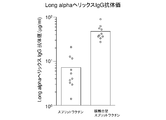
- FIG. 6 shows the increase in LAH antibody titer in the serum of mice inoculated with a membrane-fused HA split vaccine of H3N2 type. It is a figure which shows the improvement of the cross protection ability with respect to the antigen mutant of the mouse
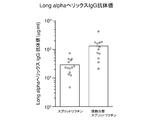
- FIG. 6 shows the increase in LAH antibody titer in the serum of mice inoculated with a membrane-fused HA split vaccine of H1N1 type. It is a figure which shows the improvement of the cross protection ability with respect to the antigen mutant strain of the mouse
- FIG. 6 shows that LAH-binding monoclonal antibodies bind more strongly to membrane fusion HA split vaccines than current HA split vaccines.
- the method for producing the influenza HA split vaccine according to the present embodiment includes the step of acidifying the influenza HA split vaccine.
- Influenza HA split vaccine is a whole particle vaccine treated with ether to remove pyrogenic lipid components, and the HA protein on the surface of virus particles necessary for immunization is recovered by density gradient centrifugation. HA protein is the main component for production.
- influenza A virus On the surface of influenza virus, a glycoprotein called spike protein protrudes (Fig. 1).
- the influenza A virus has two spike proteins, HA and NA (neuraminidase), which play a role in causing the virus to cause infection.
- HA binds to the cells to be infected and plays the role of taking the virus into the cells.
- HA frequently mutates the antigen.
- NA has the role of breaking the binding of HA to infected cells and releasing the replicated virus from the cells.
- the HA of influenza A virus is divided into two parts, the globular region and the stem region ( Figure 1).
- the bulb region contains the receptor binding site for the virus to bind to the target cell.
- the stem region also contains the fusion peptide sequence necessary for membrane fusion of the viral membrane and the cell membrane of the target cell.
- the acidic treatment of the influenza HA split vaccine changes the HA protein into a structure called membrane fusion.
- the stem region is exposed to the outside from the viral membrane instead of the spherical region, accompanied by a large structural change of the antigen stem three-dimensional structure.
- the present inventors have found, as a new finding in vivo, that an antibody that binds to LAH in the stem region is induced when membrane-fused HA is used as a vaccine, and that this antibody has a protective effect against an antigen-mutated virus strain.
- the present invention was completed based on such facts.
- the acid treatment is not particularly limited, but the pH is, for example, 3.0 to 6.5, preferably 4.0 to 6.0, and more preferably 4.4 to 5.8.
- the acid used to perform the acid treatment is not particularly limited, and for example, phosphoric acid, citric acid, maleic acid and the like can be used.
- influenza HA split vaccine of the present invention It is possible to target subtypes.
- the method for producing an influenza HA split vaccine according to the present invention not only type A vaccine but also type B vaccine having HA can be produced.
- influenza HA split vaccine obtained by the production method according to the present invention produces an antibody that binds to LAH with less mutation, it is possible to use influenza virus known as an antigen mutant within the same HA subtype. Cross protection may also be possible. Furthermore, cross-reactivity can be exhibited between HA subtypes (eg, H3 and H7 types) in which the amino acid sequences of LAH are similar.
- the influenza HA split vaccine obtained by the production method according to the present invention preferably binds to the LAH-binding monoclonal antibody more strongly than the current HA split vaccine.
- the binding to the LAH-binding monoclonal antibody be 1.05 times or more, preferably 1.1 times or more, more preferably 1.5 times or more, still more preferably 2 times or more stronger than the current HA split vaccine.
- binding 1.05 times, 1.1 times, 1.5 times, or 2 times or more stronger than the current HA split vaccine means that, for example, the reciprocal of the antibody concentration when the absorbance determined by regression shows 0.7 is the current HA split.
- the binding of the influenza HA split vaccine of the present invention to the LAH-binding monoclonal antibody of the present invention as compared to the current HA split vaccine is preferably high, and the upper limit is not particularly limited, for example, 1.05 to 200 times, 1.1 to 150 times The range of 1.5 to 100 times and 2 to 50 times is exemplified.
- the binding range of the influenza HA split vaccine of the present invention to the LAH-binding monoclonal antibody in comparison with the current HA split vaccine is lower than the lower limit selected from 1.05, 1.1, 1.5, 2, 3, 4 and 5 , 150, 100, 50, 30, and 20 in combination with the upper limit value.
- the method of measuring the binding ability of influenza HA split vaccine to a LAH-binding monoclonal antibody is not particularly limited, and can be performed by a general method known to those skilled in the art, but can be measured according to the method of the present example. .
- the LAH-binding monoclonal antibody means a monoclonal antibody that binds to LAH, and the method for producing it is not particularly limited, and it can be produced by a general method known to those skilled in the art.
- the LAH binding monoclonal antibody can bind to a peptide corresponding to at least a part of the LAH of influenza virus from which the influenza HA split vaccine is derived It means that it is a thing.
- the current HA split vaccine means an entire particle vaccine treated with ether to remove a lipid component which becomes a pyrogen, and can be produced, for example, by the method of the present Example 1.
- the current HA split vaccine can be an influenza HA split vaccine manufactured without acid treatment, to the influenza HA split vaccine of the present invention manufactured by the method having the following steps of acid treatment.
- the method for producing the influenza HA split vaccine according to the present invention can include the step of including an adjuvant.
- the adjuvant is not particularly limited, and, for example, aluminum salts such as aluminum hydroxide and aluminum phosphate, chitosan, oligodeoxynucleotides, oil-in-water emulsions and the like can be used.
- aluminum hydroxide and the use of aluminum hydroxide as an adjuvant can enhance immunogenicity.
- the influenza HA split vaccine obtained by the production method according to the present invention can be used, for example, to be boosted after a predetermined period of time after the initial inoculation.
- the period until primary vaccination after primary vaccination is not particularly limited, and is, for example, 20 days to 3 years, preferably March to 2 years, and more preferably June to 1 year. It is.
- the amount of the primary vaccination and the booster influenza HA split vaccine is not particularly limited, and is, for example, 1 ⁇ g to 200 ⁇ g, preferably 10 ⁇ g to 30 ⁇ g, more preferably 15 ⁇ g per dose.
- One dose is, for example, 0.5 mL.
- the administration method is not particularly limited.
- intranasal, subcutaneous, intradermal, transdermal, intraocular, mucous membrane, or oral administration is preferable, preferably intramuscular administration. is there.
- the influenza HA split vaccine obtained by the production method according to the present invention has a protective effect on an antigen mutant virus strain.
- H3N2 influenza virus particles A / Fujian / 411/02 (H3N2)
- H3N2 H3N2 influenza virus particles
- a / Fujian / 411/02 (H3N2) H3N2 influenza virus particles
- H1N1 influenza virus particles A / Puerto Rico / 8/34 (H1N1)
- H1N1N1 influenza virus particles A / Puerto Rico / 8/34 (H1N1)
- H1N1N1 influenza virus particles A / Puerto Rico / 8/34 (H1N1)
- H1N1N1 influenza virus particles A / Puerto Rico / 8/34 (H1N1)
- H1N1N1 A / Narita / 1/09
- H1N1N1 A / Beijing / 262/95
- H1N1N1 A / Brazil / 11/78
- H1N1N1N1 A / Chile / 1/83
- H1N1N1N1 A / New Jersey / 8/76
- H1N1N1N1 A / Taiwan / 1/86 (H1N1)
- Yamagata / 32/89 (H1N1) A / New Caledonia / 20/99 (H1N1), A / Solomon Islands
- HA split vaccine The final concentration is 0.2% in H3N2 influenza virus particles (X31 strain) or H1N1 influenza virus particles (A / Puerto Rico / 8/34 strain) suspended in phosphate buffered saline. The mixture was suspended by adding Tween 80. Diethyl ether was added to further suspend, and the mixture was allowed to stand until the aqueous layer and the diethyl ether layer were completely separated, and then the diethyl ether layer was removed. After repeating this ether extraction, the diethyl ether remaining in the collected aqueous layer was distilled off under normal pressure to obtain an HA split vaccine.
- H3N2 current HA split vaccine or membrane fusion HA split vaccine 10 ⁇ g vaccine + 20 ⁇ g AddaVax adjuvant (InvivoGen) was dissolved in phosphate buffered saline to make a volume of 200 ⁇ l) intraperitoneally.
- a membrane fusion HA vaccine in which only 10 ⁇ g vaccine is dissolved in phosphate buffered saline to make a volume of 200 ⁇ l was intraperitoneally inoculated. From 14 days after the booster vaccination, blood was collected from the vaccinated mice, and serum was collected.
- a synthetic peptide (H3; Ac-RIQDLEKYVEDTKIDLWSYNALELLEN QHTIDLTD SEMNKLFEKTRR QRENADKDDDDKC) (SEQ ID NO: 1) corresponding to a part (long alpha helix) of the stem portion is dissolved in phosphate buffered saline (pH 7.3) at 10 ⁇ g / ml, 100 ⁇ l of each was added to the 96-well plate. After standing overnight at 4 ° C., each well was washed 3 times with phosphate buffered saline, and 150 ⁇ l each of phosphate buffered saline containing 1% bovine serum albumin was added.
- mice serum is serially diluted with phosphate buffer containing 0.05% and 1% bovine serum albumin, and Tween 20, and concentration 100 ⁇ l of known standard monoclonal antibody (H3; clone name V15-5) was added to each well.
- each well is washed 3 times with phosphate buffered saline (containing 0.05% Tween 20), and phosphate buffered saline containing 0.05% Tween 20 and 1% bovine serum albumin 100 ⁇ l of diluted peroxidase labeled anti-mouse IgG antibody (Southern Biotech) was added to each well.
- the LAH antibody titer in the serum of BALB / c mice inoculated intraperitoneally with the membrane-fused HA split vaccine was the same as that in the serum of BALB / c mice inoculated intraperitoneally with the current HA split vaccine. It was significantly higher than the antibody titer.
- H3N type 2 influenza virus (A / Guizhou / 54/89) which is different from the vaccine strain in antigenicity is applied to 5 mice lethal dose 50 (50% of the amount of virus that causes lethal infection in 50% of mice) Virus infection was performed by nasal administration under anesthesia under
- mice were weighed and observed daily for 21 days after the virus infection, and the changes in weight and survival rates were examined. If mice with 25% weight loss were found, they were euthanized.
- H1N1 influenza virus particles C57BL / 6 mice ( ⁇ , 6-12 weeks old), H1N1 type current HA split vaccine or membrane fusion type HA split vaccine (10 ⁇ g vaccine + 10 ⁇ g CpG-ODN 1760 was suspended in phosphate buffered saline and mixed with an equal volume of Freund's incomplete adjuvant (ROCKLAND) to make a volume of 200 ⁇ l) intraperitoneally inoculated.
- ROCKLAND Freund's incomplete adjuvant
- membrane-fused HA split vaccine (as in the first vaccination, 10 ⁇ g vaccine + 10 ⁇ g CpG-ODN are suspended in phosphate buffered saline, and an equal amount of Freund's incomplete adjuvant (ROCKLAND) Mixed to make a volume of 200 ⁇ l). From 14 days after the booster vaccination, blood was collected from the vaccinated mice, and serum was collected.
- ROCKLAND Freund's incomplete adjuvant
- a synthetic peptide (H1; Ac-RIENLNKKVDDVGFLDIWTYNAELLVLLENERTLDYHDSNV KNLYEKVRSQLKNNADKDDDDKC) (SEQ ID NO: 2) corresponding to a part of the stem portion (long alpha helix) was used, except that a standard monoclonal antibody (H1; clone name F2) of known concentration was used. The same method as above was used.
- the LAH antibody titer in the serum of C57BL / 6 mice intraperitoneally inoculated with membrane-fused HA split vaccine is the same as that in the serum of C57BL / 6 mice inoculated intraperitoneally with the current HA split vaccine. It was significantly higher than the antibody titer.
- H1N1 influenza virus (A / Narita / 1/09), which is different from the vaccine strain in antigenicity, is added to 5 mice lethal dose 50 (50% of the amount of virus that causes lethal infection in 50% of mice) Virus infection was performed by nasal administration under anesthesia under
- mice were observed daily for 20 days after virus infection to examine their survival rates. As shown in FIG. 5, in C57BL / 6 mice vaccinated with the membrane fusion type HA split vaccine, the decrease in survival rate was significantly suppressed from the 9th day after infection with another H1N1 influenza virus of different antigenicity.
- each well was washed 3 times with phosphate buffered saline, and 150 ⁇ l each of phosphate buffered saline containing 1% bovine serum albumin was added. After standing for 2 hours at room temperature, each well is washed 3 times with phosphate buffered saline (containing 0.05% Tween 20), and LAH binding ability is serially diluted with phosphate buffer containing 1% bovine serum albumin 50 ⁇ l of each monoclonal antibody was added.
- each well is washed 3 times with phosphate buffered saline (containing 0.05% Tween 20), and phosphate buffered saline containing 0.05% Tween 20 and 1% bovine serum albumin 100 ⁇ l of peroxidase-labeled anti-mouse IgG antibody (Southern Biotech) diluted at step 1 was added to each well.
- phosphate buffered saline containing 0.05% Tween 20
- bovine serum albumin 100 ⁇ l of peroxidase-labeled anti-mouse IgG antibody (Southern Biotech) diluted at step 1 was added to each well.
- the LAH binding monoclonal antibody bound 1.05 to 21 times more strongly to the membrane fusion HA split vaccine than the current HA split vaccine.
Landscapes
- Life Sciences & Earth Sciences (AREA)
- Chemical & Material Sciences (AREA)
- Health & Medical Sciences (AREA)
- Virology (AREA)
- Organic Chemistry (AREA)
- Medicinal Chemistry (AREA)
- General Health & Medical Sciences (AREA)
- Biochemistry (AREA)
- Immunology (AREA)
- Proteomics, Peptides & Aminoacids (AREA)
- Molecular Biology (AREA)
- Genetics & Genomics (AREA)
- Biophysics (AREA)
- Microbiology (AREA)
- Pharmacology & Pharmacy (AREA)
- Pulmonology (AREA)
- Mycology (AREA)
- Public Health (AREA)
- Animal Behavior & Ethology (AREA)
- Epidemiology (AREA)
- Veterinary Medicine (AREA)
- Communicable Diseases (AREA)
- Engineering & Computer Science (AREA)
- Bioinformatics & Cheminformatics (AREA)
- Chemical Kinetics & Catalysis (AREA)
- General Chemical & Material Sciences (AREA)
- Analytical Chemistry (AREA)
- Gastroenterology & Hepatology (AREA)
- Medicines Containing Antibodies Or Antigens For Use As Internal Diagnostic Agents (AREA)
Abstract
Description
[項1]
インフルエンザHAスプリットワクチンに酸性処理を施すことにより、HA幹領域のLAHに結合する抗体を産生する、インフルエンザHAスプリットワクチンの製造方法。
[項2]
該インフルエンザHAスプリットワクチンが、抗原変異インフルエンザウイルスに対しても有効である、項1に記載の製造方法。
[項3]
インフルエンザHAスプリットワクチンに酸性処理を施すことにより、HA幹領域のLAHに結合する抗体を産生する、抗原変異インフルエンザウイルスに対するインフルエンザHAスプリットワクチンの製造方法。
[項4]
前記酸性処理はpH4.4~5.8にて処理を行うことを特徴とする請求項1~3のいずれかに記載のインフルエンザHAスプリットワクチンの製造方法。
[項5]
前記インフルエンザHAスプリットワクチンはH3N2型又はH1N1型であることを特徴とする請求項1~4のいずれかに記載のインフルエンザHAスプリットワクチンの製造方法。
[項6]
HA幹領域のLAHに結合する抗体を産生する、インフルエンザHAスプリットワクチン。
[項7]
該インフルエンザHAスプリットワクチンが、抗原変異インフルエンザウイルスに対しても有効である、項6に記載のインフルエンザHAスプリットワクチン。
[項8]
該インフルエンザHAスプリットワクチンが、HA幹領域が外部に露出した形状である、項6または7に記載のインフルエンザHAスプリットワクチン。
[項9]
インフルエンザHAスプリットワクチン抗原のHA幹領域が外部に露出した形状であることにより、HA幹領域のLAHの抗原性が高められており、かつ、HA幹領域のLAHに結合する抗体を産生することができる、項6~8のいずれかに記載のインフルエンザHAスプリットワクチン。
[項10]
インフルエンザHAスプリットワクチンに酸性処理を施すことにより製造される、HA幹領域のLAHに結合する抗体を産生する、インフルエンザHAスプリットワクチン。
[項11]
インフルエンザHAスプリットワクチンに酸性処理を施すことにより製造される、HA幹領域のLAHに結合する抗体を産生する、抗原変異インフルエンザウイルスに対しても有効なインフルエンザHAスプリットワクチン。
リン酸緩衝生理食塩水に懸濁したH3N2型インフルエンザウイルス粒子(X31株)もしくはH1N1型インフルエンザウイルス粒子(A/Puerto Rico/8/34株)に、最終濃度が0.2%になるようTween80を添加し懸濁した。ジエチルエーテルを加えさらに懸濁し、水層とジエチルエーテル層が完全に分離するまで静置した後、ジエチルエーテル層を取り除いた。このエーテル抽出を繰り返した後、回収した水層に残存するジエチルエーテルを常圧で留去し、HAスプリットワクチンとした。
HAスプリットワクチンをリン酸緩衝生理食塩水で懸濁後、酸性処理として0.15Mクエン酸緩衝液(pH 3.5)を添加しpHを5.0にした。室温で30分静置した後、1M Tris緩衝液 (pH8.0)を加えて、pHを7.3に戻した。その後、遠心分離を行い、膜融合型HAスプリットワクチンとした。作製した膜融合型HAスプリットワクチンに、最終濃度0.05%になるようホルマリンを加えて数日静置した。
3-1.H3N2型インフルエンザワクチンの接種
BALB/cマウス(♀、6~12週令)に、H3N2型の現行HAスプリットワクチン又は膜融合型HAスプリットワクチン(10 μgワクチン + 20 μg AddaVaxアジュバント(InvivoGen)をリン酸緩衝生理食塩水に溶解し、液量200 μlにする)を腹腔内接種した。初回ワクチン接種28日後に、膜融合型HAワクチン(10 μgワクチンのみをリン酸緩衝生理食塩水に溶解し、液量200 μlにする)を腹腔内接種した。追加ワクチン接種から14日後以降に、ワクチンを接種したマウスより採血を行い、血清を回収した。
下記に示す手法により、ELISA法(Enzyme-Linked Immuno Sorbent Assay)にて、H3N2型の現行HAスプリットワクチン又は膜融合型HAスプリットワクチンを腹腔内接種したBALB/cマウスの血清中のLAH抗体濃度を測定した。
H3N2型ウイルス感染防御実験では、ワクチン非接種マウス、又は、H3N2型の現行HAスプリットワクチン若しくは膜融合型HAスプリットワクチン接種後のマウスより回収した血清を、BALB/cマウス(♀、6~12週令)に200 μlずつ腹腔内投与した。
5-1.H1N1型インフルエンザウイルス粒子
C57BL/6マウス(♀、6~12週令)に、H1N1型の現行HAスプリットワクチン又は膜融合型HAスプリットワクチン(10 μgワクチン + 10 μg CpG-ODN1760をリン酸緩衝生理食塩水に懸濁し、等量のFreund’s incomplete adjuvant (ROCKLAND) と混合して液量200 μlにする)を腹腔内接種した。初回ワクチン接種28日後に、膜融合型HAスプリットワクチン(初回ワクチン接種と同様に、10 μgワクチン + 10 μg CpG-ODNをリン酸緩衝生理食塩水に懸濁し、等量のFreund’s incomplete adjuvant (ROCKLAND) と混合して液量200 μlにする)を腹腔内接種した。追加ワクチン接種から14日後以降に、ワクチンを接種したマウスより採血を行い、血清を回収した。
下記に示す手法により、ELISA法にて、H1N1型の現行HAスプリットワクチン又は膜融合型HAスプリットワクチンを腹腔内接種したC57BL/6マウスの血清中のLAH抗体濃度を測定した。
H1N1型ウイルス感染防御実験では、ワクチン非接種マウス、又は、H1N1型の現行HAスプリットワクチン若しくは膜融合型HAスプリットワクチン接種後のマウスより回収した血清を、C57BL/6マウス(♀、6~12週令)に200 μlずつ腹腔内投与した。
ELISA法(Enzyme-Linked Immuno Sorbent Assay)により、X31株を感染させたマウスもしくはヒト末梢血より作製したLAH結合性モノクローナル抗体の、現行HAスプリットワクチンまたは膜融合型HAスプリットワクチンに対する結合を測定した。H3N2型インフルエンザウイルス(X31株)の現行HAスプリットワクチンまたは膜融合型HAスプリットワクチンをリン酸緩衝生理食塩水(pH 7.3)に溶解し、96ウェルプレートに50 μlずつ添加した。4℃で一晩静置した後、リン酸緩衝生理食塩水にて各ウェルを3回洗浄し、1%牛血清アルブミンを含むリン酸緩衝生理食塩水を150 μlずつ添加した。室温で2時間静置後、リン酸緩衝生理食塩水(Tween20を0.05%含む)にて各ウェルを3回洗浄し、1%牛血清アルブミンを含むリン酸緩衝液にて段階希釈したLAH結合性のモノクローナル抗体を50μlずつ添加した。4℃で一晩静置した後、リン酸緩衝生理食塩水(Tween20を0.05%含む)にて各ウェルを3回洗浄し、0.05%Tween20と1%牛血清アルブミンを含むリン酸緩衝生理食塩水にて希釈したペルオキシダーゼ標識抗マウスIgG抗体(Southern Biotech)を各ウェルに100μlずつ添加した。室温で2時間静置後、リン酸緩衝生理食塩水(Tween20を0.05%含む)にて各ウェルを3回洗浄し、基質としてクエン酸緩衝液(pH 5.0) 60 mlにo-phenylendiamine tablet (シグマ) 30 mgと24 μlの30%過酸化水素水(30%w/w; シグマ)を加えたものを調製し、それを各ウェルに50μlずつ添加した。発色後25μlの1mol/L硫酸(和光純薬工業)で反応を止め、Microplate Reader 450型(Biorad)を用いて490 nmの吸光値を測定した。測定した現行HAスプリットワクチンまたは膜融合型HAスプリットワクチンに対するそれぞれの吸光値より、結合性の変化を算出した。
Claims (4)
- インフルエンザHAスプリットワクチンに酸性処理を施すことにより、HA幹領域のLAHに結合する抗体を産生する、抗原変異インフルエンザウイルスに対するインフルエンザHAスプリットワクチンの製造方法。
- 前記酸性処理はpH4.4~5.8にて処理を行うことを特徴とする請求項1記載のインフルエンザHAスプリットワクチンの製造方法。
- 前記インフルエンザHAスプリットワクチンはH3N2型又はH1N1型であることを特徴とする
請求項1又は2に記載のインフルエンザHAスプリットワクチンの製造方法。 - インフルエンザHAスプリットワクチンに酸性処理を施すことにより製造される、HA幹領域のLAHに結合する抗体を産生する、抗原変異インフルエンザウイルスに対するインフルエンザHAスプリットワクチン。
Priority Applications (11)
| Application Number | Priority Date | Filing Date | Title |
|---|---|---|---|
| CN201880070955.0A CN111372605B (zh) | 2017-09-04 | 2018-09-03 | 用于产生流感ha裂解疫苗的方法 |
| SG11202001937TA SG11202001937TA (en) | 2017-09-04 | 2018-09-03 | Method for producing influenza ha split vaccine |
| KR1020207009033A KR102733152B1 (ko) | 2017-09-04 | 2018-09-03 | 인플루엔자 ha 스플릿 백신의 제조 방법 |
| MYPI2020001089A MY204177A (en) | 2017-09-04 | 2018-09-03 | Method for producing influenza ha split vaccine |
| EP18852584.4A EP3679948A4 (en) | 2017-09-04 | 2018-09-03 | METHOD OF MANUFACTURING INFLUENZA-HA-SPLIT VACCINE |
| AU2018325899A AU2018325899B2 (en) | 2017-09-04 | 2018-09-03 | Method for producing influenza HA split vaccine |
| CA3074581A CA3074581A1 (en) | 2017-09-04 | 2018-09-03 | Method for producing influenza ha split vaccine |
| EA202090587A EA202090587A1 (ru) | 2017-09-04 | 2018-09-03 | Способ получения сплит-вакцины с на гриппа |
| US16/292,065 US11732031B2 (en) | 2017-09-04 | 2019-03-04 | Method for producing influenza HA split vaccine |
| PH12020500414A PH12020500414A1 (en) | 2017-09-04 | 2020-03-02 | Method for producing influenza ha split vaccine |
| US18/341,960 US20230406910A1 (en) | 2017-09-04 | 2023-06-27 | Method for producing influenza ha split vaccine |
Applications Claiming Priority (4)
| Application Number | Priority Date | Filing Date | Title |
|---|---|---|---|
| JP2017-169230 | 2017-09-04 | ||
| JP2017169230 | 2017-09-04 | ||
| JP2018137952A JP7403733B2 (ja) | 2017-09-04 | 2018-07-23 | インフルエンザhaスプリットワクチンの製造方法 |
| JP2018-137952 | 2018-07-23 |
Related Child Applications (1)
| Application Number | Title | Priority Date | Filing Date |
|---|---|---|---|
| US16/292,065 Continuation-In-Part US11732031B2 (en) | 2017-09-04 | 2019-03-04 | Method for producing influenza HA split vaccine |
Publications (1)
| Publication Number | Publication Date |
|---|---|
| WO2019045090A1 true WO2019045090A1 (ja) | 2019-03-07 |
Family
ID=65525753
Family Applications (1)
| Application Number | Title | Priority Date | Filing Date |
|---|---|---|---|
| PCT/JP2018/032537 Ceased WO2019045090A1 (ja) | 2017-09-04 | 2018-09-03 | インフルエンザhaスプリットワクチンの製造方法 |
Country Status (3)
| Country | Link |
|---|---|
| US (1) | US20230406910A1 (ja) |
| MY (1) | MY204177A (ja) |
| WO (1) | WO2019045090A1 (ja) |
Cited By (1)
| Publication number | Priority date | Publication date | Assignee | Title |
|---|---|---|---|---|
| AU2020233456B2 (en) * | 2019-03-04 | 2026-04-09 | Japan Institute For Health Security | Method for preparing influenza HA split vaccine |
Families Citing this family (1)
| Publication number | Priority date | Publication date | Assignee | Title |
|---|---|---|---|---|
| BR112022008711A2 (pt) * | 2019-11-07 | 2022-07-19 | Seqirus Uk Ltd | Métodos para produzir uma vacina viral e reduzir o tamanho da partícula viral |
Citations (2)
| Publication number | Priority date | Publication date | Assignee | Title |
|---|---|---|---|---|
| JP2014513680A (ja) * | 2011-04-21 | 2014-06-05 | バクスター・インターナショナル・インコーポレイテッド | ワクチンから抗原を単離し定量する方法 |
| WO2016028776A1 (en) * | 2014-08-18 | 2016-02-25 | Sanofi Pasteur Biologics Llc | Alkylated influenza vaccines |
-
2018
- 2018-09-03 WO PCT/JP2018/032537 patent/WO2019045090A1/ja not_active Ceased
- 2018-09-03 MY MYPI2020001089A patent/MY204177A/en unknown
-
2023
- 2023-06-27 US US18/341,960 patent/US20230406910A1/en active Pending
Patent Citations (2)
| Publication number | Priority date | Publication date | Assignee | Title |
|---|---|---|---|---|
| JP2014513680A (ja) * | 2011-04-21 | 2014-06-05 | バクスター・インターナショナル・インコーポレイテッド | ワクチンから抗原を単離し定量する方法 |
| WO2016028776A1 (en) * | 2014-08-18 | 2016-02-25 | Sanofi Pasteur Biologics Llc | Alkylated influenza vaccines |
Non-Patent Citations (2)
| Title |
|---|
| BYRD L.L. ET AL.: "Influenza Hemagglutinin (HA) Stem Region Mutations That Stabilize or Destabilize the Structure of Multiple HA Subtypes", JOURNAL OF VIROLOGY, vol. 89, no. 8, April 2015 (2015-04-01), pages 4504 - 4516, XP055582273, ISSN: 0022-538X, DOI: 10.1128/JVI.00057-15 * |
| DOMS R.W. ET AL.: "Quaternary structure of influenza virus hemagglutinin after acid treatment", JOURNAL OF VIROLOGY, vol. 60, no. 3, December 1986 (1986-12-01), pages 833 - 839, XP055582269, ISSN: 0022-538X * |
Cited By (1)
| Publication number | Priority date | Publication date | Assignee | Title |
|---|---|---|---|---|
| AU2020233456B2 (en) * | 2019-03-04 | 2026-04-09 | Japan Institute For Health Security | Method for preparing influenza HA split vaccine |
Also Published As
| Publication number | Publication date |
|---|---|
| MY204177A (en) | 2024-08-14 |
| US20230406910A1 (en) | 2023-12-21 |
Similar Documents
| Publication | Publication Date | Title |
|---|---|---|
| JP7403733B2 (ja) | インフルエンザhaスプリットワクチンの製造方法 | |
| KR101665141B1 (ko) | 인플루엔자 항원 수송 벡터 및 구조물 | |
| Kim et al. | Multiple heterologous M2 extracellular domains presented on virus-like particles confer broader and stronger M2 immunity than live influenza A virus infection | |
| Gao et al. | Enhanced Influenza VLP vaccines comprising matrix-2 ectodomain and nucleoprotein epitopes protects mice from lethal challenge | |
| Rosendahl Huber et al. | Synthetic long peptide influenza vaccine containing conserved T and B cell epitopes reduces viral load in lungs of mice and ferrets | |
| IL303650B1 (en) | Stabilized group 2 influenza hemagglutinin stem region trimers and uses thereof | |
| JP2002531415A (ja) | ペプチドベースのインフルエンザ用ワクチン | |
| JP7545955B2 (ja) | インフルエンザhaスプリットワクチンの製造方法 | |
| US20230406910A1 (en) | Method for producing influenza ha split vaccine | |
| JP2023052092A (ja) | 免疫原性組成物 | |
| US8883165B2 (en) | Modified peptide vaccine derived from influenza M2 | |
| WO2009152518A1 (en) | Novel peptide adjuvant for influenza vaccination | |
| WO2025092866A1 (zh) | 一种多价流感mRNA疫苗 | |
| TWI857017B (zh) | 流感ha裂解疫苗之製造方法 | |
| EA045852B1 (ru) | Способ получения сплит-вакцины с ha гриппа | |
| Mardanova et al. | High immunogenicity of plant-produced influenza based on the M2e peptide fused to flagellin | |
| HK40032891A (en) | Method for producing influenza ha split vaccine | |
| CN115947801B (zh) | 一种流感病毒通用和冠状病毒联合多肽及其疫苗的应用 | |
| EA045912B1 (ru) | Способ приготовления сплит-вакцины на основе гемагглютинина гриппа | |
| HK40068192A (en) | Method for preparing influenza ha split vaccine | |
| CN101402677A (zh) | 一种四分肽及其应用 |
Legal Events
| Date | Code | Title | Description |
|---|---|---|---|
| 121 | Ep: the epo has been informed by wipo that ep was designated in this application |
Ref document number: 18852584 Country of ref document: EP Kind code of ref document: A1 |
|
| ENP | Entry into the national phase |
Ref document number: 3074581 Country of ref document: CA |
|
| NENP | Non-entry into the national phase |
Ref country code: DE |
|
| ENP | Entry into the national phase |
Ref document number: 20207009033 Country of ref document: KR Kind code of ref document: A |
|
| ENP | Entry into the national phase |
Ref document number: 2018325899 Country of ref document: AU Date of ref document: 20180903 Kind code of ref document: A |
|
| ENP | Entry into the national phase |
Ref document number: 2018852584 Country of ref document: EP Effective date: 20200406 |
|
| WWG | Wipo information: grant in national office |
Ref document number: 11202001937T Country of ref document: SG |
|
| WWP | Wipo information: published in national office |
Ref document number: 11202001937T Country of ref document: SG |