WO2019049711A1 - Appareil de traitement d'informations, procédé de traitement d'informations, système client et procédé de commande de système client - Google Patents
Appareil de traitement d'informations, procédé de traitement d'informations, système client et procédé de commande de système client Download PDFInfo
- Publication number
- WO2019049711A1 WO2019049711A1 PCT/JP2018/031661 JP2018031661W WO2019049711A1 WO 2019049711 A1 WO2019049711 A1 WO 2019049711A1 JP 2018031661 W JP2018031661 W JP 2018031661W WO 2019049711 A1 WO2019049711 A1 WO 2019049711A1
- Authority
- WO
- WIPO (PCT)
- Prior art keywords
- authentication
- information
- position information
- unit
- user
- Prior art date
- Legal status (The legal status is an assumption and is not a legal conclusion. Google has not performed a legal analysis and makes no representation as to the accuracy of the status listed.)
- Ceased
Links
Images












Classifications
-
- H—ELECTRICITY
- H04—ELECTRIC COMMUNICATION TECHNIQUE
- H04L—TRANSMISSION OF DIGITAL INFORMATION, e.g. TELEGRAPHIC COMMUNICATION
- H04L63/00—Network architectures or network communication protocols for network security
- H04L63/10—Network architectures or network communication protocols for network security for controlling access to devices or network resources
- H04L63/102—Entity profiles
-
- H—ELECTRICITY
- H04—ELECTRIC COMMUNICATION TECHNIQUE
- H04L—TRANSMISSION OF DIGITAL INFORMATION, e.g. TELEGRAPHIC COMMUNICATION
- H04L63/00—Network architectures or network communication protocols for network security
- H04L63/10—Network architectures or network communication protocols for network security for controlling access to devices or network resources
- H04L63/107—Network architectures or network communication protocols for network security for controlling access to devices or network resources wherein the security policies are location-dependent, e.g. entities privileges depend on current location or allowing specific operations only from locally connected terminals
-
- G—PHYSICS
- G06—COMPUTING OR CALCULATING; COUNTING
- G06F—ELECTRIC DIGITAL DATA PROCESSING
- G06F21/00—Security arrangements for protecting computers, components thereof, programs or data against unauthorised activity
- G06F21/30—Authentication, i.e. establishing the identity or authorisation of security principals
- G06F21/31—User authentication
- G06F21/32—User authentication using biometric data, e.g. fingerprints, iris scans or voiceprints
-
- G—PHYSICS
- G06—COMPUTING OR CALCULATING; COUNTING
- G06Q—INFORMATION AND COMMUNICATION TECHNOLOGY [ICT] SPECIALLY ADAPTED FOR ADMINISTRATIVE, COMMERCIAL, FINANCIAL, MANAGERIAL OR SUPERVISORY PURPOSES; SYSTEMS OR METHODS SPECIALLY ADAPTED FOR ADMINISTRATIVE, COMMERCIAL, FINANCIAL, MANAGERIAL OR SUPERVISORY PURPOSES, NOT OTHERWISE PROVIDED FOR
- G06Q20/00—Payment architectures, schemes or protocols
- G06Q20/30—Payment architectures, schemes or protocols characterised by the use of specific devices or networks
- G06Q20/32—Payment architectures, schemes or protocols characterised by the use of specific devices or networks using wireless devices
- G06Q20/321—Payment architectures, schemes or protocols characterised by the use of specific devices or networks using wireless devices using wearable devices
-
- H—ELECTRICITY
- H04—ELECTRIC COMMUNICATION TECHNIQUE
- H04L—TRANSMISSION OF DIGITAL INFORMATION, e.g. TELEGRAPHIC COMMUNICATION
- H04L63/00—Network architectures or network communication protocols for network security
- H04L63/10—Network architectures or network communication protocols for network security for controlling access to devices or network resources
- H04L63/101—Access control lists [ACL]
-
- H—ELECTRICITY
- H04—ELECTRIC COMMUNICATION TECHNIQUE
- H04L—TRANSMISSION OF DIGITAL INFORMATION, e.g. TELEGRAPHIC COMMUNICATION
- H04L63/00—Network architectures or network communication protocols for network security
- H04L63/10—Network architectures or network communication protocols for network security for controlling access to devices or network resources
- H04L63/108—Network architectures or network communication protocols for network security for controlling access to devices or network resources when the policy decisions are valid for a limited amount of time
-
- H—ELECTRICITY
- H04—ELECTRIC COMMUNICATION TECHNIQUE
- H04L—TRANSMISSION OF DIGITAL INFORMATION, e.g. TELEGRAPHIC COMMUNICATION
- H04L63/00—Network architectures or network communication protocols for network security
- H04L63/14—Network architectures or network communication protocols for network security for detecting or protecting against malicious traffic
- H04L63/1408—Network architectures or network communication protocols for network security for detecting or protecting against malicious traffic by monitoring network traffic
- H04L63/1425—Traffic logging, e.g. anomaly detection
-
- H—ELECTRICITY
- H04—ELECTRIC COMMUNICATION TECHNIQUE
- H04L—TRANSMISSION OF DIGITAL INFORMATION, e.g. TELEGRAPHIC COMMUNICATION
- H04L63/00—Network architectures or network communication protocols for network security
- H04L63/08—Network architectures or network communication protocols for network security for authentication of entities
- H04L63/083—Network architectures or network communication protocols for network security for authentication of entities using passwords
-
- H—ELECTRICITY
- H04—ELECTRIC COMMUNICATION TECHNIQUE
- H04L—TRANSMISSION OF DIGITAL INFORMATION, e.g. TELEGRAPHIC COMMUNICATION
- H04L63/00—Network architectures or network communication protocols for network security
- H04L63/08—Network architectures or network communication protocols for network security for authentication of entities
- H04L63/0861—Network architectures or network communication protocols for network security for authentication of entities using biometrical features, e.g. fingerprint, retina-scan
-
- H—ELECTRICITY
- H04—ELECTRIC COMMUNICATION TECHNIQUE
- H04W—WIRELESS COMMUNICATION NETWORKS
- H04W12/00—Security arrangements; Authentication; Protecting privacy or anonymity
- H04W12/06—Authentication
-
- H—ELECTRICITY
- H04—ELECTRIC COMMUNICATION TECHNIQUE
- H04W—WIRELESS COMMUNICATION NETWORKS
- H04W12/00—Security arrangements; Authentication; Protecting privacy or anonymity
- H04W12/60—Context-dependent security
- H04W12/61—Time-dependent
-
- H—ELECTRICITY
- H04—ELECTRIC COMMUNICATION TECHNIQUE
- H04W—WIRELESS COMMUNICATION NETWORKS
- H04W12/00—Security arrangements; Authentication; Protecting privacy or anonymity
- H04W12/60—Context-dependent security
- H04W12/63—Location-dependent; Proximity-dependent
-
- H—ELECTRICITY
- H04—ELECTRIC COMMUNICATION TECHNIQUE
- H04W—WIRELESS COMMUNICATION NETWORKS
- H04W12/00—Security arrangements; Authentication; Protecting privacy or anonymity
- H04W12/60—Context-dependent security
- H04W12/67—Risk-dependent, e.g. selecting a security level depending on risk profiles
Definitions
- the present disclosure relates to an information processing apparatus, an information processing method, a client system, and a control method for a client system, and in particular, information that enables a user to reduce the effort of authentication by a user without lowering the security level in payment processing.
- the present invention relates to a processing device, an information processing method, a client system, and a control method of the client system.
- Patent Document 1 There has been proposed a technique for determining an authentication processing method based on trust information corresponding to the legitimacy of a user at the time of electronic payment (see Patent Document 1).
- the present disclosure has been made in view of such a situation, and in particular, it is possible to reduce the time and effort of authentication by a user without lowering the security level in payment processing.
- the settlement process is performed based on a positional relationship between an authentication apparatus that has authenticated the user and a client apparatus on which the user performs the settlement process.
- An information processing apparatus and an information processing method including a risk determination unit that determines a risk relating to the present invention.
- a risk relating to the settlement process is determined based on a positional relationship between an authentication device that has authenticated the user and a client device on which the user performs the settlement process. .
- a client system includes an authentication device that authenticates a user, and a client that executes the settlement process by the user with respect to an information processing device that determines a risk related to the settlement process.
- a client system comprising an apparatus, wherein the authentication apparatus authenticates the user, an authentication apparatus position information acquisition section acquires position information of the authentication apparatus as authentication apparatus position information, and the authentication section Client device position information acquisition that includes an authentication device position information transmission unit that transmits an authentication result and the authentication device position information to the information processing device, and the client device acquires position information of the client device as client device position information And the client apparatus position information to the information processing apparatus That is a client system including a client device location information transmitting unit.
- the authentication device authenticates the user, position information of the authentication device is acquired as authentication device position information, and an authentication result and the authentication device position information are received by the information processing device.
- the client device transmits the position information of the client device as the client device position information, and the client device position information is transmitted to the information processing device.
- Variation of the method of determining whether the client device and the wearable device are at substantially the same position (part 1) 17. Variation of the method of determining whether the client device and the wearable device are at substantially the same position (part 2) 18. Modification of Context Information Upload Process 19. Application to face-to-face payment 20. Example of execution by software
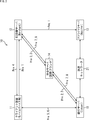
- the payment processing system is configured as shown in FIG. 1, for example.
- the payment processing system 1 of FIG. 1 includes a client device 11, an EC (Electronic Commerce) store server (Merchant) 12, an Acquier server (Acquirer) 13, and an intermediary server 14 managed and operated by an international brand (Payment card brand) vendor. And a bank server (Issuer) 15.
- EC Electronic Commerce
- Acquirer Acquirer
- Issuer bank server
- the client device 11 is a smartphone, a portable PC (personal computer), or the like, which is owned by the user, accesses the EC store server 12 with a browser application program or the like, selects a product, and performs payment processing. Realize purchase.
- the client device 11 executes payment processing by transmitting information such as the card number of the user's credit card to the EC shop server 12.
- the EC store server (Merchant) 12 is a server managed and operated by a member store (Merchant) corresponding to the store in face-to-face payment, and HP (HomePage) etc. required for product sales via a network such as the Internet It provides the client device 11 and the like.
- the EC store server 12 requests the acquirer server 13 for credit processing required for payment by credit card when selling the product selected by the client device 11 via the HP etc., and acquires the credit result Do.
- EC shop server 12 supplies information on a card number of a credit card, and the amount of money of goods as information required for credit processing, and requests credit processor 13 for credit processing. Then, the EC store server 12 acquires the credit result from the acquirer server 13, and performs settlement processing relating to the sale of the product based on the credit result.
- the acquirer server (Acquirer) 13 is a server managed by a member store manager (Acquirer), which is a financial institution for paying the EC store server 12 an amount according to the result of payment by the credit card.
- the acquirer server 13 supplies the acquired information of the credit card number and the amount to the intermediation server 14 and the credit Processing is requested, and the credit result is acquired and supplied to the EC store server 12.
- the intermediary server 14 is a server managed by a vendor managing an international brand (Payment card brand) such as VISA (registered trademark), Master (registered trademark), and JCB (registered trademark), Intermediary processing related to credit processing with the server 15 is performed. That is, the intermediation server 14 acquires information required for crediting of the card number of the credit card and the amount from the acquirer server 13 and accepts a request for credit processing. Further, the intermediary server 14 supplies the information necessary for the credit of the acquired card number and amount to the bank server 15, and acquires the credit result and transmits it to the acquirer server 13.
- Payment card brand such as VISA (registered trademark), Master (registered trademark), and JCB (registered trademark)
- VISA registered trademark
- Master registered trademark
- JCB registered trademark
- the bank server 15 is a credit card issuer, and is a server managed and operated by a bank that provides various services by contracting with a credit card user, and executes credit processing related to payment by credit card. That is, the bank server 15 executes the credit processing based on the information of the card number and the amount of the credit card used for the settlement supplied from the intermediary server 14, and supplies the credit result to the intermediary server 14. In addition, the bank server 15 records information on the amount of money associated with the purchase of goods, which is settled when credit is approved, and transfers the information to an account managed by the acquirer server 13.
- the acquirer server 13 pays the credit card payment amount transferred from the bank server 15 to the account of the member store.
- the settlement processing by the settlement processing system 1 of FIG. 1 as described above is the following processing.
- the EC shop server 12 acquires the information of the card number of the credit card from the client device 11, it transmits the information for requesting the credit process to the acquirer server 13 together with the information of the amount concerning the product purchase. .
- processing Req2 when acquiring information on credit card card number and amount from EC shop server 12 and acquiring information for requesting credit processing, the acquirer server 13 performs credit processing together with the card number information and amount information. Information to request the relay server 14.
- the intermediary server 14 In processing Req3, when the intermediary server 14 acquires the card number and amount information of the credit card from the acquirer server 13, and acquires the information for requesting the credit processing, it requests the credit processing together with the information of the card number and the amount. Information to the bank server 15.
- the bank server 15 executes the credit process and transmits the credit result to the intermediation server 14.
- the intermediary server 14 transmits the credit result to the acquirer server 13.
- the acquirer server 13 transmits it to the EC shop server 12.
- the EC store server 12 completes the settlement processing based on the credit result and ends the sales processing of the product. That is, if there is no problem in the credit result, the settlement of the charge for product sales is completed, and if there is a problem in the credit result, the product sales can not be established.
- the settlement process is realized by the above process.
- this series of processing is processing on the premise that forgery or impersonation of a credit card has not been made, and in reality, forgery or impersonation measures for credit card information itself are required.
- pre-credit processing is further performed in the above-described series of payment processing as a countermeasure against forgery or spoofing of the credit card information itself.
- FIG. 2 shows a configuration example of a prior credit processing system for realizing the prior credit processing.
- the advance credit processing system 10 of FIG. 2 includes the client device 11, the EC store server (Merchant) 12, the intermediation server 14, and the bank server (Issuer) 15 of FIG.
- the acquirer server (Acquirer) 13 is described, it is illustrated to indicate a state in which the client apparatus 11 proceeds to the normal settlement process.
- the settlement network 21 provided between the acquirer server 13 and the bank server 15 is the intermediary server 14 or the like in the settlement process of FIG. 1.
- the EC store server 12 transmits the information on the card number of the credit card supplied from the client device 11 and the amount of money for the product purchase at the timing before the request for the credit shown in the processing Req 1 in FIG. It is supplied to the bank server 15 via the terminal to request advance credit and obtain the advance credit result. In addition, if the pre-credit result is not recognized, the EC store server 12 immediately enters authentication processing called “Challenge Flow” by causing the client device 11 to directly enter a password, and immediately inputs biometric information. The bank server 15 is requested via the intermediation server 14 to perform authentication processing.
- the bank server 15 In response to the request for the challenge flow, the bank server 15 causes the client device 11 to execute the authentication process to obtain the authentication result, and the advance credit result for the challenge flow is sent to the EC store via the intermediary server 14. Send to server 12 In addition, there is no problem in the advance credit result, that is, there is no need for a challenge flow, and a flow that proceeds with the settlement processing as it is is referred to as a frictionless flow.
- the bank server 15 calculates a risk score for the risk relating to forgery or spoofing based on the information on the card number of the credit card supplied from the EC store server 12 and the information on the amount.
- the bank server 15 determines that the risk score is lower than the predetermined threshold by comparing the calculated risk score with the predetermined threshold and there is no forgery or spoofing of the card number of the credit card, there is a problem as prior credit.
- the advance credit result indicating the absence is transmitted to the EC store server 12 via the intermediary server 14. In this case, the EC shop server 12 proceeds with the settlement process described with reference to Req 1 of FIG.
- the bank server 15 determines that the risk score is higher than the predetermined threshold and there is a suspicion of forgery or spoofing of the credit card by comparing the calculated risk score with the predetermined threshold, the pre-credit is The advance credit result indicating that there is a problem is transmitted to the EC store server 12 via the intermediary server 14.
- the EC shop server 12 requests the bank server 15 for a challenge flow, which is a process of requesting the client device 11 to perform an authentication process via the intermediary server 14, while acquiring the advance credit result.
- the bank server 15 requests the client device 11 to perform password authentication processing, acquires it, and determines whether the authentication result is an appropriate authentication result or not via the intermediary server 14. , Sends to the EC store server 12.
- the EC shop server 12 performs the process Req 1 in FIG. 1 as in the case where the risk score is higher than a predetermined threshold. Perform the payment process as shown.
- the EC shop server 12 cancels the settlement process.
- advance credit processing will be described by the advance credit system of FIG.
- the client device 11 transmits, to the EC shop server 12, information on the card number of the credit card involved in the payment process and the amount required for the payment process.
- the EC shop server 12 requests the bank server 15 for pre-credit processing via the intermediary server 14 by combining the acquired card number information and the information on the amount.
- the bank server 15 calculates a risk score based on the acquired card number information and the information of the amount, and determines whether the prior credit is OK or not by comparing the risk score with a predetermined threshold. And transmit the advance credit result to the EC store server 12 via the intermediation server 14 based on the determination result.
- the EC shop server 12 starts the settlement process by the process Req1. That is, in this case, frictionless processing is realized.
- the EC store server 12 authenticates the client apparatus 11 by the challenge flow in processing Pre4. Request.
- the client device 11 In processing Pre5, the client device 11 notifies the bank server 15 that the authentication processing by the challenge flow has been requested from the EC store server 12, and directs the authentication processing by the challenge flow from the bank server 15 to the client device 11. Notify you to request.
- the bank server 15 requests the client device 11 to input a password and perform an authentication process using biometric information.
- the client device 11 supplies the bank server 15 with the authentication result based on the input password and the biometric information.
- the bank server 15 acquires an authentication result and determines whether the authentication result is legitimate.
- the bank server 15 transmits the determination result as to whether or not the authentication information in the challenge flow is legitimate, to the EC shop server 12 via the intermediation server 14.
- the EC store server 12 notifies that the authentication result of the challenge flow has been received.
- a risk score by forgery or spoofing of a credit card is obtained, and if the risk score is lower than a predetermined threshold, it becomes a frictionless flow, the settlement processing proceeds as it is, and the risk score is predetermined. If it is higher than the threshold value, a challenge flow is performed, whereby the authentication process is performed, and the settlement process is advanced according to the authentication result.
- the settlement process can be realized in a state in which measures against forgery or spoofing of the credit card are taken, and hence more appropriate settlement process can be realized.
- the process of inputting authentication information in a challenge flow when a legitimate user uses a legitimate credit card is a cumbersome process, so it is desirable that the challenge flow is not made in the pre-credit process.
- the payment processing system 30 of FIG. 3 includes a client device 31, an EC store server (Merchant) 32, an acquirer server (Acquirer) 33, an intermediary server 34, a bank server (Issuer) 35, and a wearable device 36.
- the mediation server 34 managed and operated by the client apparatus 31, the EC store server (Merchant) 32, the acquirer server (Acquirer) 33, and the international brand (Payment card brand) contractor has basic functions shown in FIG.
- the client device 11, the EC store server (Merchant) 12, the acquirer server (Acquirer) 13, and the mediation server 14 are substantially the same.
- the payment processing system 30 of FIG. 3 differs from the payment processing system 1 of FIG. 1 in that a wearable device 36 is newly provided.
- the wearable device 36 is attached to a user who uses the client device 31.
- the wearable device 36 performs authentication processing based on biometric information of the user, acquires position information at predetermined time intervals, and sends it to the bank server 35 as context information. Send.
- the biometric information used in the authentication process in the wearable device 36 may be any biometric information that can identify the user, such as a fingerprint, a vein pattern, an iris, and a face image or a combination thereof. However, in the following, an example will be described in which an authentication process using a fingerprint is performed as biometric information.
- the settlement processing of the settlement processing system 30 of FIG. 3 differs from the settlement processing in the settlement processing system 1 of FIG. 1 in that, in advance credit processing, the position information of the client apparatus 31 in addition to the information of the credit card and the amount. It is a point to use.
- the wearable device 36 transmits position information to the bank server 35 at predetermined time intervals.
- the bank server 35 stores, in advance, the wearable device 36 used by the user who is the user of the credit card and the client device 11 used for payment processing in association with the card number of the credit card. There is.
- the bank server 35 acquires and stores context information including position information periodically transmitted from the wearable device 36. Then, when the settlement process is performed, the bank server 35 compares the position information of the client device 31 for which the settlement process has been requested with the position information of the wearable device 36 which is the latest context information, and for the case of coincidence.
- the user who requests the payment process using the client device 31 is regarded as the person who has been authenticated by the wearable device 36 based on the biometric information, the risk score is reduced, and the pre-credit process is performed.
- a legitimate user using a legitimate credit card is a legitimate user whose credit card user has been authenticated, and the user performs the settlement process.
- the risk score is reduced, the frequency of transition to the challenge flow is reduced, and the authentication process along with the challenge flow is not necessary. Therefore, the cumbersome authentication process is performed without reducing the security level. It is possible to reduce the frequency and realize comfortable settlement processing.
- the settlement processing in the settlement processing system 30 of FIG. 3 is the same as the settlement processing of the settlement processing system 1 of FIG. 1, so the description thereof will be omitted.
- the prior credit system 40 of the present disclosure includes the client device 31, the EC store server (Merchant) 32, the intermediary server 34, the bank server (Issuer) 35, and the wearable device 36 in FIG.
- the bank server 35 is basically the same as the bank server 15 in basic functions, but uses the user's position information and authentication result by biometric information transmitted at predetermined time intervals from the wearable device 36 as context information Acquire and store.
- the bank server 35 when acquiring the position information of the client device 31 in addition to the card number and amount information of the credit card in the advance credit processing, the bank server 35 includes the context information supplied from the wearable device 36 acquired most recently.
- the position information of each of the client device 31 and the wearable device 36 substantially matches based on the comparison with the position information, and there is no problem in the authentication result by the biological information (in the authentication process, the acquired biological information When the registered regular user's biometric information matches), the risk score is reduced by a predetermined value.
- the bank server 35 uses a legitimate credit card as a legitimate user. Since it can be considered that the settlement process is required, the risk score obtained by the usual calculation method is reduced.
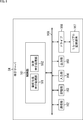
- Example of client device configuration >> Next, with reference to FIG. 5, an exemplary configuration of the client device 31 will be described.
- the client device 31 is a terminal used by a user who purchases a product by payment processing, and is, for example, a smartphone or a PC.
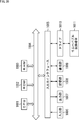
- the client device 31 includes a control unit 51, a communication unit 52, a storage unit 53, an input unit 54, an output unit 55, a drive 56, a removable storage medium 57, and a GPS 59. It is configured to be electrically connected via a bus 58.
- the control unit 51 includes a processor and a memory, and controls the overall operation of the client device 31.
- control unit 51 includes a payment processing unit 71, a challenge processing unit 72, and a registration processing unit 73.
- the payment processing unit 71, the challenge processing unit 72, and the registration processing unit 73 are functions realized by installing an application program distributed from the bank server 35, for example.
- the settlement processing unit 71 executes the settlement processing at the time of purchasing a product, and transmits the position information of the client device 31 acquired by the GPS 59 and the information of the card number of the credit card stored in the storage unit 53 to the communication unit. It controls 52 and sends it to the EC store server 12.
- the challenge processing unit 72 controls the output unit 55 to display an image prompting the user to input authentication information when the risk score is high and the authentication processing is requested by the bank server 35 in the prior authentication processing, or the voice is displayed. And outputs the authentication result based on the input authentication information to the EC store server 12 by controlling the communication unit 52.
- the registration processing unit 73 executes registration processing, registers the wearable device 36 worn by the user and the card number in association with the bank server 35, and stores them.
- the communication unit 52 is controlled by the control unit 51, and is connected to the EC store server 32 or the wearable device 36 via a communication network represented by a LAN (Local Area Network) or the like by wire (or wireless (not shown)). Send and receive various data and programs between the EC store server 32 or the wearable device 36 via a communication network represented by a LAN (Local Area Network) or the like by wire (or wireless (not shown)). Send and receive various data and programs between a LAN (Local Area Network) or the like by wire (or wireless (not shown)).
- LAN Local Area Network
- the communication unit 52 includes various communication functions including a WiFi communication unit (WiFi) 91, an LTE communication unit (LTE) 92, a Bluetooth communication unit (Bluetooth) 93, and an NFC communication unit (NFC) 94. It communicates with the EC store server 12 and the wearable device 36.
- the WiFi communication unit (WiFi) 91, the LTE communication unit (LTE) 92, the Bluetooth communication unit (Bluetooth) 93, and the NFC communication unit (NFC) 94 may be provided as long as one of them is provided. Or the communication part of this other communication system may be included.
- the WiFi communication unit (WiFi) 91 is controlled by the control unit 51, and exchanges data and programs with other devices through communication by WiFi.
- LTE communication unit (LTE) 92 is controlled by the control unit 51, and exchanges data and programs with other devices by communication according to LTE (Long Term Evolution).
- LTE Long Term Evolution
- LTE is one of mobile phone communication technologies, and may be another communication method of mobile phone communication.
- a Bluetooth communication unit (Bluetooth) 93 is controlled by the control unit 51, and exchanges data and programs with other devices through communication by Bluetooth (registered trademark).
- NFC communication unit (NFC) 93 is controlled by the control unit 51, and exchanges data and programs with other devices through communication by NFC (Near Field Communication).
- the storage unit 53 is controlled by the control unit 51 and is made of a hard disk drive (HDD), a solid state drive (SSD), a semiconductor memory or the like, and writes or reads various data and programs. In addition, the storage unit 53 stores information of a card number of a credit card.
- HDD hard disk drive
- SSD solid state drive
- the storage unit 53 stores information of a card number of a credit card.
- the input unit 54 includes a keyboard, operation buttons, and the like, and receives user's operation input.
- the output unit 55 includes an audio output unit including a display unit such as a display including an LCD (Liquid Crystal Display) or an organic EL (Electro Luminescence) to display an image, a speaker outputting an audio, etc. Output images and sounds as needed.
- a display unit such as a display including an LCD (Liquid Crystal Display) or an organic EL (Electro Luminescence) to display an image, a speaker outputting an audio, etc. Output images and sounds as needed.
- the drive 56 is a magnetic disk (including a flexible disk), an optical disk (including a compact disc-read only memory (CD-ROM), a digital versatile disc (DVD)), a magneto-optical disc (including a mini disc (MD)), Alternatively, data is read from or written to a removable storage medium 57 such as a semiconductor memory.
- a removable storage medium 57 such as a semiconductor memory.
- a GPS (Global Positioning System) 59 receives signals from a plurality of satellites (not shown), calculates position information of the client device 11, and outputs the calculated position information to the control unit 51.
- the EC shop server 32 is a server managed and operated by a shop that sells a product by settlement processing, and is, for example, a PC.
- the EC shop server 32 includes a control unit 101, a communication unit 102, a storage unit 103, an input unit 104, an output unit 105, a drive 106, and a removable storage medium 107, and they mutually communicate It is configured to be electrically connected via 108.
- the control unit 101 is configured by a processor and a memory, and controls the entire operation of the EC store server 32.
- control unit 101 includes an advance credit processing unit 121 and a settlement processing unit 122.
- the advance credit processing unit 121 executes advance credit processing, which is processing for counterfeiting a credit card and spoofing, in advance in settlement processing. More specifically, the advance credit processing unit 121 sends the bank server 35 the card number of the credit card, the amount, and the position information of the client apparatus 31 that has requested the settlement process via the intermediation server 34. Supply to request pre-credit processing.
- the prior credit processing unit 121 requests to obtain the authentication result from the client device 31 by the challenge flow.
- the settlement processing unit 122 requests the acquirer server 33 to perform credit processing (processing Req1) related to the settlement processing based on the card number of the credit card and the information of the amount. .
- the settlement process is canceled when there is a problem in the authentication result.
- the communication unit 102 is controlled by the control unit 101 and wired (or wirelessly (not shown)) through the communication network represented by a LAN (Local Area Network) or the like, the client device 31, the acquirer server 33, It transmits and receives various data and programs to and from the mediation server 34.
- LAN Local Area Network
- the storage unit 103 is controlled by the control unit 101 and includes an HDD (Hard Disk Drive), an SSD (Solid State Drive), or a semiconductor memory, and writes or reads various data and programs.
- HDD Hard Disk Drive
- SSD Solid State Drive
- semiconductor memory volatile and erasable programmable read-only memory
- the input unit 104 includes a keyboard, operation buttons, and the like, and receives an operation input from the user.
- the output unit 105 includes an audio output unit including a display unit such as a display including an LCD (Liquid Crystal Display) or an organic EL (Electro Luminescence) to display an image, a speaker outputting an audio, or the like. Output images and sounds as needed.
- a display unit such as a display including an LCD (Liquid Crystal Display) or an organic EL (Electro Luminescence) to display an image, a speaker outputting an audio, or the like. Output images and sounds as needed.
- LCD Liquid Crystal Display
- organic EL Electro Luminescence
- the drive 106 includes a magnetic disc (including a flexible disc), an optical disc (including a compact disc-read only memory (CD-ROM), a digital versatile disc (DVD)), and a magneto-optical disc (including a mini disc (MD)).
- a magnetic disc including a flexible disc
- an optical disc including a compact disc-read only memory (CD-ROM), a digital versatile disc (DVD)
- DVD digital versatile disc
- a magneto-optical disc including a mini disc (MD)
- data is read from or written to a removable storage medium 107 such as a semiconductor memory.
- the acquirer server 33 is a server managed by a member store manager, which is a financial institution for paying the EC store server 12 an amount according to the result of payment by the credit card, and is, for example, a PC.
- the acquirer server 33 includes a control unit 141, a communication unit 142, a storage unit 143, an input unit 144, an output unit 145, a drive 146, and a removable storage medium 147, which mutually communicate with each other as a bus. It is configured to be electrically connected via 108.
- the control unit 141 is configured by a processor and a memory, and controls the entire operation of the acquirer server 33.
- control unit 141 includes a payment processing unit 151.
- the settlement processing unit 151 sends the intermediary server 34 the information based on the card number of the credit card and the amount. Request credit processing related to payment processing.
- the communication unit 142 is controlled by the control unit 141 and wired (or wirelessly (not shown)) via the communication network represented by LAN (Local Area Network) etc. Send and receive various data and programs between the communication network represented by LAN (Local Area Network) etc.
- the storage unit 143 is controlled by the control unit 141 and includes an HDD (Hard Disk Drive), an SSD (Solid State Drive), a semiconductor memory, or the like, and writes or reads various data and programs.
- HDD Hard Disk Drive
- SSD Solid State Drive
- semiconductor memory or the like, and writes or reads various data and programs.
- the input unit 144 includes a keyboard, operation buttons, and the like, and receives user's operation input.
- the output unit 145 includes an audio output unit including a display unit such as a display including an LCD (Liquid Crystal Display) or an organic EL (Electro Luminescence) to display an image, a speaker outputting an audio, etc. Output images and sounds as needed.
- a display unit such as a display including an LCD (Liquid Crystal Display) or an organic EL (Electro Luminescence) to display an image, a speaker outputting an audio, etc. Output images and sounds as needed.
- LCD Liquid Crystal Display
- organic EL Electro Luminescence
- the drive 146 includes a magnetic disk (including a flexible disk), an optical disk (including a compact disc-read only memory (CD-ROM), a digital versatile disc (DVD)), and a magneto-optical disc (including a mini disc (MD)).
- a magnetic disk including a flexible disk
- an optical disk including a compact disc-read only memory (CD-ROM), a digital versatile disc (DVD)
- DVD digital versatile disc
- magneto-optical disc including a mini disc (MD)
- data is read from or written to a removable storage medium 147 such as a semiconductor memory.
- the intermediary server 34 is a server managed and operated by a vendor that manages an international brand (Payment card brand), and executes an intermediary process related to the credit process between the acquirer server 13 and the bank server 15 in the settlement process. In the advance credit processing, an intermediary process related to the advance credit processing between the EC store server 32 and the bank server 15 is executed.
- an intermediary process related to the advance credit processing between the EC store server 32 and the bank server 15 is executed.
- the mediation server 34 includes a control unit 161, a communication unit 162, a storage unit 163, an input unit 164, an output unit 165, a drive 166, and a removable storage medium 167, which mutually communicate with each other via the bus 168. Are electrically connected to each other.
- the control unit 161 is configured by a processor and a memory, and controls the entire operation of the intermediation server 34.
- control unit 161 includes an advance credit intermediation processing unit 181 and a settlement intermediation processing unit 182.
- the advance credit intermediation processing unit 181 executes intermediation processing related to advance credit processing between the EC store server 32 and the bank server 15 in advance credit processing.
- the settlement intermediation processing unit 182 executes intermediation processing related to credit processing between the acquirer server 13 and the bank server 15 in the settlement processing.
- the communication unit 162 is controlled by the control unit 161 and wired (or wirelessly (not shown)) through the communication network represented by LAN (Local Area Network) etc., to the EC shop server 32 and the acquirer server 33. , And transmits / receives various data and programs to / from the bank server 35.
- LAN Local Area Network
- the storage unit 163 is controlled by the control unit 161, includes an HDD (Hard Disk Drive), an SSD (Solid State Drive), a semiconductor memory, or the like, and writes or reads various data and programs.
- HDD Hard Disk Drive
- SSD Solid State Drive
- semiconductor memory or the like
- the input unit 164 includes a keyboard, an operation button, and the like, and receives an operation input from the user.
- the output unit 165 includes an audio output unit including a display unit such as a display including an LCD (Liquid Crystal Display) or an organic EL (Electro Luminescence) to display an image, a speaker outputting an audio, or the like. Output images and sounds as needed.
- a display unit such as a display including an LCD (Liquid Crystal Display) or an organic EL (Electro Luminescence) to display an image, a speaker outputting an audio, or the like. Output images and sounds as needed.
- LCD Liquid Crystal Display
- organic EL Electro Luminescence
- the drive 166 is a magnetic disc (including a flexible disc), an optical disc (including a compact disc-read only memory (CD-ROM), a digital versatile disc (DVD)), and a magneto-optical disc (including a mini disc (MD)).
- a magnetic disc including a flexible disc
- an optical disc including a compact disc-read only memory (CD-ROM), a digital versatile disc (DVD)
- DVD digital versatile disc
- magneto-optical disc including a mini disc (MD)
- data is read from or written to a removable storage medium 167 such as a semiconductor memory.
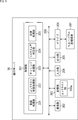
- the bank server 35 is a credit card issuer, and is a server managed and operated by a bank that provides various services by contracting with a credit card user, and executes credit processing related to payment by credit card.
- the bank server 35 includes a control unit 201, a communication unit 202, a storage unit 203, an input unit 204, an output unit 205, a drive 206, and a removable storage medium 207, which mutually communicate with each other via a bus 208. Are electrically connected to each other.
- the control unit 201 is configured by a processor and a memory, and controls the entire operation of the bank server 35.
- the control unit 201 further includes a registration processing unit 221, a context reception processing unit 222, a challenge processing unit 223, a risk score determination unit 224, and a settlement processing unit 225.
- the registration processing unit 221 executes registration processing in which the client device 31 and the wearable device 36 are registered in association with a card number of a credit card.
- the context reception processing unit 222 receives, as context information, position information and biological information transmitted from the registered wearable device 36 at predetermined time intervals, and stores the information as context DB 203 a in the storage unit 203.
- the challenge processing unit 223 requests the client device 31 to perform an authentication process, and acquires an authentication result, when the risk score determination unit 224 determines that the risk score is larger than a predetermined threshold and it is necessary to shift to the challenge flow. , It is determined whether there is a problem in the authentication result.
- the risk score determination unit 224 calculates a risk score based on the card number of the credit card, the amount, the position information of the client device 31, and the position information of the wearable device 36, which is the latest context information. Then, the risk score determination unit 224 compares the calculated risk score with a predetermined threshold value to determine whether to use a challenge flow or a frictionless flow.
- the settlement processing unit 225 executes the credit process related to the settlement based on the card number of the credit card supplied from the acquirer server 33 via the intermediation server 34.
- the communication unit 202 is controlled by the control unit 201 and is wired (or wirelessly (not shown)) via the communication server represented by LAN (Local Area Network) etc. Send and receive various data and programs between the communication server represented by LAN (Local Area Network) etc.
- the storage unit 203 is controlled by the control unit 201 and includes an HDD (Hard Disk Drive), an SSD (Solid State Drive), a semiconductor memory, or the like, and writes or reads various data and programs.
- HDD Hard Disk Drive
- SSD Solid State Drive
- semiconductor memory or the like
- the input unit 204 includes a keyboard, operation buttons, and the like, and receives user's operation input.
- the output unit 205 includes an audio output unit including a display unit such as a display including an LCD (Liquid Crystal Display) or an organic EL (Electro Luminescence) to display an image, a speaker outputting an audio, or the like. Output images and sounds as needed.
- a display unit such as a display including an LCD (Liquid Crystal Display) or an organic EL (Electro Luminescence) to display an image, a speaker outputting an audio, or the like. Output images and sounds as needed.
- LCD Liquid Crystal Display
- organic EL Electro Luminescence
- the drive 206 includes a magnetic disc (including a flexible disc), an optical disc (including a compact disc-read only memory (CD-ROM), a digital versatile disc (DVD)), and a magneto-optical disc (including a mini disc (MD)).
- a magnetic disc including a flexible disc
- an optical disc including a compact disc-read only memory (CD-ROM), a digital versatile disc (DVD)
- DVD digital versatile disc
- a magneto-optical disc including a mini disc (MD)
- data is read from or written to a removable storage medium 207 such as a semiconductor memory.
- the wearable device 36 is worn by the user, executes authentication processing using a fingerprint as biological information, acquires position information at predetermined time intervals, and transmits it to the bank server 35 as context information.
- the wearable device 36 includes the control unit 241, the communication unit 242, the storage unit 243, the input unit 244, the output unit 245, the drive 246, the removable storage medium 247, the GPS 249, the attachment sensor 250, and the fingerprint sensor 251. They are configured to be electrically connected to one another via a bus 248.
- the control unit 241 includes a processor and a memory, and controls the overall operation of the wearable device 36.
- the control unit 241 further includes a registration processing unit 271, a context transmission processing unit 272, and a challenge processing unit 273.
- the registration processing unit 271 executes registration processing to register and store the wearable device 36 and the client device 11 in the bank server 35 in association with the card number of the credit card.
- the context transmission processing unit 272 controls the GPS 249 at predetermined time intervals when the wearable device 36 is attached to the user and the fingerprint sensor 251 performs authentication processing using biometric information including fingerprints and there is no problem in the authentication result.
- the position information is acquired, and the communication unit 242 is controlled as context information and transmitted to the bank server 35.
- the context transmission processing unit 272 controls the attachment sensor 250 to detect the timing at which the main body of the wearable device 36 is attached to the user or the timing at which the main body is attached or detached.
- the control unit 242 controls the unit 242 to transmit information for notifying the bank server 35 that the loading and unloading has occurred.
- the challenge processing unit 273 controls the fingerprint sensor 251 in response to a request for authentication processing from the client device 31 when the bank server 35 requests the client device 31 to perform authentication processing in advance credit processing. An authentication process using a fingerprint, which is biometric information, is executed, and an authentication result is transmitted to the client device 31.
- the communication unit 242 is controlled by the control unit 241, and is connected to the intermediary server 34 or the bank server 35 via a communication network represented by a LAN (Local Area Network) or the like by wire (or wireless (not shown)). Send and receive various data and programs among them.
- a communication network represented by a LAN (Local Area Network) or the like by wire (or wireless (not shown)). Send and receive various data and programs among them.
- the communication unit 242 includes various communication functions including the WiFi 281, the LTE 282, the Bluetooth 283, and the NFC 284 and communicates with the client device 31 and the bank server 35.
- the WiFi communication unit (WiFi) 281, the LTE communication unit (LTE) 282, the Bluetooth communication unit (Bluetooth) 283, and the NFC communication unit (NFC) 284 may be any one of them. Or the communication part of this other communication system may be included.
- the WiFi communication unit (WiFi) 281 is controlled by the control unit 241, and exchanges data and programs with other devices through communication by WiFi.
- LTE communication unit (LTE) 282 is controlled by the control unit 241, and exchanges data and programs with other devices through communication by Long Term Evolution (LTE).
- LTE is one of mobile phone communication technologies, and may be another communication method of mobile phone communication.
- a Bluetooth communication unit (Bluetooth) 283 is controlled by the control unit 241, and exchanges data and programs with other devices through communication by Bluetooth.
- NFC communication unit (NFC) 283 is controlled by the control unit 241, and exchanges data and programs with other devices through communication by NFC (Near Field Communication).
- the storage unit 243 is controlled by the control unit 241 and includes an HDD (Hard Disk Drive), an SSD (Solid State Drive), a semiconductor memory, or the like, and writes or reads various data and programs. Further, the storage unit 243 may store information of a fingerprint of a legitimate user read by the fingerprint sensor 251 in advance.
- HDD Hard Disk Drive
- SSD Solid State Drive
- semiconductor memory or the like
- the input unit 244 includes a keyboard, operation buttons, and the like, and receives user's operation input.
- the output unit 245 includes an audio output unit including a display unit such as a display including an LCD (Liquid Crystal Display) or an organic EL (Electro Luminescence) to display an image, a speaker outputting an audio, etc. Output images and sounds as needed.
- a display unit such as a display including an LCD (Liquid Crystal Display) or an organic EL (Electro Luminescence) to display an image, a speaker outputting an audio, etc. Output images and sounds as needed.
- the drive 246 is a magnetic disk (including a flexible disk), an optical disk (including a compact disc-read only memory (CD-ROM), a digital versatile disc (DVD)), a magneto-optical disc (including a mini disc (MD)), Alternatively, data is read from or written to a removable storage medium 247 such as a semiconductor memory.
- a removable storage medium 247 such as a semiconductor memory.
- a GPS (Global Positioning System) 249 receives signals from a plurality of satellites (not shown), calculates position information of the wearable device 36, and outputs the calculated position information to the control unit 241.
- the attachment sensor 250 detects whether or not the wearable device 36 is attached by the user, and outputs the detection result to the control unit 241.
- the fingerprint sensor 251 detects the fingerprint of the user of the wearable device 36, and compares the detected fingerprint information with the information of the fingerprint of the legitimate user registered in advance stored in the storage unit 243 in advance. Execute the authentication process by fingerprint and output the authentication result.
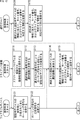
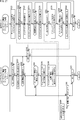
- step S11 the settlement processing unit 71 in the control unit 51 of the client device controls the GPS 59 to acquire current position information.
- step S12 the payment processing unit 71 reads the information of the card number of the credit card owned by the user stored in the storage unit 53, and controls the communication unit 52 together with the position information of the client device 31. , Sends to the EC store server 32, and requests settlement.
- the processes in steps S11 and S12 correspond to the process Start (process Pre11 in FIG. 4) in FIG.
- step S31 the advance credit processing unit 121 of the control unit 101 in the EC shop server 32 controls the communication unit 102 to receive the transmitted card number and the position information of the client apparatus 31.
- step S32 the advance credit processing unit 121 executes the card number, the amount of money for purchase, and the position information advance credit processing of the client device 31 to the bank server 35 via the intermediation server 34, and the user's credit card If there is no problem in the preliminary credit result of the process, the process proceeds to step S33.
- the settlement process is disabled, and the process ends.
- the advance credit process is realized by the process including step S13 in the client device 11, step S71 in the intermediation server 34, and step S91 in the bank server 35 in addition to the process in step S32. Further, the advance credit processing will be described in detail later with reference to the flowchart of FIG.
- step S33 the settlement processing unit 122 controls the communication unit 102 to transmit the card number and information on the amount of money associated with the purchase to the acquirer server 33, and requests credit processing.
- the process of step S33 corresponds to the process Req1 of FIG.
- step S51 the settlement processing unit 151 in the control unit 141 of the acquirer server 33 controls the communication unit 142 to receive the card number and the amount information from the EC shop server 32.
- step S52 the settlement processing unit 151 controls the communication unit 142 to transmit information on the card number and the amount to the intermediation server 34, and requests credit processing.
- the process of step S52 corresponds to the process Req12 of FIG.
- step S72 the settlement intermediation processing unit 182 in the control unit 161 of the intermediation server 34 controls the communication unit 162 to receive information on the card number and the amount.
- step S73 the settlement intermediation processing unit 182 controls the communication unit 162 to transmit information on the card number and the amount to the bank server 35, and requests credit processing.
- the process of step S73 corresponds to the process Req13 of FIG.
- step S92 the settlement processing unit 225 in the control unit 201 of the bank server 35 controls the communication unit 202 to receive the card number and the amount information.
- step S93 the payment processing unit 225 executes the credit determination of the credit card registered in association with the card number, based on the card number and the information of the amount.
- step S94 the settlement processing unit 225 controls the communication unit 202 to transmit the credit determination result to the intermediation server 34.
- the process of step S94 corresponds to the process Resp11 of FIG.
- step S74 the settlement mediation processing unit 182 of the mediation server 34 controls the communication unit 162 to receive the credit determination result from the bank server 35.
- step S75 the settlement intermediation processing unit 182 controls the communication unit 162 to transmit the credit determination result to the acquirer server 33.
- the process of step S75 corresponds to the process of the process Resp12 of FIG.
- step S53 the payment processing unit 151 of the acquirer server 33 controls the communication unit 142 to receive the credit determination result from the intermediation server 34.
- step S54 the settlement processing unit 151 controls the communication unit 142 to transmit the credit determination result to the EC shop server 32.
- the process of step S54 corresponds to the process Resp13 of FIG.
- step S34 the settlement processing unit 122 of the EC shop server 32 controls the communication unit 102 to receive the credit determination result from the acquirer server 33.
- step S35 if there is no problem in the credit determination result based on the credit determination result, the settlement processing unit 122 settles the payment of the charge for which the purchase processing has been performed from the client device 31.
- the settlement process is not performed.
- step S36 the settlement processing unit 122 controls the communication unit 102 to transmit the settlement result to the client device 31.
- the process of step S36 corresponds to the process End of FIG.
- step S14 the settlement processing unit 71 of the client device 31 controls the communication unit 52 to receive the settlement result transmitted from the EC shop server 32.
- step S15 the payment processing unit 71 displays the payment result on the display of the output unit 55.
- the settlement process is realized by the above process.
- Registration process referring to the flowchart of FIG. 12, the bank, which is the pre-processing for the pre-credit processing, the wearable device 36 used by the user who purchases the goods by operating the client device 31 for authentication processing using biometric information is The registration process registered in the server 35 will be described.
- the registration process described with reference to FIG. 12 corresponds to the process Pre21 of FIG. 4.
- step S111 the registration processing unit 73 in the control unit 51 of the client device 31 activates an application program, generates a registration processing image, and causes the display of the output unit 55 to display the image.
- step S112 the registration processing unit 73 generates a selection image of a selectable communication scheme, and displays the selection image on the display of the output unit 55.
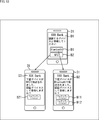
- the selected image to be displayed is, for example, a display image D1 as shown in the upper right part of FIG.
- the display image D1 is by the application program of XXX Bank that manages and operates the bank server 35, and authentication
- An image for selecting a communication method for communicating with the wearable device 36 required for processing is displayed.
- a button B1 displayed as "Bluetooth” as a communication method selectable from above and a button B2 displayed as "NFC" are displayed.
- the WiFi communication unit 91, the LTE communication unit 92, the Bluetooth communication unit 93, and the NFC communication unit 94 can be selected as the communication method of the communication unit 52, but in FIG.
- the communication unit 93 and the NFC communication unit 94 are displayed as selectable communication methods. Therefore, the WiFi communication unit 91 and the LTE communication unit 92 may be further displayed as selectable communication methods.
- buttons B1 and B2 for selecting a selectable communication method are provided, and when selecting "Bluetooth” described, button B1 is operated to select "NFC" In the case, the button B2 is selected.
- step S113 the registration processing unit 73 controls the communication unit 52 to transmit a polling signal in order to search for a selectable wearable device according to the selected communication method. That is, in the case of FIG. 13, when the button B1 is operated, the registration processing unit 73 controls the Bluetooth communication unit 93 to transmit a polling signal. Further, in the case of FIG. 13, when the button B2 is operated, the registration processing unit 73 controls the NFC communication unit 94 to transmit a polling signal.
- the registration processing unit 271 of the wearable device 36 controls the communication unit 242 to receive the transmitted polling signal. More specifically, the registration processing unit 271 controls each of the WiFi communication unit 281, the LTE communication unit 282, the Bluetooth communication unit 283, and the NFC communication unit 284 of the communication unit 242 to detect the presence or absence of the polling signal. If a polling signal is detected, control is performed to receive the transmitted polling signal.
- the button B1 or B2 is operated, and a polling signal of either "Bluetooth" or "NFC" is received.
- step S122 the registration processing unit 271 causes the communication unit 242 to transmit the response signal of the polling signal together with the information identifying itself by the communication method in which the polling signal is received.
- step S114 the registration processing unit 73 of the client device 31 receives the response signal of the transmitted polling signal and the information for identifying the wearable device 36 that is the transmission source, and based on the received information of the wearable device 36.
- a selection image of the retrieved authentication device is generated and displayed on the output unit 55.
- the client device 31 displays a display image D2 prompting selection of the wearable device 36 which can be selected, as shown in the lower right part of FIG.
- the wearable devices 1 and 2 corresponding to the wearable devices 36-1 and 36-2 which can be selected as the authentication device, which exist in the vicinity of the client device 31 among the communication methods Bluetooth, are respectively described as buttons B11 and B12. And the buttons B11 and B12 are pressed when selecting each.
- the button B2 when the button B2 is pressed among the display image D1 shown in the upper right part of FIG. 13 and NFC is selected as the communication method, for example, the display image D3 as shown in the lower left part of FIG. Is displayed.
- the wearable device 1 corresponding to the wearable device 36 that can be selected as an authentication device the communication method of which is in the vicinity of the client device 31 among NFC, is described as a button B21 and corresponds to the wearable device 36 Is pressed when is selected.
- step S115 the registration processing unit 73 selects one of the buttons B11 and B12 or the button B21 as an authentication device based on the display image D2 or D3.
- the communication unit 52 is controlled to transmit the card number and the information for identifying the client device 31 which is itself, together with the information of the device 36, to the bank server 35.
- step S131 the registration processing unit 221 of the bank server 35 controls the communication unit 202 to send the card number, in addition to the information of the wearable device 36 selected as the authentication device transmitted from the client device 31. Information for identifying the client device 31 is received.
- step S 132 in addition to the information of the wearable device 36 selected as the device for authentication sent from the client device 31, the registration processing unit 221 associates the card number with the information for identifying the client device 31 to associate the context It is stored in the storage unit 203 as the DB 203 a.
- the client apparatus 31 used by the user to purchase a product and the wearable device 36 as an authentication device are associated with the context DB 203 a in association with the card number information of the credit card. be registered.
- the context information supplied from the wearable device 36 is associated with the card number of the credit card registered in association with the wearable device 36 transmitting the context information. It is accumulated in the context DB 203a.
- Context information upload process >> Next, context information upload processing will be described with reference to the flowchart of FIG. The context information uploading process described with reference to FIG. 15 corresponds to the process of the process Pre22 of FIG.
- step S151 the context transmission processing unit 272 in the control unit 241 of the wearable device 36 controls the attachment sensor 250 to determine whether attachment has been detected.
- step S151 when the user wears the wearable device 36 and the wear is detected by the wear sensor 250, the process proceeds to step S152.
- step S152 the context transmission processing unit 272 requests a biometric information authentication process by displaying a display image on the display of the output unit 245 or outputting an audio from a speaker.
- the biological information is described as an example using a fingerprint that is authenticated by the fingerprint sensor 251.
- it may be biological information other than a fingerprint, and face authentication, iris authentication, Or it may be vein authentication or the like.
- step S153 the context transmission processing unit 272 controls the fingerprint sensor 251 to present the fingerprint of the user as biometric information, and whether the authentication is recognized by comparison with the fingerprint of a legitimate user registered in advance. Determine if In step S153, when the authentication by the fingerprint as the biometric information is recognized, the process proceeds to step S154.
- step S154 the context transmission processing unit 272 determines whether or not the predetermined time T has elapsed, and repeats the same processing until the predetermined time T has elapsed.
- the process proceeds to step S155.
- step S155 the context transmission processing unit 272 controls the GPS 249 to acquire current position information of the wearable device 36.
- step S156 the context transmission processing unit 272 controls the communication unit 242 to cause the bank server 35 to upload the acquired current position information as context information.
- the context transmission processing unit 272 also uploads information indicating that the authentication result by the authentication process using the biometric information is accepted, and information identifying the wearable device 36, in addition to the position information that is context information.
- step S157 the context transmission processing unit 272 determines whether the end of the context information upload process has been instructed or not. If the end is instructed, the process ends. In addition, in step S157, when the end of the process is not instructed, the process proceeds to step S158.
- step S158 the context transmission processing unit 272 controls the attachment sensor 250 to determine whether the wearable device 36 has been detached. In step S158, when the detachment of the wearable device 36 is not detected, the process returns to step S154.
- step S158 for example, when the wearable device 36 is removed by the user, the attachment sensor 250 detects that the wearable device 36 is attached or detached, and the process proceeds to step S159.
- step S159 the context transmission processing unit 272 controls the communication unit 242 to notify the bank server 35 that the wearable device 36 has been detached, and the process returns to step S151.
- step S151 if the wear of wearable device 36 is not detected in step S151, or if the authentication is not recognized by the authentication process using the fingerprint that is biological information in step S153, the process proceeds to step S160 and processing is performed. It is determined whether termination has been instructed. Then, in step S160, when the end of the process is not instructed, the process returns to step S151, the same process is repeated, and when the end of the process is instructed in step S160, the process ends. .
- the detachment is confirmed at predetermined time intervals T until the detachment is confirmed.
- the position information is detected, and the process transmitted to the bank server 35 is repeated along with the authentication result of the biometric information.
- detachment of the wearable device 36 is detected, detachment is notified to the bank server 35, and the location information is not notified to the bank server 35 until the wearable device 36 is attached and the biometric information is authenticated. .
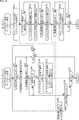
- the context information upload process by the bank server 35 is the process shown by the flowchart in the right part of FIG.
- step S171 the context reception processing unit 222 in the control unit 201 of the bank server 35 sets the risk score to a value requiring the challenge flow, and stores the value in the storage unit 203.
- step S172 the context reception processing unit 222 controls the communication unit 202 to determine whether or not position information, which is context information, has been transmitted from the wearable device 36.
- step S172 If context information has been transmitted in step S172, the process proceeds to step S173.
- step S173 the context reception processing unit 222 stores the position information that is the transmitted context information in the context DB 203a in association with the card number associated with the information identifying the wearable device 36 that has transmitted the context information. .
- step S174 the context reception processing unit 222 determines the risk of the credit card identified by the card number of the credit card used by the user of the client device 31 registered in association with the wearable device 36 that has transmitted the context information. The score is subtracted by a predetermined value A to reduce the risk score.
- the risk score of the credit card used by the user who is the user of wearable device 36 who has sent the context information is reduced, the risk score is high in the prior credit processing described later, It is possible to reduce the frequency of transition to the challenge flow where authentication processing is required and to increase the frequency of transition to the frictionless flow.
- step S172 If no context information is sent in step S172, the processes in steps S173 and S174 are skipped.
- step S175 the context reception processing unit 222 determines whether or not the predetermined time t has elapsed based on a counter (not shown) that counts the time, and the predetermined time t has elapsed. If so, the process proceeds to step S176.
- step S176 the context reception processing unit 222 adds a risk score by a predetermined value a, and resets a counter that counts an elapsed time.
- step S175 when the predetermined time t has not elapsed, the process of step S176 is skipped.
- the risk score gradually increases by a predetermined value a at intervals of a predetermined time t. That is, the risk score is decreased by a predetermined value A at the timing when the context information is received, but gradually increases with the passage of time. Therefore, at the timing when context information is received, the risk score is reduced, and the frequency of transition to the challenge flow is reduced, but after that, the risk score increases with the passage of time, The frequency of transition to the challenge flow gradually increases.
- step S177 the context reception processing unit 222 controls the communication unit 202 to determine whether a notification indicating that detachment has been detected from the wearable device 36 has been transmitted. If it is determined in step S177 that a notification indicating that desorption has been detected has been transmitted, the process proceeds to step S178.
- step S178 the context reception processing unit 222 sets the risk score to a value requiring the challenge flow.
- step S177 when the notification which shows that detachment
- step S179 the context reception processing unit 222 determines whether end of the process has been instructed or not. If end of the process is not instructed, the process returns to step S172, and the subsequent process is repeated.
- step S179 when the end of the process is instructed, the process ends.
- the positional information of the user wearing the wearable device 36 can not be acquired, and therefore, the presence or absence of spoofing is compared with the positional information of the client device 31 Can not be determined, so in the determination process based on the risk score, it is always set to a high value so that the challenge flow is selected.
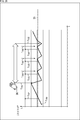
- the wearable device 36 at predetermined time intervals from the wearable device 36 Context information consisting of position information is transmitted to the bank server 35 at predetermined time intervals.
- the upper part shows the timing when context information is transmitted from the wearable device 36
- the lower part shows the timing when context information is received in the bank server 35.
- context information is transmitted from the wearable device 36 to the bank server 35 at time t11, t12, 13... T16, and the risk score is reduced by a predetermined value A at each timing. Is repeated. Also, the risk score increases by a predetermined value a at time intervals of a predetermined time t with the passage of time.
- times t11, t12, 13... T16 are equal time intervals. Also, at time t16, which is the closest timing, the position information of the position N is transmitted as context information. Furthermore, at time t15, which is the previous timing, position information of the position N-1 is transmitted as context information. Furthermore, at time t14, which is the previous timing, position information of the position N-2 is transmitted as context information.
- the risk score is reduced each time context information is transmitted, but the risk score is increased with the passage of time, so that the position information of the user wearing the wearable device 36 is more recent This makes it possible to increase the reliability of impersonation and to reduce the frequency with which the challenge flow is selected in the pre-credit process described later.
- the risk of impersonation can be avoided by increasing the risk score when context information is not transmitted for a long time or when wearable device 36 is not attached and the challenge flow is easily selected. It becomes.
- step S201 the advance credit processing unit 121 in the control unit 101 of the EC store server 32 controls the communication unit 102 to transmit the card number and the position information of the client apparatus 31 to the intermediation server 14, and the bank Request advance credit from the server 15.
- the process of step S201 corresponds to the process Pre12 in FIG.
- step S221 the advance credit intermediation processing unit 181 of the control unit 161 of the intermediation server 14 controls the communication unit 162 to receive the advance credit request together with the card number and the position information of the client device 31.
- step S222 the advance credit intermediation processing unit 181 controls the communication unit 162 to transmit a request for advance credit to the bank server 35 together with the card number, the amount of money for payment processing, and the position information of the client device 31.
- the process of step S222 corresponds to the process Pre12 in FIG.
- step S241 the risk score determination unit 224 in the control unit 201 of the bank server 35 controls the communication unit 202 to transmit the card number, the amount, and the client transmitted from the EC store server 32 via the intermediary server 34.
- the position information of the device 31 is received.
- step S 242 the risk score determination unit 224 accesses the context DB 203 a, and the location information of the wearable device 36 and the client device 31 registered in association with the card number of the credit card registered as the latest context information. It is determined whether or not the position information on
- the wearable device 31 and the wearable device 36 exist in the same position (the same room) H, the wearable device registered in association with the card number of the credit card Since the position information of 36 and the position information of the client device 31 coincide with each other, it can be recognized that the user wearing the wearable device 36 is using the client device 31.
- the context information which is the position information of the wearable device 36 is supplied from the wearable device 36 to the bank server 35 at predetermined time intervals. Therefore, for example, when the EC store server 32 starts settlement processing and requests advance credit at the timing of time t21, the position information of the position N in the latest context information at time t16 in FIG. 19 is acquired
- the time ⁇ which is the difference from the time t16, which is the specified timing, is shorter than the predetermined time T in the context information upload process described with reference to the flowchart of FIG.
- the timing at which payment is made at time t21 can also be regarded as substantially the same position.
- FIG. 19 shows the timing when the context information in FIG. 16 is transmitted from the wearable device 36 to the bank server 35 in the middle and lower stages, and the settlement process by the EC shop server 32 starts in the upper stage. Timing is shown.
- the position information in the latest context information is used for the position information of the wearable device 36, but, for example, the average value in the position information of the latest plurality of context information is used as the position information of the wearable device 36 May be By doing this, it is possible to correct fluctuations and errors.
- step S 242 When it is determined in step S 242 that the context DB 203 a is accessed and the position information of the client device 31 matches the position information of the wearable device 36 registered in association with the card number of the credit card, use of the credit card Assuming that the client uses the client apparatus 31 and there is no spoofing, the processing proceeds to step S243.
- step S243 the risk score determination unit 224 accesses the context DB 203a and determines whether the risk score registered in association with the card number of the credit card is lower than a predetermined threshold, that is, authentication by challenge flow is performed. Determine if it is necessary.
- the risk score determination unit 224 considers that authentication by challenge flow is necessary.
- the risk score determination unit 224 considers that authentication by the challenge flow is unnecessary, and selects the frictionless flow.
- step S243 for example, as shown at time t102 in FIG. 20, if the risk score is lower than the predetermined threshold and there is no problem with the prior credit and the process by frictionless flow is considered to be acceptable, the process proceeds to step S244. Go to
- step S244 the risk score determination unit 224 controls the communication unit 162 to transmit information indicating that there is no problem in the prior credit to the intermediation server 34 as the prior credit result.
- the process of step S244 corresponds to the process Pre13 in FIG.
- step S242 the context DB 203a is accessed, and it is considered that the position information of the client device 31 and the position information of the wearable device 36 registered in association with the card number of the credit card do not match If it is determined that the risk score is higher than the predetermined threshold, and there is a problem with the prior credit and the processing by the challenge flow is necessary, the processing proceeds to step S245.
- step S245 the risk score determination unit 224 requests the challenge processing unit 223 to acquire authentication information according to the challenge flow.
- the challenge processing unit 223 controls the communication unit 202 to request the client device 31 for authentication information.
- step S245 corresponds to the processes Pre 15 and 16 in FIG.
- the EC store server 32 is notified that the advance credit is not permitted by the process Pre 13 and the challenge flow is necessary. Then, information for requesting a challenge flow is transmitted from the EC store server 32 to the client device 31 by the process Pre 14, and further, the client device 31 requests the bank server 35 for the challenge flow.
- the process proceeds to the challenge flow of processes Pre 15 and 16, and the challenge processing unit 223 of the bank server 35 controls the communication unit 202 to provide the client apparatus 31 with authentication information necessary for the challenge flow. Although it will require it, it is omitted in the flow chart of FIG.
- step S261 the challenge processing unit 72 in the control unit 51 of the client device 31 controls the communication unit 52 to determine whether or not there is a request for authentication information, that is, whether or not it is a challenge flow. If there is a request, that is, if it is a challenge flow, the process proceeds to step S262.
- step S262 the challenge processing unit 72 controls the communication unit 52 to receive a request for authentication information.
- step S263 the challenge processing unit 72 controls the communication unit 52 to transmit information for requesting input of authentication information to the wearable device 36 registered as a device for authentication, and controls the output unit 55. Then, information that prompts the fingerprint sensor 251 of the wearable device 36 to input a fingerprint, which is authentication information, is presented as an image or a sound.
- step S 281 the challenge processing unit 273 in the control unit 241 of the wearable device 36 controls the communication unit 242 to receive information requesting the wearable device 36 registered as an authentication device to input authentication information. Do.
- step S 282 the challenge processing unit 273 controls the output unit 245 to output an image or sound requesting the user to authenticate by fingerprint from the display or the speaker, and controls the fingerprint sensor 251 to control the fingerprint of the user. Accept the input of biometric information by.
- step S ⁇ b> 283 the challenge processing unit 273 compares fingerprint information, which is biometric information input by the fingerprint sensor 251, with fingerprint information of a legitimate user registered in advance, and executes an authentication process.
- step S284 the challenge processing unit 273 controls the communication unit 242 to transmit the authentication result to the client device 31 as authentication information.
- step S 264 the challenge processing unit 72 in the control unit 51 of the client device 31 controls the communication unit 52 to acquire authentication information.
- step S265 the challenge processing unit 72 controls the communication unit 52 to transmit the authentication information acquired from the wearable device 36 to the bank server 35.
- step S261 If there is no request for authentication information in step S261 and it is not a challenge flow, the processing in steps S262 to S265 is skipped.
- step S 246 the challenge processing unit 223 in the control unit 201 of the bank server 35 controls the communication unit 202 to acquire authentication information, and supplies the authentication information to the risk score determination unit 224.
- step S247 the risk score determination unit 224 determines whether the authentication result in the authentication information is OK (the authentication by the biological information is recognized), that is, the fingerprint that is the input biological information is registered in advance. It is determined whether or not it matches information of a legitimate fingerprint.
- step S247 If the authentication information is OK in step S247, the process proceeds to step S244.
- step S247 If the authentication information is not OK in step S247, the process proceeds to step S248.
- step S248 the risk score determination unit 224 controls the communication unit 202 to transmit, to the intermediation server 34, an advance credit result indicating that the advance credit is NG (the advance credit is not permitted).
- the process of step S248 corresponds to the process Pre17 in FIG.
- step S223 the advance credit intermediation processing unit 181 of the control unit 161 of the intermediation server 34 controls the communication unit 162 to receive the advance credit result from the bank server 35.
- step S224 the advance credit intermediation processing unit 181 of the control unit 161 of the intermediation server 34 controls the communication unit 162 to transmit the advance credit result to the EC shop server 32.
- step S202 the advance credit processing unit 121 in the control unit 101 of the EC shop server 32 controls the communication unit 102 to receive the advance credit result transmitted via the intermediary server 34.
- step S203 the advance credit processing unit 121 controls the communication unit 102 to transmit the result of advance credit to the client device 31.
- step S266 the settlement processing unit 71 in the control unit 51 of the client device 31 controls the communication unit 52 to receive the advance credit result, and controls the output unit 55 to output the advance credit result as an image, voice, etc.
- the pre-credit processing corresponding to step S32 of FIG. 11 is performed, whereby the USB charger and the USB cable are inserted in the cart at XXX Shop, which is an EC store, and the total is 1080. Yen payment processing is done.
- step S266 if the pre-credit result is OK, the process is performed from step S266. For example, as shown in the center upper left of FIG. And a display image D22 including a button B52 inscribed as "OK" are displayed, and it is displayed that the advance credit result is OK. The display of the display image D22 ends when the button B52 is pressed.
- the display image D23 includes, from the top, a comment such as “Re-authenticate by the XXX Bank authentication device” and a button B52 described as “OK”.
- the display of the display image D23 ends when the button B53 is pressed.
- a fingerprint is detected by holding the finger F of the user over the fingerprint sensor 251 of the wearable device 36 as shown in the center lower right of FIG. 21, and the detected fingerprint is registered in advance. If the current user's fingerprint matches, the display image D24 indicating that the prior credit result is OK as shown in the center right part of FIG. 21 is displayed on the client device 31.
- the display image D24 is composed of a comment “certified by the XXX BANK authentication device” from above and a button B 54 described as “OK”.
- the display of the display image D24 is ended by pressing the button B54.
- the user wears the wearable device 36 authenticated by the biometric information and the payment process is performed by operating the client device 31 by the above processing, the user wearing the wearable device 36, the wearable device 36, and By using the credit card registered in association, it becomes possible to confirm that the user who operates the client device 31 matches the user who purchases the product, and whether or not the credit card is spoofed use is appropriately determined. Since the determination can be made, it is possible to reduce the frequency of the challenge flow in the pre-credit process.
- the processing related to the credit determination performed by the bank server 35 is implemented by another device.
- it may be implemented by the EC shop server 32.
- the display images D22 and D24 are display images only for confirming that the authentication has been recognized, so the processing to be displayed is skipped, It may not be displayed.
- position information may be obtained by another method.
- the positions of the client device 31 and the wearable device 36 are almost the same, comparing the SSID of the receivable WiFi access point with the reception strength at each WiFi access point. It may be determined whether there is any.
- the client device 31 and the wearable device 36 when the client device 31 and the wearable device 36 exist at substantially the same position, when there are receivable WiFi access points AP1 to AP4, the client device 31 and the wearable device 36
- the positional relationship with respect to each of the WiFi access points AP1 to AP4 is the same.
- the WiFi communication units 91 and 281 in the communication units 52 and 242 of the client device 31 and the wearable device 36 are in a state capable of communicating with the access points AP1 to AP4.
- the reception strengths from the respective access points AP1 to AP4 are almost the same.
- the client device 31 and the wearable device 36 can be considered to exist at the same position if the positional relationship with the surrounding objects such as the access points AP1 to AP4 is the same. Therefore, peripheral information of the client device 31 and the wearable device 36 (for example, air pressure, temperature, surrounding environment sound, etc.) is measured, and if the similarity of the peripheral information is a predetermined level or more, it is regarded as the same position be able to.
- peripheral information of the client device 31 and the wearable device 36 for example, air pressure, temperature, surrounding environment sound, etc.
- the wearable device 36 requests the bank server 35 to use the SSIDs of the access points AP1 to AP4 received by the WiFi communication unit 281 in the communication unit 242 as context information and the information on the respective reception strengths as position information. Transmit at predetermined time intervals.
- the bank server 35 receives the information on the SSIDs of the access points AP1 to AP4 received by the WiFi communication unit 91 in the communication unit 52 of the client device 31 that requests the payment process.
- the client device 31 and the wearable device 36 may be regarded as existing at the same position in the case where the information is similar to the information obtained by the latest context DB 203a and obtained by comparison with the latest context DB 203a. .
- the SSID of the access point that can be received by each of the client device 31 and the wearable device 36 and the information of each reception strength can be treated as each position information.
- Bluetooth since communication by Bluetooth can be performed only in a short distance of about several tens of meters, it can be regarded as existing at substantially the same position if paired with each other.
- the Bluetooth communication unit 283 of the communication unit 242 transmits, as context information, information on the client device 31 being paired in Bluetooth communication at a predetermined time interval to the bank server 35.
- the client device 31 and the wearable device 36 are paired with each other as compared with the information in the above, it may be considered that both exist in the same position.
- a cell used by the LTE communication units 92 and 282 of the communication units 52 and 242 of the client device 31 and the wearable device 36 for communication using a mobile phone communication network is also available. It may be determined whether or not the client device 31 and the wearable device 36 exist at substantially the same position based on whether they are the same.
- the client device 31 and the wearable device 36 determine whether or not the client device 31 and the wearable device 36 exist substantially at the same position. It may be determined.
- positions obtained by various methods such as position information obtained from the reception strength of each of the receivable access points AP1 to AP4, position information obtained by the GPS 59, 249, etc.
- the information may be used to directly determine the distance between the two, and if the distance is smaller than a predetermined distance, it may be regarded that both exist at substantially the same position.
- the wearable device 36-31 in FIG. 25 in the case where the distance to the client device 31 is shorter than a predetermined distance r (for example, 30 m, etc.) I will treat it.
- a predetermined distance r for example, 30 m, etc.
- the wearable device 36-32 in the case where the distance to the client device 31 is longer than a predetermined distance r (for example, 30 m, etc.), it is regarded that they do not exist at substantially the same position. You may
- the risk score may not be reduced below the threshold for shifting to the challenge flow unless it is repeatedly reduced by the predetermined value A several times. In this case, if the settlement process is performed before the risk score becomes smaller than the threshold, it may be shifted to the challenge flow.
- the position of the wearable device 36 has been at least a predetermined number of times in the past before the settlement process is requested, ie, before the position information of the client apparatus 31 is supplied.
- the position is closer by a predetermined distance r than the position H where payment processing has been made, it is regarded as substantially the same position as the client device 31, and the risk score is reduced in advance.
- the wearable device 36-31 in FIG. 26 in the case where the distance to the position H where the payment processing has been performed by the client device 31 in the past is shorter than a predetermined distance r (for example, 30 m), It is assumed that they exist at approximately the same position as each other.
- a predetermined distance r for example, 30 m
- the wearable device 36-32 when the distance to the position H where the payment processing has been performed by the client device 31 in the past is longer than a predetermined distance r (for example, 30 m), It may be regarded as not existing at the same position.
- Such processing makes it possible to prevent transition to a challenge flow without reducing the risk score in time.
- context information upload process Although the context information has been described above as being transmitted from the wearable device 36 to the bank server 35 at predetermined time intervals, the context information may be transmitted in response to a request from the bank server 35.
- the bank server 35 compares the current risk score with the threshold for transition to the challenge flow, and the risk score exceeds the threshold. When the value becomes close to that (or when the risk score exceeds the threshold), context information is requested to the wearable device 36, and in response to this request, the wearable device 36 transmits context information. May be
- steps S301 to S303 and S305 to S310 and the processes of steps S321 to S328 and S331 are the processes of steps S151 to S153 and S155 to S160 of FIG. 15, and the processes of steps S171 to S179. Since the process is similar to the process, the description thereof is appropriately omitted.
- step S329 the risk score determination unit 224 in the control unit 201 of the bank server 35 accesses the context DB 203a, and there is an indication that the risk score is lower than the threshold for shifting to the challenge flow, but exceeds the threshold ( It is determined if the threshold is approaching) or if the threshold has already been exceeded.
- step S329 if the risk score determination unit 224 determines that the risk score is lower than the threshold but has an indication exceeding the threshold or has already exceeded the threshold, the process proceeds to step S330.
- step S330 the risk score determination unit 224 controls the communication unit 202 to request the wearable device 36 for context information.
- step S331 If the risk score does not exceed the threshold and is not a value close to the threshold in step S329, the process of step S331 is skipped.
- step S304 the context transmission processing unit 272 in the control unit 241 of the wearable device 36 controls the communication unit 242 to determine whether or not context information is requested from the bank server 35, and so on until it is transmitted. The process of is repeated.
- step S304 when information requesting context information is transmitted in step S304, the process proceeds to step S305.
- the wearable device 36 supplies context information when context information is requested from the bank server 35.
- the risk score changes in time series as shown by the solid line in FIG. 28, for example.
- this time-series change indicates a change in the risk score from when the wearable device 36 is not attached to when it is attached and detached.
- the range of the bidirectional arrow at the top of FIG. 28 is the timing at which the user wears the wearable device 36.
- the wearable device 36 is not worn by the user, but the risk score indicated by the solid line is a value lower than the risk score threshold th.
- the risk score gradually increases with the passage of time, and exceeds the threshold th at time t101.
- the risk score continues to increase.
- a fingerprint which is biometrics
- the wearable device 36 is worn by the user, the risk score It is reduced to a value lower than the threshold th.
- the risk score gradually increases, and at time t103, becomes a value close to the threshold th. Therefore, at this time t103, context information is requested from the bank server 35 to the wearable device 36.
- the wearable device 36 In response to the request for the context information, the wearable device 36 transmits the context information to the bank server 35 at time t104.
- the risk score is reduced to a value smaller than the threshold th, and then increases with the passage of time, and again becomes a value close to the threshold th at time t105. Therefore, at this time t105, context information is requested from the bank server 35 to the wearable device 36.
- the wearable device 36 transmits the context information to the bank server 35 at time t106.
- the risk score is reduced to a value smaller than the threshold th, and then increases with the passage of time, and becomes a value close to the threshold th again at time t107. Therefore, at this time t107, context information is requested from the bank server 35 to the wearable device 36.
- the wearable device 36 In response to the request for the context information, the wearable device 36 transmits the context information to the bank server 35 at time t108.
- the risk score is adjusted to a value larger than the threshold required for the challenge flow.
- Such a series of operations allows the risk score to be maintained at a value lower than the threshold th while the wearable device 36 is worn by the user, without reducing the level of security against impersonation. It is possible to reduce the frequency of transition to the challenge flow.
- the client device 31 corresponds to a card reader of a credit card and the like
- the EC store server 32 corresponds to a checkout machine of a storefront connected to a network.
- the checkout machine is also referred to as a checkout machine 32 as corresponding to the EC store server 32.
- QR code settlement may be used.
- the QR code settlement is a settlement method using QR code (registered trademark) using the client device 31 in which a dedicated application program is installed, and there are code settlement and reading settlement.
- the code settlement shows the QR code corresponding to the payment amount using the client apparatus 31 in which the dedicated application program is installed, and the checkout machine 32 at the storefront. Etc. are read by the reader (corresponding to the input unit 104).
- the reading settlement is a display etc. connected to an over-the-counter settlement machine or the like using the client device 31 in which a dedicated application program is installed (in the output unit 105 Corresponding to the payment amount by the client device 31 reading the QR code corresponding to the payment amount.
- the client device 31 it is possible for the client device 31 to make settlement as in the case of using a credit card.
- FIG. 30 shows a configuration example of a general-purpose computer.
- This personal computer incorporates a CPU (Central Processing Unit) 1001.
- An input / output interface 1005 is connected to the CPU 1001 via the bus 1004.
- a ROM (Read Only Memory) 1002 and a RAM (Random Access Memory) 1003 are connected to the bus 1004.
- the input / output interface 1005 includes an input unit 1006 including an input device such as a keyboard and a mouse through which the user inputs an operation command, an output unit 1007 for outputting a processing operation screen and an image of a processing result to a display device, programs and various data.
- a storage unit 1008 including a hard disk drive to be stored, a LAN (Local Area Network) adapter, and the like are connected to a communication unit 1009 that executes communication processing via a network represented by the Internet.
- a magnetic disc including a flexible disc
- an optical disc including a compact disc-read only memory (CD-ROM), a digital versatile disc (DVD)
- a magneto-optical disc including a mini disc (MD)
- a semiconductor A drive 1010 for reading and writing data to a removable storage medium 1011 such as a memory is connected.
- the CPU 1001 reads a program stored in the ROM 1002 or a removable storage medium 1011 such as a magnetic disk, an optical disk, a magneto-optical disk, or a semiconductor memory, is installed in the storage unit 1008, and is loaded from the storage unit 1008 to the RAM 1003. Execute various processing according to the program.
- the RAM 1003 also stores data necessary for the CPU 1001 to execute various processes.
- the CPU 1001 loads the program stored in the storage unit 1008 into the RAM 1003 via the input / output interface 1005 and the bus 1004, and executes the program. Processing is performed.
- the program executed by the computer (CPU 1001) can be provided by being recorded in, for example, a removable storage medium 1011 as a package medium or the like. Also, the program can be provided via a wired or wireless transmission medium such as a local area network, the Internet, or digital satellite broadcasting.
- the program can be installed in the storage unit 1008 via the input / output interface 1005 by attaching the removable storage medium 1011 to the drive 1010.
- the program can be received by the communication unit 1009 via a wired or wireless transmission medium and installed in the storage unit 1008.
- the program can be installed in advance in the ROM 1002 or the storage unit 1008.
- the program executed by the computer may be a program that performs processing in chronological order according to the order described in this specification, in parallel, or when necessary, such as when a call is made. It may be a program to be processed.
- the CPU 1001 in FIG. 30 realizes the functions of the control units 51, 101, 141, 161, 201, and 241 in FIGS.
- a system means a set of a plurality of components (devices, modules (parts), etc.), and it does not matter whether all the components are in the same case. Therefore, a plurality of devices housed in separate housings and connected via a network, and one device housing a plurality of modules in one housing are all systems. .
- the present disclosure can have a cloud computing configuration in which one function is shared and processed by a plurality of devices via a network.
- each step described in the above-described flowchart can be executed by one device or in a shared manner by a plurality of devices.
- the plurality of processes included in one step can be executed by being shared by a plurality of devices in addition to being executed by one device.
- the present disclosure can also have the following configurations.
- a risk determination unit that determines a risk related to the settlement process based on a positional relationship between an authentication device that has authenticated the user and a client device that performs the settlement process by the user .
- the risk determination unit sets a score relating to the risk relating to the settlement process as a risk score, and determines the risk by comparing the set risk score with a predetermined threshold value ⁇ 1> apparatus.
- the system further includes an authentication process request unit that transmits an authentication process request for requesting an authentication process to the client device when the risk determination unit determines that the risk score is higher than a predetermined threshold.
- the information processing apparatus determines a risk related to the settlement process based on an authentication result from the client device according to the authentication process request.
- the information processing apparatus further includes a context information receiving unit for receiving, as context information, an authentication result of the user and authentication apparatus position information which is position information of the authentication apparatus, transmitted from the authentication apparatus at predetermined time intervals.
- the information processing apparatus according to ⁇ 3>, wherein the risk determination unit reduces the risk score by a predetermined value when the context information reception unit receives the context information.
- the risk determination unit increases the risk score by a predetermined value at predetermined time intervals.
- ⁇ 6> The information processing apparatus according to ⁇ 4>, wherein the authentication apparatus is attached by the user, and the context information receiving unit receives the context information when the authentication apparatus is attached by the user.
- the context information receiving unit receives information indicating that the authentication device has been detached
- the risk determination unit sets the risk score to a value larger than the predetermined threshold when the context information reception unit receives information indicating that the authentication device has been detached.
- Information processing equipment ⁇ 8> When the context information receiving unit shows an indication that the risk score is lower than the predetermined threshold but exceeds the predetermined threshold, or the risk score exceeds the predetermined threshold
- the information processing apparatus according to ⁇ 4> which requests the context information from the authentication apparatus and receives the context information.
- the risk determination unit determines a risk relating to the settlement process based on whether or not the positional relationship between the authentication device and the client device is at the same position.
- the information processing apparatus according to any one of the above.
- the risk determination unit determines the risk relating to the settlement process based on whether or not the positional relationship between the authentication device and the client device is within a predetermined distance.
- the risk determination unit determines whether the positional relationship between the authentication device and the client device is similar to the SSIDs of access points that can be received by both and the reception strength of each is greater than a predetermined level.
- the information processing apparatus according to any one of ⁇ 1> to ⁇ 8>, wherein the risk related to the settlement process is determined based on the information.
- the risk determination unit determines a risk relating to the settlement process based on whether or not the positional relationship between the authentication device and the client device can be paired by Bluetooth.
- the information processing apparatus according to any one of 8>.
- the risk related to the settlement process is determined based on the positional relationship between the authentication device that has authenticated the user and the position information of the client device on which the user performs the settlement process.
- a client system comprising: an authentication device that authenticates a user; and a client device that executes the payment process by the user with respect to an information processing device that determines a risk related to the payment process.
- the authentication device An authentication unit that authenticates the user; An authentication device position information acquisition unit that acquires position information of the authentication device as authentication device position information; An authentication device position information transmission unit that transmits an authentication result by the authentication unit and the authentication device position information to the information processing device;
- the client device is A client device position information acquisition unit that acquires position information of the client device as the client device position information; And a client device position information transmitting unit that transmits the client device position information to the information processing device.
- ⁇ 15> The client system according to ⁇ 14>, wherein the authentication apparatus position information transmission unit transmits the authentication result and the position information of the authentication apparatus as context information at predetermined time intervals.
- the authentication device is attached by the user, The client system according to ⁇ 15>, wherein the authentication device position information transmission unit transmits the context information to the information processing device when the authentication device is mounted by the user.
- the authentication device position information transmission unit transmits information indicating that the authentication device has been detached when the authentication device is detached by the user, to the information processing device according to ⁇ 16>. system.
- ⁇ 18> The client system according to ⁇ 15>, wherein the authentication device position information transmission unit transmits the context information to the information processing device when the context information is requested by the information processing device.
- An authentication information transmission unit that transmits the authentication information of the user to the information processing device when the authentication information of the user is requested based on the determination result of the risk relating to the payment process of the information processing device
- the client system according to ⁇ 14> further including: ⁇ 20>
- a control method of a client system comprising: an authentication apparatus for authenticating a user; and a client apparatus for executing the settlement process by the user with respect to an information processing apparatus for determining a risk relating to the settlement process.
- the control method of the authentication device is An authentication process for authenticating the user; Authentication device position information acquisition processing for acquiring position information of the authentication device as authentication device position information; An authentication device position information transmission process of transmitting an authentication result of the authentication process and the authentication device position information to the information processing apparatus;
- the control method of the client device is Client device position information acquisition processing for acquiring position information of the client device as client device position information; A control method of a client system including a client device position information transmission process of transmitting the client device position information to the information processing apparatus.
Landscapes
- Engineering & Computer Science (AREA)
- Computer Security & Cryptography (AREA)
- General Engineering & Computer Science (AREA)
- Computer Hardware Design (AREA)
- Computer Networks & Wireless Communication (AREA)
- Signal Processing (AREA)
- Computing Systems (AREA)
- Theoretical Computer Science (AREA)
- General Physics & Mathematics (AREA)
- Physics & Mathematics (AREA)
- Business, Economics & Management (AREA)
- Software Systems (AREA)
- General Business, Economics & Management (AREA)
- Strategic Management (AREA)
- Accounting & Taxation (AREA)
- Financial Or Insurance-Related Operations Such As Payment And Settlement (AREA)
Abstract
La présente invention concerne un appareil de traitement d'informations, un procédé de traitement d'informations, un système client et un procédé de commande du système client, qui sont capables de réduire le temps et l'effort de l'utilisateur nécessaires à l'authentification sans abaisser le niveau de sécurité d'un processus de liquidation. Selon la présente invention, un utilisateur porte un dispositif vestimentaire qui réalise une authentification d'empreinte digitale et transmet périodiquement des informations de position à un serveur bancaire. L'utilisateur réalise un processus de liquidation en actionnant un dispositif client comprenant un smartphone, un PC ou similaire. Le dispositif client transmet des informations de position de lui-même au serveur bancaire lorsque le processus de liquidation doit être réalisé. Le serveur bancaire réduit un score de risque lorsque les informations de position du dispositif vestimentaire et les informations de position du dispositif client indiquent que le dispositif vestimentaire et le dispositif client se trouvent à la même position. L'appareil de traitement d'informations peut être appliqué à un système de traitement de liquidation.
Priority Applications (1)
| Application Number | Priority Date | Filing Date | Title |
|---|---|---|---|
| US16/643,644 US11323450B2 (en) | 2017-09-11 | 2018-08-28 | Information processing apparatus, information processing method, client system, and control method of client system |
Applications Claiming Priority (2)
| Application Number | Priority Date | Filing Date | Title |
|---|---|---|---|
| US201762556564P | 2017-09-11 | 2017-09-11 | |
| US62/556,564 | 2017-09-11 |
Publications (1)
| Publication Number | Publication Date |
|---|---|
| WO2019049711A1 true WO2019049711A1 (fr) | 2019-03-14 |
Family
ID=65635069
Family Applications (1)
| Application Number | Title | Priority Date | Filing Date |
|---|---|---|---|
| PCT/JP2018/031661 Ceased WO2019049711A1 (fr) | 2017-09-11 | 2018-08-28 | Appareil de traitement d'informations, procédé de traitement d'informations, système client et procédé de commande de système client |
Country Status (2)
| Country | Link |
|---|---|
| US (1) | US11323450B2 (fr) |
| WO (1) | WO2019049711A1 (fr) |
Cited By (1)
| Publication number | Priority date | Publication date | Assignee | Title |
|---|---|---|---|---|
| JPWO2020195300A1 (fr) * | 2019-03-26 | 2020-10-01 |
Families Citing this family (5)
| Publication number | Priority date | Publication date | Assignee | Title |
|---|---|---|---|---|
| US11677744B2 (en) | 2018-01-16 | 2023-06-13 | Maxell, Ltd. | User authentication system and portable terminal |
| US12101326B2 (en) * | 2018-07-25 | 2024-09-24 | Ntt Docomo, Inc. | User apparatus and external apparatus |
| US11528267B2 (en) * | 2019-12-06 | 2022-12-13 | Bank Of America Corporation | System for automated image authentication and external database verification |
| US11627129B2 (en) * | 2020-10-14 | 2023-04-11 | Citrix Systems, Inc. | Method and system for contextual access control |
| US11831688B2 (en) * | 2021-06-18 | 2023-11-28 | Capital One Services, Llc | Systems and methods for network security |
Citations (5)
| Publication number | Priority date | Publication date | Assignee | Title |
|---|---|---|---|---|
| JP2007514333A (ja) * | 2003-09-12 | 2007-05-31 | アールエスエイ セキュリティー インコーポレーテッド | リスクベース認証のためのシステムおよび方法 |
| JP2015121910A (ja) * | 2013-12-24 | 2015-07-02 | 株式会社日立製作所 | 携帯鍵装置及び装置制御方法 |
| JP2015121840A (ja) * | 2013-12-20 | 2015-07-02 | 株式会社東芝 | 電子機器、方法およびプログラム |
| US20170185103A1 (en) * | 2014-07-10 | 2017-06-29 | Iritech, Inc. | Wearing-sensing hand-attached wearable device for iris recognition, security reinforcing set using same, and method for controlling same |
| JP2017134689A (ja) * | 2016-01-28 | 2017-08-03 | Kddi株式会社 | 各端末のユーザ状態を判定する管理サーバ、システム、プログラム及び方法 |
Family Cites Families (3)
| Publication number | Priority date | Publication date | Assignee | Title |
|---|---|---|---|---|
| JP6183132B2 (ja) | 2013-10-11 | 2017-08-23 | 富士通株式会社 | 認証サーバ、認証プログラム、及び認証方法 |
| WO2016014282A1 (fr) * | 2014-07-22 | 2016-01-28 | Danielle's Buddy, Inc. | Système de localisation et de reconnaissance de position amélioré pour des individus souffrant de troubles cognitifs et leurs prestataires de soins |
| US11068895B2 (en) * | 2015-02-17 | 2021-07-20 | Visa International Service Association | Token and cryptogram using transaction specific information |
-
2018
- 2018-08-28 WO PCT/JP2018/031661 patent/WO2019049711A1/fr not_active Ceased
- 2018-08-28 US US16/643,644 patent/US11323450B2/en active Active
Patent Citations (5)
| Publication number | Priority date | Publication date | Assignee | Title |
|---|---|---|---|---|
| JP2007514333A (ja) * | 2003-09-12 | 2007-05-31 | アールエスエイ セキュリティー インコーポレーテッド | リスクベース認証のためのシステムおよび方法 |
| JP2015121840A (ja) * | 2013-12-20 | 2015-07-02 | 株式会社東芝 | 電子機器、方法およびプログラム |
| JP2015121910A (ja) * | 2013-12-24 | 2015-07-02 | 株式会社日立製作所 | 携帯鍵装置及び装置制御方法 |
| US20170185103A1 (en) * | 2014-07-10 | 2017-06-29 | Iritech, Inc. | Wearing-sensing hand-attached wearable device for iris recognition, security reinforcing set using same, and method for controlling same |
| JP2017134689A (ja) * | 2016-01-28 | 2017-08-03 | Kddi株式会社 | 各端末のユーザ状態を判定する管理サーバ、システム、プログラム及び方法 |
Cited By (3)
| Publication number | Priority date | Publication date | Assignee | Title |
|---|---|---|---|---|
| JPWO2020195300A1 (fr) * | 2019-03-26 | 2020-10-01 | ||
| EP3951627A4 (fr) * | 2019-03-26 | 2022-04-27 | NEC Corporation | Système d'authentification par informations biométriques, procédé d'authentification par informations biométriques, instrument d'authentification, procédé d'authentification, instrument de mesure, procédé de mesure, et support d'enregistrement lisible par ordinateur dans lequel est enregistré un programme |
| JP7211489B2 (ja) | 2019-03-26 | 2023-01-24 | 日本電気株式会社 | 生体情報認証システム、生体情報認証方法、認証機器、認証方法、測定機器、測定方法、およびプログラム |
Also Published As
| Publication number | Publication date |
|---|---|
| US20200220876A1 (en) | 2020-07-09 |
| US11323450B2 (en) | 2022-05-03 |
Similar Documents
| Publication | Publication Date | Title |
|---|---|---|
| JP7160883B2 (ja) | ハンズフリー取引のための顔の外形の修正 | |
| WO2019049711A1 (fr) | Appareil de traitement d'informations, procédé de traitement d'informations, système client et procédé de commande de système client | |
| US10911423B2 (en) | Multi-level authentication for onboard systems | |
| US10127539B2 (en) | System for tokenization and token selection associated with wearable device transactions | |
| TWI585701B (zh) | 交易請求的方法、裝置以及記錄媒體 | |
| AU2019253872A1 (en) | Seamless transaction minimizing user input | |
| JP6771564B2 (ja) | ハンズフリーサービスの要求における顔のテンプレートおよびトークンのプリフェッチ | |
| US20180137480A1 (en) | Mobile device gesture and proximity communication | |
| KR20190071752A (ko) | 오프라인 사용자 식별 | |
| US20150120573A1 (en) | Information processing method, device and system | |
| US11599627B2 (en) | System employing smart device for secure and authenticated event execution | |
| JP2019502179A (ja) | 近接性に基づくネットワーク・セキュリティ | |
| KR101828742B1 (ko) | 보안이 강화된 간편 결제 시스템 및 그 결제방법 | |
| US20220012326A1 (en) | Authentication of user activities based on establishing communication links between network devices | |
| KR20200124397A (ko) | 대리 결제 서비스 방법 및 시스템 | |
| JPWO2016132458A1 (ja) | 携帯端末、制御方法およびプログラム | |
| US11343259B2 (en) | Electronic system for dynamic stepped multi-level authentication | |
| US20220300973A1 (en) | Methods and systems for authentication for remote transactions | |
| US20250156845A1 (en) | Systems and methods for preauthorizing transaction cards | |
| KR20220064465A (ko) | 거래 인증 시스템 및 그 방법 | |
| JP7570198B2 (ja) | 制御装置、携帯機器、プログラム、承認システム、制御方法及び承認方法 | |
| KR102406674B1 (ko) | 대면 거래 인증 시스템 및 그 방법 | |
| US20210166307A1 (en) | Risk assessment communication system | |
| KR20210025579A (ko) | 대리 결제 서비스 방법 및 시스템 | |
| KR101841100B1 (ko) | 무선랜 핑거프린트를 이용한 결제 방법, 결제 시스템 및 무선랜 핑거프린트로 점포와 카드를 연계하는 서버 |
Legal Events
| Date | Code | Title | Description |
|---|---|---|---|
| 121 | Ep: the epo has been informed by wipo that ep was designated in this application |
Ref document number: 18854982 Country of ref document: EP Kind code of ref document: A1 |
|
| NENP | Non-entry into the national phase |
Ref country code: DE |
|
| 122 | Ep: pct application non-entry in european phase |
Ref document number: 18854982 Country of ref document: EP Kind code of ref document: A1 |
|
| NENP | Non-entry into the national phase |
Ref country code: JP |