WO2019049771A1 - 繊維強化複合材料及びその製造方法 - Google Patents
繊維強化複合材料及びその製造方法 Download PDFInfo
- Publication number
- WO2019049771A1 WO2019049771A1 PCT/JP2018/032195 JP2018032195W WO2019049771A1 WO 2019049771 A1 WO2019049771 A1 WO 2019049771A1 JP 2018032195 W JP2018032195 W JP 2018032195W WO 2019049771 A1 WO2019049771 A1 WO 2019049771A1
- Authority
- WO
- WIPO (PCT)
- Prior art keywords
- fiber
- silk
- composite material
- reinforced composite
- reinforcing
- Prior art date
- Legal status (The legal status is an assumption and is not a legal conclusion. Google has not performed a legal analysis and makes no representation as to the accuracy of the status listed.)
- Ceased
Links
Images
Classifications
-
- B—PERFORMING OPERATIONS; TRANSPORTING
- B32—LAYERED PRODUCTS
- B32B—LAYERED PRODUCTS, i.e. PRODUCTS BUILT-UP OF STRATA OF FLAT OR NON-FLAT, e.g. CELLULAR OR HONEYCOMB, FORM
- B32B5/00—Layered products characterised by the non- homogeneity or physical structure, i.e. comprising a fibrous, filamentary, particulate or foam layer; Layered products characterised by having a layer differing constitutionally or physically in different parts
- B32B5/02—Layered products characterised by the non- homogeneity or physical structure, i.e. comprising a fibrous, filamentary, particulate or foam layer; Layered products characterised by having a layer differing constitutionally or physically in different parts characterised by structural features of a fibrous or filamentary layer
- B32B5/026—Knitted fabric
-
- C—CHEMISTRY; METALLURGY
- C08—ORGANIC MACROMOLECULAR COMPOUNDS; THEIR PREPARATION OR CHEMICAL WORKING-UP; COMPOSITIONS BASED THEREON
- C08J—WORKING-UP; GENERAL PROCESSES OF COMPOUNDING; AFTER-TREATMENT NOT COVERED BY SUBCLASSES C08B, C08C, C08F, C08G or C08H
- C08J5/00—Manufacture of articles or shaped materials containing macromolecular substances
- C08J5/04—Reinforcing macromolecular compounds with loose or coherent fibrous material
- C08J5/047—Reinforcing macromolecular compounds with loose or coherent fibrous material with mixed fibrous material
- C08J5/048—Macromolecular compound to be reinforced also in fibrous form
-
- C—CHEMISTRY; METALLURGY
- C08—ORGANIC MACROMOLECULAR COMPOUNDS; THEIR PREPARATION OR CHEMICAL WORKING-UP; COMPOSITIONS BASED THEREON
- C08J—WORKING-UP; GENERAL PROCESSES OF COMPOUNDING; AFTER-TREATMENT NOT COVERED BY SUBCLASSES C08B, C08C, C08F, C08G or C08H
- C08J5/00—Manufacture of articles or shaped materials containing macromolecular substances
- C08J5/04—Reinforcing macromolecular compounds with loose or coherent fibrous material
-
- B—PERFORMING OPERATIONS; TRANSPORTING
- B32—LAYERED PRODUCTS
- B32B—LAYERED PRODUCTS, i.e. PRODUCTS BUILT-UP OF STRATA OF FLAT OR NON-FLAT, e.g. CELLULAR OR HONEYCOMB, FORM
- B32B5/00—Layered products characterised by the non- homogeneity or physical structure, i.e. comprising a fibrous, filamentary, particulate or foam layer; Layered products characterised by having a layer differing constitutionally or physically in different parts
- B32B5/02—Layered products characterised by the non- homogeneity or physical structure, i.e. comprising a fibrous, filamentary, particulate or foam layer; Layered products characterised by having a layer differing constitutionally or physically in different parts characterised by structural features of a fibrous or filamentary layer
- B32B5/08—Layered products characterised by the non- homogeneity or physical structure, i.e. comprising a fibrous, filamentary, particulate or foam layer; Layered products characterised by having a layer differing constitutionally or physically in different parts characterised by structural features of a fibrous or filamentary layer the fibres or filaments of a layer being of different substances, e.g. conjugate fibres, mixture of different fibres
-
- B—PERFORMING OPERATIONS; TRANSPORTING
- B32—LAYERED PRODUCTS
- B32B—LAYERED PRODUCTS, i.e. PRODUCTS BUILT-UP OF STRATA OF FLAT OR NON-FLAT, e.g. CELLULAR OR HONEYCOMB, FORM
- B32B5/00—Layered products characterised by the non- homogeneity or physical structure, i.e. comprising a fibrous, filamentary, particulate or foam layer; Layered products characterised by having a layer differing constitutionally or physically in different parts
- B32B5/02—Layered products characterised by the non- homogeneity or physical structure, i.e. comprising a fibrous, filamentary, particulate or foam layer; Layered products characterised by having a layer differing constitutionally or physically in different parts characterised by structural features of a fibrous or filamentary layer
- B32B5/10—Layered products characterised by the non- homogeneity or physical structure, i.e. comprising a fibrous, filamentary, particulate or foam layer; Layered products characterised by having a layer differing constitutionally or physically in different parts characterised by structural features of a fibrous or filamentary layer characterised by a fibrous or filamentary layer reinforced with filaments
-
- B—PERFORMING OPERATIONS; TRANSPORTING
- B32—LAYERED PRODUCTS
- B32B—LAYERED PRODUCTS, i.e. PRODUCTS BUILT-UP OF STRATA OF FLAT OR NON-FLAT, e.g. CELLULAR OR HONEYCOMB, FORM
- B32B5/00—Layered products characterised by the non- homogeneity or physical structure, i.e. comprising a fibrous, filamentary, particulate or foam layer; Layered products characterised by having a layer differing constitutionally or physically in different parts
- B32B5/22—Layered products characterised by the non- homogeneity or physical structure, i.e. comprising a fibrous, filamentary, particulate or foam layer; Layered products characterised by having a layer differing constitutionally or physically in different parts characterised by the presence of two or more layers which are next to each other and are fibrous, filamentary, formed of particles or foamed
- B32B5/24—Layered products characterised by the non- homogeneity or physical structure, i.e. comprising a fibrous, filamentary, particulate or foam layer; Layered products characterised by having a layer differing constitutionally or physically in different parts characterised by the presence of two or more layers which are next to each other and are fibrous, filamentary, formed of particles or foamed one layer being a fibrous or filamentary layer
- B32B5/26—Layered products characterised by the non- homogeneity or physical structure, i.e. comprising a fibrous, filamentary, particulate or foam layer; Layered products characterised by having a layer differing constitutionally or physically in different parts characterised by the presence of two or more layers which are next to each other and are fibrous, filamentary, formed of particles or foamed one layer being a fibrous or filamentary layer another layer next to it also being fibrous or filamentary
-
- C—CHEMISTRY; METALLURGY
- C08—ORGANIC MACROMOLECULAR COMPOUNDS; THEIR PREPARATION OR CHEMICAL WORKING-UP; COMPOSITIONS BASED THEREON
- C08J—WORKING-UP; GENERAL PROCESSES OF COMPOUNDING; AFTER-TREATMENT NOT COVERED BY SUBCLASSES C08B, C08C, C08F, C08G or C08H
- C08J5/00—Manufacture of articles or shaped materials containing macromolecular substances
- C08J5/04—Reinforcing macromolecular compounds with loose or coherent fibrous material
- C08J5/0405—Reinforcing macromolecular compounds with loose or coherent fibrous material with inorganic fibres
- C08J5/042—Reinforcing macromolecular compounds with loose or coherent fibrous material with inorganic fibres with carbon fibres
-
- C—CHEMISTRY; METALLURGY
- C08—ORGANIC MACROMOLECULAR COMPOUNDS; THEIR PREPARATION OR CHEMICAL WORKING-UP; COMPOSITIONS BASED THEREON
- C08J—WORKING-UP; GENERAL PROCESSES OF COMPOUNDING; AFTER-TREATMENT NOT COVERED BY SUBCLASSES C08B, C08C, C08F, C08G or C08H
- C08J5/00—Manufacture of articles or shaped materials containing macromolecular substances
- C08J5/04—Reinforcing macromolecular compounds with loose or coherent fibrous material
- C08J5/045—Reinforcing macromolecular compounds with loose or coherent fibrous material with vegetable or animal fibrous material
-
- C—CHEMISTRY; METALLURGY
- C08—ORGANIC MACROMOLECULAR COMPOUNDS; THEIR PREPARATION OR CHEMICAL WORKING-UP; COMPOSITIONS BASED THEREON
- C08J—WORKING-UP; GENERAL PROCESSES OF COMPOUNDING; AFTER-TREATMENT NOT COVERED BY SUBCLASSES C08B, C08C, C08F, C08G or C08H
- C08J5/00—Manufacture of articles or shaped materials containing macromolecular substances
- C08J5/24—Impregnating materials with prepolymers which can be polymerised in situ, e.g. manufacture of prepregs
- C08J5/247—Impregnating materials with prepolymers which can be polymerised in situ, e.g. manufacture of prepregs using fibres of at least two types
-
- C—CHEMISTRY; METALLURGY
- C08—ORGANIC MACROMOLECULAR COMPOUNDS; THEIR PREPARATION OR CHEMICAL WORKING-UP; COMPOSITIONS BASED THEREON
- C08L—COMPOSITIONS OF MACROMOLECULAR COMPOUNDS
- C08L23/00—Compositions of homopolymers or copolymers of unsaturated aliphatic hydrocarbons having only one carbon-to-carbon double bond; Compositions of derivatives of such polymers
- C08L23/02—Compositions of homopolymers or copolymers of unsaturated aliphatic hydrocarbons having only one carbon-to-carbon double bond; Compositions of derivatives of such polymers not modified by chemical after-treatment
- C08L23/04—Homopolymers or copolymers of ethene
- C08L23/08—Copolymers of ethene
- C08L23/0846—Copolymers of ethene with unsaturated hydrocarbons containing atoms other than carbon or hydrogen
- C08L23/0853—Ethylene vinyl acetate copolymers
-
- C—CHEMISTRY; METALLURGY
- C08—ORGANIC MACROMOLECULAR COMPOUNDS; THEIR PREPARATION OR CHEMICAL WORKING-UP; COMPOSITIONS BASED THEREON
- C08L—COMPOSITIONS OF MACROMOLECULAR COMPOUNDS
- C08L25/00—Compositions of, homopolymers or copolymers of compounds having one or more unsaturated aliphatic radicals, each having only one carbon-to-carbon double bond, and at least one being terminated by an aromatic carbocyclic ring; Compositions of derivatives of such polymers
- C08L25/02—Homopolymers or copolymers of hydrocarbons
- C08L25/04—Homopolymers or copolymers of styrene
- C08L25/06—Polystyrene
-
- C—CHEMISTRY; METALLURGY
- C08—ORGANIC MACROMOLECULAR COMPOUNDS; THEIR PREPARATION OR CHEMICAL WORKING-UP; COMPOSITIONS BASED THEREON
- C08L—COMPOSITIONS OF MACROMOLECULAR COMPOUNDS
- C08L29/00—Compositions of homopolymers or copolymers of compounds having one or more unsaturated aliphatic radicals, each having only one carbon-to-carbon double bond, and at least one being terminated by an alcohol, ether, aldehydo, ketonic, acetal or ketal radical; Compositions of hydrolysed polymers of esters of unsaturated alcohols with saturated carboxylic acids; Compositions of derivatives of such polymers
- C08L29/02—Homopolymers or copolymers of unsaturated alcohols
- C08L29/04—Polyvinyl alcohol; Partially hydrolysed homopolymers or copolymers of esters of unsaturated alcohols with saturated carboxylic acids
-
- C—CHEMISTRY; METALLURGY
- C08—ORGANIC MACROMOLECULAR COMPOUNDS; THEIR PREPARATION OR CHEMICAL WORKING-UP; COMPOSITIONS BASED THEREON
- C08L—COMPOSITIONS OF MACROMOLECULAR COMPOUNDS
- C08L89/00—Compositions of proteins; Compositions of derivatives thereof
-
- B—PERFORMING OPERATIONS; TRANSPORTING
- B32—LAYERED PRODUCTS
- B32B—LAYERED PRODUCTS, i.e. PRODUCTS BUILT-UP OF STRATA OF FLAT OR NON-FLAT, e.g. CELLULAR OR HONEYCOMB, FORM
- B32B2260/00—Layered product comprising an impregnated, embedded, or bonded layer wherein the layer comprises an impregnation, embedding, or binder material
- B32B2260/02—Composition of the impregnated, bonded or embedded layer
- B32B2260/021—Fibrous or filamentary layer
- B32B2260/023—Two or more layers
-
- B—PERFORMING OPERATIONS; TRANSPORTING
- B32—LAYERED PRODUCTS
- B32B—LAYERED PRODUCTS, i.e. PRODUCTS BUILT-UP OF STRATA OF FLAT OR NON-FLAT, e.g. CELLULAR OR HONEYCOMB, FORM
- B32B2260/00—Layered product comprising an impregnated, embedded, or bonded layer wherein the layer comprises an impregnation, embedding, or binder material
- B32B2260/04—Impregnation, embedding, or binder material
- B32B2260/046—Synthetic resin
-
- B—PERFORMING OPERATIONS; TRANSPORTING
- B32—LAYERED PRODUCTS
- B32B—LAYERED PRODUCTS, i.e. PRODUCTS BUILT-UP OF STRATA OF FLAT OR NON-FLAT, e.g. CELLULAR OR HONEYCOMB, FORM
- B32B2260/00—Layered product comprising an impregnated, embedded, or bonded layer wherein the layer comprises an impregnation, embedding, or binder material
- B32B2260/04—Impregnation, embedding, or binder material
- B32B2260/048—Natural or synthetic rubber
-
- B—PERFORMING OPERATIONS; TRANSPORTING
- B32—LAYERED PRODUCTS
- B32B—LAYERED PRODUCTS, i.e. PRODUCTS BUILT-UP OF STRATA OF FLAT OR NON-FLAT, e.g. CELLULAR OR HONEYCOMB, FORM
- B32B2262/00—Composition or structural features of fibres which form a fibrous or filamentary layer or are present as additives
- B32B2262/02—Synthetic macromolecular fibres
- B32B2262/0246—Acrylic resin fibres
-
- B—PERFORMING OPERATIONS; TRANSPORTING
- B32—LAYERED PRODUCTS
- B32B—LAYERED PRODUCTS, i.e. PRODUCTS BUILT-UP OF STRATA OF FLAT OR NON-FLAT, e.g. CELLULAR OR HONEYCOMB, FORM
- B32B2262/00—Composition or structural features of fibres which form a fibrous or filamentary layer or are present as additives
- B32B2262/02—Synthetic macromolecular fibres
- B32B2262/0253—Polyolefin fibres
-
- B—PERFORMING OPERATIONS; TRANSPORTING
- B32—LAYERED PRODUCTS
- B32B—LAYERED PRODUCTS, i.e. PRODUCTS BUILT-UP OF STRATA OF FLAT OR NON-FLAT, e.g. CELLULAR OR HONEYCOMB, FORM
- B32B2262/00—Composition or structural features of fibres which form a fibrous or filamentary layer or are present as additives
- B32B2262/02—Synthetic macromolecular fibres
- B32B2262/0261—Polyamide fibres
-
- B—PERFORMING OPERATIONS; TRANSPORTING
- B32—LAYERED PRODUCTS
- B32B—LAYERED PRODUCTS, i.e. PRODUCTS BUILT-UP OF STRATA OF FLAT OR NON-FLAT, e.g. CELLULAR OR HONEYCOMB, FORM
- B32B2262/00—Composition or structural features of fibres which form a fibrous or filamentary layer or are present as additives
- B32B2262/02—Synthetic macromolecular fibres
- B32B2262/0261—Polyamide fibres
- B32B2262/0269—Aromatic polyamide fibres
-
- B—PERFORMING OPERATIONS; TRANSPORTING
- B32—LAYERED PRODUCTS
- B32B—LAYERED PRODUCTS, i.e. PRODUCTS BUILT-UP OF STRATA OF FLAT OR NON-FLAT, e.g. CELLULAR OR HONEYCOMB, FORM
- B32B2262/00—Composition or structural features of fibres which form a fibrous or filamentary layer or are present as additives
- B32B2262/02—Synthetic macromolecular fibres
- B32B2262/0276—Polyester fibres
-
- B—PERFORMING OPERATIONS; TRANSPORTING
- B32—LAYERED PRODUCTS
- B32B—LAYERED PRODUCTS, i.e. PRODUCTS BUILT-UP OF STRATA OF FLAT OR NON-FLAT, e.g. CELLULAR OR HONEYCOMB, FORM
- B32B2262/00—Composition or structural features of fibres which form a fibrous or filamentary layer or are present as additives
- B32B2262/04—Cellulosic plastic fibres, e.g. rayon
-
- B—PERFORMING OPERATIONS; TRANSPORTING
- B32—LAYERED PRODUCTS
- B32B—LAYERED PRODUCTS, i.e. PRODUCTS BUILT-UP OF STRATA OF FLAT OR NON-FLAT, e.g. CELLULAR OR HONEYCOMB, FORM
- B32B2262/00—Composition or structural features of fibres which form a fibrous or filamentary layer or are present as additives
- B32B2262/06—Vegetal fibres
- B32B2262/062—Cellulose fibres, e.g. cotton
-
- B—PERFORMING OPERATIONS; TRANSPORTING
- B32—LAYERED PRODUCTS
- B32B—LAYERED PRODUCTS, i.e. PRODUCTS BUILT-UP OF STRATA OF FLAT OR NON-FLAT, e.g. CELLULAR OR HONEYCOMB, FORM
- B32B2262/00—Composition or structural features of fibres which form a fibrous or filamentary layer or are present as additives
- B32B2262/08—Animal fibres, e.g. hair, wool, silk
-
- B—PERFORMING OPERATIONS; TRANSPORTING
- B32—LAYERED PRODUCTS
- B32B—LAYERED PRODUCTS, i.e. PRODUCTS BUILT-UP OF STRATA OF FLAT OR NON-FLAT, e.g. CELLULAR OR HONEYCOMB, FORM
- B32B2262/00—Composition or structural features of fibres which form a fibrous or filamentary layer or are present as additives
- B32B2262/10—Inorganic fibres
- B32B2262/101—Glass fibres
-
- B—PERFORMING OPERATIONS; TRANSPORTING
- B32—LAYERED PRODUCTS
- B32B—LAYERED PRODUCTS, i.e. PRODUCTS BUILT-UP OF STRATA OF FLAT OR NON-FLAT, e.g. CELLULAR OR HONEYCOMB, FORM
- B32B2262/00—Composition or structural features of fibres which form a fibrous or filamentary layer or are present as additives
- B32B2262/10—Inorganic fibres
- B32B2262/103—Metal fibres
-
- B—PERFORMING OPERATIONS; TRANSPORTING
- B32—LAYERED PRODUCTS
- B32B—LAYERED PRODUCTS, i.e. PRODUCTS BUILT-UP OF STRATA OF FLAT OR NON-FLAT, e.g. CELLULAR OR HONEYCOMB, FORM
- B32B2262/00—Composition or structural features of fibres which form a fibrous or filamentary layer or are present as additives
- B32B2262/10—Inorganic fibres
- B32B2262/105—Ceramic fibres
-
- B—PERFORMING OPERATIONS; TRANSPORTING
- B32—LAYERED PRODUCTS
- B32B—LAYERED PRODUCTS, i.e. PRODUCTS BUILT-UP OF STRATA OF FLAT OR NON-FLAT, e.g. CELLULAR OR HONEYCOMB, FORM
- B32B2262/00—Composition or structural features of fibres which form a fibrous or filamentary layer or are present as additives
- B32B2262/10—Inorganic fibres
- B32B2262/106—Carbon fibres, e.g. graphite fibres
-
- B—PERFORMING OPERATIONS; TRANSPORTING
- B32—LAYERED PRODUCTS
- B32B—LAYERED PRODUCTS, i.e. PRODUCTS BUILT-UP OF STRATA OF FLAT OR NON-FLAT, e.g. CELLULAR OR HONEYCOMB, FORM
- B32B2262/00—Composition or structural features of fibres which form a fibrous or filamentary layer or are present as additives
- B32B2262/10—Inorganic fibres
- B32B2262/108—Rockwool fibres
-
- B—PERFORMING OPERATIONS; TRANSPORTING
- B32—LAYERED PRODUCTS
- B32B—LAYERED PRODUCTS, i.e. PRODUCTS BUILT-UP OF STRATA OF FLAT OR NON-FLAT, e.g. CELLULAR OR HONEYCOMB, FORM
- B32B2307/00—Properties of the layers or laminate
- B32B2307/50—Properties of the layers or laminate having particular mechanical properties
- B32B2307/51—Elastic
-
- B—PERFORMING OPERATIONS; TRANSPORTING
- B32—LAYERED PRODUCTS
- B32B—LAYERED PRODUCTS, i.e. PRODUCTS BUILT-UP OF STRATA OF FLAT OR NON-FLAT, e.g. CELLULAR OR HONEYCOMB, FORM
- B32B2307/00—Properties of the layers or laminate
- B32B2307/50—Properties of the layers or laminate having particular mechanical properties
- B32B2307/54—Yield strength; Tensile strength
-
- B—PERFORMING OPERATIONS; TRANSPORTING
- B32—LAYERED PRODUCTS
- B32B—LAYERED PRODUCTS, i.e. PRODUCTS BUILT-UP OF STRATA OF FLAT OR NON-FLAT, e.g. CELLULAR OR HONEYCOMB, FORM
- B32B2419/00—Buildings or parts thereof
-
- B—PERFORMING OPERATIONS; TRANSPORTING
- B32—LAYERED PRODUCTS
- B32B—LAYERED PRODUCTS, i.e. PRODUCTS BUILT-UP OF STRATA OF FLAT OR NON-FLAT, e.g. CELLULAR OR HONEYCOMB, FORM
- B32B2457/00—Electrical equipment
-
- B—PERFORMING OPERATIONS; TRANSPORTING
- B32—LAYERED PRODUCTS
- B32B—LAYERED PRODUCTS, i.e. PRODUCTS BUILT-UP OF STRATA OF FLAT OR NON-FLAT, e.g. CELLULAR OR HONEYCOMB, FORM
- B32B2457/00—Electrical equipment
- B32B2457/08—PCBs, i.e. printed circuit boards
-
- B—PERFORMING OPERATIONS; TRANSPORTING
- B32—LAYERED PRODUCTS
- B32B—LAYERED PRODUCTS, i.e. PRODUCTS BUILT-UP OF STRATA OF FLAT OR NON-FLAT, e.g. CELLULAR OR HONEYCOMB, FORM
- B32B2603/00—Vanes, blades, propellers, rotors with blades
-
- B—PERFORMING OPERATIONS; TRANSPORTING
- B32—LAYERED PRODUCTS
- B32B—LAYERED PRODUCTS, i.e. PRODUCTS BUILT-UP OF STRATA OF FLAT OR NON-FLAT, e.g. CELLULAR OR HONEYCOMB, FORM
- B32B2605/00—Vehicles
- B32B2605/08—Cars
-
- B—PERFORMING OPERATIONS; TRANSPORTING
- B32—LAYERED PRODUCTS
- B32B—LAYERED PRODUCTS, i.e. PRODUCTS BUILT-UP OF STRATA OF FLAT OR NON-FLAT, e.g. CELLULAR OR HONEYCOMB, FORM
- B32B2605/00—Vehicles
- B32B2605/12—Ships
-
- B—PERFORMING OPERATIONS; TRANSPORTING
- B32—LAYERED PRODUCTS
- B32B—LAYERED PRODUCTS, i.e. PRODUCTS BUILT-UP OF STRATA OF FLAT OR NON-FLAT, e.g. CELLULAR OR HONEYCOMB, FORM
- B32B2605/00—Vehicles
- B32B2605/18—Aircraft
-
- C—CHEMISTRY; METALLURGY
- C08—ORGANIC MACROMOLECULAR COMPOUNDS; THEIR PREPARATION OR CHEMICAL WORKING-UP; COMPOSITIONS BASED THEREON
- C08J—WORKING-UP; GENERAL PROCESSES OF COMPOUNDING; AFTER-TREATMENT NOT COVERED BY SUBCLASSES C08B, C08C, C08F, C08G or C08H
- C08J2300/00—Characterised by the use of unspecified polymers
-
- C—CHEMISTRY; METALLURGY
- C08—ORGANIC MACROMOLECULAR COMPOUNDS; THEIR PREPARATION OR CHEMICAL WORKING-UP; COMPOSITIONS BASED THEREON
- C08J—WORKING-UP; GENERAL PROCESSES OF COMPOUNDING; AFTER-TREATMENT NOT COVERED BY SUBCLASSES C08B, C08C, C08F, C08G or C08H
- C08J2303/00—Characterised by the use of starch, amylose or amylopectin or of their derivatives or degradation products
- C08J2303/02—Starch; Degradation products thereof, e.g. dextrin
-
- C—CHEMISTRY; METALLURGY
- C08—ORGANIC MACROMOLECULAR COMPOUNDS; THEIR PREPARATION OR CHEMICAL WORKING-UP; COMPOSITIONS BASED THEREON
- C08J—WORKING-UP; GENERAL PROCESSES OF COMPOUNDING; AFTER-TREATMENT NOT COVERED BY SUBCLASSES C08B, C08C, C08F, C08G or C08H
- C08J2305/00—Characterised by the use of polysaccharides or of their derivatives not provided for in groups C08J2301/00 or C08J2303/00
- C08J2305/12—Agar-agar; Derivatives thereof
-
- C—CHEMISTRY; METALLURGY
- C08—ORGANIC MACROMOLECULAR COMPOUNDS; THEIR PREPARATION OR CHEMICAL WORKING-UP; COMPOSITIONS BASED THEREON
- C08J—WORKING-UP; GENERAL PROCESSES OF COMPOUNDING; AFTER-TREATMENT NOT COVERED BY SUBCLASSES C08B, C08C, C08F, C08G or C08H
- C08J2323/00—Characterised by the use of homopolymers or copolymers of unsaturated aliphatic hydrocarbons having only one carbon-to-carbon double bond; Derivatives of such polymers
- C08J2323/02—Characterised by the use of homopolymers or copolymers of unsaturated aliphatic hydrocarbons having only one carbon-to-carbon double bond; Derivatives of such polymers not modified by chemical after treatment
- C08J2323/04—Homopolymers or copolymers of ethene
- C08J2323/08—Copolymers of ethene
-
- C—CHEMISTRY; METALLURGY
- C08—ORGANIC MACROMOLECULAR COMPOUNDS; THEIR PREPARATION OR CHEMICAL WORKING-UP; COMPOSITIONS BASED THEREON
- C08J—WORKING-UP; GENERAL PROCESSES OF COMPOUNDING; AFTER-TREATMENT NOT COVERED BY SUBCLASSES C08B, C08C, C08F, C08G or C08H
- C08J2489/00—Characterised by the use of proteins; Derivatives thereof
-
- C—CHEMISTRY; METALLURGY
- C08—ORGANIC MACROMOLECULAR COMPOUNDS; THEIR PREPARATION OR CHEMICAL WORKING-UP; COMPOSITIONS BASED THEREON
- C08L—COMPOSITIONS OF MACROMOLECULAR COMPOUNDS
- C08L2205/00—Polymer mixtures characterised by other features
- C08L2205/14—Polymer mixtures characterised by other features containing polymeric additives characterised by shape
- C08L2205/16—Fibres; Fibrils
Definitions
- the present invention relates to a fiber-reinforced composite material containing minnow silk as a reinforcing fiber, and a method for producing the same.
- Fiber-reinforced composite materials in which reinforcing fibers and a matrix are combined are lightweight as represented by carbon fiber-reinforced plastics (CFRP: Carbon Fiber-Reinforced Plastics) and glass fiber-reinforced plastics (GFRP: Glass Fiber-Reinforced Plastics) And a material having high strength and elastic modulus.
- CFRP Carbon Fiber-Reinforced Plastics
- GFRP Glass Fiber-Reinforced Plastics
- Such high strength and elastic modulus are largely based on mechanical properties of reinforcing fibers such as carbon fibers, glass fibers and aramid fibers.
- carbon fiber is known to have about 10 times the mechanical properties of iron at a specific strength obtained by dividing the strength by the mass of the material (Non-patent Document 1). Because of such mechanical properties, fiber reinforced composite materials are used as a substitute for metals in various fields ranging from sports and leisure goods, automobiles, houses, buildings, and aircraft.
- spider silk is actually used as a reinforcing fiber, there are many points to be solved in practice. For example, spiders are difficult to mass-produce or collect a large amount of threads from spiders, so spider threads can not be mass-produced and there is a problem that the production cost is high. At present, this problem has been attempted by producing spider silk in E. coli or silkworm using genetic recombination technology (Patent Document 1 and Non-Patent Document 3). However, since E. coli and silkworms used for spider silk production are genetically modified, they can be cultured and reared only in facilities equipped with predetermined facilities, and a large-scale production facility is required for mass production. In addition, there is a new problem that the maintenance and management burden increases.
- spider silk proteins expressed in E. coli are in a liquid state, a step of converting them into fibers is required, but at this point, no fiber conversion step has been found to reproduce the mechanical properties of natural fibers.
- An object of the present invention is to develop and provide a fiber reinforced composite material having high strength, high elastic modulus, and further having the property of "stretching" in a conventional fiber reinforced composite material. It aims at solving the problem of brittleness and exfoliation in a conventional fiber reinforced composite material by this.
- a silk thread which is often referred to as "minom silk thread” in the present specification
- a worm worm Basket worm, alias "bag worm”
- the term 'Minomushi' is a generic name for the winged larvae belonging to the order Lepidopteridae (Psychidae), and usually hides and feeds in a spindle-shaped or cylindrical nest (Bag nest) in which leaves and branches are entwined with a thread It is known to live in the whole larval stage with the nest, such as moving every nest during the
- This minomushi silk has a well-balanced combination of strength and elongation, and has mechanical superior properties to silkworm silk and spider silk.
- a minnow beetle silk of chaminoga Esumeta minuscula
- its modulus of elasticity is 3.5 times that of silkworm silk thread and 2.5 times that of spider silk of Nephila clavata (Osaki Shigeyoshi, 2002, Journal of the Fiber Society Industry), 58: 74-78; Gosline J. M. et al., 1999, J. Exp. Biol. 202, 3295-3303).
- the inventors of the present invention have revealed that the minnow silk of Ominaga (Eumeta japonica) also has similar mechanical properties as compared with silkworm silk and spider silk derived from the spider spider (Japanese Patent Application No. 2017-110003).
- the elastic modulus is about 5 times that of silkworm silk thread and more than 3 times that of spider silk.
- the breaking strength was at least 3 times that of silkworm silk, and about 2 times that of spider silk, and the breaking elongation was at least 1.3 times that of silkworm silk, and substantially comparable to spider silk.
- the toughness is more than 4 times that of silkworm silk and 1.7 times that of spider silk, and it has become clear that the highest level of toughness among natural fibers is exhibited.
- minnows have advantages over silkworms.
- silkworms are basically reared only because they feed only fresh leaves of species belonging to the genus Morus, for example, M. bombycis, M. alba, and M. Ihou.
- the area and breeding season depend on the area where mulberry leaves are supplied and the open season of mulberry.
- the minnow beetle is an edible herbivore with low specificity to the baiting leaf, and many species can feed on leaves of various tree species. Therefore, it is easy to obtain prey leaves and do not choose any breeding area.
- minnows are superior to silkworms.
- silkworms take a large amount of thread only when ingested, and engulfment is performed simultaneously with all larvae.
- the yarn production time is overlapped and the working period is concentrated.
- the minnow beetles repeatedly perform vomiting during nesting and movement throughout the larval stage. Therefore, there is an advantage that the working period can be dispersed by artificially adjusting the yarn production time.
- minomushi silk can be directly collected from a wild-type minomushi, and has the advantage that it does not require preparation and maintenance of a recombinant as in the production of spider silk.
- the fiber-reinforced composite material using the Minomushi silk yarn as a reinforcing fiber has an elastic modulus that is improved by 10 times or more than that of the polymer matrix alone.
- the low elongation at break which was the problem to be solved for carbon fiber reinforced plastics (CFRP) and glass fiber reinforced plastics (GFRP) Problems could be significantly improved.
- the present invention is based on the above-mentioned research results and provides the following inventions.
- a fiber-reinforced composite material comprising a polymer matrix and a reinforcing fiber containing a minmushi silk thread.
- the fiber reinforced composite material according to (2) which comprises a minmomi silk yarn consisting of short fibers of 1 mm or more and less than 1 m.
- the fiber-reinforced composite material according to (3) which comprises silk spinning of a minamushi silk thread.
- the fiber-reinforced composite material according to any one of (2) to (5) which further contains an organic fiber other than minomushi silk as a reinforcing fiber, an inorganic fiber, or a combination thereof.
- the fiber-reinforced composite material according to any one of (2) to (6) which comprises a minmomi silk thread arranged in one or more directions.
- the fiber-reinforced composite material according to (7) which comprises a woven fabric or a woven fabric composed entirely or partially of a minmomi silk yarn.
- the present specification includes the disclosure content of Japanese Patent Application No. 2017-170648 on which the priority of the present application is based.
- the fiber-reinforced composite material of the present invention it is possible to provide a fiber-reinforced composite material having high strength and high elastic modulus, and having "elongation" properties not found in conventional CFRP and GFRP.
- a first aspect of the present invention is a reinforcing fiber.
- the reinforcing fiber of the present invention is a reinforcing fiber for a fiber reinforced composite material, and is characterized by containing a minmomi silk thread. According to the reinforcing fiber of the present invention, the properties of high strength, high elastic modulus and elongation can be imparted to the fiber reinforced composite material.
- Fiber-reinforced composite material refers to a material in which two or more different materials, that is, reinforcing fibers and a base material are integrally combined in a separated state without fusion.
- reinforcing fiber refers to a fiber base in a fiber-reinforced composite material.
- a reinforcing fiber is a reinforcing material that imparts strength to a fiber-reinforced composite material, but in the present specification, a reinforcing material that imparts at least one or more of strength, elastic modulus, and elongation to a fiber-reinforced composite material .
- the "base material” is also referred to as a "matrix” and refers to a support base in a fiber reinforced composite material.
- the base material is usually the side to which strength is imparted in the fiber-reinforced composite material.
- the reinforcing fibers in the present specification can not only be the reinforcing fibers themselves as a reinforcing agent, but also the base material can also be a reinforcing material that gives strength to the reinforcing fibers as a filler for filling between the reinforcing fibers. That is, in the fiber-reinforced composite material of the present invention, the respective constituent materials enhance their respective advantages and / or mutually complement the disadvantages. Thereby, it is possible to obtain a fiber-reinforced composite material having new properties not found in the original material.
- polymer matrix refers to a base material composed of an organic polymer and / or an inorganic polymer.
- silk thread refers to a protein-made thread on which worms and adults of insects run for the purpose of nesting, migration, fixation, feeding, and the like.
- the silk yarn in the present specification includes monofilaments, yarn spinning fibers, silk spun fibers, and aggregated fibers.
- “monofilament” is a filament (monofilament) yarn of the smallest unit constituting a silk yarn, and is a fiber such as fibroin protein obtained by removing a coating component such as sericin protein from the yarn spinning fiber described later We say ingredient. Monofilaments in principle do not exist in the natural state and are obtained by subjecting the spun fibers to a scouring treatment.
- the term "threading fiber” refers to silk thread in the state where an insect has spun.
- the spinneret's twine fibers are composed of difilaments in which two single fibers are bound by a coating component.
- “silk spinning” refers to a spun yarn obtained by spinning a silk yarn of a short fiber described later.
- aggregated fiber is a fiber composed of a plurality of silk fiber bundles, also referred to as multifilament.
- the aggregate fiber of the present invention is composed of monofilaments, yarn spinning fibers, silk spinning, or a combination thereof.
- the aggregate fiber of the present specification is also a composite fiber composed of only silk threads derived from the same biological species such as minomushi silk threads alone, or a mixed fiber composed of different types of silk threads derived from minomushi silk threads and silkworm silk threads Include.
- the biological species from which the minnow silk thread etc. are derived are not limited.
- Aggregate fibers also include untwisted fibers as well as twisted fibers.
- the term "minomushi” refers to a generic name of a caterpillar of the order belonging to the order Lepidoptera (Psychidae).
- the Minogaea spp. Is distributed all over the world, but every larva (Minimus) is a silk thread that sheds herself through the entire larval stage, spells natural materials such as leaf pieces and branches, and lives in the nest where they are crawled doing.
- the nest is in the form of a bag that can be wrapped around the whole body, and has a spindle-like shape, a cylindrical shape, a conical shape or the like.
- the minnow bug usually hides in this nest, always acts along with the nest when feeding and moving, and hatching also takes place in the nest in principle.
- the term “minom silk” refers to a silk that is mined by the minimus.
- the reinforcing fibers of the present invention include minmomi silk yarn.
- minmomi silk yarn There is no limitation on the kind of minoga from which the minimus silk yarn used as the reinforcing fiber of the present invention is derived.
- Minogidae Acanthopsyche, Anatolopsyche, Bacotina, Canephora, Chalioides, Dahlica, Diplodoma, Eumeta, Eumasia, Kozhantshikovia, Mahasena, Nipponopsyche, Parautarychia, Psychia, Pteroma, Siederia, Mitritracitiveilium
- Minogidae Acanthopsyche, Anatolopsyche, Bacotina, Canephora, Chalioides, Dahlica, Diplodoma, Eumeta, Eumasia, Kozhantshikovia, Mahasena, Nipponopsyche, Parautarychia, Psychia, Pte
- Minoga As a specific example of the kind of Minoga, there can be mentioned Ominoga (Eumeta japonica), Chaminoga (Eumeta minuscula), and Shibaminoga (Nipponopsyche fuscescens).
- Ominoga Esumeta japonica
- Chaminoga Eumeta minuscula
- Shibaminoga Neipponopsyche fuscescens
- the age of the larvae is from the first age to the last age.
- males and females do not matter.
- larger species are more preferable in Minogidae. Therefore, from the viewpoint of obtaining a thicker and longer minomushi silk thread, Ominoga and chaminoga are suitable species as minnows used in the present invention.
- the last-instar larva is more preferable, and the larger female is more preferable.
- Scaffold silk threads and nest silk threads are present in the minomushi silk thread, but the minomushi silk thread used as a reinforcing fiber may be either or both of them.
- the “scaffold silk thread” is a silk thread which minnows are spouted prior to movement, and has a function as a scaffold for preventing falling from a branch, a leaf or the like during movement.
- a “nest silk thread” is a silk thread that constitutes a nest, and is used to splint leaves and branches and to make the inner wall of the nest, which is a residential area, a comfortable environment.
- scaffold silk is thicker than nest silk and is mechanically strong, and therefore it is more preferable as a reinforcing fiber.
- the length of minomushi silk thread used as a reinforcing fiber does not matter.
- short fiber short fiber silk yarn
- long fiber long fiber silk yarn
- a combination thereof can be mentioned.
- short fibers means that the length of the major axis is 1.0 mm or more and less than 1 m, 1.5 mm or more and less than 80 cm, 2 mm or more and less than 60 cm, 2.5 mm or more and less than 50 cm, 3 mm or more and less than 40 cm, 3.5 mm or more and less than 30 cm 4 mm or more and less than 20 cm, 4.5 mm or more and less than 10 cm, and 5.0 mm or more and less than 5 cm.
- scaffold silk threads and fragments of nest silk threads are relevant.
- the short fiber silk yarn may be used as spun silk yarn or it may be used by arranging individual short fiber silk yarns in a fiber reinforced composite material And may be used in combination.
- the term "long fiber” refers to a fiber length of 1 m or more, 2 m or more, preferably 3 m or more, more preferably 4 m or more, 5 m or more, 6 m or more, 7 m or more, 8 m or more, 9 m or more, or 10 m or more I say silk thread.
- the long fiber silk yarn may be any of filament yarns such as monofilaments and yarns, pile yarns such as silk spinning, or a combination thereof as long as the fiber length is equal to or longer than the above length.
- the upper limit of the fiber length of the long fiber silk yarn is not particularly limited. In the case of pile yarns, their length can be extended indefinitely by spinning.
- the fiber length corresponds to the length of the long axis of silk yarn which can be continuously spun by minnow beetles.
- the distance is 1.5 km or less, 1 km or less, 900 m or less, 800 m or less, 700 m or less, 600 m or less, 500 m or less, 400 m or less, 300 m or less, 200 m or less, or 100 m or less.
- silk threads are fragmented in the nest and become discontinuous.
- the nest of the minnow beetle itself is constituted by intertwining relatively short silk yarns, it is not possible to obtain long fiber silk yarn of filament yarn from the nest by the usual method.
- the silkworm scaffolding thread is relatively continuous, it is spit like a zigzag because it is a foothold for movement, and the movement is also entrusted with insects, so the silk thread can be entangled and recovered in complex It was also difficult to reel.
- the orientation of the minmomi silk yarn is not limited.
- the minomushi silk yarn can be formed into a string shape, a sheet shape, or a three-dimensional structure.
- the fiber bundles of the minmomi silk yarn in one direction, in the case of arranging them in a straight line and arranging in a plane (UD material) or forming a continuous loop (course) in the fiber bundles of the minomushi silk yarn, adjacent
- a knit knit or the like which is locked to a loop of a fiber bundle to connect longitudinal loops (wales) to form a flat surface (sheet).
- the knit fabric is stretchable in the fabric itself due to its structure.
- carbon fibers and glass fibers which are conventional main reinforcing fibers, are broken when they are bent in a loop shape, making it difficult to make a knit.
- minomushi silk yarn is easy to produce a fabric because of the flexibility of the fiber.
- the knit fabric of Minomushi silk yarn as a reinforcing fiber, in addition to the mechanical properties of "stretching" of the silk yarn itself, the elasticity of the knit fabric is added to obtain superior properties not found in conventional reinforced fiber composite materials. it can.
- a woven fabric is one in which warps and wefts are crossed to form a flat surface (sheet). In the case of a woven fabric, it may be either a plain weave in which the warp and the weft cross each other or a twill weave in which the warp and the weft cross each other at an angle.
- the braid is a combination of a plurality of fibers in a cord shape or a band shape, and includes braids, woven cords, knitted cords and the like.
- a braid is a tubular structure in which a plurality of fibers are assembled in a cylindrical shape along a mandrel (a mandrel) to form a braided structure (braid).
- nonwoven fabric which arrange
- the reinforcing fiber of the present invention may be composed only of a minmomi silk thread, but may further include one or more other reinforcing fibers within the range not impairing the effects of the present invention.
- Other reinforcing fibers include organic fibers other than minomushi silk or inorganic fibers.
- Organic fibers include plant natural fibers such as cotton and hemp mainly composed of cellulose, silk threads and spider threads obtained from insects such as silkworm silkworms and other silkworms such as silkworms such as silkworms which are larvae of silkworms (Saturnidae)
- Animal natural fibers and synthetic fibers such as aramid, polyamide (including nylon), polyester, polyethylene, acrylic, rayon and the like can be mentioned.
- Inorganic fibers include carbon fibers, glass fibers, metal fibers (stainless steel, titanium, copper, aluminum, nickel, iron, tungsten, molybdenum and the like), and amorphous fibers (ceramic fiber, rock wool and the like).
- a synergistic effect of reinforcing fibers can be obtained.
- carbon fiber which is a reinforcing fiber of CFRP and glass fiber which is a reinforcing fiber of GFRP have extremely high strength and elastic modulus, but they are low in toughness and brittle because they have no elongation property.
- minomushi silk yarn also has high strength and elastic modulus, but is less than that of carbon fiber and glass fiber.
- the minmomi silk yarn has an elongation property which is not found in carbon fibers and glass fibers. Therefore, by combining the minomushi silk yarn and the carbon fiber and / or the glass fiber, it is possible to utilize the advantages of both as reinforcing fiber and to complement each other's defects.
- the reinforcing fiber in which the minmomi silk yarn and the carbon fiber and / or the glass fiber are combined a fiber reinforced composite material having extremely high strength and elastic modulus and having an elongation property can be manufactured.
- the content of the minnow silk in the reinforcing fiber when used in the fiber-reinforced composite material is not limited. 1% or more, 3% or more, 5% or more, 8% or more, 10% or more, 15% or more, 20% or more, 25% or more, 30% or more, 35% or more, 40% or more, 45% or more, 50% 55% or more, 60% or more, 65% or more, 70% or more, 75% or more, 80% or more, 85% or more, 90% or more, 92% or more, 95% or more, 97% or more, 98% or more Alternatively, the content may be 99% or more.
- the reinforcing fiber also includes other reinforcing fibers in addition to the minomushi silk
- the other reinforcing fiber also uses a long fiber silk
- the orientation of the above minimus silk as a rule for the orientation of the other reinforcing fibers, etc. It is good with the same. Therefore, the specific description is omitted.
- a second aspect of the present invention is a fiber reinforced composite material.
- the fiber-reinforced composite material of the present invention is characterized by using the reinforcing fiber for a fiber-reinforced composite material according to the first aspect, that is, a reinforcing fiber containing a minmushi silk thread as a fiber base.
- a fiber-reinforced composite material having high strength and high elastic modulus, and further having elongation characteristics not found in conventional CFRP and GFRP.
- the fiber reinforced composite material of the present invention comprises, as essential components, a reinforcement matrix containing a polymer matrix and a minmushi silk.
- the polymer matrix refers to a base material composed of an organic polymer and / or an inorganic polymer, and the polymer matrix used for the fiber-reinforced composite material of the present invention is either an organic polymer or an inorganic polymer, or It includes both.
- the organic polymers referred to here include natural polymers and synthetic polymers.
- Natural polymers are polymers that occur in nature, and include, for example, proteins, polysaccharides and natural resins.
- proteins include glue (including collagen and gelatin).
- polysaccharides include starch, cellulose, mannan, agar and the like.
- natural resin include lacquer, rosin, latex (natural rubber), shellac and the like.
- Synthetic polymers are polymers obtained by linking monomers by a condensation reaction or addition polymerization reaction, and examples thereof include synthetic resins and synthetic rubbers.
- Synthetic resins are also called plastics.
- the synthetic resin used as the polymer matrix in the fiber-reinforced composite material of the present invention may be a thermosetting resin, a thermoplastic resin, or a combination thereof.
- thermosetting resins include epoxy resins, unsaturated polyester resins, vinyl ester resins, and phenol resins.
- examples of the thermoplastic resin include polyethylene, polypropylene, polyester, polystyrene, polyvinyl chloride, methacrylic resin, fluorine resin, polycarbonate, polyurethane, aromatic polyether ketone resin, polyphenylene sulfide resin and the like.
- Synthetic rubbers include butadiene rubber, chloroprene rubber, styrene butadiene rubber, isoprene rubber, ethylene propylene rubber, nitrile rubber, silicone rubber, acrylic rubber, fluororubber, urethane rubber and the like.
- the reinforcing fibers used in the fiber-reinforced composite material of the present invention are the reinforcing fibers described in the first aspect, that is, reinforcing fibers including a minmomi silk thread.
- the specific configuration of the reinforcing fiber is described in detail in the first embodiment, and thus the description thereof is omitted.
- the blending ratio of the reinforcing fiber to the polymer matrix in the fiber-reinforced composite material of the present invention is not limited. In general, it may be blended at a ratio that can be imparted to the polymer matrix which is the base material, according to the high strength, high elastic modulus, elongation and the like which are the characteristics of the reinforcing fiber to be targeted.
- a compounding ratio capable of imparting elongation, which is a characteristic of minmushi silk, to a polymer matrix is preferable.
- the mass fraction of minomushi silk yarn is 0.5% by mass to 50% by mass, 0.8% by mass to 40% by mass, 1% by mass to 35% by mass, and 1.5% by mass to 30% of the total dry mass of the fiber reinforced composite material. % By mass, 2% by mass to 28% by mass, or 3% by mass to 25% by mass.
- the structure of the fiber-reinforced composite material of the present invention is not particularly limited.
- a state in which a reinforcing fiber of short fibers is dispersed in a polymer matrix and / or on a surface a state in which a polymer matrix layer and a reinforcing fiber layer are laminated and integrated, a sheet-like reinforcing fiber is impregnated with a liquid polymer matrix.
- a state in which a plurality of prepregs or the like are laminated so as to differ in the orientation of reinforcing fibers and the integrated prepreg as a structure is mentioned.
- a prepreg is an intermediate material of a fiber reinforced composite material, it is included in a fiber reinforced composite material in this specification.
- the fiber-reinforced composite material of the present invention can provide a fiber-reinforced composite material exhibiting elongation characteristics not found in conventional fiber-reinforced composite materials, CFRP and GFRP, by including the minomushi silk yarn as a reinforcing fiber.
- the fiber-reinforced composite materials of the present invention can be used in various fields including conventional fiber-reinforced composite materials.
- sports and leisure golf shaft, racket, fishing rod, bicycle parts, etc.
- residence bath, septic tank, etc.
- civil engineering and construction aseismic reinforcements, lightweight building materials, walls, floor reinforcements, truss structural materials, etc.
- transport equipment Cars, ships, planes, helicopters, high-pressure hydrogen tanks, etc.
- industrial equipment housings, home electronics parts, printed circuit boards, wind turbines, etc.
- space-related rockets, artificial satellites, etc.
- the fiber-reinforced composite material of the present invention has an elongation property not found in conventional fiber-reinforced composite materials, its use in a material field requiring elongation in addition to strength and elastic modulus is suitable. is there.
- the reinforcing fiber to be used is a minomushi silk thread alone, or the minomushi silk thread and other silk threads, and the polymer matrix is a natural organic polymer such as collagen and gelatin, a fiber-reinforced composite material with high biocompatibility is obtained. Therefore, it can be used in the medical field as a tissue regeneration substrate, a blood vessel regeneration substrate, etc.
- a third aspect of the present invention is a method of making a fiber reinforced composite material.
- the method of the present invention is a method for producing and / or molding a fiber-reinforced composite material according to the second aspect. According to the manufacturing method of the present invention, a fiber-reinforced composite material including a minamushi silk can be easily manufactured and shaped.
- the method for producing a fiber-reinforced composite material according to the present invention is based on the conventional method for producing a fiber-reinforced composite except that minomushi silk yarn is used as the reinforcing fiber.
- a manufacturing method usually used for CFRP or GFRP can be used as it is.
- an appropriate method may be selected according to the purpose such as the use and the shape.
- a method of producing a prepreg may be to impregnate a woven, knitted or non-woven fabric of a reinforcing fiber containing a minmomi silk yarn with a suitable polymer matrix.
- the polymer matrix is a thermosetting resin, it becomes a semi-cured prepreg whose polymerization is incomplete.
- the polymer matrix is a natural polymer such as a thermoplastic resin or collagen, it becomes a cured prepreg in which the polymerization is completed.
- a filament winding forming method a sheet winding forming method, a press forming method, an autoclave forming method, a RTM (Resin Transfer Molding) forming method, VaRTM (Vacuum Resin Transfer Molding)
- the molding method the SMC (Sheet Molding Compound) molding method, the vacuum bag (Vacuum bag) molding method, the hand lay-up molding method, the fiber placement molding method and the like can be mentioned.
- filament winding molding method 1 to several tens of bundles of tow (a bundle of 1000 to several tens of thousands of filament yarns) are aligned and wound around a rotating mold (mandrel) while impregnated with a polymer matrix and hardened It is a molding method which is subsequently de-cored, which is a method suitable for forming a tubular product.
- sheet winding molding method is the same as the filament winding molding method, and is a molding method in which a prepreg is wound around a mandrel in place of tow and cored after curing.
- the “press molding method” is a method in which a compound or a prepreg is put in a mold, and is pressed and heated to be molded.
- the “autoclave molding method” is a method of laminating a prepreg on a mold, covering it with a bag, vacuum-removing air and volatile substances present in the autoclave, and molding under pressure and heat.
- RTM molding method is also called resin injection molding method, in which a thermosetting resin melted in a closed system in which a reinforcing fiber preform is placed in a mold is introduced under low pressure, heat cured, and then removed. It is.
- the “VaRTM molding method” is a type of RTM method, which is a method of evacuating a closed system in which reinforcing fibers are laminated, introducing a thermosetting resin, heat curing, and removing the mold.
- the “SMC molding method” is a method of laminating and molding sheet-like materials composed of reinforcing fibers and a polymer matrix.
- the “vacuum back molding method” is a method of compression molding at atmospheric pressure by applying a vacuum to a laminate sealed with a sealed film.
- the “hand lay-up molding method” is a method in which a prepreg is manually laminated on a mold and cured and molded.
- the "fiber placement molding method” is a method of laminating a tow impregnated with a prepreg processed with a tape shape or a polymer matrix into various three-dimensional shape molds and curing molding.
- the specific methods of these molding methods are all known methods in the field of fiber reinforced composite materials, and may be referred to.
- the basic operation may be performed in the same manner as the conventional method for producing a fiber reinforced composite material.
- a method of dispersing a short fiber minomushi silk yarn in a molten polymer matrix bringing the two into contact with each other, introducing the mixture into a desired mold, and curing and shaping.
- reinforcing fibers of short fibers are dispersed on the polymer matrix surface, they may be integrated by thermocompression bonding to form a structure composed of a polymer matrix layer and a reinforcing fiber layer.
- the manufacturing process of the method for manufacturing a fiber-reinforced composite material of the present invention includes a contacting process as an essential process, and optionally includes a forming process, a curing process, and a demolding process. Each step is specifically described below.
- the “contacting step” is a step of bringing the reinforcing fiber into contact with the polymer matrix.
- the contact method is not particularly limited as long as the two components can be in direct contact with each other.
- Reinforcing fibers may be dispersed, dipped or impregnated in the dissolved liquid polymer matrix, or fiber bundles or sheets of reinforcing fibers may be sandwiched between sheets of the polymer matrix as in the SMC molding method.
- the aforementioned prepreg is obtained by impregnating a sheet composed of reinforcing fibers with a polymer matrix, and the process is constituted only by the contact process.
- the “forming step” refers to a step of forming the reinforcing fiber and / or polymer matrix, which is a component of the fiber-reinforced composite material, into a desired shape. This process is a selection process and is performed according to various manufacturing methods.
- a mold such as a mold is used, and molding is performed according to the mold. If necessary, reinforcing fibers and prepregs can be laminated and molded.
- the order of the forming step and the above-mentioned contacting step differs depending on the manufacturing method and is not limited. For example, in the filament winding molding method, the sheet winding molding method, the press molding method, the autoclave molding method, the hand lay-up molding method, the fiber placement molding method and the like described above, the molding step is performed after the contact step.
- a contact process is performed after the molding process in order to introduce a polymer matrix into the mold. It may be performed according to each manufacturing method.
- the "curing step” refers to a step of promoting and / or completing the polymerization reaction of the polymer matrix after the above step. In this step, the polymer matrix is cured to complete the fiber reinforced composite material.
- the curing step may include a heating step and / or a cooling step.
- the "heating step” is a step of promoting and / or completing the polymerization reaction by heating the polymer matrix. It is carried out when using a thermosetting resin for the polymer matrix. On the other hand, when the polymer matrix is a thermoplastic resin or a natural polymer, the polymerization is released by heating and the resin is softened or dissolved, so that this step may correspond to the contacting step or the forming step.
- the heating temperature is not particularly limited. Depending on the type of polymer matrix to be used, generally, the temperature may be in the range of 20 ° C. to 250 ° C., 23 ° C. to 200 ° C., 25 ° C. to 180 ° C., 27 ° C. to 150 ° C., or 30 ° C. to 120 ° C. . Also, the heating time is related to the heating temperature, and generally, the lower the temperature, the longer the time, and the higher the temperature, the shorter the heating time. Usually, the reaction may be performed in the range of 0.5 to 48 hours, 1 to 42 hours, 1.5 to 36 hours, 2 to 30 hours, 2.5 to 24 hours, or 3 to 18 hours.
- the “cooling step” is a step of cooling the heated polymer matrix or curing by cooling.
- a thermosetting resin is used for the polymer matrix
- it is carried out when cooling the fiber-reinforced composite material in which the thermosetting reaction is completed in the heating step.
- a thermoplastic resin or a natural polymer is used for the polymer matrix
- the polymerization reaction is accelerated and / or completed by cooling, and the fiber-reinforced composite material is completed by curing the polymer matrix.
- the cooling temperature is also not limited. Depending on the type of polymer matrix to be used, generally, 260 ° C. or less, 200 ° C. or less, 180 ° C. or less, 150 ° C. or less, 120 ° C. or less, 100 ° C. or less, 90 ° C. or less, 80 ° C. or less, 70 ° C. or less, 60 ° C or less, 50 ° C or less, 40 ° C or less, 35 ° C or less, 30 ° C or less, 27 ° C or less, 25 ° C or less, 23 ° C or less, 20 ° C or less, 18 ° C or less, 15 ° C or less, or 10 ° C or less It is good.
- the lower limit temperature is not particularly limited, but may generally be about 4 ° C., 0 ° C., -10 ° C., -15 ° C., or -20 ° C.
- the cooling time may be 0.1 to 1 hour, 0.2 to 0.9 hours, 0.3 to 0.8 hours, 0.4 to 0.7 hours, or 0.5 to 0.6 hours.
- the “demolding step” is a step of demolding the fiber-reinforced composite material after the curing step. Specifically, in this step, the finished fiber-reinforced composite material is extracted from the mold and mandrel used in the molding step.
- the demolding method may be according to methods known in the art.
- Example 1 Production of a fiber-reinforced composite material using a minomushi silk yarn as a reinforcing fiber (1)> (the purpose) A fiber-reinforced composite material containing Minomushi silk as a reinforcing fiber is produced and its physical properties are verified.
- a long fiber bundle of Minomushi silk yarn was used as a reinforcing fiber, and an ethylene-vinyl acetate copolymer (EVA) resin was used as a polymer matrix.
- EVA ethylene-vinyl acetate copolymer
- the long fiber bundle of the minomushi silk yarn was prepared according to the method described in the specification of Japanese Patent Application No. 2017-110003.
- the minomushi used last-instar larvae of Ominoga collected from orchards in Tsukuba city, Ibaraki prefecture.
- the substantially square metal can described in Example 1 of the specification of Japanese Patent Application No. 2017-110003 was used as a long fiber production apparatus for a minamushi silk yarn.
- a minomushi was placed on the linear path, and after confirming that the minomushi orbited while running on the linear path, it was left at room temperature as it was.
- the minnow beetle is recovered from the apparatus, the minnow silk thread laminated on the linear path is peeled off with a peeler, and the minomushi silk yarn covering a total length of about 150 m is bundled in a ring shape with a circumference of 1.1 m, 150
- the long fiber bundle consisting of the above single fibers was recovered. Subsequently, the long fiber bundle was scoured with a 0.05 mol / L boiling sodium carbonate aqueous solution for 2 minutes. After washing with pure water, air dried one was used as a reinforcing fiber.
- the adhesive resin for hot guns (TAICO CORPORATION) was used for EVA resin.
- a 35 mm long and 10 mm wide form made of a 0.5 mm thick silicone rubber sheet is prepared as a substitute for the mold, and after an EVA resin is placed in the form, it is pressed at 1 to 2 MPa and pressed. Two resin sheets were produced. Next, two sheets of long-fiber bundles (bag worm silk fiber: BSF) prepared between EVA resin sheets, or carbon fiber (CF) as a control, as a reinforcing fiber and heated to 100 ° C.
- BSF bag worm silk fiber
- BSF / EVA composite material consisting of long fiber bundles (BSF) and EVA resin of Minomushi silk yarn and carbon fiber (CF)
- a fiber reinforced composite material (CF / EVA composite material) composed of EVA resin was obtained.
- an EVA resin alone was also prepared, in which only two sheets were pressed without a reinforcing fiber.
- elastic modulus means an initial elastic modulus. This corresponds to a proportional relationship between force and deformation when the sample is pulled, that is, a proportional constant in a deformation region satisfying the Hooke's law, and is given as the slope of the initial gradient of the stress-strain curve.
- maximum strength refers to the maximum stress immediately before breaking. In general, the larger the value is, the more stress it can withstand.
- strain means the elongation at break, which refers to the elongation until the sample breaks. Generally, it means that the larger the value, the better.
- the “differential elastic modulus” and the “differential strength” indicate the difference in elastic modulus and the maximum strength between the resin alone and the fiber composite.
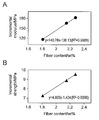
- minomushi silk yarn effectively improves mechanical properties such as strength, elastic modulus, and elongation at break of a polymer matrix with a slight fiber content of about 2 wt%, and changes its fiber content It became clear that the contribution to the mechanical property can be controlled.
- Example 2 Production of a fiber-reinforced composite material using a minomushi silk yarn as a reinforcing fiber (2)> (the purpose) A fiber-reinforced composite material using a polymer matrix different from that of Example 1 is produced by using Minomushi silk as a reinforcing fiber, and the physical properties thereof are verified.
- the EVA resin used in Example 1 was a soft resin that can be stretched several times. Therefore, in this example, fiber reinforcement using a polystyrene resin (PS resin) (Eiken Chemical Co., Ltd.), which is a hard resin having a small elongation compared to EVA resin and a breaking elongation of only about 5%, as a polymer matrix A composite material (BSF / PS composite material) was prepared and its mechanical properties were verified in the same manner as in Example 1.
- PS resin polystyrene resin
- BSF / PS composite material polymer matrix A composite material
- Example 2 The basic conditions followed the method of Example 1. However, the pressing conditions were 10 MPa to 12 MPa at 150 ° C.
- Example 3 Production of a fiber-reinforced composite material in which the short fibers of minomushi silk yarn are used as a reinforcing fiber> (the purpose) The physical properties of the fiber reinforced composite material when the short fiber of the Minomushi silk yarn is used as a reinforcing fiber are verified.
- a reinforcing fiber As a reinforcing fiber, a short fiber of minomushi silk yarn was used, and as a polymer matrix, polyvinyl alcohol (PVA) (Uehara Chemical) was used.
- PVA polyvinyl alcohol
- the monofilaments of the minmushi silk were cut into short fibers so that the major axis was about 5 mm in length. Thereafter, the short fibers were dispersed in a PVA aqueous solution and formed on a slide glass to obtain a film as a BSF / PVA composite material.
- the fiber content was defined as the mass fraction of the short fiber of the minmushi silk with respect to the total dry mass of the film.
- a strip-like test piece was cut out of the film and subjected to the subsequent mechanical test.
- the elastic modulus of the BSF / PVA composite material having a fiber content of 3.74 wt% was 184.1 MPa, and an improvement of 10 times or more was observed as compared with the PVA resin alone (elastic modulus 14.1 MPa). This result suggests that even if the minomushi silk is a short fiber, the fiber reinforced composite material can be given a very high elastic modulus.
- Example 4 Thermal decomposition evaluation test of minomushi silk yarn> (the purpose)
- heat treatment may be included to de- or accelerate the polymerization of the polymer matrix.
- the polymer matrix is a thermoplastic resin
- the resin is softened or dissolved by heating to be released by heating, and conversely, when the thermosetting resin is heated, the resin is hardened by promoting polymerization. .
- the reinforcing fibers are exposed to high temperatures as well as the polymer matrix under the production of fiber reinforced composite materials.
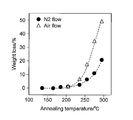
- the minomushi silk is a protein, when heated above the resistance temperature, the fiber itself may be denatured or degraded, and the effect of the invention may not be achieved. Therefore, the heat resistant temperature in the minmomi silk yarn is examined.
- the minmushi silk was treated at each temperature of 130 ° C. to 300 ° C. for 1 hour, and then the mass loss rate (%) due to thermal decomposition was evaluated by thermogravimetric analysis (TGA) measurement.
- TGA thermogravimetric analysis
- the experiment was performed under a nitrogen-substituted atmosphere (N 2 flow) and an air atmosphere (Air flow).
Landscapes
- Chemical & Material Sciences (AREA)
- Organic Chemistry (AREA)
- Health & Medical Sciences (AREA)
- Chemical Kinetics & Catalysis (AREA)
- Medicinal Chemistry (AREA)
- Polymers & Plastics (AREA)
- Engineering & Computer Science (AREA)
- Materials Engineering (AREA)
- Manufacturing & Machinery (AREA)
- Inorganic Chemistry (AREA)
- Textile Engineering (AREA)
- Reinforced Plastic Materials (AREA)
- Yarns And Mechanical Finishing Of Yarns Or Ropes (AREA)
Abstract
高強度、高弾性率に加えて、「伸び」の性質を有する繊維強化複合材料を開発し、提供することである。また、これにより、従来の繊維強化複合材料における脆さや剥離の問題点を解決することである。 強化繊維としてミノムシ絹糸を含む繊維強化複合材料を提供する。
Description
本発明は、強化繊維としてミノムシ絹糸を含有する繊維強化複合材料、及びその製造方法に関する。
強化繊維と母材を複合化した繊維強化複合材料は、炭素繊維強化プラスチック(CFRP:Carbon Fiber-Reinforced Plastics)やガラス繊維強化プラスチック(GFRP:Glass Fiber-Reinforced Plastics)に代表されるように、軽量、かつ高い強度と弾性率を有した材料である。このような高い強度と弾性率は、炭素繊維、ガラス繊維、アラミド繊維等の強化繊維の力学的性質に基づくところが大きい。例えば、強度を素材の質量で割った比強度において、炭素繊維は、鉄の約10倍の力学的特性を有することが知られている(非特許文献1)。このような力学的性質から、繊維強化複合材料は、金属に替わる材料として、スポーツ・レジャー用品、自動車、住宅、建築物、航空機に至る様々な分野で利用されている。
しかし、繊維強化複合材料で使用される従来の強化繊維は、いずれも「伸びない」という共通の性質を有していた。強化繊維におけるこの性質が、繊維強化複合材料の「脆さ」や強化繊維と母材の界面における「剥離」の主要な原因となっていた。特に母材が柔軟な性質を有するほど、繊維強化複合材料内での強化繊維との剥離は深刻な問題であった。
そこで、高強度及び高弾性率で、さらに伸びの性質を有する繊維を次世代強化繊維として繊維強化複合材料に利用することで、この問題を解決する試みがなされている。例えば、タフネスが非常に高く、かつ伸びの性質を有するクモ由来の糸(本明細書では、しばしば「クモ糸」と表記する)が、現在、強化繊維として注目されている(非特許文献2)。
しかし、クモ糸を実際に強化繊維として使用する場合、実施上、解決すべき点も多い。例えば、クモは大量飼育やクモから大量の糸を採取することが困難なことから、クモ糸は量産できず、生産コストが高いという問題がある。この問題は、現在、遺伝子組換え技術を用いて大腸菌やカイコにクモ糸を生産させることで、その解決が試みられている(特許文献1及び非特許文献3)。ただし、クモ糸の生産に使用する大腸菌やカイコは遺伝子組換え体であることから、所定の設備を備えた施設内でしか培養や飼育ができず、大量生産には大規模な生産施設が必要となる上に、維持管理の負担が大きくなるという新たな問題を伴う。また、大腸菌内で発現させたクモ糸タンパク質は液状のため、繊維に変換させる工程が必要となるが、現時点で天然繊維の力学特性を再現するような繊維化変換工程は見出されていない。また、工程数が多くなり、生産コストが高くなるという問題もあった。
平松徹, よくわかる炭素繊維コンポジット入門, 日刊工業新聞社 2015, 第一章.
Mathijsen D., 2016, Reinforced Plastics, 60: 38-44.
Kuwana Y, et al., 2014, PLoS One, DOI: 10.1371/journal.pone.0105325
本発明の課題は、高強度、高弾性率を有し、さらに従来の繊維強化複合材料における「伸び」の性質を有する繊維強化複合材料を開発し、提供することである。これにより、従来の繊維強化複合材料における脆さや剥離の問題点を解決することを目的とする。
上記課題を解決するために、本発明者らは、ミノムシ(Basket worm, alias "bag worm")が吐糸する絹糸(本明細書では、しばしば「ミノムシ絹糸」と表記する)に着目した。ミノムシは、チョウ目(Lepidoptera)ミノガ科(Psychidae)に属する蛾の幼虫の総称で、通常は葉片や枝片を糸で絡めた紡錘形又は円筒形の巣(Bag nest)の中に潜み、摂食の際にも巣ごと移動する等、全幼虫期を巣と共に生活することが知られている。
このミノムシ絹糸は、強度と伸びをバランスよく兼ね備えており、カイコ絹糸やクモ糸よりも力学的に優れた特性をもつ。例えば、チャミノガ(Eumeta minuscula)のミノムシ絹糸であれば、弾性率に関してカイコ絹糸の3.5倍、またジョロウグモ(Nephila clavata)のクモ糸の2.5倍にも及ぶ(大崎茂芳, 2002, 繊維学会誌(繊維と工業), 58: 74-78;Gosline J. M. et al., 1999, J. Exp. Biol. 202, 3295-3303)。さらに、本発明者らは、オオミノガ(Eumeta japonica)のミノムシ絹糸もカイコ絹糸やオニグモ由来のクモ糸と比較したときに同様の力学特性を有することを明らかにした(特願2017-110003)。例えば、弾性率はカイコ絹糸の約5倍、またクモ糸の3倍以上であった。さらに、破断強度はカイコ絹糸の3倍以上、またクモ糸の約2倍、そして破断伸度は、カイコ絹糸の1.3倍以上、またクモ糸にほぼ匹敵する値であった。特にタフネスはカイコ絹糸の4倍以上、またクモ糸の1.7倍以上に及び、天然繊維の中でも最高レベルのタフネスさを示すことが明らかとなっている。
飼育管理面においてもミノムシは、カイコよりも優れた点を有する。例えば、カイコは、原則としてクワ属(Morus)に属する種、例えば、ヤマグワ(M. bombycis)、カラヤマグワ(M. alba)、及びログワ(M. Ihou)等の生葉のみを食餌とするため、飼育地域や飼育時期は、クワ葉の供給地やクワの開葉期に左右される。これに対して、ミノムシは広食性で、餌葉に対する特異性が低く、多くの種類が様々な樹種の葉を食餌とすることができる。したがって、餌葉の入手が容易であり、飼育地域を選ばない。また、種類によっては、常緑樹の葉も餌葉にできるため、落葉樹のクワと異なり年間を通して餌葉の供給が可能となる。その上、ミノムシはカイコよりもサイズが小さいので、飼育スペースがカイコと同等以下で足り、大量飼育も容易である。したがって、カイコと比較して飼育コストを大幅に抑制することができる。
また、生産性においてもミノムシは、カイコよりも優れた点を有する。例えば、カイコは営繭時のみに大量に吐糸し、営繭は全幼虫で同時期に行われる。そのため採糸時期が重なり、労働期が集中してしまうという問題がある。一方、ミノムシは、幼虫期を通して営巣時や移動時に吐糸を繰り返し行っている。そのため採糸時期を人為的に調整することで、労働期を分散できるという利点がある。さらに、ミノムシ絹糸は野生型のミノムシからの直接採取が可能であり、クモ糸の生産のように遺伝子組換え体の作製や維持管理を必要としないという利点もある。
実際にミノムシ絹糸を強化繊維に用いた繊維強化複合材料は、弾性率が高分子マトリクス単体のときよりも10倍以上も向上することが明らかとなった。また、長繊維のミノムシ絹糸を用いた場合には、炭素繊維強化プラスチック(CFRP:Carbon Fiber-Reinforced Plastics)やガラス繊維強化プラスチック(GFRP:Glass Fiber-Reinforced Plastics)の解決課題であった低破断伸びの問題を著しく改善することができた。
本発明は、上記研究結果に基づくものであり、以下の発明を提供する。
(1)ミノムシ絹糸を含む繊維強化複合材料用強化繊維。
(2)高分子マトリクス及びミノムシ絹糸を含む強化繊維を含む繊維強化複合材料。
(3)1mm以上1m未満の短繊維からなるミノムシ絹糸を含む、(2)に記載の繊維強化複合材料。
(4)ミノムシ絹糸の絹紡糸を含む、(3)に記載の繊維強化複合材料。
(5)1m以上の長繊維からなるミノムシ絹糸を含む、(2)又は(4)に記載の繊維強化複合材料。
(6)強化繊維としてミノムシ絹糸以外の有機繊維、無機繊維、又はその組み合わせをさらに含む、(2)~(5)のいずれかに記載の繊維強化複合材料。
(7)一又は複数の方向に配置されたミノムシ絹糸を含む、(2)~(6)のいずれかに記載の繊維強化複合材料。
(8)全部又は一部がミノムシ絹糸で構成された織物、又は編物を含む、(7)に記載の繊維強化複合材料。
(9)前記高分子マトリクスが樹脂、膠、デンプン、寒天、又はその組み合わせである、(2)~(8)のいずれかに記載の繊維強化複合材料。
(10)繊維強化複合材料におけるミノムシ絹糸の質量分率が0.5質量%~50質量%である、(2)~(9)のいずれかに記載の繊維強化複合材料。
(11)強化繊維と高分子マトリクスを接触させる接触工程を含み、前記強化繊維がミノムシ絹糸を含む、繊維強化複合材料の製造方法。
(12)型を用いて強化繊維及び/又は高分子マトリクスを所望の形状に成形する成形工程、及び高分子マトリクスの重合反応を促進及び/又は完了させる硬化工程を含む、(11)に記載の製造方法。
(13)型から完成した繊維強化複合材料を取り出す脱型工程をさらに含む、(12)に記載の製造方法。
(1)ミノムシ絹糸を含む繊維強化複合材料用強化繊維。
(2)高分子マトリクス及びミノムシ絹糸を含む強化繊維を含む繊維強化複合材料。
(3)1mm以上1m未満の短繊維からなるミノムシ絹糸を含む、(2)に記載の繊維強化複合材料。
(4)ミノムシ絹糸の絹紡糸を含む、(3)に記載の繊維強化複合材料。
(5)1m以上の長繊維からなるミノムシ絹糸を含む、(2)又は(4)に記載の繊維強化複合材料。
(6)強化繊維としてミノムシ絹糸以外の有機繊維、無機繊維、又はその組み合わせをさらに含む、(2)~(5)のいずれかに記載の繊維強化複合材料。
(7)一又は複数の方向に配置されたミノムシ絹糸を含む、(2)~(6)のいずれかに記載の繊維強化複合材料。
(8)全部又は一部がミノムシ絹糸で構成された織物、又は編物を含む、(7)に記載の繊維強化複合材料。
(9)前記高分子マトリクスが樹脂、膠、デンプン、寒天、又はその組み合わせである、(2)~(8)のいずれかに記載の繊維強化複合材料。
(10)繊維強化複合材料におけるミノムシ絹糸の質量分率が0.5質量%~50質量%である、(2)~(9)のいずれかに記載の繊維強化複合材料。
(11)強化繊維と高分子マトリクスを接触させる接触工程を含み、前記強化繊維がミノムシ絹糸を含む、繊維強化複合材料の製造方法。
(12)型を用いて強化繊維及び/又は高分子マトリクスを所望の形状に成形する成形工程、及び高分子マトリクスの重合反応を促進及び/又は完了させる硬化工程を含む、(11)に記載の製造方法。
(13)型から完成した繊維強化複合材料を取り出す脱型工程をさらに含む、(12)に記載の製造方法。
本明細書は本願の優先権の基礎となる日本国特許出願番号2017-170648号の開示内容を包含する。
本発明の繊維強化複合材料によれば、高強度、高弾性率を有し、従来のCFRPやGFRPにはない「伸び」の性質を有する繊維強化複合材料を提供することができる。
1.強化繊維
1-1.概要
本発明の第1の態様は、強化繊維である。本発明の強化繊維は、繊維強化複合材料用強化繊維であって、ミノムシ絹糸を含むことを特徴とする。本発明の強化繊維によれば、高強度、及び高弾性率、さらに伸びの特性を繊維強化複合材料に付与することができる。
1-1.概要
本発明の第1の態様は、強化繊維である。本発明の強化繊維は、繊維強化複合材料用強化繊維であって、ミノムシ絹糸を含むことを特徴とする。本発明の強化繊維によれば、高強度、及び高弾性率、さらに伸びの特性を繊維強化複合材料に付与することができる。
1-2.定義
本明細書で頻用する用語を以下で定義する。
「繊維強化複合材料」とは、2種類以上の異なる素材、すなわち強化繊維と母材が互いに融合することなく、分離した状態で一体的に組み合わさった材料をいう。
本明細書で頻用する用語を以下で定義する。
「繊維強化複合材料」とは、2種類以上の異なる素材、すなわち強化繊維と母材が互いに融合することなく、分離した状態で一体的に組み合わさった材料をいう。
本明細書において「強化繊維」とは、繊維強化複合材料における繊維基材をいう。一般的に強化繊維は、繊維強化複合材料に強度を付与する強化材であるが、本明細書では、繊維強化複合材料に強度、弾性率、及び伸びの少なくとも一以上を付与する強化材をいう。
本明細書において「母材」とは、「マトリクス」とも言われ、繊維強化複合材料における支持基材をいう。母材は、繊維強化複合材料において、通常、強度を付与される側となる。しかし、本明細書の強化繊維は、強化繊維自体が強化剤となるだけでなく、母材もまた強化繊維間を充填する充填材として強化繊維に強度を付与する強化材になり得る。つまり、本発明の繊維強化複合材料では、各構成素材がそれぞれの利点を高め合い、及び/又は欠点を相互に補完し合う。それによって、元の素材にはなかった新たな特性を有した繊維強化複合材料を得ることができる。
本明細書において「高分子マトリクス」とは、有機高分子及び/又は無機高分子からなる母材をいう。
本明細書で「絹糸」とは、昆虫の幼虫や成虫が営巣、移動、固定、営繭、餌捕獲等の目的で吐糸するタンパク質製の糸をいう。本明細書の絹糸は、単繊維、吐糸繊維、絹紡糸、及び集合繊維を包含する。
本明細書で「単繊維」とは、絹糸を構成する最小単位のフィラメント(モノフィラメント)糸であって、後述する吐糸繊維からセリシンタンパク質等の被覆成分を除去して得られるフィブロインタンパク質等の繊維成分をいう。単繊維は、原則として天然状態では存在せず、吐糸繊維に精練処理を行うことによって得られる。
本明細書で「吐糸繊維」とは、昆虫が吐糸した状態の絹糸をいう。例えば、ミノムシの吐糸繊維は、単繊維2本1組が被覆成分で結合したジフィラメントで構成されている。
本明細書で「絹紡糸」とは、後述する短繊維の絹糸を紡いで得られるスパン糸をいう。
本明細書で「集合繊維」とは、複数の絹糸繊維束で構成された繊維で、マルチフィラメントとも呼ばれる。本明細書の集合繊維は、単繊維、吐糸繊維、絹紡糸、又はそれらの組み合わせで構成される。本明細書の集合繊維は、ミノムシ絹糸のみのように同一生物種由来の絹糸のみで構成されたものや、ミノムシ絹糸とカイコ絹糸のように由来の異なる複数種の絹糸で構成された混合繊維も包含する。なお、ミノムシ絹糸等が由来する生物種は問われるものではない。また、集合繊維は、加撚繊維だけでなく、無撚繊維も包含する。
本明細書で「集合繊維」とは、複数の絹糸繊維束で構成された繊維で、マルチフィラメントとも呼ばれる。本明細書の集合繊維は、単繊維、吐糸繊維、絹紡糸、又はそれらの組み合わせで構成される。本明細書の集合繊維は、ミノムシ絹糸のみのように同一生物種由来の絹糸のみで構成されたものや、ミノムシ絹糸とカイコ絹糸のように由来の異なる複数種の絹糸で構成された混合繊維も包含する。なお、ミノムシ絹糸等が由来する生物種は問われるものではない。また、集合繊維は、加撚繊維だけでなく、無撚繊維も包含する。
なお、本明細書で単に絹糸と記載した場合には、特に断りがない限りミノムシ絹糸を意味する。
「ミノムシ」とは、前述のようにチョウ目(Lepidoptera)ミノガ科(Psychidae)に属する蛾の幼虫の総称をいう。ミノガ科の蛾は世界中に分布するが、いずれの幼虫(ミノムシ)も全幼虫期を通して、自ら吐糸した絹糸で葉片や枝片等の自然素材を綴り、それらを纏った巣の中で生活している。巣は全身を包むことのできる袋状で、紡錘形、円筒形、円錐形等の形態をなす。ミノムシは、通常、この巣の中に潜伏しており、摂食時や移動時も常に巣と共に行動し、蛹化も原則として巣の中で行われる。
本明細書で「ミノムシ絹糸」とは、ミノムシが吐糸する絹糸をいう。
本明細書で「ミノムシ絹糸」とは、ミノムシが吐糸する絹糸をいう。
1-3.構成
本発明の強化繊維は、ミノムシ絹糸を含む。本発明の強化繊維として使用するミノムシ絹糸が由来するミノガの種類は問わない。例えば、ミノガ科には、Acanthopsyche、Anatolopsyche、Bacotia、Bambalina、Canephora、Chalioides、Dahlica、Diplodoma、Eumeta、Eumasia、Kozhantshikovia、Mahasena、Nipponopsyche、Paranarychia、Proutia、Psyche、Pteroma、Siederia、Striglocyrbasia、Taleporia、Theriodopteryx、Trigonodoma等の属が存在するが、いずれの属に属する種であってもよい。ミノガの種類の具体例として、オオミノガ(Eumeta japonica)、チャミノガ(Eumeta minuscula)、及びシバミノガ(Nipponopsyche fuscescens)が挙げられる。また、幼虫(ミノムシ)の齢は、初齢から終齢のいずれも対象となる。また、雌雄も問わない。ただし、より太く長いミノムシ絹糸を得る目的であれば、大型のミノムシである方が好ましい。例えば、ミノガ科内では大型種ほど好ましい。したがって、より太く長いミノムシ絹糸を得る観点から、オオミノガ及びチャミノガは、本発明で使用するミノムシとして好適な種である。さらに、同種内であれば終齢幼虫ほど好ましく、さらに大型となる雌の方が好ましい。
本発明の強化繊維は、ミノムシ絹糸を含む。本発明の強化繊維として使用するミノムシ絹糸が由来するミノガの種類は問わない。例えば、ミノガ科には、Acanthopsyche、Anatolopsyche、Bacotia、Bambalina、Canephora、Chalioides、Dahlica、Diplodoma、Eumeta、Eumasia、Kozhantshikovia、Mahasena、Nipponopsyche、Paranarychia、Proutia、Psyche、Pteroma、Siederia、Striglocyrbasia、Taleporia、Theriodopteryx、Trigonodoma等の属が存在するが、いずれの属に属する種であってもよい。ミノガの種類の具体例として、オオミノガ(Eumeta japonica)、チャミノガ(Eumeta minuscula)、及びシバミノガ(Nipponopsyche fuscescens)が挙げられる。また、幼虫(ミノムシ)の齢は、初齢から終齢のいずれも対象となる。また、雌雄も問わない。ただし、より太く長いミノムシ絹糸を得る目的であれば、大型のミノムシである方が好ましい。例えば、ミノガ科内では大型種ほど好ましい。したがって、より太く長いミノムシ絹糸を得る観点から、オオミノガ及びチャミノガは、本発明で使用するミノムシとして好適な種である。さらに、同種内であれば終齢幼虫ほど好ましく、さらに大型となる雌の方が好ましい。
ミノムシ絹糸には、足場絹糸と巣絹糸が存在するが、強化繊維として使用するミノムシ絹糸は、そのどちらであってもよく、また両者の混合物であってもよい。「足場絹糸」とは、ミノムシが移動に先立ち吐糸する絹糸で、移動の際に枝や葉等から落下するのを防ぐための足場としての機能を有する。「巣絹糸」とは、巣を構成する絹糸で、葉片や枝片を綴るためや、居住区である巣内壁を快適な環境にするために吐糸される。一般に、巣絹糸よりも足場絹糸の方が太く、力学的にも強靭であることから、強化繊維として、より好ましい。
強化繊維として使用するミノムシ絹糸の長さは問わない。例えば、短繊維(短繊維絹糸)、長繊維(長繊維絹糸)、又はその組み合わせが挙げられる。
本明細書で「短繊維」とは、長軸の長さが1.0mm以上1m未満、1.5mm以上80cm未満、2mm以上60cm未満、2.5mm以上50cm未満、3mm以上40cm未満、3.5mm以上30cm未満、4mm以上20cm未満、4.5mm以上10cm未満、及び5.0mm以上5cm未満の絹糸をいう。例えば、足場絹糸や巣絹糸の断片が該当する。強化繊維として短繊維絹糸を使用する場合、短繊維絹糸は、それを紡いだ絹紡糸として使用してもよいし、個々の短繊維絹糸を繊維強化複合材料中に分散するように配置して使用してもよく、またその組み合わせで使用してもよい。
本明細書で「長繊維」とは、繊維長が1m以上、2m以上、好ましくは3m以上、より好ましくは4m以上、5m以上、6m以上、7m以上、8m以上、9m以上、又は10m以上の絹糸をいう。長繊維絹糸は、繊維長が上記の長さ以上であれば単繊維や吐糸繊維のようなフィラメント糸や絹紡糸のようなパイル糸、又はその組み合わせのいずれであってもよい。長繊維絹糸の繊維長の上限は特に制限はしない。パイル糸の場合は、その長さは紡績によって無制限に伸長することができる。一方、フィラメント糸の場合は、繊維長はミノムシが連続して吐糸できる絹糸の長軸の長さに相当する。例えば、1.5km以下、1km以下、900m以下、800m以下、700m以下、600m以下、500m以下、400m以下、300m以下、200m以下、又は100m以下である。しかし、ミノムシ特有の生態により、ミノムシ絹糸で1m以上のフィラメント糸を得ることは、既存の技術ではこれまで不可能とされてきた。カイコの場合、営繭は連続吐糸によって行われるため、繭を精練し、操糸すれば、フィラメント糸の長繊維絹糸を得ること比較的容易である。しかし、ミノムシは、幼虫期の居住区である巣の中でそのまま蛹化するため、カイコのように蛹化前に営繭行動を行わない。また、ミノムシの巣は、原則として初齢時から成長に伴い増設されるため、巣には新旧の絹糸が混在している。加えて、ミノムシの巣の長軸における一方の末端には、ミノムシ頭部及び胸部の一部を露出させて、移動や摂食をするための開口部が存在し、他方の末端にも糞等を排泄するための排泄孔が存在する。つまり、常に2つの孔が存在するため、絹糸が巣内で断片化され、不連続になっている。このように、ミノムシの巣自体が、比較的短い絹糸が絡まり合って構成されているため、通常の方法では巣からフィラメント糸の長繊維絹糸を得ることができない。ミノムシの足場絹糸は、比較的連続的に吐糸されるものの、移動用の足掛かりであることからジグザグ状に吐糸され、またその移動も虫任せのため、絹糸が複雑に絡み合い、回収できても繰糸が困難であった。しかし、本発明者らは、特定の幅を有する線状路にミノムシを配置することで、線状路にほぼ並行した状態で足場絹糸をミノムシに吐糸させる方法を開発し、長繊維のミノムシ絹糸を安定的に量産することに成功している(特願2017-110003)。
長繊維絹糸を使用する場合、ミノムシ絹糸の配向は限定しない。フィラメント糸やパイル糸からなる複数の繊維束を一方向に、又は二以上の複数方向に配置することによって、ミノムシ絹糸を、紐状、シート状、又は立体構造状にすることができる。
ミノムシ絹糸の繊維束を一方向に配置する例として、直線的に引き揃えて平面配置する場合(UD材)や、ミノムシ絹糸の繊維束に連続的なループ(コース)を形成させながら、隣り合う繊維束のループにそれを係止して、縦方向のループ(ウェール)を繋いで平面(シート)を形成させる編物(ニット)等が挙げられる。編物は、その構造上、生地自体に伸縮性がある。しかし、従来の主要な強化繊維である炭素繊維やガラス繊維は、ループ状に湾曲させると折損してしまうため、編物にすることが困難であった。一方、ミノムシ絹糸は、繊維の柔軟性から織物の作製が容易である。ミノムシ絹糸の編物を強化繊維に用いることで、絹糸自身の「伸び」という力学的特性に加えて、編物の伸縮性が加わり、従来の強化繊維複合材料にはない、優れた性質を得ることができる。
ミノムシ絹糸の繊維束を二方向に配置する例として、織物や組物等のテキスタイルが挙げられる。織物とは、縦糸と横糸を交差させて平面(シート)を形成させたものである。織物の場合、縦糸と横糸が互いに直交する平織、又は互いに斜めに交差する綾織のいずれであってもよい。組物とは、複数の繊維を組み合わせて紐状又は帯状にしたもので、組紐、織紐、編紐等を包含する。一具体例として、例えば、組紐は、複数の繊維を芯金(マンドレル)に沿って円筒形状に組み、紐状構造(組紐)を形成させたものである。
さらにミノムシ絹糸の繊維束をランダムに3方向以上に配置して平面(シート)形成させた不織布が挙げられる。
本発明の強化繊維は、ミノムシ絹糸のみから構成されていてもよいが、本発明の効果を妨げない範囲内で、異なる一以上の他の強化繊維をさらに含んでいてもよい。他の強化繊維には、ミノムシ絹糸以外の有機繊維、又は無機繊維が挙げられる。有機繊維には、セルロースを主成分とする綿や麻等の植物性天然繊維、カイコ等の家蚕又はヤママユガ科(Saturniidae)の蛾の幼虫である野蚕等の昆虫から得られる絹糸及びクモ糸等の動物性天然繊維、及びアラミド、ポリアミド(ナイロンを含む)、ポリエステル、ポリエチレン、アクリル、レーヨン等の合成繊維が挙げられる。無機繊維には、炭素繊維、ガラス繊維、金属繊維(ステンレス、チタン、銅、アルミニウム、ニッケル、鉄、タングステン、モリブデン等)、及び非晶質繊維(セラミックファイバー、ロックウール等)が挙げられる。ミノムシ絹糸と他の強化繊維を組み合わせることで、強化繊維どうしによる相乗効果を得ることができる。例えば、CFRPの強化繊維である炭素繊維やGFRPの強化繊維であるガラス繊維は、極めて高い強度と弾性率を誇るが、伸びの性質がないため靱性が低く脆い。一方、ミノムシ絹糸も高い強度及び弾性率を有するが、炭素繊維やガラス繊維のそれには及ばない。しかし、ミノムシ絹糸は、炭素繊維やガラス繊維にはない伸びの性質を有する。そこで、ミノムシ絹糸と炭素繊維及び/又はガラス繊維とを組み合わせることで、強化繊維として両者の長所を活かし、かつ欠点を補完し合うことが可能となる。ミノムシ絹糸と炭素繊維及び/又はガラス繊維とを組み合わせた強化繊維を用いることにより強度と弾性率が極めて高く、かつ伸びの性質を有する繊維強化複合材料を製造することができる。
本発明の強化繊維が、ミノムシ絹糸に加えて異なる他の強化繊維を含む場合、繊維強化複合材料に用いる際の強化繊維中のミノムシ絹糸の含有率は限定しない。1%以上、3%以上、5%以上、8%以上、10%以上、15%以上、20%以上、25%以上、30%以上、35%以上、40%以上、45%以上、50%以上、55%以上、60%以上、65%以上、70%以上、75%以上、80%以上、85%以上、90%以上、92%以上、95%以上、97%以上、98%以上、又は99%以上の含有率であってもよい。
強化繊維が、ミノムシ絹糸に加えて他の強化繊維も含む場合であって、他の強化繊維も長繊維絹糸を使用する場合、他の強化繊維の配向等については、原則として上記ミノムシ絹糸の配向と同じで良い。したがって、その具体的な説明については省略する。
2.繊維強化複合材料
2-1.概要
本発明の第2の態様は、繊維強化複合材料である。本発明の繊維強化複合材料は、第1態様に記載の繊維強化複合材料用強化繊維、すなわちミノムシ絹糸を含む強化繊維を繊維基材として使用することを特徴とする。本発明によれば、高強度、高弾性率を有し、さらに従来のCFRPやGFRPにはなかった伸びの特性を有する繊維強化複合材料を提供することができる。
2-1.概要
本発明の第2の態様は、繊維強化複合材料である。本発明の繊維強化複合材料は、第1態様に記載の繊維強化複合材料用強化繊維、すなわちミノムシ絹糸を含む強化繊維を繊維基材として使用することを特徴とする。本発明によれば、高強度、高弾性率を有し、さらに従来のCFRPやGFRPにはなかった伸びの特性を有する繊維強化複合材料を提供することができる。
2-2.構成
2-2-1.構成成分
本発明の繊維強化複合材料は、高分子マトリクス及びミノムシ絹糸を含む強化繊維を必須の構成成分として含む。
2-2-1.構成成分
本発明の繊維強化複合材料は、高分子マトリクス及びミノムシ絹糸を含む強化繊維を必須の構成成分として含む。
(高分子マトリクス)
高分子マトリクスは、有機高分子及び/又は無機高分子からなる母材をいうところ、本発明の繊維強化複合材料に使用する高分子マトリクスは、有機高分子、及び無機高分子のいずれか、又は両方を含むものである。ここでいう有機高分子には、天然高分子と合成高分子が含まれる。
高分子マトリクスは、有機高分子及び/又は無機高分子からなる母材をいうところ、本発明の繊維強化複合材料に使用する高分子マトリクスは、有機高分子、及び無機高分子のいずれか、又は両方を含むものである。ここでいう有機高分子には、天然高分子と合成高分子が含まれる。
天然高分子は、自然界に存在する高分子で、例えば、タンパク質、多糖類、天然樹脂が該当する。タンパク質の具体例としては、膠(コラーゲン、ゼラチンを含む)が挙げられる。また、多糖類の具体例としては、デンプン、セルロース、マンナン、寒天等が挙げられる。さらに、天然樹脂の具体例としては、漆、ロジン、ラテックス(天然ゴム)、セラック等が挙げられる。
合成高分子は、モノマーを縮重反応や付加重合反応によって連結して得られる高分子で、例えば、合成樹脂、合成ゴム等が挙げられる。
合成樹脂は、プラスチックとも呼ばれる。本発明の繊維強化複合材料において高分子マトリクスとして使用する合成樹脂は、熱硬化性樹脂、熱可塑性樹脂、又はそれらの組み合わせのいずれであってもよい。熱硬化性樹脂には、エポキシ樹脂、不飽和ポリエステル樹脂、ビニルエステル樹脂、フェノール樹脂等が挙げられる。また、熱可塑性樹脂には、ポリエチレン、ポリプロピレン、ポリエステル、ポリスチレン、ポリ塩化ビニル、メタクリル樹脂、フッ素樹脂、ポリカーボネート、ポリウレタン、芳香族ポリエーテルケトン樹脂、ポリフェニレンサルファイド樹脂等が挙げられる。
合成ゴムには、ブタジエンゴム、クロロプレンゴム、スチレンブタジエンゴム、イソプレンゴム、エチレンプロピレンゴム、ニトリルゴム、シリコーンゴム、アクリルゴム、フッ素ゴム、ウレタンゴム等が挙げられる。
(強化繊維)
本発明の繊維強化複合材料に使用する強化繊維は、前記第1態様に記載の強化繊維、すなわち、ミノムシ絹糸を含む強化繊維である。この強化繊維の具体的な構成については、第1態様において詳述していることから、ここでの説明は省略する。
本発明の繊維強化複合材料に使用する強化繊維は、前記第1態様に記載の強化繊維、すなわち、ミノムシ絹糸を含む強化繊維である。この強化繊維の具体的な構成については、第1態様において詳述していることから、ここでの説明は省略する。
(成分比)
本発明の繊維強化複合材料における強化繊維と高分子マトリクスの配合比率は限定しない。通常は、目標とする強化繊維の特性である高強度、高弾性率や伸び等に応じて、母材である高分子マトリクスに付与できる比率で配合すればよい。本発明の繊維強化複合材料では、高強度、高弾性率に加えて、ミノムシ絹糸の特性である伸びを高分子マトリクスに付与できる配合比率が好ましい。具体的には、繊維強化複合材料の全乾燥質量に対するミノムシ絹糸の質量分率が0.5質量%~50質量%、0.8質量%~40質量%、1質量%~35質量%、1.5質量%~30質量%、2質量%~28質量%、又は3質量%~25質量%である。
本発明の繊維強化複合材料における強化繊維と高分子マトリクスの配合比率は限定しない。通常は、目標とする強化繊維の特性である高強度、高弾性率や伸び等に応じて、母材である高分子マトリクスに付与できる比率で配合すればよい。本発明の繊維強化複合材料では、高強度、高弾性率に加えて、ミノムシ絹糸の特性である伸びを高分子マトリクスに付与できる配合比率が好ましい。具体的には、繊維強化複合材料の全乾燥質量に対するミノムシ絹糸の質量分率が0.5質量%~50質量%、0.8質量%~40質量%、1質量%~35質量%、1.5質量%~30質量%、2質量%~28質量%、又は3質量%~25質量%である。
2-2-2.構造
本発明の繊維強化複合材料の構造、すなわち繊維強化複合材料における強化繊維と高分子マトリクスの配置は特に限定しない。例えば、短繊維の強化繊維が高分子マトリクス内及び/又は表面に分散した状態、高分子マトリクス層と強化繊維層が積層され一体化した状態、シート状の強化繊維に液状の高分子マトリクスを含浸させたプリプレグ、そして強化繊維の配向が異なるように複数のプリプレグ等を積層し、構造物として一体化した状態等が挙げられる。なお、プリプレグは、繊維強化複合材料の中間材料であるが、本明細書では繊維強化複合材料に包含する。
本発明の繊維強化複合材料の構造、すなわち繊維強化複合材料における強化繊維と高分子マトリクスの配置は特に限定しない。例えば、短繊維の強化繊維が高分子マトリクス内及び/又は表面に分散した状態、高分子マトリクス層と強化繊維層が積層され一体化した状態、シート状の強化繊維に液状の高分子マトリクスを含浸させたプリプレグ、そして強化繊維の配向が異なるように複数のプリプレグ等を積層し、構造物として一体化した状態等が挙げられる。なお、プリプレグは、繊維強化複合材料の中間材料であるが、本明細書では繊維強化複合材料に包含する。
2-3.効果
本発明の繊維強化複合材料は、強化繊維としてミノムシ絹糸を含むことにより、従来の繊維強化複合材料であるCFRPやGFRPにはない伸びの特性を示す繊維強化複合材料を提供することができる。
本発明の繊維強化複合材料は、強化繊維としてミノムシ絹糸を含むことにより、従来の繊維強化複合材料であるCFRPやGFRPにはない伸びの特性を示す繊維強化複合材料を提供することができる。
2-4.用途
本発明の繊維強化複合材料は、従来の繊維強化複合材料の用途をはじめとする様々な分野で利用することができる。例えば、スポーツ・レジャー(ゴルフシャフト、ラケット、釣竿、自転車部品等)、住宅(浴槽、浄化槽等)、土木建築(耐震補強材、軽量建材、壁、床補強材、トラス構造材等)、輸送機器(自動車、船、飛行機、ヘリコプター、高圧水素タンク等)、工業機材(筐体、家電部品、プリント基板、風力発電羽根等)、宇宙関連(ロケット、人工衛星等)が挙げられる。特に本発明の繊維強化複合材料は、従来の繊維強化複合材料には見られない伸びの特性を有することから、強度、弾性率に加えて、伸びを必要とする材料分野での使用が好適である。
本発明の繊維強化複合材料は、従来の繊維強化複合材料の用途をはじめとする様々な分野で利用することができる。例えば、スポーツ・レジャー(ゴルフシャフト、ラケット、釣竿、自転車部品等)、住宅(浴槽、浄化槽等)、土木建築(耐震補強材、軽量建材、壁、床補強材、トラス構造材等)、輸送機器(自動車、船、飛行機、ヘリコプター、高圧水素タンク等)、工業機材(筐体、家電部品、プリント基板、風力発電羽根等)、宇宙関連(ロケット、人工衛星等)が挙げられる。特に本発明の繊維強化複合材料は、従来の繊維強化複合材料には見られない伸びの特性を有することから、強度、弾性率に加えて、伸びを必要とする材料分野での使用が好適である。
また、使用する強化繊維をミノムシ絹糸のみ、又はミノムシ絹糸と他の絹糸とし、高分子マトリクスをコラーゲン、ゼラチン等の天然有機高分子とした場合、生体親和性の高い繊維強化複合材料となる。それ故に、組織再生基材や血管再生基材等として医療分野でも利用することができる。
3.繊維強化複合材料製造方法
3-1.概要
本発明の第3の態様は、繊維強化複合材料の製造方法である。本発明の方法は、第2態様に記載の繊維強化複合材料の製造及び/又は成形方法である。本発明の製造方法によれば、ミノムシ絹糸を含む繊維強化複合材料を容易に製造、及び成形することができる。
3-1.概要
本発明の第3の態様は、繊維強化複合材料の製造方法である。本発明の方法は、第2態様に記載の繊維強化複合材料の製造及び/又は成形方法である。本発明の製造方法によれば、ミノムシ絹糸を含む繊維強化複合材料を容易に製造、及び成形することができる。
3-2.方法
本発明の繊維強化複合材料の製造方法は、強化繊維にミノムシ絹糸を用いることを除けば、基本製法は従来の繊維強化複合体の製造方法に準ずる。例えば、長繊維ミノムシ絹糸を強化繊維として用いる場合には、通常、CFRPやGFRPで使用される製造方法をそのまま利用することができる。製造方法には様々な方法が知られているが、用途や形状等の目的に応じて適切な方法を選択すればよい。
本発明の繊維強化複合材料の製造方法は、強化繊維にミノムシ絹糸を用いることを除けば、基本製法は従来の繊維強化複合体の製造方法に準ずる。例えば、長繊維ミノムシ絹糸を強化繊維として用いる場合には、通常、CFRPやGFRPで使用される製造方法をそのまま利用することができる。製造方法には様々な方法が知られているが、用途や形状等の目的に応じて適切な方法を選択すればよい。
例えば、プリプレグの製造方法は、ミノムシ絹糸を含む強化繊維の織物、編物、又は不織布に適当な高分子マトリクスを含浸させればよい。高分子マトリクスが熱硬化性樹脂の場合、重合が未完了の半硬化プリプレグとなる。一方、高分子マトリクスが熱可塑性樹脂やコラーゲン等の天然高分子の場合、重合が完了した硬化プリプレグとなる。
また、主な成形法として、フィラメントワインディング(Filament winding)成形法、シートワインディング(Sheet winding)成形法、プレス成形法、オートクレーブ成形法、RTM(Resin Transfer Molding)成形法、VaRTM(Vacuum Resin Transfer Molding)成形法、SMC(Sheet Molding Compound)成形法、真空バック(Vacuum bag)成形法、ハンドレイアップ(Hand lay-up)成形法、及びファイバープレースメント(Fiber placement)成形法等が挙げられる。
「フィラメントワインディング成形法」は、トウ(1000本~数万本のフィラメント糸の束)を1~数十本引き揃えて、高分子マトリクスを含浸させながら回転する金型(マンドレル)に巻き付け、硬化後に脱芯する成形法で、管状製品の成形に適した方法である。「シートワインディング成形法」は、フィラメントワインディング成形法と基本工程は同じであり、トウに代えてプリプレグをマンドレルに巻き付け、硬化後に脱芯する成形法である。「プレス成形法」は、コンパウンドやプリプレグを型に入れて加圧及び加熱して成形する方法である。「オートクレーブ成形法」は、プリプレグを型に積層した後、バッグで覆い、オートクレーブ内に存在する空気や揮発性物質を真空除去し、加圧及び加熱して成形する方法である。「RTM成形法」は、樹脂注入成形法ともよばれ、型の中に強化繊維のプリフォームを配置した密閉系に溶融した熱硬化性樹脂を低圧下で導入し、加熱硬化後、脱型する方法である。「VaRTM成形法」は、RTM法の一種で、強化繊維を積層した密閉系を真空化し、熱硬化性樹脂を導入し、加熱硬化後、脱型する方法である。「SMC成形法」は、強化繊維と高分子マトリクスで構成されるシート状材料を積層して成形する方法である。「真空バック成形法」は、密閉されたフィルムでシールされた積層物を真空にすることで大気圧により圧縮成型する方法である。「ハンドレイアップ成形法」は、プリプレグを成形型に手作業で積層して、硬化成形する方法である。そして、「ファイバープレースメント成形法」とは、テープ状に加工したプリプレグや高分子マトリクスを含浸したトウを様々な三次元形状の型に積層し、硬化成形する方法である。これらの成形法の具体的な方法は、いずれも繊維強化複合材料の分野で公知の方法であり、それを参考にすればよい。
短繊維ミノムシ絹糸を強化繊維として用いる場合にも、基本的な操作は、従来の繊維強化複合材料の製造方法と同様に行えばよい。例えば、溶融した高分子マトリクス中に短繊維ミノムシ絹糸を分散し、両者を接触させた後、所望の型にその混合物を導入して、硬化、成形する方法が挙げられる。高分子マトリクス表面に短繊維の強化繊維を分散した後、加熱圧着によって一体化させ、高分子マトリクス層と強化繊維層からなる構造物としてもよい。
3-3.製造工程
本発明の繊維強化複合材料の製造方法の製造工程は、接触工程を必須工程として含み、必要に応じて成形工程、硬化工程、及び脱型工程を含む。以下、各工程を具体的に説明する。
本発明の繊維強化複合材料の製造方法の製造工程は、接触工程を必須工程として含み、必要に応じて成形工程、硬化工程、及び脱型工程を含む。以下、各工程を具体的に説明する。
(1)接触工程
「接触工程」とは、強化繊維と高分子マトリクスを接触させる工程である。両成分が直接接触できれば接触方法は特に限定されない。溶解した液状の高分子マトリクスに強化繊維を分散、浸漬、又は含浸してもよいし、SMC成形法のように強化繊維の繊維束又はシートを高分子マトリクスのシート間に挟み込んでもよい。
「接触工程」とは、強化繊維と高分子マトリクスを接触させる工程である。両成分が直接接触できれば接触方法は特に限定されない。溶解した液状の高分子マトリクスに強化繊維を分散、浸漬、又は含浸してもよいし、SMC成形法のように強化繊維の繊維束又はシートを高分子マトリクスのシート間に挟み込んでもよい。
前述のプリプレグは、強化繊維で構成されるシートに高分子マトリクスを含浸させたものであり、その工程は、接触工程のみで構成される。
(2)成形工程
「成形工程」は、繊維強化複合材料の構成成分である強化繊維及び/又は高分子マトリクスを所望の形状に成形する工程をいう。本工程は選択工程であり、各種製法に応じて実行される。
「成形工程」は、繊維強化複合材料の構成成分である強化繊維及び/又は高分子マトリクスを所望の形状に成形する工程をいう。本工程は選択工程であり、各種製法に応じて実行される。
本工程では、金型等の型を利用し、その型に合わせて成形を行う。必要に応じて強化繊維やプリプレグを積層して成形することもできる。成形工程と前述の接触工程の順番は、製法によって異なり限定しない。例えば、前述のフィラメントワインディング成形法、シートワインディング成形法、プレス成形法、オートクレーブ成形法、ハンドレイアップ成形法、ファイバープレースメント成形法等は、接触工程後に成形工程が行われる。一方、RTM成形法やVaRTM成形法は、金型で強化繊維のプリフォームを成形後、高分子マトリクスを金型内に導入するため成形工程後に接触工程が行われる。それぞれの製法に応じて行えばよい。
(3)硬化工程
「硬化工程」は、前記工程後に高分子マトリクスの重合反応を促進及び/又は完了させる工程をいう。本工程により高分子マトリクスが硬化し、繊維強化複合材料が完成する。硬化工程は、加熱ステップ及び/又は冷却ステップを含み得る。
「硬化工程」は、前記工程後に高分子マトリクスの重合反応を促進及び/又は完了させる工程をいう。本工程により高分子マトリクスが硬化し、繊維強化複合材料が完成する。硬化工程は、加熱ステップ及び/又は冷却ステップを含み得る。
「加熱ステップ」は、高分子マトリクスを加熱することによって重合反応を促進及び/又は完了させるステップである。高分子マトリクスに熱硬化性樹脂を使用する場合に実行される。一方、高分子マトリクスが熱可塑性樹脂や天然高分子の場合には、加熱により重合が解除されて逆に軟化又は溶解することから、本ステップは前記接触工程や成形工程に該当し得る。
加熱温度は、特に限定されない。使用する高分子マトリクスの種類によって異なるが、通常は、20℃~250℃、23℃~200℃、25℃~180℃、27℃~150℃、又は30℃~120℃の範囲で行えばよい。また加熱時間は、加熱温度に関連し、一般に温度が低いほど時間は長くなり、高いほど短くなる。通常は0.5時間~48時間、1時間~42時間、1.5時間~36時間、2時間~30時間、2.5時間~24時間、又は3時間~18時間の範囲で行えばよい。
「冷却ステップ」は、加熱した高分子マトリクスを冷却する、又は冷却により硬化させるステップである。高分子マトリクスに熱硬化性樹脂を使用した場合、加熱ステップで熱硬化反応が完了した繊維強化複合材料を冷却する際に実行される。また、高分子マトリクスに熱可塑性樹脂や天然高分子を使用した場合には、冷却により重合反応が促進及び/又は完了し、高分子マトリクスの硬化により繊維強化複合材料が完成する。
冷却温度も限定はしない。使用する高分子マトリクスの種類によって異なるが、通常は、260℃以下、200℃以下、180℃以下、150℃以下、120℃以下、100℃以下、90℃以下、80℃以下、70℃以下、60℃以下、50℃以下、40℃以下、35℃以下、30℃以下、27℃以下、25℃以下、23℃以下、20℃以下、18℃以下、15℃以下、又は10℃以下で行えばよい。下限温度は特に限定はしないが、通常は、4℃、0℃、-10℃、-15℃、又は-20℃程度で良い。また冷却時間は、0.1時間~1時間、0.2時間~0.9時間、0.3時間~0.8時間、0.4時間~0.7時間、又は0.5時間~0.6時間の範囲で行えばよい。
(4)脱型工程
「脱型工程」は、前記硬化工程後の繊維強化複合材料を型から外す工程である。具体的には、本工程で、成形工程時に使用した金型やマンドレルから完成した繊維強化複合材料を抜き出す。脱型方法は、当該分野で公知の方法に従えばよい。
「脱型工程」は、前記硬化工程後の繊維強化複合材料を型から外す工程である。具体的には、本工程で、成形工程時に使用した金型やマンドレルから完成した繊維強化複合材料を抜き出す。脱型方法は、当該分野で公知の方法に従えばよい。
<実施例1:ミノムシ絹糸を強化繊維とする繊維強化複合材料の製造(1)>
(目的)
ミノムシ絹糸を強化繊維として含む繊維強化複合材料を作製し、その物性を検証する。
(目的)
ミノムシ絹糸を強化繊維として含む繊維強化複合材料を作製し、その物性を検証する。
(方法)
強化繊維にはミノムシ絹糸の長繊維束を、高分子マトリクスにはエチレン・酢酸ビニル共重合体(ethylene-vinylacetate copolymer: EVA)樹脂を用いた。
強化繊維にはミノムシ絹糸の長繊維束を、高分子マトリクスにはエチレン・酢酸ビニル共重合体(ethylene-vinylacetate copolymer: EVA)樹脂を用いた。
ミノムシ絹糸の長繊維束は、特願2017-110003の明細書に記載の方法に準じて調製した。ミノムシは、茨城県つくば市内の果樹農園で採集したオオミノガの終齢幼虫を使用した。特願2017-110003の明細書の実施例1に記載の略方形の金属缶をミノムシ絹糸の長繊維生産装置として使用した。この金属缶側面に相当する板状部材の上方には、線状路面が上方を向いた幅1.7mm、周長1.1mの閉環状の線状路を備えている。この線状路にミノムシを配置して、ミノムシが線状路上に吐糸しながら周回するのを確認した後、そのまま室温に放置した。2日後、ミノムシを装置から回収し、前記線状路上に積層されたミノムシ絹糸を剥離器で剥離して、全長約150mに及ぶミノムシ絹糸が周長1.1mのリング状に束ねられた、150本以上の単繊維からなる長繊維束を回収した。続いて、その長繊維束を0.05mol/Lの沸騰炭酸ナトリウム水溶液で2分間精練した。純水で洗浄した後、風乾したものを強化繊維として使用した。
EVA樹脂にはホットガン用接着樹脂(太洋電器産業(株))を用いた。金型の代用として、0.5mm厚のシリコンゴムシートで作製した縦35mm、横10mmの型枠を作製し、EVA樹脂を型枠内に配置した後、1~2MPaにて加圧プレスしてEVA樹脂シートを2枚作製した。次に、EVA樹脂シート間に調製したミノムシ絹糸の長繊維束(bag worm silk fiber: BSF)、又は対照用として炭素繊維(carbon fiber: CF)を強化繊維として挟み、100℃に加熱した二枚の熱板で1~2MPaにて加圧プレスした後、冷却し、ミノムシ絹糸の長繊維束(BSF)とEVA樹脂からなる繊維強化複合材料(BSF/EVA複合材料)と炭素繊維(CF)とEVA樹脂からなる繊維強化複合材料(CF/EVA複合材料)を得た。同時に陰性対照用として強化繊維を含まず、シートを2枚のみを加圧プレスしたEVA樹脂単体も作成した。
得られたシートから、強化繊維に沿って試験片を切り出して後述する力学試験に供した。また、その試験片の総質量に対する強化繊維の質量分率を繊維含有率(質量%:wt%)として算出した。
(結果)
BSF/EVA複合材料とEVA樹脂の力学試験結果(n=3)を表1に示す。
BSF/EVA複合材料とEVA樹脂の力学試験結果(n=3)を表1に示す。

表1において、「弾性率」は、初期弾性率を意味する。これは、試料を引張った際に、力と変形量が比例する関係、すなわちフックの法則を満たす変形域での比例定数に相当し、応力ひずみ曲線の初期勾配の傾きとして与えられる。一般に数値が大きいほど引張り応力に対する変形が小さく、硬い性質であることを意味する。また、「最大強度」は、破断に至る直前の最大応力をいう。一般に数値が大きいほど強い応力に耐えられることを意味する。さらに、「ひずみ」は、破断伸度を意味し、これは試料が破断するまでの伸びをいう。一般に数値が大きいほどよく伸びることを意味する。「差弾性率」、及び「差強度」は、樹脂単体と繊維複合体における弾性率、及び最大強度の差分を示す。
BSF/EVA複合材料では、弾性率及び最大強度は、EVA樹脂単体の場合と比較して、著しい増加が見られた。これは、BSF/EVA複合材料がEVA樹脂単体の場合よりも硬く、そして強いことを示唆している。また、繊維含有率に対する差弾性率(A)と差強度(B)の値をプロットしたところ、図1で示すように、いずれの場合も繊維含有率の増加と共に高い相関性をもって直線的に増加することが確認された。これらの結果から、ミノムシ絹糸を強化繊維に用いることで、EVA樹脂に硬さ(高弾性率)と強さ(高強度)を付与できることが確認された。
さらに、BSF/EVA複合材料のひずみ(破断伸び)は、測定した3回全ての値が30%を超えた(表1)。これらの結果は、ミノムシ絹糸を繊維強化複合材料の強化繊維として用いることで、従来の炭素繊維やガラス繊維を強化繊維としたときの問題点であった低破断伸びの問題を著しく改善できることを示唆している。
以上の結果から、ミノムシ絹糸は約2wt%程度の僅かな繊維含有率で高分子マトリクスの強度、弾性率、及び破断伸び等の力学特性を効率的に向上し、また、その繊維含有率を変えることで、力学特性への寄与を制御できることが明らかとなった。
<実施例2:ミノムシ絹糸を強化繊維とする繊維強化複合材料の製造(2)>
(目的)
ミノムシ絹糸を強化繊維として、実施例1とは異なる高分子マトリクスを用いた繊維強化複合材料を作製し、その物性を検証する。
(目的)
ミノムシ絹糸を強化繊維として、実施例1とは異なる高分子マトリクスを用いた繊維強化複合材料を作製し、その物性を検証する。
(方法)
実施例1で用いたEVA樹脂は、数倍に延伸可能な軟質樹脂であった。そこで、本実施例では、EVA樹脂に比べて伸びが小さく、破断伸びが約5%しかない硬質樹脂であるポリスチレン樹脂(PS樹脂)(栄研化学株式会社)を高分子マトリクスに用いた繊維強化複合材料(BSF/PS複合材料)を調製し、実施例1と同様の方法でその力学特性を検証した。
実施例1で用いたEVA樹脂は、数倍に延伸可能な軟質樹脂であった。そこで、本実施例では、EVA樹脂に比べて伸びが小さく、破断伸びが約5%しかない硬質樹脂であるポリスチレン樹脂(PS樹脂)(栄研化学株式会社)を高分子マトリクスに用いた繊維強化複合材料(BSF/PS複合材料)を調製し、実施例1と同様の方法でその力学特性を検証した。
基本的条件は、実施例1の方法に従った。ただし、加圧プレス条件は、150℃下で10MPa~12MPaとした。
(結果)
BSF/PS複合材料及びPS樹脂単体の力学試験結果を表2に示す。
BSF/PS複合材料及びPS樹脂単体の力学試験結果を表2に示す。
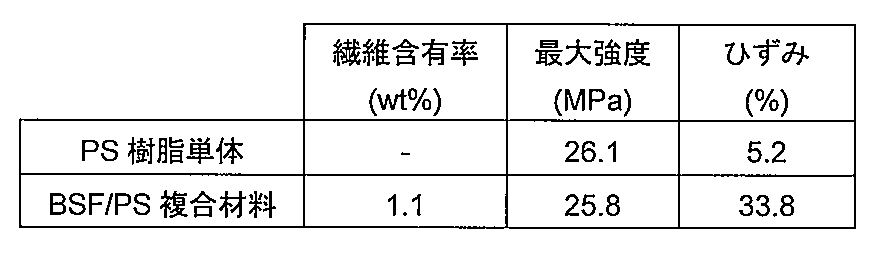
表2から、PS樹脂単体では5.2%しかないひずみ(破断伸び)が、ミノムシ絹糸の繊維束を複合化したBSF/PS複合材料では、33.8%にまで向上した。この結果は、繊維強化複合材料に用いる高分子マトリクスが、ミノムシ絹糸よりも低破断伸びを示す硬質樹脂であっても、ミノムシ絹糸が有する高破断伸びの特性を付与できることが明らかとなった。
<実施例3:ミノムシ絹糸の短繊維を強化繊維とする繊維強化複合材料の製造>
(目的)
ミノムシ絹糸の短繊維を強化繊維としたときの繊維強化複合材料の物性を検証する。
(目的)
ミノムシ絹糸の短繊維を強化繊維としたときの繊維強化複合材料の物性を検証する。
(方法)
強化繊維としてミノムシ絹糸の短繊維を、また高分子マトリクスにはポリビニルアルコール(polyvinyl alcohol:PVA)(ウエハラ化学)を用いた。
強化繊維としてミノムシ絹糸の短繊維を、また高分子マトリクスにはポリビニルアルコール(polyvinyl alcohol:PVA)(ウエハラ化学)を用いた。
ミノムシ絹糸の単繊維を長軸が約5mmの長さとなるように切断し、短繊維化した。その後、短繊維をPVA水溶液に分散させて、スライドガラス上で成形し、BSF/PVA複合材料としてのフィルムを得た。繊維含有率は、フィルムの総乾燥質量に対するミノムシ絹糸の短繊維の質量分率とした。フィルムから短冊状の試験片を切り取り、以降の力学試験に供した。
(結果)
繊維含有率3.74wt%のBSF/PVA複合材料の弾性率は184.1MPaであり、PVA樹脂単体(弾性率14.1MPa)と比較して、10倍以上の向上が見られた。この結果は、ミノムシ絹糸が短繊維の場合であっても、繊維強化複合材料に非常に高い弾性率を付与できることを示唆している。
繊維含有率3.74wt%のBSF/PVA複合材料の弾性率は184.1MPaであり、PVA樹脂単体(弾性率14.1MPa)と比較して、10倍以上の向上が見られた。この結果は、ミノムシ絹糸が短繊維の場合であっても、繊維強化複合材料に非常に高い弾性率を付与できることを示唆している。
<実施例4:ミノムシ絹糸の熱分解評価試験>
(目的)
繊維強化複合材料の製造では、高分子マトリクスの重合を解除又は促進するために加熱処理が含まれ得る。例えば、高分子マトリクスが熱可塑性樹脂の場合、加熱によって樹脂は重合が解除されるために軟化又は溶解し、逆に熱硬化性樹脂の場合、加熱によって樹脂は重合が促進されるために硬化する。いずれの場合にも、繊維強化複合材料の製造下では高分子マトリクスと共に強化繊維も高温下に曝露される。ミノムシ絹糸はタンパク質であることから、耐性温度を超えて加熱した場合、繊維自体が変性や分解等を生じてしまい、発明の効果を奏し得なくなる可能性がある。そこで、ミノムシ絹糸における熱耐性温度を調べる。
(目的)
繊維強化複合材料の製造では、高分子マトリクスの重合を解除又は促進するために加熱処理が含まれ得る。例えば、高分子マトリクスが熱可塑性樹脂の場合、加熱によって樹脂は重合が解除されるために軟化又は溶解し、逆に熱硬化性樹脂の場合、加熱によって樹脂は重合が促進されるために硬化する。いずれの場合にも、繊維強化複合材料の製造下では高分子マトリクスと共に強化繊維も高温下に曝露される。ミノムシ絹糸はタンパク質であることから、耐性温度を超えて加熱した場合、繊維自体が変性や分解等を生じてしまい、発明の効果を奏し得なくなる可能性がある。そこで、ミノムシ絹糸における熱耐性温度を調べる。
(方法)
ミノムシ絹糸を130℃~300℃の各温度で1時間処理し、その後、熱分解による質量損失率(%)を熱重量分析(TGA)測定により評価した。実験は、窒素置換雰囲気下(N2 flow)及び大気雰囲気下(Air flow)で行った。
ミノムシ絹糸を130℃~300℃の各温度で1時間処理し、その後、熱分解による質量損失率(%)を熱重量分析(TGA)測定により評価した。実験は、窒素置換雰囲気下(N2 flow)及び大気雰囲気下(Air flow)で行った。
(結果)
図2に結果を示す。窒素置換雰囲気下では、260℃で1時間処理しても熱による質量損失は10%以下であった。これは、ミノムシ絹糸が260℃以下であれば熱分解の影響をほとんど無視でき、同時に260℃に加熱しても本発明の強化繊維複合材料を製造し得ることを示唆している。
本明細書で引用した全ての刊行物、特許及び特許出願はそのまま引用により本明細書に組み入れられるものとする。
図2に結果を示す。窒素置換雰囲気下では、260℃で1時間処理しても熱による質量損失は10%以下であった。これは、ミノムシ絹糸が260℃以下であれば熱分解の影響をほとんど無視でき、同時に260℃に加熱しても本発明の強化繊維複合材料を製造し得ることを示唆している。
本明細書で引用した全ての刊行物、特許及び特許出願はそのまま引用により本明細書に組み入れられるものとする。
Claims (7)
- ミノムシ絹糸を含む繊維強化複合材料用強化繊維。
- 高分子マトリクス及びミノムシ絹糸を含む強化繊維を含む繊維強化複合材料。
- ミノムシ絹糸以外の有機繊維、無機繊維、又はその組み合わせをさらに含む、請求項2に記載の繊維強化複合材料。
- 一又は複数の方向に配置されたミノムシ絹糸を含む、請求項2又は3に記載の繊維強化複合材料。
- 全部又は一部がミノムシ絹糸で構成された織物、又は編物を含む、請求項4に記載の繊維強化複合材料。
- 前記高分子マトリクスが樹脂、膠、デンプン、寒天、又はその組み合わせである、請求項2~5のいずれか一項に記載の繊維強化複合材料。
- 繊維強化複合材料におけるミノムシ絹糸の質量分率が0.5質量%~50質量%である、請求項2~6のいずれか一項に記載の繊維強化複合材料。
Priority Applications (4)
| Application Number | Priority Date | Filing Date | Title |
|---|---|---|---|
| CN202310844583.5A CN116904041B (zh) | 2017-09-05 | 2018-08-30 | 纤维增强复合材料及其制造方法 |
| US16/644,055 US11732096B2 (en) | 2017-09-05 | 2018-08-30 | Fiber-reinforced composite material and method for manufacturing same |
| CN201880056859.0A CN111032748B (zh) | 2017-09-05 | 2018-08-30 | 纤维增强复合材料及其制造方法 |
| EP18853035.6A EP3680279A4 (en) | 2017-09-05 | 2018-08-30 | FIBER REINFORCED COMPOSITE MATERIAL AND METHOD FOR MANUFACTURING THEREOF |
Applications Claiming Priority (2)
| Application Number | Priority Date | Filing Date | Title |
|---|---|---|---|
| JP2017-170648 | 2017-09-05 | ||
| JP2017170648A JP6963765B2 (ja) | 2017-09-05 | 2017-09-05 | 繊維強化複合材料及びその製造方法 |
Publications (1)
| Publication Number | Publication Date |
|---|---|
| WO2019049771A1 true WO2019049771A1 (ja) | 2019-03-14 |
Family
ID=65634080
Family Applications (1)
| Application Number | Title | Priority Date | Filing Date |
|---|---|---|---|
| PCT/JP2018/032195 Ceased WO2019049771A1 (ja) | 2017-09-05 | 2018-08-30 | 繊維強化複合材料及びその製造方法 |
Country Status (5)
| Country | Link |
|---|---|
| US (1) | US11732096B2 (ja) |
| EP (1) | EP3680279A4 (ja) |
| JP (2) | JP6963765B2 (ja) |
| CN (2) | CN111032748B (ja) |
| WO (1) | WO2019049771A1 (ja) |
Cited By (2)
| Publication number | Priority date | Publication date | Assignee | Title |
|---|---|---|---|---|
| WO2020067519A1 (ja) * | 2018-09-28 | 2020-04-02 | 小島プレス工業株式会社 | 樹脂成形品及びその製造方法 |
| EP3940131A4 (en) * | 2019-03-13 | 2022-12-14 | National Agriculture And Food Research Organization | FIBER REINFORCED COMPOSITE AND METHOD OF MAKING THEREOF |
Families Citing this family (8)
| Publication number | Priority date | Publication date | Assignee | Title |
|---|---|---|---|---|
| US20210372691A1 (en) * | 2020-05-29 | 2021-12-02 | Whirlpool Corporation | Appliance liner system |
| WO2022014525A1 (ja) * | 2020-07-15 | 2022-01-20 | Spiber株式会社 | 開繊剤 |
| US12302875B2 (en) | 2020-12-10 | 2025-05-20 | National Agriculture And Food Research Organization | Egg collection device for bagworm moth and breeding method and egg collection method of bagworm moth using the same |
| US12053908B2 (en) | 2021-02-01 | 2024-08-06 | Regen Fiber, Llc | Method and system for recycling wind turbine blades |
| CN120435523A (zh) | 2022-12-27 | 2025-08-05 | 国立研究开发法人农业·食品产业技术综合研究机构 | 含有蓑蛾虫丝的凝胶及其制造方法 |
| WO2026015702A1 (en) * | 2024-07-10 | 2026-01-15 | Braindrip, Llc | Overwrapped composite vessels for the storage and transmission of gases |
| WO2026071039A1 (ja) * | 2024-09-26 | 2026-04-02 | 興和株式会社 | 複合繊維強化樹脂及び衝撃吸収材 |
| CN120967674B (zh) * | 2025-10-21 | 2026-02-03 | 河北华密新材科技股份有限公司 | 一种纤维毛毡复合材料及其制备方法和应用 |
Citations (8)
| Publication number | Priority date | Publication date | Assignee | Title |
|---|---|---|---|---|
| JPH08208861A (ja) * | 1995-02-08 | 1996-08-13 | Koken Kk | 有機高分子材料からなる産業用材料及び製品 |
| JP2001207585A (ja) * | 2000-01-25 | 2001-08-03 | Koken Kk | 建築用材料 |
| JP2002363862A (ja) * | 2001-06-04 | 2002-12-18 | Toyobo Co Ltd | 成形材料用繊維、繊維補強成形材料および成形体 |
| JP2011126987A (ja) * | 2009-12-17 | 2011-06-30 | Gunma Prefecture | 絹繊維強化生分解性複合材料 |
| WO2012165477A1 (ja) | 2011-06-01 | 2012-12-06 | スパイバー株式会社 | タンパク質繊維及びその製造方法 |
| JP2017110003A (ja) | 2015-12-16 | 2017-06-22 | 日本曹達株式会社 | ジアリールトリアゾール化合物および有害生物防除剤 |
| JP2017170648A (ja) | 2016-03-18 | 2017-09-28 | 富士ゼロックス株式会社 | 三次元造形装置及び三次元造形プログラム |
| WO2018116979A1 (ja) * | 2016-12-20 | 2018-06-28 | Spiber株式会社 | 繊維強化樹脂材および積層体 |
Family Cites Families (5)
| Publication number | Priority date | Publication date | Assignee | Title |
|---|---|---|---|---|
| JP2001207325A (ja) * | 2000-01-25 | 2001-08-03 | Koken Kk | 動物繊維 |
| GB0605929D0 (en) * | 2006-03-24 | 2006-05-03 | Leuven K U Res & Dev | Silk fibre composites |
| WO2009119467A1 (ja) * | 2008-03-25 | 2009-10-01 | 東レ株式会社 | エポキシ樹脂組成物、繊維強化複合材料、およびその製造方法 |
| EP3349981B1 (en) * | 2015-09-17 | 2020-08-26 | Roberto Velozzi Jerez | Load-bearing composite panels, materials, products, and processes to make and use same |
| DE102016109843A1 (de) * | 2016-05-27 | 2017-11-30 | Sml Verwaltungs Gmbh | Härtbare Auskleidungsschläuche zur Sanierung fluidführender Systeme |
-
2017
- 2017-09-05 JP JP2017170648A patent/JP6963765B2/ja active Active
-
2018
- 2018-08-30 WO PCT/JP2018/032195 patent/WO2019049771A1/ja not_active Ceased
- 2018-08-30 CN CN201880056859.0A patent/CN111032748B/zh active Active
- 2018-08-30 US US16/644,055 patent/US11732096B2/en active Active
- 2018-08-30 CN CN202310844583.5A patent/CN116904041B/zh active Active
- 2018-08-30 EP EP18853035.6A patent/EP3680279A4/en active Pending
-
2021
- 2021-07-27 JP JP2021122090A patent/JP7088501B2/ja active Active
Patent Citations (8)
| Publication number | Priority date | Publication date | Assignee | Title |
|---|---|---|---|---|
| JPH08208861A (ja) * | 1995-02-08 | 1996-08-13 | Koken Kk | 有機高分子材料からなる産業用材料及び製品 |
| JP2001207585A (ja) * | 2000-01-25 | 2001-08-03 | Koken Kk | 建築用材料 |
| JP2002363862A (ja) * | 2001-06-04 | 2002-12-18 | Toyobo Co Ltd | 成形材料用繊維、繊維補強成形材料および成形体 |
| JP2011126987A (ja) * | 2009-12-17 | 2011-06-30 | Gunma Prefecture | 絹繊維強化生分解性複合材料 |
| WO2012165477A1 (ja) | 2011-06-01 | 2012-12-06 | スパイバー株式会社 | タンパク質繊維及びその製造方法 |
| JP2017110003A (ja) | 2015-12-16 | 2017-06-22 | 日本曹達株式会社 | ジアリールトリアゾール化合物および有害生物防除剤 |
| JP2017170648A (ja) | 2016-03-18 | 2017-09-28 | 富士ゼロックス株式会社 | 三次元造形装置及び三次元造形プログラム |
| WO2018116979A1 (ja) * | 2016-12-20 | 2018-06-28 | Spiber株式会社 | 繊維強化樹脂材および積層体 |
Non-Patent Citations (6)
| Title |
|---|
| GOSLINE J. M. ET AL., J. EXP. BIOL., vol. 202, 1999, pages 3295 - 3303 |
| KUWANA Y ET AL., PLOS ONE, 2014 |
| MATHIJSEN D., REINFORCED PLASTICS, vol. 60, 2016, pages 38 - 44 |
| OHSAKI, SHIGEYOSHI: "Why is strong silk from Psychidae?", POLYMER PREPRINTS JAPAN, vol. 50, no. 14, 28 August 2001 (2001-08-28), Japan, pages 3493 - 3494, XP009519987 * |
| SHIGEYOSI OHSAKI, SEN'I GAKKAISHI (SEN'I TO KOGYO, vol. 58, 2002, pages 74 - 78 |
| TORN HIRAMATSU: "Well Understandable Introduction for Carbon Fiber Composite", 2015, NIKKAN KOGYO SHIMBUN, LTD |
Cited By (3)
| Publication number | Priority date | Publication date | Assignee | Title |
|---|---|---|---|---|
| WO2020067519A1 (ja) * | 2018-09-28 | 2020-04-02 | 小島プレス工業株式会社 | 樹脂成形品及びその製造方法 |
| EP3940131A4 (en) * | 2019-03-13 | 2022-12-14 | National Agriculture And Food Research Organization | FIBER REINFORCED COMPOSITE AND METHOD OF MAKING THEREOF |
| US12467170B2 (en) | 2019-03-13 | 2025-11-11 | National Agriculture And Food Research Organization | Fiber-reinforced composite material and method for producing the same |
Also Published As
| Publication number | Publication date |
|---|---|
| CN116904041B (zh) | 2025-10-21 |
| JP6963765B2 (ja) | 2021-11-10 |
| EP3680279A1 (en) | 2020-07-15 |
| JP7088501B2 (ja) | 2022-06-21 |
| EP3680279A4 (en) | 2021-06-09 |
| US11732096B2 (en) | 2023-08-22 |
| US20200407518A1 (en) | 2020-12-31 |
| CN111032748A (zh) | 2020-04-17 |
| CN111032748B (zh) | 2023-07-21 |
| JP2019044117A (ja) | 2019-03-22 |
| CN116904041A (zh) | 2023-10-20 |
| JP2021167114A (ja) | 2021-10-21 |
Similar Documents
| Publication | Publication Date | Title |
|---|---|---|
| JP7088501B2 (ja) | 繊維強化複合材料及びその製造方法 | |
| US12467170B2 (en) | Fiber-reinforced composite material and method for producing the same | |
| JP7334995B2 (ja) | 長尺ミノムシ絹糸の生産方法及びその生産装置 | |
| US9481948B2 (en) | Robust pre-impregnated yarn for manufacturing textile composites | |
| TW201231257A (en) | Article of carbon fiber strengthened plastic | |
| Jabbar et al. | Textile raw materials | |
| JP6998069B2 (ja) | 長尺ミノムシ絹糸の生産方法及びその生産装置 | |
| JP2019044117A5 (ja) | ||
| JP4748717B2 (ja) | 繊維強化熱可塑性樹脂成形体 | |
| Huang et al. | Research on properties of thermoplastic composites reinforced by flax fabrics | |
| Islam | Composites derived from biodegradable Textile wastes: A pathway to the future | |
| Yusif | INVESTIGATION OF THE SILK FIBER EXTRACTION PROCESS FROM THE SATURNIA PYRI (DENIS & SCHIFFERMÜLLER, 1775) COCOON | |
| Sealy | Silk shows new strengths in composites | |
| CN106426975B (zh) | 一种复合钓鱼竿的制备工艺 | |
| Ranakoti et al. | Synthesis and surface treatments of bio-based fibers | |
| JP6364798B2 (ja) | 補強繊維織物及びその製造方法 | |
| US20260033619A1 (en) | Bamboo Net, Devices and Methods of use | |
| Ranakoti et al. | 1Department of Mechanical Engineering, National Institute of Technology, Srinagar, India, 2Department of Mechanical Engineering, SOET, HNBGU, Chauras Campus, Srinagar, India | |
| Abilash et al. | INFLUENCE OF HYBRIDISATION IN SISAL/JUTE FIBER REINFORCED POLYMERIC COMPOSITES | |
| Elsi et al. | Manufacturing and characterization of glass fiber-fishnet-woven roving and polyester composites | |
| WO2026071039A1 (ja) | 複合繊維強化樹脂及び衝撃吸収材 | |
| Yadav et al. | Fabrication of composite material using jute fiber/glass fiber | |
| CN111194728A (zh) | 蛛蚕丝生产方法及由其生产的蛛蚕丝 | |
| Ya’acob et al. | Investigation on improvement of mechanical properties of kenaf/E-glass fiber composites by mercerization process | |
| Węcławski | The potential of bast natural fibres as reinforcement for polymeric composite materials in building applications |
Legal Events
| Date | Code | Title | Description |
|---|---|---|---|
| 121 | Ep: the epo has been informed by wipo that ep was designated in this application |
Ref document number: 18853035 Country of ref document: EP Kind code of ref document: A1 |
|
| NENP | Non-entry into the national phase |
Ref country code: DE |
|
| ENP | Entry into the national phase |
Ref document number: 2018853035 Country of ref document: EP Effective date: 20200406 |