WO2019066028A1 - Matériau composite renforcé par des fibres, additif pour matériau composite renforcé par des fibres et procédé de production d'un matériau composite renforcé par des fibres - Google Patents
Matériau composite renforcé par des fibres, additif pour matériau composite renforcé par des fibres et procédé de production d'un matériau composite renforcé par des fibres Download PDFInfo
- Publication number
- WO2019066028A1 WO2019066028A1 PCT/JP2018/036434 JP2018036434W WO2019066028A1 WO 2019066028 A1 WO2019066028 A1 WO 2019066028A1 JP 2018036434 W JP2018036434 W JP 2018036434W WO 2019066028 A1 WO2019066028 A1 WO 2019066028A1
- Authority
- WO
- WIPO (PCT)
- Prior art keywords
- fiber
- reinforced composite
- composite material
- additive
- spider silk
- Prior art date
- Legal status (The legal status is an assumption and is not a legal conclusion. Google has not performed a legal analysis and makes no representation as to the accuracy of the status listed.)
- Ceased
Links
Images
Classifications
-
- B—PERFORMING OPERATIONS; TRANSPORTING
- B29—WORKING OF PLASTICS; WORKING OF SUBSTANCES IN A PLASTIC STATE IN GENERAL
- B29C—SHAPING OR JOINING OF PLASTICS; SHAPING OF MATERIAL IN A PLASTIC STATE, NOT OTHERWISE PROVIDED FOR; AFTER-TREATMENT OF THE SHAPED PRODUCTS, e.g. REPAIRING
- B29C70/00—Shaping composites, i.e. plastics material comprising reinforcements, fillers or preformed parts, e.g. inserts
- B29C70/04—Shaping composites, i.e. plastics material comprising reinforcements, fillers or preformed parts, e.g. inserts comprising reinforcements only, e.g. self-reinforcing plastics
- B29C70/06—Fibrous reinforcements only
-
- B—PERFORMING OPERATIONS; TRANSPORTING
- B62—LAND VEHICLES FOR TRAVELLING OTHERWISE THAN ON RAILS
- B62D—MOTOR VEHICLES; TRAILERS
- B62D29/00—Superstructures, understructures, or sub-units thereof, characterised by the material thereof
- B62D29/04—Superstructures, understructures, or sub-units thereof, characterised by the material thereof predominantly of synthetic material
-
- C—CHEMISTRY; METALLURGY
- C08—ORGANIC MACROMOLECULAR COMPOUNDS; THEIR PREPARATION OR CHEMICAL WORKING-UP; COMPOSITIONS BASED THEREON
- C08J—WORKING-UP; GENERAL PROCESSES OF COMPOUNDING; AFTER-TREATMENT NOT COVERED BY SUBCLASSES C08B, C08C, C08F, C08G or C08H
- C08J5/00—Manufacture of articles or shaped materials containing macromolecular substances
- C08J5/04—Reinforcing macromolecular compounds with loose or coherent fibrous material
-
- C—CHEMISTRY; METALLURGY
- C08—ORGANIC MACROMOLECULAR COMPOUNDS; THEIR PREPARATION OR CHEMICAL WORKING-UP; COMPOSITIONS BASED THEREON
- C08K—Use of inorganic or non-macromolecular organic substances as compounding ingredients
- C08K7/00—Use of ingredients characterised by shape
- C08K7/02—Fibres or whiskers
- C08K7/04—Fibres or whiskers inorganic
- C08K7/06—Elements
-
- C—CHEMISTRY; METALLURGY
- C08—ORGANIC MACROMOLECULAR COMPOUNDS; THEIR PREPARATION OR CHEMICAL WORKING-UP; COMPOSITIONS BASED THEREON
- C08L—COMPOSITIONS OF MACROMOLECULAR COMPOUNDS
- C08L101/00—Compositions of unspecified macromolecular compounds
-
- C—CHEMISTRY; METALLURGY
- C08—ORGANIC MACROMOLECULAR COMPOUNDS; THEIR PREPARATION OR CHEMICAL WORKING-UP; COMPOSITIONS BASED THEREON
- C08L—COMPOSITIONS OF MACROMOLECULAR COMPOUNDS
- C08L89/00—Compositions of proteins; Compositions of derivatives thereof
Definitions
- the present invention relates to a fiber reinforced composite material, an additive for fiber reinforced composite material, and a method of manufacturing a fiber reinforced composite material.
- Patent Document 1 discloses a method of molding a fiber reinforced plastic structure using a fiber reinforced plastic strand sheet.
- Patent Document 2 discloses a sheet molding compound comprising a carbon fiber, a resin composition and a pitch-based carbon fiber milled fiber.
- An object of the present invention is to provide a fiber-reinforced composite material excellent in tensile properties and bending properties. Another object of the present invention is to provide an additive for fiber reinforced composites which can impart excellent tensile properties and bending properties to fiber reinforced composites. Another object of the present invention is to provide a method for producing a fiber reinforced composite, which can easily form a fiber reinforced composite having excellent tensile properties and bending properties.
- One aspect of the invention relates to a fiber reinforced composite comprising a matrix resin, reinforcing fibers and an additive containing spider silk fibroin.
- Such fiber reinforced composites have excellent tensile and flexural properties due to the formulation of certain additives.
- the reinforcing fibers may be carbon fibers.
- the carbon fibers may contain staple fibers having a fiber length of 50 mm or less.
- the additive may include spider silk fibroin fibers having a fiber length of 5 mm or less.
- the additive may comprise spider silk fibroin powder.
- Another aspect of the present invention relates to an additive for fiber reinforced composite material, which contains spider silk fibroin. According to such an additive for a fiber reinforced composite, excellent tensile properties can be imparted to the fiber reinforced composite.
- the additive for fiber reinforced composite material may include spider fibroin fibers having a fiber length of 5 mm or less.
- the fiber reinforced composite additive according to one aspect may include spider silk fibroin powder.
- Yet another aspect of the invention relates to a method of making a fiber reinforced composite.
- the manufacturing method which concerns on one aspect may include the process of mixing a reinforcement fiber with the resin composition containing the resin component and the additive containing a spider silk fibroin.
- the manufacturing method comprises: forming a resin composition containing a resin component and an additive containing spider silk fibroin into a sheet, thereby forming a resin sheet comprising the above resin composition; And a composite forming step of arranging reinforcing fibers on the resin sheet and combining the resin sheet and the reinforcing fibers.
- the reinforcing fiber may be carbon fiber.
- the additive may include spider fibroin fibers having a fiber length of 5 mm or less.
- the additive may include spider silk fibroin powder.
- a fiber reinforced composite material excellent in tensile properties and bending properties is provided. Further, according to the present invention, an additive for a fiber reinforced composite material is provided which can impart excellent tensile properties and bending properties to the fiber reinforced composite material. Furthermore, according to the present invention, there is provided a method of producing a fiber reinforced composite, which can easily form a fiber reinforced composite having excellent tensile properties and bending properties.
- the additive for fiber-reinforced composite material according to the present embodiment contains spider silk fibroin.
- the spider silk fibroin may be at least one spider silk polypeptide selected from the group consisting of natural spider silk proteins or polypeptides derived from natural spider silk proteins (artificial spider silk proteins). That is, spider silk fibroin may be a naturally occurring spider silk protein, and is a modified protein in which a portion (for example, 10% or less of the amino acid sequence) of the amino acid sequence is altered based on the amino acid sequence of the naturally occurring spider silk protein It may be.
- Natural spider silk proteins include, for example, large nasogastric silkworm silk proteins, weft silk proteins, and viallet gland proteins.
- the large thread tuber yarn has high strength and elasticity because it has a repeated region consisting of a crystalline region and an amorphous region (also referred to as an amorphous region).
- the weft of spider silk has a feature that it has no crystalline region and has a repeated region consisting of amorphous regions.
- the weft yarn is inferior in stress as compared with the large discharge tube dragline yarn, but has high stretchability.
- the large nasogastric silkworm silk protein is produced in the large vein of the spider and is characterized by excellent toughness.
- Examples of the large nasogastric silkworm silk proteins include the major ampullate spidroins MaSp1 and MaSp2 derived from Nephila clavipes, and the ADF3 and ADF4 derived from the two spider spiders (Araneus diadematus).
- ADF3 is one of the two major dragline proteins of Scutellaria barbata.
- the polypeptides derived from natural spider silk proteins may be polypeptides derived from these dragline proteins.
- the polypeptide derived from ADF3 is relatively easy to synthesize, and has excellent properties in terms of strength and toughness and toughness.
- the weft protein is produced in the flagelliform gland of the spider.
- flagelliform silk protein derived from Nephila clavipes can be mentioned.
- the polypeptide derived from a natural spider silk protein may be a recombinant spider silk protein.
- recombinant spider silk proteins include mutants, analogues or derivatives of natural spider silk proteins.
- a preferred example of such a polypeptide is a recombinant spider silk protein (also referred to as "a polypeptide derived from the large nasogastric dragline protein") of the large nasogastric silkworm protein.
- Examples of the fibroin-like protein derived from the large nasogastric silk cord include a protein containing a domain sequence represented by the formula 1: [(A) n motif-REP] m.
- the (A) n motif indicates an amino acid sequence mainly comprising an alanine residue
- n is 2 to 20, preferably 4 to 20, more preferably 8 to 20, still more preferably 10 to It may be an integer of 20, still more preferably 4 to 16, still more preferably 8 to 16, particularly preferably 10 to 16.
- the ratio of the number of alanine residues to the total number of amino acid residues in (A) n motif may be 40% or more, preferably 60% or more, and more preferably 70% or more, 80% It is more preferable that it is the above, still more preferable that it is 90% or more, and it may be 100% (meaning it is composed of only alanine residues).
- REP represents an amino acid sequence composed of 2 to 200 amino acid residues.
- m represents an integer of 2 to 300.
- the plurality of (A) n motifs may be identical to each other or different from each other.
- the plurality of REPs may be identical amino acid sequences to each other or different amino acid sequences.
- a protein containing the amino acid sequence shown by SEQ ID NO: 1 and SEQ ID NO: 2 can be mentioned.
- a protein derived from the weft protein for example, a protein comprising a domain sequence represented by Formula 2: [REP2] o (wherein, in Formula 2, REP2 is composed of Gly-Pro-Gly-Gly-X An amino acid sequence is shown, X is one amino acid selected from the group consisting of alanine (Ala), serine (Ser), tyrosine (Tyr) and valine (Val), and o is an integer of 8 to 300). It can be mentioned. Specifically, a protein comprising the amino acid sequence shown in SEQ ID NO: 3 can be mentioned.
- the amino acid sequence shown by SEQ ID NO: 3 is from the N-terminus corresponding to the repeat portion and motif of the partial sequence (NCBI accession number: AAF36090, GI: 7106224) of the flagellar silk protein of American jergent spider obtained from the NCBI database
- the amino acid sequence from residues 1220 to 1659 (referred to as the PR1 sequence) and a partial sequence of the flagella-like silk protein of the American spider spider obtained from the NCBI database (NCBI accession numbers: AAC38847, GI: 2833649)
- a C-terminal amino acid sequence from residue C 816 to residue 907 is joined, and the amino acid sequence (tag sequence and hinge sequence) shown in SEQ ID NO: 4 is added to the N terminus of the joined sequence is there.
- a fiber consisting of spider silk fibroin ie, a protein contained as a main component in spider silk fibroin fiber, for example, comprises a nucleic acid sequence encoding the protein and one or more regulatory sequences operably linked to the nucleic acid sequence.
- the nucleic acid can be produced by expressing the nucleic acid by a host transformed with the expression vector having the nucleic acid.
- the method for producing the nucleic acid encoding the protein contained as a main component in spider silk fibroin fiber there is no particular limitation on the method for producing the nucleic acid encoding the protein contained as a main component in spider silk fibroin fiber.
- the nucleic acid can be produced by a method of amplification and cloning by polymerase chain reaction (PCR) or the like, or a method of chemical synthesis, using a gene encoding a natural structural protein.
- the method for chemically synthesizing nucleic acid is not particularly limited, and, for example, AKTA oligopilot plus 10/100 (GE Healthcare Japan Co., Ltd.), etc. based on the amino acid sequence information of structural proteins obtained from the NCBI web database etc.
- the gene can be chemically synthesized by a method of ligating the oligonucleotide synthesized at step S by PCR or the like.
- a nucleic acid encoding a protein consisting of an amino acid sequence obtained by adding an amino acid sequence consisting of an initiation codon and a His10 tag to the N terminus of the above amino acid sequence is synthesized It is also good.
- the regulatory sequence is a sequence that controls the expression of a recombinant protein in a host (for example, a promoter, an enhancer, a ribosome binding sequence, a transcription termination sequence, etc.), and can be appropriately selected depending on the type of host.
- a promoter an inducible promoter which functions in a host cell and is capable of inducible expression of a target protein may be used.
- An inducible promoter is a promoter that can control transcription due to the presence of an inducer (expression inducer), the absence of a repressor molecule, or physical factors such as temperature, osmotic pressure or an increase or decrease in pH value.
- the type of expression vector can be appropriately selected according to the type of host, such as a plasmid vector, a virus vector, a cosmid vector, a fosmid vector, an artificial chromosome vector and the like.
- a vector capable of autonomous replication in a host cell or capable of integration into the host chromosome and containing a promoter at a position capable of transcribing a nucleic acid encoding a target protein is suitably used. .
- any of prokaryotes and eukaryotes such as yeast, filamentous fungi, insect cells, animal cells and plant cells can be suitably used.
- Preferred examples of the prokaryotic host include bacteria belonging to the genus Escherichia, Brevibacillus, Serratia, Bacillus, Microbacterium, Microbacterium, Brevibacterium, Corynebacterium and Pseudomonas.
- Examples of microorganisms belonging to the genus Escherichia include Escherichia coli and the like.
- Examples of microorganisms belonging to the genus Brevibacillus include Brevibacillus agri and the like.
- microorganisms belonging to the genus Serratia include Serratia liquofaciens and the like.
- Bacillus subtilis and the like can be mentioned.
- microorganism belonging to the genus Microbacterium examples include, for example, Microbacterium ammoniafilum and the like.
- microorganisms belonging to the genus Brevibacterium examples include Brevibacterium divaricatam and the like.
- microorganisms belonging to the genus Corynebacterium examples include Corynebacterium ammoniagenes and the like.
- Pseudomonas for example, Pseudomonas putida etc. can be mentioned.
- examples of vectors for introducing a nucleic acid encoding a target protein include pBTrp2 (manufactured by Boehringer Mannheim), pGEX (manufactured by Pharmacia), pUC18, pBluescriptII, pSupex, pET22b, pCold, pUB110, pNCO2 (Japanese Patent Application Laid-Open No. 2002-238569) and the like can be mentioned.
- Eukaryotic hosts can include, for example, yeast and filamentous fungi (molds and the like).
- yeast the yeast which belongs to Saccharomyces genus, Pichia genus, Schizosaccharomyces genus etc. can be mentioned, for example.
- filamentous fungi include filamentous fungi belonging to the genus Aspergillus, Penicillium, Trichoderma, and the like.
- examples of vectors into which a nucleic acid encoding a target protein is introduced include YEP13 (ATCC 37115), YEp24 (ATCC 37051), and the like.
- a method of introducing the expression vector into the host cell any method of introducing DNA into the host cell can be used. For example, a method using calcium ion [Proc. Natl. Acad. Sci. USA, 69, 2110 (1972)], electroporation method, spheroplast method, protoplast method, lithium acetate method, competent method and the like.
- a method for expressing a nucleic acid by a host transformed with an expression vector in addition to direct expression, secretion production, fusion protein expression and the like can be performed according to the method described in Molecular Cloning 2nd Edition, etc. .
- a protein can be produced, for example, by culturing a host transformed with an expression vector in a culture medium, producing and accumulating the protein in the culture medium, and collecting the protein from the culture medium.
- the method of culturing the host in a culture medium can be carried out according to a method usually used for culturing the host.
- the culture medium When the host is a prokaryote such as E. coli or a eukaryote such as yeast, the culture medium contains a carbon source which can be used by the host, a nitrogen source, inorganic salts and the like, and the medium can efficiently culture the host. If it is, either a natural culture medium or a synthetic culture medium may be used.
- the carbon source may be any as long as the above-mentioned transformed microorganism can assimilate, for example, glucose, fructose, sucrose and molasses containing them, carbohydrates such as starch and starch hydrolysate, acetic acid and propionic acid etc. Organic acids and alcohols such as ethanol and propanol can be used.
- Nitrogen sources include, for example, ammonium, ammonium salts of inorganic acids or organic acids such as ammonia, ammonium chloride, ammonium sulfate, ammonium acetate and ammonium phosphate, other nitrogen-containing compounds, peptone, meat extract, yeast extract, corn steep liquor, Casein hydrolyzate, soybean meal and soybean meal hydrolyzate, various fermented cells and digests thereof can be used.
- inorganic salts for example, potassium phosphate, potassium phosphate, magnesium phosphate, magnesium sulfate, sodium chloride, ferrous sulfate, manganese sulfate, copper sulfate and calcium carbonate can be used.
- the culture of a prokaryote such as E. coli or a eukaryote such as yeast can be performed under aerobic conditions such as shake culture or submerged aeration culture, for example.
- the culture temperature is, for example, 15 to 40 ° C.
- the culture time is usually 16 hours to 7 days.
- the pH of the culture medium during culture is preferably maintained at 3.0 to 9.0. Adjustment of the pH of the culture medium can be carried out using an inorganic acid, an organic acid, an alkaline solution, urea, calcium carbonate, ammonia and the like.
- antibiotics such as ampicillin and tetracycline may be added to the culture medium as needed.
- an inducer may be added to the medium as needed.
- indole acrylic An acid or the like may be added to the medium.
- Isolation and purification of the expressed protein can be performed by a commonly used method. For example, when the protein is expressed in a dissolved state in cells, after completion of culture, host cells are recovered by centrifugation and suspended in an aqueous buffer, and then sonicator, French press, Manton Gaulin The host cells are disrupted by a homogenizer, dynomill or the like to obtain a cell-free extract.
- resin such as diethylaminoethyl (DEAE) -s
- the host cell When the protein is expressed in the form of an insoluble form in cells, the host cell is similarly recovered and then disrupted and centrifuged to recover the insoluble form of the protein as a precipitate fraction.
- the insoluble matter of the recovered protein can be solubilized with a protein denaturant.
- a purified preparation of protein can be obtained by the same isolation and purification method as described above.
- the protein When the protein is secreted extracellularly, the protein can be recovered from the culture supernatant. That is, a culture supernatant is obtained by treating the culture according to a technique such as centrifugation, and a purified preparation can be obtained from the culture supernatant by using the same isolation and purification method as described above.
- the shape of the additive containing spider silk fibroin is not particularly limited, but from the viewpoint of excellent dispersibility in the matrix resin, it is preferable to be fibrous or powdery. That is, as the additive, for example, spider silk fibroin fiber and spider silk fibroin powder can be suitably used.
- the spider silk fibroin fibers may be spun from the above-mentioned proteins.
- the spider silk fibroin fiber is formed by spinning a polypeptide derived from natural spider silk protein (artificial spider silk protein).
- Spider silk fibroin fibers can be produced by known spinning methods. That is, for example, when producing spider silk fibroin fibers, first, spider silk fibroin produced according to the method described above is dimethylsulfoxide (DMSO), N, N-dimethylformamide (DMF), formic acid, or hexafluorocarbon. It is added to a solvent such as isopronol (HFIP) together with an inorganic salt as a dissolution promoter and dissolved to prepare a dope solution. Then, using this dope solution, spinning can be performed by a known spinning method such as wet spinning, dry spinning or dry-wet spinning to obtain a target spider yarn fibroin fiber.
- DMSO dimethylsulfoxide
- DMF N, N-dimethylformamide
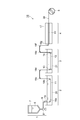
- FIG. 1 is a schematic view showing an example of a spinning apparatus for producing spider silk fibroin fibers.
- the spinning device 10 shown in FIG. 1 is an example of a spinning device for dry-wet spinning, and comprises an extrusion device 1, a coagulation bath 20, a washing bath 21, and a drying device 4 in this order from the upstream side. .
- the extrusion device 1 has a storage tank 7, in which a dope solution (spinning stock solution) 6 is stored.
- Coagulation liquid 11 eg, methanol
- the dope solution 6 is pushed out from a nozzle 9 provided by opening a air gap 19 between the dope solution 6 and the coagulating solution 11 by a gear pump 8 attached to the lower end of the storage tank 7.
- the extruded dope 6 is supplied into the coagulating liquid 11 through the air gap 19.
- the solvent is removed from the dope solution 6 in the coagulation solution 11 to coagulate the protein.
- the coagulated protein is guided to the washing bath 21 and washed with the washing liquid 12 in the washing bath 21, and then sent to the drying device 4 by the first nip roller 13 and the second nip roller 14 installed in the washing bath 21.
- a spider silk fibroin fiber 36 drawn at a ratio according to the rotational speed ratio is obtained.
- the spider silk fibroin fiber drawn in the washing solution 12 leaves the washing bath 21 and is dried when passing through the drying device 4 and then wound up with a winder. In this manner, spider silk fibroin fibers are obtained by the spinning device 10 as the wound product 5 that is finally wound around the winder.
- Reference numerals 18a to 18g denote yarn guides.
- the coagulating solution 11 may be any solution which can remove the solvent, and examples thereof include lower alcohols having 1 to 5 carbon atoms such as methanol, ethanol and 2-propanol, and acetone.
- the coagulation liquid 11 may contain water as appropriate.
- the temperature of the coagulating solution 11 is preferably 0 to 30 ° C.
- the distance the coagulated protein passes in the coagulation liquid 11 (substantially, the distance from the yarn guide 18a to the yarn guide 18b) may be any length that enables efficient solvent removal, for example, 200 to 500 mm It is.
- the residence time in the coagulating liquid 11 may be, for example, 0.01 to 3 minutes, preferably 0.05 to 0.15 minutes. Alternatively, stretching (pre-stretching) may be performed in the coagulating solution 11.
- the stretching performed in the washing bath 21 when obtaining spider silk fibroin fibers may be so-called wet heat stretching performed in warm water, in a solution in which an organic solvent or the like is added to warm water, or the like.
- the temperature of the wet heat drawing may be, for example, 50 to 90 ° C., preferably 75 to 85 ° C.
- the undrawn yarn (or pre-drawn yarn) can be drawn, for example, 1 to 10 times, preferably 2 to 8 times.
- the fiber length of the spider silk fibroin fiber is preferably 5 mm or less, more preferably 1 mm or less.
- Such spider silk fibroin fibers are more excellent in dispersibility in the matrix resin, and can significantly improve the tensile properties and bending properties of the fiber-reinforced composite material.
- the lower limit of the fiber length of spider silk fibroin fibers is not particularly limited, and may be, for example, 0.1 mm or more, or may be 0.25 mm or more.
- spider silk fibroin fibers may be cut using a fiber cut machine to achieve the preferred fiber lengths described above. That is, spider silk fibroin fibers may be chopped fibers.
- the spider silk fibroin powder may be, for example, one obtained by grinding spider silk fibroin using a grinder, or it may be one cut finely with a fiber cutting machine or the like. From the viewpoint of easily obtaining spider silk fibroin powder excellent in dispersibility, the spider silk fibroin powder may be, for example, one obtained by crushing or cutting spider silk fibroin fibers.
- the additive for fiber-reinforced composite material by dispersing in the matrix resin of the fiber-reinforced composite material, it is possible to impart excellent tensile properties and bending properties to the fiber-reinforced composite material.
- the fiber-reinforced composite material according to the present embodiment includes a matrix resin, reinforcing fibers, and the above-mentioned additive for fiber-reinforced composite material (hereinafter, also simply referred to as "additive").
- additive for fiber-reinforced composite material
- Such a fiber-reinforced composite has excellent tensile properties and bending properties because it contains an additive containing spider silk fibroin.
- the matrix resin known resins used for fiber reinforced composite materials can be used without particular limitation.
- a matrix resin for example, vinyl ester resin, unsaturated polyester, phenol resin, melamine resin, epoxy resin, polyamide resin, methyl methacrylate, polypropylene, nylon, polyethylene, polystyrene, polyacetal, polycarbonate, ABS, AES, PET, PBT PPS, LCP, PEEK, polyurethane, urea resin, silicone resin and the like.
- the matrix resin may be a thermoplastic resin or may be a cured product of a thermosetting resin.
- the content of the matrix resin is not particularly limited, and may be, for example, 50% by volume or more, and preferably 60% by volume or more.
- the content of the matrix resin may be, for example, 80% by volume or less, preferably 70% by volume or less.
- the reinforcing fibers known reinforcing fibers used in fiber reinforced composite materials can be used without particular limitation.
- the reinforcing fiber for example, carbon fiber, boron fiber, aramid fiber, polyethylene fiber, Zylon (registered trademark) fiber and the like can be suitably used.
- synthetic fiber such as polyamide fiber, polyimide fiber, polyethylene naphthalate (PEN) fiber, alumina fiber, titanium fiber, steel fiber, metal fiber such as copper fiber, bamboo fiber, kenaf fiber, bagasse fiber, etc.
- natural fibers derived from plants of the above, inorganic fibers such as glass fibers, basalt fibers and the like can be used.
- the fiber length of the reinforcing fiber is not particularly limited, and may be a so-called long fiber (for example, a fiber having a fiber length of more than 50 mm) or a short fiber (for example, a fiber having a fiber length of 50 mm or less). May be a so-called long fiber (for example, a fiber having a fiber length of more than 50 mm) or a short fiber (for example, a fiber having a fiber length of 50 mm or less). May be a so-called long fiber (for example, a fiber having a fiber length of more than 50 mm) or a short fiber (for example, a fiber having a fiber length of 50 mm or less). May be a so-called long fiber (for example, a fiber having a fiber length of more than 50 mm) or a short fiber (for example, a fiber having a fiber length of 50 mm or less). May be a so-called long fiber (for example, a fiber having a fiber length of more than 50 mm) or
- the reinforcing fibers may be carbon fibers.
- the effect of improving the tensile properties and bending properties by the additive is more significantly exerted.
- the carbon fiber a short fiber having a fiber length of 50 mm or less is more preferable.
- the content of the reinforcing fiber is not particularly limited, but may be, for example, 20% by volume or more, and preferably 30% by volume or more. Further, the content of the reinforcing fiber may be, for example, 50% by volume or less, preferably 40% by volume or less.
- the content of the additive is not particularly limited, and may be, for example, 0.5% by volume or more, preferably 1% by volume or more. This further improves the tensile properties and bending properties of the fiber-reinforced composite material. Further, the content of the reinforcing fiber may be, for example, 10% by volume or less, preferably 5% by volume or less.
- the fiber-reinforced composite material may further contain other components other than the above.
- Other components include, for example, fillers, curing agents, low shrinkage agents, internal mold release agents, foaming aids and the like.
- the filler examples include calcium carbonate, aluminum hydride, barium sulfate, clay (such as montmorillonite), mica, whiskers and the like.
- the content of the filler is not particularly limited, and may be, for example, 0.5% by volume or more, preferably 1% by volume or more, 50% by volume or less, and preferably 20% by volume or less.
- the method for producing the fiber reinforced composite material is not particularly limited.
- methods for combining the matrix resin and the reinforcing fibers include hand lay-up method, spray-up method, SMC press method in which a sheet-like material in which reinforcing fibers and a resin component are mixed in advance is compression molded using a mold. It is possible to use an RTM method in which a resin is injected into a combined mold in which fibers are spread like injection molding, an autoclave molding method, a de-autoclave molding method, or the like.
- thermoplastic resin BMC (Bulk Mooding Compound) injection of thermosetting resin, GMT (Glasss-Mat reinforced Thermoplastics) press method in which mat-like fibers are impregnated with thermoplastic resin, paper-making method, needle punch
- GMT Glasss-Mat reinforced Thermoplastics
- the timing of adding the additive is not particularly limited.
- the additive may be added in advance to the resin component in the above-described compounding method, or may be added simultaneously with the compounding.
- the 1st aspect and the 2nd aspect are demonstrated as a specific example of the manufacturing method of a fiber reinforced composite material.
- the manufacturing method which concerns on a 1st aspect includes the process of mixing a reinforcement fiber with the resin composition containing a resin component and an additive.
- the method of mixing the resin composition and the reinforcing fibers is not particularly limited, and may be, for example, an extruder, a kneader or the like.
- the resin component in the first aspect is a component that forms a matrix resin of a fiber reinforced composite material, and may be, for example, a thermoplastic resin or a thermosetting resin.
- the resin composition may further contain a curing agent, and the production method may further include the step of curing the resin composition.
- the curing agent and the curing method are not particularly limited, and known curing agents and curing methods can be applied according to the type of the thermosetting resin and the like.
- a resin composition containing a resin component and an additive is molded into a sheet to form a resin sheet, and reinforcing fibers are disposed on the resin sheet. And a compounding step of compounding the resin sheet and the reinforcing fiber.
- the resin component in the second embodiment is a component that forms a matrix resin of a fiber reinforced composite material, and may be, for example, a thermoplastic resin or a thermosetting resin.
- the resin composition may further contain a curing agent, and the production method may further include the step of curing the resin composition.
- the curing agent and the curing method are not particularly limited, and known curing agents and curing methods can be applied according to the type of the thermosetting resin and the like.
- the method of molding the resin composition is not particularly limited, and examples thereof include methods such as compression molding.
- the method of combining the resin sheet and the reinforcing fiber is not particularly limited, and examples thereof include a method of dispersing the reinforcing fiber on the resin sheet.
- the fiber-reinforced composite material can be suitably used for members such as a frame of a structure such as a car, a railway vehicle, a ship, an aircraft, a rocket, an artificial satellite, and a robot, an inner panel and an outer panel.
- fiber reinforced composites are automotive brake discs, wheels, fuel tanks, hoods, roofs, side doors, back doors, luggage inner panels, outer panels, exterior parts, structural parts, underlay parts, engine related parts, FC It can be suitably used for parts for cars and EVs, and other parts.
- a bumper, a rocker molding, a pillar, a roof molding, a fuel lid etc. are mentioned, for example.
- a structural part a bumper ring hose, a rear floor pan, a crash box, a dash panel, a rear partition, a seat back frame, braces etc. are mentioned, for example.
- lower absorbers, under covers, etc. may be mentioned as the lower parts.
- an engine cover an engine under cover, a cylinder head cover, an oil pan, a radiator support, a timing belt, a chain cover and the like can be mentioned.
- parts for FC vehicles and EV vehicles stack frames, stack end plates, FC cells, inverter covers, inverter cases, rotor motors, stator motors, reactors, etc. may be mentioned.
- decorative parts include interior and exterior parts such as ornaments, switch bases, registers, console boxes, cup holders, cluster panels, and emblems.
- brackets, anchors, pedals, sheet metal parts, etc. are mentioned.
- the fiber reinforced composite material can be suitably used for front landing gear doors, main landing gear doors, floor beams, engine covers, ailerons, wing barrel fairings, horizontal tail wings, vertical tail wings, rudders, elevators and the like of aircraft.
- fiber-reinforced composite materials are ship's body, ship's mast, drone frame, suitcase, cargo container, electronic / electric equipment (for example, personal computer, display, projector, camera, mobile phone, smart phone, tablet, etc.) Case, watch bezel, watch body, fishing gear (eg, fishing rod, reel), golf club shaft, golf club head, racket (eg, for tennis, badminton, squash, table tennis), bicycle frame, Front forks, rims, baseball bats, skis, snowboard boards, skateboard boards, surfboard boards, wakeboard boards, various bindings, canoe hulls, canoe paddles, general sleds (eg bobsleigh sleds), hockey sticks , Stock for skis, bamboo sword for kendo, Japanese bow Western arch, table tennis table, billiards cue, stick for gate ball, material for construction and civil engineering, blade for wind power generation (wind turbine), flywheel, pipes, parabola antenna, artificial leg, wheelchair, bed, portable slope, crutch, artificial
- Spider silk fibroin fiber [Production of spider silk fibroin fiber] ⁇ (1) Production of spider silk fibroin (PRT 799)> (Synthesis of a gene encoding spider silk fibroin, and construction of an expression vector) Based on the nucleotide sequence and amino acid sequence of fibroin (GenBank accession number: P46804.1, GI: 1174415) derived from Nephila clavipes, a modified fibroin having the amino acid sequence shown in SEQ ID NO: 2 (hereinafter “PRT 799” "I also designed.”
- the amino acid sequence shown by SEQ ID NO: 2 has an amino acid sequence obtained by substituting, inserting and deleting amino acid residues for the purpose of improving productivity with respect to the amino acid sequence of fibroin derived from Nephila clavipes, further
- the amino acid sequence (tag sequence and hinge sequence) shown in SEQ ID NO: 4 is added to the N-terminus.
- nucleic acid encoding PRT799 was synthesized.
- the NdeI site at the 5 'end and the EcoRI site downstream of the stop codon were added to the nucleic acid.
- the nucleic acid was cloned into a cloning vector (pUC118). Thereafter, the same nucleic acid was digested with NdeI and EcoRI, cut out, and then recombined into a protein expression vector pET-22b (+) to obtain an expression vector.
- E. coli BLR (DE3) was transformed with the pET22b (+) expression vector containing a nucleic acid encoding PRT799.
- the transformed E. coli was cultured in 2 mL of LB medium containing ampicillin for 15 hours.
- the culture solution was added to 100 mL of a seed culture medium (Table 1) containing ampicillin such that the OD600 was 0.005.
- the culture solution temperature was maintained at 30 ° C., and flask culture was performed until the OD 600 reached 5 (about 15 hours) to obtain a seed culture solution.
- the seed culture solution was added to a jar fermenter to which 500 ml of a production medium (Table 2 below) was added so that the OD 600 was 0.05.
- the temperature of the culture solution was maintained at 37 ° C., and the culture was controlled at a constant pH of 6.9. Also, the dissolved oxygen concentration in the culture solution was maintained at 20% of the dissolved oxygen saturation concentration.
- the feed solution (glucose 455 g / 1 L, Yeast Extract 120 g / 1 L) was added at a rate of 1 mL / min.
- the temperature of the culture solution was maintained at 37 ° C., and the culture was controlled at a constant pH of 6.9. Further, the culture was carried out for 20 hours while maintaining the dissolved oxygen concentration in the culture solution at 20% of the dissolved oxygen saturation concentration. Thereafter, 1 M isopropyl- ⁇ -thiogalactopyranoside (IPTG) was added to the culture solution to a final concentration of 1 mM to induce expression of PRT799. Twenty hours after the addition of IPTG, the culture solution was centrifuged to recover the cells. SDS-PAGE was performed using cells prepared from the culture solution before IPTG addition and after IPTG addition, and the expression of PRT 799 was confirmed by the appearance of a band having a size corresponding to PRT 799 depending on IPTG addition.
- IPTG isopropyl- ⁇ -thiogalactopyranoside
- the precipitate after washing is suspended in 8 M guanidine buffer (8 M guanidine hydrochloride, 10 mM sodium dihydrogen phosphate, 20 mM NaCl, 1 mM Tris-HCl, pH 7.0) to a concentration of 100 mg / mL, 60 ° C. The solution was stirred for 30 minutes and dissolved. After dissolution, dialysis was performed with water using a dialysis tube (cellulose tube 36/32 manufactured by Sanko Pure Chemical Industries, Ltd.). The white aggregated protein (PRT 799) obtained after dialysis was collected by centrifugation, the water was removed by a lyophilizer, and the lyophilized powder was collected.
- 8 M guanidine buffer 8 M guanidine hydrochloride, 10 mM sodium dihydrogen phosphate, 20 mM NaCl, 1 mM Tris-HCl, pH 7.0
- the degree of purification of PRT799 in the obtained lyophilized powder was confirmed by image analysis of the result of polyacrylamide gel electrophoresis of the powder using Totallab (nonlinear dynamics ltd.). As a result, the purity of PRT799 was about 85%.
- Example 1 Vinyl ester resin (Neopol 8025 manufactured by Japan YUPIKA CO., LTD.), CaCO 3 (Whiteton SB Blue manufactured by Bihoku Powder Chemical Industry Co., Ltd.), and carbon fiber (manufactured by Taiwan Plastics Co., Ltd. TC36P 12K (fiber diameter 7 ⁇ m) And about 25 mm) and the above-described short fiber additive of average fiber length of 0.5 mm are kneaded at a ratio of 55: 30: 12.5: 2.5 (volume ratio), A kneaded material was obtained. Kneading was performed using a mixer. Next, the kneaded product was compression molded using a mold heated to 140 ° C. to obtain a flat plate-shaped molded body (fiber-reinforced composite material) of 300 mm ⁇ 300 mm ⁇ 2 mm.
- the obtained molded product was cut into 250 ⁇ 25 mm to make a test piece for tensile test, and the tensile property of the test piece was measured using a tensile tester (AG-20 kNX manufactured by Shimadzu Corporation). The distance between marking lines was 150 mm, and the test speed was 1 mm / min. The results are shown in Table 3.
- the obtained molded body was cut into 180 ⁇ 10 mm and used as a test piece for vibration damping test, and the vibration damping property (loss factor) of the test piece was measured using a loss factor measuring device (made by Brüel & Kj) .
- the test conditions were a central excitation method, and the excitation frequency was in the range of 800 Hz to 11000 Hz. The results are shown in Table 3.
- Example 2 A flat plate-like formed body (fiber reinforcement (fiber reinforcement) in the same manner as in Example 1 except that the short fiber additive having an average fiber length of 5 mm was used instead of the short fiber additive having an average fiber length of 0.5 mm. Composite material). The tensile properties and vibration damping properties of the obtained molded product were measured in the same manner as in Example 1. The results are shown in Table 3.
- Example 1 A flat plate is formed in the same manner as in Example 1 except that the kneaded material is a mixture of a vinyl ester resin, CaCO 3 and carbon fibers at a ratio of 55:30:15 (volume ratio).
- the body fiber-reinforced composite material
- the tensile properties and vibration damping properties of the obtained molded product were measured in the same manner as in Example 1. The results are shown in Table 3.
- Example 2 A flat plate-like formed body (fiber-reinforced composite material) in the same manner as in Example 1 except that polyamide short fibers (cut length 0.5 mm) were used instead of short fiber additives having an average fiber length of 0.5 mm. Got). The tensile properties and vibration damping properties of the obtained molded product were measured in the same manner as in Example 1. The results are shown in Table 3.
- Example 3 A mixture of a vinyl ester resin (Neopor 8025 manufactured by Nippon Yupika Co., Ltd.), CaCO 3 (Whiteton SB Blue manufactured by Bihoku Powder Industrial Co., Ltd.), and the above-described short fiber additive with an average fiber length of 0.5 mm using a mixer The resin composition was obtained. After the resulting resin composition is leveled in a sheet, carbon fiber (manufactured by Taiwan Plastics Co., Ltd., TC36P 12K (fiber diameter 7 ⁇ m) cut into 1 inch (about 25 mm)) is sprayed thereon. Further, a sheet of the above resin composition was placed thereon to obtain a laminate in which the carbon fibers were sandwiched between the resin sheets.
- the volume ratio of the vinyl ester resin, CaCO 3 , carbon fiber, and the additive was 65.2: 2.3: 30: 2.5.
- the laminate was compression molded using a mold heated to 140 ° C. to obtain a 300 mm ⁇ 300 mm ⁇ 2 mm flat plate-like compact (fiber-reinforced composite material).
- the obtained molded product was cut into 250 ⁇ 25 mm to make a test piece for tensile test, and the tensile property of the test piece was measured using a tensile tester (AG-20 kNX manufactured by Shimadzu Corporation). The distance between marking lines was 150 mm, and the test speed was 1 mm / min. The results are shown in Table 4.
- the obtained molded product was cut into 100 ⁇ 25 mm and used as a test piece for a bending test, and the bending characteristics of the above test piece were measured using a bending tester (AG-20 kNX manufactured by Shimadzu Corporation). The test speed was 5 mm / min, and the distance between fulcrums was 80 mm. The results are shown in Table 4.
- Example 3 A flat plate was prepared in the same manner as in Example 3, except that no additive was added to the resin composition, and the volume ratio of the vinyl ester resin, CaCO 3 and carbon fiber in the laminate was 67.6: 2.4: 30. A shaped body (fiber-reinforced composite material) was obtained. The tensile properties, flexural properties and impact absorption properties were measured in the same manner as in Example 3 for the obtained molded product. The results are shown in Table 4.
- Example 4 In the same manner as in Example 3, except that the volume ratio of the vinyl ester resin, CaCO 3 , carbon fiber and additive in the laminate was 66.43: 2.35: 30: 1.22, the plate thicknesses were 2 mm and 1 mm. A flat plate-like compact (fiber-reinforced composite material) was obtained. The bending characteristics and the impact absorption characteristics (break energy) were measured in the same manner as in Example 3 for the obtained molded product. The results are shown in Table 5 together with Comparative Example 3.
- Example 5 In the same manner as in Example 3 except that the volume ratio of the vinyl ester resin, CaCO 3 , carbon fiber and additive in the laminate is 65.29: 2.31: 30: 2.4, the plate thickness is 2 mm and 1 mm. A flat plate-like compact (fiber-reinforced composite material) was obtained. The bending characteristics and the impact absorption characteristics (break energy) were measured in the same manner as in Example 3 for the obtained molded product. The results are shown in Table 5.
- Example 6 In the same manner as in Example 3, except that the volume ratio of the vinyl ester resin, CaCO 3 , carbon fiber and additive in the laminate was 64.19: 2.27: 30: 3.54, the plate thicknesses were 2 mm and 1 mm. A flat plate-like compact (fiber-reinforced composite material) was obtained. The bending characteristics and the impact absorption characteristics (break energy) were measured in the same manner as in Example 3 for the obtained molded product. The results are shown in Table 5.
- Example 7 Flat plates having a thickness of 2 mm and 1 mm in the same manner as in Example 5 except that short fiber additives having an average fiber length of 0.5 mm are used instead of short fiber additives having an average fiber length of 0.5 mm.
- a shaped body (fiber-reinforced composite material) was obtained.
- the bending characteristics and the impact absorption characteristics (break energy) were measured in the same manner as in Example 3 for the obtained molded product. The results are shown in Table 5.
- Example 8 A flat plate having a thickness of 2 mm and 1 mm was prepared in the same manner as in Example 5, except that the short fiber additive with an average fiber length of 0.5 mm was used instead of the short fiber additive with an average fiber length of 0.8 mm. A shaped body (fiber-reinforced composite material) was obtained. The bending characteristics and the impact absorption characteristics (break energy) were measured in the same manner as in Example 3 for the obtained molded product. The results are shown in Table 5.
- Example 9 Short fiber additives with an average fiber length of 5 mm and Torayca (registered trademark) long fiber pellets (pellets containing carbon fiber and polypropylene, carbon fiber content: 30 wt%, carbon fiber fiber length: 7 mm, product name "TLP8169” , Toray Industries, Inc.) at a ratio of 2.5: 97.5 (mass ratio) into an injection molding machine (EC180SX, manufactured by Toshiba Machine Co., Ltd.) to carry out injection molding, and molding 150 mm ⁇ 150 mm ⁇ 3 mm
- the body (fiber-reinforced composite material) was obtained.
- Test piece of 100 mm x 15 mm was cut out from the obtained molded object.
- the tensile properties (breaking stress and breaking elongation) of the test pieces were measured according to JIS K 7017 using a tensile tester (AG-50 kNX manufactured by Shimadzu Corporation). The results are shown in Table 6.
- Example 4 A molded body was obtained in the same manner as in Example 9 except that the additive was not added. The tensile properties of the obtained molded product were measured in the same manner as in Example 1. The results are shown in Table 6.
- the fiber-reinforced composite material according to the present invention can be suitably used for various applications because it is excellent in tensile characteristics and bending characteristics.
Landscapes
- Chemical & Material Sciences (AREA)
- Engineering & Computer Science (AREA)
- Health & Medical Sciences (AREA)
- Chemical Kinetics & Catalysis (AREA)
- Medicinal Chemistry (AREA)
- Polymers & Plastics (AREA)
- Organic Chemistry (AREA)
- Mechanical Engineering (AREA)
- Materials Engineering (AREA)
- Architecture (AREA)
- Structural Engineering (AREA)
- Combustion & Propulsion (AREA)
- Transportation (AREA)
- Manufacturing & Machinery (AREA)
- Composite Materials (AREA)
- Compositions Of Macromolecular Compounds (AREA)
- Reinforced Plastic Materials (AREA)
Abstract
L'invention concerne un matériau composite renforcé par des fibres comprenant: une résine de matrice; une fibre de renforcement; un additif contenant une fibroïne de soie d'araignée.
Priority Applications (1)
| Application Number | Priority Date | Filing Date | Title |
|---|---|---|---|
| JP2019545170A JP7285485B2 (ja) | 2017-09-29 | 2018-09-28 | 繊維強化複合材、繊維強化複合材用添加材及び繊維強化複合材の製造方法 |
Applications Claiming Priority (2)
| Application Number | Priority Date | Filing Date | Title |
|---|---|---|---|
| JP2017191529 | 2017-09-29 | ||
| JP2017-191529 | 2017-09-29 |
Publications (1)
| Publication Number | Publication Date |
|---|---|
| WO2019066028A1 true WO2019066028A1 (fr) | 2019-04-04 |
Family
ID=65902390
Family Applications (1)
| Application Number | Title | Priority Date | Filing Date |
|---|---|---|---|
| PCT/JP2018/036434 Ceased WO2019066028A1 (fr) | 2017-09-29 | 2018-09-28 | Matériau composite renforcé par des fibres, additif pour matériau composite renforcé par des fibres et procédé de production d'un matériau composite renforcé par des fibres |
Country Status (2)
| Country | Link |
|---|---|
| JP (1) | JP7285485B2 (fr) |
| WO (1) | WO2019066028A1 (fr) |
Cited By (8)
| Publication number | Priority date | Publication date | Assignee | Title |
|---|---|---|---|---|
| WO2020067518A1 (fr) * | 2018-09-28 | 2020-04-02 | 小島プレス工業株式会社 | Corps moulé par injection, composition pour moulage par injection et procédé de production de corps moulé par injection |
| CN112480609A (zh) * | 2020-11-06 | 2021-03-12 | 裴佩 | 一种绝缘导热复合材料的制备方法 |
| US20210088976A1 (en) * | 2019-09-23 | 2021-03-25 | Manufacture D'horlogerie Audemars Piguet Sa | Timepiece component made of forged composite |
| JP2021098763A (ja) * | 2019-12-19 | 2021-07-01 | 株式会社ブリヂストン | 軟質ポリウレタンフォーム、自動車用シートパッド、及び軟質ポリウレタンフォームの製造方法 |
| JPWO2020067519A1 (ja) * | 2018-09-28 | 2021-08-30 | 小島プレス工業株式会社 | 樹脂成形品及びその製造方法 |
| WO2022014525A1 (fr) * | 2020-07-15 | 2022-01-20 | Spiber株式会社 | Agent d'ouverture de fibres |
| WO2022101003A1 (fr) * | 2020-11-11 | 2022-05-19 | Coeus Limited | Enveloppe structurale |
| JP2023098627A (ja) * | 2021-12-28 | 2023-07-10 | モントレー ブレゲ・エス アー | 計時器又は宝飾品のための外側部品の要素及びその製造方法 |
Citations (4)
| Publication number | Priority date | Publication date | Assignee | Title |
|---|---|---|---|---|
| WO2010041009A1 (fr) * | 2008-10-09 | 2010-04-15 | Cambridge Enterprise Limited | Composite de polymère et son procédé de fabrication |
| JP2016116622A (ja) * | 2014-12-19 | 2016-06-30 | 株式会社中条 | ゴルフクラブシャフトとその製造方法 |
| WO2017112012A2 (fr) * | 2015-09-17 | 2017-06-29 | Jerez Roberto Velozzi | Panneaux, matériaux et produits composites porteurs, et leurs procédés de fabrication et d'utilisation |
| WO2018116979A1 (fr) * | 2016-12-20 | 2018-06-28 | Spiber株式会社 | Matériau en résine renforcé par des fibres et stratifié |
-
2018
- 2018-09-28 JP JP2019545170A patent/JP7285485B2/ja active Active
- 2018-09-28 WO PCT/JP2018/036434 patent/WO2019066028A1/fr not_active Ceased
Patent Citations (4)
| Publication number | Priority date | Publication date | Assignee | Title |
|---|---|---|---|---|
| WO2010041009A1 (fr) * | 2008-10-09 | 2010-04-15 | Cambridge Enterprise Limited | Composite de polymère et son procédé de fabrication |
| JP2016116622A (ja) * | 2014-12-19 | 2016-06-30 | 株式会社中条 | ゴルフクラブシャフトとその製造方法 |
| WO2017112012A2 (fr) * | 2015-09-17 | 2017-06-29 | Jerez Roberto Velozzi | Panneaux, matériaux et produits composites porteurs, et leurs procédés de fabrication et d'utilisation |
| WO2018116979A1 (fr) * | 2016-12-20 | 2018-06-28 | Spiber株式会社 | Matériau en résine renforcé par des fibres et stratifié |
Cited By (17)
| Publication number | Priority date | Publication date | Assignee | Title |
|---|---|---|---|---|
| WO2020067518A1 (fr) * | 2018-09-28 | 2020-04-02 | 小島プレス工業株式会社 | Corps moulé par injection, composition pour moulage par injection et procédé de production de corps moulé par injection |
| JP7356115B2 (ja) | 2018-09-28 | 2023-10-04 | 内浜化成株式会社 | 樹脂成形品及びその製造方法 |
| JPWO2020067519A1 (ja) * | 2018-09-28 | 2021-08-30 | 小島プレス工業株式会社 | 樹脂成形品及びその製造方法 |
| US20210088976A1 (en) * | 2019-09-23 | 2021-03-25 | Manufacture D'horlogerie Audemars Piguet Sa | Timepiece component made of forged composite |
| US12174588B2 (en) * | 2019-09-23 | 2024-12-24 | Manufacture D'horlogerie Audemars Piguet Sa | Timepiece component made of forged composite |
| JP2021098763A (ja) * | 2019-12-19 | 2021-07-01 | 株式会社ブリヂストン | 軟質ポリウレタンフォーム、自動車用シートパッド、及び軟質ポリウレタンフォームの製造方法 |
| JP7394380B2 (ja) | 2019-12-19 | 2023-12-08 | 株式会社ブリヂストン | 軟質ポリウレタンフォーム、自動車用シートパッド、及び軟質ポリウレタンフォームの製造方法 |
| JPWO2022014525A1 (fr) * | 2020-07-15 | 2022-01-20 | ||
| WO2022014525A1 (fr) * | 2020-07-15 | 2022-01-20 | Spiber株式会社 | Agent d'ouverture de fibres |
| JP7804285B2 (ja) | 2020-07-15 | 2026-01-22 | Spiber株式会社 | 開繊剤 |
| CN112480609A (zh) * | 2020-11-06 | 2021-03-12 | 裴佩 | 一种绝缘导热复合材料的制备方法 |
| WO2022101003A1 (fr) * | 2020-11-11 | 2022-05-19 | Coeus Limited | Enveloppe structurale |
| TWI837536B (zh) * | 2020-11-11 | 2024-04-01 | 英商科伊斯有限公司 | 結構性殼體 |
| JP2023098627A (ja) * | 2021-12-28 | 2023-07-10 | モントレー ブレゲ・エス アー | 計時器又は宝飾品のための外側部品の要素及びその製造方法 |
| JP2024174185A (ja) * | 2021-12-28 | 2024-12-13 | モントレー ブレゲ・エス アー | 計時器又は宝飾品のための外側部品の要素及びその製造方法 |
| JP7585284B2 (ja) | 2021-12-28 | 2024-11-18 | モントレー ブレゲ・エス アー | 計時器又は宝飾品のための外側部品の要素及びその製造方法 |
| JP7813328B2 (ja) | 2021-12-28 | 2026-02-12 | モントレー ブレゲ・エス アー | 計時器又は宝飾品のための外側部品の要素及びその製造方法 |
Also Published As
| Publication number | Publication date |
|---|---|
| JPWO2019066028A1 (ja) | 2020-11-05 |
| JP7285485B2 (ja) | 2023-06-02 |
Similar Documents
| Publication | Publication Date | Title |
|---|---|---|
| JP7285485B2 (ja) | 繊維強化複合材、繊維強化複合材用添加材及び繊維強化複合材の製造方法 | |
| US20190329526A1 (en) | Fiber-reinforced resin material and laminate | |
| JP6713635B2 (ja) | 複合材および複合材の製造方法 | |
| JP5584932B2 (ja) | タンパク質繊維の製造方法 | |
| JP2020150945A (ja) | 改変フィブロイン | |
| CN103849018B (zh) | 一种稻壳灰/高分子复合材料及其制备方法及用途 | |
| EP3502169B1 (fr) | Composition de moulage composite comprenant une protéine de type fibroïne, et procédé de production de la composition de moulage composite | |
| WO2017131196A1 (fr) | Article moulé, son procédé de production, et procédé pour améliorer la dureté d'un article moulé | |
| JP7142854B2 (ja) | 繊維強化樹脂成形体および繊維強化樹脂成形体の製造方法 | |
| WO2018221680A1 (fr) | Article moulé en protéine et son procédé de production, solution de protéine et plastifiant d'article moulé en protéine | |
| JP7372678B2 (ja) | 成形体及びその製造方法 | |
| JP7366359B2 (ja) | 射出成形体、射出成形用組成物、及び射出成形体の製造方法 | |
| JP7804285B2 (ja) | 開繊剤 | |
| CN109535703A (zh) | 一种尼龙复合材料及其制备方法和应用 | |
| JP7724501B2 (ja) | 繊維強化複合材の製造方法 | |
| WO2018221498A1 (fr) | Procédé de fabrication de fibre de protéine | |
| JP2021054994A (ja) | 繊維強化樹脂成形体及びその製造方法 | |
| JP7356115B2 (ja) | 樹脂成形品及びその製造方法 | |
| JP2022001669A (ja) | タンパク質繊維の製造方法 | |
| WO2025187819A1 (fr) | Matériau composite renforcé par des fibres et son procédé de production | |
| EP4079947A1 (fr) | Fibres pour renforcement de caoutchouc, article en caoutchouc, câble pour pneus et pneu | |
| CN121379134A (zh) | 一种碳纤维增强尼龙复合材料及其制备方法 |
Legal Events
| Date | Code | Title | Description |
|---|---|---|---|
| 121 | Ep: the epo has been informed by wipo that ep was designated in this application |
Ref document number: 18861307 Country of ref document: EP Kind code of ref document: A1 |
|
| ENP | Entry into the national phase |
Ref document number: 2019545170 Country of ref document: JP Kind code of ref document: A |
|
| NENP | Non-entry into the national phase |
Ref country code: DE |
|
| 122 | Ep: pct application non-entry in european phase |
Ref document number: 18861307 Country of ref document: EP Kind code of ref document: A1 |