WO2019070001A1 - オーステナイト系ステンレス鋼溶接金属および溶接構造物 - Google Patents
オーステナイト系ステンレス鋼溶接金属および溶接構造物 Download PDFInfo
- Publication number
- WO2019070001A1 WO2019070001A1 PCT/JP2018/037098 JP2018037098W WO2019070001A1 WO 2019070001 A1 WO2019070001 A1 WO 2019070001A1 JP 2018037098 W JP2018037098 W JP 2018037098W WO 2019070001 A1 WO2019070001 A1 WO 2019070001A1
- Authority
- WO
- WIPO (PCT)
- Prior art keywords
- content
- less
- stainless steel
- welding
- weld metal
- Prior art date
- Legal status (The legal status is an assumption and is not a legal conclusion. Google has not performed a legal analysis and makes no representation as to the accuracy of the status listed.)
- Ceased
Links
Images
Classifications
-
- B—PERFORMING OPERATIONS; TRANSPORTING
- B23—MACHINE TOOLS; METAL-WORKING NOT OTHERWISE PROVIDED FOR
- B23K—SOLDERING OR UNSOLDERING; WELDING; CLADDING OR PLATING BY SOLDERING OR WELDING; CUTTING BY APPLYING HEAT LOCALLY, e.g. FLAME CUTTING; WORKING BY LASER BEAM
- B23K35/00—Rods, electrodes, materials, or media, for use in soldering, welding, or cutting
- B23K35/22—Rods, electrodes, materials, or media, for use in soldering, welding, or cutting characterised by the composition or nature of the material
- B23K35/24—Selection of soldering or welding materials proper
- B23K35/30—Selection of soldering or welding materials proper with the principal constituent melting at less than 1550°C
- B23K35/3053—Fe as the principal constituent
- B23K35/308—Fe as the principal constituent with Cr as next major constituent
-
- C—CHEMISTRY; METALLURGY
- C22—METALLURGY; FERROUS OR NON-FERROUS ALLOYS; TREATMENT OF ALLOYS OR NON-FERROUS METALS
- C22C—ALLOYS
- C22C38/00—Ferrous alloys, e.g. steel alloys
- C22C38/18—Ferrous alloys, e.g. steel alloys containing chromium
- C22C38/40—Ferrous alloys, e.g. steel alloys containing chromium with nickel
- C22C38/42—Ferrous alloys, e.g. steel alloys containing chromium with nickel with copper
-
- B—PERFORMING OPERATIONS; TRANSPORTING
- B23—MACHINE TOOLS; METAL-WORKING NOT OTHERWISE PROVIDED FOR
- B23K—SOLDERING OR UNSOLDERING; WELDING; CLADDING OR PLATING BY SOLDERING OR WELDING; CUTTING BY APPLYING HEAT LOCALLY, e.g. FLAME CUTTING; WORKING BY LASER BEAM
- B23K35/00—Rods, electrodes, materials, or media, for use in soldering, welding, or cutting
- B23K35/22—Rods, electrodes, materials, or media, for use in soldering, welding, or cutting characterised by the composition or nature of the material
- B23K35/24—Selection of soldering or welding materials proper
- B23K35/30—Selection of soldering or welding materials proper with the principal constituent melting at less than 1550°C
-
- B—PERFORMING OPERATIONS; TRANSPORTING
- B23—MACHINE TOOLS; METAL-WORKING NOT OTHERWISE PROVIDED FOR
- B23K—SOLDERING OR UNSOLDERING; WELDING; CLADDING OR PLATING BY SOLDERING OR WELDING; CUTTING BY APPLYING HEAT LOCALLY, e.g. FLAME CUTTING; WORKING BY LASER BEAM
- B23K35/00—Rods, electrodes, materials, or media, for use in soldering, welding, or cutting
- B23K35/22—Rods, electrodes, materials, or media, for use in soldering, welding, or cutting characterised by the composition or nature of the material
- B23K35/24—Selection of soldering or welding materials proper
- B23K35/30—Selection of soldering or welding materials proper with the principal constituent melting at less than 1550°C
- B23K35/3053—Fe as the principal constituent
- B23K35/308—Fe as the principal constituent with Cr as next major constituent
- B23K35/3086—Fe as the principal constituent with Cr as next major constituent containing Ni or Mn
-
- C—CHEMISTRY; METALLURGY
- C22—METALLURGY; FERROUS OR NON-FERROUS ALLOYS; TREATMENT OF ALLOYS OR NON-FERROUS METALS
- C22C—ALLOYS
- C22C38/00—Ferrous alloys, e.g. steel alloys
- C22C38/001—Ferrous alloys, e.g. steel alloys containing N
-
- C—CHEMISTRY; METALLURGY
- C22—METALLURGY; FERROUS OR NON-FERROUS ALLOYS; TREATMENT OF ALLOYS OR NON-FERROUS METALS
- C22C—ALLOYS
- C22C38/00—Ferrous alloys, e.g. steel alloys
- C22C38/002—Ferrous alloys, e.g. steel alloys containing In, Mg, or other elements not provided for in one single group C22C38/001 - C22C38/60
-
- C—CHEMISTRY; METALLURGY
- C22—METALLURGY; FERROUS OR NON-FERROUS ALLOYS; TREATMENT OF ALLOYS OR NON-FERROUS METALS
- C22C—ALLOYS
- C22C38/00—Ferrous alloys, e.g. steel alloys
- C22C38/005—Ferrous alloys, e.g. steel alloys containing rare earths, i.e. Sc, Y, Lanthanides
-
- C—CHEMISTRY; METALLURGY
- C22—METALLURGY; FERROUS OR NON-FERROUS ALLOYS; TREATMENT OF ALLOYS OR NON-FERROUS METALS
- C22C—ALLOYS
- C22C38/00—Ferrous alloys, e.g. steel alloys
- C22C38/02—Ferrous alloys, e.g. steel alloys containing silicon
-
- C—CHEMISTRY; METALLURGY
- C22—METALLURGY; FERROUS OR NON-FERROUS ALLOYS; TREATMENT OF ALLOYS OR NON-FERROUS METALS
- C22C—ALLOYS
- C22C38/00—Ferrous alloys, e.g. steel alloys
- C22C38/04—Ferrous alloys, e.g. steel alloys containing manganese
-
- C—CHEMISTRY; METALLURGY
- C22—METALLURGY; FERROUS OR NON-FERROUS ALLOYS; TREATMENT OF ALLOYS OR NON-FERROUS METALS
- C22C—ALLOYS
- C22C38/00—Ferrous alloys, e.g. steel alloys
- C22C38/06—Ferrous alloys, e.g. steel alloys containing aluminium
-
- C—CHEMISTRY; METALLURGY
- C22—METALLURGY; FERROUS OR NON-FERROUS ALLOYS; TREATMENT OF ALLOYS OR NON-FERROUS METALS
- C22C—ALLOYS
- C22C38/00—Ferrous alloys, e.g. steel alloys
- C22C38/18—Ferrous alloys, e.g. steel alloys containing chromium
- C22C38/40—Ferrous alloys, e.g. steel alloys containing chromium with nickel
-
- C—CHEMISTRY; METALLURGY
- C22—METALLURGY; FERROUS OR NON-FERROUS ALLOYS; TREATMENT OF ALLOYS OR NON-FERROUS METALS
- C22C—ALLOYS
- C22C38/00—Ferrous alloys, e.g. steel alloys
- C22C38/18—Ferrous alloys, e.g. steel alloys containing chromium
- C22C38/40—Ferrous alloys, e.g. steel alloys containing chromium with nickel
- C22C38/44—Ferrous alloys, e.g. steel alloys containing chromium with nickel with molybdenum or tungsten
-
- C—CHEMISTRY; METALLURGY
- C22—METALLURGY; FERROUS OR NON-FERROUS ALLOYS; TREATMENT OF ALLOYS OR NON-FERROUS METALS
- C22C—ALLOYS
- C22C38/00—Ferrous alloys, e.g. steel alloys
- C22C38/18—Ferrous alloys, e.g. steel alloys containing chromium
- C22C38/40—Ferrous alloys, e.g. steel alloys containing chromium with nickel
- C22C38/46—Ferrous alloys, e.g. steel alloys containing chromium with nickel with vanadium
-
- C—CHEMISTRY; METALLURGY
- C22—METALLURGY; FERROUS OR NON-FERROUS ALLOYS; TREATMENT OF ALLOYS OR NON-FERROUS METALS
- C22C—ALLOYS
- C22C38/00—Ferrous alloys, e.g. steel alloys
- C22C38/18—Ferrous alloys, e.g. steel alloys containing chromium
- C22C38/40—Ferrous alloys, e.g. steel alloys containing chromium with nickel
- C22C38/48—Ferrous alloys, e.g. steel alloys containing chromium with nickel with niobium or tantalum
-
- C—CHEMISTRY; METALLURGY
- C22—METALLURGY; FERROUS OR NON-FERROUS ALLOYS; TREATMENT OF ALLOYS OR NON-FERROUS METALS
- C22C—ALLOYS
- C22C38/00—Ferrous alloys, e.g. steel alloys
- C22C38/18—Ferrous alloys, e.g. steel alloys containing chromium
- C22C38/40—Ferrous alloys, e.g. steel alloys containing chromium with nickel
- C22C38/50—Ferrous alloys, e.g. steel alloys containing chromium with nickel with titanium or zirconium
-
- C—CHEMISTRY; METALLURGY
- C22—METALLURGY; FERROUS OR NON-FERROUS ALLOYS; TREATMENT OF ALLOYS OR NON-FERROUS METALS
- C22C—ALLOYS
- C22C38/00—Ferrous alloys, e.g. steel alloys
- C22C38/18—Ferrous alloys, e.g. steel alloys containing chromium
- C22C38/40—Ferrous alloys, e.g. steel alloys containing chromium with nickel
- C22C38/52—Ferrous alloys, e.g. steel alloys containing chromium with nickel with cobalt
-
- C—CHEMISTRY; METALLURGY
- C22—METALLURGY; FERROUS OR NON-FERROUS ALLOYS; TREATMENT OF ALLOYS OR NON-FERROUS METALS
- C22C—ALLOYS
- C22C38/00—Ferrous alloys, e.g. steel alloys
- C22C38/18—Ferrous alloys, e.g. steel alloys containing chromium
- C22C38/40—Ferrous alloys, e.g. steel alloys containing chromium with nickel
- C22C38/54—Ferrous alloys, e.g. steel alloys containing chromium with nickel with boron
-
- C—CHEMISTRY; METALLURGY
- C22—METALLURGY; FERROUS OR NON-FERROUS ALLOYS; TREATMENT OF ALLOYS OR NON-FERROUS METALS
- C22C—ALLOYS
- C22C38/00—Ferrous alloys, e.g. steel alloys
- C22C38/18—Ferrous alloys, e.g. steel alloys containing chromium
- C22C38/40—Ferrous alloys, e.g. steel alloys containing chromium with nickel
- C22C38/58—Ferrous alloys, e.g. steel alloys containing chromium with nickel with more than 1.5% by weight of manganese
Definitions
- this TP347H When this TP347H is assembled as a structure, it is generally assembled by welding and used as a welded structure having a weld metal.
- Weld metals obtained using commercially available welding materials for Ni-based heat-resistant alloys for example, JIS Z 3334 (2011) SNi 6082
- a weld metal obtained using a commercially available welding material for Mo-containing stainless steel JIS Z 3321 (2010) YS16-8-2) is inexpensive and excellent in economy.
- Non-Patent Document 1 it is widely known that Nb-containing austenitic stainless steel weld metals have high susceptibility to solidification cracking during welding. Furthermore, as disclosed in Non-Patent Document 2, when used as a welded structure at a high temperature, an embrittlement crack called stress relaxation cracking or strain induced precipitation hardening cracking occurs in the weld during use. It's easy to do.
- Patent Documents 1 to 3 disclose welding materials containing Nb.
- the welding materials described in Patent Documents 1 to 3 and the like all contain Mo, W, Cu and the like to enhance the high temperature strength of the obtained weld metal, but contain a large amount of them. Poor economy. Moreover, although all have raised the solidification crack resistance at the time of welding by reducing impurities, such as P and S, the crack at the time of use is not mentioned.
- a welded structure comprising the austenitic stainless steel weld metal as described in (1) or (2) above.
- an austenitic stainless steel weld metal comprising a structure for use in equipment used at high temperature, which is excellent in weld cracking resistance and has high creep strength, and a weld having the same A structure can be obtained.
- P 0.035% or less
- P is contained as an impurity, and is an element that solidifies and segregates during welding to lower the melting point of the remaining liquid phase and increase the susceptibility to solidification cracking. Furthermore, creep ductility is also reduced. Therefore, the upper limit of the P content is set to 0.035% or less.
- the P content is preferably 0.032% or less, more preferably 0.030% or less.
- Ni 9.0 to 11.5%
- Ni is an essential element to ensure the stability of the austenite phase during long-term use.
- Ni is an expensive element, and the large content causes an increase in the manufacturing cost of the material. Therefore, the Ni content is set to 9.0 to 11.5%.
- the Ni content is preferably 9.2% or more, more preferably 9.5% or more. Further, the Ni content is preferably 11.2% or less, more preferably 11.0% or less.
- the content of Ta is preferably 0.002% or more, and in particular, when it is desired to sufficiently obtain the effect of delaying the onset of precipitation and reducing the susceptibility to stress relaxation cracking, the content of 0.005% or more is more preferable. preferable.
- the Ta content is preferably 0.090% or less, more preferably 0.080% or less.
- Mg 0 to 0.010% Mg, like Ca, has the effect of improving the hot deformability, and may be contained as necessary. However, when it is contained in excess, it combines with oxygen and the cleanliness is significantly reduced, rather degrading the ability to deform in hot. Therefore, the Mg content is made 0.010% or less.
- the Mg content is preferably 0.008% or less, more preferably 0.005% or less. In addition, in order to acquire said effect, it is preferable that it is 0.0005% or more, and, as for Mg content, it is more preferable that it is 0.001% or more.
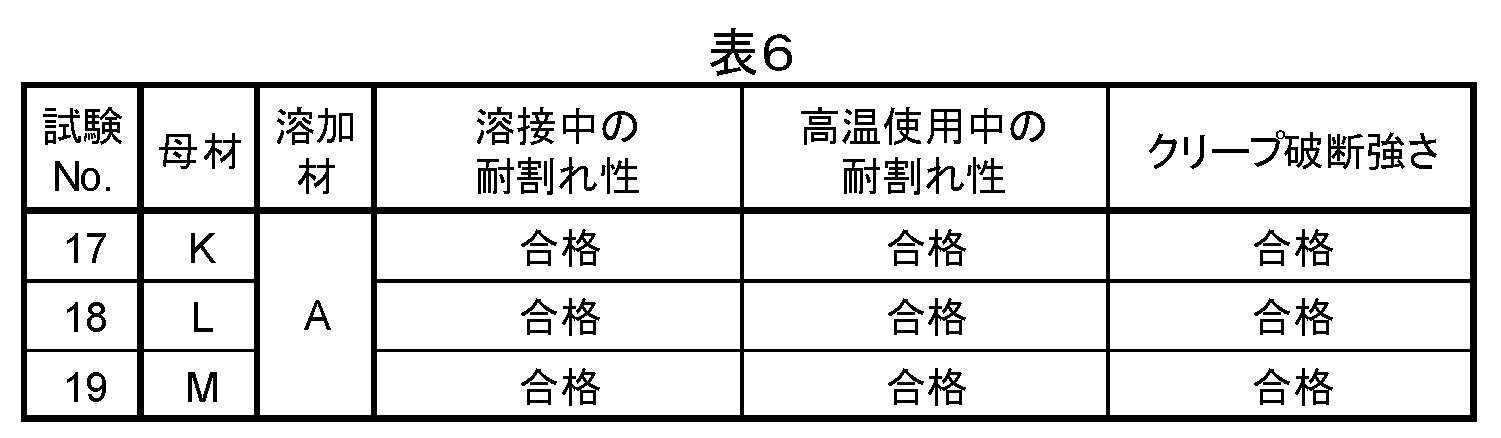
- Tests No. 1 and 2 wherein steels A to F satisfying the definition of the present invention were used for both the base metal and the filler metal. In 11 to 16, even under severe restraint conditions in which the plate thickness was thickened, the result was to exhibit sufficient solidification cracking resistance and stress relaxation cracking resistance during welding and during aging at high temperature. However, test No. In No. 12, although it was judged as pass, since Ta content was as small as 0.001%, very slight stress relaxation cracking occurred in one cross section.
Landscapes
- Chemical & Material Sciences (AREA)
- Engineering & Computer Science (AREA)
- Mechanical Engineering (AREA)
- Materials Engineering (AREA)
- Metallurgy (AREA)
- Organic Chemistry (AREA)
- Arc Welding In General (AREA)
- Heat Treatment Of Steel (AREA)
Abstract
Description
C:0.05~0.11%、
Si:0.10~0.50%、
Mn:1.0~2.5%、
P:0.035%以下、
S:0.0030%以下、
Co:0.01~1.00%、
Ni:9.0~11.5%、
Cr:17.0~21.0%、
Nb:0.60~0.90%、
Ta:0.001~0.100%、
N:0.01~0.15%、
Al:0.030%以下、
O:0.020%以下、
V:0~0.10%、
Ti:0~0.10%、
W:0~0.50%、
Mo:0~0.50%、
Cu:0~0.50%、
B:0~0.005%、
Ca:0~0.010%、
Mg:0~0.010%、
REM:0~0.10%、
残部:Feおよび不純物であり、
下記(i)式を満足する、
オーステナイト系ステンレス鋼溶接金属。
Nb-7.8×C≦0.25 ・・・(i)
但し、上記式中の元素記号は、鋼中に含まれる各元素の含有量(質量%)を表す。
V:0.01~0.10%、
Ti:0.01~0.10%、
W:0.01~0.50%、
Mo:0.01~0.50%、
Cu:0.01~0.50%、
B:0.0002~0.005%、
Ca:0.0005~0.010%、
Mg:0.0005~0.010%、および、
REM:0.0005~0.10%、
上記(1)に記載のオーステナイト系ステンレス鋼溶接金属。
各元素の限定理由は下記のとおりである。なお、以下の説明において含有量についての「%」は、「質量%」を意味する。
Cはオーステナイト相を安定にするとともにNbと結合して微細な炭化物を形成し、高温使用中のクリープ強度を向上させる。また、Cは溶接中の最終凝固過程においてNbと結合し、NbCとマトリックスの共晶凝固を生じさせ、液相を早期に消失させ凝固割れを防止する。しかしながら、Cが過剰に含有された場合、高温での使用中初期に多量の炭化物を析出し、応力緩和割れを助長する。そのため、C含有量は0.05~0.11%とする。C含有量は0.06%以上であるのが好ましく、0.10%以下であるのが好ましい。
Siは脱酸作用を有するとともに、高温での耐食性および耐酸化性の確保に必要な元素である。しかしながら、Siが過剰に含有された場合にはオーステナイト相の安定性が低下し、クリープ強度の低下を招く。そのため、Si含有量は0.10~0.50%とする。Si含有量は0.15%以上であるのが好ましく、0.20%以上であるのがより好ましい。また、Si含有量は0.45%以下であるのが好ましく、0.40%以下であるのがより好ましい。
MnはSiと同様、脱酸作用を有する元素である。また、オーステナイト相を安定にして、クリープ強度の向上に寄与する。しかしながら、Mn含有量が過剰になると、クリープ延性の低下を招く。そのため、Mn含有量は1.0~2.5%とする。Mn含有量は1.1%以上であるのが好ましく、1.2%以上であるのがより好ましい。また、Mn含有量は2.2%以下であるのが好ましく、2.0%以下であるのがより好ましい。
Pは不純物として含まれ、溶接中に凝固偏析して残存液相の融点を下げ、凝固割れ感受性を高める元素である。さらに、クリープ延性も低下させる。そのため、P含有量に上限を設けて0.035%以下とする。P含有量は0.032%以下であるのが好ましく、0.030%以下であるのがより好ましい。なお、P含有量は可能な限り低減することが好ましく、つまり含有量が0%であってもよいが、極度の低減は材料製造時のコストの増大を招く。そのため、P含有量は0.0005%以上であるのが好ましく、0.0008%以上であるのがより好ましい。
SはPと同様に不純物として含まれ、溶接中に凝固偏析して残存液相の融点を下げ、凝固割れ感受性を高める。また、凝固後も後続パスの熱サイクルにより、粒界偏析して延性低下割れ感受性も高める。そのため、S含有量に上限を設けて0.0030%以下とする。S含有量は0.0025%未満であるのが好ましく、0.0020%以下であるのがより好ましい。なお、S含有量は可能な限り低減することが好ましく、つまり含有量が0%であってもよいが、極度の低減は材料製造時のコストの増大を招く。そのため、S含有量は0.0001%以上であるのが好ましく、0.0002%以上であるのがより好ましい。
Coはオーステナイト相の安定性を高めて、クリープ強度の向上に寄与する元素である。また、NiおよびMnに比べて、PおよびSなどの偏析エネルギーに与える影響が小さく、凝固偏析を軽減し、溶接割れ感受性を低減する効果が期待できる。しかしながら、Coは高価な元素であるため、過剰の含有は材料の製造コスト増を招く。そのため、Co含有量は0.01~1.00%とする。Co含有量は0.015%以上であるのが好ましく、0.02%以上であるのがより好ましい。また、Co含有量は0.90%以下であるのが好ましく、0.80%以下であるのがより好ましい。
Niは長時間使用時のオーステナイト相の安定性を確保するために必須の元素である。しかしながら、Niは高価な元素であり、多量の含有は材料の製造コストの増大を招く。そのため、Ni含有量は9.0~11.5%とする。Ni含有量は9.2%以上であるのが好ましく、9.5%以上であるのがより好ましい。また、Ni含有量は11.2%以下であるのが好ましく、11.0%以下であるのがより好ましい。
Crは高温での耐酸化性および耐食性の確保のために必須の元素である。また、微細な炭化物を形成してクリープ強度の確保にも寄与する。しかしながら、多量の含有はオーステナイト相の安定性を低下させ、逆にクリープ強度を損ねる。そのため、Cr含有量は17.0~21.0%とする。Cr含有量は17.2%以上であるのが好ましく、17.5%以上であるのがより好ましい。また、Cr含有量は20.8%以下であるのが好ましく、20.5%以下であるのがより好ましい。
NbはCおよび/またはNと結合して、微細な炭化物、窒化物または炭窒化物として粒内に析出し、高温でのクリープ強度および引張強さの向上に寄与する元素である。しかしながら、過剰に含有すると、炭窒化物が多量に析出し、応力緩和割れ感受性の増大を招く。また、溶接金属の凝固過程で凝固し、液相の融点を低下させ、凝固割れ感受性を高める。そのため、Nb含有量は0.60~0.90%とする。Nb含有量は0.65%以上であるのが好ましく、0.85%以下であるのが好ましい。
TaはNbと同様、Cおよび/またはNと結合して、微細な炭化物、窒化物または炭窒化物として粒内に析出し、高温でのクリープ強度および引張強さの向上に寄与する元素である。加えて、Nbに置換して窒化物または炭窒化物中に固溶することにより、析出開始を遅延させ、応力緩和割れを軽減する効果を有する。しかしながら、過剰に含有すると、応力緩和割れ感受性の増大を招く。そのため、Ta含有量は0.001~0.100%とする。Ta含有量は0.002%以上であるのが好ましく、特に、析出開始を遅延させ、応力緩和割れ感受性を低減する効果を十分に得たい場合には、0.005%以上であるのがより好ましい。また、Ta含有量は0.090%以下であるのが好ましく、0.080%以下であるのがより好ましい。
Nはオーステナイト相を安定にするとともに、固溶して、または窒化物として析出して、高温強度の向上に寄与する。しかしながら、過剰に含有すると、析出物を多量に生成し、延性の低下を招く。そのため、N含有量は0.01~0.15%とする。N含有量は0.02%以上であるのが好ましく、0.03%以上であるのがより好ましい。また、N含有量は0.14%以下であるのが好ましく、0.12%以下であるのがより好ましい。
Alは、多量に含有すると清浄性が劣化し、延性が低下する。そのため、Al含有量は0.030%以下とする。Al含有量は0.025%以下であるのが好ましく、0.020%以下であるのがより好ましい。なお、Al含有量について特に下限を設ける必要はなく、つまり含有量が0%であってもよいが、極度の低減は材料の製造コストの増大を招く。そのため、Al含有量は0.0005%以上であるのが好ましく、0.001%以上であるのがより好ましい。
O(酸素)は不純物として含まれる。その含有量が過剰になると靱性および延性の劣化を招く。このため、O含有量は0.020%以下とする。O含有量は0.018%以下であるのが好ましく、0.015%以下であるのがより好ましい。なお、O含有量について特に下限を設ける必要はなく、つまり含有量が0%であってもよいが、極度の低減は材料の製造コストの増大を招く。そのため、O含有量は0.0005%以上であるのが好ましく、0.0008%以上であるのがより好ましい。
Nb-7.8×C≦0.25 ・・・(i)
但し、上記式中の元素記号は、鋼中に含まれる各元素の含有量(質量%)を表す。
VはCおよび/またはNと結合して、微細な炭化物、窒化物または炭窒化物を形成し、クリープ強度に寄与するため、必要に応じて含有してもよい。しかしながら、過剰に含有すると、炭窒化物が多量に析出し、耐応力緩和割れ性の悪化を招く。そのため、V含有量は0.10%以下とする。V含有量は0.09%以下であるのが好ましく、0.08%以下であるのがより好ましい。なお、上記の効果を得たい場合には、V含有量は0.01%以上であるのが好ましく、0.02%以上であるのがより好ましい。
TiはVと同様、Cおよび/またはNと結合して、微細な炭化物、窒化物または炭窒化物を形成し、クリープ強度に寄与するため、必要に応じて含有してもよい。しかしながら、過剰に含有すると、炭窒化物が多量に析出し、耐応力緩和割れ性の悪化を招く。そのため、Ti含有量は0.10%以下とする。Ti含有量は0.08%以下であるのが好ましく、0.06%以下であるのがより好ましい。なお、上記の効果を得たい場合には、Ti含有量は0.01%以上であるのが好ましく、0.02%以上であるのがより好ましい。
Wはマトリックスに固溶して高温でのクリープ強度および引張強さの向上に寄与する元素であるため、必要に応じて含有してもよい。しかしながら、過剰に含有すると、オーステナイト相の安定性を低下させ、かえってクリープ強度の低下を招く。そのため、W含有量は0.50%以下とする。W含有量は0.40%以下であるのが好ましく、0.30%以下であるのがより好ましい。なお、上記の効果を得たい場合には、W含有量は0.01%以上であるのが好ましく、0.02%以上であるのがより好ましい。
MoはWと同様、マトリックスに固溶して高温でのクリープ強度および引張強さの向上に寄与する元素であるため、必要に応じて含有してもよい。しかしながら、過剰に含有させると、オーステナイト相の安定性を低下させ、クリープ強度を損ねる。さらに、Moは高価な元素であるため、過剰の含有は材料の製造コストの増大を招く。そのため、Mo含有量は0.50%以下とする。Mo含有量は0.40%以下であるのが好ましく、0.30%以下であるのがより好ましい。なお、上記の効果を得たい場合には、Mo含有量は0.01%以上であるのが好ましく、0.02%以上であるのがより好ましい。
Cuはオーステナイト相の安定性を高めて、クリープ強度の向上に寄与する元素であるため、必要に応じて含有してもよい。しかしながら、過剰に含有させると、延性の低下を招く。そのため、Cu含有量は0.50%以下とする。Cu含有量は0.40%以下であるのが好ましく、0.30%以下であるのがより好ましい。なお、上記の効果を得たい場合には、Cu含有量は0.01%以上であるのが好ましく、0.02%以上であるのがより好ましい。
Bは粒界炭化物を微細分散させることにより、クリープ強度を向上させるとともに、粒界に偏析して粒界を強化して延性低下割れ感受性を低減することにも一定の効果を有するため、必要に応じて含有してもよい。しかしながら、過剰に含有すると、逆に凝固割れ感受性を高める。そのため、B含有量は0.005%以下とする。B含有量は0.004%以下であるのが好ましく、0.003%以下であるのがより好ましい。なお、上記の効果を得たい場合には、B含有量は0.0002%以上であるのが好ましく、0.0005%以上であるのがより好ましい。
Caは熱間変形能を改善する効果を有するため、必要に応じて含有してもよい。しかしながら、過剰に含有すると、酸素と結合し、清浄性を著しく低下させて、却って熱間での変形能を劣化させる。そのため、Ca含有量は0.010%以下とする。Ca含有量は0.008%以下であるのが好ましく、0.005%以下であるのがより好ましい。なお、上記の効果を得たい場合には、Ca含有量は0.0005%以上であるのが好ましく、0.001%以上であるのがより好ましい。
MgはCaと同様、熱間変形能を改善する効果を有するため、必要に応じて含有してもよい。しかしながら、過剰に含有すると、酸素と結合し、清浄性を著しく低下させて、却って熱間での変形能を劣化させる。そのため、Mg含有量は0.010%以下とする。Mg含有量は0.008%以下であるのが好ましく、0.005%以下であるのがより好ましい。なお、上記の効果を得たい場合には、Mg含有量は0.0005%以上であるのが好ましく、0.001%以上であるのがより好ましい。
REMはCaおよびMgと同様、熱間変形能を改善する効果を有するため、必要に応じて含有してもよい。しかしながら、過剰に含有すると、酸素と結合し、清浄性を著しく低下させて、却って熱間での変形能を劣化させる。そのため、REM含有量は0.10%以下とする。REM含有量は0.08%以下であるのが好ましく、0.06%以下であるのがより好ましい。なお、上記の効果を得たい場合には、REM含有量は0.0005%以上であるのが好ましく、0.001%以上であるのがより好ましい。
本発明に係るオーステナイト系ステンレス鋼溶接金属は、オーステナイト系ステンレス鋼の母材を溶接して作製される。なお、母材を溶接する際に溶接材料(溶加材)を用いてオーステナイト系ステンレス鋼溶接金属を作製してもよい。
本発明に係る溶接構造物は、上述したオーステナイト系ステンレス鋼溶接金属を有する構造物である。例えば、溶接構造物は、溶接金属と母材とからなる。母材は、金属からなり、鋼材であることが好ましく、ステンレス鋼であることがより好ましく、オーステナイト系ステンレス鋼であることがさらに好ましい。なお、溶接構造物の具体的形状、溶接構造物を得るための溶接の具体的態様(溶接姿勢)は特に限定されない。

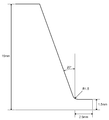
上記母材の長手方向の端部に、図1に示す形状の開先加工を施した。その後、開先を形成した母材を2つ突き合わせ、裏ビードと干渉しないよう溝加工を施した市販の鋼板上に四周を拘束溶接した。なお、上記市販の鋼板は、SM400BのJIS G 3160(2008)に規定の鋼板であり、厚さ30mm、幅150mm、長さ200mmであった。また、上記の拘束溶接は、JIS Z 3224(2010)に規定の被覆アーク溶接棒ENi6625を用いて行った。
さらに、耐溶接割れ性の評価で「合格」となった溶接継手の残り1体から、溶接金属が平行部の中央となるように丸棒クリープ破断試験片を採取し、母材の目標破断時間が約1000時間となる650℃、216MPaの条件でクリープ破断試験を行った。そして、破断時間が母材の目標破断時間の90%以上となるものを「合格」とした。

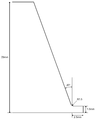
上記母材の長手方向の端部に、図2に示す形状の開先加工を施した。その後、開先を形成した母材を2つ突き合わせ、裏ビードと干渉しないよう溝加工を施した市販の鋼板上に四周を拘束溶接した。なお、上記市販の鋼板は、SM400BのJIS G 3160(2008)に規定の鋼板であり、厚さ40mm、幅150mm、長さ200mmであった。また、上記の拘束溶接は、JIS Z 3224(2010)に規定の被覆アーク溶接棒ENi6625を用いて行った。


上記母材の長手方向の端部に、図1に示す形状の開先加工を施した。その後、開先を形成した母材を2つ突き合わせ、裏ビードと干渉しないよう溝加工を施した市販の鋼板上に四周を拘束溶接した。なお、上記市販の鋼板は、SM400BのJIS G 3160(2008)に規定の鋼板であり、厚さ30mm、幅150mm、長さ200mmであった。また、上記の拘束溶接は、JIS Z 3224(2010)に規定の被覆アーク溶接棒ENi6625を用いて行った。
さらに、溶接継手の残り1体から、溶接金属が平行部の中央となるように丸棒クリープ破断試験片を採取し、母材の目標破断時間が約1000時間となる650℃、216MPaの条件でクリープ破断試験を行った。そして、破断時間が母材の目標破断時間の90%以上となるものを「合格」とした。

Claims (3)
- 化学組成が、質量%で、
C:0.05~0.11%、
Si:0.10~0.50%、
Mn:1.0~2.5%、
P:0.035%以下、
S:0.0030%以下、
Co:0.01~1.00%、
Ni:9.0~11.5%、
Cr:17.0~21.0%、
Nb:0.60~0.90%、
Ta:0.001~0.100%、
N:0.01~0.15%、
Al:0.030%以下、
O:0.020%以下、
V:0~0.10%、
Ti:0~0.10%、
W:0~0.50%、
Mo:0~0.50%、
Cu:0~0.50%、
B:0~0.005%、
Ca:0~0.010%、
Mg:0~0.010%、
REM:0~0.10%、
残部:Feおよび不純物であり、
下記(i)式を満足する、
オーステナイト系ステンレス鋼溶接金属。
Nb-7.8×C≦0.25 ・・・(i)
但し、上記式中の元素記号は、鋼中に含まれる各元素の含有量(質量%)を表す。 - 前記化学組成が、質量%で、
V:0.01~0.10%、
Ti:0.01~0.10%、
W:0.01~0.50%、
Mo:0.01~0.50%、
Cu:0.01~0.50%、
B:0.0002~0.005%、
Ca:0.0005~0.010%、
Mg:0.0005~0.010%、および、
REM:0.0005~0.10%、
請求項1に記載のオーステナイト系ステンレス鋼溶接金属。 - 請求項1または請求項2に記載のオーステナイト系ステンレス鋼溶接金属を有する、溶接構造物。
Priority Applications (8)
| Application Number | Priority Date | Filing Date | Title |
|---|---|---|---|
| KR1020207012217A KR102256405B1 (ko) | 2017-10-03 | 2018-10-03 | 오스테나이트계 스테인리스강 용접 금속 및 용접 구조물 |
| CN201880064659.XA CN111225991A (zh) | 2017-10-03 | 2018-10-03 | 奥氏体系不锈钢焊接金属以及焊接结构物 |
| ES18864581T ES2926201T3 (es) | 2017-10-03 | 2018-10-03 | Metal de soldadura y estructura soldada de acero inoxidable austenítico |
| CA3078333A CA3078333C (en) | 2017-10-03 | 2018-10-03 | Austenitic stainless steel weld metal and welded structure |
| EP18864581.6A EP3693486B1 (en) | 2017-10-03 | 2018-10-03 | Austenitic stainless steel welding metal and welded structure |
| CN202410362675.4A CN118308663A (zh) | 2017-10-03 | 2018-10-03 | 奥氏体系不锈钢焊接金属以及焊接结构物 |
| US16/753,182 US11021778B2 (en) | 2017-10-03 | 2018-10-03 | Austenitic stainless steel weld metal and welded structure |
| JP2019546992A JP6965938B2 (ja) | 2017-10-03 | 2018-10-03 | オーステナイト系ステンレス鋼溶接金属および溶接構造物 |
Applications Claiming Priority (2)
| Application Number | Priority Date | Filing Date | Title |
|---|---|---|---|
| JP2017193689 | 2017-10-03 | ||
| JP2017-193689 | 2017-10-03 |
Publications (1)
| Publication Number | Publication Date |
|---|---|
| WO2019070001A1 true WO2019070001A1 (ja) | 2019-04-11 |
Family
ID=65994306
Family Applications (1)
| Application Number | Title | Priority Date | Filing Date |
|---|---|---|---|
| PCT/JP2018/037098 Ceased WO2019070001A1 (ja) | 2017-10-03 | 2018-10-03 | オーステナイト系ステンレス鋼溶接金属および溶接構造物 |
Country Status (8)
| Country | Link |
|---|---|
| US (1) | US11021778B2 (ja) |
| EP (1) | EP3693486B1 (ja) |
| JP (1) | JP6965938B2 (ja) |
| KR (1) | KR102256405B1 (ja) |
| CN (2) | CN118308663A (ja) |
| CA (1) | CA3078333C (ja) |
| ES (1) | ES2926201T3 (ja) |
| WO (1) | WO2019070001A1 (ja) |
Cited By (1)
| Publication number | Priority date | Publication date | Assignee | Title |
|---|---|---|---|---|
| US20230287549A1 (en) * | 2020-08-31 | 2023-09-14 | Posco | Austenitic stainless steel with improved deep drawing |
Families Citing this family (8)
| Publication number | Priority date | Publication date | Assignee | Title |
|---|---|---|---|---|
| JP7414126B2 (ja) * | 2020-12-17 | 2024-01-16 | Jfeスチール株式会社 | Tig溶接用溶加材およびそれを用いた溶接継手部の製造方法 |
| MY207809A (en) * | 2021-03-01 | 2025-03-20 | Jfe Steel Corp | Submerged arc welded joint |
| JP7188647B1 (ja) * | 2021-03-01 | 2022-12-13 | Jfeスチール株式会社 | Tig溶接継手 |
| CN113492280B (zh) * | 2021-05-25 | 2023-03-28 | 江苏新恒基特种装备股份有限公司 | 一种增材制造用的铬-钨-钴-镍-铁合金氩弧焊焊丝及其制备方法 |
| CN114734162A (zh) * | 2022-03-22 | 2022-07-12 | 哈尔滨焊接研究院有限公司 | 一种低镍奥氏体不锈钢药芯焊带及其制备方法 |
| CN115323157B (zh) * | 2022-10-11 | 2023-01-13 | 中国科学院金属研究所 | 一种调控含Nb不锈钢焊缝金属δ铁素体和碳化物的方法 |
| WO2025109334A1 (en) * | 2023-11-24 | 2025-05-30 | Paralloy Limited | Alloy composition |
| CN119747957B (zh) * | 2025-01-21 | 2025-10-10 | 昆明理工大学 | 一种高抗裂耐磨用药芯焊丝及其制备方法 |
Citations (8)
| Publication number | Priority date | Publication date | Assignee | Title |
|---|---|---|---|---|
| JPS61238914A (ja) * | 1985-04-17 | 1986-10-24 | Nippon Steel Corp | 高温用オ−ステナイト系ステンレス鋼管の製造方法 |
| JPH06142980A (ja) | 1992-11-06 | 1994-05-24 | Sumitomo Metal Ind Ltd | 高温強度の優れたオーステナイト鋼用溶接材料 |
| JPH09300096A (ja) | 1996-05-16 | 1997-11-25 | Nkk Corp | オーステナイト系ステンレス鋼用不活性ガスアーク溶接材料 |
| JPH11151593A (ja) * | 1997-09-19 | 1999-06-08 | Mitsubishi Heavy Ind Ltd | オーステナイト系ステンレス鋼フラックス入りワイヤ |
| JP2001107196A (ja) * | 1999-10-07 | 2001-04-17 | Sumitomo Metal Ind Ltd | 耐溶接割れ性と耐硫酸腐食性に優れたオーステナイト鋼溶接継手およびその溶接材料 |
| JP2001300763A (ja) | 2000-04-18 | 2001-10-30 | Nippon Steel Corp | 高温強度に優れたオーステナイト系耐熱鋼用tig溶接材料 |
| JP2015137419A (ja) * | 2014-01-24 | 2015-07-30 | 新日鐵住金株式会社 | オーステナイト系ステンレス鋼溶接継手 |
| JP2017095767A (ja) * | 2015-11-25 | 2017-06-01 | 新日鐵住金株式会社 | オーステナイト系ステンレス鋼 |
Family Cites Families (4)
| Publication number | Priority date | Publication date | Assignee | Title |
|---|---|---|---|---|
| JPS49102511A (ja) * | 1973-02-03 | 1974-09-27 | ||
| JP3116156B2 (ja) * | 1994-06-16 | 2000-12-11 | 新日本製鐵株式会社 | 耐食性および溶接性に優れた鋼管の製造方法 |
| KR100931448B1 (ko) * | 2005-04-04 | 2009-12-11 | 수미도모 메탈 인더스트리즈, 리미티드 | 오스테나이트계 스테인레스강 |
| CN100482840C (zh) * | 2007-01-29 | 2009-04-29 | 清华大学 | 一种导辊用镍基高温合金材料及其热处理工艺 |
-
2018
- 2018-10-03 KR KR1020207012217A patent/KR102256405B1/ko active Active
- 2018-10-03 CN CN202410362675.4A patent/CN118308663A/zh active Pending
- 2018-10-03 JP JP2019546992A patent/JP6965938B2/ja active Active
- 2018-10-03 EP EP18864581.6A patent/EP3693486B1/en active Active
- 2018-10-03 ES ES18864581T patent/ES2926201T3/es active Active
- 2018-10-03 WO PCT/JP2018/037098 patent/WO2019070001A1/ja not_active Ceased
- 2018-10-03 CN CN201880064659.XA patent/CN111225991A/zh active Pending
- 2018-10-03 US US16/753,182 patent/US11021778B2/en active Active
- 2018-10-03 CA CA3078333A patent/CA3078333C/en active Active
Patent Citations (8)
| Publication number | Priority date | Publication date | Assignee | Title |
|---|---|---|---|---|
| JPS61238914A (ja) * | 1985-04-17 | 1986-10-24 | Nippon Steel Corp | 高温用オ−ステナイト系ステンレス鋼管の製造方法 |
| JPH06142980A (ja) | 1992-11-06 | 1994-05-24 | Sumitomo Metal Ind Ltd | 高温強度の優れたオーステナイト鋼用溶接材料 |
| JPH09300096A (ja) | 1996-05-16 | 1997-11-25 | Nkk Corp | オーステナイト系ステンレス鋼用不活性ガスアーク溶接材料 |
| JPH11151593A (ja) * | 1997-09-19 | 1999-06-08 | Mitsubishi Heavy Ind Ltd | オーステナイト系ステンレス鋼フラックス入りワイヤ |
| JP2001107196A (ja) * | 1999-10-07 | 2001-04-17 | Sumitomo Metal Ind Ltd | 耐溶接割れ性と耐硫酸腐食性に優れたオーステナイト鋼溶接継手およびその溶接材料 |
| JP2001300763A (ja) | 2000-04-18 | 2001-10-30 | Nippon Steel Corp | 高温強度に優れたオーステナイト系耐熱鋼用tig溶接材料 |
| JP2015137419A (ja) * | 2014-01-24 | 2015-07-30 | 新日鐵住金株式会社 | オーステナイト系ステンレス鋼溶接継手 |
| JP2017095767A (ja) * | 2015-11-25 | 2017-06-01 | 新日鐵住金株式会社 | オーステナイト系ステンレス鋼 |
Non-Patent Citations (3)
| Title |
|---|
| NAIKI ET AL., ISHIKAWAJIMA HARIMA ENGINEERING REVIEW, vol. 15, no. 2, 1975, pages 209 |
| OGAWA ET AL., JOURNAL OF THE JAPAN WELDING SOCIETY, vol. 50, no. 7, 1981, pages 680 |
| See also references of EP3693486A4 |
Cited By (1)
| Publication number | Priority date | Publication date | Assignee | Title |
|---|---|---|---|---|
| US20230287549A1 (en) * | 2020-08-31 | 2023-09-14 | Posco | Austenitic stainless steel with improved deep drawing |
Also Published As
| Publication number | Publication date |
|---|---|
| EP3693486A1 (en) | 2020-08-12 |
| JPWO2019070001A1 (ja) | 2020-11-26 |
| CA3078333C (en) | 2023-01-17 |
| CN118308663A (zh) | 2024-07-09 |
| KR20200058517A (ko) | 2020-05-27 |
| EP3693486B1 (en) | 2022-08-03 |
| EP3693486A4 (en) | 2021-04-14 |
| KR102256405B1 (ko) | 2021-05-26 |
| US11021778B2 (en) | 2021-06-01 |
| CA3078333A1 (en) | 2019-04-11 |
| JP6965938B2 (ja) | 2021-11-10 |
| ES2926201T3 (es) | 2022-10-24 |
| CN111225991A (zh) | 2020-06-02 |
| US20200239986A1 (en) | 2020-07-30 |
Similar Documents
| Publication | Publication Date | Title |
|---|---|---|
| JP6965938B2 (ja) | オーステナイト系ステンレス鋼溶接金属および溶接構造物 | |
| JP6870749B2 (ja) | オーステナイト系ステンレス鋼溶接金属および溶接構造物 | |
| JP5218200B2 (ja) | 溶接金属および溶接材料 | |
| WO2011158706A1 (ja) | Ni基耐熱合金用溶接材料ならびにそれを用いてなる溶接金属および溶接継手 | |
| CN111344427B (zh) | 奥氏体系耐热钢焊接金属、焊接接头、奥氏体系耐热钢用焊接材料以及焊接接头的制造方法 | |
| WO2015111641A1 (ja) | Ni基耐熱合金用溶接材料ならびにそれを用いてなる溶接金属および溶接継手 | |
| JP2017202494A (ja) | オーステナイト系耐熱鋼溶接金属およびそれを有する溶接継手 | |
| WO2019070002A1 (ja) | オーステナイト系耐熱鋼用溶接材料、溶接金属および溶接構造物ならびに溶接金属および溶接構造物の製造方法 | |
| KR102506230B1 (ko) | 오스테나이트계 스테인리스강 | |
| JP6795038B2 (ja) | オーステナイト系耐熱合金およびそれを用いた溶接継手 | |
| JP6638552B2 (ja) | オーステナイト系耐熱鋼用溶接材料 | |
| JP7368722B2 (ja) | オーステナイト系耐熱鋼溶接金属、溶接継手、およびオーステナイト系耐熱鋼用溶接材料 | |
| JP6638551B2 (ja) | オーステナイト系耐熱鋼溶接金属およびそれを有する溶接継手 | |
| WO2021220912A1 (ja) | オーステナイト系耐熱鋼 | |
| JP2021021130A (ja) | オーステナイト系耐熱合金溶接継手 | |
| JP2021011610A (ja) | オーステナイト系耐熱合金溶接継手 | |
| JP5218201B2 (ja) | 溶接金属および溶接材料 | |
| JP2021025096A (ja) | オーステナイト系耐熱合金溶接継手 |
Legal Events
| Date | Code | Title | Description |
|---|---|---|---|
| 121 | Ep: the epo has been informed by wipo that ep was designated in this application |
Ref document number: 18864581 Country of ref document: EP Kind code of ref document: A1 |
|
| ENP | Entry into the national phase |
Ref document number: 2019546992 Country of ref document: JP Kind code of ref document: A |
|
| ENP | Entry into the national phase |
Ref document number: 3078333 Country of ref document: CA |
|
| NENP | Non-entry into the national phase |
Ref country code: DE |
|
| ENP | Entry into the national phase |
Ref document number: 20207012217 Country of ref document: KR Kind code of ref document: A |
|
| ENP | Entry into the national phase |
Ref document number: 2018864581 Country of ref document: EP Effective date: 20200504 |