WO2019103573A1 - 양극 및 이를 포함하는 리튬 이차 전지 - Google Patents
양극 및 이를 포함하는 리튬 이차 전지 Download PDFInfo
- Publication number
- WO2019103573A1 WO2019103573A1 PCT/KR2018/014722 KR2018014722W WO2019103573A1 WO 2019103573 A1 WO2019103573 A1 WO 2019103573A1 KR 2018014722 W KR2018014722 W KR 2018014722W WO 2019103573 A1 WO2019103573 A1 WO 2019103573A1
- Authority
- WO
- WIPO (PCT)
- Prior art keywords
- layer
- anode
- lithium
- positive electrode
- secondary battery
- Prior art date
- Legal status (The legal status is an assumption and is not a legal conclusion. Google has not performed a legal analysis and makes no representation as to the accuracy of the status listed.)
- Ceased
Links
Classifications
-
- H—ELECTRICITY
- H01—ELECTRIC ELEMENTS
- H01M—PROCESSES OR MEANS, e.g. BATTERIES, FOR THE DIRECT CONVERSION OF CHEMICAL ENERGY INTO ELECTRICAL ENERGY
- H01M10/00—Secondary cells; Manufacture thereof
- H01M10/05—Accumulators with non-aqueous electrolyte
- H01M10/052—Li-accumulators
-
- H—ELECTRICITY
- H01—ELECTRIC ELEMENTS
- H01M—PROCESSES OR MEANS, e.g. BATTERIES, FOR THE DIRECT CONVERSION OF CHEMICAL ENERGY INTO ELECTRICAL ENERGY
- H01M4/00—Electrodes
- H01M4/02—Electrodes composed of, or comprising, active material
- H01M4/13—Electrodes for accumulators with non-aqueous electrolyte, e.g. for lithium-accumulators; Processes of manufacture thereof
-
- H—ELECTRICITY
- H01—ELECTRIC ELEMENTS
- H01M—PROCESSES OR MEANS, e.g. BATTERIES, FOR THE DIRECT CONVERSION OF CHEMICAL ENERGY INTO ELECTRICAL ENERGY
- H01M4/00—Electrodes
- H01M4/02—Electrodes composed of, or comprising, active material
- H01M4/36—Selection of substances as active materials, active masses, active liquids
- H01M4/48—Selection of substances as active materials, active masses, active liquids of inorganic oxides or hydroxides
- H01M4/50—Selection of substances as active materials, active masses, active liquids of inorganic oxides or hydroxides of manganese
- H01M4/505—Selection of substances as active materials, active masses, active liquids of inorganic oxides or hydroxides of manganese of mixed oxides or hydroxides containing manganese for inserting or intercalating light metals, e.g. LiMn2O4 or LiMn2OxFy
-
- H—ELECTRICITY
- H01—ELECTRIC ELEMENTS
- H01M—PROCESSES OR MEANS, e.g. BATTERIES, FOR THE DIRECT CONVERSION OF CHEMICAL ENERGY INTO ELECTRICAL ENERGY
- H01M4/00—Electrodes
- H01M4/02—Electrodes composed of, or comprising, active material
- H01M4/36—Selection of substances as active materials, active masses, active liquids
- H01M4/48—Selection of substances as active materials, active masses, active liquids of inorganic oxides or hydroxides
- H01M4/52—Selection of substances as active materials, active masses, active liquids of inorganic oxides or hydroxides of nickel, cobalt or iron
- H01M4/525—Selection of substances as active materials, active masses, active liquids of inorganic oxides or hydroxides of nickel, cobalt or iron of mixed oxides or hydroxides containing iron, cobalt or nickel for inserting or intercalating light metals, e.g. LiNiO2, LiCoO2 or LiCoOxFy
-
- H—ELECTRICITY
- H01—ELECTRIC ELEMENTS
- H01M—PROCESSES OR MEANS, e.g. BATTERIES, FOR THE DIRECT CONVERSION OF CHEMICAL ENERGY INTO ELECTRICAL ENERGY
- H01M4/00—Electrodes
- H01M4/02—Electrodes composed of, or comprising, active material
- H01M4/62—Selection of inactive substances as ingredients for active masses, e.g. binders, fillers
-
- Y—GENERAL TAGGING OF NEW TECHNOLOGICAL DEVELOPMENTS; GENERAL TAGGING OF CROSS-SECTIONAL TECHNOLOGIES SPANNING OVER SEVERAL SECTIONS OF THE IPC; TECHNICAL SUBJECTS COVERED BY FORMER USPC CROSS-REFERENCE ART COLLECTIONS [XRACs] AND DIGESTS
- Y02—TECHNOLOGIES OR APPLICATIONS FOR MITIGATION OR ADAPTATION AGAINST CLIMATE CHANGE
- Y02E—REDUCTION OF GREENHOUSE GAS [GHG] EMISSIONS, RELATED TO ENERGY GENERATION, TRANSMISSION OR DISTRIBUTION
- Y02E60/00—Enabling technologies; Technologies with a potential or indirect contribution to GHG emissions mitigation
- Y02E60/10—Energy storage using batteries
Definitions
- Anode and lithium secondary battery comprising same
- the present invention relates to a positive electrode and a lithium secondary battery comprising the same.
- the lithium ion secondary battery is applied to the cathode and the anode in which an electrode active material capable of reversible insertion and desorption of lyrium ions is applied to each of the cathodes and the anodes to realize movement of lithium ions through the electrolyte, .
- Lithium ions which are released (battery discharged) after being inserted (battery charged) into the negative electrode and lithium ions which can not be recovered (discharged from the battery) after being desorbed (battery charged) from the positive electrode are inevitably generated inevitably. Capacity.
- the cathode active material and the lyrium oxide-based compound are coated on the cathode current collector in a double manner to effectively cancel the irreversible capacity imbalance of the two electrodes and further increase the initial charging capacity of the anode. . 2019/103573 1 »(: 1 ⁇ ⁇ 2018/014722
- the anode in one embodiment includes: a cathode current collector; a first layer positioned on the cathode current collector, the first layer including a cathode active material; And a second layer disposed on the first layer and including a lithium oxide-based compound represented by the following formula (1), and can be applied to a lithium secondary battery:
- M is at least one kind of alkali metal element, and show is at least one kind of halogen element, and -0.005 ⁇ ? 0.005,0 ⁇ 0.01, 0.995 ⁇ 1 ? ⁇ 2.005,
- the lithium secondary battery to which the anode of one embodiment is applied can effectively cancel the irreversible capacity imbalance of the two electrodes, increase the initial charging capacity of the anode, reduce the energy density loss during operation of the battery, and have excellent lifetime characteristics.
- Fig. 1 is a graph for evaluating initial charging characteristics for each of the batteries of Examples and Comparative Examples. DETAILED DESCRIPTION OF THE INVENTION
- a member when a member is " on " another member, it includes not only when the member is in contact with the other member, but also when there is another member between the two members.
- " combination (s) thereof " included in the expression of the machine form means a mixture or combination of one or more elements selected from the group consisting of the constituents described in the expression of the form of a marker, Quot; means at least one selected from the group consisting of the above-mentioned elements.
- " show and / or description " means " show or show " complete
- a positive electrode collector a first layer positioned on the positive electrode collector, the first layer including a positive electrode active material, a conductive material, and a binder; And a second layer disposed on the first layer and including a lyrium oxide-based compound represented by the general formula ( 1 ).
- M is at least one kind of alkali metal element and A is at least one kind of halogen element, -0.005 £ a £ 0.005,0 £ x ⁇ 0.01, 0.995 ⁇ b ⁇ 2.005, 0 ⁇ y ⁇ 0.005.
- the positive electrode of one embodiment may be prepared by a process comprising the steps of: 1) providing the lithium-tin oxide compound represented by Formula 1 above to compensate for the irreversible additive capacity of the negative electrode; 2) adding the positive electrode active material and the lithium oxide- By coating the compound with a double layer, it is possible to solve the problem of blending them into a single layer.
- the lithium oxide-based compound represented by the above formula (1) is a substance capable of offsetting the irreversible capacity imbalance between the two electrodes and increasing the initial efficiency of the anode.
- the lyrium peroxide (Li 2 O 2 ) is capable of irreversibly releasing lithium ions and oxygen.
- the reaction is an Oxygen Evolution Reaction (OER) in the following Reaction Scheme 1, and it is possible to irreversibly release 2 moles of lithium ions together with 1 mole of oxygen per 1 mole of the lithium peroxide (2O2).
- OER Oxygen Evolution Reaction
- lyrium peroxide Li 2 O 2
- all the lyrium oxide compounds represented by the above formula (1) include excessive lime in comparison with a conventional cathode active material in a 1 molar amount of lime, It is a compound that can release an excessive amount of lithium.
- lyrium oxide-based compound to the anode reduces the irreversible capacity of the anode upon initial charging and discharging of the battery, thereby eliminating the irreversible capacity imbalance between the anode and the cathode and increasing the initial efficiency of the anode .
- the lithium oxide-based compound is not applied in a blended state with the cathode active material, but is applied independently of the cathode active material.
- the cathode active material is coated by blending the lithium oxide-based compound with the cathode active material, the following problems may occur have.
- Oxygen (0 2 , ) gas produced by the lithium oxide-based compound upon premature neutralization of the battery may cause voids in the coating layer (single layer). Due to the pores in the coating layer (single layer) thus generated, ii) the anode density after the initial charging of the battery as well as the energy density of the whole battery can be lowered.
- one embodiment solves the problem of a coating layer (single layer) formed by blending the lyrium oxide-based compound with the cathode active material by double coating the cathode active material and the lyrium oxide-based compound on the cathode current collector As follows.
- the reduction decomposition reaction of the lithium-tin oxide compound is performed on the surface of the second layer in contact with the electrolyte, so that i) without affecting the first layer (that is, (Ii) the loss of electrode density of the first layer and (iii) the decrease of the energy density of the whole battery may be absent or very small.
- the lithium secondary battery to which the anode of one embodiment is applied can effectively cancel the irreversible capacity imbalance of the two electrodes, increase the initial charging capacity of the anode, reduce the energy density loss of the anode, and have excellent lifetime characteristics.
- the lithium oxide compound contained in the second layer is not particularly limited as long as it is represented by Formula 1 and is capable of reacting as shown in Reaction Scheme 1 to release lyrium ion.
- it may be the lyrium peroxide (L 2 O 2), lyrium oxide (L 2 O), or a mixture thereof, as shown in Scheme 1.
- the second layer may include platinum (Pt) in addition to the lithium oxide-based compound.
- the platinum (Pt) is preferably such that the lyrium oxide-
- the first layer may serve as a reaction catalyst, thereby contributing to the improvement of the reaction efficiency of the Reaction Scheme 1.
- the reaction efficiency of the Reaction Scheme 1 1 to 5% by weight based on 100% by weight of the total amount of the layer, and the function of the platinum catalyst can be effectively exhibited in this range, but the present invention is not limited thereto. 2019/103573 1 »(: 1 ⁇ ⁇ 2018/014722
- the second layer may further comprise a material, such as a conductive material, a binder, or a mixture thereof, which is generally applied to the positive electrode material mixture layer in the art. Concrete materials of the conductive material and the binder will be described later.
- the first layer may further comprise a material, such as a conductive material, a binder, or a mixture thereof, which is generally applied to the positive electrode material mixture layer in the art. Concrete materials of the conductive material and the binder will be described later. Conductive material
- the kind of the conductive material is not particularly limited.
- the conductive material is used to form an electron conduction network in the first layer.
- Any conductive material may be used without causing any chemical change in the battery.
- the conductive material include natural graphite, artificial graphite Metal powders such as graphite, carbon black, acetylene black, ketjen black, carbon fiber, copper, nickel, aluminum and silver, metal fibers and the like can be used.
- one or more conductive materials such as polyphenylene derivatives Can be mixed and used.
- the conductive material may be used in an amount of 0.1 to 10 wt%, for example, 0.5 to 10 wt%, or 5 to 10 wt%, based on the total amount (100 wt%) of each of the first layer and the second layer, When the range is satisfied, the conductivity of each of the first layer and the second layer can be improved, but is not limited thereto.
- the kind of the cathode active material may also be a metal of cobalt, manganese, nickel or a combination thereof; And lithium; a material capable of reversibly intercalating and deintercalating lithium ions, which is capable of reversibly intercalating and deintercalating lithium ions.
- cathode active material a compound represented by any one of the following formulas may be used. ⁇ (wherein, 0.90 ⁇ 3 ⁇ 4
- a compound having a coating layer on the surface of the compound may be used, or a compound having a coating layer may be mixed with the compound.
- the coating layer may contain, as a coating element compound, an oxide, a hydroxide, a coating 2019/103573 1 »(: 1 ⁇ ⁇ 2018/014722
- the compound constituting these coating layers may be amorphous or crystalline.
- God, 0 0, Mixtures may be used.
- the coating layer forming step may be carried out by any of coating methods such as spray coating, dipping, and the like without adversely affecting the physical properties of the cathode active material by using these elements in the above compound. It will be understood by people engaged in the field, so detailed explanation will be omitted.
- the total amount of the first layer (100 wt%) and the weight of the cathode active material may be 1 to 99%, 1 to 80 wt%, for example, 1 to 70 wt%, regardless of the kind of the cathode active material. In this range, the energy density by the cathode active material can be secured, but is not limited thereto. bookbinder
- the binder serves to adhere the positive electrode active material particles to each other and to adhere the positive electrode active material to the current collector.
- Typical examples thereof include polyvinyl alcohol, carboxymethyl cellulose, hydroxypropyl cellulose, diacetyl cellulose, polyvinyl chloride, carboxylated polyvinyl chloride, polyvinyl fluoride, an ethylene polymer comprising the oxide, polyvinyl pyrrolidone, ethylene, polyvinyl polyurethane, polytetrafluoroethylene Butadiene rubber, styrene-butadiene rubber, acrylated styrene-butadiene rubber, epoxy resin, nylon, and the like can be used, but the present invention is not limited thereto.
- the anode of this embodiment can be prepared generally using methods known in the art. For example, after a mixture containing the cathode active material, the conductive material, and / or the binder is applied on the cathode current collector and dried to form the first layer, the lithium oxide-based compound alone or in combination with The 2019/103573 1 »(: 1 ⁇ ⁇ 2018/014722
- the mixture is applied to the first layer and then dried to form the second layer, whereby the anode of one embodiment can be obtained.
- the cathode current collector generally has a thickness of 3-500.
- a positive electrode current collector is not particularly limited as long as it has high conductivity without causing chemical changes in the battery.
- Examples of the positive electrode current collector include stainless steel, aluminum, nickel, titanium, sintered carbon, aluminum or stainless steel A surface treated with carbon, nickel, titanium, silver or the like may be used.
- the current collector may have fine irregularities on the surface thereof to increase the adhesive force of the cathode active material, and various forms such as a film, a sheet, a foil, a net, a porous body, a foam, and a nonwoven fabric are possible.
- the conductive material is used for forming an electron conduction network in the first layer. Any conductive material may be used without causing any chemical change in the battery. Examples of the conductive material include natural graphite, artificial graphite, carbon black , Metal powders such as acetylene black, ketjen black, carbon fiber, copper, nickel, aluminum, and silver, metal fibers and the like can be used, and conductive materials such as polyphenylene derivatives can be used singly or in combination . Is usually added in an amount of 1 to 50% by weight, 1 to 30% by weight, for example, 1 to 20% by weight based on the total amount of the first layer components (100% by weight). On the other hand, the above-described resilient woven materials can be used as a conductive material and can be used together with the materials.
- the binder is a component that assists in bonding between the positive electrode active material and the conductive material and bonding to the current collector, and is usually 1 to 50% by weight, 1 to 50% by weight based on the total amount of the first layer components (100% 30% by weight, for example, 1 to 20% by weight.
- binders examples include polyvinylidene fluoride, polyvinyl alcohol, carboxymethylcellulose (CM (its), starch, hydroxypropylcellulose, regenerated cellulose, polyvinylpyrrolidone, tetrafluoroethylene , Polyethylene, polypropylene, ethylene-propylene-diene ter Sulfonated styrene, styrene butadiene rubber, fluorine rubber, various copolymers, and the like.
- CM carboxymethylcellulose
- a filler is further added to the mixture to form the first layer 2019/103573 1 »(: 1 ⁇ ⁇ 2018/014722
- the filler is not particularly limited as long as it is a fibrous material which is used selectively as a component for suppressing the expansion of the anode and does not cause chemical change in the battery.
- the filler include olefin polymers such as polyethylene and polypropylene; Fibrous materials such as fibers and carbon fibers are used. Lithium secondary battery
- a lithium secondary battery comprising the above-described two countries.
- the lithium secondary battery according to an embodiment of the present invention includes the above-described positive electrode, so that the initial irreversible capacity of the negative electrode is reduced, the initial efficiency of the positive electrode is increased, and the decrease in energy density during driving is suppressed.
- the lithium secondary battery can be generally manufactured in accordance with matters known in the art.
- the negative electrode includes a current collector and a negative electrode active material layer formed on the current collector, and the negative electrode active material layer may include a negative electrode active material.
- the negative electrode active material examples include a carbon-based negative electrode active material, a larium metal, an alloy of larium metal, a composite of 3 ⁇ 4 (3 ⁇ 4 (0 ⁇ X ⁇ 2), and a composite of a wax alloy (which is an alkali metal, an alkali earth metal, element, transition metal, rare earth element or a combination thereof, Silvery not), 811, 3 ⁇ 40 2, 8 11 -0 complex, and it requires 11-11 (the II is an alkali metal, alkaline earth metal, a Group 13 to 16 element, A transition metal, a rare earth element, or a combination thereof, and is not limited to urethane).
- the negative electrode collector may generally be made to have a thickness of 3 - 500.
- Such an anode current collector is not particularly limited as long as it has conductivity without causing chemical changes in the battery, and examples thereof include copper, stainless steel, aluminum, nickel, titanium, sintered carbon, copper or stainless steel 2019/103573 1 »(: 1 ⁇ ⁇ 2018/014722
- the lithium secondary battery of one embodiment may be a lithium ion battery, a lithium ion polymer battery, or a lithium polymer battery, depending on the type of the electrolyte and / or the type of the separator.
- the lithium secondary battery of one embodiment is a lyrium ion battery to which a liquid electrolyte is applied
- the liquid electrolyte may be impregnated into the separation membrane.
- the separation membrane is interposed between the anode and the cathode, and an insulating thin film having high ion permeability and mechanical strength is used. Pore size of the membrane is generally 0.01 - 10 and Thyssen 1, the thickness is generally 5 - 300 a.
- Such separation membranes include, for example, olefinic polymers such as polypropylene, which are chemically resistant and hydrophobic; A sheet or nonwoven fabric made of glass fiber, polyethylene or the like is used.
- a solid electrolyte such as a polymer is used as an electrolyte
- the solid electrolyte may also serve as a separation membrane.
- the liquid electrolyte may be a non-aqueous electrolyte containing a lithium salt.
- the lithium salt-containing nonaqueous electrolyte is composed of a nonaqueous electrolyte and lithium, and as the nonaqueous electrolyte, a nonaqueous organic solvent, an organic solid electrolyte, an inorganic solid electrolyte and the like are used, but the present invention is not limited thereto.
- non-aqueous organic solvent examples include methyl-2-pyrrolidinone, propylene carbonate, ethylene carbonate, butylenecarbonate, dimethyl carbonate, diethyl carbonate, And the like.
- organic solvent examples include lactones, 1,2-dimethoxyethane, tetrahydroxyfurfurane (6 11 ( 0, 2-methyltetrahydrofuran, dimethylsulfoxide, 1,3-dioxolane, formamide, dimethylformamide, But are not limited to, acetonitrile, nitromethane, methyl formate, methyl acetate, triester phosphate, trimethoxymethane, dioxolane derivatives, sulfolane, methylsulfolane, 1,3-dimethyl-
- a nonionic organic solvent such as a carbonate derivative, a carbonate derivative, a tetrahydrofuran derivative, ether, methyl pyrophosphate, or ethyl propionate may be used.
- organic solid electrolyte examples include a polymer electrolyte such as a polyethylene derivative, a polyethylene oxide derivative, a polypropylene oxide derivative, a phosphate ester polymer, an agitation lysine, a polyester sulfide, a polyvinyl alcohol, a polyvinylidene fluoride, A polymer containing an ionic dissociation group, etc. may be used.
- a polymer electrolyte such as a polyethylene derivative, a polyethylene oxide derivative, a polypropylene oxide derivative, a phosphate ester polymer, an agitation lysine, a polyester sulfide, a polyvinyl alcohol, a polyvinylidene fluoride, A polymer containing an ionic dissociation group, etc. may be used.
- Examples of the inorganic solid electrolyte include Li 3 N, Lil, Li 5 NI 2 , Li 3 N-LiI-LiOH, LiSiO 4 , LiSiO 4 -LiI-LiOH, Li 2 SiS 3 , Li 4 SiO 4 , include Li 4 Si0 4 -LiI-Li0H, Li 3 P0 4 -Li 2 S-SiS 2 and Li nitrides, halides and sulfates may be used.
- the lithium salt is a material that is readily soluble in the non-aqueous electrolyte, for example, LiCl, LiBr, Lil, LiC10 4, LiBF 4, LiBi 0 Cli 0, LiPF 6, L1CF 3 SO 3, LiCF 3 C0 2, LiAsF 6 , LiSbF 6 , LiAlCU, CH 3 SO 3 Li, (CF 3 SO 2 ) 2 NLi, chloroborane lithium, lower aliphatic carboxylate lithium, lithium tetraphenylborate, imide and the like can be used.
- the lithium salt-containing non-aqueous electrolyte may further contain, for the purpose of improving charge / discharge characteristics, flame retardancy, etc., for example, pyridine, triethylphosphite, triethanolamine, cyclic ether, ethylenediamine, n-glyme, N, N-substituted imidazolidine, ethylene glycol dialkyl ether, ammonium salt, pyrrole, 2-methoxyethanol, aluminum trichloride, etc.
- a halogen-containing solvent such as carbon tetrachloride, ethylene trifluoride or the like may be further added in order to impart nonflammability, and a carbon dioxide gas may be further added to improve high-temperature storage characteristics, FEC (Fluoro-Ethylene Carbonate), PRS (Propene sultone), and the like.
- LiPF 6, L1CIO 4, L1BF 4, LiN (S0 2 CF 3) A lithium salt of 2, and so on, highly dielectric solvent of EC or PC cyclic carbonate and a low viscosity theft bound DEC, DMC or EMC linear Carbonate is added to the mixed solvent to prepare a lithium salt-containing non-aqueous electrolyte.
- the lithium secondary battery of the embodiment may be implemented as a battery module including a unit cell, a battery pack including the battery module, and a device including the battery pack as a power source.
- Example 1 Preparation of positive electrode
- Example 2 An organic solvent was added to the positive electrode mixture of Example 1 to form a slurry phase, which was then coated on an aluminum current collector and vacuum-dried in a 120 o C vacuum oven for 12 hours.
- Example 2 Preparation of lyrium secondary battery
- the anode then was added to the organic solvent (NMP) to the mixture to form a slurry, coated onto the whole copper collector to prepare a cathode for 12 hours and dried in vacuo in a vacuum oven at 120 C O.
- NMP organic solvent
- a separator made of PP / PE having a thickness of 9 pm and a porosity of 42 vol was inserted between the cathode and the anode of Example 1 into a battery container, and an electrolyte was injected. Then, 2032 full-cells were produced according to a conventional manufacturing method. To prepare a lithium secondary battery.
- Comparative Example 1 was dried of the positive electrode after the addition of the organic solvent (NMP) to the mixture to form a slurry, the aluminum current collector is coated on a 12 hours in a vacuum oven at 120 O C vacuo. The As a result, Comparative Example 1 A positive electrode was obtained. Comparative Example 2: Preparation of lyrium secondary battery
- a lithium secondary battery of Comparative Example 2 was fabricated by using the positive electrode of Comparative Example 1 instead of the positive electrode of Example 1 and the remainder being the same as that of Example 1.
- Experimental Example 1 Evaluation of initial charging and discharging characteristics of a battery I
- Discharge 0.01 C, CC, 2.5 V, cut-off Comparative Examples and Examples can commonly apply lithium peroxide (Li 202) to the anode to compensate the irreversible additive capacity of the cathode.
- Li 202 lithium peroxide
- the lyrium peroxide (Li 202) is a compound which is capable of irreversibly releasing 2 moles of lyrium ion together with 1 mole of oxygen per 1 mole of theoretically, according to the following Reaction Scheme 1.
- the Lyrium peroxide (Nishi 2 0 2) was compared to the comparative example is applied to the positive electrode active material and mixing ( ⁇ ) state, the lithium peroxide (10 2 ) was coated on the positive electrode material mixture layer (i.e., the first layer).
- the reduction decomposition reaction of the ritupperoxide (Ni 2 O 2 ) is performed on the surface of the lyrium peroxide (Ni 2 O 2 ) layer (that is, the second layer) Is terminated by the disappearance of the second layer without affecting the first layer (i.e., without forming voids within the first layer). Therefore, 11) the loss of the electrode density of the first layer and 111) the energy density of the whole battery may be free or very little.
- the embodiment is capable of effectively canceling the irreversible capacity imbalance of the two electrodes, the initial charge capacity of the anode being high, the loss of the energy density of the anode being small, and excellent lifetime characteristics, as compared with the comparative example.
Landscapes
- Chemical & Material Sciences (AREA)
- Chemical Kinetics & Catalysis (AREA)
- Electrochemistry (AREA)
- General Chemical & Material Sciences (AREA)
- Engineering & Computer Science (AREA)
- Inorganic Chemistry (AREA)
- Materials Engineering (AREA)
- Manufacturing & Machinery (AREA)
- Secondary Cells (AREA)
- Battery Electrode And Active Subsutance (AREA)
Abstract
본 발명은 양극 및 이를 포함하는 리튬 이차 전지에 관한 것이다. 구체적으로, 상기 양극은, 양극 집전체 상에 양극 활물질 및 리튬 산화물계 화합물을 이중으로 코팅함으로써, 두 전극의 비가역 용량 불균형을 효과적으로 상쇄시키며, 양극의 초기 충전 용량을 보다 증가시킬 수 있는 것이다.
Description
2019/103573 1»(:1^1{2018/014722
【발명의 명칭】
양극및 이를포함하는리튬이차전지
【기술분야】
관련출워(들)과의 상호인용
본 출원은 2017년 11월 27일자 한국 특허 출원 제 10-2017-0159734호 및 2018년 11월 27일자 한국 특허 출원 제 10-2018-0148008호에 기초한 우선권의 이익을 주장하며, 해당 한국 특허 출원들의 문헌에 개시된 모든 내용은본명세서의 일부로서 포함된다.
본발명은양극및 이를포함하는리륨이차전지에 관한것이다.
【발명의 배경이 되는기술】
리륨이차전지는,리륨 이온의 가역적인삽입 및 탈리가가능한전극 활물질을음극및 양극에 각각적용하고,전해질을매개로리륨이온의 이동을 구현하며, 각 전극에서의 산화 및 환원 반응에 의하여 전기적 에너지를 생성한다.
그런데 , 리튬 이차 전지의 초기 중방전 시(1 0)^016

음극에 삽입(전지 충전)된 후 탈리(전지 방전)되는 리륨 이온및 양극으로부터 탈리(전지 충전)된 후 다시 회수(전지 방전)되지 못하는 리튬 이온이 각각 필연적으로발생한다.이는,두전극의 비가역 용량과연계된다.
두전극의 비가역 용량차이가클수록, 양극의 초기 효율이 감소하며, 전지의 구동중에너지 밀도가점차감소하여,전지 수명이 감소할수있다.
【발명의 내용】
【해결하고자하는과제】
본 발명의 일 구현예에서는, 양극 집전체 상에 양극 활물질 및 리륨 산화물계 화합물을 이중으로 코팅함으로써, 두 전극의 비가역 용량 불균형을 효과적으로 상쇄시키며, 양극의 초기 충전 용량을 보다 증가시킬 수 있는, 양극을제공한다.
2019/103573 1»(:1^1{2018/014722
【과제의 해결수단】
구체적으로,일구현예에의 양극은,양극집전체;상기 양극집전체상에 위치하고, 양극활물질을포함하는 제 1층; 및 상기 제 1층상에 위치하고,하기 화학식 1로 표시되는 리튬 산화물계 화합물을 포함하는 제 2층;을 포함하며, 리륨이차전지에 적용될수있다:
[화학식 1] 베 (¾
단, 상기 화학식 1에서, M은 알칼리 금속 원소 중 1종 이상이고,쇼는 할로겐 원소 중 1종 이상이고, -0.005<쑈0.005,0<<0.01, 0.995<1?<2.005,
0令<0.005이다.
【발명의 효과】
일 구현예의 양극을 적용한 리튬 이차 전지는,두 전극의 비가역 용량 불균형이 효과적으로상쇄되고,양극의 초기 충전용량이 높고,전지의 구동중 에너지 밀도손실이 적어,우수한수명 특성을가질수있다.
【도면의 간단한설명】
도 1은,실시예 및 비교예의 각전지에 대해,초기 충전 특성을평가한 것이다. 【발명을실시하기 위한구체적인내용】
본발명의 구현예들의 이점 및 특징,그리고그것들을달성하는방법은, 상세하게 후술되어 있는 실시예들을 참조하면 명확해질 것이다. 그러나, 본 발명은이하에서 개시되는실시예들에 한정되는것이 아니라서로다른다양한 형태로 구현될 수 있으며, 단지 본 실시예들은 본 발명의 개시가 완전하도록 하고, 본 발명이 속하는 기술분야에서 통상의 지식을 가진 자에게 발명의 범주를 완전하게 알려주기 위해 제공되는 것이며,본 발명은 청구항의 범주에 의해 정의될뿐이다.
이하 본 발명에서 사용되는 기술용어 및 과학용어에 있어서 다른 정의가 없다면, 이 발명이 속하는 기술분야에서 통상의 지식을 가진 자가 통상적으로이해하고있는의미를가진다.또한,종래와동일한기술적 구성 및
2019/103573 1»(:1^1{2018/014722
작용에 대한반복되는설명은생략하기로한다.
본원 명세서 전체에서, 어떤 부분이 다른 부분과 “연결”되어 있다고 할 때, 이는 “직접적으로 연결”되어 있는 경우뿐 아니라, 그 중간에 다른 소자를사이에 두고 “전기적으로연결”되어 있는경우도포함한다.
본원 명세서 전체에서, 어떤 부재가 다른 부재 “상에” 위치하고 있다고 할 때, 이는 어떤 부재가 다른 부재에 접해 있는 경우뿐 아니라 두 부재사이에 또다른부재가존재하는경우도포함한다.
본원 명세서 전체에서, 어떤 부분이 어떤 구성 요소를 “포함”한다고 할때,이는특별히 반대되는기재가없는한다른구성 요소를제외하는것이 아니라다른구성 요소를더 포함할수있는것을의미한다.
본원 명세서 전체에서 사용되는 정도의 용어 “약” , “실질적으로” 등은 언급된 의미에 고유한 제조 및 물질 허용오차가제시될 때 그수치에서 또는그수치에 근접한의미로사용되고,본원의 이해를돕기 위해 정확하거나 절대적인 수치가언급된 개시 내용을비양심적인 침해자가부당하게 이용하는 것을방지하기 위해사용된다.
본원 명세서 전체에서 사용되는 정도의 용어 “~(하는) 단계” 또는 “〜의 단계”는 “~를위한단계”를의미하지 않는다.
본원 명세서 전체에서, 마쿠시 형식의 표현에 포함된 “이들의 조합(들)”의 용어는 마쿠시 형식의 표현에 기재된 구성 요소들로 이루어진 군에서 선택되는하나이상의 혼합또는조합을의미하는것으로서,상기 구성 요소들로이루어진군에서 선택되는하나이상을포함하는것을의미한다. 본원 명세서 전체에서, “쇼및/또는 의 기재는, “쇼또는 또는쇼 및 를의미한다. 완료
일 구현예에서는,양극집전체;상기 양극집전체 상에 위치하고,양극 활물질, 도전재, 및 바인더를 포함하는 제 1층; 및 상기 제 1층 상에 위치하고, 상기 화학식 1로 표시되는 리륨 산화물계 화합물을 포함하는 제 2층;을 포함하는,양극을제공한다.
[화학식 1]
Li2+a-xMxOb-yA2y
상기 화학식 1에서, M은 알칼리 금속 원소 중 1종 이상이고, A는 할로겐 원소 중 1종 이상인 것인, -0.005£a£0.005,0£x<0.01, 0.995<b<2.005, 0<y<0.005이다. 일 구현예의 양극은, 1) 상기 화학식 1로 표시되는 리툼 산화물계 화합물로하여금음극의 비가역 첨가제 용량을보상하되, 2)상기 양극집전체 상에 상기 양극활물질 및 상기 화학식 1로표시되는리튬산화물계 화합물을 이중층으로코팅한형태로써,이들을블렌딩 (blending)하여 단일층으로코팅하는 경우의 문제를해결할수있다.
1)구체적으로,일구현예의 양극에 있어서,상기 화학식 1로표시되는 리튬산화물계 화합물은,두 전극의 비가역 용량불균형을상쇄시키며, 양극의 초기 효율을증가시킬수있는물질이다.
예를 들어, 상기 리륨 퍼옥사이드 (Li202)는, 리튬 이온 및 산소를 비가역적으로 방출할수 있는 것이다. 그 반응은 하기 반응식 1의 산소 발생 반응 (Oxygen Evolution Reaction, OER)으로,상기 리튬퍼옥사이드 ( 2O2) 1몰당, 1몰의산소와함께 2몰의 리튬이온을비가역적으로방출할수있다.
[반응식 1] Li202 ^ 2Li+ + 02
여기서는 리륨 퍼옥사이드 (Li202)를 예로 들었으나, 상기 화학식 1로 표시되는 리륨 산화물계 화합물은 모두, 리툼 1몰 수준안 통상의 양극 활물질에 대비하여 과량의 리툼을포함하며,상기 반응식 1처럼 과량의 리튬을 방출할수있는화합물이다.
따라서, 상기 리륨산화물계 화합물을 양극에 적용하면, 전지의 초기 충방전시 음극의 비가역 용량을감소시키며,이에 따라음극과양극의 비가역 용량불균형을해소하며,양극의 초기 효율이 증가할것으로기대된다.
2) 일 구현예의 양극에 있어서, 상기 리튬 산화물계 화합물은, 양극 활물질과 혼합 (blending)된 상태로 적용하지 않고, 양극 활물질과 독립적으로 적용한다.
구체적으로, 상기 리튬 산화물계 화합물을 양극 활물질과 혼합 (blending)하여 양극집전체를코팅할경우,다음과같은문제가발생할수
있다.
i) 전지의 조기 중전 시, 상기 리튬 산화물계 화합물에 의해 생성된 산소 (02,)기체가, 코팅층 (단일층) 내 공극을 발생시킬 수 있다. 이처럼 발생된 코팅층 (단일층)내 공극으로인해, ii)전지의 초기 충전이후양극밀도는물론, iii)전지 전체의 에너지 밀도가저하될수있다.
이에,일구현예서는,양극집전체상에 양극활물질및 리륨산화물계 화합물을이중으로코팅함으로써,상기 리륨산화물계 화합물을양극활물질과 혼합 (blending)하여 형성한코팅층 (단일층)의 문제를해결하기로하였다.
구체적으로, 일 구현예의 양극에서, 상기 리툼 산화물계 화합물의 환원분해 반응은, 상기 제 2층이 전해질과 접하는 표면에서 이루어지므로, i) 상기 제 1층에 영향을 미치지 않은 채 (즉,상기 제 1층 내부에 공극을 형성하지 않은채),상기 제 2층이 소멸됨으로써 종결된다.따라서, ii)제 1층의 전극밀도 손실 및 iii)전지 전체의 에너지 밀도저하가없거나매우적을수있다.
결과적으로, 일 구현예의 양극을 적용한리륨 이차전지는,두 전극의 비가역 용량 불균형이 효과적으로 상쇄되고, 양극의 초기 충전 용량이 높고, 양극의 에너지 밀도손실이 적어,우수한수명 특성을가질수있다.
이하,일구현예의 양극구성을보다상세히 설명한다. 저 12층
상기 제 2층에 포함되는 리튬 산화물계 화합물은, 상기 화학식 1로 표시되며, 상기 반응식 1처럼 반응하여 리륨 이온을 방출할 수 있는 물질이라면 특별히 제한되지 않는다. 예를들어,상기 반응식 1로 제시한리륨 퍼옥사이드 (L2O2),리륨옥사이드 (L2O),또는이들의 혼합물일수있다.
한편, 상기 제 2층은 상기 리튬 산화물계 화합물에 더해, 백금 (Pt)을 포함할 수 있다. 상기 백금 (Pt)은, 상기 리륨 산화물계 화합물이 상기 반응식
1의 산소 발생 반응 (Oxygen Evolution Reaction, OER)를진행함에 있어서, 반응 촉매 역할을하여,상기 반응식 1의 반응효율향상에 기여할수 있다 .예컨대, 상기 제 2층 내 백금의 함량은, 상기 제 2층 총량 100 중량% 중 1 내지 5 중량%를 만족할 수 있고, 이 범위에서 상기 백금의 촉매로써의 기능이 효과적으로발현될수있으나,본발명은이에 제한되지 않는다.
2019/103573 1»(:1^1{2018/014722
또한,상기 제 2층은,당업계에서 일반적으로양극합제층에 적용하는 물질, 예를 들어, 도전재, 바인더, 또는 이들의 혼합물을 더 포함할 수 있다. 상기 도전재 및 상기 바인더 각각의 구체적인 종류에 대해서는, 후술하기로 한다. 제 1증
이와 독립적으로, 상기 제 1층은, 당 업계에서 일반적으로 양극 합제 층에 적용하는 물질, 예를 들어, 도전재, 바인더, 또는 이들의 혼합물을 더 포함할 수 있다. 상기 도전재 및 상기 바인더 각각의 구체적인 종류에 대해서는,후술하기로한다. 도전재
상기 제 1층 및 상기 제 2층에 있어서, 상기 도전재의 종류는 특별히 제한되지 않는다. 예를 들어, 상기 도전재는 상기 제 1층에 전자 전도 네트워크를 형성하기 위해 사용되는 것으로, 구성되는 전지에 있어서, 화학변화를 야기하지 않고 전자 전도성 재료이면 어떠한 것도 사용가능하며, 그 예로천연 흑연,인조흑연,카본블랙,아세틸렌 블랙,케첸블랙,탄소섬유, 구리, 니켈, 알루미늄, 은 등의 금속 분말, 금속 섬유 등을 사용할 수 있고, 또한 폴리페닐렌 유도체 등의 도전성 재료를 1종 또는 1종 이상을 혼합하여 사용할수있다.
상기 도전재는,그종류를막론하고,상기 제 1층및상기 제 2층각각의 총량(100 중량%) 0.1 내지 10 중량%, 예를 들어 0.5 내지 10 중량%, 또는 5 내지 10중량%로사용할수 있다, 이 범위를 만족할 때,상기 제 1층 및 상기 제 2층각각의 도전성이 향상될수있지만,이에 제한되지 않는다. 양극활물질
또한, 상기 제 1층에 있어서, 상기 양극 활물질의 종류 역시, 코발:트, 망간, 니켈 또는 이들의 조합의 금속; 및 리튬;의 복합산화물 중 1종 이상을 포함하는 것인, 리튬 이온의 가역적인 삽입 및 탈리가 가능한 물질이라면, 특별히 제한되지 않는다. 예를 들어, 코발트, 망간, 니켈 또는 이들의 조합의
2019/103573 1»(:1^1{2018/014722
금속;및 리륨;의 복합산화물중 1종이상을포함하는것일수 있다.
보다 구체적인 예를 들어, 상기 양극 활물질로, 하기 화학식 중 어느 하나로 표현되는화합물을사용할수 있다. 此 (상기 식에서, 0.90 < ¾

식에서, 0.90 < 3 < 1.8, 0 < < 0.5, 0 < 0 < 0.05 및 0 < & < 2이다);
:山 出必 상기 식에서, 0.90 < 크 < 1.8, 0 < 15 < 0.9, 0 < (: < 0.5 및
0.001 < d < 0.1이다.); 1사'¾ )(>111(必602(상기 식에서, 0.90 < 크 < 1.8, 0 <
< 0.9, 0 < 0 < 0.5, 0 < (1 < 0.5 및 0.001 < 6 < 0.1이다.); 1ᅩ볘(¾02(상기 식에서, 0.90 £ & £ 1.8및 0.001 £ 13 £ 0.1이다.); 1山(:0(¾02(상기 식에서, 0.90

물론 이 화합물 표면에 코팅층을 갖는 것도 사용할 수 있고, 또는 상기 화합물과 코팅층을 갖는 화합물을 혼합하여 사용할 수도 있다. 상기 코팅층은 코팅 원소 화합물로서, 코팅 원소의 옥사이드, 하이드록사이드, 코팅
2019/103573 1»(:1^1{2018/014722
원소의 옥시하이드록사이드, 코팅 원소의 옥시카보네이트 또는 코팅 원소의 하이드록시카보네이트를 포함할 수 있다. 이들 코팅층을 이루는 화합물은 비정질 또는 결정질일 수 있다. 상기 코팅층에 포함되는코팅 원소로는
 신, 00,
 혼합물을사용할수 있다. 코팅층 형성 공정은 상기 화합물에 이러한 원소들을 사용하여 양극 활물질의 물성에 악영향을 주지 않는 방법(예를 들어 스프레이 코팅, 침지법 등으로 코팅할 수 있으면 어떠한 코팅 방법을 사용하여도 무방하며, 이에 대하여는 당해 분야에 종사하는 사람들에게 잘 이해될 수 있는 내용이므로 자세한설명은생략하기로한다.
상기 양극 활물질의 종류를 막론하고,상기 제 1층의 총량(100중량%) 중상기 양극 활물질의 함량을 1 내지 99 %, 1 내지 80중량%, 예를들어 1 내지 70 중량로 할 수 있다. 이 범위에서, 상기 양극 활물질에 의한 에너지 밀도가확보될수있지만,이에 제한되지 않는다. 바인더
상기 제 1층 및 상기 제 2층에 있어서, 바인더는 양극활물질 입자들을 서로잘부착시키고,또한양극활물질을전류집전체에 잘부착시키는역할을 하며, 그 대표적인 예로는 폴리비닐알콜, 카르복시메틸셀룰로즈, 히드록시프로필셀룰로즈, 디아세틸셀룰로즈, 폴리비닐클로라이드, 카르복실화된 폴리비닐클로라이드, 폴리비닐플루오라이드, 에틸렌 옥사이드를 포함하는 폴리머, 폴리비닐피롤리돈, 폴리우레탄, 폴리테트라플루오로에틸렌, 폴리비닐리덴 플루오라이드, 폴리에틸렌, 폴리프로필렌, 스티텐-부타디엔 러버, 아크릴레이티드 스티텐-부타디엔 러버, 에폭시 수지, 나일론 등을 사용할 수 있으나,이에 한정되는것은아니다. 양극의 제조방법
상기 일 구현예의 양극은, 일반적으로 당 업계에 알려진 방법을 이용하여 제조할 수 있다. 예를 들어, 상기 양극 활물질, 도전재, 및/또는 바인더를포함하는혼합물을상기 양극집전체 상에 도포한후건조하여 상기 제 1층을형성한뒤,상기 리튬산화물계화합물단독,또는이의 상기 백금과의
2019/103573 1»(:1^1{2018/014722
혼합물을상기 제 1층상에 도포한후건조하여 상기 제 2층을형성하는 일련의 공정을거쳐,일구현예의 양극을수득할수있다.
상기 양극 집전체는 일반적으로 3 - 500 _의 두께로 만들수 있다. 이러한 양극 집전체는, 당해 전지에 화학적 변화를 유발하지 않으면서 높은 도전성을 가지는 것이라면 특별히 제한되는 것은 아니며, 예를 들어, 스테인레스 스틸, 알루미늄, 니켈, 티탄, 소성 탄소, 또는 알루미늄이나 스테리인레스스틸의 표면에 카본,니켈,티탄,은등으로표면처리한것 등이 사용될 수 있다. 집전체는 그것의 표면에 미세한 요철을 형성하여 양극 활물질의 접착력을 높일 수도 있으며, 필름, 시트, 호일, 네트, 다공질체, 발포체,부직포체등다양한형태가가능하다.
상기 도전재는 상기 제 1층에 전자 전도 네트워크를 형성하기 위해 사용되는 것으로, 구성되는 전지에 있어서, 화학변화를 야기하지 않고 전자 전도성 재료이면 어떠한 것도 사용가능하며, 그 예로 천연 흑연, 인조 흑연, 카본블랙,아세틸렌블랙,케첸블랙,탄소섬유,구리,니켈,알루미늄,은등의 금속 분말, 금속 섬유 등을 사용할 수 있고, 또한 폴리페닐렌 유도체 등의 도전성 재료를 1종 또는 1종 이상을 혼합하여 사용할 수 있다. 통상적으로 상기 제 1층 성분 총량(100 중량%)을 기준으로 1 내지 50 중량%, 1 내지 30 중량%, 예를 들어 1 내지 20 중량%로 첨가된다. 한편, 상기 탄성을 갖는 폭연계 물질이 도전재로 사용될 수 있고, 상기 물질들과 함께 사용될 수도 있다.
상기 바인더는 상기 양극 활물질과 상기 도전재 등의 결합과 집전체에 대한 결합에 조력하는 성분으로, 통상적으로 상기 제 1층 성분 총량(100중량%)을기준으로 1내지 50중량%%, 1내지 30중량%,예를들어 1 내지 20 중량%로 첨가된다. 이러한 바인더의 예로는, 폴리불화비닐리덴, 폴리비닐알코올, 카르복시메틸셀룰로우즈(CM(그), 전분, 히드록시프로필셀룰로우즈, 재생 셀룰로우즈, 폴리비닐피롤리돈, 테트라플루오로에틸렌, 폴리에틸렌, 폴리프로필렌, 에틸렌-프로필텐-디엔 테르
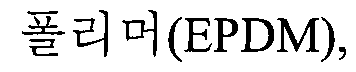 술폰화 £ 0 , 스티렌 브티렌 고무, 불소 고무, 다양한 공중합체등을들수있다.
필요에 따라서는,상기 혼합물에 충진제를더 첨가하여 상기 제 1층을
2019/103573 1»(:1^1{2018/014722
형성할 수 있다. 상기 충진제는 양극의 팽창을 억제하는 성분으로서 선택적으로사용되며, 당해 전지에 화학적 변화를 유발하지 않으면서 섬유상 재료라면특별히 제한되는것은아니며, 예를들어,폴리에틸렌,폴리프로필렌 등의 올리핀계중합체;유리섬유,탄소섬유등의 섬유상물질이사용된다. 리툼이차전지
본 발명의 다른 일 구현예로, 전술한 양국을 포함하는 리튬 이차 전지를제공한다.
일 구현예의 리튬 이차 전지는, 전술한 양극을 적용한 것이므로, 음극의 초기 비가역 용량이 감소하고, 양극의 초기 효율이 증가하며,구동 중 에너지 밀도저하가억제되어 수명 특성이 우수하게나타날수있다. 일 구현예의 리튬 이차전지에 있어서, 전술한양극이외에 대해서는, 일반적으로당업계에 알려진사항에 따라구현할수있다.
이하, 일반적으로 당 업계에 알려진 사항을 간단히 제시하지만, 이는 예시일뿐이며,이에 제한되지 않는다. 상기 음극은 집전체 및 상기 집전체 위에 형성된 음극 활물질층을 포함하며,상기 음극활물질층은음극활물질을포함할수있다.
상기 음극 활물질로는, 탄소계 음극 활물질, 리륨 금속, 리륨 금속의 합금, ¾ ¾(¾(0 < X < 2), 와 복합체, 와성합금(상기 는알칼리 금속,알칼리 토금속, 13족 내지 16족 원소, 전이금속, 희토류 원소 또는 이들의 조합이며, 와은 아님), 811, ¾02, 811-0 복합체, 및 요11-11(상기 II은 알칼리 금속, 알칼리 토금속, 13족 내지 16족 원소, 전이금속, 희토류 원소 또는 이들의 조합이며, ¾은 아님)을 포함하는 군에서 선택되는 적어도 1종 이상의 음극 활물질을 사용할수있다.
상기 음극 집전체는 일반적으로 3 - 500 _의 두께로 만들어질 수 있다. 이러한 음극 집전체는, 당해 전지에 화학적 변화를 유발하지 않으면서 도전성을 가진 것이라면 특별히 제한되는 것은 아니며, 예를 들어, 구리, 스테인레스스틸, 알루미늄,니켈,티탄,소성 탄소,구리나스테인레스스틸의
2019/103573 1»(:1^1{2018/014722
표면에 카본, 니켈, 티탄, 은 등으로 표면처리한 것, 알루미늄-카드뮴 합금 등이 사용될수 있다.또한,양극집전체와마찬가지로,표면에 미세한요철을 형성하여 음극 활물질의 결합력을 강화시킬 수도 있으며, 필름, 시트, 호일, 네트,다공질체,'발포체,부직포체등다양한형태로사용될수있다. 일 구현예의 리륨 이차전지는, 전해질의 종류 및/또는세퍼레이터의 종류에 따라, 리튬 이온 전지, 리튬 이온 폴리머 전지, 또는 리튬 폴리머 전지일수있다.
일 구현예의 리튬 이차 전지가 액체 전해질을 적용한 리륨 이온 전지일 때, 상기 액체 전해질을 분리막에 함침시켜 적용할 수 있다. 상기 분리막은 양극과 음극 사이에 개재되며, 높은 이온 투과도와 기계적 강도를 가지는 절연성의 얇은 박막이 사용된다. 분리막의 기공 직경은 일반적으로 0.01 - 10쎈 1이고,두께는 일반적으로 5 - 300 이다. 이러한분리막으로는, 예를 들어, 내화학성 및 소수성의 폴리프로필렌 등의 올레핀계 폴리머; 유리섬유 또는 폴리에틸렌 등으로 만들어진 시트나 부직포 등이 사용된다. 전해질로서 폴리머 등의 고체 전해질이 사용되는 경우에는 고체 전해질이 분리막을겸할수도있다.
상기 액체 전해질은 리튬염 함유 비수 전해질일 수 있다. 상기 리륨염 함유 비수 전해질은, 비수 전해질과 리튬으로 이루어져 있고, 비수 전해질로는 비수계 유기용매, 유기 고체 전해질, 무기 고체 전해질 등이 사용되지만이들만으로한정되는것은아니다.
상기 비수계 유기용매로는, 예를들어, 메틸- 2-피롤리디논,프로필렌 카르보네이트, 에틸렌 카르보네이트, 부틸렌 카르보네이트, 디메틸 카르보네이트, 디에틸 카르보네이트, 감마-부틸로 락톤, 1,2 -디메톡시 에탄, 테트라히드록시 프랑 (6^11(0, 2 -메틸 테트라하이드로푸란, 디메틸술폭시드, 1,3 - 디옥소런,포름아미드,디메틸포름아미드,디옥소런,아세토니트릴,니트로메탄, 포름산메틸,초산메틸,인산트리에스테르,트리메톡시 메탄,디옥소런유도체, 설포란, 메틸 설포란, 1,3 -디메틸- 2 -이미다졸리디논, 프로필렌 카르보네이트 유도체, 테트라하이드로푸란 유도체, 에테르, 피로피온산 메틸, 프로피온산 에틸등의 비양자성 유기용매가사용될수있다.
상기 유기 고체 전해질로는, 예를 들어, 폴리에틸렌 유도체, 폴리에틸렌 옥사이드 유도체, 폴리프로필렌 옥사이드 유도체, 인산 에스테르 폴리머, 폴리 에지테이션 리신 (agitation lysine), 폴리에스테르 술파이드, 폴리비닐 알코올,폴리 불화비닐리덴,이온성 해리기를포함하는중합제등이 사용될수있다.
상기 무기 고체 전해질로는,예를들어, Li3N, Lil, Li5NI2, Li3N-LiI-LiOH, LiSi04, LiSi04-LiI-LiOH, Li2SiS3, Li4Si04, Li4Si04-LiI-Li0H, Li3P04-Li2S-SiS2등의 Li의 질화물,할로겐화물,황산염 등이사용될수있다.
상기 리튬염은상기 비수계 전해질에 용해되기 좋은 물질로서, 예를 들어, LiCl, LiBr, Lil, LiC104, LiBF4, LiBi0Cli0, LiPF6, L1CF3SO3, LiCF3C02, LiAsF6, LiSbF6, LiAlCU, CH3S03Li, (CF3S02)2NLi, 클로로 보란 리튬, 저급 지방족 카르본산리튬 , 4페닐붕산리튬,이미드등이 사용될수있다.
또한, 상기 리튬염 함유 비수 전해질에는 충방전 특성, 난연성 등의 개선을 목적으로, 예를 들어, 피리딘, 트리에틸포스파이트, 트리에탄올아민, 환상 에테르, 에틸렌 디아민, n-글라임 (glyme), 핵사 인산 트리 아미드, 니트로벤젠 유도체, 유황, 퀴논 이민 염료, N-치환 옥사졸리디논, N,N-치환 이미다졸리딘,에틸렌글리콜디알킬 에테르,암모늄염,피롤, 2 -메톡시 에탄올, 삼염화알루미늄등이 첨가될수도있다.경우에 따라서는,불연성을부여하기 위하여,사염화탄소,삼불화에틸렌등의 할로겐함유용매를더 포함시킬수도 있고, 고온 보존 특성을 향상시키기 위하여 이산화탄산 가스를 더 포함시킬 수도 있으며, FEC(Fluoro-Ethylene Carbonate), PRS(Propene sultone) 등을 더 포함시킬수있다.
하나의 구체적인 예에서, LiPF6, L1CIO4, L1BF4, LiN(S02CF3)2등의 리튬염을, 고유전성 용매인 EC또는 PC의 환형 카보네이트와 저점도용매인 DEC, DMC 또는 EMC의 선형 카보네이트의 혼합 용매에 첨가하여 리륨염 함유비수계 전해질을제조할수있다.
상기 일 구현예의 리륨 이차 전지는, 이를 단위 전지로 포함하는 전지모듈, 상기 전지모듈을 포함하는 전지팩, 및 상기 전지팩을 전원으로 포함하는디바이스로구현될수있다.
이 때, 상기 디바이스의 구체적인 예로는, 전기자동차, 하이브리드
전기자동차, 플러그-인 하이브리드 전기자동차, 또는 전력저장용 시스템일 수 있으나,이에 한정되는것은아니다. 실시예 1 :양극의 제조
양극활물질인 LiNi0.8Coo.iMno.i02):도전재 (카본블랙,상업명 Super C65,
Timcal社): 바인더 (PVDF,상업명 KF1100, Kureha社) = 88.0 : 5.0 : 7.0의 중량비로배합하고,막자사발로유발하여 건식 혼합함으로써,실시예 1의 양극 합제를제조하였다.
실시예 1의 양극 합제에 유기 용매어 를 첨가하여 슬러리 상을 형성한 후, 알루미늄 집전체 상에 도포하여 120 OC의 진공 오븐에서 12시간 진공건조하였다.
이후, 상기 건조된 양극 합제 층 위에, 구체적으로, 리륨 퍼옥사이드 (Li202): 백금 (Pt): 도전재 (카본블랙, 상업명 Super C65, Timcal 社): 바인더 (PVDF,상업명 KF1100, Kureha社) = 75.5 : 1.9 : 5.7: 17.0중량비로 배합하고, 막자 사발로 유발하여 건식 혼합한 것을 도포하고, 120 OC의 진공 오븐에서 12시간진공건조하였다.
그결과로,실시예 1의 양극을수득하였다. 실시예 2:리륨이차전지의 제조
폭연 (Graphite) : 도전、재 (카본블랙, 상업명 Super C65, Timcal it) : 바인더 (SBR,상업명 A544, ZE0N社) :증점제 (CMC. Daicell 2200, Daicell社) 94.2 : 2 : 2.5 : 1.3의 중량비로배합하고,건식 혼합하여,음극합제를제조하였다.
상기 음극합제에 유기 용매 (NMP)를첨가하여 슬러리상을형성한후, 구리 집전체 상에 도포하여 120 OC의 진공 오븐에서 12시간 진공 건조하여 음극을제조하였다.
상기 음극 및 실시예 1의 양극사이에,두께 9pm및 기공도 42 vol인 PP/PE 재질의 세퍼레이터를 전지 용기에 투입하고, 전해질을 주입하여, 통상적인 제조방법에 따라 2032 풀셀 (Full-cell)의 형태로 리륨 이차 전지를 제작하였다.
상기 전해액으로는, EC:DMC:DEC의 부피비가 1 : 2 : 1인혼합용매에
 비교예 1:양극의 제조
양극 활물질인 LiNio.8Coo.iMno.i02) 및 리륨 퍼옥사이드 (Li202): 도전재
(카본블랙,상업명 Super C65, Timcal社):바인더 (PVDF,상업명 KF1100, Kureha 社) = 85 : 1 : 8: 6의 중량비를만족하되,상기 양극활물질인 LiNio.8Co0.iMn0.102) 및 상기 리튬 퍼옥사이드 (Li202)의 중량비는 80:20으로 만족하도록 배합하여, 상기 막자 사발로 유발하여 건식 혼합함으로써, 비교예 1의 양극 합제를 제조하였다.
비교예 1의 양극 합제에 유기 용매 (NMP)를 첨가하여 슬러리 상을 형성한 후, 알루미늄 집전체 상에 도포하여 120 OC의 진공 오븐에서 12시간 진공건조하였다.그결과로,비교예 1의 양극을수득하였다. 비교예 2:리륨이차전지의 제조
실시예 1의 양극 대신 비교예 1의 양극을사용하고,나머지는실시예 1과동일하게하여,비교예 2의 리튬이차전지를제조하였다. 실험예 1:전지의초기충방전특성 평가 I
실시예 및 비교예 의 각전지에 대해,상온에서 다음과같은조건으로 초기 충방전특성을평가하였다.그평가결과는도 1에 기록하였다.
Charge: 0.01 C, CC/CV, 4.6V, 5% cut-off
Discharge: 0.01C, CC, 2.5 V, cut-off 비교예 및 실시예 은, 공통적으로 리튬 퍼옥사이드 (Li202)를 양극에 적용하여,음극의 비가역 첨가제용량을보상할수있다.
앞서 설명한 바와 같이, 상기 리륨 퍼옥사이드 (Li202)는 이론 상 하기 반응식 1에 따라, 그 1 몰당, 1몰의 산소와 함께 2몰의 리륨 이온을 비가역적으로방출할수있는화합물이다.
[반응식 1] Li202 ^ 2Li+ + 02
2019/103573 1»(:1^1{2018/014722
다만, 도 1에 따르면, 4.3¥ 이상의 고전압 영역에서, 상기 리륨 퍼옥사이드(니202)를 양극 활물질과 혼합( 出明)된 상태로 적용한 비교예에 대비하여,상기 리튬퍼옥사이드(1 02)를양극합제층(즉,제 1층)위에 코팅한 실시예 전지의 양극충전용량이 더 높음을확인할수있다.
실시예에서, 상기 리툼 퍼옥사이드(니202)의 환원분해 반응은, 상기 리륨 퍼옥사이드(니202) 층(즉, 제 2층)이 전해질과 접하는 표면에서 이루어지므로, {)상기 제 1층에 영향을 미치지 않은 채(즉, 상기 제 1층 내부에 공극을 형성하지 않은 채), 상기 제 2층이 소멸됨으로써 종결된다. 따라서, 11) 제 1층의 전극밀도손실 및 111)전지 전체의 에너지 밀도저하가없거나매우 적을수있다.
결과적으로, 실시예는, 비교예에 대비하여 두 전극의 비가역 용량 불균형이 효과적으로상쇄되고,양극의 초기 충전 용량이 높고,양극의 에너지 밀도손실이 적어,우수한수명 특성을가질수있는것이다.
Claims
[화학식 1]

M은알칼리 금속원소중 1종이상이고,
쇼는할로겐원소중 1종이상이고,
-0.005< <0.005 , 0<)^<0.01, 0.995<15<2.005, 0< <0.005이다.
【청구항 2] '
제 1항에 있어서,
상기 리튬산화물계화합물은,
리륨퍼옥사이드( 02),리륨옥사이드( 0),또는이들의 혼합물인, 양극.
【청구항 3】
제 1항에 있어서,
상기 제 1층은,
도전재,바인더,또는이들의 혼합물을더 포함하는것인,
양극.
【청구항 4]
제 3항에 있어서,
상기 제 2층은, 백금( ), 도전재, 바인더, 또는 이들의 혼합물을 더
2019/103573 1»(:1^1{2018/014722
포함하는것인,
양극.
【청구항 5】
제 4항에 있어서,
상기 제 2층내 백금의 함량은,
상기 제 2층총량 100중량%중 1내지 5중량%인,
양극.
【청구항 6]
제 4항에 있어서,
상기 제 2층내도전재의 함량은,
상기 제 2층총량 100중량%중 5내지 10중량%인,
양극.
【청구항 7】
제 4항에 있어서,
상기 도전재는, .
천연 흑연, 인조흑연,카본블랙,아세틸렌블랙, 케첸블랙,탄소섬유, 금속분말,금속섬유,및 폴리페닐렌유도체를포함하는군에서 선택되는 1종 이상을포함하는것인,
양극.
【청구항 8】
제 1항에 있어서,
상기 양극활물질은,
코발트,망간,니켈또는 이들의 조합의 금속;및 리튬;의 복합산화물 중 1종이상을포함하는것인,
양극.
2019/103573 1»(:1^1{2018/014722
【청구항 9]
제 1항의 양극;
음극;및
전해질;을포함하는,
리튬이차전지.
【청구항 10】
제 9항에 있어서,
상기 음극은,
탄소계음극활물질,리튬금속,리륨금속의 합금, 와, 810,(0 < X < 2), 복합체, 와성합금(상기 (5는알칼리 금속,알칼리 토금속, 13족내지 16족 원소,전이금속,희토류원소또는이들의 조합이며,와은아님), 811, ¾02, 811-0

전이금속, 희토류 원소 또는 이들의 조합이며, ¾은 아님)을포함하는 군에서 선택되는적어도 1종이상의 음극활물질을포함하는,
리륨이차전지.
Priority Applications (4)
| Application Number | Priority Date | Filing Date | Title |
|---|---|---|---|
| CN201880019051.5A CN110447128B (zh) | 2017-11-27 | 2018-11-27 | 正极和包含该正极的锂二次电池 |
| EP18881270.5A EP3598534B1 (en) | 2017-11-27 | 2018-11-27 | Positive electrode and lithium secondary battery comprising same |
| JP2019548383A JP7086407B2 (ja) | 2017-11-27 | 2018-11-27 | 正極およびこれを含むリチウム二次電池 |
| US16/607,297 US11404689B2 (en) | 2017-11-27 | 2018-11-27 | Positive electrode and lithium secondary battery including the same |
Applications Claiming Priority (4)
| Application Number | Priority Date | Filing Date | Title |
|---|---|---|---|
| KR10-2017-0159734 | 2017-11-27 | ||
| KR20170159734 | 2017-11-27 | ||
| KR10-2018-0148008 | 2018-11-27 | ||
| KR1020180148008A KR102434255B1 (ko) | 2017-11-27 | 2018-11-27 | 양극 및 이를 포함하는 리튬 이차 전지 |
Publications (1)
| Publication Number | Publication Date |
|---|---|
| WO2019103573A1 true WO2019103573A1 (ko) | 2019-05-31 |
Family
ID=66631673
Family Applications (1)
| Application Number | Title | Priority Date | Filing Date |
|---|---|---|---|
| PCT/KR2018/014722 Ceased WO2019103573A1 (ko) | 2017-11-27 | 2018-11-27 | 양극 및 이를 포함하는 리튬 이차 전지 |
Country Status (1)
| Country | Link |
|---|---|
| WO (1) | WO2019103573A1 (ko) |
Cited By (2)
| Publication number | Priority date | Publication date | Assignee | Title |
|---|---|---|---|---|
| CN112868117A (zh) * | 2019-09-24 | 2021-05-28 | 株式会社Lg化学 | 用于锂可充电电池的阳极和包括该阳极的锂可充电电池 |
| CN116565292A (zh) * | 2023-07-06 | 2023-08-08 | 宁德新能源科技有限公司 | 一种电化学装置及电子装置 |
Citations (5)
| Publication number | Priority date | Publication date | Assignee | Title |
|---|---|---|---|---|
| WO2001039302A1 (en) * | 1999-11-23 | 2001-05-31 | Moltech Corporation | Lithium anodes for electrochemical cells |
| JP2004087251A (ja) * | 2002-08-26 | 2004-03-18 | Nec Corp | 非水電解液二次電池 |
| JP5541502B2 (ja) * | 2010-03-30 | 2014-07-09 | 株式会社デンソー | リチウム二次電池及びその製造方法 |
| US20150364795A1 (en) * | 2014-06-12 | 2015-12-17 | Amprius, Inc. | Prelithiation solutions for lithium-ion batteries |
| KR20160128014A (ko) * | 2015-04-28 | 2016-11-07 | 주식회사 엘지화학 | 리튬 금속 황 화합물을 포함하는 양극 합제 및 그로부터 제조된 양극 |
-
2018
- 2018-11-27 WO PCT/KR2018/014722 patent/WO2019103573A1/ko not_active Ceased
Patent Citations (5)
| Publication number | Priority date | Publication date | Assignee | Title |
|---|---|---|---|---|
| WO2001039302A1 (en) * | 1999-11-23 | 2001-05-31 | Moltech Corporation | Lithium anodes for electrochemical cells |
| JP2004087251A (ja) * | 2002-08-26 | 2004-03-18 | Nec Corp | 非水電解液二次電池 |
| JP5541502B2 (ja) * | 2010-03-30 | 2014-07-09 | 株式会社デンソー | リチウム二次電池及びその製造方法 |
| US20150364795A1 (en) * | 2014-06-12 | 2015-12-17 | Amprius, Inc. | Prelithiation solutions for lithium-ion batteries |
| KR20160128014A (ko) * | 2015-04-28 | 2016-11-07 | 주식회사 엘지화학 | 리튬 금속 황 화합물을 포함하는 양극 합제 및 그로부터 제조된 양극 |
Non-Patent Citations (2)
| Title |
|---|
| BIE, YITIAN: "Li202 as a cathode additive for the initial anode irreversibility compensation in lithium-ion batteries", CHEMICAL COMMUNICATIONS, 30 June 2017 (2017-06-30), pages 8324 - 8327, XP055617194 * |
| See also references of EP3598534A4 * |
Cited By (4)
| Publication number | Priority date | Publication date | Assignee | Title |
|---|---|---|---|---|
| CN112868117A (zh) * | 2019-09-24 | 2021-05-28 | 株式会社Lg化学 | 用于锂可充电电池的阳极和包括该阳极的锂可充电电池 |
| US12027709B2 (en) | 2019-09-24 | 2024-07-02 | Lg Chem, Ltd. | Anode for lithium rechargeable battery and lithium rechargeable battery including the same |
| CN116565292A (zh) * | 2023-07-06 | 2023-08-08 | 宁德新能源科技有限公司 | 一种电化学装置及电子装置 |
| CN116565292B (zh) * | 2023-07-06 | 2023-10-13 | 宁德新能源科技有限公司 | 一种电化学装置及电子装置 |
Similar Documents
| Publication | Publication Date | Title |
|---|---|---|
| KR101569056B1 (ko) | 규소계 화합물을 포함하는 이차전지 | |
| KR101334594B1 (ko) | 음극 활물질 및 이를 이용한 이차전지 | |
| KR101589993B1 (ko) | 신규한 이차전지 | |
| KR101334609B1 (ko) | 음극 활물질 및 이를 이용한 이차전지 | |
| KR101517043B1 (ko) | 접착력 개선된 리튬 이차전지용 음극 | |
| KR101293931B1 (ko) | 양극 활물질 및 이를 이용한 리튬 이차전지 | |
| KR101334615B1 (ko) | 음극 활물질 및 이를 이용한 이차전지 | |
| KR102434255B1 (ko) | 양극 및 이를 포함하는 리튬 이차 전지 | |
| KR101334612B1 (ko) | 음극 활물질 및 이를 이용한 이차전지 | |
| KR101623719B1 (ko) | 리튬 이차전지용 양극 활물질의 제조방법 | |
| KR101588252B1 (ko) | 이차전지 셀 | |
| KR20130050473A (ko) | 이중 코팅 구조의 리튬 이차전지용 양극 | |
| WO2019103574A2 (ko) | 양극 첨가제, 이의 제조 방법, 이를 포함하는 양극 및 리튬 이차 전지 | |
| KR101338299B1 (ko) | 고전압용 이차전지 | |
| KR101506452B1 (ko) | 이차전지용 양극 | |
| KR20140008956A (ko) | 리튬 이차전지용 음극의 제조 방법 및 이러한 방법에 의해 제조된 음극을 포함하는 리튬 이차전지 | |
| KR102434256B1 (ko) | 양극 합제, 이를 포함하는 양극, 및 리튬 이차 전지 | |
| KR101595605B1 (ko) | 그래핀을 포함하는 이차전지용 슬러리 및 이를 포함하는 이차전지 | |
| KR101506317B1 (ko) | 리튬 이차전지용 양극 | |
| KR101751007B1 (ko) | 수명특성이 향상된 고전압 리튬 이차전지 | |
| KR101666384B1 (ko) | 고전압 리튬 이차전지용 양극 활물질 및 이를 포함하는 리튬 이차전지 | |
| KR101505386B1 (ko) | 알루미늄 전극용 전해질 및 이를 포함하는 리튬 이차전지 | |
| KR20190064507A (ko) | 리튬 이차전지용 양극 및 그를 포함하는 리튬 이차전지 | |
| KR20130117930A (ko) | 음극 및 이를 포함하는 이차전지 | |
| WO2019103575A1 (ko) | 양극 합체, 이를 포함하는 양극, 및 리튬 이차 전지 |
Legal Events
| Date | Code | Title | Description |
|---|---|---|---|
| 121 | Ep: the epo has been informed by wipo that ep was designated in this application |
Ref document number: 18881270 Country of ref document: EP Kind code of ref document: A1 |
|
| ENP | Entry into the national phase |
Ref document number: 2019548383 Country of ref document: JP Kind code of ref document: A |
|
| ENP | Entry into the national phase |
Ref document number: 2018881270 Country of ref document: EP Effective date: 20191015 |
|
| NENP | Non-entry into the national phase |
Ref country code: DE |