WO2019104744A1 - 一种碱式氯化锌颗粒物及其制备方法 - Google Patents
一种碱式氯化锌颗粒物及其制备方法 Download PDFInfo
- Publication number
- WO2019104744A1 WO2019104744A1 PCT/CN2017/114481 CN2017114481W WO2019104744A1 WO 2019104744 A1 WO2019104744 A1 WO 2019104744A1 CN 2017114481 W CN2017114481 W CN 2017114481W WO 2019104744 A1 WO2019104744 A1 WO 2019104744A1
- Authority
- WO
- WIPO (PCT)
- Prior art keywords
- zinc chloride
- basic zinc
- basic
- zinc
- particles
- Prior art date
- Legal status (The legal status is an assumption and is not a legal conclusion. Google has not performed a legal analysis and makes no representation as to the accuracy of the status listed.)
- Ceased
Links
Images

Classifications
-
- C—CHEMISTRY; METALLURGY
- C01—INORGANIC CHEMISTRY
- C01G—COMPOUNDS CONTAINING METALS NOT COVERED BY SUBCLASSES C01D OR C01F
- C01G9/00—Compounds of zinc
- C01G9/04—Halides
-
- A—HUMAN NECESSITIES
- A23—FOODS OR FOODSTUFFS; TREATMENT THEREOF, NOT COVERED BY OTHER CLASSES
- A23K—FODDER
- A23K20/00—Accessory food factors for animal feeding-stuffs
- A23K20/20—Inorganic substances, e.g. oligoelements
- A23K20/30—Oligoelements
-
- C—CHEMISTRY; METALLURGY
- C01—INORGANIC CHEMISTRY
- C01P—INDEXING SCHEME RELATING TO STRUCTURAL AND PHYSICAL ASPECTS OF SOLID INORGANIC COMPOUNDS
- C01P2002/00—Crystal-structural characteristics
- C01P2002/30—Three-dimensional structures
-
- C—CHEMISTRY; METALLURGY
- C01—INORGANIC CHEMISTRY
- C01P—INDEXING SCHEME RELATING TO STRUCTURAL AND PHYSICAL ASPECTS OF SOLID INORGANIC COMPOUNDS
- C01P2004/00—Particle morphology
- C01P2004/01—Particle morphology depicted by an image
- C01P2004/03—Particle morphology depicted by an image obtained by SEM
-
- C—CHEMISTRY; METALLURGY
- C01—INORGANIC CHEMISTRY
- C01P—INDEXING SCHEME RELATING TO STRUCTURAL AND PHYSICAL ASPECTS OF SOLID INORGANIC COMPOUNDS
- C01P2004/00—Particle morphology
- C01P2004/30—Particle morphology extending in three dimensions
-
- C—CHEMISTRY; METALLURGY
- C01—INORGANIC CHEMISTRY
- C01P—INDEXING SCHEME RELATING TO STRUCTURAL AND PHYSICAL ASPECTS OF SOLID INORGANIC COMPOUNDS
- C01P2004/00—Particle morphology
- C01P2004/30—Particle morphology extending in three dimensions
- C01P2004/32—Spheres
-
- C—CHEMISTRY; METALLURGY
- C01—INORGANIC CHEMISTRY
- C01P—INDEXING SCHEME RELATING TO STRUCTURAL AND PHYSICAL ASPECTS OF SOLID INORGANIC COMPOUNDS
- C01P2004/00—Particle morphology
- C01P2004/51—Particles with a specific particle size distribution
-
- C—CHEMISTRY; METALLURGY
- C01—INORGANIC CHEMISTRY
- C01P—INDEXING SCHEME RELATING TO STRUCTURAL AND PHYSICAL ASPECTS OF SOLID INORGANIC COMPOUNDS
- C01P2004/00—Particle morphology
- C01P2004/60—Particles characterised by their size
- C01P2004/61—Micrometer sized, i.e. from 1-100 micrometer
-
- C—CHEMISTRY; METALLURGY
- C01—INORGANIC CHEMISTRY
- C01P—INDEXING SCHEME RELATING TO STRUCTURAL AND PHYSICAL ASPECTS OF SOLID INORGANIC COMPOUNDS
- C01P2006/00—Physical properties of inorganic compounds
- C01P2006/80—Compositional purity
Definitions
- the invention relates to the field of mineral feed additives, in particular to a basic zinc chloride granule and a preparation method thereof.
- basic zinc chloride As a new type of mineral feed additive, basic zinc chloride has the advantages of stable chemical structure, low dosage, high bioavailability and no agglomeration compared with conventional mineral feed additives such as zinc sulfate and zinc oxide. Many of the existing liquid-solid phase synthesis methods and liquid-liquid phase synthesis methods can synthesize basic zinc chloride, but the raw material price is relatively expensive, and the synthetic basic zinc chloride has a small size and specific surface area. Large, poor filtration and washing performance, powdered product after drying, generating a large amount of dust, poor production environment, and most of them are produced by batch reaction.
- the object of the present invention is to overcome the above-mentioned deficiencies of the prior art and to provide a basic zinc chloride granule, wherein the basic zinc chloride granule constituting the basic zinc chloride granule has a large particle size and has good The liquidity can meet the requirements of no dust and easy flow during the use of the feed mill.
- Another object of the present invention is to provide a process for the preparation of the basic zinc chloride granules.
- a basic zinc chloride granule mainly composed of basic zinc chloride particles, wherein the basic zinc chloride particles have a D10>100 ⁇ m and a D95>450 ⁇ m, and the basic zinc chloride particles do not contain a binder;
- the appearance of the basic zinc chloride particles contained is mostly spherical, and the basic zinc chloride particles having a particle diameter of >500 ⁇ m in the basic zinc chloride account for 1% of the total weight of the basic zinc chloride particles. %the following.
- the existing basic zinc chloride is prone to dusting, mainly because the size of the basic zinc chloride obtained by the conventional method is too small. Although a large-sized basic zinc chloride particle can be obtained by a method of secondary granulation or an organic inducer, the process becomes more complicated, and the effect is difficult to control, and brings more inconvenience to the post-treatment, and With the addition of the binder, the absolute content of zinc chloride is reduced. While the basic zinc chloride granules provided by the present invention are prepared by the method provided, the basic zinc chloride is much larger in size than that prepared by any of the existing methods, and has a uniform size and has a uniform size. Excellent liquidity.
- the content of the basic zinc chloride is 98% or more.
- the particles having a spherical shape in shape account for 95% or more, more preferably 98% or more of the total mass of the particles.
- the basic zinc chloride particles having the above characteristics of the present invention have an angle of repose of 30 to 35°.
- the particle size distribution in the basic zinc chloride particles of the present invention is usually in the range of from 1 to 1000 ⁇ m. Depending on the process conditions, the particle size distribution will vary within this range, ie the smallest size of the particle size distribution may be greater than 1 ⁇ m and the maximum size of the particle size distribution may be less than 1000 ⁇ m. Therefore, as long as it is in the range of the above D 10 and D 95 , it is adjusted in the range of 1 to 1000 ⁇ m to obtain a basic zinc chloride particle having a narrow particle size distribution.
- a basic zinc chloride product having a narrower particle size distribution by sieving or the like.
- a basic zinc chloride granule is mainly composed of basic zinc chloride particles, and the basic zinc chloride particles in the basic zinc chloride particles have a particle size distribution ranging from 1 to 500 ⁇ m, and The basic zinc chloride particles have a D 10 >100 ⁇ m, D 95 >450 ⁇ m, the basic zinc chloride particles do not contain a binder; and the basic zinc chloride particles contained in the basic zinc chloride particles Most of the appearance is spherical.
- the basic zinc chloride particles of the present invention are directly obtained by the preparation of basic zinc chloride, and thus the basic zinc chloride particles do not contain a binder.
- the preparation method of the basic zinc chloride particles comprises the following steps:
- the zinc-containing raw material is subjected to complex ammonia leaching using the mixed solution obtained in S2 to prepare a zinc-ammonium complex solution, wherein the zinc-ammonium complex solution has a zinc concentration of 60-150 g/L;
- the morphology of the basic zinc chloride particles prepared by the method of the present invention is mostly close to a spheroidal shape, and thus has better fluidity.
- ammonium chloride as an inducer, no additional impurities are introduced, and the wastewater treatment is simple.
- a basic zinc chloride product with a spherical shape and a large particle size is prepared, and the product has no dust and flows. Goodness and other advantages.
- the basic zinc chloride granules having a narrower particle size distribution range it is preferable to further sift the sieve after drying to remove the particles having a larger particle size after completion of S4. step.
- the screening device By selecting the screening device, basic zinc chloride particles having a narrower particle size distribution can be obtained.
- the screening is to collect particulate matter that can pass through a 35 mesh screen.
- the zinc-containing mother liquor recovers ammonia water by alkali stripping and spray absorption.
- the zinc-containing mother liquor is subjected to alkali stripping to remove ammonia nitrogen, and the metal is deeply removed by concentration, and concentrated and crystallized to recover sodium chloride.
- the zinc chloride solution is prepared by the following method: using zinc-containing flue ash as a raw material, acid leaching, and impurity removal.
- the flue ash is the production waste of the steel plant.
- the use of flue ash to prepare zinc chloride solution can realize waste utilization and is economical and environmentally friendly.
- the zinc-containing raw material is a zinc-containing flue ash
- the obtained zinc-ammonia complex solution further comprises the step of adding zinc powder for replacement and impurity removal.
- a feed additive comprising the basic zinc chloride granules.
- the zinc chloride solution described in S1. may also be obtained by adding water or a hydrochloric acid solution to the zinc chloride or zinc oxide solid.
- the main component of the wastewater prepared by the method for preparing basic zinc chloride is zinc ammonia complex and ammonium chloride.
- the ammonia water, zinc hydroxide and distilled water can be recovered by simple treatment to ensure the closed cycle of zinc and ammonia nitrogen, and the whole process is not completed. Waste water is discharged to achieve continuous environmentally friendly production.
- the present invention has the following beneficial effects:
- the invention provides a basic zinc chloride granule and a preparation method thereof, wherein the basic zinc chloride granule has a large particle size and good fluidity, and is dust-free and easy to flow during use, thereby solving the existing Feeding
- the problem of the dust in the working environment and the premixing of the premix is difficult to be mixed in the process of preparing the premix by using the basic zinc chloride.
- the preparation process of the invention uses ammonium chloride as an inducer, no additional impurities are introduced, the production wastewater can be completely recycled, the production cost is low, and the production process is environmentally friendly and economical.
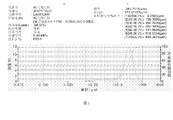
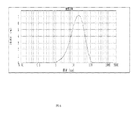
- Example 1 is a particle size distribution diagram of a basic zinc chloride particulate product obtained in Example 1.
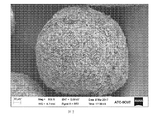
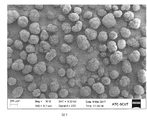
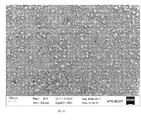
- Example 2 is an SEM image showing a 300-fold magnification of the basic zinc chloride particulate product obtained in Example 1.
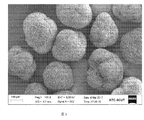
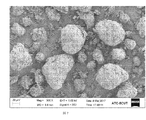
- Figure 3 is an SEM image at 100X magnification of the basic zinc chloride particulate product obtained in Example 1.
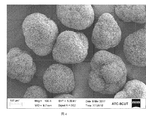
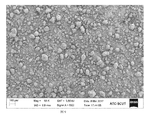
- Fig. 4 is a SEM image showing a 50-fold magnification of the basic zinc chloride particulate product obtained in Example 1.
- Fig. 5 is an SEM image showing a 30-fold magnification of the basic zinc chloride particulate product obtained in Example 1.
- Figure 6 is a particle size distribution diagram of a commercially available basic zinc chloride product.
- Figure 7 is an SEM image at 300X magnification of a commercially available basic zinc chloride product.
- Figure 8 is an SEM image at 100X magnification of a commercially available basic zinc chloride product.
- Figure 9 is an SEM image at 50X magnification of a commercially available basic zinc chloride product.
- Figure 10 is an SEM image at 30X magnification of a commercially available basic zinc chloride product.
- the invention is further illustrated by the following specific embodiments, but the examples are not intended to limit the invention in any way.
- the raw material reagents employed in the examples of the present invention are conventionally purchased raw material reagents.
- test method of the angle of repose is tested according to "Measurement of Surfactant Powder and Particle Angle of Repose” (GB/T 11986-1989).
- the particle size distribution, D10 and D95 were tested by GB/T19077-2016 laser diffraction method.
- the morphology of basic zinc chloride was observed by scanning electron microscopy.
- Zinc oxide is dissolved in hydrochloric acid to prepare a zinc chloride solution
- Sodium hydroxide is added to the zinc-containing mother liquor for stripping, and the ammonia gas is recovered by spray absorption in the gas phase, and can be recycled for production or sale; the solid phase obtained by liquid phase evaporation of ammonia is zinc hydroxide solid, and can be returned to the front end.
- the evaporated water can be used as water for production after cooling. There is no waste water discharged.
- the chlorine ion concentration in the mixed solution obtained in S2 was 70 g/L.
- the chlorine ion concentration in the mixed solution obtained in S2 was 170 g/L.
- the pH value, the content of chloride ions in the aqueous ammonia solution, and the stirring speed have an important influence on the preparation of the basic zinc chloride particles, and the basic formula prepared in the pH range of the present invention.
- the shape of the zinc chloride particles is spherical, the angle of repose is 30-35°, and has good fluidity, which is favorable for the uniform mixing of the storage and the premix.
Landscapes
- Chemical & Material Sciences (AREA)
- Organic Chemistry (AREA)
- Inorganic Chemistry (AREA)
- Life Sciences & Earth Sciences (AREA)
- Polymers & Plastics (AREA)
- Animal Husbandry (AREA)
- Zoology (AREA)
- Engineering & Computer Science (AREA)
- Food Science & Technology (AREA)
- Manufacture And Refinement Of Metals (AREA)
- Inorganic Compounds Of Heavy Metals (AREA)
Abstract
一种碱式氯化锌颗粒物及其制备方法。所述碱式氯化锌颗粒物,其主要由碱式氯化锌颗粒组成,所述碱式氯化锌颗粒物的D 10>100μm,D95>450μm,所述碱式氯化锌颗粒不含有粘结剂;所述碱式氯化锌颗粒物中所含的碱式氯化锌颗粒的外观大部分呈类球形,且所述碱式氯化锌物中颗粒粒径>500μm的碱式氯化锌颗粒占碱式氯化锌颗粒物总重量的1%以下。所述碱式氯化锌颗粒物具有较大的粒径和良好的流动性,使用过程中不扬尘、易于流动,解决了现有饲料企业使用碱式氯化锌制备预混料过程中存在的工作环境粉尘大和预混料难以混合均匀的问题。制备过程以氯化铵作为诱导剂,没有额外引入杂质,生产废水可以全部回收利用,生产成本低,而且生产过程环保经济。
Description
本发明涉及矿物质饲料添加剂的领域,具体地,涉及一种碱式氯化锌颗粒物及其制备方法。
碱式氯化锌作为一种新型的矿物质饲料添加剂,与常规的矿物质饲料添加剂硫酸锌、氧化锌相比,具有化学结构稳定、用量少、生物利用率高、不结块等优点。现有的许多液相-固相合成法和液相-液相合成法虽然都能合成碱式氯化锌,但普遍存在原材料价格相对较昂贵,合成的碱式氯化锌尺寸小,比表面积大,过滤洗涤性能差,干燥后为粉末状产品,产生大量扬尘,生产环境恶劣,且大多数为间歇反应生产。
增加碱式氯化锌的粒径可以有效的解决扬尘的问题,现有技术也一直在努力合成大颗粒的碱式氯化锌,例如有采用粘合剂将碱式氯化锌粉末进行再造粒的方法来增大碱式氯化锌的粒径;或者是采用有机酸性诱导体系中合成了粒径较大的碱式氯化锌颗粒,但是有机诱导剂的加入增加了后续废水处理的难度,同时,该方法制备的碱式氯化锌颗粒的外观不规整,不具备良好的流动性。
因此,开发一种不扬尘,生产成本低,没有废水排出的矿物质饲料添加剂碱式氯化锌非常具有经济价值和意义。能很好的解决现有饲料企业使用碱式氯化锌制备预混料过程中存在的工作环境粉尘大、预混料难以混合均匀等问题。
发明内容
本发明的目的旨在克服上述现有技术的不足,提供一种碱式氯化锌颗粒物,构成该碱式氯化锌颗粒物的碱式氯化锌颗粒具有较大的粒径,并且具有良好的流动性,可以满足饲料厂使用过程中不扬尘、易于流动的要求。
本发明的另一目的在于提供所述碱式氯化锌颗粒物的制备方法。
本发明的上述目的通过如下技术方案予以实现:
一种碱式氯化锌颗粒物,主要由碱式氯化锌颗粒组成所述碱式氯化锌颗粒物的D10>100μm,D95>450μm,所述碱式氯化锌颗粒不含有粘结剂;其所含的碱式氯化锌颗粒的外观大部分呈类球形,且所述碱式氯化锌物中颗粒粒径>500μm的碱式氯化锌颗粒占碱式氯化锌颗粒物总重量的1%以下。
现有的碱式氯化锌容易发生扬尘,主要是因为常规方法获得的碱式氯化锌的尺寸过小。通过二次造粒的方法或有机诱导剂的方法虽然能获得较大尺寸的碱式氯化锌颗粒,但是工艺变得更复杂,而且效果难以控制,并且给后处理带来更多不便,并且加入了粘合剂,氯化锌的绝对含量出现下降。而本发明提供的碱式氯化锌颗粒物由通过所提供的方法制备,其与现有的任何方法制备得到的相比,碱式氯化锌的尺寸要大得多,同时其尺寸均一,具有优秀的流动性。
本发明所述碱式氯化锌颗粒物中,碱式氯化锌的含量在98%以上。
更优选地,外形呈类球形的颗粒占颗粒物总质量的95%以上,更优选98%以上。具有本发明上述特征的碱式氯化锌颗粒物,其休止角为30~35°。
本发明所述碱式氯化锌颗粒物中的粒径分布范围通常在1~1000μm的区间内。根据工艺条件的变化,粒径分布的情况会在此范围内发生变化,即粒径分布的最小尺寸可能大于1μm,粒径分布的最大尺寸可能小于1000μm。因此,只要在符合上述D10及D95范围的产品内,在1~1000μm范围内进行调整获得粒径分布更窄的碱式氯化锌颗粒物。
例如本发明中,还可以通过过筛等方式,以获得粒径分布更窄的碱式氯化锌产品。优选地,一种碱式氯化锌颗粒物,主要由碱式氯化锌颗粒组成,所述碱式氯化锌颗粒物中的碱式氯化锌颗粒粒径分布范围为1~500μm,且所述碱式氯化锌颗粒物的D10>100μm,D95>450μm,所述碱式氯化锌颗粒不含有粘结剂;所述碱式氯化锌颗粒物中所含的碱式氯化锌颗粒的外观大部分呈类球形。
本发明所述碱式氯化锌颗粒是通过碱式氯化锌的制备过程中直接获得的,因此所述碱式氯化锌颗粒不含有粘结剂。
所述碱式氯化锌颗粒物的制备方法,包括如下步骤:
S1.配制锌浓度60~150g/L的氯化锌溶液;
S2.配制pH为10以上氨水溶液,并且在氨水溶液中,加入氯化氨作为诱导剂,且氯化铵作为溶液中氯离子主要来源,使得最终溶液中氨氮浓度为140~170g/L,氯离子浓度为80~160g/L;
S3.采用S2所得混合溶液对含锌原料进行络合氨浸,制备锌氨络合溶液,所述锌氨络合溶液中锌浓度为60~150g/L;
S4.在反应容器中加入清水或碱式氯化锌生产母液,加热至70~90℃,以并流进料的方式同时加入S1.所述氯化锌溶液及S3.所述锌氨络合溶液,维持反应pH值为6.0~7.0,搅拌速率为1200~1500r/min,反应2~4小时,反应得到沉淀物和含锌母液,所述沉淀物经洗涤、烘干即为所述碱式氯化锌颗粒物。
通过扫描电镜可以观察发现,本发明方法制备的碱式氯化锌颗粒形貌大部分接近类球形,因此具有更好的流动性。利用氯化铵作为诱导剂,没有额外引入杂质,废水处理简单,通过控制反应pH值、搅拌速度等参数,制备出类球形、粒径大的碱式氯化锌产品,产品具有不扬尘,流动性好等优点。
为了获得本发明所述粒径分布范围为更窄的碱式氯化锌颗粒物,优选还包括在S4.完成后,对烘干后的沉淀物进行过筛筛选,除去粒径较大的颗粒的步骤。通过过筛设备的选择,可以获得粒径分布更窄的碱式氯化锌颗粒物。
优选地,所述过筛筛选为收集能通过35目筛的颗粒物。
优选地,S4.所述含锌母液通过碱汽提、喷淋吸收的方法回收氨水。
优选地,S4.所述含锌母液通过碱汽提去除氨氮后,经深度除重金属,浓缩结晶回收氯化钠。
优选地,S1.所述氯化锌溶液通过如下方法制备:以含锌烟道灰为原料,经酸浸出,除杂得到。烟道灰是钢铁厂的生产废料,利用烟道灰制备氯化锌溶液可以实现废物利用,经济环保。
优选地,所述含锌原料为含锌烟道灰,采用含锌烟道灰作为原料时,得到的锌氨络合溶液还包括加入锌粉进行置换除杂的步骤。
一种饲料添加剂,含有所述碱式氯化锌颗粒物。
S1.中所述的氯化锌溶液也可以为氯化锌或氧化锌固体中加入水或盐酸溶液溶解得到。
本方法制备碱式氯化锌的废水中主要成分为锌氨络合物、氯化铵,通过简单处理就可以回收氨水、氢氧化锌、蒸馏水,保证锌和氨氮的闭路循环,整个工艺流程没有废水排出,实现连续环保生产。
与现有技术相比,本发明具有如下有益效果:
本发明提供了一种碱式氯化锌颗粒物及其制备方法,所述碱式氯化锌颗粒物具有较大的粒径和良好的流动性,使用过程中不扬尘、易于流动,解决了现有饲
料企业使用碱式氯化锌制备预混料过程中存在的工作环境粉尘大和预混料难以混合均匀的问题。本发明的制备过程以氯化铵作为诱导剂,没有额外引入杂质,生产废水可以全部回收利用,生产成本低,而且生产过程环保经济。
图1为实施例1制得的碱式氯化锌颗粒物产品的粒径分布图。
图2为实施例1制得的碱式氯化锌颗粒物产品放大300倍的SEM图。
图3为实施例1制得的碱式氯化锌颗粒物产品放大100倍的SEM图。
图4为实施例1制得的碱式氯化锌颗粒物产品放大50倍的SEM图。
图5为实施例1得的碱式氯化锌颗粒物产品放大30倍的SEM图。
图6为市售碱式氯化锌产品的粒径分布图。
图7为市售碱式氯化锌产品放大300倍的SEM图。
图8为市售碱式氯化锌产品放大100倍的SEM图。
图9为市售碱式氯化锌产品放大50倍的SEM图。
图10为市售碱式氯化锌产品放大30倍的SEM图。
下面结合具体实施方式对本发明作进一步的说明,但实施例并不对本发明做任何形式的限定。除非另有说明,本发明实施例采用的原料试剂为常规购买的原料试剂。
市售碱式氯化锌购自符合中国标准《饲料添加剂碱式氯化锌》(GB/T 22546-2008)的市售产品。
休止角的测试方法依据《表面活性剂粉体和颗粒休止角的测量》(GB/T 11986-1989)进行测试。
粒径分布、D10、D95采用GB/T19077-2016激光衍射法进行测试。
碱式氯化锌的形貌通过扫描电镜观察。
实施例
S1.氧化锌用盐酸溶解配制成氯化锌溶液;
S2.配制pH为10以上氨水溶液,并且在氨水溶液中,加入氯化氨作为诱导剂,且氯化铵作为溶液中氯离子主要来源,使得最终溶液中氨氮浓度为140~170g/L,氯离子浓度为80~160g/L;
S3.采用S2所得混合溶液对氧化锌进行络合氨浸,制备锌氨络合溶液;
S4.在反应容器中加入清水,加热至70~90℃,以并流进料的方式同时加入S1.所述氯化锌溶液及S3.所述锌氨络合溶液,维持反应pH值为6.0~7.0,反应2~4小时,反应得到沉淀物和含锌母液,所述沉淀物经洗涤、烘干即为米黄色或白色碱式氯化锌颗粒物。
各实施例中具体的参数如表1所示:
表1

实施例8
S1.以含锌烟道灰为原料,经过盐酸浸出、除杂,得到氯化锌溶液。在溶液中加入水将锌浓度调节至60g/L之间,得到纯化后的氯化锌溶液。
S2.配制pH为10以上氨水溶液,并且在氨水溶液中,加入氯化氨作为诱导剂,且氯化铵作为溶液中氯离子主要来源,使得最终溶液中氨氮浓度为140~170g/L,氯离子浓度为80~160g/L;
S3.在S2.制得的混合溶液中加入含锌烟道灰,进行络合氨浸,当液相中锌浓度达到60g/L时,进行过滤分离,固相继续络合氨浸,液相加入锌粉置换除杂,得到纯化后的锌氨络合溶液;
S4.碱式氯化锌的合成
往反应釜中加入清水,加热至70℃,然后以并流进料的方式同时加入纯化
后的氯化锌溶液及锌氨络合溶液,维持反应pH值在6.0~7.0,反应2小时,反应得到沉淀物和含锌母液,所述沉淀物经洗涤、烘干即为碱式氯化锌颗粒物。
S5.废水处理
往含锌母液中加入氢氧化钠汽提,气相用喷淋吸收的方法回收氨水,可以回用于生产或出售;液相蒸氨后得到的固相为氢氧化锌固体,可以返回到前端,用盐酸溶解配制成氯化锌溶液回用于生产;除氨氮后的废水经深度除重金属后,用MVR浓缩结晶则可以回收氯化钠,蒸发的水分经冷却后可以作为中水回用于生产,没有废水排出。
对比例1
与上述实施例1基本相同,将S4.碱式氯化锌的合成中的反应pH值设置为5。
对比例2
与上述实施例1基本相同,将S4.碱式氯化锌的合成中的反应pH值设置为8。
对比例3
与上述实施例1基本相同,将S4.碱式氯化锌的合成中的搅拌速度设置为1600r/min。
对比例4
与上述实施例1基本相同,将S4.碱式氯化锌的合成中的搅拌速度设置为1100r/min。
对比例5
与上述实施例6基本相同,将S2.所得混合溶液中氯离子浓度为70g/L。
对比例6
与上述实施例6基本相同,将S2.所得混合溶液中氯离子浓度为170g/L。
对各实施例及对比例制备得到的碱式氯化锌颗粒物进行粒径分布测试和流动性测试,结果如表2所示:
表2


从上述实施例和对比例数据可以看出pH值、氨水溶液中氯离子的含量、搅拌速度对制备得到碱式氯化锌颗粒有重要的影响,在本发明的pH值范围内制备
的碱式氯化锌颗粒的形状为类球形,休止角在30~35°,具有很好的流动性,利于存储和预混料混合均匀。碱式氯化锌颗粒D10>100μm,D95>450μm,说明主要由粒径较大的颗粒构成,粒径大小均匀,相比于市售碱式氯化锌产品粒径太小且大小不均匀,更便于使用。从对比例可以看出,如果不在本发明的制备工艺范围内,虽然也有可能获得粒径较大的颗粒(如对比例4),但该产品的流动性能仍然较差,分散较困难。
将实施例1~8制备得到的碱式氯化锌颗粒物过35目筛,收集能通过35目筛的颗粒,再次进行测量其D10和D95,结果如表3所示:
表3

Claims (10)
- 一种碱式氯化锌颗粒物,其特征在于,主要由碱式氯化锌颗粒组成,所述碱式氯化锌颗粒物的D10>100μm,D95>450μm,所述碱式氯化锌颗粒不含有粘结剂;所述碱式氯化锌颗粒物中所含的碱式氯化锌颗粒的外观大部分呈类球形,且所述碱式氯化锌物中颗粒粒径>500μm的碱式氯化锌颗粒占碱式氯化锌颗粒物总重量的1%以下。
- 根据权利要求1所述碱式氯化锌颗粒物,其特征在于,所述碱式氯化锌颗粒物的粒径分布范围为1~1000μm。
- 根据权利要求1或2所述的碱式氯化锌颗粒物,其特征在于,所述碱式氯化锌颗粒物中外形呈类球形的颗粒占颗粒物总质量的95%以上。
- 一种权利要求1所述碱式氯化锌颗粒物的制备方法,其特征在于,包括如下步骤:S1.配制锌浓度60~150g/L的氯化锌溶液;S2.配制pH为10以上氨水溶液,并且在氨水溶液中,加入氯化氨作为诱导剂,且氯化铵作为溶液中氯离子主要来源,使得最终溶液中氨氮浓度为140~170g/L,氯离子浓度为80~160g/L;S3.采用S2所得混合溶液对含锌原料进行络合氨浸,制备锌氨络合溶液,所述锌氨络合溶液中锌浓度为60~150g/L;S4.在反应容器中加入清水或碱式氯化锌生产母液,加热至70~90℃,以并流进料的方式同时加入S1.所述氯化锌溶液及S3.所述锌氨络合溶液,维持反应pH值为6.0~7.0,搅拌速度为1200~1500r/min,反应2~4小时,反应得到沉淀物和含锌母液,所述沉淀物经洗涤、烘干即为所述碱式氯化锌颗粒物。
- 根据权利要求4所述碱式氯化锌颗粒物的制备方法,其特征在于,还包括在S4.完成后,对烘干后的沉淀物进行过筛筛选,除去粒径较大的颗粒的步骤。
- 根据权利要求4或5所述碱式氯化锌颗粒物的制备方法,其特征在于,S4.所述含锌母液通过碱汽提、喷淋吸收的方法回收氨水。
- 根据权利要求4或5所述碱式氯化锌颗粒物的制备方法,其特征在于,S4.所述含锌母液通过碱汽提去除氨氮后,经深度除重金属,浓缩结晶回收氯化钠。
- 根据权利要求4或5所述碱式氯化锌颗粒物的制备方法,其特征在于,S1.所述氯化锌溶液通过如下方法制备:以含锌烟道灰为原料,经酸浸出,除杂得到。
- 根据权利要求4或5所述碱式氯化锌颗粒物的制备方法,其特征在于,所述含锌原料为含锌烟道灰,采用含锌烟道灰作为原料时,得到的锌氨络合溶液还包括加入锌粉进行置换除杂的步骤。
- 一种饲料添加剂,其特征在于,含有权利要求1至3任一项所述碱式氯化锌颗粒物。
Priority Applications (2)
| Application Number | Priority Date | Filing Date | Title |
|---|---|---|---|
| EP17933209.3A EP3699145A4 (en) | 2017-12-01 | 2017-12-04 | BASIC ZINC CHLORIDE PARTICULAR MATTER AND PROCESS FOR PREPARATION |
| US16/767,587 US11220436B2 (en) | 2017-12-01 | 2017-12-04 | Basic zinc chloride particulate matter and preparation method therefor |
Applications Claiming Priority (2)
| Application Number | Priority Date | Filing Date | Title |
|---|---|---|---|
| CN201711252121.5A CN107857291B (zh) | 2017-12-01 | 2017-12-01 | 一种碱式氯化锌颗粒物及其制备方法 |
| CN201711252121.5 | 2017-12-01 |
Publications (1)
| Publication Number | Publication Date |
|---|---|
| WO2019104744A1 true WO2019104744A1 (zh) | 2019-06-06 |
Family
ID=61704729
Family Applications (1)
| Application Number | Title | Priority Date | Filing Date |
|---|---|---|---|
| PCT/CN2017/114481 Ceased WO2019104744A1 (zh) | 2017-12-01 | 2017-12-04 | 一种碱式氯化锌颗粒物及其制备方法 |
Country Status (4)
| Country | Link |
|---|---|
| US (1) | US11220436B2 (zh) |
| EP (1) | EP3699145A4 (zh) |
| CN (1) | CN107857291B (zh) |
| WO (1) | WO2019104744A1 (zh) |
Cited By (1)
| Publication number | Priority date | Publication date | Assignee | Title |
|---|---|---|---|---|
| CN119930089A (zh) * | 2025-03-12 | 2025-05-06 | 湖南省锐驰环保科技有限公司 | 一种含锌废液处理工艺 |
Families Citing this family (6)
| Publication number | Priority date | Publication date | Assignee | Title |
|---|---|---|---|---|
| CN109095495A (zh) * | 2018-09-13 | 2018-12-28 | 桐乡市思远环保科技有限公司 | 从含锌物料中制备无水氯化锌的方法 |
| CN110436512B (zh) * | 2019-07-24 | 2021-04-23 | 吉林大学 | 一种羟基氯化锌晶体及其制备方法 |
| CN110980799B (zh) * | 2019-12-26 | 2022-05-31 | 江西省愚人纳米科技有限公司 | 一种饲料用的碱式氯化锌制备方法 |
| CN111453762A (zh) * | 2020-06-08 | 2020-07-28 | 海西华汇化工机械有限公司 | 一种以热镀锌锌烟为原料制备碱式氯化锌的方法 |
| CN111747443A (zh) * | 2020-07-09 | 2020-10-09 | 中冶赛迪技术研究中心有限公司 | 一种转底炉高锌除尘灰制取碱式氯化锌的方法 |
| CN114057218B (zh) * | 2021-11-29 | 2024-03-26 | 天宝动物营养科技股份有限公司 | 一种碱式氯化锌的制备方法 |
Citations (6)
| Publication number | Priority date | Publication date | Assignee | Title |
|---|---|---|---|---|
| RO100384A2 (ro) * | 1988-01-13 | 1990-10-29 | Centrul Chim Timisoara | Procedeu de obtinere a oxiclorurii de zinc |
| CN102502783A (zh) * | 2011-10-14 | 2012-06-20 | 中国科学院上海硅酸盐研究所 | 具有六角薄片状结构的碱式氯化锌纳米粉体的制备方法 |
| CN102745737A (zh) * | 2012-07-27 | 2012-10-24 | 大连交通大学 | 碱式氯化锌单晶纳米棒的合成方法 |
| CN104108741A (zh) * | 2014-07-14 | 2014-10-22 | 上海理工大学 | 一种碱式氯化锌颗粒的制备方法 |
| CN104276595A (zh) * | 2014-10-28 | 2015-01-14 | 东江环保股份有限公司 | 一种碱式氯化锌的制备方法 |
| CN107324375A (zh) * | 2017-06-16 | 2017-11-07 | 河北奥新金属材料科技有限公司 | 一种碱式氯化锌的制备方法 |
Family Cites Families (2)
| Publication number | Priority date | Publication date | Assignee | Title |
|---|---|---|---|---|
| JP6211521B2 (ja) * | 2011-09-08 | 2017-10-11 | マイクロニュートリエンツ ユー・エス・エー エル・エル・シーMicronutrients USA LLC | 微量栄養素補助食品 |
| CN103053812A (zh) * | 2013-01-06 | 2013-04-24 | 深圳市危险废物处理站有限公司 | 一种饲料添加剂碱式氯化锌以及利用次氧化锌制备饲料添加剂碱式氯化锌的方法 |
-
2017
- 2017-12-01 CN CN201711252121.5A patent/CN107857291B/zh active Active
- 2017-12-04 EP EP17933209.3A patent/EP3699145A4/en not_active Withdrawn
- 2017-12-04 WO PCT/CN2017/114481 patent/WO2019104744A1/zh not_active Ceased
- 2017-12-04 US US16/767,587 patent/US11220436B2/en active Active
Patent Citations (6)
| Publication number | Priority date | Publication date | Assignee | Title |
|---|---|---|---|---|
| RO100384A2 (ro) * | 1988-01-13 | 1990-10-29 | Centrul Chim Timisoara | Procedeu de obtinere a oxiclorurii de zinc |
| CN102502783A (zh) * | 2011-10-14 | 2012-06-20 | 中国科学院上海硅酸盐研究所 | 具有六角薄片状结构的碱式氯化锌纳米粉体的制备方法 |
| CN102745737A (zh) * | 2012-07-27 | 2012-10-24 | 大连交通大学 | 碱式氯化锌单晶纳米棒的合成方法 |
| CN104108741A (zh) * | 2014-07-14 | 2014-10-22 | 上海理工大学 | 一种碱式氯化锌颗粒的制备方法 |
| CN104276595A (zh) * | 2014-10-28 | 2015-01-14 | 东江环保股份有限公司 | 一种碱式氯化锌的制备方法 |
| CN107324375A (zh) * | 2017-06-16 | 2017-11-07 | 河北奥新金属材料科技有限公司 | 一种碱式氯化锌的制备方法 |
Non-Patent Citations (1)
| Title |
|---|
| See also references of EP3699145A4 * |
Cited By (1)
| Publication number | Priority date | Publication date | Assignee | Title |
|---|---|---|---|---|
| CN119930089A (zh) * | 2025-03-12 | 2025-05-06 | 湖南省锐驰环保科技有限公司 | 一种含锌废液处理工艺 |
Also Published As
| Publication number | Publication date |
|---|---|
| EP3699145A1 (en) | 2020-08-26 |
| CN107857291A (zh) | 2018-03-30 |
| EP3699145A4 (en) | 2021-01-06 |
| US20200385282A1 (en) | 2020-12-10 |
| CN107857291B (zh) | 2019-09-06 |
| US11220436B2 (en) | 2022-01-11 |
Similar Documents
| Publication | Publication Date | Title |
|---|---|---|
| US11220436B2 (en) | Basic zinc chloride particulate matter and preparation method therefor | |
| CN104276595B (zh) | 一种碱式氯化锌的制备方法 | |
| CN104402023B (zh) | 一种提高碳化法小苏打产品粒度的生产方法 | |
| CN108185150A (zh) | 一种碱式氯化铜颗粒物及其制备方法 | |
| CN104004926A (zh) | 一种利用多钒酸钠制备高纯度五氧化二钒的方法 | |
| CN106319246A (zh) | 细粒级富钛料造粒方法 | |
| CN202688007U (zh) | 一种高纯仲钨酸铵的制取系统 | |
| JP2016195981A (ja) | 吸着剤及び吸着剤の製造方法 | |
| CN106241872B (zh) | 一种大颗粒偏钒酸铵的制备方法 | |
| CN102351683A (zh) | 一种丙烯酸锌的生产工艺 | |
| Guang | Preparation of potassium salt with joint production of spherical calcium carbonate from sintering dust | |
| CN105665748A (zh) | 一种高纯超细银粉的制备方法 | |
| TWI673261B (zh) | 鐵皂、其製備方法及含有該鐵皂的熱塑性樹脂組合物 | |
| CN105776253B (zh) | 一种利用钾霞石粉体制备硝酸钾和纳米高岭石的方法 | |
| CN101497453A (zh) | 由菱镁矿制备六水硫酸镁铵的方法 | |
| JP2009051715A (ja) | 非晶質球状珪酸アルミニウム、その製造方法および該珪酸アルミニウムを用いた製剤。 | |
| CN107119189B (zh) | 一种高钒高铬高钠溶液的沉钒方法 | |
| CN117049929B (zh) | 一种高塔造粒生产球状硝酸铵钙颗粒的方法 | |
| CN104263971B (zh) | 由钨矿物原料零污染制备apt的系统 | |
| RU2566414C1 (ru) | Способ получения сульфата калия из полигалитовой руды | |
| RU2389690C2 (ru) | Порошок вольфрамовой кислоты, состоящий из сферических частиц вольфрамовой кислоты, и способ его получения | |
| CN107032371A (zh) | 一种以萤石为原料制备氟化钾的方法 | |
| CN107117642A (zh) | 碱式氯化铜的制备方法 | |
| JPH0426512A (ja) | 粒状硫安の製造方法 | |
| CN102390855A (zh) | 一种粒状无水氯化锶的生产方法 |
Legal Events
| Date | Code | Title | Description |
|---|---|---|---|
| 121 | Ep: the epo has been informed by wipo that ep was designated in this application |
Ref document number: 17933209 Country of ref document: EP Kind code of ref document: A1 |
|
| ENP | Entry into the national phase |
Ref document number: 2017933209 Country of ref document: EP Effective date: 20200519 |
|
| NENP | Non-entry into the national phase |
Ref country code: DE |