WO2019107835A1 - 양극 첨가제, 이의 제조 방법, 이를 포함하는 양극 및 리튬 이차 전지 - Google Patents
양극 첨가제, 이의 제조 방법, 이를 포함하는 양극 및 리튬 이차 전지 Download PDFInfo
- Publication number
- WO2019107835A1 WO2019107835A1 PCT/KR2018/014456 KR2018014456W WO2019107835A1 WO 2019107835 A1 WO2019107835 A1 WO 2019107835A1 KR 2018014456 W KR2018014456 W KR 2018014456W WO 2019107835 A1 WO2019107835 A1 WO 2019107835A1
- Authority
- WO
- WIPO (PCT)
- Prior art keywords
- positive electrode
- additive
- formula
- precursor
- lithium
- Prior art date
- Legal status (The legal status is an assumption and is not a legal conclusion. Google has not performed a legal analysis and makes no representation as to the accuracy of the status listed.)
- Ceased
Links
Classifications
-
- C—CHEMISTRY; METALLURGY
- C01—INORGANIC CHEMISTRY
- C01D—COMPOUNDS OF ALKALI METALS, i.e. LITHIUM, SODIUM, POTASSIUM, RUBIDIUM, CAESIUM, OR FRANCIUM
- C01D15/00—Lithium compounds
- C01D15/02—Oxides; Hydroxides
-
- C—CHEMISTRY; METALLURGY
- C01—INORGANIC CHEMISTRY
- C01G—COMPOUNDS CONTAINING METALS NOT COVERED BY SUBCLASSES C01D OR C01F
- C01G51/00—Compounds of cobalt
-
- C—CHEMISTRY; METALLURGY
- C01—INORGANIC CHEMISTRY
- C01G—COMPOUNDS CONTAINING METALS NOT COVERED BY SUBCLASSES C01D OR C01F
- C01G53/00—Compounds of nickel
-
- H—ELECTRICITY
- H01—ELECTRIC ELEMENTS
- H01M—PROCESSES OR MEANS, e.g. BATTERIES, FOR THE DIRECT CONVERSION OF CHEMICAL ENERGY INTO ELECTRICAL ENERGY
- H01M10/00—Secondary cells; Manufacture thereof
- H01M10/05—Accumulators with non-aqueous electrolyte
- H01M10/052—Li-accumulators
-
- H—ELECTRICITY
- H01—ELECTRIC ELEMENTS
- H01M—PROCESSES OR MEANS, e.g. BATTERIES, FOR THE DIRECT CONVERSION OF CHEMICAL ENERGY INTO ELECTRICAL ENERGY
- H01M4/00—Electrodes
- H01M4/02—Electrodes composed of, or comprising, active material
- H01M4/13—Electrodes for accumulators with non-aqueous electrolyte, e.g. for lithium-accumulators; Processes of manufacture thereof
-
- H—ELECTRICITY
- H01—ELECTRIC ELEMENTS
- H01M—PROCESSES OR MEANS, e.g. BATTERIES, FOR THE DIRECT CONVERSION OF CHEMICAL ENERGY INTO ELECTRICAL ENERGY
- H01M4/00—Electrodes
- H01M4/02—Electrodes composed of, or comprising, active material
- H01M4/62—Selection of inactive substances as ingredients for active masses, e.g. binders, fillers
-
- Y—GENERAL TAGGING OF NEW TECHNOLOGICAL DEVELOPMENTS; GENERAL TAGGING OF CROSS-SECTIONAL TECHNOLOGIES SPANNING OVER SEVERAL SECTIONS OF THE IPC; TECHNICAL SUBJECTS COVERED BY FORMER USPC CROSS-REFERENCE ART COLLECTIONS [XRACs] AND DIGESTS
- Y02—TECHNOLOGIES OR APPLICATIONS FOR MITIGATION OR ADAPTATION AGAINST CLIMATE CHANGE
- Y02E—REDUCTION OF GREENHOUSE GAS [GHG] EMISSIONS, RELATED TO ENERGY GENERATION, TRANSMISSION OR DISTRIBUTION
- Y02E60/00—Enabling technologies; Technologies with a potential or indirect contribution to GHG emissions mitigation
- Y02E60/10—Energy storage using batteries
Definitions
- the present invention relates to a positive electrode additive of a lithium secondary battery which can be effectively applied to a high capacity battery having a negative electrode having a high energy density as it has a higher irreversible capacity and a method for producing the positive electrode additive including a positive electrode containing the positive electrode additive, Battery.
- lithium secondary batteries having high energy density and voltage, long cycle life, and low self-discharge rate are widely used because secondary batteries are commercialized.
- a method of overcoming the irreversible capacity loss of the cathode using a material that can provide a lithium ion source or a reservoir to the cathode material and use electrochemically active material after the first cycle so as not to deteriorate the performance of the whole battery is studied , Respectively.
- a sacrificial anode material or additive irreversible (or over-discharge preventing agent) for example, a method of applying an oxide containing an excess of Lyrium as ⁇ bye 1 0 2 in the positive electrode is known. 2019/107835 1 » (: 1 ⁇ ⁇ 2018/014456
- the by-product such as the 1 ⁇ conventional nonreciprocal additives, such as zero, typically nickel oxide, nickel carbonate, etc., unreacted lithium oxide (1 ⁇ 0) is produced by reacting with an excess of lithium oxide wherein not involved in the reaction this there is remains on the non-reversible additives final manufacture which may cause the oxygen gas inside the battery causes the oxide in the charge-discharge procedure.
- the 1 ⁇ conventional nonreciprocal additives such as zero, typically nickel oxide, nickel carbonate, etc., unreacted lithium oxide (1 ⁇ 0) is produced by reacting with an excess of lithium oxide wherein not involved in the reaction this there is remains on the non-reversible additives final manufacture which may cause the oxygen gas inside the battery causes the oxide in the charge-discharge procedure.
- FIG. 1 have a mechanism for the oxygen gas generated from the unreacted 10 Lyrium oxide in this way The generated oxygen gas causes volume expansion and the like, which may become one of the main factors causing deterioration of the battery performance.
- the by-product is the slurry composition may result in the manufacture of binder components, such as the reaction to increase in viscosity or gelling of the composition 15 for the electrode made as a result a uniform coating when the electrode composition is applied to the active material layer is formed, such as the lithium oxide And the characteristics of the battery are deteriorated
- the present invention provides a positive electrode additive for a lithium secondary battery having a lower irreversible capacity and a smaller residual amount of by-products such as lithium tin oxide and a method for producing the same.
- the present invention also provides a positive electrode comprising the positive electrode additive.
- the present invention also provides a lithium secondary battery including the positive electrode, capable of overcoming the irreversible capacity loss of the negative electrode material while exhibiting high capacity characteristics accompanied by use of the negative electrode material having a high energy density
- the present invention relates to a process for producing a lithium secondary 2019/107835 1 »(: 1 ⁇ ⁇ 2018/014456
- the positive electrode additive of the battery is provided:
- M is one or more elements selected from the group consisting of?,?,? 71, and?
- X and 2 are molar ratios of 0 2 ⁇ , 0 2 and UeCou 4 contained in the compound of formula (1), respectively, and 2: 1 to 30: 1.
- the present invention also provides a nickel precursor, M-containing precursor to mitni firing a mixture containing a lithium precursor including 20, 41 fired to form a complex comprising ⁇ air and 0 to 20; the lithium contained in and the complex And a second calcination step in which the precursor is further reacted with cobalt (: 0 ) remainder to form a compound of the formula (I).
- the present invention also relates to the positive electrode additive; And a cathode active material.
- the present invention also relates to a positive electrode comprising the positive electrode mixture; Electrolyte; And a negative electrode.
- a positive electrode additive according to an embodiment of the present invention, a method for producing the same, and the like will be described in detail.
- technical and scientific terms used herein have the same meaning as commonly understood by one of ordinary skill in the art to which this invention belongs. Repeated descriptions of the same technical structure and operation as those of the conventional art will be omitted.
- when a member is " on " another member it includes not only when the member is in contact with the other member, but also when there is another member between the two members.
- an additive for the positive electrode, Lyrium secondary battery comprising a compound represented by the general formula (1):
- ⁇ 1 is one or more elements selected from the group consisting of ⁇ XV, ⁇ and &
- Is a molar ratio of L m uM, and 0 ⁇ 0, jeo included in the compound of formula (I) are each 2: 1: 1 to 30.
- This novel complex forms the said 14 you 0 and the lithium cobalt oxide and the precursor is formed by adding the reaction ⁇ 0 0 0 7> a single particle or a composite
- a single-phase particles or composite “means the particles of the respective components described above are physically mixed and connected to each other may indicate the presence of a single particle state aggregated as the secondary particles, which
- the primary constituents of these components can be distinguished from the simple mixed state.
- the compound of formula 1 is 1.5% or less, or only 0 to 1.0% by weight, or 0.0001 to residue 1 ⁇ 0 of 0.6% is expected that can further include 2019/107835 1 »(: 1 ⁇ ⁇ 2018/014456
- the positive electrode additive of one embodiment can significantly reduce the occurrence of oxygen gas inside the battery or the gelation of the electrode slurry composition due to the by-product of the lyrium oxide and the like.
- the anode additive of one embodiment which additionally contains it, can have a significantly higher irreversible capacity than previously known irreversible additives.
- 1 ⁇ 0 2 1 0 2 encompassed on has a 39 I capacity ⁇ , 0 6 00 1 ⁇ 0 4 Needle 60) is encompassed by the 04 may have a capacity of 700 111 shows 1
- the positive electrode additive of one embodiment in which they have a single composite phase, may have a much higher irreversible capacity than the conventional Ni 2 O 2 depending on the molar ratio of these two components. Accordingly, the positive electrode additive of one embodiment can be preferably used for a high capacity lyrium secondary battery, while minimizing the problem due to byproducts, while providing a higher irreversible capacity in response to the high capacity of the negative electrode material.
- one days anode additive eel, 0 6 € 01 ⁇ 0 47 > may have a single particle or a composite material, such a characteristic is the positive electrode additive for a single secondary particle form
- This peak is characteristic peak derived from more than oe, e.g., 25.67 ° ⁇ 0.2 ° of not more than 10%, based on the intensity of the peak appearing at 20, or more than 0 to 10%, from 0.1 to 7%, or from 0.2 to 5 % ≪ / RTI >
- the content of the rare earth elements contained in the positive electrode additive of the embodiment for example, the molar ratio of - 2 and 0 6 (3 ⁇ 4 - > 1 ⁇ 2O 4 , more specifically, the molar ratio of 2 : This relative peak intensity is also analyzed 2019/107835 1 » (: 1 ⁇ ⁇ 2018/014456
- compounds of formula (1) contained in the courtesy anode additives mentioned above one embodiment is the: 2: 1 to 30: 1, or 2.5: 1 to 20: 1, or 3: a molar ratio is 1: 1 to 10 5, and 5, the specific contents of these two components can be derived from the contents except for the residual amount of the minor amount 00 and the above molar ratio .
- the anode additive of one embodiment can be easily and effectively produced, yet have a higher irreversible capacity, and further reduce oxygen generation by the lyrium oxide byproduct or gelation of the electrode slurry 10 composition .
- the element of M is found to serve to improve the thermal stability and structural stability by being included by substituting part of nickel or cobalt of the components, specifically, XV, off or & and transition metal elements such as; - or, ⁇ , and may be one which is selected from the group consisting of 8, 15 in double and excellent reactivity with Lyrium, capable of forming a more stable compound? Or assembled.
- These elements may be included by selectively substituting a part of the nickel or cobalt in the formula 1 at a ratio of 0 or more, less than 1 , or 0 to 0.6, or 0.001 to 0.5, or 0.01 to 0.4, or 0.02 to 0.1 . 20 According to such a substitution ratio, the stability of the formula ( 1) can be improved, but the positive electrode additive of the formula (1) can exhibit excellent irreversible capacity and the like .
- the above-described positive electrode additive is a mixture and separate the positive electrode active material, can be used as non-reversible cathode additive, after adding to supply an excess of lithium ions in the initial charge-discharge process, acts as an irreversible additive it is to act as a positive electrode active material as such 25 may.
- the cathode additive may have a high (non-reversible) capacity, e.g., 390 ⁇ 4 is greater than 170 I small (non-reversible) than the first capacity than the like to one existing ⁇ 0, Li
- the residual amount of the by-product of the oxide is greatly reduced, and it is possible to suppress the deterioration of the cell performance due to the generation of oxygen gas or the gelation of the electrode slurry composition .
- the above-described method for producing the positive electrode additive 2019/107835 1 » (: 1 ⁇ ⁇ 2018/014456
- a nickel precursor, and needle and Lyrium precursor including 0, selectively according to the reacting to the primary firing the M-containing precursor 0 ⁇ ⁇ 0 (3 ⁇ 4:, unreacted residual by-products (a Lyrium precursor such as 10) cobalt ((3 ⁇ 4) of lithium oxide it contains a pu form a 0 including 0) of the precursor 10, for example, a cobalt oxide or hydroxides () 1 or 0) (011)) and add reaction (secondary firing) are sikilsu the result, the as unreacted lithium precursors including Lyrium oxide is consumed, by reaction with the cobalt precursor is formed> ⁇ 0 ⁇ 0 7 formula as a result according to the embodiment 1
- a positive electrode additive can be obtained
- the remaining M-containing precursor in the first firing step optionally participate in the reaction, or a precursor containing an additional M, as needed in the second firing step added in the second firing step wherein the 0 ⁇ 10 , M may have a form in which a portion of cobalt is selectively substituted.
- the first firing step is 500 20 to 800 0, or 600 to 800 "can take place under an inert atmosphere at a temperature of
- a group without causing the Li Ni 0 -xM such as decomposition of the formed can be formed in one embodiment the positive electrode additives in the form of a one days composite ten thousand and one when the second temperature of the primary firing step is too high, 0 ⁇ , or causing the decomposition of ⁇ reo,] ⁇ (: a - M 0 is not formed correctly, and does not connote a one embodiment positive electrode additive having a single composite image 30 formed properly. 2019/107835 1 » (: 1 ⁇ ⁇ 2018/014456
- the first and second firing steps may be performed in an inert gas atmosphere such as nitrogen, helium, argon, or the like to suppress the generation of side reactions. Considering that the reaction efficiency increases and the side reaction generation inhibiting effect is excellent, .
- nickel-containing oxides or hydroxides such as nickel oxide ( SHO 0 ) or nickel hydroxide (( 03 ⁇ 4 ) can be used.
- the Lyrium precursor it includes, in addition to the Lyrium oxide (0) described above, it is possible to use other ritum precursor.
- the unstable nature, 10 lithium precursor usable in LiNi-M0 is high reactivity equivalent to the RECOM oxide (10) Is preferred
- At least 15 kinds selected from the group consisting of hydroxides, oxyhydroxides, sulfates, nitrates, acetates, carbonates, oxalates, citrates, halides and hydrates thereof can be used.
- cobalt precursor a cobalt-containing oxide or hydroxide such as cobalt oxide (( 0 ) or cobalt hydroxide ((: ( 011 )
- lithium precursor, nickel precursor IV! Containing precursor and a cobalt precursor can be used by those skilled in the art 20 is properly selected in an amount to satisfy the composition ratio of the respective elements of the formula (1) to be finally prepared
- the sintering agent may be optionally added when mixing the raw materials described above.
- the sintering may be used in an amount of 0.01 to 0.2 mol per 1 mol of the nickel precursor.
- the sintering property improving effect is excellent when used within the above range, It is possible to prevent the initial capacity of the battery from being lowered during charging and discharging.
- a source material 30 may optionally be further added.
- the moisture removing agent include citric acid, tartaric acid, glycolic acid, 2019/107835 1 »(: 1 ⁇ ⁇ 2018/014456
- the moisture scavenger may be used in an amount of 1 mole to 0.2 mole based on 1 mole of the nickel precursor.
- the above-mentioned positive electrode additive And a positive electrode active material.
- the positive electrode additive of the above embodiment is applied with the positive electrode additive of the above embodiment, the initial irreversible capacity of the negative electrode can be reduced and the initial efficiency of the positive electrode can be increased.
- the weight ratio of the cathode additive to the cathode active material may be 1:99 to 35:65, or 3 to 97 to 30:70, or 5:95 to 10:90, A synergistic effect may be exhibited by each compounded compound.
- the initial irreversible capacity of the cathode can be sufficiently reduced with the positive electrode additive, and then reversible insertion and desorption of lyrium ion can be stably performed by the positive electrode active material after the charge and discharge (for example, after two cycles).
- the positive electrode mixture of this embodiment can be generally implemented according to what is known in the art. Hereinafter, generally known in the art are briefly mentioned, but this is merely an example, whereby the positive electrode mixture of the embodiment is not limited thereto.
- the positive electrode active material there is no particular limitation as long as it is a material capable of reversible insertion and desorption of lyrium ion.
- the cathode active material a compound represented by any one of the following formulas may be used.
- a compound represented by any one of the following formulas may be used. In the above formula, 0.90 ⁇
- the coating layer may include a hydroxyl carbonate of a coating element of the oxy-carbonate, or oxyhydroxide, the coating element of the oxides, hydroxides, coating element, the coating element as a coating element compound.
- the compound constituting these coating layers may be amorphous or crystalline. Examples of the coating element included in the coating layer include Mg , Al ,
- the coating layer forming step may be carried out by a method which does not adversely affect the physical properties of the cathode active material (for example, spray coating method or the like) 2019/107835 1 » (: 1 ⁇ ⁇ 2018/014456
- Any coating method may be used as long as it can be coated, and this will be well understood by those skilled in the art, so a detailed description thereof will be omitted.
- the cathode mix of the above-described embodiment may further include a conductive material binder, or a mixture thereof.
- the conductive material is used for imparting conductivity to the electrode. Any material can be used as long as it does not cause any chemical change in the battery. Examples of the conductive material include natural graphite, artificial graphite, carbon black, acetylene black, carbon fiber, copper, nickel, aluminum, can be a metal powder, metal fiber and the like, such as may also be used by mixing a conductive material such as a polyphenylene derivative 10 alone or one or more
- May be added to the conductive material is usually 1 to 50% by weight, based on the total weight of the mixture including the cathode active material and a positive electrode additive, or 3-30 wt%, or from 7 to 20% by weight. In this way, a favorable formation of the anode can be ensured, while imparting good electrical properties to the anode.
- the binder serves to adhere the positive electrode active material particles to each other and to adhere the positive electrode active material to the current collector.
- Typical examples thereof include polyvinyl alcohol, carboxymethyl cellulose, hydroxypropyl cellulose, diacetyl cellulose, poly Vinyl chloride carboxylated polyvinyl chloride, polyvinyl fluoride, a polymer comprising ethylene oxide, polyvinyl pyrrolidone, 20 polyurethane, polytetrafluoroethylene, polyvinylidene fluoride polyethylene, polypropylene styrene-butadiene Rubber acrylated styrene-butadiene rubber epoxy resin, nylon, and the like, but not limited thereto
- the binder may be typically added to the cathode active material and a positive electrode additive 25, the total weight of 1 to 50% by weight, based on the mixed material including, or 2 to 20 wt%, or 3 to 10% by weight. This allows the electrical properties of the cathode And / or capacity characteristics, and the like, thereby making it possible to form a positive electrode having excellent durability
- the positive electrode mixture described above may further include a filler as required.
- the filler is used selectively as a component for suppressing the expansion of the positive electrode, and is not particularly limited as long as it is a fibrous material without causing a chemical change in the battery 30 2019/107835 1 »(: 1 ⁇ ⁇ 2018/014456
- olefin polymers such as polyethylene and polypropylene
- Fibrous materials such as glass fibers and carbon fibers are used.
- a lithium secondary battery including a positive electrode including the above-described positive electrode material mixture, an electrolyte, and a negative electrode.
- the above-mentioned positive electrode additive is a lyrium secondary battery which is applied to the positive electrode together with the positive electrode active material, so that the initial irreversible capacity of the negative electrode decreases, the initial efficiency of the positive electrode increases , performance deterioration due to oxygen gas during driving does not occur, Deterioration can be suppressed and excellent lifetime characteristics can be exhibited.
- the positive electrode comprises: a positive electrode collector; And a positive electrode mixture layer disposed on the positive electrode collector and including the positive electrode mixture described above.
- the positive electrode may be prepared by applying a positive electrode mixture, which is a mixture of a positive electrode active material, a positive electrode additive, a conductive material, and / or a binder, on a positive electrode current collector and then drying the resultant. can do. Since such a positive electrode mixture has already been described above, a further explanation will be omitted.
- a positive electrode mixture which is a mixture of a positive electrode active material, a positive electrode additive, a conductive material, and / or a binder
- the cathode current collector may have a thickness of 3 to 500 < 0 >.
- a positive electrode current collector is not particularly limited as long as it has high conductivity without causing chemical changes in the battery.
- the positive electrode current collector include stainless steel, aluminum, nickel, titanium, sintered carbon, aluminum or stainless steel A surface treated with carbon, nickel, titanium, silver or the like may be used.
- the current collector may have fine irregularities on the surface thereof to increase the adhesive force of the cathode active material, and various forms such as a film, a sheet, a foil, a net, a porous body, a foam, and a nonwoven fabric are possible.
- the negative electrode includes a current collector and a negative electrode active material layer formed on the current collector, and the negative electrode active material layer may include a negative electrode active material. 2019/107835 1 » (: 1 ⁇ ⁇ 2018/014456
- the negative electrode current collector may be formed in a general shape to have a thickness of 3 to 500.
- Such negative electrode current collector is not particularly limited as long as it has 10 conductivity without causing a chemical change in the battery, Aluminum-cadmium alloy, which is surface-treated with carbon, nickel, titanium, silver or the like on the surface of copper, stainless steel aluminum nickel, titanium sintered carbon or copper or stainless steel can be used. Fine unevenness may be formed to enhance the bonding force of the negative electrode active material and may be used in various forms such as a film, a sheet foil, a 15 net, a porous body, a foam, and a nonwoven fabric.
- the one embodiment may be a lithium secondary battery according to the type and / or kind of the electrolyte of the separator, lithium ion batteries, lithium ion polymer battery, or Lyrium polymer battery.
- the lithium secondary battery of the embodiment is a lyrium ion 20 cell to which a liquid electrolyte is applied
- the liquid electrolyte may be impregnated into the separation membrane.
- the separation membrane is interposed between the anode and the cathode and has high ion permeability and mechanical strength
- the pore diameter of the separator is generally from 0.01 to 10 , and the thickness is generally from 5 to 300.
- separator include olefin-based polyolefins such as polypropylene having chemical resistance and hydrophobicity Polymer; 25 Sheet or nonwoven fabric made of glass fiber, polyethylene or the like is used.
- a solid electrolyte such as a polymer is used as an electrolyte
- the solid electrolyte may also serve as a separation membrane.
- the liquid electrolyte is Li salts may be contained non-aqueous electrolyte.
- the lithium salt-containing nonaqueous electrolyte is composed of a non-aqueous electrolyte and the aqueous electrolyte and Lyrium to 30 non-aqueous organic solvent, an organic solid electrolyte, inorganic solid electrolyte or the like is used, but 2019/107835 1 » (: 1 ⁇ ⁇ 2018/014456
- non-aqueous organic solvent examples include N- methyl- 2 -pyrrolidinone, propylene carbonate, ethylene carbonate, butylene carbonate, dimethyl carbonate, diethyl carbonate, gamma -Butyrolactone, 1,2 -dimethoxyethane, tetrahydroxyfuran (f ranc), 2 -methyltetrahydrofuran, dimethylsulfoxide, 1,3 -dioxolane, formamihydrofuran , dimethylformamide, dioxolane, acetonitrile, nitromethane, methyl formate, methyl acetate, phosphoric acid triester, trimethoxy methane, dioxolane derivatives, sulfolane, methyl sulfolane, 1,3-dimethyl-2-imidazolidinone, Propylene carbonate derivatives, tetrahydrofuran derivatives, ether, methyl pyrophosphate, ethyl propionat
- organic solid electrolyte examples include a polymer electrolyte such as a polyethylene derivative, a polyethylene oxide derivative, a polypropylene oxide derivative, a phosphate ester polymer, an agitation lysine, a polyester sulfide, a polyvinyl alcohol, a polyvinylidene fluoride, A polymer containing an ionic dissociation group, etc. may be used.
- a polymer electrolyte such as a polyethylene derivative, a polyethylene oxide derivative, a polypropylene oxide derivative, a phosphate ester polymer, an agitation lysine, a polyester sulfide, a polyvinyl alcohol, a polyvinylidene fluoride, A polymer containing an ionic dissociation group, etc. may be used.
- Examples of the inorganic solid electrolyte include Li 3 N, Lil, Li 5 NI 2 , Li j N-Lil-LiOH,
- LiSi0 4, LiSi0 4 -LiI-LiOH , Li 2 SiS 3, Li 4 Si0 4, Li 4 Si0 4 -LiI-Li0H, Li 3 P0 4 -Li 2 S-SiS 2 and Li nitrides, halides, sulfates Etc. can be used.
- the lithium salt is a material which is soluble in the non-aqueous electrolyte, for example, LiCl, LiBr, Lil, L 1 CIO 4 , L 1 BF 4 , LiB 10 Cl 10 , LiPF 6 , L 1 CF 3 SO 3 , L 1 CF 3 CO 2, LiAsF 6, LiSbF 6, L 1 AICI 4, CH 3 SO 3 U, (CF 3 S0 2) 2 NLi, chloroborane Lyrium, lower aliphatic carboxylic bonsanri cerium, lithium tetraphenyl borate, imide Etc. can be used.
- LiCl, LiBr, Lil, L 1 CIO 4 , L 1 BF 4 , LiB 10 Cl 10 LiPF 6 , L 1 CF 3 SO 3 , L 1 CF 3 CO 2, LiAsF 6, LiSbF 6, L 1 AICI 4, CH 3 SO 3 U, (CF 3 S0 2) 2 NLi, chloroborane Lyrium, lower aliphatic carb
- the lithium salt-containing non-aqueous electrolyte may further contain, for the purpose of improving charge / discharge characteristics, flame retardancy, etc., for example, pyridine, triethylphosphite, triethanolamine, cyclic ether, ethylenediamine, n- glyme, N, N-substituted imidazolidine, ethylene glycol dialkyl ether, ammonium salt, pyrrole, 2 -methoxyethanol, aluminum trichloride, etc. May be added.
- halogen-containing solvents such as carbon tetrachloride and ethylene trifluoride may be further added to impart nonflammability.
- carbon dioxide gas may be further added.
- FEC Fluoro-Ethylene Carbonate
- PRS Propene sultone 2019/107835 1 »(: 1 ⁇ ⁇ 2018/014456
- a lithium salt such as 1 : 1, 0: 1, 4 : 1, 4 : 80, 20: 2 or the like is mixed with a cyclic carbonate of a high dielectric constant solvent,
- the lithium secondary battery of another embodiment may be implemented as a battery module including a unit cell, a battery pack including the battery module, and a device including the battery pack as a power source.
- specific examples of the device may be, but not limited to, an electric vehicle, a hybrid electric vehicle, a plug-in hybrid electric vehicle, or a power storage system.
- the present invention it is possible to provide a positive electrode additive for a lithium secondary battery having a lower irreversible capacity while having a smaller residual amount of by-products such as lithium oxide.
- the lithium secondary battery including such a positive electrode additive can overcome the irreversible capacity loss of the negative electrode material while suppressing deterioration of performance of the battery due to the by-product, while exhibiting high capacity characteristics accompanied by use of the negative electrode material having a high energy density Excellent lifetime characteristics and capacity characteristics can be exhibited.
- FIG. 1 is a schematic view of a mechanism for generating oxygen gas from unreacted lithium oxide in a conventional irreversible positive electrode additive.
- FIG. 2 is a graph showing the results obtained by obtaining a battery using the positive electrode additive obtained in Comparative Example 1, charging it to a predetermined voltage, separating the positive electrode And the results of analysis are shown.
- FIG. 3 is a graph showing a result of obtaining a battery using the positive electrode additive obtained in Example 2, charging it to a predetermined voltage, separating the positive electrode and performing 110 analysis.
- Example 4 is a graph comparing the results of analyzes of the positive electrode additive obtained in Comparative Example 1 and Example 2, respectively.
- Fig. 5 is a graph showing the relationship between the positive electrode additive obtained in Example 2 and Comparative Example 1 2019/107835 1 » (: 1 ⁇ ⁇ 2018/014456
- Example 6 is a graph showing the results of comparative evaluation of the amount of oxygen gas generated during storage after charging in Experimental Example 2 with respect to a battery manufactured by using the positive electrode additive obtained in Example 2 and Comparative Example 1 together with the positive electrode active material
- Lyrium raw material was Li 2O 60 g, NiO 150 g, and one as a starting material of element M mixture of ammonium phosphate (Ammonium phosphate) 6g two, at 685 ° C under a nitrogen atmosphere for 18 hours, heat-treated and fired as a nickel raw material .
- Ammonium phosphate ammonium phosphate
- Example 2 and Comparative Example 1 respectively, the manufactured positive electrode additive particles were analyzed XRD (X-Ray Diffraction) using a Cu Ka 20 X-ray (X-ra) in, shown in Figure 4 as compared to the analysis results.
- XRD X-Ray Diffraction
- X-ra Cu Ka 20 X-ray
- Example 2 Referring to the upper graph of FIG. 4 , in Example 2 , 23.5 ° soil 0.2 or
- the positive electrode additive prepared in Example 2 or Comparative Example 1 carbon black
- the binder was dissolved in an X-methyl pyrrolidone solvent in a weight ratio of 85:
- the prepared battery was charged at a rate of 0.1 (to 25) to the predetermined voltage shown in FIG. 2 and FIG. 3, and then the positive electrode was separated Analysis was performed.
- Example 2 a peak of unreacted lithium oxide (Ni 2 O) was clearly confirmed and contained a relatively large amount of by-products (see FIG. 2; 1.5% by weight).
- the peak of the unreacted lithium oxide (1 peak 0) is substantially absent and the content of the by-product is minimized and the content thereof is 1.5% by weight or less, more specifically 0.6% (See FIG. 3).
- composition of the positive electrode additive of the examples and the comparative examples was quantitatively analyzed from the results of the above-described conditions: the results are shown in Table 1 below.
- This battery was charged up to 4.25 and discharged up to 2.5 ⁇ to obtain a charge / discharge profile. This is shown in Fig.
- Example 2 Evaluation of oxygen gas generation amount
- 1 0-methylpyrrolidone in a weight ratio of pyrrolidone solvent is 5: 80: 10: After mixing in a ratio of 5 to prepare a composition for forming a positive electrode, and applying it to the entire aluminum current collector and dried rolled
Landscapes
- Chemical & Material Sciences (AREA)
- Organic Chemistry (AREA)
- Engineering & Computer Science (AREA)
- Inorganic Chemistry (AREA)
- Materials Engineering (AREA)
- Chemical Kinetics & Catalysis (AREA)
- Electrochemistry (AREA)
- General Chemical & Material Sciences (AREA)
- Manufacturing & Machinery (AREA)
- Battery Electrode And Active Subsutance (AREA)
Abstract
본 발명은 보다 높은 비가역 용량을 가짐에 따라, 높은 에너지 밀도를 갖는 음극 사용이 수반된 고용량 전지에 효과적으로 적용 가능한 리튬 이차 전지의 양극 첨가제 및 이의 제조 방법에 관한 것이다.
Description
2019/107835 1»(:1^1{2018/014456
【발명의 명칭】
양극첨가제,이의 제조방법,이를포함하는양극및 리륨이차전지 【기술분야】
관련출원(들)과의 상호인용 본출원은 2017년 11월 29일자한국특허 출원 제 10-2017-0161943호및
2018년 11월 21일자 한국 특허 출원 제 10-2018-0144887호에 기초한우선권의 이익을 주장하며, 해당 한국 특허 출원들의 문헌에 개시된 모든 내용은 본 명세서의 일부로서 포함된다.
본 발명은보다높은 비가역 용량을 가짐에 따라,높은 에너지 밀도를 갖는 음극 사용이 수반된 고용량 전지에 효과적으로 적용 가능한 리륨 이차 전지의 양극 첨가제 및 이의 제조방법과,상기 양극 첨가제를포함하는양극 및 리륨이차전지 에 관한것이다.
【배경기술】
최근 들어, 에너지원으로서 이차전지의 수요가 급격히 증가하고 있다. 이러한 이차전지 중높은 에너지 밀도와 전압을 가지며,사이클 수명이 길고, 자기방전율이 낮은리륨이차전지가상용화되어 널리 사용되고있다.
리륨이차전지의 음극재료로서는흑연이 주로이용되고있지만,흑연은 단위질량당의 용량이 372
 작기 때문에 , 리륨 이차전지의 고용량화가 어렵다. 이에 따라,리툼이차전지의 고용량화를위해,흑연보다도높은에너지 밀도를 갖는 비탄소계 음극 재료로서, 실리콘, 주석 및 이들의 산화물 등과 같이, 리튬과 금속간 화합물을 형성하는 음극 재료가 개발, 사용되고 있다. 그런데, 이러한비탄소계 음극 재료의 경우,용량은크지만,초기 효율이 낮아 초기 충방전 동안의 리튬 소모량이 크고, 비가역 용량 손실이 크다는 문제가 있다.
이에 대해 양극 재료에 리튬 이온 공급원 또는 저장소를 제공할 수 있으며, 전지 전체의 성능을 저하시키지 않도록 최초 사이클 후에 전기화학적으로활성을나타내는재료를사용하여,음극의 비가역 용량손실을 극복하고자 하는 방법이 연구, 제안되었다. 구체적으로 희생 양극재 또는 비가역 첨가제(또는 과방전 방지제)로서, 예를 들어, 1足볘02와 같이 과량의 리륨을포함하는산화물을양극에 적용하는방법이 알려져 있다.
2019/107835 1»(:1^1{2018/014456
그런데,최근 들어 음극 재료의 고용량화가 더욱 요구됨에 따라, 상기 비가역 첨가제에 대해서도 더욱 높은 비가역 용량을 가질 것이 요구되고 있다. 그러나, 이러한 높은 비가역 용량을 갖는 양극 첨가제의 개발에는 한계가 있었던 것이 사실이다
5 한편 상기 1如 0와 같은 기존의 비가역 첨가제는 일반적으로 니켈 산화물이나 니켈 탄산염 등을,과량의 리튬 산화물과 반응시켜 제조된다 이때 반응에 참여하지 않은 미반응 리튬산화물(1山0) 등의 부산물이 최종 제조되는 비가역 첨가제에 잔류하게 되는데 이는 충방전 과정에서 산화를 일으켜 전지 내부에서 산소 기체를 발생시킬 수 있다.참고로, 도 1에는 이와 같이 미반응 10 리륨 산화물로부터 산소 기체가 발생하는 메커니즘이 개략적으로 도시되어 있다.이렇게 발생한 산소 기체는 부피 팽창 등을 유발하여 전지 성능의 저하를초래하는주된 요인의 하나로 될 수 있다.
또,상기 리튬 산화물 등의 부산물은 전극 제조를 위한 슬러리 조성물 제조시 바인더 성분등과 반응하여 조성물의 점도상승또는 겔화를초래할수 15 있다 그 결과 활물질층 형성을 위한 전극 조성물의 도포시 균일한 도포가 어렵고, 전지의 특성이 저하되는단점이 있다
상술한문제점으로 인해,리튬산화물등의 부산물잔류량이 작으면서도, 보다 높은 비가역 용량을 갖는 양극 첨가제의 개발이 계속적으로 요구되고 있다. ᅳ
20 【발명의 상세한설명】
【기술적 과제】
본 발명은 리툼 산화물 등의 부산물 잔류량이 작으면서도, 보다 높은 비가역 용량을 갖는 리튬 이차 전지의 양극 첨가제 및 이의 제조 방법을 제공하는 것이다.
25 또한 본 발명은상기 양극 첨가제를포함하는 양극을제공하는 것이다.
본 발정은 또한,상기 양극을 포함하여,높은 에너지 밀도를 갖는 음극 재료사용이 수반된 고용량 특성을 나타내면서도,음극 재료의 비가역 용량 손실을극복할수 있는 리튬 이차전지를 제공하는 것이다
【기술적 해결방법】
30 본 발명은 하기 화학식 1로 표시되는 화합물을 포함하는,리륨 이차
2019/107835 1»(:1^1{2018/014456
전지의 양극첨가제를제공한다:
[화학식 1]

상기 화학식 1에서,
M은 ?, 6, ^ ^ 71및 &로이루어진군에서 선택된 1종이상의 원소이며,
0<<1.0이고,
X, 2는 각각상기 화학식 1의 화합물에 포함된 02^,^02 및 UeCou 必4의 몰비로서, 는 2 : 1내지 30 : 1이다.
본발명은또한,니켈전구체, M함유전구체 및니20를포함하는리튬 전구체를포함한혼합물을소성하여, 山어및 020를포함하는복합체를 형성하는 4 1 소성 단계;및 상기 복합체에 포함된 리튬전구체를코발트((:0) 잔구체와 추가 반응시켜 화학식 1의 화합물을 형성하는 제 2 소성 단계를 포함하는상기 리륨이차전지의 양극첨가제의 제조방법을제공한다.
또한, 본 발명은 상기 양극 첨가제; 및 양극 활물질;을 포함하는 양극 합제를제공한다.
본 발명은 또한,상기 양극 합제를 포함하는 양극; 전해질; 및 음극;을 포함하는리튬이차전지를제공한다. 이하발명의 구현예에 따른 양극 첨가제 및 이의 제조방법 등에 대해 구체적으로 설명하기로 한다. 이하의 설명에서 사용되는 기술용어 및 과학용어에 있어서 다른 정의가 없다면, 이 발명이 속하는 기술분야에서 통상의 지식을 가진 자가 통상적으로 이해하고 있는 의미를 가진다. 또한, 종래와동일한기술적 구성 및 작용에 대한반복되는설명은생략하기로한다. 본원 명세서 전체에서, 어떤 부재가 다른 부재 “상에” 위치하고 있다고 할 때, 이는 어떤 부재가 다른 부재에 접해 있는 경우뿐 아니라 두 부재사이에 또다른부재가존재하는경우도포함한다.
본원 명세서 전체에서, 어떤 부분이 어떤 구성 요소를 “포함”한다고 할때,이는특별히 반대되는기재가없는한다른구성 요소를제외하는것이 아니라다른구성 요소를더 포함할수있는것을의미한다.
본원 명세서 전체에서 사용되는 정도의 용어 “약”, “실질적으로”
2019/107835 1»(:1^1{2018/014456
등은 언급된 의미에 고유한 제조 및 물질 허용오차가 제시될 때 그 수치에서 또는 그 수치에 근접한 의미로사용되고,본원의 이해를 돕기 위해 정확하거나 절대적인 수치가 언급된 개시 내용을 비양심적인 침해자가 부당하게 이용하는 것을방지하기 위해 사용된다. 발명의 일 구현예에 따르면 하기 화학식 1로 표시되는 화합물을 포함하는, 리륨 이차전지의 양극 첨가제가제공된다:
[화학식 1]
7(^11.^02)-2(06001.^04)
상기 화학식 1에서
:\1은 瓦 XV,끄및 &로이루어진군에서 선택된 1종이상의 원소이며,
0公<1.0이고,
는 각각 상기 화학식 1의 화합물에 포함된 LmuM,0 및 ^ 0 , ᄌ어의 몰비로서 는 2 : 1내지 30 : 1이다.
이러한일 구현예의 양극 첨가제는후술하는제조방법에 따라,비가역 첨가제로서 작용가능한 ^0를형성한후,미반응리륨산화물( 0)의 부산물을 코발트(<:) 전구체와 추가적으로 소성/반응시켜 형성된 신규한 복합체에 해당한다. 이러한 신규 복합체는 상기 1 4니0와, 상기 리튬 산화물 및 코발트 전구체가 추가 반응하여 형성된 0 0 ^0 7> 단일한 입자상또는복합체상을이루고있다
여기서 "단일한 입자상또는복합체상’’을 이루고 있다함은상술한각 성분의 입자가 서로 물리적으로 혼합 및 연결되어 2차 입자와 같은 응집된 단일한 입자 상태로 존재함을 의미할 수 있다. 이는 상술한 각 성분이 서로 개별 성분들, 특히, 상기 니 어와 ^ ^10가 개별적으로 제조되어 혼합됨에 따라,이들성분의 1차입자들이 단순혼합된상태와구분될수있다 이러한일구현예의 양극첨가제는 이전에 알려진비가역 양극첨가제, 예를 들어 1山볘0와 비교하여, 크게 감소된 부산물, 즉, 리튬산화물(니0)의 잔류량을가질수있다.예를들어,상기 화학식 1의 화합물은 1.5중량%이하 혹은 0 내지 1.0 중량%, 혹은 0.0001 내지 0.6 중량%의 잔류 1足0만을 더 포함할수있는것으로예측된다
2019/107835 1»(:1^1{2018/014456
이는 리튬 산화물의 추가적 반응에 의한 부산물 잔류량 감소를 거쳐 얻어짐에 따른 것이다. 그 결과, 일 구현예의 양극 첨가제는 상기 리륨 산화물의 부산물 등으로 인해, 전지 내부에 산소 기체가 발생하거나, 전극 슬러리 조성물의 겔화가일어남을현저히 감소시킬수있다.
더 나아가, 상기 리륨 산화물의 추가적 반응에 의해 형성된 06001. ᄌ^어, 예를 들어, 060)04는 그 자체로 과량의 리튬을 포함한 리튬 이온 공급원으로서 작용하여,비가역 양극첨가제로서 작용할수 있다.따라서,이를 추가적으로포함한일구현예의 양극첨가제는이전에 알려진 비가역 첨가제에 비해크게높은비가역 용량을가질수있다.
일 예에 따르면, 1山的 02에 포괄되는 1 02는 39요 §의 용량을 가지며, 06001^04에 포괄되는니60)04는 700111쇼1 의 용량을가질 수 있는 바, 이들이 단일한복합체상을띄고 있는 일 구현예의 양극 첨가제는 이들 양 성분의 몰비에 따라 기존의 니2해02보다 매우 높은 비가역 용량을 가질 수 있다. 따라서, 일 구현예의 양극 첨가제는 부산물에 의한 문제가 최소화되면서도, 음극 재료의 고용량화에 대응하여 보다 높은 비가역 용량을 제공함에 따라,고용량화된리륨이차전지에 바람직하게사용될수있다.
한편,상술한일 구현예의 양극첨가제는 어와, 06€01^047> 단일한 입자상 또는 복합체상을 가질 수 있으며, 이러한 특성은 단일한 2차 입자 형태의 양극 첨가제를

분석함에 따라확인될 수 있다. 참고로, 이러한 1社)분석 결과의 일 예가도 4에 도시되어 있다.도 4에 도시된 바와같이,기존의 02^!^02, 예를들어, 02볘02의
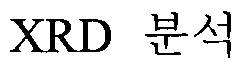 결과(도 4하단의 그래프)와비교하여, 일 구현예의 양극 첨가제의 :況^ 분석 결과(도 4 상단의 그래프)는 1^6 )1 -ᄌ 어에서 유래하는 피크가,예를들어, 23.5° ± 0.2° 또는 36.3° ± 0.2° 의 20에서 확인될수 있다. 이러한 피크는 ᅬ 여에서 유래하는 특징적 피크, 예를 들어, 25.67° ± 0.2° 의 20에서 나타나는피크의 강도를기준으로 10%이하,혹은 0 초과 10%이하, 0.1내지 7%,혹은 0.2내지 5%의 강도를나타낼수있다.
또한, 상기 일 구현예의 양극 첨가제에 포함된 니 어의 함량, 예를들어,상기 화학식 1에 포함된 - 必2및 06(¾ - >½04의 몰비,보다 구체적으로 상기 : 2의 몰 비 역시 이러한 상대적 피크 강도를 분석하여
2019/107835 1»(:1^1{2018/014456
산출할수있다
한편, 상술한 일 구현예의 양극 첨가제에 포함된 화학식 1의 화합물은 상기 : 가 2 : 1내지 30 : 1,혹은 2.5 : 1내지 20 : 1,혹은 3 : 1내지 10 : 1로 되는 몰 비로서,상기 느 ᄂ故어 및 此어- 룰 포함할 수 있다.참고로, 5 이들 2 가지 성분의 구체적인 함량은 미량 잔류하는 00의 함량을 제외한 나머지 함량과,위 의 몰 비로부터 도출될 수 있다.
이러한 각 성분의 함량 범위를 충족함에 따라, 일 구현예의 양극 첨가제가 용이하고 효과적으로 제조 가능하면서도 보다 높은 비가역 용량을 가질 수 있으며,리륨산화물부산물에 의한산소 기체 발생 또는 전극슬러리 10 조성물의 겔화를더욱줄일 수 있다.
한편, 상기 화학식 1의 양극 첨가제에서, 상기 M의 원소는 각 성분의 니켈 또는 코발트의 일부를 치환하여 포함됨으로써 열 안정성 및 구조 안정성을 향상시키는 역할을 하는 것으로,구체적으로는 XV,끄또는 &과 같은 전이금속 원소;또는 ?, ¥,및 8로 이루어진 군에서 선택되는 것일 수 있으며, 15 이중에서도 리륨과의 반응성이 우수하고, 보다 안정한화합물 형성이 가능한 ? 또는모일 수 있다.
이러한 의 원소는 는 0이상, 1 미만,혹은 0내지 0.6,혹은 0.001 내지 0.5,혹은 0.01 내지 0.4,혹은 0.02내지 0.1이 되는 비율로 상기 화학식 1에서 니켈 또는 코발트의 일부를 선택적으로 치환하여 포함될 수 있다. 20 이러한 치환 비율에 따라,화학식 1의 안정성이 향상될 수 있으면서도, 화학식 1의 양극 첨가제가우수한비가역 용량등을나타낼 수 있다.
상술한 양극 첨가제는 별도의 양극 활물질과 혼합되어,비가역 양극 첨가제로사용될 수 있으며,추가로 초기 충방전 과정에서 과량의 리튬 이온을 공급하여 비가역 첨가제로서 작용한 후에는 그 자체로 양극 활물질로 작용할 25 수도 있다.이러한 일 구현예의 양극 첨가제는 기존의 1山해0 등에 비해 높은 (비가역) 용량, 예를 들어, 3 90^ 4 1 보다 크고 70요1 보다 작은 (비가역) 용량을 가질 수 있으며,리튬 산화물의 부산물 잔류량이 크게 감소되어 산소 기체 발생에 의한 전지 성능 저하 또는 전극 슬러리 조성물의 겔화 등을 억제하는특성을나타낼 수 있다.
30 한편 발명의 다른구현예에 따르면,상술한 양극 첨가제의 제조 방법이
2019/107835 1»(:1^1{2018/014456
제공된다.이러한제조방법은니켈전구체, 함유전구체 및 1山0를포함하는 리튬 전구체를 포함한 혼합물을 소성하여, 0새- )(0 및 니◦를 포함하는 복합체를 형성하는 제 1 소성 단계; 및 상기 복합체에 포함된 리튬 전구체를 코발트((¾) 전구체와추가반응시켜 화학식 1의 화합물을 형성하는 제 2소성 5 단계를포함할수있다.
즉, 다른 구현예의 제조 방법에 따르면, 니켈 전구체, 및 니0를 포함하는 리륨 전구체와, 선택적으로 M 함유 전구체를 1차 소성하여 반응시킴에 따라 0 ^ ^0(¾ :, 미반응 잔류 부산물로 0 0 포함)을 형성한 푸 이에 포함된 리튬 산화물(1 0) 등의 리륨 전구체를 코발트((¾) 전구체 10 예를 들어, 코발트 산화물 또는 수산화물( )0 또는 0)(011))과 추가로 반응(2차소성)시킬수 있다 그결과,상기 미반응리륨산화물을포함한리튬 전구체가 소모되면서, 상기 코발트 전구체와의 반응에 의해 ^ 0 ^0 7> 형성되어 결과적으로 일 구현예에 의한화학식 1의 양극 첨가제가 얻어질 수 있다
15 또, 이러한제조과정에서, 제 1 소성 단계에서 남은 M함유 전구체가 선택적으로제 2소성 단계에서의 반응에 참여하거나,필요에 따라추가적으로 M 함유 전구체가 제 2 소성 단계에서 부가됨에 따라 상기 0^10에 있어서도 M이 코발트의 일부를선택적으로치환한형태를가질수있다.
한편 상술한다른구현예의 제조방법에서,상기 제 1소성 단계는 500 20 내지 800 0,혹은 600내지 800”의 온도에서 불활성 분위기 하에 진행될 수

효과적으로 형성할 수 있으면서도, 기형성된 Li Ni -xM 0의 분해 등을 유발하지 않고, 단일한 복합체상 등의 형태로 일 구현예의 양극 첨가제를 형성할수있다 만일 2차소성 단계의 온도가지나치게높아지는경우, 0 ^, 父 ᄅ어의 분해 등이 초래되거나,]山(:이- M 0가제대로 형성되지 않아, 단일한 30 복합체상을갖는일구현예의 양극첨가제가제대로형성되지 않을수있다.
2019/107835 1»(:1^1{2018/014456
상기 제 1 및 제 2소성 단계는, 부반응 생성 억제를 위해 질소, 헬륨, 또는 아르곤 등과 같은 불활성 기체 분위기 하에서 수행될 수 있다 이중에서도 반응 효율 증가 및 부반응 생성 억제 효과의 우수함을 고려할 때 질소 기체 분위기하에서 수행될 수 있다.
5 한편,상기 제조 방법에 있어서 상기 니켈 전구체로는, 산화니켈(섀0) 또는수산화니켈( (0¾)과같이 니켈포함산화물또는수산화물을사용할수 있다.
또 상기 리륨 전구체로는, 상술한 리륨 산화물( 0) 외에,다른 리툼 전구체를 사용할 수 있다.다만, LiNi-M0의 불안정한 특성상, 사용 가능한 10 리튬 전구체는 상기 리콤 산화물(1 0)에 준하는 높은 반응성을 갖는 것으로 제한됨이 바람직하다

수산화물, 옥시수산화물, 황산염, 질산염, 아세트산염, 탄산염, 옥살산염, 시트르산염,할라이드 인산염 및 이들의 수화물로 이루어진 군에서 선택되는 15 1종 이상을사용할수 있다.
또한,상기 코발트전구체로는,산화코발트((그 0)또는수산화코발트((: (011))와같이 코발트포함산화물또는수산화물을사용할수있다
상술한 리튬 전구체, 니켈 전구체 IV!함유 전구체 및 코발트 전구체는 최종 제조되는 화학식 1의 각 원소 조성비를 충족하도록 하는 함량으로 20 당업자가적절히 선택하여사용될수있다
한편, 상술한각 원료물질들의 혼합시 소결제가선택적으로 더 첨가될 수 있다. 상기 소결제는 구체적으로 NH F, >^ X0 , 또는 어11)30과 같은 암모늄이온을함유한화합물; ¾0 또는미0과같은금속산화물;또는볘(그

25 둘이상의 혼합물이 사용될수 있다.상기 소결제는니켈전구체 1몰에 대하여 0.01몰 내지 0.2몰의 함량으로사용될 수 있다 상기한함량범위 내로사용시 소결 특성 향상 효과가 우수하여 양극재의 성능 개선 및 충방전 진행시 전지의 초기 용량저하를방지할수있다.
또 상기한 원료물질들의 혼합시 수분제거제가 선택적으로 더 첨가될 30 수도 있다. 구체적으로 상기 수분제거제로는 구연산, 주석산, 글리콜산 또는
2019/107835 1»(:1^1{2018/014456
말레인산 등을 들 수 있으며, 이들 중 어느 하나 또는 둘 이상의 혼합물이 사용될 수 있다. 상기 수분제거제는 니켈 전구체 1몰에 대하여 0.()1몰 내지 0.2몰의 함량으로사용될수있다.
한편, 발명의 또 다른 구현예에 따르면, 상술한 양극 첨가제; 및 양극 활물질;을포함하는양극합제가제공된다.
상기 구현예의 양극합제는,상술한일 구현예의 양극첨가제를적용한 것이므로, 이를 적용하지 않는 경우에 비하여 음극의 초기 비가역 용량을 감소시키고,이에 따라양극의 초기 효율을증가시킬수있다.
상기 구현예의 양극합제에서,상기 양극 첨가제 :상기 양극활물질의 중량비는, 1 : 99내지 35 : 65,혹은 3내지 97내지 30 : 70,혹은 5 : 95내지 10 : 90으로될수 있으며,이 범위에서 배합된각물질에 의한상승효과가나타날 수있다.
구체적으로, 상기 양극 첨가제 및 상기 양극 활물질아 상기 범위로 배합될 때, 전지의 초기 충방전에서(예를 들어,
 사이클에서) 상기 양극 첨가제로써 음극의 초기 비가역 용량을충분히 감소시킨 뒤,이후충방전(예를 들어, 2 사이클후)상기 양극활물질에 의해 리륨 이온의 가역적인 삽입 및 탈리가안정적으로이루어질수있다.
이 외, 상기 일 구현예의 양극 합제는, 일반적으로 당 업계에 알려진 사항에 따라 구현할 수 있다. 이하, 일반적으로 당 업계에 알려진 사항을 간단히 제시하지만, 이는 예시일 뿐이며, 이에 의해 상기 일 구현예의 양극 합제가제한되지 않는다.
상기 양극활물질의 경우,리륨이온의 가역적인삽입 및 탈리가가능한 물질이라면, 특별히 제한되지 않는다. 예를 들어, 코발트, 망간, 니켈 또는 이들의 조합의 금속;및 리튬;의 복합산화물중 1종이상을포함하는것일 수 있다.
보다 구체적인 예를 들어, 상기 양극 활물질로, 하기 화학식 중 어느 하나로표현되는화합물을사용할수 있다.
 내 ¾¾(상기 식에서, 0.90 < &
£ 1.8및 0 < 1) < 0.5이다); 此 必 此(상기 식에서, 0.90 < < 1.8, 0 < < 0.5,및 0 < 。 < 0.05이다);니¾ - !此,04 - (상기 식에서, 0 < < 0.5, 0 < 0 < 0.05이다);니 -必야氏: (상기 식에서, 0.90 < 3 < 1.8, 0 < < 0.5, 0
2019/107835 1»(:1^1{2018/014456

< 0.9, 0 £ 0 < 0.5, 0 < (1 <0.5및 0.001 < 6 < 0.1이다.); 1山볘(¾02(상기 식에서, 0.90 < & £ 1.8및 0.001 < I) < 0.1이다.); 1山0)(¾02(상기 식에서, 0.90
< £ 1.8 및 0.001 < 1? < 0.1이다.);니 상기 식에서, 0.90 < 크 < 1.8 및 0.001 < 1? < 0.1이다.);니 ¾(¾04(상기 식에서, 0.90 < < 1.8 및 0.001 < 15 < 0.1이다.); 002;( 2; 1 ¾ ¥205; UY205; 0102; 1고 /04; 0(3- 2 04)3(0 < < 2); 0(3 ¾ 04)3(0 < < 2);및 1 61》04.
상기 화학식에 있어서,쇼는 Ni, 00, Mn또는이들의 조합이고; II은신, >«,

조합이고;(3는 ,(¾ Mg,
 조합이고;(는뀨, 1 0, Mn또는이들의 조합이고; I는(¾ V, , V또는이들의 조합이고; 는 V,(¾ Mn,(¾해, 1또는이들의 조합이다.
물론 이 화합물 표면에 코팅증을 갖는 것도사용할수 있고, 또는 상기 화합물과 코팅층을 갖는 화합물을 혼합하여 사용할 수도 있다. 상기 코팅층은 코팅 원소 화합물로서, 코팅 원소의 옥사이드,하이드록사이드,코팅 원소의 옥시하이드록사이드, 코팅 원소의 옥시카보네이트 또는 코팅 원소의 하이드록시카보네이트를 포함할 수 있다. 이들 코팅층을 이루는 화합물은 비정질 또는 결정질일 수 있다. 상기 코팅층에 포함되는코팅 원소로는 Mg,Al,

코팅층 형성 공정은 상기 화합물에 이러한 원소들을 사용하여 양극 활물질의 물성에 악영향을 주지 않는 방법(예를 들어 스프레이 코팅 짐지법 등으로
2019/107835 1»(:1^1{2018/014456
코팅할 수 있으면 어떠한 코팅 방법을 사용하여도 무방하며, 이에 대하여는 당해 분야에 종사하는 사람들에게 잘 이해될 수 있는 내용이므로 자세한 설명은 생략하기로 한다.
상술한 구현예의 양극 합제는, 도전재 바인더, 또는 이들의 혼합물;을 5 더 포함할 수 있다. 상기 도전재는 전극에 도전성을 부여하기 위해 사용되는 것으로서,구성되는 전지에 있어서 화학변화를 야기하지 않고 전자 전도성 재료이면 어떠한 것도사용가능하며,그 예로 천연 흑연, 인조흑연, 카본블랙, 아세틸렌 블랙,케첸블랙 탄소섬유, 구리, 니켈, 알루미늄,은 등의 금속 분말, 금속 섬유 등을 사용할 수 있고 또한 폴리페닐렌 유도체 등의 도전성 재료를 10 1종또는 1종 이상을혼합하여 사용할수 있다
상기 도전재는 통상적으로 양극 활물질 및 양극 첨가제를 포함한 합제 전체 중량을 기준으로 1 내지 50중량%, 혹은 3내지 30중량%,혹은 7내지 20 중량%로 첨가될 수 있다. 이로서, 양극에 우수한 전기적 특성을 부여하면서도 양극의 바람직한형성이 담보될 수 있다.
15 상기 바인더는 양극 활물질 입자들을 서로 잘 부착시키고, 또한 양극 활물질을 전류 집전체에 잘 부착시키는 역할을 하며, 그 대표적인 예로는 폴리비닐알콜, 카르복시메틸셀룰로즈, 히드록시프로필셀룰로즈, 디아세틸셀룰로즈, 폴리비닐클로라이드 카르복실화된 폴리비닐클로라이드, 폴리비닐플루오라이드,에틸렌 옥사이드를 포함하는 폴리머, 폴리비닐피롤리돈, 20 폴리우레탄, 폴리테트라플루오로에틸렌, 폴리비닐리덴 플루오라이드 폴리에틸렌, 폴리프로필렌 스티렌-부타디엔 러버 아크릴레이티드 스티렌- 부타디엔 러버 에폭시 수지, 나일론 등을 사용할 수 있으나 이에 한정되는 것은아니다
상기 바인더는 통상적으로 양극 활물질 및 양극 첨가제를 포함한 합제 25 전체 중량을 기준으로 1 내지 50중량%,혹은 2내지 20중량%, 혹은 3내지 10중량%로 첨가될 수 있다.이로서 양극의 전기적 특성 및/또는 용량 특성 등을저해하지 않으면서,우수한내구성을 갖는 양극의 형성을가능케 한다
그리고 상술한 양극 합제는 필요에 따라 충진제를 더 포함할 수 있다. 상기 충진제는 양극의 팽창을 억제하는 성분으로서 선택적으로사용되며, 당해 30 전지에 화학적 변화를 유발하지 않으면서 섬유상 재료라면 특별히 제한되는
2019/107835 1»(:1^1{2018/014456
것은 아니며, 예를 들어, 폴리에틸렌, 폴리프로필렌 등의 올리핀계 중합체; 유리섬유,탄소섬유등의 섬유상물질이사용된다.
한편, 발명의 또 다른 구현예에 따르면, 상술한 양극 합제를 포함하는 양극;전해질;및 음극;을포함하는리튬이차전지가제공된다.
이는, 전술한 양극 첨가제를 양극 활물질과 함께 양극에 적용한 리륨 이차 전지이므로, 음극의 초기 비가역 용량이 감소하고, 양극의 초기 효율이 증가하며, 구동 중 산소 기체 등에 의한 성능 저하가 나타나지 않고, 에너지 밀도저하가억제되어 수명 특성이 우수하게나타날수있다.
이러한구현예의 리륨이차전지에 있어서,전술한양극첨가제 및 양극 합제 이외에 대해서는, 일반적으로 당 업계에 알려진 사항에 따라 구현할 수 있다. 이하, 일반적으로 당 업계에 알려진 사항을 간단히 제시하지만, 이는 예시일뿐이며,이에 의해상기 일구현예의 양극합제가제한되지 않는다. 상기 양극은, 양극집전체; 및 상기 양극집전체 상에 위치하고, 전술한 양극합제를포함하는양극합제층;을포함할수있다.
구체적으로, 상기 양극은 양극 집전체 상에 양극 활물질, 양극 첨가제, 도전재 및/또는바인더의 혼합물인 양극합제를도포한후건조하여 제조될수 있고, 필요에 따라서는, 상기 혼합물에 충진제를 더 첨가할 수 있다. 이러한 양극합제에 대해서는 이미 상술한바 있으므로,추가적인 설명은 생략하기로 한다.
또, 상기 양극 집전체는 일반적으로 3 내지 500 _의 두께로 만들 수 있다. 이러한 양극 집전체는, 당해 전지에 화학적 변화를 유발하지 않으면서 높은 도전성을 가지는 것이라면 특별히 제한되는 것은 아니며, 예를 들어, 스테인레스 스틸, 알루미늄, 니켈, 티탄, 소성 탄소, 또는 알루미늄이나 스테리인레스스틸의 표면에 카본,니켈,티탄,은등으로표면처리한 것 등이 사용될 수 있다. 집전체는 그것의 표면에 미세한 요철을 형성하여 양극 활물질의 접착력을높일수도있으며,필름,시트,호일,네트,다공질체,발포체, 부직포체등다양한형태가가능하다.
한편,상기 구현예의 리튬 이차전지에 있어서,상기 음극은 집전체 및 상기 집전체 위에 형성된 음극 활물질층을 포함하며, 상기 음극 활물잘층은 음극활물질을포함할수있다.
2019/107835 1»(:1^1{2018/014456
상기 음극 활물질로는,탄소계 음극 활물질,리튬 금속 리륨 금속의 합금,와,와(¾(0 < < 2),와 복합체 와 합금(상기 는 알칼리 금속, 알칼리 토금속, 13족 내지 16족 원소,전이금속,희토류 원소 또는 이들의 조합이며 와은 아님) 8, ¾0, 8-0 복합체, 및 -11(상기 II은 알칼리 금속 알칼리 5 토금속, 13족 내지 16족 원소, 전이금속,희토류 원소 또는 이들의 조합이며, ¾은 아님)을 포함하는 군에서 선택되는 적어도 1종 이상의 음극 활물질을 사용할수 있다.
상기 음극 집전체는 일반작으로 3 내지 500 의 두께로 만들어질 수 있다.이러한 음극 집전체는,당해 전지에 화학적 변화를 유발하지 않으면서 10 도전성을 가진 것이라면 특별히 제한되는 것은 아니며, 예를 들어, 구리, 스테인레스 스틸 알루미늄 니켈,티탄 소성 탄소, 구리나 스테인레스 스틸의 표면에 카본, 니켈,티탄,은등으로 표면처리한 것 알루미늄-카드뮴 합금 등이 사용될 수 있다 또한, 양극 집전체와 마찬가지로, 표면에 미세한 요철을 형성하여 음극 활물질의 결합력을 강화시킬 수도 있으며 필름, 시트 호일, 15 네트,다공질체,발포체,부직포체 등다양한형태로사용될 수 있다.
상기 일 구현예의 리튬 이차 전지는 전해질의 종류 및/또는 세퍼레이터의 종류에 따라,리튬 이온 전지,리튬 이온 폴리머 전지,또는 리륨 폴리머 전지일 수 있다.
상기 일 구현예의 리튬 이차 전지가 액체 전해질을 적용한 리륨 이온 20 전지일 때,상기 액체 전해질을 분리막에 함침시켜 적용할 수 있다.상기 분리막은 양극과 음극 사이에 개재되며,높은 이온 투과도와 기계적 강도를 가지는 절연성의 얇은 박막이 사용된다.분리막의 기공 직경은 일반적으로 0.01 내지 10 이고, 두께는 일반적으로 5내지 300 _이다 이러한 분리막으로는, 예를 들어, 내화학성 및 소수성의 폴리프로필렌 등의 올레핀계 폴리머; 25 유리섬유 또는 폴리에틸렌 등으로 만들어진 시트나 부직포 등이 사용된다. 전해질로서 폴리머 등의 고체 전해질이 사용되는 경우에는 고체 전해질이 분리막을 겸할수도 있다.
상기 액체 전해질은 리륨염 함유 비수 전해질일 수 있다.상기 리튬염 함유 비수전해질은 비수 전해질과 리륨으로 이루어져 있고 비수 전해질로는 30 비수계 유기용매 유기 고체 전해질 무기 고체 전해질 등이 사용되지만
2019/107835 1»(:1^1{2018/014456
이들만으로 한정되는 것은아니다.
상기 비수계 유기용매로는,예를 들어, N-메틸-2-피롤리디논, 프로필렌 카르보네이트, 에틸렌 카르보네이트, 부틸렌 카르보네이트, 디메틸 카르보네이트, 디에틸 카르보네이트, 감마-부틸로 락톤, 1,2-디메톡시 에탄, 테트라히드록시 프랑(franc), 2-메틸 테트라하이드로푸란,디메틸술폭시드, 1,3- 디옥소런, 포름아미H, 디메틸포름아미드, 디옥소런,아세토니트릴, 니트로메탄, 포름산 메틸,초산메틸,인산 트리에스테르,트리메톡시 메탄,디옥소런 유도체, 설포란, 메틸 설포란, 1,3-디메틸-2-이미다졸리디논, 프로필렌 카르보네이트 유도체,테트라하이드로푸란유도체,에테르, 피로피온산 메틸,프로피온산 에틸 등의 비양자성 유기용매가사용될 수 있다
상기 유기 고체 전해질로는,예를 들어,폴리에틸렌 유도체,폴리에틸렌 옥사이드 유도체,폴리프로필렌 옥사이드 유도체, 인산 에스테르 폴리머,폴리 에지테이션 리신(agitation lysine),폴리에스테르술파이드,폴리비닐 알코올,폴리 불화비닐리덴,이온성 해리기를포함하는중합제 등이 사용될수 있다.
상기 무기 고체 전해질로는,예를들어, Li3N, Lil, Li5NI2, LijN-Lil-LiOH,
LiSi04, LiSi04-LiI-LiOH, Li2SiS3, Li4Si04, Li4Si04-LiI-Li0H, Li3P04-Li2S-SiS2등의 Li의 질화물,할로겐화물,황산염 등이사용될수있다.
상기 리륨염은 상기 비수계 전해질에 용해되기 좋은 물질로서, 예를 들어, LiCl, LiBr, Lil, L1CIO4, L1BF4, LiB10Cl10, LiPF6, L1CF3SO3, L1CF3CO2, LiAsF6, LiSbF6, L1AICI4, CH3SO3U, (CF3S02)2NLi, 클로로 보란 리륨, 저급 지방족 카르본산리륨, 4페닐붕산리튬,이미드등이사용될수있다.
또한, 상기 리튬염 함유 비수 전해질에는 충방전 특성, 난연성 등의 개선을 목적으로, 예를 들어, 피리딘, 트리에틸포스파이트, 트리에탄올아민, 환상 에테르, 에틸렌 디아민, n-글라임 (glyme), 핵사 인산 트리 아미드, 니트로벤젠 유도체, 유황, 퀴논 이민 염료, N-치환 옥사졸리디논, N,N-치환 이미다졸리딘,에틸렌 글리콜디알킬 에테르, 암모늄염,피롤, 2 -메톡시 에탄올, 삼염화 알루미늄등이 첨가될 수도 있다. 경우에 따라서는,불연성을부여하기 위하여,사염화탄소,삼불화에틸렌등의 할로겐 함유용매를더 포함시킬 수도 있고, 고온 보존 특성을 향상시키기 위하여 이산화탄산 가스를 더 포함시킬 수도 있으며, FEC(Fluoro-Ethylene Carbonate), PRS(Propene sultone) 등을 더
2019/107835 1»(:1^1{2018/014456
포함시킬수있다.
하나의 구체적인 예에서, 1^民, 0(:104, 1^¾ 8020¾2등의 리튬염을, 고유전성 용매인 £0또는 !>(:의 환형 카보네이트와

또는 표1(:의 선형 카보네이트의 혼합 용매에 첨가하여 리튬염 함유 비수계 전해질을제조할수있다.
상술한또다른구현예의 리륨이차전지는,이를단위 전지로포함하는 전지모듈, 상기 전지모듈을 포함하는 전지팩, 및 상기 전지팩을 전원으로 포함하는디바이스로구현될수있다.
이 때, 상기 디바이스의 구체적인 예로는, 전기자동차, 하이브리드 전기자동차, 플러그-인 하이브리드 전기자동차, 또는 전력저장용 시스템일 수 있으나,이에 한정되는것은아니다.
【발명의 효과】
본발명에 따르면,리튬산화물등의 부산물잔류량이 작으면서도,보다 높은비가역 용량을갖는리륨이차전지의 양극첨가제가제공될수있다. 이러한 양극 첨가제가 포함된 리륨 이차 전지는 높은 에너지 밀도를 갖는 음극 재료사용이 수반된 고용량 특성을 나타내면서도, 음극 재료의 비가역 용량 손실을 극복할 수 있으며, 상기 부산물에 따른 전지의 성능 저하가억제되어 우수한수명 특성 및 용량특성을나타낼수있다.
【도면의 간단한설명】
도 1은 기존의 비가역 양극 첨가제에서, 미반응 리튬 산화물로부터 산소기체가발생하는메커니즘을개략적으로나타낸도면이다.
도 2는 비교예 1에서 얻은 양극 첨가제를 사용하여 전지를 얻은 후, 이를소정 전압으로충전하고나서 양극을분리하여
 분석을 행한결과를 나타내는도면이다.
도 3은실시예 2 에서 얻은 양극 첨가제를 사용하여 전지를 얻은후, 이를소정 전압으로충전하고나서 양극을분리하여 110분석을 행한결과를 나타내는도면이다.
도 4는비교예 1 및 실시예 2에서 각각얻은양극첨가제에 대해;幻10 분석한결과를비교하여 나타낸도면이다.
도 5는 실시예 2 및 비교예 1에서 각각 얻은 양극 첨가제에 대해
2019/107835 1»(:1^1{2018/014456
충방전프로파일을나타낸그래프이다.
도 6은 실시예 2및 비교예 1에서 얻은 양극 첨가제를 양극 활물질과 함께 사용하여 제조한전지에 대해 실험예 2에서 충전 후 저장중의 산소 기체 발생량을비교평가한결과를나타낸 그래프이다
5 【발명의 실시를위한형태】
이하 발명의 구체적인 실시예를 통해 발명의 작용, 효과를 보다 구체적으로 설명하기로 한다.다만 이는 발명의 예시로서 제시된 것으로 이에 의해 발명의 권리범위가어떠한의미로든 한정되는 것은 아니다. io 실시예 1
리륨원료물질로서 Li20 60 g,니켈원료물질로서 NiO 150 g,그리고원소 M의 원료물질로서 암모늄 포스페이트 (Ammonium phosphate) 6g을 혼합한 후, 질소분위기하에 685 °C에서 18시간동안열처리 및소성하였다.
이후,상기 생성물에 CoO 5.13g을추가적으로가하여, 질소분위기하에 15 550°C에서 18시간동은열처리 및 소성하였다.결과의 반응물을냉각하여 양극 첨가제 입자를수득하였다. 실시예 2
리튬원료물잘로서 Li2O 60 g,니켈원료물질로서 NiO 150 g,그리고원소 20 M의 원료물질로서 암모늄 포스페이트 (Ammonium phosphate) 6g을 혼합한 후, 질소분위기하에 685 °C에서 18시간동안열처리 및소성하였다.
이후,상기 생성물에 CoO 15.4g을추가적으로가하여,질소분위기하에 550°C에서 18시간동은열처리 및 소성하였다.결과의 반응물을냉각하여 양극 첨가제 입자를수득하였다. 실시예 3
리륨원료물질로서 Li2O 60 g,니켈원료물질로서 NiO 150 g,그리고원소 M의 원료물질로서 암모늄 포스페이트 (Ammonium phosphate) 6g을 혼합한 투, 질소분위기하에 685 °C에서 18시간동안열처리 및소성하였다.
30 이후, 상기 생성물에 CoO 45g을 추가적으로 가하여, 질소 분위기하에
2019/107835 1»(:1^1{2018/014456
550ᄃ에서 18시간동은열처리 및 소성하였다.결과의 반응물을냉각하여 양극 첨가제 입자를수득하였다. 실시예 4
5 리륨원료물질로서 Li20 60 g,니켈원료물질로서 NiO 150 g,그리고원소
M의 원료물질로서 붕산 (Boric Acid) 0.5g을 혼합한 후, 질소 분위기하에 685 C에서 18시간동안열처리 및소성하였다.
이후,상기 생성물에 CoO 15.4g을추가적으로가하여, 질소분위기하에 550°C에서 18시간동은열처리 및·소성하였다.결과의 반응물을냉각하여 양극 10 첨가제 입자를수득하였다. 비교예 1
리튬원료물질로서 Li 0 60 g,니켈원료물질로서 NiO 150 g,그리고원소 M의 원료물질로서 암모늄 포스페이트 (Ammonium phosphate) 6g을 혼합한 후, 15 질소 분위기하에 685 C에서 18시간 동안 열처리 및 소성하였다. 결과의 반응물을냉각하여 양극첨가제 입자를수득하였다. 실험예 1:양극첨가제분석
상기 실시예 2및비교예 1에서 각각제조한양극첨가제 입자를 Cu Ka 20 X선 (X-ra)에 의한 XRD(X-Ray Diffraction)분석하였고,그분석 결과를비교하여 도 4에 나타내었다.이러한 XRD분석을위해, Bruker사의 제품명: D4 Endeavor의 XRD분석 장비를사용하였다.
도 4의 상단 그래프를 참고하면, 실시예 2에서는 23.5° 土 0.2 또는
36.3° +0.2° 의 20에서 추가적인 피크를 나타냄이 확인되었고, 이러한 25 추가적인 피크는 25.67° ±0.2° 의 20 에서 나타나는 피크의 강도를 기준으로 5%인 것으로확인되었다.이를통해,실시예 2의 양극첨가제에 Li6Co1 cMx0가 포함되고,전체 양극첨가제가단일한복합체상을나타냄을확인하였다.
한편, 상기 실시예 2 및 비교예 1에서 제조한 양극 첨가제 입자를 이용하여 양극을 제조한 후, 다양한 전압에서 전극을 X선 회절
30 분석 (XRD)하였다.그결과를도 2및 3에 각각도시하였다.
2019/107835 1»(:1^1{2018/014456
상세하게는, 상기 실시예 2 또는 비교예 1에서 제조한 양극 첨가제, 카본블랙도전재
 바인더를 X-메틸피롤리돈용매중에서 중량비로 85 :
10 : 5의 비율로 혼합하여 양극 형성용 조성물을 제조하고, 이를 알루미늄 집전체에 도포한 후, 건조 압연하여 제조하였다. 음극으로는
 사용하였으며, EC/DMC/DEC의 혼합 부피비 =1/2/1인 용매에 1.0 의
 포함된전해액을사용하여 코인셀형태의 전지를제조하였다.
제조한 전지를 25公에서 도 2 및 3에 각각 도시된 소정 전압까지 0.1(:로충전한후,양극을분리하여
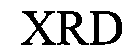 분석을수행하였다.
도 2 및 3을 참고하면, 비교예 1에서는 미반응 리튬 산화물(니20)의 피크가명확히 확인되어 상대적으로많은양의 부산물이 포함되지만(도 2참조; 1.5 중량% 초과), 실시예 2에서는 미반응 리튬 산화물(1山0)의 피크가 실질적으로없어 부산물의 함량이 최소화되고,그함량이 1.5중량%이하,보다 구체적으로 0.6중량%이하로됨이 확인되었다(도 3참조).
또, 상기 :況산) 결과로부터 실시예 및 비교예의 양극 첨가제 조성을 정량분석하여 그결과를하기 표 1에 나타내었다.
[표 1]


85 : 10 : 5의 비율로혼합하여 양극형성용조성물을제조하고,이를알루미늄 집전체에 도포한후, 건조 압연하여 양극을 제조하였다.음극으로는 -111라 을
2019/107835 1»(:1^1{2018/014456
사용하였으며 묘분리막을사용하여 코인하프셀형태의 전지를제조하였다
이러한 전지에 대해, 4.25 까지 충전 후 2.5¥까지 방전하여 충방전 프로파일을얻었다.이를도 5에 도시하였다.
도 5를 참고하면, 실시예 2의 양극 첨가제는 40011^上 을 상회하여, 5 비교예 1(약 3751 푀에 비해높은비가역 용량을나타냄이 확인되었다. 실험예 2:산소기체발생량평가
한편,상기 실시예 2 및 비교예 1에서 각각 제조한 양극 첨가제

10 메틸피롤리돈 용매 중에서 중량비로 5 : 80 : 10 : 5의 비율로 혼합하여 양극 형성용 조성물을 제조하고 이를 알루미늄 집전체에 도포한 후, 건조 압연하여

코인하프셀 형태의 전지를제조하였다
이러한 전지에 대해 4.25¥까지 충전 후 60(:에서 6주간 저장 실험을 15 수행하였다.이러한 저장 실험 과정에서,실시예 2 및 비교예 1의 첨가제 사용시의 산소 기체 발생량을 아르키메데스의 원리를 사용한 부피 측정법을 이용하여 평가하고,그결과를도 6에 도시하여 나타내었다.
하기 도 6을 참고하면,비교예 1의 양극 첨가제를 사용한 경우에 비해 실시예 2의 양극 첨가제를 사용한 경우, 충전 후 저장 과정에서 산소 기체의 20 발생량이 감소함을 확인하였다(실시예 2: 6주 저장후 약 4.2 ;비교예 1: 6주 저장후 약 6.0« ) 이는실시예 2의 양극 첨가제 내에 리륨산화물(1山0)등의 부산물이 감소된 함량으로 포함됨에 따라, 이에서 유래한 산소 기체의 발생량이 감소되기 때문으로 예측된다.
Claims
[화학식 1]
yiL^Nii.xMxOii-ziLieCoi.xMxO^
상기 화학식 1에서,
M은 P, B, F, W, Ti및 Zr로이루어진군에서 선택된 1종이상의 원소이며, 0<x<1.0이고,
y, z는 각각 상기 화학식 1의 화합물에 포함된 Li2Ni, xMx02 및 Li6C0l. M 04의 몰비로서, y : z는 2 : 1내지 30 : 1이다.
【청구항 2]
제 1 항에 있어서, 상기 화학식 1의 화합물에 포함된 Li2Nii xMx02 및 Li6C0l-xMx04는 물리적으로 혼합 및 연결되어 단일한 입자상또는 복합체상을 이루고있는리륨이차전지의 양극첨가제.
【청구항 3]
제 2 항에 있어서, 상기 단일한 입자상 또는 복합체상의 화학식 1의 화합물은 Cu Ka X선 (X-ra)에 의한 XRD(X-Ray Diffraction)분석시, 23.5 ±0.2° 또는 36.3 ±0.2° 의 20에서 추가적인피크를나타내며,
상기 추가적인 피크의 강도는 25.67° ±0.2° 의 29 에서 나타나는 피크의 강도를기준으로 10%이하인리튬이차전지의 양극첨가제.
【청구항 4]
제 1 항에 있어서, 상기 화학식 1의 화합물은 1.5 중량% 이하의 잔류 Li2◦를더 포함하는리튬이차전지의 양극첨가제.
【청구항 5]
니켈전구체, M함유전구체 및 Li20를포함하는리튬전구체를포함한
2019/107835 1»(:1^1{2018/014456
혼합물을 소성하여, ^,^0 및 니0를 포함하는 복합체를 형성하는 제 1 소성 단계;및
상기 복합체에 포함된 리륨 전구체를 코발트(0) 전구체와 추가 반응시켜 화학식 1의 화합물을 형성하는 제 2소성 단계를포함하는 제 1항의 5 리륨 이차전지의 양극 첨가제의 제조방법
【청구항 6]
제 5 항에 있어서, 상기 제 1 소성 단계는 500 내지 800 10의 불활성 분위기에서 진행되며,
10 상기 제 2소성 단계는 400내지 800 X:의 불활성 분위기에서 진행되는 양극첨가제의 제조방법.
【청구항 7]
제 5 항에 있어서, 상기 니켈 전구체는 니켈 산화물 또는 니켈
15 수산화물을포함하고

옥시수산화물, 황산염 질산염 아세트산염, 탄산염, 옥살산염, 시트르산염 할라이드 인산염 및 이들의 수화물로 이루어진 군에서 선택되는 1종 이상을 포함하는 양극 첨가제의 제조방법.
20
【청구항 8]
제 1항내지 제 4항중어느한항의 양극첨가제;및 양극활물질;을 포함하는양극합제.
25 【청구항 9]
제 8항에 있어서,상기 양극첨가제 :상기 양극활물질의 중량비는 1 : 99내지 35 : 65인양극합제.
【청구항 10】
30 제 8항에 있어서, 상기 양극 활물질은, 코발트, 망간, 니켈 또는 이들의
2019/107835 1»(:1^1{2018/014456
조합의 금속;및 리륨의 복합산화물로 이루어진 군에서 선택되는 1종 이상을 포함하는 양극합제.
【청구항 11】
5 제 8항의 양극합제를포함하는양극 전해질 및 음극을포함하는리튬 이차전지.
10
Priority Applications (5)
| Application Number | Priority Date | Filing Date | Title |
|---|---|---|---|
| PL18883514T PL3651247T3 (pl) | 2017-11-29 | 2018-11-22 | Dodatek do katody, sposób jego wytwarzania i zawierające go katoda i akumulator litowy |
| US16/638,188 US11621423B2 (en) | 2017-11-29 | 2018-11-22 | Additive for cathode, method for preparing the same, cathode including the same, and lithium secondary battery including the same |
| JP2019564414A JP7045578B2 (ja) | 2017-11-29 | 2018-11-22 | 正極添加剤、その製造方法、これを含む正極およびリチウム二次電池 |
| EP18883514.4A EP3651247B1 (en) | 2017-11-29 | 2018-11-22 | Cathode additive, method for manufacturing same, and cathode and lithium secondary battery comprising same |
| CN201880052824.XA CN111033834B (zh) | 2017-11-29 | 2018-11-22 | 正极用添加剂、其制备方法、包含其的正极及包含其的锂二次电池 |
Applications Claiming Priority (4)
| Application Number | Priority Date | Filing Date | Title |
|---|---|---|---|
| KR20170161943 | 2017-11-29 | ||
| KR10-2017-0161943 | 2017-11-29 | ||
| KR10-2018-0144887 | 2018-11-21 | ||
| KR1020180144887A KR102653787B1 (ko) | 2017-11-29 | 2018-11-21 | 양극 첨가제, 이의 제조 방법, 이를 포함하는 양극 및 리튬 이차 전지 |
Publications (1)
| Publication Number | Publication Date |
|---|---|
| WO2019107835A1 true WO2019107835A1 (ko) | 2019-06-06 |
Family
ID=66664507
Family Applications (1)
| Application Number | Title | Priority Date | Filing Date |
|---|---|---|---|
| PCT/KR2018/014456 Ceased WO2019107835A1 (ko) | 2017-11-29 | 2018-11-22 | 양극 첨가제, 이의 제조 방법, 이를 포함하는 양극 및 리튬 이차 전지 |
Country Status (1)
| Country | Link |
|---|---|
| WO (1) | WO2019107835A1 (ko) |
Cited By (1)
| Publication number | Priority date | Publication date | Assignee | Title |
|---|---|---|---|---|
| WO2021256526A1 (ja) * | 2020-06-17 | 2021-12-23 | Basf戸田バッテリーマテリアルズ合同会社 | 非水電解質二次電池用正極活物質の製造方法 |
Citations (3)
| Publication number | Priority date | Publication date | Assignee | Title |
|---|---|---|---|---|
| KR20050030588A (ko) * | 2003-09-26 | 2005-03-30 | 주식회사 엘지화학 | 과방전 시 양극 종료전압을 조절하는 방법 및 리튬 이차전지용 양극활물질 |
| US20130171524A1 (en) * | 2011-12-30 | 2013-07-04 | Sk Innovation Co., Ltd. | Positive active material for rechargeable lithium battery and rechargeable lithium battery including same |
| WO2015034257A1 (ko) * | 2013-09-05 | 2015-03-12 | 주식회사 엘지화학 | 고용량 리튬 이차전지용 양극 첨가제 |
-
2018
- 2018-11-22 WO PCT/KR2018/014456 patent/WO2019107835A1/ko not_active Ceased
Patent Citations (3)
| Publication number | Priority date | Publication date | Assignee | Title |
|---|---|---|---|---|
| KR20050030588A (ko) * | 2003-09-26 | 2005-03-30 | 주식회사 엘지화학 | 과방전 시 양극 종료전압을 조절하는 방법 및 리튬 이차전지용 양극활물질 |
| US20130171524A1 (en) * | 2011-12-30 | 2013-07-04 | Sk Innovation Co., Ltd. | Positive active material for rechargeable lithium battery and rechargeable lithium battery including same |
| WO2015034257A1 (ko) * | 2013-09-05 | 2015-03-12 | 주식회사 엘지화학 | 고용량 리튬 이차전지용 양극 첨가제 |
Non-Patent Citations (2)
| Title |
|---|
| KIM, MIN GYU ET AL.: "Air Stable A1203-coated Li2Ni02 Cathode Additive as a Surplus Current Consumer in a Li-ion Cell", JOURNAL OF MATERIALS CHEMISTRY, vol. 18, no. 48, 2008, XP055077327, doi:10.1039/b814161d * |
| NOH, MIJUNG ET AL.: "Role of Li6CoO4 Cathode Additive in Li-ion Cells Containing Low Coulombic Efficiency Anode Material", JOURNAL OF THE ELECTROCHEMICAL SOCIETY, vol. 159, no. 8, pages A1329 - A1334, XP055618771 * |
Cited By (1)
| Publication number | Priority date | Publication date | Assignee | Title |
|---|---|---|---|---|
| WO2021256526A1 (ja) * | 2020-06-17 | 2021-12-23 | Basf戸田バッテリーマテリアルズ合同会社 | 非水電解質二次電池用正極活物質の製造方法 |
Similar Documents
| Publication | Publication Date | Title |
|---|---|---|
| US20220238872A1 (en) | Nickel-based lithium metal oxide for lithium secondary battery, nickel-based active material formed from the nickel-based lithium metal oxide, method of preparing the same, and lithium secondary battery including cathode including the nickel-based active material | |
| KR102519442B1 (ko) | 양극 활물질, 이를 포함하는 양극 및 리튬 전지, 상기 양극 활물질의 제조방법 | |
| KR101840541B1 (ko) | 리튬 이차전지용 양극활물질, 이의 제조 방법 및 이를 포함하는 리튬 이차전지 | |
| KR102073951B1 (ko) | 양극 첨가제, 이의 제조 방법, 이를 포함하는 양극 및 리튬 이차 전지 | |
| CN111033834B (zh) | 正极用添加剂、其制备方法、包含其的正极及包含其的锂二次电池 | |
| EP3576194A1 (en) | Positive electrode active material comprising lithium-rich lithium manganese oxide having formed thereon coating layer comprising lithium-deficient transition metal oxide, and lithium secondary battery comprising same | |
| EP3576193B1 (en) | Positive electrode active material comprising a lithium-rich lithium manganese-based oxide with a lithium tungsten compound, and optionally an additional tungsten compound, formed on the surface thereof, and lithium secondary battery positive electrode comprising the same | |
| JP7037013B2 (ja) | リチウムコバルト酸化物を含むコア及びリチウムコバルトリン酸化物を含むシェルを含む正極活物質粒子及びその製造方法 | |
| KR102175578B1 (ko) | 양극 활물질, 이의 제조방법 및 이를 포함하는 리튬 이차 전지 | |
| US20220388865A1 (en) | Composite cathode active material, method of preparing the same, cathode including the same, and lithium secondary battery including cathode | |
| KR102315787B1 (ko) | 양극 첨가제, 이의 제조 방법, 이를 포함하는 양극 및 리튬 이차 전지 | |
| JP5601740B2 (ja) | カソード活性材料およびそれを備えたリチウム二次電池 | |
| KR20190078392A (ko) | 양극 첨가제, 이의 제조 방법, 이를 포함하는 양극 및 리튬 이차 전지 | |
| KR20150100406A (ko) | 양극 활물질, 그 제조방법, 이를 포함하는 리튬 이차 전지용 양극 및 이를 채용한 리튬 이차 전지 | |
| EP2506342A2 (en) | Anode made by a combination of two components, and lithium secondary battery using same | |
| KR20190062254A (ko) | 양극 첨가제, 이의 제조 방법, 이를 포함하는 양극 및 리튬 이차 전지 | |
| JP2015232923A (ja) | 非水電解質二次電池 | |
| JP2020184534A (ja) | リチウム二次電池用陽極活物質、その製造方法およびそれを含むリチウム二次電池 | |
| KR20110121554A (ko) | 양극 활물질 및 이를 이용한 리튬 이차전지 | |
| KR20220045700A (ko) | 양극 첨가제, 이의 제조 방법, 이를 포함하는 양극 합제 및 리튬 이차 전지 | |
| US10930935B2 (en) | Additive for cathode, method for preparing the same, cathode including the same, and lithium secondary battery including the same | |
| KR102906056B1 (ko) | 리튬 이차 전지용 양극 활물질, 이의 제조 방법 및 이를 포함하는 리튬 이차전지 | |
| WO2019103574A2 (ko) | 양극 첨가제, 이의 제조 방법, 이를 포함하는 양극 및 리튬 이차 전지 | |
| KR20220071837A (ko) | 리튬이차전지용 복합양극 활물질, 그 제조방법, 이를 포함하는 리튬이차전지용 양극 및 이를 함유한 리튬이차전지 | |
| WO2019107835A1 (ko) | 양극 첨가제, 이의 제조 방법, 이를 포함하는 양극 및 리튬 이차 전지 |
Legal Events
| Date | Code | Title | Description |
|---|---|---|---|
| 121 | Ep: the epo has been informed by wipo that ep was designated in this application |
Ref document number: 18883514 Country of ref document: EP Kind code of ref document: A1 |
|
| ENP | Entry into the national phase |
Ref document number: 2019564414 Country of ref document: JP Kind code of ref document: A |
|
| ENP | Entry into the national phase |
Ref document number: 2018883514 Country of ref document: EP Effective date: 20200206 |
|
| NENP | Non-entry into the national phase |
Ref country code: DE |