WO2019112062A1 - 帯電したナノバブル分散液、その製造方法、及び製造装置、並びにそのナノバブル分散液を用いて微生物及び植物の成長の速度を制御する方法 - Google Patents
帯電したナノバブル分散液、その製造方法、及び製造装置、並びにそのナノバブル分散液を用いて微生物及び植物の成長の速度を制御する方法 Download PDFInfo
- Publication number
- WO2019112062A1 WO2019112062A1 PCT/JP2018/045186 JP2018045186W WO2019112062A1 WO 2019112062 A1 WO2019112062 A1 WO 2019112062A1 JP 2018045186 W JP2018045186 W JP 2018045186W WO 2019112062 A1 WO2019112062 A1 WO 2019112062A1
- Authority
- WO
- WIPO (PCT)
- Prior art keywords
- charged
- nanobubbles
- dispersion
- nanobubble dispersion
- liquid
- Prior art date
- Legal status (The legal status is an assumption and is not a legal conclusion. Google has not performed a legal analysis and makes no representation as to the accuracy of the status listed.)
- Ceased
Links
Images




Classifications
-
- C—CHEMISTRY; METALLURGY
- C12—BIOCHEMISTRY; BEER; SPIRITS; WINE; VINEGAR; MICROBIOLOGY; ENZYMOLOGY; MUTATION OR GENETIC ENGINEERING
- C12N—MICROORGANISMS OR ENZYMES; COMPOSITIONS THEREOF; PROPAGATING, PRESERVING, OR MAINTAINING MICROORGANISMS; MUTATION OR GENETIC ENGINEERING; CULTURE MEDIA
- C12N13/00—Treatment of microorganisms or enzymes with electrical or wave energy, e.g. magnetism, sonic waves
-
- A—HUMAN NECESSITIES
- A01—AGRICULTURE; FORESTRY; ANIMAL HUSBANDRY; HUNTING; TRAPPING; FISHING
- A01G—HORTICULTURE; CULTIVATION OF VEGETABLES, FLOWERS, RICE, FRUIT, VINES, HOPS OR SEAWEED; FORESTRY; WATERING
- A01G33/00—Cultivation of seaweed or algae
-
- A—HUMAN NECESSITIES
- A01—AGRICULTURE; FORESTRY; ANIMAL HUSBANDRY; HUNTING; TRAPPING; FISHING
- A01G—HORTICULTURE; CULTIVATION OF VEGETABLES, FLOWERS, RICE, FRUIT, VINES, HOPS OR SEAWEED; FORESTRY; WATERING
- A01G7/00—Botany in general
-
- A—HUMAN NECESSITIES
- A01—AGRICULTURE; FORESTRY; ANIMAL HUSBANDRY; HUNTING; TRAPPING; FISHING
- A01G—HORTICULTURE; CULTIVATION OF VEGETABLES, FLOWERS, RICE, FRUIT, VINES, HOPS OR SEAWEED; FORESTRY; WATERING
- A01G7/00—Botany in general
- A01G7/06—Treatment of growing trees or plants, e.g. for preventing decay of wood, for tingeing flowers or wood, for prolonging the life of plants
-
- A—HUMAN NECESSITIES
- A01—AGRICULTURE; FORESTRY; ANIMAL HUSBANDRY; HUNTING; TRAPPING; FISHING
- A01N—PRESERVATION OF BODIES OF HUMANS OR ANIMALS OR PLANTS OR PARTS THEREOF; BIOCIDES, e.g. AS DISINFECTANTS, AS PESTICIDES OR AS HERBICIDES; PEST REPELLANTS OR ATTRACTANTS; PLANT GROWTH REGULATORS
- A01N25/00—Biocides, pest repellants or attractants, or plant growth regulators, characterised by their forms, or by their non-active ingredients or by their methods of application, e.g. seed treatment or sequential application; Substances for reducing the noxious effect of the active ingredients to organisms other than pests
- A01N25/02—Biocides, pest repellants or attractants, or plant growth regulators, characterised by their forms, or by their non-active ingredients or by their methods of application, e.g. seed treatment or sequential application; Substances for reducing the noxious effect of the active ingredients to organisms other than pests containing liquids as carriers, diluents or solvents
- A01N25/04—Dispersions, emulsions, suspoemulsions, suspension concentrates or gels
-
- A—HUMAN NECESSITIES
- A01—AGRICULTURE; FORESTRY; ANIMAL HUSBANDRY; HUNTING; TRAPPING; FISHING
- A01N—PRESERVATION OF BODIES OF HUMANS OR ANIMALS OR PLANTS OR PARTS THEREOF; BIOCIDES, e.g. AS DISINFECTANTS, AS PESTICIDES OR AS HERBICIDES; PEST REPELLANTS OR ATTRACTANTS; PLANT GROWTH REGULATORS
- A01N25/00—Biocides, pest repellants or attractants, or plant growth regulators, characterised by their forms, or by their non-active ingredients or by their methods of application, e.g. seed treatment or sequential application; Substances for reducing the noxious effect of the active ingredients to organisms other than pests
- A01N25/34—Shaped forms, e.g. sheets, not provided for in any other sub-group of this main group
-
- A—HUMAN NECESSITIES
- A01—AGRICULTURE; FORESTRY; ANIMAL HUSBANDRY; HUNTING; TRAPPING; FISHING
- A01P—BIOCIDAL, PEST REPELLANT, PEST ATTRACTANT OR PLANT GROWTH REGULATORY ACTIVITY OF CHEMICAL COMPOUNDS OR PREPARATIONS
- A01P21/00—Plant growth regulators
-
- B—PERFORMING OPERATIONS; TRANSPORTING
- B01—PHYSICAL OR CHEMICAL PROCESSES OR APPARATUS IN GENERAL
- B01F—MIXING, e.g. DISSOLVING, EMULSIFYING OR DISPERSING
- B01F23/00—Mixing according to the phases to be mixed, e.g. dispersing or emulsifying
- B01F23/20—Mixing gases with liquids
- B01F23/23—Mixing gases with liquids by introducing gases into liquid media, e.g. for producing aerated liquids
- B01F23/233—Mixing gases with liquids by introducing gases into liquid media, e.g. for producing aerated liquids using driven stirrers with completely immersed stirring elements
-
- B—PERFORMING OPERATIONS; TRANSPORTING
- B01—PHYSICAL OR CHEMICAL PROCESSES OR APPARATUS IN GENERAL
- B01F—MIXING, e.g. DISSOLVING, EMULSIFYING OR DISPERSING
- B01F23/00—Mixing according to the phases to be mixed, e.g. dispersing or emulsifying
- B01F23/20—Mixing gases with liquids
- B01F23/23—Mixing gases with liquids by introducing gases into liquid media, e.g. for producing aerated liquids
- B01F23/237—Mixing gases with liquids by introducing gases into liquid media, e.g. for producing aerated liquids characterised by the physical or chemical properties of gases or vapours introduced in the liquid media
- B01F23/2373—Mixing gases with liquids by introducing gases into liquid media, e.g. for producing aerated liquids characterised by the physical or chemical properties of gases or vapours introduced in the liquid media for obtaining fine bubbles, i.e. bubbles with a size below 100 µm
- B01F23/2375—Mixing gases with liquids by introducing gases into liquid media, e.g. for producing aerated liquids characterised by the physical or chemical properties of gases or vapours introduced in the liquid media for obtaining fine bubbles, i.e. bubbles with a size below 100 µm for obtaining bubbles with a size below 1 µm
-
- B—PERFORMING OPERATIONS; TRANSPORTING
- B01—PHYSICAL OR CHEMICAL PROCESSES OR APPARATUS IN GENERAL
- B01F—MIXING, e.g. DISSOLVING, EMULSIFYING OR DISPERSING
- B01F23/00—Mixing according to the phases to be mixed, e.g. dispersing or emulsifying
- B01F23/20—Mixing gases with liquids
- B01F23/23—Mixing gases with liquids by introducing gases into liquid media, e.g. for producing aerated liquids
- B01F23/237—Mixing gases with liquids by introducing gases into liquid media, e.g. for producing aerated liquids characterised by the physical or chemical properties of gases or vapours introduced in the liquid media
- B01F23/2376—Mixing gases with liquids by introducing gases into liquid media, e.g. for producing aerated liquids characterised by the physical or chemical properties of gases or vapours introduced in the liquid media characterised by the gas being introduced
- B01F23/23761—Aerating, i.e. introducing oxygen containing gas in liquids
- B01F23/237611—Air
-
- B—PERFORMING OPERATIONS; TRANSPORTING
- B01—PHYSICAL OR CHEMICAL PROCESSES OR APPARATUS IN GENERAL
- B01F—MIXING, e.g. DISSOLVING, EMULSIFYING OR DISPERSING
- B01F23/00—Mixing according to the phases to be mixed, e.g. dispersing or emulsifying
- B01F23/20—Mixing gases with liquids
- B01F23/23—Mixing gases with liquids by introducing gases into liquid media, e.g. for producing aerated liquids
- B01F23/237—Mixing gases with liquids by introducing gases into liquid media, e.g. for producing aerated liquids characterised by the physical or chemical properties of gases or vapours introduced in the liquid media
- B01F23/2376—Mixing gases with liquids by introducing gases into liquid media, e.g. for producing aerated liquids characterised by the physical or chemical properties of gases or vapours introduced in the liquid media characterised by the gas being introduced
- B01F23/23762—Carbon dioxide
-
- B—PERFORMING OPERATIONS; TRANSPORTING
- B01—PHYSICAL OR CHEMICAL PROCESSES OR APPARATUS IN GENERAL
- B01F—MIXING, e.g. DISSOLVING, EMULSIFYING OR DISPERSING
- B01F23/00—Mixing according to the phases to be mixed, e.g. dispersing or emulsifying
- B01F23/20—Mixing gases with liquids
- B01F23/23—Mixing gases with liquids by introducing gases into liquid media, e.g. for producing aerated liquids
- B01F23/238—Mixing gases with liquids by introducing gases into liquid media, e.g. for producing aerated liquids using vibrations, electrical or magnetic energy, radiations
-
- B—PERFORMING OPERATIONS; TRANSPORTING
- B01—PHYSICAL OR CHEMICAL PROCESSES OR APPARATUS IN GENERAL
- B01F—MIXING, e.g. DISSOLVING, EMULSIFYING OR DISPERSING
- B01F33/00—Other mixers; Mixing plants; Combinations of mixers
- B01F33/05—Mixers using radiation, e.g. magnetic fields or microwaves to mix the material
- B01F33/053—Mixers using radiation, e.g. magnetic fields or microwaves to mix the material the energy being magnetic or electromagnetic energy, radiation working on the ingredients or compositions for or during mixing them
-
- B—PERFORMING OPERATIONS; TRANSPORTING
- B01—PHYSICAL OR CHEMICAL PROCESSES OR APPARATUS IN GENERAL
- B01F—MIXING, e.g. DISSOLVING, EMULSIFYING OR DISPERSING
- B01F33/00—Other mixers; Mixing plants; Combinations of mixers
- B01F33/45—Magnetic mixers; Mixers with magnetically driven stirrers
-
- C—CHEMISTRY; METALLURGY
- C12—BIOCHEMISTRY; BEER; SPIRITS; WINE; VINEGAR; MICROBIOLOGY; ENZYMOLOGY; MUTATION OR GENETIC ENGINEERING
- C12N—MICROORGANISMS OR ENZYMES; COMPOSITIONS THEREOF; PROPAGATING, PRESERVING, OR MAINTAINING MICROORGANISMS; MUTATION OR GENETIC ENGINEERING; CULTURE MEDIA
- C12N1/00—Microorganisms; Compositions thereof; Processes of propagating, maintaining or preserving microorganisms or compositions thereof; Processes of preparing or isolating a composition containing a microorganism; Culture media therefor
- C12N1/12—Unicellular algae; Culture media therefor
-
- C—CHEMISTRY; METALLURGY
- C12—BIOCHEMISTRY; BEER; SPIRITS; WINE; VINEGAR; MICROBIOLOGY; ENZYMOLOGY; MUTATION OR GENETIC ENGINEERING
- C12N—MICROORGANISMS OR ENZYMES; COMPOSITIONS THEREOF; PROPAGATING, PRESERVING, OR MAINTAINING MICROORGANISMS; MUTATION OR GENETIC ENGINEERING; CULTURE MEDIA
- C12N1/00—Microorganisms; Compositions thereof; Processes of propagating, maintaining or preserving microorganisms or compositions thereof; Processes of preparing or isolating a composition containing a microorganism; Culture media therefor
- C12N1/38—Chemical stimulation of growth or activity by addition of chemical compounds which are not essential growth factors; Stimulation of growth by removal of a chemical compound
-
- B—PERFORMING OPERATIONS; TRANSPORTING
- B01—PHYSICAL OR CHEMICAL PROCESSES OR APPARATUS IN GENERAL
- B01F—MIXING, e.g. DISSOLVING, EMULSIFYING OR DISPERSING
- B01F2101/00—Mixing characterised by the nature of the mixed materials or by the application field
- B01F2101/2204—Mixing chemical components in generals in order to improve chemical treatment or reactions, independently from the specific application
-
- B—PERFORMING OPERATIONS; TRANSPORTING
- B01—PHYSICAL OR CHEMICAL PROCESSES OR APPARATUS IN GENERAL
- B01F—MIXING, e.g. DISSOLVING, EMULSIFYING OR DISPERSING
- B01F2101/00—Mixing characterised by the nature of the mixed materials or by the application field
- B01F2101/305—Treatment of water, waste water or sewage
-
- Y—GENERAL TAGGING OF NEW TECHNOLOGICAL DEVELOPMENTS; GENERAL TAGGING OF CROSS-SECTIONAL TECHNOLOGIES SPANNING OVER SEVERAL SECTIONS OF THE IPC; TECHNICAL SUBJECTS COVERED BY FORMER USPC CROSS-REFERENCE ART COLLECTIONS [XRACs] AND DIGESTS
- Y02—TECHNOLOGIES OR APPLICATIONS FOR MITIGATION OR ADAPTATION AGAINST CLIMATE CHANGE
- Y02W—CLIMATE CHANGE MITIGATION TECHNOLOGIES RELATED TO WASTEWATER TREATMENT OR WASTE MANAGEMENT
- Y02W10/00—Technologies for wastewater treatment
- Y02W10/10—Biological treatment of water, waste water, or sewage
Definitions
- the present invention relates to a charged nanobubble dispersion, a method and an apparatus for producing the same, and a method of controlling the growth rate of microorganisms and plants using the nanobubble dispersion, and more particularly, a nanobubble dispersion having chargeability.
- the present invention relates to a liquid, a method of manufacturing the nanobubble dispersion easily and inexpensively, and a manufacturing apparatus, and a method of controlling the growth rate of microorganisms and plants using the nanobubble dispersion.
- the bubbles have a relatively low buoyancy, so that the bubbles stay in the liquid for a long time, and are negatively charged. It pays attention to the nature, and it has been used in the fields of cleaning of silicon wafers and efficiency improvement of aquaculture.
- Patent Document 1 describes that it can be used for the purpose of promoting the growth of plants.
- Patent No. 4144669 gazette JP, 2009-131769, A
- the present invention has as its first object to provide positively and negatively charged nanobubbles. Another object of the present invention is to clarify the influence of positively and negatively charged nanobubbles on the growth of microorganisms and plants.
- Another object of the present invention is to provide a transportable nanobubble manufacturing apparatus capable of producing nanobubbles at a use site where such nanobubble technology can be implemented even in agricultural facilities in remote areas and mountainous areas.
- the charged nanobubble dispersion liquid of the present invention for solving the problems is a microbubble dispersed in a liquid and positively or negatively charged, having an average particle diameter of 10 to 500 nm, and a zeta potential of 10 to 200 mV. Of 10 5 to 10 10 pcs / cc. Preferably, the charged nanobubble dispersion is positively charged.
- a liquid finely divided to a micrometer size is further crushed in a gas atmosphere to be bubbles, thereby generating a charged nano valve surrounded by the liquid.
- This is characterized in that it is collected using gravity, centrifugal force, electromagnetic force or the like.
- a negatively charged nano valve can be generated by applying an electric field to the gas atmosphere to ground the negative side, and a positively charged nano valve can be generated by grounding the member to be crushed.
- the charged nanobubble dispersion liquid production apparatus of the present invention is characterized in that the nanobubble dispersion liquid according to claim 1 is produced by the production method according to claim 3 or 4.
- the charged nanobubble dispersion production method of the present invention can be used to bind to or separate from cationic substances or anionic substances.
- the method for producing charged nanobubble dispersion liquid of the present invention can be used to produce an oxidizing agent or reducing agent depending on the chargeability of the nanobubbles.
- the charged nanobubble dispersion liquid of the present invention can be used to promote or suppress the growth of microorganisms and to promote or suppress the growth of plants.
- the mechanism for generating nanobubbles can be placed in the gas phase, and energy consumption is reduced, thereby greatly expanding the field in which the technology can be implemented.
- nano bubble manufacturing apparatus of the present invention can generate nano bubbles with a simple structure, the field in which the technology can be implemented has expanded significantly.
- the size was such that they could be transported by small vehicles, nanobubbles could be easily and inexpensively manufactured at the site of use, so it became possible to implement nanobubble technology in agricultural facilities in remote areas and mountainous areas.
- nanobubbles have the property of imparting or accepting electrons to substances by making it possible to separately create nanobubbles having positive and negative charges.
- nanobubbles to donate or accept electrons has made it possible to produce oxidizing agents and reducing agents that have the required oxidizing power or reducing power from water and air alone and that are decomposed after a certain period of time .
- oxidizing agents and reducing agents that have the required oxidizing power or reducing power from water and air alone and that are decomposed after a certain period of time .
- the present invention can generate positively charged nanobubbles, it has become possible to conduct comparative control experiments on the influence of the chargeability of the nanobubbles on organisms. As a result, it has become possible to utilize positively or negatively charged nanobubbles to promote or suppress the growth and growth of microorganisms and plants.
- the effect of promoting or suppressing the growth can be expected by introducing the nanobubbles shown in the present invention into, for example, tap water or a culture solution, and absorbing the same into the roots or leaves of microorganisms or plants.
- microorganisms are useful for society, such as pharmaceutical production, biofuel production, and brewery, while harmful ones such as pathogens exist, but these microorganisms should be controlled and grown at appropriate timing. Can.
- FIG. 1 is a zeta view of the positively charged nanovalve of Example 1 of the present invention.
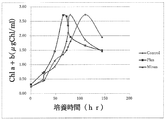
- 1 is a zeta view of a negatively charged nanovalve of Example 1 of the present invention. It is the graph which measured the chlorophyll production amount obtained when making it photosynthesize using the nano bubble which enclosed the air in Chlamydomonas. It is the graph which measured the amount of chlorophyll production obtained when making it photosynthesize using the nano bubble which enclosed the inside of carbon dioxide gas to Chlamydomonas. It is the graph which measured the amount of chlorophyll production obtained when the chlorophyll production amount was measured using the nanobubble which enclosed the air for Chlamydomonas and setting the dark period for 12 hours. It is the figure which compared the growth promotion effect of the positively and negatively charged nano bulb in the Komatsuna LED photosynthesis culture model. It is a graph which shows the effect of the positively charged nano bubble in the house cultivation model of a tomato.
- the positively or negatively charged nanobubbles of the present invention preferably have an average particle size of 10 to 500 nm, and more preferably 50 to 300 nm.
- average particle size exceeds 500 nm, the buoyancy of the bubbles increases and the bubbles are likely to be associated with each other to destabilize the dispersion, and bubbles having an average particle size of less than 10 nm are formed by the method of the present invention There are things that are difficult.
- the positively or negatively charged nanobubbles of the present invention preferably have a zeta potential of 10 to 200 mV or -10 to -200 mV, and preferably 50 to 150 mV or -50 to -150 mV. Nanobubbles of 10mV to -10mV (but excluding -10mV) may not have sufficient charged effect, and it may be difficult to charge below -200mV or above 200mV.
- the charged number of bubbles contained in the nanobubbles dispersion of the present invention is preferably from 10 5 to 10 10 / cc, and more preferably 10 5 to 10 9 / cc. If the number of charged bubbles contained in the nanobubble dispersion is less than 10 5 cells / cc, the charged effect may not be sufficient, and it may be difficult to produce a nanobubble dispersion exceeding 10 9 pieces / cc. .
- the charged nanobubbles of the present invention are positively charged. Although negatively charged nanobubbles exhibit better properties than uncharged nanobubbles, positively charged nanobubbles often have better properties than negatively charged nanobubbles.
- the used nanobubbles produce charged nanobulbs surrounded by the liquid by further breaking up the micronized liquid in a gas atmosphere to become bubbles, which is
- the nano bubble dispersion liquid charged to the said liquid can be manufactured by collecting using centrifugal force, electromagnetic force, etc.
- a negatively charged nano valve can be generated by applying an electric field to the gas atmosphere to ground the negative side, and a positively charged nano valve can be generated by grounding the fractured member.
- FIG. 1 shows the zeta potential of nanobubbles and the frequency (zetaview) of bubbles having that zeta potential in Example 1 of the present invention
- FIG. 2 shows the zeta view of the negatively charged nanovalves of Example 2. .
- the charged nanobubbles of the present invention provide a method of producing materials that bind or separate from cationic or anionic materials.
- the charged nanobubbles of the present invention have the property that the nanobubbles impart or accept electrons, so that they have the required oxidizing power or reducing power from water and air alone, and are decomposed after a certain period of time. It became possible to produce an agent.
- the charged nanobubbles of the present invention can generate positively charged nanobubbles, it has become possible to conduct comparative control experiments on the influence of the chargeability of the nanobubbles on organisms. As a result, it has become possible to utilize positively or negatively charged nanobubbles to promote or suppress the growth and growth of microorganisms and plants.
- the effect of promoting or suppressing the growth can be expected by introducing the nanobubbles shown in the present invention into, for example, tap water or a culture solution, and absorbing the same into the roots or leaves of microorganisms or plants.
- Example 1 Production of Positively Charged Nano Bubbles
- a plurality of micro-sized water were supplied in a closed air atmosphere, and a plurality of adjacent rotating bodies were installed so as to rotate in opposite directions to each other.
- the diameter-specific density and the charge-specific density of the obtained nanobubbles were measured using Microtrack Bell's nanobubble charge measurement, using ZetaView + T.
- the average particle size of the bubbles was determined using the Ohdaira charged disc method, and the average particle size of the bubbles was determined using an Ultra-high voltage electron microscope equipped with Omega Lenz, provided in Spring 9, Hyogo Prefecture.
- the charge-specific density (zeta view) of the positively charged nanobubbles is shown in FIG.
- Example 2 Production of negatively charged nanobubbles A high voltage is applied in a closed air atmosphere, the negative side is grounded, and water miniaturized to a micrometer size is supplied, and the adjacent sides rotate in opposite directions. It was possible to obtain the negatively charged nanobubbles surrounded by water by further breaking up the micronized water further by using a plurality of rotating bodies installed and collecting the generated mist. .
- FIG. 2 shows the charge-specific density of charged nanobubbles.
- Example 3 When using air-enclosed nanobubbles Using a wild-type Chlamydomonas sp. (NIES-2235 strain Chlamydomonas reinhardtii. Hereinafter, simply referred to as "Chlamydomonas"), a culture solution containing air-enclosed nanobubbles that are positively charged. The amount of chlorophyll produced in each group was determined by dividing it into three types: (plus group), culture solution containing negatively charged nanobubbles (minus group), and culture solution not containing nanobubbles (control group).
- ⁇ Cultured strain Chlamydomonas Microbiologic name (NIES strain No.): NIES-2235 strain Medium: C medium (a medium for both agar and bottle C medium) Purchased from: National Institute for Environmental Research National Institute for Environmental Research Chlamydomonas, using a flat petri dish, from a top surface of a distance of 25 cm, against microorganisms in the petri dish, said to be optimal for photosynthesis, from 620 nanometers to 630 The light which has a wavelength peak of nanomail was continuously irradiated.
- the medium used was HSM agar medium.
- -Nano bubble sample The culture medium was manufactured by the method described in the plus group, Example 1, but using positively charged nano bubbles in carbon dioxide gas.
- a culture was prepared in the manner described in the Minus group, Example 2, but using negatively charged nanobubbles in carbon dioxide gas.
- a culture was prepared using distilled water containing no control and nanobubbles.
- the cultured Chlamydomonas was extracted at regular intervals using chlorophyll extraction method with acetone, and the obtained chlorophyll was measured by a spectrophotometer (manufactured by NanoDrop: ND-1000). The measurement results are shown in FIG.
- the plus group significantly increased the growth rate in the induction phase and the logarithmic growth phase, as compared to the symmetric group.
- the negative group had a reduced proliferation rate compared to the symmetric group.
- Example 4 In the Case of Using Nanobubbles Containing Carbon Dioxide Gas As in Example 3, however, positive and negative groups of nanobubble samples were produced in carbon dioxide gas, and the chlorophyll production amount of each group was measured. The measurement results are shown in FIG. As in Example 1, the plus group grew faster than the symmetry group, and the minus group later than the symmetry group.
- Example 5 When using a nanobubble in which air is enclosed and the dark period is 12 hours In the same manner as in Example 3, however, the chlorophyll production amount was measured with a dark period of 12 hours. The measurement results are shown in FIG. As shown in FIG. 5, the plus group grew faster than the symmetric group, while the negative group had a proliferation rate similar to that of the symmetric group.
- Example 7 Growth difference according to radish photosynthesis model The effects of charged nanobubble water in hydroponic culture using radish were compared. The results are shown in Table 1. As shown in Table 1, the growth rate is 1.7 to 2.2 times that of the control when plus nanobubbles are used, and 1.1 to 1 when compared with the control when minus nanobubbles are used. It showed double growth rate.
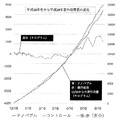
- Example 8 Yield of tomato in a house cultivation model Table 7 shows December 16, 2016 to June, 2017 in a tomato cultivation model of a house to which a nano bubble generator charged positively from April 2017 has been introduced. Indicates the cumulative pickup amount up to the 16th. As shown in Fig. 7, the yield increased significantly from April 2017 when the positively charged nano bubble generator was introduced, and until April 2017 the same yield as the control was 2 Sales increased by 11% in the two months to June 16, 017.
Landscapes
- Life Sciences & Earth Sciences (AREA)
- Chemical & Material Sciences (AREA)
- Engineering & Computer Science (AREA)
- Health & Medical Sciences (AREA)
- Wood Science & Technology (AREA)
- Zoology (AREA)
- General Health & Medical Sciences (AREA)
- Biotechnology (AREA)
- Genetics & Genomics (AREA)
- Organic Chemistry (AREA)
- Bioinformatics & Cheminformatics (AREA)
- Environmental Sciences (AREA)
- Chemical Kinetics & Catalysis (AREA)
- Botany (AREA)
- Plant Pathology (AREA)
- Pest Control & Pesticides (AREA)
- Microbiology (AREA)
- Biomedical Technology (AREA)
- Biochemistry (AREA)
- General Engineering & Computer Science (AREA)
- Toxicology (AREA)
- Agronomy & Crop Science (AREA)
- Dentistry (AREA)
- Forests & Forestry (AREA)
- Biodiversity & Conservation Biology (AREA)
- Ecology (AREA)
- Nanotechnology (AREA)
- Medicinal Chemistry (AREA)
- Tropical Medicine & Parasitology (AREA)
- Virology (AREA)
- Cell Biology (AREA)
- General Chemical & Material Sciences (AREA)
- Dispersion Chemistry (AREA)
- Marine Sciences & Fisheries (AREA)
- Electromagnetism (AREA)
- Physics & Mathematics (AREA)
- Hydroponics (AREA)
- Micro-Organisms Or Cultivation Processes Thereof (AREA)
- Inorganic Chemistry (AREA)
- Cultivation Of Plants (AREA)
Abstract
Description
また更に、ナノバブルを用いて生物の生理活性に変化を及ぼす技術が注目されてきた。例えば特許文献2に、植物の成長を促進させるなどの目的で利用が可能な旨が記載されている。
従来は、気液混相流の中でファンを高速回転させる方法、気液混相流に高圧をかけて漏斗状の管に導入しキャビテーションを発生させる方法等が提案されてきたが、装置の構造が複雑になり、装置一台あたりの価格が高額になるため、ナノバブル技術を実施できる分野が限定されていた。
また、液相中でナノバブルを発生させていたため、液体により可動部が大きな抵抗を受けることとなり、多くのエネルギーを浪費し、経済性の観点から技術が実施できる分野が限定されていた。
従来は、負に帯電したナノバブルしか発生させることができず、こうしたナノバブルは、正に帯電したイオンや物質表面にしか結合しないため、技術が実施できる分野が限定されていた。
従来は、負に帯電したナノバブルしか発生させることができず、ナノバブルが生物に与える影響が、ナノバブル内に封入されたガスの影響によるものなのか、ナノバブルが有する負の帯電によるものなのか、それともナノバブルが物理的に衝突することによるものなのか、結論付けることが困難であった。
また本発明は、正及び負に帯電したナノバブルの微生物及び植物の生長に対する影響を明確化することを第2の課題とする。
また、前記帯電したナノバブル分散液は、正に帯電したことが好ましい。
また、本発明の帯電したナノバブル分散液製造装置は、請求項3又は4に記載の製造方法によって請求項1に記載のナノバブル分散液を製造することを特徴とする。
また、本発明の帯電したナノバブル分散液製造方法を用いて、ナノバブルの帯電性に依存する酸化剤又は還元剤を製造することができる。
しかしながら、本発明においては、ナノバブルを発生させる機構を気相内に置くことができるようになり、エネルギーの消費量が減少したため、技術を実施できる分野が大幅に拡がった。
また、正及び負の帯電を持つナノバブルを作り分けることが可能になったことにより、ナノバブルが物質に電子を付与又は受容する性質があることが明らかになった。
以下において、用いられたナノバブルは、気泡となる気体雰囲気中において、マイクロメーターサイズに微細化された液体を更に破砕することによって、前記液体に囲まれた帯電したナノバルブを生成させ、これを、重力、遠心力、電磁気力、等を用いて捕集することによって前記液体に帯電したナノバブル分散液を製造できる。
図1に、本発明の実施例1のプラスにナノバブルのゼータ電位とそのゼータ電位を有するバブルの頻度(ゼータビュー)を示し、図2に実施例2のマイナスに帯電したナノバルブのゼータビューを示す。
本発明の帯電したナノバブルは、陽イオン性物質または陰イオン性物質と結合又は乖離する物質を製造する方法を提供する。
また、本発明の帯電したナノバブルは、ナノバブルが電子を付与又は受容する性質を有することにより、水と空気のみから所要の酸化力又は還元力を持ち、一定時間後には分解される酸化剤及び還元剤を製造することが可能になった。
密閉した空気雰囲気中にマイクロメーターサイズに微細化された水を供給し、隣設する回転体同士が相互に反対方向に回転するよう設置された複数の回転体を用いてマイクロメーターサイズに微細化された水を更に破砕し、生成したミストを捕集することによって、水に囲まれプラスに帯電したナノバブルを得ることができた。得られたナノバブルの直径別密度及び電荷別密度をマイクロトラックベル社のナノバブル電荷測定を用い、ZetaView+T.Ohdaira 荷電ディスク法で計算して測定し、気泡の平均粒径は、兵庫県のSpring 9に設けられ、Omega Lenzを備えるUltra-high voltage electron microscopeを用いて測定した。
プラスに帯電したナノバブルの電荷別密度(ゼータビュー)を図1に示す。
密閉した空気雰囲気中に高電圧を印加してマイナス側を接地し、マイクロメーターサイズに微細化された水を供給し、隣同士が反対方向に回転し設置された複数の回転体を用いてマイクロメーターサイズに微細化された水を更に破砕し、生成したミストを捕集することによって、水に囲まれマイナスに帯電したナノバブルを得ることができた。図2に、帯電したナノバブルの電荷別密度を示す。
[実施例3]空気を封入したナノバブル用いた場合
野生型のクラミドモナス(NIES-2235株 Chlamydomonas reinhardtii.以下、単に「クラミドモナス」という。)を用い、空気を封入し正に帯電したナノバブルを含む培養液(プラス群)、負に帯電したナノバブルを含む培養液(マイナス群)、ナノバブルを含まない培養液(対照群)の3種類に分け、各群のクロロフィル生産量を測定した。
微生物学名(NIES株番号):NIES-2235株
培地:C培地(寒天もボトルも同じC培地)
購入元:国立研究開発法人国立環境研究所 微生物系統保存施設
・クラミドモナスを、平型シャーレを用いて,距離25cmの上面からシャーレ内の微生物に対し、光合成に最適とされる、620ナノメートルから630ナノメールの波長ピークを有する光を連続照射した。培地はHSM寒天培地を用いた。
・ナノバブル試料
プラス群、実施例1に記載した方法で、但し炭酸ガス中で正に帯電したナノバブルを用いて培地を製造した。
マイナス群、実施例2に記載した方法で、但し炭酸ガス中で負に帯電したナノバブルを用いて培地を製造した。
対照群、ナノバブルを含まない蒸留水を用いて培地を作成した。
・培養したクラミドモナスは一定時間おきにアセトンによるクロロフィル抽出法を用いて抽出し、得られたクロロフィルを分光光度計(NanoDrop社製:ND-1000)によって測定した。
・測定結果を図3に示す。
図3に示すように、プラス群は対称群と比較し、誘導期及び対数増殖期において増殖速度が有意に増加した。マイナス群は対称群と比較し、増殖速度が減少した。
実施例3と同様に、但しナノバブル試料のプラス群およびマイナス群を二酸化炭素ガス中で製造し、各群のクロロフィル生産量を測定した。
測定結果を図4に示す。実施例1と同様に、プラス群は対称群よりも速く増殖し、マイナス群は対称群よりも遅くなった。
実施例3と同様に、但し12時間の暗期を設けてクロロフィル生産量を測定した。
測定結果を図5に示す。
図5に示すように、プラス群は対称群よりも速く増殖したが、マイナス群は対称群と同様の増殖速度となった。
小松菜を用いて水耕栽培に帯電したナノバブル水の効果を比較した。
栽培条件
温度 LED消灯時 20℃、LED点灯時 27℃
液状肥料 Hyponext
ナノバブル水 実施例1、2に準じて作成した。
バブル平均粒子径 180nm(100~200nm)
バブル密度 3.0×10⁸(個/cc)
ナノバブル電荷測定横置 マイクロトラックベル社
計算方法 ZetaView+T.Ohdaira 荷電ディスク法
種まき後、28日目の写真を図6に示す。
大根を用いて水耕栽培に帯電したナノバブル水の効果を比較した。結果を表1に示す。
表1に示すように、プラスナノバブルを用いた場合は、コントロールに比べて1.7~2.2倍の成長速度を示し、マイナスナノバブルを用いた場合は、コントロールに比べて1.1~1.2倍の成長速度を示した。

表7に、2017年4月からプラスに帯電したナノバブル発生機を導入したトマトのハウス栽培モデルにおける、2016年12月16日から2017年6月16日までの累積集荷量を示す。
図7に示すように、プラスに帯電したナノバブル発生機を導入した2017年4月から収穫量が顕著に増加し、2017年4月まではコントロールと同じ収穫量だったのが、2
017年6月16日までの2か月間で11%の増収となった。
Claims (8)
- 液体中に分散され、正又は負に帯電し、平均粒径が10乃至500nmであり、ゼータ電位が10乃至200mVである微細気泡を105乃至1010個/cc含むことを特徴とする帯電したナノバブル分散液。
- 正に帯電したことを特徴とする請求項1に記載の帯電したナノバブル分散液。
- 気泡となる気体雰囲気中において、マイクロメーターサイズに微細化された液体を更に破砕することによって、前記液体に囲まれ帯電したナノバルブを生成させ、これを、重力、遠心力、電磁気力、等を用いて捕集することを特徴とする請求項1又は2に記載の帯電したナノバブル分散液製造方法。
- 前記気体雰囲気に電場を印加してマイナス側を接地することによってマイナスに帯電したナノバルブを生成させ、破砕する部材を接地することによってプラスに帯電したナノバルブを生成させることを特徴とする請求項3に記載の帯電したナノバブル分散液製造方法。
- 請求項3又は4に記載の製造方法によって請求項1に記載のナノバブル分散液を製造することを特徴とするナノバブル分散液製造装置。
- 請求項3又は4に記載の方法を用いて、陽イオン性物質または陰イオン性物質と結合又は乖離することを特徴とする物質を製造する方法。
- 請求項3又は4に記載の方法を用いて、ナノバブルの帯電性に依存する酸化剤又は還元剤を製造する方法。
- 請求項1乃至2に記載の帯電したナノバブル分散液を用いて、微生物の増殖を促進又は抑制させる方法及び植物の成長を促進又は抑制させる方法。
Priority Applications (5)
| Application Number | Priority Date | Filing Date | Title |
|---|---|---|---|
| KR1020207019699A KR20200093044A (ko) | 2017-12-08 | 2018-12-07 | 대전된 나노 버블 분산액, 그 제조 방법, 및 제조 장치, 및 해당 나노 버블 분산액을 이용하여 미생물 및 식물의 성장의 속도를 제어하는 방법 |
| KR1020237044955A KR102657332B1 (ko) | 2017-12-08 | 2018-12-07 | 정(+)으로 대전된 나노 버블 분산액 |
| CN201880088629.2A CN111683740B (zh) | 2017-12-08 | 2018-12-07 | 带电的纳米气泡分散液、其制造方法及制造装置,以及使用该纳米气泡分散液控制微生物及植物生长速度的方法 |
| EP18885302.2A EP3721979A4 (en) | 2017-12-08 | 2018-12-07 | CHARGED NANOBUBBLE DISPERSION, METHOD FOR PRODUCING THE CHARGED NANOBUBBLE DISPERSION, DEVICE FOR PRODUCING THE CHARGED NANOBUBBLE DISPERSION, AND METHOD FOR USING THE CHARGED NANOBUBBLE DISPERSION TO REGULATE THE GROWTH RATE OF MICROORGANISMS AND PLANTS |
| US16/770,522 US12329152B2 (en) | 2017-12-08 | 2018-12-07 | Charged nanobubble dispersion liquid, method of manufacturing the same, manufacturing apparatus for the same, and a method for controlling growth rate of microorganisms and plants using the liquid |
Applications Claiming Priority (2)
| Application Number | Priority Date | Filing Date | Title |
|---|---|---|---|
| JP2017-236437 | 2017-12-08 | ||
| JP2017236437A JP7227694B2 (ja) | 2017-12-08 | 2017-12-08 | 正に帯電したナノバブル分散液 |
Publications (1)
| Publication Number | Publication Date |
|---|---|
| WO2019112062A1 true WO2019112062A1 (ja) | 2019-06-13 |
Family
ID=66751469
Family Applications (1)
| Application Number | Title | Priority Date | Filing Date |
|---|---|---|---|
| PCT/JP2018/045186 Ceased WO2019112062A1 (ja) | 2017-12-08 | 2018-12-07 | 帯電したナノバブル分散液、その製造方法、及び製造装置、並びにそのナノバブル分散液を用いて微生物及び植物の成長の速度を制御する方法 |
Country Status (6)
| Country | Link |
|---|---|
| US (1) | US12329152B2 (ja) |
| EP (1) | EP3721979A4 (ja) |
| JP (2) | JP7227694B2 (ja) |
| KR (2) | KR102657332B1 (ja) |
| CN (1) | CN111683740B (ja) |
| WO (1) | WO2019112062A1 (ja) |
Cited By (1)
| Publication number | Priority date | Publication date | Assignee | Title |
|---|---|---|---|---|
| WO2022234681A1 (ja) * | 2021-05-07 | 2022-11-10 | 大平研究所株式会社 | 防虫/殺虫もしくは防菌/殺菌剤、または農作物の生産方法 |
Families Citing this family (13)
| Publication number | Priority date | Publication date | Assignee | Title |
|---|---|---|---|---|
| EP3795674A4 (en) * | 2018-05-31 | 2022-05-11 | Aichi Medical University | COMPOSITION, CELL STORAGE COMPOSITION, CELL CULTURE COMPOSITION, CELL FORMULATION, METHOD OF MAKING AN OBJECT CONTAINING MICROBUBBLE, CELL STORAGE METHOD, CELL CULTURE METHOD AND METHOD OF MAKING A CELL FORMULATION |
| CN112203510A (zh) | 2018-05-31 | 2021-01-08 | 学校法人爱知医科大学 | 生物材料保存组合物、生物材料的保存方法、生物材料的生产方法、移植材料和移植方法 |
| JP7074931B2 (ja) * | 2019-05-08 | 2022-05-24 | 株式会社アクアソリューション | 品質が向上した果実の製造方法 |
| EP3978076A4 (en) | 2019-06-03 | 2023-02-22 | Irimajiri Therapeutics Inc. | CYCLIC AMIDE COMPOUNDS FOR THE TREATMENT OF RABIES AND METHOD THEREOF |
| JP2021090372A (ja) * | 2019-12-09 | 2021-06-17 | 聡 安斎 | 植物栽培方法及び植物栽培装置 |
| CN112616484A (zh) * | 2020-11-26 | 2021-04-09 | 同济大学 | 一种采用纳米气泡促进湿地植物生长的方法 |
| GB202018966D0 (en) | 2020-12-01 | 2021-01-13 | Epigenetica Ltd | Method and system to improve plant characteristics |
| GB202103986D0 (en) | 2021-03-22 | 2021-05-05 | Epigenetica Ltd | Plant propagation |
| KR102927687B1 (ko) | 2021-05-07 | 2026-02-13 | 오다이라 래보로토리 캄파니 | 미세 기포 분산액의 측정 방법 및 측정 시스템 |
| WO2023204042A1 (ja) * | 2022-04-18 | 2023-10-26 | パナソニックIpマネジメント株式会社 | バブルおよびバブル集合体、バブル水、バブル制御装置、バブル制御方法 |
| WO2023214041A1 (en) | 2022-05-05 | 2023-11-09 | Epigenetica Limited | Processes, systems and media for delivering a substance to a plant |
| JP7599079B2 (ja) * | 2022-10-03 | 2024-12-13 | 睦月電機株式会社 | ナノバブル液剤を利用するための装置 |
| CN121127123A (zh) * | 2023-03-09 | 2025-12-12 | 株式会社水改质 | 难溶性磷酸的利用方法和植物体的栽培方法 |
Citations (11)
| Publication number | Priority date | Publication date | Assignee | Title |
|---|---|---|---|---|
| JP2007515470A (ja) * | 2003-12-22 | 2007-06-14 | ブラッコ・リサーチ・ソシエテ・アノニム | 造影イメージング用の気体封入マイクロベシクル・アセンブリー |
| JP4144669B2 (ja) | 2004-03-05 | 2008-09-03 | 独立行政法人産業技術総合研究所 | ナノバブルの製造方法 |
| JP2009131770A (ja) * | 2007-11-29 | 2009-06-18 | Reo Laboratory Co Ltd | 二酸化炭素ナノバブル水の製造方法 |
| JP2009131769A (ja) | 2007-11-29 | 2009-06-18 | Reo Laboratory Co Ltd | 窒素ナノバブル水の製造方法 |
| JP2009246042A (ja) * | 2008-03-28 | 2009-10-22 | Shibaura Mechatronics Corp | 処理液の製造装置、製造方法及び基板の処理装置、処理方法 |
| JP2010162517A (ja) * | 2009-01-19 | 2010-07-29 | Sharp Corp | 水処理装置および水処理方法 |
| JP2012108073A (ja) * | 2010-11-19 | 2012-06-07 | Toshiba Corp | 除染方法および除染装置 |
| WO2014050910A1 (ja) * | 2012-09-26 | 2014-04-03 | 武田薬品工業株式会社 | 固体粒子の製造方法 |
| JP2015097509A (ja) * | 2013-11-19 | 2015-05-28 | サンスター技研株式会社 | 超微細粒子を利用した植物栽培方法 |
| JP2016053004A (ja) * | 2014-09-03 | 2016-04-14 | サンスター株式会社 | 希釈農薬の調整方法及び希釈農薬 |
| JP2016142599A (ja) * | 2015-01-30 | 2016-08-08 | 三菱重工業株式会社 | 放射性物質の除去方法 |
Family Cites Families (14)
| Publication number | Priority date | Publication date | Assignee | Title |
|---|---|---|---|---|
| US4144669A (en) | 1977-06-13 | 1979-03-20 | Takara Co., Ltd. | Multiple function water-going toy |
| JPH11300238A (ja) * | 1998-04-20 | 1999-11-02 | Nec Home Electron Ltd | 微細水滴発生装置 |
| JP4430609B2 (ja) * | 2005-11-14 | 2010-03-10 | ヤーマン株式会社 | ナノバブル発生装置 |
| US8445546B2 (en) * | 2006-10-25 | 2013-05-21 | Revalesio Corporation | Electrokinetically-altered fluids comprising charge-stabilized gas-containing nanostructures |
| JP5053115B2 (ja) * | 2008-02-05 | 2012-10-17 | 芝浦メカトロニクス株式会社 | 基板の処理装置及び処理方法 |
| KR101001484B1 (ko) | 2008-06-19 | 2010-12-14 | 주식회사 동부하이텍 | 화학 기상 증착 설비내 머플존의 파우더 제거장치 |
| SG177681A1 (en) * | 2009-08-06 | 2012-02-28 | Kyowakisetsu Co Ltd | Composition and process for production thereof |
| JP2011152513A (ja) * | 2010-01-27 | 2011-08-11 | Panasonic Electric Works Co Ltd | 気液混合液生成装置 |
| US9382136B2 (en) * | 2011-05-26 | 2016-07-05 | Snu R&Db Foundation | Apparatus for generating fine bubbles having a positive charge and water treatment apparatus using same |
| KR101330863B1 (ko) * | 2012-07-09 | 2013-11-18 | 박정우 | 나노 기포 발생기 |
| CN105417674A (zh) * | 2015-11-23 | 2016-03-23 | 天津颐品农庄电子商务有限公司 | 一种微纳米气泡水的制备方法和应用 |
| EP3456815B1 (en) * | 2016-05-13 | 2024-07-03 | SIGMA TECHNOLOGY, Inc. | Aqueous solution capable of being administered to living body, and method for producing same |
| CN105855065B (zh) * | 2016-06-20 | 2018-03-09 | 中国矿业大学 | 一种基于纳米气泡矿浆预处理的氧化煤泥分选方法 |
| KR101886648B1 (ko) * | 2016-08-10 | 2018-08-10 | 주식회사 에네트 | 양의 미세기포를 이용한 이동식 녹조제거선 |
-
2017
- 2017-12-08 JP JP2017236437A patent/JP7227694B2/ja active Active
-
2018
- 2018-12-07 KR KR1020237044955A patent/KR102657332B1/ko active Active
- 2018-12-07 WO PCT/JP2018/045186 patent/WO2019112062A1/ja not_active Ceased
- 2018-12-07 EP EP18885302.2A patent/EP3721979A4/en not_active Withdrawn
- 2018-12-07 US US16/770,522 patent/US12329152B2/en active Active
- 2018-12-07 KR KR1020207019699A patent/KR20200093044A/ko not_active Ceased
- 2018-12-07 CN CN201880088629.2A patent/CN111683740B/zh active Active
-
2022
- 2022-10-20 JP JP2022168725A patent/JP2023001157A/ja active Pending
Patent Citations (11)
| Publication number | Priority date | Publication date | Assignee | Title |
|---|---|---|---|---|
| JP2007515470A (ja) * | 2003-12-22 | 2007-06-14 | ブラッコ・リサーチ・ソシエテ・アノニム | 造影イメージング用の気体封入マイクロベシクル・アセンブリー |
| JP4144669B2 (ja) | 2004-03-05 | 2008-09-03 | 独立行政法人産業技術総合研究所 | ナノバブルの製造方法 |
| JP2009131770A (ja) * | 2007-11-29 | 2009-06-18 | Reo Laboratory Co Ltd | 二酸化炭素ナノバブル水の製造方法 |
| JP2009131769A (ja) | 2007-11-29 | 2009-06-18 | Reo Laboratory Co Ltd | 窒素ナノバブル水の製造方法 |
| JP2009246042A (ja) * | 2008-03-28 | 2009-10-22 | Shibaura Mechatronics Corp | 処理液の製造装置、製造方法及び基板の処理装置、処理方法 |
| JP2010162517A (ja) * | 2009-01-19 | 2010-07-29 | Sharp Corp | 水処理装置および水処理方法 |
| JP2012108073A (ja) * | 2010-11-19 | 2012-06-07 | Toshiba Corp | 除染方法および除染装置 |
| WO2014050910A1 (ja) * | 2012-09-26 | 2014-04-03 | 武田薬品工業株式会社 | 固体粒子の製造方法 |
| JP2015097509A (ja) * | 2013-11-19 | 2015-05-28 | サンスター技研株式会社 | 超微細粒子を利用した植物栽培方法 |
| JP2016053004A (ja) * | 2014-09-03 | 2016-04-14 | サンスター株式会社 | 希釈農薬の調整方法及び希釈農薬 |
| JP2016142599A (ja) * | 2015-01-30 | 2016-08-08 | 三菱重工業株式会社 | 放射性物質の除去方法 |
Cited By (1)
| Publication number | Priority date | Publication date | Assignee | Title |
|---|---|---|---|---|
| WO2022234681A1 (ja) * | 2021-05-07 | 2022-11-10 | 大平研究所株式会社 | 防虫/殺虫もしくは防菌/殺菌剤、または農作物の生産方法 |
Also Published As
| Publication number | Publication date |
|---|---|
| US20210244021A1 (en) | 2021-08-12 |
| EP3721979A4 (en) | 2022-01-12 |
| EP3721979A1 (en) | 2020-10-14 |
| JP2019103958A (ja) | 2019-06-27 |
| KR102657332B1 (ko) | 2024-04-12 |
| CN111683740A (zh) | 2020-09-18 |
| JP7227694B2 (ja) | 2023-02-22 |
| US12329152B2 (en) | 2025-06-17 |
| JP2023001157A (ja) | 2023-01-04 |
| KR20200093044A (ko) | 2020-08-04 |
| KR20240006001A (ko) | 2024-01-12 |
| CN111683740B (zh) | 2023-03-24 |
Similar Documents
| Publication | Publication Date | Title |
|---|---|---|
| JP2019103958A (ja) | 帯電したナノバブル分散液、その製造方法、及び製造装置、並びにそのナノバブル分散液を用いて微生物及び植物の成長の速度を制御する方法 | |
| Agarwal et al. | Advances in synthesis and applications of microalgal nanoparticles for wastewater treatment | |
| Banerjee et al. | Study of polyacrylamide grafted starch based algal flocculation towards applications in algal biomass harvesting | |
| Skeffington et al. | Exploiting algal mineralization for nanotechnology: bringing coccoliths to the fore | |
| Fani et al. | Biosynthesis of iron oxide nanoparticles by cytoplasmic extract of bacteria lactobacillus fermentum | |
| BR112015009828A2 (pt) | métodos de cultura de microorganismos em condições mixotróficas não axênicas | |
| de Lima Barizão et al. | Nanomagnetic approach applied to microalgae biomass harvesting: advances, gaps, and perspectives | |
| Adelere et al. | Microalgal nanobiotechnology and its applications—a brief overview | |
| CN101786615A (zh) | 一种羟基磷灰石纳米管及其制法和在骨修复方面的应用 | |
| Ogundele et al. | Phycoremediation: Algae as an Effective Agent for Sustainable Remediation and Waste Water Treatment. | |
| Rinanti et al. | Harvesting of freshwater microalgae biomass by Scenedesmus sp. as bioflocculant | |
| Tripathi et al. | Phyco-nanotechnology: an emerging nanomaterial synthesis method and its applicability in biofuel production | |
| Yue et al. | Controllable extracellular biosynthesis of bismuth sulfide nanostructure by sulfate‐reducing bacteria in water–oil two‐phase system | |
| CN106520555B (zh) | 生物氧化锰生成微藻及微藻—生物氧化锰体系及其在双酚a降解中的应用 | |
| Procházková et al. | Surface modification of Chlorella vulgaris cells using magnetite particles | |
| CN105253911B (zh) | 一种硫化铅纳米材料的生物调控制备方法 | |
| Zhou et al. | Algae nanomaterials and nanostructures | |
| Lai et al. | Efficiency of chitosan and eggshell on harvesting of Spirulina sp. in a bioflocculation process. | |
| Joshi et al. | Algae-based nanoparticles for contaminated environs nanoremediation | |
| Kadir et al. | Harvesting and pre-treatment of microalgae biomass via ozonation for lipid extraction: A preliminary study | |
| Gautam et al. | Nanomaterials in environmental science: Applications, impacts, and sustainable solutions | |
| JP2013094772A (ja) | 蘚苔類による汚染改善方法 | |
| Marquis | EVOLUTION OF TRANSFORMATIVE MATERIALS AND ROLE OF NANOMATERIALS AND NANOTECHNOLOGIES ON ENERGY, ENVIRONMENT AND SUSTAINABLE DEVELOPMENT | |
| Sharma et al. | Algal Nanoparticles as a Green Approach for Bioremediation of Heavy Metals from Wastewater | |
| Obyd et al. | Harvesting Microalgae by Chitosan as Sustainable Biopolymer. |
Legal Events
| Date | Code | Title | Description |
|---|---|---|---|
| 121 | Ep: the epo has been informed by wipo that ep was designated in this application |
Ref document number: 18885302 Country of ref document: EP Kind code of ref document: A1 |
|
| NENP | Non-entry into the national phase |
Ref country code: DE |
|
| ENP | Entry into the national phase |
Ref document number: 20207019699 Country of ref document: KR Kind code of ref document: A |
|
| ENP | Entry into the national phase |
Ref document number: 2018885302 Country of ref document: EP Effective date: 20200708 |
|
| WWG | Wipo information: grant in national office |
Ref document number: 16770522 Country of ref document: US |